Black Mirror Christmas Special: Mediation, Morality and the Tortures of Technology

Source: huckleberryhax.blogspot.com

My experience of watching Black Mirror: White Christmas was a sharp departure from the usual mindless festive telly fare. Like a lingering nightmare, it will hover over the dreamy limbos of television’s ‘Christmas Special’ tradition for years to come. Black Mirror (while we can certainly argue that some episodes are better than others) has successfully created a lethal concoction of technological speculation, sharp drama and black humour that stands out amidst the genres of science fiction, reality tv or documentary which tend to be employed to convey the themes explored in Black Mirror’s fictional anthology series. Themes like the impact of technology on our everyday lives, relationships, desires, minds.

On Twitter, the show’s writer, king of cynicism Charlie Brooker, promised that his Christmas offering wouldn’t be anything darker than what writers at the BBC had in store for the residents of Albert Square, but having only read a handful of bemused Facebook statuses to account for said Eastenders episode, I don’t feel fit to judge between the two programmes. Black Mirror delves into the future that hangs over us like an Apple update that keeps stalling our computers. The future that is five minutes (or, if your MacBook is as slow as mine, five hours) away. Drew Grant of The New York Observer has aptly described Black Mirror’s episodes as ‘self-contained parables about the modern condition’. The parable is a good description of Brooker’s show because it highlights the importance of the moral conclusions and dilemmas which entangle every episode. In this one-off Christmas Special, Brooker weaves three tales together through a darkly layered story of love, loss, crime, voyeurism, punishment, seduction and of course technology. What comes out at the end is a Beckettian acceptance of the futility of time; a sense of the fragility of everything in the face of time’s endurance. Watching Brooker’s characters recount the bittersweet and painful tales of their lives, against the sinister backdrop of technology and the ironic happiness of Christmas, I was reminded of Beckett’s play Krapp’s Last Tape. The protagonist Krapp stares into and sometimes physically leans over a tape recorder, which plays back the tapes he has made himself, voices recalling distant and familiar memories. There is the same sense of alienation and poignancy, the same mechanical desire that intermingles in the softness of human despondency.

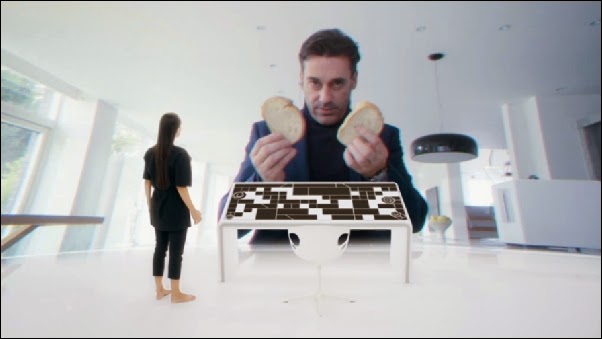
What drew attention to this particular episode was its casting of Jon Hamm as a lead character. Hamm has become something of an icon for his role as the womanising advertising director Don Draper in Matthew Weiner’s period series Mad Men, but in this feature-length Black Mirror episode he proves his talents lie beyond smoking, nipping bourbon, cheating and delivering great advertising speeches. Hamm isn’t known for playing sinister figures, but then Brooker is never so simple as to create any such ‘simple’ characters. In Black Mirror, the basic components of the technology presented (often already recognisable in our daily lives) are underpinned by an endless constellation of questions and implications. Everything is always layered, complex, ethically challenging – from the ontological questions about what is really real in our hyper-mediated modern lives, to how new technology plays out in more concrete areas like the justice system. This is not a one-dimensional view of the future, but a conversation woven with logical gaps, technical and ethical problems, which invites the audience’s participation. We create our own fates; Brooker doesn’t dictate the determinism of technological evolution, but reveals our own often regrettable involvement in our dystopian downfall.

The show begins in a remote cottage where a man named Joe (Rafe Spall) awakens to the sound of familiar Christmas music. He looks gloomily in the mirror and touches a photograph of a girl that’s stuck there. He walks into the kitchen to discover what appears to be his roommate, Matt (played by Hamm), whipping up Christmas dinner. The tale then unfolds as the two sit down, and the charismatic Matt persuades Joe to be a bit sociable for once and enjoy some conversation over lunch with him. It’s uncertain what the relationship between these two men really is. The story proceeds through a series of flashbacks, as Matt tells Joe all about his past. The story is meant to explain why he is here, since Matt is looking for Joe to tell him why he is here. This central setting for the story that frames the narrative from start to finish harks back to that old tradition of framing devices that is often used in what we might call ‘ghost’ stories of sorts. Journeys to the dark heart of human nature: think of Marlow, travelling up the Thames in Joseph Conrad’s Heart of Darkness as he recounts his tale of colonial horror along the Congo in Africa; think of the epistolary narrative of Mary Shelley’s Frankenstein; think of Wuthering Heights, where much of the story comes to the reader through the yarn woven by Nelly Dean the housekeeper as she sits knitting and talking to our primary narrator, Lockwood. In all these texts, characters are not so much human beings as they are shadows of discourse, and maybe you could say the same about the state of people in the digital age…

Such framing and meta-awareness of storytelling is of course prominent in cinema too, although often for different purposes beyond the sense of alienation and epistemological confusion evoked by such literary techniques. The likes of Martin McDonagh, in his stage dramas and screenplays, employs this technique or trope to reflect on – among other things – the problem of mediated reality in a so-called ‘postmodern’ era. In Black Mirror, Brooker goes beyond the televisual technologies which defined the era of high postmodernism to incorporate a future of duplicating, haptic and intensely interactive technologies. It is hard to shoehorn this programme into ‘science fiction’ or ‘crime fiction’ or merely ‘dark drama’. Everything is ambiguous, just like White Christmas’ central location. The audience doesn’t know what or where here is, other than a snow-coated cottage in the middle of nowhere. There’s a flickering fire and sense of impending disaster. Matt jokes that the cottage was only meant to include essentials, but weirdly that included a string of red tinsel. You can’t get away from Christmas, as Joe’s unfortunate avatar finds out in the episode’s end. In the three parts, we shift between the stories of Matt and Joe, as well as a broader story about the systemic use (and abuse) of technology, and the interwoven stories of the characters whose lives connect with our protagonists’.

You see, this is Black Mirror; things are never straightforward or linear. Matt used to be some kind of romance coach who provides dating advice to men by talking to them internally like an inner voice. Taken out of context, the person in question would look like they were talking to imaginary voices, like a caricatured schizophrenic. Implanted technology allows Matt to witness every action taken by the other man, Harry, through Harry’s own eyes. What kind of panopticon effect would this have on our consciousness, if we knew that everything we saw was being seen in directly the same manner by someone else? I’m immediately thinking of Google Glass here: technology that interacts with the optical function, that projects information between the eye, the world and the brain. Our own perception is shared through wireless communication, in ways that maybe we can no longer control.  There are sinister consequences here, as Matt’s advice inadvertently leads the other man, Harry, to successfully seduce a rather unstable woman who is convinced that since they both hear voices they should pass to the ‘next stage’. The next stage being death; not just quitting her job, it turns out. She feeds him poison and he dies right there on screen, for Matt and his audience to see. It turns out that Matt helps shy and lonely men seduce women as a hobby, and in turn shares the footage of these encounters with other men, in what seems to be a sinister extension of contemporary internet ‘live-cam’ pornography. Only, the woman and man in question don’t know the extent to which their actions are being viewed and exploited. It doesn’t seem too far off from the hacking scandals that plagued the likes of Jennifer Lawrence’s iCloud only this summer. The story deals with these issues of consent and broadcast communication on the one hand, but also the ease with which Harry succeeds in seducing women with Matt’s tricks is a little chilling (not merely just unconvincing). In the context of a wider narrative on mediation, it makes us reflect on how much human attraction is based on pre-scripted ideas that are encoded in our brains from so much exposure to romantic discourse – from the old technics of writing and literature to computer games and cinema.

The poison scene weirdly reminded me of a corrupted version of Shakespeare’s Hamlet, where Hamlet’s father is killed by having poison fed into his ear. An untimely revenge; perhaps the consequences of inauthenticity. The ghost of Hamlet’s father reappears in the play, and even when he is not present, the spectre of his wish haunts Hamlet’s frustrated consciousness. White Christmas is also concerned with ghosts. We might even consider the title an ironic reference to Bing Crosby’s ‘White Christmas’: ‘I’m dreaming of a white Christmas / Just like the ones I used to know’. Well, these lyrics seem pretty sinister in the context of this episode, where what’s white is the symbolically smothering snow and the egg-shaped ‘cookie’ device that connects to an implant in people’s brains. An implant that duplicates the self into a ‘cookie’, a cookie which is externalised and given a simulated body. A body that might not be real, but is certainly sentient.

Source: http://observer.com

If we used to know Christmas as pure and white, all love and peace and Sainsbury’s-spouted Christmas truces and freedom from suffering, Black Mirror throws this day of spirited possibility into suspicion. The twist of the tale reveals a moral dilemma that haunts the use of such duplicating technology that takes us towards the realm of cloning; but, as in episode Be Right Back, keeps it close enough to the present state of technological reality to really disturb. Is it wrong to harm things that aren’t real, but still feel pain? Can we keep our simulated extra-selves as slaves to enhance our lives, even if it forces them into a lifetime of torture? What does it do to our personal identity to be physically conscious of doing harm to some simulated duplication of ourselves?

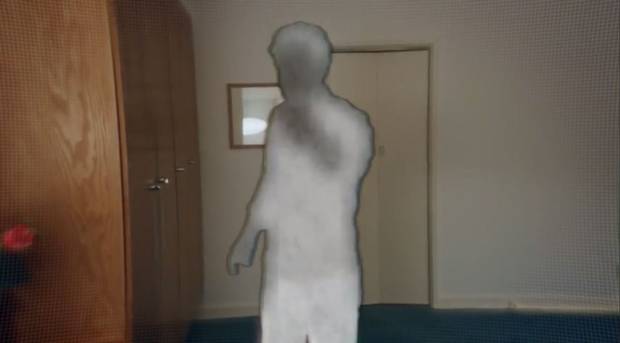
As with Hamlet, the theme of retribution runs rife through the episode. Partners punish one another through ‘blocking’: a way of cancelling out an entire person – as you may do on Twitter and Facebook – only in real life. The person in question becomes a pixellated greyish blur, like a glitch from a computer game that you can never quite get close to properly, even though they could still do you physical violence. Weirdly enough, the blocked figures in White Christmas reminded me of Pokemon Red and Blue’s ‘Missingno’, which appeared as an odd remainder of scrambled code that never quite got fixed in the games’ final cut. A Pokemon that appeared mysteriously without indexical recognition; an unknown creature. The name ‘Missingno’ also seems somehow relevant here, as it stands for ‘missing number’, as if the human in question was stripped of his/her name and personality, and left only as the grey matter of their brains, the bureaucratic residue of a ‘missing number’, 1984 style.

Source: www.ign.com
Source: http://www.ign.com

Only, unlike the geometric shape of Missingno (oddly resembling a missing puzzle piece), in Black Mirror you still see the human outline of the person you block. The fluid movement of their head and limbs. Their speech roars at you like a radio out of tune and communication will never ultimately travel as you want it to. Even in photographs, the blocked person dissolves from view. An absence cut permanently from your life; or at least until they unblock you. With great precision and a balance between steely analytic satire on contemporary social media and emotional humanity, Black Mirror explores the human consequences of such technologies: heartbreak, misunderstanding, new forms of enduring punishment. Matt is ultimately punished for his role in inadvertently causing Harry’s murder by being universally blocked, so that all humans are to him blobbed and distorted like a sea of Missingnos, and to everyone else, Matt becomes a red blur. We might think back to the days of MSN Messenger, where if we blocked someone from talking to us, on their Contact List we would forever appear as the red ‘Appear Offline’ icons. Always within reach but never fully present or within contact, we would linger elusively on their list of contacts but every message they tried to send would be lost in the ether. Technology, from the beginning, is a story of both absence and presence, communication and severance. It is all too easy to talk to someone across the globe, to love them truly even though they may be a stranger; it is equally all too easy to cut someone out of your life seemingly forever at the click of a button, given how much time we devote to living online.

Being blocked. Source: theindependent.co.uk

I think it’s appropriate that such an episode is aired at Christmas time; the time when everyone finds themselves worshipping at the circuitboard altar of a new tablet or phone or smart-watch. It issues a kind of warning, at the same time as being dramatically gripping and comedically entertaining. We live in an age of Sony hacks, Gamergate, iCloud leaks, attempted murders committed by children under the influence of online Creepypasta mythologies, Twitter abuse storms and the rife availability of online child pornography, smartphone apps which track your every dietary intake and calorie burned, as if you were some cookie of yourself trained and disciplined by the ethereal whims of your own idealised higher being. Technology is clearly something we frequently use to abuse ourselves and one another as human beings; it brings out whatever darkness is already in our nature and provides the platform for exhibiting this darkness more effectively. If we lose ourselves to this ease of abuse, where will we be in five, ten, twenty years time? Maybe only Charlie Brooker knows.

If Back to the Future got some things right about 2015 (pollution, nostalgic 1980s cultural revival), and others pretty wrong (hover-boards and flying cars) it’s difficult to say how much Black Mirror gets right about our future. The most chilling aspect of all Brooker’s episodes is perhaps how much they touch on a prosthetic logic whereby we lose ourselves to the tools we employ to help us that is already in operation today. A prosthetic logic that only needs a few more steps in Santa’s workshop to become Brooker’s nightmare vision of reality. There is nothing wrong with the technology itself per se, the show suggests, but the way we lose our humanity by giving ourselves up fully to the wonders of its operation. Surely the best metaphor for this is Oona Chaplin’s character, who literally forges a double of herself (called a cookie) and enslaves this poor spirit animal to a life of making toast and adjusting the volume of ambient music, simply for the benefit of a more efficient and technically-enhanced lifestyle. If we surrender all morality and consciousness to the endless improvement of this so-called ‘lifestyle’, aren’t we forgetting the things that make life worth living? White Christmas ends with Matt drifting out into the ultimate alienation of universal blocking, and Joe in a hysterical condition in his prison cell whilst his cookie lives in an infinite torture of Wizzard’s ‘I Wish it Could be Christmas Every Day’ being played on repeat while he exists forever trapped in the isolated kitchen. This manic but also slightly funny conclusion reveals the show’s unique blend of human sympathy and nightmare desolation. No matter how many times he tries to smash the radio, the song keeps playing. It’s like that time Celebrity Big Brother decided to lock Basshunter in a room for six hours with his song ‘All I Ever Wanted’ playing on repeat really loudly. Sure, Brooker’s ending is a bleak reminder that Christmas isn’t always great for everyone; but it’s also a reminder that you should be careful what you wish for. After all, it’s easy enough to become slaves to the technology that enchants us, but not so easy to sever ourselves from this technology, once we’ve realised that it’s usurped our humanity, and maybe even our sanity.

Further reading on the episode:

http://www.theverge.com/2014/12/31/7471901/i-cant-stop-comparing-everything-to-black-mirror

http://www.denofgeek.com/tv/black-mirror/33368/black-mirror-interview-charlie-brooker-jon-hamm-rafe-spall

Grant, Drew, The New York Observer Online. http://observer.com/2014/12/cookies-arent-grains-debunking-the-single-universe-theory-of-black-mirror/

See also my pal Kat’s article on the same episode: http://katinwords.wordpress.com/2015/03/31/black-mirror-white-christmas/

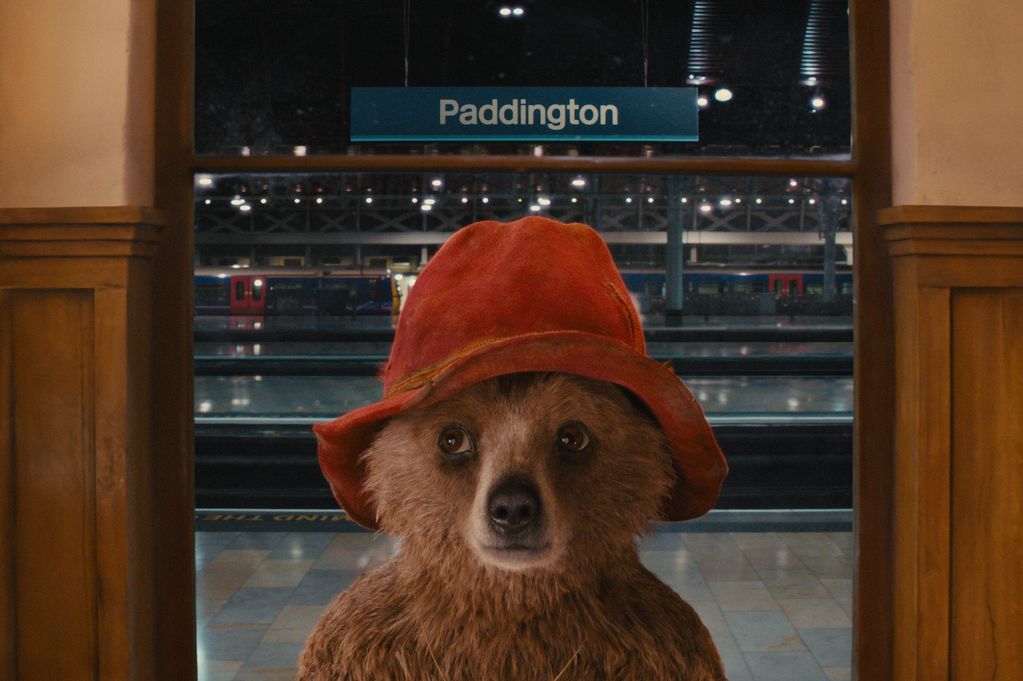
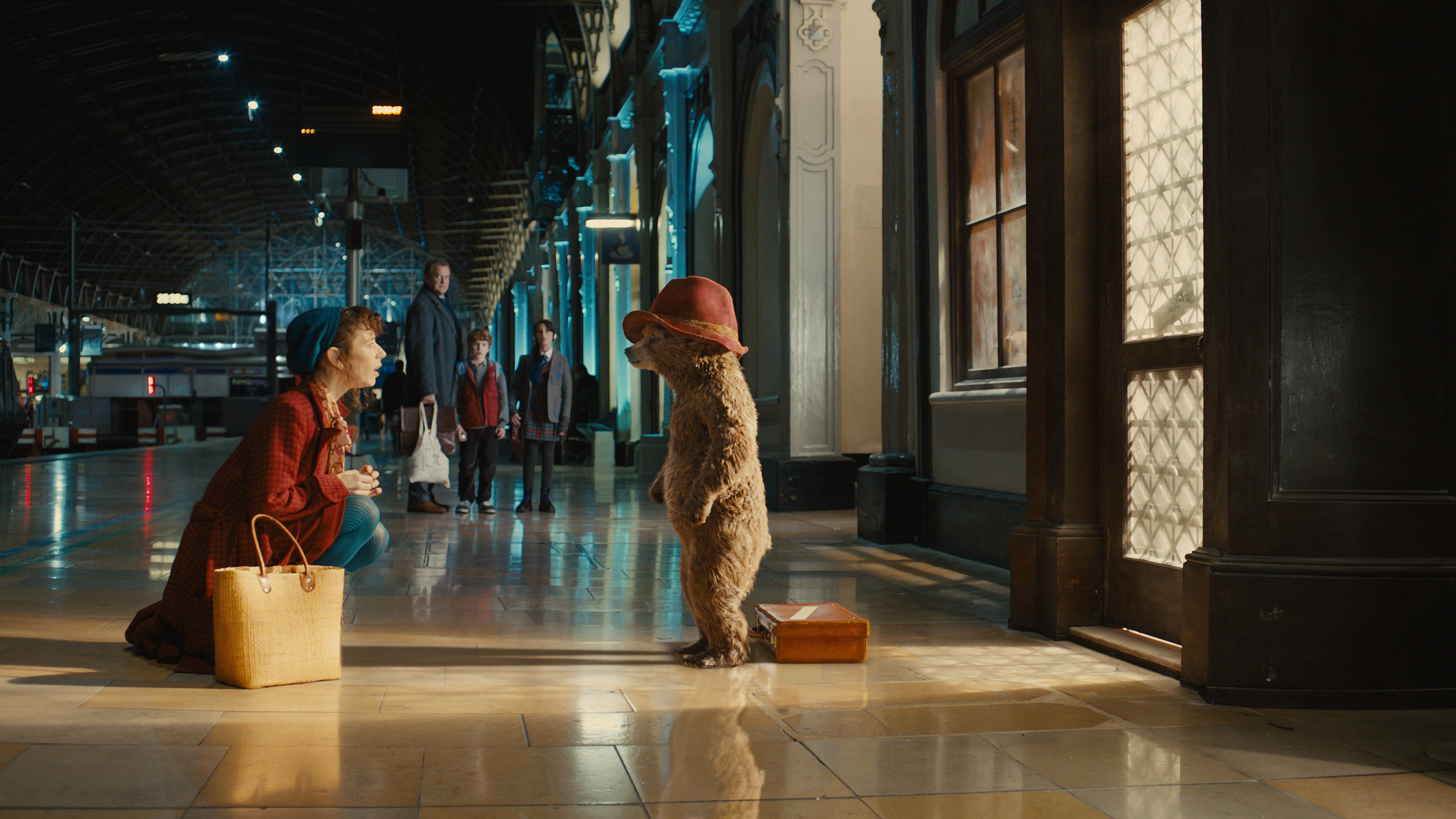
Loving the Other: The Cinematic Magic of Paddington

Source: www.walesonline.co.ukSource: http://www.walesonline.co.uk

It was the morning after the busy Black Friday weekend at work, and, predictably, I slept in. The rain was pouring down thick and fast and Glasgow was a gloomy vat of grey. There was a need for something warm and enchanting in this mist that overshadowed Christmas.

Every year, my Mum, brother and I try to find something to visit – it’s become a kind of tradition. An acoustic gig, a play or a film, usually. In past year’s, we’ve seen the likes of Pearl and the Puppets, Great Expectations; a long time ago, it would be Maybole Bazaar or the Carrick Christmas Show. Sometimes it’s true that the older you get, the better things are. There was a year when I was supposed to go see Frightened Rabbit at The Arches with some friends, but a heavy snowdrift cancelled out all the trains and so I had to content myself with a night at home studying Higher Sociology…

Anyway, this year I found myself on the train to Edinburgh on Sunday morning. Since the weather was a gloomy storm of wind and rain, we decided to go to the cinema. I always like the thrill of going to a cinema I haven’t been before – even if it’s got the same pick and mix, popcorn machine and seats, there’s still something exciting about navigating the screen doors and the dark staircases. We went to the VUE cinema. Mum was keen on going to see Paddington. I was pretty sceptical; I mean, I’m not too keen on animated films, and I agreed with my brother that it might end up being a bit…childish. Probably like going to see Frozen, although I wouldn’t dare to be so controversial as to comment on that film, and anyway I haven’t seen it. Certainly, when we sat down to watch the adverts, there were a lot of commercials for toys and cereal and films that come with a ‘U’ certificate. A baby behind us intermittently crying. We exchanged Sibling Glances. What was this going to be?

I suppose in my mind I’ve always lumped Paddington in with Winnie the Pooh, The Wind and the Willows, Watership Down and Beatrix Potter: fuzzy, anthropomorphic children’s tales which hold prime place in the history of children’s literature. Yet all these tales tend to have a hidden dark side: like all traditional fairytales, their simple stories of adventure are interwoven with commentaries on the likes of family, love, violence and perhaps even racism. So I wasn’t sure what to expect from Paddington, but as I waited for the adverts to roll out, I was imagining that perhaps this would be more than just a plain old children’s film. Maybe it would reach the stature of one of the only children’s films I like, the (I think) highly symbolic Bug’s Life. 

Paddington begins in the midst of ‘darkest Peru’, recounting a colonial tale whereby an English explorer named Montgomery Clyde makes friends with two bears and tells them upon his return to England that they will always be welcome in London if they ever visit Britain. The whole film holds a self-conscious ironic mockery of British colonialism, like some postmodern update of Conrad. Imperial knowledge is held by the ‘Geographical Society’ who cruelly banish Clyde for his benevolent approach to the ‘natives’.

Soon after, we witness fantastical elements of the bears’ lives as they live alongside their nephew in the wilds of darkest Peru. These lives are remarkably sophisticated, featuring an intriguing marmalade-making machine and a radio crackling with the sharp tones of BBC R.P. informing distant listeners about life back home on the streets of London. There are also some very nice hats. The simple harmony of the forest is disrupted one day by a violent earthquake, which leaves the female bear Lucy effectively a widow as the other bear Pastuzo disappears. Lucy sends her poor bereft nephew away to London to seek adventure and fortune by sneaking him onto a ship, and retires peacefully to a retirement home for bears.

After this, the film follows a somewhat bizarre but delightfully heartwarming immigrant narrative. The young bear finds himself alienated in a strange city, acquires himself a ‘British’ name (Paddington, after the train station he arrives at), and then a suitably quirky and very English family to adopt him. The Browns (with Downton Abbey’s Hugh Bonneville as the dad and Made in Dagenham’s Sally Hawkins as the mum) embody that kind of slightly dysfunctional, messy and a bit bizarre middle-class family that holds mythological status at the heart of our culture. Yes, there is the threat of stereotype, but the film carries off these qualities generally well as they mould perfectly into warm, fairytale figures that chime in various ways with cultural caricatures without becoming too flat or prescriptive. The stern, paranoid father and the liberal, empathetic mother; the boy obsessed with building things; the girl choked on embarrassment and fear of seeming ‘weird’ to her friends. The Scottish and slightly alcoholic housekeeper, Mrs Bird, who can predict things with her knees and saves the day towards the end of the film by distracting a security guard with copious shots of whisky.

We might compare this play on well-loved family archetypes it to the likes of TV comedies My Family or Outnumbered, which features semi-improvised scripts depicting the chaos of modern family life. The overly-inquisitive little sister Karen, the perpetually-stressed mum, the wearied father, the embodied chaos of Ben, the youngest brother, the sulky teenager. What makes Paddington shine above any TV drama is the simple humour of its script and the cinematic magic of its costumes: Nicole Kidman’s sharp heels and trench as she stars as the villainous taxidermist who seeks to capture and stuff our beloved bear for the Museum of Natural History, Sally Hawkin’s outfits (all marvellous colour-clashing, woolly hats and embroidered cardigans), and that iconic blue duffle coat and red hat that Paddington wears himself. Let’s hope sales of said duffle coat go up in the aftermath of this film because I’m more than happy to see it everyday, especially in that lovely cobalt colour that Paddington sports so well:

Source: www.cityam.com
Source: http://www.cityam.com

Then there’s the magic of the house itself, which features a giant spiral staircase and walls painted with a Japanese cherry blossom tree, the blossoms of which bloom or fade beautifully according to the emotional tone of the story.

As Paddington adjusts himself to (human) family life, the audience goes through scenes of low-level cognitive estrangement, as Paddington explores everyday human life and tries to make sense of it, with amusing consequences: flooding the bathroom, using a toothbrush as an ear-cleaning cotton-bud, mastering how to use the escalators at the tube station. As I said at the beginning, I’m not generally a great fan of animated films, but Paddington carries off its loveable animal protagonist flawlessly, down to the details of individual water droplets shaking off each strand of his fur. Originally, Colin Firth was set to play the voiceover for Paddington, but he stepped down after worrying that his voice didn’t sound quite ‘open’ enough for the young bear. Instead, Ben Whishaw got the part and the sweet dulcet tones that so charmed us in his portrayal of Romantic poet John Keats in Jane Campion’s Bright Star are here perfect for the innocent wide-eyed charisma of Paddington. It’s a remarkably technical process; Whishaw had to wear a kind of helmet so that the animated Paddington bear could match the facial expressions and head movements of his kindred (human) spirit.

Source: www.networkrailmediacentre.co.uk
Source: http://www.networkrailmediacentre.co.uk

London is a dream in this film. From the grand corridors of the museum to the polished floors of Paddington Station (I imagine a much-needed plug for Network Rail…) and the snowy streets, it provides a romantic backdrop to Paddington’s adventures that makes us fall in love with the old city all over again. Sometimes I get very sick of London, especially the way it always flickers through media as this glassy corporate giant full of rich people with perfect lives (I’m thinking of the sweeping shots that open The Apprentice or basically every shot in Made in Chelsea that isn’t an awkward closeup of someone’s glakit face). The London of Paddington is a city of nostalgia, drenched in snow and old antique shops and red telephone boxes and a Dickensian wallet thief. Peter Capaldi playing an archetypal nosy old neighbour with a cockney accent and Doctor Who scarf. The family portrayed at the heart of the film are at once old-fashioned (the boring, distant father that perhaps echoes the banker father of Mary Poppins?) but deal with relatively modern issues: the presence of technology, the moodiness of teenagers. It’s this blend of the nostalgic and contemporary that really adds magic back to London itself, that spins a fairytale of visual beauty and enough narrative suspense to keep you hooked to the end (there is the encroaching threat of Kidman’s cold cyborg of a villain coming to kill and stuff our beloved protagonist).

Aside from the lovely visuals and fairytale storyline of good vs. evil, there’s the narrative of the Other which I already touched upon. Paddington experiences both alienation and welcome, and simultaneously the audience goes through the motions of heartbreak and compassion. Initially, he finds himself spurned by Mr Brown for his clumsy inability to fit into the household without making a mess of everything. In the cold rain he wanders the streets, and finds shelter with one of the Queen’s Guards who kindly offers him an emergency sandwich that he has stuffed under his enormous hat. Paddington is of course perfect for Christmas time: there is the message of family love, compassion and understanding, but also that simple narrative of sharing food that means so much in the shared gluttony of the festive season. There’s a reason we buy a tin of Roses or Heroes or Quality Street and it’s not just because it offers choice, but also because it’s a shared pleasure. Much like the film itself (I recommend everyone sees it on the big screen where the glorious visuals can really come to life).

You can look to the likes of Derrida or Donna Harraway to academically unpick the importance of understanding animality and other species for recognising the animal in us. By the end of the film, we realise that species shouldn’t divide us or cause fear or hatred or hierarchy. It’s wrong to treat another being as an instrumental object: something to be prized and displayed and stuffed. Go to Peter Singer for some philosophy too; I recommend ‘All Animals Are Equal’ (1974). It’s wrong to treat the Other with anything less than the respect you’d give to your own ‘species’. If bears and humans can become family, then can’t we all as humans get along in the turbulent times of the terrorism and threat and anti-immigration rhetoric of the 21st century?

What draws the immigrant narrative out from this Every(bear’s)man’s tale of immigration is the interspersed classic calypso songs which a band play throughout the action. Michael Bond’s children’s books were written, as Tim Masters (BBC 2014) points out, around the time when a new immigrant community were settling in Notting Hill – the place where Paddington himself finds a home. The songs are all positive and cheery, telling a story of endurance in the face of hardship and rippling with a fresh, hopeful spirit. The kind we need for 2015. By invoking the positive narrative of the Caribbean settlers in the mid-twentieth century (who came to help rebuild post-war Britain), the film implicitly critiques our contemporary societal stance on immigration. All the fear-mongering rhetoric that gets whipped up by the likes of UKIP is exploded in this heart-warming tale of love and discovery and acceptance of difference. It’s a classic tale of the journey of the Outsider that could be applied to anyone who has had the experience of settling into a new community as some kind of racial/ethnic/sexual/physical Other. And perhaps this, more than anything else, is the enduring magic of Paddington. So I’m glad I went to see it.

(On a side note, the only thing I was sceptical about was the heroic pigeons who essentially save Paddington at the film’s climax – not to put to fine a point on spoilers – I can’t see pigeons ever acting so benevolently. But then maybe that’s a terrible species bias that I should work on myself).

Bibliography:

Masters, Tim, 2014. BBC News Online. http://www.bbc.co.uk/news/entertainment-arts-30196290

Pauli, Michelle, 2014. Interview with Michael Bond. http://www.theguardian.com/books/2014/nov/28/michael-bond-author-paddington-bear-interview-books-television-film

Christmas Traditions

2012-12-24 22.46.37

Christmas begins with a different ritual for everyone. For some people, it’s when the radio stations start playing familiar Christmas hits from the 80s. For others, it’s the first bite of a mince pie crumbling its buttery sticky sweetness in your fingers. For most supermarkets, it’s the day after Halloween, when the shelves are quickly stocked with tins of Roses and Quality Street and Celebrations and a Christmas tree is rather humbly erected in every store’s entrance. For me, it used to be when we started making cut-out paper snowflakes at school; when they would play Christmas songs on the old stereo system that crackled when anyone walked near it, as if it were possessed somehow. Or a trip to a pound shop to buy our dog an artfully tacky sparkly collar and/or chew toy and/or basket of treats. These days I’m involved in buying sparkly socks more than dog collars, but the sentiment is still there.

2012-12-18 21.03.42

Some people are super keen for Christmas and have their trees up right from the first of December. In the library during exam period the festive jumpers are out in full swing, as are the seasonal lattes (Praline and Pumpkin Spice) retrieved from the Byres Road Starbucks. In our house, the tree usually doesn’t get put up until Christmas Eve; since our cousins from England would sometimes come up to us, we would wait for their arrival to decorate it, late in the evening, before leaving out a carrot, mince pie and brandy for Rudolph and Santa.

Traditions, however, change just like people. At school, Christmas came with the baggage of P.E. becoming training for social dancing throughout December. No Scottish child has been exempt from the painful awkwardness of having to choose a sweaty-palmed partner and learning to dance often incredibly complex steps (I’m looking at you, Strip the Willow) to the amusement of all their peers. And that’s if they’re lucky enough not to be left last and paired with a teacher. Of course, the older you get, the less embarrassment tends to dominate your entire consciousness, so dancing becomes more fun. You know, I would even go to a ceilidh of my own free will now, although back then I thought it was a form of torture cooked up to torment children out of enjoying their Christmas. It didn’t help that the school dance also involved the necessity of buying a compulsory sequined party dress (not a fun enterprise when you are a ten-year-old tomboy that hates shopping) and a dinner whose only option for vegetarians was salt and vinegar crisps (I swear I’m not really complaining). Still, the brutally hilarious fights over ‘he wiz dancin with ma girlfriend’ that you could witness outside afterwards while waiting to be picked up made the night somewhat worth it.

74400_1617334603666_562522_n

At secondary school, playing in the brass band forged new festive traditions. There were the rehearsal days for the Christmas concert, where you got to take a whole morning out of class, carrying your instrument down to the tinselled town hall and sit for hours munching snacks from the local Spar and watching everybody else perform. Then there were the primary school tours, where we would pile into a mini van and play in the surrounding school assemblies for the generous payment of a box of chocolates that were swiftly devoured before lunch. You felt so important, playing up there on a stage and being praised by your old teachers while all the little kids watched you with wide-eyed wonder and you remembered that you were in that crowd only a few years ago, hoping that someday you could be the big kid on stage with the shiny instrument adorned with tinsel.

2013-12-10 12.51.22 HDR

When Glasgow’s shoppers’ wonderland, the aptly-named Silverburn, opened its doors, a new tradition was created. Picking me up after a hard day at college, Mum would drive me up to the shopping centre and we would do the last bits of our Christmas shopping. There’s a certain magic to the indoor consumer paradise, with all the lights and the giant snowglobe for kids to get pictures in and the seductive glow of expensive shop windows. Everything was warm and clean and once we’d done our shopping we’d go for a mince pie at Starbucks, where we could look out over all the people dressed in reindeer jumpers and laden with glossy shopping bags. These days, traditional Christmas has become more fashionable and you can go to see the Christmas markets in pretty much every British city. It all has a German and Scandinavian flavour which still feels a bit refreshing. We used to always go up to see the lights at George Square, a tradition that seems very sad and innocent now after yesterday’s heartbreaking incident, but nevertheless retains importance in my memory – and many people’s memories, I should imagine. There’s also the lovely, extravagant decor of traditional department stores which resonates the Christmas magic of the early twentieth century: I’m thinking Princes Mall and House of Fraser in Glasgow, then Jenners and Harvey Nichols in Edinburgh. I’m sure London too has much to offer, although sadly I only get to experience that through my half-hearted attempts to join my family in watching the terrible Christmas specials of Made in Chelsea.

George Square
George Square

It used to be that we’d go to Culzean to collect twigs and fir cones and sprigs of holly for decorating the house. We’d spray them with gold and dip them in glitter. Sometimes we still do that, as if living out the old ritual of making Christmas cards that Mum made us do every year when we were at primary school. I love crafting and firmly believe that it’s one of the most relaxing things you can do. A few years ago I went through a phase of making loads of candle holders out of glass jars which I painted with acrylics. At school there was always the last few days of term where people wandered about not doing much and hardly going to class. Teachers would wave us away with a ‘Merry Christmas’ instead of teaching us and we’d sit and watch Meet the Fockers on repeat (at least in primary school we had the enterprise to bring in board games) and wish we’d decided to skive. Often I retreated to the art department where we could make snowflakes and paint bottles and pretend we were little again.

2013-09-22 21.37.42

At uni, the last classes are a bit more exciting. For one thing, mulled wine often factors in. Also, the fear (in first and second year at least) of Christmas exams. I used to hate how university decided to give us exams in December, with only a week to study for them. It was incredibly stressful, but in the long run I suppose it was a good thing because we didn’t have to study much over Christmas, as we did with the January prelims for Highers and Advanced Highers. Sometimes, the fear makes Christmas all the more sweeter. I remember in my first year at uni, I’d just gone with a friend to an impromptu gig at Brel on Ashton Lane. It was Rachel Sermanni and the singer from Admiral Fallow who were playing acoustic sets and it felt very wintry and magical. And when I left, to go back to my flat to cook chilli bean soup and study, it began to snow as I walked up Great George Street. It was one of those enchanting moments when you feel everything swell up and really seem to mean something. Like you’re in a movie. I was finally so happy to be in Glasgow and a student, even with three exams that week. It’s hard to not love your university and city when it looks like this:

329500_2676540883161_1993424224_o

After exams (and more recently, essay and dissertation hand-ins) comes all the comforting Christmas rituals that I love so well. Buying sparkly nail polish and the December edition of Vogue which weaves a fantasy of luxury office Christmas parties thats nowadays I have the (privilege?) of serving if not just imagining. Seeing fairy lights being put up in the restaurant where I work and all the Black Friday and Christmas bookings looming before us. Decorating the Christmas tree at home each year with new decorations got in our stockings. I missed out on decorating the Christmas tree at school, but came back from Belmont one day to see that we’d managed to procure one for the sixth year common room, and someone had decorated it artfully with ornaments worthy of any John Lewis special collection: a load of empty crisp packets.

My flat at Christmas time, 2012

Still, sometimes makeshift Christmasses can be fun, or at least interesting. My brother and friend Jack randomly phoning in and singing ‘Last Christmas’ live on BBC Asian Network radio. Stringing a half-hearted bit of tinsel and some Poundland fairy lights over my bookshelf. In first year at uni, we had a festive dinner party in halls, but seeing as I’ve always prioritised exams and studying over pretty much everything else, I ended up cooking my own vegetarian option which was incidentally the only thing I had in the fridge: a fried courgette. Even so, the party poopers (obviously I was included) were the ones who had to scrape all the meat scratchings and grease off the dirty pans like a band of Cinderellas until one in the morning while everyone else was having a good time at the QMU’s Cheesy Pop. Still, it was a lesson in the underside of hospitality…

My Mum's nutroast
My Mum’s nutroast

Arguing about who will do the washing up is a regular feature of our household at Christmas, as it probably is pretty much everywhere. It’s not so bad when you do it together. That’s the festive spirit, anyway. Then on Boxing Day we tend to go for a nice long walk – one year it was along Ayr Beach and through Belleisle, another through Maidens and Culzean, in past years it will have been places in England. Christmas Day used to be an early dinner and then sitting in  the hallway stuffing myself with Quality Street and playing the new Pokemon on my Game Boy Advance while everyone else watched the Queen’s Speech and boxsets of Only Fools and Horses. We still retain the tradition of eating bagels for breakfast (I wonder is this some kind of strange nod to our Jewish ancestry?), but nowadays it’s more a cheeky Amaretto or some Bucksfizz (maybe it should adapt and be Buckfast) and a lovely walk up to Maybole monument through the golf course and dinner at about eight when the crappy oven we have at home has finally decided to roast the parsnips. Both have their magic. The best part is still the waking up early to open my stocking. This year, I’ll be working Christmas Day, so I’ll have my Christmas on Boxing Day. But that’s okay, because Christmas is what you make it.

A typical Christmas scene...Bella worn out from opening her many presents...
A typical Christmas scene…Bella worn out from opening her many presents…

Time present and time past are both perhaps present in time future: A Year in Review

10350989_10152268098521309_5656240328826622387_n

How are you meant to review a year when the year itself isn’t quite over? You try and think of it as a block of time: a chunk of events lumped together to form some kind of history. You’re always reaching out for connections, trying to box things and label them as such. This was the year I got divorced and found my freedom; the year I graduated and stepped onto my career path to success; the year I lost someone dear to me and found solace in a new hobby. The movies have it all mapped out for us, the way we’re supposed to review the events in our lives. Facebook, Flickr and other social networks that we rely on help us with this theatre of memory, by archiving everything together in chains of photograph albums and status updates. Events are strung together in relation to chronology and names and computer-configured faces; what happened to who, who was tagged where, who liked this and who got married and who had a baby and who got promoted. Every element of time is rendered orderly, linear. Compartmentalised to make us all competitive, individual, empathetic, jealous. We’re moving on a straight line towards goals, achievements – more notches to add to our timeline.

But what end are we moving to? A timeline cannot flow on indefinitely; or can it? Surely it’s meant to document an A to B, a fixed period in time with all the events this period contains (contained). Life, as we commonly think of it, is a series of events strung together only by their relationship to the future, to development and change. We hate stasis; we love drama. Really, as Freud put it, what we desire is death.

Desire, however, isn’t quite as simple as this. Freud, as Deleuze and Guattari argued, ignores the basic tenants of capitalism. The need for more, more, more which arises not solely out of some psychoanalytic lack, but out of production itself. The act of purchase, the mesmerising experience of lifting up some pretty snow globe and spinning it in one’s hand and thinking I would like to buy that. The flicker of a giggle as we take it home, imagining how our new product is going to enhance the life that fills our fragile hours. Fill a room and create new topographies of mental space. For everything we see disrupts our schemas of reality, even if only slightly. The snow swirls up and covers the landscape and for that moment we are free from the chaos around us.

What we are looking for is T. S. Eliot’s ‘still point in the turning world’: that perfect moment where we are at peace with ourselves, where we see through to the present itself amidst all the churning miasma of the world we exist in. The wars and media images, the headlines and celebrity photographs and radio crackle and dance music beating and phones ringing and Blackberries bleeping and all the million signals that flicker in our brain as we gaze into a computer screen. For we are multiple, divided, networked creatures, always-already caught up in swarms of information. Time is not a static archive, but a rhizome of interconnected possibilities that flash and shift and click in our minds.

And what’s more, events in time always come back. The logic of the return. Write a sentence and press the Enter key. We aren’t just running forward into the bright light at the end of some metaphorical tunnel. We follow our lives in a loop. Spilling over and retracing our steps. Think, for example, of a book: meaning is made not from a linear plot, but from the intricate play of signifiers and motifs which weave a melody of meaning throughout the narrative, linking the past and present with a possible production of future. That old New Critical interplay between Fabula and syuzhet.

Real life too. Wars return and people die in the same way, as if re-enacting the past in some big-budget film, tracing archives of pain that carve out a bitterness in history. We stand in the mirror at roughly the same times each morning and perform the same routine. Routine, like it or not, structures our whole mentalities. That’s why culture is formed on the basis of habit and ritual. Religion falls in here too. Are we always waiting, as Yeats suggested, for the Second Coming? The ‘revelation’ that is always ‘at hand’, ‘surely’? Let’s circle back to the start – of the twentieth century, to be specific. Freud says our personalities are determined by the first few years of our lives. Our anxieties now repeat the biological functioning of our infant bodies. Are we so caught up in ourselves that we cannot think beyond our bodies?

***

What does it mean to be in simultaneous temporalities? I write this sitting by my newly-decorated Christmas tree, in the living room where I spent almost every Christmas of my life since the age of three. The smell of pine and the reflection of fairy lights through the window lighting up the pampas grass in the garden. Everything wondrous and dark. Remembering lying on the floor after a day in town drinking Jack Daniels and shivering cold on the bus and listening to Muse’s ‘Butterflies and Hurricanes’ and dreaming of another night so unlike this. The frozen park in November with the roundabout and fireworks and the tall black shadows of the distant trees. Now the steady showering of rain at the window, spraying like glitter under the orange lamp light. Once there were family members sitting where I sit now, all laughing and ripping open presents and drinking sherry. My dog Bella climbing over everything, whining and wreaking havoc with the whip of her tail. I slip through all these memories until they feed my present. I cannot focus on one thing alone. I feel like I am several people at once. I am no longer singular. No longer a statistical person.

What happens when you are no longer one person? There is a politics to this. There are the people that believe in return and repetition. People whose whole religion is based around recurrent events and cyclical time. The solstices of Paganism, then the spiritual systems of the Mayans and Aztecs. This contrasts with the Judaeo-Christian vision of linear time, which starts with Creation and ends with the Second Coming. But what if this Second Coming was always coming? To come? Since the present is contaminated with the future (unconsciously or not, the things we think and do are always shadowed somehow by some possibility to-come), doesn’t this render the idea of ‘the present’ almost impossible? Do we slip into the spirals of Yeats’ gyre and Derrida’s spectrality?

Are we on a road or an ocean? A stream or a snowball?

Capitalism and heteronormativity set out a life plan for us. Find a mate, get married, reproduce, recreate the system. Work, earn money, pay your way. Consume. These are all instrumental processes which work towards goals. Inside these events we make our own histories, certainly, and there is a degree of creativity and fulfillment. We aren’t just pawns. But this isn’t the whole story. Here comes in Judith Halberstam’s queer temporality. What happens to the temporal experience of those who do not follow this conventional route to eventual death? Who fill their lives with more entangled possibilities which are fraught with uncertainties and questions rather than fixed narratives and clear answers…

Remembering his lover’s death from AIDS, Mark Doty says: ‘all my life I’ve lived with a future which constantly diminishes but never vanishes’. The looming possibility of a non-future, a future without hope or action or life, shifts the focus back to the present. Gone are the regular goals of ‘making a living’, ‘providing for the future’, ‘putting something away’ for one’s children. The next generation are often invoked in political discourse. Global warming is dangerous because it will spoil the world for the children of the future. Non-heterosexual relationships are supposedly dangerous because they don’t follow the capitalist ethic of (re)production in the strict sense. Atheists threaten the idea of progression because they do not believe in a future beyond. The list goes on. Sometimes we are unaware of how important time is to politics. If we ‘queer’ time by questioning the validity of its conventional Western linear conception, what kinds of lives can we live in our present political realities? How can we change – perhaps even revolutionise – the system. There’s the old doctrine of Hedonism – live out your pleasures in the present with a general disregard for others and the future. But the present isn’t inherently selfish. It’s a place where people can come together and change things, without being bound to the very isolated narratives of old age and death.

Drugs, jobs, relationships and illness all alter our experience of time: slowing it down, speeding it up, blurring it, erasing memory, making us fearful for the future. As these things become less stable and more unpredictable, how will this affect the future?

Will we have a future, or will it be a series of presents? Can we really look to the future?

Maybe the answer is in science fiction.Think of Ursula K. Le Guin’s The Dispossessed (1974), which explores the concept of anarchist politics through ideas of simultaneous temporality and cyclical return. Revolution and repetition are in operation at the level of both form and content: story and narrative, narrative and story. Time revolves in curious ways around and between two planets, just as a moon revolves around the Earth…but what does the Earth do when you are on the moon? Einstein’s relativity comes to disrupt the easy narrative of linear time, even at the level of science…

Maybe the answer is also in our own experience. Think of a memory. Any memory you have: the first time you rode your bike, the time you fell over while dancing drunkenly on a beach in the freezing winter, the time you lost your first pet to the grovelling paws of death. All these memories do not stand alone in our minds like a physical photograph stuck and labelled in an album; but are rather bloated and blurred with the original anticipation of the event itself, and of the aftermath – the events which have happened since and in turn coloured the original. Repetition is not static but transformative. Moreover, human beings revel in repetition. The simple pleasures of revisiting an event, even if just to experience the same emotions again as they recur in a faded form like a polaroid misted by the breath of time. Maybe that’s why people have children, so they can do the things they miss doing as a kid. And as Fredric Jameson points out, in the postmodern condition of consumer capitalism, nostalgia becomes an industry itself, shaping culture from advertising to film and literature. As our lives get more complicated, faster, information-saturated – we return to an idealised, rosy history that is often removed from any genuine meaning.

***

I always find Henri Bergon’s work fascinating, when I can get my head around it. He was writing around the same time as William James, the psychologist that first coined the term ‘stream of consciousness’, which is still widely used today to describe the workings of our minds but also how these workings are depicted in certain kinds of literature. Yet a stream has linear connotations, assuming that our mind is always ‘in flow’ – moving forwards and never stopping or growing, just streaming onwards. Bergson, however, figured consciousness as an experience of ‘duration’. Think of any moment, any moment as it happens. As soon as you think of it, with a milli-gasp of a second, it’s gone again. Time is always shifting and never static or complete. While science might attempt to chart time in a linear, measured fashion with clocks and calendars and equations, in our psychological experience; time does not easily fix itself to such points. It can only be grasped by imaginative intuition; it is always fallible and contingent, never the same as each moment reconfigures the last, endlessly shifting our experience of the world and ourselves: ‘my mental state’, as Bergon puts it, ‘as it advances on the road of time, is continually swelling with the duration which it accumulates: it goes on increasing – rolling upon itself, as a snowball on the snow’. And so where does that lead us, if not to the icy abyss of our certain deaths?

Well, for one thing, it actually confirms that we are not mechanical beings, destined to follow the path that time lies out for us. Sure, we will probably all die. But importantly, if Bergson’s theory works, we have free will; imagination plays a significant role in determining our relationship to the past and future. The moment is always an evolution, and this gives us a kind of freedom.

There are, of course, a multiplicity of links between return, recurrence, rupture and revolution. The breaking free of history as history is understood in a linear manner, read from front to back like a traditional book.

Literature has a long history of delving into irregular conceptions of time. An example might include Tom McCarthy’s Remainder (2005), in which an unnamed protagonist decides to reconstruct a series of memories after coming into a large sum of money following a mysterious accident. These reconstructions are performed down to the smallest of details: the expression on an old lady’s face as she takes out the bin, the cats that prowl the rooftops, a crack in the wall, the pattern of floor tiles, the sound of liver frying in the flat below. What follows is a topography of static memory, caught in the narrator’s imaginative present. Time loses its linear quality as the past plays out in ‘real time’ with the narrator switching his memory scape into ‘on mode’, hiring ‘re-enactors’ to perform the roles of the people in his memory. And yet an amnesia and aporia haunts the narrative, as we are never quite sure where these memories originally came from; whether they even belong to the narrator. With a book like this, we lose the certainties of the traditional realist novel and the linear movement which often ended so finally with the closure of marriage or death – the first promising reproduction and progression, the latter an ultimate extinction that ends the line. There is something about the novel form in general that links it irrevocably to time; it is not contained in a performative moment like poetry, but must be read over a series of hours or days or even weeks. We physically must turn the page. Days pass in the novel, or maybe they don’t, as in the one-day novels of Woolf and Joyce (Mrs. Dalloway and Ulysses). Novels often concern themselves with memory and futurity; the sheer arrangement of sentences on a page, moreover, takes us through time. Time flows as we read. We make connections and go back again; we are at once linear and circular as we exist as minds in a novel.

But we are now in the era of the great hypertext, which denies all paths to origin in its networks of complex code and multiple nodes. The Internet exists largely in a state of simultaneity, connecting various presents from around the globe. And yet, like Bergsonian duration, it resists a static conception of time; everything about a webpage is always changing as new file paths are forged, different visitors leave their online traces, new links and reposts alter the original location. Life is a labyrinth, but we would do well to forget thinking about what lies at the end. Maybe we should focus on the here and now, and give ourselves the freedom to transform the present.

***

And this year? Well, this year started with a parting: losing my most beloved pet to death. All life is a natural cycle though, as the year ended with two new births in our family. On New Years Day 2014, I went for a walk to refresh my head from working the night before. A man stepped out of the 24 hour newsagent with a bottle of Mad Dog 20/20 and cracked open the screw top to a dream of futurity that ended in drunken oblivion. I feel this is somehow fitting.

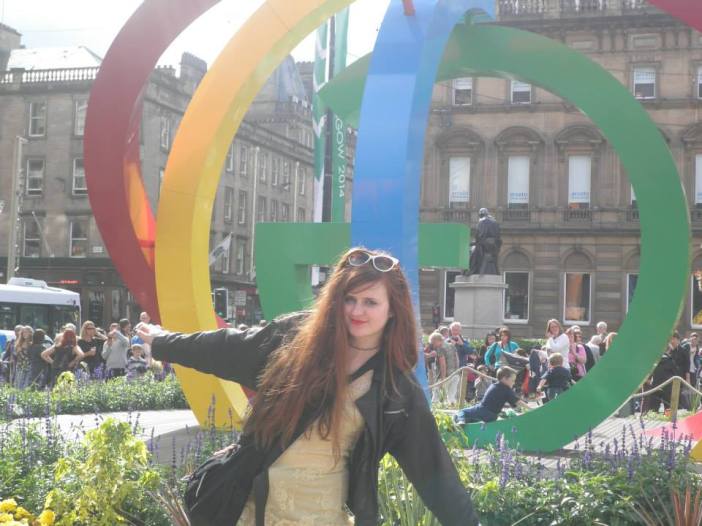
Most of my months passed in the library with the seductive glow of the computer stopping me from doing much other than reading and essay writing. I fulfilled both of my somewhat humble resolutions to a) do more creative writing and b) grow my hair down to my hips. I passed my exams and spent my 21st birthday hanging upside down at the park. Went to Dublin and even got a bit tanned and kind of liked Guinness. Saw Little Comets twice, first at Cabaret Voltaire and then Liquid Rooms in Edinburgh. Spent quite a bit of free time in Edinburgh actually; explored the Botanic Gardens and the beach at Portobello and went for walks at Dean Village. Listened to lots of Belle & Sebastien, Manic Street Preachers, the new Bright Eyes album and a heap of other stuff. Bagged an iPod classic before Apple stopped doing them. Had one of my best Wickerman Festivals and ate coffee granules for the first time. In August I went down to England to see family and ended up at Stepney Green, going ‘back to the ancestors’. Drank a lot of ginger tea and did some yoga. Went to Loch Lomond. Averaged about a kilo of chocolate a week, mostly Dairy Milk. Got a blog article put up on WordPress’ Freshly Pressed which was lovely. Went through the referendum and came out a little deflated but unscathed. Also enjoyed the spirit of the Commonwealth Games, even if I couldn’t really give a toss about sport. Saw an amazing sunset on Ayr beach, all alcopop pinks and oranges burning and sinking into the silver sea. Wrote three times my dissertation then another proper word-count-conscious dissertation and didn’t go completely insane. Served Alasdair Gray some brandy and a few months later . Started playing trombone again. Enjoyed one sip of red wine and dyed my hair strawberry copper. Went to a conference call to Peter Singer. Changed my favourite study space in the library…

Yep, as you can probably tell, my 2014 hasn’t been exciting by most people’s standards. But you know, it was a very good year overall. God knows where I’ll be a year from now, having graduated and moved out and hopefully made some provisions for the future. But even if I haven’t, even if it seems that not much has changed, what does it matter when everything dissolves in a series of moments? 😉
10489865_10152315313756309_3620620074657700141_n

Some Reading:

Deleuze, Gilles, and Felix Guattari, Anti-Oedipus: Capitalism and Schizophrenia.

Bergson, Henri. Creative Evolution.

Eliot, T. S. Four Quartets.

McCarthy, Tom, Remainder.

Halberstam, Judith, In a Queer Time and Place: Transgender Bodies, Subcultural Lives.

Perfume Junkie

(So I thought this article was kind of Christmas appropriate, given that in the familiar nativity story, the Three Wise Men bring Jesus the precious scents of myrrh and frankincense.)

***

‘Perfume is like a parenthesis, a moment of freedom, peace, love and sensuality in between the disturbances of modern living.’

(Sonia Rykiel)

‘To create a perfume you have to be the servant of the unconscious. Each idea evolves and transforms, but there should be a surprise with each note.’

(Serge Lutens)

Perfume is a strange part of our everyday lives that acts as a channel of sorts. The word perfume comes from the Latin per (through) and fumum (smoke). This conjures the image of an ethereal essence which, like smoke, carries through some kind of message. We might think of it as an unspoken means of communication, a way of emitting some essence of ourselves to those who happen to pass close enough to catch a glimpse of our secret aroma. One that releases itself only from certain spots on the body, places we have chosen to let the scent develop. I love the way that glossy magazines and figures of high fashion talk so indulgently about perfume. It’s like poetry: a complete decadence of revelry in words. It’s like reading a wine list and falling for a string of adjectives rather than the taste of the drink itself. Rich, smoky, full-bodied, bursting with dark fruits. The poetry of advertisement aims to seduce. So too does perfume: it is a seduction not only in a sexual sense but also a seduction of self. A seduction of memory.

I was probably about nine or ten years old when I made my first forays into the world of fragrance. Certainly, I was still at primary school. I used to sneak into my Mum’s bedroom while she was eating her breakfast downstairs and try on what she had. Her dressing table was never cluttered with pretty glass bottles (more like heaps of unusual jewellery and hair mousse), but she did have a couple of classic Body Shop numbers. There was of course the famous White Musk, which I started wearing often. I liked the soft but heady smell it had, not too overpowering as a floral but sweet enough to stir your senses with its blend of ylang ylang, jasmine, rose, musk and lily. Then a while later, she gave me a bottle of spray she didn’t want, this time the Body Shop’s Oceanus. Or was it Ocean Rain? – no, I am getting confused with an Echo & the Bunnymen song! It was actually quite a strong one, though it wore off fairly quickly. I suppose it was meant to smell sharp and fresh like the ocean, and actually it was quite a nice one to wear at school where P.E. and stuffy classrooms were never conducive to pleasant aromas.

We were of course, forbidden deodorant in P.E. This was at secondary school, where everyone was aware that they had, y’know, adult bodies now, bodies which tended to sweat after exercise (even the half-hearted exercise we attempted in class). The teacher would storm into the dressing rooms at even a hint of spray being used, demanding that the most suspicious looking pupils empty their bag in front of her to reveal the contraband goods. She must have hoarded a whole treasure trove of Charlie and So…? and all those other brands we clung to as adolescents. On such days I would hide my little bottle of Oceanus in a glasses case at the bottom of my bag and spray it liberally once the coast was clear. A sea tide of refreshment filled the room. The contents of that bottle seemed to last forever; in fact, I think I still have some left in my bedroom.

The first perfume that was gifted to me was a miniature bottle of Burberry Touch. It’s a pretty intimate scent, threading together notes which include jasmine, raspberry, pink peppercorn, vanilla and oak moss. It sounds sweeter than it actually is: this is a strong scent but also has an air of sophistication. It feels grown-up and even a bit masculine (perhaps that’s the base notes of Cedarwood and oak moss?). I was fourteen when I got it so it ran out fairly quickly, but I now have a big bottle of it on my dressing table.

I also, at quite a young age, acquired my mother’s bottle of Yves Saint Laurent’s ‘Paris’. Launched in 1983, this distinctive scent was meant to capture the spirit of Paris with its heady blend of Damascan rose and violet, which after hours of being on your skin transforms into English rose and whispers of mimosa, sandalwood and musk. There are other beautiful notes in there: orange blossom,  amber, jasmine, hawthorne, heliotrope. It’s so complex that I’m still working out whether I actually like it or not. I wore it all the time until I was about sixteen. It’s far too grown up a scent for someone to be wearing at that age, but somehow it matched my wearied spirit. It felt almost exotic, a smell from far away. Something about it matched the impressionistic notion of Paris I had; a Paris which shimmered with the seductions of beautiful art and mysterious, moody people. It was certainly a smell which took you out of the dreary realities of Maybole, if only for that first spritz in the morning. The pale gold bottle with its crystalline, faceted surface and satisfyingly chunky feel still has pride of place on my shelf back home. I’ll spray it every now and again – what’s left of it – when I feel the need for a bit of escapism or nostalgia.

Source: https://www.flickr.com/photos/jsgutierrez/8778507488

I like to think that when I’m using perfume I had years ago, I’m speaking to some secret old self, one that got lost in the ethereal tangles of time and change and forgetting. For Christmas two years ago, I asked for a bottle of Chloé perfume. Chloé was the first ‘proper’ fashion fragrance I bought for myself, when I was fifteen, in the Christmas sales of that freezing winter of 2009. To this day it’s definitely still one of my favourite scents. Along with Miss Dior Chérie (the orange one), which I also had as a teenager, it’s a romantic scent, sparkling with pretty florals and a dab of French sophistication. Both bottles are adorned with a ribbon to signify the femininity and lighthearted spirit they intend to convey. Chloé is quite a strange and unusual floral, with rose at its heart, honey at its base and the tartness of lychee as its top note. The blend is very smooth and does not induce headaches like some other more couture brands; it is at once instantly recognisable and also quietly luxurious on the wearer’s skin. When wearing it, you want to be riding a vintage bike through some sunshine street in Paris, where all the lamps light up for you, and your destination is a quiet picnic in the park, or a date with a good paperback under the canopies of a Montparnasse café. The bottle is quite short, almost stumpy in comparison to the tall thickness of Burberry Touch, but this makes it easy to cup in your hand to apply. It sits prettily on my dressing table, even with only a few dregs of scent left in the bottom, amid bottles of glitter nail polish and fragments of hair ribbon. If I had to pick a ‘signature’ perfume, it would be Chloé; a friend once texted me saying she was spraying it in a shop and instantly thought of me, which was sweet.

Source: https://www.flickr.com/photos/idhren/7171470710/in/photolist-aktUVr-8QgRJY-63ty7o-dp8nWE-8N2gQN-bVHEEq-bWrF59-bVHF4w-bVHEoJ-6u9PLc-ea9vW5

When I got my second bottle of Chloé, the scent instantly evoked that feeling of being fifteen again. It wasn’t an entirely bad experience, it was a taste of having that smallness, that protected enclave of a childhood world again. Or at least, the experience of being on the brink between the world of childhood and the uncertain future of adulthood. Perfume, I suppose, makes an industry of Proust’s ‘involuntary memory’: the idea that under certain conditions, one is transported back to a clear, distinct memory. Not wilfully, but through some item containing the ‘essence of the past’, whose sensory associations stir up the scene of some personal history. For Proust, eating a tea-soaked ‘madeleine’ cake recalled a childhood scene where he ate such a snack with his aunt. For me, spraying Chloé makes me think of warm radiators and school mornings in the cold pits of winter, or getting ready to perform in jazz band concerts, sweating under the hot lights. Leaning against the window of the 361 bus, reading Margaret Atwood. Floating through Ayr on the way to college, stopping always at Debenhams to spritz on their testers. I’d spray the little pieces of cardboard they provide you with and slip them in my bag, so that all my notebooks smelled of my favourite perfume. Sometimes my friends and I would spend an hour or so trying on all the perfumes, until we left smelling like we’d fallen through some vat in a Dior factory, causing everyone in our near vicinity to sneeze violently. I still enjoy doing that, although these days I set my sights on the counters at House of Fraser.

Strangely enough though, the older I get, the more I’ve switched to simpler scents. Part of this is a side effect of student stinginess, but I also like the freedom of buying several scents and being able to choose between them, to suit the weather or the seasons. I guess perfume is just something I tend to waste my wages on, the way that others waste them on Asos, cigarettes or vodka oranges. I have too many Body Shop Eau de Toilettes to count. There’s Chocomania, a very rich and some might say saccharine rendering of lush dark chocolate – perfect for those gloomy winter mornings when already you’re craving your bed and some hot cocoa. The distinctively tropical Coconut, which is, admittedly, more Bounty Bar than fresh jar of cold-pressed coconut oil. Then there’s the clean bright tartness of Satsuma or Strawberry, refreshing for summer. The milk chocolate and almondy sweetness of Brazil Nut. Honeymania, which does what it says on the tin and makes for a perfect late summer scent. I suppose, at less than £10 each, these perfumes make great little gifts or stocking fillers, which last a surprisingly long time. You could mix and match your scents (I like the sound of chocolate orange, brazil & coconut or honey & strawberry), and the small light bottles make them portable for your handbag. And with Body Shop (I swear I’m not a brand ambassador!) there’s always the positive that everything is ethically produced, usually from Fairtrade ingredients.

In a pricier range of perfume, I recently revisited one of my favourite childhood smells, Penhaligon’s ‘Bluebell’, which I got as a present for my 21st. When I was a very little kid, my dad brought back from a trip to London a velvety purple bag full of Penhaligon’s samples. They had enchanting names, like Elixir, Gardenia, Elisabethan Rose, Levantium (oh to have a perfume with the top notes of saffron and absinthe!). The one that stuck with me was ‘Bluebell’, which felt the most quaint and old fashioned of all the scents. The bottle, for one, is gorgeous, a little bit Art Nouveau, a little bit of simple prettiness. I could easily imagine myself, smelling it now, as a little girl running about in a field of bluebells. It’s not over-sweet or stuffy; it reminds me of the kinds of luxurious scents that would be spritzed around in early twentieth century department stores. I think of Cassandra and Rose in one of my favourite books, Dodie Smith’s beautiful coming-of-age novel, I Capture the Castle (1948), as they wander through the fairyland of such a store in London and marvel over the bluebell perfume. You see, there’s more than just chemicals and packaging to perfume; it always has some kind of rich cultural and personal history living in its notes.

bluebells in Culzean woods

***

Do you remember your first science classes? Most of those memories are probably enriched by the strange smells concocted from an uncertain mixture of suspicious substances. The rotten eggs of sulphur, the acridity of various nitrates. What stands out most for me was a lesson where for some reason we were experimenting with burning different types of foodstuff over our Bunsen burners, to measure reactions to starch or something. Somebody’s Pickled Onion Monster Munch made the entire classroom smell like a Chinese restaurant. The process of perfumery, while aiming for more delicate blends of scent, follows, of course, a similar (but infinitely more sophisticated) chemical process. A perfume will blend natural sources – flowers, fruits, wood, roots, gums and resins – with synthetic productions of those ingredients which don’t produce their own oils naturally, for example lily of the valley. An intriguing guide to the complex scientific process through which these raw ingredients turn into perfume can be found here. I especially like the sound of the enfleurage step, where ‘flowers are spread on glass sheets coated with grease’. Over time, the grease absorbs the scent of the flowers, like a leaf absorbing rain water, just as expression collects the precious oils of various fruits. Alcohol and water are used to distill and preserve the fragrance. That’s why you should be careful not to spray perfume on your eye, or an open wound – or an open fire, for that matter.

Source: https://www.flickr.com/photos/karen_roe/

Interestingly, like champagne or wine, a ‘fine’ perfume is left to ‘age’ to let the blends develop. Maybe this is why Chanel No. 5, for instance, is such an iconic symbol of ultimate luxury. Its yellow-gold colour always dazzles in department store Christmas displays, but it also reminds one of a pale whisky or dark champagne. Like alcohol, it is intense, maybe even difficult to stomach. Infinitely seductive… complex to create…

Perhaps, like aromatherapy, there is a system to the choice of various scents and flavours. A science to how different people are attracted to different things. While some like a fresh burst of citrus, others revel in the dark sweetness of the likes of Thierry Mugler’s Alien perfume (not a fan). We can all guess that lavender makes you sleepy, lemon is awakening…but maybe there’s more to it all than that. A curious interaction of emotion, memory, desire, sensation… Maybe, after all, it’s the cold December air that led me towards my latest perfume purchase, returning full circle to my first White Musk perfume, only this time with the Body Shop’s newest fragrance, ‘Red Musk’. With its fiery bottle which blends amber, red and black, this Eau de Parfum combines the smouldering notes of tobacco, pepper and cinnamon with a layer of spiced musk. With cinnamon, it’s a dark, shadowy twist on a festive fragrance. Moreover, it’s about time perfume embraced androgyny, as this scent does with its hints of tobacco. Gone are the feminine florals of summer. So while I might be accused of being a hoarder, stashing my perfumes like a witch hoards her bottles of potion, maybe I can justify buying this particular perfume because anything that makes you feel warm (in a flat with single glazing) has got to be good, right?

The Dreaded Dissertation: What I Learned

10403656_10205253331963255_7088982379762791638_n

It’s that little thing at the back of every undergraduate arts student’s mind: the dreaded dissertation. You find yourself at a Fresher’s Fair in the grand halls of some ancient university, poring over a prospectus for your dream course. There’s that word ‘Assessment’ and then, if you follow down the page, the words ‘Senior Honours’ and ‘Dissertation’. The percentage, length and allotted time period will vary between universities and courses. From my experience, it seems English Literature is fairly unique in its allocation of just one semester to complete your 8-10,000 word dissertation. Most other people I’ve spoken to tend to get two semesters, from September to March/April, to write their academic ‘masterpiece’.

Well, it’s not really a masterpiece, is it? It’s basically just several essays woven into an extended argument. Sounds simple enough. The trick is, they all say, to find a topic you really love and stick with it – if you manage that, then writing and researching will be a breeze. For some people, this part is easy. They’ve been waiting their entire degree to write about queer tropes in Medieval dream visions, the gender politics of Harry Potter, or, as Sylvia Plath’s Esther Greenwood prepares to write her thesis on in The Bell Jar, twin motifs in Finnegans Wake. For others, picking a topic is perhaps the hardest bit. I fell into the latter category. The advice we are always given is read as much as you can. Devour everything. Make notes, talk to lecturers. So in my junior honours year, I picked the courses that I suspected would be most up my street: American Literature 1900-Present, Modern Literature 1890-1945, Modern Literature 1945-Present and Literary Theory. All courses I would highly recommend to anyone in second/third year thinking ahead to picking next year’s honour’s courses. I suppose the whole time I was tracing vague themes that threaded themselves through my favourite books on these courses: textual effects of the uncanny, pastoral modes, madness, poststructuralist subjectivity, psychoanalysis, psychogeography, as much Derrida as I could even slightly get my head around.

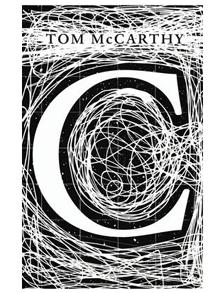
In the end, my dissertation interest fell on technology, as I was seduced by a very strange novel on my 1945-Present course: Tom McCarthy’s C. In a way, it’s an encyclopaedic novel which picks up on all of my favourite themes. A novel which, at the level of both form and content, weaves together questions of modernity, the avant-garde, wireless technology and theories of networked society and subjectivity. It’s a novel haunted by the flickering presences of insects, war, Freud, Joyce, Kafka, Ballard, Marinetti; a novel which inhales and exhales as many intertexts as it can possibly breathe in. A novel which disturbs with its themes of incest and violence, its lack of a strong sense of humanist ‘character’, but enlightens with mini-lectures on entomology, Egyptian history, the workings of various technologies. There are also bouts of dark humour that keep you sane throughout the narrative, along with its beautifully crafted imagery. McCarthy cleverly invokes the emergent technological communications of the early twentieth century to comment on our present condition in a world saturated with wireless signals and the ever-present dominion of the Internet, which is not really external to us but rather an inherent web through which we live our daily lives and experience our desires.

mccarthystory_1700554f

We had to submit our dissertation prospectus right after our exam period in May of this year. That was a stressful time; even though these prospectuses aren’t binding, it’s still difficult to come up with a semi-logical argument and assemblage of texts when your brain is still fried from months of exam revision. Still, it’s good that we were forced to think about it early. I spent the first couple of months of summer rereading my primary texts and thinking about some ideas I wanted to develop. By August, once I’d returned from seeing family in England, I suddenly hit panic station. In a month or so, I’d be returning to uni and then it would be a matter of weeks before the deadline. I thought of all the things that might threaten my ability to complete the deadline in that time. Being called for Jury service, work, deadlines for my other course that semester (Modern American Women’s Writing), a freak spell of perishing weather, my laptop dying, losing my pen-drive, falling into the dark pits of writer’s block or depression – the worries dragged on. Thankfully, these things either didn’t happen, or only happened to a perfectly manageable degree. In fact, it turned out to be possibly my favourite semester at uni.

You see, there’s something very rewarding and liberating in being charged with your own project. There are no specific guidelines for your particular topic: aside from the annotated bibliography and the final submission, you set your own deadlines; you decide the scope of your topic, the texts you want to read; you aren’t harrowed by the prospect of a final exam which may necessitate the memorising of quotes from every last piece you find yourself reading. Of course, it varies from supervisor to supervisor your experience of all these things. They are there to give you advice, to offer you ideas for further reading, but everyone goes about it in different ways.

So throughout August and September, while we were being blessed with an unusually bright summer, I found myself in the pits of the library almost every day, trying to get my head around all the theory I was planning to use. I read countless journal articles, chapters from monographs, books on or by the likes of Freud, Derrida, Deleuze and Guattari, Friedrich Kittler and Bernard Stiegler. Interviews with all my chosen authors. I jotted down pages and pages of notes, filling up a little sparkly notebook I’d bought to encourage me to get started early. My bibliography was already totting up nicely with tons of references. I was putting together a plan. It felt good, to feel motivated enough to work this hard.

Luckily, I managed to keep the momentum up throughout the semester. I wrote the dissertation originally split into three large chapters, the first two comparing various texts and the third focusing on C. It was easy to write (early mornings in the library or in bed) with my personal harsh deadlines always in mind. If I finished the thing early, I could breathe easy again. Fuelled on green tea and Dairy Milk chocolate, I got most of my dissertation written by Reading Week (mid-way through term). The problem was, my word count had gotten waaaaaay out of hand. I thought this was okay; just write now, edit later. But it’s kind of impossible to cut out as many words as I had. I tried rewriting the middle chapter over Reading Week and all I succeeded in was cutting the odd paragraph and making my prose sound better; there was still some serious trimming to be done. I went to my supervisor and pleaded my word count woes. Her excellent advice was to pick one – just one – chapter and stick with that. Now that’s a terrifying thought when you’ve just spent four months researching and writing on four primary texts that you’re no longer going to use. Nevertheless, it was something I had to do; I felt that to condense my argument as it was would jeopardise the quality of my analysis. Maybe one day I’ll go back and re-work my discarded material for a Masters. It’s a thing we all have to go through as Lit students, getting the balance between variety and depth. Fitting in both theory and close reading. In the end, I chose my third chapter on C and completely rewrote it with smaller chapters. Time will tell if that worked out okay.

Sometimes I think back to the process of dissertation writing we went through in sixth year at school, writing our Advanced Higher dissertations. Admittedly, they were half the size: English Lit at 4500 words, Modern Studies at 5000. You got all year to write them and in theory, there were more opportunities for help. Still, although I worked consistently throughout the year on both, there was still that last-minute panic dash to sort out small things: referencing problems, formatting issues, those evil little things that you think will be okay but come back to bite you. I remember the day before the Modern Studies one was to be handed in, my teacher phoned my mobile to tell me he just opened it to read and noticed that there were footnotes missing, or just floating around my document. So I had to get the bus back from college and traipse into the school that night at six o’clock to fix it. Similarly, last Tuesday night I found myself at five to six (and I needed to be somewhere else at six) in a tizzy at the library, surrounded by heaps of messed up paper and broken hopes. I thought I’d finished it, proofread it fifteen times (and got others to proofread it) but reading it again I was still finding things that had mysteriously disappeared, moved, or simply needed replacing. The bibliography giving me the wrong page numbers. Queue a mad dash from my computer to the library printers (over and over) as I kept replacing the mistake-ridden pages. This day was perhaps the most stressful in five months of working on the dissertation. No kidding, give yourself as much time as possible for formatting and proofreading. Word processors will be the death of me.

Maybe this is all hyperbole; after all, I got my dissertation in over a week early. What a great feeling, although it’s only now that it’s hitting me. It’s hard to grasp how much of your mind is occupied by your dissertation until you’ve done one yourself. Until you’ve handed it in. Even now, I still get names and references flashing through my mind and I worry did I put that in the bibliography? did I remember to mention this theory? where did that quote go? It’s really difficult to let it go.

Nonetheless, it’s not all fear and stress. In the end, I loved my topic and can really see myself going back to it, rewriting and expanding it in the future. Your dissertation is one of the most satisfying pieces of work you’ll ever produce at uni. Scrolling through the finished document, it feels good to see all that prose stretched out over many pages, and know that it’s all yours. You wrote it. You should be proud of that, no matter what mark you get. Sure, there will be times when you want to hide under your bed or a desk in the library and cry, when you want to fling your books out the window or delete every last silly word you have written, but in the end you have to break through the pain and just get it written. Accept it and let it go. If you get writer’s block, spend ten minutes free writing on anything at all that’s irrelevant to your dissertation. The weird person sitting opposite you in the library, for example. This should help to get your ‘writer’s flow’ back. Moreover, chocolate helps (indeed proves invaluable), as does a supportive friend (and/or flatmate). There’s a warm sense of ‘we’re all in this together’ amongst fourth year English students, particularly as the dissertation is such a lonesome project, so it helps to talk to someone about your ideas. Also, obviously, as everyone always says, a good topic makes for a good dissertation. But either way, it will be okay. You have to learn to be good with timekeeping, to narrow your argument and find ways of connecting and condensing it. All very useful skills for any kind of future critical writing you might engage with. And out of all the stress, the feeling of finishing your dissertation makes all the hard work worth it. So to anyone who has any kind of dissertation to write either this year or next, I say don’t dread it, but look forward to it.

Mushrooms at Dusk

mushroom

She found the quality of light at this time of year awfully confusing. Dull grey in the morning, silver streams of mist that lick the sky like butter from your fingers. The twilight haze of three o’clock, where the amber lamps come out like fireflies and shadows gather ominously across the sky. Maybe a wisp of some foreign wind, darkling in the fade towards four, where she’d be sitting at her window, wondering. It was the time of year to tend to the garden, pile up the heaps of leaves, clusters of rotting pinecones and acorns that clotted in the soil. The earth was hardening for winter, and soon the frost would come, eating into the grass like a glittering poison. She’d see it as she dressed in 7am sunlight, the whitish mist making crystals at her window. Everything still and beautiful.

It was a luxury, to be home now. She waited for the seasons to change, right at the hinge between autumn and winter, before she made her journey. Asleep on the train, dreaming of being small again, so small in the bubble of childish memory. She could smell the peanut crunch of M&Ms, the sparkling particles of someone’s perfume. Soon, soon she’d be home. The place grew tighter every year, as she grew fatter on the milk of new years and their offerings of plastic joys and flattened dreams. She stood in the kitchen, watching the steam swirl out of her first cup of tea. No new mugs, of course. Later, she would press her face to the window and her breath would fog a dewy canvas, and with one finger she’d draw pentagrams, like she always used to. There’d be the rubbery squeak of skin on glass.

No-one was at home now, just her in the wide archives of the house. In the dusty shelves that made her sneeze, and the picture postcards, she imagined a thousand phantoms. They were pretty phantoms, ornamented with the smiles of children and the pinkish sheen of memory. They did not speak to her, but she was somewhat comforted by their silence. What counted was the presence, the ghosted sigh of a skin-prick or coldness. She would wait till her parents got home and read books, in that nook between the banister and the cabinet on the landing. Imagining herself as Jo in Little Women, taking great bites out of Braeburn apples, lines of prose flying before her eyes. She did not fit there as well as she did as a child. The wood cut into her arm as she read the strange poems covered in gold-frosted dust. Somebody had been spraying glitter in the study, making Christmas decorations. That was a long time ago.

***

Morning came like a murmuring of starlings, and slipped away again just as quickly. Her body was heavy, her limbs tree-trunks of aching muscle. She felt she had been away again, and the new hours were another return. She worked them over in her mind, pondering the way their shapes formed with her hunger and sleepiness. Moulding, slowly. At the window she stood and yawned. Some machine was whirring away, making her coffee. The smell dissipated through the room with its warm opulence, stirring her brain to life. Yes. She peered closely into the garden, staring at strange dark shapes which clumped in the fronds of long grass. Most peculiar. Later she would investigate. She ate her breakfast of burnt toast with the radio humming in the background, speaking of a war somewhere, and then advertisements for hair salons and special restaurants. Onto her toast she spooned pools of blackberry jam that looked like crushed rubies, and the soury sweetness bit at her tongue between her teeth. She chewed loudly and grinning, the wine-coloured juice staining her lips. Afterwards, she left everything on the table: the crumbs peppering the wood like a pixie’s debris.

It was almost enough just to be here, out of the shouting sirens, the madness of the city. Home, she supposed. She sat at her laptop, fingers clicking ruthlessly at the keys. She was writing a message to someone, a sad story about why she would no longer remember them. She would keep it saved, locked deep in her computer’s hard-drive, and then one day send it. When she had the person’s address. When the time was right; which it wasn’t just yet.

Everything stretched out like the languid yawn of a giant, just a long morning and the gape of afternoon, uncertain evening. The sheerness of time was narcotic, rendering tiny signals that pulsated in her brain. She was at once sleepy and electrified. She rushed up the stairs to check something in her room, but her phone was dead and all that was there were her clothes strewn across the carpet. She messed around looking for things to read. She highlighted her favourite words in the dictionary. It was a big dictionary, and a whole hour shed away like the flake of skin that layers the top of a scar. She remembered only a handful of this vocabulary: sapphire, salience, stardust, Saprotrophic. She was cleaning the window with lemon vinegar, making sweeping lanes in the film of dirt. A thin moon peered out of the weary sky like a wink. Saprotrophic…she had forgotten something. Ah…the mysterious clumps in the garden! Of course, they were mushrooms, only mushrooms…

She pulled on her mother’s wellies and trod out into the garden, up the concrete steps. The air was very still; mournful, even. It smelled of wood-smoke, and somewhere she could hear the crackling snaps of burning tinder. Plumes of it rose against the blueish dusk in dark arabesques. She sighed contentedly. The clumps were even more abundant than she’d thought; the whole garden was teeming with their shadowy figures. She knelt down to inspect some. She thought of the honey fungus they’d found out in a forest once, clinging prettily to a rotting stump. In the sunset glistenings that glazed the silhouetted trees, she had thought she could almost see fairies, fluttering above the mushrooms. They were lovely mushrooms, with their smooth peachy caps. Her friend had said they were edible; but you could not be sure with wild ones, so they left them alone, like a living relic, noting their path. The toadstools she saw now in the garden were a putrid brownish colour, etched with black lines and little white spots. They were ugly in a kind of otherworldly way. Ethereal, even.

Her knees were going numb from bending so she stood up and did a lap of the garden to get her circulation back. She was recalling things. The party where a boy brought out a sandwich bag of suspicious-looking vegetables, frying them on somebody’s pan. She’d stood in the doorway of the kitchen, her mind full of cheap red wine, watching the way the little things unfurled in the buttery oil, their spindly stalks stretched out like tentacles, their heads jiggling like jellyfish. As they started to sizzle and wilt, they let out a curious, bitter smell. The boy had shared them among his friends and then they had disappeared for most of the night. Later, one of them was hanging upside down in a tree at the village park, and he was reciting streams of Byron’s poetry. Sometimes, she still heard his voice, even now, reverberating through the dark.

The cold was coming out of its slumber and creeping into her bones. She stood still, wrapping her cardigan tight around her. She crouched down again and dug her nails into the earth. A weird feeling gripped her, a feeling tinged with homesickness. She pulled nothing out of the ground, no trace of seed or root. She stood up again. The quietness made her feel smaller than ever, but her mind was huge and overbearing, stretching itself across the matter of the garden. It all glared in her vision like the close-up shots of a dream. She wished some sound would break the silence. A bird-cry, even. But the little creatures were so quick with their wings that they made no noise as they flew between branches. She was trembling now, remembering everything.

The fungus at her feet now looked like the severed heads of something. She had to breathe.

If only a car would start in the drive, or a plane fly overhead…something, something!

They say that magic makes you happier. And she thought there was a thing she could do, before going inside again to the womblike comforts of heat and sleep. She brushed through the grass with her wellied feet, and stood in the centre of one of the fairy rings. It was a near perfect circle. She stared first at the mushroomy clumps at her feet, then up at the sky. It bore the dramatic flashes of an expressionist painting: great bolts of violet wounded the blue, and rivulets of yellow broke away from the horizon, approaching amber and spiralling, spiralling. Then she found again the moon. Brighter now, it was a sharp crescent, the fold of an eyelid. She waited, waited. Her body was cold and her skin prickled like coral on a sea-washed rock.

The clouds began to gather, slowly at first then fast like an army.

You could smell it in the air, the sourish dampness that held as a breath.

She closed her eyes and the rain came. She felt the initial sprinkles that bounced off her skin, the cries of birds as they darted into the hawthorns for shelter. Drizzles of silver slashing the landscape. A downpour of water and chilly air. She stuck her tongue out for the cold shock and the sharp taste. The crescendo sound of it showering louder, coming down thick and heavy from the west in globules fat as teardrops. She opened her eyes and her hair streamed down her face like seaweed, clinging to the marble of her skin. She felt it surge within her, the waterfall sounds of this injured nature. A grumble of thunder. Something stirring in her chest, a rush in her pulse. Almost like someone was watching her, a million things flashing around her. Her laughter was lost in the cavernous sound of the rainstorm, another echo pirouetting through the chambers of memory. And as she stood there, the fungus and mushrooms soaked up their nectar, before crumpling to a wasted doom. The rain had poured through and through her, and she felt hollow and purged as a mermaid tossed from the sea to a tomb. And she was the still point in the tempest around her, her body soft and sad with its sickness. This was it; home was just this, wild and true, the beatific glow of a hullabaloo.

Mould

10155541664_fdbdb1532e_z

It was a moon-scape she saw, peering into the mug in her mother’s study. Yes, a moon-scape with little lumps of perilous blue and grey, seeping into one another. Or maybe it was another kind of space terrain: she imagined the ground of Pluto, with its eye-like holes and fissures. She gave it a shake, and watched the particles break up and drift away, flotsam on some unreal ocean. A polluted ocean; maybe the earth’s oceans in a hundred years’ time. They told her in school that the world was filling up with waste and one day everything would melt away, like those paintings of dissolving clocks she saw when her mother took her to the museum. You could already tell it was happening, her teacher had said, the way that it gets so warm these days. The mildness of winter. It wasn’t right.

Well, the moon wasn’t right either that night. No; she could not stop thinking about what she saw in that mug. Another world, was it? She wished she could go back and count the dots, knowing that if she did she could start to chart this new universe, and in knowing it better she could sleep. She could enter its landscapes, drift across it with the powers she had in her dreams. Her mother put a sachet of lavender under her pillow and she could smell it through the cotton, soft and sweet…but it was not enough distraction. She needed to know what she had seen. But her mother might hear her and send her back to bed. It had to be worth a try. Sucking in her breath, she tip-toed back into the study, closing the door quietly behind her and flicking on the light. It was an energy-saver bulb, that took ages to properly glow. So she stood in the dull orange light, watching the wall till it got brighter. Then she would pick up the mug and see. Then she would know again.

Finally it was bright enough and so she went to pick up the mug…but this time, oh how the smell caught her! It was sharp and evil like the stench of seaweed, only worse, like the most rotten thing in the world, slowly fermenting. Yes, she smelt it and was knocked backwards almost. But it was fascinating. She let her nostrils quiver and sniff deeper as she held the mug to her nose. The she looked into it again and saw how the dunes and lumps had mushroomed and the blue was turning greenish, or maybe that was just the duller light. Still, these were definite changes. And she was thinking of the clumps of toadstools she’d seen in the school playground, while they were out measuring soil quality and watching the teacher bending in the grass with a thermometer. They were big brown flat things, ugly and intriguing, and she knew that some of them were poisonous, and some of them if you poked them let out a puff of steam. She wished she could touch these mushrooms but the thought of putting her finger in the mug was repulsing. It was kind of like a horror movie, she thought, where they showed you somebody’s festering wound, only it never looked quite real. Still, you would not like to touch it, it was just sort of funny to look at. No, she would not touch it; instead she shook it again, and this time the dunes did not dissolve, but she could see little fissures rippling across them. Her stomach turned over as if emptying something, and she felt a surge in her gullet. She put the mug down and breathed in deeply, trying to rid herself of the awful smell that clung to her like a disease.

She wondered what it was that these microbes loved so much about her mother’s tea. She considered if they’d accept her into their colony. Like them, she was partial to a glass of milk, but maybe not tea, unless it was laden with sugar. She wondered how they’d order themselves, scattered about as they were like that. Bulbous, growing over each other. It would be a ruthless economy. She sat down on the comfy office chair and span around slowly. The queasiness was leaving. She liked how all the objects rushed around her, melting into long white and orange lines. She stifled a giggle; she must not wake her mother up. She whispered stories to the mug. Telling them about the boy she wrote a letter to once in class and the time she left her homework on a bus. Soon she would say goodbye to her mother. She knew that it could not be long before she was ready to join them. They would be like ants, or the tiny people in Gulliver’s Travels – Lilliputions – running all over her body. Only, they were so small you could not see them. You could just imagine them, growing and multiplying, all over her skin.

They made the moon rocky and bumpy, like that boy whose skin was cratered with pimples. She had seen on television once two fat ladies in white coats scrubbing away green things from the corners of a bathtub. She and her mother didn’t have a bathtub, but sometimes she saw things come out of the plughole in the shower. Great streams of wiry hair that poked out, or smeared themselves upon the porcelain. Once a huge spider. She heard its legs patter and she screamed, and her mother tried to lift it out with a gardening trowel. Sometimes there were little black seeds all over the bath, and the first time she thought maybe a plant had vomited up all its babies (in class that morning she had been drawing diagrams of sepals and stigmas and filaments and seed-pellets), but then her mother told her it was just exfoliating beads from some lotion she had. She tried the lotion and it made her skin burn, but it was not unpleasant; kind of like the scratch of dry sand. It left a pinkish blotch on her legs. She was wondering if the moon was like that: all pastures of dry sand. Were there lakes or ponds or waves? Trees, even? In the mug she could not see any trees, and the only waves were from when she rippled the sticky liquid with the swirl of her wrist. She thought maybe if she lived there she’d have to invent some more things, to keep her interested. There would be a gift shop, for one thing. You could buy t-shirts with maps of the land on them, with close-up details of the blue-green growths and the tea-stains that ringed the china walls. It was like a whole continent splayed out, with all the countries slotted together, their landmasses enveloping each other. A strange thing.

She would take the mug into school on Monday, for show-and-tell. It was the right thing to do. Everybody else would bring in their cinema tickets, their remote-controlled helicopters, Pokemon cards, a book they had read over the weekend. And they would talk about themselves, nattering away about this thing that had brought them  their childish joy. Then she would take to the stage, like the prime minister on the telly, clasping her precious mug, and she would tell them how she had found the moon. At first they would laugh, she recognised that, but then they would realise how clever she was. How amazing was her discovery. She giggled just thinking about it. But I must let it rest, she reflected. After all, she needed to let her colony expand, for the spores to pile up higher upon one another until they were spilling over the edges of the mug. She wanted her colony to be huge and impressive. I mustn’t let them escape. She took a postcard from the wall – it was a painting of a lemon and a teacup by Francis Cadell – and she placed it over the mug. The moon was safe, and its surface would continue to bubble and grow in their new warmth and darkness. So she tip-toed back to bed and lay awake, her mind floating around this wondrous space. Each star was a point of contact, a possibility.

And she spoke to the stars, even as she jumped between them, as you jump between chairs and tables and sofas when you play ‘The Floor is Lava’. Each one told her a story, and she basked in the glow of all those words weaving a tapestry around her. Soon she could slip into sleep, soon, soon, soon…she closed her eyes to a new darkness, felt the warmth of the space beneath the sheets. The smell of mould dissipated from her brain, and now there was only silence, the scent of lavender, wafting in delicate waves…

When tomorrow arrived, it was Monday, so she got dressed for school and went downstairs. To her horror, she saw the mug up-ended on the draining board. What on earth…? Mummy? Her mother came down to boil the kettle and make her porridge, but was startled to see her daughter crying so early in the morning. What is it, darling? She was already late for work, and starving. She threw her handbag on the table and brushed down her jacket. What is it? she repeated. The child was pointing at something next to the sink. Mummy! she wailed, you’ve killed the moon! 

14999083677_30927ae383_z

Punk, Politics and the Personal: In Praise of the Manic Street Preachers


tumblr_nd4vd77mIC1qj3j7go1_500

One of my earliest memories is being at my dad’s old flat and messing with the hi-fi player to get attention. It would’ve been around about 1998, the year the Manic Street Preachers released their album, This is My Truth, Tell Me Yours. Maybe my dad and my brother were watching rugby on T.V or something, and I’d read all the books I’d brought with me. Well anyway, I thought of a keen plan to wind them up. I turned on the hi-fi and skipped to my dad’s favourite song (at least, his favourite song that wasn’t anything by U2!) and let it play. Loudly. And then I put it on repeat. And then I stopped letting it play out; I just played the first bar or so then pressed repeat and played it again, as if it were on a loop, inducing hypnosis. Incidentally, those first few notes are inscribed into my memory. The song was ‘You Stole the Sun from My Heart’.

Since then, I’ve drifted through life with the Manics not far from my consciousness. When I was about fourteen, I discovered some of the darker tracks from The Holy Bible online and basically that was me sorted for emotional outlet. What better lyrics do you need as an existentially-frustrated teenager than: ‘self-worth scatters, self-esteem’s a bore’? However, it’s only this summer that I’ve come to properly listen to the album in full. By pure coincidence, it just so happens that this year marks the 20th anniversary of The Holy Bible’s release. I was one year old when it came out. Funny, how it still rasps with fresh energy, all these years later when a whole new generation are beginning to appreciate it. It has songs about capital punishment, anorexia, the Holocaust, prostitution, aching nostalgia, suicide and (metaphorical) political sex scandals. At times it can be painful to listen to, with its throbbing, angry bass-lines, and packed-in lyrics which scream razor-sharp poetry: ‘Your idols speak so much of the abyss / Yet your morals only run as deep as the surface’ (‘IfwhiteAmericatoldthetruthforonedayitsworldwouldfallapart’). James Dean Bradfield is a master at the smashing (in the literal sense of smashing), punkish guitar rhythms and sailing solos that almost make your brain hurt. At the same time as being able to throw out all those lines, a million a minute. It’s brilliant. I can only imagine how amazing it must’ve felt, back then, to go out and buy this brand new album and listen to it on a Walkman and feel, more than ever, electric and alive. And angry at everything.

The Holy Bible is now considered an early 1990s classic, to be filed alongside the (considerably cheerier) offerings of 90s Britpop; for example, Oasis’s Definitely Maybe (1994) and (What’s the Story) Morning Glory? (1995), and the holy bible of grunge, Nirvana’s Nevermind (1991). While the rest of British music was penning the likes of ‘Live Forever’, ‘Rock and Roll Star’ and ‘Park Life’ – drunk anthems for the boozy masses (and still we love them, if only in secret) – the Manics were deconstructing contemporary society (class, political injustice, historical trauma) and existential crisis through the spike-edged modes of punk, pessimism and fury.

ManicStreetPreachers_TheHolyBible

Moreover, as its title suggests, The Holy Bible is more than just an album: it’s also a text. A network of references and quotes, provocative enough to set you on a trail of philosophical and literary discovery. The voracious listener is able to devour even more information by following up the sources scattered over its songs, learning at the same time as participating in this performance of knowledge. Camus, Foucault, Plath and others haunt this album, through direct references but also aesthetics. There’s Plath’s visceral emphasis on the body and its various contortions and distortions, its ruptures and vulnerabilities: ‘a tiny animal curled into a quarter circle’ (‘Die in the Summertime’). The title of track ‘Archives of Pain’ pays homage a chapter in David Macey’s 1993 biography of French philosopher Michel Foucault (who wrote Discipline and Punish), and the song itself considers changing societal values with regards to punishment, although it is ambiguous as to whether the song advocates a return to capital punishment, or a refusal of the glorification of serial killers. Lyrics such as ‘prisons must bring their pain’ and ‘the centre of humanity is cruelty’ offer a bleak, Lord of the Flies rendering of humankind’s essential lust for destruction, its need for revenge. While Nicky Wire and Richey Edwards collaborated on its lyrics, Richey seems to claim it as a ‘pro-capital punishment song’  (see Harris 2004), while Nicky told music magazine Melody Maker: ‘everyone gets a self destructive urge to kill, but I don’t particularly like the glorification of it. The song isn’t a right-wing statement, it’s just against this fascination with people who kill’ (cited in Power 2010). The ethical ambiguity of this song adds to its disturbing quality, its fury that cannot quite be pinned down.

The album also crackles with various audio samples, a ghost chamber of voices which include a fragment from an interview with the mother of a victim of Peter Sutcliffe (the 1946 so-called ‘Yorkshire Ripper’):

I wonder who you think you are
You damn well think you’re God or something
God give life, God taketh it away, not you
I think you are the Devil itself

And when you hear it, you’re chilled to the bone, before being thrown into the savage world of ‘Archives of Pain’. There’s also a quote from the author J. G. Ballard talking about his controversial novel Crash (1973), which flashes in as a soundbite on ‘Mausoleum’: ‘I wanted to rub the human face in its own vomit, force it to look in the mirror’. Mausoleum is a song inspired by a visit to Auschwitz, to the barren landscapes where concentration camps once existed, but still linger. The chorus is simply:

No birds – no birds
The sky is swollen black
No birds – no birds
Holy mass of dead insect

It’s painful and bare, so that listening to it, you imagine a dark carcass of a sky, heavy with the traumatic void of its past. The ‘dead insect’ which serves not only as an image of the barren remainders of death, but also perhaps as a reference to those swarms of people who were so brutally dehumanised during World War Two. And Ballard’s quote captures everything about The Holy Bible: it’s visceral, it forces you to confront the shadows of your own self, and of humanity. It provokes an abject reaction, through its images of self-harm, dismemberment, corrupt sex and violence. At the same time, it ‘obliterates your meaning’ (‘Mausoleum’); it shatters all attempts to make sense of the traumatic events it references. The conventional linear progression of melody and song and perhaps even narrative in an album is broken up with intertexts and ghosts, and perhaps that’s why it still lives on today. Unlike, perhaps, an Oasis album, which is nostalgically evocative of more simpler, hopeful times, it doesn’t feel in the least bit dated. Its endless trail of references add shadow and depth to its meaning.

richey-edwards

But perhaps, listening to it now, you feel that it’s haunted most by Richey Edwards himself, the band’s fourth member who penned (Nicky Wire has claim to the other quarter) 75% of the lyrics. Following bouts of depression, self-harm and an eating disorder, Richie disappeared one morning in January 1995, just before he and James were due to visit the U.S. on a promotional tour. In February, his car was found abandoned at a service station near the Severn Bridge. Since then, almost twenty years on, still no evidence or trace of Edwards has been found. Even though he was pronounced officially ‘presumed dead’ a few years ago, the aporia of his disappearance remains. Of course, this allows fans to string mythological tales about his reappearances around the world. The lack of closure is perhaps what is most distressing: the not-knowing, the sense that at any time he could come back into his friend’s and family’s lives. Listening to The Holy Bible, Richey’s personal suffering is of course inscribed in every line, even though most of the lyrics reach a universal, almost transcendental pain at times: ‘I’ve long since moved to a higher plateau’ (‘4st. 7lbs’). And then you hear him when listening to the Manics’ later albums, which are still full of Richey’s presence/non-presence in the band: ‘You keep giving me your free air miles / What would I give just for one of your smiles’ (‘Nobody Loved You’), and ‘As holy as the soil that buries your skin / As holy as the love we’ll never give / As holy as the time that drifted away / I love you so will you please come home’ (‘As Holy as the Soil (That Buries Your Skin)’).  Richey’s bandmates even dug out his old notebooks, with permission from his family, to use as the lyrics for their 2009 album, Journal for Plague Lovers. Maybe the most painfully intimate Richey track is the final song on this album, ‘William’s Last Words’. Arranged by Wire, it features soft guitar strokes and his crooning, deep voice singing about voyeurism over lines of loss and death that almost sound a melancholy joy:
Isn’t it lovely, when the dawn brings the dew?
I’ll be watching over you
Isn’t it lovely, when the dawn brings the dew
I’ll be watching over you

It ends with the bittersweet lines: ‘I’d love to go to sleep and wake up happy, / Wake up happy’. It’s a stripped-back Manics; it’s simple but stays with you, innocent and chilling, like the blood-spattered Jenny Saville artwork that adorns Journal’s cover:

manic_street_preachers_journal_for_plague_lovers_1241170684_crop_550x550

In this album we also see again that familiar combination of theory and fiery politics, as the opening track references Noam Chomsky’s book, Rethinking Camelot: JFK, The Vietnam War, and US Political Culture (1993):

Riderless horses on Chomsky’s Camelot
Bruises on my hands from digging my nails out
A series of images, against you and me
Trespass your torment if you are what you want to be

The sense of our powerlessness to media and mediated disaster is captured here in just a few frenzied lines. ‘A series of images’: the sense of personal and political conflict flashes past us in handfuls of words, just like the way that war plays out through the flickering light of our television screens. Chomsky’s book documented a critique of Kennedy’s foreign policy in Vietnam, and these themes of military funerals, fallen soldiers, geo-political conflicts and human sacrifice in war are all invoked in a handful of words, powerfully delivered as ever by Bradfield. We might think also of ‘Kevin Carter’, the trumpet-tinged single from Everything Must Go (1996) which documents the story of ‘Bang Bang Club’ and Pulitzer Prize-winning photographer, Kevin Carter, who famously suffered from the haunting scenes of all the killings and suffering he had witnessed (and indeed photographed) and eventually committed suicide. The Manics, not just with their military-inspired outfits, are consistently attuned to themes of war and death.

The mysterious story of Richey and the Manics is of course seductive, and perhaps part of the enshrinement of pain that goes with their mythology, but they are also an incredibly uplifting band. They kick the listener into political engagement, which is refreshing in a time of political apathy (or the complete neglect of politics in most pop and rock music, with the exception, perhaps, of Muse’s Matt Bellamy and his crazy conspiracy theories). Songs like ‘The Masses Against the Classes’ and ‘Design for Life’ are songs about working-class experience and class politics in the post-Thatcher era. Of course, being from Blackwood, an ex-mining town in Wales, the Manics are all familiar with the catastrophic effects of deindustrialisation upon communities. Seeing the life and soul of a town being lain to waste after the rich won the class-wars of the miners’ strikes. Their eleventh studio album, Rewind the Film, closes with the song ’30-Year War’, which references the Battle of Orgreave, the Hillsborough disaster, coverups at the BBC (and oh how there are many – from Savile to Scottish Independence) and has the refrain, ‘the old-boy network won the war again’. It’s depressing, but realistic in our time of austerity. Has much has really changed from the Thatcherite legacies of the early 1990s, when the Manics came into being? Arguably, with the rise of UKIP and a weakening Labour party, the ‘working-class’ opposition to neoliberalism faces an even deeper well of apathy.

Source: walesoline.co.uk

On the subject of far right politics, funnily enough last year the far-right English Defence League (EDL)  tried to appropriate the Manics’ 1998 hit ‘If You Tolerate This Your Children Will Be Next’ for promoting a demonstration in Birmingham. The song features the pretty much crystal clear lyrics: ‘So if I can shoot rabbits / Then I can shoot fascists’. As well as a lesson in irony, it is probably a reflection on the EDL’s stupidity as much as anything else to choose a song inspired by an anti-fascist slogan used during the Spanish Civil War. The Manics have always been associated with political controversy, from Nicky Wire’s sharpish (‘remember, all men should castrate themselves’) quotes to the band’s iconography (famously, a 1994 performance on Top of the Pops featured Bradfield wearing a ‘terrorist style’ balaclava, albeit with his name scrawled across it playfully like a name sewn onto a school jumper), but in this case, the EDL’s appropriate was too ridiculous and they had to sue.

***

This autumn, the Manics announced that they were finally ready to do a Holy Bible anniversary tour. Although my dad and I jumped on Ticketmaster at 9am, we were unable to grab any tickets for the elusive Barrowlands date, which apparently sold out in two minutes.  I’m really gutted (especially as it would have been a welcome reward for finishing uni coursework), as I can’t really imagine a gig that would have quite the same emotional resonance. Nevertheless, the fact that they’re now touring the album means they’re playing it more in general across various forms of media, which is always a great thing. I must admit, it was very satisfying to see James, Nicky and Sean performing ‘Revol’ on Later…With Jools Holland. When Jools interviewed them about the song they were going to play from the Holy Bible, Nicky sort of giggles and says it’s about dictators engaged in metaphorical sex games, some clever idea of Richey’s. There’s an irony that he’s certainly aware of. How commercialised music’s become, how such a song just doesn’t have its place in today’s music world. It’s telling that the two songs chosen to broadcast on the evening show were the poppier (but no less the better!) offerings from their new album, Futurology (2014). The new album is bold, flamboyantly European and even features that rare delight of Nicky singing on the chorus of a leading single, ‘Futurology’. It’s bold – maybe even bombastic – but the boldness is put into relief by the acoustic introspection and self-deprecation that characterised their previous album, Rewind the Film. They just keep reinventing themselves, and that’s the best thing about the Manics: they don’t do paltry repetitions, or parodies of their former selves. Their lyrics stick with you and gather new meanings as each album throws your deepest assumptions into question.

Artwork from 'La Tristesse Durera' (Gold Against the Soul)
Artwork from ‘La Tristesse Durera’ (Gold Against the Soul)

You could argue that the Manics have the paradoxical personality of a child: that strange urge to both disappear and gain all the attention in the world. To ‘walk in the snow and not leave a footprint’ (‘4st. 7lbs’) but also pen the extroverted Krautrock of ‘Europa Geht Durch Mich’, which throws itself into electronic music but also the increasingly frenzied political debates surrounding Europe in Britain right now. And like the child that I once was, trying to break my dad’s CD player by endlessly repeating one of their most successful songs, they go for attention. Their confidence isn’t the laddish arrogance of their Britpop bedfellows, but the endearing ambition and glam aesthetic of their early years and the strong direction that characterises most of their career (maybe Lifeblood was a slip-up, but I think it deserves more than straight dismissal…). It’s an oft-forgotten fact that the Manics’ single ‘The Masses Against the Classes’, was the first British chart No. 1 in the new millennium. It’s a single that begins with Chomsky: ‘The primary role of the government is to protect property from the majority and so it remains’ and ends with Camus: ‘A slave begins by demanding justice and ends by wanting to wear a crown’. Maybe this vicious cycle of capitalist desire and inequality will continue through the millennium, but by god let’s hope there’s still artists like the Manics around to do all they can to critique it. And if that’s not enough for you, then the fact that Nicky Wire went to the Brit Awards wearing an ‘I Love Hoovering’ t-shirt (and the man seriously does love housework) really should. What could be cooler than a Situationist statement which isn’t for once pure hipster irony?

tumblr_ncthj6WAd91rufro7o1_500
basically Nicky Wire is amazing & makes me want to wear leopard print again

***

Harris, John, 2004. ‘The commitments’ in The Guardian, Available at: http://www.theguardian.com/music/2004/nov/21/popandrock [Accessed 7.11.14].

NME, 2013. ‘Manic Street Preachers take legal action against the English Defence League’ , Available at: http://www.nme.com/news/manic-street-preachers/71397 [Accessed 7.11.14].

Power, Martin, 2010. Manic Street Preachers: Nailed to History (London: Omnibus Press).