Hillhead St.

IMG_0485

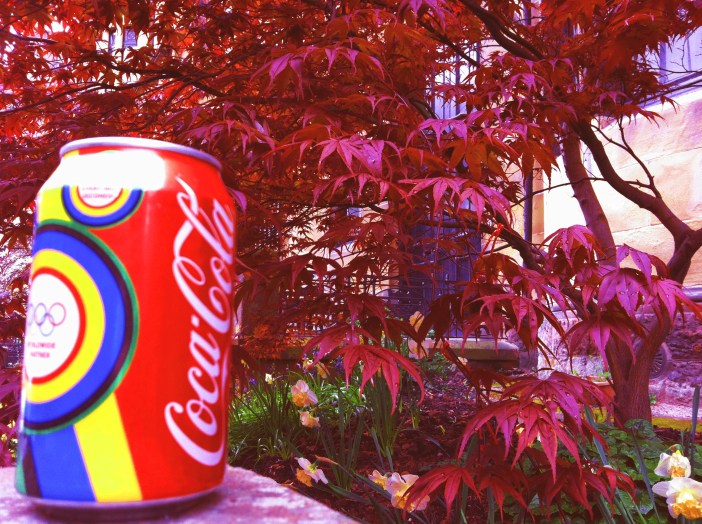
Springtime, 2012; first spring in the city. Living on Hillhead Street, with the cat, Miller, who used to mill around and curl his sleepy tail round your ankles at lunchtime, purring at the sun. It was sunny all through April and May. Early mornings in the library, level eight and nine with the light flooding the windows warming and pure, a dish of sun butter melting over sandstone buildings. The best seats, the computer screen a dull mist of unimportant philosophies. Walks along the Kelvin, tangles of fern and wild garlic and the solitaries who wander, sometimes stumbling, always clutching a spliff or a bottle of Bell’s or Buckfast. Coughing their pearls of greenish spit into the river. Summer of the Olympics, no care at all, sugar rush of coke and chocolate buttons and long evenings staring insomniac out of a tiny dorm window. The Decemberists, or Conor Oberst’s croon in the wanderings out to town, to the station or the Necropolis. Smell of cigarettes wafting from rooms below. So far, but not so far, from home. The red glow of the sun at dusk, the silhouettes of house plants, the sound of footsteps.

The Dunure Labyrinth

IMG_2643

Overgrown in summer, late summer with the lushness of August
fattening in the green bloom of another afternoon
exploring these spots on the west coast.

The labyrinth hasn’t been here for long;
laid down by volunteers
it etches out a vision of something otherworldly–
Pictish, perhaps, or else Pagan
and the strange age of overlap
where still we worship the unknown,
feel breezy and free in uncertainty.
Keats called it negative capability.

She will wander alone into the labyrinth,
scuffing her shoes in the gravel,
trying to deny the way the stones grow before her
rising like those of Stone Henge,
monuments to some elusive god.

Where all she sees are the sea flowers,
the saltiness sticking in her lashes,
soon she will be sucked in, the last gold drops
of sunlight just distant memories
tacked to the glass of her mind,
which ripples in the sea breeze
always wanting its tidal sweep,
its final sleep.

(You can get here on the bus and by walking through the village to the coast, somewhere down near the castle which perches on the cliffs. There are many paths through overgrown bracken and nettles, paths which wind down the cliffside along to the beach. There are benches and a couple of info signs and many views out to Arran, the particular grey green of the Firth of Clyde. The sea gulls here are less aggressive than the ones in Ayr, and sometimes you can see cormorants, which are of course more interesting. When you get to the maze, you have this lovely spot which is naturally sheltered from the wind and you can sit at peace with the world).

Top 15 Albums of 2015


(in alphabetical order…)
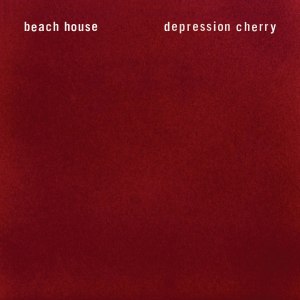
beach-house-depresssion-cherry-album1

Beach House, Depression Cherry 

It’s moody and melancholy and perfect for Sunday afternoons in winter, where hardly an hour of light graces us with its presence. The singing is woozy and lush, the track titles are typical Beach House (‘Wildflower’, ‘Levitation’, ‘Days of Candy’) and a mellow, dissonant drone seems to drift over most of the songs. There’s a whispery feeling to the vocals and a scratchy-sounding organ keyboard. Also, the album is coated in soft red velvet, so the physical copy is pretty beautiful, and there’s definitely a ‘tactile’ sense to the music itself, with all the sparkling effects and the echoing texture of Legrand’s voice. I like Beach House for the same reason I like Cocteau Twins: the music enfolds you like the atoms (or pixels?) of another world – it doesn’t sound 100% human, there’s something too mystical about it. The band released a website with typed lyric sheets, which adds to the sense that the whole album is a hazy collection of dream poems. It was released in late summer but I have listened to it a lot more in winter; it’s like the sound of  Victoria Legrand’s hazy, drifting vocals is better suited to the cold weather, the whiter light, the sheen of ice.

Favourite tracks: ‘Space Song’,  ‘Levitation’, ‘PPP’.
beirut-no-no-no

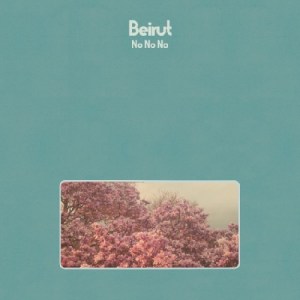
Beirut, No, No, No

There were a few weeks where I sort of just played this album on repeat in the restaurant where I work. Generally it was pretty harshly reviewed and there is a sense that single tracks stand out more than the whole. Still, I appreciated that cheerful continental folk vibe to get me through the autumn and winter with its remnants of pastel-hazed summer. Even though the songwriting might not be as *original* or *inventive* as 2011’s The Rip Tide, you can have a lot of fun with some staccato beats and percussion. Plus I love a bit of brass.

Favourite tracks: ‘No, No, No’, ‘Gibraltar’, ‘Perth’.
packshot

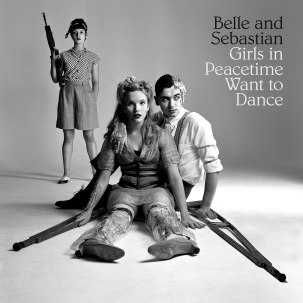
Belle and Sebastian, Girls in Peacetime Want to Dance

Just the sort of lively pop weirdness you need to brighten your January, when the album was released. I love Belle and Sebastian, the way they create simple catchy folk-pop but base it around stories and characters and inventive lyrics about lost girls and ~cutely~ wayward indie kids. There’s a bit more experimentation than usual on this one: from the funky disco atmosphere of ‘The Party Line’  and ‘Perfect Couples’ to the epic near-7-minute dance track ‘Enter Sylvia Plath’, there’s something for everyone. ‘Nobody’s Empire’, which approaches the subject of lead singer Stuart Murdoch’s MS, reveals Murdoch’s general genius for lilting melodies punched through with a weightier-than-usual buildup and bass line. ‘Ever Had a Little Faith’ is maybe the closest song to old-school Belle & Sebastian. Generally this album is full of interesting licks and typically witty lyrics, and its experimentation lends well to repeated listening.

Favourite tracks: ‘Nobody’s Empire’, ‘The Party Line’, ‘Enter Sylvia Plath’.

1035x1035-MI0003841720

Blur, The Magic Whip

Blur’s first album since 2003, The Magic Whip is kind of a mystical, surreal experience. Along with the artwork (a neon ice cream and some Chinese lettering), the album’s whole vibe sort of reminds me of this weird game I used to have for Sega Megadrive where you could do fight scenes on top of an apartment roof in the depths of Tokyo. Everything was blurry and glitchy and full of bright lights against the backdrop of glittering darkness. The Magic Whip is set in Hong Kong rather than Tokyo, but it has that strange sense of futuristic metropolitan darkness. It takes away the grunginess of Blur and sonic spaciness of 13 and enters a more self-aware, perhaps even ‘postmodern’ (ugh, the implications of that term) territory.

Well, for one there’s the obvious cultural borrowing from Hong Kong, where the album came together; there’s also the sense of meta-britpop on songs like ‘Lonesome Street’ and ‘I Broadcast’ which update the whistle-along laddish bounce of 1990s culture for a more accelerated version of the jaded digital and cosmopolitan era (‘Lonesome Street’ is overlaid with the sound of someone reporting – on the news? – sparkling synths and echoing city street noises). The sense of absurdity and collapse, like in ‘I Broadcast’ where the chorus falls into the repeated line: I’m running being played over Graham Coxon’s sharp guitar. It’s a complex and intriguing album with some sweet bass lines and dreamy Damon Albarn vocals. Listening to it really does sort of take you somewhere else. Also, ‘Mirrorball’, the record’s final song, sounds almost like it belongs on a David Lynch soundtrack.

Favourite tracks: ‘Ghost Ship’, ‘Pyongyang’, ‘My Terracotta Heart’.
clarence_clarity_-_no_now

Clarence Clarity, No Now 

From the glitchy, 90s Windows computer aesthetic of its videos to the vibrating bass, disco rhythms and shrieking guitars and falsetto vocals, this is one crazy good album. Not many folk are brave enough to put out 20 tracks on their debut album, but the effect of doing so sort of drags you underwater into a world of sound that’s electric as a field of lightning, as shrieking neon as that purple lava you get in Sonic the Hedgehog 2, Chemical Plant Zone. Sorry, is that mixed metaphors? Who cares, with music like this, everything is mixed to fuck. 

Some of the songs have a cinematic feel, which is hard to define except for a sort of atmosphere created by all the glitchy sound effects and samples (listen to the start of ‘The Gospel Truth’, for example). It’s a relief when Clarity strips back into ‘purer’ or softer vocals (see ‘With No Fear’), but also a great feeling when the effects pedals step on again, like having water thrown over you. Cold, shocking, refreshing. Kinda like the whole album. You’ve got references to ‘worm holes’ and ‘cancer™ in the water’ and all sorts of surreal cyber imagery and staccato vocals in reverse (‘Tathagatagarbha’ is straight out of Twin Peaks’ Red Room, right?). ‘Those Who Can’t, Cheat’ is the kind of psycho disco death funk they would play at the end of the world. I was lucky enough to see Clarence supporting Jungle in Edinburgh this year and I can say that it all sounds sweet as hell live – the band’s energy really plays out the craziness of the album – which isn’t always always the case when the production is one of the best parts.

Favourite tracks: ‘Those Who Can’t, Cheat’, ‘Bloodbarf’, ‘Will to Believe’.

(Also, I think ‘Hit Factory of Sadness’ is one of my favourite song titles ever).

FoalsCover

Foals, What Went Down 

I guess the critical/commercial success of Foals’ fourth album (in October they were voted ‘Best Act in the World Today’ at the Q Awards) means I don’t need to say much to justify my choice. I’ve been with Foals ever since they were bouncing out math rock on early Skins, and this album was no letdown. For one, it has several tracks which follow in the footsteps of ‘Spanish Sahara’: ‘London Thunder’ is a beautiful, atmospheric track with a lovely build, and even Lana Del Rey has sung her praises for ‘Give It All’, which addresses love as a kind of fragile presence/absence, of digital melancholia – ‘Give me the way it could have been / Give me the ghost that’s on the screen’. ‘Birch Tree’ has that sort of upbeat, syncopated feel reminiscent of ‘My Number’ (from Holy Fire). Other than the softer tracks, it’s a whole lot rockier than previous albums, especially on the frenzied ‘What Went Down’ and jangly guitar rhythms of ‘Mountain at My Gates’. I listened to this all throughout the month it took to move from my old flat, so it will always have that sense of dislocation and haunting futurity for me… (plus the stress of shifting boxes and scrubbing kitchens).

Favourite tracks: ‘Mountain At My Gates’, ‘Birch Tree’, ‘London Thunder’.

music-gaz-coombes-matador-cover-art_1422624416

Gaz Coombes, Matador

I have to confess that while Matador was released in April, I didn’t actually listen to this album until about a month ago, when I found out my cousin (the lovely Hannah Lou Clark) was supporting him on his UK tour dates. I saw Supergrass a long time ago when they supported Coldplay at Bellahouston Park, but I don’t remember much of it, especially as I was right at the back! This is such a gorgeous album though, I swear I’ve listened to ‘Matador’ on repeat to and from work for the last fortnight at least. It has great range and depth, another fine example of the maturity that can come out of the Britpop era. Coombes can sound both delicate and powerful, and there’s a certainty, a sureness, to this record. There are songs whose haunting atmosphere is complimented by stunning but simple lyrics (‘Worry fades the soul away / I’ll take the hurricane for you’ – ’20/20’) and climactic choruses. If I close my eyes I imagine this song being played over a dramatic film scene, like someone running through city streets, a breakdown, things exploding, changing. Something like that. I know it’s cheesy but there are definitely songs on this album which you could call sublime in the true sense of the word. Disorientating, awesome, majestic, powerful. Gospel influences, electronic beats, acoustic guitar. I’m still in love with it.

Favourite tracks (this was difficult, and may change): ‘The Girl Who Fell to Earth’, ‘Matador’, ’20/20’.

5f30eab1

Kurt Vile, B’lieve I’m Going Down

Aw man, there’s just this beautiful twang to Kurt Vile’s music that is so addictive. It’s not just his hair. The country twang of guitars, his sweetly droning, idiosyncratic voice. You can see the influence of Nick Drake, maybe a touch of Dylan, but also a very modern sense of disconnectedness, of goofiness even – the sense of being very self-aware but at the same time alienated from who that self is. Some of the songs sound a bit ballad-like, but there’s always a kind of dissonant, bluesy twist. He really nails his lyrics and imagery too: ‘I hang glide into the valley of ashes’, ‘A headache like a ShopVac coughing dust bunnies’. The twinge and stuffed wordiness of ‘Pretty Pimpin’ proves strangely addictive, as does that developing, repeating, turning, twanging guitar riff. ‘That’s Life, tho (almost hate to say)’ is a darker, sadder sort of folk ballad. Generally, it’s an album to listen to dreamily, maybe on a car journey, but also one that goes well in the background of bars, because it’s lively enough, and pretty damn cool.

Favourite tracks: ‘Pretty Pimpin’, ‘That’s life tho (almost hate to say)’, ‘I’m an Outlaw’.

Lanadelreycapa

Lana Del Rey, Honeymoon

I could rave about Lana all day. She has the genius of Lady Gaga, Bowie and Madonna in her creation of the ‘gangster Nancy Sinatra’ persona, but an old-school Hollywood voice that haunts and croons and glides over dark, sweet melodies. Honeymoon is very much a coherent piece of art. It’s a very visual album, much in the tradition of Del Rey’s previous work (the monochrome vibe of Ultraviolence played out in the gloomy, stripped back energy of the Dan Auerbach produced songs). Picture a summer-hazed beach with pastel huts and neon-signed strip clubs, peeling paint. Lana writhing about in her mint green muslin in the video for ‘High By the Beach’. It’s her dark paradise, a retro realm of sweet pop richly infused with jazz, blues, R&B, trap, disco and poetry. The loveliest recital of T. S. Eliot’s ‘Burnt Norton’ I’ve ever heard, soft and haunting. A Nina Simone cover. Tracks like ‘Salvatore’ and ‘Terrence Loves You’ really demonstrate the crystal clarity of her voice, as well as the strength of her range. The title track can be described in many ways, but I prefer the terms glimmering and cinematic. Really, it was the perfect soundtrack for a melancholy, post-graduation summer — except I swapped the retro cars and ice cream for long walks in Glasgow rain.

Favourite songs (again, so hard): ‘Terrence Loves You’, ‘Honeymoon’, ‘The Blackest Day’.

7af7acd9

Laura Marling, Short Movie 

It’s quite lovely to witness Laura Marling’s music maturity. From the honest folk pop of Alas I Cannot Swim to the stronger, mythological tones of Once I Was an Eagle, she has really developed and expanded her sound, not just in a literal sense but in a metaphysical one too. Does that make sense? I mean the way that her music opens worlds up. Eerie, dark soundscapes and cessations of space, interruptions and pauses and softly twangling guitars. Opening track ‘Warrior’ is spellbinding, allusive and elusive; full of echoes and misty vocals, guitar licks that curl round and round. It feels distinctively American, as opposed to, for example, the Englishness, countryside sweetness of I Speak Because I Can. There’s a sense of being lost, looking for something (‘the warrior I’ve been looking for’), of endlessly journeying.

For most of the record Marling steps away from the acoustic songwriting (delicate, but sometimes forceful) which won her fame in earlier records; her electric guitar simmers through the tracks, building around her increasingly impassioned vocals. On ‘False Hope’, a track about Hurricane Sandy, she steals us away from the vague landscapes of ‘Warrior’ to the metropolis, the Upper West Side, where darkness falls and electricity fails as she tells us of the storm. The weather plays pathetic fallacy to the storminess of the singer’s mind: ‘Is it still okay that I don’t know how to be at all? / There’s a party uptown but I just don’t feel like I belong at all / Do I?’. ‘False Hope’ slides into a more traditional Marling track, ‘I Feel Your Love’, which rolls along like a nice old folk song, a bit Staves-like maybe, but more haunting. Her more ‘spoken’ delivery of vocals, intertwined with some searingly brief high notes, in ‘Strange’ for example, bring to mind Joni Mitchell. At times she addresses different characters: spurned lovers, young girls who mirror herself, the ‘woman downstairs’ who’s lost her mind. The overall effect is less introspective, and more fleeting, transient: the self behind the voice slips in and out of view, through various narratives and images. There’s a restlessness which contributes to the Americana vibe, but one which is perhaps also simply the natural expression of a successful singer songwriter still only 25, trying to find her way in the world…

Favourite tracks: ‘Warrior’, ‘False Hope’, ‘Worship Me’.
large

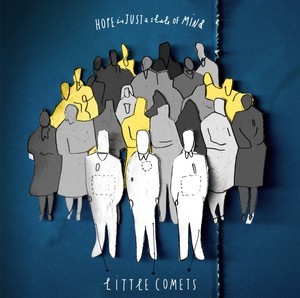
Little Comets, Hope is Just a State of Mind

My favourite band for kitchen sink indie…I like how Little Comets ease you into their changes in sound through various EPs released throughout the year. With the tingly guitars released on ‘Salt’ and the earnest lyrics, a ballad (‘The Assisted’) and emphatic drumming (‘Ex-Cathedra’) of ‘The Sanguine EP’, listeners were prepared for what was to come on Hope is Just a State of Mind, which seems to head towards what might be called a more eccentrically pop direction. One of my favourite things about this band is how they delve into the political and there’s certainly no avoiding it on this album, from the dig at Robin Thicke’s gender politics in ‘The Blur, the Line, and the Thickest of Onions’ to the lethargy of rock and roll in ‘Formula’ and the cultural demonisation of single motherhood in ‘The Daily Grind’: ‘You must feel so proud / Stigmatising every single mother / While your own world’s falling down’. Songs like ‘The Gift of Sound’ and ‘Formula’ have a more straightforward energetic pop vibe, whereas ‘B&B’ begins with an accapella moment and revolves around the repeated line: ‘my own mother cannot take me back’. There’s lots of thudding drumming and a swinging sort of emphatic, repetitive melody. The song, incidentally, is about bedroom tax and Robert Coles has eloquently said of the lyrics:

‘Lyrically the words came quite quickly as I always had the “even my own mother cannot take me back” line in my head from writing the melody. I knew it was going to be about politics: specifically the patronisation of people by the political class in both ideology and delivery, and the way that my own region has been altered by the blue hoards of conservatism.

The title stems from a tweet by Grant Shapps regarding the last budget – “budget 2014 cuts bingo & beer tax helping hardworking people do more of the things they enjoy. RT to spread the word”. Beer and Bingo – because there’s nothing else to do.

I think the first verse is just frustration with the attitude put across by politicians that suggests that they think people are total idiots – policies light on detail, simplistic ideology, framing debates in headlines, constant ill behaviour. Plus from the other end of the scale the total demonisation of the less well off in the swingeing benefit cuts typified by the bedroom tax. I just think it is bizarre and to treat us with this brazen amount of contempt.

It really got me thinking about the north east getting so bashed up in the time of Thatcher – destroying lives and communities because of a need to dominate on an ideological level. I think the second verse tries to convey the depressing notion that beyond this pain, she also eradicated trades and skillsets that had been built for hundreds of years without the prospect of anything new, or transferability. To extinguish a trade, a way of life…. Wow….. That’s a pretty crazy course of action.

It’s almost like she stole those years from us – and it feels a little like it is being echoed now. Taking away what someone relies on is oppression, and this is being felt in communities across our country today – horrified in the knowledge that it will continue until people are so battered that they accept it. The worst part is if you look closely enough, past Grant’s apparent carrot you can see the joy in the eyes behind the ghastly stick, and they look frighteningly familiar” (Source: Little Comets’ Lyric Blog).

I guess I’ve included the quote because I think the politics have become more direct in this album and it’s interesting to flesh out the backstory here. Sure, there have been plenty of ‘northern’ bands before, but rarely have I listened to a pop or indie band who engage with their politics so directly and so articulately (usually this space is reserved for punk or rock – Manic Street Preachers of course, representing a ‘marginalised’ Welsh perspective). Aside from lyrical content, you’ve got the usual pleasures of Little Comets harmonies, shredding guitar licks and bouncy rhythms. ‘My Boy William’ is wonderful live, the way it builds up and everyone following the drum rhythm. ‘Little Italy’ is great fun too, with its cascading melodies (liiiittalll iiiitaaalllyyyyy I reeAAd heeEre) and syncopated rhythm. It’s true, on this album (especially on ‘Salt’), the songs are very up and down, rarely straightforward and often lines are lyrically and melodically convoluted; this isn’t a criticism but more a reflection of what seems to be a desire to push the formulaic boundaries of pop, to infuse guitar chords with lush vocal harmonies and ringing percussion. To represent detailed, difficult subjects in pop is never going to be easy, but Little Comets nail it in their own unique, beautiful way. Look forward to seeing them again live next year!

Favourite tracks: ‘Don’t Fool Yourself’, ‘Little Italy’, ‘The Blur, the Line & the Thickest of Onions’.

The-Maccabees_Marks-To-Prove-It_cover

The Maccabees, Marks to Prove It

Well, to be honest I never would’ve thought I’d be including The Maccabees on my 2015 albums of the year. Over the last few years, I haven’t spared much thought for the band other than as another soundtrack to the general indie trend of the last ten years: a band mentioned frequently in NME perhaps, soundtracking lovelorn scenes in movies, but nothing particularly distinct other than in their creation of twee indie pop. However, one night after work I was lying on the floor recovering from a terrible shift with the radio on, listening to X-Posure With John Kennedy on what used to be XFM. The Maccabees were talking through their new album and playing the songs, and I was pleasantly surprised by how intriguing the sound was, as well as how articulate the band were in talking through the writing process and the stories behind the songs. I guess the next day I went out and bought the album. It definitely sounds a long way away from ‘Toothpaste Kisses’, though the added kazoos and varied percussion doesn’t spoil the simple joy of good plain songwriting. The songs have a weight to them, a grander atmosphere, especially the weird dissonance on the likes of ‘River Song’. ‘Silence’, however, is quietly beautiful, drifting along soft piano notes, subdued vocals and a somewhat eerie sample of an answering machine voice.

Where once you would recommend The Maccabees mostly to fans of The Mystery Jets, Pigeon Detectives or Futureheads, this album feels much more grownup, darker somehow, wilder and expansive. The lyrics vary in subject from the gentrification of London’s Elephant & Castle (the band’s hometown) to heartbreak (‘When you’re scared and lost / Don’t let it all build up’) and well, happiness (‘Something Like Happiness’). It’s refreshing to have a song that does just feel like at times like a gentle old ode to joy: ‘If you love them / Go and tell them’. ‘Marks to Prove It’, the opening track, feels confident and bouncy, with a sharp riff and assured vocals. It would fit in with a fast pop set from The Futureheads, but the rallying battle cry that precedes Orlando Weeks’ voice announces something slightly stranger, a record with new edge.

Favourite tracks: ‘Silence’, ‘River Song’, ‘Something Like Happiness’.
Currents_artwork_(Tame_Impala_album)

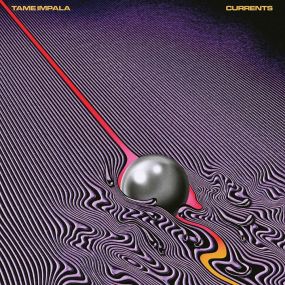
Tame Impala, Currents 

I was introduced to Tame Impala mostly from one of the chefs at work playing it in the kitchen on Sunday mornings, and weirdly enough his psychedelic brand of synth pop seems appropriate preparation for a day serving Sunday roasts to hungover customers. It’s the swelling bass and brilliant synths that really catch you, the smooth falsetto and tingling production. You can tell Kevin Parker is a dream at studio magic, with flawless instrumental arrangement that makes for a sound that could be big or chilled, depending on how you play it. There’s some dark keyboard drama, there’s a lovelorn anthem (‘Eventually’) and what might tenuously be described as weird disco funk. For some reason (maybe all the synths, gossamer vocals and vintage-sounding guitars?) has a ‘bedroom-made’ feeling, but with a much slicker production than the DIY element might suggest. Some songs sound like they belong on a long, atmospheric train journey across a space desert; others sound like they’d fit on the cuts of drama interspersing a video game. There’s a dreaminess to songs like ‘Yes I’m Changing’, but a more radio-friendly funkiness to the likes of ‘The Less I Know the Better’, or even ‘Love/Paranoia’, with its silky beats and finger clicks. As the album progresses, the theme of heartbreak starts to really solidify and I guess that’s the overriding drive of the songs – a heartbreak that slows and stifles, morphs between introspection and the temptation of mild bombast.

Favourite tracks: ‘Yes I’m Changing’, ‘The Less I Know the Better’, ‘Love/Paranoia’.

81-uo32700L._SL1500_

Stornoway, Bonxie

This was a lovely album to enjoy in spring, from the hopeful folksiness to the cute origami bird on the cover. I guess it got me through that period of hell in my life that was finals. I would go on walks around Kelvindale where all the cherry blossoms were, listening to the soft acoustic licks and all the soothing bird sound effects. It’s an album to enjoy by the sea perhaps, full of a sort of longing. There’s the noise of distant foghorns, the rolling harp-like guitar and sparkling xylophone over the drifting shimmer of a wave-like cymbal. This is probably my favourite Stornaway album, or at least equal to the debut, Beachcomber’s Windowsill because of its more folksy atmosphere, its immersion in nature — the sense of being lost, deliciously lost by the edge of the ocean. ‘The Road You Didn’t Take’ especially boasts a shanty-like chorus which adds to the nautical theme and sort of swells up like you’re caught at sea, singing along irrevocably. Melodies build up to climaxes and fall back down into subdued, slower choruses, as if the speaker tries to articulate something about his surroundings (the beautiful environment) but fails to express them entirely. Sweet, comforting guitar licks glide us through (e.g., the start of ‘Sing With Our Senses’). Vocals are never aggressive, only sometimes shrill and generally soothing – like a bird’s? Apparently over 20 types of bird donated their song to the album, and let’s not forget that singer Brian Briggs is a Dr. of Ornithology! It’s just a lovely escapist sort of album, reminding you of seaside holidays from years ago, that childlike ability to sink into your surroundings and find wonder in a leaf, a taste of salt air, a bird call.

Favourite tracks:  ‘The Road You Didn’t Take’, ‘We Were Giants’, ‘Between the Saltmarsh and the Sea’.
81HZecd+uwL._SL1500_

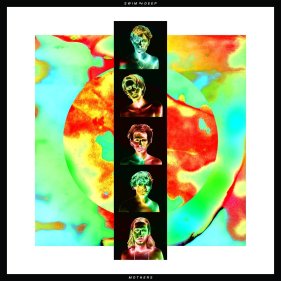
Swim Deep, Mothers

It seems everyone has been describing this album as Swim Deep’s foray into psych-pop. You only have to take a glance at the warping colour bleed of the cover art to pick up those vibes. The honey sweet guitar pop of Where the Heaven Are We has morphed into something heavier, more saturated. There are so many influences, but I suppose you could start with psychedelic music, house and kraut rock. Lots of bursting, colourful synths. It reminds me of The Horrors’ Primary Colours, not only because it’s a ‘change-around’ album, but also the subdued, atmospheric reworking of prior image and musical style. Songs like ‘Honey’ and ‘The Sea’ from their debut album were chilled and loose with catchy melodies, and while Mothers retains the catchy melodies, its style has tightened up a bit. The instrumental elements are more complex; songs open up a multilayered world rather than the silver stream of a simple pop tune. ‘To My Brother’ has an epic quality, building up to the chorus with some extravagance – weirdly, the sort of mistiness of the vocals and quirky synths remind me of Seal. I’m not sure why, or whether that’s even an accurate comparison, but the link just popped into my head. I love the way critics have compared ‘Namaste’ to discordant game show music, which obviously fits in with the 1990s vibes of the video. All that beige, those glasses, the sense of mania reflected in the music! It’s more mature maybe, but still fun.

Favourite tracks: ‘To My Brother’, ‘Namaste’, ‘Imagination’.

A few others…

  • Beach House, Thank Your Lucky Stars (two albums in one year, ‘nuff said)
  • Florence & the Machine, How Big, How Blue, How Beautiful 
  • The Libertines, Anthems for Doomed Youth (listening to it to drag up the old nostalgia of discovering the first albums, for the lovely production and Doherty vocals on ‘You’re My Waterloo’ and Carl Barat’s very English swagger).
  • Prides, The Way Back Up (Stewart Brock has come a fair way since Drive-By Argument (big up a band from Ayr!) but the wide, electronic sound of Prides has its heart in the original synthiness of Drive-By Argument which developed into more distinctly electronic side-project, Midnight Lion. Obvious comparisons are to Chvrches, but maybe also a bit of Daft Punk. Radio-friendly but I’d imagine really big and energetic live, plus whenever I hear them I get sweet teenage nostalgia for Drive-By Argument).
  • Sufjan Stevens, Carrie & Lowell 
  • Years & Years, Communion (sparkly EDM pop with plenty of pluck, from a band whose singer starred in Skins and Stuart Murdoch’s indie flick, God Help the Girl).
The Melancholy of Lana Del Rey

Source: Vogue Australia

 I even enjoy dying in the character who is dying.

— Franz Kafka

Every time I close my eyes,
It’s like a dark paradise

There’s something apocalyptic about a Blood Moon. The sense of waste and transient beauty, light and life shedding away. The moon takes its thirty-year delayed menstruation; red cloud wisps over its shining face like clots of blood being pulled across a pool of silver. Somewhere out there, lovers are lying in lush paradise, staring up at this white eye opened by god; far away, drowned in stars. A voice swirls like smoke over soft, shimmery guitar. It’s the eclipse, sometime about now, then, yesterday, and I am or I was listening to Lana Del Rey.

Honeymoon, then going back to Dark Paradise. Insomnia in the space between night and day; between one universe and another, always afloat in claustrophobia. Returning to this song again and again, its repetition, invoking the familiar sadness and masochism that Lana dreamt up only a few years ago, you’re surrounded by an eternal world of neon palms, boulevards dripped in milky dusk, the sickly excess of tequila sunrise against soaring choruses and stripped-back lyrics. In a way, you fall or sink into Lana Del Rey’s music. Like Kubla Kahn, the eponymous Chinese emperor of Coleridge’s opium-provoked fragment poem, you are sucked dreamily into the sultry visual world of dark objects, consumer heaven, the young and beautiful place of honeydew where you are invited to drink ‘the milk of paradise’. Lana’s swooning melodies charm over time, drawing you into an atmosphere of narcotised darkness which evokes a silent movie – even as the interplay between sound and image is as crucial a set of semiotics as anything Roland Barthes might analyse. You could fall back into the darkness, be seduced by the languid timeless sigh which slides over memories, nostalgia for lost evenings, red dresses and cigarettes, lost girls pressed up against bad boys in clubs, feeling like their whole existence is just a vision, propelling their electric bodies on and on as if in tune to Freud’s death drive.

Much of Lana’s music is about desire: the kind of desire that doesn’t leave you cut-up on the kitchen floor in crude emotion (a la Natalie Imbruglia, ‘Torn’), but passes through that place in the heart of culture that falls into absence and darkness. The secret hollow of modernity. It makes sense that she sung the sultry standout track for Baz Luhrmann’s 2013 The Great Gatsby adaptation, ‘Young and Beautiful’. Del Rey’s America is so Art Deco, from the typeface of her new album, to her obsession with cars and jazz and girls called Carmen, the fragile magic of Hollywood glamour which often bleeds at the seams. Lana returns to that dull wound and picks at it, indifferently, till it’s fresh again – a more ethereal thing that transcends the rotting body of America’s culture. Sex, violence, money, power, charisma; they all blur together in Lana’s fixated, addictive lyrics. In her performance, she already knows the irrelevance of authenticity; it makes her internet-immune, a kind of perfect. Nobody can critique her, because she’s always one step ahead. Despite the success of Lady Gaga, who wears her gender performativity on her sleeve, American culture remains obsessed with the cult of authenticity. Lana has been attacked for ‘making up’ the stories portrayed in her songs, the easy-love lifestyle she presents; for having plastic surgery and performing under an alias that nods more to Hollywood mythology than the girl-next-door vibes of her real name, Elizabeth Grant. Remember James Frey, the ‘man who rewrote his life’ and was subsequently attacked by Oprah when she discovered he’d fabricated and exaggerated a hefty chunk of his memoir of drug addiction? Lana, like James Frey, like Hemingway, is interested in the interplay between real life and fantasy, performance and authenticity; importantly, however, she shows how real life is itself played out and realised through the lens of mediated fantasy. Her songs betray a Baudrillardian ecstasy of communication, simulacra and simulations, updated for an age where the past is showered with the longed-for shroud of Hollywood glamour, where the present is fragmented, split across the Internet (where Lana first made her success, sensation).

***

Isn’t it lovely when somebody makes albums that really feel like art? From Born to Die’s glamorous sadness draped in an American flag, to the monochrome somnolence of Ultraviolence (produced, appropriately, by Dan Auerbach of The Black Keys), each of Lana Del Rey’s records captures a persona, but one which shifts and gathers nuance in the filters of crooning choruses and soft guitars, the distinctive colour charts of an album cover. Born to Die: pastel blues and palm trees, red lips and smoky eyes; the glossy, time-travelling Americana of her short film Tropico (2013), whose flashy symbolism mixes purity with moral pollution, the Garden of Eden with unicorns and gangsters. Ultraviolence: black and white, the spare sex of sorrow. Her latest offering, Honeymoon, sinks deliciously a familiar aura of daydreams, heartache and a sense of mesmerising stasis captured in Lana’s recital of ‘Burnt Norton’ from T.S Eliot’s Four Quartets, which evokes an abstracted and absent conception of time, slipping away into endlessly echoing, impossible memory…

Footfalls echo in the memory. Sound effects; quiet sirens, the soft familiar crackle of static, reminding us of the temporal duration, the space of presence that opens up with each play of the song, then closes again in silence – but always there, always there waiting in possibility, for the next click, the next play. Down the passage which we did not take. 

In the album sleeve, the white printed lyrics to ‘High By the Beach’ flicker and disappear in the yellow-gold light of a glossy photo depicting a tree-lined avenue. Lana Del Rey songs always paint little vignettes of stories, but her characters frequently disappear from view, their situations dreamlike, slanted towards death but never reaching conclusion. Like any avant-garde novel worth its salt, Lana Del Rey’s music often bears a slightly creepy, unsettling quality, a sense of never being quite finished, a sense of repetition, frustration and surrealist reality. While she can master a good pop tune, Lana never gives us that self-satisfied pomp and narrative closure of a Taylor Swift song; there is an almost uncanny quality to her musical arrangements: the drifting melodies, tinges of trip hop, strings, rippling snares and minimal beats. Literary references abound: from that iconic reading of Allen Ginsberg’s Howl in Tropico, to the album title Ultraviolence (alluding to the random acts of ‘ultra-violence which the teenage protagonist of Anthony Burgess’ dystopian novel A Clockwork Orange is addicted to) and all that sinister seduction of ‘Carmen’: ‘It’s alarming, honestly, how charming she can be’, in a nod to Vladimir Nabokov’s Lolita. In ‘Ride’ she references the sexual plight of Tennessee Williams’ Blanche DuBois, drifting through life by ‘relying on the kindness of strangers’; in a way, Blanche is a perfect Lana Del Rey heroine. Not only is she a ‘fallen woman’ but she is also an alcoholic, guzzling bourbon and symbolically-charged cherry soda (My pussy tastes like Pepsi-Cola, / My eyes are wide like cherry pies – ‘Cola’), and longs to die in a most extravagant way, conflicted by her desire for purity and her sexual appetite: first, she will eat an ‘unwashed grape’ (the poisoned fruit of Eden, the rotten core of carnal pleasure) then be ‘buried at sea sewn up in a clean white sack and dropped overboard—at noon—in the blaze of summer—and into an ocean as blue as my first lover’s eyes!’.

Southern belle; Vivien Leigh as Blanche DuBois in Eliza Kazan's film adapation of Streetcar
Southern belle; Vivien Leigh as Blanche DuBois in Eliza Kazan’s film adapation of Streetcar

***

My baby lives in shades of blue
Blue eyes and jazz and attitude

Well New Orleans – the setting of A Streetcar Named Desire – is a city rich enough in jazz and attitude, especially in the 1940s. In a way, all of Del Rey’s characters are caught up on the deathward drive of streetcars named desire, only her streetcars have morphed into getaway vehicles and limousines, or else the rides of suburban rockstars: I spend my whole life driving in cars with boys / Riding around town, drinking in the white noise. The white noise? The ever-present static reality of radio and television, life flickering on amidst its background hum and rush. It’s an edgier version of Lorde’s ‘400 Luxe’, a delicate, pulsing tribute to the romance of small-town time wasting on roads where the houses don’t change:

We’re never done with killing time
Can I kill it with you?
Till our veins run red and…blue
We come around here all the time
Got a lot to not do, let me kill it with you

You pick me up and take me home again
Head out the window again
We’re hollow like the bottles that we drain
You drape your wrist over the steering wheel
Moses can drive from here
We might be hollow, but we’re brave

On the subject of heroines, Lana is constantly critiqued for her portrayal of women; namely, her ensemble of doomed and lovelorn characters who lavish over their hopeless agony and fail to resist the anonymous bad boys which recur in her songs. Yet there is an irony to this critique, because critics seem to forget that it is a woman who is pulling the strings over all these puppets. Lana slips in and out of her roles as easily as she slips between haunting, orchestral notes. She is always in control, her voice brilliant as smoky quartz crystal, even as she sings about being out of control. There is a litheness to her performance that indicates the strength of her fiction: Lana is like a novelist, fabricating a shadow world which shows up the underbelly of American culture, from its Golden Age of 1950s glamour to the fractured present, where alcohol and club culture meet the melting pixel pot of the Internet. I wish I was dead already, she can say in a Guardian interview, incanting it like a spell, letting Twitter fall on its knees with spits and stirs of protest and loathing. Prostitutes, gangsters, trailer trash alcoholics. These people, these liminal figures on the margins of society – stereotypes, yes, but vivid ones nonetheless – are the lifeblood of Lana’s music and as she renders them, they have emotional depth, a soulless soul, unlike hiphop’s deadpan delivery of gangster vocabulary. As her voice swells to a pitch we realise that Lana has already dismissed something as ‘crude’ as identity politics, embracing instead the freedom land of the seventies, free because America, land of opportunity (for white women, at least) had then opened up a new lifestyle, a new kind of being. There is power in being a sad girl, nasal and depressed but somehow free, as in the paean to glamorous dishevelment, ‘Cruel World’ (from Ultraviolence):  I like my candy and your heroin, / And I’m so happy, so happy now you’re gone. / Put my little red party dress on, / Everybody knows that I’m a mess, I’m crazy … ‘Cause you’re young, you’re wild, you’re free, / You’re dancing circles around me. There’s that cliché of Americana: being young and wild and free – think of Bruce Springsteen’s celebration of wild youth – and again, Lana places her voice in the hullabaloo of this tornado of deathly ecstasy, making herself the static one in the centre, languishing over her candy and heroine while everyone else dances circles around her.

05

***

‘I felt very still and empty, the way the eye of a tornado must feel, moving dully along in the middle of the surrounding hullabaloo’ — Sylvia Plath, The Bell Jar. 

Hiphop melancholia, narco-swing, vintage pop; whatever you wanna call it, Lana always kinda slips the net. Its her characters, her musical and metaphorical landscapes that draw you in. In a way, her songs are just as literary as any old poem.

Crying tears of gold, like lemonade. Here we are on ‘Ultraviolence’, drowning in violins and vats of sadness, relishing the salt taste and thinking of the ocean. The ocean haunts Honeymoon too. It’s there in the California blues, the ‘blue nail polish’ that’s her ‘favourite colour’ and ‘favourite tone of song’ in ‘The Blackest Day’, the sultry ice cream gleam of ‘Salvatore’ which glides in and out of languid Italian and consumable nouns (cacciatore, limousines), perhaps like a narcotised, Sinatra-style swing version of the Red Hot Chili Peppers’ ‘By the Way’ (the bit where they seem to throw a demented grocery list at you). Shady blue, summer rain, sparkling lights; it’s a beautiful snowflake of a song, catching its glitter in the strings and the la-da-da-da-daaaas which fall around you, soft and sad yet somehow delectable. The ocean is the darling of the suicidal American woman: it is the world’s womb, the waves that embrace desire, the space of endless multitude, escape from restrictive culture. In ‘Dark Paradise’, the singer is lying in the ocean singing your song – is this a meta statement, one persona talking back to the distant maker? All of Lana’s heroines are looking for that dark paradise; that refrain, But I wish I was dead. Think of Edna in Kate Chopin’s 1899 (later banned) novel of sexual awakening, The Awakening: Chopin’s impressionistic purple prose isn’t so far from the poetic melodrama of Lana’s lovelorn world: ‘The voice of the sea is seductive, never ceasing, whispering, clamouring, murmuring, inviting the soul to wander in abysses of solitude’. Chopin’s onomatopoeic prose chimes with Lana’s frequent use of sound effects, from the Fourth of July fireworks which open ‘National Anthem’ to the glitchy blips of ‘Video Games’ and twinkling bird sounds of the Hollywood hills in ‘Is This Happiness’…Expressions of desire flicker with the imagined bliss of paradise.

Source: https://unlockingkeyes.files.wordpress.com

In the conclusion to The Awakening, Edna steps out into the ocean, never to return, remembering as the horizon catches her eyes the sounds and scents of her childhood: the simple ‘hum of bees’ and ‘musky odour of pinks’ which fill the air narcotically. Walking into the ocean as Lana’s heroine writhes on her bed and balcony, longing to just get high by the beach, longing for that preserved moment of perfect stasis, the endless waves, the endless boulevard leading to a distant horizon of fathomless dark glass, tall buildings rising up amidst pink flamingoes like surrealist paintings. Haze of smoke, daytime closing.

***

There is a passage from Don DeLillo’s debut novel, Americana (1971) which David Foster Wallace happened to underline in his copy of the book:

“David, I truly love you and hate you. I love you because you’re a beautiful thing and a good boy. You’re more innocent than a field mouse and I don’t believe you have any evil in you, if that’s possible. And I hate you because you’re sick. Illness at a certain point inspires pity. Beyond that point it becomes hateful. It becomes very much like a personal insult. One wishes to destroy the sickness by destroying the patient. You’re such a lovable cliché, my love, and I do hope you’re found the centre of your sin”.

A ‘lovable cliché’: the sort of thing Lana embraces, makes raw and coats in her voice of smoke and silk. The antithesis of beauty and disgust, love and hate; how our attempts to disinfect the one from the other are doomed to fail. Culture is a contradiction. In Americana, the protagonist David Bell is a TV executive who finds himself deeply apathetic, despite being attractive, sharp and popular with the ladies. He frequently articulates his experiences, his life at large, as if they were a film. He becomes obsessed with finding meaning, embarking on a Kerouac-esque quest at getting to the nitty-gritty of America’s heart of darkness, but this documentary gets messed up in his attempts to re-stage and re-enact events from his past. I guess it’s true that the novel is all about unattainable desire, whether this is desire for meaning, personal fulfilment or something more carnal – the search for the centre of your sin which could easily be a Lana lyric. What’s more, this pathological fixation of DeLillo’s David Bell to some extent parallels Del Rey’s obsession with the silver screen version of America; the photography of Honeymoon’s cover even resembles a sexier version of the Penguin cover for Americana:

51CoDBi3hlL._SY344_BO1,204,203,200_

Lanadelreycapa

While Del Rey’s female characters languish in their statically trapped daydreams of love and violence and Hollywood glamour, DeLillo’s version of Americana is largely embodied in the road myth and its cult of masculinity:

There is a motel in the heart of every man. Where the highway begins to dominate the landscape, beyond limits of a large and reduplicating city, near a major point of arrival and departure: this is most likely where it stands….Men hold this motel firmly in their hearts; here flows the dream of the confluence of travel and sex.

This kind of commentary permeates the book, often arriving at a kind of religious, anthropological rapture which lacks the self-consciousness of DeLillo’s later novel White Noise, but provides a rambling cultural landmark that paves the way towards the sort of position Del Rey occupies in the mainstream. The Beats, protesting consumerism even as they gorged on apple pie; Bret Easton Ellis, with his deeply despairing coterie of psychopathic, serial-killer yuppies and sexually-violent, chronically-bored L.A teenagers; Lana Del Rey, voicing the glorious wastage of our postmodern wasteland, our beaten bodies and minds, voicing her vision through scenes of sun-drenched nostalgia which evoke a beautiful and terrible America, made glossy and pure through stars and stripes, a delicate riff; drifts of strings, jazz, Instagram filters. That golden period where love suffuses with the candy-flavoured stuff of daydreams, movies: Honeymoon. The whole album renders a narrow reality of the past and present: it’s pastel-shaded afternoons lost to the call of the ocean, sad ballads of frustrated love (I lost myself when I lost you), electro blues; it’s The Blackest Day, with Billie Holliday, palm trees and prescription pills, throwing up the lilac and cinnamon-scented ash of society’s ills – emotional debris, disconnection, slowing tempos, the hullabaloo of static thrills.

Screen cap from Tropico (2013). Source: popoptiq.com

On Words, Romanticism, Ramblings and Meanderings

I am coming to the end of the Glasgow Uni Creative Writing Society’s ‘Flash Fiction February’ Challenge. The aim is to write one piece of flash fiction a day, following prompts that are posted on the blog. The best thing I have probably achieved since I wrote my 10,000 word ‘The Quest’ story (complete with self-made Photoshop image and realistic fire effects) aged eleven is successfully averaging at least 700 words a day for a whole month (some days writing 700, other days moving upwards of 1300…). The reward is not just having a little portfolio of stories to go back and edit in the summer, but the habit of discipline that’s been earned. I have learned that I need the motivation of ‘completing something’, and that sharing one’s work and discussing it with others helps to feel better about writing. There is also the satisfaction of word count. If I averaged at least 700 a day, then that’s at least 19,600 for all of February. If I doubled my word count and did that for two months, I’d have a respectable 80,000 word novel. It’s an encouraging fact. Even if the content is sometimes pretty crap, I have something to work with! I just have to keep up the daily habit. It’s a bit like crack, only not so addictive, and cheaper. And, well, you have to work for its effects.

One of my fascinations is with the daily routines of successful writers. Not necessarily just literary authors, but philosophers, artists, journalists – even mathematicians. Anyone who gives up a significant chunk of their day to solitary writing, creating or just working. There is a fabulous blog called ‘Daily Routines’ which is the ultimate procrastination: putting off work by reading about how others work. It’s refreshing to see that not everyone needs a wee dram or French cocktail to get the imagination flowing, though it seems to be a recurring theme. As well as the time of day and the choice of stimulant, I’m a little bit obsessed with peoples’ medium: the effects of the pen, pencil or keyboard; how one’s writing implement impacts upon their style, speed and even argument.

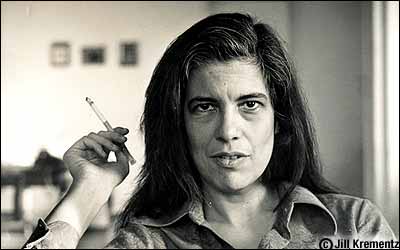
Susan Sontag. Source: nymag.com

For instance, Susan Sontag on her writing routine:

I write with a felt-tip pen, or sometimes a pencil, on yellow or white legal pads, that fetish of American writers. I like the slowness of writing by hand. Then I type it up and scrawl all over that. And keep on retyping it, each time making corrections both by hand and directly on the typewriter, until I don’t see how to make it any better. Up to five years ago, that was it. Since then there is a computer in my life. After the second or third draft it goes into the computer, so I don’t retype the whole manuscript anymore, but continue to revise by hand on a succession of hard-copy drafts from the computer.

[…]

I write in spurts. I write when I have to because the pressure builds up and I feel enough confidence that something has matured in my head and I can write it down. But once something is really under way, I don’t want to do anything else. I don’t go out, much of the time I forget to eat, I sleep very little. It’s a very undisciplined way of working and makes me not very prolific. But I’m too interested in many other things.

One day I want to write a big essay looking at how writing style changes according to how you get the words on the page (I even bought a beautiful typewriter to test that out). I love the idea that Sontag uses layers and layers in her writing and editing: the process of writing on top of writing, of scrawling and scoring out like the palimpsest diary Cathy in Wuthering Heights creates on the margins of a bible. Like Heidegger with his under-erasure being.

I also find it fascinating how people can study and write with music playing around them. I used to be a lover of total silence: a pure space in which I find the need to fill up the void with words. Now I can sometimes do with a bit of ambient sound: coffee shop clattering, birdsong, falling rain and so on. It makes a difference whether you are in the actual space (writing in a real garden or a coffee shop, for instance) or in the hyperreal zone of generated sounds (there are excellent Youtube sources of ambient sound, from whale-song to fire crackling in a grate). One will distract me to write about immediate details, the other soothes you into a weird creative ‘roll’ where you can pour out your words or nonsense like code streaming out in hyperspace. OK, I’m being self-indulgent.

And indeed, there is a self-indulgent aestheticisim to all of this: the endless procrastination involved in selecting the correct font for a piece, the need to rearrange one’s desk or shuffle books or change your pen or whatever it is. Yet there is something more important here that relates to publishing itself and the way literature often gets sucked into a commercial vacuum (think of the likes of the Brownings’ letters or Shakespeare’s sonnets which get beautifully repackaged in time for Valentine’s Day) . The original text is beautified by the paratext, and what is left is perhaps more of a consumer object than a discourse of words and sentences. There is an emphasis on white space, the chic luxury of thick paper and the gaps between printed letters. James Fenton said that, ‘what happened to poetry in the twentieth century was that it began to be written for the page’. But what is this page? Is it the sublime landscape of print paper stretching out its possibilities of unblemished whiteness? Or perhaps the virtual page: the ever-changing Internet archive that risks the dreaded 404, this page is missing; that risks alteration and collaboration and manipulation – and is this not a good thing? It is poetry changing, in transition; undergoing the morphological process of the human into cyborg. An automated computer voice reading aloud, staggering over the dashes and tildas and sharps, the onomatopoeia and enjambment like a child having a crack at reading Derrida. Il n’ya pas hors text: there is nothing outside the text/there is no outside-text (he writes in Of Grammatology).  When somebody reads aloud I imagine the words before me, drawing out of the page like butterflies coming to life; I can’t help it, it’s the way I learned to play with poetry. The world I like is the enclosed, shy space between the black ink and the reader’s eyes, the moving lips so silent.

The Mariner's ship and the Albatross. Source: thestage.co.uk
The Mariner’s ship and the Albatross. Source: thestage.co.uk

Like the ‘fluttering stranger’ that Coleridge observes as a child at school in ‘Frost at Midnight’, words in poetry become strange: there is an uneasiness to them that we cannot quite place. Verbs, adjectives and nouns are not what our teachers told us. You cannot fix them to a blackboard, and anyway chalk crumbles. While butterflies might be pinned down and classified by their colours, words are dependent on each other for meaning. So signification sifts in swirls of dreamy reading, and the mind makes connections. The imagination stirs and sometimes forgets them. Footnotes adorn the margins and confuse us, as they perhaps do in Coleridge’s ‘The Rime of the Ancient Mariner’, where we are driven into warmer but often more perplexing territory, as Coleridge’s gloss is less an academic explanation, and more a multiplicity of voices. At once, he joins in the action, ‘Like vessel, like crew!’ – yes, ‘her skin was white as leprosy’ – and we too catch this virus, moving between microbes of words that open and mutate through the strangest imagery. We shift between and through things with Coleridge’s metonymy, as in the gloss: ‘[a]nd its ribs are seen as bars on the face of the setting sun’. What are we to make of this being, ‘a Death’: an embodied spirit whose translucency both stirs and disturbs and amuses us, all at once? Aesthetics and meaning all blur into one.

Mount Snowdon. Photo by by Scott Wylie. https://www.flickr.com/photos/scotbot

With Romanticism what we often get is the journey, the progression through space, selves and substance, and through visual experiences: the sublime, picturesque and the beautiful. Not to mention the ugliness of Frankenstein’s monster, mirrored in Mary Shelley’s own monstrously patchworked collation of tropes and terrors and texts (imagine being raised on Milton but growing up like Rousseau  – being both Satan and a noble savage – now that is Otherness embodied, surely?). We follow Wordsworth up Snowdon and along the Alps in his glorious Prelude, with the seamless switch between interior musings and the expansive, golden panoramic shot that reveals the gaping ice and mountains, the tracks the subject’s wandering thinness:

The unfettered clouds and region of the heavens,
Tumult and peace, the darkness and the light,
Were all like workings of one mind, the features
Of the same face, blossoms upon one tree,
Characters of the great Apocalypse,
The types and symbols of eternity,
Of first, and last, and midst, and without end.

(Wordsworth, Book VI of The Thirteen-book Prelude, lines 566-572).

Where nature itself merges into one terrifying being, where opposites uncannily forgo their differences to become ‘features | of the same face’ and still the sweet ‘blossoms upon one tree’, we are in a sublime landscape, and then in the pastoral garden. The subject stamps himself upon the mountains, as the mountains are stamped upon him; we recall, with the help of the OED, the varied meanings of the term ‘character’: as both noun (a literary figure of self/person; a sign or symbol used in writing, print, computing; a code; the properties of a substance) and verb (‘to distinguish by particular marks, signs, or features’). Wordsworth’s figure is the self encoded in the text, the lonesome Romantic imprinted in his white sublime of Snowdon, going deep into the very properties of the rock itself. All is viscous, melting subject into object. All is, as Timothy Morton so aptly puts it, a mesh: where there can be nothing ‘out there’, as we are all a set of strangenesses, part of an existence that is always coexistence; and yet we are not simply part of a holistic collective, but connected in our differences, in our mutations that separate, stick and undo us. There are those clouds which seem ‘unfettered’ and yet even they cannot rise above the poet’s vision, the tacky link of aesthetic projection that takes nature from unified cliché  to a space of wilderness in which things move between abstraction and reification, and humans move with them in the ambiguous space between – like those viruses that multiply and mutate, ‘first, and last, and midst, and without end’.

This dangerous, homogenised idea of ‘landscape’ can be undone by thinking of it textually: as a palimpsest too of sorts, where human language adds layers to our understanding, alters our relationship with nonhuman things of the living and non-living. In writing and reading ‘nature poetry’, we are reconfiguring our place in the mesh; just as a drop of colour upon a single Paint pixel shifts the impression of the whole picture.

While Romanticism takes us on these messy forays into psyches and space, in the twentieth century we have, as Fenton has suggested, the poem as object: the poem as visual play on the page. The attempt to make the poem an object, to get to the very basics of objects. Think of Ezra Pound’s Imagism: ‘The apparition of these faces in a crowd; | Petals on a wet, black bough’ (‘In a Station of the Metro’). Think of William Carlos Williams’s notorious modernist poem, ‘The Red Wheelbarrow’, in which Williams’s poetics bring the object into stark and colourful being, like an object being rendered on some kind of graphic design program. Assonance coats our visual impressions so that we can almost taste what we see, the wheelbarrow ‘glazed with rain’. On the page, the poem too is a spilling of rain, of long lines dripping into single words, of basic objects hardening, forming. The ‘red wheel | barrow’; the ‘white | chickens’.

The Yellow Book. Source: http://www.johncoulthart.com/feuilleton/tag/fin-de-siecle/

There is also the lovely aestheticism of the fin de siècle: the beautiful margins and separation of art and text in the The Yellow Book, and of course Husymans’s jewel-encrusted tortoise, which eventually dies from the weight of its ridiculous embellishments. Does a text too collapse under the weight of its stylistic ornamentation? The fashion for minimalism perhaps gives way to this assumption, and yet what about the explosive textuality of Finnegans Wake, Gravity’s Rainbow; anything by Henry James, or for that matter, Angela Carter? Art for art’s sake is not a dip into vacuity, but is necessarily a political statement, a textual position, after all. An attempt to escape the shading blinds of ideology. You might write a dissertation on the politics of purple prose; you might float buoyantly along the clear river of Wikipedia readings.

And now I have lost my place in the forest and cannot find the light again. Birds tweet shrilly and their song is like stars tinkling and various shades of darkness hang in blue drapes from the bowers of pine trees. If I look around I see the jewel of every dew drop glisten and I know that it is twilight. I am looking for something particular: that silent speck of a presence; that which evades me every time I turn over each new leaf. Only I know that I cannot see, cannot see the gathering of these particles; the light is fading and soon the day will close its drapes.

These are just words after all, and who would cling to them?

Some further words:

Derrida, Jacques, 1967. Of Grammatology.

Edgar, Simon, ‘Landscape as Story’, Available at: http://www.lucentgroup.co.uk/the-landscape-as-story.html

Morton, Timothy, 2010. The Ecological Thought.

Huysmans, J. K. 1884. À rebours.

Time present and time past are both perhaps present in time future: A Year in Review

10350989_10152268098521309_5656240328826622387_n

How are you meant to review a year when the year itself isn’t quite over? You try and think of it as a block of time: a chunk of events lumped together to form some kind of history. You’re always reaching out for connections, trying to box things and label them as such. This was the year I got divorced and found my freedom; the year I graduated and stepped onto my career path to success; the year I lost someone dear to me and found solace in a new hobby. The movies have it all mapped out for us, the way we’re supposed to review the events in our lives. Facebook, Flickr and other social networks that we rely on help us with this theatre of memory, by archiving everything together in chains of photograph albums and status updates. Events are strung together in relation to chronology and names and computer-configured faces; what happened to who, who was tagged where, who liked this and who got married and who had a baby and who got promoted. Every element of time is rendered orderly, linear. Compartmentalised to make us all competitive, individual, empathetic, jealous. We’re moving on a straight line towards goals, achievements – more notches to add to our timeline.

But what end are we moving to? A timeline cannot flow on indefinitely; or can it? Surely it’s meant to document an A to B, a fixed period in time with all the events this period contains (contained). Life, as we commonly think of it, is a series of events strung together only by their relationship to the future, to development and change. We hate stasis; we love drama. Really, as Freud put it, what we desire is death.

Desire, however, isn’t quite as simple as this. Freud, as Deleuze and Guattari argued, ignores the basic tenants of capitalism. The need for more, more, more which arises not solely out of some psychoanalytic lack, but out of production itself. The act of purchase, the mesmerising experience of lifting up some pretty snow globe and spinning it in one’s hand and thinking I would like to buy that. The flicker of a giggle as we take it home, imagining how our new product is going to enhance the life that fills our fragile hours. Fill a room and create new topographies of mental space. For everything we see disrupts our schemas of reality, even if only slightly. The snow swirls up and covers the landscape and for that moment we are free from the chaos around us.

What we are looking for is T. S. Eliot’s ‘still point in the turning world’: that perfect moment where we are at peace with ourselves, where we see through to the present itself amidst all the churning miasma of the world we exist in. The wars and media images, the headlines and celebrity photographs and radio crackle and dance music beating and phones ringing and Blackberries bleeping and all the million signals that flicker in our brain as we gaze into a computer screen. For we are multiple, divided, networked creatures, always-already caught up in swarms of information. Time is not a static archive, but a rhizome of interconnected possibilities that flash and shift and click in our minds.

And what’s more, events in time always come back. The logic of the return. Write a sentence and press the Enter key. We aren’t just running forward into the bright light at the end of some metaphorical tunnel. We follow our lives in a loop. Spilling over and retracing our steps. Think, for example, of a book: meaning is made not from a linear plot, but from the intricate play of signifiers and motifs which weave a melody of meaning throughout the narrative, linking the past and present with a possible production of future. That old New Critical interplay between Fabula and syuzhet.

Real life too. Wars return and people die in the same way, as if re-enacting the past in some big-budget film, tracing archives of pain that carve out a bitterness in history. We stand in the mirror at roughly the same times each morning and perform the same routine. Routine, like it or not, structures our whole mentalities. That’s why culture is formed on the basis of habit and ritual. Religion falls in here too. Are we always waiting, as Yeats suggested, for the Second Coming? The ‘revelation’ that is always ‘at hand’, ‘surely’? Let’s circle back to the start – of the twentieth century, to be specific. Freud says our personalities are determined by the first few years of our lives. Our anxieties now repeat the biological functioning of our infant bodies. Are we so caught up in ourselves that we cannot think beyond our bodies?

***

What does it mean to be in simultaneous temporalities? I write this sitting by my newly-decorated Christmas tree, in the living room where I spent almost every Christmas of my life since the age of three. The smell of pine and the reflection of fairy lights through the window lighting up the pampas grass in the garden. Everything wondrous and dark. Remembering lying on the floor after a day in town drinking Jack Daniels and shivering cold on the bus and listening to Muse’s ‘Butterflies and Hurricanes’ and dreaming of another night so unlike this. The frozen park in November with the roundabout and fireworks and the tall black shadows of the distant trees. Now the steady showering of rain at the window, spraying like glitter under the orange lamp light. Once there were family members sitting where I sit now, all laughing and ripping open presents and drinking sherry. My dog Bella climbing over everything, whining and wreaking havoc with the whip of her tail. I slip through all these memories until they feed my present. I cannot focus on one thing alone. I feel like I am several people at once. I am no longer singular. No longer a statistical person.

What happens when you are no longer one person? There is a politics to this. There are the people that believe in return and repetition. People whose whole religion is based around recurrent events and cyclical time. The solstices of Paganism, then the spiritual systems of the Mayans and Aztecs. This contrasts with the Judaeo-Christian vision of linear time, which starts with Creation and ends with the Second Coming. But what if this Second Coming was always coming? To come? Since the present is contaminated with the future (unconsciously or not, the things we think and do are always shadowed somehow by some possibility to-come), doesn’t this render the idea of ‘the present’ almost impossible? Do we slip into the spirals of Yeats’ gyre and Derrida’s spectrality?

Are we on a road or an ocean? A stream or a snowball?

Capitalism and heteronormativity set out a life plan for us. Find a mate, get married, reproduce, recreate the system. Work, earn money, pay your way. Consume. These are all instrumental processes which work towards goals. Inside these events we make our own histories, certainly, and there is a degree of creativity and fulfillment. We aren’t just pawns. But this isn’t the whole story. Here comes in Judith Halberstam’s queer temporality. What happens to the temporal experience of those who do not follow this conventional route to eventual death? Who fill their lives with more entangled possibilities which are fraught with uncertainties and questions rather than fixed narratives and clear answers…

Remembering his lover’s death from AIDS, Mark Doty says: ‘all my life I’ve lived with a future which constantly diminishes but never vanishes’. The looming possibility of a non-future, a future without hope or action or life, shifts the focus back to the present. Gone are the regular goals of ‘making a living’, ‘providing for the future’, ‘putting something away’ for one’s children. The next generation are often invoked in political discourse. Global warming is dangerous because it will spoil the world for the children of the future. Non-heterosexual relationships are supposedly dangerous because they don’t follow the capitalist ethic of (re)production in the strict sense. Atheists threaten the idea of progression because they do not believe in a future beyond. The list goes on. Sometimes we are unaware of how important time is to politics. If we ‘queer’ time by questioning the validity of its conventional Western linear conception, what kinds of lives can we live in our present political realities? How can we change – perhaps even revolutionise – the system. There’s the old doctrine of Hedonism – live out your pleasures in the present with a general disregard for others and the future. But the present isn’t inherently selfish. It’s a place where people can come together and change things, without being bound to the very isolated narratives of old age and death.

Drugs, jobs, relationships and illness all alter our experience of time: slowing it down, speeding it up, blurring it, erasing memory, making us fearful for the future. As these things become less stable and more unpredictable, how will this affect the future?

Will we have a future, or will it be a series of presents? Can we really look to the future?

Maybe the answer is in science fiction.Think of Ursula K. Le Guin’s The Dispossessed (1974), which explores the concept of anarchist politics through ideas of simultaneous temporality and cyclical return. Revolution and repetition are in operation at the level of both form and content: story and narrative, narrative and story. Time revolves in curious ways around and between two planets, just as a moon revolves around the Earth…but what does the Earth do when you are on the moon? Einstein’s relativity comes to disrupt the easy narrative of linear time, even at the level of science…

Maybe the answer is also in our own experience. Think of a memory. Any memory you have: the first time you rode your bike, the time you fell over while dancing drunkenly on a beach in the freezing winter, the time you lost your first pet to the grovelling paws of death. All these memories do not stand alone in our minds like a physical photograph stuck and labelled in an album; but are rather bloated and blurred with the original anticipation of the event itself, and of the aftermath – the events which have happened since and in turn coloured the original. Repetition is not static but transformative. Moreover, human beings revel in repetition. The simple pleasures of revisiting an event, even if just to experience the same emotions again as they recur in a faded form like a polaroid misted by the breath of time. Maybe that’s why people have children, so they can do the things they miss doing as a kid. And as Fredric Jameson points out, in the postmodern condition of consumer capitalism, nostalgia becomes an industry itself, shaping culture from advertising to film and literature. As our lives get more complicated, faster, information-saturated – we return to an idealised, rosy history that is often removed from any genuine meaning.

***

I always find Henri Bergon’s work fascinating, when I can get my head around it. He was writing around the same time as William James, the psychologist that first coined the term ‘stream of consciousness’, which is still widely used today to describe the workings of our minds but also how these workings are depicted in certain kinds of literature. Yet a stream has linear connotations, assuming that our mind is always ‘in flow’ – moving forwards and never stopping or growing, just streaming onwards. Bergson, however, figured consciousness as an experience of ‘duration’. Think of any moment, any moment as it happens. As soon as you think of it, with a milli-gasp of a second, it’s gone again. Time is always shifting and never static or complete. While science might attempt to chart time in a linear, measured fashion with clocks and calendars and equations, in our psychological experience; time does not easily fix itself to such points. It can only be grasped by imaginative intuition; it is always fallible and contingent, never the same as each moment reconfigures the last, endlessly shifting our experience of the world and ourselves: ‘my mental state’, as Bergon puts it, ‘as it advances on the road of time, is continually swelling with the duration which it accumulates: it goes on increasing – rolling upon itself, as a snowball on the snow’. And so where does that lead us, if not to the icy abyss of our certain deaths?

Well, for one thing, it actually confirms that we are not mechanical beings, destined to follow the path that time lies out for us. Sure, we will probably all die. But importantly, if Bergson’s theory works, we have free will; imagination plays a significant role in determining our relationship to the past and future. The moment is always an evolution, and this gives us a kind of freedom.

There are, of course, a multiplicity of links between return, recurrence, rupture and revolution. The breaking free of history as history is understood in a linear manner, read from front to back like a traditional book.

Literature has a long history of delving into irregular conceptions of time. An example might include Tom McCarthy’s Remainder (2005), in which an unnamed protagonist decides to reconstruct a series of memories after coming into a large sum of money following a mysterious accident. These reconstructions are performed down to the smallest of details: the expression on an old lady’s face as she takes out the bin, the cats that prowl the rooftops, a crack in the wall, the pattern of floor tiles, the sound of liver frying in the flat below. What follows is a topography of static memory, caught in the narrator’s imaginative present. Time loses its linear quality as the past plays out in ‘real time’ with the narrator switching his memory scape into ‘on mode’, hiring ‘re-enactors’ to perform the roles of the people in his memory. And yet an amnesia and aporia haunts the narrative, as we are never quite sure where these memories originally came from; whether they even belong to the narrator. With a book like this, we lose the certainties of the traditional realist novel and the linear movement which often ended so finally with the closure of marriage or death – the first promising reproduction and progression, the latter an ultimate extinction that ends the line. There is something about the novel form in general that links it irrevocably to time; it is not contained in a performative moment like poetry, but must be read over a series of hours or days or even weeks. We physically must turn the page. Days pass in the novel, or maybe they don’t, as in the one-day novels of Woolf and Joyce (Mrs. Dalloway and Ulysses). Novels often concern themselves with memory and futurity; the sheer arrangement of sentences on a page, moreover, takes us through time. Time flows as we read. We make connections and go back again; we are at once linear and circular as we exist as minds in a novel.

But we are now in the era of the great hypertext, which denies all paths to origin in its networks of complex code and multiple nodes. The Internet exists largely in a state of simultaneity, connecting various presents from around the globe. And yet, like Bergsonian duration, it resists a static conception of time; everything about a webpage is always changing as new file paths are forged, different visitors leave their online traces, new links and reposts alter the original location. Life is a labyrinth, but we would do well to forget thinking about what lies at the end. Maybe we should focus on the here and now, and give ourselves the freedom to transform the present.

***

And this year? Well, this year started with a parting: losing my most beloved pet to death. All life is a natural cycle though, as the year ended with two new births in our family. On New Years Day 2014, I went for a walk to refresh my head from working the night before. A man stepped out of the 24 hour newsagent with a bottle of Mad Dog 20/20 and cracked open the screw top to a dream of futurity that ended in drunken oblivion. I feel this is somehow fitting.

Most of my months passed in the library with the seductive glow of the computer stopping me from doing much other than reading and essay writing. I fulfilled both of my somewhat humble resolutions to a) do more creative writing and b) grow my hair down to my hips. I passed my exams and spent my 21st birthday hanging upside down at the park. Went to Dublin and even got a bit tanned and kind of liked Guinness. Saw Little Comets twice, first at Cabaret Voltaire and then Liquid Rooms in Edinburgh. Spent quite a bit of free time in Edinburgh actually; explored the Botanic Gardens and the beach at Portobello and went for walks at Dean Village. Listened to lots of Belle & Sebastien, Manic Street Preachers, the new Bright Eyes album and a heap of other stuff. Bagged an iPod classic before Apple stopped doing them. Had one of my best Wickerman Festivals and ate coffee granules for the first time. In August I went down to England to see family and ended up at Stepney Green, going ‘back to the ancestors’. Drank a lot of ginger tea and did some yoga. Went to Loch Lomond. Averaged about a kilo of chocolate a week, mostly Dairy Milk. Got a blog article put up on WordPress’ Freshly Pressed which was lovely. Went through the referendum and came out a little deflated but unscathed. Also enjoyed the spirit of the Commonwealth Games, even if I couldn’t really give a toss about sport. Saw an amazing sunset on Ayr beach, all alcopop pinks and oranges burning and sinking into the silver sea. Wrote three times my dissertation then another proper word-count-conscious dissertation and didn’t go completely insane. Served Alasdair Gray some brandy and a few months later . Started playing trombone again. Enjoyed one sip of red wine and dyed my hair strawberry copper. Went to a conference call to Peter Singer. Changed my favourite study space in the library…

Yep, as you can probably tell, my 2014 hasn’t been exciting by most people’s standards. But you know, it was a very good year overall. God knows where I’ll be a year from now, having graduated and moved out and hopefully made some provisions for the future. But even if I haven’t, even if it seems that not much has changed, what does it matter when everything dissolves in a series of moments? 😉

10489865_10152315313756309_3620620074657700141_n

Some Reading:

Deleuze, Gilles, and Felix Guattari, Anti-Oedipus: Capitalism and Schizophrenia.

Bergson, Henri. Creative Evolution.

Eliot, T. S. Four Quartets.

McCarthy, Tom, Remainder.

Halberstam, Judith, In a Queer Time and Place: Transgender Bodies, Subcultural Lives.

Punk, Politics and the Personal: In Praise of the Manic Street Preachers


tumblr_nd4vd77mIC1qj3j7go1_500

One of my earliest memories is being at my dad’s old flat and messing with the hi-fi player to get attention. It would’ve been around about 1998, the year the Manic Street Preachers released their album, This is My Truth, Tell Me Yours. Maybe my dad and my brother were watching rugby on T.V or something, and I’d read all the books I’d brought with me. Well anyway, I thought of a keen plan to wind them up. I turned on the hi-fi and skipped to my dad’s favourite song (at least, his favourite song that wasn’t anything by U2!) and let it play. Loudly. And then I put it on repeat. And then I stopped letting it play out; I just played the first bar or so then pressed repeat and played it again, as if it were on a loop, inducing hypnosis. Incidentally, those first few notes are inscribed into my memory. The song was ‘You Stole the Sun from My Heart’.

Since then, I’ve drifted through life with the Manics not far from my consciousness. When I was about fourteen, I discovered some of the darker tracks from The Holy Bible online and basically that was me sorted for emotional outlet. What better lyrics do you need as an existentially-frustrated teenager than: ‘self-worth scatters, self-esteem’s a bore’? However, it’s only this summer that I’ve come to properly listen to the album in full. By pure coincidence, it just so happens that this year marks the 20th anniversary of The Holy Bible’s release. I was one year old when it came out. Funny, how it still rasps with fresh energy, all these years later when a whole new generation are beginning to appreciate it. It has songs about capital punishment, anorexia, the Holocaust, prostitution, aching nostalgia, suicide and (metaphorical) political sex scandals. At times it can be painful to listen to, with its throbbing, angry bass-lines, and packed-in lyrics which scream razor-sharp poetry: ‘Your idols speak so much of the abyss / Yet your morals only run as deep as the surface’ (‘IfwhiteAmericatoldthetruthforonedayitsworldwouldfallapart’). James Dean Bradfield is a master at the smashing (in the literal sense of smashing), punkish guitar rhythms and sailing solos that almost make your brain hurt. At the same time as being able to throw out all those lines, a million a minute. It’s brilliant. I can only imagine how amazing it must’ve felt, back then, to go out and buy this brand new album and listen to it on a Walkman and feel, more than ever, electric and alive. And angry at everything.

The Holy Bible is now considered an early 1990s classic, to be filed alongside the (considerably cheerier) offerings of 90s Britpop; for example, Oasis’s Definitely Maybe (1994) and (What’s the Story) Morning Glory? (1995), and the holy bible of grunge, Nirvana’s Nevermind (1991). While the rest of British music was penning the likes of ‘Live Forever’, ‘Rock and Roll Star’ and ‘Park Life’ – drunk anthems for the boozy masses (and still we love them, if only in secret) – the Manics were deconstructing contemporary society (class, political injustice, historical trauma) and existential crisis through the spike-edged modes of punk, pessimism and fury.

ManicStreetPreachers_TheHolyBible

Moreover, as its title suggests, The Holy Bible is more than just an album: it’s also a text. A network of references and quotes, provocative enough to set you on a trail of philosophical and literary discovery. The voracious listener is able to devour even more information by following up the sources scattered over its songs, learning at the same time as participating in this performance of knowledge. Camus, Foucault, Plath and others haunt this album, through direct references but also aesthetics. There’s Plath’s visceral emphasis on the body and its various contortions and distortions, its ruptures and vulnerabilities: ‘a tiny animal curled into a quarter circle’ (‘Die in the Summertime’). The title of track ‘Archives of Pain’ pays homage a chapter in David Macey’s 1993 biography of French philosopher Michel Foucault (who wrote Discipline and Punish), and the song itself considers changing societal values with regards to punishment, although it is ambiguous as to whether the song advocates a return to capital punishment, or a refusal of the glorification of serial killers. Lyrics such as ‘prisons must bring their pain’ and ‘the centre of humanity is cruelty’ offer a bleak, Lord of the Flies rendering of humankind’s essential lust for destruction, its need for revenge. While Nicky Wire and Richey Edwards collaborated on its lyrics, Richey seems to claim it as a ‘pro-capital punishment song’  (see Harris 2004), while Nicky told music magazine Melody Maker: ‘everyone gets a self destructive urge to kill, but I don’t particularly like the glorification of it. The song isn’t a right-wing statement, it’s just against this fascination with people who kill’ (cited in Power 2010). The ethical ambiguity of this song adds to its disturbing quality, its fury that cannot quite be pinned down.

The album also crackles with various audio samples, a ghost chamber of voices which include a fragment from an interview with the mother of a victim of Peter Sutcliffe (the 1946 so-called ‘Yorkshire Ripper’):

I wonder who you think you are
You damn well think you’re God or something
God give life, God taketh it away, not you
I think you are the Devil itself

And when you hear it, you’re chilled to the bone, before being thrown into the savage world of ‘Archives of Pain’. There’s also a quote from the author J. G. Ballard talking about his controversial novel Crash (1973), which flashes in as a soundbite on ‘Mausoleum’: ‘I wanted to rub the human face in its own vomit, force it to look in the mirror’. Mausoleum is a song inspired by a visit to Auschwitz, to the barren landscapes where concentration camps once existed, but still linger. The chorus is simply:

No birds – no birds
The sky is swollen black
No birds – no birds
Holy mass of dead insect

It’s painful and bare, so that listening to it, you imagine a dark carcass of a sky, heavy with the traumatic void of its past. The ‘dead insect’ which serves not only as an image of the barren remainders of death, but also perhaps as a reference to those swarms of people who were so brutally dehumanised during World War Two. And Ballard’s quote captures everything about The Holy Bible: it’s visceral, it forces you to confront the shadows of your own self, and of humanity. It provokes an abject reaction, through its images of self-harm, dismemberment, corrupt sex and violence. At the same time, it ‘obliterates your meaning’ (‘Mausoleum’); it shatters all attempts to make sense of the traumatic events it references. The conventional linear progression of melody and song and perhaps even narrative in an album is broken up with intertexts and ghosts, and perhaps that’s why it still lives on today. Unlike, perhaps, an Oasis album, which is nostalgically evocative of more simpler, hopeful times, it doesn’t feel in the least bit dated. Its endless trail of references add shadow and depth to its meaning.

richey-edwards

But perhaps, listening to it now, you feel that it’s haunted most by Richey Edwards himself, the band’s fourth member who penned (Nicky Wire has claim to the other quarter) 75% of the lyrics. Following bouts of depression, self-harm and an eating disorder, Richie disappeared one morning in January 1995, just before he and James were due to visit the U.S. on a promotional tour. In February, his car was found abandoned at a service station near the Severn Bridge. Since then, almost twenty years on, still no evidence or trace of Edwards has been found. Even though he was pronounced officially ‘presumed dead’ a few years ago, the aporia of his disappearance remains. Of course, this allows fans to string mythological tales about his reappearances around the world. The lack of closure is perhaps what is most distressing: the not-knowing, the sense that at any time he could come back into his friend’s and family’s lives. Listening to The Holy Bible, Richey’s personal suffering is of course inscribed in every line, even though most of the lyrics reach a universal, almost transcendental pain at times: ‘I’ve long since moved to a higher plateau’ (‘4st. 7lbs’). And then you hear him when listening to the Manics’ later albums, which are still full of Richey’s presence/non-presence in the band: ‘You keep giving me your free air miles / What would I give just for one of your smiles’ (‘Nobody Loved You’), and ‘As holy as the soil that buries your skin / As holy as the love we’ll never give / As holy as the time that drifted away / I love you so will you please come home’ (‘As Holy as the Soil (That Buries Your Skin)’).  Richey’s bandmates even dug out his old notebooks, with permission from his family, to use as the lyrics for their 2009 album, Journal for Plague Lovers. Maybe the most painfully intimate Richey track is the final song on this album, ‘William’s Last Words’. Arranged by Wire, it features soft guitar strokes and his crooning, deep voice singing about voyeurism over lines of loss and death that almost sound a melancholy joy:

Isn’t it lovely, when the dawn brings the dew?
I’ll be watching over you
Isn’t it lovely, when the dawn brings the dew
I’ll be watching over you

It ends with the bittersweet lines: ‘I’d love to go to sleep and wake up happy, / Wake up happy’. It’s a stripped-back Manics; it’s simple but stays with you, innocent and chilling, like the blood-spattered Jenny Saville artwork that adorns Journal’s cover:

manic_street_preachers_journal_for_plague_lovers_1241170684_crop_550x550

In this album we also see again that familiar combination of theory and fiery politics, as the opening track references Noam Chomsky’s book, Rethinking Camelot: JFK, The Vietnam War, and US Political Culture (1993):

Riderless horses on Chomsky’s Camelot
Bruises on my hands from digging my nails out
A series of images, against you and me
Trespass your torment if you are what you want to be

The sense of our powerlessness to media and mediated disaster is captured here in just a few frenzied lines. ‘A series of images’: the sense of personal and political conflict flashes past us in handfuls of words, just like the way that war plays out through the flickering light of our television screens. Chomsky’s book documented a critique of Kennedy’s foreign policy in Vietnam, and these themes of military funerals, fallen soldiers, geo-political conflicts and human sacrifice in war are all invoked in a handful of words, powerfully delivered as ever by Bradfield. We might think also of ‘Kevin Carter’, the trumpet-tinged single from Everything Must Go (1996) which documents the story of ‘Bang Bang Club’ and Pulitzer Prize-winning photographer, Kevin Carter, who famously suffered from the haunting scenes of all the killings and suffering he had witnessed (and indeed photographed) and eventually committed suicide. The Manics, not just with their military-inspired outfits, are consistently attuned to themes of war and death.

The mysterious story of Richey and the Manics is of course seductive, and perhaps part of the enshrinement of pain that goes with their mythology, but they are also an incredibly uplifting band. They kick the listener into political engagement, which is refreshing in a time of political apathy (or the complete neglect of politics in most pop and rock music, with the exception, perhaps, of Muse’s Matt Bellamy and his crazy conspiracy theories). Songs like ‘The Masses Against the Classes’ and ‘Design for Life’ are songs about working-class experience and class politics in the post-Thatcher era. Of course, being from Blackwood, an ex-mining town in Wales, the Manics are all familiar with the catastrophic effects of deindustrialisation upon communities. Seeing the life and soul of a town being lain to waste after the rich won the class-wars of the miners’ strikes. Their eleventh studio album, Rewind the Film, closes with the song ’30-Year War’, which references the Battle of Orgreave, the Hillsborough disaster, coverups at the BBC (and oh how there are many – from Savile to Scottish Independence) and has the refrain, ‘the old-boy network won the war again’. It’s depressing, but realistic in our time of austerity. Has much has really changed from the Thatcherite legacies of the early 1990s, when the Manics came into being? Arguably, with the rise of UKIP and a weakening Labour party, the ‘working-class’ opposition to neoliberalism faces an even deeper well of apathy.

Source: walesoline.co.uk

On the subject of far right politics, funnily enough last year the far-right English Defence League (EDL)  tried to appropriate the Manics’ 1998 hit ‘If You Tolerate This Your Children Will Be Next’ for promoting a demonstration in Birmingham. The song features the pretty much crystal clear lyrics: ‘So if I can shoot rabbits / Then I can shoot fascists’. As well as a lesson in irony, it is probably a reflection on the EDL’s stupidity as much as anything else to choose a song inspired by an anti-fascist slogan used during the Spanish Civil War. The Manics have always been associated with political controversy, from Nicky Wire’s sharpish (‘remember, all men should castrate themselves’) quotes to the band’s iconography (famously, a 1994 performance on Top of the Pops featured Bradfield wearing a ‘terrorist style’ balaclava, albeit with his name scrawled across it playfully like a name sewn onto a school jumper), but in this case, the EDL’s appropriate was too ridiculous and they had to sue.

***

This autumn, the Manics announced that they were finally ready to do a Holy Bible anniversary tour. Although my dad and I jumped on Ticketmaster at 9am, we were unable to grab any tickets for the elusive Barrowlands date, which apparently sold out in two minutes.  I’m really gutted (especially as it would have been a welcome reward for finishing uni coursework), as I can’t really imagine a gig that would have quite the same emotional resonance. Nevertheless, the fact that they’re now touring the album means they’re playing it more in general across various forms of media, which is always a great thing. I must admit, it was very satisfying to see James, Nicky and Sean performing ‘Revol’ on Later…With Jools Holland. When Jools interviewed them about the song they were going to play from the Holy Bible, Nicky sort of giggles and says it’s about dictators engaged in metaphorical sex games, some clever idea of Richey’s. There’s an irony that he’s certainly aware of. How commercialised music’s become, how such a song just doesn’t have its place in today’s music world. It’s telling that the two songs chosen to broadcast on the evening show were the poppier (but no less the better!) offerings from their new album, Futurology (2014). The new album is bold, flamboyantly European and even features that rare delight of Nicky singing on the chorus of a leading single, ‘Futurology’. It’s bold – maybe even bombastic – but the boldness is put into relief by the acoustic introspection and self-deprecation that characterised their previous album, Rewind the Film. They just keep reinventing themselves, and that’s the best thing about the Manics: they don’t do paltry repetitions, or parodies of their former selves. Their lyrics stick with you and gather new meanings as each album throws your deepest assumptions into question.

Artwork from 'La Tristesse Durera' (Gold Against the Soul)
Artwork from ‘La Tristesse Durera’ (Gold Against the Soul)

You could argue that the Manics have the paradoxical personality of a child: that strange urge to both disappear and gain all the attention in the world. To ‘walk in the snow and not leave a footprint’ (‘4st. 7lbs’) but also pen the extroverted Krautrock of ‘Europa Geht Durch Mich’, which throws itself into electronic music but also the increasingly frenzied political debates surrounding Europe in Britain right now. And like the child that I once was, trying to break my dad’s CD player by endlessly repeating one of their most successful songs, they go for attention. Their confidence isn’t the laddish arrogance of their Britpop bedfellows, but the endearing ambition and glam aesthetic of their early years and the strong direction that characterises most of their career (maybe Lifeblood was a slip-up, but I think it deserves more than straight dismissal…). It’s an oft-forgotten fact that the Manics’ single ‘The Masses Against the Classes’, was the first British chart No. 1 in the new millennium. It’s a single that begins with Chomsky: ‘The primary role of the government is to protect property from the majority and so it remains’ and ends with Camus: ‘A slave begins by demanding justice and ends by wanting to wear a crown’. Maybe this vicious cycle of capitalist desire and inequality will continue through the millennium, but by god let’s hope there’s still artists like the Manics around to do all they can to critique it. And if that’s not enough for you, then the fact that Nicky Wire went to the Brit Awards wearing an ‘I Love Hoovering’ t-shirt (and the man seriously does love housework) really should. What could be cooler than a Situationist statement which isn’t for once pure hipster irony?

tumblr_ncthj6WAd91rufro7o1_500
basically Nicky Wire is amazing & makes me want to wear leopard print again

***

Harris, John, 2004. ‘The commitments’ in The Guardian, Available at: http://www.theguardian.com/music/2004/nov/21/popandrock [Accessed 7.11.14].

NME, 2013. ‘Manic Street Preachers take legal action against the English Defence League’ , Available at: http://www.nme.com/news/manic-street-preachers/71397 [Accessed 7.11.14].

Power, Martin, 2010. Manic Street Preachers: Nailed to History (London: Omnibus Press).

Memories from MSN

014400a589401

Few things define the noughties more than MSN Messenger. The spinning pair of green and blue icons, surrounded by butterflies. The friendly window which popped up every time you logged onto the family computer after school, to ‘do some homework’. Forget Facebook, MSN was basically the main communication channel for my generation growing up, and I feel like its recent closure deserves some elegising. Yes, incase you hadn’t heard, MSN (rebranded since 2005 as Windows Live Messenger), is no longer with us. Microsoft forced its clients to give up the nostalgic platform and merge with Skype.

I remember getting my first email address, when the world of social media as we know it was still in its infancy. My cousin helped me set up my first hotmail account, and I was delighted to find that I could call it anything I wanted. I could express my (proto-manic-pixie) weirdness with some cool and random name I made up. I opted for ‘strawberry_bonfire’, an email address which incidentally I still often use (although not for LinkedIn or job applications…). It felt like a rite of passage, typing in my home address for some anonymous computer to process and setting up a password and making an email signature. People could now contact me. I was contactable. I’d have my own inbox. More importantly, I could set up a Neopets account! And an MSN account!

There was something unique about MSN’s interface which sets it apart from the likes of Facebook messenger, or Snapchat. I suppose the emphasis on conversation is key here. Each conversation opened out into a window of its own, although you could group your chats in ‘tabs’ for ease of moving between conversations. There was of course, the odd awkward moment when you accidentally sent someone a message reply that was intended for another person. Gossiping via MSN was a tricky business, which required organisation and attention.

Everything was a beautiful network of colours and messed-up symbols. It took a good five minutes to work out who was who when you looked at your contacts list, especially if your friends had recently updated their names. There was a whole sequence of tildas, dashes and asterisks to sift through before you could pinpoint your pal’s pseudonym or elaborately embellished screen name. I suppose that’s another reason why (not so) secretly I still prefer MySpace and MSN to Facebook…there’s that element of individuality that you don’t really get in the highly structured systems of more contemporary social media platforms. Sure, they’re probably more resistant to coding bugs because of their relative standardisation, but I miss the quirkiness of an amateur’s attempts at html on a MySpace theme, or a smear or rainbow lettering constituting someone’s MSN name. You came to know people not by their boring old real name and photograph (as on Facebook), but by some random avatar and distinctive font. That one friend you recognised when they popped up saying ‘hi’ by their enduring use of cyan-coloured Comic Sans or violet Monotype Corsiva as much as their name. There’s a nice sense of cosiness that comes with this, of online personalities being fabricated, selves being formed in the endless conversations that would eat into hours of an evening. Back then, we were too young to go to the pub, too remote in the country to find something ‘real’ and useful to do like join a sports club or an art class. Even if we did do extra stuff, MSN filled in the rest of our time, extended our social lives.

Then there was the personal message. This could range from ‘ugh doing maths homework’, to ‘Amy You Are My One <3’ and the ambiguous ‘=/’ which would result in a barrage of people asking ‘what’s up?’, only for the person to reply, ‘nothing’. Your personal message also revealed what you were listening to, if you had your iTunes hooked up. This of course stopped you listening to hideously embarrassing music (in theory) and listening to what you thought would impress other people. It was also a good indicator of people’s moods. God knows I wouldn’t start a conversation with someone if they were listening to Secondhand Serenade or Hawthorne Heights…

Then there was the ‘nudge’ function which was brought in later on. The bane of your existence if you were trying to coordinate MSN with homework or downloading or streaming YouTube videos (basically, my ancient computer would crash every time I received a nudge), the nudge would make your screen shake and force you to pay attention to the nudger’s conversation. Luckily you could only send a restricted number within a certain period of time. There was a time when MSN conversations were very precious, back in the pre-Broadband days when you dreaded that fateful phrase from your mother, ‘I’m going to unplug the internet because I need to use the phone’. You had waited so long for that bloody diallup connection to ring through and now you had to hastily sign off with a quick ‘g2g xxx’. To be fair, a lot of conversations basically went like this:

Person A: Hey x
Person B: Helloooooo

Person A: Howz u?
Person B: nb, u?
Person A: gd thanks
Person B: wubu2?
Person A: just hw and stuff, u?
Person B: yeh same

Person B: g2g, byeeeee xxx

Nevertheless, a lot of us had our first breakups, friend fallouts and heart-to-heart confessions over MSN. That, I guess, is where a lot of the nostalgia comes from. Staying up into the small hours on a Friday night having a moan about life to someone, or helping them through something they were going through. You could send them helpful web articles or songs to cheer them up (it might take 2 hours for the song to arrive though), or a funny picture (memes were growing popular). Emoticons back then weren’t the loathsome ‘emoji’ phenomenon they are now (god I sound like an old woman) – they were generally small and unobtrusive (unlike Apple updating your iPad and putting in an emoji keyboard without telling you…) and often served as a welcome substitute from =] or ‘lol’ being added to the end of every message. And then if you were going on holiday you could put the little tropical island or plane symbol in your personal message, and people would know that you were now an exotic thing talking to them from the imaginary world of some hotel abroad (with dodgy WiFi connections).

img25
emoticons! all the emoticons!

MSN was in some ways an endlessly frustrating service, but in a way that’s what made it so good. The game of how to talk to someone you fancied without making yourself look like a stalker (wait at least ten minutes before talking to them after they’ve signed in), of working out whether your matter was urgent enough to disturb someone whose status was ‘Busy’. There was always that weirdo online at 4am who you sometimes wanted to speak to and ask what the hell was up with their sleeping pattern. Then there were the endless difficulties with connection that left you kicking the desk underneath your computer and wishing you had one of those newfangled Macbooks or something (I guess this is where the ease of the latest messaging services comes in). I kept a notepad next to my keyboard for a while and it was amazing the amount of doodling I could do in the time I spent waiting for MSN to load; sometimes it was as bad as waiting for a 3GB installation of the Sims!

Source: Urban Dictionary

Yes, MSN was great for killing time. If you had friends round, chances were you’d end up on MSN, talking to (berating, more like) SmarterChild. SmarterChild was an instant messaging chatbot, a robot who replied to your message with a complex(ish) formula of responses. You’d send it (him?) lewd messages and he’d scold you for being inappropriate. You could ask him a question about your homework and he’d do his best to look up some (mostly irrelevant) answer. He’d do your times tables, and give you dictionary definitions. If you were in a bad moon, you could take it out on SmartChild. Talking to SmarterChild felt that you were outsmarting all those academic people who were worrying about the effects of inhuman interaction on us children. We were outsmarting the robots here.

There’s a lot of talk nowadays about the dangers of the Internet for young people. Schoolchildren are supposed to be educated about staying safe online, about not talking to strangers or giving out personal information. I don’t really remember getting much (if any) education on this at school, other than, ‘don’t give anyone your phone number’. Remember that familiar acronym which haunted every MSN conversation you had with a stranger: ASL? Standing for ‘Age, Sex, Location’, it was (is?), as Urban Dictionary puts it, ‘what stupid people say on chats to learn who you are and where you live so they can come to your house with a chainsaw and kill you.’ Most of the time I would reply ’99, Cat, the moon’, and then block them, but then that’s just me…I always felt MSN was totally safe. It was so easy to block people (the satisfaction of seeing their little icon turn red!) or appear offline so they couldn’t start a conversation with you. The fact that it was a separate console and not embedded within your browser felt more private somehow, and less like your every word was being tracked with cookies, or sucked into the black hole of some governmental data archive. Facebook exposes a lot more information about you than MSN ever did. All you’d get from the average person’s MSN profile was some kooky screen name, a jumble of symbols and song lyrics and maybe a blurry/’arty’ webcam shot of the side of their face.

One of the earliest academics to properly study the effects of online communication on people’s identities was Sherry Turkle. Her book Life on the Screen: Identity in the Age of the Internet (1995) looked at how people interact via MUDs (role playing games and forums on the the internet), through which they communicated in fictional worlds. I suppose the fantasy-scape of something like Dungeons and Dragons is an example here, but someone with more expertise in what is evolving into online cos-play would surely be able to list many more. Well in this book, Turkle basically argued that such online interactions, which involved the play of masks and multiple identities, were allowing people to develop a postmodern mode of knowledge – they came to see reality itself as a play of surface signifiers, a swirling universe of simulations. Think Baudrillard here, only, Baudrillard getting serious research application (not just armchair academia or The Matrix). Identity becomes a game, a game in which you have some control; as Turkle points out, “One player says, ‘You are what you pretend to be…you are what you play.’”. Simulations basically infect out reality, and allow us to enjoy it like a game, playing out the selves we have created online.

Scene from Chatroom

There are of course, many film and literary representations of the dangers of forging online identities: the thriller Chatroom (2010) stages chatrooms as anonymous hotel rooms, in which teenagers encourage each other to do increasingly disturbing actions in reality, culminating in the most psychopathic character trying to manipulate someone to commit suicide. Jeanette Winterson’s The Power.Book (2000), named after an old Mac computer, delves into the fantasy realm enabled by the Internet, with its chimerical portrayal of a dialogue between two selves (whose names and identities shift). For Winterson, the computer functions as a way of exploring the multiplicity of narratives, the instantaneity of their communication and transformation. Her chapters have names like ‘New Document’ and ‘Search’. Whether she creates a credible Internet Romance (could this be a genre? The Guardian (2000) reviewed it as ‘a virtuoso trip into virtual reality’ ) or a gimmicky spin on vaguely plausible computer jargon is up to the reader. Still, it does link in to Turkle’s ideas about how the Internet has fabricated a postmodern reality of play and possibility.

I’m not sure exactly how much scope MSN offered for that sort of thing. Often, we just used it to chat to our friends as we would in real life. We’d have ‘group convos’ which contained as much shouting (CAPITALS), annoying nudges and confusing dialogue as such a conversation would play out in real life. Sure, maybe we’d open up a bit more online, with the safety of the computer interface. We could tell our secrets to complete strangers, who wouldn’t know our real name and so couldn’t track us down later via Facebook to wreck our lives. We could just block them. So maybe there was a bit of identity ‘play’ there, but mostly it was just an extension of the interactions we had in the park, on the bus, in the playground. It wasn’t a simulated, enclosed environment in the same way a chatroom online is; it wasn’t a specific ‘zone’ – it was a console that you opened up, a kind of tool as opposed to a virtual reality. That’s how it felt to me anyway.

Throughout my teens, Piczo, MySpace and Bebo would come and go, fading into the recesses of an Internet shadow-world that secretly archives every scrap of your self that was once uploaded online. But MSN was faithful, erasing every conversation into the imaginary ether, so that only you could read over previous conversations (if you had ‘chat logs’ switched on; but they certainly weren’t searchable online in the same way your dreadful Piczo account was). MSN was the gateway for many friendships, a forum to vent frustration and a place to play chess with a stranger from America who added you because his cousin knew your friend or something. A place where you got a pleasant kick from signing on and seeing the ghost message of someone who’d tried to talk to you when you were offline. You felt that important. A place of horrific fonts: ‘яσ¢кιи ιи нєανєи, 2кαιι7’ and fondly irritating screennames (my own include ‘Whatsername’ (yes, a riff on Green Day’s American Idiot – I was a twelve-year-old-wannabe-goff) and Maria Magickk (I promise you, I knew people with worse ‘scene’ names than that; also, I thought the double k was a clever reference to the ‘kk’ which everyone substituted for ‘okay’ on MSN. Oh dear.). Now that MSN has been shut down for good in its final resting place and we all have to migrate to Skype (never!), I guess all that’s left for us Generation Y people is the WhatsApps and Snapchats and other gimmicky chat applications that smartphones have brought us. Conversation these days is less about talking and more about sending emoticons and stupid pictures (bah humbug!). For the rest of us, there’s always the excellent nostalgia trip that is the MSN Memories Twitter account: https://twitter.com/MSNmesenger (enjoy).

the dreaded Troubleshoot message

***

Kellaway, Kate, 2000. ‘She’s got the power’ in The Guardian. Available at: <http://www.theguardian.com/books/2000/aug/27/fiction.jeanettewinterson> [Accessed 3.11.14].

Nakata, Hideo, 2010. Chatroom [DVD].

Neopets(!) www.neopets.com [just cause you have to try it]

Turkle, Sherry, 1995. Life on the Screen: Identity in the Age of the Internet (New York: Simon & Schuster).

Winterson, Jeanette, 2000. The Power.Book (London: Vintage).

Inception: Dreams and (Dis)illusion

source: http://oeaf.blogspot.co.uk/2012_05_01_archive.html

Inception is a film that begs itself to be watched twice. Following what appears to be a complex dual narrative of both emotional turmoil and psycho-political manipulation, Christopher Nolan’s blockbuster success turns on an exploration of the implications of the very personal act of dreaming being appropriated externally as a powerful means of mind-control. Yet whilst the film indulges in Hollywood-acknowledged action scenes – from a gravity-defying fight sequence in a surreal hotel corridor to a car tipping off a motorway bridge – it also diverges from the traditional narrative style of mainstream movies. With the seemingly complicated premise of dream-stealing intertwined with the intimate personal journey of the main character Cobb (played by DiCaprio), the film’s exposition is unravelled in an on-going fashion and so we are plunged straight into the action. The main storyline centres on a deal that Cobb strikes with Saito, a powerful global businessman who proposes that in order to use his influence to let Cobb return to the USA (Saito can eliminate false extradition charges held against Cobb), Cobb must perform the task of inception – a task that takes him and his colleagues deep within three dream-layers in order to manipulate another man’s mind. What is interesting about the film is not necessarily its deceptively confusing plot but the way it is told – the story itself – and the techniques the film employs by meshing the genres of sci-fi, psychological thriller, film noir and heist in order to raise questions about narrative seduction, dreams and the power of the unconscious.

While many heist films unveil their major technical premise at once, as a character explicates the details of the mission to his/her colleagues, Inception works in a fashion that Kristen Thompson calls ‘continous exposition’. In this sense, the aim of Cobb’s team of dream-thieves, as well as the physical laws that govern the practice of dream architecture and inception (the implanting of an idea into another’s mind so that they imagine it to be of their own creation), are revealed gradually throughout the film and during scenes of both explanation and action. The character Ariadne takes her name from the Greek heroine Ariadne, who falls in love with Athenian hero Theseus and helps guide him with a ball of string though the Cretan Labyrinth in order to assist him in locating and slaying the Minotaur. Similarly, Inception’s Ariadne plays a key role in not only helping Cobb to disentangle the repressed emotions regarding his dead wife which continue to haunt him and disrupt his dream work, but also as a pupil of the dream-workers she learns and responds to the workings of the dream-world, thus illuminating the film audience with the features, possibilities and ontology of dreaming through her character.

This gradual unravelling of exposition plays a fundamental role in the seductive quality of Inception’s narrative. Talking about the task of exposition, Nolan explains:

“Exposition is such a massive demand […] It’s something you have to just try and imbue in the relationships of the characters. You never want to find yourself in a scene where characters are passively receiving information in some way, because you don’t want the audience passively receiving information. You want them engaged with that dramatization.”

It is this engagement with understanding, this active involvement in working out the enigma, the puzzle, which makes the film so gripping. Rather than spoon-feeding the audience a fully-blown detailed account of the principles of mind-control, Nolan reveals slowly the inner workings of the machine of dreaming. Information seeps out of the action as characters exchange advice and teachings, and as things do or do not go to plan we are often left to extract our own conclusions about how the laws of dreaming work. This mode of exposition is thus fundamentally tied to the events of the film itself, rather than an intrinsic system of depth which can be quickly absorbed and applied to the film as a whole; the labyrinthine revealing of secrets and mysterious truths refracts from storylines and action across to the revelation of Cobb’s unconscious traumas, so that the audience find themselves caught in a play of possibility and information that moves as swiftly as the characters as they set out on their complicated mission.

I suggest this fast-moving, yet richly-layered form of narrative is highly seductive in its ability to lure viewers in to the depths of the film in a way that relies on the vivid exchange of surfaces, visuals and meaning. Seduction, as Baudrillard (2001) identifies, is fundamentally an ability ‘to deny things their truth and turn it into a game, the pure play of appearances’. One way in which a narrative can seduce, then, is by denying its audience fixed answers, a technique which enables the endless ‘play’ of possible meanings. This draws us in so that we play an active role in the ‘game’ of interpretation, a technique of seduction which seems very appropriate given the often vague and mysterious nature of dreams themselves.

In Inception, there are a lot of deliberate ambiguities, and things that are revealed to be not quite what they initially seemed to be. For example, the question of what is a dream and what is reality. This is a problem that we learn Cobb suffers with, and it is one that is well documented in literary and film history. Whether from overuse of psychadelic drugs, or some form of mental pathology, there have for decades been characters portrayed as losing their grip on the thin line that separates reality and fantasy, dream-world and actual experience. Examples that spring to mind are A Beautiful Mind and Black Swan, which both offer provoking depictions of schizophrenia. Psychosis is also a difficulty that Cobb’s deceased wife, Mal, has fought with. Mal and Cobb spent a great deal of time in ‘Limbo’, a world of endless pure subconscious creation that is formed in an on-going fashion by those that occupy it. It seems by definition to be an abyss of the mind, a place to be trapped in ceaseless possibility – lost in one’s own creative, expansive subconsciousness. You enter Limbo when your physical body is heavily sedated, and either you are killed in a dream or at a complex dream level (in the film, level 3) when you fall asleep. It’s a strange and vicious concept that has a dark allure to it – the suggestion that perhaps when people enter comas their minds are elsewhere, trapped, unable to get back to reality.

When Mal and Cobb finally make it out of Limbo, Mal soon loses the ability to distinguish this real world from the world they fashioned in their dreams. Eventually we learn that this is because Cobb only managed to get himself and Mal out of Limbo by planting through inception in Mal’s mind the idea that the world (at that point, Limbo) was not real – persuading them to commit suicide in order to be kicked out back to reality. Yet the idea that the world was not real grew like a parasite and tormented Mal until she could not accept even reality as reality. She thought she was still dreaming: that her children were just projections of her consciousness, that the physical environment was just a fabrication of memory and imagination. To remedy this perpetual state of insecurity, she decides to kill herself by jumping from their high-floor apartment into the abyss below.

I think this form of suicide poses interesting questions about the nature of consiousness and our self-awareness within the world. To what extent do we really know that this environment that seems so solid and familiar is in fact real and actual? We know what it feels like when we are dreaming: time is sped up, often fragmented (an issue dealt with in Inception, where there is a mathematical formula that encompasses the disjunction between time spent asleep and time in reality, where one can dream for 50 years but be asleep for merely three hours), we wake up when we die or when there is some sort of ‘kick’, which might be something like loud music or physical pain – a jolt that wakes us up. Yet although it seems easy to distinguish dreams and reality, how do we know that there is just one ‘reality’, or that our notion of reality is just an elaborately designed, prolonged dream? It’s a problem that was posed a long time ago by René Descartes, who suggested a form of radical scepticism about the nature of reality. Descartes proposed that all our conscious experience could merely be a dream-state, manipulated by an all-powerful and omniscient ‘Evil Demon’, who could control everything we do and everything around us. This is the famous ‘brain in a vat’ philosophical problem that has been explored in films like The Matrix, and becomes evermore salient as virtual reality and technology advances to provide evermore realistic and vividly detailed artificial environments. What it comes down to is the fact that we really cannot know (or can we?) the metaphysical nature of the world: our knowledge leads merely to a non-passé, or an abyss (like the one Mal plunges into), an endless recursion to the possibility of multiple imagined or experienced realities.

And who are we to judge that the world in the film is reality? What if Mal, in leaping from the metropolis to the dark void below, really did escape to a higher level of consciousness, a real world? The film cuts rapidly in and out of the different dream levels inhabited by the characters in their mission to conduct inception on Fischer, a businessman (to persuade him to break up his father’s monopolying empire – maybe someone should try and do this to a young Murdoch). This technique not only disorientates the audience and imbues the film with a surreal quality but it also highlights how our perception is fleeting, rapid, built up of impressions. Reality, then, is very subjective, and the distinction between psychological reality, the durational experience of time and physical reality with linear clock time. Nolan seems to want to emphasise this ambiguity of experience and reality with the ending, which closes on the image of the only anchor an individual possesses to reality – the totem: a small token whose unique, personalised weight, balance and appearance enables its owner to discover whether they are in their own waking/dreaming reality or another person’s dream – if they are in another’s dream the totem will feel strange. Cobb’s totem is a kind of spinning top, which is set to topple over if he is awake and to continue spinning if dreaming. At the ending, Nolan shows Cobb’s totem both spinning but also provocatively starting to topple. This means we do not know if the film closes with a conventional happy ending, with Cobb finally reunited with his children (mission accomplished) or whether he is simply dreaming about the event.

In the hope of drawing some line between dreams and reality, it is useful to consider the concept of the ‘kick’ featured in Inception. It’s interesting when real-life stimuli enter our dream-world: for example, in the film Cobb is thrown into a bath of water and in his dream water floods in through the windows. The ‘kick’ designed to withdraw the characters from the triple layers of dreams they are in is a piece of music, which resonates throughout each level like an uncanny scent or breath of memory – not just the physical stimuli of sound. I have had many dreams where I am drowning and can’t breathe – the pain physically sears up in my chest, but when I wake up I realise I’m somehow suffocating myself with my pillow! Not only is there some psychoanalytic value in studying what makes us wake up from dreams (hello, Freud), but the concept of the ‘kick’ raises intriguing questions about where mind and body collide, and how much of consciousness is interwoven with all those nerves and neurons to our physical form. Certainly this very phenomenon refutes the now very-dated but religiously popular form of Cartesian ‘dualism’ which proposed the mind and body were distinct forms of matter, so that when the body dies the soul remains and can go to heaven or hell. If mind and body are different materials, then how can they interact so intimately?

On the question of psychoanalysis, the film borrows heavily from Freudian ideas about the interplay between and the role and nature of dreams and the unconscious. The characters in Inception spend a great deal of their time lucidly fabricating dream-worlds and occupying the dream-worlds of others, as well as switching between dreams and reality, that it is no wonder that many of them suffer a mild psychosis whereby the distinction begins to break down. Freud himself deemed psychosis a ‘disturbance in the relation between the ego and the external world’.

In The Interpretation of Dreams, Freud posited that our dreams contained symbols transmitted from the underworld of our unconscious, symbols that represented repressed desires and wishes (usually sexual) that are too uncomfortable or psychologically painful (due to the effects of oppressive socialisation) for us to admit consciously. He says: ‘the interpretation of dreams is the royal road to a knowledge of the unconscious activities of the mind’. So a dream where you steal your dad’s hat could have awkward Oedipal consequnces, as Freud thought that hats were often representations of genetalia. The possibility that you have sexual feelings for a parent is painful to acknowledge consciously due to society’s incest taboo, so instead this desire reveals itself only in dreams.

The consequences of psychoanalysis seem quite profound in unsettling our conventional idea of reality. If so much of our perception of reality seems to be subconscious, this makes it difficult to assume that there is a clear, objective definition of a singular reality, since everyone is driven by multiple interlocking wishes. The central emotional plot of Inception is a psychoanalytic one, as well as a conventional Hollywood drama of a distraught father who misses his dead wife and would risk the life of himself and his team for a chance to see his children again. Dr. Stephen Diamond makes the interesting point that Cobb’s unresolved guilt and anxiety regarding his involvement in manipulating Mal’s psychological state and (somewhat inadvertedly) causing her suicide is projected symbolically in the form of Mal herself, as Cobb’s ‘negative anima’. Mal haunts many of the dreams Cobb creates and makes it difficult for him to do his job properly, as her shadow-like and disruptive figure keeps reappearing in times of crisis. Ariadne, ever the guiding light, at one point takes up the role of psychoanalyst and tells Cobb that the only way Mal is going to go away is if he lets her go – if he resolves his inner conflicts with his memory of Mal.

The ultimate goal of being reunited with his children flickers through the film in the recurring appearance of the boy and girl playing together on the grass with a beam of sunlight. Subtle differences in their appearance occur between the different shots, which suggests perhaps an alteration in Cobb’s memory of them, or the real process of aging they are experiencing – again, a blurring of reality, memory and dreams. In the end, when Cobb finally returns to his children but the camera finishes by focusing on the totem, we are left with the uncanny possiblity that the children may not be real, instead merely (as Mal feared) ghostly projections of Cobb’s unconscious. However, the warmth and joy we gain from seeing this satisfying ending feels real. Does it matter what really happens? I think Nolan employs the ambiguity here to self-reflexively acknowledge the strange status of film as often a vividly realisitc visual projection of reality, portraying visually and auditorily objective reality and also rendering the subjective inner life of individuals. Film can seem all too real, but it is often fictional, and like a dream it is a temporally-compressed representation of reality. When the credits roll and we are suddenly thrust back into our everyday environment, we realise that we have been intensely caught up in this other-world, its visual universe has been painted upon our eyes for the brief time that we have been watching. It has become part of our reality. We probably won’t forget it; we might even dream about it.

Baudrillard, J. (2010) Seduction, trans. by Brian Singer, (Montreal: CTheory Books), Available online: <http://free.art.pl/fotografie/baudrillard/seduction/BAUDRILLARD-SEDUCTION.html> [Accessed 25.01.13].

Descartes, R. (1641) Meditations on First Philosophy.

Diamond, S. (2010) http://www.psychologytoday.com/blog/evil-deeds/201008/inception-art-dream-and-reality

Freud, S. (1899) The Interpretation of Dreams.

Freud, S. (1924) Neurosis and Psychosis.

http://www.davidbordwell.net/blog/2010/08/12/revisiting-inception/

source: http://vegzetmernokei.blogspot.co.uk/2012_10_01_archive.html

Bus Travel: Why I’m Not a Fan

broken down bus
broken down bus

Getting the bus for most people isn’t a problem, in fact for many it is an inevitable stage of the everyday routine. Buses get people to work, school, holiday destinations – and, more importantly, buses get people home. Yet, for almost everyone who gets them, buses are frankly a right pain in the arse.

My relationship with the humble bus all started when I was fourteen and began travelling into town by myself and with friends, which necessitated a move away from the convenient but uncool parental taxi service towards less convenient but slightly more socially-acceptable public transportation. At first, the idea of being on a bus was exciting: leaning my head against the window feeling the roar of the wind outside as we rushed along, talking to strangers, listening to music as I watched the hills go by rather than being forced to listen to Steve Wright’s Sunday Love Song’s on Radio 2 (sorry Mum). Admittedly, trains were better suited to the wind-in-your-hair function, but back in the day, train times in Ayrshire were rather less frequent than the bus ones. And so, the greater half of my adolescent years was spent riding buses, or more likely waiting endlessly for them to arrive.

In fact, I’m sure I can blur much of my teenage years into an eternity of waiting in the rain at myriad bus stops. It is generally a standard principle that a bus is either five minutes early, and disappears before you get a chance to run like an idiot after it, or else it’s 45 minutes late and the driver and all passengers look grumpier than Nick Clegg.

It is also a standard principle that those waiting for a bus will generally unite at a bus stop with the social glue of the Great British Moan. Whilst this is a gloomy disposition that reflects our weather, it nevertheless provides a useful way of connecting disparate generations. Elderly people love to talk about buses. My nan, like many other people’s grandparents, has probably memorised her local bus timetable. She knows their numbers, she knows which ones are reliable and which ones to avoid. She likes to moan about the drivers and the rising prices. Well, I do too. Some of our best intergenerational bonding has stemmed from conversations complaining about buses.

Regardless of the positives that can come out of poor service, the sheer cost of travelling by bus in my opinion is rendering void any novelty value they might still retain. Buses are getting extortionate. The slogans about cheap travel for students plastered on the back of our local buses are a joke. To make the eight mile journey from Maybole to Ayr it would set me back almost £4 (for a single ticket), when I can get to Glasgow with my third-off young person’s railcard for just over £5 – a journey over five times the distance. Not to mention the substantial luxury of train travel in comparison to buses, where leg room is smaller and the chance of being flung violently into the person in front/beside/behind you is considerably higher.

On a train, I have access to lots of comforts. I might be able to charge my phone. I will be greeted on occasion by a friendly ticket officer, rather than a bus driver irate with the stresses of traffic and grumpy passengers. I have a little table if I want to drink my coffee, write or read a magazine (perhaps the complementary Metro). Late night train travel allows a snapshot into local nightlife, although sometimes it isn’t necessary to take the late train to see this, however. It is not unusual to see someone casually open a can of Tennents at ten in the morning, or to witness a band of rowdy men (on a stag-do, or on their way back/to a rugby/football match) cajoling the ticket conductor and singing rude songs. A hazard of both bus and train travel is the lonesome teenager playing awful dance tunes out loud through the tinny speakers on his/her phone. This was the mode through which I experienced my delightful first exposure to Carly Rae Jepsen’s ‘Call Me Maybe’. So, don’t get me wrong, train travel is by no means a leisurely experience. Anyone who has undergone the horror of taking the evening train back from Ayr to Glasgow on a hot day, will know this. Being packed into a tightly enclosed space with a load of highly-intoxicated, sunburned, tired and aggravated Glaswegians who have just spent a day by the beach is far from light pleasantry.

Yet while trains have their problems, at least they are generally reliable. By reliable, all I mean is that they tend to head from one place to another, stopping at fixed destinations on the way. Recently, commentator Caitlin Moran tweeted that:

Screen Shot 2013-06-27 at 15.25.21

To some people (particularly those who are drivers and rarely take public transport) this disruption to service might seem astonishing. To me, it’s comically familiar. Growing up, I used to regularly get the 361 bus to travel to my friend’s house in a tiny far-out village. It stopped in many different farm towns and villages, and was notorious for its lateness, tendency not to show up and the antics of its drivers. I loved that bus, although it was a bloody nightmare. It was the bus we had to get at nine in the morning after a rough night of partying, and journey along those endless winding roads, being thrown between seats, trying our best not to throw up. It was the bus whose driver has, on separate occasions, pulled up by the side of the road to get a chippy, to take a piss in a ditch and to buy a pack of cigarettes (which said driver proceeded to smoke outside of the bus while we waited patiently inside).

Caitlin Moran later added that everyone on the bus was being ‘very British’ and politely pretending that nothing was wrong. I would like to suggest that such awkward manners are less visible during bus travel in Scotland (well, I can’t speak for everywhere, but at least South West Scotland). As soon as the bus driver accidentally stalls, or refuses some twenty-year-old chancer a half, cue the cries of (and I quote) “ya fucking fanny” and “fuck you wee man”, and general laughter and goading from the other passengers. Well, some of us will try to turn our heads, but generally being on a bus seems to be a more raucous affair than it is down south

Raucous indeed; maybe even adventurous. The notorious 361 was also the bus that one day broke down in the middle of nowhere, while I was on it. Being a highly trained professional, the driver attempted to ring someone ‘in the know’, but succeeded only in engaging what sounded like an exchange of swear words and incomprehensible banter. It being the middle of nowhere, his phone signal then suddenly went and the call was cut off. Said driver left the bus and began angrily kicking at the wheels and inspecting the engine, before standing outside lighting cigarette after cigarette and turning his head around to admire the rural landscape. Meanwhile inside the vehicle, a group of middle aged women on the back seats had pulled out cans of fizzy juice and with conspiratorial giggles were proceeding to top them up from a bottle of vodka. Procuring paper cups from their Farmfoods bags, they offered their concoctions around the bus with much bravado, cursing the uselessness of the driver. As said drive returned to the bus after getting through presumably to his manager, rather than being calmly offered a refund and a possible replacement means of transport, we were told we would have to wait until they could get the sputtering vehicle itself repaired. My friend and I decided it would be miles quicker to walk to the nearest village, where she lived and could provide me with a lift home.

As we wandered the several miles, on a Friday night in July sunshine, quite content with this little drama, the 361 suddenly trundled past us. Arrogantly, it honked its horn  but did not stop to let us on board. We didn’t wave our fists, but just laughed incredulously and kept on walking. Service to rely on.

Following my initial recreational experience with buses as a means of getting into town to meet friends, during my latter means of school I learned what it was like for working people who had to get the bus everyday. I had taken subjects in a college and school in a different town which required several bus rides a day, so that I was hopping around from place to place and finding the majority of my week spent perched on the edge of my seat, trying to read while resisting the urge to vomit (whether said nausea was induced by the driver’s furious attack on bends or by the body odour of the man/woman in front of me I could never tell, probably it was both). I spent so many hours waiting in the frozen cold at bus stops with a bunch of old people wrapped up like Eskimos, or other college students standing catatonically puffing on cigarettes. How I longed to smoke in those days, just for something hot to travel fast to my lungs. Frequently I wore two pairs of gloves at once.

There was one day a week, a Thursday, when I had to get four buses a day, and that truly was hell. But it was also amusing, like the times nearing summer when for some reason the normal-sized bus was replaced with a monster of a holiday coach, which provided a bit of midweek excitement. Or when a woman, looking like she had dressed in my brother’s preteen sportswear wardrobe, got on lugging a titanic-sized flat screen television and proceeded to hug it to her seat like a warm fuzzy bear. Or witnessing the fights that broke out when some kid tried to get on as the bus was pulling away, and the driver exploded into fits of rage and cursing about the arrogance of youth.

Maybe I’m doing bus travel a disservice; maybe taking the bus isn’t what it was a few years ago. Maybe post-recession it’s all got a bit more efficient. I don’t know and maybe I won’t find out, because these days I do everything I can to boycott buses. Walking everywhere helps, and investing in a value-for-money railcard. At least I’m being green.

What I will say about buses is that they are, for good or for bad, a communal experience. Inevitably some ghost from primary school past will float on and treat you with a journey’s worth of gossip about old teachers, or a slightly ominous man in a tracksuit will strike up a fascinating conversation about his egg sandwich with you, or a pair in front of you will keep turning around to inform you each time the bus driver picks his nose and looks straight in his mirror. Maybe there isn’t that kind of intimacy on the train…unless, like the trains where I’m from, the train often has to stop for extended periods after hitting a cow on the line, and what unfolds is like something from a Martin McDonagh script: a gross and darkly hilarious suspension of regular social norms where conversations turn to graphic depictions of absurd animal violence, and people who would normally take a glimpse at one another and then look the other way are suddenly engaged in furious conversation like old mates. I guess waiting for some specialist to come and ‘remove the animal’ (read: scrape cow guts off the train) has its dramatic effects.

Coming to some kind of conclusion, I admit this article has been a bit of a rant, but I hope it is more a record of experiences than a whole-hearted attack on bus travel. After all, it will always have that nostalgic quality: the acrid smell of body odour, stale perfume and freshly-opened cheese and onion crisps; the thundering voices of the half-deaf passengers trying to speak on their brick-like mobile phones; the grimace of the bus driver as he realises he has to count your change from a tenner. Or maybe just the excitement of travelling to college for the first time, or going to a friend’s house and surreptitiously sipping vodka from a plastic coke bottle whilst discussing the forthcoming antics of the evening. When you take a bus, you definitely feel like you are going somewhere (I suppose it bloody well should considering the cost), and there is always the added fun of staring out at the scenery and batting away the wasps, flies and other natural paraphernalia that comes flying in the open windows.

Yes, the bus is certainly the most humble means of transport. Nevertheless, it has to be said that I’d rather walk.