SPAM Season 7

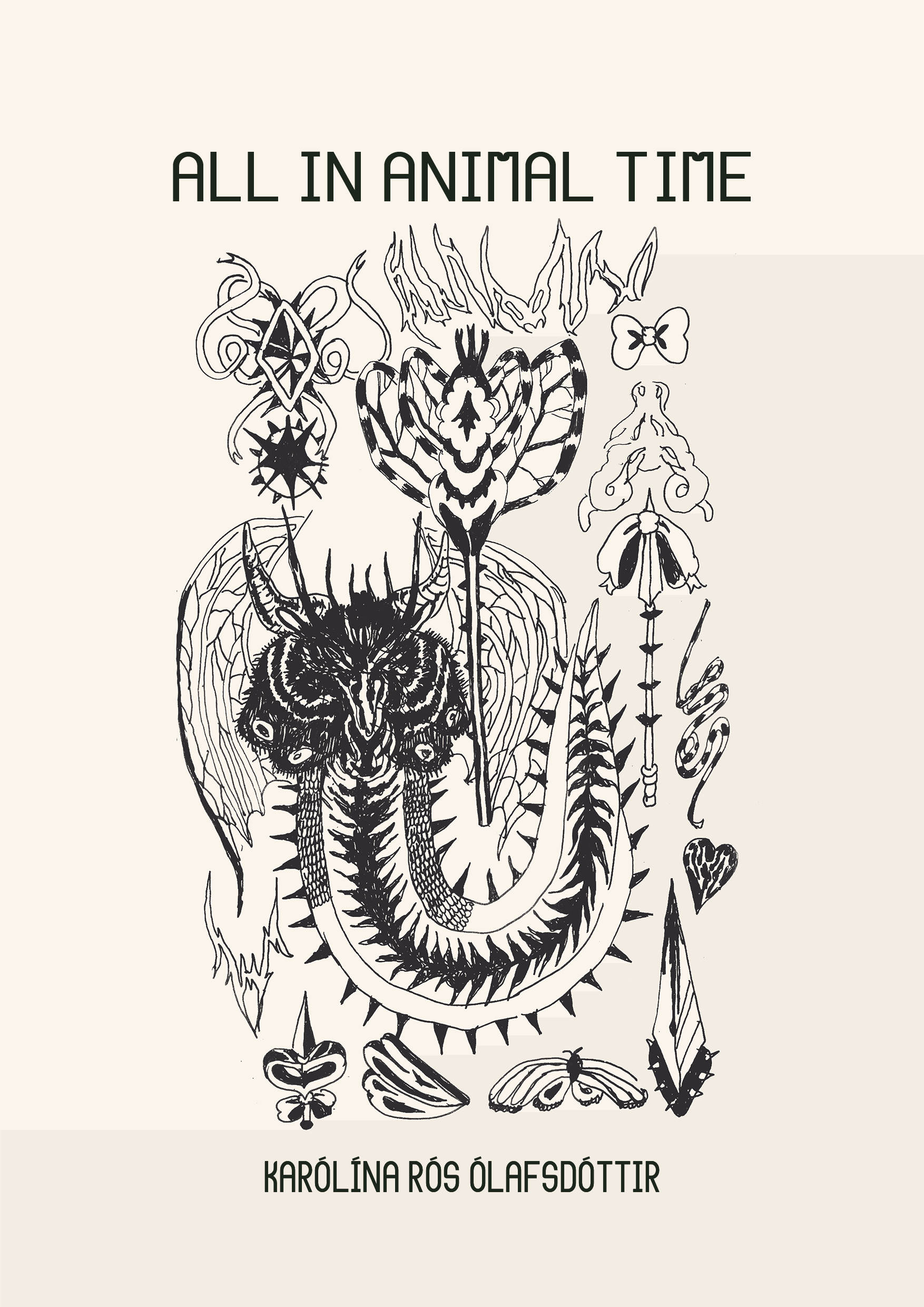
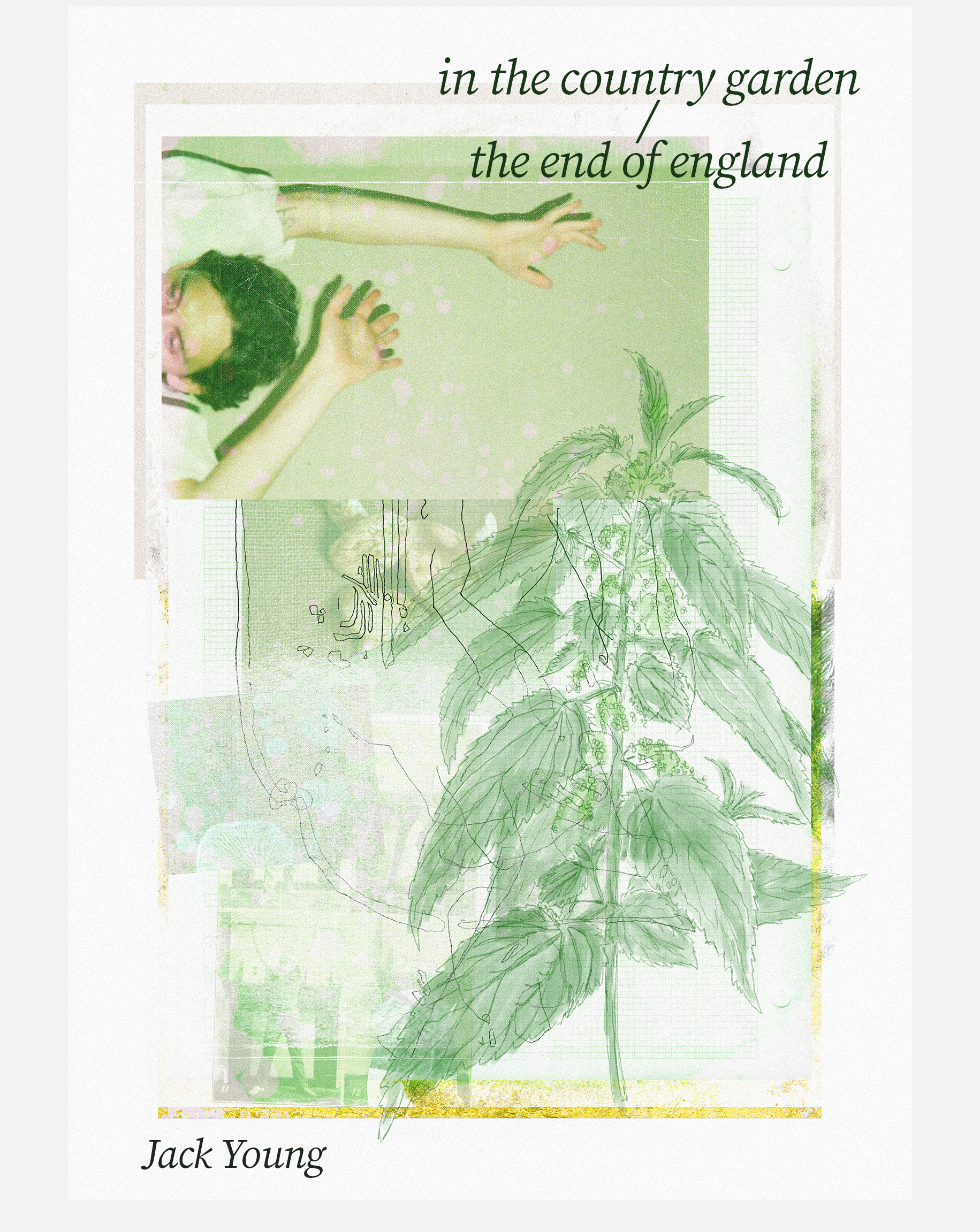
Over the past few months I’ve had the pleasure of working with two excellent poets, Jack Young and Karólína Rós Ólafsdóttir, on bringing to life their pamphlets in the country garden /the end of england and All in Animal Time. It’s been a fair few months since SPAM published anything physical (our most recent print publication was Cocoa and Nothing back in February) and coordinating everything for season 7 reminded me why I love doing this in the first place. There is something magical and alchemical that happens in the process of getting something from email to book in a series of whirlwind zoom(ies) and frantic whatsapps and editorial ping pong and delicious in-depth reading. I love figuring out solutions to a design problem, shunting things around, letting things bleed into the edges or splash into place, phone calls about word choice and line breaks. Generous margins and snaky wee texts / embarking upon font quests.

We got to know our authors, who are based in Bristol and Iceland, variously over the pandemic through Zoom workshops and the great poetry boulevard that is gmail. You can read one of Jack’s poems in SPAM005 and one of Karó’s in SPAM004. The SPAM editors are big fans of their work and we were delighted that both authors had pamphlets that kind of grew out of the poems in the magazine. This season has a lil rainbow-shrouded eco flavour: poems of the anthropocene everyday, poems of queer pastoral, poems in animal time (as per David Berman’s advice). J&K are poets with a real interest in the scholarly work of poetry as much as the playful. These are really thoughtful works which traverse everything from decolonising botany to Commander Keen, the dietary needs of black holes and the sonnets of rats and punctuation marks. Ugh I really love them! Thinking about these pamphlets is like coming up on coffee with sunlight pouring through the morning and having adequate sleep and remembering why the little things really fucking matter. It’s like the libido of the knotweed exerting pressure to break concrete and escape the walled garden which is like beautiful open source software. I am so lucky to have worked with these poets and also to have collabed with my co-editors Mau Baiocco, Kirsty Dunlop and Ian Macartney in bringing them to fruition. Long live SPAM!

Coordinating this pamphlet series also reminded me that publishing is an act of worldbuilding, brick by paper brick, pixel by pixel. It’s like: how do we give birth constantly to the word-pearls of what you wanted by accident of so many factors to have an idea for ~ ~ it’s like……a gift, a life-changing conversation, a journal entry for the language of flowers, a frolic through girl city’s sugar cubes and the delicious lumpencoal of the poem. Stop to admire the ‘four-star review sycamore’ (KRO) while you’re at it.

We worked with two v talented artists, Maura Sappilo and Sam Williams on cover design. Thank you Jack and Maura!!!

If you’re in Glasgow, please come along to our launch on the 10th November, where we’ll also have a reading from Edinburgh poet Murid L. Keshtmand and there will be many a pamphlet on sale and a lil wine & snack to be had.

PEOPLE OF THE PRESS! If you’d like to review the book, interview one of the authors, have them on your podcast or stock copies of the pamphlets in your store, please email spamzine.editors@gmail.com.

You can preorder the books at inflation-resistant prices => spamzine.co.uk/shop.

You can watch two Instagram live sessions with Jack and Karó here, where we talk about the thinking behind the pamphlets, inspirations and the craft of writing.

The Luna Erratum

My first full-length poetry book is now slinking out into the world!

The details:

138pp. with inside illustrations by Maria Sledmere and cover design by Douglas Pattison

Typeset by T. Person

ISBN: 978-1-8380156-5-7

RRP: £10.99

Order from Dostoyevsky Wannabe.

The Luna Erratum, Maria Sledmere’s debut poetry collection, roams between celestial and terrestrial realms where we find ourselves both the hunter and hunted, the wounded and wounding. Through elemental dream logics of colour, luminosity and lagging broadband, this is a post-internet poetics which swerves towards the ‘Other Side’: a vivid elsewhere of multispecies relation, of error and love, loss and nourishment. Its leitmotif of Luna, a shapeshifting feline of satellite proportion, waxes and wanes through poems which move beyond the twilight moods of left melancholia, sad hospitality and ecological crisis towards a fugitive imaginary that lingers in the ‘Flirtation Device’ of lyric and its many echolocations.

Taking cue from Jenny Boully’s ‘erratum’ — ‘the text of what is and the text of what should have been’ — Sledmere writes with failure, friction and fractal attention, with a yearning for intimacy, shelter and ongoing ways of bearing the im/possible. She offers poems of mystery, refusal and pain at personal, political and planetary scales, tracing the desire-lines of the everyday and its glitching encounters. The Luna Erratum is a book of memory and friendship in the so-called anthropocene, of bodily disorder, painterly gesture, quantum kissing, rodent sisterhood, open world intervention, technology, tenderness, shimmer and song.

Praise for The Luna Erratum: 

How do you explain yourself to yourself when you suspect that actuality – your experience of it – is provisional and full of error? You come up with your own poetics, your own tense and mode of address, which is a lunar one, and which involves speaking in crushed, frothy mouthfuls to a terrifyingly silent, unpredictable and generous friend (celestial objects, an indifferent lover, &c.). 

The Luna Erratum offers no truth except in things – colours, materials, beings, dreams, schemes of language, human artefacts and locations – and their known convergences, all of which hold as much affective weight and capacity for transformation as the events that precipitated this profoundly graceful, unsettling and mesmerising book.

— Sophie Collins, author of Who is Mary Sue? (Faber, 2018)

A glittering universe, Maria Sledmere’s first poetry collection is both lyrical and electric, both video game and watercolour. Reading these poems feels like ingesting semantic MDMA, the ectoplasm of a Victorian ghost trying to reach her lover through an unstable wifi connection. Sledmere’s words ooze a desire that is part animal, part human, part astral body. Let them transfix you.

— Nadia de Vries, author of I Failed to Swoon (Dostoyevsky Wannabe, 2021)

In Maria Sledmere’s The Luna Erratum, rivulets of neon daylight stream through the ever-quickening fibre-optic cables of the soul. Beneath ‘morphine clouds’ climates change as human groans crosspollinate in the moon’s tread. Sledmere concentrates the neural pathways on the world spirit, crossmatching the matters of attention. The lines grasp at what repositories of sentiment might be made secure for poetic memory, as the pleasure of every experience is threatened by its immediate disappearance, like Bernadette Mayer reciting Keats in the abandoned sea life centre. And yet, for the poet’s eye, the sumptuous bounties of the world are still all up for grabs; the human squats on top of the non-human and: ‘you can take bites from the sun’. This book is a hot tub full of Tamagotchi frogs’ spawn glistening in the light of the full moon atop the Yggdrasil skyscraper.

— Ed Luker, author of Other Life (Broken Sleep, 2020)

If you would like a copy for review, or to stock in your bookshop, please email mariasledmere [at] outlook [dot] com. 🙂