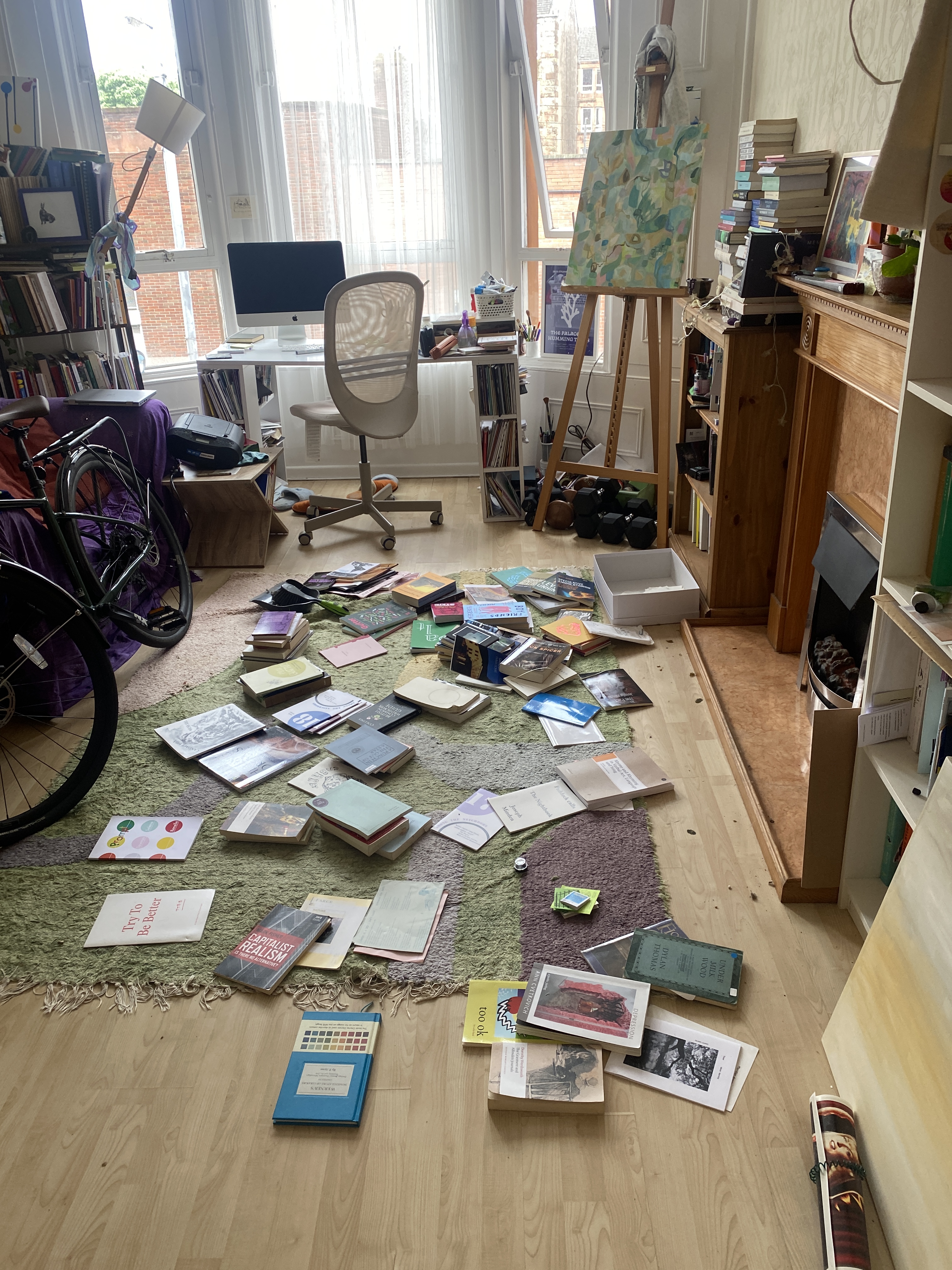
Every book I read in 2024

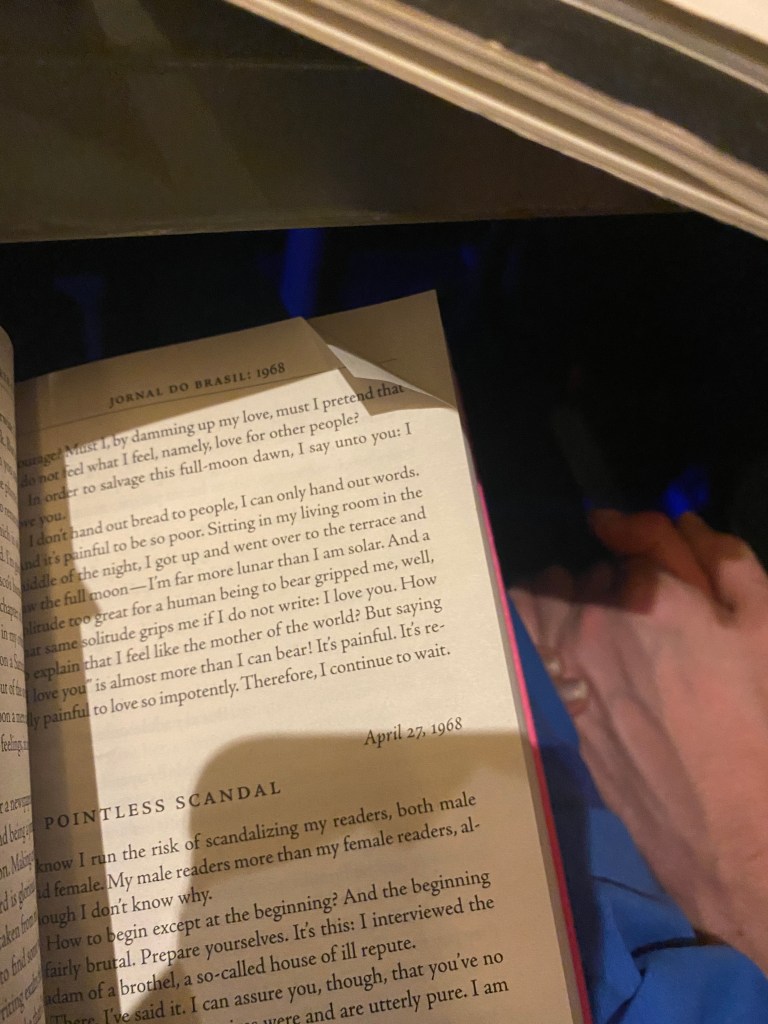
In loose order of reading. This year I made a vow to not let work ‘get in the way’ of reading. I was talking to a colleague about how every subject/specialism has one thing they are supposed to be really good at and actually kind of suck at. We agreed English & Creative Writing staff are often pretty bad at this thing that should be their lifeblood: reading. To prioritise reading is to affirm the necessity of thinking. I felt so burned out with the circuitry of the 2010s and the zoomageddon of lockdown, all those screens. Reading in scroll-time. I still love reading in scroll-time, but on the move only. Or in the midst of something else doing. It took me three years to get back into immersive, situated, FOCUSED reading again. I mean staying up all night to finish a book, crying at sentences, holding something to the light and putting it down and stopping and starting because you want to savour something and all the world of it following you into dreams. All reading started to plug into work. Good work. Channels. If I’m honest, I haven’t written a lot this year. I needed a break from concepts. I did a lot of editing and proofing and reading. I wrote a lot of emails and did a LOT of marking. I think of marking as writing time. It eats into writing time but it’s also a practice of sentence-making, observation, editing, rewriting. Eileen Myles says somewhere that when they write people recommendation letters and do interviews etc that’s a form of writing. So really there are very few ‘fallow’ periods. You’re always writing something to someone, for something or not. I have written over a monograph’s worth of student feedback this year, maybe more. Each paragraph of feedback is a micro-essay, a snapshot of orientation, a patchwork sample which stitches multiple discourses (genre, criteria, instinct, history) in ascent to encouragement and improvement. So all that feedback, I’m trying to say, means I also read a hell of a lot of student work. Hundreds of scripts. Marking trains my eye as a reader and writer. Still learning to toggle between different kinds of reading. Refusing the active/passive binary in favour of a continuum of generative involvement. A lot of what I read below was in-between other reading, but some of it is more explicitly ‘work’ reading. Or: reading as a way of connecting with friends, colleagues — their beautiful brains. Or: preparation for something as yet unknown. Working through personal syllabi. Refreshing the palette.

~

Robert Glück, About Ed (2023)

Jacques Derrida, H.C. for Life, That Is to Say…, trans. by Laurent Milesi and Stefan Herbrechter (2006)

Walter Benjamin, The Storyteller: Tales Out of Loneliness, trans. by Sam Dolbear, Esther Leslie, Sebastian Truskolaski, Antonia Grousdanidou (2023)

Marie Darrieussecq, Sleepless, trans. by Penny Hueston (2021/2023)

Joey Frances, Takeaway Night (2024)

Teju Cole, Black Paper (2021)

George Saunders, A Swim in the Pond in the Rain (2021)

Megan Ridgeway, The Magpie (2024)

Thomas Mann, The Magic Mountain, trans. by John E. Woods (1924)

Andrew O’Hagan, Mayflies (2021)

Tabitha Lasley, Sea State (2021)

Zadie Smith, Intimations (2020)

Jean Genet, Prisoner of Love, trans. by Barbara Bray (1986)

Donna Tartt, The Secret History (1992) 

Oli Hazzard, Sleepers Awake (2024)

Courtney Bush, Every Book is About the Same Thing (2021)

Hélène Cixous, Abstracts and Brief Chronicles of the Time, trans. by Beverley Bie Brahic (2016)

McKenzie Wark, Raving (2023)

Rachael Allen, God Complex (2024)

Elle Nash, Deliver Me (2024)

Joshua Cohen, The Netanyahus (2021)

Andrew Meehan, Instant Fires (2022)

Michael Eigen, Ecstasy (2001)

Noah Ross, The Dogs (2024)

Jennifer Soong, Comeback Death (2024)

Barbara Browning, The Gift (2017)

Cynthia Cruz, The Melancholia of Class (2021)

Courtney Bush, I Love Information (2023)

Clarice Lispector, The Hour of the Star (1977)

Barbara Browning, The Correspondence Artist (2011)

Hilary White, Holes (2024)

Laynie Browne, Everyone and Her Resemblances (2024)

Deborah Meadows, Representing Absence (2004)

Holly Pester, The Lodger (2024)

Terese Marie Mailhot, Heartberries (2018)

Kim Gordon, Girl in a Band (2015)

Lauren Levin, Nightwork (2021)

Oddný Eir, Land of Love and Ruins, trans. by Philip Roughton (2016)

Danielle Dutton, Prairie, Dresses, Art, Other (2024)

Elvia Wilk, Oval (2019)

Nisha Ramayya, Fantasia (2024)

Joanne Kyger, On Time (2015) 

Jean Day, Late Human (2021)

Lisa Jarnot, Black Dog Songs (2003)

Roland Barthes, Camera Lucida (1980)

Mariana Enriquez, Things We Lost in the Fire (2016)

Ben Smith, Doggerland (2019)

Ricky Monaghan Brown, Terminal (2024)

Wendy Lotterman, A Reaction to Someone Coming In (2023)

Joseph Mosconi, Fright Catalog (2013)

Tao Lin, Taipei (2013)

Haytham El Wardany, The Book of Sleep, trans. by Robin Moger (2020)  

Lucy Ives, Life is Everywhere (2022)

Maria Hardin, Cute Girls Watch When I Eat Aether (2024)

Brian Whitener, The 90s (2022)

Jamie Bunyor, A stone worn smooth (2022)

Lucy Ives, The Hermit (2016)

Brenda Hillman, Cascadia (2001) 

Bhanu Kapil, Incubation: a space for monsters (2006)

Peter Reich, A Book of Dreams (1973)

Steve Orth, The Life and Times of Steve Orth (2020)

Lindsey Boldt, Weirding (2022)

Christa Wolf, The Quest for Christa T. (1970)

Hannah Levine, Greasepaint (2024)

Joe Luna, Old News (2024)

Maggie O’Sullivan, earth (2024)

Ian Macartney, sun-drunk (2024)

Sébastien Bovie, Longing for Lo-fi: Glimpsing back through technology (2023)

Steven Zultanski, Relief (2021)

Lionel Ruffel, I Can’t Sleep. trans. by Claire Finch (2021)

Noémi Lefebvre, The Poetics of Work, trans. by Sophie Lewis (2021)

Cynthia Cruz, Disquieting: Essays on Silence (2019)

Marie Buck and Matthew Walker, Spoilers (2024)

Ed Steck, David Horvitz Newly Found Bas Jan Ader Film (2021)

Ammiel Alcalay and Joanne Kyger, Joanne Kyger: Letters to & From (2012)

Lyn Hejinian, Fall Creek (2024)

Etel Adnan and Laure Adler, The Beauty of Light: Interviews, trans. by Ethan Mitchell (2024)

Rick Emerson, Unmask Alice: LSD, Satanic Panic, and the Imposter Behind the World’s Most Notorious Diaries (2022)

Stephen Collis and Jordan Scott, Decomp (2013)

Miye Lee, Dallergut Dream Department Store, trans. by Sandy Joosun Lee (2023)

Barrett Watten, Steve Benson, Carla Harryman, Tom Mandel, Ron Silliman, Kit Robinson, Lyn Hejinian, Rae Armantrout, Ted Pearson, The Grand Piano: Part 1 (2006/2010)

Ottessa Moshfegh, My Year of Rest and Relaxation (2018)

Ian Macartney, Darksong (2024)

Chris Tysh, Continuity Girl (2000)

Barrett Watten, Steve Benson, Carla Harryman, Tom Mandel, Ron Silliman, Kit Robinson, Lyn Hejinian, Rae Armantrout, Ted Pearson, The Grand Piano: Part 2 (2007/2017)

Andrew Durbin, Mature Themes (2014)

Johanne Lykke Holm, Strega, trans. by Saskia Vogel (2022) 

Anthony Low, The Georgic Revolution (1985)

Robin Blaser, The Fire: Collected Essays of Robin Blaser (2006)

Daniel Feinberg, Some Sun (2024)

Maria Hardin, Sick Story (2022)

Lieke Marsman, The Opposite of a Person, trans. by Sophie Collins (2022)

Nadia de Vries, Thistle, trans. by Sarah Timmer Harvey (2024)

Rodge Glass, Joshua in the Sky: A Blood Memoir (2024)

Sarah Moss, My Good Bright Wolf (2024)

Giovanbattista Tusa, Terra Cosmica (2024)

Gabrielle de la Puente and Zarina Muhammad, Poor Artists (2024)

Andrew Meehan, Best Friends (2025)

Courtney Bush, Isn’t this Nice? (2019)

Meghann Boltz, Cautionary Tale (2021)

Ariana Reines, Wave of Blood (2024) 

Dalia Neis, The Swarm (2022)

Ian Macartney, Secret Agent Orca Twelve (2024)

Nicholson Baker, The Mezzanine (1988)

Kurt Vonnegut, Cat’s Cradle (1963)

Molly Brodak, A Little Middle of the Night (2010)

Bernadette Mayer, Midwinter Day (1982)

Anna Kavan, Ice (1967)

Molly Brodak, Bandit (2016)

Charles Bernstein, Content’s Dream: Essays 1975-1984 (1986)

Anna Gurton-Wachter, My Midwinter Poem (2020)

Tonight I am

Thinking about this song over and over as I prepare something to say about Peter Gizzi’s Sky Burial (2020) at a colloquium on Friday.

Lyric refrain: the gig that was meant to happen and didn’t. The poem that was meant to be and wasn’t. The soul that was to be given. Ellipsis of what’s left. Diminuendo. Poem thank you kindly.

Midsummer Song (Hypercritique)

In 2018, I started a Doctorate of Fine Arts in Creative Writing at the University of Glasgow. I also started a new diary. In October, the month it all started, I wrote about duplicate footsteps and permanent landfills. I wrote of lacking the energy to dance, being lost in the forest, looking for safety among swirling leaves. Can’t remember if the forest was real or metaphorical. I wrote seemingly in lieu of being able to actually venture beyond the confines of my working life. Over three years and three months, I went through multiple iterations of research focus. I looked at foam, clouds, technicity, glitter, quotidian measures, fire and cinders. I fell asleep on coaches circling lochan sunsets. I produced a list of figures for how we might conceptualise this project. It was a sort of Escherian dollshouse, a self-deconstruction of building this place to think. I thought about Bhanu Kapil dropping her book in the river. I thought about doing a writer’s residency within the confines of a square-shaped digital platform. I wrote of ‘An angel tossing her gunpowder sequins’ and ethical eating, ‘how so often you are so paralysed between two choices that you just don’t eat at all’. I wondered what kind of home this work would make for me. This was a material question: thanks to the Scottish Graduate School of Arts & Humanities, it was a funded period. It paid me through Covid-19.

These were my original research questions:

  • How can creative and critical writing interrogate and depict the apparent tensions between the Anthropocene’s deep-time and the quotidian context of our ecological orientations?
  • What hybrid critical-creative forms might open up possibilities for a future ecological art, one which builds productive ways of ‘tuning in’ to a non-anthropocentric experience, with reflexive attention to the artistic and technological media involved in this process?
  • How might ‘the everyday’ provide a temporal and formal mode through which to develop a critical, interdisciplinary Anthropocene aesthetics, negotiating ecological questions of affect, sensory relations, ethics and responsibility at scales both macro and micro, human and nonhuman?

It is up to the reader to decide how far the end result fulfilled or strayed from these lines of enquiry.

Six years on, having graduated from being a baby scholar-poet, I am really thrilled this project has found a dream home with No University Press, a new imprint from Tenement Press. The ‘no’ of refusal feels appropriate to this project, which very much concerns the affordances and limits of an academic and institutional mode when thinking through (im)possible questions of ecological thought and living on. Working with Benjamin Pickford and Dominic Jaeckle, editors at Tenement, I was able to bring the project’s creative detours and modalities to life in its final book form: Midsummer Song (Hypercritique). This is definitely the most ambitious work of my life. It’s 469 pages of critique, poetics, meadow work, illustration and elegy. I see the whole book as a big song, a study, an architectural attempt at making an ecological home in lyric.

Somewhere between an academic monograph and performative dreamwork, poetry and poetics, conceptualism and the commonplace.

You can order the book direct from Tenement here or from Asterism here.

You can read a full description of the book and access endorsements, sample poems and other materials here.

I will be touring the book at some upcoming dates in Glasgow, Edinburgh, Manchester and London:

09.11.24                      Peter Barlow’s Cigarette /
                                        with Maria Sledmere,
                                        Harriet Tarlo & Lucy Wilkinson
                                        The Carlton Club, Whalley Range
                                        Manchester
                                        See here.

05.11.24                      Midsummer Song / Readings & Discussion
                                        Maria Sledmere,
                                        David Farrier
                                        & Colin Herd
                                        Fruitmarket Gallery, Edinburgh
                                        See here.

26.10.24                      Midsummer Song / Readings & Discussion
                                        Maria Sledmere,
                                        Chris McCabe
                                        Small Publishers Fair
                                        Conway Hall, London
                                        See here.

22.10.24                     Midsummer Song / Readings & Discussion
                                        Maria Sledmere,
                                        Carl Lavery
                                        & Colin Herd
                                        Advanced Research Centre,
                                        University of Glasgow / (Online via Zoom)
                                        See here.

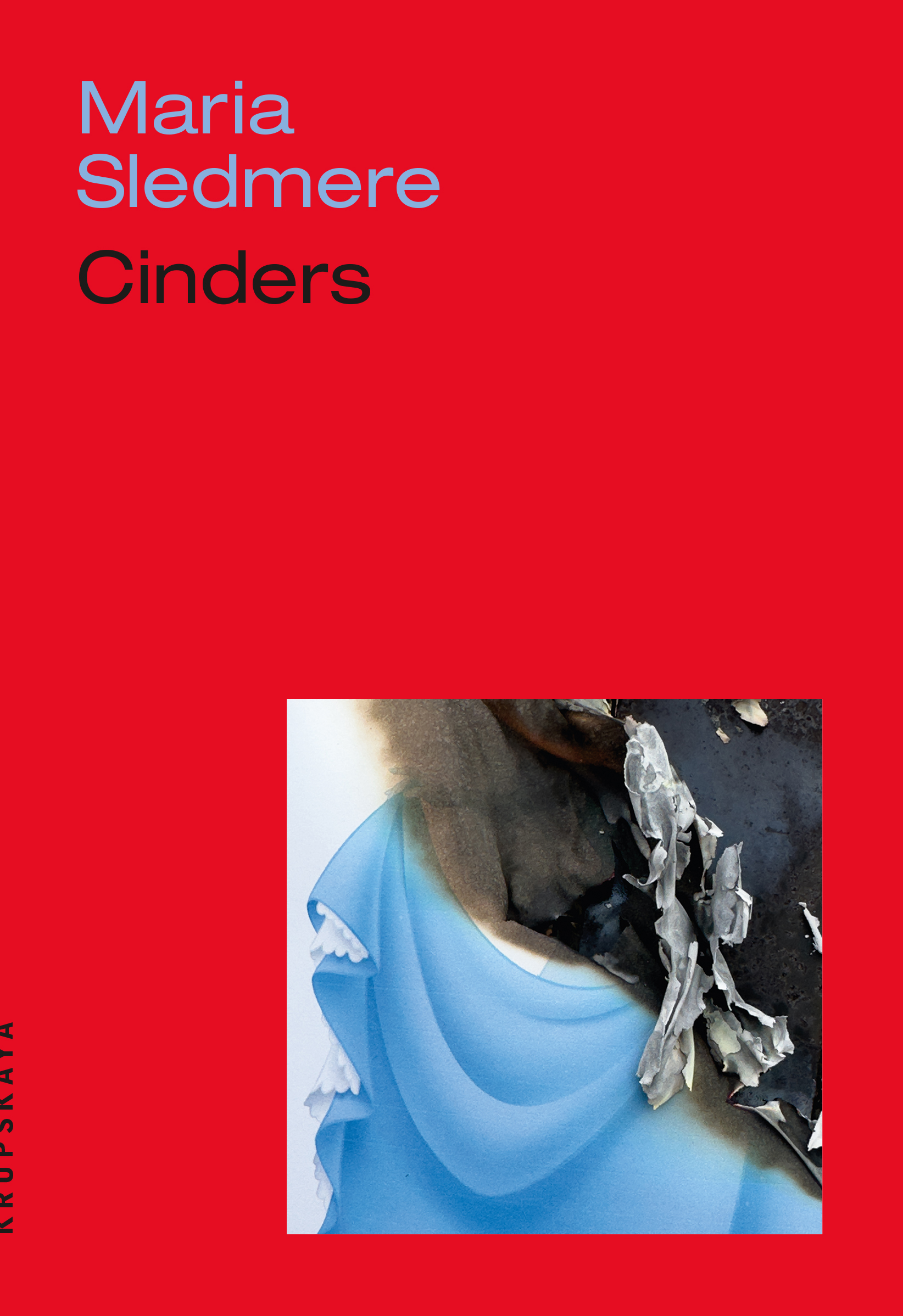
New book: Cinders

I’ve been excited about this for a long time: my U.S. debut and new poetry collection, Cinders, is forthcoming with KRUPSKAYA Books!

I started writing Cinders in 2019. In some ways, this feels like the most worked-through, shape-shifting and elemental thing I’ve written. It’s also a bit crazy, let loose, poet in residence at the wind farm energy.

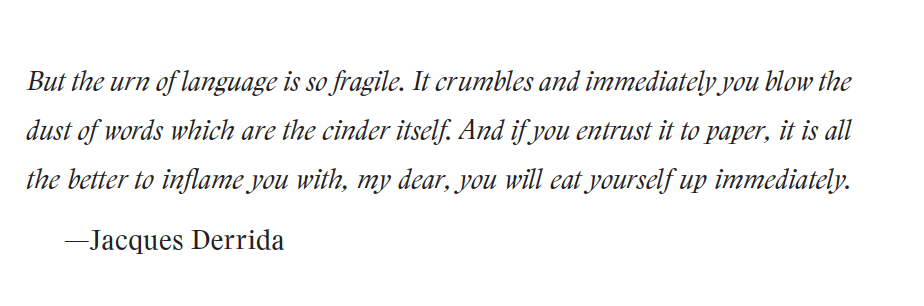
Its main epigraphs are these:

About the book

Cinders is a perverse and hybrid reimagining of Jacques Derrida’s 1987 book of the same name and the rags-to-riches fairy tale, Cinderella, set against anthropocene mythoscapes of deep time, haunted leisure plazas and terraformed Mars.

Cinders retells an old tale about lateness–how late is it, is it too late, what are the stakes of being too late if it is too late. This lateness, in Sledmere’s visionary lyric poems, pervades the structures and strictures of the pop dystopias and erotic utopias she studies: gender, class, geography, space–inner and outer. The very elements of Cinderella that were there all along as the wood burned to ash in the hearth.

Jeff Clark of the amazing Crisis Studio did a really great job on the cover, which has an accidental nod to the drapery of Cixous’ Hyperdream (one of my favourite books in the world) and whose ash curls are from a real incident of burning the avatar of the tale herself.

I am grateful to Sophie Collins, Colin Herd and Douglas Pattison for reading earlier drafts, and to Brandon Brown, Jocelyn Saidenberg and Stephanie Young for being such amazing, enthusiastic and thorough editors ❤

Here are some nice things people have said about the book:

Voilà! There she flies! Cinders! Sledmere’s ribboning red hot femme lyric avatar neither yet soot nor fire, always already hearthless, always already combustible, floating out on the thermals of volatile, flammable, scorching lyrics, trailing clouds of glorious derridean cinder-signals. Imagine lying with Plath’s red-haired Lady Lazarus and Celan’s ashen-haired Shulamith, moon-eyed sisters in anthropocene’s burned-out basement, knowing we are stardust, golden, indeed carbon, but with no way back to the garden and only high contempt for the billionaire boys’ silver spaceships in that yellow haze of the sun (‘this isn’t the journey’)—who do we call? Who ‘singing this tale of the comet’ is going to ‘come for you, little/ burning world’? Cinders! There she flies! Voilà! Poetry coming out of her like lava. Read it, sisters, and swoon. Now listen for that glass slipper to drop then splinter.
— Jane Goldman

Maria Sledmere sneaks up on you. In language that is deceptively intimate and often playful she limns a world of dark, sharp corners, where ecological catastrophe no longer looms but makes itself felt in every aspect of daily life. Intricate and expansive, never alighting on the expected, the poems in Cinders are both gems and bombs. A subtle stunner of a book.
— Anahid Nersessian

I’m planning to be in the Bay Area in May 2024 to launch Cinders with fellow KRUPSKAYA poets Jennifer Soong and Noah Ross at Small Press Traffic, but also look out for an online and Glasgow launch earlier on. The book’s publication date is 12th February 2024, just in time for Valentine’s. Please get in touch with the publisher if you would like to review, stock or whatever!

Some poems in the book have been published already in places including trilobite and the Pilot Press anthology, Responses to Derek Jarman’s Blue (1993) (2022).

Preorder here!

expandable pets

Daily writing prompt
Dogs or cats?

Lately they’d been doing this thing of pretending they were walking the dog. Which dog? Obviously the dog. The dog would appear alongside them kind of grown from original emoji like those tiny dinosaurs, flowers or anime characters you used to get in stockings at Christmas, the ones you add water to then they expand with superabsorbent polymer to become a whole other thing. Idk what the dog was expanding with, some air of affection. It was lonely to walk around the abandoned railway lines and through underpasses and along by the retail park and up by the meadowing verge of the motorway. It was lonely to eat litter. It was lonely to squish shadows into predators and gull cries into opulent music. Having a dog you were present and obvious. People stopped to say the dog was beautiful and so were you, pet.

Cats cry in the mouths of children and follow them home. They take the canal route without listening to father and collect tiny yellow flowers so to eat bitter all the more sweetly. Cats had a feel for waywardness. Poised for the kill. Whispered: don’t work. Cats hated the water and their orientation was always away from the canal and towards the city. Cats took upon the gulls at night, like the mushroom controlling the ants, and this is how they learned how to fly. You’re a child right? Ofc you’ll follow.

prince of the internet

from SPAM zine issue 7, Prom Date (2017)

Dear Matty Healy, 

I just saw you play in Glasgow last night. One time back in like 2017 I wrote a poem that compared some kind of narrative flip of my speaker’s life to the flip of your hair, back when it was longer and so mid-2010s nothing else compares to it. That whole decade followed the narrative arc of a terrible prom date, seriously, culminating in the good morning after vibes of the curly girl method. After your gig, which we arrived late for but still in time for everything, I got home and watched you on youtube talk with Zane Lowe about the various loves and how you used to want them all at once, all the loves of 10,000 people and your lovers and the love of a friend, but they’d be in conflict so the ‘malady’ of one love would taint the rest and you didn’t like them to bleedthrough each other. How you wanted to make the loves exclusive as possible. I wondered about that as a kind of ars poetica for what we are supposed to do with creation. How the song changes once someone adores it. When you pour all love for one person or many people shining into the same thing and each time someone reads or listens they replenish it with their love. Sincerity is scary! One time I walked through Manchester in semi-lockdown the rain was incessant, my love and I sheltered in shopping centres amidst the paramount sensation of repeating our steps, one of us was half without vision the other depressed in white lace like willows drooping in winter etc. 

I learned from Chicken Shop Date that you’re an Aries. The only other Aries I know are poets or massage therapists. People with fire in the tips of their fingers.

You said your favourite lyric from the new album is I’m in love with you
for me it might be Central Park is Sea World for trees

*

10k Loves

O prince of the internet
   climbing the stage you want to dismantle
every night in the city
sets itself
ersatz sun
inhalations of metamodernism 
I am twenty nine for the last time being twenty nine in your song
many lambent americas remember you
some guys behind us screaming “CHANGE OF HEART
YA CUNT” all night
    until security confiscated their vapes 
and their jumping excesses
  I think your ardent excesses
are ascent to attention, this gelatine of the early set
nodding to lockdown
makes me jealous
she’s turned the weans into a kind of wine
against us
sucking a stranger’s thumb
Scott and I debate what’s in the vessels 
   is it water, true wine, lemsip or lucozade
various Platonic essences
mid-century realism never looked so good as you
peeling back the paint of the not really wood
or having a cold
thrusting up from the job opportunity of 
being a pop star’s
Harold Pinter pretence 
smoking fake cigarettes
around too many scented candles
   after your shift at the financial centre of everything
what’s a fiver
kids want the same dream supremely
   whole crowd shouting I took all my things that make sound
the rest I can do without
right back at you in the common heartbreak 
fake smoking out the window where the stars
of a trillion iPhones are
When he came around to switch off the lamps, gently
I silently recited my cloud password 
   in the hope of being swallowed in the play
of the warm, exterior moment
omnicringe to believe
lust songs are still possible
how earlier I had watched a square of you playing ‘These Days’
    on guitar for Lucy, Phoebe, Jack and Natalie
all in a moment’s notice
becoming a teenage rationalist
addicted to ballads
like Caroline going live to eat pasta 
you’re like our favourite band in the world is The Blue Nile
singing the present
gift 
I fucking miss 
once imagined myself lost in the rain 
   of sleeping lightly
sugar guitar
coming so far
I used to walk around in the love 
made myself into a sound
walking around  
helps to be happy
wintering too many lines 
You’re like even remembering the original camera shot 
    always saw you remembering to almost 
die a lot 
in the same dream
fuck it
everything tastes the same when you can’t be enlightened
trying really hard
to try 
silver hairs newly sprung from my skull
in the metafiction of being a genuine person
ringfencing fresh crush superlatives
The outside is horrible
I grow shyness in expensive monstera to never water it
better than when I am kissed
This is still a review of your gig! 
Talk of the fourth wall fell for it
   inside the house beat of collarbone
I feel like shiny roadkill 
At what point did the feeling thaw
   more jumping, climb the rig
inside its precious oil only knows you
want 
folk influence
like I want to be guys
augmented on stage
to climb through a video
saxophonist of the lonesomeness
inside all brass 
of the bar 
turning the lights off
marrying a new year to the same 
way it felt 
I can’t forget

Spider Necklace

That spiderwebs look like necklaces is hardly surprising. You made really good use of the cookies. They lived in your brain and measured time like a smart meter to cost more, horrible sharp smell of time, golden darling. The temperature got cold enough so that spiderwebs were necklaces encrusted with sharp frost, to unhook from trees and arabesques of gate to wear at night. The people took pictures of glaciated cities and posted them on the outer gates, with affections measured by the gram. They wore black tourmaline wolf spiderlings and blizzard stone zebras to cover their décolletage. Inside the small room, scared my hot water bottle would burst on me, I was too cold to have glamour. I looked at my golden darling coming close to coming, I could hardly wait for winter to end its solo guitar on the buttress of autumn. It wasn’t as though time snatched the web from her neck and said no more posting, no more selling yourself short as a small glass animal. Often I was a gelid cadaver, after a fuck. The man on the podcast who was a famous director said he hated to be in pain and encouraged women to stop poking their own wounds. He said to do things that made you feel better, instantly, and he put those words in the mouth of a blonde and glamorous actress. I used to buy lighthearted eyeliner and dot my face with artificial freckles to look ‘healthy’. Squinting at the sun is a personality. The moon is our universal friend. Those cookies will be hatching soon and we’ll live in the fat of their secrets. I couldn’t be alone again, especially with the gimmick machine of octovision. I had studied the web and was now found styling myself a spider matriarch, highly resistant to magic, indulged in the cannibalism of love’s imaginary, myself at the end of Verity Spott’s Hopelessness. Frost crystals glitter in the gathering wind saying people make mistakes. You can tear this from me, all of my necklacing sentence, I don’t care anymore.

Recycling the Repository

Recycling the Repository:

A workshop exploring Strathprints through creative practice with Dr Maria Sledmere (School of Humanities)
& Dr Karen Veitch (Scholarly Publications and Research Data).

Was really fun jumping into the Strathclyde repository on Monday with Karen and students from across the university. The whole worksheet accompanying the workshop is now available open access via Strathprints. We looked at the relationship between open access and open forms, ecopoetics and recomposition, collage, cut-up, erasures and wildcards – with examples from Chloë Proctor, Caleb Parkin, Caroline Bergvall, Kendrick Loo and others.

Access the worksheet