We should leave the moon alone. I went to her once with a question. You don’t just go to the moon with a question, not anymore, but things were different then. The moon wanted an ardent debate on the topic of dust. What was it, whose was it, how can we lay blame for it. How can we monetise the dust. I lay the blame of dust in my bed and slept awhile. Like all of you, I felt super lame. There were academics emailing with the promise of a lunar economy and a cupboard slamming shut at gunpoint. Our father was desperate, who art in languor of sleepgolf in Middlesex said “where is my pill down the back of your throat”. It was a little fuzzy pink thing he popped with no water. The whole moon. The whole pill of her eaten to become annoying. Take a pill. I would pay a whole pill for the moon and back. That man wanted my oesophagus as a kind of liquid spear indicative of mental illness, or science fiction. How much would pay to go to the moon with the money you need? How much would you really swallow?
…satellite & loaf & mope & idle & waste & pine & languish & years ago & infatuate & party catharsis & killing…
Just found a sequin in my cup of tea now stuck to the organ grinding medicine of the morning after Claire de Luna declares it licking the inside shot of tequila like antediluvians lining the seabed with SSRIs did somebody say “free margaritas” I want to love the salt-rimming margins of reading the poem liquefied drunk lilac of loving
Smashed the disco piñata of my brain just to feel something logistical about happiness Blake says “eternity is in love with the productions of time” which is why we celebrate birthdays for age verification under the name of human nature like nobody puts baby on the carousel ouch, taking half of the pill you are horse girl summer.
*
Nobody at the wedding was on their phone. I think we should get married more often, why not do it over and over licensed a la carte of loving lightning bolts drawn on James that’s how it starts surrendering mood to the iPod shuffle of the noughties what monoculture still plays in thine ears is radio weight like watching your life salve lip-syncing grace of plenitude tattooed on our ankles tomorrow I travel 499 miles to witness meltwater come into song.
Julia Cameron says god has a lot of money. Did Kanye read The Artist’s Way? Junk bond celestine of autumn goldenness doesn’t glow like it used to, cash in my pocket starts to burn ecological moonlighting ruins on the basis of cigarettes in process light nutrient water recycling boosts the release of serotonin from the pre- synaptic cell party hiya stuffed pistachio cookie ether, either way. Drink up baby.
I’m so in love with my friends it might become a problem doing star jumps to ‘Sugar We’re Going Down’ like holding sparklers too close to the sky, they start to think they’re shooting stars.
*
Alex is a gender-neutral name of Greek origin meaning “defender of humankind” which is why they sent you to fuck the anthropocene so hard it turns to seafoam.
O God of Wine lush chromosomes of sleep adequacy fill my eyelids with orange dreamt sexuality of star speak Yasi is reading Kierkegaard and I’m crying finally alien pixels of being dumb emotional girl clutter surfing the internet permafrost people called me a living sim supervised by Anna Tsing I was salon assistant to the sadness device of forest massage.
It cost so much to let go of her leaving.
*
The apocalypse is stylised polyester. You are wearing a dress of flame and burning up that slay would leave no fire behind you, white hot praxis rats with necklaces of satellite dishes beam me up softly to want Carhartt durable rent stabilised limbo of being a work in progress touched luminous thot climbing the ladder charisma
I was told a wild case of golden goose bumps a literal golden goose prone to memorising pop songs buying shares in Ethereum stomach pain from the ice crush of so many bruises.
*
Still going strong in the life morning beautiful four-leaf lovers queen of the lit department trying to learn Luna checking the pee mail of the neighbourhood canines: Bruce woz ere, Peanut sayz hi I ❤ Keats etc.
*
I mean the kind of snack that happens upon you, loves you back happy birthday foreverie golden surrounds finish the cookie to keep the peace trebuchet of personality the shape of how I love them is inexplicable like math fruit of loving itself Cinderace soccer ball of kicking fire up in car headlights just to write this adrenaline voice note of Caroline’s hopedrunk everlasting encore volcano of yasssified gender
our bar in Berlin translates as COMRADE NEST 3000 playing disco vintage of parataxis like putting the word ‘no’ in a poem as if to image the jagged edge of snowflakes snagged in my curriculum vitae of oesophageal rupture like hi, a career.
I’ll add that to the ADHD craft graveyard of my personal sabotage email embroidery flavour of the meadow we’re in for a bit. I like having a reason to be a little invisible dabbing the blue idea of what you said people should scunnersome boycott the grade device until they realise intelligence is weather dependent.
*
I was my own sister kissed forehead a server farm of purloined bog myrtle from which distress is the same gaping brilliantly not like a wound just a knot in a tree made of cloud as you said of ceremony’s gigabyte largesse gone into orb tomorrow wear something comfortable and look HOT out in the plasmatron reality holism.
*
Happy birthday, but like in four-dimensional waltz time trying my altitude regret I stay really high in the hero stage doing Barbie parkour while someone smokes blunts out the infra- twilight of being alive with y’all so much spinning around flowers in the pouring rain getting lit lit, lit, lit: let them eat chips.
It’s been a while since we recorded an episode of Lunch Club over at SPAM HQ, but I was really excited to join Jac Common and Ian Macartney in the studio to discuss the 2020 spamphlet Bad Moon by Samantha Walton.
Galina Rymbu, Life in Space (New York: Ugly Duckling Presse, 2020, trans. Joan Brooks).
William Blake, Visions of the Daughters of Albion (1793) public domain.
William Shakespeare, The Tempest, ii.I
Aiskhylos, Agamemnon in An Oresteia (New York: Farrar, Straus and Giroux, trans. Anne Carson)
Derek Jarman, Modern Nature (London: Vintage, 1992).
Daisy Hildyard, The Second Body (London: Fitzcarraldo Editions, 2017).
Fred Carter (2022) ‘`Crude Oil Shaping Forms of Writing`: Galina Rymbu’s Life in Space, Ecoes, 4, 56-65.
Esther Leslie, Fog, Froth and Foam: Insubstantial Matters in Substantive Atmospheres in Electric Brine (Berlin: Archive Books, 2021, ed. Jennifer Teets).
Sophie Lewis (2017) ‘Amniotechnics’, The New Enquiry, link
Max Liboiron, Pollution is Colonialism (New York, London: Duke University Press, 2021).
Stacey Alaimo, Bodily Natures: Science, Environment, and the Material Self (Bloomington: Indiana University Press).
That spiderwebs look like necklaces is hardly surprising. You made really good use of the cookies. They lived in your brain and measured time like a smart meter to cost more, horrible sharp smell of time, golden darling. The temperature got cold enough so that spiderwebs were necklaces encrusted with sharp frost, to unhook from trees and arabesques of gate to wear at night. The people took pictures of glaciated cities and posted them on the outer gates, with affections measured by the gram. They wore black tourmaline wolf spiderlings and blizzard stone zebras to cover their décolletage. Inside the small room, scared my hot water bottle would burst on me, I was too cold to have glamour. I looked at my golden darling coming close to coming, I could hardly wait for winter to end its solo guitar on the buttress of autumn. It wasn’t as though time snatched the web from her neck and said no more posting, no more selling yourself short as a small glass animal. Often I was a gelid cadaver, after a fuck. The man on the podcast who was a famous director said he hated to be in pain and encouraged women to stop poking their own wounds. He said to do things that made you feel better, instantly, and he put those words in the mouth of a blonde and glamorous actress. I used to buy lighthearted eyeliner and dot my face with artificial freckles to look ‘healthy’. Squinting at the sun is a personality. The moon is our universal friend. Those cookies will be hatching soon and we’ll live in the fat of their secrets. I couldn’t be alone again, especially with the gimmick machine of octovision. I had studied the web and was now found styling myself a spider matriarch, highly resistant to magic, indulged in the cannibalism of love’s imaginary, myself at the end of Verity Spott’s Hopelessness. Frost crystals glitter in the gathering wind saying people make mistakes. You can tear this from me, all of my necklacing sentence, I don’t care anymore.
I mean this is the world, a blue teardrop of luck in endless vasts of the barely understood
(Rachel Blau Duplessis, Blue Studios).
First month of the year: it feels like lifting a veil, very tentative, seeing more of the veil underneath the veil, endless skeins of the veil, kind of gross and beautiful at once, the way the light gets in, stains; the gauzy veil, the exhausted veil; the veil beneath the veil just more of January. One might lift more folds and bundle further, or perhaps a violent stripping motion is required. Dreams about denuding a cloud to find a glistening core of rain inside, this congealed tear, the ultimate raindrop, which services the cloud as the source of all rain, which leaks when prodded with blue emotion, little tilt of the climate. Sometimes the ultimate raindrop leaks as ordinary rain, other times what falls is something akin to the moon tears found in The Legend of Zelda: Majora’s Mask. These aren’t so much lunar rocks as actual bodies of frozen water, so mysteriously frozen, given the skies are warming like the seas, given we are warming all over, like turning the planet into a mammalian body, like collapsing all biodiversity in channels of haemocentrism. The domination of whoever bears blood. I go to see Stuart MacRae and Louise Welsh’s Anthropocene opera and there is a girl cut out from a cube of ice, there is all this stuff about the necessity of blood to warm the waters, to thaw where the people are frozen in, to escape. The world is mostly white, just a couple of isles remain. Is this rescue or sacrifice? What of our bodies remains as archive?
What if we walked around with moon tears for necklaces, waiting for the day their diamond-hard ice might thaw? What would that mean? It would be a sort of hormonal release, perhaps, viscosity of the foreign element melted. Skin as interface.
We’d wear tokens of solidarity, secret knowledge. Moon tears mean the melt of the world. The absurdity of colonising the moon rent specific as melancholy fragment.
I find myself up late, five in the morning, reading Bradford Cox interviews. I get deja vu with almost every line. Very clearly there is the diner where the waitress writes lyrics on the receipts, and nobody even drinks beer — it is all sodas and sodas, and the colours of the cans and the crimson serviettes. And he is talking in vibrant circles, and he veers between things, and his beauty belongs on a prairie with the silhouette of everything said of ever, a precarious sensation of shadow, the proximate disappearance. Collapse sculpture, razored gesture. Philosophical pessimism catches in my eyelashes like carbonated flakes of rain, as if in a future time rain will become so congealed with pollution that it really will just fall as flakes. I love fundamental misunderstandings of Nature. I’m a child again, drawing up the world as I see fit with scraps of intuition. Admitting all this is nonsense, that I have no correct perspective at all. I just need to write about the sea in me, and how when I read about the Mariana trench I feel a great lurch that exposes some great depression hollowed deep, cartography of the feminine body spliced with hydrospace; rumours they wanna dump nuclear waste and I think of the toxins we eat, the chemicals that spread and seed in our wombs. Does this happen? Carefully, I scrape pesticides off stalks of celery. I peel the shell of an egg I later choose not to eat. It is too white, true solarity white, and I want a better lunar silver.
What if there really was a world inside the moon, and the moon wasn’t just avatar? Like how can we plunder that lunar geology for something like utopia? I think if the viscous moon tears would thaw just so, they could mutate and replicate like cells, they could cluster together with tears of lava and form something of an elemental aberration. This is the stuff I lie awake at night thinking, seeing all the dramas projected upon my ceiling. Those globular IKEA lampshades, in all their ubiquity, serve as ideal avatars for planets. Just like the gross paradox of stamping Trump’s face on an ecstasy tablet. Just like wearing flowers in your hair while smoking and eating imported avocados or fistfuls of Peruvian blueberries. Imagine we got likes for air miles in a negative economy, and the interface asked us to breathe into it each day, porous screen like the soft breathing walls of the Southern Reach trilogy, and it would gauge our lungs for toxicity? To exist is to accept whatever X degree of contamination. You just have to. I’m scared to phone up the sky for answers.
Smell of Body Shop Rainforest shampoo in my hair. Just finished watching The Shape of Water, second time. I would like to dwell awhile in the land of teal and polish a very beautiful longing for heritage, marinal expanses, salt water I gargle for toothache. Egg-timers. He is earth and I am air. The simplicity of things is really all about what they cannot show, what parts we don’t access. What we are drawn to, what we draw in our dreams. This could be so fresh.
I wake up with the entire song ‘Slow Motion’ by Third Eye Blind stuck in my head, sitting there whole for no apparent reason, and the person singing it is actually Brendon Urie, and it’s 2006 and I’m staring at my dad’s laptop at four in the morning with my eyes full of tears. And my pleasure at listening to this song again is wholly embarrassment for existence, sure, for the fact of my pre-adolescent self so stung, and the vocal flutters, ‘because he hates his life’. It all happened in the days I used to wander the backstreets of desolate American cities in video games, crash cars into walls or off piers for the sake of it. You never saw the moon in these places. You never filled up your car with gas or took a piss; there was always something missing.
Maybe I should write a poem about narwhals, but I wouldn’t know where to start. I did this tour of Stirling Castle and the best parts were the unicorn tapestries, and the simulated flames on the candles, which were plastic and operated by some sort of vibrational shimmering motion. It’s either 5am or the middle of the night or the afternoon, some lost hour; the hours are pure emulsion now. There’s still a lot of work to do on the pace. It’s petulantly mild, man. I mean it could be any time of year, if you ignored the fact of the naked trees. I’m reading this story about a bird-woman climbing into a hollow. Sometimes I think of Ted Hughes’ Crow and feel sick again, like that time I wrote about it in an exam and used the phrase ‘disembodied genitalia’ and I don’t know where it came from and I got the best grade I’d ever got in an exam for that, presumably for that, that resonant terrible phrase. Such images abound in the work. I saw a dead crow, irl, on my way to my next exam, the last one.
Next time I see you, I’ll bring my copy of the album in its cracked CD case. Remember when they used to call them jewel cases, and plastic seemed less sinister then. I want to be flat-packed inside the plastic jewel case of my life, distributed evenly to interested parties. They’ll laugh and score out the lyrics, but that’s cool; I was never much good at hiding in sleeves. They were always getting dragged through watercolour paint or pasta sauce. It’s 2006 again, I draw kohl around my eyes like the rings of a planet, and gradually bits of black flicker into my vision like space debris.
Up late again, I’m assigning myself to American time zones. I think if I just got jet-lag, I’d fix my sleeping pattern. I imagine it as that falling feeling when you are very drunk but lying beside someone, feeling safe so you feel like you’re falling, there’s a gravitational slide born somehow from final stasis, you keep very still and relish the feeling. Maybe I don’t want to align with normative rhythms.
These cathartic deep cuts from Dookie. It’s all gone shit, the world etc. I put ‘When I Come Around’ on the jukebox and whisper apologies. Warily I sign up to the Guardian’s Green Light mailing list. Do I want climate news delivered to my inbox weekly? Plug in necessary affective transfer. Photoshoots of seabirds dripping with oil and U. from Satin Island rattling on about kitsch. I need to upload those papers.
Line from my diary: ‘Here I am at 4am of a Tuesday morning, listening to “Out on the Weekend”, listening to the birds, stillness, forgetting to breathe. How do I relate to joy, man? What is a thread?’
Tim Morton puts up this essay on Milton he wrote when he was 19 and it was really decent and I didn’t understand it, and I wanted to go back to what I wrote when I was 19 to see, but that was a mistake.
This guy I know drives with erratic precision, smokes out the window. It’s great.
Something cuts deep in my thumb, leaves a crater that crusts with a layer of topaz. I walk adjacent to the Kelvin and there are little green shoots already, snowdrops around the university. This is a good thing, we hold to it.
Okay so I haven’t found actual moon tears yet to prove my theory. Not in waking hours. I buy a gold clamshell necklace but honestly it feels like it was bought for me. Wearing it gilts the hollow between my collarbones with something like presence. Imagine it contained a tumbling sea. Imagine it opened like a locket and there was a tiny moon tear inside. All of my heroines go tumbling in water, they swirl in narcotised lines beneath the sea, they gather themselves over and over, rolling like tides. I watch my friend roll tight little cigarettes, she keeps them in a sanitary tin; there’s this whole fort-da thing of the smokers getting up to leave and coming in again, the swish of cold air in their wake, waft of tarry poison, longing. I stand very close to a stranger, we’re in a crowd and I can smell the smoke from his hair. The smoke is everywhere, dripping residues of it, traces of habit you can read like the gaps in the canopies of trees.
Imagine you could varnish the entire surface of the sea, a sort of lunar glaze, very thick, resistant to the pull of the tide underneath because made of the moon’s own spirit. You could make the sea perfectly static, and extra shiny. There would be a fashion for walking out onto the water and scrubbing at its hard, varnished ridges with acetone, and all of the beaches of the world would stink of the bedrooms of glamorous mothers. There would be a rehashing of the picturesque fashion, where every painting features the sky as a mirror: these flat mise-en-abymes of grey and misty blue, with a moon smudged top right like an inverse signature. They resemble a certain trend for such computer-generated works of fantasy landscape that circulated on DeviantArt circa 2005, minus the women with curvaceous, gunmetal skin and hair of gorgeous, impossible kelp.
Now imagine the varnish was actually plastic, and gradually it grows in opacity, it thickens and eventually comes apart, sags, is like the great lurid hide of the world’s excess. Slowly the birds come to die on its surface, they just lay there until their wings turn limp.
I’m thinking about the idea of the tower in tarot. There will be a sudden upheaval, a sudden upheaval. The river stretched out of itself, lifted, pulled around the world like salty taffy, threatening constriction. I guess it was gorgeous to watch. I want to learn more about the Tower but I’m too tired to read Yeats. In Annihilation, the biologist calls it the tunnel instead. So I think of a tilt and a burrow at once. So there is a slackening, pale anguish of the writing that writhes on the walls like imagine your thoughts were worms and hungry for mulberries.
She swoons around and draws a blue bead from her eye like a hormone.
The bead is a piece of plastic, she looks good with it, she decides to set it in a ring and hires a renowned silversmith for the purpose. He is an Aquarius and born of a January moon, so they get along just fine, and they talk about the birds from her caravan window, which is draped with all manner of silks spun from the worms of the thought of the tunnel. He calls it the tower, but she doesn’t mind. He has seen this before as she has also. They consider new methods for breaking up the varnish. Flamethrowers and blow torches, a special depositing of luminous chemical. There are rumours that some continents have burrowed their way through with military drills, but what happened next was the shattered varnish grew warm in the air and leaked toxicity into the nearby regions. People put down their water bottles.
What they should really do, she says, is slice the varnish off of the ocean. You know like when you prise flakes of paint off your nail? They just need to peel away at it. This revelation unnerves him. He welds the plastic for her ring and chooses not to speak. Sparks fly between them, from the metal. You are very precious, she says, pressing a kiss upon his cheek. That night she will lie awake with her silks, watching the silver fall upon the varnish of the ocean. She will paint her nails with Chanel, burgundy red.
I pass a crow in the morning, black against a bright blue sky. I want to save up all these messages I’ve been meaning to send, hypothetical conversations I’ve had in my head that want the shape of an email. You can lose too much in the hills. The email folds into an email, and slides into its cracked jewel case in the box beneath your father’s bed. I’m too tired to post it.
Remember the way the seabed felt on our soft little feet. We will never feel that again.
Imagine her at the brink of the shore, tearing strips off the water the way you would wallpaper. Her back draws a diagonal line between sky and sea. She insists this is a love story. She takes all the strips and wears them as a cape, a veil; off the water they are so transparent again, they are more like vapour, gossamer caught in the breeze. She wears the veil and it is still January, and shrouding herself in January she weighs up what is left, strokes the smooth stone in her ring, which is shaped like a tear, which weeps black oil on her hands, with every caress. Nobody knows what goes on anymore, and the black oil gets on the transparent veil, leaves all these stains. Later she will hang the stained veils to dry outside her caravan, and she will try to parse the blobs and lines, the tracery of oil. The dying birds groan with every tear, like the turn of a page. There is too much narrative altogether.
She will take off the ring at night and feel very empty.
Scream at me / until my ears bleed / I’m taking heed just for you.
~
Jesu – Christmas
Laksa – Feels Like I’ve Been Here Before
James Blake ft. Rosalía – Barefoot In The Park
Billie Eilish – you should see me in a crown
Anna Meredith – Honeyed Words
Shinichi Atobe – Regret
Nine Inch Nails – I’m Not From This World
Water Knives – Follow Me to the Uber Mountain
Julia Holter – Have You In My Wilderness
Jonny Greenwood – Tree Strings
Low – Fly
Penguin Cafe – Coriolis
Jeff Tweedy – I Know What It’s Like
The Sea The Sea – The End of the Year
Tomberlin – Any Other Way
Adrianne Lenker – what can you say
Lana Del Rey – hope is a dangerous thing for a woman like me
Lately I’ve been haunted by a couple of lines by James Schuyler: ‘In the sky a gray thought / ponders on three kinds of green’ (‘A Gray Thought’). I can’t work out what kinds of green he means. Funny how the trees of London still have their leaves, mostly, and how the city keeps its own climate. Sunk in a basin. Schuyler names the source of the greens: the ‘tattered heart-shapes / on a Persian shrub’, ‘pale Paris green’ of lichens, ‘growing on another time scale’, and finally ‘another green, a dark thick green / to face the winter, laid in layers on / the spruce and balsam’. A grey thought to match the greyer sky. The sky has been grey in my life for weeks, it came from Glasgow and it came from England; I saw it break slightly over the midlands, a sort of bellini sunset tinged with pain. I just wanted it to fizz and spill over. I saw my own skin bloom a sort of insomnia grey, a vaguely lunar sheen. Schuyler’s greens describe a luxury of transition, pulling back the beaded curtains of winter and finding your fingers snagged on pearls of ice.
There is a presence here, and a space for mortality that starts to unfold like the slow crescendo of a pedal, held on the upright piano of childhood, whose acoustics promise the full afternoons of a nestlike bedroom. Which is to say, everything here. Protection. Which is to say, where every dust molecule seems to glow with us, which makes us multiple. A commodious boredom that opens such worlds as otherness is made of, ageing. Annie Ernaux in The Years (2008):
During that summer of 1980, her youth seems to her an endless light-filled space whose every corner she occupies. She embraces it whole with the eyes of the present and discerns nothing specific. That this world is now behind her is a shock. This year, for the first time, she seized the terrible meaning of the phrase I have only one life.
There is this life we are supposed to be living, we are still working out the formula for. And yet the life goes on around us, propels through us. It happens all the while we exist, forgetting. It is something about a living room and the satisfying crunch of aluminium and the echo chamber of people in their twenties still playing Never Have I Ever. And the shriek and the smoke and the lights outside, reflective laughter.
The many types of grey we can hardly imagine, which exist in friction with the gild of youth. He shows me the birthday painting hung by his bedside. It is blue and green, with miasmatic tangles of black and gold, like somebody tried to draw islands in the sky with lariat shapes. I look for a roar as I walk, as though something in my ears could make the ground tremble. The air is heavy, a new thick cold that is tricky to breathe in. It requires the clever opening of lungs. I stow cigarettes from Shanghai in my purse. My Nan says she gets lost in the city centre. She gets lost in the town. She looks around and suddenly nothing is familiar. She has lived here for years and years and yet. It is the day-to-night transition of a video game, it is the virtuality of reality, inwardly filtered. She sucks industrial-strength Trebor mints and something of that scent emits many anonymous thoughts in negative. How many worlds in one life do we count behind us?
From P. Syme’s Werner’s Nomenclature of Colours (1821)
There is something decidedly Scottish about singing the greys. A jarring or blur of opacity. We self-deprecate, make transparent the anxiety. There is the grey of concrete, breezeblock, pregnant skies delivering their stillborn rain. Grey of granite and flint, grey of mist over shore; grey of sea and urban personality. We splash green and blue against the grey, call it rural. Call it a thought. Call out of context. Lustreless hour of ash and in winter, my father lighting the fire. In London they caramelise peanuts in the crowded streets, and paint their buildings with the shiniest glass. It is all within a movie. My brother walks around, eyeing the landmarks and shopfronts fondly, saying ‘London is so…quaint’. He means London is so London. I stray from the word hyperreal because I know this pertains to what is glitz and commercial only. It does not include the entirety of suburb and district; it is not a commuter’s observation. Deliciously, it is sort of a tourist’s browsing gaze. Everything dematerialises: I get around by flipping my card, contactless, over the ticket gates. There is so much to see we forget to eat. It is not so dissimilar to hours spent out in the country, cruising the greens of scenery, looking for something and nothing in particular. Losing ourselves, or looking for that delectable point of loss. As Timothy Morton puts it, in Ecology Without Nature (2007), we ‘consume the wilderness’. I am anxious about this consuming, I want it to be deep and true, I want the dark green forest inside me. I want the hills. I’m scared of this endless infrastructure.
Some prefer a world in process. The greys reveal and conceal. The forest itself pertains to disturbance, it is another form of remaking. Here and there the fog.
In ‘A Vermont Diary’, it’s early November and Schuyler takes a walk past waterfalls, creek flats, ‘a rank harvest of sere thistles’. He notes the continuing green of the ferns in the woods, the apple trees still bearing their fruit despite winter. Our craving for forest, perhaps, is a primal craving for protection of youth, fertility, sameness. But I look for it still, life, splashed on the side of buildings. It has to exist here. I look up, and up; I j-walk through endlessly aggressive traffic. What is it to say, as T. S. Eliot’s speaker in The Waste Land (1922) does, ‘Winter kept us warm’?
Like so many others, in varying degrees, I walk through the streets in search of warmth.
Lisa Robertson, in Occasional Work and Seven Walks from the Office for Soft Architecture (2003), writes of the inflections of the corporeal city:
Architectural skin, with its varieties of ornament, was specifically inflected with the role of representing ways of daily living, gestural difference and plenitude. Superficies, whether woven, pigmented, glazed, plastered or carved, received and are formed from contingent gesture. Skins express gorgeous corporal transience. Ornament is the decoration of mortality.
So with every gorgeous idiosyncrasy, the flourish of plaster, stone or paint, we detect an age. A supplement to the yes-here fact of living. I dwell awhile in Tavistock Square and do not know what I am supposed to do. So Virginia Woolf whirled around, internally writing her novels here. There was a great blossoming of virtual narrative, and so where are those sentences now — might I look for them as auratic streams in the air, or have they regenerated as cells in leaves. There are so many sycamores to kick on the grass. There was a bomb. A monument. Thought comes over, softly, softly. I take pictures of the residue yellows, which seem to embody a sort of fortuity, sprawl of triangular pattern, for what I cannot predict. Men come in trucks to sweep these leaves, and nobody questions why. The park is a luminous geometry.
I worry the grey into a kind of glass. The cloud is all mousseline. If we could make of the weather an appropriate luxury, the one that is wanted, the one that serves. In The Toy Catalogue (1988), Sandra Petrignani remembers the pleasure of marbles, ‘holding lots of them between your hands and listening to the music they made cracking against each other’. She also says, ‘If God exists, he is round like a marble’. The kind of perfection that begs to be spherical. I think of that line from Sylvia Plath’s poem ‘Daddy’ (1960): ‘Marble-heavy, a bag full of God’. So this could be the marble of a headstone but it is more likely the childhood bag full of marbles, clacking quite serenely against one another in the weight of a skirt pocket. Here I am, smoothing my memories to a sheen. I have a cousin who takes photographs of forests refracted through crystal balls. I suppose they capture a momentary world contained, the miniaturising of Earth, that human desire to clasp in your hand what is utterly beautiful and resists the ease of three-dimensional thought. How else could I recreate these trees, this breeze, the iridescent play of the August light?
I like the crystal ball effect for its implications of magicking scene. One of my favourite Schuyler poems is ‘The Crystal Lithium’ (1972), which implies faceting, narcosis, dreams. The poem begins with ‘The smell of snow’, it empties the air, its long lines make every description so good and clear you want to gulp it; but you can’t because it is scenery just happening, it is the drapery of event which occurs for its own pleasure, always slipping just out of human grasp. The pleasure is just laying out the noticing, ‘The sky empties itself to a colour, there, where yesterday’s puddle / Offers its hospitality to people-trash and nature-trash in tans and silvers’. And Schuyler has time for the miniatures, glimpses, fleeting dramas. My cousin’s crystal ball photographs are perhaps a symptom of our longing for other modes of vision. They are, in a sense, versions of miniature:
“Miniature thinking” moves the daydreaming of the imagination beyond the binary division that discriminates large from small. These two opposing realms become interconnected in a spatial dialectic that merges the mammoth with the tiny, collapsing the sharp division between these two spheres.
(Sheenagh Pietrobruno, ‘Technology and its miniature: the photograph’)
Miniaturising involves moving between spheres. How do we do this, when a sphere is by necessity self-contained, perhaps impenetrable? I think of what happens when I smash thumbs into my eyes and see all those sparkling phosphenes, and when opened again there is a temporary tunnelling of sight — making a visionary dome. Or walking through the park at night and the way the darkness is a slow unfurling, an adjustment. For a short while I am in a paperweight lined with velvet dark, where only bike lights and stars permit my vision, in pools that blur in silver and red. The feeling is not Christmassy, as such colours imply. It is more like Mary of Silence, dipping her warm-blooded finger into a lake of mercury. I look into the night, I try to get a hold on things. On you. The vastness of the forest, of the park, betrays a greater sensation that blurs the sense between zones. I cannot see faces, cannot discern. So there is an opening, so there is an inward softening. What is this signal of my chest always hurting? What might be shutting down, what is activated? I follow the trail of his smoke and try not to speak; when my phone rings it is always on silent.
Enter the zone through the sky… Twin Peaks: The Return (2017)
It becomes increasingly clear that I am looking for some sort of portal. The month continues, it can hardly contain. I think of the towns and cities that remain inside us when we speak, even the ones we leave behind. Whispering for what would take us elsewhere.
Write things like, ‘walked home with joy, chest ache, etc’.
They start selling Christmas trees in the street at last, and I love the sharp sweet scent of the needles.
There is a sense of wanting a totality of gratitude, wanting the world’s sphere which would bounce back images from glossier sides, and so fold this humble subject within such glass as could screen a century. Where I fall asleep mid-sentence, the handwriting of my diary slurs into a line, bleeds in small pools at the bottom of the page. These pools resemble the furry black bodies of spiders, whose legs have been severed. A word that could not crawl across the white. I try to write spellbooks, write endlessly of rain. Who has clipped the legs of my spiders? I am not sure if the spells I want should perform a banishing or a summoning. The flight of this month. The icy winds of other cities.
The uncertain ice of my bedroom: ‘tshirts and dresses / spiders in corners of our windows / making fun of our fear of the dark’ (Katie Dey, ‘fear pts 1 & 2’). Feeling scorned by our own arachnid thoughts, which do not fit the gendered ease of a garmented quotidian, the one we are all supposed to perform. I shrug off the dusk and try out the dark, I love the nocturnal for its solitude: its absolute lack of demand, its closed response.
In the afternoon, sorting through the month’s debris. A whole array of orange tickets, scored with ticks. The worry is that he’ll say something. The dust mites crawl up the stairs as I speak between realms. This library silence which no-one sweeps. There is the cinema eventually, present to itself. I see her in the revolving glass doors and she is a splicing of me. Facebook keeps insisting on memories. People ask, ‘What are you doing for Christmas?’ Wildfires sweep across California and I want to say, Dude where are you? and for once know exactly who I am talking to. I want to work.
On the train I wanted a Tennents, I wanted fresh air and a paradox cigarette. They kept announcing atrocities on the line.
She talks in loops and loses her interest. She gives up on her pills, which gather dust in the cupboard among effervescent Vitamin C tablets and seven ripe tomatoes, still on the vine.
Every station unfurls with the logic of litany, and is said again and again. Somewhere like Coventry, Warrington. This is the slow train, the cheap train. It is not the sleep train.
In Garnethill, there is a very specific tree in blossom; utterly indifferent to the fading season. It has all these little white flowers like tokens. I remember last December, walking around here, everything adorned with ice. Fractal simplicity of reflective beauty. Draw these silver intimations around who I was. An Instagram story, a deliberate, temporary placement. Lisa Robertson on the skin of an architectural ornament: well isn’t the rime a skin as well; well isn’t it pretty, porcelain, glitter? Name yourself into the lovely, lonesome days. Cordiality matters. I did not slip and fall as I walked. One day the flowers will fall like paper, and then it will snow.
It will snow in sequins, symbols.
Our generation are beautiful and flaky. Avatars in miniature, never quite stable. Prone to fall.
Maybe there isn’t a spell to prevent that, and so I learn to love suspense. And the seasons, even as they glitch unseasonable in the screen or the skin of each other. Winter written at the brink of my fingers, just enough cold to almost touch. You cannot weave with frost, it performs its own Coleridgean ministry. Anna takes my hands and says they are cold. She is warm with her internal, Scandinavian thermos. Through winter, my skin will stay sad like the amethysts, begging for February. Every compression makes coy the flesh of a bruise; the moon retreats.
I mix a little portion of ice with the mist of my drink. It is okay to clink and collect this feeling, glass as glass, the sheen of your eyes which struggle with light. A more marmoreal thinking, a headache clearing; missing the closed loop of waitressing. Blow into nowhere a set of new bubbles, read more…, expect to lose and refrain. Smile at what’s left of my youth at the station. This too is okay. Suddenly I see nothing specific; it is all clarity for the sake of itself, and it means nothing but time.
Paint my eyes a deep viridian, wish for the murmur of Douglas firs, call a friend.
~
Katie Dey – fear pts 1 &2 (fear of the dark / fear of the light)
Oneohtrix Point Never ft. Alex G – Babylon
Grouper – Clearing
Yves Tumor, James K – Licking an Orchid
Daughters – Less Sex
Devi McCallion and Katie Dey – No One’s in Control
I always have this sensation, descending the steps at Edinburgh’s Waverley Station, of narratives colliding. It’s a kind of acute deja vu, where several selves are pelting it down for the last train, or gliding idly at the end point of an evening, not quite ready for the journey home. The version that is me glows inwardly translucent, lets in the early morning light, as though she might photosynthesise. I remember this Roddy Woomble song, from his first album, the one that was sorrow, and was Scotland, through and through as a bowl of salted porridge, of sickly sugared Irn Bru. ‘Waverley Steps’, with its opening line, ‘If there’s no geography / in the things that we say’. Every word, I realise, is a situation. Alighting, departing; deferring or arriving. It’s 08:28 and I’m sitting at Waverley Station, having made my way down its steps, hugging my bag while a stranger beside me eats slices of apple from a plastic packet. I’ve just read Derek Jarman’s journal, the bit about regretting how easily we can now get any fruit we want at any time of year. He laments that soon enough we’ll be able to pick up bundles of daffodils in time for Christmas. The apples this girl eats smell of plastic, of fake perfume, not fruit. I’m about to board a train that will take me, eventually, to Thurso and then on via ferry to Orkney. I wonder if they will have apples on Orkney; it’s rumoured that they don’t have trees. Can we eat without regard to the seasons on islands also?
I needn’t have worried. Kirkwall has massive supermarkets. I check my own assumptions upon arrival, expecting inflated prices and corner shops. I anticipated the sort of wind that would buffet me sideways, but the air is fairly calm. I swill a half pint of Tennents on the ferry, watching the sun go down, golden-orange, the Old Man of Hoy looming close enough to get the fear from. Something about ancient structures of stone always gives me vertigo. Trying to reconcile all those temporal scales at once, finding yourself plunged. A panpsychic sense that the spirit of the past ekes itself eerily from pores of rock. Can be read in a primitive braille of marks and striations. We pick our way through Kirkwall to the SYHA hostel, along winding residential streets. I comment on how quiet it is, how deliciously dark. We don’t see stars but the dark is real, lovely and thick. Black treacle skies keep silent the island. I am so intent in the night I feel dragged from reality.
Waking on my first day, I write in my notebook: ‘the sky is a greyish egg-white background gleaming remnant dawn’. In the lounge of the hostel, someone has the telly on—news from Westminster. Later, I’m in a bookshop in Stromness, browsing books about the island while the Radio 2 Drivetime traffic reports of holdups on motorways circling London. Standing there, clasping Ebban an Flowan, I feel between two times. A slim poetry volume by Alec Finlay and Laura Watt, with photographs by Alastair Peebles, Ebban an Flowan is Orkney’s present and future: a primer on marine renewable energy. Poetry as cultural sculpting, as speculation and continuity: ‘there’s no need to worry / that any wave is wasted / when there’s all this motion’. New ideas of sustainability and energy churn on the page before me, while thousands down south are burning up oil on the London orbital.
When we take a bus tour of Mainland Orkney’s energy sources, we play a game of spotting every electric car we see. Someone on the bus, an academic who lives here, knows exactly how many electric cars there are on the island. There’s a solidarity in that, a pride in folk knowledge, the act of knowing. On the train up to Thurso, I started a game of infrastructure bingo, murmuring the word whenever I spotted a pylon, a station or a turbine. Say it, just say it: infrastructure. Something satisfying in its soft susurration, infra as potential to be both within and between, a shifting. Osmosis, almost. The kinesis of moving your lips for fra, feeling a brief schism between skin and teeth. A generative word. Say it enough times and you will summon something: an ambient awareness of those gatherings around you, sources of fuel, object, energy.
The supermarkets in Kirkwall seem like misplaced temples. This was me idealising the remoteness of islands, wanting to live by an insular, scarcer logic. The more we go north, the more scarcity we crave—a sort of existential whittling. Before visiting, I envisioned the temperature dropping by halves. On the first night, warm in my bed, I write: ‘To feel on the brink of something, then ever equi-distant’. The WiFi picks up messages from home. Scrolling the algorithmic rolls of Instagram, I feel extra-simultaneous with these random images, snapshots of happenings around the world. Being on an island intensifies my present. In Amy Liptrot’s The Outrun (2016), a memoir of recovery and return on Orkney, Liptrot writes of ‘waiting for the next gale to receive my text messages’. On the whims of billowing signal, we wait for news of the south to arrive. Maybe I was an island and I wanted my life elsewhere to vanish, disappear in a wall of wind; I wanted to exist just here, in a hullabaloo of nowness.
I say an island, but of course Orkney is more an archipelago. And I’m on the Mainland, home to the burghs of Stromness and Kirkwall. Here for the ASLE-UKI conference, there wasn’t time to visit the harbour at Scapa, or the neolithic village of Skara Brae or the stone circle Ring of Brodgar. I spend most of my time in the town hall opposite Kirkwall’s impressive, sandstone cathedral, aglow by night with fairy lights strung in surrounding trees. Yes, trees. Orkney has trees. They are often gnarled-looking and strange, stripped by wind or held up inside by steel plinths. Anthropocene arboreal hybrids. But still they are trees. Using my plant identification app, I find hazels and birches. Autumn is traceable in the swirls of thin leaves that skirt the pavement, tousling our sense of a general transition.
At one point in the trip, we visit the Burgar Hill Energy Project in Evie, alighting from the bus to stand underneath several massive turbines. The sound is wonderful, a deep churning whirr that feels like the air pressed charge on repeat. Under the chug chug chug of those great white wings we gathered, listened, moved and dispersed. I watch as our tight knit group begins to fragment; we need time apart to absorb this properly, little cells bouncing off and away from each other, quietly charged, loosening dots of pollen. Some of us finding the outer reach of the hill, looking for a view or panorama, leaning back to snap a photograph. I film the shadows windmilling dark the rough green grass. Capturing the turbines themselves seemed almost obscene. I don’t know why I was making them into idols, afraid to reduce them to pictures. It was easier to glimpse them in pieces, a flash of white, synecdoche. My friend Katy and I agreed the best photos were the ones out of focus, a bird-like blur against the blue.
Places I have been hit by wind:
The cloisters at the University of Glasgow, a wind-tunnel roar to blast out your thoughts post-exam.
The hills of Aviemore, my first and last time attempt to ski.
Ayrshire beaches in winter, icy particles of hail cast into my eyes and ears.
The last day of the Wickerman Festival, wrestling with tents that needed drying and folding, the wind blasting against my cliff of a hangover.
On the deck of a ferry, mascara stinging the black black veil of my lashes.
I am an air sign, Gemini, and there is something about losing your breath to elemental forces. I think I once finished a poem with a phrase like, ‘lashing the planetary way of all this’. We used to stand in the playground at school, brandishing our jackets like polyester wings, letting the wind move us forward, staggering in our lightweight bodies, our childish intuition of the way of the world. The pleasure in surrendering. Making of your body a buffeted object. Returning to Glasgow, I soon find myself hit with a cold, preemptive fresher’s flu; a weight on my chest, a diaphragm lag. A sense of my body heaving against itself.
On Orkney, I can smell the salt from the sea. Earlier in the summer, I was struck with wisdom tooth pain, the kind that requires salt-water rinses every half hour, not to mention agonised gargles of whisky. Wasting my precious bottle of Talisker. Amid the haze of those painkiller days, I felt closer to an elemental heat. Metonymically, I was inhaling islands. The taste of self-preservation, of necessary self-sustenance, is never as strong and unwanted as when you want a part of yourself to be wrenched out of you. Pulling teeth is an easy metaphor for lost love, or other forms of psychic distress. Breaking apart, making of the self an archipelago. There’s that song by The National, ‘I Should Live in Salt’, which always sticks in my head in granular form, occasional line. Refrain of refrains, ‘I should live in salt for leaving you behind’. I never knew whether Matt Berninger was singing about preservation or pain, but I saw myself lying down in a kelp bed, child-size, letting the waves lap over my body, salt suffusing the pores of my skin. Begin again, softer.
The rain here is more a tangential shimmer. I wake up to it, dreaming that my window was broken and no-one would bother to fix it. Fear of boundaries loosened, the outside in. The future as a sheet of glass, a shelf you could place your self on and drink. Salt water rinse and heat of whisky. We leave the hostel early and wander beyond the Kirkwall harbour, to the hydrogen plant bordering an industrial estate. Katy and I discussed our fondness for industrial estates as homely reminders. She would go running, and wherever she ran the industrial zones were inevitable. As if in any city you would reach that realm, it called you in with its corrugated fronts and abrasive loneliness. My love for the canal, biking up through Maryhill where the warehouses watch serenely over you, loom behind trees, barely a machinic rumble disturbing the birds. We traced the edge of a man-made waterfront, a crescent curving lip of land. The way it curled was elliptical, it didn’t finish its inward whorls of land upon water, but still I thought of Robert Smithson’s Spiral Jetty, or the cinnamon buns I bought from the Kirkwall Tesco. Finding a bench, we ate bananas for breakfast, looking out at the grey-blue sea, our fingers purpling with the cold. I like to think of the banana, Katy said, as a solid unit of energy. Here we were, already recalibrating reality by the logic of pulse and burn and calories. Feeling infra.
I love the words ‘gigawatt’, ‘kilocal’, ‘megabyte’. I like the easeful parcelling up of numbers and storage and energy. I am unable to grasp these scales and sizes visually or temporally, but it helps to find them in words.
We learn about differences between national and local grids, how wind is surveyed, how wave power gets extracted from the littoral zone. My mind oscillates between a sonar attentiveness and deep exhaustion, the restfulness gleaned from island air and waking with sunrise. I slip in and out of sleep on the bus as it swerves round corners. I am pleasantly jostled with knowledge and time, the precious duration of being here. Here. Here, exactly. This intuition vanishes when I try to write it. A note: ‘I know what the gaps between trees must feel like’. Listening to experienced academics, scientists and creatives talk about planes, axes, loops and striations, ages of ages, I find myself in the auratic realm of save as…, dwelling in the constant recording of motion, depth and time. Taking pictures, scribbling words, drawing maps and lines and symbols. We talk of Orkney as a model for the world. Everything has its overlay, the way we parse our experience with apps and books and wireless signals. Someone takes a phone call, posts a tweet. I scroll through the conference hashtag with the hostel WiFi, tracing the day through these crumbs of perspective, memories silently losing their fizz in the night.
I grew up by the sea, in Maybole, Ayrshire (with its ‘blue moors’, as W. S. Graham puts it), but a lot of my thalassic time was spent virtually. I loved video games like The Legend of Zelda: The Wind Waker, where the narrative happened between islands, where much of the gameplay involved conducting voyages across the sea. The interstitial thrill of a journey. There were whirlpools, tornados, monsters rising from the deep. On Maidens Harbour, I could hardly reach that volcanic plug of sparkling granite, the Ailsa Craig, or swim out to Arran; virtually, however, I could traverse whatever limits the game had designed. The freedom in that, of exploring a world already set and scaled. Movement produced within constraint. In real life, mostly our bodies and minds constrain. What excites me now is what I took for granted then: the salt spray stinging my lips, the wind in my hair, the glint of shells bleached clean by the sea; a beautiful cascade of cliches that make us.
‘To wake up and really see things…passages from a neverland.’ Back in Glasgow, fallen upon familiar nocturnal rhythms, I find myself craving the diurnal synchrony I achieved in Orkney. Sleepy afternoons so rich in milky light. The vibrational warmth of the ferry’s engine, activating that primitive desire for oil, the petrol smell at stations as my mother filled up the car for journeys to England. My life has often been defined by these journeys between north and south, born in Hertfordshire but finding an early home in Ayrshire. Swapping that heart for air, and all porosity of potential identity. Laura Watt talked of her work as an ethnographer, interviewing the people of Orkney to find out more about their experiences of energy, the way infrastructural change impacts their daily lives, their health, their business. Within that collaboration, she tells us, there’s also a sense of responsibility: stories carry a personal heft, something that begs immunity from diffusion. Some stories, she says, you can’t tell again. The ethics of care there. I wonder if this goes the same for stone, the stories impregnated within the neolithic rocks we glimpse on Orkney. Narrative formations lost to history’s indifferent abstraction, badly parsed by present-day humans along striated lines, evidence of fissure and collision. All that plastic the ocean spits back, co-evolutions of geology and humans. Plastiglomerates along the shore. But Orkney feels pure and relatively litter-free, so goes my illusions, my sense of island exceptionalism. I become more aware of the waste elsewhere. The only person I see smoking, in my whole time there, is a man who speeds his car up Kirkwall’s high street. Smoke and oil, the infinite partners; extraction and exhaustion, the smouldering of all our physical addictions. Nicotine gives the body a rhythm, a spike and recede and a need.
We learn of a Microsoft server sunk under the sea, adjacent to Orkney. There’s enough room in those computers, according to a BBC report, to store ‘five million movies’. And so the cloud contains these myriad worlds, whirring warm within the deep. Minerals, wires and plastics crystallise the code of all our text and images. Apparently the cooler environment will reduce corrosion. I remember the shipyard on Cumbrae, another island; its charnel ground of rusted boats and iron shavings. The lurid brilliance of all that orange, temporal evidence of the sea’s harsh moods, the constant prickle of salt in the air. The way it seems like fire against all those cool flakes of cerulean paint. I wrote a blog post about that shipyard once, so eager to mythologise: ‘Billowing storms, sails failing amidst inevitable shipwreck. It’s difficult to imagine such disasters on this pretty island, yet there is an uncanny sense to this space, as if we have entered a secret porthole, discovered what was supposed to be invisible to outsiders…The quietness recalls an abandoned film set’. Does tourism lend an eerie voyeurism to the beauty we see, conscious of these objects, landscapes and events being photographed many times over? Perhaps the mirage of other islands and hills glimpsed over the blue or green is more the aura of our human conceptions, archival obsession—the camera lights left buzzing in the air, traced for eternity.
I come to Orkney during a time of transition, treading water before a great turn in my life. Time at sea as existential suspension. There have been some departures, severings, personal hurts, burgeoning projects and new beginnings. A great tiredness and fog over everything. ‘Cells of fuel are fuelling cells’. At the conference, my brain teems with this rich, mechanical vocabulary: copper wires and plates and words for wattage, transmission, the reveries of innovation. There is a turning over, leaf after leaf; I fill up my book with radials, coal and rain. My mind attains a different altitude. I think mostly about the impressions that are happening around me: the constant flow of conversation, brought in again as we move between halls and rooms, bars and timelines in our little human estuaries. We visit Stromness Academy, to see Luke Jerram’s ‘Museum of the Moon’: a seven-metre rendition of lunar sublimity, something to stand beneath, touch, lie under. I learn the word for the moon’s basaltic seas is ‘Maria’, feel eerily sparked, spread identity into ether. We listen, quietly, in the ambient dark, taking in composer Dan Jones’ textures of sound, the Moonlight Sonata, the cresting noise of radio reports—landings from a future-past, a lost utopia.
On Friday night, Katy and I catch the overnight ferry back to Aberdeen. Sleep on my cinema seat has a special intensity, a falling through dreams so vivid they smudge themselves on every minute caught between reading and waking. Jarman’s gardens enrich my fantasy impressions, and I slip inside the micro print, the inky paragraphs. I dream of oil and violets and sharp desire, a pearlescent ghost ship glimmer on a raging, Romantic sea. Tides unrealised, tides I can’t parse with my eyes alone; felt more as a rhythm within me. Later, on land I will miss that oceanic shudder, the sense of being wavy. I have found myself like this before, chemically enhanced or drunk, starving and stumbling towards bathrooms. We share drinking tales which remind me of drowning, finding in the midst of the city a seaborne viscosity of matter and memory, of being swept elsewhere. Why is it I always reach for marinal metaphor? Flood doors slam hard the worlds behind me. There are points in the night I wake up and check my phone for the time, noticing the lack of GPRS, or otherwise signal. I feel totally unmoored in those moments, deliciously given to the motioning whims of the ferry. Here I am, a passenger without place. We could be anywhere, on anyone’s ocean. I realise my privilege at being able to extract pleasure from this geographic anonymity, with a home to return to, a mainland I know as my own. The ocean is hardly this windswept playground for everyone; many lose their lives to its terminal desert. Sorrow for people lost to water. Denise Riley’s call to ‘look unrelentingly’. I sip from my bottle, water gleaned from a tap in Orkney. I am never sure whether to say on or in. How to differentiate between immersion and inhabitation, what to make of the whirlwinds of temporary dwelling. How to transcend the selfish and surface bonds of a tourist.
The little islands of our minds reach out across waves, draw closer. I dream of messages sent from people I love, borne along subaquatic signals, a Drexciya techno pulsing in my chest, down through my headphones. My CNS becomes a set of currents, blips and tidal replies. A week later, deliriously tired, I nearly faint at a Wooden Shijps gig, watching the psychedelic visuals resolve into luminous, oceanic fractals. It’s like I’m being born again and every sensation hurts, those solos carried off into endless nowhere.
Time passes and signal returns. We wake at six and head out on deck to watch the sunrise, laughing at the circling gulls and the funny way they tuck in their legs when they fly. These seabirds have a sort of grace, unlike the squawking, chip-loving gulls of our hometowns, stalking the streets at takeaway hour. The light is peachy, a frail soft acid, impressionist pools reflecting electric lamps. I think of the last lecture of the conference, Rachel Dowse’s meditations on starlings as trash animals, possessing a biological criticality as creatures in transition. I make of the sky a potential plain of ornithomancy, looking for significant murmurations, evidence of darkness to come. But there is nothing but gulls, a whey-coloured streak of connected cumulus. The wake rolls out behind us, a luxurious carpet of rippling blue. We are going south again. The gulls recede. Aberdeen harbour is a cornucopia of infrastructure, coloured crates against the grey, with gothic architecture looming through morning mist behind.
Later I alight at the Waverley Steps again. Roddy in my ear, ‘Let the light be mined away’. My time on the island has been one of excavation and skimming, doing the work of an academic, a tourist, a maker at once. Dredging up materials of my own unconscious, or dragging them back again, making of them something new. Cold, shiny knowledge. The lay of the heath and bend of bay. I did not get into the sea to swim, I didn’t feel the cold North rattle right through my bones. But my nails turned blue in the freezing wind, my cheeks felt the mist of ocean rain. I looked at maps and counted the boats. I thought about what it must be like to cut out a life for yourself on these islands.
Home now, I find myself watching badly-dubbed documentaries about Orkney on YouTube, less for the picturesque imagery than the sensation of someone saying those names: Papay, Scapa, Eday, Hoy. Strong names cut from rock, so comforting to say. I read over the poems of Scotland’s contemporary island poets, Jen Hadfield for Shetland, Niall Campbell for Uist. Look for the textures of the weather in each one, the way they catch a certain kind of light; I read with a sort of aggression for the code, the manifest ‘truth’ of experience— it’s like cracking open a geode. I don’t normally read like this, leaving my modernist cynicism behind. I long for outposts among rough wind and mind, Campbell’s ‘The House by the Sea, Eriskay’: ‘This is where the drowned climb to land’. I read about J. H. Prynne’s huts, learn the word ‘sheiling’. Remember the bothies we explored on long walks as children. There’s a need for enchantment when city life churns a turbulent drone, so I curl into these poems, looking for clues: ‘In a fairy-tale, / a boy squeezed a pebble / until it ran milk’ (Hadfield, ‘The Porcelain Cliff’). Poetry becomes a way of building a shelter. I’m struck with the sense of these poets making: time and matter are kneaded with weight and precision, handled by pauses, the shape-making slump of syntax. Energy and erosion, elemental communion. Motion and rest. My fragile body becomes a fleshwork of blood and bone and artery, hardly an island, inclined to allergy and outline, a certain porosity; an island only in vain tributary. I write it in stanzas, excoriate my thoughts, reach for someone in the night. I think about how we provide islands for others, ports in a storm. Let others into our lives for temporary warmth, then cast ourselves out to sea, sometimes sinking.
Why live on an island? In Orkney we were asked to think with the sea, not against it. To see it not as a barrier but an agential force, teeming with potential energy. Our worries about lifestyle and problematic infrastructure, transport and connection were playfully derided by a local scholar as ‘tarmac thinking’. Back in a city, I’ve carried this with me. The first time I read The Outrun was in the depths of winter, 2016, hiding in some empty, elevated garrett of the university library. I’d made my own form of remoteness; that winter, more than a stairwell blocked me off from the rest of existence. Now, I read in quick passages, lively bursts; I cycle along the Clyde at night and wonder the ways in which this connects us, its cola-dark waters swirling northwards, dragged by eventual tides. I circle back to a concept introduced by anthropologists at Rice University, Cymene Howe and Dominic Boyer, ‘sister cities of the Anthropocene’: the idea that our cities are linked, globally, by direct or vicarious physical flows of waste, energy and ecological disaster. This hydrological globalisation envisions the cities of the world as a sort of archipelago, no metropolis safe from the feedback loops of environmental causality, our agency as both individuals and collectives. On Orkney, we were taught to think community as process, rather than something given. I guess sometimes you have to descend from your intellectual tower to find it: see yourself in symbiosis; your body, as a tumbled, possible object: ‘All arriving seas drift me, at each heartbreak, home’ (Graham, ‘Three Poems of Drowning’).
Disclaimer: my middle name is Rose. This means nothing, as far as I’m aware. I have never received roses for Valentines (as far as I’m aware). What follows comprises an essay on what a rose is a song is a word is a rose(?), feat. the likes of Gertrude Stein, Idlewild, Oscar Wilde, Joyce, Yeats, the French Symbolists and Lana Del Rey…
🌹🌹🌹
Despite having two degrees in literary studies, a lot of my more convincing intellectual references were first encountered through music, not books. The Manic Street Preachers’ Holy Bible album introduced me to Foucault, Plath, Ballard, Nietzsche, Mailer and Pinter in one fell, aggressive swoop of a Richey Edwards lyric barked over the guttural shudder of Nicky Wire’s bass-lines. Gertrude Stein, the awkward goddess of modernism, first came to me via an Idlewild song—deep in some distant vestige of the noughties, when I still bought CDs. She’s mentioned in ‘Roseability’, the last single to be taken from the band’s 2000 breakthrough, 100 Broken Windows. It’s a typically angsty track, reflecting on the futility of being dissatisfied with the present and finding pathetic solace in the past: “stop looking through scrapbooks and photograph albums / because I know they won’t teach you what you don’t already know”. Say it and already you know, right? ‘Roseability’, like ‘Idlewild’, is a compound word, a mashing of nouns that seems to promise deep meaning as its very premise. But where is it pointing us? What of Stein and what of her roses?
Stein’s famous quote on roses, ‘Rose is a rose is a rose is a rose’, seems to do two things. Firstly, it indicates an essentialist perspective on semantics—circularity conveying the uselessness of further description. Secondly, it enacts a qualitative echo chamber by which the reader must question what constitutes this essence, this roseness which is the rose’s identity. The repetition suggests the elusiveness of this essence, deferring with dreamy assertion—the kind of beautiful aphorism you might coin on an acid trip, completely sure of your own new logic. There’s a sense, with every ‘rose’, of meaning’s possibility blooming. You want to wrap the sentence in a circle (as Stein did, selling the phrase on plates) and close a precious loop, devoid of full stops and fixed meanings. Is a rose a rose or the space between a rose and what a rose is? Swap Saussurian triangles for sweet hips and sepals, a new rose budding in the roots. Lose all fixity for the chance trellising of structure, turn attention to sunlight, rainfall, temperature and other environmental conditions. Acquire tautologies and promise of spring. A rose is a whorl, a loop; a delicate head so heady with beauty. Humans like roses share beds sometimes. Look too long into the corolla and maybe you’ll lose your mind.
Idlewild: the secluded meeting place in L. M. Montgomery’s 1908 novel, Anne of Green Gables Idlewild: the original name of John F. Kennedy International Airport in NYC Idlewild: to idle wildly; to wildly idle; to idly go wilding.
“You’ll always be, dissatisfied.” Perhaps the mere act of flicking through memories is a form of idle wilding. Making a wilderness of memory’s stasis. Depart only at airports; dwell between continental impressions of kisses.
100 Broken Windows marks a turn in Idlewild’s direction: from their 1990s brit-pop/punk roots to a more spacious, ambitious sound, influenced by the likes of The Smiths, The Wedding Present and R.E.M. When I first started listening to Idlewild, 12 or more years ago in those tender, pre-adolescent times, I sort of filed them as the Scottish version of Ash: they had that punk sensibility coloured by stadium choruses and a cheeky pop strain that balanced the anxious lamenting aspects. All sincerity, sure, but the lyrics were sharp enough to lift them from the sentimental pitfalls of subsequent contemporaries—the end of alt. history that was ‘Hey There Delilah’. Here we move into screaming emo or post-hardcore as inherent hauntology of the fuzzy rock club: the bourbon and sweat, the greasy hair, the frank, shuffling indifference of stoner punters. There were words that smouldered, sparked, then extinguished in the wind; but Idlewild had something different, a primitive attunement to human sorrow that cut through the gum-snapping cool of postmodern irony games, even as its affect blew up in a drumbeat or solo, the loquacious, Michael Stipe angst of Roddy Woomble’s voice. Think sonorous violins and a solid rock chorus, all the energy and wit being typically Scottish. Like the Manics before them, Idlewild did punk and guitar pop, did the stylised mosh and generic fusion, did the political and personal. The millennial malaise in their songs was very much of the times even as it seemed already tired of them:
It’s a better way to feel When you’re not real, you’re postmodern (It’s not that one dimensional, it’s not the only thought)
Cut out all feeling, except wait. There’s more. We don’t have to languish in the paralysing grunge of the nineties. The drama of strings would grace each melody electric and maybe you’ll find historic truth in this plugged-in homage to folk turned on its head. If postmodernism is a Mobius strip of self-referentiality, that recursive collapse of linear progress (figured as a Scalextric set in the video for Idlewild’s ‘These Wooden Ideas’), then how to find meaning again, to find sense at all? Stand in a doorway and find yourself blasted with void fill, flick grapes in a wastebasket, count up your demons for the old stoned longing. Shrivel like raisins. The turn of the century has already happened, but maybe if you surrender to the chorus you’ll feel less jaded. There’s a reassurance. The thing about choruses, after all, is that they repeat.
As it does with choruses, algorithms and perennial blooms, repetition happens a lot in Tender Buttons,Stein’s infamously cluttered collection of prose poetics. With repetition and modulation, a queering of standard grammar, everyday objects become less the tools which underpin human existence, and instead things in themselves—the wasteful artefacts in excess of definition. Paratactical, concatenating assemblages which entangle like vines or else accumulate. Grapes on the carpet, styrofoam littering the floor, a word or two oozing through the backdoor…Am I far too close to the things I mistrust? Maybe there is always a stammering, a stilted stilling. I buy roses for the restaurant in which I work and the very act drags me into heteronormative time: the time of expensive dates, birthdays, weddings, funerals, candlelit dinners. What preference for the deep, luxurious, elusive bloom? Must lovers cut their tongues on thorns? I wonder, do those erect stems contribute their strange teleology…to what, to what…are roses always in excess of themselves—showering petals, shedding, being ever so much just roses?
“I stopped and waited for progress”. Back in the day (2005), the NME rated Idlewild ‘a stolid group of trad guitar manglers’, whose new single ‘Roseability’ served ‘both as a rabbit-punch to the head of agnostics and a celebratory three-and-a-half minutes of safe, predictable, wholly generic, utterly brilliant rock ‘n’ roll.’ It makes me dewy-eyed to remember the magazine’s honest, scathing days. That insouciant, throwaway cool. Music criticism was pretty brutal when I grew up, and you basically had to tick every indie rock’n’roll formula (hello Alex Turner: snake-hips, haircut etc) to get consistently decent reviews. Or you could nail the attention on some eccentricity (The Horrors), or perhaps mediocre throwback to rock’n’roll times gone by (need I name every white boy indie suspect circa 2007). ‘Roseability’ is how it feels to be in your twenties, surrounded by people looking backwards; not quite in anger, but in nostalgia. It’s been a long time since I’ve considered something new as ‘utterly brilliant rock ’n’ roll’ in the transcendent sort of way Idlewild pull off—hardcore guitars, thrashing drums, literary references and all. Sweetness and thorns. Uneasy noise secretion. Tip your hat at tradition and then blast through the chorus, scatter your petals to cover the seams. What words in ‘Sacred Emily’ follow the roses? ‘Loveliness extreme’. I miss the NME, I miss being young enough to get lost this easily.
To veer into Idlewild itself, let’s wallow in passages from Anne of Green Gables:
You know that little piece of land across the brook that runs up between our farm and Mr. Barry’s. It belongs to Mr. William Bell, and right in the corner there is a little ring of white birch trees–the most romantic spot, Marilla. Diana and I have our playhouse there. We call it Idlewild. Isn’t that a poetical name? I assure you it took me some time to think it out. I stayed awake nearly a whole night before I invented it. Then, just as I was dropping off to sleep, it came like an inspiration. Diana was enraptured when she heard it. We have got our house fixed up elegantly. You must come and see it, Marilla–won’t you? We have great big stones, all covered with moss, for seats, and boards from tree to tree for shelves. And we have all our dishes on them. Of course, they’re all broken but it’s the easiest thing in the world to imagine that they are whole.
That endearing, childish hyperbole, the absolute thrill of invention. The special grove in a ring of white birch trees, heart of the circle, the rose’s secret pistil. Place of germination. Fragments congeal as expansive imaginings, disappointment evaporates in hope.
“Gertrude Stein said that’s enough”. I’m not quite sure how Roddy Woomble, Idlewild’s lead singer, intended the Stein namedrop, but I take it as a reference to her poems’ weird loops of recursion. In the video for ‘Roseability’, Stein’s portraits are hung up all over the room; her face is even on the front of the kick drum, looking all knowing and stately. The video’s aesthetic has the feel of a 90s television set, all pop art circles whose colour has faded, sharp swivelling camera angles and hair swishes. The pop iconography of teenagers flooding the room with their plastic bracelets, braided hair and awkward moshing. It would be totally American if not painfully, most Britishly sincere—I mean just look at how the guitarist crushes into his own instrument, how Woomble wipes sweat off his face, paces around with the mic so close it could feel his breath. Loveliness extreme. When this was released, I wasn’t even a teenager. When I finally see him live, it’s in a church hall in Maryhill 2k17 and it’s utterly beautiful: how generous the set-list, how gracious a frontman with his small-talk and nods to the band, his thank yous. Watching the kids in the ‘Roseability’ video recreates that weird oscillation between feeling old and seeing in their faces the bizarreness of MTV ennui: the ghost of what I would temporarily become at thirteen, fourteen; cladding myself in discount Tammy girl, then Topshop, dying my hair pink and donning studded collars. With the hormones, you lose that ecstatic childhood imaginary hope; desire is amorphous and endlessly droning. You close your eyes and it seems the world has already ended. Sometimes it comes back, sometimes not. Maybe roseability simply means innocence.
‘Mrs. Dalloway said she would buy the flowers herself’ (Woolf). But customers rarely do. It’s up to me to ornament a room, to flourish a mood, to mark some milestone in another life that’s not mine, whose linearity’s not mine.
My mother bought rose-coloured roses for my eighteenth birthday, blush pink. Red when I turned twenty-one. I stopped acting sweet and rosy, dyed my hair red too. Fell through the whorls, the plush abyss.
‘Roseability’: the ability to be of roses, for roses to exist? Sensibility is, according to my laptop’s built-in dictionary, ‘the quality of being able to appreciate and respond to complex emotional or aesthetic influences; sensitivity’. Does roseability denote a similar sensitivity? When we think of roses we think often of Englishness: that angelic Laura Marling figure, a garlanded Bronte heroin, Paul Weller’s ‘English Rose’. We think tenderness, pastoral, a certain enclosure (marriage, gardens?) and guaranteed loveliness. She who coils golden hair round her porcelain finger, who knows how to talk to sheepdogs, who paints watercolours of the dawn. We think Shakespeare—‘a rose by any name would smell as sweet’. But we also think north of the border, a little bit of the visceral made kitsch: Robert Burns’ ‘my love is like a red, red rose’, whose unfortunate fate is to garnish every dishtowel bought on your granny’s last visit to Alloway (Roddy Woomble, perhaps not incidentally, is also an Ayrshire lad). The faint rose scent in a golden cologne, mingled with tobacco; the glistering sweetness of a youthful, drugstore perfume. Roses are roses, but roses are so many things, are poised on the lips of also…
The rose is a complex flower, a perennial whose species number over 100. Roses are typically ornamental, grown by those who know what cultivation means and spend their Septembers clipping away the thorny remains. An old man round the corner from my flat is out in all weathers among soil and stem: grafting, trimming, tilling for his roses. Perhaps he loves them more than his children. In summer, walking home on warm evenings you can smell them in the pale ambrosial air, a delicate bounty. If properly cared for, roses can live a long time, perhaps over and over, perhaps forever…what exactly does perennial mean?
The appropriately named Bloom, in James Joyce’s Ulysses, stands on Cumberland Street and opens a letter from Martha Clifford—a woman who responded to his newspaper ad requesting a typist. The Dublin postal system facilitates a sort of illicit exchange between them. Half-rhyme, consonance: petal/letter. The delicate thrill of letterly infidelity. She wants to know ‘what kind of perfume does your wife use’; the animal possession of scent. She attaches to her letter a flower, slightly crushed:
He tore the flower gravely from its pinhold smelt its almost no smell and placed it in his heart pocket. […] walking slowly forward he read the letter again, murmuring here and there a word. Angry tulips with you darling manflower punish your cactus if you don’t please poor forgetmenot how I long violets to dear roses when we soon anemone meet all naughty nightstalk wife Martha’s perfume. […] Fingering still the letter in his pocket he drew the pin out of it. […] Out of her clothes somewhere: pinned together. Queer the number of pins they always have. No roses without thorns.
So many compound words, clustering in the mouth like so many attaché petals peeled off from a dress. He plucks them away, fingers the soft excitement of words: ‘naughty nightstalk wife’ with the luridly alliterative twist of fantasy. Libido vs. loss of life. What slips away with the pin? What does the pin pin together? Folds and creases, sleepless. Spike of cactus, nasty, phallic. Prick. Tulip. Coiled anemone: wild flower or tentacular sea creature? Connotations of slip. In her slip. Slippery. Freud in The Interpretation of Dreams, waxing lyrical about female genitalia:
I thought of what seemed to me a venturesome explanation of the hidden meaning of the apparently quite asexual word violets by an unconscious relation to the French viol. But to my surprise the dreamer’s association was the English word violate. The accidental phonetic similarity of the two words violet and violate is utilised by the dream to express in ‘the language of flowers’ the idea of the violence of defloration (another word which makes use of flowersymbolism), and perhaps also to give expression to a masochistic tendency on the part of the girl. — An excellent example of the word bridges across which run the paths to the unconscious.
Dear roses dear romance; violets are pale taste of childhood’s sweet naivety. Violets are blue and so are you. Things you can take away. Lines of flight, tangled stems and botanical echoes. Semantics. Lingering taste. The burgeoning rhizomes of the greedy unconscious. Lana Del Rey: “there are roses in between my thighs / and a fire that surrounds you”. The Metro calls it a ‘shocking new track’, but I’ve never heard anything so languid and dreamy and in love. Hungry. Sugar is sweet and…
Source: Pinterest
Angela Carter’s roses bite, don’t you? In ‘The Lady of the House of Love’, the self-starving somnambulist—the ‘beautiful queen of the vampires’—is a figure for desire’s recursive, self-destructive appetite. Manifest as addiction, or withdrawal; the flesh-shedding lust of anorexia, its resistance to growth and fuel. ‘She herself is a cave full of echoes, she is a system of repetitions, she is a closed circuit’. Her dialogue billows round and round into absence. Like Stein’s rose, she is bound to the noun and the grammar of herself—the flickering inward structures of mind, matter.The Algorithmic Beauty of Plants. Clustering rootlets, trapped yearnings for impossible perfection. No rose can be the perfect rose; except perhaps Stein’s rose: the virtual rose at the end of the looping rainbow. Loopy, lupin, lupine, luminal. Devouring, emanating, alluring. The virtual rose, perfect by its very impossibility, like Mallarmé’s Book. So many leaves and words. The stain of ink and rain, imprinted teeth. Carter again: ‘I leave you as a souvenir the dark, fanged rose I plucked from between my thighs, like a flower laid on a grave’. Those intoxicating roses, like Carter’s baroque, coruscating prose, cascade across the page, the white snow, the grave. La petit mort. In every petal the promise of a word, a breath.
Roseability. Faith in the unknowingness that is adulthood’s full blooming. Desire’s maturity bound in nostalgia, that noxious plague of your twenties; the ‘sense sublime’ of Wordsworth, five years later, experiencing ‘something far more deeply interfused’. Like the rose’s corolla, time rolls both round and onwards. It’s nauseating, an almost vortex. You’re always chasing that inward spirit, the thing that burns regardless: “They won’t teach you / what you don’t already know”—don’t Idlewild know it?
“There is no roseability.” Enduring, complicated, hungry and sweet, it’s no surprise that roses are symbols for romantic love. Oh hallowed, protected cliché. Expensive hotels strew red roses on white bedsheets, a look that is oddly funereal. Share the ephemeral with melting chocolates. Reminiscent of menses, the blot of a clot in time. He got shot. She bled freely. Blood is like iron, a sharp metallic taste. What do roses taste of? What kinds of symbolic immersion might get at the essence? A bathtub of roses, a bedspread, a bouquet exploding for wedding celebration. Petals of confetti; a blossoming, artificial effect. White roses can be purity, lightness and marriage; or maybe undying love in death, restoration of innocence. I love you as the snowfall that closes Joyce’s ‘The Dead’. Sitting on the languid banks of a river in June, desecrating a rose with your sorrow: one petal, he likes me, two petals, he likes me not. Enough petals to fill a river, all the world’s worth of unrequited love. Red upon red upon blue. Flowing, felt in the blood. But no river is ever twice the same, no rose identical, no inflorescence—despite the algorithmic genius of plants—symmetrical. The beauty of roses comprises their subtly unique detail. ‘Lesser’ flowers, mere ornaments to weeds, clutter up close in mutual similarity. Maybe’s Gatsby’s Daisy could be anybody—she just had to be sweet and blonde, smelling of the damp rich old world, ersatz fresh, ready to decorate. The colourful shirts were mere petals for the true dark rose of his longing. Did Gatsby have blue eyes? I can’t remember.
I did a hard-drive search for the phrase ‘blue rose’ and found an old flash fiction piece I wrote years ago, called ‘Watercolours’. An extract:
The garden fills with new light; conscious light, collecting a clarity not quite recognised. The roses have left their earthly bodies, and the worms burrow up through the untilled soil. The roses’ spirits lift the leaves from the trees and scatter them like sloughing flakes of a giant’s skin. A sigh escapes the sultry violets, the ones he captured once by mixing blue and red. The red poppy is a pretty thing, but she is unborn yet. A mulch of memory overturns as day decides to end.
Isn’t it strange, the seduction of fairy tale ecomimesis? Nature’s ekphrasis surrendering effortlessly to the same saccharine motifs; the kitsch aesthetic containing within its insistence a certain artifice, then the theatrical mists of deliberate illusion. I think of watercolours and I think of everything blurring. Colours decay in the rain, or do they saturate? And again, the roses and violets, whores and madonnas? What of the feminising of botany’s blushing ornaments, ‘captured’ by a (male) artistic vision? But time is ever more flowing, desire afloat, liquid and trembling as rain. What would it mean to anthropomorphise roses, to imbue them with certain abilities? Roseability. These would be the most precious roses, the memorialising and future-making symbols. The blue ones.
I also found a piece from 2013 titled ‘Blue Roses’ It’s about a botanical garden famous for its sky-coloured flowers. The narrator’s lover, Richard, laments the death of his mother and talks about what it would be like to be a carnivore plant. The narrator says: ‘“Those long, slow deaths would suck out your soul.”’ Was I reading Carter at the time? Nature (always capitalise to denaturalise) in this story is narcissistic, strange, devouring: stars are ‘aware of themselves’, the twilight forms deliberate ‘geometric patterns’, the rain ‘spilled out in oozing puddles that clogged the scum of the pavement’. Security patrol the blue roses in the glasshouses. It isn’t entirely clear what they mean in the story. Symbols for what? Eliding natural selection, these monstrous flowers blur into nothing but blueness—the exotic quantity, intangible mystery, possible infinitude. Despite the wholesomeness of the tale, I couldn’t help but think of the weird erotic undertones of its spooky botany. Blue rose, blue movie.
So yes, the very phrase ‘blue rose’ denotes something exceptional in Nature (in Twin Peaks, a ‘blue rose’ case is one which involves supernatural elements). In Tennessee Williams’ play, The Glass Menagerie, Laura (a character based on Williams’ mentally ill sister, the aptly named Rose) is nicknamed ‘Blue Roses’ on account of her fragility, her spiritual affinity with that which transcends the ordinary (and a childhoood attack of pleurosis). Laura dwells in a surreal version of reality; her very nickname harks back to André Breton’s ‘First Surrealist Manifesto’: ‘Cet été les roses sont bleues’ (this summer the roses are blue). Things have reversed and in their delirium remain quite beautiful. Roses, blue or not, are associated with a certain precious wavering between worlds both spiritual and physical; worlds crossed only by rare occurrences of romance, imagination, memory. He loves me, he loves me not…Laura is obsessed with a little glass unicorn, symbol of mythology, virginity. Preservations of the body for another world, or from another world? I go into the woods and find fairy rings made from small white flowers (I think of the inverse fable of extreme depression, the harp-sparkling Manics’ track, ‘Small Black Flowers That Grow in the Sky’). While there is a lovely joy to the common daisy or meadow flower—an ethereal quality that recalls our initiating buttercup crushes—the deep lust of Romance must be associated with the scarlet plumage of the rose. Love is calculated on decadence, exception.
Is a rose as shatterable as glass, as a heart?
I used to live in a house called ‘Daisybank’, but my friends always teased because there were roses painted onto the window, not daisies. What weird reverse supplement? The fat white dog daisies would spring up on the front lawn in summer, but they were always overlooked by those glassy roses. There’s a certain authority, majesty even, to the rose. You associate it with tragedy and great beauty: Lana Del Rey with her lips stuffed full with a rose, playing the calamitous heroine. Snow-White and Rose-Red. Shakespeare’s ‘a rose by any name would smell as sweet’ is taken from Romeo and Juliet, in which Juliet convinces Romeo that it matters not that his name, Montague, is her family’s rival house. A rose is a rose; regardless of name it will always come up smelling of roses. Having graduated from Daisybank, I now find myself living on Montague Street…
‘Who dreamed that beauty passes like a dream?’ This is W. B. Yeats, probably writing to a woman he loved, Maud Gonne. He seems to set up beauty as life’s eternal opposite; where human existence is fleeting, beauty remains archetypal, enduring. Think of Keats’ ‘beauty is truth, truth beauty’. There’s a universality, a mythological underpinning to this beauty. In Yeats’ poem, the loved one embodies wistful figures of glory: Helen of Troy and Usna of ancient Irish history. Surely she slips between the shadows of comparison? Whether Yeats scorns the idea that beauty ‘passes like a dream’, or whether he ultimately reveals its truth, is unclear.
For Immanuel Kant (see, Critique of Judgement), the experience of beauty hinges on a paradox: since it seems that beauty is a property of the object—indeed, emanates from it—you’d think beauty itself was universal. Everyone should fall in love with that painting, that colour, that song. But not everyone does find the same things beautiful. It feels like a betrayal of reality when I play Radiohead’s ‘True Love Waits’ (where roses are swapped for “lollipops and crisps”) to a friend and their reaction is a casual ‘meh’ and a shrug, while all sorts of biochemical reactions of wonder and euphoria are swirling around inside me. Beauty, for Kant, is largely nonconceptual: that is, there’s an unspeakable quality to it, a thing you can’t put your finger on. In Realist Magic, Timothy Morton describes it as beauty’s ‘je ne sais quoi’. Being unable to pin down what it is that makes a thing beautiful is part of its beauty. You take a rose. You could describe its petals, its inward swirling whorls, its scarlet colour, the slenderness of its stem; but in doing so, you lose the rose itself. As ever in synecdochically applauding a woman you lose the woman. The love object. The love? Recall Shakespeare’s ‘Sonnet 116’? ‘Love is not love’; it’s what it is and it isn’t, and what’s left over as forever. 4Eva/4Real. Personally, I prefer Cate Le Bon’s take: “Love is not love / When it’s a coat hanger / A borrowed line or passenger”. But isn’t everything stolen and temporary, in transit? How do you claw back the rose when the rose, maybe, is just this epic symbol for love? What moves in the static eternity?
I used to draw roses all the time; I’d always start in the centre, finding my way outwards with liquid ink. You see I had no conception of the rose’s shape, I was just following the shaky trajectories of layering lines. Important not to excise too sharply the arrangement of beauty, to impart onto nonhuman forms a reified taste. Eroticism preserved by ellipsis, meditation contained in the mysterious code of the senses. What was it Wordsworth said so long ago, in his famous tract against book knowledge: ‘Sweet is the lore which Nature brings; / Our meddling intellect / Mis-shapes the beauteous forms of things:— / We murder to dissect’. Wordsworth would prefer you to go out and encounter the objects themselves rather than try to ‘dissect’ them through rapturous, scrutinising poesy. Being one of the great Romantic poets, distracted by words even when in Nature, Wordsworth is of course a filthy, (forgivable) hypocrite—up to his knees in Kant’s paradoxical beauty as much as the rest of us.
Making words of roses involves cutting their heads off, losing the essence, letting the adjectival rose oil leak into language’s dripping pores. Binding the immortal to time. That seepage is ink, is tense’s durational flow, is poetry’s cruelty. This is perhaps what Mallarmé means when he says: ‘Je dis un fleur, et le fleur est parti’—‘I say a flower, and the flower is cut/split/gone’ (translation: Tom McCarthy). To break the object of beauty down in writing is to incur a violence; as McCarthy glosses, ‘Things must disappear as things in order to appear symbolically’. What is perhaps most seductive is the remaining qualities, the deconstructionist’s milk and honey, the semiotic residue that clings between things. Spiderwebs, woven by first light, acquire a serene and gossamer gleam; but what is most seductive perhaps is the spaces between the lines, the way up close the lacing makes new frames for the real, the scenery behind and through.
Then we have Derrida’s ‘maddening’ supplement. For all roses refer to other roses, to every iteration of the word ‘rose’ throughout literary history. What a rose means can only lie in the space between these occurrences, and even then the meaning is temporary, contextual—there is no outside text, no place in which to hurl your roses to semantic abyss. We might hope for Love as some manifestation of the Lacanial Real, a pre-symbolic realm of pure emotion; but love too (as Roland Barthes reminds us) is discourse, perennial and yet bound to the fluctuations within language. ‘Rose’ is a noun, but it is also qualia: the subjective quality of something that cannot be objectively measured. Her cheeks were rosy, the rose-coloured sand (of the dream sequence in Michelangelo Antonioni’s film, Red Desert), a rosiness to the air that spoke of July. By scaling tone, we might get a general sense of what ‘rose’ is (a quality defined by difference rather than identity), but we’d never get to see rose through someone else’s experience. What is ‘rose’ to one poet might be ‘pale and bloody’ to another. Rimbaud writes, ‘The star has wept rose-colour in the heart of your ears’. Abstraction meets the concrete which itself is a spill through synecdoche. What music seeps, weeping, into the beloved’s ‘ears’? ‘Rose-colour’ becomes that synaesthetic property, the oozing, effulgent thing that cannot be pinned. For colour, like music, is perceptively subjective. What prompts a sudden spasm of imagining in you might send me to sleep; could we call both actions reactions to beauty?
‘It’s hard to stay mad when there’s so much beauty in the world’. So goes the line in American Beauty, Sam Mendes’ 1999 suburban modern classic—a film about midlife crisis, inappropriate lust, neurotic materialism and the nuclear family under late capitalism. Where Ricky, the visionary, weed-smoking teenager, sees a sort of sublimity in waste, videoing a plastic bag’s leaf-like billows in the wind, Lester falls for his daughter’s cheerleader friend, Angela. The particular Gen X fatigue over cultural trash and consumer excess is recycled as a pared-back appreciation for symbolic indications of the world’s decay—little quotidian details which offer momentary redemption as beauty in tragedy. The old Kantian adage of beauty’s je ne sais quoi. Lester’s misplaced infatuation for Angela is represented by motifs of lurid red roses, flowering outwards like bloody snowstorms of feminine intensity. The chase falls cold when they kiss IRL, and he realises she is just an insecure teenage girl. Tell me I’m beautiful. Interpreting the film is as tricky as trying to clasp onto any one of those whirling petals, to kiss a single tear on an eyelash, a dew-drop clung to the flesh of a rose. Joni Mitchell, in ‘Roses Blue’: “I think of tears, I think of rain on shingles / I think of rain, I think of roses blue”. A lyricist’s ability to make pearls of emotion. Superhydrophonic. Is this another symbol, listless, transient, glistening?
The Symbolists were mostly French poets of the fin-de-siècle, the likes of Rimbaud and Baudelaire (whose flowers were assuredly evil), who probably drank quantities of absinthe and wrote symbols that emblematised reality itself, rather than merely inward feeling. All that absinthe had to come out somewhere, idly wilding in the streets of Paris (pronounce it the French way). Where abstraction reigns often in the world of emotion, meaning accumulates through the repetition, modulation and pattering of these symbols. While Mallarmé’s poetry indulged in dreams and visions, it’s a certain patterning of associative power that provides the stitching behind his fashion for aleatory. The poetics of chance may still have a structure of sorts, something you can trace like the veiny trellises within a leaf. W. B. Yeats, the Irish Symbolist, loved a good rose: just see ‘The Rose of the World’ and ‘The Rose of Battle’. In his essay, ‘The Symbolism of Poetry’, Yeats makes frequent comparisons between symbols and music, describing the ‘musical relation’ of sound, colour and form as constitutive of symbol.
At a workshop I’ve been running with homeless people, a girl who shares her name with Stein’s favourite flower reads out a piece she’s written in ten minutes flat. It’s a typically tragic tale of abuse, of a family torn apart by pain, drugs, death and violence—written from the perspective of a ten-year-old girl, perhaps her daughter. She reads it with a stilted west coast accent that picks up its confidence and lilt as the sentences run on. Somehow in those sad and wilting lines, strewn with the accidental detritus of truth, there’s hope. It blooms so unexpectedly in all the despair. A ten-year-old girl sees the world very clearly and pure. I can only paraphrase, of course. I’m sad that I don’t get to see my mother, but she says that it’s okay because if I look at the moon I know that she’s looking at it too. This part struck me harder than any other—it seemed an echo from elsewhere. The whole piece became suddenly a buildup to that single, simple, irresistible image. When Yeats presents Burns’ ‘perfectly symbolical’ song of the moon and time, he misquotes him. Translation falters to glitch, like with lossy compression. The moon as a symbol, as something to be shared, a white chocolate button broken in two. Except you can’t split the moon. You can only imagine what the other person is seeing. I wonder what they were looking up to.
Where metaphors ‘are not profound enough to be moving’, symbols move in both senses of the word: they act through motion, the accumulative or associative arrangement of sound and meaning (as opposed to metaphor, which acquires meaning through more static, straightforward comparison), and they prompt affect in the reader. Such affect is not just the temporary indulgence of an artwork’s emotional value, but can indeed alter how the world is discursively understood. The rosy words thrown upon some poetic zephyr recalibrate reality as we know it. As Yeats puts it:
Because an emotion does not exist, or does not become perceptible and active among us, till it has found its expression, in colour or in sound or in form, or in all of these, and because no two modulations or arrangements of these evoke the same emotion, poets and painters and musicians, and in a less degree because their effects are momentary, day and night and cloud and shadow, are continually making and unmaking mankind.
The construction of feeling through symbols, then, institutes the substance and gaps that structure how we relate to ourselves, others and nonhuman objects. A very delicate, precise, imagist poem like William Carlos Williams’ ‘The Red Wheelbarrow’ has effectively changed how we relate to both the colour red and wheelbarrows more generally (never mind the ‘white / chickens’). Symbols can charge our perception with fresh emotional channels. Music relates a bit differently, of course, but only because it literalises Yeats’ musical relation metaphor—there’s a more physical intensity, maybe. Like a river (you can never dip your finger twice in the same river), a piece of music cannot be played the exact same way again—a truism owing to the arbitrary dynamics of individual players, environments, acoustics or subtle interruptions of duration. A breath or a sneeze, a chance sigh in the background, a trumpeter who can never quite pace her crescendo. You experience the opera differently from me, even though we watch the same one (I have never been to the opera). My hearing is slightly muted, along with my interest in self-congratulatory coloratura; while you have perfect pitch, ears that ring with pleasure as the high notes hit. Though the same in one sense, comprising a shared duration, our encounters are completely different. Music’s durational function is made explicit with the likes of John Cage’s music concrète, composed of sounds rather than notes and thus retaining elements of chance within a certain duration. The process becomes more about selection, sampling and curation, rather than composition according to tones, melody, chords.
If anyone idled wildly, it was the notoriously languorous aesthete, Oscar Wilde. The decadence of roses is also associated with a certain concretisation of language, a making material of words, a honing of time and world. Consider the opening line of The Picture of Dorian Gray: ‘The studio was filled with the rich odour of roses’. The way assonance works, subtly wafting its chiming vowels through ‘filled’/‘rich’ and ‘odour’/‘roses’, creates that musical relation that Yeats so fetishised. Poetic techniques such as alliteration and assonance abound in Wilde’s novel, where prose becomes musical, lilting, exactly honed upon sensory detail, the vivid relation of objects. Roses that fill a studio, that pungently glow with lavish scent. There is a heady, ambient quality to much of Wilde’s descriptions, giving off the impression that we are perhaps perceiving how objects seem to one another, filtered through the opium vapours that so penetrated Dorian’s accelerating decadence: ‘In the slanting beams that streamed through the open doorway the dust danced and was golden. The heavy scent of the roses seemed to brood over everything.’ Objects are at once anthropomorphised and ornamental; that play between movement and stasis, however, cuts across binaries between human and nonhuman. The world of Dorian Gray is sprawling, random, a chase through meshes of entangled desire. A straightforward death drive is diverted by all sorts of sensory encounters, plastic morality, visionary beauty. And words? Words in Wilde are the petals that swell and unfurl into Yeatsian symbols:
Music had stirred him like that. Music had troubled him many times. But music was not articulate. It was not a new world, but rather another chaos, that it created in us. Words! Mere words! How terrible they were! How clear, and vivid, and cruel! One could not escape from them. And yet what a subtle magic there was in them! They seemed to be able to give a plastic form to formless things, and to have a music of their own as sweet as that of viol or of lute. Mere words! Was there anything so real as words?
Words have (re)active potential. Each one shivers with the weight of its every use, alive with subtle magic. Be careful what you write.
“Gertrude Stein said that’s enough (I know that that’s not enough now)”. Gertrude Stein said a rose is a rose is a rose is a rose. She said it first in ‘Sacred Emily’ (1913), and later wrote, in ‘Poetry and Grammar’:
When I said.
A rose is a rose is a rose is a rose.
And then later made that into a ring I made poetry and what did I do I caressed completely caressed and addressed a noun.
What do we swap for tautologies? Love is tautological; love justifies itself. It means everything and nothing. There’s isn’t any escaping the reifying loop, the ring with its symbolism of marriage. That which encapsulates and closes. The hermeneutic circle. Stein makes us linger, ponder the grammar of each rose. Ring-a-ring-‘o-roses. What does it mean to ‘caress’ a noun? To render the erotic potential of language by gesture of touch, extend into physical… Idlewild: a word whose internal rhymes fold together, whose l sounds caress the roof of the mouth.
“Gertrude Stein said that’s enough.”
Lana Del Rey: “You always buy me roses like a creep.”
Also Lana Del Rey: “And then you buy me roses and it’s fine.”
There’s a surfeit of petals and sex, a gluttonous economy of symbols which Stein stamps out with the simple carousel of her musical roses. Sing it slowly. Tell me what you mean.
Luce Irigaray, from This Sex Which Is Not One:
Your body expresses yesterday in what it wants today. If you think: yesterday I was, tomorrow I shall be, you are thinking: I have died a little. Be what you are becoming, without clinging to what you might have been, what you might yet be. Never settle. Leave definitiveness to the undecided; we don’t need it.
Lana Del Rey, reading from T. S. Eliot’s Four Quartets:
Footfalls echo in the memory
Down the passage which we did not take
Towards the door we never opened
Into the rose-garden.
I pass between worlds and names and symbols. Every lipstick stain is another iteration, each kiss the palimpsest of the first, and even photographs fade in the sun, faces dissolving like planes behind clouds. Of ‘cappuccino pink ranunculus’—not roses—Colin Herd writes: ‘They’re at their most ravishing and / ethereal the day before they expire’. I imagine a white corridor imprinted with all your flickering dreams. Between realms, the soft wilt allures more even than it does in bloom. Images become sentences: long thorny stems of sentences, stretching and snarling a confusion of brambles and briars. The more you write, the more you grow your beautiful garden. I tear my wrists and fingers, trying to get to it: ‘There is a forcible affect of language which courses like blood through its speakers. Language is impersonal; its working through and across us is indifferent to us, yet in the same blow it constitutes the fibre of the personal’ (Denise Riley). This garden I make is not really mine and daily it grows stranger. The roses offer their pretty heads, then droop in winter. I hear their beautiful words in arterial melodies, sprawling among shadow, platitude, the skeins of a letter letting loose through my pores.
Roseability: the quality of forever chasing roseability. File under qualia, noun/rock, the poetics of etcetera.
Late night listening to the sound of the planets :::soundtrack::: Adult Sadness Vol. 2. The sky is a dark green borrowed from a pen I once had that smelt quite rotten, not unlike the algae in the Queen’s Park pond you can’t touch because it’s poison bloom. A sign tells you. Underuse of racing ink. Toy cars with ferric metal. Lungs clotted orange. Weather for ducks. Earnest shrills in the steam//screwed repression. The feathers in my window shiver in the draught and there are many fibrous villi around my ribs that stir, muscle and sinew twitching.
Maryhill is lovely in autumn, all brick and scaffold, all concrete and leaves. Struggle of unfolding, furls come slowly their upward petals turned sunward for silk in lieu of caress. Lights glimmer vague at dusk but among rust and green there are delicious marbles of red, tiny gleams. Tin cans in windows. Glass reflects this wool coat, its pale blue shape containing my body. A scratch, diskette release. Let me know what you think of winter; it’s something I suspect we’ll disagree on. Church bells ring in distances, always three minutes out of sync. 1,2,3 (!) My alarm clock feels ornamental, like the inessential flourish of an amateur artist. Precious, the ephemeral perfection of certain ~simple~ things. Sufjan singing amethysts and flowers on the table and the gathering of leaves in dry cold fingers. A honey-tinged moment of regress. When she died we built a house out of sticks and acorns. They say they won’t break your bones. Most of us snap limbs climbing trees. Karmatic trauma of perilous branches, the wounded arborescence conveying refuscent regret.
I am sorry we both suffered. Tinge of tears: mostly the sting of decayed mascara, delayed asterism of accounts, of admin. A sort of mourning when you peel at the bark with your chipped fingernails, the roughness because you never learned to file. You liked black paint, the name ‘Lamp Black’. Technically I would stand at filing machines with a block of mahogany and a terror in my gut that I might shave off the first flesh of my knuckles if I was not careful, if my attention lapsed for a second—which of course it was liable to do. Cloud patterns, sand particles, root of palm. The tender, meaty abrasions. A leaf in the window. A fudge of trunk. A windmill pirouette in split sycamore seedling. A man at a gig with a fidget spinner, reenacting the gleeful vacuity of a faraway childhood. He likes the repetitive beat, has a fiend in each pupil. In a dream I did nothing for days and loved it.
They shoved yellow bricks on the topsoil, building a road. Composed monotony of Sunday morning, purplish as old Cadbury wrappers, melting to grey in the blinds, the unfinished business. The city got thinner; people lived off vegetable scraps, acidic drinks. The lovely vodka was tonic for the soul. Add cranberry and stir with three wishes. Lime dash, cheap taste of the bitter quarry. Trust me, this can all go away. Tartly. The beauty of how easy it can all go away. Close your eyes and reach for the dead, a charnel miasma of dark and brilliant matter. Check lunar spells, the pulpy, rhythmic etcetera. The smarted tongue of demethylated plasma. The visceral, cavernous depths of Nick Cave’s deranged baritone, the dripping blood that seeps between two tunings. My face without water. Apocalyptic nothing. Dawn skin, imitation foundation, polished silver. Wasn’t it some ride w/ flashing lights and a siren that shredded the nerves in your spine? Things recall home. A patience.
Find myself besotted by violins and even bagpipes for the first time in my life—something about the possible soaring. The violet sublime of imaginary mountains, 23 minutes from KO to summit. Duplicity. A very weird light on the river amorphous, the narrow rapture that glimpses distance. Glasgow is O so grey and so close(d), except for special streets where sky can be seen. Washed-out autumnals, palette of eyeshadow crushed upon absent downs. The baby fly drawn to the white screen light. Flicker of water. Cradling. Give it your interest, invest in gifts. Conduct flowcharts, erect monumental spreadsheets. Working for eloquent pennies and smiling at genuine occasions, deferring the plunge of a vast anxiety.
Chance encounters with beloved people. It’s getting chilly; I notice the wisps of gold on your fingers. Tiny clatter of teaspoon, agreement. Just the want of nourishing. Can I help you with…? Careless loungewear. Languidly envisioning bike rides and the sweet nicotine of his neck, maybe not present or else a taurine sunset burst harsh on canals. Walking hours just for circling. Euphoria of autumn, the crapulent auroras of thought. Remember me here and here alone. Deepen the nauseous voices with chlorine, the temporal wound of music which eked out several nights, no grace. Brain fog(?) / darling the chosen cottage was swamped in starlings. She wants it! In my milky cocoon I slip into sea. A truly invisible misery that flourishes with absence of sunlight. Yet these have been glorious days, phantasmic fall. Lagoons of jewelline, arboreal beauty. How far the pretty trees seem, so close to fading. These are the first weeks. A new leaf being this fragile contusion, gilded with flavanols.
September a full month, fat on Lindt-rich dusks, transitioning through ending. (Un)start a record. What we write being less than unwanted dreams of childhood bedrooms. A still-written diary, a remark of childish handwriting. Sometimes the sound of the lock recalls being young and waiting at a table with homework, the dog snoring. Absence wafts through floorboards; the city flats have hallways that smell of spices and home-cooked food. The luxury of illusions. Homegrown squash from the neighbour’s garden; a generous, ministerial grin. Star Trek boxsets. Subway blasting ersatz fumes of bread. Give us our (daily) bread, your most aesthetic cucumber shred. Flour turns to flower in the whirl of a trip, slappy hour calyx. Fetishistic love for cigarettes; loathed tobacco discount nausea. Too long among clouds of nitrate, butane. Stealing the stuff in bars when hungry, letting the soothing crunch give seconds of life. Keep walking, look focused. Be watery, light. Release apophenic reactions to overwhelming reverie. Let the glassy-eyed night remain hypothetical, lull your throat with cinnamon tea. Play for 2hrs+ and expect no refunds.
A coruscating, honest energy; a heartbreak falsetto. Be mine, be mine. It’s a love-heart candy or Spinning Coin song or a leaf trampled wax-red in the rain. The gleaming of complexions fed on beta-carotene. Waiting for the top to stop, its twirl collapses the triplet realities. Trap pop and unripe nectarines, paring of skin. Wake me up when. The haunting/ed seventh circle. Shellac memories comb trellising mystery. The Lynchian roar of Mercury’s industry. Chewing dates for luck, mulling imminent (Pause) the solitary red-berried rowans at church. Each apparition of Sebaldian land: the Suffolk coast, the labyrinth; the breathlessness of melancholics. Krapp’s remembered lighthouse, Sarah Palmer’s ceiling fan. Again, the twirling. Things that keep me awake, the static turning geometric shapes. Cyclonic diagrams of elsewhere tornados. Gently, side to side, a new tossed pound from the mint. A fresh pack of gum going stale in the rucksack. Suspense! Many day trips or nights you hoped might go on. Graveyard hookups. Rain lashes, splashes, makes it deluge a cache of murmuring sound, of hypnotic water, a lariat looping nutritious conditionals. I listen in sleep, I fall asleep to rainymoodand its ambient coolness unsettles the sheets, loses the cookies. Precipitation is a quality of the tongue, without moving a lively swill of ice, of breezy smiles. Full in the no-going, the onward falling. Tell me your everything. Swaying skeletal trees are absurd. If you were in a flat and on someone’s floor and the furniture spoke to you. Be mine, be mine. September’s coming soon / blinded by the moon. Things which trigger the shifting year. Seasons are an art form in letting go of an Earth; molecular moves manifest as scent, burnish, colour. Smoke gets in your eyes, the squint-making light. Rush of the somewhere tap, free cold water, accompanied nights.
Close out. Pluto a drone in the back of my mind, the x-rays made of millioning crystals, lattices cut on the frost of midnight. At what time, the secret ossified entry beckons. Baudrillard winks with a follow me, as if he knew the currency of emoji. Emotional seduction. I say it in loathing, stuck on the affluent salt of my copper-hued cravings. You are an apple pie with a crust of ashes, you are the zone of the saddest parties/pastries. Someone taught me Jupiter’s salad of flames, or gestured towards her salubrious eye. The sky retains that tip of fire, spilt ink of other-terrestrial planes. Sonorous longing, your favourite spooky IPA. We need a holiday and a coffee, a combined electricity of homeostasis. Human profusion: a pool of Buckfast, VHS reels, vacant pleasures. Layered bodies, microbials enmeshed. SmoOoo00oth. Hatched exactitudes coke residue lumps of OCD. All good people are slowly leaving. New ecosystems persist less algorithmic than ferns, but equal to measure of possible lushness, the spiral and point of rising life. These addictions enriched with chromatic schemes of arguments and gin, or whatever the superlative spice. A price on each arrogant lacquer, a month out of season, already stewing. Braeburns juice the pallid enamel, keep us up stung without sleep. Tell me I’m leaving.
*
Car Seat Headrest – Drunk Drivers/Killer Whales
The Pastels – If I Could Tell You
The Delgados – The Past That Suits You Best
Roddy Woomble – Every Line of a Long Moment
Savage Mansion – Do You Say Hello To Your Neighbours?
Spinning Coin – Albany
Angel Olsen – Special
Frightened Rabbit feat. Julien Baker – How It Gets In
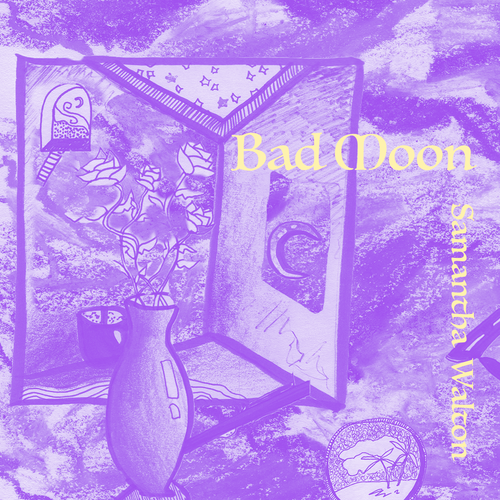
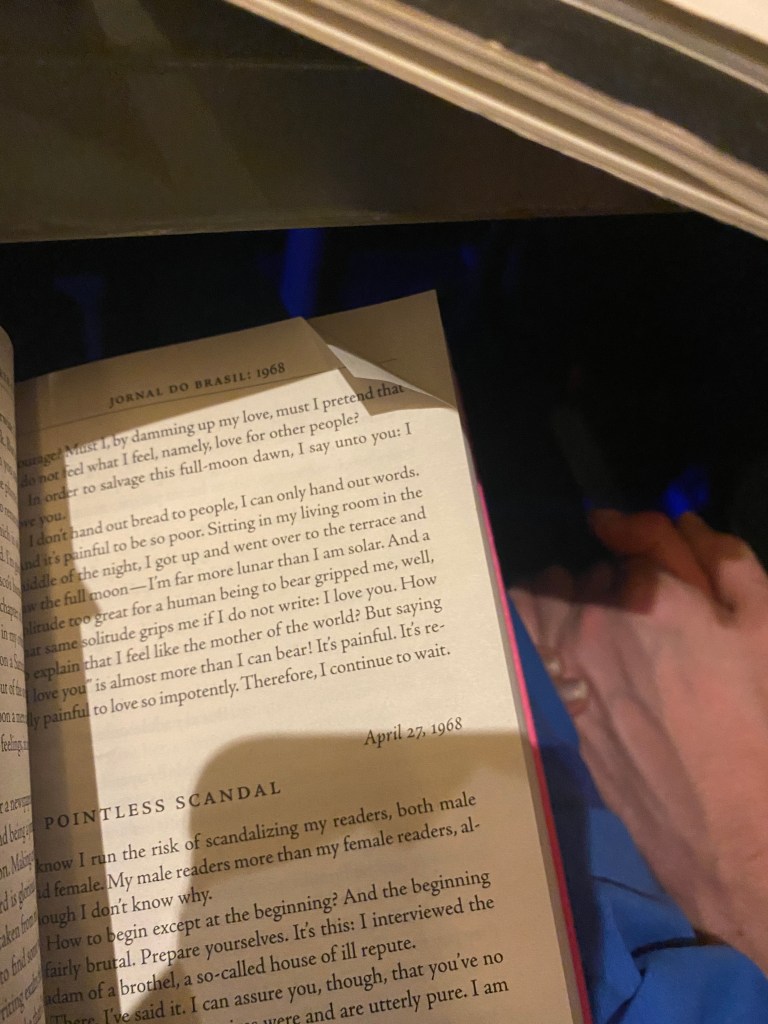
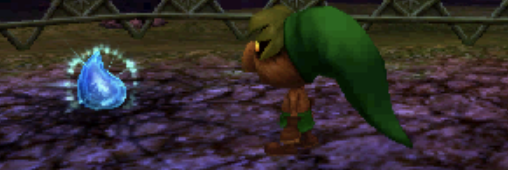


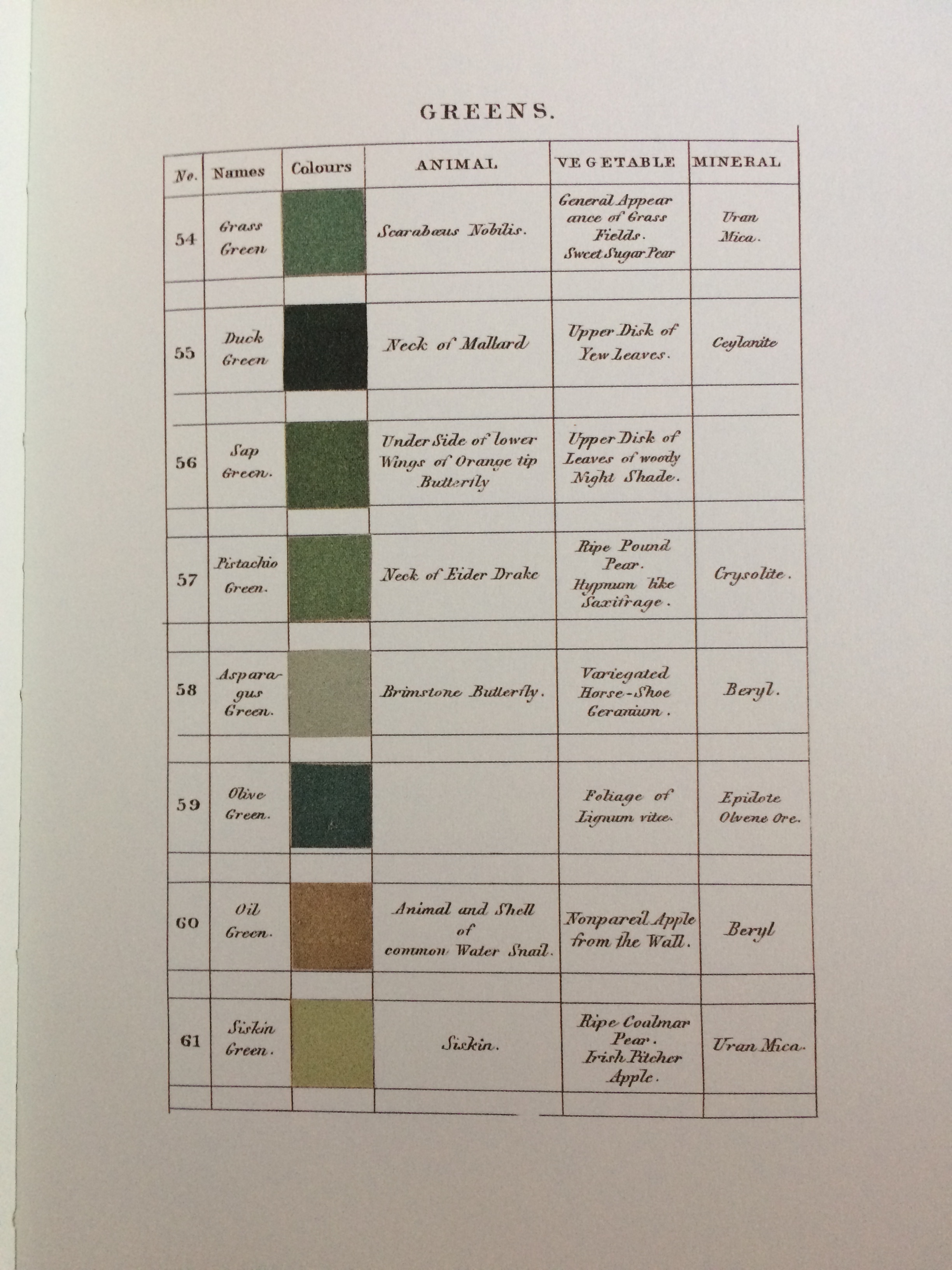
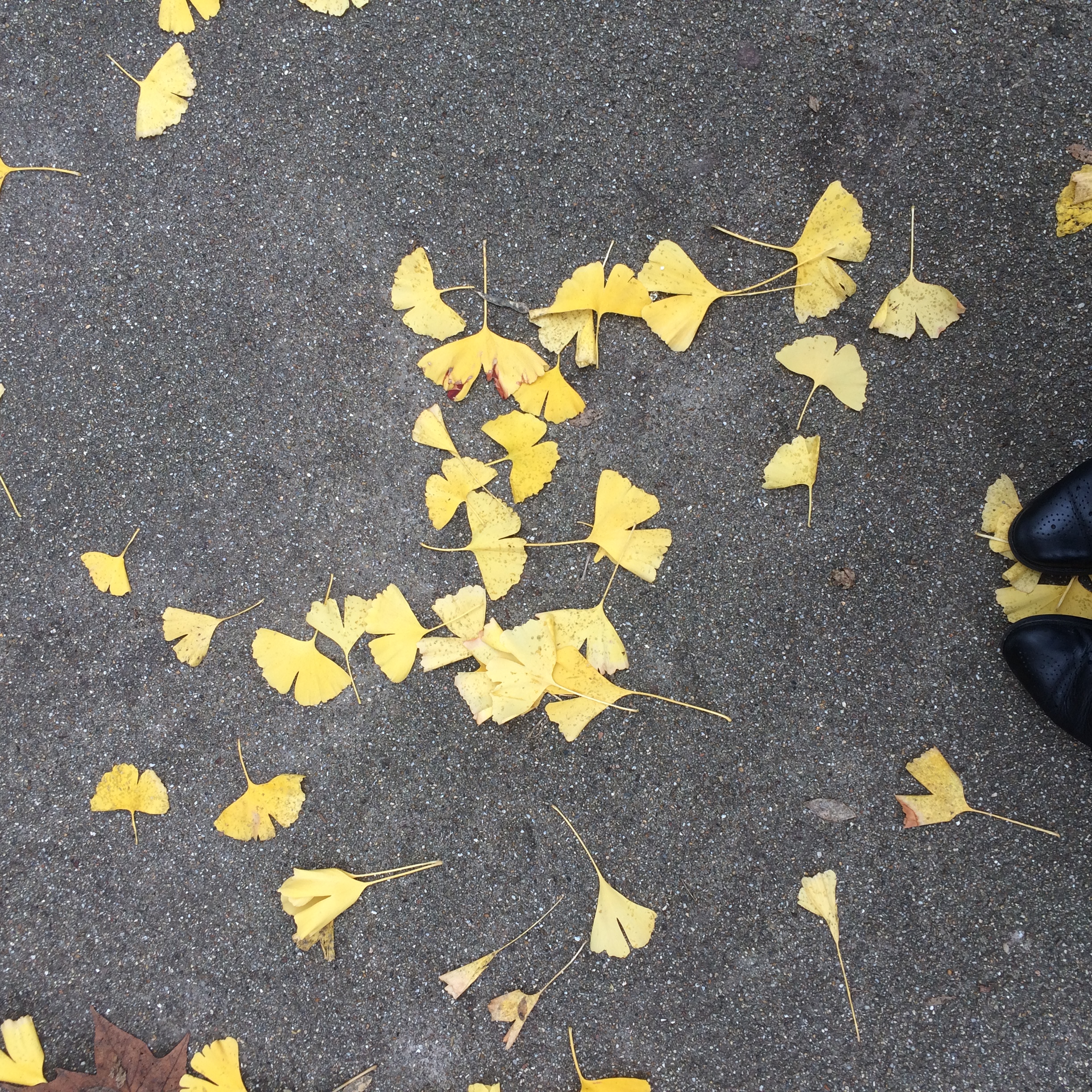
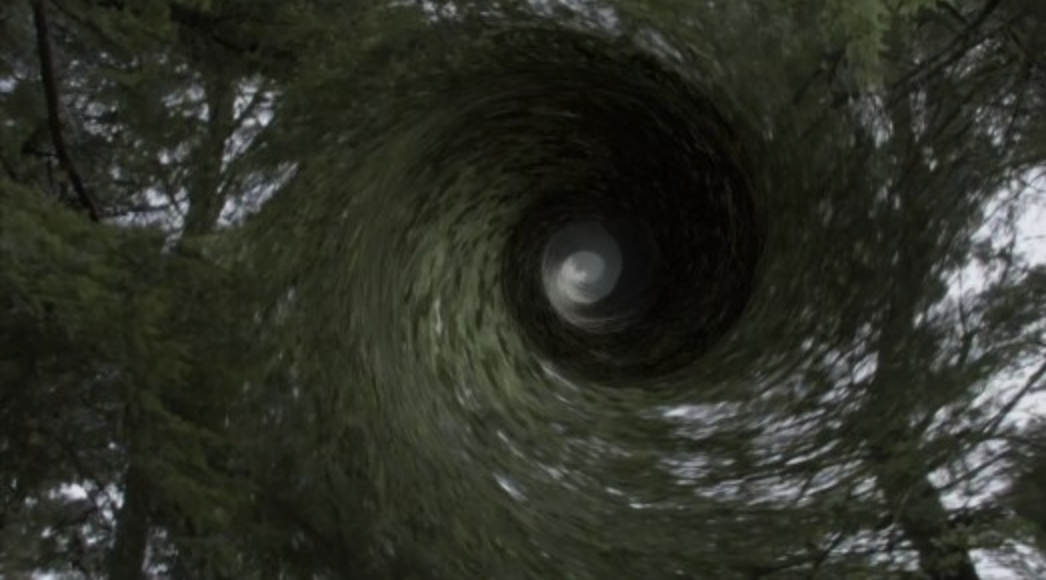
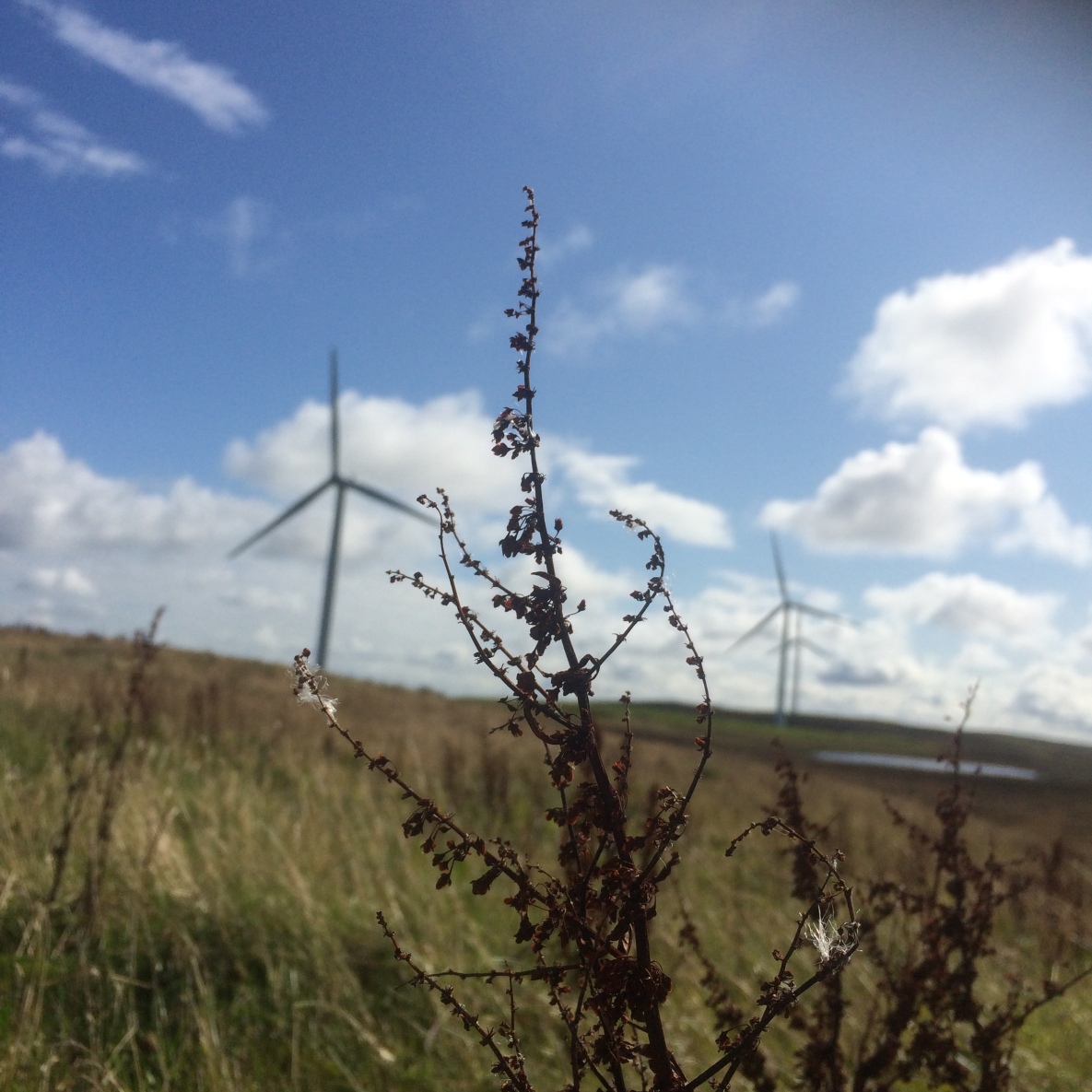
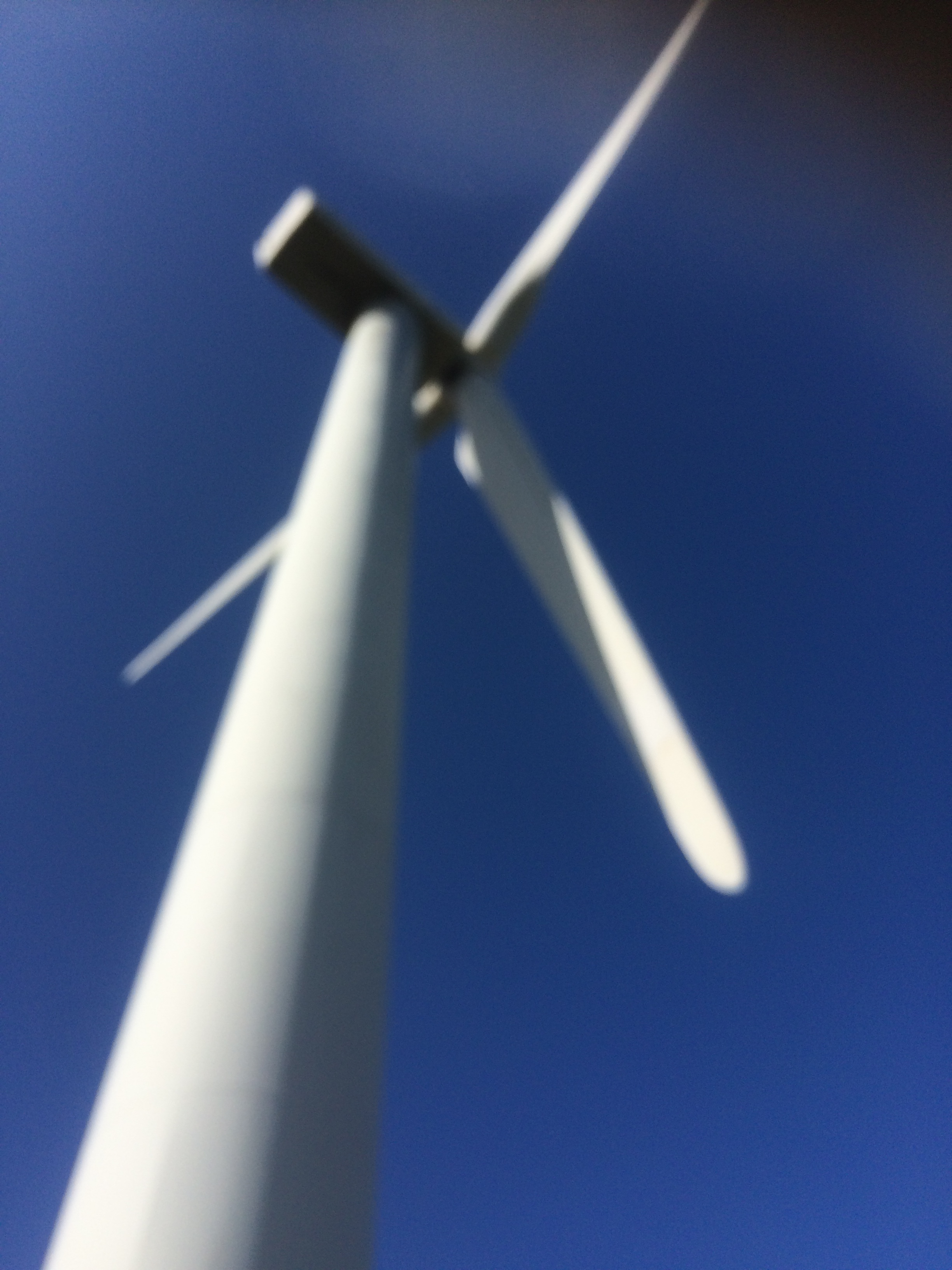
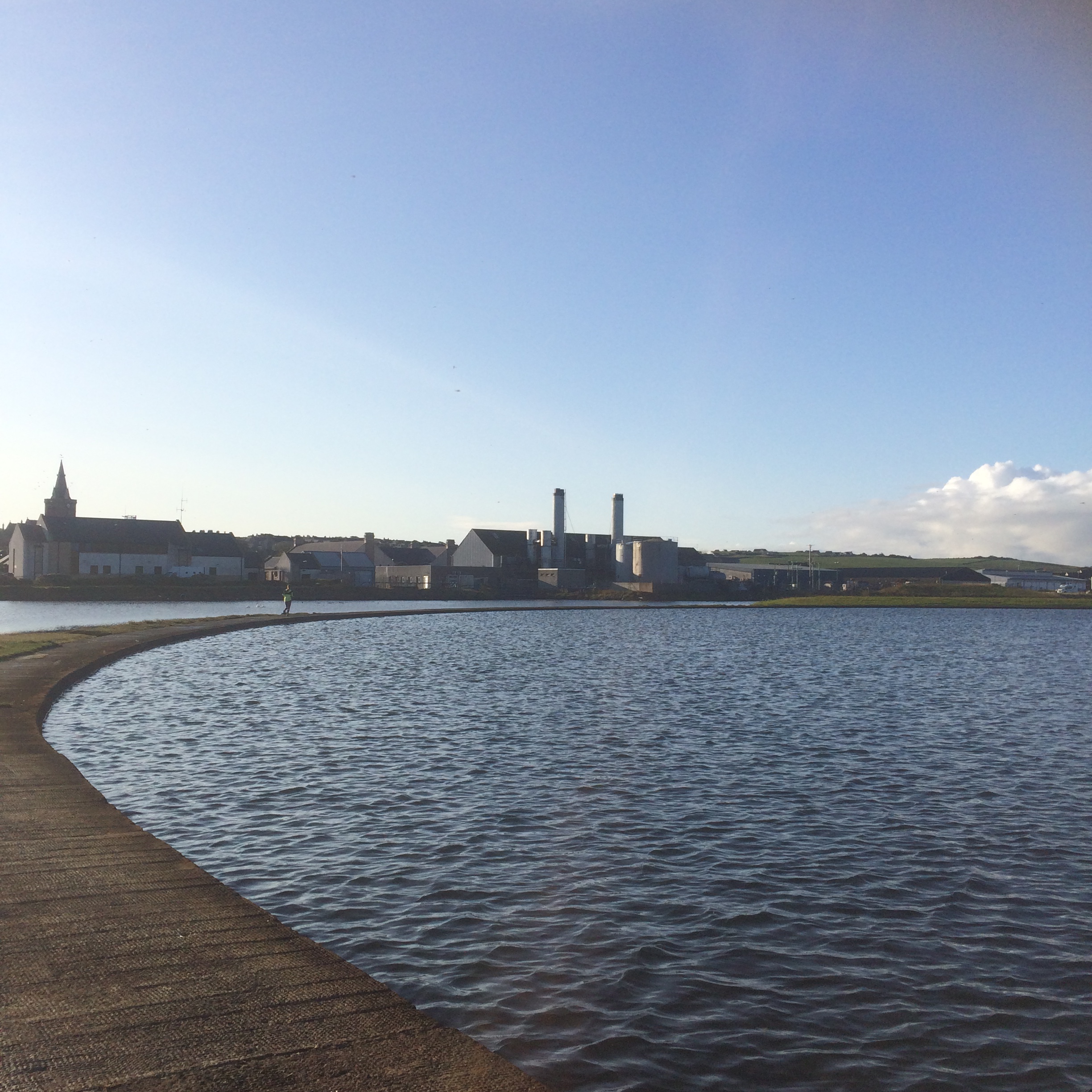
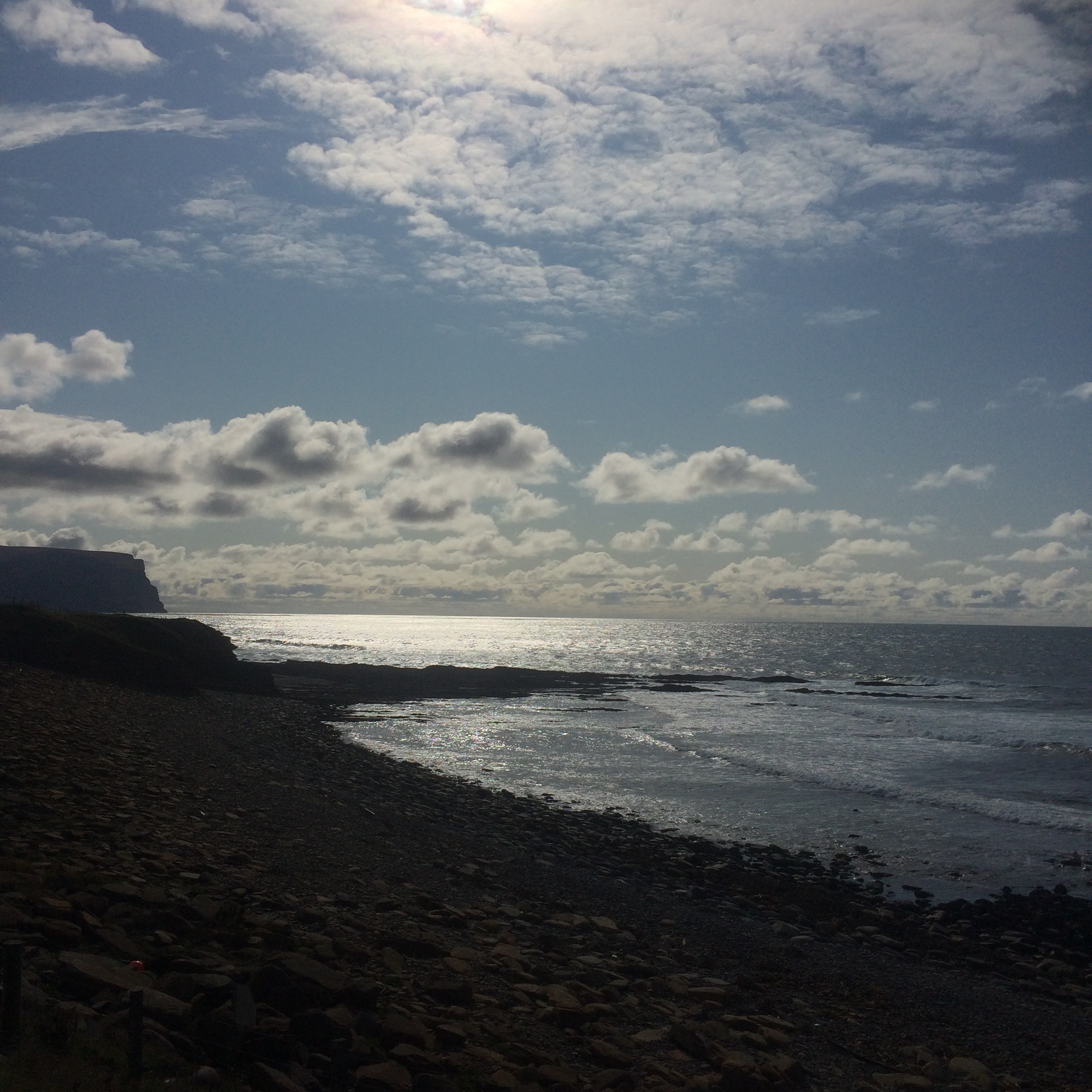
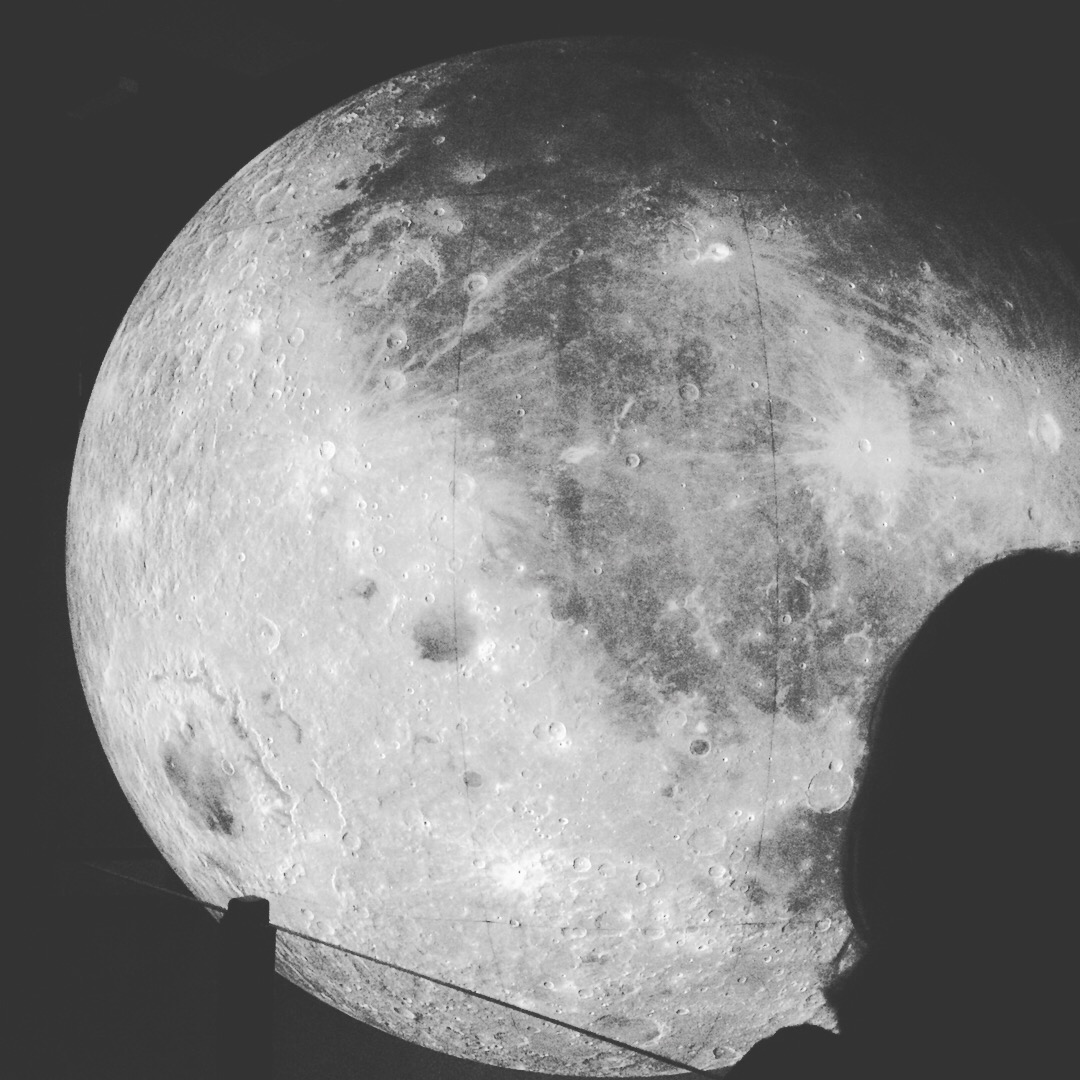
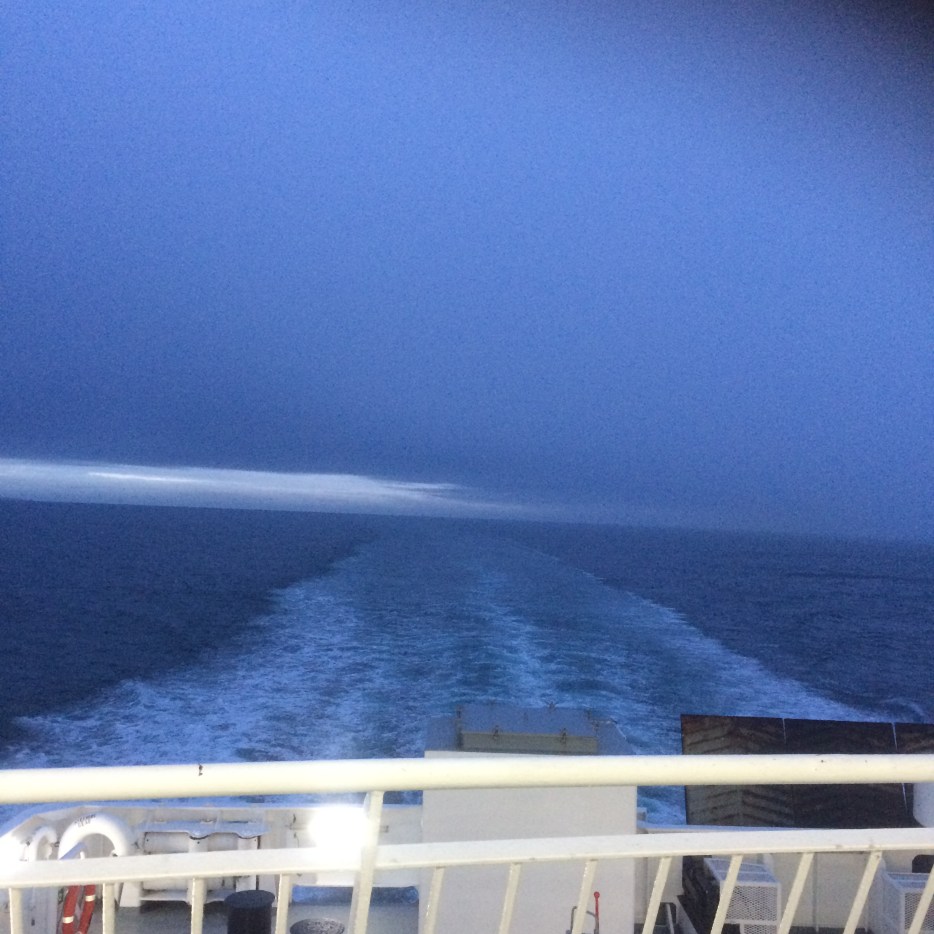
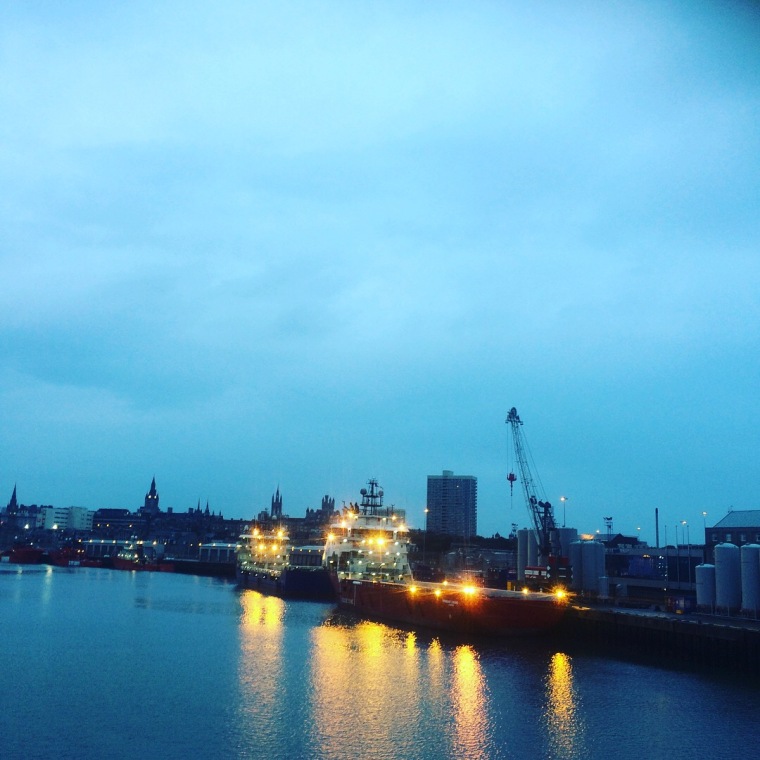

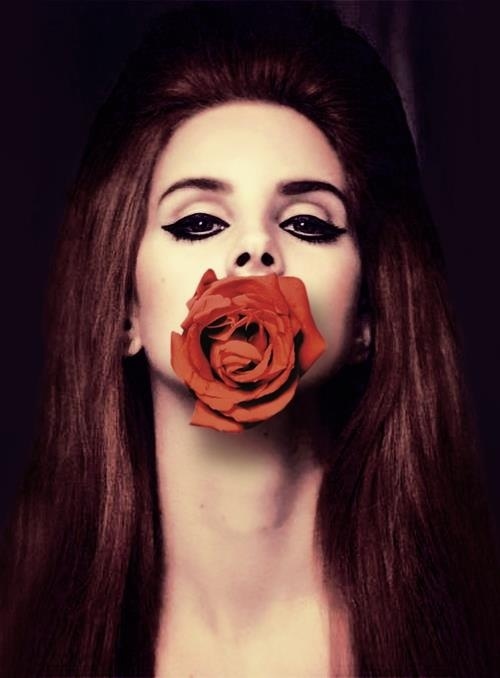
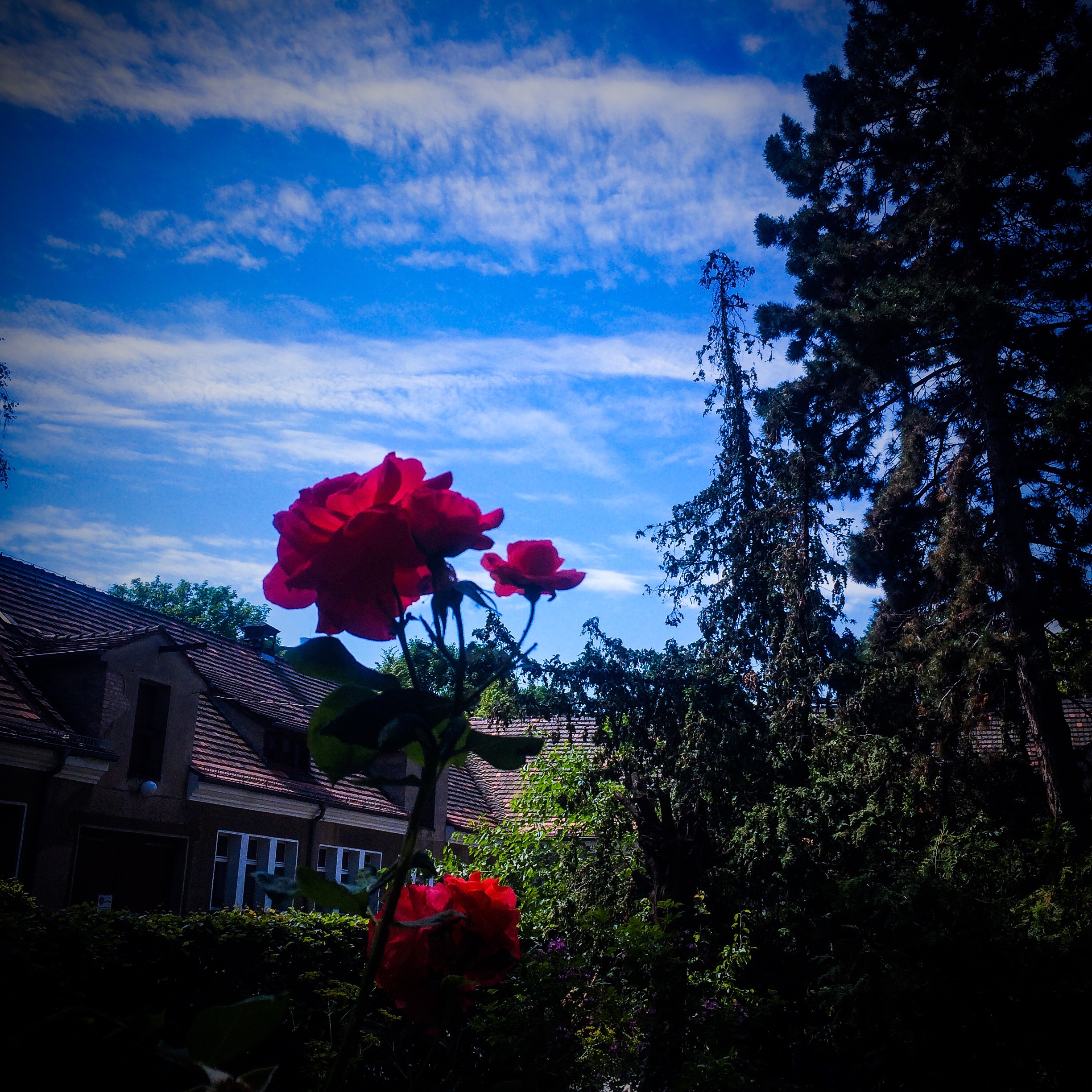


 mariaology