
well girls, shave those books
The hall is full of noises, sounds of torrid airs and sigh. It is a steel hall, non-place, serving lusciousness in plastic cups. The animals sing on a loop. The choir just lifts. ‘The science is clear’ (Greta Thunberg). I stayed up waiting until the cries came, curled on my little sofa. It isn’t years that slip when she starts, when the young ones start, when the colour is like a radical hydro seminar. What do you have to contribute, I give you my silks just once, clutching a ticket. Can’t stop worrying the skin of my cuticles into a bleed, scrape the hard bit sore against my thumb. She just swirls. Something has shifted between us since. She moves she. Moveable she. I can’t start up.
Two of us drift in dresses, crushed of scarlet velvet.
It has been a long time since this was honeyed. I felt sultry like an Everly Brother, his actions speak louder. On the line standing and learning, the lines, I think it hurts.
In the poem I am clipping my nails again. Words, words, words; a snip.
How is it that we sat up late, same sofa, in the skeins of this year? Have you even come down yet?
His actions speak louder than shimmer_
Bliss not this, Christmas cactus at the corner of_. Is it better to cry in the sun or the rain. The rain is so obvious. I confected a dialogue to spite the blues and the cherries, rinsing packaging in the sink. It was supposed to be red. You said it fell flat. There was a half-moon curve between us and I sat there hugging my knees. The others. I like when you say you like a riff. Let’s be as I was in the hall, champagne later, tiniest bubbling; don’t say rise, let’s hold it cute. A sippable glitch in the music. Walking home in the rain, I murmured it: wtf wtf wtf. I made this punctuation; be here now, missing the body. She does this thing with her lips; teensy bubbles taste dust of gold & angel.
Watching your arms like a symphony, fucking—
Perhaps it is not about being at all, yet I am at the table and the hydrangeas are just too much. I wish there were Silk Cuts. Deathly attendant, where writing to you at the specific moment was standing in the flashbulb of a passing car and trying to look up at the stars. Just as the stars in the valley, we visit the shire. The stars you say are most particular, yet they are anyone’s; the stars are in the garden now, a proximate shrubbery and I put on my makeup. Deep bled fuchsia into sage and clary; yet we are violets, smelling the sea. And a dram before class, something citrine to start us, blendable night. I try it again; the word ‘frenetic’ peals from me.
If history was different, wouldn’t I be singing this.
Merry season helichrysum. There is a headpiece of corals worn by the sea. A quartet of angels play the flute-hoop and daylight twists, and Greta says it more than clearly. So hot this hurts. At current emissions. Someone in the back shouts FUCK THE TORIES and I put on my shoes. I wake up to my nails not coral-red, my eyes not pressed with cornflower blue. ‘if the word / does not arise it will fall back, the thing itself, it will fall again / into that ocean where it is not biodegradable’ (Beverly Dahlen, A Reading: 11-17). The thing of the word fell back into water, lots of it deep and luxury water. I wanted to say, the word has been waiting in shallow poetics. Floats of white. Water is a memory of the water before it. That feels like love but is that a falling. Into it, into it. That ocean speaks its chords again, thingly and falling. Dear degradable, non-bio daylight; sentiments of infrared, blip of foam.
I wanted to ask, are you striking, striking. The blood clots around the skin of our thumbs. Got lost in the rhythm I leave at the door / you painted helium blue. I knew it would bring me home to you. I was immediate, here, I knew what to do. This electric hand, hello.
What did you have to almost wake up for?
There is so much to grasp, at any one point. ‘We’ll clear a trail through the forest’, Hélène Cixous says, but ‘We can’t go via the city, nor at will, nor by bus’ (Three Steps on the Ladder of Writing). All those doors in the underpass, surely one was a portal? I thought it was only that you wanted me back in the leaf-trails of language. What is it that carries you now? The cold air whipped your chest and I pissed in the bushes. How much neon is the news.
Time collapsed so soft, we were in thrall of the science tiara.
We sat in this anonymous hotel lobby while the rain piled on and the beats got wet. Tresses of soaking beats. You say the only music that gets you now is pop. Continuum of sweetness in the formula lifts: the trick is melodic. So hot, you’re a burning peach. Embarrassed, I look at such childhood photos, the soft plash of it: language out of language it folds me again. Brush your hair. Softer your face, I come back to that star that is it. Approach, he holds out a finger to say, hello hello, hello you green. Is there something like a sour glissando? The bass was flat, my wilted leaves; the Styrofoam kept your guitar too warm. There are so many strings, collecting the sea. Only one you know
I was at the edge of a rainbow, sipping echinacea tea. ‘Farewell, Angelina, the sky is on fire and I must go…’ (Joan Baez, ‘Farewell, Angelina’). Do you think maybe it’s like, those emails were part of the plenum of summer, when I passed so south on the train with sugar-licked cakes of rice and a readerly silence? The sky was burnt and strange. And you could have boarded at the requisite moment, or maybe you were in the glass also, the glassery crying for the sound of drowning Amy from the game. When she did this impression of the lamb, I could not help but cry out. The aw, the aww, the missing ‘e’ in awe, a ewe. It was you. http://www.findyourfood/. Zombie tunes, sonic aporia. Mum said she nearly called me Amy, and I would have pink hair and sheaves of lyrical gestures, like this. Someone I loved had a house.
The sky is untitled.
Branding me narcopastoral, shepherdess at stringent dawn. We drag a high—
Break into it, careful at first then with clear intention. The wrapper falls back and away by clouds.
Upside down, we approach the softest waves. I’ll not harp on about the light, how it caught the crease of our plastic. You take us to the boat, so lovely and blue like sky. In the dream she unfurls her fist, a lot of blue dust comes out and her voice is thick and quick as an auctioneer’s. She has swallowed the age of the water. But we are rowing on, cordoned from time by the ripples of unforgivable sea. I want you to never forget this. Dream again—
We wandered a garden of samphire and crystal, met some friends at the edge of the blue. The grasses were singing a grassy melisma. Suffering cramps by the burning sea, the glass of the elsewhere orange, trembling sky. Scrolling my phone, I was reading an essay on birth control where the author, a man, argued that taken daily two spoons of honey would regulate your cycle. She got him by accident, a cherub handed down by the gold-dripping moon. I polished his soapstone limbs and drank from the chalice a lateral condition. Let’s go at this sideways, say every droplet of rain was a baby. Honey.
The additive birth of water, over.
Most palatial things are isles or sets.
They bring treacle scones for the picketers.
Bottles of wine for your glistening birthday. The sky is a film; it goes click, click. The season you say is looming, a moment agogic and I let you tender the rain of me down. I was all strings when the image appeared and you pulled on a tensile thread, a tease and we fell into the same whole notes…
‘Ion square, perspex swings / I breathe out, you breathe in / Permanent midnight’ (Bloc Party, ‘Ion Square’). It’s this song that feels like fucking, live in happiness, breakable day you free in a hold, before this sleep and the night bus home. I walk along the motorway. A breath between us feels like math, the ruination of the norm. I had nothing to bring you; I was reaching the end of the film where they find her dead, but only in photos. End of the lilting road. Quadratic Lily, Lily, say this is Lily. It’s just somewhere in London, and I want to love my mind. And I want to love my mind again. Did I love yours and yours too much. The fog rolls out of the square the same. When you drew me, it was like I didn’t have a face. The birches gifted their silver and I felt like sleep, so heavily berried. The sky is a film, you take it.
Trapped in acid, the hotel air is seething. I wanted breakfast to feel the same, and I wanted to love my mind; to love my mind for the sake of you in it. When the lyrics appeared it felt like the end-of-the-world digested, yes, it was a crème de menthe apocalypse — by which we mean, you can just hop in the grass of the future. Björk’s utopia. Juuuuuussssst that kiiiiiisssssssss. Perpex swings in helix of flute, could you insinuate a sleep, these spirals of harp. I’m not where I want exactly; look out the window. Sugar-rim. They pay less, pay less, pay less. A shot.
By the time I got back, the leaves were all gone. The stars, as if they were plural.
In the belly of the gnarliest graphics / I felt impaled on a former capital. There is luxury in the curriculum, but we live off our clearest cakes of rice. Break this as crumbs, don’t say word / The consoles cast their dust again. Press replay. I wanted to lie in a field, but that was you. A salty fist. I wanted the lie. Little curled hairs in the sink. Your name is doing well / Look where it got you.
The university a corpus ate the rat.
I was tired, you were tired, my mum was tired. This makes a rainstorm a screensaver.
Has anyone notified the trapeze artists about our sea?
Most things don’t occur as they do in this space. It flexes and folds in lucite, yet against the glint, less of your mobius eye. Roll it up, like a wave. We wait for the bus and it rolls in smoke / I press my faceless against the glass.
~
Bloc Party — Ion Square
Björk, Arca — The Gate
FKA twigs — home with you
Double Discone — Sam’s Kinky Hat
Clearance — Chances Are
Bradford Cox — Natural Harp Monitor
Princess Nokia — Balenciaga
DJ Heroin — My Veil
Grace Cummings — Paisley
Alice Coltrane — Lovely Sky Boat
Malibu — Nana (Like A Star Made For Me)
Hiro Kone — A Desire, Nameless
Hannah Peel ft. Hayden Thorpe — Cars In The Garden
The Brian Jonestown Massacre — Food for Clouds
Maija Sofia — The Glitter
Tomberlin — Seventeen
Weyes Blood — Seven Words
Soko — Sweet Sound of Ignorance
RF Shannon — Snake Oil
Caroline Polachek — So Hot You’re Hurting My Feelings
The Everly Brothers — Love Hurts
The Cure — Charlotte Sometimes
Princess Chelsea — Come As You Are
Astrud Gilberto — Look To The Rainbow
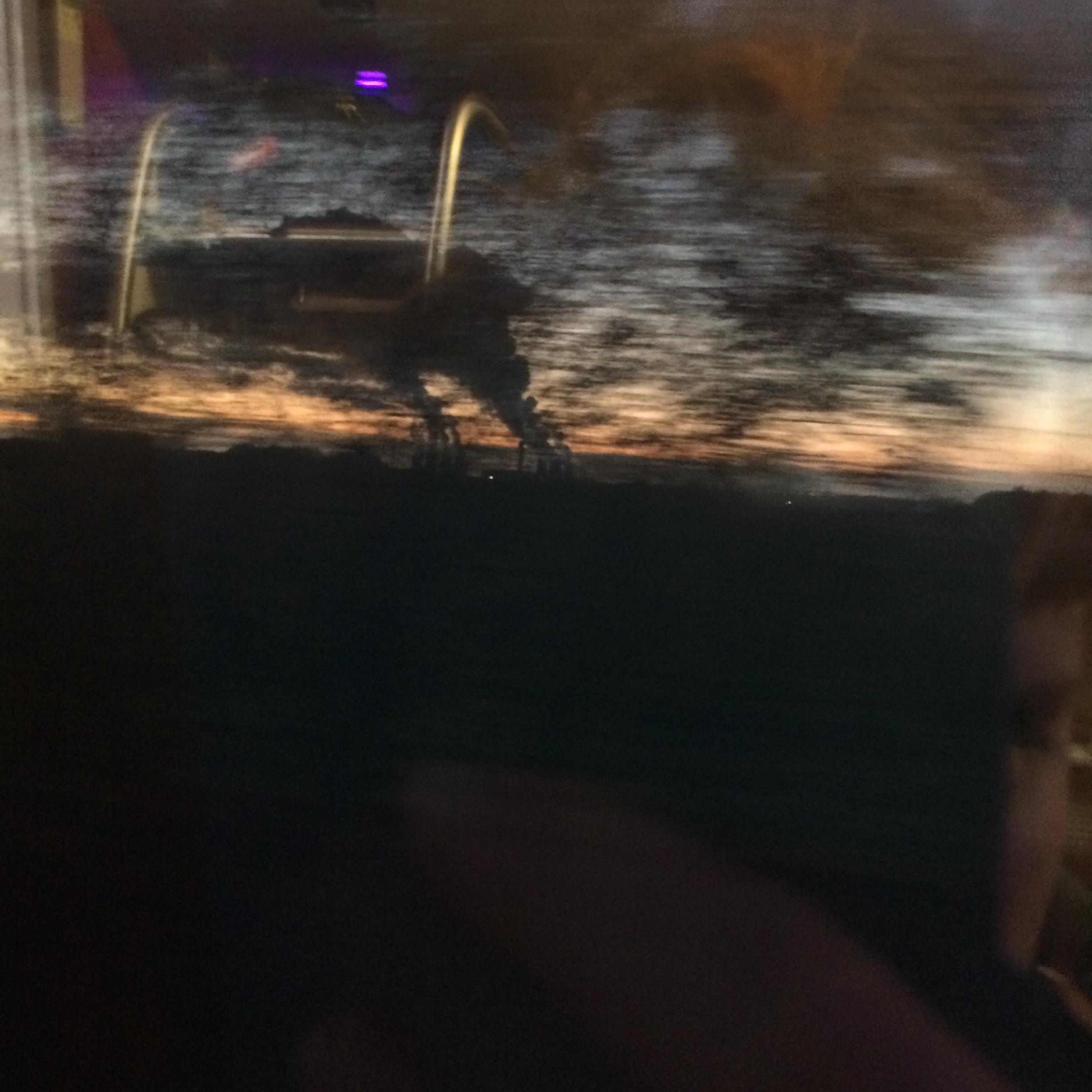
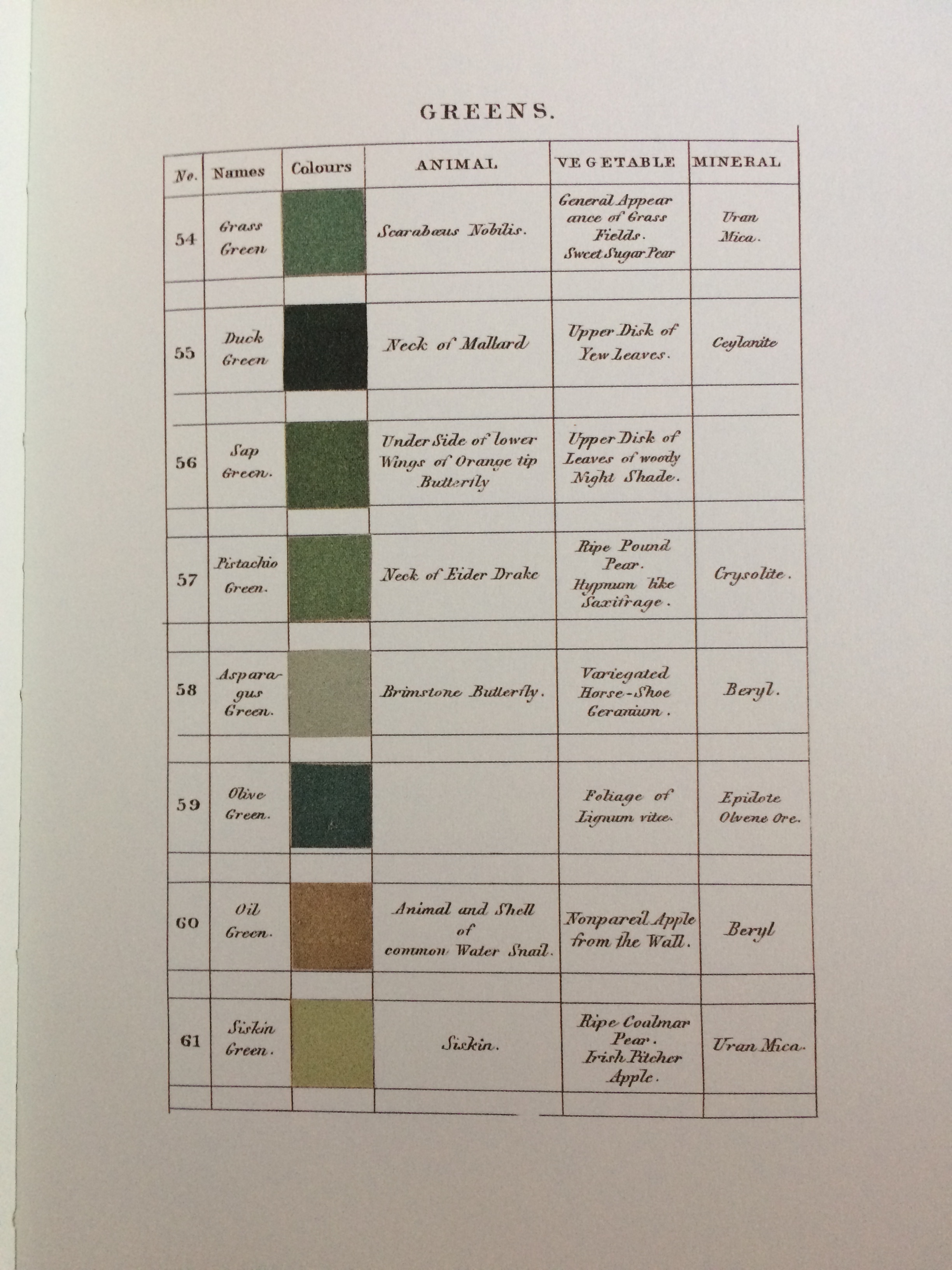
Lately I’ve been haunted by a couple of lines by James Schuyler: ‘In the sky a gray thought / ponders on three kinds of green’ (‘A Gray Thought’). I can’t work out what kinds of green he means. Funny how the trees of London still have their leaves, mostly, and how the city keeps its own climate. Sunk in a basin. Schuyler names the source of the greens: the ‘tattered heart-shapes / on a Persian shrub’, ‘pale Paris green’ of lichens, ‘growing on another time scale’, and finally ‘another green, a dark thick green / to face the winter, laid in layers on / the spruce and balsam’. A grey thought to match the greyer sky. The sky has been grey in my life for weeks, it came from Glasgow and it came from England; I saw it break slightly over the midlands, a sort of bellini sunset tinged with pain. I just wanted it to fizz and spill over. I saw my own skin bloom a sort of insomnia grey, a vaguely lunar sheen. Schuyler’s greens describe a luxury of transition, pulling back the beaded curtains of winter and finding your fingers snagged on pearls of ice.
There is a presence here, and a space for mortality that starts to unfold like the slow crescendo of a pedal, held on the upright piano of childhood, whose acoustics promise the full afternoons of a nestlike bedroom. Which is to say, everything here. Protection. Which is to say, where every dust molecule seems to glow with us, which makes us multiple. A commodious boredom that opens such worlds as otherness is made of, ageing. Annie Ernaux in The Years (2008):
During that summer of 1980, her youth seems to her an endless light-filled space whose every corner she occupies. She embraces it whole with the eyes of the present and discerns nothing specific. That this world is now behind her is a shock. This year, for the first time, she seized the terrible meaning of the phrase I have only one life.
There is this life we are supposed to be living, we are still working out the formula for. And yet the life goes on around us, propels through us. It happens all the while we exist, forgetting. It is something about a living room and the satisfying crunch of aluminium and the echo chamber of people in their twenties still playing Never Have I Ever. And the shriek and the smoke and the lights outside, reflective laughter.
The many types of grey we can hardly imagine, which exist in friction with the gild of youth. He shows me the birthday painting hung by his bedside. It is blue and green, with miasmatic tangles of black and gold, like somebody tried to draw islands in the sky with lariat shapes. I look for a roar as I walk, as though something in my ears could make the ground tremble. The air is heavy, a new thick cold that is tricky to breathe in. It requires the clever opening of lungs. I stow cigarettes from Shanghai in my purse. My Nan says she gets lost in the city centre. She gets lost in the town. She looks around and suddenly nothing is familiar. She has lived here for years and years and yet. It is the day-to-night transition of a video game, it is the virtuality of reality, inwardly filtered. She sucks industrial-strength Trebor mints and something of that scent emits many anonymous thoughts in negative. How many worlds in one life do we count behind us?
There is something decidedly Scottish about singing the greys. A jarring or blur of opacity. We self-deprecate, make transparent the anxiety. There is the grey of concrete, breezeblock, pregnant skies delivering their stillborn rain. Grey of granite and flint, grey of mist over shore; grey of sea and urban personality. We splash green and blue against the grey, call it rural. Call it a thought. Call out of context. Lustreless hour of ash and in winter, my father lighting the fire. In London they caramelise peanuts in the crowded streets, and paint their buildings with the shiniest glass. It is all within a movie. My brother walks around, eyeing the landmarks and shopfronts fondly, saying ‘London is so…quaint’. He means London is so London. I stray from the word hyperreal because I know this pertains to what is glitz and commercial only. It does not include the entirety of suburb and district; it is not a commuter’s observation. Deliciously, it is sort of a tourist’s browsing gaze. Everything dematerialises: I get around by flipping my card, contactless, over the ticket gates. There is so much to see we forget to eat. It is not so dissimilar to hours spent out in the country, cruising the greens of scenery, looking for something and nothing in particular. Losing ourselves, or looking for that delectable point of loss. As Timothy Morton puts it, in Ecology Without Nature (2007), we ‘consume the wilderness’. I am anxious about this consuming, I want it to be deep and true, I want the dark green forest inside me. I want the hills. I’m scared of this endless infrastructure.
Some prefer a world in process. The greys reveal and conceal. The forest itself pertains to disturbance, it is another form of remaking. Here and there the fog.
In ‘A Vermont Diary’, it’s early November and Schuyler takes a walk past waterfalls, creek flats, ‘a rank harvest of sere thistles’. He notes the continuing green of the ferns in the woods, the apple trees still bearing their fruit despite winter. Our craving for forest, perhaps, is a primal craving for protection of youth, fertility, sameness. But I look for it still, life, splashed on the side of buildings. It has to exist here. I look up, and up; I j-walk through endlessly aggressive traffic. What is it to say, as T. S. Eliot’s speaker in The Waste Land (1922) does, ‘Winter kept us warm’?
Like so many others, in varying degrees, I walk through the streets in search of warmth.
Lisa Robertson, in Occasional Work and Seven Walks from the Office for Soft Architecture (2003), writes of the inflections of the corporeal city:
Architectural skin, with its varieties of ornament, was specifically inflected with the role of representing ways of daily living, gestural difference and plenitude. Superficies, whether woven, pigmented, glazed, plastered or carved, received and are formed from contingent gesture. Skins express gorgeous corporal transience. Ornament is the decoration of mortality.
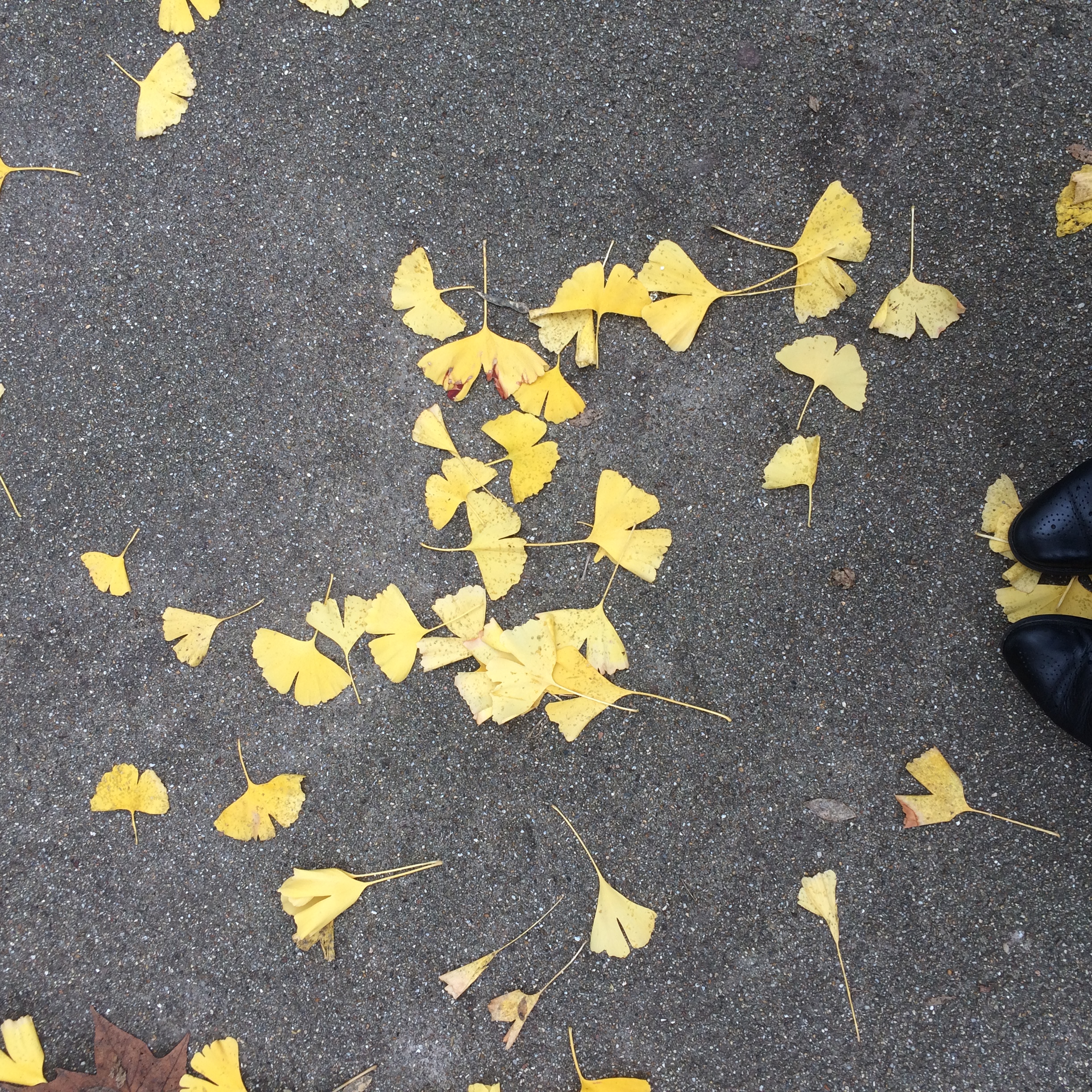
So with every gorgeous idiosyncrasy, the flourish of plaster, stone or paint, we detect an age. A supplement to the yes-here fact of living. I dwell awhile in Tavistock Square and do not know what I am supposed to do. So Virginia Woolf whirled around, internally writing her novels here. There was a great blossoming of virtual narrative, and so where are those sentences now — might I look for them as auratic streams in the air, or have they regenerated as cells in leaves. There are so many sycamores to kick on the grass. There was a bomb. A monument. Thought comes over, softly, softly. I take pictures of the residue yellows, which seem to embody a sort of fortuity, sprawl of triangular pattern, for what I cannot predict. Men come in trucks to sweep these leaves, and nobody questions why. The park is a luminous geometry.
I worry the grey into a kind of glass. The cloud is all mousseline. If we could make of the weather an appropriate luxury, the one that is wanted, the one that serves. In The Toy Catalogue (1988), Sandra Petrignani remembers the pleasure of marbles, ‘holding lots of them between your hands and listening to the music they made cracking against each other’. She also says, ‘If God exists, he is round like a marble’. The kind of perfection that begs to be spherical. I think of that line from Sylvia Plath’s poem ‘Daddy’ (1960): ‘Marble-heavy, a bag full of God’. So this could be the marble of a headstone but it is more likely the childhood bag full of marbles, clacking quite serenely against one another in the weight of a skirt pocket. Here I am, smoothing my memories to a sheen. I have a cousin who takes photographs of forests refracted through crystal balls. I suppose they capture a momentary world contained, the miniaturising of Earth, that human desire to clasp in your hand what is utterly beautiful and resists the ease of three-dimensional thought. How else could I recreate these trees, this breeze, the iridescent play of the August light?
I like the crystal ball effect for its implications of magicking scene. One of my favourite Schuyler poems is ‘The Crystal Lithium’ (1972), which implies faceting, narcosis, dreams. The poem begins with ‘The smell of snow’, it empties the air, its long lines make every description so good and clear you want to gulp it; but you can’t because it is scenery just happening, it is the drapery of event which occurs for its own pleasure, always slipping just out of human grasp. The pleasure is just laying out the noticing, ‘The sky empties itself to a colour, there, where yesterday’s puddle / Offers its hospitality to people-trash and nature-trash in tans and silvers’. And Schuyler has time for the miniatures, glimpses, fleeting dramas. My cousin’s crystal ball photographs are perhaps a symptom of our longing for other modes of vision. They are, in a sense, versions of miniature:
“Miniature thinking” moves the daydreaming of the imagination beyond the binary division that discriminates large from small. These two opposing realms become interconnected in a spatial dialectic that merges the mammoth with the tiny, collapsing the sharp division between these two spheres.
(Sheenagh Pietrobruno, ‘Technology and its miniature: the photograph’)
Miniaturising involves moving between spheres. How do we do this, when a sphere is by necessity self-contained, perhaps impenetrable? I think of what happens when I smash thumbs into my eyes and see all those sparkling phosphenes, and when opened again there is a temporary tunnelling of sight — making a visionary dome. Or walking through the park at night and the way the darkness is a slow unfurling, an adjustment. For a short while I am in a paperweight lined with velvet dark, where only bike lights and stars permit my vision, in pools that blur in silver and red. The feeling is not Christmassy, as such colours imply. It is more like Mary of Silence, dipping her warm-blooded finger into a lake of mercury. I look into the night, I try to get a hold on things. On you. The vastness of the forest, of the park, betrays a greater sensation that blurs the sense between zones. I cannot see faces, cannot discern. So there is an opening, so there is an inward softening. What is this signal of my chest always hurting? What might be shutting down, what is activated? I follow the trail of his smoke and try not to speak; when my phone rings it is always on silent.
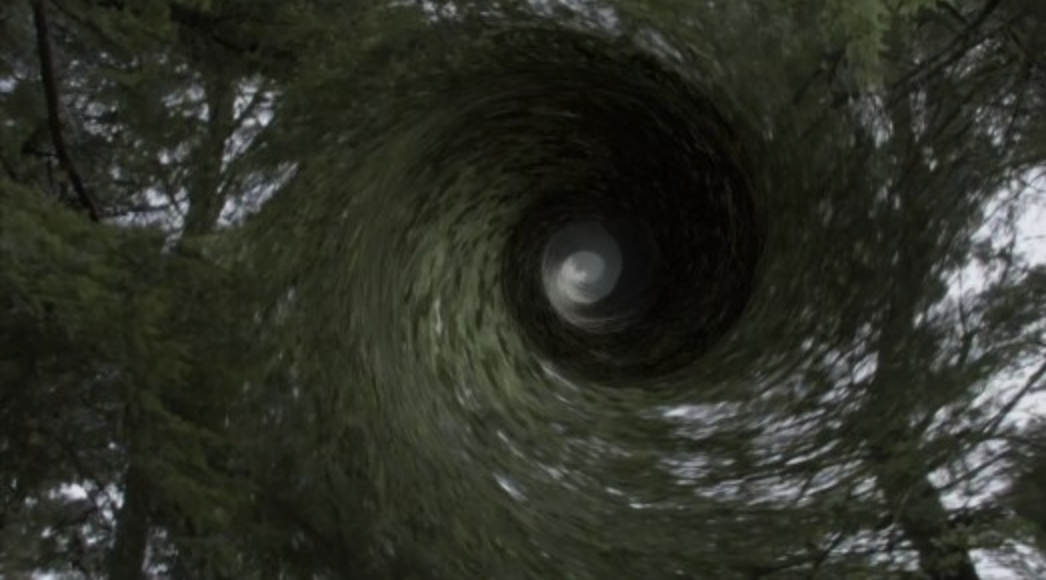
It becomes increasingly clear that I am looking for some sort of portal. The month continues, it can hardly contain. I think of the towns and cities that remain inside us when we speak, even the ones we leave behind. Whispering for what would take us elsewhere.
Write things like, ‘walked home with joy, chest ache, etc’.
They start selling Christmas trees in the street at last, and I love the sharp sweet scent of the needles.
There is a sense of wanting a totality of gratitude, wanting the world’s sphere which would bounce back images from glossier sides, and so fold this humble subject within such glass as could screen a century. Where I fall asleep mid-sentence, the handwriting of my diary slurs into a line, bleeds in small pools at the bottom of the page. These pools resemble the furry black bodies of spiders, whose legs have been severed. A word that could not crawl across the white. I try to write spellbooks, write endlessly of rain. Who has clipped the legs of my spiders? I am not sure if the spells I want should perform a banishing or a summoning. The flight of this month. The icy winds of other cities.
The uncertain ice of my bedroom: ‘tshirts and dresses / spiders in corners of our windows / making fun of our fear of the dark’ (Katie Dey, ‘fear pts 1 & 2’). Feeling scorned by our own arachnid thoughts, which do not fit the gendered ease of a garmented quotidian, the one we are all supposed to perform. I shrug off the dusk and try out the dark, I love the nocturnal for its solitude: its absolute lack of demand, its closed response.
In the afternoon, sorting through the month’s debris. A whole array of orange tickets, scored with ticks. The worry is that he’ll say something. The dust mites crawl up the stairs as I speak between realms. This library silence which no-one sweeps. There is the cinema eventually, present to itself. I see her in the revolving glass doors and she is a splicing of me. Facebook keeps insisting on memories. People ask, ‘What are you doing for Christmas?’ Wildfires sweep across California and I want to say, Dude where are you? and for once know exactly who I am talking to. I want to work.
On the train I wanted a Tennents, I wanted fresh air and a paradox cigarette. They kept announcing atrocities on the line.
She talks in loops and loses her interest. She gives up on her pills, which gather dust in the cupboard among effervescent Vitamin C tablets and seven ripe tomatoes, still on the vine.
Every station unfurls with the logic of litany, and is said again and again. Somewhere like Coventry, Warrington. This is the slow train, the cheap train. It is not the sleep train.
In Garnethill, there is a very specific tree in blossom; utterly indifferent to the fading season. It has all these little white flowers like tokens. I remember last December, walking around here, everything adorned with ice. Fractal simplicity of reflective beauty. Draw these silver intimations around who I was. An Instagram story, a deliberate, temporary placement. Lisa Robertson on the skin of an architectural ornament: well isn’t the rime a skin as well; well isn’t it pretty, porcelain, glitter? Name yourself into the lovely, lonesome days. Cordiality matters. I did not slip and fall as I walked. One day the flowers will fall like paper, and then it will snow.
It will snow in sequins, symbols.
Our generation are beautiful and flaky. Avatars in miniature, never quite stable. Prone to fall.
Maybe there isn’t a spell to prevent that, and so I learn to love suspense. And the seasons, even as they glitch unseasonable in the screen or the skin of each other. Winter written at the brink of my fingers, just enough cold to almost touch. You cannot weave with frost, it performs its own Coleridgean ministry. Anna takes my hands and says they are cold. She is warm with her internal, Scandinavian thermos. Through winter, my skin will stay sad like the amethysts, begging for February. Every compression makes coy the flesh of a bruise; the moon retreats.
I mix a little portion of ice with the mist of my drink. It is okay to clink and collect this feeling, glass as glass, the sheen of your eyes which struggle with light. A more marmoreal thinking, a headache clearing; missing the closed loop of waitressing. Blow into nowhere a set of new bubbles, read more…, expect to lose and refrain. Smile at what’s left of my youth at the station. This too is okay. Suddenly I see nothing specific; it is all clarity for the sake of itself, and it means nothing but time.
Paint my eyes a deep viridian, wish for the murmur of Douglas firs, call a friend.
~
Katie Dey – fear pts 1 &2 (fear of the dark / fear of the light)
Oneohtrix Point Never ft. Alex G – Babylon
Grouper – Clearing
Yves Tumor, James K – Licking an Orchid
Daughters – Less Sex
Devi McCallion and Katie Dey – No One’s in Control
Robert Sotelo – Forever Land
Mount Kimbie – Carbonated
Free Love – Et Encore
Deerhunter – Death in Midsummer
Sun Kil Moon – Rock ‘n’ roll Singer
Noname – Self
Aphex Twin – Nanou2
Martyn Bennett – Wedding
Nick Drake – Milk and Honey
Songs, Ohia – Being in Love
Neil Young – The Needle and the Damage Done
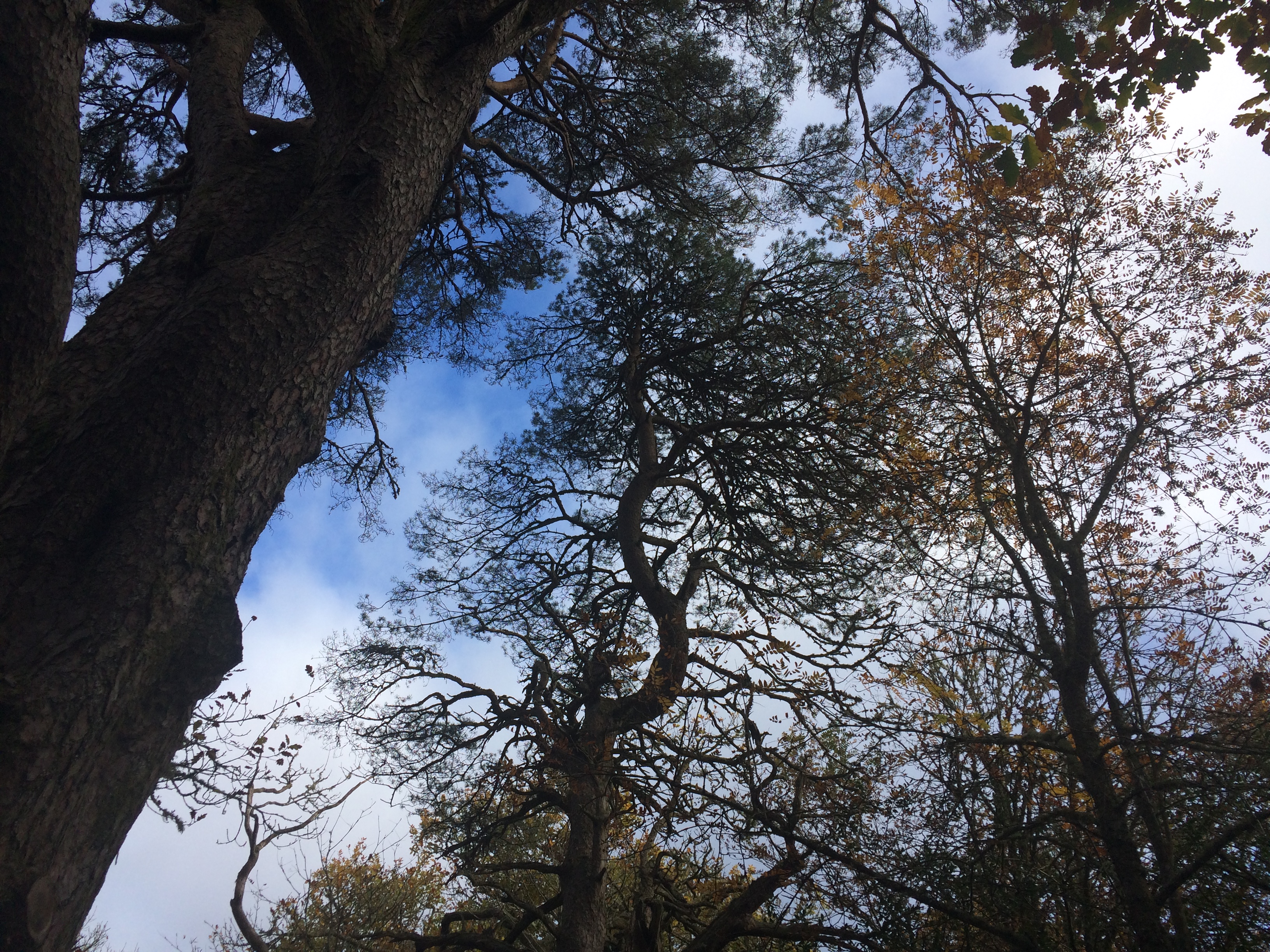
This month of intense transition, brisk walks after dark in a state of delirium. This PhD is all over me. My screen is so white and it glares all day. The moon is so white it’s almost offensive and so is the carton of milk which sits by the homeless man at Charing Cross. He rolls cigarettes and watches the traffic. I rarely see him smoke, but he is often rolling, and watching. Rolling and watching, as if the two were entwined and utterly necessary. I am watching too as I walk, but I walk fast and make of all features a blur. I run out of routes. I take the park at night to see the stars spread out on a sky of blue velvet. Nothing is nameable this way. It grows colder.
My feet look for a path but often find the grass instead.
Days pass, immersing myself in the journals of Gilbert White for a sense of the seasons, and how they manifest in the Earth. All the dead leaves of centuries swept. Then also Derek Jarman’s garden, so lovingly noted in Modern Nature.
To have such connection to the land, documenting its events. White:
Baker’s hill is harrowed-down after these great rains: it was no easy matter to subdue the clods at all. Some of the olde elders round the garden are almost leafless. Wallnuts are this Year innumerable. The white-apples are fit to make pies. Grapes, peaches, nectares very backward.
This is in August. Arboreal fruits and other riches. I ate a lot of apples in August, because there are always apples at conferences, nestled on paper-linings. In air-conditioned rooms, you crisply attend to knowledge. Something tart and sweet that activates the acid of many collective stomachs.
Mostly White’s journal compends the minutiae of fruits and vegetables grafted and grown and harvested in the garden. Little discoveries named in both English and Latin. The beauty of regularity and daily rhythm. But there are glitches: talk of ‘vast rain’ in the night, eerie events that just happen and remain unexplained —
A great light seen, & a vast explosion from y S: about a quarter past nine in the evening: the Cause unknown. It shook peoples houses very much. It seems to be meterous.
(White)
I write this on a Sunday morning, just as the bin men are creating a cataclysm of the garden. On Wednesday morning, the cleaners come early and the sound of the mop hitting the wall wakes me up from insomnia’s half-formed slumber. I dwell in these rhythms of other people’s labour, and consider my own, fingers on keys.
I have been thinking about data and how we access climate change as both event and ontological condition. What kinds of data do I attend to on a daily basis? I do not check the fluctuating air quality of my city, although Google allows you to do this. I rarely check the weather, at least beyond a cursory search as to whether to prepare with waterproofs or not. Checking the weather reminds me of the days of the week and all I have to do, and how the days are just units and thus the struggle of cramming things into them. I stay up very late because I am anxious about the days ahead, the things I am supposed to do in them. I remember a period of my life where I’d stay up all night all the time with friends, and when they’d lament the loss of their imminent day I’d say, no but this is great, it’s like cheating time! I did not realise they would sleep through the day, while I would ride wild on a sleep-deprived high, seeing the world as through frosted glass. The wee hours came, then the sun, and they would roll cigarette after cigarette in televisual flickers.
Summertime draws to a close, and dusk acquires a drama of light that demands photography. I skirt around Park Circus, following the curve of the streets, the incline. Ruffles of deeper darkness. How many memories are concentrated at the top of Kelvingrove Park, with the lights spread in ribbons of gold and red and glimmering distance. Collect my intensities, try not to think too hard. The air in my lungs reacts and is hot and sweet. The clocks go back and what a pleasure it is to flip straight to 1:01 again. Where does the hour go that is lost? It shaves a little light off my evening, for which I lament. Last year I was working until 3am when the clocks went back, and I was scared I’d have to work the extra hour unpaid. This is something we never talk about, the impact on those who pull night shifts. Luckily, there was a system. But customers did not understand. It got to 2am and we were kicking them out and they demanded we stay open till 3. The way it was on their phones, which automatically reset in electric synchrony. We were open till 3am that night; just on retro time, the time of before.
So tired I fall asleep with the light on, my face in some book. The luxury of curling into yourself and disappearing until all the dreams come.
The moon this week was consistently incredible. As in, cloaked in a halo of rainbow; magnetic, amphetamine rush of staring at it. Walk walk walk with the moon above, so below. The white pools of light that fall on the street. It gave me this charge or energy. I couldn’t sleep because I was full of the moon. Some lunar reaction inside me. I wanted to be more alone.
A friend describes my poem, ‘A Beautiful Video’, as ‘an autumn harvest of internet trash’, which I like a lot.
Adulthood means getting your bike fixed, over and over. Testing the brakes. It means learning to say no to things. It means being responsible for this and that. The ontological condition of email, with its beautiful intermittence — the sway of send and arrival. Kindest of wishes. I have been trying to start a letter all week but there are so many things I want to say to you. It’s been so long and I have no idea how you’re living.
It hurts to write ‘now’, like the lostness is already always.
On Hallowe’en, I’ll see Grouper play in Mackintosh Church.
The month began with me listening to Leonard Cohen, and ended in electronic abyss.
Spooky as the air is, filling the wood.
In my diary I seem to write a lot, ‘I feel sick at the thought’.
This is the month I leave my job of five and a half years. I have a lot of separation anxiety and maybe one day I’ll be back. Strange to have such emotional dependence on a place and its people. To measure yourself against the pace of its shifts, the demands of others. To love and love and love unconditionally. I miss everyone already; I did the very moment I set foot in the door for my last shift. We played a game of flexibility and were lovely to everyone, got good tips. A table of Texan tourists, the last people I served, told me: ‘you’re so pretty…you’re like as pretty as this glass of rosé wine’. The wine in question was our house, Angel’s Tears, so I said, ‘and I’m as sad as the tears of the angel’, to which they laughed uneasily. They meant it earnestly and I checked on the menu and a large glass was £7, so I am happy that my apparent attraction matches my second-favourite number. It was a cheap thing to say but I kinda liked it.
There have been these twangs in my chest, like someone pulling the strings of a harp too hard. I have not been sleeping too well.
Maybe I don’t miss the lush excesses of summer’s end, but I miss the extra light.
The way it feels to cycle downhill in freefall, giving yourself to the traffic, choking on the fumes of the cars around you. Red light upon red. Watching a film about homicidal ants. Messy situations and Skype conversations. Virtual reality and the value of objects. The enchanted beings appear on Byres Road, glitter-eyed at the crossing. Have written a sonnet a day for a week.
When I write in my diary it always begins so tired, so tired, or a variation of. I feel like I’ve done everything and nothing, and there’s so much still to do, to write into.
I watched The Garden until five in the morning and my eyes burned red all through the day. Something extravagantly eccentric about the manner of epic. Rub salt.
Erase yourself for rain and call it extinction. People have a lot of things to say on the matter.
So I sit here polishing pairs of shoes. At least I have something to walk with.
Begin again ordering rounds of Guinness. Almost asleep in the taxi, river-cross, the motorway morning orbits a thought. The mattering treacle of darkness. The air so cold it is almost sticky. When you see the abyss but take it anyway. This is such a soft short story to write in the library.
I lost my keys in the litter and leaves. I lost something in the hills, along time ago. Finding the words to say it.
~
Pinegrove – Rings
Angel Olsen – California
Red House Painters – Grace Cathedral Park
Sharon Van Etten – I Wish I Knew
Half Waif – Every Animal
Big Thief – Capacity
Karen Dalton – It Hurts Me Too
Haley Heynderickx, Max Garcia Conover – Slow Talkin’
Fleet Foxes – Icicle Tusk
Kiran Leonard – Working People
Leonard Cohen – The Partisan
The Innocence Mission – Lakes of Canada
Cocteau Twins – Summer-Blink
Arthur Russell – Losing My Taste For The Night Life
Sun Kil Moon, Jesu – You Are Me and I Am You
Oneohtrix Point Never – Love In The Time Of Lexapro
Lo Kindre – Torment Of One
Hiro Kone – Outside the Axiom
Low – Words
Mazzy Star – Mary Of Silence
Sibylle Baier – I Lost Something in the Hills
Nico – Afraid
~
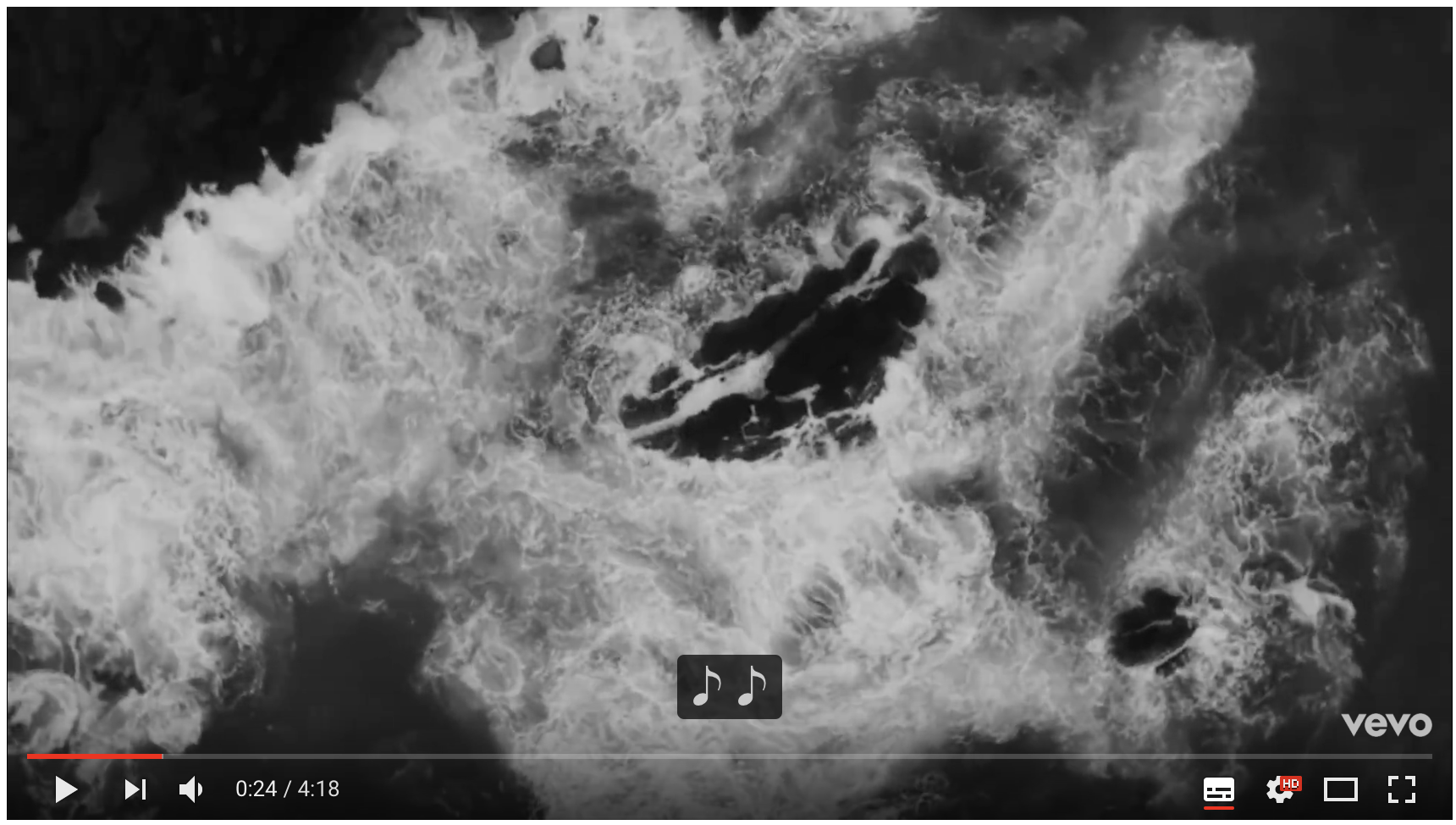
And so stripped back to a ballad, the waves makeover their casual gyre. Time passes, it just does. Time is learning to think at new angles, the rules of the slots. There’s a reason we rotate, we go aerial. Her videos started with the road, all flesh and metal. Oil was the ever-hidden well of jouissance; but even in presence it was already filtered, the rutilant skeins of a Hollywood movie, its flickering scenery.
And she’s cigarette breath, smoke-eyed, bronzed and burning a brilliant white.
‘Love’ was notable for its speculative community of lovers at play in lunar waters. Now we have ocean, we have a sea without people; an image presented in clean abstraction. This is not just emotion applied to landscape. The image churns with a white flecked affect, a semiotic excess expressed in waves. Life’s complication a cool hard block; this song is simple. No birds visit here. Close enough to touch again, but then again lifting. Must we ever be heavily-shadowed here?
I break at the rock in search of quartz. To hold out for solar in her wide hoop earrings, glinting gold. It’s so cold in this house, so I look to America.
Articulate feeling in the life of insects. Tiny moths are especially beautiful. W.S. Graham writes close, coming home to his wife, ‘My dear, I take / a moth kiss from your breath’. My best crepuscular species. Release with lyric on-screen, participatory invite. The monochrome softens the present to memory, so every trope is another refusal, ‘no candle in the wind’. I am not telling a story. I am playing a part. There is a hesitancy, a deep breath, a slow glance west. She is so aware of her former effulgence.
Then all of this infrastructure, the wire-mesh fencing concealing our fuckups. Dwell at the edge zone where communities meet. A little light lets in, a sort of high voltage. Our communion is no longer electricity; it flows without fault, but listens for glitches.
(…A woman in the bathroom at work last night cornered me, post-shift with her stories. She told me she was bipolar; she taught me the proper way to breathe. There was an involuntary quality: make of your diaphragm a quiver. She said there was a time when she was the only bipolar person on the island. She screamed out in the shop, buying bread. She told me I was young enough to still go swimming. People kept opening the door on my face. She said she needed a transplant, but I didn’t ask for details.)
The sky is an essay, skimmed of originary silence. The grey clouds clutter a daylight milking.
‘And who I’ve been is with you on these beaches.’
Albert Camus’ narrator in The Stranger, savouring littoral pleasuring:
Marie taught me a new game. The idea was, while one swam, to suck in the spray off the waves and, when one’s mouth was full of foam, to lie on one’s back and spout it out against the sky. It made a sort of frothy haze that melted into the air or fell back in a warm shower on one’s cheeks. But very soon my mouth was smarting with all the salt I’d drawn in; then Marie came up and hugged me in the water, and pressed her mouth to mine. Her tongue cooled my lips, and we let the waves roll us about for a minute or two before swimming back to the beach.
When we had finished dressing, Marie looked hard at me. Her eyes were sparkling. I kissed her; after that neither of us spoke for quite a while. I pressed her to my side as we scrambled up the foreshore. Both of us were in a hurry to catch the bus, get back to my place, and tumble on to the bed. I’d left my window open, and it was pleasant to feel the cool night air flowing over our sunburned bodies.
Desire is a chasing game, the coolness and heat; how proximate it is to lethargy! A gamble we make to enjoy these landscapes, the overlay between beach and body.
‘At four o’clock the sun wasn’t too hot, but the water was pleasantly tepid, and small, languid ripples were creeping up the sand’.
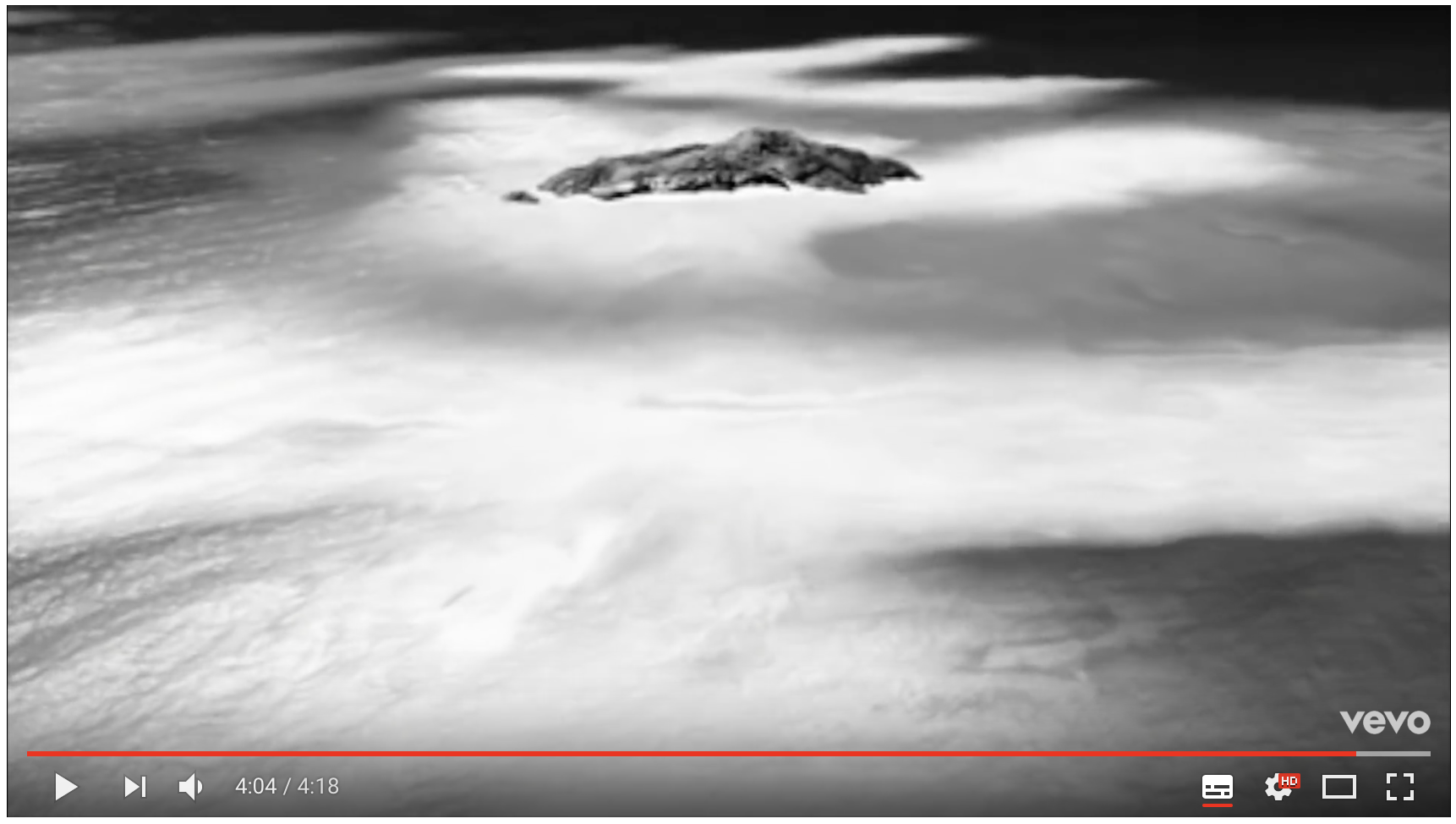
Lana’s last album was lauded as her happiest, transitioning ever from black to blue. But still there were songs about heroin, elegy, the lonely enigma of ‘13 Beaches’. And the closing song so proximate to ‘Creep’ is hardly unshackling. A song first heard on the pro-ana forum, ‘you float like a feather / in a beautiful world’—where delicacy persists distasteful. Precious chord progression matches the rarity, harmonises one of several sighs, the rainbows receding: ‘Their arches are illusions / solid at first glance / but then you try to touch them / there’s nothing to hold onto’. All that is solid, the luminous infrastructure of late capitalism, dissolves. ‘M’ for McDonald’s, drowned in a tidal reply, the yellow suffused in blue. The waves move over the rock again. From this angle, in monochrome, the rocks look like a hunk of meat, a severed heart lost at sea. When the waves calm to a whiteout, silken ocean, they become a selkie skin. A pile of kelp, a remnant piece of PVC, peripheral. All we leave behind in metamorphic identity.
A starlet mythology never settles. They are dressed like children, all ripped jeans and t-shirts. Enid Blyton’s evolving addiction, innocence loses quick on the brink. We know too much already of everything, it gloops like sambuca inside us. Nobody bothers to finish the mystery.
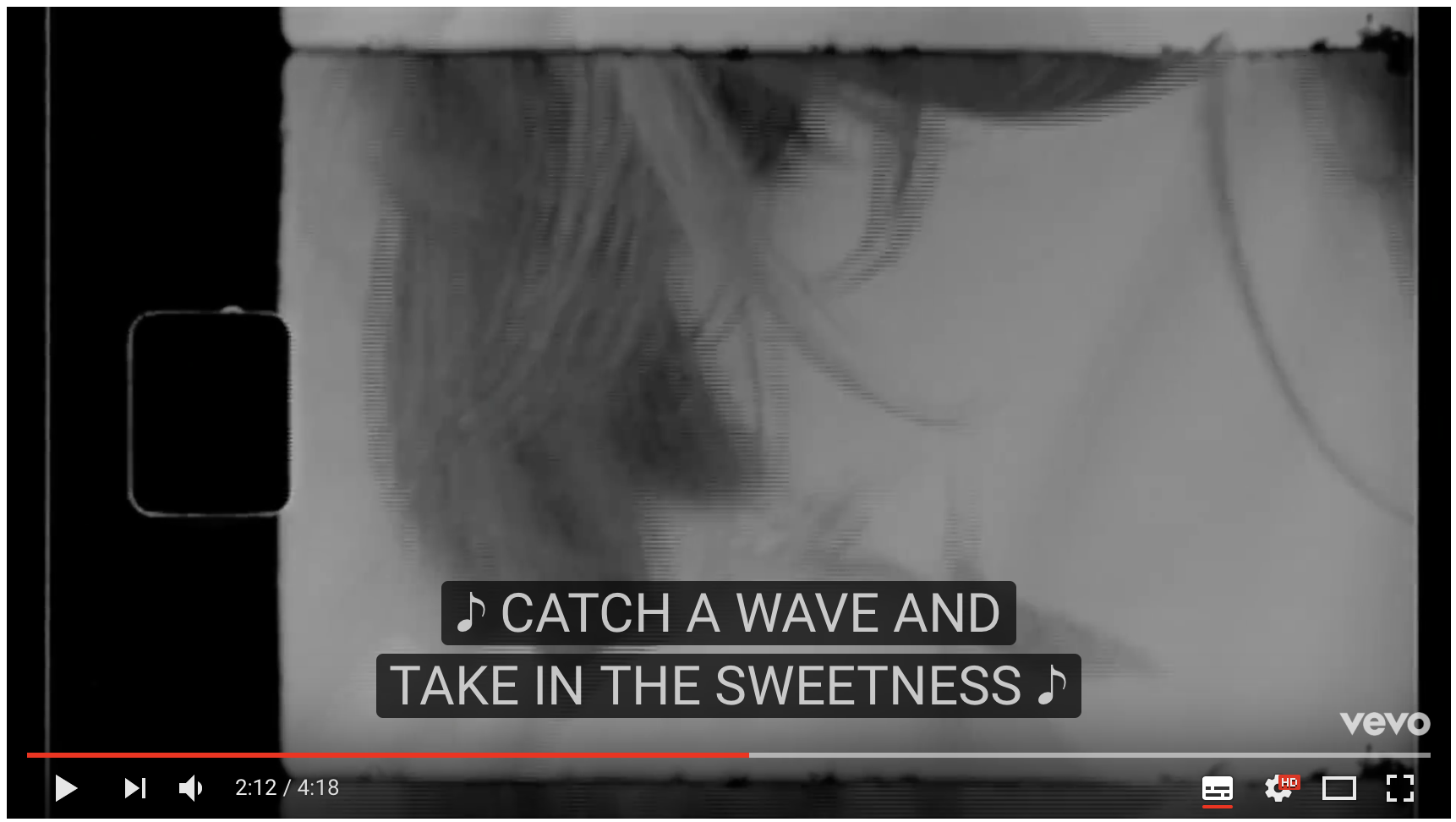
The ambiguous sweetness is oily, narcotic. It falls in fat drops like piano notes, takes our ‘sadness out of context’. My brother in the next room, obsesses in metallic trap beats. Why someone asks me, at ten in the morning of a Saturday, how important is spirituality to you? Waves of pleasure and reward; all over the coast, an opioid crisis. Lacing our dreams with extinction. I feel heavy, although I feel slightly—
They set up the room, my fellow millennials, polishing glassware carefully for the bourgeoisie, while I am in the office, counting other people’s money. We listen to Gillian Welch’s ‘Everything is Free’, completely out of sync with the skin of this weekend. Only some of us have touched a straight job. We wear out the concept, til it flakes like rain, softening every abrasive material.
Soulfully she sings, ‘I’m your man’. Urge for identity, bodily merging, no need for horizons: ‘Don’t look too far, right where you are, that’s where I am’. After spending her career chasing this man, longing for him in the blue-dark, a starry placeholder, looking down highways immune to an ending, LDR becomes the object of her desire. In lieu of cheap thrills, this shift is one of quiet empowerment. I think of the mobius identities of Mulholland Drive. A recognition of the textuality of thresholds; step into the membrane, make cool with the heat of your distance, colourless. Warmth in the icy, fire-churned wildness. The water looks like Pepsi Cola. And did she not once sing ‘My pussy tastes like Pepsi Cola’; and was this not womanly body cast consumer synecdoche, sparkling with chemicals, the cynical poetics of delicious? Diamonds for eyes will never break, except…
We start to think geologically now. Just be, just be. These faltering wedges of mass temporality. Earthquakes happen and so do we. Soft drinks whose flavour will never expire. Rocks that erode in derisive time zones, no longer immune from human acts or experience; species of moth that survive millennia. Butterflies and hurricanes; an ugly shred of progressive metal, scored in the multiplied spike that somebody else deemed gold, a scientist’s quibble. The woman in the bathroom, her shrunken organs; her failed heart lost to impenetrable histories, a ravaged desert of smoker’s complexion.
Here is the rock out at sea, an open direction. Here are the girls and their insects. A tiny wonder.
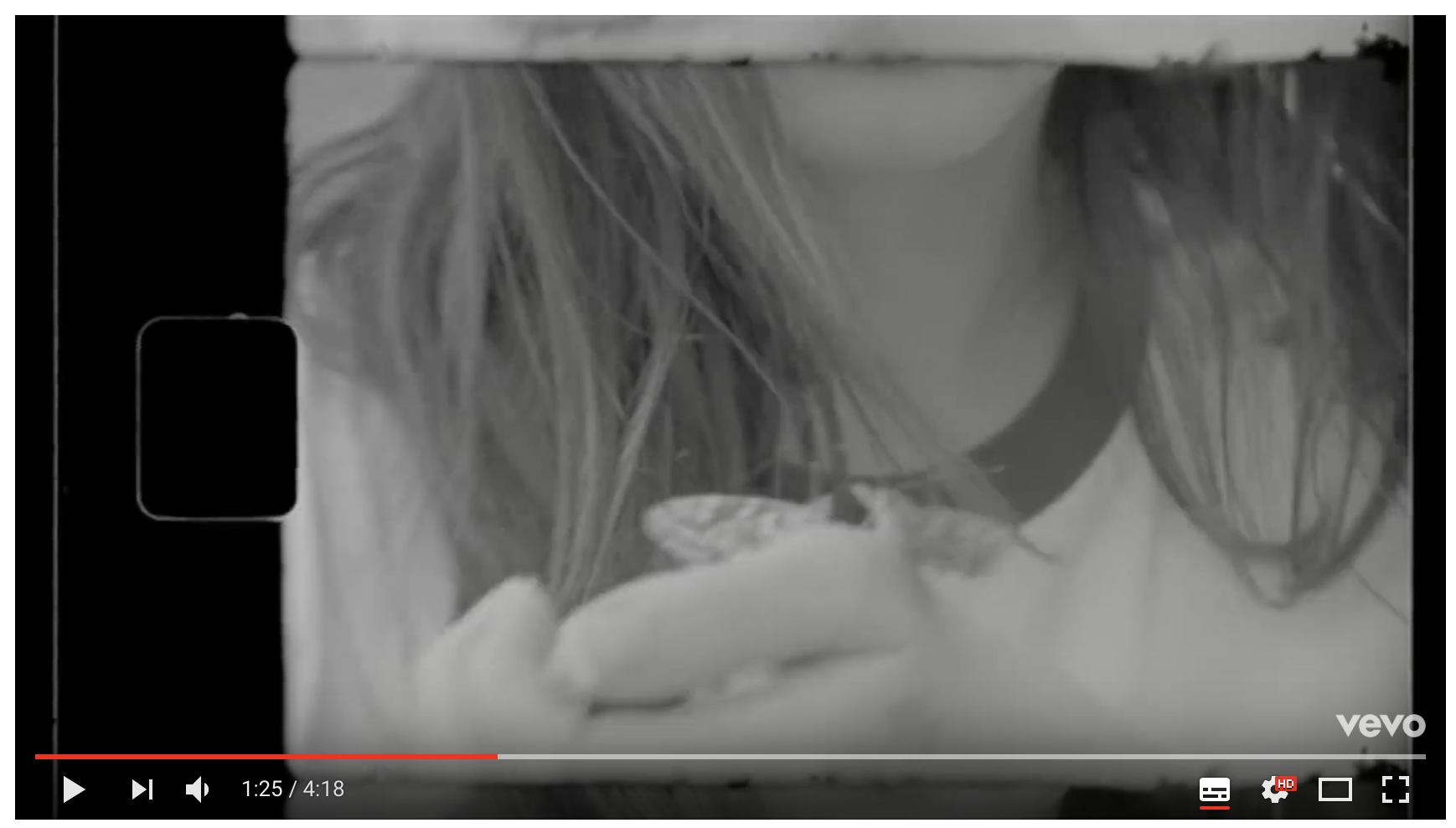
They play with the lepidoptera by the road; this is a petro-pastoral. Cars pass as LDR sings of her lover lost at sea. Fossils are the song’s ambient economy: the rocks beneath, the fuel in those vehicles. The black water, oily in sunlight, the sweetness.
The rainbow will ghost anything monochrome, oil on water. To kiss in the last light of summer is lucky. Give me your harbour.
Material ipseity swirls, ‘All the things that make me who I am’. Highway adjacency, human and natural history’s collision. A water-wave in unicode. Lana Del Rey in the Anthropocene. Her name is an ever-(re)invention; formerly known as, universal/personal. Lost adrift on the always already. Stuttering within smoothed out to a sweetness, make lyric glitter from shattered rocks and melting ice. Matter. Make it matter. The matter of mattering; be the man, as the man-made only, as merely threshold for desire’s discerning in the crest of everything’s vibrant liveliness. Thrashing waves, lost capital, penultimate travel. Dwell awhile slow in apartment complex, who we are as we are as sailors—lives lived here are intensely temporary, and isn’t that a matter of life on Earth, or life in movies?
Anthropocene evokes numberless chiasmic defence formations and programmable aesthetic relapses to come — easy to cash in with and easy to cash out. What is perhaps more difficult is to remember what it meant and bear it. Engineered as distraction or not, it remains stuck in the world gullet, a limit term, a virtual-war word, evoking an ultimate intersectionality whose historical tractor beam iconically continues to fail. What the hyper-anthropocene breaks open is the historicist principle that nothing matters so much that that thing is the only thing that matters. The hyper-anthropocene quakes this idea, and then falls in line.
🌊
*all stills taken from ‘Mariners Apartment Complex’, directed by Chuck Grant. Song written by Lana Del Rey and produced by Jack Antonoff.
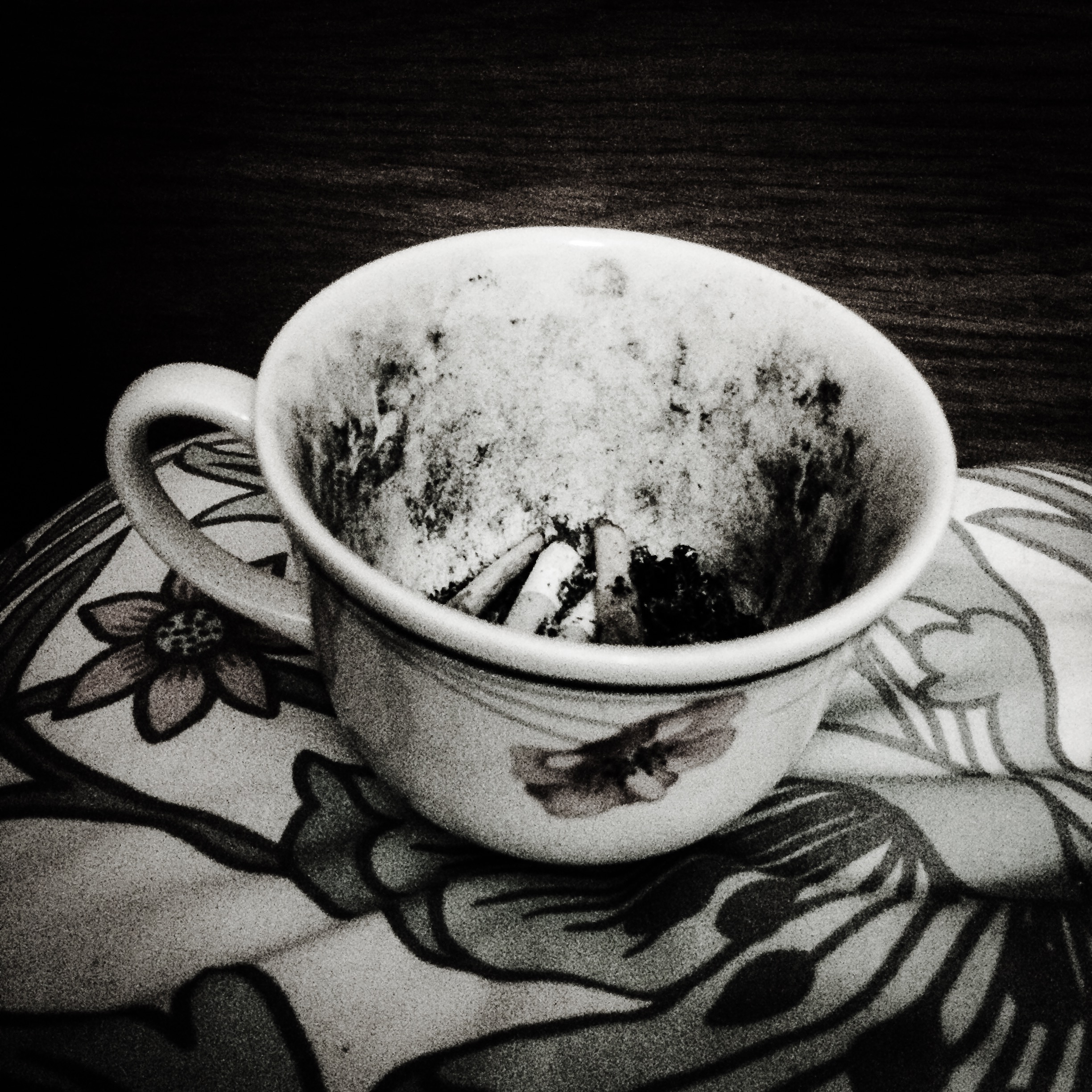
I’m walking home, stuck on a narrow pavement, hemmed in by parked cars. Two men are dawdling ahead of me, both of them huffing cigarettes. They’re dirty fags, definitely Marlboros, a stench that’ll take out your lungs like a morning bloom of toxic frost. I feel nauseous as the smoke blows back in my face and it’s a struggle to breathe; I’m striding fast to get ahead of them, not caring at this point whether it’s rude to push them aside. My heart-rate is up too much, the bodily reaction palpable.
I’m in a friend’s flat. It’s July and we’ve been awake all night and now it’s 4pm the following day, three of us watching videos, drinking rum with blackcurrant cordial in lieu of food. Somebody rolls every hour or so; two of us smoke out the window. It’s been raining for weeks but today the sky is blue and the daylight sparkling. A warm breeze comes through. I’m reminded of the night’s shimmery feeling, a glorious cocktail of chemicals and dropped sugar levels producing slow-release euphoria. The cigarettes are neatly rolled, thin and compact. They don’t take long to smoke, but the two of us—not being proper smokers—relish and linger the moment of supplementary respiration. They don’t taste of much at all, a very faint tobacco flavour that twirls down our throats, the thing we’ve been craving all night. We take turns to gaze at the street below, a couple of lush-leafed trees, passersby offering glimpses of the reality we’ve temporarily dropped out from. Everything has that vaguely pixellated feel of the virtual. Sideways glances at each other’s faces; at times like these you notice the colour of eyes, the shape of noses. We’re listening to dream pop, hip hop, lo-fi. We gossip to forget ourselves, spark grand discussions on topics ranging from astrology to engineering to ghosts. There’s a certain ambience we’ve made out of pure haze, a hilarity of mutual laughter meaning nothing in particular, resounding through abyssal chains of meaning. It’s one of the most blissful afternoons of my life. I go home, hours later, still tingling with nicotine. I lie on my sheets and let the scenes flicker by like beautiful lightning.
Like many people, my relationship to smoking is a little complicated. I’m a Gemini, my loathsome desire always cut into halves. I find myself disgusted by the dry sharp smell and residue taste, but somehow addicted to the presence of cigarettes in narrative, their signifying of time, their eking of transition between moments. It feels natural that such action should then manifest in real life: the disappearance outside after a talk or song or reading, buying yourself time to mull things over, return anew—snatch chance interactions with strangers. I know a friend who started smoking at university purely for the excuse to talk to girls outside nightclubs. I guess it worked well for him. The universal language of the tapped fag remaining a perpetual possibility, footsteps approaching the rosy garden of your smile and your smoke, your contemplative aura. Veils over nature. This is nothing but nothing; this is just the vapourisation of time and space. Smoke gets in your eyes and reality feels smoother. Less needs to be said; intrigue can be held. You add that plenitude of mystery in your walk, your dirty aroma of cyanide, carbon, tar and arsenic—an edge above the vaporous plumes of sweet-smelling e-cigs. With a fag in hand, there’s less impetus on you to talk. With a vape in hand, people want to know about your brand, juice, flavours.
A Smoker’s Playlist:
Mac DeMarco: Viceroy
The Doors: Soul Kitchen
Nick Drake: Been Smoking Too Long
Sharon Van Etten: A Crime
Simon & Garfunkel: America
Oasis: Cigarettes and Alcohol
Otis Redding: Cigarettes & Coffee
The White Stripes: Seven Nation Army
My Bloody Valentine: Cigarette In Your Bed
Tom Waits: Closing Time
Neil Young: Sugar Mountain
Smoking is an object-orientated approach to daily existence. A way of distilling the Bergsonian flow of time into its accumulative moments, paring apart the now from then in the spilling of ashes—slowing and building anticipation by the mere act of rolling. Appropriate that Bergson should use a rolling, snowballing metaphor for temporality. To roll a cigarette is to accumulate a fat tube of tobacco, to acquire something that smoulders, continues, then what? Flakes off as snow, delays. So you interrupt the flow, so you start again.
Denise Bonetti’s recent pamphlet, 20 Pack (2017), released via Sam Riviere’s If a Leaf Falls Press, explores the temporal and bodily effects of smoking. The title itself relates to a deck of cigarettes—twenty once being the glut of an addict’s indulgence, now the standard legal purchase—but of course you can’t help thinking of a deck of cards. Especially since the numbered poems are all out of order, starting with ‘20’, finishing at ‘1’; but by no means counting down in order in-between. I think of Pokemon cards, Tarot cards. We used to play at school and you’d always ask how many in your opponent’s deck, like “I’ve got a 20 deck, want a match?”. With Tarot, I don’t think we understood that only one person was supposed to have the cards in hand. We probably triggered some real bad luck, doing that. Bringing two realities, two predicted futures, into collision. Messing up the symbolic logic. I always flipped over the sun card, savouring the dry irony of Scottish weather and clinging to that vibrating possibility of future joy. We swapped velvet tablecloths for the scratchy asphalt of playgrounds. The older kids drifted on by the bike sheds, wielding cigarettes, watching us with scorn and suspicion.
Smoking has a lot of symbolic logic: ‘the faith in the liturgy the telling of a story / the pleasure of knowing what’s coming’. This is a whole poem from Bonetti’s collection: number ‘4’. A liturgy being a religious service but also a book. Cigarettes are made out of layered paper, scrolled possibility, something to become enslaved to. You just smoke your way through them, the way you might blaze through a novel, find yourself drifting on down a webpage. What thoughts roll round your mind in that moment, churning as soaked clothes in a launderette? You rinse them by the final intake, stubbing the line out and switching your mind like a refresh key. Take it off spin cycle and have a breather. Knowing what’s coming is that sweet anticipation, first cigarette of the morning, of the night or the shift. Remember what’s good for you. Physical relief disguised as imminent pleasure.
The poems of 20 Pack are quite wee poems, thin poems, poems with space inside them, milling and floating around the language. Punctuation is often erased to allow lingering where one pleases. These poems negotiate geometries of thought and situation, honing on imagistic visions which score upon memory: a seagull’s beak, swimming pool tiles, a gold leaf or ‘terrible sequin’, the sun and moon, ‘cyanic peas’. There’s the oscillations of desire, an almost mutual voyeurism that invites the reader within this intimacy, controlled as the cold celestials then warmed with a little wit. Each cigarette is tied to these ‘songs’, lamenting ‘the self- / replicating minutiae of days, / nights, encounters’; ‘An act of anachronism’. Every cigarette involves that mise-en-abyme of re-inhabiting each moment you once smoked in before, a concatenation of places and tastes starting to merge together with the first inhale. This is the seductive literariness of cigarettes. As Will Self characterises it, ‘it’s the way a smoking habit is constituted by innumerable such little incidents — or “scenes” — strung together along a lifeline, that makes the whole schmozzle so irresistible to the novelist’. Maybe also the poet. Easy to make necklacing narratives from the desire points instated by the gleam of a lit cig on a cool summer’s night. The worried observer or reader, clicking the beads together, watching with interest for events to slide into effect. The imminent possibility inherent within the duration of a smoke: what happens next? The loose stitches of a poem you pull apart for a better look, a glimpse of the future. Is all poetry a signal from tomorrow, that fragment of what comes next in the rolling tapestry of the present?
Simultaneous acts:
A tobacco impression between two movies,
Fingertips brushed in the exchange of a lighter,
Expendable tips,
The thick lisp of silver foil,
Dark cigar husk of Leonard Cohen’s voice,
Where we hid from the rain, making miniature glows.
In Ben Lerner’s 10:04 (2014), a novel set in New York, poised on the brink of various recent storms, streetlights provide a sort of talismanic portal into other dimensions. The text’s obsession with Back to the Future plays out the film’s time-travelling logic of multiple temporalities colliding, but it is light that figures this as fiction’s possibility. Embedded within 10:04 is a short story titled ‘The Golden Vanity’, in which the protagonist is struggling to write a novel, an echo of the narrative arc of Ben Lerner’s text. The protagonist pictures his protagonist standing at the same ‘gaslight’ beside which he stands in Ben’s (10:04’s narrator) fiction: ‘he imagined […] that the gaslight cut across worlds and not just years, that the author and the narrator, while they couldn’t face each other, could intuit each other’s presence by facing the same light’. The vicarious union of all these writerly characters, standing at the same gas lamp in different points of real and fictional time, enacts this sense of immanence contained in (re)iteration. The lamp embodies this externalised marker of being—resembling the narrative I that cuts across the novel’s page.
We might think of Virginia Woolf in A Room of One’s Own, describing the appearance of a shadow, a ‘straight dark bar, a shadow shaped something like the letter “I”’. It’s difficult not to think of the extra implications here: a straight dark bar is surely more than just a crudely drawn line on a page? Maybe also a heteronormative public space in which strangers meet under gloomy mood-lights, exchanging phone numbers and slurring words? There’s the association between the male voice and the act of smoking. How many times have you seen a male writer smoking onscreen, or in a novel? Is smoking an act of masculine dominance or, as Bonetti seems to suggest, a more fluid ‘act of negotiation’? Woolf writes: ‘One began dodging this way and that to catch a glimpse of the landscape behind it [the “I”]’. Like the emanating smoke of a cigarette, the literary I dominates context and setting with its insistent perspective, its rationalised display of determined personality. How can we see the fading moors, the elaborate trees, behind the I’s lament? What is it that recedes beyond the smoky planes of our everyday rhizomes, stories trailing over one another with a certain lust for narrative, precision, suspension—self-perpetuating molecules of thought? In poem no. ‘8’, Bonetti relays a ‘text from max: “i can’t stop picturing my first fag break splitting into a chain of identical fag breaks, each reiteration carrying a fainter trace of the initial reason”’. The pleasure of focus dwindles like a tiny dying seed, until all that’s left is this black, Saturnal kernel, reflecting outwards the rings of former moments.
Things people have spoken to me about in smoking situations:
Family problems,
Sex and relationships,
Hunger,
Literature,
Politics,
Parties,
Mental illness,
Makeup,
The ethics of cheating,
Shared memories with deeper resonance beyond initial palpability.
Like some subtle, truth-telling elixir, cigarettes invite a space for confession. As Self argues, cigarettes are great for novelists. Not just because of their magic ability to garner stories from others, but because of their Proustian resonance. Gregor Hens, in his beautiful memoir essay Nicotine, describes the focus of smoking thus:
The chemical impulse initiates a phase of raised consciousness that makes way for a period of exhausted contentment. Immediately after the first drags an almost unshakable focus on what’s essential, on what’s cohesive and relatable sets in. I often have the impression that I can easily link together mental reactions to my environment that serendipitously arise from one and the same place in the cortical tissue during this phase. This results in associative and synaesthetic effects that help me to remember, along with the dreamlike logic that is the basis of my creativity.
The ebb and flow of a cigarette’s biochemical culmination prompts a certain rhythm of consciousness conducive to the rise and fall of creative impulse. Little flash-points of mental connection are made with each spark of a lighter; while joining the serotonin dots the nicotine rush soothes us into a mental state of dwelling, which allows those perceptions and expressions to take shape from the swirls of smoke. Consciousness lingers thirstily in the moment.
With an existentialist’s recalcitrant cool, Morvern Callar inhabits her eponymous novel by Alan Warner by describing the scenery around her, narrating her actions rather than inner feelings. Frequently she ‘use[s] the goldish lighter on a Silk Cut’—the phrase is repeated with little variation at least 30 times across the text. It’s a touchpoint of continuity in her turbulent world of suicide, secrets, solitude vs. claustrophobic community and most importantly the whirling raves of the 1990s in which you shed your identity. The rave scene itself ‘is just evolving on to the next thing like a disease that adapts’, as one of the ‘twitchy boys’ on her Spanish resort relates. Cigarettes are perhaps the little quotidian landmarks, the tasteful eccentricities that lend temporal solidity in a late-modern universe that warps and sprawls like some viral code, recalling the human ability to transmogrify base materials. Turn manufactured product to curls of paper, smouldering ash. Cruelly ironic, then, that they cause cancer—the terrible cells that twist, coagulate, balloon and elude.
Every cigarette recalls a former cigarette, the way you might look into the eyes of a lover and see the ghosts of all those who came before. That uncanny glimpse of deja vu that is human desire, the algorithmic infinitude of selfhood. Cue Laura Marling ‘Ghosts’ and sit weeping youthfully into your wine, or else think of it this way, as William Letford writes in his collection Dirt: ‘If you’re lucky you’ll find someone whose skin / is a canvas for the story of your life. / Write well. Take care of the heartbeat behind it’. You might never find a single soul whose skin provides the parchment for your ongoing sagas. Maybe you will. Maybe they smoke cigarettes and so you try to tell them to stop, thinking of their poor organs, struggling within that smoke-withered body. Maybe you’re single and lonely, writing as supplement for the love that’s trapped in your own ribcage like so much bright smoke waiting to be exhaled. There are many mouths you try out first. Poems to be extinguished in a crust of dust and lost extensions. Maybe you don’t think of it at all.
On average, romantic encounters triggered by a shared cigarette:
3/5
+ one arm wrestle,
a distant sunrise,
a song by Aphex Twin,
a bottle of gin,
a fag stubbed out drunk on the wrist.
We tend to think of cigarettes according to the logic of ‘first times’. Again that elusive search for origins, innocence. I remember doing a creative writing exercise long ago where we had to write, in pairs, each other’s first times. Others tackled drunkenness, kisses, flying, swimming. For whatever reason, the two of us (both nonsmokers) chose smoking. My partner recalled being at a festival, aged sixteen, being passed a rollup by her older sister. She remembered the smell of incense, coloured lights, the little choke in the crowd that signalled her broken smoker’s virginity. I slipped back into the dreary vistas of Ayr beachfront, sheltering from the sea wind with a couple of friends. This tall girl I looked up to in ways beyond the physical realm passed me what was probably a Lambert & Butler and I remembered being so pleased that I didn’t cough, but probably because I swallowed the smoke greedily and didn’t know how to inhale properly.
It took me a while to learn how to breathe altogether; when I was born I almost died. The first smoke feels like an initiation into identity and adulthood. It was like coming home from somewhere you never knew you were before. That little spark, a doorbell deep in the lungs. You purposefully harm yourself to establish a cause, a chain reaction. Realising the strange, acidic feeling flourishing in his stomach after smoking his first fag as a child, Hens suggests that ‘in this moment I perceived myself for the first time and that the inversion of perspective, this first stepping out from myself, shook me up and fascinated me at the same time’. It’s hard not to think of the bulimic’s first binge and purge, the instating of shame and pleasure whose release enacts this sweet dark part of the self, an identity at once secreted and secret. Feeling the little spluttering sparks or tingles within you, you realise there’s a thing in there to be nurtured or destroyed. As the bulimic’s purge renders gustatory consumption material, a thing beyond usual routine or forgotten habit of fuelling, the smoker daily encounters time in physical context, the actuality of habit, transition. From the perspective of his spliff-huffing protagonist in Leaving the Atocha Station (2011), Lerner puts it so eloquently:
the cigarette or spliff was an indispensable technology, a substitute for speech in social situations, a way to occupy the mouth and hands when alone, a deep breathing technique that rendered exhalation material, a way to measure and/or pass the time. […] The hardest part of quitting would be the loss of narrative function […] there would be no possible link between scenes, no way to circulate information or close distance […].
The cigarette is Jacques Derrida’s Rousseau-derived dangerous supplement, the elliptical essence of what is left absent but also implied. The three dots (…) or flakes of ash left on the skin from another’s cigarette. Are we adding to enrich or as extra—a thing from within or outside? Derrida describes the supplement as ‘maddening, because it is neither presence or absence’; ‘its place is assigned in the structure by the mark of an emptiness’. We find ourselves entangled; we smoke because we want to write, move, kiss, drink or eat but somehow in the moment can’t. Yet somehow those actions are imbued within the cigarette itself, the absent possibility making presence of that motion, the longest drag and the wistful exhale. Consciousness solidifies as embers and smoke: becomes thing; fully melds into the body even while remaining narratively somehow apart. The supplementary cigarette instates that split: even as smoking itself attempts a yielding, there is always a temporal logic of desirous cleaving. This is its process of transforming…the literal becomes figural—a frail, expendable ‘link between scenes’—the smoker dwindles in memory, stares into distance through a veil that is always there, then faintly dissipating…
The idea of melding with the body, melding bodies (O the erotics of skin-stuck ash), is compelling for smokers because there’s a sense that the cigarette becomes more than mere chemical extension. Like Derrida’s pharmakon, it’s both poison and cure: a release from the pain of nicotine deprivation, but also the poison that reinstates that dependence cycle within the blood. When smoking, you slip between worlds of the self, oscillate between freedom and need. All the old cigarette ads liked to tout smokers as self-ruling souls, lone wolves, Marlboro men who could conquer the world in the coolest solitude. The truth being really a crushing weakness: have you seen a smoker deprived of their vice? Tears and shivers abound, as if the body were really coming apart, the spirit melting. The cigarette becomes synecdochic mark for the smoker’s whole self. Think of Pulp’s ‘Anorexic Beauty’: ‘The girl / of my / nightmares / Brittle fingers / and thin cigarettes / so hard to tell apart’. Fingers and fags merge into one, when all that’s indulged is the un-substance of smoke.
I have certain friends who I could not imagine without their constant supply of paraphernalia; every interaction involves the punctuating rhythms of their trips outside, or desperate searches for lighters, filters, skins. I have seen them smoking far more times than I’ve seen them eating. The very nouns connote that sort of fleshly translucency; it’s a sense that these flakey tools really do mediate our experience of time, space and reality. There’s a horror in that, as well as a remarkable beauty. I have had many epiphanies, watching my friends smoke, the way they stylishly cross their knees or flip their hair out the way or cup their hands just so to protect that first and precious spark. There’s a sort of longing for that ease, that slinkiness; an ersatz naturalness of gesture which is itself a reiteration of every gesture that came before, the muscle memory of a million screenaging smokers always seeking that Marlon Brando original. The protagonist of Tom McCarthy’s Remainder (2005), lusting after the way Robert De Niro so effortlessly sparks up a fag, as if each motion was the freshest, the purest expression. Authentic. The compulsive abyss of the Droste effect in advertising, mentioned by the young Sally Draper in mid-century advertising drama Mad Men: ‘When I think about forever I get upset. Like the Land O’Lakes butter has that Indian girl, sitting holding a box, and it has a picture of her on it, holding a box, with a picture of her holding a box. Have you ever noticed that?’. To smoke is to wallow in that loop-work of fractals, feeling each replicated gesture slip past in the artful skeins of the next.
10:04’s protagonist, Ben, observes his lover Alena smoking a post-coital cigarette: ‘“Oh come on,” I said, referring to her cumulative, impossible cool, and she snorted a little when she laughed, then coughed smoke, becoming real’. There’s an uncanny sense of removal in that: the notion that in playing character, channeling gesture, Alena becomes real. Observing her smoke, Ben is able to achieve a more sensitive awareness of his material surroundings, his attuning to nonhuman objects. He also feels as though the smoking transmits a particle effect that draws his and Alena’s being closer together, as if those tiny motes of poison were causing a mingling of auras, a certain transcendental longing nonetheless grounded in the physical: ‘We chatted for the length of her cigarette […] most of my consciousness still overwhelmed by her physical proximity, every atom belonging to her as well belonged to me, all senses fused into a general supersensitivity, crushed glass sparkling in the asphalt below’. The little chimes of assonance betray that sense of mutual infusion, which can only ever be fictive possibility, the poetic conjuring of words themselves. Later, after feeling the disappointment of Alena’s ‘detachment’ towards him, Ben sends her a fragmentary, contextless text: ‘“The little shower of embers”’. While he regrets sending it, it speaks of our human need to talk desire in material metaphor, often enacting the trailing effects of synecdoche. Here is my (s)ext.: my breasts, my cunt, my limbs. Extensions or reifications, lost signals or elliptical read receipts betraying aporia…We offer a glimpse then withdraw our being. What remains is that transitory passion he cannot let go of, while she so easily finds it extinguished in the sweep of her day.
For Ben, ‘the little shower of embers’ lingers. It’s difficult not to think of the street-lights again, the punctuating markers of spatial trajectory across the grid of the city, twinkling in millioning appearance on 10:04’s book cover. I’m reminded of the street-light ‘Star Posts’ in early Sonic the Hedgehog games (we used to call them lollipops—appropriately enough, another supplement for oral fixation) which you had to leap through to save your place, so that if you lost a life you’d revert back to that position in the level. They’d make a satisfying twanging sorta noise when you crossed them, and sometimes if you had enough rings the Star Posts could open a portal into the ‘Special Stage’. Even the virtual contains its checkpoints of place, the long thin symbols of presence not unlike those Silk Cuts, the I, the anorexic fingers. A sense of these moments that flicker, the length of the cigarette marked as physical duration and spatial decay. A Deleuzian fold or cleave in time. In the new Twin Peaks, Diane is an entity stretched across dimensions. No surprise that she smokes like a chimney, and every time someone tells her to stop she yells fuck you! The implication is a laceration, quite literal. There’s a violence to that delicious rip, the cellophane pulled off the packet. Then there’s episode 8, where the universal smoker’s code—Gotta light?—acquires the bone-splitting currency of horror in the crackling mouth of the Woodsman.
Associative moments lost in time:
She gave up drinking and started smoking on the long flat dirty beaches;
People who burned bright & were extinguished young;
A neighbour whose house smelt so badly of stale fags we used to play in the garden instead;
His fingers shivering like leaves;
The reciprocity of this loose tobacco;
Taste of aniseed skins from Amsterdam, watching the film version of Remainder;
Broody Knausgaard in The Paris Review, admitting his continual addictions;
Smoking on the steps of my old flat saying everything will be okay—but what?
To smoke is perhaps to enact a kind of haunting, owing to the ghostly flavour of the former self performing the same action over. A poststructuralist elliptical supplement or sincere act of nostalgia. Masculine desire for luminous females, or the complicated politics of vice versa. A strange deja vu which mingles identity’s presence with absence. The fictive act of smoke and mirrors. In Safe Mode (2017), Sam Riviere’s ambient novel, the recurring character James recalls a phantom encounter, shrouded in imagined memory:
One summer at a garden party I danced with a girl in a green dress. I remembered her from high school, and built afterwards in my mind a certain mythology around the events of the evening…I discovered the next day that she had died a few months earlier. It seems I had been dancing with her sister. Almost any encounter can alter its configuration through the addition of detail or, more traditionally, a death.
In Safe Mode, problems may be troubleshooted as the brain or hard-drive enters a twilight zone of reduced consciousness, minimised process. The addition of detail: supplemented ornaments of thought, the drapery of memory or retrospective chain of events. What shatters through desire is the gape of that absence. A similar thing happens in 10:04, as Ben recalls his younger self falling in love with a girl he erroneously took to be his friends’ daughter: ‘She became a present absence, the phantom I measured the actual against while taking bong hits with my roommate; I thought I saw her in passing cars, disappearing around corners, walking down a jetway at the airport’. Always at the corner of his vision, she becomes an elliptical presence, diminished to the dotdotdot of memory attempting to make the leap. I think of binary code, the stabbed insistence of typewriter keys. In actuality, nobody else remembers who she is. Objects in the mirror are closer than they appear. What essence lies beyond or within that phantom appearance? What real need is channelled in the flimsy aesthetics of a lit cigarette, a girl in a memorable dress? We fashion narratives to make reality…what is this deep mode of operation; in what state of mind may we dispel rogue software, the signifying virus of niggling, unwitting desires? What jade-coloured jealousy of movement spins like an inception pin, stirring its quiet tornado of dreamy amnesia? How do we pick up our lost selves without cigarettes, what Self calls the usual rebirth of the ‘fag-wielding phoenix’?.
The mysterious ennui of Francoise Sagan’s chain-smoking heroines will always haunt me. Don Draper in the inaugural episode of Mad Men, ‘Smoke Gets in Your Eyes’, lingering over a Lucky Strike, will haunt me. Those moments of waiting for soulmates to finish cigarettes outside pubs will haunt me. Sitting by the sea on a picnic bench watching a friend smoke, talking of boys, will haunt me. The man who kept bugging us outside the 78 about ~The Truth~ will haunt me, even when I gave out a light to shut him up and tried to quote Keats—‘Beauty is truth, truth beauty’—losing his features to the veil of smoke as I myself drowned in chiasmus. Every teenage menthol enjoyed in clandestine fashion, on long walks up the Maybole crossroads, will haunt me. My clumsy inability to roll will haunt me. The cigarettes of stolen time behind the gym block at school will haunt me. The erotic proximity of those curled-up flakes, the crystal possibility of an ashtray haunts me. Frank O’Hara’s cheeky smoker’s insouciance haunts me. The way you stroll into newsagents and sheepishly ask for the cheapest fags will haunt me. Those dioramas of gore on each new packet will haunt me. The foggy spirals of facts and platitudes, health warnings and reassurances haunt me. The way you light up to kill time will haunt me. The dirty, morning-after coat of the tongue still haunts me. My own slow longing for breath will haunt me, I’m sure, in some other dimension where I start smoking and finally find the special addiction. For now, I choke behind strangers, stowing old packs in neglected handbags, writing as supplement for the first delicious drunken fag. Without that fixed, poetic, smouldering duration—Bonetti’s ‘comma between phrases’—I’m meandering through sentences, essaying in mist, waiting as ever for the next scene to begin.

We decided to meet in a bar, one where old men gathered for their daily brew and crepuscular women exchanged knitted secrets in the shadowy corners, around time-gnarled tables. I knew you instantly: the Celtic heritage of your red hair, unkempt even now; the cream-coloured Aran sweater, too warm for this time of year—though you were thinner perhaps and therefore colder. Half-way across the bar I could smell your cigarette smoke. I could feel the way it was before, in your fingers, stale and yellowing, chemical; the ash splintered deep beneath your nails, the black clot in your lungs which throbbed as you coughed. I remembered it, the way you would sit up in bed in the middle of the night as if struck by lightning, the thrust of it right up your spinal cord. I would bring you glasses of water; I would stroke your arm as if my fingers were falling leaves.
A pint of Guinness sat in front of you, barely sipped. You were reading a book, wearing glasses. I had never seen you wearing glasses. What was the book? I try to recall it. Frank O’Hara, perhaps, a handful of scattered street poems; maybe something by Whitman. You always had a thing for the Americans. It was part of your mythology, the dream of the road, the need to leave the homelands. You hated this city, but still you were here. You had returned.
I pulled up a barstool and for a moment you didn’t even notice me; didn’t blink once from your reading. I grabbed the glass and swilled some Guinness down me, the froth of it coating my lips. It came back to me, old friend: that black, hoppy, toffeeish stout. There were all those nights: the sticky surfaces of bars, voices that rung cacophonies, inane words snatched from strangers. Outside, the brisk March wind that billowed my hair in your face as you smoked and smoked. I tried to deny the way I loved your smoke. I could’ve sucked it in all day, like you were giving me wisps of your soul. Sometimes, when I pass a smoker in the street, I have to cross the road—the tarriness smarts my eyes.
I suppose I was hyperaware of everyone around us. What would they think? Would it seem strange now, to see this thinness of a figure stealing their way to a table and taking a man’s drink? Would they notice at all? We were always conspicuous: it was the black lines drawn thick beneath your eyes, the fox-coloured shock of your hair; my silence, my obvious adoration. The swirling limbs and all the dancing, the clubs we were thrown out of for being violent. You wouldn’t see it now. If someone took a picture of us, we would be two strangers in a bar. They’d have to pick out the way I turned towards you, hoping for your notice. The drink would seem my own, anonymous. How could they know of our entwinement on any number of sofas, the graffiti of our names we sketched on the tables of trains, the countless coffees and cokes and sticks of gum shared as if mouth-to-mouth in our indivisibility?
I watched your eyes follow left to right along the page, so engrossed; as if looking for treasure beneath the lines, behind the lines, at the end of the line, the final line. Maybe you were waiting to finish a chapter. I longed for you to acknowledge me, to make my interruption.
How could they know, the way we would meet every day, in bars like this, and our spirits were the same? The spirits we drank and sank and raised? How could they know?
Just then, you folded the corner of your page. You reached over the table and clasped my hand, the one that still touched the Guinness. I saw your lips raise a smile, the eyes the same, sea-green aglow.
You said: “Hello.”
 mariaology