A Given Thing

and love doesn’t need to destroy you any more (Weyes Blood, ‘A Given Thing‘)

Our love – ‘For there to be a gift, there must be no reciprocity’ (Derrida, Given Time). To keep loving is the gift, smoke emitted from wormholes, arterial flow of words in their fuck supplement. Had I experienced the kind of crush economy that results in debt and ruinous loves that smudged off years of existence, I would be that smoke. When I realise so much what that love was, given to me, not even to have been noticed, that is the gift. Derrida states of the gift: it is ‘Not impossible but the impossible […] It announces itself, gives itself to be thought as the impossible’. When you are still in love with the love (afterglow) you remain in that trembling verb, having the state, quality, identity, nature, role etc of one in love, given the fact of your waking each day in dream to get worser and worser. I declare this a gift: love bleeds out of me. We were conducting lightning not making love.

sometimes we confuse the dream for one another
we’re just screaming to be closer to infinity
to love everlasting (Weyes Blood, ‘A Given Thing’)

The gift starts and never ends in time: ‘Not only does it make simultaneous what is irreconcilable—gift and exchange—but it occurs only within and according to the form of a preexisting gift: the gift of time itself. […] We are situated within time, we receive time’ (Marcel Hénaff).

That we end is only that our gift is impossible.

Our love is chronic, cupidity, personified time. Our kisses encourage temporal knowledges.

Recall the wormhole scene in Donnie Darko, which is not a wormhole so much as a ‘Liquid Spear Waltz’, theatrical cut of television, the family and the liquid come out of our chests and bellies. I love myself loving this movie. Would it not take you through to the place of conception into the wardrobe of the thought you’d never been here at all, not once, they hadn’t borne you into things, and the smoke that passes over you is not god, but an airplane. Can determinism accept the gift? If I was destined to give it until I am given time in return. Time is all you take from me. You’re spending too much time. I’m all out of time. That is not death but jet lag. Nausea and healing.

‘She can no longer take her time. She has none left, and yet she gives it’ (Derrida, Given Time).

Kiss / episteme / chronos.

Our love is impossible.

We’re all out of time. An earth signature.

We are no longer making it. When the water comes of chorus, the same thing again.

It was that we could never be solid in the first place. Before. We were liquid people poured into the vessel our love would otherwise vapourise, like a couplet. The gift is when you forget. I don’t know why I gave you this in the first place. Love’s amnesia forgets what you were before each other. Loving many people is our ruin. We’re not being love we’re forgetting to live. Literally it lives, this giving to forget we gave each other, and you and yours and our love forgotten is a hole on the other side of the world. It never was a heart-shaped wound in the sky. It was love. It would have been the same if never we made it.

Love satiates itself in the giving over of the word, more language, semantic ever-after: it is perfect when I forget that I love you.

The time leftover of perfect echoes.

The tiny glass statuette of a boy you are polishing.

Chamber music.

 ❥

Reading

Derrida, Jacques, Given Time: 1. Counterfeit Money, trans. by Peggy Kamuf (Chicago: The University of Chicago Press).

Hénaff, Marcel, 2019. ‘Derrida: The Gift, The Impossible, and the Exclusion of Reciprocity’, The Philosophers’ Gift: Reexamining Reciprocity (New York: Fordham), pp. 11-29.

Weyes Blood, 2022. And in the Darkness, Hearts Aglow (Sub Pop)
“It’s true, I am a tiredness that lives outside its labour.”

She was in the employment of pulling loose threads from the garments of bourgeois timewasters. This was indeed total dream territory of the utmost, beyond even mastery challenging the idea that you would have time at all. 

One day, the feeling in her stomach was ready for business. What would she regurgitate of her labour. The comatose hour belonged to sleeping bosses who returned their bodies to the pond. She had the whole shopfloor to herself. What did she vomit? A threadball as big as the Ritz diamond in Fitzgerald. Everything said in the service of clout vacuity was held in that clump of acid filament. 

I knew that Hunger Day was created when I became an adult

I knew that Hunger Day was created when I became an adult

It awoke blessed with need and unkind feeling. The trembles of the unmentionable, now and as ever. It needed time to replenish the hormone stock of its happiness. Like the rest of us. It needed so much more than stock and horror. It needed video — swithering — it needed Latinate prose, free indirect fries and vinegar. O so much fucking vinegar. It was tabs, log-in distress, the altitude of edible starlight. 

It knew goodness so much as a child knows the day is structured around hunger. When I was growing up, it was easy. It was so easy. I would plunder the stress realm so much to get what it wanted. You are in want of the possession of character, said a soap-lathered mouth. It cried. It died. It died again. It died in the succulent wormhole of nothing in particular. 

It did what

makes a good leader: motive, openness and the emotional intel having bloomed droll talent on the vintage catalyst. It did unto them what dread blossomed corpseflower altruism ugh no. It deepened. I did so much for it. One of daddy’s ego tantrums was colloquial botany. Sold out the id. It did. 

Sleekit

Calling all ye poetry scamps: join us for the launch of a new Tapsalteerie anthology on Burns Night (25th January).

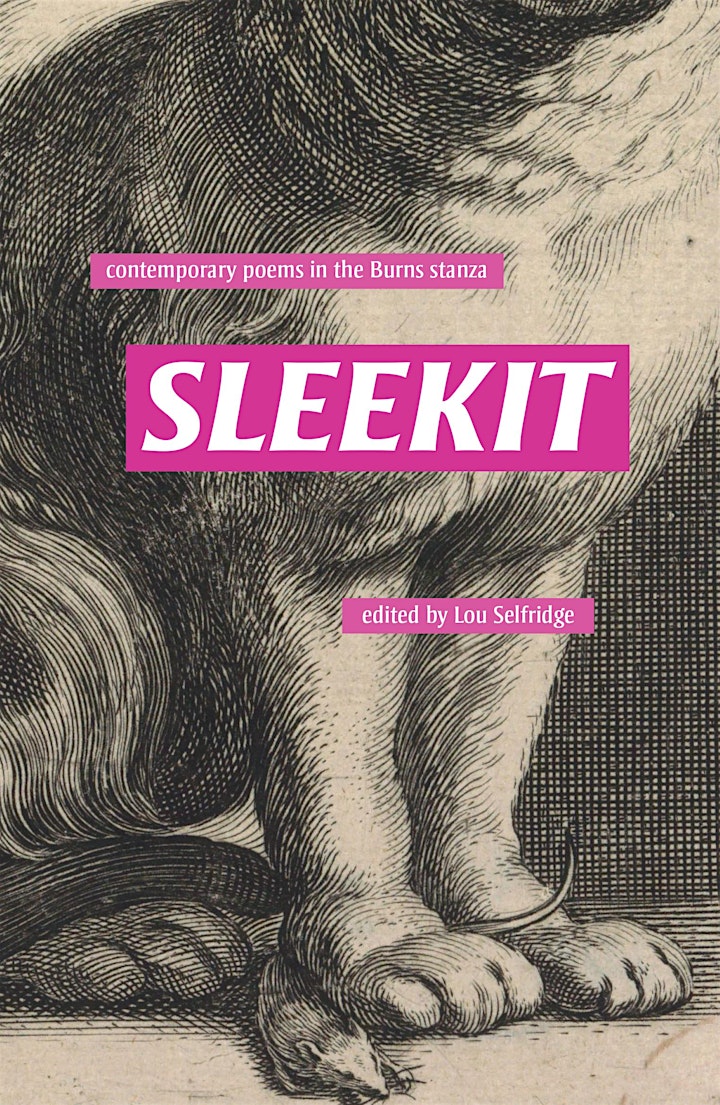
Sleekit: Contemporary poems in the Burns stanza

Sleekit: Contemporary poems in the Burns stanza, edited by Lou Selfridge, collects recent poetry in the form by some of the most exciting poets writing in Scotland today. Here are poems which conform to the structure of the Burns stanza alongside poems which seek to stretch and twist it; poems in Scots, English, and JavaScript; poems on topics as diverse as buffalypso, sex toys, and Robert Burns himself. The work in Sleekit shows the vital role the Burns stanza plays in contemporary Scottish poetry.

Joining us to read we have  Stephen Dornan, Roshni Gallagher, Josie Giles, David Kinloch, Simon Lamb, Iain Morrison, Jeda Pearl, Calum Rodger, Maria Sledmere, Gill Shaw, Stewart Sanderson & Kate Tough, with an introduction from Sleekit editor Lou Selfridge too!

Thirteen Morisettes

One of the exciting things about running a small press publisher is discovering new forms of poetry at the same time as totally falling in love with them. Like finding a long, lustrous hair at the end of the pencil and falling in love with it so much to spiralise your day around its protein. Like hearing a song on the radio first thing in the morning brain. What I mean to say is, poets are shedding all the time and sometimes you really want to be there, hospitably, in the moment of language leaving itself beautifully there.

Growing, shedding.

On 31st January, SPAM are releasing Thirteen Morisettes, a transatlantic communion between Courtney Bush and Jack Underwood, a 60-page book of lyrics and epistles which centre around the poets’ love of Alanis Morisette. Our eponymous chanteuse haunts the lyrical plazas of Woolwich Market, university corridors and Starbucks. It’s great to have a collaboration which feels like a true collaboration: the interweaving of voices, in-jokes, playful telepathy.

The Morisette itself is a new form developed by Jack and Courtney. The authors define it as:

The primary constraint of the Morisette is that its lines are formed out of the deliberate mis-transcribing of Alanis Morisette lyrics. The Morisette is (usually) comprised of two mis-transcribed verses, followed by a mis-transcribed chorus to end the poem.

The epistolary, then, is not just a mode of transmission but of listening. At the light speed of however many G’s we wish to bestow upon the airwaves, Jack and Courtney have made an ambience of their poetic communiqué and like the desire for better worlds we sublimate in the village of our most familiar coffee chains, typing away into elsewhere, they form a sort of pop-chorus-corridor across the Atlantic. I fucking love it. I hope you will too.

The book is available to preorder for £8 now.

SPAM TOUR:

Courtney and Jack will be reading on the following dates:

6th February – Instagram Live (@spamzine)

13th February – Glasgow (venue tbc)

15th February – Peckham Pelican, London (along with Eve Esfandiari-Denney, Karólína Rós Ólafsdóttir, Jack Young

16th February – Bookhaus, Bristol (Courtney only – along with Jack Young, me and Karólína Rós Ólafsdóttir)

New book: Cinders

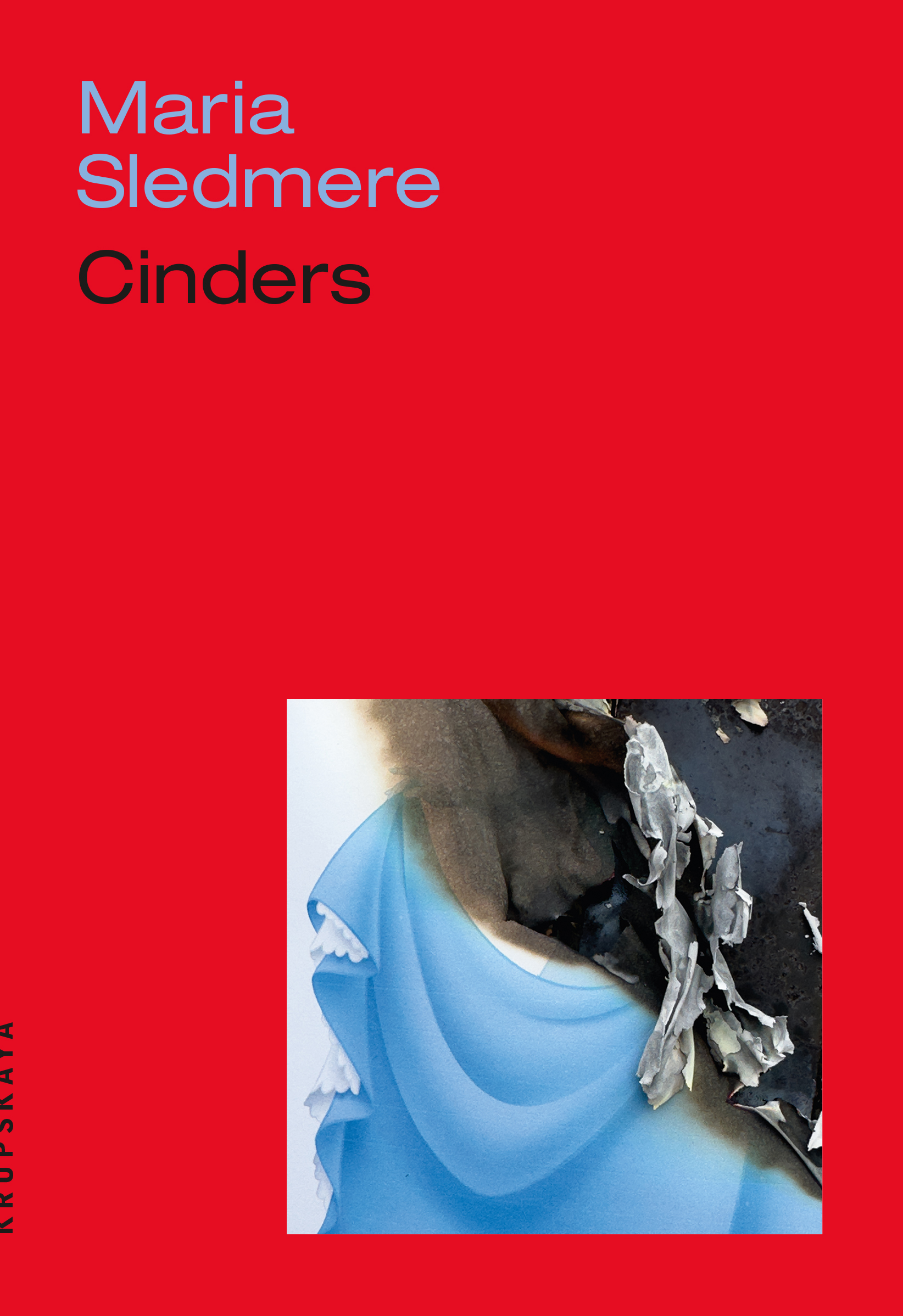
I’ve been excited about this for a long time: my U.S. debut and new poetry collection, Cinders, is forthcoming with KRUPSKAYA Books!

I started writing Cinders in 2019. In some ways, this feels like the most worked-through, shape-shifting and elemental thing I’ve written. It’s also a bit crazy, let loose, poet in residence at the wind farm energy.

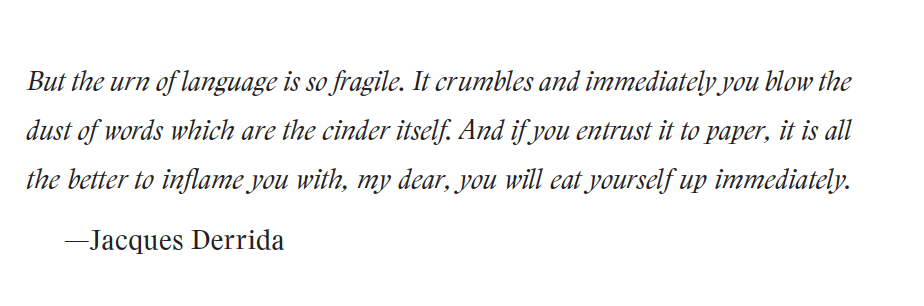
Its main epigraphs are these:

About the book

Cinders is a perverse and hybrid reimagining of Jacques Derrida’s 1987 book of the same name and the rags-to-riches fairy tale, Cinderella, set against anthropocene mythoscapes of deep time, haunted leisure plazas and terraformed Mars.

Cinders retells an old tale about lateness–how late is it, is it too late, what are the stakes of being too late if it is too late. This lateness, in Sledmere’s visionary lyric poems, pervades the structures and strictures of the pop dystopias and erotic utopias she studies: gender, class, geography, space–inner and outer. The very elements of Cinderella that were there all along as the wood burned to ash in the hearth.

Jeff Clark of the amazing Crisis Studio did a really great job on the cover, which has an accidental nod to the drapery of Cixous’ Hyperdream (one of my favourite books in the world) and whose ash curls are from a real incident of burning the avatar of the tale herself.

I am grateful to Sophie Collins, Colin Herd and Douglas Pattison for reading earlier drafts, and to Brandon Brown, Jocelyn Saidenberg and Stephanie Young for being such amazing, enthusiastic and thorough editors ❤

Here are some nice things people have said about the book:

Voilà! There she flies! Cinders! Sledmere’s ribboning red hot femme lyric avatar neither yet soot nor fire, always already hearthless, always already combustible, floating out on the thermals of volatile, flammable, scorching lyrics, trailing clouds of glorious derridean cinder-signals. Imagine lying with Plath’s red-haired Lady Lazarus and Celan’s ashen-haired Shulamith, moon-eyed sisters in anthropocene’s burned-out basement, knowing we are stardust, golden, indeed carbon, but with no way back to the garden and only high contempt for the billionaire boys’ silver spaceships in that yellow haze of the sun (‘this isn’t the journey’)—who do we call? Who ‘singing this tale of the comet’ is going to ‘come for you, little/ burning world’? Cinders! There she flies! Voilà! Poetry coming out of her like lava. Read it, sisters, and swoon. Now listen for that glass slipper to drop then splinter.
— Jane Goldman

Maria Sledmere sneaks up on you. In language that is deceptively intimate and often playful she limns a world of dark, sharp corners, where ecological catastrophe no longer looms but makes itself felt in every aspect of daily life. Intricate and expansive, never alighting on the expected, the poems in Cinders are both gems and bombs. A subtle stunner of a book.
— Anahid Nersessian

I’m planning to be in the Bay Area in May 2024 to launch Cinders with fellow KRUPSKAYA poets Jennifer Soong and Noah Ross at Small Press Traffic, but also look out for an online and Glasgow launch earlier on. The book’s publication date is 12th February 2024, just in time for Valentine’s. Please get in touch with the publisher if you would like to review, stock or whatever!

Some poems in the book have been published already in places including trilobite and the Pilot Press anthology, Responses to Derek Jarman’s Blue (1993) (2022).

Preorder here!

The Zone


Hello it’s dark down here like a deck of cards
or a memoir
I don’t know how I got to the deep sweet part of the year
it’s not like heavenly bubblewrap beginning again
unboxed study of presence
I was a higher monstrosity before all of you
paroxysmal the actress had weird nipples
that’s not why the film moved me so much 
I loved the psychosis of numbers
falling in love with them
close your eyes and count down from ten
on a bike in traffic
like tulip for a tongue 
everyone will love you 
on the count of zero 
calorie infinity 
this year we got so sick
crying over ourselves in bathtubs of colder water 
we were too wet in our minds 
for god to slice machine language
I learned to sleep like a baby
which is to say cryingly
I learned to sleep like a dead man
playing dead with microdosed indifference
to the way it breathes
I’m not blowing up rumours of balloon 
with my labour
the university can engineer balladry funding 
like the man who made millions from his gold rush ballads
made more from the ballads than the gold 
I learned this while bowling
I am terrible at bowling
the way a heavy weight slings from my arm 
the let go 
of holding each other in public
pieces of art gallery candy arranged by the window 
a hundred storeys high 
above sea level 
at maximum emotional altitude
today it’s not going to get any lighter 
I won’t feel tender towards a petty
listener monologue of the star 
topping forest
says go harder fly faster 
in the face of despair
don’t spit 
the gallery candy 
fungible in glib ways like on eBay
buying up the tears of Britney 
who danced with knives on reels
available to anyone