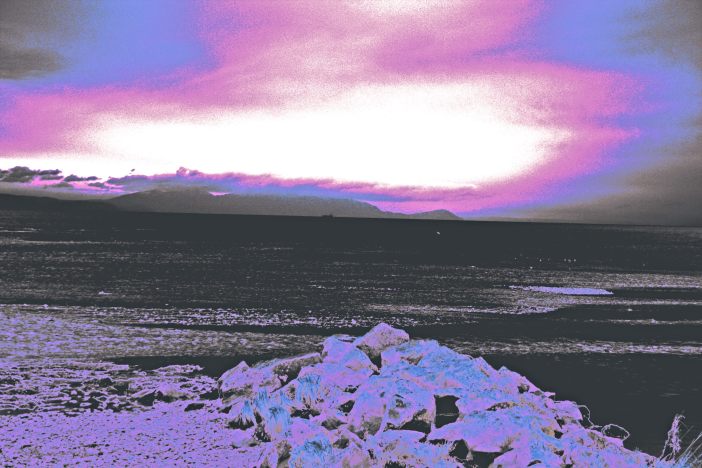
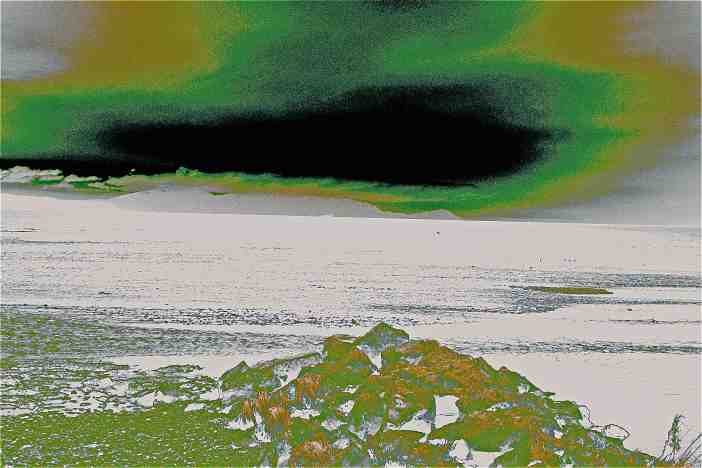
Savage Beauty

Forgetting the crinkled skin, it was enough to sip coffee outside on a windy morning and pretend that the cocoa on one’s cappuccino was sufficient medicine to glut a lifetime of unpaid mortgages and debts to friends. The seductive dust formed its fine layer upon his lips and the next person to kiss him, god forbid, would taste that faint dark chocolate. The cravings sometimes were all-consuming.

“What a beautiful girl you are,” he said, to the waitress who came to collect the empty cup. “Straight out of Connemara.”

Of course, she would not know where even Galway was. She scowled and clucked her tongue like the rest of them. But he liked her freckles. That was it: you could pick out a story from every one.

Record Ekphrasis: The Long Ocean

IMG_34162IMG_341611

~ https://thelongocean.bandcamp.com/album/the-long-ocean

There is a struggle, the suspension of hoar frost crusts time itself as it trickles over the sea. At first light we watch for an opening. Even in attics and city bedsits, the sea remains in our blood. We feel it cold as ice at the illness times: how darkly we sink into the sheets, hoping the pain in our skins will dissolve back to lucent matter, the night wisps of somebody else’s aura.

A voice enters soft and lo-fi, filling the interludes that swirl around haunted piano arpeggios, the silver streaks that spill on the ocean’s tides. I am afloat in muted clicks that keep me close to the surface, where the sound echoes in drips, as in a swimming pool. I listen for his voice as it mists the glass of the window. I inhabit that glass in the silence, waiting for some melody to sparkle with any dissonance sufficient to crack my crystal prison. Percussion is slightly hard, a clack, clacking. Crackle. Predictive appearance, seductive. “I’m under your spell / and I’m under under”. Subaquatic passion, staring at the world from beneath, behind, the film of its surface. See how everything shimmers. It’s quantum physics. You can’t peel off the surface of reality, its candy sprinkles, its gilt, to see what darkness and delight lies beneath; you’re already deep under, withdrawing, closing.

There’s the haunted aesthetic we find in Burial. Something more organic, elusive; the rural alternative to Burial’s empty midnight metropolis. On ‘Raindrops’ the muted sound of gulls weaves in and out of a DJ Shadow, Entroducing…..-era riff and the shimmering playful jazz of a brighter piano, a celeste of some sort…the sound of wind chimes through the minuscule ears of insects, so very high-pitched, so very sweet. You can imagine the tinkle of glass as you toast your favourite jellyfish, spirit animal that sucks its seven temporalities tentacular around it, moving them in sweeping undulations that rupture the cyclical moon-time of the waves. You open your flesh to the ocean, every salt crystal forming a bead in your pores. Desire is the fulfilling of absent substance, the spacing of the gap between lack and attainment. The passage of sailing, not knowing what darkness, what deep blue, you are setting off into, heart curved sharp by the cut of a crescent moon.

If Burial is, as Mark Fisher puts it, ‘London after the rave’, The Long Ocean is the abandoned nightclub pavilion, the sea’s dull roar mingling with those shadowy echoes of ecstasy. The slowed-down groans of a former generation’s momentary joy. Angels caught in the sand of an hour glass, being tipped, a largo mode of clock-ticking, grains of time slipping endlessly over the rasp of voices. I set this album to cassette tape, allowing the crackles to augment and mingle. I could be in the murmuring belly of a ship, hearing the rasps of a radio mix with this transcendent, nowhere music. It’s the sound of twilight set to reflections of quartz made bright momentarily by deepwater bioluminescence. What is that whine, that eerie peal? The sound of lost dolphins, the painful song of a lonesome whale? The whale is a heart’s darkness, a shadow-side of waking reality. You can lose yourself inside it, feel dreams close over you, prised from the wax, the oil-black skin.

Four Tet at his most otherworldly. Hypnotic loops, the soft distortion, the natural ambience. I am walking down an abandoned street, where weird green plants sprawl through the smashed-in windows of Brutalist buildings. Night birds chirp the tart remnants of forgotten songs. I am hooked on the wave-like rhythmic pulse of his words. My footsteps echo, down the street, down the passage, down the shallows to the deep where tarmac melts into oil-black sea.

There’s a sense of dark, spreading space, interpenetrated by twinkling scintillations; not unlike the plaza-like ambience of mallsoft and certain variations of vapourwave. Think: diamonds in the tarry pavement, stars reflected on the ebony surface of the midnight sea. A more crystalline James Ferraro, Marble Surf; The Long Ocean swaps those choir-like, ice-cream van speaker crackles for a more precise intricacy of lattice parameters, cross-rhythms of tinkling percussion and soaring, yet always subtle, beats. Think also of something like GOLDEN LIVING ROOM’s New Nostalgia, its eerie shimmers of late night lo-fi mixed with the bright sound files of near-future cyberspace, everything sounding slightly subterranean, that tinniness of dissonance. On The Long Ocean, however, instead of the glitch effects of hardware, the sounds chosen here are derived from natural materials and technics. The hollow click of driftwood, billows of cooling wind, cave-like echoes, the clinking of a necklace of shells with every percussive sprinkle (‘The Crest’). There’s a collector’s sense of amassed trinkets, effortlessly slinking along intricately simple bass-lines, hardened by industrial beats which burn in the weird space between background and foreground. What this music shares with vapourwave is a sense of slow, careful build towards the internal coherence of a detailed and evocative theme. The sadness and the beauty leaves its ghost stains on your brain, tugs at the blood which is full of the sea, makes you want to walk forever, or forever dream—rhythmic, contorted, returning serene.

Some of these tracks are totally devourable jams, the minimal intrusion of sampling giving way to those lusciously percussive beats, twists of lo-fi brass, crooning sexily over the building peal of mysterious beats (‘Gold Dust’). I’m reminded of a video game casino, an interlude space suspended in a three-dimensional, virtual world, where the colours and lights are all for our ersatz pleasure. On an island over an ocean we are sharing expensive littoral whiskies, toasting the way our skin glitters in its vitrics. Soon every vein will resurface, a curious craquelure marking time on the skin. Here we are, vacant, absent, deliciously distant.

Sometimes a roar of white noise, of wind rushing through a tunnel, subtly infiltrates a track (see the end of ‘The Crest’), reminding us that the space we’re inhabiting here is adorned by darkness and distance, is always deferring from itself. There’s definitely that Boards of Canada minimalism, the seamless weaving of samples in a way that seems hazy, reflective, a little haunted. A childlike naivety, a curious innocence; shadowed by the weight of a trembling void.

But there’s also a certain romance, even magic, to this record that I can’t quite pin to anything else. Not in the same way. Maybe it’s something to do with the celestial resonance of much of the track names, from ‘Star Light’ to ‘Gold Dust’ to closing beauty, ‘Stella Maris’. Latin for Star of the Sea, ‘Stella Maris’ is the feminine spirit, a protector who guides the soul at sea. This song is the album’s North Star, guiding us back through the waft and heft of its silvery, elusive currents. It sounds somehow out of time, built around the melancholy minimalism of a piano, sustaining its slow and careful path over the abyss of crackle, the tremors of the underworld, the ocean’s darkest depths. In the ‘Desecration Phrasebook’, a glossary collecting Anthropocene-related words, there’s a word, ‘shadow-time’, for ‘the sense of living in two or more orders of temporal scale simultaneously, an acknowledgement of the multiple out-of-jointnesses provoked by Anthropocene awareness’ (The Bureau of Linguistical Reality). We have to accept we are already living in the end of the world; it’s just that our sense of its time-scale is far beyond human comprehension. The fluid, amniotic ambience of ‘Stella Maris’, coupled with its fin-de-siecle, 1990s-style exploratory piano (think: Aphex Twin, DJ Shadow), creates this haunted sense of dual temporality, of always being on the cusp of something to-come at the same time as being homesick, nostalgic for a dreamland that came before but perhaps never was at all.

There’s something in the way this album romanticises the sea that suggests Glenn Albrecht’s word solastalgia: a form of existential distress caused by environmental change, global warming being the obvious example, as well as coastal erosion and the weather manifestations of climate change. Solastalgia derives from both ‘nostalgia’ and ‘solace’. Whereas nostalgia denotes a feeling of homesickness for a place and time we are no longer present in, solastalgia evokes that sense of distress caused by our home changing as we inhabit it, the affective impact of huge global shifts upon our individual, local experiences of landscape. The Long Ocean doesn’t leave us washed up at the end of the world, but suspended in the glittery salvation of its dark and strange and shimmering beauties. We come close to the weird and the terrifying, the dissonant samples of unrecognisable times, of creatures whose tremors rise up from the deep. Think of the pleasure and slight terror of binaural beats, the sublime understanding of our human insignificance as we gaze at the stars.

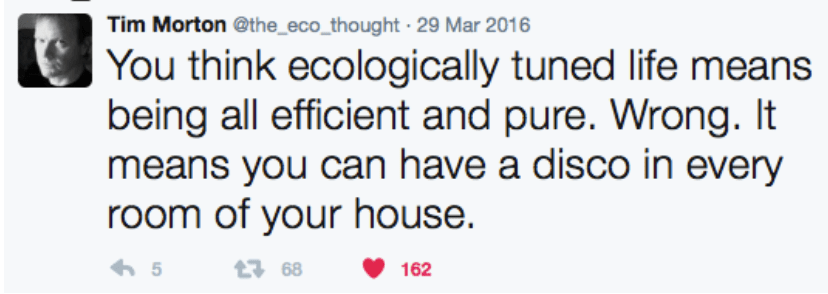
The beauty of an ecological thought is that it doesn’t have to be clogged with guilt, it can create something even lovelier before in its collective, technological and temporal possibilities. What would happen if you filled every room with solar panels, invited the creatures in, suspended your desire forever in those flickering, dancing refractions of light and sound and colour and life?
Screen Shot 2017-04-07 at 13.14.21.png

Green Shoots

tree.jpg

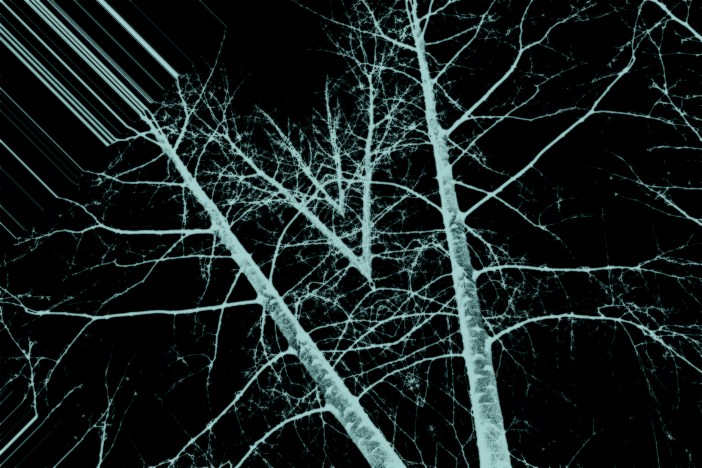
For the third day in a row, Brian looked down while brushing his teeth and saw a tiny green shoot sprouting out of the drain. Only last night, at 2am no less, he had pulled the little fucker out and thrown it down the toilet.

“Miriam!” he shouted to his wife, who no doubt was still curled in bed. “The tree’s back!”

“Mhmh?” Cursing at her lack of interest, he spat out toothpaste and watched how the white foam flecked the two bright leaves of the shoot. Remnants of raisins and granola showered like rubble around it. He turned on both taps and washed it away, but the shoot remained.

On his commute to work, he noticed something was on fire at the side of the motorway. The flames were big, apocalyptic, and when he opened the passenger window the black stench of burning rubber filled his car. There wasn’t a scrapyard round here; there were no reasons to be burning rubber. This was the fucking countryside, not some rustbelt wasteland.

At the office, he turned in the financial reports that were due at 10am. He sat through a meeting which featured the usual pantomime antics of his boss, the kind of man whose entire career is based on imitating the flamboyance of a Disney character while necking enough coffee and bourbon to seem manically on form at every performance.

“What we are building up to,” he announced, “is the ultimate synergy.” His arms flailed back in grand gesture, nearly knocking over the pie chart drawing his assistant had etched on the flip chart. “Capital merging with capital, a clean abstraction, the upward surge of profit. Think of this as MarioKart. How many of you have played MarioKart?” His eyes narrowed as he surveyed his colleagues round the table.

There was much quivering, as only a handful of people raised their hands.

“Well, the chosen few will know what I mean by the Rainbow Road,” he continued. “We’re on that motherfucking Rainbow Road. One veer off and we plunge into space, the black void, and that’s that. So I can’t afford a single mishap, I don’t care what happens. We need to synthesise, synergise, synchronise. You hear me?”

Every week, the boss delivered a near-identical speech; the only thing that changed was the arbitrary cultural reference he dragged up, presumably from the stacks of CDs and video-games in his son’s bedroom.

At this point, the assistant stood up hastily. She was young for the job, a high achiever, reaching for those virtual stars in a pair of vicious heels.

“What we mean,” she said, trying to clarify, “is it’s important not to underestimate green shoots. Those little signs of growth. Shares in petroleum, in plastic, are rising nicely. Not to mention South American superfood angiosperms, part of a wider move towards elite organic harvests. While the economy flounders around us, clinging to the small things is what will help us reach that upward surge.”

“Thank you, Heidi.” The boss shot her an appreciative leer. “Now what the fuck is an angiosperm?”

On his lunch-break, Brian ate a sad desk sandwich with a fellow number-cruncher. The two of them were the runts of the litter, the ones that never got invited to the cloying, marathon lunches the boss often dragged the office out on. This meant they were never in line for promotion, but bore the advantage of letting them avoid the poisonous oysters and chardonnay which often left their colleagues retching all afternoon.

“You know Liam,” Brian mused, “I found a green shoot in my sink the other day. It’s still there, even though I thought I pulled it out.”

“What?” Liam was dim-witted and this was maybe why he never got called out to lunch.

“Like, an actual green shoot. I think it’s getting taller.”

“Maybe God’s trying to tell you something,” Liam said ominously.

Back home that evening, Brian found that the shoot had gotten much taller indeed. So tall that various branches curled out thirstily, wrapping themselves round the taps. Brian shrugged and didn’t bother brushing his teeth that night. He pressed himself into Miriam’s back but realised she was already asleep. It was what, nine o’clock?

He got up very early and left the flat straight away to get to work. The accounts were flying off his desk that morning.

“Good work Ben,” his boss said, floating past the desk, collecting his documents.

“I’m on the upward surge,” Brian nodded.

On his way out the door that night he gave Heidi a contrived and lustful glance. She looked at him with eyebrows raised, but this could mean anything. He decided to drive out to the spot where yesterday he’d seen the flames. It was a pit in the ground, a charred patch of grass gone black. He fancied there was some resemblance to a pie chart, the way the different shades of burnt matter lay, wedge-like, in the circle. He did some rearranging, moving shrivelled plastic and ash and wood chips around until they met satisfactory dimensions.

When he came home with soot all over his hands and face, Miriam said he looked beautiful. She was a Leo and had a thing for fire. He looked into her eyes for the first time in weeks. Her whole body seemed to pause, to start melting right in front of him. The light from the kitchen window made her skin so pale, except for a flash of orange across her face. He was about to kiss her, to fall into the molten mass of her body, when she reached straight for his belt buckle. This was a first.

Afterwards, he went into the bathroom to wash his face. The tree had taken over the entire bathroom. In just a few hours, the little green stems had become proper woven wooden branches. He had to climb over and around them just to take a piss. What came out of him was yellow, dark. The flames were inside him now, and the leaves of the tree shimmered around his body, bathing him in luxurious gold.

“Honey,” he heard Miriam’s voice at the door, glistening with the shrapnel of Heidi’s lisp. He realised he was still clutching his limp penis. “D’you think the world’s ending?”

cold & lovely shard

 ____ __ _
 |--| | \|
 _ _    _       ____ ____ ____ ____
 | |___ |___ -- |--| |--- |--- |===
 ____ ___ ____ ___ 
 |___  |  |=== |__>
 _  _ ____ _  _ ____ ____ _ _
 |\/| |=== |\/| [__] |--<  Y 
 ____ ____ ____ ___  ____
 ==== |=== |=== |--' ====
 ___  ____ _ ____ ____ __ _
 |--' [__] | ==== [__] | \|
 ___ _  _ ____ ____ _  _ ____ _  _
  |  |--| |--< [__] |__| |__, |--|
 ___ _  _ ____
  |  |--| |===
 ____ ____ ___ ____ ____ ____ _  _ ___ 
 |___ |--|  |  |--| |___ [__] |\/| |==]
 ____   ____ ____   _ _ ____ _  _ ____
 ====   [__] |---    Y  [__] |__| |--<
 _  _ __ _ ____ _ ___  ____
 |__| | \| |--< | |--' |===
 _  _ _ __ _ ___      _  _ _  _ _ _
 |\/| | | \| |__> .   |/\| |--|  Y 
 ___ _  _ ____   ____ ____ _  _ ____
  |  |--| |===   ==== [__] |__| |--<
 _    ____ ____ _  _     _
 |___ [__] [__] |-:_ ,   |
 ____ _  _ ___  ___  ____ ____ ____
 ==== |__| |--' |--' [__] ==== |===
 _ _ ____ _  _   ____ ____ ____
  Y  [__] |__|   |--| |--< |===
 _  _ ____ _    _ _ -,   _
 |--| [__] |___  Y  .    |
 _    ____ _  _ ____   ___ _  _ ____
 |___ [__]  \/  |===    |  |--| |===
 _  _ ____ _ _   _ _ ____ _  _ ____
 |/\| |--|  Y     Y  [__] |__| |--<
 ____ _ _ ____ ____   ____ ____ ____
 |===  Y  |=== ====   |--| |--< |===
 _    _ _  _ ____
 |___ | |-:_ |===
 ____ ___  _ ____ _ ___ ____
 ==== |--' | |--< |  |  ====
 _  _ ____ ____ _  _ ____ ___ 
 |/\| |--| ==== |--| |=== |__>
 ____ _    ____ ____ __ _
 |___ |___ |=== |--| | \|
 _  _ _ ___ _  _   ___ _  _ ____
 |/\| |  |  |--|    |  |--| |===
 ___  ____ _ ____ _  _ ___
 |==] |--< | |__, |--|  | 
 ____ ____ _ ___ 
 |--| |___ | |__>
 ____ ____ _  _ __ _ ____ __ _ ___ ____
 |--< |=== |\/| | \| |--| | \|  |  ====
 ____ ____
 [__] |---
 ____ __ _ ____ ____ ____ ___ ____ ____
 |--| | \| |___ |=== ====  |  [__] |--<
 ____     ____
 ==== ,   |--|
 ___  ____ _ _    _    _ ____ __ _ ___
 |==] |--< | |___ |___ | |--| | \|  | 
 ____ __ _ ___ 
 |--| | \| |__>
 ___ ____ ____ ____ _ ___  _    ____
  |  |=== |--< |--< | |==] |___ |===
 ___  _    _  _ ____  
 |==] |___ |__| |=== .

Elementary Witchcraft

Elementary Witchcraft

(something written before Christmas)

I stir the coffee in time with my monotony. Footsteps from when the children used to play round here still haunt the kitchen walls. Everything tastes black, bitter. The plaster is peeling. I made friends with a spider who lived in the top corner of the window; while washing the dishes I watched it spring out for its daily kill. It was satisfying to observe the squirming flies, caught in the sticky web. I licked jam off a knife as the pincers squeezed their deadly juices. Sometimes I buy butter, but often it is too expensive and now I make do with the cheap stuff, which Tessa is always telling me to stop buying since it is full with nasty chemicals. I don’t mind. I like the sense of my body building up all those chemicals, my veins like rivulets of rock, acquiring their cholesterol, their calcium deposits. Darling, it is all geological.

Josh sends his love from the city. He has a new girlfriend, a very pretty young lady with reddish hair and soft, emerald eyes. Basically, she has walked off the page of one of the fantasy novels he read as a boy and goodness, how lucky he really is that she’s real! I will possibly never see him again. Her parents own a castle in Dumfries & Galloway and that is where he is spending Christmas. There will be extravagant banquets, servants, Christmas crackers stuffed with fivers and slivers of unisex jewellery. Charades by firelight and expensive brandy. Here, I have made a small effort at seasonal preparations. There are three jars of pickled onions, a tangled pile of fairy lights, a box of Foxes biscuits—which I have only just refrained from devouring on several recent occasions.

You see it is very difficult to restrain myself these days; there’s no one else around to stop me. Tessa will come for the day and we’ll watch the soaps and probably smoke a great deal of her Silk Cuts and not bother very much with the food. She has a wonderful taste in tacky festive music and so we’ll blast it out with the windows open, the cold air rushing in as we dance around the kitchen, the wine bottle bubbling with festive spells. It is one day of our lives together and it will be perfect.

Tessa can’t come at all. She has to work; she’s a nurse. In fact, right now she’s probably clasping a long thin syringe, sticking some viscous, silvery substance in someone’s skin.

I pour the dregs of the coffee down the sink, which is clogged with nasty pieces of something that might possibility still be living. The bin overflows, but I don’t bother. The thought of the ice-slippy steps and the neighbours gazing at my garish, half-hearted outfit somewhat disturbs me. I have thirty minutes before I must leave for work, but the clock doesn’t seem to be working and it’s uncertain as to whether I can trust it. The minute hand pulls slow and gelatinously over and over, never quite moving past itself, stuck in the honey-trap of its own echoes. My teeth feel dirty and coated, as if I’ve feasted on some delicious thing with a skin. In the mirror as I brush them I see my face contort like an animal’s. I have such furious eyes, the skin beneath them spilled with their shadow.

Accidentally, I rip my tights as I pull them over my knees, the gossamer threads unravelling so easily. The mohair jumper that I quite liked and thought quite smart indeed has a mysterious stain on its front, which I can’t quite explain. My fingers remain jam-sticky, even when I scrub them raw with fairy liquid. It is impossible to conjure a style from my hair, though by now I have learned to be content with this fact. I have a headache which feels like rocks pounding off rocks in a hollow cavern where salt spray lashes at the walls.

Somehow I am late for work. On the bus in the plexiglass of the windows I see the reflection of a girl who is very tall and wild, whose ragged face seems to have come from another place. It is only when I sit down, clutching my handbag and its absence of forgotten lunch, that I realise she is me.

A Voicemail for Some Scots Poet

IMG_3775.JPG

A Voicemail for Some Scots Poet
(scrawled in bed on the morning of Burns Night)

Your thatched roof I hid under with a jar
of rhubarb & custards, birthday gift for a friend
of the old-fashioned sort. Hiding my anxiety
with the pishing rain and roses for eyes,
I tried not to cry with the waiting.

Alloway was never the place for me,
though tourists once snapped my photo
sitting at the bus stop in my pinafore; maybe because
the bus never came as before and I seemed to them
an exhibit of the idle, plaited poet, crouched
and concrete with schoolbag and notebook.

I tried then to draw out my longing
but the salt water was sore and washed
each sketch away. At fourteen I took blackouts in the park
with the help of old Glens and Bell’s whisky.

Now they keep putting pictures of your face
under the hair of Che Guevara but my wi-fi
is shite as I look farther for the secrets
of some revolutionary conspiracy
known only to Twitter.

You were the smell of burnt haggis
in primary school kitchens, the passion
of incompetent, childish longing;
every January blackened for lack of snow
or a coffee topped with Irish cream
and dreams of home.

I’m trying to make you more of a meme
but the birds sing merrily of some Scots
that got tangled in my mouth, made a scandal
of the girls slinging glittery hooks
against the Ayrshire weather, dreich and pitiful
in the stench of manure and nicotine.

You made poetry from head-lice and folktales
while I’m starting out on madness and palm trees
and the single best beat to snatch, ecstatic
from a still calm sea. Dylan loved you
and god knows I share your fetish for roses,
though mine are long-glitched out of semantics
or flourishing poesy. The inevitable middle name;
the rose is a dead rose, a broken cable.

Every time they sing Auld Lang Syne
the spell snaps tight like the cutting of tartan
on a slut’s dress as she readies herself legendarily
for bewitching auld Ayr’s errant men. I love her
with the crimson candled extravagance
of the urban occultist, dull and lonely. She’s got legs
enough to kick them in the Doon when she’s finished,
chortling like a slot machine.

A match, perhaps, for the farmers of the toon
who tossed my friend in a hedge when he tried to join them at school
in talk of fags and cattle and the internet equivalent
of cutty sarks. It’s a fell swoon for the rest of us,
with ardent cries for freedom
from the trendy alt-truths of southern politicians
and the armies of bagpipes swarming the park
to practice for every month of fucking summer.

That hot breath steaming the January air,
some promise for Scots blood running cold in the veins
of my milky Englishness. I’d swap it all
to be back there, sugar-tongued and sweeter
in teenage confusion, rain spilling off
the thatched roof, every drop fused
with a purer kind of truth     like the shape of your words (Romantic).

Can you call me dear Rabbie,
if you’re able? I’m waiting, but the rose
is a dead rose, a broken cable.

The Weather Turns

IMG_3001.JPG

a daily free write ]

The weather turns, ineluctable as that mist that mysteriously fogs up my glasses (Footnote: Why do I wear glasses? Something a man once said about parallax and the need for clarity of distance, the reassurance of one’s own substance). The city is a haze of something else today, foreign as a postcard marred with scratches of time and travel. Must I always be up to my neck in vapour, in unfinished melodies? They always catch: grooves on a record, gum on the pavement, hair snagged in a glue binding, specific as a bookmark; melody after melody. The notation would be very messy. I’m picturing spaghetti-tangles of quavers, misplaced on the staves with no home of their own. What of this note? oOoOooooooooOOOooOooaaAAAaaaaaAaoo……. Does it belong in the sonic realm of an F#? The problem is, I picture my life in A minor, every time. The soaring long echo of a siren call; so sad, so sad. Picture this, pretty fake glass vase, all containers of vapour, elaborated with black-printed Celtic patterns, impenetrable as ersatz ~internet~ Japanese.

One attempt at pottery is quite the attained luxury. I think I will try out something new. The raising of a blue hand in order to trace the pulse of purple veins. Not too bad for a hologram. This is sweet and clear and maybe okay. Like walking past the graveyard of pines. Must I call it that? Too long it has been since I’ve trailed through a cemetery. A habit picked up from my grandmother, I glance at the old headstones, my brain knotting in each line and crack and crumble. I forget dates; they fall away. When you realise that you are walking a few feet above the bodies of dead people, your heart does a turn and slips to your stomach. The ground is so soft and mossy. Flesh is a good fertiliser, it spreads lush bright vitamins to the soil. In fact, it might be quite nice to lie down in and dream.

If I slept in a graveyard, would I have reveries that channel the dead? It’s a distinct possibility, the amount of fragmentary matter that must float in the air like electricity. The hormone we release when we die: dimethyltryptamine, DMT. They say it makes us see fairies, elves and tunnels of light. Lost soulmates dwindling in the twining of shining limbs. Silver rings in a stranger’s nose. Near death, the liminal weirdness of the world crosses its own boundary. No wonder I have always loved the word psychotropic, its connotations of a spliced brain opening out like a Polly Pocket to uncover an island of swaying purple palms, a guava pink sea, an assortment of oozing neon beads. This great, gritty, sparkling geode. Would a brain like that bleed? Do brains in general even bleed? The lavish quality of this vision is undoubtedly a product of sugar cravings. The dangerous dip, the faint-headedness. Our bodies being an assortment of chemicals, it’s only natural that the synapses of our minds produce very queer imaginings indeed.

Pineal gland: essence of palm. The oil extract no longer lucrative in worldwide trade, though popular, cheap and downright nasty. Spread it on bread like honey and sweeten. It makes things swell, tighten.

Things to desire: serotonin, colour, daylight. There was a time where I substituted existence for an array of colours, the kind that come straight out the packet. The need for something pure and vivid, so vivid as to seem utterly distilled of all trace matter, was completely upon me. Splat after splat after splat. I could have squirted that colour on my tongue and hoped for the same result of a manic acid trip. I wanted to see the gravestones melt, the names shimmer and vaguely disappear, leaving scraps and lingerings of unfinished letters. Is it possible, really, that some expert kneeled in the moss and carved those names so beautifully?

Crack open the sky over the sea and tell me what you see. The bold aroma of a rainbow comes quickly and glows like some other sun is ripening behind it. A pale blue sun, perhaps, stolen from Mercury. Planets out there, swapping their radiations of time. Down below, the ocean groans under globules of oil, fat black spills which ooze and spread. Each secretion has its location hidden; sometimes gushing, sometimes slowly swirling. I think of butter melting into chocolate, ink being marbled in gelatinous jam. The favourite taste, all bonfires of strawberry. Some god is spinning the water with a cocktail stick, languid and bored like a hungry person in a bar, waiting for love. We hallucinate, don’t you see? There is a complete quality to what comes next, the fiery upturning of all this trace matter. Waste. Be flamboyant as an artwork. You pinch the thin skin of each of my fingers and the lightning shoots right through me.

Things to desire: rock pools of igneous glass, starfish, the dying white rose at the side of a grave.

I hear the knell from far away. Such tocsins call me back from the realm of the dead, though I am happy here, my body breaking down into succulent little pieces. The woman opposite me mutters litanies to herself; stickily, as if each word were cheaply enthroned in lipstick. Is there work still to be done? These days, I mix the colours. I like to see the vibrancy break down, meld into subtler hues, details you see only up close. The paint sticks in my brushes, the glitter of light in my lashes. It’s not mystifying anymore. The greyish haze is my outpourings of smoke, enough to cover the whole skyline, swallowing up what good is left of tomorrow. I inhale matter in wholes and halves. Like yesterday, it will be black (the city, that is): gilded, ink-ridden, brilliantly viscous. A whole ocean will roll from the distance and its golden ore will cover us, just so many bubbles of oil pasting our brains. For now, it rains.

***

Moira Buchanan Exhibition: All Washed Up

img_0118

Last Thursday I had the pleasure of a day trip to Irvine to check about Moira Buchanan’s exhibition ‘All Washed Up’ down at the Harbour Arts Centre. Now I must say, although I was brought up in South Ayrshire I haven’t actually been down to Irvine since I was a kid – the days when we used to go swimming at the Magnum, or on school trips to the Big Idea (which is now sadly closed).

It was a bright and breezy wintery day and as soon as I stepped off the train that lovely clean briny smell filled my lungs and it was a bit like coming home. Irvine’s a fair pleasant town, once a port. You can walk along the harbour where ships still rest and along the front there are little gift shops and cafes with tinsel in the windows and the smell of coffee wafting out onto the street. I unzipped my jacket to feel the sun on my skin. It was midday and hardly anyone was around, but when I got to the Harbour Arts Centre there was a nice wee bustle about the place.

img_0119

img_0120
Took a photo of the hair left behind by a ginger mermaid.

The focus for Moira Buchanan’s exhibition is, as the title suggests, things which are washed up onshore. There is a pleasing openness to the exhibition. It’s light and airy, the pieces nicely balance a white sparseness with the intricate details of natural forms splayed upon the (handmade) page. Actually, it’s quite difficult to differentiate the natural from the unnatural here. Buchanan uses materials found along the beach to make her art, from plastic to twine and string, to seaweed and driftwood. Instead of simply presenting such materials as found objects, Buchanan’s reworking of their unique structures emphasises the beautiful details and aesthetic value of that which we might consider waste – environmental, human or otherwise. She uses an understated, organic palette and a combination of wispy, delicate lines and bold ink blurs to suggest perhaps the swirls of the tide and the sense of being washed out. 

The exhibition has a pleasing, nostalgic feel to it; a favouring of simplicity and the fragile loveliness of form, the childlike excitement in finding beauty amongst tiny, insignificant things. Dotted around the exhibition are little poetry chapbooks made from handmade parchment. Each poem feels like a miniature gift, a token gleaned from the coast and the sea and someone else’s memory. I think in today’s world, where global warming feels like something vast, incomprehensible, beyond our understanding, it’s so important to focus on the little things. The material details that remind us that we are part of this environment, that the ocean gives back what we put into it. There’s a feeling of salvage to the pieces, whose composition seems to perfectly balance the artful openness to chance at the same time as reflecting a careful attention to arrangement and applied form and texture. Everything seems precious.

The more monochromatic tones of the video exhibit suggest something starker, more emotionally arresting. The poems on display recount strange dreams, the changing weather and shape of the coastline, the turbulence of time and human perception. Between the poems are black-and-white closeups of items washed up on the shore. There’s a sense of borders overlapping, of the lush fronds of the clear water coming up to drag back the wisps of shadows and words and memories. I think of black ink pouring on a page, printing through layers of paper like the epidermis of skin. Sinking, achieving a kind of sticky permanence. I think of oil spills coating the northwards ocean. Each poem afloat on the water, the black background of oil, achieving purity in white ink as if blanched that way by the sun and the waves, as seashells are bleached by the tide. Moonlight pouring on still waters at night.

Responding to an ad on Creative Scotland, I sent in a poem I wrote called ‘Fort of the Yew Tree’. It’s kind of channelling a few of the mythical elements of a novel I wrote which is set in South Ayrshire (titled, with some irony, West Coast Forever). ‘Fort of the Yew Tree’ is said to be the Celtic derivation of the name ‘Dunure’, which is a fishing village on Scotland’s south west coast.

I feel very privileged that one of my poems is on that video. This thing that I wrote, a strange and baroque wee baby, has floated out to sea and there it is, somehow washed up in Irvine, travelled through the channels of WiFi and email and typed back out onto some distant slideshow, time cycling in loops and repeating, each image and word again returning like a message in a bottle tossed out to the waves. I wonder who will find it.

Anyway, you can check out my poem along with many others in the video below, made by Moira Buchanan and existing as part of her exhibition. ‘Fort of the Yew Tree’ starts at 2:35 and it spans four slides.

You can find out more about Moira Buchanan’s work on her website.