The General Synopsis at Midnight

IMG_2009.jpg

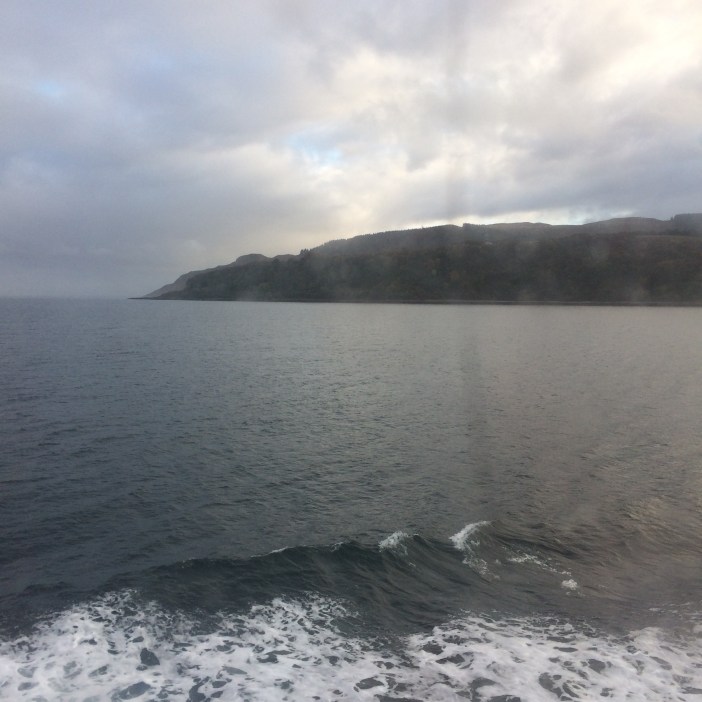
To the best of my memory, I have only ever been on a sailing boat once. Or, I have only been happily in control of a sailing boat once (there was a time we had to try windsurfing in primary school, a time whose details have, thankfully, long been repressed).  It was 2005, I was twelve years old, and had won a competition through the local youth club to go on a sailing trip to Oban. I don’t remember anything about what I must’ve learned regarding sailing, but I do recall a beautiful suite of seafaring terms: a special vocabulary which transformed previously mundane structural features into curious artefacts of mysterious potential: cleat, keel, stem, rudder, transform, tiller, clew, boom, shroud, telltale, jib, winch, deck and spreader. The man in charge was a hardened fisherman type; I don’t recall his name, but we called him the skipper. He was dismayed to learn I was a vegetarian, having packed little in the way of vegetables for our journey. I was happy to live off Ovaltine, jam rolls and digestives for the following days. It was such an odd combination of children—were we still children?—on that trip. No popular kids, but a few of the scarier misbehaviours (probably not okay to still call them neds), the freaks and geeks—then me, wherever I fit in. ‘Goth’, which in the case of my school was generally singular. Somehow, we all bonded rather than fought in the tiny space of that boat.

One boy, who would always be in fights, bullying and hunking his weight around, was so sweet to me. He saw I had eaten barely anything and gave me a whole bar of Cadbury Mint Chocolate, insisting I had all of it. It was such a kind gesture that I remember it still. Everyone was different at sea: softer, more honest. We were willing to admit our social vulnerabilities; there was no-one, no context, to perform for. A boy I’ll call L. opened up to me about his love for 2Pac, and when Coldplay came on the skipper’s stereo (it was their first truly mehhhh album, X&Y), we shared a little rant about how cheesy it was. We ate fruit out of tins, pulled scarves over our faces on deck and watched the coloured houses of Tobermory loom closer. The skipper let us all have a go at the tiller; he told us stories from previous trips, about how the weather had turned nasty and they’d had to pull themselves through miniature hurricanes. I found myself craving the wild mad weather, even as I was shivering in some inadequate waterproof jacket (I have a history of coming ill prepared to such outings). The skipper and I sort of oddly bonded, since I was usually the first one up in the group. He’d put the kettle on and we’d go out on deck to watch the sky. He’d point out things to look for in the cloud patterns, the colours that bloomed on the horizon. It’s this kind of practical knowledge that I thirst for. Chefs talking to me about how to sharpen knives, bake brownies; motorcyclists betraying the secrets to keeping your speed; engineers talking about formulas and team rivalries and how to build a bike wheel. I’m completely incapable of almost anything practical, so it’s always a magic alchemy to me. When people ask what I want to be when I grow up, I say shepherdess, even though I have little idea of what that entails, beyond reading the excellent The Shepherd’s Life by James Rebanks and occasionally listening to The Archers. I think I’d just be content to wander around hills.

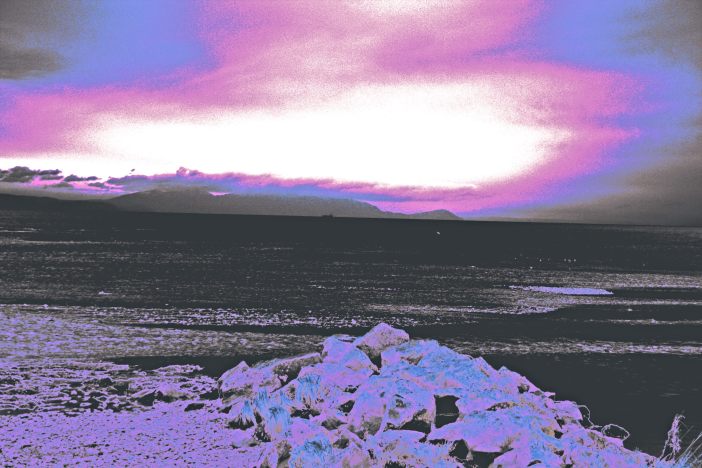
Red sky at night, shepherd’s delight…

I awake to steady rainfall, first day of November. I have been thinking a lot about that sailing trip recently, mostly because I’ve been doing writing workshops in Greenock, and the nature of the place as a harbour town has everyone often turning back to boats and fishing topics. I talk to a chef at work about fishing, not because I’m all that interested in fish but because there’s something about its psychology that reminds me of times gone by. Once, I took myself out to Cardross on the train, following the road up to Ardmore to sit on the point which was a good spot for anglers. It was so quiet and still, the beaches strewn with lumps of quartz. I sat there for an hour or so, listening to the steady lap of the estuary, then slowly made my way home, tearing my skin on all the brambles. It had the feeling of a secret, overgrown place. A little out the way, a nest you could curl into: an almost island. I recall those tiny islands on the Swan Pond at Culzean Castle, where we used to leap across to. As a kid, I’d hide among the bamboos and rushes and feel entirely in my own little world. The pathways and grasses were lit with secret creatures, this 12th World I’d created—it was over a decade prior to Pokemon Go, but here I was in my augmented reality. I’d sit up on the top of the stairs reading for as late as possible, imagining that I was on top of a waterfall, and all before me was water cascading instead of carpet. I’d lie upside down and the ceiling became the first planes of a new universe. I’d wake up early and write it all down; but those pages are lost to whatever antique sale of the past stole my youth.

Now I am adult, less governed by diurnal rhythms. I find myself lost in the long bleed of night into day, up far too late in the bewildering recesses of the ocean online, the oceanic internet. Far corners where articles smudge their HEX numbers in true form down the page and I am rubbing my eyes to see beyond light. Time, perhaps, to rehash that old metaphor, surfing the web. Occasionally, some page would bring me crashing back down in the shallows; I’d wake up, ten minutes later, groggy on my keyboard. Press the refresh key. Instagram has me crossing continents at bewildering speed, lost in Moroccan markets, Mauritian beaches and Mexico City. In the depths of some nightclub then the heights of a Highland peak. So many fucking faces. Closeups of homemade cakes, delicious whisky. Memories. Oscillations I can hardly breathe in, watching my thumb make its onward scroll without my direction. The rhythms become flow, become repetition. I need an anchor. It’s been hours and hours and maybe I’m hungry.

On the boat, whose name I have sadly lost, we slept by gender in two separate cabin rooms. They were tiny, low-ceilinged, and we were just a handful of slugs pressed tight in our sleeping bags. It was better than a sleepover, because there was no pressure to stay up all night and we were all too exhausted from the sea air to talk much. I’d close my eyes and feel the steady rock of the boat’s hull as it bobbed on the water. There was a deep throb of something hitting against the walls outside, maybe a buoy or rope; it felt like a heartbeat. Sleeping in many strange places, the floors of friends’ flats and houses, in tents and on trains, I try to revisit that snug tight room where sleep was difficult to separate from consciousness itself. It was all of a darkness. Something Gaston Bachelard says in The Poetics of Space:  ‘We comfort ourselves by reliving memories of protection. Something closed must retain our memories, while leaving them their original value as images.’ There was no mirror in that boat, so all I remember are smells and objects. No sign of my own pale and windswept face. Everything we ate was an old-fashioned brand; it made me think of rationing and traditional values. I wasn’t quite sure what that even meant.

I need an anchor. A place to dock in.

Governed by some primordial instinct, I go to make my dinner around the same time most nights—which happens to be one in the morning. The shipping forecast used to be the last thing on the radio, before a sea of white noise till dawn. When cutting veg, my fingers weak from another long day, I switch on the radio and there are the familiar intonations. I listen as I would a poem or a shopping list, a beautiful litany of place names, nouns, directives. I have no idea what any of it signifies. It’s been a double shift, perhaps, or an extreme stint in the library, a walk across the city. My mind is full of words and sounds, so many conversations. The debris of the day threatens to spill out as a siren’s cry, and how easily I could slump against the kitchen cupboards, wilt upon the floor. Make myself nothing but driftwood, no good turning till morning. But instead I chop veg, listen to the shipping forecast. It’s difficult to think you deserve food, even when your body’s burning for it and you haven’t eaten for hours. But there are so many other things to read or do! You need an anchor, a reason.

The general synopsis at midnight.

Many of my childhood lost afternoons, bleeding to evenings, were spent playing The Legend of Zelda: The Wind Waker on a GameCube I shared with my brother—avoiding the narrative quests and dungeons in favour of epic ventures across that cobalt ocean. What I wanted was that rousing sense of the wind’s spirit, the freedom to glide and find new islands. Whirlpools, tornados and Chtlulu-like creatures hurled me out to stranger lands. It was all so beautifully rendered, an expansive thalassic field of possibility; with each route I was fashioning some lovelorn story for my lonely hero. The ocean has always represented for me some point of erasure where reality dissolves into imagination. I think maybe it’s this perceptive meshing that we need to attune to in order to make sense of the vast scale effects of the Anthropocene. How else to grasp those resonant shockwaves of consequence, whose manifestations often transcend our human grasp of time and space?

Headache, Viking, southwesterly veering. The same refrain, moderate or good. When occasionally poor at times, do I picture the sailors with rain lashing their faces, rising through mist towards mainland? Is that even where they want to head? Rain at times, smooth or slight, variable 3 or 4. The dwelling conditionals; always between, never quite certain. The weather being this immense, elusive flux you can guess at, the way paint might guess at true colour. Cyclonic 4 or 5. In Fitzroy are there storms circling around the bay? Very few of these places could I point to on a map. I like the ambiguity, the fact of their being out there, starring the banks and shores and isles of Britain and beyond: Shannon, Fastnet, the Irish Sea. There’s a sense of being ancient, from Fair Isle to Faeroes.

I went to a talk last week for Sonica Fest where a girl from Fair Isle talked about climate change, how her home island would probably one day be swallowed by the sea. I can’t help picturing a Cocteau Twins song when she says it. She dropped handmade bronze chains in different oceans so you could see the divergent levels of oxidation, relative to saline content. It was beautiful, this abstract material rendering of elemental time. The world rusts differently; we are all objects, exposed to variant weathers. Her name was Vivian Ross-Smith and she talked about ‘islandness’, a project which connects contemporary art practise with locality and tradition. The term for me also conjured some sense of the world as all these archipelagos, whose land mass is slowly being ravaged by warming waters. The pollutants we put in. Islandness betrays our vulnerability, the way we were as 12-year-olds at the mercy of the tides, the weather and our gruff skipper. I had little conception of what climate change was, but even then I didn’t set a division between humankind and nature.

Back on the boat, I traced my own moods in the swirls of those mysterious currents, dipping my fingers in the freezing North Sea. Who are we before puberty, pure in our childish palette of pastel moods? When I think about how that sea spreads out to become the Atlantic, so vast and impossibly deep, I grow a bit nauseous. Maybe that’s the sublime; an endless concatenation of seasickness, feeling your own weakness and smallness in the face of great space, matter, disaster. How easy you too could become debris.

Increasingly, that waltzing Cocteau Twins song feels more like an elegy, haunted by the shrill of soprano, those shoegaze guitars resounding like notes through a cataract. A line from Wordsworth’s  ‘Tintern Abbey’* I always remember, ‘The sounding cataract / Haunted me like a passion’. Interplay between feeling and form, sound and vision. The ocean warming, the beat steady and mesmerising. Are we sleepwalking into the Anthropocene, over and over again, a lurid repetition compulsion? Why we keep burning up fossil fuels, emitting our plumes of carbon, senseless in the face of a terrible sensorium? I crave solid objects that show up the archives of history, those plastiglomerates of Frankenstein geology, the warped materials of the Earth’s slow and drawn-out hurting. Liz Fraser’s operatic howls are maybe the mourning of the land itself, begging to be swallowed by the sea. A saving? If originally we came from water, hatched out of amniotic sacks or evolved from subaquatic origins, then maybe we return to its oceanic expanse, its blue screen of death. When I’m anxious and needing to write furiously, write against the tides of exhaustion or time, I listen to Drexciya—Detroit-based techno that harks back to Plato’s mythology of Atlantis, via Paul Gilroy’s Black Atlantic. There’s this crazed evocation of diaspora, drowning, a mysterious race of merpeople. What evolves below water, what is spawning in the recesses of subculture; what resists the mainstream, the violent currents of everyday life. This subterranean city is a ‘sonic third space’. I can’t help but think of my own other planet, that 12th World separate yet attached to daily reality; somewhere distant but still impossibly intimate. That resonant intensity that drives you from sleep and into midnight discos of the mind, all pulsation of lights, wonder, horror.

There’s a sense that sound itself can be physically embracing. This is maybe how it crosses over into sonic third space, where embedded mythologies flourish in resonant affect. Where sound becomes tangible, making vibrational inscriptions of code upon the body like transient hieroglyphs of an assemblage’s trellising energy. In Tom McCarthy’s novel C (2010), the protagonist Serge is obsessed with hacking the radio to tune into the ether. Alongside the obvious supernatural connotations, there’s a more pressing suggestion that Serge is able to make his entire being become channel for sound. He lays on a ship as I once lay on a boat, listening to the warm stirs, the conversational blips and signals of objects:

The engine noise sounds in his chest. It seems to carry conversations from other parts of the vessel: the deck, perhaps, or possibly the dining room, or maybe even those of its past passengers, still humming through its metal girders, resonating in the enclosed air of its corridors and cabins, shafts and vents. Their cadences rise and fall with the ship’s motion, with such synchronicity that it seems to Serge that he’s rising and falling not so much above the ocean per sea as on and into them: the cadences themselves, their peaks and troughs…

McCarthy’s lyrical clauses accumulate this notion of sound as spreading, seeping into words and orifices, surfaces. Presences, absence. A lilting simultaneity between the movements and pulses of objects. Sound becomes material; is spatialised as cadence, lapping the edge of Serge’s senses with lapidary, enticing effect—always tinged, perhaps, with a lisping hint of danger. The sounds, after all, also evoke the dead. There’s a radio drama by Jonathan Mitchell, where the protagonist has developed a device which allows you to extract sound from wood. There’s the idea that wooden surfaces absorb sounds from their surroundings, and the time and quality of storage depends on the type of wood. It’s a brilliant sci-fi exploration of what would happen ethically if we could extract auditory archives from material surroundings—the problems and possibilities of surveillance, anamnesis and so on. Consequences for human and nonhuman identity, the boundaries between life and death, silence and noise.

https://soundcloud.com/jonathan-mitchell-1/the-extractor

Do the walls hear everything? I think of rotting driftwood, how porous and light it is. How its every indent, line and scar marks some story of the tides, the stones and the sea. Robinson Crusoe, chipping the days away as notches on wood. I think of the hull of that boat, perhaps coated in plastic, sticky with flies and algae.

On the last day of our sailing trip, we were sitting round the table of the cabin, docked in Oban harbour, reading the papers and having a cup of tea. Our youth club leader got a text from a friend back home. She was informing us of the London 7/7 bombings. This was a time prior to having internet on our phones. We weren’t so wirelessly in tune with everything everywhere always. But that little signal, a couple words blipped through the ether, brought the sudden weight of the world crashing back down upon our maritime eden. I had family in London who escaped the attack by the skin of their teeth, a fortuitous decision to take that day a different route. How everything was at once the dread of hypotheticals. I did not understand the vast arterial networks of terror that governed the planet; these things happened in flashbulb moments, their ripple effects making what teachers called history. Somehow it didn’t seem real. Bombs went off all the time on tv; I grew up with the War in Iraq and Afghanistan. Those televised wars were the ambient backdrop to everything on the news. Later, my friends would wile away their teens shooting each other on Call of Duty. It was all logistics, statistics, the spectacle of bodies and explosions. Nobody explained it. We were distracted by MSN Messenger, then those boys with their controllers tuning in and out of conversation, signing online then drifting away into present-absence. X-Box (Live). Signifier: busy. It was good to be away from the telly in the relative quiet of the boat, startled instead by foghorns and seagulls. But even then, we remained connected.

⚓️

The Shipping Forecast has been issued, uninterrupted, since 1867. Its collation of meteorological data provides a map of sorts, a talismanic chart of patterns and movements, currents, pressures, temperatures—something that helps millions of sailors out at sea. I look at such visual charts and truly it boggles me. I prefer grasping such data as sound, delivered in the hypnotic lilt of that voice: its clear diction and poetic pace, calling me home. I think of the west coast, the bluish slate-grey of the sea. Becoming variable, then becoming southerly, rain or showers, moderate or good. Always between things’ becoming, becoming. There’s the pitch-black womb of a cabin again, the childlike promise of dreams and sleep, a genuine rest I’ve forgotten entirely. Listening makes it okay to be again, buoyed up halfway between where I am and where I’ve been. A constellation of elsewheres to placate insomnia’s paranoia; to be in winter’s dark heart or the long nights of summer, endlessly tuning to atmosphere, cyclonic later, slowly veering from the way. My present tense is always eluding, like ‘In Limbo’ with Thom Yorke’s seaward crooning, the morse code of emotion in whirlpool arpeggios, closing and bleeping and droning on a wave far away, the spiralling weather, the fantasy…Another message I can’t read.

*Full title, of course, being ‘Lines Composed a Few Miles above Tintern Abbey, on Revisiting the Banks of the Wye during a Tour, July 13, 1798’.

IMG_2735.jpg

Roseability

Disclaimer: my middle name is Rose. This means nothing, as far as I’m aware. I have never received roses for Valentines (as far as I’m aware). What follows comprises an essay on what a rose is a song is a word is a rose(?), feat. the likes of Gertrude Stein, Idlewild, Oscar Wilde, Joyce, Yeats, the French Symbolists and Lana Del Rey…

🌹🌹🌹

Despite having two degrees in literary studies, a lot of my more convincing intellectual references were first encountered through music, not books. The Manic Street Preachers’ Holy Bible album introduced me to Foucault, Plath, Ballard, Nietzsche, Mailer and Pinter in one fell, aggressive swoop of a Richey Edwards lyric barked over the guttural shudder of Nicky Wire’s bass-lines. Gertrude Stein, the awkward goddess of modernism, first came to me via an Idlewild song—deep in some distant vestige of the noughties, when I still bought CDs. She’s mentioned in ‘Roseability’, the last single to be taken from the band’s 2000 breakthrough, 100 Broken Windows. It’s a typically angsty track, reflecting on the futility of being dissatisfied with the present and finding pathetic solace in the past: “stop looking through scrapbooks and photograph albums / because I know they won’t teach you what you don’t already know”. Say it and already you know, right? ‘Roseability’, like ‘Idlewild’, is a compound word, a mashing of nouns that seems to promise deep meaning as its very premise. But where is it pointing us? What of Stein and what of her roses?

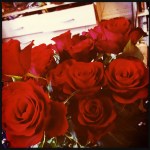
Stein’s famous quote on roses, ‘Rose is a rose is a rose is a rose’, seems to do two things. Firstly, it indicates an essentialist perspective on semantics—circularity conveying the uselessness of further description. Secondly, it enacts a qualitative echo chamber by which the reader must question what constitutes this essence, this roseness which is the rose’s identity. The repetition suggests the elusiveness of this essence, deferring with dreamy assertion—the kind of beautiful aphorism you might coin on an acid trip, completely sure of your own new logic. There’s a sense, with every ‘rose’, of meaning’s possibility blooming. You want to wrap the sentence in a circle (as Stein did, selling the phrase on plates) and close a precious loop, devoid of full stops and fixed meanings. Is a rose a rose or the space between a rose and what a rose is? Swap Saussurian triangles for sweet hips and sepals, a new rose budding in the roots. Lose all fixity for the chance trellising of structure, turn attention to sunlight, rainfall, temperature and other environmental conditions. Acquire tautologies and promise of spring. A rose is a whorl, a loop; a delicate head so heady with beauty. Humans like roses share beds sometimes. Look too long into the corolla and maybe you’ll lose your mind.

Idlewild: the secluded meeting place in L. M. Montgomery’s 1908 novel, Anne of Green Gables
Idlewild: the original name of John F. Kennedy International Airport in NYC
Idlewild: to idle wildly; to wildly idle; to idly go wilding.

You’ll always be, dissatisfied.” Perhaps the mere act of flicking through memories is a form of idle wilding. Making a wilderness of memory’s stasis. Depart only at airports; dwell between continental impressions of kisses.

100 Broken Windows marks a turn in Idlewild’s direction: from their 1990s brit-pop/punk roots to a more spacious, ambitious sound, influenced by the likes of The Smiths, The Wedding Present and R.E.M. When I first started listening to Idlewild, 12 or more years ago in those tender, pre-adolescent times, I sort of filed them as the Scottish version of Ash: they had that punk sensibility coloured by stadium choruses and a cheeky pop strain that balanced the anxious lamenting aspects. All sincerity, sure, but the lyrics were sharp enough to lift them from the sentimental pitfalls of subsequent contemporaries—the end of alt. history that was ‘Hey There Delilah’. Here we move into screaming emo or post-hardcore as inherent hauntology of the fuzzy rock club: the bourbon and sweat, the greasy hair, the frank, shuffling indifference of stoner punters. There were words that smouldered, sparked, then extinguished in the wind; but Idlewild had something different, a primitive attunement to human sorrow that cut through the gum-snapping cool of postmodern irony games, even as its affect blew up in a drumbeat or solo, the loquacious, Michael Stipe angst of Roddy Woomble’s voice. Think sonorous violins and a solid rock chorus, all the energy and wit being typically Scottish. Like the Manics before them, Idlewild did punk and guitar pop, did the stylised mosh and generic fusion, did the political and personal. The millennial malaise in their songs was very much of the times even as it seemed already tired of them:

It’s a better way to feel
When you’re not real, you’re postmodern (It’s not that one
dimensional, it’s not the only thought)

Cut out all feeling, except wait. There’s more. We don’t have to languish in the paralysing grunge of the nineties. The drama of strings would grace each melody electric and maybe you’ll find historic truth in this plugged-in homage to folk turned  on its head. If postmodernism is a Mobius strip of self-referentiality, that recursive collapse of linear progress (figured as a Scalextric set in the video for Idlewild’s ‘These Wooden Ideas’), then how to find meaning again, to find sense at all? Stand in a doorway and find yourself blasted with void fill, flick grapes in a wastebasket, count up your demons for the old stoned longing. Shrivel like raisins. The turn of the century has already happened, but maybe if you surrender to the chorus you’ll feel less jaded. There’s a reassurance. The thing about choruses, after all, is that they repeat.

As it does with choruses, algorithms and perennial blooms, repetition happens a lot in Tender Buttons, Stein’s infamously cluttered collection of prose poetics. With repetition and modulation, a queering of standard grammar, everyday objects become less the tools which underpin human existence, and instead things in themselves—the wasteful artefacts in excess of definition. Paratactical, concatenating assemblages which entangle like vines or else accumulate. Grapes on the carpet, styrofoam littering the floor, a word or two oozing through the backdoor…Am I far too close to the things I mistrust? Maybe there is always a stammering, a stilted stilling. I buy roses for the restaurant in which I work and the very act drags me into heteronormative time: the time of expensive dates, birthdays, weddings, funerals, candlelit dinners. What preference for the deep, luxurious, elusive bloom? Must lovers cut their tongues on thorns? I wonder, do those erect stems contribute their strange teleology…to what, to what…are roses always in excess of themselves—showering petals, shedding, being ever so much just roses?

I stopped and waited for progress”. Back in the day (2005), the NME rated Idlewild ‘a stolid group of trad guitar manglers’, whose new single ‘Roseability’ served ‘both as a rabbit-punch to the head of agnostics and a celebratory three-and-a-half minutes of safe, predictable, wholly generic, utterly brilliant rock ‘n’ roll.’ It makes me dewy-eyed to remember the magazine’s honest, scathing days. That insouciant, throwaway cool. Music criticism was pretty brutal when I grew up, and you basically had to tick every indie rock’n’roll formula (hello Alex Turner: snake-hips, haircut etc) to get consistently decent reviews. Or you could nail the attention on some eccentricity (The Horrors), or perhaps mediocre throwback to rock’n’roll times gone by (need I name every white boy indie suspect circa 2007). ‘Roseability’ is how it feels to be in your twenties, surrounded by people looking backwards; not quite in anger, but in nostalgia. It’s been a long time since I’ve considered something new as ‘utterly brilliant rock ’n’ roll’ in the transcendent sort of way Idlewild pull off—hardcore guitars, thrashing drums, literary references and all. Sweetness and thorns. Uneasy noise secretion. Tip your hat at tradition and then blast through the chorus, scatter your petals to cover the seams. What words in ‘Sacred Emily’ follow the roses? ‘Loveliness extreme’. I miss the NME, I miss being young enough to get lost this easily.

To veer into Idlewild itself, let’s wallow in passages from Anne of Green Gables:

You know that little piece of land across the brook that runs up between our farm and Mr. Barry’s. It belongs to Mr. William Bell, and right in the corner there is a little ring of white birch trees–the most romantic spot, Marilla. Diana and I have our playhouse there. We call it Idlewild. Isn’t that a poetical name? I assure you it took me some time to think it out. I stayed awake nearly a whole night before I invented it. Then, just as I was dropping off to sleep, it came like an inspiration. Diana was enraptured when she heard it. We have got our house fixed up elegantly. You must come and see it, Marilla–won’t you? We have great big stones, all covered with moss, for seats, and boards from tree to tree for shelves. And we have all our dishes on them. Of course, they’re all broken but it’s the easiest thing in the world to imagine that they are whole.

That endearing, childish hyperbole, the absolute thrill of invention. The special grove in a ring of white birch trees, heart of the circle, the rose’s secret pistil. Place of germination. Fragments congeal as expansive imaginings, disappointment evaporates in hope.

Gertrude Stein said that’s enough”. I’m not quite sure how Roddy Woomble, Idlewild’s lead singer, intended the Stein namedrop, but I take it as a reference to her poems’ weird loops of recursion. In the video for ‘Roseability’, Stein’s portraits are hung up all over the room; her face is even on the front of the kick drum, looking all knowing and stately. The video’s aesthetic has the feel of a 90s television set, all pop art circles whose colour has faded, sharp swivelling camera angles and hair swishes. The pop iconography of teenagers flooding the room with their plastic bracelets, braided hair and awkward moshing. It would be totally American if not painfully, most Britishly sincere—I mean just look at how the guitarist crushes into his own instrument, how Woomble wipes sweat off his face, paces around with the mic so close it could feel his breath. Loveliness extreme. When this was released, I wasn’t even a teenager. When I finally see him live, it’s in a church hall in Maryhill 2k17 and it’s utterly beautiful: how generous the set-list, how gracious a frontman with his small-talk and nods to the band, his thank yous. Watching the kids in the ‘Roseability’ video recreates that weird oscillation between feeling old and seeing in their faces the bizarreness of MTV ennui: the ghost of what I would temporarily become at thirteen, fourteen; cladding myself in discount Tammy girl, then Topshop, dying my hair pink and donning studded collars. With the hormones, you lose that ecstatic childhood imaginary hope; desire is amorphous and endlessly droning. You close your eyes and it seems the world has already ended. Sometimes it comes back, sometimes not. Maybe roseability simply means innocence.

‘Mrs. Dalloway said she would buy the flowers herself’ (Woolf). But customers rarely do. It’s up to me to ornament a room, to flourish a mood, to mark some milestone in another life that’s not mine, whose linearity’s not mine.

My mother bought rose-coloured roses for my eighteenth birthday, blush pink. Red when I turned twenty-one. I stopped acting sweet and rosy, dyed my hair red too. Fell through the whorls, the plush abyss.

‘Roseability’: the ability to be of roses, for roses to exist? Sensibility is, according to my laptop’s built-in dictionary, ‘the quality of being able to appreciate and respond to complex emotional or aesthetic influences; sensitivity’. Does roseability denote a similar sensitivity? When we think of roses we think often of Englishness: that angelic Laura Marling figure, a garlanded Bronte heroin, Paul Weller’s ‘English Rose’. We think tenderness, pastoral, a certain enclosure (marriage, gardens?) and guaranteed loveliness. She who coils golden hair round her porcelain finger, who knows how to talk to sheepdogs, who paints watercolours of the dawn. We think Shakespeare—‘a rose by any name would smell as sweet’. But we also think north of the border, a little bit of the visceral made kitsch: Robert Burns’ ‘my love is like a red, red rose’, whose unfortunate fate is to garnish every dishtowel bought on your granny’s last visit to Alloway (Roddy Woomble, perhaps not incidentally, is also an Ayrshire lad). The faint rose scent in a golden cologne, mingled with tobacco; the glistering sweetness of a youthful, drugstore perfume. Roses are roses, but roses are so many things, are poised on the lips of also…

The rose is a complex flower, a perennial whose species number over 100. Roses are typically ornamental, grown by those who know what cultivation means and spend their Septembers clipping away the thorny remains. An old man round the corner from my flat is out in all weathers among soil and stem: grafting, trimming, tilling for his roses. Perhaps he loves them more than his children. In summer, walking home on warm evenings you can smell them in the pale ambrosial air, a delicate bounty. If properly cared for, roses can live a long time, perhaps over and over, perhaps forever…what exactly does perennial mean?

The appropriately named Bloom, in James Joyce’s Ulysses, stands on Cumberland Street and opens a letter from Martha Clifford—a woman who responded to his newspaper ad requesting a typist. The Dublin postal system facilitates a sort of illicit exchange between them. Half-rhyme, consonance: petal/letter. The delicate thrill of letterly infidelity. She wants to know ‘what kind of perfume does your wife use’; the animal possession of scent. She attaches to her letter a flower, slightly crushed:

He tore the flower gravely from its pinhold smelt its almost no smell and placed it in his heart pocket. […] walking slowly forward he read the letter again, murmuring here and there a word. Angry tulips with you darling manflower punish your cactus if you don’t please poor forgetmenot how I long violets to dear roses when we soon anemone meet all naughty nightstalk wife Martha’s perfume. […] Fingering still the letter in his pocket he drew the pin out of it. […] Out of her clothes somewhere: pinned together. Queer the number of pins they always have. No roses without thorns.

So many compound words, clustering in the mouth like so many attaché petals peeled off from a dress. He plucks them away, fingers the soft excitement of words: ‘naughty nightstalk wife’ with the luridly alliterative twist of fantasy. Libido vs. loss of life. What slips away with the pin? What does the pin pin together? Folds and creases, sleepless. Spike of cactus, nasty, phallic. Prick. Tulip. Coiled anemone: wild flower or tentacular sea creature? Connotations of slip. In her slip. Slippery. Freud in The Interpretation of Dreams, waxing lyrical about female genitalia:

I thought of what seemed to me a venturesome explanation of the hidden meaning of the apparently quite asexual word violets by an unconscious relation to the French viol. But to my surprise the dreamer’s association was the English word violate. The accidental phonetic similarity of the two words violet and violate is utilised by the dream to express in ‘the language of flowers’ the idea of the violence of defloration (another word which makes use of flowersymbolism), and perhaps also to give expression to a masochistic tendency on the part of the girl. — An excellent example of the word bridges across which run the paths to the unconscious.

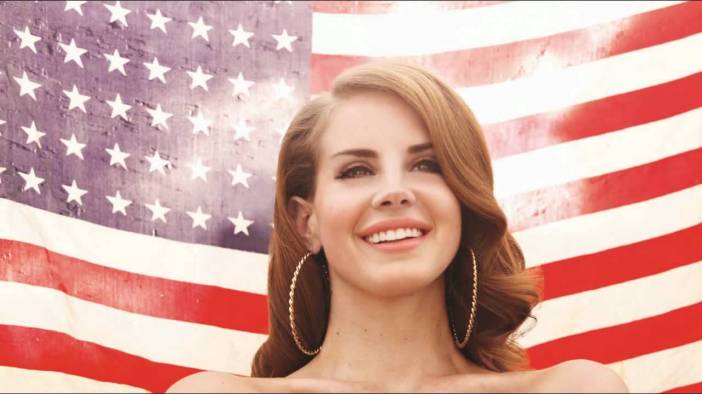
Dear roses dear romance; violets are pale taste of childhood’s sweet naivety. Violets are blue and so are you. Things you can take away. Lines of flight, tangled stems and botanical echoes. Semantics. Lingering taste. The burgeoning rhizomes of the greedy unconscious. Lana Del Rey: “there are roses in between my thighs / and a fire that surrounds you”. The Metro calls it a ‘shocking new track’, but I’ve never heard anything so languid and dreamy and in love. Hungry. Sugar is sweet and…

a9870a00b4965e682c4e3a3a89f4e6b8
Source: Pinterest

Angela Carter’s roses bite, don’t you? In ‘The Lady of the House of Love’, the self-starving somnambulist—the ‘beautiful queen of the vampires’—is a figure for desire’s recursive, self-destructive appetite. Manifest as addiction, or withdrawal; the flesh-shedding lust of anorexia, its resistance to growth and fuel. ‘She herself is a cave full of echoes, she is a system of repetitions, she is a closed circuit’. Her dialogue billows round and round into absence. Like Stein’s rose, she is bound to the noun and the grammar of herself—the flickering inward structures of mind, matter. The Algorithmic Beauty of Plants. Clustering rootlets, trapped yearnings for impossible perfection. No rose can be the perfect rose; except perhaps Stein’s rose: the virtual rose at the end of the looping rainbow. Loopy, lupin, lupine, luminal. Devouring, emanating, alluring. The virtual rose, perfect by its very impossibility, like Mallarmé’s Book. So many leaves and words. The stain of ink and rain, imprinted teeth. Carter again: ‘I leave you as a souvenir the dark, fanged rose I plucked from between my thighs, like a flower laid on a grave’. Those intoxicating roses, like Carter’s baroque, coruscating prose, cascade across the page, the white snow, the grave. La petit mort. In every petal the promise of a word, a breath.

Roseability. Faith in the unknowingness that is adulthood’s full blooming. Desire’s maturity bound in nostalgia, that noxious plague of your twenties; the ‘sense sublime’ of Wordsworth, five years later, experiencing ‘something far more deeply interfused’. Like the rose’s corolla, time rolls both round and onwards. It’s nauseating, an almost vortex. You’re always chasing that inward spirit, the thing that burns regardless: “They won’t teach you / what you don’t already know”—don’t Idlewild know it?

There is no roseability.” Enduring, complicated, hungry and sweet, it’s no surprise that roses are symbols for romantic love. Oh hallowed, protected cliché. Expensive hotels strew red roses on white bedsheets, a look that is oddly funereal. Share the ephemeral with melting chocolates. Reminiscent of menses, the blot of a clot in time. He got shot. She bled freely. Blood is like iron, a sharp metallic taste. What do roses taste of? What kinds of symbolic immersion might get at the essence? A bathtub of roses, a bedspread, a bouquet exploding for wedding celebration. Petals of confetti; a blossoming, artificial effect. White roses can be purity, lightness and marriage; or maybe undying love in death, restoration of innocence. I love you as the snowfall that closes Joyce’s ‘The Dead’. Sitting on the languid banks of a river in June, desecrating a rose with your sorrow: one petal, he likes me, two petals, he likes me not. Enough petals to fill a river, all the world’s worth of unrequited love. Red upon red upon blue. Flowing, felt in the blood. But no river is ever twice the same, no rose identical, no inflorescence—despite the algorithmic genius of plants—symmetrical. The beauty of roses comprises their subtly unique detail. ‘Lesser’ flowers, mere ornaments to weeds, clutter up close in mutual similarity. Maybe’s Gatsby’s Daisy could be anybody—she just had to be sweet and blonde, smelling of the damp rich old world, ersatz fresh, ready to decorate. The colourful shirts were mere petals for the true dark rose of his longing. Did Gatsby have blue eyes? I can’t remember.

I did a hard-drive search for the phrase ‘blue rose’ and found an old flash fiction piece I wrote years ago, called ‘Watercolours’. An extract:

The garden fills with new light; conscious light, collecting a clarity not quite recognised. The roses have left their earthly bodies, and the worms burrow up through the untilled soil. The roses’ spirits lift the leaves from the trees and scatter them like sloughing flakes of a giant’s skin. A sigh escapes the sultry violets, the ones he captured once by mixing blue and red. The red poppy is a pretty thing, but she is unborn yet. A mulch of memory overturns as day decides to end.

Isn’t it strange, the seduction of fairy tale ecomimesis? Nature’s ekphrasis surrendering effortlessly to the same saccharine motifs; the kitsch aesthetic containing within its insistence a certain artifice, then the theatrical mists of deliberate illusion. I think of watercolours and I think of everything blurring. Colours decay in the rain, or do they saturate? And again, the roses and violets, whores and madonnas? What of the feminising of botany’s blushing ornaments, ‘captured’ by a (male) artistic vision? But time is ever more flowing, desire afloat, liquid and trembling as rain. What would it mean to anthropomorphise roses, to imbue them with certain abilities? Roseability. These would be the most precious roses, the memorialising and future-making symbols. The blue ones.

I also found a piece from 2013 titled ‘Blue Roses’ It’s about a botanical garden famous for its sky-coloured flowers. The narrator’s lover, Richard, laments the death of his mother and talks about what it would be like to be a carnivore plant. The narrator says: ‘“Those long, slow deaths would suck out your soul.”’ Was I reading Carter at the time? Nature (always capitalise to denaturalise) in this story is narcissistic, strange, devouring: stars are ‘aware of themselves’, the twilight forms deliberate ‘geometric patterns’, the rain ‘spilled out in oozing puddles that clogged the scum of the pavement’. Security patrol the blue roses in the glasshouses. It isn’t entirely clear what they mean in the story. Symbols for what? Eliding natural selection, these monstrous flowers blur into nothing but blueness—the exotic quantity, intangible mystery, possible infinitude. Despite the wholesomeness of the tale, I couldn’t help but think of the weird erotic undertones of its spooky botany. Blue rose, blue movie.

So yes, the very phrase ‘blue rose’ denotes something exceptional in Nature (in Twin Peaks, a ‘blue rose’ case is one which involves supernatural elements). In Tennessee Williams’ play, The Glass Menagerie, Laura (a character based on Williams’ mentally ill sister, the aptly named Rose) is nicknamed ‘Blue Roses’ on account of her fragility, her spiritual affinity with that which transcends the ordinary (and a childhoood attack of pleurosis). Laura dwells in a surreal version of reality; her very nickname harks back to André Breton’s ‘First Surrealist Manifesto’: ‘Cet été les roses sont bleues’ (this summer the roses are blue). Things have reversed and in their delirium remain quite beautiful. Roses, blue or not, are associated with a certain precious wavering between worlds both spiritual and physical; worlds crossed only by rare occurrences of romance, imagination, memory. He loves me, he loves me not…Laura is obsessed with a little glass unicorn, symbol of mythology, virginity. Preservations of the body for another world, or from another world? I go into the woods and find fairy rings made from small white flowers (I think of the inverse fable of extreme depression, the harp-sparkling Manics’ track, ‘Small Black Flowers That Grow in the Sky’). While there is a lovely joy to the common daisy or meadow flower—an ethereal quality that recalls our initiating buttercup crushes—the deep lust of Romance must be associated with the scarlet plumage of the rose. Love is calculated on decadence, exception.

Is a rose as shatterable as glass, as a heart?

IMG_0500

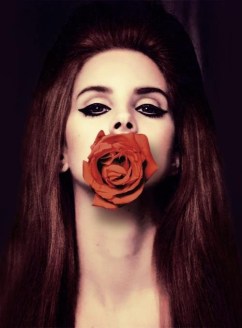
I used to live in a house called ‘Daisybank’, but my friends always teased because there were roses painted onto the window, not daisies. What weird reverse supplement? The fat white dog daisies would spring up on the front lawn in summer, but they were always overlooked by those glassy roses. There’s a certain authority, majesty even, to the rose. You associate it with tragedy and great beauty: Lana Del Rey with her lips stuffed full with a rose, playing the calamitous heroine. Snow-White and Rose-Red. Shakespeare’s ‘a rose by any name would smell as sweet’ is taken from Romeo and Juliet, in which Juliet convinces Romeo that it matters not that his name, Montague, is her family’s rival house. A rose is a rose; regardless of name it will always come up smelling of roses. Having graduated from Daisybank, I now find myself living on Montague Street…

‘Who dreamed that beauty passes like a dream?’ This is W. B. Yeats, probably writing to a woman he loved, Maud Gonne. He seems to set up beauty as life’s eternal opposite; where human existence is fleeting, beauty remains archetypal, enduring. Think of Keats’ ‘beauty is truth, truth beauty’. There’s a universality, a mythological underpinning to this beauty. In Yeats’ poem, the loved one embodies wistful figures of glory: Helen of Troy and Usna of ancient Irish history. Surely she slips between the shadows of comparison? Whether Yeats scorns the idea that beauty ‘passes like a dream’, or whether he ultimately reveals its truth, is unclear.

For Immanuel Kant (see, Critique of Judgement), the experience of beauty hinges on a paradox: since it seems that beauty is a property of the object—indeed, emanates from it—you’d think beauty itself was universal. Everyone should fall in love with that painting, that colour, that song. But not everyone does find the same things beautiful. It feels like a betrayal of reality when I play Radiohead’s ‘True Love Waits’ (where roses are swapped for “lollipops and crisps”) to a friend and their reaction is a casual ‘meh’ and a shrug, while all sorts of biochemical reactions of wonder and euphoria are swirling around inside me. Beauty, for Kant, is largely nonconceptual: that is, there’s an unspeakable quality to it, a thing you can’t put your finger on. In Realist Magic, Timothy Morton describes it as beauty’s ‘je ne sais quoi’. Being unable to pin down what it is that makes a thing beautiful is part of its beauty. You take a rose. You could describe its petals, its inward swirling whorls, its scarlet colour, the slenderness of its stem; but in doing so, you lose the rose itself. As ever in synecdochically applauding a woman you lose the woman. The love object. The love? Recall Shakespeare’s ‘Sonnet 116’? ‘Love is not love’; it’s what it is and it isn’t, and what’s left over as forever. 4Eva/4Real. Personally, I prefer Cate Le Bon’s take: “Love is not love / When it’s a coat hanger / A borrowed line or passenger”.  But isn’t everything stolen and temporary, in transit? How do you claw back the rose when the rose, maybe, is just this epic symbol for love? What moves in the static eternity?

I used to draw roses all the time; I’d always start in the centre, finding my way outwards with liquid ink. You see I had no conception of the rose’s shape, I was just following the shaky trajectories of layering lines. Important not to excise too sharply the arrangement of beauty, to impart onto nonhuman forms a reified taste. Eroticism preserved by ellipsis, meditation contained in the mysterious code of the senses. What was it Wordsworth said so long ago, in his famous tract against book knowledge: ‘Sweet is the lore which Nature brings; / Our meddling intellect / Mis-shapes the beauteous forms of things:— / We murder to dissect’. Wordsworth would prefer you to go out and encounter the objects themselves rather than try to ‘dissect’ them through rapturous, scrutinising poesy. Being one of the great Romantic poets, distracted by words even when in Nature, Wordsworth is of course a filthy, (forgivable) hypocrite—up to his knees in Kant’s paradoxical beauty as much as the rest of us.

Making words of roses involves cutting their heads off, losing the essence, letting the adjectival rose oil leak into language’s dripping pores. Binding the immortal to time. That seepage is ink, is tense’s durational flow, is poetry’s cruelty. This is perhaps what Mallarmé means when he says: ‘Je dis un fleur, et le fleur est parti’—‘I say a flower, and the flower is cut/split/gone’ (translation: Tom McCarthy). To break the object of beauty down in writing is to incur a violence; as McCarthy glosses, ‘Things must disappear as things in order to appear symbolically’. What is perhaps most seductive is the remaining qualities, the deconstructionist’s milk and honey, the semiotic residue that clings between things. Spiderwebs, woven by first light, acquire a serene and gossamer gleam; but what is most seductive perhaps is the spaces between the lines, the way up close the lacing makes new frames for the real, the scenery behind and through.

Then we have Derrida’s ‘maddening’ supplement. For all roses refer to other roses, to every iteration of the word ‘rose’ throughout literary history. What a rose means can only lie in the space between these occurrences, and even then the meaning is temporary, contextual—there is no outside text, no place in which to hurl your roses to semantic abyss. We might hope for Love as some manifestation of the Lacanial Real, a pre-symbolic realm of pure emotion; but love too (as Roland Barthes reminds us) is discourse, perennial and yet bound to the fluctuations within language. ‘Rose’ is a noun, but it is also qualia: the subjective quality of something that cannot be objectively measured. Her cheeks were rosy, the rose-coloured sand (of the dream sequence in Michelangelo Antonioni’s film, Red Desert), a rosiness to the air that spoke of July. By scaling tone, we might get a general sense of what ‘rose’ is (a quality defined by difference rather than identity), but we’d never get to see rose through someone else’s experience. What is ‘rose’ to one poet might be ‘pale and bloody’ to another. Rimbaud writes, ‘The star has wept rose-colour in the heart of your ears’. Abstraction meets the concrete which itself is a spill through synecdoche. What music seeps, weeping, into the beloved’s ‘ears’? ‘Rose-colour’ becomes that synaesthetic property, the oozing, effulgent thing that cannot be pinned. For colour, like music, is perceptively subjective. What prompts a sudden spasm of imagining in you might send me to sleep; could we call both actions reactions to beauty?

‘It’s hard to stay mad when there’s so much beauty in the world’. So goes the line in American Beauty, Sam Mendes’ 1999 suburban modern classic—a film about midlife crisis, inappropriate lust, neurotic materialism and the nuclear family under late capitalism. Where Ricky, the visionary, weed-smoking teenager, sees a sort of sublimity in waste, videoing a plastic bag’s leaf-like billows in the wind, Lester falls for his daughter’s cheerleader friend, Angela. The particular Gen X fatigue over cultural trash and consumer excess is recycled as a pared-back appreciation for symbolic indications of the world’s decay—little quotidian details which offer momentary redemption as beauty in tragedy. The old Kantian adage of beauty’s je ne sais quoi. Lester’s misplaced infatuation for Angela is represented by motifs of lurid red roses, flowering outwards like bloody snowstorms of feminine intensity. The chase falls cold when they kiss IRL, and he realises she is just an insecure teenage girl. Tell me I’m beautiful. Interpreting the film is as tricky as trying to clasp onto any one of those whirling petals, to kiss a single tear on an eyelash, a dew-drop clung to the flesh of a rose. Joni Mitchell, in ‘Roses Blue’: “I think of tears, I think of rain on shingles / I think of rain, I think of roses blue”. A lyricist’s ability to make pearls of emotion. Superhydrophonic. Is this another symbol, listless, transient, glistening?

The Symbolists were mostly French poets of the fin-de-siècle, the likes of Rimbaud and Baudelaire (whose flowers were assuredly evil), who probably drank quantities of absinthe and wrote symbols that emblematised reality itself, rather than merely inward feeling. All that absinthe had to come out somewhere, idly wilding in the streets of Paris (pronounce it the French way). Where abstraction reigns often in the world of emotion, meaning accumulates through the repetition, modulation and pattering of these symbols. While Mallarmé’s poetry indulged in dreams and visions, it’s a certain patterning of associative power that provides the stitching behind his fashion for aleatory. The poetics of chance may still have a structure of sorts, something you can trace like the veiny trellises within a leaf. W. B. Yeats, the Irish Symbolist, loved a good rose: just see ‘The Rose of the World’ and ‘The Rose of Battle’. In his essay, ‘The Symbolism of Poetry’, Yeats makes frequent comparisons between symbols and music, describing the ‘musical relation’ of sound, colour and form as constitutive of symbol.

At a workshop I’ve been running with homeless people, a girl who shares her name with Stein’s favourite flower reads out a piece she’s written in ten minutes flat. It’s a typically tragic tale of abuse, of a family torn apart by pain, drugs, death and violence—written from the perspective of a ten-year-old girl, perhaps her daughter. She reads it with a stilted west coast accent that picks up its confidence and lilt as the sentences run on. Somehow in those sad and wilting lines, strewn with the accidental detritus of truth, there’s hope. It blooms so unexpectedly in all the despair. A ten-year-old girl sees the world very clearly and pure. I can only paraphrase, of course. I’m sad that I don’t get to see my mother, but she says that it’s okay because if I look at the moon I know that she’s looking at it too. This part struck me harder than any other—it seemed an echo from elsewhere. The whole piece became suddenly a buildup to that single, simple, irresistible image. When Yeats presents Burns’ ‘perfectly symbolical’ song of the moon and time, he misquotes him. Translation falters to glitch, like with lossy compression. The moon as a symbol, as something to be shared, a white chocolate button broken in two. Except you can’t split the moon. You can only imagine what the other person is seeing. I wonder what they were looking up to.

Where metaphors ‘are not profound enough to be moving’, symbols move in both senses of the word: they act through motion, the accumulative or associative arrangement of sound and meaning (as opposed to metaphor, which acquires meaning through more static, straightforward comparison), and they prompt affect in the reader. Such affect is not just the temporary indulgence of an artwork’s emotional value, but can indeed alter how the world is discursively understood. The rosy words thrown upon some poetic zephyr recalibrate reality as we know it. As Yeats puts it:

Because an emotion does not exist, or does not become perceptible and active among us, till it has found its expression, in colour or in sound or in form, or in all of these, and because no two modulations or arrangements of these evoke the same emotion, poets and painters and musicians, and in a less degree because their effects are momentary, day and night and cloud and shadow, are continually making and unmaking mankind.

The construction of feeling through symbols, then, institutes the substance and gaps that structure how we relate to ourselves, others and nonhuman objects. A very delicate, precise, imagist poem like William Carlos Williams’ ‘The Red Wheelbarrow’ has effectively changed how we relate to both the colour red and wheelbarrows more generally (never mind the ‘white / chickens’). Symbols can charge our perception with fresh emotional channels. Music relates a bit differently, of course, but only because it literalises Yeats’ musical relation metaphor—there’s a more physical intensity, maybe. Like a river (you can never dip your finger twice in the same river), a piece of music cannot be played the exact same way again—a truism owing to the arbitrary dynamics of individual players, environments, acoustics or subtle interruptions of duration. A breath or a sneeze, a chance sigh in the background, a trumpeter who can never quite pace her crescendo. You experience the opera differently from me, even though we watch the same one (I have never been to the opera). My hearing is slightly muted, along with my interest in self-congratulatory coloratura; while you have perfect pitch, ears that ring with pleasure as the high notes hit. Though the same in one sense, comprising a shared duration, our encounters are completely different. Music’s durational function is made explicit with the likes of John Cage’s music concrète, composed of sounds rather than notes and thus retaining elements of chance within a certain duration. The process becomes more about selection, sampling and curation, rather than composition according to tones, melody, chords.

If anyone idled wildly, it was the notoriously languorous aesthete, Oscar Wilde. The decadence of roses is also associated with a certain concretisation of language, a making material of words, a honing of time and world. Consider the opening line of The Picture of Dorian Gray: ‘The studio was filled with the rich odour of roses’. The way assonance works, subtly wafting its chiming vowels through ‘filled’/‘rich’ and ‘odour’/‘roses’, creates that musical relation that Yeats so fetishised. Poetic techniques such as alliteration and assonance abound in Wilde’s novel, where prose becomes musical, lilting, exactly honed upon sensory detail, the vivid relation of objects. Roses that fill a studio, that pungently glow with lavish scent. There is a heady, ambient quality to much of Wilde’s descriptions, giving off the impression that we are perhaps perceiving how objects seem to one another, filtered through the opium vapours that so penetrated Dorian’s accelerating decadence: ‘In the slanting beams that streamed through the open doorway the dust danced and was golden. The heavy scent of the roses seemed to brood over everything.’ Objects are at once anthropomorphised and ornamental; that play between movement and stasis, however, cuts across binaries between human and nonhuman. The world of Dorian Gray is sprawling, random, a chase through meshes of entangled desire. A straightforward death drive is diverted by all sorts of sensory encounters, plastic morality, visionary beauty. And words? Words in Wilde are the petals that swell and unfurl into Yeatsian symbols:

Music had stirred him like that. Music had troubled him many times. But music was not articulate. It was not a new world, but rather another chaos, that it created in us. Words! Mere words! How terrible they were! How clear, and vivid, and cruel! One could not escape from them. And yet what a subtle magic there was in them! They seemed to be able to give a plastic form to formless things, and to have a music of their own as sweet as that of viol or of lute. Mere words! Was there anything so real as words?

Words have (re)active potential. Each one shivers with the weight of its every use, alive with subtle magic. Be careful what you write.

Gertrude Stein said that’s enough (I know that that’s not enough now)”. Gertrude Stein said a rose is a rose is a rose is a rose. She said it first in ‘Sacred Emily’ (1913), and later wrote, in ‘Poetry and Grammar’:

When I said.
A rose is a rose is a rose is a rose.
And then later made that into a ring I made poetry and what did I do I caressed completely caressed and addressed a noun.

What do we swap for tautologies? Love is tautological; love justifies itself. It means everything and nothing. There’s isn’t any escaping the reifying loop, the ring with its symbolism of marriage. That which encapsulates and closes. The hermeneutic circle. Stein makes us linger, ponder the grammar of each rose. Ring-a-ring-‘o-roses. What does it mean to ‘caress’ a noun? To render the erotic potential of language by gesture of touch, extend into physical… Idlewild: a word whose internal rhymes fold together, whose l sounds caress the roof of the mouth.

Gertrude Stein said that’s enough.

Lana Del Rey: “You always buy me roses like a creep.
Also Lana Del Rey: “And then you buy me roses and it’s fine.

There’s a surfeit of petals and sex, a gluttonous economy of symbols which Stein stamps out with the simple carousel of her musical roses. Sing it slowly. Tell me what you mean.

Luce Irigaray, from This Sex Which Is Not One:

Your body expresses yesterday in what it wants today. If you think: yesterday I was, tomorrow I shall be, you are thinking: I have died a little. Be what you are becoming, without clinging to what you might have been, what you might yet be. Never settle. Leave definitiveness to the undecided; we don’t need it.

Lana Del Rey, reading from T. S. Eliot’s Four Quartets:

Footfalls echo in the memory
Down the passage which we did not take
Towards the door we never opened
Into the rose-garden.

I pass between worlds and names and symbols. Every lipstick stain is another iteration, each kiss the palimpsest of the first, and even photographs fade in the sun, faces dissolving like planes behind clouds. Of ‘cappuccino pink ranunculus’—not roses—Colin Herd writes: ‘They’re at their most ravishing and / ethereal the day before they expire’. I imagine a white corridor imprinted with all your flickering dreams. Between realms, the soft wilt allures more even than it does in bloom. Images become sentences: long thorny stems of sentences, stretching and snarling a confusion of brambles and briars. The more you write, the more you grow your beautiful garden. I tear my wrists and fingers, trying to get to it: ‘There is a forcible affect of language which courses like blood through its speakers. Language is impersonal; its working through and across us is indifferent to us, yet in the same blow it constitutes the fibre of the personal’ (Denise Riley). This garden I make is not really mine and daily it grows stranger. The roses offer their pretty heads, then droop in winter. I hear their beautiful words in arterial melodies, sprawling among shadow, platitude, the skeins of a letter letting loose through my pores.

Roseability: the quality of forever chasing roseability. File under qualia, noun/rock, the poetics of etcetera.

tumblr_o34tbyABi21qfqngko1_1280.gif
gif. credit: : : Douglas Pattison

Playlist: October 2017

IMG_7632.JPG

(disclaimer: my god i’m feeling autumn morbid)

Time is a stopped drumbeat tonight; it is the remnant of old Halloween feeling. Singular childhood memories: salt-crisp toasts in the shape of witch hats, chocolate spiders, fireworks; a plastic bag snagged on a tree, resembling the gossamer trace of someone’s soul. Pumpkin seeds sprinkled paprika, oven-roasted. Surrender to central heating. I close my eyes to desolate parking lots where the wind buffers round and round in the thick-whorled conch of my ears, which have not heard enough in their time; filled with white noise and melodies honeying the sore parts to moan or depart. We talked about feeling passionate or just not at all and long communications across channels across waters and distances of spacetime unfathomable to the little things beating in our chest that were tender of fibre and sinew, blood and bone. Heart attack, absence. A craving for airports, places of arrival and departure. Erase all communion. At the very least, some ferry terminal where the rain lashes my face and it’s like being born again and over and over–the way a shell is each time the tide unfurls some granules of sand in ribboning form, sweeping layers of time back over the nacreous skin. A white shape looming chltulu from darkness, from blue. Suddenly nostalgic for everything; days where less pressed upon the brain, where a deep abyss still made its outward ripples around me. The wake of a ferry, see the whitening arabesques of that line. Days sloshed out with delicious, ice-deprived, inexpensive whisky. The blurriness of alcohol a delay, an appeal. Repeat. Too many nights lost in flats without sense of an ending, every corridor a wind tunnel. Cycling home the abstraction. Best to present this as fact or fiction?

Bursts of prose, aches and pains behind the ears, deep in the muscle and bones. Getting harder to cling to routine. The nights draw in malevolently, extravagant in their darkness. Things to look forward to seem less and less. Sometime you come home; you come home and there’s a version of home I swim through, salt stung and sober but nonetheless longing for home. Less lost tracing same old routes, longing for the everywhere nowhere of hill mist and sea fog, rivers you step in forever for each time is another, another. Moss between cracks in the patio driveway. Keep mesmerising beats still close to sleep. Fabricate reality.

Spent inordinate quantities of time this month listening to Elliott Smith. Sad pale lullabies from a lonely Los Angeles. I pace these streets, pretending they’re boulevards. The only palms here are ugly, reedy, hardy. Stop wearing liner because regardless the irises stream. The wet leaves gather and stick and are swept into gutters. Gelid, compact. Packed into bags. I don’t know where they go, where the end is.

We put the radiators on for the first time since spring.

Autumn requires more indulgence in pleasure. Thickening of the flesh. I buy spice and wait for sweet potatoes to warm on the stove, thinking of how music creates space and it’s space that I need—so much space and space. Space is space is space. Where strings elasticate the littler twinges of pain, I’m counting the falling beats of a piano far from my room, far steadier than the twitches of dreamcatcher feathers above my bed. Tidal sighs. Voice grows frailer with audience, chance Saturdays off work recounting old lines in the sea pace of rain that steadies the brain in concrete roads. The opening chords, like coming home. Dusk slowly loses its dramatic autumnal sense of transition. Winter steals ruthlessly, magpie glitches of silver light. My hair dulls against the cognac gold of the leaves, their magical lambent light. My skin gathers sapphires, latticed and laced with violet blue, violent hues. Bumping my legs on things in my room because it is all too small, dollhouse small & ever shrinking; the arrangement of objects and clutter and books that spill over and spaghetti tangles of words I can’t follow because sleep might steal me. Words, words. Lurid in sentence through sentence. Sleep is a sort of ache you have to embrace for the sake of refreshing, a scab you can’t pick off the physical. I might dream of tomorrow then fold back on the future. Sentences come in again, re-calibrate time. I wake up frozen or burning; or I stay up late, stay up beyond human time, missing summer’s songbirds in the garden. It is all too cloudy, shivery, silent. What time is it wherever you are? The maps provide little flavour; I cannot orientate myself on those pastel colours. Still, there is a durational beauty to everything we speak of, itching towards light with crisp new lines. A photograph, then words. White upon deep, messenger blue. What doesn’t feel borrowed, what feels mystically distinct and uncertain. It’s lovely. Confessionals kept abstract as always. So many meetings with those who inspire. Except there’s the dread. How can you hold so many words in your head?

I make notes on the moods in work the way you would weather. There is often a pattern, a miasmatic misery catching. A cold front coming. Hysterics and dashboard laughter. Smashed glass. Not even a full moon and still the weirdos flock in with awful demands: this wouldn’t happen in St. Andrews! I picture myself between two places; oscillations of identity with a flareup of possible rupture. Between two needs. She says there is something deeply wrong, a pang out of sync with the rest of her body. Is it possible to be this body without organs? For you are all fingers and bruises, lashing trellis of glitter and breath. There was a hurricane that buffeted our ill-equipped figures, our red raw fingers. You could hear the wind flapping in the scaffolding like the masts of a ship. I walked west alone, the cold so hot in my throat. Strangers asking me where to dance. Plug up the volume. When the trippier synths came in, eloquent cross rhythms coasting, the serenity would cure this feverish dreams. Too many tenses tangled. Stifling coughs in working clubs, watching a friend make music on telly. Fairy lights blinking out of sync. A sudden swelling pride over the fact that such beautiful things can exist. His reticence, his crazed expression. What was it she said? We can’t have nice things, that’s why we lose them. It’s true, they slip away from you; or else we’ll drop them like keys down the drain. Maybe that’s okay, maybe that’s the best part, the losing and leaving and dwelling in pain. O sweet naivety. Everyone is leaving. I would hurl my keys in the sea for you.

Far away on a rooftop smarting my brain on the stars and learning to drink again.

I walk home in the lost hour and screaming teenagers costume the streets with vague and avid despair or else carnivalesque they paint dawn with hilarious shadow.

=> Switching the radio on at six in the morning haven’t slept yet & what comes on just another crap Motown no. recalling fresh restaurant hell… <=

UNIT. UNIT. UNIT. // these misdirectives I will follow forever not knowing, not knowing. She sounds a bit like Bjork when you turn the sound right up to a shrill; a brittleness threatening to shatter all that is cool and sound and sound. She is pure sound. She is bitterer, sweeter.

><

I wonder how long to lose a day to a train? Somehow the north beckons: the sense of my smallness; a need to be swaddled in brisk wind, sea smell, true Scottish frost…may we bury our feelings in negative hypothermal versions of now…but for now I can only look forward to seeing Com Truise on Thursday & drown out & drown out…

*

Lee Gamble – Déjà Mode

Alt-J – 3WW

Moses Sumney – Lonely World

William Patrick Corgan – Aeronaut

The House of Love – Fade Away

’Til Tuesday – The Other End (Of the Telescope)

Phoebe Bridgers – Would You Rather

Elliott Smith – Twilight

Courtney Barnett & Kurt Vile – Peepin’  Tom

Rob St. John – An Empty House

Sufjan Stevens – Wallowa Lake Monster

Cocteau Twins – Pearly-dewdrops’ Drops

Good Good Blood – Running in the Dark

Joni Mitchell – Roses Blue

Kathryn Joseph – the bird

Johnny Flynn – Hard Road

Simon & Garfunkel – Kathy’s Song

Lost Water: Towards a Phenomenology of the Kyle Centre

skylight.jpg

A crumpled local newspaper, ink bleeding in the rain, a tattoo of useless words on the Styrofoam takeaway. A case of stacked metaphors, every sentence weighted with the freight of muscle, plunge, pressing ahead. Snowflakes of unbreakable material make their way across bladderwrack pavements. Words like eateries and retail melt through the cracks and what’s left is the skeletal possibility of what could be, mulched in quicksand, the mall revamped with luscious funds and pumped to the brim with glass, tiles of parquet impression, leisure. The Kyle Centre mall, as understood in American English (O to cue Idlewild forever in the longing for that sensitive, Irvine drawl), once boasted a fountain where you tossed in your lucky pennies. There was a genuine, operating foodcourt. In the summer, tents would be erected upstairs for sale; a bouncy castle provided cheap joy for children and teenagers bored by another washout July. Many of us stole first kisses in the warm, polyester glow of those tents. We’d take caffeinated beverages and go browsing, the way you do now with the ease of a thumb and the screen, the virtual checkout. The semiology of colour in familiar high street stores, from Next to Topshop, functioned as landmarks in the crisscross abyss of ersatz environs, scaled to micro.

What comes next, next, next—a panoply of signage directs the flow of bodies. There were four entrances and exits, but only locals mastered the correct orientations. Kids drifted aimlessly up and down the escalators, shouting to friends who clustered on the floor below, sharing meal deals purloined from Superdrug, dropping fake grated cheese on the sallow floor. Medievals feeding their daily, carpeted fodder; a spin-cycle draining the pockets of millennials. All was amalgamation, consumerism in miniature. There was the looping belt of process that brought each person’s return on a Saturday afternoon. You might say bustling, even, if you were a journalist running out of words. You felt the bloat, the awkward accrual of bags, the jostle towards actual sunlight fizzled in the imminent night. Evening came quicker by the sea, shaded by islands and cloudy bars. Making impulse decisions, drawing back to the thing that comes without thinking.

To return ten years on is to witness the boom and bust cycle’s distilled effect. Scrunched out remnants of culture, expendable income bleached to regret. Towns throughout Britain, of course, lay waste to the whims of the market; but few as strong as this one. A smattering of bookies, charity shops, pawnbrokers and dingy discount stores spring up where cafés and clothes shops used to be. The supermarkets teem with the deranged ennui of the drifters. Old folks carry their bags to and fro, not gathering—not even picking the fruit of occasional Watt Brothers lipsticks. Their gums sink with cheap mints, the quality of the buskers slackens to fraught renditions of ‘All of Me’. As if the comprehensive self were still a myth to be chased. Pill poppers make the rounds quite openly, TKMaxx installs vein-resistant violet lighting in its bathrooms to stave off addicts. The establishment dwindles. Woolworths closed an age ago; they are slowly getting used to it.

As operational concept, the town brings out its humming despair. Gulls swoop in circles, waiting to descend on their carrion, the fag butts flicked into new oblivions. When dropped from a four-storey carpark, nutmeg stoned, you practise the art of temporal refusal—stepping literally into the upswept dust of the times. Trying out the bone-shattering acrobatics. Something glimpsed on telly. Creating a whirl of delusion which staves off the fear, if only for three hours with side effect headaches. You sit in the sticky dark of the Odeon, chewing peanuts, waiting for the arrival of those who won’t come. A shower runs on in the back of your mind; numeric paranoias flourish like dog daisies in June-green meadows. All of a sweetness, lingering aspartame. River Island being that literalised metaphor for outdoor fashion, something exotic in the lurid schemes. New tribes stranded on the traffic islands of their adolescent years, calling for help but only serving to prompt more crashes. The roadsides fill up with scrap metal, coke cans, broken dreams. Only the criminals pick litter and weeds. Somebody stops you on the street to ask about your pension, your PPI. In trackies you concoct some lie of an income. It feels better to exist beyond form, chewing a pack of mucilaginous candy, taming the jaw towards process. I run, I run, I run.

Practitioners of parkour and skaters clatter up the common walkways, alleys–backflipping normality. In that violent clack or fall of trainers, they emit fresh wavelengths on the general orbit. They are trying to avoid, like all of us, the inevitable, hullabaloo pull of the Kyle Centre, its middling void drawing us back to terrible origins. Returning after years, I found the mall to be almost utterly empty. The floor tiles coated with a fine layer of dust. I could almost hear the tinny echoes of Macintosh Plus resonate in the brain as I glided around, glancing into the charnel grounds of abandoned shop windows. Was this the mall of yesterday, snagged in its vividly bland, retro-futurity? Tacky goods, novelty toys and festive decorations were stacked up without sale, all in a jumble, asynchronic. There was an elegiac quality to the silence, the desolation, the click of my heels on the tiles. Usually, a curated selection of galling chart bangers would blast from some unseen stereo, but this has been replaced by a low-level, Lynchian electrical hum. There’s almost a sense that the whole setup could explode; something of J. G. Ballard’s comment that ‘reality itself’ feels like some kind of elaborate ‘stage set’, one that ‘could be dismantled at any moment’. Who would do the dismantling–and how violently? An irritated, private developer, snuffling the truffles of riches buried beneath crumbling plaster? When I touch shop signs, the tarnish comes apart in my fingers, along with all youthful glitz of faith. Consumerism comes here to evade its afterlife. I consider the rent rates of a gamble.

April 2017, a fresh visit. The only shop that appeared to be open—beyond a curious popup tent with a sunglass stand of neon hairbands—sold vapes in all sorts of flavours. Oddly appropriate that the vaporisation business flourished under recession. Ye olde Marx strikes again: ‘All that is solid melts into air’. The material basis of capital, of physical living–structures defined and hardened over years of labour relations–is eventually dissipated under the strain of its own regime. Our cloying desires rent free and exhaled as vapour, the flavours of youth recreated with chemical enhancements. Cookies and cream, strawberry sundae, cherry cola; all the treats once devoured in these hallowed walls provide now the scented mists of our caustic lungs. We choke on the smallness of the shrinking world, distracted by flickering images.

Quite satisfying, really, to find oneself wandering around in the new vacuity. Less sincerity than simple dwelling in abstraction, a reminder that such clear plexiglass canvases once held the false cheer of advertisements. Stalking the old trajectories, attempting to align memories of space, place, movement. By posing at the broken fruit machine, sticking post-its upon the locked bathroom doors, peering into grime-smeared windows, are we enacting a form of détournement, constructing a new milieu, hijacking a bland, capitalist reality? EAT ME/DISCOUNTS/SALES/NEW DEALS (Tony Blair’s Cheshire cat grin suspended in symptomatic darkness). The devouring logic of the overdraft reigns, gasps, struggles for land. We snap for Instagram, slathering everything with inevitable millennial humour, a soft irony tinged with longing. These washed-out, fluorine filters; do they augment the dreaminess or merely expose the inherently bland, detached, trifling logic of the fetish? For all love for material is only immaterial. What you trade on a wage, the price of petrol; a burnout dependence, the chalky velocity.

I once saw my friend play guitar here, his voice resonating with surprising boom in the faux-brick cavern. It was a Sunday, no-one around but other hoodies, pensioners, lovers on their way between worlds. More than ever, the c e n t r e becomes transit zone, the overlap of other non-places. Time exists perpetually at four o’clock, the imminent closing of the shops, the light spilling in so grey and serene from tiny windows. It could be any time, in dreichest summer or dimmest winter. With sloganeered t-shirts, devoid of irony (“I Love to Shop Til I Drop”), we depart from resistance and give ourselves freely to the tide of tabloid iconography. It sweeps us inside its beige dripping media, sickly vanilla, till we are left like baby in the corner, picking dirt from beneath our milky nails. Waiting. People stop buying us ice-creams, frappuccinos, smoothies. All sugar departs by the lore of the body’s exhaustion. The inner world of the subject meets its flux in the antique plasticity of a once blazing commercialism. The streets shriek with bird-shit, pollutant buses, football hooligans and irate teenagers. Always there is the sharp, iodine smell of the sea. Someone stuck their disposable fork in an apple, set rotten upon a statue, as if waiting to be struck by lightning, lottery, something. A bottle of vodka is thrown from the luminous heights of White City, the same old hood in its twilight sleep.

The new silver screen dream was deemed a ‘multiplex’, a grand unveiling with the rich promise of quick progress, an ambitious proposal; a snip off the cash boost economy, a successful investment. Two years on and the ghosts still roam the walls, the bleak clichés of everything must go. Go where? Capitalism, in the age of waste, strips us of former ideals for nowhere, elsewhere. We know all the junk floats back somehow; we’ve seen the debris, the bottles, the latex remains washed up on the shore. You can just about hear the dull roar of an old hairdryer, blasting away the years in what once was a trendy hair salon. Temporary beauty, a pencil full of noxious lead. Nobody leaves Yelp reviews for the dead. The eighties decor, the depression of spirit. We circle back round, take the westerly entrance out towards honey-drip sunsets. Nobody weeps for the high street store, nor sheds a penny for the sake of nostalgia. Soon all will be gone, sodium dissolved; as sure as your new emporium, the vapours coming in through the walls, coating each residue thing with virulent mists. For reminiscence, for seconds caught static in the gleam of the fountain, an imaginary power sweeps us northward, drawn to other versions of lost dreams, lost treats, the endless catacomb concrete.

At the Turn of the Hologram Clock

IMG_0340 2IMG_2806

At the Turn of the Hologram Clock

[written this morning on the back of a terrible, asynchronous dream]

Returning to the town would entail a strangeness, of that she was certain. She knew the old walls, the grocers, the station store; knew how little they would have changed in the time she’d been away. Knew the same faces would glide by, new lines etched upon their skin but otherwise utterly familiar. She knew that deep dread would rise again, a sense of everything closing in. The square with the trampled flowers, the narrow streets. Even the trees, her mind’s flicker arborescent since 2015. The elms with their slender memory. The autumnal glut of rowan berries, so many beads of red. She knew the pavements where once she lay down, drunk on honey and love, orange and whisky. Blood vessels burst in her wide child’s eyes. Funny, she had never really been in love here. There was a boy once, but he was distant, deranged, slightly drugged. He rarely came down. All his thoughts were the gasp of a moonshine desire and his body was sullied with need, magnesium deficiency. He watched her always with a twinge of curiosity.

Back then when she ate, her veins rose like snarling vipers and she was ashamed. She ate to forget him.

All this gorgeous reverie was an incense stick piercing the soil, a night in the park, a stolen July. On the swings they sat, listening to the rhythmic glitch of the crickets. The space between them was ten years; ten years in which she had grown, her face bloomed like a rose. He learned a glossary of drugs and offered her his alien vocabulary. Eventually they lay on the tarmac, the moon encased by the skewed geometries of the climbing frame. Its colour and rust, the slow shed of its millioning flakes.

“This will be us in the future as we were before,” she murmured.

She had been running for hours to get here. Dropped the knife in a stranger’s garden, when she knew she was clear of the worst. She thought of that flat in the city; its musty smell, its entrapments, crumbs of cake. Her other half had kept her there, pierced needles through her flesh till she wept and bled. At the bus station, pleading with strangers for change, this place had seemed the single possibility. The town, the past; a promise in miniature.

She thought of the chestnut mare in the paddock south of the housing estate. Whether it was still there. She called him from a payphone; he had the same number, still lived with his parents. She thought of crooked ladies paddling around the health centre, swapping ill-informed platitudes on the state of the nation. The man who sold cigarettes from a van, emitting that scent of lust and vanilla ice cream whip.

She felt sick.

“We’re already who we are,” he replied.

“It’s not enough.”

Her body was constellated with pin-point scars. She let the straps slip down her shoulders, rolled over to face him. Something passed in the shadow of his eye, a midnight cloud; he was silently tracing the trajectories between each star, that map of her skin—sleeveless, arterial, easy. There was no ending to anything.

“Your eyes are like…” she wanted a meaningful statement. They had been here before. “Like summer meadows, emeralds. Freckled, sparkling, something. You’re so lovely.” She wanted a cigarette.

None of this really came through. Her words were transmissions, little shivers. The ground was so cold beneath them and soon they were falling, the black of it catching on the skin of their teeth. The past was there, alive in each blade of grass; singing its secret elegy, eerie in the leaves. It was so easy to slip back into sweet paralysis.

“You’re not as thin as you used to be,” he said, by way of breaking the dream.

“But I’m less solid,” she answered, turning through smoke, maybe to kiss him. For he was different now, and so was she.

narcopastoral ///

N A R C O     P A S T O R A L
(written between 1-4am, in the mood of Gilded Dirt)

‘No shepherd, no pastoral’ — Leo Marx

Let us begin at the dawn of the internet. A story of packet networking, government departments, protocol suites and business decisions made in the cloaked, air-conditioned hum of boardrooms. No, this is boring. Let us fall three stories through the hyperlinked portals of a Tumblr archive, our minds caught in the dopamine rush; nothing comparable. These colours, the bronzed flesh of beautiful strangers (who aren’t even models!)! A doubling of exclamation, a doubling of desire. I have crushed many harmless cartons of Ribena while thinking of your sweetly dripping smile. Talk to me O Web, nobody else will; I see only a shrouded reality, the silken flickers of a screen-bleached veil. Who leads the flock of the blind and hungry teenagers? What possible elaboration of data could draw them to utopias lost like that early neutrality of the net? Innocence perhaps is always (already?) fallen.

Why haven’t you replied to my text?
Derrida says everything is text. There is no outside-text. Look around you.
You know what I fucking mean.

All interaction is destined for a meme. History is full of them. Literature is interaction; the inevitable touching of finger and ink, perception and paper. Barthes says: ‘Language is a skin: I rub my language against the other. It is as if I had words instead of fingers, or fingers at the tip of my words. My language trembles with desire.’ I wish I’d written it on a postcard, instead of an internet bulletin. My god as if they even still called it that. Nothing one has to say earns the vital status of ‘bulletin’. It is all just discourse, levelled out, dank reality. Everything feels intimate and yet completely odd, alien, pointless. What was it Barthes found so sexy about language? A literal ache that feels like love, drawn to some other’s inward beam, the first brush against them, the leaf-like trembling. I’m writing crazy amounts and what brings me back to that electric surface is perhaps realising that everything underneath, every word I type, is basically at the core just binary. Night and day, will he notice me? Night and day, the rhythm passing through me, oozing.

🕊

Hell, I’m a millennial with minimum job security; whatever a quotidian rhythm is I’ve long since lost it with the bleed of light that steals through my blinds as I make my way into sleep. Too much coffee. The room an indigo blue of burst-through dawn. The birds are all around me, a whole garden full of them. One last time, checking twitter…

The little voices clutter the fields. Nobody is there to guide them; we are bound instead by characters, algorithms. You can’t write about pastoral unless the text in question deals with shepherds. Who are the shepherds of the internet? Perhaps we are, perhaps it is the panoptic site where we all gather, Pagan-like, earnest embrace of all illusory interfaces. Are we blind, clad in white, always in the service of our sheep? Endlessly tempting…We play lyres and sing earnestly of our unrequited love; we do it in the hallowed gardens of YouTube, where Blake would write of our purest impulses. We used to play quite happily among the shallow folds, so sweet in our greenness, uploading silly videos; we used to play before everything was just fucking advertising: ‘binding with briars, my joys & desires’. An ad for perfume, a woman’s throat in a chain-link choker. Advert for absinthe. Poison ivy crawls all over us and language just feels like a virus; I guess it’s because I’m well-acquainted with the dark work of coding. Underneath every word is the binary bleep, and I can’t help but think of sheep lost out in the cold. Life/death; the trajectories of rebirth. White and black; white on black, little white bodies in the black of the night. She will have a lamb and call it Microsoft.

What?
You know what I…mean. (?)
🌒

Our generation are all lost sheep. How many times have the fences broken in the fields of the internet? What we crave isn’t freedom exactly—O how passé the frontier motif!—but some sort of comfort, a shelter from the barbed experience of the IRL everyday. Unstable jobs, cackling media, unrealistic body image etc etc. I made a list but every time the words compressed into et al, like I no longer needed the details. I wanted to draw back into something simpler; the garden of Eden being this nostalgic collection of nineties net art and noughties graphics, the kind of vibrant geometries you might find plastered over somebody’s Geocities. I gave up thinking my shepherd was Julian Assange, or some other white-faced genius set to wreck the world with his erasable visions of freedom.

We are in need of soothing. Gosh, Laura Marling even wrote a song about it. My God is brooding. I have lost the God. He or she is in a sulk. I retreat into a rhombus, the equilateral remembrance of shadow. My identity was never clear but soon I let it divulge further the strange truths of illusory discourse; let it slip into the sinkholes of forums and chatrooms, all these virtual spaces whose presence filtered through my everyday life. The whole experience overwhelming, of course. The amounting of so many avatars, each one a horcrux scattered beyond the bounds of thought. Becoming monstrous, evolving from beyond consciousness.

We continue to smoke, in defiance of death. How we study with interest the gore that plasters each anonymous cigarette packet: the foetus made of fag ashes, the man curled in cancerous agony upon a hospital bed, the baby absorbing its secondhand pathogens. We campaign for action on climate change yet continue to smoke. We are in this oscillating space; a recognised irony, the metallic taste of hypocrisy stinging our tongues even as we try to move beyond it.

There is a willing naivety in our longing for certain environments. What lush oasis amid the din of our dull city living? What ancient standing stone circle, what temple or gorgeous cathedral? The Hollywood canyons, the plastic palms of a Lana Del Rey video?

There must be also a willing imbibing of the polluted dream. Recognition that this is the Anthropocene; that the world is ending already and we are playing out the last vestiges of our human, our species’ mortality. Living with a kind of negative capability, accepting the state of corrupted beauty. What about the atmospheric acids that streak the sky with alluring tints? How we immortalise, fetishise that pink and orange, even as it signals our climate’s destruction? The damage to the earth moves slow, sinks through the soil, evolves with distorted DNA coding. The trick is to slow down with it, to ease into so many starry, imitation futures.

We must deliver empathy for other beings. We are both shepherd and sheep, guiding the world but also being guided by it; thrown awry at every turn by some new storm or war, some side effect of our reckless living. Consumerism secretly blasts the binary of subject/object, self/environment; quite literally, we become what we eat. I am an ice lolly, melting cherryade on the concrete heat of this too-warm city; my sticky residue is the sexless blood of the starved teenager, the catwalk model, the fearsome and damned. And yet sometimes I stand and smoke and think it means nothing. Saint Jimmy, O endearing memory of Green Day. The photographs on the packet do not remind me of death, but some abstraction of the body at its limits; an art exhibit poised to lift daily habit into the realm of the transmundane. I have waited at so many bus stops, cash points, queued in supermarkets for this.

Every time you snort cocaine I watch the blood burst in tiny wires, the inward capillaries. Somewhere someone is spraying pesticides on a field of coca plants in Mexico. How many times have I helped you with your goddamn nosebleeds?

For I have learned to look on nature, not as in the hour
of my foolish youth, face in the window without name
without name. What was it Wordsworth said
about humanity? That still sad music is the soundtrack
to each brittle burst in the star of my heart. God knows
even in forests and rivers I miss you. Not even wine
is what it once was. Every sunset the colour of salsa,
and each night my tongue burns on the memory of chilli
while you are out there, susurrations of grass
and all the smashed glass you shoved in your fists
was silver petals and the edges crushed with the sap
of my love and I wanted to stick them together again.

Instead, I think about the stomachs of young boys, knotted with wire–iron and barbed. There are too many hormones in the milk they drink. Nobody bothered to nourish the cows. They were too busy caught up in period cramps. Pointless cycles of (un)reproduction.

 🍒

Narcotic. Narco. That which has a tranquillising effect. Lorde on her new album singing in that sugary octave leap: the rush at the beginning. None of us can sleep without pills, without sex, without ASMR videos. These soothing colours and shapes; the ambient drag of background music, distorting our sense of imploding foreground, dissipating those ugly memories of time and space. All is levelled, all is darkness. We crave oblivion. Sometimes stranger, sometimes easy. We flirt with the past, have this mild addiction to nostalgia. We’re just looking for things to transcend with.

There are times when what is to be said looks out of the past at you—looks out like someone at a window and you in the street as you walk along. Past hours, past acts, take on an uncanny isolation; between them and you who look back on them now there is no continuity.

So begins Alexander Trocchi’s Young Adam (1954). Trocchi was a heroin-addict. He knew the all-consuming tranquility of drugs, knew how writing could perform that strange inner split of self. When we write in the mode of the narco pastoral we are being chased by some older version, the 1.0 to our 2.0 dreams. When these memories hover, the girl that floats is never quite yourself. There is the sudden realisation of distinction. How far you have come, how low you plummeted. I am guided by the soporific waltz of a nineties video game. With its labyrinthine pathways I reach for the future–

 😈

Here, there’s this new podcast. Follow me. What follows:

Recipe for vapourwave: add the reverb, the transparent semiotics of the checkerboard floor (I fall four stories just to join you in bed), the swaying gif of exotic indoor aloes, the unfinished loop. Resounding, distorting. Casino glitches. Skin-cleansing, refreshing. Try out your luck. Cooper could run for a hundred jackpots. Pick a colour and follow a moodboard of sounds and slowly flowering samples. Imagine the Black Lodge. Watch disembodied relics from the eighties melt on the vinyl floor, down the plexiglass walls, the long-drowning faces superimposed on posters of pop-punk club nights and every neon a symbol for rave’s revival. The first time I listened to Aphex Twin was a bourbon-soaked kiss and somebody had burst glowsticks and flicked the liquid all over my bedroom, so when the lights went out it looked like so many pink and green stars. O holy dibutyl phthlalate, flurophore with your brilliant emission. The clicks and bleeps lived on in the pale yellow stains and in the morning I was suffering.

Early soundtrack of our forebears: Eels – Novacaine for the Soul. Oh my darling / Will you be here? Presentness is in deferral. We wait for each other, always aroused as the constant shivering upsets our nervous system. We crave things that ease the switched on quality, things that split apart the binary, leave us to the oblivion of off, if only temporarily. At least half of us are insomniac, up late waiting for the object of desire to make itself present. When red goes green.

Always online and yet never replies. Everything is text. I read his stream of thought in the run of my bath tap, calculating the relative water wastage in comparison to a daily shower. I wash my hair less and less. Mysterious pains pulse and twist in my ovaries like radio signals struggling to push out to the ether. There will be no fertility here. No flesh or grease. You gave me a pear wrapped in brown paper; but it soured on the window, grew a layer of fairy fur and I offered it to the shrine in my father’s garden—which already I have forgotten. I miss you, it’s clear. Not the grass, not the fine rich taste of its loam. Once I wore daisies in my hair, a long ago dream of a girl from something written by Laurie Lee. The girls then, they were clean and apple-sweet.

 🌿

Solastalgia: ‘the pain or sickness caused by the loss of, or inability to derive, solace connected to the present state of one’s home environment’ (Glenn Albrecht). I am home, I am centred. My mother’s chair, or whatever. Yet nothing makes sense. I feel this network already filled up with death; I know every moment to be painfully imminent, displaced, the always-already. Even the mice in the piano, the jackdaws cawing in the chimney. Why can I not experience the present? My own soul feels washed up from the future; sometimes I glimpse a world underwater. I glaze over the orbital space of Google Maps, zoom up my street, see a light sabre left in the front garden. Someone flew over before me. The tree is gone; there are brambles sprawled in the driveway, the squashed pampas grass. I know this to be home.

Screen Shot 2017-06-24 at 12.18.08

We will move through twelve states to get there again. Hence, 12th World. This was concocted at the age of seven, under the influence of various toxic E numbers and a book of amateur spells. If you press the white keys of my keyboard, your fingers will burn a bright acid green. This isn’t my beautiful house, my beautiful room, my beautiful toys. Man, how I’ve missed you. The last time I cried in the garden it was May and so sunny, under the lilac tree I wept for my childhood clutching a miniature bottle of whisky.
How can one have pastoral when even home—even one’s roots—feel displaced, already lost, slipping away beneath one’s feet? Pastoral was never present. Pastoral was always the idealised space, the green and gold of a romanticised past or a future vision. To reach it you had to call on the Muses.

💉

In the Anthropocene: corrupted pastoral. A druggy, chemical haze of the paradise garden. Everything spoiled, but the spoiling starting to manifest its long-term effect. Rocks made of plastic, all that washed-up sea glass replacing the ocean’s organic silt. Sand turned to glass and back to sand again, smoother wash of eternal form. For Terry Gifford, the pastoral is ‘an ancient cultural tool’; a form of ‘textual mediation’ which transmits something of our relationship to the world. Quite grandiosely he claims: ‘Today the very survival of our species depends upon, not just this debate itself, but our ability to find the right images to represent our way of living with, and within, what we variously characterise as “nature,” “earth,” “land,” “place,” “our global environment”’. Yes, it’s quite possible the pH levels of our souls are out of whack. But it isn’t as if we’ve lost the primal ability to connect with the nonhuman. Throw me out into the Lake District and I’ll melt quicker than my teenage self listening to her first Fionn Regan song; throw me in the Hollywood canyons and I’ll be that sparkle on a dust track highway to dreamland. Oh, is that Lana, tossing back her hair? I close my eyes (hello, Arthur Russell, I’m listening) and I see little dolphins leap through those huge silver hoops.

Somebody once said dub is spiritual music. Somewhere the Nirvana-drenched dreamlands of the fin de siecle found themselves washed up, an acid-tinged pastel they called seapunk. Parma Violets, the lilac flesh. A yin yang is sucked into a whirlpool; this an accurate portrayal of my heart’s trajectory when I think of you on a summer evening and the smell of garlic and violets and rollup cigarettes…Sun crisping the deep horizon. You can’t, I mean. There are chemicals in the water, poisoned sushi. Hormones. Her blue lips don’t signify illness, but something alien. There are pyramids on all the cassette tape covers, each one symbolising the ancient. Deep time, deep horizons, deep hot lust. Nobody has a deck on which to play them. This is all very beautiful, very visual; but we lack the machinery. The correct array of objects, severed from context on the transparent grid. The slow, elusive pulse of electronic beats. Tropocalypse, barnacle-studded skin. Lilac flesh, lilac rhinestones. Follow the arrows to the tender disco, smash out your tastebuds on packets of clean white chalk.

🌅

It’s Missingno, somewhere afloat on a stillborn ocean. I kept every one of those 99 Rare Candies. I thought maybe I’d see you one day, have the chance to catch you.

Hologram memory: swooooooon.

It was all fun until someone famous put our iconography in their music video. That’s the problem with narco pastoral; it’s pretty damn close to pop. There’s already enough sugar in the diet. Stuff you can’t just flush out with salt. It’s always on the radio.

Someone had a face cream made out of mussels. The inward silk cream, lightly scented with brine. It was nice, it kept everything smooth; it made the person smell very much like a wet sea rock. But none of this is much to do with shepherds. What is the dream? What keeps it pastoral?

Temptation of animals. Lana in her garden of Tropico, writhing around in repurposed imagery of Eden. Ginsberg richly lisping sin on her lips. I saw the best minds of my generation. Well pal I saw the best minds of my generation serving tables to rich octogenarians with straight faces and genuine kindness in their eyes. They drank and they tried to describe the ontological shift that characterised their seaborne being. The misty look. Here, have some Talisker whisky. As if something was always missing, the way they would look across the room, straight through every single one of those tables. Slight shaft of light, golden beam. Sundown. Everything always setting. Someone messing with their settings. I made every element turn black.

🐑

The sheep crossed my path and each one spotted the rubies that studded the rings of my eyes. Had I been crying, purging? For what were they searching, with their dead dark stares? Some expelling of matter on a vacuous Sunday morning. The summer wind bristled the broken pores of my skin. I was all that insignificant, even the farmer laughed at me. Pale-clothed, a red bracelet slipped from my wrist. I thought of myself as pure metonymy, this endless series of objects and how I hated the need to consume them. Every act of consuming was like eating an ending except there was never a divinity to the outside, the afterward. Just that sick lump in the stomach, the recalcitrance of matter unfortunate in its obstinate return. Why am I always reminded of what I have eaten? What is this rubbish that haunts me? The nastiness, the chewing and mulching? The burning?

Narco pastoral is friendly with trash. What is the wasted hour after the morphine hits? What smoulder…Forgotten hour destined to be unremembered, to lie suspended in the space between two moments. Consciousness as stream, severed or diverted. Lonesome tributaries. How this sunset will look purer because I’m certain to forget it. Sheep cannot cross water, not properly. There’s a tendency to sink. We linger in the shallows, swap vague cuds of data. Italo Calvino deems it ‘our dark cornucopia’, these leftovers we throw out, that vital gesture of abjection that allows me to divide one day from the next. But everything has already collapsed into one, become mulch. Will you lift me? I fear I have lost my name to a certain ceremony.

🌵

Narco pastoral: craving that soothing, that tranquillising return to what brightens the mood in the manner of childhood. If I roll over, mull around in the canyons of junk. They call this awe, they call this an uplift of personality. I think about the cactuses photographed for episodes of Breaking Bad and it makes me thirsty, all that aloe vera. The luxuriant dust of the desert, rising slowly at dawn when the wind lifts and something hangs in the air, about to happen. When I played SimCity2, my neighbourhoods got hit with brutal whirlpools. I guess that was Gaia. Gorgeous or vengeful, vixen of the frenzied, hurting Earth. I guess I’m always cheating and eventually the universe finds out. Decadence of the Edenic is irrevocably alien. You see I have spent so much time lying on my bedroom floor it has started to feel like a hay bale or a barn or a hillside or something. Needles hidden. I can almost smell the breeze, hear the unimpressed mews of sheep. I’m heartsick for farmer land, for a world I do not quite understand. You begged me to watch Glue because there was a murder and a slightly attractive character. I longed to plunge in a pool of grains and be sucked so slowly away. You are, you are…

When Lana trills I sing the body electric and somewhere in time Whitman is loafing under a willow tree. There’s Ben in Lerner’s 10:04, ‘already falling out of time’, reading an ‘American edition of Whitman, its paper so thin you could use it to roll cigarettes’. Trace textuality, turn to ashes. When Isobella Rossellini is beaten to an inch of her life and still looks beautiful and that’s the tragedy. All my moods hued in blue. When the rasping sounds come from beyond the door, when all my lust for you feels useless and primitive, remnants of text message severed by missed connections. I move down the hill, steadfast as any rare sheep. The dawn is my shepherd. It’s 4am, past that even, and still I’m up writing. I’m winding my way through the hours already. This is summer and the very melding of day and night is a process narcotic. I wouldn’t be all that sad if you pressed me from bed and made every patch of me bright as your favourite rubbish. It isn’t all that. It isn’t. You could have a future. I’ll melt for you; I’ll shed for you. There’s something you just follow. The shepherd’s trajectories. He drips glitter and sings Grimes songs and knows the value of decent female production. It’s that easy. Soft qualities.

💧

He cut his tongue on the teeth of a selkie and calls it seapunk; there’s a gap where the whistle would be. The blue aroma, the blue chord, the melancholy blue of my body. When someone smashes a car in Vice City a frown forms on the underbelly of the sun. This is an old polaroid, the light leak very alien indeed. This is my collage of all that has been and will be. Blue skies, green grass, white sheep. I suppose it’s a good enough time now as any to reveal that I’m rainbow. I look like something a kid would vomit at a sleepover; this disgusting array of E numbers. Upshot: no stranger to the internet. The starry pixellation which on second thought could perhaps be freckles. How I loved him more for that, the warm skin feels soft on the back of the neck (net). Narco pastoral is soft porn, Hegelian dialectics, a fistful of dreams, a bump of mandy. You just want that ecodelic happiness, pure joy in the spin of your dusty shoes. If you drop all the drugs, consider me clean in the light I will love you. I’ve never been certain of anything. I just follow.

:: : the toxic lush pastoral
:: : the physiognomic, urban transcendental
:: : the stop-dust of carbon
:: : the fluid quotidian
:: : the endless chain of what once was (N)ature

/ World of Awe, A Stopped Ontography. / 🗑

It is important, according to Timothy Morton (2007), to harness the powers of kitsch.

I am with you, I am plastic-wrapped
and still just breathing…

..
.

c626560b45f0edcba8f4e580662f5f64
LDR in the short film, Tropico (2013). 


The Door

IMG_0158.JPG

She laughed at that, her maraschino heart would sweeten the moment with its tender syrup of lies.

“It’s just a door,” he said. The pair of them made a couple of magpies. She was green-hued, he was jewelled with blue.

They made their way through the suburbs, so easy the way they rolled along concrete with those slender legs. I have made a pinball of their trajectories. Soon they realised their mistake.

“We have to go back for the door,” she said. She was insisting. He admitted her this.

They carried the door along many streets. It was painted the colour of duck eggs, a pale blue paint that flaked in places. People stared, assuming they were a lovely young couple setting up their new home. Sometimes, she patted her pocket to make sure the stuff was still there. Later, they would huddle under the lilac in the rich person’s garden and count their dreams beneath panoplies of blackbirds. For now, there was the door.

“What shall we do with it?” he asked.

“It has a purpose.” She propped it up against the red brick wall of the old agora. It had beautiful windows, the kind of windows you imagine on doors in twee country houses, where nice mothers served sugar-bread to doorstep strangers.

“We could do anything with it.” They flirted with the idea of hacking it to bits, chopping for firewood. The forest was not far away; though really it was just a copse of trees, the undergrowth littered with cigarettes, sweet wrappers, needles. Not enough space to get lost in. You could hardly build a fire without alarming the neighbours.

When we are drawn out of nothing we are drawn into possibility. The couple knew the door was their portal, knew it as sure in their blood as they knew their daily hunger. Sometimes at night, she would let him scratch the sores on her skin, sending her off to sleep. She knew he spent those nights awake, scraping the bark off any hide he could, clotting the soil in his nails. They borrowed a suitcase, abandoned at a bus stop. An old lady’s worldly possessions treated them briefly to cardigans, palma violets, little nips of hip-flask whisky. They were warm for weeks, till the wool unravelled in winter’s first storm, till the liquor ran out one cold dark night.

Combustion or invitation. He gripped her arms and tried to shake her from every undulate leafy trembling. Her blood was beyond human; she had set up her fix long before sundown and this was wrong. He stayed with her through the worst of it, the 4am rattles and the toothache. If only the medicine worked, if only. Night-blooming flowers made cheap companions. An amazing array of skinny women would pass through the copse, the side alley that led to the 24 hour Spar, the petrol station. Cars would always pass regardless. The wholeness of the city was a great sprawl of this transitive passing.

And then the door.

She twisted the brass handle. The screw screamed in its lock, but nobody heard it.

(Can we always be stuck like this, honeycombing our bodies?)

It felt magnificent, holding him in the darkness as she always did, the frost forming rime on the skin of their lips. Somehow they knew the door was a separation. A transmutation of the flesh would occur in its fold, the way the pull-back of a hinge would sweep away time as they knew it. This was okay somehow, almost reassurance.

[…& continue].

Short Story: Selkie

(A short story I wrote back in March, knee-deep in Tom McCarthy’s Satin Island, handfuls of Romanticism and longing for the sea. It’s about an oil spill, a young boy’s strange obsessions and his very indulgent Daedalian poetry)

Selkie

IMG_5743IMG_57431

He’s become obsessed with making lists of optical properties. Qualities of light quantified on a complex scale he devised at midnight, drunk on a month of insomnia.

His father is very concerned. He comes home and pours amber from the bottle, watching his son pore over homework. Sometimes a storm shatters the sky through the window and they are both oblivious; the father is a terrible farmer. He keeps just a small herd of cows. A local girl comes to do the milking because he is incapable sometimes, and he won lots of money on the races which pays for her wages. He’s grown sick of the jelly-pink udders.

The boy draws lines, draws a series of overlapping ellipses. This is his expression of despair in the face of algebraic equations. He has grown quite fond of receiving those sweet red Fs.

The community is idyllic as any island could be. The school is offshore, on the main island. Every morning, he gets the ferry with the rest of them. They move as one great shoal of fish. Sometimes he watches it happen from afar, the torrent of school uniforms dissolving through the mouth of the big white ship. On such mornings he turns away and walks further inland, hoping to find comfort in the hills.

He never does. It is only the sea he loves.

[…]

Once, the milking girl tried to make a move on him. She used to wear her hair in braids stitched together across her skull, but that day she came in with it long and loose and wavy.

“Will ye not get it in the muck?” the father asked, secretly admiring her golden tresses. She smiled at him. She waited for the boy to come down from his room, eking out time with every pull of the milk. He saw her bent over like that, the hair dripping over her shoulders. He was holding a tattered textbook.

“I love that you read,” she murmured, to no one. The sound was drowned by the cow’s impatient grunt.

“Easy girl,” she said, thwacking its flanks. The boy stood there watching and she mistook that for desire. She turned to look him in the eye, letting the left strap of her top slip down her arm. That one white breast would haunt him forever, like an immature moon. He averted his gaze.

“What do you want?” she asked.

“I don’t know,” he admitted. He sat in the straw, slumped to the floor, and wept. She had never seen someone so pathetic.

He would stand in the shallows of the sea and feel this ache that was deeper than any pain he had ever experienced. It wasn’t pain exactly, but it was a thing that gnawed at his chest, so much sometimes he could hardly breathe. The grey green waters would shlock around his ankles. In the distance they darkened to purple, to wine. His soul was scorched by sunsets. He picked up shells and held them to his ear, listening for the ocean’s distant, groaning radio.

The old woman in the village store told him she sensed his misaligned chakras. She had a bracelet for that, studded with seven power gems.

“You should wear it day and night,” she warned him.

“I have no money.” He studied the trinket with interest. The citrine and carnelian were pretty, but it was the clear quartz and amethyst he liked best. The tiny crackles inside reminded him of waves, preserved in time.

He hung it back up on the stand, alongside the crystal pendants and the celtic knots they sold to tourists.

“I’ll have a postcard instead.”

“A postcard? Who on earth do you have to write to?”

He sat on one of the picnic benches by the shore. The wind kept threatening to blow everything away so he had to pin the card down as he wrote. It was a picture of some white boats against a flaming sundown. Utterly cliché.

Dear mother, he began. What else was there to say?

Sometimes he would walk for an hour right round to the other side of the island. There was a cleft in the rocks you could find for safety at high tide; it was sufficiently above ground to protect one from the flailing salty waters. He would nestle in that cleft and compose lines:

The vitreous lustre of the sea turning starboard
in tidal cycles, an errant moon
throwing zephyrs across the still bright sound. 

Oh mariner, how you have travelled
so deep in the blood of the world! I miss
the sense of your stories, sharp as whisky

in bars where the girls did sing: how lovely
is the newborn day! There are precious
few elements as vast as you, I should

dream only of your strange motifs,
a darkening glass against turquoise air.
In the morning I plot 

my passage to the mainland, sullied
with the effluvia of island living,
drunk on the salt and the still bright rain. 

He would never show his words to a soul. He rolled the thick pages, torn from his father’s ledger, and stuffed them in the empty tubes that once held his teenage posters. The woman in the café served him strong black coffee, and never once asked him why he wasn’t at school. He left her a £1 tip, excess change gleaned from not eating lunch.

Sometimes he would stand on the edge of some cliff and let the wind buffet his body so hard it was perfectly possible that he’d be torn from his mount and hurled to the sea below, stirred up and strangled in its milky swirls.

A week after the milk girl quit, there was a terrible oil spill. Nobody was quite sure who was to blame. People skipped school and work to go down the shore and watch the slow undulations of the oil on the water. It reminded the boy of something oozing in his dreams, a black thick sweat that covered everything. He wrapped his father’s jacket tight around his shoulders. Flecks spattered the silt and shingle the way ink sprayed from a burst pen. They were waiting for experts to arrive.

Some of the islanders wore oilskins or workmen’s gear and went down the next morning to help clean up. The boy had spent half the night on the safety of his favourite rock, watching the oil thicken and coagulate in the shallows. A few birds washed up, unidentifiable. They looked like lumps of hematite, shining in the new full moon. Sometimes the sight of that black shining oil was so much that the boy could hardly breathe.

It was a job that went on for weeks. The oil just kept coming and coming. People from the news arrived with fancy cameras and started interviewing the locals. They said it was one of the worst offshore spillages in a generation. Old folks tutted and blamed the greed of the mainland.

“They might as well have fountains in shopping centres, spraying this stuff around, for all they abuse it.”

The boy kept a diary of the oil. He tried to write about it purely aesthetically. He wanted a thousand words for black, thick, inky, viscous.

Screen Shot 2017-05-30 at 13.45.45.png

The words brought temporary distraction but deep down they sickened him. He longed to put his bare feet in the sea again. His father scorned him for not helping with the clean-up. He had to do double-shifts with the cows, now that the milk girl had quit.

“You lost your chance there my son.”

The boy started stealing his father whisky. He knew where the weak point was in the distillery warehouse. His father left him alone after that, asked no questions.

The boy noticed that the light on the island had changed with the coming of the oil. Before, it was all stained glass, watercolour: bright and airy. Greens and blues refracted through each other, sparkling. Now the oil cast strange shadows; there were colours on the beach that the boy could not name. He tried to make sense of them with numerical scales to measure the gradients and shades. He kept his notes in a new journal, whose edges were already curled with dried rain, spattered with sea oil.

The sea reveals its fleshly skin of jade,
the green that makes flickers of the water
shiver among those darkling fish, to fade
inexorably among its daughters,

the girls of the dawn with their wet sea fur.
Five generations have known such deep love
as to carve loud bones from the ocean’s whir,
still spinning the buoys at their broken hulls. 

We wait on the rocks for the siren’s call,
laying our bodies to waste on the sound
while the immature moon makes fools of all
who believe in the beautiful, who drowned

Easy as sailors on a summer’s day,
Bloated with salt, time’s lustful decay.

Sometimes his language was so cloying he literally fell violently ill. It was as if he were at sea on a ship, rocked back and forth by a bullying tide. His father found him curled over the toilet.

“Have you been at the whisky my boy?”

“No father. I’m sick at heart.”

“You’re in love?”

“No. It’s the oil.”

He could not eat. He could not sleep. Night melted into day, the hours sat atop one another with the stagnant sense of that oil on the water.

Once, walking along the shore at night, he fancied he saw the milk girl. She walked naked across the sand, her body waxen white, as if carved from the moon. He felt so dreadfully solid in her company. The gooseflesh prickled his neck. She was singing an old song they had learned at school.

From the old things to the new
Keep me traveling along with you

He’d once hated the song, finding it a trite and gooey hymn, but the way she sang it made his heart sting. He realised then that he was no longer a child, that he’d no longer have the innocent luxury of hating something the way he used to hate that song. He thought of the days when he played in the sea until the sun sank behind it, spilling its fiery peach light across the water. How he used to come home with jellyfish stings, salt in his pores, sunburn from the hottest June afternoons.

There was the flaking, turquoise paint on the hulls of abandoned ships. The colour of rust, the old iron chains that oxidised fast in the saline air. The abandoned, unravelled feel of the old yard where the dead ships waited to be repaired. The salt sped everything up, made objects fade eons before they should.

The sea howled. Storms came in quicker than they usually did at this time of year. There was a brief shortage of food as the boats struggled to get offshore, beyond the oil. People were irritable and the cows yielded badly. The boy found a beautiful starfish washed up in a cove. It was jet black, encrusted with oil. It looked like some kind of exotic ornament, worn by a rich lady in a Bond film. He kept it on his windowsill, admired it as the minutes ticked long and slow on the clock.

When the seals started washing up, choked and black and dead as bin-bags, things got serious. Their mouths were bloodied and dry and choked, splayed open as if caught in a final howl. Did seals howl? Could they?

Specialists from the mainland arrived in helicopters to help with the cleanup. There was talk of the island receiving huge subsidies and pay-offs from the petrol company responsible for the spill. Teenagers snapped pictures on their phones and posted them online, tagging them with things like: #shocking #awful #evil #gross #capitalism #darkaesthetic.

The boy realised his peers were wiser than he thought. But they did not know the real damage, the agony he felt sloshing in his chest every time he lay down. There was the sea. It was always there, but once it had been a brilliant cerulean, mottled with orange and heather, grey and jade. Everything smelled of dull and stinking petrol. He wrote in his journal:

It is our world’s first beautiful disturbance. All disasters must entice the eye. 

He thought of 9/11, watching the replays on the television screen while his father drank steadily on the sofa beside him.

“There’s evil out there, my boy.”

“But what about the evil in here?” The boy pointed to his own chest. His father laughed.

“I don’t think you’re going to take down buildings any time soon.” Clumsily, he helped his son with his tie. “Now get yourself to school.”

That isn’t what I meant; it isn’t what I meant at all. 

Sometimes on the rocky plateaus the remnants of oil ghosted the overflow of water, left swirling patterns of rainbows. He checked the internet and saw that people at school were posting lots of photos again. A girl in his class said she was doing her art project on the oil spill. He wanted to tell her to stop, to tell her she knew nothing about the changing colours and the way time was caught in the turgid undulations.

“Father, when will you tell me about mother?”

“What is there to tell? She left when you were still a babe.”

“But—”

“There’s things you won’t understand til you’re older. Now go and play.”

He had not played for five years. He was old now, he was wiser than anyone thought.

He lugged empty bottles across the road to the dumpsters. He now knew the clinking was conspicuous; he could feel the eyes on his back as he smashed each one through the hole.

Once, he dreamt of the milk girl, lying on one of the hillside fields inland, her hair plaited with cowslips. She was humming a tune because it was his birthday. She drank from a bottle of cherryade, the miniature Barr ones you got from the island store. He saw how her tongue was staining red. He woke up feeling very ashamed.

The raven-dark sea made a fool of me,
those tides of black crashing waves in the night
against the harbour wall. I miss the green
abstracted aqua light, playing so bright

amid those blues, those waters clear as glass
who sheltered the glossy ribbons of fish
to swim in the shimmers, burnished with brass
by an old sun that loves life like a wish. 

And now, if I were but a lonesome child
making his way to the soar of the sound
would my young mind find soon such passions wild
inside lagoons, whirlpools, tide patterns bound?

Son to the slippy, cerulean sea,
I rise forward in time to what will be.

When he saw the oil-stained peat of the rocks, the blackened beach, he kept thinking of those towers collapsing. It was like someone had the bright idea of symbolising how everything was falling apart with one fell swoop of a global, terroristic stunt. He asked his teacher if the sea could go on fire, now that it was coated with oil.

“Some folks say that’s the best way to deal with it,” she told him.

“So why haven’t they?”

“I’m sure they have their reasons.” But the boy was sick of not having answers. There were so many creatures out there, wailing with pain beneath the surface, and no one was listening. The ships went out but all they seemed to do was swirl the oil round and round, gathering it thicker. Nothing disappeared. Nothing. 

One day, he came home from school to find his father rifling through his papers. While his files were normally organised, shut tight in a drawer, now they were scattered all over his bedroom floor. His father had let a glass of wine spill on the carpet and now a horrid red stain accompanied the places where cigarettes had been stubbed, where coffee had seeped into a forest of fibres.

“What are you doing?” he demanded.

“This stuff, son, what does it all mean?” his father looked at him with tears in his eyes, a sight which struck fear in the boy’s heart. His father only wept on Sabbath days, and even then, only in the early morning when he thought the boy was still asleep. But of course the boy heard him through the walls.

“It means nothing,” the boy said, furious, “absolutely nothing.” He swept up all the papers and slammed the door in his father’s face. That night he would burn the lot, then take a bath in the masses of ashes.

Dear mother, he wrote. He was in the island café and his tea had gone cold. It was three o’clock—the dead time—and the waitress hummed a lonesome song as she swept clean all the tables. He was writing on the back of another postcard. It showed the standing stones, the ones in the centre of the island. He’d only been there a few times.

I don’t know where you are or what happened to you. How many times is it now that I’ve written to you? I wonder if somehow your spirit catches these words from the ether, even as your body is absent from their possibility. I hate myself, I hate my words. 

He scribbled out the last line.

I want to get back to you. Father is worse. He drinks like a fish, a seasick sailor. I think he misses the sea more than I do. I think maybe he hates being a farmer, hates the land. Its demands. The sea demands nothing. It doesn’t need fed. But now we’ve fucked up so bad. We’ve poisoned the sea. And maybe you’re out there somewhere watching all of this on TV. The birds are so sticky with oil they lie down without flight and never get up. Some drown. Imagine that, drowning in the black black oil? The feel of it choking in your throat, sickly as molasses. I can’t help feeling it’s somehow my fault. My blood feels poisoned as the sea. Everything is slow and sluggish and heavy. I hardly want to get out of bed. I can hardly breathe. 

His handwriting grew increasingly minuscule, so that a passing glance would reveal more a black block of tiny, pressing shapes than actual words. There was something satisfying about seeing all that ink crushed together; it was a bit like the oil itself, taking over the whiteness of the page.

The boy left the café just as it was closing, as the dusk was settling into the sky over the sea. He took the winding path down to the beach, stones crunching beneath his feet. He took a detour to pass by the recycling bins at the end of the street. The café stood alone, its lonesome sign buffeted in high winds and often hurled across the beach, but it wasn’t far from houses. Each one painted a different shade of pastel, to hide the despair of the residents within. The bottle bank, as always, was overflowing. The boy chose a slender, clear bottle, labelled for gin. He picked up a lid from among the street rubble and luckily it fit. Down by the shoreline, he rolled his postcard tight into a tube and posted it through the bottle’s neck. Screwed the cap. Hurled it far out into the waves, where it bobbed for a moment, before the gathering night tides stole it from sight, swirling into darkness, distance.

Her milk-sweet cheeks…

He scratched that one.

 The open lungs of the still-breathing sea…

Trackings of light from west to east:
Time co-ordinates; forgotten detritus
Blended mermaid’s purses, lemoning
pale and lovely skeins of flesh
in the gloaming, a moon’s first milk
making cream of an evening,
the curdled settlements of a westerly tide. 

My mother, my mother.
Your presence vectoring the harsher
veins of the waves in clearer photons
which press their coastal scars on the canvased
skin of a virtual reality, electromagnetic
stirring of the heart. 

There is a scattering, a donut-shaped diagram
shedding the chintz of its skull off
in dullish flakes, blueish as fish food. 

(…What are you writing son?
Nothing.
It does pains to lie; come on, show me.
I can’t.
You’re always so far away when you write.
Like mother.
Yes, I suppose…)

I ask father, could the sea go on fire? Like,
if you struck a match to the black black oil?
He said the water was alcoholic, sloshing
with secret poisons, a formula
for ending its own incantatory eloquence
that spreads in the waves such messages
as to embrocate the flow of blood
diseased in the world’s great spleen.

He said nothing of the sort; he was cold
and mean. The tumorous lumps
puffed at the pores of his torso, unfurling
like chanterelles, yellowing the gorse
and scrub of a forest. I knew then
that his pain was utterly edible.

A molten pot of onyx, a knot
shaped like a pretzel, the twisted
wire that snarls in the dark
of his heart. Father,
he was a sailor once,
a man of the deep
black waves.

He remembered the milk girl used to sing to the cows. She cooed at them, sickly sweet, then struck up some old folk melody he recognised from the songs they sang in primary school. Songs about the changing seasons, the inevitable cycles of nature. She knew how to keep the animals still, to tame them to her softening will.

Once, he made eye contact with a seal. He was sitting on a rock on the island’s easterly side, hoping for shelter from the autumn wind. The black shape had rose, dark and smooth, from the choppy grey waves. Its eyes had flashed back at him, uncannily human, green as his own. Green as the sea in the sweetest shallows, made greener still by heaps of seaweed. His fingers brushed the briny rubber, popping the sacs of air. Is it time yet?

In the café again, he was listening to the old waitress as she stood by his table, hands beating powdery flour on her apron. Her accent had thickened over the years, congealing into the island’s broad dialect like salt crystals fattening in the cracks of a cliff.

“They say half the men on this island lost their hearts to the beasts of the sea. I could tell you many stories.”

“My father?”

“Torn asunder, you could say.”

“By whom? A childhood sweetheart?”

(and if the candied dawn brings tastes luxurious…)

“Yer mother, stupid.”

“He still loves her.”

“She found her skin elsewhere. A better fit.”

“Liquid.”

“Yes.” She rolled up her sleeve. He saw how her arms were covered with an elaborate craquelure of scars and burns and etched-in scratches, as if the flesh were readying itself for sloughing off, the mottled pattern of a snakeskin.

Of all the animals in the marble menagerie
I choose you, silvery moon wisps of limestone
streaking the fault-lines
of my sparkling heart, its sacred burial
beneath the midnight billows. Funereal,
sweetening the crumbling aura,
you see underwater, sharp as a seal’s
dilated vision. 

The love notes meant nothing, were for no one. Sometimes, he forgot the original purpose of everything. He kept quantitive records of the weather, the changing seasonal light, the pathways of the lighthouse beam as it cut across the bay, endlessly searching. He missed the special quality of innocence that the place had lost after the oil spill. Even with the cleanup, traces of the disaster remained. The sea birds had quit the agonised sea and even the crabs were shrivelled carcasses, washed up on litter-streaked beaches. The council had all but given up, now that corporate control was hardening its narratives of the wreckage.

What if the gin bottle remained, bobbing in one place, the current thickening around it, enriched by the stasis of oil?

the shadowy slosh of gelatinous babble /
like molasses i stretch long and sweet in your mouth /
i imagine the darkness inside you, a sable
annihilating the spill of me /
your gluey skin sticks to me with the tarry promise
of future absence / a terrible,
sickening lubricant

Sometimes, he wrote what he considered to be filthy, erotic poetry, forgetting to dot his i’s.

Everything he wrote brought him closer to the water. He felt his words surrounding him like cloying blots of oil, swimming in his sleep and spreading out through daily reality. His grades plummeted and his soul found solace only at twilight, bearing cold feet to the dusky waters.

He knew the milk girl came out sometimes to watch him. He saw her emanations from across the bay.

The cows were milking very badly. They grunted with inhuman fury whenever the boy’s father tried to draw from those shrunken teats. The boy ate very little and the father even less, chomping his way through stub after stub of cheap cigarettes.

“My gums are sore,” the boy complained.

“Lack of nutrition,” his father replied. He asked for a slice of lemon in his tea at the café. The waitress said fruit was scarce; she’d have to knock on 50p to his bill.

“That’s okay.”

A few nights later, he woke up to a pillow covered in crusted blood. His mouth was the same, darkened with black clots. A gap in his gums. The lost tooth reappeared beneath the sheets, a little white stump of ivory, knotted at its roots with a tangle of red, seaweed sinew.

“Goodness son,” the father said when he saw what had happened. “That’s one of your molars.”

Terrified he would lose the rest of his teeth, the boy ate only liquids, or else the slippery fish they served sometimes as specials at the café, depending on what the men could bring back from the boats, delicate in silver lamé. Sometimes the fish tasted of petrol, but nobody voiced this opinion.

The boy placed his tooth in an old spice jar and hurled it out to sea, an offering. Sometimes he felt the wind whistle through the gap it had left in his mouth.

The rock pools were finally back to a greener colour. Good healthy emerald sea lettuce, the tawny rust of cystaphora, tangles of Neptune’s necklace. Salt crusts formed round the edges. The boy dipped his fingers in to feel the warming water. Was spring coming?

There was the milk girl, ghostly in a tangle of cowslips.

“How are you, it’s been so long?”

I love the seals and the way their skin
is a rippling film of oil, the wrinkles
like sexy black outfits on tv
stretching and spreading for the flesh
of human hungriness. 

“These diagrams,” he told her, “chart the changing luminescence of the dying ocean. Tide patterns spread the moon to buttery swirls in different directions. See where this ellipsis meets the horizon’s curve?” But she had no interest in his geometries, his Venn, his equations. She wanted to talk about the people at school, the films you could see on the mainland cinema, the new dress she had made from an old white silk.

“Do you believe in mermaids?” she asked.

“No.”

“Why not?”

“Women are not so callous.”

“If you come to the field I can show you my skin.”

“The strawberries will be out soon, a bed-sheet studded with dewdrops of blood.”

“My skin is white. I am white as the moon.”

“I believe sometimes people breathe underwater.”

“You’re so mysterious. You speak like somebody much older. I had an uncle once…”

“I’m not sure I love you.”

“That’s okay.”

He might have gone with her, might have watched as she shed the magnificent white dress, cast it into a crumple like the cape of an angel. He followed the trajectories of her limbs, watching the shadows move in rhythmic repetition against the pale grass, felt vaguely the rubbing of skin like the way it feels to walk barefoot through fresh, juicy mounds of seaweed.

“Do you miss her?”

“Well enough. I know she’s out there somewhere.”

“Is that really enough?”

“Sometimes it’s all there is.”

The island was gifted a grant as compensation for the oil spill. The village was cleaned up and the shopfronts repainted. The rusting boats in the old dock were going to be towed away to make room for new ones.

The boy and the milk girl started playing a game. They would jump off the harbour wall, hand in hand, utterly naked at the darkest point in the night. In the cold black water they would scrabble down as far as they could, holding their breath, waiting for the exhilaration to rush through their blood. They tried to prolong the time before resurfacing, scrabbling for weeds and stones to tug them downwards. Soon, however, the tide buoyed them upwards and they were gasping for air in the midst of pure darkness. A single light from someone’s cottage spilled gold on the water’s surface. The girl’s hair was blonde and the light was gold; everything else was blackness.

Our bodies slippery as bladderwrack
beating the tide in the stillborn black,
a bolt of cold struck deep in the veins
where poisons gather their listless death. 

Everything he wrote was awful now. Soured by the thing that had come between him and the milk girl. He slept all day, wrote by twilight, cast his notes to the wind on his least favourite side of the island. The place with the graves, the place where the air was warmly rich with spirits. It unsettled him.

“You’re missing a tooth,” she said once, poking her fingers round his mouth, where the gums were soft and rubbery.

“Yes.” He clamped down hard on her fingers and she yelped, playfully, like a pup. They went back up to the farm and helped out with the milking, so that it was done in triple time and the three of them could have a meal together, big cups of cider and a shared loaf of bread. She sung into the twilight and the men listened in silence.

The boy took down all his diagrams because the milk girl told him they were freaking her out. He wanted her to sleep in his bed but every night she insisted on going down to the harbour. What with the daytime milking and the nighttime swimming, the boy was growing very exhausted.

“What are we trying to prove?” he asked, folding her shining body to his in the moonlight.

“I want to know, I mean, I need to know.”

“Know what?”

“Can we be creatures of the sea?” He thought then of the seal who had stared at him long and hard, like it had known him forever. He shivered.

“Maybe it’s better not to. Then we can just pretend.”

“You miss her, don’t you?”

“Who?”

“Your mother.”

There are different types of orphans. Some are split irrevocably from their origins, by death or neglect. Others are tied to this primal region of their life by a gossamer thread of dreams. The milk girl seemed to have hatched from the sky, on a pure and cloudless night.

One time, they were night-diving down by the harbour and she disappeared. One minute, they were together, tangled in the gruesome depths of the harbour; the next, he could not feel her body at all. All was rock and weed and jellyfish. The tide was high, it had come sloshing up the walls and with it all manner of ocean debris. As the elders always said, the sea hurls back what gets hurled into it.

After swimming around in the churning currents, trying to make out a slender white shape, the boy gave up. He climbed the rusted ladder and promptly vomited onto the concrete, mouthfuls of seawater and silt and evening coffee. Shaking a little, he stood on the edge of the wall, looking for the gold-blonde head of his little seal. Maybe she just swam away from him, following some milky highway of moonlight back to her nebulous origins. But he could not help but think of how she had just vanished, torn away by some invisible current, her body ensnared by terrible kelp.

She never returned, and he realised that nobody noticed that she was gone. When he asked his father about the milk girl’s parents, he said something vaguely ominous and strange about how she was an outsider, “an immigrant to the island’s soil, born from luminous loins.”

Enough of the hoary midnight mist
that tricks me into feeling.
I am old as the sand, a grain
of the past, and I
am willing to die for that.

He found the dead starfish in his room, still crusted black with oil, as if it were a strange piece of jet or coral. He took it down to the beach one evening, when his bones were aching from all the walking he had done lately, scouring the cliffs for signs of the girl. The starfish looked so vulnerable, but in its black outfit seemed completely strange, a being from another world, resplendent in PVC. He returned it to the dark waters, slipping it under the shallow waves, waiting for it to be pulled asunder. He realised then what a fool he had been, to think he could take something from the deep of the sea, even to hold it and love it. The oil had gone and so had the sea’s suspension, now released into a churning, awful hunger, the cycling time and crazy waves that kept the boy awake—night after night, day after day.

Analysis/Review: Roddy Hart’s 17th Annual Gordon Lecture and the Contemporary American Lyric

p04j7cmv
Source: BBC

Analysis/Review: Roddy Hart’s 17th Annual Gordon Lecture and the Contemporary American Lyric 

What a treat to listen to a lecture sprinkled with songs and stories, especially among the beautiful acoustics of Glasgow University’s chapel. After a rather spectacular introduction from Professor Simon Newman, singer-songwriter Roddy Hart gave the 17th Annual Gordon Lecture, organised by university’s Andrew Hook Centre for American Studies. Having collaborated with Kris Kristofferson, released an EP of Dylan covers and found success in the States with a stint on Craig Ferguson’s Late Late Show—not to mention running his own radio show for BBC Scotland and hosting Celtic Connections, the BBC Quay Sessions and the Roaming Roots Revue—Hart was well qualified to talk on this subject from a musician’s point of view.

Hart’s talk was a tribute to the great American lyric; to what makes it, in Hart’s words, particularly alluring, otherworldly and cool, especially to those who grew up outside of the United States. Admitting that he lacks an academic education in the history of American culture and music (actually, Hart has a law degree gleaned from within these very walls), Hart made up for this by sheer enthusiasm, celebrating the musical merits of songs from Woody Guthrie to Father John Misty and covering such topics as the journey motif, humour, darkness, nostalgia, politics and death. The talk took the form of a powerpoint, with Roddy speaking, singing snippets of songs and then commenting on their significance in a lucid, passionate way that kept everyone hooked for an hour and a half.

bob-dylan-ff51a1fc-5814-4717-8e71-9a49271fb47a.jpg
Bob Dylan / / Source: Rolling Stone

Hart began with the assertion that lyrics are not poetry, or indeed literature of any kind. Lyrics, he claimed, involve respect for structure, rhyme, metre and field (all definitions you could apply to poetry…), a certain knack for a hook, a streak of ingenuity and originality. Like poetry, a great lyric can reshape how we view the world we live in, send ripples through the fabric of reality and inspire us to take action, critically reflect or wallow in grief. The distinction Hart draws between poetry and the lyric prompted a desire to find out what exactly his thoughts are on Bob Dylan winning the Nobel Prize for Literature. My own thoughts on this issue have never rested on a single position, and I don’t really know enough about the prize’s history to comment on Dylan’s suitability.  However, there have always been strong connections between lyricists and poets, from the likes of Langston Hughes writing jazz poems during the Harlem Renaissance to Kate Tempest releasing rap albums as well as a novel and poetry collections published by the likes of Picador and Bloomsbury, no less. Hell, what about Leonard Cohen? At the end of the day, all writing is a performance of sorts, regardless of how it’s delivered. I could talk about Roland Barthes here, mention ‘The Death of the Author’, how the reader ‘performs’ the text like a score of music etc etc, but I won’t digress. Basically: sometimes a poem seems built for performance; other times it rests more easily on the page, where the eye follows an intriguing visual form or dance of letters arranged on white space. While poetry can be a two-way street, I’m not sure how well Dylan’s verse works on the page. Admittedly, most of his songs tell interesting stories, but that deceptive simplicity often needs the nuance and expression of Dylan’s voice to draw out the subtler levels of irony, humour, derision or sorrow from straightforward-seeming lyrics. Just my two cents on the matter, though I still like to wallow in ambiguity when it comes to these distinctions.

Hart gives the proviso that his talk is meant to be a working definition of the American lyric, not a comprehensive history. He does, however, mention a few characteristic features. The prominent one, of course, is name-checking: all the best American lyrics will draw on the wealth of states, street names, famous bars and hotels. In doing so, they draw on a tradition, they write themselves into a history of locations, urban legends and folk tales. Hart illustrated this by starting with Paul Simon’s ‘America’, pointing out how the song documents a search for America itself; this idea that America will always be this endless signifier, sliding along the great highway of desire that stretches across desert, country and city, drawing across generations. On the way, the lovers in Simon’s song make the best of their adventure, cooking up stories from the characters on the Greyhound, honing in on material details. It’s this sense of taking the listener on a journey that’s one of the American lyric’s greatest seductions. As Simon sings, “it took me four days to hitchhike from Saginaw” the chords soar and there’s that sense of being lifted to somewhere radically elsewhere, an open field, road, desert. The sweet spot between freedom and sorrow, of missing something deep and mysterious, the impossible pursuit.

Hart traces such material details in songs by Kris Kristofferson and Dylan, this sense of a ‘quintessential American aesthetic’ which he quite eloquently describes as a ‘Moby Dick-esque hunt across America’. The whale, ironically, is America itself. The road narrative is central to the American lyric. It’s a romanticised, extravagant sprawl into the dust of the past and glitter of the future, marked by place names which glow with familiar warmth and legendary spirit. Hart argues that this is something specific to the American lyric; that a Scottish equivalent wouldn’t quite have that same epic effect. He even sings a made-up local spin on ‘America’ to prove it; a journey between Edinburgh and Dunoon falls pretty flat in comparison. Of course there’s something special about the land of the free, in all its bright mythology and promise, but it’s not as if Scottish bands haven’t tried it. There’s that famous line from The Proclaimers’ ‘500 Miles’ which immortalises an array of parochial towns ravished by Thatcher, deindustrialisation and eighties recession: “Bathgate no more. Linwood no more. Methil no more. Irvine no more”. Of course there isn’t the same expansive magic, but there is something epic about lyrically connecting the local to broader political discontent. Still, you can’t really compare the Proclaimers to Simon & Garfunkel…or can you?

ontheroadmap2.jpg
Source: lettere-persiane.blogspot.com

Back to America. Hart describes Dylan as the nation’s great scene-setter, effortlessly drawing a sense of the times from the wisping drift of personal narrative, of stories about people and their lives. Details shuffled together like cards and strung along a line of verse. While some singers make their politics clear in the didactic manner of protest, Dylan sets these more intimate tales against the backdrop of cities and an impressionistically vivid sense of history. Hart plays possibly my favourite Dylan song, ‘Tangled Up in Blue’ from the 1975 album, Blood on the Tracks, spending time going over the lyrics to point out the singer’s knack for detail, the narrative journey which documents a succession of relationships, places and jobs. That famous philosophy: you’ve got to keep on keeping on. There’s something more raw here than the cosy, apple-pie fuelled comforts of Kerouac’s road narratives, which always depend on money from back home. You can hear it in the howl of Dylan’s voice, which becomes more a sultry croon in Hart’s version. What does he mean by blue? There’s the blues, there’s the blue of the sky and the ocean—symbols of infinitude. It’s a signifier that shifts as easily as Dylan’s character, from fisherman to cook, as he crosses over the West, learning to see things “from a different point / of view”. Surely this is one the basis for democracy, the meritocratic ideal of fairness upon which the USA was founded: empathy? The ability to openly shift your perspective, to never stay too long in your own shoes. That existential restlessness, set against the backdrop of a shaky political atmosphere, the dustbowl sense of losing one’s bearings in a maelstrom of uncertainty, characterises many of Dylan’s songs and indeed many road narratives throughout literature and American lyric.

You can’t talk about the American lyric without mentioning politics and Hart documents the history of the protest song, from Woody Guthrie’s ‘This Land is Your Land’ to Tracy Chapman’s ‘Talking About a Revolution’: songs that pose an equality of belonging, that document the quiet desperation and struggle that takes place beneath the surface of everyday life. Rather than tangling himself in the barbed reality of contemporary politics, Hart opts to situate his chosen songs in the context of more general themes: the failings of the American dream, social inequality and the oppression of working people, all set against the turning tides of the economic landscape. It’s notable that most of these singers are men, singing about working men, often with reference to some vulnerable lost girl who needs saved. But then you have the likes of Anaïs Mitchell, writing visceral songs of longing and misplaced identity. ‘Young Man in America’ opens with this mythological, sort of monstrous story of birth: “My mother gave a mighty shout / Opened her legs and let me out / Hungry as a prairie dog”. Images of industrial decline, capitalist opulence and landscapes both mythical and pastoral are woven by a voice whose identity is a mercurial slide between human, animal and disembodied call. Skin is shed, belonging is only a shifting possibility. It’s a complex song, with native percussion, brass; moments of towering climax and soft withdrawal. The music mirrors the strange undulations of the American journey from cradle to grave, its dark pitfalls and glittering peaks, the cyclical narratives of the lost and forgotten; the “bright money” and the “shadow on the mountaintop”, the fame of the “young man in America”, a universal identity disseminated across a range of experiences. For this is the myth of the American Everyman, and Mitchell deconstructs it beautifully.

Gillian+Welch+gillianPNG.png
Gillian Welch / / Source: Born to Listen

On the subject of female songwriters, I was very pleased that Gillian Welch and Lucinda Williams got a mention in Hart’s talk. The self-destructive sentiment of Welch’s ‘Wrecking Ball’ reminds us that the experience of being ground down by the relentless demands of a marketised society isn’t confined to men alone. Welch’s ‘Everything is Free’, not mentioned in the talk though highly relevant, makes this clear. It’s a song about artists will go on making their art even if they won’t get paid, and the tale of how capitalism discovered this and cashed in on its fact: “Someone hit the big score, they figured it out / That we’re gonna do it anyway, even if it doesn’t pay”. Like Dylan, Welch finds herself winding up on the road, working in bars, working hard and regretting being enslaved to, well, The Man. ‘Everything is Free’ is a message of both despondency and hope, crafting this sense of the beauty of song itself as protest and freedom even as the structure closes in: “Every day I wake up, hummin’ a song / But I don’t need to run around, I just stay at home”.

Hart mentions how the American lyric provides an escape to those who find themselves trapped in the smallness of their lives. You might live in a nondescript town slap-bang in the middle of Scotland, where the musical climate favours chart music blasted from bus-stop ringtones, but then aged fourteen you discover Dylan or Springsteen and suddenly America opens up its vast, sparkly vista, from East Coast to West. This seems to be Hart’s trajectory, as his career—from the first tour with Kristofferson to his continued promotion of transatlantic connections—closely follows an American strain of songwriting. My mum used to listen to Welch’s Time (The Revelator) album over and over again on long car journeys, so the lyrics to all those road songs are burned in my brain like tracks in vinyl, superimposed with endless visions of the M8 stretching out before me… It was only a couple of years ago that I found out Time (The Revelator) was released in 2001; I’d always assumed this stuff was ancient, the seventies at least. Maybe because Welch just has this knack for writing timeless songs; songs about heartbreak, loneliness and restless desire that reach back into the comforts of the past even as the journey itself is long and hollow, the destination vague as the blurred sign on the front of a train.

I guess this raises a broader question which Hart’s talk touched upon: the politics and poetics of nostalgia. There weren’t opportunities for questions afterwards, but if there were I might have asked Hart whether nostalgia is a necessary condition for American self-reinvention. It’s a pretty relevant  question right now, with much of Trump’s whole appeal based on the nostalgic vision of a vaguely industrial golden age of capitalism—a vision which is obviously the smokescreen for whatever chaotic ideologies are at work beneath the surface. The American lyric can set up this romanticised vision, only to break it apart; reveal its seedy underbelly, its failings, the disastrous gap between identified goals and actual means of attainment. Yet throughout the cynicism, there’s always that restless desire to continue, to keep on keeping on. Hart compares it to the green light in F. Scott Fitzgerald’s The Great Gatsby (1925), a novel significantly indebted to music (jazz, of course). The final line of that novel captures that past/present lyrical impulse so well: ‘so we beat on, boats against the current, borne back ceaselessly into the past’.

Which leads to the question: what about genre? Is the American lyric necessarily the domain of indie folk rockers? What about commercial music and pop? Can a pop artist deconstruct the American dream and earn a play in the lyrical family tree if they make money off their record and earn fame from MTV? Hart engages with Father John Misty as an example of how the American lyric can use humour to deconstruct the nation’s ideologies of progress and meritocracy, at the same time as retaining a post-postmodern self-awareness of identity politics, a meta-awareness of his own dabbling in ironic coolness. His very name evokes a sort of New Age gospel figure, a preacher for the times, whose stage is the television set or Twitter feed instead of the old-fashioned soapbox. Hart describes songs such as ‘I’m Writing a Novel’ and ‘Bored in the USA’ (obviously a riff on Springsteen’s classic) as depicting the ‘American dream for the millennials’. I’ve written about Misty extensively already on this blog (specifically, on his metamodernist tendencies), so I won’t go into detail here, but suffice to say I agree that FJM represents something special about contemporary cultural critique. It’s that blend of irony and sincerity, an exaggerated interrogation of the romanticism and the Gen X postmodernism of yore; the oscillation between raw subjective experience, political critique and the cool facade of self-deprecating wit. A constant juggling of ‘candour and self-mockery’, as Dorian Lynskey puts it. FJM notoriously got into a tiff during an interview with Radio 6 Music veterans, Radcliffe and Maconie. Aside from all the awkward sarcasm, what strikes me about this interview is the mentioning of kitsch merchandise objects: oven-gloves, jeggings. Hart explores a bit of kitsch lyric in the likes of Randy Newman, but I think FJM blends especially well that jaded sense of millennial despondence alongside tracks that can feel like rollicking simple narratives or epics of history on a 13-minute scale that gives Springsteen’s marathon tunes a run for their money. He pushes his stuff to the edge of the cheesy and cringe-worthy, exposing how all conviction has that shadow side of kitsch, even the most authentic lyrics—kitsch is somehow the cheap taste of someone else’s experience, the trick is to make it meaningful, and not just another imitation, a plastic model of the Empire State Building.

But Misty isn’t the only singer-songwriter deconstructing the American dream, exploring how both its poetic promise and jingoistic glory play out on a personal level. What about Ryan Adams, whose songs have that alt-country appeal of the restless bard? ‘New York, New York’, from his 2001 album Gold, opens with a Dylanesque lyric about shuffling “through the city on the 4th of July”, brandishing a “firecracker” that’ll break “like a rocket who was makin’ its way / To the cities of Mexico. The clean rhymes and ballad-like lilt of guitar are also very Dylanesque. But at some point I’ve got to stop making comparisons to Dylan, because ultimately this is reductive; it’s cheap and lazy music journalism. I do think, however, the ease with which we make these comparisons reveals something interesting about our generic assumptions. Guy has a guitar, sings melancholy songs about America and his place within it, a smart knack for a lyrical twist, occasionally picks up a harmonica? Instant Dylan; their careers overshadowed by a giant. (Note: I guess a similar thing happens with very talented female folk singers—the likes of Laura Marling—being compared to Joni Mitchell). But even Dylan doesn’t monopolise the American lyric. He might have a Nobel Prize, but this doesn’t crown him King of the Lyric Alone (or maybe it does?); we’ve got to tease out what exactly we mean by this term and how relevant it is in the fragmentary scene of contemporary music. Think with Dylan, but beyond Dylan.

Conor Oberst, formerly of the band Bright Eyes, is an artist who’s been branded with Dylan comparisons throughout his career (an extensive career at that; the precocious Nebraskan recorded his first album, Water, aged just 13). Sasha Frere-Jones in the New Yorker condenses many of my own feelings on the Oberst/Dylan comparisons: ‘Dylan is armour-plated, even when singing about love; Oberst is permanently open to pain, wonder, and confusion.’ Oberst is in many ways a liminal figure: cutting it out on the folk and country circuit  (Emmylou Harris and Gillian Welch appear on previous records) while hanging and collaborating with indie rock bands (The Felice Brothers, First Aid Kit, Dawes), flirting with punk (The Desaparecidos) and fitting with some comfort within the elastic nineties/noughties stratosphere of emo. Frere-Jones describes Oberst as a ‘poet-prince’, again opening debate on that binary between poetry and lyric that Hart sets up but that nonetheless remains slippery and problematic. Where Dylan espouse the solid wisdom of a sage or wandering bard, Oberst has a reticent, warbling quality that rises to epiphany but admits failure and the graceless fall into existential aporia. He wails like Dylan wails, but many of his songs have a fragility and surrealism that doesn’t quite match up with Dylan’s more assured narrative balladry. So in that sense, he’s a lyric poet in the more subdued, Keatsian manner, exploring the self in all its fragmentary, perplexing existence.

But he’s also very much an American lyricist. In his ‘mature’ career, Oberst hasn’t shied away from more directly tackling political themes alongside more personal songs. 2005’s ‘When the President Talks to God’ rips to shreds George W. Bush’s policies. Comprising a series of questions addressed to an audience, it more closely follows the form of a traditional protest song, laced with bitter satire: “When the president talks to God / Do they drink near beer and go play golf / While they pick which countries to invade / Which Muslim souls still can be saved?”. This is definitely a song to be performed, on a wide open stage or indeed to the even wider audience accessing broadcasts of The Tonight Show with Jay Leno, where he performed the song in 2005. Then there’s the angry, crunchy southern kick of ‘Roosevelt Room’, off Oberst’s solo record, Outer South (2009). Oberst’s later work isn’t as playfully weird and surreal as his early bedroom stuff, sure, but increasingly he masters the power of allusion that characterises American lyric, in Hart’s sense of the term: “Go ask Hunter Thompson / Go ask Hemingway’s ghost”. He’s addressing someone to be critiqued, wrenching them off their political pedestal: “Hope you haven’t got too lazy / I know you like your apple pie / Cause the working poor you’ve been pissing on / Are doing double shifts tonight”. There’s that apple pie again, symbol of steadfast Americana, fuel of the nation, the well-lighted place of a diner—a place of domesticity, stability and, let’s face it, commercial comfort. Oberst cynically dismisses the well-nourished white middle class politician, recalling a generalised story of poverty from material details: “And I’d like to write my congressman / But I can’t afford a stamp”.

7287149713eb38f78915555f9fe62624.jpg
Source: pinterest

Then there’s the frontier motif, the sense of America as a place of deep mystery as well as self-created landscape. Experiments with Eastern and Navajo cultures. Bright Eyes’ 2007 album, Cassadaga, with its album art requiring a spectral decoder to be fully appreciated, its envisioning of the singer as mystic or medium, channelling psychic forces through song. Cassadaga is very much a journey. The opening track, ‘Clairaudients (Kill or Be Killed)’ involves an extended spoken word sample of some kind of very American mystic who begins by setting us in the ‘centre of energy’, Cassadaga’s ‘wonderful grounds that have vortexes’, moving us through astral projections of a ‘new era and life’ that is changing, a message of hope, doubling back on the uncanny sense that ‘Cassadaga might be just a premonition of a place you’re going to visit’. Cassadaga is a real place, a spiritualist camp set somewhere between Daytona and Orlando, known as the ‘Psychic Capital of the World’. By naming his album Cassadaga, Oberst isn’t just name-dropping in typical hipster fashion, honouring local identity nor casting back nostalgically to a familiar place; he’s attempting to channel the energy of this location, interrogate its spirit, draw out its various psychic possibilities for the present. He sings of attempts to detoxify his life, of former affairs, of lost soul singers and the pursuit of a sense of belonging.

‘Lime Tree’ is one of the most beautiful songs Oberst has written. It’s a composite tracing of impressions drawn from various experiences, both personal or secondhand. While much of Cassadaga follows an upbeat, distinctly country sound in the manner of 2005’s I’m Wide Awake, It’s Morning, ‘Lime Tree’ closes the record with a dreamy, wistful serenity that recalls the likes of ‘Lua’, ‘Something Vague’ and ‘Easy/Lucky/Free’. Accompanied by angelic female vocals, ‘Lime Tree’ is ethereal, the guitar strumming minimal though following a certain continuous loop. Pale and lush strings contribute to the sense of being pulled downstream, giving yourself up to the languorous current. Ostensibly, it’s a song about abortion, about a struggling relationship: “Since the operation I heard you’re breathing just for one / Now everything’s imaginary, especially what you love”. But as in all good poetry, the beauty of the lyrics on ‘Lime Tree’ is their movement from specific experience to a vaguely spiritual voyage that gestures towards ending but instead finds the open plains of abyss, always suspended in paradox and ambiguity, the fault-lines between life/death, hope/despair, dream/reality: “So pleased with a daydream that now living is no good / I took off my shoes and walked into the woods / I felt lost and found with every step I took”. Home is a tidal wave, a churning wind, a shifting sand, a fragment.

tarotspread.gif
Source: crystalinks

America’s great confessional poet, Sylvia Plath, also explored mysticism, and her writing is rich with strange imagery, not to mention all those Tarot allusions in Ariel. In The Bell Jar (1963), the fig tree is the novel’s dark and mysterious heart, this vivid image that sprawls its symbolism through the text, a figure for existential paralysis: ‘I saw my life branching out before me like the green fig tree in the story […] I saw myself sitting in the crotch of this fig tree, starving to death, just because I couldn’t make up my mind which of the figs I would choose’. We might think of the connection between the term ‘roots’ and ‘roots rock’, its rhizomatic sprawl of influence never quite settling on a home even as a sense of home and locality is supposedly the music’s grounding purpose. Roots, of course, are always growing. The lime tree is an image plucked from a dream, but its significance is less clear in Oberst’s song than the fig tree in Plath’s narrative. Perhaps more than most contemporary songwriters working within a lyric tradition, Oberst is content to write from a position of uncertainty, in gaps and pieces of affect and narrative. The sound of his voice suspended over those gentle strings and strums is enough to make tremors in your chest, as if the slow vortex of another world were opening its mouth like the parting of the sea in someone else’s biblical or drug-enhanced dream: “I can’t sleep next to a stranger when I’m coming down.” The way of the lyric; so often the way of the lonely. Even as ‘Lime Tree’ might be a love song, it opens itself towards ending, loss, death: “don’t be so amazing or I’ll miss you too much”; there can never be plenitude in the journey: “everything gets smaller now the further that I go”. Bittersweet doesn’t quite cut it. It’s too subtle for that, a softly shimmering lullaby goodbye to the world, a retreat and a return, just like Nick Carraway’s vision of beating on but back into the past. The passage of an everyday spiritual pilgrim, the way we all are in life, our faces fading in the ink-blot of photographs. We turn back to look at ourselves through others, through words, just as Dylan notes how the girl in the “topless bar” “studied the lines on my face”.

A voyage through nostalgia, a quest for identity, belonging, an escape from something and a return, a desiring pursuit without end, a lust for life and ease into death; a twist of humour, a narrative of hope, aspiration and the failures that draw us back into the dustbowl. The American lyric is all of these things and more; its boundaries perhaps are pliable as the nylon strings on somebody’s battered acoustic guitar. Maybe it all culminates in madness and absurdity. For every One Flew Over the Cuckoo’s Nest, you’ve got The Felice Brothers’ ‘Jack at the Asylum’, a rollicking satire on the madness of contemporary American life which trades in richly surreal and absurd imagery to render the accelerated pace of this madness, crossing history in the blink of a screen flicker: “And I’ve seen your pastures of green / The crack whores, the wars on the silver screen”. Pastoral America is always already contaminated by an originary violence. Maybe the best American lyric depicts such realisations through personal stories, the relationships and encounters set against and embedded within wider structural phenomena, the recessions and closures and urbanisations. The Felice Brothers remind us, however, that all of this is secondhand, aspirational narratives passed down to us through screen culture, advertising: “You give me dreams to dream / Popcorn memories and love”. Once again, there’s that fluctuation between an earnest love of country to an embittered sense of its very elusiveness, the distant static shimmer of success whose failed pursuit we watch ourselves experience through the mediating comforts of daily life—the popcorn pharmakon poisons and cures for (post)modern existence, as calorific as they are nutritionally empty.

But once again, genre. String off a handful of names from Hart’s Americana playlist and you’ll be pressed to find anything that falls outside the folk-rock camp, even as its boundaries remain pretty permeable. Yet what of hiphop? Isn’t hiphop, in a sense, the great alternative American folk lyric? Rap is it’s own kind of poetry, after all. You might think of someone like Kendrick Lamar as an American lyric writer, working from a different generic background from Hart’s examples, but nonetheless telling the story of contemporary USA from the streets to the level of the visionary, just like Dylan did. Lamar even has a track called ‘Good Morning America’: “we dusted off pulled the bullet out our heads / Left a permanent scar, for the whole world to recognise / California, economics, pay your taxes bitch”. Once again, that originary violence, the scar of identity. Lamar works back from the wounding.

2c6fcf7f11a106ec68ee3464c221b2f8.jpg
Source: pinterest

My knowledge of hiphop is far too limited to discuss it in any detail, but thinking it through  the idea of American lyric prompted me onto the figure of Lana Del Rey, who often uses hiphop production techniques, from trap beats to muted, stadium echoes. I hate to bang on about oor Lana again (see articles here & here), but irresistibly she’s a shining example of a mercurial musician, drawn to the sweet dark chocolate centre of American melancholy. LDR performs a kaleidoscopic array of identities, just as Dylan often wore a mask that veiled itself in the confessional sincerity of the beaten-down worker, drinker, lover, escaping to the Mid-West alone. Yet while America’s great bard more or less got away with it, Lana has been constantly lambasted for her artifice and supposed inauthenticity. Which begs the question: what do we even mean by authenticity? Is only the white male—your Princes, Bowies and Eminems—allowed to strut in the performative identity parade? Both LDR and Lady Gaga have been lambasted for their supposed fakeness. There are obviously complex questions of racial, class and gender identity which I don’t have time to cover here. Sometimes, a musician is lauded for their alter ego (and doesn’t alter ego itself imply a certain surrender to the patriarchal ideology of masculinity?)—take Beyoncé’s hugely successful Sasha Fierce—and other times, it takes the invisible tide of the internet to swell in support for those critiqued by other forms of media.

maxresdefault-2.jpg
Source: YouTube

My friend Louise is always comparing LDR’s work to F. Scott Fitzgerald’s novelistic visions of 1920s America, and while this might seem a bit extravagant, there’s something to be said for the way Lana seamlessly evokes the spirit of the jazz age, the consumer paradise of the 1950s and the hipsterdom of millennial Brooklyn in the through the poetry of song. Is this just retroculture, in the sense of recycled kitsch and the twenty-first century urge towards nostalgia explored in Simon Reynolds’ excellent Retromania (2011)? Is there something pathological in Lana’s obsession with the past, a symptom of a broken psyche or worse, a broken generation? Perhaps. But there is something transformative and subversive about LDR’s retrovision, even as it may be critiqued for indulging in vintage gender roles as much as vintage styles (framing yourself as a sort of white-trash ‘gangster Nancy Sinatra’ is always gonna invite a certain feminist controversy, let’s face it).

One of Hart’s recent examples of the American lyric came from The National (even the band name evokes questions of what it means to be American), with their song ‘Sorrow’ from 2010’s dark and trembling High Violet. I’m interested in how this song apostrophises sorrow in the manner of a great Romantic lyric. We might think of Keats’ ‘Ode to Melancholy’ or Charlotte Smith’s Elegiac Sonnets, the eighteenth-century cult of sensibility remade for jaded and alienated millennials. Sorrow once again invokes that Platonic idea of the pharmakon as both poison and cure. We can wallow passively in sorrow, as The National sing: “I live in a city sorrow built / It’s in my honey, it’s in my milk”: it’s a trapped landscape, a petrified terrain in which the self can only slip deeper into isolation; but it’s also milk and honey, a kind of temporary nourishment to a darker psychic scar. As Smith so eloquently puts it in the final lines of 1785’s ‘Sonnet Xxxii: To Melancholy’: O Melancholy!–such thy magic power, / That to the soul these dreams are often sweet, / And soothe the pensive visionary mind!’. Sorrow provides a toxic tonic for the soul, a lubricant for paralysis that eventually leads us back towards the existential road. Life goes on.

Lana Del Rey is fixated on sorrow. Blue, she admits, is her favourite colour, her favourite “tone of song”. Her songs are always hyper aware of the transient beauty of life, even as they lust after death. On the soundtrack song she did for Baz Luhrmann’s adaptation of The Great Gatsby, she worries “Will you still love me when I’m no longer young and beautiful?” ‘Video Games’ is a melancholy ballad for the contemporary relationship, a lush, brooding expression of love in the time of Call of Duty. Roddy Hart even did a cover of it. Her songs have titles like ‘The Blackest Day’, ‘Cruel World’, Sad Girl’, ‘West Coast’, ‘Old Money’, ‘American’, ‘Gods & Monsters’ and ‘Summertime Sadness’. All these titles evoke the Daisy Buchanan sad girl trope at the same time as gesturing towards the broader existential melancholy of America itself in the manner of Springsteen; with sometimes the detached urban cool of Lou Reed, other times the genuine, trembling passion of Billie Holiday. The video for ‘National Anthem’ restyles Lana as a Jackie O type married to a young, good-looking black president, with 1950s iconography spliced among pastel-hazed footage of the pair lolling around in love, sniffing roses, smiling, looking good as a Vanity Fair shoot. The video begins with her character singing Marilyn Monroe’s famous ‘Happy Birthday Mr President’ routine. She re-envisions JFK’s assassination, with a spoken word piece on top. She’s imagining alternative political futures even as she casts back to the past. There’s that lyric sense of wonder and ambiguity, of being lost in time.

It’s this layering of styles, scenes and cultural iconography that makes Lana’s work way more complex than most of what else fills the charts. Sure, it’s great that a positive message of bodily empowerment (Beyoncé feminism) is doing the rounds just now, but that shouldn’t mean that those who fall outside this category are anti-feminist or ignorant to gender identity politics. When all the R&B pop stars are prancing around proclaiming their sexual freedom, dominating men in various flavours of BDSM allusion, getting all the looks in the club or whatever, LDR is crying diamond dust tears into her Pepsi cola, draped naked in an American flag. Her videos, songs and artwork engage with cinematic discourse, high fashion photography and cultural history in a manner that’s intellectual interesting as much as it is affective and aesthetically satisfying. In a sense, she’s meaningfully evoking the past in order to say something timeless about the American dream and the objectified position of the ‘white trash’ woman under its mast of starry glory. In another sense, she’s indulging in a postmodern recycling of historical styles: constantly name-dropping, from James Dean to Springsteen, Lolita—perhaps the great American road novel not written by an American—and David Lynch’s lush, dark suburban epic, Blue Velvet. Despite the performance and ventriloquy of figures and archetypes from twentieth-century cultural history, she retains a sincere expression of melancholy, heartbreak and longing that’s personal but also strives towards rendering the more universal experiences of womanhood in certain communities. All the controversy surrounding Lana in relation to racial politics, class politics and sexual politics exists because her work is provocative, problematic and complex, like any good American lyric.

One reason that Roddy Hart was such a good choice to deliver this lecture is that he’s had experience writing new melodies for Robert Burns poems for Homecoming Scotland. Why is this relevant to the American lyric? So much of the lyric tradition, in all its forms, is based on that sense of romanticism, visionary wonder, self-exploration; the rendering of universal experience through personal narratives, the subjective telling of a story, the trade in imagery and sound and careful arrangement. Burns was a sort of rock star poet of his times, and not just because he was a bit of a cheeky philanderer. He toured around, worked as a labourer and farmer; he talked to many people, opened himself to influence. It’s this diversity that continues to mark the American lyric in the twenty-first century; the way that Father John Misty can sing a very ironic and playful song on late-show tv, about a man checking social media on his death bed, with the conviction of a crooning Leonard Cohen; accompanied by a gospel choir whose voice raises Misty’s ballad to a level of epic, overly extravagant grandeur that still somehow works, remains genuinely compelling beyond the initial sarcasm. The way Detroit’s angelic avant-indie hero, Sufjan Stevens, can ambitiously and patriotically plan to write an album for every state in America, then turn on the project, calling it “such a joke“. The way that Suzanne Vega, in ‘Tom’s Diner’, sings about a familiar American institution, the fabled diner—or Well-Lighted Place, as Hemingway put it—with the simple verse structure of an Imagist poem made narrative, sketching brief impressions of the myriad people she encounters in a public space. It feels cinematic, with deep eighties bass, bursts of brass and string-like synths, but also has that emergent sense of a postmodern folk, looking at the world from the bottom-up, catching everyday lives and stories in song. Even when irony remains the chief aesthetic order of the day, the lyric doesn’t have to be sucked into self-referential abyss. The best singer-songwriters continue to channel the American lineage through a romantic strain as much as a humorous one, inflecting songs with sorrow, joy and vitally that lust for something more—sometimes beyond life itself, sometimes just the restless possibilities of the road. Singing alone in the Glasgow Uni chapel on a Thursday evening, Roddy Hart rekindled some love for all that.

*

American Lyric playlist:

Record Ekphrasis: The Long Ocean

IMG_34162IMG_341611

~ https://thelongocean.bandcamp.com/album/the-long-ocean

There is a struggle, the suspension of hoar frost crusts time itself as it trickles over the sea. At first light we watch for an opening. Even in attics and city bedsits, the sea remains in our blood. We feel it cold as ice at the illness times: how darkly we sink into the sheets, hoping the pain in our skins will dissolve back to lucent matter, the night wisps of somebody else’s aura.

A voice enters soft and lo-fi, filling the interludes that swirl around haunted piano arpeggios, the silver streaks that spill on the ocean’s tides. I am afloat in muted clicks that keep me close to the surface, where the sound echoes in drips, as in a swimming pool. I listen for his voice as it mists the glass of the window. I inhabit that glass in the silence, waiting for some melody to sparkle with any dissonance sufficient to crack my crystal prison. Percussion is slightly hard, a clack, clacking. Crackle. Predictive appearance, seductive. “I’m under your spell / and I’m under under”. Subaquatic passion, staring at the world from beneath, behind, the film of its surface. See how everything shimmers. It’s quantum physics. You can’t peel off the surface of reality, its candy sprinkles, its gilt, to see what darkness and delight lies beneath; you’re already deep under, withdrawing, closing.

There’s the haunted aesthetic we find in Burial. Something more organic, elusive; the rural alternative to Burial’s empty midnight metropolis. On ‘Raindrops’ the muted sound of gulls weaves in and out of a DJ Shadow, Entroducing…..-era riff and the shimmering playful jazz of a brighter piano, a celeste of some sort…the sound of wind chimes through the minuscule ears of insects, so very high-pitched, so very sweet. You can imagine the tinkle of glass as you toast your favourite jellyfish, spirit animal that sucks its seven temporalities tentacular around it, moving them in sweeping undulations that rupture the cyclical moon-time of the waves. You open your flesh to the ocean, every salt crystal forming a bead in your pores. Desire is the fulfilling of absent substance, the spacing of the gap between lack and attainment. The passage of sailing, not knowing what darkness, what deep blue, you are setting off into, heart curved sharp by the cut of a crescent moon.

If Burial is, as Mark Fisher puts it, ‘London after the rave’, The Long Ocean is the abandoned nightclub pavilion, the sea’s dull roar mingling with those shadowy echoes of ecstasy. The slowed-down groans of a former generation’s momentary joy. Angels caught in the sand of an hour glass, being tipped, a largo mode of clock-ticking, grains of time slipping endlessly over the rasp of voices. I set this album to cassette tape, allowing the crackles to augment and mingle. I could be in the murmuring belly of a ship, hearing the rasps of a radio mix with this transcendent, nowhere music. It’s the sound of twilight set to reflections of quartz made bright momentarily by deepwater bioluminescence. What is that whine, that eerie peal? The sound of lost dolphins, the painful song of a lonesome whale? The whale is a heart’s darkness, a shadow-side of waking reality. You can lose yourself inside it, feel dreams close over you, prised from the wax, the oil-black skin.

Four Tet at his most otherworldly. Hypnotic loops, the soft distortion, the natural ambience. I am walking down an abandoned street, where weird green plants sprawl through the smashed-in windows of Brutalist buildings. Night birds chirp the tart remnants of forgotten songs. I am hooked on the wave-like rhythmic pulse of his words. My footsteps echo, down the street, down the passage, down the shallows to the deep where tarmac melts into oil-black sea.

There’s a sense of dark, spreading space, interpenetrated by twinkling scintillations; not unlike the plaza-like ambience of mallsoft and certain variations of vapourwave. Think: diamonds in the tarry pavement, stars reflected on the ebony surface of the midnight sea. A more crystalline James Ferraro, Marble Surf; The Long Ocean swaps those choir-like, ice-cream van speaker crackles for a more precise intricacy of lattice parameters, cross-rhythms of tinkling percussion and soaring, yet always subtle, beats. Think also of something like GOLDEN LIVING ROOM’s New Nostalgia, its eerie shimmers of late night lo-fi mixed with the bright sound files of near-future cyberspace, everything sounding slightly subterranean, that tinniness of dissonance. On The Long Ocean, however, instead of the glitch effects of hardware, the sounds chosen here are derived from natural materials and technics. The hollow click of driftwood, billows of cooling wind, cave-like echoes, the clinking of a necklace of shells with every percussive sprinkle (‘The Crest’). There’s a collector’s sense of amassed trinkets, effortlessly slinking along intricately simple bass-lines, hardened by industrial beats which burn in the weird space between background and foreground. What this music shares with vapourwave is a sense of slow, careful build towards the internal coherence of a detailed and evocative theme. The sadness and the beauty leaves its ghost stains on your brain, tugs at the blood which is full of the sea, makes you want to walk forever, or forever dream—rhythmic, contorted, returning serene.

Some of these tracks are totally devourable jams, the minimal intrusion of sampling giving way to those lusciously percussive beats, twists of lo-fi brass, crooning sexily over the building peal of mysterious beats (‘Gold Dust’). I’m reminded of a video game casino, an interlude space suspended in a three-dimensional, virtual world, where the colours and lights are all for our ersatz pleasure. On an island over an ocean we are sharing expensive littoral whiskies, toasting the way our skin glitters in its vitrics. Soon every vein will resurface, a curious craquelure marking time on the skin. Here we are, vacant, absent, deliciously distant.

Sometimes a roar of white noise, of wind rushing through a tunnel, subtly infiltrates a track (see the end of ‘The Crest’), reminding us that the space we’re inhabiting here is adorned by darkness and distance, is always deferring from itself. There’s definitely that Boards of Canada minimalism, the seamless weaving of samples in a way that seems hazy, reflective, a little haunted. A childlike naivety, a curious innocence; shadowed by the weight of a trembling void.

But there’s also a certain romance, even magic, to this record that I can’t quite pin to anything else. Not in the same way. Maybe it’s something to do with the celestial resonance of much of the track names, from ‘Star Light’ to ‘Gold Dust’ to closing beauty, ‘Stella Maris’. Latin for Star of the Sea, ‘Stella Maris’ is the feminine spirit, a protector who guides the soul at sea. This song is the album’s North Star, guiding us back through the waft and heft of its silvery, elusive currents. It sounds somehow out of time, built around the melancholy minimalism of a piano, sustaining its slow and careful path over the abyss of crackle, the tremors of the underworld, the ocean’s darkest depths. In the ‘Desecration Phrasebook’, a glossary collecting Anthropocene-related words, there’s a word, ‘shadow-time’, for ‘the sense of living in two or more orders of temporal scale simultaneously, an acknowledgement of the multiple out-of-jointnesses provoked by Anthropocene awareness’ (The Bureau of Linguistical Reality). We have to accept we are already living in the end of the world; it’s just that our sense of its time-scale is far beyond human comprehension. The fluid, amniotic ambience of ‘Stella Maris’, coupled with its fin-de-siecle, 1990s-style exploratory piano (think: Aphex Twin, DJ Shadow), creates this haunted sense of dual temporality, of always being on the cusp of something to-come at the same time as being homesick, nostalgic for a dreamland that came before but perhaps never was at all.

There’s something in the way this album romanticises the sea that suggests Glenn Albrecht’s word solastalgia: a form of existential distress caused by environmental change, global warming being the obvious example, as well as coastal erosion and the weather manifestations of climate change. Solastalgia derives from both ‘nostalgia’ and ‘solace’. Whereas nostalgia denotes a feeling of homesickness for a place and time we are no longer present in, solastalgia evokes that sense of distress caused by our home changing as we inhabit it, the affective impact of huge global shifts upon our individual, local experiences of landscape. The Long Ocean doesn’t leave us washed up at the end of the world, but suspended in the glittery salvation of its dark and strange and shimmering beauties. We come close to the weird and the terrifying, the dissonant samples of unrecognisable times, of creatures whose tremors rise up from the deep. Think of the pleasure and slight terror of binaural beats, the sublime understanding of our human insignificance as we gaze at the stars.

The beauty of an ecological thought is that it doesn’t have to be clogged with guilt, it can create something even lovelier before in its collective, technological and temporal possibilities. What would happen if you filled every room with solar panels, invited the creatures in, suspended your desire forever in those flickering, dancing refractions of light and sound and colour and life?

Screen Shot 2017-04-07 at 13.14.21.png