Every movie I watched in 2024

Joachim Trier, Reprise (2006)

Monica Chokri, Babysitter (2022)

Joachim Trier, Oslo, August 31st (2011)

Molly Manning Walker, How to Have Sex (2023)

Yorgos Lanthimos, Nimic (2019)

Gregg Araki, Mysterious Skin (2004)

Noah Baumbach, Kicking and Screaming (1995)

Noah Baumbach, White Noise (2022)

Jonathan Glazer, The Zone of Interest (2024)

Jonathan Glazer, Sexy Beast (2000)

Andrew Haigh, All of Us Strangers (2024)

Karen Moncrieff, Blue Car (2002)

Sofia Coppola, Lick the Star (1998)

Emma Seligman, Bottoms (2023)

Kristoffer Borgli, Dream Scenario (2023)

Aki Kaurismäki, The Match Factory Girl (1990)

Dennie Gordon, New York Minute (2004) 

Timm Kröger, The Universal Theory (2023)

Rachel Lambert, Sometimes I think about dying (2023)

Celine Song, Past Lives (2023)

Sean Baker, Red Rocket (2021)

Josephine Decked, Madeline’s Madeline (2018)

Jordan Peele, Get Out (2017)

Susan Sandler, Crossing Delancey (1988)

Susanna Fogel, Cat Person (2023)

BBC Artworks Scotland, Martyn Bennett: Grit (2004)

Onur Tukel, Catfight (2016)

Andrew Bujalski, Results (2015)

Desiree Akhavan, Appropriate Behaviour (2014)

Allan Moyle, Empire Records (1995)

Dominique Deluze, Universal Techno (1996)

Roman Polanski, Chinatown (1974)

Tommy Wiseau, The Room (2003)

Yorgos Lanthimos, Kinds of Kindness (2024)

Jeff Nichols, Bikeriders (2023)

Francis Ford Coppola, The Godfather (1972)

John Hughes, Ferris Bueller’s Day Off (1986)

Samantha Jayne, Arturo Perez Jr., Mean Girls (2024)

Les Mayfield, Encino Man (1992)

David Mirkin, Romy and Michele’s High School Reunion (1997)

James Cameron, Terminator 2 (1991)

Ethan Coen, Drive-Away Dolls (2024)

Jon Favreau, Chef (2014)

Richard Linklater, Hit Man (2023)

Sam Taylor-Johnson, Back to Black (2024)

Azazel Jacobs, His Three Daughters (2024)

Peter Jackson, Heavenly Creatures (1994)

Gurinder Chadha, Bend it Like Beckham (2002)

Martin Scorsese, No Direction Home: Bob Dylan (2005)

Jason Moore, Sisters (2015)

Stephen Herek, Our Little Secret (2024)

John Landis, Trading Places (1983)

Paul Thomas Anderson, Phantom Thread (2017)

Every book I read in 2024

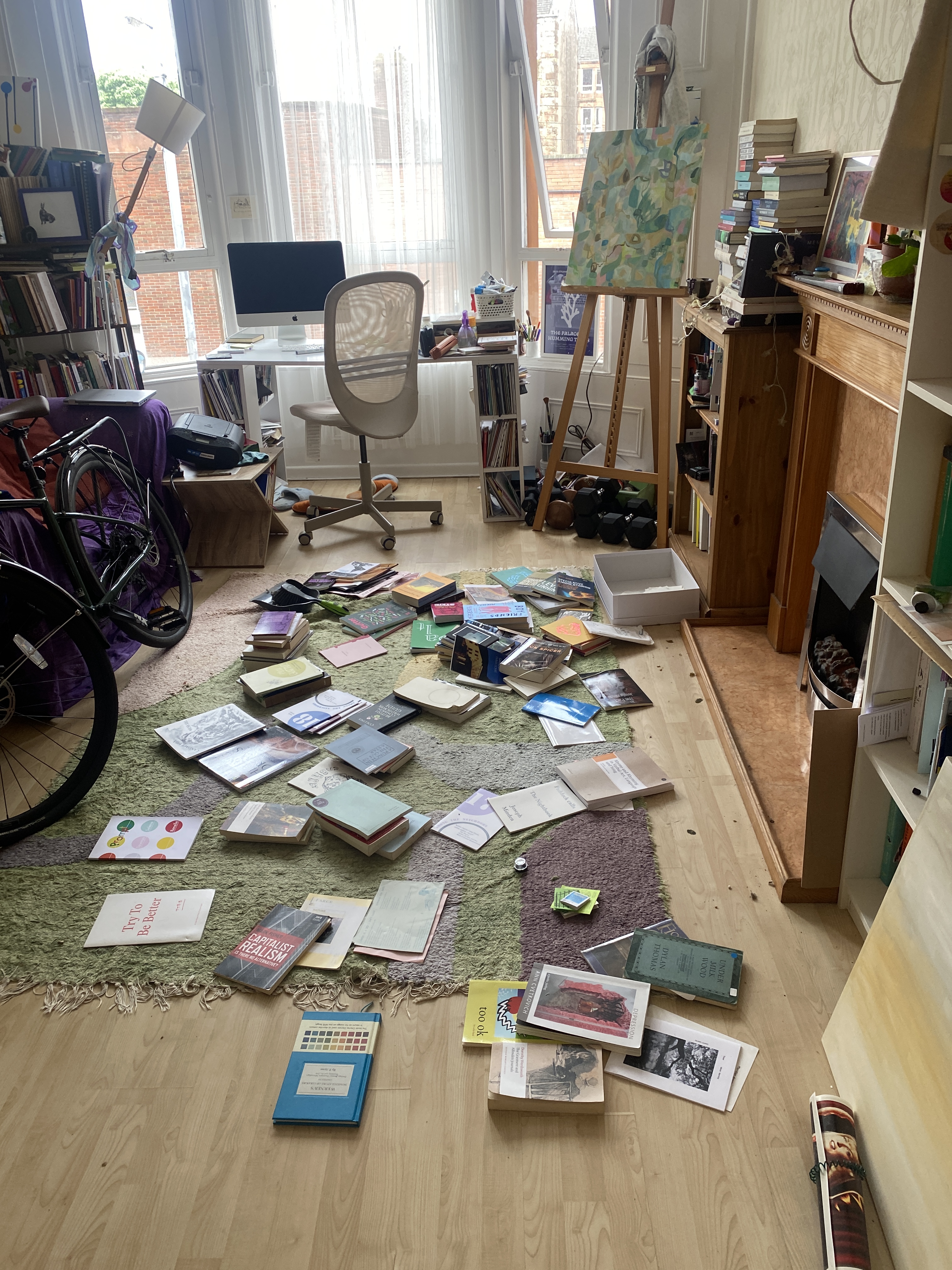
In loose order of reading. This year I made a vow to not let work ‘get in the way’ of reading. I was talking to a colleague about how every subject/specialism has one thing they are supposed to be really good at and actually kind of suck at. We agreed English & Creative Writing staff are often pretty bad at this thing that should be their lifeblood: reading. To prioritise reading is to affirm the necessity of thinking. I felt so burned out with the circuitry of the 2010s and the zoomageddon of lockdown, all those screens. Reading in scroll-time. I still love reading in scroll-time, but on the move only. Or in the midst of something else doing. It took me three years to get back into immersive, situated, FOCUSED reading again. I mean staying up all night to finish a book, crying at sentences, holding something to the light and putting it down and stopping and starting because you want to savour something and all the world of it following you into dreams. All reading started to plug into work. Good work. Channels. If I’m honest, I haven’t written a lot this year. I needed a break from concepts. I did a lot of editing and proofing and reading. I wrote a lot of emails and did a LOT of marking. I think of marking as writing time. It eats into writing time but it’s also a practice of sentence-making, observation, editing, rewriting. Eileen Myles says somewhere that when they write people recommendation letters and do interviews etc that’s a form of writing. So really there are very few ‘fallow’ periods. You’re always writing something to someone, for something or not. I have written over a monograph’s worth of student feedback this year, maybe more. Each paragraph of feedback is a micro-essay, a snapshot of orientation, a patchwork sample which stitches multiple discourses (genre, criteria, instinct, history) in ascent to encouragement and improvement. So all that feedback, I’m trying to say, means I also read a hell of a lot of student work. Hundreds of scripts. Marking trains my eye as a reader and writer. Still learning to toggle between different kinds of reading. Refusing the active/passive binary in favour of a continuum of generative involvement. A lot of what I read below was in-between other reading, but some of it is more explicitly ‘work’ reading. Or: reading as a way of connecting with friends, colleagues — their beautiful brains. Or: preparation for something as yet unknown. Working through personal syllabi. Refreshing the palette.

~

Robert Glück, About Ed (2023)

Jacques Derrida, H.C. for Life, That Is to Say…, trans. by Laurent Milesi and Stefan Herbrechter (2006)

Walter Benjamin, The Storyteller: Tales Out of Loneliness, trans. by Sam Dolbear, Esther Leslie, Sebastian Truskolaski, Antonia Grousdanidou (2023)

Marie Darrieussecq, Sleepless, trans. by Penny Hueston (2021/2023)

Joey Frances, Takeaway Night (2024)

Teju Cole, Black Paper (2021)

George Saunders, A Swim in the Pond in the Rain (2021)

Megan Ridgeway, The Magpie (2024)

Thomas Mann, The Magic Mountain, trans. by John E. Woods (1924)

Andrew O’Hagan, Mayflies (2021)

Tabitha Lasley, Sea State (2021)

Zadie Smith, Intimations (2020)

Jean Genet, Prisoner of Love, trans. by Barbara Bray (1986)

Donna Tartt, The Secret History (1992) 

Oli Hazzard, Sleepers Awake (2024)

Courtney Bush, Every Book is About the Same Thing (2021)

Hélène Cixous, Abstracts and Brief Chronicles of the Time, trans. by Beverley Bie Brahic (2016)

McKenzie Wark, Raving (2023)

Rachael Allen, God Complex (2024)

Elle Nash, Deliver Me (2024)

Joshua Cohen, The Netanyahus (2021)

Andrew Meehan, Instant Fires (2022)

Michael Eigen, Ecstasy (2001)

Noah Ross, The Dogs (2024)

Jennifer Soong, Comeback Death (2024)

Barbara Browning, The Gift (2017)

Cynthia Cruz, The Melancholia of Class (2021)

Courtney Bush, I Love Information (2023)

Clarice Lispector, The Hour of the Star (1977)

Barbara Browning, The Correspondence Artist (2011)

Hilary White, Holes (2024)

Laynie Browne, Everyone and Her Resemblances (2024)

Deborah Meadows, Representing Absence (2004)

Holly Pester, The Lodger (2024)

Terese Marie Mailhot, Heartberries (2018)

Kim Gordon, Girl in a Band (2015)

Lauren Levin, Nightwork (2021)

Oddný Eir, Land of Love and Ruins, trans. by Philip Roughton (2016)

Danielle Dutton, Prairie, Dresses, Art, Other (2024)

Elvia Wilk, Oval (2019)

Nisha Ramayya, Fantasia (2024)

Joanne Kyger, On Time (2015) 

Jean Day, Late Human (2021)

Lisa Jarnot, Black Dog Songs (2003)

Roland Barthes, Camera Lucida (1980)

Mariana Enriquez, Things We Lost in the Fire (2016)

Ben Smith, Doggerland (2019)

Ricky Monaghan Brown, Terminal (2024)

Wendy Lotterman, A Reaction to Someone Coming In (2023)

Joseph Mosconi, Fright Catalog (2013)

Tao Lin, Taipei (2013)

Haytham El Wardany, The Book of Sleep, trans. by Robin Moger (2020)  

Lucy Ives, Life is Everywhere (2022)

Maria Hardin, Cute Girls Watch When I Eat Aether (2024)

Brian Whitener, The 90s (2022)

Jamie Bunyor, A stone worn smooth (2022)

Lucy Ives, The Hermit (2016)

Brenda Hillman, Cascadia (2001) 

Bhanu Kapil, Incubation: a space for monsters (2006)

Peter Reich, A Book of Dreams (1973)

Steve Orth, The Life and Times of Steve Orth (2020)

Lindsey Boldt, Weirding (2022)

Christa Wolf, The Quest for Christa T. (1970)

Hannah Levine, Greasepaint (2024)

Joe Luna, Old News (2024)

Maggie O’Sullivan, earth (2024)

Ian Macartney, sun-drunk (2024)

Sébastien Bovie, Longing for Lo-fi: Glimpsing back through technology (2023)

Steven Zultanski, Relief (2021)

Lionel Ruffel, I Can’t Sleep. trans. by Claire Finch (2021)

Noémi Lefebvre, The Poetics of Work, trans. by Sophie Lewis (2021)

Cynthia Cruz, Disquieting: Essays on Silence (2019)

Marie Buck and Matthew Walker, Spoilers (2024)

Ed Steck, David Horvitz Newly Found Bas Jan Ader Film (2021)

Ammiel Alcalay and Joanne Kyger, Joanne Kyger: Letters to & From (2012)

Lyn Hejinian, Fall Creek (2024)

Etel Adnan and Laure Adler, The Beauty of Light: Interviews, trans. by Ethan Mitchell (2024)

Rick Emerson, Unmask Alice: LSD, Satanic Panic, and the Imposter Behind the World’s Most Notorious Diaries (2022)

Stephen Collis and Jordan Scott, Decomp (2013)

Miye Lee, Dallergut Dream Department Store, trans. by Sandy Joosun Lee (2023)

Barrett Watten, Steve Benson, Carla Harryman, Tom Mandel, Ron Silliman, Kit Robinson, Lyn Hejinian, Rae Armantrout, Ted Pearson, The Grand Piano: Part 1 (2006/2010)

Ottessa Moshfegh, My Year of Rest and Relaxation (2018)

Ian Macartney, Darksong (2024)

Chris Tysh, Continuity Girl (2000)

Barrett Watten, Steve Benson, Carla Harryman, Tom Mandel, Ron Silliman, Kit Robinson, Lyn Hejinian, Rae Armantrout, Ted Pearson, The Grand Piano: Part 2 (2007/2017)

Andrew Durbin, Mature Themes (2014)

Johanne Lykke Holm, Strega, trans. by Saskia Vogel (2022) 

Anthony Low, The Georgic Revolution (1985)

Robin Blaser, The Fire: Collected Essays of Robin Blaser (2006)

Daniel Feinberg, Some Sun (2024)

Maria Hardin, Sick Story (2022)

Lieke Marsman, The Opposite of a Person, trans. by Sophie Collins (2022)

Nadia de Vries, Thistle, trans. by Sarah Timmer Harvey (2024)

Rodge Glass, Joshua in the Sky: A Blood Memoir (2024)

Sarah Moss, My Good Bright Wolf (2024)

Giovanbattista Tusa, Terra Cosmica (2024)

Gabrielle de la Puente and Zarina Muhammad, Poor Artists (2024)

Andrew Meehan, Best Friends (2025)

Courtney Bush, Isn’t this Nice? (2019)

Meghann Boltz, Cautionary Tale (2021)

Ariana Reines, Wave of Blood (2024) 

Dalia Neis, The Swarm (2022)

Ian Macartney, Secret Agent Orca Twelve (2024)

Nicholson Baker, The Mezzanine (1988)

Kurt Vonnegut, Cat’s Cradle (1963)

Molly Brodak, A Little Middle of the Night (2010)

Bernadette Mayer, Midwinter Day (1982)

Anna Kavan, Ice (1967)

Molly Brodak, Bandit (2016)

Charles Bernstein, Content’s Dream: Essays 1975-1984 (1986)

Anna Gurton-Wachter, My Midwinter Poem (2020)

Books I read in 2023

Disclaimer: this list is probably missing a ton of really good poetry pamphlets that are in my room somewhere, sorry.


Gabby Bess, Alone with Other People (2013)

Charles R. Cross, Heavier than Heaven: The Biography of Kurt Cobain (2001)

Doris Lessing, The Golden Notebook (1962)

Anahid Nersessian, The Calamity Form (2020)

Robert Sullivan, The Meadowlands: Wilderness Adventures on the Edge of New York City (1999)

Hannah Weiner, Hannah Weiner’s Open House (2006)

Penelope Lewis and RA Page (eds), Spindles: Stories from the Science of Sleep (2015)

Kerry Hudson, Lowborn (2019)

Rose Ruane, This is Yesterday (2021)

Bernadette Mayer and Greg Masters, At Maureen’s (2013)

Nina Mingya Powles, Tiny Moons (2019)

Maggie O’Sullivan, murmur: Tasks of Mourning (2011)

Nina Mingya Powles, Small Bodies of Water (2021)

Tom Raworth, Removed for further study: the poetry of Tom Raworth (2003)

Torrey Peters, Detransition Baby (2021)

Patricia Lockwood, Priestdaddy (2017)

Nadia de Vries, Know Thy Audience (2023)

Savannah Brown, Closer Baby, Closer (2023)

Suzanna Slack, White Spirit Videotelephony (2023)

Suzanna Slack, Luxury Profile (2021)

Patti Smith, Just Kids (2010)

Jessie Widner, Interiors (2022)

Aaron Kent & John Welson, Requiem for Bioluminescence (2022)

Christiane F., Zoo Station: The Story of Christiane F. (1978)

Kaisa Saarinen, Weather Underwater (2023)

Fern Brady, Strong Female Character (2023)

Felix Bernstein, Notes on Conceptual Poetics (2015)

Rosemary Mayer, Ways of Attaching (2022)

Shehzar Doja, Let Us (Or, the Invocation of Smoke) (2023)

Will Harris, Brother Poem (2023)

Sarah Bernstein, Study for Obedience (2023)

Maggie O’Sullivan, murmur: tasks of mourning (2011)

Taylor Strickland, Dastrum/Delirium (2023)

Andrew Durbin, Skyland (2020)

Etty Hillesum, An Interrupted Life (2002)

Savannah Brown, Closer baby closer (2023)

Gareth Farmer, KERF (2022)

Ian Heames, Sonnets (2023)

Chloe Aridjis, Book of Clouds (2010)

Chris Kraus, I Love Dick (1997)

Samantha Walton, Everybody Needs Beauty: In Search of the Nature Cure (2021)

Stephanie LaCava, I Fear My Pain Interests You (2022)

Zara Butcher-McGunnigle, Nostalgia Has Ruined My Life (2021)

Chloé Hayden, Different, Not Less (2022)

Dana Ward, Some Other Deaths of Bas Jan Ader (2013)

Rob Halpern, Hieroglyph of the Inverted World (2021)

Eugene Ostashevsky and Galina Rymbu, F Letter: New Russian Feminist Poetry (2020)

Amy Key, Arrangements in Blue (2023)

bell hooks, All About Love (2000)

gentian meikleham, Kare Hansen, Sofia Archontis, Ruby Lawrence, William Knox, Meredith Macleod, Leonie Staartjes, Brave Dog (2023)

Tom Betteridge, Dog Shades (2023)

Alain de Botton, Essays in Love (1993)

Johanna Hedva, Your Love is No Good (2023)

Tom Raworth, Earn Your Milk (2009)

Maggie Nelson, The Red Parts (2007)

Robert Creeley, The Charm (1969)

Briony Hughes, Milk (2023)

Eduoard Louis, History of Violence (2016)

Eileen Myles, A “Working Life” (2023)

Daniel Alexander Jones, Love Like Light (2021)

Ivy Allsop, purge fluid (2022)

Stephanie Young, Ursula or University (2013)

Kristin Ross, The Politics and Poetic of Everyday Life (2023)

Jarvis Cocker, Good Pop Bad Pop (2022)

Alice Notley, The Speak Angel Series (2023)

Amina Cain, A Horse at Night: On Writing (2022)

Christina Chalmers, Subterflect (2023)

Suzanna Slack, gummizone (2023)

Greg Thomas, Candle Poems (2023)

Julia O’Toole, Heroin: A true story of drug addiction, hope and triumph (2005)

Kristine McKenna and David Lynch, Room to Dream (2018)

Lee Ann Brown and Bernadette Mayer, Oh You Nameless and Unnamed Ridges (2022)

Isabel Waidner, Corey Fah Does Social Mobility (2023)

Laynie Browne, Intaglio Daughters (2023)

Naomi Klein, doppelgänger (2023)

Elisabeth Roudinesco and Jacques Derrida, For What Tomorrow…: A Dialogue (2001)

J. R. Carpenter, An Ocean of Static (2018)

Alan McGee, Creation Stories (2013)

Jackie Wang, Alien Daughters Walk into the Sun: An Almanac of Extreme Girlhood (2023)

Sarah Schulman, Girls, Visions & Everything (1986)

Hélène Cixous, Manhattan, trans. by Beverly Bie Brahic(2007)

Antonio Tabucchi, Requiem: A Hallucination, trans. by Margaret Jull Costa (1994)

Bernadette Mayer, Another Smashed Pinecone (1998)

In for pre-fall 2023

Asymmetry

Gull telepathy

Bloody cuticles

Rose pearl nail polish

Poetry that is pink-red

Velour sleepwear

Claire’s Accessories

Freestorming

404 error 🙂

Bunches

Amorous uncertainty

Noise cancelling

Overly zealous eyeliner

Broody for collie

Colour blocking

Alternative gelatines

Semi-sobriety

Handwriting

Smashing an electric guitar in your dreams

‘ayrshire smoke’ from Redmonds

Forget christmas

Chronodiversity

Shine conditioner

“Where are the afters”

Upgrade yr cloud storage

Purloined glassware

Table tennis

Springburn

Sorry muesli

Slovenly hair barrette

Speed-texting

FUCK SONNETS

Crying ???

Trams

Spreadsheets

Souvlaki

Stick and pokes

Crochet cliché

Petrichor

Giraffes

Workplace napping

Random gift-giving

Heliotropism

Aliens

Shoegaze

Typos

Virga

Revenge

Albums of the Year 2022

Alex G – God Save the Animals

Angel Olsen – Big Time

Beach House – Once Twice Melody

Beth Orton, Weather Alive

The Beths – Expert in a Dying Field

Big Thief – Dragon New Warm Mountain I Believe In You

Björk – Fossora

Charli XCX – Crash

death’s dynamic shroud – The Lunar Curtain

FKA twigs – Caprisongs

HAAi – Baby, We’re Ascending

Jenny Hval – Classic Objects

Katie Dey – forever music

Mallrat – Butterfly Blue

Mitski – Laurel Hell

Organ Tapes – 唱着那无人问津的歌谣 / Chang Zhe Na Wu Ren Wen Jin De Ge Yao

Porridge Radio – Waterslide, Diving Board, Ladders to the Sky

Regina Spektor – Home, before and after

Rosalía – Motomami

Savage Mansion – Golden Mountain, Here I Come

The 1975 – Being Funny in a Foreign Language

Warpaint – Radiate Like This

The Weeknd – Dawn FM

Weyes Blood – And In the Darkness, Hearts Aglow

Yeule – Glitch Princess

~

Previous lists: 201520162017, 2018, 2019, 2020

fall vibe ’22

  • e-bikes 
  • insomnia 
  • auto belay 
  • protein oat flapjacks
  • oversized trainers
  • ragged cuticles 
  • kohl in general
  • murmurations
  • secret stick n pokes
  • the silver foil inside crisp packets
  • smell of shoe polish 
  • (sandy) alex g
  • high quality coloured pencils 
  • carbon stains on off-white garments
  • challah bread
  • lentil soup
  • excessive misspellings 
  • dissociative weeping
  • falling asleep with the light on
  • freshly-cut keys
  • corduroy
  • bath swoons with epsom salts 
  • the prose of Fanny Howe 
  • feldspar
  • lectures
  • one-off marlboro window smoke
  • ambiently watching sport 
  • whisky and soda 
  • The Commons
  • charismatic porcini
  • bleeding mascara
  • the movie 
  • vapours
  • horrible black tights 
  • cognitive aporia
  • barry m dazzle dust worn as highlighter
  • waiting lists 
  • cosy zoom 
  • forehead kisses
  • epistolary delays 
  • orange 
  • missed calls 
  • odyssey walks home
  • thigh highs
  • sonnets 
  • mortal dysphorias 
  • wet leather 
  • butterfly heart rate 

Flying in the Mist: A Week at The Grammarsow

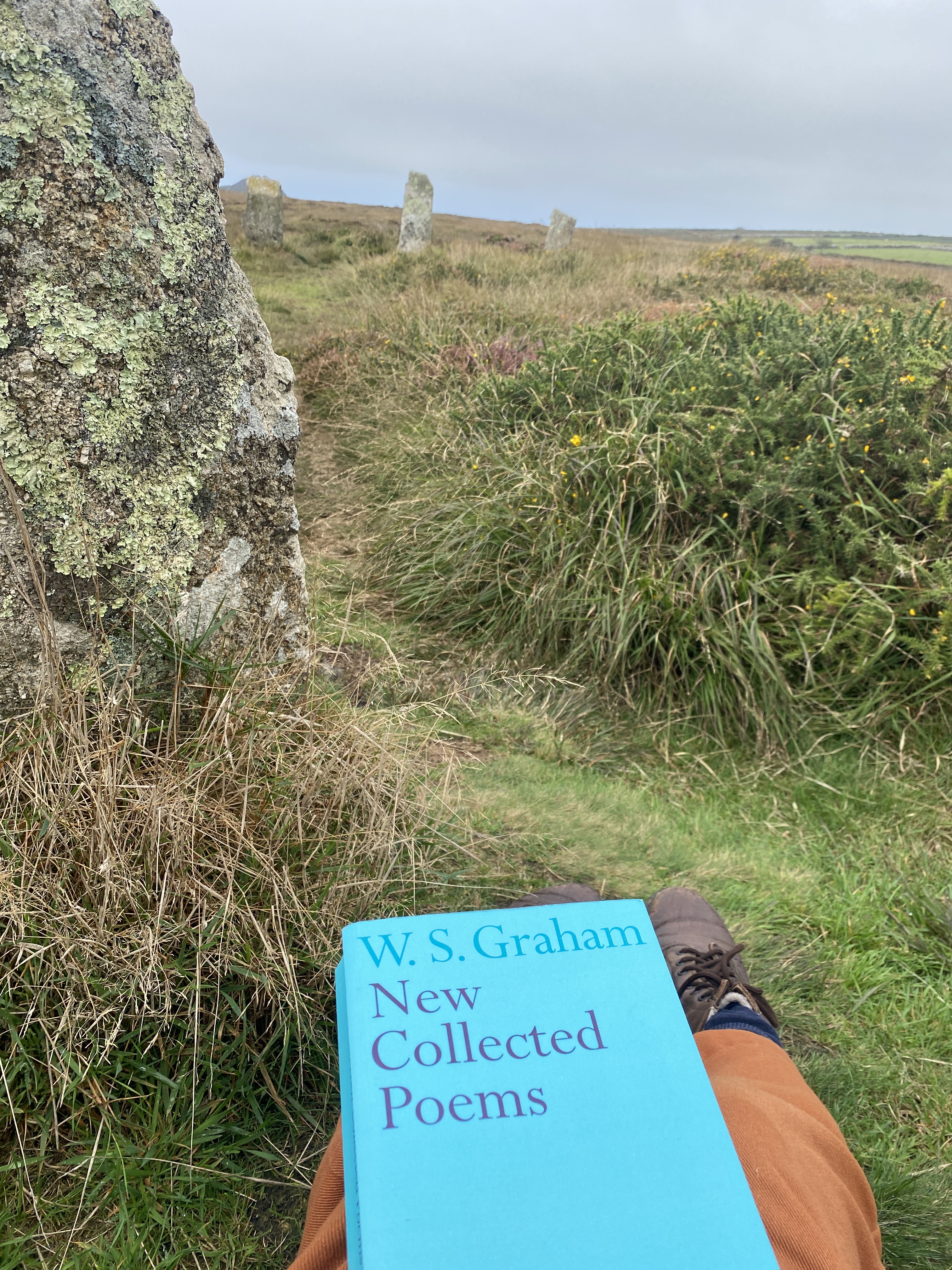
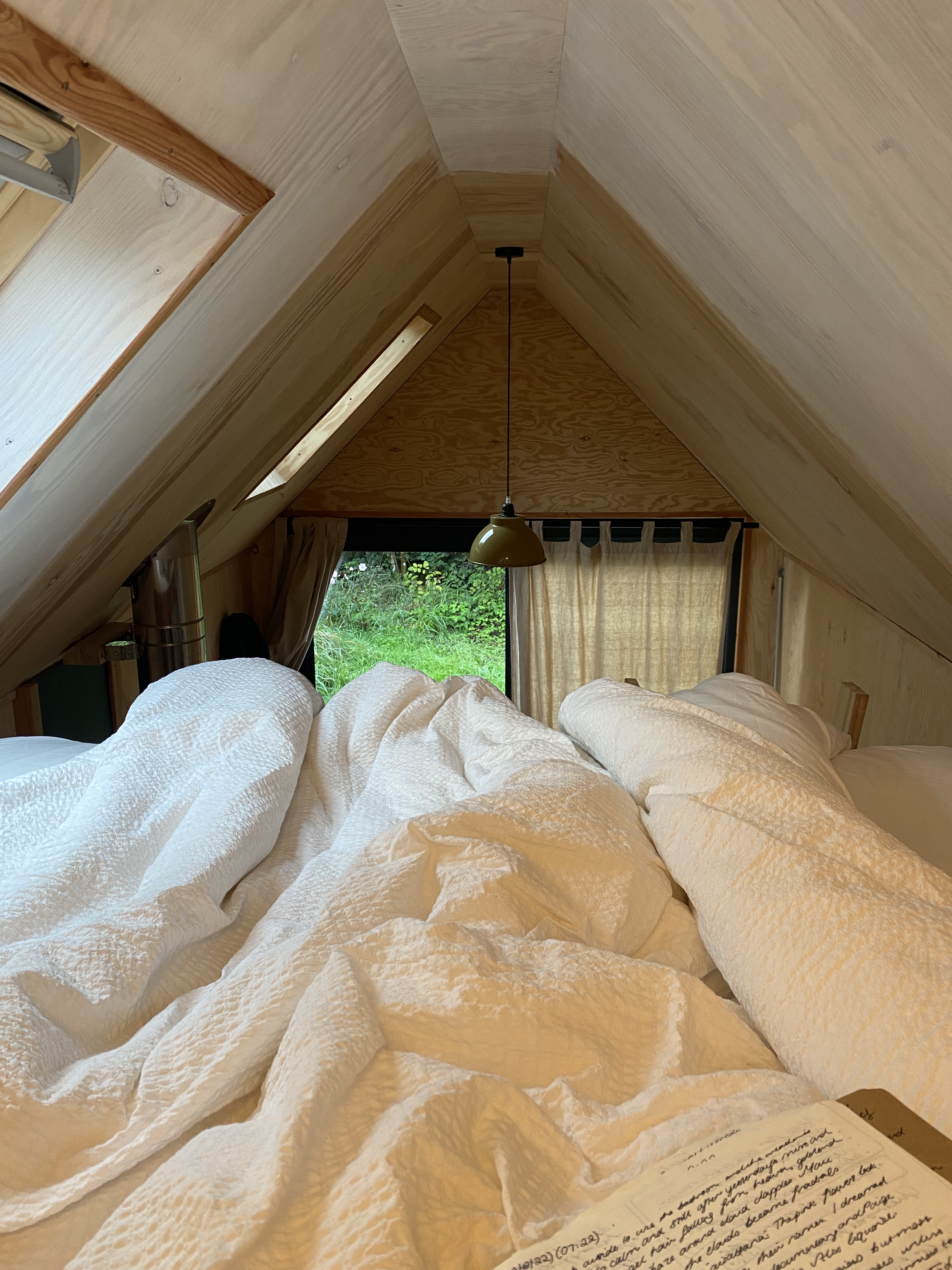
A little spot by the Nine Maidens stone circle

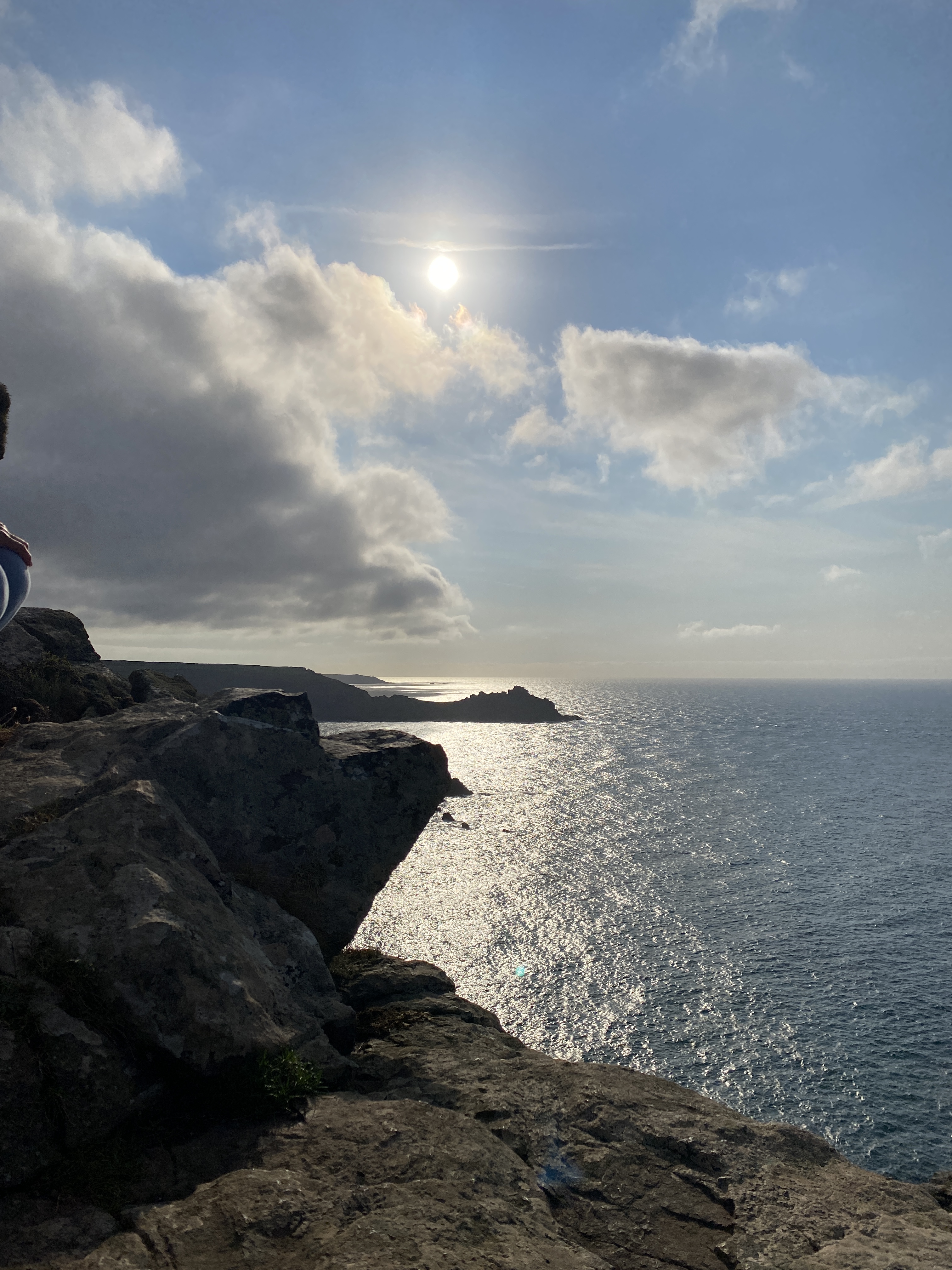
I’m on the twelve-hour CrossCountry from Penzance to Edinburgh. Penzance is the most westerly town in Cornwall and being this close to the edge of something calms me. I always sleep better by the sea. On my way here, on the Great Western Railway, a woman gifted me a glass sculpture with a rainbow inside it, as thanks for helping with her bags at Truro. ‘It’s for stirring your drinks’. For the past week, I’ve been writer in residence at The Grammarsow: a project which brings Scottish poets to Cornwall in the footsteps of WS Graham, who was born in Greenock but spent much of his life down here, making a home of Madron, of Zennor, of the moors. To say this has been a magical week is to say it changed me. I first came across Graham when the poet Dom Hale sent me a voice note of his elegy, ‘Dear Bryan Wynter’, out of the blue; I immediately went out and bought another bright blue, the Faber New Collected Poems. There was something about that foxglove on the wall and the hum of some memory in childhood, watching the bees. 

Graham grew up in Greenock, on the Inverclyde estuary. A town where I used to teach writing workshops at the Inverclyde CHCP, taking weekly, then fortnightly trains with our chitty from Glasgow. That time in my life is a blur of shift work, seasonal overhaul, hopeless crushes. I’d get there early to look at the lurid flowers in Morrisons with Kirsty, my co-tutor, or visit the docks alone. Sometimes, I brought my little heartaches to the docks because the air felt smelted, or salt-rinsed, excoriating. The nature of these workshops was that people would share their life stories of such intensity we’d bear them home. I remember one woman writing a story about the moon, ‘we share the same moon’: the one thing connecting her, unconditionally, to her estranged daughter. Many people with stories of recovering from addiction through returning to childhood pursuits: the fishing taught by their fathers, the harbour walks, the musical grammar of language. Graham was trained as an engineer and spent some time on fishing boats, but dedicated most of his life full-time to poetry. The more I learn about this, the more I pine for the shabby romance of that clarity of pursuit. Not as a sacrifice but a great generosity from him, like a penniless rock star.

I’m sure it took a toll on his friends. Graham sent many a letter pleading neighbours and pen pals for the loan of a pound or a pair of boots, once thanking the artist Bryan Wynter for a pair of second-hand trousers. His letters are documents of a life lived in gleaning, bracing the elements, enjoying his wife Nessie’s lentil soup and of course, drinking. On a ‘bleak Spring day’ in 1978, by way of a quiet apology, he pleads with Don Brown, ‘I was flippant in the drink when you came with your news […]. Please let me still be your best friend’. He was often full of fire, a real zeal, taking poetry so seriously but life a strange lark, ‘speak[ing] out of a hole in my leg’. He wrote to his contemporaries — artists such as Ben Nicholson and Peter Lanyon, Edwin Morgan, along with family and friends — with bags of personality, a man self-fashioning in the long blue sea of ‘I miss yous’. As he wrote to Roger Hilton:

We are each, in our own respective ways, blessed or cursed with certain ingredients to help us for good or bad on our ways which we think are our ways. What’s buzzin couzzin? Love thou me? When the idea of the flood had abated a hare pussed in the shaking bell-flowers and prayed to the rainbow through the spider’s web. I have my real fire on. I am on. 

The real fire may have been a woodburner, sure, but it’s something lit within him. The letter as a turning on, turning towards: we see this spirit of openness and address in the poems. The real commitment to Lyric. I love the hare that shakes in the flowers with its rainbow religion. I love the flush of arousal from walking uphill at speed. I saw many a spiderweb and two hares chasing each other on dawn of Thursday. On the train home texting many friends as if to have the rush of being held again, ‘Love thou me?’, could I be so vulnerable. A foxglove shook in the wind. The line as a tremble is lesser felt in the steady verse. Clearly, Graham wasn’t afraid of sincerity, though he always took pains to remind his addressees of his roots. ‘No harder man than me will you possibly encounter’, he assures Hilton; elsewhere, after the death of Wynter, he writes to his Canadian friend Robin Skelton of the coming funeral: ‘Give me a hug across the sea. […] I am not really sentimental. I am as hard as Greenock shipbuilding nails’. In a way, the infrastructure of space inflects the language as its face. I’m reminded of a quote by Wendy Mulford which Fred Carter shared at the recent ASLE-uki conference in Newcastle, where she talks about ‘attempting to work at the language-face’. I wear the face of the land, Graham seems to say, and the build of it. At West Penwith, we face the end of the land, literally Land’s End to our west. It is sometimes a silver gelatine, other times a bright blue, a fog grey thicker than thought. A granite-hard land that nonetheless sparkles. I recall a rock on the beaches of Culzean, in South Ayrshire, we’d come across as kids. Mum called it a ‘moonrock’ or a ‘wishrock’. It was a perfectly huge dinosaur egg of white granite. I find this particular rock showing up in my dreams, even now; as if having touched it, I become complicit in a deep time that doesn’t so much store the past as bear its promise. What could hatch from within a rock like that? What could move it, or hold it?

Graham had the idea of poetry’s ‘constructed space’, what I’d call a lyric architecture for reassembling something sensuous in memory or emergence. That this space isn’t just designed (as in my idea of architecture) but constructed points to that emphasis on building. What kinds of muscle, time, effort of spirit and will go into this? The poet Oli Hazzard writes that one of the effects of Graham’s poetry is ‘that I feel like it allows me—or, creates a space in which it becomes possible—to see or to hear myself’. Graham’s poem ‘The Constructed Space’ opens with the line ‘Meanwhile surely there must be something to say’. I always hear it in the lovely vowels of his Inverclyde accent, assuring. Like he’s sitting with you in the poetry bar, two pints between yous, and the poem gives this permission to talk or make space to listen. I think of Denise Riley’s ‘say something back’. My own need always to blurt, interrupt, muse out loud what mince is in my head. It continues: 

                                        […] at least happy

In a sense here between us whoever
We are.

As I write this, light dances on the opposite wall of my tenement flat and it’s prettier than anything given to me by the window. Sometimes my love says I am harsh when they need delicacy, and so I soften the heather of my voice to listen. It’s true that I was happy while reading that poem, a happiness or lightness in the brain as precarious as the light is. Changeable and easily blown further west to let in what fog, or dimness. I don’t mind my brain when I’m in Graham’s poems. By which I mean, it’s no longer a drag to be conscious or sad; things move again, their metaphors in process. There’s a lightness to quietude, its intimate premise, that holds me. Nothing extreme is promised here, ‘whoever / We are’: lyric address sent through ether to find that ‘you’, held in the future’s new ‘us’. It’s better than a page refresh, reading the poem to think something Bergsonian of the self’s duration. I’m more snowball than the first maria who read this. It’s a kind of exhale, in a sense, like Kele Okereke singing ‘So Here We Are’ from an album named suitably Silent Alarm. Imagining my loves at the same time, out in Stirlingshire lying tripping by the loch, their eyes skyward, the high or low. I cherish that wish you were here / so here we are. I can look out from inside the constructed space of the poem. Wheeeeeeeeesht, you. You’ll find constructed spaces everywhere in Cornwall. The lashing blue skyscapes of Peter Lanyon, the abstract panoramas of Ben Nicholson, the ambient plenitude of Aphex Twin (especially ‘Aisatsana’ and most things from Drukqs). I want ambient or abstract art to give me the clouds in my head back to myself, with the light of it. Colours, gestures, fractals, lines. 

~

I’ve spent the past week schlepping around the moors and lanes, reading Sydney Graham’s poems and letters, cooking veg on my wee stove and eating simple marmite and butter sandwiches. I have this grandparent on my mum’s side who shared his name, who died of cancer before I was born. Sydney was the name Graham tended to go by, signing letters. It’s not that I’m looking for literary fathers but I stumble into their charismatic arms all the same. Is it guidance I look for, or perspective? I love the rolling enthusiasm, pedantry and chiding of his letters, as well as their cheekiness and charm. His dedication to writing and reading, his swaggering or boastful tendencies after an especially successful performance (coupled with an irresistible gentleness and warmth). His big sweet expressions ‘THE MILK OF HUMAN KINDNESS IS CONDENSED – TTBB)’, ‘IMPOSSIBLE TALK’. TTBB is the slogan of Grammarsow and a familiar exhortation in Grahamworld, meaning Try To Be Better (the title of an excellent anthology of Graham-inspired poems, edited by Sam Buchan-Watts and Lavinia Singer). I summon my voices, I try to be; used to be; want us to be. 

There’s a quietude I love about the work, which suits the land and mind. After a summer of working three paid jobs, and two voluntary, I was ready for a gearshift into something relaxed and focused. I’d had enough of my own ‘impossible talk’. Being here was like being given permission to play and explore. Quickly I realised my time didn’t need to be ‘dedicated’. I lived by the cruising whim of the big sky, its scrolling clouds and moodswings. Saw the moon at two o’clock in the afternoon. I watched dragonflies dart between the lanes, listened to my neighbourly ravens at night. Watched big jenny long-legs make flickery silhouettes on the walls. Slept peacefully with spiders above me and the ravens being craven. I wanted all these things in my poemspace, and the poems themselves were initially scarce, then they began a familiar elongation that was comforting, with the swerves of a bus but also the tread of a walk. Some poems wanting to hide themselves between logs where I might later try and find them.

~

A grammarsow is the Cornish name for a woodlouse, or what we’d call in Scots a slater. I remember growing up and having this internal argument about language: was I to go with what my English mum said, or everyone at school? Aye or nay, yes or no. At some point I realised it wasn’t a question of scarcity and elimination, but abundance. The words became barnacle-stuck from all over the sloshes of life, swears and all, and I cherished their stubbornness. Even those gnarly, uncommon words and spicy portmanteau like ‘haneck’, ‘gadsafuck’, ‘blootered’ and ‘glaikit’. And yous: the juicy, plural form of you. Addressing the crowd, the swarm or many. A woodlouse is a terrestrial crustacean drawn to damp environments. I grew up with woodlice crawling out from under cracked kitchen tiles, unearthing raves of them hidden under rotten logs, finding them in tins of old paintbrushes or sometimes a bag of flour or sugar. I always liked the way their little legs seemed translucent, a little alien, and was especially seduced by their darling tendency to curl up into a ball, for protection, like Derrida’s idea of the poem as hedgehog. 

Across the English language, there are many amazing names for the humble woodlouse, not limited to: 

  • armadillo bug
  • billy button
  • carpet shrimp
  • charlie pig
  • cheeselog
  • chisel pig
  • doodlebug
  • hardback
  • hobby horse
  • hog-louse
  • jomit
  • menace
  • pea bug
  • pennysow
  • pill bug
  • roly-poly

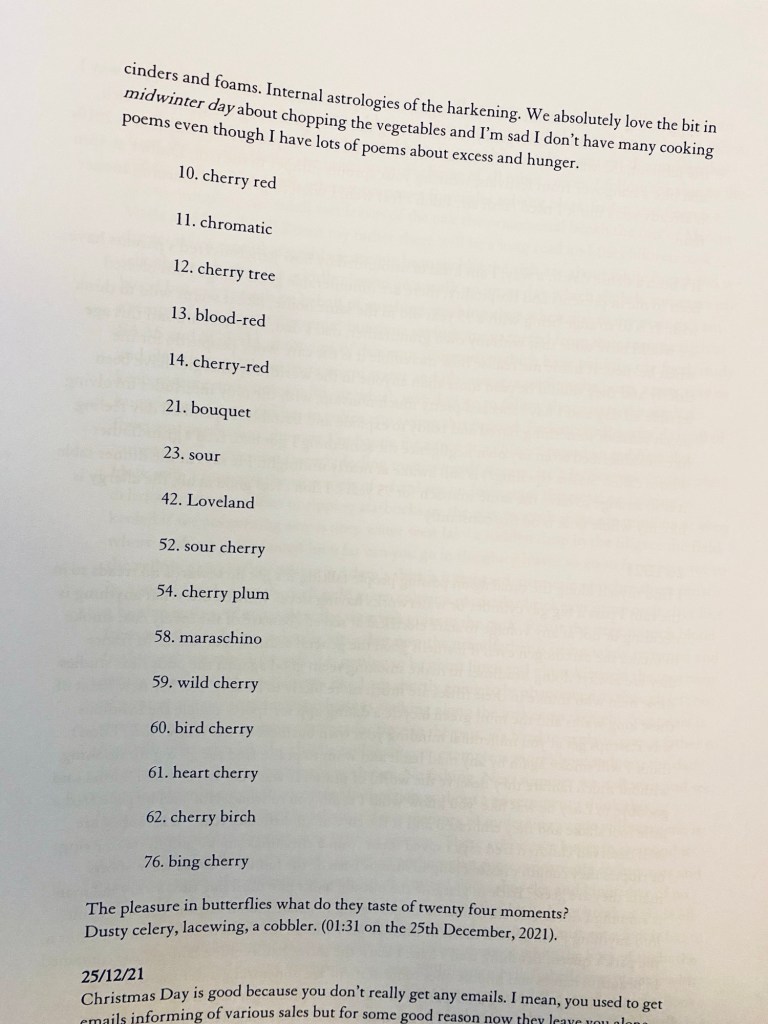
What is this penchant for lists I share with Graham? I want abundance from something other than products. I’m dumbly monolingual and lists are one of the few ways I can accumulate nuances of meaning. My attention-disordered brain collects lists as procrastination for the Thing itself, what is it I should be doing, always on the tip of some other event horizon bleeding through the last and first, so nothing is really finished. I like that in West Penwith, to look at the Atlantic you don’t see any islands, so there doesn’t have to be an end. You have the illusion that there can always be more time. The sea as this list of limitless light, colour shift, unbearable senses of depth. You are here. 

~

The grammarsow crops up in Graham’s letters. In a missive to Robin Skelton, he muses: 

And what are we now? Maybe better to have been an engine-driver in the steam-age. A sportsman a shaman a drummer a dancer rainmaker farmer smith dyer cooper charcoal-burner politician dog bunsen-burner minister assassin thug bird-watcher poet’s-wife queer painter alcoholic ologist solger sailer candlestick-maker composer madrigalist explorer invalid cowboy kittiwake graamersow slater flea sea-star angel dope dunce dunnick dotteral dafty prophesor genius monster slob starter sea-king prince earl the end.

Again the ‘steam-age’ of other infrastructures interfacing language. Better to have been a wave engineer in the renewable(s) era. I find myself somewhere between the ‘ologist’ and the ‘angel dope’, strung out on critique, measure and the promise of sensuous oblivion. Not sure if the dope is connected to the dunce or angel, but I’ll claim it spiritually as something good: an enhanced performance. As in, those are dope lines I’m reading. Do you want some? ‘And what are we now?’ not who, but what. A question I want always to ask — it’s almost Deleuzian — with someone in my arms or the sea swishing up to waist height, a sea-star clung to the hollows behind my knees. What’s possible when shame is gone. I love tenderly Graham’s list of possible existences and wonder how many I might retrain as (O genius monster), keeping in mind Bernadette Mayer’s old quip that all poets should really be carpenters. I love the raggedness of letters, which is why I love blogs (letters to the idea of being read). Who are they for? We’re so lucky to have these old ones, bound for us, evidence to the material conditions for our wild imaginaries. 

~

In Cornwall, I love falling asleep. I love falling for new poems, stumbling a little on the rugged paths, falling for the air and water, for a little more mermaid’s ale or Bell’s, a blackcurrant kombucha or 100g of coconut mushrooms. In his essay for Poetry Foundation, ‘This Horizontal Position’, Oli Hazzard writes about a time Graham ‘went for a walk on Zennor Hill in Cornwall and fell into a bramble bush’. This falling was a repeat pattern: in 1950 he drunkenly fell off a roof and complained of his three-month hospital stay, ‘I hate this horizontal position’. In my DFA thesis I wrote extensively about lying down as a beginning for writing, the horizontal as a form of refusal when it comes to the upright requirements of an assertive ‘I’. It’s no secret that I prefer poetry in the mode of dreamtime, but that’s not to say I’m also a rambler. It’s a poetry of breath and of steps (of vigour!) I enjoy in Graham. Zigzagging and winding down well-trodden moor paths, stumbling upon bridleways that lead around the hills from holy shrines. 

I was the lucky poet to first bless a new writer’s cabin that my host, Rebecca, built on some land near the Ding Dong Mine. From the garden, you can see right out over Mount Bay. The skies are huge here. I’ll say that a lot. I saw a seal down by one of the zawns on the north coast, felt the fear of losing the moon in you, let my lips chap on the telepathy of remote secrets. I try to be better, regardless. My poems become languorous obscurities. All of the land has hidden depths.

~

There was a summer before secondary school when we were gifted an unlimited pass to Historic Scotland, meaning our holidays involved camping across Dumfries and Galloway, the Trossachs, the Highlands, in search of abbeys, monasteries, castles and holy sites in various states of decay. I was turned off by leaflets documenting the actual details of history, emerging sleepy-eyed from the car where I’d been navigating the turgid sentences of fantasy novels or playing platform games like Super Mario. There’s a particular form of carsickness that produces electrolytic effects conducive to imaginative ventures. What I mean to say is, instead of vomiting I overlaid the real world with the promise of portals to elsewhere. In Penwith, I walk off my city sickness and sit by the standing stones, quoits and old ruins of industry. What do I imagine but a ‘news of no time’, still to come? Zennor Hill is both poem and place. The more I’m here, the more a sort of aura thickens.

Swap Zoom for the view from Zennor

On my last morning, I wake to sunrise over the sea. Dew shimmers the rosehips. The air is earthsweet as ever and I don’t know how I’ll go home. Travelling is an experience of dislocation: here, I find home again in language, its caught habits, Graham’s words sluicing Clydewards. There’s a poise to his poetry, steadfastly composed as ‘verse’ and often by iambic measure. Making perfect prosody with the chug of the train. I was pleased to roll into Glasgow having bumped into my friend Kenny, the whisky god of the Hebrides, attuned to the flight-pulse of conversing again. Hungry, ‘putting this statement into this empty soup tin’ to say cheerio as Sydney would, lighting up poetry to finish it, the best thing of all, a warm scaffold to hold up how we missed each other. A quiet disintegration of cloud. What are we now?

With thanks to Andrew Fentham, David Devanny and Rebecca Althaus for kindness and hospitality. Long live The Grammarsow! 

2021 in review

From this year in-between brushing my teeth:

BOOKS AND PAMPHLETS

Miss Anthropocene (Mermaid Motel)
a selection of short lyric, ‘ethereal nu metal’ poems responding to the Elon Musk/Grimes complex.

Sonnets for Hooch – with Mau Baiocco and Kyle Lovell (Fathomsun Press)
An ongoing pamphlet series of sonnets attuned to the weirding seasons: what started as an internet joke about alcopops and longing as a keystone for exploring adolescent malaise, nostalgia and resilience thru civic space and Friendship. Current editions available are Lemon Bloom Season and Summertime Social. Two more instalments are forthcoming in association with Rat Press and Mermaid Motel.

Polychromatics (Legitimate Snack)
A pamphlet-length poem about colour, cetaceans and cosmic twilight, inspired by Walter Benjamin and a sculptural and textile works by the artist Anna Winberg.

Soft Friction – with Kirsty Dunlop (Mermaid Motel)
Soft Friction is an intimate gathering of dreams from 2018, written during a summer of ‘existential soup’, fainting at gigs, pulling all-nighters and panic surrealism. Extracted from a longer diary, these fragments wear the sensuality and sass of an active dream life shared between two people getting high on each others’ brains.

The Palace of Humming Trees (Sundays)
Edited and typeset by Katie O’Grady with visual identity by Paul Smith, this book-length poem features illustrations by Jack O’Flynn plus a curator’s word from Katie O’Grady and collaborative mixtapes. Set in the speculative locale of The Palace of Humming Trees, the poem is a jaunt through weird nature’s arc of glass, following the desire lines of hyperfoxes, sunburst melancholia and corona correspondence. Also available as a free pdf.

The Luna Erratum (Dostoyevsky Wannabe)
The Luna Erratum, Maria Sledmere’s debut poetry collection, roams between celestial and terrestrial realms where we find ourselves both the hunter and hunted, the wounded and wounding. Through elemental dream logics of colour, luminosity and lagging broadband, this is a post-internet poetics which swerves towards the ‘Other Side’: a vivid elsewhere of multispecies relation, of error and love, loss and nourishment.

ARTIST COLLABORATIONS

‘The Rosarium’ for Zoee’s album, Flaw Flower (Illegal Data)
A lyric sequence responding to the glistening pop garden of Zoee’s debut record Flaw Flower. Available as an A6 booklet as part of the limited edition album bundle.

The Palace of Humming Trees with Jack O’Flynn and Katie O’Grady (French Street Studios)
A collaborative project with artist Jack O’Flynn and curator Katie O’Grady which took place April to August 2021 and was showcased at French Street Studios in Glasgow. Featuring new works of poetry, sculpture, illustration and multisensory dreamscapes (from mixtapes to Tarot readings), we offered a ‘tenderly crumbling foliage’ of visual and sonic otherworlding.

The Dream Turbine with A+E Collective and The NewBridge Project
This online installation explores the relationship between sustainability and dreaming, offering a space to collectively share dreams and promote discussions surrounding these broader topics. The Dream Turbine was conceived by A+E Collective in collaboration with Niomi Fairweather and Jessica Bennett, as part of the Overmorrow Festival. I contributed to a preparatory DreamPak of resources and the curation of a Dream Vault and associated ‘Lost in the Dreamhouse’ workshop on Zoom.

Cauliflower Love Bike Episode 1: Play with A+E Collective
While play might be co-opted for capitalism, true play is that which exceeds instrumentalism and commodification. This episode reclaims play from its dialectical relation with work, exploring play as a practice and thought-mode that is capable of radical sensing, temporal sabotage, tenderness, sociality and a joyous excess that is also low-carbon. The podcast series was launched at COP26 in the Rachel Carson Centre’s pop-up exhibition at New Glasgow Society.

ACADEMIC ARTICLES

Article: ‘Hypercritique: A Sequence of Dreams for the Anthropocene’ in Coils of the Serpent Issue 8
An in-depth venturing through the possibilities of hypercritique, featuring readings of Billie Eilish, Sophia Al-Maria, Ariana Reines and more; plunging through dream, fire and the heartwood of anthropocene imaginaries.

“Just to distract you like the inside”: a correspondence wrapped up in Bernadette Mayer’s poetry, in post45, Bernadette Mayer cluster (with Colin Herd)
An epistolary collaboration which wraps and unwraps itself in and around the poetry of Bernadette Mayer, as part of a special cluster issue on Bernadette’s work.

‘I, Cloud: Staging Atmospheric Imaginaries in Anthropocene Lyric’, Moveable Type, Issue 13
Tracing the possibilities of ‘cloud writing’ in anthropocene lyric by way of Brian Eno, Mary Ruefle, Anna Gurton Wachter and more, asking what kinds of reading are possible or desirable in a medial world of thick atmospheres.

POEMS

ESSAYS AND OTHER ERRATA

‘On Foam’ for Futch Press

Feature: Some Letters – a correspondence with Joe Luna

Review: Cloud Cover, by Greg Thomas

Feature: “It’s pretty utopian!” A conversation with Marie Buck, Mau Baiocco and Maria Sledmere pt.1, pt. 2

SPAM Cut: ‘I RESEARCH THE ORIGINS OF THE MODERN ROSE AND DISCOVER’ by Sarala Estruch

Feature: Some Notes on Muss Sill by Candace Hill

Feature: A conversation with Kinbrae and Clare Archibald ‘Tangents: letters on Etel Adnan’: a correspondence with Katy Lewis Hood in MAP Magazine (part 1) (part 2) (part 3)

‘‘Now now is everything’: Maria Sledmere on two maximalist poets of the Anthropocene’Poetry London issue 99

‘Cloud Shifts’ BlueHouse Journal

Anam Creative Launch for MAP Magazine

DESIGN

Cover for Katy Lewis Hood’s Bugbear (Veer2)

Cover for fred spoliar’s With the Boys (SPAM Press)

Cover for SPAM Press Season 5 Pamphlet series