On Brutalism

Photo by Subflux: https://www.flickr.com/photos/subflux

One of the first things you notice when you come to university in Glasgow is the building that passed you by on the open days: Boyd Orr. Orr…ore…or? With such connotations of alchemy, alternation and mechanical process – the extraction of mineral from rock – you’d be forgiven for thinking this building might have that rare quality of metallic extraction. The glint of some loveliness got from the mined core of the earth – or at least some relic of its crust. Boyd Orr himself, as Wikipedia tells me, was a Scottish teacher, doctor, biologist and politician, who also bagged himself the Nobel Peace Prize for work relating to wartime nutrition. Fitting, perhaps, that this man who dabbled in the arts of healthy eating would give his name to a building that some have found physically repulsive and ugly – if anything, unhealthy.

Still, nutrition involves mining particles of food for their usefulness. Finding all the vitamins as a geologist might take ore from a rock. There is something abject about all this: wrenching nature inside out, textually taking apart her insides with the bland incisiveness of a knife (the linguistic thrills of science course-books). The molten loveliness of erosion, rocks, temporal process – we can reduce them to names and building blocks.  And so we have Boyd Orr, that building of much usefulness and much disgust. The beast of a building that somehow you find yourself in, day after day, traipsing up the stairs for lectures, waiting for someone to give you their jewels of information. You came here thinking you’d be living the Harry Potter high-life in the extravagantly gothic main building, chased by ghosts and granted with turret views. Instead, you end up four floors up in a building that sends its gross sneer across the otherwise lovely architectural landscape of the West End.

Source: theglasgowstory.com

Whatever you might say about Boyd Orr – with its dirty-white panels, greying windows and greyer walls, with the greenish mould that creeps up its underside like seaweed on a rock and the ugly stark jut of its body against the surrounding skyline – you must say that it is a fine example of Brutalist architecture. The heyday of Brutalism was the period between 1950 to the mid-1970s, a reaction to the modernism of the early twentieth-century. Most examples of Brutalism tend to be found in governmental or institutional buildings (university libraries, shopping malls, high-rise housing), whilst corporate buildings have always favoured a more glassy, futurist chic. The thing that strikes you first about a Brutalist building is its sheer expression of, well, concrete. It hits you with the blunt materiality of a prison or fortress, and you know, it does take a while to get used to going inside. Sometimes it seems impossible that such a monolithic block is carved out inside with such things as canteens and toilets and classrooms. Part of its statuesque aura relates to its positioning: right on the corner of University Avenue and Byres Road, where the surrounding buildings are much smaller or indeed older (and prettier for that matter). There’s no getting away from this eyesore, this monument to an industrial modernity that seems now to be receding in the mise-en-abyme of contemporary metallic panelling, plexi-glass and plastic coating.

Edinburgh's Scottish Parliament Building. Photo by UncleBucko. https://www.flickr.com/photos/unclebucko
Edinburgh’s Scottish Parliament Building. Photo by UncleBucko. https://www.flickr.com/photos/unclebucko
Glasgow School of Art. Photo by gillfoto https://www.flickr.com/photos/gillfoto/

Like the rest of Glasgow’s culture, its architecture is a tale of two cities. There’s the legacy of our colonial history, with flourishes of opulence on every corner; but there’s also the leftovers of 1970s ‘slum’ housing, the crumbling tenements where once upon a time (and, unfortunately, perhaps still today) a whole family would share a bedroom and washing was done at the ‘steamie’. In one street you might have a bizarre Art Deco number next to some crumbling sandstone tenements, or a gleaming new-build sprung up alongside Victorian houses with massive (single-glazed and listed) bay windows. There’s the black-and-white nostalgia of the Gorbals and then there’s the grandiose Park Circus, sat atop Kelvingrove Park looking out with picturesque views over the city. There’s the famous Carpet Factory, the Rennie Mackintosh Art School, the various churches, mosques and synagogues with their unique homage to Roman and Eastern styles. There’s the uncomfortable fact that much of Glasgow’s beautiful marmoreal and sandstone glory is built on the slave trade. We also have the bug-like SECC resting next to the Clyde as if we were in Sydney, the Royal Concert Hall that crowns the top of Buchanan Street, the new Hydro that more than anything resembles a UFO. It’s definitely a city of eclectic architecture. While we might not have the equivalent architectural (and indeed financial) notoriety of Edinburgh’s Scottish Parliament building (which in my family alone has been called ‘horrible’, ‘interesting’, ‘a waste of money’, ‘too modern’ and ‘more of an art gallery than a parliament’), we were in 1999 designated the UK City of Architecture and Design, beating the likes of London, Liverpool and of course, Edinburgh. You only have to reflect on the response to last year’s Art School fire to recognise how seriously we take our physical landscape and architectural heritage (even if it is often covered with ad posters and graffiti).

Photo by Susan Casey https://www.flickr.com/photos/susancasey/
The Gorbals, 1968. Photo by Susan Casey https://www.flickr.com/photos/susancasey/

Anyway, back to Brutalism. The key word related to its style, aside from concrete, is perhaps ‘function’. Stripped to its core elements, Brutalist architecture involves repeated ‘modular elements’ which are grouped together to form the whole. This is the raw fragmentation of modernism, here transformed into something with instrumental purpose, something solid that seeks to counteract the airy dissolution of modernity. ‘All that is solid melts into air’, Marx said. With Brutalism, the response is to make things as solid as possible. How ironic that Marx predicted a revolutionary dissolution of oppressive social structures, whilst the ‘proletariat’ in question remain literally trapped inside buildings which encase them in a physical manifestation of the very (metaphoric) solidity which binds them socially – the hard class structure, the poverty cycle and so on. And perhaps also ironic that some of these buildings were erected at a time when industrial labour was entering its decline in Britain and elsewhere, especially in Glasgow towards the end of the 1970s, as Thatcher came to power and that mineral source of wealth and opportunity (going back to ore of course) – mining – was dissolved from the national economy.

There is also the uncanniness of paradox attached to the fact that when one observes a Brutalist building, it is often difficult to discern its function due to the sheer vastness of its functionality. This relates back to what Edmund Burke in 1757 defined as ‘the sublime’:

The passion caused by the great and sublime in nature […] is Astonishment; and astonishment is that state of the soul, in which all its motions are suspended, with some degree of horror. In this case the mind is so entirely filled with its object, that it cannot entertain any other.

Burke was talking about the sublime as it was caused by scenes of nature: mountains, chasms, forests that seem to stretch on forever. However, as urban landscapes increasingly eat into our countryside, it seems fitting that we might consider the vastness of their proportions – or indeed, their ugliness – a kind of sublime in themselves. What else do we feel than a kind of passionate ‘horror’ as we find ourselves faced for the first time with buildings like London’s Trellick Tower and Barbican Centre or India’s Palace of Assembly? All those pattern-like repetition of squares resembling a Kantian ‘mathematical sublime’, whereby an overflow of signifiers stretching out into tedious infinity bears the threat of all meanings, distinctions and associations collapsing into one long metonymic chain leading to nothing but more signifiers. It’s enough to give you a headache, and quite ironic that Boyd Orr is next to the equally hideous though somewhat-smaller Mathematics Building.

Trellick Tower. Photo by Martin Hearn https://www.flickr.com/photos/martinhearn/

Central to Burke’s idea of the sublime is the notion of the pleasure associated with terror: as we gaze at something which overwhelms us, we find ourselves staring into the abyss of meaninglessness, on the sheer precipice where representation itself collapses. St. Augustine suggested that the ugly was that which embodied formlessness in its lack of beauty. This aesthetics of excess or hideous terror appears curiously inappropriate for a style of building whose very purpose was built on form as function. We might think of Frankenstein’s monster, whose ugliness stems not only from the fact that he is composed of the flesh of dead cadavers, but also his sheer pointlessness – the fact that he is a ‘blot upon the Earth’, as Mary Shelley has him lament. Might we consider the likes of Boyd Orr a horrible, monstrous ‘blot’ upon our sacred streets? Or is this more than a question of mere aesthetics?

As Romantic poets readdressed the Neoclassical distaste for the gross pointlessness mountains (favouring, as Alexander Pope’s Windsor Forest perhaps best exemplifies, a view of nature as ordered and harmonious) by fetishising the psychologically disruptive experience of the sublime (in the way that Coleridge, de Quincey et al also favoured the psychologically disruptive experiences of opium), today’s generation are raising Brutalism to idolised status rather than rejecting it as a mere eyesore. Sure, you will have the many students who moan about Boyd Orr’s appearance on their campus, but you will have an equal number of enthusiasts on the likes of Tumblr posting Brutalist architecture onto their blogroll, alongside your Banksys and softcore erotica and fan-fiction all that other Tumblr jazz. Stark black and white photographs record an almost antiquarian fascination with the aesthetics of these buildings and their value as some relic of a solid past we can’t quite get back to in our shiny era of crazy postmodern architecture.

Photo by Tom Donald: https://www.flickr.com/photos/clearwood/

But is there an ethical problem underlying this fetishising of some Brutalist buildings? They are, after all, often the homes of many people living in relative poverty. Sometimes, these buildings are just down the road from areas of affluence and architectural extravagance. I don’t need to mention specific areas for you to think of places in Glasgow, because there are certainly many. It’s a problem related to the way that urban decay is appropriated as a kind of dark backdrop upon which a white, middle-class guy sorts his life out. There’s always been the ethnographer’s dilemma of how ethical it is making a living out of describing poor conditions without doing anything about it politically or practically. I suppose what I’m getting at though is that there’s something a bit more uncomfortable about using these buildings as ‘cool’ aestheticism, a mere viewing-spot on the blasé scroll of online photography. Still, I don’t think there are clear answers to this; and maybe it’s good to share images, because sharing raises awareness.  You just have to keep in mind the whole problem of ‘poverty porn’, and the notion that by glorifying certain buildings you are also glorifying a particular experience of poverty, however unintentional your actions.

Photo by  https://www.flickr.com/photos/22087304@N07/
The Red Road flats. Photo by <p&p> https://www.flickr.com/photos/22087304@N07/

Indeed, this perhaps is what made me so uncomfortable about last year’s plans to demolish the iconic Red Road tower blocks and transmit the demolition live as part of the Opening Ceremony of the Commonwealth Games. While it is of course good that the Games involved building new, much more accommodating and safer houses to replace these crumbling relics of Glasgow’s past, I don’t agree that it should’ve been broadcast to add a ‘bang’ to the Opening Ceremony. London gets magnificent fireworks for the Olympics, we get…glorified demolition? Destroying a symbol of poverty doesn’t destroy poverty itself, however easy it makes it look. Luckily, these controversial plans were scrapped in the end after much public opposition (which just shows again how much Glaswegians care about their physical environment and the social consciousness within it). Regeneration is underway with the Games’ legacy and of course it is a great thing, but there is no need to sanctimoniously erase history in front of the world to show that you’re doing it.

jg-ballard-high-rise

This points to the whole issue of Brutalism’s somewhat brutal decline since the 1980s, especially in Britain. Vocalised distaste from public figures, the association with urban decay, problems with graffiti, cramped living conditions and its starkly cold, almost totalitarian appearance, all contributed to this decline. Another contribution to this decline perhaps came from British Literature’s concrete guru, J. G. Ballard, as his novel High Rise (1975) documents a dystopian, Lord of the Flies situation where the closed conditions of a high-rise building lead to a swift degeneration of the residents lives. The enclosed spatiality of place itself gives rise to a carnival of savagery and violence, where primitive desires are unleashed in this isolated environment. The opening line perhaps gives you a good indication of where Ballard is going with this novel: ‘Later, as he sat on his balcony eating the dog, Dr Robert Laing reflected on the unusual events that had taken place within this huge apartment building during the previous three months.’ There is a strain of dark humour running through the text, as well as the shock value of its exposure of human nature placed in its urban limits. You get the sense that Ballard secretly revels in both the sheer surreal ugly inhumanity of it all, whilst critiquing the politics of urban planning that might one day lead to such a scenario.

Overall, I’m not sure where my position on Boyd Orr lies. There are days where I’m walking to uni along Highburgh Road and when Boyd Orr looms out of a cloudy winter sky my spirits sink like a puddle of snow slush. But there are times when you can’t help but notice the strange beauty of copper-coloured sunlight flashing upon its windows at dusk, as if a thousand eyes were staring out of those cold, impersonal walls. I think there’s value in preserving these buildings, not just because they possess a kind of chic urban sublime, but because they remind us of the ideals our society once held, even if they were misguided, flawed or impossible. I suppose I’d rather stare at the stark reality of an ugly monster, a decrepit Boyd Orr, than lose myself in the illusory surfaces of the glassy Wolfson Medical School, or the kitsch blue and green panels of the neo-Brutalist Fraser Building. I’d rather a chunk of dull glowing ore than a perfect rhinestone…

fraser_building_030411_aw
The Fraser Building opposite Glasgow Uni Library

A Wee Note for Burns Night

source: prweb.com
source: prweb.com

Growing up in Ayrshire – in fact, pretty much anywhere in Scotland – you will find that the poetry of Robert Burns is ingrained in your mind from a young age. A chance to make children reflect on both their literary heritage and the Scots language (that nowadays they often find themselves alienated from amidst the overwhelming discursive presence of Standard English), learning Burns’s poems is, I suppose, a great activity for a primary school child. But what about the likes of myself, Hertfordshire-born but Ayrshire-bred? As I grew up in a school just a few miles from Burns’s birthplace, I found myself trying to wrench and drill my sullen Southern accent into a lively Scottish dialect that just wouldn’t fit.

At primary school, I used to dread the month of January because it meant Burns recitals for our annual assembly. Each class would be given a poem to learn off by heart. Sure, there would be explanatory footnotes, but I still struggled over every syllable, my normally sharp reading abilities dulled against the quick wit of Burns’s verse. Every year my mum used to make me practice reading the poem aloud at home and every year I found my tongue tangled over the abrasive turns of impossible pronunciations. I can’t roll my r’s and I can’t make that rasping in my throat that seems to adorn every gruff recital of a Burns poem. I would watch the more dazzling of my classmates stand up and confidently perform the chosen poem, their voices catching all the jokes and lively intonations, and I would feel very stupid. I guess I just didn’t get it.

Until one year, when for no particular reason, it clicked. Oh, I’m sure my accent really was terrible (in fact, I cringe inside thinking of it now), but I decided that year to give as good as I could get. I think the poem we had been set was ‘The Sair Finger’, a relatively easy one, with the kind of rhymes that make sense and dialect words like ‘skelf’ (splinter) with which I was actually familiar. I practiced it over and over, determined not to suffer the humiliation of previous years when I was forced to stand up and read it out in class. Every year, the teacher had to pick someone to read their class’s poem aloud in our Burns Assembly. In our class, it was always the same two boys who were chosen every year (and deservedly to them too), but this year something was awry as the teacher quietly offered it to me. Probably, I think she only offered it to boost my confidence, but even if she genuinely was impressed by the improvement on my Scotticisms, I had to turn it down. The thought of standing up in front of my whole school in my mum’s ill-fitting tartan skirt, shakily twisting my vowels, was just too much.

I guess, in that sense, Burns and I didn’t get off on the best foot. But although I struggled with the linguistic detail of his poems, there was something about the mythology of ‘Tam o’Shanter’ that I’ve always been drawn to. The strange tale about Tam and his horse Maggie and the orgiastic goings-on in the old Alloway Kirk is a gorgeous example of Burns’s mastery of the interplay between dialect and Standard English. In a way, the chief pleasure of ‘’Tam o’Shanter’’ is in the mode of storytelling itself. We get the intimacy of the narrator’s shared perspective with Tam – his empathetic appreciation of Tam’s drunken debauchery – alongside incisive lines in Standard English which both emulate and mock the antiquarian tradition of collecting folktales. Burns’s attention to local detail really put Ayrshire on the literary map – even Wordsworth and Keats made a pilgrimage to so-called Burns Country to pay their respects to the influential poet. I should add here that my flatmate and I have a longstanding rivalry about what exactly constitutes ‘Burns Country’. My flatmate’s from Dumfries, and both Dumfries and Ayr like to milk the Burns Factor when it comes to upping their tourist game. Nobody really knows who has true claim to the title. Also, I should add that the Tam o’Shanter Experience in Ayr (the one before it got renovated) used to be the site of a lovely afternoon hot chocolate on Sundays after a stroll around Rozelle.

Anyway, another interesting point about ‘Tam o’Shanter’ is its weird ending. It isn’t Tam whose punished for voyeuristically dropping in on the Satanic revelries in the old kirk, but his poor horse, Maggie. While watching the dancing witches, Tam (in the only speech he has in the poem) cries out excitedly, “Weel done, Cutty Sark!”, which translates roughly to “Well done, mini skirt!” in modern day parlance. Tam finds himself chased by the vengeful witches over the bridge, but, as servants of the devil, they cannot pass the running water. So Cutty-Sark reaches out for Tam and instead grabs his horse’s tail, pulling it clean off to reveal a bloody stump. The narrator ends the tale (tail) with the strange moral:

No, wha this tale o’ truth shall read,

Ilk man and mother’s son take heed;

Whene’er to drink you are inclin’d,

Or cutty-sarks run in your mind,

Think! ye may buy joys o’er dear –

Remember Tam o’ Shanter’s mare.

So next time you decide to be a lecherous male, spying your pervy eye on a coven of witches, remember that your horse might lose its tail. I guess there’s phallic implications there, what can I say?

Painting of Tam o'Shanter by Alexander Goudie, source: south-ayrshire.gov.uk
Painting of Tam o’Shanter by Alexander Goudie, source: south-ayrshire.gov.uk

But ‘Tam o’Shanter’ isn’t just a poem of comic revelry and uncomfortable sexual punishment; it also contains some beautiful picturesque passages that establish their author as a definite early Romanticist, who went on to inspire the likes of the great Romantic Celebrities (Wordsworth and Keats being key players here):

But pleasures are like poppies spread,

You sieze the flower, its bloom is shed;

Or like the snow falls in the river,

A moment white–then melts for ever;

Or like the borealis race,

That flit ere you can point their place;

Or like the rainbow’s lovely form

Evanishing amid the storm.–

Here Burns blends his beautiful floral metaphors with the quiet violence of time’s transience, captured in the image of the fleeting rainbow. There is a simple spirituality here that connects the human world of consciousness and experience to that of the cosmic and natural worlds, and all condensed into a handful of lines. Although Burns, like William Blake, has often been left out of narratives of the Romantic movement – his work and style, laced as it is with literary and political ambiguities and tensions – I think it’s important to reclaim Burns within our conceptions of this exciting cultural period. While the likes of Wordsworth were in awe over the rugged sublimity of Scotland’s impressive landscapes, Burns was busy recording the authentic idiosyncrasies of its culture, humour and people. These days, when questions of what it means to be Scottish loom large over the rarely dull political skies, Burns remains as important as ever. While Sir Walter Scott (I’m sorry for making the sort of sweeping statements that rile the marker’s red pen in essays) added to the mythology of Scotland as a place of both legal, political, social and supernatural intrigue, Burns chipped in a great deal by immortalising Scots in the kind of deceptively simple but actually complex poetry that warrants his frequent comparisons to Blake.

So in a way, I’ve come full circle towards Burns appreciation. These days, I’m almost always wearing some kind of tartan (largely unconsciously, unlike the obligatory tartan headband I used to wear to school on the day of Burns Night), I work in a restaurant adorned with beautiful paintings of Burns and his myriad lovers, and I’ll be studying his work along with other Scottish Romanticists (indeed, the likes of Walter Scott) for my Romantic Lit course later this semester. Although today, on Burns Night, I forgot to buy whisky, and had toast instead of haggis for tea, I like to think this little article is a tribute of sorts from me.

Find out more!

http://www.rampantscotland.com/visit/bldev_visit_burns.htm

http://www.independent.co.uk/news/uk/burns-night-2015-what-is-it-and-how-is-it-celebrated-in-scotland-and-around-the-world-10001133.html

http://www.visitscotland.com/about/robert-burns/

Time present and time past are both perhaps present in time future: A Year in Review

10350989_10152268098521309_5656240328826622387_n

How are you meant to review a year when the year itself isn’t quite over? You try and think of it as a block of time: a chunk of events lumped together to form some kind of history. You’re always reaching out for connections, trying to box things and label them as such. This was the year I got divorced and found my freedom; the year I graduated and stepped onto my career path to success; the year I lost someone dear to me and found solace in a new hobby. The movies have it all mapped out for us, the way we’re supposed to review the events in our lives. Facebook, Flickr and other social networks that we rely on help us with this theatre of memory, by archiving everything together in chains of photograph albums and status updates. Events are strung together in relation to chronology and names and computer-configured faces; what happened to who, who was tagged where, who liked this and who got married and who had a baby and who got promoted. Every element of time is rendered orderly, linear. Compartmentalised to make us all competitive, individual, empathetic, jealous. We’re moving on a straight line towards goals, achievements – more notches to add to our timeline.

But what end are we moving to? A timeline cannot flow on indefinitely; or can it? Surely it’s meant to document an A to B, a fixed period in time with all the events this period contains (contained). Life, as we commonly think of it, is a series of events strung together only by their relationship to the future, to development and change. We hate stasis; we love drama. Really, as Freud put it, what we desire is death.

Desire, however, isn’t quite as simple as this. Freud, as Deleuze and Guattari argued, ignores the basic tenants of capitalism. The need for more, more, more which arises not solely out of some psychoanalytic lack, but out of production itself. The act of purchase, the mesmerising experience of lifting up some pretty snow globe and spinning it in one’s hand and thinking I would like to buy that. The flicker of a giggle as we take it home, imagining how our new product is going to enhance the life that fills our fragile hours. Fill a room and create new topographies of mental space. For everything we see disrupts our schemas of reality, even if only slightly. The snow swirls up and covers the landscape and for that moment we are free from the chaos around us.

What we are looking for is T. S. Eliot’s ‘still point in the turning world’: that perfect moment where we are at peace with ourselves, where we see through to the present itself amidst all the churning miasma of the world we exist in. The wars and media images, the headlines and celebrity photographs and radio crackle and dance music beating and phones ringing and Blackberries bleeping and all the million signals that flicker in our brain as we gaze into a computer screen. For we are multiple, divided, networked creatures, always-already caught up in swarms of information. Time is not a static archive, but a rhizome of interconnected possibilities that flash and shift and click in our minds.

And what’s more, events in time always come back. The logic of the return. Write a sentence and press the Enter key. We aren’t just running forward into the bright light at the end of some metaphorical tunnel. We follow our lives in a loop. Spilling over and retracing our steps. Think, for example, of a book: meaning is made not from a linear plot, but from the intricate play of signifiers and motifs which weave a melody of meaning throughout the narrative, linking the past and present with a possible production of future. That old New Critical interplay between Fabula and syuzhet.

Real life too. Wars return and people die in the same way, as if re-enacting the past in some big-budget film, tracing archives of pain that carve out a bitterness in history. We stand in the mirror at roughly the same times each morning and perform the same routine. Routine, like it or not, structures our whole mentalities. That’s why culture is formed on the basis of habit and ritual. Religion falls in here too. Are we always waiting, as Yeats suggested, for the Second Coming? The ‘revelation’ that is always ‘at hand’, ‘surely’? Let’s circle back to the start – of the twentieth century, to be specific. Freud says our personalities are determined by the first few years of our lives. Our anxieties now repeat the biological functioning of our infant bodies. Are we so caught up in ourselves that we cannot think beyond our bodies?

***

What does it mean to be in simultaneous temporalities? I write this sitting by my newly-decorated Christmas tree, in the living room where I spent almost every Christmas of my life since the age of three. The smell of pine and the reflection of fairy lights through the window lighting up the pampas grass in the garden. Everything wondrous and dark. Remembering lying on the floor after a day in town drinking Jack Daniels and shivering cold on the bus and listening to Muse’s ‘Butterflies and Hurricanes’ and dreaming of another night so unlike this. The frozen park in November with the roundabout and fireworks and the tall black shadows of the distant trees. Now the steady showering of rain at the window, spraying like glitter under the orange lamp light. Once there were family members sitting where I sit now, all laughing and ripping open presents and drinking sherry. My dog Bella climbing over everything, whining and wreaking havoc with the whip of her tail. I slip through all these memories until they feed my present. I cannot focus on one thing alone. I feel like I am several people at once. I am no longer singular. No longer a statistical person.

What happens when you are no longer one person? There is a politics to this. There are the people that believe in return and repetition. People whose whole religion is based around recurrent events and cyclical time. The solstices of Paganism, then the spiritual systems of the Mayans and Aztecs. This contrasts with the Judaeo-Christian vision of linear time, which starts with Creation and ends with the Second Coming. But what if this Second Coming was always coming? To come? Since the present is contaminated with the future (unconsciously or not, the things we think and do are always shadowed somehow by some possibility to-come), doesn’t this render the idea of ‘the present’ almost impossible? Do we slip into the spirals of Yeats’ gyre and Derrida’s spectrality?

Are we on a road or an ocean? A stream or a snowball?

Capitalism and heteronormativity set out a life plan for us. Find a mate, get married, reproduce, recreate the system. Work, earn money, pay your way. Consume. These are all instrumental processes which work towards goals. Inside these events we make our own histories, certainly, and there is a degree of creativity and fulfillment. We aren’t just pawns. But this isn’t the whole story. Here comes in Judith Halberstam’s queer temporality. What happens to the temporal experience of those who do not follow this conventional route to eventual death? Who fill their lives with more entangled possibilities which are fraught with uncertainties and questions rather than fixed narratives and clear answers…

Remembering his lover’s death from AIDS, Mark Doty says: ‘all my life I’ve lived with a future which constantly diminishes but never vanishes’. The looming possibility of a non-future, a future without hope or action or life, shifts the focus back to the present. Gone are the regular goals of ‘making a living’, ‘providing for the future’, ‘putting something away’ for one’s children. The next generation are often invoked in political discourse. Global warming is dangerous because it will spoil the world for the children of the future. Non-heterosexual relationships are supposedly dangerous because they don’t follow the capitalist ethic of (re)production in the strict sense. Atheists threaten the idea of progression because they do not believe in a future beyond. The list goes on. Sometimes we are unaware of how important time is to politics. If we ‘queer’ time by questioning the validity of its conventional Western linear conception, what kinds of lives can we live in our present political realities? How can we change – perhaps even revolutionise – the system. There’s the old doctrine of Hedonism – live out your pleasures in the present with a general disregard for others and the future. But the present isn’t inherently selfish. It’s a place where people can come together and change things, without being bound to the very isolated narratives of old age and death.

Drugs, jobs, relationships and illness all alter our experience of time: slowing it down, speeding it up, blurring it, erasing memory, making us fearful for the future. As these things become less stable and more unpredictable, how will this affect the future?

Will we have a future, or will it be a series of presents? Can we really look to the future?

Maybe the answer is in science fiction.Think of Ursula K. Le Guin’s The Dispossessed (1974), which explores the concept of anarchist politics through ideas of simultaneous temporality and cyclical return. Revolution and repetition are in operation at the level of both form and content: story and narrative, narrative and story. Time revolves in curious ways around and between two planets, just as a moon revolves around the Earth…but what does the Earth do when you are on the moon? Einstein’s relativity comes to disrupt the easy narrative of linear time, even at the level of science…

Maybe the answer is also in our own experience. Think of a memory. Any memory you have: the first time you rode your bike, the time you fell over while dancing drunkenly on a beach in the freezing winter, the time you lost your first pet to the grovelling paws of death. All these memories do not stand alone in our minds like a physical photograph stuck and labelled in an album; but are rather bloated and blurred with the original anticipation of the event itself, and of the aftermath – the events which have happened since and in turn coloured the original. Repetition is not static but transformative. Moreover, human beings revel in repetition. The simple pleasures of revisiting an event, even if just to experience the same emotions again as they recur in a faded form like a polaroid misted by the breath of time. Maybe that’s why people have children, so they can do the things they miss doing as a kid. And as Fredric Jameson points out, in the postmodern condition of consumer capitalism, nostalgia becomes an industry itself, shaping culture from advertising to film and literature. As our lives get more complicated, faster, information-saturated – we return to an idealised, rosy history that is often removed from any genuine meaning.

***

I always find Henri Bergon’s work fascinating, when I can get my head around it. He was writing around the same time as William James, the psychologist that first coined the term ‘stream of consciousness’, which is still widely used today to describe the workings of our minds but also how these workings are depicted in certain kinds of literature. Yet a stream has linear connotations, assuming that our mind is always ‘in flow’ – moving forwards and never stopping or growing, just streaming onwards. Bergson, however, figured consciousness as an experience of ‘duration’. Think of any moment, any moment as it happens. As soon as you think of it, with a milli-gasp of a second, it’s gone again. Time is always shifting and never static or complete. While science might attempt to chart time in a linear, measured fashion with clocks and calendars and equations, in our psychological experience; time does not easily fix itself to such points. It can only be grasped by imaginative intuition; it is always fallible and contingent, never the same as each moment reconfigures the last, endlessly shifting our experience of the world and ourselves: ‘my mental state’, as Bergon puts it, ‘as it advances on the road of time, is continually swelling with the duration which it accumulates: it goes on increasing – rolling upon itself, as a snowball on the snow’. And so where does that lead us, if not to the icy abyss of our certain deaths?

Well, for one thing, it actually confirms that we are not mechanical beings, destined to follow the path that time lies out for us. Sure, we will probably all die. But importantly, if Bergson’s theory works, we have free will; imagination plays a significant role in determining our relationship to the past and future. The moment is always an evolution, and this gives us a kind of freedom.

There are, of course, a multiplicity of links between return, recurrence, rupture and revolution. The breaking free of history as history is understood in a linear manner, read from front to back like a traditional book.

Literature has a long history of delving into irregular conceptions of time. An example might include Tom McCarthy’s Remainder (2005), in which an unnamed protagonist decides to reconstruct a series of memories after coming into a large sum of money following a mysterious accident. These reconstructions are performed down to the smallest of details: the expression on an old lady’s face as she takes out the bin, the cats that prowl the rooftops, a crack in the wall, the pattern of floor tiles, the sound of liver frying in the flat below. What follows is a topography of static memory, caught in the narrator’s imaginative present. Time loses its linear quality as the past plays out in ‘real time’ with the narrator switching his memory scape into ‘on mode’, hiring ‘re-enactors’ to perform the roles of the people in his memory. And yet an amnesia and aporia haunts the narrative, as we are never quite sure where these memories originally came from; whether they even belong to the narrator. With a book like this, we lose the certainties of the traditional realist novel and the linear movement which often ended so finally with the closure of marriage or death – the first promising reproduction and progression, the latter an ultimate extinction that ends the line. There is something about the novel form in general that links it irrevocably to time; it is not contained in a performative moment like poetry, but must be read over a series of hours or days or even weeks. We physically must turn the page. Days pass in the novel, or maybe they don’t, as in the one-day novels of Woolf and Joyce (Mrs. Dalloway and Ulysses). Novels often concern themselves with memory and futurity; the sheer arrangement of sentences on a page, moreover, takes us through time. Time flows as we read. We make connections and go back again; we are at once linear and circular as we exist as minds in a novel.

But we are now in the era of the great hypertext, which denies all paths to origin in its networks of complex code and multiple nodes. The Internet exists largely in a state of simultaneity, connecting various presents from around the globe. And yet, like Bergsonian duration, it resists a static conception of time; everything about a webpage is always changing as new file paths are forged, different visitors leave their online traces, new links and reposts alter the original location. Life is a labyrinth, but we would do well to forget thinking about what lies at the end. Maybe we should focus on the here and now, and give ourselves the freedom to transform the present.

***

And this year? Well, this year started with a parting: losing my most beloved pet to death. All life is a natural cycle though, as the year ended with two new births in our family. On New Years Day 2014, I went for a walk to refresh my head from working the night before. A man stepped out of the 24 hour newsagent with a bottle of Mad Dog 20/20 and cracked open the screw top to a dream of futurity that ended in drunken oblivion. I feel this is somehow fitting.

Most of my months passed in the library with the seductive glow of the computer stopping me from doing much other than reading and essay writing. I fulfilled both of my somewhat humble resolutions to a) do more creative writing and b) grow my hair down to my hips. I passed my exams and spent my 21st birthday hanging upside down at the park. Went to Dublin and even got a bit tanned and kind of liked Guinness. Saw Little Comets twice, first at Cabaret Voltaire and then Liquid Rooms in Edinburgh. Spent quite a bit of free time in Edinburgh actually; explored the Botanic Gardens and the beach at Portobello and went for walks at Dean Village. Listened to lots of Belle & Sebastien, Manic Street Preachers, the new Bright Eyes album and a heap of other stuff. Bagged an iPod classic before Apple stopped doing them. Had one of my best Wickerman Festivals and ate coffee granules for the first time. In August I went down to England to see family and ended up at Stepney Green, going ‘back to the ancestors’. Drank a lot of ginger tea and did some yoga. Went to Loch Lomond. Averaged about a kilo of chocolate a week, mostly Dairy Milk. Got a blog article put up on WordPress’ Freshly Pressed which was lovely. Went through the referendum and came out a little deflated but unscathed. Also enjoyed the spirit of the Commonwealth Games, even if I couldn’t really give a toss about sport. Saw an amazing sunset on Ayr beach, all alcopop pinks and oranges burning and sinking into the silver sea. Wrote three times my dissertation then another proper word-count-conscious dissertation and didn’t go completely insane. Served Alasdair Gray some brandy and a few months later . Started playing trombone again. Enjoyed one sip of red wine and dyed my hair strawberry copper. Went to a conference call to Peter Singer. Changed my favourite study space in the library…

Yep, as you can probably tell, my 2014 hasn’t been exciting by most people’s standards. But you know, it was a very good year overall. God knows where I’ll be a year from now, having graduated and moved out and hopefully made some provisions for the future. But even if I haven’t, even if it seems that not much has changed, what does it matter when everything dissolves in a series of moments? 😉

10489865_10152315313756309_3620620074657700141_n

Some Reading:

Deleuze, Gilles, and Felix Guattari, Anti-Oedipus: Capitalism and Schizophrenia.

Bergson, Henri. Creative Evolution.

Eliot, T. S. Four Quartets.

McCarthy, Tom, Remainder.

Halberstam, Judith, In a Queer Time and Place: Transgender Bodies, Subcultural Lives.

Perfume Junkie

(So I thought this article was kind of Christmas appropriate, given that in the familiar nativity story, the Three Wise Men bring Jesus the precious scents of myrrh and frankincense.)

***

‘Perfume is like a parenthesis, a moment of freedom, peace, love and sensuality in between the disturbances of modern living.’

(Sonia Rykiel)

‘To create a perfume you have to be the servant of the unconscious. Each idea evolves and transforms, but there should be a surprise with each note.’

(Serge Lutens)

Perfume is a strange part of our everyday lives that acts as a channel of sorts. The word perfume comes from the Latin per (through) and fumum (smoke). This conjures the image of an ethereal essence which, like smoke, carries through some kind of message. We might think of it as an unspoken means of communication, a way of emitting some essence of ourselves to those who happen to pass close enough to catch a glimpse of our secret aroma. One that releases itself only from certain spots on the body, places we have chosen to let the scent develop. I love the way that glossy magazines and figures of high fashion talk so indulgently about perfume. It’s like poetry: a complete decadence of revelry in words. It’s like reading a wine list and falling for a string of adjectives rather than the taste of the drink itself. Rich, smoky, full-bodied, bursting with dark fruits. The poetry of advertisement aims to seduce. So too does perfume: it is a seduction not only in a sexual sense but also a seduction of self. A seduction of memory.

I was probably about nine or ten years old when I made my first forays into the world of fragrance. Certainly, I was still at primary school. I used to sneak into my Mum’s bedroom while she was eating her breakfast downstairs and try on what she had. Her dressing table was never cluttered with pretty glass bottles (more like heaps of unusual jewellery and hair mousse), but she did have a couple of classic Body Shop numbers. There was of course the famous White Musk, which I started wearing often. I liked the soft but heady smell it had, not too overpowering as a floral but sweet enough to stir your senses with its blend of ylang ylang, jasmine, rose, musk and lily. Then a while later, she gave me a bottle of spray she didn’t want, this time the Body Shop’s Oceanus. Or was it Ocean Rain? – no, I am getting confused with an Echo & the Bunnymen song! It was actually quite a strong one, though it wore off fairly quickly. I suppose it was meant to smell sharp and fresh like the ocean, and actually it was quite a nice one to wear at school where P.E. and stuffy classrooms were never conducive to pleasant aromas.

We were of course, forbidden deodorant in P.E. This was at secondary school, where everyone was aware that they had, y’know, adult bodies now, bodies which tended to sweat after exercise (even the half-hearted exercise we attempted in class). The teacher would storm into the dressing rooms at even a hint of spray being used, demanding that the most suspicious looking pupils empty their bag in front of her to reveal the contraband goods. She must have hoarded a whole treasure trove of Charlie and So…? and all those other brands we clung to as adolescents. On such days I would hide my little bottle of Oceanus in a glasses case at the bottom of my bag and spray it liberally once the coast was clear. A sea tide of refreshment filled the room. The contents of that bottle seemed to last forever; in fact, I think I still have some left in my bedroom.

The first perfume that was gifted to me was a miniature bottle of Burberry Touch. It’s a pretty intimate scent, threading together notes which include jasmine, raspberry, pink peppercorn, vanilla and oak moss. It sounds sweeter than it actually is: this is a strong scent but also has an air of sophistication. It feels grown-up and even a bit masculine (perhaps that’s the base notes of Cedarwood and oak moss?). I was fourteen when I got it so it ran out fairly quickly, but I now have a big bottle of it on my dressing table.

I also, at quite a young age, acquired my mother’s bottle of Yves Saint Laurent’s ‘Paris’. Launched in 1983, this distinctive scent was meant to capture the spirit of Paris with its heady blend of Damascan rose and violet, which after hours of being on your skin transforms into English rose and whispers of mimosa, sandalwood and musk. There are other beautiful notes in there: orange blossom,  amber, jasmine, hawthorne, heliotrope. It’s so complex that I’m still working out whether I actually like it or not. I wore it all the time until I was about sixteen. It’s far too grown up a scent for someone to be wearing at that age, but somehow it matched my wearied spirit. It felt almost exotic, a smell from far away. Something about it matched the impressionistic notion of Paris I had; a Paris which shimmered with the seductions of beautiful art and mysterious, moody people. It was certainly a smell which took you out of the dreary realities of Maybole, if only for that first spritz in the morning. The pale gold bottle with its crystalline, faceted surface and satisfyingly chunky feel still has pride of place on my shelf back home. I’ll spray it every now and again – what’s left of it – when I feel the need for a bit of escapism or nostalgia.

Source: https://www.flickr.com/photos/jsgutierrez/8778507488

I like to think that when I’m using perfume I had years ago, I’m speaking to some secret old self, one that got lost in the ethereal tangles of time and change and forgetting. For Christmas two years ago, I asked for a bottle of Chloé perfume. Chloé was the first ‘proper’ fashion fragrance I bought for myself, when I was fifteen, in the Christmas sales of that freezing winter of 2009. To this day it’s definitely still one of my favourite scents. Along with Miss Dior Chérie (the orange one), which I also had as a teenager, it’s a romantic scent, sparkling with pretty florals and a dab of French sophistication. Both bottles are adorned with a ribbon to signify the femininity and lighthearted spirit they intend to convey. Chloé is quite a strange and unusual floral, with rose at its heart, honey at its base and the tartness of lychee as its top note. The blend is very smooth and does not induce headaches like some other more couture brands; it is at once instantly recognisable and also quietly luxurious on the wearer’s skin. When wearing it, you want to be riding a vintage bike through some sunshine street in Paris, where all the lamps light up for you, and your destination is a quiet picnic in the park, or a date with a good paperback under the canopies of a Montparnasse café. The bottle is quite short, almost stumpy in comparison to the tall thickness of Burberry Touch, but this makes it easy to cup in your hand to apply. It sits prettily on my dressing table, even with only a few dregs of scent left in the bottom, amid bottles of glitter nail polish and fragments of hair ribbon. If I had to pick a ‘signature’ perfume, it would be Chloé; a friend once texted me saying she was spraying it in a shop and instantly thought of me, which was sweet.

Source: https://www.flickr.com/photos/idhren/7171470710/in/photolist-aktUVr-8QgRJY-63ty7o-dp8nWE-8N2gQN-bVHEEq-bWrF59-bVHF4w-bVHEoJ-6u9PLc-ea9vW5

When I got my second bottle of Chloé, the scent instantly evoked that feeling of being fifteen again. It wasn’t an entirely bad experience, it was a taste of having that smallness, that protected enclave of a childhood world again. Or at least, the experience of being on the brink between the world of childhood and the uncertain future of adulthood. Perfume, I suppose, makes an industry of Proust’s ‘involuntary memory’: the idea that under certain conditions, one is transported back to a clear, distinct memory. Not wilfully, but through some item containing the ‘essence of the past’, whose sensory associations stir up the scene of some personal history. For Proust, eating a tea-soaked ‘madeleine’ cake recalled a childhood scene where he ate such a snack with his aunt. For me, spraying Chloé makes me think of warm radiators and school mornings in the cold pits of winter, or getting ready to perform in jazz band concerts, sweating under the hot lights. Leaning against the window of the 361 bus, reading Margaret Atwood. Floating through Ayr on the way to college, stopping always at Debenhams to spritz on their testers. I’d spray the little pieces of cardboard they provide you with and slip them in my bag, so that all my notebooks smelled of my favourite perfume. Sometimes my friends and I would spend an hour or so trying on all the perfumes, until we left smelling like we’d fallen through some vat in a Dior factory, causing everyone in our near vicinity to sneeze violently. I still enjoy doing that, although these days I set my sights on the counters at House of Fraser.

Strangely enough though, the older I get, the more I’ve switched to simpler scents. Part of this is a side effect of student stinginess, but I also like the freedom of buying several scents and being able to choose between them, to suit the weather or the seasons. I guess perfume is just something I tend to waste my wages on, the way that others waste them on Asos, cigarettes or vodka oranges. I have too many Body Shop Eau de Toilettes to count. There’s Chocomania, a very rich and some might say saccharine rendering of lush dark chocolate – perfect for those gloomy winter mornings when already you’re craving your bed and some hot cocoa. The distinctively tropical Coconut, which is, admittedly, more Bounty Bar than fresh jar of cold-pressed coconut oil. Then there’s the clean bright tartness of Satsuma or Strawberry, refreshing for summer. The milk chocolate and almondy sweetness of Brazil Nut. Honeymania, which does what it says on the tin and makes for a perfect late summer scent. I suppose, at less than £10 each, these perfumes make great little gifts or stocking fillers, which last a surprisingly long time. You could mix and match your scents (I like the sound of chocolate orange, brazil & coconut or honey & strawberry), and the small light bottles make them portable for your handbag. And with Body Shop (I swear I’m not a brand ambassador!) there’s always the positive that everything is ethically produced, usually from Fairtrade ingredients.

In a pricier range of perfume, I recently revisited one of my favourite childhood smells, Penhaligon’s ‘Bluebell’, which I got as a present for my 21st. When I was a very little kid, my dad brought back from a trip to London a velvety purple bag full of Penhaligon’s samples. They had enchanting names, like Elixir, Gardenia, Elisabethan Rose, Levantium (oh to have a perfume with the top notes of saffron and absinthe!). The one that stuck with me was ‘Bluebell’, which felt the most quaint and old fashioned of all the scents. The bottle, for one, is gorgeous, a little bit Art Nouveau, a little bit of simple prettiness. I could easily imagine myself, smelling it now, as a little girl running about in a field of bluebells. It’s not over-sweet or stuffy; it reminds me of the kinds of luxurious scents that would be spritzed around in early twentieth century department stores. I think of Cassandra and Rose in one of my favourite books, Dodie Smith’s beautiful coming-of-age novel, I Capture the Castle (1948), as they wander through the fairyland of such a store in London and marvel over the bluebell perfume. You see, there’s more than just chemicals and packaging to perfume; it always has some kind of rich cultural and personal history living in its notes.

bluebells in Culzean woods

***

Do you remember your first science classes? Most of those memories are probably enriched by the strange smells concocted from an uncertain mixture of suspicious substances. The rotten eggs of sulphur, the acridity of various nitrates. What stands out most for me was a lesson where for some reason we were experimenting with burning different types of foodstuff over our Bunsen burners, to measure reactions to starch or something. Somebody’s Pickled Onion Monster Munch made the entire classroom smell like a Chinese restaurant. The process of perfumery, while aiming for more delicate blends of scent, follows, of course, a similar (but infinitely more sophisticated) chemical process. A perfume will blend natural sources – flowers, fruits, wood, roots, gums and resins – with synthetic productions of those ingredients which don’t produce their own oils naturally, for example lily of the valley. An intriguing guide to the complex scientific process through which these raw ingredients turn into perfume can be found here. I especially like the sound of the enfleurage step, where ‘flowers are spread on glass sheets coated with grease’. Over time, the grease absorbs the scent of the flowers, like a leaf absorbing rain water, just as expression collects the precious oils of various fruits. Alcohol and water are used to distill and preserve the fragrance. That’s why you should be careful not to spray perfume on your eye, or an open wound – or an open fire, for that matter.

Source: https://www.flickr.com/photos/karen_roe/

Interestingly, like champagne or wine, a ‘fine’ perfume is left to ‘age’ to let the blends develop. Maybe this is why Chanel No. 5, for instance, is such an iconic symbol of ultimate luxury. Its yellow-gold colour always dazzles in department store Christmas displays, but it also reminds one of a pale whisky or dark champagne. Like alcohol, it is intense, maybe even difficult to stomach. Infinitely seductive… complex to create…

Perhaps, like aromatherapy, there is a system to the choice of various scents and flavours. A science to how different people are attracted to different things. While some like a fresh burst of citrus, others revel in the dark sweetness of the likes of Thierry Mugler’s Alien perfume (not a fan). We can all guess that lavender makes you sleepy, lemon is awakening…but maybe there’s more to it all than that. A curious interaction of emotion, memory, desire, sensation… Maybe, after all, it’s the cold December air that led me towards my latest perfume purchase, returning full circle to my first White Musk perfume, only this time with the Body Shop’s newest fragrance, ‘Red Musk’. With its fiery bottle which blends amber, red and black, this Eau de Parfum combines the smouldering notes of tobacco, pepper and cinnamon with a layer of spiced musk. With cinnamon, it’s a dark, shadowy twist on a festive fragrance. Moreover, it’s about time perfume embraced androgyny, as this scent does with its hints of tobacco. Gone are the feminine florals of summer. So while I might be accused of being a hoarder, stashing my perfumes like a witch hoards her bottles of potion, maybe I can justify buying this particular perfume because anything that makes you feel warm (in a flat with single glazing) has got to be good, right?

The Dreaded Dissertation: What I Learned

10403656_10205253331963255_7088982379762791638_n

It’s that little thing at the back of every undergraduate arts student’s mind: the dreaded dissertation. You find yourself at a Fresher’s Fair in the grand halls of some ancient university, poring over a prospectus for your dream course. There’s that word ‘Assessment’ and then, if you follow down the page, the words ‘Senior Honours’ and ‘Dissertation’. The percentage, length and allotted time period will vary between universities and courses. From my experience, it seems English Literature is fairly unique in its allocation of just one semester to complete your 8-10,000 word dissertation. Most other people I’ve spoken to tend to get two semesters, from September to March/April, to write their academic ‘masterpiece’.

Well, it’s not really a masterpiece, is it? It’s basically just several essays woven into an extended argument. Sounds simple enough. The trick is, they all say, to find a topic you really love and stick with it – if you manage that, then writing and researching will be a breeze. For some people, this part is easy. They’ve been waiting their entire degree to write about queer tropes in Medieval dream visions, the gender politics of Harry Potter, or, as Sylvia Plath’s Esther Greenwood prepares to write her thesis on in The Bell Jar, twin motifs in Finnegans Wake. For others, picking a topic is perhaps the hardest bit. I fell into the latter category. The advice we are always given is read as much as you can. Devour everything. Make notes, talk to lecturers. So in my junior honours year, I picked the courses that I suspected would be most up my street: American Literature 1900-Present, Modern Literature 1890-1945, Modern Literature 1945-Present and Literary Theory. All courses I would highly recommend to anyone in second/third year thinking ahead to picking next year’s honour’s courses. I suppose the whole time I was tracing vague themes that threaded themselves through my favourite books on these courses: textual effects of the uncanny, pastoral modes, madness, poststructuralist subjectivity, psychoanalysis, psychogeography, as much Derrida as I could even slightly get my head around.

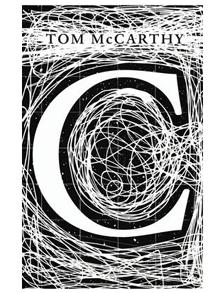
In the end, my dissertation interest fell on technology, as I was seduced by a very strange novel on my 1945-Present course: Tom McCarthy’s C. In a way, it’s an encyclopaedic novel which picks up on all of my favourite themes. A novel which, at the level of both form and content, weaves together questions of modernity, the avant-garde, wireless technology and theories of networked society and subjectivity. It’s a novel haunted by the flickering presences of insects, war, Freud, Joyce, Kafka, Ballard, Marinetti; a novel which inhales and exhales as many intertexts as it can possibly breathe in. A novel which disturbs with its themes of incest and violence, its lack of a strong sense of humanist ‘character’, but enlightens with mini-lectures on entomology, Egyptian history, the workings of various technologies. There are also bouts of dark humour that keep you sane throughout the narrative, along with its beautifully crafted imagery. McCarthy cleverly invokes the emergent technological communications of the early twentieth century to comment on our present condition in a world saturated with wireless signals and the ever-present dominion of the Internet, which is not really external to us but rather an inherent web through which we live our daily lives and experience our desires.

mccarthystory_1700554f

We had to submit our dissertation prospectus right after our exam period in May of this year. That was a stressful time; even though these prospectuses aren’t binding, it’s still difficult to come up with a semi-logical argument and assemblage of texts when your brain is still fried from months of exam revision. Still, it’s good that we were forced to think about it early. I spent the first couple of months of summer rereading my primary texts and thinking about some ideas I wanted to develop. By August, once I’d returned from seeing family in England, I suddenly hit panic station. In a month or so, I’d be returning to uni and then it would be a matter of weeks before the deadline. I thought of all the things that might threaten my ability to complete the deadline in that time. Being called for Jury service, work, deadlines for my other course that semester (Modern American Women’s Writing), a freak spell of perishing weather, my laptop dying, losing my pen-drive, falling into the dark pits of writer’s block or depression – the worries dragged on. Thankfully, these things either didn’t happen, or only happened to a perfectly manageable degree. In fact, it turned out to be possibly my favourite semester at uni.

You see, there’s something very rewarding and liberating in being charged with your own project. There are no specific guidelines for your particular topic: aside from the annotated bibliography and the final submission, you set your own deadlines; you decide the scope of your topic, the texts you want to read; you aren’t harrowed by the prospect of a final exam which may necessitate the memorising of quotes from every last piece you find yourself reading. Of course, it varies from supervisor to supervisor your experience of all these things. They are there to give you advice, to offer you ideas for further reading, but everyone goes about it in different ways.

So throughout August and September, while we were being blessed with an unusually bright summer, I found myself in the pits of the library almost every day, trying to get my head around all the theory I was planning to use. I read countless journal articles, chapters from monographs, books on or by the likes of Freud, Derrida, Deleuze and Guattari, Friedrich Kittler and Bernard Stiegler. Interviews with all my chosen authors. I jotted down pages and pages of notes, filling up a little sparkly notebook I’d bought to encourage me to get started early. My bibliography was already totting up nicely with tons of references. I was putting together a plan. It felt good, to feel motivated enough to work this hard.

Luckily, I managed to keep the momentum up throughout the semester. I wrote the dissertation originally split into three large chapters, the first two comparing various texts and the third focusing on C. It was easy to write (early mornings in the library or in bed) with my personal harsh deadlines always in mind. If I finished the thing early, I could breathe easy again. Fuelled on green tea and Dairy Milk chocolate, I got most of my dissertation written by Reading Week (mid-way through term). The problem was, my word count had gotten waaaaaay out of hand. I thought this was okay; just write now, edit later. But it’s kind of impossible to cut out as many words as I had. I tried rewriting the middle chapter over Reading Week and all I succeeded in was cutting the odd paragraph and making my prose sound better; there was still some serious trimming to be done. I went to my supervisor and pleaded my word count woes. Her excellent advice was to pick one – just one – chapter and stick with that. Now that’s a terrifying thought when you’ve just spent four months researching and writing on four primary texts that you’re no longer going to use. Nevertheless, it was something I had to do; I felt that to condense my argument as it was would jeopardise the quality of my analysis. Maybe one day I’ll go back and re-work my discarded material for a Masters. It’s a thing we all have to go through as Lit students, getting the balance between variety and depth. Fitting in both theory and close reading. In the end, I chose my third chapter on C and completely rewrote it with smaller chapters. Time will tell if that worked out okay.

Sometimes I think back to the process of dissertation writing we went through in sixth year at school, writing our Advanced Higher dissertations. Admittedly, they were half the size: English Lit at 4500 words, Modern Studies at 5000. You got all year to write them and in theory, there were more opportunities for help. Still, although I worked consistently throughout the year on both, there was still that last-minute panic dash to sort out small things: referencing problems, formatting issues, those evil little things that you think will be okay but come back to bite you. I remember the day before the Modern Studies one was to be handed in, my teacher phoned my mobile to tell me he just opened it to read and noticed that there were footnotes missing, or just floating around my document. So I had to get the bus back from college and traipse into the school that night at six o’clock to fix it. Similarly, last Tuesday night I found myself at five to six (and I needed to be somewhere else at six) in a tizzy at the library, surrounded by heaps of messed up paper and broken hopes. I thought I’d finished it, proofread it fifteen times (and got others to proofread it) but reading it again I was still finding things that had mysteriously disappeared, moved, or simply needed replacing. The bibliography giving me the wrong page numbers. Queue a mad dash from my computer to the library printers (over and over) as I kept replacing the mistake-ridden pages. This day was perhaps the most stressful in five months of working on the dissertation. No kidding, give yourself as much time as possible for formatting and proofreading. Word processors will be the death of me.

Maybe this is all hyperbole; after all, I got my dissertation in over a week early. What a great feeling, although it’s only now that it’s hitting me. It’s hard to grasp how much of your mind is occupied by your dissertation until you’ve done one yourself. Until you’ve handed it in. Even now, I still get names and references flashing through my mind and I worry did I put that in the bibliography? did I remember to mention this theory? where did that quote go? It’s really difficult to let it go.

Nonetheless, it’s not all fear and stress. In the end, I loved my topic and can really see myself going back to it, rewriting and expanding it in the future. Your dissertation is one of the most satisfying pieces of work you’ll ever produce at uni. Scrolling through the finished document, it feels good to see all that prose stretched out over many pages, and know that it’s all yours. You wrote it. You should be proud of that, no matter what mark you get. Sure, there will be times when you want to hide under your bed or a desk in the library and cry, when you want to fling your books out the window or delete every last silly word you have written, but in the end you have to break through the pain and just get it written. Accept it and let it go. If you get writer’s block, spend ten minutes free writing on anything at all that’s irrelevant to your dissertation. The weird person sitting opposite you in the library, for example. This should help to get your ‘writer’s flow’ back. Moreover, chocolate helps (indeed proves invaluable), as does a supportive friend (and/or flatmate). There’s a warm sense of ‘we’re all in this together’ amongst fourth year English students, particularly as the dissertation is such a lonesome project, so it helps to talk to someone about your ideas. Also, obviously, as everyone always says, a good topic makes for a good dissertation. But either way, it will be okay. You have to learn to be good with timekeeping, to narrow your argument and find ways of connecting and condensing it. All very useful skills for any kind of future critical writing you might engage with. And out of all the stress, the feeling of finishing your dissertation makes all the hard work worth it. So to anyone who has any kind of dissertation to write either this year or next, I say don’t dread it, but look forward to it.

Mushrooms at Dusk

mushroom

She found the quality of light at this time of year awfully confusing. Dull grey in the morning, silver streams of mist that lick the sky like butter from your fingers. The twilight haze of three o’clock, where the amber lamps come out like fireflies and shadows gather ominously across the sky. Maybe a wisp of some foreign wind, darkling in the fade towards four, where she’d be sitting at her window, wondering. It was the time of year to tend to the garden, pile up the heaps of leaves, clusters of rotting pinecones and acorns that clotted in the soil. The earth was hardening for winter, and soon the frost would come, eating into the grass like a glittering poison. She’d see it as she dressed in 7am sunlight, the whitish mist making crystals at her window. Everything still and beautiful.

It was a luxury, to be home now. She waited for the seasons to change, right at the hinge between autumn and winter, before she made her journey. Asleep on the train, dreaming of being small again, so small in the bubble of childish memory. She could smell the peanut crunch of M&Ms, the sparkling particles of someone’s perfume. Soon, soon she’d be home. The place grew tighter every year, as she grew fatter on the milk of new years and their offerings of plastic joys and flattened dreams. She stood in the kitchen, watching the steam swirl out of her first cup of tea. No new mugs, of course. Later, she would press her face to the window and her breath would fog a dewy canvas, and with one finger she’d draw pentagrams, like she always used to. There’d be the rubbery squeak of skin on glass.

No-one was at home now, just her in the wide archives of the house. In the dusty shelves that made her sneeze, and the picture postcards, she imagined a thousand phantoms. They were pretty phantoms, ornamented with the smiles of children and the pinkish sheen of memory. They did not speak to her, but she was somewhat comforted by their silence. What counted was the presence, the ghosted sigh of a skin-prick or coldness. She would wait till her parents got home and read books, in that nook between the banister and the cabinet on the landing. Imagining herself as Jo in Little Women, taking great bites out of Braeburn apples, lines of prose flying before her eyes. She did not fit there as well as she did as a child. The wood cut into her arm as she read the strange poems covered in gold-frosted dust. Somebody had been spraying glitter in the study, making Christmas decorations. That was a long time ago.

***

Morning came like a murmuring of starlings, and slipped away again just as quickly. Her body was heavy, her limbs tree-trunks of aching muscle. She felt she had been away again, and the new hours were another return. She worked them over in her mind, pondering the way their shapes formed with her hunger and sleepiness. Moulding, slowly. At the window she stood and yawned. Some machine was whirring away, making her coffee. The smell dissipated through the room with its warm opulence, stirring her brain to life. Yes. She peered closely into the garden, staring at strange dark shapes which clumped in the fronds of long grass. Most peculiar. Later she would investigate. She ate her breakfast of burnt toast with the radio humming in the background, speaking of a war somewhere, and then advertisements for hair salons and special restaurants. Onto her toast she spooned pools of blackberry jam that looked like crushed rubies, and the soury sweetness bit at her tongue between her teeth. She chewed loudly and grinning, the wine-coloured juice staining her lips. Afterwards, she left everything on the table: the crumbs peppering the wood like a pixie’s debris.

It was almost enough just to be here, out of the shouting sirens, the madness of the city. Home, she supposed. She sat at her laptop, fingers clicking ruthlessly at the keys. She was writing a message to someone, a sad story about why she would no longer remember them. She would keep it saved, locked deep in her computer’s hard-drive, and then one day send it. When she had the person’s address. When the time was right; which it wasn’t just yet.

Everything stretched out like the languid yawn of a giant, just a long morning and the gape of afternoon, uncertain evening. The sheerness of time was narcotic, rendering tiny signals that pulsated in her brain. She was at once sleepy and electrified. She rushed up the stairs to check something in her room, but her phone was dead and all that was there were her clothes strewn across the carpet. She messed around looking for things to read. She highlighted her favourite words in the dictionary. It was a big dictionary, and a whole hour shed away like the flake of skin that layers the top of a scar. She remembered only a handful of this vocabulary: sapphire, salience, stardust, Saprotrophic. She was cleaning the window with lemon vinegar, making sweeping lanes in the film of dirt. A thin moon peered out of the weary sky like a wink. Saprotrophic…she had forgotten something. Ah…the mysterious clumps in the garden! Of course, they were mushrooms, only mushrooms…

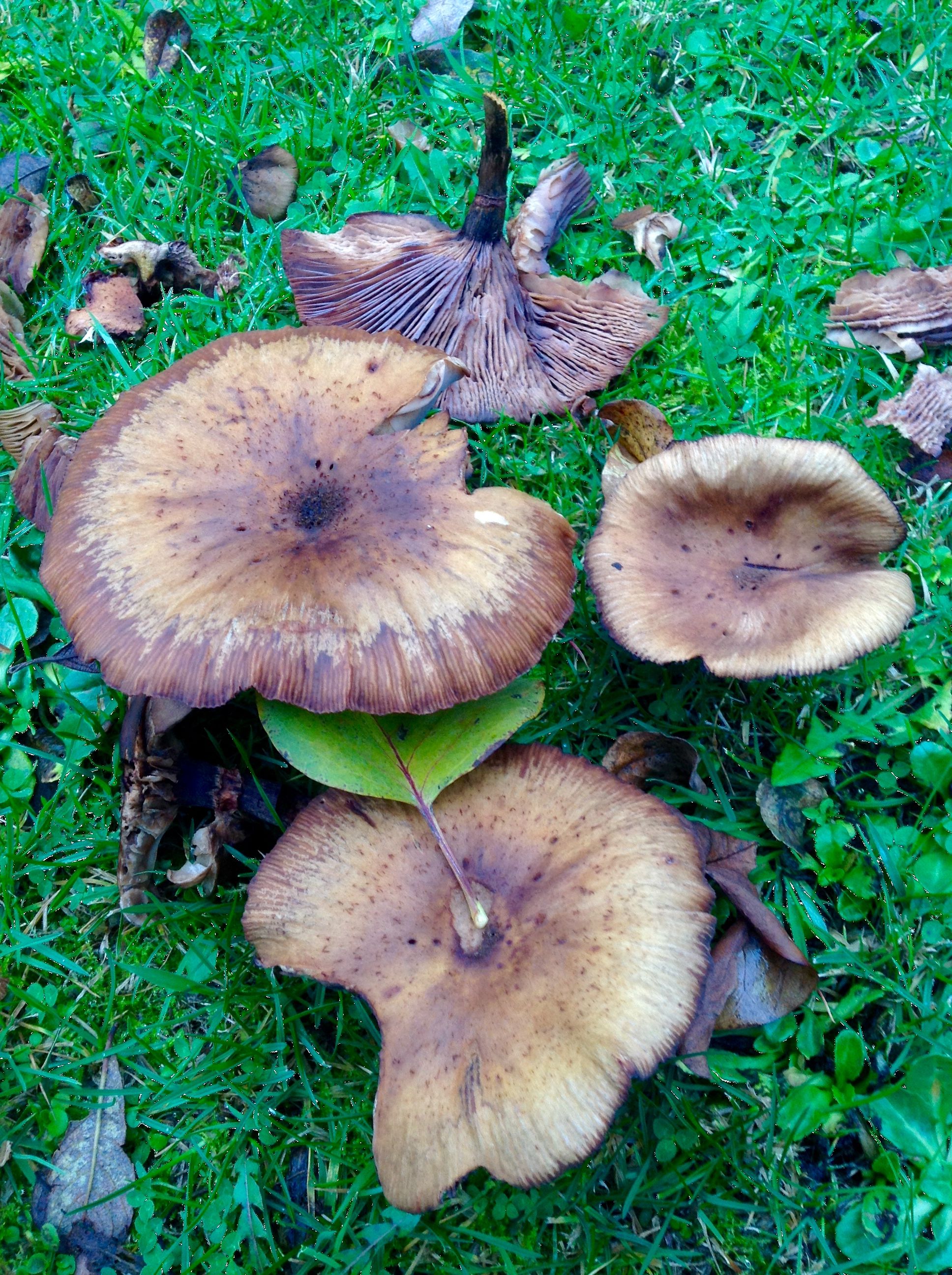
She pulled on her mother’s wellies and trod out into the garden, up the concrete steps. The air was very still; mournful, even. It smelled of wood-smoke, and somewhere she could hear the crackling snaps of burning tinder. Plumes of it rose against the blueish dusk in dark arabesques. She sighed contentedly. The clumps were even more abundant than she’d thought; the whole garden was teeming with their shadowy figures. She knelt down to inspect some. She thought of the honey fungus they’d found out in a forest once, clinging prettily to a rotting stump. In the sunset glistenings that glazed the silhouetted trees, she had thought she could almost see fairies, fluttering above the mushrooms. They were lovely mushrooms, with their smooth peachy caps. Her friend had said they were edible; but you could not be sure with wild ones, so they left them alone, like a living relic, noting their path. The toadstools she saw now in the garden were a putrid brownish colour, etched with black lines and little white spots. They were ugly in a kind of otherworldly way. Ethereal, even.

Her knees were going numb from bending so she stood up and did a lap of the garden to get her circulation back. She was recalling things. The party where a boy brought out a sandwich bag of suspicious-looking vegetables, frying them on somebody’s pan. She’d stood in the doorway of the kitchen, her mind full of cheap red wine, watching the way the little things unfurled in the buttery oil, their spindly stalks stretched out like tentacles, their heads jiggling like jellyfish. As they started to sizzle and wilt, they let out a curious, bitter smell. The boy had shared them among his friends and then they had disappeared for most of the night. Later, one of them was hanging upside down in a tree at the village park, and he was reciting streams of Byron’s poetry. Sometimes, she still heard his voice, even now, reverberating through the dark.

The cold was coming out of its slumber and creeping into her bones. She stood still, wrapping her cardigan tight around her. She crouched down again and dug her nails into the earth. A weird feeling gripped her, a feeling tinged with homesickness. She pulled nothing out of the ground, no trace of seed or root. She stood up again. The quietness made her feel smaller than ever, but her mind was huge and overbearing, stretching itself across the matter of the garden. It all glared in her vision like the close-up shots of a dream. She wished some sound would break the silence. A bird-cry, even. But the little creatures were so quick with their wings that they made no noise as they flew between branches. She was trembling now, remembering everything.

The fungus at her feet now looked like the severed heads of something. She had to breathe.

If only a car would start in the drive, or a plane fly overhead…something, something!

They say that magic makes you happier. And she thought there was a thing she could do, before going inside again to the womblike comforts of heat and sleep. She brushed through the grass with her wellied feet, and stood in the centre of one of the fairy rings. It was a near perfect circle. She stared first at the mushroomy clumps at her feet, then up at the sky. It bore the dramatic flashes of an expressionist painting: great bolts of violet wounded the blue, and rivulets of yellow broke away from the horizon, approaching amber and spiralling, spiralling. Then she found again the moon. Brighter now, it was a sharp crescent, the fold of an eyelid. She waited, waited. Her body was cold and her skin prickled like coral on a sea-washed rock.

The clouds began to gather, slowly at first then fast like an army.

You could smell it in the air, the sourish dampness that held as a breath.

She closed her eyes and the rain came. She felt the initial sprinkles that bounced off her skin, the cries of birds as they darted into the hawthorns for shelter. Drizzles of silver slashing the landscape. A downpour of water and chilly air. She stuck her tongue out for the cold shock and the sharp taste. The crescendo sound of it showering louder, coming down thick and heavy from the west in globules fat as teardrops. She opened her eyes and her hair streamed down her face like seaweed, clinging to the marble of her skin. She felt it surge within her, the waterfall sounds of this injured nature. A grumble of thunder. Something stirring in her chest, a rush in her pulse. Almost like someone was watching her, a million things flashing around her. Her laughter was lost in the cavernous sound of the rainstorm, another echo pirouetting through the chambers of memory. And as she stood there, the fungus and mushrooms soaked up their nectar, before crumpling to a wasted doom. The rain had poured through and through her, and she felt hollow and purged as a mermaid tossed from the sea to a tomb. And she was the still point in the tempest around her, her body soft and sad with its sickness. This was it; home was just this, wild and true, the beatific glow of a hullabaloo.

Oranges for Bonfire Night

IMG_0027

(from a Creative Writing Society freewrite with the prompts ‘fireworks’ and ‘oranges’)

She remembers the days when she and her brother popped over to the neighbour’s house for Bonfire Night. She’d climb over the garden wall, wearing her wellies and her dad’s itchy jumper that came down to her knees and a hat her mother had pulled over her fringe. They’d play with the children next-door because they were good friends and the same age, more or less. Even though it was pitch dark in the November night, they’d dance around the garden, shrieking and playing tig or hide and seek while they waited for the fireworks to be set up. They were cheap fireworks, bought from the local store, which ordered them from some chemistry enthusiast in the city. This was, of course, before The Internet.

She can’t remember his name, the man next-door; the dad who told the kids off for laughing too loud and who’d sneak off for fags in the greenhouse while his wife did the washing up. She remembers the blur of his bearded face. His yell as he stepped back from the firework he’d just set up. She remembers the mum better; the mum used to bring out steaming mugs of soup and carrier bags loaded with oranges. She remembers standing in the cold bright air, peeling with the stubs of her fingernails the rind that came away like thick flakes of skin. Biting into the soft flesh as a flame-coloured Comet rippled above her. The sour sting of the juice squirting in her eye; the sweetness seeping over her tongue. Stickiness on her fingers. She’d toss most of it away, into the rhubarb patch. She wanted to save her appetite for the chocolate log and lollypops that awaited them inside.

There’d be the rockets, soaring and screeching in her ears like banshees, sizzling in her belly. The wheeeEEeeeee like electricity. She hated them, but they were a thrill. She’d look up to catch them but they’d be gone already. Then there were the pretty ones. She read their names off the cardboard box, discarded on the porch: Crosettes, Dragons’ Eggs, Ice Fountains and Blossoms. She watched them go off with the other children, trying to identify each one as if they were flowers in a biology textbook. Only, they were always too quick; their beauty dazzled her vision and then evaporated. There were the ones that overflowed like ocean spray, showering and spitting flickers of white and silver, like a jeweller soldering a giant diamond. Rainbows would spread out across the smooth sky, raining colours across the tall trees at the back of the garden. Her favourite was the Catherine Wheel. It took ages to set up, but it was magical. It spiralled like a wild thing from the pole of the washing-line, sparks flying around it with the craziness of broken machinery, or hypnosis. She adored the Catherine Wheels. They made her feel strange and unreal, as if she were looking into an abyss.

After all the fireworks were gone, the children were doled out sparklers, which they were only allowed to use with gloves. The sparklers let them write their names in the air, as if they were inscribing their thin identities into the vast constellations of the night sky, the atoms of the air around them. She misses how back then in the country you could always see the stars and the sky achieved a proper dark. In the city where she lives now the sky is always a murky brown, the colour of Coca Cola or dirty rivers.

She used to hate how eventually they’d have to go inside. She used to want to stay out in the garden forever, sucking in the lovely coldness of November night. She hated how the sparklers had to be chucked into water buckets, where they’d snuff out with a quick hiss. The adults would always check that they hadn’t burned their little fingers. She remembers the faint char marks that stained her gloves. Remainders. She found those gloves, only a few months ago, when she’d gone home to help clear the house. They were in that same yellow jacket she used to wear, and even just touching the plasticky fabric brought back glimmers of firework enchantments. But the gloves were full of holes, the stitches became undone in her hands. Everything was to be given away, sold or donated to charity, after her mother died and now that the house was to be sold as her father left for business in America.

He’d phone her from new places and his voice would crackle over the phone like a fading sparkler. She closes her eyes and still she smells the warm soup, the tickle of gunpowder.

And oranges. She remembers the oranges. She never liked oranges.

Memories from MSN

014400a589401

Few things define the noughties more than MSN Messenger. The spinning pair of green and blue icons, surrounded by butterflies. The friendly window which popped up every time you logged onto the family computer after school, to ‘do some homework’. Forget Facebook, MSN was basically the main communication channel for my generation growing up, and I feel like its recent closure deserves some elegising. Yes, incase you hadn’t heard, MSN (rebranded since 2005 as Windows Live Messenger), is no longer with us. Microsoft forced its clients to give up the nostalgic platform and merge with Skype.

I remember getting my first email address, when the world of social media as we know it was still in its infancy. My cousin helped me set up my first hotmail account, and I was delighted to find that I could call it anything I wanted. I could express my (proto-manic-pixie) weirdness with some cool and random name I made up. I opted for ‘strawberry_bonfire’, an email address which incidentally I still often use (although not for LinkedIn or job applications…). It felt like a rite of passage, typing in my home address for some anonymous computer to process and setting up a password and making an email signature. People could now contact me. I was contactable. I’d have my own inbox. More importantly, I could set up a Neopets account! And an MSN account!

There was something unique about MSN’s interface which sets it apart from the likes of Facebook messenger, or Snapchat. I suppose the emphasis on conversation is key here. Each conversation opened out into a window of its own, although you could group your chats in ‘tabs’ for ease of moving between conversations. There was of course, the odd awkward moment when you accidentally sent someone a message reply that was intended for another person. Gossiping via MSN was a tricky business, which required organisation and attention.

Everything was a beautiful network of colours and messed-up symbols. It took a good five minutes to work out who was who when you looked at your contacts list, especially if your friends had recently updated their names. There was a whole sequence of tildas, dashes and asterisks to sift through before you could pinpoint your pal’s pseudonym or elaborately embellished screen name. I suppose that’s another reason why (not so) secretly I still prefer MySpace and MSN to Facebook…there’s that element of individuality that you don’t really get in the highly structured systems of more contemporary social media platforms. Sure, they’re probably more resistant to coding bugs because of their relative standardisation, but I miss the quirkiness of an amateur’s attempts at html on a MySpace theme, or a smear or rainbow lettering constituting someone’s MSN name. You came to know people not by their boring old real name and photograph (as on Facebook), but by some random avatar and distinctive font. That one friend you recognised when they popped up saying ‘hi’ by their enduring use of cyan-coloured Comic Sans or violet Monotype Corsiva as much as their name. There’s a nice sense of cosiness that comes with this, of online personalities being fabricated, selves being formed in the endless conversations that would eat into hours of an evening. Back then, we were too young to go to the pub, too remote in the country to find something ‘real’ and useful to do like join a sports club or an art class. Even if we did do extra stuff, MSN filled in the rest of our time, extended our social lives.

Then there was the personal message. This could range from ‘ugh doing maths homework’, to ‘Amy You Are My One <3’ and the ambiguous ‘=/’ which would result in a barrage of people asking ‘what’s up?’, only for the person to reply, ‘nothing’. Your personal message also revealed what you were listening to, if you had your iTunes hooked up. This of course stopped you listening to hideously embarrassing music (in theory) and listening to what you thought would impress other people. It was also a good indicator of people’s moods. God knows I wouldn’t start a conversation with someone if they were listening to Secondhand Serenade or Hawthorne Heights…

Then there was the ‘nudge’ function which was brought in later on. The bane of your existence if you were trying to coordinate MSN with homework or downloading or streaming YouTube videos (basically, my ancient computer would crash every time I received a nudge), the nudge would make your screen shake and force you to pay attention to the nudger’s conversation. Luckily you could only send a restricted number within a certain period of time. There was a time when MSN conversations were very precious, back in the pre-Broadband days when you dreaded that fateful phrase from your mother, ‘I’m going to unplug the internet because I need to use the phone’. You had waited so long for that bloody diallup connection to ring through and now you had to hastily sign off with a quick ‘g2g xxx’. To be fair, a lot of conversations basically went like this:

Person A: Hey x
Person B: Helloooooo

Person A: Howz u?
Person B: nb, u?
Person A: gd thanks
Person B: wubu2?
Person A: just hw and stuff, u?
Person B: yeh same

Person B: g2g, byeeeee xxx

Nevertheless, a lot of us had our first breakups, friend fallouts and heart-to-heart confessions over MSN. That, I guess, is where a lot of the nostalgia comes from. Staying up into the small hours on a Friday night having a moan about life to someone, or helping them through something they were going through. You could send them helpful web articles or songs to cheer them up (it might take 2 hours for the song to arrive though), or a funny picture (memes were growing popular). Emoticons back then weren’t the loathsome ‘emoji’ phenomenon they are now (god I sound like an old woman) – they were generally small and unobtrusive (unlike Apple updating your iPad and putting in an emoji keyboard without telling you…) and often served as a welcome substitute from =] or ‘lol’ being added to the end of every message. And then if you were going on holiday you could put the little tropical island or plane symbol in your personal message, and people would know that you were now an exotic thing talking to them from the imaginary world of some hotel abroad (with dodgy WiFi connections).

img25
emoticons! all the emoticons!

MSN was in some ways an endlessly frustrating service, but in a way that’s what made it so good. The game of how to talk to someone you fancied without making yourself look like a stalker (wait at least ten minutes before talking to them after they’ve signed in), of working out whether your matter was urgent enough to disturb someone whose status was ‘Busy’. There was always that weirdo online at 4am who you sometimes wanted to speak to and ask what the hell was up with their sleeping pattern. Then there were the endless difficulties with connection that left you kicking the desk underneath your computer and wishing you had one of those newfangled Macbooks or something (I guess this is where the ease of the latest messaging services comes in). I kept a notepad next to my keyboard for a while and it was amazing the amount of doodling I could do in the time I spent waiting for MSN to load; sometimes it was as bad as waiting for a 3GB installation of the Sims!

Source: Urban Dictionary

Yes, MSN was great for killing time. If you had friends round, chances were you’d end up on MSN, talking to (berating, more like) SmarterChild. SmarterChild was an instant messaging chatbot, a robot who replied to your message with a complex(ish) formula of responses. You’d send it (him?) lewd messages and he’d scold you for being inappropriate. You could ask him a question about your homework and he’d do his best to look up some (mostly irrelevant) answer. He’d do your times tables, and give you dictionary definitions. If you were in a bad moon, you could take it out on SmartChild. Talking to SmarterChild felt that you were outsmarting all those academic people who were worrying about the effects of inhuman interaction on us children. We were outsmarting the robots here.

There’s a lot of talk nowadays about the dangers of the Internet for young people. Schoolchildren are supposed to be educated about staying safe online, about not talking to strangers or giving out personal information. I don’t really remember getting much (if any) education on this at school, other than, ‘don’t give anyone your phone number’. Remember that familiar acronym which haunted every MSN conversation you had with a stranger: ASL? Standing for ‘Age, Sex, Location’, it was (is?), as Urban Dictionary puts it, ‘what stupid people say on chats to learn who you are and where you live so they can come to your house with a chainsaw and kill you.’ Most of the time I would reply ’99, Cat, the moon’, and then block them, but then that’s just me…I always felt MSN was totally safe. It was so easy to block people (the satisfaction of seeing their little icon turn red!) or appear offline so they couldn’t start a conversation with you. The fact that it was a separate console and not embedded within your browser felt more private somehow, and less like your every word was being tracked with cookies, or sucked into the black hole of some governmental data archive. Facebook exposes a lot more information about you than MSN ever did. All you’d get from the average person’s MSN profile was some kooky screen name, a jumble of symbols and song lyrics and maybe a blurry/’arty’ webcam shot of the side of their face.

One of the earliest academics to properly study the effects of online communication on people’s identities was Sherry Turkle. Her book Life on the Screen: Identity in the Age of the Internet (1995) looked at how people interact via MUDs (role playing games and forums on the the internet), through which they communicated in fictional worlds. I suppose the fantasy-scape of something like Dungeons and Dragons is an example here, but someone with more expertise in what is evolving into online cos-play would surely be able to list many more. Well in this book, Turkle basically argued that such online interactions, which involved the play of masks and multiple identities, were allowing people to develop a postmodern mode of knowledge – they came to see reality itself as a play of surface signifiers, a swirling universe of simulations. Think Baudrillard here, only, Baudrillard getting serious research application (not just armchair academia or The Matrix). Identity becomes a game, a game in which you have some control; as Turkle points out, “One player says, ‘You are what you pretend to be…you are what you play.’”. Simulations basically infect out reality, and allow us to enjoy it like a game, playing out the selves we have created online.

Scene from Chatroom

There are of course, many film and literary representations of the dangers of forging online identities: the thriller Chatroom (2010) stages chatrooms as anonymous hotel rooms, in which teenagers encourage each other to do increasingly disturbing actions in reality, culminating in the most psychopathic character trying to manipulate someone to commit suicide. Jeanette Winterson’s The Power.Book (2000), named after an old Mac computer, delves into the fantasy realm enabled by the Internet, with its chimerical portrayal of a dialogue between two selves (whose names and identities shift). For Winterson, the computer functions as a way of exploring the multiplicity of narratives, the instantaneity of their communication and transformation. Her chapters have names like ‘New Document’ and ‘Search’. Whether she creates a credible Internet Romance (could this be a genre? The Guardian (2000) reviewed it as ‘a virtuoso trip into virtual reality’ ) or a gimmicky spin on vaguely plausible computer jargon is up to the reader. Still, it does link in to Turkle’s ideas about how the Internet has fabricated a postmodern reality of play and possibility.

I’m not sure exactly how much scope MSN offered for that sort of thing. Often, we just used it to chat to our friends as we would in real life. We’d have ‘group convos’ which contained as much shouting (CAPITALS), annoying nudges and confusing dialogue as such a conversation would play out in real life. Sure, maybe we’d open up a bit more online, with the safety of the computer interface. We could tell our secrets to complete strangers, who wouldn’t know our real name and so couldn’t track us down later via Facebook to wreck our lives. We could just block them. So maybe there was a bit of identity ‘play’ there, but mostly it was just an extension of the interactions we had in the park, on the bus, in the playground. It wasn’t a simulated, enclosed environment in the same way a chatroom online is; it wasn’t a specific ‘zone’ – it was a console that you opened up, a kind of tool as opposed to a virtual reality. That’s how it felt to me anyway.

Throughout my teens, Piczo, MySpace and Bebo would come and go, fading into the recesses of an Internet shadow-world that secretly archives every scrap of your self that was once uploaded online. But MSN was faithful, erasing every conversation into the imaginary ether, so that only you could read over previous conversations (if you had ‘chat logs’ switched on; but they certainly weren’t searchable online in the same way your dreadful Piczo account was). MSN was the gateway for many friendships, a forum to vent frustration and a place to play chess with a stranger from America who added you because his cousin knew your friend or something. A place where you got a pleasant kick from signing on and seeing the ghost message of someone who’d tried to talk to you when you were offline. You felt that important. A place of horrific fonts: ‘яσ¢кιи ιи нєανєи, 2кαιι7’ and fondly irritating screennames (my own include ‘Whatsername’ (yes, a riff on Green Day’s American Idiot – I was a twelve-year-old-wannabe-goff) and Maria Magickk (I promise you, I knew people with worse ‘scene’ names than that; also, I thought the double k was a clever reference to the ‘kk’ which everyone substituted for ‘okay’ on MSN. Oh dear.). Now that MSN has been shut down for good in its final resting place and we all have to migrate to Skype (never!), I guess all that’s left for us Generation Y people is the WhatsApps and Snapchats and other gimmicky chat applications that smartphones have brought us. Conversation these days is less about talking and more about sending emoticons and stupid pictures (bah humbug!). For the rest of us, there’s always the excellent nostalgia trip that is the MSN Memories Twitter account: https://twitter.com/MSNmesenger (enjoy).

the dreaded Troubleshoot message

***

Kellaway, Kate, 2000. ‘She’s got the power’ in The Guardian. Available at: <http://www.theguardian.com/books/2000/aug/27/fiction.jeanettewinterson> [Accessed 3.11.14].

Nakata, Hideo, 2010. Chatroom [DVD].

Neopets(!) www.neopets.com [just cause you have to try it]

Turkle, Sherry, 1995. Life on the Screen: Identity in the Age of the Internet (New York: Simon & Schuster).

Winterson, Jeanette, 2000. The Power.Book (London: Vintage).

Long Hair: A Love Story

A long time ago, far out in the constellations of mythology, Rapunzel let down her hair. And what lovely hair it was, a waterfall of gold, spilling from the window of her tower. Answering the call of her keeper or lover, she unravelled her braids to form a rope. Rapunzel’s hair, then, provided the connecting threshold, the thread that stitched together her turreted psyche and the world outside. It was also her downfall, allowing her to have illicitly a lover. Her keeper, Dame Gothel, became jealous and cut her hair, and left her to live a withered existence out in the desert. The tale takes us from the lush beauty of a ‘splendid garden’ to the arid desert, where eventually Rapunzel and her lover reunite and find happiness. It’s a peculiar tale of desire, entrapment, revenge, femininity; a tale which sets the scene for wider cultural mythologising of long hair. It’s a mythology that we’re still fascinated with, as the popularity of the Disney adaptation of Rapunzal’s tale, Tangled (2010), attests.

History and myth are glutted with references to the power of lengthy tresses. Take Samson, the Israelite leader who lost the source of his strength when his lover Delilah betrayed him and cut off his long hair. Or the Sif, the wife of Thor, whose wheat-coloured locks were cut off and stolen in her sleep by the malevolent god Loki. After Sif’s husband entered a threatening rage about the hair theft, Loki ordered dwarves to weave Sif a new mane of hair out of threads of gold, more long and beautiful than before. There’s also, of course, Medusa; the monstrous Greek guardian whose hair famously consisted of venomous snakes, and whose eyes turned their onlookers to stone. In his essay, ‘Medusa’s Head’ (1922), Freud suggests that her snaky mane is linked to the castration complex, the (male) fear of having one’s genitals effectively guillotined. Freud’s typically eyebrow-raising essay links Medusa’s head to the female genitals, and the supposed threat of castration a boy experiences if he catches sight of these genitals. Well, apparently, Medusa’s snakes also alleviate the terror of castration, since they provide supplementary figures for the penis, thus filling in the implied absence of castration. And of course, Freud throws in a cheeky sexual pun, as Medusa’s head makes her ‘spectator stiff with terror’, and thus not only turns him to stone but also arouses him: ‘[f]or becoming stiff means an erection. Thus in the original situation it offers consolation to the spectator: he is still in possession of a penis, and the stiffening reassures him of the fact’. Yes, quite.

http://www.google.co.uk/url?sa=i&amp;rct=j&amp;q=&amp;esrc=s&amp;source=images&amp;cd=&amp;ved=0CAcQjRw&amp;url=http%3A%2F%2Frap.genius.com%2F821579%2FAesop-rock-the-mayor-and-the-crook%2FThen-rock-like-medusa-glances&amp;ei=hgxSVMKiNZDwaN3qgMAI&amp;bvm=bv.78597519,d.d2s&amp;psig=AFQjCNEsGHzxRr7-50RvUoDaEL2wpaitkw&amp;ust=1414749689575329
Medusa.

Well, it’s undeniable that literature has tended to represent a woman’s long hair with desire, sexuality and beauty. Take this passage from Book IV of Ovid’s Metamorphoses:

Medusa was astonishingly fair;
She was desired and contended for–
So many jealous suitors hoped to win her.
Her form was graced by many splendors, yet
There was no other beauty she possessed
That could surpass the splendor of her hair–

Yet while her hair made her an object of desire, a thing to be ‘contended for’, the ‘splendor’ of her snake hair also symbolises her multiplicity. As the snakes are full of a life of their own, Medusa cannot be pinned down, her personality is multiple, endless. Her hair is its own being, extending in legend and through history. It is slippery, but also a symbol of her power. Indeed, Hélène Cixous reclaimed Freud’s psychoanalytic pinning of Medusa to advance her feminist call-to-arms for women to rethink their sexuality in relation to language. In ‘The Laugh of the Medusa’ (1975) Cixous critiques the way Freud’s castration complex reinforces the mythologising of Woman as hysterical, as the Unknowable, ’dark continent’. As weak, passive, mysterious. Through writing (extending the lines of multiplicity that we find in Medusa’s hair), women may reclaim themselves, reach out and produce their desires and being through writing. Just as Cixous herself reclaims the mythical figure of Medusa from Freud’s cigar-stained fingers: ‘she’s not deadly’, Cixous argues, ‘she’s beautiful and she’s laughing’.

There is something joyful and exuberant about long hair. Think of the connotations: a young girl skipping through a field of wheat, streaming behind her a cherry red ribbon. An Austen heroine waiting to be the belle of the ball, or the flame of The Little Mermaid’s rippling tresses. It is a distinctly youthful trait, too; a symbol of childish innocence. In Victorian society, only children tended to let their hair down in public; if a girl wished to be seen as a woman or ‘lady’, she must pin up her locks, dress them in ornaments and braids. Letting one’s hair loose as a woman was seen as a sign of wantonness. Thus, the artistic portrayal of woman with their tresses flowing free represented a kind of back-to-nature aesthetic, a fetishising of the body, the long locks relishing a kind of originary femininity and sensuality. Perhaps also a wildness, a breaking forth from repressive societal values – the kind of constructed femininity that kept women as the domestic ‘angels of the house’. Think of the young Cathy in Emily Brontë’s Wuthering Heights (1847), her hair streaming behind her as she gallantly trails the ‘savage’ Heathcliff over the hillsides, or the iconography of the ‘fallen woman’ as depicted in Dante Gabriel Rossetti’s Pre-Raphaelite paintings. Women who did not look in the mirror and reflect back the pale perfection of the chaste Victorian angel, but positively glowed with their own matter – their glorious hair – their sensuality. There is something in that: the glorious feeling of standing on a cliff edge, letting the wind whip your hair across your face and fill it with billowing energy. Just don’t try it when you’re trying to eat ice cream.

Rosetti's 'Lady Lillith'. Source: http://arts.brighton.ac.uk/study/english-literature-studies-brighton/brightonline/issue-number-two/the-fetishization-and-objectification-of-the-female-body-in-victorian-culture
Rosetti’s ‘Lady Lillith’. Source: http://arts.brighton.ac.uk/study/english-literature-studies-brighton/brightonline/issue-number-two/the-fetishization-and-objectification-of-the-female-body-in-victorian-culture

Today, like everything else long hair has been sucked into the commercial imperative. Perhaps that is why long hair has been associated with anti-capitalist and consumerist movements: the lengthy tresses of 1960s hippies, Marx with his wild white beard and mane, the fluffy mop of Che Guevara. Long hair (especially the unkempt dreads of the hippies) was never really a friend of the drone-like demands of the job market. A short sharp haircut symbolises ‘cool’, edginess, the new freedoms enabled by consumption (think of the bobbed Flappers of the 1920s). Advertising impels us to buy products, perfect your femininity, express yourself through a new style; a new cut, spray, or shampoo. ‘The latest hair trends’, the V05 website proclaims, ‘help you express yourself’. Every day is a decision about how one will adorn oneself, about one’s performance; hair becomes a web of possible signifiers, waiting to be decoded by an image-consuming public, or at least by that stranger across the street. Femininity is a performance, but the secrets of self lie in the hair. There is Kim Kardashian, that postmodern queen of the feminine, a patchwork of skin and plastic flesh, of shiny dye and hair extensions. Websites will spend considerable time and space unpicking the details of Kim’s hairstyles, as she shifts chameleon-like from blonde to black to ombre. It seems that still we read a women through the strands of her hair, as if they were lines of text.

authentic flappers!
authentic flappers!

In Greek mythology, the long-haired Sirens were alluring femme fatales who seduced sailors with their bewitching singing, leading them to perish and shipwreck on their islands. The beauty of these long-haired beings is thus inherently linked to danger, a threat to the freedom and power of masculinity. We might make a connection to the emasculating anxiety of becoming trapped in feminised domestic space. We might also make a connection to the contemporary use of the word siren in relation to (often long-haired) actresses: she’s a real screen siren, we say. Again, these sirens are beguiling, but often perilous in luring their spectators into the isolated islands of their cinematic fantasies.

Yet in addition to these chains of mythology, hair at its most basic component is protein: an element of our body which symbolises nurturance and life. Like our hair, we are always changing, growing. If we look after our bodies with sleep, good food and exercise, it shows in the glow of our hair. A quick flick through a photo album will reveal a history of hairstyles, which reflect not only on the (dodgy or not) cultural trends of the period, but also on ourselves. Who we are and were.

the mermaid in Splash. Source: http://mermaidinengland.files.wordpress.com/2012/10/mermaid-splash-darryl-hannah1.jpg

My own hair history is a fairly interesting one. I’ve always loved long hair, ever since (perhaps even before) I watched a rented VHS copy of Splash (1984) and decided I wanted to be a mermaid. Refusing my mother’s futile attempts to brush my hair, I went to school with a witchy mane which was only sometimes contained in double, Heidi-like braids. There’s a picture of me at my seventh birthday party, with it all crimped as I grin at the camera, wearing 90s-style Baby-Spice white leggings. It would’ve looked almost cute, if I didn’t have a full-fringe which took over half of my skull. Safe to say I’m not such a fan of primary school photos…

fierce crimping. source: pinterest

At least I earned the comparisons I (still) get to Hermione from Harry Potter (and not just through the geekery department). Kids at school would ask me if I ever bothered to straighten my hair (or at least brush it, one girl sighed) – this was back when everyone had to wear their hair poker-straight and smooth as if it had been recently ironed, Bridget Jones style. All that static flattened out; everyone a clone. You could almost smell the whiff of burnt heat spray as the other girls glided past. I wanted GHD straighteners for so long, that by the time I got them (a joint present for me and my brother, who was then going through his wee 12-year-old emo phase), I quite liked my hair a bit wavy or curly. I still have and use that same pair of trusty straighteners, incidentally.

Hair was always a contentious issue in my schooldays. The P.E. teacher would warn us every week that if we didn’t have it tied up in class, we’d be forced to wear rubber bands to pull it back. I’d always imagine the excruciating sensation of pulling a rubber band out a ponytail (along with half of my hair), every nerve searing with dread. By the time I was thirteen my hair was pretty long and for Halloween I bought some of that wonderful Stargazer semi-permanent dye and made a half-successful job of my hair. I think I got that sort of ethereal/faerie/cyborg look, as I dyed the top half pink and the bottom half blue, and my bad dyeing skills meant I actually got quite a cool ombre effect as the shades blended into each other. I wasn’t so good at clearing up the spattered mess of the bathroom, which resembled a mediocre Jackson Pollock painting by the time I was finished.

Me with pink hair for the Halloween Disco...and a Carrick Academy tie.
Me with pink hair for the Halloween Disco…and a Carrick Academy tie.

Oh, and with said blue dye I also did my brother’s hair once. My friend and I bought him some cheap permanent blonde stuff from Semi-Chem, thinking that because his hair was so naturally dark it would need a bleached out base. I didn’t think the blonde would do much at all, maybe only lighten the brown a bit. Somehow, however, it worked a treat and he had the most, um, skunk-like streaks of yellow in his hair. Diligently, we applied the blue dye, forbidding him to look in the mirror until it was finished. With everything all rinsed out, I suppose he looked more like Sonic the Hedgehog than the Billie Joe Armstrong look he was probably going for. It also didn’t help much that I also let my friend cut his hair in the Debenham’s family toilets (while I sipped warm wine mixed with whisky from a plastic sports bottle – classay!), leaving chunks of it over the floor like it was the detritus of some old, innocent self. After a few week’s of swimming lessons, the chlorine made the blue bleed out into a measly green, and he’ll probably never forgive me for that.

The best hair I ever had was platinum blonde. I loved it so much. I guess it was my failed scene-kid phase, when I wanted hair that was long and spiky and backcombed like a rat’s nest, a white canvas to set off my black liner and neon eyeshadow. The bleach process took over three hours for the hairdresser to do, and probably cost all my birthday money and a month or so’s worth of EMA, but it was worth it. I was born a bonnie wee blonde, but cursed with the family trait of having this fade. Having bright blonde hair makes you literally dazzle. Anita Loos was the first to say that ‘gentleman prefer blondes’, and it’s become an adage that blondes have more fun. I don’t know about all that, but you do feel like you’ve become some diamond in a sea of dull, radiating a new light. It fades though. The roots cut in like black leeches and the strands dry out like straw. You get bored. I let the blonde grow out and kept the tips as a kind of proto-ombre (I swear I got there before Alexa Chung et al), which remained as a kind of limp homage to my teen years pretty much until about a year ago, when I went the whole way with the brunette thing.

blonde tips!
blonde tips!
blonde tips again!
blonde tips again!
the blonde days...
on holiday in Italy…
looking blonde and melancholy
me all blonde and melancholy

And now I just wished I was ginger, or at least half ginger. That’s my plan now: gradually get more ginger. There’s something special about ginger hair; the way people try to hide it with lovely euphemisms – strawberry blonde – the way it’s linked to a fresh freckled face, or strange stereotypes (ginger people don’t have souls, I’ve been told). Its Celtic connotations. I want the amber and russet tones of Pre-Raphaelite tresses, that look gorgeous in autumn. It’s a sort of long term life plan, but probably achievable, although it’s one of the hardest colours to get right. You could end up with some cat-vomit orange, or a lustreless red, if you’re not precise with your dye. Yeah, I’ll do it gradually. It took me a while to get my hair as long and strong as it is now, so in spite of that saying ‘it’s hair: it’ll grow back’, I’m not risking my mane anytime soon.

Lily Cole in all her gorgeousness for Vogue Italia (source: pinterest)
The best hair colour and freckles ever. source: pinterest

Sure, I love the idea of hair makeovers. Get several inches lopped off and highlights put in and maybe an undercut. It looks cool on loads of people. But I’m definitely one of those strange souls who finds their hair a total comfort blanket, a scarf in the winter, something to chew on idly when I’m staring at a computer screen. I like being able to hide my face in awkward situations, or conceal the fact that I’ve made no effort with my makeup. It becomes a kind of signature, and people remember you by your hair. It would be hard to lose that, like shedding a self.

However, I’m not denying that long hair, rich with sensuous mythology though it is, isn’t a proper pain in the arse. The brushing, painful detangling, the half-hour plus hair-washing, the problem of it getting stuck in the door when you’re trying to clean the microwave. How to wear it for work; nobody wants a spaghetti strand of hair in their £18 steak. You do come up with a good routine though and it becomes manageable. I promise, it’s worth it.

Desire, jealousy, strength – all things long hair represents in myth. Sure, everyone has bad hair days, but maybe a bad hair day with long hair is more a ‘I just came out of the ocean’ look rather than ‘I just woke up’. Long live the mermaids.

meee 2014
meee 2014

Long hair-care tips:

  • Wash as little as possible. I wash about once a week with a teaspoon of shampoo and a heap of conditioner.
  • Good diet! Eat all your greens: kale, spinach, celery, avocado and broccoli are best.
  • Coconut oil: heat some up and slather your hair in it and leave overnight for a nourishing hot oil treatment.
  • Buy a tangle-teezer and make your life 50 x easier.
  • Try to sleep with it in a braid.
  • Wash it in the coldest water you can stand, and only start to blow dry it when it’s about 80% dry, so it’s getting less heat damage.
  • Soft scrunchies are better than harsh bands!
  • Give yourself or get someone else to give you regular almond oil scalp massages. A splash of peppermint oil mixed in also stimulates growth.
  • Regular trims will not make it grow longer (myth myth myth!) but obviously keep your ends in good shape.
  • Try using colour-depositing shampoos and conditioners as a less damaging colour upkeep as opposed to layering up permanent dye. Henna can also be good, although it doesn’t ever wash out, so be careful and do a strand test.
a drawing I did of 'scene hair' me. (oh god)
a drawing I did of ‘scene hair’ me. (oh god)

Autumn Reflections

IMG_1999

The dawn cracks open the sky like a chestnut, and gold light pours on the concrete and grass like showers of molten topaz. Somehow it’s October and I’m wondering how I got here. Where the summer has disappeared, along with the warm air and the billowing roses, with August and its hydrangeas; it seems time has elasticated itself, and snapped at the strangest of places. Everything may break free now. The world slows down, as trees shake themselves clean of another year. Leaves cascade on the ground, and as I walk I hear the susurrations of their skeletons, rustling like the sound of rain at night.

Autumn is a quiet season. We retreat inwards. Gone are the sparkles of summer voices, the throb of fashionable neon and jet planes soaring to boozy utopias. The Pimms is perhaps swapped for something richer, sweeter, warming. A good cider, red wine, some inventive cocktail combining Kahlua and caramel-flavoured tequila. You think of those people hanging out of balconies, their bare skin glowing in the cold air, the slivery iridescence of cigarette smoke curling from their nostrils. There are the box-sets, the television dinners. Going out is such an effort; it is the not knowing, the tentativeness of the weather. Things would be easier if the sky kept to its promises.

I wanted to go blackberry-picking this year. I found a place along the Kelvin where they sprawl out of the bramble-bushes, poking like fat sapphires through wire mesh fences. I need to find some leafy suburb for conkers. When I was little, we spent the October holidays at my Nan’s in Milton Keynes. There was a copse of horse-chestnut trees and every year we brought back a black bin-bag full of conkers, and I’d shine them up with vinegar and nail varnish before taking them into school. There’s something incredibly satisfying about the way they feel in your palm, solid and smooth, nourishing somehow. I didn’t quite make it in time for the blackberries, but I did the walk again all the same, sweeping my feet through the trails of leaves. Autumn had left its burnished light, a shimmer on the river. I love the feelings of these late afternoons, where darkness is like a comforting hug, handed through chasms of stars and amber.

IMG_1333

Once, we had a school project, to gather up all the fallen leaves we could find and press them into a picture behind glass. A lesson in natural materials, perhaps, in arranging colour. We were flattening the landscape, making art; in the veiny intricacies of each leaf lies a million hidden histories. We’ll never know, and they’ll fade and die eventually.

Autumn is always a time of nostalgia. It is that paradoxical time where death reveals itself through visceral beauty. The life forces of summer unfurl and wither and fall away, and yet there is a beautiful melancholy in the sad palette of reds and golds and browns, the snuffling of squirrels amongst tufts of bracken. Everything is scattered: the husks and roots and fragments. You find them in the strangest of places, tucked not only in forests but flowing out of drains, wedged in concrete and windowpanes. People spend their Sundays loafing with films and Scrabble and roast dinners. Or maybe they don’t anymore; but maybe they did once.

SAM_0240

By September, we’re back at school, back at uni. Fresh starts amidst the fall. Sharpened pencils, the smell of polished leather. The heating goes on for chilly mornings. Socks warmed up on radiators. That was before I had a flat of my own, and became too stingy. The wind, like some malicious spirit of winter, slips through my single-glazed windows, blasts the rose from my cheeks. I make do with the illusory effect of candles, the quick fix of hot water bottles. You can warm anything with the scent of nutmeg and cinnamon, a flash of cayenne pepper. Stodgy soups and slabs of bread. I watch the pumpkins fill up in the shops, imagining a sea of faces, waiting to be painted on. Or carved out. Stacks of apples to be bobbed, pubs to be terrorised by the horrid costumes adorned by students. Halloween is not quite what it was when I was younger. I miss the parties with the clouds of cobwebs and incense haunting the rooms of my house, fake spiders draped from the chandelier; the echoing sound of dub-step, and the taste of vodka and food colouring. Edible brains and blood-coloured fizzy laces. The sugar-rush; the hungover fall and slumber. Soon there’ll be fireworks, splintering pigments across the sky. As ever, I’ll watch them from the high-up floors of the library. Remember being in first year, where I sat on a Saturday night, my eyes blinking at a computer screen as I read Byron’s poem ‘Darkness’, for a seminar. The rockets flared and pinks, yellows and blues blossomed in flowers of light as I imagined his vision of desperate apocalypse.

That same semester of uni I sat in a cold lecture theatre, teeth chattering as I pressed my face into a perfumed scarf, the animated man standing on the podium in a tweed jacket reciting snatches of Shelley:

O wild West Wind, thou breath of Autumn’s being,
Thou, from whose unseen presence the leaves dead
Are driven, like ghosts from an enchanter fleeing,

Yellow, and black, and pale, and hectic red,
Pestilence-stricken multitudes […]

And I, feeling so small and new and ignorant in the world, was sucked in by the spirit of the wild West Wind, not knowing how it would take hold of me and make me fall in love with this city that I have now grown so used to. Fallen into, as one sinks into a favourite old sofa. The ‘hectic red’ is blood-like, beautiful, sinister. Isn’t it lovely, to imagine every leaf a little ghost, cast away from its tree into a journey of exploration and retreat? Wearing the plum-coloured lipstick, the thick mascara and black coat; could not I be one of the ‘pestilence-stricken multitudes’? For autumn is infectious; her colours allure like the striped warnings of insects, the ‘Smoking Kills’ labels on cigarettes…we cannot help but buy her palettes, absorb her force through woollen fabrics…

image source: ladyhollyshawblog.wordpress.com

Slowly, it would be nice to become more ginger, adding redness to my hair through soft washes of auburn. I would like to have hair the colour of leaves, as they enter that strangely vibrant stage of fading. From fire to fawn. Can you not imagine the smell of the roses as they wilt for winter, so luscious in the fat of their fragrance? There are roses, still, weathering the rainfall and cold. There are white ones on University Avenue, dripping with raindrops; their petals lie about them like the shredded remains of love notes.

By the time autumn has ended and entered the shrine-like stasis of winter, I will have forgotten my sorrows, finished my dissertation. This is all hope and relief; but isn’t that what autumn is: the sparkle of Christmas festivities on the horizon, the embracing of frugality and calm after a toxic summer? Apple pie, with ice cream and Amaretto, instead of beer and salad? An ethereal, rustic beauty that inspires fountains of poetry? For what better thing to do on a crisp autumn evening, than to sit at the window with a cup of tea, leafing the pages of a book and feeling purer – not just a hipster, defined by the vague fashions of everything around you – but a lost soul re-enacting the perfect scene of reading, as it plays out through the ages. For global warming might prolong the first fall of snow, but for now autumn will always be coming, and there is nothing quite like language to capture the tinctures of foliage, the crunch of acorns underfoot – the endless song of autumn’s calling. Right now it is raining – a luxurious, slow rain that pours through the one o’clock darkness – but next time the weather is good, I will go to Victoria Park and watch the swans, white against the scarlet leaves, the silver glass of the pond.

Unwearied still, lover by lover,
They paddle in the cold
Companionable streams or climb the air;
Their hearts have not grown old;
Passion or conquest, wander where they will,
Attend upon them still.

(W. B. Yeats, ‘The Wild Swans at Poole’).

Ten Things for Autumn: 

  1. Apple Pie Soup http://thesoupfairy.tumblr.com/post/19640840152/apple-pie-soup-literally-my-favourite-soup-ever
  2. Blackberry gin! http://www.deliciousmagazine.co.uk/recipes/blackberry-gin
  3. Burgundy lipstick http://www.cosmopolitan.com/style-beauty/beauty/how-to/a4900/rules-for-wearing-burgundy-lipstick/
  4. Dante Gabriel Rossetti, ‘Autumn Song’ http://poetry.about.com/od/poems/l/blrossettiautumn.htmhttp://poetry.about.com/od/poems/l/blrossettiautumn.htm
  5. Manic Street Preachers, ‘Autumn Song’ https://www.youtube.com/watch?v=Cw9tazfA3aY
  6. Go foraging for mushrooms and fruit, or just fairy-spotting
  7. Cinnamon-stick candle http://www.yankeecandle.co.uk/en/restofworld/shop-by-fragrance/cinnamon-stick/icat/cinnamonstick?setpagenum=
  8. Ginger tea http://www.ecogreenstore.co.uk/index.php?main_page=product_info&products_id=1372&gclid=CjwKEAjw2f2hBRCdg76qqNXfkCsSJABYAycPz_Ug8Seq2xidtaVJGBOBCdbZNqgIe2J0dfvrqB6pGBoCgTXw_wcB
  9. A tartan scarf
  10. The Alasdair Gray exhibition at Kelvingrove http://www.glasgowlife.org.uk/museums/kelvingrove/current-exhibition/Alasdair-Gray/Pages/default.aspx
IMG_0019
mushrooms in Greyfriar’s Kirkyard, Edinburgh

three haiku for tomorrow:

sky of fire opal
opens a new morning of
coldness and woodsmoke.

a new harvest moon:
I could take all these gold days
for some old solstice.

these trees shed apples
to sour in the turning ground
as those other hours.