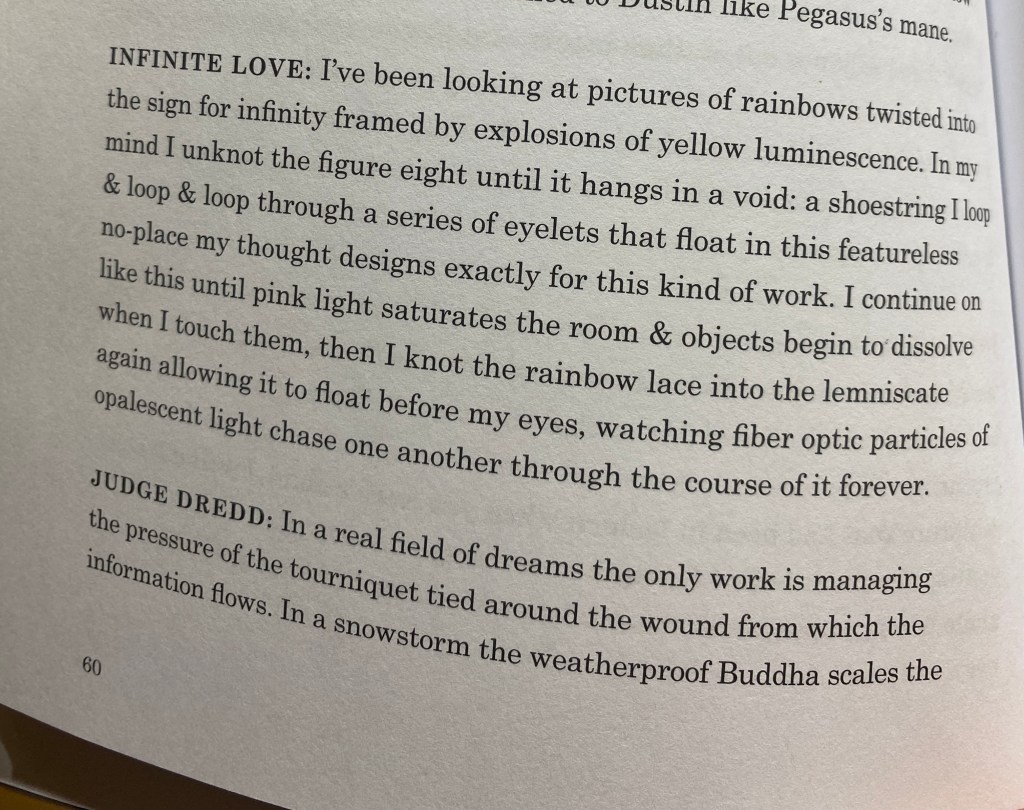
Infinite Love
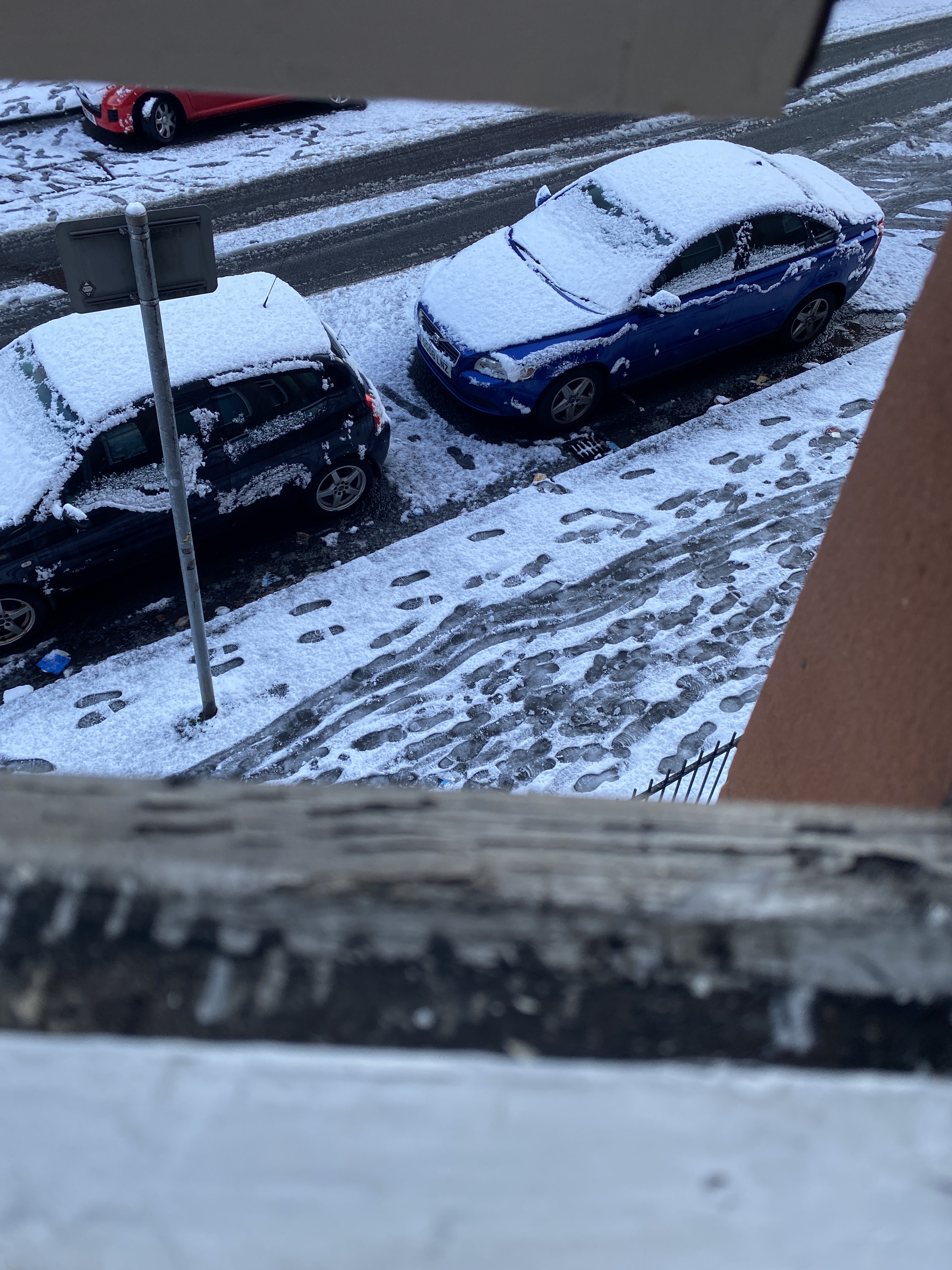
Dorothy
Dorothy’s Opiates is the name of the real Arcadia
not to be busted, learning that sleep deprivation is a kind of
spiritual death from a podcast featuring the Nap Ministry
I set off to sleep under three duvets: one is representative
of snow, the other a sleep mode, the other a body. I write to you
from beneath this slumberous context to wonder why anyone
who ever lived in a single glazed tenement loved the cold.
I can think of reasons: always something to look forward to
such as the crocuses and milder temperatures, the searching of
someone to warm you, wanting to dissolve into their skin
this someone who is never cold like you. I can’t explain this cold
but I can summarise its various sensations, cold as in a kind of disease
that eats your bones from the inside with terrible icicles
and lives in your back as a demon, cackling from within your kidneys;
a small child dependent on your energy, the cold needs fed.
The cold is in your chest, your throat, your head.
It throbs in your fingertips until they are red and puffy and burning
like nothing else you have ever felt: imagine every orgasm of your life
summarised and congealed as an opposite evil — pain — and concentrated
in the tips of your fingers, as though a malformed heart had grown
in each one, beating out of time, each heart individually failing
at the tips of your fingers until the pain spreads out like a juice
all the way down your fingers, hot, the nerves pulling into your arm
but it is so concentrated at the tips, you can’t really move
and to hit them against each other is like clanging vegetal matter
against blunt metal, they are thumpy and numb, now the pain
is melting it becomes a warm sensation of somewhat release
as though only a generalised bruising of the nervous ends
of all your digits. And by this time I hope I’ll have gotten home
to run them perilously under cold water, bringing them to room temperature
as if they could crack off and crumble into snowflakes of ache
it takes ten minutes or more; after which they will sting
with the feeling of having been battered. And it will happen again
the second your blood spikes, you go outside; they may as well
have been trodden on or run over by a van the way they feel right now.
I ask you sometimes to squeeze my hands so hard it bursts the blue of us.
Once I knew a worse cold
accordant to body weight this kind of cold is all-consuming for all seasons
of the year, a kind of inverse fire that licks your insides with its ice
so you feel it as a constant in your sternum, the cold that is eating
the meat of your ribs so you become a delicate succulent, always with
sugar on your mind, wanting to be watered. Always watering yourself
fruitlessly
and feathered of flesh, wilted
as if to float upon a snowdrift and not leave footprints.
Sometimes it is barely to speak
or, having dry Januaried the masses, some lubricant of society was missing
sorely from our dreams. So we did not dream of touching each other
so much as falling from breezeblocks, frosted, the hard fuck that doesn’t come
bounding down stairwells to greet you at sun-up with cigarettes and coffee,
which you cannot touch, which aggravates your nerves to a passion.
Nicotine, caffeine, dopamine. The endocrine systems of our dreams
are running on empty
and I have fed this day with the manifest boilersuit, as though to fix my own boiler
with mechanical prowess, die in your arms and so on. There are parts of the city
whose arteries confuse to the point of a general surge, desirous of insulation
and drivers
arrange the marzipan animals of their dashboard tenderly.
Snowfall. The first of the year’s cold drama
gone to pick up a wardrobe through the Narnias of other vinyl records
caught on the loop of the sweltering imaginaries a slice of life, of liquorice.
Flying by the Vogue Chippy of Cumbernauld Road.
You play loose with it, as if the rain alone would melt
what meadow remains of the innocence. A summary of the movie
of other Januaries: asking if I am a bad feminist for not liking such-and-such
a book, the enclave of housing utopias, the sunshine duration of the ad
for Stella Artois, the scene in All is Forgiven where the drunk kids dance
to The Raincoats’ version of ‘Lola’. I want to be inebriated
with chips and cheese on the corner and kissing you darkly
in the overlit takeaway. Anniversary of another fascist coup.
The cold in blunder, spraying my tongue with Vitamin D, worrying about sleep.
‘Dorothy’ is a song by Kevin Morby
in the video, somebody plays a trumpet underwater. I drape a cardigan
over my daughterhood, pull stories across my knees until I am deep
in the grass with you, the snow grass, a long sore note, we have pink faces
keeping up with each other’s sleeps, to rotate
in the bed, the powdery dreamscapes gathering form.
Dorothy,
Your warm apparition not to be sold or bought, an account
of the aspirin sunlight, too much, taking the flower pill
that makes me react as a plant, long stem in your arms
and coaxed of sap.
Calcium is a luxury to those who might keep their flesh self-
sustained and hard and warm. I thought of Kansas and corn
with the morning yoghurt as a viscid snow, spoonfuls
of what we are missing to kiss
goodbye of the freezing streets of Partick, melt in your mouth,
the pressure of boilers
adjusted by release, the way our bodies incline to the light
even when it is missing, how I wish you could trade
kisses for calories of actual heat, the truthfeel of one in the morning
stands for baggies of memories
the prized alacrity of exercise,
I insufflate
the nervous internet.
If this poem really were sentient, this would be the queue
for the doctor’s office, which is a location after all, novel
in its banality, after the fact of actually being here, a state of waiting
requiring the mortal presence of your body.
I stopped asking what a poem can do
when it seemed like I was done typing
with my fingers searing hot white words like arrows
tearing the flesh as they wrote, O Dorothy, listening
to a band called Trapped in Kansas.
I was born. Wrestling with duvets to change the music sheets
afresh, up close with the soot-covered mountains,
called to the room with thermometers jammed
in the hole of the poem, its quavers jostling with old composition,
bloodstream, organ, snow.
It is safe, it is safe.

from Alice Notley, The Descent of Alette (1992)

My first full-length poetry book is now slinking out into the world!
The details:
138pp. with inside illustrations by Maria Sledmere and cover design by Douglas Pattison
Typeset by T. Person
ISBN: 978-1-8380156-5-7
RRP: £10.99
Order from Dostoyevsky Wannabe.
The Luna Erratum, Maria Sledmere’s debut poetry collection, roams between celestial and terrestrial realms where we find ourselves both the hunter and hunted, the wounded and wounding. Through elemental dream logics of colour, luminosity and lagging broadband, this is a post-internet poetics which swerves towards the ‘Other Side’: a vivid elsewhere of multispecies relation, of error and love, loss and nourishment. Its leitmotif of Luna, a shapeshifting feline of satellite proportion, waxes and wanes through poems which move beyond the twilight moods of left melancholia, sad hospitality and ecological crisis towards a fugitive imaginary that lingers in the ‘Flirtation Device’ of lyric and its many echolocations.
Taking cue from Jenny Boully’s ‘erratum’ — ‘the text of what is and the text of what should have been’ — Sledmere writes with failure, friction and fractal attention, with a yearning for intimacy, shelter and ongoing ways of bearing the im/possible. She offers poems of mystery, refusal and pain at personal, political and planetary scales, tracing the desire-lines of the everyday and its glitching encounters. The Luna Erratum is a book of memory and friendship in the so-called anthropocene, of bodily disorder, painterly gesture, quantum kissing, rodent sisterhood, open world intervention, technology, tenderness, shimmer and song.
☆
Praise for The Luna Erratum:
How do you explain yourself to yourself when you suspect that actuality – your experience of it – is provisional and full of error? You come up with your own poetics, your own tense and mode of address, which is a lunar one, and which involves speaking in crushed, frothy mouthfuls to a terrifyingly silent, unpredictable and generous friend (celestial objects, an indifferent lover, &c.).
The Luna Erratum offers no truth except in things – colours, materials, beings, dreams, schemes of language, human artefacts and locations – and their known convergences, all of which hold as much affective weight and capacity for transformation as the events that precipitated this profoundly graceful, unsettling and mesmerising book.
— Sophie Collins, author of Who is Mary Sue? (Faber, 2018)
☆
A glittering universe, Maria Sledmere’s first poetry collection is both lyrical and electric, both video game and watercolour. Reading these poems feels like ingesting semantic MDMA, the ectoplasm of a Victorian ghost trying to reach her lover through an unstable wifi connection. Sledmere’s words ooze a desire that is part animal, part human, part astral body. Let them transfix you.
— Nadia de Vries, author of I Failed to Swoon (Dostoyevsky Wannabe, 2021)
☆
In Maria Sledmere’s The Luna Erratum, rivulets of neon daylight stream through the ever-quickening fibre-optic cables of the soul. Beneath ‘morphine clouds’ climates change as human groans crosspollinate in the moon’s tread. Sledmere concentrates the neural pathways on the world spirit, crossmatching the matters of attention. The lines grasp at what repositories of sentiment might be made secure for poetic memory, as the pleasure of every experience is threatened by its immediate disappearance, like Bernadette Mayer reciting Keats in the abandoned sea life centre. And yet, for the poet’s eye, the sumptuous bounties of the world are still all up for grabs; the human squats on top of the non-human and: ‘you can take bites from the sun’. This book is a hot tub full of Tamagotchi frogs’ spawn glistening in the light of the full moon atop the Yggdrasil skyscraper.
— Ed Luker, author of Other Life (Broken Sleep, 2020)
☆
If you would like a copy for review, or to stock in your bookshop, please email mariasledmere [at] outlook [dot] com. 🙂
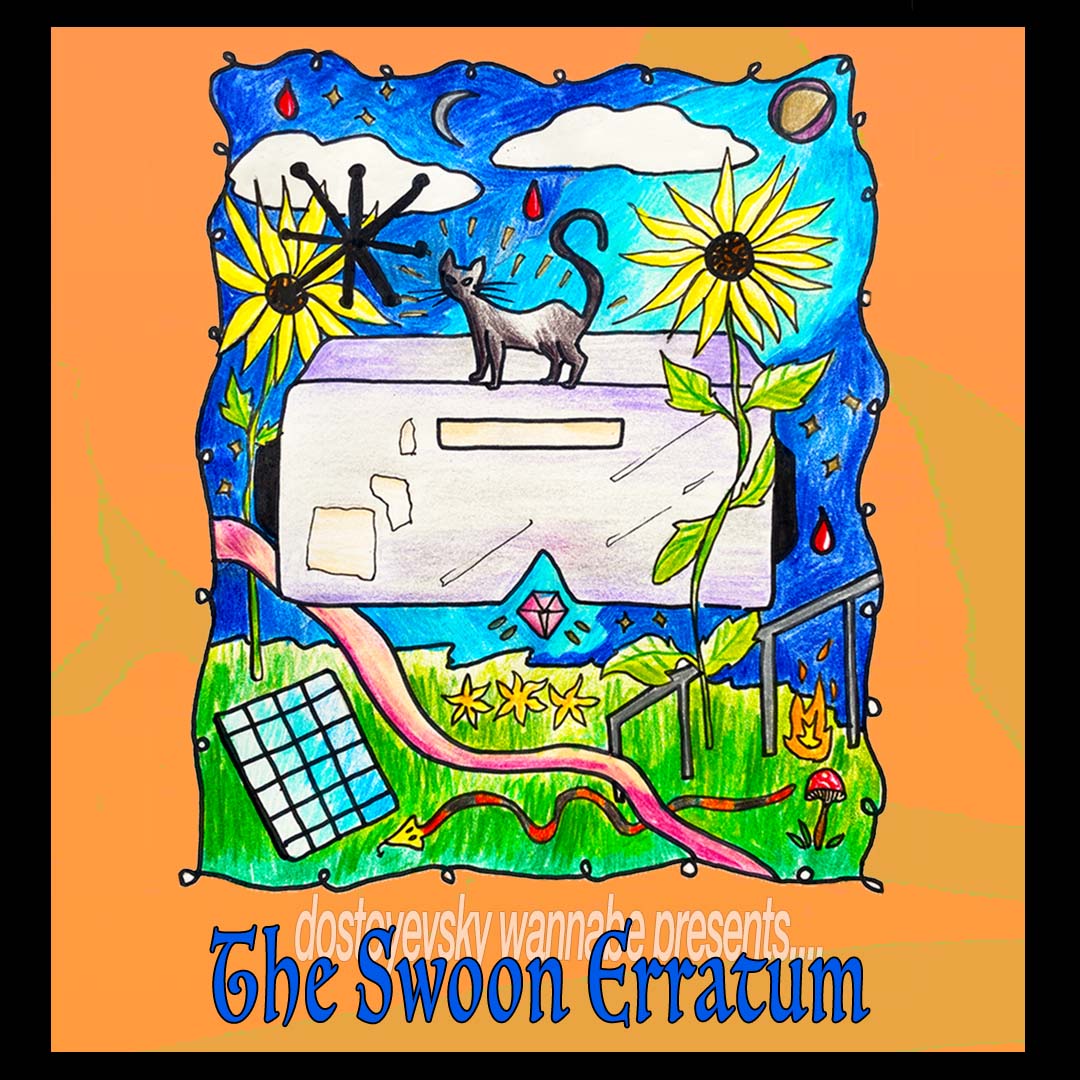
Excited to be reading with Max Parnell, Nadia de Vries and Jane Goldman to celebrate four new books from Dostoyevsky Wannabe. Please come and feel free to ask us questions. Zoom events are sort of underground now, and I miss a lot of ppl I only really see at them. Am I doomed to be a lil zoom fish forever. Put on yr VR goggles or like, consult the mystic feline, fractal sunflower, swoon.
28th October @ 7pm (BST).
Sam Williams’ project, A Soft Landing, is ‘an online resource inspired by the activity of communal gardens and city allotments. It is a space where volunteers are invited to share, learn, contribute and care for themselves and others, through the sharing of material that could be used for nourishment, growth, pleasure, education or healing’.
I like this website because it’s what I want from the internet, a place to share and graft and cut and paste, to nourish and discover something unexpected. You tend a little plot and see what grows from it. I used to live near Woodlands Community Garden and loved seeing the flora and fauna change throughout the seasons, people volunteering, pulling out weeds and planting. Something of A Soft Landing is in this spirit: you might get asked to respond or contribute, you might volunteer yourself. You never really know what might crop up in the meantime, which is why there’s a satisfying ethic to ‘checking back’.
I’m happy to find a home for an ongoing and incomplete series, Meadow Fractals, among the leaf matter and stems of other makers. It features a sestina after Kevin Killian (and isn’t the sestina the most fractal traditional form?), plus some weird and tessellating meadow illustrations done on an MS Paint simulator. Long live Paint. You can find the full selection at a-soft-landing.com (look for the dark grey tendrils).
In recent months, I’ve also been reading Sean Roy Parker’s Fermental Health substack, which has got me excited about blogging, and even food again. Do have a read! 🌱
July was such a busy month but one of its delights was working on the design for this book, With the Boys by fred spoliar. I’ve been so buzzed about upcoming SPAM releases (more to be announced soon) and what better way to kick off our 2021 roster than with this vivid purgatorial rush of a book. The cover design is a collage layering of illustrations, colour effects and old woodcuts (including those vomiting sun battle scenes which divide the book into sections and contribute to the faux ye olde vibe) which gesture to the book’s primal scene (imo): the confrontation with the boy laying down >insert meme here: “you winning son??”< as the OG basis for all the boys, are we for or against them, might we let them rest? As fred reminded me at a recent reading in Crystal Palace Park, “masculinity is no joke maria” and this book explores how the cascades of climate crisis, austerity, property relations, ‘fake news’, ongoing colonialism, racial capitalism, transphobia and pandemic are all bundled up in the ancient, ever-mutating violence of patriarchy. The demands the boys place on us and those placed on the boys, we understand them in a camaraderie of the here-and-now that is our future ancestral citation, cracking a cold one for the world that is burning ice and going online. With the Boys is a book of post-internet poetry, an adventure story, a lyric dalliance with historical epic in synchronic form. It’s a book that refuses linear models of transition, progress and accumulation, and ideas of history as a totality; a book that finds residues of love and care among masculinity’s ‘trashfire’ (in Al Anderson’s words). I want to think of it partly in the realm of Keats’ ‘negative capability’, the idea of lyric identification as doubt, the pluralism of the boys as a quivering flame or rippling plasma, capable of being more than what essentialist gender ideology would deem the boys. Your ‘brain on elegy’, your ‘stupid hurt’, your ‘buzzcut chorus’ and ‘apple products’ – humming, ubiquitous, they belong to all of us, in a way.

There is something about a (re)birth in this book; fred has called it ‘a purgation’. Something been set on fire or released, the way of touching abysses of sleepless thinking and facing up, fuck, to the impossibilities of work and not-work. To morph, mourn, join together, be commoning or calling out, be warm or hard or wet or sore, be there and gone. One thing that resounds is the refrain, the sonorous sense (something Verity Spott commented on at our recent launch, and something I love about Verity’s work also) of lyric in the book as a musical sprawl, fever, affirmation. For me, this is totally synaesthetic and electric, ‘a crucial magenta song’ and ‘like aleatory dance departing’ in the sacred gatherings of the rats — the animals that survived 2020 (their epic and terrible year) and will go on thriving beyond us. Like, we are not supposed to be here. Like, we crawl over the language that won’t want to hold us and we throw out this ask. Are we to be comrades? Sometimes you read fiery poetry that enflames and hisses (kisses) and makes you want to attend the protest, make the call, offer your body to the line (the book’s closing poem, ‘kludge time‘, was written in response to the recent Kenmure Street anti-raid action), and With the Boys summons this fire, but also sings in the muscly erotics of its cinders. These cinders which catch in the breath before and after the poem, which can’t be reduced to this or that reading; which burn with occasional satire, twinge and catch of meaning.
You want to say the boys are a folk knowledge, they are song, they are the startup code that ceaselessly reboots until lyric glitches in ‘fertile crevices’. They are a compost, the dregs of bad schooling, an institution of historical impotence, a gesture of care and play (‘I push you on the swings’), an orientation towards the vibe, a grammar of suspension ‘stopping by the interchange‘, a big fucking ‘nova‘ that hopes to find you well. Hi, hello, hi. *WAVE*. Everyone in some sense knows them. They are obviously so much more. I’m this hush-breath away from saying the boys are a hyperobject. You decide. The boys are shoegaze distortion all over capital’s weeping, the road less travelled, dazzling and pregnant and ‘wilding’. They will do your makeup and hum the ‘harmonic law to / love to leave to love’ — bright pink and chartreuse. You better have a go at them.
With the Boys is available for £8 from SPAM Press. You can get in touch with the editors for review copies or to stock in your bookstore at spamzine.editors[at]gmail.com.


 mariaology