It’s in this track that you finally slip under the surface, that you actually look back at the world through the gauze of this mysterious, ethereal substance that has formed in the wake of all this…music. A Moon Shaped Pool. Ripple of piano riffs flower out around you, the steady yet slightly quivering polyrhythms that shimmer around a fragile croon. Sadness in silver, the wisps of cloud that lick the moon; as the long hair of a girl, floating alone on her boat in the ocean, flicks her face in the wind. The pool is gelatinous, oozing its tendrils and trickles of this sonic sweetness; the listener is stuck, drifting, as paralysed inside this song as the love itself which frames it. How old is this tune? Somehow it feels ageless, plucked out of time as if nobody wrote it – as if it materialised in the ether, adrift on some westward, melancholy breeze. The child plucked from a fairytale, waiting for her saviour, frailly nourished on lollipops and crisps. The way Thom Yorke’s voice licks the soft consonants, the lilting drag over the vowels…that simple, subdued beauty. I’m not living / I’m just killing time. How easily captured is that sorrow, that shrinking of the world as you long for the lost object, the presence so elusive whose existence, you truly believe, is the single thing that will save you. There is always that waiting, that painful, half-lived interlude. Will it happen? When will it happen? Here, that place where the fingers slip effortlessly over ivory keys; where notes swirl around one another, like the rings on the surface of water, pale-hazed and iridescent. A mercurial thirst for the things that kill and sustain you. Tiny tattoos that etch the moon. There, the promise of sacrificing all, of baring oneself to the other: the exchange of absolute translucency. Not quite transparent: the mystery still glazes, if only thinly. I’d drown my beliefs / to have your babies. Maybe gender, maybe identity itself, become futile in this feeling. The body is just a possibility. In memory, it is always the detail that remains: Your tiny hands / Your crazy-kitten smile. Desire is the endless chain of such details, their sense of ephemerality – you cannot pin down the tiny hands or crazy-kitten smile, which inexorably close or blink or fade, a little like the grin of the Cheshire cat. We can only collect the images, those photos which clot the haunted attics: love too is an archive of sorts. But the liquid metaphors prevail: you can drown in the archive, you can drown in your love. Don’t leave, don’t leave – it’s the imperative of one who is starved of oxygen, breathless and maybe a little desperate, reaching out for that lovely soul who would save it. And could all this strange passion, this warbling sadness, really be contained in what Wikipedia calls ‘a minimal piano ballad’? Written over twenty years ago and finally that melody is pressed onto vinyl, into the modernist glint of a compact disc, spread like smoke around the internet. Yet somehow it still eludes us. It is that moment of clarity – epiphany, even – amidst the futurist nightmares of much of the band’s back catalogue. Love, love, love: what is it good for? The song doesn’t answer the question, rather draws us into the aching feeling, again and again with that refrain – don’t leave – highlighting the desire that draws us through life, even if it stings us, bramble-like, with pain. We try to make it tangible, pin it to myriad images; but like the soft fading closure of the version on A Moon Shaped Pool, love itself offers no solid, defining life-raft. Maybe it’s the idea, the trembling imagination, that sustains us. After all, ‘True Love Waits’ falls in and out of arrangements with the ease of osmosis. Guitar or piano, brighter or sadder, it stays protean somehow; its capacity to plasmolyse with such simple, touching lyrics leaves you feeling weak – as fragmented, perhaps, as all those sweetly delivered images. So easy it would be, at the close of the album, to float forever in the orbit of that pool and its silvery spirits – the pieces that I loved, the pieces that were you.
Belle & Sebastian are one of those bands that give you a warm, fuzzy and nostalgic feeling. As much as they’re often lazily attributed to the cultural realm of the ‘indie kid’ or the ‘Glasgow hipster’, this neglects the fact of their wider popularity. They are, after all, a band who’ve been around for over 20 years now. I’ve played their tunes in the restaurant where I work and witnessed middle-aged folks who look like they’re off to a Springsteen concert humming along to ‘The Boy With the Arab Strap’. Their songs have popped up on plenty of popular tv shows and films (‘I Don’t Love Anyone’ on Girls, ‘I’m a Cuckoo’ on The Inbetweeners, ‘Piazza, New York Catcher’ in Juno – to name just a handful).Like a sweet, familiar honey, their music just sticks to you, whether you wanna spread it on your toast or not. Sure, they get a lot of hate: their songs are cloying, the singing a bit too saccharine at times, the lyrics silly, the sound the same on each album. I’ve heard them being called ‘beige’ music.
For me, Belle & Sebastian make pastel coloured music. I don’t know, maybe it’s a touch of the old synaesthesia but I’ve always imagined their songs awash in delicate shades of blue and pink, green and yellow and orange – a bit like the colours of sorbet. They’re just the perfect summer band. Some bands it’s easy to have a colour for, or even a texture: Mogwai are deep deep green and black, LCD Soundsystem are bright, shiny white, Mac DeMarco all denim blue and dirty mustard yellow, Kate Bush is a luscious kind of cherry red, Bjork is all the hues of a pearl, Tame Impala are psychedelic greens and blues and oranges, Aphex Twin is ink black, but sometimes yellow, blue or bubblegum pink. In the same vein, Belle & Sebastian to me are all about pastels, sometimes a wee bit brighter but never beige, except when it’s that classy kind of chino beige that you might see paired with a yellow blouse and pink ribbon. I want to be dressed up with a funny hat, a mini skirt and retro sunglasses when I listen to them. Something lilac, a stick of ice lolly. Hell, maybe even rollerblades. I find myself immersed in the stories of the songs; I sort of want to be a character in one of them – a lost twenty-something with her school days long behind her, figuring out how to deal with the world and enjoying living in the city.
Listening to them involves a kind of camaraderie: you’re sharing the world with them, with all the voices of each song’s narrator; sharing Stuart Murdoch’s hazy, romanticised version of Glasgow, the lives of the quirky characters he writes into his lyrics. The musical arrangements in their songs vary between stripped back and fragile, sometimes very much Smiths-influenced (inherently, B&S are an ‘urban’ band, right?), with pretty melodies adorned with piano, acoustic guitar, maybe a bit of bass (‘We Rule the School’, ‘It Could Have Been a Brilliant Career’, ‘Dress Up in You’ – these are some of my favourites), to zany and fun and maybe even lovably chaotic, with some of the earlier songs sporting surf rock guitars (‘La Pastie De La Bourgeoisie’) or (in the early days, Cubase-arranged) electronic numbers (‘Electronic Renaissance’, or, later on, the near seven minute ‘Enter Sylvia Plath’ which frames its tribute to the late great poet inside a Europop epic), as well as the Beatles-influenced ‘chamber pop’ (of which they share the influence mantle with Camera Obscura) – see, for example, The Life Pursuit. Their songs are often self-conscious, writing about the importance of losing yourself in books and songs (the final song of Tigermilk, ‘Mary Jo’, references the fictional book that titles the album’s first song: ‘You’re reading a book, “The State I Am In”’), referencing themselves, other ‘indie’ bands (Arab Strap being the most obvious), creating this whole dreamworld of literary and musical references which itself becomes the fantasy world of the songs. When you listen to them, it’s impossible not to lose yourself slightly to this pastel-saturated universe. It’s not just twee; it’s bittersweet happiness, nostalgia, personal and cultural reflection – they began making music in the 90s, after all. That’s why I smile when I see someone sporting a wee Belle & Sebastian tote bag or t-shirt: you know there’s someone else out there who shares that sweet and silly, slightly sad but hopeful little world.
In a way, they’re a band for the underdogs. They cut their teeth on the Glasgow open mic circuit, with its crowds veering between adoration or ruthless indifference. Every Saturday, under the guise of various band or solo arrangements, Stuart and his pals would appear in the Halt bar on Woodlands Road (sadly it no longer exists) – you can read all about it in bass/guitar player Stuart David’s memoir, In the All-Night Café, which geekily delves into early musical experiments, the songwriting process and all the crazy moments that brought the band together in their formative year. So yeah, it’s worth a read if you’re a B&S fan or even just a musician. It’s important to remember that the band produced and recorded all their early songs (came together, essentially) at Stow College’s now slightly legendary Beatbox course, which at the time was more or less a course that unemployed musicians in the area took to ensure they kept receiving the dole: ‘From what I could tell,’ Stuart writes of his first impression of the course, ‘[Beatbox] was a total shambles. Just scores of unemployed musicians sitting around in a dark, airless labyrinth, doing nothing. […] I wandered around on my own trying to work out what was what, while people scowled at me, or just stared blankly into space. A thick cloud of cigarette smoke pervaded the place, and something about the absence of daylight and the lack of fresh air made me wonder if the place was actually a detention centre set up by the government to incarcerate all the people they’d caught using Social Security benefit as an arts bursary’ (In the All-Night Cafe, pp. 10-11). This is probably an impression of college hallways and classrooms that most young adults of Generation X or millennials growing up in Britain can relate to: the flickering strip lighting, the apathy amongst both staff and pupils, the sense of suffocating bureaucracy, of life in suspension. And yet out of that dark and maybe even Kafkaesque environment, sometimes the magic happens. People come together and make the best of things – it’s inspiring.
For me, it’s also inspiring that Stuart Murdoch is actually from Ayr. The only other celebrated artist I can think of off the top of my head that hails from Ayr is none other than Robert Burns, so yeah, it’s been awhile since the place has been put on the map, artistically speaking. Belle & Sebastian are usually associated with Glasgow (especially the West End), but for me it’s important to remember their humble beginnings. Ayr still has a pretty cool music scene in terms of acoustic nights in local pubs, but there’s definitely a dearth of actual decent gig venues, especially when it’s producing so many talented musicians through, for example, the well-respected Commercial Music course at the UWS Ayr Campus (see for example Bella and the Bear and the wonderful Shanine Gallagher).
ANYWAY, back to Belle & Sebastian. I wanted to talk about Tigermilk as an example of their oeuvre in general – as the raw, often forgotten diamond. It’s their debut album, though I actually came to B&S first through If You’re Feeling Sinister, having picked it up from Fopp when I moved to the West End for university and decided a B&S CD was a good way of immersing myself in local culture. Tigermilk reminds me of that lost and lonely summer feeling, walking around the city killing time before going to work, worrying about all the books I had to read before September, the people and things and memories I was in love with, that paranoid and desperate desire to write myself and indeed keep writing. It’s a lo-fi sort of album; it feels sweet and magical in that simple way, and you can tell that it marks the moment when the band discovered they had something special going on.
Sometimes the lyrics are a wee bit strange and surreal; the cast of characters Murdoch evokes in his lyrics can be pretty bewildering. The band’s slightly surreal vibe is indicated by the cover art for Tigermilk: a black-and-white picture of Murdoch’s then girlfriend, Joanne Kenney, apparently breastfeeding a toy tiger. Then take a look at the lyrics to ‘My Wandering Days are Over’ for example: ‘Six months on, the winter’s gone / The disenchanted pony / Left the town with the circus boy / The circus boy got lonely / It’s summer, and it’s sister song’s / Been written for the lonely / The circus boy is feeling melancholy’. You’re never sure if the characters are metaphors for existentially pained middle-class indie kids (lost in the job market/lost in the adult world circus of mad capitalism??), or actual protagonists in B&S’s musical universe. That’s the poetry of it – you get to decide. It all sort of makes sense, this girl with spiky black hair nourishing a toy tiger; sure, you can take it as symbolic, but it’s also just intriguing and slightly controversial enough to draw attention to a debut album.
One of B&S’s unique selling points is the whimsical fictions they weave through their ‘brand’ as a band. Take, for example, the sleeve notes to Tigermilk: they detail a cute little tale about Sebastian and Isabelle, the namesakes for the band.
Sebastian met Isabelle outside the Hillhead Underground Station, in Glasgow. Belle harassed Sebastian, but it was lucky for him that she did. She was very nice and funny, and sang very sweetly. Sebastian was not to know this, however. Sebastian was melancholy.
He had placed an advert in the local supermarket. He was looking for musicians. Belle saw him do it. That’s why she wanted to meet him. She marched straight up to him unannounced and said, ‘Hey you!’ She asked him to teach her to play the guitar. Sebastian doubted he could teach her anything, but he admired her energy, so he said ‘Yes’.
It was strange. Sebastian had just decided to become a one-man band. It is always when you least expect it that something happens. Sebastian had befriended a fox because he didn’t expect to have any new friends for a while. He still loved the fox, although he had a new distraction. Suddenly he was writing many new songs. Sebastian wrote all of his best songs in 1995. In fact, most of his best songs have the words ‘Nineteen Ninety-five’ in them. It bothered him a little. What will happen in 1996?
They worked on the songs in Belle’s house. Belle lived with her parents, and they were rich enough to have a piano. It was in a room by itself at the back of the house, overlooking the garden. This was where Belle taught Sebastian to put on mascara. If Belle’s mum had known this, she would not have been happy. She was paying for the guitar lessons. The lessons gave Sebastian’s life some structure. He went to the barber’s to get a haircut.
Belle and Sebastian are not snogging. Sometimes they hold hands, but that is only a display of public solidarity. Sebastian thinks Belle ‘kicks with the other foot’. Sebastian is wrong, but then Sebastian can never see further than the next tragic ballad. It is lucky that Belle has a popular taste in music. She is the cheese to his dill pickle.
Belle and Sebastian do not care much for material goods. But then neither Belle nor Sebastian has ever had to worry about where the next meal is coming from. Belle’s most recent song is called Rag Day. Sebastian’s is called The Fox In The Snow. They once stayed in their favourite caf’ for three solid days to recruit a band. Have you ever seen The Magnificent Seven? It was like that, only more tedious. They gained a lot of weight, and made a few enemies of waitresses.
Belle is sitting highers in college. She didn’t listen the first time round. Sebastian is older than he looks. He is odder than he looks too. But he has a good heart. And he looks out for Belle, although she doesn’t need it. If he didn’t play music, he would be a bus driver or be unemployed. Probably unemployed. Belle could do anything. Good looks will always open doors for a girl.
You’ve got it all here: the playful and ultra twee imagery ‘(she is the cheese to his dill pickle’), the hint of queer culture and crossdressing that sometimes runs through B&S songs (‘This was where Belle taught Sebastian to put on mascara’), the DIY elements, the spatial immersion in Glasgow’s West End as a kind of leafy wonderland where people own pianos in airy rooms overlooking gardens. It’s honest and cute and totally unashamed, totally uninterested in being cool. Compared with the stylised, rock’n’roll swagger of Britpop, this album (originally released in 1996 then rereleased in 1999) is so refreshing. The tale of Belle and Sebastian is a short story, more than an explanation of the album’s lyrics or ‘concept’; it’s a bit ambiguous, a touchstone for all the other B&S characters who populate later LP – it’s perhaps, most importantly, an indication of the band’s consistent literary bent.
‘Sebastian was melancholy’. Well, melancholy is probably the overriding emotion on Tigermilk. Melancholy being that feeling of sadness, yearning and inexplicable loss. An indulgent feeling, a languid and probably narcissistic feeling that is almost pleasurable despite lolling around in the negative. Freud, in Mourning and Melancholia (1915[17]) famously distinguishes mourning and melancholia thus: ‘In mourning the world has become impoverished and empty, during melancholia, it is the ego itself’. Mourning is about the loss of a specific object, whereas melancholia is a vaguer feeling, a depression with no apparent or obvious source, a swallowing up of selfhood into narcissistic darkness. One of the reason’s I really like ‘I Don’t Love Anyone’ is its in-your-face rejection of the Coca Cola style let’s-all-hold-hands-and-be-happy version of love, the assertion of personal endurance and the often denigrated value of independence in a world where we’re all supposed to follow the crowd: ‘But if there’s one thing that I learned when I was still a child / It’s to take a hiding / Yeah if there’s one thing that I learned when I was still at school / It’s to be alone’. I was that kid who sometimes liked to walk around the playground alone, making up stories in my head – adults just assume it’s because you’re being bullied but there’s a golden value to imagination and it’s easier to forget that as an adult, easy to forget that sometimes you need time out from your friends to be in your own mind.
A lot of Tigermilk is about trying to negotiate personal identity in an often problematic adult world with few opportunities for anyone vaguely creative. It’s worth quoting a hearty chunk of ‘Expectations’ to demonstrate this:
Monday morning wake up knowing that you’ve got to go to school
Tell your mum what to expect, she says it’s right out of the blue
Do you want to work in Debenham’s, because that’s what they expect
Start in Lingerie, and Doris is your supervisor
And the head said that you always were a queer one from the start
For careers you say you went to be remembered for your art
Your obsession gets you known throughout the school for being strange
Making life-size models of the Velvet Underground in clay
In the queue for lunch they take the piss, you’ve got no appetite
And the rumour is you never go with boys and you are tight
So they jab you with a fork, you drop the tray and go berserk
While your cleaning up the mess the teacher’s looking up your skirt
We’ve all known (or been ourselves!) the weird kid obsessed with music, inviting abuse with every strange word spoken. Wear something black, a bit of eyeliner and you’re inviting folk to ask you if you “shag dead folk”. There’s always the one of many that has a whole collection of cool things to say, to contribute to the world, but ends up in retail, in a call-centre, maybe waitressing. Again, Belle & Sebastian are the band of the underdog, the folk (and there are a lot of them) who slog away at day jobs but don’t give up on their dreams – whether those dreams involve becoming a star of track and field, a model, artist, musician, writer.
Tigermilk, then,isn’t just a melancholy album; there are some feel good moments, such as ‘You’re Just a Baby’, which features handclaps and a nice rock’n’roll beat with a simple, serenading refrain: ‘You’re just a baby, baby girl’. Fundamentally, Belle & Sebastian are a pop band, and a damn good one at that. Stuart Murdoch recently wrote and directed his own film, God Help the Girl, which more or less demonstrates his near-religious philosophy of pop music, as the character James (fittingly played by the singer from pop/electronic band Years & Years) proclaims:
A man needs only write one genius song, one song that lives forever in the hearts of the populous to make him forever divine. […] Many women and men have lived empty, wasted lives in attics trying to write classic pop songs. What they don’t realise is it’s not for them to decide. It’s God. Or, the god of music. Or, the part of God that concerns Himself with music.
This is some fairly interesting religious imagery coming from a singer (Murdoch) who has always been openly Christian. And of course, the hyperbolic emphasis on music’s divine significance here is perhaps a cheeky dig at the ego of the pop star, but it also touches on the importance of universalism for pop. It’s easy to consume, it should transcend generations, it should be technically perfect – the satisfying work of a ‘genius’. But good pop, as Belle & Sebastian demonstrate, isn’t all bubblegum songs about loving your sweetheart – it also has that spark of something else. For me, B&S capture a very specific experience of existential bewilderment in the modern world, combined with the right amount of romance, comedy, storytelling and a healthy streak of cynicism. God Help the Girl is twee as hell, but it’s also a loving portrait of Glasgow, of the early days of being in a band, the freedom of summer days drifting down the canal with the world shining bright around you. It’s maybe also a portrait of unrequited love. And, crucially, it transforms that cliche, the power of music, into something sparkly and fun as well as serious and uplifting – it is a musical after all. Its ambiguous ending, with the heroine (significantly called Eve – more religious imagery!) finally leaving the city and on a train ride to London where she intends to try and make it ‘alone’ after her existential rebirth and artistic awakening in Glasgow, is perhaps its strongest point – it’s a feminist assertion of personal creative desire as opposed to remaining tied down to the things your friends want.
The protagonists of GHTG: James, Eve, Cassie
Once again, Murdoch puts complete faith in his slightly damaged protagonists; he encourages us to just trust our creativity. Maybe that’s why I love Belle & Sebastian so much, because sure, their songs are mostly golden, pastel-hazed pop, but it’s not that simple; they embrace that wavering, magical and sad place between warm dreams and cold reality, and represent all the poor souls who live there in that limbo, such as the eponymous heroine from ‘Mary Jo’: ‘Your life is never dull in your dreams / A pity that it never seems to work the way you see it’. And even though such songs are full of melancholy, you’re still treated, as in an Arctic Monkeys song, to some brilliant lyrical candy: ‘Cause what you want is a cigarette / And a thespian with a caravanette in Hull’. So maybe that’s the special element, the thing that makes the everyday divine, that elevates the ordinary into a valid subject for pop music. And maybe, pleb that I am at heart, that’s why I love it.
There’s something about Bret Easton Ellis. Whether it’s the alluring cool of a literary ‘Brat Pack’, the frisson implied by a 1980s enfant terrible or the fact that he published his first novel while still in college, aged 21 (the canny bastard), I find myself drawn to his presence both as a cultural persona and simply as a man of interesting writerly craft. I have been listening obsessively to his podcast for a few weeks now, engrossed in his attacks on the millennial ‘cult of likability’, on the pop cultural salivation over a tv ‘golden age’ and on the lack of context which accompanies the bandying around of quotes online (and the accompanying Twitterstorm). Part of it, I guess, is the perspective of a millennial (me) feeling they have something to learn from a Gen-Xer. Part of it is simply that Ellis does have his own particular brand of pop cultural and authorial genius. This article hopes to delve into this genius by looking at Ellis’ debut novel, Less than Zero, which I recently reread.
Turn up the TV. No one listening will suspect,
even your mother won’t detect it,
no your father won’t know.
They think that I’ve got no respect
but everything means less than zero
(Elvis Costello, ‘Less than Zero’).
See above the chorus from Elvis Costello’s song, ‘Less than Zero’, released in 1977 on the My Aim is True album. Costello has written that the song is about totalitarianism and fascism. What does it mean for Ellis to take this song as the title for his novel? – a novel which doesn’t exactly exude the anarchic spirit of 1970s punk, nor does it make any overt political critique. Nevertheless, Less than Zero is a political text on some level, in so far as it deals with the subject/self under late capitalism. Costello sings about something secret, an inner feeling that you can drown out with the static sound of television. What kind of secret is concealed here? The absolute flatness of existence, the alienating depression that creeps and inhabits your bones? I’ve got no respect. For what – the world? What do your parents matter in this life without boundaries, where morality thins to a flimsy image, where selfhood is nothing but the label on your trainers? This is a world of regression, degeneration, of falling from grace, redefining what the hell grace is. It’s the secret inner disgust for all that surrounds you. The sadness bursting in your brain, the endless lines of cocaine…
So goes the life of Clay, the protagonist from Bret Easton Ellis’ debut novel, Less than Zero. Published in 1985, it’s often lumped together with the likes of Tama Janowitz’s Slaves of New York and Jay McInerney’s Bright Lights, Big City as an exemplary work of the 1980s literary Brat Pack: writers who encapsulated the alienated experience of Generation X, often influenced by journalism and the movies as much as that elusive category of literature known as the Great American Novel. Less than Zero follows Clay’s return to his family home in Los Angeles after his first semester at college. Yes, it could be considered a Gen X Catcher in the Rye, where the apathetic perception of cultural phoniness plays out against a backdrop of sex, drugs and snuff films. However, while Salinger’s novel exposes the adult world as darkly sham and shallow, Ellis’ turns its attention to the synthetic lives of Clay and his fellow adolescents. Unlike a traditional bildungsroman, it lacks plot and narrative and that most perjured and celebrated of terms: humanist subjectivity. The question of character development in the novel is mostly a non-issue, as Clay ‘grows’ only in the sense of growing more detached from the world around him, more aware of his own indifference.
In a way, Clay is the perfect model of a disillusioned teenager, and Ellis nails the setting. Where better to lose all sense of self and reality than in LA, the city where dreams and visions are spun on film reel and everyone’s an actor, or at least the spawn of one. Clay and his friends live hollow lives, gorging themselves at the playgrounds of consumerism offered by the city: fancy bars and clubs, endless bottles of Perrier and expensive therapy. The novel more or less follows a repetitive structure, the narrative moving in a series of vignettes as Clay moves around, calls a friend from a payphone, drops by people’s houses, goes to a club, takes drugs, gets laid, hangs out by the pool, smokes a joint. Little else happens. It’s all in the accumulation.
I’m not saying this is an avant-garde novel, working through ‘accumulation and repetition’ in the way that Zadie Smith said of Tom McCarthy’s debut, Remainder (2005) in her famous NY Times essay, ‘Two Paths for the Novel’. Ellis is less interested in ripping apart the contemporary consumerist (and humanist) literary establishment than in using this establishment, its obsession with pulp (check out the noirish drug/snuff/pimp plot) and branding to unravel the vacuous experience of being young and glitteringly rich in the 1980s. Part of the novel’s point is questioning whether Clay ever really had a sense of selfhood or reality in the first place – whether such things exist at all. The wastefulness of contemporary culture trickles out of Ellis’ minimalist prose, which is just as effective as Joan Didion’s was in capturing the strange alienation of the mid-twentieth century. We are left longing for something more in the gaps between his sparse paragraphs, his dull and vacuous dialogue. This is all culture. This is all politics. Only, you wouldn’t know it from the novel itself.
No, the world of Less than Zero couldn’t be more insular. Its only connection to the world outside Los Angeles is through the brand names, the song lyrics and movie references which trail through the narrative as often as Clay’s car trails along the LA freeways. Yet if literature is about subjectivity, than the subjectivity explored in Less than Zero is irrevocably damaged, fractured and, if you’re a fan of Deleuze & Guattari, schizophrenic. It’s dispersed along the various signifiers that constitute culture. All of Clay’s perception is whittled down to tiny details: the catalogue of brand names, the repeated references to physical appearance (always tan, always blonde) and the drinks that people are cradling, the glamorous food pushed uselessly round a plate. It’s a highly cinematic narrative, which sometimes resembles a screenplay. Sections of prose often begin with brief indications of time and space, the opening words in bold to quickly situate the reader in a social setting, neglecting any poetic descriptions to set the scene in favour of blunt ‘headlines’: ‘It’s a Saturday night’; ‘At Kim’s new house’ ; ‘It’s Christmas morning’; ‘My house lies on Mulholland’.
Perhaps, indeed, it’s not all that far (stylistically) from Made in Chelsea; except take away the tv show’s sparkling jouissance (its soaring indie pop and glorious Instagram-worthy visual filtering) and replace it with the endless merging of barren surfaces which make up Ellis’ novel. Replace the easily sweet pleasures of Made in Chelsea’s gin bars and contorted gossip and romance plots with sleazy LA mansions, snuff films, heroin and bodily dismemberment…While the lack of affect in Made in Chelsea contributes to a kind of narcotic addictiveness, in Ellis’ novel it creates a sheen of unsettling detachment.
‘People are afraid to merge on freeways in Los Angeles.’ So goes the opening line of Less than Zero. It was only when I first picked up this book, about three years ago, that I realised the connection to Bloc Party’s ‘Song for Clay (Disappear Here)’. The song, an homage of sorts to Ellis’ novel, repeats several phrases, including ‘complete disdain’, ‘live the dream’ and ‘won’t save you’. It’s a song which builds slow and sparse and then suddenly thunders with a sharp guitar riff and pounding drums. It’s sort of the experience of reading Ellis’ novel: the headache, the endless migraine of details, the food and coke and insomniac joints in the early morning. People are afraid to emerge on freeways. What does it mean? Why does it repeat in the text like some fragment from a litany? I guess you could say it’s about the fear of opening yourself to someone else, of sharing problems, being personal and ‘genuine’. You know, take this interchange between Clay and his on/off girlfriend, Blair:
“Clay?” she whispers loudly.
I stop but don’t turn around. “Yeah?”
“Nothing.”
What the hell is genuine though? Even in the privacy of his narration, Clay struggles to admit any emotional depth. His focus is always on cool detail:
I’m sitting in the main room at Chasen’s with my parents and sisters and it’s late, nine-thirty or ten, on Christmas Eve. Instead of eating anything, I look down at my plate and move the fork across it, back and forth, and become totally fixated on the fork cutting a path between the peas. My father startles me by pouring some more champagne into my glass. My sisters look bored and tan and talk about anorexic friends and some Calvin Klein model and they look older than I remember them looking, even more so when they hold their glasses up by the stem and drink the champagne slowly; they tell me a couple of jokes that I don’t get and tell my father what they want for Christmas.
It’s the immediate present tense. It’s (in)tensely detailed. The sentences drag with repetition, long and slow, heavy and stoned. Clay replaces what would typically occur in such a scene with the mundane reality, pulling out the grotesque from the shiny film of appearance. Sure, to an outsider, Clay and his family would seem like any good looking LA clan out for a fancy meal. Yet it’s immediately clear that Clay feels very distant: not just from the image but from the family themselves. His fixation on cutting a path between his peas is a bit like the cars which won’t merge on the freeway: another symbol of separation, of dividing lines. The self in its shell, stunted. He splits the peas up into meaningless scattered matter. The novel is full of meaningless scattered matter, the endless push and pull of desire, ‘back and forth’. Anorexia is mentioned several times in the novel (Blair’s friend Muriel is hospitalised for it) and the consumption of food and drink is of course central to much of the action (settings; family lunches, dinners, expensive bars). Anorexia, you could argue, is the simultaneous consumption of culture (absorbing absolutely and indeed making literal the beauty of the image, thinness and surface) but also its rejection (literally refusing to consume, to accept the consuming impulse). It provides another symbol of the contradictory imperatives of postmodern culture.
So we have branding, so we have mental illness, disturbed appetites, boredom and beauty and the annual climax of consumerism: Christmas. So far so adolescent bildungsroman. Yet unlike Esther Greenwood in Sylvia Plath’s The Bell Jar (1963), Clay is quite content to sit around in a hullabaloo, watching the world swirl meaninglessly on by around him: ‘No one talks about anything much and no one seems to mind, at least I don’t’. The fact that he has to qualify ‘no one’ to refer mainly to himself indicates how easily the micro reflects the macro, the self reflects the culture. Clay feels like his experience of boredom and alienation is pretty much endemic, therefore uninteresting. Ellis doesn’t exactly depict a special snowflake, a depressive uniquely at odds with his society. Sure, there are times where Clay feels particularly ill at ease with what goes on around him (he sometimes leaves the room when his friends’ sex games and suchlike get too unsavoury), but never makes an effort to stop what’s going on.
One way of looking at this aspect of Clay’s personality is by comparing him to Patrick Bateman, the serial-killer protagonist who narrates Ellis’ later novel, American Psycho. While Bateman is an active assailant, Clay is relatively passive. Stuff happens to him; he drifts through life. He never has much of an opinion, openly admits to not enjoying anything. Why does this make him interesting? Maybe he resonates the dullness of culture in such a way as to provide incisions that cut apart the surface sheen of everyday LA life…
Yet we cannot easily develop a ‘cool’ relation to Clay’s narration in the way that we can in American Psycho. The sheer volume of violence and repetition of brand names and daily routines that make up American Psycho’s narrative perhaps forces us to become desensitised to Bateman’s narrative, even to the point of distrusting its ‘veracity’. Is this an effect of Ellis’ intoxicating cataloguing or a defence mechanism to deal with the acts of extreme violence the narrator describes? Either way, there is a lacing of satire in American Psycho, a cynicism perhaps, which is far less, if at all present in Less than Zero. Indeed, amidst the bored, sparse descriptions of similar social encounters, there are moments of genuine poignancy which peek through the narrative. We get these mostly in the italicised ‘flashbacks’ where Clay relates stories about his childhood, about his holiday with Blair in Palm Springs; where he recalls these things with a flatness of affect, yet the sadness of these scenes sheds a kind of melancholy over the rest of the novel, which would otherwise mostly lack in emotion. About halfway through, Clay recalls a time when he thought he saw a child burning alive in a car crash, and how afterwards he started obsessively collecting newspaper clippings about violent accidents and crimes:
And I remember that at that time I started collecting all these newspaper clippings one about some twelve-year-old kid who accidentally shot his brother in Chino; another about a guy in Indio who nailed his kid to a wall, or a door, I can’t remember, and then shot him, point-blank in the face, and one about a fire at a home for the elderly that killed twenty and one about a housewife who while driving her children home from school flew off this eighty-foot embankment near San Diego, instantly killing herself and the three kids and one about a man who calmly and purposefully ran over his ex-wife somewhere near Reno, paralysing her below the neck. I collected a lot of clippings during that time because, I guess, there were a lot to be collected.
Clay’s involvement with the violent world of LA youth, then, has a root. It’s cultural, it’s endemic. Violence is rife in the media, spreading through the collective Gen X psyche. They grew up realising that they wouldn’t necessary be better off than their parents; that the economy did not owe them the same opportunities it did previous post-war generations. They grew up into a world of job insecurity, of decentred, fragmented wars. They grew up against the backdrop of the War on Drugs and the War on Terror, though perhaps millennials are more affected by the latter. In short, a globalised world of messy, liquid or late modernity (depending on whether you prefer your Bauman or your Giddens).
In the above passage, Ellis’ prose garners an almost incantatory sense of endless, meaningless violence being related through the media. All the place names he describes end in the same vowel sound (‘o’), creating an accumulating effect of repetition that desensitises us to the specificity of crime and instead forges a sense of its ubiquity. There is no emotional reaction which accompanies these stories; Clay merely describes them in a matter-of-fact tone. This emotional sparseness (characteristic of the entire novel) leaves an even more chilling sense of our culture’s paradoxical obsession with and indifference to violence. Ellis sums this up neatly with the tautological final sentence: ‘I collected a lot of clippings during that time because, I guess, there were a lot to be collected.’ No personal, subjective or cultural explanation is given for Clay’s interest in collecting the clippings; the habit becomes one of recursive, self-justifying meaninglessness. The explanation pans out onto Ellis’ novel as a whole, which also constitutes a kind of collection of clippings: vignettes from Clay’s brief stay back in LA, the cataloguing of brands, names, places; scenes of darkness and violence, the lack of a strong narrative thread to connect them.
Yet the kind of cultural and existential emptiness implied by such passages does not preclude the presence of some poignancy to Clay’s narrative. Sure, there’s a lot of violence, a lot of banality; but there are also moments which almost reach the level of personal reflection. We can compare this to American Psycho’s comparatively cold satire and lack of character ‘depth’ by looking at two very parallel scenes in each book. In these scenes, Clay and Bateman go to visit their mothers, who each ask them what they want for Christmas.
American Psycho:
My mother and I are sitting in her private room at Sandstone, where she is now a permanent resident. Heavily sedated, she has her sunglasses on and keeps touching her hair and I keep looking at my hands, pretty sure that they’re shaking. She tries to smile when she asks what I want for Christmas. I’m not surprised at how much effort it takes to raise my head and look at her.
Less than Zero:
My mother and I are sitting in a restaurant on Melrose, and she’s drinking white wine and still has her sunglasses on and she keeps touching her hair and I keep looking at my hands, pretty sure that they’re shaking. She tries to smile when she asks me what I want for Christmas. I’m surprised at how much effort it takes to raise my head up and look at her.
Aside from a few situational details (Bateman’s mother is in a residential home, Clay’s meets her son in a fancy LA restaurant), these passages are virtually identical. Except, perhaps, for one crucial line. In American Psycho, Bateman is not surprised by ‘how much effort it takes to raise my head and look at her [his mother]’, whereas in Less than Zero, Clay is ‘surprised’ by the effort. Thus while Bateman fits some kind of definition of psychopathy, utterly indifferent and lacking empathy for his mother, Clay is surprised at his own indifference, his struggle to display some kind of emotion or human connection. To merge on the familial freeway (to use a horrible phrase!). As readers, we can empathise with Clay far more than with Bateman, who locks us out with his construction of a cold and clinical world (see more about this here – an article I wrote a few years ago). Less than Zero is a novel more obviously filled with human pain, perhaps, than Ellis’ later novel, where the pain is certainly there, only more coded, buried inside violence, surface and image in an even more complex way.
Take, for example, the passages towards the end of the novel where Clay revisits his old school:
I used to pass the school often. Every time I drove my sisters to their school, I would always make sure to drive past and I would watch sight of small children getting onto yellow buses with black trim and teachers laughing to each other in the parking lot before classes. I don’t think that anyone else who went to the school drives by or gets out and looks around, since I’ve never seen anyone I remember. one day I saw a boy I had gone to the school with, maybe first grade, standing by the fence, alone, fingers gripping the steel wire and staring off into the distance and I told myself that the guy but live close by or something and that was why he was standing alone, like me.
We can imagine Clay glancing at this other boy, still trying to justify his presence there by means other than a shared moment of sentimentality. The only reason they have visited, Clay tries to say, is purely down to physical proximity. A meaningless walk. LA, then, is made up of intersections, connections and disconnections. Freeways that nobody merges on. You don’t just wander and end up somewhere significant, you drive places. The two could be friends, could’ve been friends, but Clay can only gaze at him from afar, as the boy too gazes on, seemingly at nothing. At distance. The core of the novel: absence. Always caught between meaning, between human connection, lost in the swamp of cultural signifiers that supersede any ‘deep’ emotion.
Clay’s attention to little fragments of visual memory here give us a sense of his warped nostalgia for childhood. His younger sisters are never described as having the innocence that Clay has lost: they steal his cocaine, idly watch porn and greedily snatch cheques from Daddy on Christmas Day. There’s the sweet yellow school bus, the laughing teachers, the familiarity of routine. Those rose-tinted things. You don’t get that kind of sentiment in American Psycho. It’s emotionally painful to read because this passage is sort of an interlude in the midst of the noir plot elements (Clay trying to get his money back from Julian, who is being brutally pimped; the rape of a pre-pubescent girl, foreshadowed by a horrible porno tape). It’s a burst of curious innocence amongst the ugly detritus of Gen X’s consumer lifestyle. Yet the classroom sweetness of yellow has become something altogether too bright, too painful for Clay to deal with. In an early scene in the novel, Clay describes the walls of a diner, Fatburger, as: ‘painted a very bright, almost painful yellow’. The colour of happy childhood has soured. It’s the colour of the Valium pills by his bedside. There’s the ‘grotesquely yellow’ moon that hangs ominously in the sky as Clay looks out over the business district, woozy from too many gin and tonics. As Clay returns to his former school, it soon becomes the yellowing of age, of moral decay:
I go to another bungalow and the door’s open and I walk in. The day’s homework is written on the blackboard and I read it carefully and then walk to the lockers but can’t find mine. I can’t remember which one it was. I go into the boy’s bathroom and squeeze a soap dispenser. I pick up a yellowed magazine in the auditorium and strike a few notes on a piano. I had played the piano, the same piano, at a Christmas recital in second grade and I strike a few more chords from the song I played and they ring out through the empty auditorium and echo. I panic for some reason and leave the room. Two boys are playing handball outside and leave the room. Two boys are playing handball outside. A game I forgot existed. I walk away from the school without looking back and get into my car and drive away.
Clay retraces his childhood steps, literally. He’s like a ghost, haunting the corridors of his youth, idly attempting to recreate the simple universe he once inhabited, squeezing the soap dispenser, reading the day’s homework from the blackboard. However he literally cannot locate/identify his former self, as he fails to find his old locker. Throughout the novel, we are given very little indication of Clay’s interests; he never even talks about what subject he studies out in New Hampshire. Yet here we have a snippet of something he once did: playing piano. There is something slightly uncanny about the older Clay standing at the same piano and striking a few notes, as if he were trying to summon up that younger self, the fragile doppelgänger. He even remembers the same chords. Funny how he remembers the music but not the game of handball. The fact that Clay panics is telling: he is literally allergic to his feelings, unable to deal with the sudden pain that comes from memory, from realising the loss brought on by time. His alienation is complete as he drives away, escaping his feelings as readily as all the times before, where he snorts coke to deal with a problematic or potentially emotional situation. The narrative also trails off, moving to another scene, another jump cut. There is nothing left to say, no coherence, no self-development.
This lack of narrative and self development or ‘growth’ is exemplified in Clay’s personal lack of futurity. Towards the novel’s end, Clay meets Blair for a drink and they skirt around the issue of their relationship. In a way, Blair sums up what we have come to learn of Clay: ‘You’re a beautiful boy, Clay, but that’s about it’. Yet we are left yearning for something more than beautiful surface. Sure, Clay as the narrator has given us many beautiful surfaces, but he has also exposed the rot beneath the surface, the absolute black nothing inside each person. Blair asks him up front: ‘“What do you care about? What makes you happy?”’ and his reply is explicitly telling: ‘“Nothing. Nothing makes me happy. I like nothing. […] I don’t want to care. If I care about things, it’ll just be worse, it’ll just be another thing to worry about. It’s less painful if I don’t care.”’ This is something we don’t really get in American Psycho. Clay actually admits his feelings, or lack of, and the way it’s expressed doesn’t come across as cold or psychopathic, but human and genuinely sad, a classic case of depression. We get this sort of emotional ‘revelation’ towards the end, after Ellis has carefully laid out the social context of Clay’s psychological and emotional numbness. Unable to think about the future, Clay seems to put off its existence, or anything that might change things as ‘another thing to worry about’. He cannot think positively, cannot be active in his likes or interests.
The question of futurity and passivity is also interesting in American Psycho, as an insight into what Bateman values in his killings. There’s a classically disturbing scene where seemingly at random Bateman fatally injures a young child at a zoo. His reflections follow thus:
Though I am satisfied at first by my actions, I’m suddenly jolted with a mournful despair at how useless, how extraordinarily painless, it is to take a child’s life. This thing before me, small and twisted and bloody, has no real history, no worthwhile past, nothing is really lost. It’s so much worse (and more pleasurable) taking the life of someone who has hit his or her prime, who has the beginnings of a full history, a spouse, a network of friends, a career, whose death will upset far more people whose capacity for grief is limitless than a child’s would, perhaps ruin many more lives than just the meaningless, puny death of this boy.
This view is obviously at odds with the overriding sentimentality and regret publicly voiced in the wake of a child’s death. We put great meaning on the futurity of the child, its association with a new life, with possibilities and an open future, a pure blank slate. Lee Edelman, in No Future: Queer Theory and the Death Drive, has written on how the child is held up as a glorified symbol of the future, of the onward march of heteronormative culture. We are ideologically forced to take the side of the child and the future because ‘the child remains the perpetual horizon of every acknowledged politics, the fantastic beneficiary of every political intervention.’ Edelman asks what it would mean not to be ‘fighting for the children’, and in a way, Ellis’ novel points towards this. Bateman doesn’t care about what the child stands for as a symbol of pure innocence and possibility to come, of what Edelman calls ‘reproductive futurism’. The queer, Edelman argues, is always pitted against this social conscience of reproductive futurism, as contrastingly selfish, narcissistic, antisocial and backward-looking – in short, the opposite of a collective drive towards development, progress and the future. Bateman, while hardly a queer hero by any means, interrupts the privileged ideology of futurity.
Indeed, he questions the value of the child because he lacks history. Without a record of decisions, mistakes, actions and memories, the child is reduced to pure matter, ‘small and twisted and bloody’ – he is animal, inhuman. This could obviously be taken as a moment of the novel’s token existentialism, the fact that, as Sartre put it, existence precedes essence: there is no inherent self, but only the values and meaning the human has created for herself through actions. It is also, however, a crucial component of the novel’s critique of various ideologies underpinning the yuppie world of consumerism which Bateman inhabits. Suddenly, a life can be described as worthless, ‘puny’. Bateman takes far greater pleasure in ravishing lives whose deaths entail a broader sweep of social impact. It’s as if he takes pleasure in destroying narratives, the networks of associations a person acquires through life. In doing so, he creates meaning: by destroying, Bateman has the pleasure of interrupting the consistency of social worlds, asserting his power. It’s the venture capitalist gone mad, staking his claim in all sorts of places, schemes and, well let’s face it, bodies.
So I guess I’d argue that part of Clay’s central pain is this disconnect with the future, his queer relationship to temporality. The sense that he’s drifting, which is pretty much now a ubiquitous social phenomenon among young adults, both from Gen X and millennials living in a post-recession world. When Clay’s friends ask each other what they’ve been up to, where they’ve been, the answers are always flat and vague: ‘“Not too much”’, ‘“I don’t know”’, ‘“Like hanging around”’, ‘“Shopping”’. Sometimes they simply repeat the question back to the questioner. One of the phrases that repeats a lot throughout the text is ‘Disappear Here’, which Clay reads off a roadside billboard. In a way, the phrase represents the limit point, the blind spot, the aporia into which meaning is deferred, the space of emotion where Clay cannot go. On a sunny Friday after Christmas, Clay hangs around the beach club, waiting for his friends: ‘I sit on a bench and wait for them, staring out at the expanse of sand that meets the water, where the land ends. Disappear here.’ It’s as if the phrase is dragged up in avoidance of interior reflection; its repetition supplements the kind of psychological detail that would appear in a classic realist or bildungsroman novel. The self has dissolved into the sign: the world of surfaces, of signs referring only to signs described by Baudrillard in Simulacra and Simulations, but also literally the billboard sign, the symbol of capitalism’s flattening of the self. Not unlike the billboard advertising Eckleberg’s eyes in The Great Gatsby. Disappear here: you pour your own meaning into the sign; sign after sign constitutes self. What is it that the eyes see?
And indeed there’s something uncanny about this. Clay’s repetition of disappear here throughout the novel only adds to its temporal sense of an unending present, with the run-on sentences and disjointed dialogue creating the impression of not only a stunted self, but also a stunted world. The more you repeat something, the more it becomes meaningless. The characters’ lives stop and start: plots about drugs and sex climax brutally then fizzle to nothing. As the narrative draws to an end, it doesn’t move towards closure, but leaves the reader with an empty feeling of being lost in the world of LA. Ellis really amps up the gothic elements which have been woven in and out of the text so far. Take, for example, Clay’s description of the Ellis Costello poster at the beginning:
It’s the promotional poster for an old Elvis Costello record. Elvis looks past me, with this wry, ironic smile on his lips, staring out the window. The word “Trust” hovering over his head, and his sunglasses, one lens red, the other blue, pushed down past the ridge of his nose so that you can see his eyes, which are slightly off centre. The eyes don’t look at me, though. They only look at whoever’s standing by the window[…].
The Costello poster substitutes for the spooky portrait which hangs traditionally in a gothic heroine’s bedroom. Presumably, Clay once had an interest in this poster, bought it for a reason – but now it seems eerie. The homely has become unhomely. Clay refers to the hypothetical subject ‘standing by the window’, the ghost who meets the gaze. Clay admits to being too exhausted to even be that subject, to even be the observed – ‘I’m too tired to get up and stand by the window’ – perhaps this is an early hint at his drive (conscious or otherwise) towards disappearing altogether. The elements of gothic which colour some of Clay’s narration give an expressionist tinge to his descriptions, externalising some of the inner fear and turmoil, the hollow sense of fear and emptiness at returning to a place that is no longer home, even when Clay gets his tan and starts to fit in. At a party in Malibu later on in the novel, Clay observes:
There are mostly young boys in the house and they seem to be in every room and they all look the same: thin, tan bodies, short blond hair, blank look in the blue eyes, same empty toneless voices, and then I start to wonder if I look exactly like them.
Is fitting in the same as disappearing? The boys appear strangely inhuman, little more than mannequins; uncannily voiced with the same dull monotone. It’s Clay’s sudden identification and self-realisation that startles here. Looking at the boys is like looking in the mirror and seeing many horrible doppelgängers surround you. There’s an opportunity for him to freak out about it, but instead he ‘tr[ies] to forget about it and get[s] a drink’. In short, he dissolves even deeper into the thick glaze of surfaces, spreads himself thinner as an image. When Clay first observes his bedroom poster, he’s feverish and ill, like the heroine in a gothic novel. We may not have the moors of Yorkshire, a la Wuthering Heights, but we do have the desert, the Hollywood hills and the accompanying coyotes.
As the novel starts to close, we get some spooky vignettes. Clay relates how his sister’s kitten disappears, leaving behind only ‘pieces of matted fur and dried blood’. He talks about the coyotes which sometimes come down from the hills:
On some nights when the moon’s full and the sky’s clear, I look outside and I can see shapes moving through the streets, through the canyons. I used to mistake them for large, misshaped dogs. It was only later I realised they were coyotes. On some nights, late, I’ve been driving across Mulholland and have had to swerve and stop suddenly and in the glare of the headlights I’ve seen coyotes running slowly through the fog with red rags in their mouths and it’s only when I come home that I realise that the red rag is a cat. It’s something one must live with if you live in the hills.
That final sentence almost seems un-Claylike in its resonating wisdom. It suggests the tone of a social commentator, reflecting on the environmental conditions of LA and lending a metaphorical weight to his words. The brutally devouring coyotes thrive on instinct; the youths of LA pursue physical gratification out of sheer boredom. How easily for the ‘red rag’ to become a slaughtered domestic pet. There is a surrealist vibe to this transformation of objects. In American Psycho, the transformation of the child into something ‘twisted and bloody’ is more classic horror, whereas there is a perhaps darker, eerier atmosphere to Less than Zero. The sense of emptiness, the canyons at night and the fog. Clay’s description has a slow-motion feel to it, drawing the reader into his stoned-out world. These frequent killings, we are reminded, keep happening against the backdrop of Clay’s friends, endlessly circling the freeways, making calls, popping corks, snorting coke.
Clay himself, as I have already suggested, is a kind of ghost. He recalls the previous Christmas in Palm Springs, sweating in bed and struggling to sleep. The vaporous heat seems to cloy his mind, cloy the narrative. Think of the many references to the palms in Less than Zero: their shadows, their fragmented remains after storms and car crashes, their wildly shaking branches. It’s creepy and atmospheric in the way the swaying pines and Douglas Firs are in Twin Peaks. There’s the omnipresence of MTV, its serial carnival of flashing images, the humming numbness of Valium. Clay describing the ‘strange sounds and lights next door’, ‘visions of driving through town and feeling the hot winds on [his] shoulder and watching the heat rise up out of the desert’. In all the emphasis on Ellis’ interest in sex, drugs and violence, it’s easy to forget the importance of atmosphere. You can tell that the novel is influenced by film, self-consciously soundtracking itself (Squeeze, INXS, U2, the Psychedelic Furs), laying out scenes, drawing us in with its snippets of visual detail. The heat is stifling and everyone is sleepless, wired or stoned. The novel slowly moves towards Clay’s return to New Hampshire, like a fade to black at the end of a film: the final sections each start with some temporal marker in relation to his actual leaving: ‘The last week’, ‘Before I leave’, ‘Blair calls me the night before I leave’, ‘When I left’. In leaving, Clay seems to dissolve. His narrative closes with reference to a song called ‘Los Angeles’. A kind of montage of memories, of visual images stolen from another cultural source. Clay feeds on these images after leaving. The temporality is important. Has he broken into some other dimension, or is this a reference to how memory burns right through you (even memories that aren’t your own, memories from visual media – images and film)? My impression (and I have not yet read the sequel, Imperial Bedrooms), is that Clay is not moving into a new, open future; necessarily he still defines everything in relation to the past, to the dream world of LA, its perpetual, glittering, trashy present:
There was a song I heard when I was in Los Angeles by a local group. The song was called ‘Los Angeles’ and the words and images were so harsh and bitter that the song would reverberate in my mind for days. The images, I later found out, were personal and no one I knew shared them. The images I had were of people being driven mad by living in the city. Images of parents who were so hungry and unfulfilled that they ate their own children. Images of people, teenagers my own age, looking up from the asphalt and being blinded by the sun. These images stayed with me even after I left the city. Images so violent and malicious that they seemed to be my only point of reference for a long time afterwards. After I left.
After I left. After I left. The insistence on the posterior. The sense of grotesque sublimity, the reference point of LA contained in these almost unspeakable images of ‘people being driven mad by living in the city’. They ate their own children. Isn’t this the ultimate violation of linear temporality: literally consuming symbols of the future, one’s own legacy? Hypercapitalism, perhaps, creates its own kind of queerness.
It’s moody and melancholy and perfect for Sunday afternoons in winter, where hardly an hour of light graces us with its presence. The singing is woozy and lush, the track titles are typical Beach House (‘Wildflower’, ‘Levitation’, ‘Days of Candy’) and a mellow, dissonant drone seems to drift over most of the songs. There’s a whispery feeling to the vocals and a scratchy-sounding organ keyboard. Also, the album is coated in soft red velvet, so the physical copy is pretty beautiful, and there’s definitely a ‘tactile’ sense to the music itself, with all the sparkling effects and the echoing texture of Legrand’s voice. I like Beach House for the same reason I like Cocteau Twins: the music enfolds you like the atoms (or pixels?) of another world – it doesn’t sound 100% human, there’s something too mystical about it. The band released a website with typed lyric sheets, which adds to the sense that the whole album is a hazy collection of dream poems. It was released in late summer but I have listened to it a lot more in winter; it’s like the sound of Victoria Legrand’s hazy, drifting vocals is better suited to the cold weather, the whiter light, the sheen of ice.
There were a few weeks where I sort of just played this album on repeat in the restaurant where I work. Generally it was pretty harshly reviewed and there is a sense that single tracks stand out more than the whole. Still, I appreciated that cheerful continental folk vibe to get me through the autumn and winter with its remnants of pastel-hazed summer. Even though the songwriting might not be as *original* or *inventive* as 2011’s The Rip Tide, you can have a lot of fun with some staccato beats and percussion. Plus I love a bit of brass.
Favourite tracks: ‘No, No, No’, ‘Gibraltar’, ‘Perth’.
Belle and Sebastian, Girls in Peacetime Want to Dance
Just the sort of lively pop weirdness you need to brighten your January, when the album was released. I love Belle and Sebastian, the way they create simple catchy folk-pop but base it around stories and characters and inventive lyrics about lost girls and ~cutely~ wayward indie kids. There’s a bit more experimentation than usual on this one: from the funky disco atmosphere of ‘The Party Line’ and ‘Perfect Couples’ to the epic near-7-minute dance track ‘Enter Sylvia Plath’, there’s something for everyone. ‘Nobody’s Empire’, which approaches the subject of lead singer Stuart Murdoch’s MS, reveals Murdoch’s general genius for lilting melodies punched through with a weightier-than-usual buildup and bass line. ‘Ever Had a Little Faith’ is maybe the closest song to old-school Belle & Sebastian. Generally this album is full of interesting licks and typically witty lyrics, and its experimentation lends well to repeated listening.
Favourite tracks: ‘Nobody’s Empire’, ‘The Party Line’, ‘Enter Sylvia Plath’.
Blur, The Magic Whip
Blur’s first album since 2003, The Magic Whip is kind of a mystical, surreal experience. Along with the artwork (a neon ice cream and some Chinese lettering), the album’s whole vibe sort of reminds me of this weird game I used to have for Sega Megadrive where you could do fight scenes on top of an apartment roof in the depths of Tokyo. Everything was blurry and glitchy and full of bright lights against the backdrop of glittering darkness. The Magic Whip is set in Hong Kong rather than Tokyo, but it has that strange sense of futuristic metropolitan darkness. It takes away the grunginess of Blur and sonic spaciness of 13 and enters a more self-aware, perhaps even ‘postmodern’ (ugh, the implications of that term) territory.
Well, for one there’s the obvious cultural borrowing from Hong Kong, where the album came together; there’s also the sense of meta-britpop on songs like ‘Lonesome Street’ and ‘I Broadcast’ which update the whistle-along laddish bounce of 1990s culture for a more accelerated version of the jaded digital and cosmopolitan era (‘Lonesome Street’ is overlaid with the sound of someone reporting – on the news? – sparkling synths and echoing city street noises). The sense of absurdity and collapse, like in ‘I Broadcast’ where the chorus falls into the repeated line: I’m running being played over Graham Coxon’s sharp guitar. It’s a complex and intriguing album with some sweet bass lines and dreamy Damon Albarn vocals. Listening to it really does sort of take you somewhere else. Also, ‘Mirrorball’, the record’s final song, sounds almost like it belongs on a David Lynch soundtrack.
From the glitchy, 90s Windows computer aesthetic of its videos to the vibrating bass, disco rhythms and shrieking guitars and falsetto vocals, this is one crazy good album. Not many folk are brave enough to put out 20 tracks on their debut album, but the effect of doing so sort of drags you underwater into a world of sound that’s electric as a field of lightning, as shrieking neon as that purple lava you get in Sonic the Hedgehog 2, Chemical Plant Zone. Sorry, is that mixed metaphors? Who cares, with music like this, everything is mixed to fuck.
Some of the songs have a cinematic feel, which is hard to define except for a sort of atmosphere created by all the glitchy sound effects and samples (listen to the start of ‘The Gospel Truth’, for example). It’s a relief when Clarity strips back into ‘purer’ or softer vocals (see ‘With No Fear’), but also a great feeling when the effects pedals step on again, like having water thrown over you. Cold, shocking, refreshing. Kinda like the whole album. You’ve got references to ‘worm holes’ and ‘cancer™ in the water’ and all sorts of surreal cyber imagery and staccato vocals in reverse (‘Tathagatagarbha’is straight out of Twin Peaks’ Red Room, right?). ‘Those Who Can’t, Cheat’ is the kind of psycho disco death funk they would play at the end of the world. I was lucky enough to see Clarence supporting Jungle in Edinburgh this year and I can say that it all sounds sweet as hell live – the band’s energy really plays out the craziness of the album – which isn’t always always the case when the production is one of the best parts.
Favourite tracks: ‘Those Who Can’t, Cheat’, ‘Bloodbarf’, ‘Will to Believe’.
(Also, I think ‘Hit Factory of Sadness’ is one of my favourite song titles ever).
Foals, What Went Down
I guess the critical/commercial success of Foals’ fourth album (in October they were voted ‘Best Act in the World Today’ at the Q Awards) means I don’t need to say much to justify my choice. I’ve been with Foals ever since they were bouncing out math rock on early Skins, and this album was no letdown. For one, it has several tracks which follow in the footsteps of ‘Spanish Sahara’: ‘London Thunder’ is a beautiful, atmospheric track with a lovely build, and even Lana Del Rey has sung her praises for ‘Give It All’, which addresses love as a kind of fragile presence/absence, of digital melancholia – ‘Give me the way it could have been / Give me the ghost that’s on the screen’. ‘Birch Tree’ has that sort of upbeat, syncopated feel reminiscent of ‘My Number’ (from Holy Fire). Other than the softer tracks, it’s a whole lot rockier than previous albums, especially on the frenzied ‘What Went Down’ and jangly guitar rhythms of ‘Mountain at My Gates’. I listened to this all throughout the month it took to move from my old flat, so it will always have that sense of dislocation and haunting futurity for me… (plus the stress of shifting boxes and scrubbing kitchens).
Favourite tracks: ‘Mountain At My Gates’, ‘Birch Tree’, ‘London Thunder’.
Gaz Coombes, Matador
I have to confess that while Matador was released in April, I didn’t actually listen to this album until about a month ago, when I found out my cousin (the lovely Hannah Lou Clark) was supporting him on his UK tour dates. I saw Supergrass a long time ago when they supported Coldplay at Bellahouston Park, but I don’t remember much of it, especially as I was right at the back! This is such a gorgeous album though, I swear I’ve listened to ‘Matador’ on repeat to and from work for the last fortnight at least. It has great range and depth, another fine example of the maturity that can come out of the Britpop era. Coombes can sound both delicate and powerful, and there’s a certainty, a sureness, to this record. There are songs whose haunting atmosphere is complimented by stunning but simple lyrics (‘Worry fades the soul away / I’ll take the hurricane for you’ – ’20/20’) and climactic choruses. If I close my eyes I imagine this song being played over a dramatic film scene, like someone running through city streets, a breakdown, things exploding, changing. Something like that. I know it’s cheesy but there are definitely songs on this album which you could call sublime in the true sense of the word. Disorientating, awesome, majestic, powerful. Gospel influences, electronic beats, acoustic guitar. I’m still in love with it.
Favourite tracks (this was difficult, and may change): ‘The Girl Who Fell to Earth’, ‘Matador’, ’20/20’.
Kurt Vile, B’lieve I’m Going Down
Aw man, there’s just this beautiful twang to Kurt Vile’s music that is so addictive. It’s not just his hair. The country twang of guitars, his sweetly droning, idiosyncratic voice. You can see the influence of Nick Drake, maybe a touch of Dylan, but also a very modern sense of disconnectedness, of goofiness even – the sense of being very self-aware but at the same time alienated from who that self is. Some of the songs sound a bit ballad-like, but there’s always a kind of dissonant, bluesy twist. He really nails his lyrics and imagery too: ‘I hang glide into the valley of ashes’, ‘A headache like a ShopVac coughing dust bunnies’. The twinge and stuffed wordiness of ‘Pretty Pimpin’ proves strangely addictive, as does that developing, repeating, turning, twanging guitar riff. ‘That’s Life, tho (almost hate to say)’ is a darker, sadder sort of folk ballad. Generally, it’s an album to listen to dreamily, maybe on a car journey, but also one that goes well in the background of bars, because it’s lively enough, and pretty damn cool.
Favourite tracks: ‘Pretty Pimpin’, ‘That’s life tho (almost hate to say)’, ‘I’m an Outlaw’.
Lana Del Rey, Honeymoon
I could rave about Lana all day. She has the genius of Lady Gaga, Bowie and Madonna in her creation of the ‘gangster Nancy Sinatra’ persona, but an old-school Hollywood voice that haunts and croons and glides over dark, sweet melodies. Honeymoon is very much a coherent piece of art. It’s a very visual album, much in the tradition of Del Rey’s previous work (the monochrome vibe of Ultraviolence played out in the gloomy, stripped back energy of the Dan Auerbach produced songs). Picture a summer-hazed beach with pastel huts and neon-signed strip clubs, peeling paint. Lana writhing about in her mint green muslin in the video for ‘High By the Beach’. It’s her dark paradise, a retro realm of sweet pop richly infused with jazz, blues, R&B, trap, disco and poetry. The loveliest recital of T. S. Eliot’s ‘Burnt Norton’ I’ve ever heard, soft and haunting. A Nina Simone cover. Tracks like ‘Salvatore’ and ‘Terrence Loves You’ really demonstrate the crystal clarity of her voice, as well as the strength of her range. The title track can be described in many ways, but I prefer the terms glimmering and cinematic. Really, it was the perfect soundtrack for a melancholy, post-graduation summer — except I swapped the retro cars and ice cream for long walks in Glasgow rain.
It’s quite lovely to witness Laura Marling’s music maturity. From the honest folk pop of Alas I Cannot Swim to the stronger, mythological tones of Once I Was an Eagle, she has really developed and expanded her sound, not just in a literal sense but in a metaphysical one too. Does that make sense? I mean the way that her music opens worlds up. Eerie, dark soundscapes and cessations of space, interruptions and pauses and softly twangling guitars. Opening track ‘Warrior’ is spellbinding, allusive and elusive; full of echoes and misty vocals, guitar licks that curl round and round. It feels distinctively American, as opposed to, for example, the Englishness, countryside sweetness of I Speak Because I Can. There’s a sense of being lost, looking for something (‘the warrior I’ve been looking for’), of endlessly journeying.
For most of the record Marling steps away from the acoustic songwriting (delicate, but sometimes forceful) which won her fame in earlier records; her electric guitar simmers through the tracks, building around her increasingly impassioned vocals. On ‘False Hope’, a track about Hurricane Sandy, she steals us away from the vague landscapes of ‘Warrior’ to the metropolis, the Upper West Side, where darkness falls and electricity fails as she tells us of the storm. The weather plays pathetic fallacy to the storminess of the singer’s mind: ‘Is it still okay that I don’t know how to be at all? / There’s a party uptown but I just don’t feel like I belong at all / Do I?’. ‘False Hope’ slides into a more traditional Marling track, ‘I Feel Your Love’, which rolls along like a nice old folk song, a bit Staves-like maybe, but more haunting. Her more ‘spoken’ delivery of vocals, intertwined with some searingly brief high notes, in ‘Strange’ for example, bring to mind Joni Mitchell. At times she addresses different characters: spurned lovers, young girls who mirror herself, the ‘woman downstairs’ who’s lost her mind. The overall effect is less introspective, and more fleeting, transient: the self behind the voice slips in and out of view, through various narratives and images. There’s a restlessness which contributes to the Americana vibe, but one which is perhaps also simply the natural expression of a successful singer songwriter still only 25, trying to find her way in the world…
My favourite band for kitchen sink indie…I like how Little Comets ease you into their changes in sound through various EPs released throughout the year. With the tingly guitars released on ‘Salt’ and the earnest lyrics, a ballad (‘The Assisted’) and emphatic drumming (‘Ex-Cathedra’) of ‘The Sanguine EP’, listeners were prepared for what was to come on Hope is Just a State of Mind, which seems to head towards what might be called a more eccentrically pop direction. One of my favourite things about this band is how they delve into the political and there’s certainly no avoiding it on this album, from the dig at Robin Thicke’s gender politics in ‘The Blur, the Line, and the Thickest of Onions’ to the lethargy of rock and roll in ‘Formula’ and the cultural demonisation of single motherhood in ‘The Daily Grind’: ‘You must feel so proud / Stigmatising every single mother / While your own world’s falling down’. Songs like ‘The Gift of Sound’ and ‘Formula’ have a more straightforward energetic pop vibe, whereas ‘B&B’ begins with an accapella moment and revolves around the repeated line: ‘my own mother cannot take me back’. There’s lots of thudding drumming and a swinging sort of emphatic, repetitive melody. The song, incidentally, is about bedroom tax and Robert Coles has eloquently said of the lyrics:
‘Lyrically the words came quite quickly as I always had the “even my own mother cannot take me back” line in my head from writing the melody. I knew it was going to be about politics: specifically the patronisation of people by the political class in both ideology and delivery, and the way that my own region has been altered by the blue hoards of conservatism.
The title stems from a tweet by Grant Shapps regarding the last budget – “budget 2014 cuts bingo & beer tax helping hardworking people do more of the things they enjoy. RT to spread the word”. Beer and Bingo – because there’s nothing else to do.
I think the first verse is just frustration with the attitude put across by politicians that suggests that they think people are total idiots – policies light on detail, simplistic ideology, framing debates in headlines, constant ill behaviour. Plus from the other end of the scale the total demonisation of the less well off in the swingeing benefit cuts typified by the bedroom tax. I just think it is bizarre and to treat us with this brazen amount of contempt.
It really got me thinking about the north east getting so bashed up in the time of Thatcher – destroying lives and communities because of a need to dominate on an ideological level. I think the second verse tries to convey the depressing notion that beyond this pain, she also eradicated trades and skillsets that had been built for hundreds of years without the prospect of anything new, or transferability. To extinguish a trade, a way of life…. Wow….. That’s a pretty crazy course of action.
It’s almost like she stole those years from us – and it feels a little like it is being echoed now. Taking away what someone relies on is oppression, and this is being felt in communities across our country today – horrified in the knowledge that it will continue until people are so battered that they accept it. The worst part is if you look closely enough, past Grant’s apparent carrot you can see the joy in the eyes behind the ghastly stick, and they look frighteningly familiar” (Source: Little Comets’ Lyric Blog).
I guess I’ve included the quote because I think the politics have become more direct in this album and it’s interesting to flesh out the backstory here. Sure, there have been plenty of ‘northern’ bands before, but rarely have I listened to a pop or indie band who engage with their politics so directly and so articulately (usually this space is reserved for punk or rock – Manic Street Preachers of course, representing a ‘marginalised’ Welsh perspective). Aside from lyrical content, you’ve got the usual pleasures of Little Comets harmonies, shredding guitar licks and bouncy rhythms. ‘My Boy William’ is wonderful live, the way it builds up and everyone following the drum rhythm. ‘Little Italy’ is great fun too, with its cascading melodies (liiiittalll iiiitaaalllyyyyy I reeAAd heeEre) and syncopated rhythm. It’s true, on this album (especially on ‘Salt’), the songs are very up and down, rarely straightforward and often lines are lyrically and melodically convoluted; this isn’t a criticism but more a reflection of what seems to be a desire to push the formulaic boundaries of pop, to infuse guitar chords with lush vocal harmonies and ringing percussion. To represent detailed, difficult subjects in pop is never going to be easy, but Little Comets nail it in their own unique, beautiful way. Look forward to seeing them again live next year!
Favourite tracks: ‘Don’t Fool Yourself’, ‘Little Italy’, ‘The Blur, the Line & the Thickest of Onions’.
The Maccabees, Marks to Prove It
Well, to be honest I never would’ve thought I’d be including The Maccabees on my 2015 albums of the year. Over the last few years, I haven’t spared much thought for the band other than as another soundtrack to the general indie trend of the last ten years: a band mentioned frequently in NME perhaps, soundtracking lovelorn scenes in movies, but nothing particularly distinct other than in their creation of twee indie pop. However, one night after work I was lying on the floor recovering from a terrible shift with the radio on, listening to X-Posure With John Kennedy on what used to be XFM. The Maccabees were talking through their new album and playing the songs, and I was pleasantly surprised by how intriguing the sound was, as well as how articulate the band were in talking through the writing process and the stories behind the songs. I guess the next day I went out and bought the album. It definitely sounds a long way away from ‘Toothpaste Kisses’, though the added kazoos and varied percussion doesn’t spoil the simple joy of good plain songwriting. The songs have a weight to them, a grander atmosphere, especially the weird dissonance on the likes of ‘River Song’. ‘Silence’, however, is quietly beautiful, drifting along soft piano notes, subdued vocals and a somewhat eerie sample of an answering machine voice.
Where once you would recommend The Maccabees mostly to fans of The Mystery Jets, Pigeon Detectives or Futureheads, this album feels much more grownup, darker somehow, wilder and expansive. The lyrics vary in subject from the gentrification of London’s Elephant & Castle (the band’s hometown) to heartbreak (‘When you’re scared and lost / Don’t let it all build up’) and well, happiness (‘Something Like Happiness’). It’s refreshing to have a song that does just feel like at times like a gentle old ode to joy: ‘If you love them / Go and tell them’. ‘Marks to Prove It’, the opening track, feels confident and bouncy, with a sharp riff and assured vocals. It would fit in with a fast pop set from The Futureheads, but the rallying battle cry that precedes Orlando Weeks’ voice announces something slightly stranger, a record with new edge.
Favourite tracks: ‘Silence’, ‘River Song’, ‘Something Like Happiness’.
Tame Impala, Currents
I was introduced to Tame Impala mostly from one of the chefs at work playing it in the kitchen on Sunday mornings, and weirdly enough his psychedelic brand of synth pop seems appropriate preparation for a day serving Sunday roasts to hungover customers. It’s the swelling bass and brilliant synths that really catch you, the smooth falsetto and tingling production. You can tell Kevin Parker is a dream at studio magic, with flawless instrumental arrangement that makes for a sound that could be big or chilled, depending on how you play it. There’s some dark keyboard drama, there’s a lovelorn anthem (‘Eventually’) and what might tenuously be described as weird disco funk. For some reason (maybe all the synths, gossamer vocals and vintage-sounding guitars?) has a ‘bedroom-made’ feeling, but with a much slicker production than the DIY element might suggest. Some songs sound like they belong on a long, atmospheric train journey across a space desert; others sound like they’d fit on the cuts of drama interspersing a video game. There’s a dreaminess to songs like ‘Yes I’m Changing’, but a more radio-friendly funkiness to the likes of ‘The Less I Know the Better’, or even ‘Love/Paranoia’, with its silky beats and finger clicks. As the album progresses, the theme of heartbreak starts to really solidify and I guess that’s the overriding drive of the songs – a heartbreak that slows and stifles, morphs between introspection and the temptation of mild bombast.
Favourite tracks: ‘Yes I’m Changing’, ‘The Less I Know the Better’, ‘Love/Paranoia’.
Stornoway, Bonxie
This was a lovely album to enjoy in spring, from the hopeful folksiness to the cute origami bird on the cover. I guess it got me through that period of hell in my life that was finals. I would go on walks around Kelvindale where all the cherry blossoms were, listening to the soft acoustic licks and all the soothing bird sound effects. It’s an album to enjoy by the sea perhaps, full of a sort of longing. There’s the noise of distant foghorns, the rolling harp-like guitar and sparkling xylophone over the drifting shimmer of a wave-like cymbal. This is probably my favourite Stornaway album, or at least equal to the debut, Beachcomber’s Windowsill because of its more folksy atmosphere, its immersion in nature — the sense of being lost, deliciously lost by the edge of the ocean. ‘The Road You Didn’t Take’ especially boasts a shanty-like chorus which adds to the nautical theme and sort of swells up like you’re caught at sea, singing along irrevocably. Melodies build up to climaxes and fall back down into subdued, slower choruses, as if the speaker tries to articulate something about his surroundings (the beautiful environment) but fails to express them entirely. Sweet, comforting guitar licks glide us through (e.g., the start of ‘Sing With Our Senses’). Vocals are never aggressive, only sometimes shrill and generally soothing – like a bird’s? Apparently over 20 types of bird donated their song to the album, and let’s not forget that singer Brian Briggs is a Dr. of Ornithology! It’s just a lovely escapist sort of album, reminding you of seaside holidays from years ago, that childlike ability to sink into your surroundings and find wonder in a leaf, a taste of salt air, a bird call.
Favourite tracks: ‘The Road You Didn’t Take’, ‘We Were Giants’, ‘Between the Saltmarsh and the Sea’.
Swim Deep, Mothers
It seems everyone has been describing this album as Swim Deep’s foray into psych-pop. You only have to take a glance at the warping colour bleed of the cover art to pick up those vibes. The honey sweet guitar pop of Where the Heaven Are We has morphed into something heavier, more saturated. There are so many influences, but I suppose you could start with psychedelic music, house and kraut rock. Lots of bursting, colourful synths. It reminds me of The Horrors’ Primary Colours, not only because it’s a ‘change-around’ album, but also the subdued, atmospheric reworking of prior image and musical style. Songs like ‘Honey’ and ‘The Sea’ from their debut album were chilled and loose with catchy melodies, and while Mothers retains the catchy melodies, its style has tightened up a bit. The instrumental elements are more complex; songs open up a multilayered world rather than the silver stream of a simple pop tune. ‘To My Brother’ has an epic quality, building up to the chorus with some extravagance – weirdly, the sort of mistiness of the vocals and quirky synths remind me of Seal. I’m not sure why, or whether that’s even an accurate comparison, but the link just popped into my head. I love the way critics have compared ‘Namaste’ to discordant game show music, which obviously fits in with the 1990s vibes of the video. All that beige, those glasses, the sense of mania reflected in the music! It’s more mature maybe, but still fun.
Favourite tracks: ‘To My Brother’, ‘Namaste’, ‘Imagination’.
A few others…
Beach House, Thank Your Lucky Stars(two albums in one year, ‘nuff said)
Florence & the Machine, How Big, How Blue, How Beautiful
The Libertines, Anthems for Doomed Youth (listening to it to drag up the old nostalgia of discovering the first albums, for the lovely production and Doherty vocals on ‘You’re My Waterloo’ and Carl Barat’s very English swagger).
Prides, The Way Back Up (Stewart Brock has come a fair way since Drive-By Argument (big up a band from Ayr!) but the wide, electronic sound of Prides has its heart in the original synthiness of Drive-By Argument which developed into more distinctly electronic side-project, Midnight Lion. Obvious comparisons are to Chvrches, but maybe also a bit of Daft Punk. Radio-friendly but I’d imagine really big and energetic live, plus whenever I hear them I get sweet teenage nostalgia for Drive-By Argument).
Sufjan Stevens, Carrie & Lowell
Years & Years, Communion (sparkly EDM pop with plenty of pluck, from a band whose singer starred in Skins and Stuart Murdoch’s indie flick, God Help the Girl).
My degree programme requires you to take at least one ‘pre-1800’ course – i.e., anything that’s not Victorian or Modern, anything that stretches back into the depths of distant history. For some people, the prospect of reading up on Shakespeare or Medieval literature is a dream, but I chose a course which was dated 1660-1785 – the most modern dates I could get my hands on. I was at first pretty worried about studying the eighteenth-century, possibly sharing Esther Greenwood’s view in Sylvia Plath’s The Bell Jar: ‘I hated the very idea of the eighteenth century, with all those smug men writing tight little couplets and being so dead keen on reason’. When my copy of Samuel Richardson’s Pamela arrived, reading one paragraph of the heroine’s gushing account of her virtue left me exhausted. I looked at the fat Collected Works of Samuel Johnson and my heart sank. However, with some surprise, I soon found myself enjoying the books I was supposed to read. The truth is that the eighteenth-century has a lot more to offer than stuffy old men and their commitment to reason. Of course, it was the time of the Enlightenment, but it was also the time of radical social upheaval: of the expansion of empire, changing gender roles, political turbulence, religious opposition, the loosening of sexual mores and of course literary innovation. The renewed critical interest in eighteenth-century post-Reformation literature in recent decades has meant that the canon is no longer confined to Alexander Pope, Jonathan Swift and Samuel Johnson, as I feared it might be. I’ve had the chance to study more ‘obscure’ works by women novelists, parodies, life-writing, vicious epistles and pastoral poetry that does more than merely sentimentalise the countryside. ‘Tight little couplets’ neatly encapsulates the idea of formal restriction, but the eighteenth-century was actually a period of literary experimentation, facilitated by the shift from a system of patronage to individual publication, and the more general rise in literacy which meant there was a wider market for more writing. It produced the phenomenon of the ‘peasant poet’, as well as the likes of Lady Mary Wortley Montagu, an aristocrat and ‘woman of letters’; it saw the merchant Daniel Defoe becoming a successful novelist in his sixties after years of prolific journalism, and Jonathan Swift penning sharp satirical pamphlets that criticised government policy (suggesting that the problem of poverty in Ireland could be solved by fattening up the starving babies and feeding them to rich landowners…ah, never mind, just go read A Modest Proposal – but bear in mind the irony). So yeah, I’m going to give you a walking tour of what I’ve learned from studying literature in the eighteenth-century. It’s funny how much we already know about eighteenth-century literature, often without realising it. Reading Samuel Johnson’s Rasselas, for example, I was struck by how many of Johnson’s aphoristic statements have been absorbed into our general consciousness, such as that hardened phrase of pessimism: ‘Human life is everywhere a state in which much is to be endured, and little to be enjoyed’ or the wisdom of ‘do not suffer life to stagnate; it will grow muddy for want of motion’ (these terms acquired greater significance to me proportionate to the amount of time I was spending in the library, where life certainly grows muddy for want of motion). I was struck too by Alexander Pope, whose poetry is generally written in heroic couplets, which makes them snappy and easy to remember. So many couplets from An Essay on Criticism and An Essay on Man will strike most people as familiar:
‘Good-Nature and Good-Sense must ever join; | To err is human, to forgive, divine.’
‘True ease in writing comes from art, not chance, | As those move easiest who have learned to dance.’
‘Hope springs eternal in the human breast: | Man never is, but always to be blest.’
At first, Pope’s couplets do sound smug, especially in poems where he’s satirically tearing shreds from literary critics, other writers and the artifice of dress and manner which ‘ladies’ must shroud themselves with in ‘Epistle to a Lady’. But you start to get a feel for them, and the neat syntax and rhyme scheme quickly becomes pretty satisfying, especially in his Pastorals and Windsor Forest. Windsor Forest is an interesting poem because it’s a panegyric (a poem written to commemorate a public event) written to celebrate the Treaty of Utrecht (which was basically a deal allowing Britain freer access to the slave trade), but its attitude to slavery is ambivalent, and with his vivid images of animals being cruelly hunted, Pope via synecdoche (‘if small things we may with great compare’) invites us to compare the treatment of the pheasant to the foreign subject, the slave:
‘Short is his joy! he feels the fiery wound / Flutters in blood, and panting beats the ground’.
I’m quite happy I remember this quote from my exam. Anyway, it’s a fairly distressing image, with all the assonance of flutters and blood stirring up this sense of entrapment and terror, raising our sympathy for this humble piece of ‘game’. The poem is a good one to start with because you learn a lot about history from it, and the poetry itself is enjoyable to read. Pope definitely falls into pompous patriotism, especially towards the end, but because it’s framed through delicious images of silver and gold and rushing rivers, it’s hard to put the poem down purely because of it’s subject matter. And there’s always a sense of unease to Pope’s ideology, as it’s filtering through mythical allusions always adds an ambiguous, extra dimension to the meaning. This is the sort of thing you have to grapple with: not only ‘getting’ the mythical and historical references, but being able to trace their ambiguities through a poetic tradition you’re not quite familiar with.
Windsor Forest (‘Wood-Cutting in Windsor Forest’) 1834-5, exhibited 1835 John Linnell 1792-1882 Presented by Robert Vernon 1847 http://www.tate.org.uk/art/work/N00438
Then there’s Pamela, Samuel Richardson’s novel about a young servant girl who falls prey to her master’s endless and increasingly insistent attempts to seduce her, becoming more violent every time. While she does not suffer the terrible rape that Clarissa endures in Richardson’s much longer novel, Clarissa, Pamela goes through a lot and chronicles every scrap of it in her letters home to her parents. Pamela can seem a slog, especially with all those self-justifying lines about how pure she still is and virtuous in spite of everything. It’s frustrating that she never seems to do anything but weep and write and swoon. Still, there are some funny moments, like when she tries to escape but mistakes two innocent wee cows for scary bulls, adding a dab of Freudian psychodrama to the otherwise relatively static action. I guess the main thing we can take from this novel is its intense focus on the individual (something that wasn’t really available before in fiction, because romances were interested in characters as archetypes – princess, villain, hero – rather than real people), and the process of introspection, the attention to everyday detail. The same goes for Robinson Crusoe: part of what’s seductive about Defoe’s novel is not just the adventure and pirates, but all those long passages about how he sets up his little domestic fortress on the island; how he learns to cure raisins, build boats, grow corn. He goes into so much detail you think you’ll go mad, but when you go back and read it, there’s a certain satisfaction to it. You can imagine yourself in his position – Samuel Taylor Coleridge famously claimed that Robinson Crusoe’s success was that he represented human nature in general – and the novel becomes a sort of survival guide to living on a lonesome tropical island.
Incidentally, Crusoe’s story was loosely based on that of Alexander Selkirk, a Scottish man who ran away to sea to escape punishment for bad behaviour back home. When he got into an argument with the captain of his ship, he asked to leave and go ashore on one of the South Pacific islands they were close to. Selkirk thought some ship would come and find him soon enough, but instead he was stranded there for over four years. Crusoe, by contrast, is on his island for twenty eight years. Part of the wonder of the story is how sane he stays. Crusoe rediscovers religion and his spiritual devotion is essential to giving his life order and meaning on the island. It’s the little things that matter, that give him a sense of self: carving the days into a wooden cross, having dinner with his ‘family’ of animals and writing in his diary. The whole novel basically celebrates the power of human reason and endurance, as Crusoe notes that ‘by making the most rational judgments of things, every man may be in time master of every mechanic art’. I guess in this way it’s very typical of the Enlightenment attitude of the time, but there’s also a very strong capitalist motive for Crusoe’s actions and attitudes. As Ian Watt points out in The Rise of the Novel, many of Crusoe’s behaviours prefigure that of the canny venture capitalist: his restless travels for more trade, his saving of supplies and investing of crops, his careful planning of time and stock, and the mythological story of the individual’s capacity for survival. In fact, it could even be read as a kind of Puritan spiritual autobiography, because Crusoe has all his capital successes rewarded supposedly by ‘Providence’ as a blessing for his religious (re)awakening. It’s funny how a lot of eighteenth-century texts like Robinson Crusoe are perhaps best known for their adaptations into children’s literature (NOT as the rather awful film versions which insist on adding an irrelevant romance plot to everything). I suppose it’s because Defoe’s novel is also an adventure narrative, encountering pirates and ‘educating’ his ex-cannibal slave ‘Friday’ with Western values (another problematic but critically rich part of the story is Defoe’s relationship to ‘my man Friday’, which sheds light on the colonial context of the time). Another example of an eighteenth-century novel being famous as a children’s book is of course Gulliver’s Travels, by Jonathan Swift. The irony here is that Swift wrote this tale about fantastic worlds with tiny people, floating islands, people who could extract sunlight from cucumbers, giants and talking horses (Houyhnhnms) to deliver a harsh satire on the politics and Enlightenment culture of the period. Unless you have a canny eye or an edition rich with footnotes, you might miss all these references, and so revel along in Gulliver’s story and thus fall prey to the kind of naivety Swift critiques in Gulliver himself. Indeed, because the book was so cleverly prefaced and presented as a true account of a man’s travels, many people thought that the events and the strange places described were all true. In addition to lashing the follies of man’s claim to reason and pursuit of enlightened knowledge, Swift was attacking travel writing itself, albeit with lesser gall. He parodies the supposed objectivity of travel writing, and its attention to seemingly inane details. He gives very precise numbers, showing the reader how he cleverly carves up the worlds he encounters, noting ‘three hundred tailors’, ‘six of his majesty’s greatest scholars’ and so on. He also feels the need for self-justification, as when he describes how his excrement has to be taken away by two wheelbarrows by the tiny Lilliputians:
I would not have dwelt so long upon a Circumstance, that perhaps at first sight may appear not very Momentous; if I had not thought it necessary to justify my Character in Point of Cleanliness to the World, which I am told, some of my Maligners have been pleased on this and other Occasions, to call in Question.
Swift’s writings had been previously critiqued for their lewdness, as in A Tale of a Tub and ‘The Lady’s Dressing Room’, where the human body becomes a site of grotesque revelry and disgust. Swift, therefore, is here fashioning his own self-defence with thick layers of irony, inviting critics to judge him against his own self-protection, his free reign expression on matters abject and bodily. Travel writing was a big thing in the eighteenth-century, what with the growth of the British trade empire and the trend for the ‘Grand Tour’. While they didn’t have access to a railcard, undergraduate (men) would often take the Grand Tour of Europe, learning about refined French manners and Greek culture to more fully develop their education. This of course also involved a lot of drinking and probably visiting prostitutes, but then again, such matters were perhaps necessary to a gentleman’s education – he could ‘get it out of his system’ overseas and come back to Britain enlightened and satisfied and ready to be a ‘good’ citizen. Hm. One of my favourite pieces of travel writing is James Boswell and Samuel Johnson’s account of their journey to the Western isles of Scotland. Their approach was slightly different, as they each wrote separate accounts of the time. Boswell focused mainly on Johnson himself (as he tends to do in his writing!) whereas Johnson spent much time critiquing the dreariness of the scenery and observing the primitive lives of the locals with some disdain, though respect for their hospitality. You can read A Journey to the Western Isles of Scotland for free online via Project Gutenberg, and I think it’s worth a gander, if only to take a brief lunch-break holiday into the wilds of eighteenth-century Scotland. There is also a rather humorous article in The Telegraph detailing the author’s attempts to retrace the steps of Boswell and Johnson’s tour, though I am somewhat uncomfortable with his complaints about encountering a range of ethnicities rather than ‘native’ Scots on his tour…can Scottishness not finally now be defined as authentic through multiculturalism, as everywhere else in Britain, or must it still be hailed as a land of blood and soil nostalgia, pale skin and tartan…? just a wee grumble! I have only skimmed over the stuff we covered in our course on the eighteenth-century. Other things worth reading are the hilarious parodies of Pamela, which cast severe doubt on the veracity of Pamela’s ‘virtue’ and burlesque Richardson’s prose style – some good ones include Eliza Haywood’s Anti-Pamela and Henry Fielding’s Shamela. Also, Raymond Williams’ The Country and the City is a marvellous book which looks at how the countryside was often falsely represented in various examples of pastoral and Georgic poetry through the ages as an idealised contrast to the corruptions of the city. Millenium Hall by Sarah Scott is a very intriguing epistolary novel which has been dubbed a ‘feminotopia’, an early representation of a utopian community run by women on a country estate. I suppose what really strikes you about this period is the sheer diversity of works, and the strong political ties most of the literature displays. It was a time of experimentation, but because the novel in particular was still a nascent form, it’s possible to perceive all the strange incoherences, the little faults and cracks which allow us to reflect on the form in general and its relationship to ideology. Edward Said, after all, has argued that the novel is by definition born out of colonialism: it is ‘fundamentally tied to bourgeois society […] it accompanies and indeed is a part of the conquest of Western society […] the novel, as a cultural artefact of bourgeois society, and imperialism are unthinkable without each other’. The novel’s representation of social authority in the hands of the British, its focus often on middle-class life and relentless individualism are all part of this bourgeois basis of the novel. Whether we agree entirely with Said’s statement, it’s a compelling argument that challenges us to rethink how we consider what is probably the most popular form (other than celebrity biography) in the contemporary literary market. And I guess that’s one of the thing’s I enjoyed most about this course: returning to origins, understanding how modern literature came into being out of the cultural circumstances and experimentations of the long eighteenth-century. It is rather ironic that while Samuel Johnson characterised the typical novel reader as ‘the young, the ignorant and the idle’, reading novels is now one of those activities that mark you out as ‘cultured’, ‘educated’, perhaps even ‘bourgeois’. Not only in its form, but also in its critical reception, the novel has come a long way. Some extra info:
Pope’s Grotto. Source: popesgrotto.org.uk
Alexander Pope was a dissenting Catholic during the time of Protestant monarchy, which meant he was barred from participating in many societal institutions, like university. In 1719, he retreated to Twickenham in the rural outskirts of London, building himself a villa and a grassplot garden whose verdant beauty was to imitate the Arcadian landscapes of much of his poetry. Pope’s residence is notable and pretty cool because he constructed a tunnel under the road connecting his garden to his villa. It led to the basement of his villa in which he fashioned his own grotto. He wrote a rather beautiful description of his delight in a letter to Edward Blount:
When you shut the Doors of this Grotto, it becomes on the instant, from a luminous Room, a Camera Obscura, on the walls of which all the objects of the River, Hills, Woods, and Boats, are forming a moving Picture…And when you have a mind to light it up, it affords you a very different Scene: it is finished with Shells interspersed with Pieces of Looking-glass in angular Forms…at which when a Lamp…is hung in the Middle, a thousand pointed Rays glitter and are reflected over the place.
I am coming to the end of the Glasgow Uni Creative Writing Society’s ‘Flash Fiction February’ Challenge. The aim is to write one piece of flash fiction a day, following prompts that are posted on the blog. The best thing I have probably achieved since I wrote my 10,000 word ‘The Quest’ story (complete with self-made Photoshop image and realistic fire effects) aged eleven is successfully averaging at least 700 words a day for a whole month (some days writing 700, other days moving upwards of 1300…). The reward is not just having a little portfolio of stories to go back and edit in the summer, but the habit of discipline that’s been earned. I have learned that I need the motivation of ‘completing something’, and that sharing one’s work and discussing it with others helps to feel better about writing. There is also the satisfaction of word count. If I averaged at least 700 a day, then that’s at least 19,600 for all of February. If I doubled my word count and did that for two months, I’d have a respectable 80,000 word novel. It’s an encouraging fact. Even if the content is sometimes pretty crap, I have something to work with! I just have to keep up the daily habit. It’s a bit like crack, only not so addictive, and cheaper. And, well, you have to work for its effects.
One of my fascinations is with the daily routines of successful writers. Not necessarily just literary authors, but philosophers, artists, journalists – even mathematicians. Anyone who gives up a significant chunk of their day to solitary writing, creating or just working. There is a fabulous blog called ‘Daily Routines’ which is the ultimate procrastination: putting off work by reading about how others work. It’s refreshing to see that not everyone needs a wee dram or French cocktail to get the imagination flowing, though it seems to be a recurring theme. As well as the time of day and the choice of stimulant, I’m a little bit obsessed with peoples’ medium: the effects of the pen, pencil or keyboard; how one’s writing implement impacts upon their style, speed and even argument.
I write with a felt-tip pen, or sometimes a pencil, on yellow or white legal pads, that fetish of American writers. I like the slowness of writing by hand. Then I type it up and scrawl all over that. And keep on retyping it, each time making corrections both by hand and directly on the typewriter, until I don’t see how to make it any better. Up to five years ago, that was it. Since then there is a computer in my life. After the second or third draft it goes into the computer, so I don’t retype the whole manuscript anymore, but continue to revise by hand on a succession of hard-copy drafts from the computer.
[…]
I write in spurts. I write when I have to because the pressure builds up and I feel enough confidence that something has matured in my head and I can write it down. But once something is really under way, I don’t want to do anything else. I don’t go out, much of the time I forget to eat, I sleep very little. It’s a very undisciplined way of working and makes me not very prolific. But I’m too interested in many other things.
One day I want to write a big essay looking at how writing style changes according to how you get the words on the page (I even bought a beautiful typewriter to test that out). I love the idea that Sontag uses layers and layers in her writing and editing: the process of writing on top of writing, of scrawling and scoring out like the palimpsest diary Cathy in Wuthering Heights creates on the margins of a bible. Like Heidegger with his under-erasure being.
I also find it fascinating how people can study and write with music playing around them. I used to be a lover of total silence: a pure space in which I find the need to fill up the void with words. Now I can sometimes do with a bit of ambient sound: coffee shop clattering, birdsong, falling rain and so on. It makes a difference whether you are in the actual space (writing in a real garden or a coffee shop, for instance) or in the hyperreal zone of generated sounds (there are excellent Youtube sources of ambient sound, from whale-song to fire crackling in a grate). One will distract me to write about immediate details, the other soothes you into a weird creative ‘roll’ where you can pour out your words or nonsense like code streaming out in hyperspace. OK, I’m being self-indulgent.
And indeed, there is a self-indulgent aestheticisim to all of this: the endless procrastination involved in selecting the correct font for a piece, the need to rearrange one’s desk or shuffle books or change your pen or whatever it is. Yet there is something more important here that relates to publishing itself and the way literature often gets sucked into a commercial vacuum (think of the likes of the Brownings’ letters or Shakespeare’s sonnets which get beautifully repackaged in time for Valentine’s Day) . The original text is beautified by the paratext, and what is left is perhaps more of a consumer object than a discourse of words and sentences. There is an emphasis on white space, the chic luxury of thick paper and the gaps between printed letters. James Fenton said that, ‘what happened to poetry in the twentieth century was that it began to be written for the page’. But what is this page? Is it the sublime landscape of print paper stretching out its possibilities of unblemished whiteness? Or perhaps the virtual page: the ever-changing Internet archive that risks the dreaded 404, this page is missing; that risks alteration and collaboration and manipulation – and is this not a good thing? It is poetry changing, in transition; undergoing the morphological process of the human into cyborg. An automated computer voice reading aloud, staggering over the dashes and tildas and sharps, the onomatopoeia and enjambment like a child having a crack at reading Derrida. Il n’ya pas hors text: there is nothing outside the text/there is no outside-text (he writes in Of Grammatology). When somebody reads aloud I imagine the words before me, drawing out of the page like butterflies coming to life; I can’t help it, it’s the way I learned to play with poetry. The world I like is the enclosed, shy space between the black ink and the reader’s eyes, the moving lips so silent.
The Mariner’s ship and the Albatross. Source: thestage.co.uk
Like the ‘fluttering stranger’ that Coleridge observes as a child at school in ‘Frost at Midnight’, words in poetry become strange: there is an uneasiness to them that we cannot quite place. Verbs, adjectives and nouns are not what our teachers told us. You cannot fix them to a blackboard, and anyway chalk crumbles. While butterflies might be pinned down and classified by their colours, words are dependent on each other for meaning. So signification sifts in swirls of dreamy reading, and the mind makes connections. The imagination stirs and sometimes forgets them. Footnotes adorn the margins and confuse us, as they perhaps do in Coleridge’s ‘The Rime of the Ancient Mariner’, where we are driven into warmer but often more perplexing territory, as Coleridge’s gloss is less an academic explanation, and more a multiplicity of voices. At once, he joins in the action, ‘Like vessel, like crew!’ – yes, ‘her skin was white as leprosy’ – and we too catch this virus, moving between microbes of words that open and mutate through the strangest imagery. We shift between and through things with Coleridge’s metonymy, as in the gloss: ‘[a]nd its ribs are seen as bars on the face of the setting sun’. What are we to make of this being, ‘a Death’: an embodied spirit whose translucency both stirs and disturbs and amuses us, all at once? Aesthetics and meaning all blur into one.
With Romanticism what we often get is the journey, the progression through space, selves and substance, and through visual experiences: the sublime, picturesque and the beautiful. Not to mention the ugliness of Frankenstein’s monster, mirrored in Mary Shelley’s own monstrously patchworked collation of tropes and terrors and texts (imagine being raised on Milton but growing up like Rousseau – being both Satan and a noble savage – now that is Otherness embodied, surely?). We follow Wordsworth up Snowdon and along the Alps in his glorious Prelude, with the seamless switch between interior musings and the expansive, golden panoramic shot that reveals the gaping ice and mountains, the tracks the subject’s wandering thinness:
The unfettered clouds and region of the heavens,
Tumult and peace, the darkness and the light,
Were all like workings of one mind, the features
Of the same face, blossoms upon one tree,
Characters of the great Apocalypse,
The types and symbols of eternity,
Of first, and last, and midst, and without end.
(Wordsworth, Book VI of The Thirteen-book Prelude, lines 566-572).
Where nature itself merges into one terrifying being, where opposites uncannily forgo their differences to become ‘features | of the same face’ and still the sweet ‘blossoms upon one tree’, we are in a sublime landscape, and then in the pastoral garden. The subject stamps himself upon the mountains, as the mountains are stamped upon him; we recall, with the help of the OED, the varied meanings of the term ‘character’: as both noun (a literary figure of self/person; a sign or symbol used in writing, print, computing; a code; the properties of a substance) and verb (‘to distinguish by particular marks, signs, or features’). Wordsworth’s figure is the self encoded in the text, the lonesome Romantic imprinted in his white sublime of Snowdon, going deep into the very properties of the rock itself. All is viscous, melting subject into object. All is, as Timothy Morton so aptly puts it, a mesh: where there can be nothing ‘out there’, as we are all a set of strangenesses, part of an existence that is always coexistence; and yet we are not simply part of a holistic collective, but connected in our differences, in our mutations that separate, stick and undo us. There are those clouds which seem ‘unfettered’ and yet even they cannot rise above the poet’s vision, the tacky link of aesthetic projection that takes nature from unified cliché to a space of wilderness in which things move between abstraction and reification, and humans move with them in the ambiguous space between – like those viruses that multiply and mutate, ‘first, and last, and midst, and without end’.
This dangerous, homogenised idea of ‘landscape’ can be undone by thinking of it textually: as a palimpsest too of sorts, where human language adds layers to our understanding, alters our relationship with nonhuman things of the living and non-living. In writing and reading ‘nature poetry’, we are reconfiguring our place in the mesh; just as a drop of colour upon a single Paint pixel shifts the impression of the whole picture.
While Romanticism takes us on these messy forays into psyches and space, in the twentieth century we have, as Fenton has suggested, the poem as object: the poem as visual play on the page. The attempt to make the poem an object, to get to the very basics of objects. Think of Ezra Pound’s Imagism: ‘The apparition of these faces in a crowd; | Petals on a wet, black bough’ (‘In a Station of the Metro’). Think of William Carlos Williams’s notorious modernist poem, ‘The Red Wheelbarrow’, in which Williams’s poetics bring the object into stark and colourful being, like an object being rendered on some kind of graphic design program. Assonance coats our visual impressions so that we can almost taste what we see, the wheelbarrow ‘glazed with rain’. On the page, the poem too is a spilling of rain, of long lines dripping into single words, of basic objects hardening, forming. The ‘red wheel | barrow’; the ‘white | chickens’.
There is also the lovely aestheticism of the fin de siècle: the beautiful margins and separation of art and text in the The Yellow Book, and of course Husymans’s jewel-encrusted tortoise, which eventually dies from the weight of its ridiculous embellishments. Does a text too collapse under the weight of its stylistic ornamentation? The fashion for minimalism perhaps gives way to this assumption, and yet what about the explosive textuality of Finnegans Wake, Gravity’s Rainbow; anything by Henry James, or for that matter, Angela Carter? Art for art’s sake is not a dip into vacuity, but is necessarily a political statement, a textual position, after all. An attempt to escape the shading blinds of ideology. You might write a dissertation on the politics of purple prose; you might float buoyantly along the clear river of Wikipedia readings.
And now I have lost my place in the forest and cannot find the light again. Birds tweet shrilly and their song is like stars tinkling and various shades of darkness hang in blue drapes from the bowers of pine trees. If I look around I see the jewel of every dew drop glisten and I know that it is twilight. I am looking for something particular: that silent speck of a presence; that which evades me every time I turn over each new leaf. Only I know that I cannot see, cannot see the gathering of these particles; the light is fading and soon the day will close its drapes.
These are just words after all, and who would cling to them?
One of the first things you notice when you come to university in Glasgow is the building that passed you by on the open days: Boyd Orr. Orr…ore…or? With such connotations of alchemy, alternation and mechanical process – the extraction of mineral from rock – you’d be forgiven for thinking this building might have that rare quality of metallic extraction. The glint of some loveliness got from the mined core of the earth – or at least some relic of its crust. Boyd Orr himself, as Wikipedia tells me, was a Scottish teacher, doctor, biologist and politician, who also bagged himself the Nobel Peace Prize for work relating to wartime nutrition. Fitting, perhaps, that this man who dabbled in the arts of healthy eating would give his name to a building that some have found physically repulsive and ugly – if anything, unhealthy.
Still, nutrition involves mining particles of food for their usefulness. Finding all the vitamins as a geologist might take ore from a rock. There is something abject about all this: wrenching nature inside out, textually taking apart her insides with the bland incisiveness of a knife (the linguistic thrills of science course-books). The molten loveliness of erosion, rocks, temporal process – we can reduce them to names and building blocks. And so we have Boyd Orr, that building of much usefulness and much disgust. The beast of a building that somehow you find yourself in, day after day, traipsing up the stairs for lectures, waiting for someone to give you their jewels of information. You came here thinking you’d be living the Harry Potter high-life in the extravagantly gothic main building, chased by ghosts and granted with turret views. Instead, you end up four floors up in a building that sends its gross sneer across the otherwise lovely architectural landscape of the West End.
Source: theglasgowstory.com
Whatever you might say about Boyd Orr – with its dirty-white panels, greying windows and greyer walls, with the greenish mould that creeps up its underside like seaweed on a rock and the ugly stark jut of its body against the surrounding skyline – you must say that it is a fine example of Brutalist architecture. The heyday of Brutalism was the period between 1950 to the mid-1970s, a reaction to the modernism of the early twentieth-century. Most examples of Brutalism tend to be found in governmental or institutional buildings (university libraries, shopping malls, high-rise housing), whilst corporate buildings have always favoured a more glassy, futurist chic. The thing that strikes you first about a Brutalist building is its sheer expression of, well, concrete. It hits you with the blunt materiality of a prison or fortress, and you know, it does take a while to get used to going inside. Sometimes it seems impossible that such a monolithic block is carved out inside with such things as canteens and toilets and classrooms. Part of its statuesque aura relates to its positioning: right on the corner of University Avenue and Byres Road, where the surrounding buildings are much smaller or indeed older (and prettier for that matter). There’s no getting away from this eyesore, this monument to an industrial modernity that seems now to be receding in the mise-en-abyme of contemporary metallic panelling, plexi-glass and plastic coating.
Like the rest of Glasgow’s culture, its architecture is a tale of two cities. There’s the legacy of our colonial history, with flourishes of opulence on every corner; but there’s also the leftovers of 1970s ‘slum’ housing, the crumbling tenements where once upon a time (and, unfortunately, perhaps still today) a whole family would share a bedroom and washing was done at the ‘steamie’. In one street you might have a bizarre Art Deco number next to some crumbling sandstone tenements, or a gleaming new-build sprung up alongside Victorian houses with massive (single-glazed and listed) bay windows. There’s the black-and-white nostalgia of the Gorbals and then there’s the grandiose Park Circus, sat atop Kelvingrove Park looking out with picturesque views over the city. There’s the famous Carpet Factory, the Rennie Mackintosh Art School, the various churches, mosques and synagogues with their unique homage to Roman and Eastern styles. There’s the uncomfortable fact that much of Glasgow’s beautiful marmoreal and sandstone glory is built on the slave trade. We also have the bug-like SECC resting next to the Clyde as if we were in Sydney, the Royal Concert Hall that crowns the top of Buchanan Street, the new Hydro that more than anything resembles a UFO. It’s definitely a city of eclectic architecture. While we might not have the equivalent architectural (and indeed financial) notoriety of Edinburgh’s Scottish Parliament building (which in my family alone has been called ‘horrible’, ‘interesting’, ‘a waste of money’, ‘too modern’ and ‘more of an art gallery than a parliament’), we were in 1999 designated the UK City of Architecture and Design, beating the likes of London, Liverpool and of course, Edinburgh. You only have to reflect on the response to last year’s Art School fire to recognise how seriously we take our physical landscape and architectural heritage (even if it is often covered with ad posters and graffiti).
Anyway, back to Brutalism. The key word related to its style, aside from concrete, is perhaps ‘function’. Stripped to its core elements, Brutalist architecture involves repeated ‘modular elements’ which are grouped together to form the whole. This is the raw fragmentation of modernism, here transformed into something with instrumental purpose, something solid that seeks to counteract the airy dissolution of modernity. ‘All that is solid melts into air’, Marx said. With Brutalism, the response is to make things as solid as possible. How ironic that Marx predicted a revolutionary dissolution of oppressive social structures, whilst the ‘proletariat’ in question remain literally trapped inside buildings which encase them in a physical manifestation of the very (metaphoric) solidity which binds them socially – the hard class structure, the poverty cycle and so on. And perhaps also ironic that some of these buildings were erected at a time when industrial labour was entering its decline in Britain and elsewhere, especially in Glasgow towards the end of the 1970s, as Thatcher came to power and that mineral source of wealth and opportunity (going back to ore of course) – mining – was dissolved from the national economy.
There is also the uncanniness of paradox attached to the fact that when one observes a Brutalist building, it is often difficult to discern its function due to the sheer vastness of its functionality. This relates back to what Edmund Burke in 1757 defined as ‘the sublime’:
The passion caused by the great and sublime in nature […] is Astonishment; and astonishment is that state of the soul, in which all its motions are suspended, with some degree of horror. In this case the mind is so entirely filled with its object, that it cannot entertain any other.
Burke was talking about the sublime as it was caused by scenes of nature: mountains, chasms, forests that seem to stretch on forever. However, as urban landscapes increasingly eat into our countryside, it seems fitting that we might consider the vastness of their proportions – or indeed, their ugliness – a kind of sublime in themselves. What else do we feel than a kind of passionate ‘horror’ as we find ourselves faced for the first time with buildings like London’s Trellick Tower and Barbican Centre or India’s Palace of Assembly? All those pattern-like repetition of squares resembling a Kantian ‘mathematical sublime’, whereby an overflow of signifiers stretching out into tedious infinity bears the threat of all meanings, distinctions and associations collapsing into one long metonymic chain leading to nothing but more signifiers. It’s enough to give you a headache, and quite ironic that Boyd Orr is next to the equally hideous though somewhat-smaller Mathematics Building.
Central to Burke’s idea of the sublime is the notion of the pleasure associated with terror: as we gaze at something which overwhelms us, we find ourselves staring into the abyss of meaninglessness, on the sheer precipice where representation itself collapses. St. Augustine suggested that the ugly was that which embodied formlessness in its lack of beauty. This aesthetics of excess or hideous terror appears curiously inappropriate for a style of building whose very purpose was built on form as function. We might think of Frankenstein’s monster, whose ugliness stems not only from the fact that he is composed of the flesh of dead cadavers, but also his sheer pointlessness – the fact that he is a ‘blot upon the Earth’, as Mary Shelley has him lament. Might we consider the likes of Boyd Orr a horrible, monstrous ‘blot’ upon our sacred streets? Or is this more than a question of mere aesthetics?
As Romantic poets readdressed the Neoclassical distaste for the gross pointlessness mountains (favouring, as Alexander Pope’s Windsor Forest perhaps best exemplifies, a view of nature as ordered and harmonious) by fetishising the psychologically disruptive experience of the sublime (in the way that Coleridge, de Quincey et al also favoured the psychologically disruptive experiences of opium), today’s generation are raising Brutalism to idolised status rather than rejecting it as a mere eyesore. Sure, you will have the many students who moan about Boyd Orr’s appearance on their campus, but you will have an equal number of enthusiasts on the likes of Tumblr posting Brutalist architecture onto their blogroll, alongside your Banksys and softcore erotica and fan-fiction all that other Tumblr jazz. Stark black and white photographs record an almost antiquarian fascination with the aesthetics of these buildings and their value as some relic of a solid past we can’t quite get back to in our shiny era of crazy postmodern architecture.
But is there an ethical problem underlying this fetishising of some Brutalist buildings? They are, after all, often the homes of many people living in relative poverty. Sometimes, these buildings are just down the road from areas of affluence and architectural extravagance. I don’t need to mention specific areas for you to think of places in Glasgow, because there are certainly many. It’s a problem related to the way that urban decay is appropriated as a kind of dark backdrop upon which a white, middle-class guy sorts his life out. There’s always been the ethnographer’s dilemma of how ethical it is making a living out of describing poor conditions without doing anything about it politically or practically. I suppose what I’m getting at though is that there’s something a bit more uncomfortable about using these buildings as ‘cool’ aestheticism, a mere viewing-spot on the blasé scroll of online photography. Still, I don’t think there are clear answers to this; and maybe it’s good to share images, because sharing raises awareness. You just have to keep in mind the whole problem of ‘poverty porn’, and the notion that by glorifying certain buildings you are also glorifying a particular experience of poverty, however unintentional your actions.
Indeed, this perhaps is what made me so uncomfortable about last year’s plans to demolish the iconic Red Road tower blocks and transmit the demolition live as part of the Opening Ceremony of the Commonwealth Games. While it is of course good that the Games involved building new, much more accommodating and safer houses to replace these crumbling relics of Glasgow’s past, I don’t agree that it should’ve been broadcast to add a ‘bang’ to the Opening Ceremony. London gets magnificent fireworks for the Olympics, we get…glorified demolition? Destroying a symbol of poverty doesn’t destroy poverty itself, however easy it makes it look. Luckily, these controversial plans were scrapped in the end after much public opposition (which just shows again how much Glaswegians care about their physical environment and the social consciousness within it). Regeneration is underway with the Games’ legacy and of course it is a great thing, but there is no need to sanctimoniously erase history in front of the world to show that you’re doing it.
This points to the whole issue of Brutalism’s somewhat brutal decline since the 1980s, especially in Britain. Vocalised distaste from public figures, the association with urban decay, problems with graffiti, cramped living conditions and its starkly cold, almost totalitarian appearance, all contributed to this decline. Another contribution to this decline perhaps came from British Literature’s concrete guru, J. G. Ballard, as his novel High Rise (1975) documents a dystopian, Lord of the Flies situation where the closed conditions of a high-rise building lead to a swift degeneration of the residents lives. The enclosed spatiality of place itself gives rise to a carnival of savagery and violence, where primitive desires are unleashed in this isolated environment. The opening line perhaps gives you a good indication of where Ballard is going with this novel: ‘Later, as he sat on his balcony eating the dog, Dr Robert Laing reflected on the unusual events that had taken place within this huge apartment building during the previous three months.’ There is a strain of dark humour running through the text, as well as the shock value of its exposure of human nature placed in its urban limits. You get the sense that Ballard secretly revels in both the sheer surreal ugly inhumanity of it all, whilst critiquing the politics of urban planning that might one day lead to such a scenario.
Overall, I’m not sure where my position on Boyd Orr lies. There are days where I’m walking to uni along Highburgh Road and when Boyd Orr looms out of a cloudy winter sky my spirits sink like a puddle of snow slush. But there are times when you can’t help but notice the strange beauty of copper-coloured sunlight flashing upon its windows at dusk, as if a thousand eyes were staring out of those cold, impersonal walls. I think there’s value in preserving these buildings, not just because they possess a kind of chic urban sublime, but because they remind us of the ideals our society once held, even if they were misguided, flawed or impossible. I suppose I’d rather stare at the stark reality of an ugly monster, a decrepit Boyd Orr, than lose myself in the illusory surfaces of the glassy Wolfson Medical School, or the kitsch blue and green panels of the neo-Brutalist Fraser Building. I’d rather a chunk of dull glowing ore than a perfect rhinestone…

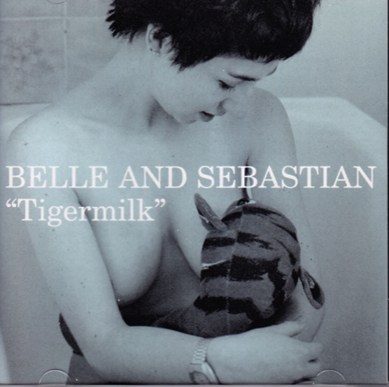


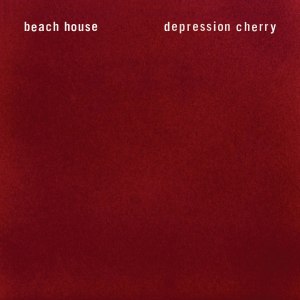
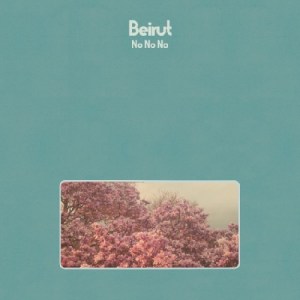
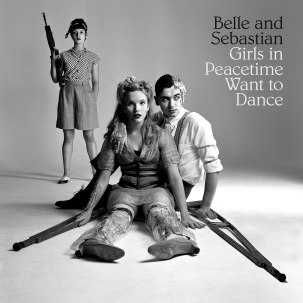





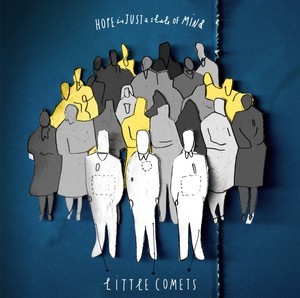

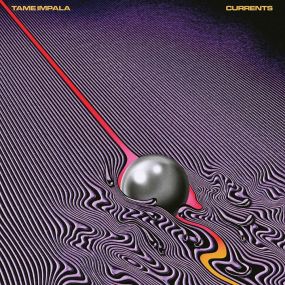

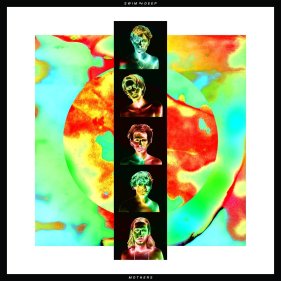




 mariaology