Roseability

Disclaimer: my middle name is Rose. This means nothing, as far as I’m aware. I have never received roses for Valentines (as far as I’m aware). What follows comprises an essay on what a rose is a song is a word is a rose(?), feat. the likes of Gertrude Stein, Idlewild, Oscar Wilde, Joyce, Yeats, the French Symbolists and Lana Del Rey…

🌹🌹🌹

Despite having two degrees in literary studies, a lot of my more convincing intellectual references were first encountered through music, not books. The Manic Street Preachers’ Holy Bible album introduced me to Foucault, Plath, Ballard, Nietzsche, Mailer and Pinter in one fell, aggressive swoop of a Richey Edwards lyric barked over the guttural shudder of Nicky Wire’s bass-lines. Gertrude Stein, the awkward goddess of modernism, first came to me via an Idlewild song—deep in some distant vestige of the noughties, when I still bought CDs. She’s mentioned in ‘Roseability’, the last single to be taken from the band’s 2000 breakthrough, 100 Broken Windows. It’s a typically angsty track, reflecting on the futility of being dissatisfied with the present and finding pathetic solace in the past: “stop looking through scrapbooks and photograph albums / because I know they won’t teach you what you don’t already know”. Say it and already you know, right? ‘Roseability’, like ‘Idlewild’, is a compound word, a mashing of nouns that seems to promise deep meaning as its very premise. But where is it pointing us? What of Stein and what of her roses?

Stein’s famous quote on roses, ‘Rose is a rose is a rose is a rose’, seems to do two things. Firstly, it indicates an essentialist perspective on semantics—circularity conveying the uselessness of further description. Secondly, it enacts a qualitative echo chamber by which the reader must question what constitutes this essence, this roseness which is the rose’s identity. The repetition suggests the elusiveness of this essence, deferring with dreamy assertion—the kind of beautiful aphorism you might coin on an acid trip, completely sure of your own new logic. There’s a sense, with every ‘rose’, of meaning’s possibility blooming. You want to wrap the sentence in a circle (as Stein did, selling the phrase on plates) and close a precious loop, devoid of full stops and fixed meanings. Is a rose a rose or the space between a rose and what a rose is? Swap Saussurian triangles for sweet hips and sepals, a new rose budding in the roots. Lose all fixity for the chance trellising of structure, turn attention to sunlight, rainfall, temperature and other environmental conditions. Acquire tautologies and promise of spring. A rose is a whorl, a loop; a delicate head so heady with beauty. Humans like roses share beds sometimes. Look too long into the corolla and maybe you’ll lose your mind.

Idlewild: the secluded meeting place in L. M. Montgomery’s 1908 novel, Anne of Green Gables
Idlewild: the original name of John F. Kennedy International Airport in NYC
Idlewild: to idle wildly; to wildly idle; to idly go wilding.

You’ll always be, dissatisfied.” Perhaps the mere act of flicking through memories is a form of idle wilding. Making a wilderness of memory’s stasis. Depart only at airports; dwell between continental impressions of kisses.

100 Broken Windows marks a turn in Idlewild’s direction: from their 1990s brit-pop/punk roots to a more spacious, ambitious sound, influenced by the likes of The Smiths, The Wedding Present and R.E.M. When I first started listening to Idlewild, 12 or more years ago in those tender, pre-adolescent times, I sort of filed them as the Scottish version of Ash: they had that punk sensibility coloured by stadium choruses and a cheeky pop strain that balanced the anxious lamenting aspects. All sincerity, sure, but the lyrics were sharp enough to lift them from the sentimental pitfalls of subsequent contemporaries—the end of alt. history that was ‘Hey There Delilah’. Here we move into screaming emo or post-hardcore as inherent hauntology of the fuzzy rock club: the bourbon and sweat, the greasy hair, the frank, shuffling indifference of stoner punters. There were words that smouldered, sparked, then extinguished in the wind; but Idlewild had something different, a primitive attunement to human sorrow that cut through the gum-snapping cool of postmodern irony games, even as its affect blew up in a drumbeat or solo, the loquacious, Michael Stipe angst of Roddy Woomble’s voice. Think sonorous violins and a solid rock chorus, all the energy and wit being typically Scottish. Like the Manics before them, Idlewild did punk and guitar pop, did the stylised mosh and generic fusion, did the political and personal. The millennial malaise in their songs was very much of the times even as it seemed already tired of them:

It’s a better way to feel
When you’re not real, you’re postmodern (It’s not that one
dimensional, it’s not the only thought)

Cut out all feeling, except wait. There’s more. We don’t have to languish in the paralysing grunge of the nineties. The drama of strings would grace each melody electric and maybe you’ll find historic truth in this plugged-in homage to folk turned  on its head. If postmodernism is a Mobius strip of self-referentiality, that recursive collapse of linear progress (figured as a Scalextric set in the video for Idlewild’s ‘These Wooden Ideas’), then how to find meaning again, to find sense at all? Stand in a doorway and find yourself blasted with void fill, flick grapes in a wastebasket, count up your demons for the old stoned longing. Shrivel like raisins. The turn of the century has already happened, but maybe if you surrender to the chorus you’ll feel less jaded. There’s a reassurance. The thing about choruses, after all, is that they repeat.

As it does with choruses, algorithms and perennial blooms, repetition happens a lot in Tender Buttons, Stein’s infamously cluttered collection of prose poetics. With repetition and modulation, a queering of standard grammar, everyday objects become less the tools which underpin human existence, and instead things in themselves—the wasteful artefacts in excess of definition. Paratactical, concatenating assemblages which entangle like vines or else accumulate. Grapes on the carpet, styrofoam littering the floor, a word or two oozing through the backdoor…Am I far too close to the things I mistrust? Maybe there is always a stammering, a stilted stilling. I buy roses for the restaurant in which I work and the very act drags me into heteronormative time: the time of expensive dates, birthdays, weddings, funerals, candlelit dinners. What preference for the deep, luxurious, elusive bloom? Must lovers cut their tongues on thorns? I wonder, do those erect stems contribute their strange teleology…to what, to what…are roses always in excess of themselves—showering petals, shedding, being ever so much just roses?

I stopped and waited for progress”. Back in the day (2005), the NME rated Idlewild ‘a stolid group of trad guitar manglers’, whose new single ‘Roseability’ served ‘both as a rabbit-punch to the head of agnostics and a celebratory three-and-a-half minutes of safe, predictable, wholly generic, utterly brilliant rock ‘n’ roll.’ It makes me dewy-eyed to remember the magazine’s honest, scathing days. That insouciant, throwaway cool. Music criticism was pretty brutal when I grew up, and you basically had to tick every indie rock’n’roll formula (hello Alex Turner: snake-hips, haircut etc) to get consistently decent reviews. Or you could nail the attention on some eccentricity (The Horrors), or perhaps mediocre throwback to rock’n’roll times gone by (need I name every white boy indie suspect circa 2007). ‘Roseability’ is how it feels to be in your twenties, surrounded by people looking backwards; not quite in anger, but in nostalgia. It’s been a long time since I’ve considered something new as ‘utterly brilliant rock ’n’ roll’ in the transcendent sort of way Idlewild pull off—hardcore guitars, thrashing drums, literary references and all. Sweetness and thorns. Uneasy noise secretion. Tip your hat at tradition and then blast through the chorus, scatter your petals to cover the seams. What words in ‘Sacred Emily’ follow the roses? ‘Loveliness extreme’. I miss the NME, I miss being young enough to get lost this easily.

To veer into Idlewild itself, let’s wallow in passages from Anne of Green Gables:

You know that little piece of land across the brook that runs up between our farm and Mr. Barry’s. It belongs to Mr. William Bell, and right in the corner there is a little ring of white birch trees–the most romantic spot, Marilla. Diana and I have our playhouse there. We call it Idlewild. Isn’t that a poetical name? I assure you it took me some time to think it out. I stayed awake nearly a whole night before I invented it. Then, just as I was dropping off to sleep, it came like an inspiration. Diana was enraptured when she heard it. We have got our house fixed up elegantly. You must come and see it, Marilla–won’t you? We have great big stones, all covered with moss, for seats, and boards from tree to tree for shelves. And we have all our dishes on them. Of course, they’re all broken but it’s the easiest thing in the world to imagine that they are whole.

That endearing, childish hyperbole, the absolute thrill of invention. The special grove in a ring of white birch trees, heart of the circle, the rose’s secret pistil. Place of germination. Fragments congeal as expansive imaginings, disappointment evaporates in hope.

Gertrude Stein said that’s enough”. I’m not quite sure how Roddy Woomble, Idlewild’s lead singer, intended the Stein namedrop, but I take it as a reference to her poems’ weird loops of recursion. In the video for ‘Roseability’, Stein’s portraits are hung up all over the room; her face is even on the front of the kick drum, looking all knowing and stately. The video’s aesthetic has the feel of a 90s television set, all pop art circles whose colour has faded, sharp swivelling camera angles and hair swishes. The pop iconography of teenagers flooding the room with their plastic bracelets, braided hair and awkward moshing. It would be totally American if not painfully, most Britishly sincere—I mean just look at how the guitarist crushes into his own instrument, how Woomble wipes sweat off his face, paces around with the mic so close it could feel his breath. Loveliness extreme. When this was released, I wasn’t even a teenager. When I finally see him live, it’s in a church hall in Maryhill 2k17 and it’s utterly beautiful: how generous the set-list, how gracious a frontman with his small-talk and nods to the band, his thank yous. Watching the kids in the ‘Roseability’ video recreates that weird oscillation between feeling old and seeing in their faces the bizarreness of MTV ennui: the ghost of what I would temporarily become at thirteen, fourteen; cladding myself in discount Tammy girl, then Topshop, dying my hair pink and donning studded collars. With the hormones, you lose that ecstatic childhood imaginary hope; desire is amorphous and endlessly droning. You close your eyes and it seems the world has already ended. Sometimes it comes back, sometimes not. Maybe roseability simply means innocence.

‘Mrs. Dalloway said she would buy the flowers herself’ (Woolf). But customers rarely do. It’s up to me to ornament a room, to flourish a mood, to mark some milestone in another life that’s not mine, whose linearity’s not mine.

My mother bought rose-coloured roses for my eighteenth birthday, blush pink. Red when I turned twenty-one. I stopped acting sweet and rosy, dyed my hair red too. Fell through the whorls, the plush abyss.

‘Roseability’: the ability to be of roses, for roses to exist? Sensibility is, according to my laptop’s built-in dictionary, ‘the quality of being able to appreciate and respond to complex emotional or aesthetic influences; sensitivity’. Does roseability denote a similar sensitivity? When we think of roses we think often of Englishness: that angelic Laura Marling figure, a garlanded Bronte heroin, Paul Weller’s ‘English Rose’. We think tenderness, pastoral, a certain enclosure (marriage, gardens?) and guaranteed loveliness. She who coils golden hair round her porcelain finger, who knows how to talk to sheepdogs, who paints watercolours of the dawn. We think Shakespeare—‘a rose by any name would smell as sweet’. But we also think north of the border, a little bit of the visceral made kitsch: Robert Burns’ ‘my love is like a red, red rose’, whose unfortunate fate is to garnish every dishtowel bought on your granny’s last visit to Alloway (Roddy Woomble, perhaps not incidentally, is also an Ayrshire lad). The faint rose scent in a golden cologne, mingled with tobacco; the glistering sweetness of a youthful, drugstore perfume. Roses are roses, but roses are so many things, are poised on the lips of also…

The rose is a complex flower, a perennial whose species number over 100. Roses are typically ornamental, grown by those who know what cultivation means and spend their Septembers clipping away the thorny remains. An old man round the corner from my flat is out in all weathers among soil and stem: grafting, trimming, tilling for his roses. Perhaps he loves them more than his children. In summer, walking home on warm evenings you can smell them in the pale ambrosial air, a delicate bounty. If properly cared for, roses can live a long time, perhaps over and over, perhaps forever…what exactly does perennial mean?

The appropriately named Bloom, in James Joyce’s Ulysses, stands on Cumberland Street and opens a letter from Martha Clifford—a woman who responded to his newspaper ad requesting a typist. The Dublin postal system facilitates a sort of illicit exchange between them. Half-rhyme, consonance: petal/letter. The delicate thrill of letterly infidelity. She wants to know ‘what kind of perfume does your wife use’; the animal possession of scent. She attaches to her letter a flower, slightly crushed:

He tore the flower gravely from its pinhold smelt its almost no smell and placed it in his heart pocket. […] walking slowly forward he read the letter again, murmuring here and there a word. Angry tulips with you darling manflower punish your cactus if you don’t please poor forgetmenot how I long violets to dear roses when we soon anemone meet all naughty nightstalk wife Martha’s perfume. […] Fingering still the letter in his pocket he drew the pin out of it. […] Out of her clothes somewhere: pinned together. Queer the number of pins they always have. No roses without thorns.

So many compound words, clustering in the mouth like so many attaché petals peeled off from a dress. He plucks them away, fingers the soft excitement of words: ‘naughty nightstalk wife’ with the luridly alliterative twist of fantasy. Libido vs. loss of life. What slips away with the pin? What does the pin pin together? Folds and creases, sleepless. Spike of cactus, nasty, phallic. Prick. Tulip. Coiled anemone: wild flower or tentacular sea creature? Connotations of slip. In her slip. Slippery. Freud in The Interpretation of Dreams, waxing lyrical about female genitalia:

I thought of what seemed to me a venturesome explanation of the hidden meaning of the apparently quite asexual word violets by an unconscious relation to the French viol. But to my surprise the dreamer’s association was the English word violate. The accidental phonetic similarity of the two words violet and violate is utilised by the dream to express in ‘the language of flowers’ the idea of the violence of defloration (another word which makes use of flowersymbolism), and perhaps also to give expression to a masochistic tendency on the part of the girl. — An excellent example of the word bridges across which run the paths to the unconscious.

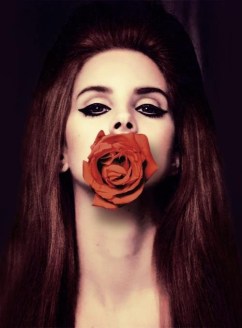
Dear roses dear romance; violets are pale taste of childhood’s sweet naivety. Violets are blue and so are you. Things you can take away. Lines of flight, tangled stems and botanical echoes. Semantics. Lingering taste. The burgeoning rhizomes of the greedy unconscious. Lana Del Rey: “there are roses in between my thighs / and a fire that surrounds you”. The Metro calls it a ‘shocking new track’, but I’ve never heard anything so languid and dreamy and in love. Hungry. Sugar is sweet and…
a9870a00b4965e682c4e3a3a89f4e6b8
Source: Pinterest

Angela Carter’s roses bite, don’t you? In ‘The Lady of the House of Love’, the self-starving somnambulist—the ‘beautiful queen of the vampires’—is a figure for desire’s recursive, self-destructive appetite. Manifest as addiction, or withdrawal; the flesh-shedding lust of anorexia, its resistance to growth and fuel. ‘She herself is a cave full of echoes, she is a system of repetitions, she is a closed circuit’. Her dialogue billows round and round into absence. Like Stein’s rose, she is bound to the noun and the grammar of herself—the flickering inward structures of mind, matter. The Algorithmic Beauty of Plants. Clustering rootlets, trapped yearnings for impossible perfection. No rose can be the perfect rose; except perhaps Stein’s rose: the virtual rose at the end of the looping rainbow. Loopy, lupin, lupine, luminal. Devouring, emanating, alluring. The virtual rose, perfect by its very impossibility, like Mallarmé’s Book. So many leaves and words. The stain of ink and rain, imprinted teeth. Carter again: ‘I leave you as a souvenir the dark, fanged rose I plucked from between my thighs, like a flower laid on a grave’. Those intoxicating roses, like Carter’s baroque, coruscating prose, cascade across the page, the white snow, the grave. La petit mort. In every petal the promise of a word, a breath.

Roseability. Faith in the unknowingness that is adulthood’s full blooming. Desire’s maturity bound in nostalgia, that noxious plague of your twenties; the ‘sense sublime’ of Wordsworth, five years later, experiencing ‘something far more deeply interfused’. Like the rose’s corolla, time rolls both round and onwards. It’s nauseating, an almost vortex. You’re always chasing that inward spirit, the thing that burns regardless: “They won’t teach you / what you don’t already know”—don’t Idlewild know it?

There is no roseability.” Enduring, complicated, hungry and sweet, it’s no surprise that roses are symbols for romantic love. Oh hallowed, protected cliché. Expensive hotels strew red roses on white bedsheets, a look that is oddly funereal. Share the ephemeral with melting chocolates. Reminiscent of menses, the blot of a clot in time. He got shot. She bled freely. Blood is like iron, a sharp metallic taste. What do roses taste of? What kinds of symbolic immersion might get at the essence? A bathtub of roses, a bedspread, a bouquet exploding for wedding celebration. Petals of confetti; a blossoming, artificial effect. White roses can be purity, lightness and marriage; or maybe undying love in death, restoration of innocence. I love you as the snowfall that closes Joyce’s ‘The Dead’. Sitting on the languid banks of a river in June, desecrating a rose with your sorrow: one petal, he likes me, two petals, he likes me not. Enough petals to fill a river, all the world’s worth of unrequited love. Red upon red upon blue. Flowing, felt in the blood. But no river is ever twice the same, no rose identical, no inflorescence—despite the algorithmic genius of plants—symmetrical. The beauty of roses comprises their subtly unique detail. ‘Lesser’ flowers, mere ornaments to weeds, clutter up close in mutual similarity. Maybe’s Gatsby’s Daisy could be anybody—she just had to be sweet and blonde, smelling of the damp rich old world, ersatz fresh, ready to decorate. The colourful shirts were mere petals for the true dark rose of his longing. Did Gatsby have blue eyes? I can’t remember.

I did a hard-drive search for the phrase ‘blue rose’ and found an old flash fiction piece I wrote years ago, called ‘Watercolours’. An extract:

The garden fills with new light; conscious light, collecting a clarity not quite recognised. The roses have left their earthly bodies, and the worms burrow up through the untilled soil. The roses’ spirits lift the leaves from the trees and scatter them like sloughing flakes of a giant’s skin. A sigh escapes the sultry violets, the ones he captured once by mixing blue and red. The red poppy is a pretty thing, but she is unborn yet. A mulch of memory overturns as day decides to end.

Isn’t it strange, the seduction of fairy tale ecomimesis? Nature’s ekphrasis surrendering effortlessly to the same saccharine motifs; the kitsch aesthetic containing within its insistence a certain artifice, then the theatrical mists of deliberate illusion. I think of watercolours and I think of everything blurring. Colours decay in the rain, or do they saturate? And again, the roses and violets, whores and madonnas? What of the feminising of botany’s blushing ornaments, ‘captured’ by a (male) artistic vision? But time is ever more flowing, desire afloat, liquid and trembling as rain. What would it mean to anthropomorphise roses, to imbue them with certain abilities? Roseability. These would be the most precious roses, the memorialising and future-making symbols. The blue ones.

I also found a piece from 2013 titled ‘Blue Roses’ It’s about a botanical garden famous for its sky-coloured flowers. The narrator’s lover, Richard, laments the death of his mother and talks about what it would be like to be a carnivore plant. The narrator says: ‘“Those long, slow deaths would suck out your soul.”’ Was I reading Carter at the time? Nature (always capitalise to denaturalise) in this story is narcissistic, strange, devouring: stars are ‘aware of themselves’, the twilight forms deliberate ‘geometric patterns’, the rain ‘spilled out in oozing puddles that clogged the scum of the pavement’. Security patrol the blue roses in the glasshouses. It isn’t entirely clear what they mean in the story. Symbols for what? Eliding natural selection, these monstrous flowers blur into nothing but blueness—the exotic quantity, intangible mystery, possible infinitude. Despite the wholesomeness of the tale, I couldn’t help but think of the weird erotic undertones of its spooky botany. Blue rose, blue movie.

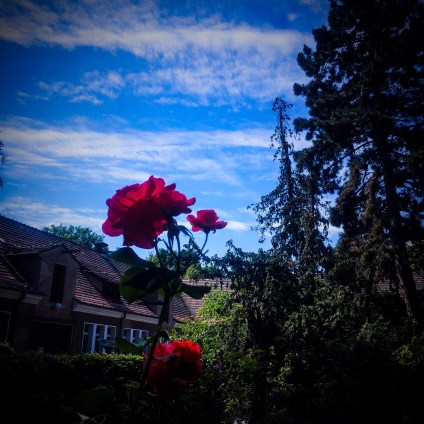
So yes, the very phrase ‘blue rose’ denotes something exceptional in Nature (in Twin Peaks, a ‘blue rose’ case is one which involves supernatural elements). In Tennessee Williams’ play, The Glass Menagerie, Laura (a character based on Williams’ mentally ill sister, the aptly named Rose) is nicknamed ‘Blue Roses’ on account of her fragility, her spiritual affinity with that which transcends the ordinary (and a childhoood attack of pleurosis). Laura dwells in a surreal version of reality; her very nickname harks back to André Breton’s ‘First Surrealist Manifesto’: ‘Cet été les roses sont bleues’ (this summer the roses are blue). Things have reversed and in their delirium remain quite beautiful. Roses, blue or not, are associated with a certain precious wavering between worlds both spiritual and physical; worlds crossed only by rare occurrences of romance, imagination, memory. He loves me, he loves me not…Laura is obsessed with a little glass unicorn, symbol of mythology, virginity. Preservations of the body for another world, or from another world? I go into the woods and find fairy rings made from small white flowers (I think of the inverse fable of extreme depression, the harp-sparkling Manics’ track, ‘Small Black Flowers That Grow in the Sky’). While there is a lovely joy to the common daisy or meadow flower—an ethereal quality that recalls our initiating buttercup crushes—the deep lust of Romance must be associated with the scarlet plumage of the rose. Love is calculated on decadence, exception.

Is a rose as shatterable as glass, as a heart?
IMG_0500

I used to live in a house called ‘Daisybank’, but my friends always teased because there were roses painted onto the window, not daisies. What weird reverse supplement? The fat white dog daisies would spring up on the front lawn in summer, but they were always overlooked by those glassy roses. There’s a certain authority, majesty even, to the rose. You associate it with tragedy and great beauty: Lana Del Rey with her lips stuffed full with a rose, playing the calamitous heroine. Snow-White and Rose-Red. Shakespeare’s ‘a rose by any name would smell as sweet’ is taken from Romeo and Juliet, in which Juliet convinces Romeo that it matters not that his name, Montague, is her family’s rival house. A rose is a rose; regardless of name it will always come up smelling of roses. Having graduated from Daisybank, I now find myself living on Montague Street…

‘Who dreamed that beauty passes like a dream?’ This is W. B. Yeats, probably writing to a woman he loved, Maud Gonne. He seems to set up beauty as life’s eternal opposite; where human existence is fleeting, beauty remains archetypal, enduring. Think of Keats’ ‘beauty is truth, truth beauty’. There’s a universality, a mythological underpinning to this beauty. In Yeats’ poem, the loved one embodies wistful figures of glory: Helen of Troy and Usna of ancient Irish history. Surely she slips between the shadows of comparison? Whether Yeats scorns the idea that beauty ‘passes like a dream’, or whether he ultimately reveals its truth, is unclear.

For Immanuel Kant (see, Critique of Judgement), the experience of beauty hinges on a paradox: since it seems that beauty is a property of the object—indeed, emanates from it—you’d think beauty itself was universal. Everyone should fall in love with that painting, that colour, that song. But not everyone does find the same things beautiful. It feels like a betrayal of reality when I play Radiohead’s ‘True Love Waits’ (where roses are swapped for “lollipops and crisps”) to a friend and their reaction is a casual ‘meh’ and a shrug, while all sorts of biochemical reactions of wonder and euphoria are swirling around inside me. Beauty, for Kant, is largely nonconceptual: that is, there’s an unspeakable quality to it, a thing you can’t put your finger on. In Realist Magic, Timothy Morton describes it as beauty’s ‘je ne sais quoi’. Being unable to pin down what it is that makes a thing beautiful is part of its beauty. You take a rose. You could describe its petals, its inward swirling whorls, its scarlet colour, the slenderness of its stem; but in doing so, you lose the rose itself. As ever in synecdochically applauding a woman you lose the woman. The love object. The love? Recall Shakespeare’s ‘Sonnet 116’? ‘Love is not love’; it’s what it is and it isn’t, and what’s left over as forever. 4Eva/4Real. Personally, I prefer Cate Le Bon’s take: “Love is not love / When it’s a coat hanger / A borrowed line or passenger”.  But isn’t everything stolen and temporary, in transit? How do you claw back the rose when the rose, maybe, is just this epic symbol for love? What moves in the static eternity?

I used to draw roses all the time; I’d always start in the centre, finding my way outwards with liquid ink. You see I had no conception of the rose’s shape, I was just following the shaky trajectories of layering lines. Important not to excise too sharply the arrangement of beauty, to impart onto nonhuman forms a reified taste. Eroticism preserved by ellipsis, meditation contained in the mysterious code of the senses. What was it Wordsworth said so long ago, in his famous tract against book knowledge: ‘Sweet is the lore which Nature brings; / Our meddling intellect / Mis-shapes the beauteous forms of things:— / We murder to dissect’. Wordsworth would prefer you to go out and encounter the objects themselves rather than try to ‘dissect’ them through rapturous, scrutinising poesy. Being one of the great Romantic poets, distracted by words even when in Nature, Wordsworth is of course a filthy, (forgivable) hypocrite—up to his knees in Kant’s paradoxical beauty as much as the rest of us.

Making words of roses involves cutting their heads off, losing the essence, letting the adjectival rose oil leak into language’s dripping pores. Binding the immortal to time. That seepage is ink, is tense’s durational flow, is poetry’s cruelty. This is perhaps what Mallarmé means when he says: ‘Je dis un fleur, et le fleur est parti’—‘I say a flower, and the flower is cut/split/gone’ (translation: Tom McCarthy). To break the object of beauty down in writing is to incur a violence; as McCarthy glosses, ‘Things must disappear as things in order to appear symbolically’. What is perhaps most seductive is the remaining qualities, the deconstructionist’s milk and honey, the semiotic residue that clings between things. Spiderwebs, woven by first light, acquire a serene and gossamer gleam; but what is most seductive perhaps is the spaces between the lines, the way up close the lacing makes new frames for the real, the scenery behind and through.

Then we have Derrida’s ‘maddening’ supplement. For all roses refer to other roses, to every iteration of the word ‘rose’ throughout literary history. What a rose means can only lie in the space between these occurrences, and even then the meaning is temporary, contextual—there is no outside text, no place in which to hurl your roses to semantic abyss. We might hope for Love as some manifestation of the Lacanial Real, a pre-symbolic realm of pure emotion; but love too (as Roland Barthes reminds us) is discourse, perennial and yet bound to the fluctuations within language. ‘Rose’ is a noun, but it is also qualia: the subjective quality of something that cannot be objectively measured. Her cheeks were rosy, the rose-coloured sand (of the dream sequence in Michelangelo Antonioni’s film, Red Desert), a rosiness to the air that spoke of July. By scaling tone, we might get a general sense of what ‘rose’ is (a quality defined by difference rather than identity), but we’d never get to see rose through someone else’s experience. What is ‘rose’ to one poet might be ‘pale and bloody’ to another. Rimbaud writes, ‘The star has wept rose-colour in the heart of your ears’. Abstraction meets the concrete which itself is a spill through synecdoche. What music seeps, weeping, into the beloved’s ‘ears’? ‘Rose-colour’ becomes that synaesthetic property, the oozing, effulgent thing that cannot be pinned. For colour, like music, is perceptively subjective. What prompts a sudden spasm of imagining in you might send me to sleep; could we call both actions reactions to beauty?

‘It’s hard to stay mad when there’s so much beauty in the world’. So goes the line in American Beauty, Sam Mendes’ 1999 suburban modern classic—a film about midlife crisis, inappropriate lust, neurotic materialism and the nuclear family under late capitalism. Where Ricky, the visionary, weed-smoking teenager, sees a sort of sublimity in waste, videoing a plastic bag’s leaf-like billows in the wind, Lester falls for his daughter’s cheerleader friend, Angela. The particular Gen X fatigue over cultural trash and consumer excess is recycled as a pared-back appreciation for symbolic indications of the world’s decay—little quotidian details which offer momentary redemption as beauty in tragedy. The old Kantian adage of beauty’s je ne sais quoi. Lester’s misplaced infatuation for Angela is represented by motifs of lurid red roses, flowering outwards like bloody snowstorms of feminine intensity. The chase falls cold when they kiss IRL, and he realises she is just an insecure teenage girl. Tell me I’m beautiful. Interpreting the film is as tricky as trying to clasp onto any one of those whirling petals, to kiss a single tear on an eyelash, a dew-drop clung to the flesh of a rose. Joni Mitchell, in ‘Roses Blue’: “I think of tears, I think of rain on shingles / I think of rain, I think of roses blue”. A lyricist’s ability to make pearls of emotion. Superhydrophonic. Is this another symbol, listless, transient, glistening?

The Symbolists were mostly French poets of the fin-de-siècle, the likes of Rimbaud and Baudelaire (whose flowers were assuredly evil), who probably drank quantities of absinthe and wrote symbols that emblematised reality itself, rather than merely inward feeling. All that absinthe had to come out somewhere, idly wilding in the streets of Paris (pronounce it the French way). Where abstraction reigns often in the world of emotion, meaning accumulates through the repetition, modulation and pattering of these symbols. While Mallarmé’s poetry indulged in dreams and visions, it’s a certain patterning of associative power that provides the stitching behind his fashion for aleatory. The poetics of chance may still have a structure of sorts, something you can trace like the veiny trellises within a leaf. W. B. Yeats, the Irish Symbolist, loved a good rose: just see ‘The Rose of the World’ and ‘The Rose of Battle’. In his essay, ‘The Symbolism of Poetry’, Yeats makes frequent comparisons between symbols and music, describing the ‘musical relation’ of sound, colour and form as constitutive of symbol.

At a workshop I’ve been running with homeless people, a girl who shares her name with Stein’s favourite flower reads out a piece she’s written in ten minutes flat. It’s a typically tragic tale of abuse, of a family torn apart by pain, drugs, death and violence—written from the perspective of a ten-year-old girl, perhaps her daughter. She reads it with a stilted west coast accent that picks up its confidence and lilt as the sentences run on. Somehow in those sad and wilting lines, strewn with the accidental detritus of truth, there’s hope. It blooms so unexpectedly in all the despair. A ten-year-old girl sees the world very clearly and pure. I can only paraphrase, of course. I’m sad that I don’t get to see my mother, but she says that it’s okay because if I look at the moon I know that she’s looking at it too. This part struck me harder than any other—it seemed an echo from elsewhere. The whole piece became suddenly a buildup to that single, simple, irresistible image. When Yeats presents Burns’ ‘perfectly symbolical’ song of the moon and time, he misquotes him. Translation falters to glitch, like with lossy compression. The moon as a symbol, as something to be shared, a white chocolate button broken in two. Except you can’t split the moon. You can only imagine what the other person is seeing. I wonder what they were looking up to.

Where metaphors ‘are not profound enough to be moving’, symbols move in both senses of the word: they act through motion, the accumulative or associative arrangement of sound and meaning (as opposed to metaphor, which acquires meaning through more static, straightforward comparison), and they prompt affect in the reader. Such affect is not just the temporary indulgence of an artwork’s emotional value, but can indeed alter how the world is discursively understood. The rosy words thrown upon some poetic zephyr recalibrate reality as we know it. As Yeats puts it:

Because an emotion does not exist, or does not become perceptible and active among us, till it has found its expression, in colour or in sound or in form, or in all of these, and because no two modulations or arrangements of these evoke the same emotion, poets and painters and musicians, and in a less degree because their effects are momentary, day and night and cloud and shadow, are continually making and unmaking mankind.

The construction of feeling through symbols, then, institutes the substance and gaps that structure how we relate to ourselves, others and nonhuman objects. A very delicate, precise, imagist poem like William Carlos Williams’ ‘The Red Wheelbarrow’ has effectively changed how we relate to both the colour red and wheelbarrows more generally (never mind the ‘white / chickens’). Symbols can charge our perception with fresh emotional channels. Music relates a bit differently, of course, but only because it literalises Yeats’ musical relation metaphor—there’s a more physical intensity, maybe. Like a river (you can never dip your finger twice in the same river), a piece of music cannot be played the exact same way again—a truism owing to the arbitrary dynamics of individual players, environments, acoustics or subtle interruptions of duration. A breath or a sneeze, a chance sigh in the background, a trumpeter who can never quite pace her crescendo. You experience the opera differently from me, even though we watch the same one (I have never been to the opera). My hearing is slightly muted, along with my interest in self-congratulatory coloratura; while you have perfect pitch, ears that ring with pleasure as the high notes hit. Though the same in one sense, comprising a shared duration, our encounters are completely different. Music’s durational function is made explicit with the likes of John Cage’s music concrète, composed of sounds rather than notes and thus retaining elements of chance within a certain duration. The process becomes more about selection, sampling and curation, rather than composition according to tones, melody, chords.

If anyone idled wildly, it was the notoriously languorous aesthete, Oscar Wilde. The decadence of roses is also associated with a certain concretisation of language, a making material of words, a honing of time and world. Consider the opening line of The Picture of Dorian Gray: ‘The studio was filled with the rich odour of roses’. The way assonance works, subtly wafting its chiming vowels through ‘filled’/‘rich’ and ‘odour’/‘roses’, creates that musical relation that Yeats so fetishised. Poetic techniques such as alliteration and assonance abound in Wilde’s novel, where prose becomes musical, lilting, exactly honed upon sensory detail, the vivid relation of objects. Roses that fill a studio, that pungently glow with lavish scent. There is a heady, ambient quality to much of Wilde’s descriptions, giving off the impression that we are perhaps perceiving how objects seem to one another, filtered through the opium vapours that so penetrated Dorian’s accelerating decadence: ‘In the slanting beams that streamed through the open doorway the dust danced and was golden. The heavy scent of the roses seemed to brood over everything.’ Objects are at once anthropomorphised and ornamental; that play between movement and stasis, however, cuts across binaries between human and nonhuman. The world of Dorian Gray is sprawling, random, a chase through meshes of entangled desire. A straightforward death drive is diverted by all sorts of sensory encounters, plastic morality, visionary beauty. And words? Words in Wilde are the petals that swell and unfurl into Yeatsian symbols:

Music had stirred him like that. Music had troubled him many times. But music was not articulate. It was not a new world, but rather another chaos, that it created in us. Words! Mere words! How terrible they were! How clear, and vivid, and cruel! One could not escape from them. And yet what a subtle magic there was in them! They seemed to be able to give a plastic form to formless things, and to have a music of their own as sweet as that of viol or of lute. Mere words! Was there anything so real as words?

Words have (re)active potential. Each one shivers with the weight of its every use, alive with subtle magic. Be careful what you write.

Gertrude Stein said that’s enough (I know that that’s not enough now)”. Gertrude Stein said a rose is a rose is a rose is a rose. She said it first in ‘Sacred Emily’ (1913), and later wrote, in ‘Poetry and Grammar’:

When I said.
A rose is a rose is a rose is a rose.
And then later made that into a ring I made poetry and what did I do I caressed completely caressed and addressed a noun.

What do we swap for tautologies? Love is tautological; love justifies itself. It means everything and nothing. There’s isn’t any escaping the reifying loop, the ring with its symbolism of marriage. That which encapsulates and closes. The hermeneutic circle. Stein makes us linger, ponder the grammar of each rose. Ring-a-ring-‘o-roses. What does it mean to ‘caress’ a noun? To render the erotic potential of language by gesture of touch, extend into physical… Idlewild: a word whose internal rhymes fold together, whose l sounds caress the roof of the mouth.

Gertrude Stein said that’s enough.

Lana Del Rey: “You always buy me roses like a creep.
Also Lana Del Rey: “And then you buy me roses and it’s fine.

There’s a surfeit of petals and sex, a gluttonous economy of symbols which Stein stamps out with the simple carousel of her musical roses. Sing it slowly. Tell me what you mean.

Luce Irigaray, from This Sex Which Is Not One:

Your body expresses yesterday in what it wants today. If you think: yesterday I was, tomorrow I shall be, you are thinking: I have died a little. Be what you are becoming, without clinging to what you might have been, what you might yet be. Never settle. Leave definitiveness to the undecided; we don’t need it.

Lana Del Rey, reading from T. S. Eliot’s Four Quartets:

Footfalls echo in the memory
Down the passage which we did not take
Towards the door we never opened
Into the rose-garden.

I pass between worlds and names and symbols. Every lipstick stain is another iteration, each kiss the palimpsest of the first, and even photographs fade in the sun, faces dissolving like planes behind clouds. Of ‘cappuccino pink ranunculus’—not roses—Colin Herd writes: ‘They’re at their most ravishing and / ethereal the day before they expire’. I imagine a white corridor imprinted with all your flickering dreams. Between realms, the soft wilt allures more even than it does in bloom. Images become sentences: long thorny stems of sentences, stretching and snarling a confusion of brambles and briars. The more you write, the more you grow your beautiful garden. I tear my wrists and fingers, trying to get to it: ‘There is a forcible affect of language which courses like blood through its speakers. Language is impersonal; its working through and across us is indifferent to us, yet in the same blow it constitutes the fibre of the personal’ (Denise Riley). This garden I make is not really mine and daily it grows stranger. The roses offer their pretty heads, then droop in winter. I hear their beautiful words in arterial melodies, sprawling among shadow, platitude, the skeins of a letter letting loose through my pores.

Roseability: the quality of forever chasing roseability. File under qualia, noun/rock, the poetics of etcetera.

tumblr_o34tbyABi21qfqngko1_1280.gif
gif. credit: : : Douglas Pattison

Playlist: October 2017

IMG_7632.JPG

(disclaimer: my god i’m feeling autumn morbid)

Time is a stopped drumbeat tonight; it is the remnant of old Halloween feeling. Singular childhood memories: salt-crisp toasts in the shape of witch hats, chocolate spiders, fireworks; a plastic bag snagged on a tree, resembling the gossamer trace of someone’s soul. Pumpkin seeds sprinkled paprika, oven-roasted. Surrender to central heating. I close my eyes to desolate parking lots where the wind buffers round and round in the thick-whorled conch of my ears, which have not heard enough in their time; filled with white noise and melodies honeying the sore parts to moan or depart. We talked about feeling passionate or just not at all and long communications across channels across waters and distances of spacetime unfathomable to the little things beating in our chest that were tender of fibre and sinew, blood and bone. Heart attack, absence. A craving for airports, places of arrival and departure. Erase all communion. At the very least, some ferry terminal where the rain lashes my face and it’s like being born again and over and over–the way a shell is each time the tide unfurls some granules of sand in ribboning form, sweeping layers of time back over the nacreous skin. A white shape looming chltulu from darkness, from blue. Suddenly nostalgic for everything; days where less pressed upon the brain, where a deep abyss still made its outward ripples around me. The wake of a ferry, see the whitening arabesques of that line. Days sloshed out with delicious, ice-deprived, inexpensive whisky. The blurriness of alcohol a delay, an appeal. Repeat. Too many nights lost in flats without sense of an ending, every corridor a wind tunnel. Cycling home the abstraction. Best to present this as fact or fiction?

Bursts of prose, aches and pains behind the ears, deep in the muscle and bones. Getting harder to cling to routine. The nights draw in malevolently, extravagant in their darkness. Things to look forward to seem less and less. Sometime you come home; you come home and there’s a version of home I swim through, salt stung and sober but nonetheless longing for home. Less lost tracing same old routes, longing for the everywhere nowhere of hill mist and sea fog, rivers you step in forever for each time is another, another. Moss between cracks in the patio driveway. Keep mesmerising beats still close to sleep. Fabricate reality.

Spent inordinate quantities of time this month listening to Elliott Smith. Sad pale lullabies from a lonely Los Angeles. I pace these streets, pretending they’re boulevards. The only palms here are ugly, reedy, hardy. Stop wearing liner because regardless the irises stream. The wet leaves gather and stick and are swept into gutters. Gelid, compact. Packed into bags. I don’t know where they go, where the end is.

We put the radiators on for the first time since spring.

Autumn requires more indulgence in pleasure. Thickening of the flesh. I buy spice and wait for sweet potatoes to warm on the stove, thinking of how music creates space and it’s space that I need—so much space and space. Space is space is space. Where strings elasticate the littler twinges of pain, I’m counting the falling beats of a piano far from my room, far steadier than the twitches of dreamcatcher feathers above my bed. Tidal sighs. Voice grows frailer with audience, chance Saturdays off work recounting old lines in the sea pace of rain that steadies the brain in concrete roads. The opening chords, like coming home. Dusk slowly loses its dramatic autumnal sense of transition. Winter steals ruthlessly, magpie glitches of silver light. My hair dulls against the cognac gold of the leaves, their magical lambent light. My skin gathers sapphires, latticed and laced with violet blue, violent hues. Bumping my legs on things in my room because it is all too small, dollhouse small & ever shrinking; the arrangement of objects and clutter and books that spill over and spaghetti tangles of words I can’t follow because sleep might steal me. Words, words. Lurid in sentence through sentence. Sleep is a sort of ache you have to embrace for the sake of refreshing, a scab you can’t pick off the physical. I might dream of tomorrow then fold back on the future. Sentences come in again, re-calibrate time. I wake up frozen or burning; or I stay up late, stay up beyond human time, missing summer’s songbirds in the garden. It is all too cloudy, shivery, silent. What time is it wherever you are? The maps provide little flavour; I cannot orientate myself on those pastel colours. Still, there is a durational beauty to everything we speak of, itching towards light with crisp new lines. A photograph, then words. White upon deep, messenger blue. What doesn’t feel borrowed, what feels mystically distinct and uncertain. It’s lovely. Confessionals kept abstract as always. So many meetings with those who inspire. Except there’s the dread. How can you hold so many words in your head?

I make notes on the moods in work the way you would weather. There is often a pattern, a miasmatic misery catching. A cold front coming. Hysterics and dashboard laughter. Smashed glass. Not even a full moon and still the weirdos flock in with awful demands: this wouldn’t happen in St. Andrews! I picture myself between two places; oscillations of identity with a flareup of possible rupture. Between two needs. She says there is something deeply wrong, a pang out of sync with the rest of her body. Is it possible to be this body without organs? For you are all fingers and bruises, lashing trellis of glitter and breath. There was a hurricane that buffeted our ill-equipped figures, our red raw fingers. You could hear the wind flapping in the scaffolding like the masts of a ship. I walked west alone, the cold so hot in my throat. Strangers asking me where to dance. Plug up the volume. When the trippier synths came in, eloquent cross rhythms coasting, the serenity would cure this feverish dreams. Too many tenses tangled. Stifling coughs in working clubs, watching a friend make music on telly. Fairy lights blinking out of sync. A sudden swelling pride over the fact that such beautiful things can exist. His reticence, his crazed expression. What was it she said? We can’t have nice things, that’s why we lose them. It’s true, they slip away from you; or else we’ll drop them like keys down the drain. Maybe that’s okay, maybe that’s the best part, the losing and leaving and dwelling in pain. O sweet naivety. Everyone is leaving. I would hurl my keys in the sea for you.

Far away on a rooftop smarting my brain on the stars and learning to drink again.

I walk home in the lost hour and screaming teenagers costume the streets with vague and avid despair or else carnivalesque they paint dawn with hilarious shadow.

=> Switching the radio on at six in the morning haven’t slept yet & what comes on just another crap Motown no. recalling fresh restaurant hell… <=

UNIT. UNIT. UNIT. // these misdirectives I will follow forever not knowing, not knowing. She sounds a bit like Bjork when you turn the sound right up to a shrill; a brittleness threatening to shatter all that is cool and sound and sound. She is pure sound. She is bitterer, sweeter.

><

I wonder how long to lose a day to a train? Somehow the north beckons: the sense of my smallness; a need to be swaddled in brisk wind, sea smell, true Scottish frost…may we bury our feelings in negative hypothermal versions of now…but for now I can only look forward to seeing Com Truise on Thursday & drown out & drown out…

*

Lee Gamble – Déjà Mode

Alt-J – 3WW

Moses Sumney – Lonely World

William Patrick Corgan – Aeronaut

The House of Love – Fade Away

’Til Tuesday – The Other End (Of the Telescope)

Phoebe Bridgers – Would You Rather

Elliott Smith – Twilight

Courtney Barnett & Kurt Vile – Peepin’  Tom

Rob St. John – An Empty House

Sufjan Stevens – Wallowa Lake Monster

Cocteau Twins – Pearly-dewdrops’ Drops

Good Good Blood – Running in the Dark

Joni Mitchell – Roses Blue

Kathryn Joseph – the bird

Johnny Flynn – Hard Road

Simon & Garfunkel – Kathy’s Song

Lost Water: Towards a Phenomenology of the Kyle Centre

skylight.jpg

A crumpled local newspaper, ink bleeding in the rain, a tattoo of useless words on the Styrofoam takeaway. A case of stacked metaphors, every sentence weighted with the freight of muscle, plunge, pressing ahead. Snowflakes of unbreakable material make their way across bladderwrack pavements. Words like eateries and retail melt through the cracks and what’s left is the skeletal possibility of what could be, mulched in quicksand, the mall revamped with luscious funds and pumped to the brim with glass, tiles of parquet impression, leisure. The Kyle Centre mall, as understood in American English (O to cue Idlewild forever in the longing for that sensitive, Irvine drawl), once boasted a fountain where you tossed in your lucky pennies. There was a genuine, operating foodcourt. In the summer, tents would be erected upstairs for sale; a bouncy castle provided cheap joy for children and teenagers bored by another washout July. Many of us stole first kisses in the warm, polyester glow of those tents. We’d take caffeinated beverages and go browsing, the way you do now with the ease of a thumb and the screen, the virtual checkout. The semiology of colour in familiar high street stores, from Next to Topshop, functioned as landmarks in the crisscross abyss of ersatz environs, scaled to micro.

What comes next, next, next—a panoply of signage directs the flow of bodies. There were four entrances and exits, but only locals mastered the correct orientations. Kids drifted aimlessly up and down the escalators, shouting to friends who clustered on the floor below, sharing meal deals purloined from Superdrug, dropping fake grated cheese on the sallow floor. Medievals feeding their daily, carpeted fodder; a spin-cycle draining the pockets of millennials. All was amalgamation, consumerism in miniature. There was the looping belt of process that brought each person’s return on a Saturday afternoon. You might say bustling, even, if you were a journalist running out of words. You felt the bloat, the awkward accrual of bags, the jostle towards actual sunlight fizzled in the imminent night. Evening came quicker by the sea, shaded by islands and cloudy bars. Making impulse decisions, drawing back to the thing that comes without thinking.

To return ten years on is to witness the boom and bust cycle’s distilled effect. Scrunched out remnants of culture, expendable income bleached to regret. Towns throughout Britain, of course, lay waste to the whims of the market; but few as strong as this one. A smattering of bookies, charity shops, pawnbrokers and dingy discount stores spring up where cafés and clothes shops used to be. The supermarkets teem with the deranged ennui of the drifters. Old folks carry their bags to and fro, not gathering—not even picking the fruit of occasional Watt Brothers lipsticks. Their gums sink with cheap mints, the quality of the buskers slackens to fraught renditions of ‘All of Me’. As if the comprehensive self were still a myth to be chased. Pill poppers make the rounds quite openly, TKMaxx installs vein-resistant violet lighting in its bathrooms to stave off addicts. The establishment dwindles. Woolworths closed an age ago; they are slowly getting used to it.

As operational concept, the town brings out its humming despair. Gulls swoop in circles, waiting to descend on their carrion, the fag butts flicked into new oblivions. When dropped from a four-storey carpark, nutmeg stoned, you practise the art of temporal refusal—stepping literally into the upswept dust of the times. Trying out the bone-shattering acrobatics. Something glimpsed on telly. Creating a whirl of delusion which staves off the fear, if only for three hours with side effect headaches. You sit in the sticky dark of the Odeon, chewing peanuts, waiting for the arrival of those who won’t come. A shower runs on in the back of your mind; numeric paranoias flourish like dog daisies in June-green meadows. All of a sweetness, lingering aspartame. River Island being that literalised metaphor for outdoor fashion, something exotic in the lurid schemes. New tribes stranded on the traffic islands of their adolescent years, calling for help but only serving to prompt more crashes. The roadsides fill up with scrap metal, coke cans, broken dreams. Only the criminals pick litter and weeds. Somebody stops you on the street to ask about your pension, your PPI. In trackies you concoct some lie of an income. It feels better to exist beyond form, chewing a pack of mucilaginous candy, taming the jaw towards process. I run, I run, I run.

Practitioners of parkour and skaters clatter up the common walkways, alleys–backflipping normality. In that violent clack or fall of trainers, they emit fresh wavelengths on the general orbit. They are trying to avoid, like all of us, the inevitable, hullabaloo pull of the Kyle Centre, its middling void drawing us back to terrible origins. Returning after years, I found the mall to be almost utterly empty. The floor tiles coated with a fine layer of dust. I could almost hear the tinny echoes of Macintosh Plus resonate in the brain as I glided around, glancing into the charnel grounds of abandoned shop windows. Was this the mall of yesterday, snagged in its vividly bland, retro-futurity? Tacky goods, novelty toys and festive decorations were stacked up without sale, all in a jumble, asynchronic. There was an elegiac quality to the silence, the desolation, the click of my heels on the tiles. Usually, a curated selection of galling chart bangers would blast from some unseen stereo, but this has been replaced by a low-level, Lynchian electrical hum. There’s almost a sense that the whole setup could explode; something of J. G. Ballard’s comment that ‘reality itself’ feels like some kind of elaborate ‘stage set’, one that ‘could be dismantled at any moment’. Who would do the dismantling–and how violently? An irritated, private developer, snuffling the truffles of riches buried beneath crumbling plaster? When I touch shop signs, the tarnish comes apart in my fingers, along with all youthful glitz of faith. Consumerism comes here to evade its afterlife. I consider the rent rates of a gamble.

April 2017, a fresh visit. The only shop that appeared to be open—beyond a curious popup tent with a sunglass stand of neon hairbands—sold vapes in all sorts of flavours. Oddly appropriate that the vaporisation business flourished under recession. Ye olde Marx strikes again: ‘All that is solid melts into air’. The material basis of capital, of physical living–structures defined and hardened over years of labour relations–is eventually dissipated under the strain of its own regime. Our cloying desires rent free and exhaled as vapour, the flavours of youth recreated with chemical enhancements. Cookies and cream, strawberry sundae, cherry cola; all the treats once devoured in these hallowed walls provide now the scented mists of our caustic lungs. We choke on the smallness of the shrinking world, distracted by flickering images.

Quite satisfying, really, to find oneself wandering around in the new vacuity. Less sincerity than simple dwelling in abstraction, a reminder that such clear plexiglass canvases once held the false cheer of advertisements. Stalking the old trajectories, attempting to align memories of space, place, movement. By posing at the broken fruit machine, sticking post-its upon the locked bathroom doors, peering into grime-smeared windows, are we enacting a form of détournement, constructing a new milieu, hijacking a bland, capitalist reality? EAT ME/DISCOUNTS/SALES/NEW DEALS (Tony Blair’s Cheshire cat grin suspended in symptomatic darkness). The devouring logic of the overdraft reigns, gasps, struggles for land. We snap for Instagram, slathering everything with inevitable millennial humour, a soft irony tinged with longing. These washed-out, fluorine filters; do they augment the dreaminess or merely expose the inherently bland, detached, trifling logic of the fetish? For all love for material is only immaterial. What you trade on a wage, the price of petrol; a burnout dependence, the chalky velocity.

I once saw my friend play guitar here, his voice resonating with surprising boom in the faux-brick cavern. It was a Sunday, no-one around but other hoodies, pensioners, lovers on their way between worlds. More than ever, the c e n t r e becomes transit zone, the overlap of other non-places. Time exists perpetually at four o’clock, the imminent closing of the shops, the light spilling in so grey and serene from tiny windows. It could be any time, in dreichest summer or dimmest winter. With sloganeered t-shirts, devoid of irony (“I Love to Shop Til I Drop”), we depart from resistance and give ourselves freely to the tide of tabloid iconography. It sweeps us inside its beige dripping media, sickly vanilla, till we are left like baby in the corner, picking dirt from beneath our milky nails. Waiting. People stop buying us ice-creams, frappuccinos, smoothies. All sugar departs by the lore of the body’s exhaustion. The inner world of the subject meets its flux in the antique plasticity of a once blazing commercialism. The streets shriek with bird-shit, pollutant buses, football hooligans and irate teenagers. Always there is the sharp, iodine smell of the sea. Someone stuck their disposable fork in an apple, set rotten upon a statue, as if waiting to be struck by lightning, lottery, something. A bottle of vodka is thrown from the luminous heights of White City, the same old hood in its twilight sleep.

The new silver screen dream was deemed a ‘multiplex’, a grand unveiling with the rich promise of quick progress, an ambitious proposal; a snip off the cash boost economy, a successful investment. Two years on and the ghosts still roam the walls, the bleak clichés of everything must go. Go where? Capitalism, in the age of waste, strips us of former ideals for nowhere, elsewhere. We know all the junk floats back somehow; we’ve seen the debris, the bottles, the latex remains washed up on the shore. You can just about hear the dull roar of an old hairdryer, blasting away the years in what once was a trendy hair salon. Temporary beauty, a pencil full of noxious lead. Nobody leaves Yelp reviews for the dead. The eighties decor, the depression of spirit. We circle back round, take the westerly entrance out towards honey-drip sunsets. Nobody weeps for the high street store, nor sheds a penny for the sake of nostalgia. Soon all will be gone, sodium dissolved; as sure as your new emporium, the vapours coming in through the walls, coating each residue thing with virulent mists. For reminiscence, for seconds caught static in the gleam of the fountain, an imaginary power sweeps us northward, drawn to other versions of lost dreams, lost treats, the endless catacomb concrete.

On Musician Friends

It’s a beautiful thing, seeing your friends evolve for the evening. I suppose the first encounter is when you’re a kid, maybe eleven or twelve, and you go round to a pal’s house and they pick up an instrument. You’re dimly aware that they could play, they were learning, but it’s a whole different ball game when they’re sitting before you just riffing off something. You goof about so much together, it’s hard to believe this kid could ever be sincere. It took a little persuasion to get them to play, but here they are. Licking notes. Bashing out Nirvana or playing some Belle & Sebastian melody on trumpet. The way they’ve mastered trills or glissandos or weird keys already. You can’t help but feel a little heartsore, despite your jealousy. The neglected clarinet gathers dust in your cupboard. There’s a rolled-up poster of the Manic Street Preachers, sheet music slipped behind the back of the piano. Maybe there’ll be a subsequent period of practice, where you’re inspired by your pal’s talent to pick it up again. You join the school orchestra, ask a teacher for sheet music. Your lips start to hurt, as if you’ve been kissing someone too long and everything’s a bit sweet, a bit numb. Pretty soon though, you grow bored again. Other interests tempt you: the alluring world of video games, exams, alcohol, writing novels about warring planets or a town reservoir threatened by economic interest (lifted from a Neighbours plot-line). You get better at imitating the crazy makeup, backcombing your hair, attempting to be visually competitive. You find yourself drunk on somebody else’s bedroom floor. The room fills up with crushed aluminium. The instrument suffers again, like a child ignored. You can hear it whimpering in the cupboard, stewing in its velvet case. You’re a terrible parent, and always knew it. You let the dog chew the hell out all your dolls.

At some point, you’re old enough to have friends that perform. People you’ve known awhile—whether for years or merely months. Colleagues or soulmates; often the chiasmic entwining of each. When hanging out, you sing similar songs, you laugh about cringe-worthy hiphop or try imitating Mamas and Papas harmonies. The drunker you are, the more mangled, though sometimes the voices come out like honey. You talk about normal things, like tv shows or idiot customers you’ve served at work. Sometimes you share life’s sorrows. Then on a Wednesday night you’ll see them up onstage and each time it hits you afresh, that transition. You start to notice everyday stylish quirks, the way they cross their legs to roll a cigarette. A certain way of mussing their hair. Flickers of accents, little jokes, a certain smile they reserve for occasions. Feeling special to be around them, throwing creative conversation in the air and waiting for sparks. When you both hit upon a song, a wee thing cute and powerful from childhood. Sometimes you mess about, you have a gossip, a dissonant singalong. Some are more forthcoming about process than others. Secretly you just want to hear them wax lyrical about time-signatures or resistance to genre or the difficult middle-eight or whatever.

Onstage there’s a certain remove. Often you forget you know these people, that maybe you made them a coffee or found yourself in the same photo. There’s a respect for what they do, regardless of personality. Onstage, you just want to watch the way their fingers make effortless work on the frets of guitars, over keys; the caress of their voice on the microphone. Not everyone’s voice is a caress, but you know a girl who makes the sort of timeless sugary garage that cements a generation out of time; nostalgically in love with mid-century decades but caught up in the pains of the contemporary. Each crunch of guitar, another notch on the year’s backbone. Badiou on the Century, roll over to beauty. She has a certain command. You take a slice of that universal heartbreak, pierce through its sweet coat of icing. It’s lovely to look around at an audience and realise that everyone’s sharing your pal’s talent. It’s a type of pride you rarely get to feel. It’s not like the unconditional love of a parent; there’s an aspect of that, but also it’s based on genuine respect for the practise. If they fucked up, you’d equally feel bad for them, share in that hurt. You’d sit deconstructing it later over a Guinness or something. Even if you were too drunk to notice, you feign understanding of the gravity. You can’t do that with your kid; you have to pretend. There’s always a lush moment when they play your favourite tune or whatever and what you’re caught up in is a web of memories coming into fruition in this string of seconds where each chord and riff and melody soars through the white hot space between everyone. You feel a certain touch would incur a shock. That’s cool though, you enjoy the suspension. You want to tell them afterwards how much you enjoyed it, but words never reach their expression. It’s easier to distribute those sweaty, clumsy hugs. A sequence of thank yous. Do tequila at the bar. What it’s like to be with them when strangers come up in congratulation. A generalised bliss, the clink of ice cubes, eyes shining in the club lights. It’s good to see them up there, dancing. The electric sorcery of applause. A drunken continuity of feeling that connects you, despite the audience, like some invisible umbilical cord that is probably of your own imagination. Of course when they are up there, they don’t notice you at all. I think that’s important. There’s a sense in which you have to make the connection your own, internalise the melodies and progression for your own secret narratives. These songs will go down in the years, the meaningful soundtrack to your twenties. It doesn’t matter how much you love them, or how casually playful and silly they are. How much of sadness, whimsical commentary or hard-hitting truth.  Heavy or deliciously frothy, bright; it’s all a matter of gazing on starlight. It’s hard to admit. You love the outfit: the lipstick or smudged mascara, baggy jumper or gauzy dress, faux fur, tattered cardigan, tartan jeans, glitzy earrings. You love the tangled wires, the humming amps, the pure sense of paraphernalia. 

(Maybe you’ll find a video of them performing on YouTube, something handmade from a fan’s shaky iPhone. There’s a piece of them that you’ll never have, but that’s okay. Being creative is maybe the act of constantly splitting yourself into pieces, disseminating them in the hope that the world might nourish you back.)

One time, you dreamt you were a piano. It actually wasn’t farcical, or surreal as it sounds. How to feel that ache, all those shuddering, cranking pedals! You could smell your own wood-must, the crazy longing to be played. What stirs in the dust when the keys start to flicker. It’s music music music, this thing universal. You felt in the piano all these intelligent thoughts; it was like decoding the algorithms of an Aphex Twin track. Sensations in nerves never felt before. You make yourself vulnerable when sharing a friend’s music. Defragment the brain, look for meaning. Something inside just wants mutual approval. You need the rest of the world to know this whole process is beautiful. Not the stress of signing, booking and playback statistics, Spotify contracts, recording problems and the politics of gleaning a DJ set; no, the actual moment when they’re onstage just doing their thing, inhabiting a version of themselves that transcends, however slightly, the ordinary. That slippage is the charm. You love how they come offstage and the first thing they say is have you SEEN the drinks prices in here? or man I loved the support or god I need a fag or I like your dress. The simplicity. Is there anything in life as good as mutual respect? Later, you’ll stumble home, your head full of invasive tunes—each one recalling some dark room where another mind you love is at work, is shimmering in the ether of space where occasionally the stray debris of a melody will form something strong and good. It’s envy and admiration for that process that keeps you going. So you write about it, of course, because what else do you have? Sure, you know your minors from your majors, your sharps from your flats, but you lack the mathematical magic to do what they do. And that’s cool, because the chasm has its slender implication of cleverness—the ability to communicate in different styles, tongues, hieroglyphs. Remember that quote from Mean Girls about maths being beautiful, a universal language? The price of being humble is genuine friendship, and when you pay 99p for that Bandcamp release, you’re investing in somebody’s talent, the luminous halo that hangs over conversations you have in the future. I turned on the radio once, at 3am, and your song came on by chance. It felt like home, in the midst of that late-night shadow and angst. I hope you do well, I really do. I hope y’all know how much I admire you.

The Record that Changed My Life: Bright Eyes, I’m Wide Awake, It’s Morning (2005)

18dbcb96a24c27e991d9342428d01fce.1000x1000x1

[I wrote this a while ago, back in April and long before Oberst’s recent gig at the ABC which frankly deserves an essay in itself. I wasn’t going to post it–it’s possibly super cringe-worthy–but hobbling along on the last leg of my dissertation it felt imperative to get something positive out into the world.]

It’s possible that I first discovered Conor Oberst and his (un)merry band Bright Eyes in that most prosaic of millennial ways: via a LimeWire download, a MySpace page, some cloud-space long since lost to the ether. I found myself burning the songs on my iPod, where they sat uneasily alongside my favourite embarrassing emo bands, with an excitement almost spiritual. If The White Stripes’ Get Behind Me Satan was the first album I ever bought with my own money, then I’m Wide Awake, It’s Morning was the first album that took me truly someplace else. It seemed a statement, a declaration of pure being; its very title rattled my too-thin bones. I listened to it and suddenly I understood my mother’s love for country tunes.

I came to the record a tad late, two years after its release, but it felt like it had been around forever. I’d never heard anything like it. There’s the first song, ‘At The Bottom Of Everything’, with its initiating slurp of soda, its meandering narrative about a woman who finds herself talking to a stranger on a plane as they plunge to their deaths in ‘the largest ocean on planet Earth’; the way it kickstarts into a rollicking country tune, a song for the woman’s imaginary birthday. The way those chilling lyrics about capital punishment, guns, technology and death could be set to this upbeat, catchy melody; it gets me every time. I used to go on long walks and it was springtime, the lambs out in the fields around the Ayrshire town where I grew up. I remember feeling so damn sad my ribs ached with it, but there was still the daffodils and the chickens, the bright green grass too green for my eyes. Something about the song captured that tension of sorrow and sweetness so well. It’s almost a paean to the demise of everything; a reminder that we all must die, that we daily kill each other and ourselves just by being alive.

Believe it or not, this realisation can be liberating. Oberst ironically celebrates the ‘wonderful splash’; his father ‘loads his guns’ while his mother ‘waters plants’. The whole song has this duality of birth and death, regenerating. A search for the sublime, for the next realm: ‘we must run, we must run, we must run’. The song begins with this image of the plunge, but refuses an easy, explainable ending: ‘we must rip out all the epilogues in the books that we have read’. It’s how I felt about life. I wanted that transcendent pull into another realm, but I didn’t want it to be explained or over; I wanted to prolong the possibility of that ending as much as I wanted it altogether. The oceanic imagery extends to the very ‘city buses’ which are ‘swimming past’ as the singer wakes up: ‘I’m happy just because / I found out I am really no one’. Isn’t this the liberation? That we can be fragments of matter, anonymously lost in the waves, the churn, the world’s strange, all-consuming waters?

The thing about Bright Eyes is that often they’re slapped with the emo label, but emo doesn’t have to mean a fetishised stylisation of sadness and suicide, the old ‘cut my wrists and black my eyes’ favoured by bands with alliterative names (I’m looking at you, Hawthorne Heights). Here, mixed with the pastoral invigorations of country, emo is just a cleansing of pain. There’s something so spiritually pure about that image: ‘death will give us back to God / Just like this setting sun is returned to the lonesome ocean’, the way the bright tones of those chords lick joyfully around it. I would listen over and over again to this song, obsessed with the way Oberst tells the introductory narrative with his lightly pensive intonation, the way of a storyteller in a bar addressing ardent listeners. From then on, I was hooked. I needed Oberst’s lyrics to tell me the tale of my own soul; it was a kind of immersive, boozy, eye-opening religion.

It sounds cliché and dramatic but at fifteen, sometimes it takes music to encourage you to live. The songs on I’m Wide Awake are often wistful, world-weary, lilting in their tales of disconnection, war, lovelorn mourning. You can read them easily against the context of the Iraq War, of Oberst’s utter disillusionment with the Bush administration, the yearning for something more than the era’s obsessive consumerism, cheap culture, ersatz spectacle: ‘on the way home I held your camera like a bible / just wishing so bad that it held some kind of truth’. I was struck by so many images: ‘and just when I get so lonesome I can’t speak / I see some flowers on a hillside, like a wall of new TVs’. The way he captured a poet’s Romantic perception contaminated by the fresh plastic and metal of postmodern society. A disenchantment with the world of things. I started experiencing the world with this layered, visionary quality. Maybe everyone else got their earliest fix from Sylvia Plath or the great nostalgic sorrow of F. Scott Fitzgerald or gut-wrenching movies about the decay of dreams, but before all that I had Bright Eyes.

At the heart of the album is ‘Lua’, a plaintive story about the lonely connectivity of New York City, the revolving door of gluttonous nocturnal parties followed by listless and painful mornings. The minimalist strums of an acoustic guitar accompany Oberst’s warbling voice as he documents the little quotidian moments which keep him going: ‘when everything is lonely I can be my own best friend / I get a coffee and a paper have my own conversation’. It’s a ballad about everyday survival, though draped in the cold indifference of society, the freezing streets, the strange truth that ‘What was normal in the evening / By the morning seems insane’. On the worst days I used to walk around the back of my school listening to this, trying to work out the story it told. I wondered who the girl was, the one who looked ‘skinny like a model’, who kept ‘going to the bathroom’. Was she an addict? Did she make herself sick? Was she pregnant, deranged, confused? The song itself felt bulimic, rendering that rhythm between excess and bareness, the indulgence in oblivion that only really leads to the blank reality of the morning after, the moment after the binge and purge when yes you have to sit there and deal with yourself. I liked the easy way the singer relates to the girl, ‘Well it takes one to know one kid / I think you’ve got it bad’. I thought of old cowboy films, a sort of loose camaraderie amongst the lost and fallen. For a while, I lived in black and white. I wasn’t quite ready to see the sparkling hillside flowers, the ruby of wine, the yellow bird, the blue Atlantic Ocean. I wanted cigarettes, vodka, darkness and the strange clarity of water amidst starvation. This was a formula I knew and loved, though gradually it broke me.

I’m Wide Awake taught me ways to feel whole again. To actually see these beautiful, ruinous, distant landscapes and the lives within them: the ‘New York skyline’, the promise of ‘explosion’; of howling weather, ‘sorrowful rain’, the ‘high rise’ from which glory can still be sung (and this is all from just one song). It was all about letting yourself go to the moment, realising you’re alive, wide awake, somehow open to the world. Feeling yourself caught between the media that consume you, ‘Looking for something / To open my eyes’. I prised myself from the shell of self-hate and had a good hard look at the world. It was hazy, it was a little blurred at the edges. I wanted to fall in love in the way that makes you realise that everything before was blindness; I wanted to drive ‘all night’ to meet someone in the morning. Maybe I didn’t, not then, not really. I guess I fell in love with something else. I fell into the voice, the images, the stories. It was like all the heartbreaking narratives of death and loss and regret that ever existed came together at once in one song. I thought about my friend who lost her dad quite suddenly to cancer and the girl I knew online, aged nineteen, who nearly died curled up with a heart attack from not eating; I thought about all the people I loved but could never quite get to.

The end of paralysis / I was a statuette / Now I’m drunk as hell / On a piano bench’. There’s this awesome catharsis to Oberst’s music, the way his voice breaks into a wail or a shout, how the rhythms come crashing down around him. It’s that sense of crumbling I could suddenly relate to. Crumbling into drunkenness. Feeling so liberated you could wrap your arms round someone who felt warm and strong or run across the abandoned racecourse at night or sit on the last train home crying freely because why not, why not? The only people around me were old men, alcoholics—just as lonely as I was.

This is an album haunted by a foreign war, by the tale of the midwesterner’s broken New York fairy tale, by figures of love and pain and despair. The raspy edge of Oberst’s voice is beautifully complimented by the lovely croons of Emmylou Harris and Maria Taylor, by sweet acoustic arpeggios and the occasional burst of raucous, full-band blues.  There’s an impulse towards oblivion that leaves the singer feeling stranded on land, longing for the freedom represented by just leaving. The songs are self-aware, referencing the pains and tribulations of music itself, the travelling songs that document our basic human scream for change and connection, bound by a misplaced longing for love and home and belonging. Again and again I go back to it, sifting the songs for those threads of emotion that tease out the sorrows of past and present. I go back to it and each time am startled by some new image that catches my eye, some wisp of despair or moment of joy. Lines like ‘The sun came up with no conclusion’ are poetry, pure and simple. I find them invading my everyday life, drifting on by like advertising slogans, flakes of paint, little flares of pure colour that give sense and purpose to the world.

Oberst has gone solo now, riding on the back of some solid albums. I finally got to see him live back in February, at Queen’s Hall in Edinburgh. The last song he played was ‘At The Bottom of Everything’, the only song that people got off their seats to dance to. I’m not sure what that says about the current state of the universe, but I think it’s something to do with that melancholy joy, the power of music to remake our sadness into something collective, rousing, powerful. Our need for that intuitive connection, the thing that transcends the text message, the inane commentary of social media, the ubiquitous trills of our smartphones. The thing that makes us want to screech our heads off at the absurdity of everything, the way Oberst does on the album’s closer, ‘Road to Joy’. Listening from the balcony, I pictured my teenage self, wandering those fields; as lost to history’s indifference as the girl that’s writing this, looking out at a city street. It’s a strangely liberating feeling, feeling the nowhere of now.

Playlist: July 2017

IMG_6213.JPG

July you are bright and sort of silent and usually I hate you, what with your sticky swamp flowers and pollen, the obnoxious abundance and every walk resulting in fly-stuck lips or the sizzling chill of unseasonable downpours yes I can’t help but hold you responsible for that summertime sadness that settles inevitably on the shoulders or most vulnerable skin like an insect’s membrane drawing me back to the cool…something happened this year you were not so bad there was all this bright light the showering sun through an open window somebody’s glitching hip hop taste of rollups [lost cloud storage] there were what we called damn good albums for the sake of imitation teenagers slurping milkshakes in diners discussing the hatred of certain words but you could preserve even disdained vocabulary for the sake of an opulent dictionary, trading in class for segments of orange which maybe indeed were euphemisms but for that you had gum and the regular exchange. Absolutely capital. Tesco looking quite different at six in the morning everything shelved and radiant, beautiful as even the nettles seemed this evening as even the wild garlic recalled the first day of June and walking the park amid fresh cut grass its strange perfume the dandelion motes in swirls the perfect steam to rise hypothetically from baths we were trying to lull ourselves back from the dead and all this trauma coped with / you just lean into me I will be soft as a yes before you would make me this sofa we sank in the fabric the television flicker was novelty to me the first time off the train stepped clear through the city. Radiohead, inevitably, were best they were close to sublime I think listening and seeing those lights was like how it must feel to experience pareidolia at the stroke of midnight with the stars kissing your shoulders the white milk of how it felt the (im)possibility of a black milk its atrocious calcite traces the way the brain would rise up and the whole park would shake as a crowd were electric then they were raising their phones the Pyramid Song with its eerie and reluctant chords / come back with your drink / and how it felt listening to it again a few weeks later in the car at 7am watching countryside slip past like a melting world and even in the judder of the bending road you’re like an aeroplane over the sea wearing jeans and wheat fields and the stall of piano a slow trembling pedal the rich foliage of so many ditches imaginary swim the astrally projected human features arranging on new lunar mantles the water beneath they never knew they never knew as I drew myself always finding myself sucked deep into the Spotify buffer in spin cycles mycelial I could gasp but everything is buffering and even watching the window the sky is buffering all afternoon cloud / I fell asleep last night listening to rain and dreamt of a desert where we were dead it was beautiful being metal our rusted surface lain down the absent oasis the strange aloes that cowered around us then epochally turned like woman with luminous tresses leaning over our skins they made us ripe and shining again. July July July I can’t help quote Sufjan but I’ll refrain he wrote an album about planets I think it is quite lovely [we’re all gonna die] I have seen the acned jewellery of my desert dream and I have seen the lack of fear and even if you preserve the virtual moment smiling in a crowd on a hillside sweat glistened smoking you will bear it again and again you will be just that luxurious pull of pensive strings and Jonny Greenwood’s best hair flip and something in your chest never felt before / / no hangover, just l o v e (?) or everybody ten years ago with tested vision the glassy-eyed light lost in a cave & listening to crunk I can hear the bass all the way from the river . . .

~

Kevin Morby – City Music

Feist – I Wish I Didn’t Miss You

Julien Baker – Distant Solar Systems

Portico Quartet – A Luminous Beam

Soko – Sweet Sound of Ignorance

Slowdive – Miranda

Penguin Cafe – Solaris (Cornelius Mix)

Radiohead – Pyramid Song

The Brian Jonestown Massacre – Going to Hell

The Kinks – Waterloo Sunset

Nico – These Days

Arthur Russell – Nobody Wants a Lonely Heart

The Weather Station – Thirty

Beck – Heart is a Drum

Belle & Sebastian – Marx and Engels

Playlist: June 2017

IMG_6130.JPG

A salt-water taffy stretch of a month with some sun; some wasted afternoons, park light gold and green, memory dappled like so much impress can you picture it, the wax press of light on the mind. Cherish this. Treasure, bittersweet conversations with no trajectory maybe the manner of space cadets like every direction plucked from some passing ethereal breeze. Too weird the feeling. Procrastination at its various extremes. Opening a page at random, waking up to construction groans, sleeping to evil seagulls. Surreal dreams, too much sense of the early; the precinct to late where we walk hand in hand in a daydream dazed, like looking in windows, like looking for light. Play truant for a day or two. Wine/whisky. Disappear into this fantasy space. I imagine a hallway, a series of doors. Your number etched on each one, till code or eye colour. I’ve remembered. Not much is that easy. I suspect he’s heftily medicated, some metallic blood-borne balm of the soul. There are light tunnels, there are patches of cirrus pulled apart by the bad breath of godly machinery. My stomach haunted by absent coffee. Terrible brew, extra blend. Gold and blue. The little coffee shop with the warm fire in winter. Let’s pretend that it’s summer. But even in summer this has been such a terrible grey. It’s heartbreaking to think of the seasons so out of joint, the failed slot of transcendent system, of coiled and invisible process. Like, imagine someone splitting the world’s greatest crystal of quartz, its milky opaline smoke spilling across what should be galaxy or sky or absent, beautiful blue or whatever. No clouds, just atmosphere. Hoary, gloomy, frost-mottled, dreary. My sombre face with the lines beneath the eyes, great shadows of stolen time. No sleep. We stay up all night with dawn our best friend floating by open windows; smoke drifting out in sinuous, snaking curls. I love it, love watching the smoke. It’s like the dramatisation of something opening, the stop-motion voyeur of a yawning flower. This serenity, the silky pieces of petals and sepals. All of them white, glistening eye whites. Egg whites. Fluffy matter. Solidifying objects. The turning secrecy of energy within. My body continues. It chemicals, processes, chemicals. The bitter taste with its sharp promise, O shard of six hours, shrapnel matter remembering freedom. Soft mulching Irn Bru gums. That forgetting, release. The June roses bloom so fat and sad; I wish them happy diets. Dripping rain, more rain. Slow-falling, luxurious rain. Green-sheen. The rain we can’t quite touch. Access. Restricted perception, reception. Notches on wood. The mole on my side like a miniature insect, sweat-glistening. Rain. We walk home in a daze for more chemicals. Gin. Feeling. Looking in windows. I know these streets more than the capillaries within me. Layering synths, familiar chords. Oh god the half-key octave twist, the little flicker of generous melody.  Rain and rain. Return to Twin Peaks.

🌧

Johnny Jewel – Stardust

The Cactus Blossoms – Mississippi

Sufjan Stevens, James McAlister, Nico Muhly, Bryce Dessner – Jupiter

Marika Hackman – Violet

Big Thief – Dandelion

Beach Fossils – Sleep Apnea

Radiohead – Backdrifts

Portico Quartet – Endless

Slowdive – Sugar for the Pill

Sharon Van Etten – Every Time the Sun Comes Up

Elvis Costello – I’m In the Mood Again

Fleet Foxes – Fool’s Errand

Pond – The Weather

Lorde – Homemade Dynamite

Metronomy – Miami Logic

Japanese Breakfast – Machinist

Bonobo – Grains

Playlist: March 2017

IMG_4668.JPGI’d be lying if I said the highlight of this month was anything other than seeing the glorious Laura Marling perform at the ABC, flanked by her full band. My expectations were extremely high (I’d waited a ridiculously long time to see her, basically 8 years) but somehow she managed to top them, stepping onstage with a billowing white dress and that ethereal voice that held the audience in precious, adoring silence the whole way through. Even the weekend drunks saluted her with respect. She played most of the new album and some favourites from the past, from ‘Sophia’ to ‘Once’ and ‘Rambling Man’. Marling is one of those artists who I truly ‘grew up with’, in the sense that I followed every album as it was released over the last decade; I can pinpoint certain moments of my life in relation to her songs. It’s a beautiful thing. I’m 23 now and she released Once I Was An Eagle at my age. Every day this inspires me to try and do better. Often I fail.
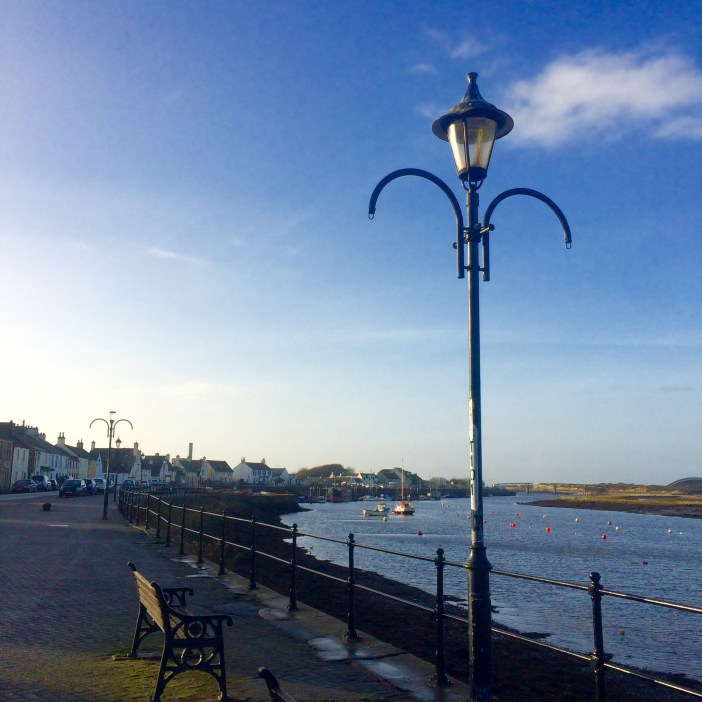
I also had the pleasure of attending the BBC6 Music Festival By Day at Tramway on Sunday, which was really lovely. Father John Misty was resplendent in his usual theatrical, sarcastic glory; Baloji were really fun & great performers; the folk bands were lovely (especially King Kreosote and his endearingly well-handled technical mishaps) and I rather enjoyed a wee chat about the Glasgow label scene between Gideon Coe and Stephen McRobbie of the Pastels.

In March, we were blessed with three full days of actual perfect sunshine. There’s something so striking about a sunny day in Glasgow. You forget for 10 hours that most of your life is lived under greyness and misting rain. I always think of that Frightened Rabbit lyric from ‘Fun Stuff’: “the city was born bright blue today“. It’s a simple line but it carries that sense of wonder, stepping out the door feeling warmth on your skin.

I sat in the park bare-sleeved, reading. The next time I was in work somebody genuinely said I looked tanned. That’s a result, I must say.

(no mention of deadlines please…) => I wrote an essay about memory, technology & the body in Beckett, Ali Smith & Don DeLillo while listening exclusively to Burial and it was sort of a transcendent, spooky experience.

Playlist

Mersault: Weather

Good Good Blood: I’m So Ugly

Fionn Regan: The Meetings of the Waters

Bonny Doon: I See You

The Cure: From The Edge Of The Deep Green Sea

Suede: The Drowners

The Pastels: Summer Rain

Bright Eyes: Take It Easy (Love Nothing)

Johnny Flynn: Hard Road

Hannah Lou Clark: Matilda

Thurston Moore: Smoke of Dreams

Perfume Genius: Slip Away

Sacred Paws: Everyday

Little Comets: Same Lover

The Lapelles: Toronto

The Vegan Leather: Shake It

Wuh Oh: Hairstyle

Burial: Ghost Hardware

Espers: Rosemary Lane

Laura Marling: Nothing, Not Nearly

The Weather Turns

IMG_3001.JPG

a daily free write ]

The weather turns, ineluctable as that mist that mysteriously fogs up my glasses (Footnote: Why do I wear glasses? Something a man once said about parallax and the need for clarity of distance, the reassurance of one’s own substance). The city is a haze of something else today, foreign as a postcard marred with scratches of time and travel. Must I always be up to my neck in vapour, in unfinished melodies? They always catch: grooves on a record, gum on the pavement, hair snagged in a glue binding, specific as a bookmark; melody after melody. The notation would be very messy. I’m picturing spaghetti-tangles of quavers, misplaced on the staves with no home of their own. What of this note? oOoOooooooooOOOooOooaaAAAaaaaaAaoo……. Does it belong in the sonic realm of an F#? The problem is, I picture my life in A minor, every time. The soaring long echo of a siren call; so sad, so sad. Picture this, pretty fake glass vase, all containers of vapour, elaborated with black-printed Celtic patterns, impenetrable as ersatz ~internet~ Japanese.

One attempt at pottery is quite the attained luxury. I think I will try out something new. The raising of a blue hand in order to trace the pulse of purple veins. Not too bad for a hologram. This is sweet and clear and maybe okay. Like walking past the graveyard of pines. Must I call it that? Too long it has been since I’ve trailed through a cemetery. A habit picked up from my grandmother, I glance at the old headstones, my brain knotting in each line and crack and crumble. I forget dates; they fall away. When you realise that you are walking a few feet above the bodies of dead people, your heart does a turn and slips to your stomach. The ground is so soft and mossy. Flesh is a good fertiliser, it spreads lush bright vitamins to the soil. In fact, it might be quite nice to lie down in and dream.

If I slept in a graveyard, would I have reveries that channel the dead? It’s a distinct possibility, the amount of fragmentary matter that must float in the air like electricity. The hormone we release when we die: dimethyltryptamine, DMT. They say it makes us see fairies, elves and tunnels of light. Lost soulmates dwindling in the twining of shining limbs. Silver rings in a stranger’s nose. Near death, the liminal weirdness of the world crosses its own boundary. No wonder I have always loved the word psychotropic, its connotations of a spliced brain opening out like a Polly Pocket to uncover an island of swaying purple palms, a guava pink sea, an assortment of oozing neon beads. This great, gritty, sparkling geode. Would a brain like that bleed? Do brains in general even bleed? The lavish quality of this vision is undoubtedly a product of sugar cravings. The dangerous dip, the faint-headedness. Our bodies being an assortment of chemicals, it’s only natural that the synapses of our minds produce very queer imaginings indeed.

Pineal gland: essence of palm. The oil extract no longer lucrative in worldwide trade, though popular, cheap and downright nasty. Spread it on bread like honey and sweeten. It makes things swell, tighten.

Things to desire: serotonin, colour, daylight. There was a time where I substituted existence for an array of colours, the kind that come straight out the packet. The need for something pure and vivid, so vivid as to seem utterly distilled of all trace matter, was completely upon me. Splat after splat after splat. I could have squirted that colour on my tongue and hoped for the same result of a manic acid trip. I wanted to see the gravestones melt, the names shimmer and vaguely disappear, leaving scraps and lingerings of unfinished letters. Is it possible, really, that some expert kneeled in the moss and carved those names so beautifully?

Crack open the sky over the sea and tell me what you see. The bold aroma of a rainbow comes quickly and glows like some other sun is ripening behind it. A pale blue sun, perhaps, stolen from Mercury. Planets out there, swapping their radiations of time. Down below, the ocean groans under globules of oil, fat black spills which ooze and spread. Each secretion has its location hidden; sometimes gushing, sometimes slowly swirling. I think of butter melting into chocolate, ink being marbled in gelatinous jam. The favourite taste, all bonfires of strawberry. Some god is spinning the water with a cocktail stick, languid and bored like a hungry person in a bar, waiting for love. We hallucinate, don’t you see? There is a complete quality to what comes next, the fiery upturning of all this trace matter. Waste. Be flamboyant as an artwork. You pinch the thin skin of each of my fingers and the lightning shoots right through me.

Things to desire: rock pools of igneous glass, starfish, the dying white rose at the side of a grave.

I hear the knell from far away. Such tocsins call me back from the realm of the dead, though I am happy here, my body breaking down into succulent little pieces. The woman opposite me mutters litanies to herself; stickily, as if each word were cheaply enthroned in lipstick. Is there work still to be done? These days, I mix the colours. I like to see the vibrancy break down, meld into subtler hues, details you see only up close. The paint sticks in my brushes, the glitter of light in my lashes. It’s not mystifying anymore. The greyish haze is my outpourings of smoke, enough to cover the whole skyline, swallowing up what good is left of tomorrow. I inhale matter in wholes and halves. Like yesterday, it will be black (the city, that is): gilded, ink-ridden, brilliantly viscous. A whole ocean will roll from the distance and its golden ore will cover us, just so many bubbles of oil pasting our brains. For now, it rains.

***

Moira Buchanan Exhibition: All Washed Up

img_0118

Last Thursday I had the pleasure of a day trip to Irvine to check about Moira Buchanan’s exhibition ‘All Washed Up’ down at the Harbour Arts Centre. Now I must say, although I was brought up in South Ayrshire I haven’t actually been down to Irvine since I was a kid – the days when we used to go swimming at the Magnum, or on school trips to the Big Idea (which is now sadly closed).

It was a bright and breezy wintery day and as soon as I stepped off the train that lovely clean briny smell filled my lungs and it was a bit like coming home. Irvine’s a fair pleasant town, once a port. You can walk along the harbour where ships still rest and along the front there are little gift shops and cafes with tinsel in the windows and the smell of coffee wafting out onto the street. I unzipped my jacket to feel the sun on my skin. It was midday and hardly anyone was around, but when I got to the Harbour Arts Centre there was a nice wee bustle about the place.

img_0119

img_0120
Took a photo of the hair left behind by a ginger mermaid.

The focus for Moira Buchanan’s exhibition is, as the title suggests, things which are washed up onshore. There is a pleasing openness to the exhibition. It’s light and airy, the pieces nicely balance a white sparseness with the intricate details of natural forms splayed upon the (handmade) page. Actually, it’s quite difficult to differentiate the natural from the unnatural here. Buchanan uses materials found along the beach to make her art, from plastic to twine and string, to seaweed and driftwood. Instead of simply presenting such materials as found objects, Buchanan’s reworking of their unique structures emphasises the beautiful details and aesthetic value of that which we might consider waste – environmental, human or otherwise. She uses an understated, organic palette and a combination of wispy, delicate lines and bold ink blurs to suggest perhaps the swirls of the tide and the sense of being washed out. 

The exhibition has a pleasing, nostalgic feel to it; a favouring of simplicity and the fragile loveliness of form, the childlike excitement in finding beauty amongst tiny, insignificant things. Dotted around the exhibition are little poetry chapbooks made from handmade parchment. Each poem feels like a miniature gift, a token gleaned from the coast and the sea and someone else’s memory. I think in today’s world, where global warming feels like something vast, incomprehensible, beyond our understanding, it’s so important to focus on the little things. The material details that remind us that we are part of this environment, that the ocean gives back what we put into it. There’s a feeling of salvage to the pieces, whose composition seems to perfectly balance the artful openness to chance at the same time as reflecting a careful attention to arrangement and applied form and texture. Everything seems precious.

The more monochromatic tones of the video exhibit suggest something starker, more emotionally arresting. The poems on display recount strange dreams, the changing weather and shape of the coastline, the turbulence of time and human perception. Between the poems are black-and-white closeups of items washed up on the shore. There’s a sense of borders overlapping, of the lush fronds of the clear water coming up to drag back the wisps of shadows and words and memories. I think of black ink pouring on a page, printing through layers of paper like the epidermis of skin. Sinking, achieving a kind of sticky permanence. I think of oil spills coating the northwards ocean. Each poem afloat on the water, the black background of oil, achieving purity in white ink as if blanched that way by the sun and the waves, as seashells are bleached by the tide. Moonlight pouring on still waters at night.

Responding to an ad on Creative Scotland, I sent in a poem I wrote called ‘Fort of the Yew Tree’. It’s kind of channelling a few of the mythical elements of a novel I wrote which is set in South Ayrshire (titled, with some irony, West Coast Forever). ‘Fort of the Yew Tree’ is said to be the Celtic derivation of the name ‘Dunure’, which is a fishing village on Scotland’s south west coast.

I feel very privileged that one of my poems is on that video. This thing that I wrote, a strange and baroque wee baby, has floated out to sea and there it is, somehow washed up in Irvine, travelled through the channels of WiFi and email and typed back out onto some distant slideshow, time cycling in loops and repeating, each image and word again returning like a message in a bottle tossed out to the waves. I wonder who will find it.

Anyway, you can check out my poem along with many others in the video below, made by Moira Buchanan and existing as part of her exhibition. ‘Fort of the Yew Tree’ starts at 2:35 and it spans four slides.

You can find out more about Moira Buchanan’s work on her website.