American Psycho: Sex, Violence, Technology and Society

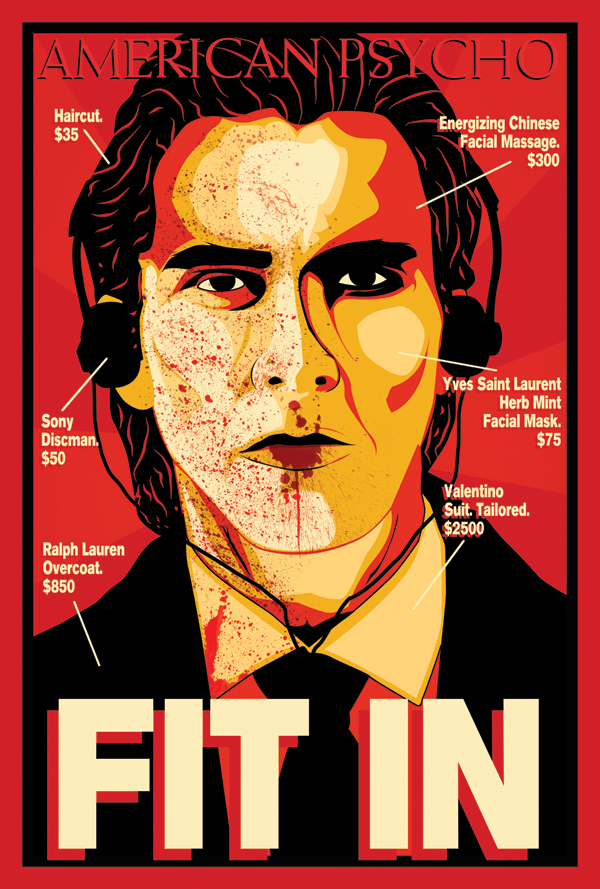
Image source: http://images6.fanpop.com/image/photos/33100000/Fit-In-american-psycho-33196259-600-889.png

I have just read a book that has all at once captivated, disgusted and intrigued me; a book that has left me strangely both emotionally drained and intellectually stimulated. Bret Easton Ellis’ American Psycho plunges the reader into a world of late 1980s ‘yuppie-ism’: the world of Wall Street, hyper-consumption, misogyny, racism, inane pop culture, television, sex…and violence. Written from the first person perspective of its protagonist (although somehow I find the term protagonist with its heroic connotations inadequate), Patrick Bateman, the novel has an unusual cyclical structure that plays out as a repetitive narrative of visits to classy restaurants, mundane descriptions of the latest consumer goods, chapters that read like music reviews and then the most controversial element: the horrifically graphic scenes of sexual violence and psychopathic slaughtering that got the book banned by its initially intended publishers.

Yet I don’t believe that Ellis includes these gruesome chapters just as a twisted indulgence, a pornography of violence. As I will discuss, they play a part in Ellis’ searing, often satirical portrayal of the Reagan era in America: a critique of neo-liberal values, consumerism and technology that is arguably more pertinent today than it was twenty years ago. The heartlessness, depravity and monotony of this culture and the novel itself is summed up in the opening line: ‘abandon all hope ye who enter here’, which is ‘scrawled in blood red lettering’ on the side of a building. This quote is an intertextual reference to Dante, who in his Divine Comedy suggested that this was the written passage that appeared in the entrance to Hell. When you pick up American Psycho and read the first lines, which immerse the reader immediately in the divided cityscape of 1980s New York – a world of graffiti, advertisements and pop culture – you cross over a threshold, you cross over into a tightly-confined mind that experiences its own corruption in a fictional universe that is all too like our own. What is interesting about the novel is on the one hand its hypothetical exploration of the thoughts of a psychopath, but also its trenchant critique of a society obsessed with surfaces, purchases and the perpetual presence of the flickering flow of television; a society plummeting towards absurdity and the eradication of all meaning – at all levels from the individual mind to the collective conscience.

Despite being the novel’s narrator, Bateman reveals little about himself other than his routines, his clothes and his opinionated taste in music. He indulges in lengthy passages detailing his workouts, his use of face masks, his appearance, eating habits, sexual interests; but the novel provides little in the way of solid character description. The narrative is therefore intensely claustrophobic, as we are restricted to Bateman’s narrow, white, narcissistic upper-class view. Moreover we know nothing of the Bateman behind the suit and Ray-Bans; we don’t know about his childhood, his relationship with his parents is only briefly suggested in a single flash of a chapter, and although it is the source of so much expendable income, we never find out what he actually does at work, other than order his secretary to make him dinner reservations. This latter point is especially interesting within the context of contemporary culture, where people are becoming ever-more critical of what these high-flying guys in banking and finance actually do; as bonuses and salaries remain sky-high in spite of the recession, there is increasing concern with regards tothe elaborate and obscure games that these ‘yuppies’ spend their time with – playing with money, justifying their existence. Ellis clearly does not seek to redeem the Wall Street yuppie, but instead caricatures his position and the career in general – which for me culminates most humorously in a chapter where Bateman and his coworkers engage in a highly-charged comparison of the stylishness of their respective business cards, that reads like a competition between prehistoric men flexing their muscles or showing off their hunting skills.

This leads into the question of masculinity and self in the novel. In a world where the most socially-esteemed jobs require what might be considered traditionally ‘emasculated’ behaviour – Bateman, it seems, is a proto-metrosexual – how do men assert their masculine identities, especially with the increasing challenge of the rising status of women? Bateman’s gendered self is ambiguous: on the one hand he is obsessed with his physical appearance – going for regular manicures, massages, constantly working out and asking if his hair looks good – and on the other asserting patriarchal dominance by literally killing, and in some cases torturing, those that either threaten his position (e.g. his colleague Paul Owen who has the superior business card) or those that he is different from and wishes to demonstrate are beneath him: women (especially models and prostitutes), beggars and homosexuals. This creates a bizarre, twisted sense of capitalism gone mad, of the ‘dog-eat-dog’ ideology of everyman for himself, of free market competition gone out of control. The individual, in his quest for success, seeks a greedy taste of the ‘Swordfish meatloaf with kiwi mustard’; that is, the excess and the addictiveness of the American Dream.

The novel thus remains engaged with material inequality, even though its focus is on one end of the scale – the high-flying lifestyle of yuppie clubs and restaurants. Throughout the book, Bateman and his friends taunt the plethora of beggars that haunt the streets of New York, holding out bills of money only to snatch them away in front of their starving eyes. At one point, Bateman even shoots a busker, just because he can; because he has the urge to kill and feels the man’s life is worthless. Yet there is an ironic discrepancy between Bateman’s behaviour and the outward image he projects of someone in tune with social problems. Early in the novel, Bateman delivers a speech that reads like the words of a politician: ‘we have to end apartheid for one. And slow down the nuclear arms race, stop terrorism and world hunger…strengthen laws to crack down on crime and illegal drugs’. All this from a man who personally terrorises the poor and vulnerable, regularly takes cocaine and is quite happy to waste money on often-uneaten restaurant food whilst trampling all over street beggars. Perhaps, therefore, Ellis meant to parody the hypocrisy of governments that proclaim their acknowledgement of socioeconomic problems but do nothing or little to actually tackle them. The irony of Bateman’s ‘identity’, then, is the way in which his words do not distinguish him but blur him further into convention, as he constructs his self by appropriating the words and values of others – particularly his hero Donald Trump (which says a lot about yuppie conscience). Indeed, this is humorously parodied in the fact that all food and tastes are judged not by individual experience but by reviews characters have read in glossy magazines.

So in spite of Bateman’s carefully constructed external self as a socially-conscious businessman, his identity remains a space of vacuum. Everything around him – his friends, his values, his lifestyle – is utterly superficial, and it turns out that he is too:

‘…there is an idea of a Patrick Bateman, some kind of abstraction, but there is no real me, only an entity, something illusory, and though I can hide my cold gaze and you can shake my hand and feel flesh gripping yours and maybe you can even sense our lifestyles are probably comparable: I simply am not there […] My self is fabricated, an aberration. I am a non-contingent human being. My personality is sketchy and unformed, my heartlessness goes deep and is persistent.’

When it was first published in 1991, American Psycho was accused, among many things, of being a poorly-written, immoral book, but I believe these early critiques were based on strong misreadings. The above passage, with its incisive insight into the thoughts of someone staring into the abyss of his own personality, its chillingly controlled and intoxicating prose, shatters any accusation that Bret Easton Ellis is a bad writer. It opens up the concern of many ‘Generation X’ writers: the paradox of identity in the late twentieth century. In a world where identities become more important, as each person seeks to distinguish themselves within the ocean of material things, selfhood in fact seems to dissolve, fragment, disintegrate under the weight of excessive choice and infinite expectations. Bateman reflects that ‘there is no real me’ in spite of the solid flesh, the personality moulded out of a particular consumer lifestyle, the ‘illusory’ mask of self presented in the fashionable clothes, the haircut, the voguish business card. American Psycho challenges many conventions of the novel, and one is character development: Bateman may become more reflective as the narrative ‘progresses’ but he does not undergo transformation or redemption. He remains all surface, with no core sense of morality and self beneath the veneer of his existential acts – he ‘simply [is] not there’.

This reminded me of Oscar Wilde’s The Picture of Dorian Gray, written a hundred years before American Psycho at the fin-de-siècle of the nineteenth-century. Like the ‘yuppies’ of Wall Street, Dorian and his friend Henry Wotton not only challenge traditional masculinity, as appearance-obsessed ‘dandies’ (the late Victorian metrosexual), but they are also excessively idle and spend their privileged lives like Bateman and his colleagues, indulging in sensual pleasures, conspicuous consumption and attending the finest venues of society. Narcissism and art are thematically central, just as narcissism and pop culture are to American Psycho. The fable-like plot of Dorian Gray turns on a Faustian bargain Dorian makes with the devil, whereby he barters his soul in exchange for eternal youth, so that his portrait grows old and twisted while he remains all surface, forever flawless and smooth. Dorian’s narcissism and pursuit of pleasure leads him into a spiral of moral corruption, visits to opium dens, murder and sexual depravities which, while completely removed from the Ellis’ gore, were nonetheless shocking at the time.

Each novel has lengthy passages cataloguing the material objects that consume the lives of its protagonist, emphasising the vacuity of their identities beneath the sheen of their flawless appearance. Yet Wilde, unlike Ellis, gives his novel closure: he provides some moral consequence to this hedonistic lifestyle, rather than as Ellis does allowing the reigning continuity of surface he gives some ethical depth. While American Psycho’s plot is an endless repetition of music reviews, restaurant, concert and club visits and violence, from which emerges no character development or moral conclusion, Dorian Gray traces the deterioration of a character whose initial purity is corrupted by a range of identifiable sources including art (notably, a ‘poisonous book’ thought to be J. K. Husyman’s A Rebours) and the influence of those around him. Dorian Gray ends with final punishment as Dorian tries to destroy the painting but in doing so reverses the mysterious spell, so that he acquires all the ugliness of his sins and the picture is restored to its original purity. Perhaps this structural difference can be attributed to the distinctive literary contexts of each book: while Wilde was writing in and to some extent subverting Victorian realism, Ellis is embedded within a more postmodern tradition that is sceptical about there being a moral centre to which texts can turn to, and is instead interested in showing how the boundaries of morality and self are not only fluid but at times seemingly invisible.

Indeed, what is particularly intriguing about Bateman’s monologue is the statement: ‘my self is fabricated, an aberration’ (my emphasis). Bateman spends his entire time striving to fabricate a self that fits in with the expected and respected norm embodied by the clone-like yuppies (indeed, because of their similar clothes and haircut they often mistake each others’ identities and this largely goes unquestioned in the narrative) and yet Bateman himself is an ‘aberration’ of this mundane normality. He’s an anomaly, defined by his psychopathic serial killer tendencies. Yet by linking the two – conformity and deviance – the text suggests that perhaps Bateman’s psychopathy is a product of society; it is not just a personal pathology but deeply embedded within the frustrating, depthless culture in which he finds himself skidding along with no hope of even drowning in. There is no way of drowning in a postmodern, or what Baudrillard calls a ‘hyper-real’ world where everything is interchangeable and signs refer to nothing but an endless stream of more signs – a choking bombardment of advertisements, appearances and vacuous conversation. Murder, rape and drugs provide some alternate reality, something real and solid and potent, that produce actual effects and allow Bateman to distinguish himself in some dark, significant way, even just as an ‘aberration’. It’s a chilling thought.

Although the novel never punishes its serial killer – Bateman is never caught, even though he drags a body-bag through the street, is helicopter-searched by police and leaves rotten body parts stewing in his apartment – the absence of a moral framework actually adds to the richness of the text. In his essay ‘From Work to Text’ Roland Barthes argues that the ‘writerly’ text offers up a plurality of readings rather than containing a single concrete meaning. It is in a sense an ‘event’, a surface (particularly relevant to American Psycho!) which engages the reader in a ‘practical collaboration’. This is achieved by the proliferate meanings offered up by the text: the intertextual references (abundant in Ellis’ novel, from Dante to Satre to Whitney Houston) and the elaborate web of signification spun in the writing, which encourages the reader to weave a fabric of meaning from the complexity of clues scattered throughout the prose. The pleasure of the text is our freedom to skip over passages, and to pay more attention to others. To endlessly reread and gain new insight, to create new meaning from. I find myself skim-reading the endless monologues about the latest technology, and often skipping entirely the really graphic parts; but this is not necessarily a bad thing, it merely prompts me to reflect on my role as reader in playing a role in constructing meaning in the text. It isn’t just there, but I actively make it depending on what I want to get from it.

Ellis also engages the reader in the ‘free play’ of meaning by leaving significant gaps in his text; the most notable of these gaps is the question of the unreliable narrator. Wayne C. Booth defines the narrator as ‘reliable when he speaks for or acts in accordance with the norms of the work (which is to say, the implied author’s norms, unreliable when he does not’. The subtle but at times overt irony that plays out in American Psycho, from Bateman’s extreme sexual and violent conquests and the ease in which he gets away with them to the literary language itself, is essential to raising questions about Bateman’s reliability. The tone he uses to describe the monotony of having to make reservations and his matter-of-fact description of his gym is the same tone used in his description of the scenes of grotesque and sadistic torture, necrophilia and cannibalism. Not only does this suggest that Bateman has been desensitized to pornography and violence but it also blends the normal and the abnormal together into a disturbingly hyperreal narrative of contemporary life. A life where rape and murder deserve no more expressive prose than a trip to ‘return some video tapes’. The prosaic language used to describe these scenes evacuates all possibility of the erotic or suspense that characterises porn or horror and instead foregrounds the acts themselves as real, painful and distorted occurrences – which in turn leave us with a sickening sense of our own voyeurism, raising wider questions about society’s enjoyment of such explicit forms of cultural entertainment. This notion of voyeurism is also highlighted by the repeated occurrence of such scenes (often signified by the foreboding chapter heading ‘Girls’ which I came to dread), creating a circular narrative which emphasises the text’s sense of claustrophobia and entrapment and recreating the inescapability of the distastefully explicit within modern culture.

Moreover, in relation to unreliable narration, the absurdity of Bateman’s rampant and seemingly meaningless killing sprees raises the question of whether what Bateman does is actually occurring, or whether it is an extended fantasy he projects as a way of indulging in his feeling of vacuity and ‘heartlessness’ within a featureless life of mind-numbing consumption. Is he merely fabricating his own alter-existence that plays out just like the pornographic films he rents from the video-store? The text provides little evidence to confirm or deny Bateman’s reliability, and this is what is so seductive about American Psycho: the fact that we as readers are left to judge the veracity of Bateman’s narration, which in turn leaves us within a complex moral vacuum. Unlike other books about serial killers, American Psycho doesn’t contain a detailed narrative explaining the root causes of Bateman’s pathology – abuse in childhood, a defined psychiatric condition etc. Bateman pops valium, Halcion and various other ‘pop’ drugs but he is not on medication for paranoid schizophrenia, multiple personality disorder or the like; the blame for his condition is thus found within a complexity of societal factors rather than an easy psychological diagnosis. The exact cause is left for the reader to decide: we have to map out Bateman’s life – his pleasures, his friends, his behaviour – in order to make judgements about the myriad origins of his psychopathy.

Another area of contemporary society which Ellis explores critically in American Psycho is technology; specifically, television and the telephone. The telephone was invented to improve communication, but in the novel it is the site of communication breakdown. For example, when Bateman and his coworkers make a conference call to decide their evening plans, the conversation breaks down into meaningless and often disconnected statements. There is nothing efficient about this communication. Moreover, the telephone presents an uncanny means of correspondence, since it removes the face and replaces it with the voice. This makes the person at the end of the line both familiar and unfamiliar, which raises interesting questions in terms of the fluidity and fragmentation of self depicted in American Psycho. At what could be argued is the novel’s most intense point, whereby Bateman has been on a killing spree, is chased by police and is now hiding in his office, he makes a call to his lawyer and leaves a message detailing all the murders he is committed. Yet when he meets his lawyer the next day, the lawyer not only refuses to believe the answer-phone message but he actually thinks Bateman is someone else – he thinks that the message was a joke played by someone else at Bateman’s expense. Telephone technology has not increased the potential for meaningful and intimate human interaction but merely created further distance, and in doing so distorted what is real and disconnected the ‘I’ that is speaking.

In terms of television, the book is rich with critical analysis. The debate about TV images and their influence on human behaviour goes all the way back to Plato. In The Republic, Plato puts forward the analogy of a cave in which prisoners have been chained since childhood so that all they can do is stare at the shadows on the wall which create shapes and sound; this is the only reality they know of, yet it is a reality constituted merely by the shadows of things, not the things themselves. If one prisoner escapes and sees REALITY itself, it will seem less real than the shadows. Like the prisoners of the cave, most people in contemporary society are in a sense ‘chained’ to the all-pervasive presence of television, which has become the source of much of our knowledge: the ‘shadow’ images of television are used to shape our morality, ideals, values etc – our whole perception of the world. Television, moreover, provides a perpetual ‘flow’ of time, squashing the past and present together in an ‘extended present’, which gives a rhythm and routine to our daily lives. Bateman’s life is partially constructed around his watching of the morning The Patty Winters Show, Late Night With David Letterman and endlessly re-watched video tapes such as the thriller Body Double in which a girl is murdered by a handheld drill.

When television images are extreme ones of hardcore pornography or violence, questions are raised about how far they can be blamed for real life violent behaviour. Perhaps Bateman can so easily murder without remorse because his acts of violence seem less real than the highly stylised images he consumes on a daily basis. This is a real life concern: the murder of James Bulger by two young boys in 1993 was blamed by some on the film Child’s Play 3, leading to calls for a ban on the film. Anthony Burgess’ novel also explores this link between video images and violence in A Clockwork Orange, where classical Pavlovian conditioning is used to re-calibrate the protagonists’ perception of violence: Alex is strapped to a chair, injected with a nausea-inducing drug and forced to watch violent films so that he learns to associate cruelty with sickness. Yet eventually, this ‘Ludovico technique’ is reversed and once again he is back to the same old daydreams of bloodlust; it is only through a process of experience and growing up that Alex comes to leave his days of brutality behind. Thus rather than allowing for a simple causal effect between images and action, Burgess overall complicates the relationship between television and violence.

A more recent play by Martin McDonagh, The Pillowman, is also a useful text for grappling with the link between art and violence. The play’s storyteller, Katurian, claims that ‘the only duty of a storyteller is to tell a story’, yet his stories become implicated in criminality as they have influenced others to commit crimes that copy the sinister plots of his fables (which involve swallowing apple-men containing razor blades and child crucifixion). It’s an infinitely dark and at times sorrowful play, but also it’s very funny: it raises a myriad of questions about authorial responsibility but rather than answering them The Pillowman blasts all moral closure with nihilistic conclusions, green pigs and its at times absurd, circular dialogue. It is a very clever, layered, metafictional commentary on the relationship between art, suffering and violence and I highly recommend it.

So to what extent is Bateman’s behaviour the product of the films he watches, or the TV shows which range in topics from ‘Toddler Murderers’ to ‘a man who set his daughter on fire while she was giving birth’? Again, the text offers no straightforward answers, and indeed it is possible that the orgiastic violence he indulges in isn’t real at all but merely fantasies extended from the flickering images he sees on television. This is an intriguing idea, especially going back to Plato’s notion that the man who leaves the cave will find reality less real than the shadows; the text leaves the question of what is ‘real’ in the novel, and even – what are the implications for the violence of American Psycho itself? It may be classified as fiction, but feminist group NOW attacked the novel upon publication as ‘a how-to novel on the torture and dismemberment of women’. Will some readers read Ellis’ text naively? Can it be blamed for furthering society’s desensitizing towards violence through its graphic scenes?

I think what redeems American Psycho in this respect is its self-conscious irony. Yes, it is horrifically graphic, but it does so for a purpose: to deconstruct and expose the way in which slasher movies, porn and the like have become part of popular culture, and to restore a shocking element to these forms of entertainment which have become so stylised and normalised. Additionally, like The Pillowman, Ellis’ book is also inherently funny. There are random standout lines such as the comment ‘”I bet Bono has a small dick,”’’ when Bateman and his friends go to a U2 concert, and also the narrative contains many running jokes, such as Bateman’s compulsive need to ‘return some video tapes’, and several repeated miscommunications such as when Bateman says he works in ‘murders and executions’ but this is interpreted as ‘mergers and acquisitions’, thus blending together ironically Bateman’s mundane day-job with his vicious night-job. There are also surprising parts of the book which seem human, such as when Bateman visits his mother in her care-home and all he can do is look at himself vainly in the mirror that he’s ‘insisted’ on having there and think about are the expensive things she’s wearing (bought by him). When Bateman asks his mother what she wants, her reply: ‘“I don’t know. I just want to have a nice Christmas”’ is tearfully poignant in that it summarises the inability of consumption to fill the gap in their relationship, to fulfill the mother’s spiritual need to enjoy Christmas, a traditionally family-orientated event. The maternal relationship is hinted as strained and distant as all mother and son can say to one another is ‘“you look unhappy”’ and talk ‘“uselessly”’ of a recent party. This breakdown in communication is actually full of pathos and presents a refreshing break in the text, but one that opens up another possible, yet unexplored, avenue of explanation for Bateman’s insanity.

In sum, the text offers no answers. Bateman’s violence we must explain ourselves by piecing together the various sources in the text – from television to consumerism to a societal crisis of masculinity. Ellis doesn’t pretend to moralise, and his book ends with the ambiguous reference to Sartre’s play No Exit, as Bateman stares at a red-lettered sign on the door of a bar saying ‘this is not an exit’. The text thus begins and ends with a textual allusion to hell, but hell itself is not contained within the novel – the end is not an exit from the tortuously mundane, unequal and cruel world Bateman exists in – it is firmly our own world, from which there is no exit. This is an unsettling and nihilistic vision, but one in which unfortunately resonates as violence, consumption, immoral bankers, social inequality, identity crises and televisual domination are all swarming features of life in the twenty-first century; perhaps even more so than back in the late 1980s where the novel is set. The musical backdrop may have changed, but largely, the culture has not. And this relevance factor is why I recommend American Psycho.


Bibliography

Barthes, R. ‘From Work to Text’.

Burgess, A. A Clockwork Orange.

Dante, A. Divine Comedy.

Ellis, B. E. American Psycho.

McDonagh, M. The Pillowman.

Plato, The Republic.

Satre, J. P. No Exit.

Wilde, O. The Picture of Dorian Gray.

http://www.nytimes.com/1990/12/06/books/now-chapter-seeks-boycott-of-psycho-novel.html

http://theater.nytimes.com/2005/05/06/theater/newsandfeatures/06note.html?position=&_r=0&adxnnl=1&pagewanted=print&adxnnlx=1370079884-9qmE05+JL/NXsusA29JsyA


Explorations in Nostalgia: Midnight in Paris

file000675462020

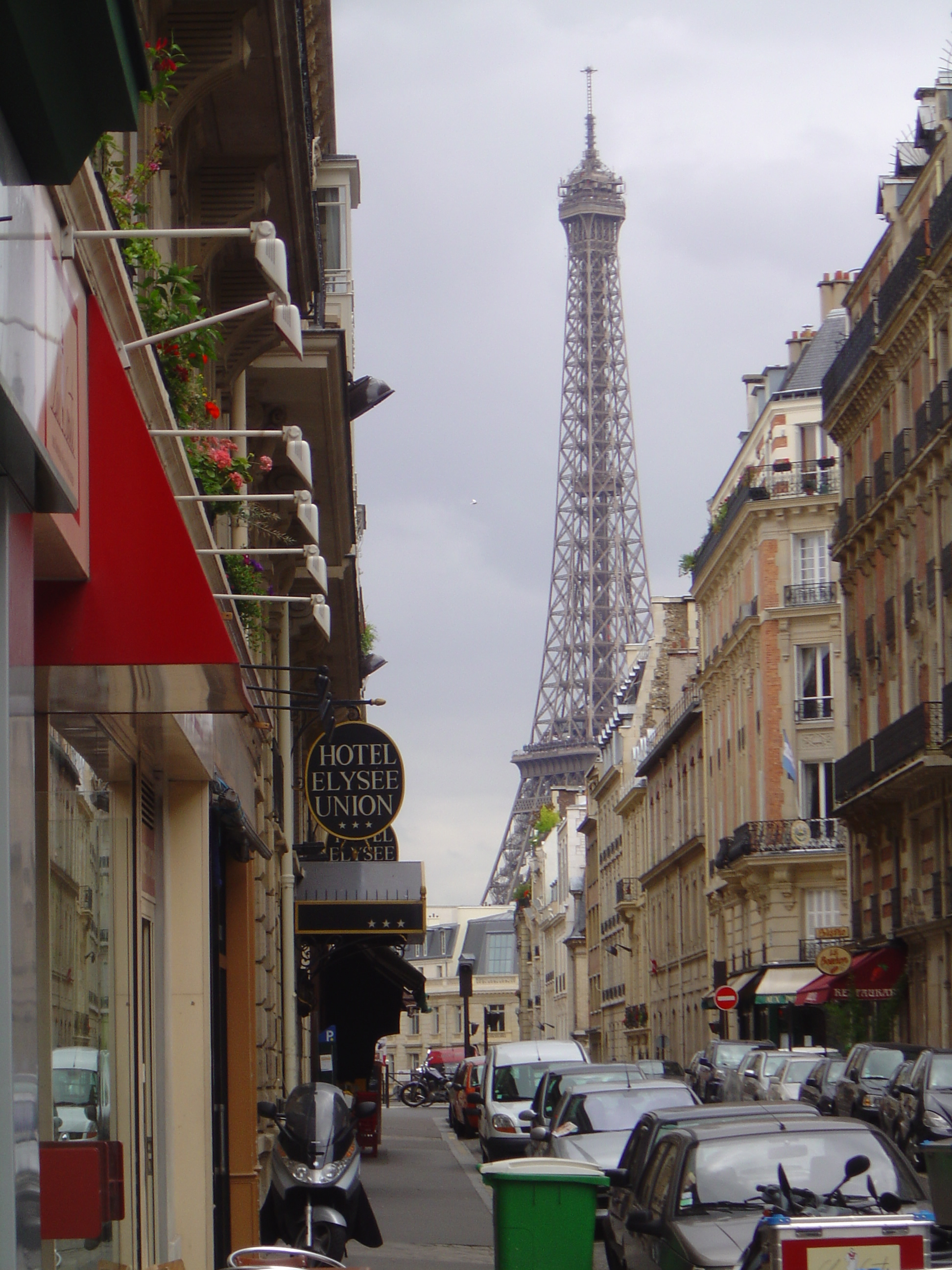
Why is there a certain nostalgic quality to rain? Rain can be beautiful to imagine: the quietly rushing sound it stirs as it starts to fall, the peaceful pattering it makes on roofs and windowpanes, the tingle of droplets on your skin, the way it clings in watery beads to your lashes, the sweet earthy scent it trails as it vanishes from the vapory air. Thinking of rain conjures images of afternoons hiding indoors with a good book, of splashing in puddles as a child, of running makeup, of the high romance of kissing outside in a storm, and the satisfaction of coming home, changing into dry clothes and getting warm.

Most people living in Glasgow would be less lyrical about the drizzle that bursts ever too frequently upon the city. Rain can be a pain. Rain can mean struggling with a broken umbrella, feeling cold droplets drip down your back; it can mean delayed tennis matches, ruined picnics and cancelled plans. Yet rain is also one vein through which we are transported smoothly to some heart of our past; often our recollection of events and people is framed by weather, and rain can add a cinematic backdrop to memory that reflects the misted quality of nostalgia. It has a certain sense of deja vu, of transient confusion. I remember being here before, and it was raining. Like this…or was it somewhere else?

Yet rain is perhaps, like memory, never as lovely as we imagine or remember it to be. It is part of our wistful fantasies.

Woody Allen’s film Midnight in Paris opens with a beautiful montage of Paris in the rain, accompanied by accordion music. The shots slip effortlessly between postcard highlights of the city and panoramas of people in the street with umbrellas. It sets the scene for the film’s at times poignant but mostly witty and lighthearted exploration of nostalgia.

I first went to see Midnight in Paris at the kooky little Grosvenor Cinema on Ashton Lane in Glasgow’s West End. An appropriate venue, seeing as it is modeled on an old-fashioned picture-house, with red carpeting, plush seats, vintage interior design, glamour and the availability of wine.

Midnight in Paris is a pastiche of genres, styles, characters and references. Not only does it include an array of (slightly caricatured) figures from the 1920s creative scene in Paris, but it also welds together flashes of political satire with Hollywood rom-com and magical realism.

The film’s protagonist Gil is a Hollywood script-writer discontented with his sell-out job and longing to produce something creative in his writing. Perhaps there is a certain irony here: a search for authenticity staged within a film that is playfully anything but ‘original’. A trip to Paris with his fiancé and her parents, Gil hopes, will provide the spark of enchantment. The first conversation of the film sets up the juxtaposition between the romantic Gil and his pragmatic wife, who appropriately later has an affair with the ‘pedantic’ ‘pseudo-intellectual’ Paul:

 Gil: Can you picture how drop dead gorgeous this city is in the rain? Imagine this town in the ’20s. Paris in the ’20s, in the rain. The artists and writers!

Inez: Why does every city have to be in the rain? What’s wonderful about getting wet?

Already we get the sense that Gil wanders a little too much into his imagination, particularly his imagination of the past – of Paris in the 1920s. Gil’s first actual delve into the past occurs one evening when after the stroke of midnight a strange black cab stops to pick him up, full of revelers drinking wine and champagne. Through this mysterious portal, he is transported back in time to Paris in the 1920s. The film handles the visuals sparklingly well, with stunning 20s costumes, cocktails and the lovely decor of the bars and clubs. It’s all quite magical and dazzling, and we experience the wonder Gil must feel as he is teleported into his favourite fantasy. It certainly got me excited for Baz Luhrmann’s soon-to-be-released The Great Gatsby.

Except unlike us, the audience, Gil becomes a participant in his fantasy, not merely a spectator. Among his adventures, Gil encounters a plethora of characters from the 1920s literary and arts scene, including Hemingway, Dali, the Fitzgeralds, Picasso and Gertrude Stein. There is definitely an element of caricature here, which reflects the play of irony and pastiche characteristic of the post-modern: the film reminds us that these characters are just representations of real figures, who themselves were in a sense self-styled personas, who we knew predominantly through their art. From Dali’s raving about rhinoceroses, to Hemingway’s speeches about war and truth and sincerity, Allen plays with exaggeration to enrich the sense of fantasy and nostalgia. There is a scene where Zelda Fitzgerald is trying to commit suicide because she thinks her husband does not love her and Gil, trying to stop her jumping, tells her that he ‘knows’ that F. Scott Fitzgerald really does love her. Why? she asks. How can Gil possibly know? He’s read all the books and biographies about and by Scott, of course. I think the film here raises an interesting question about subjectivity and literature: what is the real version of events? What is the truth behind the writing? It seems that there isn’t one: instead there are all the fragmented perspectives of those involved, and those who write the books. Right now I’m reading Zelda’s novel Save Me the Waltz, which critics say is Zelda’s version of the semi-autobiographical events of Scott’s Tender is the Night, both depicting the breakdown of minds and marriages, but from the different perspectives of wife and husband. Gil’s attempts to claim that he can know better than the woman involved only underline the absurdity of any narrative which claims ultimate objectivity.

Gil’s encounters with the resurrected ghosts of the 1920s stage a playful juxtaposition of past and present. His quotative use of ‘like’ and his mundane discussions about his relationship to Inez contrast heavily with the stylish and hyper-surreal world he finds himself in. For example, his conversation with Adriana (Allen’s fictional amalgamated embodiment of Picasso’s lovers) about his engagement to Inez highlights the time and culture gap, but also the disparity between reality and fantasy. He realises that there is in fact very little he and Inez have in common, which perhaps suggests that his engagement itself was built on a fantasy. Gil admits that they have a ‘little bit of a disconnect with the big things’ but at least they agree on the little things:

Gil: I will say that we both like Indian food, not all Indian food, but the pita bread, we both like pita bread, I guess it’s called naan.

The likelihood of the super-stylish flapper Adriana knowing what pita bread is, let alone having eaten it, is pretty slim. In addition to this, Gil’s comic response to Hemingway’s question as to whether he’d ever been hunting – “only for bargains” – presents the playful irony of the film’s exploration of past and present, and the discrepancy between the dramatic, larger-than-life lives led by the characters of a by-gone age and the inane realities of the present.

Another funny encounter between past and present occurs when Gil gets into a cab driven by T.S. Eliot and exclaims:

Gil: Thomas Stearns Eliot? T.S. Eliot? T.S. Eliot? Prufrock is like my mantra.

The comedy here is that this reflects how many of us would behave – awkwardly unrestrained – if we were thrust into a world where we could meet our long-dead heroes. There is the hilarious sense that Gil is behaving as a teenage girl would if they encountered Justin Beiber. And yet he is not meeting the teeny-bopper Beiber, but one of the twentieth century’s finest poets (with all the linguistic prestige that entails). The film collapses the language of the present incongruously with the literary visage of the past.

Gil’s general obsession with the literature of the 20s is reflected in his view that Eliot’s poem ‘The Love Song of J. Alfred Prufrock’ is his ‘mantra’. This itself is an interesting mise-en-abyme of intertextuality, as Prufrock itself is a thoroughly intertextual poem, referring for example to Dante. It is also a difficult poem, an internal monologue that follows a complex and fragmented pattern of thoughts which seem to have no definite direction and nor indeed association. Yet its line, ‘Let us go then, you and I’ creates an evocation that resonates throughout Midnight in Paris. It is a speech act, an announcement: let us go. The film itself is built on such a contract of ‘let us go’, asking the audience to suspend their disbelief with regards to the unexplained time travel and enjoy the magic, follow the journey and watch as it restores reality only to thrust us back into fantasy.

Let us go’ seems to suggest an address to time itself – come with me, time, follow my fantasy – but also of linking arms or minds with someone and going someplace else. Time travel can be a solitary or a joint affair. Gil travels back in time to the fin de siecle with Picasso’s lover Adriana, because this Golden Age is Adriana’s fantasy. Here he realises that there is no Golden Age, the Golden Age myth is just a nostalgic longing to escape one’s present: ‘that’s what the present is. It’s a little unsatisfying because life is unsatisfying.’ We tend to travel when we are unsatisfied with where we are right now.

The spellbinding world that Gil occupies by night is by far the best part of the film, and Allen frustrates audiences by delaying these ventures with the mundanity of the film’s present narrative. Gil has to follow his spoilt-brat fiancé around shopping for furniture, have dinner with her ultra-conservative parents and trail around with Inez’s ‘pedantic’ lecturer friend Paul. There are slightly tedious scenes about lost earrings, relationship breakdowns and dinner-table conversations which leave us irritated with the twenty-first century rom-com drama, and desperate, like Gil, for the exciting narrative in the past. These temporal fluxes from past to present serve to delay and prolong the audience’s desire to go back into the past, and so highlight the unsatisfactory nature of the present in comparison with rose-tinted history.

Despite the occasional bore of the present, there are some gems slipped in by Allen amongst the rom-com rubble. These include the parodic representation of Inez’s conservative snobbery and naivety – ‘Inez: You always take the side of the help. That’s why Daddy says you’re a communist’. Also, Gil’s mocking of the Tea Party movement, calling them ‘crypto-fascist airhead zombies’. The film is not entirely an adventure into the past but also an aping of the absurdities of the present – from politics to romantic relationships.

And so back to memory. In the film there is the repeated question of ‘is nostalgia denial?’ Denial of the present, denial of reality, denial of the irretrievability of the past. Nostalgia can relate to more fantastic recollections of a past, a past that was only accessible in the first place through mediation such as literature, film and art – the very instruments of romanticism and fantasy. This is definitely the kind of nostalgia Gil suffers or experiences, but there is another kind of nostalgia that is more personal. This kind of nostalgia was famously articulated by Marcel Proust in his book In Search of Lost Time, in a scene where the narrator experiences an involuntary trigger of memory caused by a tea-soaked cake:

An exquisite pleasure had invaded my senses, something isolated, detached, with no suggestion of its origin. And at once the vicissitudes of life had become indifferent to me, its disasters innocuous, its brevity illusory—this new sensation having on me the effect which love has of filling me with a precious essence; or rather this essence was not in me it was me. I had ceased now to feel mediocre, contingent, mortal. Whence could it have come to me, this all-powerful joy? I sensed that it was connected with the taste of the tea and the cake, but that it infinitely transcended those savors, could not, indeed, be of the same nature.” (Marcel Proust, “The Cookie” from In Search of Lost Time).

This kind of nostalgia is one most of us can identify with: the slightly uncanny sparking of a past personal memory from some kind of sensory trigger. That is how perfume gains its emotional quality, through the way its scent weaves swirls of associations between our past loves, lives and histories, and stirs these up again for us from one whiff in the present. Each time I put on my Body Shop Japanese Cherry Blossom, I fondly and wistfully remember (and long for) my holiday in Rome. As Proust describes it, the unintended evocation of a past memory makes us feel as if we transcend time and morality, collapses our identity ‘this essence was not in me it was me’ and produces an ‘all-powerful joy’. Food is nostalgic because it combines different senses: taste, smell, touch, sight. From your granny’s best soup to those warm chewy cookies they used to make at school, our gustatory pleasures are a minefield of nostalgic resonances.

The point here is that nostalgia is not just an affliction, a slightly unhealthy yearning to escape the present and return to a past that has been forever forlorn in the timeline of history. Nostalgia can be pleasurable, even if the pleasure is a little bittersweet – that feeling of longing and sadness for the person you once were or once loved when you hear the opening bars of an old song. Gil’s nostalgia perhaps goes too far: his novel is set in a nostalgia shop, and he spends his real life dreaming of forgotten times. His fiance accuses him of having a ‘brain tumour’ when he begins talking about the past as if it were real. This is an interesting image, as it suggests something psychologically corrupting about the past: it seeps into the present inevitably and transforms the way we experience the here and now. It is a kind of everyday madness.

Yet Midnight in Paris leaves us with a vision of nostalgia that encapsulates its positive effects. Gil’s decision to break up with his ill-suited fiance, and the final scene where he walks into the rainy Parisian night culminates in a strange blurring of his reality and fantasy. He has finally made grown-up, significant choices, but he has also walked into the sweet allure of a romance that reverberates with his early fantasies of Paris in the rain. It is an elusive, probably unrealistic ending, but this is the magic of the movie. Woody Allen gives us the happy, fulfilled ending we’ve been hoping for – it’s not quite the kissing in the rain at the end of Breakfast at Tiffany’s but the rain still provides an amorous atmosphere – and this ending, quite nostalgically, recalls all the dreams Gil has at the beginning of the film, and all the familiar romance films of bygone times that end similarly. So this is nostalgia: the little dab of illusion to soften the edges of reality.

Further reading:

Nostalgia: Sweet Remembrance. Available at: http://www.psychologytoday.com/articles/200605/nostalgia-sweet-remembrance

Proust, M. 1913-1927. In Search of Lost Time. 

file0001794106155

Media, Memory and Identity

‘Technological advances’, Andrew Hoskins claims, ‘have provoked a re-evaluation of the relationship between media and consciousness’. This statement seems significant, and indeed it captures the whole uneasy feeling many of us have when we reflect on the impact technology has not only on our lives, but possibly also on our minds. My everyday routine, my memory and my relationships now seem to be inextricably related to and even structured by the digital technologies I use – and I’m not even a fully-fledged techno-addict.

In this article, I want to talk about the relationship between media, memory and identity. It’s something I’ve been looking at for my sociology revision and finding increasingly engaging as I make connections between the notes I’m reading and the reality of the shifts that seem to be occurring around me in our tech-suffused society.

Firstly, memory. How do we conceive of memory? Often the metaphor is a film-reel, storing a long roll of images that go all the way back to childhood, as if our whole past is wound up in a spool that can be unravelled at will in order to access a particular memory. However, this model has for a while now been discredited by psychologists. Memory is in no way a permanent storage: it is not fixed and unchanging. Instead, our memories are dynamic, imaginative, shifting: always constructed in the present, taking on a new shape according to the context of the here-and-now. My memory of what I did last weekend is contingent on the related thoughts I am having today. We find memories are triggered by association, but to what extent do they become distorted in the process – and what role do the media play in this?

An interesting and well-known phenomenon which accounts for the relationship between media and memory is ‘flashbulb memory’, a term coined by psychologists Brown and Kulik in 1977. Flashbulb memory refers to those highly vivid recollections which have a distinctly visual, often photographic quality. They can be personal or shared. For example, a personal flashbulb memory for me would be perhaps moments when I was told a loved one was dying – those strange unaccountable memories of sitting at the kitchen table, distinctly remembering the maths homework I was doing, are such flashbulb moments, retained for their strong emotive value. My memories of exams also take on a flashbulb quality, probably because exams are significant to my life as a (conscientious) student. Yet these memories aren’t always first-person: often I see myself objectively, writing away sweaty-palmed at a wobbly desk, which is an indication of the malleable nature of memory, as obviously I didn’t experience the event in camera-eye-view.

By comparison to individual memories, a shared flashbulb memory is one held and accorded significance to by a whole community. There are lots of examples of these: the assassinations of President Kennedy and Martin Luther King, the fall of the Berlin wall, and perhaps most obviously in recent times the terrorist attacks of 9/11.

Unlike personal memories, what all of these ‘shared memories’ have in common is their highly mediatised quality. The latest episode of Mad Men depicted public and private reactions to the assassination of Martin Luther King in 1968, and the show also examines the reactionary context to the J.F.K shooting in a previous series. What is notable about both representations is their emphasis in the role of TV in broadcasting the present as an event which accords meaningful significance to the whole community, bringing together a nation or collective. There are many shots of characters staring in fear and sadness at their tiny 1960s television screens, of characters weeping and switching the telly off, unable to bear the perpetual presence of the news. As watchers of the fictional series, we become spectators of spectators, a mise-en-abyme effect which conveys the emptiness of representation, the impossibility of the visual at reaching the event itself. Our present and the 1960s past coalesce in a fusing of fictional and historical time and representation. Again, this occurs all on television – it is all contained in the visual. The show thus highlights how vividly images construct our past in the present.

Indeed, many people if asked in an empirical study will say that they have a distinctly visual recollection of such events. One study found that those interviewed retained the original memory of the J.F.K. shooting by referring back to the video of him actually being shot, yet it turned out that this wasn’t broadcast until five years after the event. This indicates that our memories are reconstructed by the media. In my sociology tutorial, someone said that their flashbulb memory of 9/11 was being at after-school club and watching it on TV. Later, he reflected, he realised that there weren’t any televisions at the club, and so his visual recollection of the towers coming down must have come from subsequent viewings. The impact of television news, especially 24-hour news reels, Hoskins (2004) argues, is a ‘collapse of memory’, where the past becomes a perpetual present. Television is ‘always on’, and takes on an ‘ambient quality’. We have the news on in the background while we do the ironing, while we study. It’s on at the gym. Perhaps it’s on where you work, and even at the pub. This creates a sense of the all-pervasiveness of the present-as-past, especially as recent events are immediately constructed through the past by television news.

This works through what Jenny Kitzinger calls ‘media templates’. These are frameworks adopted by journalists to represent a current event, using tropes, headlines, images and other signs drawn from past events. The consequence of this is to make a semantic connection between the two events and draw them under the umbrella of an overall message. This can occur even when there are stark dissimilarities between the events in question. For example, Hoskins and O’Loughlin in their book War and Media draw attention to the media representation of the London 7/7 bombings in 2005, which used the ‘Blitz spirit’ template in an attempt to show collective unity against the ‘enemy’ terrorists. These included The Sun headlines: ‘Worst since Blitz’ and an interview with an actual Blitz survivor still living in London who said: ‘the Germans couldn’t destroy us. Neither will these terrorists’. The presentation of a familiar ‘us and them’ mentality, and the idea of banding together and getting on with daily life in spite of trauma was created by linking together a past and present event. Yet the everyday reality of London in the aftermath of the bombings was a far cry from the determined persistence of the city during the Blitz: at the same time as linking the two events, the media also detail how shops were closed and the streets were empty following the attack.

It seems, then, that the media play a key role in taking control of the public consciousness in times of crisis. Not only do they provide the instantaneous visual material which gives us a sense of the iconic elements of an event, relegating them to an on-going past, but the media also frames these events in familiar narratives by drawing upon previous events and stories. In doing so, the media provides a kind of (albeit artificial, as many of these events may be different in key ways) historical continuity. A continuity which seems to blur the past and present in a diffused mediation of the present through the past. This is a possibility accelerated by the advances in technology which allow the media to provide more immediate frameworks in their real-time broadcasting of events. What we think are our personal recollections may in fact just be a build-up of visual and aural data transmitted to the media.

So much for memory and television. What about the internet – that most elusive and colossal of interactive archives? It is the internet which is transforming our psychological relationship to technology. The internet provides a forum for contested representations of key events: people can challenge the dominant view of current news provided through TV by posting comments on online newspaper articles, and so-called ‘citizen journalism’ in independent blogs, news sites and a variety of other canny uses of social media.

Yet the internet’s involvement with current events is also coupled with its collapsing of present and past. Web-pages are not static: they can easily be edited, added to, or taken down when their owner runs out of bandwidth. Concerns grow everyday about the power of hackers to tap into the ‘official’ social media accounts of organisations like the BBC and broadcast strange messages. Messages which can then be deleted, but will live on in other people’s computer archives and internet history, the screen shots they snapped and saved for future amusement or reflection.

While this bears profound consequences for how we conceive of wider social knowledge, it also impacts on our self. The internet as readily-accessible archive has changed our memory. In a pre-internet age, our sense of self also depended somewhat on our ability to forget. How could we move on from those awkward teenage years or that failed relationship, if we couldn’t put the Goth makeup, yellow skinny jeans, photographs and letters away in a box to be forgotten? With the internet, our past and present are diffused, as our selves are scattered in so many fragments of fleeting words we leave online. Geoffrey Bowker calls this presence of self our ‘paraconscious’: ‘the massive sets of traces of my past that I have randomly accessible to me’. Random access, a term I recall from Higher Computing (oh the joys), is the ability to access something instantly, without having to rewind like a tape through everything to reach it. With a quick Google search, I may invoke and revisit the undead graveyards of my past, all those myriad blog comments, Piczo accounts, my Myspace account; hell, even my Neopets account. And what will I find? A lot of things I probably won’t even recall saying. Language and text – the embarrassingly overused ‘=]’ smiley, the all-pervasive ‘lol’ – that no longer characterise how I write. This ‘cognitive dissonance’ threatens to undermine the stability of our self-concept. It’s like reading an old diary entry and realising your thoughts have changed radically since then, or recognising the strange handwriting with an uncanny feeling that it is not your own. Yet while a diary is an object that can be stowed away, relegated to the past, with the internet, your old self remains, hauntingly, as a perpetual presence. Just as your ex-partner remains, dormant, as a Facebook presence, waiting for you to go back to and resurrect with immediacy the past.

Databases sort our identities out for us. They organise our lives according to tags and categories of names and places. They suggest networks or groups we should join which accord with our apparent interests. I upload a photo and tag its location with ‘Glasgow’ and I start getting invitations to ‘local’ networks or online websites for restaurants, clubs, shops. Databases direct us to new things we should buy with ‘targeted ads’. Our whole selves are assembled online in a way never before possible. And so we ourselves begin obsessively to record every element of our lives: photographing gigs, snapping our meals and uploading them with the delight of vintage filter to Instagram, confessing our rants and sins on Facebook statuses, documenting a running commentary of TV shows on Twitter.

What drives this compulsive archiving? For one, it is the sheer ease at which everything can be uploaded with today’s portable technology. Yet it also goes back to a psychological phenomenon, a paradoxical negotiation between the Freudian concepts of the death drive and the pleasure principle. In Archive Fever, Derrida claims that in archiving, one is driven to conserving the present from eradication (the pleasure principle), and the other is a drive to destruction and forgetfulness (the death drive). We simultaneously put things online because we want to preserve a thought, feeling or event, but also because we want to consign it to the past, as if it will eradicate our need to monumentalise something. Rather than constructing a narrative, the stuff uploaded on the net can also be scattered: images appreciated as beautiful or meaningful in themselves rather than linked to a particular event, images that seem to destroy their initial meaning even as they create a new possibility for interpretation. I see this in Tumblr, where images are endlessly reblogged and given new captions and interpretations by different users as they are presented within the paratextual surroundings of various user ‘themes’. An image of a young woman in a dress can take on different meanings when it is placed in a personal journal, fashion or pro-ana blog.

And so where does this strange archival technology leave us – in the hinterlands of the internet, what exactly is the past, and what the present? I would argue, as Hoskins does, that memory has in the wake of new media ‘collapsed’, in the sense that everything from the past can instantly be re-deployed in the present, transforming the past at the same time as shaping the present through the past. This applies not just to key historical events, but to the everyday cultural images and personal confessions, the vortex of text and pictures circulated around the web which can be copied and pasted, re-blogged, re-visited in the present. The internet has an immediate sense of presence, in its very nature as a fluid, hypertextual network, where old pages – the dregs of individual, organisational or cultural history – are available through random access hyperlinks and web searches.

Furthermore, since we are now ‘always on’, carrying the web in our pocket with smartphones, this state has accelerated to the point that we are continually constructing our past in a perpetual transmission of expression through social media. We have instant access to any information we need, so that our memory is always being transformed as we leap back and forth between the archive and the present, creating an on-going knowledge and construction of history as present. As Geoffrey Bowker so astutely puts it: ‘it is so easy to leave and to assemble traces that we are developing a kind of universal prosthetic memory’. And I wonder, is this a good thing, allowing us to foster a more fluid sense of time, space and self, or are we merely becoming data-fixated cyborgs?

Works Cited/Further Reading:

Bowker, G. (2007) ‘The Past and the Internet’ in Structures of Participation in Digital Culture, ed. by Joe Karaganis, New York: Social Science Research Council, pp. 20-38.

Derrida, J. (1998) Archive Fever: A Freudian Impression, Chicago: University of Chicago Press.

Andrew Hoskins has an extensive amount of writing on the subject of media and memory, but some of the articles/books I’ve referred to include: ‘‘The Digital Distribution of Memory: Memory on-the-fly’, ‘Television and the Collapse of Memory’ and his book with Ben O’Loughlin, War and Media (2010).

Kitzinger, J. (2000) ‘Media templates: patterns of association and the (re)construction of meaning over time’ in Media Culture Society, Vol. 22 (1), pp. 61-84

Law, B. M. (2011) ‘Seared in our memories’, Available at: http://www.apa.org/monitor/2011/09/memories.aspx

‘Be Right Back’… Charlie Brooker’s Black Mirror, Simulacra and the Uncanny

Source: blogs.independent.co.uk

Freud published his essay on the ‘uncanny’ in 1919, almost a hundred years before Brooker’s captivating TV series was created. The essay and its related concept’s influence on film, literature and psychoanalysis has been hugely important. But what exactly is ‘the uncanny’? It is a term inherently bound up with the ‘disturbance of the familiar’, with upsetting conventional definitions and perceptions of reality and truth, of feeling and thought. The creation of uncertainty, unease; the dissonant feeling of being simultaneously repelled and attracted to something. Freud defined the uncanny as a paradoxical sense of unfamiliarity growing out of the familiar; the term in German is ‘Das unheimliche’ – which literally translates to ‘the opposite of what is familiar’.

Black Mirror. Even the title is uncanny. How can a mirror be black, when the necessary function of a mirror is to reflect light, reflect a clear image? Black connotes darkness, murkiness, obscurity – hardly the silvery coating of a looking-glass, reflecting the airy features of a Victorian drawing room, or beaming back the blue sky and clouds from the gleaming ceiling of a city office block.

And yet: paradox. The mirror is subverted, turned away from reality into the black chasm we have created in our ultra-mediated lives. Brooker’s series presents a startlingly chilly vision of a near-future society, one where mirrors no longer reflect back on reality, but on representations of reality. The paradox of the real in Brooker’s dystopian vision is that feeling what is real depends more and more on images of the real, rather than experience itself. The most catastrophic events of the show – I’m thinking the bizarre terror of Episode 1, Series 1 where a Prime Minister is led into having intercourse with a farmyard animal, live on TV to the gawping nation – are caused by an overflow of media messages and images, which impact reality in a hyper-real way. In this world, where real events are simulated first in the media, and then permeate reality, reality itself has become its own obscurity; a mise-en-abyme or hall-of-mirrors effect where we are constantly recording, representing and replaying ourselves in the abyss of cyberspace and media technology. A disturbance of the familiar, certainly: a disturbance of the real.

Over thirty years ago, the French philosopher Jean Baudrillard made a similar point in his text Simulacra and Simulation. Baudrillard argued that reality was being dissolved into a simulacrum. In past ages, signs had a fixed referent to something real. Yet with the explosion of mass-produced goods, the commodity was born. This relates to Marx’s idea of the ‘commodity fetish’: as goods become mass-marketed, no longer are they bought for their ‘use-value’: when a material item, even something as mundane as a bottle of water, becomes a commodity, it ‘changes into a thing that transcends sensuousness’. Value becomes linked to the product itself, rather than the cost of its production. Sign-value replaces use-value. The value of a bottle of water is linked not to its use-function as a quencher of thirst but because of the shape of the bottle, the style of the branding, the allure of the image portrayed in advertising campaigns. In contemporary society, Baudrillard argues, this has escalated to the point whereby signs and reality have become blurred, replacing a relatively simple distinction between signs and signifieds (the advertisement and the real product, for example) with a ‘simulacrum’: ‘the truth that conceals that there is none’. In the entirety of our experience, meaning and reality have become usurped by a hyper-reality of symbols and signs, which point not to a real object, but to more signs – they conceal the relevance of reality to everyday experience. We are then truly living in an unreal world.

Brooker addresses this idea in the opening episode to Series 2, ‘Be Right Back’. It asks: what happens when the effect of reproduction is enacted upon humans? When the human body and individual personality itself is subjected to fetishism; when the self is fragmented into the myriad traces of text it has trailed in its online life? Jacques Derrida defined the trace as ‘the sign of the presence of an absence’: the uncanny occupation of a liminal position between the real and the imaginary, between the sign and the signified – a rift tearing up the easy system of metaphysics, of our knowledge of what exists, and how.

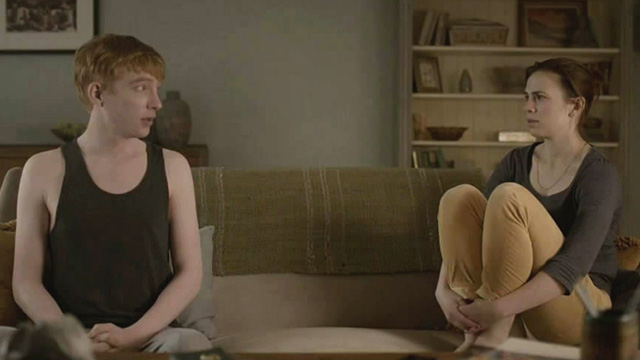
In Brooker’s fiction (fictional, or half-fictional? Genre itself eludes simple definition – the series lingers between dystopia, horror, realism…hyper-realism), it is possible for a woman to order a cyborg replica of her dead husband. At first, she interacts with an online version rather than a corporeal one. Through instant messenger and phone conversations, she literally contacts her dead husband. And yet it is not really her dead husband, or is it? An assemblage of all the data her social-media-obsessed husband left in traces online, his presence is itself a trace: an uncanny ghost voice constructed from dead voices.

This is the uncanny resonance of the title: ‘be right back’. It hauntingly resonates with the much-used phrase familiar to all users of instant messengers, the signal that one’s physical presence will briefly be absent, although they are not fully ‘gone’ – they haven’t logged offline. ‘Be right back’, you say, when you are going to make a cup of coffee, when you change your status; a signal that your face is no longer behind the screen. ‘Be right back’ is that queer sense of presence/absence that seems to rupture ordinary human interaction, where the interlocutors know each other as corporeal figures and not avatars. The avatar is always present, but it is the mark of an absence: the mark of the speaker’s physical absence. When we talk online, there is always a strangeness, a distance, a whiff of the hyper-real; as if we are playing a game, talking to someone who is quite but not quite the person they are.

Source: m.espn.go.com

When the protagonist takes the next step in ordering the robotic facsimile of her beloved deceased, the strangeness is taken to a whole new level. We have the signs of the commodity fetish: delivered in a box, complete with instruction manual and shiny robotic skin. The human body made perfect, made into product. This of course is not itself an innovation: countless sci-fi books and TV series and films have portrayed the human robot, the automaton. What is particularly intriguing is the reproduction of the dead husband’s personality from text. Not handwriting, not speech, but the representation of voice through text.

At times, the robot’s speech is stunted. He tries his best to say the things that ‘Ash’, the former husband, would say. Yet the robot cannot completely replicate the human. ‘Ash’, as the name suggests, is dust, a powdery scattering of human traces, shimmering in the protagonist’s memory, in the character’s online presence, elusive and ethereal. Perpetually present, but not fully there. The mechanical creation cannot assume the body of the deceased; it can only simulate the fragments of his words. The movement of his face, his eyes, or his synthetic limbs will never wholly replicate what once was there. Ash cannot be resurrected, Ash is ash.

The robot’s automatism is primarily recalled when there is a gap between the woman’s memory of her husband and the robot’s personality. The protagonist is painfully reminded of the fact that it is not a real, living thing – not the warm body she once loved, still loves – but a mechanical product. Watching the woman interact with her robotic husband, touching his flawless synthetic skin, listening to the replicated voice of the deceased – at one point even having sex with him – was a disturbing experience. I felt unsettled; certainly I was experiencing the uncanny. The most carnal of human experiences – actual physical contact – simulated by a robot, with another human, completely explodes all notions of the natural by opening up so many strange possibilities.

Yet, as the show reminds us, technology cannot fully replicate reality. It may attempt to deflect our attention from truth – from the truth of death – with its simulations, but there are always points of rupture, where the fabric of the virtual is torn. At one point, the protagonist experiences distress and asks the robot to leave the room when his words don’t match up to her memory: “Ash would have argued” she says.

This uncertainty about the human and the machine haunts throughout Brooker’s award-winning series. How much of our lives has become merely the voices we leave on answer-phones, in text-messages and Facebook statuses? As communication becomes increasingly mediated, do our personalities become more constructed, more performative? With the advantage of anonymity, or the avatar concealment of the face allowed by the internet, people have time to carefully construct their responses, to portray a certain self-image, to play with the unfamiliar. ‘Be Right Back’ highlights the inadequacy of technology to embody – literally – the highly complex, fractured and fluid nature of the human self. Living more and more online, Black Mirror suggests in general, we creep closer and closer to the edge that demarcates our fundamental perceptions – our notions of truth, reality, existence, humanity itself. Brooker says of his show:

Each episode has a different cast, a different setting, even a different reality. But they’re all about the way we live now – and the way we might be living in 10 minutes’ time if we’re clumsy.’

It is this notion of ‘difference’ that creates the uncanny effect. What is the difference between things? The series poses more questions, perhaps, than it answers. Another uncanny effect. Brooker provides multiple possible realities, and thus renders the future with an inherent sense of what Derrida would call ‘undecidability’. It is not like a conventional dystopia, presenting a single, glaring vision warning of the future; instead, it troubles our expectations, it presents numerous ideas of what the next decade, or tomorrow, may hold. The show holds up a mirror to our society, one that is black – foreboding, sinister – and, fundamentally, refracted into different possible outcomes. Yet it is also a void, in the sense that Black Mirror itself is a fiction, where we may lose our sense of the real – collapsing the ever-familiar world of technology portrayed onscreen with our present everyday lives. It is in this threshold between today and tomorrow, between reality and fiction, that Black Mirror lies. And it is in this threshold that we lose our subjectivity, in the overwhelming threat of our own behaviour and the ghostly online world that could collapse our sense of existence.

Works Cited/further reading:

Baudrillard, J. (2006) Simulacra and Simulation, translated by Sheila Faria Glaser, University of Michigan Press.

Bennett, A. and N. Royle (2004) ‘The Uncanny’ in An Introduction to Literature, Criticism and Theory (Harlow: Pearson Education), pp. 34-42.

Black Mirror – Be Right Back [Season 2, Episode 1] by Charlie Brooker.

Felluga, Dino. ‘Modules on Marx: On Fetishism.’ Introductory Guide to Critical Theory. Purdue University. Available at: http://www.purdue.edu/guidetotheory/marxism/modules/marxfetishism.html. Accessed 30/4/13.

The Guardian. (2011). Charlie Brooker: the dark side of our gadget addiction. Available: http://www.guardian.co.uk/technology/2011/dec/01/charlie-brooker-dark-side-gadget-addiction-black-mirror. Last accessed 30/04/13.

Reynolds, J. (2010) ‘Jacques Derrida’. Available at: http://www.iep.utm.edu/derrida/#SH3d. Last accessed 30/04/13.