It’s a beautiful thing, seeing your friends evolve for the evening. I suppose the first encounter is when you’re a kid, maybe eleven or twelve, and you go round to a pal’s house and they pick up an instrument. You’re dimly aware that they could play, they were learning, but it’s a whole different ball game when they’re sitting before you just riffing off something. You goof about so much together, it’s hard to believe this kid could ever be sincere. It took a little persuasion to get them to play, but here they are. Licking notes. Bashing out Nirvana or playing some Belle & Sebastian melody on trumpet. The way they’ve mastered trills or glissandos or weird keys already. You can’t help but feel a little heartsore, despite your jealousy. The neglected clarinet gathers dust in your cupboard. There’s a rolled-up poster of the Manic Street Preachers, sheet music slipped behind the back of the piano. Maybe there’ll be a subsequent period of practice, where you’re inspired by your pal’s talent to pick it up again. You join the school orchestra, ask a teacher for sheet music. Your lips start to hurt, as if you’ve been kissing someone too long and everything’s a bit sweet, a bit numb. Pretty soon though, you grow bored again. Other interests tempt you: the alluring world of video games, exams, alcohol, writing novels about warring planets or a town reservoir threatened by economic interest (lifted from a Neighbours plot-line). You get better at imitating the crazy makeup, backcombing your hair, attempting to be visually competitive. You find yourself drunk on somebody else’s bedroom floor. The room fills up with crushed aluminium. The instrument suffers again, like a child ignored. You can hear it whimpering in the cupboard, stewing in its velvet case. You’re a terrible parent, and always knew it. You let the dog chew the hell out all your dolls.
At some point, you’re old enough to have friends that perform. People you’ve known awhile—whether for years or merely months. Colleagues or soulmates; often the chiasmic entwining of each. When hanging out, you sing similar songs, you laugh about cringe-worthy hiphop or try imitating Mamas and Papas harmonies. The drunker you are, the more mangled, though sometimes the voices come out like honey. You talk about normal things, like tv shows or idiot customers you’ve served at work. Sometimes you share life’s sorrows. Then on a Wednesday night you’ll see them up onstage and each time it hits you afresh, that transition. You start to notice everyday stylish quirks, the way they cross their legs to roll a cigarette. A certain way of mussing their hair. Flickers of accents, little jokes, a certain smile they reserve for occasions. Feeling special to be around them, throwing creative conversation in the air and waiting for sparks. When you both hit upon a song, a wee thing cute and powerful from childhood. Sometimes you mess about, you have a gossip, a dissonant singalong. Some are more forthcoming about process than others. Secretly you just want to hear them wax lyrical about time-signatures or resistance to genre or the difficult middle-eight or whatever.
Onstage there’s a certain remove. Often you forget you know these people, that maybe you made them a coffee or found yourself in the same photo. There’s a respect for what they do, regardless of personality. Onstage, you just want to watch the way their fingers make effortless work on the frets of guitars, over keys; the caress of their voice on the microphone. Not everyone’s voice is a caress, but you know a girl who makes the sort of timeless sugary garage that cements a generation out of time; nostalgically in love with mid-century decades but caught up in the pains of the contemporary. Each crunch of guitar, another notch on the year’s backbone. Badiou on the Century, roll over to beauty. She has a certain command. You take a slice of that universal heartbreak, pierce through its sweet coat of icing. It’s lovely to look around at an audience and realise that everyone’s sharing your pal’s talent. It’s a type of pride you rarely get to feel. It’s not like the unconditional love of a parent; there’s an aspect of that, but also it’s based on genuine respect for the practise. If they fucked up, you’d equally feel bad for them, share in that hurt. You’d sit deconstructing it later over a Guinness or something. Even if you were too drunk to notice, you feign understanding of the gravity. You can’t do that with your kid; you have to pretend. There’s always a lush moment when they play your favourite tune or whatever and what you’re caught up in is a web of memories coming into fruition in this string of seconds where each chord and riff and melody soars through the white hot space between everyone. You feel a certain touch would incur a shock. That’s cool though, you enjoy the suspension. You want to tell them afterwards how much you enjoyed it, but words never reach their expression. It’s easier to distribute those sweaty, clumsy hugs. A sequence of thank yous. Do tequila at the bar. What it’s like to be with them when strangers come up in congratulation. A generalised bliss, the clink of ice cubes, eyes shining in the club lights. It’s good to see them up there, dancing. The electric sorcery of applause. A drunken continuity of feeling that connects you, despite the audience, like some invisible umbilical cord that is probably of your own imagination. Of course when they are up there, they don’t notice you at all. I think that’s important. There’s a sense in which you have to make the connection your own, internalise the melodies and progression for your own secret narratives. These songs will go down in the years, the meaningful soundtrack to your twenties. It doesn’t matter how much you love them, or how casually playful and silly they are. How much of sadness, whimsical commentary or hard-hitting truth. Heavy or deliciously frothy, bright; it’s all a matter of gazing on starlight. It’s hard to admit. You love the outfit: the lipstick or smudged mascara, baggy jumper or gauzy dress, faux fur, tattered cardigan, tartan jeans, glitzy earrings. You love the tangled wires, the humming amps, the pure sense of paraphernalia.
(Maybe you’ll find a video of them performing on YouTube, something handmade from a fan’s shaky iPhone. There’s a piece of them that you’ll never have, but that’s okay. Being creative is maybe the act of constantly splitting yourself into pieces, disseminating them in the hope that the world might nourish you back.)
One time, you dreamt you were a piano. It actually wasn’t farcical, or surreal as it sounds. How to feel that ache, all those shuddering, cranking pedals! You could smell your own wood-must, the crazy longing to be played. What stirs in the dust when the keys start to flicker. It’s music music music, this thing universal. You felt in the piano all these intelligent thoughts; it was like decoding the algorithms of an Aphex Twin track. Sensations in nerves never felt before. You make yourself vulnerable when sharing a friend’s music. Defragment the brain, look for meaning. Something inside just wants mutual approval. You need the rest of the world to know this whole process is beautiful. Not the stress of signing, booking and playback statistics, Spotify contracts, recording problems and the politics of gleaning a DJ set; no, the actual moment when they’re onstage just doing their thing, inhabiting a version of themselves that transcends, however slightly, the ordinary. That slippage is the charm. You love how they come offstage and the first thing they say is have you SEEN the drinks prices in here? or man I loved the support or god I need a fag or I like your dress. The simplicity. Is there anything in life as good as mutual respect? Later, you’ll stumble home, your head full of invasive tunes—each one recalling some dark room where another mind you love is at work, is shimmering in the ether of space where occasionally the stray debris of a melody will form something strong and good. It’s envy and admiration for that process that keeps you going. So you write about it, of course, because what else do you have? Sure, you know your minors from your majors, your sharps from your flats, but you lack the mathematical magic to do what they do. And that’s cool, because the chasm has its slender implication of cleverness—the ability to communicate in different styles, tongues, hieroglyphs. Remember that quote from Mean Girls about maths being beautiful, a universal language? The price of being humble is genuine friendship, and when you pay 99p for that Bandcamp release, you’re investing in somebody’s talent, the luminous halo that hangs over conversations you have in the future. I turned on the radio once, at 3am, and your song came on by chance. It felt like home, in the midst of that late-night shadow and angst. I hope you do well, I really do. I hope y’all know how much I admire you.
July you are bright and sort of silent and usually I hate you, what with your sticky swamp flowers and pollen, the obnoxious abundance and every walk resulting in fly-stuck lips or the sizzling chill of unseasonable downpours yes I can’t help but hold you responsible for that summertime sadness that settles inevitably on the shoulders or most vulnerable skin like an insect’s membrane drawing me back to the cool…something happened this year you were not so bad there was all this bright light the showering sun through an open window somebody’s glitching hip hop taste of rollups [lost cloud storage] there were what we called damn good albums for the sake of imitation teenagers slurping milkshakes in diners discussing the hatred of certain words but you could preserve even disdained vocabulary for the sake of an opulent dictionary, trading in class for segments of orange which maybe indeed were euphemisms but for that you had gum and the regular exchange. Absolutely capital. Tesco looking quite different at six in the morning everything shelved and radiant, beautiful as even the nettles seemed this evening as even the wild garlic recalled the first day of June and walking the park amid fresh cut grass its strange perfume the dandelion motes in swirls the perfect steam to rise hypothetically from baths we were trying to lull ourselves back from the dead and all this trauma coped with / you just lean into me I will be soft as a yes before you would make me this sofa we sank in the fabric the television flicker was novelty to me the first time off the train stepped clear through the city. Radiohead, inevitably, were best they were close to sublime I think listening and seeing those lights was like how it must feel to experience pareidolia at the stroke of midnight with the stars kissing your shoulders the white milk of how it felt the (im)possibility of a black milk its atrocious calcite traces the way the brain would rise up and the whole park would shake as a crowd were electric then they were raising their phones the Pyramid Song with its eerie and reluctant chords / come back with your drink / and how it felt listening to it again a few weeks later in the car at 7am watching countryside slip past like a melting world and even in the judder of the bending road you’re like an aeroplane over the sea wearing jeans and wheat fields and the stall of piano a slow trembling pedal the rich foliage of so many ditches imaginary swim the astrally projected human features arranging on new lunar mantles the water beneath they never knew they never knew as I drew myself always finding myself sucked deep into the Spotify buffer in spin cycles mycelial I could gasp but everything is buffering and even watching the window the sky is buffering all afternoon cloud / I fell asleep last night listening to rain and dreamt of a desert where we were dead it was beautiful being metal our rusted surface lain down the absent oasis the strange aloes that cowered around us then epochally turned like woman with luminous tresses leaning over our skins they made us ripe and shining again. July July July I can’t help quote Sufjan but I’ll refrain he wrote an album about planets I think it is quite lovely [we’re all gonna die] I have seen the acned jewellery of my desert dream and I have seen the lack of fear and even if you preserve the virtual moment smiling in a crowd on a hillside sweat glistened smoking you will bear it again and again you will be just that luxurious pull of pensive strings and Jonny Greenwood’s best hair flip and something in your chest never felt before / / no hangover, just l o v e (?) or everybody ten years ago with tested vision the glassy-eyed light lost in a cave & listening to crunk I can hear the bass all the way from the river . . .
N A R C O P A S T O R A L
(written between 1-4am, in the mood of Gilded Dirt)
‘No shepherd, no pastoral’ — Leo Marx
Let us begin at the dawn of the internet. A story of packet networking, government departments, protocol suites and business decisions made in the cloaked, air-conditioned hum of boardrooms. No, this is boring. Let us fall three stories through the hyperlinked portals of a Tumblr archive, our minds caught in the dopamine rush; nothing comparable. These colours, the bronzed flesh of beautiful strangers (who aren’t even models!)! A doubling of exclamation, a doubling of desire. I have crushed many harmless cartons of Ribena while thinking of your sweetly dripping smile. Talk to me O Web, nobody else will; I see only a shrouded reality, the silken flickers of a screen-bleached veil. Who leads the flock of the blind and hungry teenagers? What possible elaboration of data could draw them to utopias lost like that early neutrality of the net? Innocence perhaps is always (already?) fallen.
Why haven’t you replied to my text?
Derrida says everything is text. There is no outside-text. Look around you.
You know what I fucking mean.
All interaction is destined for a meme. History is full of them. Literature is interaction; the inevitable touching of finger and ink, perception and paper. Barthes says: ‘Language is a skin: I rub my language against the other. It is as if I had words instead of fingers, or fingers at the tip of my words. My language trembles with desire.’ I wish I’d written it on a postcard, instead of an internet bulletin. My god as if they even still called it that. Nothing one has to say earns the vital status of ‘bulletin’. It is all just discourse, levelled out, dank reality. Everything feels intimate and yet completely odd, alien, pointless. What was it Barthes found so sexy about language? A literal ache that feels like love, drawn to some other’s inward beam, the first brush against them, the leaf-like trembling. I’m writing crazy amounts and what brings me back to that electric surface is perhaps realising that everything underneath, every word I type, is basically at the core just binary. Night and day, will he notice me? Night and day, the rhythm passing through me, oozing.
🕊
Hell, I’m a millennial with minimum job security; whatever a quotidian rhythm is I’ve long since lost it with the bleed of light that steals through my blinds as I make my way into sleep. Too much coffee. The room an indigo blue of burst-through dawn. The birds are all around me, a whole garden full of them. One last time, checking twitter…
The little voices clutter the fields. Nobody is there to guide them; we are bound instead by characters, algorithms. You can’t write about pastoral unless the text in question deals with shepherds. Who are the shepherds of the internet? Perhaps we are, perhaps it is the panoptic site where we all gather, Pagan-like, earnest embrace of all illusory interfaces. Are we blind, clad in white, always in the service of our sheep? Endlessly tempting…We play lyres and sing earnestly of our unrequited love; we do it in the hallowed gardens of YouTube, where Blake would write of our purest impulses. We used to play quite happily among the shallow folds, so sweet in our greenness, uploading silly videos; we used to play before everything was just fucking advertising: ‘binding with briars, my joys & desires’. An ad for perfume, a woman’s throat in a chain-link choker. Advert for absinthe. Poison ivy crawls all over us and language just feels like a virus; I guess it’s because I’m well-acquainted with the dark work of coding. Underneath every word is the binary bleep, and I can’t help but think of sheep lost out in the cold. Life/death; the trajectories of rebirth. White and black; white on black, little white bodies in the black of the night. She will have a lamb and call it Microsoft.
What?
You know what I…mean. (?)
🌒
Our generation are all lost sheep. How many times have the fences broken in the fields of the internet? What we crave isn’t freedom exactly—O how passé the frontier motif!—but some sort of comfort, a shelter from the barbed experience of the IRL everyday. Unstable jobs, cackling media, unrealistic body image etc etc. I made a list but every time the words compressed into et al, like I no longer needed the details. I wanted to draw back into something simpler; the garden of Eden being this nostalgic collection of nineties net art and noughties graphics, the kind of vibrant geometries you might find plastered over somebody’s Geocities. I gave up thinking my shepherd was Julian Assange, or some other white-faced genius set to wreck the world with his erasable visions of freedom.
We are in need of soothing. Gosh, Laura Marling even wrote a song about it. My God is brooding. I have lost the God. He or she is in a sulk. I retreat into a rhombus, the equilateral remembrance of shadow. My identity was never clear but soon I let it divulge further the strange truths of illusory discourse; let it slip into the sinkholes of forums and chatrooms, all these virtual spaces whose presence filtered through my everyday life. The whole experience overwhelming, of course. The amounting of so many avatars, each one a horcrux scattered beyond the bounds of thought. Becoming monstrous, evolving from beyond consciousness.
We continue to smoke, in defiance of death. How we study with interest the gore that plasters each anonymous cigarette packet: the foetus made of fag ashes, the man curled in cancerous agony upon a hospital bed, the baby absorbing its secondhand pathogens. We campaign for action on climate change yet continue to smoke. We are in this oscillating space; a recognised irony, the metallic taste of hypocrisy stinging our tongues even as we try to move beyond it.
There is a willing naivety in our longing for certain environments. What lush oasis amid the din of our dull city living? What ancient standing stone circle, what temple or gorgeous cathedral? The Hollywood canyons, the plastic palms of a Lana Del Rey video?
There must be also a willing imbibing of the polluted dream. Recognition that this is the Anthropocene; that the world is ending already and we are playing out the last vestiges of our human, our species’ mortality. Living with a kind of negative capability, accepting the state of corrupted beauty. What about the atmospheric acids that streak the sky with alluring tints? How we immortalise, fetishise that pink and orange, even as it signals our climate’s destruction? The damage to the earth moves slow, sinks through the soil, evolves with distorted DNA coding. The trick is to slow down with it, to ease into so many starry, imitation futures.
✨
We must deliver empathy for other beings. We are both shepherd and sheep, guiding the world but also being guided by it; thrown awry at every turn by some new storm or war, some side effect of our reckless living. Consumerism secretly blasts the binary of subject/object, self/environment; quite literally, we become what we eat. I am an ice lolly, melting cherryade on the concrete heat of this too-warm city; my sticky residue is the sexless blood of the starved teenager, the catwalk model, the fearsome and damned. And yet sometimes I stand and smoke and think it means nothing. Saint Jimmy, O endearing memory of Green Day. The photographs on the packet do not remind me of death, but some abstraction of the body at its limits; an art exhibit poised to lift daily habit into the realm of the transmundane. I have waited at so many bus stops, cash points, queued in supermarkets for this.
Every time you snort cocaine I watch the blood burst in tiny wires, the inward capillaries. Somewhere someone is spraying pesticides on a field of coca plants in Mexico. How many times have I helped you with your goddamn nosebleeds?
For I have learned to look on nature, not as in the hour
of my foolish youth, face in the window without name
without name. What was it Wordsworth said
about humanity? That still sad music is the soundtrack
to each brittle burst in the star of my heart. God knows
even in forests and rivers I miss you. Not even wine
is what it once was. Every sunset the colour of salsa,
and each night my tongue burns on the memory of chilli
while you are out there, susurrations of grass
and all the smashed glass you shoved in your fists
was silver petals and the edges crushed with the sap
of my love and I wanted to stick them together again.
Instead, I think about the stomachs of young boys, knotted with wire–iron and barbed. There are too many hormones in the milk they drink. Nobody bothered to nourish the cows. They were too busy caught up in period cramps. Pointless cycles of (un)reproduction.
🍒
Narcotic. Narco. That which has a tranquillising effect. Lorde on her new album singing in that sugary octave leap: the rush at the beginning. None of us can sleep without pills, without sex, without ASMR videos. These soothing colours and shapes; the ambient drag of background music, distorting our sense of imploding foreground, dissipating those ugly memories of time and space. All is levelled, all is darkness. We crave oblivion. Sometimes stranger, sometimes easy. We flirt with the past, have this mild addiction to nostalgia. We’re just looking for things to transcend with.
There are times when what is to be said looks out of the past at you—looks out like someone at a window and you in the street as you walk along. Past hours, past acts, take on an uncanny isolation; between them and you who look back on them now there is no continuity.
So begins Alexander Trocchi’s Young Adam (1954). Trocchi was a heroin-addict. He knew the all-consuming tranquility of drugs, knew how writing could perform that strange inner split of self. When we write in the mode of the narco pastoral we are being chased by some older version, the 1.0 to our 2.0 dreams. When these memories hover, the girl that floats is never quite yourself. There is the sudden realisation of distinction. How far you have come, how low you plummeted. I am guided by the soporific waltz of a nineties video game. With its labyrinthine pathways I reach for the future–
😈
Here, there’s this new podcast. Follow me. What follows:
Recipe for vapourwave: add the reverb, the transparent semiotics of the checkerboard floor (I fall four stories just to join you in bed), the swaying gif of exotic indoor aloes, the unfinished loop. Resounding, distorting. Casino glitches. Skin-cleansing, refreshing. Try out your luck. Cooper could run for a hundred jackpots. Pick a colour and follow a moodboard of sounds and slowly flowering samples. Imagine the Black Lodge. Watch disembodied relics from the eighties melt on the vinyl floor, down the plexiglass walls, the long-drowning faces superimposed on posters of pop-punk club nights and every neon a symbol for rave’s revival. The first time I listened to Aphex Twin was a bourbon-soaked kiss and somebody had burst glowsticks and flicked the liquid all over my bedroom, so when the lights went out it looked like so many pink and green stars. O holy dibutyl phthlalate, flurophore with your brilliant emission. The clicks and bleeps lived on in the pale yellow stains and in the morning I was suffering.
Early soundtrack of our forebears: Eels – Novacaine for the Soul. Oh my darling / Will you be here? Presentness is in deferral. We wait for each other, always aroused as the constant shivering upsets our nervous system. We crave things that ease the switched on quality, things that split apart the binary, leave us to the oblivion of off, if only temporarily. At least half of us are insomniac, up late waiting for the object of desire to make itself present. When red goes green.
Always online and yet never replies. Everything is text. I read his stream of thought in the run of my bath tap, calculating the relative water wastage in comparison to a daily shower. I wash my hair less and less. Mysterious pains pulse and twist in my ovaries like radio signals struggling to push out to the ether. There will be no fertility here. No flesh or grease. You gave me a pear wrapped in brown paper; but it soured on the window, grew a layer of fairy fur and I offered it to the shrine in my father’s garden—which already I have forgotten. I miss you, it’s clear. Not the grass, not the fine rich taste of its loam. Once I wore daisies in my hair, a long ago dream of a girl from something written by Laurie Lee. The girls then, they were clean and apple-sweet.
🌿
Solastalgia: ‘the pain or sickness caused by the loss of, or inability to derive, solace connected to the present state of one’s home environment’ (Glenn Albrecht). I am home, I am centred. My mother’s chair, or whatever. Yet nothing makes sense. I feel this network already filled up with death; I know every moment to be painfully imminent, displaced, the always-already. Even the mice in the piano, the jackdaws cawing in the chimney. Why can I not experience the present? My own soul feels washed up from the future; sometimes I glimpse a world underwater. I glaze over the orbital space of Google Maps, zoom up my street, see a light sabre left in the front garden. Someone flew over before me. The tree is gone; there are brambles sprawled in the driveway, the squashed pampas grass. I know this to be home.
We will move through twelve states to get there again. Hence, 12th World. This was concocted at the age of seven, under the influence of various toxic E numbers and a book of amateur spells. If you press the white keys of my keyboard, your fingers will burn a bright acid green. This isn’t my beautiful house, my beautiful room, my beautiful toys. Man, how I’ve missed you. The last time I cried in the garden it was May and so sunny, under the lilac tree I wept for my childhood clutching a miniature bottle of whisky.
How can one have pastoral when even home—even one’s roots—feel displaced, already lost, slipping away beneath one’s feet? Pastoral was never present. Pastoral was always the idealised space, the green and gold of a romanticised past or a future vision. To reach it you had to call on the Muses.
💉
In the Anthropocene: corrupted pastoral. A druggy, chemical haze of the paradise garden. Everything spoiled, but the spoiling starting to manifest its long-term effect. Rocks made of plastic, all that washed-up sea glass replacing the ocean’s organic silt. Sand turned to glass and back to sand again, smoother wash of eternal form. For Terry Gifford, the pastoral is ‘an ancient cultural tool’; a form of ‘textual mediation’ which transmits something of our relationship to the world. Quite grandiosely he claims: ‘Today the very survival of our species depends upon, not just this debate itself, but our ability to find the right images to represent our way of living with, and within, what we variously characterise as “nature,” “earth,” “land,” “place,” “our global environment”’. Yes, it’s quite possible the pH levels of our souls are out of whack. But it isn’t as if we’ve lost the primal ability to connect with the nonhuman. Throw me out into the Lake District and I’ll melt quicker than my teenage self listening to her first Fionn Regan song; throw me in the Hollywood canyons and I’ll be that sparkle on a dust track highway to dreamland. Oh, is that Lana, tossing back her hair? I close my eyes (hello, Arthur Russell, I’m listening) and I see little dolphins leap through those huge silver hoops.
Somebody once said dub is spiritual music. Somewhere the Nirvana-drenched dreamlands of the fin de siecle found themselves washed up, an acid-tinged pastel they called seapunk. Parma Violets, the lilac flesh. A yin yang is sucked into a whirlpool; this an accurate portrayal of my heart’s trajectory when I think of you on a summer evening and the smell of garlic and violets and rollup cigarettes…Sun crisping the deep horizon. You can’t, I mean. There are chemicals in the water, poisoned sushi. Hormones. Her blue lips don’t signify illness, but something alien. There are pyramids on all the cassette tape covers, each one symbolising the ancient. Deep time, deep horizons, deep hot lust. Nobody has a deck on which to play them. This is all very beautiful, very visual; but we lack the machinery. The correct array of objects, severed from context on the transparent grid. The slow, elusive pulse of electronic beats. Tropocalypse, barnacle-studded skin. Lilac flesh, lilac rhinestones. Follow the arrows to the tender disco, smash out your tastebuds on packets of clean white chalk.
🌅
It’s Missingno, somewhere afloat on a stillborn ocean. I kept every one of those 99 Rare Candies. I thought maybe I’d see you one day, have the chance to catch you.
Hologram memory: swooooooon.
It was all fun until someone famous put our iconography in their music video. That’s the problem with narco pastoral; it’s pretty damn close to pop. There’s already enough sugar in the diet. Stuff you can’t just flush out with salt. It’s always on the radio.
Someone had a face cream made out of mussels. The inward silk cream, lightly scented with brine. It was nice, it kept everything smooth; it made the person smell very much like a wet sea rock. But none of this is much to do with shepherds. What is the dream? What keeps it pastoral?
Temptation of animals. Lana in her garden of Tropico, writhing around in repurposed imagery of Eden. Ginsberg richly lisping sin on her lips. I saw the best minds of my generation. Well pal I saw the best minds of my generation serving tables to rich octogenarians with straight faces and genuine kindness in their eyes. They drank and they tried to describe the ontological shift that characterised their seaborne being. The misty look. Here, have some Talisker whisky. As if something was always missing, the way they would look across the room, straight through every single one of those tables. Slight shaft of light, golden beam. Sundown. Everything always setting. Someone messing with their settings. I made every element turn black.
🐑
The sheep crossed my path and each one spotted the rubies that studded the rings of my eyes. Had I been crying, purging? For what were they searching, with their dead dark stares? Some expelling of matter on a vacuous Sunday morning. The summer wind bristled the broken pores of my skin. I was all that insignificant, even the farmer laughed at me. Pale-clothed, a red bracelet slipped from my wrist. I thought of myself as pure metonymy, this endless series of objects and how I hated the need to consume them. Every act of consuming was like eating an ending except there was never a divinity to the outside, the afterward. Just that sick lump in the stomach, the recalcitrance of matter unfortunate in its obstinate return. Why am I always reminded of what I have eaten? What is this rubbish that haunts me? The nastiness, the chewing and mulching? The burning?
Narco pastoral is friendly with trash. What is the wasted hour after the morphine hits? What smoulder…Forgotten hour destined to be unremembered, to lie suspended in the space between two moments. Consciousness as stream, severed or diverted. Lonesome tributaries. How this sunset will look purer because I’m certain to forget it. Sheep cannot cross water, not properly. There’s a tendency to sink. We linger in the shallows, swap vague cuds of data. Italo Calvino deems it ‘our dark cornucopia’, these leftovers we throw out, that vital gesture of abjection that allows me to divide one day from the next. But everything has already collapsed into one, become mulch. Will you lift me? I fear I have lost my name to a certain ceremony.
🌵
Narco pastoral: craving that soothing, that tranquillising return to what brightens the mood in the manner of childhood. If I roll over, mull around in the canyons of junk. They call this awe, they call this an uplift of personality. I think about the cactuses photographed for episodes of Breaking Bad and it makes me thirsty, all that aloe vera. The luxuriant dust of the desert, rising slowly at dawn when the wind lifts and something hangs in the air, about to happen. When I played SimCity2, my neighbourhoods got hit with brutal whirlpools. I guess that was Gaia. Gorgeous or vengeful, vixen of the frenzied, hurting Earth. I guess I’m always cheating and eventually the universe finds out. Decadence of the Edenic is irrevocably alien. You see I have spent so much time lying on my bedroom floor it has started to feel like a hay bale or a barn or a hillside or something. Needles hidden. I can almost smell the breeze, hear the unimpressed mews of sheep. I’m heartsick for farmer land, for a world I do not quite understand. You begged me to watch Glue because there was a murder and a slightly attractive character. I longed to plunge in a pool of grains and be sucked so slowly away. You are, you are…
When Lana trills I sing the body electric and somewhere in time Whitman is loafing under a willow tree. There’s Ben in Lerner’s 10:04, ‘already falling out of time’, reading an ‘American edition of Whitman, its paper so thin you could use it to roll cigarettes’. Trace textuality, turn to ashes. When Isobella Rossellini is beaten to an inch of her life and still looks beautiful and that’s the tragedy. All my moods hued in blue. When the rasping sounds come from beyond the door, when all my lust for you feels useless and primitive, remnants of text message severed by missed connections. I move down the hill, steadfast as any rare sheep. The dawn is my shepherd. It’s 4am, past that even, and still I’m up writing. I’m winding my way through the hours already. This is summer and the very melding of day and night is a process narcotic. I wouldn’t be all that sad if you pressed me from bed and made every patch of me bright as your favourite rubbish. It isn’t all that. It isn’t. You could have a future. I’ll melt for you; I’ll shed for you. There’s something you just follow. The shepherd’s trajectories. He drips glitter and sings Grimes songs and knows the value of decent female production. It’s that easy. Soft qualities.
💧
He cut his tongue on the teeth of a selkie and calls it seapunk; there’s a gap where the whistle would be. The blue aroma, the blue chord, the melancholy blue of my body. When someone smashes a car in Vice City a frown forms on the underbelly of the sun. This is an old polaroid, the light leak very alien indeed. This is my collage of all that has been and will be. Blue skies, green grass, white sheep. I suppose it’s a good enough time now as any to reveal that I’m rainbow. I look like something a kid would vomit at a sleepover; this disgusting array of E numbers. Upshot: no stranger to the internet. The starry pixellation which on second thought could perhaps be freckles. How I loved him more for that, the warm skin feels soft on the back of the neck (net). Narco pastoral is soft porn, Hegelian dialectics, a fistful of dreams, a bump of mandy. You just want that ecodelic happiness, pure joy in the spin of your dusty shoes. If you drop all the drugs, consider me clean in the light I will love you. I’ve never been certain of anything. I just follow.
:: : the toxic lush pastoral
:: : the physiognomic, urban transcendental
:: : the stop-dust of carbon
:: : the fluid quotidian
:: : the endless chain of what once was (N)ature
/ World of Awe, A Stopped Ontography. / 🗑
It is important, according to Timothy Morton (2007), to harness the powers of kitsch.
I am with you, I am plastic-wrapped
and still just breathing…
…
..
.
Analysis/Review: Roddy Hart’s 17th Annual Gordon Lecture and the Contemporary American Lyric
What a treat to listen to a lecture sprinkled with songs and stories, especially among the beautiful acoustics of Glasgow University’s chapel. After a rather spectacular introduction from Professor Simon Newman, singer-songwriter Roddy Hart gave the 17th Annual Gordon Lecture, organised by university’s Andrew Hook Centre for American Studies. Having collaborated with Kris Kristofferson, released an EP of Dylan covers and found success in the States with a stint on Craig Ferguson’s Late Late Show—not to mention running his own radio show for BBC Scotland and hosting Celtic Connections, the BBC Quay Sessions and the Roaming Roots Revue—Hart was well qualified to talk on this subject from a musician’s point of view.
Hart’s talk was a tribute to the great American lyric; to what makes it, in Hart’s words, particularly alluring, otherworldly and cool, especially to those who grew up outside of the United States. Admitting that he lacks an academic education in the history of American culture and music (actually, Hart has a law degree gleaned from within these very walls), Hart made up for this by sheer enthusiasm, celebrating the musical merits of songs from Woody Guthrie to Father John Misty and covering such topics as the journey motif, humour, darkness, nostalgia, politics and death. The talk took the form of a powerpoint, with Roddy speaking, singing snippets of songs and then commenting on their significance in a lucid, passionate way that kept everyone hooked for an hour and a half.
Bob Dylan / / Source: Rolling Stone
Hart began with the assertion that lyrics are not poetry, or indeed literature of any kind. Lyrics, he claimed, involve respect for structure, rhyme, metre and field (all definitions you could apply to poetry…), a certain knack for a hook, a streak of ingenuity and originality. Like poetry, a great lyric can reshape how we view the world we live in, send ripples through the fabric of reality and inspire us to take action, critically reflect or wallow in grief. The distinction Hart draws between poetry and the lyric prompted a desire to find out what exactly his thoughts are on Bob Dylan winning the Nobel Prize for Literature. My own thoughts on this issue have never rested on a single position, and I don’t really know enough about the prize’s history to comment on Dylan’s suitability. However, there have always been strong connections between lyricists and poets, from the likes of Langston Hughes writing jazz poems during the Harlem Renaissance to Kate Tempest releasing rap albums as well as a novel and poetry collections published by the likes of Picador and Bloomsbury, no less. Hell, what about Leonard Cohen? At the end of the day, all writing is a performance of sorts, regardless of how it’s delivered. I could talk about Roland Barthes here, mention ‘The Death of the Author’, how the reader ‘performs’ the text like a score of music etc etc, but I won’t digress. Basically: sometimes a poem seems built for performance; other times it rests more easily on the page, where the eye follows an intriguing visual form or dance of letters arranged on white space. While poetry can be a two-way street, I’m not sure how well Dylan’s verse works on the page. Admittedly, most of his songs tell interesting stories, but that deceptive simplicity often needs the nuance and expression of Dylan’s voice to draw out the subtler levels of irony, humour, derision or sorrow from straightforward-seeming lyrics. Just my two cents on the matter, though I still like to wallow in ambiguity when it comes to these distinctions.
Hart gives the proviso that his talk is meant to be a working definition of the American lyric, not a comprehensive history. He does, however, mention a few characteristic features. The prominent one, of course, is name-checking: all the best American lyrics will draw on the wealth of states, street names, famous bars and hotels. In doing so, they draw on a tradition, they write themselves into a history of locations, urban legends and folk tales. Hart illustrated this by starting with Paul Simon’s ‘America’, pointing out how the song documents a search for America itself; this idea that America will always be this endless signifier, sliding along the great highway of desire that stretches across desert, country and city, drawing across generations. On the way, the lovers in Simon’s song make the best of their adventure, cooking up stories from the characters on the Greyhound, honing in on material details. It’s this sense of taking the listener on a journey that’s one of the American lyric’s greatest seductions. As Simon sings, “it took me four days to hitchhike from Saginaw” the chords soar and there’s that sense of being lifted to somewhere radically elsewhere, an open field, road, desert. The sweet spot between freedom and sorrow, of missing something deep and mysterious, the impossible pursuit.
Hart traces such material details in songs by Kris Kristofferson and Dylan, this sense of a ‘quintessential American aesthetic’ which he quite eloquently describes as a ‘Moby Dick-esque hunt across America’. The whale, ironically, is America itself. The road narrative is central to the American lyric. It’s a romanticised, extravagant sprawl into the dust of the past and glitter of the future, marked by place names which glow with familiar warmth and legendary spirit. Hart argues that this is something specific to the American lyric; that a Scottish equivalent wouldn’t quite have that same epic effect. He even sings a made-up local spin on ‘America’ to prove it; a journey between Edinburgh and Dunoon falls pretty flat in comparison. Of course there’s something special about the land of the free, in all its bright mythology and promise, but it’s not as if Scottish bands haven’t tried it. There’s that famous line from The Proclaimers’ ‘500 Miles’ which immortalises an array of parochial towns ravished by Thatcher, deindustrialisation and eighties recession: “Bathgate no more. Linwood no more. Methil no more. Irvine no more”. Of course there isn’t the same expansive magic, but there is something epic about lyrically connecting the local to broader political discontent. Still, you can’t really compare the Proclaimers to Simon & Garfunkel…or can you?
Back to America. Hart describes Dylan as the nation’s great scene-setter, effortlessly drawing a sense of the times from the wisping drift of personal narrative, of stories about people and their lives. Details shuffled together like cards and strung along a line of verse. While some singers make their politics clear in the didactic manner of protest, Dylan sets these more intimate tales against the backdrop of cities and an impressionistically vivid sense of history. Hart plays possibly my favourite Dylan song, ‘Tangled Up in Blue’ from the 1975 album, Blood on the Tracks, spending time going over the lyrics to point out the singer’s knack for detail, the narrative journey which documents a succession of relationships, places and jobs. That famous philosophy: you’ve got to keep on keeping on. There’s something more raw here than the cosy, apple-pie fuelled comforts of Kerouac’s road narratives, which always depend on money from back home. You can hear it in the howl of Dylan’s voice, which becomes more a sultry croon in Hart’s version. What does he mean by blue? There’s the blues, there’s the blue of the sky and the ocean—symbols of infinitude. It’s a signifier that shifts as easily as Dylan’s character, from fisherman to cook, as he crosses over the West, learning to see things “from a different point / of view”. Surely this is one the basis for democracy, the meritocratic ideal of fairness upon which the USA was founded: empathy? The ability to openly shift your perspective, to never stay too long in your own shoes. That existential restlessness, set against the backdrop of a shaky political atmosphere, the dustbowl sense of losing one’s bearings in a maelstrom of uncertainty, characterises many of Dylan’s songs and indeed many road narratives throughout literature and American lyric.
You can’t talk about the American lyric without mentioning politics and Hart documents the history of the protest song, from Woody Guthrie’s ‘This Land is Your Land’ to Tracy Chapman’s ‘Talking About a Revolution’: songs that pose an equality of belonging, that document the quiet desperation and struggle that takes place beneath the surface of everyday life. Rather than tangling himself in the barbed reality of contemporary politics, Hart opts to situate his chosen songs in the context of more general themes: the failings of the American dream, social inequality and the oppression of working people, all set against the turning tides of the economic landscape. It’s notable that most of these singers are men, singing about working men, often with reference to some vulnerable lost girl who needs saved. But then you have the likes of Anaïs Mitchell, writing visceral songs of longing and misplaced identity. ‘Young Man in America’ opens with this mythological, sort of monstrous story of birth: “My mother gave a mighty shout / Opened her legs and let me out / Hungry as a prairie dog”. Images of industrial decline, capitalist opulence and landscapes both mythical and pastoral are woven by a voice whose identity is a mercurial slide between human, animal and disembodied call. Skin is shed, belonging is only a shifting possibility. It’s a complex song, with native percussion, brass; moments of towering climax and soft withdrawal. The music mirrors the strange undulations of the American journey from cradle to grave, its dark pitfalls and glittering peaks, the cyclical narratives of the lost and forgotten; the “bright money” and the “shadow on the mountaintop”, the fame of the “young man in America”, a universal identity disseminated across a range of experiences. For this is the myth of the American Everyman, and Mitchell deconstructs it beautifully.
Gillian Welch / / Source: Born to Listen
On the subject of female songwriters, I was very pleased that Gillian Welch and Lucinda Williams got a mention in Hart’s talk. The self-destructive sentiment of Welch’s ‘Wrecking Ball’ reminds us that the experience of being ground down by the relentless demands of a marketised society isn’t confined to men alone. Welch’s ‘Everything is Free’, not mentioned in the talk though highly relevant, makes this clear. It’s a song about artists will go on making their art even if they won’t get paid, and the tale of how capitalism discovered this and cashed in on its fact: “Someone hit the big score, they figured it out / That we’re gonna do it anyway, even if it doesn’t pay”. Like Dylan, Welch finds herself winding up on the road, working in bars, working hard and regretting being enslaved to, well, The Man. ‘Everything is Free’ is a message of both despondency and hope, crafting this sense of the beauty of song itself as protest and freedom even as the structure closes in: “Every day I wake up, hummin’ a song / But I don’t need to run around, I just stay at home”.
Hart mentions how the American lyric provides an escape to those who find themselves trapped in the smallness of their lives. You might live in a nondescript town slap-bang in the middle of Scotland, where the musical climate favours chart music blasted from bus-stop ringtones, but then aged fourteen you discover Dylan or Springsteen and suddenly America opens up its vast, sparkly vista, from East Coast to West. This seems to be Hart’s trajectory, as his career—from the first tour with Kristofferson to his continued promotion of transatlantic connections—closely follows an American strain of songwriting. My mum used to listen to Welch’s Time (The Revelator) album over and over again on long car journeys, so the lyrics to all those road songs are burned in my brain like tracks in vinyl, superimposed with endless visions of the M8 stretching out before me… It was only a couple of years ago that I found out Time (The Revelator) was released in 2001; I’d always assumed this stuff was ancient, the seventies at least. Maybe because Welch just has this knack for writing timeless songs; songs about heartbreak, loneliness and restless desire that reach back into the comforts of the past even as the journey itself is long and hollow, the destination vague as the blurred sign on the front of a train.
I guess this raises a broader question which Hart’s talk touched upon: the politics and poetics of nostalgia. There weren’t opportunities for questions afterwards, but if there were I might have asked Hart whether nostalgia is a necessary condition for American self-reinvention. It’s a pretty relevant question right now, with much of Trump’s whole appeal based on the nostalgic vision of a vaguely industrial golden age of capitalism—a vision which is obviously the smokescreen for whatever chaotic ideologies are at work beneath the surface. The American lyric can set up this romanticised vision, only to break it apart; reveal its seedy underbelly, its failings, the disastrous gap between identified goals and actual means of attainment. Yet throughout the cynicism, there’s always that restless desire to continue, to keep on keeping on. Hart compares it to the green light in F. Scott Fitzgerald’s The Great Gatsby (1925), a novel significantly indebted to music (jazz, of course). The final line of that novel captures that past/present lyrical impulse so well: ‘so we beat on, boats against the current, borne back ceaselessly into the past’.
Which leads to the question: what about genre? Is the American lyric necessarily the domain of indie folk rockers? What about commercial music and pop? Can a pop artist deconstruct the American dream and earn a play in the lyrical family tree if they make money off their record and earn fame from MTV? Hart engages with Father John Misty as an example of how the American lyric can use humour to deconstruct the nation’s ideologies of progress and meritocracy, at the same time as retaining a post-postmodern self-awareness of identity politics, a meta-awareness of his own dabbling in ironic coolness. His very name evokes a sort of New Age gospel figure, a preacher for the times, whose stage is the television set or Twitter feed instead of the old-fashioned soapbox. Hart describes songs such as ‘I’m Writing a Novel’ and ‘Bored in the USA’ (obviously a riff on Springsteen’s classic) as depicting the ‘American dream for the millennials’. I’ve written about Misty extensively already on this blog (specifically, on his metamodernist tendencies), so I won’t go into detail here, but suffice to say I agree that FJM represents something special about contemporary cultural critique. It’s that blend of irony and sincerity, an exaggerated interrogation of the romanticism and the Gen X postmodernism of yore; the oscillation between raw subjective experience, political critique and the cool facade of self-deprecating wit. A constant juggling of ‘candour and self-mockery’, as Dorian Lynskey puts it. FJM notoriously got into a tiff during an interview with Radio 6 Music veterans, Radcliffe and Maconie. Aside from all the awkward sarcasm, what strikes me about this interview is the mentioning of kitsch merchandise objects: oven-gloves, jeggings. Hart explores a bit of kitsch lyric in the likes of Randy Newman, but I think FJM blends especially well that jaded sense of millennial despondence alongside tracks that can feel like rollicking simple narratives or epics of history on a 13-minute scale that gives Springsteen’s marathon tunes a run for their money. He pushes his stuff to the edge of the cheesy and cringe-worthy, exposing how all conviction has that shadow side of kitsch, even the most authentic lyrics—kitsch is somehow the cheap taste of someone else’s experience, the trick is to make it meaningful, and not just another imitation, a plastic model of the Empire State Building.
But Misty isn’t the only singer-songwriter deconstructing the American dream, exploring how both its poetic promise and jingoistic glory play out on a personal level. What about Ryan Adams, whose songs have that alt-country appeal of the restless bard? ‘New York, New York’, from his 2001 album Gold, opens with a Dylanesque lyric about shuffling “through the city on the 4th of July”, brandishing a “firecracker” that’ll break “like a rocket who was makin’ its way / To the cities of Mexico”. The clean rhymes and ballad-like lilt of guitar are also very Dylanesque. But at some point I’ve got to stop making comparisons to Dylan, because ultimately this is reductive; it’s cheap and lazy music journalism. I do think, however, the ease with which we make these comparisons reveals something interesting about our generic assumptions. Guy has a guitar, sings melancholy songs about America and his place within it, a smart knack for a lyrical twist, occasionally picks up a harmonica? Instant Dylan; their careers overshadowed by a giant. (Note: I guess a similar thing happens with very talented female folk singers—the likes of Laura Marling—being compared to Joni Mitchell). But even Dylan doesn’t monopolise the American lyric. He might have a Nobel Prize, but this doesn’t crown him King of the Lyric Alone (or maybe it does?); we’ve got to tease out what exactly we mean by this term and how relevant it is in the fragmentary scene of contemporary music. Think with Dylan, but beyond Dylan.
Conor Oberst, formerly of the band Bright Eyes, is an artist who’s been branded with Dylan comparisons throughout his career (an extensive career at that; the precocious Nebraskan recorded his first album, Water, aged just 13). Sasha Frere-Jones in the New Yorker condenses many of my own feelings on the Oberst/Dylan comparisons: ‘Dylan is armour-plated, even when singing about love; Oberst is permanently open to pain, wonder, and confusion.’ Oberst is in many ways a liminal figure: cutting it out on the folk and country circuit (Emmylou Harris and Gillian Welch appear on previous records) while hanging and collaborating with indie rock bands (The Felice Brothers, First Aid Kit, Dawes), flirting with punk (The Desaparecidos) and fitting with some comfort within the elastic nineties/noughties stratosphere of emo. Frere-Jones describes Oberst as a ‘poet-prince’, again opening debate on that binary between poetry and lyric that Hart sets up but that nonetheless remains slippery and problematic. Where Dylan espouse the solid wisdom of a sage or wandering bard, Oberst has a reticent, warbling quality that rises to epiphany but admits failure and the graceless fall into existential aporia. He wails like Dylan wails, but many of his songs have a fragility and surrealism that doesn’t quite match up with Dylan’s more assured narrative balladry. So in that sense, he’s a lyric poet in the more subdued, Keatsian manner, exploring the self in all its fragmentary, perplexing existence.
But he’s also very much an American lyricist. In his ‘mature’ career, Oberst hasn’t shied away from more directly tackling political themes alongside more personal songs. 2005’s ‘When the President Talks to God’ rips to shreds George W. Bush’s policies. Comprising a series of questions addressed to an audience, it more closely follows the form of a traditional protest song, laced with bitter satire: “When the president talks to God / Do they drink near beer and go play golf / While they pick which countries to invade / Which Muslim souls still can be saved?”. This is definitely a song to be performed, on a wide open stage or indeed to the even wider audience accessing broadcasts of The Tonight Show with Jay Leno, where he performed the song in 2005. Then there’s the angry, crunchy southern kick of ‘Roosevelt Room’, off Oberst’s solo record, Outer South (2009). Oberst’s later work isn’t as playfully weird and surreal as his early bedroom stuff, sure, but increasingly he masters the power of allusion that characterises American lyric, in Hart’s sense of the term: “Go ask Hunter Thompson / Go ask Hemingway’s ghost”. He’s addressing someone to be critiqued, wrenching them off their political pedestal: “Hope you haven’t got too lazy / I know you like your apple pie / Cause the working poor you’ve been pissing on / Are doing double shifts tonight”. There’s that apple pie again, symbol of steadfast Americana, fuel of the nation, the well-lighted place of a diner—a place of domesticity, stability and, let’s face it, commercial comfort. Oberst cynically dismisses the well-nourished white middle class politician, recalling a generalised story of poverty from material details: “And I’d like to write my congressman / But I can’t afford a stamp”.
Source: pinterest
Then there’s the frontier motif, the sense of America as a place of deep mystery as well as self-created landscape. Experiments with Eastern and Navajo cultures. Bright Eyes’ 2007 album, Cassadaga, with its album art requiring a spectral decoder to be fully appreciated, its envisioning of the singer as mystic or medium, channelling psychic forces through song. Cassadaga is very much a journey. The opening track, ‘Clairaudients (Kill or Be Killed)’ involves an extended spoken word sample of some kind of very American mystic who begins by setting us in the ‘centre of energy’, Cassadaga’s ‘wonderful grounds that have vortexes’, moving us through astral projections of a ‘new era and life’ that is changing, a message of hope, doubling back on the uncanny sense that ‘Cassadaga might be just a premonition of a place you’re going to visit’. Cassadaga is a real place, a spiritualist camp set somewhere between Daytona and Orlando, known as the ‘Psychic Capital of the World’. By naming his album Cassadaga, Oberst isn’t just name-dropping in typical hipster fashion, honouring local identity nor casting back nostalgically to a familiar place; he’s attempting to channel the energy of this location, interrogate its spirit, draw out its various psychic possibilities for the present. He sings of attempts to detoxify his life, of former affairs, of lost soul singers and the pursuit of a sense of belonging.
‘Lime Tree’ is one of the most beautiful songs Oberst has written. It’s a composite tracing of impressions drawn from various experiences, both personal or secondhand. While much of Cassadaga follows an upbeat, distinctly country sound in the manner of 2005’s I’m Wide Awake, It’s Morning, ‘Lime Tree’ closes the record with a dreamy, wistful serenity that recalls the likes of ‘Lua’, ‘Something Vague’ and ‘Easy/Lucky/Free’. Accompanied by angelic female vocals, ‘Lime Tree’ is ethereal, the guitar strumming minimal though following a certain continuous loop. Pale and lush strings contribute to the sense of being pulled downstream, giving yourself up to the languorous current. Ostensibly, it’s a song about abortion, about a struggling relationship: “Since the operation I heard you’re breathing just for one / Now everything’s imaginary, especially what you love”. But as in all good poetry, the beauty of the lyrics on ‘Lime Tree’ is their movement from specific experience to a vaguely spiritual voyage that gestures towards ending but instead finds the open plains of abyss, always suspended in paradox and ambiguity, the fault-lines between life/death, hope/despair, dream/reality: “So pleased with a daydream that now living is no good / I took off my shoes and walked into the woods / I felt lost and found with every step I took”. Home is a tidal wave, a churning wind, a shifting sand, a fragment.
Source: crystalinks
America’s great confessional poet, Sylvia Plath, also explored mysticism, and her writing is rich with strange imagery, not to mention all those Tarot allusions in Ariel. In The Bell Jar (1963), the fig tree is the novel’s dark and mysterious heart, this vivid image that sprawls its symbolism through the text, a figure for existential paralysis: ‘I saw my life branching out before me like the green fig tree in the story […] I saw myself sitting in the crotch of this fig tree, starving to death, just because I couldn’t make up my mind which of the figs I would choose’. We might think of the connection between the term ‘roots’ and ‘roots rock’, its rhizomatic sprawl of influence never quite settling on a home even as a sense of home and locality is supposedly the music’s grounding purpose. Roots, of course, are always growing. The lime tree is an image plucked from a dream, but its significance is less clear in Oberst’s song than the fig tree in Plath’s narrative. Perhaps more than most contemporary songwriters working within a lyric tradition, Oberst is content to write from a position of uncertainty, in gaps and pieces of affect and narrative. The sound of his voice suspended over those gentle strings and strums is enough to make tremors in your chest, as if the slow vortex of another world were opening its mouth like the parting of the sea in someone else’s biblical or drug-enhanced dream: “I can’t sleep next to a stranger when I’m coming down.” The way of the lyric; so often the way of the lonely. Even as ‘Lime Tree’ might be a love song, it opens itself towards ending, loss, death: “don’t be so amazing or I’ll miss you too much”; there can never be plenitude in the journey: “everything gets smaller now the further that I go”. Bittersweet doesn’t quite cut it. It’s too subtle for that, a softly shimmering lullaby goodbye to the world, a retreat and a return, just like Nick Carraway’s vision of beating on but back into the past. The passage of an everyday spiritual pilgrim, the way we all are in life, our faces fading in the ink-blot of photographs. We turn back to look at ourselves through others, through words, just as Dylan notes how the girl in the “topless bar” “studied the lines on my face”.
A voyage through nostalgia, a quest for identity, belonging, an escape from something and a return, a desiring pursuit without end, a lust for life and ease into death; a twist of humour, a narrative of hope, aspiration and the failures that draw us back into the dustbowl. The American lyric is all of these things and more; its boundaries perhaps are pliable as the nylon strings on somebody’s battered acoustic guitar. Maybe it all culminates in madness and absurdity. For every One Flew Over the Cuckoo’s Nest, you’ve got The Felice Brothers’ ‘Jack at the Asylum’, a rollicking satire on the madness of contemporary American life which trades in richly surreal and absurd imagery to render the accelerated pace of this madness, crossing history in the blink of a screen flicker: “And I’ve seen your pastures of green / The crack whores, the wars on the silver screen”. Pastoral America is always already contaminated by an originary violence. Maybe the best American lyric depicts such realisations through personal stories, the relationships and encounters set against and embedded within wider structural phenomena, the recessions and closures and urbanisations. The Felice Brothers remind us, however, that all of this is secondhand, aspirational narratives passed down to us through screen culture, advertising: “You give me dreams to dream / Popcorn memories and love”. Once again, there’s that fluctuation between an earnest love of country to an embittered sense of its very elusiveness, the distant static shimmer of success whose failed pursuit we watch ourselves experience through the mediating comforts of daily life—the popcorn pharmakon poisons and cures for (post)modern existence, as calorific as they are nutritionally empty.
But once again, genre. String off a handful of names from Hart’s Americana playlist and you’ll be pressed to find anything that falls outside the folk-rock camp, even as its boundaries remain pretty permeable. Yet what of hiphop? Isn’t hiphop, in a sense, the great alternative American folk lyric? Rap is it’s own kind of poetry, after all. You might think of someone like Kendrick Lamar as an American lyric writer, working from a different generic background from Hart’s examples, but nonetheless telling the story of contemporary USA from the streets to the level of the visionary, just like Dylan did. Lamar even has a track called ‘Good Morning America’: “we dusted off pulled the bullet out our heads / Left a permanent scar, for the whole world to recognise / California, economics, pay your taxes bitch”. Once again, that originary violence, the scar of identity. Lamar works back from the wounding.
Source: pinterest
My knowledge of hiphop is far too limited to discuss it in any detail, but thinking it through the idea of American lyric prompted me onto the figure of Lana Del Rey, who often uses hiphop production techniques, from trap beats to muted, stadium echoes. I hate to bang on about oor Lana again (see articles here & here), but irresistibly she’s a shining example of a mercurial musician, drawn to the sweet dark chocolate centre of American melancholy. LDR performs a kaleidoscopic array of identities, just as Dylan often wore a mask that veiled itself in the confessional sincerity of the beaten-down worker, drinker, lover, escaping to the Mid-West alone. Yet while America’s great bard more or less got away with it, Lana has been constantly lambasted for her artifice and supposed inauthenticity. Which begs the question: what do we even mean by authenticity? Is only the white male—your Princes, Bowies and Eminems—allowed to strut in the performative identity parade? Both LDR and Lady Gaga have been lambasted for their supposed fakeness. There are obviously complex questions of racial, class and gender identity which I don’t have time to cover here. Sometimes, a musician is lauded for their alter ego (and doesn’t alter ego itself imply a certain surrender to the patriarchal ideology of masculinity?)—take Beyoncé’s hugely successful Sasha Fierce—and other times, it takes the invisible tide of the internet to swell in support for those critiqued by other forms of media.
Source: YouTube
My friend Louise is always comparing LDR’s work to F. Scott Fitzgerald’s novelistic visions of 1920s America, and while this might seem a bit extravagant, there’s something to be said for the way Lana seamlessly evokes the spirit of the jazz age, the consumer paradise of the 1950s and the hipsterdom of millennial Brooklyn in the through the poetry of song. Is this just retroculture, in the sense of recycled kitsch and the twenty-first century urge towards nostalgia explored in Simon Reynolds’ excellent Retromania (2011)? Is there something pathological in Lana’s obsession with the past, a symptom of a broken psyche or worse, a broken generation? Perhaps. But there is something transformative and subversive about LDR’s retrovision, even as it may be critiqued for indulging in vintage gender roles as much as vintage styles (framing yourself as a sort of white-trash ‘gangster Nancy Sinatra’ is always gonna invite a certain feminist controversy, let’s face it).
One of Hart’s recent examples of the American lyric came from The National (even the band name evokes questions of what it means to be American), with their song ‘Sorrow’ from 2010’s dark and trembling High Violet. I’m interested in how this song apostrophises sorrow in the manner of a great Romantic lyric. We might think of Keats’ ‘Ode to Melancholy’ or Charlotte Smith’s Elegiac Sonnets, the eighteenth-century cult of sensibility remade for jaded and alienated millennials. Sorrow once again invokes that Platonic idea of the pharmakon as both poison and cure. We can wallow passively in sorrow, as The National sing: “I live in a city sorrow built / It’s in my honey, it’s in my milk”: it’s a trapped landscape, a petrified terrain in which the self can only slip deeper into isolation; but it’s also milk and honey, a kind of temporary nourishment to a darker psychic scar. As Smith so eloquently puts it in the final lines of 1785’s ‘Sonnet Xxxii: To Melancholy’: O Melancholy!–such thy magic power, / That to the soul these dreams are often sweet, / And soothe the pensive visionary mind!’. Sorrow provides a toxic tonic for the soul, a lubricant for paralysis that eventually leads us back towards the existential road. Life goes on.
Lana Del Rey is fixated on sorrow. Blue, she admits, is her favourite colour, her favourite “tone of song”. Her songs are always hyper aware of the transient beauty of life, even as they lust after death. On the soundtrack song she did for Baz Luhrmann’s adaptation of The Great Gatsby, she worries “Will you still love me when I’m no longer young and beautiful?” ‘Video Games’ is a melancholy ballad for the contemporary relationship, a lush, brooding expression of love in the time of Call of Duty. Roddy Hart even did a cover of it. Her songs have titles like ‘The Blackest Day’, ‘Cruel World’, Sad Girl’, ‘West Coast’, ‘Old Money’, ‘American’, ‘Gods & Monsters’ and ‘Summertime Sadness’. All these titles evoke the Daisy Buchanan sad girl trope at the same time as gesturing towards the broader existential melancholy of America itself in the manner of Springsteen; with sometimes the detached urban cool of Lou Reed, other times the genuine, trembling passion of Billie Holiday. The video for ‘National Anthem’ restyles Lana as a Jackie O type married to a young, good-looking black president, with 1950s iconography spliced among pastel-hazed footage of the pair lolling around in love, sniffing roses, smiling, looking good as a Vanity Fair shoot. The video begins with her character singing Marilyn Monroe’s famous ‘Happy Birthday Mr President’ routine. She re-envisions JFK’s assassination, with a spoken word piece on top. She’s imagining alternative political futures even as she casts back to the past. There’s that lyric sense of wonder and ambiguity, of being lost in time.
It’s this layering of styles, scenes and cultural iconography that makes Lana’s work way more complex than most of what else fills the charts. Sure, it’s great that a positive message of bodily empowerment (Beyoncé feminism) is doing the rounds just now, but that shouldn’t mean that those who fall outside this category are anti-feminist or ignorant to gender identity politics. When all the R&B pop stars are prancing around proclaiming their sexual freedom, dominating men in various flavours of BDSM allusion, getting all the looks in the club or whatever, LDR is crying diamond dust tears into her Pepsi cola, draped naked in an American flag. Her videos, songs and artwork engage with cinematic discourse, high fashion photography and cultural history in a manner that’s intellectual interesting as much as it is affective and aesthetically satisfying. In a sense, she’s meaningfully evoking the past in order to say something timeless about the American dream and the objectified position of the ‘white trash’ woman under its mast of starry glory. In another sense, she’s indulging in a postmodern recycling of historical styles: constantly name-dropping, from James Dean to Springsteen, Lolita—perhaps the great American road novel not written by an American—and David Lynch’s lush, dark suburban epic, Blue Velvet. Despite the performance and ventriloquy of figures and archetypes from twentieth-century cultural history, she retains a sincere expression of melancholy, heartbreak and longing that’s personal but also strives towards rendering the more universal experiences of womanhood in certain communities. All the controversy surrounding Lana in relation to racial politics, class politics and sexual politics exists because her work is provocative, problematic and complex, like any good American lyric.
One reason that Roddy Hart was such a good choice to deliver this lecture is that he’s had experience writing new melodies for Robert Burns poems for Homecoming Scotland. Why is this relevant to the American lyric? So much of the lyric tradition, in all its forms, is based on that sense of romanticism, visionary wonder, self-exploration; the rendering of universal experience through personal narratives, the subjective telling of a story, the trade in imagery and sound and careful arrangement. Burns was a sort of rock star poet of his times, and not just because he was a bit of a cheeky philanderer. He toured around, worked as a labourer and farmer; he talked to many people, opened himself to influence. It’s this diversity that continues to mark the American lyric in the twenty-first century; the way that Father John Misty can sing a very ironic and playful song on late-show tv, about a man checking social media on his death bed, with the conviction of a crooning Leonard Cohen; accompanied by a gospel choir whose voice raises Misty’s ballad to a level of epic, overly extravagant grandeur that still somehow works, remains genuinely compelling beyond the initial sarcasm. The way Detroit’s angelic avant-indie hero, Sufjan Stevens, can ambitiously and patriotically plan to write an album for every state in America, then turn on the project, calling it “such a joke“. The way that Suzanne Vega, in ‘Tom’s Diner’, sings about a familiar American institution, the fabled diner—or Well-Lighted Place, as Hemingway put it—with the simple verse structure of an Imagist poem made narrative, sketching brief impressions of the myriad people she encounters in a public space. It feels cinematic, with deep eighties bass, bursts of brass and string-like synths, but also has that emergent sense of a postmodern folk, looking at the world from the bottom-up, catching everyday lives and stories in song. Even when irony remains the chief aesthetic order of the day, the lyric doesn’t have to be sucked into self-referential abyss. The best singer-songwriters continue to channel the American lineage through a romantic strain as much as a humorous one, inflecting songs with sorrow, joy and vitally that lust for something more—sometimes beyond life itself, sometimes just the restless possibilities of the road. Singing alone in the Glasgow Uni chapel on a Thursday evening, Roddy Hart rekindled some love for all that.
Recently, Tesco finally put up the price of their Everyday Value Milk Chocolate from 30p to 45p. This struck me with the crushing blow of sentiments lost. I have been referring to 30p Chocolate as my lifeline for years. I will likely continue to do so even as its cost creeps inevitably upwards. Will it still be the same object, even if its very ontological condition in my life has shifted alongside its price? Has the signifier been cleaved from the sign? What cruelty is performed by numbers.
I feel like now I must sever my personal connection to this chocolate. It’s no longer the thing it was. The rising price has changed its substance somehow. Do I detect a hint of bitterness through that thin and sugary bite? A hint of bitterness where once the cheapness alone made it extra sweet? Are our senses wired to the market?
I lament to a friend and he says, god, remember when it was 15p? 15p indeed, and we used to buy 15p bottles of 2litre lemonade too. I’d take my £1 pocket money and come out with a veritable feast of cheap delights. 30p cans of energy juice that made your nerves rattle and your heart skip beats, juddering against your chest. In abandoned skateparks, we’d sit on the ramps and down our fizzy juice, watching sunsets bleed over bleak skylines. A certain formula for pleasure was in our blood. An ineloquent mix of sugar and caffeine. The promise of an evening, materialising its risk at the crisp edges of our skin. People cracking boards against concrete. Let’s light cigarettes, finding nourishment in smoke and the rhythm of each other’s breathing.
*
At university the old cheap chocolate made a resurgence in my life. Like most students, exhaustion is often the order of the day. If you put me in the sweets aisle, before row after row of chocolate, my brain will seize up. All those colours, wrappers, brands. I don’t have the wherewithal to choose. Milk or plain? Nut or fruit? Do I splash out for something lush, expansive, indulgent (Toblerone) or take a risk of something saccharine (Cadbury), or a shaken attempt at reaching for what’s on offer? I lust after chocolate-coated brazils, the perfect nirvana of anything Lindt, the kind of dark ecological chocolate (something truffle, fairtrade) I am reminded of when reading Morton’s Dark Ecology.
When paralysed thus, I pick the cheap stuff. It’s never done me wrong. A simple blend of sugar, cocoa butter, whole milk; various fats, masses and emulsifiers. Apparently no E numbers, or traces of artificial flavourings. I am eating the aura of chocolate, its elementary shadow; a taster of what chocolate could be. It fills, momentarily, a gap.
I have taken it to festivals and found it liquidated in the sun. I have bought stacks at once, hoarded it in my desk drawer, waiting for the next essay to raise its ugly head. I have peeled wrappers open on a break at work, three pieces to tide me over another afternoon of serving fish & chips to impatient strangers. I have devoured whole bars at once, seduced by the distracting glow of a screen.
What now? Can I still buy it at 45p?
Is there a choice?
A good person would use this as a turning point from which to go vegan.
I’ll have to work harder for my tips or something.
It’ll never be the same. At 45p it connotes WWII, Lit courses bracketed by historical dates, records I could never afford to buy.
I like a good zero.
I wish they’d at least make the bar fatter, thicker, richer.
Maybe one day I can conjure real illusions: the imaginary object; luxuriant, ersatz, ethereal chocolate.
You can bet each bite costs a fair portion of aura.
Every time a price goes up I lose a chunk of my childhood.
In Michelangelo Antonioni’s 1964 film Red Desert, loosely inspired by Rachel Carson’s groundbreaking ecological text, Silent Spring (1962), one of the characters complains that he was at a restaurant and the ‘eel tasted of petroleum’. This is a film landscaped by oil rigs, the persistent murmur of a dull grey dying sea, industrial structures whirring with eerie electricity. While there is a distinct sense of disconnection between characters, between humans and their environment, one connection that persists is between excess, waste and the body. While nowadays fish change genders due to oestrogen from the Pill being excreted and pumped from sewage into rivers, in Antonioni’s film, haunted by the apocalyptic backdrop of the Cold War, the characters worry about their food getting cloaked in some essence of what gets dumped and yet is also extracted from the sea. A perverse cycle of waste, energy, wasted energy.
The mariner shoots the albatross, plate by Gustave Doré
This early expression of ecological disaster as embedded in a fear of contamination, of sliminess mixing with toxic sliminess, has its roots even further back, in Samuel Taylor Coleridge’s poem The Rime of the Ancient Mariner (1798). After shooting the albatross and overcoming a terrible, supernatural (super as in extra nature, nature made unnatural by being its full strong self) storm, the mariner finds himself suspended in the aftermath, ‘as idle as a painted ship / Upon a painted ocean’ (Coleridge 2015). This sense of time frozen, of the environment refusing to yield to human command, is uncanny, a reminder that the land isn’t just something we can divide and conquer. The image of idleness and a ‘painted ocean’ recalls the experience of a crashed computer screen, hung or ‘frozen’ as the mariner is in the sheets of ice ‘green as emerald’ (Coleridge 2015). Think of a typical glitch, that which overlaps colour, blends unrelated materials together in a random, patchwork image. The ice is the colour of grass, yet still we are in the ocean. This is an environment without location, an ‘anywhere’ of strange displacement. This is the place of the ecological glitch.
Rosa Menkman describes a glitch as ‘a (actual and/or simulated) break from an expected or conventional flow of information or meaning within (digital) communication systems that results in a perceived accident’(2011: 9). While we are dealing in poems like Coleridge’s with a ‘natural’ system as opposed to a digital one, the strange effect of ‘accident’ persists. ‘Nature’ is never as it seems, never ‘natural’ but always unexpected, strange. Systems follow patterns which glitch; the patterns themselves, like evolution, proceed often by a logic of chance, randomness. The weather in The Ancient Mariner is not just climate, a conventional flow of data to be charted and forecasted; but it is positively weird. Weird in the etymological sense identified by Timothy Morton as ‘a turn or twist or loop, a turn of events’, the ‘flickers [of] a dark pathway between causality and the aesthetic dimension, between doing and appearing’ (2016: 5). We question whether the crime of shooting the albatross instigates this ecological horror, which culminates in the monstrous appearance of ‘a million million slimy things’ which the mariner sees surrounding the ship. Like Antonioni’s petroleum eels, these slimy things are stuck with the human character, they have by proximity or digestion become enmeshed, to borrow another term from Morton, the idea that ‘nothing exists by itself, and so nothing is fully “itself”’ (2010: 15). The mariner realises his own surprising mortality, just as the slimy things ‘liv’d on – so did I’. His attempt to lump the slimy things as one gelatinous mass of gross matter leaves him realising that he can’t distance himself from the ugly parts of nature, because he himself is part of the mass, that mesh of beings.
We might now describe Coleridge’s flirtation with the supernatural as a kind of magical realism, and the trend of using such weird elements to render ecological themes continues in a short story written by Karen Russell and published in the New Yorker in 2016. ‘The Bog Girl’ tells the story of a fifteen-year-old boy, Cillian, who works as a turf-cutter in the peatlands of some ambiguous ‘green island off the coast of northern Europe’, inflected with hints of Heaney’s hardy Irish pastoralism. Cillian falls in love with a young girl pulled from the bog; she is ‘whole and intact, cocooned in peat, curled like a sleeping child’ with ‘lustrous hair’ dyed ‘wild red-orange’ by the ‘bog acids’ (Russell 2016a). Crucially, there is a noose round her neck. She is young in appearance but probably 2000 years old; her flame-haired and gaunt appearance recalls Celtic/Pictish origins as well as a ragged Pre-Raphaelitism, which hints at Cillian’s weird fetishisation of her beauty. The story that unfolds can be read as a love story, a tale of caution against projecting your ideal fantasies onto ‘the mask of another person’s face’ (Russell 2016b); but here I will read it as a tale of ecological horror that warns of the dangers of industry and celebrates the sensuous mysteries of the peatlands as something that deserves preserving.
Our current era, the Anthropocene, is one of distorted scale, where constantly we deposit chemicals into the atmosphere and earth whose afterlife beyond our own we can barely even gauge as mortal humans. Russell’s story explores this (im)possible meeting of temporalities through an encounter with strangeness which allows us to mull upon our relationship with the earth, to realise our absolute enmeshment with the environment. No matter the narratives we construct through history and science, all human theory is at best the ‘most speculative fiction’; while improvements in science (‘radiocarbon dating, DNA testing’) allow us to trace the ‘material fragments’ as ‘clues’ about our ancestors’ experience, ‘their inner lives remain true blanks’ (Russell 2016b). At one point, Cillian decides it’s time he met the Bog Girl’s family, so he takes a ferry from the island to a museum. He scans the museum’s labels, which attempt to give context to the ‘pickled bodies from the Iron Age’, but is unsatisfied by these attempts to ‘surmise’ details about the ancestors’ lives based on material detail alone (Russell 2016:a). Their bodies are ‘fetally scrolled’ (Russell 2016a), suggesting that screeds more of history are inscribed on their skin like ink upon scrolls, a literal blending of flesh and text. The inadequacy of the museum labels allows Cillian to continue his fantasy that the Bog Girl appeared for him alone, that she ‘was an alien from a planet that nobody alive could visit—the planet Earth, in the first century A.D.’ (Russell 2016a); none of the other ancestors stir the same emotion as the Bog Girl. Love becomes a token, a talisman of magical power: ‘He told no one his theory but polished it inside his mind like an amulet: it was his love that was protecting her’ (Russell 2016a).
Russell’s narrative sustains this fantasy, resisting the natural outcome which would be the Bog Girl’s rapid decomposition upon exposure to air. This commitment to a magical realist effect allows her to explore problems of intimacy and otherness, which relate deeply to ecological issues. Take the bog itself. Russell describes it as a primitive hole, the ‘watery mires where the earth yawns open’, a place where time is suspended by a ‘spell of chemical protection’ which prevents the decomposition of matter: ‘Growth is impossible, and death cannot complete her lean work’ (2016a). Her rendering of the bog is crucial to the story for its associations with the suspended temporality embodied in the Bog Girl. We are told that much of the peat is cut away to turf, a key energy source still used by the islanders, and ‘nobody gives much thought to the fuel’s mortuary origins’ (Russell 2016a). Death, a haunting presence seemingly without telos, lingers in the earth, in the home; the Bog Girl weirdly embodies our paradoxical relationship to natural fuel sources: we consume them to produce energy, but our consuming instigates the loop of destruction—de-energising the earth—pumping poisons and coagulating into new forms of deadly matter. The peat bogs are a kind of charnel ground, already containing the detritus of bodies and time in a ‘disturbing intimacy […] that exists beyond being and non-being’ (Morton 2009: 76). The bogs are both ‘shit’ and ‘fuel’ (Russell 2016a), embodying the waste we must expel to maintain presence and order; but also refusing this separation, stickily gluing us through interdependence (the islanders need it for fuel) just like those slimy things reminding the mariner of mortality.
Moreover, the introduction to the bog includes the narrator’s address to the reader, the only such address in the story. The narrator remarks of the island, ‘it’s unlikely that you’ve ever visited. It’s not really on the circuit’. This seemingly throwaway comment interpellates (in Althusser’s sense of the word as a ‘hailing’ of subjectivity within ideology) the reader as a global consumer, whose ‘circuit’ references a sort of capitalist freeway (the places we drift through for pleasure) as much as it slyly hints at the cycles of life/death which are interrupted in the text. From the start, we are made to feel as outsiders in this community, which is self-consciously established as a wasteland of sorts, off the circuit, the beaten track; a charnel ground for exploring the mystical possibilities of strangeness and ecological intimacy.
What’s more, her association with primitivism and death links the Bog Girl to the past in a way that is queer, that disrupts the reproductive logic of heteronormative capitalism, a disruption that Cillian welcomes. Cillian ‘imagined, with a strange joy, the narrow life’ he and the Bog Girl ‘would lead. No children, no sex, no messy nights vomiting outside bars, no unintended pregnancies […] no promises’ (Russell 2016a). Note again that word, ‘strange’. The Bog Girl’s body is bounded; she will never consume nor produce waste, will never reproduce to bring more consumers upon the earth; with her, Cillian shrugs off the lusty masculinity of the ‘mouth-breathers’ (Russell 2016a) who help dig up the Bog Girl, he deviates from the established gender norms. Indeed, Cillian’s docility, his placid detachment from the rugged rural manliness of those who surround him (personified most perfectly in his uncle, who refers to the Bog Girl as a ‘cougar’ and has ‘a thousand beers’ laid out for himself at dinner) renders Cillian a queer figure, ‘so kind, so intelligent, so unusual, so sensitive—such an outlier in the Eddowis family that his aunts had paid him the modern compliment of assuming that he was gay’ (Russell 2016a).
Yet while the Bog Girl embodies a queer backwardness, more specifically she offers an openness of temporality, a strange oscillation between past and future rather than an obsessional projection towards the future. Derrida (1994) explains the promise as bound up in the logic of messianism, the guarantee of the future to-come of some saving force that would sweep up history. Remember the religious breathlessness which narrates Cillian’s discovery of the Bog Girl: ‘The bog had confessed her’ (Russell 2016a), as if she were a message passed on from a Neolithic age. Yet Cillian is oblivious to the fact that his love is itself the promise of an (unspeakable) secret, a promise of a present without future, a seamless overlapping of present and a past that can never again be as time demands its rupture, the Event of her eventual, unexpected awakening. The silence between them, the Bog Girl’s inability to speak, indicates his sense that love can be their pre-linguistic communication, an avowal without trace; but this originary language is impossible:
Invented for the genealogy of what has not happened and the event of which will have been absent, leaving only negative traces of itself in what makes history, such a pre-originary language does not exist. It is not even a preface, a foreword, a lost language of origin. It can only be a language of arrival or rather of the future (une langue d’arrivée ou plutôt d’avenir), a promised sentence, a language of the other, again, but entirely other than the language of the other as language of master or coloniser [and now I emphasise], although the two of them can sometimes announce between them, keeping them in secret or holding them in reserve, so many troubling resemblances.
(Derrida 1998: 61)
This ‘language of the other’ breaks down the classically patriarchal imposition of telos and closure upon the Bog Girl: she will be his forever faithful silent Angel in the House; that is, until she starts speaking. Cillian’s aphasia, ‘a stutter that had been corrected at the state’s expense’ (Russell 2016a), hints at his own problematised presence in the text, since commonly we associate speech with presence. He lacks the authoritative Word, is himself described as a queerish glitch in (human) nature, a ‘thin, strange boy’, ‘once a bug-eyed toddler’, whose grownup, ‘celery-green eyes’ (Russell 2016a) bely an inherent connection to both land and water—there’s a suggestion of his slightness, his precarious and translucent appearance in the world. The mutuality of recognised love he comprehends with the Bog Girl is this ‘secret’ which excludes his mother and friends, which makes others jealous; and yet it is also a source of troubling disruption, the threat that emerges in the master/servant dynamic symbolised by the noose round the Bog Girl’s neck, which Cillian tightens as his ‘fantasy life’ grows deeper (Russell 2016a). And what is ‘the language of arrival’? It is the Bog Girl’s coming-to-life, her messianic resurrection into present existence.
The irony of the story is that Cillian and indeed all the human characters in the story failed to predict this resurrection. The Bog Girl is adored or feared precisely because she skims with death; the body-conscious girls at Cillian’s school are ‘jealous of how little she ate’, the vice-principal sees her as shedding ‘an exciting new perspective on our modern life’ through her contrasting connection to the past (at this moment, the Bog Girl ‘had slumped into his aloe planter’), the fear among Cillian’s mother and aunts is that she will drag him away from the safety net of respectable surveillance: ‘“I’m afraid,”’ Gillian, the mother, confesses, ‘“if I put her out of the house, he’ll leave with her”’ (Russell 2016a). There is no suggestion of the Bog Girl’s autonomy here; rather, she is seen as embodying a terrifying strangeness that might contaminate ‘innocent’ Cillian. But then she wakes up. Her ‘radish-red’ lashes are vegetable (in the sense of passivity and organic matter) companions to Cillian’s ‘celery-green eyes’ (Russell 2016a); she too is an earthling, bound to the bog in an inexplicably deep, mournful way. Her awakening is erotic, marked by ‘a blush of primal satisfaction’; it is only at this point that their relationship emerges fully into what Donna Haraway calls that of companion species, whose interdependence is based on mutuality, in ‘forbidden conversation’ (Haraway 2008: 16). Haraway says of her relationship to her canine friend:
I’m sure our genomes are more alike than they should be. Some molecular record of our touch in the codes of living will surely leave traces in the world, no matter that we are each reproductively silenced females, one by age and choice, one by surgery without consultation. […] We have had forbidden conversation; we have had oral intercourse; we are bound in telling story on story with nothing but the facts. We are training each other in acts of communication we barely understand. We are, constitutively, companion species. We make each other up, in the flesh. Significantly other to each other, in specific difference, we signify in the flesh a nasty developmental infection called love. This love is a historical aberration and a naturalcultural legacy
(Haraway 2008: 16).
It is only when the Bog Girl awakens that the relationship becomes properly ‘in the flesh’; she has learned the communion of erotic love, is ‘tugging at his boxers’, but at this point Cillian is tipped into the abyss of signifying rupture: ‘something truly terrifying had happened: she loved him back’ (Russell 2016a). The nasty developmental infection called love’ rips apart his perfect communion of static silence. The Bog Girl’s language ‘was no longer spoken anywhere on earth’, it is a primitive cry from the depths of the peatlands, which Cillian cannot answer because he is indifferent to the Other as anything more than his own anthropocentric projection: ‘The past, with its monstrous depth and span, reached toward him, demanding an understanding that he simply could not give’ (Russell 2016a). We might think of the title from Jonathan Bate’s crucial ecological polemic, The Song of the Earth (2000), or a strange, aberrant passage from Virginia Woolf’s Mrs Dalloway (1925), where a vagrant woman whose ‘rude’ mouth is a ‘rusty pump’ (signifying, perhaps, the decay of industry, its material crudeness) singing a song of ‘love which has lasted a million years’ (Woolf 2004: 70-71). The idea of song suggests an ambient music that stretches onwards without climax and fall, echoing past and future in its rasping cry. The eerie, anthropomorphic crackles, growls, roars and howls that come from the ice in The Ancient Mariner. What would the earth sound like, speaking back? Surely it would be our own cry, endlessly deferred; the echolalia of life forms caught in this experience together, entangled in the rendering of a dark and dying world.
In many ways, the Bog Girl is animal, Other; she is not quite human. Better then to think of her as someone who embodies the terrifying intimacy of all life-forms, which brush up against one another, bearing their various sensations and temporalities. While the mariner comes to admire those gross ‘slimy things’, noting their ‘rich attire’ and blessing them with a whiff of Romantic kitsch as ‘happy living things!’ (Coleridge 2015), Cillian finds himself caught between the Bog Girl’s world and his own, ‘struggling to pay attention to his droning contemporaries in the cramped classroom’ (Russell 2016a). Referring to his classmates as ‘contemporaries’ reinforces their association with the present; juxtaposing with Cillian’s mournful retracing of steps, back ‘to the lip of the bog’ (Russell 2016a), the word ‘lip’ suggesting both spatial liminality and the erotic possibility of the temporal and primordial lacuna that lies within. We can think of the Bog Girl as what Morton (2010: 41) calls the ‘strange stranger’, a word for all life-forms which encapsulates the way that even those closest to us are inherently weird, because they remind us that we are not wholly ourselves, that we too are composites of life-forms, viral code, enmeshments of DNA.
Although the Bog Girl always seems close—we get vivid details of her ‘rhinestone barettes’, her ‘face which was void of all judgement’ (Russell 2016a))—indeed she becomes a vital component of Cillian’s life, ultimately he is forced to realise her absolute strangeness. Unlike the mariner he is unable to overcome that gap of Otherness and make peace with the uncanny experience of the ecological mesh. He goes down, enticed by the ‘lip’ of the bog, listening for the ‘primitive eloquence’ of ‘the air-galloping insects continu[ing] to speak the million syllables of [the Bog Girl’s] name’ (Russell 2016a). At the end, the narrative becomes ambient, with a distortion of inside/outside, self/other:
“Ma! Ma! Ma!” That night, Cillian came roaring out of the dark, pistoning his knees as he ran for the light, for his home at the edge of the boglands. “Who was that?”
(Russell 2016a)
My immediate assumption here is that Cillian is calling “Ma!” for his mother, a riff on the Irish references of the piece which are probably a nod to Seamus Heaney’s Bog Poems (1975). However, it’s not clear; elsewhere she is usually referred to with the Americanism, “Mom”. Cillian himself has adopted a primitive roar, which rips through the resonant chorus of insects as if refusing their incantations of the Bog Girl’s presence. The call for the mother seems vaguely directed, a generalised cry for help rising from pure terror as he runs for the light. ‘“Who was that?”’, embedded in the same line, seems to come from Cillian, but equally it could come from his mother back home, or even the boglands themselves, watching this skinny boy run off from the darkness. A mutual sharing of strangeness. This is an affective, fleshly and sensuous experience of horror that the written texts, the museum labels, cannot document. There is always a possible slippage, which Russell literalises in the Bog Girls’ figure. Nature has betrayed its accident, the glitched intrusion of the prehistoric past upon a modern present. While Red Desert more overtly projects the ecological breakdown of the external world through the increasingly disordered mind of its female protagonist, ‘The Bog Girl’ leaves us with an unsettling vision of lingering presence: the insects singing the elegy of her name, a name which tremors, sends nightmares to Cillian, which resonates with the bog, itself a microcosm of a wasting, gurgling, plundered world. Is this a haunted logic for future coexistence? We’ll have to take the plunge to find out…it’s going to be dark, sticky and maybe dangerous…
I looked upon the rotting sea, and drew my eyes away ~ Gustave Doré.
Bibliography
Bennington, Geoffrey, 2004. Other Analyses: Reading Philosophy (Bennington Books).
Derrida, Jacques, 1994. Spectres of Marx: The State of the Debt, the Work of Mourning, & the New International, trans. by Peggy Kamuf,(London: Routledge).
Derrida, Jacques, 1996. Le monolinguisme de l’autre ou le prothèse d’origine (Paris: Galilée). [The translations I use from this text are Geoffrey Bennington, cited in Bennington, 2004.
Haraway, Donna J., 2008. When Species Meet (Minneapolis: University of Minnesota Press).
Menkman, Rosa, 2011. The Glitch Moment(um) (Amsterdam: Institute of Network Cultures).
Morton, Timothy, 2010. The Ecological Thought (London: Harvard University Press).
Morton, Timothy, 2013. ‘Thinking the Charnel Ground (The Charnel Ground Thinking): Auto-Commentary and Death in Esoteric Buddhism’, Glossator, Vol. 7, pp. 73-94.
Morton, Timothy, 2016. Dark Ecology: For a Logic of Future Coexistence (New York: Columbia University Press).
Red Desert, 1963. Directed by Michelangelo Antonioni [Film] (Milan: Rizzoli).
A Voicemail for Some Scots Poet (scrawled in bed on the morning of Burns Night)
Your thatched roof I hid under with a jar
of rhubarb & custards, birthday gift for a friend
of the old-fashioned sort. Hiding my anxiety
with the pishing rain and roses for eyes,
I tried not to cry with the waiting.
Alloway was never the place for me,
though tourists once snapped my photo
sitting at the bus stop in my pinafore; maybe because
the bus never came as before and I seemed to them
an exhibit of the idle, plaited poet, crouched
and concrete with schoolbag and notebook.
I tried then to draw out my longing
but the salt water was sore and washed
each sketch away. At fourteen I took blackouts in the park
with the help of old Glens and Bell’s whisky.
Now they keep putting pictures of your face
under the hair of Che Guevara but my wi-fi
is shite as I look farther for the secrets
of some revolutionary conspiracy
known only to Twitter.
You were the smell of burnt haggis
in primary school kitchens, the passion
of incompetent, childish longing;
every January blackened for lack of snow
or a coffee topped with Irish cream
and dreams of home.
I’m trying to make you more of a meme
but the birds sing merrily of some Scots
that got tangled in my mouth, made a scandal
of the girls slinging glittery hooks
against the Ayrshire weather, dreich and pitiful
in the stench of manure and nicotine.
You made poetry from head-lice and folktales
while I’m starting out on madness and palm trees
and the single best beat to snatch, ecstatic
from a still calm sea. Dylan loved you
and god knows I share your fetish for roses,
though mine are long-glitched out of semantics
or flourishing poesy. The inevitable middle name; the rose is a dead rose, a broken cable.
Every time they sing Auld Lang Syne
the spell snaps tight like the cutting of tartan
on a slut’s dress as she readies herself legendarily for bewitching auld Ayr’s errant men. I love her
with the crimson candled extravagance
of the urban occultist, dull and lonely. She’s got legs
enough to kick them in the Doon when she’s finished,
chortling like a slot machine.
A match, perhaps, for the farmers of the toon
who tossed my friend in a hedge when he tried to join them at school
in talk of fags and cattle and the internet equivalent
of cutty sarks. It’s a fell swoon for the rest of us,
with ardent cries for freedom
from the trendy alt-truths of southern politicians
and the armies of bagpipes swarming the park
to practice for every month of fucking summer.
That hot breath steaming the January air,
some promise for Scots blood running cold in the veins
of my milky Englishness. I’d swap it all
to be back there, sugar-tongued and sweeter
in teenage confusion, rain spilling off
the thatched roof, every drop fused
with a purer kind of truth like the shape of your words (Romantic).
Can you call me dear Rabbie,
if you’re able? I’m waiting, but the rose
is a dead rose, a broken cable.
Lindsheaven Virtual Plaza – Daily Night Euphoria. Source.
The resonance is a tinny vintage, anachronistic; tinselled with eighties synths and a vocal sample that never quite begins. That baggy voice, normally soft as milk, becomes jagged, inhuman. Creepily crystallised. Your aunty’s favourite easy-listening is stripped of all coherence and synthesis; the tacky detritus of Steve Wright’s Sunday Lovesongs repackaged for an ersatz world of sulphurous sunsets and crumbling metropolises imploding like the plastic dust of an Arizonan dead mall. Back to the dark desert highway, purple-skied and dripped in molten neon. This isn’t what you’d enjoy on a leisurely car trip to the drive through…Or is it?
Listen to : : :
death’s dynamic shroud.wmv // I’m at the point in the level where the road narrows, curves, swirls upside down. Death is imminent. You can see the gloved fingers slipping a compact disc into the slot of a monster, borrowed straight from the architectures of Digimon. I’m thinking: Elizabeth Fraser’s sweetly haunting soprano (imagine being ghosted by the purest aural distillation of beauty); the chilled techno-ambience resurrected from the nineties. There’s heartbreak ahead. If you jump too far—and you will, won’t you—the space around you will glitch. There you’ll be, suspended in the space twinkles. An empty swimming pool. Climb into the cracks. Why is everything so gleaming, so white? I’m obsessed with getting back to matter. The music restores the filth, the glitch. There’s a vast acceleration of beautiful colour. The soprano grows warped, the orb-like contortions are glowing off kilter, off rhythm. The seven lumps of Galaxy chocolate I’ve just eaten melt sticky bits of sugar in my mouth, refuse to dissolve. They’ll coat my teeth like that.
Vapourwave coats your teeth. God knows how or why you should define it. It’s like cheap candy, utterly sugary but filled with mysterious ingredients, mystic chemicals from another dimension. One minute I’m being instructed about the start of a sequence (it’s the eerie echoes of a sci-fi style video game)- – – loading loading loading – – – and then trap style beats come bouncing slowly in, delayed as if strained through some outpouring of weird gravity. There’s a purity to some of it, which feels more like an original composition; the ambient atmosphere of something along the lines of Aphex Twin’s Selected Ambient Works…There’s a sense of distortion, disorientation. Hyperreal landscapes lit in luminous pinks and purples. What’s that gleam, is it rain? Tokyo on a postcard, dipped in cross-processing chemicals, in violet acid. Then you’ve got a vague array of p a r a d i s e lighting up the screen. Palms and sand and cerulean sea.
As soon as you get attached to a sample, you’re away. Rarely does the beat resolve. You’re like, totally always stuck on the pre-beat. To the point that human expression becomes a technological fault, a beep, a burp. Sometimes it sounds like waves are being pulsed through your brain, blurred in a malfunction of some tacky machinery cooked up for a pulp movie of the nineties. Do scanners really look like that? Coated in rhinestones, bathed in pink. Some of it’s dreamier. Arpeggios of bell-scented keyboards (what do bells smell like? Not musty old church bells, but the sonorous chimes of noughties computers). Arpeggios climbing and climbing, dissolving, rising. A pop melody shining through. I’m in a rainforest of futurist skyscrapers, cloud-surrounded, everything drenched in pastel-hued pixels. It’s so serene.
Vapourwave. What a joke, an internet meme. Didn’t it die a couple of years ago?
I’m so confused. What is this monstrosity that’s eked itself into my life like a viral code luxuriating in my brain? At once disdainfully ironic, crass, tacky as hell; but also painfully sincere, nostalgic, full of a misplaced longing. The metamodern paradox of postmodern irony and modernist authenticity cooking up an endless loop of misplaced longing. I find myself thirsty for shopping malls from the seventies, for grotesque cups of Diet Pepsi, for the glossy pop of the eighties and the apocalyptic reveries of the nineties. I’m drifting through a city stripped of its glitz and left with patches of bright matte colour, refusing to reflect the glass through which dreams have appeared and got lost. I remember polishing a CD with the back of my sleeve, watching the lines of rainbows beam. Slotting it into a computer that hummed and whirred at my touch. I remember when technology felt somehow homely.
That comforting little Windows XP flourish, how friendly it was compared to the blasé boom of Apple’s triumphant C chord. Glitch, glitch, glitch. I pick the pixels out with my fingertips. The eerie keyed chords of MACINTOSH PLUS’ 地理 fill me with a sinister sense of urgency. It’s an entropic catastrophe of dissonance.
At the heart of vapourwave is a tension between the sweet and disturbing, between satisfyingly vacuous muzak and dissonant, deliberate glitching. This is related to its deterritorialising impulse, by which I mean (borrowing from Deleuze and Guattari lingo), the way it extracts and recontextualises some element of a thing, then placing it elsewhere in a different environment. Vapourwave is a sort of bulimic, abject, rhizomatic discourse. It gorges on the symbols of late capitalism (the glossy muzak and soft rock of the eighties, international brands like Nike or Microsoft, the aesthetics of corporate advertising and so on) and then expels them in a gross reinterpretation that seems to purge them of their original, seamless facade. It might be useful here to mention that sociologist/criminologist Jock Young (2007) once described late modernity as a ‘bulimic society’, where we are all (internationally) included in the dreamlike semiotics of the rich through the opulence and availability of global branding, advertising and popular culture, but increasingly we are structurally excluded from the means which would allow us to achieve such dizzying heights ourselves. This social anomie is jarringly rendered in vapourwave’s shameless embrace of corporate culture; at once poking fun at it but also monumentalising it in an ambiguous way. It’s by no means a didactic movement, but as Grafton Tanner tends to argue in his excellent book Babbling Corpse: Vapourwave and the Commodification of Ghosts (2016), it’s symptomatic of its times. The very poetics of vapourwave reflect the uneasy experience of being unable to escape the system, the uncanny effects of our perpetual cultural nostalgia—the celebration and denigration of late capitalist modernity and all its forms of post (post (post) post).
Outside of their usual contexts, corporate and commercial visuals (the vapourwave a e s t h e t i c) seem absurd, funny, strange, alienating. It hollows out the imagined ‘core’ of the brand and replaces it with a sort of free-floating lack of functionality, a disembodied eeriness. Chuck a logo in with a pastel-hued painting of palms and corny dolphins lifted from a SNES game and there you have it. Old Apple logos might be hovering over a pixellated ocean, waiting to plunge inexorably. Not only the aesthetics, but also the music itself, creates this sense of fragmented capitalism. Tanner talks briefly about the relevance of Derrida’s idea of hauntology to understanding the politics of vapourwave and this seems to me very astute. It’s the idea that the future is irrevocably haunted by the past; that culture and politics are also spooked with spectres from the past—from communism (Derrida’s book is called Spectres of Marx) to old technologies. It’s the idea that things are always-already obsolete, that there’s a sense of being itself as displaced and never quite fully present. It’s an ontology of difference, deferral, doubling, of objects which become ‘a little mad, weird, unsettled, “out of joint”’ (Derrida 1994). Derrida’s gloss on Marx’s analysis of the commodity-table gives us a sense on the ghostliness of consumer objects:
For example — and here is where the table comes on stage — the wood remains wooden when it is made into a table: it is then “an ordinary, sensuous thing [ein ordindäres, sinnliches Ding]”. It is quite different when it becomes a commodity, when the curtain goes up on the market and the table plays actor and character at the same time, when the commodity-table, says Marx, comes on stage (auftritt), begins to walk around and to put itself forward as a market value. Coup de theatre: the ordinary, sensuous thing is transfigured (verwandelt sich), it becomes someone, it assumes a figure. This woody and headstrong denseness is metamorphosed into a supernatural thing, a sensuous non-sensuous thing, sensuous but non-sensuous, sensuously supersensible (verwandelt er sich in ein sinnlich übersinnliches Ding). The ghostly schema now appears indispensable. The commodity is a “thing” without phenomenon, a thing in flight that surpasses the senses (it is invisible, intangible, inaudible, and odourless); but this transcendence is not altogether spiritual, it retains that bodiless body which we have recognised as making the difference between spectre and spirit. What surpasses the senses still passes before us in the silhouette of the sensuous body that it nevertheless lacks or that remains inaccessible to us.
(Derrida 1994)
Vapourwave, of course, exploits this ‘ghostly schema’ of consumer objects. ‘Woody and headstrong denseness’, the sheer materiality of the thing is ordinarily supplanted by its mystical, transcendent value as a commodified good or brand. When we think of Nike trainers, rarely do we care for their actual material structure; usually it is the symbolic resonance of the brand that captures us. In Vapourwave, materiality comes back, vicious and strange. Fredric Jameson laments the way that postmodernism presents us with a meaningless concatenation of cultural nostalgia, often without context—BuzzFeed’s noughties nostalgia lists perhaps being a case in point. Vapourwave takes this ‘out of context’ randomness and runs with it. Art objects, textures, corporate iconography and screen-saturated colours combine in a collage of irony and contrasts. The mishmash quality of the vapourwave aesthetic lends it to easy manipulation and re-creation. This is the DIY ethic of the movement, its impulse towards constant theft, the cut and paste fun of sampling, the wilful shredding of distortion which creates a contemporary rendering of William Burroughs’ literary cut-up method or the random-making ‘recipes’ of Dada poetry, as described by Tristan Tzara.
Vapourwave Collage (note the hashtags on the link). Source.
Now, the effects of this mixed-bag of internet treats aren’t just weird and humorous, but weird also in an unsettling way. The samples become points of focus in a manner that strips away the normal cultural values of the original song; the easy soft-rock of the eighties becomes haunted with lo-fi feedback and interruption, compression and echoes. It sounds like it’s being heard through a cave or the underwater atrium of an abandoned mall, after the apocalypse. One of vapourwave’s most prominent releases to this day remains Macintosh Plus’ Floral Shoppe (2011) and on this record the production warps its soul music with a surrealist synth-driven dreamscape, in which R&B beats become slow and trippy and human voices are dehumanised into drawls and robotic calls. Often a sample starts but never resolves its line, constantly stumbling over itself. Tempos are spliced and no song follows conventional structure, but instead runs on repetitions, overlaps, interruptions; completely jarring changes in rhythm and key with no transition. Funk and soul from the eighties are no longer smooth and satisfying radio filler, but are turned inside out, their inherent weirdness exposed. Some of the highlights include ‘It’s Your Move’ by Diana Ross and ‘You Need a Hero’ by Pages. The effect of listening to this album is sort of like pushing a shopping cart round a supermarket and gazing around in wonder at the saturated pastels, the pointless products, the detritus of cluttered consumer madness. Glitches, twinkles, the beats of unsteady feet. Random tannoy announcements like a call from some parallel universe, the underground, the flickers of the internet ether.
Tanner’s Babbling Corpse usefully makes a connection between the dehumanisation of human voices in vapourwave music and contemporary philosophical movements such as speculative realism and object-orientated ontology. Both movements share the fundamental rejection of correlationism (the dominant, anthropocentric idea in Western philosophy that views reality only in relation to and projection from the human perspective). Instead, they turn to the world experience of the nonhuman, the sentient and foreign perspective of matter and objects. They expose the contrived nature of our distinction between self and world, showing how we are world, entangled in a way that is inextricable and disturbing (Timothy Morton, for instance, points to the crustaceans that live in our eyelashes or the bacteria in our gut as examples of how we are the environment, rather than self-complete and separate beings). Vapourwave in some way manages to evoke this weird world of objects, at a level only barely accessible to humans. Its use of glitches and looped samples disrupts the ordering of people and things. As Tanner puts it,
Glitches interrupt our expectations while deceiving and annoying us. They undermine our notion of what the machine is supposed to do for us, not without us. In this way, our electronic machines take on lives of their own and appear capable of functioning perfectly well without humans – a complete transcendence into other-worldly sentience.
(2016: 11)
We might consider this in relation to Martin Heidegger’s (2008) idea that we only notice a tool as a thing when it stops working. A broken hammer suddenly becomes a strange entity in its own right, rather than just one chain link in the process of a means to an end. Chuck Persons Eccojams Vol. 1, for starters. The very name: Eccojams. It implies the jams are a product of this Other: the ecco, ecology, echo…The title derives from an old Sega Megadrive game called Ecco the Dolphin, an action adventure game which featured dreamy music and a very minimalist gameplay narrative. You made Ecco sing to attract and interact with other objects and cetaceans; you could evoke echolocation in order to unfold a map of your oceanic surroundings; you could call to special crystals (glyphs) which in various ways controlled Ecco’s access to different levels. There is a beautiful otherworldliness to this game, and not just because Ecco ends up at the City of Atlantis. It’s created its own mythology, and the emphasis on song (like The Legend of Zelda’s ocarina melodies, which initiate effects in the game) opens up the possibilities for a nonhuman conscious or logic. Music, perhaps more than language, has effects on nonhuman consciousness. At a certain pitch, it can shatter a glass, or cause buildings to rumble with bass. It opens up its own logic of cause and effect.
Hauntology, in a sense, is about being stuck on the loop of the end of history. Technology constantly dislocates our awareness of time and space, so that linearity is replaced with instancy, repetition and reiteration, the constant recycling of former styles and events. Repetition is uncanny partly because, as Freud argues in ‘The Uncanny’, it’s the structure of the unconscious. When we notice repetition, we notice how our whole psyches are built on the compulsion to repeat even that which is most traumatic to us. It also violates our sense of identity and experience as singular and unique (an idea that liberal democracy and consumer capitalism likes to perpetuate). Identical twins are uncanny for this reason, as is deja vu. We feel that the normal order of time and space has been distorted (this is of course made explicit in films like Donnie Darko, which deal with parallel universe theorems). Repetition is also uncanny because it suggests that things we thought were unique to a moment, imbued with their apparent transience, are actually lingering and potentially eternal. It’s unsettling to have the buried constantly disinterred and broken out into the open present. Tom McCarthy’s Remainder (2005) is a novel which explores the logic of repetition in relation to a trauma narrative in which the protagonist becomes obsessed with re-enacting events to the point of absurdity and violent conclusion. It’s that overlap of the real, where dreamlike remembrance meets actual performed repetition, that is the orgasmic satisfaction of the psyche.
Listening to vapourwave enacts this perfectly. We might start to recognise the songs from which these samples were drawn, but our recognition is distorted along with the samples themselves. The past floats uncannily into the future. Eccojams Vol. 1 drops its tinkling beats on a loop and the vocals from eighties ballads are stripped of their velvet and become mournful, minor, distorted. Inhuman, odd. There’s a sense in which our contemporary experience of reality in the face of apocalypse and pathological nostalgia is both dark and sweet. Morton’s branch of object-orientated ontology, dark ecology, perfectly captures this experience (in fact, in Dark Ecology (2016) he describes the process of dealing with this ‘grief’ as sharing the structure of a ‘dark ecological chocolate’). Vapourwave is at times incredibly saccharine, mapping itself through the cheerfully smooth loops of Muzak; but it is also jarring, dissonant, deeply unsettling. It takes dirty club techno, the complex tempos of intelligent dance music, and puts them through the cheap production of the GarageBand blender. Vocals echo like a broken tannoy machine. Vapourwave, as both visual and musical aesthetic, fundamentally opens an aural space in which past, present and future become a haunting echo chamber of one another. No longer is this the mere surface play of postmodern collage, but instead it’s the material manifestation of a specific cultural hauntology. As Tanner puts it, hauntology ‘is unlike Jameson’s pastiche in that it complicates the past (specifically, the past’s image of the future) in order to call attention to capitalism’s destructive nature as a subjugating force that only fools others into thinking it came to eradicate “history”’ (2016: 35-36). Capitalism is hollowed out, its signature brands become lost echoes in a vaguely recognisable, a hypnotically attractive yet alarming vision of our near-present future; blended with the figures of mall culture, the colours of early aughts internet webspaces and the abyssal possibilities of a Tumblr scroll.
I’m interested in how vapourwave re-enacts a different form of consciousness and how this might be ecological, even though the movement’s only obvious engagement with Nature as Such is through the proliferation of palms and potted plants that drift incongruously as consumer goods through some of its artwork. To get at its ecological sweetness, it’s like cracking open a crystal to see its lattice parameters (what a beautiful phrase), the places where the material cleaves (its lines of weakness), its cubic structure. The interplay between structure and embedded weakness is what motivates vapourwave; it contains its own failure, the undeveloped samples, the way a tiny snatch of a song is unfolded into a tranquil sequence of soporific, nonsensical sound. This is not music with a coherent logic. You look for lines and trends and vague traces of structure, but a song will become something more fluid and fragmented. Vapourwave’s material metaphors cannot be coherent; it’s at once free-floating, vaporous, seeping, gelatinous, oozing, splitting, cracking, choking, pulsing, dissolving. Hard matter, soft matter, chemical, vapour, waves and glitches and tiny explosions.
Sometimes, the structure is completely frustrating. On Person’s Eccojams Vol. 1, for example, the slowed-down, reverb-heavy sample from Gerry Rafferty’s ‘Baker Street’ repeats endlessly and never resolves itself into the next line: ‘another year and then we’ll be happy / just one more year and then we’ll be happy’. The twinkle signifies the glimpse of a transition and there’s a blip of the ‘b’ which should resolve into ‘but you’re crying, you’re crying now’ and yet here never does. Instead the song becomes an endless loop of implied futurity, the future conditional, ‘we’ll be happy’ that doesn’t get to complete itself but instead hangs. We’re taken out of time and left in this limbo. Here, the repetition isn’t soothing, it’s unsettling—mesmerising in a disturbing way. We question our longing for the song to resolve and before we have a chance it’s skipped to the next track. So we go back, search out the original version. Is it satisfying? Listening to Raferty’s original now feels weird in a way it didn’t before. It’s like this lost artefact from the past, spliced across the future ether rendered by Person’s eerie and hypnagogic album. While ‘Baker Street’ implies a specific place, now it’s thoroughly displaced, an effect of the internet’s rhizomatic possibilities.
As Morton puts it, ‘in order to have environmental awareness, one must be aware of space as more than just a vacuum. One must start taking note of, taking care of, one’s world’ (2002: 54). Ambient poetics disturb our assumed distinction between inside/outside, self/other; they show how we are entangled in a shared space of coexistence (Morton 2002: 54). Ambient music, in its sensuousness, its borrowing from the world—for example, by using samples of music concrète and field recordings from both nature and urban spaces—embeds us inside an environment in a way that is at once comforting and disturbing. It literally surrounds our senses. Brian Eno famously sets out a manifesto for ambient music by describing ambience as ‘an atmosphere, or a surrounding influence, a tint’, and ‘whereas conventional background music [i.e. Muzak] is produced by stripping away all sense of doubt and uncertainty […] from the music, Ambient Music retains these qualities. […] Ambient Music is intended to induce calm and a space to think’. As Morton puts it, ambient music as figured by Eno deconstructs the ‘opposition between foreground and background, or more precisely, between figure and ground’. In this sense, ‘ambience could be shown to resist the reification of space in capitalism’, ‘at once fill[ing] and overspill[ing] the ideological frame intended for it by the social structure in which it emerged’ (Morton 2001).
Think of it this way: could you get away with playing vapourwave in a mall or a supermarket or diner? Sure, it would ‘fill’ the space in one sense, but also exceed it, rendering all our cultural and material associations with this space uncanny and distorted. It would become a sci-fi space, a space displaced into the future. We would be inhabiting a doubled world, a doubled temporality. I tried playing Floral Shoppe in the restaurant where I work once (obviously when there were no customers) and the effect was actually very comforting. I felt like I wasn’t trapped in the familiar twenty-something existential limbo and instead inhabiting a plane of dreamlike contemplation, like the Rainbow Road level on MarioKart: Double Dash. I close my eyes and the scratched wooden floor spills out into a highway of colour; the tables I’m bumping against are bright yellow stars and fragments of unknown matter. I’m back in the supermarket, trolleys wheeling away from me and products falling off the shelf. I open my eyes and there’s the mirror and a reflection of someone that might be me, wearing a uniform, the chairs and tables flashing around me like holograms. I’m not exactly sure where that association sprung from (it’s been a long time since I’ve turned on the old GameCube), but I guess that’s the free associative impact of the music itself.
Like Jean-Jacques Rousseau’s Reveries of the Solitary Walker (1782), vapourwave is about an experience of travel and movement without necessarily describing that movement itself. Crucially, the emphasis is on slowing down, on dwelling in a moment; a moment which is looped, repeated, pondered over, exhausted, reflected on. ‘I undertook to subject my life to a severe examination that would order it for the rest of my days in such a way as I wished to find it at the time of my death’ (Rousseau 2011: 24). Vapourwave subjects the e v e r y t h i n g of capitalist late modernity to such self-reflexive inner scrutiny. This scrutiny enacts a slowing down of perception, a sense of looking around and absorbing one’s place in the environment. Through an uncanny distortion, doubling back and becoming the environment. Vapourwave allows us to adopt both a blasé and a highly perceptive attitude to the ad-saturated world in which we exist; the metropolis of the internet becoming some great labyrinth in which we linger at every turn, mesmerised by the neon palms swaying in time to the untimely music, to cans of diet coke and the universal resonance of that bold tick logo. Everything surrounds and coagulates, connects.
This aesthetic dwelling is crucial for ecology because it forces a recognition of the world which we are and in which we live, a recognition that notices patterns of interconnectedness and coexistence. For Gregory Bateson (2016), aesthetics means ‘responsiveness to the pattern which connects. The pattern which connects is a meta-pattern’; both cities and their parts form part of this pattern, of the patterned aesthetic of vapourwave. The metropolis, the mall, the fountain plaza, the computer screen, the window of a building, the burnished, pixellated sunset. All are the environs of sound and vision, the movement between figure and ground, the deconstruction of synecdoche. The part and the whole are constantly supplementing each other (the song, the sample; the symbolism, the surface aesthetic). It’s a bewildering, shape-shifting experience. It forces us to take notice of our world. There’s something about vapourwave which always suggests to me a sort of endless highway, where the vehicles move as if through some viscous substance that drags the experience of time and space. Our perception becomes blurred and starry, with blips of unconsciousness and moments of epiphanic reverie. Things around us fade or glow. The radio rumbles in the darkest cavity of our chest. Am I even breathing? I don’t feel human. Is this freedom?
Alongside this dwelling is a certain playfulness of a way unique to vapourwave. James Ferraro’s Far Side Virtual (2011) might be the classic here. It blends together the inane and cornily flourishing samples from Muzak with automated audio speech stolen from corporate contexts and sound effects from everyday tech life—the message-send swoop, a mouse click, laptop crashing sounds and start-up tunes. The result is something that might reflect Jean-Francois Lyotard’s famous definition of postmodernism as ‘eclecticism’, the ‘degree zero of contemporary general culture [where] one listens to reggae, watches Westerns, eats MacDonald’s for lunch and local cuisine for dinner, wears Paris perfume in Tokyo and retro clothing in Hong Kong; knowledge is a matter for TV games’ (2004: 76). This eclecticism is made playfully manifest in Ferraro’s lively, atmospheric and at times downright trippy record, where twinkles of commercially-drenched, techy synths give way to stuttering keyboards, ringtone effects and twirls of familiar message noises which become maddeningly synced with finger clicks and conversations between robotic voices. A CONUNDRUM article argues that ‘since vapourwave functions namely as commentary, it loops, pitch-shifts and “screws” the utopia of the virtual plaza, creating a harsh, grating sound in away that brings each muzak sample’s faults to the forefront of the track’. This is certainly true of Ferraro, but I’d also suggest that vapourwave is more than mere commentary; Ferraro especially revels in the silliness of corporate culture (check out ‘Pixarnia and the Future of Norman Rockwell’, with its drink slurping sound effects and jingly, kids tv-worthy melody), at the same time as revealing its peculiar utopian unreality, a world of shimmering sound and holograms. There’s a self-consciously affective and pleasurable aspect to the music. Sometimes it sounds like the demonstration music on an art channel, to the point where I’m expecting some beautiful, sellotaped creation to materialise with every musical flourish.
On the other hand, there’s the total weirdness of ‘Palm Trees, Wi-Fi and Dream Sushi’, which takes us through a scintillatingly bizarre encounter with a ‘touchscreen waiter’ who explains the ordering process at a sushi restaurant—apparently in Times Square, with Gordon Ramsay as chef—to the backdrop of exuberant synths and glitchy effects which sound like a Windows 95 laptop gone haywire, or merely said customer making her selections from the menu software. The result is to render a future where restaurants and coffeehouses are devoid of human interaction, becoming impersonal encounters with creepily enthusiastic machine waiters (creepy not just because they’d put me out of a job). The contrast between this manic happiness, this constant focus on choice, with the maddening music is to create a deep sense of unease, to reveal the artifice of such utopian tech constructions. Do we really have a choice? Is life being boiled down to a series of computer menus? Is the future bound to the unsettling intonations of such robotic encounters? I can’t help but escape into the absurdity of the music and try to forget this hauntological disaster is always-already constantly happening…
The comparatively meditative ‘Bags’ weaves its entrancing ambience from an early Windows startup theme, dipping into sonorous caverns of sparkling synths and lifting for air bubbles and irregular, incongruous finger clicks. I am reminded here of a beautiful essay by Steven Connor on the magic of objects, specifically here bags: ‘because they are in essence such fleshly or bodily things, bags enact as nothing else does our sense of the relation between inside and outside. We are creatures who find it easy and pleasurable to imagine living on the inside of another body’. There’s an amniotic vibe to Ferarro’s ‘Bags’; the swaying, dreamy pace that makes us feel as though we are inside those palms, or encased within a glossy plastic number, bouncing away against some glamorous knee. Just as humans have a sort of supplementary, life-giving association with bags, we also have this relationship with the plazas of capitalism and the affective world they render. Ferarro has said that he conceived of Far Side Virtual as a series of ringtones, a musical form which inherently suggests consumer transience, tackiness, kitsch, the whims of passing fashions (not least because the polyphonic presets change with each phone upgrade). He’s also said that he loves the idea of the album being ‘performed b a Philharmonic Orchestra […] Imagining an orchestra given X-Box controllers instead of mallets, iPhones instead of violins, ring tones instead of Tubular bells, Starbucks cups instead of cymbals. All streamed online, viewable on a megascreen in Times Square’. That’s what’s special about vapourwave: its commitment to the endurance of art and the a e s t h e t i c alongside an ambiguous relationship with the ephemerality of corporate kitsch. The artistic rearrangement of these samples, alongside their visual presentation and marketing as alt music through sites like Bandcamp, completely reterritorialises their original framework of meaning.
There’s a sense in which this music—with its self-conscious materiality, the recognisably tacky mattering of its samples, its embrace of the ambient disruption of foreground and background—is inherently committed to some kind of hauntological ecological project, the kind advocated by Tim Morton’s dark ecological poetics. As Ferarro himself says of his album, it’s a ‘rubbery plastic symphony for global warming, dedicated to the Great Pacific Garbage Patch’. Vapourwave recycles culture, proliferates both beauty and trash, endlessly parodies itself and its references. It renders explicitly what Marc Augé calls the ‘non-places’ of supermodernity: the anonymous malls, airports, offices and stations where cultures blend and collide and become foreign places of blank existence, of non-place, of disembodied temporality and physical and social experience. Places emptied out of cultural specificity. Places where one might eat Japanese sushi in a New York airport restaurant, concocted by a holographic rendition of a grumpy English chef and served by a robot developed and programmed by a Chinese tech company. Vapourwave is melancholy and strangely displaced. The frequent use of anonymity by many of its prominent artists (Xavier, for example, is responsible for more than just Macintosh Plus), alongside the Eastern characters for song titles, creates again a dehumanised, uncanny and culturally displaced understanding of identity. It weaves an almost Orientalist mystery through its art, so that we can’t quite geographically place the origins and players of this musical movement. It’s all about dissemination, reappropriation, the instancy of recycled production; but it’s also about slowing down to notice the flaws inherent in our everyday, consumer lives. The heavily sampled, rhizomatic nature of vapourwave forces you to become a more active consumer of both music and other forms of material pleasure, from picking your morning coffee to choosing your desktop screensaver. Perhaps it’s this recognition that gives vapourwave the vague trace of disruptive impulse; the way it strips away the uneasy pleasures and pink mist of the late capitalist plaza and replaces it with a mystique that haunts us back from the future. Objects and humans withdraw from our grasp and we are left with the surface detritus of crushed coke cans, defunct MacBooks, coffee cups and robot voices stuck on repeat, cleaning the floor of the mall to a vicious gleam that threatens to bounce back like a screen and remind us that we haven’t left the room at all – we’re still on the internet, chasing our dreams.
Freud, Sigmund, 2003. The Uncanny, trans. by David McLintock, (London: Penguin).
Heidegger, Martin, 2008. Being and Time, trans. by John Macquarrie and Edward Robinson, (New York: Harper Perennial).
Jameson, Fredric, 1991. Postmodernism: Or, the Cultural Logic of Late Capitalism (Durham: Duke University Press).
Lyotard, Jean-Francois, 2004. Postmodern Condition: A Report on Knowledge, trans. by Geoff Bennington and Brian Massumi,(Manchester: Manchester University Press).
It’s never easy to compile a list like this. Albums by their very nature are dynamic; like books, their significance shifts over time as we build up new associations from listening to them over and over. I know it’s corny but I can’t help but think of that quote from Emily Bronte’s Wuthering Heights: ‘I have dreamt in my life, dreams that have stayed with me ever after, and changed my ideas; they have gone through and through me, like wine through water, and altered the colour of my mind’. Well, you could say the same thing about records. Any good album stays with me a long time and it’s so interwoven with memory and place and emotion that I could no longer just glance at its cover in a shop and shrug, it’s a good album. Give me a copy of American Idiot and I’ll wax lyrical about my political awakening, aged eleven; when I first discovered what teenage angst meant, when I decided it was hot to wear eyeliner and complain about dead-end jobs. When I realised you could make stories with music and create characters from songs; in fact, a whole mythology.
It’s becoming increasingly important to me to keep track of what I listen to. Month by month I’ve started to save new stuff onto Spotify playlists, where once I would fall back on the same old iTunes favourites, playlists I’d made years ago. Relying on shuffle or rehashing albums I loved five years ago and never bothering to look out anything new. Having a year away from university gave me the time to focus on music again; I realised that it used to be this massive part of my life that I’d since abandoned in favour of obscure literary theory (now I know they don’t have to be mutually exclusive…). I’ve started to write reviews for RaveChild , which has sort of taught me to listen to a song the way I’d read a text. I want to find the hook, the arrangement, the way all the different parts work together to evoke something. I’m listening for detail, texture, weirdness. It’s fun and sometimes hard work, but always rewarding. Now, often an actual musician will read a thing I wrote and maybe they’ll retweet it or like it or in some way show their appreciation. For someone whose writing has always been a solitary thing – confined to notebooks and extinct LiveJournal and MySpace accounts and only more recently a grownup blog – I can’t tell you how nice it feels for my writing to be out there, being noticed somehow. It’s so lovely. I really appreciate the opportunity to have a new outlet, and to discover so much good music while I’m doing it!
Anyway, to mark the end of the year like I did last year, here are my top 16 albums of 2016. I’m going to try and do them in order this year, bearing in mind the fact that this ordering probably changes in my head on a weekly basis. Basically, the first 16 are pretty arbitrary; I love all of the stuff listed and know that as soon as I’ve written this I’ll want to shuffle it around again.
1) Radiohead – A Moon Shaped Pool
This is such a beautiful, highly-crafted album. For someone whose favourite Radiohead record is probably In Rainbows, but who also loves the jaggedelectronica of The King of Limbs as much as Jonny Greenwood’s cinematic compositions, A Moon Shaped Pool is a real treat. I remember when In Rainbows first came out and there was so much media controversy over its distribution method. I read about it constantly in NME magazine, without much sense of what the music was. Radiohead were a distant entity to me then, a kind of musical megalith that I wasn’t quite ready to approach. Well, a few years down the line I gave In Rainbows an actual proper listen (not just because ‘Nude’ was used in a Skins advert, I swear), and then fell in love. If you’re not properly acquainted with the band, you probably don’t realise how truly eclectic their music is.
A Moon Shaped Pool came as a surprise album to many, the prize release to all those who panicked over the band’s social media blackout. Still, the gimmick takes nothing away from the music. It’s so multi-layered, with orchestral textures and many lovely moments. It doesn’t reach the aggressive pitch as on some previous albums, and in turn feels more honest, stripped of the usual cynicism. A song like ‘Daydreaming’ feels like reaching a moment of nirvana-like sublimity, but it’s not an entirely happy state – its a kind of uneasy contentment, a bewildering dreaminess. ‘Burn the Witch’ is a fable for our times that provides a warning against falling back into what we so dismissively call the dark ages, when in fact 2016 bears the ugly imprint of small-minded times from history. ‘True Love Waits’ has been kicking around a long time now but I really love this mellow, slightly haunting yet effortlessly tender version.
I listened to this record all summer, walking home through the park after nights out, feeling the chords form soft over my inebriated senses. I began to crave Thom Yorke’s voice, the subtle croon and the way it bends so elastically over the high notes like rivulets in the tide. ‘The Numbers’ is a beautiful environmental song: ‘we are of the earth / to her we do return / the future is inside us / it’s not somewhere else’. Yet this is no hippie-dippy one world holism; there’s something unsettling about the future being inside us, about the world being up close, physically within us. The song’s rife with uncanny images, where anthropomorphism is reversed and where the boundedness of the human body is dissolved: ‘it holds us like a phantom / the touch is like a breeze’; ‘you may pour us away like soup’. Yorke forces us to confront these truths, but his tone is wistful rather than dramatic or didactic. You actually feel like you’re being carried away by that breeze as strings shimmer around you.
You can really fall into these songs, and they have a breadth (and breath!) that carries you away. The album feels loose, adrift, a little weary; but this refusal of tight structure and convoluted imagery is what grants A Moon Shaped Pool its sincerity. Pitchfork calls it ‘everyday enlightenment’, which seems fitting, since this album is less about cyborg dystopias and paranoid androids and more concerned with its humanist bent: whirlpools of emotion, the simple epiphanies reached in ordinary life. That’s not to say it’s lost its political freight; if anything, the themes of agency, government control, ecological disaster, technology and societal breakdown gather more strength for being more subtly disseminated.
Another album that more or less soundtracked my summer, or at least the tail-end of it. Olsen’s musical style really matures on this album but for me it was definitely a grower. I rather unusually fell first into ‘Heart-shaped Face’, a kind of quirky, languid ballad, sugar sweet even as it delivers something mournful. I love the album’s overall retro feel. ‘Shut Up Kiss Me’ is livelier than Olsen’s usual fare and is decidedly catchy and playful, with that haunting country voice doing its best gymnastics. ‘Intern’ feels a wee bit Lynchian, all atmospheric synths which satisfyingly never really build to a climax and instead dissolve into the jangly croons of ‘Never Be Mine’. It’s music to listen to while lying in a park, sure, or strutting down a preciously sun-drenched city street on your way to meet someone exciting. It’s also sophisticated enough to work really well live (Olsen had at least three guitars on her recent tour) and also to wrench your heart out in all the right places. Jewel in the crown track ‘Sister’ is a complete masterpiece. I might even go so far to say it’s my favourite song of the year. It builds up to this glorious solo and then the release that comes with the refrain all my life I thought I’d change is so cathartic, like doing something wild – plunging your head in freezing water to get over heartbreak. The video is glorious too – Olsen just has this devastatingly cute smile and the vibe is all cactuses, desert plains, pinkish skies and turquoise swimming pools. My Woman has a hint of psychedelia mixed in with its alt-country and indie folk, but ultimately it’s that beautiful warbling voice that really makes the record shine.
3) Kevin Morby – Singing Saw
I first came across Kevin Morby on recommendation from a friend, and the song that hooked me was ‘Slow Train’, a lonesome, leisurely track which is duly adorned by the smooth melancholy of Cate Le Bon’s vocals towards the end. Singing Saw sees Morby developing the craft of atmospheric singer/songwriter folk, mixed in with a distilled tinge of Americana. Morby’s songs have an old worldly vibe, devoid of contemporary references and shrouded in a kind of wilderness mythology. A lot of the songs on this album are more upbeat than previous offerings and ‘Dorothy’ is really fun, a pop nugget as much as it is a song about music and the road. There’s a more expansive sound and the bass feels nice and crunchy, the harmonies always on point. Morby’s voice always has a kind of haunting depth to it which shines through as he stretches his vowels, as he threads his hypnotic melody over the pulsating beat of ‘Singing Saw’. An album for listening to around a camp fire on a beach or rocky hillside; an album for toasting the end of summer to and glancing out towards the gathering darkness of winter.
4) Beth Orton – Kidsticks
This album, conversely, was perfect for kicking off summer. It’s bright, electronic; a little bit feisty, with plenty of pause for languid reflection. Orton has a way with surreal images, with unfolding a kernel of detail into an elaborated, looping song, as on ‘Petals’. Sometimes the album feels trippy, sometimes it feels very 1990s folk-tronica in the best way possible, all saturations of bass woven around Orton’s distinctly wispy voice. Still, the more focused commitment to synths feels properly contemporary, as on songs like ‘Falling’ which dabbles in a kind of bewitching minimalism. ‘1973’ feels super retro, while ‘Snow’ and ‘Moon’ are truly celestial super tracks, complete with super crunchy bass. It’s an album that you can listen to lightly, but also one that rewards more sensuous attention; its percussion and electronic elements are richly textured, with interesting effects. Overall, this album reminds me of all the sunshine we had in May, and all that time I sat lying in Botanics among the daffodils while on my break, looking forward to everything ahead.
A late-comer to the table, released less than a month ago, nevertheless Swithering managed to shoot its way up towards the top of my list. There’s something about Roddy Hart’s voice, its earnest attention to emotional inflections, its clarity which always sharpens and shines in whatever genre Hart applies himself to. Swithering is a really polished album, rife with loss and memories, with love and regret and empathy. The band have definitely benefited from Paul Savage’s input on production (see his previous work with, for example, Admiral Fallow), as the sound here feels more cohesive than on their debut. You can also tell that they’re growing more confident with expressing more traditional and indeed vernacular roots while having a bit of rock’n’roll fun, wearing their influences gleefully on their sleeve (everything from U2 to Aztec Camera and The National). This album got me through the difficult essay writing weeks when I needed something powerful to cut through the fog on long late night city walks.
Ah, good old Frightened Rabbit. I always think of them at this time of year, mainly because it brings back memories of December 2010 when I had a ticket to see them in Glasgow when I was still at school. All day I was looking forward to it, when during the last period I was sitting in the library and it started snowing. My librarian proceeded to gleefully torment me with the knowledge that all the trains would be cancelled, a fact she confirmed by duly consulting every available travel website and showing that trains between Ayr and Glasgow were having problems owing to the weather. I was so gutted that evening, watching the snow falling and wishing I was at that Frightened Rabbit gig. My friends and I sung ‘Poke’ at every party, deliberately mashing the words.
For a Frabbit fan, this album sort of has it all. As critics keep saying, it definitely sounds more polished; but there’s certainly the same old twist of raw Scottish melancholy. ‘Get Out’ feels powerful and cathartic, while ‘Die Like a Rich Boy’ moves close to old favourite ‘Poke’ and deserves pride of place in the Frightened Rabbit sad ballad cabinet. While the lyrics trawl familiar themes – alcohol, depression, heartache, existential anguish and urban boredom/depravity – there’s a renewed musical energy here which leaves a residue of hope to even the most despairing songs. I find myself yearning for the effortless way in which Scott Hutcheson’s vocals do acerbically emphatic social commentary, soothing harmonies and lyrical witticisms. Few bands could pull off a bitter reflection on the death drive of a broken class system and turn it into a poignant love song, as on ‘Die Like a Rich Boy’. Yes it’s grey-hued, Brutalist, a little bit miserable, but all of these things make sense through Frabbit’s zealously lyrical dissection.
7) Cate Le Bon – Crab Day
If ever there was a better, spikier, weirder art-pop album! Welsh songstress Cate Le Bon isn’t scared of being a bit out there. She compares herself to a ‘dirty attic’ and feels like geometry; her heart’s in her liver, she wants to be someone’s tenpin bowl, love is a coat-hanger. It’s like she’s inhaled a bunch of surrealist poems and swallowed some Cubist art and then vomited it all out in glorious rainbows, complete with very tasteful thumping drums and keyboard trills. Apparently, the album’s title is a reference to a fictional ‘Crab Day’ conjured up from the imagination of Le Bon’s young niece. This childlike playfulness runs through the album and gives it its flying spirit. If it makes sense, you could say that the songs are geometric: all jagged guitars, syncopation, weird angles, tessellating lyrics. The percussion is fun in a kind of skittish, school-practice-room way, all zany, trembling marimbas and thrashing drums. The electric guitars are clean and Le Bon’s voice pulls off a combination of artful dodgery, aphoristic declarations and crooning, cat-like mews. ‘Love Is Not Love’ provides a slice of relief from the stomping revelry and provides a languid ballad with curious little spikes of guitar and subtle brass. Overall, a record to have fun and enjoy your summer with.
8) Crystal Castles – Amnesty (I)
Woah, where to begin with reviewing a Crystal Castles album! I suppose the band had a lot to prove, having replaced iconic singer Alice Glass for a third party, Edith Francis. Nevertheless, Francis stepped up to the mark and it’s certainly possible to listen to this album and still appreciate it as authentically Crystal Castles. Not only are the band donating profits from record sales to Amnesty International, but they’re providing a much-needed blast of searing catharsis to shock us out of the apathetic slump that 2016 has brought upon much of us. Opening track ‘Femen’ develops its looping, rasping rhythms out of a haunting chorus of voices which dwindle and build like sound blowing back against the distant ceiling of a massive church. The heavy pulse of bloated synths is back on ‘Fleece’, and ‘Char’ shows off Francis’ vocals at their purest, reminiscent of the dreamy 80s vibes of disco-indie outfit Chromatics. ‘Enth’ makes you want to thrash your hair and limbs around wildly and fling glowstick fluid across the room. Final track ‘Their Kindness if Charade’ layers fragments of vocal samples over shimmering synths which reach a kind of clubland pulse over muted drumbeats, withdrawing again into the melancholy quietude of Francis’ stripped back rendering of impenetrable lyrics.
I picked this album because it’s such an ambitious piece of art in its musical range, yet manages to return always to its thematic focus on memory, dementia, heartache and lost connections. It’s got an orchestral expansiveness, Peel’s cut-glass voice, the twinkling music box, showers of synths and a dialogue between energetic pop songs and atmospherically experimental tracks like ‘Octavia’. Peel riffs constantly on Italo Calvino’s Invisible Cities and as such there’s a visionary element to her songs which maps the inner space of the mind onto fictional landscapes and metropoles. It reminds me of walking along the Clyde at night with the wind howling in my ears, a sort of mad feeling in the city as it bristles against the death of autumn and the coming of winter, the lights shimmering across the river.
Rather shamefully, I hadn’t heard of Johnny Lynch, aka Pictish Trail, until I opted to review his latest album, Future Echoes. In all honesty I picked the album because I liked the sound of the artist’s name; a customer at work once asked me if I was a pict. I’ve started telling the Mormons in the street that I’m a witch because I can’t be bothered being converted on my way to the shops. Anyway, Future Echoes. What an album! Johnny Lynch is a busy man; he runs Lost Map records which is based on the Isle of Eigg and houses an array of talent, including Randolph’s Leap, Kid Canaveral and Tuff Love. Still, he’s managed to find the time to put together an album which feels tight, exciting and something a little bit different.
It tackles time: history, futurity; things shifting, changing, preserving. It should be called pastoral psych-pop, because that is a generic label worthy of Pictish Trail’s particular brand of Scottish melancholy, based in a strong tradition of indie rock and inflected with ethereal dream pop vibes. Lynch has a distinct, sonorous voice which reaches some really heartfelt expressions amidst dramatic strings, pulsing synths and loops. There’s an honesty to the lyrics and a Twilight Sad atmosphere to many of the songs, but Future Echoes is also splashed with funk and disco. You could actually dance to it, especially on tracks like ‘Dead Connection’ and ‘After Life’. I thoroughly enjoyed dissecting this record for a review and the lesson I learned was to keep picking things I hadn’t heard of before because god knows there’s a lot of good stuff out there to discover.
I have to make another embarrassing musical confession and admit that this is the first Nick Cave album that I’ve really properly listened to all the way through. I once found some mp3s of his older stuff which my Mum’s friend had left on our computer, but I think I was too young at the time to appreciate that dark, resonant voice, the subtlety of Cave’s songs. This record has won me over. It’s rich and melancholic even in its sparsity. I’m detecting a trend this year with a move towards a sort of deep minimalism – think David Bowie’s Black Star and Leonard Cohen’s You Want It Darker – which nevertheless maintain sort of jazzy vibes even as the mood is enigmatic and slightly sinister.
This is a very serious album, not to be taken lightly. Cave lost his teenage son in a horrible accident last year, and I don’t think it’s cliché to say that grief seeps through every note, even though most of the lyrics were written before his son’s death. Nevertheless, Cave never loses control; it’s a sustained release of emotion which trickles its mournful truth across spacious and poignant tracks. He paints stark images with thick, vivid brushstrokes, which curl back on each other as the lister is multiply interpellated by the lyrics:
You’re an African doctor harvesting tear duct
You believe in God, but you get no special dispensation for this belief now
You’re an old man sitting by the fire, you’re the mist rolling off the sea
You’re a distant memory in the mind of your creator, don’t you see?
Death here isn’t just personal, it’s cultural, global. ‘Anthrocene’ is a riff on the term ‘Anthropocene’ which more or less refers to the current geological age initiated by the human interference in the structure of the earth (basically triggered by the industrial revolution and the extraction of fossil fuels). It’s one of the most unsettling and beautiful songs about climate change I’ve ever heard. Like much of the album, it makes use of loops and dissonant synthesisers. On ‘Jesus Alone’, there’s the repeated drone that sounds like the hurt cry of a glitching, dying bird. ‘Anthrocene’ is spooky and hazy, imagining the dissolution of the earth from the position of dark forces, of animals and plants and the lost people who inhabit this broken earth. It tackles the sense of strangeness that relates to our coming to terms with ecological disaster; which, as Timothy Morton would argue, is a necessary stage of grief, a process of mourning: ‘When you turn so long and lovely, it’s hard to believe / That we’re falling now in the name of the Anthrocene’. What sounds like an address to a woman, a beautiful dancer, probably refers to the turning of the earth, the passing of seasons which still exist, lingering, even as carbon emissions pollute the atmosphere. The song is structured around Cave’s measured vocal delivery and the sweetly sad, rising and falling harmonies. ‘Rings of Saturn’ kind of reminds me of R.E.M (‘E-Bow The Letter’) drenched in a black black oil.
I like music which breaks with conventional song structures and Skeleton Tree certainly does that. It’s mesmerising, atmospheric, strange. You have to listen to it many times.
12) Blood Orange – Freetown Sound
A far livelier offering, yes, but one no less struck with historical trauma. It deals with the ever-prescient issue of racial injustice, but also joyfully samples a vibrant array of black culture, including spoken-word poetry and retro R&B grooves. There’s a fantastic drum solo on ‘E.V.P’ which glides in among the chorus of voices. Hynes’ voice is divine throughout and there’s something so addictive about lots of his beats. It’s quite an eclectic album, ranging from instrumental to the jazzy ‘Love Ya’ to funk to the dreamy nostalgia of ‘Augustine’ and fat synths and male/female dialogue of ‘Best to You’. You could compare this album to something by Michael Jackson or other fresh offerings of contemporary R&B. My knowledge of the genre is so limited that I’m not going to attempt to make comparisons. Freetown Sound feels really unique, a bursting bag of colourful tricks and collaborators. It resonates deeper than most pop records on the charts these days. ‘Hadron Collider’ is a looping ballad which sucks you in with its pure vocals and shimmering piano. I first came across Dev Hynes in his incarnation as Lightspeed Champion and that kind of melancholy blend of humour and sadness is retained somewhat in Blood Orange’s project, only now the message is more cultural than purely personal. It’s an educative album as much as a fun one.
13) Conor Oberst – Ruminations
This album sort of came out the blue for me; I’m normally hyper-aware of any imminent Oberst recordings on the horizon, but it was a pleasant surprise to hear that not only could I get my hands on a ticket for a UK tour date but also that I could access some new material. Ruminations is old school Oberst mixed with a new, bittersweet maturity. Don’t be fooled by the harmonicas; while there is a political undertone to his lyrics (especially on ‘A Little Uncanny’), Oberst is here focused on introspection as opposed to outward-looking troubadour. The recordings feel a little bit strained and raw, but this is the kind of authentic frisson old-school Oberst fans crave. The sort of warbling attic recordings from the pre-I’m Wide Awake, It’s Morning era. As the title implies, these songs are all extended thoughts which extend the personal to the political. Despite the minimalism, Oberst doesn’t hold back on the visceral lyrics. Where songs seem to paint a vision of isolation, of wandering confusion, there’s always something powerful to hint at possible connection: ‘Tomorrow is shining like a razor blade / And anything’s possible if you feel the same’. In ‘Tachycardia’, thoughts hit ‘like cinder blocks’.
The passing of time is a major theme of this album but there’s a sense of timelessness to the songs, as if they open up the compositional space of the wee hours where all the dark thoughts pour. It’s quite hard to listen to these songs in daylight; not because of some gothic spirit but because out of the cover of darkness these songs make the real world seem a little too obscene – too cluttered, crowded, vibrant, excessive. While the narrator of Oberst’s songs notices sweet little everyday details – ‘the checkout girl has a thing for me’ – all these miniature epiphanies are swallowed up in a general apathy: ‘I just wanna get drunk before noon’. Still, Oberst’s analysis of modern life bears an honesty which transcends pure nihilism. In ‘Gossamer Thin’, his warbling voice recounts a clandestine relationship where two unexpected partners come together. The narrator admits, ‘it’s no business of mine / They can love more than one at a time’, but this open-mindedness is qualified by an acknowledgment of the thinness of our emotions in an age when we constantly push ourselves to the edge, wearing our identities down as we spread them freely across the world and the internet: ‘you are who you are and you are someone else’. Whenever Oberst brushes up against philosophy, he never seems to make a didactic point but rather leans into the yearning for transcendence: ‘’Cause the mind and the brain aren’t quite the same / But they both want out of this place’.
14) Cat’s Eyes – Treasure House
It’s been almost a decade since I last bought a copy of NME with Farris Rotter (aka Badwan) and the rest of The Horrors plastered extravagantly across the cover. I’ve always been slightly in love with his dark, seemingly careless yet somehow still tender voice, the beautiful, New Romantic hair, the hint of eyeliner. Cat’s Eyes are an alt-pop duo, combining Faris’ sultry croon with the ethereal soprano of Rachel Zeffira, an Italian-Canadian composer. Obvious comparisons include 1960s girl groups (The Ronettes), but there’s a haunting dissonance to Cat’s Eyes lulling, cinematic style. Tracks like ‘Be Careful Where You Park Your Car’ and ‘Drag’ epitomise this jangly sixties vibe, but then you’ve also got the celestial minimalism of ‘Everything Moves Towards the Sun’, a song which hinges on delicate xylophone arpeggios, Zeffira’s melodic voice and faint drumbeats. This album feels vintage, a little bit gold standard. I like to listen to it at nighttime, when the sky clears and if you get away from light pollution you can see the stars in the park. Treasure House gilds everything around me in a kind of grandeur. I bought this album after first hearing ‘Treasure House’ which sounds like opening a beautiful music box and melting into the taste of rich Belgian truffles, laced with a kind of muscle relaxant which makes reality slow down into a silken haze. It’s a real treat, a tender record that has its fizzy, upbeat moments as much as its mournfully reflective ones.
15) Palace – So Long Forever
I had the pleasure of catching Palace recently for a headline gig at King Tuts. While they’re a band who really come into their own onstage, all elasticated vocal harmonies and twinkly guitars, So Long Forever is a really solid debut album. It feels polished and atmospheric in the way that The Maccabees’ Marks to Prove It felt more expansive than its predecessors; here, however, Palace have skipped the cutesie twee-pop phase and delivered from the start a fresh kind of bluesy-indie. The record has a lot to offer. There’s the languidly jangly ‘Live Well’, the kind of song you want to listen to on the last day of summer, waiting for the sun to set with your school friends, nostalgia glowing on the distant horizon. Sweet and upbeat. Then there’s the looser ‘So Long Forever’ and the trembling urgency of ‘Break the Silence’. While Palace have an array of decent singles, they don’t crowd their album with them and instead give space to lots of new songs which melt together in a carefully detailed bluesy masterpiece. As you can say, I like the word bluesy, and keep using it because I feel it perfectly describes the loose, hazy feeling of the songs, the way they are tied to their lyrics and melodies like a boat on a complicated river. ‘Bitter’ is just perfect. It’s catchy in a strange way; you find yourself falling over the stretchy chorus, the bright guitar, the clean bass. Plus Leo Wyndham has such a lovely voice. Sometimes it sounds a bit like the lead singer of Little Comets; in fact when I first heard Palace I assumed they were also from Newcastle. There is less of the rush of a fast-paced London indie scene here; instead you have a refreshingly chilled collection of tracks which really take their time and pay attention to detail.
16) The 1975 – I Like It When You Sleep For You Are So Beautiful Yet So Unaware Of It
Please don’t judge me for choosing the pink-hued bombast of the 1975’s sophomore effort for my list. It’s more than just a guilty pleasure; for me, it represents a glint of hope within mainstream pop music. It shows there’s room to do something interesting beyond constant rehashes of what we now derisively call EDM, the auto-tuned formula perfected in Radio 1-loving R&B. I won’t rant anymore about that (you can hear much more eloquent rants on the subject from Laura Marling on her excellent podcast, Reversal of the Muse). The 1975 showcase an array of influences, from Bowie to INXS, but they don’t just flaunt their inspirations with a citational ironic sneer; rather, they recuperate 80s music, its pomp and flamboyance, to comment on the narcissism of the selfie-era, to make self-referential pop that actually seems intelligent but still deliciously fun and sugar-coated enough to become a chart darling.
From the Pete Wentz-worthy album title to lengthily indulgent instrumental tracks, this is an album which unashamedly revels in itself, in the album as an elastic art form. It’s definitely a love/hate thing, and somehow I’m drawn to it. It’s simultaneously painfully honest and ridiculously silly. The way Matthew Healey sounds so vulnerable on ‘Somebody Else’ and ‘Nana’, the pop crooning of ‘She’s American’ and the melancholy ‘A Change of Heart’. Then there’s ‘Love Me’, the extravagantly OTT and catchy lead single completed with twangy INXS guitars, cheesy 80s synth flourishes and a playful vocal delivery. It’s the kind of album that makes your teeth hurt, but there’s plenty of wee gems in there to savour.
And everything I couldn’t include but still loved dearly:
Agnes Obel – Citizen of Glass Biffy Clyro – Ellipsis Black Marble – It’s Immaterial Bloc Party – Hymns Bon Iver – 22 A Million C Duncan – The Midnight Sun Diiv – Is The Is Are DJ Shadow – The Mountain Will Fall Emma Pollock – In Search of Harperfield Fair Mothers – Through Them Fingers Yours and Mine GoGo Penguin – Man Made Object Honeyblood – Babes Never Die Jimmy Eat World – Integrity Blues King Creosote – Astronaut Meets Appleman Leonard Cohen – You Want it Darker Let’s Eat Grandma – I, Gemini Martha Ffion – Tripp (yes, it’s an EP and not an album but I’m gonna cheat with this one) Minor Victories – Minor Victories Modern Studies – Swell to Great Mogwai – Atomic Pinegrove – Cardinal Polica – United Crushers Randolph’s Leap – Cowardly Deeds Soft Hair – Soft Hair Sunflower Bean – Human Ceremony Teenage Fanclub – Here TeenCanteen – Say It All With A Kiss The Avalanches – Wildflower The Last Shadow Puppets – Everything You’ve Come to Expect Warpaint – Heads Up Wild Nothing – Life of Pause
It’s not all about realising you can get 10% off at Topshop again (although my ID photo is so bad this year I’m no sure I can brandish it in public). I didn’t know what to expect, going back to uni after a year out. It all happened so fast. Working for over a year as a full time waitress, doing 35-55 hour weeks, I didn’t really give myself the headspace to prepare myself for what uni entails. Despite knowing for several months that I had secured my place, a Masters in MLitt Modernities at Glasgow Uni just seemed something far in the distance, the uncertain plane which I would embark upon after an endless summer.
No matter how it feels at the time, summer is never endless. August was a strange old month, and horrible, tragic things kept happening around me. Amidst all that, it didn’t seem real, making my way through the infernal labyrinth of MyCampus; applying for scholarships, spending inordinate time staring at screens again, making lists of things to be done. I found myself in a room up high in the Boyd Orr building, listening to the inimitable and infectiously enthusiastic Rob Maslen give a speech about the strange history of these hallowed walls; being introduced to the university as if it were the first time all over again.
It is weird going back to the same university after a year out, especially if you’ve not gone far. I walked up the hill listening to Tigermilk feeling blissfully like a total Glasgow cliché and it was like nothing had changed at all; it was my first seminar of the semester and I felt bright and hopeful. Glasgow gifted us with a particularly gorgeous autumn, trees bronzing languidly into darkening violet as twilight fell and I was still sitting by the fountain, making notes on poetry. I tried to take walks in Kelvingrove as often as possible. Quite quickly, however, the daylight ran out. Nights drew in. Still stuck in waitressing mode, such thing as a sleeping pattern proving an elusive remnant lost somewhere back in 2015, I found myself going to sleep at 5am every night, often staying in the library till everyone on the floor had left and the lights kept going out automatically. There I was, alone in the dark in front of a dull-glowing screen (though one must note the upgrade in PCs at Glasgow Uni Library, which are much preferable). It’s easy to spiral into that maddening routine, trying to do all the reading, make notes on everything. I’ve never been a meticulous note-taker, not by a long shot, but I like to handwrite things and have a tangible record of ideas and theorists and possible avenues for further study.
I would walk home at 2am, stumbling tired-eyed through Kelvinside, hoping for a glimpse of the river, some tangible reminder of nature. How long had it been since I’d seen the sea? During reading week, I allowed myself a cheeky day trip to Arran, which felt so unreal it was almost magic. The days passed and ideas started to percolate in my head. The power of procrastination unleashed itself again. I did more creative writing in the past three months than probably I’ve done all year. I guess the more you read, the more you want to write. I sat on level 11 and watched the sunset over Park Circus, making airy, vague notes about queer temporality and thing theory on a 60p sketchpad. I went to seminars and was reminded of how nice it is to listen to people share a subject, to listen to experts talk with passion about something they must have covered a thousand times before and yet still they can find fresh things to say about it. To actually talk to said experts about such interesting topics (instead of merely serving them glasses of wine and plates of fish, as the Oran Mor waitress will often do for GU academics). Although a bit scary at first (not least because I had a screenwriter and published author in one of my seminars!), it was nice to actually have proper formal discussions about books again. Often we veered slightly off-topic, with Trump becoming the proverbial wall against which we hit our heads in frustration, but everything felt prescient, useful. I went to visiting speaker seminars with the likes of Stephen Ross, Graeme Macdonald and Darren Anderson, who talked about all manner of interesting topics: Beckett’s invention of the teenager, petroculture and the politics of space and architecture. Having been at Glasgow Uni four and a half years now, I was still struggling to find half the rooms and buildings I needed to get to.
I went to a couple of nights at The Poetry Club in Finnieston and actually read poems aloud to real humans. Got a few wee things published here and there. Went to a ceilidh. Realised that I want to do lots and lots of creative writing and really try and learn from people. Started writing music reviews for RaveChild which has been really rewarding, not least because it’s encouraged me to broaden my musical horizons and go to more gigs. Started tweeting again. I managed to go to a few Creative Writing Society workshops, wrote a collaborative sonnet and played around with tarot cards. Went to Creative Conversations at the Chapel and saw very smart and fascinating people talk about writing: Amy Liptrot, Liz Lochhead, Mallachy Tallack, for example. Developed many creative crushes on various academics.
Necronaut: Tom McCarthy looking fit in flip flops. Image Source: Fitzcarraldo
My stress levels tend to rise in tandem with the library’s rising busyness and so I stopped going altogether about a month ago. I’ve more or less forgotten what sunlight is, except for the wee slant that comes through the window of the building in Professors’ Square where every Thursday we had our Modern Everyday seminar. I sit in bed everyday and try and write and write. I spent the first four weeks of this semester trying to read a section fromThe Derrida Wordbookeveryday, until my brain started to melt a bit too much and I was thinking in riddles. One day I was so tired I woke up at 10.46 for an 11am seminar but somehow still made it on time, looking like something the cat had dragged in. I tried to get my head round Blanchot, and even went to a reading group where we poured over The Space of Literature and maybe I came out with some sense of the link between writing and death. I wrote reflective journals for my core course seminars and every time came back to Tom McCarty references. The man and his ideas are just so seductive.
Coming to the end of my first semester as a postgrad student, I’m not sure how I feel. I didn’t wash my hair for nearly four weeks. On the one hand, my brain feels heavier, I’m exhausted, probably much less fit; I’ve lost contact with a few friends. On the other, I’ve got ideas all the time, I’m meeting new people, I can understand a little bit of Heidegger. I’m extremely lucky to be able to study at all, especially on such a well-run, exciting course like Modernities.
Cutlery: an everlasting source of inspiration
Things I miss about waitressing:
Being on my feet all day. Coming home feeling like an honest hard day’s work has been done, that I really earned that massive block of chocolate.
Gossip. Constant streams of salacious stories.
The visceral fuck-strewn quality of hospitality patter.
Unlimited access to coffee at the point of need.
Making strangers happy through simple acts of kindness.
Being with friends all day and plotting grand schemes.
Minor dramas.
Telling ghost stories to tourists.
Having a reason to put makeup on in the morning/having a reason to get up in the morning before 10.
Spontaneous drinking.
That amazing post-coffee rush feeling when you know your break is due and you’ve got a good book on you.
Finishing a shift and leaving it at the door for a Netflix binge.
Meeting new people more or less constantly.
Having actual muscles from plate carrying.
Playing the game of concocting life stories for strangers.
Teamwork! (which is sorely missed on an English Lit degree…)
Solving completely unsolvable problems, like trying to find and polish 50 champagne flutes in five minutes, or sourcing pathologically evasive salt shakers, or convincing the kitchen not to slaughter you because your table’s arrived 45 minutes late, just in time to clash with every other function in the building.
Unexpectedly deep conversations about love, life, literature, music, family, mental illness, travel, astrophysics, the ethics of illustration, Tumblr, queer theory, feminism, television, childhood memories and sleep deprivation all while polishing cutlery.
The thrill of days off.
Going part-time, I still get some of these fun things, and less of the bad things. Maybe that’s a nice balance. The Christmas period is always a test for our sanity and endurance. Still, hopefully the feeling of handing in my essays will get me through the rest of the season, and if not god knows I have enough books to read to escape into! Maybe I should tidy my room first.





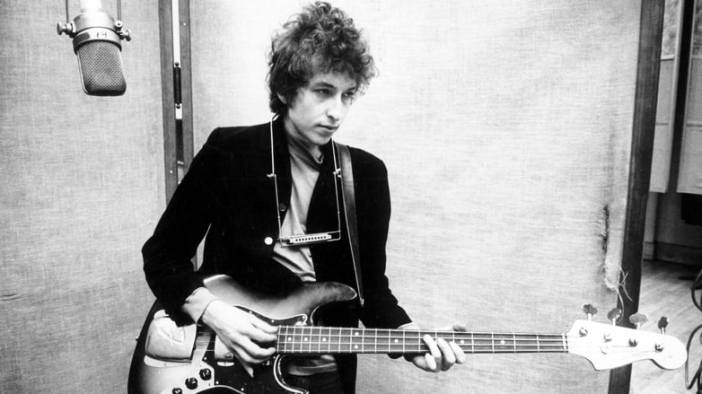

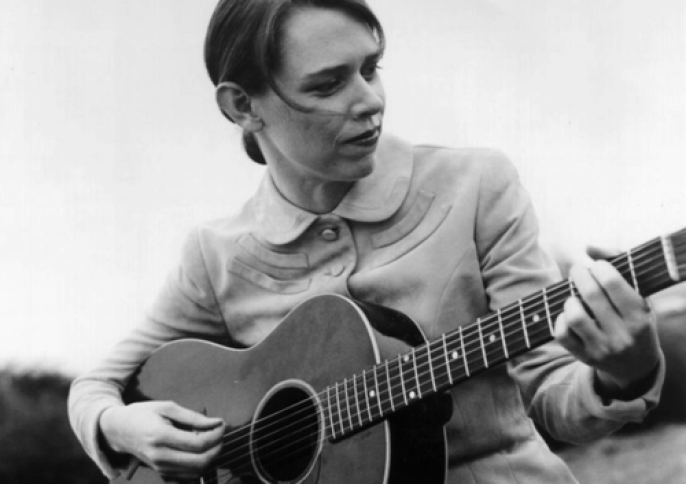


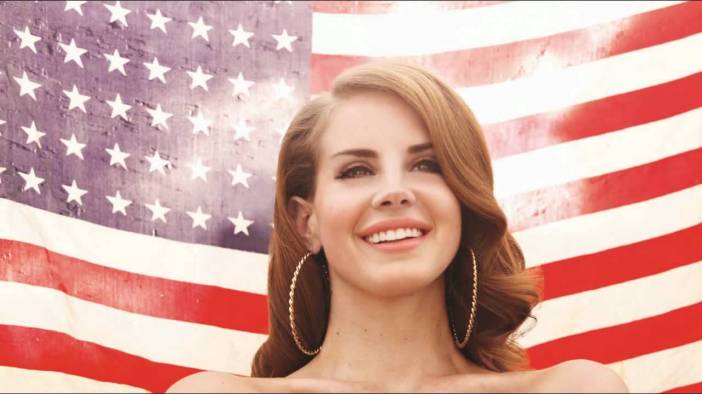


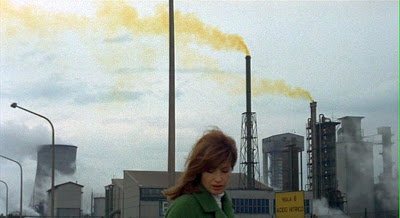
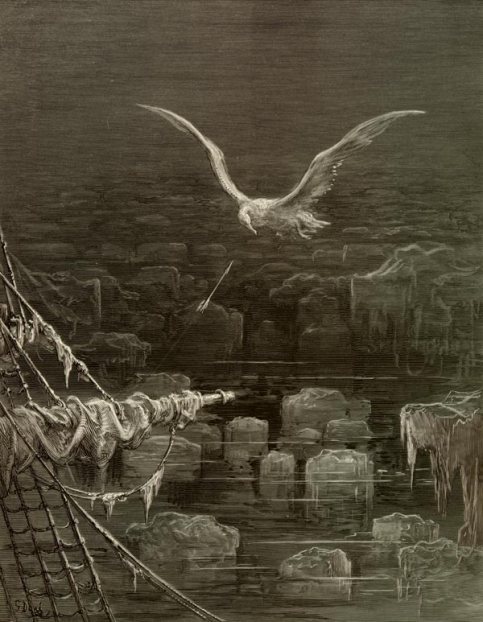

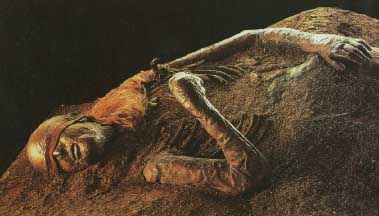
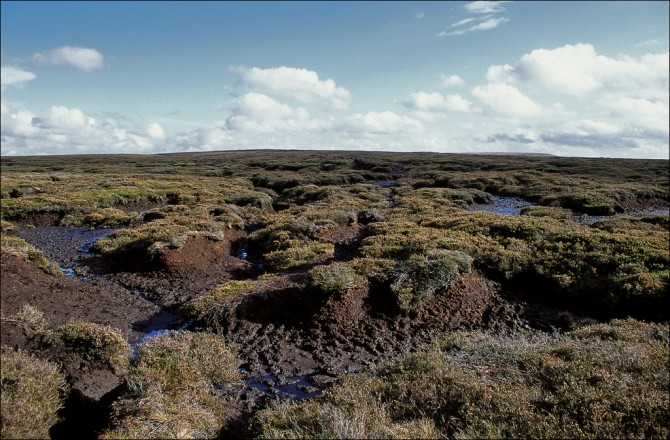
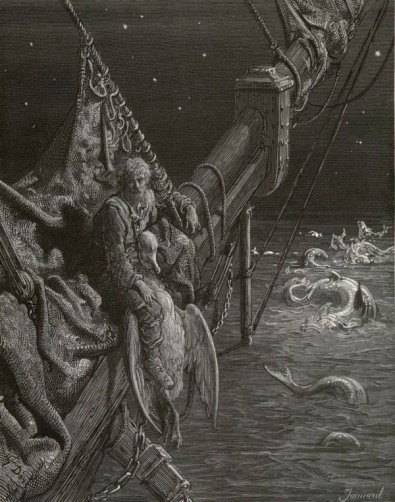
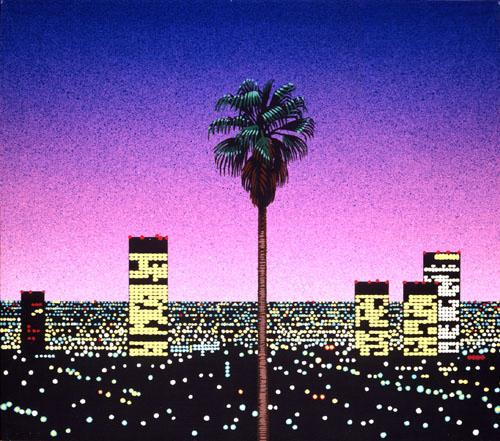
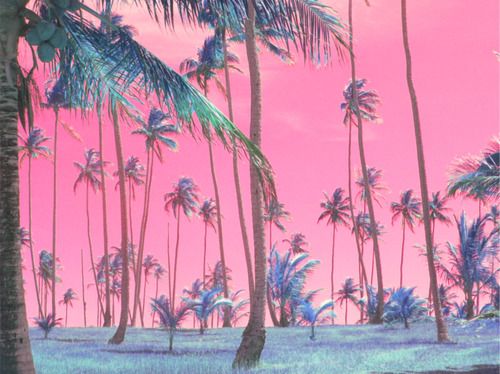
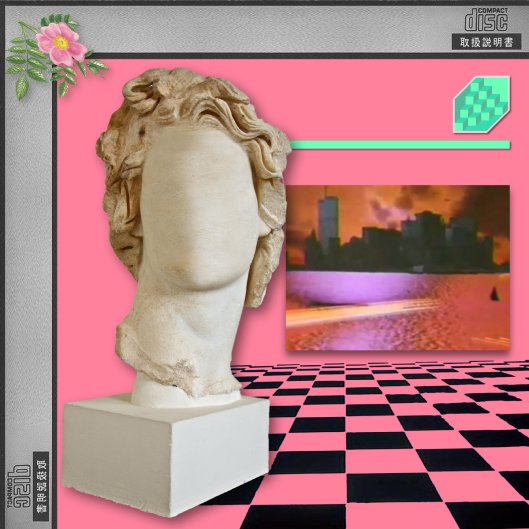

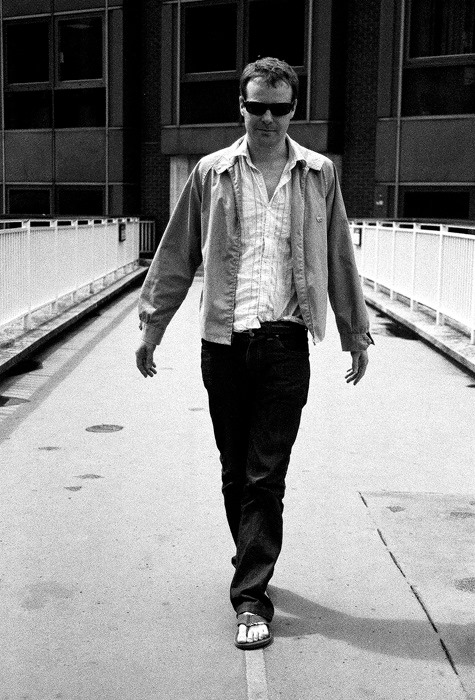
 mariaology