The weather turns, ineluctable as that mist that mysteriously fogs up my glasses (Footnote: Why do I wear glasses? Something a man once said about parallax and the need for clarity of distance, the reassurance of one’s own substance). The city is a haze of something else today, foreign as a postcard marred with scratches of time and travel. Must I always be up to my neck in vapour, in unfinished melodies? They always catch: grooves on a record, gum on the pavement, hair snagged in a glue binding, specific as a bookmark; melody after melody. The notation would be very messy. I’m picturing spaghetti-tangles of quavers, misplaced on the staves with no home of their own. What of this note? oOoOooooooooOOOooOooaaAAAaaaaaAaoo……. Does it belong in the sonic realm of an F#? The problem is, I picture my life in A minor, every time. The soaring long echo of a siren call; so sad, so sad. Picture this, pretty fake glass vase, all containers of vapour, elaborated with black-printed Celtic patterns, impenetrable as ersatz ~internet~ Japanese.
One attempt at pottery is quite the attained luxury. I think I will try out something new. The raising of a blue hand in order to trace the pulse of purple veins. Not too bad for a hologram. This is sweet and clear and maybe okay. Like walking past the graveyard of pines. Must I call it that? Too long it has been since I’ve trailed through a cemetery. A habit picked up from my grandmother, I glance at the old headstones, my brain knotting in each line and crack and crumble. I forget dates; they fall away. When you realise that you are walking a few feet above the bodies of dead people, your heart does a turn and slips to your stomach. The ground is so soft and mossy. Flesh is a good fertiliser, it spreads lush bright vitamins to the soil. In fact, it might be quite nice to lie down in and dream.
If I slept in a graveyard, would I have reveries that channel the dead? It’s a distinct possibility, the amount of fragmentary matter that must float in the air like electricity. The hormone we release when we die: dimethyltryptamine, DMT. They say it makes us see fairies, elves and tunnels of light. Lost soulmates dwindling in the twining of shining limbs. Silver rings in a stranger’s nose. Near death, the liminal weirdness of the world crosses its own boundary. No wonder I have always loved the word psychotropic, its connotations of a spliced brain opening out like a Polly Pocket to uncover an island of swaying purple palms, a guava pink sea, an assortment of oozing neon beads. This great, gritty, sparkling geode. Would a brain like that bleed? Do brains in general even bleed? The lavish quality of this vision is undoubtedly a product of sugar cravings. The dangerous dip, the faint-headedness. Our bodies being an assortment of chemicals, it’s only natural that the synapses of our minds produce very queer imaginings indeed.
Pineal gland: essence of palm. The oil extract no longer lucrative in worldwide trade, though popular, cheap and downright nasty. Spread it on bread like honey and sweeten. It makes things swell, tighten.
Things to desire: serotonin, colour, daylight. There was a time where I substituted existence for an array of colours, the kind that come straight out the packet. The need for something pure and vivid, so vivid as to seem utterly distilled of all trace matter, was completely upon me. Splat after splat after splat. I could have squirted that colour on my tongue and hoped for the same result of a manic acid trip. I wanted to see the gravestones melt, the names shimmer and vaguely disappear, leaving scraps and lingerings of unfinished letters. Is it possible, really, that some expert kneeled in the moss and carved those names so beautifully?
Crack open the sky over the sea and tell me what you see. The bold aroma of a rainbow comes quickly and glows like some other sun is ripening behind it. A pale blue sun, perhaps, stolen from Mercury. Planets out there, swapping their radiations of time. Down below, the ocean groans under globules of oil, fat black spills which ooze and spread. Each secretion has its location hidden; sometimes gushing, sometimes slowly swirling. I think of butter melting into chocolate, ink being marbled in gelatinous jam. The favourite taste, all bonfires of strawberry. Some god is spinning the water with a cocktail stick, languid and bored like a hungry person in a bar, waiting for love. We hallucinate, don’t you see? There is a complete quality to what comes next, the fiery upturning of all this trace matter. Waste. Be flamboyant as an artwork. You pinch the thin skin of each of my fingers and the lightning shoots right through me.
Things to desire: rock pools of igneous glass, starfish, the dying white rose at the side of a grave.
I hear the knell from far away. Such tocsins call me back from the realm of the dead, though I am happy here, my body breaking down into succulent little pieces. The woman opposite me mutters litanies to herself; stickily, as if each word were cheaply enthroned in lipstick. Is there work still to be done? These days, I mix the colours. I like to see the vibrancy break down, meld into subtler hues, details you see only up close. The paint sticks in my brushes, the glitter of light in my lashes. It’s not mystifying anymore. The greyish haze is my outpourings of smoke, enough to cover the whole skyline, swallowing up what good is left of tomorrow. I inhale matter in wholes and halves. Like yesterday, it will be black (the city, that is): gilded, ink-ridden, brilliantly viscous. A whole ocean will roll from the distance and its golden ore will cover us, just so many bubbles of oil pasting our brains. For now, it rains.
December: I was sitting in Botanics and an old man started talking to me about ancient ash trees brought over from America. I went to Edinburgh for a day and collected my thoughts among the dead bracken and cracked seedpods in the Botanic Gardens. I carried a Christmas tree home over the bridge on Great Western Road, wrote thousands of words and lay on my floor listening to Bjork and dreaming of fairy lights, the superimposition of each glow and glare over imaginary cityscapes half-borrowed from mid-noughties video games. People gave me mixtapes for Christmas which I’ve cherished with care and reverence, loving even the tracks that skip. I carried enough plates to make my wrists hurt, spinning trays and polishing glasses to a proper sparkle. I threw glitter over things until they started to change, remembering the eyes staring back at me and the way the music would fall through the catacombs of darkness, all the while forgetting the beauty of that drunk feeling. Knee socks, lipstick, tequila, lost garlands. Wrapping things in holograms, I hope for another decent year with all these magic people.
Laura Marling – Soothing
Neutral Milk Hotel – The King of Carrot Flowers Pt. One
Hippo Campus – The Last Snowstorm of the Year
White Baer – The Tide in My Lungs
Sibylle Baier – Says Elliott
Fionn Regan – Lines Written in Winter
Bright Eyes – When the Curious Girl Realises She is under Glass
There Will Be Fireworks – Your House Was Aglow
Minor Victories – Scattered Ashes (Song for Richard)
salvia palth – i was all over her
Sufjan Stevens – Fourth of July
Kirsty MacColl – A New England
Max Richter, Ben Russell, Yuki Numata Resnick – Dream 3 (In the Midst Of My Life)
Last Thursday I had the pleasure of a day trip to Irvine to check about Moira Buchanan’s exhibition ‘All Washed Up’ down at the Harbour Arts Centre. Now I must say, although I was brought up in South Ayrshire I haven’t actually been down to Irvine since I was a kid – the days when we used to go swimming at the Magnum, or on school trips to the Big Idea (which is now sadly closed).
It was a bright and breezy wintery day and as soon as I stepped off the train that lovely clean briny smell filled my lungs and it was a bit like coming home. Irvine’s a fair pleasant town, once a port. You can walk along the harbour where ships still rest and along the front there are little gift shops and cafes with tinsel in the windows and the smell of coffee wafting out onto the street. I unzipped my jacket to feel the sun on my skin. It was midday and hardly anyone was around, but when I got to the Harbour Arts Centre there was a nice wee bustle about the place.
Took a photo of the hair left behind by a ginger mermaid.
The focus for Moira Buchanan’s exhibition is, as the title suggests, things which are washed up onshore. There is a pleasing openness to the exhibition. It’s light and airy, the pieces nicely balance a white sparseness with the intricate details of natural forms splayed upon the (handmade) page. Actually, it’s quite difficult to differentiate the natural from the unnatural here. Buchanan uses materials found along the beach to make her art, from plastic to twine and string, to seaweed and driftwood. Instead of simply presenting such materials as found objects, Buchanan’s reworking of their unique structures emphasises the beautiful details and aesthetic value of that which we might consider waste – environmental, human or otherwise. She uses an understated, organic palette and a combination of wispy, delicate lines and bold ink blurs to suggest perhaps the swirls of the tide and the sense of being washed out.
The exhibition has a pleasing, nostalgic feel to it; a favouring of simplicity and the fragile loveliness of form, the childlike excitement in finding beauty amongst tiny, insignificant things. Dotted around the exhibition are little poetry chapbooks made from handmade parchment. Each poem feels like a miniature gift, a token gleaned from the coast and the sea and someone else’s memory. I think in today’s world, where global warming feels like something vast, incomprehensible, beyond our understanding, it’s so important to focus on the little things. The material details that remind us that we are part of this environment, that the ocean gives back what we put into it. There’s a feeling of salvage to the pieces, whose composition seems to perfectly balance the artful openness to chance at the same time as reflecting a careful attention to arrangement and applied form and texture. Everything seems precious.
The more monochromatic tones of the video exhibit suggest something starker, more emotionally arresting. The poems on display recount strange dreams, the changing weather and shape of the coastline, the turbulence of time and human perception. Between the poems are black-and-white closeups of items washed up on the shore. There’s a sense of borders overlapping, of the lush fronds of the clear water coming up to drag back the wisps of shadows and words and memories. I think of black ink pouring on a page, printing through layers of paper like the epidermis of skin. Sinking, achieving a kind of sticky permanence. I think of oil spills coating the northwards ocean. Each poem afloat on the water, the black background of oil, achieving purity in white ink as if blanched that way by the sun and the waves, as seashells are bleached by the tide. Moonlight pouring on still waters at night.
Responding to an ad on Creative Scotland, I sent in a poem I wrote called ‘Fort of the Yew Tree’. It’s kind of channelling a few of the mythical elements of a novel I wrote which is set in South Ayrshire (titled, with some irony, West Coast Forever). ‘Fort of the Yew Tree’ is said to be the Celtic derivation of the name ‘Dunure’, which is a fishing village on Scotland’s south west coast.
I feel very privileged that one of my poems is on that video. This thing that I wrote, a strange and baroque wee baby, has floated out to sea and there it is, somehow washed up in Irvine, travelled through the channels of WiFi and email and typed back out onto some distant slideshow, time cycling in loops and repeating, each image and word again returning like a message in a bottle tossed out to the waves. I wonder who will find it.
Anyway, you can check out my poem along with many others in the video below, made by Moira Buchanan and existing as part of her exhibition. ‘Fort of the Yew Tree’ starts at 2:35 and it spans four slides.
You can find out more about Moira Buchanan’s work on her website.
It’s never easy to compile a list like this. Albums by their very nature are dynamic; like books, their significance shifts over time as we build up new associations from listening to them over and over. I know it’s corny but I can’t help but think of that quote from Emily Bronte’s Wuthering Heights: ‘I have dreamt in my life, dreams that have stayed with me ever after, and changed my ideas; they have gone through and through me, like wine through water, and altered the colour of my mind’. Well, you could say the same thing about records. Any good album stays with me a long time and it’s so interwoven with memory and place and emotion that I could no longer just glance at its cover in a shop and shrug, it’s a good album. Give me a copy of American Idiot and I’ll wax lyrical about my political awakening, aged eleven; when I first discovered what teenage angst meant, when I decided it was hot to wear eyeliner and complain about dead-end jobs. When I realised you could make stories with music and create characters from songs; in fact, a whole mythology.
It’s becoming increasingly important to me to keep track of what I listen to. Month by month I’ve started to save new stuff onto Spotify playlists, where once I would fall back on the same old iTunes favourites, playlists I’d made years ago. Relying on shuffle or rehashing albums I loved five years ago and never bothering to look out anything new. Having a year away from university gave me the time to focus on music again; I realised that it used to be this massive part of my life that I’d since abandoned in favour of obscure literary theory (now I know they don’t have to be mutually exclusive…). I’ve started to write reviews for RaveChild , which has sort of taught me to listen to a song the way I’d read a text. I want to find the hook, the arrangement, the way all the different parts work together to evoke something. I’m listening for detail, texture, weirdness. It’s fun and sometimes hard work, but always rewarding. Now, often an actual musician will read a thing I wrote and maybe they’ll retweet it or like it or in some way show their appreciation. For someone whose writing has always been a solitary thing – confined to notebooks and extinct LiveJournal and MySpace accounts and only more recently a grownup blog – I can’t tell you how nice it feels for my writing to be out there, being noticed somehow. It’s so lovely. I really appreciate the opportunity to have a new outlet, and to discover so much good music while I’m doing it!
Anyway, to mark the end of the year like I did last year, here are my top 16 albums of 2016. I’m going to try and do them in order this year, bearing in mind the fact that this ordering probably changes in my head on a weekly basis. Basically, the first 16 are pretty arbitrary; I love all of the stuff listed and know that as soon as I’ve written this I’ll want to shuffle it around again.
1) Radiohead – A Moon Shaped Pool
This is such a beautiful, highly-crafted album. For someone whose favourite Radiohead record is probably In Rainbows, but who also loves the jaggedelectronica of The King of Limbs as much as Jonny Greenwood’s cinematic compositions, A Moon Shaped Pool is a real treat. I remember when In Rainbows first came out and there was so much media controversy over its distribution method. I read about it constantly in NME magazine, without much sense of what the music was. Radiohead were a distant entity to me then, a kind of musical megalith that I wasn’t quite ready to approach. Well, a few years down the line I gave In Rainbows an actual proper listen (not just because ‘Nude’ was used in a Skins advert, I swear), and then fell in love. If you’re not properly acquainted with the band, you probably don’t realise how truly eclectic their music is.
A Moon Shaped Pool came as a surprise album to many, the prize release to all those who panicked over the band’s social media blackout. Still, the gimmick takes nothing away from the music. It’s so multi-layered, with orchestral textures and many lovely moments. It doesn’t reach the aggressive pitch as on some previous albums, and in turn feels more honest, stripped of the usual cynicism. A song like ‘Daydreaming’ feels like reaching a moment of nirvana-like sublimity, but it’s not an entirely happy state – its a kind of uneasy contentment, a bewildering dreaminess. ‘Burn the Witch’ is a fable for our times that provides a warning against falling back into what we so dismissively call the dark ages, when in fact 2016 bears the ugly imprint of small-minded times from history. ‘True Love Waits’ has been kicking around a long time now but I really love this mellow, slightly haunting yet effortlessly tender version.
I listened to this record all summer, walking home through the park after nights out, feeling the chords form soft over my inebriated senses. I began to crave Thom Yorke’s voice, the subtle croon and the way it bends so elastically over the high notes like rivulets in the tide. ‘The Numbers’ is a beautiful environmental song: ‘we are of the earth / to her we do return / the future is inside us / it’s not somewhere else’. Yet this is no hippie-dippy one world holism; there’s something unsettling about the future being inside us, about the world being up close, physically within us. The song’s rife with uncanny images, where anthropomorphism is reversed and where the boundedness of the human body is dissolved: ‘it holds us like a phantom / the touch is like a breeze’; ‘you may pour us away like soup’. Yorke forces us to confront these truths, but his tone is wistful rather than dramatic or didactic. You actually feel like you’re being carried away by that breeze as strings shimmer around you.
You can really fall into these songs, and they have a breadth (and breath!) that carries you away. The album feels loose, adrift, a little weary; but this refusal of tight structure and convoluted imagery is what grants A Moon Shaped Pool its sincerity. Pitchfork calls it ‘everyday enlightenment’, which seems fitting, since this album is less about cyborg dystopias and paranoid androids and more concerned with its humanist bent: whirlpools of emotion, the simple epiphanies reached in ordinary life. That’s not to say it’s lost its political freight; if anything, the themes of agency, government control, ecological disaster, technology and societal breakdown gather more strength for being more subtly disseminated.
Another album that more or less soundtracked my summer, or at least the tail-end of it. Olsen’s musical style really matures on this album but for me it was definitely a grower. I rather unusually fell first into ‘Heart-shaped Face’, a kind of quirky, languid ballad, sugar sweet even as it delivers something mournful. I love the album’s overall retro feel. ‘Shut Up Kiss Me’ is livelier than Olsen’s usual fare and is decidedly catchy and playful, with that haunting country voice doing its best gymnastics. ‘Intern’ feels a wee bit Lynchian, all atmospheric synths which satisfyingly never really build to a climax and instead dissolve into the jangly croons of ‘Never Be Mine’. It’s music to listen to while lying in a park, sure, or strutting down a preciously sun-drenched city street on your way to meet someone exciting. It’s also sophisticated enough to work really well live (Olsen had at least three guitars on her recent tour) and also to wrench your heart out in all the right places. Jewel in the crown track ‘Sister’ is a complete masterpiece. I might even go so far to say it’s my favourite song of the year. It builds up to this glorious solo and then the release that comes with the refrain all my life I thought I’d change is so cathartic, like doing something wild – plunging your head in freezing water to get over heartbreak. The video is glorious too – Olsen just has this devastatingly cute smile and the vibe is all cactuses, desert plains, pinkish skies and turquoise swimming pools. My Woman has a hint of psychedelia mixed in with its alt-country and indie folk, but ultimately it’s that beautiful warbling voice that really makes the record shine.
3) Kevin Morby – Singing Saw
I first came across Kevin Morby on recommendation from a friend, and the song that hooked me was ‘Slow Train’, a lonesome, leisurely track which is duly adorned by the smooth melancholy of Cate Le Bon’s vocals towards the end. Singing Saw sees Morby developing the craft of atmospheric singer/songwriter folk, mixed in with a distilled tinge of Americana. Morby’s songs have an old worldly vibe, devoid of contemporary references and shrouded in a kind of wilderness mythology. A lot of the songs on this album are more upbeat than previous offerings and ‘Dorothy’ is really fun, a pop nugget as much as it is a song about music and the road. There’s a more expansive sound and the bass feels nice and crunchy, the harmonies always on point. Morby’s voice always has a kind of haunting depth to it which shines through as he stretches his vowels, as he threads his hypnotic melody over the pulsating beat of ‘Singing Saw’. An album for listening to around a camp fire on a beach or rocky hillside; an album for toasting the end of summer to and glancing out towards the gathering darkness of winter.
4) Beth Orton – Kidsticks
This album, conversely, was perfect for kicking off summer. It’s bright, electronic; a little bit feisty, with plenty of pause for languid reflection. Orton has a way with surreal images, with unfolding a kernel of detail into an elaborated, looping song, as on ‘Petals’. Sometimes the album feels trippy, sometimes it feels very 1990s folk-tronica in the best way possible, all saturations of bass woven around Orton’s distinctly wispy voice. Still, the more focused commitment to synths feels properly contemporary, as on songs like ‘Falling’ which dabbles in a kind of bewitching minimalism. ‘1973’ feels super retro, while ‘Snow’ and ‘Moon’ are truly celestial super tracks, complete with super crunchy bass. It’s an album that you can listen to lightly, but also one that rewards more sensuous attention; its percussion and electronic elements are richly textured, with interesting effects. Overall, this album reminds me of all the sunshine we had in May, and all that time I sat lying in Botanics among the daffodils while on my break, looking forward to everything ahead.
A late-comer to the table, released less than a month ago, nevertheless Swithering managed to shoot its way up towards the top of my list. There’s something about Roddy Hart’s voice, its earnest attention to emotional inflections, its clarity which always sharpens and shines in whatever genre Hart applies himself to. Swithering is a really polished album, rife with loss and memories, with love and regret and empathy. The band have definitely benefited from Paul Savage’s input on production (see his previous work with, for example, Admiral Fallow), as the sound here feels more cohesive than on their debut. You can also tell that they’re growing more confident with expressing more traditional and indeed vernacular roots while having a bit of rock’n’roll fun, wearing their influences gleefully on their sleeve (everything from U2 to Aztec Camera and The National). This album got me through the difficult essay writing weeks when I needed something powerful to cut through the fog on long late night city walks.
Ah, good old Frightened Rabbit. I always think of them at this time of year, mainly because it brings back memories of December 2010 when I had a ticket to see them in Glasgow when I was still at school. All day I was looking forward to it, when during the last period I was sitting in the library and it started snowing. My librarian proceeded to gleefully torment me with the knowledge that all the trains would be cancelled, a fact she confirmed by duly consulting every available travel website and showing that trains between Ayr and Glasgow were having problems owing to the weather. I was so gutted that evening, watching the snow falling and wishing I was at that Frightened Rabbit gig. My friends and I sung ‘Poke’ at every party, deliberately mashing the words.
For a Frabbit fan, this album sort of has it all. As critics keep saying, it definitely sounds more polished; but there’s certainly the same old twist of raw Scottish melancholy. ‘Get Out’ feels powerful and cathartic, while ‘Die Like a Rich Boy’ moves close to old favourite ‘Poke’ and deserves pride of place in the Frightened Rabbit sad ballad cabinet. While the lyrics trawl familiar themes – alcohol, depression, heartache, existential anguish and urban boredom/depravity – there’s a renewed musical energy here which leaves a residue of hope to even the most despairing songs. I find myself yearning for the effortless way in which Scott Hutcheson’s vocals do acerbically emphatic social commentary, soothing harmonies and lyrical witticisms. Few bands could pull off a bitter reflection on the death drive of a broken class system and turn it into a poignant love song, as on ‘Die Like a Rich Boy’. Yes it’s grey-hued, Brutalist, a little bit miserable, but all of these things make sense through Frabbit’s zealously lyrical dissection.
7) Cate Le Bon – Crab Day
If ever there was a better, spikier, weirder art-pop album! Welsh songstress Cate Le Bon isn’t scared of being a bit out there. She compares herself to a ‘dirty attic’ and feels like geometry; her heart’s in her liver, she wants to be someone’s tenpin bowl, love is a coat-hanger. It’s like she’s inhaled a bunch of surrealist poems and swallowed some Cubist art and then vomited it all out in glorious rainbows, complete with very tasteful thumping drums and keyboard trills. Apparently, the album’s title is a reference to a fictional ‘Crab Day’ conjured up from the imagination of Le Bon’s young niece. This childlike playfulness runs through the album and gives it its flying spirit. If it makes sense, you could say that the songs are geometric: all jagged guitars, syncopation, weird angles, tessellating lyrics. The percussion is fun in a kind of skittish, school-practice-room way, all zany, trembling marimbas and thrashing drums. The electric guitars are clean and Le Bon’s voice pulls off a combination of artful dodgery, aphoristic declarations and crooning, cat-like mews. ‘Love Is Not Love’ provides a slice of relief from the stomping revelry and provides a languid ballad with curious little spikes of guitar and subtle brass. Overall, a record to have fun and enjoy your summer with.
8) Crystal Castles – Amnesty (I)
Woah, where to begin with reviewing a Crystal Castles album! I suppose the band had a lot to prove, having replaced iconic singer Alice Glass for a third party, Edith Francis. Nevertheless, Francis stepped up to the mark and it’s certainly possible to listen to this album and still appreciate it as authentically Crystal Castles. Not only are the band donating profits from record sales to Amnesty International, but they’re providing a much-needed blast of searing catharsis to shock us out of the apathetic slump that 2016 has brought upon much of us. Opening track ‘Femen’ develops its looping, rasping rhythms out of a haunting chorus of voices which dwindle and build like sound blowing back against the distant ceiling of a massive church. The heavy pulse of bloated synths is back on ‘Fleece’, and ‘Char’ shows off Francis’ vocals at their purest, reminiscent of the dreamy 80s vibes of disco-indie outfit Chromatics. ‘Enth’ makes you want to thrash your hair and limbs around wildly and fling glowstick fluid across the room. Final track ‘Their Kindness if Charade’ layers fragments of vocal samples over shimmering synths which reach a kind of clubland pulse over muted drumbeats, withdrawing again into the melancholy quietude of Francis’ stripped back rendering of impenetrable lyrics.
I picked this album because it’s such an ambitious piece of art in its musical range, yet manages to return always to its thematic focus on memory, dementia, heartache and lost connections. It’s got an orchestral expansiveness, Peel’s cut-glass voice, the twinkling music box, showers of synths and a dialogue between energetic pop songs and atmospherically experimental tracks like ‘Octavia’. Peel riffs constantly on Italo Calvino’s Invisible Cities and as such there’s a visionary element to her songs which maps the inner space of the mind onto fictional landscapes and metropoles. It reminds me of walking along the Clyde at night with the wind howling in my ears, a sort of mad feeling in the city as it bristles against the death of autumn and the coming of winter, the lights shimmering across the river.
Rather shamefully, I hadn’t heard of Johnny Lynch, aka Pictish Trail, until I opted to review his latest album, Future Echoes. In all honesty I picked the album because I liked the sound of the artist’s name; a customer at work once asked me if I was a pict. I’ve started telling the Mormons in the street that I’m a witch because I can’t be bothered being converted on my way to the shops. Anyway, Future Echoes. What an album! Johnny Lynch is a busy man; he runs Lost Map records which is based on the Isle of Eigg and houses an array of talent, including Randolph’s Leap, Kid Canaveral and Tuff Love. Still, he’s managed to find the time to put together an album which feels tight, exciting and something a little bit different.
It tackles time: history, futurity; things shifting, changing, preserving. It should be called pastoral psych-pop, because that is a generic label worthy of Pictish Trail’s particular brand of Scottish melancholy, based in a strong tradition of indie rock and inflected with ethereal dream pop vibes. Lynch has a distinct, sonorous voice which reaches some really heartfelt expressions amidst dramatic strings, pulsing synths and loops. There’s an honesty to the lyrics and a Twilight Sad atmosphere to many of the songs, but Future Echoes is also splashed with funk and disco. You could actually dance to it, especially on tracks like ‘Dead Connection’ and ‘After Life’. I thoroughly enjoyed dissecting this record for a review and the lesson I learned was to keep picking things I hadn’t heard of before because god knows there’s a lot of good stuff out there to discover.
I have to make another embarrassing musical confession and admit that this is the first Nick Cave album that I’ve really properly listened to all the way through. I once found some mp3s of his older stuff which my Mum’s friend had left on our computer, but I think I was too young at the time to appreciate that dark, resonant voice, the subtlety of Cave’s songs. This record has won me over. It’s rich and melancholic even in its sparsity. I’m detecting a trend this year with a move towards a sort of deep minimalism – think David Bowie’s Black Star and Leonard Cohen’s You Want It Darker – which nevertheless maintain sort of jazzy vibes even as the mood is enigmatic and slightly sinister.
This is a very serious album, not to be taken lightly. Cave lost his teenage son in a horrible accident last year, and I don’t think it’s cliché to say that grief seeps through every note, even though most of the lyrics were written before his son’s death. Nevertheless, Cave never loses control; it’s a sustained release of emotion which trickles its mournful truth across spacious and poignant tracks. He paints stark images with thick, vivid brushstrokes, which curl back on each other as the lister is multiply interpellated by the lyrics:
You’re an African doctor harvesting tear duct
You believe in God, but you get no special dispensation for this belief now
You’re an old man sitting by the fire, you’re the mist rolling off the sea
You’re a distant memory in the mind of your creator, don’t you see?
Death here isn’t just personal, it’s cultural, global. ‘Anthrocene’ is a riff on the term ‘Anthropocene’ which more or less refers to the current geological age initiated by the human interference in the structure of the earth (basically triggered by the industrial revolution and the extraction of fossil fuels). It’s one of the most unsettling and beautiful songs about climate change I’ve ever heard. Like much of the album, it makes use of loops and dissonant synthesisers. On ‘Jesus Alone’, there’s the repeated drone that sounds like the hurt cry of a glitching, dying bird. ‘Anthrocene’ is spooky and hazy, imagining the dissolution of the earth from the position of dark forces, of animals and plants and the lost people who inhabit this broken earth. It tackles the sense of strangeness that relates to our coming to terms with ecological disaster; which, as Timothy Morton would argue, is a necessary stage of grief, a process of mourning: ‘When you turn so long and lovely, it’s hard to believe / That we’re falling now in the name of the Anthrocene’. What sounds like an address to a woman, a beautiful dancer, probably refers to the turning of the earth, the passing of seasons which still exist, lingering, even as carbon emissions pollute the atmosphere. The song is structured around Cave’s measured vocal delivery and the sweetly sad, rising and falling harmonies. ‘Rings of Saturn’ kind of reminds me of R.E.M (‘E-Bow The Letter’) drenched in a black black oil.
I like music which breaks with conventional song structures and Skeleton Tree certainly does that. It’s mesmerising, atmospheric, strange. You have to listen to it many times.
12) Blood Orange – Freetown Sound
A far livelier offering, yes, but one no less struck with historical trauma. It deals with the ever-prescient issue of racial injustice, but also joyfully samples a vibrant array of black culture, including spoken-word poetry and retro R&B grooves. There’s a fantastic drum solo on ‘E.V.P’ which glides in among the chorus of voices. Hynes’ voice is divine throughout and there’s something so addictive about lots of his beats. It’s quite an eclectic album, ranging from instrumental to the jazzy ‘Love Ya’ to funk to the dreamy nostalgia of ‘Augustine’ and fat synths and male/female dialogue of ‘Best to You’. You could compare this album to something by Michael Jackson or other fresh offerings of contemporary R&B. My knowledge of the genre is so limited that I’m not going to attempt to make comparisons. Freetown Sound feels really unique, a bursting bag of colourful tricks and collaborators. It resonates deeper than most pop records on the charts these days. ‘Hadron Collider’ is a looping ballad which sucks you in with its pure vocals and shimmering piano. I first came across Dev Hynes in his incarnation as Lightspeed Champion and that kind of melancholy blend of humour and sadness is retained somewhat in Blood Orange’s project, only now the message is more cultural than purely personal. It’s an educative album as much as a fun one.
13) Conor Oberst – Ruminations
This album sort of came out the blue for me; I’m normally hyper-aware of any imminent Oberst recordings on the horizon, but it was a pleasant surprise to hear that not only could I get my hands on a ticket for a UK tour date but also that I could access some new material. Ruminations is old school Oberst mixed with a new, bittersweet maturity. Don’t be fooled by the harmonicas; while there is a political undertone to his lyrics (especially on ‘A Little Uncanny’), Oberst is here focused on introspection as opposed to outward-looking troubadour. The recordings feel a little bit strained and raw, but this is the kind of authentic frisson old-school Oberst fans crave. The sort of warbling attic recordings from the pre-I’m Wide Awake, It’s Morning era. As the title implies, these songs are all extended thoughts which extend the personal to the political. Despite the minimalism, Oberst doesn’t hold back on the visceral lyrics. Where songs seem to paint a vision of isolation, of wandering confusion, there’s always something powerful to hint at possible connection: ‘Tomorrow is shining like a razor blade / And anything’s possible if you feel the same’. In ‘Tachycardia’, thoughts hit ‘like cinder blocks’.
The passing of time is a major theme of this album but there’s a sense of timelessness to the songs, as if they open up the compositional space of the wee hours where all the dark thoughts pour. It’s quite hard to listen to these songs in daylight; not because of some gothic spirit but because out of the cover of darkness these songs make the real world seem a little too obscene – too cluttered, crowded, vibrant, excessive. While the narrator of Oberst’s songs notices sweet little everyday details – ‘the checkout girl has a thing for me’ – all these miniature epiphanies are swallowed up in a general apathy: ‘I just wanna get drunk before noon’. Still, Oberst’s analysis of modern life bears an honesty which transcends pure nihilism. In ‘Gossamer Thin’, his warbling voice recounts a clandestine relationship where two unexpected partners come together. The narrator admits, ‘it’s no business of mine / They can love more than one at a time’, but this open-mindedness is qualified by an acknowledgment of the thinness of our emotions in an age when we constantly push ourselves to the edge, wearing our identities down as we spread them freely across the world and the internet: ‘you are who you are and you are someone else’. Whenever Oberst brushes up against philosophy, he never seems to make a didactic point but rather leans into the yearning for transcendence: ‘’Cause the mind and the brain aren’t quite the same / But they both want out of this place’.
14) Cat’s Eyes – Treasure House
It’s been almost a decade since I last bought a copy of NME with Farris Rotter (aka Badwan) and the rest of The Horrors plastered extravagantly across the cover. I’ve always been slightly in love with his dark, seemingly careless yet somehow still tender voice, the beautiful, New Romantic hair, the hint of eyeliner. Cat’s Eyes are an alt-pop duo, combining Faris’ sultry croon with the ethereal soprano of Rachel Zeffira, an Italian-Canadian composer. Obvious comparisons include 1960s girl groups (The Ronettes), but there’s a haunting dissonance to Cat’s Eyes lulling, cinematic style. Tracks like ‘Be Careful Where You Park Your Car’ and ‘Drag’ epitomise this jangly sixties vibe, but then you’ve also got the celestial minimalism of ‘Everything Moves Towards the Sun’, a song which hinges on delicate xylophone arpeggios, Zeffira’s melodic voice and faint drumbeats. This album feels vintage, a little bit gold standard. I like to listen to it at nighttime, when the sky clears and if you get away from light pollution you can see the stars in the park. Treasure House gilds everything around me in a kind of grandeur. I bought this album after first hearing ‘Treasure House’ which sounds like opening a beautiful music box and melting into the taste of rich Belgian truffles, laced with a kind of muscle relaxant which makes reality slow down into a silken haze. It’s a real treat, a tender record that has its fizzy, upbeat moments as much as its mournfully reflective ones.
15) Palace – So Long Forever
I had the pleasure of catching Palace recently for a headline gig at King Tuts. While they’re a band who really come into their own onstage, all elasticated vocal harmonies and twinkly guitars, So Long Forever is a really solid debut album. It feels polished and atmospheric in the way that The Maccabees’ Marks to Prove It felt more expansive than its predecessors; here, however, Palace have skipped the cutesie twee-pop phase and delivered from the start a fresh kind of bluesy-indie. The record has a lot to offer. There’s the languidly jangly ‘Live Well’, the kind of song you want to listen to on the last day of summer, waiting for the sun to set with your school friends, nostalgia glowing on the distant horizon. Sweet and upbeat. Then there’s the looser ‘So Long Forever’ and the trembling urgency of ‘Break the Silence’. While Palace have an array of decent singles, they don’t crowd their album with them and instead give space to lots of new songs which melt together in a carefully detailed bluesy masterpiece. As you can say, I like the word bluesy, and keep using it because I feel it perfectly describes the loose, hazy feeling of the songs, the way they are tied to their lyrics and melodies like a boat on a complicated river. ‘Bitter’ is just perfect. It’s catchy in a strange way; you find yourself falling over the stretchy chorus, the bright guitar, the clean bass. Plus Leo Wyndham has such a lovely voice. Sometimes it sounds a bit like the lead singer of Little Comets; in fact when I first heard Palace I assumed they were also from Newcastle. There is less of the rush of a fast-paced London indie scene here; instead you have a refreshingly chilled collection of tracks which really take their time and pay attention to detail.
16) The 1975 – I Like It When You Sleep For You Are So Beautiful Yet So Unaware Of It
Please don’t judge me for choosing the pink-hued bombast of the 1975’s sophomore effort for my list. It’s more than just a guilty pleasure; for me, it represents a glint of hope within mainstream pop music. It shows there’s room to do something interesting beyond constant rehashes of what we now derisively call EDM, the auto-tuned formula perfected in Radio 1-loving R&B. I won’t rant anymore about that (you can hear much more eloquent rants on the subject from Laura Marling on her excellent podcast, Reversal of the Muse). The 1975 showcase an array of influences, from Bowie to INXS, but they don’t just flaunt their inspirations with a citational ironic sneer; rather, they recuperate 80s music, its pomp and flamboyance, to comment on the narcissism of the selfie-era, to make self-referential pop that actually seems intelligent but still deliciously fun and sugar-coated enough to become a chart darling.
From the Pete Wentz-worthy album title to lengthily indulgent instrumental tracks, this is an album which unashamedly revels in itself, in the album as an elastic art form. It’s definitely a love/hate thing, and somehow I’m drawn to it. It’s simultaneously painfully honest and ridiculously silly. The way Matthew Healey sounds so vulnerable on ‘Somebody Else’ and ‘Nana’, the pop crooning of ‘She’s American’ and the melancholy ‘A Change of Heart’. Then there’s ‘Love Me’, the extravagantly OTT and catchy lead single completed with twangy INXS guitars, cheesy 80s synth flourishes and a playful vocal delivery. It’s the kind of album that makes your teeth hurt, but there’s plenty of wee gems in there to savour.
And everything I couldn’t include but still loved dearly:
Agnes Obel – Citizen of Glass Biffy Clyro – Ellipsis Black Marble – It’s Immaterial Bloc Party – Hymns Bon Iver – 22 A Million C Duncan – The Midnight Sun Diiv – Is The Is Are DJ Shadow – The Mountain Will Fall Emma Pollock – In Search of Harperfield Fair Mothers – Through Them Fingers Yours and Mine GoGo Penguin – Man Made Object Honeyblood – Babes Never Die Jimmy Eat World – Integrity Blues King Creosote – Astronaut Meets Appleman Leonard Cohen – You Want it Darker Let’s Eat Grandma – I, Gemini Martha Ffion – Tripp (yes, it’s an EP and not an album but I’m gonna cheat with this one) Minor Victories – Minor Victories Modern Studies – Swell to Great Mogwai – Atomic Pinegrove – Cardinal Polica – United Crushers Randolph’s Leap – Cowardly Deeds Soft Hair – Soft Hair Sunflower Bean – Human Ceremony Teenage Fanclub – Here TeenCanteen – Say It All With A Kiss The Avalanches – Wildflower The Last Shadow Puppets – Everything You’ve Come to Expect Warpaint – Heads Up Wild Nothing – Life of Pause
It’s not all about realising you can get 10% off at Topshop again (although my ID photo is so bad this year I’m no sure I can brandish it in public). I didn’t know what to expect, going back to uni after a year out. It all happened so fast. Working for over a year as a full time waitress, doing 35-55 hour weeks, I didn’t really give myself the headspace to prepare myself for what uni entails. Despite knowing for several months that I had secured my place, a Masters in MLitt Modernities at Glasgow Uni just seemed something far in the distance, the uncertain plane which I would embark upon after an endless summer.
No matter how it feels at the time, summer is never endless. August was a strange old month, and horrible, tragic things kept happening around me. Amidst all that, it didn’t seem real, making my way through the infernal labyrinth of MyCampus; applying for scholarships, spending inordinate time staring at screens again, making lists of things to be done. I found myself in a room up high in the Boyd Orr building, listening to the inimitable and infectiously enthusiastic Rob Maslen give a speech about the strange history of these hallowed walls; being introduced to the university as if it were the first time all over again.
It is weird going back to the same university after a year out, especially if you’ve not gone far. I walked up the hill listening to Tigermilk feeling blissfully like a total Glasgow cliché and it was like nothing had changed at all; it was my first seminar of the semester and I felt bright and hopeful. Glasgow gifted us with a particularly gorgeous autumn, trees bronzing languidly into darkening violet as twilight fell and I was still sitting by the fountain, making notes on poetry. I tried to take walks in Kelvingrove as often as possible. Quite quickly, however, the daylight ran out. Nights drew in. Still stuck in waitressing mode, such thing as a sleeping pattern proving an elusive remnant lost somewhere back in 2015, I found myself going to sleep at 5am every night, often staying in the library till everyone on the floor had left and the lights kept going out automatically. There I was, alone in the dark in front of a dull-glowing screen (though one must note the upgrade in PCs at Glasgow Uni Library, which are much preferable). It’s easy to spiral into that maddening routine, trying to do all the reading, make notes on everything. I’ve never been a meticulous note-taker, not by a long shot, but I like to handwrite things and have a tangible record of ideas and theorists and possible avenues for further study.
I would walk home at 2am, stumbling tired-eyed through Kelvinside, hoping for a glimpse of the river, some tangible reminder of nature. How long had it been since I’d seen the sea? During reading week, I allowed myself a cheeky day trip to Arran, which felt so unreal it was almost magic. The days passed and ideas started to percolate in my head. The power of procrastination unleashed itself again. I did more creative writing in the past three months than probably I’ve done all year. I guess the more you read, the more you want to write. I sat on level 11 and watched the sunset over Park Circus, making airy, vague notes about queer temporality and thing theory on a 60p sketchpad. I went to seminars and was reminded of how nice it is to listen to people share a subject, to listen to experts talk with passion about something they must have covered a thousand times before and yet still they can find fresh things to say about it. To actually talk to said experts about such interesting topics (instead of merely serving them glasses of wine and plates of fish, as the Oran Mor waitress will often do for GU academics). Although a bit scary at first (not least because I had a screenwriter and published author in one of my seminars!), it was nice to actually have proper formal discussions about books again. Often we veered slightly off-topic, with Trump becoming the proverbial wall against which we hit our heads in frustration, but everything felt prescient, useful. I went to visiting speaker seminars with the likes of Stephen Ross, Graeme Macdonald and Darren Anderson, who talked about all manner of interesting topics: Beckett’s invention of the teenager, petroculture and the politics of space and architecture. Having been at Glasgow Uni four and a half years now, I was still struggling to find half the rooms and buildings I needed to get to.
I went to a couple of nights at The Poetry Club in Finnieston and actually read poems aloud to real humans. Got a few wee things published here and there. Went to a ceilidh. Realised that I want to do lots and lots of creative writing and really try and learn from people. Started writing music reviews for RaveChild which has been really rewarding, not least because it’s encouraged me to broaden my musical horizons and go to more gigs. Started tweeting again. I managed to go to a few Creative Writing Society workshops, wrote a collaborative sonnet and played around with tarot cards. Went to Creative Conversations at the Chapel and saw very smart and fascinating people talk about writing: Amy Liptrot, Liz Lochhead, Mallachy Tallack, for example. Developed many creative crushes on various academics.
Necronaut: Tom McCarthy looking fit in flip flops. Image Source: Fitzcarraldo
My stress levels tend to rise in tandem with the library’s rising busyness and so I stopped going altogether about a month ago. I’ve more or less forgotten what sunlight is, except for the wee slant that comes through the window of the building in Professors’ Square where every Thursday we had our Modern Everyday seminar. I sit in bed everyday and try and write and write. I spent the first four weeks of this semester trying to read a section fromThe Derrida Wordbookeveryday, until my brain started to melt a bit too much and I was thinking in riddles. One day I was so tired I woke up at 10.46 for an 11am seminar but somehow still made it on time, looking like something the cat had dragged in. I tried to get my head round Blanchot, and even went to a reading group where we poured over The Space of Literature and maybe I came out with some sense of the link between writing and death. I wrote reflective journals for my core course seminars and every time came back to Tom McCarty references. The man and his ideas are just so seductive.
Coming to the end of my first semester as a postgrad student, I’m not sure how I feel. I didn’t wash my hair for nearly four weeks. On the one hand, my brain feels heavier, I’m exhausted, probably much less fit; I’ve lost contact with a few friends. On the other, I’ve got ideas all the time, I’m meeting new people, I can understand a little bit of Heidegger. I’m extremely lucky to be able to study at all, especially on such a well-run, exciting course like Modernities.
Cutlery: an everlasting source of inspiration
Things I miss about waitressing:
Being on my feet all day. Coming home feeling like an honest hard day’s work has been done, that I really earned that massive block of chocolate.
Gossip. Constant streams of salacious stories.
The visceral fuck-strewn quality of hospitality patter.
Unlimited access to coffee at the point of need.
Making strangers happy through simple acts of kindness.
Being with friends all day and plotting grand schemes.
Minor dramas.
Telling ghost stories to tourists.
Having a reason to put makeup on in the morning/having a reason to get up in the morning before 10.
Spontaneous drinking.
That amazing post-coffee rush feeling when you know your break is due and you’ve got a good book on you.
Finishing a shift and leaving it at the door for a Netflix binge.
Meeting new people more or less constantly.
Having actual muscles from plate carrying.
Playing the game of concocting life stories for strangers.
Teamwork! (which is sorely missed on an English Lit degree…)
Solving completely unsolvable problems, like trying to find and polish 50 champagne flutes in five minutes, or sourcing pathologically evasive salt shakers, or convincing the kitchen not to slaughter you because your table’s arrived 45 minutes late, just in time to clash with every other function in the building.
Unexpectedly deep conversations about love, life, literature, music, family, mental illness, travel, astrophysics, the ethics of illustration, Tumblr, queer theory, feminism, television, childhood memories and sleep deprivation all while polishing cutlery.
The thrill of days off.
Going part-time, I still get some of these fun things, and less of the bad things. Maybe that’s a nice balance. The Christmas period is always a test for our sanity and endurance. Still, hopefully the feeling of handing in my essays will get me through the rest of the season, and if not god knows I have enough books to read to escape into! Maybe I should tidy my room first.
We arrive at the bus station. It’s four in the morning and god knows why people are still here. Where I’m from, people are in their beds at this hour; the old folk know the truth of properly impenetrable slumber, even mothers draw brief glimpses of sleepy solace amidst the screams of their babies. Chimneys may shudder, walls may fall, but people will sleep. No, the folk where I’m from don’t haunt train stations, unless they’re homeless and know the secret places where you can hide from the rain. Benches scratched with ink and tip-ex, territorial markings. Nowhere to buy spray cans. Nothing interesting to hang around for. Here, I look around and all the same places flash in the ugly strip lights: a Starbucks, a sandwich bar, a Marks & Spencers. Nothing open, except some stand selling donuts, which smell fucking lovely even though I hate donuts. It’s that hot promise of oozy sugar, mouth-melting jam and fluffy fatty dough. Chewy. I can taste it, just as the guitars kick in, clean as the stars which god knows in this city you can’t see.
It’s cold. It’s the beginning of August and I’m homesick like the kid stuck at space camp.
It’s dark as hell in my head, that little sleep on the plane still safe, hovering over my thoughts like a shroud. It’s not all that dark outside; traffic passes, the neon from bars still aglow. Signs reflect back in headlights. I blink, rub my eyes. I have this sense of something vast and black. I want to close my eyes, imagine this spreading, seeping oil spill, disseminating its viscosity out over every surface, every gloss or gleam of grease, the echoes of footsteps melting, the pavements dissolving to nothing. I dream of an oil that is precisely that: nothing. It is matter as nothing, it is fat and black and coats everything, inevitably, inexorably. The chorus builds. I can hear something pulsing, a faint chime that cuts through all the sirens; when you pay attention, the littlest things cut through. You just have to pay attention, I’m telling you.
No water, no sound. I’m following someone else’s footsteps. People are everywhere, bumping and jostling, bags clattering on the vinyl floor, the cold stone steps, the deplorable concrete. Wouldn’t the oil flood over all of this, covering even the star speckled whiteness of gum? There is a lull, there is a slow progression of chords. There is a sense that…no. The sleep will not come back. I fall into it; I’m on the bus now, it’s slow thumping rhythm echoing the song. People get on and off; it goes and stops. I don’t know this place, or that. The high-rises are imprints, no longer there. Innumerable blurrings of nameless shops, bars, boutiques. You wouldn’t recognise them. It is all glass, sharp-cut and brilliant. In it, I see the bus. I don’t see my face. I never see my face…
And yet there is a crushing. The smoothness compresses back upon itself, like someone scrunching an aluminium can. I dream of a Diet Coke, fresh from some fridge-freezer, the snap of its top, crack, clack; the way the fizz bubbles fast in your throat. Mmmm, aspartame. I am in a room that is someone else’s. So sweet, so lonely. When they are gone to the bathroom, I get up to look out the window, a foreign sheet wrapped round my shoulders. I see more of the glass buildings, endlessly reflecting. I cannot see the window, nor my face. I’m waiting to return. It’s like vertigo, all the glass and all the lights. I miss the darkness. Sometimes when I’m in a room like this, lying on the crooked bed with my head far away, I think I hear the meteor showers. They come back again, silvers and silvers of them, lilting and sprinkling like the softest, most intangible fireworks. I have this memory of November 5th, ten years ago maybe, spinning round and round on a roundabout in a park in the middle of nowhere, the sky shattering above me but even then I’m so indifferent, just whirling, singing something very random, the scattering mess of everything swirling in my head. And I could fly off to the soft dark ground and let the darkness fall over me and god I wouldn’t mind, wouldn’t mind one bit, just the last gasp of a drowned sailor and that promise of a ————————-
In all honesty, I’m not sure this month actually existed. I seem to have spent most of it in bed trying to write essays which actually aren’t finished yet, so I’m not sure why I’m typing this up instead…but amidst all this chaos it seemed proper to maintain a sense of routine and mark the month as a set of 30 days in which yes in fact I did listen to things amidst all that reading and such forth. Sometime in December I’ll put together my records of the year like I did last year. It’s been a very good year for new albums, actually, despite all the other general awfulness of 2016.
WHITE – I Liked You So Much Better When You Needed Me
Clarence Clarity – Vapid Feels are Vapid
Eels – Fresh Blood
Braids – Letting Go
The Dirty Lies – Shallow Grave
DJ Rum – St Martins
Conor Oberst – Gossamer Thin
Fair Mothers – Blind (ft. Kathryn Joseph)
Sisyphus – Take Me
Palace – It’s Over
C Duncan – Other Side
Robert Smith – There’s A Girl In The Corner (Twilight Sad Cover)
I scroll down my Facebook timeline, and there is a photograph of a pavement – on a real street which I recognise – and on that pavement is a Pidgey. You know, the wee brownish flying thing from first generation Pokémon? I scroll down a bit more and folk have been out and about all over the place: there’s a Weedle on the gingham tablecloth in a cafe, a wee purple-grey Nidoran on a hay bale, a Magikarp bouncing around by the Kelvin. This is, if you haven’t guessed already, people sharing their spoils from Pokémon Go, an augmented reality game which allows you to catch Pokémon in the wild, a.k.a real life. There was a glorious month in the summer when you could go for a walk and see clusters of people milling around with their phones in the air, as if trying to channel some ethereal spirit that was wafting in the atmosphere. They were out catching Pokémon. All of a sudden, people were going for walks again, leaving the house and the cosy glow of the television to catch invisible beasties who lived in trees and parks, museums and street corners.
Safari Zone Map from Pokémon Ruby/Sapphire. Image Source: PsyPoke
As a kid, I was an avid Pokémon fan. I missed the boat for Red and Blue but had Yellow, Ruby, Sapphire, Leaf Green for my Game Boy Colour and Advance and played them all to death. What I loved more than the battles was the wandering part. So much of your time is taken up pushing your way through long grass, cycling along seaside promenades, bobbing along the ocean, taking shortcuts through forests, crossing through dungeons, traversing the plains of mountains and deserts. You’re constantly interrupted by Pokémon encounters; so much so that often you double back in confusion, any instrumental pathway you’re trying to take disrupted by the screen switch to a battle. The towns often had such picturesque names as ‘Petalburg City’, ‘Sootopolis City’, ‘Lilycove City’ and ‘Mossdeep City’. Then there’s Meteor Falls, the Sunken Ship and Sky Pillar – these are just from Ruby/Sapphire alone. Yes, the game has a final purpose: you’re supposed to beat the gym leaders of every town and follow some convoluted let’s beat Team Rocket narrative, but often its trajectory is beautifully non-linear. You can explore, catch Pokémon in your own time, find side quests to achieve, people who need help. Acquire potions, level up your Pokémon, learn intriguing stories from local mythology.
Screen Cap from Ruby/Sapphire. Image Source: WikiHow
There is an obsessiveness to Pokémon, a desire to always repeat. As much as possible, you find yourself returning to previous towns and locations, either to seek out more Pokémon known to appear in the area or simply to explore, to see what you’ve missed. Invariably, you do nothing new, and manage to enjoy that process of wandering again. You fight the same Pokémon, hoping they will flee but secretly enjoying taking them down in one shot with your level 40 team, where once you’d have to fight tooth and nail with a goddamn Zubat. To some extent, Pokémon is a rhizomatic game: once you get to a certain stage, the world is yours to explore and you can map out your own routes and lines of flight as you see fit, flying and sailing and seeking locations of your choosing. However, you are still governed with the impulse of narrative, which spurs you onto particular places: sometimes you can’t move on till you’ve beaten the gym leader of that town, for example. You can regress, but not progress. There’s that sort of macho narrative of levelling up which you’re impelled to follow. It’s only when you’ve completed the game that you can reap the rewards of complete exploring.
Pokémon Go changes that. By transferring Pokémon to real life, you are as free to explore its terrain as you are to wander the streets of your local town or city, or indeed the plains of the countryside. Real life is transformed by augmented reality, the imposition of Pokémon on material space. Creatures that only the player, holding up her phone, can see. This is already getting very Black Mirror, but wait. It’s a competitive game, yes, but there aren’t the drastic consequences of social exclusion and alienation experienced by many of Black Mirror’s tech addicts. There is a lovely playfulness to Pokémon Go which somehow has generally avoided becoming cutthroat competition. For a while, everyone was playing it. It was a form of camaraderie (folk would go out in packs to hunt for Pokémon, or indeed organise mass hunting expeditions via Facebook). More time was being spent on the Pokémon Go app than on Snapchat, Twitter and Whatsapp. I’d go into the kitchen at work and the chefs would gleefully show off their Pokédex; which was glorious, seeing all those familiar creatures again in this new and surprising context. And since chefs have hardly a moment’s time when they’re not in the same place, working 14 hour shifts at a time, I can only imagine the extent to which people in other walks of life played it.
Pokémon Go is a strange way of making people notice their surroundings, particularly in the sense of urban space. Sure, most of the time their faces are glued to the maps on their phone screens, but in placing themselves in the world, they are forced to confront physical structures, obstacles, windows, private property and so on. It becomes even more of a game when you have to work out how to attain Pokémon in elusive locations. I’ve heard stories about folk knocking on your door asking if they could come in because they’ve noticed you’ve got a rare Pokémon in your house. It sounds pretty sinister, but it shows the level of commitment the game inspires.
Think of it this way: why is it so addictive? Like Tinder, it’s a form of locative media which uses your GPS to determine who or what will appear in your surroundings. Pokémon Go also uses your phone clock, as different types of Pokémon appear at different times of day. I’m reminded here of one of my favourite games, Animal Crossing,where you could go fishing and bug-catching but what was out there was determined by the ‘real time’ of your Game Boy’s internal clock. It followed the real time of a 24 hour day, of the seasons and so on, so that in December there’d be snow and falling leaves in autumn. It was very beautiful and the real time aspect has an addictive quality. I think it’s because the game becomes less a form of escapism and more a parallel to reality, to everyday life. You know it’s reached that status when The Mirror runs a how-to guide, eh?
What’s so cool about Pokémon Go is how it adds meaning to real space. A school, town hall, park or pub becomes a Pokémon Gym and everyone wants to visit. I swear business at my work improved for a month as we quickly realised we were a Pokémon Gym and groups of sullen young adults would gather silently at bar tables, trying to battle other trainers at the gym and hoping to win Pokécoins. A guy I work with would heavily protest when he saw someone playing the game because he was currently gym champion and got surly at the prospect of newcomers taking his title. If I was late bringing someone a coffee, nervous they’d be grumpy with me, often they were so distracted by the game that they’d not even noticed the time. In a sense then, Pokémon Go transforms both time and space. Everything is flattened into a map, where flashing nodes indicating Pokémon are the symbols of desire, the objects of pursuit.
In a compelling, complex and challenging article on Facebook as a ‘desire-network’, Maria-Daniella Dick and Robbie McLaughlin argue that ‘Facebook effects a mutation in desire and thus in capitalism’, and in tandem with this, a ‘historical shift inn the relationship between psychoanalysis and capitalism’ (Dick and McLaughlin 2013). With Facebook, ‘desire remains impossible to satiate, but it is now without object’ (Dick and McLaughlin 2013). They suggest that Facebook is situated within the Lacanian Imaginary order (which constitutes the intrinsic narcissism through which the human subject constructs fantasy images of both herself and her object of desire). According to Lacan, desire (unlike need) is always unfulfilled; we are always moving towards a lack, the anxiety prompted by something lost (as in the child’s original sense of wholeness before discovering the fragmentation of her parts, the split between her body and world and mother, in the mirror). The Imaginary is that which we create to attempt to fill that fundamental gap, the fantasies of the ‘ideal ego’ which compensate for an originary loss. Facebook is basically the ultimate web of the Imaginary: all our time is spent scrawling through pictures and statuses and shared media which all in various ways represent fragments of the ideal selves we project online. Yet our browsing is ultimately without end, it is ceaselessly rhizomatic, decentralised; we end up on one place, a restaurant page or old friend’s profile, without really knowing how we got there. Our passage through the network is governed by algorithms which attempt to map our desires; algorithms which are self-sustained by users’ input data, the patterns of usage recorded with every click. While this may seem revolutionary, a democratic decentering of the system, Dick and McLaughlin are highly sceptical of Facebook’s subversive potential at the scale of the political.
While the likes of Facebook were integral in the organising of such glocalised (global/local) revolutionary events as the Arab Spring or the Occupy Movement, ultimately ‘[s]ocial networking completely embodies and facilitates these phenomena in which the masses are now able to organise efficiently but without being unified by a radical ideological alternative’ (Dick and McLaughlin 2013). The fragmentary pathways of Facebook map out the lines of insidious liberal democracy, and as engrained as they are in corporate culture (the corporation itself becoming the medium for mass communication) offer little opportunity for imagining visionary alternatives to liberal capitalism. Crucially, Facebook (with all its user-directed interfaces based on algorithms of taste and so on) perpetuates the myth of the liberal individual, who curates her profile, her tastes, conducts a life of many choices. As Dick and McLaughlin (2013) put it: ‘[t]he so-called 99% are already conditioned by a liberal democracy in which they have the self-identical sovereignty of an individualistic ideology that places the subject at the centre of the world’. To really offer a vision for an alternative future, we have to actually come up with a plan. Recognise that we are always-already networked individuals, whose subjectivities are hardly unique and instead constituted through structures of discourse and power, and use this in a positive way, to undermine the liberal justifications for free-market capitalism.
What does all this have to do with Pokémon Go? The thing is, Pokémon Go seems like innocent child’s play, but it’s bound up in the politics of space. It’s fundamentally structured by GPS software and urban space, and let’s face it, urban space is always ideological. Whether it’s homeless spikes, shiny new glass-fronted apartments built where Brutalist high-rises used to be, gated communities, the psychotic disarray of London’s property market, the genuine promotion of American Psycho-style yuppie-targeting ads or simply the denigration of social housing as ‘slum housing’, space and architecture is always somehow political. In a recent talk given at the University of Glasgow titled ‘Remembering the Future: The Politics of Space and Architecture’, Darran Anderson argued that the current failure of the Left is a failure to put forward a vision of the future that is compelling and actually positive; if we don’t act soon then someone else will determine the future for us. One way Anderson proposes we can intervene in the social order is through architecture, by building sustainable forms of urban space, housing and energy production that take into account the fact that we are living in the Anthropocene. We need to accept the imminence of ecological disasters, which are indeed already happening. We need to rethink our fantasy imagery of the city; it needs to become a network of playful imagination, of empowerment, rather than just passive defeat, or the kind of share-lite politics, browsing, blasé escapism and distraction offered by Facebook.
What is interesting about Pokémon Go is that it restores to some extent the object of desire, which Facebook, in its endless networks of people, places, photos and check-ins, displaces. ‘With Facebook’, Dick and McLaughlin (2013) argue, ‘people no longer live the present as present; it exists only insofar as it is exists to be recorded and later uploaded to Facebook’. This temporal displacement shifts with Pokemon Go, which insists on the present as present. Pokémon only appear for a limited amount of time so the imperative is to catch them in the game space of the now. The impulse of shopping or clubbing to buy buy buy or drink drink drink is gleefully interrupted by the appearance of Pokémon, who are quickly snapped up and snapped, shared online. The allure of ‘cool’ or the aura of dreamlike consumption attached to consumption-based social places is disrupted by the childlike logic of the game. And there’s nothing the companies can really do about it, since technically Pokémon isn’t intruding on reality, it’s only intruding on maps of reality. Now I’m thinking of that Jorge Luis Borges story, ‘On Exactitude in Science’ (1946), and getting very confused about reality itself. In the story, Borges imagines an empire where cartography has become so exact that its map of the empire must match in size and detail the empire itself—after which, what’s the difference between the map and the original? Do you need the map anymore, or can you use real space to map out real (map?) space?
There is almost something a tad Situationist about Pokémon Go. It offers no restrictions on movement, the way the Game Boy games do, according to a linear narrative. If you want that elusive Vulpix or Meowth, perhaps you will have to explore territories previously uncharted in your running app or Instagram places map. You might end up in the strange end of town. And what will you find when you get there? Traversing space this way leads to opportunities of surprise and discovery. The fact that so many people are posting photos of their Pokémon Go encounters online adds a new palimpsest of meaning to our understanding of place. The appearance of Pokémon disrupts the order of cities; it adds new points of desire to the map. Sure, most gyms are in tourist hotspots, but that doesn’t mean you don’t have to explore the more unseemly areas of town to catch ‘em all. In wandering out your comfort zone, you’re enacting a sort of De Certeauian ‘tactic’, resisting the signage and flows of capital which generally direct your movement in urban space (i.e. according to the circuit-like lure of the shops, the home or workplace). Ironically, you’re doing this at the inspiration of a global corporation (the folks who own the Pokémon Go app), but in this case, it doesn’t necessarily mean your actions and movements aren’t subversive. Nevertheless, the transgression of space according to augmented reality is unfortunately still bound by societal racism, highlighting the fact that we experience space differently according to who we are—despite its best intentions and possibilities, a game like Pokémon Go can hardly overthrow the prejudices of the Repressive State Apparatus…
Since Pokémon Go is based mostly on algorithms of mapped information, there is an element of chance which escapes the systems of data (could we call this glitch a Lacanian intrusion of the Real?). Pokémon crop up in controversial places. Since ghost Pokémon are attracted to graveyards and places of mourning (think: the original Lavender Town), they have been appearing in places like the Holocaust Memorial or Ground Zero. The incongruity of the playful critters in these places of silence and solemnity is startling and forces us to rethink our expectations of memorialising space. In a sense then, for better and worse, Pokémon Go has a reterritorialising impulse. Sure, you can report inappropriate places and instigate a process for removing them from the Pokémon Go map, but that initial appearance, based on some kind of algorithmic randomness, has already violated the implicit expectations of such places in terms of silent respect and mourning. There is in a sense an overflow of the gaming impulse, where the augmented reality becomes more distracting than reality itself (even when you are in such a compelling and startling location as the Holocaust Memorial…).
Houses that crumble…Screen cap from Omer Fast’s 2015 adaptation of Remainder, starring Tom Sturridge. Source: Belfast Film Festival
Perhaps this is the danger then, of supplanting a fictional reality (the map) for the territory itself. I’m thinking of the protagonist in Tom McCarthy’s novel Remainder (2005), whose response to trauma is to assemble a detailed map of a very specific retrieved memory, based in a house where there was a very specific synaesthetic symphony of liver-frying, cats on roofs, piano playing and motorbike clanging. Eventually this map is transferred to the ‘real’ as the protagonist recreates mimetically the details of this spatial memory. Yet pursuit of the real is addictive; the protagonist soon begins recreating more extreme and harrowing memories he’s encountered: traffic accidents, bank robberies. What intrudes, eventually, is the remainder: the real itself which spills out of the recreated event. As McKenzie Wark writes in the preface to McCarthy’s novel, ‘[t]he simulation is never perfect, always in excess of the thing itself. It always leaves a remainder. The most troubling remainder is himself [the protagonist]. He is a leftover God, a God as debris of creation’ (Wark 2015: xi).
In a way, Pokémon Go represents a God-like desire to reconfigure reality, to impose the Imaginary space of the simulated game upon the ‘game’ of ordinary existence. Is this a postmodern statement of irony, a pastiche of 1990s nostalgia in the age of the smartphone? Yes, and no. There’s something kind of modernist and sincere about it too, a sense of genuine interest in creating the Big Project, a utopian potential for gaming to bring people together. While Pokémon Go is partly about earning currency (Pokécoins) to buy more materials which help level up Pokémon or revive them during battle, its general impulse is towards exploration. Conquering, yes, to an extent; but mostly exploration. What happens when you’ve captured every Pidgey in your neighbourhood? You travel farther, maybe even beyond your hometown or city. Of course there comes a point where most of us get bored and stop playing, but there was a moment when the game genuinely seemed to interrupt reality in a way that felt genuinely liberating. The fact that so many people deemed it silly, a waste of time and completely illogical only highlights the ways in which the game resists the general instrumentalism of capitalism (i.e. every minute should be spent doing something useful, like finding ways of accumulating money and furthering one’s career). The time wasting aspect, the fact that so many people love its paean to repetition (you can walk the same route every day and still get different Pokémon appearing), is a queer sort of logic; it goes against capitalism’s futurity, the linear progression of temporality, in favour of a kind of maddening impulse of looping, overlapping desire. We accumulate the same Pokémon several times and this is part of the internal logic of the game, compelling us to traverse the various spaces again and again. It represents at once the immateriality of twenty-first capitalism (as based on flows of ‘invisible’ capital and immaterial goods, symbols of status) and the potential for subverting the logic of accumulation to one that is both bizarre and based on the ethics of play rather than success.
Sure, a great deal of the game might be about levelling up and being the best, but you can also play it with general disregard to those impulses. Collecting, in a sense, transforms the use-value of goods by placing them in a new circuit of information, taking them from the marketplace to the geeky world of the collector, whose interest in based on details and aesthetics, often more than financial worth. Just look at what happens when someone tries to make money off becoming a hire-out Pokémon Go trainer: they are threatened with being banned from the game, since it violates their code of ethics/terms of service. Play, rather than capital, is at the heart of the game’s map of trajectories. It brings people together – even adults – in a space of play. I’m not saying it’s changed the world by any means, and indeed it has its slightly absurd but very real dangers, as people blithely ignore the potential perils of the real landscape in pursuit of the desired (simulated) object, like Icarus flying too close to the sun…However, there’s something genuinely refreshing about how Pokémon Go forces us to reconfigure our sense of reality, space and the routing of our desires and movement. While world-views are shrinking and narrowing in post-Brexit times, Pokémon Go reminds us of the value of expanding our horizons and getting up to just go and wander, maybe aimlessly.
There will always be moral panics over deaths from selfie-taking, planking and cavorting in dangerous places, but will there be anything quite like Pokémon Go?
Bibliography
(other references are hyperlinked in the text)
Anderson, Darran, 2016. ‘Remembering the Future: The Politics of Space and Architecture’, Lilybank House Seminar Room, University of Glasgow, 15th November 2016.
De Certeau, Michel, 2011. The Practice of Everyday Life (Berkeley: University of California Press).
Dick, Maria-Daniella, and Robbie McLaughlin, 2013. ‘The Desire Network’, Theory Beyond the Codes, [Available at: http://www.ctheory.net/articles.aspx?id=727] Accessed 21/11/16.
Wark, McKenzie, 2015. ‘Preface’, in Remainder by Tom McCarthy, (Richmond: Alma Books), pp. vii-xii.
The organising team for Dundrennan’s Wickerman Festival announced on the 18th November 2016 that they will no longer be continuing the festival. It ran for fourteen years and held its last event in July 2015 (2016’s festival was cancelled). It’s difficult to even know where to start with this one; the festival has such a big place in my heart and I’ll never forget all the weird and wonderful memories I made there. I first attended Wickerman when I was in primary seven. Now I’m 23 and trawling through old photographs of my friends and I dressed as hippies and standing around colourful tents and prayer flags and feeling very sappy about life, the way good things always have to end.
There’s something special about Wickerman, a unique sort of magic you don’t quite get at the bigger commercial festivals. Yes, it’s a cliche to say that now, especially as ‘non-commercial’ and ‘family-friendly’ are terms flung around constantly by startup festivals cashing in on the middle-class nostalgia for folk music and rural picnics, homemade gin and artisan cheese. Wickerman came before all that. It started as a passion project with a commitment to putting on a variety of musical genres and activities ranging from go-karting to circus skills to drum workshops. It never sacrificed its particular brand of pagan carnival for the enticement of getting in bigger bands and hiking up ticket prices. Sure, there was a fairground, but it hardly took up half the arena, and there was something mildly thrilling about seeing all those fluorescent colours flash in the purplish midsummer dusk, alien ships landing tacky mid-noughties style merry-go-rounds and carousels in the middle of ancient farmland.
I’ve been to Wickerman about eleven times. I can’t quite believe I’ll never go again; never get to sit in the car, heart thumping with excitement as we pull up the hill and into the field, directed by cheerful stewards with flowers painted on their faces and wellies splashed with mud. That silent, uncanny thrill when you look up and see the Wickerman itself: giant effigy woven of wicker and mysterious history, standing tall at the top of a mound. We always arrived on Thursday morning, and there was never that mad dash or endless queue or epic quest to drag your stuff across field after field to get set up. Wickerman was big enough to showcase a load of acts across an array of tents, but small enough that you always felt safe, you could always (more or less) stumble through the dark, tripping over guy ropes, to find your way back to the tent.
I’ve made friends for life at Wickerman; I’ve seen bands that I’ve stuck with ever since I first saw them play in the rain; I’ve discovered the wonders of power drinking for warmth; the value of dry shampoo; the importance of custard creams and caffeine pills; the absolute magic of seeing a giant wicker effigy go up in flames while fireworks sparkle around it, a strange sensation rising in my blood as if we truly were channelling the ancient spirits that lay still in the earth and now leap to the sky in torrents of fire.
I think the best way to properly recount all my favourite festival memories is with a list, since there’s so many to go through! These are mostly my own highlights but if anyone has any they’d like to share it would be lovely if you left a comment. I’m hoping this will be a wee bit cathartic, as I’m currently going through a sort of what-will-I-do-with-my-summers-now crisis, as well as the problem of no other festival quite living up to my experiences at Wickerman, and what’s more where else can I properly embrace my witchy identity?
These memories are in absolutely no order and most likely I will have forgotten the actual year in which they occurred, but anyway, hope you enjoy!
GLOWSTICKS – Especially when we were kids, glowsticks were absolutely essential. We’d stockpile them from trips to Poundland and crack them open as soon as the first shadows of darkness fell over the sky, waiting for the strange gooey liquid to start glowing like plutonium. Sometimes we’d bite the plastic tubes to make the stuff come out and spray them all over each other, waking up with luminous neon bleeding all over our skin. Sometimes a stranger would gift you with a bracelet and it felt truly celestial, running around all night with that circle of light sliding up and down your wrist.
MEETING THE SOUTERS – I was maybe eleven years old and my brother eight. We were sitting in the tent waiting for the rain to stop while my Mum hunched over the camping stove, stirring a pot of pasta, when the Souter family arrived at our tent. “Are you Debs?” they asked my Mum, who promptly answered in the affirmative. A mutual friend, Lynn, had generously brought our two wee families together and ever since then we’ve been a bit like cousins to each other, going to the festival year after year (in various combinations, with various extra friends, boy/girlfriends and family members tagging along). The first meeting became a bit of a mythological encounter. I remember sharing some fizzy laces and talking about school and maybe playing football on the grass before everyone came the next day to pitch their tents. Anyway, if it wasn’t for Wickerman, we wouldn’t have met, so I’m very grateful.
MAKESHIFT CEILIDHS – If eight years of Scottish P.E lessons doesn’t drill the rules of ceilidh dancing into you, I don’t know what will (especially as both my P.E teachers across my six years of secondary school were positively militant in their approach to dance demonstration). Mind you, I don’t think my muscle memory stood the test of time. I remember we started some very ad hoc makeshift ceilidhs in the Acoustic Village at one in the morning, jostling into one another and spinning round and round till we fell over, got covered in mud and decided to do it again. Earl Grey & the Loose Leaves and the Trongate Rum Riots were firm ceilidh(ish) favourites.
WEIRD STORYTELLING/SPOKEN WORD – When it rains in the middle of the day, often you end up in the spoken word/poetry tent. There’ll be some guy walking around with a drum, incanting a bizarre story about a bear, or maybe someone giving a both tenderly beautiful and utterly absurd ode to his body fat. Either way, as soon as you’re in, often the warm cosy atmosphere stops you from leaving and it’s nice to just chill.
EMBARRASSING BODIES – I’m not sure what the tv show hoped to find in a field of drunken Scots but they must’ve picked up a few choice samples for broadcast. One of my pals nearly got on telly by showing them his rather delicately-located skin tag, but because he was underage at the time, they had to phone his mum first to check. Bet she appreciated that call!
OUTDOOR CINEMA – Watching the original Wickerman film being projected onto a giant dome in the middle of a field in Dumfries & Galloway is just dreamy. Also very spooky. Watching naked witches dancing round gravestones – well it was enough to curdle my childish blood but it felt like something genuinely horrific, an actual evil that made me very curious…
THE TAMPON APPLICATOR – A weird one this. When we were much younger, we used to jump the fence and play up in the woods up by the quiet campsite. One time, we found what I now know to be a tampon applicator, though back then we were convinced it was a needle. Cue various kinds of recounted horror stories (as the second eldest, with a stupidly wild imagination, I was probably not the best influence). Eventually, one of the adults in our party thought it was about time the needle was checked out, and she informed us with much gusto that it was in fact a tampon applicator and not a syringe. Our wee hearts sunk with disappointment. I don’t know why we liked the idea of junkies hanging around in the woods so much; maybe we’d watched too many Skins episodes. Still, the thought of actual tampon applicators still gives me the creeps; I can’t shake the association with dirty injections, with worms crawling over a plastic shell still resonant with the mysterious vapours of its narcotic contents.
THE TIME LYNN BURST THE WATER PIPE – This was one of the first, if not the first, festivals we attended together as a big group. We were camping near the wall to keep away from the river midges and to shelter from the wind. On the first night, we decided it was fine weather for a bbq, and we’d all brought disposable ones. Lynn got hers lit first and all was going swimmingly as we began fishing out the packs of veggie sausages when all of a sudden a thin spout of water burst extravagantly from the ground, scattering the bbq aside and continuing to spray upwards like a sort of avant-garde fountain. It took us a good five minutes to realise that the bbq had burnt through a water pipe which (Lynn had neglected to notice) lay directly under where she placed the bbq like an alluring blue snake…Cue various comic attempts to tape up the hole while Lynn ran around manically looking for a steward to help.
TOO KEEN – That time my maw made us turn up for Roddy Hart’s acoustic village gig about two hours early so she could get a view from the front, only for it to be announced last minute that he wasn’t gonna play due to a sore throat. Och well, we’ve seen him plenty of times since to make up for it!
SIBLING PROTECTION – That time my pal Jack, aged thirteen at the time, squared up to this creepy stocky middle-aged guy who kept trying to convince Jack’s sister to go on his shoulders.
THE MARGARET THATCHER/TEXAS ENCOUNTER – The year that Texas played, my Mum dragged me along to see them. I stood at the top of the hill and ended up getting stuck in an endless conversation with a guy from Dumfries about Margaret Thatcher. It was quite interesting at first and good to let off some political steam, but pretty soon I realised he was more or less gurning crazily on Mandy and talking a load of pish. Still, it added some flavour to the Texas set.
Pagan ginger vibes, plus a manky skinned knee (maybe Millsy’s?)
THURSDAY NIGHT PIMMS – A proper tradition. Get your tents all set up, help each other unload the cars, meet the stragglers off their buses. Eat some crisps, a cereal bar (you’re gonna need your energy). Then crack out the Pimms. We graduated eventually to buying proper plastic wine glasses and loading them with actual strawberries and lemon slices. If I was pouring, the ratio to Pimms and lemonade weighed rather heavily on the former. Afterwards, we’d explore the main arena and probably go up to see the Wickerman itself at dusk, the purplish light falling on the pines and casting the perfect feeling of eeriness over the site. Then maybe we’d get a chippy on the way back to the tent, drink more Pimms and talk until it got too cold.
BROKEN CAMPING CHAIRS – Let’s face it, there’s always a few. I mean, a grown man really shouldn’t try and perch himself on a three-legged stool. Have you seen someone fly backwards on a camping chair, straight into their own tent? It’s rather amusing.
THE BUILDUP – We’d meet at a lay-by near Dalmellington where there was a river and picnic benches and we’d rub our sleepy eyes, drink from flasks of coffee and set out on the road for the Co-op in Castle Douglas. It was the last point of call in the real world before entering the shimmering membrane of the festival site.
LOUISE GETTING KICKED BY A MAD BREAKDANCER – My friend Louise and I were in the dance tents one year and it was all going well until I heard her cry out in wincing pain. Some dude getting a bit overzealous with his crazy dancing had accidentally side-kicked her right behind the knee. Poor Louise went to calm down outside while the entire entourage of this guy’s mates came to apologise to my group, the dancer in question sleeking back into the shadows. It left a bruise as dark as mouldy fruit.
THE SHISHA BAR – There was a guy with dreads who constantly got up and played Pendulum’s ‘Tarantula’ on the mini stage, so much so that the song was stuck in my heads for weeks afterwards. There were shisha pipes which you could rent cheaply and enough pretty tea flavours to cure any hangover. There was also Scrabble, for when you really needed an intellectual lift.
Before things got messy…
STARTING A CROWD CHANT – I’ll probably never get to say this again but once upon a time I started an actual crowd chant. The whole weekend, we were mocking the fact that The Feeling were headlining (I think on the Saturday as well!) and I encouraged my pals to start chanting ‘Steamin for the Feelin’ when they came on. I don’t remember much (alcohol was involved, yes), but for about five minutes half the crowd were chanting Steamin for the Feelin and yes it was sort of bizarre and wonderful and I was thoroughly, pleasantly ashamed of myself. They weren’t even that bad in the end, and played a nice wee Blur cover which sounded very good in a drunken messy sort of way.
THE FUDGE STALL – Every year, especially when we were younger, we’d visit this poor man who made Galloway fudge and ask to try every free sample before buying a paltry wedge of straight-up fudge worth maybe a £1, our teeth already dissolving under the taste of rum and raisin, hazelnut nougat and caramel. W’d keep little paper bags of the stuff with us all day and dole it out carefully to our closest friends when the blood sugar hit low after hours of dancing.
FALLING FLAT ON MY FACE – One time I really did drink probably a little too much gin and I was on my pal William’s shoulders and we were going to be late for a band (can’t remember who, maybe it was Twin Atlantic?!) so he started running in crazy zig zags down the hill and I was totally fine, held on tight, until he stopped at the edge of the crowd and I went flying over his head to land flat in the mud. I don’t think anyone noticed…
THE PROCLAIMERS – I’m pretty sure they played at least twice. The first time, I was very young, maybe twelve, and high on two cans of Irn Bru, having a rare moment of pure patriotism next to my very ginger very Scottish friend Holly. The second, my brother and Mum got to go backstage to meet them, while I was probably too busy lolling around the reggae tent. Which brings me to…
THE REGGAE TENT – Where else do you go on a Thursday night? You were sorely missed in 2015 and will be sorely missed forever…The sweet smell of a certain magic psychotropic plant, of incense; the trippy bass which vibrated right in your chest, all the people dancing languidly and the warm weightless feeling of being inside. One year I bumped into two boys from school in there, which was weird. Another year, I watched my pal make very awful and awkward attempts (I think they actually succeeded in the end?!) to chat up girls. You could go in there in the afternoons and lie down and smooth out a hangover, no problem. The damp grass just smells so nice, even with all the sweat and bodies, there’s something comforting about light glowing through tarpaulin, the earth right beneath your skin, a heavy bass shaking right through you.
HOME VIDEOS – There’s one of me sticking my finger into a tub of coffee granules and licking them off, and proceeding to do so despite constant yowls of protest. I think I was quite fleein’ indeed after that. There’s another of two friends doing an excellent impression of one of our old teachers which teeters towards complete Beckettian absurdism. Go trawl YouTube for them, I dare you.
OFFICIAL VIDEOS – Every year, the festival organisers assemble a video with footage taken during the weekend. When it came out, you’d always keep an eye out to see if you were in it. Somehow, my friends and I ended up in the 2015 one, and also they used a Little Comets song in the soundtrack, which I’m still pleased about.
LOSING YOUR FRIENDAT NIGHT – Splitting into search groups, talking to the police and forming an elaborate investigative operation…only to find they had stumbled back to the tent to pass out in their clothes, the zip of the porch still half open.
AD HOC GUITAR PLAYING – Yes, there are only so many times you can play ‘Wonderwall’ without driving everyone in your vicinity to thoughts of murder…Still, it’s fun to push it. Again a cliche but nothing beats a wee singalong outside with a group of friends (it helps when you can download Ultimate Guitar for your phone and extent the repertoire beyond Oasis).
PLANNING THE MUSIC – In the run up to the festival, I’d always make an effort to research some of the bands on the lineup. It’s always exciting getting to see bands live, especially when you’re not quite sure what to expect. It would be impossible to list all the great bands I’ve discovered/gone to see over the years at Wickerman, but here’s a few: Frightened Rabbit, The Noisettes, There Will Be Fireworks, The Pains of Being Pure at Heart, Martha Ffion, C Duncan, Sonic Boom Six, Alabama 3, The Xcerts, We Were Promised Jetpacks, Model Aeroplanes, Little Comets, The Futureheads, The Dykeenies, Fenech Soler, Fridge Magnets, Amphetameenies, Kobi Onyame, 808 State, Utah Saints, Unicorn Kid, Rachel Sermanni, Emma’s Imagination, Fatherson, Admiral Fallow, Withered Hand, Hector Bizerk.
HEADLINERS – Ranging from the Buzzcocks to Arthur Brown to Gary Numan to Echo and the Bunnymen, The Human League, The Charlatans, Scissor Sisters, Goldie Lookin’ Chain, Dizzee Rascal, Example & DJ Wire, the one thing you could count on was that you could never predict who would be next year’s headliner, and that probably you’d enjoy it regardless of who the hell it actually was (providing you had enough glowsticks, caffeine pills & tequila).
GOLDIE LOOKIN’ TRAIN – I’d arranged to meet my Mum to watch them on the main stage but my pal Courtney and I got a bit merry and completely forgot, so my Mum had to watch their entire set alone. I’m sure she really appreciated that sensational track, ‘Your Mother’s Got a Penis’. Don’t think she’s forgiven me yet.
SURPRISE BANDS – Discovering bands who were announced last minute, or stepped in to fill an empty slot. I refuse to be ashamed about my Twin Atlantic excitement, but maybe all that jumping around was a bad idea as early as six in the evening.
HAIR WASHING – Specifically, the lack of for me. Letting your hair billow out, just a bit greasy and free. For my male friends, hair washing meant standing underneath the drinking tap or the giant ‘Peeing Cow’ which spouted river water out of its tail, then shaking your head like a dog and spraying everything in your vicinity with water.
THE WICKER FORUM – Nothing like deconstructing portaloo conditions and the effectiveness of security and stage placement with strangers online as a way of quelling your post-festival blues.
WHEN AMY WINEHOUSE DIED – We’d literally just been over at the Summerisle Stage listening to Emma’s Imagination do a lovely cover of ‘You Know I’m No Good’ just as the sun was finally coming out in a shower of faint rainbows. We were back at the tent having some dinner and my pal William checks his phone and says, Amy Winehouse is Dead. It was one of those flashbulb moments.
Vodka and Vitamin Water: Not as nutritious as it sounds. From 2010.
ELABORATE DRINKING GAMES – Often played in Carol’s big tent when it started to rain. We came up with lots of creative rules, and it did the trick.
VENDORS – Selling everything from cheap Nag Champa incense to pretty silver rings, prayer flags, tarot cards, deliriously tacky 90s rave wear, goth trousers, dubious legal highs, healing crystals, handmade felt bumblebee brooches, sew-on band patches, circus paraphernalia and all the body glitter you could ever need (my wee brother once being scared to death by a lovely couple of Rastafarian men who were offering us pots of body glitter – Joe was convinced it was drugs bless him…Wait, can you snort glitter?).
MAKING FRIENDS WITH STRANGERS – Including strangers who want to sexy dance with your underage pal (and his mother) at two in the afternoon. Aye, go for it love, but please, put some knickers on under those short shorts.
THE DODGEMS – Getting whiplash off aggressive six year olds isn’t generally how I’d like to spend my Friday nights, but somehow it was always fun.
REUNIONS – There were certain people I’d only really see once a year, at the festival. That gave a bit of magic to our friendship; it felt almost religious, that sense of returning for a yearly carnival. Having the time to just walk around and chat and soak up the atmosphere and feel super relaxed and forget that you have a dissertation due or whatever. I’m going to miss that sense of structure to the year, the promise of freedom offered by a single weekend in July. I’ll have to start properly celebrating the summer solstice or something.
GETTING TOO DRUNK AND FALLING ASLEEP AT FOUR IN THE AFTERNOON – Enough said. I’d have to crack out the ProPlus after that.
FAMILY FRIENDLY – You’re constantly surrounded by kids having fun at the festival, and never in a way that seems dangerous or intrusive/annoying. It merely adds to that sort of magic freeing atmosphere. Once, a ten-year-old ginger kid who looked a bit like Ted Mosby from How I Met Your Mother kept tormenting us and tried to steal our tent pegs, but the wafting smell of fag smoke coming from our wee site kept his ~unadulterated youthful self~ away.
PLAYING STEAMING RED ROVER UNTIL WE ALL FELL OVER – Into a stranger’s tent…
PLAYING TENNIS WITH SAUCEPANS AND APPLES – You smashed it!
STOPPING AT THE CAFE ON THE WAY HOME – My Mum used to always pull into a wee cafe in a nearby village, where you could sit at outside by a gently trickling river under parasols and order a proper lunch (sandwiches with salad and fresh bread!), a pint of water and use a very nice clean toilet. It was part of the ritual of slowly readjusting to society.
NOT WANTING TO READJUST – When I was younger I used to hate having to readjust to social norms. What do you mean I have to have a bath everyday again? 😦 I would hang around town wearing my inappropriate festival clothes for as long as possible until the whole of Maybole genuinely just thought I was a witch.
DANCE TENTS – Enjoying the whole sweaty pulsing maddening sea of bodies thing until you’re forty minutes in, sobering up and realising everyone is over forty, on pills and reliving their glory (rave) days and suddenly you feel like an intruder and have to leave, maybe to hang around the oxygen bar and feel like even more of a twat.
GETTING (ACCIDENTALLY) HOT BOXED AGED ELEVEN – There used to be these really cool Eden tents which I believe were the origin of the actual Eden Festival. They were full of mad tall zanily-coloured mushrooms, sandpits, palm trees and pulsing trippy psytrance. Once, I sat in there a bit too long letting the bass flood through me, sucking in whatever that bittersweet smell was, and when we went back outside I looked around and promptly turned to my Mum: “Gosh, the sun’s bright tonight isn’t it!” It was midnight, and I was looking at a hanging lantern.
TEQUILA MAGIC – Running down hills in pursuit of the mainstage summons of Utah Saints, red hair flowing freely and the drunken wind in my ears, neds somewhere in the distance shouting – “LOOK, IT’S FLORENCE! ! ! !”
HEATWAVE – That freak streak of nature when summer 2014 was so hot at the festival that we had to dip our heads in washing up bowls full of cold water and actually apply suncream every five minutes because there was no shelter from the heat except in the Pimm’s bar and everyone was just mad with it (the sun, that is).
ROSIE LOCKING HER MAW’S KEYS IN THE BOOT – It took a while for the AA to arrive, but we had fun sitting in an empty field eating dry Weetos and playing guitar till then.
MOMENTS OF BEING – I remember last year’s Wickerman I was walking up to the caravan field on the Thursday evening to meet my school friend Connor who was staying in his auntie’s caravan for the weekend. I was excited to see him, it being so long since we’d caught up. The sun was just setting in the distance, a big juicy orange orb spreading its light over the pines and the hillsides speckled with sheep. I could smell the trees in the air and the vague cool coming of nightfall. I don’t think I’ve felt so serene ever since. Connor’s mum ploughed me with several glasses of Prosecco and his whole family were there, steaming and brilliant and buzzing with good craic. We caught up on small town gossip and got very drunk and it was a wonderful and very unique moment (seconded only by the time Connor took me to a Hogmanay party and folk were playing a game throwing tatties at each other to see who could catch them in their mouth?).
MAKING FRIENDSHIP BRACELETS AND TALKING POLITICS FOR HOURS – When else in life do you have the time / inclination to indulge in such activities, simultaneously?
FLOWER GARLANDS – Once, I thought you could only wear them at festivals, but then I gave up caring. Embrace the Pre-Raphaelite vibes!
THAT YEAR YOU FINALLY GET YOUR OVER-18s WRISTBAND – And then promptly realise that the beer tent is like, the worst place to hangout. Plus, beer drinking from cups with bad chart music is lame. Still, the novelty was cool for a while.
WHEN THE MIST COMES DOWN – At quarter to midnight and a bagpipe drone seeps eerily into every particle of air, filling the surrounding valleys and hillsides with its resonant, primordial echoes. A strange glow appears in the distance and fire dancers sweep their maddening patterns round a giant effigy, which already is starting to burn as flames lick hungrily up its legs and stomach and arms, while in the background the neds are chanting BURN THE BASTARD and you’re dying for a falafel and a piss but still none of that kills the original magic.
MY 2003 WICKERMAN HOODIE – It has the smiley rave face, Northern Soul and Ska symbols on it and I still wear it to bed, and fancy that buried somewhere deep in the material is the smell of stale beer, incense, smoke, cut grass and sparkling midnight dreams.
THAT FEELING ON SUNDAY MORNING – Sometimes, when the majority of hungover tent packing is complete, I like to take a lonesome wander over the main arena, where already the Wickerpickers are busy clearing up the weekend rubble, where stall vendors are packing away their goods and folding away tables. There’s that peaceful sense of a good weekend done, of things slipping away and back to normality. The field will be green again and the cows will return. It’s sad but also calming; it brings a nice sort of closure to the festival. Sometimes, picking through the trash left behind by other people, you’d find whole crates of Tennents or packs of cigarettes, a harmonica, unopened bags of crisps, ripe for the taking. Once, a whole teepee. This process is obviously more fun when the weather isn’t awful, which invariably it is – just when you need the wind to let up so you can unpeg your tent.
Wickerman, you were so bloody beautiful. You’ve given me a lot of fun experiences which I’ll never forget, even though most of them were thoroughly soaked in gin. There was something so special about those three days which were spent utterly in the present, in the company of friends and good music and lots of equally crazy and lovely people. It’s not just the breathtaking landscape or the amazing people or the sweet sweet music – you’ve got some mysterious brilliance that I can’t quite pin down. I’ve got a drawer full of wristbands and old programmes at home and even though the fabric is wearing away, my sense of all that mad atmosphere and the enchanting farmland and the fresh Galloway air won’t! I hope one day another festival will come close to what you were, but I don’t think it ever will. Keep the faith! ❤
The term psychogeography was coined by the French Marxist Guy Debord in 1955. Its specific impulse is to explore the relationship between place, affect and human behaviour. Back in the nineteenth century, Charles Baudelaire enjoyed wandering around Paris being a flâneur (a kind of urban rambler, who drifts somewhat aimlessly through metropolitan space, absorbing her impressions).
We might take urban space for granted as something that’s just there, the same way we do about nature. Space, however, is always ideological, entangled in contested debates about politics, identity, belonging. Different groups of people experience the same place completely distinctly. Each town and city has its demarcations, its specific districts, gang territories, religious and/or subcultural quarters. Architecture and town planning don’t just happen in a vacuum; they are influenced by the politics of the local councils and corporate bodies that fund them. The creation of homeless spikes, gated communities and the demolition of Brutalist towerblocks don’t just occur for aesthetic reasons, whatever politicians may claim. They are ideological responses to human conditions, defences of the privileged against the intrusion of the ‘unwanted’. Space is always a story of demarcation, of limiting the flows of people, of perpetuating a constant sense of self/other.
Psychogeography can be a kind of resistance to such demarcations. Aimless wandering is a direct transgression of the social ordering of space. It’s a form of trespassing (sometimes legal, sometimes not); entering into districts you might not normally feel comfortable in. In a way, it seems accessible to anyone, but obviously excludes people who can’t just throw on a scarf and leave the house for a wander. Not everyone has the power to walk. James Kelman’s How Late it Was, How Late (1994), the protagonist Sammy wakes up blind and spends most of the novel walking. He’s figuring out the streets from a sightless perspective. When bad stuff happens to him, when he’s got no money and the state and healthcare system hardly provide the direction, he just keeps walking: ‘Sammy kept walking’; ‘[t]here was nothing he could do. Nothing. Except walk. He had to walk’ (Kelman 1998: 216, 57). There’s an impulse there; a will to keep going even if keeping going means plunging through the impenetrable smog of uncertainty; that whole Beckettian ‘you must go on. I can’t go on. I’ll go on’ sense of abyssal recursion which isn’t quite static but rather endlessly churning.
The effectiveness of defying the sociogeographical norms of space through walking is obviously up for debate, but it’s still a worthy aesthetic experiment to try out and certainly one that works someway towards avoiding social and spatial claustrophobia.
I’ve written about psychogeography and places of memory before, so I won’t go into much detail here. However, I just wanted to write briefly about a wee experiment I tried out in preparation for a seminar on Situationism.
Usually, psychogeographic studies focus on the experience of exploring and traversing urban space, but I wanted to look at something a bit smaller; namely, my hometown of Maybole. At two in the morning, after a tiring shift, I sat down at my desk and tried to map out a subjective outline of the Ancient Capital of Carrick (ugh, such pretension eh?). I wanted something that would take into account that sort of dreamscape feel, like not just buildings but also the sense of surrounding landscape, of the in-between (Deleuze & Guattari intermezzo – the life of the Maybole nomad?); the town as connecting point, with little else to centre it, perhaps, other than its connections (oh and a little high street castle). I zoomed in on my old house and saw that the pampas grass in the front garden was trampled and skewed as usual and, somewhat weirdly, a mysterious object lying on the lawn turned out to be a blue light-sabre (of the plastic Star Wars variety). This foreign object suddenly made my whole homesick longing for the house a wee bit strange; like my feelings felt displaced, belonging to another time, another version of the house.
It took a while to get into the process of sketching out the town, but soon my mind started whirring and various memories and impressions started firing off, cutting across the whole 18+ years that I lived there, in the same house on Culzean Road. I spent a wee bit of time browsing the town on Google Maps, but the flatness, the sparsity of detail, lack of interesting gradients, wasn’t very inspiring. I like messy maps. It was easier just to work from a sort of organic expressiveness, not bothering about such technicalities as cartographic accuracy, scale or objective detail. Instead, I threw in everything I could think of: the weird stuff, the way certain streets and buildings still signify in my brain, even though the places in real life have most likely moved on.
Most of these impressions, by the way, are teenage ones. Don’t take them seriously, seriously. After all, the point of psychogeography is, in a sense, its resistance to the static quality of the map. Its performative constitution of many different possible drafts of maps and routes, impressions, emotions, memories – which shift over time and certainly, if anything, refuse to be stable.
17/11/16
Bibliography
Kelman, James, 1998. How Late it Was, How Late (London: Vintage).
‘Psychogeography’, Glossary of Art Terms, The TATE. Available at: http://www.tate.org.uk/learn/online-resources/glossary/p/psychogeography [Accessed 18.11.16].

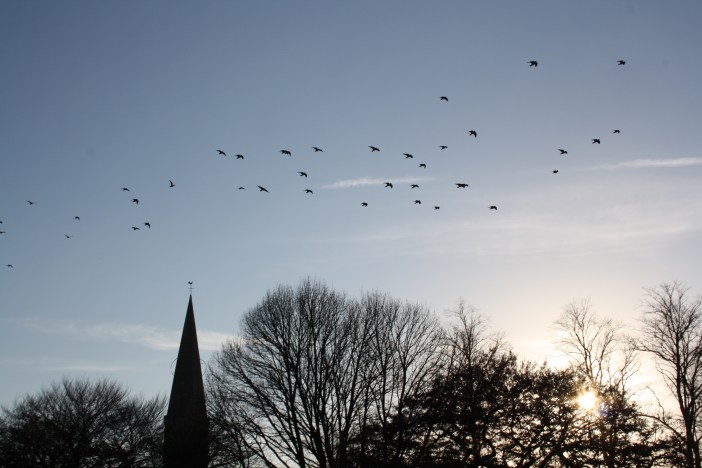
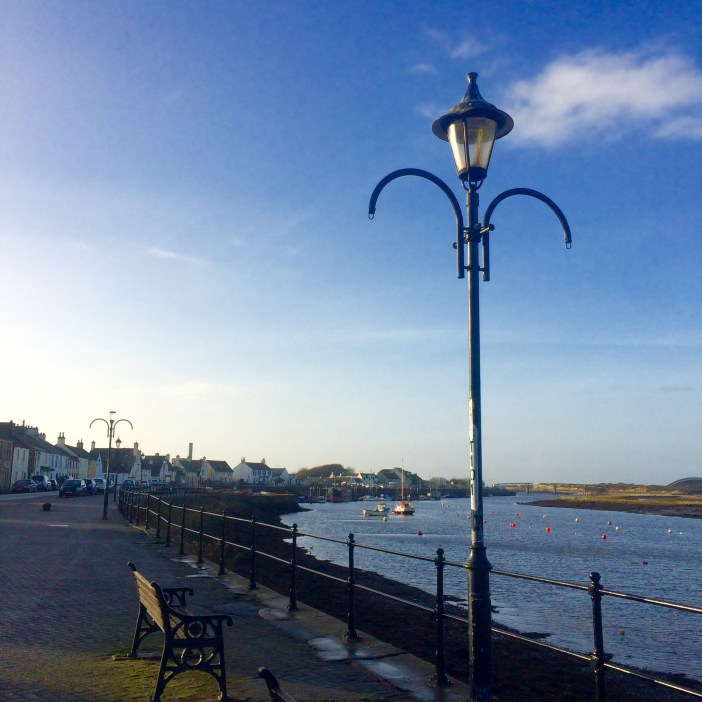
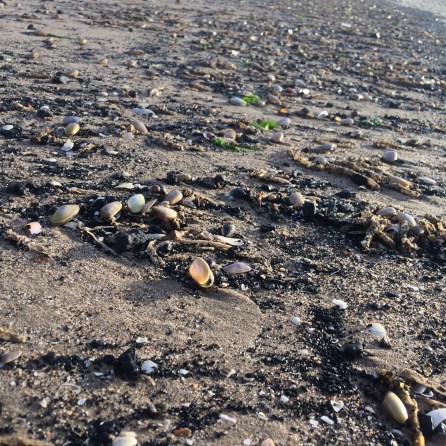

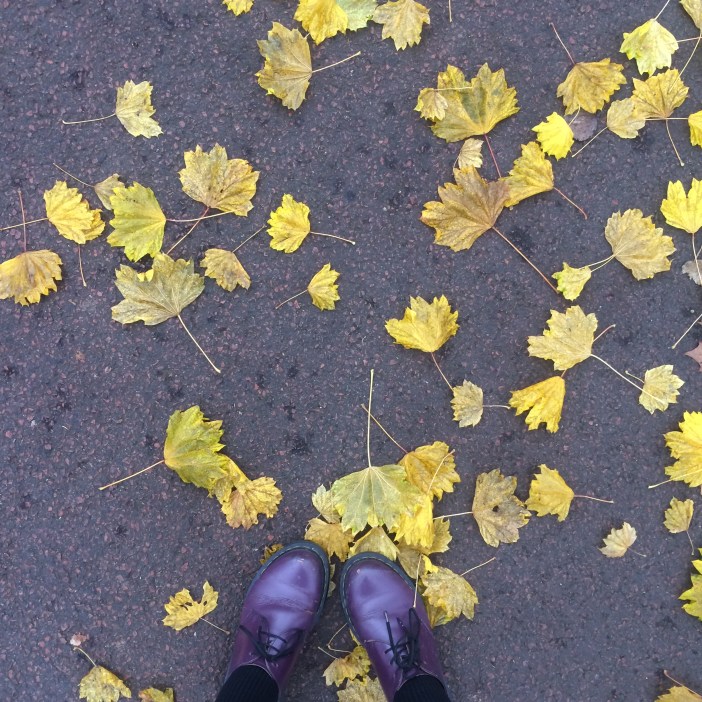
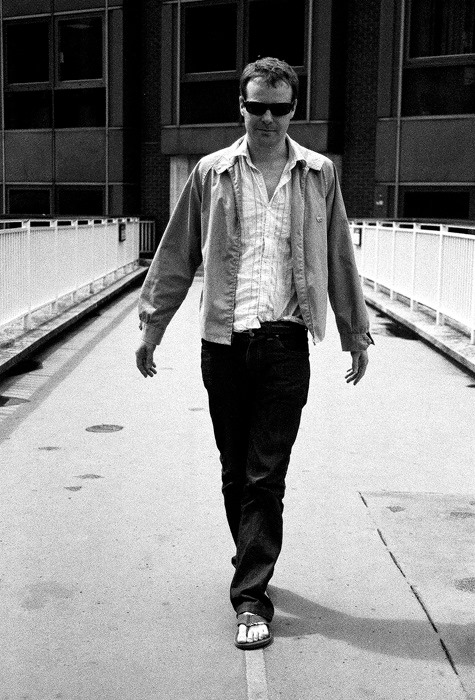
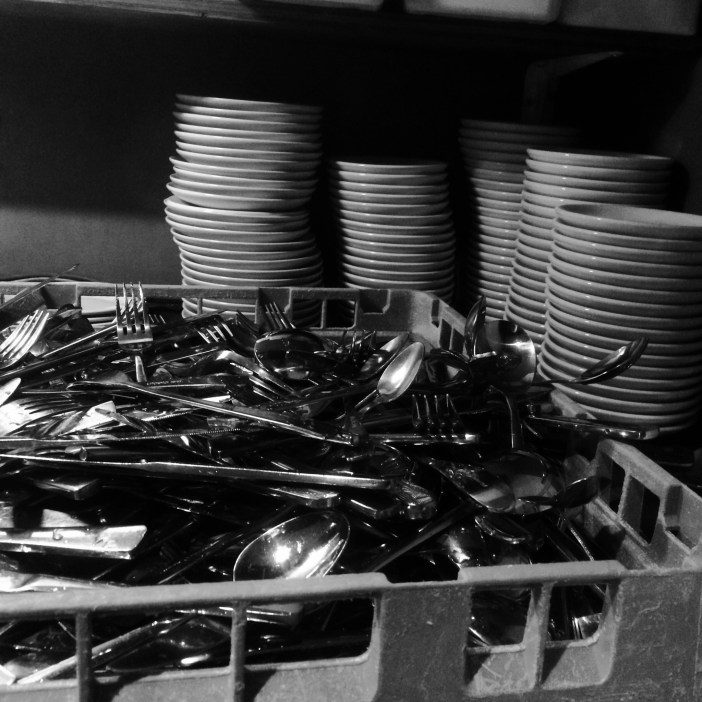
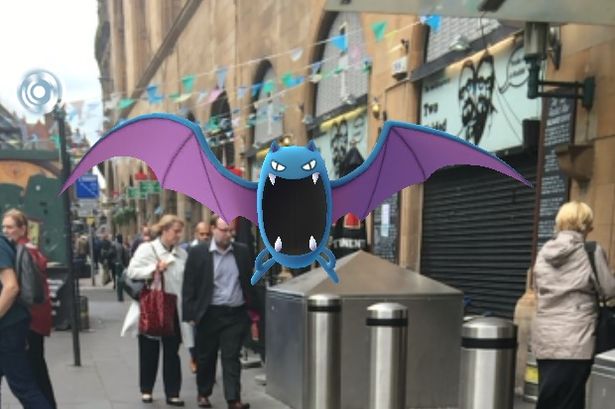
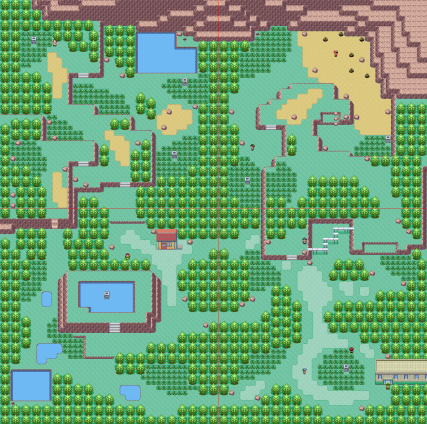
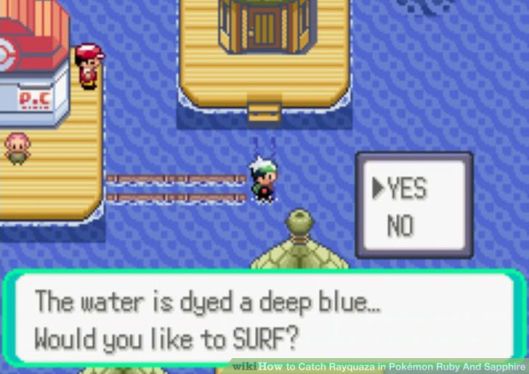

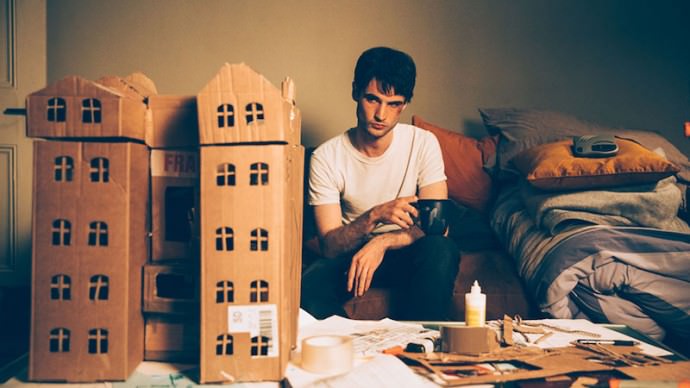


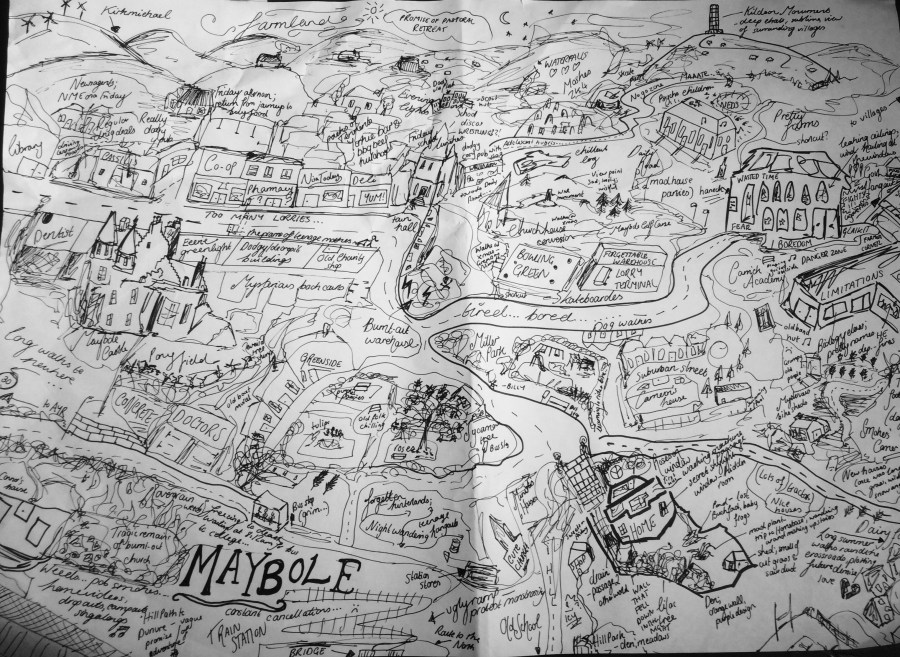
 mariaology