Top 15 Albums of 2015


(in alphabetical order…)

beach-house-depresssion-cherry-album1

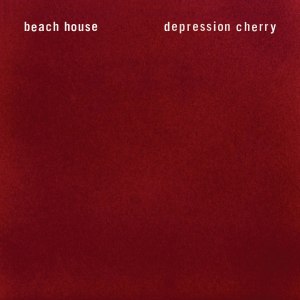
Beach House, Depression Cherry 

It’s moody and melancholy and perfect for Sunday afternoons in winter, where hardly an hour of light graces us with its presence. The singing is woozy and lush, the track titles are typical Beach House (‘Wildflower’, ‘Levitation’, ‘Days of Candy’) and a mellow, dissonant drone seems to drift over most of the songs. There’s a whispery feeling to the vocals and a scratchy-sounding organ keyboard. Also, the album is coated in soft red velvet, so the physical copy is pretty beautiful, and there’s definitely a ‘tactile’ sense to the music itself, with all the sparkling effects and the echoing texture of Legrand’s voice. I like Beach House for the same reason I like Cocteau Twins: the music enfolds you like the atoms (or pixels?) of another world – it doesn’t sound 100% human, there’s something too mystical about it. The band released a website with typed lyric sheets, which adds to the sense that the whole album is a hazy collection of dream poems. It was released in late summer but I have listened to it a lot more in winter; it’s like the sound of  Victoria Legrand’s hazy, drifting vocals is better suited to the cold weather, the whiter light, the sheen of ice.

Favourite tracks: ‘Space Song’,  ‘Levitation’, ‘PPP’.

beirut-no-no-no

Beirut, No, No, No

There were a few weeks where I sort of just played this album on repeat in the restaurant where I work. Generally it was pretty harshly reviewed and there is a sense that single tracks stand out more than the whole. Still, I appreciated that cheerful continental folk vibe to get me through the autumn and winter with its remnants of pastel-hazed summer. Even though the songwriting might not be as *original* or *inventive* as 2011’s The Rip Tide, you can have a lot of fun with some staccato beats and percussion. Plus I love a bit of brass.

Favourite tracks: ‘No, No, No’, ‘Gibraltar’, ‘Perth’.

packshot

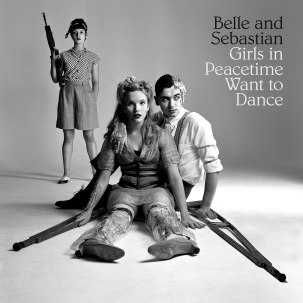
Belle and Sebastian, Girls in Peacetime Want to Dance

Just the sort of lively pop weirdness you need to brighten your January, when the album was released. I love Belle and Sebastian, the way they create simple catchy folk-pop but base it around stories and characters and inventive lyrics about lost girls and ~cutely~ wayward indie kids. There’s a bit more experimentation than usual on this one: from the funky disco atmosphere of ‘The Party Line’  and ‘Perfect Couples’ to the epic near-7-minute dance track ‘Enter Sylvia Plath’, there’s something for everyone. ‘Nobody’s Empire’, which approaches the subject of lead singer Stuart Murdoch’s MS, reveals Murdoch’s general genius for lilting melodies punched through with a weightier-than-usual buildup and bass line. ‘Ever Had a Little Faith’ is maybe the closest song to old-school Belle & Sebastian. Generally this album is full of interesting licks and typically witty lyrics, and its experimentation lends well to repeated listening.

Favourite tracks: ‘Nobody’s Empire’, ‘The Party Line’, ‘Enter Sylvia Plath’.

1035x1035-MI0003841720

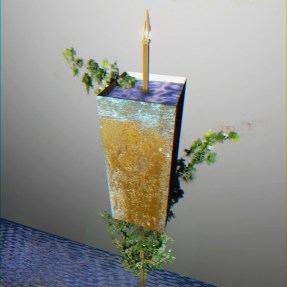
Blur, The Magic Whip

Blur’s first album since 2003, The Magic Whip is kind of a mystical, surreal experience. Along with the artwork (a neon ice cream and some Chinese lettering), the album’s whole vibe sort of reminds me of this weird game I used to have for Sega Megadrive where you could do fight scenes on top of an apartment roof in the depths of Tokyo. Everything was blurry and glitchy and full of bright lights against the backdrop of glittering darkness. The Magic Whip is set in Hong Kong rather than Tokyo, but it has that strange sense of futuristic metropolitan darkness. It takes away the grunginess of Blur and sonic spaciness of 13 and enters a more self-aware, perhaps even ‘postmodern’ (ugh, the implications of that term) territory.

Well, for one there’s the obvious cultural borrowing from Hong Kong, where the album came together; there’s also the sense of meta-britpop on songs like ‘Lonesome Street’ and ‘I Broadcast’ which update the whistle-along laddish bounce of 1990s culture for a more accelerated version of the jaded digital and cosmopolitan era (‘Lonesome Street’ is overlaid with the sound of someone reporting – on the news? – sparkling synths and echoing city street noises). The sense of absurdity and collapse, like in ‘I Broadcast’ where the chorus falls into the repeated line: I’m running being played over Graham Coxon’s sharp guitar. It’s a complex and intriguing album with some sweet bass lines and dreamy Damon Albarn vocals. Listening to it really does sort of take you somewhere else. Also, ‘Mirrorball’, the record’s final song, sounds almost like it belongs on a David Lynch soundtrack.

Favourite tracks: ‘Ghost Ship’, ‘Pyongyang’, ‘My Terracotta Heart’.

clarence_clarity_-_no_now

Clarence Clarity, No Now 

From the glitchy, 90s Windows computer aesthetic of its videos to the vibrating bass, disco rhythms and shrieking guitars and falsetto vocals, this is one crazy good album. Not many folk are brave enough to put out 20 tracks on their debut album, but the effect of doing so sort of drags you underwater into a world of sound that’s electric as a field of lightning, as shrieking neon as that purple lava you get in Sonic the Hedgehog 2, Chemical Plant Zone. Sorry, is that mixed metaphors? Who cares, with music like this, everything is mixed to fuck. 

Some of the songs have a cinematic feel, which is hard to define except for a sort of atmosphere created by all the glitchy sound effects and samples (listen to the start of ‘The Gospel Truth’, for example). It’s a relief when Clarity strips back into ‘purer’ or softer vocals (see ‘With No Fear’), but also a great feeling when the effects pedals step on again, like having water thrown over you. Cold, shocking, refreshing. Kinda like the whole album. You’ve got references to ‘worm holes’ and ‘cancer™ in the water’ and all sorts of surreal cyber imagery and staccato vocals in reverse (‘Tathagatagarbha’ is straight out of Twin Peaks’ Red Room, right?). ‘Those Who Can’t, Cheat’ is the kind of psycho disco death funk they would play at the end of the world. I was lucky enough to see Clarence supporting Jungle in Edinburgh this year and I can say that it all sounds sweet as hell live – the band’s energy really plays out the craziness of the album – which isn’t always always the case when the production is one of the best parts.

Favourite tracks: ‘Those Who Can’t, Cheat’, ‘Bloodbarf’, ‘Will to Believe’.

(Also, I think ‘Hit Factory of Sadness’ is one of my favourite song titles ever).

FoalsCover

Foals, What Went Down 

I guess the critical/commercial success of Foals’ fourth album (in October they were voted ‘Best Act in the World Today’ at the Q Awards) means I don’t need to say much to justify my choice. I’ve been with Foals ever since they were bouncing out math rock on early Skins, and this album was no letdown. For one, it has several tracks which follow in the footsteps of ‘Spanish Sahara’: ‘London Thunder’ is a beautiful, atmospheric track with a lovely build, and even Lana Del Rey has sung her praises for ‘Give It All’, which addresses love as a kind of fragile presence/absence, of digital melancholia – ‘Give me the way it could have been / Give me the ghost that’s on the screen’. ‘Birch Tree’ has that sort of upbeat, syncopated feel reminiscent of ‘My Number’ (from Holy Fire). Other than the softer tracks, it’s a whole lot rockier than previous albums, especially on the frenzied ‘What Went Down’ and jangly guitar rhythms of ‘Mountain at My Gates’. I listened to this all throughout the month it took to move from my old flat, so it will always have that sense of dislocation and haunting futurity for me… (plus the stress of shifting boxes and scrubbing kitchens).

Favourite tracks: ‘Mountain At My Gates’, ‘Birch Tree’, ‘London Thunder’.

music-gaz-coombes-matador-cover-art_1422624416

Gaz Coombes, Matador

I have to confess that while Matador was released in April, I didn’t actually listen to this album until about a month ago, when I found out my cousin (the lovely Hannah Lou Clark) was supporting him on his UK tour dates. I saw Supergrass a long time ago when they supported Coldplay at Bellahouston Park, but I don’t remember much of it, especially as I was right at the back! This is such a gorgeous album though, I swear I’ve listened to ‘Matador’ on repeat to and from work for the last fortnight at least. It has great range and depth, another fine example of the maturity that can come out of the Britpop era. Coombes can sound both delicate and powerful, and there’s a certainty, a sureness, to this record. There are songs whose haunting atmosphere is complimented by stunning but simple lyrics (‘Worry fades the soul away / I’ll take the hurricane for you’ – ’20/20’) and climactic choruses. If I close my eyes I imagine this song being played over a dramatic film scene, like someone running through city streets, a breakdown, things exploding, changing. Something like that. I know it’s cheesy but there are definitely songs on this album which you could call sublime in the true sense of the word. Disorientating, awesome, majestic, powerful. Gospel influences, electronic beats, acoustic guitar. I’m still in love with it.

Favourite tracks (this was difficult, and may change): ‘The Girl Who Fell to Earth’, ‘Matador’, ’20/20’.

5f30eab1

Kurt Vile, B’lieve I’m Going Down

Aw man, there’s just this beautiful twang to Kurt Vile’s music that is so addictive. It’s not just his hair. The country twang of guitars, his sweetly droning, idiosyncratic voice. You can see the influence of Nick Drake, maybe a touch of Dylan, but also a very modern sense of disconnectedness, of goofiness even – the sense of being very self-aware but at the same time alienated from who that self is. Some of the songs sound a bit ballad-like, but there’s always a kind of dissonant, bluesy twist. He really nails his lyrics and imagery too: ‘I hang glide into the valley of ashes’, ‘A headache like a ShopVac coughing dust bunnies’. The twinge and stuffed wordiness of ‘Pretty Pimpin’ proves strangely addictive, as does that developing, repeating, turning, twanging guitar riff. ‘That’s Life, tho (almost hate to say)’ is a darker, sadder sort of folk ballad. Generally, it’s an album to listen to dreamily, maybe on a car journey, but also one that goes well in the background of bars, because it’s lively enough, and pretty damn cool.

Favourite tracks: ‘Pretty Pimpin’, ‘That’s life tho (almost hate to say)’, ‘I’m an Outlaw’.

Lanadelreycapa

Lana Del Rey, Honeymoon

I could rave about Lana all day. She has the genius of Lady Gaga, Bowie and Madonna in her creation of the ‘gangster Nancy Sinatra’ persona, but an old-school Hollywood voice that haunts and croons and glides over dark, sweet melodies. Honeymoon is very much a coherent piece of art. It’s a very visual album, much in the tradition of Del Rey’s previous work (the monochrome vibe of Ultraviolence played out in the gloomy, stripped back energy of the Dan Auerbach produced songs). Picture a summer-hazed beach with pastel huts and neon-signed strip clubs, peeling paint. Lana writhing about in her mint green muslin in the video for ‘High By the Beach’. It’s her dark paradise, a retro realm of sweet pop richly infused with jazz, blues, R&B, trap, disco and poetry. The loveliest recital of T. S. Eliot’s ‘Burnt Norton’ I’ve ever heard, soft and haunting. A Nina Simone cover. Tracks like ‘Salvatore’ and ‘Terrence Loves You’ really demonstrate the crystal clarity of her voice, as well as the strength of her range. The title track can be described in many ways, but I prefer the terms glimmering and cinematic. Really, it was the perfect soundtrack for a melancholy, post-graduation summer — except I swapped the retro cars and ice cream for long walks in Glasgow rain.

Favourite songs (again, so hard): ‘Terrence Loves You’, ‘Honeymoon’, ‘The Blackest Day’.

7af7acd9

Laura Marling, Short Movie 

It’s quite lovely to witness Laura Marling’s music maturity. From the honest folk pop of Alas I Cannot Swim to the stronger, mythological tones of Once I Was an Eagle, she has really developed and expanded her sound, not just in a literal sense but in a metaphysical one too. Does that make sense? I mean the way that her music opens worlds up. Eerie, dark soundscapes and cessations of space, interruptions and pauses and softly twangling guitars. Opening track ‘Warrior’ is spellbinding, allusive and elusive; full of echoes and misty vocals, guitar licks that curl round and round. It feels distinctively American, as opposed to, for example, the Englishness, countryside sweetness of I Speak Because I Can. There’s a sense of being lost, looking for something (‘the warrior I’ve been looking for’), of endlessly journeying.

For most of the record Marling steps away from the acoustic songwriting (delicate, but sometimes forceful) which won her fame in earlier records; her electric guitar simmers through the tracks, building around her increasingly impassioned vocals. On ‘False Hope’, a track about Hurricane Sandy, she steals us away from the vague landscapes of ‘Warrior’ to the metropolis, the Upper West Side, where darkness falls and electricity fails as she tells us of the storm. The weather plays pathetic fallacy to the storminess of the singer’s mind: ‘Is it still okay that I don’t know how to be at all? / There’s a party uptown but I just don’t feel like I belong at all / Do I?’. ‘False Hope’ slides into a more traditional Marling track, ‘I Feel Your Love’, which rolls along like a nice old folk song, a bit Staves-like maybe, but more haunting. Her more ‘spoken’ delivery of vocals, intertwined with some searingly brief high notes, in ‘Strange’ for example, bring to mind Joni Mitchell. At times she addresses different characters: spurned lovers, young girls who mirror herself, the ‘woman downstairs’ who’s lost her mind. The overall effect is less introspective, and more fleeting, transient: the self behind the voice slips in and out of view, through various narratives and images. There’s a restlessness which contributes to the Americana vibe, but one which is perhaps also simply the natural expression of a successful singer songwriter still only 25, trying to find her way in the world…

Favourite tracks: ‘Warrior’, ‘False Hope’, ‘Worship Me’.

large

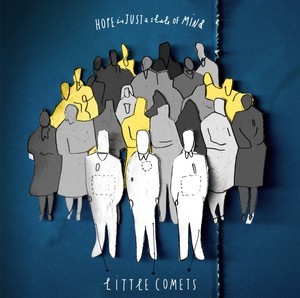
Little Comets, Hope is Just a State of Mind

My favourite band for kitchen sink indie…I like how Little Comets ease you into their changes in sound through various EPs released throughout the year. With the tingly guitars released on ‘Salt’ and the earnest lyrics, a ballad (‘The Assisted’) and emphatic drumming (‘Ex-Cathedra’) of ‘The Sanguine EP’, listeners were prepared for what was to come on Hope is Just a State of Mind, which seems to head towards what might be called a more eccentrically pop direction. One of my favourite things about this band is how they delve into the political and there’s certainly no avoiding it on this album, from the dig at Robin Thicke’s gender politics in ‘The Blur, the Line, and the Thickest of Onions’ to the lethargy of rock and roll in ‘Formula’ and the cultural demonisation of single motherhood in ‘The Daily Grind’: ‘You must feel so proud / Stigmatising every single mother / While your own world’s falling down’. Songs like ‘The Gift of Sound’ and ‘Formula’ have a more straightforward energetic pop vibe, whereas ‘B&B’ begins with an accapella moment and revolves around the repeated line: ‘my own mother cannot take me back’. There’s lots of thudding drumming and a swinging sort of emphatic, repetitive melody. The song, incidentally, is about bedroom tax and Robert Coles has eloquently said of the lyrics:

‘Lyrically the words came quite quickly as I always had the “even my own mother cannot take me back” line in my head from writing the melody. I knew it was going to be about politics: specifically the patronisation of people by the political class in both ideology and delivery, and the way that my own region has been altered by the blue hoards of conservatism.

The title stems from a tweet by Grant Shapps regarding the last budget – “budget 2014 cuts bingo & beer tax helping hardworking people do more of the things they enjoy. RT to spread the word”. Beer and Bingo – because there’s nothing else to do.

I think the first verse is just frustration with the attitude put across by politicians that suggests that they think people are total idiots – policies light on detail, simplistic ideology, framing debates in headlines, constant ill behaviour. Plus from the other end of the scale the total demonisation of the less well off in the swingeing benefit cuts typified by the bedroom tax. I just think it is bizarre and to treat us with this brazen amount of contempt.

It really got me thinking about the north east getting so bashed up in the time of Thatcher – destroying lives and communities because of a need to dominate on an ideological level. I think the second verse tries to convey the depressing notion that beyond this pain, she also eradicated trades and skillsets that had been built for hundreds of years without the prospect of anything new, or transferability. To extinguish a trade, a way of life…. Wow….. That’s a pretty crazy course of action.

It’s almost like she stole those years from us – and it feels a little like it is being echoed now. Taking away what someone relies on is oppression, and this is being felt in communities across our country today – horrified in the knowledge that it will continue until people are so battered that they accept it. The worst part is if you look closely enough, past Grant’s apparent carrot you can see the joy in the eyes behind the ghastly stick, and they look frighteningly familiar” (Source: Little Comets’ Lyric Blog).

I guess I’ve included the quote because I think the politics have become more direct in this album and it’s interesting to flesh out the backstory here. Sure, there have been plenty of ‘northern’ bands before, but rarely have I listened to a pop or indie band who engage with their politics so directly and so articulately (usually this space is reserved for punk or rock – Manic Street Preachers of course, representing a ‘marginalised’ Welsh perspective). Aside from lyrical content, you’ve got the usual pleasures of Little Comets harmonies, shredding guitar licks and bouncy rhythms. ‘My Boy William’ is wonderful live, the way it builds up and everyone following the drum rhythm. ‘Little Italy’ is great fun too, with its cascading melodies (liiiittalll iiiitaaalllyyyyy I reeAAd heeEre) and syncopated rhythm. It’s true, on this album (especially on ‘Salt’), the songs are very up and down, rarely straightforward and often lines are lyrically and melodically convoluted; this isn’t a criticism but more a reflection of what seems to be a desire to push the formulaic boundaries of pop, to infuse guitar chords with lush vocal harmonies and ringing percussion. To represent detailed, difficult subjects in pop is never going to be easy, but Little Comets nail it in their own unique, beautiful way. Look forward to seeing them again live next year!

Favourite tracks: ‘Don’t Fool Yourself’, ‘Little Italy’, ‘The Blur, the Line & the Thickest of Onions’.

The-Maccabees_Marks-To-Prove-It_cover

The Maccabees, Marks to Prove It

Well, to be honest I never would’ve thought I’d be including The Maccabees on my 2015 albums of the year. Over the last few years, I haven’t spared much thought for the band other than as another soundtrack to the general indie trend of the last ten years: a band mentioned frequently in NME perhaps, soundtracking lovelorn scenes in movies, but nothing particularly distinct other than in their creation of twee indie pop. However, one night after work I was lying on the floor recovering from a terrible shift with the radio on, listening to X-Posure With John Kennedy on what used to be XFM. The Maccabees were talking through their new album and playing the songs, and I was pleasantly surprised by how intriguing the sound was, as well as how articulate the band were in talking through the writing process and the stories behind the songs. I guess the next day I went out and bought the album. It definitely sounds a long way away from ‘Toothpaste Kisses’, though the added kazoos and varied percussion doesn’t spoil the simple joy of good plain songwriting. The songs have a weight to them, a grander atmosphere, especially the weird dissonance on the likes of ‘River Song’. ‘Silence’, however, is quietly beautiful, drifting along soft piano notes, subdued vocals and a somewhat eerie sample of an answering machine voice.

Where once you would recommend The Maccabees mostly to fans of The Mystery Jets, Pigeon Detectives or Futureheads, this album feels much more grownup, darker somehow, wilder and expansive. The lyrics vary in subject from the gentrification of London’s Elephant & Castle (the band’s hometown) to heartbreak (‘When you’re scared and lost / Don’t let it all build up’) and well, happiness (‘Something Like Happiness’). It’s refreshing to have a song that does just feel like at times like a gentle old ode to joy: ‘If you love them / Go and tell them’. ‘Marks to Prove It’, the opening track, feels confident and bouncy, with a sharp riff and assured vocals. It would fit in with a fast pop set from The Futureheads, but the rallying battle cry that precedes Orlando Weeks’ voice announces something slightly stranger, a record with new edge.

Favourite tracks: ‘Silence’, ‘River Song’, ‘Something Like Happiness’.

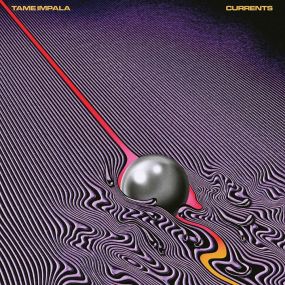
Currents_artwork_(Tame_Impala_album)

Tame Impala, Currents 

I was introduced to Tame Impala mostly from one of the chefs at work playing it in the kitchen on Sunday mornings, and weirdly enough his psychedelic brand of synth pop seems appropriate preparation for a day serving Sunday roasts to hungover customers. It’s the swelling bass and brilliant synths that really catch you, the smooth falsetto and tingling production. You can tell Kevin Parker is a dream at studio magic, with flawless instrumental arrangement that makes for a sound that could be big or chilled, depending on how you play it. There’s some dark keyboard drama, there’s a lovelorn anthem (‘Eventually’) and what might tenuously be described as weird disco funk. For some reason (maybe all the synths, gossamer vocals and vintage-sounding guitars?) has a ‘bedroom-made’ feeling, but with a much slicker production than the DIY element might suggest. Some songs sound like they belong on a long, atmospheric train journey across a space desert; others sound like they’d fit on the cuts of drama interspersing a video game. There’s a dreaminess to songs like ‘Yes I’m Changing’, but a more radio-friendly funkiness to the likes of ‘The Less I Know the Better’, or even ‘Love/Paranoia’, with its silky beats and finger clicks. As the album progresses, the theme of heartbreak starts to really solidify and I guess that’s the overriding drive of the songs – a heartbreak that slows and stifles, morphs between introspection and the temptation of mild bombast.

Favourite tracks: ‘Yes I’m Changing’, ‘The Less I Know the Better’, ‘Love/Paranoia’.

81-uo32700L._SL1500_

Stornoway, Bonxie

This was a lovely album to enjoy in spring, from the hopeful folksiness to the cute origami bird on the cover. I guess it got me through that period of hell in my life that was finals. I would go on walks around Kelvindale where all the cherry blossoms were, listening to the soft acoustic licks and all the soothing bird sound effects. It’s an album to enjoy by the sea perhaps, full of a sort of longing. There’s the noise of distant foghorns, the rolling harp-like guitar and sparkling xylophone over the drifting shimmer of a wave-like cymbal. This is probably my favourite Stornaway album, or at least equal to the debut, Beachcomber’s Windowsill because of its more folksy atmosphere, its immersion in nature — the sense of being lost, deliciously lost by the edge of the ocean. ‘The Road You Didn’t Take’ especially boasts a shanty-like chorus which adds to the nautical theme and sort of swells up like you’re caught at sea, singing along irrevocably. Melodies build up to climaxes and fall back down into subdued, slower choruses, as if the speaker tries to articulate something about his surroundings (the beautiful environment) but fails to express them entirely. Sweet, comforting guitar licks glide us through (e.g., the start of ‘Sing With Our Senses’). Vocals are never aggressive, only sometimes shrill and generally soothing – like a bird’s? Apparently over 20 types of bird donated their song to the album, and let’s not forget that singer Brian Briggs is a Dr. of Ornithology! It’s just a lovely escapist sort of album, reminding you of seaside holidays from years ago, that childlike ability to sink into your surroundings and find wonder in a leaf, a taste of salt air, a bird call.

Favourite tracks:  ‘The Road You Didn’t Take’, ‘We Were Giants’, ‘Between the Saltmarsh and the Sea’.

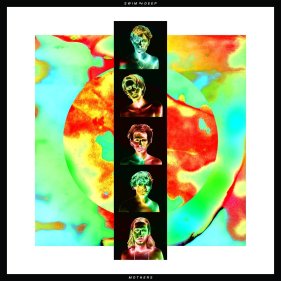
81HZecd+uwL._SL1500_

Swim Deep, Mothers

It seems everyone has been describing this album as Swim Deep’s foray into psych-pop. You only have to take a glance at the warping colour bleed of the cover art to pick up those vibes. The honey sweet guitar pop of Where the Heaven Are We has morphed into something heavier, more saturated. There are so many influences, but I suppose you could start with psychedelic music, house and kraut rock. Lots of bursting, colourful synths. It reminds me of The Horrors’ Primary Colours, not only because it’s a ‘change-around’ album, but also the subdued, atmospheric reworking of prior image and musical style. Songs like ‘Honey’ and ‘The Sea’ from their debut album were chilled and loose with catchy melodies, and while Mothers retains the catchy melodies, its style has tightened up a bit. The instrumental elements are more complex; songs open up a multilayered world rather than the silver stream of a simple pop tune. ‘To My Brother’ has an epic quality, building up to the chorus with some extravagance – weirdly, the sort of mistiness of the vocals and quirky synths remind me of Seal. I’m not sure why, or whether that’s even an accurate comparison, but the link just popped into my head. I love the way critics have compared ‘Namaste’ to discordant game show music, which obviously fits in with the 1990s vibes of the video. All that beige, those glasses, the sense of mania reflected in the music! It’s more mature maybe, but still fun.

Favourite tracks: ‘To My Brother’, ‘Namaste’, ‘Imagination’.

A few others…

  • Beach House, Thank Your Lucky Stars (two albums in one year, ‘nuff said)
  • Florence & the Machine, How Big, How Blue, How Beautiful 
  • The Libertines, Anthems for Doomed Youth (listening to it to drag up the old nostalgia of discovering the first albums, for the lovely production and Doherty vocals on ‘You’re My Waterloo’ and Carl Barat’s very English swagger).
  • Prides, The Way Back Up (Stewart Brock has come a fair way since Drive-By Argument (big up a band from Ayr!) but the wide, electronic sound of Prides has its heart in the original synthiness of Drive-By Argument which developed into more distinctly electronic side-project, Midnight Lion. Obvious comparisons are to Chvrches, but maybe also a bit of Daft Punk. Radio-friendly but I’d imagine really big and energetic live, plus whenever I hear them I get sweet teenage nostalgia for Drive-By Argument).
  • Sufjan Stevens, Carrie & Lowell 
  • Years & Years, Communion (sparkly EDM pop with plenty of pluck, from a band whose singer starred in Skins and Stuart Murdoch’s indie flick, God Help the Girl).

Tropical

IMG_012301

Tropical

You used to worry about the palms: there was something wrong,
you said,
if the palms weren’t sighing.

You relished the soft peel of the wind through those palms,
the ones by the hotel garden.
We’ve been here every year
since Dad died.

The white beach sand is a mouthful of moonlight.
We sit up late drinking crushed fruit
and you say strange things, as you always do—
have you ever eaten a mango in the bath?
You would live your life like that,
all the time you said, eating mangoes in the bath.

All that pulp and mess, all that flesh.
Dad died in the spring, when blossoms
of soft pink cherry gathered on my lawn.
The baby lolled around in it like April snow
and we watched her giggle, ribbon
flying out from her hair. He would’ve loved that,
seeing her there.

The cancer took the green out his eyes,
ate the skin of his face.
Even when they pumped him full of fat and creamy vitamins,
the bones kept poking, pointing.
His face was a mask of something;
I couldn’t let the baby near it.

I imagine you prefer it here
to back home. You like the ooze
of the days, the way the maids make the beds;
the emerald green of the parakeet,
early mornings where the tide sparkles. Still,
you saw signs in everything.

Dad used to come visit during monsoon season.
He wrote reams of prose,
lapping up slushfuls of rain. He wrote
in the small hours, when he wasn’t working.

We lost the notes.
We’ve only the stuff on his business trips,
lost code on his laptop.
We haven’t a sense
of what to him was sharp or clear, what it was
that brought him over.
Just the whispering palms, the sleepy tense—
one day I’ll take the baby here.

Live Review: The Staves @ The Old Fruitmarket, Glasgow

source: www.thestaves.com
source: http://www.thestaves.com

My first encounter with The Staves was in the most mundane of places: a lift. It was a couple of years ago and they were playing downstairs in the venue where I work, and I remember being pretty gutted that I was working that Saturday night and couldn’t go and see them. Anyway, I’d mostly forgotten that they were playing by the time I was actually on shift. I got in the lift with my stack of glass trays and as the lift stopped at the next floor, three young women stepped in. I recall being in awe of their beautiful hair, dresses and denim and I knew instantly that they must be The Staves – they seemed even cooler in real life. I had a burning urge to blurt out I love your music but instead I stared down at my crates of dirty glasses, listening to them chat casually about where they were going to go for dinner that night. Rock and roll, huh?

Well last night I got to see them live (properly). When they played a couple of years ago, I got to nip downstairs for a quick look once service had quietened down. Instantly I was hooked by their soaring harmonies, and it was pretty rubbish having to drag myself back upstairs to work. With a full set, the spell never breaks. A venue like The Old Fruitmarket seems perfect for them, with just the right amount of nostalgic quaintness mixed in with a kind of gritty city cool: colourful fairy lights but also decent spirits behind the bar, a balcony which you can watch the stage from. They had support from Gabriel Rios who played this sort of expressive, beat-heavy folk music. Each song seemed to tell a story, and Rios himself was very comfortable chatting away between sets about Scotland’s breathtaking scenery and the even more breathtaking brownie he had sampled nearby before the show. I should add that the beats were made on a gorgeous big double bass; you know, the kind of fist-tapping thwack that echoes beautifully, syncopating with sweet strings to have you hooked. Anyway, it was a really interesting dynamic, with neat guitar playing and the strings and the rocky/hiphoppy/folky vocals. Yeah, something like that.

The Staves themselves arrived onstage not long after. Up amongst the blue plumes of smoke, they seem so ethereal, their voices suddenly soaring through the silent air, shimmering drum rolls and percussion accompanying but only after a while, like a rain shower after the first burst of sunlight. You can’t help but think of all sorts of mythical sisters: those of the tv show Charmed, for one. Especially when they do that thing where they gather round the mic and sing all these amazing, breathtaking harmonies which even the adoring crowd refuses to interrupt (till all the whooping cheers afterwards). They played lots of familiar songs, with key tracks from the new album, If I Was, like ‘Black and White’ and ‘Blood I Bled’ mixed in with shorter songs, samples of harmonies and snatches of tracks the audience hasn’t heard before. In-between songs, they lit up the stage with bits of sibling banter, telling us about how as kids they bonded together as a “triad/tripod/tricycle” and shut out their parents by developing a dialect borrowed from The Simpsons, Clueless and various other random films and tv shows. While one of them wistfully dedicates the next song to their parents, “wherever you may be”, another retorts “I’m pretty sure they’ll be in Watford right now” – cue giggles and mock gazing out over the ocean of dry iced audience. There are a lot of giggles and chat and you can tell they’ve really grown relaxed with their stage presence, and it really draws the audience in too. Just the right balance between ethereal and down-to-earth politeness, with that very English way of complimenting everything – the crowd, venue, support act – whenever they can: “This venue is fucking amazing”.

It all flows together perfectly, and the enchanting quality of their music comes through most, perhaps, on the handful of sweeter, more pared-down tracks they played from their debut album, Dead & Born & Grown. You get that sense of their pure, raw talent on more stripped-back tracks like ‘Eagle Song’, which has haunting sort of folky lyrics and there’s a sense of nostalgia to it: Oh, to be lost, / Oh, to be wasting my time. There’s also a feeling of deep history and time – Of old battles lost, battles won – and then the hopeful kick: Call me in the morning I’ll be alright. It’s a comforting song; one of my favourites. The new tracks have a bolder edge, but they have kept earlier material fresh with a more upbeat version of the lovely ‘Mexico’ from Dead & Born & Grown. It all just sounds amazing: clear, vivid, strong and tight. You can tell they are really great musicians, experimenting with loops and percussion and again firing out those haunting harmonies. They even threw in a cover of Bombay Bicycle Club’s ‘Feel’, which was really cool and successfully reworked the poppy Bollywood mashup feel of the original using their signature strings, sparkling guitar and those crystal clear, melodic voices.

There’s something I recall Conor Oberst saying about First Aid Kit in an interview/some video online, commenting on how they have this mystical sisterly quality about them that carries through in their voices. You really feel that too with The Staves. They have this lovely innocence in their earlier songs, which have a deep folkiness, a softer kind of choral vibe (a bit like Fleet Foxes) which is steeped in landscape (‘Winter Trees’ will forever remind me of one of my first winters at university, wandering around Kelvingrove in the crunching snow). Their cover of ‘Silver Dagger’ (unfortunately it wasn’t played last night) is just as lovely as Fleet Foxes’ and perhaps a fitting tribute to older folk legends: Joan Baez and Bob Dylan, for one example. The new album is certainly edgier and perhaps more fun (rock’n’roll?), but also has its dark, lonesome moments (fittingly, it was produced by Bon Iver), approaching more bitter subjects like relationships (Suffer me as I suffer you, ‘Blood I Bled’) and heartache (‘Don’t You Call Me Anymore’, which incidentally, they made a good joke saying that it was a song about cold callers). They play with silence and soft, lush melodies which build through rising harmonies, and not only is this a dream to listen to on CD (taking you back to the sleepy world of a Bon Iver album) but also a real kick live. All in all, The Staves at the Old Fruitmarket Glasgow was a gorgeous gig, the with an encore where they played new track (with lots of good hearty mmmmming) ‘Tired as Fuck’ and then a grittier version of ‘Teeth White’, where already you can feel their growing sense of rock’n’roll excess…And I wanna know / When I can start taking it slow / Cause I’ve had enough. Keep it coming!

The Melancholy of Lana Del Rey

Source: Vogue Australia

 I even enjoy dying in the character who is dying.

— Franz Kafka

Every time I close my eyes,
It’s like a dark paradise

There’s something apocalyptic about a Blood Moon. The sense of waste and transient beauty, light and life shedding away. The moon takes its thirty-year delayed menstruation; red cloud wisps over its shining face like clots of blood being pulled across a pool of silver. Somewhere out there, lovers are lying in lush paradise, staring up at this white eye opened by god; far away, drowned in stars. A voice swirls like smoke over soft, shimmery guitar. It’s the eclipse, sometime about now, then, yesterday, and I am or I was listening to Lana Del Rey.

Honeymoon, then going back to Dark Paradise. Insomnia in the space between night and day; between one universe and another, always afloat in claustrophobia. Returning to this song again and again, its repetition, invoking the familiar sadness and masochism that Lana dreamt up only a few years ago, you’re surrounded by an eternal world of neon palms, boulevards dripped in milky dusk, the sickly excess of tequila sunrise against soaring choruses and stripped-back lyrics. In a way, you fall or sink into Lana Del Rey’s music. Like Kubla Kahn, the eponymous Chinese emperor of Coleridge’s opium-provoked fragment poem, you are sucked dreamily into the sultry visual world of dark objects, consumer heaven, the young and beautiful place of honeydew where you are invited to drink ‘the milk of paradise’. Lana’s swooning melodies charm over time, drawing you into an atmosphere of narcotised darkness which evokes a silent movie – even as the interplay between sound and image is as crucial a set of semiotics as anything Roland Barthes might analyse. You could fall back into the darkness, be seduced by the languid timeless sigh which slides over memories, nostalgia for lost evenings, red dresses and cigarettes, lost girls pressed up against bad boys in clubs, feeling like their whole existence is just a vision, propelling their electric bodies on and on as if in tune to Freud’s death drive.

Much of Lana’s music is about desire: the kind of desire that doesn’t leave you cut-up on the kitchen floor in crude emotion (a la Natalie Imbruglia, ‘Torn’), but passes through that place in the heart of culture that falls into absence and darkness. The secret hollow of modernity. It makes sense that she sung the sultry standout track for Baz Luhrmann’s 2013 The Great Gatsby adaptation, ‘Young and Beautiful’. Del Rey’s America is so Art Deco, from the typeface of her new album, to her obsession with cars and jazz and girls called Carmen, the fragile magic of Hollywood glamour which often bleeds at the seams. Lana returns to that dull wound and picks at it, indifferently, till it’s fresh again – a more ethereal thing that transcends the rotting body of America’s culture. Sex, violence, money, power, charisma; they all blur together in Lana’s fixated, addictive lyrics. In her performance, she already knows the irrelevance of authenticity; it makes her internet-immune, a kind of perfect. Nobody can critique her, because she’s always one step ahead. Despite the success of Lady Gaga, who wears her gender performativity on her sleeve, American culture remains obsessed with the cult of authenticity. Lana has been attacked for ‘making up’ the stories portrayed in her songs, the easy-love lifestyle she presents; for having plastic surgery and performing under an alias that nods more to Hollywood mythology than the girl-next-door vibes of her real name, Elizabeth Grant. Remember James Frey, the ‘man who rewrote his life’ and was subsequently attacked by Oprah when she discovered he’d fabricated and exaggerated a hefty chunk of his memoir of drug addiction? Lana, like James Frey, like Hemingway, is interested in the interplay between real life and fantasy, performance and authenticity; importantly, however, she shows how real life is itself played out and realised through the lens of mediated fantasy. Her songs betray a Baudrillardian ecstasy of communication, simulacra and simulations, updated for an age where the past is showered with the longed-for shroud of Hollywood glamour, where the present is fragmented, split across the Internet (where Lana first made her success, sensation).

***

Isn’t it lovely when somebody makes albums that really feel like art? From Born to Die’s glamorous sadness draped in an American flag, to the monochrome somnolence of Ultraviolence (produced, appropriately, by Dan Auerbach of The Black Keys), each of Lana Del Rey’s records captures a persona, but one which shifts and gathers nuance in the filters of crooning choruses and soft guitars, the distinctive colour charts of an album cover. Born to Die: pastel blues and palm trees, red lips and smoky eyes; the glossy, time-travelling Americana of her short film Tropico (2013), whose flashy symbolism mixes purity with moral pollution, the Garden of Eden with unicorns and gangsters. Ultraviolence: black and white, the spare sex of sorrow. Her latest offering, Honeymoon, sinks deliciously a familiar aura of daydreams, heartache and a sense of mesmerising stasis captured in Lana’s recital of ‘Burnt Norton’ from T.S Eliot’s Four Quartets, which evokes an abstracted and absent conception of time, slipping away into endlessly echoing, impossible memory…

Footfalls echo in the memory. Sound effects; quiet sirens, the soft familiar crackle of static, reminding us of the temporal duration, the space of presence that opens up with each play of the song, then closes again in silence – but always there, always there waiting in possibility, for the next click, the next play. Down the passage which we did not take. 

In the album sleeve, the white printed lyrics to ‘High By the Beach’ flicker and disappear in the yellow-gold light of a glossy photo depicting a tree-lined avenue. Lana Del Rey songs always paint little vignettes of stories, but her characters frequently disappear from view, their situations dreamlike, slanted towards death but never reaching conclusion. Like any avant-garde novel worth its salt, Lana Del Rey’s music often bears a slightly creepy, unsettling quality, a sense of never being quite finished, a sense of repetition, frustration and surrealist reality. While she can master a good pop tune, Lana never gives us that self-satisfied pomp and narrative closure of a Taylor Swift song; there is an almost uncanny quality to her musical arrangements: the drifting melodies, tinges of trip hop, strings, rippling snares and minimal beats. Literary references abound: from that iconic reading of Allen Ginsberg’s Howl in Tropico, to the album title Ultraviolence (alluding to the random acts of ‘ultra-violence which the teenage protagonist of Anthony Burgess’ dystopian novel A Clockwork Orange is addicted to) and all that sinister seduction of ‘Carmen’: ‘It’s alarming, honestly, how charming she can be’, in a nod to Vladimir Nabokov’s Lolita. In ‘Ride’ she references the sexual plight of Tennessee Williams’ Blanche DuBois, drifting through life by ‘relying on the kindness of strangers’; in a way, Blanche is a perfect Lana Del Rey heroine. Not only is she a ‘fallen woman’ but she is also an alcoholic, guzzling bourbon and symbolically-charged cherry soda (My pussy tastes like Pepsi-Cola, / My eyes are wide like cherry pies – ‘Cola’), and longs to die in a most extravagant way, conflicted by her desire for purity and her sexual appetite: first, she will eat an ‘unwashed grape’ (the poisoned fruit of Eden, the rotten core of carnal pleasure) then be ‘buried at sea sewn up in a clean white sack and dropped overboard—at noon—in the blaze of summer—and into an ocean as blue as my first lover’s eyes!’.

Southern belle; Vivien Leigh as Blanche DuBois in Eliza Kazan's film adapation of Streetcar
Southern belle; Vivien Leigh as Blanche DuBois in Eliza Kazan’s film adapation of Streetcar

***

My baby lives in shades of blue
Blue eyes and jazz and attitude

Well New Orleans – the setting of A Streetcar Named Desire – is a city rich enough in jazz and attitude, especially in the 1940s. In a way, all of Del Rey’s characters are caught up on the deathward drive of streetcars named desire, only her streetcars have morphed into getaway vehicles and limousines, or else the rides of suburban rockstars: I spend my whole life driving in cars with boys / Riding around town, drinking in the white noise. The white noise? The ever-present static reality of radio and television, life flickering on amidst its background hum and rush. It’s an edgier version of Lorde’s ‘400 Luxe’, a delicate, pulsing tribute to the romance of small-town time wasting on roads where the houses don’t change:

We’re never done with killing time
Can I kill it with you?
Till our veins run red and…blue
We come around here all the time
Got a lot to not do, let me kill it with you

You pick me up and take me home again
Head out the window again
We’re hollow like the bottles that we drain
You drape your wrist over the steering wheel
Moses can drive from here
We might be hollow, but we’re brave

On the subject of heroines, Lana is constantly critiqued for her portrayal of women; namely, her ensemble of doomed and lovelorn characters who lavish over their hopeless agony and fail to resist the anonymous bad boys which recur in her songs. Yet there is an irony to this critique, because critics seem to forget that it is a woman who is pulling the strings over all these puppets. Lana slips in and out of her roles as easily as she slips between haunting, orchestral notes. She is always in control, her voice brilliant as smoky quartz crystal, even as she sings about being out of control. There is a litheness to her performance that indicates the strength of her fiction: Lana is like a novelist, fabricating a shadow world which shows up the underbelly of American culture, from its Golden Age of 1950s glamour to the fractured present, where alcohol and club culture meet the melting pixel pot of the Internet. I wish I was dead already, she can say in a Guardian interview, incanting it like a spell, letting Twitter fall on its knees with spits and stirs of protest and loathing. Prostitutes, gangsters, trailer trash alcoholics. These people, these liminal figures on the margins of society – stereotypes, yes, but vivid ones nonetheless – are the lifeblood of Lana’s music and as she renders them, they have emotional depth, a soulless soul, unlike hiphop’s deadpan delivery of gangster vocabulary. As her voice swells to a pitch we realise that Lana has already dismissed something as ‘crude’ as identity politics, embracing instead the freedom land of the seventies, free because America, land of opportunity (for white women, at least) had then opened up a new lifestyle, a new kind of being. There is power in being a sad girl, nasal and depressed but somehow free, as in the paean to glamorous dishevelment, ‘Cruel World’ (from Ultraviolence):  I like my candy and your heroin, / And I’m so happy, so happy now you’re gone. / Put my little red party dress on, / Everybody knows that I’m a mess, I’m crazy … ‘Cause you’re young, you’re wild, you’re free, / You’re dancing circles around me. There’s that cliché of Americana: being young and wild and free – think of Bruce Springsteen’s celebration of wild youth – and again, Lana places her voice in the hullabaloo of this tornado of deathly ecstasy, making herself the static one in the centre, languishing over her candy and heroine while everyone else dances circles around her.

05

***

‘I felt very still and empty, the way the eye of a tornado must feel, moving dully along in the middle of the surrounding hullabaloo’ — Sylvia Plath, The Bell Jar. 

Hiphop melancholia, narco-swing, vintage pop; whatever you wanna call it, Lana always kinda slips the net. Its her characters, her musical and metaphorical landscapes that draw you in. In a way, her songs are just as literary as any old poem.

Crying tears of gold, like lemonade. Here we are on ‘Ultraviolence’, drowning in violins and vats of sadness, relishing the salt taste and thinking of the ocean. The ocean haunts Honeymoon too. It’s there in the California blues, the ‘blue nail polish’ that’s her ‘favourite colour’ and ‘favourite tone of song’ in ‘The Blackest Day’, the sultry ice cream gleam of ‘Salvatore’ which glides in and out of languid Italian and consumable nouns (cacciatore, limousines), perhaps like a narcotised, Sinatra-style swing version of the Red Hot Chili Peppers’ ‘By the Way’ (the bit where they seem to throw a demented grocery list at you). Shady blue, summer rain, sparkling lights; it’s a beautiful snowflake of a song, catching its glitter in the strings and the la-da-da-da-daaaas which fall around you, soft and sad yet somehow delectable. The ocean is the darling of the suicidal American woman: it is the world’s womb, the waves that embrace desire, the space of endless multitude, escape from restrictive culture. In ‘Dark Paradise’, the singer is lying in the ocean singing your song – is this a meta statement, one persona talking back to the distant maker? All of Lana’s heroines are looking for that dark paradise; that refrain, But I wish I was dead. Think of Edna in Kate Chopin’s 1899 (later banned) novel of sexual awakening, The Awakening: Chopin’s impressionistic purple prose isn’t so far from the poetic melodrama of Lana’s lovelorn world: ‘The voice of the sea is seductive, never ceasing, whispering, clamouring, murmuring, inviting the soul to wander in abysses of solitude’. Chopin’s onomatopoeic prose chimes with Lana’s frequent use of sound effects, from the Fourth of July fireworks which open ‘National Anthem’ to the glitchy blips of ‘Video Games’ and twinkling bird sounds of the Hollywood hills in ‘Is This Happiness’…Expressions of desire flicker with the imagined bliss of paradise.

Source: https://unlockingkeyes.files.wordpress.com

In the conclusion to The Awakening, Edna steps out into the ocean, never to return, remembering as the horizon catches her eyes the sounds and scents of her childhood: the simple ‘hum of bees’ and ‘musky odour of pinks’ which fill the air narcotically. Walking into the ocean as Lana’s heroine writhes on her bed and balcony, longing to just get high by the beach, longing for that preserved moment of perfect stasis, the endless waves, the endless boulevard leading to a distant horizon of fathomless dark glass, tall buildings rising up amidst pink flamingoes like surrealist paintings. Haze of smoke, daytime closing.

***

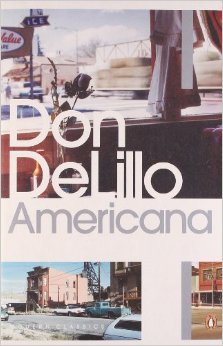
There is a passage from Don DeLillo’s debut novel, Americana (1971) which David Foster Wallace happened to underline in his copy of the book:

“David, I truly love you and hate you. I love you because you’re a beautiful thing and a good boy. You’re more innocent than a field mouse and I don’t believe you have any evil in you, if that’s possible. And I hate you because you’re sick. Illness at a certain point inspires pity. Beyond that point it becomes hateful. It becomes very much like a personal insult. One wishes to destroy the sickness by destroying the patient. You’re such a lovable cliché, my love, and I do hope you’re found the centre of your sin”.

A ‘lovable cliché’: the sort of thing Lana embraces, makes raw and coats in her voice of smoke and silk. The antithesis of beauty and disgust, love and hate; how our attempts to disinfect the one from the other are doomed to fail. Culture is a contradiction. In Americana, the protagonist David Bell is a TV executive who finds himself deeply apathetic, despite being attractive, sharp and popular with the ladies. He frequently articulates his experiences, his life at large, as if they were a film. He becomes obsessed with finding meaning, embarking on a Kerouac-esque quest at getting to the nitty-gritty of America’s heart of darkness, but this documentary gets messed up in his attempts to re-stage and re-enact events from his past. I guess it’s true that the novel is all about unattainable desire, whether this is desire for meaning, personal fulfilment or something more carnal – the search for the centre of your sin which could easily be a Lana lyric. What’s more, this pathological fixation of DeLillo’s David Bell to some extent parallels Del Rey’s obsession with the silver screen version of America; the photography of Honeymoon’s cover even resembles a sexier version of the Penguin cover for Americana:

51CoDBi3hlL._SY344_BO1,204,203,200_

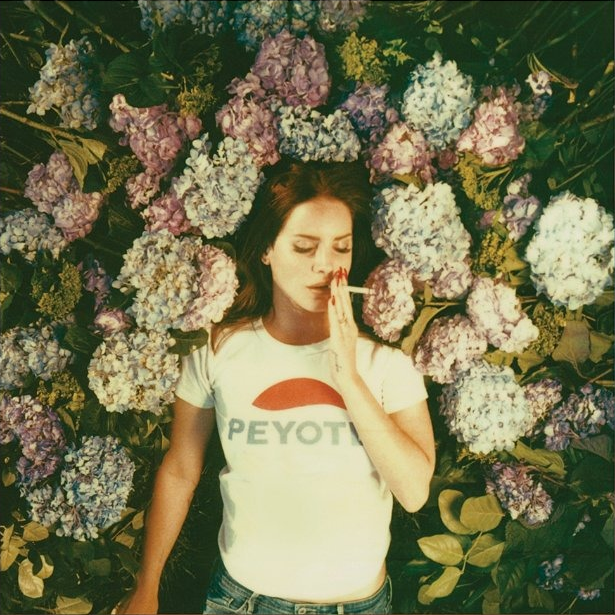
Lanadelreycapa

While Del Rey’s female characters languish in their statically trapped daydreams of love and violence and Hollywood glamour, DeLillo’s version of Americana is largely embodied in the road myth and its cult of masculinity:

There is a motel in the heart of every man. Where the highway begins to dominate the landscape, beyond limits of a large and reduplicating city, near a major point of arrival and departure: this is most likely where it stands….Men hold this motel firmly in their hearts; here flows the dream of the confluence of travel and sex.

This kind of commentary permeates the book, often arriving at a kind of religious, anthropological rapture which lacks the self-consciousness of DeLillo’s later novel White Noise, but provides a rambling cultural landmark that paves the way towards the sort of position Del Rey occupies in the mainstream. The Beats, protesting consumerism even as they gorged on apple pie; Bret Easton Ellis, with his deeply despairing coterie of psychopathic, serial-killer yuppies and sexually-violent, chronically-bored L.A teenagers; Lana Del Rey, voicing the glorious wastage of our postmodern wasteland, our beaten bodies and minds, voicing her vision through scenes of sun-drenched nostalgia which evoke a beautiful and terrible America, made glossy and pure through stars and stripes, a delicate riff; drifts of strings, jazz, Instagram filters. That golden period where love suffuses with the candy-flavoured stuff of daydreams, movies: Honeymoon. The whole album renders a narrow reality of the past and present: it’s pastel-shaded afternoons lost to the call of the ocean, sad ballads of frustrated love (I lost myself when I lost you), electro blues; it’s The Blackest Day, with Billie Holliday, palm trees and prescription pills, throwing up the lilac and cinnamon-scented ash of society’s ills – emotional debris, disconnection, slowing tempos, the hullabaloo of static thrills.

Screen cap from Tropico (2013). Source: popoptiq.com

Things Enchanted

Source: https://www.flickr.com/photos/mshipp/

The wedding was held on the first of October, that first fresh fling of a spring day with cherry blossoms lining the avenue and the smell of sunlight in the air. Marianne had chosen this day because on the calendar it had glowed up like a promise, the hope of something clean and new that wasn’t tarred with the silliness of April Fools or the bloat of British summertime. It was luck, really, that brought the good weather to New Zealand on that uncertain spring morning. It was also luck that bagged them the venue. She and Ethan had spent weeks debating where to get married, pouring over glossy brochures featuring medieval castles, luxurious hotels with honeymoon suites, country houses and converted churches which allowed you to toss your bouquet extravagantly from the bell tower. Arguing about the cost of fancy desserts and appropriate champagne. It was all very expensive and a little vulgar for Marianne’s liking. She was raised to believe that the most enchanting things in life were free. She had insisted for years and years that if she ever got married she would do it smack bang in the middle of Oxford Street for all it mattered. The best part of a wedding, Marianne had thought as a child, was the cake. I will find the best cake in the world, she would boast to her mother, because everyone likes cake, and not everyone likes a wedding. You can always, as Marie Antoinette put it, let them eat cake.

Growing up, Marianne found it to be true that not everyone likes a wedding. Or, at least, a wedding doesn’t do well for everyone. At the age of twenty-six, Marianne had dragged herself through enough of her friends’ weddings to know that the occasion prompted flourishing happiness for some, and hours of breakdown for others. Only last year, she had been drinking with her old roommate Bill at a colleague’s wedding and over the slurry candlelight he confessed to her his deep desire to kill himself.

“I just can’t stop thinking about it,” he had said quietly, refilling his wine glass, wiping the sweat from his eyes.

“William, William I had no idea.” And as the confetti swirled about the crowd, queer as a summer snowdrift, Marianne felt like she’d been chained to something dark and profound. Some sense of the underworld that she needed to get rid of. Bill had left soon after, taking a cab back to the hotel, and Marianne had gorged herself on the cheeseboard to cheer herself up, because it seemed there was nothing else she could do but stuff away her dreams with sticky lumps of brie. In the midst of all the magic, there was still all this sadness that seemed to coat the world in fear. When the bride passed her, Marianne smiled brightly, but later on she called Ethan in tears.

“Don’t worry,” he’d said, “he’ll be alright. Weddings bring out the best and the worst in people—”And yes, Bill was still alive, but he and Marianne had not spoken since. In all the chaos of organising her own wedding, she had forgotten.

Eventually, she and Ethan found their perfect venue in New Zealand, of all places. It was a rare corner of the world, special in its simple charm of rolling hills and friendly faces. Yet Marianne had a great deal of trouble convincing Ethan’s family to fly out there, even for just one weekend. Ethan’s mother suffered from bouts of depression and an event like a wedding, he said, could prove difficult – if not debilitating – to her state of mind, which had been fragile since his childhood. What’s more, Ethan’s father (they were divorced) seemed to drag himself through life with the sole intention of avoiding tricky situations such as these. He was a plumber who worked hard and spent most of his spare money down the pub, with people he’d known since high school. A cosy existence, free of the kind of complications that Marianne’s parents liked to pick over for a living. Marianne’s parents were academics, the kind of academics who relished a wedding, if only for the excuse to drink nice wine. She and Ethan were very worried about the whole occasion, about their parents coming together for only the second time, about the cost and the question of religion and whether it was weird to give people Love Heart sweets as favours.

“Shouldn’t we try for something more…intellectual?” It was him that said it first, not her.

On the last day of September, they landed crisp and safe on New Zealand ground, ready for rehearsal. To their surprise, they found the priest getting baked under a cabbage tree.

“My god, look at you two!” he exclaimed in his thick Kiwi accent, scrambling to his feet to greet them with a dazed look on his face. “Why I’ve never married such a beautiful couple!” He kissed them both on the cheek with enthusiasm.

“When do the family arrive?” he asked, walking them towards the church.

“Tonight,” Ethan glanced at his fiancé, expecting the nervous expression to show on her lips. She was, however, remarkably composed.

They were being married in a church made of trees. A brand new church, constructed in imitation of a similar design which went viral on the Internet a few years ago. The venue had appeared quite randomly in Marianne’s inbox, with all the sparkle of a super-charged Groupon offer, and she was quite enchanted by its strange beauty, its sense of the ephemeral. She did not want her marriage to be stone-cold and static, confined to a church, but to evolve and shift with the seasons, like this lovely temple.

Ethan and Marianne were just the seventh couple to get married under its bowers.

Silently, they stepped inside the iron framework and stood under the greenery, marvelling at the dappled light playing along the carpet of grass.

“Amazing,” Ethan whispered.

“It’s better than I ever dreamed of.” Marianne turned to him and gave him a long, satisfied kiss. They felt like they could stay here forever, dreamy and alone in this virescent version of heaven. The priest ushered them through their vows before leaving to meet his next clients. They delayed going to the airport to meet their parents, preferring to sit on one of the pew benches, scuffing their bare feet in the soft soil and laughing as they shared their secrets.

“All I want,” Marianne said to her fiancé as they sat later in the back of a cab, “is a few days of harmony. D’you think we can manage it?”

“All I want,” Ethan replied, “is our parents to get on okay. God knows I’m dreading the next few hours.”

“Don’t,” Marianne kissed him quiet. “It will be fine. They love us.”

To their surprise, it was fine. Fine as dinner and mumbled wisps of conversation could ever be. At the end of the meal, Ethan’s father stood up to deliver a drunken speech, exposing an embarrassing array of Ethan’s ex-girlfriends and childhood habits, enough for Marianne’s parents to speculate on for months to come. Ethan’s mother complained about the food and how warm it was for this time of year, her jet lag and sore head, then retired early to her room. Marianne worried, but Ethan knew better.

After dinner, they drank coffee in the restaurant lounge and all talked quite civilly about married life. Brian, Ethan’s father, had consumed a little too much wine and was already slurring off with jokes about how marriage was always a ‘two-way street’ with ‘no exits except death’. He wouldn’t stop, no matter how much Ethan tried to hush him. He teased the young couple about their choice of venue, speculating on all sorts of disaster scenarios which could disrupt the ceremony: lightning storms, forest fires, a rain shower. Marianne’s parents remained very quiet through all of dinner; so quiet, in fact, that Marianne worried there was something on their mind that they were choosing not to share.

Under the cool spring moon, they walked Marianne back to the hotel, leaving Ethan and Brian to have a last-minute tête-à-tête, which Ethan clearly didn’t appreciate. In the hotel garden, Marianne nuzzled herself into her father’s arms like she used to do as a child, feeling small and safe. It was different from how she felt with Ethan.

“Are you going to be okay?” Her father asked her. She thought about the day she first met Ethan, walking up the campus steps to her morning lecture, the sun breaking through a rain shower and the look on his face, concentrated and expectant. He wore his hair very short then – even shorter than it now was – clipped and cool in his blazer, a third-year law student.

“I think so,” she whispered back. The crickets purred around them.

“Just remember, everything is your own decision,” he said cryptically, ruffling her hair gently as he turned to enter the building.

“Goodnight love,” her mother echoed.

She and Ethan spent the night achingly in separate rooms, sleepless and fearful and eager. Marianne took out a pad of paper from the desk drawer and under the header with the hotel logo she wrote a list of all the reasons she was getting married: Love, dreams, sex, money, future, Sunday mornings, love. She laughed at how easily the cliches buoyed up in her mind. Brian’s words had awakened some tiny, irritable worm inside of her, a worm that wriggled with uneasiness. Yet she waited for it to rest and eventually fell asleep, letting the magic of the words she had written take shape in her dreams.

In the morning the sun bathed the grass in golden light and it was just as the first day of spring should look like, so different from October back home, where the streets were bronzed with glossy rain and fallen leaves. Ethan waited among the bright green bowers until Marianne appeared half an hour later, shrouded by the vines and only gradually entering his vision as she stepped through the knitted trees.

“How long?” he mouthed at her. She gave him a funny look as she slowly glided down the aisle, trailing her lacy dress. The church could only seat fifty guests, but there were very few people there. None of Ethan’s friends could afford the New Zealand flight, and Marianne hadn’t wanted to invite so many of her own that the bride’s side would outweigh the groom’s.

“What?” she asked him as they got closer.

“Why have we waited so long for this?”

She stood opposite him over the simple altar and as the priest approached Ethan added:

“I would’ve married you at uni, I would have married you so long ago.” He couldn’t help but grin then, and it was the kind of grin that unravelled the tight poise of his face and showed the fine lines around his eyes, the sparkling hazel eyes that she knew as mirrors of her own soul. She loved him, then, for that fragile smile alone.

“Don’t kid with me,” she murmured. She then looked up to face who they would be soon; who they would be after the magic words and the kiss that sealed them. She stood tall in her crystal heels and white gown, her light hair tumbling long down her shoulders, secured by the flower garland that her little niece had assembled for her that morning from the field of daisies. It was funny, she didn’t feel quite grownup; it was like being a child again, playing dress-up, playing at something that all of a sudden she knew nothing of. The priest stood over them in his robe, casting a shadow into the space around the altar. Marianne imagined that in winter the ground beneath their feet would be scattered with old seedpods and stray leaves fallen from the trees. Were they evergreen? She could not tell; she was no scholar of nature. How different the place would look, all wiry and skeletal. It was a chance vision, the fleeting kind gifted to the mind from a wisp of wind, cold and coming northwards. A fantasy of life at another time, caught in the secret culverts of the land around them.

She smiled as he slipped the ring on her finger, looking into the clouded space of his eyes and enjoying the blind joy that enveloped her.

After the ceremony, they led the guests down the aisle and out of the sparkling world of green onto the garden plains with the ornate shrubbery and the guesthouse lodge in the distance. Marianne’s mother, in her yellow hat, approached her and dutifully kissed her daughter on each cheek.

“It’s been a pleasure,” she said warmly, simply. Her father came and clasped each of her hands in his.

“You look wonderful love,” he told her. “I’m sure you’ll be very happy.” But she felt the clamminess of his fingers in hers, and slipped away. It was as she had felt at her friend’s wedding, that sudden moment talking to William, his face cloaked in cigarette smoke. There was something strange about the way her parents were so keen to share in her joy; it didn’t seem real.

What she would remember most about that day was not the party afterwards, with the sunlight dancing in her hair and the lilting joy of the violins and the woman that sung for them from a makeshift podium. It was not the fairy lights strung across the trees at night, or the sad sighs of the children told they had to go to bed. Not the crumbling wedding cake and the sugared strawberries eaten secretly in the grove by the river, or the sweet laughter of Ethan’s parents as they sat together sharing a bottle of wine and loudly reminiscing. Not the restless, whisky kisses pressed between the sheets in the cool summer evening, with the starriness of midnight pouring through the window. What she remembered most, now, was the feeling of her father’s fingers: cold and foreboding as she pulled away from him and out of her old world altogether.

Yet in the haze of those joyful days, it seemed obscene that in a few more hours they would be returning to a bleak, British winter, leaving behind the Kiwis and their colourful summer.

And love was all, love was all. That was what they said, what everyone kept saying, not knowing what it meant. The daydream of that day, its harmony draining slowly away in the time that was passing, the prickling chaos of day after day in each other’s company. Years flaking from them; precious layers of what they had always wanted to be, sloughing off and collecting in piles on the bedroom floor. There was then the new house, the miscarriage, the man in the white coat who talked to them as if they were children. The strangeness that grew between them. When they had argued, falling back into bed with tired passion, her father’s words flashed back to Marianne: everything is your own decision. And yet.

Here she was at her desk with the wads of paper blocking her view of the window, with the mirror glass behind her and that silver strand in her hair exposed for all to see. They had waited too long; too long they had waited to let happiness wash over them like a morning shroud of marijuana dreams. Marianne sat at her desk because it was the only place she knew where she was. Her head was full of the smell of hospital chemicals and the sound of dogs barking down the lane, old women nattering at bus stops. Blood being sucked through a plastic tube, the soft groan and the closing of his eyes, the shadow self that came over him in those moments. Pale and loitering. Loosely, the memories unravelled from her grasp, so that sleeplessly she would lie awake seeing her mother-in-law’s tormented face, the frown she pulled when she heard the news, the devastation in her eyes. There were too many pieces, too many pieces to pick up, replace.

Marianne lit a cigarette and stared at the ceiling.

In June she boarded the flight to New Zealand – the one she had booked only a week ago – the one her mother had paid for because Marianne was bogged down with the debts he’d kept secret.

Up in the air, suddenly the world no longer appeared in cut glass fragments of what she had lost. The blue sky was open and wide, the land below long and solid. When she landed, this time there was no priest to greet her, no summer insects singing in the grass.

She stepped off the road and made her way into the gardens without stopping, because there was no longer an attendant at the gate asking for an entry fee, a charity donation.

The land was starved. Ten years had passed, and here was the place where his parents had sat looking healthy for once, here the river where the children played, there the place with the daisy ring and the standing stones, the spot where they took their first dance under the virgin moon. The grass was now dry and yellowed underfoot, the breath of winter bitter on her cheeks, like ice kisses left by a dead lover. The irony was not lost on her. As she paced around, traces of litter – plastic rings, bottle tops and molten cardboard – lingered on from summer picnics. There were charred places where bonfires had burned, and Marianne imagined the fatty air filled with ash instead of confetti snow.

From the sky, the rain fell cold and slow. It seemed there was no money to be made from love, not here, not anymore.

The trees which had once flourished together protectively were now gnarled and thin and lonesome-looking, like trees from a fairy story.

How long had they waited for this? The last gasp of a feeling: not everyone likes a wedding. A ghost doesn’t like a wedding; a ghost resents its solidity, she thought, its promise of new absolution. Or was it the dreamy quality? Marianne had forgotten. They had waited too long, and it had cost them.

She sat under the skeleton trees, on the same bench where ten years ago she had dug her toes into the soft earth, sighing. And with the violins sounding sweetly in her ear, she took her shoes off; but the earth was too hard at her touch, encrusted in hoar frost and the dust of other memories, other dreams floating free.

“World War III just broke out. And it’s wearing kneesocks”: Power, Privilege, Plotting and the Panopticon in Gossip Girl

Sex Sells?
Sex Sells?

‘Power floats like money, like language, like theory.’

(Baudrillard, Simulacra and Simulation)

Something happened to me recently and I found myself drifting into the glossy paradise of the Upper East Side; more specifically, that alluring tab on Netflix entitled ‘Gossip Girl’. It’s been a while. I used to watch the show when I was about fifteen, in its heyday. I guess it just slipped away from me and I kind of passed by the whole finale hype back in 2012, but something brought me back to it a few weeks ago. Maybe it was the absence of real-life summer and the promise of a sun-drenched pavement in Manhattan, or maybe it was just Dan Humphrey with his dark mop of curls and deceptively earnest eyes. Maybe it was the cracking soundtrack. Either way, I was struck again by how entrancing the show is, even while it’s kind of terrible.

Déjà vu? I’ve already written an article on Made in Chelsea.

***

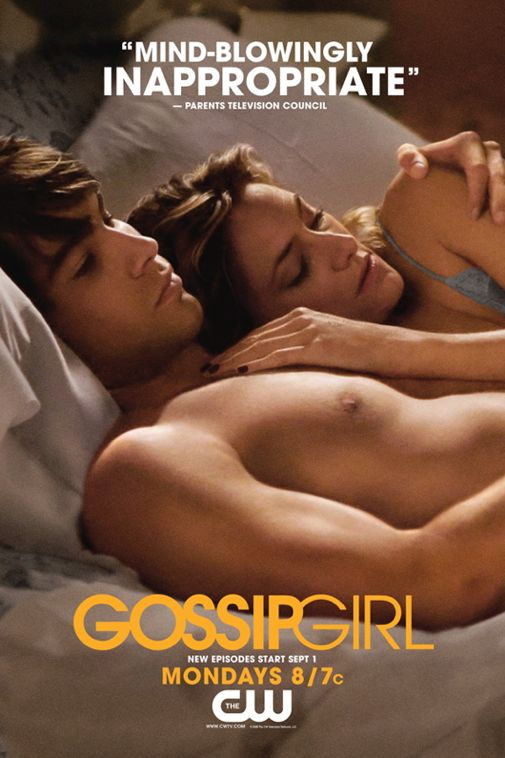
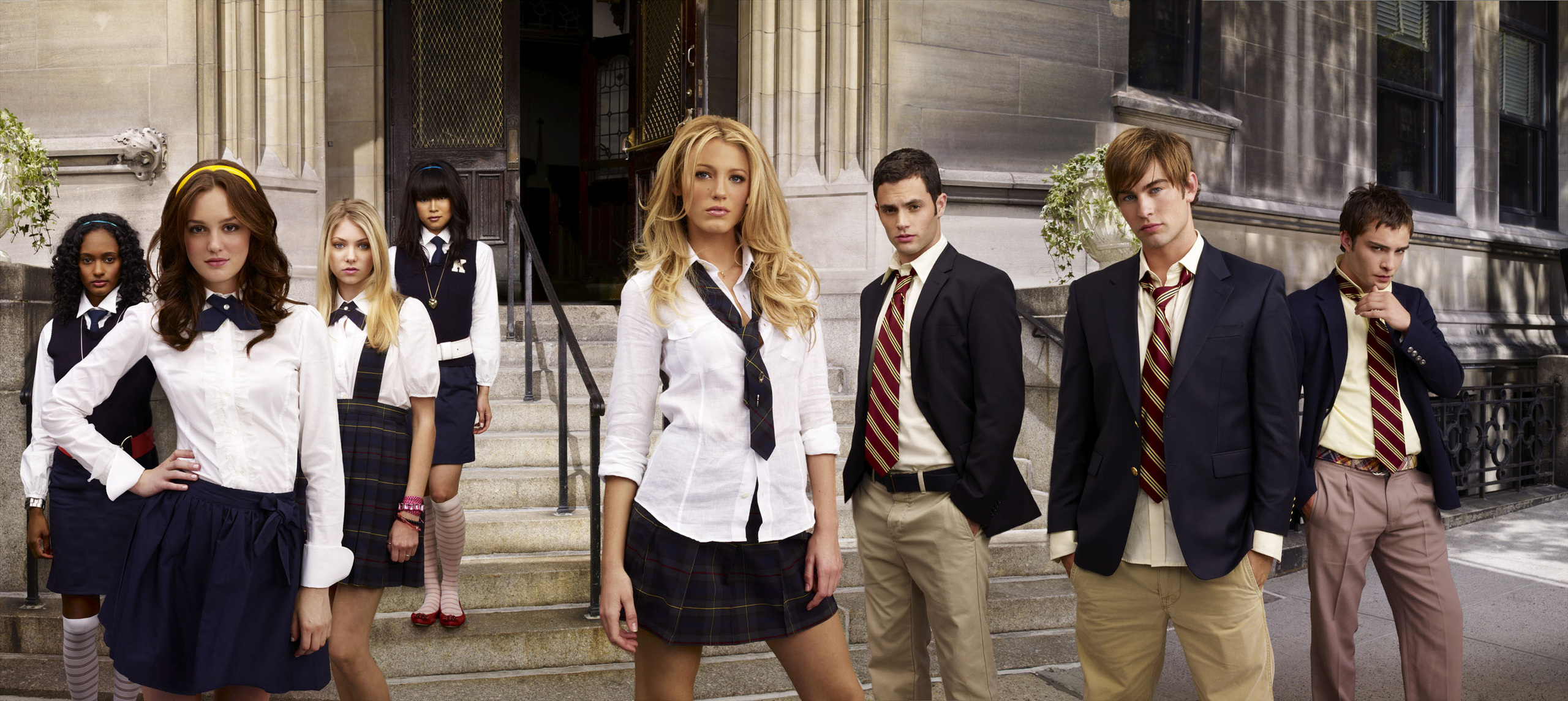
Gossip Girl: The Early Years. | Source: www.thatdesigirl.com
Gossip Girl: The Early Years. | Source: http://www.thatdesigirl.com

Gossip Girl is a show about power. It follows the privileged, glitzy lives of a group of Upper East Siders, from high school into the land of careers and more sophisticated scheming. There is a point round about the end of Season 2 which most critics concede to be the end of ‘good’ Gossip Girl; all subsequent seasons were just a bit daft. We’ve gone from credible high school bitching and scheming to absurdities on a Skins series 5 & 6 scale. How did we get from petty teen drama and pregnancy tests to Bart Bass falling from a roof and Chuck and Blair rushing themselves through a (gorgeously shot) emergency wedding? From Dan Humphrey as amateur school poet to successful penman of a Roman a clef exposing the ‘scandalous lives of Manhattan’s elite’, as Kristen Bell so enticingly describes it at the start of each episode. The link in all this chaos is power. Power and simulacra.

‘You’re nobody until you’re talked about’. That’s the mantra that seems to crop up again and again, haunting the minds of Gossip Girl’s characters like they’re stuck in some bizarre virtual reality where rumour precedes being, scandal precedes survival (see Sartre, ‘existence precedes essence’) – Mean Girls meets Black Mirror, if you will. What distinguishes Gossip Girl from other teen dramas (The O.C, 90210 and so on) is its centring around the concept of ‘Gossip Girl’. Like Foucault’s ‘panopticon’, Gossip Girl is a technology of power. The panopticon was a kind of prison design, created by Jeremy Bentham in the eighteenth century. It was intended to institute the force of surveillance not just on the individual but on society as a whole, so that in a prison each inmate is invisible to others, but visible to the guard station placed in the centre of the prison building. The point is that at any moment, the individual knows he or she is being watched, and will thus adjust their behaviour accordingly. A panoptic way of disciplining is one in which people are controlled through constant surveillance.

It seems pretty obvious that the outcome of Gossip Girl is constant surveillance. Every remotely meaningful action taken by the big-shot Upper East Siders (Serena, Blair, Chuck, Nate, their friends and family) is sent to the Gossip Girl server via anonymous reporters (anyone within or outside of the elite circle) and is then posted as a ‘blast’ which is then communicated straight to everyone’s phones. You know, if it wasn’t so familiar it would sound like something straight out a sci-fi novel. Throughout the show, Gossip Girl doesn’t just record and publish the intimate details of the characters’ lives (think dark secrets, slander and sex tapes) but indeed anticipates things that might happen. Sometimes, characters act a certain way because they are aware of the presence of Gossip Girl, of the probability that their actions will end up exposed through her blasts.

It doesn’t take much to link Gossip Girl to the Twitter generation. The Age of Snapchat, or WhatsApp, or whatever you want to call it. Created in 2007, the show suddenly tapped into a massive cultural shift among young people, whereby our entire lives become archived online, with or without our permission. Yet back in the mid-noughties, we were using Bebo and MySpace to spread gossip and create profiles of ourselves and others. These platforms were still relatively slow, especially as many of us still accessed them via a dialup connection, or by slyly hacking through content blockers at school while the teacher wasn’t looking. Gossip Girl anticipated the sort of instantaneous, life-shattering exchange of information that creates a panopticon effect on our lives. It’s a great plot device (the unravelling of a secret to everyone instigates some serious character crises) but now, in real life, it’s an uncomfortable truth that a nude selfie or a sneaky picture of say your neighbour doing cocaine can indeed be spread around with the ‘blast’ of a single Snapchat message, unravelling reputations in its wake. If, as Baudrillard argues, ‘power floats like money’ it does so because, like money, it is transferable, easily shifted, lost and dissolved. Instant, mass communication arguably makes power more diffused: in one minute it’s in Blair’s hands, then Serena’s and then HEY – Georgina Sparks steps in outta nowhere and suddenly it’s all gone wrong again. These days, you might say similar things about power and global politics.

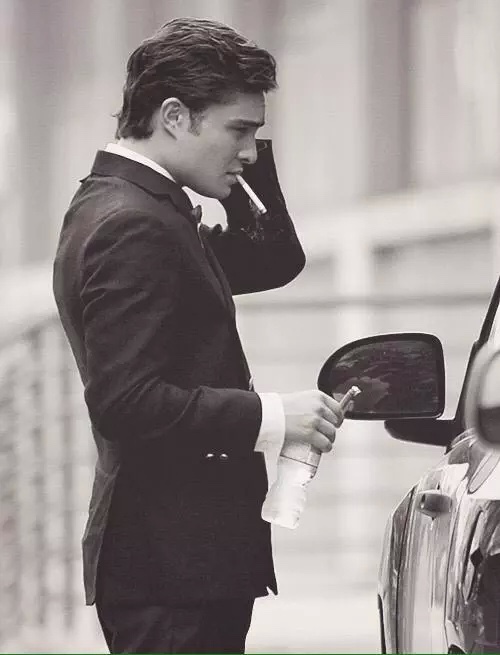
Dan at his desk... Source: digitalspy.co.uk
Dan at his desk… Source: digitalspy.co.uk

But is it really diffused? Couldn’t you argue that although different people post in to Gossip Girl, ultimately it’s the Wizard of Oz, the soul behind the screen, that controls the gates – isn’t it that one person that has all the power? Just as Mark Zuckerberg ultimately frames all our communications via Facebook? In the end, we discover that (surprise surprise) Dan Humphrey, the main ‘author’ figure, is Gossip Girl. Dan Humphrey, the ‘impoverished’ outsider, exiled in his trendy Brooklyn loft, banished from full membership and relegated to the limbo world where messenger bags meet the glamour of Blair’s Marc Jacobs and Serena’s Prada. Dan started the Gossip Girl site as a way of literally writing himself into the closed world of the Upper East Siders, fashioning the role of ‘Lonely Boy’ within a fairy-tale, Fitzgerald-esque world of vicious scheming, stinking money and glittering mythology. In the end, Dan gets the girl: as the ‘5 Years Later’ epilogue of the final episode so indulgently shows, Dan marries Serena in a beautiful wedding (interestingly enough, his Brooklynite ex-rockstar father gets with – the actual – Lisa Loeb).

You could argue that there is something ‘queer’ about Gossip Girl. An almost Beckettian obsession with repetition and the endless possible combinations of relationships you can achieve within a group (OK, so maybe that’s more Made in Chelsea – or perhaps Sade?).  In a way, Gossip Girl is obsessed with binaries: good girl vs. bad girl; Golden Boy vs. Bad Boy; virgin vs. whore and, perhaps most importantly, truth vs. falsity/appearance vs. reality. Yet these binaries are never sustained, and in fact the show repeatedly reveals the inherent insecurity of these binaries. The innocent Little J is really just the protective adolescent cocoon from which raccoon-eyed rebel Jenny emerges (more dramatically in real life, with Taylor Momsen becoming a risqué rock princess). There is a whole convoluted storyline about Ivy Dickens, who impersonates Charlie Rhodes (Lily Bass’s niece?) who herself is acting as someone else – ‘Lola’. Ivy, now her ‘authentic’ self, enters a relationship with Lily’s husband Rufus, but little does he know that Ivy is actually sleeping with William Bass (Lily’s ex and Serena’s father) who, it turns out, is only in a relationship with Ivy to get (in a roundabout way) back to his ‘true love’ Lily and the kids. The storylines get so elaborate and implausible (Blair meeting and marrying the Prince of Monoco; Bart returning from the dead) that you lose track of what’s real and what’s really happening; you become dissociated from the notion that any of this is really part of ‘our’ world. Even Penn Badgley, the actor who plays Dan Humphrey, admitted that the revelation that Dan was Gossip Girl ‘doesn’t make sense at all’, but that’s kind of okay because (in his words) Gossip Girl doesn’t make sense!’ Sure, New York is always there, in those beautiful, sweeping shots of the city: embracing the characters in its warm glow, looking fantastic in summer, spring, autumn and winter; but the lives of the characters are as twisted, repetitive and as confusing as Samuel Beckett’s television play Quad.

[Imagine this as a symbolic representation of Gossip Girl’s plot. It’s the mesmerising that’s key, not the accurate rendering of reality.]

The queerness, then, (I’m using the term ‘queer’ tenuously, in a more generalised sense – the show can hardly be a banner for LGBT) is in Gossip Girl’s shameless disregard for certain old-school, heteronormative notions of ‘morality’, its distortion of conventional character arcs and its indulgence in various strange sexual affairs which often border on the incestuous (and then there’s that old problem of Serena and Dan and their parents being married for most of the show…). It’s in the fact that characters’ lives seem to follow more of a cyclical than linear path, as they repeat the mistakes of their parents, fall strangely in and out of love while maintaining they were in love the whole time they were also in hate. The whole Blair/Dan/Serena triangle.

Unlike some other shows which run for the length of Gossip Girl, Gossip Girl keeps more or less the same core cast throughout the six seasons, and in doing so transforms its characters into weirdly intangible signifiers rather than ‘real people’. So much of them is based on the need to manipulate the reportage of their lives that we can’t be sure how much we know of their ‘real’ selves. I would like to think that Baudrillard would approve of Gossip Girl much more than The Matrix, because in my opinion, the way Serena, Blair et al plan their lives around the panopticon of Gossip Girl fits pretty well with Baudrillard’s idea of the simulacra as the ‘map that precedes the territory’, the ‘reality’ dependent upon representation. Most of the characters’ actions are driven by and shaped around Gossip Girl: the virtual voice who ‘maps’ the lives of Manhattan’s elite.

There is a point in most TV shows where you are able to gage the protagonists’ motivations, but with several key players, Gossip Girl leaves us endlessly guessing, as some very weird choices leave you baffled about who or what is this person who you thought you knew from Season 1. Chuck, for example, is sometimes romantic softie, sometimes nonchalant alcoholic, sometimes downright psychopath. But that’s the fun of it, the not-knowing, the rollercoaster effect of plot after spiralling plot. A show about scheming; that could be another tagline.

tumblr_nsqdc98osT1qmomweo1_500

A love letter to New York; that could be another tagline. The city is so lovingly rendered throughout the show that even the actual New York mayor got involved with the set of its 100th episode, and declared January 26thGossip Girl Day’. I wonder how I can start incorporating that into my life…perhaps I’ll start with one of those glorious pastry and fruit-filled brunches and then spend all day sipping scotch a la Chuck, kissing boys in classy bars a la Serena and ending up at some expensive party where everything around me is basically the flashbulb remnant of a photograph…or maybe I’ll just live tweet my actual everyday Glasgow observations  – Spotted: Man with a Farmfoods Bag Disappears into the Bookies. It’s hardly Manhattan amidst golden, burnished fall, but it might just have to do.

***

In the final episode, Serena tries to defend Dan’s (pretty immoral) behaviour in acting as Gossip Girl by claiming that his salacious discourse amounts ultimately to a ‘love letter to all of us’. It’s true: all that reporting of all that scandal, all those razor-sharp character assassinations were a form of mythologising which we can recognise not just in celebrity culture, but now in our everyday online lives. Being mean doesn’t just keep ‘em keen, it creates drama, which is what makes any good slice of fiction. And what is life without fiction?  

For all its raciness, Gossip Girl falls into a pretty comfortable conclusion. Two weddings, a (very cute) baby, a potential political career for Nate; it’s all very white, upper-class and generally heterosexually perfect. But that’s what Gossip Girl’s always been shamelessly about: sure, there’s Blair’s ever-present maid, Derota, but she functions more as a Shakespearean comedy sidekick than as a serious addition to the plot. Gossip Girl has never claimed, unlike say Lena Dunham’s Girls, to be ‘the voice of a generation’; it has always zoomed in on the narrow world of a handful of privileged characters. This is its flaw as well as its strength: there is, sadly, little racial/sexual/religious diversity, but when it does touch on such matters, it does so with its own quirky ease, meaning that it doesn’t trip over itself trying to take everything too seriously. There are nuggets of genuine, ‘emotionally truthful’ storylines in there, and real teen issues like losing your virginity, finding yourself stuck in family feuds and trying to make friends are handled sometimes with poignancy, sometimes with juicily gratuitous melodrama. Blair Waldorf’s bulimia is, in a way, a symbolic symptom of the culture she finds herself in: endlessly consuming, lusting for more information, gossip, power, but simultaneously being unable to contain it, needing to purify, purge, rewind the cycle. Dan longs to be part of the world, but at the same time it repels him; he is part of that societal wastage, the baggage once used then left behind – but he uses his limbo position to his advantage. In a way, the American Dream in all its distorted glory is right there, at the heart of Gossip Girl her(him)self.

tumblr_nt01upQpP71t823i1o1_500

What’s great about Gossip Girl, then, is its ability to take us on a whirlwind of artifice, of phony drama for phony characters, but through the falsity it reveals some hideous truths about contemporary society. The network of New York, as a series of public spaces, of upper and lower ‘sides’, is an inverse parallel to the non-hierarchical communications enabled by the Web, where power ‘floats’ more easily as hackers and smart kids from Brooklyn find themselves running the system. There is, in real life, an economy of gossip, whereby what’s been said about you determines your whole place in the world, perhaps even more so than money (sometimes). It runs in the workplace, the playground, the spidery webs of social networks. There’s a line in the final song which plays at the end of the last episode (‘Kill Me’ by The Pretty Reckless, the band headed by Taylor Momsen, aka Jenny Humphrey): ‘someone get me outta the sun’. I read this not just as a statement of Momsen’s goth/vampire credentials, but as an appropriate nudge to The Sun newspaper and by extension the world of gossip, the sunlit limelight which holds the (un?)lucky few up to fame and fortune and ruin.

There will always be an outsider wanting to get inside, Bell narrates provocatively as the last scene drifts over a street of smartly-dressed school kids, the next generation of Gossip Girl victims. It’s classic Gossip Girl: reminding us that even within the cherry sweet containment of its happy ending, there’s a bitter worm still at work. We’re now in an age where you can never live free of the media, of surveillance and all it entails. An unequal age where even the rich in their isles of bliss are never quite free of the rest of us, the outsiders, the mass exiles of our bulimic society – drawn to the alluring world of the beautiful and damned and then expelled because we can’t afford to be there, we don’t belong. And if that’s the end of Gossip Girl’s rollercoaster, then it’s not just a fairground of pure escapism, but also a biting satire on our actual IRL society.

—A satire which, I might add, trickles right down to the shameless flaunting of product placement:

Chuck Bass and some Vitamin Water. Source www.boston.com
Chuck Bass and some Vitamin Water. Source http://www.boston.com

Thinking about Exams

11205987_10206431692461531_6584269533734853547_n

Exams and I have a fair degree of history together. From that fateful first day in third year when I waited anxiously outside a gym hall to sit my Standard Grade English, to desperately scouring the labyrinth that is Glasgow Uni, trying to find my Honours English Literature exams, or waiting in the rain outside the OTC building, trying not to get run over by passing cars as rain splashed onto my notepad, exams and I have gone through hell and back together.

And they’re a funny thing, exams. Subject to much controversy too, especially in recent years with the dominance of technology over almost all other forms of learning and examination (who hands in a handwritten essay these days? is it even allowed?). Exams suddenly seem awfully old-fashioned. Individual (wobbly) desks, ink spilling everywhere, people writing with fury in an echoey hall. It seems a strange idea, to sit you in a room at the end of the year, thrust a piece of paper in front of you and force you to desperately pour out something resembling an essay in response to a set of unseen questions. I’ve thought about them long and hard over my time at school and college and uni, and come up with some pros and cons:

Pros: 

  • The fear forces you to study, to recap the information learned over your course.
  • The early stages of studying can be fun. You’re relearning and rereading, and in the process making interesting connections between texts, based on a more mature understanding of the course gained from reflection.
  • It can be an opportunity to shine, to show that you can come up with something original in a very short space of time.
  • You learn the value of concision.
  • If the questions are well-designed, the exam can be a true test of your analytical abilities and skill for quick-thinking – there are not many other times when you have the adrenaline necessary to formulate a coherent piece of writing in such a short period.
  • It’s nice to realise that you’ve learned chunks of poetry by heart. Even if they begin to slip away fairly quickly once you’ve left the exam…

Cons: 

  • Risk of being a memory test. While remembering and recalling information is important for lots of subjects from law to physics, English Lit and other humanities subjects is often about critical thinking skills rather than just remembering ‘data’ aka quotes. Lots of students memorise whole essays and go into the exam, then shoehorn and regurgitate what they’ve stored in their head. Sometimes this works, other times it ends badly. Either way, it isn’t testing much more than your ability to write fast and repeat.
  • Anxiety. This is a real problem for some people and can really hinder their performance in an exam, even if they’ve studied hard.
  • Breadth vs. depth. In an essay, with the advantage of time and access to material, it’s a lot easier to formulate a response which balances careful close reading and discussion of relevant secondary criticism and theory. In an exam, it’s too easy to fall back into the trap of plot summaries, even though you’re perfectly capable of analysis. Exams don’t always reflect your ability to synthesise material, or the extent of the research you’ve done.
  • Too much weighting. In my degree, exams are worth 50% of each course grade. There’s a lot of stake in those two hours, and if you have a brain freeze or something goes wrong, you can really drag down all that hard work you put in during the semester.

There are probably lots more, but here are the ones that immediately spring to mind. My solution would be not to scrap exams entirely, but to use them more effectively. Perhaps have mid-term close reading tests, which would examine your ability to respond ‘naturally’ to a text and your critical skills, rather than just your memory. Maybe also a 25% end of term exam, replacing the other 25% with another 3000 word essay. Maybe it will go that way in the future with credit standardisation; some universities don’t have exams for English Literature at all. The problem of course is that unlike subjects such as law and medicine and business, exam conditions are more unlikely to be part of any aspect of a future career sprung from a literary subject. While some jobs will require you to do set tests e.g. solving financial problems as part of the interview process, you are unlikely to encounter something like that in journalism, academia, publishing and so on. An essay with a deadline seems more akin to the work English Lit tends to lead to.

I can’t remember the worst thing that’s ever happened to me in an exam. There’s always that brief five minute panic when ‘your questions’ haven’t come up, and you have to radically rethink your answers and quickly choose a question; but usually in turns out in the end, and often the most spontaneous answers get the best mark. I guess one of the hardest exams I’ve ever done is Higher Music Listening. I mean, it shouldn’t be, but it just seems to be this horrible trail of riddles, where you have to discern different instruments out of tangles of sound in a very short space of time before the clip stops playing. Also, because you have to maintain concentration as a room of people listening to the same tape, your brain gets pretty muddled. And you can get distracted: I was so excited when the tape played The Strangler’s ‘Golden Brown’ that I made such a hasty decision about which rhythm change it contained that I put the wrong answer down. The coding sections of Higher Computing were also tricky, and writing four essays in an hour and a half for Higher Modern Studies is always the bane of your fifth year existence. Every student in Scotland who did languages will probably remember the terrifying voice that blasted the announcement about this being the STANDARD GRADE FRENCH LISTENING exam through the crackly stereo at the back of a gym hall, with all the aggression of someone holding you up in an armed robbery.

***

There was a golden moment towards the end of my last exam, when I realised there was less than ten minutes to go, and I was onto the conclusion, and soon that would be me – done forever. I definitely wouldn’t say that I’ll miss exams (hopefully, I’ll never have to do one again unless I decide to take up driving), but there’s something completely rewarding about the adrenaline rush and the nerves and the exhausting release afterwards that seems pretty unique. A bit like doing the Olympics, but for your brain (and your wrist). To anyone who still has exams to sit, good luck and remember it’s not the end of the world; and ultimately, they are always going to be a somewhat artificial test of your ability!

(Also, I’d love to hear your thoughts on whether exams are a good means of assessment or not for literature-based subjects).

Reading the Eighteenth-Century

My degree programme requires you to take at least one ‘pre-1800’ course – i.e., anything that’s not Victorian or Modern, anything that stretches back into the depths of distant history. For some people, the prospect of reading up on Shakespeare or Medieval literature is a dream, but I chose a course which was dated 1660-1785 – the most modern dates I could get my hands on. I was at first pretty worried about studying the eighteenth-century, possibly sharing Esther Greenwood’s view in Sylvia Plath’s The Bell Jar: ‘I hated the very idea of the eighteenth century, with all those smug men writing tight little couplets and being so dead keen on reason’. When my copy of Samuel Richardson’s Pamela arrived, reading one paragraph of the heroine’s gushing account of her virtue left me exhausted. I looked at the fat Collected Works of Samuel Johnson and my heart sank. However, with some surprise, I soon found myself enjoying the books I was supposed to read. The truth is that the eighteenth-century has a lot more to offer than stuffy old men and their commitment to reason. Of course, it was the time of the Enlightenment, but it was also the time of radical social upheaval: of the expansion of empire, changing gender roles, political turbulence, religious opposition, the loosening of sexual mores and of course literary innovation. The renewed critical interest in eighteenth-century post-Reformation literature in recent decades has meant that the canon is no longer confined to Alexander Pope, Jonathan Swift and Samuel Johnson, as I feared it might be. I’ve had the chance to study more ‘obscure’ works by women novelists, parodies, life-writing, vicious epistles and pastoral poetry that does more than merely sentimentalise the countryside. ‘Tight little couplets’ neatly encapsulates the idea of formal restriction, but the eighteenth-century was actually a period of literary experimentation, facilitated by the shift from a system of patronage to individual publication, and the more general rise in literacy which meant there was a wider market for more writing. It produced the phenomenon of the ‘peasant poet’, as well as the likes of Lady Mary Wortley Montagu, an aristocrat and ‘woman of letters’; it saw the merchant Daniel Defoe becoming a successful novelist in his sixties after years of prolific journalism, and Jonathan Swift penning sharp satirical pamphlets that criticised government policy (suggesting that the problem of poverty in Ireland could be solved by fattening up the starving babies and feeding them to rich landowners…ah, never mind, just go read A Modest Proposal – but bear in mind the irony). So yeah, I’m going to give you a walking tour of what I’ve learned from studying literature in the eighteenth-century. It’s funny how much we already know about eighteenth-century literature, often without realising it. Reading Samuel Johnson’s Rasselas, for example, I was struck by how many of Johnson’s aphoristic statements have been absorbed into our general consciousness, such as that hardened phrase of pessimism: ‘Human life is everywhere a state in which much is to be endured, and little to be enjoyed’ or the wisdom of ‘do not suffer life to stagnate; it will grow muddy for want of motion’ (these terms acquired greater significance to me proportionate to the amount of time I was spending in the library, where life certainly grows muddy for want of motion). I was struck too by Alexander Pope, whose poetry is generally written in heroic couplets, which makes them snappy and easy to remember. So many couplets from An Essay on Criticism and An Essay on Man will strike most people as familiar:

‘Good-Nature and Good-Sense must ever join; | To err is human, to forgive, divine.’

‘True ease in writing comes from art, not chance, | As those move easiest who have learned to dance.’

‘Hope springs eternal in the human breast: | Man never is, but always to be blest.’

At first, Pope’s couplets do sound smug, especially in poems where he’s satirically tearing shreds from literary critics, other writers and the artifice of dress and manner which ‘ladies’ must shroud themselves with in ‘Epistle to a Lady’. But you start to get a feel for them, and the neat syntax and rhyme scheme quickly becomes pretty satisfying, especially in his Pastorals and Windsor Forest. Windsor Forest is an interesting poem because it’s a panegyric (a poem written to commemorate a public event) written to celebrate the Treaty of Utrecht (which was basically a deal allowing Britain freer access to the slave trade), but its attitude to slavery is ambivalent, and with his vivid images of animals being cruelly hunted, Pope via synecdoche (‘if small things we may with great compare’) invites us to compare the treatment of the pheasant to the foreign subject, the slave:

‘Short is his joy! he feels the fiery wound / Flutters in blood, and panting beats the ground’.

I’m quite happy I remember this quote from my exam. Anyway, it’s a fairly distressing image, with all the assonance of flutters and blood stirring up this sense of entrapment and terror, raising our sympathy for this humble piece of ‘game’. The poem is a good one to start with because you learn a lot about history from it, and the poetry itself is enjoyable to read. Pope definitely falls into pompous patriotism, especially towards the end, but because it’s framed through delicious images of silver and gold and rushing rivers, it’s hard to put the poem down purely because of it’s subject matter. And there’s always a sense of unease to Pope’s ideology, as it’s filtering through mythical allusions always adds an ambiguous, extra dimension to the meaning. This is the sort of thing you have to grapple with: not only ‘getting’ the mythical and historical references, but being able to trace their ambiguities through a poetic tradition you’re not quite familiar with.

Windsor Forest ('Wood-Cutting in Windsor Forest') 1834-5, exhibited 1835 John Linnell 1792-1882 Presented by Robert Vernon 1847 http://www.tate.org.uk/art/work/N00438
Windsor Forest (‘Wood-Cutting in Windsor Forest’) 1834-5, exhibited 1835 John Linnell 1792-1882 Presented by Robert Vernon 1847 http://www.tate.org.uk/art/work/N00438

Then there’s Pamela, Samuel Richardson’s novel about a young servant girl who falls prey to her master’s endless and increasingly insistent attempts to seduce her, becoming more violent every time. While she does not suffer the terrible rape that Clarissa endures in Richardson’s much longer novel, Clarissa, Pamela goes through a lot and chronicles every scrap of it in her letters home to her parents. Pamela can seem a slog, especially with all those self-justifying lines about how pure she still is and virtuous in spite of everything. It’s frustrating that she never seems to do anything but weep and write and swoon. Still, there are some funny moments, like when she tries to escape but mistakes two innocent wee cows for scary bulls, adding a dab of Freudian psychodrama to the otherwise relatively static action. I guess the main thing we can take from this novel is its intense focus on the individual (something that wasn’t really available before in fiction, because romances were interested in characters as archetypes – princess, villain, hero – rather than real people), and the process of introspection, the attention to everyday detail. The same goes for Robinson Crusoe: part of what’s seductive about Defoe’s novel is not just the adventure and pirates, but all those long passages about how he sets up his little domestic fortress on the island; how he learns to cure raisins, build boats, grow corn. He goes into so much detail you think you’ll go mad, but when you go back and read it, there’s a certain satisfaction to it. You can imagine yourself in his position – Samuel Taylor Coleridge famously claimed that Robinson Crusoe’s success was that he represented human nature in general – and the novel becomes a sort of survival guide to living on a lonesome tropical island.

Crusoe, Friday & some goats. Source: www.nvcreview.com
Crusoe, Friday & some animals. Source: http://www.nvcreview.com

Incidentally, Crusoe’s story was loosely based on that of Alexander Selkirk, a Scottish man who ran away to sea to escape punishment for bad behaviour back home. When he got into an argument with the captain of his ship, he asked to leave and go ashore on one of the South Pacific islands they were close to. Selkirk thought some ship would come and find him soon enough, but instead he was stranded there for over four years. Crusoe, by contrast, is on his island for twenty eight years. Part of the wonder of the story is how sane he stays. Crusoe rediscovers religion and his spiritual devotion is essential to giving his life order and meaning on the island. It’s the little things that matter, that give him a sense of self: carving the days into a wooden cross, having dinner with his ‘family’ of animals and writing in his diary. The whole novel basically celebrates the power of human reason and endurance, as Crusoe notes that ‘by making the most rational judgments of things, every man may be in time master of every mechanic art’. I guess in this way it’s very typical of the Enlightenment attitude of the time, but there’s also a very strong capitalist motive for Crusoe’s actions and attitudes. As Ian Watt points out in The Rise of the Novel, many of Crusoe’s behaviours prefigure that of the canny venture capitalist: his restless travels for more trade, his saving of supplies and investing of crops, his careful planning of time and stock, and the mythological story of the individual’s capacity for survival. In fact, it could even be read as a kind of Puritan spiritual autobiography, because Crusoe has all his capital successes rewarded supposedly by ‘Providence’ as a blessing for his religious (re)awakening. It’s funny how a lot of eighteenth-century texts like Robinson Crusoe are perhaps best known for their adaptations into children’s literature (NOT as the rather awful film versions which insist on adding an irrelevant romance plot to everything). I suppose it’s because Defoe’s novel is also an adventure narrative, encountering pirates and ‘educating’ his ex-cannibal slave ‘Friday’ with Western values (another problematic but critically rich part of the story is Defoe’s relationship to ‘my man Friday’, which sheds light on the colonial context of the time). Another example of an eighteenth-century novel being famous as a children’s book is of course Gulliver’s Travels, by Jonathan Swift. The irony here is that Swift wrote this tale about fantastic worlds with tiny people, floating islands, people who could extract sunlight from cucumbers, giants and talking horses (Houyhnhnms) to deliver a harsh satire on the politics and Enlightenment culture of the period. Unless you have a canny eye or an edition rich with footnotes, you might miss all these references, and so revel along in Gulliver’s story and thus fall prey to the kind of naivety Swift critiques in Gulliver himself. Indeed, because the book was so cleverly prefaced and presented as a true account of a man’s travels, many people thought that the events and the strange places described were all true. In addition to lashing the follies of man’s claim to reason and pursuit of enlightened knowledge, Swift was attacking travel writing itself, albeit with lesser gall. He parodies the supposed objectivity of travel writing, and its attention to seemingly inane details. He gives very precise numbers, showing the reader how he cleverly carves up the worlds he encounters, noting ‘three hundred tailors’, ‘six of his majesty’s greatest scholars’ and so on. He also feels the need for self-justification, as when he describes how his excrement has to be taken away by two wheelbarrows by the tiny Lilliputians:

I would not have dwelt so long upon a Circumstance, that perhaps at first sight may appear not very Momentous; if I had not thought it necessary to justify my Character in Point of Cleanliness to the World, which I am told, some of my Maligners have been pleased on this and other Occasions, to call in Question.

Swift’s writings had been previously critiqued for their lewdness, as in A Tale of a Tub and ‘The Lady’s Dressing Room’, where the human body becomes a site of grotesque revelry and disgust. Swift, therefore, is here fashioning his own self-defence with thick layers of irony, inviting critics to judge him against his own self-protection, his free reign expression on matters abject and bodily. Travel writing was a big thing in the eighteenth-century, what with the growth of the British trade empire and the trend for the ‘Grand Tour’. While they didn’t have access to a railcard, undergraduate (men) would often take the Grand Tour of Europe, learning about refined French manners and Greek culture to more fully develop their education. This of course also involved a lot of drinking and probably visiting prostitutes, but then again, such matters were perhaps necessary to a gentleman’s education – he could ‘get it out of his system’ overseas and come back to Britain enlightened and satisfied and ready to be a ‘good’ citizen. Hm. One of my favourite pieces of travel writing is James Boswell and Samuel Johnson’s account of their journey to the Western isles of Scotland. Their approach was slightly different, as they each wrote separate accounts of the time. Boswell focused mainly on Johnson himself (as he tends to do in his writing!) whereas Johnson spent much time critiquing the dreariness of the scenery and observing the primitive lives of the locals with some disdain, though respect for their hospitality. You can read A Journey to the Western Isles of Scotland for free online via Project Gutenberg, and I think it’s worth a gander, if only to take a brief lunch-break holiday into the wilds of eighteenth-century Scotland. There is also a rather humorous article in The Telegraph detailing the author’s attempts to retrace the steps of Boswell and Johnson’s tour, though I am somewhat uncomfortable with his complaints about encountering a range of ethnicities rather than ‘native’ Scots on his tour…can Scottishness not finally now be defined as authentic through multiculturalism, as everywhere else in Britain, or must it still be hailed as a land of blood and soil nostalgia, pale skin and tartan…? just a wee grumble! I have only skimmed over the stuff we covered in our course on the eighteenth-century. Other things worth reading are the hilarious parodies of Pamela, which cast severe doubt on the veracity of Pamela’s ‘virtue’ and burlesque Richardson’s prose style – some good ones include Eliza Haywood’s Anti-Pamela and Henry Fielding’s Shamela. Also, Raymond Williams’ The Country and the City is a marvellous book which looks at how the countryside was often falsely represented in various examples of pastoral and Georgic poetry through the ages as an idealised contrast to the corruptions of the city. Millenium Hall by Sarah Scott is a very intriguing epistolary novel which has been dubbed a ‘feminotopia’, an early representation of a utopian community run by women on a country estate. I suppose what really strikes you about this period is the sheer diversity of works, and the strong political ties most of the literature displays. It was a time of experimentation, but because the novel in particular was still a nascent form, it’s possible to perceive all the strange incoherences, the little faults and cracks which allow us to reflect on the form in general and its relationship to ideology. Edward Said, after all, has argued that the novel is by definition born out of colonialism: it is ‘fundamentally tied to bourgeois society […] it accompanies and indeed is a part of the conquest of Western society […] the novel, as a cultural artefact of bourgeois society, and imperialism are unthinkable without each other’. The novel’s representation of social authority in the hands of the British, its focus often on middle-class life and relentless individualism are all part of this bourgeois basis of the novel. Whether we agree entirely with Said’s statement, it’s a compelling argument that challenges us to rethink how we consider what is probably the most popular form (other than celebrity biography) in the contemporary literary market. And I guess that’s one of the thing’s I enjoyed most about this course: returning to origins, understanding how modern literature came into being out of the cultural circumstances and experimentations of the long eighteenth-century. It is rather ironic that while Samuel Johnson characterised the typical novel reader as ‘the young, the ignorant and the idle’, reading novels is now one of those activities that mark you out as ‘cultured’, ‘educated’, perhaps even ‘bourgeois’. Not only in its form, but also in its critical reception, the novel has come a long way. Some extra info: 

Pope's Grotto.  Source: popesgrotto.org.uk
Pope’s Grotto.
Source: popesgrotto.org.uk

Alexander Pope was a dissenting Catholic during the time of Protestant monarchy, which meant he was barred from participating in many societal institutions, like university. In 1719, he retreated to Twickenham in the rural outskirts of London, building himself a villa and a grassplot garden whose verdant beauty was to imitate the Arcadian landscapes of much of his poetry. Pope’s residence is notable and pretty cool because he constructed a tunnel under the road connecting his garden to his villa. It led to the basement of his villa in which he fashioned his own grotto. He wrote a rather beautiful description of his delight in a letter to Edward Blount:

When you shut the Doors of this Grotto, it becomes on the instant, from a luminous Room, a Camera Obscura, on the walls of which all the objects of the River, Hills, Woods, and Boats, are forming a moving Picture…And when you have a mind to light it up, it affords you a very different Scene: it is finished with Shells interspersed with Pieces of Looking-glass in angular Forms…at which when a Lamp…is hung in the Middle, a thousand pointed Rays glitter and are reflected over the place.

You can visit Pope’s grotto at certain times of the year, and that area in Twickenham has been named after Pope’s Grove. More info can be found here: http://www.twickenham-museum.org.uk/detail.asp?ContentID=21

Mortal Thing

Gentle capillary
So small as the daisy, pulled
into petals from the precious lens
of a leaf.

Unfurl the tangles like twine;
only soft
as an organ,
and underneath
the quick pulse
of some other body, the beautiful body:
that lies over there and empty,
still empty in the yellow light
of this warm morning.

(Written from GU CW’s last week’s prompt ‘capillary’)

12 Types You See in the Library: A Study of Students in their Native Habitat

source: pixabay.com
source: pixabay.com

So with finals approaching  I’ve been spending nigh on every day in the depths of my university’s library. I thought, therefore, that it would be appropriate to report my observations on human life as it seems to occur in this environment…

I’ve identified 12 subtypes which emerge amidst the Darwinist conditions of computer shortages, desk squabbles, bright lighting and excess caffeine…

  • The sleepers: always a good start to a list, these types are keen on the trend for daytime napping. You will find them either tucked in a comfy chair, their legs propped on the nearest table, or else face down over their keyboard. Probably the source of much resentment, but perhaps it does increase productivity. Still, there could be beds provided, when desks are in such scarce conditions at this busy period…
  • The chatterers: they come in pairs. Often they arrive around 9-10 in the morning and stay till 5, interrupting each other’s study constantly and engaging in joint Facebook stalking and looking up photographs of famous people on Google Images and giggling without much hush. Tend to take 2 hour lunch breaks and leave all their stuff to hog the desks.
  • The fortress builders: you rarely glance a peek at these specimens, as they tend to erect large towers of hardback books on their desks. It is unlikely that the books themselves will be opened, but the careful assemblage of pens, paper, notepads and books is very important to their sense of zen. 
  • The aggressive opportunists: to be found hovering about on every level, clutching their phones to their faces and occasionally hesitating an anxious glance around them, as if they were bird-spotting. These types basically scour every floor desperately waiting for someone to vacate their computer so they can dive in. You’ve got to feel sympathy for them, though there is something rather alarmingly aggressive about the way they rush to your desk as soon as you have clicked ‘log off’. It’s like they have super vision.
  • The stressor: he or she will either be a weepy type, or a sweary type. The weepy type invites deep sympathy, as it is awful to see a fellow human reduced to the state of tears or panic attack over university work. To be honest though, I have encountered more of the latter. In particular, it is common to see finance students sweating it out in the upper levels, swearing under their breath at a screen of what I assume to be frustrating figures, occasionally slamming their fist down upon a hefty textbook.
  • The gruesome eater: disappears for an hour, comes back with some disgusting excuse for a lunch gleaned from any number of surrounding convenience stores or supermarkets. They favour the more odorous of foodstuffs, and are inclined to make vile slurping noises as they lick their tub of oily pasta or packet of tuna sandwiches. The worst, perhaps, is the Monster Munch crunch.
  • The early bird endurance workers: these more elusive types tend to congregate in the upper floors with the segregated desks and rule of silent study. They arrive around 8am to get their favoured seat (the same one every day it seems) and are there for most of the day, working away like beavers. Will disappear occasionally for a coffee or cigarette, but rarely leave their desks, which begin piling up very quickly with masses of paper and scribbly notes.
  • The portable secretary: seems to get a phone call at least once an hour. Will either proceed to talk freely about a mate’s sex life with the entire floor listening, or else make a panic dash to the nearest ‘quiet zone’, leaping heroically over trailing cables. Sometimes is away and the phone will ring unanswered for twenty minutes until a brave stranger plucks up the courage to turn it off in his or her absence.
  • The rebel: turns up mid-afternoon and somehow still manages to blag a seat somewhere. Pulls the plug out of a PC to stick their laptop on charge. Doesn’t care. Eats trifle on level 8. Whose gonna challenge ’em? Snorts heartily with laughter watching silly Youtube videos in the middle of the day whilst anxious students rush around looking for a computer they can study on.
  • The drifter: seems not to ever do actual work, but to spend all day scanning every level for anyone he or she happens to be acquainted with, stopping, in an elaborate trail of procrastination, to gabber and pester said acquaintances. Tends to wear a school leavers’ hoodie, and very soft cotton joggers.
  • The library lightweight: most likely in first year, though the trait can continue up into honours sometimes. Tends not to venture beyond level 3. Dips into the library between classes and sits on Facebook for an hour or so whilst gobbling a sandwich loudly.
  • Lastly…(perhaps the worst) the foot shuffler: Need I say more? – Takes 10 minutes to walk 10 metres, owing to the way he or she drags their feet across the carpet. Pick your feet up when you walk, for God’s sake!