
‘psychedelic accuracy’
So wonderful to hear Iain Morrison, Laynie Browne, Julia Bloch and Al Filreis in conversation at the Kelly Writers House, discussing two versions of the late Callie Gardner’s ‘when will my love return from the culture war?’.
https://jacket2.org/podcasts/raw-bellicose-tumble-poemtalk-203
Every movie I watched in 2024
Joachim Trier, Reprise (2006)
Monica Chokri, Babysitter (2022)
Joachim Trier, Oslo, August 31st (2011)
Molly Manning Walker, How to Have Sex (2023)
Yorgos Lanthimos, Nimic (2019)
Gregg Araki, Mysterious Skin (2004)
Noah Baumbach, Kicking and Screaming (1995)
Noah Baumbach, White Noise (2022)
Jonathan Glazer, The Zone of Interest (2024)
Jonathan Glazer, Sexy Beast (2000)
Andrew Haigh, All of Us Strangers (2024)
Karen Moncrieff, Blue Car (2002)
Sofia Coppola, Lick the Star (1998)
Emma Seligman, Bottoms (2023)
Kristoffer Borgli, Dream Scenario (2023)
Aki Kaurismäki, The Match Factory Girl (1990)
Dennie Gordon, New York Minute (2004)
Timm Kröger, The Universal Theory (2023)
Rachel Lambert, Sometimes I think about dying (2023)
Celine Song, Past Lives (2023)
Sean Baker, Red Rocket (2021)
Josephine Decked, Madeline’s Madeline (2018)
Jordan Peele, Get Out (2017)
Susan Sandler, Crossing Delancey (1988)
Susanna Fogel, Cat Person (2023)
BBC Artworks Scotland, Martyn Bennett: Grit (2004)
Onur Tukel, Catfight (2016)
Andrew Bujalski, Results (2015)
Desiree Akhavan, Appropriate Behaviour (2014)
Allan Moyle, Empire Records (1995)
Dominique Deluze, Universal Techno (1996)
Roman Polanski, Chinatown (1974)
Tommy Wiseau, The Room (2003)
Yorgos Lanthimos, Kinds of Kindness (2024)
Jeff Nichols, Bikeriders (2023)
Francis Ford Coppola, The Godfather (1972)
John Hughes, Ferris Bueller’s Day Off (1986)
Samantha Jayne, Arturo Perez Jr., Mean Girls (2024)
Les Mayfield, Encino Man (1992)
David Mirkin, Romy and Michele’s High School Reunion (1997)
James Cameron, Terminator 2 (1991)
Ethan Coen, Drive-Away Dolls (2024)
Jon Favreau, Chef (2014)
Richard Linklater, Hit Man (2023)
Sam Taylor-Johnson, Back to Black (2024)
Azazel Jacobs, His Three Daughters (2024)
Peter Jackson, Heavenly Creatures (1994)
Gurinder Chadha, Bend it Like Beckham (2002)
Martin Scorsese, No Direction Home: Bob Dylan (2005)
Jason Moore, Sisters (2015)
Stephen Herek, Our Little Secret (2024)
John Landis, Trading Places (1983)
Paul Thomas Anderson, Phantom Thread (2017)
Every book I read in 2024
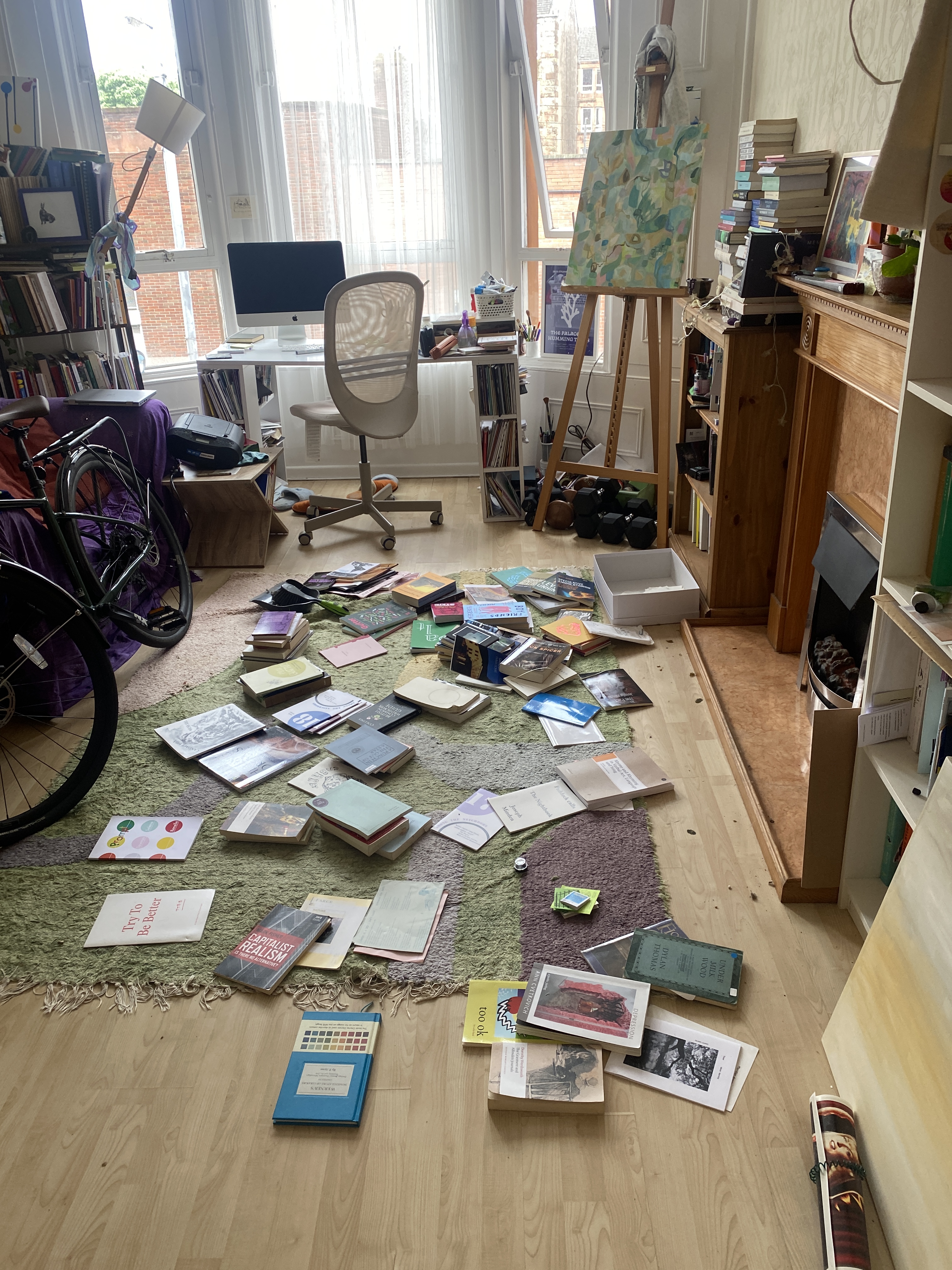
In loose order of reading. This year I made a vow to not let work ‘get in the way’ of reading. I was talking to a colleague about how every subject/specialism has one thing they are supposed to be really good at and actually kind of suck at. We agreed English & Creative Writing staff are often pretty bad at this thing that should be their lifeblood: reading. To prioritise reading is to affirm the necessity of thinking. I felt so burned out with the circuitry of the 2010s and the zoomageddon of lockdown, all those screens. Reading in scroll-time. I still love reading in scroll-time, but on the move only. Or in the midst of something else doing. It took me three years to get back into immersive, situated, FOCUSED reading again. I mean staying up all night to finish a book, crying at sentences, holding something to the light and putting it down and stopping and starting because you want to savour something and all the world of it following you into dreams. All reading started to plug into work. Good work. Channels. If I’m honest, I haven’t written a lot this year. I needed a break from concepts. I did a lot of editing and proofing and reading. I wrote a lot of emails and did a LOT of marking. I think of marking as writing time. It eats into writing time but it’s also a practice of sentence-making, observation, editing, rewriting. Eileen Myles says somewhere that when they write people recommendation letters and do interviews etc that’s a form of writing. So really there are very few ‘fallow’ periods. You’re always writing something to someone, for something or not. I have written over a monograph’s worth of student feedback this year, maybe more. Each paragraph of feedback is a micro-essay, a snapshot of orientation, a patchwork sample which stitches multiple discourses (genre, criteria, instinct, history) in ascent to encouragement and improvement. So all that feedback, I’m trying to say, means I also read a hell of a lot of student work. Hundreds of scripts. Marking trains my eye as a reader and writer. Still learning to toggle between different kinds of reading. Refusing the active/passive binary in favour of a continuum of generative involvement. A lot of what I read below was in-between other reading, but some of it is more explicitly ‘work’ reading. Or: reading as a way of connecting with friends, colleagues — their beautiful brains. Or: preparation for something as yet unknown. Working through personal syllabi. Refreshing the palette.
~
Robert Glück, About Ed (2023)
Jacques Derrida, H.C. for Life, That Is to Say…, trans. by Laurent Milesi and Stefan Herbrechter (2006)
Walter Benjamin, The Storyteller: Tales Out of Loneliness, trans. by Sam Dolbear, Esther Leslie, Sebastian Truskolaski, Antonia Grousdanidou (2023)
Marie Darrieussecq, Sleepless, trans. by Penny Hueston (2021/2023)
Joey Frances, Takeaway Night (2024)
Teju Cole, Black Paper (2021)
George Saunders, A Swim in the Pond in the Rain (2021)
Megan Ridgeway, The Magpie (2024)
Thomas Mann, The Magic Mountain, trans. by John E. Woods (1924)
Andrew O’Hagan, Mayflies (2021)
Tabitha Lasley, Sea State (2021)
Zadie Smith, Intimations (2020)
Jean Genet, Prisoner of Love, trans. by Barbara Bray (1986)
Donna Tartt, The Secret History (1992)
Oli Hazzard, Sleepers Awake (2024)
Courtney Bush, Every Book is About the Same Thing (2021)
Hélène Cixous, Abstracts and Brief Chronicles of the Time, trans. by Beverley Bie Brahic (2016)
McKenzie Wark, Raving (2023)
Rachael Allen, God Complex (2024)
Elle Nash, Deliver Me (2024)
Joshua Cohen, The Netanyahus (2021)
Andrew Meehan, Instant Fires (2022)
Michael Eigen, Ecstasy (2001)
Noah Ross, The Dogs (2024)
Jennifer Soong, Comeback Death (2024)
Barbara Browning, The Gift (2017)
Cynthia Cruz, The Melancholia of Class (2021)
Courtney Bush, I Love Information (2023)
Clarice Lispector, The Hour of the Star (1977)
Barbara Browning, The Correspondence Artist (2011)
Hilary White, Holes (2024)
Laynie Browne, Everyone and Her Resemblances (2024)
Deborah Meadows, Representing Absence (2004)
Holly Pester, The Lodger (2024)
Terese Marie Mailhot, Heartberries (2018)
Kim Gordon, Girl in a Band (2015)
Lauren Levin, Nightwork (2021)
Oddný Eir, Land of Love and Ruins, trans. by Philip Roughton (2016)
Danielle Dutton, Prairie, Dresses, Art, Other (2024)
Elvia Wilk, Oval (2019)
Nisha Ramayya, Fantasia (2024)
Joanne Kyger, On Time (2015)
Jean Day, Late Human (2021)
Lisa Jarnot, Black Dog Songs (2003)
Roland Barthes, Camera Lucida (1980)
Mariana Enriquez, Things We Lost in the Fire (2016)
Ben Smith, Doggerland (2019)
Ricky Monaghan Brown, Terminal (2024)
Wendy Lotterman, A Reaction to Someone Coming In (2023)
Joseph Mosconi, Fright Catalog (2013)
Tao Lin, Taipei (2013)
Haytham El Wardany, The Book of Sleep, trans. by Robin Moger (2020)
Lucy Ives, Life is Everywhere (2022)
Maria Hardin, Cute Girls Watch When I Eat Aether (2024)
Brian Whitener, The 90s (2022)
Jamie Bunyor, A stone worn smooth (2022)
Lucy Ives, The Hermit (2016)
Brenda Hillman, Cascadia (2001)
Bhanu Kapil, Incubation: a space for monsters (2006)
Peter Reich, A Book of Dreams (1973)
Steve Orth, The Life and Times of Steve Orth (2020)
Lindsey Boldt, Weirding (2022)
Christa Wolf, The Quest for Christa T. (1970)
Hannah Levine, Greasepaint (2024)
Joe Luna, Old News (2024)
Maggie O’Sullivan, earth (2024)
Ian Macartney, sun-drunk (2024)
Sébastien Bovie, Longing for Lo-fi: Glimpsing back through technology (2023)
Steven Zultanski, Relief (2021)
Lionel Ruffel, I Can’t Sleep. trans. by Claire Finch (2021)
Noémi Lefebvre, The Poetics of Work, trans. by Sophie Lewis (2021)
Cynthia Cruz, Disquieting: Essays on Silence (2019)
Marie Buck and Matthew Walker, Spoilers (2024)
Ed Steck, David Horvitz Newly Found Bas Jan Ader Film (2021)
Ammiel Alcalay and Joanne Kyger, Joanne Kyger: Letters to & From (2012)
Lyn Hejinian, Fall Creek (2024)
Etel Adnan and Laure Adler, The Beauty of Light: Interviews, trans. by Ethan Mitchell (2024)
Rick Emerson, Unmask Alice: LSD, Satanic Panic, and the Imposter Behind the World’s Most Notorious Diaries (2022)
Stephen Collis and Jordan Scott, Decomp (2013)
Miye Lee, Dallergut Dream Department Store, trans. by Sandy Joosun Lee (2023)
Barrett Watten, Steve Benson, Carla Harryman, Tom Mandel, Ron Silliman, Kit Robinson, Lyn Hejinian, Rae Armantrout, Ted Pearson, The Grand Piano: Part 1 (2006/2010)
Ottessa Moshfegh, My Year of Rest and Relaxation (2018)
Ian Macartney, Darksong (2024)
Chris Tysh, Continuity Girl (2000)
Barrett Watten, Steve Benson, Carla Harryman, Tom Mandel, Ron Silliman, Kit Robinson, Lyn Hejinian, Rae Armantrout, Ted Pearson, The Grand Piano: Part 2 (2007/2017)
Andrew Durbin, Mature Themes (2014)
Johanne Lykke Holm, Strega, trans. by Saskia Vogel (2022)
Anthony Low, The Georgic Revolution (1985)
Robin Blaser, The Fire: Collected Essays of Robin Blaser (2006)
Daniel Feinberg, Some Sun (2024)
Maria Hardin, Sick Story (2022)
Lieke Marsman, The Opposite of a Person, trans. by Sophie Collins (2022)
Nadia de Vries, Thistle, trans. by Sarah Timmer Harvey (2024)
Rodge Glass, Joshua in the Sky: A Blood Memoir (2024)
Sarah Moss, My Good Bright Wolf (2024)
Giovanbattista Tusa, Terra Cosmica (2024)
Gabrielle de la Puente and Zarina Muhammad, Poor Artists (2024)
Andrew Meehan, Best Friends (2025)
Courtney Bush, Isn’t this Nice? (2019)
Meghann Boltz, Cautionary Tale (2021)
Ariana Reines, Wave of Blood (2024)
Dalia Neis, The Swarm (2022)
Ian Macartney, Secret Agent Orca Twelve (2024)
Nicholson Baker, The Mezzanine (1988)
Kurt Vonnegut, Cat’s Cradle (1963)
Molly Brodak, A Little Middle of the Night (2010)
Bernadette Mayer, Midwinter Day (1982)
Anna Kavan, Ice (1967)
Molly Brodak, Bandit (2016)
Charles Bernstein, Content’s Dream: Essays 1975-1984 (1986)
Anna Gurton-Wachter, My Midwinter Poem (2020)
Terrified

It’s terrifying to write about love as someone who’s grown up with extreme behaviors in relationships that would always send me on an emotional rush. The lyrics explain the anxiety of a relationship having no end point and thinking, ‘Oh my god, this might work out.’ I wanted to capture that feeling that I’m finally safe.
Jazmin Bean on ‘Terrified‘
Nursing their bleeding stars at the outskirts of asylum, Jazmin Bean plays nurse. Their bicycle is mint green and their hair is turquoise and they carry a box of medicine. When cleaning tables in my service job, I’d lip sync for real at the songs I’d play in my head to escape the music that was actually playing. When you fall in love it’s like bundling your stars into a bicycle and laying them all beside one another to clean them up, clean off the blood. Take them on a boat on the lake. Administer the painkiller to let them float back off to space. I listened to this song, Spotify tells me, more than any other in 2024.
The second song is ‘How to Rent a Room’ by Silver Jews. So when I’m listening reflectively to the Top Songs of 2024 in the linear unfold of a diary, the transition goes from three-minute perfect slice of zoomer britpop – Bean’s ‘I’m terrified / Sun in my eyes / I’m terrified / terrified’ – to Berman’s ‘I don’t really wanna die / I only wanna die in your eyes’ and the assonance of eyes/die/terrified collapses into the string section of mortal swoon. In ‘Terrified’, Bean sings about their first healthy relationship following a history of abuse and struggle in love. I’ve been following their work ever since Audrey Lindemann wrote about ‘Jazmin Bean’s Instagram’ for SPAM Cuts back in 2020. I kept thinking about that phrase ‘Imprisoned by Flesh’ as the locatedness of a room where men grasp at bedsheets and the elven blonde remains hugging their knees and grimacing. Lindemann described Bean’s aesthetic as ‘stradd[ling] a Butler-ian understanding of performativity and a Zoomer drive for authenticity’. The editorial implication of this piece is that we are reading Bean’s Instagram not just as art but also a kind of visual poetry. All of the gurlesque extremity channels into the emotional circuitboard through which I listen to ‘Terrified’. The transformation from this post-internet monsterkin to alt-pop star is pretty cool. The songs are bigger and more free. There’s space for the feeling to breathe.
Can we call this zoomer britpop? Atwood Magazine commented on the song’s ‘eruption of ’90s-era Britpop warmth’. I’ve been reassessing Britpop (capitalised here for History) with the Americans via the recent series of Bandsplain, where Yasi Salek and pals take on bands like the Happy Mondays, Blur and Oasis (and try valiantly to pronounce the various dialects associated with these bands). Britpop for me is the music that played as I nodded off in the back of my dad’s car, looking out the window or reading a book, looking for something else to do. Britpop, in its purest form, to me represents an emotional prototype for projecting personal excess and intensity. The actual lyrics should be fairly general and simple, with one striking detail. Your ‘wonderwall’ or ‘champagne supernova’, kind of like the novum of the song whose weirdness transforms all the ordinary detail like putting violet dye in an otherwise neutral lake. It also comes along with simple chord structures, homophony, melodic hooks, a compelling chorus or build towards it. EXUBERANCE (that is either swaggering or just a little unsure of itself). I am not trying to give a history of britpop I am just trying to get at how it currently resonates for me as a genre or perhaps more like a mode of music.
Another contemporary example of post-internet-leaning britpop for me was Grimes’ 2020 midi-acoustic elegy, ‘Delete Forever’ [‘I got super triggered when Lil’ Peep died’]. A song about addiction and dying that feels raw in comparison to the maximalism of Miss Anthropocene. I only just realised the line at the end of the chorus is ‘More lines on the mirror than a sonnet’. Sonnet = little song. Britpop anthems are sort of like little songs put through the maximalist ringer, or vice versa. When I walk through dawn listening to ‘Terrified’, what is it I’m feeling? Some proximity to that tunnel feeling of coming out the other side, coming into the light
and finding it utterly
fucking scary.
I had some news in 2023 which changed the way I felt about life. I found out that by a 50/50 draw, I hadn’t inherited a harmful gene mutation which greatly increases your risk of cancer. This gene variant is responsible for breast and ovarian cancer is multiple family members, some living and some not. I’m still learning how to write all about this and I find it easier to do so through song. What rips you to shreds but melody in some of these moments? But the ripping when cast to melody is more like a ribbon. And I tie it around my wrist and I get on with it. Is the ribbon pink? I don’t know / it is more like a mirror or mobius trip. When Bean writes about ‘Terrified’ as capturing ‘the anxiety of a relationship having no end point and thinking, “Oh my god, this might work out”‘ she hits the real heart nerve. I feel like this about my whole life. For various reasons, I didn’t think I’d live past fifteen, then I didn’t think I’d live past thirty. By ‘live’ I mean literally and figuratively. It was hard to imagine pushing past those milestones into further life, existence, going on. Then I was given this gift in the form of a medical letter. It trickled into everything. It was real in the moment but long-term really just a symbol or sign (I will get sick like everyone else, my stars will still bleed). At the start of 2024 I walked around listening to this perfect three-minute song because it was a homeopathic dose of the new scared-hope I was administering myself. A tiny infinity. I let a few of those stars back up. They’ll return for me.
1993: the birth of the Web


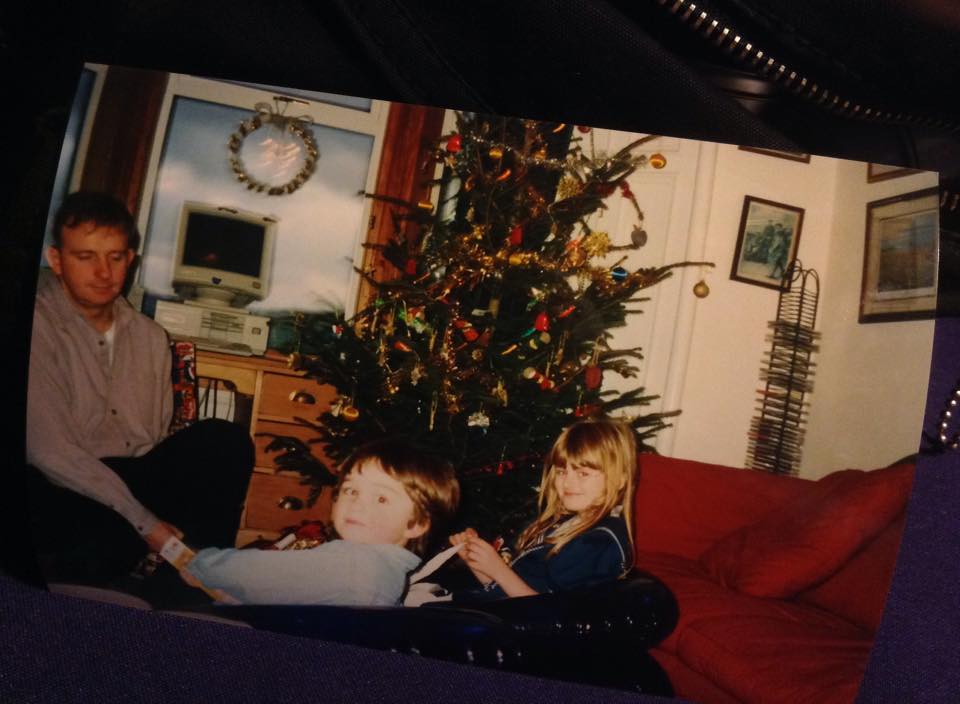
In 1993, the World Wide Web was released into the public domain. There are many histories of the internet and this one is pretty idiosyncratic. I like asking people when they got their first desktop computer. The internet of 1993 could be navigated through bright blue hyperlinks and you would drift between websites. You would type stuff into AskJeeves and have no idea what to expect. At school we had a ‘passport to the Web’ certificate that could be obtained by completing numerous training activities on a twee little software whose name I forgot. It was something like ‘CyberKids’ though surely that is a New York City raver subculture from a time not yet captured by the sleazification of all things indie 2000s. I imagine it was superior to the present Cyber Security Training on offer, in which actors pretend to discover pen drives in the street, gleefully insert them into work desktops only to find their screen literally blowing up in front of them. Nowadays, cyber security training is less about don’t talk to strangers and more about change your passwords regularly. I have a lot of floaty metaphors for the password changing which seem to all include underwear or car parts. Passwords though are pretty boring, clunky things but they’re also gauzy ephemera. Pieces of secret unlocking. Recently I spent an entire Sunday trying to unlock a 2011 MacBook. The password, when I found it again, accessing the deepest recesses of abstract memory, was unforgivably cherishable. I’ll keep it forever like a pet (I’ve already forgotten it).
I keep thinking about ressentiment as a sensation produced by the internet. I mean the internet’s failure. When I was a child, I adored the internet. Once we’d upgraded from dial-up, I would spend upwards of 12-14 hours almost nonstop on forums, games, LiveJournal, websites. I gravitated naturally from the virtual worlds of the Game Boy to the bigger screen of the laptop. Before I was even allowed internet access, I would simulate them by making endlessly complicated Powerpoints and Microsoft Publisher pages which connected to one another like a crude open world. I was beset by RAM crashes and Wi-Fi outages. We didn’t have broadband for a very very long time. My dad was one of the first in the village to have it. I would write letters to the broadband guy pretending to be my dad complaining about the speed of the internet. When I go back to the Shire now, I say things like ‘the internet here is ass’. I can’t get 4G at the semi-demolished and barely functioning station. We can’t find out if our train will come or not. We communicate as a brooding micro crowd, frowning and looking anxiously towards digitised screens whose flicker says only ‘delay’. There are no staff. The staff hide in a crisis. I can relate.
Ressentiment – deep hostility combined with powerlessness. The promise of an open world, a generous future, seems rotten. We hate it. It’s failed us. The sheen of that; it keeps nicking us like a pen knife writing sentences on the skin of our hard-worn feet. We can’t even quit the platforms, can we? The implied ‘we’ of a web community is now an absurdity. What have we seen of the Web in thirty years? Unimaginable horrors. Nevertheless, the perambulations continue.
Right now, I’m deeply interested in the dissonance between how we feel the internet ought to be structured, how it almost was, and what it’s become. The dream metaphors we might use for how it once felt to drift between websites, stumbling upon weirdness after weirdness, unlocking more zones of reality. This versus the algorithmic governmentality and corporate monopolies, ‘technofeudalism’ (Varoufakis) and the appification of it all. I think I got interested in poetry right around the time I fell out of love with the internet (2015). I would memorise passages of Charlotte Smith’s sonnets and learn to swoon over Keats. I felt there was something in the shifting stanzas, the intricacies of form, the dazzling surprises it produced and the infuriating difficulties of grasping the source code — a connection.
I still use the term ‘post-internet’ because I want to believe you can take what Tavi Gevinson in 2018 called ‘The utopian ideal of the internet’ and polish its ‘antiquated’ remains. You can still feel the affective charge of every Web-related signifier that has brushed your life. You can be desensitised to ‘internet discourse’ through the media proliferation of tales of digitality, its foreclosures of democracy, its moral flops, its proliferating conspiracies. But there are parts of you irrevocably brought alive by the internet. I am haunted by digital solastalgia. As a child who felt out of place, abjected from the beginning, I sought the Web as a place not for social belonging exactly but something more like beauty, information, elsewhere. I found little pockets of home all over the place. The web (I’ll stop capitalising now and step out of History) was an extension of the fictional landscapes I found in my dreams or when walking around, making up novels in my head which I did every day until I hit puberty and hormones ruined my brain forever (or whatever). I don’t really know where to find those places any more. They weren’t just artefacts and I know this because you can’t produce a screenshot of a website from 2003 and experience a sweet pleasing nostalgia in the way you could with say, a beanie baby. It was something about the world of it all, the navigation, the desire paths forged to get there. The post-internet, for me, is a lifelong quest in understanding that melancholia and homesickness of what comes after. What do I do with the feeling of ‘we can’t go back there, where do we go now?’. All this time, have I used the web itself as some elaborate metaphor for wanting more than a hostile, futile reality? It’s why I like infrastructure, databases, libraries: the promises of systems which take you somewhere. Which transit something. I also love loops, links and non-linearity.
What was the poetry that got me into poetry? It was Romantic in flavour, sometimes in era. Something between the locatedness and dislocatedness, the attention to daily life, the catapulting scale logic of the sublime, the dogged attempt to render the brain on Nature, the melancholy and mourning, the quiet adoringness, the slow accumulation of elements, the sense of quest, pilgrimage, the unexpected visitor at the door. The everpresence of something more mysterious than could easily be folded into waking life. The delicious fug of opium and promise of a language capable of killing pain. The shimmering excess. The imaginative extremities and morbid dullness of Romanticism were necessary supplements to what the web had done for my childhood.
I’ve been dwelling on this quote awhile, from a Spike article about ‘What’s after Post-Internet Art?’:
The technoromantic reimagines posting as liturgy, algorithms as messengers, and artists as saints. They reach into a glorified past for motifs and meaning that invoke the aura of life before memes.Their aesthetic flirtation with the materiality of technology is a double-edged sword, however, that blurs the lines between critique and commodity fetishization. The stakes for this ambivalence are high at a time when capitalist technology is threatening human dignity and agency. Do we really want to engender an emotional attachment to the internet?
Is the function of art to engender the emotional attachment or to transmute its energies into something other? In my day job, I spend almost a whole day a week dealing with academic misconduct cases relating to the plagiarism and hallucinations of Generative-AI. I am supposed to come up with ethical and interesting ways to engage new technology in the classroom, but I fantasise about whole server forms blowing up or quietly being sucked back into the toothpaste tube of Silicon Valley, as if none of this ever happened. At the same time, with two close family members currently undergoing heavy duty cancer treatment, I marvel at the wonders of modern medicine. I think about what Tracey Emin said when asked by Louis Theroux what she thought of AI, or whether there was room for AI art in the world. She says ‘thanks to robots […] that’s another reason why I’m still sitting here’ [presumably due to AI’s role in innovations in cancer treatment and her own recent experience of this]. She’s also like, ‘In terms of art, AI doesn’t really sit well with me, especially when I’m a compulsive, passionate, hot-blooded person who paints’. The contradictions of my feelings about machines get more extreme by the week. I feel born into this contradiction. It’s maybe why my former work twin Nigel would always leave old copies of Wired at my desk.
Does all poetry written after the ‘post-internet moment’ also risk the commodity fetishisation mentioned above? Insofar as it betrays its own lovingness towards the technology it otherwise seeks to critique? Do we want an archness of superior distance or can we do something else with that self-awareness? I think the affect touched upon by Kat Kitay’s piece in Spike is Romantic irony, you know when you realise the narrator is caught up in the situation being described. The Romantic poet speaker discovers they are also a character in the poem. There’s a kind of turn. Timothy Morton uses Blade Runner as a classic example of this, you know when Deckard realises he’s a replicant. Being asked the question, what do you know about the year you were born, for me is like being asked what do you know about what happened to the web? My life is a character in the web’s and the web is a character in my life. What’s the poem here? The continuous mess of everything enmeshed, written, performed, dialogued, deleted, drawn and coded in my lifetime. I have a hot-blooded relationship to the internet. It makes my fucking eyes twitch.
Is transmutation an alternative to merely engendering feeling? I like the word transmutation because I learned it from the great poet Will Alexander. It’s also used by Ariana Reines a lot. We’re thinking here about alchemical transformations in the realm of language, feeling, sensing. I want a poetry that is able to metabolise impossible feelings and in doing so, fuel its reader to think anew. Do I reassign the pain of childhood, the loss of some otherworldly dream, onto the external scapegoat of an enshitified internet? Is that okay? I think about all the times our art teacher made us sit at PCs unconnected to WiFi writing about the design of vintage radios and speaker technology. We had no access to books, the web or other resources to find out more about the designs displayed to us. So in lieu of history or context, we wrote acute, proliferating descriptions of what we saw. What it reminded us of. We found endless vocabularies for edges, colours, surfaces, affordances. This mind-numbing two hours a week was a little oasis from digital supplementarity. A cool, replenishing retreat from external stimulation. We sat on hard, tall stools and typed on clacky keyboards. A tiny little art factory. I had only my brain and the image. I didn’t know it at the time but I was learning that ekphrasis can have a communicative and transformative function. I wrote through the notion of writing about radios to escape the moment where I was supposed to be writing about radios. This did not prepare me for my Art & Design exam so much as it prepared me for poetry.
What do I do with my hatred of the internet? My yearning for it? I write poetry because poetry is a cheap form of that dream architecture I so longed for, all of my life, and I felt good making/using/playing. Marie Buck has a poem that says ‘The point of reading is asynchronous intimacy, and hopefully it works forever’. I said this to my colleague Rodge last week, when we were having one of our regular moments of private despair, and he prints it out and now it’s on the wall of my office. When I look at it I think about all the books out there and all the interesting things I’ve read on the internet and how connected I feel to other worlds. I just have to keep that connection going. I will never know what it’s like to have not been online.
Records I listened to in 2024
Okay music this year was weird for me. I liked things where the lyrics were meltwater into guitars and my ~spotify wrapped was all obsessively listened same songs split geode feelings. Exclusively masculine guitar bands with the exception of Brat (top 5). I too am the virus. Maybe because it rained nonstop all year in Glasgow, even with my heart split with California it made so much sense to listen to The Natural Bridge on loop and felt that bridge would cross the ocean. It was the bridge in the song and the bridge of the ocean. I kept thinking about high-singing shoegaze sirens and lay in the mud during a Mogwai gig. Songs about blues and magic mountains and lucifer and love and sympathy and blood and fluoresce and dallas and golden days and dreams and strawberries and tiredness and june and miracles. Seriously I know 2024 was music gossip and humming cancellations and virality blown up to chromatic ontology but (here I want a line break) I just wanted to be stoned at the claire rousay gig forever. And that was my music.
<cue sparkly tambourine>
“Come talk to me about it outside”
Thought about taking a searing breath onstage and how long til it heals?
[Shane Lavers’ shriek]
dream u can have for free:
“Then there was this weird music video that popped up in my complaining featuring jelly sparkle heels and the message was about destroy your cloud with new CD-R storage capacities! and there was this song from the early 2000s and in the music video you could walk around with big yeti slippers
and this really horny barbie song set in a swimming pool which honestly just sounded like goats but was visually orgiastic & gauche
guess I blame the pseudoephedrine!”
Approximate seasonal index:
Winter – shoegaze, e-girl
Spring – folk, emo, concrète
Summer – jam bands, indie rock, hyperpop
Autumn – alt, slowcore
~ NEW RELEASES ~
Jazmin Bean — Traumatic Livelihood
Kim Gordon — The Collective
DIIV — Frog in Boiling Water
Waxahatchee — Tigers Blood
Julia Holter — Something in the Room She Moves
The Lemon Twigs — A Dream Is All We Know
Bladee — Pyskos
Four Tet — Three +
Grace Cummings — Ramona
Vampire Weekend — Only God Was Above Us
Pearling — Lovelocket
claire rousay — sentiment
Billie Eilish — HIT ME HARD AND SOFT
Charli xcx — Brat
Dr. Dog — Dr. Dog
Clairo — Charm
Bella White — Five for Silver
Chanel Beads – Your Day Will Come
Loukeman — Baby You’re a Star
Phish — Evolve
Kelly Lee Owens — Dreamstate
SOPHIE — SOPHIE
LI YILEI — NONAGE
claire rousay — The Bloody Lady
Asher White — Home Constellation Study
Porridge Radio — Clouds in the Sky They Will Always Be There For Me
Horse Jumper of Love — Disaster Trick
Papa M — Ballads of Harry Houdini
The Cure — Songs of a Lost World
Magdalena Bay — Imaginal Disk
070 Shake — Petrichor
Horse Jumper of Love — Disaster Trick
Previous records of the year
2015, 2016, 2017, 2018, 2019, 2020, 2022, 2023
hmu if there’s stuff you think I missed……………………………………
xoxo
Update
Would like to sit cross-legged on the (heated) floor of an empty nightclub, listening to Amnesiac…
Hi Sorry
Hi Sorry
Hi sorry it took
so long to get back to you
we’ve been super busy here you know I
know am going there now fine
be with you in five. Not. Ten. Fine. Can all
support workers please email
in with completed timesheets by the end of the week before
right yes okay, did you
see the edinburgh rainbow I am
a bit confused as to where to find this building
you come pick me up right. Yes. In the morning. Yes.
It’s staff spa day I am a bit
nevermind. Right. So if you. Yeah I’m good it’s been
Ok let’s try this instead. Alright you know maybe
did you check the reference I think that’s
What was wrong no no one’s gotten
Their feedback yet have you considered.
I am going there now yeah that’s so true
The link seems to be broken can you
Hit resend yes it’s in the attachment not
This one this other. Sorry. Can I send you
the month again
I think I’ve been spotlighted and muted
at the same time
I mean if you want to you could always
no that one’s closed have you
checked out the right books
so sorry! I mean fine I’m good yeah
You know I am alright I can order another
So if you check on the library resources
Tab yeah you’ve got. I totally understand!
Sorry for your understanding
I’ll take care of that, would you. Ok.
Where’s my phone? So you see it does
Not allow for templates so what you do is
Put the big red box. Right. And then
The blue box and the green. Right. Could you…
It would be great to be in the big black box
Which you put in the bin. Totally! Uhm, the poem’s not
Opening are you sure you sent it yes
It’s not a PDF though it’s literally inscribed on the stars.
Right…. Do you have a skin by any chance
Can I put it in your poem? I think it’s in my pocket
That’s so fucked? I’m so sorry?
Can you put my head on the maintenance portal?
Okay. I need your help and expertise unravelling
One of the world’s longest standing misconceptions. Right.
So I think mobile view is a write off?
Have you tried emailing them? Yes they’ve sent in the letter.
Please hold the line for the council.
I am the council. I am the Queens Park Hello Kitty.
You could apply for a partial refund just answer
A couple of questions one
Have you. Yes. I am applying for emergency
funding for my damp lifestyle. Do you want me
To pin the window on the call so folks can have a better look?
Can I sit right next to you? Is it Ok?
I can stand where you need me hey Maria
The file is so corrupt
THERE IS NO AUDIO why is he
Making inchoate humming noises can you
Take over the cat from me? Haha it’s Ok I guess I’ll just
Fill up the bathtub with cat food. Are you in tomorrow?
Are you offering anything? New deal on flaking.
I am just totally zoomed out. Well, I’m a tiny speck
On the furniture. I don’t think the wifi is working
Why you ask. You see the password?
Let’s take it from there. Okay. Are you sure
You want to send it without a subject header
Like are you totally sure? No I’m sorry
It’s Mau but with like a ‘oooooooooooo’ at the end.
Think of cows! Happy in the field. Grazing on liberty caps.
Ma – ooooooo. Yes! You’ve got it. Not many people can do that.
Can you please ring me back. Hi it’s Amy
And Georgia. I’ve filled in your invoice for you
Sorry about the cuts. Hahahahaha
Love you! I want to get on my knees for you.
I’m on strike. Trust me I have a good reason
To look? Hello?
Hey how are you I hope
Phantom Architecture
the stillness of the painting has a kind of speech to it
the sustaining restless grammar of poetry
is that how good poets defy things with their heart
the sun on the tongue is a kind of living
the poem seems to fill up with this
a panic, just in the peripheral vision
a mode that can maintain the day
something of Schuyler in the act of saying
how it allows the people to enter the self
we are not complete
when I’m writing, I’m the right size
I’m not bigger or smaller than anything
kindle’s like etch a sketch
one of the issues of elegy is not being able to let go
the Orphic is endless
we’re all here because we’ve been taken captive by our reading practice
a text of dubious origin which is a great analogy for poetry
trick us into thinking these are finished propositions
the only authority is the sound itself
foregrounding the process of echoing
the lyric utterance as operating system in the present moment
humour my error
invent my own invisible poem behind the invisible poem
beginnings are always about nothingness
meaninglessness makes meaning
a horizon or atmosphere that I can continue to write into
I am always beginning…
I literally don’t know how to write a poem
phantom architecture of a poem
the complexity of getting from one line to another
a properly honest relation to our temporality
the poem that doesn’t know it’s good is usually good
you can’t find anything if you’re not lost
making nothing as a suspension of labour
marking the duration of a symptom
speculative topos for tracing affinities
there is no better time than the present when we have lost everything
a generative uprooting of one’s identity or biography to do the work
incantation to wrestle the poem from its enclosure
to project in divine sublimity
hoping poetry might come back
*
All of these lines are quotations of things said by panellists and contributors at the Peter Gizzi Colloquium at St Andrews University on 18th October 2024: Anne Boyer, Luke Roberts, Oli Hazzard, Honor Hamlet, Colin Herd, Jacob Bard-Rosenberg, Rosa Campbell, David Herd, Caspar Bryant, Daisy Lafarge, Anthony Caleshu, Peter Gizzi.

