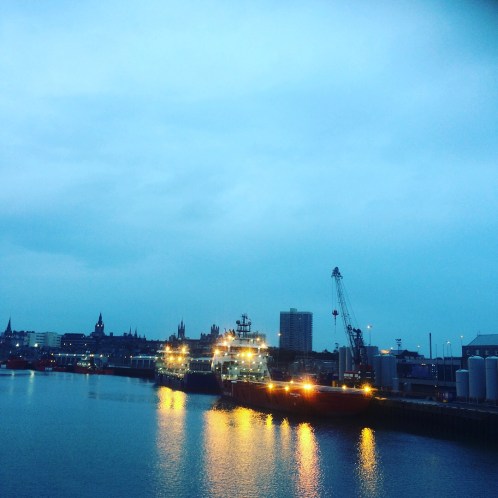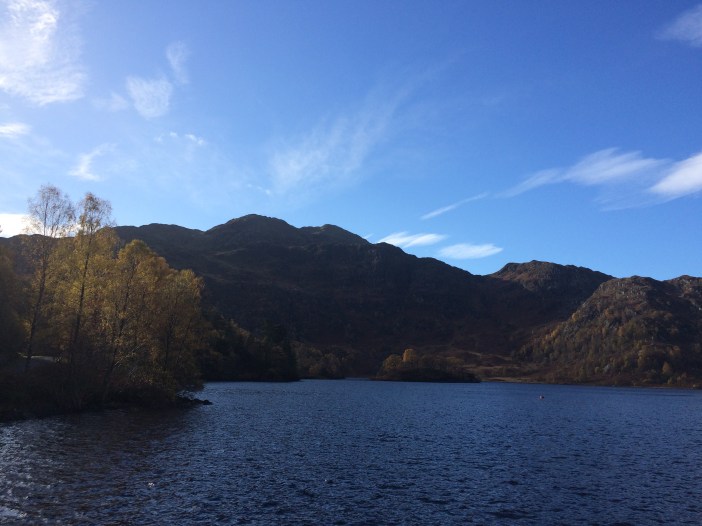
Field Trip to Aberfoyle and Loch Katrine

IMG_4137


Telling a story is not like weaving a tapestry to cover up the world, it is rather a way of guiding the attention of listeners or readers into it.

— Tim Ingold, ‘The Temporality of the Landscape’


It seems I am happiest now when out in the country. Brought coachwards through Maryhill, Bearsden and north to the Trossachs, warmly we arrive where the air is clear and there are plenty of lichens to prove it. Something relaxes within my chest, the familiar twangs are settled.

On the road, we talk of stories and allusions. There is a cipher in the heart of Scotland and a myth that says more than etcetera. I jokingly call it Rob Roy of the Anthropocene and something makes sense.

October tells a story of all that has happened in summer. The leaves fall like words but never ask for discernment. One of us asks, What is the intention of the wind? It is easy to grasp what the people and the pollen and the tractors are doing. But what of the wind, most aleatoric of weatherly elements?

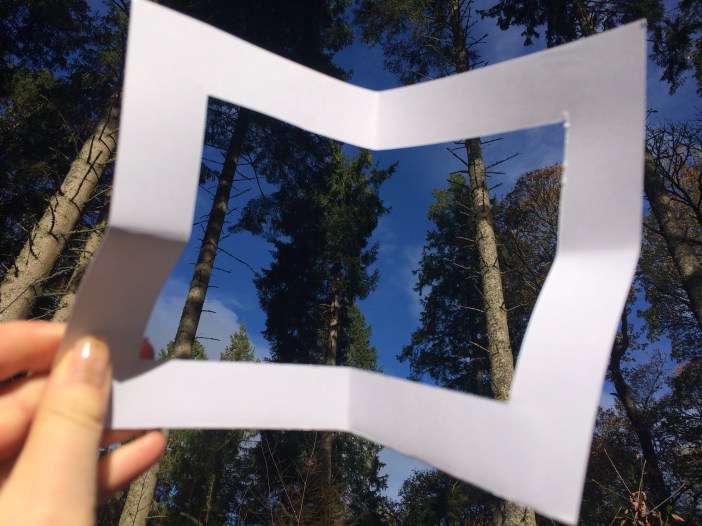
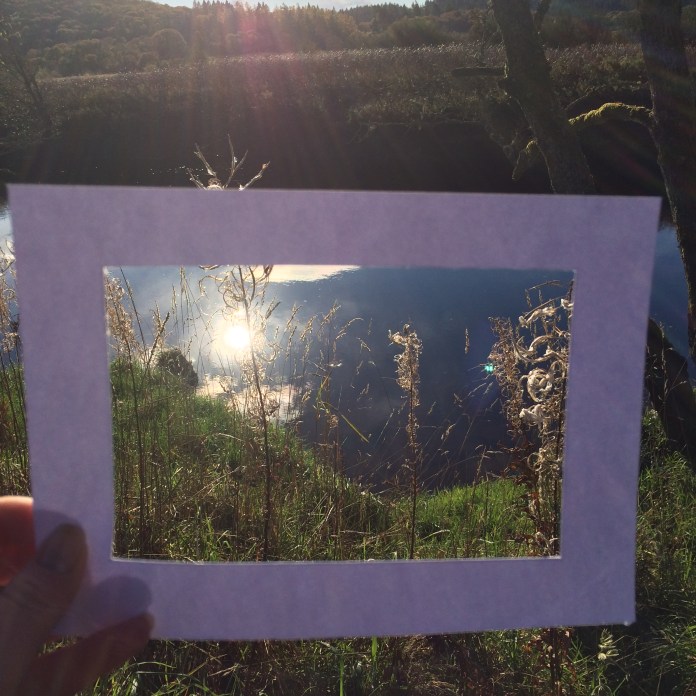
We arrive here to think through a specific term: Tim Ingold’s notion of ‘taskscape’. This notion brings temporality to an otherwise static conception of landscape: it factors in the performance of all entities involved in a landscape’s conjuring and perpetuation. Birds singing, workmen whistling, the whir of traffic, groan of thunder, sigh of trees. I stir up a whole anthropomorphic cauldron; its ingredients activating each other, bubbling and working. Ingold would prefer a more symphonic metaphor. Everything is performing some task or another, enmeshed in a complex, living system — what Ingold calls an ‘ensemble’ of ‘mutual interlocking’. The ‘taskscape is to labour what the landscape is to land’.  To dwell in the taskscape is to enact a form of noticing that is multisensory, a way of attuning that picks up the subtleties of crackle and static within the picture, and in doing so reminds us of (multi-species) sociality, time and life: ‘the landscape is the congealed form of the taskscape […] the landscape seems to be what we see around us, whereas the landscape is what we hear’. Our guide for today’s trip, Dr David Borthwick of the University of Glasgow, presents us with paper ‘frames’ to remind us of this difference between landscape and taskscape, active and passive.
IMG_4119

We shoot pictures of frames within frames, we flatten. I try to capture with my phone the green and the gold and the red and the light, but I cannot capture the fullness of surround sound, of medial sense, that makes a taskscape. And even with field recording, where would the motion of the water be? With video, how could the heat of the sun be felt? The smell of carbon coming off the road, and mingling with the forest’s brackish aroma? The burr and clunk of a passing lorry, laden with logs, which was more of a ribcage rumble than anything heard? Is writing able to capture some of that sensory dynamism? 

Archaeology, for Ingold, is the study of ‘the temporality of the landscape’. The beat of its rhythms and actants, their play and tasks. Sometimes a taskscape eludes measurable time. The ease of synchrony. It could be time split into multiplicity. The time of the myriad ants trailing over pine needles in infinite fractals, the time of composting, the endurable time of the woman who works in the wool mill, the waitress who serves us coffee. Labour as glitch and repetition. The gift shop has summoned Christmas early with excessive trinkets, each one a throwback to a prior nation, the act of (re)imagining, Scotland the Brave contained on a keyring.
IMG_4109

When we linger too long in one moment, Dave warns us we are burning daylight.

But we linger awhile by a grave. ‘Because I could not stop for Death – / He kindly stopped for me –’. Maybe we are mesmerised in churchyards because a slumbering looms beneath us, compelling. What is the work and the sound of death? Is it perhaps Emily Dickinson’s famous ellipsis, the almost-just-so of each fat dash? Is this the punctuated work of dwelling?

The grave belongs to one Robert Kirk, ‘The Fairy Minister’ best known for his book The Secret Commonwealth: a book about fairy folklore, witchcraft, ghosts and second sight. People have placed silver coins on the symbols adorning his grave. There is a currency to this kind of mourning, that blurs into well-wishing. Maybe it is more of a summoning. We learn that Kirk’s fairies were human-sized, tricksy and prone to following us, often as doppelganger creatures with their own mortality. Kirk had set out this alternative ontology, not entirely incompatible with his Christianity. These fairies live off of light, their flesh is comprised of air congealed. Idly I browse Wikipedia for further anatomy: ‘somewhat of the nature of a condensed cloud, and best seen in twilight’, their bodies are made ‘pliable through the subtlety of Spirits that agitate them’. The internet weaves stories around the things I am seeing. I click off my phone and instead breathe information in through my lungs, closing my eyes when the light is too bright and catching soft rainbows inside my lashes. These speckles of rainbow are my fleeting sprites, made of air and light and shining.

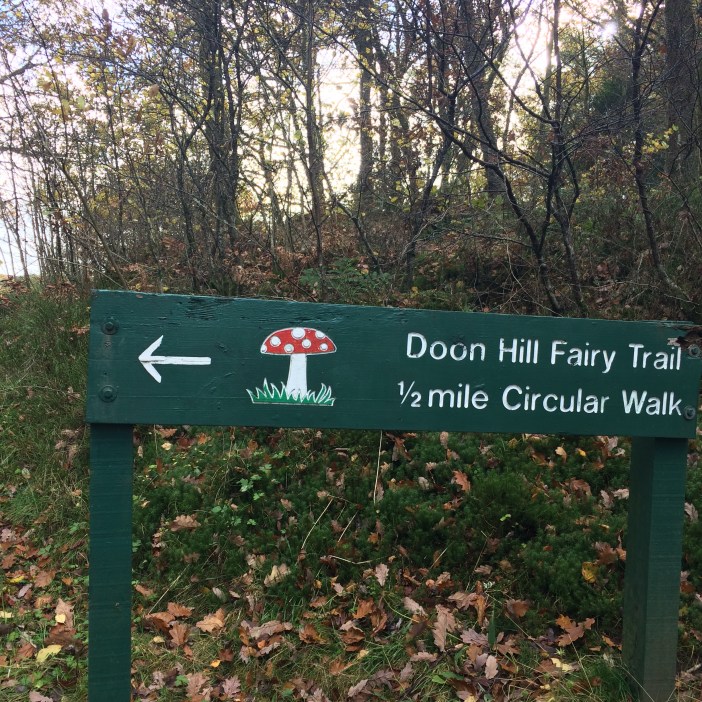
We ascend Doon Hill through burnished woods to find a shrine. There is a tree in the middle of a clearing where people have tied bright rags or ‘clooties’, along with loom bands, glitter, ribbons and a stray satsuma. Lichenous twigs are piled as offering, pennies and sweeties and conkers collect. We talk about whether these human trinkets make us feel closer to the tree, question our role as observers, the slide between intimacy and distance. The key word here is ‘kitsch’: these are mass-produced items, cheap commodities, remnants of sentiment and transient tourism. I am reminded again of the objects on sale in the Aberfoyle gift shop. Looking upon this kitschy monument, are we compelled or disgusted? Are such human-made objects utterly incongruous with the rustic landscape, or does their presence remind us of how land exists in time, is formed in continuums, assemblages, ensembles of affect and process and change. Dave tells us the last time he visited the tree, it was surrounded by mass quantities of plastic — presumably toys, wrappers of sweets, litter made sacred by fact of arboreal proximity. A sign down the hill says biodegradable clooties can be purchased in town. A problem was identified and the ecosystem of the land and the shrine shifts in tandem. There is perhaps a new aesthetic. Nothing is static, not even a monument. Lichen and moss spawn on a grave, a fly lays eggs inside a lost silk bow.

Screen Shot 2018-10-27 at 20.03.08

We admit the brightly coloured things, pastel and garish among the autumn hues, kind of gross us out. But we can’t stop looking. In Ecology Without Nature (2007), Timothy Morton says kitsch

exerts a fascinating, idiotic pull. It is often synesthetic, and it has no power except for the love we invest in it. Kitsch is the nearest thing in modern culture to the shamanic ritual object. Kitsch is immersive. It is a labour of love: you have to “get into it”. It poses the problem of how the subject relates to the object in a striking manner.

The more we look at the tree, the more we feel the pull of millioning time zones: the midges at night that might glow around it, the people who came and went, who took and stayed and left. It is only after we’ve been staring and puzzling the shrine for a while that Dave tells us the story behind it: ‘What if I told you…’. It’s important that this story exists in the conditional; for it too is a part of the taskscape, a melody played among the rest. The shrine began after the Dunblane school shooting, when a local primary school teacher brought her pupils up the hill to this tree, where she encouraged them to lay something of themselves in its roots. There was the hope of some kind of catharsis: a gesture towards memorialisation, to make a hurt world wholesome again. Dave suggests the term, ‘a secular spiritual’. The tree becomes a collage of innocence, of selves in time. When the pressure of being a ‘subject’ is too much, we call to the ‘object’. We want of the tree a longevity denied to others. There is some kind of empathy between species. Does the tree speak back? Here I am in this realm of kitsch and already yearning for a sort of panpsychism, a promise of communion, of relief and immersion.

Dave offers an answer, ‘To bear witness to landscape is to undertake an act of remembrance’.

The shrine began as a response to a deeply human calamity, but I wonder how this would function in the case of ecological destruction. Do people visit flood-sites, ruined forests, the ravaged remains of wildfires, with a similar sense of necessary ‘return’: the elegiac act of imparting one’s sorrow, sympathy and regret? Tying a ribbon to a tree, perhaps with the string of a message — is this part of ‘a new culture of eco-confessionalism’, which Stefan Skrimshire summons in his recent article ‘Confessing Anthropocene’ (2018)? Riffing on Jacques Derrida’s thoughts on witnessing and confession, Skrimshire suggests that: ‘the essence of the ethics of confession is that I never confess for my “self” in that modernist sense, but I always confess the other in me’; when we confess, we realise ‘the other’s desire for forgiveness operating in me’. My urge to lay down a flower, a toadstool, or some other jewel of the wood, is an act of remembrance and witnessing that also admits how such other species speak through me. I recognise the impossibility of asking for forgiveness for ecological crimes that exceed my limited comprehension; I gesture towards the small worlds of these things and how their hurt, their life and precarity, resonates inside me.  
IMG_4129

Perhaps what we need, in addition to confessions, are spells. I think of Robert Macfarlane and Jackie Morris’ recent book of acrostic spell-poems for children, The Lost Words: A Spell-Book (2017), which seeks to encourage children to recognise biodiversity, to perform little charms that ask us to notice the beauty of species before they disappear. While Macfarlane and Morris’ work gestures more towards the flora and fauna of the past and present, we might also think of enchantment as an attunement to the kinds of deep time inaccessible within ordinary human comprehension. Cautiously, Ginn et al. (2018) advocate Jane Bennett’s mode of ‘enchantment’ as ‘an uncanny and unsettling reminder of vast forces beyond one’s control. We might try to channel these forces in more or less enchanted ways, but success [in terms of progressive politics] will remain elusive’. Enchantment means noticing material vibrancy, the activeness and collaborative potential of everything in and around us, even while aware of the limits. It means thinking with, and wondering. 

So we are still, so we listen. A little chill creeps in. I am grateful for shelter within these trees, the steps of their roots built into the hill. The wool in my fleece, which makes me look slightly sheep, but keeps me warm.

‘Enchantment is not a choice (although receptivity to enchanting experience can be cultivated); it is usually something that arises unbidden’ (Ginn et al.). I suppose we are doing our own work of enchantment, listening to Dave’s tales as we break fresh ground on the Highlands, trying not to think of ourselves as mere tourists — trying properly to see and hear and temporarily dwell.
IMG_4117
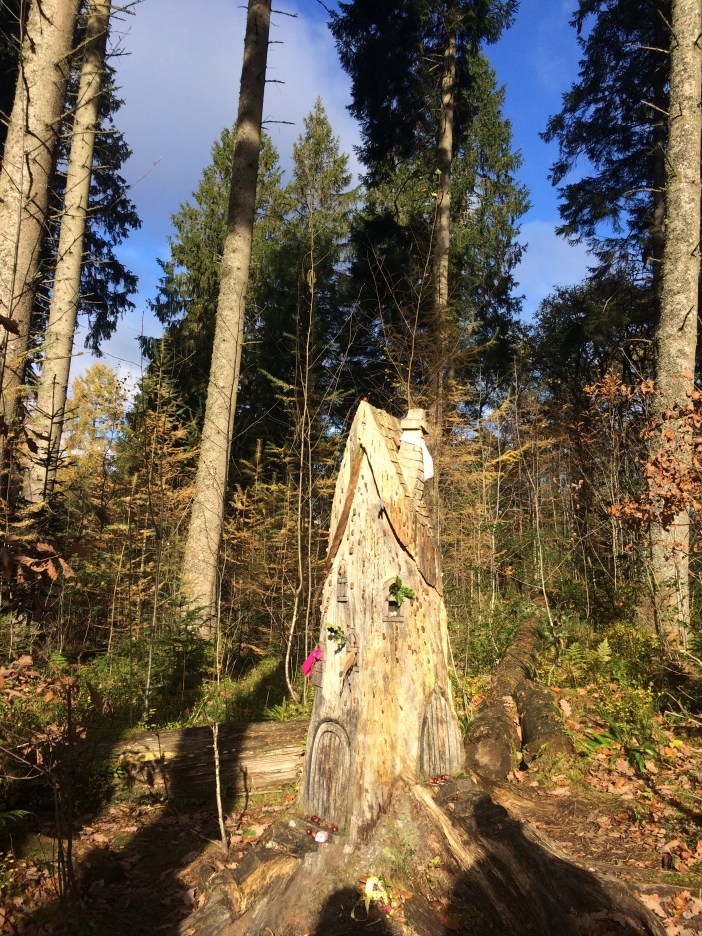
Another fairy shrine…

Is folklore a form of environmental seduction? I listen to the trees, the way the wind speaks through them. I note all my instances of anthropomorphism. Okay, so Rob Roy was blatantly used to sell Scotland to American tourists, and, as a ‘thoroughly mythical character’ in Walter Scott’s fictional depictions, ‘the embodiment in life of all that the Romantic writer seeks in art’ (Leslie Fiedler). I wonder who our heroes are in the anthropocene, and whether they are human, and how we might queer them. If Roy is ‘the very spirit of risk and of the wilderness which he inhabits’ (Fiedler), then who might embody the spirit of global risk society (a la Ulrich Beck), who renders a wilderness once rich now spent and depleted by the actions of anthropos?  

I miss when I was little and the woods were full of magical creatures, where now I often just see Buckfast bottles, fire pits, broken glass and other evidence of human activity. Of course the latter was there all along, it is a question of noticing. Does enchantment really have a summoning, interventionist function, stirring political desire, or is it more about consolation?

Maybe the anthropocene demands a kind of imaginary vigilantism? Letting rainbow smoke off into the taskscape, performing poetic intervention. Explode the light of all that action, demand appreciative feedback loops of refraction. This is nature hyperreal and this is it inside me and in you; this is it just as it is, this is why it matters. This is ‘the matter / of all of us mattering’ (Elizabeth-Jane Burnett).
IMG_4127

The sound of a distant wood saw does its work. We fold back and descend to Aberfoyle.

Somebody spots this bird or that. Their branchly flitters an interruption, a quaver in the staves of the day, one talk flowing after another. As if to say, we are not gone yet; we are here and we still make sense.

The sun squints into my eyes, makes rainbows. The air is crisp and I crave orange juice, a supply of this light I could bottle, smell of mornings and woodsmoke.

We cruise along Duke’s Pass and make it to Loch Katrine. When I drink Tennents in Glasgow, sipping my yellow tin, I am drinking the water of this loch. Whenever it might taste bittersweet, or clear or cold or good, a remnant of that originary gold is present. To advertise your freshwater source is perhaps itself an act of ecological kitsch, a gesture of synecdoche that craves its place-name, its blue security. But I love it as I love the gold of these mornings. Drinking the landscape to drunk immersion.

There is of course also the light on the water, its scintillations just there, rippling, like someone spilled mercury. Silver and gold, but nothing of Christmas yet. There is a rhythm, just as Wordsworth and Nico both said, there was a pleasure there or then. To push such beauty into past tense. Miranda tells me about wild swimming and I’m already relishing a sort of burn and shudder within my extremities, the plunge of cold which is doing its work, shocking my body.

Noticed things:

Murmuring burns
Clumps of moss, soft & bottle-green hills in miniature
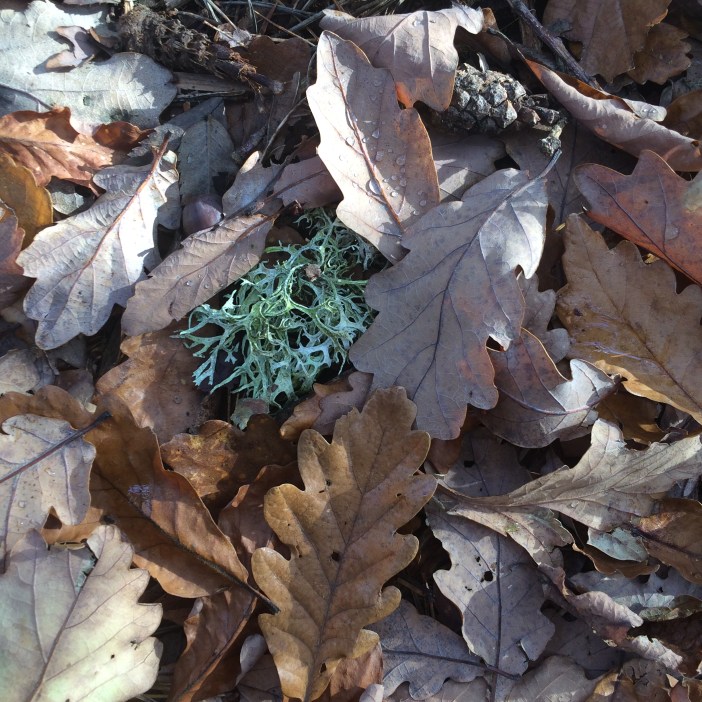
Pale teal lichen
Intimations of meadowsweet
The wires black-taped to rocks (origin & purpose indeterminate)
A fine specimen of birchwood polypore clamped to its tree
Tiny waterfalls
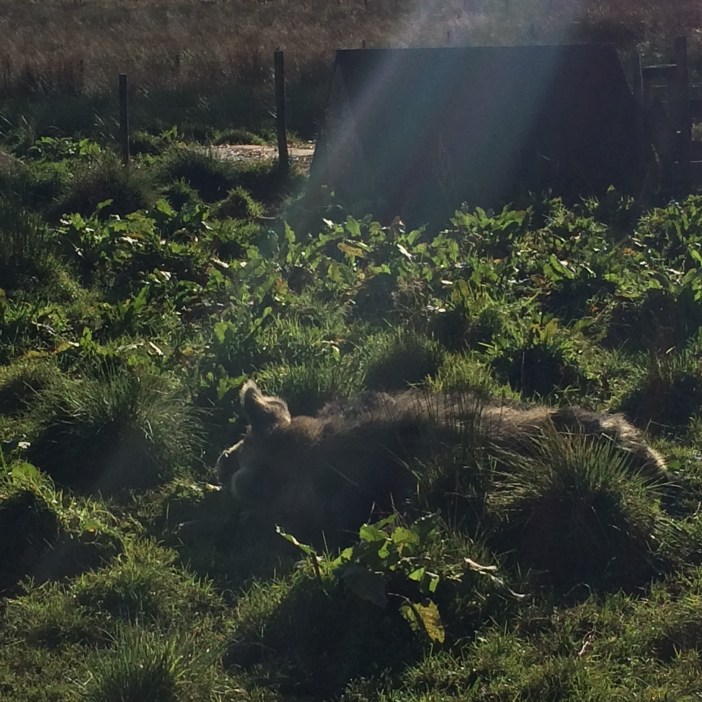
A fluffy pig sleeping in the sun

What is the intention of the wind?

Wanting to preserve my tired light feeling, I decide against coffee. Calm as I am, sleep-deprived and attuned to things as though they were already wisps of memory. To make of a landscape only medial presence, and thus richer than if it were grand and static. We can’t look at the gorgeous sweep of the hills for too long, but we stare at the mushroom and the grave and the tree and the pig.
IMG_4112

These harvested fields of depleted green, this sense of the real-time seasons.

Dave tells us the legend of Sir Walter Scott visiting the Wordsworths, and being so disgruntled by their continual serving of porridge that he jumped out the window and ran for the pub. I think of Jazzer in the Archers and this archetype of the Scotsman with his fondness for pints, company and hearty dinners. I think of these men as a weird continuum, the overlapping currents of cultural narrative.

Like porridge, the Trossachs are truly nourishing — as in, all your carbs and protein at once. I come back softened yet inclined to wildness. Home to Glasgow, I want to go back and walk and walk. Is this what David Lynch meant by The Return with the new Twin Peaks; as in, this odyssey towards belonging, the wind in the douglas firs, the cherry pie taste of a former present, always already slid into retro?

Rob Roy was also known as Big Red. Before he was co-opted as a folk hero, tartan-filtered & highly masculine, Rob Roy was a shapeshifter, a problematic noble savage. I remember a childhood trip to visit his grave, wandering the moors with my mother and father, unable to find it. Now I can just see it on the internet, but as jpeg the image is spectral, flat and distant, overgrown with ferns and pixels. By necessity, compressed. But in fact it wasn’t his grave we were looking for, but his cave, somewhere along the banks of Loch Lomond. Memory acts in slippage of language. I have invented the moors for my own ecological ambience, adding the wind and the mist, a childhood hunger for the warmth of a car and a packet of crisps. How do we carry our own taskscapes, or is it more that they haunt us, making their overlays of locality, literary story and myth? I don’t think we ever found that cave, and thus how could I confirm that it even exists?  

Imaginary outlaws of ecological rupture. Where might we forge a folklore for the anthropocene, in its always unfolding, its gesture towards archival pasts and residue futures?   

Ingold: ‘For the landscape is a plenum, there are no holes in it that remain to be filled in, so that every infill is in reality a reworking’.

A porous landscape is the illusion I want, pouring in dreams of milk and honey, preserving Romantic patches of mystery. Is this why people wedge pennies in trees? What are they trying to keep out or in; whose time are they buying?

I used to always be unnerved by the viewpoint symbol on a map: half a sun, half a symbol for buffering. As though the landscape’s vista were beaming out from the person, or beaming back into. Subject and object, difference and deferral.  Was each line one of sunlight or current or spirit? What is it really that we’re supposed to be seeing?
IMG_4139.JPG

So I get home and I take out my phone and skip through the roll of images. So I scroll through my notes. I close my eyes and there are imprints of sound and sense, the warmth and chill, the wind ripping raw my ungloved fingers, the flash of my hair flaring fire in light. There is so much to parse in place-names, these histories in miniature I can hardly manage. Dan Hicks (2016) revisits Ingold’s concept of the task-scape and concludes that archaeology is actually ‘the study of the temporality of the landscape revisited’.  

Back in Glasgow, I hold the word ‘Aberfoyle’ in my mouth like a toffee. I’m trying to make it last a long time, hoping it won’t melt.

In Gathering (2018), Alec Finlay writes: ‘sometimes people say and repeat place-names simply because they like to hear them’. I am so ignorant of the complexities occurring within the Trossachs, within this taskscape or that. The delicate filigree of history, literature, tourism and labour. But I hope by merely feeling pleasure, learning the names and lay of the land, listening for its shimmers, I am doing something of the work of dwelling, appreciating, gesturing towards a sense of care, mixing myself with the wind and all of its unknown intentions.

We could make a list of all the places we’ve been, the things we’ve noticed:

‘may these place-names be, once again, useful in the world; may we be inspired by them to remediate the landscapes they describe’ (Finlay).

I fold out a map and think of the future, dotting at random. There is so much I don’t understand. Space is a palimpsest of half-remembered places; sometimes you can’t traverse it clearly. Maybe there are holes, or pores, or fissures. So anyway, you tell a story.

The air is full of spells, and names, and fairies.

~

tumblr_pfhrjtYYiX1rw0k2lo1_540
The trees of Twin Peaks


Bibliography


Burnett, Elizabeth-Jane, 2017. Swims (London: Penned in the Margins).

Fiedler, L., 1997. Love and Death in the American Novel (Illinois: Dalkey Archive Press).

Finlay, Alec, 2018. Gathering (Zurich: Hauser & Worth).

Ginn, F., M. Bastian, D. Farrier & J. Kidwell, 2018. ‘Unexpected encounters with Deep Time’, Environmental Humanities, Vol. 10, No. 1., pp. 213-225.

Hicks, Dan, 2016. ‘The Temporality of the Landscape Revisited’, Norwegian Archaeological Review, Vol. 49, No. 1, pp. 5-22.

Ingold, Tim, 1993. ‘The Temporality of the Landscape, World Archaeology, Vol. 25, No. 2, pp. 152-174.

Macfarlane, Robert and Jackie Morris, 2017. The Lost Words: A Spell-Book (Hamish Hamilton).

Morton, Timothy, 2007. Ecology Without Nature: Rethinking Environmental Aesthetics (Cambridge: Harvard University Press).

Skrimshire, Stefan, 2018. ‘Confessing Anthropocene’, Environmental Humanities, Vol. 10, No. 1, pp. 310-329.
 

Mining the Light: My Time in Orkney


IMG_3289.JPG

I always have this sensation, descending the steps at Edinburgh’s Waverley Station, of narratives colliding. It’s a kind of acute deja vu, where several selves are pelting it down for the last train, or gliding idly at the end point of an evening, not quite ready for the journey home. The version that is me glows inwardly translucent, lets in the early morning light, as though she might photosynthesise. I remember this Roddy Woomble song, from his first album, the one that was sorrow, and was Scotland, through and through as a bowl of salted porridge, of sickly sugared Irn Bru. ‘Waverley Steps’, with its opening line, ‘If there’s no geography / in the things that we say’. Every word, I realise, is a situation. Alighting, departing; deferring or arriving. It’s 08:28 and I’m sitting at Waverley Station, having made my way down its steps, hugging my bag while a stranger beside me eats slices of apple from a plastic packet. I’ve just read Derek Jarman’s journal, the bit about regretting how easily we can now get any fruit we want at any time of year. He laments that soon enough we’ll be able to pick up bundles of daffodils in time for Christmas. The apples this girl eats smell of plastic, of fake perfume, not fruit. I’m about to board a train that will take me, eventually, to Thurso and then on via ferry to Orkney. I wonder if they will have apples on Orkney; it’s rumoured that they don’t have trees. Can we eat without regard to the seasons on islands also?

I needn’t have worried. Kirkwall has massive supermarkets. I check my own assumptions upon arrival, expecting inflated prices and corner shops. I anticipated the sort of wind that would buffet me sideways, but the air is fairly calm. I swill a half pint of Tennents on the ferry, watching the sun go down, golden-orange, the Old Man of Hoy looming close enough to get the fear from. Something about ancient structures of stone always gives me vertigo. Trying to reconcile all those temporal scales at once, finding yourself plunged. A panpsychic sense that the spirit of the past ekes itself eerily from pores of rock. Can be read in a primitive braille of marks and striations. We pick our way through Kirkwall to the SYHA hostel, along winding residential streets. I comment on how quiet it is, how deliciously dark. We don’t see stars but the dark is real, lovely and thick. Black treacle skies keep silent the island. I am so intent in the night I feel dragged from reality.

Waking on my first day, I write in my notebook: ‘the sky is a greyish egg-white background gleaming remnant dawn’. In the lounge of the hostel, someone has the telly on—news from Westminster. Later, I’m in a bookshop in Stromness, browsing books about the island while the Radio 2 Drivetime traffic reports of holdups on motorways circling London. Standing there, clasping Ebban an Flowan, I feel between two times. A slim poetry volume by Alec Finlay and Laura Watt, with photographs by Alastair Peebles, Ebban an Flowan is Orkney’s present and future: a primer on marine renewable energy. Poetry as cultural sculpting, as speculation and continuity: ‘there’s no need to worry / that any wave is wasted / when there’s all this motion’. New ideas of sustainability and energy churn on the page before me, while thousands down south are burning up oil on the London orbital.

When we take a bus tour of Mainland Orkney’s energy sources, we play a game of spotting every electric car we see. Someone on the bus, an academic who lives here, knows exactly how many electric cars there are on the island. There’s a solidarity in that, a pride in folk knowledge, the act of knowing. On the train up to Thurso, I started a game of infrastructure bingo, murmuring the word whenever I spotted a pylon, a station or a turbine. Say it, just say it: infrastructure. Something satisfying in its soft susurration, infra as potential to be both within and between, a shifting. Osmosis, almost. The kinesis of moving your lips for fra, feeling a brief schism between skin and teeth. A generative word. Say it enough times and you will summon something: an ambient awareness of those gatherings around you, sources of fuel, object, energy.

The supermarkets in Kirkwall seem like misplaced temples. This was me idealising the remoteness of islands, wanting to live by an insular, scarcer logic. The more we go north, the more scarcity we crave—a sort of existential whittling. Before visiting, I envisioned the temperature dropping by halves. On the first night, warm in my bed, I write: ‘To feel on the brink of something, then ever equi-distant’. The WiFi picks up messages from home. Scrolling the algorithmic rolls of Instagram, I feel extra-simultaneous with these random images, snapshots of happenings around the world. Being on an island intensifies my present. In Amy Liptrot’s The Outrun (2016)a memoir of recovery and return on Orkney, Liptrot writes of ‘waiting for the next gale to receive my text messages’. On the whims of billowing signal, we wait for news of the south to arrive. Maybe I was an island and I wanted my life elsewhere to vanish, disappear in a wall of wind; I wanted to exist just here, in a hullabaloo of nowness.

I say an island, but of course Orkney is more an archipelago. And I’m on the Mainland, home to the burghs of Stromness and Kirkwall. Here for the ASLE-UKI conference, there wasn’t time to visit the harbour at Scapa, or the neolithic village of Skara Brae or the stone circle Ring of Brodgar. I spend most of my time in the town hall opposite Kirkwall’s impressive, sandstone cathedral, aglow by night with fairy lights strung in surrounding trees. Yes, trees. Orkney has trees. They are often gnarled-looking and strange, stripped by wind or held up inside by steel plinths. Anthropocene arboreal hybrids. But still they are trees. Using my plant identification app, I find hazels and birches. Autumn is traceable in the swirls of thin leaves that skirt the pavement, tousling our sense of a general transition.

IMG_3285

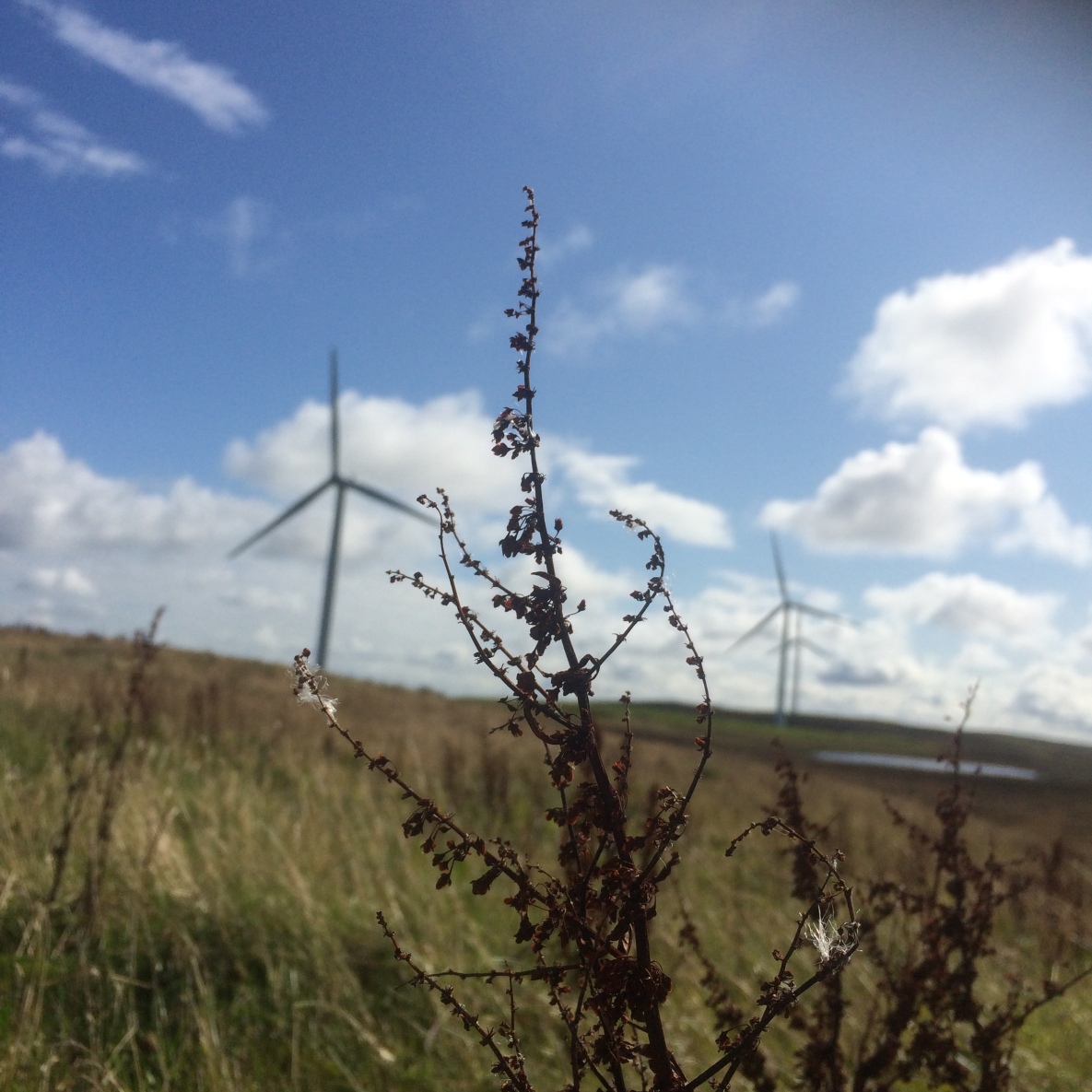
At one point in the trip, we visit the Burgar Hill Energy Project in Evie, alighting from the bus to stand underneath several massive turbines. The sound is wonderful, a deep churning whirr that feels like the air pressed charge on repeat. Under the chug chug chug of those great white wings we gathered, listened, moved and dispersed. I watch as our tight knit group begins to fragment; we need time apart to absorb this properly, little cells bouncing off and away from each other, quietly charged, loosening dots of pollen. Some of us finding the outer reach of the hill, looking for a view or panorama, leaning back to snap a photograph. I film the shadows windmilling dark the rough green grass. Capturing the turbines themselves seemed almost obscene. I don’t know why I was making them into idols, afraid to reduce them to pictures. It was easier to glimpse them in pieces, a flash of white, synecdoche. My friend Katy and I agreed the best photos were the ones out of focus, a bird-like blur against the blue.

Places I have been hit by wind:

  • The cloisters at the University of Glasgow, a wind-tunnel roar to blast out your thoughts post-exam.
  • The hills of Aviemore, my first and last time attempt to ski.
  • Ayrshire beaches in winter, icy particles of hail cast into my eyes and ears.
  • The last day of the Wickerman Festival, wrestling with tents that needed drying and folding, the wind blasting against my cliff of a hangover.
  • On the deck of a ferry, mascara stinging the black black veil of my lashes.

I am an air sign, Gemini, and there is something about losing your breath to elemental forces. I think I once finished a poem with a phrase like, ‘lashing the planetary way of all this’. We used to stand in the playground at school, brandishing our jackets like polyester wings, letting the wind move us forward, staggering in our lightweight bodies, our childish intuition of the way of the world. The pleasure in surrendering. Making of your body a buffeted object. Returning to Glasgow, I soon find myself hit with a cold, preemptive fresher’s flu; a weight on my chest, a diaphragm lag. A sense of my body heaving against itself.

On Orkney, I can smell the salt from the sea. Earlier in the summer, I was struck with wisdom tooth pain, the kind that requires salt-water rinses every half hour, not to mention agonised gargles of whisky. Wasting my precious bottle of Talisker. Amid the haze of those painkiller days, I felt closer to an elemental heat. Metonymically, I was inhaling islands. The taste of self-preservation, of necessary self-sustenance, is never as strong and unwanted as when you want a part of yourself to be wrenched out of you. Pulling teeth is an easy metaphor for lost love, or other forms of psychic distress. Breaking apart, making of the self an archipelago. There’s that song by The National, ‘I Should Live in Salt’, which always sticks in my head in granular form, occasional line. Refrain of refrains, ‘I should live in salt for leaving you behind’. I never knew whether Matt Berninger was singing about preservation or pain, but I saw myself lying down in a kelp bed, child-size, letting the waves lap over my body, salt suffusing the pores of my skin. Begin again, softer.  

IMG_3256

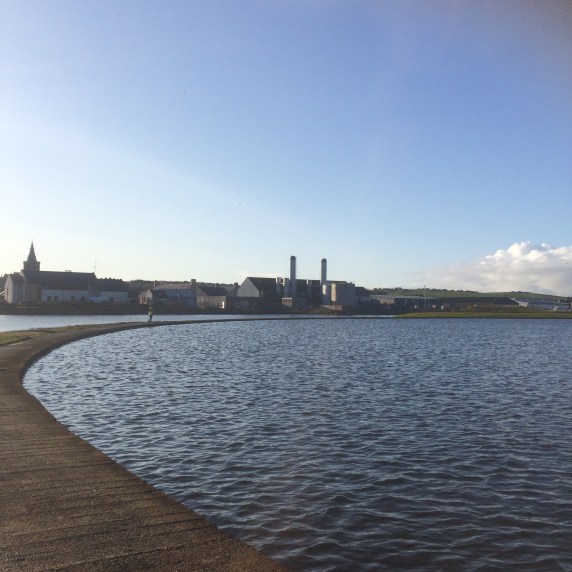
The rain here is more a tangential shimmer. I wake up to it, dreaming that my window was broken and no-one would bother to fix it. Fear of boundaries loosened, the outside in. The future as a sheet of glass, a shelf you could place your self on and drink. Salt water rinse and heat of whisky. We leave the hostel early and wander beyond the Kirkwall harbour, to the hydrogen plant bordering an industrial estate. Katy and I discussed our fondness for industrial estates as homely reminders. She would go running, and wherever she ran the industrial zones were inevitable. As if in any city you would reach that realm, it called you in with its corrugated fronts and abrasive loneliness. My love for the canal, biking up through Maryhill where the warehouses watch serenely over you, loom behind trees, barely a machinic rumble disturbing the birds. We traced the edge of a man-made waterfront, a crescent curving lip of land. The way it curled was elliptical, it didn’t finish its inward whorls of land upon water, but still I thought of Robert Smithson’s Spiral Jetty, or the cinnamon buns I bought from the Kirkwall Tesco. Finding a bench, we ate bananas for breakfast, looking out at the grey-blue sea, our fingers purpling with the cold. I like to think of the banana, Katy said, as a solid unit of energy. Here we were, already recalibrating reality by the logic of pulse and burn and calories. Feeling infra.

I love the words ‘gigawatt’, ‘kilocal’, ‘megabyte’. I like the easeful parcelling up of numbers and storage and energy. I am unable to grasp these scales and sizes visually or temporally, but it helps to find them in words.

IMG_3304.JPG

We learn about differences between national and local grids, how wind is surveyed, how wave power gets extracted from the littoral zone. My mind oscillates between a sonar attentiveness and deep exhaustion, the restfulness gleaned from island air and waking with sunrise. I slip in and out of sleep on the bus as it swerves round corners. I am pleasantly jostled with knowledge and time, the precious duration of being here. Here. Here, exactly. This intuition vanishes when I try to write it. A note: ‘I know what the gaps between trees must feel like’. Listening to experienced academics, scientists and creatives talk about planes, axes, loops and striations, ages of ages, I find myself in the auratic realm of save as…, dwelling in the constant recording of motion, depth and time. Taking pictures, scribbling words, drawing maps and lines and symbols. We talk of Orkney as a model for the world. Everything has its overlay, the way we parse our experience with apps and books and wireless signals. Someone takes a phone call, posts a tweet. I scroll through the conference hashtag with the hostel WiFi, tracing the day through these crumbs of perspective, memories silently losing their fizz in the night.

I grew up by the sea, in Maybole, Ayrshire (with its ‘blue moors’, as W. S. Graham puts it), but a lot of my thalassic time was spent virtually. I loved video games like The Legend of Zelda: The Wind Waker, where the narrative happened between islands, where much of the gameplay involved conducting voyages across the sea. The interstitial thrill of a journey. There were whirlpools, tornados, monsters rising from the deep. On Maidens Harbour, I could hardly reach that volcanic plug of sparkling granite, the Ailsa Craig, or swim out to Arran; virtually, however, I could traverse whatever limits the game had designed. The freedom in that, of exploring a world already set and scaled. Movement produced within constraint. In real life, mostly our bodies and minds constrain. What excites me now is what I took for granted then: the salt spray stinging my lips, the wind in my hair, the glint of shells bleached clean by the sea; a beautiful cascade of cliches that make us.

‘To wake up and really see things…passages from a neverland.’ Back in Glasgow, fallen upon familiar nocturnal rhythms, I find myself craving the diurnal synchrony I achieved in Orkney. Sleepy afternoons so rich in milky light. The vibrational warmth of the ferry’s engine, activating that primitive desire for oil, the petrol smell at stations as my mother filled up the car for journeys to England. My life has often been defined by these journeys between north and south, born in Hertfordshire but finding an early home in Ayrshire. Swapping that heart for air, and all porosity of potential identity. Laura Watt talked of her work as an ethnographer, interviewing the people of Orkney to find out more about their experiences of energy, the way infrastructural change impacts their daily lives, their health, their business. Within that collaboration, she tells us, there’s also a sense of responsibility: stories carry a personal heft, something that begs immunity from diffusion. Some stories, she says, you can’t tell again. The ethics of care there. I wonder if this goes the same for stone, the stories impregnated within the neolithic rocks we glimpse on Orkney. Narrative formations lost to history’s indifferent abstraction, badly parsed by present-day humans along striated lines, evidence of fissure and collision. All that plastic the ocean spits back, co-evolutions of geology and humans. Plastiglomerates along the shore. But Orkney feels pure and relatively litter-free, so goes my illusions, my sense of island exceptionalism. I become more aware of the waste elsewhere. The only person I see smoking, in my whole time there, is a man who speeds his car up Kirkwall’s high street. Smoke and oil, the infinite partners; extraction and exhaustion, the smouldering of all our physical addictions. Nicotine gives the body a rhythm, a spike and recede and a need.

We learn of a Microsoft server sunk under the sea, adjacent to Orkney. There’s enough room in those computers, according to a BBC report, to store ‘five million movies’. And so the cloud contains these myriad worlds, whirring warm within the deep. Minerals, wires and plastics crystallise the code of all our text and images. Apparently the cooler environment will reduce corrosion. I remember the shipyard on Cumbrae, another island; its charnel ground of rusted boats and iron shavings. The lurid brilliance of all that orange, temporal evidence of the sea’s harsh moods, the constant prickle of salt in the air. The way it seems like fire against all those cool flakes of cerulean paint. I wrote a blog post about that shipyard once, so eager to mythologise: ‘Billowing storms, sails failing amidst inevitable shipwreck. It’s difficult to imagine such disasters on this pretty island, yet there is an uncanny sense to this space, as if we have entered a secret porthole, discovered what was supposed to be invisible to outsiders…The quietness recalls an abandoned film set’. Does tourism lend an eerie voyeurism to the beauty we see, conscious of these objects, landscapes and events being photographed many times over? Perhaps the mirage of other islands and hills glimpsed over the blue or green is more the aura of our human conceptions, archival obsession—the camera lights left buzzing in the air, traced for eternity.

IMG_3328.JPG

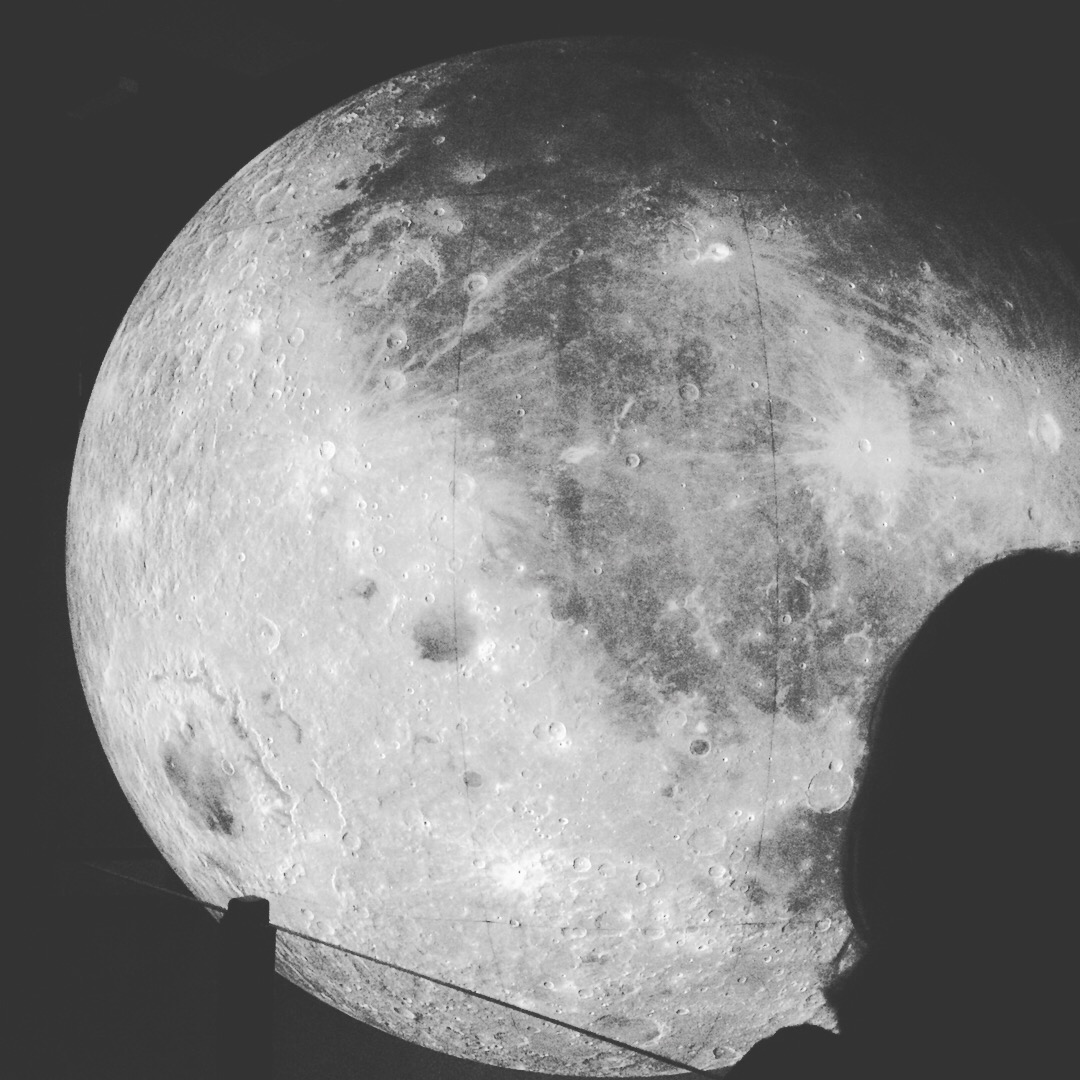
I come to Orkney during a time of transition, treading water before a great turn in my life. Time at sea as existential suspension. There have been some departures, severings, personal hurts, burgeoning projects and new beginnings. A great tiredness and fog over everything. ‘Cells of fuel are fuelling cells’. At the conference, my brain teems with this rich, mechanical vocabulary: copper wires and plates and words for wattage, transmission, the reveries of innovation. There is a turning over, leaf after leaf; I fill up my book with radials, coal and rain. My mind attains a different altitude. I think mostly about the impressions that are happening around me: the constant flow of conversation, brought in again as we move between halls and rooms, bars and timelines in our little human estuaries. We visit Stromness Academy, to see Luke Jerram’s ‘Museum of the Moon’: a seven-metre rendition of lunar sublimity, something to stand beneath, touch, lie under. I learn the word for the moon’s basaltic seas is ‘Maria’, feel eerily sparked, spread identity into ether. We listen, quietly, in the ambient dark, taking in composer Dan Jones’ textures of sound, the Moonlight Sonata, the cresting noise of radio reports—landings from a future-past, a lost utopia.

IMG_3348.JPG

On Friday night, Katy and I catch the overnight ferry back to Aberdeen. Sleep on my cinema seat has a special intensity, a falling through dreams so vivid they smudge themselves on every minute caught between reading and waking. Jarman’s gardens enrich my fantasy impressions, and I slip inside the micro print, the inky paragraphs. I dream of oil and violets and sharp desire, a pearlescent ghost ship glimmer on a raging, Romantic sea. Tides unrealised, tides I can’t parse with my eyes alone; felt more as a rhythm within me. Later, on land I will miss that oceanic shudder, the sense of being wavy. I have found myself like this before, chemically enhanced or drunk, starving and stumbling towards bathrooms. We share drinking tales which remind me of drowning, finding in the midst of the city a seaborne viscosity of matter and memory, of being swept elsewhere. Why is it I always reach for marinal metaphor? Flood doors slam hard the worlds behind me. There are points in the night I wake up and check my phone for the time, noticing the lack of GPRS, or otherwise signal. I feel totally unmoored in those moments, deliciously given to the motioning whims of the ferry. Here I am, a passenger without place. We could be anywhere, on anyone’s ocean. I realise my privilege at being able to extract pleasure from this geographic anonymity, with a home to return to, a mainland I know as my own. The ocean is hardly this windswept playground for everyone; many lose their lives to its terminal desert. Sorrow for people lost to water. Denise Riley’s call to ‘look unrelentingly’. I sip from my bottle, water gleaned from a tap in Orkney. I am never sure whether to say on or in. How to differentiate between immersion and inhabitation, what to make of the whirlwinds of temporary dwelling. How to transcend the selfish and surface bonds of a tourist.

The little islands of our minds reach out across waves, draw closer. I dream of messages sent from people I love, borne along subaquatic signals, a Drexciya techno pulsing in my chest, down through my headphones. My CNS becomes a set of currents, blips and tidal replies. A week later, deliriously tired, I nearly faint at a Wooden Shijps gig, watching the psychedelic visuals resolve into luminous, oceanic fractals. It’s like I’m being born again and every sensation hurts, those solos carried off into endless nowhere.

IMG_3389.JPG

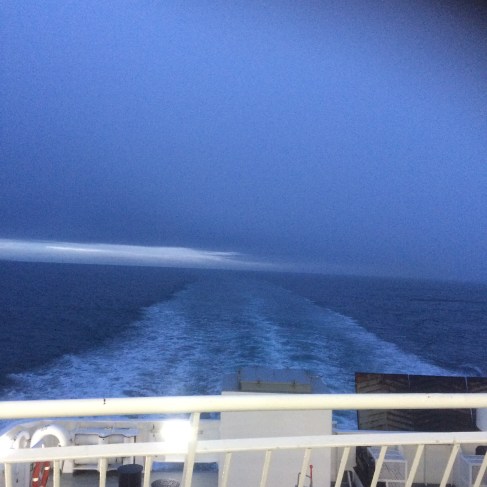
Time passes and signal returns. We wake at six and head out on deck to watch the sunrise, laughing at the circling gulls and the funny way they tuck in their legs when they fly. These seabirds have a sort of grace, unlike the squawking, chip-loving gulls of our hometowns, stalking the streets at takeaway hour. The light is peachy, a frail soft acid, impressionist pools reflecting electric lamps. I think of the last lecture of the conference, Rachel Dowse’s meditations on starlings as trash animals, possessing a biological criticality as creatures in transition. I make of the sky a potential plain of ornithomancy, looking for significant murmurations, evidence of darkness to come. But there is nothing but gulls, a whey-coloured streak of connected cumulus. The wake rolls out behind us, a luxurious carpet of rippling blue. We are going south again. The gulls recede. Aberdeen harbour is a cornucopia of infrastructure, coloured crates against the grey, with gothic architecture looming through morning mist behind.

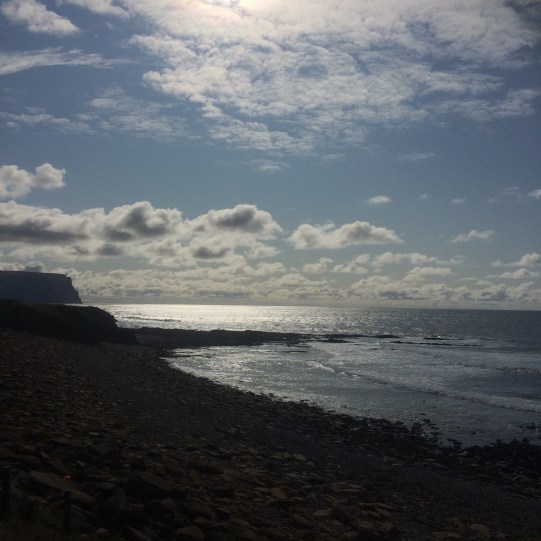
Later I alight at the Waverley Steps again. Roddy in my ear, ‘Let the light be mined away’. My time on the island has been one of excavation and skimming, doing the work of an academic, a tourist, a maker at once. Dredging up materials of my own unconscious, or dragging them back again, making of them something new. Cold, shiny knowledge. The lay of the heath and bend of bay. I did not get into the sea to swim, I didn’t feel the cold North rattle right through my bones. But my nails turned blue in the freezing wind, my cheeks felt the mist of ocean rain. I looked at maps and counted the boats. I thought about what it must be like to cut out a life for yourself on these islands.

Home now, I find myself watching badly-dubbed documentaries about Orkney on YouTube, less for the picturesque imagery than the sensation of someone saying those names: Papay, Scapa, Eday, Hoy. Strong names cut from rock, so comforting to say. I read over the poems of Scotland’s contemporary island poets, Jen Hadfield for Shetland, Niall Campbell for Uist. Look for the textures of the weather in each one, the way they catch a certain kind of light; I read with a sort of aggression for the code, the manifest ‘truth’ of experience— it’s like cracking open a geode. I don’t normally read like this, leaving my modernist cynicism behind. I long for outposts among rough wind and mind, Campbell’s ‘The House by the Sea, Eriskay’: ‘This is where the drowned climb to land’. I read about J. H. Prynne’s huts, learn the word ‘sheiling’. Remember the bothies we explored on long walks as children. There’s a need for enchantment when city life churns a turbulent drone, so I curl into these poems, looking for clues: ‘In a fairy-tale, / a boy squeezed a pebble / until it ran milk’ (Hadfield, ‘The Porcelain Cliff’). Poetry becomes a way of building a shelter. I’m struck with the sense of these poets making: time and matter are kneaded with weight and precision, handled by pauses, the shape-making slump of syntax. Energy and erosion, elemental communion. Motion and rest. My fragile body becomes a fleshwork of blood and bone and artery, hardly an island, inclined to allergy and outline, a certain porosity; an island only in vain tributary. I write it in stanzas, excoriate my thoughts, reach for someone in the night. I think about how we provide islands for others, ports in a storm. Let others into our lives for temporary warmth, then cast ourselves out to sea, sometimes sinking.

Why live on an island? In Orkney we were asked to think with the sea, not against it. To see it not as a barrier but an agential force, teeming with potential energy. Our worries about lifestyle and problematic infrastructure, transport and connection were playfully derided by a local scholar as ‘tarmac thinking’. Back in a city, I’ve carried this with me. The first time I read The Outrun was in the depths of winter, 2016, hiding in some empty, elevated garrett of the university library. I’d made my own form of remoteness; that winter, more than a stairwell blocked me off from the rest of existence. Now, I read in quick passages, lively bursts; I cycle along the Clyde at night and wonder the ways in which this connects us, its cola-dark waters swirling northwards, dragged by eventual tides. I circle back to a concept introduced by anthropologists at Rice University, Cymene Howe and Dominic Boyer, ‘sister cities of the Anthropocene’: the idea that our cities are linked, globally, by direct or vicarious physical flows of waste, energy and ecological disaster. This hydrological globalisation envisions the cities of the world as a sort of archipelago, no metropolis safe from the feedback loops of environmental causality, our agency as both individuals and collectives. On Orkney, we were taught to think community as process, rather than something given. I guess sometimes you have to descend from your intellectual tower to find it: see yourself in symbiosis; your body, as a tumbled, possible object: ‘All arriving seas drift me, at each heartbreak, home’ (Graham, ‘Three Poems of Drowning’).