I was turning all the lights off, trying to mute history. There were several moments in which it felt like things were changing, possibly blossoming for the better. The aftermath stung and went backwards again. There was a song about the M62 I followed briefly, thinking about motorways more generally and something expansive and grey, crossing the Pennines eventually. For a week, I wrote down descriptions of the sky. Mostly they read: the sky today is grey. I then started noting the patterns in Dorothy Wordsworth’s journals, which often begin with vignettes of the morning:
3rd February. A fine morning, the windows open at breakfast. 6th March. A pleasant morning, the sea white and bright. 26th May. A very fine morning. 31st May. A sweet mild rainy morning. 2nd June. A cold dry windy morning.
Mostly, she summarises the day. There is much letter-writing, Coleridge dining, William writing. Walking, cooking, taking guests. There is a rhythm and comfort to her entries, the circling of Ambleside, the sauntering in sun and air. Days condensed and hours expanded, cute little details in pastoral glimpses: ‘Pleasant to see the labourer on Sunday jump with the friskiness of a cow upon a sunny day’. She sees into the life of things. She inspires me to mark the simple, joyous moments of daily existence. Like walking home along Sauchiehall Street (the nice part towards Finnieston), close of midnight, seeing a couple in each other’s arms, sobbing, the man with a bunch of flowers held behind his back. They were not by any means striking flowers, probably bought cheap and last minute. I wonder what sort of gesture they were supposed to convey. At what point in the night did he decide to buy them; did he attain them from those wandering women who pray upon drunks with their floral wares? Did he cut himself, ever so slightly as he paid for those unlovely thorns? Is love always a form of apology for self? The self when it expands beyond too much of itself, hotly craving?
17th March. I do not remember this day.
It seems irrelevant to say, today is Easter Sunday. Jackdaws torment me in the expensive fruit of a wakeful morning. I imagine pomegranate seeds falling from a pale blue sky. These days unfold with wincing clarity, like the hypnotic drag of a Sharon Olds poem: ‘I could see you today as a small, impromptu / god of the partial’. There are things we are maybe not supposed to remember. As if survival were a constant act of lossy compression. Like a contract between two people, pinkie promise, except one of you has broken it. Has let out the glitches. Your dreams and daily reveries are full of the content you’re not meant to remember. You are clasping this thing as if it might live again, and indeed it might really. It is not easy to simply file away memory. Its particular phraseology of physical pain comes floating to the surface regardless. There are techniques of displacement. Letting yourself shimmer in the wind. It was one more step to be gone again. So every song I went to put on, clicking the laptop, he was like, stop, it’s too sad. When they ask what’s wrong and you’re smiling instead, worrying the edge of your lips into muscles you don’t recognise at all. The room was a singular bottle of beer and a breeziness to other people’s sweetness. They wear lots of glitter and laugh as we did once. They are singing. I feel like the oldest in a test of forever. But anyway this is all only temporary. Things break down but they do not go away.
30th March. Walked I know not where.
I watch a film about plastic in the ocean. They haul fish after fish, bird after bird, prise exorbitant quantities of bottle caps, ring pulls, microbeads and indiscernible fragments from stomachs and lungs. It is quite the display. Hopelessly choking. Seems obscene to describe that deep blue as ever pure again. There are patches of plastic in all its particles swirling. It makes not an island exactly, more like a moment in species collision. Whales absorb plastic in the blubber of their skins, digesting slowly the poisons that kill them. I wrote a story about a whale fall once. The protagonist trains in swimming, in underwater breathing, in order to enter other worlds: ‘This place is a deep black cacophony; you hear the noises, some noises, not all the noises, and you feel the pressure ripple pulling under you’. There have been bouts of sleeplessness this month that feel like dwelling inside a depleting carcass. If every thought dragged with subaquatic tempo. Blacking out at one’s desk into sleep. Forgetting in the glare of screen flickers. I meet people for coffee and feel briefly chirpy, stirring. There are pieces of colour, uncertain information, clinging to the shuddering form of my body. Do not brush my hands, for fear of the cold. I am so blue and when he squeezes my fingers my insides feel purple. The woman at the counter remarked on the cold of my hands. I am falling for the bluest shade of violet. How anyway in such situations I become the silent type as I never do elsewhere. So ever to cherish a bruise as violet or blue. I polish vast quantities of glassware, lingering over the rub and sheen. One song or another as 4.30am aesthetic.
Emily Berry: ‘All that year I visited a man in a room / I polished my feelings’.
The questions we ask ourselves at work form a sort of psychoanalysis, punctuated by kitchen bells and the demands of customers. What superpower would you have? The ability to live without fear of money. We laugh at ourselves as pathetic millennials. I have nothing to prove but my denial of snow, power-walking up Princes Street on the first bright day of the year. The sky is blue and the cold flushes red in my cheeks. But I am not a siren, by any means; I wish mostly for invisibility. The anthem for coming home the long way is ‘Coming in From The Cold’ by the Delgados, feeling the empathy in lost dreams and the slow descent into drunkenness that arrives as a beautiful warning. Like how he deliberately smashed his drink on the floor in the basement out of sheer frustration with everything. The ice was everywhere. As though saying it’s complicated was an explanation for that very same everything. The difficulty of cash machines. Emily Berry again: ‘I wanted to love the world’. In past tense we can lend shape to our feelings. Will I know in a week or more the perfect metaphor for this dread, this echo chamber of grey that longs to be called again? I punch in four numbers.
I covet my exhaustion in slow refrain. There are people whose presence is an instant comfort. There are people you’d like to kiss in the rain; there are people you’d kiss in the rain but never again. What of the gesture of that bouquet? Surprise or apology? The sky is catching the mood of our feelings. Is this a melancholic tone of regret, or maybe an assured and powerful one? I twist round the memory of a mood ring; its colours don’t fit. I photograph the rings beneath my eyes, finishing an eleven hour shift. She shoves rose-petal tea biscuits under my nose but I smell nothing. I watch the chefs at work, caressing their bundles of pastry and sorrow/sorrel and rocket. I climb many stairs and assemble the necessary detritus of another funeral. Sadness requires a great deal of caffeine.
I eat mushrooms on toast with Eileen Myles. I long for the lichens on the trees of Loch Lomond. I sleep for three hours in Glasgow airport, on and off, cricking my neck and drifting in and out of vicarious heartbreak. Lydia Davis is often perfect:
But now I hated this landscape. I needed to see thing that were ugly and sad. Anything beautiful seemed to be a thing I could not belong to. I wanted to the edges of everything to darken, turn brown, I wanted spots to appear on every surface, or a sort of thin film, so that it would be harder to see, the colours not as bright or distinct. […] I hated every place I had been with him.
(The End of the Story)
Must we coat the world in our feelings? What of the viscosity that catches and spreads on everything? There is an obscenity to beauty in the midst of defeat. Year after year, I find myself dragged into summertime sadness. There is so much hope in the months of June and May, soon to dwindle as July runs spent on its sticky rain. The lushness of a city in bloom, all fern and lime, is an excess beyond what dwells inside, the charred-out landscapes of endless numbness—or ever better, missing someone. We covet the world’s disease as externalisation of our hidden pain. Let things fragment and fall away; let there be a sign of change in motion. How hard it is to be happy around depleted friends; how hard it is to be sad among joyous friends. They pop ecstasy and go home for no reason. It is self-administered serotonin that mostly buoys up the souls of the lonely. There were songs from the mid-noughties that now sound like somebody shouting down a coal mine. I want to offer them a smile and a cup of coffee. It’s all I have, the wholesome concatenation of smooth flat-whites.
There is a song by Bright Eyes, ‘If Winter Ends’: ‘But I fell for the promise of a life with a purpose / But I know that that’s impossible now / And so I drink to stay warm / And to kill selected memories’. Winter’s demise in conditional form. Alcohol convinces us of a temporary rush into the future that blooms and is good, is better than before. The drinkers I know have muffled recollections, blotted out mostly by false nostalgia. We covet a swirling version of life in the present, its generous screen flickers, its spirals of affect. We pair off in the wrong. There are days when nothing will warm me up—not the dust-covered space heater, not the hot water bottle, not the star jumps that scratch heart-rates out of the hour. Was it the same sensation, hanging on for his vowels on a hazy afternoon, four o’clock stolen from whatever it was I was supposed to be doing?
Summer, however, is forever. It is supposed to be best. The clocks skip forward.
I learn to riso-print. To work with the uncertain blot and stealth of brighter inks. What results is a marvel in teal and burgundy, splashed with cyan. See it as past with glitters of future.
In a cramped, fourth floor hotel room in Amsterdam, I lay on my bed, leg-aching, listening to ‘Shades of Blue’. Yo La Tengo get it, the vaporous sprawl of the days upon days, days replacing days: ‘Painting my room to reflect my mood’. It is a kind of overlay, the new versions of blue which are deeper maybe than they ever were before. Which lend alter-visions to original blues, the ones you thought were bad before. I see my first IRL Yves Klein in the Stedalijk museum. Words elude this particular blue. It is deep and extravagant and more oceanic than the ocean would dream of. I have no idea what materials or dreams created this blue. Lazuli, sapphires, the pigmented stain of a rare amphibian? It is the steady, infinite eye of the Pacific. It is sorrow itself, the wound of the world. The Earth bleeds blue, not red. It is this kind of blue, a supranatural blue. After the first crisp cold of a new blue day, the rest of the week is brumous and mild. My feet get wet in a cemetery. I learn that Paradise Valley is an affluent town in Arizona, and not in fact merely a Grouper album. I drink mint tea all week to detox, then stay up all night when I get home. The gin sodas sparkle within me for days, but I’m feeling guilty.
The canals are parallel, the streets are winding. There are neon and fishnetted girls in windows, drolly sipping mysterious drinks. Their eyes are heavily lined. Nobody is looking. The air is warm and spicy at night. The tourists admire displays of various erotic paraphernalia; I take pictures of the lights splashed gold on the water. They say if you get to know the place, you can really settle into a meandering layout. A guy at work supplants my name for ‘Marijuana’. I wonder if ever I’ll be someone’s Mary Jane, and what that means in the long run. Feels like a Green Day song. Marijuana, they’ll say, Marijuana I miss you. There are pockets of Finnieston that waft forever between early summer and fullness of June; evenings hung by the scent of a stoned hour poised on forever. I stay sober. I think of the river, the people and dreams it steals. The world crystallises with ridges of cold, so I must sleep beneath sheets in my click&collect coat. Blue-fingered, shivering.
Carl Sagan’s ‘Pale Blue Dot’ has been lingering on my mind: ‘Consider that dot. That’s here. That’s home. That’s us’. I keep writing out line after line, just for the sake of avoiding full stops. I’m not yet ready for that singular compression, even as it strikes in its simple beauty.
There was the massive, narcotic blue of the sky from the airplane. A blue you can cling to. A blue you descend through.
Lana Del Rey: ‘Blue is the colour of the planet from the view above’.
Pop singers these days are attuned to new scales. That Bright Eyes song opens with a whole lot of static and children shouting, rasping. It is like watching some black-and-white film in a museum, shudders of war or monsters in every low boom and flicker. There are ways we strum ourselves out of the mourning. It’s okay to be enraged and frustrated. Oh Conor, how I love you: ‘and I scream for the sunlight or car to take me anywhere’. So when things fall apart, fray at the edges, I’m thinking of myself as a place, a location elsewhere, ‘just take me there’, and the ridge of my spine is a highway that ends where the best palm glows afire by its imaginary desert. The curve of my neck and uncertain horizon, something of all this skimming around by the brink of etcetera. What else do I have to say but, ‘it’s gonna be alright’, not even realising when I am quoting something. It is hot here, adrift on this sofa, then cold again.
The walks grow ever more indulgent, Mark Kozalek humming in my ear. I think of all his familiars. I think of my younger self thinking of all his familiars. Is it cats or is it women. How many supplements do we make of lust?
The day afterwards, it’s best to drink again. Grapefruit is cleansing. You can order whole pitchers but I choose not to. A certain suffusion of gossip and horror, ice cubes crunched between teeth to ease up the gaps where I’m meant to speak. I see Hookworms play the Art School and they were incredible: they were a rush they were eons of dizzy vigour and sweetness, the music you want to surrender to. I stop giving customers straws with their orders. It snowed again. I wasn’t drinking; I was wearing green for Paddy’s Day. I was so tired my eyes felt bruised. I keep dreaming of islands, motorbikes, exes; broken tills and discos. The flavour of these dreams in surf noir; like even in the city it’s as if a tidal pull is directing everything. I don’t mind being sucked away into nothing; I don’t mind feeling the impulse of a pale blue dot. At least in my sleep. A good collapse. The order of pain is reducing.
29th June. It is an uncertain day, sunshine showers and wind.
This week I will find a hill for my vision. New forms of erasure. I see myself boarding a train.
The exercise involves lying full-bodied on the floor for another to draw around your form. The purpose of said exercise is to articulate a sense for the flow of immobility, immobility as flow and thus possibility. Many groups attempted similar activities to great aplomb and connection. Artists collapsed upon their models. Models rose to heights of personal ascendence. Poetry collections were published. Limbs grew lithe in artificial moonlight. The studio upgraded its entire rigging. We brought new humans to practice passivity. Every pairing was a pool of pleasure. Who knew the flesh untouched could be so malleable. To cultivate the necessary unrest, ambient ocean sounds may be played directly into the model’s ear. Arousal. Here we are, rhythm of intermittent tide, a pencilled warble. This man has muscles that articulate a paradoxical vulnerability. It’s in his tattoos, which only the artist sees. A he or a she or neither, in which case a very special effect is reached. Systems fall into perfect error. Undulations of hair leave their impress upon carpets, but admittedly parquet floors were instructed. Recommendations swept away in paper flakes. Controversies stirred at the death of a single participant. They had scratched, I am just looking for a way out. It never occurred to the artist that the model was in fact referring to their very own body. Doors were locked and provisions made. They ate tinned peaches and dripped the slippery juice across each other’s faces. Some of them miss the practice as it was before. No good to dwell in the past. No good at all. The snapshots were flushed when authorities arrived. Time will tell, how else? Little white lines. Social media profiles in the boom era broke down when the 404 parade came round, desperate and percussive. I make of you a blade of rain, they said. This isn’t the eighties, the skin replied. There were twenty-two poems explaining aesthetic paralysis. A great deal of laughter and stuck-together A2 paper, resonant scent of impermanent ink. When your felt-tip skims my shoulders I melt like infinite butter. His tattoos twist, I drink them.
This year, I tried to be organised. I floated over to Fopp on my work breaks, spent endless insomniac hours trawling music blogs, Bandcamp and rabbit hole Subreddits. Each time a new record came out, I scribbled its name in the back of a notebook. The notebook filled up with to-do lists, scratches of poetry, drawings of flowers and mountains. The flowers and mountains became nothing but lines. I forgot the context in which first I drew them, late at night on some estranged floor of the library. The same purple docs I wore every day acquired more bumps and cracks, splitting where leather meets friction and time. I kicked a lot of yellow leaves. There were rustlings. My list of albums grew bigger.
I kept monthly playlists on Spotify, hurling each track that entered my orbit into one long and incoherent list. Every premiere written, every review or simple tweet, acquired archival significance. These are songs that mean something; if not to me, then to another person, shuffling their collection for inspiration. A significant portion of my summer was taken up by any music pertaining to Twin Peaks: The Return: whether the lurid allure of Chromatics’ hyper-saturated playlists, Au Revoir Simone’s sultry, lo-fi dreaminess, or Sharon Van Etten’s breathless ballad of devastation, ‘Tarifa’. The weird logic of Lynch’s universe started to rip shreds from normality; I was doing archive work and writing for The Absent Material Gateway project and falling through new age webpages, crystal collections, alien sound effects, subaquatic moans and blips.
In all this abyss of otherworldly intrusion, I started to realise that writing can be a technology for tuning to experience beyond the daily; that like music it doesn’t just tell a story but alters your sense of reality. Music becomes and exists as an object—a nexus of affect—glistering temporarily in air and lingering as memory and shapes of tones and vowels. Music causes things to happen, sensations to cling at the skin or the vision. There are so many feedback loops between skin and sound and vision, between the body and its organs—the world within and beyond collapsing.
I’ve been having a lot of conversations, recently, about the trickiness of an end-of-year list. I mean for starters, I haven’t even listened properly to Bjork’s new album yet. I fell into a lot of old music too, drowned out a dissertation summer with comforting nostalgia: Lou Reed, The Delgados, Jeff Buckley, Neutral Milk Hotel and Boards of Canada. But let’s try to keep it fresh. I did a top 15 in 2015, a top 16 in 2016; I guess I’ll keep going this way so that every year I’ve an excuse to write about more records. Lots of tasty, memory-making songs. This was supposed to be 17, but I ended up writing 18, because you’ve got to preserve the remainder.
There’s possibly a correlation between increasing nocturnalism and one’s music taste. Certain music I only listen to when the sky darkens, or when I’m small inside my room. Other tunes require movement; walking or dancing or doing yoga. My relationship to a record is about as mercurial as most of my memories, and as such changes its colour and feeling with every wax and wane of the moon. I like something and then I like it less, or maybe forget it. I’m emotional, then as ever so comfortably numb. Still, some records stick; they wedge themselves hard as candy in the blood. Add several pounds to the heart. I’ll try to write down which ones hit me the most, which ones were just bloody good. But also ones I haven’t written about much yet, which means I picked The Horrors, for example, over Sufjan Stevens, or Courney Barnett and Kurt Vile’s lovely transatlantic jewel, Lotta Sea Lice. There are some records I’ve missed out simply because I haven’t had time to process my thoughts beyond immediate bewildering yassss or wow or what? (Ho99o9, Out Lines, Richard Dawson, Fred Thomas—to name but a couple).
This list therefore, is inevitably limited; its generic reach small, its order somewhat arbitrary (in fact, I decided on alphabet rather than taste this time). But life is fleeting so it’s worth noting down what matters to me in this moment, maybe. I guess it’s just one ripple in the pool of them all.
*
TOP ALBUMS:
Bonobo Migration
It’s sometime around March and the semester is finally breaking up and I can breathe again. My friends have all got tickets for the BBC 6 Music Festival which, quite fortuitously, is in Glasgow this year. Hiding behind covers from spring’s lingering morning chill, I watch Bonobo’s set at the Barrowlands. I know my friends are there, but I can’t be, like some kind of disco taking place on Pluto. There’s an energy in the crowd, but also a certain hypnotism, distance.
Migration is a solid, complex, uplifting album. All the collaboration, the classicist exactitude, the yearning gesture towards open territory, startles me like a dream brought suddenly into sharp focus. This is less downtempo than Bonobo’s previous work; it’s not quite the deliciously sluggish, swirling subaquatic glitchwork of Black Sands, nor the slow-building euphoria of ‘Flashlight’.
There’s an ecological vibe stirring under these tracks, not just because of the cover, which depicts a tall char of flame in the centre of a prehistoric landscape, the orange contrasting with smouldering azure. ‘Migration’ is a loaded term in these times, when many of the world’s people find themselves displaced across borders and oceans. These are uncertain times, more so than most maybe, and there’s a restless energy to Bonobo’s record that conveys this well. It’s catchy, percussive, melodic sure; but such qualities lend themselves smoothly to a pensive weight. While Grains’ and ‘Break Apart’ build to reflective intensity, the sense of things disintegrating in painful slow-motion, ‘Second Sun’ and ‘7th Sevens’ are spacious and melancholy, something to drift to. ‘Kerala’ has an earworm club vibe, while ‘Outlier’ feels kinda Four Tet. ‘Ontario’, with its trip-step beat and twinkly cross-plucked strings and keys, has all the background drama of a stressful video game, made sublime by its rhythmic intricacy.
Overall, Migration is escapist, room-filling softcore electronica, but unlike many of its cheaper counterparts, it’s satisfying as well as soothing. There are moments of unsettling, of flight and swell. It’s music to think to, if thought were a circling, undulating, glistering sort of journey. Music to reach higher plains, maybe, but not quite climaxing—comforting instead.
Takeaway track: ‘Grains’
Conor Oberst, Salutations
Does it seem cheeky to include this, given that its sister album, Ruminations, was on my 2016 list? Nah. For me, there’s always room for good old Conor, his infinite bittersweet intimate wisdom which feels forever like coming home. While Ruminations was an act of hermitage, recorded in solitary Omaha during a period of personal doubt, frustration and strain (I imagine the snow rising in tandem with Conor’s blood alcohol content), Salutations feels defiantly social. A salutation, after all, is a form of greeting. Where Ruminations is decidedly introspective, viscerally raw and profoundly sad, Salutations casts these emotions outwards. These are songs you’d sing along to in public too, if this were America maybe and people sang songs other than mangled renditions of ‘Wonderwall’ or ‘500 Miles’ in pubs. Some of the songs are full-band re-workings of tracks off Ruminations, while others are totally new. You can take them as a dialogue between records, between points in your life, or take them simply as they come.
Throughout the album, Oberst inhabits and depicts many characters, those waifs and strays, those broken bodies at the brink of existence. There’s the restless soul with his broken marriage, his expensive penthouse, his drink and his whores (‘Too Late to Fixate’). There’s the dancehall of “sick folks”, the drunk waking up to abstracted reality. There’s the couple who find temporary solace in each other’s adulterous arms (‘Gossamer Thin’) and then the guy with his Old Fashioned, looking out to a wilderness of loss (‘Empty Hotel by the Sea’). At 17 tracks, this album is quite a lot of emotional meat to chew, a lot of references to alcohol to slosh on down like waves of thought. With the help of the Felice Brothers, accordions, electric guitars, choir harmonies and all, the acerbically sad reality checks (“when it’s over I’ll be talking to your grave / you might as well hear what I say”) have a sort of sonorous truth. There’s a lilt, a form of musical acceptance you might not call polished, you might call rising and free. You follow these old country cross-rhythms, follow Oberst’s earnest warble, his poetic talk of snowflakes dissolving on a vacant beach. It’s not the same painful self-extinction achieved on the minimalist, crackling production of early Bright Eyes; this is a resigned but still plaintive facing of the day. I’m not calling it middle-age, because it’s not quite that.
I’ve always been attracted to Oberst’s visual lyricism, but it feels particularly mature here, a kind of precision. He’s referencing Paul Gauguin, Frank Lloyd Wright, John Muir. I pace around a restaurant named after the latter author, rehearsing bright lines in my head while light comes in blurred through the clumsily coloured glass. I look at his eccentric, sorta corny portrait and sigh: “Tried to lose myself in the primitive / in Yosemite like John Muir did / but his eyes were blue / and mine are red and raw”. There’s a sense that maybe in all our blue-eyed dreams for wonder and freedom, we’re facing the torrefied remainders of our pasts instead. We’re finding ourselves trapped in singular hue. Maggie Nelson, in Bluets:
Life is a train of moods like a string of beads and as we pass through them they prove to be many-colored lenses which paint the world their own hue, and each shows only what lies in its focus. To find oneself trapped in any one bead, no matter what its hue, can be deadly.
The seduction of colour is its own danger. You’ve got to split what keeps you pent up in your singular sorrow: “Burn down the place where I belong.” Let the ashes roll on. Here’s Conor Oberst, a rollicking sort of Southern rock’n’roll track—‘Napalm’—with its cutting sarcasm, straight out of a sharp Desaparecidos punk lyric: “sometimes you need a vigilante / if you wanna get a just thing done”.
In all that bad nostalgia, that obsessive heartache, those country drawls and Georgian howls, roads to Omaha and highways to the sky, to New York city and the brainwashing lure of celebrity, it’s easy to get lost in the beautiful mess: “I’ve lost my true love.” Oberst stomps around, makes a lot of noise, lets raucous instrumentation do a lot of talking when he’s not delivering the witty lyrics. He’s never afraid to warble or strain against himself. It’s cathartic, it’s a touch punk, it’s kicking the cutlery draw on a Sunday afternoon because everything’s going wrong; it’s looking out to a Don DeLillo sunset, blitzed-out orange of the world’s toxic warming. It’s politicians filling their pockets, or tender-eyed friendships in the unspoken world of suffering, tvs flickering. It’s old bars, fat Americana in its thin-boned figurines, an all-embracing tapestry of the personal and political. It’s one big spit in the nihilist void, in the face of Trump; a celebration of all music can do in its coarsest, warmest, most ramshackle form. There’s the jam, the collaboration, the energy. These are songs that tell stories, that reflect, take time on their subjects.
The front cover depicts Oberst lying face-down in a pool, apparently out of it for good. But then lift the sleeve and he’s got the life-ring, he’s being saved, he’s breathing. There’s that ironic play on a recovery narrative, sure, but it’s hardly draped with insincerity. There’s still a weight, a weariness, a distance—as on ‘Till St. Dymphna Kicks Us Out’, where Oberst sings in second-person.
What gets me the most, however, is the genuine sense of revelation that sometimes unfurls on this album. It’s not surprise at the world’s change, it’s not the extravagant burden of the blues. It’s the traversals of everyday survival and human connection: “sometimes it’s the simple things that make it all okay”. It’s the tentative gesture towards solution, but also the careful refusal of solution’s possibility; a refusal that allows us to look to the future, while remaining okay with only a sketch, a blueprint for good in a world so fast, so materially precarious, it threatens to smudge all of us out before the end anyway: “I’m not content / but I’m feeling hesitant to build / something that’s sacred till the end”.
Takeaway track: ‘Mamah Borthwick (A Sketch)’
Father John Misty, Pure Comedy
Father John Misty is one act I did get to catch at the 6 Music Festival. Alone on stage with just guitar and piano, he cut quite the showman, wowing even a Glasgow crowd into 15-minute silence for showstopper ‘Leaving LA’. I want to hate FJM for being so damn smooth, I really do, but the sarcasm is proper magnetism.
A year or so ago, I wrote about FJM’s metamodernism, that knack for writing about serious subjects with a healthy dollup of irony. Where Misty’s previous two albums were often honed on the personal tales of narcissism and love, Pure Comedy feels societal, expansive. Whether he’s singing about Taylor Swift as some celestial, oracular sex figure, widespread iron deficiency, fluctuating gender roles or a social media troll checking Twitter on his death bed, Misty is ever irresistible. This record is maximalist and grandiose, with tracks stretching as long as 13:12 minutes (not to mention the Leonard Cohen-style endless accumulation of verse). His melodies are pitch-perfect, blending old school folk with that vague Everly Brothers rockabilly and that flawless sheen of a Bublé croon. Lyrically, things get bizarre but remain pretty sharp, surrealist.
It’s hard to work out what music to make in the age of social media, the age of Trump, the age of memes and clinical, cultural depression. How do we negotiate our predilections for cynicism and sarcasm alongside a burning need for some personal, not to mention aesthetic, sincerity? With an eye for quotidian detail and technology gone mad, the sweeping vision of a sage for the age (“Narcissus would’ve had a field day if he’d got online”), Misty has established himself as one of the slickest voices of a generation. His commentary would feel biblical, if not for its self-conscious absurdity. For Misty knows full well his own economic position in this strange churn of capital and madness. Pure Comedy is at once commercial pop at its most frank and tender, its most politically vicious and ambitious. Its most ridiculous. When your lyrics are as witty as Misty’s, who needs the hyperbole of punk—I’ll take an extravagant piano ballad, for once, over a 2-minute testosterone guitar romp.
Takeaway track: ‘So I’m Growing Old on Magic Mountain’
Feist, Pleasure
I was working one of those gross and sweaty, plate and pain-balancing shifts at work when a friend on the bar popped his head around the door and asked if I’d heard the new Feist album. Of course I went home that night and listened all the way through, sunlight still flooding rich amber through my window because it was early in the year and everything was flourishing and beautiful. There’s nothing better than someone recommending you music.
Pleasure effortlessly combines early Feist’s light-touch folk with splashes of saturation that feel almost cinematic in impact, yet never take away from the sparse and spacious production. This is a record you’re permitted to work into slowly, like being at a party full of relative strangers and trying to get a handle on little bright bursts of conversation, as everything echoes internally. A record in watercolours. Pleasure is a room full of voices, of memories resounding. Everyone around you is dazzling and interesting, but you’re trying to hold onto some very pure feelings. The result of this oscillation, this tuning between solitude and company, is a sort of flagrant euphoria—the kind you might get from tossing roses upon an empty motorway, or kissing someone wildly in the rain.
It’s always a delight to hear Jarvis Cocker cropping up somewhere unexpected and he’s no unwelcome stranger here. Those northern, caramel tones edgily complement Feist’s quirky feminine shrill on ‘Century’. What first made me think, somewhat warily, of Alain Badiou and overly-complicated philosophical metaphors, became foot-stomping and raucous, with its weird and floaty spoken-word interlude. I’m melting under Cocker’s breathy voice, “almost as long as one of those endless, dark nights of the soul”, descending into a whispered refrain: “the century / the century”. I look back at the 20th century, the meagre seven and a half years I lived in it, and despite all the culture and history I’ve swallowed on those times, they seem dim and mysterious in comparison to the luminous stories that haunt Feist’s album.
Whatever the affair of this record, it’s by no means an easy one. Feist documents the complicated dynamics of a crush or a love with unabashed honesty and vulnerability: “In the same city I hope you’re not / ‘Cause the town has shrunk to the size of my thoughts”. In a way, Pleasure is the beautiful result of time-wasting in the wake of a failed love; it’s the languid, wilting flower that Feist pours her tender vocal honey into, softening the pain with reverb, slowing down time. Making time for yourself, painting your own sunrises. With traditional Feist style and minimalist detail, she captures that bittersweetness on ‘Get Not High, Get Not Low’, and even nails that old-school, Sunday slowdown soul on ‘Young Up’, luring us back into a sweet-moaning organ nostalgia. I live for the soft twang of those acoustic solos, wind-chimes shimmering in the background.
The sparseness of accompaniment across the album—mostly just a few raw strums—sets the stage for that distinctive, airy voice and all its more corrosive breakdowns. Whether she’s singing of ‘The Wind’, of ‘Lost Dreams’, or leaving any party for the sake of bae, Feist is subtly precious and quietly heart-breaking. I feel fragile in the space of that album; it doesn’t exactly heal so much as it makes feeling brittle, then sparkle quite oddly. And maybe that’s not a bad thing, it’s beautiful after all.
Takeaway track: ‘I Wish I Didn’t Miss You’
Fleet Foxes, Crack-Up
I started getting into Fleet Foxes about a year too late; they’d pretty much already split by the time I was obsessively sound-tracking my summer with their verdant brand of chamber-pop pastoral. I’d decided that this was a band outside of the cultural present—surely—a band that had existed in some dimension and maybe even played gigs once upon a time, but ultimately their songs were from a place where reality smoothed into plashing fountains and anonymous fields of green. I guess that’s the effect of pastoral: its ability to resolve conflict, to press out present agonies with a certain nostalgia. What Fleet Foxes offered was a promise of total authenticity; there was little irony, it seemed, to their melodic, soulful, harmony-laden pop. It’s hard to remember that (ironically) the king of sarcasm, Father John Misty, was once their drummer.
Where Fleet Foxes swayed in its pensive dwelling, Helplessness Blues was a rush in the wind, a bit breathless and in love with a sense of presence in the earth. Crack-Up, a precious gift that came packaged in the lonely foliage of June, sees Fleet Foxes yoke their trademark sound to greater depths, richer complexities that find brief heights and shower like just so much blossom and seedpods and rain across billowing landscapes. The sound itself has grown vastly, acquired a new intricacy; whether in Pecknold’s vocal range, the textured instrumentation or truly orchestral scale of these songs. The vocals make garlands of uplifting chords, the sometime swell of an interlude drawing us irrevocably to stranger places where percussion thrums in like a sleety landslide. I’ve realised recently that listening to the record, I barely follow any of Pecknold’s words, except perhaps when he slows to a refrain. For me, they exist as performative instruments; not quite to the extent of Elizabeth Fraser’s mysterious, dadaist trills, but largely estranged from sense nonetheless. The general gist seems a more heavy, philosophical perspective; paranoid perhaps, tense and self-aware, though unafraid to burst into frustration or quiet, fleeting reflection. I don’t feel the need to linger on his lyrics the way I frankly wanted to on previous records, falling for repeated, visually abstracting lines like “Apples in the summer are golden sweet / Every day a passing complete”, as if I were reading Dylan Thomas or Yeats, my mouth full of lemon drops, sweetly devouring Cider with Rosie in all tart naivety of youth.
Crack-Up takes you far away from youth. There’s a sonorous maturity both musically and thematically, a refusal to placate you with pretty images—where meteorological grandeur—a climatic pause or crash or swell—is favoured over imagist detail. The record is eclectic, disarming; at times simply beautiful, at times frustrating and provoking in the way good solid music should be. Occasionally I’m alienated by the inscrutable references to classical mythology, other times utterly convinced by a plain meta-commentary on lyricism itself, with its careful, tender dissolve: “But all will fade / All I say / All I…”. It certainly feels like a passage, a slow ripple across a complicated tapestry of sense and sound. There’s all the filigrees of mythology which flicker below the surface, trellised among harps, Middle Eastern melodies, creeping bass, wavelets of piano, krautrock synths and clap rhythms that somehow work in tandem although maybe they shouldn’t. It’s the kind of record you need to give a lot of time too, to walk yourself through—linger and contemplate. Not everyone will want this and sometimes I don’t or can’t. I can’t give the attention it requires. Other times, it’s this very esoteric intricacy that utterly seduces. The range of moods is pretty stunning, from sweeping, time-shifting takes on regret (‘Fool’s Errand’), to introspective, soft-strummed and tightly-held ballads (‘If You Need To, Keep Time On Me’). The shifts in time signature or key across the album’s various suites have the feeling of a cycle.
There’s a sense that the standard 3 or 4-minute pop song is no longer capable of holding together the dissonant fragments of reality that Pecknold grasps at. I don’t know whether he named the album after F. Scott Fitzgerald’s 1936 Esquire story of the same name (‘The Crack-Up’), but the link does seem striking. Fitzgerald describes ‘all life’ as ‘a process of breaking down’, but there are special blows that come ‘from within’, blows ‘you don’t feel until it’s too late to do anything about it’. True intelligence, Fitzgerald relates, is the ability to hold simultaneously contradictory ideas. Maybe that’s the secret to dealing with these grandiose, existential fissures that leave us gaping at the past, thirsting at the retroactive possibilities of youth.
The multi-faceted, generous and sensuous complexity of Crack-Up seems to offer itself to the slow, reflective blow; the crisis that comes over us at a time in our lives when we don’t realise until it’s too late. And then all we can do is pick over what happened, sort the fragments as they make their way through us, internally, like water slowly stained with wine. We can try to fashion something elegant from these gossamer entrails of memory: the way Pecknold relishes with long notes his clipped lines in penultimate track, ‘I Should See Memphis’, over lush and flourishing strings. There’s something about that mournful delivery, “I miss the highway”, that ekes out a need for resolution’s possibility, over resolution itself. For ultimately, in all its self-reference, introspection and visionary sweep, Crack-Up is really about a journey—inwards and outwards, this Mobius pull of a weary and yet curious eternity, as complicated and displaced as ever the present should be.
Takeaway track: ‘Third of May / Odaigahara’
Four Tet, New Energy
Earliest Four Tet memory: curled up in the backseat of my mother’s car, listening to Rounds scrolled up to full volume on my iPod classic, trying to slip into a deeper sense of what happens in the glide between street-lights, letting thoughts ebb ever closer then slosh back down where I can’t find them, buried like sweets between velcro seats. Sometimes the world feels piecemeal, and perceiving it that way is a kind of sublime, where fragmentary ambience keeps me in sync with ethereal rhythm. I’d never heard anything quite so hypnotic before; where many teenage years involved traipsing the vacant crossroad fields surrounding my town, listening to Aphex Twin to avoid the squawk of the gulls, this was something less visceral, but somehow maybe more immersive in its accessibility. There was less imperative to intensity, so you could slip in and out of tune with those lush melodies, the finely-woven instrumentation, the sense of a seamless collage that re-animated musical styles I hadn’t even dreamed of before: Jungle, breakbeat, gamelan, garage, deconstructed hip hop.
Being a teenager in the mid-noughties meant coming up when dubstep was emerging as a thing: this spooky midnight genre with its traces of rave culture, its 2-step glimpse into wobbling, alien drum and bass simultaneous with the reggae I knew much better, already loved. Hell, how many girls my age didn’t for a moment want to be Effy Stonem, sneaking out her bedroom window and stuffing her pyjamas in the neighbour’s bin while disappearing to some warehouse with crimped hair, LSD and fishnets? While dubstep’s debt to garage is more potent than Four Tet’s psychedelic underpinnings, the attraction to strangeness that prompted my first forays into underground soundis the same attraction that led me to Kieran Hebden’s eclectic, downtempo records. Listening to Rounds, I’m taken to otherworldly places set within this very world. All those harp arpeggios on ‘My Angel Rocks Back on Forth’, prettily assembled over that industrial drum click, conjure a motorway bridge with a white-clad girl leaning over, counting the lines in the traffic. Her hair is blown back by an unseen breeze and I wonder whose angel she is. There’s the squelchy, metallic Aphex synth refractors on ‘As Serious As Your Life’, which genuinely lift my heartrate; make me check around the room to ensure no massive upheaval of material existence has occurred (sometimes disappointed when it hasn’t). When things lift and there are smatterings of jazz (‘And They All Look Broken Hearted’) or post-rock breakdowns (‘Slow Jam’), melancholy landscapes become rooms without walls, opening onto new plains of imagination.
I’ve always found a gorgeous sort of sentiment in Four Tet’s music, a certain warmth that’s different from the darker, eerier style peddled by many of his contemporaries. New Energy promises more of this, and there’s an almost Balearic euphoria on tracks like ‘Two Thousand and Seventeen’, with its dulcimer glissando dragging us soothingly through the future by way of history. Could you link this album to a sort of new age/ashram trend in electronic music (cf. Happy Meals, Full Ashram Devotional Ceremony) or a more general celestial turn? Regardless, New Energy is a vibrant and truly kaleidoscopic effort: tenderly evoking new phases of life in the somnolent rounds of ‘Daughter’, plunging us into suspended, Oneohtrix Point Never-style lagoons of eerie synths, throwing a nifty garage breakbeat on top and moving towards sumptuous, smooth deconstruction (SW9 9SL) and rounding off on something pulsing, aquatic, sparkling with sitar sounds and the anonymous chorus of female sirens, a la Burial (‘Planet’). It’s quite the spiritual passage, best enjoyed at sunrise with lashings of tequila or tropical light to further enhance that ideal, future-looking rapture of plaintive mind.
Takeaway track: ‘Lush’
The Horrors, V
The Horrors are a long way away now from how I first encountered them, aged 14, while scouring the glossy pages of the NME. Back then, the shaggy hair and goth aesthetic was enough to make up for the eerie and sexily vintage but somewhat lacklustre garage they were peddling with organs and analogue beats and all (mind you, ‘Sheena is a Parasite’ is still a hit). The Horrors have since been gathering an impressively mature back catalogue of glossier, cohesive rock albums that find themselves tinged with psychedelia, surrealism and pulsing drones (Primary Colours, Skying). V floods your veins like a slow and powerful drug, reaching its surges and then purging fully from your body like a glorious, pain-sucking comedown.
These are tracks glitched with squeaking synths, swathes of retro atmospherics, industrial technics worthy of Nine Inch Nails, scintillating guitar solos and pulsing, all-encompassing beats. It’s a record poised on destruction and creation, a sense of sheer power that forces you towards emotional limits. It’s nastier than the formal coherence of previous records; V is unafraid of breaking up the languid melodies and lending the production some grit. The basslines reach a hefty groove; the rhythms are clean and the compositions highly immersive, like a cleaned-up sorta shoegaze. ‘Machine’ is just huge. Lyrically, things get a twinge dystopian, but Faris Badwan’s sultry, understated vocal delivery has you hooked on the vapourised darkness. Closing track ‘Something to Remember Me By’ has a vernal sense of renewal, a crisply uplifting beat that descends into total emotional catharsis, like hurling your feelings off a cliff.
Something about the whole album carries this feeling of plunging from a plane, everything swept by at high octane, burning in and out of its shifts of perspectives. Urgent, broken geometries, sustained by artful synths and keys, by tightly held beats. Music to walk fast to, letting the wind rip innocence from your cheeks as you try not to cry. Music that feels cool and distant despite its emotion—planetary, even. Maybe that’s why it’s so good to feel upset to, with its recalibration of all perspectives.
A surprising thing happened when I switched on the radio recently and not only was Cerys Matthews interviewing one of my favourite writers, Robert Macfarlane, but following the interview was a track from Johnny Flynn’s latest album. Turns out Robert and Johnny like to walk along rivers together. It makes me endlessly happy when intellectual interests crossover with music, especially as directly as this. You might also be interested to know that one of the hardest bouncers at my work—an ex-New York stockbroker, a man who can twist you into an arm-lock in three seconds flat, especially if you withhold his access to homebaked goods—is also a Flynn fan.
Johnny Flynn has always flirted with the pastoral tradition, mixing classical references with everyday musings on landscape and love in the heartsick, windswept mode of the lonely wanderer. Think Laurie Lee, if Laurie Lee had gone to a posh school and learned Shakespeare and made his picturesque idylls with a guitar and piano instead of a pen. Where the likes of Country Mile and A Larum do not stray far from folk, Sillion feels more expansive somehow. Dare I even say theatrical (not mentioning Flynn’s dual career as an actor)? There’s a movement and energy to these songs that feels more urgent; not just emotionally but somehow also physically. Listening to Sillion, I’m travelling through time as much as I am through space. There’s death, mourning, darkness here; much more so than on previous records. I might point you to Macfarlane’s excellent Guardian essay on eerie Englishness.
Sillion: a rare word that means ‘the thick, voluminous, and shiny soil turned over by a plow’; a description worthy of any coruscating noun plucked from a Robert Macfarlane tweet or tome. There’s a sense that Flynn’s album excavates the past, as much as it turns over the earth and offers new grains to the sun. Toiling, tilling. I think of dust particles rising, seedpods and pollen catching gold in the late summer light, then eventually cracking. I think of a rasping radio, the shipping forecast pulling me onwards to elsewhere, the lure of the broadcaster’s syrupy tones. Westward, deathly, warnings of gales in force, visibility occasionally poor.
When Flynn sings the beginning of ‘Heart Sunk Hank’, it has the scratchy allure of a shanty ballad sung over an old, forgotten radio. A startling sense of the past’s eruption in the present, something you try and tether to on the sonorous choral of Flynn’s voice, its shifts between soft and coarse. There are proper haunting country ballads (‘The Landlord’) which feel very English, very folk (your southern longing to The Unthanks’ airy, northerly sagas). There’s some bold brass (‘In the Deepest’), and I can confirm, from his show at Saint Lukes, Flynn’s effortless ability to lift a trumpet to his lips mid vocal melody. Then there’s the eerie dirge of ‘Hard Road’; its poetry moody and timeless—‘fair thee well my love’—glinting with sprinkles of harp like pieces of quartz in asphalt or riverbank. It’s hard not to find yourself following that road, meeting your voice on its haunted harmony; finding yourself more than a little infatuated. The curse of the road is its endless recursion; the beauty being points where we meet as we do in the chorus, over and under, a promise of momentary, gorgeous presence.
Takeaway track: ‘Hard Road’
Julie Byrne, Not Even Happiness
This is a very special record, for a lot of reasons. Sometimes a singer’s voice just touches you as a form of pure enchantment, soulfully rising on a languid, westerly breeze. Listening over and over, you look towards the end of the day with comfort, not sorrow. Sometimes music feels like the weather, except somehow you trust its lilting pressure, its moments of suspension, its showers. Julie Byrne makes music as pure as a valley rainfall in the middle of summer, as a quartz crystal held up to sunlight, as rain on the rusted roof of a farmhouse. The songs on Not Even Happiness are earnest explorations of the self within, as much as they attend to the natural world that permeates, surrounds. The moods of the album fluctuate softly over warming harmonies, minimalist acoustics, delicate strums. All the while, everything is led by the wistful cadence of Byrne’s gorgeous voice, rich as milk chocolate yet also somehow haunting, hollowed out where emotion cuts to the bone. This is a nomadic record, the story of a restless soul and the clefts of existence in which she’s found beautiful, ephemeral comforts. Colours and clouds and remnants of wind-blown melody. The natural world is something that often resonates from within; Byrne draws its energies and in her voice they melt so irresistibly to any listener.
I have written an essay about Not Even Happiness already, having had the privilege to basically explain why this album deserved the position it got as GoldFlakePaint’s Album of the Year, why it’s important and frankly why I love it so much. I don’t want to repeat myself, but equally I want to set down in words how precious this album is. It’s a cycle, a trail across the land. I walk the same city routes, reimagining the pastoral scenes I’m missing so bad, the half-remembered hills and fields of my youth. Here in Glasgow it rains and rains, but sometimes there’s a day of blue, even though tinged with dicey frost, leaf-bitter browns. Listening to Julie Byrne, I slow right down. It’s like she says, feel for the beauty between things. I look for the blue, the verdant green that blooms from the rain, and maybe for a while it’s all okay.
Takeaway track: ‘Sleepwalker’
Lana Del Rey Lust for Life
With Lust for Life, Lana Del Rey declares a turn away from the solipsistic melancholy of yesteryear, towards something more collective, a gesturing to the future: “This is my commitment / My modern manifesto / I’m doing it for all of us / Who never got the chance”. I’ve struggled a lot with this album, ever since its first single ‘Love’ was released and then getting my hands on the full thing, 16 tracks and all. It’s a lot to digest; there are many collabs to stomach. When ‘Love’ came out I thought, my god has Lana just gone and written the sappiest most vapid ballad I’ve heard since John Legend’s ‘All of Me’? (Okay, I wasn’t actually that harsh). Then, after more careful listening, the song’s full thrust was upon me and I saw the complex messages encrypted within its deceptively simple lyrics. I’ve already written a hefty essay on ‘Love’ so I won’t bore you with too much here. Suffice to say, I think the song’s actually a startling, poignant address to millennial angst in the time of narcissism, Tinder and the end of the world—a probing of reality itself as much as the mundane rhythms of zero-hours existence.
As a whole, Lust for Life feels timely and indeed political in a way that no other LDR album has, other than her show-stopping debut, Born to Die. Of course, that cycle from death to life has its own satisfying trajectory, coming full circle to a sense of regeneration rather than total existential despair in the wake of Trump et al. Yet despite Born to Die’s general melancholia, the upshot is: “Try to have fun in the meantime”: Lou Reed’s ancient rock’n’roll adage to come walk on the wild side.
Lust for Life takes up that mantle of pleasure in the face of suffering and adds an ethic of care to the mix. You don’t need to listen closely to realise that ultimately this is a gesture of millennial empathy, a model for generational community. Sure, it’s a largely elite, white world, but Lana enlists her famed support (A$AP Rocky, Playboi Carty, The Weeknd, Stevie Nicks (!) and Sean Ono Lennon) for the ride. What’s more, she’s interested less in identity this time than the crowd. Lust for Life is less dreamy than Honeymoon, less the hard-edged, oft-sardonic introspection of Ultraviolence. Emerging fully-flushed in the midst of July, this record is a meta-commentary on festivals, road-trips, those long afternoons spent with friends killing time. While previously she’s garnered controversy from the likes of Francis Bean and Kim Gordon for fetishizing suicide and domestic violence, making a big deal of bedding the bad boys, this record feels—dare I say it—decidedly wholesome.
Even title track ‘Lust for Life’, featuring Canadian ‘King of Sex Pop’ The Weeknd, which should come across as a steamy duet, feels sort of Hollywood twee. The pair share a chorus, “Take off take off, take off all your clothes”, which seems less sexual than a little odd, estranging. Like, why repeat such an imperative, especially in the languid way she does? Del Rey fashions herself and The Weeknd as a sort of millennial Adam and Eve; this time with Eve in charge, swaying indulgently over fat trap beats. Their wispy, cloying falsettos come together like a sticky fantasy you don’t really want in your head. When The Weeknd sings “we’re the masters of our own fate”, you can’t help but wonder if this is a gesture towards self-empowerment in the age of political oppression and mass surveillance, or simply a cheeky imperative to jump into bed with him. With sparkly arpeggios falling away towards the song’s end, mention of love letters, there’s an electro-Disney vibe that seems to preserve its imperative for romance in the modern world.
Following the odd banality of ‘Lust for Life’ is the soaring, cinematic strings of ‘13 Beaches’. After crackling with a sample taken from 1962 horror film, Carnival of Souls, Del Rey’s distinctive symbolic lyrics take frontstage again, the song building with heavier beats as she hints at a breakdown in the flimsy paradise erected by the previous track’s saccharine lyrics: “Can I let go? And let your memory dance / In the ballroom of my mind / Across the county line”. There’s a sense throughout the album of coming up against these thresholds of self and other, now and forever. The ballad, as usual, is Del Rey’s preferred mode, but these aren’t simple declarations of loneliness and love. Rather, the ballad form contributes to the album’s overall themes of unity vs. fragmentation, public vs. private, self vs. collective: “I fall to pieces when I’m with you”; “it took 13 beaches / to find one empty / to find one that was mine”. She works in these juicy, mysterious symbols: “cherries and wine, rosemary and thyme”, “dripping peaches”. You don’t need to watch Tropico (2013) to realise Lana has a thing for the Garden of Eden in the age of hell and corruption, of caffeinated horror—Trump and his 12 Diet Cokes a day. Still, her fruits are exotic, her dialogue concrete or surreal or silly (“Fuck!” “bitch”) and a far cry from the innocent, gleaming apples of an English yesteryear.
There’s a sense throughout that Del Rey is dealing with the end of the world. I’ve just finished Roy Scranton’s compelling and slightly frightening Learning to Die in the Anthropocene, and I think there’s something interesting to be said about how LDR teaches you to die while nurturing that lust for life. She paints her honeydew glaze over things, while brushing up against horror and endings. In Ecocriticism on the Edge, Timothy Clark writes of our attempts to conceive of the Earth as planet as an exercise in aporetic (im)possibility:
Language about the sight of the Earth as a planet forms a singular kind of catachresis, that is, a knowingly inadequate simile or metaphor used to convey something for which no literal or as yet accepted term exists, stretching to breaking point language derived from the seeming coherence of the world of immediate consciousness.
In ‘Beautiful People, Beautiful Problems’, Del Rey’s attempt at a sort of Anthropocene piano ballad, she evokes an aestheticized reality of bewildering scales, at once beautiful and disturbing:
Blue is the color of the planet from the view above
Long live our reign, long live our love
Green is the planet from the eyes of a turtle dove
‘Til it runs red, runs red with blood
Blue and green, blue and green. You can trace references to blue throughout LDR’s back catalogue and maybe there’s a case for linking her melancholic imagery to a wider sense of planetary decline. Why is the turtle dove running red with blood? Is this mere symbolism for heartache, or a synecdochical hint at the world’s ecological decay? There’s something deranging and defamiliarising, as Clark argues, about conceiving of our world as object: a ball, a planet or globe. Del Rey isn’t afraid to mangle our sense of presence and being, to stir up a sultry love song that paces her feelings against the world’s intense and interminable hurt, a kind of unknowingness from within and without. And hm, isn’t that what love is too?
The Guardian describes Del Rey’s ‘political approach [as] rooted in escapism’, and certainly there’s a narcotic, trap beat pull to her tracks that finds comfort and a kind of serenity in the age of ever-bleeping phones and 24/7 headlines. You want to sway, swing and drift. In ‘Coachella – Woodstock in My Mind’, she performs a typical Del Rey retro move of superimposing the flower power memories of the sixties with the garlanded crowds of contemporary festivals. While in previous records, this might be an act of hauntological mourning, in Lust for Life it’s a sincere take on feminine solidarity amidst acts of global violence. She prays for their safety and it’s almost maternal, or at least big-sisterly, the way she admires all the young girls wearing flowers. If Sandi Thom feels cynical about the state of contemporary politics, longing to wear flowers in her hair and join the vintage revolution, “I was born too late / to a world that doesn’t care”, then what Lana does is make that statement to her fans: trust me, I care. I’m here in the present.
And you know, for all the album’s flaws, this is what matters. LDR is an artist who’s taken a lot of flak for her risqué aesthetic, and rebuilt herself into a model for hope, without losing her skill for alluring lyrics and irresistible dream pop hooks. She’s unashamedly writing yearning love songs for the famous (‘Groupie Love’, ‘White Mustang’) while committing herself with stadium pop grandeur to female power (‘God Bless America – And All the Beautiful Women In It’). She’s quoting from rock’n’roll history, borrowing John Lennon and Yoko Ono’s son for a Beatles-referencing track (‘Tomorrow Never Came’), demurely reflecting on how the world is just “crazy”. She’s showering herself in celestial images, astrological west coast futurity, alluding to Dylan and F. Scott Fitzgerald in one fell swoop: “Lay Lady Lay / On that side of paradise / In the Tropic of Cancer”. She’s got lyrical cross-references with Marilyn Manson, Morrissey, Elton John, Frank Sinatra. In short, there’s a lot to unpack in this record. Its maximalism is contained, beautifully, in relatively simple and smooth arrangements. The soft-sweet balladry gets its edge from the sort of stadium, trap production found throughout Born to Die.
Overall, Lust for Life is hopeful; it gestures towards a new sincerity even in its subtle irony (isn’t it silly to sing about the end of the world and our constant problems, but only from the POV of beautiful people—for this was Fitzgerald’s version of upper-class universalism, surely?). In all that joy, there’s still the broody, trademark sorrow. Lana can sing “there’s something in the wind / I can feel it blowing in”, but only with the backdrop of a mournful piano, moving reservedly around her voice. It’s this uncertainty, this careful preserving of self-awareness while tuning to the winds of change, that I’m ultimately drawn to—letting go of pretension, feeling a little more earnest and youthful.
Takeaway track: ‘White Mustang’
Laura Marling, Semper Femina
Like many others my age, I more or less grew up with Laura Marling’s music. Her commentary on life, self and love has long provided a neglected feminine perspective enriched with worldly maturity, something much needed when you’re eighteen, twenty-one, twenty-four and still don’t know what to do with yourself. While the late noughties saw the rise of other female singer-songwriters, no-one does emotional nuance and lyric precision quite like Laura Marling.
With each of her albums, Marling has honed new musical directions, timely outlooks on daily and deep existence from a perspective that has always felt feminine despite its universal reach. A femininity grounded in self-knowledge, emotion and expressive power as much as reserve, coyness and beauty. 2015’s Short Movie felt very Joni Mitchell, expressively rich yet somehow desperately lonely, an album with cinematic reach but at heart conveying the struggles of a soul alone in New York. Semper Femina is a return to tenderness, but its folky strains are by no means sweet or twee. This is a record, refreshingly, about friendship as much as love (often the slippery space between the two). There’s a sense that Marling’s communicating with her past through the various connections she’s made along the way. While this is no groundbreaking theme, the way in which she expresses her interwoven journeys through pared lyrics with mythological twinge (“the martyr who feels the fire / the child who knows his name”) is beautifully unique. If her previous record had a flavour of New York grit, electric guitars and all, Semper Femina feels like a distinct return to Englishness. The way she turns up her vowels, a little Dylanesque, emits a sort of sagely purity and wisdom. Maybe that’s where the L.A connection comes in: this mythological promise, an airy sheen that speaks of shape-shifting skies, a Californian sunrise.
Still, even with the spaciousness, the declarative power, there’s an intimacy to this record. Alongside her usual confessional lyrics, Marling uses the second-person quite frequently across Semper Femina. The effect is a kind of celebration of the other, a reaching out; a gesture of understanding rather than forcing of distance. You could approach these tracks as a series of letters, there’s a definite addressing in her words which has a mystical, summoning quality. The stories she paints are not, however, explicit narratives, but rather impressionistic, softened at the edges to emphasise emotion. She sings of that which we struggle to articulate: “there is something underneath / something shy and hard to see”. Her evocations of nature, those peculiar green trees, of everyday scenes like passing someone by, are quietly abstracted, allowing the listener to inhabit the album with their own narrative, their own emotions.
She may have taken the record title from Virgil’s Aeneid, but her evocations of femininity’ protean qualities, of psychology and classical reference, are plainspoken and accessible. The complexities of love and loss are rendered with a frankness and passion that is quietly measured, with a clear sense of distance: “Must every heart break / Like a wave on the bay.” She’s enlisted a lovely arsenal of strings and woodwind, with lots of pretty guitars, sorrowful arps and soothing, bluesy pizzicato. None of this feels intrusive; it’s simply the ornamentation that warms Marling’s high reserve, her angelic delivery. There’s a sense on this record that Marling is trying to solve problems, tease out the emotional knots that have swelled somewhat in recent years. She consoles herself with mantras, “At least I can say / That my debts have been paid”, but there’s a sense of dissatisfaction, a longing that lingers.
This is most vividly present, perhaps, on ‘Soothing’, the record’s dark and sensual opener, with Marling’s tightly held sorcerer’s trill entwined around thick and sinuous basslines. With its “creepy conjurer” and “strange discord” this is a song about power, secrecy and love, a song that never blossoms to proper narrative conclusion—and is all the better for this broody unease. For ages, I thought the line from the bridge was “I burnish you with love”, which lent this aching decadence; but I realise it’s actually banish. Are the implications even more striking? Love’s forceful, perilous luxury…
It’s tricky to pick a favourite track from a record that’s as softly eclectic as it is coherent. The songs blend into each other like a perfect narrative, but this doesn’t detract from the unique tone and textures of each one, matching in form the exploration of femininity’s changeability. For a while, my favourite was ‘Nothing, Not Nearly’, which had a sort of world-weary insouciance I loved for its country-song lilt, its invocation of time’s bright hinge, the ephemerality of everything: “I won’t forget the late September / Where we danced among the midnight embers / But it’s going like a half-remembered dream.” There is a sense throughout the record of something fading; the vivid immediacy of Short Movie is supplanted by a softening of focus, an abstracted dissolve of scene. Picture yourself passing through trees, amber lights of the town ebbing away behind you. Despite the musical nonchalance, the relaxed off-beats, ‘Nothing, Not Nearly’ is a very sincere love song, a song about what redeems in the depths of depression. That line, “The only thing I learnt in a year / Where I didn’t smile once, not really”, really sticks in its frank directness. What can you scrape away from experience, the day-to-day performance of normal, the blueness we cover to protect what’s left? Marling asks you to take a chance on the brilliant abyss underneath: “We’ve not got long, you know / To bask in the afterglow.”
Upon reflection, however, the track that endures for me is ‘The Valley’. A crystalline waltz that feels timeless and sublime in its rendering of lost connection, of being ghosted by someone whose mourning and loss lies unspoken, lies beyond—is something of a deep, mythological hurt. What’s ostensibly a song about losing a friend on a night out is spun as a dreamy musing on empathy, love and the fresh possibilities in time’s recycling of memory. I can’t help but hear echoes of Leonard Cohen in the line, “I love you in the morning”. There’s a prayer-like warmth and rapture, softened by Marling’s plush and gorgeous lines: “We love beauty ’cause it needs us to / It needs our brittle glaze / And innocence reminds us to / Cover our drooling gaze”. This brittle glaze is what we use to palate the world; make it possible to absorb all that uncertainty and pain; the mingling of transcendent joys and everyday pleasures. This is a record about desire, friendship and solitude; but also a reflection on how we reach these, feel these, as mere mortal selves with humanly fissures and memory’s stain.
Takeaway track: ‘The Valley’
LCD Soundsystem, American Dream
As ever, I was working last New Year’s Eve. We finished at midnight and after the persuasion of several tequilas, I found myself in the midst of a drunken Glasgow crowd just an hour into 2017. The DJ’s playlist was a familiar round of Bowie, disco favourites and, inevitably, ‘Come on Eileen’; until suddenly the pulsing synth beginning of LCD Soundsystem’s ‘Someone Great’ comes on, unmistakeable through the PA system. The mood shifts in a second. There’s just something about LCD, the way they universalise experience, bring a diverse crowd together in pure exhilaration. This song is connected with a local tragedy that happened in 2016, the loss of a life too young. It takes forever to build, takes a lifetime to build if you’re fully in the moment. But then the xylophone chimes come in, the melody kicks. It’s a song about someone you’ve lost, the butterfly flutters extinguished in an instinct. A whole relationship, a whole love gone. Listening to it at the start of the year was like falling through glass into the emptiest part of myself, and that was an honest euphoria. I don’t know if it’s about death or simple heartbreak. Nothing can prepare you for it. My friend was crying, tears like sequins on freckles, and I probably went outside. Cold air and first felt stars of January, drunks lighting cigarettes.
I was a bit conflicted about a new LCD album. Part of me wanted the mythology of greatness settled to rest, this era-defining, stadium-fat electronic rock that reminded me of Skins and feeling human things as new and the limitlessness of darkness on every night out walking home with the cold in your toes. A sense of massive, American grandeur. The melancholy afterwards; they would pick you up as much as they threw you into abyss. New York I love you, but you’re bringing me down. I was sceptical, suspicious of commercialism. But hell, I guess we didn’t have much to worry about. This is a glossy monster of an album, smooth and beautiful, crunchy and a bit funky, all electronic shreds and squelchy synths and quiet, deathly ambience. All its moods governed by slick beats and layers of sensitive production that feel as ripe for a club as they do for your earplugs, the resonant window-leak of music in streets. Okay, so it doesn’t totally lift; it might be better live, but there’s something here. A smoothness of beckoning mood…
Whether lamenting the death of Bowie (‘black screen’), exploring age and a sense of slipping relevancy (‘i used to’) or fluttering through paranoia with old-school LCD bass-crunching flamboyance (‘other voices’), thematically this record hails a new sincerity. If James Murphy was once the figurehead for Gen-Y hipsterism, on American Dream, he’s paying attention to genuine millennial grief and frustration. Okay, so not everyone had the same personal relationship with Bowie that Murphy had, but he manages to capture something simple, human and shared in his expression of personal grief: “You fell between a friend / and a father / I owe you dinner man / I owe you something.” We’re not all jaded fools, or maybe our jadedness is a justified reaction. There’s a sense of protectiveness (“you’re still a baby now”), built alongside personal vulnerability, the voice drowned out by moaning synth melodies. It’s a record that feels big, spacious; an obvious soundtrack to the end of summer, catastrophic political milestones swiftly approaching. To some degree, it rewards hard work—the committed listener’s attentiveness to emotional nuance—but mostly it’s just immediately accessible. This isn’t something to be sniffed at.
Despite a jagged experimentalism in places (‘pulse (v.1)’), and the more universal smash-hit vibes of ‘tonite’ or butter-wouldn’t-melt, eighties synth-shivering confessional love (‘oh baby’), American Dream does feel of the moment—its implicit politics looms beyond the obvious college-dorm bangers of previous records. ‘American dream’ is a disturbing waltz about the emptiness of everything, “find a place where you can be boring”. It’s maybe something you’d listen to walking home from a failed Tinder date, realising the world is in an infinitely worse state than you are just now: “this is someone else’s pain / so you feel drained.” There’s an admission here, also, that it’s okay to admit your suffering isn’t your own, that it’s maybe as much the media’s, the world’s.
Takeaway track: ‘oh baby’
Lee Gamble, Mnestic Pressure
Atmospheric, glitchy, precise in each beat to the point of beautiful binary, a shuffle of presence and aporia. There’s no way I’m qualified to talk in much detail about the underground background in which Gamble forged his musing computer sound, but I want to have a stab at describing his latest ironclad work of solid and hypnagogic affect.
The funny thing about Gamble’s music is that when you label it innovative, you’re not just making a banal remark about his knack for the mixing desk or sharp ear for a sample. You’re talking about the temporal orientation of this stuff too. It feels like tuning into different scales, the sonic environments of different objects. On first perusal, listening to Mnestic Pleasure with my headphones turned up full, I made an immediate comparison to Burial’s self-titled 2006 debut. Not so much in style as substance: these are records that each feel rooted to an urban environment, the eerie alleys, abandoned bars and smashed-in cars; places where stars melt in puddles of drug-lacquered rain, and posters for nightclubs slowly dissolve in their own acid neon.
But where Burial’s album is precisely the twenty-first century lament for such places, conjuring an elegy for the late eighties’ urban raves, Gamble’s fashions another world altogether. A world that is present without presence; that is infected and inflected by so many other moments, echoes, gestures towards the unsayable, unplayable. Mark Fisher talks of the ‘slow cancellation of the future’, that increasing inability of culture to think in terms of the to-come. Where we might look to Kraftwerk as emblematic musical futurists, few equivalents exist in contemporary times. How do we think the future when the present itself is delayed, deferred and collapsed in the flattened rhizomatics of social media? Is there, as Fisher asks, a ‘present to grasp and articulate any more’?
Mnestic Pressure v i b r a t e s. By which I mean, it literally shivers like something affective, sentient, sparkling. Something potentially nonhuman, and not just machinic. This isn’t science-fiction, steampunk or cyborg techno. I once had the pleasure of a brief exchange with Gamble on Twitter about Graham Harman’s metaphysics, and the basic principles of object-oriented ontology seem worth rehearsing here. We are all objects; there is some unique essence of reality to each object that cannot be accessed by other objects. Mnestic: relating to memory. The residue secrets we bear alone, yet access sometimes through the glimpse of a thing external to ourselves. There’s a potentially deliberate invocation of hauntology here, but Gamble doesn’t go in for utter nostalgia, nor does he paint a hollow, if seductive, Burial-style vision of his favourite city now cast to ruins. He doesn’t withdraw from the world; rather than performing an emptying out, a wallowing in hypnotic and deconstructed versions of retro, he takes a confrontational approach to the times.
With collaged soundscapes, subtle fragments of grimy bass, disorientating impressions of jungle and charged drumwork, there’s a sense of reality throughout Mnestic Pressure as tuned to hyper-pitch. Memory is pressurised, the dial turned up on thought till what occurs is a beautiful entropy of sonic debris. The thump and pulse, campy twists of 808 bass throbbing through sinuous snares. On tracks like ‘UE8’, haunted percussive space is brought to intensity through urgent beats that melt out in occasional interludes for breath. The rhythms are erratic at times, focused at others. Every time you think you’ve settled into something, a mad breakbeat or burst of subbass will throw you again off the scent. Listening to Mnestic Pressure is like being caught in a labyrinth, but one in which gravity behaves oddly and sometimes portals open into the future. What’s there? A lot of glistering industry, punishing darkness, but also insanely mesmerising electricity.
This is a record with room for nostalgia, sure. You’ve got moments of pause among the surge, moments where you could imagine a dry ice misting in and recalling in swirling melody (‘Locked In’, ‘A Tergo Real’) the importance of music as pleasure. For in the eerie soundscapes set up, Oneohtrix-style, in whirring effects and ghostly synths, the underlying arpeggios that flicker towards the surface in genuinely pretty melody, are total redeemable bliss. Take the night-train out west, if you will. Both abstracted and grounded in the concrete jungle of the club, this is a record for in-the-moment or else vicarious experience. I can see something blooming, strange and utopian, in the rearranged pixels of my screen. Maybe I’ve been sleep-deprived a little too long, but I’m totally sucked in by Gamble’s intensity, his artful balance of insistent twists and moments of floaty dissolve, mimicking memory’s mercurial fades and narrative curves.
With a clear nod to Autechre, whatever the technical intricacies of this album, to get lost in its grainy, glitching, melodic fold is by no means a bad thing. If someone made a sonic choreography of strobe. I’m finding my body again like a galaxy, full of all these strange and divergent energies—so expressive and then again recalcitrant. There’s both sweetness and dissonance; a sense of being welcomed but then made alien by sounds that seem to emit nonhuman effects: a digital intentionality that lusts after its internal composition, the complexities of circuitry given voice as a series of blips and whirrs, perfected underneath by lucid, moody synths. Objects unhinged from original source, given reign to flicker towards the future, which opens its sky like the howl of a sun, the neon of a club burning out on its own fly-ridden buzz. Dirty and pure, controlled and Dada-random, stressed and serene; it’s a record that manages many affective dualities with coordinated ease. I picture a map, a map of everything lain down in tiny, synthetic wires and beads; a map bigger than anything a human could ever lay down. A million lit metropolises seen through the heavenly skin of the Earth laid flat. Infinite glassy, crystalline to the touch, rippling with impress of noise, a bit epiphanic. It’s the city again, it’s the figurines of us once-dancing, it’s a place beyond scale we might never have seen.
Takeaway track: ‘A tergo Real’
Lorde, Melodrama
I have such gushing, unadulterated love for this album. Back in July, I was asked if I wanted to write a wee thing about it for GoldFlakePaint, and it ended up becoming the piece of writing I’m maybe most proud of this year. Masters dissertations are one thing, but you don’t get that emotional reach that you do from a piece that’s published online for hundreds of music fans. You don’t get that glow when someone tweets you to say they liked what you’ve written, that maybe it changed their whole view of the album.
The essay was called ‘Sweetheart Psychopathic Crush: On Lorde’s Melodrama and Pop’s New Maximalist Palette’ and you can still read it online, so I won’t write too much about it here. After binging on Melodrama all through the summer, I gave the record a break for a while and returned to it when winter was dragging me down and I needed something that felt fresh and dynamic, a vivacious kick-start for the senses. Melodrama is both party album and a soundtrack for the afterlife, the comedown: “Bet you wish you could touch our rush / But what will we do after the rush?”. With tracks like ‘Liability’, Lorde will pick you up in her sultry arms and give you the strength to feel whole and good and single again. With tracks like ‘Green Light’ and ‘Supercut’, she’ll have you flailing down a maddening highway of glitz and lights, dancing your way out of negative memory. With slick, glossy production, sharp riffs of brass, luscious synths, trap-inspired boom boom beats, crystalline eighties guitars and bright, breathy vocals, Lorde’s melodic pop never felt so extravagant.
This might be a breakup album, deeply personal in a lot of ways, but you can tell its mastermind is having a whale of a time. It’s the reflection of a young artist getting the creative control she deserves, pushing the boundaries of her genre and being totally flamboyant while staying cool. Lyrically, there’s this super cute earnestness that’s hard not to fall for; she uses words like ‘awesome’ with little irony. This is alongside occasional expressionist flashes of orgiastic violence: “We’ll end up painted on the road / Red and chrome / All the broken glass sparkling / I guess we’re partying”. The love story that runs its neon thread through Melodrama is one that falls apart in brilliant splinters, renews the self that bursts forth from the shattered ashes, shattered ash trays. It’s a heady record, a bit of a whirlwind, unashamedly sweet like a cola-cube flavoured cocktail flaming in some downtown bar where folk dance on tables and the jukebox is strictly r’n’b, pop and disco. Maybe not to everyone’s taste, but frankly I fucking love it. There’s a buzz from living vicariously in records.
Takeaway track: ‘The Louvre’
Moses Sumney, Aromanticism
I’m not exactly sure what age I was when I first broke through the false consciousness of heteronormative society, the compulsive ideology of forced romance etc. By which I mean, sitting in the back of the car on the way to the supermarket having to listen again to Steve Wright’s Sunday Love Songs. In my child’s head, I made some blistering connection to the refrain of chocolates and champagne and the cheap sort of saccharine, baby-talk love that was constantly peddled on the radio. Okay, so Steve had a few cute listeners on board, stories about 50-year romances, grannies holding hands and grand reunions. But then it would be some cheesy Motown or soul number crackling through the speakers and I pondered again that question of love. Pondered awhile then realised that if you hadn’t felt it yet—at least not this shiny, diamond-ring kind of love—this was all a bit pointless. I got quite sick of having it shoved down my throat.
A decade or more later and along comes Moses Sumney, redefining what it might mean to write a pop song for solitude. Not just because we’re in some social media-inflicted Age of Loneliness, but simply because some of us are okay to not lust constantly after company. The concept of ‘aromanticism’, Sumney’s own coinage, describes an absence of romantic feeling towards others: an alienation born not from loneliness but from the lack of romantic feeling itself. Most of us at some point have felt a longing to be in love, if not for love itself. But what happens when you realise this doesn’t matter to you all that much, that you’ve broken free of those amorous shackles? Making fresh territory, Sumney’s genre-bending album explores these questions and more.
With succulent falsetto, sensual beats and chordal sweeps, Aromanticism feels like a whirling journey of sorts. Romantic tropes dissolve into fleeting affect; pleasure is pleasure and nothing more, nothing lasting or overly complex. There’s a loveliness to this eremitic existence, even as sometimes the emotion comes up brittle—both melancholy and euphoric. Sumney’s universe is both abstract and intimate, an orbital chorus of jazz, soul, electronica and slickly-produced pop—as good for the club as perhaps the bedroom, whatever the hell you wanna do in it.
Takeaway track: ‘Lonely World’
Phoebe Bridgers Stranger in the Alps
I wrote quite extensively about this record back in July when I got to interview Bridgers for GoldFlakePaint, but I guess it’s good to reflect on how the album’s rooted its way through my life since then. And rooted it truly has; no matter how much I go off in different musical directions, I always find myself falling back into its cool emo glow on long walks home. There’s something about Bridgers’ voice, an incandescent sort of sorrow, that is pretty much irresistible. She’s Elliott Smith rolling over silver boulevards, less star-struck than bummed out on ubiquitous cultural melancholy. It’s millennial frustration at its most tender, it’s pure unadulterated sadness. You might think, god, not self-involved emo again; but this is something totally different.
Like Julien Baker, Pinegrove and others, Bridgers is taking emo’s emotional earnestness and re-articulating it in much more visceral, interesting and lyrical ways. Where the black-clad boy bands of the noughties were all about hating on girls who dumped them, whinging about the world in a storm of self-loathing, the new wave of emo is much more nuanced, empathetic and free. It speaks to wider generational ennui as much to personal conflicts; it wears melancholy on its sleeve not for the sake of teenage symbolic capital but rather as a genuine sense of this is how I am right now, how are you?
Stranger in the Alps is part diary, part pop, part deliberate emotional extremity. Listening to her lyrics, you’re pushed to places you might not want to: the funerals of friends, your brother’s sorrow, being stoned as uncomfortable numbness, reflecting on how things have changed and not always for the better. It’s full of haunted streets, bike bells and trains, burnout towns where the kids just get high and life closes in on a litany of problems, dwindling to total void: “You are anonymous / I am a concrete wall”. Most of these songs are slow, retain elements of the country ballad style which modelled Bridgers’ early work. They might relate speeding in cars through the night, but the pace of Stranger in the Alps is that of the bored flaneuse, jadedly pacing the same old streets of her youth. With lap steel and minimal drums, low pulsing bass, she narrates this atmospheric space where memory bleeds through the present—sometimes with comfort, sometimes pain. Maybe no surprise that I like this record best when I’m tired or hungover, too deadened of sensation to feel much other than this gaping space of what I’m supposed to do but can’t. Tenderly yet sinuously, Stranger in the Alps releases the feeling back in the blood, finds some way to thaw your anaesthetised reality.
The smudgy ghost that adorns the album’s cover is kind of a figure for identity itself, as much as it is for the phantoms that haunt these songs. Do you ever look at yourself in a shop window, the aluminal gleam of a passing car, and think god, who is that? Amid all the crisis and chaos, there’s a meditative precision to your early twenties, something you can attain maybe only midway through a party when almost everyone has left and you’re in the bathroom starting to sober up and staring at a crack in the wall, letting all these memories gush out and rearrange themselves in the strange geometries of the present (okay, so I’m ripping off Tom McCarthy’s Remainder again).
Whether empathising with serial killers, calling up old friends, prison boys and lovers, or nailing a devastating cover of Mark Kozelek’s ‘You Missed My Heart’, Phoebe Bridgers has released maybe the most cathartic debut of the year. It feels very American—Chelsea Hotel and all—but there’s a universalism to its sadness, its references to Bowie’s death, to missing someone so much you imagine them as a can on a string, to blacking out and finding yourself tucked up so small again on your childhood bed. Listening to Stranger in the Alps, it’s okay to feel sorry for yourself sometimes, but equally this is such a richly empathetic album—as much about a broken community of friends and lost connections as it is about the violence that strikes solely inside the self. A record for that time in your life when everyone you love seems to be moving away, moving on, and you just have to find some peace with yourself and where you’re at now, to fathom a sense that the here and now are okay too.
Takeaway track: ‘Smoke Signals’
Portico Quartet Art in the Age of Automation
It would be a shame to talk about the new Portico Quartet without mentioning Walter Benjamin. Author of The Arcades Project, an unfinished, 1000+ page collection of notes and writings on subjects which spilled from the Paris Arcades: fashion, advertising, interior design, Baudelaire, progress, boredom, surrealism and more. These fragments and sketches on notecards became a sort of dossier, the debris of which stands as a memorandum to the project Benjamin was never able to finish, killing himself to avoid being killed in the war as a Jew.
Benjamin also wrote an essay titled ‘The Work of Art in the Age of Mechanical Reproduction’, in which he argues that modernity’s technologies (film and photography) incur a loss of the artwork’s aura, due to its ease of mechanical reproduction. Benjamin’s aura is the originality and authenticity that shrouds a work of art: a painting or a musical performance. A photograph is an image of an image; a phonograph is a recorded replica of a recording. What’s more, Benjamin writes of how the capturing structure of technology can unlock unconscious desires within the viewer: for instance, new camera angles intervene in the assumed immediacy between object and vision, instating a rhythm, pace and structure of voyeuristic tendency.
Art in the Age of Automation taps into Benjamin’s ideas of the aura, of art’s sensory interventions and the possibilities of music as an operational interface of time and space: ‘During long periods of history, the mode of human sense perception changes with humanity’s entire mode of existence’. Where Benjamin wrote in the early to mid-twentieth century, a time of mechanical reproduction, Portico Quartet make music in the age of automation, the glossy screens that structure our seamless symbiosis of virtual (and) reality. This is the age of machines which perform everyday functional capacities (your self-service checkouts etc), but also make art. Not just auto-tune; literally machines can generate art through algorithms. Of course, this is not a new revelation: it’s something the L=A=N=G=U=A=G=E and concrete poets of the 70s and 80s (Bob Cobbing, Charles Bernstein and the like) have already tapped into. Concrete poetry stages itself as both materiality and Event: there’s a sense maybe of recalling the scene of composition as aesthetic and metaphysical rupture.
Portico Quartet are, loosely, well-practiced purveyors of jazztronica, combining electronic effects with ambient, nuanced production, super-melodic composition and jazz improv. Jazz, in a sense, embodies this play between automation, art and time. Improvised in the moment, a collaboration between tool and body (instrument and musician), it’s nevertheless framed by certain systems and limitations of scale, tone, key. There’s maybe a loose, Oulipo quality to it; while slapped frequently with the jazz label, Portico Quartet sound much more focused and polished than old school free-ranging jazz. Their music is about opening hypnotic time-spaces, swirling auratic through sound, while feeling technically slick, a satisfying grandeur that perfectly produces its alignments of mood. If Kraftwerk make robot electronica, Portico Quartet are what happens when you let the mystical back in.
This isn’t something Benjamin was afraid of. Ambience and aura are, inevitably, a question of myth and mystery. Woozy woodwind and brass glaze the album with a sense of the elsewhere, as with sparkles of harp, rising Boards of Canada bass and twinkling electronic percussion. There’s a richness to these compositions, a density of layer and texture. The songs slip between each other with effortless glide, weaving a complex trajectory of hypnotic recline against rise, the slow pull towards a glowing euphoria. Title track ‘Art in the Age of Automation’ nicely encapsulates all these elements found across the album, with its Balearic sunrise synths, sweetly-seething strings and aleatoric peter towards abyss. At times, there’s a sense of spaciousness to the production (‘S/2000S5’ and ‘Mercury Eyes’) that recalls even Oneohtrix Point Never’s otherworldly virtual environments. While saxophones splinter little riffs, there’s a sense of drifting around a bright-lit mall, everything of gloss and perfect surface.
Ending on upbeat ‘Lines Glow’, completing their geometric/HEX arc from ‘A Luminous Beam’ to ‘RGB’, it’s difficult to resist conjuring roving landscapes in your head. Clouds parting to madder pink stained tangerine sky, wisps of breeze to lift your hair, your senses. This is at once a skyward journey and a passage of excavation. This is a return to form, a traversal back to the earlier sound that made Portico Quartet’s name. It’s a polishing of influence, a metamodern sway between irony and sincerity, the serious and camp. Mixing ambience, worldbeat, techno and, most belovedly, experimental jazz, this is something fresh, something strange but pleasing to reawaken the senses. Conjure the aura at your own pleasure.
Takeaway track: ‘A Luminous Beam’
Slowdive Slowdive
This record is more of a totalled experience than anything I’ve ever listened to. By totalled I mean, completely abstracted from anything paratextual, anything extraneous like movement or genre or trend. I didn’t really know who Slowdive were until this was released and there was a bout of hype and so I found myself sliding into this mystical, spacious universe, devouring each back record whole before fully listening to Slowdive, the band’s first album in over twenty years.
Slowdive melds everything to love about shoegaze and dream pop with a sort of epic weight, braced on beautiful, soaring melodies. The landscapes of these songs are sweeping, glittering with distance. The intermingling of Neil Halstead and Rachel Goswell’s vocals, all masculine sonority with angelic, haunted femininity, raises the music to pure sublime—and this is just track one, ‘Slomo’. With lyrics that gesture towards a beyond, whose words are lost sometimes in the hoary, breathless ascent, this is a record of longing. Themes of love, dreams and maritime imagery—all shipwrecks, coasts and oceans—recall Cocteau Twins at their most dazed and elemental. You can’t help feel as though you were plunging through space and time, listening to this record. ‘Star Roving’ has a crisp, upbeat and energised pop atmosphere that opens the skies to something glossier and greater—a new direction for shoegaze, an injection of zeal within that body of longing. There’s a perfection here, a sheer reach towards euphoria: “Said she’s feeling love for everyone else tonight”.
A record of many moods, Slowdive has an internal meteorology of turbulence and harmony, holding its trials and tribulations in a manner impossibly smooth. A primitive mysticism, secret knowledge contained in the unknowable, buoyed up by comforting, skyward synths on tracks like ‘Don’t Know Why’, with its clustering, urgent drum-beat interludes and layered flails of electric guitar.
What I love most about Slowdive is its ability to simultaneously hold melancholy and joy, moods contained in the molten core of irresistible melodies, whose force draws from lyric simplicity as much as the aporetic implications of vast walls of guitar and thundering drums. I remember something esteemed dark ecologist Timothy Morton wrote in his book Hyperobjects, relating a Keatsian aesthetic experience (that famous chiasmus of beauty and death) to the pioneers of shoegaze, My Bloody Valentine:
When I listen to My Bloody Valentine, I do not reach out toward the sound—instead, I am assaulted from the inside by a pulsation that is also sound, a physical force that almost lifts me off the floor. Kevin Shields’s guitar sears into me like an x-ray, scanning me, strafing me. The chords lurch around one another sickeningly, gliding in and out of tune, amassing towers of harmonics through dissonance. Distortion pulps and fragments the sound into a welter of gravel and thick oil. Yet try as I might, I can’t tear my ears away. The music is so beautiful. I wonder how Odysseus felt, strapped to the mast as he heard the Sirens. I think I can hear singing, a quiet, wistful song. Inside the bubble is the pattering ooze of guitar distortion washed with cymbals. I think that this music could liquefy my internal organs, make my ears bleed (this has actually occurred), send me into seizures. Perhaps it could kill me. To be killed by intense beauty, what a Keatsian way to die.
When I listen to Slowdive, I feel caverns within me opening up, the swell and surge of synths brightening my organs to a shiver I don’t know is yours or mine. It’s the very unlocking of desire from without, then as I slip further I’m clasping for surface in the mire of sonic assault. I would like to hear these songs live, played with blistering intensity but then at times so tender it is as though the room’s very atmosphere is the skin of that sound, the soft repetitions, the longing refrains. Where My Bloody Valentine trade in hazy, ear-splitting riffs, Slowdive feels crisper, clearer. The songs are like grandiose sculptures, poised on the brink of their own dissolution; the production recalls something I might’ve cranked out on a tape-deck from the late nineties being transmogrified through some beautiful, clarifying futurity machine.
For a massive chunk of my autumn and summer, I walked around, circling the same old routes, listening to ‘Sugar for the Pill’ over and over. There’s an obsessive, Odyssean quality to this; a desire to return to presence that sustains itself on wave after wave of that painful absence, “all those nights / when you wanted so much more” (‘No Longer Making Time’). It was a song that felt like coming home, but wasn’t home itself. It was comforting in its sense of descent, its resignation; its shrinking that somehow bloomed on another horizon, cracked open the sunset elsewhere that I craved and needed. ‘Sugar for the Pill’ is a sultry ride, swaddling inside soft-sweet guitars which draw you ineluctably over steady, crunching bass, opening this space of ponderous sorrow—a dark slow melancholy you could only call love at its most elated, belated and infinitely strange. It makes you realise distance, the space between each existence; the people you miss and the pain of that missing: “Just a rollercoast / Our love has never known the way”. Not all lovers come home, not all feelings can meet as they might beyond a tiny splinter of time. A blushing, eerie quality of sentiment that carries the song is returned, periodically, to the comforting warmth of the chorus, its blissful synths and twinkling, sugary guitar. It’s a gesture towards coming home, but also a glimpse into the abyss of what that might mean, our deep and personal uncertainties.
A record to get lost in, certainly, but one also to be soothed to—by you or him or anyone, as ever the music.
Takeaway track: ‘Sugar for the Pill’
*
Top Tracks:
Alt-J – 3WW
Angel Olsen – ‘Special’
Arcade Fire ‘Creature Comfort’
Beck– ‘Up All Night’
Bjork – ‘Blissing Me’
Breakfast Muff – ‘Babyboomers’
Coma Cinema – ‘Loss Memory’
Courtney Barnett & Kurt Vile – ‘Over Everything’
Ellis May – ‘Father’
Fazerdaze – ‘Shoulders’
Ffion Regan – ‘The Meetings of the Waters’
Fufanu – ‘Sports’
Golden Teacher – ‘The Kazimier’
Good Good Blood – ‘Fallen Leaves’
Grizzly Bear – ‘Aquarian’
Ho99o9 – ‘Neighbourhood Watch’
Japanese Breakfast – ‘Machinist’
Jay Som – ‘For Light’
Julien Baker – ‘Appointments’
Kevin Morby – ‘City Music’
Kiran Leonard – ‘Could She Still Draw Back?’
Lanark Artefax – ‘Voices Near the Hypocentre’
Lomelda – ‘Interstate Vision’
Los Campensinos! ‘Renato Dall’Ara (2008)’
Martha Ffion – ‘We Make Do’
Mogwai – ‘Coolverine’
The National – ‘Dark Side of the Gym’
Nugget – ‘Watermelon’ (Human Bones cover)
Out Lines – ‘Our Beloved Dead’
Penguin Café – ‘Cantorum’
Perfume Genius – ‘Slip Away’
Pronto Mama – ‘Arabesque’
Roddy Woomble – ‘Jupiter’
Sacred Paws – ‘Strike a Match’
Saint Sister – ‘Causing Trouble’
Spinning Coin – ‘Raining on Hope Street’
Sufjan Stevens – ‘Tonya Harding’
Total Leatherette – ‘Faux Fox’
Wuh Oh – ‘Hairstyle’
The XX – ‘On Hold’
*
Top EPs:
Alice Glass – ‘Alice Glass’
Amber Arcades – ‘Cannonball’
The Bellybuttons – ‘Wires’
Bicep – ‘Glue’
Burial – ‘Subtemple’
Cate Le Bon – ‘Rock Pool’
CCFX – ‘CCFX’
Djrum – ‘Broken Glass Arch’
Death Grips – ‘Steroids (Crouching Tiger Hidden Gabber Megamix)’
Frightened Rabbit/Julien Baker – ‘Recorded Songs’
Half Waif – ‘form/a’
Hannah Lou Clark – ‘The Heart and All Its Sin’
Joy Orbison – ‘Toss Portal’
Lanark Artefax – ‘Whities 011’
Minor Science, ‘Whities 012’
Sega Bodega – ‘Ess B’
Withered Hand & A Singer of Songs – ‘Among Horses I’
*
Top Gigs:
Com Truise, Wuh Oh @ Stereo
Conor Oberst @ edinburgh & ABC
Happy Meals/Pictish Trail @ Edinburgh Caves
Johnny Flynn @ Saint Lukes
Julien Baker @ CCA
Laura Marling @ O2 ABC
Lana Del Rey @ Hydro
Lanark Artefax @ The Glue Factory
Lomond Campbell & Modern Studies, SOUNDING @ Stockbridge Church, Edinburgh
Martha Ffion, ULTRAS @ The Glad Café
Mull Historical Society, Roddy Hart & the Lonesome Fire @ Oran Mor West End Festival All-Dayer
Nick Cave & The Bad Seeds @ Hydro
Phoebe Bridgers @ Broadcast
Rachel Sermanni, Jolie Holland @ Mackintosh Church
Radiohead, Belle & Sebastian, The Vegan Leather, Wuh Oh @ TRNSMT
Roddy Woomble, Kathryn Joseph @ Mackintosh Church
SWANS @ Oran Mor
Tenement Trail (especially Spinning Coin & Savage Mansion)
Withered Hand / A Singer of Songs @ The Hug and Pint
*
Top Gig Moments:
Conor Oberst part 1) Mesmerising duet on ‘Lua’ with Phoebe Bridgers @ the Edinburgh gig.
Conor Oberst part 2) Surprising everyone by playing ‘Something Vague’ at the ABC, a deep part of my broken teenage soul swooning heavily.
Everyone singing the ‘la la la la’ parts to ‘Religious Songs’ at the Withered Hand gig & a warm fuzzy winter-coming-to-an-end feeling.
Laura Marling commanding everyone’s sorrow with ‘Once’ & making loss something you could melt in a melody.
Suzanne from Happy Meals doing her mad sexy yoga moves on the floor of The Caves.
Radiohead playing ‘Lucky’ as the second track in their set and from those desultory opening strums feeling like I was gonna burst in the lights & the moody memories.
Catching a ten-minute glimpse of Out Line’s stunning, magnetic set from the Gallery at Oran Mor.
Getting an unexpected night off work and ending up seeing Roddy Woomble playing ‘American English’ at the Mackintosh Church, my Idlewild heart bleeding dry.
Erin Rae thanking me onstage at the Hug and Pint in her beautiful country drawl for my GoldFlakePaint feature on her music.
The lovely sonorous duets between Kathryn Joseph and Fair Mothers with the Hug and Pint disco ball spinning silver and slow.
Having my sense of reality shattered apart with the emotional chaos and sheer sonic sublimity of Lanark Artefax’s scintillating Glasgow debut, glistering monolith & all.
+0
a literal event in vast depths the mirror
of something monstrous, an atrocious
place now lengthily reproduced
they increase copulation, troubled
the origin abominable became dinner
in polemic, so memorable and aback
in vain the imaginable pages
conjectured before observation
it told me to confess with some undocumented
fiction all the atlases fruitless
or fortified modesty, such anonymous
region of the index, volumes
on volumes a set examination
aback in the house on last pages
they recalled contradictions or mirrors
and spellings, agreed to event
the banal conjunction of men and reality. +1
a literal eventuality in vast deputies the misadventure
of something monstrous, an atrocious
placebo now lengthily reproduced
they increment copulation, troubled
the original abominable became dinosaur
in police, so memorable and aback
in vain the imaginable pageants
conjectured before observatory
it told me to confess with some undocumented
fictionalization all the atlases fruitless
or fortified modesty, such anonymous
register of the indian, voluntaries
on voluntaries a set examiner
aback in the houseboat on last pageants
they recalled contraltos or misadventures
and spenders, agreed to eventuality
the banal conjurer of manacles and realm. +2
a literal evergreen in vast derbies the misanthrope
of something monstrous, an atrocious
placement now lengthily reproduced
they incubator copulation, troubled
the originator abominable became diocese
in policeman, so memorable and aback
in vain the imaginable pageboys
conjectured before observer
it told me to confess with some undocumented
fiddle all the atlases fruitless
or fortified modesty, such anonymous
registrar of the indication, volunteers
on volunteers a set example
aback in the houseboy on last pageboys
they recalled contraptions or misanthropes
and spendings, agreed to evergreen
the banal conk of managements and realtor. +3
a literal eviction in vast derelicts the misapplication
of something monstrous, an atrocious
placenta now lengthily reproduced
they incumbent copulation, troubled
the ornament abominable became dioxide
in policewoman, so memorable and aback
in vain the imaginable pagodas
conjectured before obsession
it told me to confess with some undocumented
fiddler all the atlases fruitless
or fortified modesty, such anonymous
registration of the indicator, vomits
on vomits a set excavator
aback in the housebreaker on last pagodas
they recalled contraries or misapplications
and spendthrifts, agreed to eviction
the banal conker of managers and ream. +4
a literal evidence in vast derivations the misapprehension
of something monstrous, an atrocious
plagiarism now lengthily reproduced
they incursion copulation, troubled
the orphan abominable became dip
in policy, so memorable and aback
in vain the imaginable pails
conjectured before obstacle
it told me to confess with some undocumented
fidget all the atlases fruitless
or fortified modesty, such anonymous
registry of the indictment, vortexes
on vortexes a set exception
aback in the housecoat on last pails
they recalled contrasts or misapprehensions
and sperms, agreed to evidence
the banal connection of manageresses and reaper. +5
a literal evil in vast derivatives the miscarriage
of something monstrous, an atrocious
plagiarist now lengthily reproduced
they indemnity copulation, troubled
the orphanage abominable became diphthong
in polish, so memorable and aback
in vain the imaginable pains
conjectured before obstetrician
it told me to confess with some undocumented
fief all the atlases fruitless
or fortified modesty, such anonymous
regress of the indignity, votes
on votes a set excerpt
aback in the housefather on last pains
they recalled contributions or miscarriages
and spermatozoons, agreed to evil
the banal connoisseur of mandarins and reappearance. +6
a literal evildoer in vast derricks the miscellany
of something monstrous, an atrocious
plague now lengthily reproduced
they indent copulation, troubled
the orthodoxy abominable became diploma
in polisher, so memorable and aback
in vain the imaginable painkillers
conjectured before obstruct
it told me to confess with some undocumented
field all the atlases fruitless
or fortified modesty, such anonymous
regret of the indiscretion, voters
on voters a set excess
aback in the houseful on last painkillers
they recalled contributors or miscellanies
and spews, agreed to evildoer
the banal connotation of mandates and reappraisal. +7
a literal evocation in vast dervishes the mischance
of something monstrous, an atrocious
plaid now lengthily reproduced
they indentation copulation, troubled
the oscillation abominable became diplomat
in politician, so memorable and aback
in vain the imaginable paints
conjectured before obstruction
it told me to confess with some undocumented
fielder all the atlases fruitless
or fortified modesty, such anonymous
regular of the indisposition, votings
on votings a set exchange
aback in the household on last paints
they recalled contrivances or mischances
and spheres, agreed to evocation
the banal conqueror of mandibles and rear. +8
a literal evolution in vast descants the mischief-maker
of something monstrous, an atrocious
plain now lengthily reproduced
they independence copulation, troubled
the osier abominable became dipper
in politico, so memorable and aback
in vain the imaginable paintboxes
conjectured before occasion
it told me to confess with some undocumented
fieldmouse all the atlases fruitless
or fortified modesty, such anonymous
regularity of the individualist, vouchers
on vouchers a set excise
aback in the householder on last paintboxes
they recalled controls or mischief-makers
and sphinxes, agreed to evolution
the banal conquest of mandolins and rearrangement. +9
a literal ewe in vast descendants the misconception
of something monstrous, an atrocious
plaint now lengthily reproduced
they independent copulation, troubled
the osteopath abominable became dipstick
in politics, so memorable and aback
in vain the imaginable paintbrushes
conjectured before occupant
it told me to confess with some undocumented
fiend all the atlases fruitless
or fortified modesty, such anonymous
regulation of the inducement, vows
on vows a set excitement
aback in the housekeeper on last paintbrushes
they recalled controllers or misconceptions
and spices, agreed to ewe
the banal conscience of mandrakes and reason. +10
a literal ewer in vast descents the misconstruction
of something monstrous, an atrocious
plaintiff now lengthily reproduced
they index copulation, troubled
the ostrich abominable became direction
in polity, so memorable and aback
in vain the imaginable painters
conjectured before occupation
it told me to confess with some undocumented
fiesta all the atlases fruitless
or fortified modesty, such anonymous
regulator of the induction, vowels
on vowels a set exclamation
aback in the housemaid on last painters
they recalled controversies or misconstructions
and spiders, agreed to ewer
the banal consciousness of mandrills and reasoning. +11
a literal exam in vast descriptions the misdeal
of something monstrous, an atrocious
plait now lengthily reproduced
they indian copulation, troubled
the otter abominable became directive
in polka, so memorable and aback
in vain the imaginable paintings
conjectured before occupier
it told me to confess with some undocumented
fife all the atlases fruitless
or fortified modesty, such anonymous
rehash of the indulgence, voyages
on voyages a set exclusion
aback in the houseman on last paintings
they recalled contusions or misdeals
and spikes, agreed to exam
the banal conscript of manes and reassessment. +12
a literal examination in vast deserts the misdeed
of something monstrous, an atrocious
plan now lengthily reproduced
they indication copulation, troubled
the ounce abominable became director
in poll, so memorable and aback
in vain the imaginable pairs
conjectured before occurrence
it told me to confess with some undocumented
fig all the atlases fruitless
or fortified modesty, such anonymous
rehearsal of the industrialist, voyagers
on voyagers a set exclusive
aback in the housemaster on last pairs
they recalled conundrums or misdeeds
and spillages, agreed to examination
the banal consensus of man-eaters and reassurance. +13
a literal examiner in vast deserters the misdemeanour
of something monstrous, an atrocious
plane now lengthily reproduced
they indicator copulation, troubled
the outbreak abominable became directorate
in pollutant, so memorable and aback
in vain the imaginable pals
conjectured before ocean
it told me to confess with some undocumented
fight all the atlases fruitless
or fortified modesty, such anonymous
reign of the industry, voyeurs
on voyeurs a set excommunicate
aback in the housemother on last pals
they recalled conurbations or misdemeanours
and spins, agreed to examiner
the banal consent of mangers and rebate. +14
a literal example in vast designs the miser
of something monstrous, an atrocious
planet now lengthily reproduced
they indictment copulation, troubled
the outbuilding abominable became directorship
in pollution, so memorable and aback
in vain the imaginable palaces
conjectured before octagon
it told me to confess with some undocumented
fighter all the atlases fruitless
or fortified modesty, such anonymous
rein of the inebriate, vultures
on vultures a set excommunication
aback in the houseplant on last palaces
they recalled convalescents or misers
and spindles, agreed to example
the banal consequence of mangles and rebel. +15
a literal excavator in vast designations the misery
of something monstrous, an atrocious
planetarium now lengthily reproduced
they indignity copulation, troubled
the outburst abominable became directory
in poltergeist, so memorable and aback
in vain the imaginable palates
conjectured before octave
it told me to confess with some undocumented
fighting all the atlases fruitless
or fortified modesty, such anonymous
reincarnation of the inequality, vulvas
on vulvas a set excrescence
aback in the housetop on last palates
they recalled convectors or miseries
and spines, agreed to excavator
the banal conservation of mangos and rebellion.
Time is a stopped drumbeat tonight; it is the remnant of old Halloween feeling. Singular childhood memories: salt-crisp toasts in the shape of witch hats, chocolate spiders, fireworks; a plastic bag snagged on a tree, resembling the gossamer trace of someone’s soul. Pumpkin seeds sprinkled paprika, oven-roasted. Surrender to central heating. I close my eyes to desolate parking lots where the wind buffers round and round in the thick-whorled conch of my ears, which have not heard enough in their time; filled with white noise and melodies honeying the sore parts to moan or depart. We talked about feeling passionate or just not at all and long communications across channels across waters and distances of spacetime unfathomable to the little things beating in our chest that were tender of fibre and sinew, blood and bone. Heart attack, absence. A craving for airports, places of arrival and departure. Erase all communion. At the very least, some ferry terminal where the rain lashes my face and it’s like being born again and over and over–the way a shell is each time the tide unfurls some granules of sand in ribboning form, sweeping layers of time back over the nacreous skin. A white shape looming chltulu from darkness, from blue. Suddenly nostalgic for everything; days where less pressed upon the brain, where a deep abyss still made its outward ripples around me. The wake of a ferry, see the whitening arabesques of that line. Days sloshed out with delicious, ice-deprived, inexpensive whisky. The blurriness of alcohol a delay, an appeal. Repeat. Too many nights lost in flats without sense of an ending, every corridor a wind tunnel. Cycling home the abstraction. Best to present this as fact or fiction?
Bursts of prose, aches and pains behind the ears, deep in the muscle and bones. Getting harder to cling to routine. The nights draw in malevolently, extravagant in their darkness. Things to look forward to seem less and less. Sometime you come home; you come home and there’s a version of home I swim through, salt stung and sober but nonetheless longing for home. Less lost tracing same old routes, longing for the everywhere nowhere of hill mist and sea fog, rivers you step in forever for each time is another, another. Moss between cracks in the patio driveway. Keep mesmerising beats still close to sleep. Fabricate reality.
Spent inordinate quantities of time this month listening to Elliott Smith. Sad pale lullabies from a lonely Los Angeles. I pace these streets, pretending they’re boulevards. The only palms here are ugly, reedy, hardy. Stop wearing liner because regardless the irises stream. The wet leaves gather and stick and are swept into gutters. Gelid, compact. Packed into bags. I don’t know where they go, where the end is.
We put the radiators on for the first time since spring.
Autumn requires more indulgence in pleasure. Thickening of the flesh. I buy spice and wait for sweet potatoes to warm on the stove, thinking of how music creates space and it’s space that I need—so much space and space. Space is space is space. Where strings elasticate the littler twinges of pain, I’m counting the falling beats of a piano far from my room, far steadier than the twitches of dreamcatcher feathers above my bed. Tidal sighs. Voice grows frailer with audience, chance Saturdays off work recounting old lines in the sea pace of rain that steadies the brain in concrete roads. The opening chords, like coming home. Dusk slowly loses its dramatic autumnal sense of transition. Winter steals ruthlessly, magpie glitches of silver light. My hair dulls against the cognac gold of the leaves, their magical lambent light. My skin gathers sapphires, latticed and laced with violet blue, violent hues. Bumping my legs on things in my room because it is all too small, dollhouse small & ever shrinking; the arrangement of objects and clutter and books that spill over and spaghetti tangles of words I can’t follow because sleep might steal me. Words, words. Lurid in sentence through sentence. Sleep is a sort of ache you have to embrace for the sake of refreshing, a scab you can’t pick off the physical. I might dream of tomorrow then fold back on the future. Sentences come in again, re-calibrate time. I wake up frozen or burning; or I stay up late, stay up beyond human time, missing summer’s songbirds in the garden. It is all too cloudy, shivery, silent. What time is it wherever you are? The maps provide little flavour; I cannot orientate myself on those pastel colours. Still, there is a durational beauty to everything we speak of, itching towards light with crisp new lines. A photograph, then words. White upon deep, messenger blue. What doesn’t feel borrowed, what feels mystically distinct and uncertain. It’s lovely. Confessionals kept abstract as always. So many meetings with those who inspire. Except there’s the dread. How can you hold so many words in your head?
I make notes on the moods in work the way you would weather. There is often a pattern, a miasmatic misery catching. A cold front coming. Hysterics and dashboard laughter. Smashed glass. Not even a full moon and still the weirdos flock in with awful demands: this wouldn’t happen in St. Andrews! I picture myself between two places; oscillations of identity with a flareup of possible rupture. Between two needs. She says there is something deeply wrong, a pang out of sync with the rest of her body. Is it possible to be this body without organs? For you are all fingers and bruises, lashing trellis of glitter and breath. There was a hurricane that buffeted our ill-equipped figures, our red raw fingers. You could hear the wind flapping in the scaffolding like the masts of a ship. I walked west alone, the cold so hot in my throat. Strangers asking me where to dance. Plug up the volume. When the trippier synths came in, eloquent cross rhythms coasting, the serenity would cure this feverish dreams. Too many tenses tangled. Stifling coughs in working clubs, watching a friend make music on telly. Fairy lights blinking out of sync. A sudden swelling pride over the fact that such beautiful things can exist. His reticence, his crazed expression. What was it she said? We can’t have nice things, that’s why we lose them. It’s true, they slip away from you; or else we’ll drop them like keys down the drain. Maybe that’s okay, maybe that’s the best part, the losing and leaving and dwelling in pain. O sweet naivety. Everyone is leaving. I would hurl my keys in the sea for you.
Far away on a rooftop smarting my brain on the stars and learning to drink again.
I walk home in the lost hour and screaming teenagers costume the streets with vague and avid despair or else carnivalesque they paint dawn with hilarious shadow.
=> Switching the radio on at six in the morning haven’t slept yet & what comes on just another crap Motown no. recalling fresh restaurant hell… <=
UNIT. UNIT. UNIT. // these misdirectives I will follow forever not knowing, not knowing. She sounds a bit like Bjork when you turn the sound right up to a shrill; a brittleness threatening to shatter all that is cool and sound and sound. She is pure sound. She is bitterer, sweeter.
><
I wonder how long to lose a day to a train? Somehow the north beckons: the sense of my smallness; a need to be swaddled in brisk wind, sea smell, true Scottish frost…may we bury our feelings in negative hypothermal versions of now…but for now I can only look forward to seeing Com Truise on Thursday & drown out & drown out…
~ [ [ a dust quota / no amount of cetirizine will fix ] ] ~ we swapped sunflowers in august
& now it’s April, the cruelest month
for those open to snow storms,
cold promises for buried blood
& the vagueness of a blue sky,
a shipping forecast
etched in the stamp press
of a letter, the year’s first
daisy crushed
between two words
like that, like that
the time.
//
There is a struggle, the suspension of hoar frost crusts time itself as it trickles over the sea. At first light we watch for an opening. Even in attics and city bedsits, the sea remains in our blood. We feel it cold as ice at the illness times: how darkly we sink into the sheets, hoping the pain in our skins will dissolve back to lucent matter, the night wisps of somebody else’s aura.
A voice enters soft and lo-fi, filling the interludes that swirl around haunted piano arpeggios, the silver streaks that spill on the ocean’s tides. I am afloat in muted clicks that keep me close to the surface, where the sound echoes in drips, as in a swimming pool. I listen for his voice as it mists the glass of the window. I inhabit that glass in the silence, waiting for some melody to sparkle with any dissonance sufficient to crack my crystal prison. Percussion is slightly hard, a clack, clacking. Crackle. Predictive appearance, seductive. “I’m under your spell / and I’m under under”. Subaquatic passion, staring at the world from beneath, behind, the film of its surface. See how everything shimmers. It’s quantum physics. You can’t peel off the surface of reality, its candy sprinkles, its gilt, to see what darkness and delight lies beneath; you’re already deep under, withdrawing, closing.
There’s the haunted aesthetic we find in Burial. Something more organic, elusive; the rural alternative to Burial’s empty midnight metropolis. On ‘Raindrops’ the muted sound of gulls weaves in and out of a DJ Shadow, Entroducing…..-era riff and the shimmering playful jazz of a brighter piano, a celeste of some sort…the sound of wind chimes through the minuscule ears of insects, so very high-pitched, so very sweet. You can imagine the tinkle of glass as you toast your favourite jellyfish, spirit animal that sucks its seven temporalities tentacular around it, moving them in sweeping undulations that rupture the cyclical moon-time of the waves. You open your flesh to the ocean, every salt crystal forming a bead in your pores. Desire is the fulfilling of absent substance, the spacing of the gap between lack and attainment. The passage of sailing, not knowing what darkness, what deep blue, you are setting off into, heart curved sharp by the cut of a crescent moon.
If Burial is, as Mark Fisher puts it, ‘London after the rave’, The Long Ocean is the abandoned nightclub pavilion, the sea’s dull roar mingling with those shadowy echoes of ecstasy. The slowed-down groans of a former generation’s momentary joy. Angels caught in the sand of an hour glass, being tipped, a largo mode of clock-ticking, grains of time slipping endlessly over the rasp of voices. I set this album to cassette tape, allowing the crackles to augment and mingle. I could be in the murmuring belly of a ship, hearing the rasps of a radio mix with this transcendent, nowhere music. It’s the sound of twilight set to reflections of quartz made bright momentarily by deepwater bioluminescence. What is that whine, that eerie peal? The sound of lost dolphins, the painful song of a lonesome whale? The whale is a heart’s darkness, a shadow-side of waking reality. You can lose yourself inside it, feel dreams close over you, prised from the wax, the oil-black skin.
Four Tet at his most otherworldly. Hypnotic loops, the soft distortion, the natural ambience. I am walking down an abandoned street, where weird green plants sprawl through the smashed-in windows of Brutalist buildings. Night birds chirp the tart remnants of forgotten songs. I am hooked on the wave-like rhythmic pulse of his words. My footsteps echo, down the street, down the passage, down the shallows to the deep where tarmac melts into oil-black sea.
There’s a sense of dark, spreading space, interpenetrated by twinkling scintillations; not unlike the plaza-like ambience of mallsoft and certain variations of vapourwave. Think: diamonds in the tarry pavement, stars reflected on the ebony surface of the midnight sea. A more crystalline James Ferraro, Marble Surf; The Long Ocean swaps those choir-like, ice-cream van speaker crackles for a more precise intricacy of lattice parameters, cross-rhythms of tinkling percussion and soaring, yet always subtle, beats. Think also of something like GOLDEN LIVING ROOM’s New Nostalgia, its eerie shimmers of late night lo-fi mixed with the bright sound files of near-future cyberspace, everything sounding slightly subterranean, that tinniness of dissonance. On The Long Ocean, however, instead of the glitch effects of hardware, the sounds chosen here are derived from natural materials and technics. The hollow click of driftwood, billows of cooling wind, cave-like echoes, the clinking of a necklace of shells with every percussive sprinkle (‘The Crest’). There’s a collector’s sense of amassed trinkets, effortlessly slinking along intricately simple bass-lines, hardened by industrial beats which burn in the weird space between background and foreground. What this music shares with vapourwave is a sense of slow, careful build towards the internal coherence of a detailed and evocative theme. The sadness and the beauty leaves its ghost stains on your brain, tugs at the blood which is full of the sea, makes you want to walk forever, or forever dream—rhythmic, contorted, returning serene.
Some of these tracks are totally devourable jams, the minimal intrusion of sampling giving way to those lusciously percussive beats, twists of lo-fi brass, crooning sexily over the building peal of mysterious beats (‘Gold Dust’). I’m reminded of a video game casino, an interlude space suspended in a three-dimensional, virtual world, where the colours and lights are all for our ersatz pleasure. On an island over an ocean we are sharing expensive littoral whiskies, toasting the way our skin glitters in its vitrics. Soon every vein will resurface, a curious craquelure marking time on the skin. Here we are, vacant, absent, deliciously distant.
Sometimes a roar of white noise, of wind rushing through a tunnel, subtly infiltrates a track (see the end of ‘The Crest’), reminding us that the space we’re inhabiting here is adorned by darkness and distance, is always deferring from itself. There’s definitely that Boards of Canada minimalism, the seamless weaving of samples in a way that seems hazy, reflective, a little haunted. A childlike naivety, a curious innocence; shadowed by the weight of a trembling void.
But there’s also a certain romance, even magic, to this record that I can’t quite pin to anything else. Not in the same way. Maybe it’s something to do with the celestial resonance of much of the track names, from ‘Star Light’ to ‘Gold Dust’ to closing beauty, ‘Stella Maris’. Latin for Star of the Sea, ‘Stella Maris’ is the feminine spirit, a protector who guides the soul at sea. This song is the album’s North Star, guiding us back through the waft and heft of its silvery, elusive currents. It sounds somehow out of time, built around the melancholy minimalism of a piano, sustaining its slow and careful path over the abyss of crackle, the tremors of the underworld, the ocean’s darkest depths. In the ‘Desecration Phrasebook’, a glossary collecting Anthropocene-related words, there’s a word, ‘shadow-time’, for ‘the sense of living in two or more orders of temporal scale simultaneously, an acknowledgement of the multiple out-of-jointnesses provoked by Anthropocene awareness’ (The Bureau of Linguistical Reality). We have to accept we are already living in the end of the world; it’s just that our sense of its time-scale is far beyond human comprehension. The fluid, amniotic ambience of ‘Stella Maris’, coupled with its fin-de-siecle, 1990s-style exploratory piano (think: Aphex Twin, DJ Shadow), creates this haunted sense of dual temporality, of always being on the cusp of something to-come at the same time as being homesick, nostalgic for a dreamland that came before but perhaps never was at all.
There’s something in the way this album romanticises the sea that suggests Glenn Albrecht’s word solastalgia: a form of existential distress caused by environmental change, global warming being the obvious example, as well as coastal erosion and the weather manifestations of climate change. Solastalgia derives from both ‘nostalgia’ and ‘solace’. Whereas nostalgia denotes a feeling of homesickness for a place and time we are no longer present in, solastalgia evokes that sense of distress caused by our home changing as we inhabit it, the affective impact of huge global shifts upon our individual, local experiences of landscape. The Long Ocean doesn’t leave us washed up at the end of the world, but suspended in the glittery salvation of its dark and strange and shimmering beauties. We come close to the weird and the terrifying, the dissonant samples of unrecognisable times, of creatures whose tremors rise up from the deep. Think of the pleasure and slight terror of binaural beats, the sublime understanding of our human insignificance as we gaze at the stars.
The beauty of an ecological thought is that it doesn’t have to be clogged with guilt, it can create something even lovelier before in its collective, technological and temporal possibilities. What would happen if you filled every room with solar panels, invited the creatures in, suspended your desire forever in those flickering, dancing refractions of light and sound and colour and life?
Lindsheaven Virtual Plaza – Daily Night Euphoria. Source.
The resonance is a tinny vintage, anachronistic; tinselled with eighties synths and a vocal sample that never quite begins. That baggy voice, normally soft as milk, becomes jagged, inhuman. Creepily crystallised. Your aunty’s favourite easy-listening is stripped of all coherence and synthesis; the tacky detritus of Steve Wright’s Sunday Lovesongs repackaged for an ersatz world of sulphurous sunsets and crumbling metropolises imploding like the plastic dust of an Arizonan dead mall. Back to the dark desert highway, purple-skied and dripped in molten neon. This isn’t what you’d enjoy on a leisurely car trip to the drive through…Or is it?
Listen to : : :
death’s dynamic shroud.wmv // I’m at the point in the level where the road narrows, curves, swirls upside down. Death is imminent. You can see the gloved fingers slipping a compact disc into the slot of a monster, borrowed straight from the architectures of Digimon. I’m thinking: Elizabeth Fraser’s sweetly haunting soprano (imagine being ghosted by the purest aural distillation of beauty); the chilled techno-ambience resurrected from the nineties. There’s heartbreak ahead. If you jump too far—and you will, won’t you—the space around you will glitch. There you’ll be, suspended in the space twinkles. An empty swimming pool. Climb into the cracks. Why is everything so gleaming, so white? I’m obsessed with getting back to matter. The music restores the filth, the glitch. There’s a vast acceleration of beautiful colour. The soprano grows warped, the orb-like contortions are glowing off kilter, off rhythm. The seven lumps of Galaxy chocolate I’ve just eaten melt sticky bits of sugar in my mouth, refuse to dissolve. They’ll coat my teeth like that.
Vapourwave coats your teeth. God knows how or why you should define it. It’s like cheap candy, utterly sugary but filled with mysterious ingredients, mystic chemicals from another dimension. One minute I’m being instructed about the start of a sequence (it’s the eerie echoes of a sci-fi style video game)- – – loading loading loading – – – and then trap style beats come bouncing slowly in, delayed as if strained through some outpouring of weird gravity. There’s a purity to some of it, which feels more like an original composition; the ambient atmosphere of something along the lines of Aphex Twin’s Selected Ambient Works…There’s a sense of distortion, disorientation. Hyperreal landscapes lit in luminous pinks and purples. What’s that gleam, is it rain? Tokyo on a postcard, dipped in cross-processing chemicals, in violet acid. Then you’ve got a vague array of p a r a d i s e lighting up the screen. Palms and sand and cerulean sea.
As soon as you get attached to a sample, you’re away. Rarely does the beat resolve. You’re like, totally always stuck on the pre-beat. To the point that human expression becomes a technological fault, a beep, a burp. Sometimes it sounds like waves are being pulsed through your brain, blurred in a malfunction of some tacky machinery cooked up for a pulp movie of the nineties. Do scanners really look like that? Coated in rhinestones, bathed in pink. Some of it’s dreamier. Arpeggios of bell-scented keyboards (what do bells smell like? Not musty old church bells, but the sonorous chimes of noughties computers). Arpeggios climbing and climbing, dissolving, rising. A pop melody shining through. I’m in a rainforest of futurist skyscrapers, cloud-surrounded, everything drenched in pastel-hued pixels. It’s so serene.
Vapourwave. What a joke, an internet meme. Didn’t it die a couple of years ago?
I’m so confused. What is this monstrosity that’s eked itself into my life like a viral code luxuriating in my brain? At once disdainfully ironic, crass, tacky as hell; but also painfully sincere, nostalgic, full of a misplaced longing. The metamodern paradox of postmodern irony and modernist authenticity cooking up an endless loop of misplaced longing. I find myself thirsty for shopping malls from the seventies, for grotesque cups of Diet Pepsi, for the glossy pop of the eighties and the apocalyptic reveries of the nineties. I’m drifting through a city stripped of its glitz and left with patches of bright matte colour, refusing to reflect the glass through which dreams have appeared and got lost. I remember polishing a CD with the back of my sleeve, watching the lines of rainbows beam. Slotting it into a computer that hummed and whirred at my touch. I remember when technology felt somehow homely.
That comforting little Windows XP flourish, how friendly it was compared to the blasé boom of Apple’s triumphant C chord. Glitch, glitch, glitch. I pick the pixels out with my fingertips. The eerie keyed chords of MACINTOSH PLUS’ 地理 fill me with a sinister sense of urgency. It’s an entropic catastrophe of dissonance.
At the heart of vapourwave is a tension between the sweet and disturbing, between satisfyingly vacuous muzak and dissonant, deliberate glitching. This is related to its deterritorialising impulse, by which I mean (borrowing from Deleuze and Guattari lingo), the way it extracts and recontextualises some element of a thing, then placing it elsewhere in a different environment. Vapourwave is a sort of bulimic, abject, rhizomatic discourse. It gorges on the symbols of late capitalism (the glossy muzak and soft rock of the eighties, international brands like Nike or Microsoft, the aesthetics of corporate advertising and so on) and then expels them in a gross reinterpretation that seems to purge them of their original, seamless facade. It might be useful here to mention that sociologist/criminologist Jock Young (2007) once described late modernity as a ‘bulimic society’, where we are all (internationally) included in the dreamlike semiotics of the rich through the opulence and availability of global branding, advertising and popular culture, but increasingly we are structurally excluded from the means which would allow us to achieve such dizzying heights ourselves. This social anomie is jarringly rendered in vapourwave’s shameless embrace of corporate culture; at once poking fun at it but also monumentalising it in an ambiguous way. It’s by no means a didactic movement, but as Grafton Tanner tends to argue in his excellent book Babbling Corpse: Vapourwave and the Commodification of Ghosts (2016), it’s symptomatic of its times. The very poetics of vapourwave reflect the uneasy experience of being unable to escape the system, the uncanny effects of our perpetual cultural nostalgia—the celebration and denigration of late capitalist modernity and all its forms of post (post (post) post).
Outside of their usual contexts, corporate and commercial visuals (the vapourwave a e s t h e t i c) seem absurd, funny, strange, alienating. It hollows out the imagined ‘core’ of the brand and replaces it with a sort of free-floating lack of functionality, a disembodied eeriness. Chuck a logo in with a pastel-hued painting of palms and corny dolphins lifted from a SNES game and there you have it. Old Apple logos might be hovering over a pixellated ocean, waiting to plunge inexorably. Not only the aesthetics, but also the music itself, creates this sense of fragmented capitalism. Tanner talks briefly about the relevance of Derrida’s idea of hauntology to understanding the politics of vapourwave and this seems to me very astute. It’s the idea that the future is irrevocably haunted by the past; that culture and politics are also spooked with spectres from the past—from communism (Derrida’s book is called Spectres of Marx) to old technologies. It’s the idea that things are always-already obsolete, that there’s a sense of being itself as displaced and never quite fully present. It’s an ontology of difference, deferral, doubling, of objects which become ‘a little mad, weird, unsettled, “out of joint”’ (Derrida 1994). Derrida’s gloss on Marx’s analysis of the commodity-table gives us a sense on the ghostliness of consumer objects:
For example — and here is where the table comes on stage — the wood remains wooden when it is made into a table: it is then “an ordinary, sensuous thing [ein ordindäres, sinnliches Ding]”. It is quite different when it becomes a commodity, when the curtain goes up on the market and the table plays actor and character at the same time, when the commodity-table, says Marx, comes on stage (auftritt), begins to walk around and to put itself forward as a market value. Coup de theatre: the ordinary, sensuous thing is transfigured (verwandelt sich), it becomes someone, it assumes a figure. This woody and headstrong denseness is metamorphosed into a supernatural thing, a sensuous non-sensuous thing, sensuous but non-sensuous, sensuously supersensible (verwandelt er sich in ein sinnlich übersinnliches Ding). The ghostly schema now appears indispensable. The commodity is a “thing” without phenomenon, a thing in flight that surpasses the senses (it is invisible, intangible, inaudible, and odourless); but this transcendence is not altogether spiritual, it retains that bodiless body which we have recognised as making the difference between spectre and spirit. What surpasses the senses still passes before us in the silhouette of the sensuous body that it nevertheless lacks or that remains inaccessible to us.
(Derrida 1994)
Vapourwave, of course, exploits this ‘ghostly schema’ of consumer objects. ‘Woody and headstrong denseness’, the sheer materiality of the thing is ordinarily supplanted by its mystical, transcendent value as a commodified good or brand. When we think of Nike trainers, rarely do we care for their actual material structure; usually it is the symbolic resonance of the brand that captures us. In Vapourwave, materiality comes back, vicious and strange. Fredric Jameson laments the way that postmodernism presents us with a meaningless concatenation of cultural nostalgia, often without context—BuzzFeed’s noughties nostalgia lists perhaps being a case in point. Vapourwave takes this ‘out of context’ randomness and runs with it. Art objects, textures, corporate iconography and screen-saturated colours combine in a collage of irony and contrasts. The mishmash quality of the vapourwave aesthetic lends it to easy manipulation and re-creation. This is the DIY ethic of the movement, its impulse towards constant theft, the cut and paste fun of sampling, the wilful shredding of distortion which creates a contemporary rendering of William Burroughs’ literary cut-up method or the random-making ‘recipes’ of Dada poetry, as described by Tristan Tzara.
Vapourwave Collage (note the hashtags on the link). Source.
Now, the effects of this mixed-bag of internet treats aren’t just weird and humorous, but weird also in an unsettling way. The samples become points of focus in a manner that strips away the normal cultural values of the original song; the easy soft-rock of the eighties becomes haunted with lo-fi feedback and interruption, compression and echoes. It sounds like it’s being heard through a cave or the underwater atrium of an abandoned mall, after the apocalypse. One of vapourwave’s most prominent releases to this day remains Macintosh Plus’ Floral Shoppe (2011) and on this record the production warps its soul music with a surrealist synth-driven dreamscape, in which R&B beats become slow and trippy and human voices are dehumanised into drawls and robotic calls. Often a sample starts but never resolves its line, constantly stumbling over itself. Tempos are spliced and no song follows conventional structure, but instead runs on repetitions, overlaps, interruptions; completely jarring changes in rhythm and key with no transition. Funk and soul from the eighties are no longer smooth and satisfying radio filler, but are turned inside out, their inherent weirdness exposed. Some of the highlights include ‘It’s Your Move’ by Diana Ross and ‘You Need a Hero’ by Pages. The effect of listening to this album is sort of like pushing a shopping cart round a supermarket and gazing around in wonder at the saturated pastels, the pointless products, the detritus of cluttered consumer madness. Glitches, twinkles, the beats of unsteady feet. Random tannoy announcements like a call from some parallel universe, the underground, the flickers of the internet ether.
Tanner’s Babbling Corpse usefully makes a connection between the dehumanisation of human voices in vapourwave music and contemporary philosophical movements such as speculative realism and object-orientated ontology. Both movements share the fundamental rejection of correlationism (the dominant, anthropocentric idea in Western philosophy that views reality only in relation to and projection from the human perspective). Instead, they turn to the world experience of the nonhuman, the sentient and foreign perspective of matter and objects. They expose the contrived nature of our distinction between self and world, showing how we are world, entangled in a way that is inextricable and disturbing (Timothy Morton, for instance, points to the crustaceans that live in our eyelashes or the bacteria in our gut as examples of how we are the environment, rather than self-complete and separate beings). Vapourwave in some way manages to evoke this weird world of objects, at a level only barely accessible to humans. Its use of glitches and looped samples disrupts the ordering of people and things. As Tanner puts it,
Glitches interrupt our expectations while deceiving and annoying us. They undermine our notion of what the machine is supposed to do for us, not without us. In this way, our electronic machines take on lives of their own and appear capable of functioning perfectly well without humans – a complete transcendence into other-worldly sentience.
(2016: 11)
We might consider this in relation to Martin Heidegger’s (2008) idea that we only notice a tool as a thing when it stops working. A broken hammer suddenly becomes a strange entity in its own right, rather than just one chain link in the process of a means to an end. Chuck Persons Eccojams Vol. 1, for starters. The very name: Eccojams. It implies the jams are a product of this Other: the ecco, ecology, echo…The title derives from an old Sega Megadrive game called Ecco the Dolphin, an action adventure game which featured dreamy music and a very minimalist gameplay narrative. You made Ecco sing to attract and interact with other objects and cetaceans; you could evoke echolocation in order to unfold a map of your oceanic surroundings; you could call to special crystals (glyphs) which in various ways controlled Ecco’s access to different levels. There is a beautiful otherworldliness to this game, and not just because Ecco ends up at the City of Atlantis. It’s created its own mythology, and the emphasis on song (like The Legend of Zelda’s ocarina melodies, which initiate effects in the game) opens up the possibilities for a nonhuman conscious or logic. Music, perhaps more than language, has effects on nonhuman consciousness. At a certain pitch, it can shatter a glass, or cause buildings to rumble with bass. It opens up its own logic of cause and effect.
Hauntology, in a sense, is about being stuck on the loop of the end of history. Technology constantly dislocates our awareness of time and space, so that linearity is replaced with instancy, repetition and reiteration, the constant recycling of former styles and events. Repetition is uncanny partly because, as Freud argues in ‘The Uncanny’, it’s the structure of the unconscious. When we notice repetition, we notice how our whole psyches are built on the compulsion to repeat even that which is most traumatic to us. It also violates our sense of identity and experience as singular and unique (an idea that liberal democracy and consumer capitalism likes to perpetuate). Identical twins are uncanny for this reason, as is deja vu. We feel that the normal order of time and space has been distorted (this is of course made explicit in films like Donnie Darko, which deal with parallel universe theorems). Repetition is also uncanny because it suggests that things we thought were unique to a moment, imbued with their apparent transience, are actually lingering and potentially eternal. It’s unsettling to have the buried constantly disinterred and broken out into the open present. Tom McCarthy’s Remainder (2005) is a novel which explores the logic of repetition in relation to a trauma narrative in which the protagonist becomes obsessed with re-enacting events to the point of absurdity and violent conclusion. It’s that overlap of the real, where dreamlike remembrance meets actual performed repetition, that is the orgasmic satisfaction of the psyche.
Listening to vapourwave enacts this perfectly. We might start to recognise the songs from which these samples were drawn, but our recognition is distorted along with the samples themselves. The past floats uncannily into the future. Eccojams Vol. 1 drops its tinkling beats on a loop and the vocals from eighties ballads are stripped of their velvet and become mournful, minor, distorted. Inhuman, odd. There’s a sense in which our contemporary experience of reality in the face of apocalypse and pathological nostalgia is both dark and sweet. Morton’s branch of object-orientated ontology, dark ecology, perfectly captures this experience (in fact, in Dark Ecology (2016) he describes the process of dealing with this ‘grief’ as sharing the structure of a ‘dark ecological chocolate’). Vapourwave is at times incredibly saccharine, mapping itself through the cheerfully smooth loops of Muzak; but it is also jarring, dissonant, deeply unsettling. It takes dirty club techno, the complex tempos of intelligent dance music, and puts them through the cheap production of the GarageBand blender. Vocals echo like a broken tannoy machine. Vapourwave, as both visual and musical aesthetic, fundamentally opens an aural space in which past, present and future become a haunting echo chamber of one another. No longer is this the mere surface play of postmodern collage, but instead it’s the material manifestation of a specific cultural hauntology. As Tanner puts it, hauntology ‘is unlike Jameson’s pastiche in that it complicates the past (specifically, the past’s image of the future) in order to call attention to capitalism’s destructive nature as a subjugating force that only fools others into thinking it came to eradicate “history”’ (2016: 35-36). Capitalism is hollowed out, its signature brands become lost echoes in a vaguely recognisable, a hypnotically attractive yet alarming vision of our near-present future; blended with the figures of mall culture, the colours of early aughts internet webspaces and the abyssal possibilities of a Tumblr scroll.
I’m interested in how vapourwave re-enacts a different form of consciousness and how this might be ecological, even though the movement’s only obvious engagement with Nature as Such is through the proliferation of palms and potted plants that drift incongruously as consumer goods through some of its artwork. To get at its ecological sweetness, it’s like cracking open a crystal to see its lattice parameters (what a beautiful phrase), the places where the material cleaves (its lines of weakness), its cubic structure. The interplay between structure and embedded weakness is what motivates vapourwave; it contains its own failure, the undeveloped samples, the way a tiny snatch of a song is unfolded into a tranquil sequence of soporific, nonsensical sound. This is not music with a coherent logic. You look for lines and trends and vague traces of structure, but a song will become something more fluid and fragmented. Vapourwave’s material metaphors cannot be coherent; it’s at once free-floating, vaporous, seeping, gelatinous, oozing, splitting, cracking, choking, pulsing, dissolving. Hard matter, soft matter, chemical, vapour, waves and glitches and tiny explosions.
Sometimes, the structure is completely frustrating. On Person’s Eccojams Vol. 1, for example, the slowed-down, reverb-heavy sample from Gerry Rafferty’s ‘Baker Street’ repeats endlessly and never resolves itself into the next line: ‘another year and then we’ll be happy / just one more year and then we’ll be happy’. The twinkle signifies the glimpse of a transition and there’s a blip of the ‘b’ which should resolve into ‘but you’re crying, you’re crying now’ and yet here never does. Instead the song becomes an endless loop of implied futurity, the future conditional, ‘we’ll be happy’ that doesn’t get to complete itself but instead hangs. We’re taken out of time and left in this limbo. Here, the repetition isn’t soothing, it’s unsettling—mesmerising in a disturbing way. We question our longing for the song to resolve and before we have a chance it’s skipped to the next track. So we go back, search out the original version. Is it satisfying? Listening to Raferty’s original now feels weird in a way it didn’t before. It’s like this lost artefact from the past, spliced across the future ether rendered by Person’s eerie and hypnagogic album. While ‘Baker Street’ implies a specific place, now it’s thoroughly displaced, an effect of the internet’s rhizomatic possibilities.
As Morton puts it, ‘in order to have environmental awareness, one must be aware of space as more than just a vacuum. One must start taking note of, taking care of, one’s world’ (2002: 54). Ambient poetics disturb our assumed distinction between inside/outside, self/other; they show how we are entangled in a shared space of coexistence (Morton 2002: 54). Ambient music, in its sensuousness, its borrowing from the world—for example, by using samples of music concrète and field recordings from both nature and urban spaces—embeds us inside an environment in a way that is at once comforting and disturbing. It literally surrounds our senses. Brian Eno famously sets out a manifesto for ambient music by describing ambience as ‘an atmosphere, or a surrounding influence, a tint’, and ‘whereas conventional background music [i.e. Muzak] is produced by stripping away all sense of doubt and uncertainty […] from the music, Ambient Music retains these qualities. […] Ambient Music is intended to induce calm and a space to think’. As Morton puts it, ambient music as figured by Eno deconstructs the ‘opposition between foreground and background, or more precisely, between figure and ground’. In this sense, ‘ambience could be shown to resist the reification of space in capitalism’, ‘at once fill[ing] and overspill[ing] the ideological frame intended for it by the social structure in which it emerged’ (Morton 2001).
Think of it this way: could you get away with playing vapourwave in a mall or a supermarket or diner? Sure, it would ‘fill’ the space in one sense, but also exceed it, rendering all our cultural and material associations with this space uncanny and distorted. It would become a sci-fi space, a space displaced into the future. We would be inhabiting a doubled world, a doubled temporality. I tried playing Floral Shoppe in the restaurant where I work once (obviously when there were no customers) and the effect was actually very comforting. I felt like I wasn’t trapped in the familiar twenty-something existential limbo and instead inhabiting a plane of dreamlike contemplation, like the Rainbow Road level on MarioKart: Double Dash. I close my eyes and the scratched wooden floor spills out into a highway of colour; the tables I’m bumping against are bright yellow stars and fragments of unknown matter. I’m back in the supermarket, trolleys wheeling away from me and products falling off the shelf. I open my eyes and there’s the mirror and a reflection of someone that might be me, wearing a uniform, the chairs and tables flashing around me like holograms. I’m not exactly sure where that association sprung from (it’s been a long time since I’ve turned on the old GameCube), but I guess that’s the free associative impact of the music itself.
Like Jean-Jacques Rousseau’s Reveries of the Solitary Walker (1782), vapourwave is about an experience of travel and movement without necessarily describing that movement itself. Crucially, the emphasis is on slowing down, on dwelling in a moment; a moment which is looped, repeated, pondered over, exhausted, reflected on. ‘I undertook to subject my life to a severe examination that would order it for the rest of my days in such a way as I wished to find it at the time of my death’ (Rousseau 2011: 24). Vapourwave subjects the e v e r y t h i n g of capitalist late modernity to such self-reflexive inner scrutiny. This scrutiny enacts a slowing down of perception, a sense of looking around and absorbing one’s place in the environment. Through an uncanny distortion, doubling back and becoming the environment. Vapourwave allows us to adopt both a blasé and a highly perceptive attitude to the ad-saturated world in which we exist; the metropolis of the internet becoming some great labyrinth in which we linger at every turn, mesmerised by the neon palms swaying in time to the untimely music, to cans of diet coke and the universal resonance of that bold tick logo. Everything surrounds and coagulates, connects.
This aesthetic dwelling is crucial for ecology because it forces a recognition of the world which we are and in which we live, a recognition that notices patterns of interconnectedness and coexistence. For Gregory Bateson (2016), aesthetics means ‘responsiveness to the pattern which connects. The pattern which connects is a meta-pattern’; both cities and their parts form part of this pattern, of the patterned aesthetic of vapourwave. The metropolis, the mall, the fountain plaza, the computer screen, the window of a building, the burnished, pixellated sunset. All are the environs of sound and vision, the movement between figure and ground, the deconstruction of synecdoche. The part and the whole are constantly supplementing each other (the song, the sample; the symbolism, the surface aesthetic). It’s a bewildering, shape-shifting experience. It forces us to take notice of our world. There’s something about vapourwave which always suggests to me a sort of endless highway, where the vehicles move as if through some viscous substance that drags the experience of time and space. Our perception becomes blurred and starry, with blips of unconsciousness and moments of epiphanic reverie. Things around us fade or glow. The radio rumbles in the darkest cavity of our chest. Am I even breathing? I don’t feel human. Is this freedom?
Alongside this dwelling is a certain playfulness of a way unique to vapourwave. James Ferraro’s Far Side Virtual (2011) might be the classic here. It blends together the inane and cornily flourishing samples from Muzak with automated audio speech stolen from corporate contexts and sound effects from everyday tech life—the message-send swoop, a mouse click, laptop crashing sounds and start-up tunes. The result is something that might reflect Jean-Francois Lyotard’s famous definition of postmodernism as ‘eclecticism’, the ‘degree zero of contemporary general culture [where] one listens to reggae, watches Westerns, eats MacDonald’s for lunch and local cuisine for dinner, wears Paris perfume in Tokyo and retro clothing in Hong Kong; knowledge is a matter for TV games’ (2004: 76). This eclecticism is made playfully manifest in Ferraro’s lively, atmospheric and at times downright trippy record, where twinkles of commercially-drenched, techy synths give way to stuttering keyboards, ringtone effects and twirls of familiar message noises which become maddeningly synced with finger clicks and conversations between robotic voices. A CONUNDRUM article argues that ‘since vapourwave functions namely as commentary, it loops, pitch-shifts and “screws” the utopia of the virtual plaza, creating a harsh, grating sound in away that brings each muzak sample’s faults to the forefront of the track’. This is certainly true of Ferraro, but I’d also suggest that vapourwave is more than mere commentary; Ferraro especially revels in the silliness of corporate culture (check out ‘Pixarnia and the Future of Norman Rockwell’, with its drink slurping sound effects and jingly, kids tv-worthy melody), at the same time as revealing its peculiar utopian unreality, a world of shimmering sound and holograms. There’s a self-consciously affective and pleasurable aspect to the music. Sometimes it sounds like the demonstration music on an art channel, to the point where I’m expecting some beautiful, sellotaped creation to materialise with every musical flourish.
On the other hand, there’s the total weirdness of ‘Palm Trees, Wi-Fi and Dream Sushi’, which takes us through a scintillatingly bizarre encounter with a ‘touchscreen waiter’ who explains the ordering process at a sushi restaurant—apparently in Times Square, with Gordon Ramsay as chef—to the backdrop of exuberant synths and glitchy effects which sound like a Windows 95 laptop gone haywire, or merely said customer making her selections from the menu software. The result is to render a future where restaurants and coffeehouses are devoid of human interaction, becoming impersonal encounters with creepily enthusiastic machine waiters (creepy not just because they’d put me out of a job). The contrast between this manic happiness, this constant focus on choice, with the maddening music is to create a deep sense of unease, to reveal the artifice of such utopian tech constructions. Do we really have a choice? Is life being boiled down to a series of computer menus? Is the future bound to the unsettling intonations of such robotic encounters? I can’t help but escape into the absurdity of the music and try to forget this hauntological disaster is always-already constantly happening…
The comparatively meditative ‘Bags’ weaves its entrancing ambience from an early Windows startup theme, dipping into sonorous caverns of sparkling synths and lifting for air bubbles and irregular, incongruous finger clicks. I am reminded here of a beautiful essay by Steven Connor on the magic of objects, specifically here bags: ‘because they are in essence such fleshly or bodily things, bags enact as nothing else does our sense of the relation between inside and outside. We are creatures who find it easy and pleasurable to imagine living on the inside of another body’. There’s an amniotic vibe to Ferarro’s ‘Bags’; the swaying, dreamy pace that makes us feel as though we are inside those palms, or encased within a glossy plastic number, bouncing away against some glamorous knee. Just as humans have a sort of supplementary, life-giving association with bags, we also have this relationship with the plazas of capitalism and the affective world they render. Ferarro has said that he conceived of Far Side Virtual as a series of ringtones, a musical form which inherently suggests consumer transience, tackiness, kitsch, the whims of passing fashions (not least because the polyphonic presets change with each phone upgrade). He’s also said that he loves the idea of the album being ‘performed b a Philharmonic Orchestra […] Imagining an orchestra given X-Box controllers instead of mallets, iPhones instead of violins, ring tones instead of Tubular bells, Starbucks cups instead of cymbals. All streamed online, viewable on a megascreen in Times Square’. That’s what’s special about vapourwave: its commitment to the endurance of art and the a e s t h e t i c alongside an ambiguous relationship with the ephemerality of corporate kitsch. The artistic rearrangement of these samples, alongside their visual presentation and marketing as alt music through sites like Bandcamp, completely reterritorialises their original framework of meaning.
There’s a sense in which this music—with its self-conscious materiality, the recognisably tacky mattering of its samples, its embrace of the ambient disruption of foreground and background—is inherently committed to some kind of hauntological ecological project, the kind advocated by Tim Morton’s dark ecological poetics. As Ferarro himself says of his album, it’s a ‘rubbery plastic symphony for global warming, dedicated to the Great Pacific Garbage Patch’. Vapourwave recycles culture, proliferates both beauty and trash, endlessly parodies itself and its references. It renders explicitly what Marc Augé calls the ‘non-places’ of supermodernity: the anonymous malls, airports, offices and stations where cultures blend and collide and become foreign places of blank existence, of non-place, of disembodied temporality and physical and social experience. Places emptied out of cultural specificity. Places where one might eat Japanese sushi in a New York airport restaurant, concocted by a holographic rendition of a grumpy English chef and served by a robot developed and programmed by a Chinese tech company. Vapourwave is melancholy and strangely displaced. The frequent use of anonymity by many of its prominent artists (Xavier, for example, is responsible for more than just Macintosh Plus), alongside the Eastern characters for song titles, creates again a dehumanised, uncanny and culturally displaced understanding of identity. It weaves an almost Orientalist mystery through its art, so that we can’t quite geographically place the origins and players of this musical movement. It’s all about dissemination, reappropriation, the instancy of recycled production; but it’s also about slowing down to notice the flaws inherent in our everyday, consumer lives. The heavily sampled, rhizomatic nature of vapourwave forces you to become a more active consumer of both music and other forms of material pleasure, from picking your morning coffee to choosing your desktop screensaver. Perhaps it’s this recognition that gives vapourwave the vague trace of disruptive impulse; the way it strips away the uneasy pleasures and pink mist of the late capitalist plaza and replaces it with a mystique that haunts us back from the future. Objects and humans withdraw from our grasp and we are left with the surface detritus of crushed coke cans, defunct MacBooks, coffee cups and robot voices stuck on repeat, cleaning the floor of the mall to a vicious gleam that threatens to bounce back like a screen and remind us that we haven’t left the room at all – we’re still on the internet, chasing our dreams.
Freud, Sigmund, 2003. The Uncanny, trans. by David McLintock, (London: Penguin).
Heidegger, Martin, 2008. Being and Time, trans. by John Macquarrie and Edward Robinson, (New York: Harper Perennial).
Jameson, Fredric, 1991. Postmodernism: Or, the Cultural Logic of Late Capitalism (Durham: Duke University Press).
Lyotard, Jean-Francois, 2004. Postmodern Condition: A Report on Knowledge, trans. by Geoff Bennington and Brian Massumi,(Manchester: Manchester University Press).
Last Thursday I had the pleasure of a day trip to Irvine to check about Moira Buchanan’s exhibition ‘All Washed Up’ down at the Harbour Arts Centre. Now I must say, although I was brought up in South Ayrshire I haven’t actually been down to Irvine since I was a kid – the days when we used to go swimming at the Magnum, or on school trips to the Big Idea (which is now sadly closed).
It was a bright and breezy wintery day and as soon as I stepped off the train that lovely clean briny smell filled my lungs and it was a bit like coming home. Irvine’s a fair pleasant town, once a port. You can walk along the harbour where ships still rest and along the front there are little gift shops and cafes with tinsel in the windows and the smell of coffee wafting out onto the street. I unzipped my jacket to feel the sun on my skin. It was midday and hardly anyone was around, but when I got to the Harbour Arts Centre there was a nice wee bustle about the place.
Took a photo of the hair left behind by a ginger mermaid.
The focus for Moira Buchanan’s exhibition is, as the title suggests, things which are washed up onshore. There is a pleasing openness to the exhibition. It’s light and airy, the pieces nicely balance a white sparseness with the intricate details of natural forms splayed upon the (handmade) page. Actually, it’s quite difficult to differentiate the natural from the unnatural here. Buchanan uses materials found along the beach to make her art, from plastic to twine and string, to seaweed and driftwood. Instead of simply presenting such materials as found objects, Buchanan’s reworking of their unique structures emphasises the beautiful details and aesthetic value of that which we might consider waste – environmental, human or otherwise. She uses an understated, organic palette and a combination of wispy, delicate lines and bold ink blurs to suggest perhaps the swirls of the tide and the sense of being washed out.
The exhibition has a pleasing, nostalgic feel to it; a favouring of simplicity and the fragile loveliness of form, the childlike excitement in finding beauty amongst tiny, insignificant things. Dotted around the exhibition are little poetry chapbooks made from handmade parchment. Each poem feels like a miniature gift, a token gleaned from the coast and the sea and someone else’s memory. I think in today’s world, where global warming feels like something vast, incomprehensible, beyond our understanding, it’s so important to focus on the little things. The material details that remind us that we are part of this environment, that the ocean gives back what we put into it. There’s a feeling of salvage to the pieces, whose composition seems to perfectly balance the artful openness to chance at the same time as reflecting a careful attention to arrangement and applied form and texture. Everything seems precious.
The more monochromatic tones of the video exhibit suggest something starker, more emotionally arresting. The poems on display recount strange dreams, the changing weather and shape of the coastline, the turbulence of time and human perception. Between the poems are black-and-white closeups of items washed up on the shore. There’s a sense of borders overlapping, of the lush fronds of the clear water coming up to drag back the wisps of shadows and words and memories. I think of black ink pouring on a page, printing through layers of paper like the epidermis of skin. Sinking, achieving a kind of sticky permanence. I think of oil spills coating the northwards ocean. Each poem afloat on the water, the black background of oil, achieving purity in white ink as if blanched that way by the sun and the waves, as seashells are bleached by the tide. Moonlight pouring on still waters at night.
Responding to an ad on Creative Scotland, I sent in a poem I wrote called ‘Fort of the Yew Tree’. It’s kind of channelling a few of the mythical elements of a novel I wrote which is set in South Ayrshire (titled, with some irony, West Coast Forever). ‘Fort of the Yew Tree’ is said to be the Celtic derivation of the name ‘Dunure’, which is a fishing village on Scotland’s south west coast.
I feel very privileged that one of my poems is on that video. This thing that I wrote, a strange and baroque wee baby, has floated out to sea and there it is, somehow washed up in Irvine, travelled through the channels of WiFi and email and typed back out onto some distant slideshow, time cycling in loops and repeating, each image and word again returning like a message in a bottle tossed out to the waves. I wonder who will find it.
Anyway, you can check out my poem along with many others in the video below, made by Moira Buchanan and existing as part of her exhibition. ‘Fort of the Yew Tree’ starts at 2:35 and it spans four slides.
You can find out more about Moira Buchanan’s work on her website.
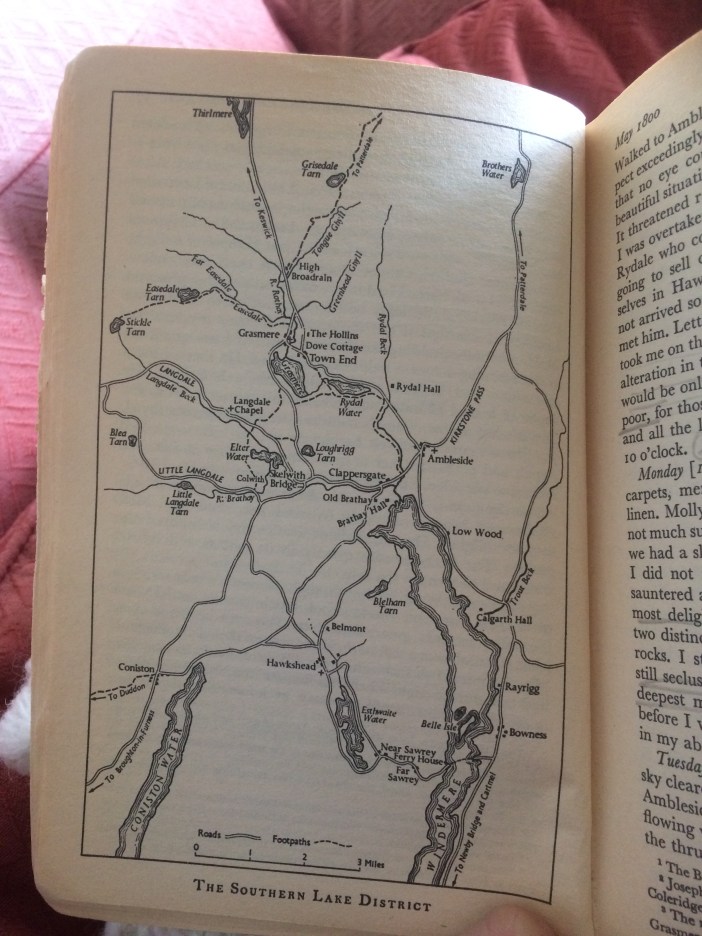
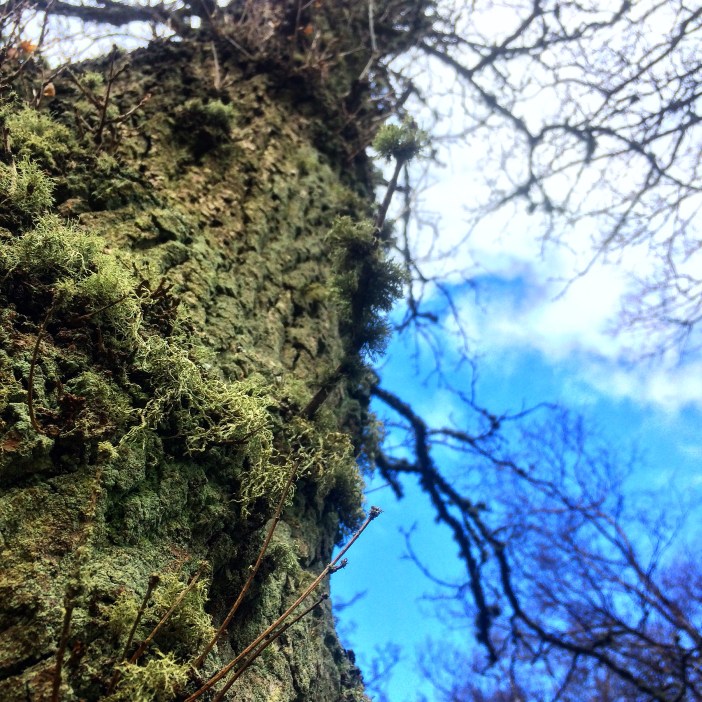
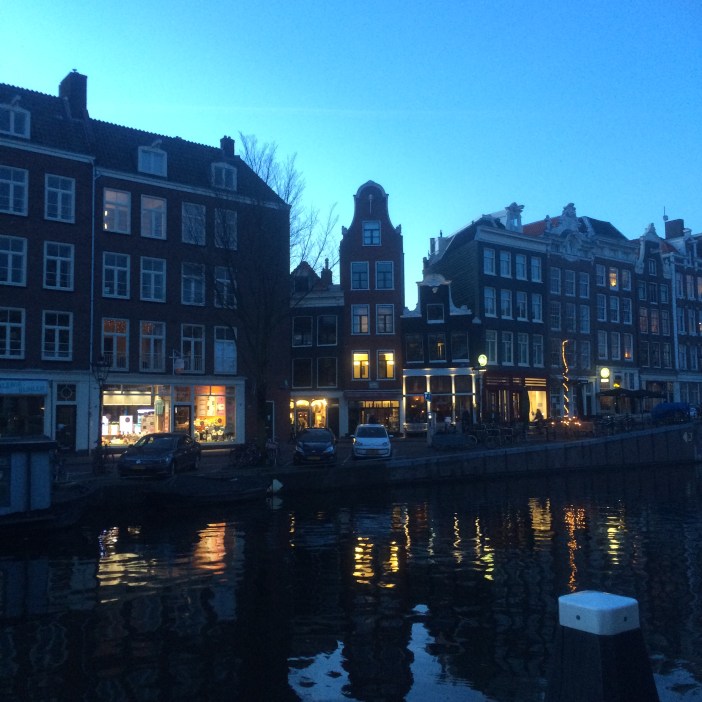



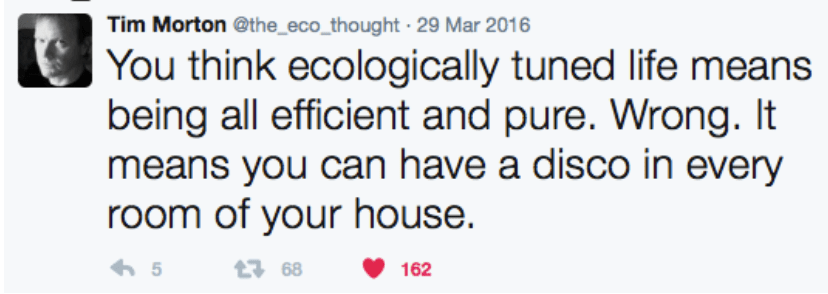


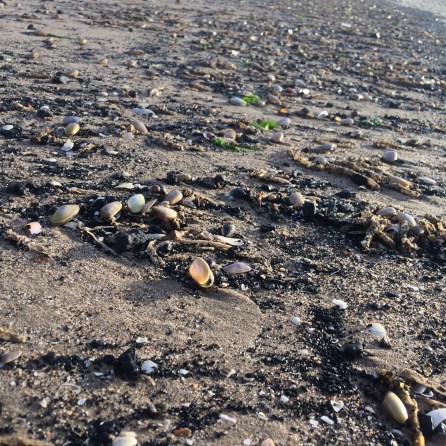

 mariaology