The term psychogeography was coined by the French Marxist Guy Debord in 1955. Its specific impulse is to explore the relationship between place, affect and human behaviour. Back in the nineteenth century, Charles Baudelaire enjoyed wandering around Paris being a flâneur (a kind of urban rambler, who drifts somewhat aimlessly through metropolitan space, absorbing her impressions).
We might take urban space for granted as something that’s just there, the same way we do about nature. Space, however, is always ideological, entangled in contested debates about politics, identity, belonging. Different groups of people experience the same place completely distinctly. Each town and city has its demarcations, its specific districts, gang territories, religious and/or subcultural quarters. Architecture and town planning don’t just happen in a vacuum; they are influenced by the politics of the local councils and corporate bodies that fund them. The creation of homeless spikes, gated communities and the demolition of Brutalist towerblocks don’t just occur for aesthetic reasons, whatever politicians may claim. They are ideological responses to human conditions, defences of the privileged against the intrusion of the ‘unwanted’. Space is always a story of demarcation, of limiting the flows of people, of perpetuating a constant sense of self/other.
Psychogeography can be a kind of resistance to such demarcations. Aimless wandering is a direct transgression of the social ordering of space. It’s a form of trespassing (sometimes legal, sometimes not); entering into districts you might not normally feel comfortable in. In a way, it seems accessible to anyone, but obviously excludes people who can’t just throw on a scarf and leave the house for a wander. Not everyone has the power to walk. James Kelman’s How Late it Was, How Late (1994), the protagonist Sammy wakes up blind and spends most of the novel walking. He’s figuring out the streets from a sightless perspective. When bad stuff happens to him, when he’s got no money and the state and healthcare system hardly provide the direction, he just keeps walking: ‘Sammy kept walking’; ‘[t]here was nothing he could do. Nothing. Except walk. He had to walk’ (Kelman 1998: 216, 57). There’s an impulse there; a will to keep going even if keeping going means plunging through the impenetrable smog of uncertainty; that whole Beckettian ‘you must go on. I can’t go on. I’ll go on’ sense of abyssal recursion which isn’t quite static but rather endlessly churning.
The effectiveness of defying the sociogeographical norms of space through walking is obviously up for debate, but it’s still a worthy aesthetic experiment to try out and certainly one that works someway towards avoiding social and spatial claustrophobia.
I’ve written about psychogeography and places of memory before, so I won’t go into much detail here. However, I just wanted to write briefly about a wee experiment I tried out in preparation for a seminar on Situationism.
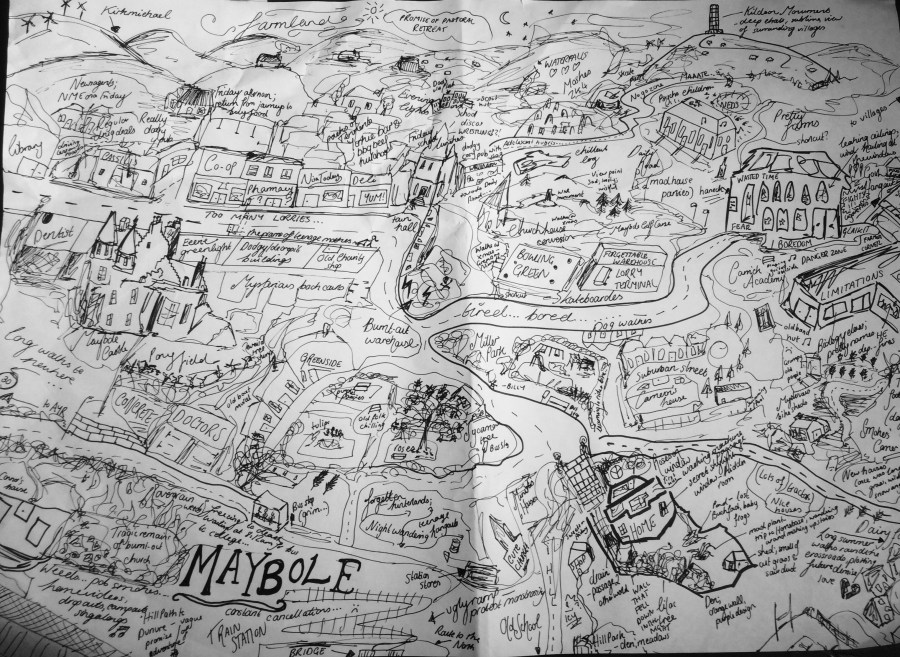
Usually, psychogeographic studies focus on the experience of exploring and traversing urban space, but I wanted to look at something a bit smaller; namely, my hometown of Maybole. At two in the morning, after a tiring shift, I sat down at my desk and tried to map out a subjective outline of the Ancient Capital of Carrick (ugh, such pretension eh?). I wanted something that would take into account that sort of dreamscape feel, like not just buildings but also the sense of surrounding landscape, of the in-between (Deleuze & Guattari intermezzo – the life of the Maybole nomad?); the town as connecting point, with little else to centre it, perhaps, other than its connections (oh and a little high street castle). I zoomed in on my old house and saw that the pampas grass in the front garden was trampled and skewed as usual and, somewhat weirdly, a mysterious object lying on the lawn turned out to be a blue light-sabre (of the plastic Star Wars variety). This foreign object suddenly made my whole homesick longing for the house a wee bit strange; like my feelings felt displaced, belonging to another time, another version of the house.
It took a while to get into the process of sketching out the town, but soon my mind started whirring and various memories and impressions started firing off, cutting across the whole 18+ years that I lived there, in the same house on Culzean Road. I spent a wee bit of time browsing the town on Google Maps, but the flatness, the sparsity of detail, lack of interesting gradients, wasn’t very inspiring. I like messy maps. It was easier just to work from a sort of organic expressiveness, not bothering about such technicalities as cartographic accuracy, scale or objective detail. Instead, I threw in everything I could think of: the weird stuff, the way certain streets and buildings still signify in my brain, even though the places in real life have most likely moved on.
Most of these impressions, by the way, are teenage ones. Don’t take them seriously, seriously. After all, the point of psychogeography is, in a sense, its resistance to the static quality of the map. Its performative constitution of many different possible drafts of maps and routes, impressions, emotions, memories – which shift over time and certainly, if anything, refuse to be stable.
17/11/16
Bibliography
Kelman, James, 1998. How Late it Was, How Late (London: Vintage).
‘Psychogeography’, Glossary of Art Terms, The TATE. Available at: http://www.tate.org.uk/learn/online-resources/glossary/p/psychogeography [Accessed 18.11.16].
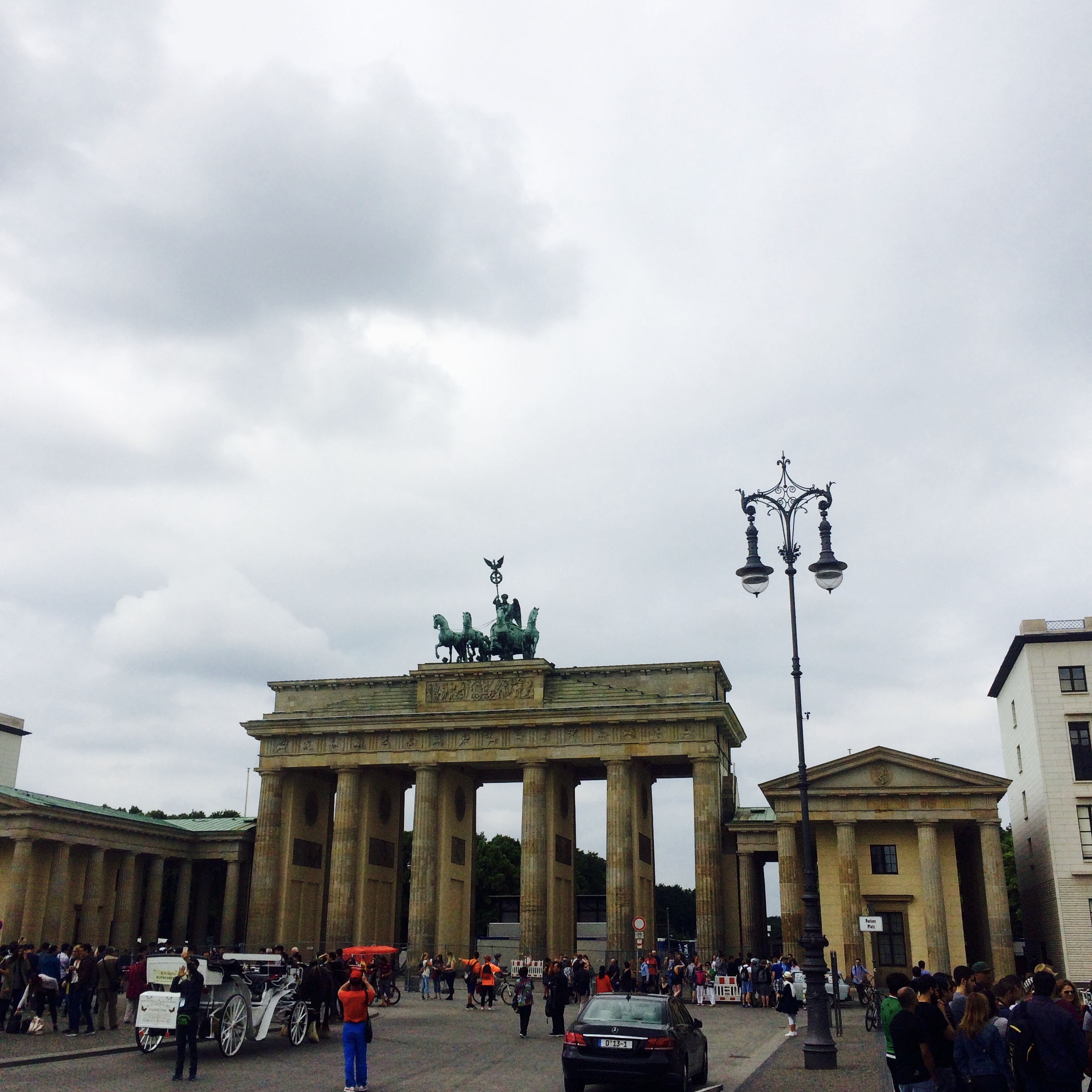
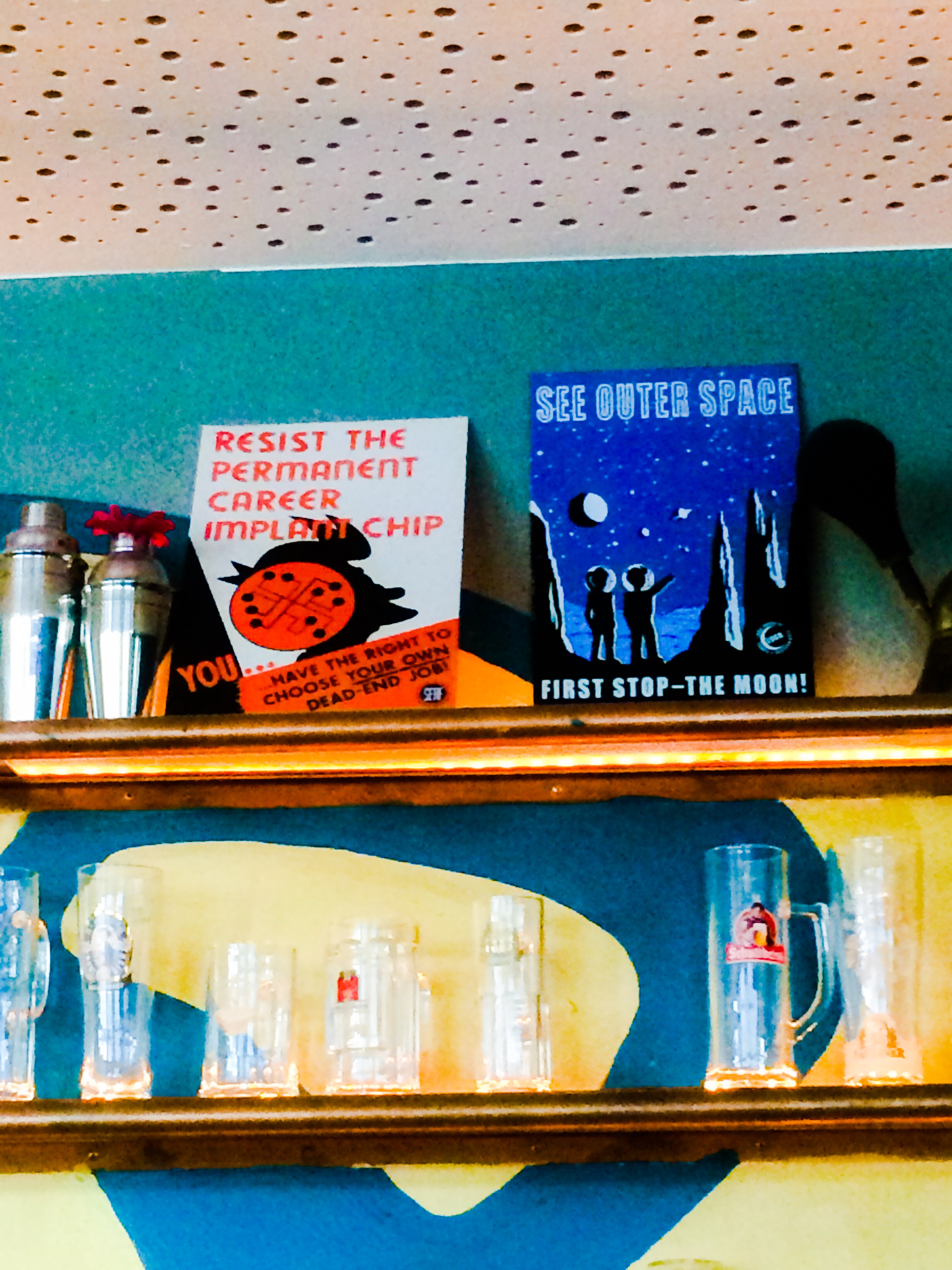
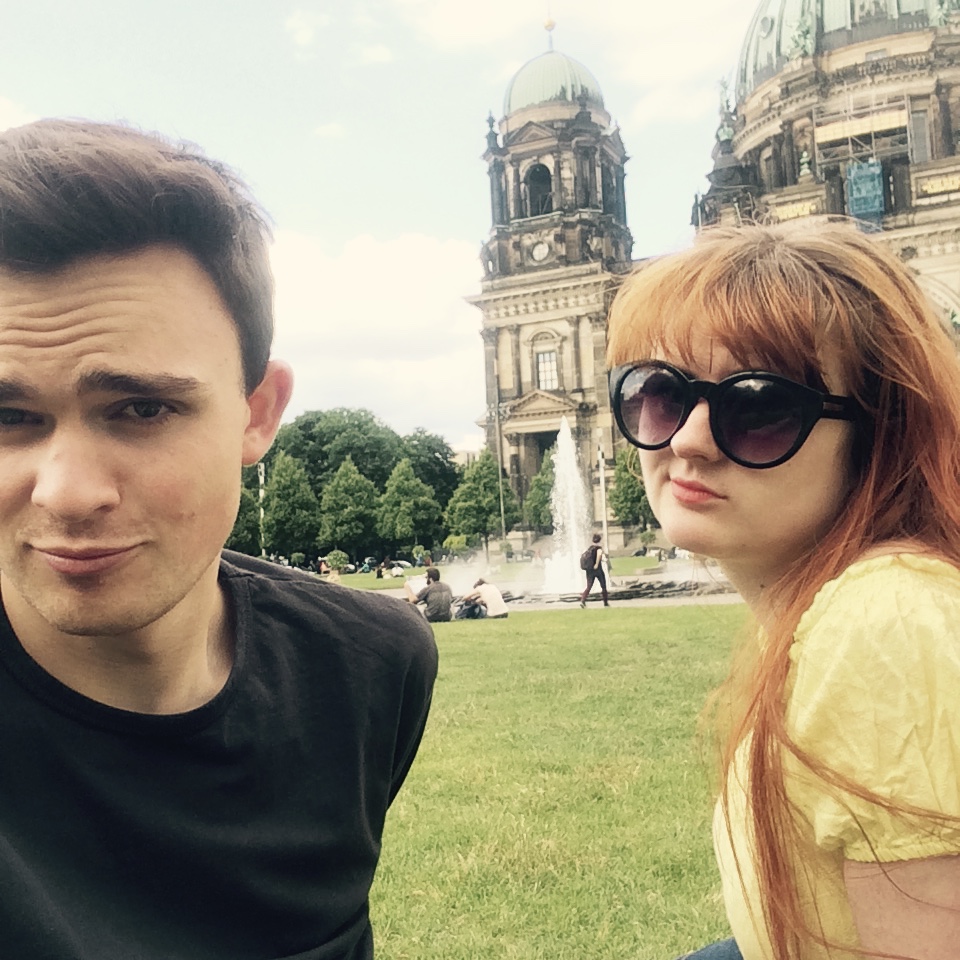
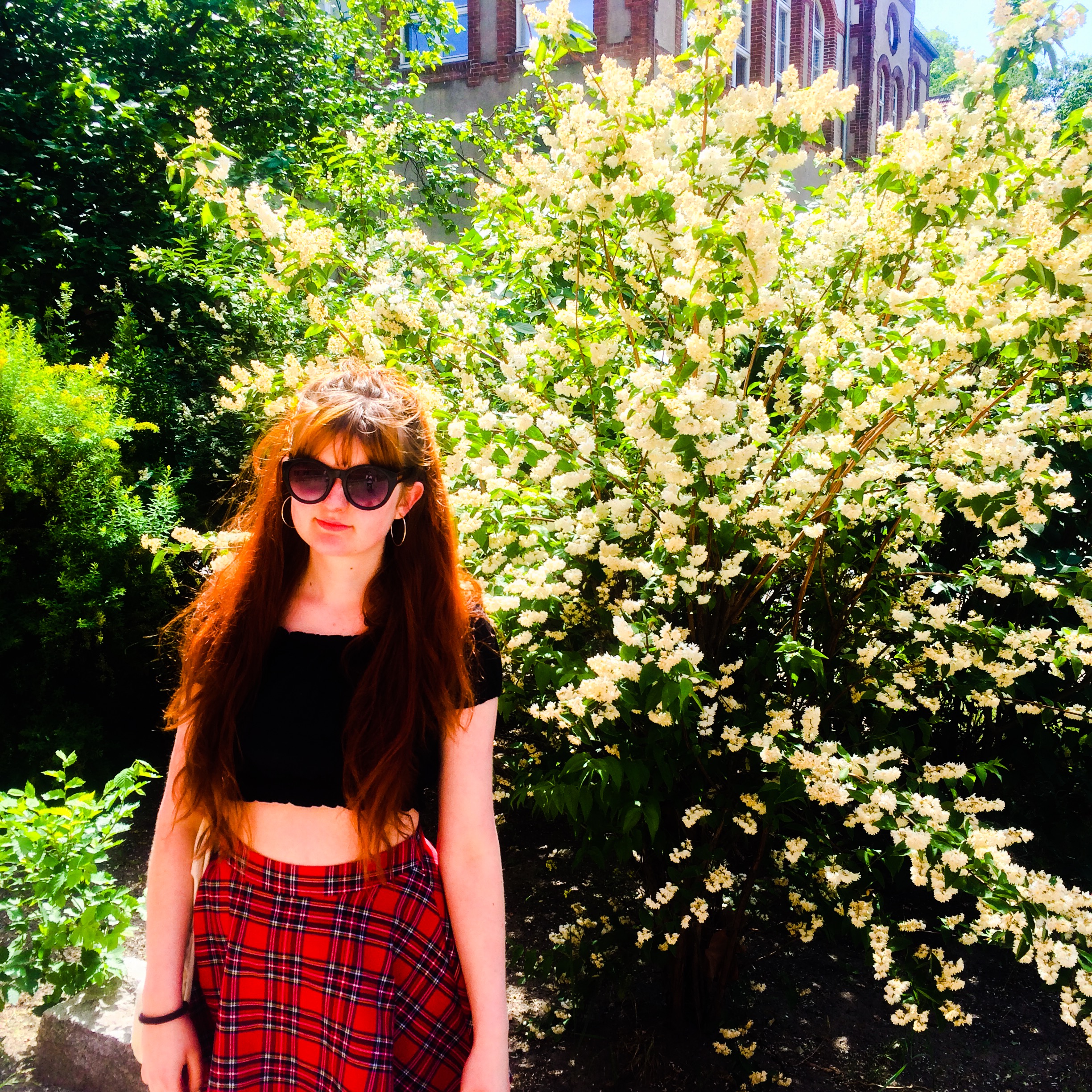
I haven’t been ‘abroad’ since Dublin in June 2014, so the prospect of Berlin was pretty exciting. I thought it was about time I spent my birthday somewhere different and I’ve never heard a bad word said about Berlin. We stayed in the Heart of Gold hostel, which is in Berlin Mitte, about ten minutes from Friedrichstrasse train station and a short walk away from Brandenburg Gate, Reichstag and Museum Island. This was my first time in a hostel and it felt a bit like going on a residential school trip combined with student halls; only unlike a school trip you had total freedom over your time, and unlike student halls people actually respected the place. The decor was kinda cool and space-themed, plus there was a pool table and unlimited free hot drinks and super cheap beer. The slightly rickety bunk beds were worth it in terms of price and location. Also, not many budget hotels will bless you with music ranging from Radiohead to German techno to obscure Cure albums to enjoy over your breakfast. I loved it.
I always forget how funny a place airports are. Their sense of spatial and temporal dislocation. Everyone just waiting; not exactly lounging around, but waiting all the same. Checking their phones, browsing the duty free, trying not to lose each other. If you’re like me and don’t go away much, you forget that whole other culture – that of the British holidaymaker. Screaming families and the endless churning crowds making their way to Spain, their unprotected, pasty skin volcanically craving the crack-over burn of continental sunshine. Groups of lads with Nike snapbacks making their way out to Zante or Magaluf for their sixth year holidays, my brother beside me tearing their outfits to shreds with his devastating fashion analysis.
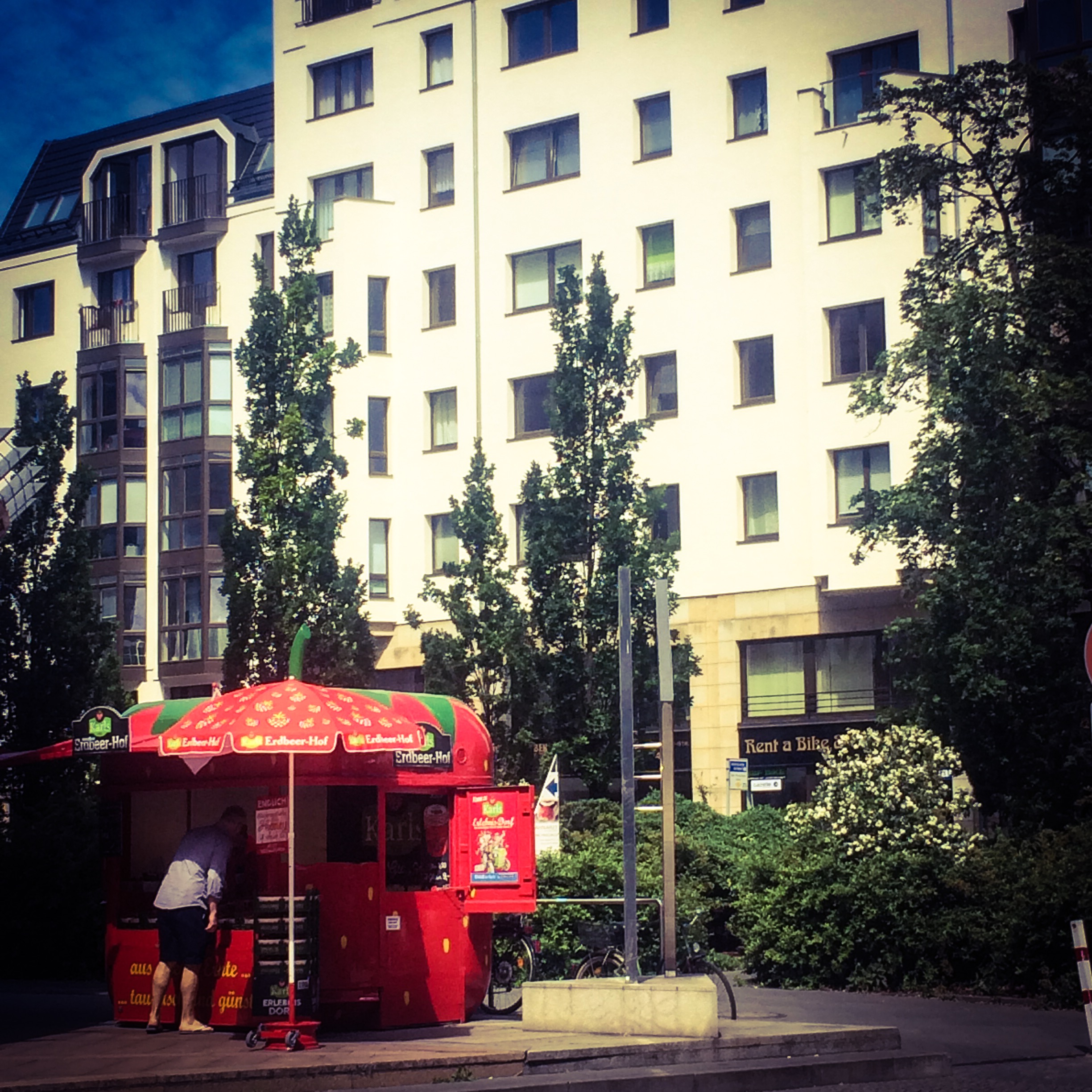
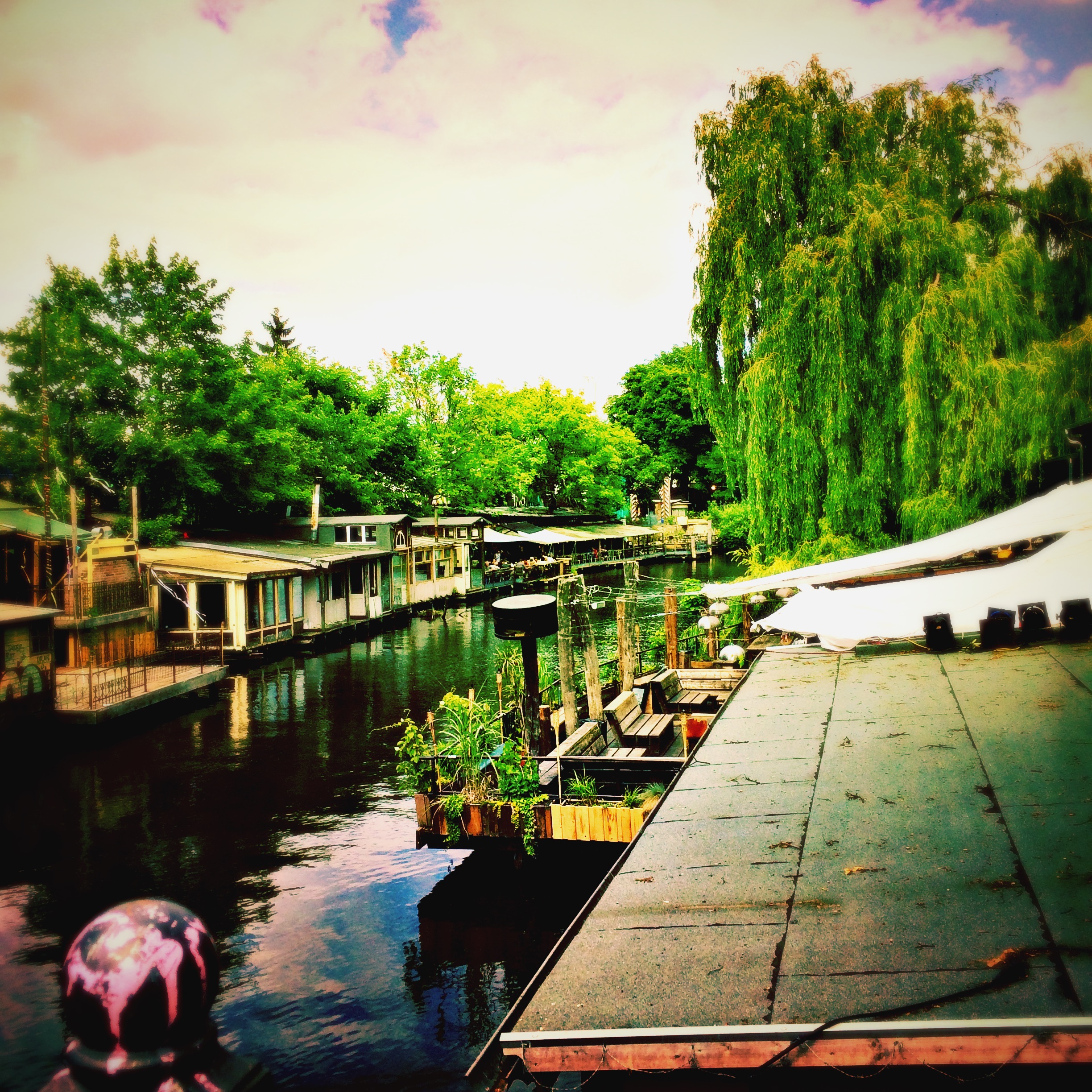
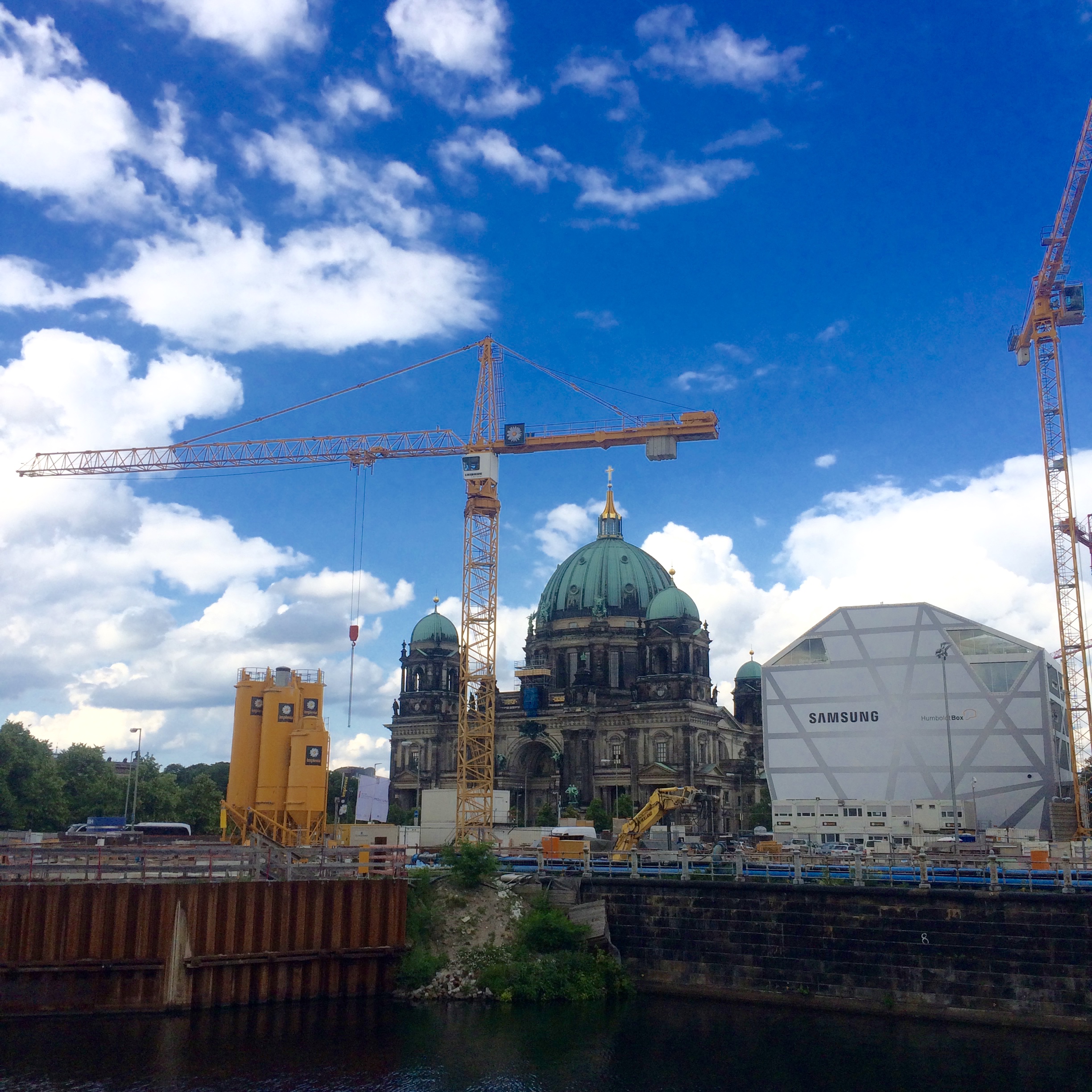
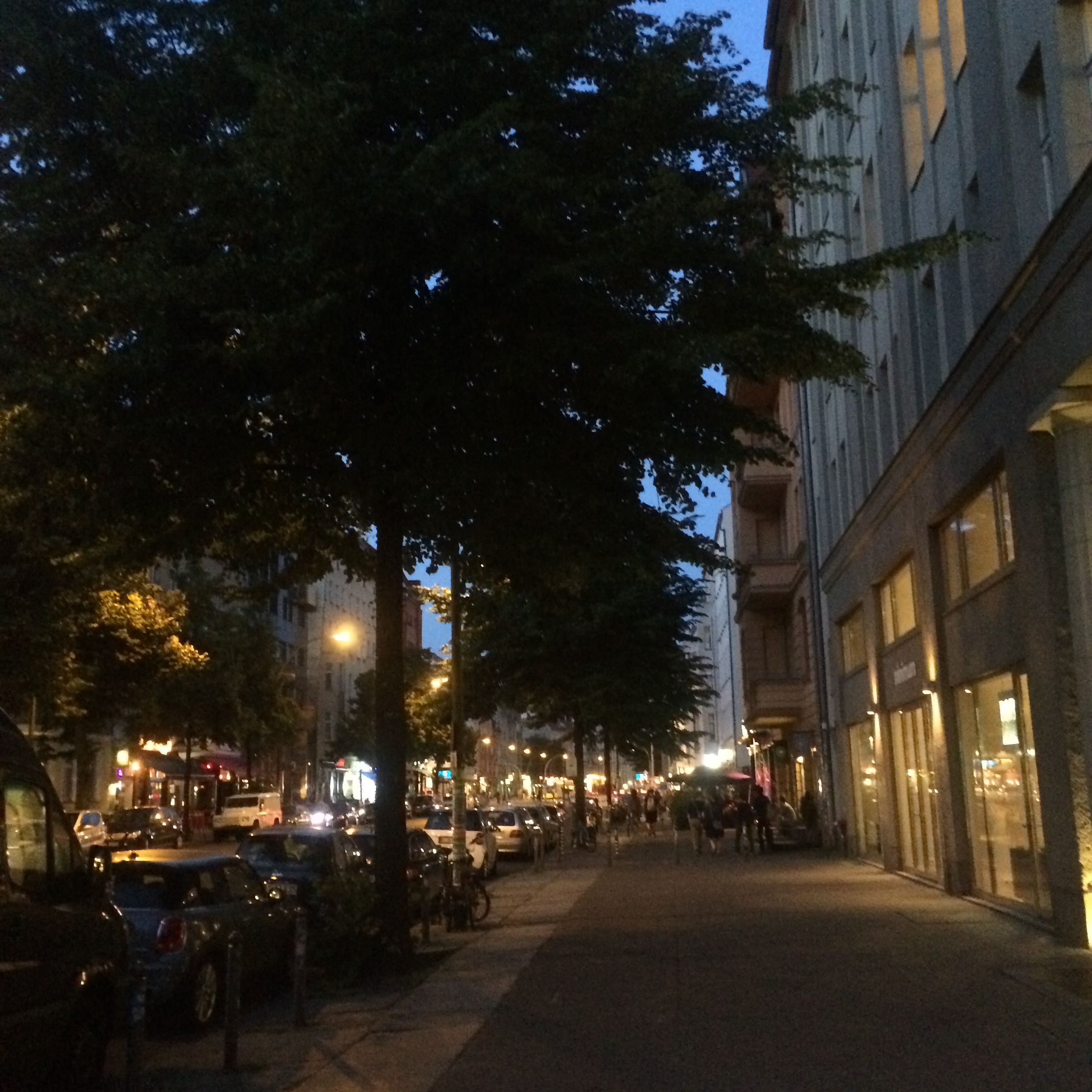
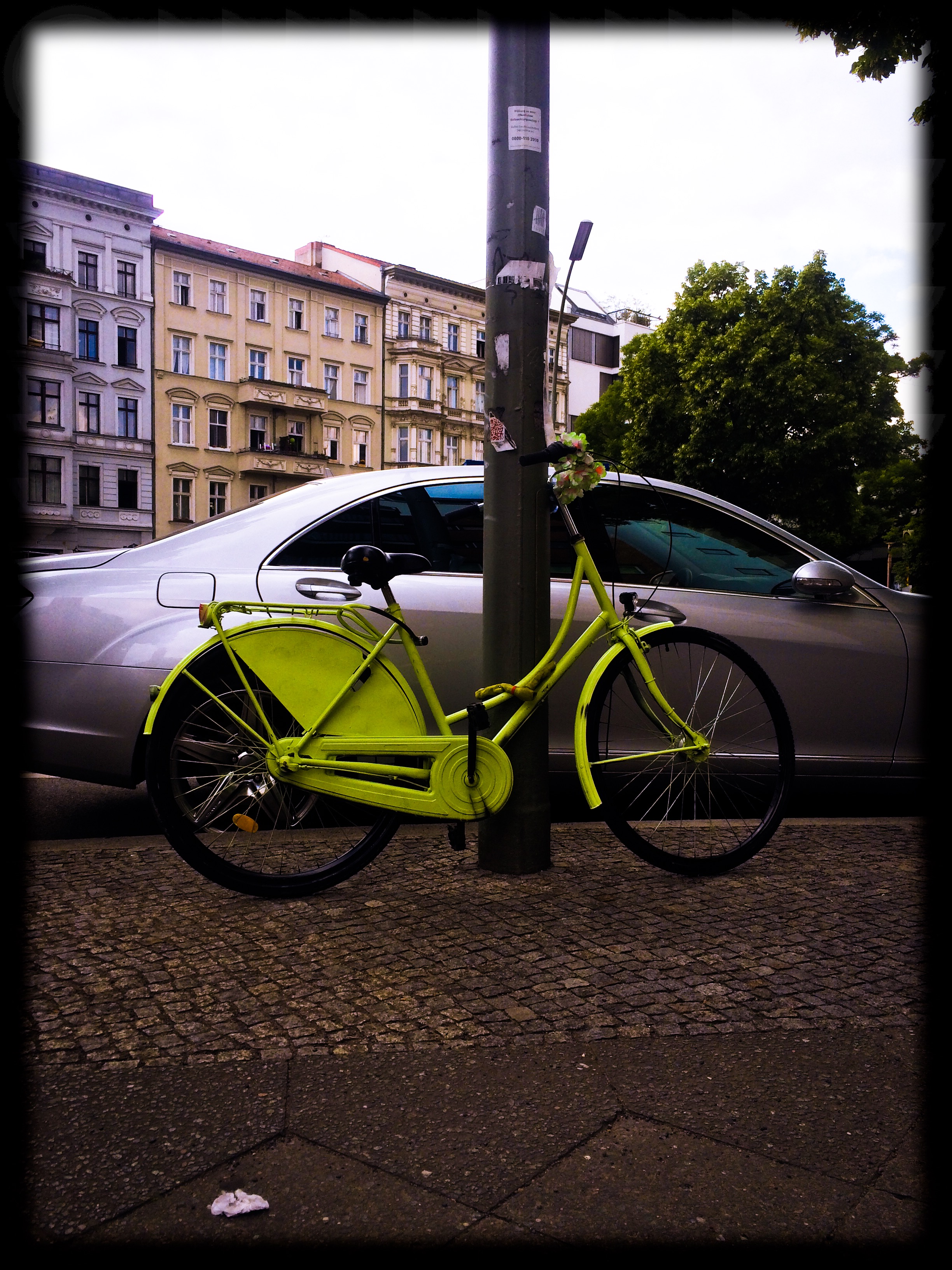
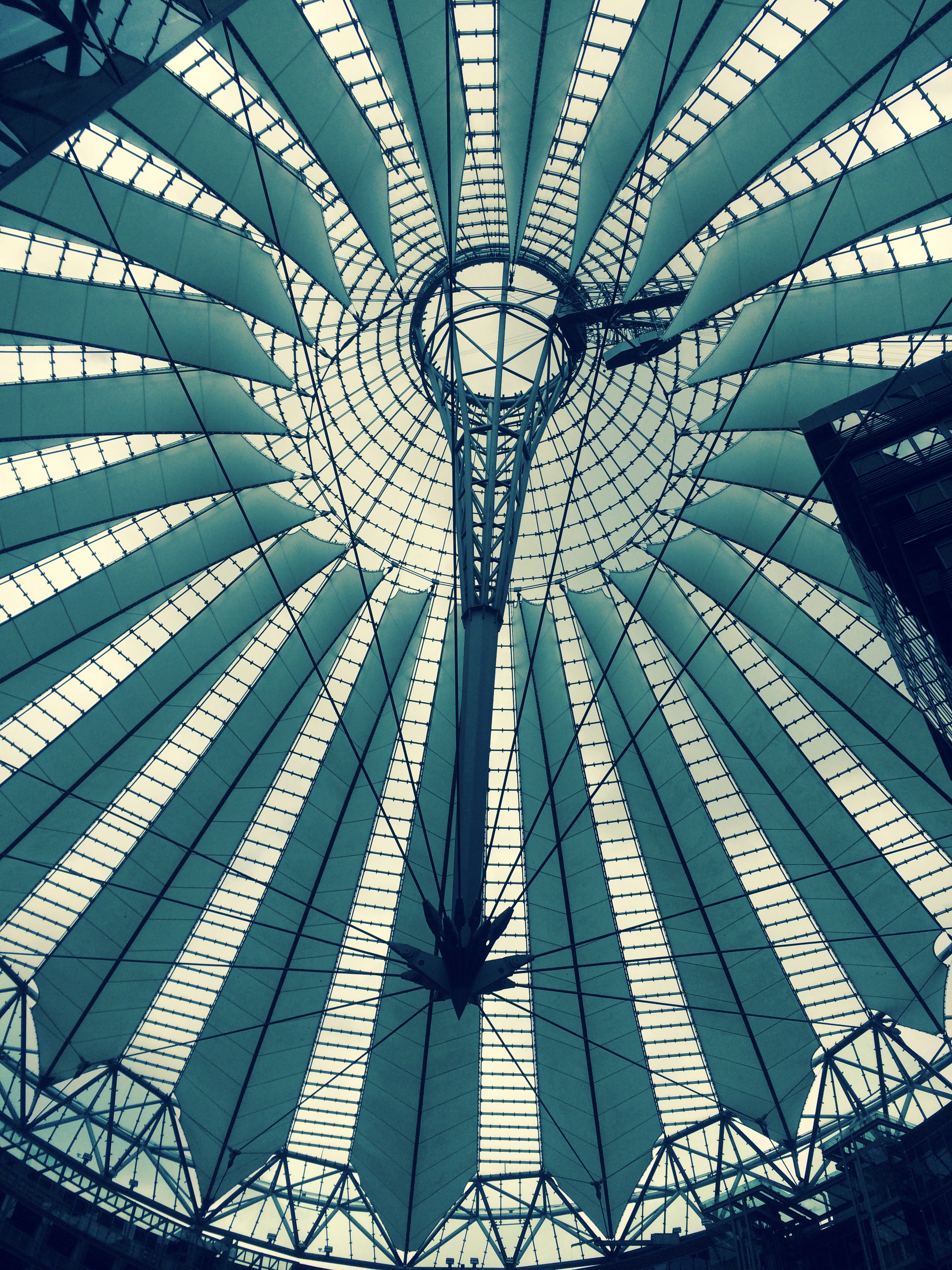
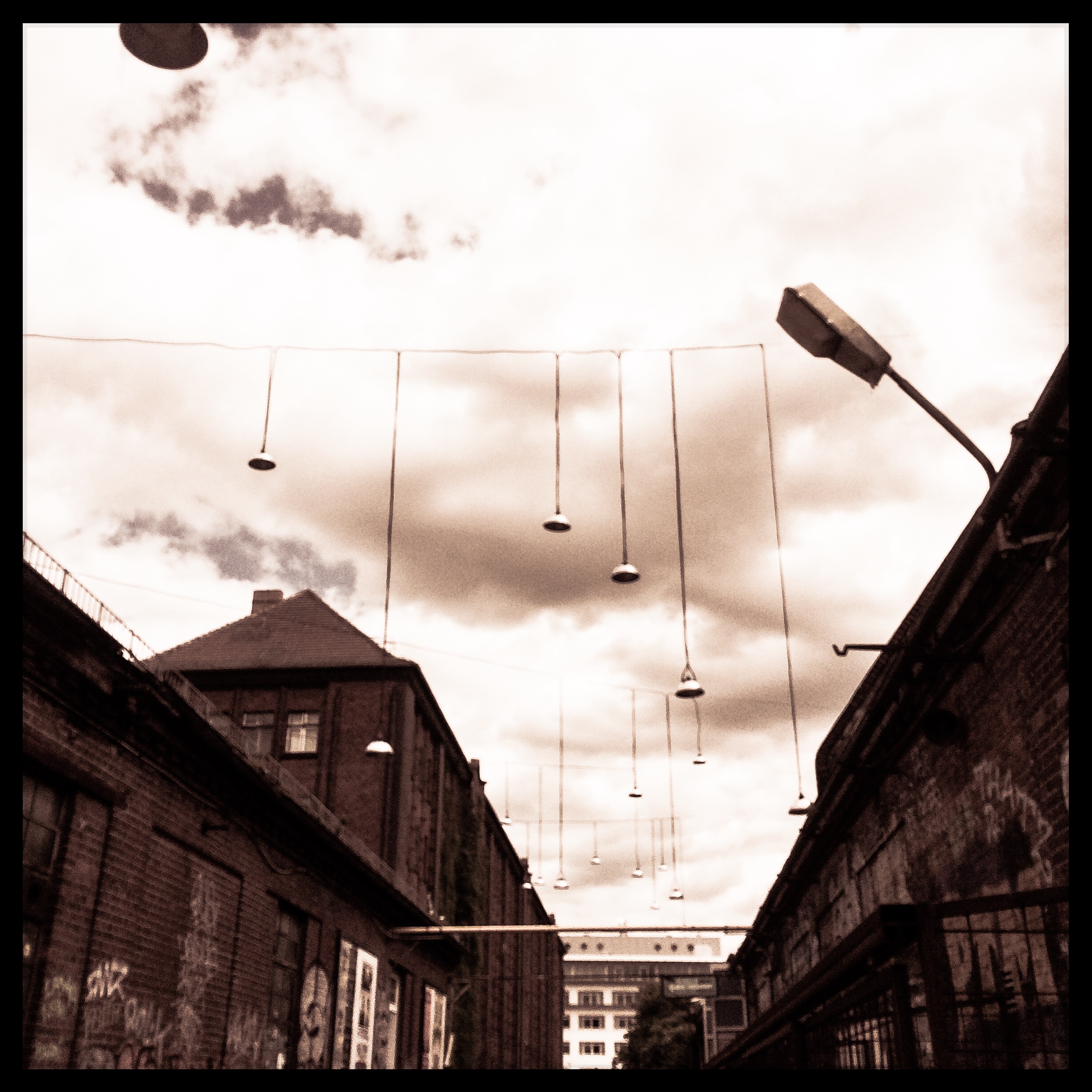
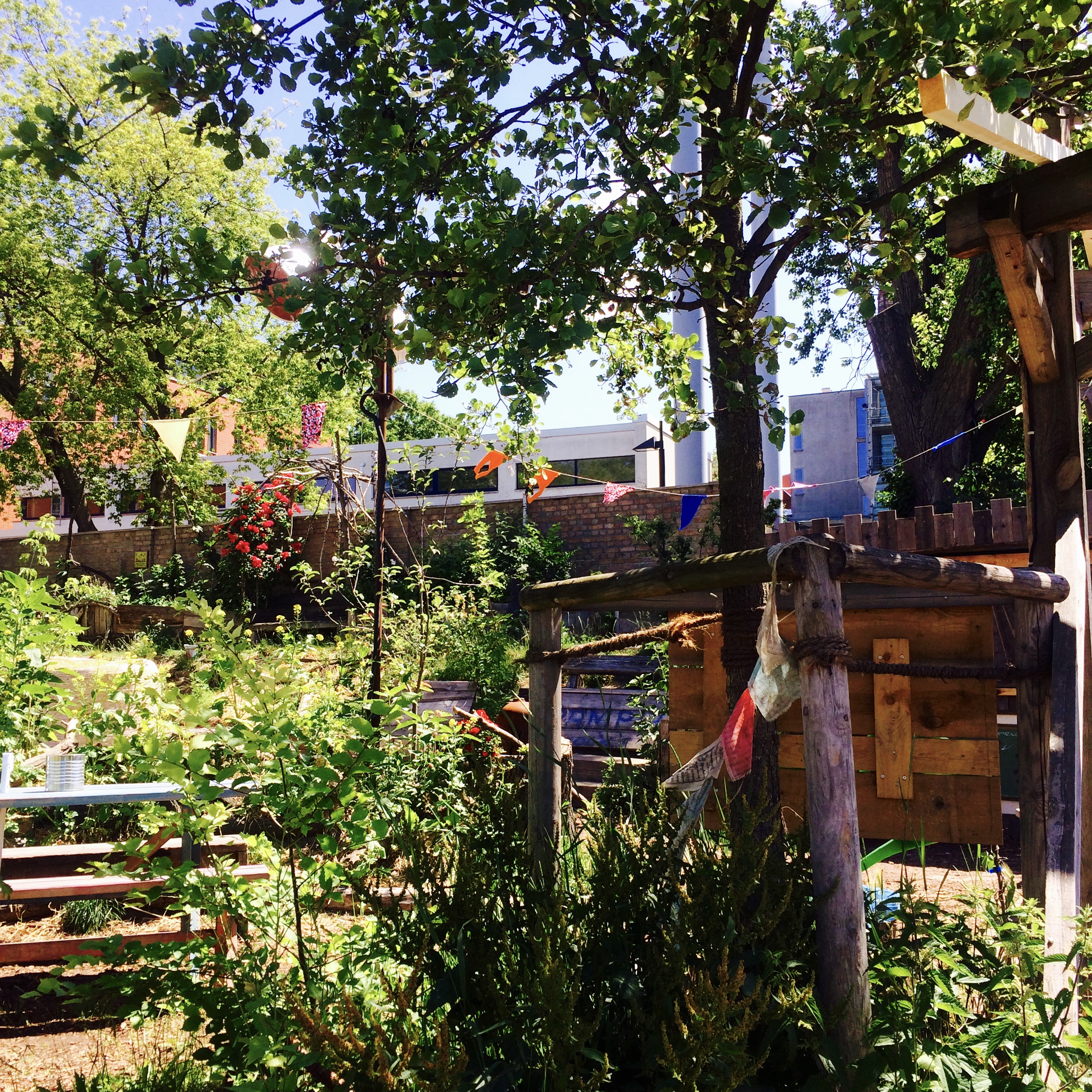
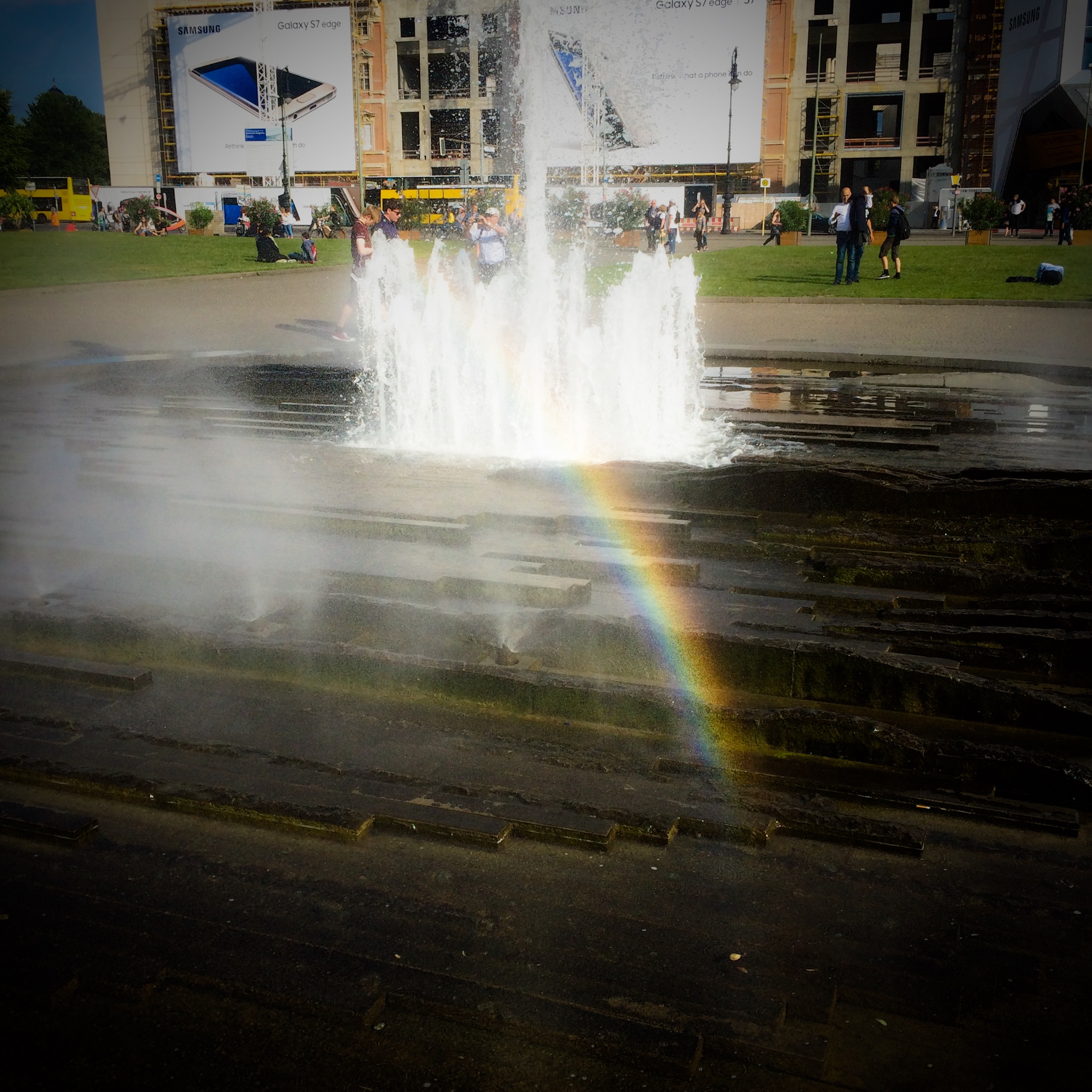
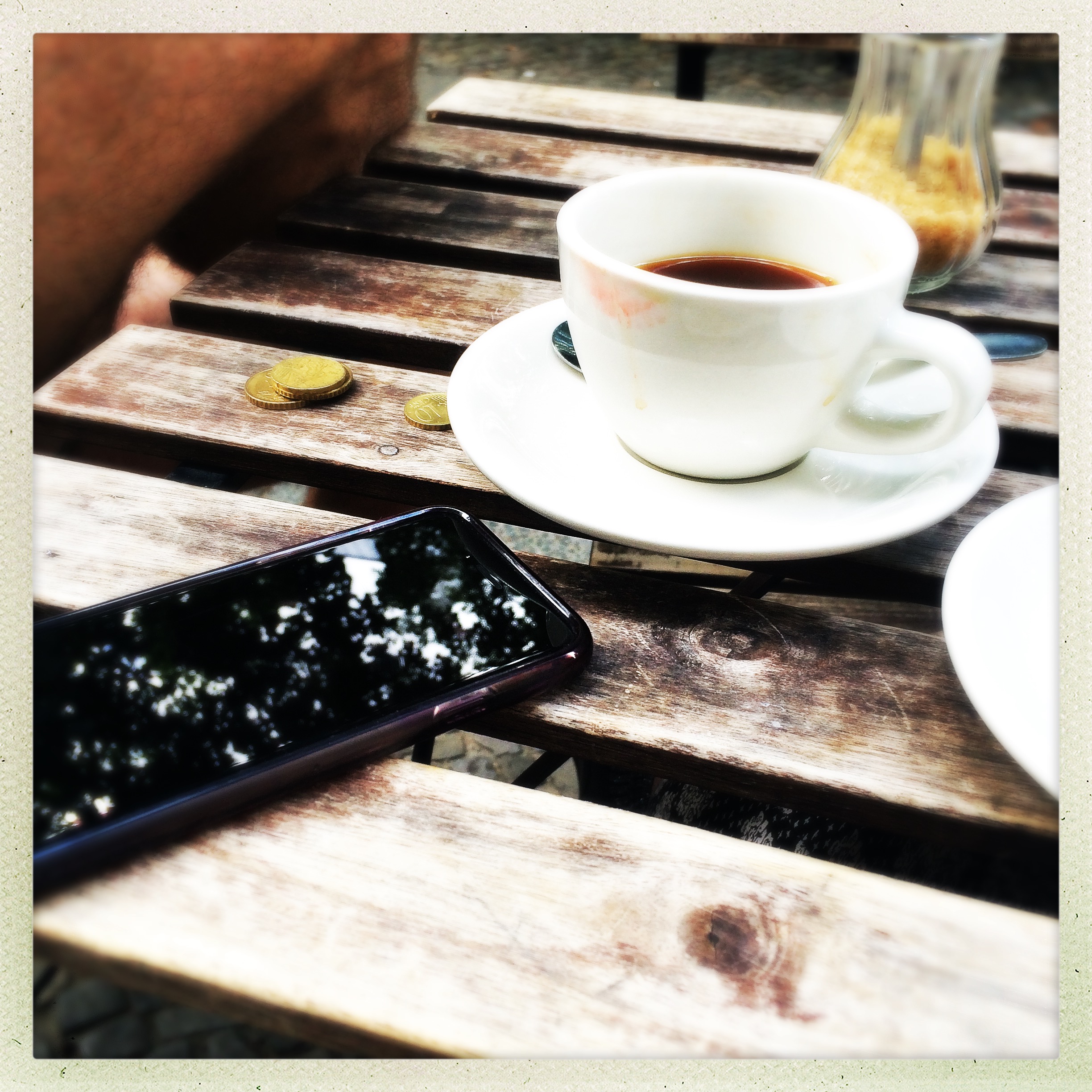
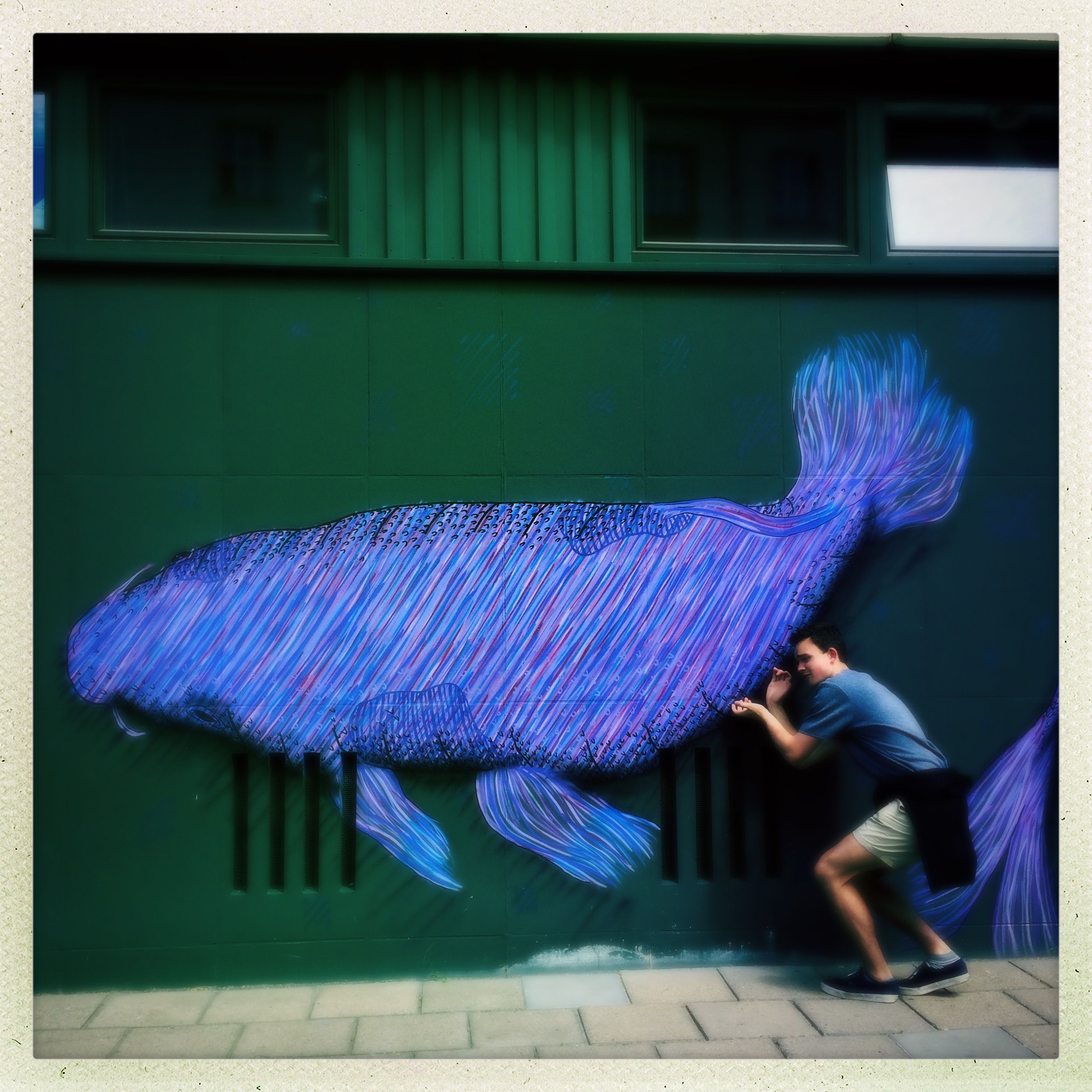
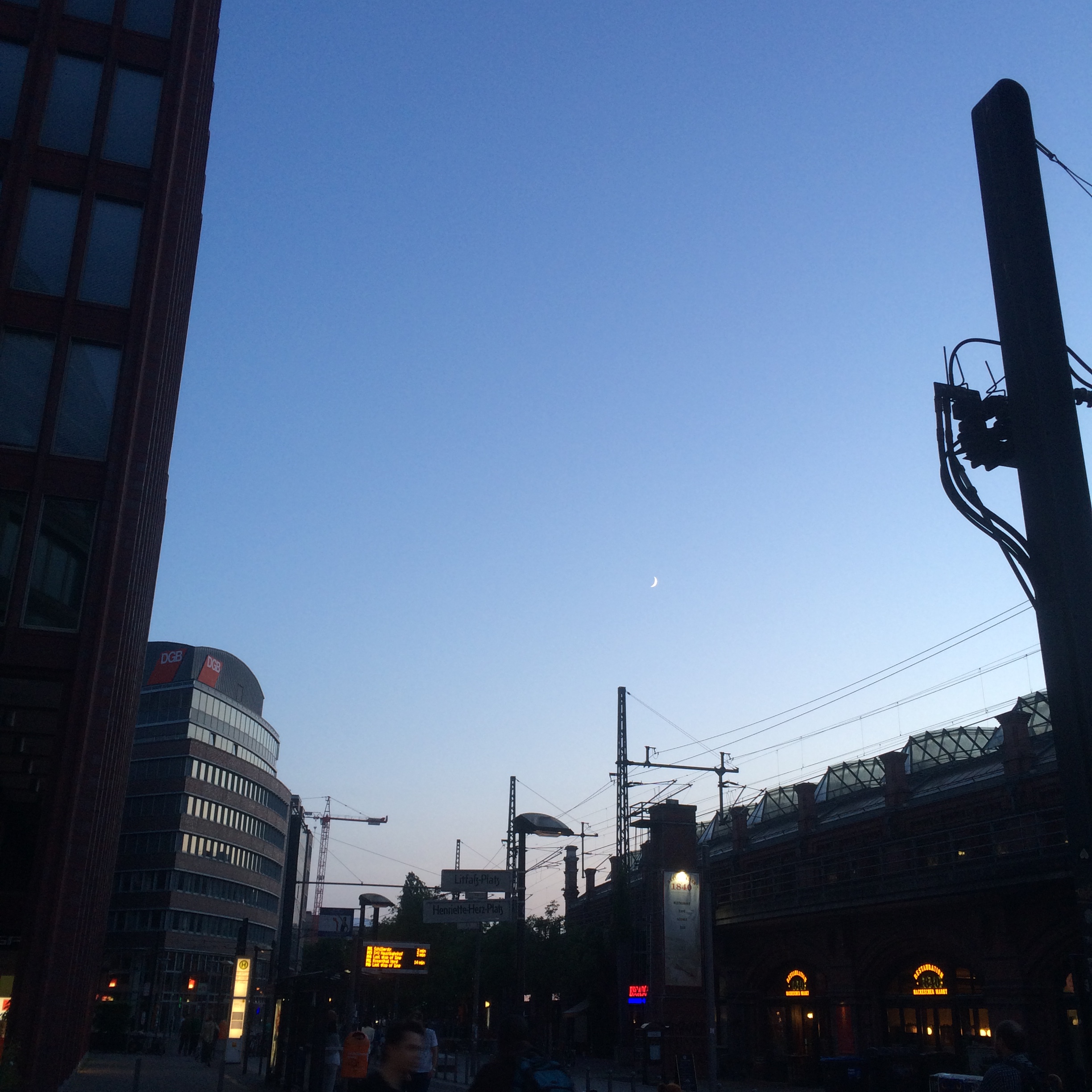
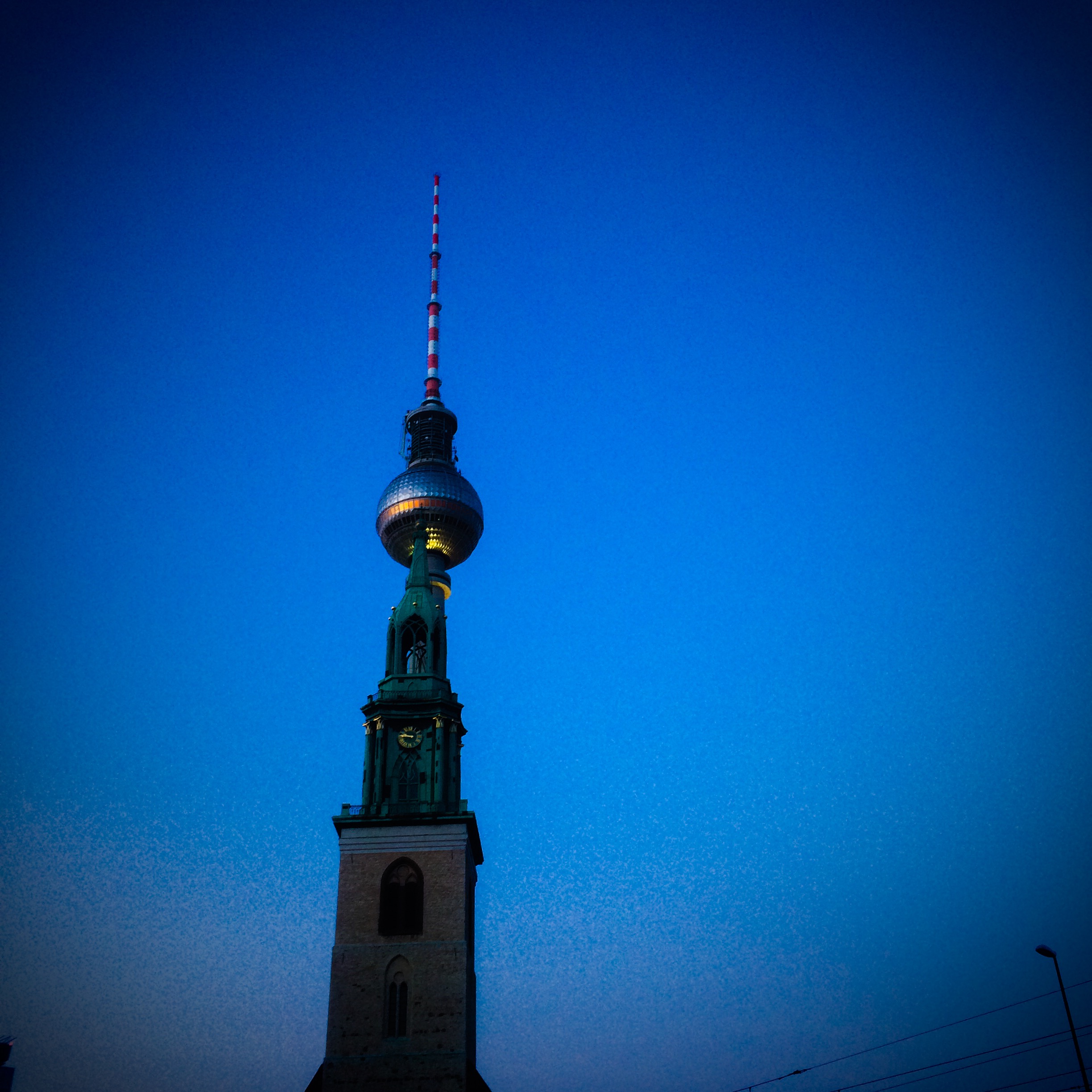
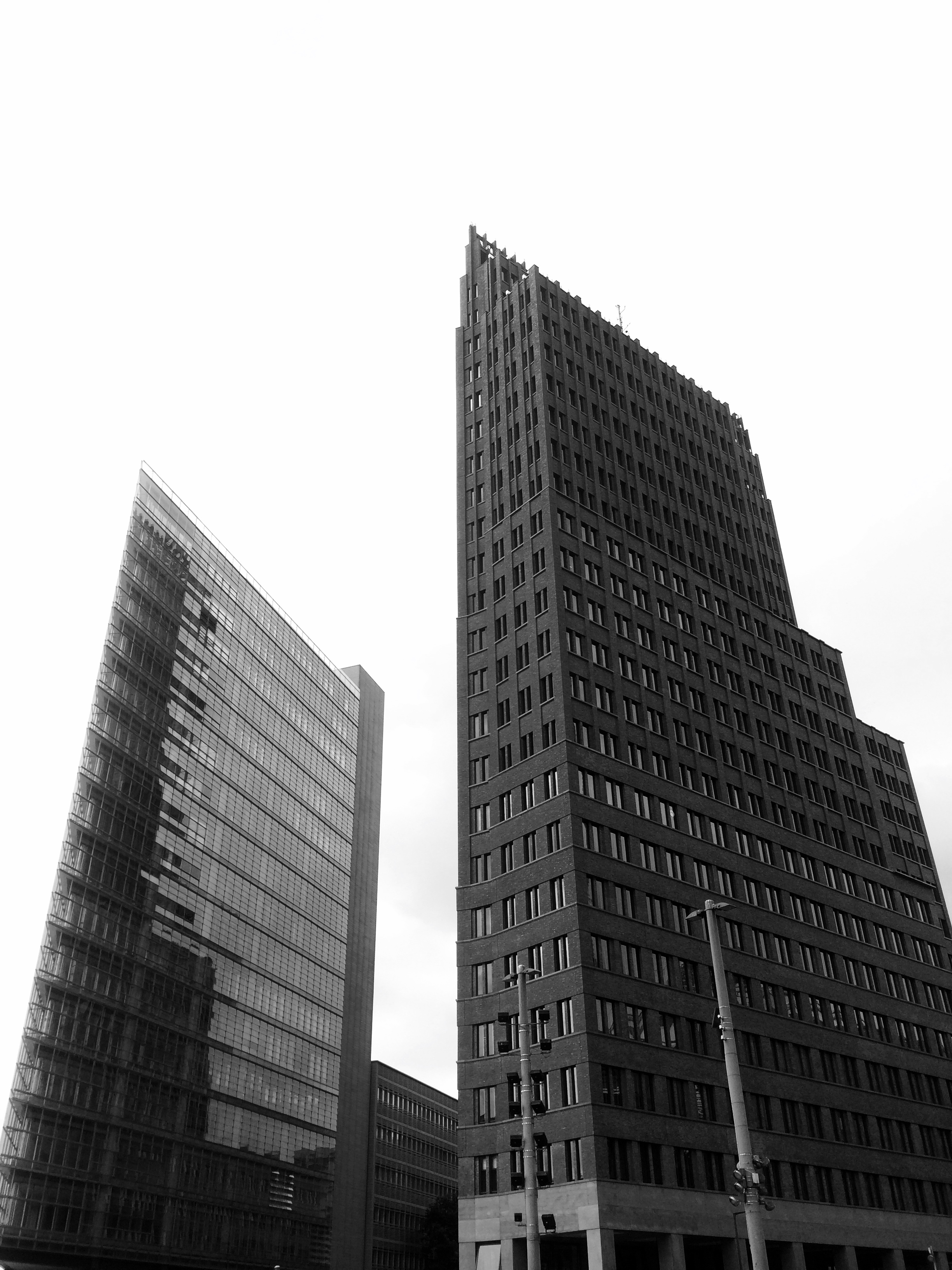
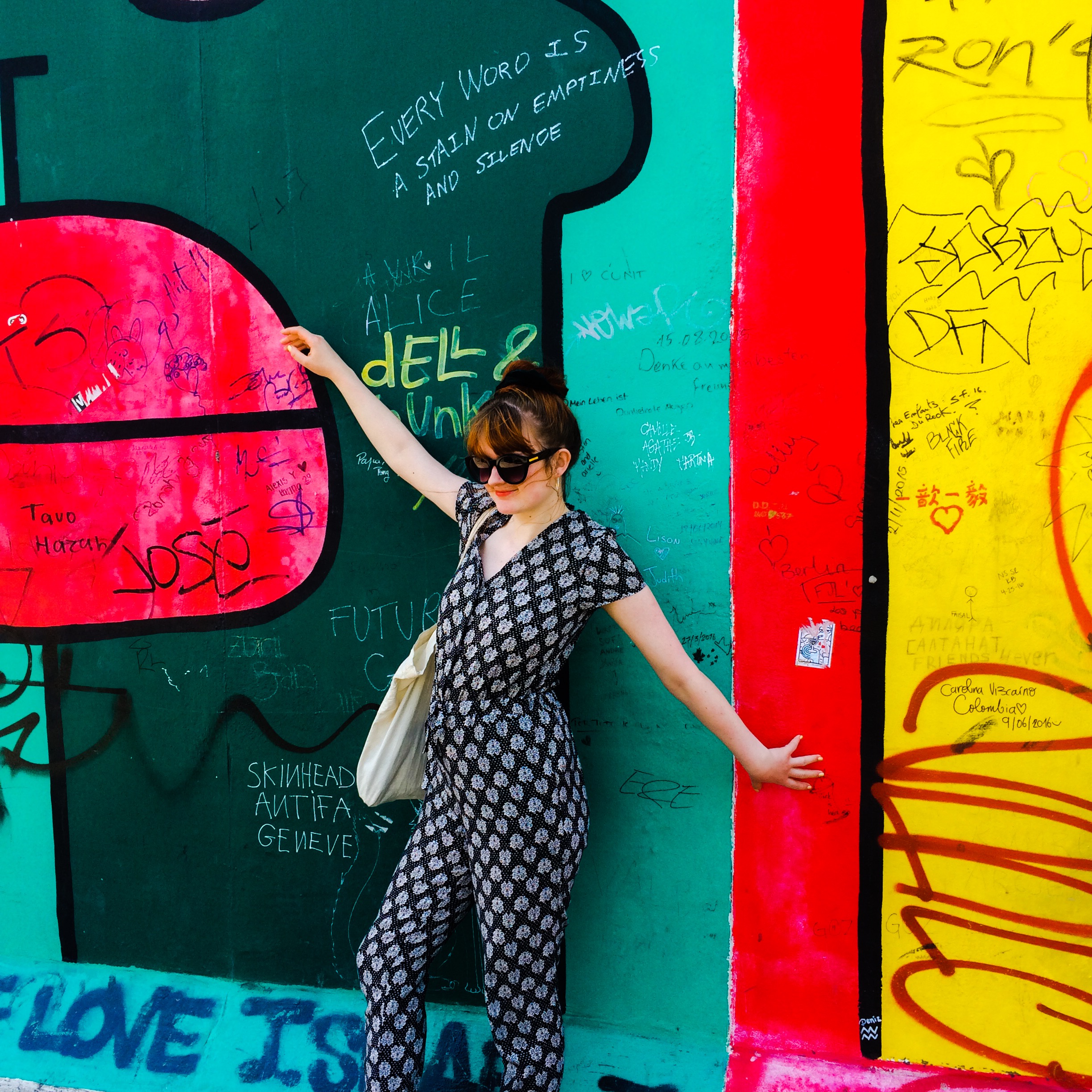
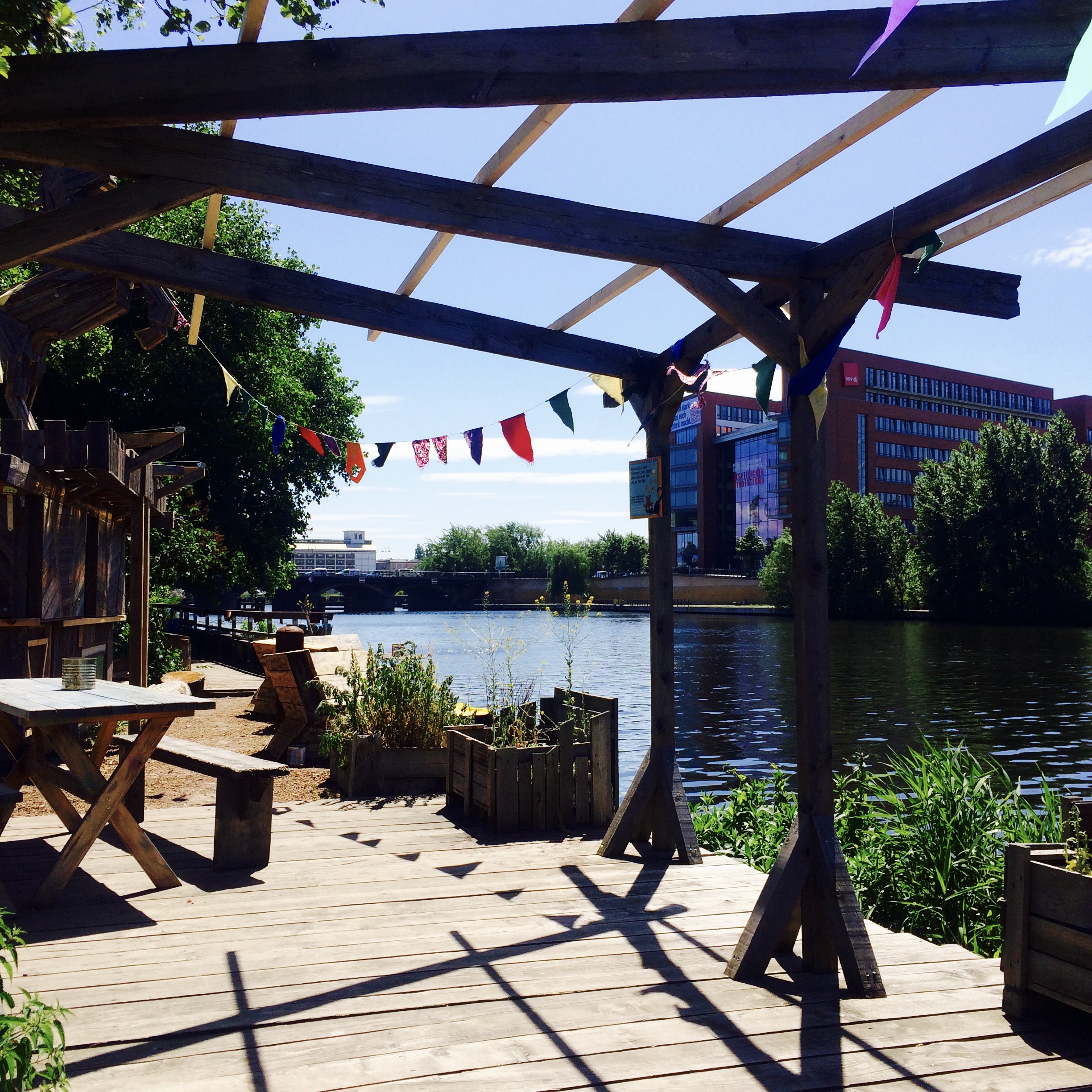
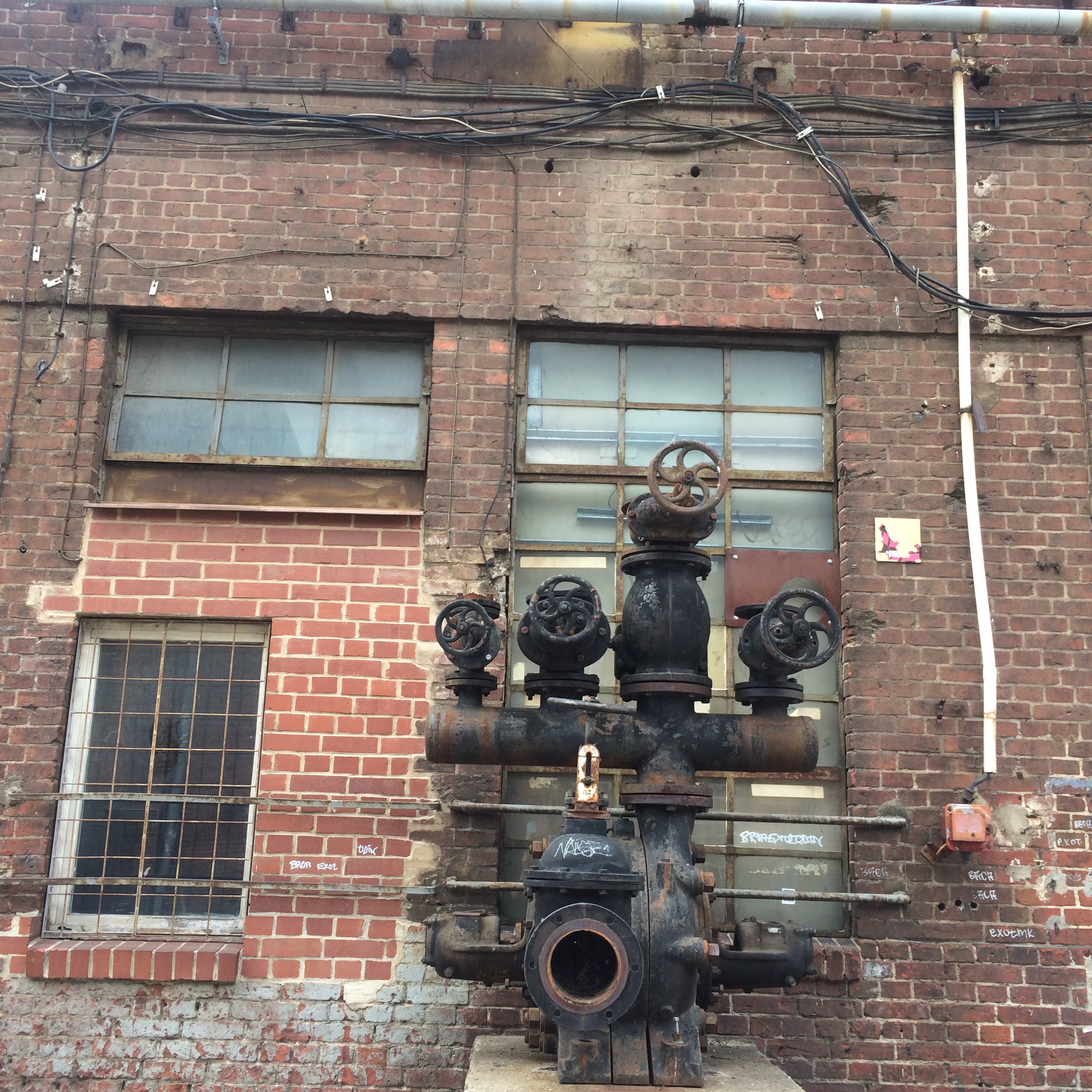
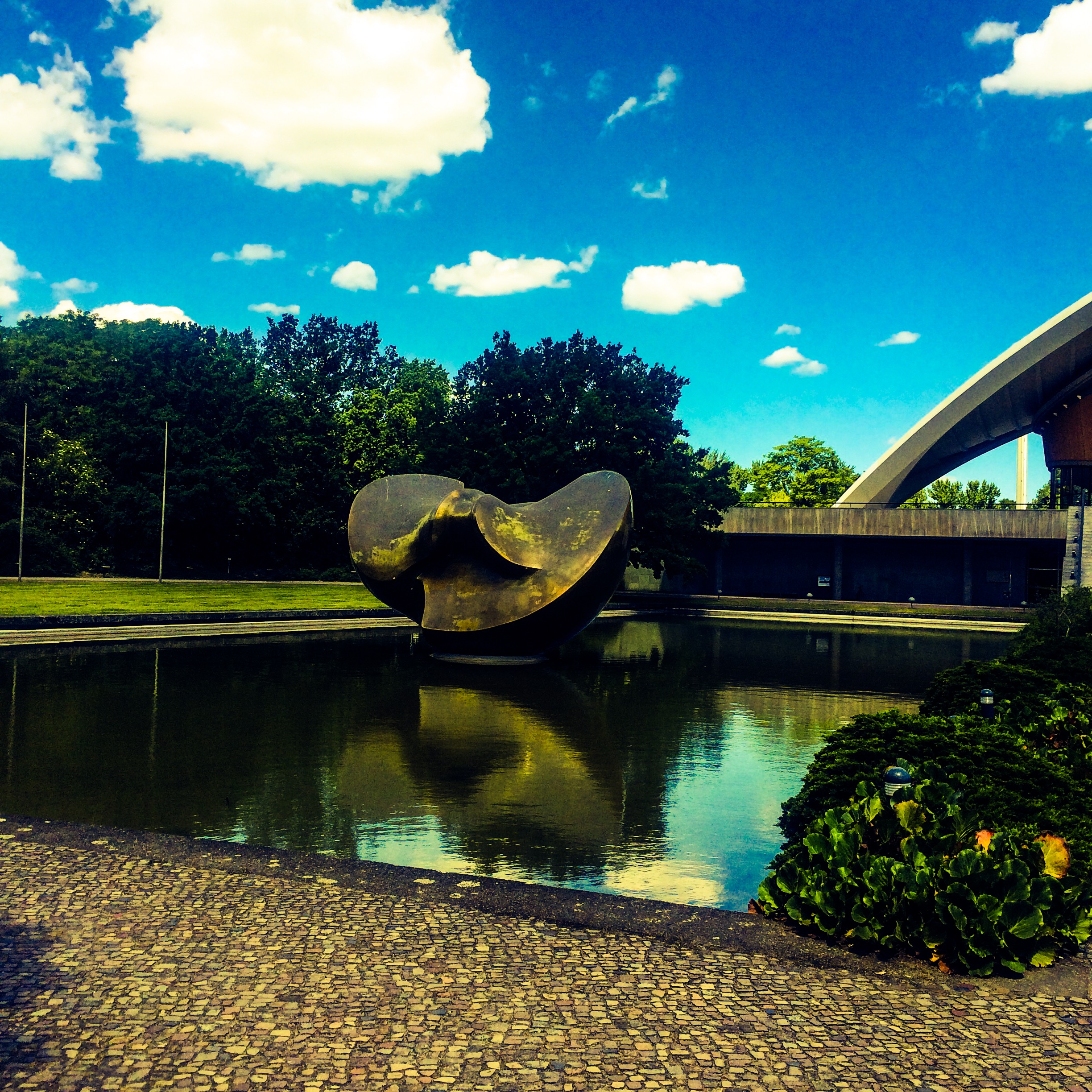
Berlin kinda has it all. There are vegan and vegetarian restaurants and cafes everywhere. We came across a place with hammocks that allowed you to concoct your own tea and watch the traffic go by as you swayed from side to side. Cool riverside cafes with bars embedded inside cabana-style sheds. Supermarkets which sell hummus and play Lana Del Rey on their speakers (what more do you need?!). A frankly mesmerising selection of Ritter and Lindt chocolates (the best). Parks where all sorts of people hang out, drinking beer and wine and throwing frisbee for dogs. It’s legal to drink in the street in Berlin and the vibe is always pretty chilled. The streets weren’t covered with litter, and generally the abundance of graffiti gave off the impression that to remove it would be to strip something pure from the city. It’s a colourful place, a dusty place (lots of construction going on), a green place. There’re parks everywhere, not to mention the massive Tiergarten, where you can lay around for hours, make friends at an outdoor bar, go rowing along the pond, check out a statue dedicated to good old Rousseau. There were little stands outside train stations which sold nothing but punnet after punnet of fresh strawberries. Beautiful Brutalism. Boutique coffee shops, vintage clothing stores, fruit and veg stalls everywhere. It’s super hipster, yes, but not in the kind of wanky obsessed-with-‘taste’ Shoreditch way, just in this laid-back, established way of cool. Plus, all the spirits seemed to be served as doubles, which was fun.
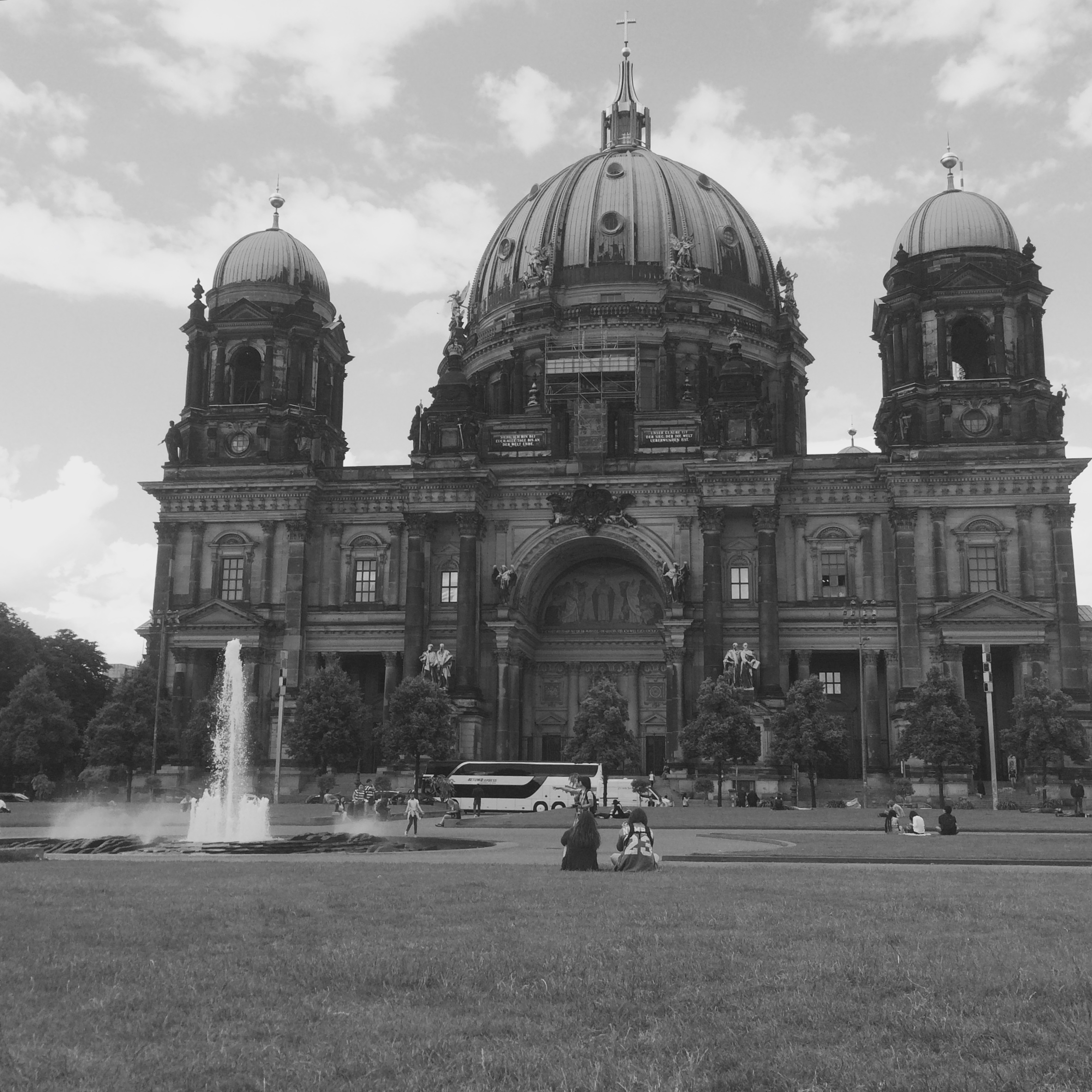
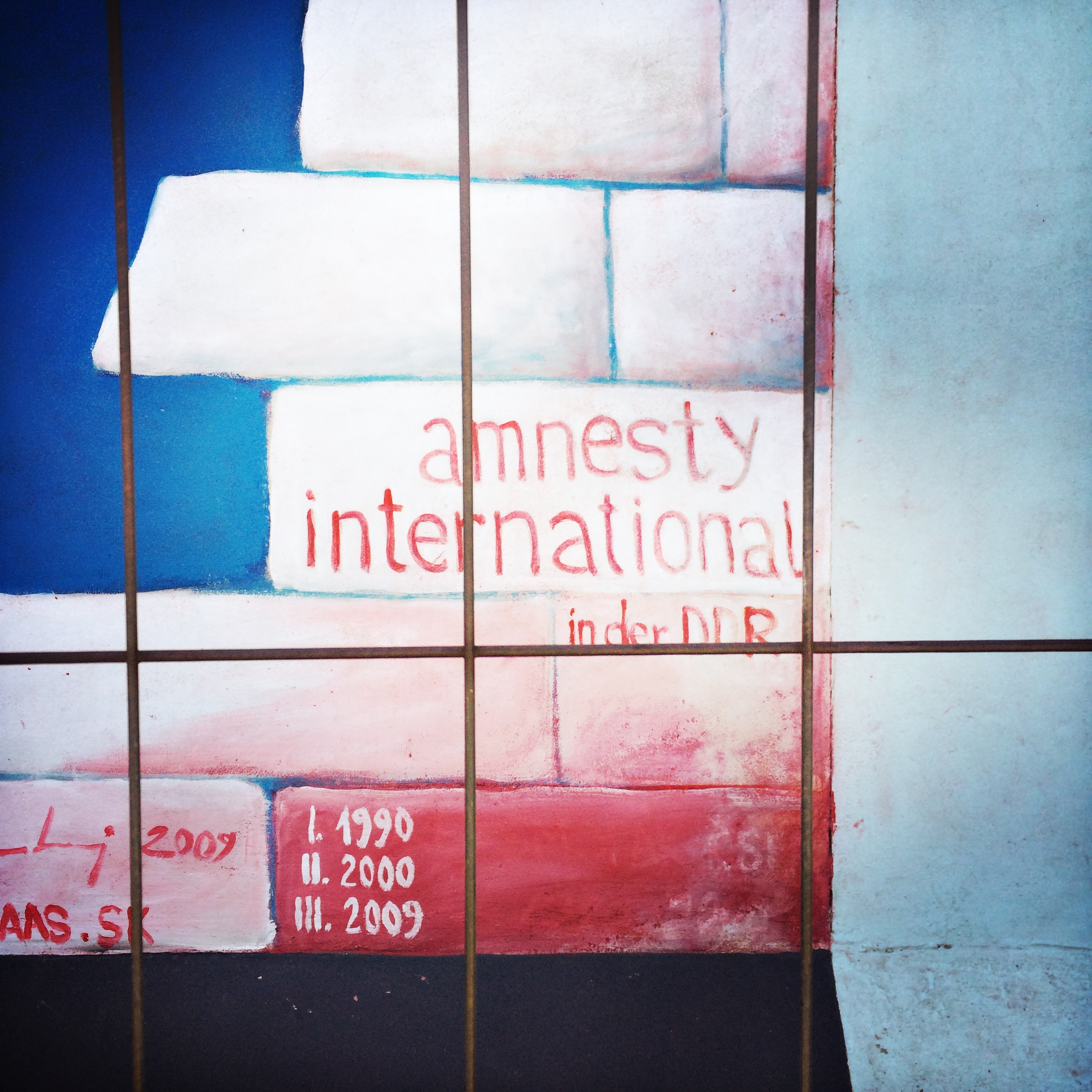
We walked around for hours and hours in the heat, sometimes catching a train, sometimes just walking some more. We walked more than 60km in three days, according to my phone! We saw the main shopping precinct, the parks, the lovely laid-back bar areas, the touristy stuff, the artwork at the East Side Gallery. I already want to go back, preferably with a group of pals who are brave enough to explore all the crazy warehouse raves, speakeasies, weird bars (especially The Black Lodge – think this might’ve freaked my brother out too much!)and clubs in the depths of Kreuzberg…
Some of my favourite Berlin things:
The place which used a gym bench as a bar top and sold my favourite whisky (Talisker)
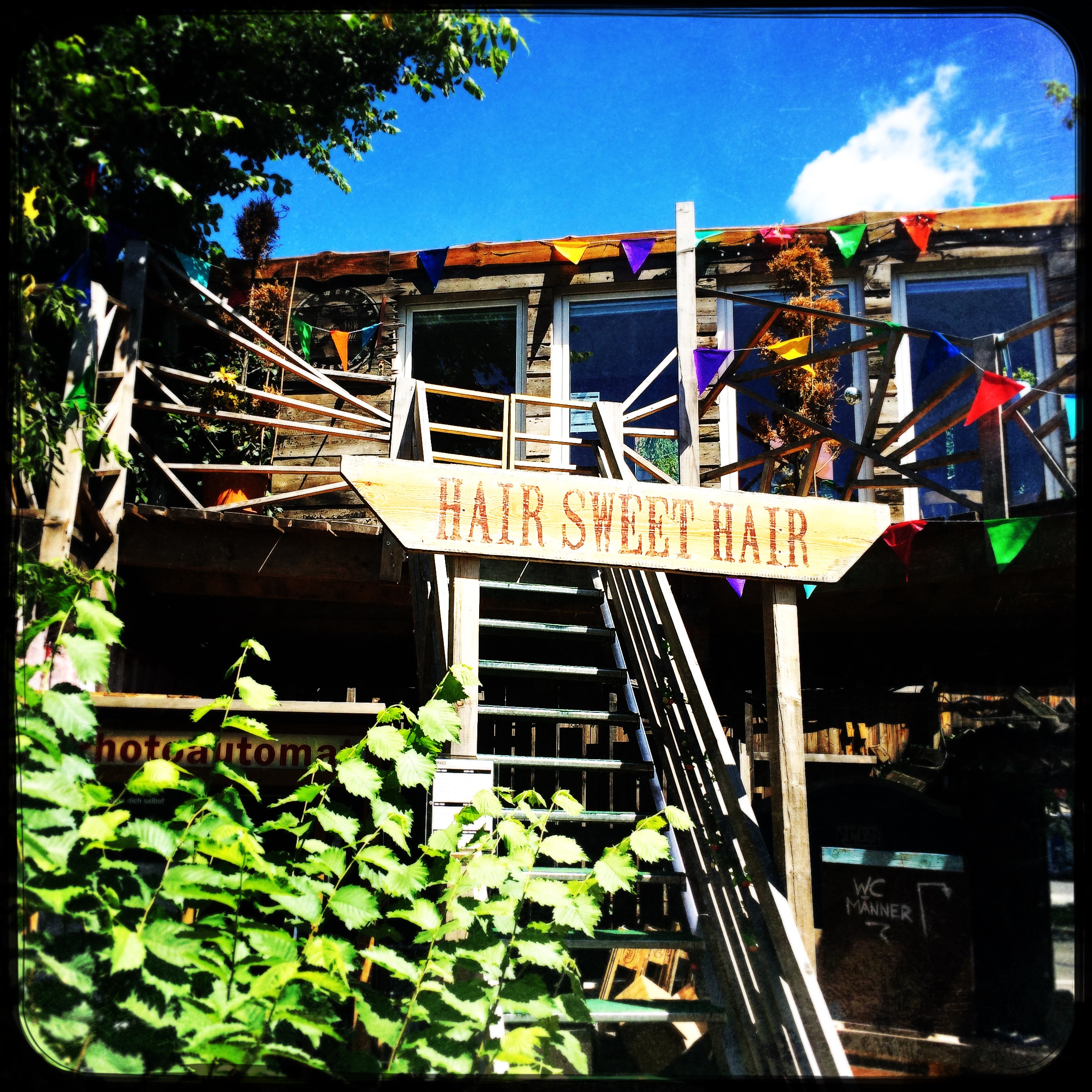
The riverside cafe with a hairdresser inside a treehouse
Double gin & sofa after walking for hours in the sun
The laid-back cafe vibe around Mitte
The crazy hotchpotch of people at Mauerpark
Ritte ‘Nougat’ chocolate, which is like those Guylian seashells only in a block of chocolate, yummmm
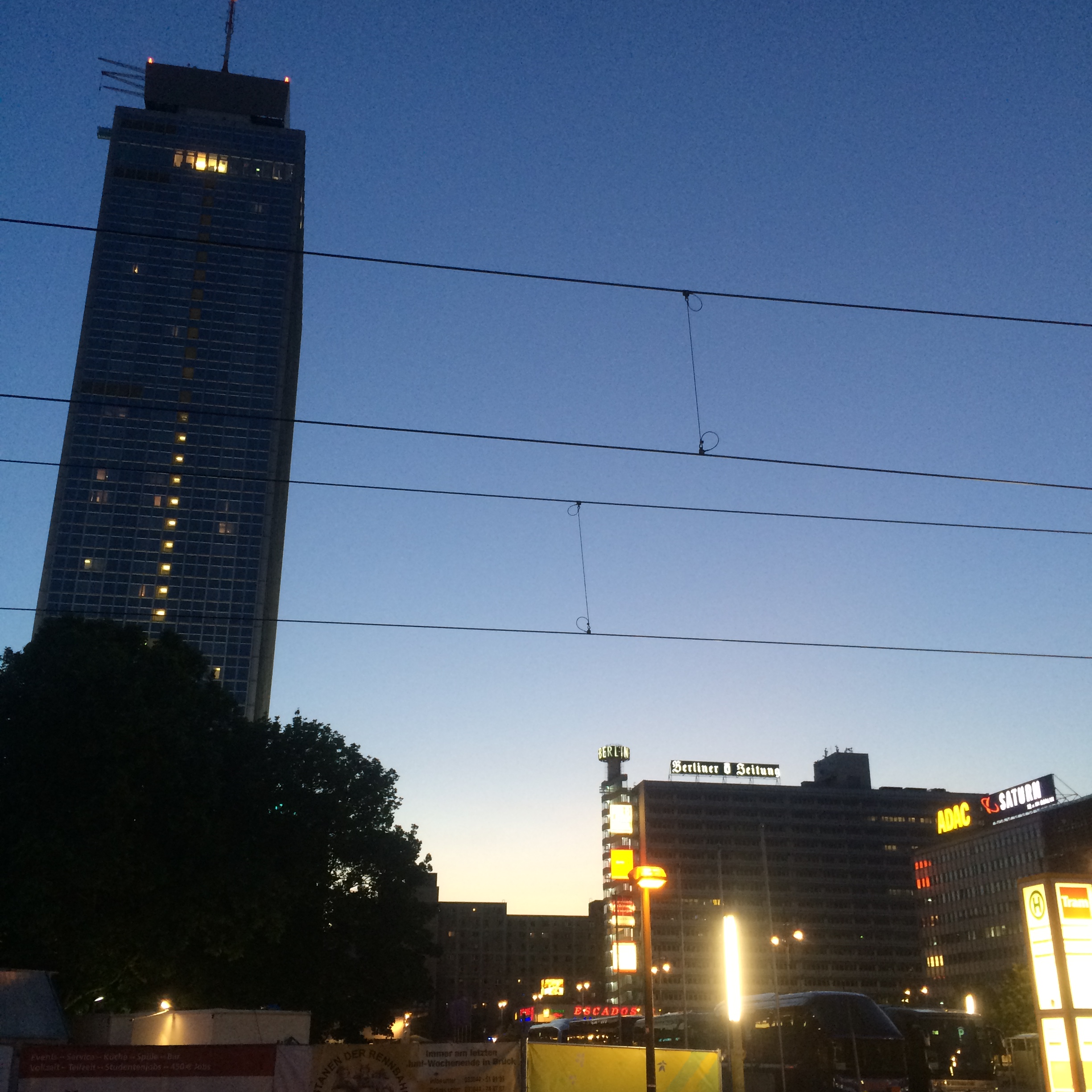
The African festival at Alexanderplatz (everyone looked cheerful)
All the lovely Americans we met at the hostel
Vodka bottles for like €1 at the supermarket
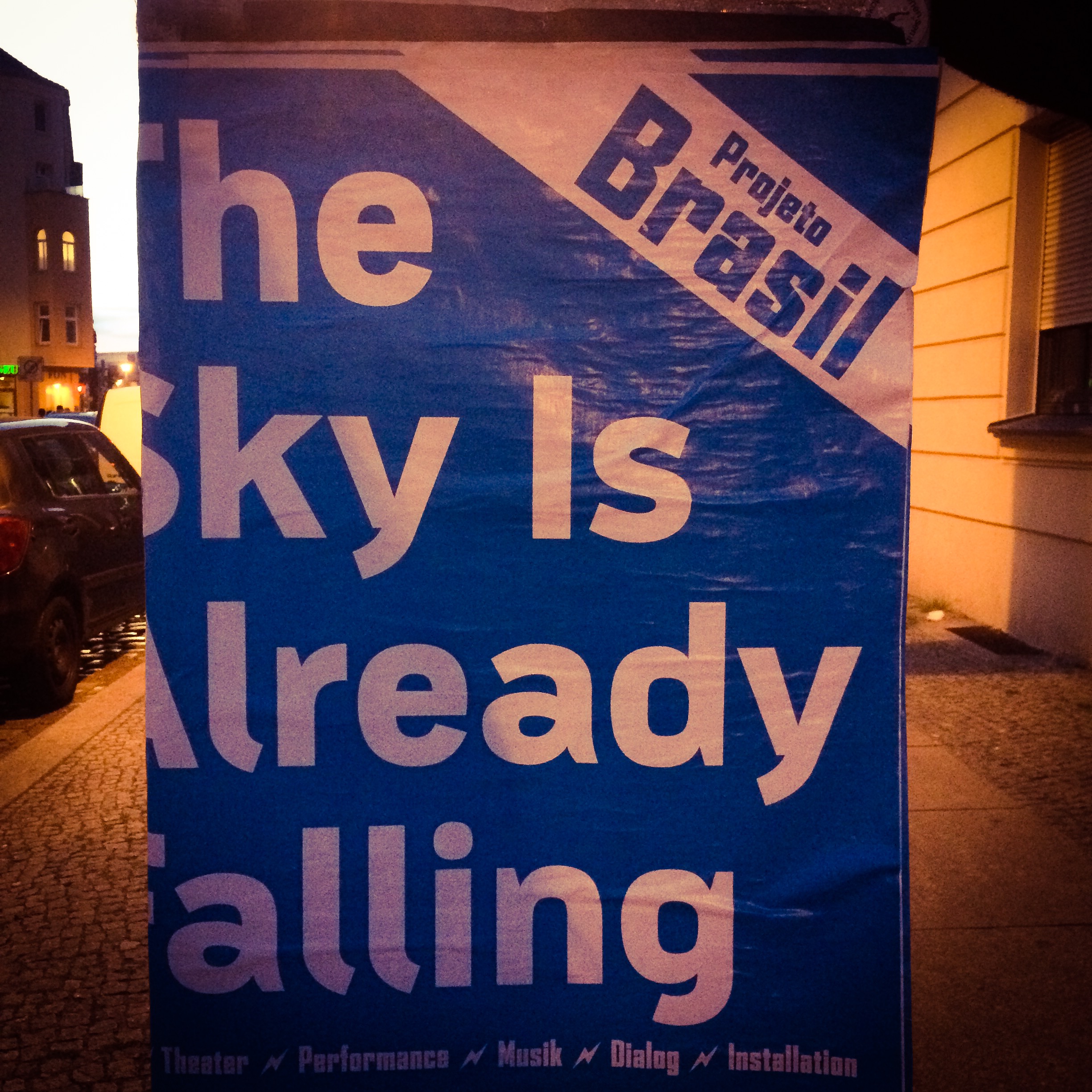
Seeing posters for loads of cool festivals, even though I won’t be going to them
The fact that cigarette machines still exist here!
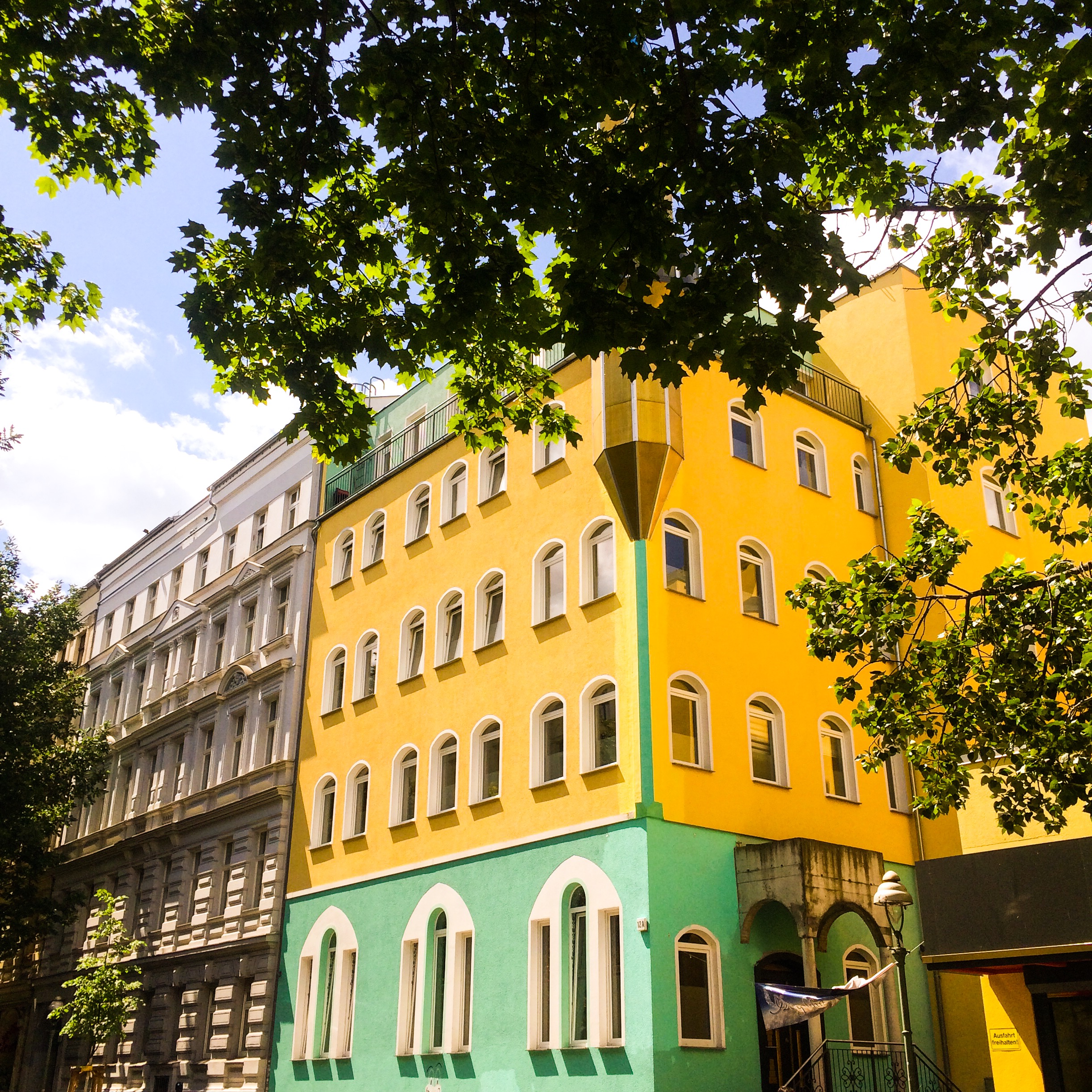
All the bright yellow buildings
The solitary man with long black greasy hair playing lovely sad dissonant songs on his cello, sitting under a bridge
Not having WiFi for a few days then coming home to lovely birthday messages!
One of the first things you notice when you come to university in Glasgow is the building that passed you by on the open days: Boyd Orr. Orr…ore…or? With such connotations of alchemy, alternation and mechanical process – the extraction of mineral from rock – you’d be forgiven for thinking this building might have that rare quality of metallic extraction. The glint of some loveliness got from the mined core of the earth – or at least some relic of its crust. Boyd Orr himself, as Wikipedia tells me, was a Scottish teacher, doctor, biologist and politician, who also bagged himself the Nobel Peace Prize for work relating to wartime nutrition. Fitting, perhaps, that this man who dabbled in the arts of healthy eating would give his name to a building that some have found physically repulsive and ugly – if anything, unhealthy.
Still, nutrition involves mining particles of food for their usefulness. Finding all the vitamins as a geologist might take ore from a rock. There is something abject about all this: wrenching nature inside out, textually taking apart her insides with the bland incisiveness of a knife (the linguistic thrills of science course-books). The molten loveliness of erosion, rocks, temporal process – we can reduce them to names and building blocks. And so we have Boyd Orr, that building of much usefulness and much disgust. The beast of a building that somehow you find yourself in, day after day, traipsing up the stairs for lectures, waiting for someone to give you their jewels of information. You came here thinking you’d be living the Harry Potter high-life in the extravagantly gothic main building, chased by ghosts and granted with turret views. Instead, you end up four floors up in a building that sends its gross sneer across the otherwise lovely architectural landscape of the West End.
Source: theglasgowstory.com
Whatever you might say about Boyd Orr – with its dirty-white panels, greying windows and greyer walls, with the greenish mould that creeps up its underside like seaweed on a rock and the ugly stark jut of its body against the surrounding skyline – you must say that it is a fine example of Brutalist architecture. The heyday of Brutalism was the period between 1950 to the mid-1970s, a reaction to the modernism of the early twentieth-century. Most examples of Brutalism tend to be found in governmental or institutional buildings (university libraries, shopping malls, high-rise housing), whilst corporate buildings have always favoured a more glassy, futurist chic. The thing that strikes you first about a Brutalist building is its sheer expression of, well, concrete. It hits you with the blunt materiality of a prison or fortress, and you know, it does take a while to get used to going inside. Sometimes it seems impossible that such a monolithic block is carved out inside with such things as canteens and toilets and classrooms. Part of its statuesque aura relates to its positioning: right on the corner of University Avenue and Byres Road, where the surrounding buildings are much smaller or indeed older (and prettier for that matter). There’s no getting away from this eyesore, this monument to an industrial modernity that seems now to be receding in the mise-en-abyme of contemporary metallic panelling, plexi-glass and plastic coating.
Like the rest of Glasgow’s culture, its architecture is a tale of two cities. There’s the legacy of our colonial history, with flourishes of opulence on every corner; but there’s also the leftovers of 1970s ‘slum’ housing, the crumbling tenements where once upon a time (and, unfortunately, perhaps still today) a whole family would share a bedroom and washing was done at the ‘steamie’. In one street you might have a bizarre Art Deco number next to some crumbling sandstone tenements, or a gleaming new-build sprung up alongside Victorian houses with massive (single-glazed and listed) bay windows. There’s the black-and-white nostalgia of the Gorbals and then there’s the grandiose Park Circus, sat atop Kelvingrove Park looking out with picturesque views over the city. There’s the famous Carpet Factory, the Rennie Mackintosh Art School, the various churches, mosques and synagogues with their unique homage to Roman and Eastern styles. There’s the uncomfortable fact that much of Glasgow’s beautiful marmoreal and sandstone glory is built on the slave trade. We also have the bug-like SECC resting next to the Clyde as if we were in Sydney, the Royal Concert Hall that crowns the top of Buchanan Street, the new Hydro that more than anything resembles a UFO. It’s definitely a city of eclectic architecture. While we might not have the equivalent architectural (and indeed financial) notoriety of Edinburgh’s Scottish Parliament building (which in my family alone has been called ‘horrible’, ‘interesting’, ‘a waste of money’, ‘too modern’ and ‘more of an art gallery than a parliament’), we were in 1999 designated the UK City of Architecture and Design, beating the likes of London, Liverpool and of course, Edinburgh. You only have to reflect on the response to last year’s Art School fire to recognise how seriously we take our physical landscape and architectural heritage (even if it is often covered with ad posters and graffiti).
Anyway, back to Brutalism. The key word related to its style, aside from concrete, is perhaps ‘function’. Stripped to its core elements, Brutalist architecture involves repeated ‘modular elements’ which are grouped together to form the whole. This is the raw fragmentation of modernism, here transformed into something with instrumental purpose, something solid that seeks to counteract the airy dissolution of modernity. ‘All that is solid melts into air’, Marx said. With Brutalism, the response is to make things as solid as possible. How ironic that Marx predicted a revolutionary dissolution of oppressive social structures, whilst the ‘proletariat’ in question remain literally trapped inside buildings which encase them in a physical manifestation of the very (metaphoric) solidity which binds them socially – the hard class structure, the poverty cycle and so on. And perhaps also ironic that some of these buildings were erected at a time when industrial labour was entering its decline in Britain and elsewhere, especially in Glasgow towards the end of the 1970s, as Thatcher came to power and that mineral source of wealth and opportunity (going back to ore of course) – mining – was dissolved from the national economy.
There is also the uncanniness of paradox attached to the fact that when one observes a Brutalist building, it is often difficult to discern its function due to the sheer vastness of its functionality. This relates back to what Edmund Burke in 1757 defined as ‘the sublime’:
The passion caused by the great and sublime in nature […] is Astonishment; and astonishment is that state of the soul, in which all its motions are suspended, with some degree of horror. In this case the mind is so entirely filled with its object, that it cannot entertain any other.
Burke was talking about the sublime as it was caused by scenes of nature: mountains, chasms, forests that seem to stretch on forever. However, as urban landscapes increasingly eat into our countryside, it seems fitting that we might consider the vastness of their proportions – or indeed, their ugliness – a kind of sublime in themselves. What else do we feel than a kind of passionate ‘horror’ as we find ourselves faced for the first time with buildings like London’s Trellick Tower and Barbican Centre or India’s Palace of Assembly? All those pattern-like repetition of squares resembling a Kantian ‘mathematical sublime’, whereby an overflow of signifiers stretching out into tedious infinity bears the threat of all meanings, distinctions and associations collapsing into one long metonymic chain leading to nothing but more signifiers. It’s enough to give you a headache, and quite ironic that Boyd Orr is next to the equally hideous though somewhat-smaller Mathematics Building.
Central to Burke’s idea of the sublime is the notion of the pleasure associated with terror: as we gaze at something which overwhelms us, we find ourselves staring into the abyss of meaninglessness, on the sheer precipice where representation itself collapses. St. Augustine suggested that the ugly was that which embodied formlessness in its lack of beauty. This aesthetics of excess or hideous terror appears curiously inappropriate for a style of building whose very purpose was built on form as function. We might think of Frankenstein’s monster, whose ugliness stems not only from the fact that he is composed of the flesh of dead cadavers, but also his sheer pointlessness – the fact that he is a ‘blot upon the Earth’, as Mary Shelley has him lament. Might we consider the likes of Boyd Orr a horrible, monstrous ‘blot’ upon our sacred streets? Or is this more than a question of mere aesthetics?
As Romantic poets readdressed the Neoclassical distaste for the gross pointlessness mountains (favouring, as Alexander Pope’s Windsor Forest perhaps best exemplifies, a view of nature as ordered and harmonious) by fetishising the psychologically disruptive experience of the sublime (in the way that Coleridge, de Quincey et al also favoured the psychologically disruptive experiences of opium), today’s generation are raising Brutalism to idolised status rather than rejecting it as a mere eyesore. Sure, you will have the many students who moan about Boyd Orr’s appearance on their campus, but you will have an equal number of enthusiasts on the likes of Tumblr posting Brutalist architecture onto their blogroll, alongside your Banksys and softcore erotica and fan-fiction all that other Tumblr jazz. Stark black and white photographs record an almost antiquarian fascination with the aesthetics of these buildings and their value as some relic of a solid past we can’t quite get back to in our shiny era of crazy postmodern architecture.
But is there an ethical problem underlying this fetishising of some Brutalist buildings? They are, after all, often the homes of many people living in relative poverty. Sometimes, these buildings are just down the road from areas of affluence and architectural extravagance. I don’t need to mention specific areas for you to think of places in Glasgow, because there are certainly many. It’s a problem related to the way that urban decay is appropriated as a kind of dark backdrop upon which a white, middle-class guy sorts his life out. There’s always been the ethnographer’s dilemma of how ethical it is making a living out of describing poor conditions without doing anything about it politically or practically. I suppose what I’m getting at though is that there’s something a bit more uncomfortable about using these buildings as ‘cool’ aestheticism, a mere viewing-spot on the blasé scroll of online photography. Still, I don’t think there are clear answers to this; and maybe it’s good to share images, because sharing raises awareness. You just have to keep in mind the whole problem of ‘poverty porn’, and the notion that by glorifying certain buildings you are also glorifying a particular experience of poverty, however unintentional your actions.
Indeed, this perhaps is what made me so uncomfortable about last year’s plans to demolish the iconic Red Road tower blocks and transmit the demolition live as part of the Opening Ceremony of the Commonwealth Games. While it is of course good that the Games involved building new, much more accommodating and safer houses to replace these crumbling relics of Glasgow’s past, I don’t agree that it should’ve been broadcast to add a ‘bang’ to the Opening Ceremony. London gets magnificent fireworks for the Olympics, we get…glorified demolition? Destroying a symbol of poverty doesn’t destroy poverty itself, however easy it makes it look. Luckily, these controversial plans were scrapped in the end after much public opposition (which just shows again how much Glaswegians care about their physical environment and the social consciousness within it). Regeneration is underway with the Games’ legacy and of course it is a great thing, but there is no need to sanctimoniously erase history in front of the world to show that you’re doing it.
This points to the whole issue of Brutalism’s somewhat brutal decline since the 1980s, especially in Britain. Vocalised distaste from public figures, the association with urban decay, problems with graffiti, cramped living conditions and its starkly cold, almost totalitarian appearance, all contributed to this decline. Another contribution to this decline perhaps came from British Literature’s concrete guru, J. G. Ballard, as his novel High Rise (1975) documents a dystopian, Lord of the Flies situation where the closed conditions of a high-rise building lead to a swift degeneration of the residents lives. The enclosed spatiality of place itself gives rise to a carnival of savagery and violence, where primitive desires are unleashed in this isolated environment. The opening line perhaps gives you a good indication of where Ballard is going with this novel: ‘Later, as he sat on his balcony eating the dog, Dr Robert Laing reflected on the unusual events that had taken place within this huge apartment building during the previous three months.’ There is a strain of dark humour running through the text, as well as the shock value of its exposure of human nature placed in its urban limits. You get the sense that Ballard secretly revels in both the sheer surreal ugly inhumanity of it all, whilst critiquing the politics of urban planning that might one day lead to such a scenario.
Overall, I’m not sure where my position on Boyd Orr lies. There are days where I’m walking to uni along Highburgh Road and when Boyd Orr looms out of a cloudy winter sky my spirits sink like a puddle of snow slush. But there are times when you can’t help but notice the strange beauty of copper-coloured sunlight flashing upon its windows at dusk, as if a thousand eyes were staring out of those cold, impersonal walls. I think there’s value in preserving these buildings, not just because they possess a kind of chic urban sublime, but because they remind us of the ideals our society once held, even if they were misguided, flawed or impossible. I suppose I’d rather stare at the stark reality of an ugly monster, a decrepit Boyd Orr, than lose myself in the illusory surfaces of the glassy Wolfson Medical School, or the kitsch blue and green panels of the neo-Brutalist Fraser Building. I’d rather a chunk of dull glowing ore than a perfect rhinestone…



















 mariaology