Field Trip to Aberfoyle and Loch Katrine

IMG_4137


Telling a story is not like weaving a tapestry to cover up the world, it is rather a way of guiding the attention of listeners or readers into it.

— Tim Ingold, ‘The Temporality of the Landscape’


It seems I am happiest now when out in the country. Brought coachwards through Maryhill, Bearsden and north to the Trossachs, warmly we arrive where the air is clear and there are plenty of lichens to prove it. Something relaxes within my chest, the familiar twangs are settled.

On the road, we talk of stories and allusions. There is a cipher in the heart of Scotland and a myth that says more than etcetera. I jokingly call it Rob Roy of the Anthropocene and something makes sense.

October tells a story of all that has happened in summer. The leaves fall like words but never ask for discernment. One of us asks, What is the intention of the wind? It is easy to grasp what the people and the pollen and the tractors are doing. But what of the wind, most aleatoric of weatherly elements?

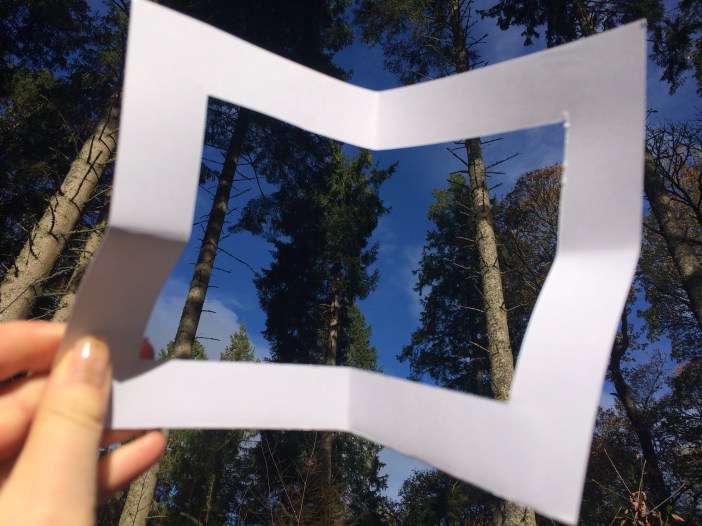
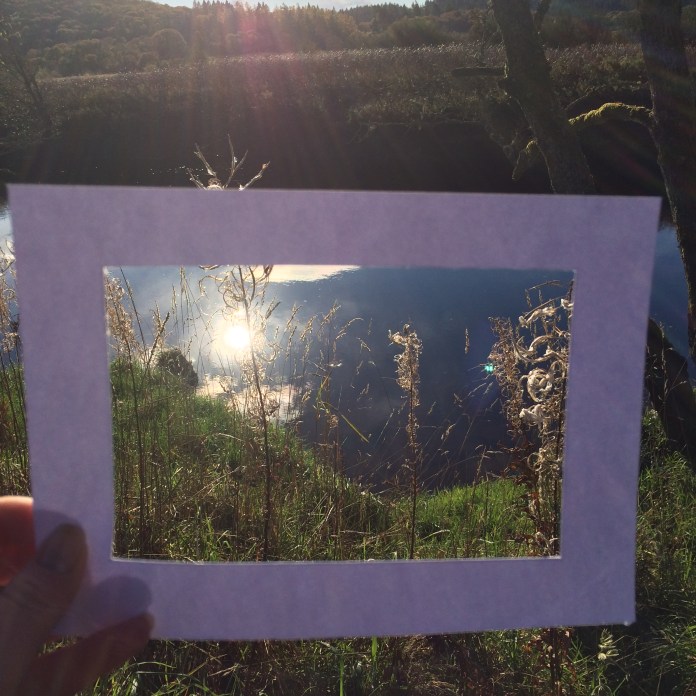
We arrive here to think through a specific term: Tim Ingold’s notion of ‘taskscape’. This notion brings temporality to an otherwise static conception of landscape: it factors in the performance of all entities involved in a landscape’s conjuring and perpetuation. Birds singing, workmen whistling, the whir of traffic, groan of thunder, sigh of trees. I stir up a whole anthropomorphic cauldron; its ingredients activating each other, bubbling and working. Ingold would prefer a more symphonic metaphor. Everything is performing some task or another, enmeshed in a complex, living system — what Ingold calls an ‘ensemble’ of ‘mutual interlocking’. The ‘taskscape is to labour what the landscape is to land’.  To dwell in the taskscape is to enact a form of noticing that is multisensory, a way of attuning that picks up the subtleties of crackle and static within the picture, and in doing so reminds us of (multi-species) sociality, time and life: ‘the landscape is the congealed form of the taskscape […] the landscape seems to be what we see around us, whereas the landscape is what we hear’. Our guide for today’s trip, Dr David Borthwick of the University of Glasgow, presents us with paper ‘frames’ to remind us of this difference between landscape and taskscape, active and passive.
IMG_4119

We shoot pictures of frames within frames, we flatten. I try to capture with my phone the green and the gold and the red and the light, but I cannot capture the fullness of surround sound, of medial sense, that makes a taskscape. And even with field recording, where would the motion of the water be? With video, how could the heat of the sun be felt? The smell of carbon coming off the road, and mingling with the forest’s brackish aroma? The burr and clunk of a passing lorry, laden with logs, which was more of a ribcage rumble than anything heard? Is writing able to capture some of that sensory dynamism? 

Archaeology, for Ingold, is the study of ‘the temporality of the landscape’. The beat of its rhythms and actants, their play and tasks. Sometimes a taskscape eludes measurable time. The ease of synchrony. It could be time split into multiplicity. The time of the myriad ants trailing over pine needles in infinite fractals, the time of composting, the endurable time of the woman who works in the wool mill, the waitress who serves us coffee. Labour as glitch and repetition. The gift shop has summoned Christmas early with excessive trinkets, each one a throwback to a prior nation, the act of (re)imagining, Scotland the Brave contained on a keyring.
IMG_4109

When we linger too long in one moment, Dave warns us we are burning daylight.

But we linger awhile by a grave. ‘Because I could not stop for Death – / He kindly stopped for me –’. Maybe we are mesmerised in churchyards because a slumbering looms beneath us, compelling. What is the work and the sound of death? Is it perhaps Emily Dickinson’s famous ellipsis, the almost-just-so of each fat dash? Is this the punctuated work of dwelling?

The grave belongs to one Robert Kirk, ‘The Fairy Minister’ best known for his book The Secret Commonwealth: a book about fairy folklore, witchcraft, ghosts and second sight. People have placed silver coins on the symbols adorning his grave. There is a currency to this kind of mourning, that blurs into well-wishing. Maybe it is more of a summoning. We learn that Kirk’s fairies were human-sized, tricksy and prone to following us, often as doppelganger creatures with their own mortality. Kirk had set out this alternative ontology, not entirely incompatible with his Christianity. These fairies live off of light, their flesh is comprised of air congealed. Idly I browse Wikipedia for further anatomy: ‘somewhat of the nature of a condensed cloud, and best seen in twilight’, their bodies are made ‘pliable through the subtlety of Spirits that agitate them’. The internet weaves stories around the things I am seeing. I click off my phone and instead breathe information in through my lungs, closing my eyes when the light is too bright and catching soft rainbows inside my lashes. These speckles of rainbow are my fleeting sprites, made of air and light and shining.

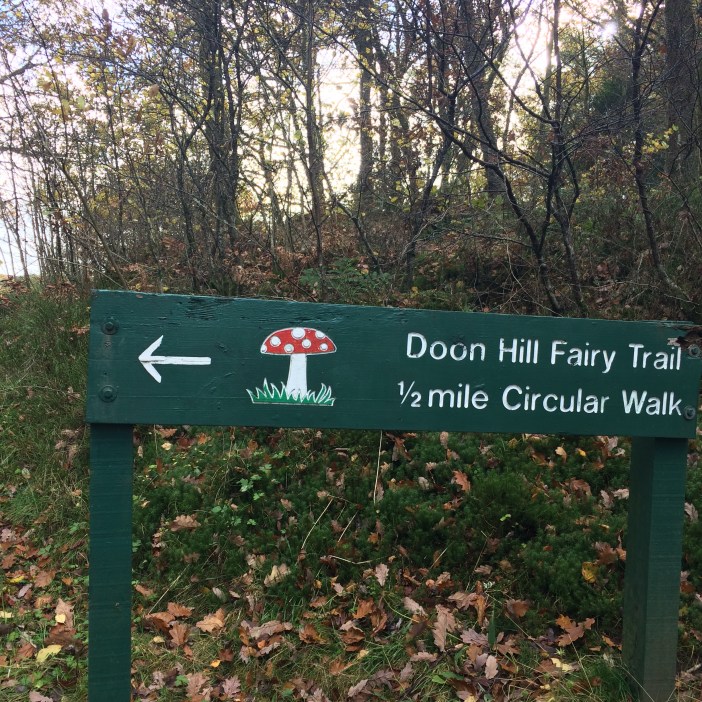
We ascend Doon Hill through burnished woods to find a shrine. There is a tree in the middle of a clearing where people have tied bright rags or ‘clooties’, along with loom bands, glitter, ribbons and a stray satsuma. Lichenous twigs are piled as offering, pennies and sweeties and conkers collect. We talk about whether these human trinkets make us feel closer to the tree, question our role as observers, the slide between intimacy and distance. The key word here is ‘kitsch’: these are mass-produced items, cheap commodities, remnants of sentiment and transient tourism. I am reminded again of the objects on sale in the Aberfoyle gift shop. Looking upon this kitschy monument, are we compelled or disgusted? Are such human-made objects utterly incongruous with the rustic landscape, or does their presence remind us of how land exists in time, is formed in continuums, assemblages, ensembles of affect and process and change. Dave tells us the last time he visited the tree, it was surrounded by mass quantities of plastic — presumably toys, wrappers of sweets, litter made sacred by fact of arboreal proximity. A sign down the hill says biodegradable clooties can be purchased in town. A problem was identified and the ecosystem of the land and the shrine shifts in tandem. There is perhaps a new aesthetic. Nothing is static, not even a monument. Lichen and moss spawn on a grave, a fly lays eggs inside a lost silk bow.

Screen Shot 2018-10-27 at 20.03.08

We admit the brightly coloured things, pastel and garish among the autumn hues, kind of gross us out. But we can’t stop looking. In Ecology Without Nature (2007), Timothy Morton says kitsch

exerts a fascinating, idiotic pull. It is often synesthetic, and it has no power except for the love we invest in it. Kitsch is the nearest thing in modern culture to the shamanic ritual object. Kitsch is immersive. It is a labour of love: you have to “get into it”. It poses the problem of how the subject relates to the object in a striking manner.

The more we look at the tree, the more we feel the pull of millioning time zones: the midges at night that might glow around it, the people who came and went, who took and stayed and left. It is only after we’ve been staring and puzzling the shrine for a while that Dave tells us the story behind it: ‘What if I told you…’. It’s important that this story exists in the conditional; for it too is a part of the taskscape, a melody played among the rest. The shrine began after the Dunblane school shooting, when a local primary school teacher brought her pupils up the hill to this tree, where she encouraged them to lay something of themselves in its roots. There was the hope of some kind of catharsis: a gesture towards memorialisation, to make a hurt world wholesome again. Dave suggests the term, ‘a secular spiritual’. The tree becomes a collage of innocence, of selves in time. When the pressure of being a ‘subject’ is too much, we call to the ‘object’. We want of the tree a longevity denied to others. There is some kind of empathy between species. Does the tree speak back? Here I am in this realm of kitsch and already yearning for a sort of panpsychism, a promise of communion, of relief and immersion.

Dave offers an answer, ‘To bear witness to landscape is to undertake an act of remembrance’.

The shrine began as a response to a deeply human calamity, but I wonder how this would function in the case of ecological destruction. Do people visit flood-sites, ruined forests, the ravaged remains of wildfires, with a similar sense of necessary ‘return’: the elegiac act of imparting one’s sorrow, sympathy and regret? Tying a ribbon to a tree, perhaps with the string of a message — is this part of ‘a new culture of eco-confessionalism’, which Stefan Skrimshire summons in his recent article ‘Confessing Anthropocene’ (2018)? Riffing on Jacques Derrida’s thoughts on witnessing and confession, Skrimshire suggests that: ‘the essence of the ethics of confession is that I never confess for my “self” in that modernist sense, but I always confess the other in me’; when we confess, we realise ‘the other’s desire for forgiveness operating in me’. My urge to lay down a flower, a toadstool, or some other jewel of the wood, is an act of remembrance and witnessing that also admits how such other species speak through me. I recognise the impossibility of asking for forgiveness for ecological crimes that exceed my limited comprehension; I gesture towards the small worlds of these things and how their hurt, their life and precarity, resonates inside me.  
IMG_4129

Perhaps what we need, in addition to confessions, are spells. I think of Robert Macfarlane and Jackie Morris’ recent book of acrostic spell-poems for children, The Lost Words: A Spell-Book (2017), which seeks to encourage children to recognise biodiversity, to perform little charms that ask us to notice the beauty of species before they disappear. While Macfarlane and Morris’ work gestures more towards the flora and fauna of the past and present, we might also think of enchantment as an attunement to the kinds of deep time inaccessible within ordinary human comprehension. Cautiously, Ginn et al. (2018) advocate Jane Bennett’s mode of ‘enchantment’ as ‘an uncanny and unsettling reminder of vast forces beyond one’s control. We might try to channel these forces in more or less enchanted ways, but success [in terms of progressive politics] will remain elusive’. Enchantment means noticing material vibrancy, the activeness and collaborative potential of everything in and around us, even while aware of the limits. It means thinking with, and wondering. 

So we are still, so we listen. A little chill creeps in. I am grateful for shelter within these trees, the steps of their roots built into the hill. The wool in my fleece, which makes me look slightly sheep, but keeps me warm.

‘Enchantment is not a choice (although receptivity to enchanting experience can be cultivated); it is usually something that arises unbidden’ (Ginn et al.). I suppose we are doing our own work of enchantment, listening to Dave’s tales as we break fresh ground on the Highlands, trying not to think of ourselves as mere tourists — trying properly to see and hear and temporarily dwell.
IMG_4117
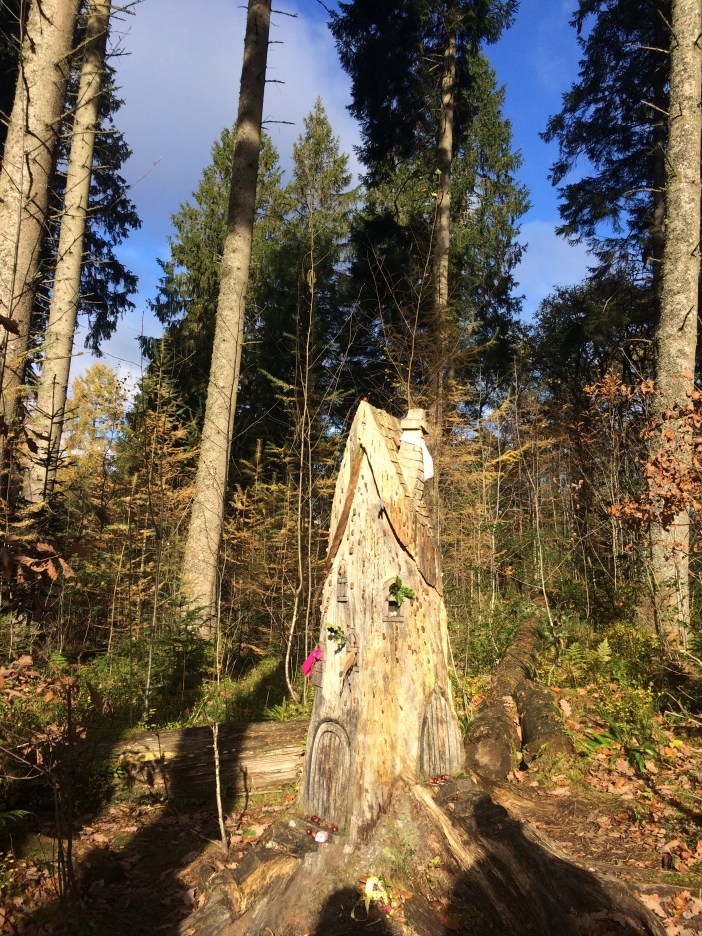
Another fairy shrine…

Is folklore a form of environmental seduction? I listen to the trees, the way the wind speaks through them. I note all my instances of anthropomorphism. Okay, so Rob Roy was blatantly used to sell Scotland to American tourists, and, as a ‘thoroughly mythical character’ in Walter Scott’s fictional depictions, ‘the embodiment in life of all that the Romantic writer seeks in art’ (Leslie Fiedler). I wonder who our heroes are in the anthropocene, and whether they are human, and how we might queer them. If Roy is ‘the very spirit of risk and of the wilderness which he inhabits’ (Fiedler), then who might embody the spirit of global risk society (a la Ulrich Beck), who renders a wilderness once rich now spent and depleted by the actions of anthropos?  

I miss when I was little and the woods were full of magical creatures, where now I often just see Buckfast bottles, fire pits, broken glass and other evidence of human activity. Of course the latter was there all along, it is a question of noticing. Does enchantment really have a summoning, interventionist function, stirring political desire, or is it more about consolation?

Maybe the anthropocene demands a kind of imaginary vigilantism? Letting rainbow smoke off into the taskscape, performing poetic intervention. Explode the light of all that action, demand appreciative feedback loops of refraction. This is nature hyperreal and this is it inside me and in you; this is it just as it is, this is why it matters. This is ‘the matter / of all of us mattering’ (Elizabeth-Jane Burnett).
IMG_4127

The sound of a distant wood saw does its work. We fold back and descend to Aberfoyle.

Somebody spots this bird or that. Their branchly flitters an interruption, a quaver in the staves of the day, one talk flowing after another. As if to say, we are not gone yet; we are here and we still make sense.

The sun squints into my eyes, makes rainbows. The air is crisp and I crave orange juice, a supply of this light I could bottle, smell of mornings and woodsmoke.

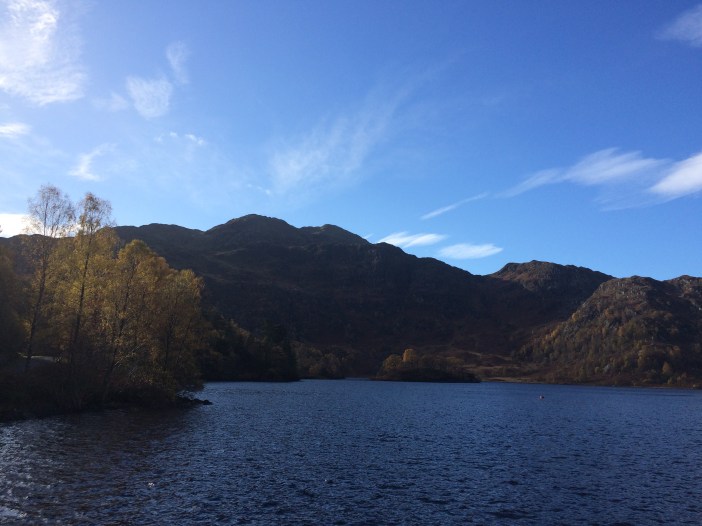
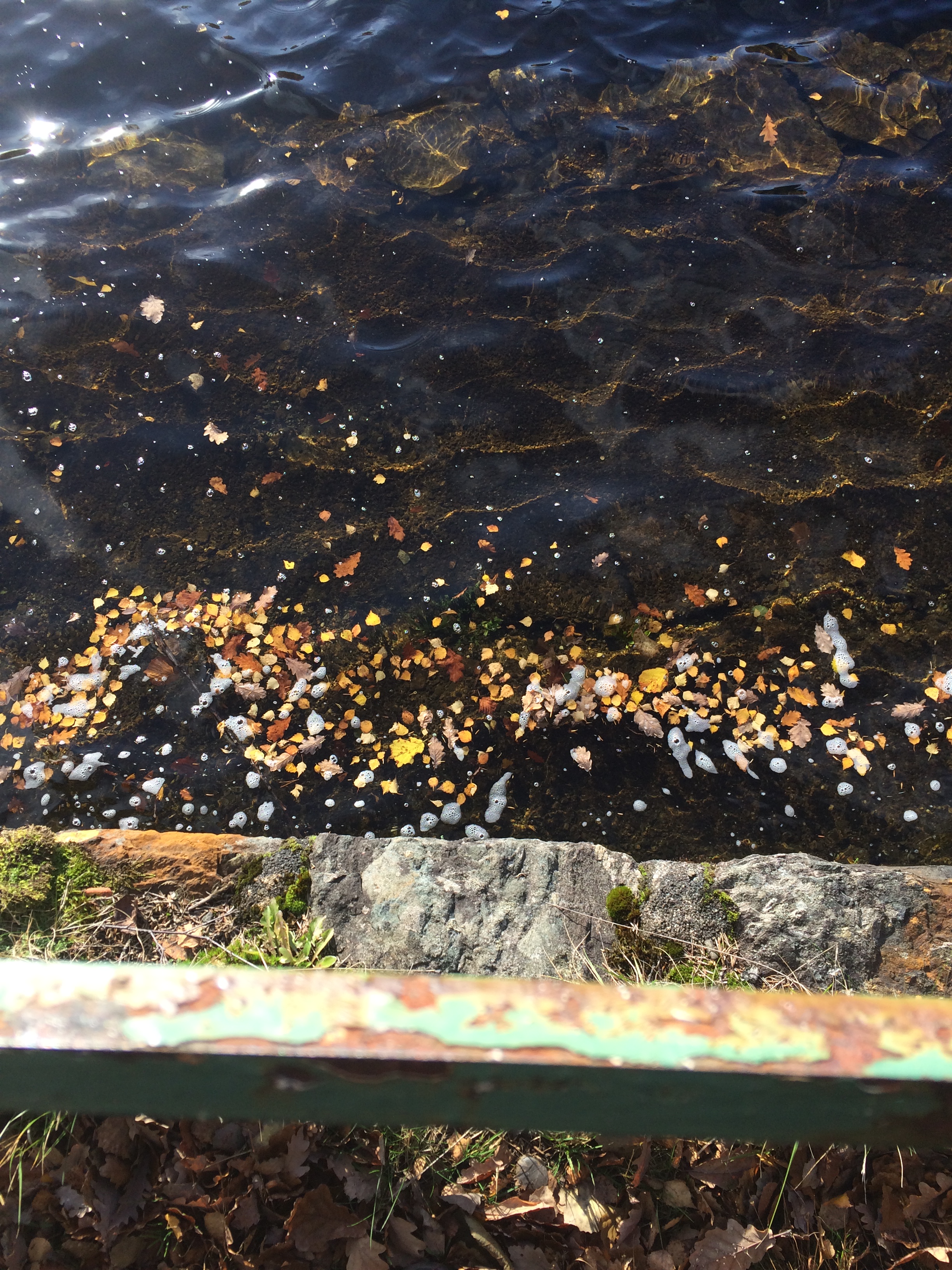
We cruise along Duke’s Pass and make it to Loch Katrine. When I drink Tennents in Glasgow, sipping my yellow tin, I am drinking the water of this loch. Whenever it might taste bittersweet, or clear or cold or good, a remnant of that originary gold is present. To advertise your freshwater source is perhaps itself an act of ecological kitsch, a gesture of synecdoche that craves its place-name, its blue security. But I love it as I love the gold of these mornings. Drinking the landscape to drunk immersion.

There is of course also the light on the water, its scintillations just there, rippling, like someone spilled mercury. Silver and gold, but nothing of Christmas yet. There is a rhythm, just as Wordsworth and Nico both said, there was a pleasure there or then. To push such beauty into past tense. Miranda tells me about wild swimming and I’m already relishing a sort of burn and shudder within my extremities, the plunge of cold which is doing its work, shocking my body.

Noticed things:

Murmuring burns
Clumps of moss, soft & bottle-green hills in miniature
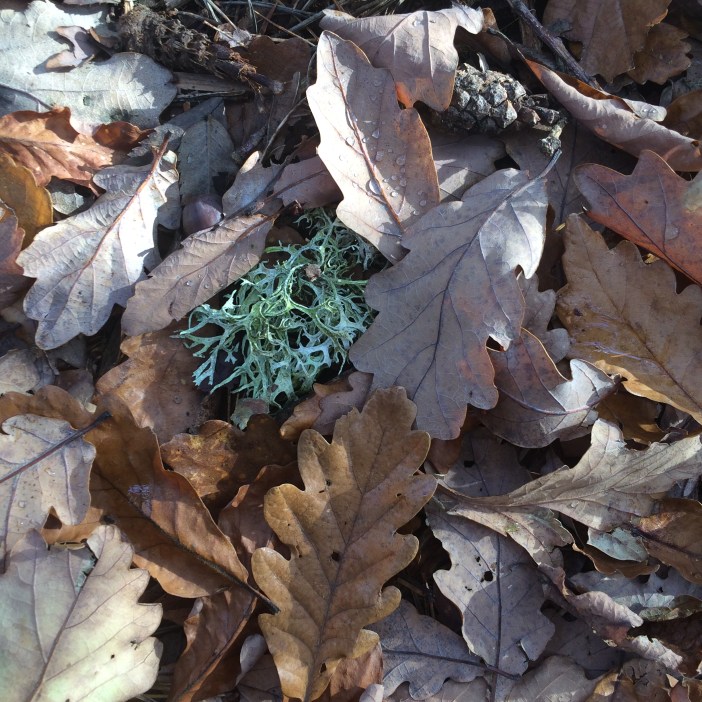
Pale teal lichen
Intimations of meadowsweet
The wires black-taped to rocks (origin & purpose indeterminate)
A fine specimen of birchwood polypore clamped to its tree
Tiny waterfalls
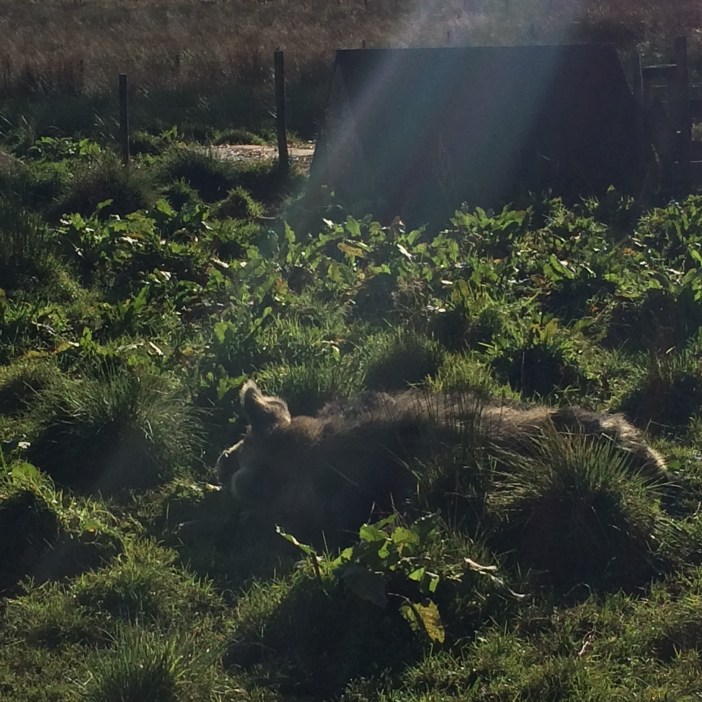
A fluffy pig sleeping in the sun

What is the intention of the wind?

Wanting to preserve my tired light feeling, I decide against coffee. Calm as I am, sleep-deprived and attuned to things as though they were already wisps of memory. To make of a landscape only medial presence, and thus richer than if it were grand and static. We can’t look at the gorgeous sweep of the hills for too long, but we stare at the mushroom and the grave and the tree and the pig.
IMG_4112

These harvested fields of depleted green, this sense of the real-time seasons.

Dave tells us the legend of Sir Walter Scott visiting the Wordsworths, and being so disgruntled by their continual serving of porridge that he jumped out the window and ran for the pub. I think of Jazzer in the Archers and this archetype of the Scotsman with his fondness for pints, company and hearty dinners. I think of these men as a weird continuum, the overlapping currents of cultural narrative.

Like porridge, the Trossachs are truly nourishing — as in, all your carbs and protein at once. I come back softened yet inclined to wildness. Home to Glasgow, I want to go back and walk and walk. Is this what David Lynch meant by The Return with the new Twin Peaks; as in, this odyssey towards belonging, the wind in the douglas firs, the cherry pie taste of a former present, always already slid into retro?

Rob Roy was also known as Big Red. Before he was co-opted as a folk hero, tartan-filtered & highly masculine, Rob Roy was a shapeshifter, a problematic noble savage. I remember a childhood trip to visit his grave, wandering the moors with my mother and father, unable to find it. Now I can just see it on the internet, but as jpeg the image is spectral, flat and distant, overgrown with ferns and pixels. By necessity, compressed. But in fact it wasn’t his grave we were looking for, but his cave, somewhere along the banks of Loch Lomond. Memory acts in slippage of language. I have invented the moors for my own ecological ambience, adding the wind and the mist, a childhood hunger for the warmth of a car and a packet of crisps. How do we carry our own taskscapes, or is it more that they haunt us, making their overlays of locality, literary story and myth? I don’t think we ever found that cave, and thus how could I confirm that it even exists?  

Imaginary outlaws of ecological rupture. Where might we forge a folklore for the anthropocene, in its always unfolding, its gesture towards archival pasts and residue futures?   

Ingold: ‘For the landscape is a plenum, there are no holes in it that remain to be filled in, so that every infill is in reality a reworking’.

A porous landscape is the illusion I want, pouring in dreams of milk and honey, preserving Romantic patches of mystery. Is this why people wedge pennies in trees? What are they trying to keep out or in; whose time are they buying?

I used to always be unnerved by the viewpoint symbol on a map: half a sun, half a symbol for buffering. As though the landscape’s vista were beaming out from the person, or beaming back into. Subject and object, difference and deferral.  Was each line one of sunlight or current or spirit? What is it really that we’re supposed to be seeing?
IMG_4139.JPG

So I get home and I take out my phone and skip through the roll of images. So I scroll through my notes. I close my eyes and there are imprints of sound and sense, the warmth and chill, the wind ripping raw my ungloved fingers, the flash of my hair flaring fire in light. There is so much to parse in place-names, these histories in miniature I can hardly manage. Dan Hicks (2016) revisits Ingold’s concept of the task-scape and concludes that archaeology is actually ‘the study of the temporality of the landscape revisited’.  

Back in Glasgow, I hold the word ‘Aberfoyle’ in my mouth like a toffee. I’m trying to make it last a long time, hoping it won’t melt.

In Gathering (2018), Alec Finlay writes: ‘sometimes people say and repeat place-names simply because they like to hear them’. I am so ignorant of the complexities occurring within the Trossachs, within this taskscape or that. The delicate filigree of history, literature, tourism and labour. But I hope by merely feeling pleasure, learning the names and lay of the land, listening for its shimmers, I am doing something of the work of dwelling, appreciating, gesturing towards a sense of care, mixing myself with the wind and all of its unknown intentions.

We could make a list of all the places we’ve been, the things we’ve noticed:

‘may these place-names be, once again, useful in the world; may we be inspired by them to remediate the landscapes they describe’ (Finlay).

I fold out a map and think of the future, dotting at random. There is so much I don’t understand. Space is a palimpsest of half-remembered places; sometimes you can’t traverse it clearly. Maybe there are holes, or pores, or fissures. So anyway, you tell a story.

The air is full of spells, and names, and fairies.

~

tumblr_pfhrjtYYiX1rw0k2lo1_540
The trees of Twin Peaks


Bibliography


Burnett, Elizabeth-Jane, 2017. Swims (London: Penned in the Margins).

Fiedler, L., 1997. Love and Death in the American Novel (Illinois: Dalkey Archive Press).

Finlay, Alec, 2018. Gathering (Zurich: Hauser & Worth).

Ginn, F., M. Bastian, D. Farrier & J. Kidwell, 2018. ‘Unexpected encounters with Deep Time’, Environmental Humanities, Vol. 10, No. 1., pp. 213-225.

Hicks, Dan, 2016. ‘The Temporality of the Landscape Revisited’, Norwegian Archaeological Review, Vol. 49, No. 1, pp. 5-22.

Ingold, Tim, 1993. ‘The Temporality of the Landscape, World Archaeology, Vol. 25, No. 2, pp. 152-174.

Macfarlane, Robert and Jackie Morris, 2017. The Lost Words: A Spell-Book (Hamish Hamilton).

Morton, Timothy, 2007. Ecology Without Nature: Rethinking Environmental Aesthetics (Cambridge: Harvard University Press).

Skrimshire, Stefan, 2018. ‘Confessing Anthropocene’, Environmental Humanities, Vol. 10, No. 1, pp. 310-329.
 

Playlist: June 2018

IMG_1965

IMG_1466

IMG_1980

IMG_1606


These bias-cut days of diagonal action, mostly slow rise and decline, drift into restless though feathery sleep. ‘The dreamer in his corner wrote off the world in a detailed daydream that destroyed, one by one, all the objects in the world’. So goes Bachelard and my own sense of crawling, hovering, in the cracks between things. Letters, cups of tea, cutlery, brushes and pens, awakenings. I worry that making a fantasy means reality won’t happen. You can spend too much in your dreams. I pay my debts in daily wandering, lifting plates and cracking hard metal off the grinder to fill up the cylinder with further coffee. Speak standard grade French for ebullient tourists. A, petit pois! What was it he said? A vast divergence between work and vocation. What splits in you and hurts evermore like a skelf. I’m waiting at the bar for a check, looking miserable because elsewhere in my head.

The heat brings fights to the park. I seem unable to read in daylight.

Caffeine dissolves all sticky platitudes of self-surrendering, the negative web. Objects I love become loss, so I stop. Pull out the game. Everyone I know seems to be moving away. There are these Instagrammed images of shifting reality. I ‘like’ them as if to say…

So maybe I go home but not really. So maybe in my father’s car, passing the house I grew up in which now has a shiny white 4×4 in the driveway. There is a dj with the same name as a boy from my school who wore ill-fitting boots. Remember I told him I was pregnant with triplets. I know every road and house in this town. Nothing alters on the virtual maps.

Two miles south. There is this playground in the forest, pine-built tunnels that lead through the treetops. I shimmy my way through child spaces, accessing the world from a miniature angle. I chew away low-level anxiety. We sit in the park, rolling buttercup stems between our fingers. Think in yellow, and have no thorns to distance me. There is so much to discuss but this chat is symbolic only; mostly between, mostly hungry. I cycle around Govan in aimless circles, prolonging the river with industry. People sit on walls outside their houses, but they are not talking or rolling tobacco or playing chess.

Half of this month is a blue-dark nothing. No difference between eve and day but shades of blue. 4am my friend, our twilight spirals. I’m aching.

I spend a weekend in Munich and meet the illustrious Robert Macfarlane, who wears a mushroom pin badge and enthuses on Sebald. The Bavarian meadows are everything. I write condensed sentences in my notebook, sometimes unsure of source: ‘The painting asks the viewer to prefer shadows to sun’, ‘The brain’s sweet opening to calm and green’. I am travel tired, pleasantly so, and involuntary naps overlay with words—so images stir around me, lift from the page new worlds. I take photographs to mark a certain summer. Foxgloves, cash machines, the margarine tree; gorge of solstice which gives into poems.

We share wine outside. I lace my sangrias with a bottle of port, you’d call it darkling sunset, but not a good taste. How often this month have you woken to fog in your head?

Black-and-white plate of burnt kale.

Is our depression competing? Compression.

Admissions of sickness, 39 likes, mustang. He only smokes when drinking.

Maybe we don’t need sleep at all!

What lore of virtual archipelagos? I think of each chat log itself as an island.

My brother came home on the last day of May. Now off to Israel he leaves in our flat a blue bag of avocados, three fillets of salmon which rot in the fridge.

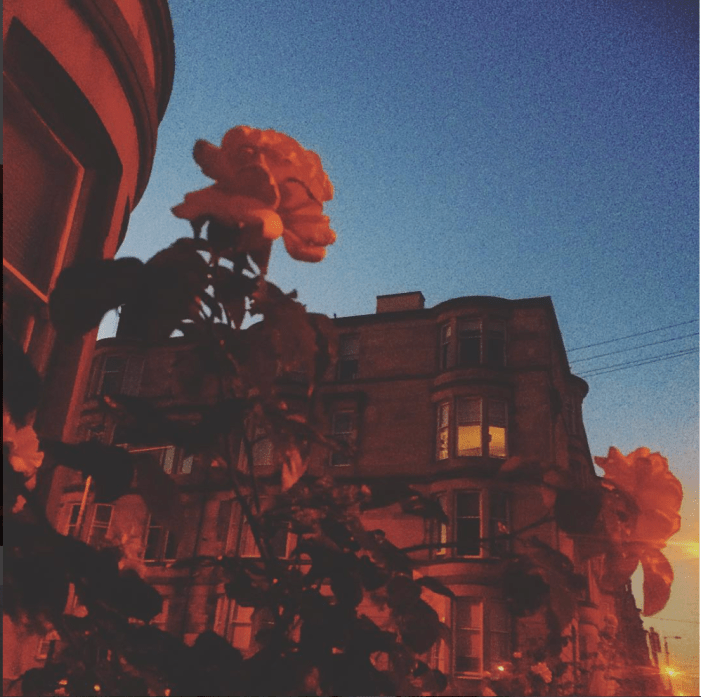
Sometimes time does me a favour. The way roses look at four in the morning, gilded with lamp light against husky sky, a faint azure. The hazy look of Lana roses, a vintage filter in always already.

Screen Shot 2018-06-29 at 15.04.07.png

The tenements were blood meridian. Sun moving west.

Scrunch salt to make curls in my hair. Post-chlorine shower feeling. Involuntary.

Wake to your messages, drop more before sleep. Two blue ticks. See everyone and then again everyone leaving. Homesick for dialect, yelling haneck. A mosher at heart requires eyeliner always. I keep some old stone beneath my pillow.

The lines around your eyes, a ring for every hour not slept.

Fall into chorus of gulls and whispered recordings. All of my gross human narcissism.

A birthday. Rose dress and fishnets, refusal of dancing. Middle-name. Tanqueray forever.

I resolve to make new

Slim readings, okay so I swore and did not cry because I’m saving my hot bright tears for July. Cute motivational pastel skies. Line after line being temporary.

There’s a song but I just want everyone glowing around me.

When they played ‘Keep Yourself Warm’ in Sleazy’s.

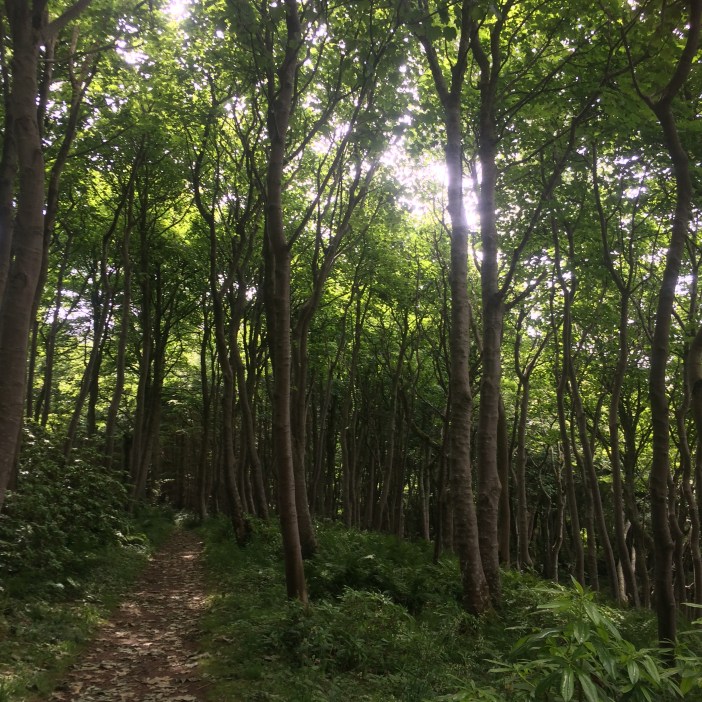
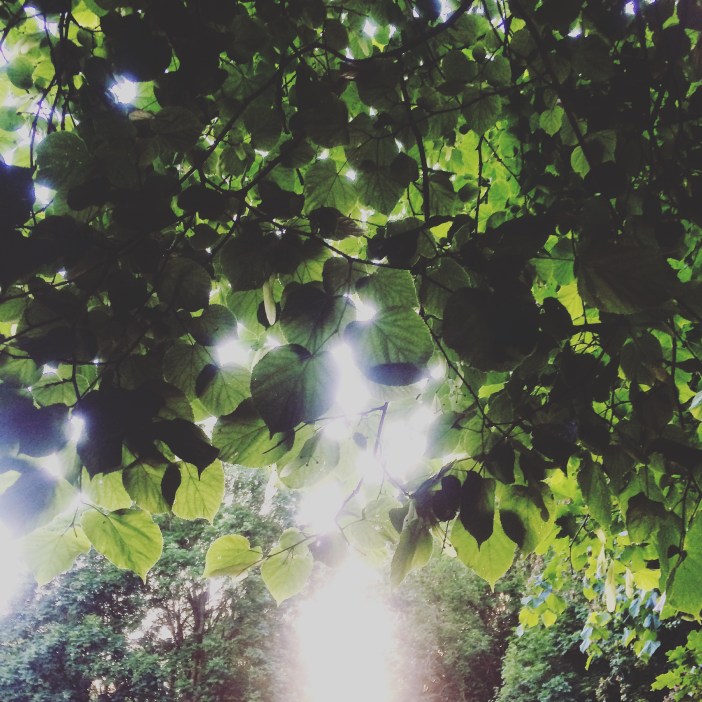
I would look up, intermittently, through a canopy of light-filled leaves. I’m sorry.

As if nothing happened, / I’m so busy, I’m so busy.

When it burned down we were in the street, all interlocked, we could see the embers. Blue and red. Helicopters overhead and my heart in my throat, something lisping the skin of my ribs.

The comedown just happens. I’m not the only one who’s numb.

Invitations to the Catty all weekend.

Work a whirlwind of smiles and graduations. Bottles of prosecco forgotten and balloons that go missing in minor scandal. I try to be better. Accessing all these families. There’s heat and light and a barbecue; ‘Some Velvet Morning’ dragging the scene to its sunburned, surreal conclusion.

Deleuze for the Desperate makes me wanna visit Devon.

Word of the month is ‘catatonic’.

How lucky we’ve been with this weather!

I hope something pure happens, softens inside me. Precarious mentality preserved in blue.

Little sweet, cycloramic tweeting.

After that article, feeling wholly grateful for my vision. I mean she had scars on her irises.

Does anyone ever want pineapple juice?

Slimmer now, reflection in coffee shop windows then not. Near tears on the phone. It’s mostly viral, the body’s bright omens. Everything revolves or resolves around you.

An hour a day I actually feel adult.

Calum does my tarot again and this time there are mermaids, mountains, a perfect circle.

Rodefer, Rodefer, Rodefer:

‘Breeze, trembling trees, the night, the stars. And there you are,
      in a manner of speaking.’

Infinite ugly gas bills from winter.

Disclosing my name as if to say, the end is near. Everyone lovely is reading Remainder. So talk of football and residuals, the free cappuccinos. A system.

‘You two look intimidatingly cool.’

I start painting again but find it hard to mix colour. I want the authentic, luminous lime. There will be a triangle off-centre in the heart of this landscape. Is it even a landscape.

Bike through gushing rain to get back to the present. We dwell awhile in the darker mezzanine, listening to the passing trains, the motorway traffic like hard waves sloshed against a sea wall.

My excuse is, this is all just sketching.

Better for energy, blessedness! A very old episode of Grand Designs.

Somebody somewhere is square-going a seagull while you read this.

Jazz gigs & taxis.

Fear of swallowing moss is utterly irrational, totally a Virgo thing. Intelligent attention.

She is likely to put on a facade of indifference.

Feel bad as ever for bailing.

Slather myself in factor 50, go out to embrace the evening. It’s half past three and I wear white cotton, 30 degrees washed and then a whole new 30 degree heat. Times the right way you make ninety, then three, the year of my birth. Somehow survived a quarter century.

I drink black coffee and watch seven swans moving towards me slowly.

Back on the west coast, I want Lee Harwood to describe the sea. Thin haze of blue Arran and my childhood dreams.

Later.

Even managed to change the sheets. The electricians came without warning.

Late.

Walk 20k steps for the sake of a stranding. June is all over me.

Skewed in a sunburst pleat, I wear less and contain my reactions.

Lately. 

Light and luxury.


Screen Shot 2018-06-20 at 02.19.34.png

* * *

Sharon Van Etten – For You

Kathryn Joseph – From When I Wake the Want Is

Fiona Apple – Paper Bag

Cat Power – Lost Someone

The Weather Station – Free

The Innocence Mission – Bright as Yellow

Frightened Rabbit – Nitrous Gas

Feng Suave – Honey, There’s No Time

Devendra Banhart – Your Fine Petting Duck

Lou Reed – Coney Island Baby

Bright Eyes – June on the West Coast

The National – About Today

Parquet Courts – Before the Water Gets Too High

Man of Moon – The Road

Rolling Blackouts Coastal Fever – French Press

Ryan Adams – Come Pick Me Up

Tom Petty – It’ll All Work Out

Low – Just Make It Stop

The Jesus and Mary Chain – Sometimes Always

Aïsha Devi – Light Luxury

Vessels – 4AM

Ross From Friends – Project Cybersy

Prurient – Christ Among the Broken Glass

Oneohtrix Point Never – Toys 2

Mazzy Star – Still

Snail Mail – Thinning

There Will Be Fireworks – Foreign Thoughts

Damien Jurado – Ohio

A. Wesley Chung – Neon Coast

Erin Rae & the Meanwhiles – Clean Slate

Gillian Welch – I Dreamed a Highway

At the Turn of the Hologram Clock

IMG_0340 2IMG_2806

At the Turn of the Hologram Clock

[written this morning on the back of a terrible, asynchronous dream]

Returning to the town would entail a strangeness, of that she was certain. She knew the old walls, the grocers, the station store; knew how little they would have changed in the time she’d been away. Knew the same faces would glide by, new lines etched upon their skin but otherwise utterly familiar. She knew that deep dread would rise again, a sense of everything closing in. The square with the trampled flowers, the narrow streets. Even the trees, her mind’s flicker arborescent since 2015. The elms with their slender memory. The autumnal glut of rowan berries, so many beads of red. She knew the pavements where once she lay down, drunk on honey and love, orange and whisky. Blood vessels burst in her wide child’s eyes. Funny, she had never really been in love here. There was a boy once, but he was distant, deranged, slightly drugged. He rarely came down. All his thoughts were the gasp of a moonshine desire and his body was sullied with need, magnesium deficiency. He watched her always with a twinge of curiosity.

Back then when she ate, her veins rose like snarling vipers and she was ashamed. She ate to forget him.

All this gorgeous reverie was an incense stick piercing the soil, a night in the park, a stolen July. On the swings they sat, listening to the rhythmic glitch of the crickets. The space between them was ten years; ten years in which she had grown, her face bloomed like a rose. He learned a glossary of drugs and offered her his alien vocabulary. Eventually they lay on the tarmac, the moon encased by the skewed geometries of the climbing frame. Its colour and rust, the slow shed of its millioning flakes.

“This will be us in the future as we were before,” she murmured.

She had been running for hours to get here. Dropped the knife in a stranger’s garden, when she knew she was clear of the worst. She thought of that flat in the city; its musty smell, its entrapments, crumbs of cake. Her other half had kept her there, pierced needles through her flesh till she wept and bled. At the bus station, pleading with strangers for change, this place had seemed the single possibility. The town, the past; a promise in miniature.

She thought of the chestnut mare in the paddock south of the housing estate. Whether it was still there. She called him from a payphone; he had the same number, still lived with his parents. She thought of crooked ladies paddling around the health centre, swapping ill-informed platitudes on the state of the nation. The man who sold cigarettes from a van, emitting that scent of lust and vanilla ice cream whip.

She felt sick.

“We’re already who we are,” he replied.

“It’s not enough.”

Her body was constellated with pin-point scars. She let the straps slip down her shoulders, rolled over to face him. Something passed in the shadow of his eye, a midnight cloud; he was silently tracing the trajectories between each star, that map of her skin—sleeveless, arterial, easy. There was no ending to anything.

“Your eyes are like…” she wanted a meaningful statement. They had been here before. “Like summer meadows, emeralds. Freckled, sparkling, something. You’re so lovely.” She wanted a cigarette.

None of this really came through. Her words were transmissions, little shivers. The ground was so cold beneath them and soon they were falling, the black of it catching on the skin of their teeth. The past was there, alive in each blade of grass; singing its secret elegy, eerie in the leaves. It was so easy to slip back into sweet paralysis.

“You’re not as thin as you used to be,” he said, by way of breaking the dream.

“But I’m less solid,” she answered, turning through smoke, maybe to kiss him. For he was different now, and so was she.

Road Trip

highalnds

Picture the scene. You pass sea after sea of pines, their tall green points misted with a fine web of vapour, a greyness that stretches over, concealing the tips and the distance, and you are not sure whether it is fog or woodsmoke, the wisps of early morning or perhaps the smoulders of a landfill. Probably you’re somewhere deep in the moorlands, glens and peat bogs of the Highlands; or maybe not that far yet, maybe just the Trossachs. If you open the car window a tad, you can almost smell the midges, their damp, thirsty breath in the air. This is air so clean that its purity counts as a flavour, claimed by many who have flogged the native whisky or bottled water. You would leave the window open, indulge yourself, but there is a sharp cold breeze that tickles the fine hairs on your neck, waters your eyes. It is always windy here; or else deathly still, like a valley out of time. Mountains rise up around you, growing closer and grander as the car turns another corner. They seem monstrous, towering over your small car, and you feel like William Wordsworth (the boy version, out of The Prelude) plodding along in his stolen boat, gazing fearfully up at the mountain peak beyond the lake, the peak that gazes back like an animal: ‘a huge Cliff / As if with voluntary power instinct / Upreared its head’. You can’t help but stare at the streams which splash down from each hillside like silver belts, which glimmer in the pale light which makes it through the misted sky. They catch your eye, pull you in myriad directions. You know that rain is imminent; its scent is as clear as the water that runs on the burn alongside you.

There is always birdsong, even in the evening. You can hear the cacophony of many different species as the car rumbles on in the silent space between two tracks passing on the stereo. You and your friend spent a whole day curating the playlist for this trip. Curating. She said that word, jokingly; but even so, it makes you feel special. This isn’t just any trip. It isn’t like you get out like this all the time, free from the bustle and smoke of the city, the people lingering outside pubs, the strangers drifting through in street-lamp darkness.

You spent a childhood in the back of your mother’s car; the smell of her cigarettes always blowing straight back into your face, rolling down the window to snatch breathfuls of that sharp, fresh air – an escape. You scrambled alongside rivers which rolled on over gleaming boulders; you scrabbled together heaps of stones and logs and built dams, pools and waterways. You fell over, bruised your knees, skelfed your fingers on the pine branches. You watched the water for hours, while your mother smoked and your big brother showed off, scaling rock after rock, cliff after clifftop. You ate cheese and pickle sandwiches made soggy by the damp that seeps in everywhere, through the aluminium and glass, the plastic glovebox and the silver foil. Midges clung to your neck; constantly you felt their hot, sticky itch. Sometimes the car smelt of engine oil. The food made your cheeks flush afterwards, as you washed your lunch down with bottles of flat lemonade that had lingered on the backseat for days.

There was an innocence to those holidays which literally makes you ache to think of. You would do anything to be that small again, crouched by a river, dipping your toes into the freezing water while your brother splashed you from afar, shouting declarations of war. His always taunting words, his grand arrogance. The way your mother scrunched up the sandwich foil into tiny, crumpled balls, collected them in her purse. The day you found them all, still there, when you were digging for lunch money.

Fog coming in thick and deep from a distance. You saw it roll over the mountains like God’s own shroud. It was comforting, feeling the moisture prick in the air, seeing the landscape slowly disappear. When you retreated back into the car, packed up the camping gear, fought with your brother over the radio. He always wanted the sport – Five Live – and you wanted the songs, the music. The stereo pumped, crackling and loud, audible even through the walls of the car, drifting in and out of signal, static…

Her sadness, leaning against the bonnet, sipping from a flask of coffee, staring out into the distance. The tears that you couldn’t see – not from behind – but you always knew they were there.

And why are you going? Why set forth again into the world of fog, of deep enveloping glens and silver rivers? The soft moss and the heather, the greenness that haunts your sleep. Was there some mystery you thought you could solve? She said it would be cathartic, your friend, her name irrelevant. Anyway, it’s Eilidh. When you met her, you didn’t understand the silent letters.

The playlist comes from an iPod, the classic one with the spinning wheel and the white casing. You were going to sell it, after you lost your job and faced the end of things, but something pulled you back. Gone were the Nike trainers instead, and now you are here in the car with your best Sports Directs. What sounds pass through your head? There are many conversations you always wanted to have with Eilidh. You wanted to ask about her purple hair, the bright lilac colour of heather. What did it mean? You wanted to ask whether she was still seeing that guy she met at uni, the one who studied law and played cello for an orchestra; who spoke French in a way that defied the limits of his Edinburgh accent. But you had known her five years, and still you could not speak.

The songs were lovely, dark and deep. Miles were consumed by the roar and pulse of the engine, roadsides slipping away as easily as signs fading into hill fog. You were long gone from the city, its tall grey buildings a mere memory, the pillow of mist you sank into at night. Remember the times you shaved an inch from your life? The bus turning the corner, sharp; the tiny sliver of razor on the white bathroom china. The dark colours flowering out in water, as you watched your ex-girlfriend wash her paintbrushes in the sink. Shades of crimson, violet, blue and scarlet. You were slipping through all these images, the shock and the bruising; the little jolt to your heart as the car passed over a pothole. You were driving, then she was. It’s difficult to remember.

There’s a lot of Mogwai on this playlist. When you first hear ‘Heard About You Last Night’ it’s a bit like waking up for the first time, the blinking beat and slow entry of bass bringing into colour a brave new world of beauty and fear. So many people, you suppose, have died out on those mountains. Battles fought and lost and won. Rain that fell for so long, it seemed the whole landscape might be swallowed up in shadowy puddles. Then there’s the anxiety of ‘Hungry Face’, those infuriating repetitions which build up to the twinkling innocence of the xylophone against those quietly thundering drums. It gets in your head; you can’t help but think of ghost ships disappearing over the Clyde, a set of yellow eyes opening and closing, suspended in the dark, clouded air like the smile of a Cheshire cat. The sound of soft, steady bleeping. Eilidh says something funny about the sheep. They have an absurd look about them out here, she says, but then so do pretty much all sheep. They glance up at you, but instantly their expression fades into blasé. They have only two emotions: indifference and fear, the fear coming out when they jolt their necks back and scarper.

Soon you fall into the melancholy of ‘Cody’, so slow and serene you might as well be stoned, sinking away from your thoughts like being pulled out into a vast, shimmering ocean. The bass echoes slow through the car, its thick walls. You press your face against the glass, leaving steam marks which fog up the world outside, the tall green mountains now coated with your breath. Reality blurs with the material of sleep. And would you stop me? If I tried to stop you? You imagine this is what heroin feels like, plunging into a slow, majestic ecstasy, the kind that drags eons of time through your veins; and from all those hours draws out this kind of awesome mournfulness even as your whole body tingles with euphoria. You could sleep forever in blissful, evil dreams. When I drive alone at nights, I see the streetlights as fairgrounds / And I tried a hundred times to see the road signs as Day-Glo. So slow, the car turning corners. An elegy to a lost raver, stumbling through the darkness of some urban labyrinth, the upturned bins, old condoms and leaking glowsticks spilling out the wasted remainders of another good night, another goodbye to childhood. Would you care at all? Eilidh rests her hand on your leg.

“Stop crying,” she says. It’s a statement, not an instruction. You are still staring out the window.

Your mother used to listen to The Waterboys, maybe even Primal Scream in her more rebellious phase. She liked to dance around the living room doing the dusting to ‘Fisherman’s Blues’, all the dust motes swirling up in a maelstrom of childish untidiness and neglected housekeeping. Her voice would crack and she would laugh at herself, breathless, collapsing onto the sofa. Make me a cup of tea, eh boys?

You were at a house party once, at uni – not that long ago really – and this girl was playing a song that stirred something familiar in your memory. You knew that voice, its growl, the twists of electric guitars.

“What is this?” you asked, the joint smouldering between your fingers.

“Oh, it’s The Waterboys actually.” You resented her showiness, of course, but this was interesting. “I know, so lame right? I like it though. They put Yeats to music. You know the poet, W. B. Yeats? ‘The Lake Isle of Innisfree’. It’s a lovely poem.” She was drinking port, of all things – you remember that too.

You inherited, perhaps, a gloomier tradition of the nation’s music. There would be no Proclaimers on this playlist.

Arab Strap, the disco beats, spat poetry and everyday apathy.  The sort of post-hardcore or drum-soaked indie that felt like having the rotten parts of your brain stripped out as you lay on a boat, slowly being drenched in dreich Scottish rain. You were always a fan of Frightened Rabbit, ever since you saw them at a festival once, danced yourself into a frenzied ceilidh of mud and tangled feet, even as the songs sung of sadness and bleakness and heartbreak. The endless drone, the refrain: it takes more than fucking someone to keep yourself warm. Teenage campouts in Loch Lomond, worried you would all die of the cold, of the rain and the midges. Drunk out your minds, desperate and scared of the river which burst its banks sometimes even in summer. The expectations of nothing but the prospect of falling into the same abyss as everyone else. Fag butts drifting by the edge of the river, the scorched remainders of a bonfire. Listening to it again now, well, you can’t help but think of how this seems to be coming true somehow. The same abyss. Even as the drums collapse over the screaming words, there’s a waterfall out there somewhere, maybe the one you floated in once, upside down on weird pills with the cold so deep in your bones that you didn’t feel the punches of your best friend who hated you because you kissed — no. That was another time. You are driving forward now, you are at the wheel.

Maybe there is something that you know that I don’t. 

“We should stop soon, you look like you need a rest.” The world outside is almost darkness; it is twilight spinning webs of navy and sapphire gold around the edges of trees and mountains. Trees with their shimmering leaves. Clusters of stars emerge from the velvet blackness. You wouldn’t stop for anything.

Next: There Will Be Fireworks, ‘From ’84’. The simplicity, the sorrow which isn’t yours; for how could you feel so much nostalgia for a year, a thought, that came before your time? The not-belonging is what makes you feel lonelier, the minor chord, the rustle of Eilidh in her woollen tights turning the page of a cheap magazine. Just a kid, in his room / No-one hears him howling at the moon. But you have lost touch with friends too, you have felt the strange pain that comes from seeing people you love change, grow apart. You cannot hit the high notes; you cannot sing along. So we’ll put it down to fate or bad luck. The plain, bare strumming pattern haunts you, even after the song finishes and something new comes on. You’re thinking of another lyric – sad song in a minor key – and wondering how you ever heard of this band in the first place. Why is it you love them so? Whether they’re actually any good, or just another expression of bleak Scottish winters, the lack of sunlight, the endless, down-pouring rain…but isn’t that beautiful too?

Eilidh has, perhaps, more interesting taste. The next song is hers: Cocteau Twins of course. She mutters on about how their best album was Milk and Kisses, though everyone thinks it’s Heaven or Las Vegas. Elizabeth Fraser’s dreamy soprano takes you straight through the night and into the morning; you could both listen for hours and hours, not realising that the songs were changing or repeating, just drifting into the dissonant guitars and distorted lyrics, the hypnotic drum machine loops, better than sex. You would like to float, suspended in a disco somewhere, each song playing out the pattern of a strange, intense kiss. You suppose these are all the 1990s discos your mother would’ve went to (if she hadn’t had you). What does it matter now? The sky before you bursts through in pastel smudges, which break up the dark silhouettes of the Trossachs mountains. In the distance, through the windscreen, sparkles of sunlight play upon a pale blue pool, the first loch you have seen since yesterday. There is something about the shape of the peaks, the space of the valley. You have been here before. 

The Twilight Sad come on the car stereo. There’s no mistaking the intensity of that voice, the thick accent and its distinctive rolls and howls. Each song with its own atmosphere, a haunted quality reminiscent of The Cure.

“Let’s stop here.”

The loch is so close now. You can feel something inside you, a tension breaking, the rapid increase of the beat from the heart that burns in your chest. Eilidh is humming along, though her voice crackles and breaks as easily as the gravel on the road below your tyres. When you climb out the car, cold air sucks your breath away as you slam the door. Suddenly, the signal floods back to your phone. Three missed calls from your brother, and you know what that means. Another night, another row of bottles slowly emptying, slowly being broken in a dive bar of old men, the black hole at the bottom of every street in every Scottish city. Once he was an eagle, soaring down those hillsides, ready to leap out and scale the lake with legs made strong by football, with arms that could reach out for anything they wanted. He couldn’t save her, any more than you could, weak and pathetic, wrapped up in all that suppressed panic. Hidden in your room, even when it happened. It rolls through you, the realisation. This loch, like a terrible mirror. This beautiful loch, the very one you all picnicked by, the year your brother finished high school, the year of your first kiss, the year she —

‘There’s a Girl in the Corner’ on the stereo, and Eilidh is speaking, but her words are muffled through the window, the pounding drums and resounding lyrics. She’s not coming back / And she’s not coming back again. Standing here, the cold wind at your neck, another summer nearly ending and here you are – you finally feel it.

(all embedded lyrics attributed to respective artists).