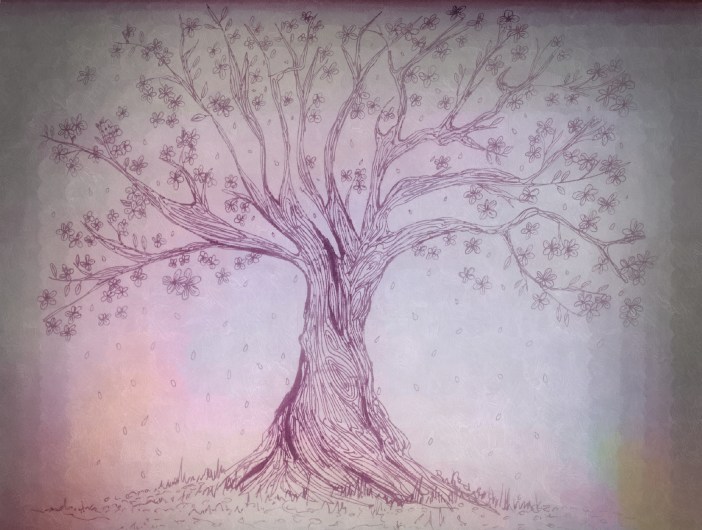
True Love Waits

***

It’s in this track that you finally slip under the surface, that you actually look back at the world through the gauze of this mysterious, ethereal substance that has formed in the wake of all this…music. A Moon Shaped Pool. Ripple of piano riffs flower out around you, the steady yet slightly quivering polyrhythms that shimmer around a fragile croon. Sadness in silver, the wisps of cloud that lick the moon; as the long hair of a girl, floating alone on her boat in the ocean, flicks her face in the wind. The pool is gelatinous, oozing its tendrils and trickles of this sonic sweetness; the listener is stuck, drifting, as paralysed inside this song as the love itself which frames it. How old is this tune? Somehow it feels ageless, plucked out of time as if nobody wrote it – as if it materialised in the ether, adrift on some westward, melancholy breeze. The child plucked from a fairytale, waiting for her saviour, frailly nourished on lollipops and crisps. The way Thom Yorke’s voice licks the soft consonants, the lilting drag over the vowels…that simple, subdued beauty. I’m not living / I’m just killing time. How easily captured is that sorrow, that shrinking of the world as you long for the lost object, the presence so elusive whose existence, you truly believe, is the single thing that will save you. There is always that waiting, that painful, half-lived interlude. Will it happen? When will it happen? Here, that place where the fingers slip effortlessly over ivory keys; where notes swirl around one another, like the rings on the surface of water, pale-hazed and iridescent. A mercurial thirst for the things that kill and sustain you. Tiny tattoos that etch the moon. There, the promise of sacrificing all, of baring oneself to the other: the exchange of absolute translucency. Not quite transparent: the mystery still glazes, if only thinly. I’d drown my beliefs / to have your babies. Maybe gender, maybe identity itself, become futile in this feeling. The body is just a possibility. In memory, it is always the detail that remains: Your tiny hands / Your crazy-kitten smile. Desire is the endless chain of such details, their sense of ephemerality – you cannot pin down the tiny hands or crazy-kitten smile, which inexorably close or blink or fade, a little like the grin of the Cheshire cat. We can only collect the images, those photos which clot the haunted attics: love too is an archive of sorts. But the liquid metaphors prevail: you can drown in the archive, you can drown in your love. Don’t leave, don’t leave – it’s the imperative of one who is starved of oxygen, breathless and maybe a little desperate, reaching out for that lovely soul who would save it. And could all this strange passion, this warbling sadness, really be contained in what Wikipedia calls ‘a minimal piano ballad’? Written over twenty years ago and finally that melody is pressed onto vinyl, into the modernist glint of a compact disc, spread like smoke around the internet. Yet somehow it still eludes us. It is that moment of clarity – epiphany, even – amidst the futurist nightmares of much of the band’s back catalogue. Love, love, love: what is it good for? The song doesn’t answer the question, rather draws us into the aching feeling, again and again with that refrain – don’t leave – highlighting the desire that draws us through life, even if it stings us, bramble-like, with pain. We try to make it tangible, pin it to myriad images; but like the soft fading closure of the version on A Moon Shaped Pool, love itself offers no solid, defining life-raft. Maybe it’s the idea, the trembling imagination, that sustains us. After all, ‘True Love Waits’ falls in and out of arrangements with the ease of osmosis. Guitar or piano, brighter or sadder, it stays protean somehow; its capacity to plasmolyse with such simple, touching lyrics leaves you feeling weak – as fragmented, perhaps, as all those sweetly delivered images. So easy it would be, at the close of the album, to float forever in the orbit of that pool and its silvery spirits – the pieces that I loved, the pieces that were you.

Oranges for Marmalade

So delighted to have been picked as a runner-up in the 2016 GUCW Summer Short Story Competition. The theme was ‘journeys’ and you can read the other winners HERE.  Here’s my wee story, about an elderly lady trying to get to the end of the road…

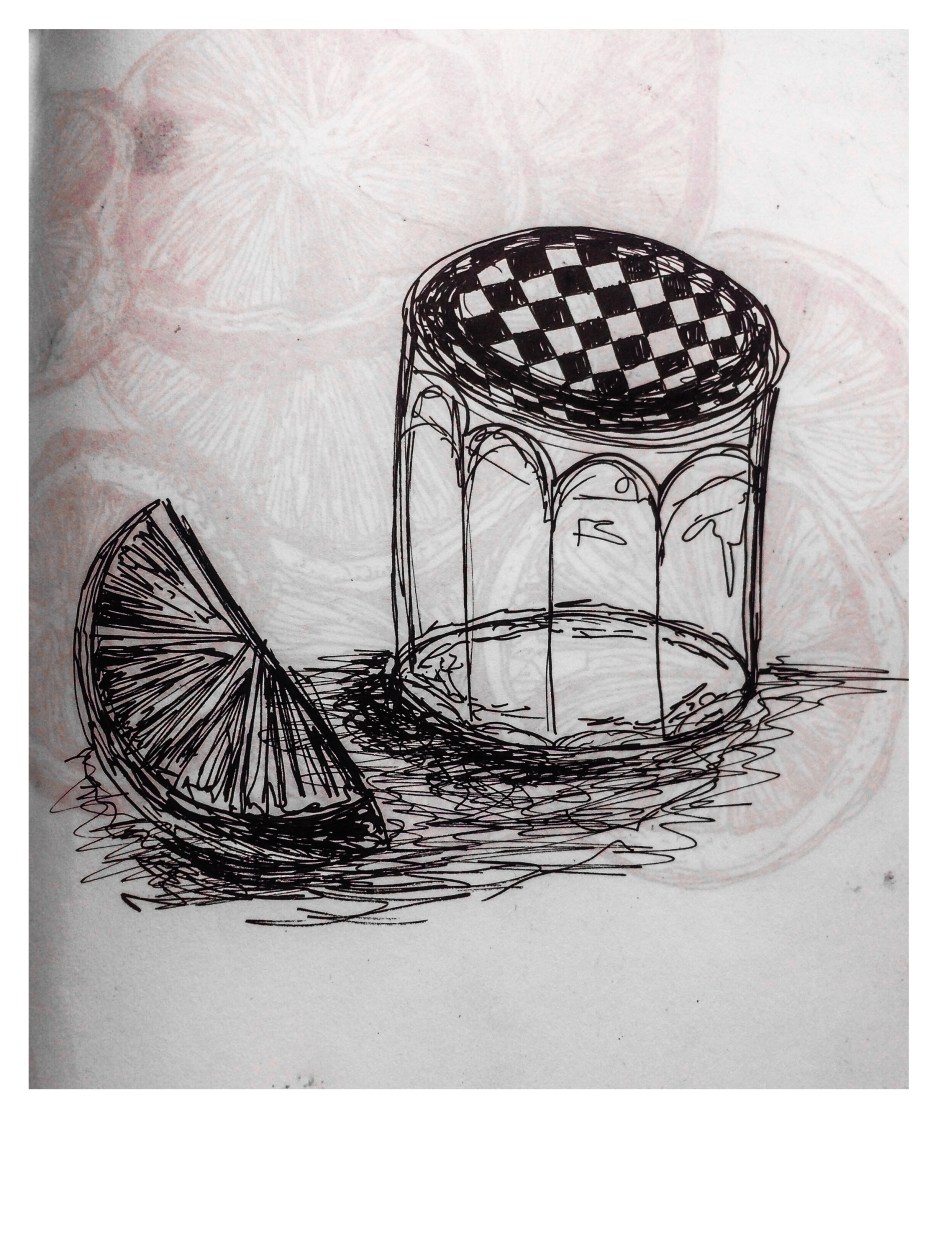
Oranges for Marmalade
oranges marmalade.jpg

“No, no, no, must get to the shop, can’t stop, can’t stop…”

You could only hear her if you were very close to her. From afar, there was only the distant rustle of her words, softly murmuring like an insect.

“Must get to the shop, must…”

You could see her fuss with the door of her bungalow, shuffling along the path out of the front garden and onto the pavement, never forgetting to close the gate. She was always careful with these details. Sometimes the cat was out, draped over the stump of wood where once there was a lilac tree, prowling around the unkempt lawn, or else sitting at the window, watching carefully as her mistress slowly made her way down the road.

It was a beautiful street, even by the city’s standards: a long, broad avenue of horse chestnuts, which shadowed the pavements and when the sun shone they cast dapples of green light on the concrete, clear and pretty as stained glass windows. In the autumn, conkers would gather in the ground, brown and gleaming amidst the fallen leaves, and the neighbourhood children came out in their droves to pilfer them. She had lived on this street for a very long time. Whole families had come and gone, homes were split into rented apartments, townhouses halved into bungalows. Only the corner shop remained at the end of the road, though it had changed hands a few times.

If you watched her for long enough, you would see the rhythm of her walking was most unusual. She stopped in fits and starts. She would halt in her step, standing as if suddenly finding herself tied to the ground, looking around her with a bewildered expression. If you were close enough, you could hear her tutting under her breath.

“Can’t stop, can’t stop.”

She attempted her stilted, aborted journey almost every day. So sad, she always seemed, picking her footsteps over the same old concrete. There was a frown on her face, etched deep into her skin. Her eyes, a watery green, always glazed over, or else were sharp and jolted and fearful.

This is the tree, the special tree which she stops at halfway on her journey. She knows there is something significant about the tree. Her fingers, sometimes, escape the cloak of their gloves and feel along the trunk; dry, brittle skin brushing upon the gnarled wood, whose bark came apart in dusty flakes. Somewhere on the tree two letters are carved: E + J. She winds her pointy finger up the J to where it stops. Sometimes, the sticky sap clings to her nail and later, in the shower perhaps, she will notice it and worry about where it came from.

Was this it? No. She is not here for the tree. She is never travelling towards the tree; it just so happens that she finds herself here again.

She always gets to a certain point in the walk where suddenly everything loses its clarity. She can no longer make sense of the shapes and colours. She does not recognise this street at all. Where am I? Where am I? The windows of buildings seem to stare down at her in mockery, circle-shaped and evil. She is running back through her memory, names and faces, names and faces and places. The East End street where her grandmother lived. Was it just like this? She remembers the ochre and gold of the bricks and the white window frames and the old men that would stand on street corners, at all hours of the day, staring aimlessly and smoking cigarettes.

Pull your stockings up, her mother used to scold. She would run around the streets, shooting marbles and playing with the boys, her stockings always half up, half down. She remembers them fondly, those stockings, the colour of a lilac sky, as her father used to joke. He was a secret poet, and he liked to mix words like his wife would mix the oranges and sugar for marmalade. Marmalade, her speciality, the milk of summer nourishment. The fruit comes all the way from Spain, as her father would say, slathering it over his toast. She remembers him reading the newspaper, stealing mischievous glances with butter-smeared lips as she mended the holes in her school blouses.

The sky was greying now, the weather turning. An umbrella: she should have brought an umbrella. The door to her bungalow was so far away now; there could be no turning back. She felt the panic rise like a sickness in her chest. Nobody could know how much she needed to urinate. There was a new desperation to her journey, as if somehow it was now life-threatening.

“Are you okay ma’am?” the woman in the business suit stops her car, rolls down the window. The woman leans her head out but she is already walking away, pacing in circles of confusion. “Are you lost?”

“What? What?”

“I said, are you lost?”

“No, no, mustn’t stop, got to get to the shop.”

“Can I give you a lift?”

“No, no, it’s not far – the end of the road.”

“Are you sure? It’s no bother for me.”

“I must – must get to the end of the road. Good day to you.” She clutches her handbag tight to her chest, thinking how nosy people were, even these days. The car trundles reluctantly away and the street is quiet again. Very few commuters pass through here. It was only the locals who brought their cars to reside in the sleepy parking spots, draped with the luxuriant leaves of the chestnut trees.

There was something she had to get from the shop. What was it? She had lost it again, the slip of paper that she was supposed to carry around to help her remember.

“Something to get from the shop,” she mutters. A handful of kids, skiving from school, burst round the corner, their skateboards cracking loudly on the concrete like fireworks. She shivers with fright, looking up to the sky for an explanation. The kids whirl past her, laughing. They went from one end of the street and onto the next in less than a minute.

Her own children–how old were they now?

“Oh, hello Rosie,” she said once, greeting the little boy who was dragged into the living room by his harassed mother.

“Mum, it’s Robert. Robbie. Your grandson.”

“Robert? Oh, yes, a boy! Hello Robbie.” It happened every time. Every time it was like she was meeting them anew.

“Yes, this is Robbie, Mum,” she repeated, “Rosie’s…dead. Your daughter Rosie, she died out in Israel. Five years ago. Remember?”

“Rosie? Rosie what?” The same thing, every time. She died, she died. “What was she doing in, in Israel?” Sometimes the words would come back to her: It’s just something I have to do Mum, I have to find myself. What was it they had told her? Something about the desert, the collapsed sand dunes, all those foreign-sounding names that had swirled around in her head, loose and dead as the leaves picked up in an autumn breeze. The young folk, why was it they had to go away, what was it they thought they would find elsewhere?

There were always funerals. Funerals were as sure as the passing seasons. People were always dying; that was true enough. You put on a good spread and said your good will and life went on just the same.

“But my Rosie? How…my Rosie?”

“She was stranded, Mum, stranded. My sister and they flew her home in a box.” And her own daughter then, choking up in the living room, white knuckles rubbing her knees.

Stranded, stranded…

Stranded, like she was now, stuck on a traffic island in the middle of this suburban avenue where she had lived for twenty years, and the traffic coming and going so slow and intermittent, and still the thought of crossing terrified her and she was suddenly frozen and her hands were quivering like, like birds’ wings and she knew, she just knew there was someone in the window opposite watching her…

They had given her a necklace with a plastic button, an alarm that she was supposed to press when she needed help. She could picture it, hanging by the door, clicking against the glass as the draft blew in.

She could hear the buzz of a telephone.

The cry of the magpies outside her window.

The sound of her girls, laughing in the garden.

The thrum of the music from next-door.

The skateboards smashing the concrete.

It was all this deep, dark, churning cacophony. She knew she needed to keep moving, but her legs were stiffening, her joints seizing up, her bladder trembling. The rain was coming down now in cold speckles on her face.

Nobody in the street could know the secret strain of her journey. Each time she tried to cross the road, she saw her feet step off over a cliff and the car like a gush of coastal wind, ready to sweep her down to her death. All around her, this sea of sound, lashing and stirring.

She’d always thought of death as a kind of quiet, a restful transition from life into sleep. This was not death at all, this turmoil. The huge green chestnut leaves which bore upon her like so many hands, glinting wickedly with unforgiving light. The clouds clearing, then closing in again.

Her own daughter, and all the things she would have shown her. The special rules that kept families together, the various arts of living and loving and housekeeping. The things that you were supposed to be proud of. The little efforts to make everyday life somehow tangible, meaningful.

She’s left the stove on again. 

Often, these days, she thought of herself in that anonymous third person.

She lost her glasses. Lost the handset for the telephone. 

That anonymous third person, disorientated, mocking.

Life seemed more and more a journey in which you found yourself lost. You were not supposed to reach a destination, but merely immerse yourself in further confusion. The thought of it was almost a comfort.

She is less distressed. She is breathing properly and her hands stop shaking as she stuffs them in her pockets. As always, it is at this point in the road that she turns back, heads towards the house with the gate and the cat and the alarm by the window and the bathroom with the toilet and the living room where they told her that Rosie had died. It is always at this point that she gives up.

It is only later, at some unfixed time in the middle of the night, that she will wake up and remember the purpose of her journey. Maybe she is dreaming of her mother, sad and milky swollen dreams. Maybe she is dreaming of the quiet suburban street itself: the swaying leaves of the horse-chestnut trees, the conkers in autumn gleaming, the children on the green and the thrash of the skateboards and the way the world looked ten, twenty years ago, before she started forgetting…

Maybe she dreams of her own daughters, golden on the front lawn, singing and playing.

Always she awakes to that singular purpose, a child again, the glitch in her memory that always sticks like a scratch on a record: Oranges. I must buy oranges, to make marmalade. Oranges for marmalade.

24 Hours

IMG_35076

It was the summer of being totally numb. I woke up every morning with the sensation of being dragged down some strong gulf stream, warm and foggy and going nowhere.

I smoked cigarettes leaning over the harbour wall, watching the waves curl over the lisp of the sand, gathering in little billows. I worked a job at one of the out of town supermarkets, driving my car around in the day, stacking shelves at night. I worked from midnight till dawn, driving home as the birds sang and the junkies collapsed into their hellhole flats. I sort of enjoyed the boredom, the routine sense of drifting; the way the hours and days just dissolved away. I had a vague sense that something had to happen by the end of the summer, but never paid much attention to prospects of the future.

The doctor put me on these antidepressants, you see. I don’t know what they were supposed to be doing, but they made me very numb. I felt weightless, as if my skin wasn’t my own. There was an agitation, a twitchiness to my existence. I couldn’t help scratching, shivering. I worried the sores that rose in welts on my arms. Every time I tried to eat, I felt nauseous. Only the cigarettes helped.

I was getting through thirty a day, a pack and a half, that summer.

Then I met Oliver. I used to know him, years ago, at primary school. I was standing outside a club, watching the thin blue moon disappear into dark clouds, watching some sixteen-year-old kid throw up on the pavement across the road. Oliver came out of nowhere, wearing this flamboyant shirt, a shark-tooth necklace, his hair wiry and long. I don’t know how he recognised me; I barely recognised him. I wanted to melt into the wall.

But then we started talking about childhood. I guess it seemed like forever ago, this whole other world of messy innocence. The games we used to play, running over the fields, throwing clumps of hay at each other. Days out with the school, teasing one another over the contents of our packed lunches. We walked around town all night, waiting for the sun to come up, sitting shivering underneath a slide at the park, sharing a half bottle of vodka.

He gave me his number, refused the cigarettes I offered. Said we should talk again, but he had to go to work.

I never did text him. I went straight home, teeth chattering on the bus, then lay in bed all day, staring at the ceiling. I couldn’t sleep. I kept thinking about the person who used to run around those fields, laughing and shrieking, throwing wads of hay and falling back into the soft long grass. I smoked so much my room was a grey, tarry haze. At some point I must’ve slept.

I woke up and the world was brighter, clearer. The smoke was gone. I drove to work and the strip lights of the supermarket glowed in my brain, the colours of all the signs and products seeming ultra saturated, a pleasure to stare at. Everything felt so intense, so real. I guess I was feeling again. It was a joy to just touch things, finger the labels of tins and packets, brush my feet over the vinyl floor.

I’m not even sure I took down the right number. I never did text him.

It was a joy to stand over the bridge on my break, watching the cars pass on the dual carriageway, biting into something sweet, maybe a donut, maybe a piece of carrot cake. I didn’t think about falling over that bridge, about smoking a cigarette. I thought of Oliver, of the little girl asleep in the backseat, going nowhere through the night. Falling asleep on someone’s shoulder. That sense of safety. I don’t remember much else about how I felt, but I know that something had changed, even though in the end I didn’t text him.

I guess it was just that in those 24 hours, I’d forgotten to take my antidepressants. For once, it felt good to go nowhere.

***

(Flash Fiction February prompts: ‘nowhere’)

Hillhead St.

IMG_0485

Springtime, 2012; first spring in the city. Living on Hillhead Street, with the cat, Miller, who used to mill around and curl his sleepy tail round your ankles at lunchtime, purring at the sun. It was sunny all through April and May. Early mornings in the library, level eight and nine with the light flooding the windows warming and pure, a dish of sun butter melting over sandstone buildings. The best seats, the computer screen a dull mist of unimportant philosophies. Walks along the Kelvin, tangles of fern and wild garlic and the solitaries who wander, sometimes stumbling, always clutching a spliff or a bottle of Bell’s or Buckfast. Coughing their pearls of greenish spit into the river. Summer of the Olympics, no care at all, sugar rush of coke and chocolate buttons and long evenings staring insomniac out of a tiny dorm window. The Decemberists, or Conor Oberst’s croon in the wanderings out to town, to the station or the Necropolis. Smell of cigarettes wafting from rooms below. So far, but not so far, from home. The red glow of the sun at dusk, the silhouettes of house plants, the sound of footsteps.

The Dunure Labyrinth

IMG_2643

Overgrown in summer, late summer with the lushness of August
fattening in the green bloom of another afternoon
exploring these spots on the west coast.

The labyrinth hasn’t been here for long;
laid down by volunteers
it etches out a vision of something otherworldly–
Pictish, perhaps, or else Pagan
and the strange age of overlap
where still we worship the unknown,
feel breezy and free in uncertainty.
Keats called it negative capability.

She will wander alone into the labyrinth,
scuffing her shoes in the gravel,
trying to deny the way the stones grow before her
rising like those of Stone Henge,
monuments to some elusive god.

Where all she sees are the sea flowers,
the saltiness sticking in her lashes,
soon she will be sucked in, the last gold drops
of sunlight just distant memories
tacked to the glass of her mind,
which ripples in the sea breeze
always wanting its tidal sweep,
its final sleep.

(You can get here on the bus and by walking through the village to the coast, somewhere down near the castle which perches on the cliffs. There are many paths through overgrown bracken and nettles, paths which wind down the cliffside along to the beach. There are benches and a couple of info signs and many views out to Arran, the particular grey green of the Firth of Clyde. The sea gulls here are less aggressive than the ones in Ayr, and sometimes you can see cormorants, which are of course more interesting. When you get to the maze, you have this lovely spot which is naturally sheltered from the wind and you can sit at peace with the world).

Apple Blossom

Apple Blossom

April, the sweetest candy of a pink-tinged sky blessing the late afternoon. Rebecca has sat in the garden for hours, watching the birds nibble from the feeder and splash around by the pond. This is her Grandpa’s garden, though he no longer enjoys it. They have him cooped upstairs on a dialysis machine, in a bedroom that smells of sweat and death. Rebecca is not allowed up there: the air, her mother says, is not fit for a young and blooming girl.

She misses her Grandpa. She remembers him mowing the lawn on Sunday afternoons, stooping with his bad back. She remembers him commending the shapes of his moon-faced daffodils. She remembers him singing Frank Sinatra in velvet baritone while pruning the roses.

The roses are now out of control. They cluster all over the flowerbeds along the path, dangling out with their swollen, sumptuous heads. They have grown so tall that they bend over, crippled with the excess weight, the stems stretching to breaking point. Grandpa would be so disappointed if he witnessed the state of his roses.

Sometimes, Rebecca liked to peel off a petal or two. It was hard to resist; once she took the first few, the others came off so easily and they just slid softly into her fingers. Vivid trails of pink and red petals are now strewn along the gravel path, where Rebecca has walked like a bridesmaid.

At the back of the garden is the apple orchard. In winter the trees are gnarled and bare silhouettes, and not a soul would dare enter the darkness between them. Now that spring has arrived they boast their pretty bows of white, flaky blossom. Every year, Grandpa used to send glossy photographs of the apple blossoms to Rebecca and her parents, who lived far away down in London and rarely made it up to visit. The sight of those lovely trees was always a dream to the young girl who yearned for the country.

“When can we go and see them for real?” Rebecca would sigh.

“Oh, sometime in summer. Maybe Christmas.” They were so often dismissive like this. They had waited too long to see him and now he was dying. Even Rebecca knew it.

She was growing quite bored now, in the garden with no-one to play with. She knew there would be supper soon: hot buttered crumpets with a dark smudge of Marmite melting inside them. Real Earl Grey (loose leaf) because that was the only tea Grandpa had in the cupboard. Rebecca thought it smelt a bit fusty, but you could read the tea leaves at the bottom of the cup afterwards. She thought she saw a bird in hers that morning.

Yes, she was quite bored. The hula hoop which she had brought up from London lay abandoned on the lawn. She had tossed away her tennis racket somewhere into a dense clump of shrubs, because it was no fun to play by yourself, hitting a ball against the shed wall. A bag of marbles had burst open on the patio, the little glass balls having long rolled away, to settle amongst their brethren of grass and gravel. Rebecca had no toys left and besides, she was so tired of them all.

Even the insects had bored her, with their slimy indifference to her existence, their urgent desire to escape her clasping girlish fingers. She couldn’t give a toss about snails and slugs, or even butterflies anymore.

It was in this moment of tedium that she spotted the boy through the hedge. She couldn’t believe she had never seen him before. It was a difficult thing not to be spotted, not to make a peep, but Rebecca crawled expertly into a gap and tried not to breathe as she watched him. He was lying on his front, kicking his long legs back and forth. From this angle, he looked about fourteen. His hair was sort of ginger but also sun-bleached, as if he had spent a long time outside in a streak of good weather that Rebecca must have missed. He looked like something the sun had offered as a blessing. She could see his freckles, the concentrated curl of his lips. He was drawing in a big sketchbook which was flipped open, so that sometimes the breeze rippled the pages. Rebecca felt her heart hum and flutter in the cage of her chest, like some swarm of insects had trapped itself deep within her. He was so beautiful.

She wanted to crawl right out of the hedge into the next-door garden, step into the other world where he existed. She wanted to talk to him, ask for his name. See what it was that he was drawing. She felt like the secrets of the world would unlock themselves once she had learned his name. The sapling of herself would unfurl and a bounty of happiness would overflow from her body like the golden leaves in autumn.

“Rebecca!” she froze. It was her mother calling. She had been searching all over the garden for her daughter and now here she was, discovered in the hawthorne with white blossoms caught in her hair and a strange smile on her lips. She saw there were tears in her mother’s eyes, clinging and spilling like rain from the knots of tree trunks. How could there be tears at a moment so pure, so lovely?

“It’s Gramps,” she gushed, “he’s, he’s gone!” And so her mother pulled her out of the hedge and clutched her in her arms, held her so tight Rebecca thought she would burst. It didn’t make sense: he’s gone, he’s gone. As her mother sobbed into her hair, she watched the apple blossoms being blown away by the gathering night wind. Next-door, the boy stretched out his long limbs, packed up his things and disappeared.

(This little story emerged out of a longer short story project combined with prompts from Glasgow Uni Creative Writing Society’s Flash Fiction February challenge (‘renewal’ & ‘orchard’)). 

Reciting for Burns Night


In the room of primary colours and paper
I stood up, small, to read my piece;
shaking like a frond of heather
caught on a hillside breeze, unable
to stop the bite of a lip, the sweat
spreading my skin with its heat.

The vowels didn’t come out right;
I failed to master the harsher diction,
the bouncing consonants, flying fricatives
and tongue rolled r’s luxurious.
Words were tangled in my mouth
like a lump of food I couldn’t eat.

I felt a hundred eyes feast on me.
From the depths of the gym hall,
they watched hungrily
for my stops and splutters, my hesitancy.
For I was different, not like the others.

My English accent rubbished the nuance,
missed the beat of every lilting iamb.
Still, I stumbled on,
falling off the lines like Tam himself,
drunken on his horse, ready to cross
that brig over black water,
taking a final leap from stanza to stanza.

Finished at last, I fiddled with my tartan headband,
lifted my head to slow applause,
felt at once a strange inclusion.

Later, in the playground, I stared out
at the Carrick hills, their mist of violet rain,
and for the first time
I knew a perfect moment,
the one that burns then goes forever,
quotes a song then comes again.

Road Trip

highalnds

Picture the scene. You pass sea after sea of pines, their tall green points misted with a fine web of vapour, a greyness that stretches over, concealing the tips and the distance, and you are not sure whether it is fog or woodsmoke, the wisps of early morning or perhaps the smoulders of a landfill. Probably you’re somewhere deep in the moorlands, glens and peat bogs of the Highlands; or maybe not that far yet, maybe just the Trossachs. If you open the car window a tad, you can almost smell the midges, their damp, thirsty breath in the air. This is air so clean that its purity counts as a flavour, claimed by many who have flogged the native whisky or bottled water. You would leave the window open, indulge yourself, but there is a sharp cold breeze that tickles the fine hairs on your neck, waters your eyes. It is always windy here; or else deathly still, like a valley out of time. Mountains rise up around you, growing closer and grander as the car turns another corner. They seem monstrous, towering over your small car, and you feel like William Wordsworth (the boy version, out of The Prelude) plodding along in his stolen boat, gazing fearfully up at the mountain peak beyond the lake, the peak that gazes back like an animal: ‘a huge Cliff / As if with voluntary power instinct / Upreared its head’. You can’t help but stare at the streams which splash down from each hillside like silver belts, which glimmer in the pale light which makes it through the misted sky. They catch your eye, pull you in myriad directions. You know that rain is imminent; its scent is as clear as the water that runs on the burn alongside you.

There is always birdsong, even in the evening. You can hear the cacophony of many different species as the car rumbles on in the silent space between two tracks passing on the stereo. You and your friend spent a whole day curating the playlist for this trip. Curating. She said that word, jokingly; but even so, it makes you feel special. This isn’t just any trip. It isn’t like you get out like this all the time, free from the bustle and smoke of the city, the people lingering outside pubs, the strangers drifting through in street-lamp darkness.

You spent a childhood in the back of your mother’s car; the smell of her cigarettes always blowing straight back into your face, rolling down the window to snatch breathfuls of that sharp, fresh air – an escape. You scrambled alongside rivers which rolled on over gleaming boulders; you scrabbled together heaps of stones and logs and built dams, pools and waterways. You fell over, bruised your knees, skelfed your fingers on the pine branches. You watched the water for hours, while your mother smoked and your big brother showed off, scaling rock after rock, cliff after clifftop. You ate cheese and pickle sandwiches made soggy by the damp that seeps in everywhere, through the aluminium and glass, the plastic glovebox and the silver foil. Midges clung to your neck; constantly you felt their hot, sticky itch. Sometimes the car smelt of engine oil. The food made your cheeks flush afterwards, as you washed your lunch down with bottles of flat lemonade that had lingered on the backseat for days.

There was an innocence to those holidays which literally makes you ache to think of. You would do anything to be that small again, crouched by a river, dipping your toes into the freezing water while your brother splashed you from afar, shouting declarations of war. His always taunting words, his grand arrogance. The way your mother scrunched up the sandwich foil into tiny, crumpled balls, collected them in her purse. The day you found them all, still there, when you were digging for lunch money.

Fog coming in thick and deep from a distance. You saw it roll over the mountains like God’s own shroud. It was comforting, feeling the moisture prick in the air, seeing the landscape slowly disappear. When you retreated back into the car, packed up the camping gear, fought with your brother over the radio. He always wanted the sport – Five Live – and you wanted the songs, the music. The stereo pumped, crackling and loud, audible even through the walls of the car, drifting in and out of signal, static…

Her sadness, leaning against the bonnet, sipping from a flask of coffee, staring out into the distance. The tears that you couldn’t see – not from behind – but you always knew they were there.

And why are you going? Why set forth again into the world of fog, of deep enveloping glens and silver rivers? The soft moss and the heather, the greenness that haunts your sleep. Was there some mystery you thought you could solve? She said it would be cathartic, your friend, her name irrelevant. Anyway, it’s Eilidh. When you met her, you didn’t understand the silent letters.

The playlist comes from an iPod, the classic one with the spinning wheel and the white casing. You were going to sell it, after you lost your job and faced the end of things, but something pulled you back. Gone were the Nike trainers instead, and now you are here in the car with your best Sports Directs. What sounds pass through your head? There are many conversations you always wanted to have with Eilidh. You wanted to ask about her purple hair, the bright lilac colour of heather. What did it mean? You wanted to ask whether she was still seeing that guy she met at uni, the one who studied law and played cello for an orchestra; who spoke French in a way that defied the limits of his Edinburgh accent. But you had known her five years, and still you could not speak.

The songs were lovely, dark and deep. Miles were consumed by the roar and pulse of the engine, roadsides slipping away as easily as signs fading into hill fog. You were long gone from the city, its tall grey buildings a mere memory, the pillow of mist you sank into at night. Remember the times you shaved an inch from your life? The bus turning the corner, sharp; the tiny sliver of razor on the white bathroom china. The dark colours flowering out in water, as you watched your ex-girlfriend wash her paintbrushes in the sink. Shades of crimson, violet, blue and scarlet. You were slipping through all these images, the shock and the bruising; the little jolt to your heart as the car passed over a pothole. You were driving, then she was. It’s difficult to remember.

There’s a lot of Mogwai on this playlist. When you first hear ‘Heard About You Last Night’ it’s a bit like waking up for the first time, the blinking beat and slow entry of bass bringing into colour a brave new world of beauty and fear. So many people, you suppose, have died out on those mountains. Battles fought and lost and won. Rain that fell for so long, it seemed the whole landscape might be swallowed up in shadowy puddles. Then there’s the anxiety of ‘Hungry Face’, those infuriating repetitions which build up to the twinkling innocence of the xylophone against those quietly thundering drums. It gets in your head; you can’t help but think of ghost ships disappearing over the Clyde, a set of yellow eyes opening and closing, suspended in the dark, clouded air like the smile of a Cheshire cat. The sound of soft, steady bleeping. Eilidh says something funny about the sheep. They have an absurd look about them out here, she says, but then so do pretty much all sheep. They glance up at you, but instantly their expression fades into blasé. They have only two emotions: indifference and fear, the fear coming out when they jolt their necks back and scarper.

Soon you fall into the melancholy of ‘Cody’, so slow and serene you might as well be stoned, sinking away from your thoughts like being pulled out into a vast, shimmering ocean. The bass echoes slow through the car, its thick walls. You press your face against the glass, leaving steam marks which fog up the world outside, the tall green mountains now coated with your breath. Reality blurs with the material of sleep. And would you stop me? If I tried to stop you? You imagine this is what heroin feels like, plunging into a slow, majestic ecstasy, the kind that drags eons of time through your veins; and from all those hours draws out this kind of awesome mournfulness even as your whole body tingles with euphoria. You could sleep forever in blissful, evil dreams. When I drive alone at nights, I see the streetlights as fairgrounds / And I tried a hundred times to see the road signs as Day-Glo. So slow, the car turning corners. An elegy to a lost raver, stumbling through the darkness of some urban labyrinth, the upturned bins, old condoms and leaking glowsticks spilling out the wasted remainders of another good night, another goodbye to childhood. Would you care at all? Eilidh rests her hand on your leg.

“Stop crying,” she says. It’s a statement, not an instruction. You are still staring out the window.

Your mother used to listen to The Waterboys, maybe even Primal Scream in her more rebellious phase. She liked to dance around the living room doing the dusting to ‘Fisherman’s Blues’, all the dust motes swirling up in a maelstrom of childish untidiness and neglected housekeeping. Her voice would crack and she would laugh at herself, breathless, collapsing onto the sofa. Make me a cup of tea, eh boys?

You were at a house party once, at uni – not that long ago really – and this girl was playing a song that stirred something familiar in your memory. You knew that voice, its growl, the twists of electric guitars.

“What is this?” you asked, the joint smouldering between your fingers.

“Oh, it’s The Waterboys actually.” You resented her showiness, of course, but this was interesting. “I know, so lame right? I like it though. They put Yeats to music. You know the poet, W. B. Yeats? ‘The Lake Isle of Innisfree’. It’s a lovely poem.” She was drinking port, of all things – you remember that too.

You inherited, perhaps, a gloomier tradition of the nation’s music. There would be no Proclaimers on this playlist.

Arab Strap, the disco beats, spat poetry and everyday apathy.  The sort of post-hardcore or drum-soaked indie that felt like having the rotten parts of your brain stripped out as you lay on a boat, slowly being drenched in dreich Scottish rain. You were always a fan of Frightened Rabbit, ever since you saw them at a festival once, danced yourself into a frenzied ceilidh of mud and tangled feet, even as the songs sung of sadness and bleakness and heartbreak. The endless drone, the refrain: it takes more than fucking someone to keep yourself warm. Teenage campouts in Loch Lomond, worried you would all die of the cold, of the rain and the midges. Drunk out your minds, desperate and scared of the river which burst its banks sometimes even in summer. The expectations of nothing but the prospect of falling into the same abyss as everyone else. Fag butts drifting by the edge of the river, the scorched remainders of a bonfire. Listening to it again now, well, you can’t help but think of how this seems to be coming true somehow. The same abyss. Even as the drums collapse over the screaming words, there’s a waterfall out there somewhere, maybe the one you floated in once, upside down on weird pills with the cold so deep in your bones that you didn’t feel the punches of your best friend who hated you because you kissed — no. That was another time. You are driving forward now, you are at the wheel.

Maybe there is something that you know that I don’t. 

“We should stop soon, you look like you need a rest.” The world outside is almost darkness; it is twilight spinning webs of navy and sapphire gold around the edges of trees and mountains. Trees with their shimmering leaves. Clusters of stars emerge from the velvet blackness. You wouldn’t stop for anything.

Next: There Will Be Fireworks, ‘From ’84’. The simplicity, the sorrow which isn’t yours; for how could you feel so much nostalgia for a year, a thought, that came before your time? The not-belonging is what makes you feel lonelier, the minor chord, the rustle of Eilidh in her woollen tights turning the page of a cheap magazine. Just a kid, in his room / No-one hears him howling at the moon. But you have lost touch with friends too, you have felt the strange pain that comes from seeing people you love change, grow apart. You cannot hit the high notes; you cannot sing along. So we’ll put it down to fate or bad luck. The plain, bare strumming pattern haunts you, even after the song finishes and something new comes on. You’re thinking of another lyric – sad song in a minor key – and wondering how you ever heard of this band in the first place. Why is it you love them so? Whether they’re actually any good, or just another expression of bleak Scottish winters, the lack of sunlight, the endless, down-pouring rain…but isn’t that beautiful too?

Eilidh has, perhaps, more interesting taste. The next song is hers: Cocteau Twins of course. She mutters on about how their best album was Milk and Kisses, though everyone thinks it’s Heaven or Las Vegas. Elizabeth Fraser’s dreamy soprano takes you straight through the night and into the morning; you could both listen for hours and hours, not realising that the songs were changing or repeating, just drifting into the dissonant guitars and distorted lyrics, the hypnotic drum machine loops, better than sex. You would like to float, suspended in a disco somewhere, each song playing out the pattern of a strange, intense kiss. You suppose these are all the 1990s discos your mother would’ve went to (if she hadn’t had you). What does it matter now? The sky before you bursts through in pastel smudges, which break up the dark silhouettes of the Trossachs mountains. In the distance, through the windscreen, sparkles of sunlight play upon a pale blue pool, the first loch you have seen since yesterday. There is something about the shape of the peaks, the space of the valley. You have been here before. 

The Twilight Sad come on the car stereo. There’s no mistaking the intensity of that voice, the thick accent and its distinctive rolls and howls. Each song with its own atmosphere, a haunted quality reminiscent of The Cure.

“Let’s stop here.”

The loch is so close now. You can feel something inside you, a tension breaking, the rapid increase of the beat from the heart that burns in your chest. Eilidh is humming along, though her voice crackles and breaks as easily as the gravel on the road below your tyres. When you climb out the car, cold air sucks your breath away as you slam the door. Suddenly, the signal floods back to your phone. Three missed calls from your brother, and you know what that means. Another night, another row of bottles slowly emptying, slowly being broken in a dive bar of old men, the black hole at the bottom of every street in every Scottish city. Once he was an eagle, soaring down those hillsides, ready to leap out and scale the lake with legs made strong by football, with arms that could reach out for anything they wanted. He couldn’t save her, any more than you could, weak and pathetic, wrapped up in all that suppressed panic. Hidden in your room, even when it happened. It rolls through you, the realisation. This loch, like a terrible mirror. This beautiful loch, the very one you all picnicked by, the year your brother finished high school, the year of your first kiss, the year she —

‘There’s a Girl in the Corner’ on the stereo, and Eilidh is speaking, but her words are muffled through the window, the pounding drums and resounding lyrics. She’s not coming back / And she’s not coming back again. Standing here, the cold wind at your neck, another summer nearly ending and here you are – you finally feel it.

(all embedded lyrics attributed to respective artists).

Tropical

IMG_012301

Tropical

You used to worry about the palms: there was something wrong,
you said,
if the palms weren’t sighing.

You relished the soft peel of the wind through those palms,
the ones by the hotel garden.
We’ve been here every year
since Dad died.

The white beach sand is a mouthful of moonlight.
We sit up late drinking crushed fruit
and you say strange things, as you always do—
have you ever eaten a mango in the bath?
You would live your life like that,
all the time you said, eating mangoes in the bath.

All that pulp and mess, all that flesh.
Dad died in the spring, when blossoms
of soft pink cherry gathered on my lawn.
The baby lolled around in it like April snow
and we watched her giggle, ribbon
flying out from her hair. He would’ve loved that,
seeing her there.

The cancer took the green out his eyes,
ate the skin of his face.
Even when they pumped him full of fat and creamy vitamins,
the bones kept poking, pointing.
His face was a mask of something;
I couldn’t let the baby near it.

I imagine you prefer it here
to back home. You like the ooze
of the days, the way the maids make the beds;
the emerald green of the parakeet,
early mornings where the tide sparkles. Still,
you saw signs in everything.

Dad used to come visit during monsoon season.
He wrote reams of prose,
lapping up slushfuls of rain. He wrote
in the small hours, when he wasn’t working.

We lost the notes.
We’ve only the stuff on his business trips,
lost code on his laptop.
We haven’t a sense
of what to him was sharp or clear, what it was
that brought him over.
Just the whispering palms, the sleepy tense—
one day I’ll take the baby here.

Mortal Thing

Gentle capillary
So small as the daisy, pulled
into petals from the precious lens
of a leaf.

Unfurl the tangles like twine;
only soft
as an organ,
and underneath
the quick pulse
of some other body, the beautiful body:
that lies over there and empty,
still empty in the yellow light
of this warm morning.

(Written from GU CW’s last week’s prompt ‘capillary’)