Walking to the supermarket today cost wild amounts of strength and energy, for which I am grateful to have spent now that I can eat nauseating Roquefort cheese in the hope of coaxing my numbed-out tastebuds to attention (so far semi-successful) with lathering of French mustard on wholewheat bagel. Semi permasick seemingly from something in the walls in me. MOULD. Watching the Easterheads peruse giant boxes with undersized, foil-wrapped eggs inside reminds me of a lecturer I had many years ago whose primary exam advice was to study always with such an egg by your side, because curved chocolate is ‘superior’. Trying to summon childhood memories of Easter and all I get is something hardboiled and glum, rainbow-painted free-rangers being rolled down the smashed-up concrete of Minnoch Crescent estate. What were you supposed to do next? Retrieve the egg. I forget. I roll over. I have to sleep on my side or something in my organs hurts; but I believe cats have healing powers and if a cat wants to sleep right on my chest, sure, I’ll sleep on my back and wake up better.
So I’ve been enjoying The Blindboy Podcast and recently the episode where he talks about the internet before it became, well, everything. The total bombardment. Blindboy has charming tales of what cultural scarcity was like before you could just shazam the shit out of any sonic phenomenon, google every micro-thought that comes into your head or find your brain rewired around the big-ass anxiety MMORPG that is Twitter. I’m geriatric millennial enough to remember this and especially tapes. I had a thing about tapes. I wrote about this already, way back in 2014, my thing for tapes. That was kind of before the indie tape revival (is it still going on?). Seriality in writing is irresistible to me. The backwards and forwardsness of it. Krapp’s spoolish jouissance. Bernadette Mayer’s tape recordings in Piece of Cake, Memory and Midwinter Day. The glossolalic Mr Tuttle in Don DeLillo’s The Body Artist.
Recently, editor, writer and absolute king [<3] in the poetry community, Aaron Kent, published a pocket-sized pamphlet called The Rise Of… (Broken Sleep Books, 2022). The back page features the familiar anatomy of tape reels encased in clear plastic. There’s a kind of Side One/Side Two vibe: a long essay-poem, ‘The Rise Of…’, which documents the process of coming to know what happened in the wake of a sexual assault; and a poem ‘Inkmist’ dedicated to ‘CRASAC group therapy; for saving me‘. This is a breathtaking work that doesn’t so much ‘confront’ its difficult subject as enter into a kind of ‘momentum’ capable of thawing the petrification of trauma. Of central concern to the speaker is the notion of hallucination, of letter-writing, of ‘difficulty’ itself. I opened it gently from the envelope as I once would a cassette from its casing, read the whole thing in one go and found myself at this point upside down on the sofa, blood rushed to my head, kind of too stunned to even cry. The fluidity and force of Kent’s words are such that all kinds of dormant synapses in my own brain began to take flight again. This is poetry which dials up exposure not exactly to ‘tell a story’ but to disclose the whole affect-storm of a writing that could approximate a traumatised consciousness — one that is at once deeply singular, embodied but also permeable within language itself. A writing that soaks up the residues of thinking’s trillions. It’s hypnagogic, syncopated, a rush; full of swerves, stops, broken clauses, syntactic mania. Forget punctuation. This is a book about the secret. About a wild undersong of constant, yet fluctuating pain. ‘I’m like a sponge i’m always shedding and if i don’t deal with it the pain won’t go away’. Anhedonia, itching, ‘something so simple and powerful’ about a scream. ‘There must be a word for losing melody’. In a blurb for the book, Day Mattar describes this not so much as ‘a stream of consciousness’ but ‘a flood’. There’s something mesmerising and unstoppable here. ‘I am the rapture!’ Buy this book.
When I was in London I also picked up Emily Berry’s new collection, Unexhausted Time (Faber, 2022), a book I’d hotly anticipated owing to Berry’s excellent previous titles Dear Boy (2013) and Stranger, Baby (2017) but also because the book cover perfectly matched the magenta of fred’s new iets frans tracksuit. I read this last weekend in a few turbulent, food coma type nights, marvelling at how my brain could just pick up a special Berry ellipsis, steal it for a dream and then awake to another suspension in the poem. This is a book full of ghosts and twisted souls, a kind of carefulness around utterance itself; spellbinding in the sense of a spine for holding together our weathering lives. A book bound by some kind of spell. You have the sense of a secret, and a holding back:
All statements purporting to be act are true. Nothing goes away… You carry it with you, if not on your back, or in your arms, then somewhere behind your eye… So be careful… See the ghost scratching at the door frame for the note that will free her. The past is parked next to me like a dirty van with messages fingered in the grime…
(Emily Berry, Unexhausted Time)
These lines summon us but also disintegrate on the page as dust. I imagine the automatic typing of a super-intelligence gleaned from our messages. It feels intimate, uncanny. Where is this person speaking from? I want to take their advice seriously. There’s a lowkey lockdown hauntology, the house turned inside out by a kind of social toxicity. Anything natural is also sort of monstrous: ‘It always seemed to me a kind of madness, / the gardens all in flower year after year’. It’s sort of obscene to me that the blossoms are all out and I feel about as disconnected from them as if they existed purely as pixels. Is this disintegration of the senses a prefiguration to ageing? How do you stay involved with the big delicious ‘madness’ of the sensory world? The hyper-pitch of birdsong made audible by the lockdown of spring 2020 was lush, but also spooky. As if to be always in the dawn song of 5am, alone with the birdly chimeras — too piercing to surely be real? I miss it. The feeling of being wholly alive in waves. Write something to the ghost?
It always comes back. And there are new messages…
(Berry)
The digital eeriness of felt presence. New messages. Poems in their seasonal palimpsests. I want that unexhausted time, a time we haven’t yet strung out, a time to be rechilded. A time for birds.
Dearest, Happy pink moon!!!!!!!!!!!!!!!!!!
Lastly, the new Ludd Gangarrived. Mark Francis Johnson:
Those birds of passage present as fists.
I think we fauns may learn more from those birds than
half-hours by the sea teach us.
In the summer the woodcutter wanted to fell my home
and I let him.
(from The Faun Book)
You go stumbling, burned your pineal gland, phone mum. I keep the doors open in my dreams in case a deer walks in. ‘With my eye’, says Jesse Darling in the same issue, ‘I wanted to go / there, to the end of that road. With my whole body I wanted to go / there’.
Let the cold, curved chocolate fit the lip of my tongue, from the fridge.
Want also to melt.
Earlier I wrote something of our weathering lives. It’s the most beautiful and encompassing thing you can say to someone, becoming the spooky sweet hail in flux with sunbursts and mugs full of snow, a rainbow.
Something like an offering, snowballs of silver foil. Blossoms and more blossoms.
Again, from Ludd Gang (the last poem), Gloria Dawson writing for Callie Gardner:
hey, you were my weather sometimes arriving at my door
Every time I close my eyes, It’s like a dark paradise
There’s something apocalyptic about a Blood Moon. The sense of waste and transient beauty, light and life shedding away. The moon takes its thirty-year delayed menstruation; red cloud wisps over its shining face like clots of blood being pulled across a pool of silver. Somewhere out there, lovers are lying in lush paradise, staring up at this white eye opened by god; far away, drowned in stars. A voice swirls like smoke over soft, shimmery guitar. It’s the eclipse, sometime about now, then, yesterday, and I am or I was listening to Lana Del Rey.
Honeymoon, then going back to Dark Paradise. Insomnia in the space between night and day; between one universe and another, always afloat in claustrophobia. Returning to this song again and again, its repetition, invoking the familiar sadness and masochism that Lana dreamt up only a few years ago, you’re surrounded by an eternal world of neon palms, boulevards dripped in milky dusk, the sickly excess of tequila sunrise against soaring choruses and stripped-back lyrics. In a way, you fall or sink into Lana Del Rey’s music. Like Kubla Kahn, the eponymous Chinese emperor of Coleridge’s opium-provoked fragment poem, you are sucked dreamily into the sultry visual world of dark objects, consumer heaven, the young and beautiful place of honeydew where you are invited to drink ‘the milk of paradise’. Lana’s swooning melodies charm over time, drawing you into an atmosphere of narcotised darkness which evokes a silent movie – even as the interplay between sound and image is as crucial a set of semiotics as anything Roland Barthes might analyse. You could fall back into the darkness, be seduced by the languid timeless sigh which slides over memories, nostalgia for lost evenings, red dresses and cigarettes, lost girls pressed up against bad boys in clubs, feeling like their whole existence is just a vision, propelling their electric bodies on and on as if in tune to Freud’s death drive.
Much of Lana’s music is about desire: the kind of desire that doesn’t leave you cut-up on the kitchen floor in crude emotion (a la Natalie Imbruglia, ‘Torn’), but passes through that place in the heart of culture that falls into absence and darkness. The secret hollow of modernity. It makes sense that she sung the sultry standout track for Baz Luhrmann’s 2013 The Great Gatsby adaptation, ‘Young and Beautiful’. Del Rey’s America is so Art Deco, from the typeface of her new album, to her obsession with cars and jazz and girls called Carmen, the fragile magic of Hollywood glamour which often bleeds at the seams. Lana returns to that dull wound and picks at it, indifferently, till it’s fresh again – a more ethereal thing that transcends the rotting body of America’s culture. Sex, violence, money, power, charisma; they all blur together in Lana’s fixated, addictive lyrics. In her performance, she already knows the irrelevance of authenticity; it makes her internet-immune, a kind of perfect. Nobody can critique her, because she’s always one step ahead. Despite the success of Lady Gaga, who wears her gender performativity on her sleeve, American culture remains obsessed with the cult of authenticity. Lana has been attacked for ‘making up’ the stories portrayed in her songs, the easy-love lifestyle she presents; for having plastic surgery and performing under an alias that nods more to Hollywood mythology than the girl-next-door vibes of her real name, Elizabeth Grant. Remember James Frey, the ‘man who rewrote his life’ and was subsequently attacked by Oprah when she discovered he’d fabricated and exaggerated a hefty chunk of his memoir of drug addiction? Lana, like James Frey, like Hemingway, is interested in the interplay between real life and fantasy, performance and authenticity; importantly, however, she shows how real life is itself played out and realised through the lens of mediated fantasy. Her songs betray a Baudrillardian ecstasy of communication, simulacra and simulations, updated for an age where the past is showered with the longed-for shroud of Hollywood glamour, where the present is fragmented, split across the Internet (where Lana first made her success, sensation).
***
Isn’t it lovely when somebody makes albums that really feel like art? From Born to Die’s glamorous sadness draped in an American flag, to the monochrome somnolence of Ultraviolence (produced, appropriately, by Dan Auerbach of The Black Keys), each of Lana Del Rey’s records captures a persona, but one which shifts and gathers nuance in the filters of crooning choruses and soft guitars, the distinctive colour charts of an album cover. Born to Die: pastel blues and palm trees, red lips and smoky eyes; the glossy, time-travelling Americana of her short film Tropico (2013), whose flashy symbolism mixes purity with moral pollution, the Garden of Eden with unicorns and gangsters. Ultraviolence: black and white, the spare sex of sorrow. Her latest offering, Honeymoon, sinks deliciously a familiar aura of daydreams, heartache and a sense of mesmerising stasis captured in Lana’s recital of ‘Burnt Norton’ from T.S Eliot’s Four Quartets, which evokes an abstracted and absent conception of time, slipping away into endlessly echoing, impossible memory…
Footfalls echo in the memory. Sound effects; quiet sirens, the soft familiar crackle of static, reminding us of the temporal duration, the space of presence that opens up with each play of the song, then closes again in silence – but always there, always there waiting in possibility, for the next click, the next play. Down the passage which we did not take.
In the album sleeve, the white printed lyrics to ‘High By the Beach’ flicker and disappear in the yellow-gold light of a glossy photo depicting a tree-lined avenue. Lana Del Rey songs always paint little vignettes of stories, but her characters frequently disappear from view, their situations dreamlike, slanted towards death but never reaching conclusion. Like any avant-garde novel worth its salt, Lana Del Rey’s music often bears a slightly creepy, unsettling quality, a sense of never being quite finished, a sense of repetition, frustration and surrealist reality. While she can master a good pop tune, Lana never gives us that self-satisfied pomp and narrative closure of a Taylor Swift song; there is an almost uncanny quality to her musical arrangements: the drifting melodies, tinges of trip hop, strings, rippling snares and minimal beats. Literary references abound: from that iconic reading of Allen Ginsberg’s Howl in Tropico, to the album title Ultraviolence (alluding to the random acts of ‘ultra-violence which the teenage protagonist of Anthony Burgess’ dystopian novel A Clockwork Orange is addicted to) and all that sinister seduction of ‘Carmen’: ‘It’s alarming, honestly, how charming she can be’, in a nod to Vladimir Nabokov’s Lolita. In ‘Ride’ she references the sexual plight of Tennessee Williams’ Blanche DuBois, drifting through life by ‘relying on the kindness of strangers’; in a way, Blanche is a perfect Lana Del Rey heroine. Not only is she a ‘fallen woman’ but she is also an alcoholic, guzzling bourbon and symbolically-charged cherry soda (My pussy tastes like Pepsi-Cola, / My eyes are wide like cherry pies – ‘Cola’), and longs to die in a most extravagant way, conflicted by her desire for purity and her sexual appetite: first, she will eat an ‘unwashed grape’ (the poisoned fruit of Eden, the rotten core of carnal pleasure) then be ‘buried at sea sewn up in a clean white sack and dropped overboard—at noon—in the blaze of summer—and into an ocean as blue as my first lover’s eyes!’.
Southern belle; Vivien Leigh as Blanche DuBois in Eliza Kazan’s film adapation of Streetcar
***
My baby lives in shades of blue
Blue eyes and jazz and attitude
Well New Orleans – the setting of A Streetcar Named Desire – is a city rich enough in jazz and attitude, especially in the 1940s. In a way, all of Del Rey’s characters are caught up on the deathward drive of streetcars named desire, only her streetcars have morphed into getaway vehicles and limousines, or else the rides of suburban rockstars: I spend my whole life driving in cars with boys / Riding around town, drinking in the white noise. The white noise? The ever-present static reality of radio and television, life flickering on amidst its background hum and rush. It’s an edgier version of Lorde’s ‘400 Luxe’, a delicate, pulsing tribute to the romance of small-town time wasting on roads where the houses don’t change:
We’re never done with killing time Can I kill it with you? Till our veins run red and…blue We come around here all the time Got a lot to not do, let me kill it with you
You pick me up and take me home again Head out the window again We’re hollow like the bottles that we drain You drape your wrist over the steering wheel Moses can drive from here We might be hollow, but we’re brave
On the subject of heroines, Lana is constantly critiqued for her portrayal of women; namely, her ensemble of doomed and lovelorn characters who lavish over their hopeless agony and fail to resist the anonymous bad boys which recur in her songs. Yet there is an irony to this critique, because critics seem to forget that it is a woman who is pulling the strings over all these puppets. Lana slips in and out of her roles as easily as she slips between haunting, orchestral notes. She is always in control, her voice brilliant as smoky quartz crystal, even as she sings about being out of control. There is a litheness to her performance that indicates the strength of her fiction: Lana is like a novelist, fabricating a shadow world which shows up the underbelly of American culture, from its Golden Age of 1950s glamour to the fractured present, where alcohol and club culture meet the melting pixel pot of the Internet. I wish I was dead already, she can say in a Guardian interview, incanting it like a spell, letting Twitter fall on its knees with spits and stirs of protest and loathing. Prostitutes, gangsters, trailer trash alcoholics. These people, these liminal figures on the margins of society – stereotypes, yes, but vivid ones nonetheless – are the lifeblood of Lana’s music and as she renders them, they have emotional depth, a soulless soul, unlike hiphop’s deadpan delivery of gangster vocabulary. As her voice swells to a pitch we realise that Lana has already dismissed something as ‘crude’ as identity politics, embracing instead the freedom land of the seventies, free because America, land of opportunity (for white women, at least) had then opened up a new lifestyle, a new kind of being. There is power in being a sad girl, nasal and depressed but somehow free, as in the paean to glamorous dishevelment, ‘Cruel World’ (from Ultraviolence): I like my candy and your heroin, / And I’m so happy, so happy now you’re gone. / Put my little red party dress on, / Everybody knows that I’m a mess, I’m crazy … ‘Cause you’re young, you’re wild, you’re free, / You’re dancing circles around me. There’s that cliché of Americana: being young and wild and free – think of Bruce Springsteen’s celebration of wild youth – and again, Lana places her voice in the hullabaloo of this tornado of deathly ecstasy, making herself the static one in the centre, languishing over her candy and heroine while everyone else dances circles around her.
***
‘I felt very still and empty, the way the eye of a tornado must feel, moving dully along in the middle of the surrounding hullabaloo’ — Sylvia Plath, The Bell Jar.
Hiphop melancholia, narco-swing, vintage pop; whatever you wanna call it, Lana always kinda slips the net. Its her characters, her musical and metaphorical landscapes that draw you in. In a way, her songs are just as literary as any old poem.
Crying tears of gold, like lemonade. Here we are on ‘Ultraviolence’, drowning in violins and vats of sadness, relishing the salt taste and thinking of the ocean. The ocean haunts Honeymoon too. It’s there in the California blues, the ‘blue nail polish’ that’s her ‘favourite colour’ and ‘favourite tone of song’ in ‘The Blackest Day’, the sultry ice cream gleam of ‘Salvatore’ which glides in and out of languid Italian and consumable nouns (cacciatore, limousines), perhaps like a narcotised, Sinatra-style swing version of the Red Hot Chili Peppers’ ‘By the Way’ (the bit where they seem to throw a demented grocery list at you). Shady blue, summer rain, sparkling lights; it’s a beautiful snowflake of a song, catching its glitter in the strings and the la-da-da-da-daaaas which fall around you, soft and sad yet somehow delectable. The ocean is the darling of the suicidal American woman: it is the world’s womb, the waves that embrace desire, the space of endless multitude, escape from restrictive culture. In ‘Dark Paradise’, the singer is lying in the ocean singing your song – is this a meta statement, one persona talking back to the distant maker? All of Lana’s heroines are looking for that dark paradise; that refrain, But I wish I was dead.Think of Edna in Kate Chopin’s 1899 (later banned) novel of sexual awakening, The Awakening: Chopin’s impressionistic purple prose isn’t so far from the poetic melodrama of Lana’s lovelorn world: ‘The voice of the sea is seductive, never ceasing, whispering, clamouring, murmuring, inviting the soul to wander in abysses of solitude’. Chopin’s onomatopoeic prose chimes with Lana’s frequent use of sound effects, from the Fourth of July fireworks which open ‘National Anthem’ to the glitchy blips of ‘Video Games’ and twinkling bird sounds of the Hollywood hills in ‘Is This Happiness’…Expressions of desire flicker with the imagined bliss of paradise.
In the conclusion to The Awakening, Edna steps out into the ocean, never to return, remembering as the horizon catches her eyes the sounds and scents of her childhood: the simple ‘hum of bees’ and ‘musky odour of pinks’ which fill the air narcotically. Walking into the ocean as Lana’s heroine writhes on her bed and balcony, longing to just get high by the beach, longing for that preserved moment of perfect stasis, the endless waves, the endless boulevard leading to a distant horizon of fathomless dark glass, tall buildings rising up amidst pink flamingoes like surrealist paintings. Haze of smoke, daytime closing.
***
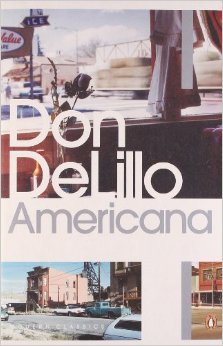
There is a passage from Don DeLillo’s debut novel, Americana (1971) which David Foster Wallace happened to underline in his copy of the book:
“David, I truly love you and hate you. I love you because you’re a beautiful thing and a good boy. You’re more innocent than a field mouse and I don’t believe you have any evil in you, if that’s possible. And I hate you because you’re sick. Illness at a certain point inspires pity. Beyond that point it becomes hateful. It becomes very much like a personal insult. One wishes to destroy the sickness by destroying the patient. You’re such a lovable cliché, my love, and I do hope you’re found the centre of your sin”.
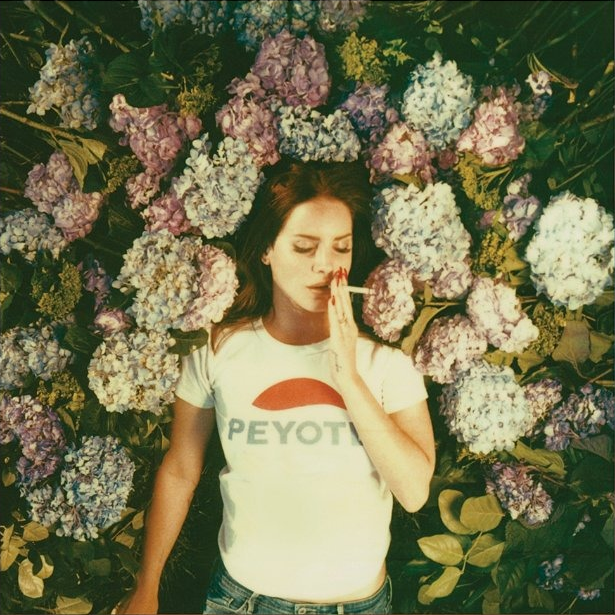
A ‘lovable cliché’: the sort of thing Lana embraces, makes raw and coats in her voice of smoke and silk. The antithesis of beauty and disgust, love and hate; how our attempts to disinfect the one from the other are doomed to fail. Culture is a contradiction. In Americana, the protagonist David Bell is a TV executive who finds himself deeply apathetic, despite being attractive, sharp and popular with the ladies. He frequently articulates his experiences, his life at large, as if they were a film. He becomes obsessed with finding meaning, embarking on a Kerouac-esque quest at getting to the nitty-gritty of America’s heart of darkness, but this documentary gets messed up in his attempts to re-stage and re-enact events from his past. I guess it’s true that the novel is all about unattainable desire, whether this is desire for meaning, personal fulfilment or something more carnal – the search for the centre of your sin which could easily be a Lana lyric. What’s more, this pathological fixation of DeLillo’s David Bell to some extent parallels Del Rey’s obsession with the silver screen version of America; the photography of Honeymoon’scover even resembles a sexier version of the Penguin cover for Americana:
While Del Rey’s female characters languish in their statically trapped daydreams of love and violence and Hollywood glamour, DeLillo’s version of Americana is largely embodied in the road myth and its cult of masculinity:
There is a motel in the heart of every man. Where the highway begins to dominate the landscape, beyond limits of a large and reduplicating city, near a major point of arrival and departure: this is most likely where it stands….Men hold this motel firmly in their hearts; here flows the dream of the confluence of travel and sex.
This kind of commentary permeates the book, often arriving at a kind of religious, anthropological rapture which lacks the self-consciousness of DeLillo’s later novel White Noise, but provides a rambling cultural landmark that paves the way towards the sort of position Del Rey occupies in the mainstream. The Beats, protesting consumerism even as they gorged on apple pie; Bret Easton Ellis, with his deeply despairing coterie of psychopathic, serial-killer yuppies and sexually-violent, chronically-bored L.A teenagers; Lana Del Rey, voicing the glorious wastage of our postmodern wasteland, our beaten bodies and minds, voicing her vision through scenes of sun-drenched nostalgia which evoke a beautiful and terrible America, made glossy and pure through stars and stripes, a delicate riff; drifts of strings, jazz, Instagram filters. That golden period where love suffuses with the candy-flavoured stuff of daydreams, movies: Honeymoon. The whole album renders a narrow reality of the past and present: it’s pastel-shaded afternoons lost to the call of the ocean, sad ballads of frustrated love (I lost myself when I lost you), electro blues; it’s The Blackest Day, with Billie Holliday, palm trees and prescription pills, throwing up the lilac and cinnamon-scented ash of society’s ills – emotional debris, disconnection, slowing tempos, the hullabaloo of static thrills.
Screen cap from Tropico (2013). Source: popoptiq.com





 mariaology