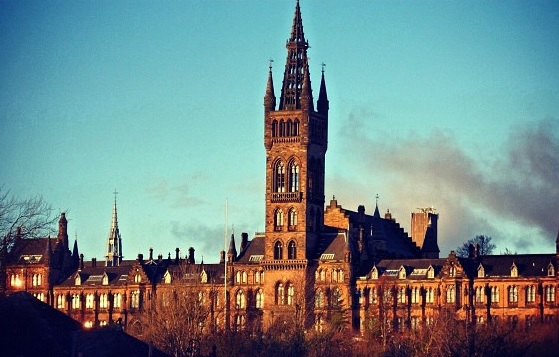
Exams and I have a fair degree of history together. From that fateful first day in third year when I waited anxiously outside a gym hall to sit my Standard Grade English, to desperately scouring the labyrinth that is Glasgow Uni, trying to find my Honours English Literature exams, or waiting in the rain outside the OTC building, trying not to get run over by passing cars as rain splashed onto my notepad, exams and I have gone through hell and back together.
And they’re a funny thing, exams. Subject to much controversy too, especially in recent years with the dominance of technology over almost all other forms of learning and examination (who hands in a handwritten essay these days? is it even allowed?). Exams suddenly seem awfully old-fashioned. Individual (wobbly) desks, ink spilling everywhere, people writing with fury in an echoey hall. It seems a strange idea, to sit you in a room at the end of the year, thrust a piece of paper in front of you and force you to desperately pour out something resembling an essay in response to a set of unseen questions. I’ve thought about them long and hard over my time at school and college and uni, and come up with some pros and cons:
Pros:
The fear forces you to study, to recap the information learned over your course.
The early stages of studying can be fun. You’re relearning and rereading, and in the process making interesting connections between texts, based on a more mature understanding of the course gained from reflection.
It can be an opportunity to shine, to show that you can come up with something original in a very short space of time.
You learn the value of concision.
If the questions are well-designed, the exam can be a true test of your analytical abilities and skill for quick-thinking – there are not many other times when you have the adrenaline necessary to formulate a coherent piece of writing in such a short period.
It’s nice to realise that you’ve learned chunks of poetry by heart. Even if they begin to slip away fairly quickly once you’ve left the exam…
Cons:
Risk of being a memory test. While remembering and recalling information is important for lots of subjects from law to physics, English Lit and other humanities subjects is often about critical thinking skills rather than just remembering ‘data’ aka quotes. Lots of students memorise whole essays and go into the exam, then shoehorn and regurgitate what they’ve stored in their head. Sometimes this works, other times it ends badly. Either way, it isn’t testing much more than your ability to write fast and repeat.
Anxiety. This is a real problem for some people and can really hinder their performance in an exam, even if they’ve studied hard.
Breadth vs. depth. In an essay, with the advantage of time and access to material, it’s a lot easier to formulate a response which balances careful close reading and discussion of relevant secondary criticism and theory. In an exam, it’s too easy to fall back into the trap of plot summaries, even though you’re perfectly capable of analysis. Exams don’t always reflect your ability to synthesise material, or the extent of the research you’ve done.
Too much weighting. In my degree, exams are worth 50% of each course grade. There’s a lot of stake in those two hours, and if you have a brain freeze or something goes wrong, you can really drag down all that hard work you put in during the semester.
There are probably lots more, but here are the ones that immediately spring to mind. My solution would be not to scrap exams entirely, but to use them more effectively. Perhaps have mid-term close reading tests, which would examine your ability to respond ‘naturally’ to a text and your critical skills, rather than just your memory. Maybe also a 25% end of term exam, replacing the other 25% with another 3000 word essay. Maybe it will go that way in the future with credit standardisation; some universities don’t have exams for English Literature at all. The problem of course is that unlike subjects such as law and medicine and business, exam conditions are more unlikely to be part of any aspect of a future career sprung from a literary subject. While some jobs will require you to do set tests e.g. solving financial problems as part of the interview process, you are unlikely to encounter something like that in journalism, academia, publishing and so on. An essay with a deadline seems more akin to the work English Lit tends to lead to.
I can’t remember the worst thing that’s ever happened to me in an exam. There’s always that brief five minute panic when ‘your questions’ haven’t come up, and you have to radically rethink your answers and quickly choose a question; but usually in turns out in the end, and often the most spontaneous answers get the best mark. I guess one of the hardest exams I’ve ever done is Higher Music Listening. I mean, it shouldn’t be, but it just seems to be this horrible trail of riddles, where you have to discern different instruments out of tangles of sound in a very short space of time before the clip stops playing. Also, because you have to maintain concentration as a room of people listening to the same tape, your brain gets pretty muddled. And you can get distracted: I was so excited when the tape played The Strangler’s ‘Golden Brown’ that I made such a hasty decision about which rhythm change it contained that I put the wrong answer down. The coding sections of Higher Computing were also tricky, and writing four essays in an hour and a half for Higher Modern Studies is always the bane of your fifth year existence. Every student in Scotland who did languages will probably remember the terrifying voice that blasted the announcement about this being the STANDARD GRADE FRENCH LISTENING exam through the crackly stereo at the back of a gym hall, with all the aggression of someone holding you up in an armed robbery.
***
There was a golden moment towards the end of my last exam, when I realised there was less than ten minutes to go, and I was onto the conclusion, and soon that would be me – done forever. I definitely wouldn’t say that I’ll miss exams (hopefully, I’ll never have to do one again unless I decide to take up driving), but there’s something completely rewarding about the adrenaline rush and the nerves and the exhausting release afterwards that seems pretty unique. A bit like doing the Olympics, but for your brain (and your wrist). To anyone who still has exams to sit, good luck and remember it’s not the end of the world; and ultimately, they are always going to be a somewhat artificial test of your ability!
(Also, I’d love to hear your thoughts on whether exams are a good means of assessment or not for literature-based subjects).
My degree programme requires you to take at least one ‘pre-1800’ course – i.e., anything that’s not Victorian or Modern, anything that stretches back into the depths of distant history. For some people, the prospect of reading up on Shakespeare or Medieval literature is a dream, but I chose a course which was dated 1660-1785 – the most modern dates I could get my hands on. I was at first pretty worried about studying the eighteenth-century, possibly sharing Esther Greenwood’s view in Sylvia Plath’s The Bell Jar: ‘I hated the very idea of the eighteenth century, with all those smug men writing tight little couplets and being so dead keen on reason’. When my copy of Samuel Richardson’s Pamela arrived, reading one paragraph of the heroine’s gushing account of her virtue left me exhausted. I looked at the fat Collected Works of Samuel Johnson and my heart sank. However, with some surprise, I soon found myself enjoying the books I was supposed to read. The truth is that the eighteenth-century has a lot more to offer than stuffy old men and their commitment to reason. Of course, it was the time of the Enlightenment, but it was also the time of radical social upheaval: of the expansion of empire, changing gender roles, political turbulence, religious opposition, the loosening of sexual mores and of course literary innovation. The renewed critical interest in eighteenth-century post-Reformation literature in recent decades has meant that the canon is no longer confined to Alexander Pope, Jonathan Swift and Samuel Johnson, as I feared it might be. I’ve had the chance to study more ‘obscure’ works by women novelists, parodies, life-writing, vicious epistles and pastoral poetry that does more than merely sentimentalise the countryside. ‘Tight little couplets’ neatly encapsulates the idea of formal restriction, but the eighteenth-century was actually a period of literary experimentation, facilitated by the shift from a system of patronage to individual publication, and the more general rise in literacy which meant there was a wider market for more writing. It produced the phenomenon of the ‘peasant poet’, as well as the likes of Lady Mary Wortley Montagu, an aristocrat and ‘woman of letters’; it saw the merchant Daniel Defoe becoming a successful novelist in his sixties after years of prolific journalism, and Jonathan Swift penning sharp satirical pamphlets that criticised government policy (suggesting that the problem of poverty in Ireland could be solved by fattening up the starving babies and feeding them to rich landowners…ah, never mind, just go read A Modest Proposal – but bear in mind the irony). So yeah, I’m going to give you a walking tour of what I’ve learned from studying literature in the eighteenth-century. It’s funny how much we already know about eighteenth-century literature, often without realising it. Reading Samuel Johnson’s Rasselas, for example, I was struck by how many of Johnson’s aphoristic statements have been absorbed into our general consciousness, such as that hardened phrase of pessimism: ‘Human life is everywhere a state in which much is to be endured, and little to be enjoyed’ or the wisdom of ‘do not suffer life to stagnate; it will grow muddy for want of motion’ (these terms acquired greater significance to me proportionate to the amount of time I was spending in the library, where life certainly grows muddy for want of motion). I was struck too by Alexander Pope, whose poetry is generally written in heroic couplets, which makes them snappy and easy to remember. So many couplets from An Essay on Criticism and An Essay on Man will strike most people as familiar:
‘Good-Nature and Good-Sense must ever join; | To err is human, to forgive, divine.’
‘True ease in writing comes from art, not chance, | As those move easiest who have learned to dance.’
‘Hope springs eternal in the human breast: | Man never is, but always to be blest.’
At first, Pope’s couplets do sound smug, especially in poems where he’s satirically tearing shreds from literary critics, other writers and the artifice of dress and manner which ‘ladies’ must shroud themselves with in ‘Epistle to a Lady’. But you start to get a feel for them, and the neat syntax and rhyme scheme quickly becomes pretty satisfying, especially in his Pastorals and Windsor Forest. Windsor Forest is an interesting poem because it’s a panegyric (a poem written to commemorate a public event) written to celebrate the Treaty of Utrecht (which was basically a deal allowing Britain freer access to the slave trade), but its attitude to slavery is ambivalent, and with his vivid images of animals being cruelly hunted, Pope via synecdoche (‘if small things we may with great compare’) invites us to compare the treatment of the pheasant to the foreign subject, the slave:
‘Short is his joy! he feels the fiery wound / Flutters in blood, and panting beats the ground’.
I’m quite happy I remember this quote from my exam. Anyway, it’s a fairly distressing image, with all the assonance of flutters and blood stirring up this sense of entrapment and terror, raising our sympathy for this humble piece of ‘game’. The poem is a good one to start with because you learn a lot about history from it, and the poetry itself is enjoyable to read. Pope definitely falls into pompous patriotism, especially towards the end, but because it’s framed through delicious images of silver and gold and rushing rivers, it’s hard to put the poem down purely because of it’s subject matter. And there’s always a sense of unease to Pope’s ideology, as it’s filtering through mythical allusions always adds an ambiguous, extra dimension to the meaning. This is the sort of thing you have to grapple with: not only ‘getting’ the mythical and historical references, but being able to trace their ambiguities through a poetic tradition you’re not quite familiar with.
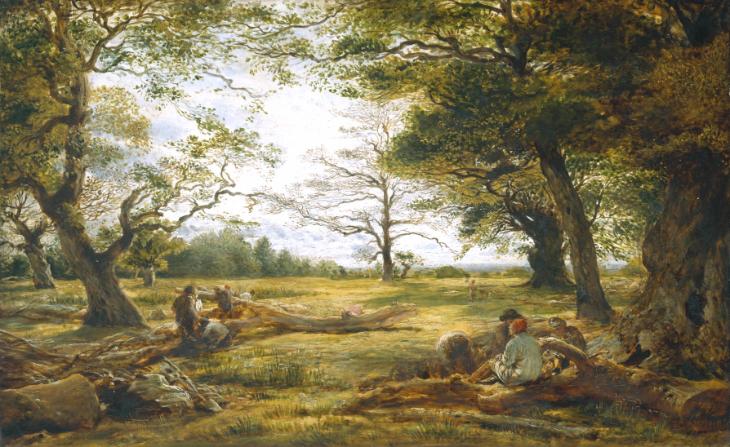
Windsor Forest (‘Wood-Cutting in Windsor Forest’) 1834-5, exhibited 1835 John Linnell 1792-1882 Presented by Robert Vernon 1847 http://www.tate.org.uk/art/work/N00438
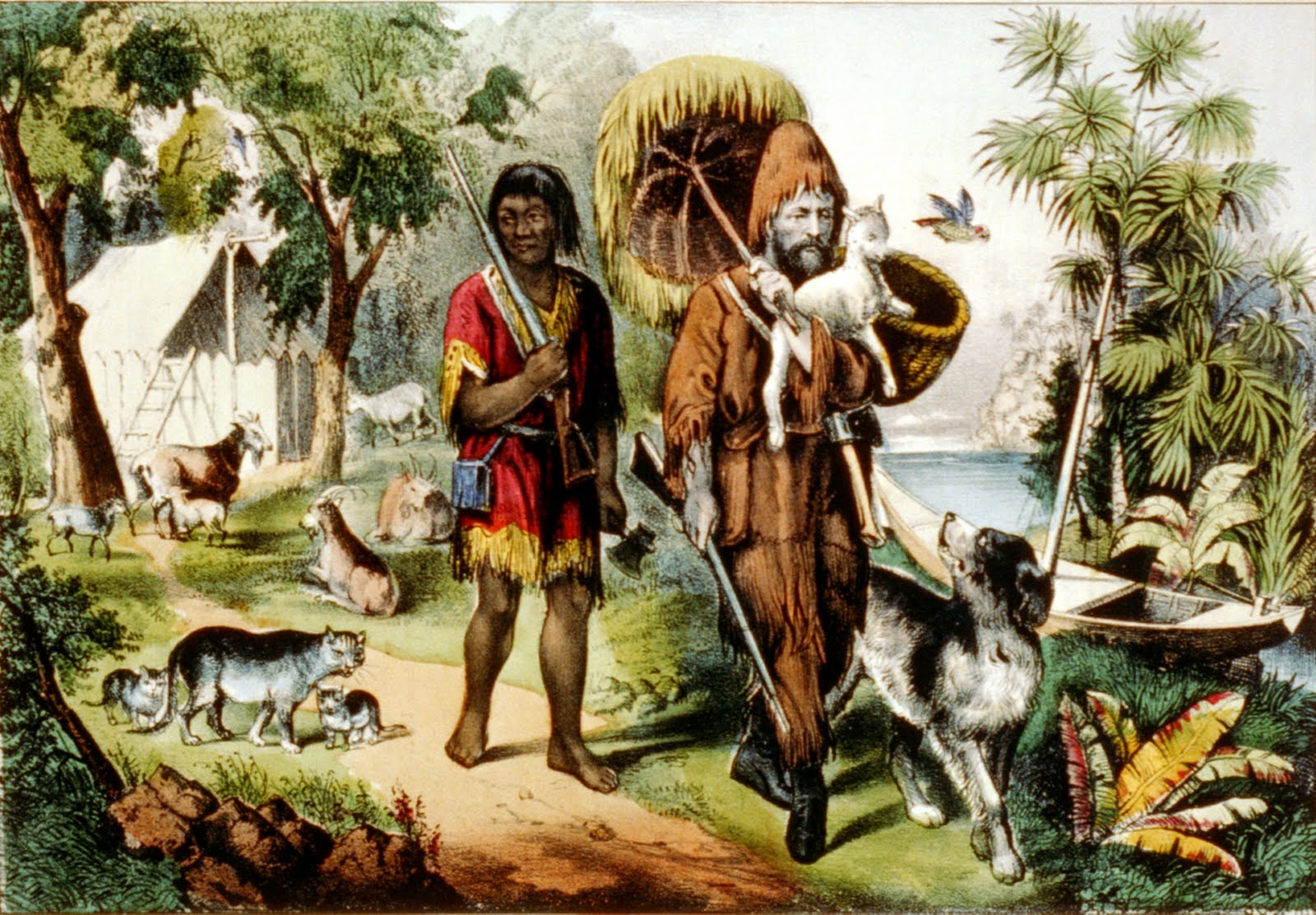
Then there’s Pamela, Samuel Richardson’s novel about a young servant girl who falls prey to her master’s endless and increasingly insistent attempts to seduce her, becoming more violent every time. While she does not suffer the terrible rape that Clarissa endures in Richardson’s much longer novel, Clarissa, Pamela goes through a lot and chronicles every scrap of it in her letters home to her parents. Pamela can seem a slog, especially with all those self-justifying lines about how pure she still is and virtuous in spite of everything. It’s frustrating that she never seems to do anything but weep and write and swoon. Still, there are some funny moments, like when she tries to escape but mistakes two innocent wee cows for scary bulls, adding a dab of Freudian psychodrama to the otherwise relatively static action. I guess the main thing we can take from this novel is its intense focus on the individual (something that wasn’t really available before in fiction, because romances were interested in characters as archetypes – princess, villain, hero – rather than real people), and the process of introspection, the attention to everyday detail. The same goes for Robinson Crusoe: part of what’s seductive about Defoe’s novel is not just the adventure and pirates, but all those long passages about how he sets up his little domestic fortress on the island; how he learns to cure raisins, build boats, grow corn. He goes into so much detail you think you’ll go mad, but when you go back and read it, there’s a certain satisfaction to it. You can imagine yourself in his position – Samuel Taylor Coleridge famously claimed that Robinson Crusoe’s success was that he represented human nature in general – and the novel becomes a sort of survival guide to living on a lonesome tropical island.
Incidentally, Crusoe’s story was loosely based on that of Alexander Selkirk, a Scottish man who ran away to sea to escape punishment for bad behaviour back home. When he got into an argument with the captain of his ship, he asked to leave and go ashore on one of the South Pacific islands they were close to. Selkirk thought some ship would come and find him soon enough, but instead he was stranded there for over four years. Crusoe, by contrast, is on his island for twenty eight years. Part of the wonder of the story is how sane he stays. Crusoe rediscovers religion and his spiritual devotion is essential to giving his life order and meaning on the island. It’s the little things that matter, that give him a sense of self: carving the days into a wooden cross, having dinner with his ‘family’ of animals and writing in his diary. The whole novel basically celebrates the power of human reason and endurance, as Crusoe notes that ‘by making the most rational judgments of things, every man may be in time master of every mechanic art’. I guess in this way it’s very typical of the Enlightenment attitude of the time, but there’s also a very strong capitalist motive for Crusoe’s actions and attitudes. As Ian Watt points out in The Rise of the Novel, many of Crusoe’s behaviours prefigure that of the canny venture capitalist: his restless travels for more trade, his saving of supplies and investing of crops, his careful planning of time and stock, and the mythological story of the individual’s capacity for survival. In fact, it could even be read as a kind of Puritan spiritual autobiography, because Crusoe has all his capital successes rewarded supposedly by ‘Providence’ as a blessing for his religious (re)awakening. It’s funny how a lot of eighteenth-century texts like Robinson Crusoe are perhaps best known for their adaptations into children’s literature (NOT as the rather awful film versions which insist on adding an irrelevant romance plot to everything). I suppose it’s because Defoe’s novel is also an adventure narrative, encountering pirates and ‘educating’ his ex-cannibal slave ‘Friday’ with Western values (another problematic but critically rich part of the story is Defoe’s relationship to ‘my man Friday’, which sheds light on the colonial context of the time). Another example of an eighteenth-century novel being famous as a children’s book is of course Gulliver’s Travels, by Jonathan Swift. The irony here is that Swift wrote this tale about fantastic worlds with tiny people, floating islands, people who could extract sunlight from cucumbers, giants and talking horses (Houyhnhnms) to deliver a harsh satire on the politics and Enlightenment culture of the period. Unless you have a canny eye or an edition rich with footnotes, you might miss all these references, and so revel along in Gulliver’s story and thus fall prey to the kind of naivety Swift critiques in Gulliver himself. Indeed, because the book was so cleverly prefaced and presented as a true account of a man’s travels, many people thought that the events and the strange places described were all true. In addition to lashing the follies of man’s claim to reason and pursuit of enlightened knowledge, Swift was attacking travel writing itself, albeit with lesser gall. He parodies the supposed objectivity of travel writing, and its attention to seemingly inane details. He gives very precise numbers, showing the reader how he cleverly carves up the worlds he encounters, noting ‘three hundred tailors’, ‘six of his majesty’s greatest scholars’ and so on. He also feels the need for self-justification, as when he describes how his excrement has to be taken away by two wheelbarrows by the tiny Lilliputians:
I would not have dwelt so long upon a Circumstance, that perhaps at first sight may appear not very Momentous; if I had not thought it necessary to justify my Character in Point of Cleanliness to the World, which I am told, some of my Maligners have been pleased on this and other Occasions, to call in Question.
Swift’s writings had been previously critiqued for their lewdness, as in A Tale of a Tub and ‘The Lady’s Dressing Room’, where the human body becomes a site of grotesque revelry and disgust. Swift, therefore, is here fashioning his own self-defence with thick layers of irony, inviting critics to judge him against his own self-protection, his free reign expression on matters abject and bodily. Travel writing was a big thing in the eighteenth-century, what with the growth of the British trade empire and the trend for the ‘Grand Tour’. While they didn’t have access to a railcard, undergraduate (men) would often take the Grand Tour of Europe, learning about refined French manners and Greek culture to more fully develop their education. This of course also involved a lot of drinking and probably visiting prostitutes, but then again, such matters were perhaps necessary to a gentleman’s education – he could ‘get it out of his system’ overseas and come back to Britain enlightened and satisfied and ready to be a ‘good’ citizen. Hm. One of my favourite pieces of travel writing is James Boswell and Samuel Johnson’s account of their journey to the Western isles of Scotland. Their approach was slightly different, as they each wrote separate accounts of the time. Boswell focused mainly on Johnson himself (as he tends to do in his writing!) whereas Johnson spent much time critiquing the dreariness of the scenery and observing the primitive lives of the locals with some disdain, though respect for their hospitality. You can read A Journey to the Western Isles of Scotland for free online via Project Gutenberg, and I think it’s worth a gander, if only to take a brief lunch-break holiday into the wilds of eighteenth-century Scotland. There is also a rather humorous article in The Telegraph detailing the author’s attempts to retrace the steps of Boswell and Johnson’s tour, though I am somewhat uncomfortable with his complaints about encountering a range of ethnicities rather than ‘native’ Scots on his tour…can Scottishness not finally now be defined as authentic through multiculturalism, as everywhere else in Britain, or must it still be hailed as a land of blood and soil nostalgia, pale skin and tartan…? just a wee grumble! I have only skimmed over the stuff we covered in our course on the eighteenth-century. Other things worth reading are the hilarious parodies of Pamela, which cast severe doubt on the veracity of Pamela’s ‘virtue’ and burlesque Richardson’s prose style – some good ones include Eliza Haywood’s Anti-Pamela and Henry Fielding’s Shamela. Also, Raymond Williams’ The Country and the City is a marvellous book which looks at how the countryside was often falsely represented in various examples of pastoral and Georgic poetry through the ages as an idealised contrast to the corruptions of the city. Millenium Hall by Sarah Scott is a very intriguing epistolary novel which has been dubbed a ‘feminotopia’, an early representation of a utopian community run by women on a country estate. I suppose what really strikes you about this period is the sheer diversity of works, and the strong political ties most of the literature displays. It was a time of experimentation, but because the novel in particular was still a nascent form, it’s possible to perceive all the strange incoherences, the little faults and cracks which allow us to reflect on the form in general and its relationship to ideology. Edward Said, after all, has argued that the novel is by definition born out of colonialism: it is ‘fundamentally tied to bourgeois society […] it accompanies and indeed is a part of the conquest of Western society […] the novel, as a cultural artefact of bourgeois society, and imperialism are unthinkable without each other’. The novel’s representation of social authority in the hands of the British, its focus often on middle-class life and relentless individualism are all part of this bourgeois basis of the novel. Whether we agree entirely with Said’s statement, it’s a compelling argument that challenges us to rethink how we consider what is probably the most popular form (other than celebrity biography) in the contemporary literary market. And I guess that’s one of the thing’s I enjoyed most about this course: returning to origins, understanding how modern literature came into being out of the cultural circumstances and experimentations of the long eighteenth-century. It is rather ironic that while Samuel Johnson characterised the typical novel reader as ‘the young, the ignorant and the idle’, reading novels is now one of those activities that mark you out as ‘cultured’, ‘educated’, perhaps even ‘bourgeois’. Not only in its form, but also in its critical reception, the novel has come a long way. Some extra info:
Pope’s Grotto. Source: popesgrotto.org.uk
Alexander Pope was a dissenting Catholic during the time of Protestant monarchy, which meant he was barred from participating in many societal institutions, like university. In 1719, he retreated to Twickenham in the rural outskirts of London, building himself a villa and a grassplot garden whose verdant beauty was to imitate the Arcadian landscapes of much of his poetry. Pope’s residence is notable and pretty cool because he constructed a tunnel under the road connecting his garden to his villa. It led to the basement of his villa in which he fashioned his own grotto. He wrote a rather beautiful description of his delight in a letter to Edward Blount:
When you shut the Doors of this Grotto, it becomes on the instant, from a luminous Room, a Camera Obscura, on the walls of which all the objects of the River, Hills, Woods, and Boats, are forming a moving Picture…And when you have a mind to light it up, it affords you a very different Scene: it is finished with Shells interspersed with Pieces of Looking-glass in angular Forms…at which when a Lamp…is hung in the Middle, a thousand pointed Rays glitter and are reflected over the place.
Well yesterday I handed in my final essays: the last pieces of coursework ever in my undergraduate degree. I expected to feel triumphant but instead I felt a little empty and sad and probably nostalgic. After all those years and sleepless nights and thousands of words painstakingly wrought out on laptop screens, it all boils down to two more essays and three exams. And then it’s over.
Photo from Fresher’s Week!
It’s difficult to know where to begin with reflecting about my university experience. Everything is usually divided between academic and social life. Employers and scholars, politicians and journalists all frequently debate which of the two is most useful for getting a job. Any careers event you attend will churn out the hackneyed refrain that ‘university isn’t just about academia’. They encourage you to get involved in societies, sports clubs, volunteering, student media. And all this is great, but we mustn’t completely neglect the whole reason we’re at university – some of us paying thousands of pounds a year to do so – to learn. And this learning isn’t all about getting a job (not for me at least), but about learning for education’s sake – for widening your perspective on the world.
The first essay I had to write was on Descartes for Level 1 philosophy. I believe the question was something like ‘Should we be worried by Descartes’ scepticism?’. This kind of question was a whole new ball-game for me. I was used to plain old terminology like ‘Discuss’, ‘to what extent’ and ‘examine/evaluate’. Not should we be worried? Should we? Are philosophical thought experiments really that important? Of course, the essay question was roundly subjected to confusion and piss-take amongst my fellow first year students, but I suppose it was a good way into a career in philosophy. You know, it was the kind of question that makes you think, that challenges your assumptions about what an essay should do. It’s easy to say that now, but at the time I was pulling my hair out. I remember maybe the worst library session I’ve ever had was one rainy Saturday afternoon, where I stared at a blank screen for four hours straight, glancing from book to book and desperately Google searching everything I meticulously typed up, in case it was similar to something else that had been written.
First years are constantly subjected to sermons on the sins of plagiarism. Whilst this is of course a vital academic lesson, it also makes essay-writing for the paranoid nigh on impossible. I remember for my English Literature essay, I decided to scour the internet for every form of critical interpretation available on my primary texts, just to check that I wasn’t repeating the same arguments as everyone else. I had still to learn that plagiarism is more about intellectual integrity, about learning to reference properly and using existing sources in an original way, than coming up with something that is wholly unique. One thing you learn from English Literature – in fact, probably any arts subject – is that the notion of pure originality is somewhat a myth. And that’s actually liberating, because it takes away the equation of creative genius; you’re suddenly allowed to see how authors frequently influence/borrow/steal/subvert one another’s ideas, and you no longer have to imagine essay-writing as an outpouring of wonderful, effortless analysis. It’s allowed to be a difficult process, built up from hours of reading, planning and collated note-taking. Not just something you fire out in an hour at the back of a high school English class.
To the eighteen-year-old me, that Saturday in the library, I wasn’t quite acquainted with all this. I was sitting next to a boy who was typing away furiously, producing what looked like three essays in the space of a few hours (the time it took me to write one paragraph that I eventually cut from the essay).
Philosophy, to be fair, is a subject notoriously confusing when it comes to essays. It shouldn’t be; it’s just that a philosophy essay is distinct from other kinds of critical analysis that I was familiar with through my hitherto social-sciency background. That tutorial we had, waiting to get our essays back, was really hellish. Everyone was telling each other how badly their friends in other tutorials had done. How harsh the marking was. Nobody knew what a philosophy essay was meant to be. We all expected D’s.
When my tutor read out my student number and I went up to collect my essay, I have never been so pleasantly surprised at a grade. An A3! I can tell you, that was the first and hardest earned A3 I have ever received at university.
The end of first year
Looking back, I think I probably spent most of my first two years at university in a vague state of panic. The thing is, most of the time you have no idea what you’re doing and what’s expected at you (I still don’t, but that’s now a good thing – again, liberating). There are rarely any rigid guidelines, especially in a subject like English Literature, and initially that seems terrifying. You are suddenly surrounded with all these people who went to better schools, all these people who’ve read The Complete Works of Shakespeare and can quote Byron and Shelley off the top of their heads. I would spend whole days in my little dorm room trying to get my head around basic terminology like iambic pentameter, chiasmus, ode, Ottava Rima, trochees, lyrics. I’m still terrible at counting metre in poetry, even though I have a background in music and am perfectly capable of keeping time when there are notes and staves involved. But I like to think that I’ve finally found some kind of ‘footing’ in the mountainous landscape of centuries of literature that I was first confronted with that sunny September in 2011.
As with anything, a big part of university is trial and error. You are going to do better under the guidance of some tutors more than others. You are going to write essays that you aren’t very sure of, and sometimes this will pay off, and sometimes it won’t. There are essays that you feel genuinely proud of, not even for the grade but because you know that all the research that went into them widened your intellectual horizons, and all that editing really did pay off in terms of style. It’s nice when you can read back an essay and not cringe at your choice of phrasing, or all those hiccups in grammar and punctuation. There are going to be nights in the library where you get the fright of your life from the tannoid telling you the reception desk is closing. There are going to be times when the library makes you sick, stressed, exhausted. Like when I had to sit next to a man who was eating raw, mud-covered mushrooms straight from the punnet and dipping them in hummus; or the time when the only computer I could find was next to someone who was licking and slurping the oily remains of his spaghetti from the bottom of a massive plastic tub. Times when there are tears involved; either yours or someone else’s. Fights witnessed and blows exchanged; where else but in the sleep-deprived environment of a university library would two people start brawling over a grubby old Dell with a greasy keyboard?
But then there are the best times, the late nights and early mornings and holidays when the library is lovely and quiet. You are free to roam the endless shelves and pick the desk on level 11 that looks out over a beautiful city view. When you finish an essay and print it and the paper is still warm in your hands as you leave to hand it in. When you stumble across a book that you weren’t exactly looking for, but it’s on long-term loan and looks very interesting.
I guess the semesters go so quickly that you hardly notice the time slipping. Sometimes, they seem like little footnotes to a long and formidable summer, with nothing to do but work and plough through the reading list and wish you had more money. If I could go back and do one thing I guess it would be making more use of my time. But then, I don’t regret all the evenings I spent immersed in journal articles and books, because that’s what’s shaped my mind. Sure, I might not have a degree with immediate career prospects beyond journalism or teaching, but I wouldn’t swap my education for the world. And I’d recommend Glasgow Uni English Lit to anyone, especially because it’s so steeped in critical perspectives and literature beyond the obvious canon. Where else would you start off a second-year semester reading Martin McDonagh’s gruesome play The Pillowman, or have a fourth-year seminar on Gone Girl and a course on Urban Spaces which divides its programme under mysterious headings like ‘Airport’ and ‘Shopping Mall’ rather than the tired titles you see across typical course Moodles. My degree (well, let’s hope I actually get it!) hasn’t just been about Shakespeare and Dickens and Austen, though they have all quite rightly featured. It’s about expanding the canon, and helping you sharpen as well as complicate and reflexively challenge your critical approach to all literature.
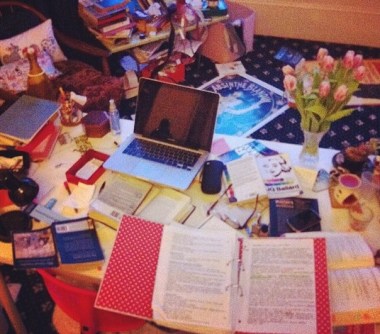
Last year’s exam revisionIf anything, I’ve learned to keep a slightly tidier desk.
On Tuesday morning, it was spring all of a sudden. I walked to campus feeling warm and happy, remembering the first spring I spent in the city. All those daffodils and the cherry blossoms around Hillhead, and the cheerful experience of the semester ending, everyone gathering for picnics at Botanic Gardens. Optimistically sleeveless, I sat on a stone by the Kelvin River reading Keats, feeling like this is what university is best at. The kind of magical experience unfortunately made cliché by campus films. When you’re in the sunshine reading poetry and you’re about to go in for one of your last tutorials. Sure, I still have three nasty exams to get through, but once they’re over, I’ll hopefully come out a little bit smarter, a little bit happier and a tad more employable. University, both at the academic, social and creative level, has definitely been the best experience of my life. I swear I won’t get sentimental; I’ll come back and do a Masters instead. (Let’s hope; if only).
It’s that little thing at the back of every undergraduate arts student’s mind: the dreaded dissertation. You find yourself at a Fresher’s Fair in the grand halls of some ancient university, poring over a prospectus for your dream course. There’s that word ‘Assessment’ and then, if you follow down the page, the words ‘Senior Honours’ and ‘Dissertation’. The percentage, length and allotted time period will vary between universities and courses. From my experience, it seems English Literature is fairly unique in its allocation of just one semester to complete your 8-10,000 word dissertation. Most other people I’ve spoken to tend to get two semesters, from September to March/April, to write their academic ‘masterpiece’.
Well, it’s not really a masterpiece, is it? It’s basically just several essays woven into an extended argument. Sounds simple enough. The trick is, they all say, to find a topic you really love and stick with it – if you manage that, then writing and researching will be a breeze. For some people, this part is easy. They’ve been waiting their entire degree to write about queer tropes in Medieval dream visions, the gender politics of Harry Potter, or, as Sylvia Plath’s Esther Greenwood prepares to write her thesis on in The Bell Jar, twin motifs in Finnegans Wake. For others, picking a topic is perhaps the hardest bit. I fell into the latter category. The advice we are always given is read as much as you can. Devour everything. Make notes, talk to lecturers. So in my junior honours year, I picked the courses that I suspected would be most up my street: American Literature 1900-Present, Modern Literature 1890-1945, Modern Literature 1945-Present and Literary Theory. All courses I would highly recommend to anyone in second/third year thinking ahead to picking next year’s honour’s courses. I suppose the whole time I was tracing vague themes that threaded themselves through my favourite books on these courses: textual effects of the uncanny, pastoral modes, madness, poststructuralist subjectivity, psychoanalysis, psychogeography, as much Derrida as I could even slightly get my head around.
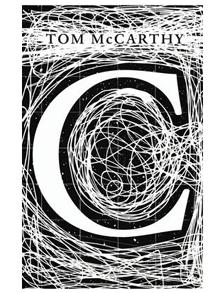
In the end, my dissertation interest fell on technology, as I was seduced by a very strange novel on my 1945-Present course: Tom McCarthy’s C. In a way, it’s an encyclopaedic novel which picks up on all of my favourite themes. A novel which, at the level of both form and content, weaves together questions of modernity, the avant-garde, wireless technology and theories of networked society and subjectivity. It’s a novel haunted by the flickering presences of insects, war, Freud, Joyce, Kafka, Ballard, Marinetti; a novel which inhales and exhales as many intertexts as it can possibly breathe in. A novel which disturbs with its themes of incest and violence, its lack of a strong sense of humanist ‘character’, but enlightens with mini-lectures on entomology, Egyptian history, the workings of various technologies. There are also bouts of dark humour that keep you sane throughout the narrative, along with its beautifully crafted imagery. McCarthy cleverly invokes the emergent technological communications of the early twentieth century to comment on our present condition in a world saturated with wireless signals and the ever-present dominion of the Internet, which is not really external to us but rather an inherent web through which we live our daily lives and experience our desires.
We had to submit our dissertation prospectus right after our exam period in May of this year. That was a stressful time; even though these prospectuses aren’t binding, it’s still difficult to come up with a semi-logical argument and assemblage of texts when your brain is still fried from months of exam revision. Still, it’s good that we were forced to think about it early. I spent the first couple of months of summer rereading my primary texts and thinking about some ideas I wanted to develop. By August, once I’d returned from seeing family in England, I suddenly hit panic station. In a month or so, I’d be returning to uni and then it would be a matter of weeks before the deadline. I thought of all the things that might threaten my ability to complete the deadline in that time. Being called for Jury service, work, deadlines for my other course that semester (Modern American Women’s Writing), a freak spell of perishing weather, my laptop dying, losing my pen-drive, falling into the dark pits of writer’s block or depression – the worries dragged on. Thankfully, these things either didn’t happen, or only happened to a perfectly manageable degree. In fact, it turned out to be possibly my favourite semester at uni.
You see, there’s something very rewarding and liberating in being charged with your own project. There are no specific guidelines for your particular topic: aside from the annotated bibliography and the final submission, you set your own deadlines; you decide the scope of your topic, the texts you want to read; you aren’t harrowed by the prospect of a final exam which may necessitate the memorising of quotes from every last piece you find yourself reading. Of course, it varies from supervisor to supervisor your experience of all these things. They are there to give you advice, to offer you ideas for further reading, but everyone goes about it in different ways.
So throughout August and September, while we were being blessed with an unusually bright summer, I found myself in the pits of the library almost every day, trying to get my head around all the theory I was planning to use. I read countless journal articles, chapters from monographs, books on or by the likes of Freud, Derrida, Deleuze and Guattari, Friedrich Kittler and Bernard Stiegler. Interviews with all my chosen authors. I jotted down pages and pages of notes, filling up a little sparkly notebook I’d bought to encourage me to get started early. My bibliography was already totting up nicely with tons of references. I was putting together a plan. It felt good, to feel motivated enough to work this hard.
Luckily, I managed to keep the momentum up throughout the semester. I wrote the dissertation originally split into three large chapters, the first two comparing various texts and the third focusing on C. It was easy to write (early mornings in the library or in bed) with my personal harsh deadlines always in mind. If I finished the thing early, I could breathe easy again. Fuelled on green tea and Dairy Milk chocolate, I got most of my dissertation written by Reading Week (mid-way through term). The problem was, my word count had gotten waaaaaay out of hand. I thought this was okay; just write now, edit later. But it’s kind of impossible to cut out as many words as I had. I tried rewriting the middle chapter over Reading Week and all I succeeded in was cutting the odd paragraph and making my prose sound better; there was still some serious trimming to be done. I went to my supervisor and pleaded my word count woes. Her excellent advice was to pick one – just one – chapter and stick with that. Now that’s a terrifying thought when you’ve just spent four months researching and writing on four primary texts that you’re no longer going to use. Nevertheless, it was something I had to do; I felt that to condense my argument as it was would jeopardise the quality of my analysis. Maybe one day I’ll go back and re-work my discarded material for a Masters. It’s a thing we all have to go through as Lit students, getting the balance between variety and depth. Fitting in both theory and close reading. In the end, I chose my third chapter on C and completely rewrote it with smaller chapters. Time will tell if that worked out okay.
Sometimes I think back to the process of dissertation writing we went through in sixth year at school, writing our Advanced Higher dissertations. Admittedly, they were half the size: English Lit at 4500 words, Modern Studies at 5000. You got all year to write them and in theory, there were more opportunities for help. Still, although I worked consistently throughout the year on both, there was still that last-minute panic dash to sort out small things: referencing problems, formatting issues, those evil little things that you think will be okay but come back to bite you. I remember the day before the Modern Studies one was to be handed in, my teacher phoned my mobile to tell me he just opened it to read and noticed that there were footnotes missing, or just floating around my document. So I had to get the bus back from college and traipse into the school that night at six o’clock to fix it. Similarly, last Tuesday night I found myself at five to six (and I needed to be somewhere else at six) in a tizzy at the library, surrounded by heaps of messed up paper and broken hopes. I thought I’d finished it, proofread it fifteen times (and got others to proofread it) but reading it again I was still finding things that had mysteriously disappeared, moved, or simply needed replacing. The bibliography giving me the wrong page numbers. Queue a mad dash from my computer to the library printers (over and over) as I kept replacing the mistake-ridden pages. This day was perhaps the most stressful in five months of working on the dissertation. No kidding, give yourself as much time as possible for formatting and proofreading. Word processors will be the death of me.
Maybe this is all hyperbole; after all, I got my dissertation in over a week early. What a great feeling, although it’s only now that it’s hitting me. It’s hard to grasp how much of your mind is occupied by your dissertation until you’ve done one yourself. Until you’ve handed it in. Even now, I still get names and references flashing through my mind and I worry did I put that in the bibliography? did I remember to mention this theory? where did that quote go? It’s really difficult to let it go.
Nonetheless, it’s not all fear and stress. In the end, I loved my topic and can really see myself going back to it, rewriting and expanding it in the future. Your dissertation is one of the most satisfying pieces of work you’ll ever produce at uni. Scrolling through the finished document, it feels good to see all that prose stretched out over many pages, and know that it’s all yours. You wrote it. You should be proud of that, no matter what mark you get. Sure, there will be times when you want to hide under your bed or a desk in the library and cry, when you want to fling your books out the window or delete every last silly word you have written, but in the end you have to break through the pain and just get it written. Accept it and let it go. If you get writer’s block, spend ten minutes free writing on anything at all that’s irrelevant to your dissertation. The weird person sitting opposite you in the library, for example. This should help to get your ‘writer’s flow’ back. Moreover, chocolate helps (indeed proves invaluable), as does a supportive friend (and/or flatmate). There’s a warm sense of ‘we’re all in this together’ amongst fourth year English students, particularly as the dissertation is such a lonesome project, so it helps to talk to someone about your ideas. Also, obviously, as everyone always says, a good topic makes for a good dissertation. But either way, it will be okay. You have to learn to be good with timekeeping, to narrow your argument and find ways of connecting and condensing it. All very useful skills for any kind of future critical writing you might engage with. And out of all the stress, the feeling of finishing your dissertation makes all the hard work worth it. So to anyone who has any kind of dissertation to write either this year or next, I say don’t dread it, but look forward to it.





 mariaology