Playlist: July 2019

IMG_7734.JPG

Ariana Reines has this poem called ‘Glasgow’ that features the lines: ‘We wanted life now / But not “real” life / We wanted the exact science / Fiction / We were living in / We didn’t want it’. I keep thinking that just living is so often this contradiction, or Eileen Myles declaring ‘a poem says I want’ and knowing how right they are, Ariana and Eileen, and where are we when we come to this knowing. I mean, why does such philosophising happen in a poem called ‘Glasgow’. It’s clearly set in Finnieston, I mean there’s ‘Berkeley Street’ and ‘the Sandyford / Hotel’. I wonder if Ariana knows the pawn shop is not really a pawn shop, or if she ever bought poppers or condoms or candy from the 24hr place near the Hidden Lane. Here I am with americanisms again. I mean I wonder if my idea of Ariana would bother nipping from her hotel room to replenish the tobacco she ran out of. Would she bauk at UK prices? Does she even smoke? My idea is always a she here and she likes to go into contingent nightclubs more than the store. It’s what we give away. Finnieston used to be not-expensive. I once wrote a poem called ‘Finnieston’, I was younger, it was kind of bad. It was about this release you get from finishing something, crossing a bridge. I used to go through the park to get to my friend’s house or the 78 and every other time the shops and bars along the strip would be different. A kind of fantasy district, reinventing itself coolly around me. Someone in the world is having the gentrification blues and listening to Courtney Barnett’s ‘Depreston’. Like sometimes I just sit and think, oh how about that whimsy! It’s hers, but you can borrow it with a jangle tone. Bottle it like Tango. And we shriek the world percolator into the dark, fizzing stars of etcetera. In the morning order lattes. Goodness sake is this what it is to write now, I love it.

Slowly, slowly. I measure out my life in Scotrail tickets. Walking around cities and trying to carve them into a poem, I mean that’s not what any of us are doing but it happens. Just comes, like orange. This month I spent a lot of time outside of my usual quadratic existence; I didn’t have to count the change in the leaves, there was already so much that was different. Things sped up. Once we live in it, do we not want it? Orange curls at the edge. That feels like a worded conundrum of someone who’s spent awhile on the streets, in some capacity. Not necessarily without home. I was counting the crisp packets from my perch on Uni Avenue, overlooking the construction works. Is it that nothing online is real as well, if you can have as real a nothing as the something of life? We don’t want this and yet it’s what we built, what we live in; we crave the ‘outside’ still, as though it were possible. It’s all in process. The station goes on a real bright tangent. 

I like to just say, Ariana Reines wrote a poem about Glasgow. I feel honoured on behalf of my adopted city. It ends ‘Way out’. This consideration of exits, secret passages under the Clyde, riding bridge-wise towards the April I had to trudge hungover from tea-room to tea-room, listening. Hey. I saw Ariana read last summer at the Poetry Club (thanks Colin!), I think she was wearing a white dress and she said she might menstruate at any minute, she said something beautiful about the sun and the moon, synchronicity, and it was exactly what we needed. I mean her sultry voice filling the room, release. I mean I felt validated in my cramps and misery.

Tiny red spots appear like a migraine painting my belly. 

There’s the rain now. The rain broke the heatwave. Is it Cetirizine causing my headache, this marathon pain like a marble rolling between my temples? When I go see Iceage play Broadcast, the room is sweltering. There’s a general jostling and adoration of bodies, like this guy is Scandinavian divine and just one lick of his sweat would cure your ills. The ills of a lack of a life. When we are living between. Catch It. I like to use the phrase ‘out west’ as a general euphemism for escape. Like sorry I gotta go, there’s a meeting out west, something happening out west, I’m owed time back west like the sky’s owed snow. A Sand Book (Reines, 2019). If you close it too fast the grains fall out. As though I could make of Kelvingrove the savanna that takes us out of my dreams. In the novella I wrote last year, there’s a whole childhood set there. It’s somewhere in America that you’d find in a song, but it crackles with violence and the fat-spitting fry ups of diners. Or does it at all. Who did she wait for.

Cherubic sleeping face.
Sketches of rooms.
Seafoam teal & mustard yellow.

There was a whole Monday morning in London I filled alone. It was strange to come close to a cacophony of accents you only usually heard on the telly, the city accenting its vowels to deliver things quickly. And yet we’d roll like beads in jelly, very slowly towards ourselves. I walked along Regent’s Canal with the flowers spilling out around me, cyclists slipping past and women smoking fags from canal boats, smiling their air of propriety. ‘Way out’ I could not go here. I knew if I stuck to the water it would all be fine, follow the line that was not the Tube. In London Field Park, someone had chalked XR slogans everywhere. ‘Rise Up’ was the order of the day in green and sorbet yellow. I tried to recount what had happened in a slim black notebook; I sat there on a bench for an hour and a half, just writing. A man asked me if he’d seen ‘a gaggle of unruly school kids’ come past. I answered in negative. There was only the other man on his phone, securing deals, pacing. Hot desking now meant you’d conduct interviews with iPads in parks, squinting against the light. I saw that also. I was at a gig where the band had a song about hot-desking. The drummer was also a vocalist, equalling my dilemma in the park: how to co-ordinate melody and rhythm. The runners ran past. Rucksack cutting into my shoulders. The air thickened black soot in my lungs but the buildings were lovely. I nearly left my orange socks behind. They weren’t even mine, originally. 

When the sun sets on Finnieston, you see it spill syrupy gold and pinks, dramatic skies up Argyll Street. 

Rise Up.   [?]

That tree was an ash, the other a sycamore. I found myself in St Pancras Old Churchyard, staring. Supposedly Mary and Percy Shelley would cavort here.

I could drink coffee and be utterly happy, in a New York poet kinda way. Better to be the one who’d been to New York. Just to say this happened, that happened, I like it or not. We live this. There is something we want to get out of. Taking the subway in endless circles. Glassware exotica rimmed with sugar-salt.

All the aloe vera on stage was infinite juice. 

Why the lack of seagulls here. Isn’t the Thames a tidal river?

People come to the gardens to make phone calls in London. Everyone exists in the cellular orbit of this extra life, the telephonic aura that follows them. Can you call my extension. She sits there with sushi on her lap. “Elaine’s not having IVF anymore.” I live off M&S egg and cress sandwiches for days, it’s good. Soon I would watch the land sweep back the sea from the train, heading north, east-coast. There was all this chewed-up rhubarb, but I sat there regardless. The birds were so tiny and tame, with their injured wings, polluted fashions. 

Casual nymph mode: Fairy Pools of Skye and a swim. The car ride singing Joni while the hills just spread their green; we are so deliciously far from Paris. I lie awake with the skylight, listening.

In Dumfries I eat vegan blueberry pie at the start of the month, we talk about American politics. I’d been watching that Years and Years programme and freaking out on a casual basis. When it’s the eve of 2029 and the grandmother makes a speech about the utopianism of thirty years prior, 1999, how we thought we’d sussed it. That got to me, because for the first time so clearly I saw my own lifespan as part of this history. I remember the millennium new year also, of course I do: my hair was crimped for the occasion, I ate pringles and kept my bunny close. Blonde self red-eyed pre-digital. I played Game Boy in lieu of karaoke; it was the latest I’d stayed up in my life. I had nothing to sing; soon I’d be seven. The exact science fiction of this scenario, Years and Years playing out the extension of what was already in motion, terrified because it was imminent, believable, situated here in front of us, the domestic reality of interconnection. But in a way, it felt very English and I realised that was different. Glasgow has its own science fiction and maybe it’s just this or better politics or something more solid that doesn’t result to a haze. I think of everyone jostling at the hothouse gigs. Something we can’t hold still, glass bottle of cider from your bag that might burst. I’m happy. That blueberry pie was so good. I didn’t even care about radiation.

In Sam Riviere’s poem ‘american heaven’ (Kim Kardashian’s Marriage, 2015), ‘the level of heaven we develop within us / is the level it was possible to imagine / of the assorted early 80s, on earth’. Keep reading these articles about local bands sporting eighties outfits, drinking in the same old man pub as the previous feature. A general vacuity coming on like a front, but what can we do, lacking the ‘facsimile architecture’ (Riviere) of a more american heaven? The pie was served without ice cream of course, that was the point. No dairy. I keep five different diaries this month, split across documents, notebooks, assortments of train tickets. Creamy excess of this prose. My purse empties a cascade of rectangular orange. I throw around terms like ‘post-vaporwave poetics’ and mean them sincerely. What if we had to incubate our own heaven first? Lana Del Rey: ‘You’re my religion / You’re how I’m living’ (Honeymoon, 2015). 2015 was a good year for heaven. We hadn’t had 2016 yet; we were almost teenage of a nation. Riot, right?

London is all facsimile architecture. There’s this slime in the canal that’s thicker than lawn turf, extra real. I can’t stop thinking about that. Algaeic esplanade trapping the fishes. Can’t stop listening to that King Gizzard song, the refrain that’s like ‘I’ve let them swum’ and maybe that’s minimal ethics for the anthropocene. You just perform a minor twist in grammar, you make that the way you live: 

Our human responsibility can therefore be described as a form of experiential, corporeal and affective “worlding” in which we produce (knowledge about) the world, seen as a set of relations and tasks. This may involve relating responsibly to other humans, but also to nonhuman beings and processes, including some extremely tiny and extremely complex or even abstract ones (microbes, clouds, climate, global warming). Taking responsibility for something we cannot see is not easy.

(Zylinska, Minimal Ethics for the Anthropocene, p. 97)

You could say the hypothetical fishies. We can fish for other things! Sentiment, care! Wholesome lyrics leading towards charismatic solos. Some kind of upbeat. Magikarp! so nothing happened. Things beneath the orange-green we cannot see. How are we supposed to care for slime? That song is a world, makes over the world. I think of powder and glow, contour, blend, gloss — a process of ‘make up’ or making up that structures Kim Kardashian’s Marriage (from ‘Primer’ to ‘Gloss’), that fashions a map of the face, the frontal location for ethical relations. In the library, the girl beside me writes about South Korean politics while listening to ASMR makeup videos. We all have our imminent fictions; not ‘real’ life, but it’s not always science.

Sometimes I want algaeic to fall into angelic, both pertaining to light. 

We didn’t want to live in the life we made to live in where we might want. 

To walk down the Royal Mile in the rain, bumping tourists, slowly crunching into an apple and letting your hair down into noise, a sort of soundcloud rap of near-distant, muted present. The apple was green and particularly sweet, low volume, like something discovered in the pockets of a pair of jeans you borrowed.

I’m awake at four am again. It doesn’t seem to matter so much. The gulls are morning/mocking. Later I’ll be at the kitchen table, chewing oatcakes with the window open. Reading Peter Sloterdijk’s Foams: Spheres Volume III. Is extinction one kind of what he calls ‘semantic antibodies’? Who is trying to excise that from the conversation? 

Mostly I dwell in vicarious haircuts.
There’s a thought after the thought.
Drink whisky in the park, read fiction.
Your pinstripes lack a fly but still.

We fall asleep five times watching this Will Smith documentary about the planet. We never finish an episode. It seemed to stage the incoherence of a Hollywood sublime set to reverie’s overdose, but only the scene where he’s playing with his dogs in the garden remains. Sepia, sleep better. I slept deeper than a rock at the bottom of everything. June still feels like a dream. 

I only want to get home to write the day. Every entry begins, another sweltering

That’s what…good is?


~


Slowdive – Sugar for the Pill (Avalon Emerson’s Gilded Escalation remix)

The 1975 — The 1975 feat. Greta Thunberg

Mark Hollis — The Daily Planet 

Grouper — Invisible

Laurel Halo — Out

Joni Mitchell — Rainy Night House

Devendra Banhart — Kantori Ongaku 

Joanna Sternberg — For You

RF Shannon — Angeline

Fionn Regan — Collar of Fur 

Thee Oh Sees — Moon Bog

King Gizzard & The Lizard Wizard — Fishing for Fishies

(Sandy) Alex G — Hope

Slow Hollows — Selling Flowers 

Frog — Bones

DIIV — Skin Game

Ibeyi — River 

Blood Orange, Tori y Moi — Dark & Handsome

Aisha Devi — The Favor of Fire 

How to Dress Well — Nonkilling 6 | Hunger

Organ Tapes — Springfield 

black midi — Western

Bon Iver — Faith

TOPS — Sleeptalker

Let’s Eat Grandma — Salt Lakes

Carla dal Forno — Took a Long Time


Playlist: March 2018

IMG_0249

IMG_9922

IMG_0032

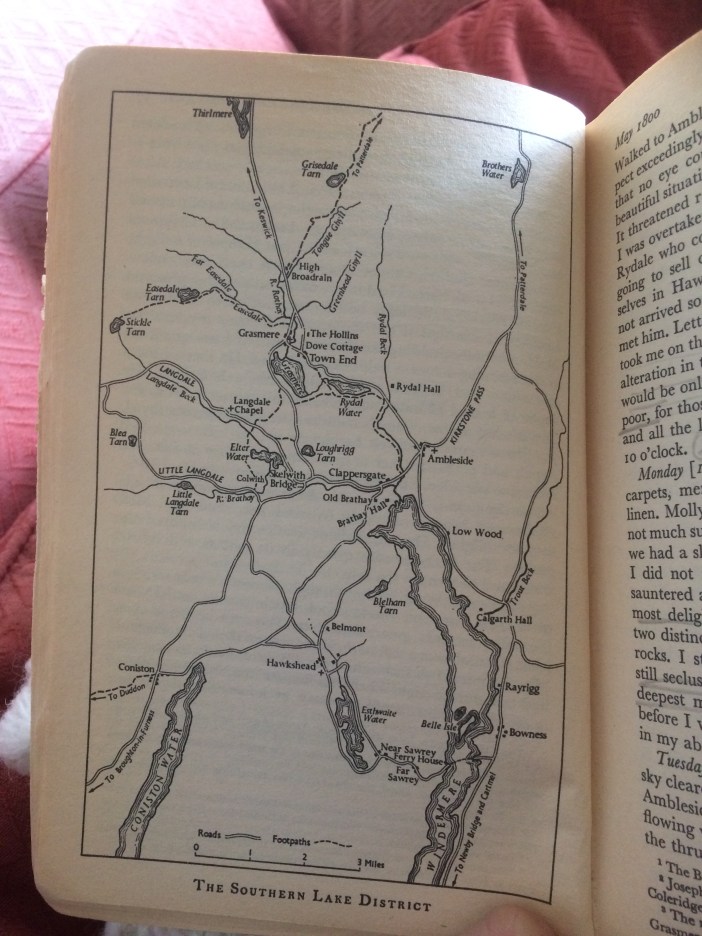
I was turning all the lights off, trying to mute history. There were several moments in which it felt like things were changing, possibly blossoming for the better. The aftermath stung and went backwards again. There was a song about the M62 I followed briefly, thinking about motorways more generally and something expansive and grey, crossing the Pennines eventually. For a week, I wrote down descriptions of the sky. Mostly they read: the sky today is grey. I then started noting the patterns in Dorothy Wordsworth’s journals, which often begin with vignettes of the morning:

3rd February. A fine morning, the windows open at breakfast.
6th March. A pleasant morning, the sea white and bright.
26th May. A very fine morning.
31st May. A sweet mild rainy morning.
2nd June. A cold dry windy morning. 

Mostly, she summarises the day. There is much letter-writing, Coleridge dining, William writing. Walking, cooking, taking guests. There is a rhythm and comfort to her entries, the circling of Ambleside, the sauntering in sun and air. Days condensed and hours expanded, cute little details in pastoral glimpses: ‘Pleasant to see the labourer on Sunday jump with the friskiness of a cow upon a sunny day’. She sees into the life of things. She inspires me to mark the simple, joyous moments of daily existence. Like walking home along Sauchiehall Street (the nice part towards Finnieston), close of midnight, seeing a couple in each other’s arms, sobbing, the man with a bunch of flowers held behind his back. They were not by any means striking flowers, probably bought cheap and last minute. I wonder what sort of gesture they were supposed to convey. At what point in the night did he decide to buy them; did he attain them from those wandering women who pray upon drunks with their floral wares? Did he cut himself, ever so slightly as he paid for those unlovely thorns? Is love always a form of apology for self? The self when it expands beyond too much of itself, hotly craving?

17th March. I do not remember this day. 

It seems irrelevant to say, today is Easter Sunday. Jackdaws torment me in the expensive fruit of a wakeful morning. I imagine pomegranate seeds falling from a pale blue sky. These days unfold with wincing clarity, like the hypnotic drag of a Sharon Olds poem: ‘I could see you today as a small, impromptu / god of the partial’. There are things we are maybe not supposed to remember. As if survival were a constant act of lossy compression. Like a contract between two people, pinkie promise, except one of you has broken it. Has let out the glitches. Your dreams and daily reveries are full of the content you’re not meant to remember. You are clasping this thing as if it might live again, and indeed it might really. It is not easy to simply file away memory. Its particular phraseology of physical pain comes floating to the surface regardless. There are techniques of displacement. Letting yourself shimmer in the wind. It was one more step to be gone again. So every song I went to put on, clicking the laptop, he was like, stop, it’s too sad. When they ask what’s wrong and you’re smiling instead, worrying the edge of your lips into muscles you don’t recognise at all. The room was a singular bottle of beer and a breeziness to other people’s sweetness. They wear lots of glitter and laugh as we did once. They are singing. I feel like the oldest in a test of forever. But anyway this is all only temporary. Things break down but they do not go away.

30th March. Walked I know not where. 

I watch a film about plastic in the ocean. They haul fish after fish, bird after bird, prise exorbitant quantities of bottle caps, ring pulls, microbeads and indiscernible fragments from stomachs and lungs. It is quite the display. Hopelessly choking. Seems obscene to describe that deep blue as ever pure again. There are patches of plastic in all its particles swirling. It makes not an island exactly, more like a moment in species collision. Whales absorb plastic in the blubber of their skins, digesting slowly the poisons that kill them. I wrote a story about a whale fall once. The protagonist trains in swimming, in underwater breathing, in order to enter other worlds: ‘This place is a deep black cacophony; you hear the noises, some noises, not all the noises, and you feel the pressure ripple pulling under you’. There have been bouts of sleeplessness this month that feel like dwelling inside a depleting carcass. If every thought dragged with subaquatic tempo. Blacking out at one’s desk into sleep. Forgetting in the glare of screen flickers. I meet people for coffee and feel briefly chirpy, stirring. There are pieces of colour, uncertain information, clinging to the shuddering form of my body. Do not brush my hands, for fear of the cold. I am so blue and when he squeezes my fingers my insides feel purple. The woman at the counter remarked on the cold of my hands. I am falling for the bluest shade of violet. How anyway in such situations I become the silent type as I never do elsewhere. So ever to cherish a bruise as violet or blue. I polish vast quantities of glassware, lingering over the rub and sheen. One song or another as 4.30am aesthetic.

Emily Berry: ‘All that year I visited a man in a room / I polished my feelings’.

The questions we ask ourselves at work form a sort of psychoanalysis, punctuated by kitchen bells and the demands of customers. What superpower would you have? The ability to live without fear of money. We laugh at ourselves as pathetic millennials. I have nothing to prove but my denial of snow, power-walking up Princes Street on the first bright day of the year. The sky is blue and the cold flushes red in my cheeks. But I am not a siren, by any means; I wish mostly for invisibility. The anthem for coming home the long way is ‘Coming in From The Cold’ by the Delgados, feeling the empathy in lost dreams and the slow descent into drunkenness that arrives as a beautiful warning. Like how he deliberately smashed his drink on the floor in the basement out of sheer frustration with everything. The ice was everywhere. As though saying it’s complicated was an explanation for that very same everything. The difficulty of cash machines. Emily Berry again: ‘I wanted to love the world’. In past tense we can lend shape to our feelings. Will I know in a week or more the perfect metaphor for this dread, this echo chamber of grey that longs to be called again? I punch in four numbers.

I covet my exhaustion in slow refrain. There are people whose presence is an instant comfort. There are people you’d like to kiss in the rain; there are people you’d kiss in the rain but never again. What of the gesture of that bouquet? Surprise or apology? The sky is catching the mood of our feelings. Is this a melancholic tone of regret, or maybe an assured and powerful one? I twist round the memory of a mood ring; its colours don’t fit. I photograph the rings beneath my eyes, finishing an eleven hour shift. She shoves rose-petal tea biscuits under my nose but I smell nothing. I watch the chefs at work, caressing their bundles of pastry and sorrow/sorrel and rocket. I climb many stairs and assemble the necessary detritus of another funeral. Sadness requires a great deal of caffeine.

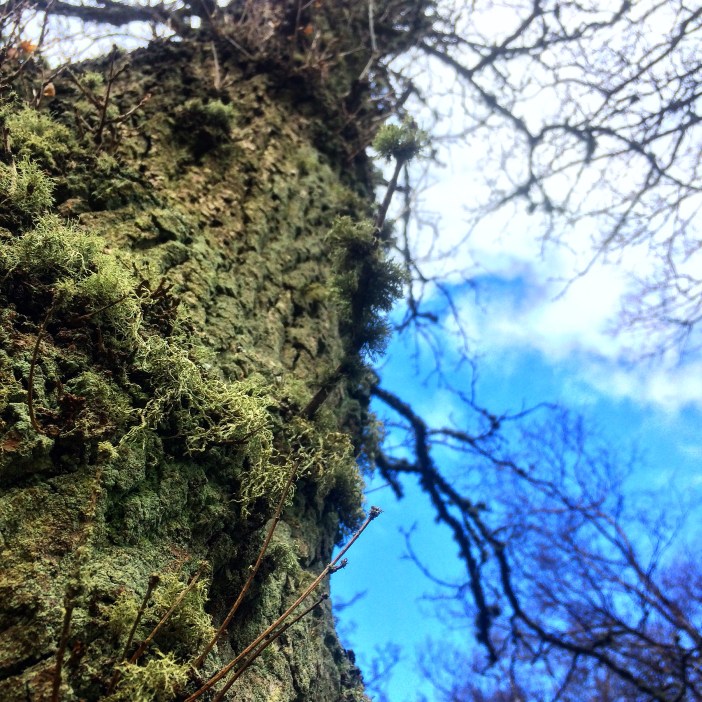
I eat mushrooms on toast with Eileen Myles. I long for the lichens on the trees of Loch Lomond. I sleep for three hours in Glasgow airport, on and off, cricking my neck and drifting in and out of vicarious heartbreak. Lydia Davis is often perfect:

But now I hated this landscape. I needed to see thing that were ugly and sad. Anything beautiful seemed to be a thing I could not belong to. I wanted to the edges of everything to darken, turn brown, I wanted spots to appear on every surface, or a sort of thin film, so that it would be harder to see, the colours not as bright or distinct. […] I hated every place I had been with him.

(The End of the Story)

Must we coat the world in our feelings? What of the viscosity that catches and spreads on everything? There is an obscenity to beauty in the midst of defeat. Year after year, I find myself dragged into summertime sadness. There is so much hope in the months of June and May, soon to dwindle as July runs spent on its sticky rain. The lushness of a city in bloom, all fern and lime, is an excess beyond what dwells inside, the charred-out landscapes of endless numbness—or ever better, missing someone. We covet the world’s disease as externalisation of our hidden pain. Let things fragment and fall away; let there be a sign of change in motion. How hard it is to be happy around depleted friends; how hard it is to be sad among joyous friends. They pop ecstasy and go home for no reason. It is self-administered serotonin that mostly buoys up the souls of the lonely. There were songs from the mid-noughties that now sound like somebody shouting down a coal mine. I want to offer them a smile and a cup of coffee. It’s all I have, the wholesome concatenation of smooth flat-whites.

There is a song by Bright Eyes, ‘If Winter Ends’: ‘But I fell for the promise of a life with a purpose / But I know that that’s impossible now / And so I drink to stay warm / And to kill selected memories’. Winter’s demise in conditional form. Alcohol convinces us of a temporary rush into the future that blooms and is good, is better than before. The drinkers I know have muffled recollections, blotted out mostly by false nostalgia. We covet a swirling version of life in the present, its generous screen flickers, its spirals of affect. We pair off in the wrong. There are days when nothing will warm me up—not the dust-covered space heater, not the hot water bottle, not the star jumps that scratch heart-rates out of the hour. Was it the same sensation, hanging on for his vowels on a hazy afternoon, four o’clock stolen from whatever it was I was supposed to be doing?

Summer, however, is forever. It is supposed to be best. The clocks skip forward.

I learn to riso-print. To work with the uncertain blot and stealth of brighter inks. What results is a marvel in teal and burgundy, splashed with cyan. See it as past with glitters of future.

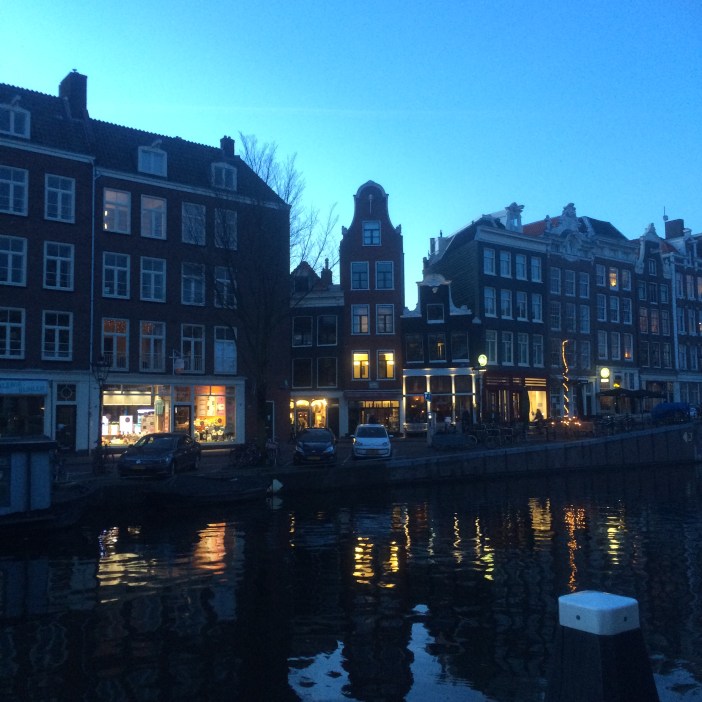
In a cramped, fourth floor hotel room in Amsterdam, I lay on my bed, leg-aching, listening to ‘Shades of Blue’. Yo La Tengo get it, the vaporous sprawl of the days upon days, days replacing days: ‘Painting my room to reflect my mood’. It is a kind of overlay, the new versions of blue which are deeper maybe than they ever were before. Which lend alter-visions to original blues, the ones you thought were bad before. I see my first IRL Yves Klein in the Stedalijk museum. Words elude this particular blue. It is deep and extravagant and more oceanic than the ocean would dream of. I have no idea what materials or dreams created this blue. Lazuli, sapphires, the pigmented stain of a rare amphibian? It is the steady, infinite eye of the Pacific. It is sorrow itself, the wound of the world. The Earth bleeds blue, not red. It is this kind of blue, a supranatural blue. After the first crisp cold of a new blue day, the rest of the week is brumous and mild. My feet get wet in a cemetery. I learn that Paradise Valley is an affluent town in Arizona, and not in fact merely a Grouper album. I drink mint tea all week to detox, then stay up all night when I get home. The gin sodas sparkle within me for days, but I’m feeling guilty.

The canals are parallel, the streets are winding. There are neon and fishnetted girls in windows, drolly sipping mysterious drinks. Their eyes are heavily lined. Nobody is looking. The air is warm and spicy at night. The tourists admire displays of various erotic paraphernalia; I take pictures of the lights splashed gold on the water. They say if you get to know the place, you can really settle into a meandering layout. A guy at work supplants my name for ‘Marijuana’. I wonder if ever I’ll be someone’s Mary Jane, and what that means in the long run. Feels like a Green Day song. Marijuana, they’ll say, Marijuana I miss you. There are pockets of Finnieston that waft forever between early summer and fullness of June; evenings hung by the scent of a stoned hour poised on forever. I stay sober. I think of the river, the people and dreams it steals. The world crystallises with ridges of cold, so I must sleep beneath sheets in my click&collect coat. Blue-fingered, shivering.

Carl Sagan’s ‘Pale Blue Dot’ has been lingering on my mind: ‘Consider that dot. That’s here. That’s home. That’s us’. I keep writing out line after line, just for the sake of avoiding full stops. I’m not yet ready for that singular compression, even as it strikes in its simple beauty.

There was the massive, narcotic blue of the sky from the airplane. A blue you can cling to. A blue you descend through.

Lana Del Rey: ‘Blue is the colour of the planet from the view above’.

Pop singers these days are attuned to new scales. That Bright Eyes song opens with a whole lot of static and children shouting, rasping. It is like watching some black-and-white film in a museum, shudders of war or monsters in every low boom and flicker. There are ways we strum ourselves out of the mourning. It’s okay to be enraged and frustrated. Oh Conor, how I love you: ‘and I scream for the sunlight or car to take me anywhere’. So when things fall apart, fray at the edges, I’m thinking of myself as a place, a location elsewhere, ‘just take me there’, and the ridge of my spine is a highway that ends where the best palm glows afire by its imaginary desert. The curve of my neck and uncertain horizon, something of all this skimming around by the brink of etcetera. What else do I have to say but, ‘it’s gonna be alright’, not even realising when I am quoting something. It is hot here, adrift on this sofa, then cold again.

The walks grow ever more indulgent, Mark Kozalek humming in my ear. I think of all his familiars. I think of my younger self thinking of all his familiars. Is it cats or is it women. How many supplements do we make of lust?

The day afterwards, it’s best to drink again. Grapefruit is cleansing. You can order whole pitchers but I choose not to. A certain suffusion of gossip and horror, ice cubes crunched between teeth to ease up the gaps where I’m meant to speak. I see Hookworms play the Art School and they were incredible: they were a rush they were eons of dizzy vigour and sweetness, the music you want to surrender to. I stop giving customers straws with their orders. It snowed again. I wasn’t drinking; I was wearing green for Paddy’s Day. I was so tired my eyes felt bruised. I keep dreaming of islands, motorbikes, exes; broken tills and discos. The flavour of these dreams in surf noir; like even in the city it’s as if a tidal pull is directing everything. I don’t mind being sucked away into nothing; I don’t mind feeling the impulse of a pale blue dot. At least in my sleep. A good collapse. The order of pain is reducing.

29th June. It is an uncertain day, sunshine showers and wind.

This week I will find a hill for my vision. New forms of erasure. I see myself boarding a train.

~

Yo La Tengo – Shades of Blue

Bright Eyes – If Winter Ends

Iceage – Pain Killer

Tessela – Sorbet

Bjork, Arca, Lanark Artefax – Arisen My Senses (Lanark Artefax remix)

CZARFACE, MF DOOM – Nautical Depth

King Gizzard & The Lizard Wizard – Barefoot Desert

Grouper – I’m Clean Now

Sean Nicholas Savage – So It Appears

Snail Mail – Pristine

Little Comets – M62

Manchester Orchestra, Julien Baker – Bad Things to Such Good People

Hop Along – How Simple

Frankie Cosmos – Apathy

Sharon Van Etten – I Wish I Knew

Amen Dunes – Believe

Cornelius, Beach Fossils – The Spell of a Vanishing Loveliness

Sun Kil Moon – God Bless Ohio

Good Morning – Warned You

Lucy Dacus – Addictions

The Delgados – Coming in From the Cold

Belle & Sebastian – We Were Beautiful

Mark Kozalek – Leo and Luna

Pavement – Range Life

Firestations – Blue Marble

The World is a Beautiful Place & I Am No Longer Afraid to Die – Heartbeat in the Brain

Manic Street Preachers – Dylan & Caitlin

Bob Dylan – Just Like Tom Thumb’s Blues

Crosby, Stills & Nash – Hopelessly Hoping

Courtney Marie Andrews – Long Road Back to You

Grateful Dead – Box of Rain

On Finishing University

2

Well yesterday I handed in my final essays: the last pieces of coursework ever in my undergraduate degree. I expected to feel triumphant but instead I felt a little empty and sad and probably nostalgic. After all those years and sleepless nights and thousands of words painstakingly wrought out on laptop screens, it all boils down to two more essays and three exams. And then it’s over.

Photo from Fresher's Week!
Photo from Fresher’s Week!

It’s difficult to know where to begin with reflecting about my university experience. Everything is usually divided between academic and social life. Employers and scholars, politicians and journalists all frequently debate which of the two is most useful for getting a job. Any careers event you attend will churn out the hackneyed refrain that ‘university isn’t just about academia’. They encourage you to get involved in societies, sports clubs, volunteering, student media. And all this is great, but we mustn’t completely neglect the whole reason we’re at university – some of us paying thousands of pounds a year to do so – to learn. And this learning isn’t all about getting a job (not for me at least), but about learning for education’s sake – for widening your perspective on the world.

The first essay I had to write was on Descartes for Level 1 philosophy. I believe the question was something like ‘Should we be worried by Descartes’ scepticism?’. This kind of question was a whole new ball-game for me. I was used to plain old terminology like ‘Discuss’, ‘to what extent’ and ‘examine/evaluate’. Not should we be worried? Should we? Are philosophical thought experiments really that important? Of course, the essay question was roundly subjected to confusion and piss-take amongst my fellow first year students, but I suppose it was a good way into a career in philosophy. You know, it was the kind of question that makes you think, that challenges your assumptions about what an essay should do. It’s easy to say that now, but at the time I was pulling my hair out. I remember maybe the worst library session I’ve ever had was one rainy Saturday afternoon, where I stared at a blank screen for four hours straight, glancing from book to book and desperately Google searching everything I meticulously typed up, in case it was similar to something else that had been written.

First years are constantly subjected to sermons on the sins of plagiarism. Whilst this is of course a vital academic lesson, it also makes essay-writing for the paranoid nigh on impossible. I remember for my English Literature essay, I decided to scour the internet for every form of critical interpretation available on my primary texts, just to check that I wasn’t repeating the same arguments as everyone else. I had still to learn that plagiarism is more about intellectual integrity, about learning to reference properly and using existing sources in an original way, than coming up with something that is wholly unique. One thing you learn from English Literature – in fact, probably any arts subject – is that the notion of pure originality is somewhat a myth. And that’s actually liberating, because it takes away the equation of creative genius; you’re suddenly allowed to see how authors frequently influence/borrow/steal/subvert one another’s ideas, and you no longer have to imagine essay-writing as an outpouring of wonderful, effortless analysis. It’s allowed to be a difficult process, built up from hours of reading, planning and collated note-taking. Not just something you fire out in an hour at the back of a high school English class.

To the eighteen-year-old me, that Saturday in the library, I wasn’t quite acquainted with all this. I was sitting next to a boy who was typing away furiously, producing what looked like three essays in the space of a few hours (the time it took me to write one paragraph that I eventually cut from the essay).

Philosophy, to be fair, is a subject notoriously confusing when it comes to essays. It shouldn’t be; it’s just that a philosophy essay is distinct from other kinds of critical analysis that I was familiar with through my hitherto social-sciency background. That tutorial we had, waiting to get our essays back, was really hellish. Everyone was telling each other how badly their friends in other tutorials had done. How harsh the marking was. Nobody knew what a philosophy essay was meant to be. We all expected D’s.

When my tutor read out my student number and I went up to collect my essay, I have never been so pleasantly surprised at a grade. An A3! I can tell you, that was the first and hardest earned A3 I have ever received at university.

The end of first year

Looking back, I think I probably spent most of my first two years at university in a vague state of panic. The thing is, most of the time you have no idea what you’re doing and what’s expected at you (I still don’t, but that’s now a good thing – again, liberating). There are rarely any rigid guidelines, especially in a subject like English Literature, and initially that seems terrifying. You are suddenly surrounded with all these people who went to better schools, all these people who’ve read The Complete Works of Shakespeare and can quote Byron and Shelley off the top of their heads. I would spend whole days in my little dorm room trying to get my head around basic terminology like iambic pentameter, chiasmus, ode, Ottava Rima, trochees, lyrics. I’m still terrible at counting metre in poetry, even though I have a background in music and am perfectly capable of keeping time when there are notes and staves involved. But I like to think that I’ve finally found some kind of ‘footing’ in the mountainous landscape of centuries of literature that I was first confronted with that sunny September in 2011.

As with anything, a big part of university is trial and error. You are going to do better under the guidance of some tutors more than others. You are going to write essays that you aren’t very sure of, and sometimes this will pay off, and sometimes it won’t. There are essays that you feel genuinely proud of, not even for the grade but because you know that all the research that went into them widened your intellectual horizons, and all that editing really did pay off in terms of style. It’s nice when you can read back an essay and not cringe at your choice of phrasing, or all those hiccups in grammar and punctuation. There are going to be nights in the library where you get the fright of your life from the tannoid telling you the reception desk is closing. There are going to be times when the library makes you sick, stressed, exhausted. Like when I had to sit next to a man who was eating raw, mud-covered mushrooms straight from the punnet and dipping them in hummus; or the time when the only computer I could find was next to someone who was licking and slurping the oily remains of his spaghetti from the bottom of a massive plastic tub. Times when there are tears involved; either yours or someone else’s. Fights witnessed and blows exchanged; where else but in the sleep-deprived environment of a university library would two people start brawling over a grubby old Dell with a greasy keyboard?

But then there are the best times, the late nights and early mornings and holidays when the library is lovely and quiet. You are free to roam the endless shelves and pick the desk on level 11 that looks out over a beautiful city view. When you finish an essay and print it and the paper is still warm in your hands as you leave to hand it in. When you stumble across a book that you weren’t exactly looking for, but it’s on long-term loan and looks very interesting.

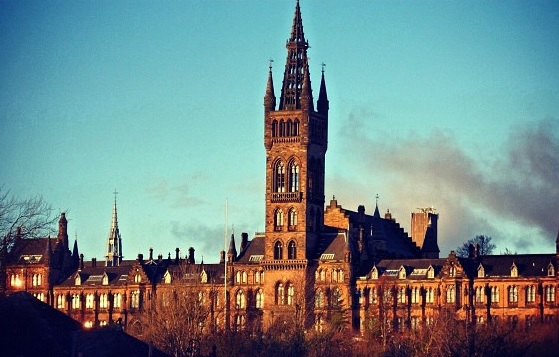
I guess the semesters go so quickly that you hardly notice the time slipping. Sometimes, they seem like little footnotes to a long and formidable summer, with nothing to do but work and plough through the reading list and wish you had more money. If I could go back and do one thing I guess it would be making more use of my time. But then, I don’t regret all the evenings I spent immersed in journal articles and books, because that’s what’s shaped my mind. Sure, I might not have a degree with immediate career prospects beyond journalism or teaching, but I wouldn’t swap my education for the world. And I’d recommend Glasgow Uni English Lit to anyone, especially because it’s so steeped in critical perspectives and literature beyond the obvious canon. Where else would you start off a second-year semester reading Martin McDonagh’s gruesome play The Pillowman, or have a fourth-year seminar on Gone Girl and a course on Urban Spaces which divides its programme under mysterious headings like ‘Airport’ and ‘Shopping Mall’ rather than the tired titles you see across typical course Moodles. My degree (well, let’s hope I actually get it!) hasn’t just been about Shakespeare and Dickens and Austen, though they have all quite rightly featured. It’s about expanding the canon, and helping you sharpen as well as complicate and reflexively challenge your critical approach to all literature.

Last year’s exam revision
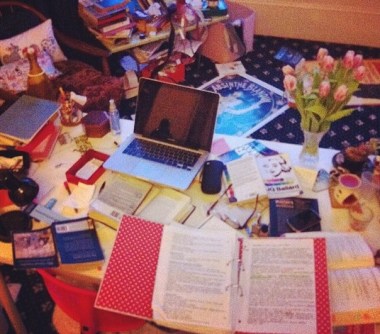
If anything, I've learned to keep a slightly tidier desk.
If anything, I’ve learned to keep a slightly tidier desk.

On Tuesday morning, it was spring all of a sudden. I walked to campus feeling warm and happy, remembering the first spring I spent in the city. All those daffodils and the cherry blossoms around Hillhead, and the cheerful experience of the semester ending, everyone gathering for picnics at Botanic Gardens. Optimistically sleeveless, I sat on a stone by the Kelvin River reading Keats, feeling like this is what university is best at. The kind of magical experience unfortunately made cliché by campus films. When you’re in the sunshine reading poetry and you’re about to go in for one of your last tutorials. Sure, I still have three nasty exams to get through, but once they’re over, I’ll hopefully come out a little bit smarter, a little bit happier and a tad more employable. University, both at the academic, social and creative level, has definitely been the best experience of my life. I swear I won’t get sentimental; I’ll come back and do a Masters instead. (Let’s hope; if only).

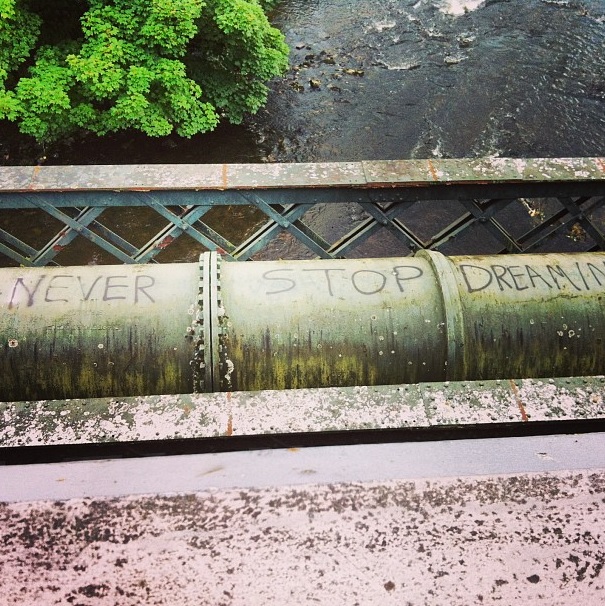
Inspirational Finnieston Pipe (!)