You used to worry about the palms: there was something wrong,
you said,
if the palms weren’t sighing.
You relished the soft peel of the wind through those palms,
the ones by the hotel garden.
We’ve been here every year
since Dad died.
The white beach sand is a mouthful of moonlight.
We sit up late drinking crushed fruit
and you say strange things, as you always do—
have you ever eaten a mango in the bath?
You would live your life like that,
all the time you said, eating mangoes in the bath.
All that pulp and mess, all that flesh.
Dad died in the spring, when blossoms
of soft pink cherry gathered on my lawn.
The baby lolled around in it like April snow
and we watched her giggle, ribbon
flying out from her hair. He would’ve loved that,
seeing her there.
The cancer took the green out his eyes,
ate the skin of his face.
Even when they pumped him full of fat and creamy vitamins,
the bones kept poking, pointing.
His face was a mask of something;
I couldn’t let the baby near it.
I imagine you prefer it here
to back home. You like the ooze
of the days, the way the maids make the beds;
the emerald green of the parakeet,
early mornings where the tide sparkles. Still,
you saw signs in everything.
Dad used to come visit during monsoon season.
He wrote reams of prose,
lapping up slushfuls of rain. He wrote
in the small hours, when he wasn’t working.
We lost the notes.
We’ve only the stuff on his business trips,
lost code on his laptop.
We haven’t a sense
of what to him was sharp or clear, what it was
that brought him over.
Just the whispering palms, the sleepy tense—
one day I’ll take the baby here.
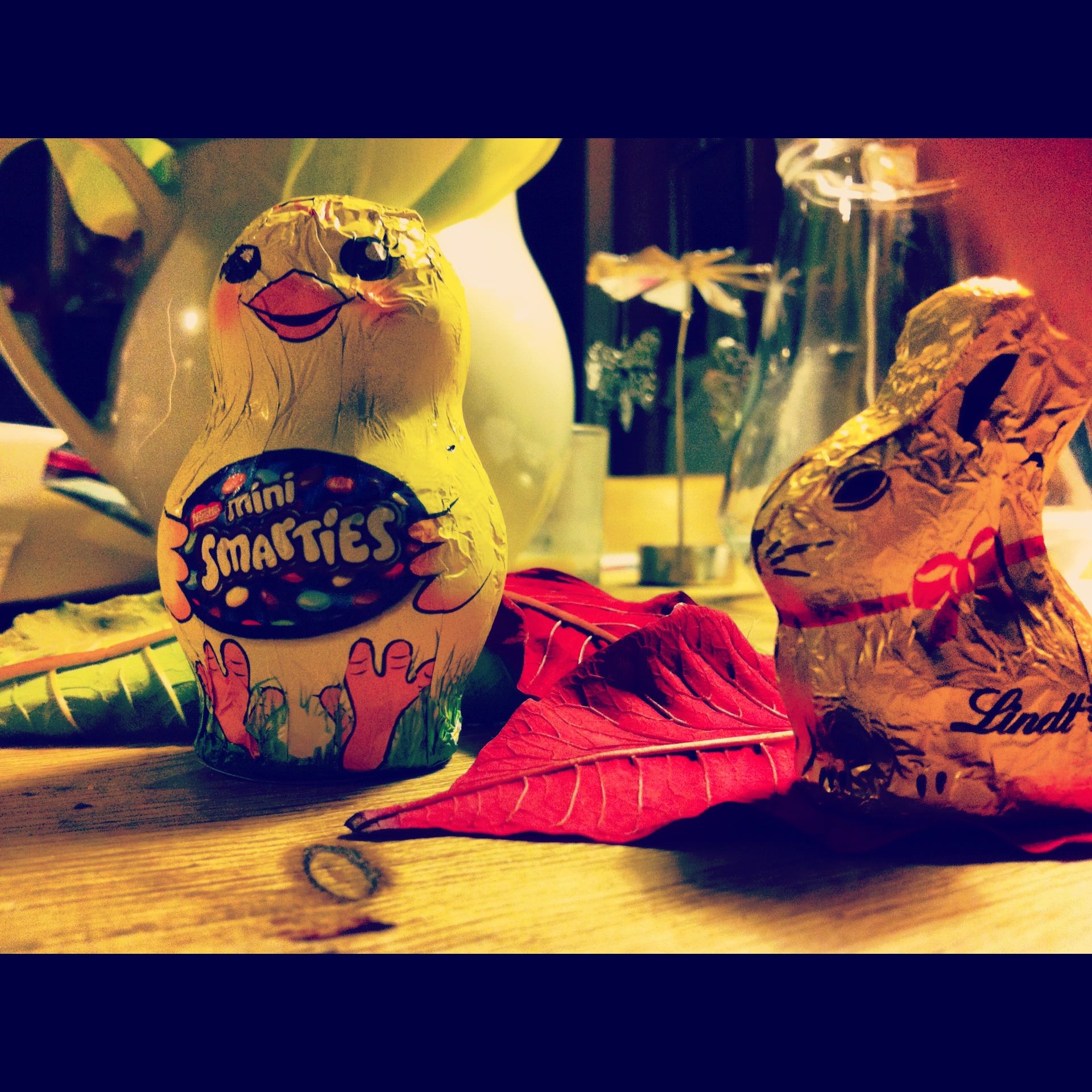
How old am I here? I’m somewhere in England, awake early as usual from sleeping on the floor, stripping away the remnants of another dream about chocolate. A dream about chocolate? Oh wait, it’s Easter. The very word Easter sounds confectionary; like ‘viscount’ – a name recalling the little minty biscuit I used to have in my packed lunches – Easter connotes the crack of a thick chocolate shell, a glut of pastel colours, the consuming of cuteness. Maybe I’m seven. My mum is away in Brighton for the day and comes back with two beanie babies: a fluffy yellow chick and a pale blue bunny. Maybe I’m seventeen, walking out to Kildoon monument just to see the lambs in the fields and hope for a happier existence. You know, that’s Easter too.
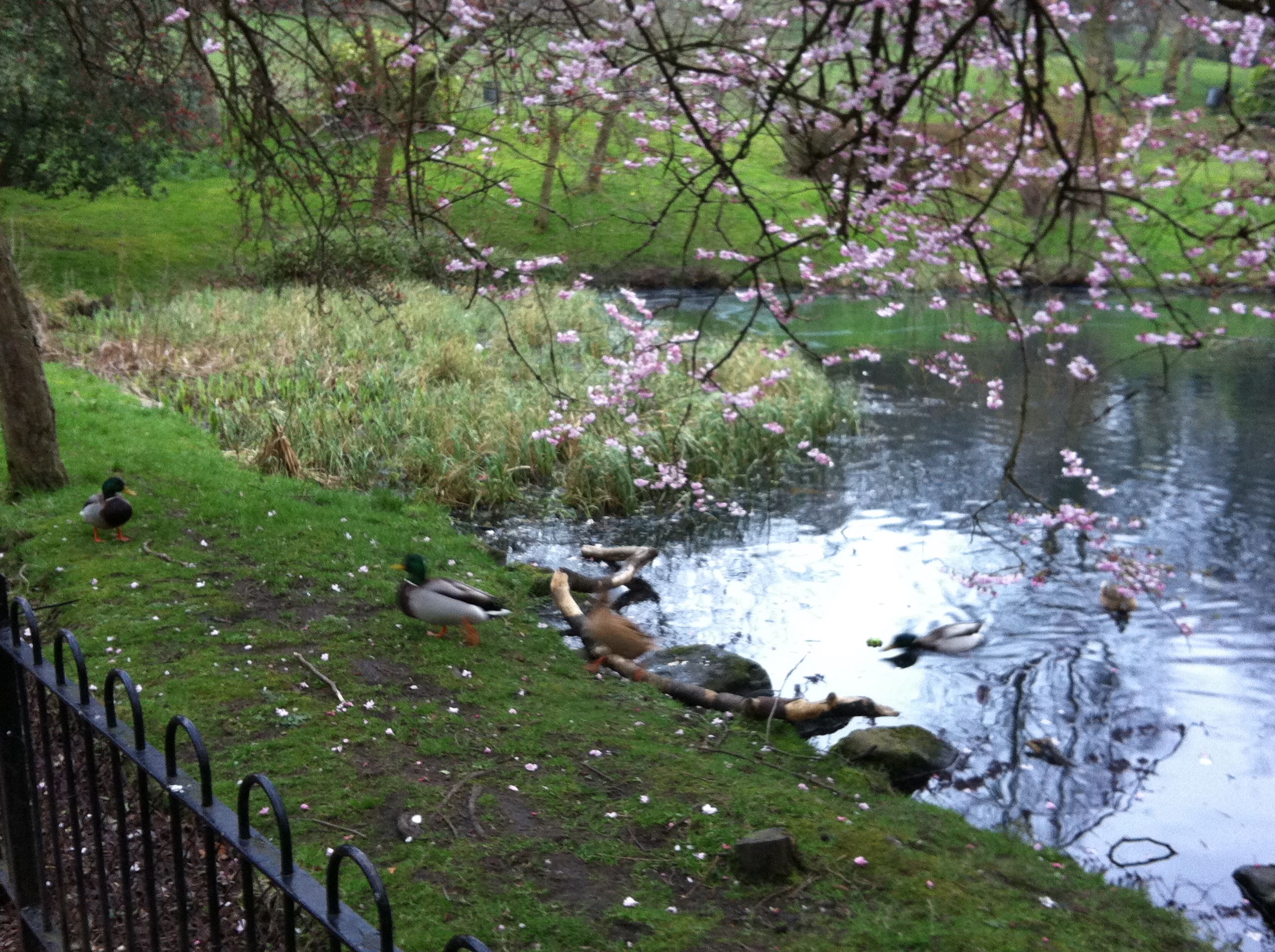
cherry blossoms at Kelvingrove
Those who condemn reckless consumerism bewail the fact that Easter has forgotten its true message: the sacrifice of Christ, the promise of rebirth. It is a solemn hope that perhaps may only be touched by those with faith; it bears the risk of becoming kitsch in the Easter Story worksheets we used to cut out at school with those zigzag scissors. You know, ‘assemble the story of Jesus and the tomb’, where pupils tended more to desecrate Christ with bunny ears more than celebrating his existence. I remember as a child going to church on Easter Sunday and falling into the soft ambience of everyone’s prayer and the familiar stories about The Stone that Rolled and Jesus’s last day and all the other things that have slipped from my brain. I remember being given a Creme Egg by the priest on the way out and thinking he had handed me something precious and holy – but later eating it anyway. Did I feel guilty, biting into this symbol of the blood and sweat and sacrifice of Christ? The problem is, consumerism is good at assuaging such guilt with feelings of pleasure. Everyone’s doing it; everybody’s merry. And after the church ceremony I remember late afternoons watching a certain family member fall asleep after a generous glass of sherry…
Is it wrong that we value booze and chocolate eggs more than the faith and the story? Perhaps…but there is a certain gratitude in the exchange of happiness, the sweet serotonin glow of too much chocolate and a long Sunday afternoon spent with one’s family.
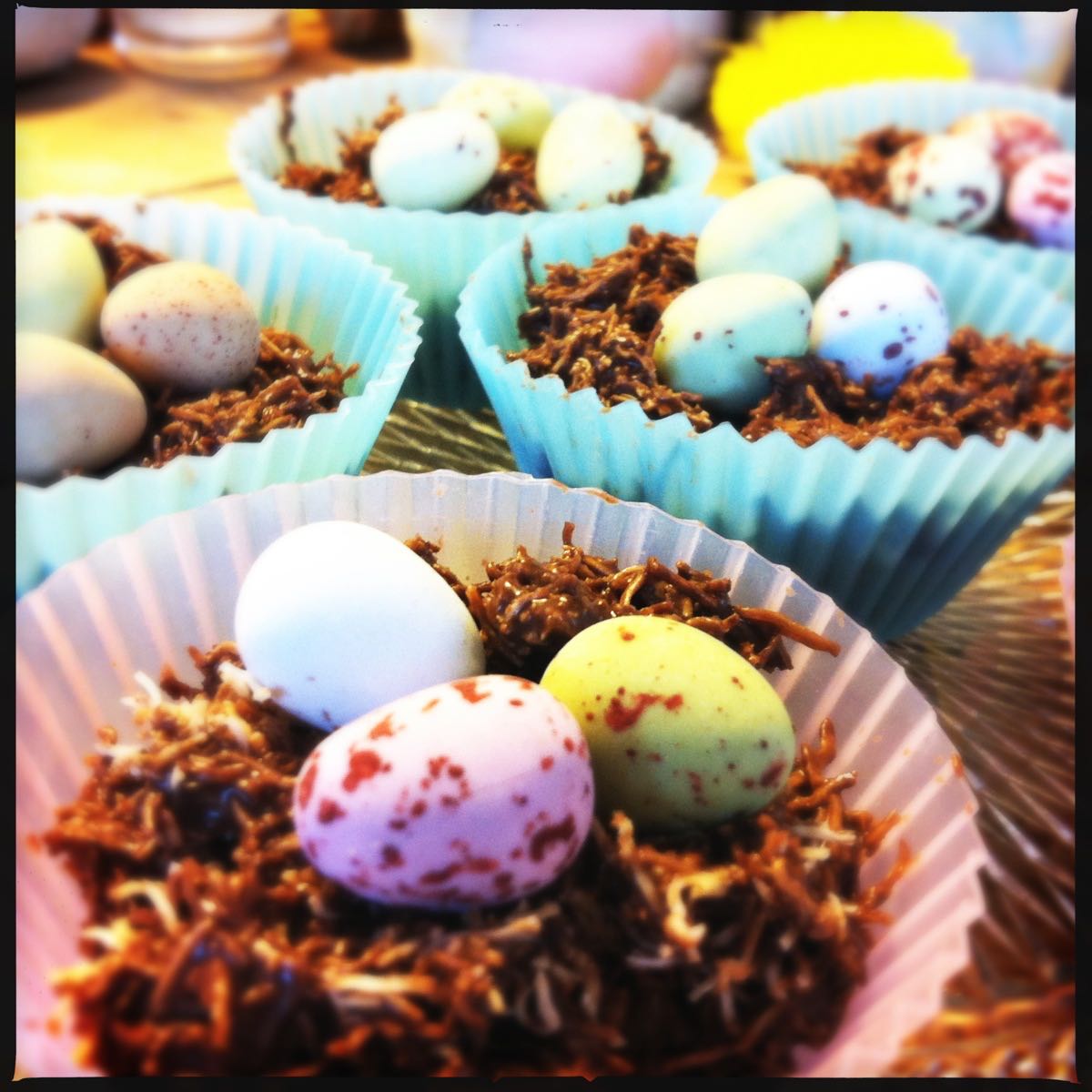
How did we used to spend our Easter Sundays? Painting boiled eggs and rolling them down the hill at Miller Park. Fighting with my brother over who got to lick the bowl of melted chocolate, leftover from making crispy cakes. A walk to another park, somewhere in Burgess Hill or Milton Keynes, watching our dog do long jumps over a river filled with old trollies and sofas. Munching fizzy belts and trying to do loop-the-loops on the swing, never feeling sick but still exhilarated (I wouldn’t mind doing all that now, but I’d probably vomit rainbows). These were the good old, carefree Easters.
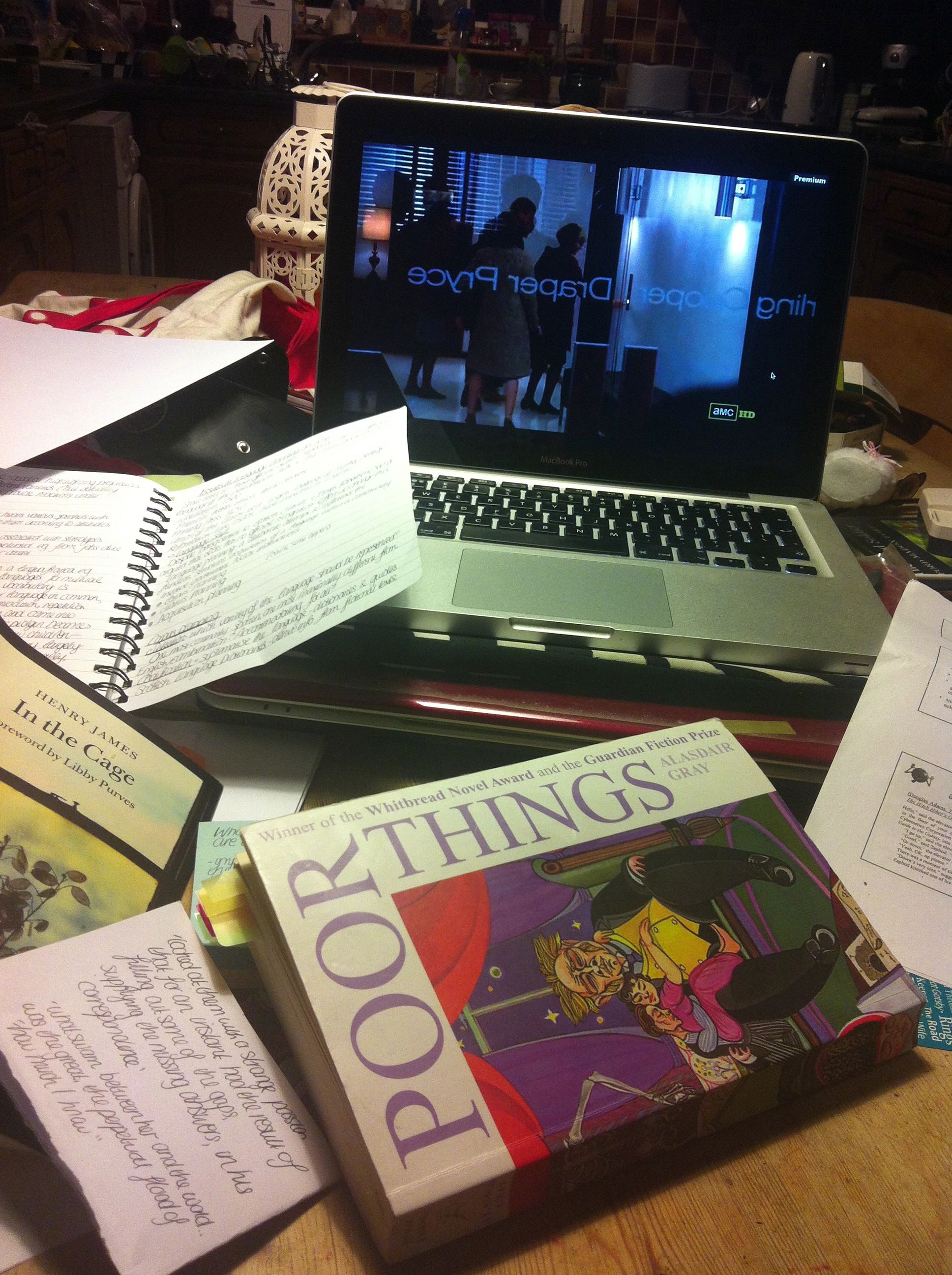
When you hit fifteen, suddenly the Easter holidays are all about studying (or they are in theory). The endless, six am days spent copying diagrams for Biology or churning out practice essays for Modern Studies, or falling asleep in the sun with a Computing textbook over my head. Cooking some complex casserole in the evening and doing the washing up afterwards while my brother messes about with his playlist of ‘doing dishes’ music (or maybe it was the other way round; I always had the better iPod). The Easter of first year where I had a weekend down in Suffolk for my Grandpa’s 90th birthday, and got so excited about staying in the countryside that I went for a walk every morning at 7am, just to glimpse the pretty English fields and flowers. Oh, and the postman I accidentally saw peeing in the river – but that’s another story. The Easter afternoon where I laboured over a terrible wee screenplay for Advanced Higher English; or the one I spent laid up watching crappy old films because I had the house to myself for a week and it seemed a waste to bother with ceremony. That was, incidentally, a very good week: I watched three series of Mad Men back to back and walked up a hill and got my hair dyed and wrote about twenty practice essays for my uni exams. There is great productivity to be had in solitude.
Productivity in action…
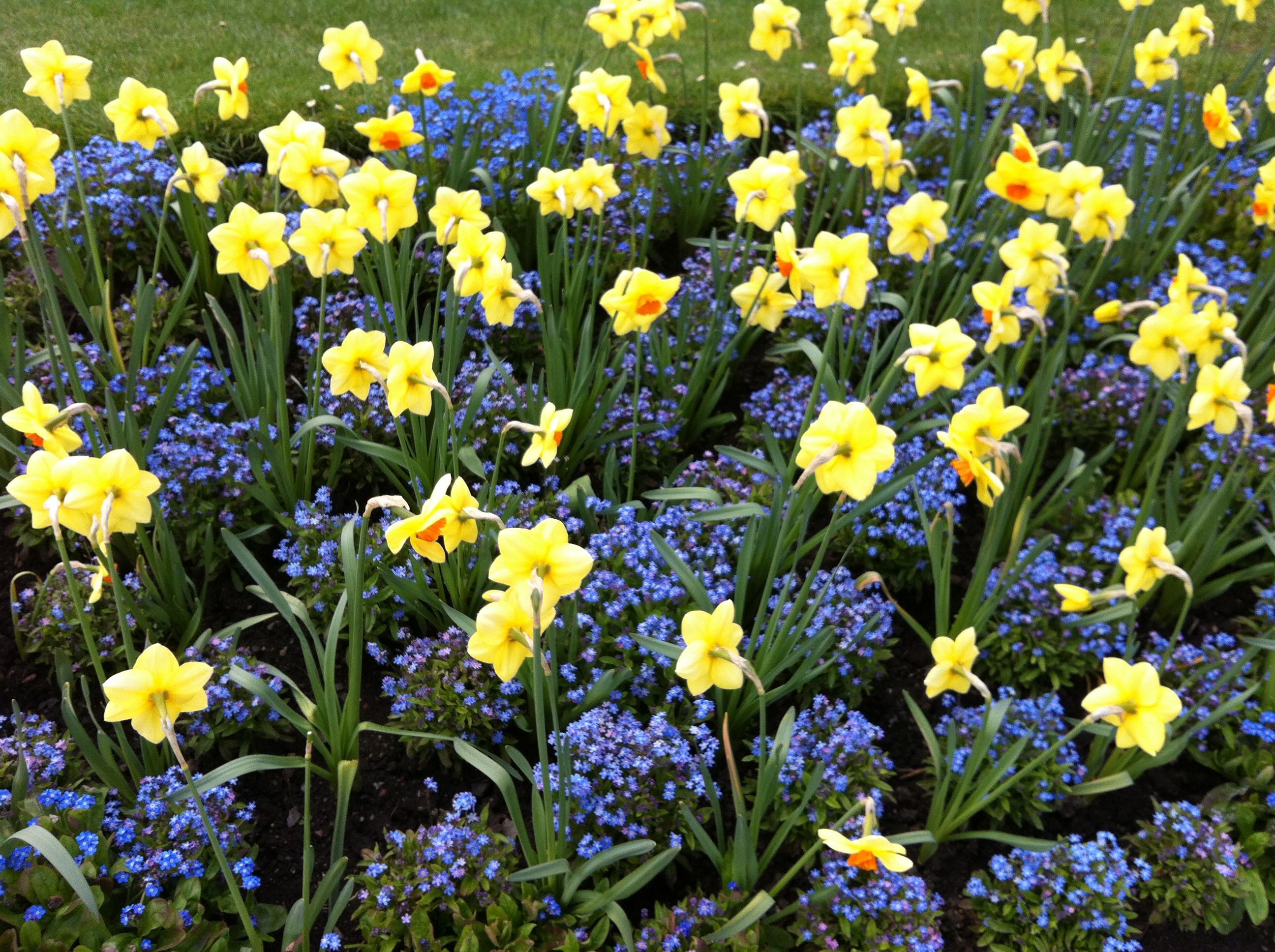
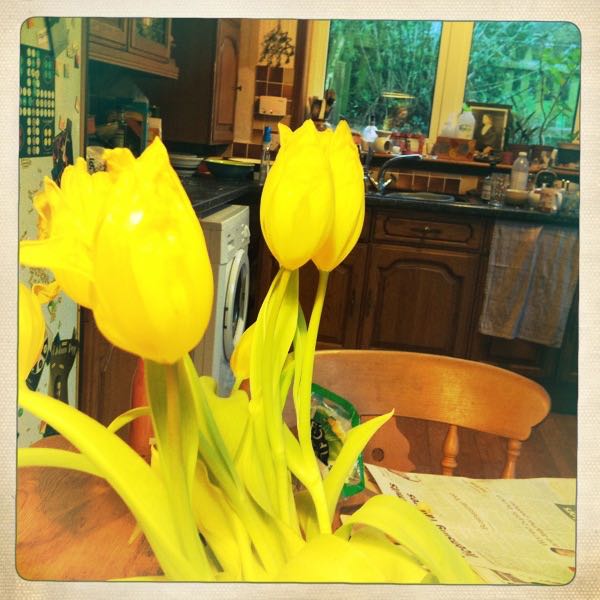
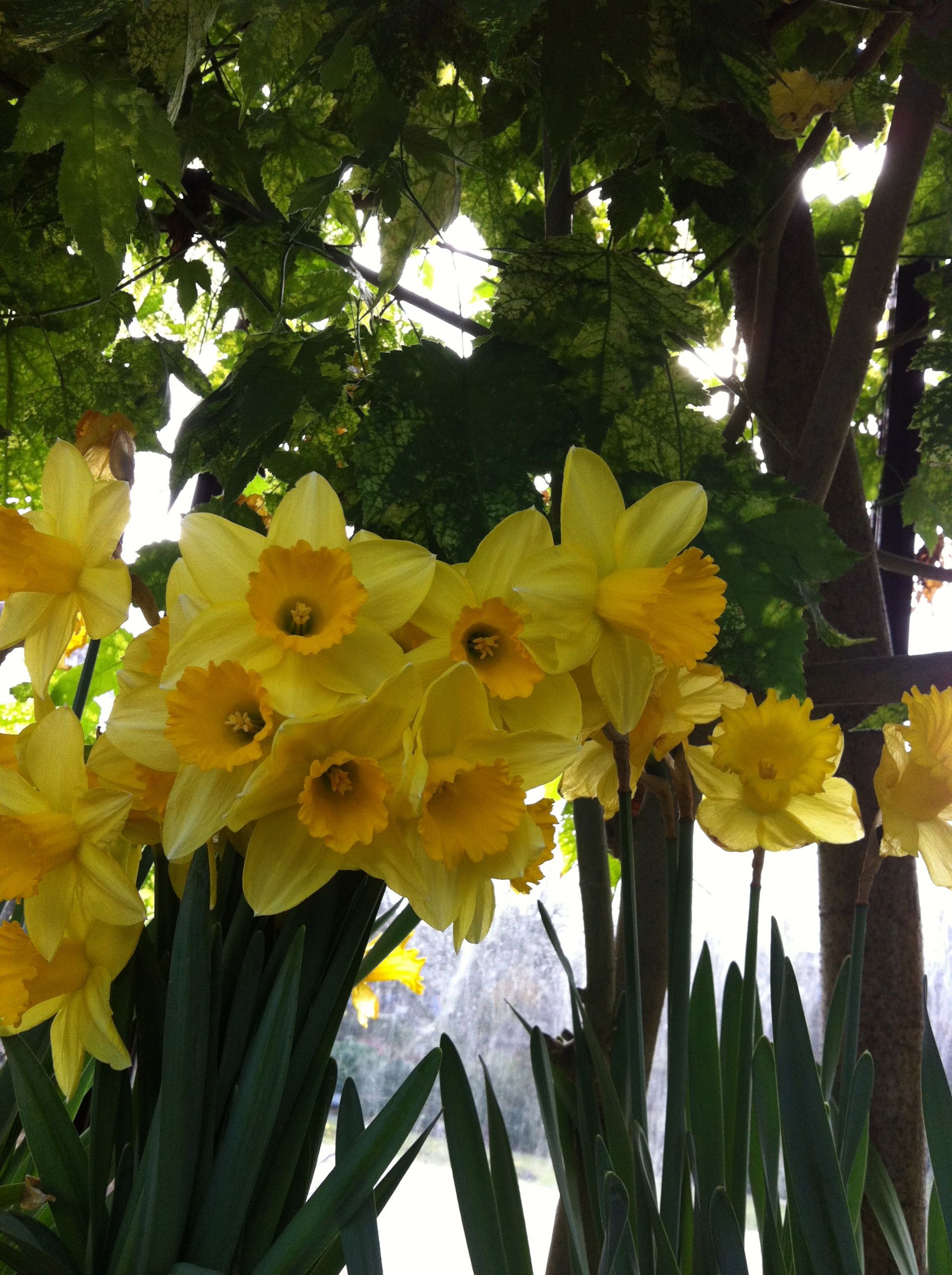
The things I love most about Easter are basically the things I love about spring. As all the songs and hymns might sing, there is a simple joy to seeing the first daffodils and blossoms and lambs in the fields. Seeing everything through the spectrum of pastel colours, wearing lavender jumpers and polishing my nails mint green. At uni, I was too stingy to buy Easter flowers, so I would walk all the way along the Kelvin (halfway to Milngavie) just to find loose daffodils to purloin from their ungraceful state, where they were scattered along the path by wayward children.
Back at school, Easter signalled the season of study leave; of long lunchtimes sitting on the hill gossiping while people were screaming at their football behind us. Bunnies are also very cool. I think I believed in the Easter Bunny more than I believed in Santa Clause. Maybe it’s the animal factor; there’s something creepy and alluring about anything anthropomorphic, reminding us of the fragility of our status as humans. The Easter Bunny, moreover, gets less visual representation than Santa in popular culture, leaving the onus on the child’s imagination to conjure what he (or maybe she; or should Easter Bunnies even have a gender?) looks like. One upon a time, my Easter Bunny was soft and probably adorned with buttons and ribbon, juggling a multitude of eggs with his paws and vanishing without trace at dawn (unlike Santa who takes his fill from a mince pie and carrot). Now, I can’t help but think of the horrifying rabbit, Frank, from Donnie Darko. The one that appears either as a schizophrenic vision or some weird spirit guide from the near-possible-present-future. Maybe that’s growing up; realising the terror in your favourite childhood memories. Pulling the latent darkness out of cultural myths and fairy tales. Still, there’s a pleasure in that too.
So yeah, today I won’t be doing much for Easter. I can hear the church bells ring for the morning service, and there are a few birds tentatively weaving their melody into the stiff Sunday silence. As far as I know, there aren’t any lambs in Glasgow, and that lovely lecturer who used to praise heavily the wonders of ‘curved chocolate’ is sadly retired. Today I will have to drag myself out of bed at some point to fall back into the world of studying, swapping festive joy for Johnson’s Rasselas, and juvenile pleasures for The Bell Jar. The only chocolate I have in the flat might be Tesco’s 30p Value, but secretly I’ll be celebrating Easter, if only in nostalgia.
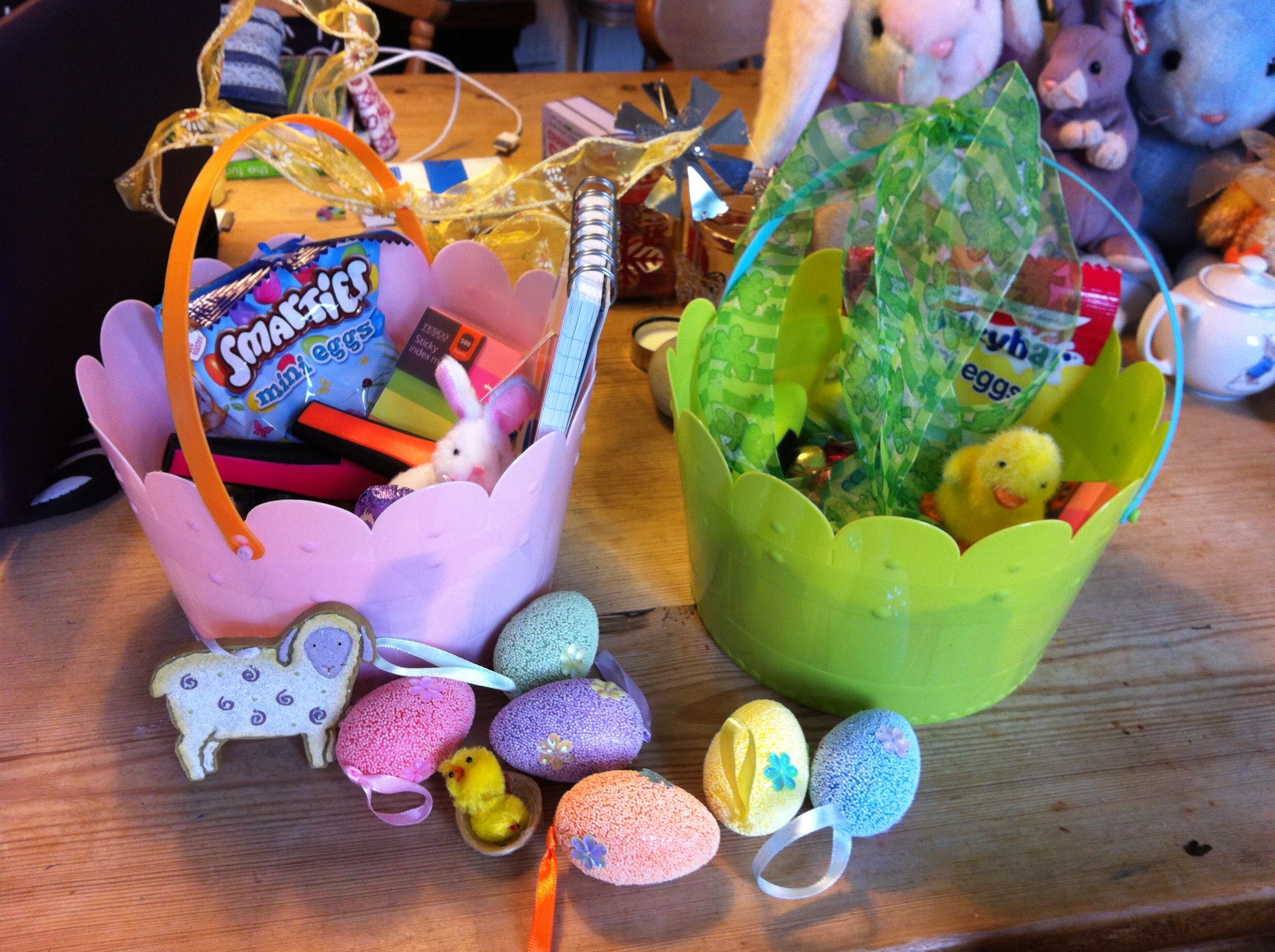
My Mum gets extra parent points for always making us Easter baskets
(So I thought this article was kind of Christmas appropriate, given that in the familiar nativity story, the Three Wise Men bring Jesus the precious scents of myrrh and frankincense.)
***
‘Perfume is like a parenthesis, a moment of freedom, peace, love and sensuality in between the disturbances of modern living.’
(Sonia Rykiel)
‘To create a perfume you have to be the servant of the unconscious. Each idea evolves and transforms, but there should be a surprise with each note.’
(Serge Lutens)
Perfume is a strange part of our everyday lives that acts as a channel of sorts. The word perfume comes from the Latin per (through) and fumum (smoke). This conjures the image of an ethereal essence which, like smoke, carries through some kind of message.We might think of it as an unspoken means of communication, a way of emitting some essence of ourselves to those who happen to pass close enough to catch a glimpse of our secret aroma. One that releases itself only from certain spots on the body, places we have chosen to let the scent develop. I love the way that glossy magazines and figures of high fashion talk so indulgently about perfume. It’s like poetry: a complete decadence of revelry in words. It’s like reading a wine list and falling for a string of adjectives rather than the taste of the drink itself. Rich, smoky, full-bodied, bursting with dark fruits. The poetry of advertisement aims to seduce. So too does perfume: it is a seduction not only in a sexual sense but also a seduction of self. A seduction of memory.
I was probably about nine or ten years old when I made my first forays into the world of fragrance. Certainly, I was still at primary school. I used to sneak into my Mum’s bedroom while she was eating her breakfast downstairs and try on what she had. Her dressing table was never cluttered with pretty glass bottles (more like heaps of unusual jewellery and hair mousse), but she did have a couple of classic Body Shop numbers. There was of course the famous White Musk, which I started wearing often. I liked the soft but heady smell it had, not too overpowering as a floral but sweet enough to stir your senses with its blend of ylang ylang, jasmine, rose, musk and lily. Then a while later, she gave me a bottle of spray she didn’t want, this time the Body Shop’s Oceanus. Or was it Ocean Rain? – no, I am getting confused with an Echo & the Bunnymen song! It was actually quite a strong one, though it wore off fairly quickly. I suppose it was meant to smell sharp and fresh like the ocean, and actually it was quite a nice one to wear at school where P.E. and stuffy classrooms were never conducive to pleasant aromas.
We were of course, forbidden deodorant in P.E. This was at secondary school, where everyone was aware that they had, y’know, adult bodies now, bodies which tended to sweat after exercise (even the half-hearted exercise we attempted in class). The teacher would storm into the dressing rooms at even a hint of spray being used, demanding that the most suspicious looking pupils empty their bag in front of her to reveal the contraband goods. She must have hoarded a whole treasure trove of Charlie and So…? and all those other brands we clung to as adolescents. On such days I would hide my little bottle of Oceanus in a glasses case at the bottom of my bag and spray it liberally once the coast was clear. A sea tide of refreshment filled the room. The contents of that bottle seemed to last forever; in fact, I think I still have some left in my bedroom.
The first perfume that was gifted to me was a miniature bottle of Burberry Touch. It’s a pretty intimate scent, threading together notes which include jasmine, raspberry, pink peppercorn, vanilla and oak moss. It sounds sweeter than it actually is: this is a strong scent but also has an air of sophistication. It feels grown-up and even a bit masculine (perhaps that’s the base notes of Cedarwood and oak moss?). I was fourteen when I got it so it ran out fairly quickly, but I now have a big bottle of it on my dressing table.
I also, at quite a young age, acquired my mother’s bottle of Yves Saint Laurent’s ‘Paris’. Launched in 1983, this distinctive scent was meant to capture the spirit of Paris with its heady blend of Damascan rose and violet, which after hours of being on your skin transforms into English rose and whispers of mimosa, sandalwood and musk. There are other beautiful notes in there: orange blossom, amber, jasmine, hawthorne, heliotrope. It’s so complex that I’m still working out whether I actually like it or not. I wore it all the time until I was about sixteen. It’s far too grown up a scent for someone to be wearing at that age, but somehow it matched my wearied spirit. It felt almost exotic, a smell from far away. Something about it matched the impressionistic notion of Paris I had; a Paris which shimmered with the seductions of beautiful art and mysterious, moody people. It was certainly a smell which took you out of the dreary realities of Maybole, if only for that first spritz in the morning. The pale gold bottle with its crystalline, faceted surface and satisfyingly chunky feel still has pride of place on my shelf back home. I’ll spray it every now and again – what’s left of it – when I feel the need for a bit of escapism or nostalgia.
I like to think that when I’m using perfume I had years ago, I’m speaking to some secret old self, one that got lost in the ethereal tangles of time and change and forgetting. For Christmas two years ago, I asked for a bottle of Chloé perfume. Chloé was the first ‘proper’ fashion fragrance I bought for myself, when I was fifteen, in the Christmas sales of that freezing winter of 2009. To this day it’s definitely still one of my favourite scents. Along with Miss Dior Chérie (the orange one), which I also had as a teenager, it’s a romantic scent, sparkling with pretty florals and a dab of French sophistication. Both bottles are adorned with a ribbon to signify the femininity and lighthearted spirit they intend to convey. Chloé is quite a strange and unusual floral, with rose at its heart, honey at its base and the tartness of lychee as its top note. The blend is very smooth and does not induce headaches like some other more couture brands; it is at once instantly recognisable and also quietly luxurious on the wearer’s skin. When wearing it, you want to be riding a vintage bike through some sunshine street in Paris, where all the lamps light up for you, and your destination is a quiet picnic in the park, or a date with a good paperback under the canopies of a Montparnasse café. The bottle is quite short, almost stumpy in comparison to the tall thickness of Burberry Touch, but this makes it easy to cup in your hand to apply. It sits prettily on my dressing table, even with only a few dregs of scent left in the bottom, amid bottles of glitter nail polish and fragments of hair ribbon. If I had to pick a ‘signature’ perfume, it would be Chloé; a friend once texted me saying she was spraying it in a shop and instantly thought of me, which was sweet.
When I got my second bottle of Chloé, the scent instantly evoked that feeling of being fifteen again. It wasn’t an entirely bad experience, it was a taste of having that smallness, that protected enclave of a childhood world again. Or at least, the experience of being on the brink between the world of childhood and the uncertain future of adulthood. Perfume, I suppose, makes an industry of Proust’s ‘involuntary memory’: the idea that under certain conditions, one is transported back to a clear, distinct memory. Not wilfully, but through some item containing the ‘essence of the past’, whose sensory associations stir up the scene of some personal history. For Proust, eating a tea-soaked ‘madeleine’ cake recalled a childhood scene where he ate such a snack with his aunt. For me, spraying Chloé makes me think of warm radiators and school mornings in the cold pits of winter, or getting ready to perform in jazz band concerts, sweating under the hot lights. Leaning against the window of the 361 bus, reading Margaret Atwood. Floating through Ayr on the way to college, stopping always at Debenhams to spritz on their testers. I’d spray the little pieces of cardboard they provide you with and slip them in my bag, so that all my notebooks smelled of my favourite perfume. Sometimes my friends and I would spend an hour or so trying on all the perfumes, until we left smelling like we’d fallen through some vat in a Dior factory, causing everyone in our near vicinity to sneeze violently. I still enjoy doing that, although these days I set my sights on the counters at House of Fraser.
Strangely enough though, the older I get, the more I’ve switched to simpler scents. Part of this is a side effect of student stinginess, but I also like the freedom of buying several scents and being able to choose between them, to suit the weather or the seasons. I guess perfume is just something I tend to waste my wages on, the way that others waste them on Asos, cigarettes or vodka oranges. I have too many Body Shop Eau de Toilettes to count. There’s Chocomania, a very rich and some might say saccharine rendering of lush dark chocolate – perfect for those gloomy winter mornings when already you’re craving your bed and some hot cocoa. The distinctively tropical Coconut, which is, admittedly, more Bounty Bar than fresh jar of cold-pressed coconut oil. Then there’s the clean bright tartness of Satsuma or Strawberry, refreshing for summer. The milk chocolate and almondy sweetness of Brazil Nut. Honeymania, which does what it says on the tin and makes for a perfect late summer scent. I suppose, at less than £10 each, these perfumes make great little gifts or stocking fillers, which last a surprisingly long time. You could mix and match your scents (I like the sound of chocolate orange, brazil & coconut or honey & strawberry), and the small light bottles make them portable for your handbag. And with Body Shop (I swear I’m not a brand ambassador!) there’s always the positive that everything is ethically produced, usually from Fairtrade ingredients.
In a pricier range of perfume, I recently revisited one of my favourite childhood smells, Penhaligon’s ‘Bluebell’, which I got as a present for my 21st. When I was a very little kid, my dad brought back from a trip to London a velvety purple bag full of Penhaligon’s samples. They had enchanting names, like Elixir, Gardenia, Elisabethan Rose, Levantium (oh to have a perfume with the top notes of saffron and absinthe!). The one that stuck with me was ‘Bluebell’, which felt the most quaint and old fashioned of all the scents. The bottle, for one, is gorgeous, a little bit Art Nouveau, a little bit of simple prettiness. I could easily imagine myself, smelling it now, as a little girl running about in a field of bluebells. It’s not over-sweet or stuffy; it reminds me of the kinds of luxurious scents that would be spritzed around in early twentieth century department stores. I think of Cassandra and Rose in one of my favourite books, Dodie Smith’s beautiful coming-of-age novel, I Capture the Castle (1948), as they wander through the fairyland of such a store in London and marvel over the bluebell perfume. You see, there’s more than just chemicals and packaging to perfume; it always has some kind of rich cultural and personal history living in its notes.
bluebells in Culzean woods
***
Do you remember your first science classes? Most of those memories are probably enriched by the strange smells concocted from an uncertain mixture of suspicious substances. The rotten eggs of sulphur, the acridity of various nitrates. What stands out most for me was a lesson where for some reason we were experimenting with burning different types of foodstuff over our Bunsen burners, to measure reactions to starch or something. Somebody’s Pickled Onion Monster Munch made the entire classroom smell like a Chinese restaurant. The process of perfumery, while aiming for more delicate blends of scent, follows, of course, a similar (but infinitely more sophisticated) chemical process. A perfume will blend natural sources – flowers, fruits, wood, roots, gums and resins – with synthetic productions of those ingredients which don’t produce their own oils naturally, for example lily of the valley. An intriguing guide to the complex scientific process through which these raw ingredients turn into perfume can be found here. I especially like the sound of the enfleurage step, where ‘flowers are spread on glass sheets coated with grease’. Over time, the grease absorbs the scent of the flowers, like a leaf absorbing rain water, just as expression collects the precious oils of various fruits. Alcohol and water are used to distill and preserve the fragrance. That’s why you should be careful not to spray perfume on your eye, or an open wound – or an open fire, for that matter.
Interestingly, like champagne or wine, a ‘fine’ perfume is left to ‘age’ to let the blends develop. Maybe this is why Chanel No. 5, for instance, is such an iconic symbol of ultimate luxury. Its yellow-gold colour always dazzles in department store Christmas displays, but it also reminds one of a pale whisky or dark champagne. Like alcohol, it is intense, maybe even difficult to stomach. Infinitely seductive… complex to create…
Perhaps, like aromatherapy, there is a system to the choice of various scents and flavours. A science to how different people are attracted to different things. While some like a fresh burst of citrus, others revel in the dark sweetness of the likes of Thierry Mugler’s Alien perfume (not a fan). We can all guess that lavender makes you sleepy, lemon is awakening…but maybe there’s more to it all than that. A curious interaction of emotion, memory, desire, sensation… Maybe, after all, it’s the cold December air that led me towards my latest perfume purchase, returning full circle to my first White Musk perfume, only this time with the Body Shop’s newest fragrance, ‘Red Musk’. With its fiery bottle which blends amber, red and black, this Eau de Parfum combines the smouldering notes of tobacco, pepper and cinnamon with a layer of spiced musk. With cinnamon, it’s a dark, shadowy twist on a festive fragrance. Moreover, it’s about time perfume embraced androgyny, as this scent does with its hints of tobacco. Gone are the feminine florals of summer. So while I might be accused of being a hoarder, stashing my perfumes like a witch hoards her bottles of potion, maybe I can justify buying this particular perfume because anything that makes you feel warm (in a flat with single glazing) has got to be good, right?




 mariaology