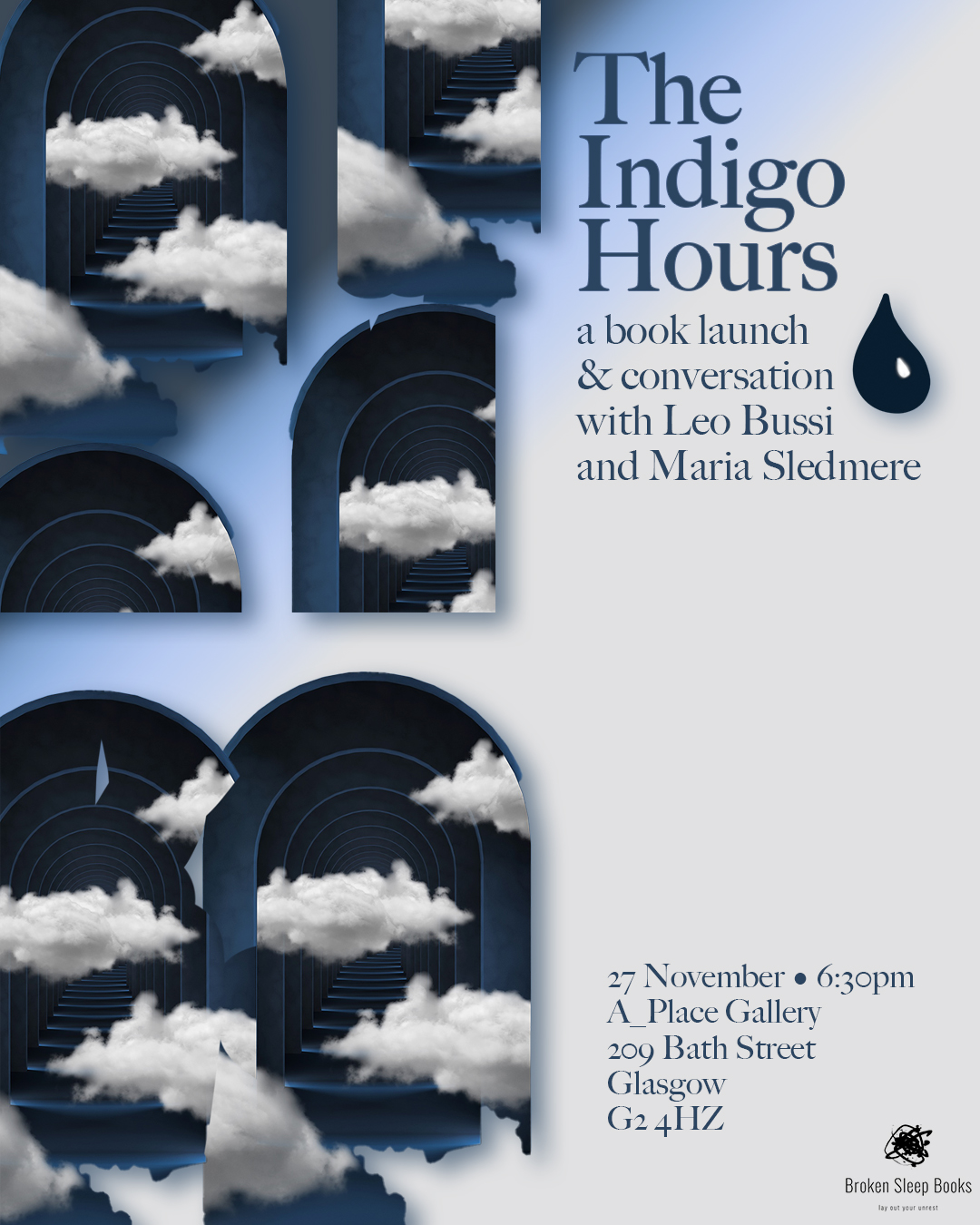
Glasgow friends! November is a busy month. See you there. I’m excited to be in conversation with the legendary Leo Bussi. Format is: readings from both of us (POETRY+PROSE) then a conversation and Q&A. Topics to discuss may include art & music writing, ambient literature, auto-theory/fiction, homage, love, everydayness, plotting the situationship and more. Books will be available from both authors.
Starts at 6:30pm sharpish. Venue: A_Place Gallery on Bath Street. Full details on the eventbrite:
Really excited to be a guest at Creative Conversations next Monday at the University of Glasgow. This is my alma mater (in fact, I ended up doing all three of my degrees there) and I’m grateful to be returning to talk about my work. I’ve been attending the series on and off for nearly a decade and have seen so many wonderful writers in the chapel. It’s free and open to the public. You can also join online. Hope to see some of you there 🙂
Last night SPAM Press hosted the wonderful Swedish-American poet Maria Hardin at Mount Florida Books, Glasgow, alongside readings from Kate Paul and Jane Hartshorn. Here is the intro I read for Maria.
I want to begin by reading a poem by the late Rhiannon Auriol, who was a kind, talented and sharp-minded poet. She had a voice that felt genuinely fresh and we were always excited to get something new from her in our inbox. We published her in the Plaza and our online magazine several times and when it came to putting the lineup for tonight together, both Kirsty and I had the thought: I wish we could invite Rhiannon to read with Maria. Rhiannon forever.
Here’s the poem, which was published in pif magazine back in 2021.
I drop into this poem and I am petalled. I have put my hand in the new burr grinder of how I am learning to read in grief. This self-petalling is a relief. I will soften! I will become rose water, distilled into essence! Energised by short lines! There is something ugly-beautiful about my becoming rose-water of the nominative. Yes I was born with the middle name ‘Rose’ and also the first name Maria. Rhiannon writes of ‘the moon particularly / at sea’. Maria and I share a name meaning ‘of the sea’. We found each other via the kismet of poetry, and her poem called ‘Mariaology’ which features ‘a cascade of every maria’ which I first received as an iPhone photo. Last week I was researching something and stumbled on the phrase from the website MindBodyGreen which said, perfectly: ‘caffeine can disrupt your hormonal cascade’. I don’t know what a hormonal cascade is but I know I have felt it in poetry. Yes, for you I’d drop everything.
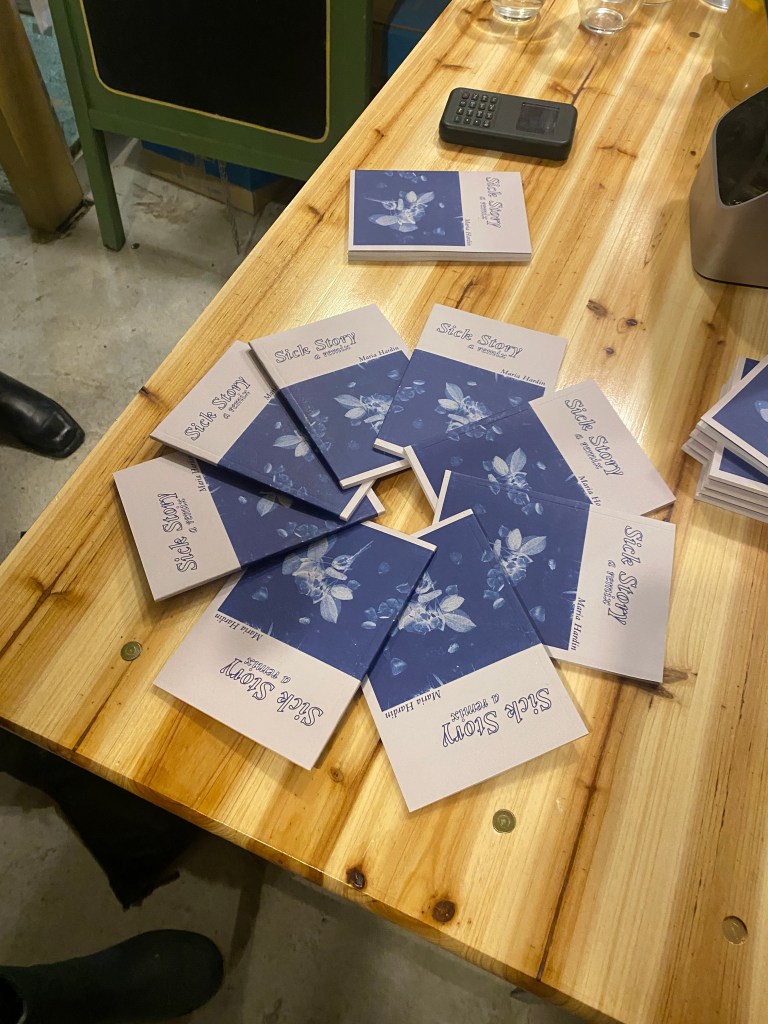
By some miracle of the ether Maria is now here in Glasgow tonight and we are launching her pamphlet and I am CAFFEINATED. My being caffeinated will never truly replenish my energy. There is a tale here. Rest without respite. Sick Story. I like to think of this as a sister pamphlet to Maria’s earlier work Sick Sonnets and also a cellular cascade of the voltas played within them. We have dying bees and the premise if not promise of healing. In Maria’s sick sonnet ‘Glossolalia’ the Steinian rose becomes a rat becoming also a rose and the speaker reads ‘emotional responses to the end of nature’. I have always loved the general mood of melancholia in Maria’s work, the way a speaker can latch, mutate and render ornate a feeling, an image whose origins remain mysterious. One never feels quite settled; there is a rat-like restlessness. Is that it? But also the still, slow burgeoning and wilting of the rose. Of devotion. Hours of languishing. The void is decorated all the better to feel it. The void is remixed. If there could be endless Proustian bedtime there could also be a pain psalm and a ‘baited lamb’.
Sick Story looks for alternative narratives in its telling of chronic illness. It asks ‘what is the shape of a sick story?’, with an eye to Bernadette Mayer’s Story and Ursula Le Guin’s ‘carrier bag theory of fiction’ by way of explanation. For Le Guin, the carrier bag narrative is shaped like a bag, not the arrow of phallocentric linearity. Mayer’s Steinian Story bundles riddles, matter, anecdote, the stuff of ‘things’. Nothing feels pre-determined, destined for an ending; rather, all times rub their quantum shoulders in the bag. Have you ever rummaged in public for your medicine? Have you ever written notes on the back of your hand, worried the ballpoint would seep beneath your skin and stain something irrevocably navy? Have you ever shaken your life up so much you could almost smell its perfume?
Here is a snippet of Mayer’s Story:
Voices fall.
It may be seen feeding on this under one of those tropical things.
The time or place of starting.
He throws a hat on a seal’s head and a piece of his pack into a whale’s mouth, marking their characteristics.
Lamp, lucite and plastic.
I saw one once in a book, but I didn’t rip it to shreds, or even divide it, as I could
have (snap), but left it whole (shot), which it could never be unless it were left
that way.
Will that have anything to do with this? (67)
Mayer’s storied ingredients are packed upon each other like the storeys of a building. She disrupts the assumed causality of narrative with a prompt — that of the child’s or editor’s: ‘Will that have anything to do with this?’. I am at the soft mercy of every bedtime story. Once gathered into the bag, is everything relevant? And where does it take us. Details are listed like precious cues. Lamp, lucite and plastic. The pronoun ‘it’ bears wild liberty in its free-kicking materiality. I trample ‘it’ under the ‘perfect lucite heel’ to which the speaker of ‘Mariaology’ prays. I sub ‘it’ under light, lux, something solid and transparent — the supposed clarity of what I am trying to say, what does it all mean. What is the ‘time and place of starting’ when it comes to illness? From where do voices petal and fall? Are they, like rain, a kind of interference? Mayer asks ‘What did the rose do?’ after the word ‘History’. I think Maria is answering that question in her remix. We invent from adjacency some kind of story. Is the rose sick, is it guilty? How to place these scenes. I think of something Jane wrote in the same issue of SPAM magazine where we first published Maria: ‘Houses appear / where once there was marshland, a thin burn threading / between them.’ My imagination shrinks these houses to the size of pages and now I want to live in them. And you can too.
Here’s Maria Hardin, thanks everyone.
🌹
You can buy Sick Story from SPAM Press here. It is SUCH a cute edition (A6 pocket-sized) and the writing will stay with you a long time. Carry it with you!
You can buy Maria’s debut collection, Cute Girls Watch While I Eat Aether (2024) from Action Books here.
Here is a long essay I wrote about roses, via Idlewild/Stein/Lana Del Rey/Joyce et al, back in 2017.
Tonight I wore what can only be described as a billowing tent and cycled in the rain to the SPAM x sincere corkscrew AFK event. Summer is over, sorry. The newish Away from Keyboard series has so far featured poets-poets-poets — local and visiting — with some exceptional forays into prose. Tonight’s affair was premised more on the prose-y variety, with flash fiction, short stories aplenty, but also music and poets reading to music. A London poet recently said all the poets are now doing ‘sonic poetics’ and this trend has made its way north. I’ve been wanting something more durational for a while. Longer readings that feel like a proper ‘set’. Having sound in the mix trains us to listen longer because we are listening beyond listening for ‘meaning’. This event was set up nicely so that the first few performers did their punchier sets and then the final two were longer. I wasn’t involved in organising this one so also quite nice to just sit back a bit.
First up was Anna Walsh. My first time seeing them read after much hype from Kirsty over the years. Their short story pamphlet Stag Do / Fantasy Hornjust came out with brand new London-based indie, Ssnake Press. Anna read a piece set in PureGym, ‘the best spin class in Shawlands’. It was funny, closely attuned, turning a sharp lens to the ennui and im/possibilities of desire, and made me think about the gym as a terrain of fantasy triangulated by disgust and expenditure. A toxic combination that is fun to sublimate through multitasking on the StairMaster, whether you are sending emails or texting e-girls. The observational plane of fiction would then cut up into self-reflexive moments of becoming-object. Here are my thighs. They are moving shapes. Sweaty hair. Here is the screen showing a beach. The pink disinfectant spray. In my notebook I wrote: What can you trust of how human relations conspire in the endorphin farm?
Sean reads with a beam of light splitting the room
Anna’s reading was short and sweet, followed by the blazing Tom Byam Shaw who delivered some hits from the cesspools of late capitalism. A disturbing anecdote featuring a licentious coworker at Footlocker. The reterritorialising of terror as gender reveal party… ‘We have a gender…it’s a war!’. A story about Chernobyl Cat Girl at the rave, ‘a party without respite or rest’. These are fictions which tremble with the hurtling premise of assured combustion. Tom’s book is coming out soon with sincere corkscrew. Launch at Mount Florida Books on the 3rd October. Following Tom was Sean Turner McLeod. Nobody knows if they have ever heard Sean read before. His author photo definitely wins best prize (if you didn’t see it, he’s standing in a picturesque river looking fierce af, exhaling dragon-quantities of vape smoke). He has been published ‘widely and discreetly’ and his work is great, witty, delivering its critique in lashes of sardonic commentary on everything from the gentrification of Glasgow to self-hating ghostwriters, poverty tourism, the Sunday night tv spectre of our Scottish childhoods, Neil Oliver, whose ‘voice made you drink’ (intone that darkly). Sean is good at verbal sparring and he essays with ease around many things vivid, for instance, the ‘controversial’ Joan Eardley painting of a male nude. Sean, I hope we will hear you read more!
Ian reading playlist poem in Xiu Xiu tee. Poets drinks of choice: IPA, tap water, whisky
After a break we had Ian Macartney, cohost of the night, deliver a virtuosic list poem about playlists. A smart, discursive cascade which was hallmark Macartney, traversing pop culture, geopolitics and counterfactual plot twists of recent Scottish history. One of the first lines was ‘The playlist is a commons’. Ian is a true lover of songs and the anguish of how much love for the playlist is distorted by the cynical, algo-ploy of subscription profiteering comes across in the poem’s argumentative rivulets and sparkle. It got me thinking to how so much of this blog used to be ‘playlist posts’ where I’d diarise lightly around a playlist, as a way of marking time. At some point, I fell out of love with the playlist form. Too long, sprawling and tantalised by algorithms, I lost the ardour for ‘looking’ that precedes any possible curation. What then soundtracked my life since I stopped making monthly playlists? An album, or a single song. So how did that transform the flow of time itself? Did I get ‘too old’ for playlists? There was a loud tone. It was found resounding in everything. Summer’s faded peach. Plaster peach. Crooning afternoons. This one plucked lyric. Is that true though? I remember having a collaborative playlist (‘E-WASTED’) for my 30th birthday party and on the night, the pub wouldn’t let us turn it up loud enough to hear it. But we played it anyway, all 24 hours and 54 minutes, knowing it was there, knowing we’d never get through it. Registering time in its variety. I wrote in my notebook: Once the modal curation of the playlist was a way into writing but then I stopped thinking of songs in their lily pad potential to cross the river of whatever mood or walk you were caught in. So what, did I wear the songs instead? I let them wear me out and I wore them to death. The songs were hot freaks! Ian’s playlist poem was a poem of nowness, enacting its ‘repetitive pattern in space’. I heard a girl downstairs shriek ‘Bye, love you!’ and thought — that’s one for the playlist. Add ‘Bye, love you!’. Midway through the reading, Ian holds up a piece of paper revealing an obscure, eleven-sided shape. I hope the mathematical reality of the poem is some kind of angel number squaring of 11 and for the playlist to transform from anaphoric placeholder to the reflexive imperative — play [the] list — as you wish. Start the poem. Perform. An eleven-sided playlist for being born again. For this to be a gesture of love, obviously. & ofc, fuck Spotify – tho I have spent over half my life listing songs on its lifeless interface.
Maddie reads!Zeo and viola!
Following Ian, Madeleine McCluskey of Big Red Cat zine read some short stories with a fairytale flair. There was an island setting, ‘spindly earrings’ and ‘menthol cigarettes’. A girl who dies. Friendship, hunger, ‘a burrow formed where lunch ought to be’. I thought about the cruelty of fiction and how we must die and plotting towards endings and hunger as a grammar of prolonging. A few performers this eve list 1999 as their d.o.b. in the author bios and it got me thinking to what a fin de siècle aesthetic might be like. I wouldn’t say anxiety was a running theme exactly. Neoliberal hell obv. But maybe an archipelagic consciousness of hopping between — something about working with what is shorn up amidst so much erosion [more thoughts needed]. Elsewhere supplants elsewhere’s interminable now. We had another break then Zeo Fawcett did a set of live viola playing with backing tracks and singing. He is so so talented and the songs were unique and compelling, shifting the tone of the evening. He had this story about missing out on hanging outside Boots being an emo because of having Gaelic singing lessons as a teenager. Sometimes I wish I’d had the Gaelic singing lessons instead of hanging outside the Odeon being an emo. There was a song called ‘Feeling really impermanent right now’. Later, I start to identify too much with a rain drop running down the window in a memory of a bus window in a 00s tv show.
Charlie & Texture Texturescattered poems & tartan carpet
Introducing Charlie McIlwain to his Texture Texture outfit, Ian attests to the success of their connection, claiming that ’email is the way forward’. Honestly not enough people in the room questioned the boldness of this claim. I want him to be right about it though and briefly I parenthesise all communication to the epistolary promise of endless more soons like the swooning glut that would end platform capitalism and reunite us with wild cognition, in just enough time to save the world. For now, this chance pairing of Charlie and Ian will do. This is a fucking great set of surreal, whipsmart k-hole cantos delivered with register switch ups that surprised at every turn. Hilarious and devastating, with fitting improvised drone from Ian. I thought of Spicer’s radio and how there would be aliens in the ancient walls of The Doublet dictating this through the frequencies of wave machine. One regular punter from downstairs popped in by accident and stood in mesmerised bewilderment (nah, rly he was just giving glaikit) before turning back and losing the opportunity to have his head blown off by poetry. We had ‘white fire violetted daddy’, we had ‘sleep is just cloth’, ‘you can use your ass like an appliance’, we had literally two pairs of glasses, ‘stop killing Lorca’, imploring ‘the language is in trouble’ folded into ponderings borrowed from W.S. Graham, we had ‘Hegel ate a crow’, ‘the furniture will not endure perception’, we had Brian Wilson and John Clare ‘and shall I know that sleep again’. Listening was like trying to trip talk with someone who is not tripping and in the duration of that performance (idk 30 mins or so?) I let myself (what comprises brain matter of synapse and syntax) be scrambled by signifying mayhem and enjoyed every minute. Go buy Charlie’s Elegy [Model Interaction Trend] now you fools!
When I found the remnants of some kind of pop-up carnival show on Kelvin Way, cycling home, dis-articulated along the road in luminous obstacle, I knew I was still riding through Charlie’s poem.
~
Thank you for reading! This write-up is for K. and anyone else who couldn’t make it – plus I forgot to record the audio for this one sorry! but one day we will upload the mp3s from AFKs of yore…and this one will be remembered in the hearts & minds of all who attended… xx
In August 2022, which legitimately feels a whole fat wormhole ago, Ian Macartney and I found ourselves working in Edinburgh for part of the summer. We met up at after-hours cafes (more prevalent in the capital, what you playing at Glasgow?) and walked around the Botanical Gardens where the staff promised ~*’Instagram flowers’*~ and we talked about our hopes and dreams and struggles as booksellers and teachers. Part of the emergent narrative concerned utopian ideals of Scottish infrastructure, where one could zip to Lerwick in a hyperloop heartbeat (all élan, not El*n) or at the very least catch a local bus on time, or unlock a hidden realm below the loch of Linlithg(l)ow. Part of it was about friendship, love and pop music. We were listening nonstop to Caroline Polachek and feeling okay about it. Pretty good actually. There was her vocal flipping over the crags, at sunset. I remember purifying my heart with orange liquor. Wearing a lot of lilac. Bleeding ink into industrial bedsheets. We were thinking about pivotal points where our childhoods overlapped with culture. We wrote things in documents and met in the months ahead. I did a lot of chaos cycles, late, trying to meet Ian at say, the Mitchell Library to go over some edits. A lot of awful things happened in the months intervening but there was this document we could splash land into and like turn on the light. Poetry’s coy ambience zonked up to warp speed. I liked doing this project a lot. I’m glad it’s in the world.
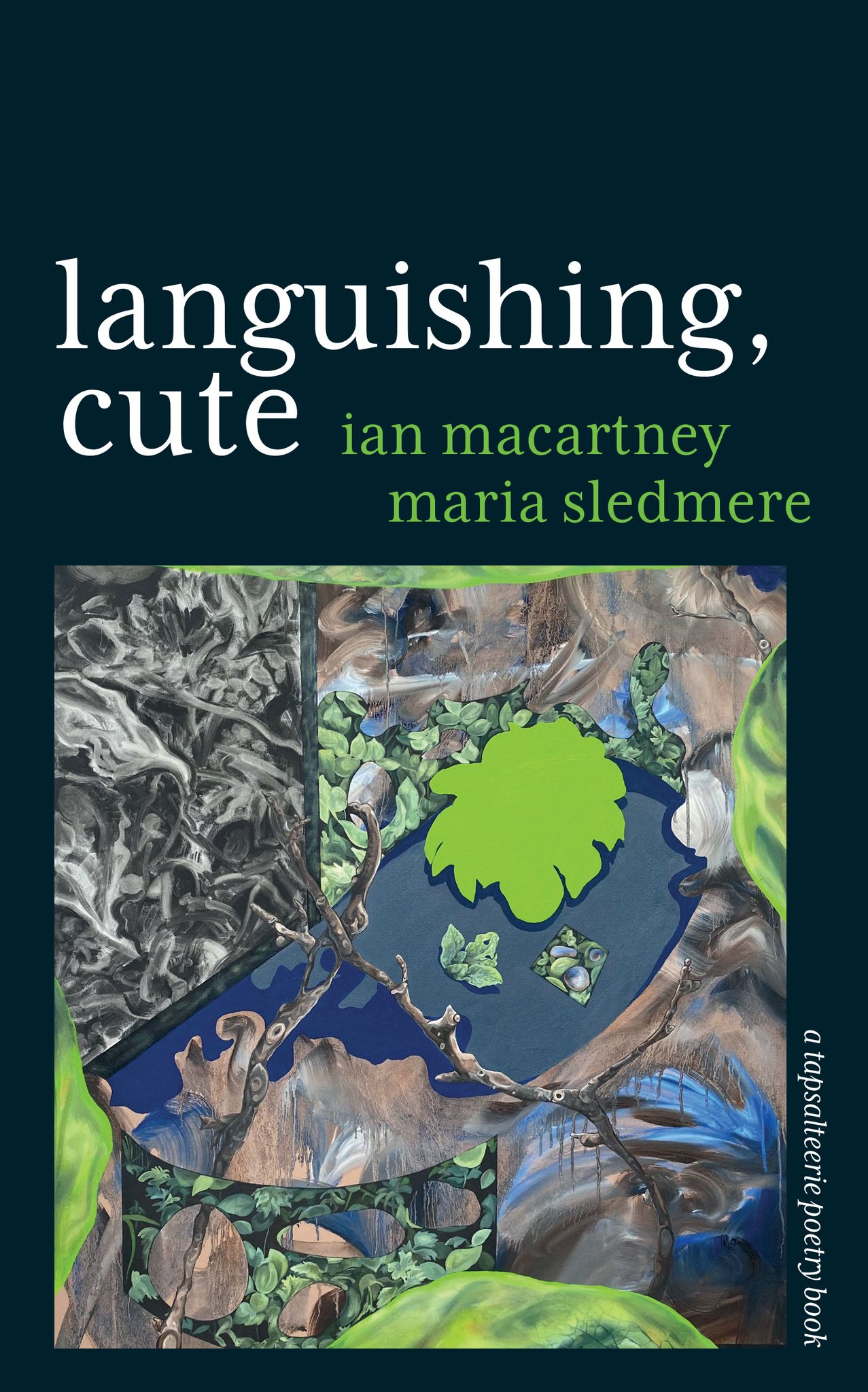
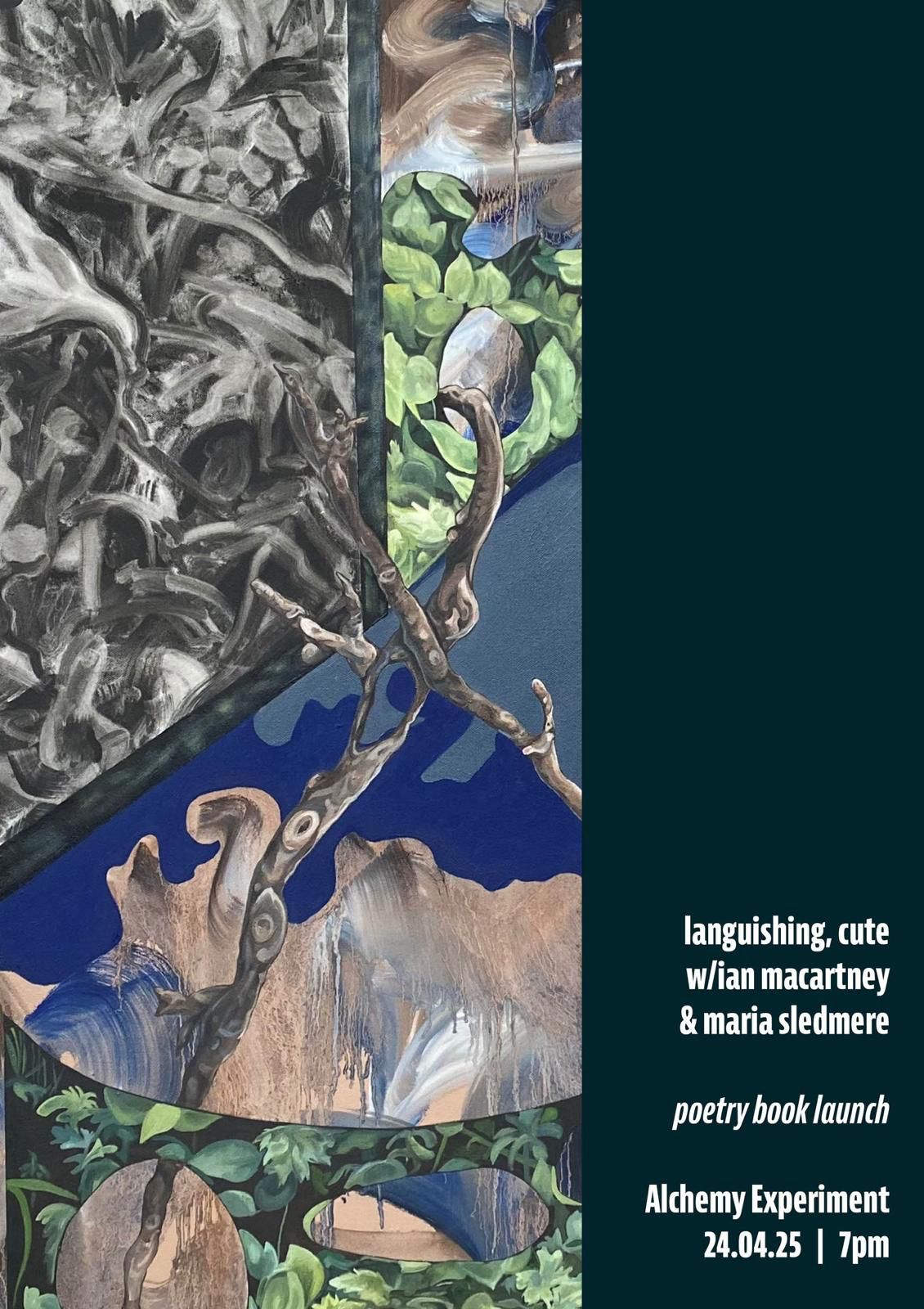
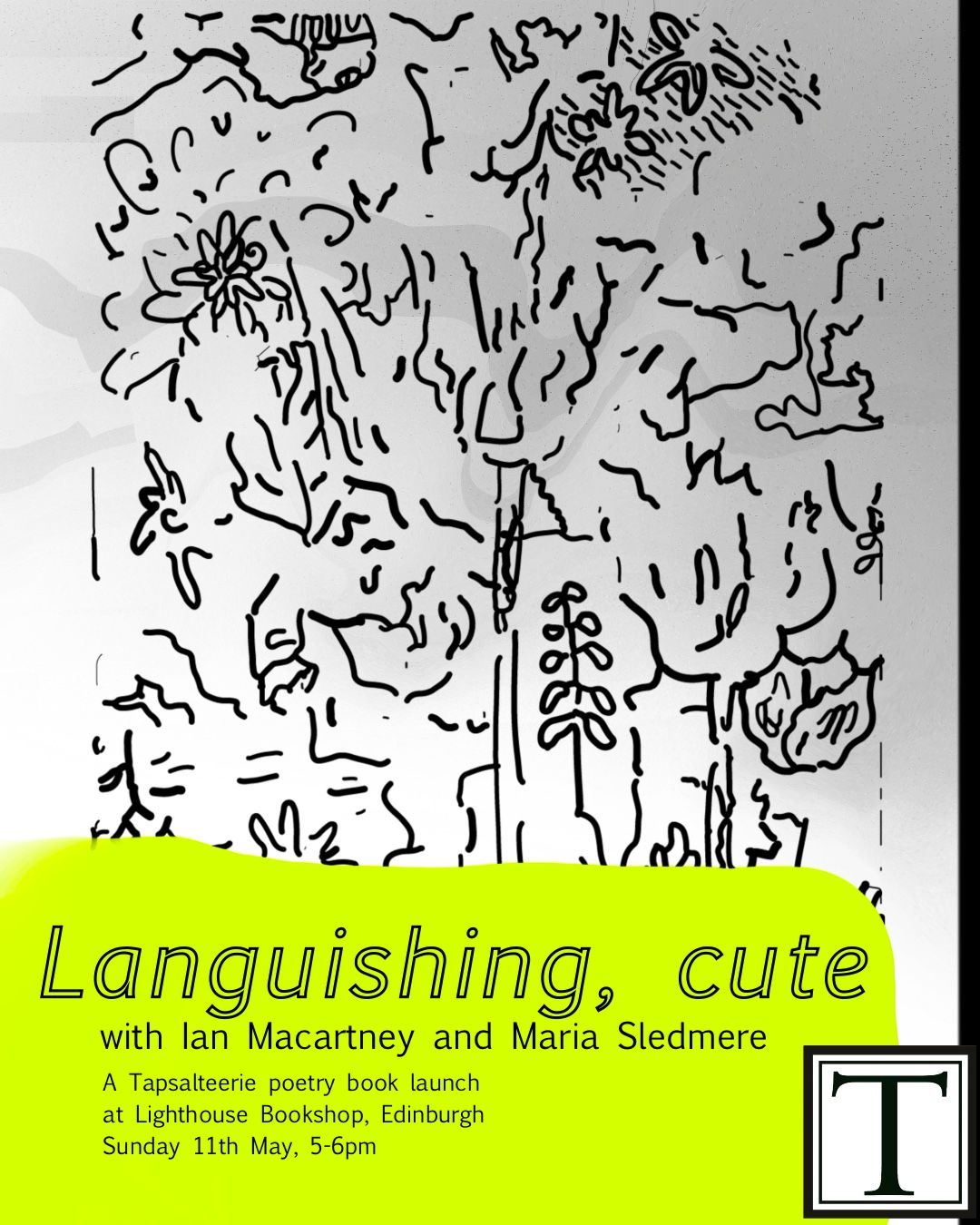
We’re publishing the full collection, Languishing, cute with the wonderful Tapsalteerie, an indie press based in rural Aberdeenshire. Ian’s worked with them before via their pamphlet imprint Stewed Rhubarb Press and they published some of my poems in the 2019 anthology, edited by Calum Rodger, titled makar/unmakar: twelve contemporary poets in Scotland. We’re big fans of Duncan Lockerbie, Tapsalteerie’s founder and editor, who does so much for Scottish poetry and beyond.
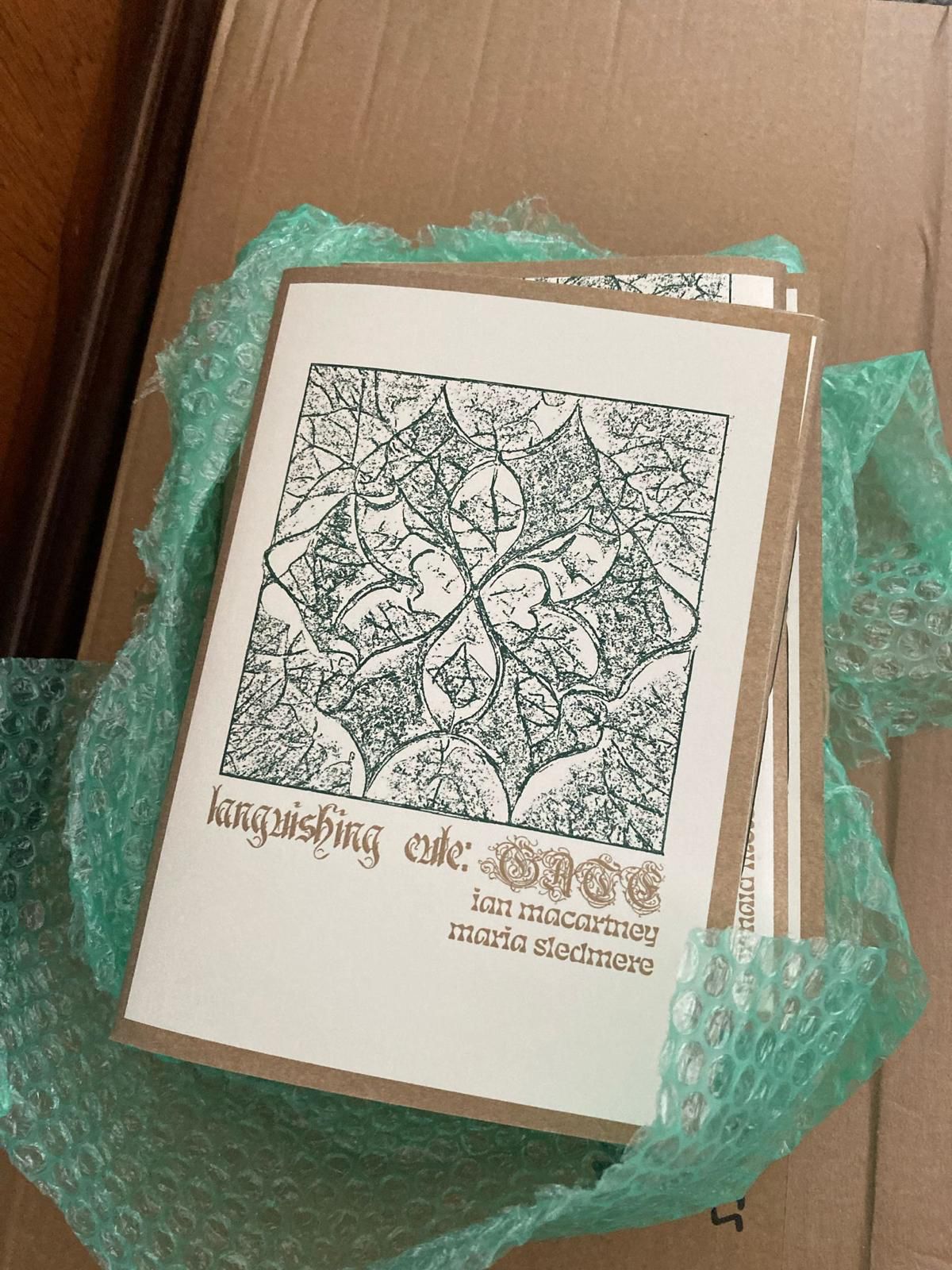
We’re also publishing, thanks to the exquisite printing of Earthbound Press, a separate riso pamphlet of b-sides titled The Gate. Look out for that at our launch events…
From the publisher
languishing, cutepresents a collection of jittery missives that propels the speculative Scottish canon of Morgan, Gray and Mitchison into a maximalist ‘high femme goth surrealism’ via hyperpop, Celtic futurism and digital culture. Here the poets tend towards e-pistolary contemplations of retro-adolescence, fizzy ecology and mercurial slippy gurlhood to complicate notions of Scottish identity, nationhood, ecology, nostalgia and more.
Nice things people have said:
languishing, cute is the opposite of a flyting — that traditional bare-knuckles fight between two poets. Rather, the two poets here offer their worlds to each other in the gift of friendship and they listen back: it’s not a duel, it’s a jewel. Where they meet is in a place of Anglophone avant-garde stimulants — locating codes include Francesca Lisette’s Teens, Edwin Morgan, Tim Atkins and Peter Manson — and the dancefloor has Bunny Is A Rider pumping out in up-melancholy and autotune. At times this is glitch-poetry, funny, para-kitsch and mesmeric. At other times there are the amplitudes of tenderness and self-effacement in a palette of citrus and greenest day-glo. What’s also fascinating is the pressing together of the virtual and its tics with its mineral and viscose underpin, all via the very human. It’s a leap from body/mind to capital/digital and back again, flickering, a visit to Silicon Brig-a-Doon you’ll want to be the first to Insta.
– Richard Price
[…] Messy as a teenage tumblr, flashy as a strobe light, this is two exceptionally generous poets bouncing off the walls of the backrooms with the energy of a thousand monster energies… here ~The Glitch~ is not a glitch but a stitch between windows, the glue between a b2b set, the rhythmic green hills of algorithmic infinity … and yet these re-mixes and e-mails traverse an internet of metal and cable, the business of poetry is conducted by staples through sheets of reconstituted tree::: there’s something old-school, decidedly analogue about all this. It feels like you could feel it. It feels like the push of a button, the caress of a bright cool screen. Actually no it feels warm and coarse, a cosy transmission rumbling, re-tuning itself like you’re flicking from station to radio station, flickering between noise & dialectical noise, patterns emerging in the static as the ether unknots itself, and the stuff of life comes spilling out […]
– Dan Power
Endless aureate refreshment from Maria Sledmere and Ian Macartney, languishing, cute is a collection with all its push notifications turned on that still finds headspace to pay attention on the DL to form and poetic inheritance. There’s Sledmere’s elliptical take on William Carlos Williams’ fridge raid (with Kylie Minogue R osé instead of plums), the odd sestina, and plentiful nods to that Scottish experimentalist Edwin Morgan range from embedded songs of the Loch Nes[s]presso Monster to Macartney’s predictive geographies in time-travelling poems indebted to Morgan’s Sonnets from Scotland.
With spins to further Scottish topographies from Maybole to Lerwick, Sledmere and Macartney are often found shuttling east and west ‘w/ eloquent glitches’ across Scotland’s central belt, heading increasingly into CAPITALS when Macartney’s voice announces us into Superedinburgh Vaporwaverley/Edenbruh/the London of Scotland.
The internet’s vertigo is never far away from poems presenting like listicles. Sadly for any wannabe monetised content, in languishing, cute these poets may be trading futures, but their hacked hypernature is funding nobody’s wellness retreat.
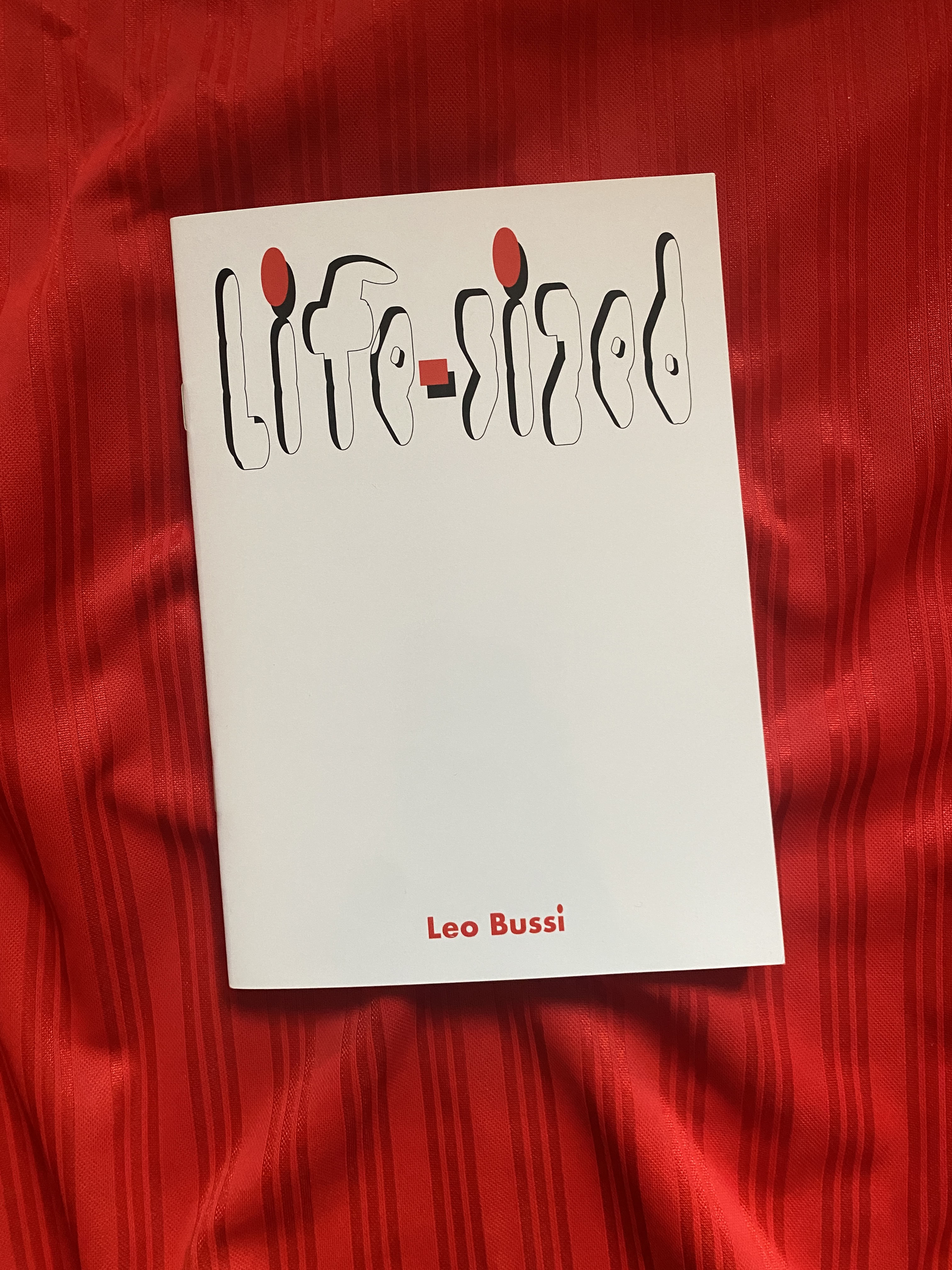
For a few months now I’ve been working as lead editor on Leo Bussi’s debut pamphlet, Life-Sized. I just wanted to say a quick word here about how awesome that’s been. I felt pretty jaded about running a press for a while because I was holistically exhausted and sick of the admin oblivion that is a non-profit tax return. This project has got me back in the game.
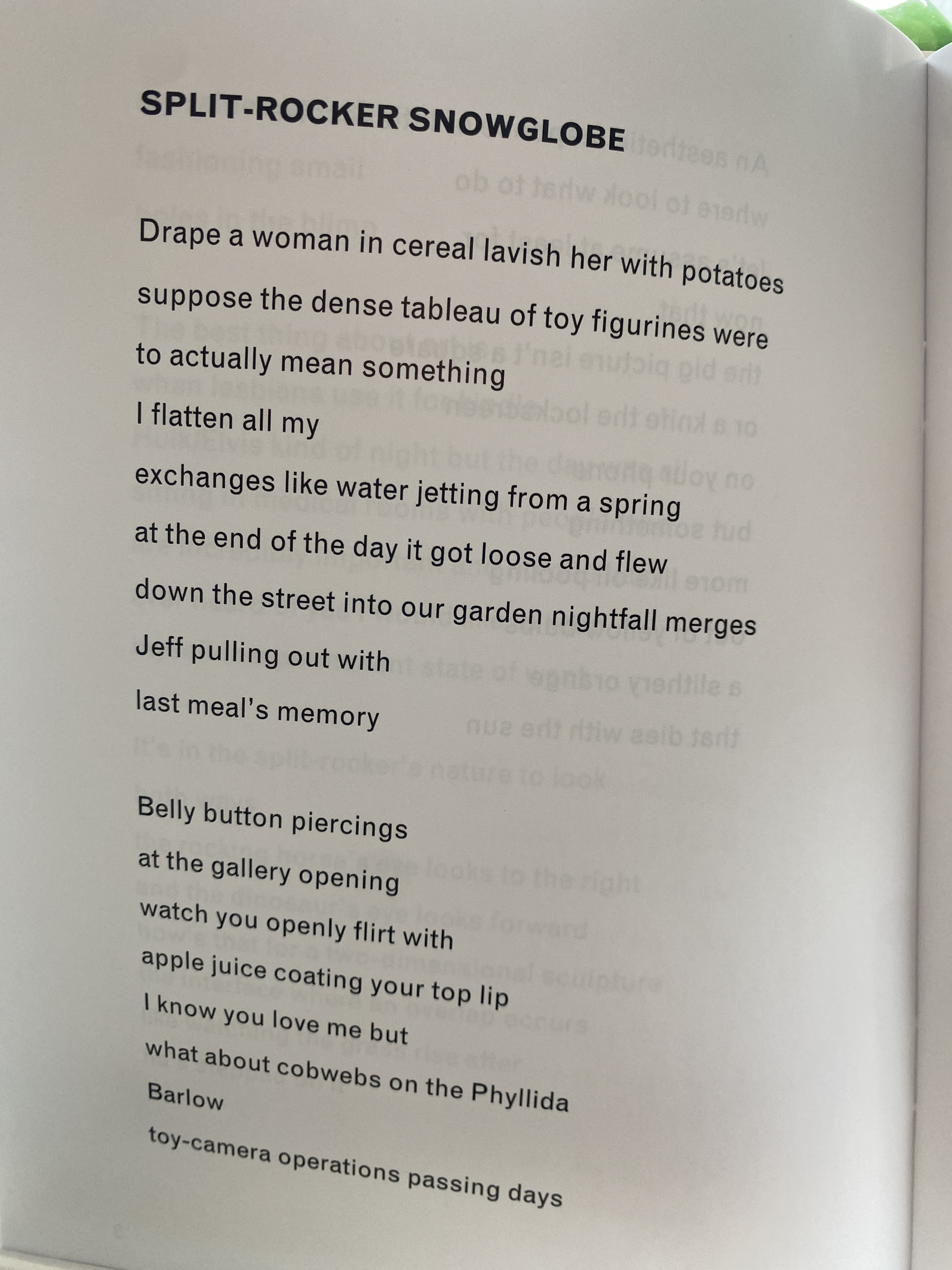
Leo’s work has charmed me ever since he read at the SPAM launch of Cocoa and Nothing (listen here) and we bonded over shared appreciation for a certain universally loathed, candy-named song. Editing Life-Sized has been energising because Leo is someone who kind of just comes with a fully formed poetic. And that’s informed by art and conversation and what Sue Tompkins calls ‘muscular sculpture’ and what Oli Hazzard calls ‘gorgeously goofy bathos’. He really has an ear for a line break which is sometimes comic timing and sometimes it’s object erotics and sometimes it’s the trompe l’oeil of the poem’s own jouissance. The poem feeling itself in cereal or nightfall or some kind of membrane.
AI-generated visual absurdism may have diluted the power of surrealism in culture but Leo’s poetry reaffirms the sharp gasp of the paranoiac-critical method. Here we have fused realities and toy scales – ‘Barbie version of Mount Rushmore’– played out in the synaesthetic poetics of a Jeff Koons expanded universe. If this is lyric then it’s also ‘Art-breath’ and everything might be desire but it’s also the agency of the brush and a line might be a gentle brush with erosion or it might be social realism i.e. ‘cucked and living in Britain’. My autocorrect tries to make cucked sucked and I want to tell my computer, you should be so lucky.
We are launching Leo’s book at Good Press on 20th March. It’s at 6:30pm, free and you can just show up.
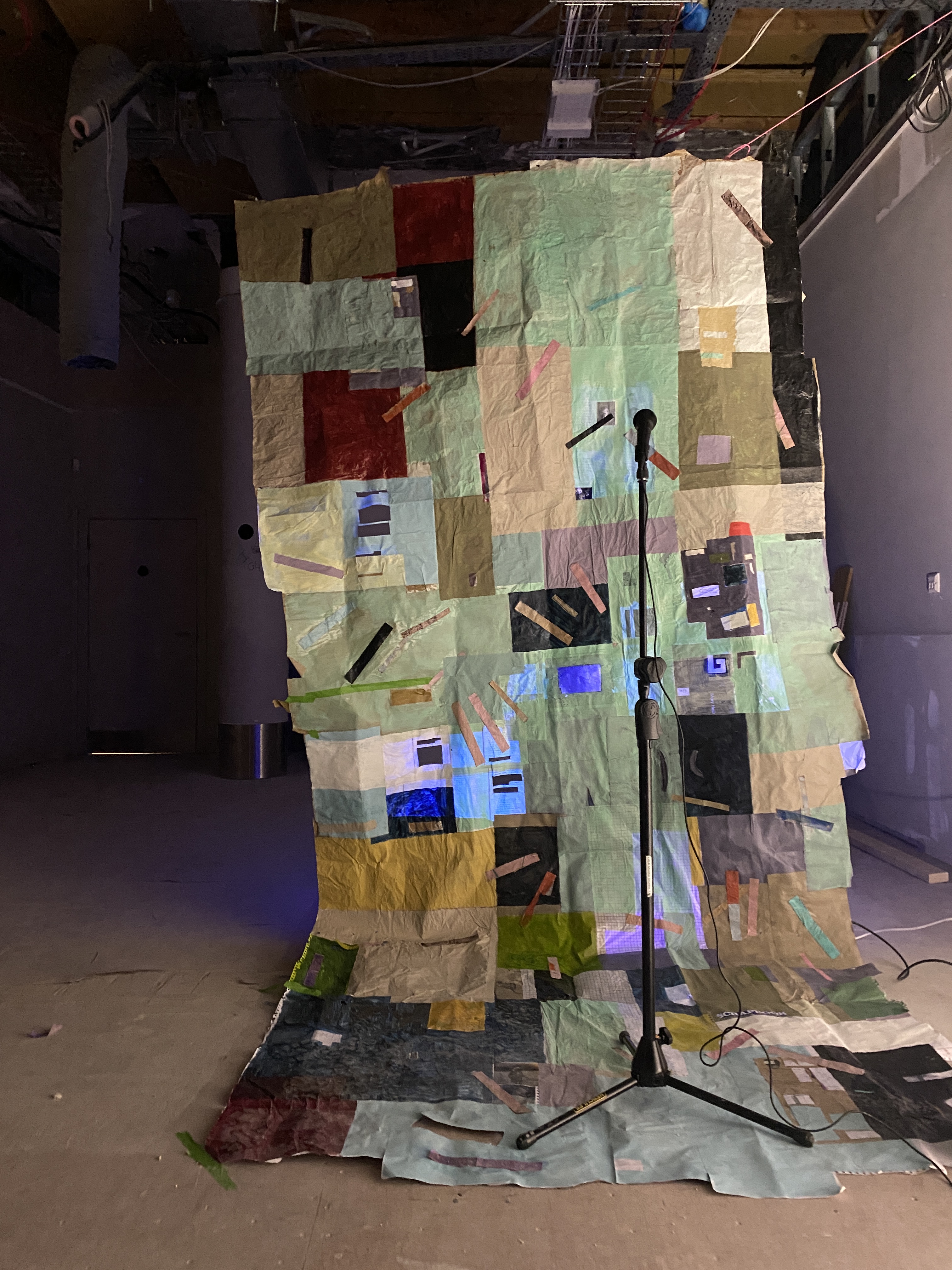
Painting by Gabriella Day, installed at 16 Nicholson Street (15th February 2025)
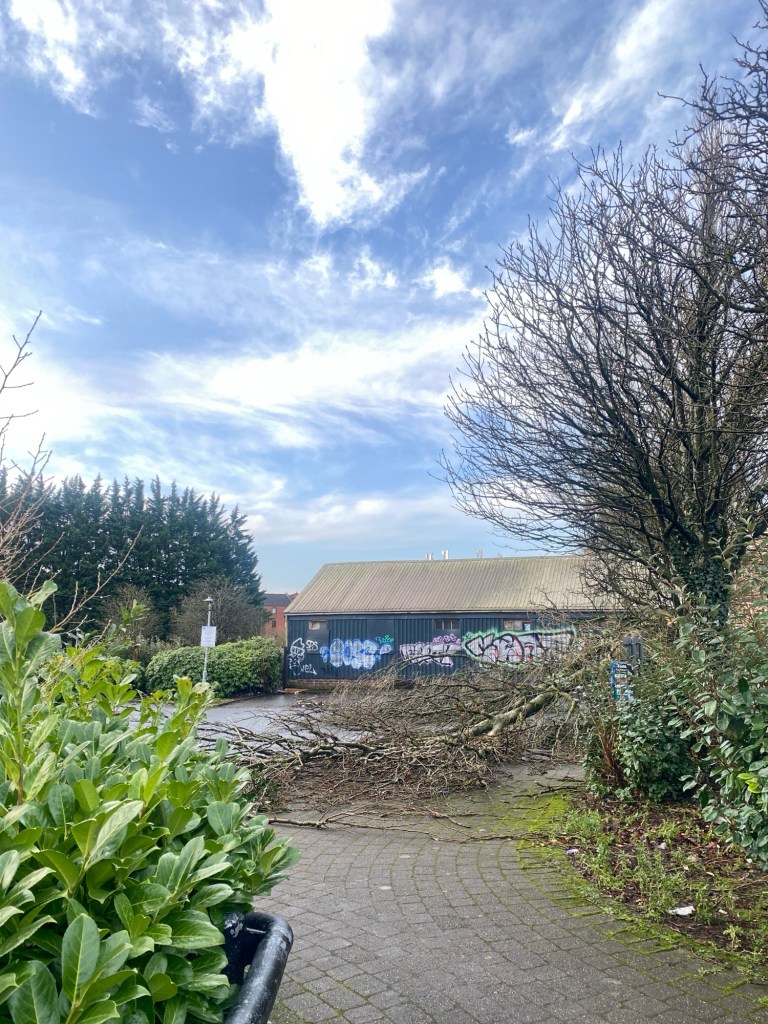
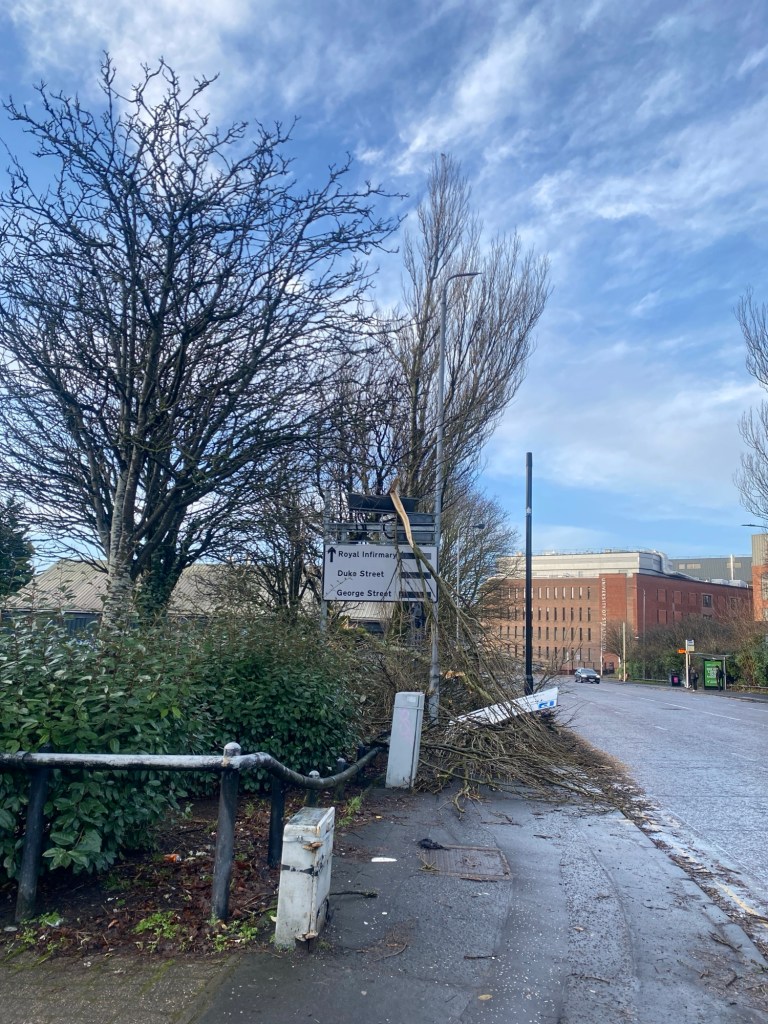
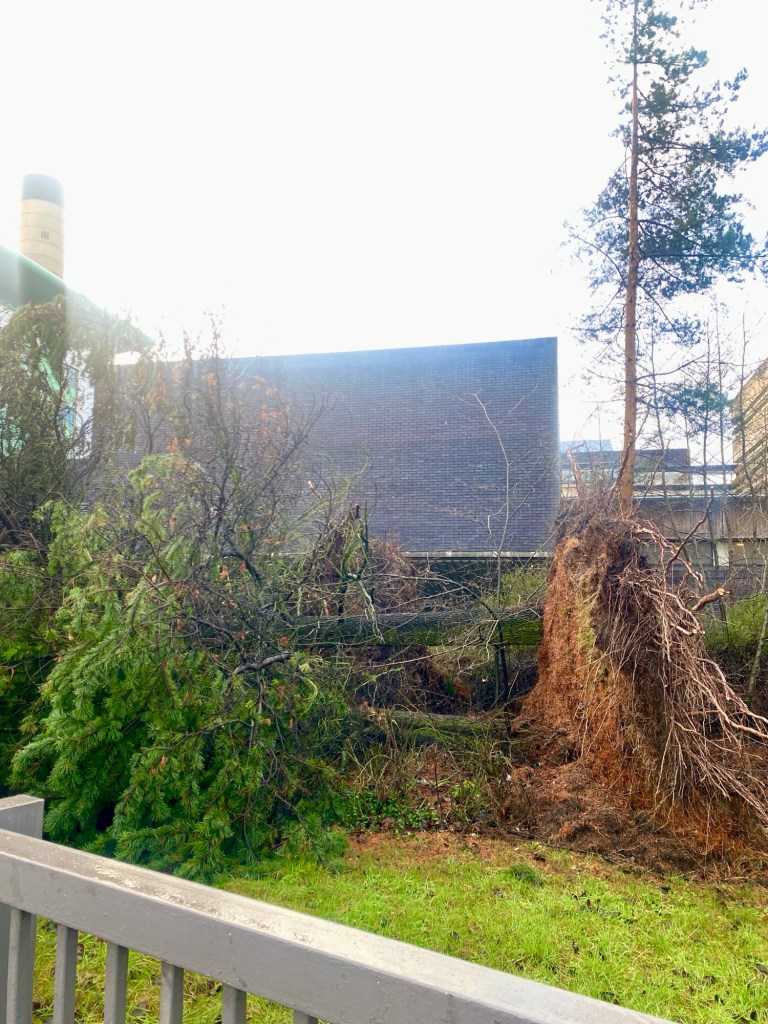
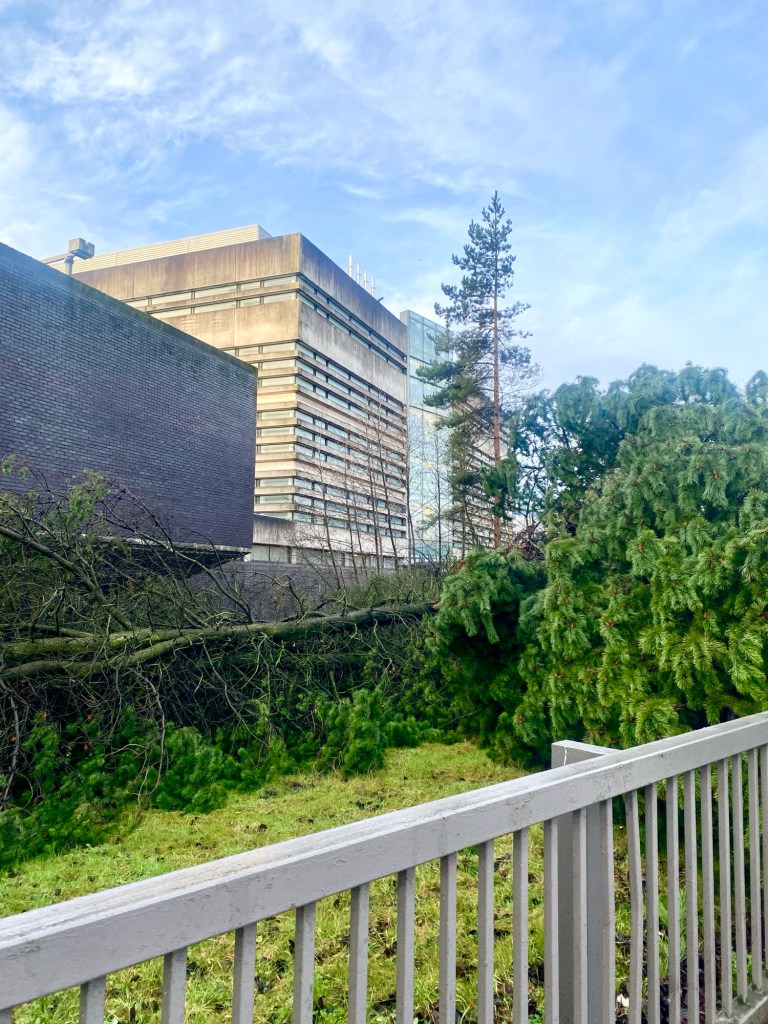
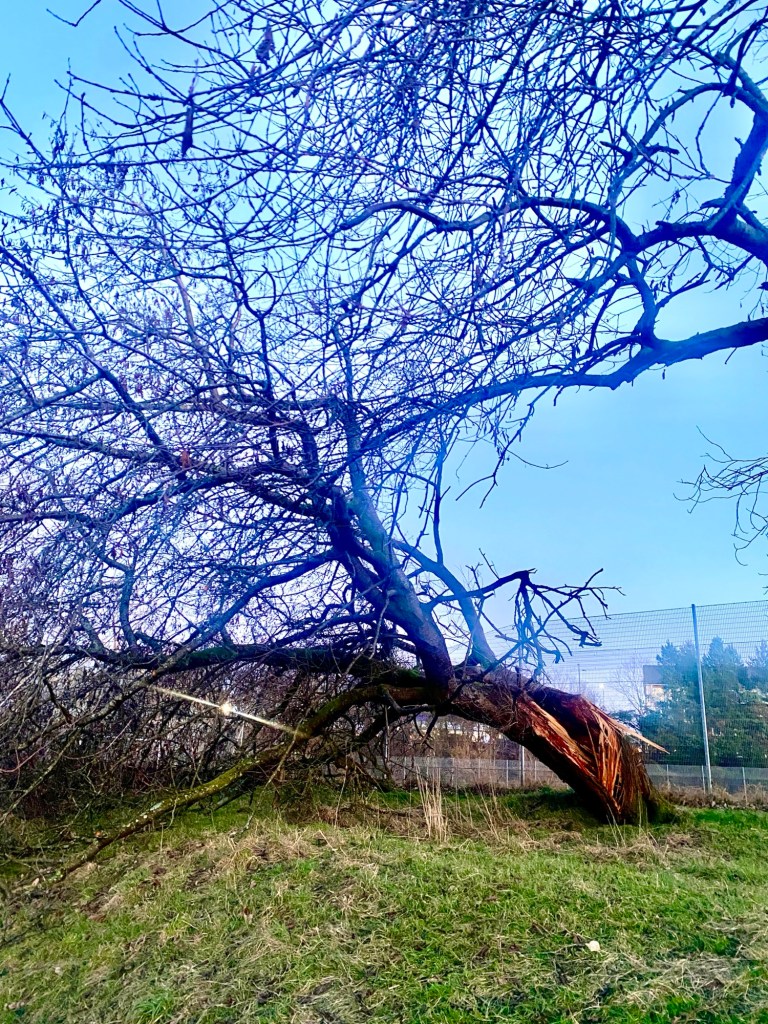
Snapfish was the app for picture-making with smile transistors of the print medium formerly digital doing it all in reverse. This was a theory fiction of sorts in that it referenced real-world Instagrams of the known in the room a knowing nod to the downtown of Glasgow housed as it was in Stories. What does it mean, Iphgenia Baal asks, for there to be a function called that, Stories. Our narrative sense is tabular and it’s no longer radical to put that logic to language and yet how else to express the compression effect of so much content in the 24hour window of when you wanted to say it. Say it with images and captions, the macrofication of everything somehow blowing up tiny moments a thought-unit could never be solar. The big sleep is a phrase she used and sensed somehow this was to come off Instagram and be as small as a baby in your own head you could seek relief in that, a gram of an instant like whatever the polaroid was supposed to. Develop immediacy in situ. Ravers must have had weddings according to the story and maybe to scroll past Sinead O’Connor clickbait and the manifest premise of Instagram mystics was to get at it: story. Children were political subtweets they didn’t consent to. I felt figural arrangements of the app hopping in negative space by which I mean, I was moved by the performance of app phenomenon / it’s giving ‘Home’. Who else is upset by the pivot to video and its attendant emphasis on the rectangle. I walked past a tree in the park and announced it looks like a television because it had a triangle kind of portal shape from where it had snapped in the storm and in my head in that instant a television could be a triangle. You could say ‘Snapfish’. Drew was like what’s the catch. Kirsty says three is her favourite number and Gabby says famously it is the magic one. Kirsty says it is all about triangles. At the end of Melancholia they sit in that triangle structure of sticks and wait for oblivion. What if there was an Instagram comprised of triangles always cutting the roundness of life off suitably into angles, spikes, slashes? I already feel so cubism. Gloria says she doesn’t like being in buildings that are in a state of decay. There are lovely metal bars draping like industrial stalactites and these kind of waffle insulations that give me trypophobia and the realisation that if I were to look at a waffle of any kind on an acid trip probably it would end badly — or worse, it would never end. Now thinking about endless waffle reproduction in fractal everafter it’s like I could float up to the ceiling and be a reverse maple syrup or ketchup bleeding upwards into the texture. That kind of schtick. Traditional reading is supplanted by ‘pure tapping’ because we all said so and Baal said in the story of many stories the tabs that indicate each one had shrunk to little dots since there were so many stories, barely room on screen to map them all. Oops an ellipsis. I remember the era where celebs having minor breakdowns in public would document them lavishly on the story function and the learning we did in that witnessing, as so-and-so saw and was never to be seen again at the bottom left for all the algorithm exchanged of your intimate pivotals. To come off the app, peel a tab; what’s it called almost a Berocca of presence I took densely to remember my friends. Let it melt fully into your gums before coming. Back in the room. Has anyone else had such random encounters on Hackney Road as the ones documented in Baal’s story of stories almost the same person with red curly hair running around in the rain trying to get home in some Covid Christmas, wedded to parasociality’s actual crisis. Too cold to undo my dirty-white jeans. We’d get stranded without narrative sugarcane to suck on and get over with. Afterwards, Leo says ‘I will never look at weddings the same’. fred spoliar in mesh reads a love poem inspired by the entwining of drunk ‘straight couples’ on the bus back from south side, implying all heterosexuals live north of the river and there is a conclusion to the poem’s occasion like ‘it’s love in its offensive modes I want’, striving for utopian couplets only to vivisect grace revealing all hope is a raindrop. Daisy says on Valentine’s Day a maggot fell on her hand, newly born, in front of the television. I said that’s a poem and sorry it will be so annoying to write it — the lovebug writes itself onto the nose. Warm hatching seems nice on a freezing Saturday. We are each to each our body heat. A real lentil would have been more wholesome. I hurt and was changed by the browser world. When fred said ‘yes I have hope’, the light in the room went out for real. Nell says there are two necessities (light, heat) but we can only have one. Well, to pretend iridesce I could take to the streets and try not to get hit by it. To walk around in these poems of memory another south of some city to would give up its public parks for spring and weedling trying to get at the same idea to fashion as intro. Weeds signify your lack of presence. Yes it’s baroque and if you don’t like it you can foil-wrap your heart and lob it politically. Playing the livestream in other locales as if to be thrice-selved only in poetry. When you conflate action with love, have you lost your love’s calibration in service of fucks? There is no cut-cookie of cautionary theory so much to break this in gently. Yes, the private property was and is a lie. This is why we squat in our art. I would feel better hanging upside down like the chrysalis I make of this endless chrysalis. Still, shareholders are why we can’t make the world we want and so fred reads the line ‘so frostwork adores a mitten on the fence’ or something to that effect. I pluck briefly that mitten to give to some kid / who will inherit my chilblains / their frazzled capillaries replace / this chrysalis. Sonnet we can’t be taped laboriously to a Hollywood applied rose blush of the dusk and blush drama of fervent childhood. Living situations fell apart like broken desultory Temu jewellery. We migrated the apps and tried not to fall in the Seine. Our sentences unfortunately were full of lead. Lillian Ross-Millard said ‘I make performance for video’ and there were the collected notes of chromophobia, fear of colour or a personal aversion to its manifest hues. The migraine dramaturgy of yellow and blue. Something felt pixelated like it genuinely lacked substance, could not outline itself for love nor money. Ross-Millard said the cold was felt in her solar plexus and I fell into that line ‘like getting your period and finding a wasp in the toilet bowl’ so much stinging in the sweet place. Like if you look at an object for long enough you can make of it Void. There was an account of the real life ballerinas catching fire during a performance of The Tempest. Real life ballerinas on fire I felt my sentences plié. I was replete with horror of what had been earlier told to me. This is sufficient fire for the world for now; meaning it’s time to perform it. Burn off the colour in everything / with the calories of a panic attack. When Myles Westman read, knelt down and softly, I wrote the phrase ‘unearth radio blood’, unsure of its origin. A loop played over the elegy and we circled the fateful day. Lines like fire licks. Systems, cataclysms. Lastly, Sam Keogh read about holes, butterflies, rorschachs. Said the word ‘rorschach’ several times as if making a rorschach of signification itself, sonic imprint: a little over then underflourished, quivering ink, accented. I thought of gross incidentals in industrial kitchens. For that to be a sort of lichen. Shipworms. Perils of them burrowing into silky poems. I wanted that honeycomb in the horrible waffle but not to stop. Waspish as a florid piss. Footnote telepathy. Parasite. Enamoured American soda. Fructose, cigarettes. Aluminium bonfire of remnant lager. Dogs. Squalor. Now I will go to the airport.
Tonight I’ll be reading a nauseated sestina dedicated to the old Glasgow subway for the launch of TANGERINE DREAM – an anthology collecting work from 24 glasgow-based poets and artists, responding to the 2024 retirement of the old glasgow subway carriages. You know how I love infrastructure.
The Waverley Bar, Edinburgh | Thursday, Jan 30, 2025 7:00 PM
I’ll be reading with the luminous Vik Shirley alongside open mic performances and music from The Self-Righteous Brothers. I’m told there is a raffle. Will bring some books to sell (have a few copies of Midsummer Song and a new batch of Cherry Nightshade).



 mariaology