If April is the sweetest or cruelest, May has become the strangest month. Not ever but ever at present. It is summer’s gatekeeper, but also something other. Nurse of darkness and grief, rushing in bright lines and new delusions. Keeper of shadows flickering among green. In previous years, the season when confusion blooms. A dull need that quickens with the light through dawn to dusk, that honeys the flesh and the flesh’s sense of itself as pearlescent. Coming to endings. I brush my hair smooth copper in a mirror and notice green rings beneath my eyes. My eyes turn green from the copper, the sun. Moss agates held to the light. My irises look less like little sad pools of ocean; more forest now, with secret capillaries. With vague fantasy, I keep planning day trips I don’t then take. The sense of this name or that, a train stop, a heady clifftop walk, is sometimes enough.
Alcohol does me favours, then doesn’t. That absolute sinking sensation of four in the morning, the day already blooming before you a pale lilac silver that streaks the sky and exacts a sort of spermicide resistance to the nourishment of sleep’s regeneration. So you are still electric, pacing at six, drenched in the ersatz light of the screen. White upon white. Straining fingers. I leave early one day to buy crystals, snapping photographs afterwards of bluebells in public gardens. The bluebells hide miniature universes. Still entranced by the fairies; the barmaid knows because she offers me absinthe, green bottle labelled with a delicate eye. The beer garden teeming; cradling sticky glassware back to the bar. Couples come out in the sun, as if so many never existed before it got light and warm. I’m very small, like a vulnerable child, but then swollen and huge altogether. I can’t help the Alice comparison: that sudden shrinkage or growth, beyond the normal bounds of the human. I lust for the fall—that’s all I want now. Air rushing quick around my skull, a delicious plunge. Shake out plumage, feel ridiculous. Everything limps.
It all started with a simple accident: flipping my bike off the road, the front wheels spun thrice, a smashed head smashed knee smashed hand and leg. Smashed brakes. The most extravagant black-purple bruise spread down my shins, clustering like a brand new galaxy around the bloody wounds of my knee. To bleed with gleaming garnet blood. Shocking the folk outside bars with my bleeding. To feel fresh and young at the sight of your insides red against the old old blue of flesh. This youth, this youth. I pedal forever to exact the same feeling, the rush of getting back on again, unlocking the city. I seem to be terribly in love with falling. The streets feel dizzy, the shapes and forms of things are not what they are. I sense they have changed without telling me. The world knows a secret I don’t.
Illness, as it hits. The invisible sickness. I become an overflowing jar of water when I drink, the brimming emotions about to spill—things I usually hide and quench and disguise. Need to piss in awkward situations. Things you can roll out with a bike ride, a cluster of lung sucks and cheek flush adrenaline. But when they get to the surface, they poison the air around you. I spend longer hours in bed in the morning, night shifts and gigs leaving me delirious. To unroll from the covers is an art hardly mastered. I spend hours drifting back into sleep’s coma: a settled levitation of uncertain images, which I try to translate upon waking. A friend and I keep a dream journal. I notice she is always noting faces in crowds: skins, layers, mirrors; juices and rinds and types of paring. My dreams grow more detailed over time, a side effect of writing them down, giving them the agency of language. They dance with image, they have additional emotional import.
I walk across the city, because sometimes that seems the only safe thing to do. The colours in the park just shy of midnight. Pastels brushed and blurred by a child’s ham-fist. Chalked sentences around Woodlands. Pick up your dog shit. My nails grow long and strong and I do not clip them. I want them to seem like a pianist’s, as if at any moment they might pluck out a symphony.
Something of grief scored into my bones. We lost someone we loved, after days of looking and sharing and fighting. My timelines overflow with collective sorrow and personal pain. I spend hours scrolling through tiny stories, slices of joy and memory’s catharsis. We have all been hurt in some way; there is a tear. What rushes in and scolds the fresh wound. It is the one grey drizzly day I remember of this May, utterly fitting. I walk along the Kelvin, listening to The Midnight Organ Fight over and over, hymn to my youth and so many others. The drone fills my blood; I do nothing to stop the rain dampening my hair, filling my shoes, dripping down my neck. Shake out my stolen Monet waterlily umbrella. Remember the bleak streets of Ayr, adolescence an age of cool slain time. Kicking litter, drinking. Rain. Falling into sick sick love then forgetting. The rain rain rain, the rain falling into the sea. It is a membrane I crave, the pale wet indifference to shroud my pain. Sand on skin. What glisters at the edge then beckons. I did not know it was possible to hurt so much for someone you barely knew. It hurt more, in a way, than forms of loss by blood. Family funerals. Toasts. Drunk, I walk back along bridges and try not to cry at the moon, the black black water. Something astride us, everlong waxing and waning. Photographs of plastic, closeup and swallowed in song.
I tore an elegy out of my hours in bed and maybe one day I’ll share it. Something in the darkness, heard.
By some miracle, I regain my night off to go see Phoebe Bridgers play Saint Luke’s. It is a warm night and I walk all the way from west to east; the football’s been on so the drunks stumble out of pubs in their green. She purrs something from the stage, like “So I heard y’all had a sports ball game on today”. We smile at the understatement, there’s a mesmerising space. I stand and my body is so weak my knees hurt and thighs burn and it takes every nerve in me to keep standing, to negate the presence of those around me. Her silvery voice slices through all that, makes perfect rivulets in my soul. When I think too much about it I can’t breathe. There’s a trembling of recognition, little swells of emotion that prick the whites of my eyes. What you thought you were over comes crashing again and over, over. The world whirrs and hurts. It’s barely enough to keep clinging. Walking home, seeing old friends, I felt exhausted: every pore stung but I was also exhilarated. Climbing the concrete city. That feeling of release. The sweet way her vowels lit up the Mark Kozalek cover, the encore. I imagine bright candles snuffed out one by one, the great murder and the guilt of afterwards. Cold and red. The soft caress of the senses, a temporary catlike imaginary. Darkness comes over, consumes the white space you left for happiness. You can’t have it without dreams; you can’t have dreams without darkness. I am dependent on this sorrow. Watching the Ohio river flow at night. These landscapes I know mostly through song, these burning reeds and the gilt-edged clouds over desert metropolis, lost coyotes.
I start writing a novella, set between Britain, Berlin and some mysterious American prairie. Think cheddar-red sunsets, unrequited desire, distance. The indigo swimming pool, covered in leaves.
Distracting myself from everyday idleness, I go to see vast quantities of decent indie, mostly at The Hug and Pint or Glad Café. I take a break from an all-dayer to sit atop a hill in Queen’s Park, south side, watching the sky grow peachy. Chew fruit bars. Drink gin to feel better, in soft medicinal quantities. Do not write as I wish I could. Leave gaps. The pages don’t fill as I’d like. Walk back alone.
I think I am okay but then I walk over water and think of the cold decision. My mouth sours as though filled with the juice of an apple and any word I might have dissolves in the acid, prior to speech.
Remember as kids we’d build dams in rivers? Inefficient structures of misshaped rocks. The cool cola feel of water, smooth through our fingers.
In some hot bright room of the CCA, practicing Oulipo techniques with Lynn Crawford and Josh Thorpe. I write a handful of sestinas, a process that feels akin to weaving. I am paring threads. In times of crisis, I used to sit and make friendship bracelets, focusing on the unconscious flicker and flow of my fingers. The particular colours woven thrice. Pick six words and make do with their pattern, the possible.
Iced Americano from Caffé Nero. Jolt of the nerves. Heat haze over Greenock.
A delay in the body akin to the moon. Waxing slow motion; glitch and lag; the sense of being dulled; the sense of being injured, cramped and twisted. Walk around, see friends, drink bright and early. Waves of hot agony. Go to poetry readings. The sparkle and trance of listening. Speaking. Record poems that settle a corridor of airwaves, signals, emoji. However the connection works.
Get haircut. Scalp massage. Brighter orange bleeds to gold. Sodium. Get on a train.
Loch Lomond never looked so good in green and gold and blue as it did that May of 2016. I lay in the bluebells taking pictures, feeling so restful, red-headed. Fire against green. Now I arrive and make it my imperative just to walk. Early evening of a Sunday and I want to walk my way out of a sorrow, past gaggles of boozy youths; the fresh wound of loss still there and irritating, itching and burning. It is hard to have ordinary conversations, so I take myself off. Everything is so green and the green is so necessary. My body is heat and then freezing. Later, he holds his cold fingers to my neck and we trade levels of shiver. Purple nails and tales of bad circulation. I trip up on my past and can’t help it, looking for the clavicle. The endless craving of a former body…
I parse more and more my botanical ignorance.
Missing the last train home from Edinburgh, after a poet’s birthday party. Doors slammed shut in our face from the carriage. We missed the margaritas, and then the disco. Drank beer in the Meadows, contemplated snow. Menthol vape smoke and cluttered streets, strangers playing tennis all through the dusk. Lovely people. Record collection, good books for miles, pizza. Conversations sweet & real & funny.
The maidenhair fern grows healthy again. I have had her for two years and she’s seen frazzled stages. Clipped back, green again. Does that boy drive? She asked, in the car to the garden centre. I miss the winding corridors of plants, the paint samples, colour cards, smell of wet pine and murmuring water features. May goes on, regardless.
A series of goodbyes. One friend moves back to Greece, the other to the Highlands. Life goes porous with the temporary emptiness that nonetheless lingers without supplement. Miss our wee chats at all ours, in stairwells or pink-tinted texts. Cascading games of our rucksacks swung. I listen to Josh telling Canadian ghost stories in the restaurant: tales of a bride burned alive by tea lights catching her luminous dress, doomed to forever haunt some hotel in the vast, faraway mountains. The geography remains vague in my mind. The customers come and go or don’t at all. I polish cutlery to a deathly sheen.
Festival atmosphere of everywhere in sun. A sunny day in Glasgow, then another one. Minor riots in the park. How are we so blessed, it’s amazing. Botanical taste at the back of my mouth forever. Bewitched house plants, buttered bread rolls, cold tea, slabs of Aviemore carrot cake, tarot readings in Thai restaurants. I wish I could be more glistening. The air in the park at night smells musky and sweet, weed smells and seeds and greening. Saying goodbye without babbling. I noticed the blue, two iris skies at the station.
The last card pulled a cosmic future.
Run across roads to see old friends, nearly get knocked over. Every day I regret not waking earlier. Not going to bed, the struggle to sleep and reset again. Scared of the endless bleed of days.
Feeling kinda weirdly low. I think he’s one of the biggest inspirations in my life right now. Can someone inspire you, I mean in the way they deal with feelings? I value an honesty I can’t offer myself. Not yet.
Rereading old Wordsworth and falling asleep while writing and leaving black dots of ink that seep through my diary. Opening scene of a whirlpool. Talk about Stonehenge with a singer from Portland I love very much. Something about the lapse of water, like every trickle another neglect. People walk round and round in circles, scrolling the whites of their phones as if in sync with the rolling traffic. In my childhood bedroom, I kept a framed photograph of the stones at sunset. I felt calm and serene and apart from myself, apart from time, when I looked at the stones.
I worked a 9-5 the day they found the body, his body. I was serving people with a smile I didn’t recognise and trembled all over and the sense of witnessing this alter-reality or shock, the opening of feelings I thought I’d forgotten. What went on inside the shell, a quivering. Hid behind crates of dirty glasses, in curtains. Tried not to cry on my lunch break, watching solo acoustic version of ‘Poke’ on my phone. Hugging everyone. Earnest conversations. Work is a family. Hot strong coffee takes the edge off. Sometimes no need to talk. The lyrics come again and they burn harder this time. I need to catch my breath. Regain metabolism.
Beautiful messages out of the blue.
Emotional hangover. Best cure, I dig among the piles of clothes in my room and pull out a hardback book: Sylvia Plath’s journals, Christmas gift from my mother in 2012. The book feels heavy and secure on my lap, like a complicated baby. Read her through sleep, while dinner is cooking. Steam, garlic scent, onions, steam. Her voice makes sluices through the fug of everything, so I can feel clear and real again. She mentions ‘the adrenaline of failure’, the up-and-down wavelengths of acceptance and rejection. A poet’s lot. Lust. Apple-bitten first encounters. Fears & jealousies, petty grievances. Genuine pain. Periods of drifting depression, absence of thought. Blood. Self-laceration. Womanhood. Fizzy inspiration, sociability. New challenges in life are a test of endurance. ‘Interesting’, she notes, as to whether she would ‘pass, keep myself intact’. How often are we aware of our everyday proximity to breakdown?
Saturday October 10th, 1959.
‘Feel oddly barren. My sickness is when words draw in their horns and the physical world refuses to be ordered, recreated, arranged and selected. I am a victim of it then, not a master’.
7.30pm Wednesday, October 17, 1959.
‘I don’t know why I should be so hideously gloomy, but I have that miserable “nobody-loves-me” feeling’.
Journal Fagment 31st December 1955 – 1st January 1956.
‘Sun well up, losing red and paling into blinding gold, air fresh and cold, essence of snow melting in sun, checking baggage and wandering toward the sea in a strange city’.
I will be flying to Munich in less than a week. The first time travelling alone without family. Somebody gift me with orientation. As though without sleep, the comedown slides across a map, egg yolk cool upon blue and green. My eyes won’t focus.
Leaving the flat after 4pm each day, I am a stranger in a world I recognise dearly then don’t. I am best in the early hours or late at night. Catching spiders on sidewalks. Everything between that is strange oscillation, is tuning in and out of social existence. What about when the words don’t come. So many trite feelings. A terrible love. The shapes of things. I’m walking with. All of Glasgow a building site, dust of destruction and foundations laid. Piles of concrete slab, churning tar; industrial scents lace the too-warm air.
Where once I would say, hey I’m addicted to chocolate. Honestly, 200g+ a day! Now, it’s a serotonin craving. Simple as. Deficient.
Playlists make better sense of these feelings. Thin black lace, an open window. Warmth.
Easier not to just clack and bite.
Go to prom re-enactment. Balloons and alcopops, rhinestones; blue velour and slacker rock. Fall asleep, nearly, on the night bus, passing airport and eerie business estates. The pool and the plastic palms. Walk home, low battery, ruinous sadness. Insomniac documentaries about Karen Carpenter. Milk cookie eyes and innocent villanelles. Her voice a creamy river, glossy brunette, hometown glory.
We enter Gemini season. The energy shifts. Borderlines and places I can’t cross in my dreams, lost people glinting in distance. Blue folds of tumblr embrace me again. Streams of midnight images, pastel landscapes and metallic objects melted to abstraction. Things split and twin and I miss all my soulmates, past and present. Editing, editing. I miss when the truth felt less of a shimmer. Sleep it off, sleep it off.
The loud loud noise of all these feeds.
Out in the hot dusty yard of SWG3, disco ball scintillating in the sun, I see LCD Soundsystem with my friends around me. For once, that’s totally enough. Stand between two brothers. Smile all through set. There is a sort of ultimate feeling. I can change I can change I can change. Synths blister through me. Drums. Feel drunk when I’m not. Feel heady. The old chandeliereal, teenage way. Sun glitters. Swap limbs. Burst memories are easy.
Wander home through herbaceous border. Covet her 3am poems, blog posts. We stay up all night discussing complex crushes, then I’m sad because endings are happening all around me. Withdrawals. Wilted tulips. Little flurries of unexpected messages, best sensation. Campari with soda or cherry brandy, amaretto on ice and sharing a seat, clinking glasses and feeling breezy. Sitting in dark galleries on hay bales, waiting. Clutching cigarettes I won’t smoke but stole anyway. Talk of literary idols, musicians and artists. Writing things down with conviction, like: I love the new Stephen Malkmus album, so much! Sparkle Hard! The dreamy subsistence of the suburbs at dusk. Those shoes are shinier than my future. I hope he’s okay. Plagiarise conversations. You could boil it all down to a haiku, May a tiny, significant bulb of gorse:
Luxury sadness
Twice for sale, gold and then green
Forget to mention.
*
Bob Dylan – Tonight I’ll Be Staying Here With You
Sharon Van Etten – The End of the World (Carpenters cover)
Cat Power – Metal Heart
The Twilight Sad – I Couldn’t Say It To Your Face (Arthur Russell cover)
Manchester Orchestra – Architect (feat. Scott Hutchison)
Harrison Whitford – Poltergeist Love
Pavement – Type Slowly
LUMP – Curse of the Contemporary
Bright Eyes – Coyote Song
Common Holly – If After All
Sufjan Stevens – Romulus
Milk Carton Kids – Wish You Were Here
Mark Kozalek – Good Nostalgia
Fossil Collective – Disarm
Nap Eyes – Every Time The Feeling
Arctic Monkeys – Star Treatment
Iceage – Beyondless
Parquet Courts – Violence
The Brian Jonestown Massacre – Animal Wisdom
Kendl Winter – Shades of Green
Big Star – Thirteen
Hatchie – Sleep
James Blake – Don’t Miss It
Stephen Malkmus & The Jicks – Bike Lane
Sufjan Stevens – Make Out In My Car (Moses Sumney cover)
I was turning all the lights off, trying to mute history. There were several moments in which it felt like things were changing, possibly blossoming for the better. The aftermath stung and went backwards again. There was a song about the M62 I followed briefly, thinking about motorways more generally and something expansive and grey, crossing the Pennines eventually. For a week, I wrote down descriptions of the sky. Mostly they read: the sky today is grey. I then started noting the patterns in Dorothy Wordsworth’s journals, which often begin with vignettes of the morning:
3rd February. A fine morning, the windows open at breakfast. 6th March. A pleasant morning, the sea white and bright. 26th May. A very fine morning. 31st May. A sweet mild rainy morning. 2nd June. A cold dry windy morning.
Mostly, she summarises the day. There is much letter-writing, Coleridge dining, William writing. Walking, cooking, taking guests. There is a rhythm and comfort to her entries, the circling of Ambleside, the sauntering in sun and air. Days condensed and hours expanded, cute little details in pastoral glimpses: ‘Pleasant to see the labourer on Sunday jump with the friskiness of a cow upon a sunny day’. She sees into the life of things. She inspires me to mark the simple, joyous moments of daily existence. Like walking home along Sauchiehall Street (the nice part towards Finnieston), close of midnight, seeing a couple in each other’s arms, sobbing, the man with a bunch of flowers held behind his back. They were not by any means striking flowers, probably bought cheap and last minute. I wonder what sort of gesture they were supposed to convey. At what point in the night did he decide to buy them; did he attain them from those wandering women who pray upon drunks with their floral wares? Did he cut himself, ever so slightly as he paid for those unlovely thorns? Is love always a form of apology for self? The self when it expands beyond too much of itself, hotly craving?
17th March. I do not remember this day.
It seems irrelevant to say, today is Easter Sunday. Jackdaws torment me in the expensive fruit of a wakeful morning. I imagine pomegranate seeds falling from a pale blue sky. These days unfold with wincing clarity, like the hypnotic drag of a Sharon Olds poem: ‘I could see you today as a small, impromptu / god of the partial’. There are things we are maybe not supposed to remember. As if survival were a constant act of lossy compression. Like a contract between two people, pinkie promise, except one of you has broken it. Has let out the glitches. Your dreams and daily reveries are full of the content you’re not meant to remember. You are clasping this thing as if it might live again, and indeed it might really. It is not easy to simply file away memory. Its particular phraseology of physical pain comes floating to the surface regardless. There are techniques of displacement. Letting yourself shimmer in the wind. It was one more step to be gone again. So every song I went to put on, clicking the laptop, he was like, stop, it’s too sad. When they ask what’s wrong and you’re smiling instead, worrying the edge of your lips into muscles you don’t recognise at all. The room was a singular bottle of beer and a breeziness to other people’s sweetness. They wear lots of glitter and laugh as we did once. They are singing. I feel like the oldest in a test of forever. But anyway this is all only temporary. Things break down but they do not go away.
30th March. Walked I know not where.
I watch a film about plastic in the ocean. They haul fish after fish, bird after bird, prise exorbitant quantities of bottle caps, ring pulls, microbeads and indiscernible fragments from stomachs and lungs. It is quite the display. Hopelessly choking. Seems obscene to describe that deep blue as ever pure again. There are patches of plastic in all its particles swirling. It makes not an island exactly, more like a moment in species collision. Whales absorb plastic in the blubber of their skins, digesting slowly the poisons that kill them. I wrote a story about a whale fall once. The protagonist trains in swimming, in underwater breathing, in order to enter other worlds: ‘This place is a deep black cacophony; you hear the noises, some noises, not all the noises, and you feel the pressure ripple pulling under you’. There have been bouts of sleeplessness this month that feel like dwelling inside a depleting carcass. If every thought dragged with subaquatic tempo. Blacking out at one’s desk into sleep. Forgetting in the glare of screen flickers. I meet people for coffee and feel briefly chirpy, stirring. There are pieces of colour, uncertain information, clinging to the shuddering form of my body. Do not brush my hands, for fear of the cold. I am so blue and when he squeezes my fingers my insides feel purple. The woman at the counter remarked on the cold of my hands. I am falling for the bluest shade of violet. How anyway in such situations I become the silent type as I never do elsewhere. So ever to cherish a bruise as violet or blue. I polish vast quantities of glassware, lingering over the rub and sheen. One song or another as 4.30am aesthetic.
Emily Berry: ‘All that year I visited a man in a room / I polished my feelings’.
The questions we ask ourselves at work form a sort of psychoanalysis, punctuated by kitchen bells and the demands of customers. What superpower would you have? The ability to live without fear of money. We laugh at ourselves as pathetic millennials. I have nothing to prove but my denial of snow, power-walking up Princes Street on the first bright day of the year. The sky is blue and the cold flushes red in my cheeks. But I am not a siren, by any means; I wish mostly for invisibility. The anthem for coming home the long way is ‘Coming in From The Cold’ by the Delgados, feeling the empathy in lost dreams and the slow descent into drunkenness that arrives as a beautiful warning. Like how he deliberately smashed his drink on the floor in the basement out of sheer frustration with everything. The ice was everywhere. As though saying it’s complicated was an explanation for that very same everything. The difficulty of cash machines. Emily Berry again: ‘I wanted to love the world’. In past tense we can lend shape to our feelings. Will I know in a week or more the perfect metaphor for this dread, this echo chamber of grey that longs to be called again? I punch in four numbers.
I covet my exhaustion in slow refrain. There are people whose presence is an instant comfort. There are people you’d like to kiss in the rain; there are people you’d kiss in the rain but never again. What of the gesture of that bouquet? Surprise or apology? The sky is catching the mood of our feelings. Is this a melancholic tone of regret, or maybe an assured and powerful one? I twist round the memory of a mood ring; its colours don’t fit. I photograph the rings beneath my eyes, finishing an eleven hour shift. She shoves rose-petal tea biscuits under my nose but I smell nothing. I watch the chefs at work, caressing their bundles of pastry and sorrow/sorrel and rocket. I climb many stairs and assemble the necessary detritus of another funeral. Sadness requires a great deal of caffeine.
I eat mushrooms on toast with Eileen Myles. I long for the lichens on the trees of Loch Lomond. I sleep for three hours in Glasgow airport, on and off, cricking my neck and drifting in and out of vicarious heartbreak. Lydia Davis is often perfect:
But now I hated this landscape. I needed to see thing that were ugly and sad. Anything beautiful seemed to be a thing I could not belong to. I wanted to the edges of everything to darken, turn brown, I wanted spots to appear on every surface, or a sort of thin film, so that it would be harder to see, the colours not as bright or distinct. […] I hated every place I had been with him.
(The End of the Story)
Must we coat the world in our feelings? What of the viscosity that catches and spreads on everything? There is an obscenity to beauty in the midst of defeat. Year after year, I find myself dragged into summertime sadness. There is so much hope in the months of June and May, soon to dwindle as July runs spent on its sticky rain. The lushness of a city in bloom, all fern and lime, is an excess beyond what dwells inside, the charred-out landscapes of endless numbness—or ever better, missing someone. We covet the world’s disease as externalisation of our hidden pain. Let things fragment and fall away; let there be a sign of change in motion. How hard it is to be happy around depleted friends; how hard it is to be sad among joyous friends. They pop ecstasy and go home for no reason. It is self-administered serotonin that mostly buoys up the souls of the lonely. There were songs from the mid-noughties that now sound like somebody shouting down a coal mine. I want to offer them a smile and a cup of coffee. It’s all I have, the wholesome concatenation of smooth flat-whites.
There is a song by Bright Eyes, ‘If Winter Ends’: ‘But I fell for the promise of a life with a purpose / But I know that that’s impossible now / And so I drink to stay warm / And to kill selected memories’. Winter’s demise in conditional form. Alcohol convinces us of a temporary rush into the future that blooms and is good, is better than before. The drinkers I know have muffled recollections, blotted out mostly by false nostalgia. We covet a swirling version of life in the present, its generous screen flickers, its spirals of affect. We pair off in the wrong. There are days when nothing will warm me up—not the dust-covered space heater, not the hot water bottle, not the star jumps that scratch heart-rates out of the hour. Was it the same sensation, hanging on for his vowels on a hazy afternoon, four o’clock stolen from whatever it was I was supposed to be doing?
Summer, however, is forever. It is supposed to be best. The clocks skip forward.
I learn to riso-print. To work with the uncertain blot and stealth of brighter inks. What results is a marvel in teal and burgundy, splashed with cyan. See it as past with glitters of future.
In a cramped, fourth floor hotel room in Amsterdam, I lay on my bed, leg-aching, listening to ‘Shades of Blue’. Yo La Tengo get it, the vaporous sprawl of the days upon days, days replacing days: ‘Painting my room to reflect my mood’. It is a kind of overlay, the new versions of blue which are deeper maybe than they ever were before. Which lend alter-visions to original blues, the ones you thought were bad before. I see my first IRL Yves Klein in the Stedalijk museum. Words elude this particular blue. It is deep and extravagant and more oceanic than the ocean would dream of. I have no idea what materials or dreams created this blue. Lazuli, sapphires, the pigmented stain of a rare amphibian? It is the steady, infinite eye of the Pacific. It is sorrow itself, the wound of the world. The Earth bleeds blue, not red. It is this kind of blue, a supranatural blue. After the first crisp cold of a new blue day, the rest of the week is brumous and mild. My feet get wet in a cemetery. I learn that Paradise Valley is an affluent town in Arizona, and not in fact merely a Grouper album. I drink mint tea all week to detox, then stay up all night when I get home. The gin sodas sparkle within me for days, but I’m feeling guilty.
The canals are parallel, the streets are winding. There are neon and fishnetted girls in windows, drolly sipping mysterious drinks. Their eyes are heavily lined. Nobody is looking. The air is warm and spicy at night. The tourists admire displays of various erotic paraphernalia; I take pictures of the lights splashed gold on the water. They say if you get to know the place, you can really settle into a meandering layout. A guy at work supplants my name for ‘Marijuana’. I wonder if ever I’ll be someone’s Mary Jane, and what that means in the long run. Feels like a Green Day song. Marijuana, they’ll say, Marijuana I miss you. There are pockets of Finnieston that waft forever between early summer and fullness of June; evenings hung by the scent of a stoned hour poised on forever. I stay sober. I think of the river, the people and dreams it steals. The world crystallises with ridges of cold, so I must sleep beneath sheets in my click&collect coat. Blue-fingered, shivering.
Carl Sagan’s ‘Pale Blue Dot’ has been lingering on my mind: ‘Consider that dot. That’s here. That’s home. That’s us’. I keep writing out line after line, just for the sake of avoiding full stops. I’m not yet ready for that singular compression, even as it strikes in its simple beauty.
There was the massive, narcotic blue of the sky from the airplane. A blue you can cling to. A blue you descend through.
Lana Del Rey: ‘Blue is the colour of the planet from the view above’.
Pop singers these days are attuned to new scales. That Bright Eyes song opens with a whole lot of static and children shouting, rasping. It is like watching some black-and-white film in a museum, shudders of war or monsters in every low boom and flicker. There are ways we strum ourselves out of the mourning. It’s okay to be enraged and frustrated. Oh Conor, how I love you: ‘and I scream for the sunlight or car to take me anywhere’. So when things fall apart, fray at the edges, I’m thinking of myself as a place, a location elsewhere, ‘just take me there’, and the ridge of my spine is a highway that ends where the best palm glows afire by its imaginary desert. The curve of my neck and uncertain horizon, something of all this skimming around by the brink of etcetera. What else do I have to say but, ‘it’s gonna be alright’, not even realising when I am quoting something. It is hot here, adrift on this sofa, then cold again.
The walks grow ever more indulgent, Mark Kozalek humming in my ear. I think of all his familiars. I think of my younger self thinking of all his familiars. Is it cats or is it women. How many supplements do we make of lust?
The day afterwards, it’s best to drink again. Grapefruit is cleansing. You can order whole pitchers but I choose not to. A certain suffusion of gossip and horror, ice cubes crunched between teeth to ease up the gaps where I’m meant to speak. I see Hookworms play the Art School and they were incredible: they were a rush they were eons of dizzy vigour and sweetness, the music you want to surrender to. I stop giving customers straws with their orders. It snowed again. I wasn’t drinking; I was wearing green for Paddy’s Day. I was so tired my eyes felt bruised. I keep dreaming of islands, motorbikes, exes; broken tills and discos. The flavour of these dreams in surf noir; like even in the city it’s as if a tidal pull is directing everything. I don’t mind being sucked away into nothing; I don’t mind feeling the impulse of a pale blue dot. At least in my sleep. A good collapse. The order of pain is reducing.
29th June. It is an uncertain day, sunshine showers and wind.
This week I will find a hill for my vision. New forms of erasure. I see myself boarding a train.
The birds in the garden have been keeping me up again. Sleep slides in and out of the dark hour, for which I’ve been hoarding the lights in my room for a sunrise. I’m not very good at putting on records; they always jump at the wrong bit, glitching backwards. When you wake up because the moonlight is too bright. It is a question of paying attention. It is a question of living quiet. I wish I could sleep like you.
Spent a few days waiting on trains late into the night or the afternoon. My fingers making a conspiracy of amethyst, mottled with cold. There’s a little glass case you can stand in, twirling your body to get the light to switch on again. I’ve got my comforting songs pressed into my headphones. Funny things happen in my chest when I hear them. Sometimes it’s a release, other times it’s like you can see all the filaments of your blood and sinew twist and sprawl like delicate vines. It feels hot and temporary. I flicker through bad thoughts about what might happen to the people I love. I flicker through good thoughts about what we can do with the summer. It seems so distant.
Sometimes I fall literally into bed; it’s like someone is dropping me.
There are moments I pull very close. There are places where everyone is here at once. There are places where it’s just us and it’s finally warm and my mouth tastes of dark fruit cider and other people’s cigarettes I didn’t want in the first place. The curtains are always closed.
I keep thinking about how there are takeaway shops in the southside named after glistering techno bands and wondering what came before. In my head it is always the music, but then maybe that is something Leonard Cohen said, or didn’t. No, what was it, we are ugly / but we have the music. These shops look like dollhouse shops with all the tools and objects miniatured, but maybe this is just an effect of where I’m standing from across the street, short-sighted. I went out dressed in gingham shorts and other inappropriate quantities of yellow. To have music you sort of have to walk a bit more; you have to let rhythm and melody drop memory with muscle. I once said, leaving a party, I have to make tracks and he thought I meant laying down records. But in a way it is all just recording. When do we click off? Skip between beats.
There are signs of spring. I say this as it starts to snow. I mean a few days ago I could see buds on the trees, little yellow flowers. What happens now? Do they retreat inwards? I picture them shivering within precious membranes, cocoons, algorithms of promise interrupted. It’s okay, I’ll be buying less of these indulgent Lindt eggs from the Tesco round the corner. I’ll thin out eventually. Easter will come too early this year. Winter keeps us in its arms forever, shivering because like those buds we are children. Some people burst through. I admire the impulse. It’s like what, dancing naked in the snow. I used to listen to Sonic Youth when I was angry, whacking objects off dressers, now I close my eyes and try to visualise the colour blue. I get about as close as turquoise before everything melts to bliss. That would be the ideal effect. There’s something very beautiful and suggestive about the word lagoon. Is there a pill for this?
Recently I’ve been rediscovering canals. You see it’s actually been sunny. You have to walk along the motorway, cross several spaghetti roads to get over to the Phoenix Flowers—these sort of peculiar, half-lovely windmill structures. Then an underpass and up some steps. I follow a band of miscreant hipsters. A sign saying Urban Oasis. The canal looks good when the sun hits. I mean it looks sharp and glassy and properly blue. The trees glow ochre in the sun; the way they have faded all through winter seems refreshing now instead of exhausting. In a few months this should all be green. There’s still a fragility. Very little litter. You can see the stadium and the industrial buildings, warehouses and garages and houses. Everything over there gleams rust in the sun. I listen for whistles or song but the air is only as close as my headphones. I’m listening to The Kinks Are the Village Green Preservation Society, remembering odd passages from Cider with Rosie and feeling regret for nights I could’ve made longer with more wholesome spirits. Waking up to bright clusters of strawberry jam on bread like blood on the sheets.
Nothing floats by on the canal, though there are boats tied at Applecross and then a few bottles bobbing their dark viridian messages. I write letters to friends in England, emails to friends in America.
Somewhere down the line, where does all this become ASCII?
I write an inordinate quantity of poetry about bruises and flowers and passing time. The year has stepped up its bicycle gear and I wish my bike was in order so I could fly down the Clyde like Brendan and May in Ruby/Sapphire. Most mornings are filled with flash fiction and occasional bouts of panic. I finish draft ten of an important application.
Daffodils on the kitchen table bloom overnight, just like that. They are marvellously, gorgeously yellow. I feel no shame in showering adjectives.
I dream a lot about the sea. Except we don’t reach it. Mostly it is a question of negotiating cliffs to find safe accommodation. I buy family-sized bags of crisps just for the taste of salt, then feel awful afterwards. This is probably normal.
I am drawn to a piece of teal-coloured scaffolding mesh that resembles a streak of kelp on the street.
It feels good to make coffees and twirl around tables. It feels good to be serving, to eke out a few hours on other people’s time. Sometimes I look forward to a long, long waitress’s summer. Sunlight, sparkling lager and indefinite afterparties. Reams of time to commit to writing in lieu of sleep. We hover at table six and salvage lost noughties culture, folding paper napkins to crisp blue lines. If everything was this chiasmic, easily given to compost.
Today’s Oblique Strategy pops up on my Twitter timeline: Make something implied more definite. Last year I got Tinder but ended up using it mostly to talk about Brian Eno to at least two strangers. I feel like I understand lust less; it is like clustering the silent hours with extra ambience. This is not necessarily a bad thing. The snow outside my window right now is pretty pathetic. People are shaving the skin off clouds. It is really happening; the gaps are appearing. Sometime early nineties, year of the Rooster, hole in the ozone layer.
Being a sucker for charm, longing for the twilight of virtual swamplands where it is possible to cry again. An effect of atmospheric toxins. This is a slow-burner, just slip it on and trust me. You can see through the nacreous membranes, someone else’s confected scrolls of sugar, confession, snow.
~
Hookworms – Ullswater
Robert Rental, Thomas Leer – Day Breaks, Night Heals
Beth Orton, Four Tet – Carmella (Four Tet remix)
Kiasmos – Blurred (Bonobo remix)
Beach House – Lemon Glow
Agony – Beach Fossils
The Orielles – Old Stuff, New Glass
Japanese Breakfast – Soft Sounds from Another Planet
Start with the kernel of something. The year’s first fallen acorn I have not seen yet, though pinecones have been thrown in the direction of whoever. Hypothetically, my life as a typewriter, the body punctuated with the same mechanical violence. Clattering impression of symbol. A certain attention to gardens, as if in longing for confinement, safety. Time spent in Cambridge. Willows sweeping the skin of the river, an endless wandering the result of what. Hard work, long mornings in bed with the warm aluminal form of a laptop. White glow, silence. Someone mowing their lawn too early. Being what it is to be lonely not letting the light in except with broken blinds it comes fractured, skewed, something. The early fears abated, return to trust the body. Sun beaming through unfinished paint, the colour of mauve roses, faded hydrangeas. There is a hyperspace in which the dreams become apartments with balconies folding to abyss, you lean out singing it felt like a kiss the crystal taste which is what a violent text a certain whisky with peculiar salt with the flavour of drowning. Shades of cool. Allergic to punctuation after so much editing. Late night taste of Mogwai, Aphex Twin in the long long mornings. The perfect cupid’s bow of her lips. A geometry of light on the living room carpet. Sit in me, wheat-coloured pool of Vitamin D. The gunshot pulse of the stuttering track. I close my eyes for the White Lodge, the shrouding. Mountains come up and when we are at work we hum the Song of Healing while customers come and go in a panoply, in circuits; the moon too close like a lump of cheese with a million calories like terrible space debris coming. There’s an underpass where the dank canal flows thick as a black black oil, as molasses. Closer, the exact texture of fishnets. Something of your composition, a fear. The cold and lovely brass legato. Confessions in brown paper-bags. These are penny sweets, many regrets, many ice-coloured touch of the tongue that flickers its absence. A pleasant stasis, curled fingers which wait for the rise of the chest and the breath that is chemical alone, that is Tennents at seven in the morning on a lino floor. Berryish, bitten. Making no sense of Four Quartets but embracing the paganism, looking equinox ready with a garland of wilted daisies as if August never happened. The goddess in flesh, Lana Del Rey with her seamless fragility that adds joy to melancholy, etc. You know it. Conor Oberst telling stories about Woodie Guthrie and another life-changing duet on Lua. Voices as clear and pure as expensive vodka, distilled through a mountain stream in the elusive valleys of sadness. Somewhere south of America. I see a desert. There are plants needing repotting in my room. A 39-minute album. A mixed-up connotation, lumps of quartz from a beach near Cardross. I wonder about the temperature of water. Last year’s gatherings, the same melancholy. The absolute cool refreshment of this late-summer’s day. Remembering Lilt as a Thing! Train rides, shudderings, altered temperatures. So much goddamn analysis. Saying it like a litany, my goodness my goodness my goodness. Enacting mythology of objects surrounding. The glass of ice cubes precisely polished, a sequence of droplets. Clotted spectrums. The time it takes between ordering and serving, circling like ravens or trying to negate the game of waiting. Complaints. August being the flourishing stammer of a potentially bad dissertation. Potentially not. Sometimes salt and vinegar just tastes good. Wake up to the sting of your own tongue. Passing creepy, sapphire hot-tubs at four in the morning while old-school Coldplay floats on by mysteriously. Bones sinking like stones. Floating on home at 9am past phalanxes of school children and furious mothers. With all these roadworks, the pavement is but a treacherous ridge between spaces. Samuel Johnson kicking a stone to prove something. Philosophical brutality. Voyage to the capital for Tom McCarthy. Sunlight and absurd erotic fiction displayed in cardboard boxes. The boiling point of all these projects. Nectarines. How everything these days just feels like browsing. Are we yet ready for nostalgia and autumn, and whichever comes before the other? I keep re-watching the same old episodes.
~
LCD Soundsystem – tonite
Kiran Leonard – Could She Still Draw Back?
Big Thief – Masterpiece
Conor Oberst – Napalm
Girl Ray – Trouble
John Maus – Hey Moon
Clarence Clarity – Naysayer Godslayer
Four Tet – SW9 9SL
Oneohtrix Point Never – Music for Steamed Rocks
Mogwai – Coolverine
Lana Del Rey – Shades of Cool
Au Revoir Simone – Lark
Lomond Campbell – Father is a Craftsman (Modern Studies cover)
I’d be lying if I said the highlight of this month was anything other than seeing the glorious Laura Marling perform at the ABC, flanked by her full band. My expectations were extremely high (I’d waited a ridiculously long time to see her, basically 8 years) but somehow she managed to top them, stepping onstage with a billowing white dress and that ethereal voice that held the audience in precious, adoring silence the whole way through. Even the weekend drunks saluted her with respect. She played most of the new album and some favourites from the past, from ‘Sophia’ to ‘Once’ and ‘Rambling Man’. Marling is one of those artists who I truly ‘grew up with’, in the sense that I followed every album as it was released over the last decade; I can pinpoint certain moments of my life in relation to her songs. It’s a beautiful thing. I’m 23 now and she released Once I Was An Eagle at my age. Every day this inspires me to try and do better. Often I fail.
I also had the pleasure of attending the BBC6 Music Festival By Day at Tramway on Sunday, which was really lovely. Father John Misty was resplendent in his usual theatrical, sarcastic glory; Baloji were really fun & great performers; the folk bands were lovely (especially King Kreosote and his endearingly well-handled technical mishaps) and I rather enjoyed a wee chat about the Glasgow label scene between Gideon Coe and Stephen McRobbie of the Pastels.
In March, we were blessed with three full days of actual perfect sunshine. There’s something so striking about a sunny day in Glasgow. You forget for 10 hours that most of your life is lived under greyness and misting rain. I always think of that Frightened Rabbit lyric from ‘Fun Stuff’: “the city was born bright blue today“. It’s a simple line but it carries that sense of wonder, stepping out the door feeling warmth on your skin.
I sat in the park bare-sleeved, reading. The next time I was in work somebody genuinely said I looked tanned. That’s a result, I must say.
(no mention of deadlines please…) => I wrote an essay about memory, technology & the body in Beckett, Ali Smith & Don DeLillo while listening exclusively to Burial and it was sort of a transcendent, spooky experience.
It’s not all about realising you can get 10% off at Topshop again (although my ID photo is so bad this year I’m no sure I can brandish it in public). I didn’t know what to expect, going back to uni after a year out. It all happened so fast. Working for over a year as a full time waitress, doing 35-55 hour weeks, I didn’t really give myself the headspace to prepare myself for what uni entails. Despite knowing for several months that I had secured my place, a Masters in MLitt Modernities at Glasgow Uni just seemed something far in the distance, the uncertain plane which I would embark upon after an endless summer.
No matter how it feels at the time, summer is never endless. August was a strange old month, and horrible, tragic things kept happening around me. Amidst all that, it didn’t seem real, making my way through the infernal labyrinth of MyCampus; applying for scholarships, spending inordinate time staring at screens again, making lists of things to be done. I found myself in a room up high in the Boyd Orr building, listening to the inimitable and infectiously enthusiastic Rob Maslen give a speech about the strange history of these hallowed walls; being introduced to the university as if it were the first time all over again.
It is weird going back to the same university after a year out, especially if you’ve not gone far. I walked up the hill listening to Tigermilk feeling blissfully like a total Glasgow cliché and it was like nothing had changed at all; it was my first seminar of the semester and I felt bright and hopeful. Glasgow gifted us with a particularly gorgeous autumn, trees bronzing languidly into darkening violet as twilight fell and I was still sitting by the fountain, making notes on poetry. I tried to take walks in Kelvingrove as often as possible. Quite quickly, however, the daylight ran out. Nights drew in. Still stuck in waitressing mode, such thing as a sleeping pattern proving an elusive remnant lost somewhere back in 2015, I found myself going to sleep at 5am every night, often staying in the library till everyone on the floor had left and the lights kept going out automatically. There I was, alone in the dark in front of a dull-glowing screen (though one must note the upgrade in PCs at Glasgow Uni Library, which are much preferable). It’s easy to spiral into that maddening routine, trying to do all the reading, make notes on everything. I’ve never been a meticulous note-taker, not by a long shot, but I like to handwrite things and have a tangible record of ideas and theorists and possible avenues for further study.
I would walk home at 2am, stumbling tired-eyed through Kelvinside, hoping for a glimpse of the river, some tangible reminder of nature. How long had it been since I’d seen the sea? During reading week, I allowed myself a cheeky day trip to Arran, which felt so unreal it was almost magic. The days passed and ideas started to percolate in my head. The power of procrastination unleashed itself again. I did more creative writing in the past three months than probably I’ve done all year. I guess the more you read, the more you want to write. I sat on level 11 and watched the sunset over Park Circus, making airy, vague notes about queer temporality and thing theory on a 60p sketchpad. I went to seminars and was reminded of how nice it is to listen to people share a subject, to listen to experts talk with passion about something they must have covered a thousand times before and yet still they can find fresh things to say about it. To actually talk to said experts about such interesting topics (instead of merely serving them glasses of wine and plates of fish, as the Oran Mor waitress will often do for GU academics). Although a bit scary at first (not least because I had a screenwriter and published author in one of my seminars!), it was nice to actually have proper formal discussions about books again. Often we veered slightly off-topic, with Trump becoming the proverbial wall against which we hit our heads in frustration, but everything felt prescient, useful. I went to visiting speaker seminars with the likes of Stephen Ross, Graeme Macdonald and Darren Anderson, who talked about all manner of interesting topics: Beckett’s invention of the teenager, petroculture and the politics of space and architecture. Having been at Glasgow Uni four and a half years now, I was still struggling to find half the rooms and buildings I needed to get to.
I went to a couple of nights at The Poetry Club in Finnieston and actually read poems aloud to real humans. Got a few wee things published here and there. Went to a ceilidh. Realised that I want to do lots and lots of creative writing and really try and learn from people. Started writing music reviews for RaveChild which has been really rewarding, not least because it’s encouraged me to broaden my musical horizons and go to more gigs. Started tweeting again. I managed to go to a few Creative Writing Society workshops, wrote a collaborative sonnet and played around with tarot cards. Went to Creative Conversations at the Chapel and saw very smart and fascinating people talk about writing: Amy Liptrot, Liz Lochhead, Mallachy Tallack, for example. Developed many creative crushes on various academics.
Necronaut: Tom McCarthy looking fit in flip flops. Image Source: Fitzcarraldo
My stress levels tend to rise in tandem with the library’s rising busyness and so I stopped going altogether about a month ago. I’ve more or less forgotten what sunlight is, except for the wee slant that comes through the window of the building in Professors’ Square where every Thursday we had our Modern Everyday seminar. I sit in bed everyday and try and write and write. I spent the first four weeks of this semester trying to read a section fromThe Derrida Wordbookeveryday, until my brain started to melt a bit too much and I was thinking in riddles. One day I was so tired I woke up at 10.46 for an 11am seminar but somehow still made it on time, looking like something the cat had dragged in. I tried to get my head round Blanchot, and even went to a reading group where we poured over The Space of Literature and maybe I came out with some sense of the link between writing and death. I wrote reflective journals for my core course seminars and every time came back to Tom McCarty references. The man and his ideas are just so seductive.
Coming to the end of my first semester as a postgrad student, I’m not sure how I feel. I didn’t wash my hair for nearly four weeks. On the one hand, my brain feels heavier, I’m exhausted, probably much less fit; I’ve lost contact with a few friends. On the other, I’ve got ideas all the time, I’m meeting new people, I can understand a little bit of Heidegger. I’m extremely lucky to be able to study at all, especially on such a well-run, exciting course like Modernities.
Cutlery: an everlasting source of inspiration
Things I miss about waitressing:
Being on my feet all day. Coming home feeling like an honest hard day’s work has been done, that I really earned that massive block of chocolate.
Gossip. Constant streams of salacious stories.
The visceral fuck-strewn quality of hospitality patter.
Unlimited access to coffee at the point of need.
Making strangers happy through simple acts of kindness.
Being with friends all day and plotting grand schemes.
Minor dramas.
Telling ghost stories to tourists.
Having a reason to put makeup on in the morning/having a reason to get up in the morning before 10.
Spontaneous drinking.
That amazing post-coffee rush feeling when you know your break is due and you’ve got a good book on you.
Finishing a shift and leaving it at the door for a Netflix binge.
Meeting new people more or less constantly.
Having actual muscles from plate carrying.
Playing the game of concocting life stories for strangers.
Teamwork! (which is sorely missed on an English Lit degree…)
Solving completely unsolvable problems, like trying to find and polish 50 champagne flutes in five minutes, or sourcing pathologically evasive salt shakers, or convincing the kitchen not to slaughter you because your table’s arrived 45 minutes late, just in time to clash with every other function in the building.
Unexpectedly deep conversations about love, life, literature, music, family, mental illness, travel, astrophysics, the ethics of illustration, Tumblr, queer theory, feminism, television, childhood memories and sleep deprivation all while polishing cutlery.
The thrill of days off.
Going part-time, I still get some of these fun things, and less of the bad things. Maybe that’s a nice balance. The Christmas period is always a test for our sanity and endurance. Still, hopefully the feeling of handing in my essays will get me through the rest of the season, and if not god knows I have enough books to read to escape into! Maybe I should tidy my room first.
Sinister synths fill the bloodstream. It is very late, too late to be out walking like this down Kelvin Way which tonight is another planet, leaves falling slow like so many flakes of golden, sorrowful snow; not normal, not real, just swirling in loops and spirals, falling as if in slow motion—and my walking is the inversion, fast-paced as I cut through the piles of leaves, my legs making shapes against the air which is freezing.
I think: the spider at my window. It has lived here for months and is gradually fattening. Its web spreads daily like a tapestry; it lurches across its pretty stitches to devour some unsuspecting insect.
I think: it is too light to be dark. What is that spooky glow at the end of the road, why the blueish mist, the streetlamps the colour of mulberry?
In my ears like a virus the saxophone spreads, its screech rising to a terrible pitch; then falling, descending, counterpoint to that butter soft double bass…
The trees are too tall for a city. They are tall, sinewy trees – almost fully without leaves – which gather instead in great waves on the pavement swollen with the imminence of my kicking and scattering – they are so dry and crisp like just so much beautifully burnished scrap paper torn from centurial newspapers. I am very little, smaller than the fence posts, picking up the fattest five-pointed leaf, glossily gold and glazed with rain.
The familiar chords are placed in the air, like the liquorice laying of vinyl on a turntable. The air which would be so still if not for those billowing leaves, for the quiet display of traffic, which passes smoothly like a reassurance, like airwaves heard vaguely from beneath the sea of sleep. The sounds in my head sway as if I am rocking to sleep; I keep walking, walking…
Bars and cafes locking up for the evening, their emptiness betraying a certain extravagance of decor and objects. Why this painting? That mirror? What are you hiding? The screens of the evening are everywhere. One I may fall into, one I will crack and smash. I am pressed against the glass, watching the precisely symphonic arrangement of chairs and tables. I wonder which guest had moved the backs slightly, had pulled off the cloth, had spilt blackcurrant wine on the white linen like blood.
There is a screen in the distance, golden brown. An advert for Grouse whisky. The houses which look down on me are especially macabre, tenements of sandstone washed ashore from the bleakness of history. Ghosts are in the window, knowing the shadows of their past passing futures. I feel an affinity. These are curious ghosts. I am too warm. I shirk off my rucksack, my black leather jacket. I feel the air whip fast at my arms, bare. It is proper cold tonight, crisping and shrivelling the skin of my lips.
This sinuous, heavy, resonant bass. Is it in time to my quick footsteps? I feel myself slowing down, oozing in a scattering of atoms. I have lost my train of thought. Something about an essay, the impossible engorgement of several million objects. Just so much of Blanchot, of Stein’s poetry. I rub my eyes, reddened I guess; the lamplight too bright on the white bits. Such shadows! I am followed by my own tall, anorexic twin. She is Slenderman sized, long-limbed as a willow.
I feel like dark chocolate, like coffee. I feel quite decidedly empty.
The passing of strangers speaking into phones. They are all web-caught, a sequence of whispers. I hear them as if through the static of radio. There are cats screaming in distant alleyways; I imagine them mouthy, a jawfull of mice, ecstatic and tortured. A blackness comes over me again. The muscles slacken.
This is the lounge jazz of hell. This is the seductive coloratura twinkle of a mystical piano, the refusal of a chord to resolve itself, the slow-climbing bass, the way the xylophone draws us closer to a beautiful death. It is a shimmering, blood red pool. It is fire; it is lava, like noirish Irn Bru. The scarlet curtains part to reveal us. I think of the cave, of the spider, of the sapphire light. A bluegrass guitar severed, shredded in dissonance. The sweetest, purest soprano, worthy of Elizabeth Fraser, fair queen of Grangemouth…Here we are in the mountains, the laces of silver rivers, the dark pines, the water spilling over the ridges, the unfolding of clouds like a book of spells…Smell of woodsmoke clotting the tired red strands of my hair.
I am at a door. Is it the colour of midnight on a moonless night?
Still I am alone. The ghosts have departed, the album has finished. All is silence. I am home.
“I guess it’s like, for the past seven months, I’ve felt like I don’t exist.”
A friend and I are standing down by the River Kelvin, watching the dark sloshy water unravel itself below us, the purplish October twilight settling around in the shadows and leaves. Part of our friendship has always been this: trying to fill in meaning and substance amongst the ghost-worlds of our lives. The drifting, disappearing act of routine. We agree that we are lone wolves; we pick apart the significance of things, every social occasion an attempt at just living. It isn’t easy. We write letters to each other with little drawings and pictures, sometimes forgetting to dot our i’s and cross the t’s. It doesn’t matter. The point is to communicate things, to write about the weather and the changing colour of the leaves and the way we are feeling. Relationships crumbling, people leaving. What stays the same is the insistence on memory. Remember this time. The walk we took out to Glasgow Green, sitting for hours in the glasshouse with the ripe spring sun so clear and gold on our skin, our talk of the future striving towards something tangibly positive. That night when the boy was sick and when the music was so loud it crashed in our ears for days afterwards; that night you dropped a pill and waited for the high to come, waited so long that you were outside of time, you were in a bubble with the world around you nebulous, distant, the high never coming and only that sense of being washed ashore, exhausted, after a long journey. I always sensed an ending and left the party early.
We write letters and they pile up in a shoebox in my bedroom, tacked together with coloured rubber-bands, as if candy-wrapped, waiting to be opened again after their first moment of preservation. Each one contains the microcosm of a whole moment, month, a jewellery case of feelings that glimmer in the arrangement of words, jotted down so simply but now rich with possibility. I can read this in your handwriting. I wonder if you do it too, if you like to trace the curls of my y’s and m’s. I am obsessed with materiality, as if it was the writing itself that keeps us being—making a record is insurance of existence, the future reassurance that I am alive, I did these things, I existed like this—once. I doubt anyone in the world cares so much about the little things as I do. It’s strange; I suppose it works against my exaggerations.
When you are sad, I say: keep a diary. It’s something I’ve done for years. Part of me truly believes there is no use in telling people certain things. I wonder, is this because I treasure secrets? Yes, I love to hoard. I keep jotters stuffed full of primary school scribblings, drawings of stick-figures falling from buildings. I keep clothes that no longer fit me, broken pencils, lipsticks long since soured but still heady with the smell of wintry, glittery evenings in bars I cannot visit again. There’s a box full of Game Boys, ancient crystals on the windowsill, fantasy novels whose worlds I feel cast out of forever, too old, too cynical.
Keep a diary. Is this my catchall advice for the lost and lonely? What is a diary? Why keep a diary…? Such questions are cast in the meaningless swirl of words; they float to one’s consciousness every time one sits down to write another entry. What is the point in this useless recording of words? Words, words, words. How hypnotic they are, how pointless! In keeping a diary, we make secrets. The secret lies behind every word. It is all decipherable possibilities that lead us back to the realm of the undecipherable. Hélène Cixous and Jacques Derrida, in their playful, lyrical essay, ‘A Silkworm of One’s Own’, draw attention to the slippage between secret and secretion. There is something decidably intimate, eremitic, perhaps insect-like, about the human will to autobiography. As a silkworm or a spider spins its gossamer web, as the Lady of Shalott sits in her tower weaving her tapestry of the world, the diarist retreats to her solitary lair and writes of the day—that which has happened, that which is yet to come.
Unlike the fictional novel, the diary is more or less necessarily bound by the clock and calendar, as opposed to narrative time which might follow the personal experience of time, a more Bergsonian sense of duration. For Henri Bergson, our sense of time is not a mishmash of broken moments, memories to be recalled at will as if accessed from some inner harddrive, but rather that of duration: the accumulation of the past in the present, a ceaseless flow of unbroken moments. ‘The truth is we change without ceasing,’ and duration itself is ‘the continuous progress of the past which gnaws into the future and which swells as it advances’ (Bergson 2013: 69-70). There is a sense of our personal time as being in flux, more fluid than the linear progression of calendar time would suggest. The diary form negotiates between this structuring of days and months and the impressionistic rendering of moments, which flow between past, present and future. We experience the present through the memories which populate our past and colour our senses. I walk through these streets, which are palimpsests of years gone by, a split screen of seasons, the autumn leaves and Christmas frost, the corner where we stopped…the desk by the window on level four of the library where I first cracked the notion of différance, the place by the pond where the bluebells grow, the shop which used to sell ribbons and now lies empty, gathering lumps of broken plaster and dust. This place has a bittersweetness, a depth of shadows, which it did not have the first time. A diary grows fatter by the year; as time goes by and I read back old entries, the words have acquired a weight they lacked when first written in all instancy and innocence.
The Britannica Encyclopaedia Online defines the diary as a
form of autobiographical writing, a regularly kept record of the diarist’s activities and reflections. Written primarily for the writer’s use alone, the diary has a frankness that is unlike writing done for publication. Its ancient lineage is indicated by the existence of the term in Latin, diarium, itself derived from dies (“day”).
This foregrounds the essential relation between the diary and dailyness. We write to contain the day, to compare our days, to express the day, to make sense of the day, to merely record the day. Not everyone writes on a daily basis; nor are all diaries structured in a daily sense. Sometimes, vague and impressionistic renderings of a summer, a month or week, might be jotted down as an amalgamation of sensations and feelings. The summer a loved one died, when it rained for weeks on end, when the news was full of insufferable political travesties. A patch of time defined less by rigid temporal boundaries and more by a general mood, which like watercolour paint bleeds into its edges.
Writers use various metaphoric images to make sense of time. In a diary entry from 22nd July 1926, Virginia Woolf writes, ‘[t]he summer hourglass is running out rapidly and rather sandily’, an image which coalesces the objective measure of time with the abstraction of a summer and its accompanying texture—sandily—giving some experiential hint as to the abrasive ‘feel’ of that particular passage of time, ‘[h]ere nothing but odds and ends’ (Woolf 2008: 216). In a single entry we might note a month of great personal achievement, rapturous words on the fulfilment of a new job or relationship or project. For me, this style of diary-writing falls more into the remit of a journal. A diary, for me, probably has to be associated somehow with the daily. This is what makes it interesting, since in recording the day, the writer has little chance to reflect with all the hindsight of distance upon the events of the day. They are more raw, honest; they contain the energies of the present moment as it is borne upon by the immediate, pressing past.
Maurice Blanchot usefully if not obtusely describes the everyday as that which escapes: it is ‘the residual life with which our trash cans and cemeteries are filled: scrap and refuse’; however, ‘this banality is also what is most important, if it brings us back to existence in its very spontaneity and as it is lived – in the moment when, lived, it escapes every speculative formulation, perhaps all coherence, all regularity’ (Blanchot 1987: 13). There is then a sense that it might be impossible to represent the everyday as the everyday. In our experience of dailyness, we are so blinded by habit, routine, ritual, that we cannot step back to discern what actually happens. There is a strangeness to the everyday, its mediation of spontaneity and routine, which seems to elude attempts at representing the exact experience of encountering it. All reports of the everyday, whether fictional or in the form of a diary or ethnographic report, seem to fall prey to retrospective narrative organisation of some form or another. The truth is that in our daily lives we experience a particular texture to the passing of time, the passing through space and place. It depends on our job, our friends and family, our use of leisure time, our responsibilities. Time is experiential as well as ‘objective’. The diary, to some extent, captures this, with its vague sense of immediacy (something Samuel Richardson cashes in especially in his novel Pamela (1740), where Pamela is literally writing ‘to the moment’, as he puts it). The gush of sitting down to write before bed: here, I must capture it all before it fades into memory. The diary is a willingness to preserve the past, a form of archive fever, a possibility of dumping or offloading memories to be dealt with later. It is often prescribed to those undergoing psychological difficulty for that very cathartic reason: the possibility of sorting out the chaos of one’s thoughts and experiences by simply writing them down, thinking them through.
Diaries abound in literature. I will never have time to talk of them all.
There is a queer slippage between presence and absence in the diary. Think of Tom Riddle’s diary in Harry Potter and the Chamber of Secrets, which Harry finds himself writing onto, into, watching ink dissolve and then materialise on the page after his own scrawled print, as if he were having some primitive MSN conversation with the realm of the dead. Riddle speaks through the diary, but it is a specific fragment of his character, the Riddle of the days when the diary was written. The diary is a puzzle to be solved; it is full of secrets (as the name Riddle suggests). We read a diary and we are confronted with a problem: it is chockfull of names, places, references that are never explained, since the person writing is writing not for an understanding readership but for herself alone. As readers we have to decipher the shorthand, the elliptical allusions to things that have happened, people who appear briefly but are then never mentioned again, though their unexplained presence haunts the diary like a ghost. You don’t have to justify your inclusion of certain characters when you’re accounting for a day. It’s just what happened. She did this, he had a go at me, the man that sits beside me at work, my favourite cafe, Mr. S and Mrs. C etc etc. We redact, unconsciously, as we write our lives (for reasons of repression perhaps but also brevity). The reader has to scour through page after page, trying to decode all the references. For what purpose, however? It’s not like in a novel, where you might be searching towards some argument, some overall notion of what the text is about. Doesn’t the diary elude this, in its very fragmentary nature, its resistance to the definition of closed art, its status as a kind of found object documenting a life (maybe even still living and thus not even closed off by death!), never intended to be published, let alone poured over by a curious reader or critic?
Perhaps, then, the diary is the perfect method through which to represent the unknowability of the everyday.
Img source: twi-ny.com // John Hurt in Krapp’s Last Tape (photo by Richard Termine)
Think of the tape ‘diaries’ of Samuel Beckett’s Krapp’s Last Tape (1958). Every year, on his birthday, Krapp indulges in the ritual of making a tape recording in which he accounts for the events of the year, his general impressions of life, hopes for the future and so on. Every year, on his birthday, Krapp also listens back to previous tapes. Some of the tapes thus constitute a dialogue between tapes, as the Krapp of the present or past tries to make sense of the Krapp of a more distant past. Much of this dialogue, this ‘reading’ of the tapes and their various temporal selves, is an encounter with moments of aporia, with references that don’t make sense anymore. Krapp scours his personal memory, but often the cognitive dissonance persists. The uncanniness of the diary is that it reminds us that we are always strangers to ourselves; there are things in our memory, buried subconsciously, that we cannot access or understand, and yet they are part of us. They are the other within us. As such, writing, as one form of what Derrida calls ‘originary technicity’, is a key technological mode which humans have used for thousands of years to generate and make sense of their being (there can be no outside text). Early humans recorded their memories and made sense of the world through cave paintings; later came language as such, the gramophone, the typewriter, the tape recorder (so far, so Friedrich Kittler). Memory and being, therefore, have always already been technical. The prevalence of the diary as discursive form throughout history attests to this.
The diary can be intimate and confessional, but also performative. Not performative in the sense of a memoir, which has the luxury of retrospective maturity to aid its arrangement and sculpturing of events (a diary has the rawness and disarray of immediate record), but performative in the sense that in language all attempts to express the self are inevitably cast into the play of difference and deferral. Let us make no mistake about the representative problems of writing. In writing, the self dissolves. This is the basic Lacanian assumption that when I identify myself in language, I also split myself as Other (‘I’ am no longer the ‘I’ of writing), just as when in the Mirror Stage, the child recognises their mirror image for the first time and sees herself as a coherent object—the initiation of the decentering of the human. It is perfectly possible to refer to ourselves in the third or second person, creating an even greater distancing effect (think back to our most emo of teenage diary entries: you’re so selfish, fat, useless, you might as well give up now and so on). So in writing, the self splits. It is referring back to itself from the position of another self. Blanchot attests writing as a kind of space of death:
The truth of the journal lies not in the interesting, literary remarks to be found there, but in the insignificant details which attach it to daily reality. The journal represents the series of reference points which a writer establishes in order to keep track of himself when he begins to suspect the dangerous metamorphosis to which he is exposed
(Blanchot 1982).
All year I’ve felt like I don’t exist. There is a sense in which writing a diary is a desperate attempt to pin down the self, to attest to your existence—here, look, see all the things I’ve done so far!—but in doing so, the self stays fluid, under the signifying movement of language. You can’t pin it down and then mount it like a butterfly. The writer’s self undergoes this ‘dangerous metamorphosis’ in the play of words, a transformation and dissolution that she indeed ‘suspect[s]’ even as she writes. A diary indeed, is partly a performance, even if you never intend another soul to read it. You can’t quite get the right words to come out. You’re striving towards an ideal expression of an experience or feeling or even just the sense of your own personality. Perhaps that’s why diaries are full of repetition. Dates, names, phrases. I’m always talking about how sound a person is, how lovely the leaves are at this time of year, how nice to sit in bed like this at three in the afternoon, listening to Arthur Russell albums. Sometimes the music changes, but the habit doesn’t, the phrases might modulate but they’re mostly the same.
Flicking back, painfully, through some diary entries from 2012-2014, I’m struck by how much I just write about the weather. Lyrical descriptions of rain, the promise of summer, the ephemeral beauty of daffodils. Maybe there’s a way in which diary writing is also a kind of phatic speech act, in Roman Jakobsen’s sense of a deliberate establishment of communication for communication’s sake. Communication to whom? The self of the future? Some entries seem to me reluctant; angry somehow, pissed that I’m even having to write this stupid thing at all. The phrase ‘But I will keep writing for the sake of writing’ comes up a lot…Why then do I keep writing? It’s like I’m trying to work through things. I spend sentence after sentence rambling on about the books I’m reading, formulating half-baked ideas which in retrospect often seem deliciously twee and naive. I exert grand claims for my continued writing: ‘I need to find purpose and order in things again, instead of being content with chaos’; claims that are ironically followed with the rambling chaos of self-deprecation and a rather banal outlining of my day, as if I had never made such grandiose assertions of existential realisation a few lines before. I think the diary attests to existence itself and memory more than it does to subjectivity and self-awareness. This is partly why reading one’s diary is always going to incur cognitive dissonance. Yes it’s good to write things down, to work them out, but often the world gets even more confusing in the process of writing.
It’s not a problem of empathy, it’s a problem related to the nature of subjectivity itself. Read back through old entries and yes the memory is stirred, you get a vague impressionistic matrix of sensations that to some extent recall the moment. But can you really remember what it was like to live it at that moment, with that particular naive frame of mind, untainted by everything that has happened since? I don’t think you can really. You get this sharp sense of empathy with the version of you in the diary, but in a way it isn’t really you. It’s quite sad actually. It forces us to deal with our own mortality, the irrevocable passage of time, that melancholy sense of the person we once were, the innocence we have lost. The diary is a record of traces of existence. They’re not necessarily mine. Maybe they’re filtered through dreams or literary narratives or imagined versions of what really happened. They’re attempts to make sense of the everyday, doomed always to fall back on the concrete detail which is its own story of surfaces over depth. As Jacques Lacan put it, the signified always slides under the signifier. The event always shifts under its representation in language. To make sense of one thing, you refer to another and so on, ad infinitum. There is an impossibility to the diary: is it bound to the self’s mortality? And yet it lives on, haunted with its revenants. The diary is always also a writing towards the future, a writing against death, a resistance to the ephemeral that extinguishes at the very level of the ephemeral. For in capturing a moment, perhaps you erase its elusive presentness…
In literature, the diary form is frequently used to make sense of the duality of personal time and clock time (which is itself historically, culturally and technologically relative). The metafictional chaos of Laurence Sterne’s The Life and Opinions of Tristram Shandy (1759) is a constant spillage of clock time, leaps between temporalities, anachronisms, the time of writing, the spanning of a lifetime, of a narrative. Its self-referentiality gives its time-space a maddening, recursive quality. One of the most famous encounters with the literary journal, Daniel Defoe’s Robinson Crusoe (1719), is partly a rendering of the need to record time and daily rituals in order to maintain order and stability in a world outside of society. On his desert island, Crusoe marks the days in notches on a makeshift cross of wood but also notes with Puritan precision the days and dates and changing seasons. A significant chunk of the narrative is constituted by Crusoe’s journal, as he relates:
And now it was that I began to keep a journal of every day’s employment; for, indeed, at first I was in too much hurry, and not only hurry as to labour, but in too much discomposure of mind; and my journal would have been full of many dull things; for example, I must have said thus: “30th.—After I had got to shore, and escaped drowning, instead of being thankful to God for my deliverance, having first vomited, with the great quantity of salt water which had got into my stomach, and recovering myself a little, I ran about the shore wringing my hands and beating my head and face, exclaiming at my misery, and crying out, ‘I was undone, undone!’ till, tired and faint, I was forced to lie down on the ground to repose, but durst not sleep for fear of being devoured.”
Some days after this, and after I had been on board the ship, and got all that I could out of her, yet I could not forbear getting up to the top of a little mountain and looking out to sea, in hopes of seeing a ship; then fancy at a vast distance I spied a sail, please myself with the hopes of it, and then after looking steadily, till I was almost blind, lose it quite, and sit down and weep like a child, and thus increase my misery by my folly.
But having gotten over these things in some measure, and having settled my household staff and habitation, made me a table and a chair, and all as handsome about me as I could, I began to keep my journal; of which I shall here give you the copy (though in it will be told all these particulars over again) as long as it lasted; for having no more ink, I was forced to leave it off.
(Defoe 2015)
I love this passage. You get the actual tangibility and physical limitations of the journal (he runs out of ink – another indication of writing’s material and temporal basis). Defoe provocatively renders Crusoe’s sense of real terror—‘fear of being devoured’—alongside his grand exaltations and little self-congratulations. There is a touch of pathos in his solitary situation, but also a self-aware sense of humour. Crusoe sometimes interrupts his journal to give over the ‘present’ narrative to philosophical and religious musings which connect the reflective mode of his present self with the self of the journal, encountering trials and tribulations of solitary island life firsthand. This interplay is what gives us a sense of Robinson Crusoe’s Protestant work ethic, a work ethic which Max Weber, in The Protestant Ethic and the Spirit of Capitalism (1905) defines as that of being thrifty, ordered, productive, rational, self-controlled.Crusoe is not only deeply religious and ascetic but also a rather zealous capitalist, a merchant tradesman who dabbles with various colonial trades, and the novel negotiates the ideological balancing of these two positions through its shift between journal and narrative reflection. As Thomas Kemple argues, ‘in spite of the boundlessness of nature, Crusoe budgets his time, rations his resources, and keeps a strict account of the tools he has been able to save from the shipwreck in a way that does not exemplify but only prefigures the logic of investment and savings which will later drive the expansion of capitalism’ (1995: 249). Part of this budgeting and rationing is conducted through the journal.
There is a sense in which keeping a diary or journal is a means of keeping the self in check. Disciplining the self in the Foucauldian manner of applying internalised beliefs and discourses of control to the self, which becomes an external product to be in a sense ‘worked upon’. Listing one’s eating habits, exercise, love interests and so on is a way of tying them to the day, making them concrete. There can be some things that are embarrassing to write about, and the diary forces us to moralise ourselves, to justify our actions in writing. This isn’t always pleasant and there is a sense in which keeping a diary reinforces our panopticon-like internalisation of morality, our self-surveillance on a daily basis. It is true that the wilder our lives get, the less we write in our diaries, and perhaps this isn’t just a practical issue of lacking the time, but a more evasive, psychoanalytic phenomenon. Crusoe is deeply reflective about his ‘journal self’ and by putting our own lives in writing, we are subjecting ourselves to a similar internal discipline. Think of how much Jane Eyre loves Pilgrim’s Progress, for example. Think of Pamela, in Richardson’s eponymous eighteenth-century novel, where the young servant protagonist writes both letters and a diary as an assertion of her virtue, a way of sorting out her emotions and assuring herself that she is not in the least tempted by the licentious advances of her master. Yet she must hide her papers delicately in her underwear, always on her person, raising the question as to whether we carry our secrets, our personal burdens, with us always. Even if our diaries are hidden under a mattress, at the back of a drawer or in some old box, they still speak of their very existence. Perhaps that’s why so many people burn them.
The diary then, has a deep connection to inner morality, to self-justification, to the secret. One diary that is seductively rich with secrets is The Diary of Laura Palmer (1990), written by Jennifer Lynch, daughter of David Lynch, co-creator of the early 1990s tv series Twin Peaks, from which Laura Palmer is drawn. Without delving into too many Twin Peaks spoilers, we can say that The Diary of Laura Palmer is compelling partly because it gives voice to a character whose absence defines much of the television show, far more than her presence. Laura’s death in the first episode overshadows the action of the Twin Peaks’ narrative; she is an object of memory and memorial far more than a subject in her own right: she’s the Homecoming Queen portrait; the beautifully still and glittering corpse, iconically wrapped in plastic; the name on everyone’s lips (I always think of that Bat for Lashes song, ‘Laura’, and the implications of the trace in the metonymic lyrics which attempt to grasp her presence as absence: ‘You’re the train that crashed my heart / You’re the glitter in the dark, oh, Laura / You’re more than a superstar / You’ll be famous for longer than them / Your name is tattooed on every boy’s skin’). In Lynch’s diary, we get access to Laura’s voice, which is a strange experience after knowing her only through the stories told by other characters. She gives detail and flesh to the entity known as ‘BOB’ and the psychological breakdown associated with her encounters with this torturing spirit. If you weren’t familiar with the tv series, you could probably read the diary as a standalone account of someone who suffered possibly schizophrenic tendencies, but with the weight of the show behind your reading, BOB is loaded with more sinister metaphysical and narrative implications and is certainly not just a psychological projection of Laura’s mind. Laura gets involved in all sort of sordid activities: lurid jaunts in the wood with a number of men, involvement with the local porno business (the creatively named Fleshworld magazine) and taking cocaine like it was cotton candy. What is haunting about Laura’s diary is that it troubles our easy narrative of corruption from small town innocence to debasement; the diary reveals that desire and its darkness were in Laura even as a child, as we see in her first entry:
Dear Diary, July 22, 1984
My name is Laura Palmer, and as of just three short minutes ago, I officially turned twelve years old! It is July 22, 1984, and I have had such a good day! You were the last gift I opened and I could hardly wait to come upstairs and start to tell you all about myself and my family. You shall be the one I confide in the most. I promise to tell you everything that happens, everything I feel, everything I desire. And, every single thing I think. There are some things I can’t tell anyone. I promise to tell these things to you.
(Lynch 2012: 1)
Lynch lets us into the taboo world of preteen sexuality which grows even more visceral as the diary progresses. Stylistically, we have the enthusiasm of someone very young, the peppered exclamation marks, the excitement, the promise. Towards the end of the diary, an entry from four years later, Laura remarks: ‘The girl who received this diary on her twelfth birthday has been dead for years, and I who took her place have done nothing but make a mockery of the dreams she once had’ (Lynch 2012: 167). This self-conscious sense of a fundamental splitting of self is not merely a moralising narrative about the loss of innocence, but is characteristic of our human condition as decentred subjects. With the archive fever of the diary (distinct from other forms of archivisation such as the blog or the social media profile by its privacy, its overt association with the intimate, ‘authentic’ self), we are forced to realise more vividly what we have gained and lost in the years, the sense of alienation that occurs when confronting the thoughts of our younger selves.
The secret is always a communication, even as it is concealed as such. You cannot have a secret without a hint of communication, otherwise it hardly exists. The promise of Laura’s diary entry is its seduction: ‘I promise to tell these things to you’. We are led to believe we are reading something intimate, never designed for public consumption. Yet as the diary progresses, we find that Laura is increasingly insistent on her narrative as narrative; she wants to write the diary to tell her story. When she realises she is in grave danger, she gives the diary to her friend Harold ‘for safekeeping’ (Lynch 2012: 184). She wants people to know how she ended up in such a twisted, seedy situation. Although Laura sometimes goes into detail about her trips into the woods with various shady characters, her dalliances in the Double R diner and hangouts with best pal Donna, the diary is often elliptical—especially elliptical in relation to Laura’s erotic fantasies: ‘ I went into a deep, drugged, happy, thoughtful, nasty, and still-innocent fantasy. I’ll have to tell more later…I feel so dreamy right now…’ (Lynch 2012: 120). The chain of adjectives is as bewildering as it is suggestive, the oxymoronic play between nasty/still-innocent disturbing our easy sense of the binary between good-girl and bad-girl. There is a sense of playful performance not unlike the deliberately seductive tone of someone selling phone sex, the elliptical gaps indicating that breathy space of erotic silence. Laura’s refusal, or inability, to disclose the details of her strange and alluring fantasy, seduce us with the promise of a secret. At some points in the diary, she lapses into poetry and what resembles a kind of displaced dramatic script, furthering the sense of the deferral of meaning, the weight of the secret and the struggle to articulate it which is the masochistic scene of both pain and play.
Indeed, some of the pages of the diary are noted by the editor as torn out, and often Laura alludes to something but never explains it fully. In a sense, this enables to maintain power over her secrets. As Jean Baudrillard says of the secret:
Everything that can be revealed lies outside the secret. For the latter is not a hidden signified, nor the key to something, but circulates through and transverses everything that can be said, just as seduction flows beneath the obscenity of speech. It is the opposite of communication, and yet it can be shared. The secret maintains its power only at the price of remaining unspoken, just as seduction operates only because never spoken nor intended.
(Baudrillard 1990: 79)
How unseductive it is to be explicitly seduced! Some cretinous man in a nightclub approaching you with his sloppily explicit sonnet of adoration. It is in the price of a glimpse, a smile or a chance, enigmatic word, that we are seduced. Seduction unravels in the realm of the clipped, the elusive and cryptic. Vladimir Nabokov’s famous novel, Lolita (1955), is written as a diary and its beautiful language is not the only thing that seduces the reader: its disturbing seduction is the uncertainty as to how much of the narrative is truth, how much the projection of Humbert Humbert’s zealous, harlequin imagination. Think also of Amy Dunne’s diary in Gillian Flynn’s thriller Gone Girl (2012), which provides a reflective counter narrative to her husband Nick’s present control of the story. Later, we learn that her diary entries were fabricated in order to incriminate Nick in her disappearance. The diary here becomes a tool of seduction, the private sphere designed to cause events in the public. Anita Loos’ Gentlemen Prefer Blondes is a comic novel disguised as a diary, satirising the cultural representation of the ‘dumb blonde’ stereotype by having her blonde protagonist, Lorelei Lee, cannily trick men into various racketing schemes (including buying her diamonds), at the same time as negotiating a trickstery language which shamelessly embraces its spelling errors and grammatical faults, and as such pokes fun at both the Patriarchal Laws of Discourse and the whimsical gendering and power performance of Lorelei Lee herself.
The diary, as I have already said, is actually a form of communication, whether we like it or not. As a text, there is the implicit potentiality of its exposure to the world; a frisson between public and private that worms its way into the diary and infects the way we read and write, encouraging us to hold back or expose more, constantly engaged in the game of the secret, its slippage between presence and absence, silence and revelation. Perhaps no clearer is this visible in Laura Palmer’s diary than in her final entry, which is noted (presumably by the ‘editor’) as one of the torn pages:
Dear Diary, Undated
I know who he is. I know exactly who and what BOB is, and I have to tell everyone. I have to tell someone and make them believe.
Someone has torn the pages out of my diary, pages that help me realise maybe…pages with my poems, pages of writing, private pages.
I’m so afraid of death.
I’m so afraid that no one will believe me until after I have taken the seat that I fear has been saved for me in the darkness. Please don’t hate me. I never meant to see the small hills and the fire. I never meant to see him or let him in.
Please, Diary, help me explain to everyone that I did not want what I have become. I did not want to have certain memories and realisations of him. I only did what any of us can do, in any situation…
My very best.
Love, Laura
(Lynch 2012: 184).
The fact that Laura does not reveal the true identity of BOB is compelling, because why should she? If this is a diary merely for herself, then there would be no need to recount the agony of his name in writing. She does not disclose the truth, but rather marks the pain of a burial. ‘I have to tell everyone. I have to tell someone and make them believe’: and yet we know she will never get to tell the secret, since, as the editor tells us, after this final entry Laura is found dead days later. This drive for knowledge which seduces us as readers, sends us scattering back over the text, searching for clues and codes as to the true nature of the entity that has tormented Laura for most of the entries. It is probably for this reason that the creators of Twin Peaks, Mark Frost and David Lynch, were so reluctant to reveal the identity of Laura’s killer halfway through season two, as their network pressured them to. What keeps us watching and reading is partly the seductive possibility of the secret; we don’t really even want to know, we just want the pleasure of trying to find out…
Still, while Laura’s diary was evidently written as an exploration into trauma and the problematic pleasure of voyeurism and secrecy, a similar teenage drug diary from the early 1970s raises questions about the ethics and polemic uses of the diary as a writerly form. Published by ‘Anonymous’ as Go Ask Alice (1971), but later discovered to be written by Beatrice Sparks; while initially marketed as nonfiction, it is now widely sold as fiction. There is some controversy over whether Sparks based the diary on the real diary of one of her patients, and the persistence of this controversy attests to our obsession with the slippery division between fiction and reality, a line that the diary form negotiates with only the most tender of distinctions. Like Laura Palmer, Alice is a young teenager who soon finds herself embroiled in a darkly muddled world of drugs (coke for Laura, LSD and heroin for Alice) and prostitution, made darker still by the hints of physical and sexual abuse incurred by both characters/diarists. There are striking similarities between the two diaries, but the crucial difference, to me, is that while Lynch wrote Laura’s diary to extend the thematic explorations of Twin Peaks, to give Laura a voice and deepen our knowledge of her character, Sparks wrote her diary novel with the didactic purpose of teaching an anti-drugs message to its avid teenage readers.
Img source: obviously Tumblr [screencap from Erik Skjoldbjaerg’s 2001 film adapation of Prozac Nation]
When I first devoured Go Ask Alice, a whole six years ago now, I found myself sucked into the sinister allure of Alice’s adventures, which were at once so far away and yet perilously close to my life in a rural Ayrshire community where many of us were bumming out on toxic legal highs purloined from the local sex shop. I found myself rather terrified of my edition of the book; after reading it I shoved it to the back of the shelf, behind my equally harrowing copy of Joyce’s Ulysses, and tried to forget about it. The cover has a picture of a skinny girl, face turned away from the camera, buried in her hand. It is all shadows; the title has ALICE and ANONYMOUS printed in harrowing block capitals. It reminds me of similar covers from the anorexic and depressive memoirs of Wasted (Marya Hornbacher) and Prozac Nation (Elizabeth Wurtzel). It cut a bit too close to the bone; I was worried that I’d get lost in the text somehow, the way I used to find myself lost in things that horrified yet seduced me.
Maybe part of this devouring was like Crusoe’s fear of being devoured: what scares him is the thought of being eaten alive by some unknown beast (think also of the Beast that haunts the boys in Lord of the Flies…). The fact that the corrupted fable of a contemporary Alice was meant to be anonymous probably made it scarier for me, because she was the everygirl, the possibility that anyone might be seduced by a life of self-destruction. Alice is the horror of the other within; the self-hating, monstrous self.
Img source: AbeBooks
Reading it back now, however, with my vaguely improved and university approved capacities at close reading, I can see the slippages where the text reveals its true author, the moralising American therapist who wanted to push her opinions on sexuality and drug abuse. Maybe as a teenager I was too close to the subject matter to think about the tone and style, the actual form of the diary. Some of it is pretty accurate: the in-depth reflections on diet and weight and self-image which prompt Alice’s first trip down the rabbit hole of self-harm and addiction. However, it’s obvious to me that it couldn’t be the authentic discourse of someone Alice’s age. There are so many points where you have to stop and think, would a teenage girl really say that? Like when she reflects on her mother’s youth and whether her mother got so hung up on boys as she did: ‘I wonder if boys were as oversexed in those days as they are now?’ (Sparks 1994: 9). ‘Oversexed’ reads like the kind of word that would crop up on Mumsnet if it was around in the 1970s. There’s a general tone to the novel, a kind of failed attempt to script the logic of a teenage mind through an emphasis on ‘cool’, that reminds me of those 1970s and 1980s sex ed documentaries they used to wheel out the telly for in Personal Social Education at school. You’d be so distracted by the bad haircuts and the terribly stunted dialogue that you forgot about what the documentary was supposed to be teaching you, even as the narrative hammered it home so overtly that you’d have to be asleep to miss it. The ‘editors’ of Go Ask Alice claim the book to be ‘based on the actual diary of a fifteen-year-old drug user’; ‘It is not a definitive statement on the middle-class, teenage drug world. It does not offer any solutions’. Nevertheless, the definitive statement that you can extract from Go Ask Alice is clearly: don’t do drugs. Don’t have casual sex. Don’t runaway from home. Alice does all these things and it only ends badly from her and occasionally, Robinson Crusoe-style, she chides herself with an almost religious morality for falling into such vices and immoral behaviours. Sometimes, Alice’s anxiety is rendered with such clunkiness it’s surprising the reading public didn’t pick up on the diary’s inauthenticity sooner:
I hadn’t thought about being pregnant before. Can it happen the first time? Will Bill marry me if I am or will he just think I’m an easy little dum-dum who makes it with everyone? Of course he won’t marry me, he’s only fifteen years old. I guess I’ll just have to have an abortion or something. I certainly couldn’t stand it if I had to leave school like_______did last year. The kids talked about absolutely nothing else for weeks. Oh God, please, please make me not pregnant!
(Sparks 1994: 30-31)
You could take those first few sentences as the cover quotes on leaflets from a vintage NHS ad on pregnancy and birth control advice. It’s so obviously contrived. There are other parts of the text where the slippage between teenage imagination and cringe-worthy adult representation is a bit more ambiguous; for example her description of sex with her drug dealer boyfriend, Richie, as ‘like lighting and rainbows and springtime’ (Sparks 1994: 43), which is naively refreshing at the same time as being a little too absurd for someone who is supposed to premise her existence on being a hyper-cool teenage dropout.
While Laura’s last diary entry is genuinely pretty harrowing, Alice’s is laced with a queasy sense of self-awareness that seems filtered through textbook rhetoric on adolescent mental health, as if the wiser voice of Sparks (therapist and Mormon youth counsellor) were speaking through her:
I used to think I would get another diary after you are filled, or even that I would keep a diary or journal through my whole life. But now I don’t really think I will. Diaries are great when you’re young. In fact, you saved my sanity a hundred, thousand, million times. But I think when a person gets older she should be able to discuss her problems and thoughts with other people, instead of just another part of herself as you have been to me. Don’t you agree? I hope so, for you are my dearest friend and I shall thank you always for sharing my tears and heartaches and my struggles and strifes, and my joys and happinesses. It’s all been good in its own special way, I guess.
See ya.
(Sparks 1994: 151-152)
Would a teenage girl really use the word ‘strifes’? Would she really, in the midst of a drug-addled breakdown, sound as lucid and lofty as to say ‘I think when a person gets older’? There is though some genuine pathos in the simple, casual ‘See ya’ followed by the overtly political and moralising register of the epilogue:
The subject of this book died three weeks after her decision not to keep another diary.
Her parents came home from a movie and found her dead. They called the police and the hospital but there was nothing anyone could do.
Was it an accidental overdose? A premeditated overdose? No one knows, and in some ways that question isn’t important. What must be of concern is that she died, and that she was only one of approximately 50,000 drug deaths in the United States that year.
(Sparks 1994: 153)
This overtly cold and clinical passage is obviously rendered as a contrast to the preceding philosophising from Alice herself, who is here transformed into the impersonal ‘subject’, whose identity is subsumed into a broader narrative about drug problems in the U.S. However, the canny reader should be suspicious of the way that Sparks clearly set up Alice’s ‘epiphany’ as the ironic precursor to her death, which was obviously meant to emphasise the tragedy of her wasted life, the cause of which is explicitly rooted in drug abuse. There’s that famous phrase of second wave feminists, the personal is political: it resonates throughout Go Ask Alice in the sense that Sparks is making a political statement on sexual morality through the denigrating circumstances that Alice finds herself in as a result of reckless, premarital sex—which in the diary’s narrative is almost always tied to drug abuse, to being irresponsibly stoned out your head. The familiar narrative of suburban girl gone bad appears as a microcosm for a wider point about the ‘50,000 drug deaths’ across the rest of the U.S that year. Thus the diary in literary fiction serves to blur the line between fiction and reality, the personal and political.
This blurring of the personal and political is also evident in the actual diaries of various authors. I take as my example Virginia Woolf, who wrote on the brink of World War II a vision of a perfect pastoral afternoon in the English countryside as a counterpoint to the ominous coming of war:
I stay out here, after bowls, to say – what? On this possibly last night of peace. Will the 9 o’clock bulletin end it all? – our lives, oh yes, and everything for the next fifty years? Everyone’s writing I suppose about this last day. I walked on the downs; lay under a cornstack and looked at the empty land and the pinkish clouds in a perfect blue summer afternoon sky. Not a sound. Workmen discussing war on the road – one for it, one against. For us its [sic] like being on a small island. Neither of us has any physical fear. Why should we? But there’s a vast calm cold gloom. And the strain. Like waiting a doctor’s verdict. And the young – young men smashed up. But the point is one is too numbed to think. Old Clive sitting on the terrace, says “I don’t want to live through it.” Explains that his life recedes. Has had the best. We privately are so content. Bliss day after day. So happy cooking dinner, reading, playing bowls. No feeling of patriotism. How to go on, through war? – that’s the question. Yes, its [sic] a lovely still summer evening; not a sound. A swallow came into the sitting room
(Woolf 2008: 459).
There is something rather uncanny about reading this passage, blessed and cursed as we are with retrospective knowledge of what was to come in the war, its atrocities, its rupturing of this simple, innocent life forever. Woolf is clearly already aware of what is to come; she has learned from the first war: ‘young men smashed up’, a ‘vast calm cold gloom’ – images which seem incongruous against the ‘perfect blue afternoon sky’. Woolf effectively evokes that awful limbo feeling of waiting for something terrible to happen. The diary form is especially suited to capturing such moments, the in-betweenness of present and future, the ‘strain’ of this waiting, writing as if to pass time. Woolf notes the futility of writing at such a time: ‘I stay out here, after bowls, to say – what?’, the dash emphasising that aporetic sense of meaninglessness in the face of the unknowable war to come. It is the granular details of everyday life that remain concrete, that seem to ground her, as they ground the reader against the shadowy abyss of war that hangs over our reading of this piece: ‘cooking dinner, reading, playing bowls’. The strange interruptions that mark a routine day: ‘A swallow came into the sitting room’. That Woolf flits indecisively between describing the beautiful pastoral scene and thinking ahead to the war suggests the struggle to capture the everyday, the struggle to pin down in language that elusive sense of momentary calm which is swept up in the grander historical events. I wonder, if I had kept a diary as far back as 9/11, would I have written much about the event itself? One of the few ‘flashbulb memory’ events from my lifetime that I remember vividly is the London 7/7 bombings. I was on a boat on the way to Tobermory and the youth worker who was looking after us got a text about it. I think she had the same Nokia 3220 phone as me. She mentioned the terrorist attack briefly but I have no recollection of how I felt about the event itself, whether I was stricken with grief or worry for London family members. I seem to remember more the fact that someone was playing 2Pac on a crackling ship radio; we were drinking watery Ovaltine and sharing a bar of Cadbury’s Mint Chocolate. I remember feeling very calm and safe, being rocked to sleep in the dark little cabin with the boat moored at some bay, the feel of the water sloshing up against the walls so comforting. Perhaps it’s only the tangible details we can cling to.
Woolf’s diary entry brings us to the question of the cultural function of the diary. The diary gives us a bottom-up, microcosmic insight into a specific experience in a specific time and place. Woolf: the middle-class writer’s view of the interwar years, told from the position of poetic eloquence and reflective precision. Then there’s perhaps the most famous of all ‘historical’ diaries: Anne Frank’s. Arguably, what draws people back to Frank’s account of living as a Jew in that perilous moment in German history is not the overall backdrop of historical and personal trauma but the focus on everyday detail. We want the tangible reality of how someone like Anne lived, survived and loved at a specific, dramatic moment in time. It’s the classic liberal humanist narrative of empathy. The Diary of Alice James (1934), sister of Henry and William James, is an interesting case as a ‘real life’ diary, not only because it was published after her death (and thus raises interesting ethical questions about whether one’s diary is up for grabs after one’s passing), but also because of its representation of illness. Alice’s struggle with physical illness plays out in the diary as a conflict of mind and body, will and impulse, power and impotence. She describes abandoning her body in order to preserve her mental sanity. It is a candid account of illness that shirks away the need for sympathy and never skirts around the difficult issues of assuming the ‘sickness’ identity. It is also rather funny in parts (as in Frank’s), delivering an array of scathing opinions on figures known to the James circle.
The diary form, then, has a clear lineage within ideas of trauma and authenticity, gender and genre. If the diary is associated with dailyness and immediacy, it seems the ideal form to express the experiential ‘reality’ of everyday life, which is at once the most obvious and most elusive aspect of our existence. Most of the texts I have discussed so far have been written by women, about women (including themselves). Dorothy Wordsworth wrote several beautiful journals rich with everyday description and nature writing, imagery which her brother William plucked scrupulously for his poetry.She talks about illness, frustration, the loveliness of her garden. While William’s poetry is hugely famous and taught in school curriculums, Dorothy’s journals remain a niche interest for Romanticists and academics. While William enters literary stardom, even into the twenty-first century (though Carol Ann Duffy seems to have overtaken him in the Higher English poetry stakes…), Dorothy remains cast aside as a kind of fragile, queer and weak Victorian woman.
I could reel off a list of other texts by women writers which use the diary to thematise and dramatise psychological and/or historical trauma: Charlotte Perkins Gilman’s ‘The Yellow Wallpaper’ (1892) and Alice Walker’s The Colour Purple (1982) being two strong examples. When we think of writing a diary, do we think of teenage Sylvia Plath wannabes (Kat Stratford from 10 Things I Hate About You), wearing all black and scribbling furiously, alone in a bedroom adorned with Cure posters and feminist slogans? Do we think of the innocent young woman, maintaining a diary to make sense of transitions in their life—Dodie Smith’s I Capture the Castle (1949), Marielle Heller’s 2015 film The Diary of a Teenage Girl? Why is the diary form traditionally associated with women? Perhaps it’s for the same reason that women are traditionally associated with the everyday as such. This is because, as Rita Felski (2000) has suggested, women (because of their biological ‘rhythms’ and link to domesticity) are connected with repetition, with tasks that repeat day after day; whereas men are associated with the dramas of the public sphere, the dynamism of war, work, politics and so on.
There is obviously a rich array of texts which fit into this gendering of the diary. When one tries to think of a masculine tradition of diary writing, one realises that diaries by male authors tend to be subsumed into the category of historical artefact, rather than the comparatively ‘feminine’, domesticated diary. Think of Samuel Pepys’ diary for instance, which was certainly focused on details of everyday domestic life as much as it was on the politics and social events of the time, but is largely considered as a loftily important historical document. Think of Jean-Paul Sartre’s Nausea (1938), which is modelled on the 18th-century fictional convention of presenting itself as a diary, but in fact is generally conceived of as a philosophical novel rather than a diary as such. There are far more texts to be discussed here and critical issues at stake, but clearly there is a lot to be said about the gendering of the diary as ‘genre’ (genre in the sense of form but also content, i.e. philosophy, everyday life, adventure, young adult etc).
…Admittedly some people live more than others. The excitement curve of a telephone operator, white-haired, lumpy as a pallid pudding with knots of blue arthritic veins for raisins, would no doubt be shallow = a slow undulation with a monotonous mechanical basis, heightened by a slight bump for a movie or dinner with the “girls.” But the life of a Willa Cather, a Lillian Helman, a Virginia Woolf – – – would it not be a series of rapid ascents and probing descents into shades and meanings – into more people, ideas and conceptions? Would it not be in colour, rather than black-and-white, or more grey? I think it would. And thus, I not being them, could try to be more like them: to listen, observe, and feel, and try to live most fully
(Plath 2011: 44).
As Sylvia Plath muses in her diary entry above, everyone has different ways of living, and in a sense, some people ‘live more than others’. Why do we (as the consumers, the reading public — to use a rather gross term) lust after the details of famous people’s lives, while leaving the case of ‘people like us’ to the ethnographers, to the experimental sociology of the Mass Observation project? Perhaps it is because of the magical realisation that such extraordinary people actually led ordinary lives: Virginia Woolf cooking her dinner, Sylvia Plath enjoying a couple of sherries before bed, Beyoncé perhaps clipping her toenails and settling down to an evening with Big Brother (okay, that last one is clearly fantasy – Beyoncé surely wouldn’t clip her own toenails?!). While Plath makes the point that some people have more colourful lives than others, she also usefully foregrounds the role of the diary as a way of rendering one’s life as more exotic, regardless of how famous or exciting one is. Plath refreshingly admits to ‘try[ing] to be more like them […] and try to live most fully’. Maybe there is a sense in which the impulse to record the daily occurrences of your life encourages you to live more fully, to embrace the moment, to linger over the good things and make their significance more concrete in writing, to start weaving a web of associations that will linger on in memory and perhaps provide the treasure of discovery for a future reader…
And even if nobody ever reads your diary, I still think it’s a useful form of self-expression. I’m pretty sure it’s done wonders for my own mental health, and also it means that nobody has to listen to me bang on about my problems for too long, because I’ve already sorted them out in writing, stashed them away at the back of a drawer. Decanted them, like Krapp, if only temporarily (the written has a habit of breaking out into the real, as anyone who has read Cornelia Funke’s Inkheart will attest). Anyway, sometimes it’s fun to have a casual flick through old diary entries. While it generally feels self-indulgent, there’s a certain pleasure in being reminded of wee embarrassing and maybe endearing details of your old life that you’d have totally forgotten otherwise. Like celebrating sixth year exam results with ‘Pimms in the West Kirk’ (Ayr’s finest…), like writing a poem called ‘The Sirens of Ibiza’, like having a weird addiction to sweet’n’salt popcorn, star jumps and Downtown Abbey, like ‘feeling nostalgic for Comic Sans’. Like the morsels of venom or wit I must’ve mustered in the flush of the moment, describing the ‘wankery South London yuppies who didn’t tip’ ; the silly wee quirky conversations you had with people: ‘I stopped at the bridge to gaze at the near-full moon and told Douglas it made me feel primal somehow so he told me when he was twelve he used to have a Ghostbusters calendar which told him to go outside and howl at the moon. I just adore Douglas’. It’s an opportunity to revisit your first impressions of people (who later become friends or enemies), albums, poems, novels, political events (the 2015 election and 2014 election gaining a particular amount of page coverage–Brexit being too depressing to even write about), travesties and celebrations. Sometimes, my diary makes absolutely no sense to me, often because I neglect the provision of context— ‘At the Burns party upstairs, I talked to people about brewing magic crystal meth, learning Japanese, and postcolonialism, among other things’—but I think I’m comfortable with the mystery. I like that there’s a part of myself that I might never know again; it’s like the relieving of some burden. Maybe that’s the beauty of the diary in general: its sense of controlling one’s life but also its possibility of escapism, paradoxically, through reality.
A Select Bibliography
Baudrillard, Jean, 1990. On Seduction, trans. by Brian Singer,(Montréal: New World Perspectives).
Bergson, Henri, 2013. ‘From Creative Evolution’, Modernism: An Anthology of Sources and Documents, ed. by Vassiliki Kolocotroni, Jane Goldman and Olga Taxidou, (Edinburgh: Edinburgh University Press), pp. 68-72.
Blanchot, Maurice, 1982. The Space of Literature (University of Nebraska Press).
Blanchot, Maurice, 1987. ‘Everyday Speech, Yale French Studies, Vol. 73, pp. 12-20.
Cixous, Hélène and Jacques Derrida, Veils, trans. by Geoffrey Bennington, (Stanford: Stanford University Press).
ONE need not be a chamber to be haunted,
One need not be a house;
The brain has corridors surpassing
Material place.
—Emily Dickinson
It seems silly to write about one’s love for a house. After all, houses are inanimate things; they can’t feel or think, can’t love you back. It’s a bit materialistic, a bit capitalist perhaps, to love one’s property. Still, houses aren’t just houses. We are brought up in this world to experience ourselves through things. Not only is this the sociological and psychological consequence of living in a world where we define ourselves through the symbolic order of possessions, but it is also the personal, lived experience of assigning meaning to that which surrounds us, the structures and spaces in which we spill our being. What’s more, the very act of dwelling is charged with the problem of desire. We constantly pursue ownership and control over that which we occupy; constantly assigning possession, marking territory. As Karl Marx said, ‘the felt need for a thing is the most obvious, irrefutable proof that the thing is part of my essence, that its being is for me and that its property is the property, the particular quality peculiar to my essence’: we are, through and through, the things that we own, desire, lose. Maybe it is our seemingly irrevocable need for things that dooms us to a certain emptiness, a loss that prevents the fulfilment of the self.
The old Lacanian equation of desire as relying on lack. Maybe we love things more when we lose them. We start to think if we ever really had them in the first place; we question the possibility of possession altogether. In the void we clasp at meaning, like a baby blindly seeking nourishment.
When I was just three years old, my parents, my brother and I left a cramped cottage in leafy, small-town Hertfordshire for a three-bedroom, two-garden semi-detached house in Ayrshire, Scotland. Land of agriculture, Burns, Buckfast and teenage pregnancy. My first day at school, a couple years later, and I did not understand why everyone kept saying aye, still thinking they were making bizarre expressions of the first person pronoun, rather than simply saying yes. Ken was another strange one. Scotland was foreign and I was even more foreign. I spent most of my childhood trying to grapple with my Englishness, working out who the hell I was and what’s more, who did I want to be? Toning things down to avoid being bullied…but really, deep down, did I want to be different from anyone else? Slowly, the older I got, I felt the bright Scots words trickle into my vocabulary: hanek, gads, glaikit, wee, Ned, jakey. When my cousins visited, I found myself wishing I had the purity of that sweet, Hampshire accent, instead of my own brand of weird hybridity. When friends at school made jokes about Scotland’s superiority, their hatred of the English, the need for their country’s freedom, I felt that wavering sense of otherness, an instinctive need to protect my ‘origins’. As a child, England meant family; it meant going home and being ‘free’. Days out in the summer holidays to the sun-sparkly cities of Brighton and London; the suburban beauty of Milton Keynes in autumn. I liked how I was the only one in my primary school class who wasn’t born in Irvine hospital. When you’re a kid, you kind of like to be special.
Maybe it’s terribly ironic that I would grow up to become a pretty staunch supporter of Scottish independence; someone who works in a whisky bar and identifies more with the social milieu of Kevin Bridges’ standup than that of Austen novels, who cut their teeth drinking Frosty Jacks instead of White Lightning, who fell in love with a wasted seaside town instead of London, and spent inordinate amounts of time listening to endearingly miserable Scottish folk bands over whatever was ‘hip’ in Hoxton. When did the change happen? At what point did I stop mourning my lost English childhood, with its (probably false) promise of sunny summers, middle-class comforts and extra bank holidays? It was long before I started to associate much of England with the heartlands of UKIP and Brexit, long before I realised that Scotland did things differently (socially and politically) to the rest of Britain, and that this was a very good thing.
I guess part of it was realising I didn’t really belong in England either. I couldn’t play the cool and demure English rose, not all the way. For one, with the lack of sun up north, my naturally blonde hair faded, and I’ve now settled on a Celtic shade of copper red. Back then family members would point out queer things I said, like when I relayed stories about folk ‘battering’ each other at school, or how it was ‘pishin’’ it down with rain, or my periodic and derisive expressions of ‘haneck’ whenever anything unfortunate happened. My brother and I would amp up our ‘Scottish’ banter whenever we were down south, cracking jokes and putting on our rough Ayrshire accents the same way any Brit does abroad. I started to realise that I sort of loved the strangeness of Scotland: the Ceilidh dancing we had to learn in P.E, the pervasive aura of folktales, of haggis and kelpies; bottles of Irn Bru that I was forbidden from drinking as a kid, the stern broad Scots of the man on the tape who announced the beginning of every French Listening paper. I wasn’t sure how well I fit in, but I liked it anyway. It started to feel like home.
Home. The year before I left for uni.
***
In my hometown of Maybole, there is a strict policing of difference. The smoke plume of neds at every bus stop will be the adjudicators of any risqué fashion you choose to indulge in. If you wore black and a slick of thick eyeliner, for example, they were sure to enquire whether you ‘shagged deed folk’; if you wore a miniskirt you were a ‘wee hoore’; if you were a guy who had slightly long hair you were a ‘poof’; skinny jeans made you – perhaps the ultimate insult – ‘an emo’. In our school, there was the Mosher’s Corner, the Farmer’s Corner, the Smoker’s Corner, to name just a handful of territories whose policing often bordered on the militant. In first year, I witnessed a friend being shoved headfirst into a spiky hedge because he tried to ‘invade’ the Farmer’s Corner. At the Mosher’s Corner, which took a couple of years to gain full acceptance, you were pelted with stones by bored and angry first years, or scolded by irate P.E. teachers, who had to pass through the area and always liked to pull you up on inane details of uniform. Don’t tell me I can’t wear my stripy knee socks to school when that guy’s cutting about in a tracksuit.
In the midst of this battlefield of identities, is it any wonder I loved my house? The one place where I could be whatever I wanted? Whenever we had to write our address down at school, I relished scribbling down the house name, Daisybank, with all its pastoral resonance. Compared to all the places I have lived in Glasgow (room such and such, flat 1, 2, 3 etc), having a house name is a proper luxury. It was on the road to Turnberry Golf Course; ten minutes walk from the Ranch caravan park. I had a pal who owned a dairy farm nearby, and the woman a few doors down bred collie dogs. For some reason, we always seemed to live beside ministers. In a way, Maybole is the epitome of rural quaintness: it is famous mostly for its former glory as a cobbler’s paradise, for being the meeting place of Rabbie Burns’ parents, for having a relatively crap golf course, a sixteenth-century castle and once upon a time a couple of lemonade factories. You’re ten minutes drive from the sea and surrounded by vibrant green hills studded with pretty villages. The air is fresh and the water tastes great. There’s even a train line.
Still, it’s difficult to appreciate all that stuff as a teenager. I started to dream of Glasgow as this mythical solution to all my problems: a place of cosmopolitanism, where people read poetry, played in bands, and didn’t care what anyone thought of them.
It was only when I moved away from home, got a flat in the city, that I realised the extent of my weird sense of belonging to this silly wee town where technically I had no roots.
***
The last time I properly cried was the day I said goodbye to Daisybank and Maybole for the last time. I paced round the empty rooms, hearing the silent creak of the floorboards, memories passing by me as fleetingly as moths, leaving me with this overwhelming sense of grief. It was like saying goodbye to the entirety of childhood, the last eighteen years of my life, all at once. Unlike most people, we didn’t move around much and this was our home all that time, through thick and thin, good times and bad. I realised how protected I had felt by the presence of the house, its strong sandstone walls, the elaborate latticework of memories that had wove themselves into every structure, every smell and texture and object.
I sat on the train back to Glasgow, staring at the late summer scenery pass behind me, feeling like I had severed a limb.
I don’t know what it is that made me feel that way. Maybe it was the garden: the pond we made with water reeds and frogspawn pinched from the lake at Culzean (the pond in which at my sixteenth birthday party, my friend lost his Buckfast bottle), the faint scent of the lilac tree and its treasure trove of bluebells in May, the memories of bonfire nights, Easter egg hunts, performing original plays; the August weekend when a friend and I climbed the rowan tree and picked every red, gleaming berry – each one to our childish eyes as precious as a ruby. Maybe it was the peace sign my Mum’s ex-boyfriend mowed into the front lawn. The lingering whiff of failed baking experiments that still haunted the kitchen, popcorn burnt to the bottom of the pan, bowls dissolved in liquid heat, vague explosions in the oven (the door of which had to be constantly propped open by a chair). The mice that lived in the piano, the washing machine that shook so violently we had to put a brick in it.
Maybole Golf Course & The Memorial monument. Winter 2014.
The bike rides up into the Carrick hills; the hysterical impersonations of bleating sheep, chasing chickens and pheasants off the roads. Feeding lambs in spring, horse-riding and jumping off hay bales. Long walks with friends, where we deconstructed the universe as the sun bled its final light behind the Kildoon monument.
The summer we painted the wall of the den at the back of the garden, purple and orange, and I got black floor paint, thick as molasses, on my brother’s leg. He was about six and it didn’t come off for weeks. The concrete steps I fell down once and grazed my side so badly I could hardly move. The cities we drew with chalk on the patio, until the rain came the next day to wash them away again. The nights of mild teenage trauma, when I crawled into the space beneath my bed to calm myself down. All the people that came and went, who knocked on the back door or else rang the bell at the front. Afternoons alone in the corner of my room, hunched over chord sheets and trying to play Paramore songs on guitar. Parties with gin served in secondhand teacups, with contraband vodka smuggled in Coke bottles, with the perpetual background flicker of my frozen iTunes library, which everyone cracked a shot at.
Halloween parties with ersatz cobwebs strung from every surface, bowls of punch and fistfuls of body glitter; dubstep thundering from the upstairs study.
The secret room next door to the bathroom which we never discovered, because you had to knock the wall through. Sometimes, when I was lying in the bath, I liked to think about what was on the other side. What wild and weird stories I could fathom from that dark place of possibility? You could see the skylight in the garden and I thought maybe someone had died in there and the previous owners had decided to seal it in.
Previous owners. It’s strange, when you settle so deeply into a house, you think you are the only person to have ever lived there. I remember being about six years old and finding a little plastic doll under the gas fire once and thinking how disturbing it was to think of another young girl playing on the floor of the living room, as I was. The mere thought of her presence could only be a ghost to me, as transient and fantastical as the people on tv.
There was the man next-door who thought we were dirty hippies, but still gifted us with various vegetables grown in his greenhouse, and murmured a gruff hello when we were in the garden.
The long grass meadows out front across the road, where once we made snow angels in winter and walked the dog, where now there’s an estate of houses.
My wee bro and I hanging out on the patio. Don’t think I have aged at all to be honest.
The home videos from when we first moved in: plastic toys scattering the grubby carpet, school friends garbed in 90s fashion (lilac or orange crop tops, white peddle pushers and velvet hairbands) draped over the ugly, velcro sofa. The dent in the wall from a misfired golf ball; the scorch mark on the carpet where someone dropped char from a shisha pipe. Places on my bedroom wall, behind the plaster, where I scrawled Green Day, then Cat Power lyrics; ‘star pupil’ and various Kerrang stickers that couldn’t be peeled off the wardrobe (also the Metal as Fuck sticker we stuck on the lamp, which I’m sure still lingers, irrevocably); the cupboard under the stairs with the camping gear, the old washing machine and the pervasive smell of must. As soon as you opened the door, you were simultaneously attacked by a falling hoover, a bag of tent pegs and a canopy of jackets.
Whole evenings and afternoons, lost to playing Sim City on the old computer. Waiting patiently for dialup to connect, doodling on wee notepads that my dad brought back from hotels on his business trips. Sifting through stacks of Standard Grade artwork, band posters, electric guitars, music stands, golf clubs, tennis rackets and folders of homework.
I could go on forever listing details. I guess it’s the nature of missing something that you link things together, this endless concatenation of memories. You think it would be claustrophobic, living in a small town, but one of the things I’ve always missed since moving out was the space. You could run up and down the stairs, pretend the floor was lava and jump from sofa to sofa in the living room, stare out the big bay windows not at a yard of bins and more buildings but at the rolling, sprawling countryside. Hear the jackdaws in the chimney, watch the butterflies flutter around the Buddleja, the sunflowers bloom in June after the dying of the tulips. Life had a rhythm; you paid more attention to nature: the creeping in of the spiders in September, the wasps in August that nested constantly outside my mother’s bedroom, to the point where her windowsill was a nasty holocaust of their dying bodies.
My childhood home was flawed. There was the icy drafts that blew in through the floorboards, the lack of a shower, the grit that sometimes spat out the taps, the sound of lorries trundling past, the toilet that struggled to flush, the kids out back that belted JLS songs as they bounced on their trampoline. Sometimes the roof leaked, we had to clean the gutters, the hot water stopped working, the carpet always slipped on the top step of the stairs. Somehow though, despite their irritation, these flaws were endearing. It’s different, I think, when you own a property compared to when you rent: when you own it, the flaws are just something you sort of live with, rather than demand your landlord to fix. When you explain them to guests, you’re only ever semi-apologetic. The embarrassing parts (the Alan Partridge lap dance postcard on the fridge, the broken oven, the cracks in the kitchen tiles which our friends and I used to take apart and reassemble like puzzle pieces, the precarious stability of the garden wall) become something you’re sort of proud of. It seems kind of absurd now to think that one time, in the middle of the night, our garden wall literally just collapsed, blasting bricks across the patio and shattering the wooden bench, sending its splinters as far afield as the neighbour’s garden.
Maybe it’s that shambolic charm that drew me again and again to Dodie Smith’s novel, I Capture the Castle, as a preteen. I wasn’t just obsessed with the lucidly beautiful voice of the young heroine, her story of unrequited love and the struggle to grow up amidst slightly meagre and crazy circumstances, but also her descriptions of the crumbling castle which her family called home. She describes her first impressions thus:
How strange and beautiful it looked in the late afternoon light! I can still recapture that first glimpse – see the sheer grey stone walls and towers against the pale yellow sky, the reflected castle stretching towards us on the brimming moat, the floating patch son emerald-green water-weed. No breath of wind ruffled the looking-glass water, no sound of any kind came to us. Our excited voices only made the castle seem more silent.
The image is imprinted on her memory, relayed back through her diary; as still as a flower pressed between the pages of a book, as the motionless water, a reflection of a very specific and idealised point in time, the fresh perception of this place that would become the crumbling though romantic ruin of a poverty-stricken home. It is clear that much of Cassandra’s descriptions of the castle are filtered through the discourse of fairytale, though in a knowing, reflexive way, that recognises the flaws of such fantasies. Her sister, Rose, will not be the perfect princess, English Rose though perfect she is; neither will she be the perfectly objective narrator. I just adore the scene when they are drinking outside the village pub: cherry brandy for Cassandra, bright green creme de menthe for Rose, to bring out the russet shades in her hair.
Sitting outside in the comparative paradise of my own garden, I enjoyed the traditional Scottish though equally vibrant liquor of Mad Dog 20/20 to season my youthful palette (unlike Rose, I don’t think my choice of tipple ever worked very well to seduce rich and handsome American suitors). I had the smell of woodsmoke in my hair, the wind coming in off the near-distant sea with a faint and familiar saltiness, the taste of health. There’s something so lovely about that nostalgia, when you can see yourself outside of yourself, picturesque in your childhood surroundings.
The den beneath the sycamore tree and all its long-faded paint.
In a way, I guess I sort of thought as Daisybank as my castle. We didn’t have a mote, or a crumbling turret, but we had a garden of long grass and dog daisies and a steep drive that kept the floodwater out and the crazed night dwellers away (once, my mother parked the car on the road and some random jakes literally tipped it on its side, so she woke up in the morning to it pouring oil all down the street, like it was weeping sadness and blood). It’s hard to recreate that sense of absolute safety, of home — where all your memories have long seeped into the walls, where you first wept at a book, kissed a boy, got blackout drunk on whisky. All the birthday cakes and candles, the mean words said and the reparations. It’s like the house has witnessed the sweetest and darkest parts of ourselves and god knows it must be a burden to bear those secrets.
It’s kind of impossible for me to imagine the house with new people living in it. It’s even difficult to imagine Maybole without my family living there. You sort of stay in touch via Facebook pages, you have the odd dream about walking down the high street or buying a roll in the deli or sitting on the swings at Miller Park, but you can’t really imagine it just going on being. Like a kind of clockwork village, it stops in your mind when you’re no longer there; when your roots are sort of severed. When people I’d known a long time found out we’d sold the house, they talked about it with the almost the same level of sadness and compassion they would on discovering a close relative had died.
It was a bloody good house; I don’t think I’ll ever live somewhere as nice and homely again – or at least it’ll never be quite the same. There’s just something about the place you grow up in, a magical and elusive quality. I can start to describe it, the pink and orange light seen from the patio on winter mornings, the daffodils on the kitchen table, steam from the iron, the flicker of Sonic the Hedgehog games on the old television, the space under the desk where my dog used to hide on fireworks night; but then here I am again, slipping back into details. You can’t grasp it; it’s in all of these things. Like love. It’s supplementary, in the Derridean sense that it has no inherent presence or meaning: it’s just all the things you try to hold in place for a moment, the mesh of connections and space of interplay that forms, pliably, impermanently, when you try to grasp at the meaning.
Houses are, perhaps, more than houses. Every writer, every intellectual discipline under the sun has spent centuries debating the meaning of ‘home’, but perhaps houses themselves are equally strange and uncanny. What does a house mean to us after we have vacated it, stripped it of all the stuff that made it personal to us? Can it still be a home? I must admit, I don’t imagine myself living in my old house anymore; I can only see it as it was before. I can recall myself standing in particular locations: the feeling of waking up in my bed, or standing at the sink, washing up on a Sunday evening, watching the birds out the window. Yet when I try to think about how it might be decorated now, what the people inside are doing, I draw a blank. You can’t picture it like in the the Sims; can’t just imagine the drama of the lives within.
Many authors have anthropomorphised the houses in their books. They become characters in themselves, or at least acquire some kind of emotional or physical sensitivity to what goes on in and around them. Toni Morrison, in Beloved, describes the house, from Denver’s perspective, as ‘a person rather than a structure. A person that wept, sighed, trembled and fell into fits’: the domestic space is as much a character as Denver herself, it takes on the qualities of and indeed reacts to the events which take place within it. You know that eerie sense of dust settling, of silence and weightiness that falls upon a house after an argument? There’s something to it. An ethereal feeling, a kind of knowingness; as if the house itself could somehow be conscious.
Perhaps the most famous instance of an anthropomorphised house is that of the Ramsay’s holiday home on the isle of Skye in Virginia Woolf’s novel, To the Lighthouse. Woolf takes a hefty chunk out of her narrative to describe the process of decay that unravels the household in the Ramsay’s absence. Significant family events, such as marriage, childbirth and death, are confined to parentheses, while intensely lyrical descriptions of the details of the changing conditions of the household are given centre stage:
[Prue Ramsay died that summer in some illness connected with childbirth, which was indeed a tragedy, people said, everything, they said, had promised so well.]
And now in the heat of summer the wind sent its spies about the house again. Flies wove a web in the sunny rooms; weeds that had grown close to the glass in the night tapped methodically at the window pane. When darkness fell, the stroke of the Lighthouse, which had laid itself with such authority upon the carpet in the darkness, tracing its pattern, came now in the softer light of spring mixed with moonlight gliding gently as if it laid its caress and lingered stealthily and looked and came lovingly again. But in the very lull of this loving caress, as the long stroke leant upon the bed, the rock was rent asunder; another fold of the shawl loosened; there it hung, and swayed. Through the short summer nights and the long summer days, when the empty rooms seemed to murmur with the echoes of the fields and the hum of flies, the long streamer waved gently, swayed aimlessly; while the sun so striped and barred the rooms and filled them with yellow haze that Mrs. McNab, when she broke in and lurched about, dusting, sweeping, looked like a tropical fish oaring its way through sun-lanced waters.
I just adore this passage for several reasons. It’s full of poetic devices which bring the house itself to life: all the personification which renders objects and shadows and light into living, breathing things. The recurring consonance of the l sound which leads us, liltingly, through all sensory encounters; as if we, occupying and flying through the sentences, were as light as air, a travelling dust mote, surveying the situation. L is a flickering kind of sound, fluttering, leading onwards, somehow soporific. A line like this sends tingles up your spine: ‘the stroke of the Lighthouse […] came now in the softer light of spring mixed with moonlight gliding gently as if it laid its caress and lingered stealthily and looked and came lovingly again’. The sentences and descriptions flit between movement and stasis: the loving caress and the sudden shift of a rock, followed by a hanging, a loosening, a suspension. Everything seems to be swinging, swaying; the material of the house unfolds and unravels like a shawl. The zanily surreal image of the housekeeper Mrs. McNab trying to control the chaos in the manner of a ‘tropical fish oaring its way through sun-lanced waters’ is deliciously both amusing and vivid, conjuring a sense of the beauty of this interplay of order and decay. It’s a clashing sort of image, the vibrancy juxtaposed with the dulling surroundings, but the effect is to exoticise, just ever so slightly, the whole scene. We are invited to look closer, as if peering through a fish tank. This is more than just a house laying to waste in its owners’ absence. Real empathy is stirred for the house itself:all the ghosts that inhabit the walls, the absence that tears at everything. Objects and noises, the vacant trails where once human footsteps made their passage. Mrs. McNab, in all her matronly cleanliness, is but a colourful fish, pulling itself fleetingly through the reeds. All our efforts to clean up the world, to annihilate its disorder, are perhaps similarly slightly futile.
Throughout Time Passes, Woolf contrasts and holds together opposites: day/night, abstract/specific, growth/decay, movement/stasis, beauty/waste, absence/presence and life/death, to name a few. At once we lament the abandoned house, while also marvelling at the ‘power’ of nature’s ‘fertility’ and ‘insensibility’: the way in which dahlias, giant artichokes, cabbages and carnations continue to flourish amongst the house’s decline. She might as well be describing the inconsistencies and tensions within the psyche of an actual human character. Time veers between eternities and instances; the sheer significance of a death (here, Prue’s) is passed by fleetingly, another stain upon the already well-blotched backdrop of war, a different trauma to the slow, inevitable decline of the house. The writing here is both photographic and cinematic: moving through the stillness of random snapshots to the build-up and unravelling of a time-lapse. Isn’t that like life, like memory itself?
***
‘Some days in late August at home are like this, the air thin and eager like this, with something in it sad and nostalgic and familiar’
— William Faulkner, The Sound and the Fury
Maybe home is all about the seductiveness of boredom, the comfort of merely occupying space. Maybe its familiarity is what contains an inherent sadness: a sense of loss stemming from that which we cannot regain, despite our close spatial proximity. Like someone you love but who has changed, irrevocably, drifted out far beyond your reach. Like lost innocence and joy, the way we were before we knew certain things; before life happened, in all its terrible narrative beauty. Quentin’s reflections in The Sound and the Fury have a degree of universal application. Late summer and early autumn; the turning of the seasons, the fading of the year. We spend more time indoors as the air thins to a coolness; we retreat into the safety of houses. Each year, we think back to blackberry picking in gardens, cooking soup on the stove, going back to school. One of my favourite (and pleasantly simple) opening lyrics, from Stornoway’s song ‘Zorbing’: ‘Conkers shining on the ground / the air is cooler / and I feel like I just started uni’. It’s details like that that send us home. Reminders that time moves in loops; that constantly we are living through our memories, mixing the strange and new with familiarity. You don’t necessarily need a specific physical location to be ‘home’. Maybe it’s more complex and slippery than that. Sure, I miss Daisybank like hell, but it’s the details I miss most, and like everything else, with age they acquire that golden, treacly glow of nostalgia. Maybe I don’t need to be Scottish or English or anything at all. I just need to find home. Then I can begin again.
Home is where one starts from. As we grow older
the world becomes stranger, the pattern more complicated
Of dead and living. Not the intense moment
Isolated, with no before and after,
But a lifetime burning in every moment
And not the lifetime of one man only
But of old stones that cannot be deciphered.
There is a time for the evening under starlight,
A time for the evening under lamplight
(The evening with the photograph album).
Love is most nearly itself
When here and now cease to matter.
— T. S. Eliot, Four Quartets
My wee bro & what was probably my first bike in the kitchen, 1997.Christmas 2014 in the kitchen2011





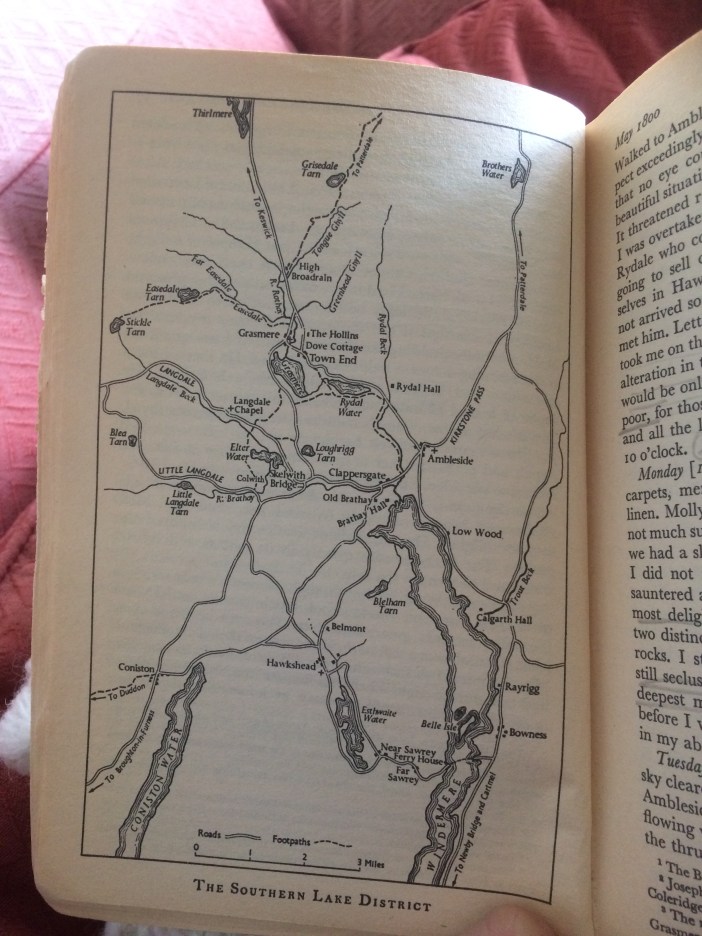
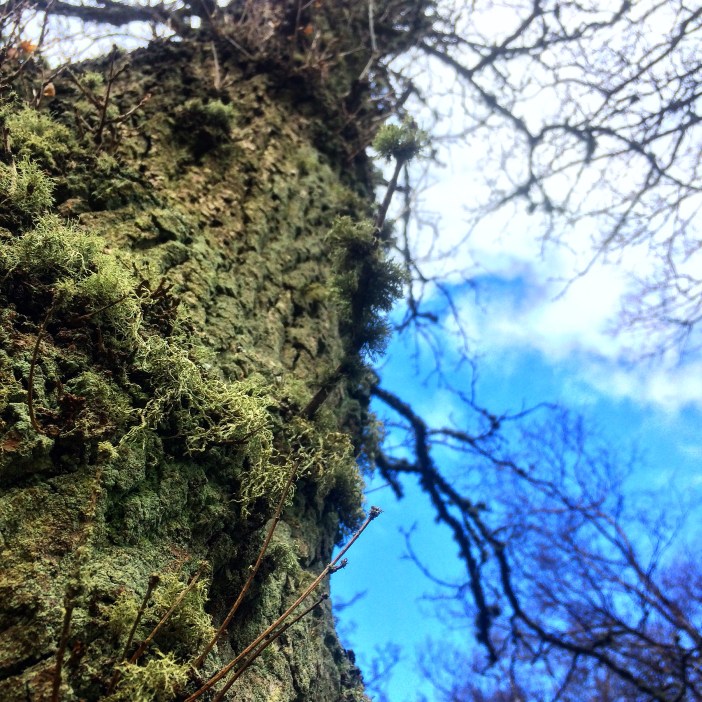
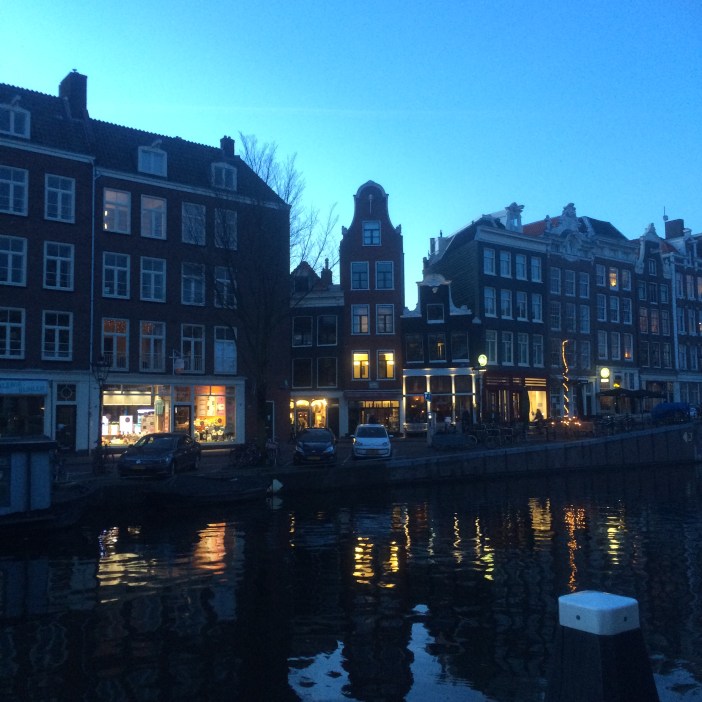
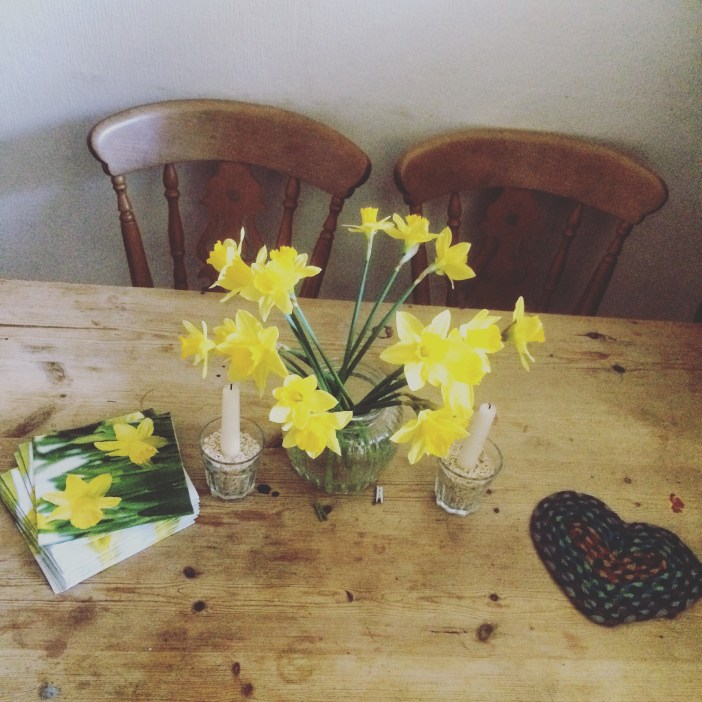
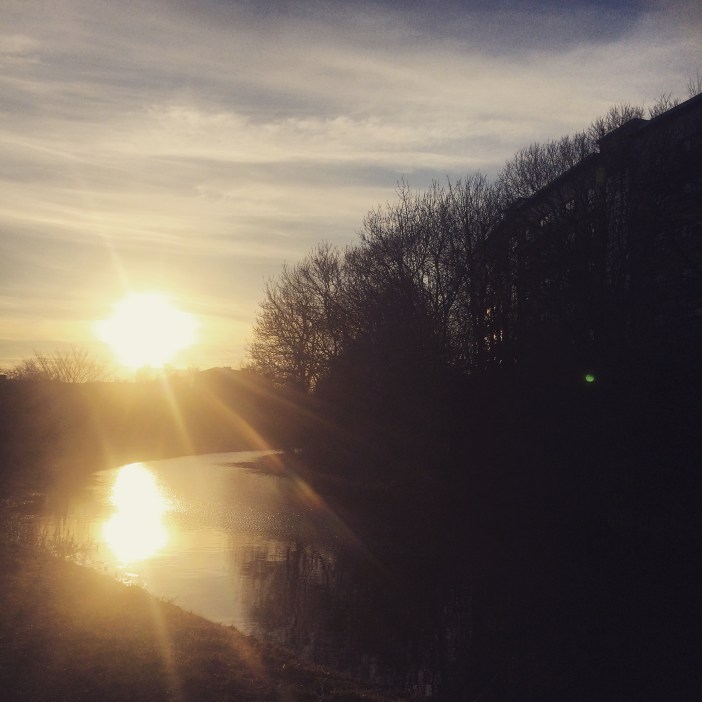

 I’d be lying if I said the highlight of this month was anything other than seeing the glorious Laura Marling perform at the ABC, flanked by her full band. My expectations were extremely high (I’d waited a ridiculously long time to see her, basically 8 years) but somehow she managed to top them, stepping onstage with a billowing white dress and that ethereal voice that held the audience in precious, adoring silence the whole way through. Even the weekend drunks saluted her with respect. She played most of the new album and some favourites from the past, from ‘Sophia’ to ‘Once’ and ‘Rambling Man’. Marling is one of those artists who I truly ‘grew up with’, in the sense that I followed every album as it was released over the last decade; I can pinpoint certain moments of my life in relation to her songs. It’s a beautiful thing. I’m 23 now and she released Once I Was An Eagle at my age. Every day this inspires me to try and do better. Often I fail.
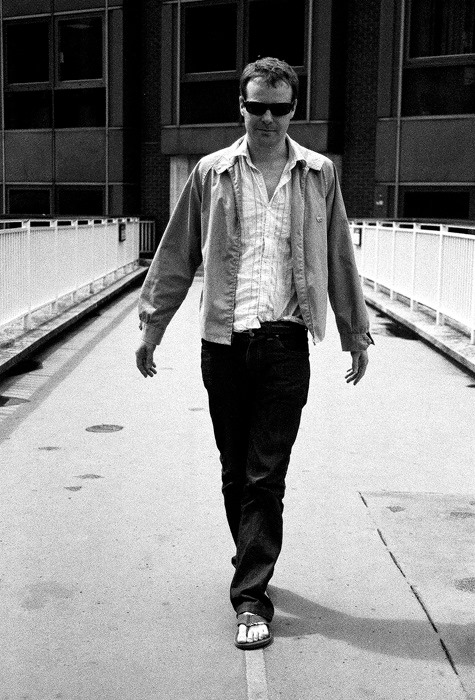
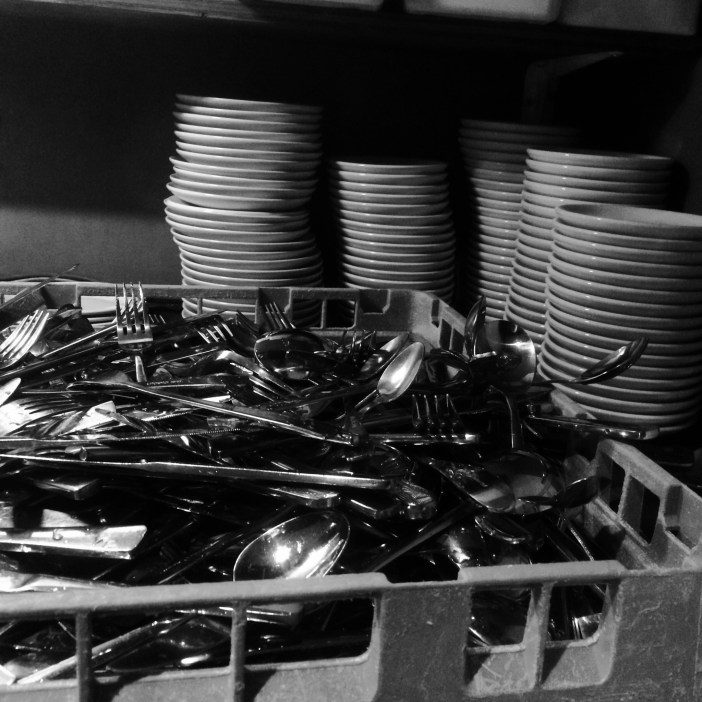
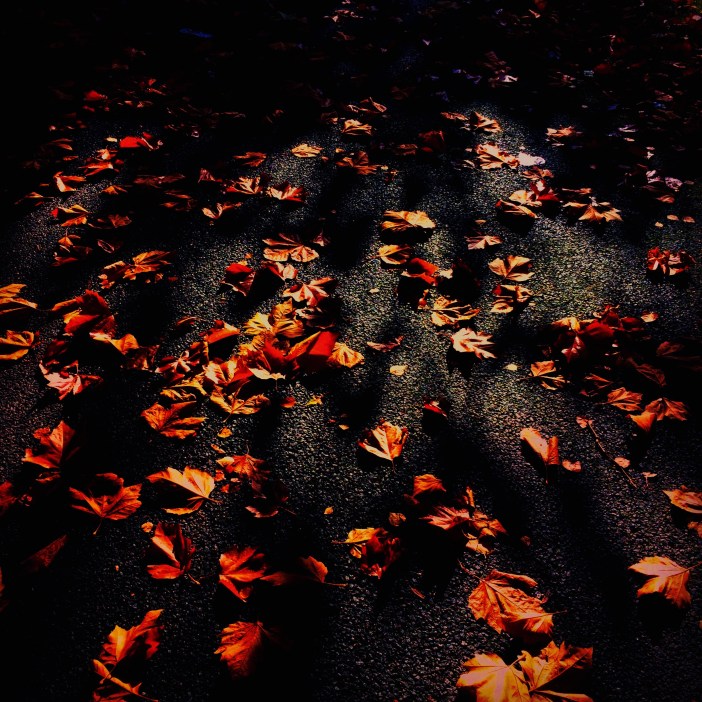


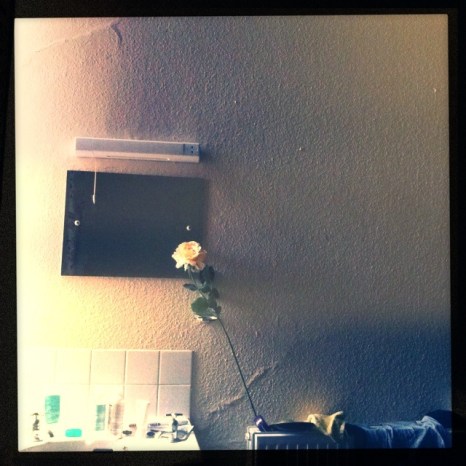


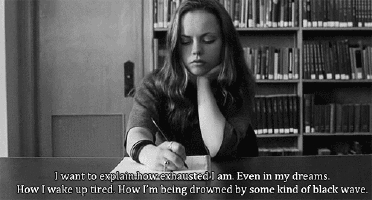
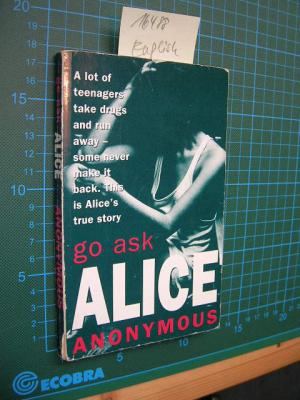
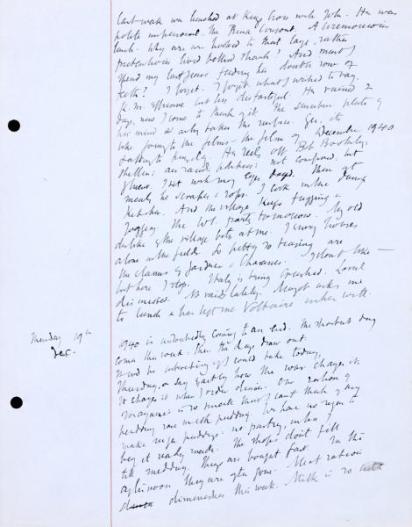
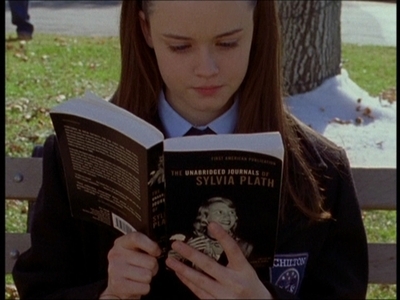
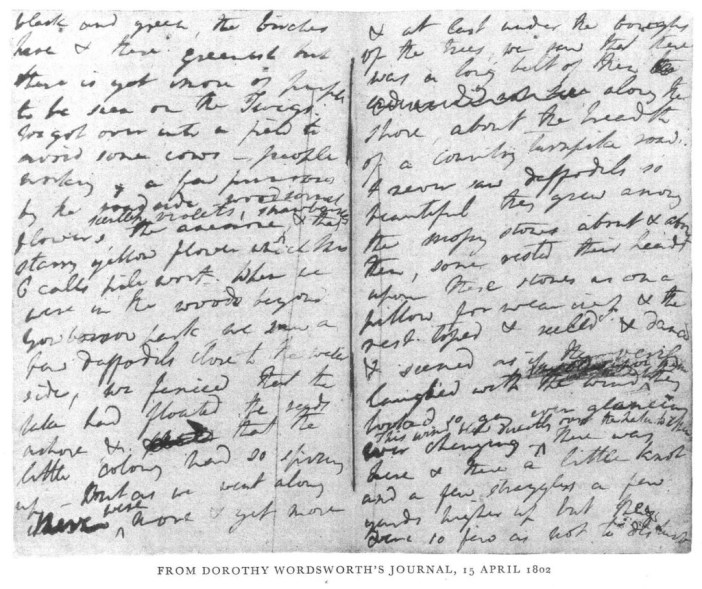


 mariaology