On Brutalism

Photo by Subflux: https://www.flickr.com/photos/subflux

One of the first things you notice when you come to university in Glasgow is the building that passed you by on the open days: Boyd Orr. Orr…ore…or? With such connotations of alchemy, alternation and mechanical process – the extraction of mineral from rock – you’d be forgiven for thinking this building might have that rare quality of metallic extraction. The glint of some loveliness got from the mined core of the earth – or at least some relic of its crust. Boyd Orr himself, as Wikipedia tells me, was a Scottish teacher, doctor, biologist and politician, who also bagged himself the Nobel Peace Prize for work relating to wartime nutrition. Fitting, perhaps, that this man who dabbled in the arts of healthy eating would give his name to a building that some have found physically repulsive and ugly – if anything, unhealthy.

Still, nutrition involves mining particles of food for their usefulness. Finding all the vitamins as a geologist might take ore from a rock. There is something abject about all this: wrenching nature inside out, textually taking apart her insides with the bland incisiveness of a knife (the linguistic thrills of science course-books). The molten loveliness of erosion, rocks, temporal process – we can reduce them to names and building blocks.  And so we have Boyd Orr, that building of much usefulness and much disgust. The beast of a building that somehow you find yourself in, day after day, traipsing up the stairs for lectures, waiting for someone to give you their jewels of information. You came here thinking you’d be living the Harry Potter high-life in the extravagantly gothic main building, chased by ghosts and granted with turret views. Instead, you end up four floors up in a building that sends its gross sneer across the otherwise lovely architectural landscape of the West End.

Source: theglasgowstory.com

Whatever you might say about Boyd Orr – with its dirty-white panels, greying windows and greyer walls, with the greenish mould that creeps up its underside like seaweed on a rock and the ugly stark jut of its body against the surrounding skyline – you must say that it is a fine example of Brutalist architecture. The heyday of Brutalism was the period between 1950 to the mid-1970s, a reaction to the modernism of the early twentieth-century. Most examples of Brutalism tend to be found in governmental or institutional buildings (university libraries, shopping malls, high-rise housing), whilst corporate buildings have always favoured a more glassy, futurist chic. The thing that strikes you first about a Brutalist building is its sheer expression of, well, concrete. It hits you with the blunt materiality of a prison or fortress, and you know, it does take a while to get used to going inside. Sometimes it seems impossible that such a monolithic block is carved out inside with such things as canteens and toilets and classrooms. Part of its statuesque aura relates to its positioning: right on the corner of University Avenue and Byres Road, where the surrounding buildings are much smaller or indeed older (and prettier for that matter). There’s no getting away from this eyesore, this monument to an industrial modernity that seems now to be receding in the mise-en-abyme of contemporary metallic panelling, plexi-glass and plastic coating.

Edinburgh's Scottish Parliament Building. Photo by UncleBucko. https://www.flickr.com/photos/unclebucko
Edinburgh’s Scottish Parliament Building. Photo by UncleBucko. https://www.flickr.com/photos/unclebucko
Glasgow School of Art. Photo by gillfoto https://www.flickr.com/photos/gillfoto/

Like the rest of Glasgow’s culture, its architecture is a tale of two cities. There’s the legacy of our colonial history, with flourishes of opulence on every corner; but there’s also the leftovers of 1970s ‘slum’ housing, the crumbling tenements where once upon a time (and, unfortunately, perhaps still today) a whole family would share a bedroom and washing was done at the ‘steamie’. In one street you might have a bizarre Art Deco number next to some crumbling sandstone tenements, or a gleaming new-build sprung up alongside Victorian houses with massive (single-glazed and listed) bay windows. There’s the black-and-white nostalgia of the Gorbals and then there’s the grandiose Park Circus, sat atop Kelvingrove Park looking out with picturesque views over the city. There’s the famous Carpet Factory, the Rennie Mackintosh Art School, the various churches, mosques and synagogues with their unique homage to Roman and Eastern styles. There’s the uncomfortable fact that much of Glasgow’s beautiful marmoreal and sandstone glory is built on the slave trade. We also have the bug-like SECC resting next to the Clyde as if we were in Sydney, the Royal Concert Hall that crowns the top of Buchanan Street, the new Hydro that more than anything resembles a UFO. It’s definitely a city of eclectic architecture. While we might not have the equivalent architectural (and indeed financial) notoriety of Edinburgh’s Scottish Parliament building (which in my family alone has been called ‘horrible’, ‘interesting’, ‘a waste of money’, ‘too modern’ and ‘more of an art gallery than a parliament’), we were in 1999 designated the UK City of Architecture and Design, beating the likes of London, Liverpool and of course, Edinburgh. You only have to reflect on the response to last year’s Art School fire to recognise how seriously we take our physical landscape and architectural heritage (even if it is often covered with ad posters and graffiti).

Photo by Susan Casey https://www.flickr.com/photos/susancasey/
The Gorbals, 1968. Photo by Susan Casey https://www.flickr.com/photos/susancasey/

Anyway, back to Brutalism. The key word related to its style, aside from concrete, is perhaps ‘function’. Stripped to its core elements, Brutalist architecture involves repeated ‘modular elements’ which are grouped together to form the whole. This is the raw fragmentation of modernism, here transformed into something with instrumental purpose, something solid that seeks to counteract the airy dissolution of modernity. ‘All that is solid melts into air’, Marx said. With Brutalism, the response is to make things as solid as possible. How ironic that Marx predicted a revolutionary dissolution of oppressive social structures, whilst the ‘proletariat’ in question remain literally trapped inside buildings which encase them in a physical manifestation of the very (metaphoric) solidity which binds them socially – the hard class structure, the poverty cycle and so on. And perhaps also ironic that some of these buildings were erected at a time when industrial labour was entering its decline in Britain and elsewhere, especially in Glasgow towards the end of the 1970s, as Thatcher came to power and that mineral source of wealth and opportunity (going back to ore of course) – mining – was dissolved from the national economy.

There is also the uncanniness of paradox attached to the fact that when one observes a Brutalist building, it is often difficult to discern its function due to the sheer vastness of its functionality. This relates back to what Edmund Burke in 1757 defined as ‘the sublime’:

The passion caused by the great and sublime in nature […] is Astonishment; and astonishment is that state of the soul, in which all its motions are suspended, with some degree of horror. In this case the mind is so entirely filled with its object, that it cannot entertain any other.

Burke was talking about the sublime as it was caused by scenes of nature: mountains, chasms, forests that seem to stretch on forever. However, as urban landscapes increasingly eat into our countryside, it seems fitting that we might consider the vastness of their proportions – or indeed, their ugliness – a kind of sublime in themselves. What else do we feel than a kind of passionate ‘horror’ as we find ourselves faced for the first time with buildings like London’s Trellick Tower and Barbican Centre or India’s Palace of Assembly? All those pattern-like repetition of squares resembling a Kantian ‘mathematical sublime’, whereby an overflow of signifiers stretching out into tedious infinity bears the threat of all meanings, distinctions and associations collapsing into one long metonymic chain leading to nothing but more signifiers. It’s enough to give you a headache, and quite ironic that Boyd Orr is next to the equally hideous though somewhat-smaller Mathematics Building.

Trellick Tower. Photo by Martin Hearn https://www.flickr.com/photos/martinhearn/

Central to Burke’s idea of the sublime is the notion of the pleasure associated with terror: as we gaze at something which overwhelms us, we find ourselves staring into the abyss of meaninglessness, on the sheer precipice where representation itself collapses. St. Augustine suggested that the ugly was that which embodied formlessness in its lack of beauty. This aesthetics of excess or hideous terror appears curiously inappropriate for a style of building whose very purpose was built on form as function. We might think of Frankenstein’s monster, whose ugliness stems not only from the fact that he is composed of the flesh of dead cadavers, but also his sheer pointlessness – the fact that he is a ‘blot upon the Earth’, as Mary Shelley has him lament. Might we consider the likes of Boyd Orr a horrible, monstrous ‘blot’ upon our sacred streets? Or is this more than a question of mere aesthetics?

As Romantic poets readdressed the Neoclassical distaste for the gross pointlessness mountains (favouring, as Alexander Pope’s Windsor Forest perhaps best exemplifies, a view of nature as ordered and harmonious) by fetishising the psychologically disruptive experience of the sublime (in the way that Coleridge, de Quincey et al also favoured the psychologically disruptive experiences of opium), today’s generation are raising Brutalism to idolised status rather than rejecting it as a mere eyesore. Sure, you will have the many students who moan about Boyd Orr’s appearance on their campus, but you will have an equal number of enthusiasts on the likes of Tumblr posting Brutalist architecture onto their blogroll, alongside your Banksys and softcore erotica and fan-fiction all that other Tumblr jazz. Stark black and white photographs record an almost antiquarian fascination with the aesthetics of these buildings and their value as some relic of a solid past we can’t quite get back to in our shiny era of crazy postmodern architecture.

Photo by Tom Donald: https://www.flickr.com/photos/clearwood/

But is there an ethical problem underlying this fetishising of some Brutalist buildings? They are, after all, often the homes of many people living in relative poverty. Sometimes, these buildings are just down the road from areas of affluence and architectural extravagance. I don’t need to mention specific areas for you to think of places in Glasgow, because there are certainly many. It’s a problem related to the way that urban decay is appropriated as a kind of dark backdrop upon which a white, middle-class guy sorts his life out. There’s always been the ethnographer’s dilemma of how ethical it is making a living out of describing poor conditions without doing anything about it politically or practically. I suppose what I’m getting at though is that there’s something a bit more uncomfortable about using these buildings as ‘cool’ aestheticism, a mere viewing-spot on the blasé scroll of online photography. Still, I don’t think there are clear answers to this; and maybe it’s good to share images, because sharing raises awareness.  You just have to keep in mind the whole problem of ‘poverty porn’, and the notion that by glorifying certain buildings you are also glorifying a particular experience of poverty, however unintentional your actions.

Photo by  https://www.flickr.com/photos/22087304@N07/
The Red Road flats. Photo by <p&p> https://www.flickr.com/photos/22087304@N07/

Indeed, this perhaps is what made me so uncomfortable about last year’s plans to demolish the iconic Red Road tower blocks and transmit the demolition live as part of the Opening Ceremony of the Commonwealth Games. While it is of course good that the Games involved building new, much more accommodating and safer houses to replace these crumbling relics of Glasgow’s past, I don’t agree that it should’ve been broadcast to add a ‘bang’ to the Opening Ceremony. London gets magnificent fireworks for the Olympics, we get…glorified demolition? Destroying a symbol of poverty doesn’t destroy poverty itself, however easy it makes it look. Luckily, these controversial plans were scrapped in the end after much public opposition (which just shows again how much Glaswegians care about their physical environment and the social consciousness within it). Regeneration is underway with the Games’ legacy and of course it is a great thing, but there is no need to sanctimoniously erase history in front of the world to show that you’re doing it.

jg-ballard-high-rise

This points to the whole issue of Brutalism’s somewhat brutal decline since the 1980s, especially in Britain. Vocalised distaste from public figures, the association with urban decay, problems with graffiti, cramped living conditions and its starkly cold, almost totalitarian appearance, all contributed to this decline. Another contribution to this decline perhaps came from British Literature’s concrete guru, J. G. Ballard, as his novel High Rise (1975) documents a dystopian, Lord of the Flies situation where the closed conditions of a high-rise building lead to a swift degeneration of the residents lives. The enclosed spatiality of place itself gives rise to a carnival of savagery and violence, where primitive desires are unleashed in this isolated environment. The opening line perhaps gives you a good indication of where Ballard is going with this novel: ‘Later, as he sat on his balcony eating the dog, Dr Robert Laing reflected on the unusual events that had taken place within this huge apartment building during the previous three months.’ There is a strain of dark humour running through the text, as well as the shock value of its exposure of human nature placed in its urban limits. You get the sense that Ballard secretly revels in both the sheer surreal ugly inhumanity of it all, whilst critiquing the politics of urban planning that might one day lead to such a scenario.

Overall, I’m not sure where my position on Boyd Orr lies. There are days where I’m walking to uni along Highburgh Road and when Boyd Orr looms out of a cloudy winter sky my spirits sink like a puddle of snow slush. But there are times when you can’t help but notice the strange beauty of copper-coloured sunlight flashing upon its windows at dusk, as if a thousand eyes were staring out of those cold, impersonal walls. I think there’s value in preserving these buildings, not just because they possess a kind of chic urban sublime, but because they remind us of the ideals our society once held, even if they were misguided, flawed or impossible. I suppose I’d rather stare at the stark reality of an ugly monster, a decrepit Boyd Orr, than lose myself in the illusory surfaces of the glassy Wolfson Medical School, or the kitsch blue and green panels of the neo-Brutalist Fraser Building. I’d rather a chunk of dull glowing ore than a perfect rhinestone…

fraser_building_030411_aw
The Fraser Building opposite Glasgow Uni Library

Christmas Traditions

2012-12-24 22.46.37

Christmas begins with a different ritual for everyone. For some people, it’s when the radio stations start playing familiar Christmas hits from the 80s. For others, it’s the first bite of a mince pie crumbling its buttery sticky sweetness in your fingers. For most supermarkets, it’s the day after Halloween, when the shelves are quickly stocked with tins of Roses and Quality Street and Celebrations and a Christmas tree is rather humbly erected in every store’s entrance. For me, it used to be when we started making cut-out paper snowflakes at school; when they would play Christmas songs on the old stereo system that crackled when anyone walked near it, as if it were possessed somehow. Or a trip to a pound shop to buy our dog an artfully tacky sparkly collar and/or chew toy and/or basket of treats. These days I’m involved in buying sparkly socks more than dog collars, but the sentiment is still there.

2012-12-18 21.03.42

Some people are super keen for Christmas and have their trees up right from the first of December. In the library during exam period the festive jumpers are out in full swing, as are the seasonal lattes (Praline and Pumpkin Spice) retrieved from the Byres Road Starbucks. In our house, the tree usually doesn’t get put up until Christmas Eve; since our cousins from England would sometimes come up to us, we would wait for their arrival to decorate it, late in the evening, before leaving out a carrot, mince pie and brandy for Rudolph and Santa.

Traditions, however, change just like people. At school, Christmas came with the baggage of P.E. becoming training for social dancing throughout December. No Scottish child has been exempt from the painful awkwardness of having to choose a sweaty-palmed partner and learning to dance often incredibly complex steps (I’m looking at you, Strip the Willow) to the amusement of all their peers. And that’s if they’re lucky enough not to be left last and paired with a teacher. Of course, the older you get, the less embarrassment tends to dominate your entire consciousness, so dancing becomes more fun. You know, I would even go to a ceilidh of my own free will now, although back then I thought it was a form of torture cooked up to torment children out of enjoying their Christmas. It didn’t help that the school dance also involved the necessity of buying a compulsory sequined party dress (not a fun enterprise when you are a ten-year-old tomboy that hates shopping) and a dinner whose only option for vegetarians was salt and vinegar crisps (I swear I’m not really complaining). Still, the brutally hilarious fights over ‘he wiz dancin with ma girlfriend’ that you could witness outside afterwards while waiting to be picked up made the night somewhat worth it.

74400_1617334603666_562522_n

At secondary school, playing in the brass band forged new festive traditions. There were the rehearsal days for the Christmas concert, where you got to take a whole morning out of class, carrying your instrument down to the tinselled town hall and sit for hours munching snacks from the local Spar and watching everybody else perform. Then there were the primary school tours, where we would pile into a mini van and play in the surrounding school assemblies for the generous payment of a box of chocolates that were swiftly devoured before lunch. You felt so important, playing up there on a stage and being praised by your old teachers while all the little kids watched you with wide-eyed wonder and you remembered that you were in that crowd only a few years ago, hoping that someday you could be the big kid on stage with the shiny instrument adorned with tinsel.

2013-12-10 12.51.22 HDR

When Glasgow’s shoppers’ wonderland, the aptly-named Silverburn, opened its doors, a new tradition was created. Picking me up after a hard day at college, Mum would drive me up to the shopping centre and we would do the last bits of our Christmas shopping. There’s a certain magic to the indoor consumer paradise, with all the lights and the giant snowglobe for kids to get pictures in and the seductive glow of expensive shop windows. Everything was warm and clean and once we’d done our shopping we’d go for a mince pie at Starbucks, where we could look out over all the people dressed in reindeer jumpers and laden with glossy shopping bags. These days, traditional Christmas has become more fashionable and you can go to see the Christmas markets in pretty much every British city. It all has a German and Scandinavian flavour which still feels a bit refreshing. We used to always go up to see the lights at George Square, a tradition that seems very sad and innocent now after yesterday’s heartbreaking incident, but nevertheless retains importance in my memory – and many people’s memories, I should imagine. There’s also the lovely, extravagant decor of traditional department stores which resonates the Christmas magic of the early twentieth century: I’m thinking Princes Mall and House of Fraser in Glasgow, then Jenners and Harvey Nichols in Edinburgh. I’m sure London too has much to offer, although sadly I only get to experience that through my half-hearted attempts to join my family in watching the terrible Christmas specials of Made in Chelsea.

George Square
George Square

It used to be that we’d go to Culzean to collect twigs and fir cones and sprigs of holly for decorating the house. We’d spray them with gold and dip them in glitter. Sometimes we still do that, as if living out the old ritual of making Christmas cards that Mum made us do every year when we were at primary school. I love crafting and firmly believe that it’s one of the most relaxing things you can do. A few years ago I went through a phase of making loads of candle holders out of glass jars which I painted with acrylics. At school there was always the last few days of term where people wandered about not doing much and hardly going to class. Teachers would wave us away with a ‘Merry Christmas’ instead of teaching us and we’d sit and watch Meet the Fockers on repeat (at least in primary school we had the enterprise to bring in board games) and wish we’d decided to skive. Often I retreated to the art department where we could make snowflakes and paint bottles and pretend we were little again.

2013-09-22 21.37.42

At uni, the last classes are a bit more exciting. For one thing, mulled wine often factors in. Also, the fear (in first and second year at least) of Christmas exams. I used to hate how university decided to give us exams in December, with only a week to study for them. It was incredibly stressful, but in the long run I suppose it was a good thing because we didn’t have to study much over Christmas, as we did with the January prelims for Highers and Advanced Highers. Sometimes, the fear makes Christmas all the more sweeter. I remember in my first year at uni, I’d just gone with a friend to an impromptu gig at Brel on Ashton Lane. It was Rachel Sermanni and the singer from Admiral Fallow who were playing acoustic sets and it felt very wintry and magical. And when I left, to go back to my flat to cook chilli bean soup and study, it began to snow as I walked up Great George Street. It was one of those enchanting moments when you feel everything swell up and really seem to mean something. Like you’re in a movie. I was finally so happy to be in Glasgow and a student, even with three exams that week. It’s hard to not love your university and city when it looks like this:

329500_2676540883161_1993424224_o

After exams (and more recently, essay and dissertation hand-ins) comes all the comforting Christmas rituals that I love so well. Buying sparkly nail polish and the December edition of Vogue which weaves a fantasy of luxury office Christmas parties thats nowadays I have the (privilege?) of serving if not just imagining. Seeing fairy lights being put up in the restaurant where I work and all the Black Friday and Christmas bookings looming before us. Decorating the Christmas tree at home each year with new decorations got in our stockings. I missed out on decorating the Christmas tree at school, but came back from Belmont one day to see that we’d managed to procure one for the sixth year common room, and someone had decorated it artfully with ornaments worthy of any John Lewis special collection: a load of empty crisp packets.

My flat at Christmas time, 2012

Still, sometimes makeshift Christmasses can be fun, or at least interesting. My brother and friend Jack randomly phoning in and singing ‘Last Christmas’ live on BBC Asian Network radio. Stringing a half-hearted bit of tinsel and some Poundland fairy lights over my bookshelf. In first year at uni, we had a festive dinner party in halls, but seeing as I’ve always prioritised exams and studying over pretty much everything else, I ended up cooking my own vegetarian option which was incidentally the only thing I had in the fridge: a fried courgette. Even so, the party poopers (obviously I was included) were the ones who had to scrape all the meat scratchings and grease off the dirty pans like a band of Cinderellas until one in the morning while everyone else was having a good time at the QMU’s Cheesy Pop. Still, it was a lesson in the underside of hospitality…

My Mum's nutroast
My Mum’s nutroast

Arguing about who will do the washing up is a regular feature of our household at Christmas, as it probably is pretty much everywhere. It’s not so bad when you do it together. That’s the festive spirit, anyway. Then on Boxing Day we tend to go for a nice long walk – one year it was along Ayr Beach and through Belleisle, another through Maidens and Culzean, in past years it will have been places in England. Christmas Day used to be an early dinner and then sitting in  the hallway stuffing myself with Quality Street and playing the new Pokemon on my Game Boy Advance while everyone else watched the Queen’s Speech and boxsets of Only Fools and Horses. We still retain the tradition of eating bagels for breakfast (I wonder is this some kind of strange nod to our Jewish ancestry?), but nowadays it’s more a cheeky Amaretto or some Bucksfizz (maybe it should adapt and be Buckfast) and a lovely walk up to Maybole monument through the golf course and dinner at about eight when the crappy oven we have at home has finally decided to roast the parsnips. Both have their magic. The best part is still the waking up early to open my stocking. This year, I’ll be working Christmas Day, so I’ll have my Christmas on Boxing Day. But that’s okay, because Christmas is what you make it.

A typical Christmas scene...Bella worn out from opening her many presents...
A typical Christmas scene…Bella worn out from opening her many presents…

River Walk

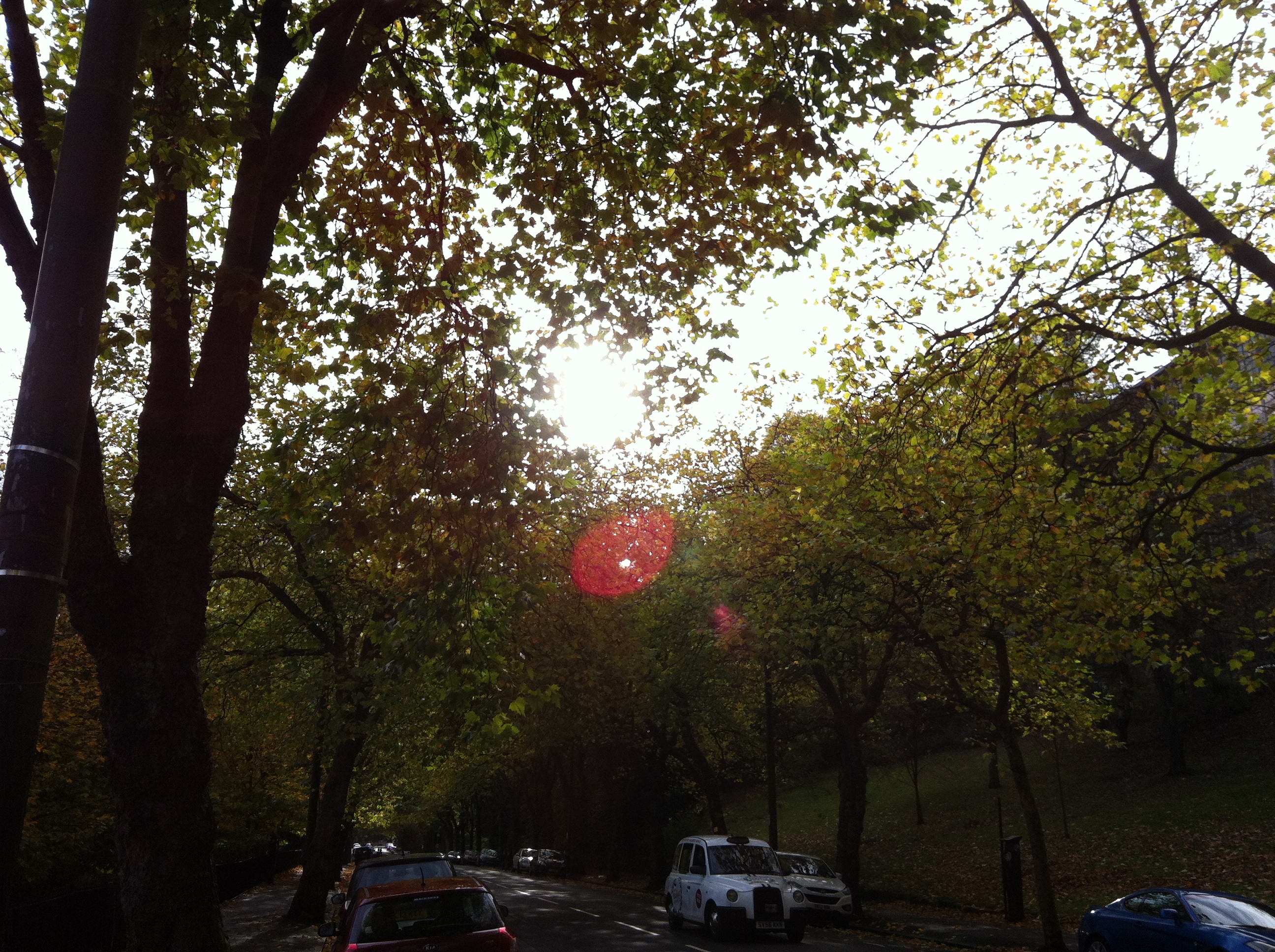
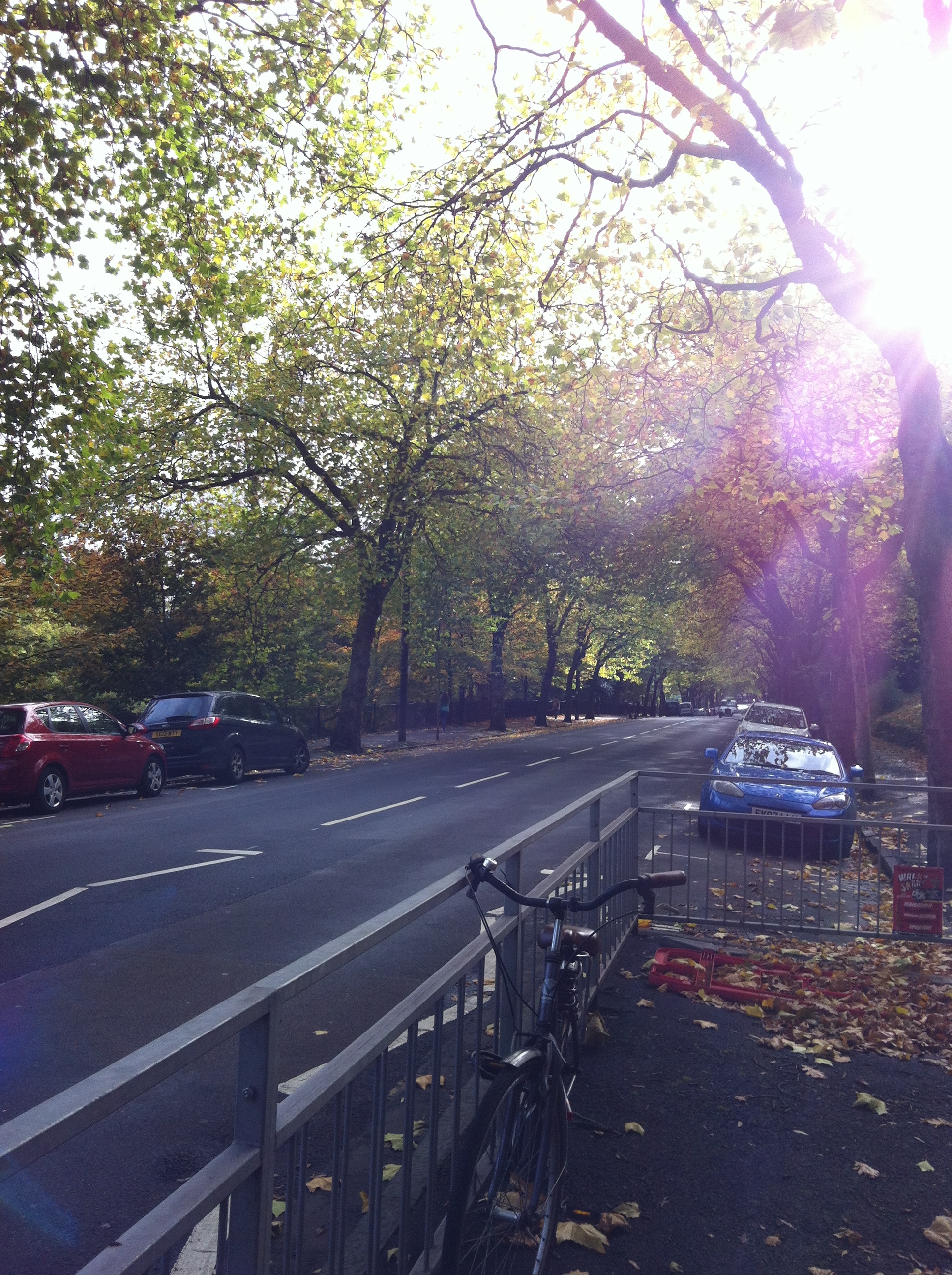
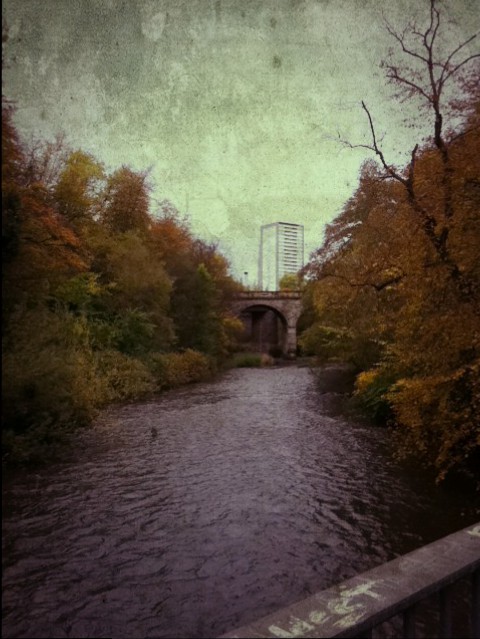
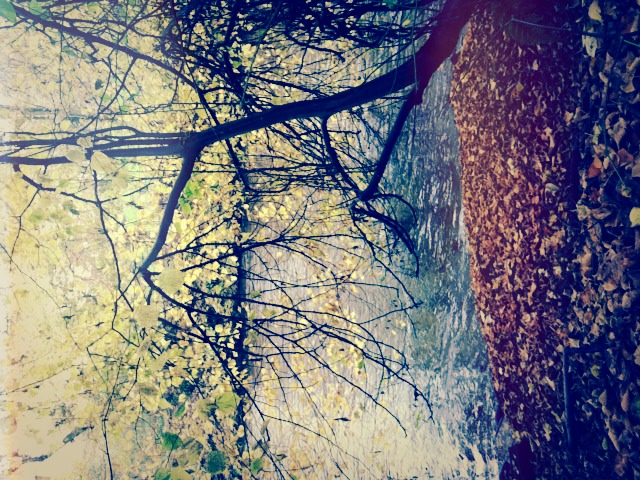
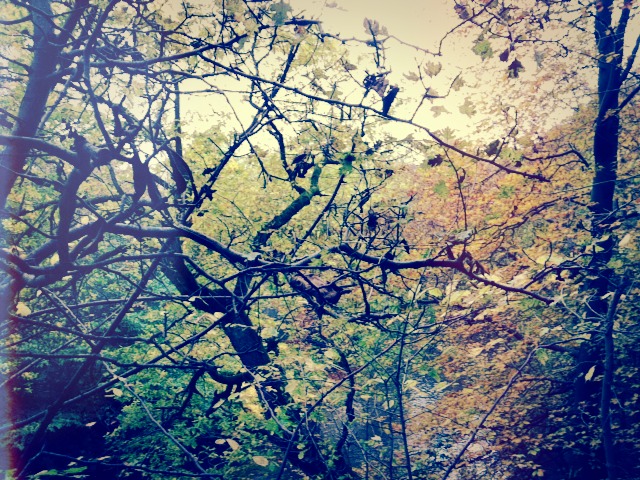
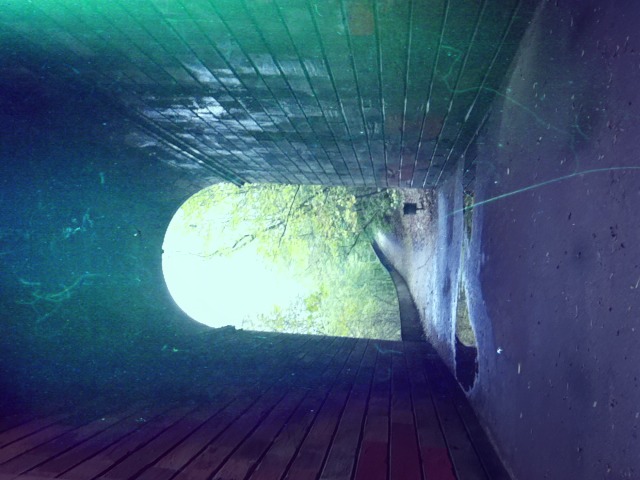
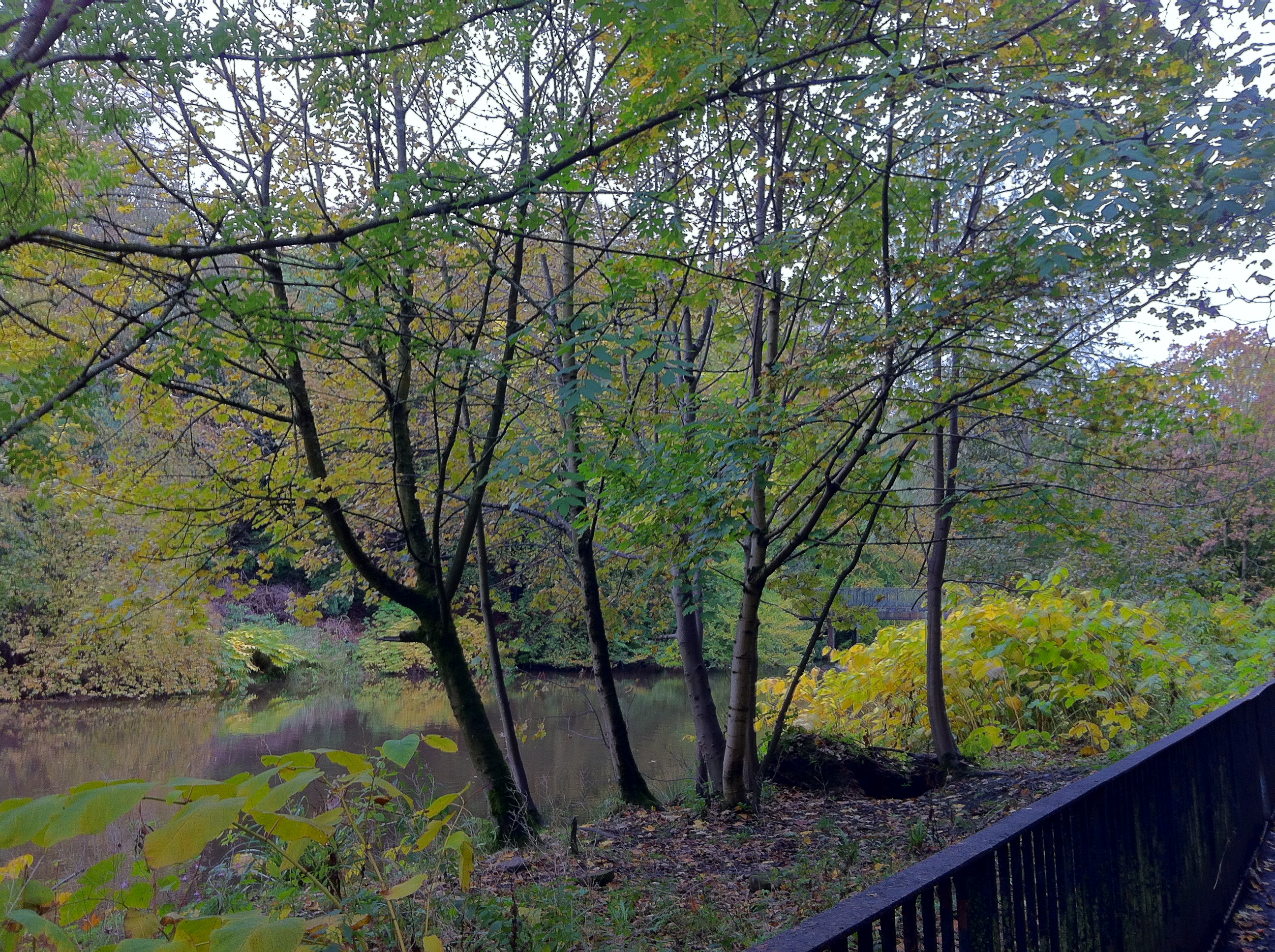
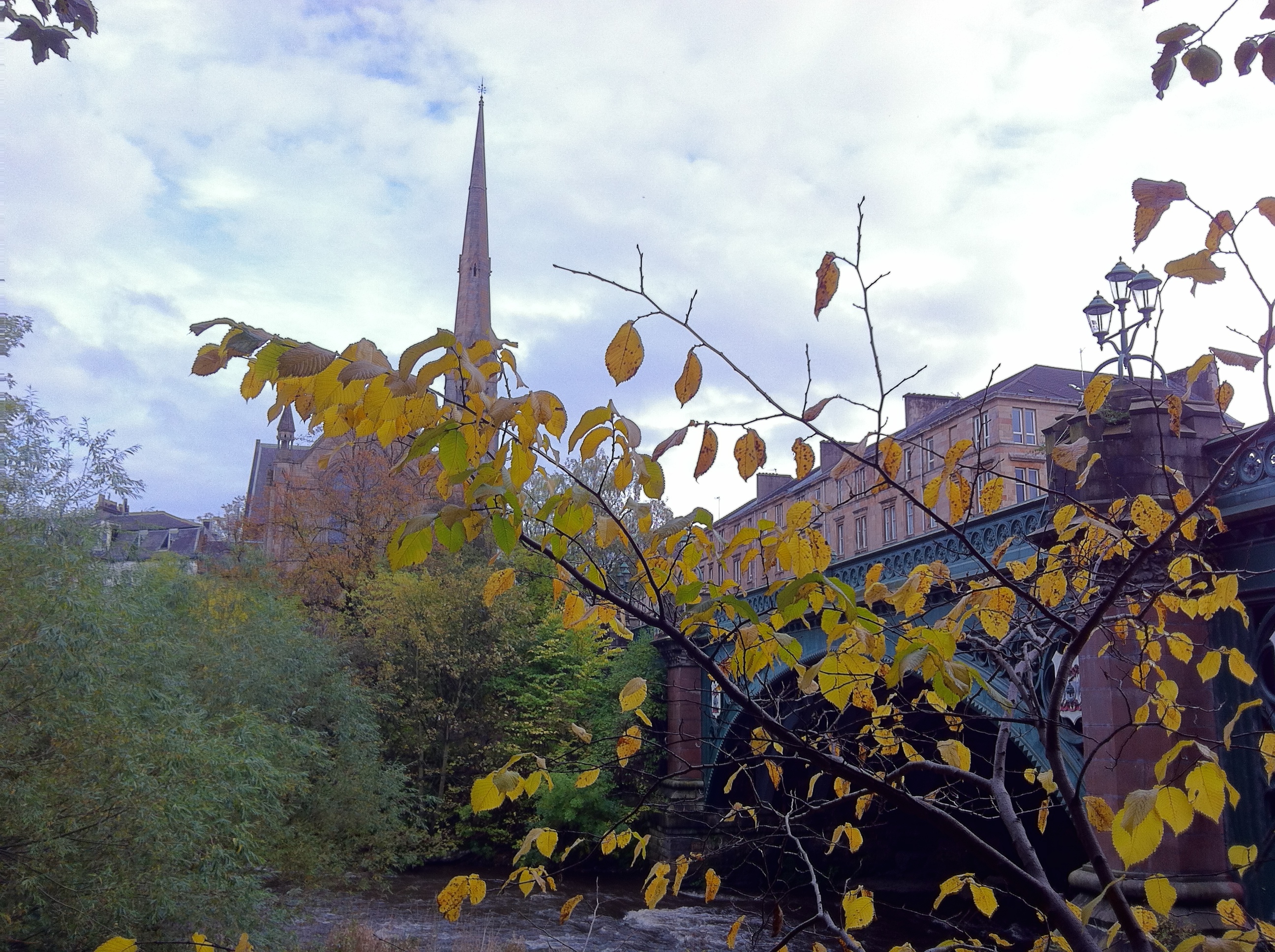
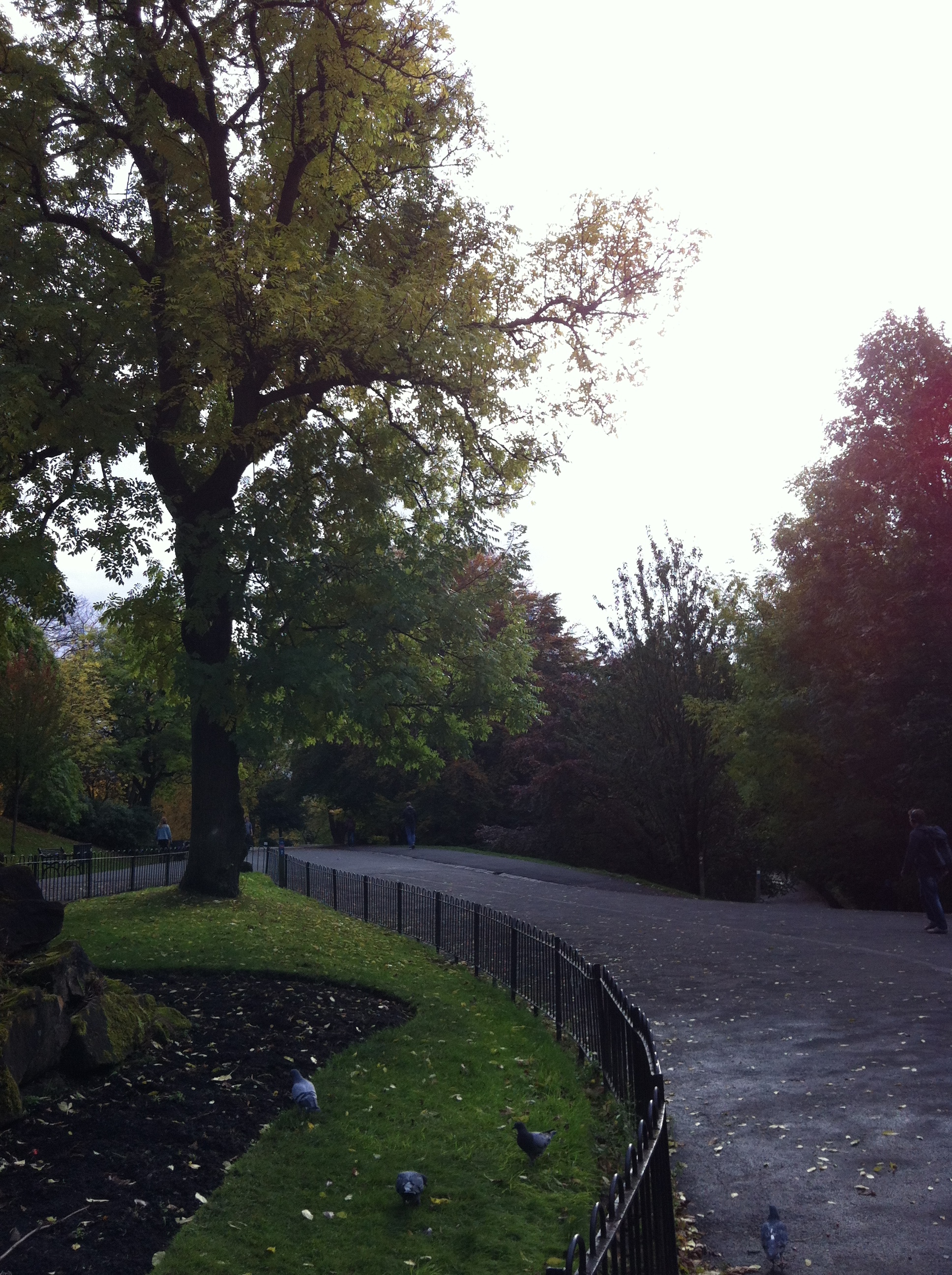
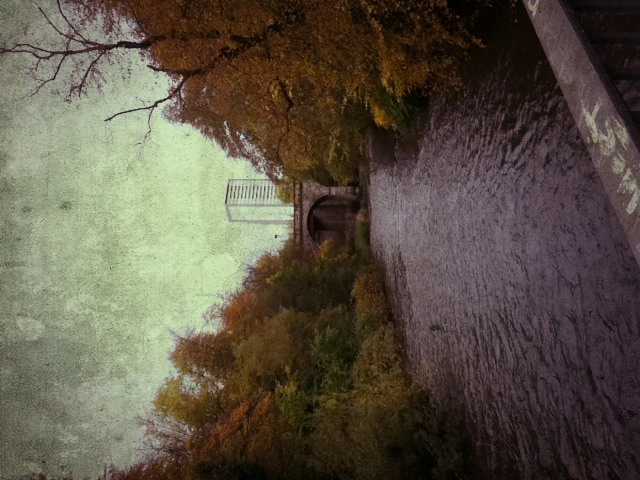
Fridays can be good days. I think I should appreciate more how pure a Friday can be, when the weather’s as warm as this. It makes you feel free, when you can wander through the wonderland of leaves without a jacket, feeling the breezy air on your bare arms. So after my seminar I decided to go on a walk along the River Kelvin, and take lots of pictures because everything seemed so bright and fire-coloured and beautiful…

The whole way I listened to my favourite Nick Drake album, Five Leaves Left; with its haunting vocals and the drawn-out pull of minor strings, it provides a lovely soundtrack to the autumnal landscape…

IMG_2415 IMG_2414

Kelvin Way in the afternoon

IMG_2441 IMG_2440 IMG_2439 IMG_2438Over the old bridge with the copper leaves and the stark white of a high rise
IMG_2437 IMG_2436

(because it’s Glasgow)

IMG_2435 IMG_2434 IMG_2433 IMG_2432 IMG_2431

white hand, violet light

IMG_2430

Friends of the River Kelvin (next to the outdoor gym)IMG_2428 IMG_2427 IMG_2426 IMG_2425 IMG_2424 IMG_2423 IMG_2422 IMG_2421 IMG_2420 IMG_2419 IMG_2418 IMG_2417 IMG_2416

Kelvingrove ParkIMG_2442

dying roses

IMG_2443 IMG_2444toadstool/fungus

I love autumn. 

Places of Memory

IMG_0794
Glasgow Uni spire seen from Kelvingrove Park

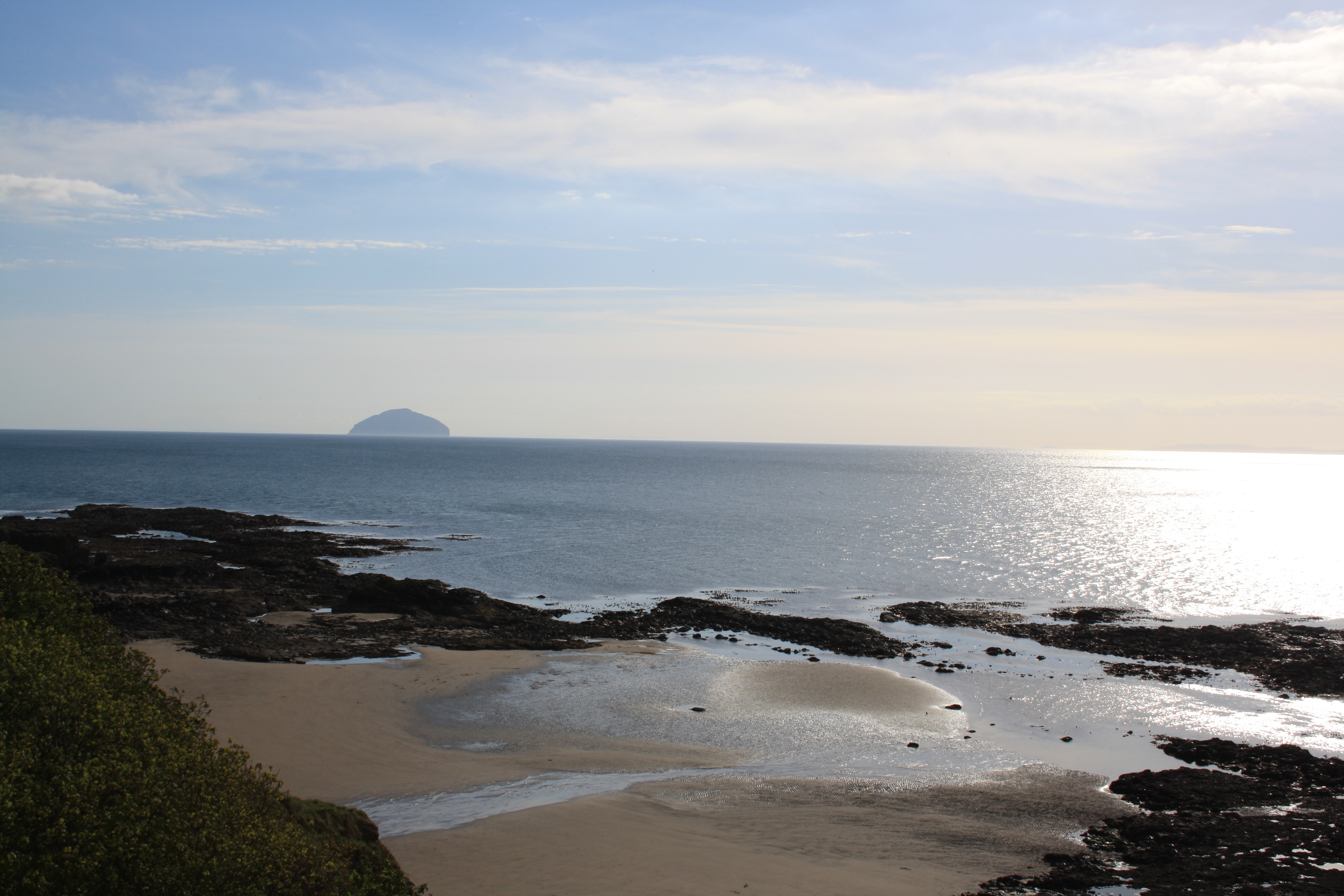
There is a sense in which selfhood is just a scattering of remembrances, remembrances dependent on places. Everywhere in which I have been encodes some trail, some trace of memory. As a child whenever we went on walks I would magic things into being, imagining worlds on top of worlds, layering enchanted spaces and creatures upon the reality of adolescent landscapes. I’d see fantastic beings darting in rocky streams, strange birds sweeping from forest canopies, a thousand intriguing microbes, exotic in colour, swirling on the ground amidst the paws of my (real-life) dog. And even as I grow older, shedding away these whimsical worlds, I keep the magic of perception, imbuing the places I visit with a mental significance. As some store their spatial memories in smartphones, clicking them into flattened snapshots, I try to inscribe them in my mind as networks of sentiment – of senses, thought and memory. There is this particular spot in Kelvingrove Park, with the perfect view of the Glasgow Uni spire and a quiet pool of sunlight that occurs in May at about 4 o’clock; the spot where after my first year exams I sat lazily making daisy chains and reading Laurie Lee’s nostalgically beautiful Cider With Rosie. There is that salt smell and clacking of pebbles, the quick breeze that is Brighton Beach and with it many far off summers, of paddling cold feet and minty sticks of rock. Weird innocence. There is that favourite place in Culzean, a small jutting of cliff that looks out to a glittering dusk-covered ocean and the eerie mound of the Ailsa Craig. So many times I have sat up there with various friends and family and each time I am a different person, bound together perhaps only by the chains of associations set off by this location. Although I was brought up in the country, my mind is also a sprawl of urban spaces: the wintry, bustling streets of Paris at New Year, the seagull strewn alleyways of Ayr, Glasgow’s gritty pavements and eclectic skyline of the modern and the gothic, Edinburgh with its panoramic view of hillside, castle, parliament and sea. What makes all these places somehow special is my relationship to them both cognitively and spatially – in other words, psychogeographically – a sense of pulsating interconnections based on walking, on exploring the world on foot.

SAM_0650

IMG_2920
Ailsa Craig

Someone who has written extensively on his psychogeographic travels is the author Will Self, who ambles everywhere, in the search for new perspectives of space – walking famously from his house in England to New York (albeit with the help of an aeroplane), exploring the curious border spaces between urban and rural, airport and field. Self worries that in the contemporary world of globalisation and machine transport, we are becoming increasingly confined to ‘micro-worlds’ which offer restricted, miniature universes of hotels, airports, clubs and bars that bear little difference from city to city, in the sense that they are being used for the same purpose, and we rarely escape them. The frequency with which tourists, travellers and the like will take a taxi cab, subway or train rather than exploring on foot results in a limited perspective of urban space. There is no chance to stand back and observe one’s situatedness in relation to the built environment, to gauge one’s relationship to north, to the cathedral, the river; to form the intricate networks of association and recollection that pattern themselves around street-walking. I want to make a plea for this street-walking, not just as a fitness alternative to the stuffy mundanity of the gym but as an exercise in perception, in self-formation. (Sometimes, sounding pretentious or perhaps overly poetic is worth getting my point across, especially if it’s a pretty simple point about the joys of that most archaic of sports: walking.)

SAM_0867
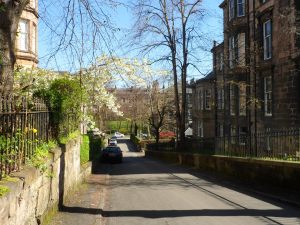
street in Dowanhill

I feel like I’m naturally bad at driving. I don’t like being in control of a dangerous vehicle; yes, that’s one reason, and a reason certainly more justified after delving into J. G. Ballard’s dystopian account of sex, violence and dangerous driving in Crash. The car, as a vehicle of speed charged with the excitement of modernity – see Marinetti’s ‘The Futurist Manifesto’ – is the antithesis of the slow pacing of walking. With a great driving instructor, I took lessons for over a year and while I enjoyed the freedom of leaving my small town and gliding (at my shy snail’s pace) along country roads, I don’t think I’m cut out to drive powerful vehicles. Even a bike I manage only at a push. I spend too long getting distracted by pretty sunsets, sheep, or the name of a passing cafe.

So I guess rather than machine-obsessed Marinetti, I’m more aligned with the modernism of the flâneur, the original ‘street-walker’ who spent his/her time sauntering the streets (usually of Paris) and losing his/herself in the crowd. Charles Baudelaire describes the flâneur in The Painter of Modern Life: 

The crowd is his element, as the air is that of birds and water of fishes. His passion and his profession are to become one flesh with the crowd. For the perfect flâneur, for the passionate spectator, it is an immense joy to set up house in the heart of the multitude, amid the ebb and flow of movement, in the midst of the fugitive and the infinite. To be away from home and yet to feel oneself everywhere at home.

There is something strangely ‘natural’ in becoming a liminal figure, between observation and participation, haunting the city streets and drinking the atmosphere of the crowd as if it were the very sustenance of life itself. Moreover, this sense of haunting can be literal, as stepping among a wealth of sensations recalls dreaded memories and fugue states of psychological wandering, as the narrator of Jean Rhys’ novel, Good Morning, Midnight suggests:

Twelve o’clock on a fine autumn day, and nothing to worry about. Some money to spend and nothing to worry about.
But careful, careful! Don’t get excited. You know what happens when you get excited and exalted, don’t you?….Yes….And then, you know how you collapse like a pricked balloon, don’t you ? Having no staying power….Yes, exactly….So, no excitement. This is going to be a quiet, sane fortnight. Not too much drinking, avoidance of certain cafes, of certain streets, of certain spots, and everything will go off beautifully. The thing is to have a programme, not to leave any thing to chance – no gaps. No trailing around aimlessly with cheap gramophone records starting up in your head, no ‘Here this happened, here that happened’. Above all, no crying in public, no crying at all if I can help it.
Thinking all this, I pass the exact place for my after dinner drink. It’s a cafe on the Avenue de l’Observatoire, which always seems to be empty. I remember it like this before.

The narrator, Sasha, speaks in ellipses, in the strange silences and drifting prose of a vagabond, losing her mind to the networks of memory that haunt and map out her present.

And while Rhys’ flaneur is at times made painfully aware of herself by her own solitude amidst the Parisian crowds, sometimes in the city, one actually craves the claustrophobia of people and buildings and even the nasty proliferation of pigeons. It is maybe a kind of sublime, where one forgets one’s self in the overwhelming hustle and bustle. I remember my first time walking into Glasgow city centre on foot via Argyle and St Vincent Street. Standing breathless at the crossing of the A804 I looked up to the massive glass-coated buildings, beaming off bright April sunlight. There’s a feeling there that I don’t think I’ll ever quite replicate, that of a young adult from a little town, now encountering for the first time alone the vastness and slightly daunting excitement of the metropolis. It is a vision of the city infinitely different from seeing the big buildings from the safety of the backseat of a car; a vision that seems much more urgent on foot, with the vehicles rushing around you and the commercial structures seeming so much grander from the pavement. And it is funny now, how I walk past these buildings so often and they seem diminished; I have adopted more of a blasé, Simmelian attitude to an urban environment that once appeared so compelling. The only solution to this, of course, is to explore new places, gain new perspectives.

It isn’t easy to explore new places when you are notoriously bad at navigation. I didn’t take Modern Studies over Geography for nothing; I genuinely find it a problem grasping my location through maps, to mentally situate myself. Instead of compass coordinates or street names, I tend to place myself in relation to strange landmarks: a telephone box with wild flowers sprouting out the side, an antique shop where the man sits outside polishing wood and making sandwiches, a crumbling wall or peculiar tree that grows by a river. My brain is more of a mesh of colours and markers than a standardised map of labelled coordinates; I know my space through unstable nodes of remembered landmarks which shift and change  and alter my spatial awareness. Perhaps this is why Glasgow (or even just the West End) no longer seems the same, huge place it once did when I first came to uni. Perhaps this is why I always tend to get lost in new places, because I can’t follow a steady route without getting distracted by the allure of a pretty residential estate or a path that detours miles along a canal.

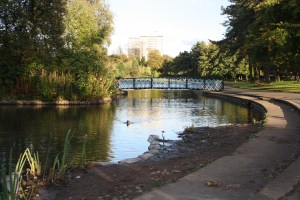
An example of this is my sense of Victoria Park. Victoria Park often comes up weirdly in Limmy’s Show as a place where the fences demand repainting, but that isn’t my only notion of it. Victoria Park is a strange place in its location: a kind of island of green surrounded by motorway. And it is quite difficult to get to, requiring knowledge of the underpass and the correct entrances. I’m better at it now, but before I used to set out for it, following the trail set out by my portable Google Map, and then get confused and lost, ending up wandering aimlessly around Whiteinch. I don’t really know why I forgot how to get there, after the first time I stumbled across it. It flashed in my mind only as a bizarre mirage, almost like Mirage Island from Pokemon Ruby & Sapphire, appearing to me only on certain days when the weather was right and I was in the proper frame of mind necessary for navigation. I actually had to search online for photos of the place, to make sure I really had been there, to make sure it existed at all. The seeming elusiveness of the Park gave it an ethereal quality that remains today, even though I have now memorised exactly the route to get there.  And it’s not that difficult at all, really. Barely thirty minutes from my flat. Yet arriving upon that still, wide silver pond with its hordes of swans, I feel like I have found a peaceful, otherworldly territory. And then I hear the Glaswegian accent of a fellow walker with his dog, and the illusion shatters somewhat.

IMG_2643
Victoria Park in autumn

Glasgow is peppered with these secret spaces, and as the old etymology goes, it is in a strong sense a ‘dear green place’. There are so many parks and walkways I have yet to discover. I have found canals and strolls along the river, where you could be anywhere – until you spot a stunning piece of architecture peeping through the trees. And like all the places of my childhood, I feel like Glasgow is now a part of me: I have a  hidden history that exists among the old buildings, the pretty parks and streets. I don’t think I’d have such a strong sense of rootedness if I hadn’t explored the city always on foot; if I’d always gotten the Clockwork Orange (the subway) rather than meandering through various roots to town, would I have stumbled upon Park Circus, or the spring blossom that lights up Great Western Road? Living in the country is lovely, but when you are in a city, all it takes is a walk out the door and down a few streets and suddenly you are part of a crowd; not just a crowd of people, but a crowd of forgotten memories and historic spirits, of buildings that bear the souls of all those who have set foot inside them. The city has a certain music to it, different from the birdsong and breeze and tractor groans of the country, lively and beautiful and ambient all the same. Personally, I believe that you can only experience this music in its pure form by using your good old legs and walking the  metropolis. I’d like to end with one of my favourite passages of psychogeography, from Joyce’s A Portrait of the Artist as a Young Man, where the young Stephen Dedalus is discovering Dublin for the first time:

Dublin was a new and complex sensation. […] In the beginning he contented himself with circling timidly round the neighbouring square or, at most, going half way down one of the side streets but when he had made a skeleton map of the city in his mind he followed boldly one of its central lines until he reached the customhouse. He passed unchallenged among the docks and along the quays wondering at the multitude of corks that lay bobbing on the surface of the water in a thick yellow scum, at the crowds of quay porters and the rumbling carts and the ill-dressed bearded policeman. The vastness and strangeness of the life suggested to him by the bales of merchandise stocked along the walls or swung aloft out of the holds of steamers wakened again in him theunrest which had sent him wandering in the evening from garden to garden in search of Mercedes. And amid this new bustling life he might have fancied himself in another Marseille but that hemissed the bright sky and the sum-warmed trellises of the wineshops.

Yes, I’ll leave you with that lovely, assonant image of sun-warmed trellises and bright skies and wineshops…because it’s always nice to imagine a sunnier world on top of the real one.

(all photos taken by me)