
(Thinking about how much I love Jhudora…)
(chocolate melts at high temperature
(lonely flowers
(stay cool everyone
)):
touchheart/absence</3
(Thinking about how much I love Jhudora…)
(chocolate melts at high temperature
(lonely flowers
(stay cool everyone
)):
touchheart/absence</3
As I was a permanent client of stars, awaiting that moment before contract to fold back, edge of the page that was prior to birth. The sky is that page where everything saucy happens. If I feel ‘switched on’ it’s in fear of the light, scraping cutlery together to start fires with little intention of correct extinguishing. This is just an indulgent way of saying ‘fuck you’ to the spinney where I dropped a whole packet of sour cherry sweets that day after school with the song in my head. ‘Fuck you’ to the trees, like they own me forever. As I was defined by the willow I cried by, circa 2009. You only say ‘fuck you’, truly, to these sorts of vicarious parents, dragging their entrails along the water. They come in plurals; they have to eat each other just to exist. Something Eileen Myles says of a person, they can’t fully flourish till the mother tree falls. What was the one I saw by the golf course, Maybole, spear of the monument? Granite is war is radiation.
Someone replaced their tongue with a leaf of mint. They spoke in sprigs.
Things written in lieu of a nature poem:
___The night in the casino felt like gold was butter, gold bars of the house we were chipping apart from the ingot. We hadn’t spoken in a very long time, so it seemed, galaxies of the year had passed already. In a land where I only reserve soft lyrics, hoard Milky Ways, know nothing of your suffering in that time except what you showed.
Taxidermic language, wrapping up the undead for the accidental. Reels of my body, scented magnolia layers beneath. ‘As for love’, Clarice says, ‘they weren’t in love, of course’. This is ‘The Message’.
Off the train the air was clear, smelled manicured. Click of the tape deck. He scorns me at the checkout, 2:am, buying my lightbulb. I could not live through the night without light. Haggard in Tesco blue he called me a moth and bared his teeth; I smiled and stepped into temperate February. Just flick the switch before you leave, that’s all. I’ll be a while, it’s no use waiting. My 1:09 Transpennine got stuck at Bellshill for hours and hours. I drank with a woman who did not know my name, as I lacked hers; we laughed at the pensioner commentaries, ordered drinks. We learned so much about trains in that time. I arrived back in the grey and longed for LED, Cornish horizons, the shape of his jaw like the edge of a country I might not visit.
It seemed impossible that I would ever fall asleep again. Veers of the wrist[?]
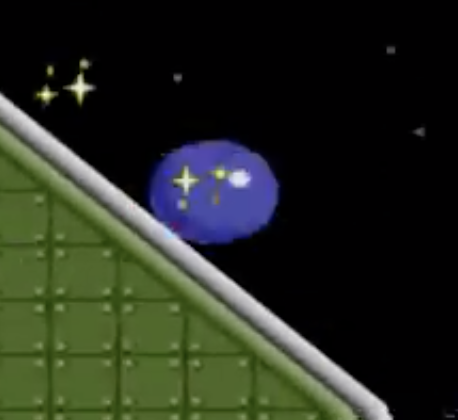
My sick heart is a small blue swollen ball.
In the novel I read there were always these nocturnal women, pacing around in foreign cities. They stayed in hotel rooms but could not last the night, they would slip softly into Parisian spring and trail the streets. It was often Paris, which rose in the back of my mind like something unfinished. It needed rendering. All I remembered was the razoring cold, the leers of buildings, needing to piss for hours and hours. The taste of cow’s milk, morning ache. Sometimes fancying the accordion song, impossible to exorcise.
[ The wreck contained mustard and scarlet, teal and rose.
We wriggled a little. Missed a bit. ]
John Hall: ‘Can’t you see why I couldn’t be doing anything else?’
Tracing such palimpsests of light, we ask of the week a question. Will you stay this mild forever? Little interlude, it’s okay to feel nice for a while. That’s what he said, this is nice. The daffodils are out. Kneading the dough of a belly, I over-sleep each day until the hollows of my eyes smooth into cream. Life is a cheeky rose. Perhaps no one is in love as James on his album. Picture him at the window, clipping the extraneous stems from various houseplants, watching the syrup drip onto the leaves. Think of this synthwise. Maybe that is a loneliness, so absolute in your feeling. Imagine him paring his Joycean fingernails, the man at the window whose name was Blake with a kytten for history. There was nothing so bright as that. You could not say, hailing it, kytten, kytten! It was extra literary. It was sooo much of everything before even alive, hey.
__The kytten was made of milk. It was bound to leak out someday.
We’ve not had a chance at everything yet. We’ve burned it all! At dawn we drank algorithms and the well-bronzed man still kissing away on the fire escape. As if all of this happened, expensive drams and learning the words for variable clouds. We enter the storage facility. Your da, your da, your da sells—That bit where Don Draper gets all misty-eyed over Hershey’s. At the end I’m crumbling a little white cookie, Karen is wailing the way she feels, the inward razoring, and it’s all I can do to remember the bees.
[…]
Dyeing my hair with fresh cherries, yayo yayo, yeah they say it’s excess to do this again. She runs the punnet under a cold tap, rubs them clean with her fingers then scrunches them, crushes them luxuriously over my scalp till it all runs down and I’m shining again. There’s a baby at the back of my eye that screams and screams, maybe I pretend I don’t know her. The cherry girl in the bar was trapped in a basket. Lana says nobody dies in Miami! I remember the harsh sunsets of your Playstation 2, smashing ourselves into several pixelated seas. Rank best to worst our beliefs, this night that got away again. We looked up the cheats and looked into the future, pressed x’s and triangles together. I mixed up my consoles, remembering it. A hook, a hook.
It took me six months to write and then I scrunched that mess back into a planet!
Notes from my diary:
Today I’m heading south to learn about trees
I could easily sit in a spoons and weep.
Goddamn stars what am I supposed to owe you! Held sequins in palm to insufflate, insitu. There was so much oil in my salad it looked unethical. Walking through the park at night, say this is balmy, so warm for the season but I don’t want to say unseasonable, and so feel like the narrator of another bored and beautiful New York novel. Don’t like the tonic in gin. Pay without debit; display songs in nested form. There are so many themes up my sleeve! Leave your key at front desk, darling I’m trying to reach it; white lines on the road wherever the silkworms—
~
Aldous Harding — The Barrel
Julia Holter — Les Jeux to You
Weyes Blood — Andromeda
Todd Rundgren — I Saw The Light
Judee Sill — Enchanted Sky Machines
hand habits — placeholder
Red House Painters — Golden
Big Thief — UFOF
Tiny Ruins — Cold Enough to Climb
Karen Dalton — Katie Cruel
Arthur Russell — Not Checking Up
The Tammys — His Actions Speak Louder than Words
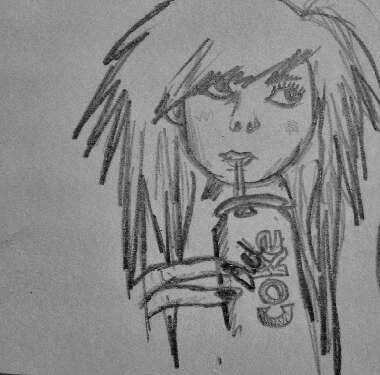
[An essay on anorexia, femininity, adolescent pain & writing the body]
I distinctly remember the first time I watched someone apply liquid liner to their eyes. We stood in the Debenhams toilets before a sheet of unavoidable mirror. She emptied her rucksack of trinkets and tools, drew out a plastic wand with a fine-tip brush and skimmed the gooey ink skilfully over her lids, making curlicues of shimmering turquoise. Her irises were a kind of violent hazel, whose flecks of green seemed to swim against the paler blue. She was very tall and for a while, very thin. She had a nickname, a boyfriend and sometimes she shoplifted; in my head, she was the essence of teenage success. Only later, in the maelstrom of a drunken night out down the beach, do I discover she’s heavily bulimic.
A year or so passes since this first incident, watching my friend slick her eyes with electric blue. I have since learned to ink my own eyes, draw long Egyptian lines that imitate that slender almond shape I long for. My makeup is cheap and smudges. I have grown thinner and people are finally starting to notice.
My mother goes quiet when we do the shopping. She tells me to move out the aisle and I ask what’s wrong. People are staring, she says. I turn around and there they are by the stacks of cereal, mother and daughter, gesturing at my legs and whispering: stick insect, skeleton. A feel a flush of hot pride, akin to the day in primary school when I got everyone to sign my arms with permanent marker—this sudden etching of possession. I am glad I lack this conspiratorial relationship with my own mother, reserving comments on others for the page instead, for my skin. My pain and frustration are communicated bodily: I slink into the shadows, sleeping early, avoiding meals. When people stare, they imbue me with a visibility I desire to erase. I should like better to float around them intangibly, diaphanous, a veil of a name they can’t catch. Instead it rests on everyone’s tongue, thick and severe: anorexic.
It took a week for all the names to fade from my arms; it takes much longer to erase a single label.
In the television series Girls, Lena Dunham’s character reveals that she got tattoos as a teenager because she was putting on weight very quickly and wanted to feel in control of her own body, making fairytale scripture of her skin. In Roald Dahl’s short story, ‘Skin’, an old man gets a famous artist to tattoo the image of a gorgeous woman on his back, the rich pigment of ink like a lustrous ‘impasto’. Years later, art dealers discover his fleshly opus and proceed to barter, literally, on the price of his skin. The story reveals the synecdochical relations between the body, the pen and the value of art. Everything is a piece of something else, skin after skin after skin. In Skins, Cassie Ainsworth gazes into the camera: I hate my thighs. With black marker, she scrawls her name onto her palm; she’s got a smile that lights up, she’s in love. Everyone around her rolls cigarettes, swaps paper skins like scraps of poetry. It feels dirty, the chiaroscuro mood of sunshine and sorrow. Her whole narrative purpose is the spilling of secrets, of human hurt turned to vapour, smoke. Wow, lovely.
For a while, my name mattered less than my skin. There were levels of weight to lose, dress sizes which signified different planes of existence. Over and over, I would listen to ‘4 st. 7lbs’ by the Manic Street Preachers, Richey Edwards’ lyrics spat over a stomach-churning angst of guitar: ‘Self-worth scatters self-esteem’s a bore / I’ve long since moved to a higher plateau’. That summer, ten years ago now, I would walk for hours, the sun on my skin. All the fields stretched out before me like fresh pages of impossibility; my life was a mirage on the flickering sea. I thought of liquid turquoise ink, the friend in the mirror. I started to forget the details of her face, so she blurred into the impressionist portraits I wrote about in school.
Midsummer’s eve; I laid down in one of those fields. With bone-raw fingers, I counted the notches of my spine. Even in free-fall you never feel quite free.
I was obsessed with Richey’s ghost. He disappeared decades ago and they never found evidence of his body. I wanted to evaporate like that, leave my abstracted car somewhere along the motorway; step into the silence of anonymity. Richey wrote screeds of furious notes: ‘I feel like cutting the feet off a ballerina’. There it was: the dark evaporation of resentment and envy. Around this time, Bloc Party released A Weekend in the City, a record that uses Edwards’ lyric to express the racial frustration of being made Other by a racist society. I was acutely aware that the figure of a ballerina, the doll-like white girl, was a divisive source of symbolic desire. We inscribe such societal alignments on the female body, and shamefully I was more than ready to fall into place, to shed the necessary weight. But what I wanted was less the bloody violence of a crippled ballerina, and more the success of erasure.
In Zelda Fitzgerald’s only novel, Save Me the Waltz,the protagonist Alabama trains to be a ballerina late in her twenties, too late to ascend to any real career success. Here was ballet, the pre-adolescent world of waif-thin bodies and she was a mother, a woman—someone who once gave birth, who was strong in flesh. She reaches this frenzied state of beautiful prudence, honing her body to the point where every movement and thought is guided by the waltzing beat, the perfect arabesque: ‘David will bring me some chocolate ice cream and I will throw it up; it smells like a soda fountain, thrown-up, she thought’. I could attest to that. Ben and Jerry’s, swirls of it marbling the toilet bowl, clots of sweetness still clear in your throat. Fitzgerald’s sentences stream towards endless flourish. Alabama makes herself sick with the work, her desire is lustily bulimic. She gets blood poisoning, finds herself hospitalised with tubes in her body, drip-fed and cleansed by the system. I thought of how I wanted to photosynthesise, survive on nothing but air and light. Like a dancer, I was honing my new ascetic life.
Sometimes at night, the old ticker would slow to such a crawl and I thought it would stop in my sleep, sink like a stone. A girl I met on the internet sent me a red-beaded bracelet in the post and in class I’d twirl each plastic, pro-ana ruby, imagining the twist of my own bright sinew as later I’d stretch and click my bones.
I was small, I was sick. I used to write before bed, write a whole sermon’s worth of weight-loss imperatives; often I’d fall asleep mid-sentence and awake to a pool of dark ink, flowering its stain across my sheets. Nausea, of one sort or another, was more or less constant. Waves would dash against my brain, black spots clotting my vision. I moved from one plane or scale to another, reaching for another diuretic. I tried to keep within the lines, keep everything in shape.
Often, however, I thought about water, about things spilling; I drank so much and yet found myself endlessly thirsty. Esther Greenwood in Sylvia Plath’s The Bell Jar, trying to drown, being spat back out by the sea: I am I am I am.
I’m fine I’m fine I’m fine. The familiar litany.
Something buoyed up, started showing on the surface. People could read the wrongness in the colour of my skin, all that mottled and purpling blood like a contrast dye my body had been dipped in. Against my pallid aquatic hue, I used to envy the warm and luxurious glow of other people’s skin. I sat on a friend’s lap and he freaked out at the jut of my bones. Someone lifted me and we ran down the road laughing and they were like, My god you’re so light. The sycamores were out in full bloom and I realised with a pang it would nearly be autumn. Vaguely I knew soon I would fall like all those leaves.
Anorexia is an austerity of the self. To fast is to practice a refusal, to resist the ideological urge to consume. To swap wasteful packs of pads and tampons for flakeaway skin and hypoglycaemic dreams. Unlike with capitalism, with anorexia you know where everything goes.
The anorexic is constantly calculating. Her day is a series of trades and exchanges: X amount of exercise for X amount of food; how much dinner should I spread around the plate in lieu of eating? It was never enough; nothing ever quite added up. My space-time melted into a continuous present in which I constantly longed for sleep. The past and future had no bearing on me; my increasingly androgynous body wasn’t defined by the usual feminine cycles—life was just existing. This is one of the trickiest things to fix in recovery.
Dark ecologist Timothy Morton says of longing: it’s ‘like depression that melted […] the boundary between sadness and longing is undecidable. Dark and sweet, like good chocolate’. Longing is spiritual and physical; it’s a certain surrender to the beyond, even as it opens strange cavities in the daily. The anorexic’s default existential condition is longing: a condition that is paradoxically indulgent. Longing to be thin, longing for self, dying for both. The world blurs before her eyes, objects take on that auratic sheen of desire. Later, putting myself through meal plans that involved slabs of Green & Black’s, full-fat milk and actual carbs, the dark sweet ooze of depression’s embrace gradually replaced my disordered eating. I wondered if melancholia was something you could prise off, like a skin; I saw its mise-en-abyme in every mirror, a curious, cruel infinitude.
In Aliens and Anorexia, Chris Kraus asks: ‘shouldn’t it be possible to leave the body? Is it wrong to even try?’. What do you do when food is abstracted entirely from appetite? What happens when life becomes a question of pouring yourself, gloop by gloop, into other forms? What is lost in the process?
I started a diary. I wrote with a rich black Indian ink I bought from an art supplies store. The woman at the counter ID’d me, saying she’d recently had teenagers come in to buy the stuff for home tattooing, then tried to blame her later when they all got blood poisoning. Different kinds of ink polluted our blood; I felt an odd solidarity with those kids, remembering the words others had scored on my skin for years. Tattooing yourself, perhaps, was a way of taking those names back. In any case, there was a sense that the ink was like oil, a reserve of energy I was drawing from the deep.
Recovery was trying to breathe underwater; resisting the urge of the quickening tide, striving for an island I couldn’t yet see.
(…What I miss most, maybe, is the driftwood intricacy, the beauty of the sternum in its gaunt, tripart sculpturing. Thinned to the bone, the body becomes elegiac somehow, an artefact of ebbing beauty…)
I think about beef and milk and I think about the bodies of cows and the way the light drips gold on their fields sometimes and how I’d like to curl up in some mossy grove and forget that all of this is happening. Sometimes I worry that my body is capable of making milk, making babies; its design is set up for this nourishing. Hélène Cixous insists women write ‘in white ink’ but I don’t want to be that plump and ripe, that giving. I want scarification, darkness, markings. I want Julia Kristeva’s black sun, an abyss that negates the smudge of identity.
I try to find loveliness in femininity, but my hands are full with hair barrettes, pencils, laxatives, lipstick—just so much material.
As Isabelle Meuret puts it, ‘starving in a world of plenty is a daring challenge’. Anorexia has the highest mortality rate of any mental illness. Recently, I logged onto my Facebook to find an old friend, a girl I’d known vaguely through an online recovery community, had died in hospital. Her heart just gave up in the night. People left consolatory messages on her wall; she was being written already into another existence. Another girl I used to know posts regular photos from her inpatient treatment. She’s very pretty but paper-thin, almost transparent in the flash of a camera. Tubes up her nose like she’s woven into the fabric of the institution, a flower with its sepals fading, drip-fed through stems that aren’t her own. She’s supposed to be at university. I think of Zelda Fitzgerald, of broken ballerinas. A third girl from the recovery forum covers herself in tattoos, challenging you to unlock the myriad stories of symbol. Someone I know in real life gets an orca tattoo in memory of her sea-loving grandfather; she says it helped to externalise the pain. My own body is a pool of inky potential; I cannot fathom its beginning and ending. I wish I could distil my experience into stamps of narrative, the way the tattoo-lovers did. I am always drawing on my face, only to wash the traces away. I must strive for something more permanent.
Recovery, Marya Hornbacher writes in her memoir Wasted,
comes in bits and pieces, and you stitch them together wherever they fit, and when you are done you hold yourself up and there are holes and you are a rag doll, invented, imperfect.
And yet you are all that you have, so you must be enough. There is no other way.
Every meal, every morsel that passes the lips, we tell ourselves: You are okay. You deserve this. Must everything be so earned? Still there is this girl underneath: the one that screams for her meagre dreams, her beautiful form; her starlight and skeletons, her sticks of celery. I try to bury her behind sheet after sheet of glass, lose her in shopfronts, the windows of cars and bathrooms; I daily crush out the bloat of her starched hyperbole, keeping the lines plain and simple. Watching others around me, I try to work out other ways of feeling full, of being free. There is an entry from 2009, scratched in a hand I barely recognise in the final page of a diary: ‘Maybe we are only the sum total of all our reflections’. I wonder what kind of sixteen-year-old wrote this, whether she is happy now and if that matters at all.
[…This is a story that has undergone many drafts in the past 6 years. It originated as the first piece I wrote (after not writing anything creative for over two years) for my Advanced Higher English Creative Writing Portfolio, which was (to the great frustration of my English teacher), altered about 500 times and in the end we decided it wasn’t quite suitable for submitting. So yeah, it was left alone on some dusty corner of an old harddrive until 2013 when I tried on a whim to redraft it again. What started as a gothic, emo-inflected horror story about the loathing of one’s body was fleshed out with some more character development, an unnecessary amount of diegesis and detail. When the opportunity came to submit a ghost story for GUCW’s Halloween Short Story Competition, I decided to revisit this strange tale again. This time, I didn’t just add or cut, I wrote the whole thing out from scratch. In a way it’s completely different, but the plot is mostly the same, and it takes place over the course of one day. I like when stories do that, because time is quite a stressful thing. Let me know what you think…]
Siamese
Every morning, the sunrise grew stranger; sometimes it was difficult to tell it apart from sunset, the distinction between day and night dissolving altogether. Recently, whole hours had been disappearing, afternoons and mornings lost like cells melting in the bloodstream heat of a vein under pressure. Before getting dressed for school, Maya got up very early and stood at her bedroom window to watch the sunrise. There was something about the queer, flesh-like light, pink clouds streaked with red, which made her skin tingle weirdly. While she watched the colours change, the clouds pull apart as if exposing a wound, she sometimes forgot that she inhabited a body at all.
Often she wondered if she was actually alive; if there wasn’t some other reason for her walking across the cold tile floor at six in the morning, looking over her shoulder, pulling the scratchy woollen socks above her knees, flipping open the lid of her laptop to check her emails. Such a pointless task, the checking of one’s emails, and yet…
There it was again. The email from herself. MAYA. No surname given. At first, she had found one in the depths of her Spam folder, but now it had bounced back to her inbox. She had received one of these emails every day for the past week. It was foolish to open such a message, which she knew could be nothing but some cheap, automatised attempt at tricking her into activating a virus…And yet. The house was still dark, her mother asleep. Only flickers of yellow gold from the sunrise oozed on the floor of the kitchen where Maya sat with her laptop, the shiny varnished floor which seemed to guzzle the light, crave it. It wouldn’t bounce back its heat. Shivering, she opened the email.
***
At school, the people who were and were not her friends called her Mad Maya. Mad Maya, Mad Maya. Leaving her house, she took the familiar route through the ancient copse of fir trees and across the village green, every morning rehearsing the childish chorus, rucksack thumping heavy against her back. Sometimes she heard her classmates’ whispers in the rustlings of the trees, as if the world itself regarded her with equal harshness. Today, the voices were louder than ever. It was impossible to draw sense from that chaos of lashing language. There was a familiar tone beneath the rasping exterior, a familiar tone that jarred unpleasantly with Maya’s attempts to forget the words that swirled up around her in flurry after violent flurry. By the time she had pushed open the school gates, bumped cigarettes off Dodgy John with her lunch money and followed the ring of the school bell, she was physically shaking.
In science class, the teacher was trying to explain how blood gets pumped around the body. The girl sat beside Maya was mindlessly scribbling love hearts all over her jotter. The teacher mouthed the words at them, but no sound seemed to come out; everything had slowed down, as if underwater. Words materialised on the board: atrium, Vena cava, tricuspid, ventricle, pulmonary artery, semilunar, aorta…Lush, intangible, otherworldly words. Every time Maya tried to write them down, her hands shook uncontrollably and the pencil fell from her fingers, clattering conspicuously on the floor. The more she learned about human biology, the more foreign she felt in her own body, as if she were discovering some hideous secret from all those diagrams and lists of words.
If she lifted her book off the desk at the end—which she must have done, because somehow she got out that class with her things—she would have seen the graffiti underneath, a kind of ancient inscription in jagged letters: M A D M A Y A. She did not recognise the handwriting, but it sent a jolt through her. It was possible that she had seen this before.
***
She found herself home early. The house was silent and her mother was still out at work. There was no car in the drive, not a single dish piled in the sink. Sometimes Maya worried that her mother would disappear. How little she ate! Then there were the useless prayers she still eked out before bed, kneeling by the living room window, where on clear winter nights you could see the moon, flooding the carpet with silvery light.
O, wash me, cleanse me from this guilt. Let me be pure again…Restore to me the joy of your salvation.
Sometimes, the susurrations and mutters of her mother’s prayers haunted Maya’s dreams. There was a time when she stayed out later and later, wandering the streets, just to avoid them. If only she knew what single guilty thing her pious mother had done in her life; that central act of transgression that seemed to define her, irrevocably, as this fragile, selfless being. Often the act pressed itself so heavily on Maya’s mind, massive and burning like some elaborate tapestry set fire to by Satan, that she could almost unpick its outline and form. But it was possible that she would never discover the truth as to why her father left soon after she was born, why on a daily basis her mother clutched God’s cross so tight around her neck.
She tried to sit down and do her maths homework, focusing slowly on the sums, as if each one were a special code she needed to disentangle, to find the kernel of meaning, the way they did with poems in English, scanning words on a page and picking at them, as if each one was a stitch. The problem was, each time she held a few figures in her head, they were snatched away—it literally seemed as if some force were wrenching the numbers and crushing them into some dark part of her unconscious. Some day in the future, perhaps, she would again encounter those fractions, sets of ones and twos, sixes and sevens, come to divide and splice her mind. The lines and figures appeared shakily on the page. Suddenly, the phone rang.
“H-hello?”
“Yes dear, it’s me!”
“Oh, Gran. Hi.”
“I’m just checking up on you dearie, it’s been so long.”
“Yes.”
“Are you busy just now, fancy a chat?”
“Doing my homework.” It was such an effort to talk at all; the words felt garbled in Maya’s mouth, like hieroglyphs.
“Oh, I’m dreadfully sorry—I didn’t mean to disturb you. I’ll let you get on then, I—”
“It’s fine.”
“You sound sad my child. You go and get yourself a wee biscuit or something. The sugar will help. I hope it’s not too difficult, what you’re doing, I—”
“Bye, Gran.” Maya clicked off the phone before her grandmother could finish speaking. She did not replace it properly on its hook and the cord dangled obscenely from the wall.
With mechanical obedience, she opened the cupboard and pulled out a packet of digestives, holding them in her hand as if they were some foreign food and she did not know what to do with them. Her hands were shaking again. Slowly she took out a biscuit, and tentatively bit it. She could not hold it in her mouth, and she ran to the sink, gagging. Some alien sensation seized her and she knew she could not eat, though something like hunger ached vaguely in her stomach, spreading up to her chest, settling in the centre as some unwelcome glow of pain.
Perhaps it was heartburn. She poured herself a glass of milk from the fridge, remembering an old trick of her mother’s to cure it. She lifted the glass to her lips but suddenly stopped. On the surface of the milk was a thin, quivering skin. Bile rose in Maya’s throat. She thought of jellylike scabs, wobbling with pus and blood underneath. The smell was gross yet oddly familiar, primordial somehow, like the smell of a womb. The glass dropped from her hand and shattered on the tiles, the milk bursting everywhere, sour and white, spraying itself on Maya’s clothes and skin, where it clung like some viral, viscous substance.
She slumped to the floor, momentarily paralysed. The sound of the phone off the hook resounded throughout the house, a pulsing, crackling sound that came from somewhere else: please check and try again.
***
As usual, she had met him at lunch, by the neck of the woods where the sycamores draped over the river, the river that wound round the whole village like an elaborate, snaking artery. Every Wednesday and Friday they would skive class together and nobody had ever noticed. He was two years older. They walked into the woods together, not clasping hands until they were shrouded in darkness, and even then, it was not clear how it happened, who made the first move. At this time of year, the mid-afternoon light was very white, shining down in strange beams through the thick canopy of trees. They would find their secret place. Each time it felt new to Maya, though she suspected that the boy hardly cared. If she came here alone, she would never be able to find the place.
Gently, he unravelled her from her school clothes, her hair coming loose in his fingers, her tights scrunched to a ball on the forest floor, crumpled like a shed skin. Her body was lily-white in the cool forest light, her shoulders exposed to the shivers of the trees and the tear-like glimmers that clung to the needles. Each time, he would run his hand automatically up her stomach; he would trace the long scar that ran up her left side. He would trace it slowly, lovingly, as if he were following the seam of a secret. The mark of ruined flesh. They never spoke of it, but each time he would reach down to trace it, to read it like braille, even as they kissed. Once, the sensation had given her delicious shivers, but now it meant nothing at all. Before, it had even been slightly painful, the scar so tender under his touch. Now, she could hardly feel it at all.
“I had a transplant,” she told him, the first time he asked. That was all she knew. She had never bothered to learn more of her own body; the boy had taught her all she wanted to know.
His flesh was pale and silver, a latticework of pulsing, blueish veins, but even as he pulled her over his body, she could not feel him. He was light as air and her body was not her body.
It was as if she were watching herself from afar, a child crouching behind a tree, stricken with terror and curiosity. She felt sick afterwards, and in fact even retched a little. He passed her a cigarette. She could hear the trees whispering again, and this time it sounded as if they were calling her name. Mad Maya, Mad Maya.
***
Possibly it was nightfall, sunset, the house so quiet, her mother asleep. The email lay open on the screen, its contents splayed out and glaring their strange incandescence across Maya’s bedroom. A chorus of acid colours spilled liltingly, tauntingly through the window. The ache had deepened in her chest, so deep it felt like her own veins were strangling her heart. It was difficult to breathe, with the dust of the room and the air that filled her lungs like spider webs mushed to molasses.
There was the collage of her entire life: comically vicious stick-figure drawings from her primary school jotters, school reports, doctor reports, notes to friends, reams and reams of texts, the carefully-typed emails she had sent to the nurse, impassioned diary entries scrawled in that distinct thirteen-year-old hand. Traces of the white powder devoured at weekends, the imprints of the boy’s kisses on her shoulders and neck, captured uncannily, impossibly, as polaroid photos, the bruises glowing through the skin like ghosts. Nothing felt real anymore. Maya hitched the laptop closer on her lap and peered at the pictures. Each one was a palimpsest, layered below streams of lurid red typewritten print: Mad Maya; parasite; murderer; the wrong child; sinner and sinner and sinful and sin. She shivered and gasped. She felt the screen start to shimmer, the pixels elasticating, blurring, the LCD surface beginning to compress and open, like a portal.
For a moment, the power cut off. A reflection appeared in the darkness of the screen: there were two Mayas, conjoined at the waist and the chest, struggling for breath. As the light flickered back on, the bodies flashed negative as if under x-ray, and in that second it was possible to glimpse the single aorta, throbbing like a terrible eel, tangled between the two bodies.
The laptop’s screen had cracked, but it didn’t matter. A silver moon beamed its single slice of light, guillotine thin, upon the glass.
***
How beautiful the world is! In the mirror the girl ran her hands through her hair, she felt the lovely inky glossiness of it, the way her skin was so soft and milky. A finger ran up the length of the scar on the right side of her body; in its crosslinks of knotted collagen she could read a virginal history. She picked up a notebook from the bed and felt its pages skim beneath her fingertips, delicate and full of possibility. A whole life to be written on those lines. The girl found herself at the window, yanking open the glass with fresh young limbs. The night air was cool and ambrosial; the air smelled of wild pines and the coming snow. The heat around her heart started to liquefy, spreading a pleasant warmth through her blood. Yes.
On the desk, a phone buzzed with a text: Where are you, why can’t I reach you?
 mariaology