Review: No You Without – Melanie Letoré

IMG_3870.jpg

Separation is something that passes through your body. It happens on scales that feel biological, because at once so intimate and distant, clear and mysterious. The vertigo sensation when you see a diagram of the heart, or someone’s face fading in the moving window of a train. When I learn the words for things I can’t articulate. When someone says Brexit or mentions faraway disasters, or power lines being laid deep under the sea. Scientific processes that I can’t reach. Separation, transmission, event repeating. A curiosity towards ominous energies. I’m not just talking about the endless, five o’clock stories, beamed through radio waves. Brexit is as Brexit does. Most analogue hour. How many of us woke up that Friday morning, after the fact, with stomach aches? The undigest of all our country, rent broad and familiar on all the news.

~

As history seems to be compressing, rapidly, in a chaotic present which seeks to smooth with legislative violence the rich diversity of our past, stories of migration and change become vital.

With vague direction, I walk over the motorway bridge twice to get back to Glasgow  city centre. The trees in Kinning Park are singed with vermillion; it’s early October. I ascend the footbridge, just slightly hungover. The sight of the traffic fills me motion again, after a night of luxurious slosh and dark of stasis. Screen light and honeydew shoegaze. Cars are barely there, but they go places. They leave a carbon trail behind. Watching from the sun-drenched bridge, I carry my stories and see them swept up in lines I can’t manage. Later, I try to write. I am looking for a flow, a sense of circuitry. The sentences whir.

Then I step into the exhibition. There is the clarity of photography, more like a series of windows. Windows I see inside windows. The glass steams up in certain types of feeling, translated as light.

~

The themes of the recent Lightwaves exhibition at Street Level Photoworks, featuring the work of Mat Hay, Josée Pedneault, Bertrand Carrière, and Melanie Letoré, are moving histories: those of heritage, migration and the storytelling inherent within. I have a special familiarity with Letoré’s work and practice, having served as her hospitality comrade back in 2016 and since then having worked with her on a personal project: a weekly Google doc record of our lives and thoughts, sprawled in text, image (art & photographs), questions, lists, poetry, fiction and essays. The name of our project remains tendentiously secret, a bright hard candy. Keeping a ledger with someone who I tend only to encounter IRL on chance occasion (gliding bikewise down the motorway, drinking OJ in basement bars) feels a bit like an odyssey. An orbit of thought. Each week we find out more about each other’s pasts, our present fears and desires, our personalities. It’s a bit like trading journals at weekly sleepovers, except there’s the sense that each post on our shared document is less a private thought and more like something that needed airing, that needed figuring out in the shared forms of writing and visual expression. Writing as performative output, the act alone a delectation. I love the sense of sisterhood that comes with this kind of sharing, like when I was wee and my cousin and I would read each other’s palms and tarot, tell our futures.

I proposed the project to Melanie after many months of following her blog, Rectangledays, whose premise is the daily post of a fresh photograph. The blog goes back several years and serves as a sort of photo diary, a luminous archive of many little windows into moments in time. Some I recognise from the days we worked together at the restaurant: pictures of a decimated wedding cake, a lonesome chair in a stairwell, a bunch of crutches propped against the fence, another colleague’s bloodied toe, wadded with cotton. I love these photos as a testament to the physicality of hospitality, the importance of objects and tools (knives often feature) to our work, the endurance required: poor Shelby with the bloodied toe, acquired on a wild night out, would’ve hobbled along serving tables with her injury, no complaints, shift after shift.

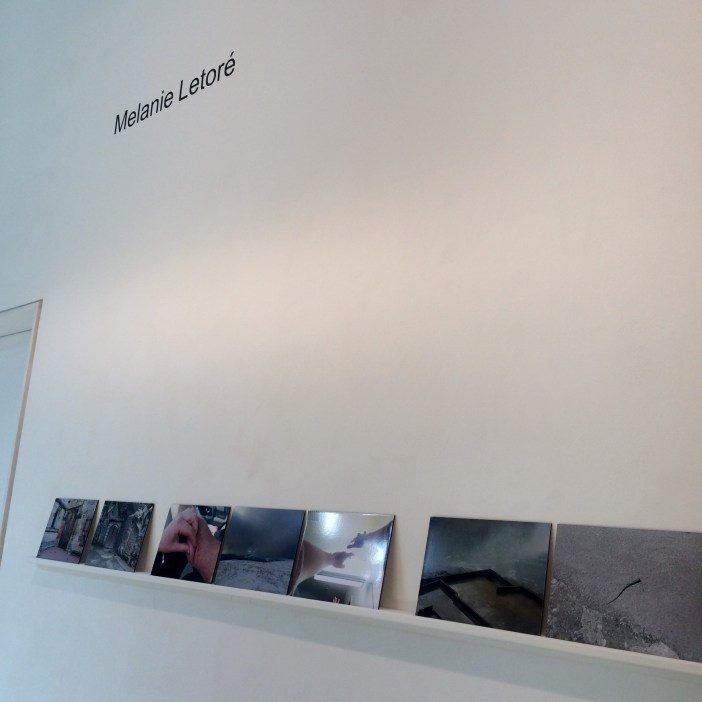
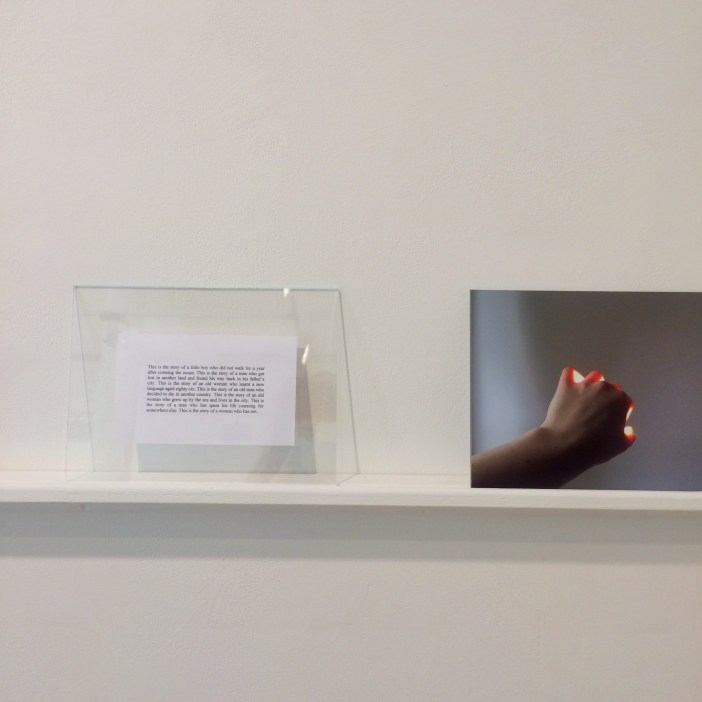
It’s a total treat to see Melanie’s work in an exhibition context. Stories that maybe she’s written about in our ledger come to life in the distillation of pictures in a bright clean room. Privacy rents a very public space. The other photographers in the exhibition have their work blown up, pressed across the white, whereas Melanie’s are much smaller, identical in size, sitting parallel on a wall. The pictures are thick, giving the impression of little books, the three-dimensional aspect implying that the story is more complicated than the image allows. The image contains itself, and then the negative space of all these stories, quietly sporing. Much of her work is about shining a light on the intricacies of identity: Melanie’s grandparents migrated from North America to Europe in the 1950s, and she herself has moved from childhood Switzerland and found a home in Glasgow, as an adult. Her work feels like a dialogue with the everyday world around her, and maybe the people back home, the family who live their own lives many miles away. Photography as postcards without text on the back. Or maybe photography captioned with invisible ink, ink that only some people can see; others parsing their own specificity from the image. That’s the beauty of Melanie’s work: it’s tender and personal, but there’s a humanist impulse in there somewhere too, rent with a complexity that asks us to think about where people come from, how they live, where they touch the lives of others. Feelings, adventures, intimacies, routines, leisure and food.

A certain nourishment. I feel privileged to have access to some of the thoughts behind these images. Reading Melanie’s writing, I find myself adrift on all these planes of migration. The title of her exhibition, No You Without, comes from Rebecca Solnit’s A Field Guide to Getting Lost. When told of the Wintu in north-central California, who use the cardinal directions rather than the words left and right to capture their bodies, Solnit writes, ‘I was enraptured by this description of a language and behind it a cultural imagination in which the self only exists in reference to the rest of the world, no you without mountains, without sun, without sky’. With this perspective, we realise our own contingency in the context of a relatively stable world. Recently, I’ve been wondering about where the ‘you’ is situated in my own poetry, who exactly it is I’m addressing. Who is the ‘you’ in a photograph, what kinds of hailing occur when we look at a portrait, or perhaps a landscape. Where are we situated and within whose vision. There’s a piece in No You Without where a woman, I think in fact Melanie herself, has awkwardly levitated her body by propping it between two counters or surfaces. I’m struck with the fact of the body suspended so precisely this way, making a new morphology of her being. Like when you are a child and find ingenious ways to get across a room without touching the lava-strewn floor, or like lying upside down for too long and seeing how precarious your sense of space is. When you are forced to appreciate gravity, pressure, connections. The objects that make us by dint of negation.

IMG_3869.jpg

In Melanie’s images, I seek fresh orientations. These are subjects which reflect process rather than point; they are a document in the quest for self in a sea of myriad reflections, a very real sea which threatens with its sweep. I see red ribs of meat, black curls through black curtains, a strand of hair overlooking an island, the pinching of elbow flesh, a rainbow, the gnarled remainders of landscape’s heap, two boys rolling around on the beach. Each image demands its own sense of scene, of identity in place. I have a sense of capturing, that one slight second that splits and releases: the clouds come in, the flesh smooths back, the rainbow ceases to be.

While the images do not document explicit ‘narrative’ as such, it’s clear there’s an intimacy threading between them. I wonder if we are encouraged to pick up the images and study them, the way you might lift family photos off the mantelpiece, stealing a look at the back for captions. In the exhibition notes, it’s suggested that the migration of Melanie’s grandparents to Europe, and all their associated trauma, comprises ‘another layer to her search for identity’. What we lose or leave behind. What we carry with us. A memory of blue, of sky, of something that represents the not-knowing, but nevertheless the feeling. That which comes, regardless of narrative or language. I planted a thought. Photography bears the visual seeds.

I’m reminded of a passage in Sophie Collins’ book small white monkeys, one that Melanie and I have discussed often:

Patterns of shame can of course be inherited, be broken, halted, but mostly they are carried on through, like mottos, or emotional heraldry.

Maybe we carry something of what our parents and grandparents taught us, or experienced. The learned behaviours, observational ticks of outburst or repression. Frequencies and cycles of confession or pain, the arguments which pixelate our childhood memories with varying degrees of trauma. A traumatic tartan, stitched to the furniture of our daily lives; a ravelled print of practices and patterns of thought and feeling.

We find ourselves reenacting the affects of others, those we are close to. Mostly, we don’t mean to. There are just these things we remember, ticking away in our brain and blood.

Such memory persists like a stick of brighton rock with the motto carried through, except you can break off the stick at any point, you can shatter the neat black letters. The rock of the shards tastes sweet and mint, is cleansing.

But it sticks to your teeth. Shame sticks also.

You can cut yourself on your own quick memory.

When I learn the words for things I can’t articulate. Surely ‘emotional heraldry’ captures this miasma of maybe incalculable feelings I might attribute to family experience? A coat of arms to bear, whose pattern is fading before me, or intensifying within me. Heraldry, inheritance. Jewishness on my mother’s side, ethnicity unrecognised, religious cycles and traumatic pasts; a kind of implicit migrancy that is only tangible in visiting. Stories my nan tells about ancestors whose names are like keys to dust-filled chests, mildewed letters, somewhere deep and distant. But then livable: a trip to Amsterdam, family graves and suddenly the pulses of history might glow in my veins. That heat is a shame. Peeling yourself from the easy determinism of ‘family’ and then finding family wherever you read. Recently I was struck hard by this essay by Daisy Lafarge on maternal approaches to poetics, or looking to whatever texts provide a sort of mothering supplement, rich with emotional truths. The wrestle with essentialism, with forms of belonging. I am someone’s daughter when I read a poem or look at a photograph. Sometimes I am otherwise lost. I am that altogether vulnerable.

I guess I’m an immigrant too of sorts. Moving from England to Scotland at a very young age, being acutely aware of my Englishness and thus playground shame because of the markers of accent, and yet proud at the difference, to be different. Melanie’s photos teach me to sympathise with other kinds of present, and presence. They are fleeting and insouciant, playful in one sense, but otherwise make me want to stockpile and archive with a kind of serious fever. I want to know everything about the people in these images, scour their diaries and ask them their names. But I also want to leave them alone, up on the shelf where their lives can be quiet and still, and yet somehow heard, in the seeing. Maybe an image is a kind of speech; it allows us to separate, and to parse our connections. To halt in the flow of feeling, to carry a place or a person; to illumine.

~

Lightwaves is on until 25th November at Street Level Photoworks, Glasgow.
IMG_3871.jpg


Loving the Other: The Cinematic Magic of Paddington

Source: www.walesonline.co.ukSource: http://www.walesonline.co.uk

It was the morning after the busy Black Friday weekend at work, and, predictably, I slept in. The rain was pouring down thick and fast and Glasgow was a gloomy vat of grey. There was a need for something warm and enchanting in this mist that overshadowed Christmas.

Every year, my Mum, brother and I try to find something to visit – it’s become a kind of tradition. An acoustic gig, a play or a film, usually. In past year’s, we’ve seen the likes of Pearl and the Puppets, Great Expectations; a long time ago, it would be Maybole Bazaar or the Carrick Christmas Show. Sometimes it’s true that the older you get, the better things are. There was a year when I was supposed to go see Frightened Rabbit at The Arches with some friends, but a heavy snowdrift cancelled out all the trains and so I had to content myself with a night at home studying Higher Sociology…

Anyway, this year I found myself on the train to Edinburgh on Sunday morning. Since the weather was a gloomy storm of wind and rain, we decided to go to the cinema. I always like the thrill of going to a cinema I haven’t been before – even if it’s got the same pick and mix, popcorn machine and seats, there’s still something exciting about navigating the screen doors and the dark staircases. We went to the VUE cinema. Mum was keen on going to see Paddington. I was pretty sceptical; I mean, I’m not too keen on animated films, and I agreed with my brother that it might end up being a bit…childish. Probably like going to see Frozen, although I wouldn’t dare to be so controversial as to comment on that film, and anyway I haven’t seen it. Certainly, when we sat down to watch the adverts, there were a lot of commercials for toys and cereal and films that come with a ‘U’ certificate. A baby behind us intermittently crying. We exchanged Sibling Glances. What was this going to be?

I suppose in my mind I’ve always lumped Paddington in with Winnie the Pooh, The Wind and the Willows, Watership Down and Beatrix Potter: fuzzy, anthropomorphic children’s tales which hold prime place in the history of children’s literature. Yet all these tales tend to have a hidden dark side: like all traditional fairytales, their simple stories of adventure are interwoven with commentaries on the likes of family, love, violence and perhaps even racism. So I wasn’t sure what to expect from Paddington, but as I waited for the adverts to roll out, I was imagining that perhaps this would be more than just a plain old children’s film. Maybe it would reach the stature of one of the only children’s films I like, the (I think) highly symbolic Bug’s Life. 

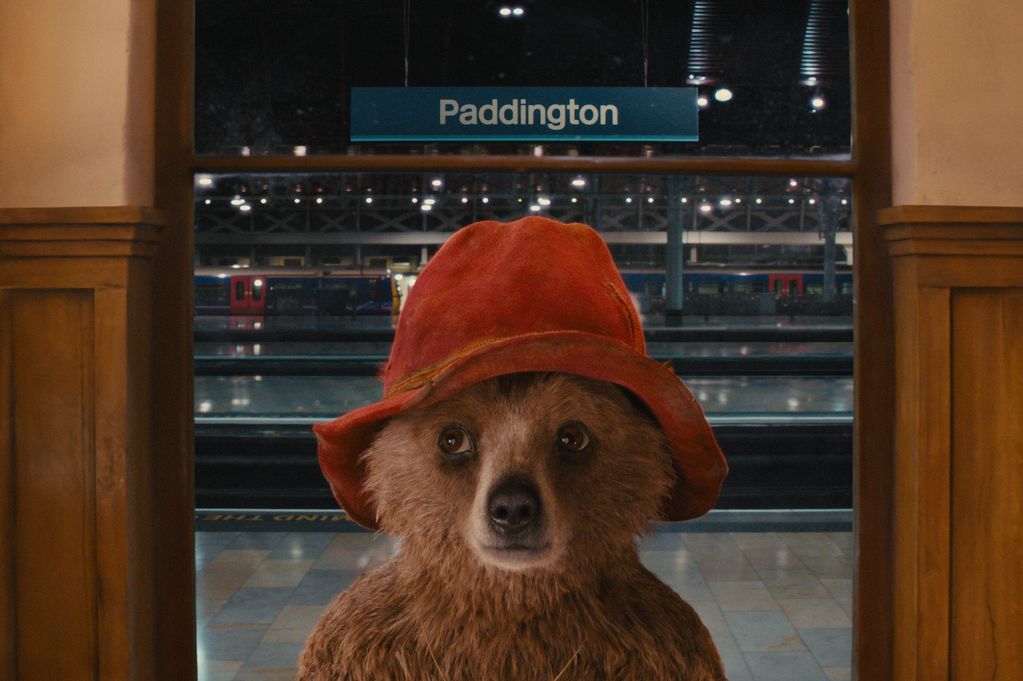
Paddington begins in the midst of ‘darkest Peru’, recounting a colonial tale whereby an English explorer named Montgomery Clyde makes friends with two bears and tells them upon his return to England that they will always be welcome in London if they ever visit Britain. The whole film holds a self-conscious ironic mockery of British colonialism, like some postmodern update of Conrad. Imperial knowledge is held by the ‘Geographical Society’ who cruelly banish Clyde for his benevolent approach to the ‘natives’.

Soon after, we witness fantastical elements of the bears’ lives as they live alongside their nephew in the wilds of darkest Peru. These lives are remarkably sophisticated, featuring an intriguing marmalade-making machine and a radio crackling with the sharp tones of BBC R.P. informing distant listeners about life back home on the streets of London. There are also some very nice hats. The simple harmony of the forest is disrupted one day by a violent earthquake, which leaves the female bear Lucy effectively a widow as the other bear Pastuzo disappears. Lucy sends her poor bereft nephew away to London to seek adventure and fortune by sneaking him onto a ship, and retires peacefully to a retirement home for bears.

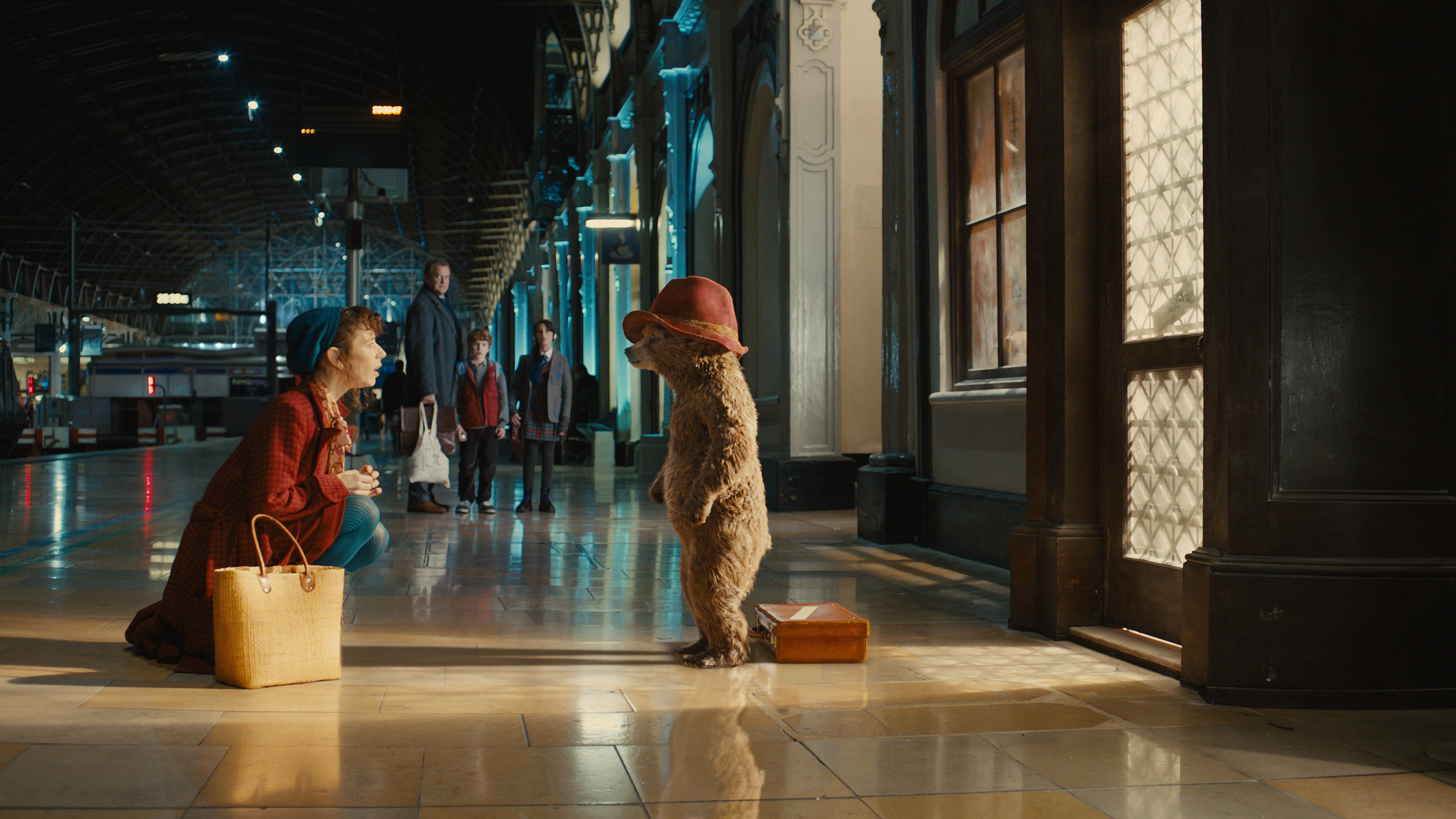
After this, the film follows a somewhat bizarre but delightfully heartwarming immigrant narrative. The young bear finds himself alienated in a strange city, acquires himself a ‘British’ name (Paddington, after the train station he arrives at), and then a suitably quirky and very English family to adopt him. The Browns (with Downton Abbey’s Hugh Bonneville as the dad and Made in Dagenham’s Sally Hawkins as the mum) embody that kind of slightly dysfunctional, messy and a bit bizarre middle-class family that holds mythological status at the heart of our culture. Yes, there is the threat of stereotype, but the film carries off these qualities generally well as they mould perfectly into warm, fairytale figures that chime in various ways with cultural caricatures without becoming too flat or prescriptive. The stern, paranoid father and the liberal, empathetic mother; the boy obsessed with building things; the girl choked on embarrassment and fear of seeming ‘weird’ to her friends. The Scottish and slightly alcoholic housekeeper, Mrs Bird, who can predict things with her knees and saves the day towards the end of the film by distracting a security guard with copious shots of whisky.

We might compare this play on well-loved family archetypes it to the likes of TV comedies My Family or Outnumbered, which features semi-improvised scripts depicting the chaos of modern family life. The overly-inquisitive little sister Karen, the perpetually-stressed mum, the wearied father, the embodied chaos of Ben, the youngest brother, the sulky teenager. What makes Paddington shine above any TV drama is the simple humour of its script and the cinematic magic of its costumes: Nicole Kidman’s sharp heels and trench as she stars as the villainous taxidermist who seeks to capture and stuff our beloved bear for the Museum of Natural History, Sally Hawkin’s outfits (all marvellous colour-clashing, woolly hats and embroidered cardigans), and that iconic blue duffle coat and red hat that Paddington wears himself. Let’s hope sales of said duffle coat go up in the aftermath of this film because I’m more than happy to see it everyday, especially in that lovely cobalt colour that Paddington sports so well:

Source: www.cityam.com
Source: http://www.cityam.com

Then there’s the magic of the house itself, which features a giant spiral staircase and walls painted with a Japanese cherry blossom tree, the blossoms of which bloom or fade beautifully according to the emotional tone of the story.

As Paddington adjusts himself to (human) family life, the audience goes through scenes of low-level cognitive estrangement, as Paddington explores everyday human life and tries to make sense of it, with amusing consequences: flooding the bathroom, using a toothbrush as an ear-cleaning cotton-bud, mastering how to use the escalators at the tube station. As I said at the beginning, I’m not generally a great fan of animated films, but Paddington carries off its loveable animal protagonist flawlessly, down to the details of individual water droplets shaking off each strand of his fur. Originally, Colin Firth was set to play the voiceover for Paddington, but he stepped down after worrying that his voice didn’t sound quite ‘open’ enough for the young bear. Instead, Ben Whishaw got the part and the sweet dulcet tones that so charmed us in his portrayal of Romantic poet John Keats in Jane Campion’s Bright Star are here perfect for the innocent wide-eyed charisma of Paddington. It’s a remarkably technical process; Whishaw had to wear a kind of helmet so that the animated Paddington bear could match the facial expressions and head movements of his kindred (human) spirit.

Source: www.networkrailmediacentre.co.uk
Source: http://www.networkrailmediacentre.co.uk

London is a dream in this film. From the grand corridors of the museum to the polished floors of Paddington Station (I imagine a much-needed plug for Network Rail…) and the snowy streets, it provides a romantic backdrop to Paddington’s adventures that makes us fall in love with the old city all over again. Sometimes I get very sick of London, especially the way it always flickers through media as this glassy corporate giant full of rich people with perfect lives (I’m thinking of the sweeping shots that open The Apprentice or basically every shot in Made in Chelsea that isn’t an awkward closeup of someone’s glakit face). The London of Paddington is a city of nostalgia, drenched in snow and old antique shops and red telephone boxes and a Dickensian wallet thief. Peter Capaldi playing an archetypal nosy old neighbour with a cockney accent and Doctor Who scarf. The family portrayed at the heart of the film are at once old-fashioned (the boring, distant father that perhaps echoes the banker father of Mary Poppins?) but deal with relatively modern issues: the presence of technology, the moodiness of teenagers. It’s this blend of the nostalgic and contemporary that really adds magic back to London itself, that spins a fairytale of visual beauty and enough narrative suspense to keep you hooked to the end (there is the encroaching threat of Kidman’s cold cyborg of a villain coming to kill and stuff our beloved protagonist).

Aside from the lovely visuals and fairytale storyline of good vs. evil, there’s the narrative of the Other which I already touched upon. Paddington experiences both alienation and welcome, and simultaneously the audience goes through the motions of heartbreak and compassion. Initially, he finds himself spurned by Mr Brown for his clumsy inability to fit into the household without making a mess of everything. In the cold rain he wanders the streets, and finds shelter with one of the Queen’s Guards who kindly offers him an emergency sandwich that he has stuffed under his enormous hat. Paddington is of course perfect for Christmas time: there is the message of family love, compassion and understanding, but also that simple narrative of sharing food that means so much in the shared gluttony of the festive season. There’s a reason we buy a tin of Roses or Heroes or Quality Street and it’s not just because it offers choice, but also because it’s a shared pleasure. Much like the film itself (I recommend everyone sees it on the big screen where the glorious visuals can really come to life).

You can look to the likes of Derrida or Donna Harraway to academically unpick the importance of understanding animality and other species for recognising the animal in us. By the end of the film, we realise that species shouldn’t divide us or cause fear or hatred or hierarchy. It’s wrong to treat another being as an instrumental object: something to be prized and displayed and stuffed. Go to Peter Singer for some philosophy too; I recommend ‘All Animals Are Equal’ (1974). It’s wrong to treat the Other with anything less than the respect you’d give to your own ‘species’. If bears and humans can become family, then can’t we all as humans get along in the turbulent times of the terrorism and threat and anti-immigration rhetoric of the 21st century?

What draws the immigrant narrative out from this Every(bear’s)man’s tale of immigration is the interspersed classic calypso songs which a band play throughout the action. Michael Bond’s children’s books were written, as Tim Masters (BBC 2014) points out, around the time when a new immigrant community were settling in Notting Hill – the place where Paddington himself finds a home. The songs are all positive and cheery, telling a story of endurance in the face of hardship and rippling with a fresh, hopeful spirit. The kind we need for 2015. By invoking the positive narrative of the Caribbean settlers in the mid-twentieth century (who came to help rebuild post-war Britain), the film implicitly critiques our contemporary societal stance on immigration. All the fear-mongering rhetoric that gets whipped up by the likes of UKIP is exploded in this heart-warming tale of love and discovery and acceptance of difference. It’s a classic tale of the journey of the Outsider that could be applied to anyone who has had the experience of settling into a new community as some kind of racial/ethnic/sexual/physical Other. And perhaps this, more than anything else, is the enduring magic of Paddington. So I’m glad I went to see it.

(On a side note, the only thing I was sceptical about was the heroic pigeons who essentially save Paddington at the film’s climax – not to put to fine a point on spoilers – I can’t see pigeons ever acting so benevolently. But then maybe that’s a terrible species bias that I should work on myself).

Bibliography:

Masters, Tim, 2014. BBC News Online. http://www.bbc.co.uk/news/entertainment-arts-30196290

Pauli, Michelle, 2014. Interview with Michael Bond. http://www.theguardian.com/books/2014/nov/28/michael-bond-author-paddington-bear-interview-books-television-film