I remained on the alert to seize those vagrant moments which seemed to me in quest, as a lost soul is in quest of a body, of a consciousness to register and feel them
— Jean Genet.
I’m in a Caffe Nero in Central Manchester, and they’re playing Joni Mitchell’s ‘A Case of You’, a song I love dearly but haven’t heard in a while. People nearby are talking Italian, Portuguese, French; the coffee smells of a job I left behind. I kept dozing on the train heading south, the way you only doze as a teenager, as if falling asleep was its own laconic rebellion. As if your cares were minor enough to warrant a worldly suspension. There is something bittersweet I can’t name, for fact of the secret and something new coursing through me. I forget to spell, to brush my hair. I check in, and then out. I walk until my feet are sore. Along the canal the water glitters, a quintet of goslings tap at the grass. These shoes don’t fit yet. I’m collecting images for later, holding off the impulse to open my phone. Everything good is a little green light, an almost constancy.
There are bits of wax pastel under my nails I can’t scrape out, the blues and greens. Late at night I sketch mountains, undulating lines that mean something unnameable of time and place. This is where we are when we can’t hold it clearly. I need a selection of scenes. As if you could peel the line from the form. I do this over and over when I struggle to write. It all looks kitsch.
Transferable lines betray their futures.
As though you had to draw to think the drawing hand, the soul behind it. I could drink so much more of this thing that we are. Little symbol of something merlot. We talk of luminous substances, cinema.
*
I buy a badass topless postcard of Sappho. I do the splits at a poetry reading.
An elderly man from Cumbria relays a potted history of the railways between Preston and Carlisle. He tips his hat to me upon leaving the carriage; I go back to Clarice, reeling.
Suited lads order Carling till everything stops and we slump back into the city.
Fade out.
*
We do doubles and discuss our thievery; we’re not counting exactly, the hours just melt into amber, slosh after slosh and the sting of it. He says lovely hurt things, plus the syntax of limbs and rhythms. Weeks before, I snap glow-sticks onstage, follow the blue dot flash on the map. April feels sweet and easy. The blossoms are gone from the trees already. We are vaguely north. I want to hand you something precious that can’t be replaced.
We smash his plates at six in the morning, as though the heart were a sacred amphora.
Every few days I flip open Derrida’s Glas at random. I am caught on this gl, this glimmer and glyph. The only good thing we learned on that course was the runes, I see more of the runes in the church in Govan. I want to wrap my hands round a genuine sunstone, we discuss evolution at dusk and somebody is always interrupting us. The weather is clear and mild, like a symbol. Elsewhere I write the phrase, life is just stars refusing to die, and I don’t know why.
*
“We talked of the sun and moon, of what makes an earnest Instagram.”
*
I called it good air and used more cobalt to imply the sky. A man on my train resembled Mark Fisher and later I dreamt I asked him a question. Plexiglass demands a certain click. I scrolled on my iPod to find the playlist with all the rainbows, there was this chat of garage shanty and April showers. I tell your dad about the legendary felling of the lilac tree. Sometimes we think in firewood and catch sparks in the kitchen. If you want me I’ll be in the bar…
*
Cixous: ‘It is as if I were a fish and I wondered: “How can I be too much for the sea? How can I drown the sea?”’.
What is it we said of the question itself. ‘We never die enough’, she writes. Currently obsessed with excess, against lack. I die into the writing and it gets so I can’t even write! But that’s beautiful too, because the not-writing is the veer of the pen that leaks on my bed and the sleep that made it happen. I walked so far it was all I could do. Something turned over with pale deliberation; we had to elide the sea from each scene. And the gulls fell away like punctuation.
The fish drowns the sea with interminable shimmer! ABSOLUTE selenium. It is a vodka taste of pearlescent tendrils, it is everywhere you want to go of the road. We trundle into London at minimal expense. The air is mega.
*
Out in the dark, I lost the necklace with the ‘M’ on it, the one I’ve had since I was a child. I bore the loss quietly, which seemed to befit initial extinction. Later, I’d buy a watch with a face of pearl to replace it. I saw there was a value in time again.
*
Sincerely I wished to be a reader of science-fiction, but that was an effect of the store with all the metallic covers, the pop music. And of Messenger, ever. Some things you can’t parse from a future, but certain emotions grant you investment. There is finally something to want of tomorrow.
The day is all pinstriped and sunny, I can’t see through it.
* Scientists are finding shrimps that are laced with cocaine. We’re geared up for anything, they scream in journals. I eat my way through loops, wake shiny without comedowns. Something translucent twangs of the skin.
* I taste a nearly virtual plain, with lavender milk.
* In her poem ‘April 23rd’, Bernadette Mayer writes of a ‘cardinal’. I keep thinking of that song with the butterfly and the dogwood, the shades drawn down. It just appears, almost without comments excepting the greyness. Cixous notes, ‘The things that happen are too beautiful to be written’. This is all true and maybe why mostly the lines elude, or weigh too rich on the page these days. I am grateful for small indefinite phrases that come, and the pretty ones that even sometimes land. You can cry if you find the right canopy.
*
He wore green velvet.
*
There is all this tender intuition. The expressions of vanishing in Permanent Green Light. The protagonist who lies in a sleeping bag on this soft suburban lawn, a piñata hanging in the tree above him. Prior serenities of sleeping on trampolines through summery twilight. Blinded we’d swipe at the sky to beat the last of the leaves into tinder. Explosion is what happens to the sun all the time. It’s kind of delicious to think of that, like romance as solarity and the space between us. Measured days and days, held breath.
…What changed?
*
Dream of Sibylle Baier’s colour-green sweater. It’s made of angora and makes me sleep into the sleep of itself, as though sleep were exactly what you drew about your shoulders. And you did.
They were playing Bright Eyes in Nice ‘n’ Sleazy’s, a good omen if ever I know one. First with your hands, then with your mouth…
* Alone on the stairwell, dropping slips of snowy paper. Enjambed cacophony of the neighbours smoking, and a blue light that isn’t mine, the massive tv I pass each night in familiar windows. I love to be alone in hotel rooms, the soft mood of the light. The endless sense of mirror and sleep. When you played, you wanted to see to touch. I tried to remember the beautiful email, to make it better. Little confused thing, said so simple, sorting papers.
Sometime in April a letter I wrote.
Last edit was seven hours ago and boy can you feel it, a critical hit.
*
What I drew had no obvious form. I’d stopped bothering to look for permanence. There’s a new kind of ring to the rain, the smell of green leaves and the river’s illegibility. Most extravagant violet marks, a watched ellipsis. Here.
~
Sibylle Baier — Colour Green
Yohuna — The Moon Hangs in the Sky Like Nothing Hangs in the Sky
Pinegrove — Skylight
Hand Habits — what’s the use
Twain — Solar Pilgrim
Frankie Cosmos — On the Lips
The Bellybuttons — Mannequins, Gr.
Aldous Harding — Fixture Picture
Thee Oh Sees — Island Raiders
Youth Lagoon — 17
Buck Meek — Halo Light
Cate le Bon — Home to You
Joni Mitchell — Little Green
Weyes Blood — Something to Believe
The Cure — Plainsong
Galaxie 500 — Hearing Voices
Four Tet — Teenage Birdsong
Robert Sotelo — Orangerie
King Gizzard & The Lizard Wizard — Planet B
PUP — Full Blown Meltdown
Better Oblivion Community Centre — Exception to the Rule
On the 11th of June, 1993, I was born with an extra digit, an eleventh finger. I am told it was a finger, so goes my parents’ mythology, but probably there is some anatomical word which better explains the strange appendage attached to my left pinkie. Resembling a kind of lollipop, a glass candy, my eleventh finger was a long thin vessel of muscle or blood (what I cannot know or ask of that fact) attached to a kind of crimson orb, like a cherry. It wasn’t really a finger at all, but the unfinished potential of what might’ve been one, a mutation. This was accompanied by a strawberry-shaped birthmark on my inner left wrist which, my dad assured me, would fade as I grew older. The cherry finger was lopped off on the day of my birth, and the blood splattered the doctor’s coat, bright red upon starch white. Soon after, I nearly died. A lightning storm raged through the morning. I was placed in an incubator, I had some kind of viral infection. They furnished me with the supplementary khora, until I grew blonde and better. So the story goes, and already I have probably messed up the order.
But I want to say something of the number eleven. Eleven feels like a residue, an extra. The loss of this finger, which I do not write with and yet slyly it makes itself present as absence, constitutes a kind of originary erasure. Years pass in which I forget this secret was mine at all. Eleven, perhaps, is a statement of entropy, a chaos spilling over our familiar limits and even regressing or falling in loops. However we parcel our intake/outtake, our sense of personal energy. I test out images of eleven, of extra. In Tom McCarthy’s novel Remainder, the protagonist wants to claim his free coffee, the remainder, so badly that he buys ten cappuccinos just to get the loyalty card stamped, just to claim the free one, the eleventh beyond the card. A strange caffeination that remains incomplete, to come. Then there’s Eleven from Stranger Things as a kind of genetic extra; the number identifies her as a test subject. The number becomes name. That phrase, turn it up to eleven, when really the system stops at ten. Why is it we make wishes on 11:11, when did I start doing that? The wish constituted itself as extra. Over time, I find myself ‘catching’ this time more and more, glancing at the clock of my laptop when it just happens to be 11:11. And the wishes pile up at the forefront of thought, they take a while to resume as memory. When I am sad, I visit the Kelvingrove fountain. There is water and clarity, the hum of other people’s wishes. Sometimes this is better than poetry, it’s simply potential.
I knew someone who named themselves after the sky in Super Mario (with Ayrshire inflection) long before either of us had even heard of Cory Arcangel. We were born on the exact same day, same year, and we called ourselves twins. It took eleven years of our lives to find each other. Speaking to this person, I felt always this chiasmus of consciousnesses, a sense of keeping up, or ongoingness.[1] They were super beautiful with luminous curls and sports jackets. Their nights were spent up with consoles and synthesisers, and we messaged each other until our windows crashed, or our parents needed to use the phone. I will not quash the romance of the dialup connection, for it was real, the frisson of interruption. The sense of a moving into, the attunement that performed itself in the temporal interlude of a radio whistle, blow of white noise that had its sonic continuum, warping and twisting as though all these howls in the wires were coming to life, and we would sing through the modem our deepest thoughts. You would teach me a riff. We were each messaging the others at once. There would come a point where everything was just text in the end, the fragile reminder of each bodily fragility.
You wrote in cyan-coloured Comic Sans, before this was ironical.
Half of my brain wants a masculine state; the other half a quiet, feminine comedown. What is it to speak or sleep gender. I’d sip cider in the wee hours after the party, but nothing fragmentary said then was as good as it was on the computer. It was like coming to life, discovering what had not yet been told of a love or a taste. I suddenly felt affectionate towards everything, and the aesthetics of a particular website, the trajectory of a song, could startle me into tears. Everything grew fizzy and sugary; it was all too much. What we were supposed to say to each other. I was learning to apply eyeliner, clip bras and shed weight like a grownup. The environment was a diagram we drew at school, a set of names we recited while dipping for critters in rockpools, freezing our brains on polluted beaches. A joke that was told to the air before we could return to our games.
***
I never learned the word for what happened at my birth, what grew on me, this residue fruit. After a while, it broke away, the fact of it which was a specialness. I was losing that specialness the more I learned language. There was a solvent process of being okay with a long red line that meant mine or anybody else’s ‘I’. (/) A length of energy, a vessel snipped close to the richness. We invent names for ourselves on the internet.
Something constant was the minor chord shard in my heart, when I knew there was a thing awry. I could not put my finger on it, much as I could not remember what I wanted to do with my life, or what passion that had driven me to write as a child. For I had filled documents and jotters with my rambles before. What happened, if you can forgive me for inserting a narrative turn here, was a loss of story. Post-puberty, it seemed there could be no climax in my life. Events I had expected to effect a shock into existence had not occurred so; a long hard drag had occurred instead, slow enough to trick you into passive submission. Resistance became a case of daily withdrawal, decay. It seemed there was nothing to write into, now I understood the mysteries of sex, reproduction, death. I had written these epic fates about unwanted births, woman impregnated against their will in labs buried deep in violet mountains. I had a horror of the body inside the body, which was the same as the body inside the planet or the planet inside you. What grows, regardless.
There was a fragile voice I was waiting to hear on the radio. I had not yet worked out the temporal trick that was poetry, the way it could stop you on the blot of a page, by fact of its shape. What grew charged or tangled. I became interested in the way the body was just a body, something to be seen, something to offer up to bodies beyond you. I wanted to know its limits, its multiplicities, as much as its points of attunement. Like plugging in headphones to the library PC just so I can hear the electrical charge of each scroll as a sonic intensity. There was a time of mark-making, rigging lighters, taking steaming baths. Staring at other people’s ceilings. I practiced lying on concrete, feeling the dark cold of summer’s inversion travel up from my spine. I listened to music so loud that stars began splintering inside my ears, and so I would have tinnitus forever more. I burned my tongue on a minor chord.
And so the same sound would scream back, muted lagoon trapped in my ear a decade later, the splitting sextillion stars of that music. The melody itself was irrelevant. I was drawn to songs where you could fall between verse and chorus, and the space of that slack guitar was far more important, the way a man’s voice could break on a word. For some reason, then, it was always men.
What does it mean to be taught how to feel by the opposite sex? Things tilted and sweetened the weaker I grew. We held hands in west coast impressions of sunset. The word for weather was like whether to say I’m going offline. The fort-da pull of your endless sign-ins. r u okay?
Jean-Luc Nancy: ‘A corpus is not a discourse, and it is not a narrative. A corpus is what is needed [qu’il faudrait] here, then. Here—there is something like a promise that this has to deal with the body, that is going to deal with it—there, almost without waiting […] there is a sort of promise tacitly to hush’.
Thus the body is clearer in machinic absence. Thus this vast proliferation of forgettable text was the logic we gorged on, empty calorific haribo words. There was no vegetarian alternative, we were eating each other. I mean the sway of exchange, this sense to be dealt with. A hunger, sugar rush. I message you later. The pressure of reply, now we’re always online; transmission as love’s endless labour. Isn’t it exquisite just to hush, to disappear mid-conversation and relish the ellipsis for a future hour. In these small ways I was building a tentative next, but its openness was yet clouded by thought itself. I couldn’t think beyond three minutes, and that was depression.
***
I learned the deformity of my birth was a sign of witchcraft. I bought a bright pink book on the subject when I was very young, and tried to astral travel. I wanted to see things from above, but instead I found myself suffocated by their closeness. Children can smell sorrow, the weight of it dripping from adult expression; the way dogs pick up the mood of the house and embody it through quivering and whimpering. I burned incense and imagined an orb of lilac light spreading over my body, which became the mountain I buried my heroines in as a child writer, an amateur at fantasy. I slept with crystals under my pillow (I still do).
The wrongness of the world was everywhere. The way people spoke to each other. I could not connect. I leapt into situations where voices were just echoes back into the water they came from, where sentences shored up nothing more than the vice of their speaker. I began a long affair with silence. I stopped writing, and later I stopped speaking. For weeks at a time, I would lose my voice. It broke on the shore. I smoked little menthols in wind tunnels, listening to reality talk shit back to me. I was broken inside before I began; that was the feeling. Long walks could not smoulder it off, and the only calm I achieved was from the absolute lack of understanding I experienced in math. Not knowing was a clarity, one I still crave in the space of writing. The absolute sentence as a violence that closes all others.
Later, much later, I would discover this glitch was a crisis far beyond me, a crisis of climate, a crisis of world itself: so huge my child’s mind could hardly have discovered it. And yet, having said that, I was already halfway there. Halfway towards ecocide. As a child, I swore to my mother I would leave the planet on my fifteenth birthday. She almost believed me. Mars beckoned, with its fiery red swirls and its secret knowledge of an evil beyond. I liked the way the name felt ‘full’ in my mouth. When nothing happened, I drank myself into amnesia; I stopped eating. It was a birthday gift to myself, the hope that I might still disappear.
Hungover, I know there will be a point where I go and that is to die. The blank is like a name you forget at the point of recall. It is so much worse than that, as if we’d forgotten our own name and the name of our mothers and the E____ itself. And what it means to see the back of the tapestry and a trypophobic horror where every unloosened stitch, a tiny blank, is the signal of multiple (un)ending worlds. Consider the strawberry seen from inside, with its millioning glowing yellow seeds of light. My wrists replaced originary marks with marks.
There was so much to learn about what was happening. I needed to know what would be okay. It was just this whole impossibility of thinking the future. The word ‘career’ was hilarious. It made me think of falling through time, Scrabble letters tossed into void at light speed. That was the language I wanted, letters at light speed.
***
Silver foil, the metallic smell on your fingers from playing guitar. The way I could play through brass and acquire an instrumental breath, vibrations that slid out of tune because I had damaged my ears too much to listen.
As promised, the strawberry birthmark faded. It was like somebody had slowly quietened the white noise, so slowly that I could not be sure if what I heard was truth or hallucination. The distinction mattered less over time.
Dream where I can’t sleep, so I wake up to watch Super Mario Cloudson YouTube, so I relive the level without level.
Sometimes I feel twinges of pain in the bump where my finger was. This phantom sensation is strange because I have no working memory of the limb itself, if it can be called a limb. The-cherry-nothing-more-than-a-supplement. Wikipedia tells me that the pain of phantom limbs can be aggravated by ‘stress, anxiety and weather changes’. The supplementary limb, then, its existence as a constant play between presence and absence (I had the limb, and yet no memory of its function; the limb was extra and yet in having it removed I felt less than a ‘normal’ person, I am less than I was and in sameness still more), acts as a site of super-attunement. When the temperature gets weird, the tingles start over. The pain is a drift of cirrus.
If you press very hard on the bump on my hand, I feel a sort of convex nerve pain, akin to the ache of pins and needles, concentrated in this single location. I wonder if this is what happens to a cherry when you slice it in half, when you make of the round fruit a sudden circumference. Something fell out, a long long time ago. The tiniest stone.
The world is wrong. There are only signals. Nothing has even really reached us yet. So why leave?
Wikipedia tells me one explanation for phantom limb pain is ‘the result of “junk” inputs from the peripheral nervous system’. There is an overhaul of arousal just to live now; somehow the waste of this activity is concentrated in this mark of removal. Can it be called a wound if it is not a gap or a hollow, but something in addition to the skin, a geologic feature: a kind of tiny crater, a half-sphere, a mound? I imagine a tangle of thread-like nerves coiled up inside. Nobody has noticed this bump of their own volition. To mention it to someone, I was born with an eleventh finger, is of course to commit an act of confession, a gesture of intimacy.
Like here, you can nearly have my birth back. A gift to the Earth in you.
Derrida: ‘The wound can have (should only have) just one proper name. I recognise that I love — you — by this: you leave in me a wound I do not want to replace’.
I died when I was born, literally; I was born wrong. But in being born this way, I had to love the world as a child of enchantment. I had to trick myself into existing. It would be an obscenity to look back at those pictures, tiny baby with this slight extremity, this tuning fork of flesh, so easily severed. Who knew anything of a redheaded future, a salad of spent conditionals and love. And I want you to be free.
***
So what do we do with this extra? Knowing too much of the world and what the self cannot say of the world in itself. Autoplay is paused for the meantime, by which I mean the time in which we are mean. I remember discovering cruelty in the playground, where a boy would go round and hit us with strong red branches he pulled from a shrub that grew with some abundance around our school. And realising the marks made on the back of our calves were really just marks of a pain this boy had felt; a pain inflicted upon him from elsewhere, so that cruelty was something you transferred, a kind of heraldic ink you wore for your life, for your family. I would not explain these marks to my mother, or to myself, for years. My early experience of inflicting cruelty: throwing Chao against the wall, only to nurse them back into serenity later. Teasing the dog, watching a friend knock his head off a wall, deliberately fucking things up. Then the delirious pleasure: to throw one’s avatar off into starry void, a final sacrificial act. In Sonic Adventure 2 Battle, a game to which I dedicated many hours of pre-adolescent life, the villain Dr Robotnik has programmed his space colony, ARK,[2] to collide with Earth if the chaos emeralds are used. Such annihilation intends vengeance on ‘the government’ for condemning the doctor’s research and killing his daughter, Maria. Her request to Shadow, Sonic the Hedgehog’s Jungian double, is to help mankind. When Shadow plummets back to Earth, following the ultimate battle, ‘the Finalhazard’, he is happy, because he has fulfilled his promise to Maria.
Admittedly, this cosmological battle of heroes is little more than parenthesis here. I want to say something of my entrance into this discourse of annihilation. Shadow was a supplement: Sonic’s ‘double’, but also his genetic extra, his genetic remainder; both hero and villain, his narrative volition was ultimately self-sacrifice to save the world, and yet he was created to conquer the world. He embodies the eerie promise of a kind of living apocalypse, an ‘end’ to the world that does not end. I remember the final book of Garth Nix’s Old Kingdom series, whose blurb used the word cataclysm, or cataclysmic, to describe the events that closed the trilogy. That word lived on in me as a wound, cataclysm: something sharp that had already cut me. It was a word I could not unthink. What actually happened in the book was terrible, was a battle, it involved the loss of life; and yet there was redemption. I knew then that cataclysm was not necessarily apocalypse, because one world of fantasy could open into the new, like a modified species. There were chain reactions.
But all this is just average Earth. Learning to like the light, to paint a thought with the similar blue, knowing it only exists in dreams, and the way she holds a note.
***
These days, everything mostly feels like transing times. I listen to a Jason Molina recording and realise that he is gone, he is missing from the world, and yet the warmth of his fingers, these arpeggios; the sound of sirens passing through the windows of his Chicago apartment. These are present but I discover them only after absence. I have to realise this over and over, to register the shock of this or that loss. I close one tab, only to open another window onto extinction: this fact of a text we can’t share, because the text is ourselves, and we have shared unto each other enough of the missing space. And someone else I once loved dies. Data is what’s given, it clots into so much hurt. We just are confusion, the two of us and the planet and what’s opening up.
Everything swells; a cherry-red globe recurs in memory. I drift on a lifelong melancholia that isn’t quite mine. I want to be able to parse this bodily symbology as a something beyond me, of course; I want to look outwards at the felt inequality. So many wounds between us. The word continent crunched sour in my mouth. These histories we can’t unpeel or remain in singular. I want to be able to understand the matheme, but there is a wilderness still. The breath won’t catch up. Scared I’ll fall off the edge of my mind.
What we make difficult for ourselves, these fractures in fact or family. Always a guilt that sticks. It is as though we were speaking underwater, our altered tongues; what we could only bring together as lyric.
I had all these dreams of traffic, and the traffic could only move in the night. I was at the edge of a slip road, but I could not merge. Are we closer, now that you know this?
whatever in the world behind closed eyes the doors whispered. let her be. let her be her. let us be as if we were not forever entwined in that, as if we were not able to unthread the conclusions, deliver ourselves of the plot. at that level she intercedes for you. she cries mercy at the feet of her father. she knows where he is at the far corners of the universe. he has removed himself. he has gone off to sit and brood beyond the pale of light. if not that then this. but we had opened it. the knife that cuts both ways. always. in the centre of it the rose. pure. the flaming heart, an artifact. believe me. this is not a special dispensation. this is a matter of life and death.
(Beverly Dahlen, A Reading)
And why did they give me the middling name of the Rose? There was a world tucked in and still to unfurl, and the rose was a planet with cloud tucked into its darkest heart. Let her be here. That time I set my hair on fire and everything of the world smelt singed for weeks. It happened at the funeral. She was at the mercy of a childhood memory, curled at the window as they came in the night to tip the car. And she remembers the way the oil ran down the road as rainbows. The sound of her parents on the phone and a knife that cut the silence of Sunday. It was a thick gelatine; the boiled fruitmeat of calorific lyric. The cut in the world behind closed doors, closed eyes, the lids we can’t keep on our possible futures. So we swim through; no, it gets stuck in our teeth. How can it be a matter of both?
Crank the anthropocene up to eleven. I wish we had been sweeter to each other. Like listening to the bees without meaning to. We’ll never know why we are born the way we are born, or whether that matters. And I’m pushing sleep for the pleasure of that stretch of the break: when you say the break of the sky and is it a pink cloud I see, or just blue. The 8-bit troposphere catching nightly. Facebook is blue because Mark Zuckerberg is colourblind. There is the overlay, the twice-lived light of the screen and the sky beyond, which is also contained in a window. At no point do I choose to go outside, as it were; for this is the happening of a necessary containment. I need to be able to switch between tabs, my brain still reeling. There is always extra, the bit we missed and have to pursue.
If I saw you again, and we were the same as we were.
Excoriations of time are like Facebook disavowal; don’t click, don’t react. They rub off on our skin as however many times we surrendered our diaries, only to take them again in our arms, cradling tiny diacritics. The first broadband was the rupture of a secret, something breaking out widescreen and hurting.
Narcissism: this essay. A name comes out the sky(e), its extra e for the isle, for extinction. The Earth is active now, this state of evil, eleven, never even.
We should be kinder to each other, said the tree to the thing that would grind it to pulp. When Justine eats the meatloaf and it turns to ash in her mouth. And you know that all this extraness, extremeness of death is from the other planet that is our planet. Just is. I put a bar through Mars, I pierced its fat red eye with the proto-knowledge of Earth’s erasure. That was my great stupid rebellion. It felt like a dreamwork of futile justice.
The fact is only an identity, a pristine midnight. Land lines of countryside glimpsed in the feed, I know the moon only this way until I leave the library. So sigh, milk silver of gaze. Instinctive descent occurs in dark mode, and we play it over, scrolling and scrolling. The hours between. For all I remember of that night, there is only the simple avocado emoji, and a thank you. You’ve been more than a friend to me.
***
What do we call for?
It’s like the first time I saw Jane Campion’s Bright Star and thought of something shimmering in the woods, that would not come as powder or song but simply as itself. And yet even that was split. Cancer moon/Pisces rising. I could sense it, and the morning hurt, and the continuum of pain whose fidelity remained still into the half planet smudged on the edge of my hand. The Earth is a cherry that lost its innocent self. You would interrupt our greeting in honour of the end of the album. That was the tempo we stretched for ourselves, syncopating sleep with the lights adorning our names with time’s ongoingness; eleven hours at the end of the wish again, after we stayed up past the chorus of dawn. And the world was shimmering in the woods. Our cut had barely interrupted the story.
And ongoingness is, as Tim Morton puts it, the temporality of melancholy in the anthropocene, this sense that ‘nothing is determined yet’. This sense that we are not looking towards apocalypse but rather trying to be here, knowing this ‘here’ is not ours or fixed but is a viscous spreading of multiple subjectivities, bodies and times. Ongoingness is to look for pleasure as well as pain, to not look towards loss as imminent or behind us, but rather to appreciate the uncanniness of reality. So this person’s consciousness became for a while another half of my own, their thoughts would echo and remain in me, beyond pathology, warping from something raw and ‘live’ to a gentler articulation of being here, being-with. The enviro-mind, formerly-known-as…
Incidentally, the Ark was a youth club I’d frequent as a teenager, beside the sea. The site of many formative drinking experience, it was surrounded by dunes of lawn and behind those dunes I’d learn my first versions of drowning.
Plato wants to emit. Seed, artificially, technically. That devil of a Socrates holds the syringe. To sow the entire earth, to send the same fertile card to everyone.
— Derrida, The Post Card
He goes around sliding things under doors. When I answer the buzzer he coughs through the speaker. Is there something for me? Impossible to tell. He clutches bundles of luminous, anonymous catalogues. But there is mostly paper, less of noise, in my dream. All the colourful paper is folded into neat little butterflies and cast about a room somewhere, a trillion paper butterflies made animate by a ceiling fan. They swirl up and hover and tremble, they display the fact of display. If Damien Hirst were kinder to hyperobjects. The butterflies are destined to live for only a day, but their larvae live on and on, reproducing in squirming punctuation. The home screen was full of these icons, butterfly icons, but the state that I am in…well, I saw them as colours in kaleidoscopic array, you could say formless because they were almost utterly without origin. I tried to click through the butterflies to open a window. The word broadcast has its origins in agriculture. I see him at the edge of things, broadcasting his literature; dreaming of that broadcast whose discourse would finally slip into ‘Stone in Focus’, fully looped for 1:17:10 duration. The butterfly paper of things we were supposed to purchase. Palimpsests of unspent ‘truth’, a kind of solvent tonic for wounded text. What folds is the secret of objects, their identity prior to products. The butterflies fly, land, twist, secrete. They become tiny wedges. I want to gather up quantities of plastic and watch it melt between my fingers, the putty of a capitalist extinction. I kinda wanna call him. One day the fan will stop running and that will be the end of the day. The paper is better than plastic, by a mite.
That is what I write to you. A little shard of a page. I can pinpoint its scene of writing, the place where the walls are real moss and everything is green and utopian blue. The signs are over-scrawled in washable ink: fill up the kettle after finishing. A world slides out of focus when I write to you. No one cares. The point of a sentence is itself the long-tail; maybe I had not converted the file right, maybe I had not stretched this line as far as it wanted. But it broke apart regardless:
. . . . . .. . . . .
. . . . .. . . . . .. .. . . . .
. . . . . . .. . . . . .
. . . . . ….. .
. . .. .
I see last year’s city in a flowing grid of water. The artificial channel of departure. I am trying to remember the blue of the plane, the blue of a single window. It seems this journey annihilates the next. The weather is unavailable to me. I was up so late, crunching chocolate eggs between my teeth and reading Dodie Bellamy. Everything said was fibrous, electric, painfully or even exquisitely wired. I was in San Francisco, I was in a flooded New York; I was in my hometown, even more underwater. The prose came in streams but it was hardly mine. I leaned in to suck the smoke from your face. What everyone needed was chamomile, a breath of the air by the river.
At the end of the world, the butterflies drown. We mourn them very quietly, last of our senses stimulated. The muscularity we made of our work is immaterial now. I’m trying to swear myself into a rhythm of perfect sleep. What comprises a wake up call, the fuck fuck fuck of it. Alarms are sent from afar to hold me in the punch of 400 words, Plato’s postcard. I wake to her dreams in WhatsApp messages; I split samples of songs I don’t like into ringtones. Something slips into something and the dark looks different. I walk home and catch variant scents of spring, mixed up with the fumes from the late-night buses. I rub blossoms and leaves between my fingers, trying to intensify the feeling. I am incredibly nostalgic for Chloé perfume, when I hug her goodbye. Magnolia, freesia, honey and cedarwood hidden beneath. Often those moments are so sweet I have to stand there in the street and text myself about it. I have these texts on my phone:
05:12: It’s just sunset, stupid
01:01: My legs are full of equinox
23:42: What if we wrote a line for every hour slept
02:34: Orchid.mpeg remembering futures
In Lars Von Trier’s Melancholia, the only safe place is the cave. But the cave is more like a teepee, it has no walls; it opens out onto the cinematic event which is this massive planet colliding with Earth. So there are no walls, not even ones made of moss, woven with pollen. It is not exactly a place ‘to go’. The cave at the end of the world is a triangulation of lines, a diagram. It points to the sky. The inside of the cave is the outside; it is a geometric skin; it is infinitely double. I think of the cherry red skin of my hotmail; at what point in my life did I choose that? The interior kitsch of human flesh, rendered plastic. Sometime in the month I write: I want everything to be tender but I had no idea it could be this bad. When the hail comes, when they salt the road, when the snow comes, I think it is ending but I wake up as before with the equal ache. Sunlight (?) Statistics lisping the roof of my mouth, as though writing itself would produce an allergy. I lay down my stuff, just as he is walking in, and my tongue in my mouth and the blood in my veins and the thought—indistinct sense of where the year will head. But I am looking instead for the tail. Already curling back into itself, the significant events of January chase me with flickering imagery, they are a personal narcissism. If I could boil them down, attain a clarity; shoot them, syringing…
I roll up my sleeves for airborne beams of vitamins.
She tells me how gorgeous the ghost was. The coast was. I keep thinking about the chestnut taste and the kisses of light, the packet I put back on the shelf. The world was wrong; the supermarket made me soft enough to go, checking the mirrors in financial departure. Incredible sponges, dying at the bottom of oceans. Someone holds the syringe but not for me. Someone holds out for loose change. I lose specialness daily in order to live. I dream I have a daughter who stands by a fireplace while I clip a starfish pin in her hair. She can’t say the word. I perform the tiniest sweep, distracting her gaze. She doesn’t want to go outside, she will scream and clutch the radiator if I tell her. The word is literally unnameable, I wake up with it gone from my lips. But the word exists! There was surely a species. It is only a technicality now. Secretly I write the word down, days later when it returns to me, burning. To write it here would be to violate that, to cheapen its life with a summoning. I realise the daughter is only the version of self that I didn’t fuck up. She exists elsewhere. I swear to her:
Anne of Julia Kristeva’s psychoanalysis:
“I dreamt that a little girl came out of my body, the spitting image of my mother, while I have often told you that when I close my eyes I can’t bring her face to mind, as if she had died before I was born and carried me along into that death. And now here I am giving birth and it is she who lives again…”
(Kristeva, Black Sun)
The daughter as a twice-lived avatar of futurity, the mask of what comes before as pushing through generative time; mothering and lusting and screaming for our place in their state of absolute melancholy. Be with me and share this pain. In the anthropocene, we accumulate a sense of primitive, foetal lostness (how many times have I curled, cried, questioned); the world is our fragile, amniotic sac. We float, we are starved of good air; we trap the heat. We can’t trust the way we damage it, extract from its boundaries the richest juices; the way we carry it; the way we absorb and are absorbed by it; the way we circulate in the midst of our mutual toxins. But the Earth is nothing so essential to us as mother, and no blood-ridden cloud of cotton could stop the daughter, screaming all through my sleep.
The longest comedown, the longest night. Where mist is mostly the way of him holding a note, and it is not instant, it is not like the drug or the river that drowned him. It is the name with so many consonants. It could shatter a language with time. My dreams are thick and long but my sleep is short. I like how many times Sophie Robinson mentions her inbox in Rabbit. I check my own and the number surpasses 50,000. Spending the morning in turmoil, wanting to write back to the sunset I missed. Endless proliferation just is. It is something like, hold simultaneity in blockchain. Mathematics achieves a weightlessness. I’m sorry I’m sorry. Pieces of skylight I can hold in my head, granular blue. I’d let myself into the rain again. I need a very tall building, a stairwell to make the blood rush back to my extremities. You tell me not to.
Remembering the summer where all I could do was measure the slenderness of other people’s legs, in a numb, inexorable kind of way. This felt relative to my sense of extinction. It was something about, what do we put in our bodies and where or why do we want to go. I was suffused with the sense of the need elsewhere. How do we blend into a world, make of our souls these chalk pastel auras. If you could terraform Mars with memory only. The drift was the weight of an email, it was rainbow and stretched as far as my childhood. I saw her by the river, holding a piece of glass to the light. She hitched up her skirt and waded in. The voices subside in the rush of the current. The image fades, because she is anyway there, chastising my choice. I wonder how ever we lived without each other.
Heartburn and techno. Reasons I want to fold this away, why I walk along rivers regardless. The latent burn was only as far as the beat could measure. After the movie, I felt a depression so immense it was like I lost touch with each muscle. The doorbell. Friendships fraying like so many neglected threads. Coal emissions are rising like shares or something. I ran and ran in the dream of the land I remembered. I could smell wild garlic along the river. My brother was already home for the match. I ran and ran to get back to the gym with the moths in the showers, stuck to curtains. 91%, 69%, 43%, 1%. Even my phone is dying. Little white eggs in your palms are lyrics. What if the lilac tree were more than or less than life itself? Lilacs symbolise the beginnings of love. Being earnest, accelerationist, plugged into the HEX account of refresh, streaming language. What colour is it that flickers in time? I have been ignoring innumerable messages. I want to dwell in the missing hour, the split that occurs when the clocks go forward. It’s just like the extra cappuccino, the final stamp on a loyalty card. It always resets.
She is no longer there. It was so simple, letting the blood of the thought away. Dark liquids filled my days: cola and Guinness and the black, oozing matter you see in the water in Tarkovsky’s Stalker. Dreams of petroleum slick I saw in the sky. Oily dream of the Essay of the Book of the Essay. Literature seems almost impossible now. I needle myself into the heads of writers. I want them to pierce the myriad empty pores of me, tiny molten residue eggs. This imagination, waning. White cracking liquid black on the page. I was taking pleasure in texture and loops, cutting my tongue on a shout. I don’t know how to write! Mostly I would lie in bed reading D.rida and peeling the skin around my fingers, leaving tiny strips of red underneath. The cherry-rose flavour of Rescue Remedy. I needed something heavy; like an extra river, proplus, nicotine gum.
Transducer: A device that converts one form of energy into another.
I wanted to be online forever and I wanted that status to annihilate the fact, I wanted to erase onlineness from the web and I wanted the result to be world, oblique exchange of realities, and people uploading their papers forever, and a sweetness, whatever it means just to speak. I wanted the spider to eat the fly. I wanted to read behind the lines until I became signal, and my signal was a force behind the language I wanted to speak, and it was prior to me. I went to the Tower and forgot they were having a party. The white wine tasted like sugary air. There was a video I watched, ‘Pyramid Song’ performed in Egypt. What doesn’t care to be sent. The egg won’t open its hatch. The complete terroir of relief in southerly regions where I cram all my life into multiple time zones, the sibylline remainder of day. Mysterious she beckons with fat grapes squashed in the O of her mouth, all rotten fruit I could smell from the train going south. She designed a very careless outrage and I realised there wasn’t a single shout inside me. She twists out the stalks like dead capillaries. I confront the thought of something terrible happening. So many times and I could not shriek. Later, tiny black seeds spill into my palm. I can only cherish them.
Facebook is the broadcast of Earth. I try to straighten the mirror, as though the spatial urge were innate and not just void. It was not the same book that I had ordered, the Book of the Essay. I had already set forth on the impossible project. I struggled to review. I had not even written the fact of it yet. There is value and heat to this project, even in its moments of stretch and collapse. I would put writing through the machine that makes water effervesce, missing the ease of waitressing. When ‘Beyondless’ came on, I felt infinite again on Great Western Road. Short-sighted, I missed the faces of every stranger. I wrote this sestina called ‘Lucozade Blues’, but I had not the stomach for any orange energy. Would you like ice with that?
The cave is a kind of triangle. Facebook is the vending machine, dispensing the glitches and beats of our life. It is as one, invisible crowd of desire. I want to say swarm. I want to say seed, but the burst spent seeds that lie in the dust of the archive. And she does calisthenics just to stream them live, and she lays her beautiful eggs. I am obsessed with the rhythms I can’t keep, lunar cycles for mindless complexion. Someone comes along to clear us west, they have had enough of our westerly airs. Sometimes I long to smash the windows of my local Tesco after midnight, just to boost M&Ms off the shelf, scatter them along the coated floor and crunch their acid colours one by one with my shoes. I want a whole lifetime to tread in my shoes. The pause when you stop in the walk to tie your laces, and you look so lovely with your leg in the air; a kind of ballet occurs in suspended time. Everything about this sentence is soft, it has to be. Plié. It subjects me to a slenderness, elsewhere a song. Bend and taut. Fear of the dark or the light, lilac wiiine. Somebody else is always between us; somebody else is the cavalier world, riding its way through galloping matter to get back to the point at which this becomes anti. And later I stroke your hair in the stable, and later we find him, and later your dream hair is all I can smell and scrunch when I come up for air or salt in the morning. And you are smaller than I ever remembered. We do things we shouldn’t exactly do. As if all this could be written in cafés!
I felt sick all semester with radial thoughts, and when I woke it was spring and the circle made of my mood a halo, it would be the same mood to return forever. Sunshine, caffeine, approximation. A loop the butterfly pages can fly through, and we chase them, baby-fisted, throughout the night. I want to be this clumsy and look at you straight in the eye and smile. Faster, the butterfly pieces of colour and light. Faster the streams of warmth and the morning gulls and something that comes on astrological. Supermoon channel. It is only you that makes me angry. Spring arrives solely in Getty images. I could just download all this weather, I want its data to supplement; I listen to ‘Eudaemonia ’ on repeat and remember the future we were yet to inject, starbright direct to our arteries. I’m sending a sort of word to Socrates, I’ve got this whole card—
Telling a story is not like weaving a tapestry to cover up the world, it is rather a way of guiding the attention of listeners or readers into it.
— Tim Ingold, ‘The Temporality of the Landscape’
It seems I am happiest now when out in the country. Brought coachwards through Maryhill, Bearsden and north to the Trossachs, warmly we arrive where the air is clear and there are plenty of lichens to prove it. Something relaxes within my chest, the familiar twangs are settled.
On the road, we talk of stories and allusions. There is a cipher in the heart of Scotland and a myth that says more than etcetera. I jokingly call it Rob Roy of the Anthropocene and something makes sense.
October tells a story of all that has happened in summer. The leaves fall like words but never ask for discernment. One of us asks, What is the intention of the wind? It is easy to grasp what the people and the pollen and the tractors are doing. But what of the wind, most aleatoric of weatherly elements?
We arrive here to think through a specific term: Tim Ingold’s notion of ‘taskscape’. This notion brings temporality to an otherwise static conception of landscape: it factors in the performance of all entities involved in a landscape’s conjuring and perpetuation. Birds singing, workmen whistling, the whir of traffic, groan of thunder, sigh of trees. I stir up a whole anthropomorphic cauldron; its ingredients activating each other, bubbling and working. Ingold would prefer a more symphonic metaphor. Everything is performing some task or another, enmeshed in a complex, living system — what Ingold calls an ‘ensemble’ of ‘mutual interlocking’. The ‘taskscape is to labour what the landscape is to land’. To dwell in the taskscape is to enact a form of noticing that is multisensory, a way of attuning that picks up the subtleties of crackle and static within the picture, and in doing so reminds us of (multi-species) sociality, time and life: ‘the landscape is the congealed form of the taskscape […] the landscape seems to be what we see around us, whereas the landscape is what we hear’. Our guide for today’s trip, Dr David Borthwick of the University of Glasgow, presents us with paper ‘frames’ to remind us of this difference between landscape and taskscape, active and passive.
We shoot pictures of frames within frames, we flatten. I try to capture with my phone the green and the gold and the red and the light, but I cannot capture the fullness of surround sound, of medial sense, that makes a taskscape. And even with field recording, where would the motion of the water be? With video, how could the heat of the sun be felt? The smell of carbon coming off the road, and mingling with the forest’s brackish aroma? The burr and clunk of a passing lorry, laden with logs, which was more of a ribcage rumble than anything heard? Is writing able to capture some of that sensory dynamism?
Archaeology, for Ingold, is the study of ‘the temporality of the landscape’. The beat of its rhythms and actants, their play and tasks. Sometimes a taskscape eludes measurable time. The ease of synchrony. It could be time split into multiplicity. The time of the myriad ants trailing over pine needles in infinite fractals, the time of composting, the endurable time of the woman who works in the wool mill, the waitress who serves us coffee. Labour as glitch and repetition. The gift shop has summoned Christmas early with excessive trinkets, each one a throwback to a prior nation, the act of (re)imagining, Scotland the Brave contained on a keyring.
When we linger too long in one moment, Dave warns us we are burning daylight.
But we linger awhile by a grave. ‘Because I could not stop for Death – / He kindly stopped for me –’. Maybe we are mesmerised in churchyards because a slumbering looms beneath us, compelling. What is the work and the sound of death? Is it perhaps Emily Dickinson’s famous ellipsis, the almost-just-so of each fat dash? Is this the punctuated work of dwelling?
The grave belongs to one Robert Kirk, ‘The Fairy Minister’ best known for his book The Secret Commonwealth: a book about fairy folklore, witchcraft, ghosts and second sight. People have placed silver coins on the symbols adorning his grave. There is a currency to this kind of mourning, that blurs into well-wishing. Maybe it is more of a summoning. We learn that Kirk’s fairies were human-sized, tricksy and prone to following us, often as doppelganger creatures with their own mortality. Kirk had set out this alternative ontology, not entirely incompatible with his Christianity. These fairies live off of light, their flesh is comprised of air congealed. Idly I browse Wikipedia for further anatomy: ‘somewhat of the nature of a condensed cloud, and best seen in twilight’, their bodies are made ‘pliable through the subtlety of Spirits that agitate them’. The internet weaves stories around the things I am seeing. I click off my phone and instead breathe information in through my lungs, closing my eyes when the light is too bright and catching soft rainbows inside my lashes. These speckles of rainbow are my fleeting sprites, made of air and light and shining.
We ascend Doon Hill through burnished woods to find a shrine. There is a tree in the middle of a clearing where people have tied bright rags or ‘clooties’, along with loom bands, glitter, ribbons and a stray satsuma. Lichenous twigs are piled as offering, pennies and sweeties and conkers collect. We talk about whether these human trinkets make us feel closer to the tree, question our role as observers, the slide between intimacy and distance. The key word here is ‘kitsch’: these are mass-produced items, cheap commodities, remnants of sentiment and transient tourism. I am reminded again of the objects on sale in the Aberfoyle gift shop. Looking upon this kitschy monument, are we compelled or disgusted? Are such human-made objects utterly incongruous with the rustic landscape, or does their presence remind us of how land exists in time, is formed in continuums, assemblages, ensembles of affect and process and change. Dave tells us the last time he visited the tree, it was surrounded by mass quantities of plastic — presumably toys, wrappers of sweets, litter made sacred by fact of arboreal proximity. A sign down the hill says biodegradable clooties can be purchased in town. A problem was identified and the ecosystem of the land and the shrine shifts in tandem. There is perhaps a new aesthetic. Nothing is static, not even a monument. Lichen and moss spawn on a grave, a fly lays eggs inside a lost silk bow.
We admit the brightly coloured things, pastel and garish among the autumn hues, kind of gross us out. But we can’t stop looking. In Ecology Without Nature (2007), Timothy Morton says kitsch
exerts a fascinating, idiotic pull. It is often synesthetic, and it has no power except for the love we invest in it. Kitsch is the nearest thing in modern culture to the shamanic ritual object. Kitsch is immersive. It is a labour of love: you have to “get into it”. It poses the problem of how the subject relates to the object in a striking manner.
The more we look at the tree, the more we feel the pull of millioning time zones: the midges at night that might glow around it, the people who came and went, who took and stayed and left. It is only after we’ve been staring and puzzling the shrine for a while that Dave tells us the story behind it: ‘What if I told you…’. It’s important that this story exists in the conditional; for it too is a part of the taskscape, a melody played among the rest. The shrine began after the Dunblane school shooting, when a local primary school teacher brought her pupils up the hill to this tree, where she encouraged them to lay something of themselves in its roots. There was the hope of some kind of catharsis: a gesture towards memorialisation, to make a hurt world wholesome again. Dave suggests the term, ‘a secular spiritual’. The tree becomes a collage of innocence, of selves in time. When the pressure of being a ‘subject’ is too much, we call to the ‘object’. We want of the tree a longevity denied to others. There is some kind of empathy between species. Does the tree speak back? Here I am in this realm of kitsch and already yearning for a sort of panpsychism, a promise of communion, of relief and immersion.
Dave offers an answer, ‘To bear witness to landscape is to undertake an act of remembrance’.
The shrine began as a response to a deeply human calamity, but I wonder how this would function in the case of ecological destruction. Do people visit flood-sites, ruined forests, the ravaged remains of wildfires, with a similar sense of necessary ‘return’: the elegiac act of imparting one’s sorrow, sympathy and regret? Tying a ribbon to a tree, perhaps with the string of a message — is this part of ‘a new culture of eco-confessionalism’, which Stefan Skrimshire summons in his recent article ‘Confessing Anthropocene’ (2018)? Riffing on Jacques Derrida’s thoughts on witnessing and confession, Skrimshire suggests that: ‘the essence of the ethics of confession is that I never confess for my “self” in that modernist sense, but I always confess the other in me’; when we confess, we realise ‘the other’s desire for forgiveness operating in me’. My urge to lay down a flower, a toadstool, or some other jewel of the wood, is an act of remembrance and witnessing that also admits how such other species speak through me. I recognise the impossibility of asking for forgiveness for ecological crimes that exceed my limited comprehension; I gesture towards the small worlds of these things and how their hurt, their life and precarity, resonates inside me.
Perhaps what we need, in addition to confessions, are spells. I think of Robert Macfarlane and Jackie Morris’ recent book of acrostic spell-poems for children, The Lost Words: A Spell-Book (2017), which seeks to encourage children to recognise biodiversity, to perform little charms that ask us to notice the beauty of species before they disappear. While Macfarlane and Morris’ work gestures more towards the flora and fauna of the past and present, we might also think of enchantment as an attunement to the kinds of deep time inaccessible within ordinary human comprehension. Cautiously, Ginn et al. (2018) advocate Jane Bennett’s mode of ‘enchantment’ as ‘an uncanny and unsettling reminder of vast forces beyond one’s control. We might try to channel these forces in more or less enchanted ways, but success [in terms of progressive politics] will remain elusive’. Enchantment means noticing material vibrancy, the activeness and collaborative potential of everything in and around us, even while aware of the limits. It means thinking with, and wondering.
So we are still, so we listen. A little chill creeps in. I am grateful for shelter within these trees, the steps of their roots built into the hill. The wool in my fleece, which makes me look slightly sheep, but keeps me warm.
‘Enchantment is not a choice (although receptivity to enchanting experience can be cultivated); it is usually something that arises unbidden’ (Ginn et al.). I suppose we are doing our own work of enchantment, listening to Dave’s tales as we break fresh ground on the Highlands, trying not to think of ourselves as mere tourists — trying properly to see and hear and temporarily dwell.
Another fairy shrine…
Is folklore a form of environmental seduction? I listen to the trees, the way the wind speaks through them. I note all my instances of anthropomorphism. Okay, so Rob Roy was blatantly used to sell Scotland to American tourists, and, as a ‘thoroughly mythical character’ in Walter Scott’s fictional depictions, ‘the embodiment in life of all that the Romantic writer seeks in art’ (Leslie Fiedler). I wonder who our heroes are in the anthropocene, and whether they are human, and how we might queer them. If Roy is ‘the very spirit of risk and of the wilderness which he inhabits’ (Fiedler), then who might embody the spirit of global risk society (a la Ulrich Beck), who renders a wilderness once rich now spent and depleted by the actions of anthropos?
I miss when I was little and the woods were full of magical creatures, where now I often just see Buckfast bottles, fire pits, broken glass and other evidence of human activity. Of course the latter was there all along, it is a question of noticing. Does enchantment really have a summoning, interventionist function, stirring political desire, or is it more about consolation?
Maybe the anthropocene demands a kind of imaginary vigilantism? Letting rainbow smoke off into the taskscape, performing poetic intervention. Explode the light of all that action, demand appreciative feedback loops of refraction. This is nature hyperreal and this is it inside me and in you; this is it just as it is, this is why it matters. This is ‘the matter / of all of us mattering’ (Elizabeth-Jane Burnett).
The sound of a distant wood saw does its work. We fold back and descend to Aberfoyle.
Somebody spots this bird or that. Their branchly flitters an interruption, a quaver in the staves of the day, one talk flowing after another. As if to say, we are not gone yet; we are here and we still make sense.
The sun squints into my eyes, makes rainbows. The air is crisp and I crave orange juice, a supply of this light I could bottle, smell of mornings and woodsmoke.
We cruise along Duke’s Pass and make it to Loch Katrine. When I drink Tennents in Glasgow, sipping my yellow tin, I am drinking the water of this loch. Whenever it might taste bittersweet, or clear or cold or good, a remnant of that originary gold is present. To advertise your freshwater source is perhaps itself an act of ecological kitsch, a gesture of synecdoche that craves its place-name, its blue security. But I love it as I love the gold of these mornings. Drinking the landscape to drunk immersion.
There is of course also the light on the water, its scintillations just there, rippling, like someone spilled mercury. Silver and gold, but nothing of Christmas yet. There is a rhythm, just as Wordsworth and Nico both said, there was a pleasure there or then. To push such beauty into past tense. Miranda tells me about wild swimming and I’m already relishing a sort of burn and shudder within my extremities, the plunge of cold which is doing its work, shocking my body.
Noticed things:
Murmuring burns Clumps of moss, soft & bottle-green hills in miniature
Pale teal lichen Intimations of meadowsweet The wires black-taped to rocks (origin & purpose indeterminate) A fine specimen of birchwood polypore clamped to its tree Tiny waterfalls A fluffy pig sleeping in the sun
What is the intention of the wind?
Wanting to preserve my tired light feeling, I decide against coffee. Calm as I am, sleep-deprived and attuned to things as though they were already wisps of memory. To make of a landscape only medial presence, and thus richer than if it were grand and static. We can’t look at the gorgeous sweep of the hills for too long, but we stare at the mushroom and the grave and the tree and the pig.
These harvested fields of depleted green, this sense of the real-time seasons.
Dave tells us the legend of Sir Walter Scott visiting the Wordsworths, and being so disgruntled by their continual serving of porridge that he jumped out the window and ran for the pub. I think of Jazzer in the Archers and this archetype of the Scotsman with his fondness for pints, company and hearty dinners. I think of these men as a weird continuum, the overlapping currents of cultural narrative.
Like porridge, the Trossachs are truly nourishing — as in, all your carbs and protein at once. I come back softened yet inclined to wildness. Home to Glasgow, I want to go back and walk and walk. Is this what David Lynch meant by The Return with the new Twin Peaks; as in, this odyssey towards belonging, the wind in the douglas firs, the cherry pie taste of a former present, always already slid into retro?
Rob Roy was also known as Big Red. Before he was co-opted as a folk hero, tartan-filtered & highly masculine, Rob Roy was a shapeshifter, a problematic noble savage. I remember a childhood trip to visit his grave, wandering the moors with my mother and father, unable to find it. Now I can just see it on the internet, but as jpeg the image is spectral, flat and distant, overgrown with ferns and pixels. By necessity, compressed. But in fact it wasn’t his grave we were looking for, but his cave, somewhere along the banks of Loch Lomond.Memory acts in slippage of language. I have invented the moors for my own ecological ambience, adding the wind and the mist, a childhood hunger for the warmth of a car and a packet of crisps. How do we carry our own taskscapes, or is it more that they haunt us, making their overlays of locality, literary story and myth? I don’t think we ever found that cave, and thus how could I confirm that it even exists?
Imaginary outlaws of ecological rupture. Where might we forge a folklore for the anthropocene, in its always unfolding, its gesture towards archival pasts and residue futures?
Ingold: ‘For the landscape is a plenum, there are no holes in it that remain to be filled in, so that every infill is in reality a reworking’.
A porous landscape is the illusion I want, pouring in dreams of milk and honey, preserving Romantic patches of mystery. Is this why people wedge pennies in trees? What are they trying to keep out or in; whose time are they buying?
I used to always be unnerved by the viewpoint symbol on a map: half a sun, half a symbol for buffering. As though the landscape’s vista were beaming out from the person, or beaming back into. Subject and object, difference and deferral. Was each line one of sunlight or current or spirit? What is it really that we’re supposed to be seeing?
So I get home and I take out my phone and skip through the roll of images. So I scroll through my notes. I close my eyes and there are imprints of sound and sense, the warmth and chill, the wind ripping raw my ungloved fingers, the flash of my hair flaring fire in light. There is so much to parse in place-names, these histories in miniature I can hardly manage. Dan Hicks (2016) revisits Ingold’s concept of the task-scape and concludes that archaeology is actually ‘the study of the temporality of the landscape revisited’.
Back in Glasgow, I hold the word ‘Aberfoyle’ in my mouth like a toffee. I’m trying to make it last a long time, hoping it won’t melt.
In Gathering (2018), Alec Finlay writes: ‘sometimes people say and repeat place-names simply because they like to hear them’. I am so ignorant of the complexities occurring within the Trossachs, within this taskscape or that. The delicate filigree of history, literature, tourism and labour. But I hope by merely feeling pleasure, learning the names and lay of the land, listening for its shimmers, I am doing something of the work of dwelling, appreciating, gesturing towards a sense of care, mixing myself with the wind and all of its unknown intentions.
We could make a list of all the places we’ve been, the things we’ve noticed:
‘may these place-names be, once again, useful in the world; may we be inspired by them to remediate the landscapes they describe’ (Finlay).
I fold out a map and think of the future, dotting at random. There is so much I don’t understand. Space is a palimpsest of half-remembered places; sometimes you can’t traverse it clearly. Maybe there are holes, or pores, or fissures. So anyway, you tell a story.
The air is full of spells, and names, and fairies.
~
The trees of Twin Peaks
Bibliography
Burnett, Elizabeth-Jane, 2017. Swims (London: Penned in the Margins).
Fiedler, L., 1997. Love and Death in the American Novel (Illinois: Dalkey Archive Press).
I love alcohol, the gloaming of the blood that makes time an arcade.
Somehow, lately, I have been unable to drink myself into drunkenness. Everything is a spritzer whose taste effervesces like the further most points of the sea at sunset, those glisters of peachy waters which seem almost to fizz beneath the pleasure of light. To think of that expanse as the body’s active limit, like the horizons of video games, whose traversal would teleport you back to some familiar, originary location. Flip away. Endpoints as triggers for reversal. To travel outwards, to raise yourself clean into movement. To make of the body its own hypothetical. It’s like I want only the blueprint potential, the colours and geometries.
The waves move against me. I do not drink.
Queue, Free Love (FKA Happy Meals) ‘Pushing Too Hard’. This ultra-dappled, smiley-faced italo-disco is a sort of vertigo. I mean I am spinning silver in its listening. Emptiness requires its own containment. To dance in parallels then pirouettes, to queue time upon time’s arabesque. To oooooze. The little eddies of the ocean still swallowing, the sun ravelling down like residue soda. Whatever direction you make into ceremony, pleasure.
The bunching of muscle, where sun hits the boulevard. Where the boulevard bursts into its many discographies of water, inclined to times beyond and before, a gradient popularity of passengers and travellers, nomadic ravers. Where the boulevard is not a waypoint but the lengthy stretch of hypnosis itself, an astral plane into sunlit ethers.
The very word boulevard, a sort of ferric opulence unfolding a hazy, urban sprawl.
All of this wayward July, and the synths so warm on my skin, and every conversation a twirl of hyperbole. I wanted nothing of night again, as night was just the day’s refresh and erasure. All through the summer, the air so syrup and seething.
I book the overnight ferry, I dream of a world without timetables. The tide sloshes over me and it is sleepless, and it is heat.
This is rich-text. All of oddness. I’m just so much happier at four in the morning, in the priory of sunrise. Missing you.
Cherish the currency of friendship, however the slightest touch is a glorious misreading. Miss reading, I’m missing. Mist between the one and the two and same, faintness of incense that is. The body unshowered, the mist of heat. The endless messaging dew drops of moisture; your pearly brow is beautiful. It isn’t as though you could shift sentences for me. I’m just as weak.
Suzanne Roden of Free Love sings sometimes in French and slips between two languages, the language of the one and the other, the foreign tongue as love in transition. The lively nuance of melodic translation. To stretch meaning, to make of its pulse the possibly unmappable. We listen and maybe we don’t quite need to understand, we just need the potential of passage, its affective route per semantic reach. Glossing Derrida on love, Maria-Daniella Dick and Julian Wolfreys write thus:
Love calls on us to be responsible in coming to map the unmappable, to be open to the possibility of the impossible, and the possibility of this impossible experience is that, in short, which is between us, and which remains: to come. Love is always just this exemplary passage between tongues, in what is foreign, other in the language one calls one’s own.
There is a healthy cascade of reverie. There is browse and incline, click and encryption. The love that you seek. Every pop song is of course love’s expression, the fluid joy of a ~solid~ ego; and yet to map that point of dissolve in which this ego is the melt-point of ipseity’s porous limit, is that not the deferring impulse of disco? Strike through to jouissance. The repetitive beat, the multiple oscillating climaxing motion; the avoidance of pop’s inevitable, normative denouement; the queerish musing deliciously around fulfilment; the rhizomatic overflow of the senses!
Stay mercurial, baby. In cool arousal, in sluicing.
‘But I love you despite the boring terrorism / of particularity / fading like parity’ (Keston Sutherland).
Your forehead is hot. It is glass for the shattering. We are fashionable and hackneyed, practicing lunacy where the beats scream and are again crass in their lust and elation, their confinement to time and place and the pulse of this darkness.
When my irises bleed, is this a form of eschewing the present? As in, swallowing an elsewhere unseen to the other? We see our eyes outside, in the comedown glow of street lamp smoulders. We the parts of our bodies as an archipelago, every isle slowly swallowed by rising water.
This tectonic pulse, this encompassing warmth.
You’re pushing too hard. And so language is physical, and so is literally thrust in, into, the armoury of love. I will not say weapon, I will not reduce a necessary plural to the singular tool, the implied signified of the phallus. The piercing. My eyes become pliant.
Make of the air her dulcet voice, over and over like rain’s refusal. Make of this moment a lightness, a smoothing. Trace little bumps and ripples and glitches; the motion is softcore, resplendent’s true sense.
Love is also the coveting of blindspots, those absent locations of self’s abyss which lie adjacent to the lieux de memoire recognised as the sites of love’s memory, of memory’s happening in love. Love as process of betweening, as immersion. A feel-good, a good feeling. The prolonging of ephemeral sensation in an act of imaginary narrative, its plights and highs and necessary zigzags. Act within capitalism, act without; act as pop’s dazzling detournement. So here by the convenience store we kissed, so here by the river; so at the window we shared cigarettes in a friend’s apartment, by the ersatz palms, so these screens between us, so the niche forums that served as our weird, oblique interface; so here where the road slumps into a junction, so here at the station where you had to go. A whole topography of abstract thought, remix it. Drink it. So memories of mountains, so sharing the lakes we made up in memory; that you swam in, the lakes I walked round as a child, the heather on hills where ashes were scattered. This interface, these blue messages. Blue irises. The shape of a letter impressed on a map. The silent valley, its conclusive basin of time; where life is swallowed. I memorialise a thought, the quality of light in August, its paler gold among green; whose green is mortal again, whose green is set to fade. Your pupils resolve all green of the iris to blindspots, they mop up the blue with the black of sleep. And to sleep as equals is to forget the self, to wake in a room between rooms, to find yourself caught as other again, your room unfamiliar, the room never yours even less so now. The very first utterance of morning might break the spell. How the sky looks different through your open, solar window!
And I’m not the one to help you / Although I’d like to tryyyyy.
Clatter and wave, video game imperative to action and motion. Soundtrack the heat. Make reverie of weather. The production is so acid house. The production inclines toward dance. Externalise the internal. Naturalise the natural. A certain elasticity of underlying beat, as if bass were the hum of the blood that produces affect. As if it were all that reducible. As if in that energy. Make our mammalian restraint ethereal.
The Quietussays of Free Love’s music, ‘Their vision is a utopian one, influenced by rave culture, Eastern religions, politics and magic’. To unhinge love from its possessive sense, love becomes an ambient tone in the spread of the days between days which we count in love, if love is a sense as any other, an orientation between things, between selves, the one and the same. If love is something… that something within us must export to numbers. How many days has it been, I’ve been thinking all week… Here are our figures. Crunch on a sort of krautrock lingering, the impersonality at the heart of euphoria’s insistent heat. Free Love have used drones before, meditative, balearic beats. It’s a process of seeking the nuanced frequency, the cleaner hum of Being, what might spread into an open future, something bright to seize. Design your consciousness for different realms, just feel the synaesthesia of speculative situation. The future’s flirtatious, maybe it speaks French. It’s a bright pink, cherry-red electric French.
In his spectacular tome, More Brilliant than the Sun: Adventures in Sonic Fiction (1998), Kodwo Eshun talks of how the subaquatic techno-duo Drexciya ‘fictionalise frequencies into sound pictures of unreal environments […]. They fictionalise the psychoacoustic volume of a giant submersible’. ‘Pushing Too Hard’ implies a current out of sync with its destination, an unbalancing in the passage between entities. A kinetic effort. Disco’s warm flicker invites that spiralling back to aporia; not a giving up in the sense of seduction’s failure, so much as surrender to the unknown and its cheeky, distinctive flourishes of acid, italo, proto-house all drenched in funk. I don’t pretend to understand French; my language is literally standard grade, processed only to that limit.
But I pick up some terms Suzanne sings:
L’avenir: future, future, future, promise. To come up. Insistent, proximity, imminent. A cool bitten ecstasy, a love to-come. Love in the conditional, although I’d like to tryyyyy. Those airy harmonies cascade around chiasmic, sunshine flourishes. Love’s duration at 4:18.
Plastique: plastic. What seems elastic, mutable, but is in some sense unerasable—a material that ultimately remains. Residuals. Shards, bits. When ‘Pushing Too Hard’ collapses into its A-side twin, ‘July’, the beats are fatter, darker, hotter—brooding with a sense of summer’s latency as always already. The plastic feeling is inside me, it’s a melting, it’s a coming-into-skin. Sonic duplicity. It’s the Anthropocenic hauntology of organs, it’s a PVC drag of natural sensation. It necessitates dancing, but the percussive chimes in the track’s white-heat centre drag my mind from the present’s solidity. Those chimes are airy, they are elsewhere, enchanted; they are so far removed from the close close city. To be fast and slow, hard and soft, selfish and strong, reflected and present, past and future…Being as syncopation, being as plastic, rent to split. Our lapidary imaginaries, our synthesised clicks of pleasure; a pool of sound, an immersion…I’ve come to relax, to realise.
Visage: face. A word whose very sound is that of sunlight hitting clean the bounce of a mirror, a slide into silver. The waspish vibration of the lips, inclined to glass on the brink of shatter. I think of all those mirror tricks in every ABBA video. The face, the face, the face again. The face we effect. Maria Dick and Julian Wolfreys again: ‘Seeing the face in its absolute and irrecusable singularity, I am given to apprehend a doubleness from the first gaze’. Disco is doubleness inherently split to multiplicity, it is the vying for one attention amidst the millioning of other skins (skins becoming a metonymy of figures, faces), it is the shakeaway of self into other, the imitation, the performance of gesture’s contextual plurality. The face, in Emmanuel Lévinas’ sense, is the announcement of subjectivity: the instating of the subject as a sort of ‘hostage’, as Dick and Wolfreys gloss. It demands a response, stealing the attentions of the self, instating by necessity a certain ethics of wholly Otherness: the human face, as Lévinas puts it, ‘orders and ordains us’. I catch your face on the dancefloor, there is a temporary pact between us. What implicitly slides in the raising of one arm, the twist of hips, copying this dance, a Xeroxing event whose zero-sum origin remains irreducible, whose condition is always undecidable, plural. So far so obvious the ontology of rave culture. Every action now as response. A semi-autonomous severing. Technology can be, as Eshun puts it, a ‘bifurcation in time’. The techno throbbing through the pale membranes of my human sense is a channel for split subjectivity, an experience of falling between worlds.
On the dancefloor, when he asks me what to do, I whisper in his ear, in some half-remembered echo from The Bell Jar: ‘pretend that you are drowning’. And that paranoid panic, that scramble for air in the thrust of the limbs, it seems to work. I see the moisture mist up his glasses. Face after face, we glimpse the phenomenology of substitution, we trade our own affect for the possible electricity of the next. His smile, her hair, our collective sweat. The absurdity of all these moves; the warping of all muscle memory inclined to a known rhythm, then ever the melodic trajectory of an unknown palette. We expose our infinite vulnerability, we abstract ourselves to the dancefloor’s disorderly hospitality, where the reciprocal push-pull of crowd and DJ is a mutual reading and so mutual dissolve, a ‘free love’ whose freedom is conditional on the exchange of gesture, face and motion, of bass, beat and melody. Of sonic and visionary qualities. Of closeness, a close reading.
I imagine my skin looks metallic, right now, as you see it.
Eshun again:
Groove is when overlapping patterns of rhythm interlock, when beats syncromesh until they generate an automotion effect, an inexorable, effortless sensation which pushes you from behind until you’re funky like a train. To get into the Groove is to lock into the polyrhythmotor, to be adapted by a fictionalised rhythm engine which draws you on its own momentum.
Is fiction here the condition for identity’s erasure? We hustle ourselves out of ordinary language, slip into the chug and pulse of the train. Okay so all these bodies in motion. To export yourself to the techne of musical condition. Fold in the overlap, a baroque philosophy of subjectivity’s production. Enter heterotopia with both hope and scepticism. Put away your wallet. Fold yourself. There’s Deleuze’s notion of the fold as a doubling: one thought rolled and pressed into another, the scratch of tobacco in cigarette papers, the promise of chemical stimulation imbibed in the skin, the curlicues of words upon screen and page, the unlocking potential of semiotics in motion. A rolling into, an overlay’s careful pleat of impression and meaning. The duplicity of temporalities in photographic exposure. This tongue curled on a foreign one, the blendable play between French and English, a play between verse and chorus. A recursively mutual translation of inside/outside, the self and other, here and there, near and distant; a translation whose very process belies the instability and futility of such ontological divisions. We relate to ourselves as production, we produce ourselves. But don’t look at me / I’m just as weak. The face that desires, amid over-stimulation, the reserve of hiddenness, the retreat. Subjectivity as a question of mastery, self-relation, processing affect, thought and memory in the world’s abundance, intensified in the sonic duration of a pop song, or in the ever-churning lieux de memoire of a dancefloor, where memory is always in oscillation, caught between bodies and beats. And the magic in that, and the heat.
Every melody’s upswing, a new euphoria: ‘Synchronicity’. Left my ego on the ground. Make of identity its fractal components in disco extension, plugin auroras of thought, the perspectives shifting. Suzanne’s voice spliced between echo and harmony, echoed by Free Love’s other half, Lewis, echoed by her own, echoed by the satisfactions of division’s fall back into rhythm, the tightness of synchronicity. Turn me upside down / I don’t know what’s left in front of me. Resonate, resonate. Duplicity kaleidoscopes originary identity as an always receding, elusive location, infinite addiction. Broken glass, symmetry, the one and the same split shard-ways, a cool euphony of a synthetic present cast ever between past and future; the neuromuscular necessity of this beat, this bodily response; hyperstition; this brainwave as process corrosion, as shimmer and sweet, as almost coincidence.
I’m walking home, stuck on a narrow pavement, hemmed in by parked cars. Two men are dawdling ahead of me, both of them huffing cigarettes. They’re dirty fags, definitely Marlboros, a stench that’ll take out your lungs like a morning bloom of toxic frost. I feel nauseous as the smoke blows back in my face and it’s a struggle to breathe; I’m striding fast to get ahead of them, not caring at this point whether it’s rude to push them aside. My heart-rate is up too much, the bodily reaction palpable.
I’m in a friend’s flat. It’s July and we’ve been awake all night and now it’s 4pm the following day, three of us watching videos, drinking rum with blackcurrant cordial in lieu of food. Somebody rolls every hour or so; two of us smoke out the window. It’s been raining for weeks but today the sky is blue and the daylight sparkling. A warm breeze comes through. I’m reminded of the night’s shimmery feeling, a glorious cocktail of chemicals and dropped sugar levels producing slow-release euphoria. The cigarettes are neatly rolled, thin and compact. They don’t take long to smoke, but the two of us—not being proper smokers—relish and linger the moment of supplementary respiration. They don’t taste of much at all, a very faint tobacco flavour that twirls down our throats, the thing we’ve been craving all night. We take turns to gaze at the street below, a couple of lush-leafed trees, passersby offering glimpses of the reality we’ve temporarily dropped out from. Everything has that vaguely pixellated feel of the virtual. Sideways glances at each other’s faces; at times like these you notice the colour of eyes, the shape of noses. We’re listening to dream pop, hip hop, lo-fi. We gossip to forget ourselves, spark grand discussions on topics ranging from astrology to engineering to ghosts. There’s a certain ambience we’ve made out of pure haze, a hilarity of mutual laughter meaning nothing in particular, resounding through abyssal chains of meaning. It’s one of the most blissful afternoons of my life. I go home, hours later, still tingling with nicotine. I lie on my sheets and let the scenes flicker by like beautiful lightning.
Like many people, my relationship to smoking is a little complicated. I’m a Gemini, my loathsome desire always cut into halves. I find myself disgusted by the dry sharp smell and residue taste, but somehow addicted to the presence of cigarettes in narrative, their signifying of time, their eking of transition between moments. It feels natural that such action should then manifest in real life: the disappearance outside after a talk or song or reading, buying yourself time to mull things over, return anew—snatch chance interactions with strangers. I know a friend who started smoking at university purely for the excuse to talk to girls outside nightclubs. I guess it worked well for him. The universal language of the tapped fag remaining a perpetual possibility, footsteps approaching the rosy garden of your smile and your smoke, your contemplative aura. Veils over nature. This is nothing but nothing; this is just the vapourisation of time and space. Smoke gets in your eyes and reality feels smoother. Less needs to be said; intrigue can be held. You add that plenitude of mystery in your walk, your dirty aroma of cyanide, carbon, tar and arsenic—an edge above the vaporous plumes of sweet-smelling e-cigs. With a fag in hand, there’s less impetus on you to talk. With a vape in hand, people want to know about your brand, juice, flavours.
A Smoker’s Playlist:
Mac DeMarco: Viceroy
The Doors: Soul Kitchen
Nick Drake: Been Smoking Too Long
Sharon Van Etten: A Crime
Simon & Garfunkel: America
Oasis: Cigarettes and Alcohol
Otis Redding: Cigarettes & Coffee
The White Stripes: Seven Nation Army
My Bloody Valentine: Cigarette In Your Bed
Tom Waits: Closing Time
Neil Young: Sugar Mountain
Smoking is an object-orientated approach to daily existence. A way of distilling the Bergsonian flow of time into its accumulative moments, paring apart the now from then in the spilling of ashes—slowing and building anticipation by the mere act of rolling. Appropriate that Bergson should use a rolling, snowballing metaphor for temporality. To roll a cigarette is to accumulate a fat tube of tobacco, to acquire something that smoulders, continues, then what? Flakes off as snow, delays. So you interrupt the flow, so you start again.
Denise Bonetti’s recent pamphlet, 20 Pack (2017), released via Sam Riviere’s If a Leaf Falls Press, explores the temporal and bodily effects of smoking. The title itself relates to a deck of cigarettes—twenty once being the glut of an addict’s indulgence, now the standard legal purchase—but of course you can’t help thinking of a deck of cards. Especially since the numbered poems are all out of order, starting with ‘20’, finishing at ‘1’; but by no means counting down in order in-between. I think of Pokemon cards, Tarot cards. We used to play at school and you’d always ask how many in your opponent’s deck, like “I’ve got a 20 deck, want a match?”. With Tarot, I don’t think we understood that only one person was supposed to have the cards in hand. We probably triggered some real bad luck, doing that. Bringing two realities, two predicted futures, into collision. Messing up the symbolic logic. I always flipped over the sun card, savouring the dry irony of Scottish weather and clinging to that vibrating possibility of future joy. We swapped velvet tablecloths for the scratchy asphalt of playgrounds. The older kids drifted on by the bike sheds, wielding cigarettes, watching us with scorn and suspicion.
Smoking has a lot of symbolic logic: ‘the faith in the liturgy the telling of a story / the pleasure of knowing what’s coming’. This is a whole poem from Bonetti’s collection: number ‘4’. A liturgy being a religious service but also a book. Cigarettes are made out of layered paper, scrolled possibility, something to become enslaved to. You just smoke your way through them, the way you might blaze through a novel, find yourself drifting on down a webpage. What thoughts roll round your mind in that moment, churning as soaked clothes in a launderette? You rinse them by the final intake, stubbing the line out and switching your mind like a refresh key. Take it off spin cycle and have a breather. Knowing what’s coming is that sweet anticipation, first cigarette of the morning, of the night or the shift. Remember what’s good for you. Physical relief disguised as imminent pleasure.
The poems of 20 Pack are quite wee poems, thin poems, poems with space inside them, milling and floating around the language. Punctuation is often erased to allow lingering where one pleases. These poems negotiate geometries of thought and situation, honing on imagistic visions which score upon memory: a seagull’s beak, swimming pool tiles, a gold leaf or ‘terrible sequin’, the sun and moon, ‘cyanic peas’. There’s the oscillations of desire, an almost mutual voyeurism that invites the reader within this intimacy, controlled as the cold celestials then warmed with a little wit. Each cigarette is tied to these ‘songs’, lamenting ‘the self- / replicating minutiae of days, / nights, encounters’; ‘An act of anachronism’. Every cigarette involves that mise-en-abyme of re-inhabiting each moment you once smoked in before, a concatenation of places and tastes starting to merge together with the first inhale. This is the seductive literariness of cigarettes. As Will Self characterises it, ‘it’s the way a smoking habit is constituted by innumerable such little incidents — or “scenes” — strung together along a lifeline, that makes the whole schmozzle so irresistible to the novelist’. Maybe also the poet. Easy to make necklacing narratives from the desire points instated by the gleam of a lit cig on a cool summer’s night. The worried observer or reader, clicking the beads together, watching with interest for events to slide into effect. The imminent possibility inherent within the duration of a smoke: what happens next? The loose stitches of a poem you pull apart for a better look, a glimpse of the future. Is all poetry a signal from tomorrow, that fragment of what comes next in the rolling tapestry of the present?
Simultaneous acts:
A tobacco impression between two movies,
Fingertips brushed in the exchange of a lighter,
Expendable tips,
The thick lisp of silver foil,
Dark cigar husk of Leonard Cohen’s voice,
Where we hid from the rain, making miniature glows.
In Ben Lerner’s 10:04 (2014), a novel set in New York, poised on the brink of various recent storms, streetlights provide a sort of talismanic portal into other dimensions. The text’s obsession with Back to the Future plays out the film’s time-travelling logic of multiple temporalities colliding, but it is light that figures this as fiction’s possibility. Embedded within 10:04 is a short story titled ‘The Golden Vanity’, in which the protagonist is struggling to write a novel, an echo of the narrative arc of Ben Lerner’s text. The protagonist pictures his protagonist standing at the same ‘gaslight’ beside which he stands in Ben’s (10:04’snarrator) fiction: ‘he imagined […] that the gaslight cut across worlds and not just years, that the author and the narrator, while they couldn’t face each other, could intuit each other’s presence by facing the same light’. The vicarious union of all these writerly characters, standing at the same gas lamp in different points of real and fictional time, enacts this sense of immanence contained in (re)iteration. The lamp embodies this externalised marker of being—resembling the narrative I that cuts across the novel’s page.
We might think of Virginia Woolf in A Room of One’s Own, describing the appearance of a shadow, a ‘straight dark bar, a shadow shaped something like the letter “I”’. It’s difficult not to think of the extra implications here: a straight dark bar is surely more than just a crudely drawn line on a page? Maybe also a heteronormative public space in which strangers meet under gloomy mood-lights, exchanging phone numbers and slurring words? There’s the association between the male voice and the act of smoking. How many times have you seen a male writer smoking onscreen, or in a novel? Is smoking an act of masculine dominance or, as Bonetti seems to suggest, a more fluid ‘act of negotiation’? Woolf writes: ‘One began dodging this way and that to catch a glimpse of the landscape behind it [the “I”]’. Like the emanating smoke of a cigarette, the literary I dominates context and setting with its insistent perspective, its rationalised display of determined personality. How can we see the fading moors, the elaborate trees, behind the I’s lament? What is it that recedes beyond the smoky planes of our everyday rhizomes, stories trailing over one another with a certain lust for narrative, precision, suspension—self-perpetuating molecules of thought? In poem no. ‘8’, Bonetti relays a ‘text from max: “i can’t stop picturing my first fag break splitting into a chain of identical fag breaks, each reiteration carrying a fainter trace of the initial reason”’. The pleasure of focus dwindles like a tiny dying seed, until all that’s left is this black, Saturnal kernel, reflecting outwards the rings of former moments.
Things people have spoken to me about in smoking situations:
Family problems,
Sex and relationships,
Hunger,
Literature,
Politics, Parties,
Mental illness,
Makeup,
The ethics of cheating,
Shared memories with deeper resonance beyond initial palpability.
Like some subtle, truth-telling elixir, cigarettes invite a space for confession. As Self argues, cigarettes are great for novelists. Not just because of their magic ability to garner stories from others, but because of their Proustian resonance. Gregor Hens, in his beautiful memoir essay Nicotine, describes the focus of smoking thus:
The chemical impulse initiates a phase of raised consciousness that makes way for a period of exhausted contentment. Immediately after the first drags an almost unshakable focus on what’s essential, on what’s cohesive and relatable sets in. I often have the impression that I can easily link together mental reactions to my environment that serendipitously arise from one and the same place in the cortical tissue during this phase. This results in associative and synaesthetic effects that help me to remember, along with the dreamlike logic that is the basis of my creativity.
The ebb and flow of a cigarette’s biochemical culmination prompts a certain rhythm of consciousness conducive to the rise and fall of creative impulse. Little flash-points of mental connection are made with each spark of a lighter; while joining the serotonin dots the nicotine rush soothes us into a mental state of dwelling, which allows those perceptions and expressions to take shape from the swirls of smoke. Consciousness lingers thirstily in the moment.
With an existentialist’s recalcitrant cool, Morvern Callar inhabits her eponymous novel by Alan Warner by describing the scenery around her, narrating her actions rather than inner feelings. Frequently she ‘use[s] the goldish lighter on a Silk Cut’—the phrase is repeated with little variation at least 30 times across the text. It’s a touchpoint of continuity in her turbulent world of suicide, secrets, solitude vs. claustrophobic community and most importantly the whirling raves of the 1990s in which you shed your identity. The rave scene itself ‘is just evolving on to the next thing like a disease that adapts’, as one of the ‘twitchy boys’ on her Spanish resort relates. Cigarettes are perhaps the little quotidian landmarks, the tasteful eccentricities that lend temporal solidity in a late-modern universe that warps and sprawls like some viral code, recalling the human ability to transmogrify base materials. Turn manufactured product to curls of paper, smouldering ash. Cruelly ironic, then, that they cause cancer—the terrible cells that twist, coagulate, balloon and elude.
Every cigarette recalls a former cigarette, the way you might look into the eyes of a lover and see the ghosts of all those who came before. That uncanny glimpse of deja vu that is human desire, the algorithmic infinitude of selfhood. Cue Laura Marling ‘Ghosts’ and sit weeping youthfully into your wine, or else think of it this way, as William Letford writes in his collection Dirt: ‘If you’re lucky you’ll find someone whose skin / is a canvas for the story of your life. / Write well. Take care of the heartbeat behind it’. You might never find a single soul whose skin provides the parchment for your ongoing sagas. Maybe you will. Maybe they smoke cigarettes and so you try to tell them to stop, thinking of their poor organs, struggling within that smoke-withered body. Maybe you’re single and lonely, writing as supplement for the love that’s trapped in your own ribcage like so much bright smoke waiting to be exhaled. There are many mouths you try out first. Poems to be extinguished in a crust of dust and lost extensions. Maybe you don’t think of it at all.
On average, romantic encounters triggered by a shared cigarette:
3/5
+ one arm wrestle,
a distant sunrise,
a song by Aphex Twin,
a bottle of gin,
a fag stubbed out drunk on the wrist.
We tend to think of cigarettes according to the logic of ‘first times’. Again that elusive search for origins, innocence. I remember doing a creative writing exercise long ago where we had to write, in pairs, each other’s first times. Others tackled drunkenness, kisses, flying, swimming. For whatever reason, the two of us (both nonsmokers) chose smoking. My partner recalled being at a festival, aged sixteen, being passed a rollup by her older sister. She remembered the smell of incense, coloured lights, the little choke in the crowd that signalled her broken smoker’s virginity. I slipped back into the dreary vistas of Ayr beachfront, sheltering from the sea wind with a couple of friends. This tall girl I looked up to in ways beyond the physical realm passed me what was probably a Lambert & Butler and I remembered being so pleased that I didn’t cough, but probably because I swallowed the smoke greedily and didn’t know how to inhale properly.
It took me a while to learn how to breathe altogether; when I was born I almost died. The first smoke feels like an initiation into identity and adulthood. It was like coming home from somewhere you never knew you were before. That little spark, a doorbell deep in the lungs. You purposefully harm yourself to establish a cause, a chain reaction. Realising the strange, acidic feeling flourishing in his stomach after smoking his first fag as a child, Hens suggests that ‘in this moment I perceived myself for the first time and that the inversion of perspective, this first stepping out from myself, shook me up and fascinated me at the same time’. It’s hard not to think of the bulimic’s first binge and purge, the instating of shame and pleasure whose release enacts this sweet dark part of the self, an identity at once secreted and secret. Feeling the little spluttering sparks or tingles within you, you realise there’s a thing in there to be nurtured or destroyed. As the bulimic’s purge renders gustatory consumption material, a thing beyond usual routine or forgotten habit of fuelling, the smoker daily encounters time in physical context, the actuality of habit, transition. From the perspective of his spliff-huffing protagonist in Leaving the Atocha Station (2011), Lerner puts it so eloquently:
the cigarette or spliff was an indispensable technology, a substitute for speech in social situations, a way to occupy the mouth and hands when alone, a deep breathing technique that rendered exhalation material, a way to measure and/or pass the time. […] The hardest part of quitting would be the loss of narrative function […] there would be no possible link between scenes, no way to circulate information or close distance […].
The cigarette is Jacques Derrida’s Rousseau-derived dangerous supplement, the elliptical essence of what is left absent but also implied. The three dots (…) or flakes of ash left on the skin from another’s cigarette. Are we adding to enrich or as extra—a thing from within or outside? Derrida describes the supplement as ‘maddening, because it is neither presence or absence’; ‘its place is assigned in the structure by the mark of an emptiness’. We find ourselves entangled; we smoke because we want to write, move, kiss, drink or eat but somehow in the moment can’t. Yet somehow those actions are imbued within the cigarette itself, the absent possibility making presence of that motion, the longest drag and the wistful exhale. Consciousness solidifies as embers and smoke: becomes thing; fully melds into the body even while remaining narratively somehow apart. The supplementary cigarette instates that split: even as smoking itself attempts a yielding, there is always a temporal logic of desirous cleaving. This is its process of transforming…the literal becomes figural—a frail, expendable ‘link between scenes’—the smoker dwindles in memory, stares into distance through a veil that is always there, then faintly dissipating…
The idea of melding with the body, melding bodies (O the erotics of skin-stuck ash), is compelling for smokers because there’s a sense that the cigarette becomes more than mere chemical extension. Like Derrida’s pharmakon, it’s both poison and cure: a release from the pain of nicotine deprivation, but also the poison that reinstates that dependence cycle within the blood. When smoking, you slip between worlds of the self, oscillate between freedom and need. All the old cigarette ads liked to tout smokers as self-ruling souls, lone wolves, Marlboro men who could conquer the world in the coolest solitude. The truth being really a crushing weakness: have you seen a smoker deprived of their vice? Tears and shivers abound, as if the body were really coming apart, the spirit melting. The cigarette becomes synecdochic mark for the smoker’s whole self. Think of Pulp’s ‘Anorexic Beauty’: ‘The girl / of my / nightmares / Brittle fingers / and thin cigarettes / so hard to tell apart’. Fingers and fags merge into one, when all that’s indulged is the un-substance of smoke.
I have certain friends who I could not imagine without their constant supply of paraphernalia; every interaction involves the punctuating rhythms of their trips outside, or desperate searches for lighters, filters, skins. I have seen them smoking far more times than I’ve seen them eating. The very nouns connote that sort of fleshly translucency; it’s a sense that these flakey tools really do mediate our experience of time, space and reality. There’s a horror in that, as well as a remarkable beauty. I have had many epiphanies, watching my friends smoke, the way they stylishly cross their knees or flip their hair out the way or cup their hands just so to protect that first and precious spark. There’s a sort of longing for that ease, that slinkiness; an ersatz naturalness of gesture which is itself a reiteration of every gesture that came before, the muscle memory of a million screenaging smokers always seeking that Marlon Brando original. The protagonist of Tom McCarthy’s Remainder (2005), lusting after the way Robert De Niro so effortlessly sparks up a fag, as if each motion was the freshest, the purest expression. Authentic. The compulsive abyss of the Droste effect in advertising, mentioned by the young Sally Draper in mid-century advertising drama Mad Men: ‘When I think about forever I get upset. Like the Land O’Lakes butter has that Indian girl, sitting holding a box, and it has a picture of her on it, holding a box, with a picture of her holding a box. Have you ever noticed that?’. To smoke is to wallow in that loop-work of fractals, feeling each replicated gesture slip past in the artful skeins of the next.
10:04’s protagonist, Ben, observes his lover Alena smoking a post-coital cigarette: ‘“Oh come on,” I said, referring to her cumulative, impossible cool, and she snorted a little when she laughed, then coughed smoke, becoming real’. There’s an uncanny sense of removal in that: the notion that in playing character, channeling gesture, Alena becomes real. Observing her smoke, Ben is able to achieve a more sensitive awareness of his material surroundings, his attuning to nonhuman objects. He also feels as though the smoking transmits a particle effect that draws his and Alena’s being closer together, as if those tiny motes of poison were causing a mingling of auras, a certain transcendental longing nonetheless grounded in the physical: ‘We chatted for the length of her cigarette […] most of my consciousness still overwhelmed by her physical proximity, every atom belonging to her as well belonged to me, all senses fused into a general supersensitivity, crushed glass sparkling in the asphalt below’. The little chimes of assonance betray that sense of mutual infusion, which can only ever be fictive possibility, the poetic conjuring of words themselves. Later, after feeling the disappointment of Alena’s ‘detachment’ towards him, Ben sends her a fragmentary, contextless text: ‘“The little shower of embers”’. While he regrets sending it, it speaks of our human need to talk desire in material metaphor, often enacting the trailing effects of synecdoche. Here is my (s)ext.: my breasts, my cunt, my limbs. Extensions or reifications, lost signals or elliptical read receipts betraying aporia…We offer a glimpse then withdraw our being. What remains is that transitory passion he cannot let go of, while she so easily finds it extinguished in the sweep of her day.
For Ben, ‘the little shower of embers’ lingers. It’s difficult not to think of the street-lights again, the punctuating markers of spatial trajectory across the grid of the city, twinkling in millioning appearance on 10:04’s book cover. I’m reminded of the street-light ‘Star Posts’ in early Sonic the Hedgehog games (we used to call them lollipops—appropriately enough, another supplement for oral fixation) which you had to leap through to save your place, so that if you lost a life you’d revert back to that position in the level. They’d make a satisfying twanging sorta noise when you crossed them, and sometimes if you had enough rings the Star Posts could open a portal into the ‘Special Stage’. Even the virtual contains its checkpoints of place, the long thin symbols of presence not unlike those Silk Cuts, the I, the anorexic fingers. A sense of these moments that flicker, the length of the cigarette marked as physical duration and spatial decay. A Deleuzian fold or cleave in time. In the new Twin Peaks, Diane is an entity stretched across dimensions. No surprise that she smokes like a chimney, and every time someone tells her to stop she yells fuck you! The implication is a laceration, quite literal. There’s a violence to that delicious rip, the cellophane pulled off the packet. Then there’s episode 8, where the universal smoker’s code—Gotta light?—acquires the bone-splitting currency of horror in the crackling mouth of the Woodsman.
Associative moments lost in time:
She gave up drinking and started smoking on the long flat dirty beaches;
People who burned bright & were extinguished young;
A neighbour whose house smelt so badly of stale fags we used to play in the garden instead;
His fingers shivering like leaves;
The reciprocity of this loose tobacco;
Taste of aniseed skins from Amsterdam, watching the film version of Remainder;
Broody Knausgaard in The Paris Review, admitting his continual addictions;
Smoking on the steps of my old flat saying everything will be okay—but what?
To smoke is perhaps to enact a kind of haunting, owing to the ghostly flavour of the former self performing the same action over. A poststructuralist elliptical supplement or sincere act of nostalgia. Masculine desire for luminous females, or the complicated politics of vice versa. A strange deja vu which mingles identity’s presence with absence. The fictive act of smoke and mirrors. In Safe Mode (2017), Sam Riviere’s ambient novel, the recurring character James recalls a phantom encounter, shrouded in imagined memory:
One summer at a garden party I danced with a girl in a green dress. I remembered her from high school, and built afterwards in my mind a certain mythology around the events of the evening…I discovered the next day that she had died a few months earlier. It seems I had been dancing with her sister. Almost any encounter can alter its configuration through the addition of detail or, more traditionally, a death.
In Safe Mode, problems may be troubleshooted as the brain or hard-drive enters a twilight zone of reduced consciousness, minimised process. The addition of detail: supplemented ornaments of thought, the drapery of memory or retrospective chain of events. What shatters through desire is the gape of that absence. A similar thing happens in 10:04, as Ben recalls his younger self falling in love with a girl he erroneously took to be his friends’ daughter: ‘She became a present absence, the phantom I measured the actual against while taking bong hits with my roommate; I thought I saw her in passing cars, disappearing around corners, walking down a jetway at the airport’. Always at the corner of his vision, she becomes an elliptical presence, diminished to the dotdotdot of memory attempting to make the leap. I think of binary code, the stabbed insistence of typewriter keys. In actuality, nobody else remembers who she is. Objects in the mirror are closer than they appear. What essence lies beyond or within that phantom appearance? What real need is channelled in the flimsy aesthetics of a lit cigarette, a girl in a memorable dress? We fashion narratives to make reality…what is this deep mode of operation; in what state of mind may we dispel rogue software, the signifying virus of niggling, unwitting desires? What jade-coloured jealousy of movement spins like an inception pin, stirring its quiet tornado of dreamy amnesia? How do we pick up our lost selves without cigarettes, what Self calls the usual rebirth of the ‘fag-wielding phoenix’?.
The mysterious ennui of Francoise Sagan’s chain-smoking heroines will always haunt me. Don Draper in the inaugural episode of Mad Men, ‘Smoke Gets in Your Eyes’, lingering over a Lucky Strike, will haunt me. Those moments of waiting for soulmates to finish cigarettes outside pubs will haunt me. Sitting by the sea on a picnic bench watching a friend smoke, talking of boys, will haunt me. The man who kept bugging us outside the 78 about ~The Truth~ will haunt me, even when I gave out a light to shut him up and tried to quote Keats—‘Beauty is truth, truth beauty’—losing his features to the veil of smoke as I myself drowned in chiasmus. Every teenage menthol enjoyed in clandestine fashion, on long walks up the Maybole crossroads, will haunt me. My clumsy inability to roll will haunt me. The cigarettes of stolen time behind the gym block at school will haunt me. The erotic proximity of those curled-up flakes, the crystal possibility of an ashtray haunts me. Frank O’Hara’s cheeky smoker’s insouciance haunts me. The way you stroll into newsagents and sheepishly ask for the cheapest fags will haunt me. Those dioramas of gore on each new packet will haunt me. The foggy spirals of facts and platitudes, health warnings and reassurances haunt me. The way you light up to kill time will haunt me. The dirty, morning-after coat of the tongue still haunts me. My own slow longing for breath will haunt me, I’m sure, in some other dimension where I start smoking and finally find the special addiction. For now, I choke behind strangers, stowing old packs in neglected handbags, writing as supplement for the first delicious drunken fag. Without that fixed, poetic, smouldering duration—Bonetti’s ‘comma between phrases’—I’m meandering through sentences, essaying in mist, waiting as ever for the next scene to begin.
Dark Ecology and Haunted Technology in Stranger Things
(warning: this essay lacks coherence; think of it more as a wandering, a haunting of deranged, half-baked ideas)
***
In our time, the soul has been progressively more materialised. That the soul should now be thought to be, no longer purely immaterial, but constituted from a range of different forms of exotic or tenuous matter is a proof of the necessity of physics for any metaphysics
(Steven Connor, ‘Her Light Materials’).
In her book Phantasmagoria, Marina Warner explores the way in which, from the seventeenth century onwards, we have increasingly relied upon various forms of matter in order to discursively figure the soul: visual apparatuses, natural elements, shadows, reflections, wax and technology are just some of the material modes by which the soul is embodied in the ‘modern’ era. This emphasis on things and substances as they bear forth not only selfhood but also the spiritual manifestation of self is crucial to an ecological understanding of humanity’s vision of itself in a post-industrial age where such substances, through our own actions, have contaminated the earth: the Anthropocene means that our physical activities as humans are literally embedded, embodied and sedimented into the Earth’s geology, ecosystems, climate. In a sense, the human soul, its debris of thingness – whether vaporous or material – is already encrusted within what we can now only tenuously call the environment. For doesn’t an environment presuppose a foreground and background, a subject who inhabits the object(ive) world? What happens when we are the object world? How do we confront the sudden otherness of ourselves, the realisation that we are the earth, and not in some hippie-dippie holism (let’s all hold hands with the animals) but in a frighteningly confrontational reality of material coexistence?
What is striking about Netflix’s Stranger Things is exactly its emphasis on strange things. The suffix draws attention to what we mean by things: who or what are we comparing the stranger things to? Ourselves? The creatures we coexist with, the ones we have already charted, taxonomised, ordered and made familiar through Enlightenment science, zoology and philosophy? How many horror films have we seen where that which is monstrous is not other to us but somehow represents the other within us? As Virginia Woolf said of Henry James’ ghosts: ‘They have their origin within us. They are present whenever the significant overflows our powers of expressing it; whenever the ordinary appears ringed with the strange’ (1921). When what we take as given, as natural or normal–is revealed as inherently disturbed–the boundaries of meaning violently ruptured or haunted, there incurs a fundamental split in what we take to be reality itself. We are forced to question our place in the ‘world’ not just as a human but as a physical subject tout court.
Screencap: Netflix
The horror genre is notorious for its representation of creatures who challenge our definition of the natural. Timothy Morton says of John Carpenter’s film The Thing: ‘the supposedly horrific alien is none other than the reproductive, simulative process of nature itself’; the Thing is always shifting its guises, ‘destined never to be itself’ (182). This is the dark allure of the popular horror trope of the viral: that which is always shifting, transforming, responding ‘automatically’ (as in Darwinian) to the conditions of its environment. Think of zombie movies, then also the likes of 28 Days Later, I Am Legend and so on—all are obsessed with the idea of infection, the notion that apocalypse will come because the purity of the human soul and body will be corrupted by some alien force.
However, what terrifies about the virus is the realisation that it is inherent in ‘nature’; as Morton argues, what is ‘monstrous’ about evolution, about the growth of plants and other lifeforms, is that DNA itself is viral: [a]ll organisms are monsters insofar as they are chimeras, made from pieces of other creatures’ (2010: 66). Like Victor Frankenstein’s Creature in Mary Shelley’s novel, all lifeforms are hybridised, made from scraps of other beings; though here the product not of Frankenstein’s experiments in vitalism but of evolution’s functional contamination. As with Derrida’s revelation that language, meaning and being have no presence, but only Différance, Darwin’s theory of evolution, as Morton shows, is similarly predicated on slipperiness, fuzziness, contamination. At the core of existence is not essence, but différance, with all its implications of instability, aporia and fragile, mutually infected binaries. Mutation, in a strong sense, is inherent to ‘nature’ – and by no means are humans excluded from this ‘nature’. Not only do we enmesh with the object world in a corporeal sense (our bodies are not bounded but always escape, fragment – the dust of our skin and hair inhabits the atmosphere) but also in the discursive sense, in the way that Warner has traced: in the literary and aesthetic figuring of the soul as a material thing.
Episode Four of Stranger Things is appropriately named ‘The Body’. Looking down at the corpse of her missing child (Will), Joyce (played by that chimera of the Gothic heroine, Winona Ryder) screams, ‘I don’t know what you think that thing in there is, but that is not my son’. What she feels is not grief, but something ‘different’: she is rubbing up against the fragile boundaries of the symbolic order, feeling the metaphysical structures of the world quiver uncannily around her. Later in the episode, we see her other son, Jonathan, weeping in his room to Joy Division’s ‘Atmosphere’. The lyrics enact an uncanny duality of dialogue: the imperative to ‘walk in silence’ is retracted immediately with ‘don’t walk away, in silence’: the whole song, with its slow, shimmering synths and shuddering drums enacts a play between presence and absence, the corporeal and incorporeal: ‘Naked to see / Walking on air / Hunting by the rivers’. Like The Cure’s ‘A Forest’, there is a maddening sense of pursuit, the lost object dissolving into silence while the mournful subject can only wander through the song in his melancholia, pursuing ‘through the streets’ but only to abandon ‘every corner […] too soon’. There is no closure, only this ‘atmosphere’ of absence sprinkled with the ghostly possibilities of presence elusive.
With Will’s ersatz body we confront the indeterminate state between life and death, the physical remains which should suggest closure and yet speak of something silent, unsayable. What is this strange body cast up before her? Surely not the son, who she is sure is not dead yet, who she has heard calling for her through the telephone…Later, when Hopper, the police chief, takes a knife to the chest of the corpse, he sees it to be synthetic, stuffed like a pillow. Matter contained in matter; this time, not human matter, but simple object matter. We are suddenly pointed to a deeper conspiracy (the Department of Energy and the MK Ultra experiments), but at the same time the suspense of Hopper’s puncturing is playing upon our abject reaction to the corpse as that which contains within it both life and death. What disgusts us in the carving of cadavers is the fact that it is even possible; the tear of the body representing the tear of all we have taken for granted in our usual embodied lives as similar beings, wrapped up in what we thought was the same fabric of reality.
What is uncanny about a human corpse? It reminds us of the presence of death within everyday existence, it shows us, in visceral, stinking, mattering manner, ‘what I permanently thrust aside in order to live’ – it is ‘death infecting life’ (Kristeva 1982: 3). Stranger Things is obsessed with appearance and reality, with the hidden networks of existence which haunt the outward façade of daily life in small-town Indiana. As the title suggests, part of this interplay of appearance and reality is the necessary strangeness of things: not just the gory, pulp-horror monsters that haunt our nightmares but the strangeness of all we take for granted as normal—the family home, the general ‘good’ of the government’s intentions and the rule of the law; the clear boundary between life and death, presence and absence, self and other. We might think of Jeffrey Beaumont in Blue Velvet (1986), bending down in the lush green grass of a suburban garden to lift that grotesque, insect-swarmed severed ear from the ground: the sudden onrush of magnified sound that signals our entrance into the underworld, the seedy, violent and parallel reality which exists aside our everyday lives. This essay will attempt an exploration of sorts into Stranger Thing’s heart of darkness: its uncanny depiction of the interrelations between bodies, technologies and nature, the living and the dead.
My central focus will concern how ethereal, inter-worldly transmission is figured through technology and also how its representation of abjection and the viscous, sticky enmeshment of the Upside-Down contributes to a renewed understanding of what constitutessuch taken-for-granted things as nature, environment, world. I will argue that the show’s obsession with death as an ontological condition and its depiction of both communication and rupture is not just a parable of Cold War paranoia over the presence of the (Communist) Other within, but also challenges the ethics and poetics of how we approach the non-human Other in the context of late capitalism, i.e. ecological crisis and technological modernity.
One of the most terrifying aspects of the Monster/Creature/Demogorgon is its lack of a face; the fact that it cannot return the gaze of its onlookers, who can only look into the void of its flesh and see substance, reminding them that they too are substance—that the boundary between the human and monstrous is decidedly fragile. The Dementors in Harry Potter are similarly frightening because they lack eyes: where the eyes should be, the sockets are covered over with scabby, corpse-like skin. In Neil Gaiman’s children’s novella, Coraline, in the parallel, looking-glass world that Coraline finds ‘through the door’, her Other Mother and Other Father seem physically identical to their originals, except that their eyes have been replaced with black buttons. Freud famously outlined his theory of the uncanny through a close reading of E. T. A. Hoffman’s ‘The Sandman’ (1816), a dark Germanic fable about a creature who visits children and tears out their eyes. Freud very cleverly links the fear of blindness back to castration anxiety, but for my purposes, the uncanniness of losing one’s sight is partly due to perception itself. If our eyes are associated with discerning the real world of impressions around us, how can we without them tell if we are living in reality?
Moreover, when we encounter creatures without eyes, what are we to make of their consciousness? If eyes are ‘windows to the soul’ as the saying goes, can there be a soul without eyes? Coexistence can happen on an intelligible level if the animal can return our gaze: Derrida, in ‘The Animal That Therefore I Am (More to Follow)’, has written about his experience of being looked at and looking back at the animal, namely, his cat staring in confusion at his naked body; and we have all had a moment of silent exchange with a stranger’s pet, eyes meeting by chance perhaps but lingering…and in that lingering is the suggestion of an understanding between species, the troubling of notions of inside/outside, human/nonhuman.
Yet how do we interact with a creature who cannot return the gaze? A thing without facial features is ontologically unstable somehow, unable to establish presence through meaningful expression: ‘the phantasm is the sign of that visible incorporeality. The image I see returns as both the spectral figure of myself as other, and yet also it figures in its return the immanence of my disappearance’ (Dick and Wolfreys 2015: 139). Could we relate this ‘visible incorporeality’ to the Creature of Stranger Things? It is certainly figured as corporeal, as Nancy and Jonathan embark on a hunting mission to slay it like any old dragon or wildebeest, but then again, it is not of our world – it comes from the other place, the Upside-Down. Seeing the Creature, the characters are faced with its impossibility, which in turn incurs an ontological rupture whereby they themselves witness the flashing vanishing of matter. Barb’s sudden disappearance, for instance: the play of sensory impressions that distorts all sense of space and time in the woods.
Significantly, the Creature is not the only ‘monster’ that haunts Stranger Things. Throughout the show, El is in a sense a ‘monstrous’ figure. Her origins are unknown. Stripped of hair, with a boyish figure, she maintains an androgynous appearance; the boys’ attempts to prettify her with a wig and makeup enact a bizarre transformation which only serves to heighten her strangeness, as she appears more doll-like, the sudden deliberation of her actions running uncannily counter to her appearance, which would be that of an automaton if she were a living doll (or indeed, the escaped hospital patient possibility suggested by her bald scalp and hospital gown). Her fate, like Safie in Frankenstein (who provides a parallel figure of exile for the Creature, welcomed with hospitality while he is crudely expelled from the De Lacey home) seems inextricably tied up with that of the Creature: in the final episode, its vanishing at the command of her telekinesis simultaneously enacts her own vanishing from the concrete world of the boys and the classroom. It might’ve been interesting to make the Creature a more sympathetic life form, rather than a screaming reaction of base violence which actively preys on humans, just to give some extra ambiguity to the order of things; but even so, it’s still possible to have some sympathy for the Demogorgon (and not just because it seems the live manifestation of a beloved strategy game)—after all, it represents ‘nature’ in all its savage instincts, linking back to what I was saying earlier about monstrosity and evolution.
Screen cap: Netflix
In order to defeat the Creature, to seek out Will in the Upside-Down, El has to recreate the sensory deprivation experiments which were conducted upon her in the Department of Energy lab. Floating in the water, she appears Christ-like, as if her soul must endure the rituals of crucifixion in order to bring back Will from the Upside-Down (symbolic immersion?). Like Nancy, she is deathly thin, her physical presence pale against the strong personalities of the male characters. Her corporeal existence is almost shimmering: she is slow at first, learning words and meanings, piecing things together. Not only does this emphasise the shock of her telekinetic powers, but also it sediments the show’s strange interplay between the ethereal and material.
Spilt blood…Screen cap: Netflix
Stranger Thing’s preoccupation with eating is one manifestation of this. It’s all very Freudian. Jonathan makes eggs for his mother and tries to get her to eat. Arguments occur round the family dinner table. In the Upside-Down, Nancy sees the Creature feeding on a deer and realises its attraction to spilt blood. The cadaverous El is always ravenous and is frequently seen eating. In fact, at one point she blithely steals frozen waffles from a supermarket and devours them in the woods. Food is a prominent symbol in fairytales. Food, of course, is closely related to abjection. Fundamentally, the digestion and excretion of food reminds us that we are part of an enmeshment of material things; unfortunately, we cannot transcend the flesh prison which sustains our beautiful souls…Kristeva’s description of the abject reaction of food disgust is worth quoting in full, as her sentences gather a certain pace that mimics the physical spasms of reaction, the desire to expel the self in the experience of disgust from the food object which reminds us that we too are bodies, layered and soft and mortal:
Food loathing is perhaps the most elementary and most archaic form of abjection. When the eyes see or the lips touch that skin on the surface of milk—harmless, thin as a sheet of cigarette paper, pitiful as a nail paring—I experience a gagging sensation and, still farther down, spasms in the stomach, the belly; and all the organs shrivel up the body, provoke tears and bile, increase heartbeat, cause forehead and hands to perspire. Along with sight-clouding dizziness, nausea makes me balk at that milk cream, separates me from the mother and father who proffer it. “I” want none of that element, sign of their desire; “I” do not want to listen, “I” do not assimilate it, “I” expel it. But since the food is not an “other” for “me,” who am only in their desire, I expel myself. I spit myself out, I abject myself within the same motion through which “I” claim to establish myself. That detail, perhaps an insignificant one, but one that they ferret out, emphasise, evaluate, that trifle turns me inside out, guts sprawling; it is thus that they see that “I” am in the process of becoming an other at the expense of my own death. During that course in which “I” become, I give birth to myself amid the violence of sobs, of vomit.
(Kristeva 1982: 2-3)
The inside-out unsheathing of the body and its skin (the skin of flesh, the flesh of food) mirrors the Upside-Down Alice in Wonderland reversal and parallel convergence of realities. There is always a reversal, another possible surface. The mutation. Nothing is stable but always in movement. The spasms here mirror the shrieking of the self in the grip of grief: in Twin Peaks, Laura Palmer’s mother shrieking in hysteria; in Stranger Things, Joyce Byers rattling with terror as she storms around her own home, trying to find her lost son. The psychosexual implications of Kristeva’s passage are also relevant to Stranger Things because, let’s face it, there is something womblike and vaginal about the viscous, flora-infested environment of the Upside-Down, its gross and mollusc-like mucus and glistening ectoplasm. It’s perhaps no coincidence that Nancy loses her virginity the same night that her best friend Barb is sucked into that orifice-like portal of the monstrous feminine, the gooey nether-zone where she will find herself woven into the lining, her body penetrated by the infestations of disgusting slug and snake-like creatures. Like Cinderella, Barb pricks her finger (though on a crunched beer can, not a spindle) and is doomed to some sort of eternal sleep.
Screen cap: Netflix
At one point in the show, one of the lab workers enters the portal in the Department of Energy and despite clinging to a rope, is irrevocably drawn into the depths, never to see the light of day again as the mouth of the portal closes. There’s the whole vagina dentata (religious myth of the toothed vagina) psychoanalytic strand here which would be interesting to pursue, especially as the implications of castration anxiety connect back to the Creature’s missing eyes/face. As in Twin Peaks, the portal to the other world (Black Lodge) will only open under certain conditions. With Kristeva’s passage on the skin of milk, we can think about how the entrance to the Upside-Down is itself an instance of abjection: the expelling of bodies and matter between worlds. The inside is clearly toxic as the lab workers don protective suits to enter; there is even a suggestion of the post-nuclear landscape in the way that an ash-like matter floats in the atmosphere, again fitting in with the monstrous nature/alien space theme.
Screen cap: Netflix
As Nancy tumbles out from the forest portal (housed inside a tree), sticky with all the weird stuff that comes off the world’s ‘lining’, she is quivering with terror in a manner reminiscent of Kristeva in the rejection of the milk. Freud theorised that young boys were scared of their mothers due to the fear she would castrate them, and maybe there’s a reading that the whole show is some phantasmagoric, dreamlike manifestation of the terror of the overbearing ‘hysteric’ mother (Joyce). The winding strands of plant-like matter, snake-like and strange, are reminiscent too of Medusa’s head. Freud has a whole essay, ‘Medusa’s Head’ (1922), on the possibility/implications of Medusa’s head taking ‘the place of a representation of female genitals, or rather if it isolates their horrifying effects from their pleasure-giving ones is familiar in other connections as an apotropaic act’—namely, the commitment of evil. Interesting how Stranger Things teases with the gendering here: the male-dominated U.S. Government vs. monstrous feminine nature – which is more evil? Science or the (super)natural? I think the Alien films are probably the most obvious Stranger Things intertext here, but the very fact that the show wears its myriad influences on its sleeve creates a web-like structure of inference that opens itself up to multiple readings that cut across the cultural timelines of the twentieth and twenty-first centuries, spreading out monstrously, contaminating discourses both pop cultural and scientific.
The show plays constantly with this weirdly distorted womb/plant/viscous/genitals imagery and I can’t help but think perhaps it represents some kind of monstrous mother nature, the vengeance of the earth against the interfering experiments with time-space enacted by the US Government and its Department of Energy…Hyperobjects like global warming, plutonium and oil slicks are defined partly by their viscosity: ‘the more you know about a hyperobject, the more entangled with it you realise you already are’ (Morton 2010a). The more we as viewers learn about the strange world of the Upside-Down, the more we see it in our own reality. Monstrous, oozing nature. Ourselves in the mirror: the strange stranger – the notion that the closer we get to other life forms, the weirder they become (Morton 2010b: 17).The constant recurrence of floods and hurricanes and melting ice caps, irrevocably now understood as the consequences of global warming: they acquire an almost anthropomorphised monstrosity.
At the end of the series, Will, restored to apparent ‘reality’ (signified by that most traditional of temporal markers, perhaps the most important date in the calendar, Christmas Day), coughs up a slug-like creature and once again glimpses the Upside-Down again, flashing through the palimpsest surface of the normal world, reminding us of the imprint of the ecological uncanny, the presence of the strange, nonhuman other, within ourselves. I am struck with a line from Coleridge’s poem, ‘The Rime of the Ancyent Marinere’ (1798), where, after facing the nightmare wrath of the storms following his shooting of the albatross (the fatal crime against ‘nature’), the mariner glimpses the gross multitudes of sea-snakes in the ocean below his boat, shimmering among the floating corpses of his fellow sailors, lost to the storm: ‘And they all dead did lie! / And a million million slimy things / Liv’d on – and so did I’. The mushy consonance of the l sounds here recreates the oozing viscosity of all those wriggling bodies, but there is a sense in which the mariner seems to revel in the sheer multitude of these ‘million million slimy things’, as the repetition suggests—their individuality as types of species is beyond his grasp and he can only face them as a kind of hyperobject, the sharp realisation following the caesura (-) indicating the revelation of coexistence, which is both wondrous and terrifying.
Indeed, there’s something about El’s telekinetic powers too, the way they can elasticate reality, bending objects and shattering matter, but at the expense of something inside her, the price of the blood that oozes from her nose each time, signifying her depleted energy. She is no robot, but material and mortal too: the recurrence of the blood and its spilling viscosity insists on this. El’s ‘magic’ enacts a disruption of foreground and background; we cannot just perceive it as magic, for we have witnessed its basis in a kind of scientific experiment within the labs. It comes out of the world, disrupts the subject. Stranger Things is rife with pathetic fallacy – storms and power blackouts – and this isn’t just a contribution to the horror mood but also an underlining of the show’s ecological context and monstrosity: the collapse of weather as mere background, stage-setting, into the narrative itself (the significance of electricity in the show is still to be traced) signals the impossibility of the world as such. ‘We have no world,’ as Morton so aptly puts it, ‘because the objects that functioned as invisible scenery have dissolved’ (2013: 104). What happens when you think through the world as the world, rather than from an anthropocentric viewpoint? Peter Watts has written a short story titled ‘The Things’ which reverses the perspective of Carpenter’s movie, this time telling the story from the virus’ point of view (note the plural things and think back to the mutational plurality/chains of the virus)—once again, disruption of subject/object ordering. What is an alien consciousness? What is nature’s consciousness? The only way we can find out is by recognising nature’s strangeness, and that strangeness is inherently within us too. In Stranger Things, the dissolution of objects is part of the show’s exploration of the uncanny (walls and doors shift, ooze, open and close) in relation to the monstrous (and this is rooted in other themes beyond the scope of my essay; for example, the nuclear family and adolescent sexuality), but also the monstrosity of nature enacting its gross and terrible vengeance against man’s interference: El, little pixie child of the forest as she becomes, is able to manipulate objects, thus denying their status as mere staging and indeed staging them as vitalist forces in themselves (so far, so Object Orientated Ontology?).
On the subject of ‘energy’ and electricity it isn’t just El’s psychic energy and the deceptive title of the ‘Department of Energy’ that resonates in Stranger Things. ‘Energy’ also points us to the vitalist elements of Stranger Things; namely, its interest in the networked relations between humans and technology, the way that communication and transmission rupture not only the fleshly interaction of humans but also the metaphysical boundaries between life and death. For starters, there’s the song played against the opening title: New Order’s ‘Elegia’. What first struck me about this track was the dissonant synths, the way they creep up on you in mesmerising waltz-time, the guitars, piano and synths enveloping one another in counterpoint melodies. NME tells me that the song was written as a tribute to Ian Curtis and it’s almost impossible to listen to the 18-minute track, whose elegiac status is inscribed in the very title, and not think of absence, death, the plunge into void, the journey through its swirling, miasma-like movements which render eerie and maybe even ‘inhuman’ our experience of temporality. Before this contextual note, however, I was weirdly reminded of ‘Lavender Town Syndrome’: the 1990s internet myth surrounding the music from Pokemon Red and Green. The MIDI track from this particular town is indeed extremely jarring, run on two channels so that the sound travels literally through one ear and out of the other and thus fusing in the brain to create a certain sonic effect. There were rumours that this effect caused suicides and seizures until the MIDI track was ‘tamed’ for the American version.
While the story was more or less sheer internet rumour, it’s still provocative and raises questions about the ghostliness (or, as Warner might put it, phantasmagoria) provoked by the phantasmic structures of media technology. Aphex Twin, for example, embedding a spectrograph image inside an audio file, the implications of such a shape upon sound: screeching, searing static. The sound of a ghost trapped in a glitch world? If the glitch is an accident, then what is a ghost? An accident of time and space, trapped in the in-between, reminding us of the fragility of time-space itself? Of being itself? Sound, after all, is temporal; a MIDI track is self-containing in its temporality. You can loop it, but it has a form and a shape, a beginning and ending. Does the ghost have a beginning and ending? When I listen to the original Lavender Town track, I can definitely feel a kind of fuzziness or vibration in my brain, as if the frequencies of my thought were suddenly being played upon, synapses twisted and twanged as if in electro-convulsive therapy; or like the sensory experiments upon the brain portrayed in Anthony Burgess’ A Clockwork Orange and indeed in Stranger Things, inspired by the psychedelic investigations of the 1960s and 70s, name-checked in the show as ‘MK Ultra’ – incidentally, also the title of one of Muse’s most politically paranoid songs. An early configuration of this could be the Romantic Aeolian harp, which represented the mutual ‘play’ of sound, expression, music, poetry and impressions between the world and the artistic mind (see Shelley’s ‘A Defence of Poetry’). What these aural effects again reinforce is the dissolving of subject/object, as sounds from the so-called ‘environment’ feed into our brains, penetrate the boundaries of the self and flesh and in doing so enact a kind of digital Heideggarian poeisis, wherein the arrangement of sound itself (like words on the page of a poem), causes something to actually happen, to come into being. What is this being? The experience of terror, a sudden rupture of consciousness as the soundwaves pulse through the brain? Sensation, in its flux, placing us under erasure, as we fall away from consciousness? Where are we now, reaching back for the material symbols of the soul that would save us from the sea of dissonant, consuming music? Stranger Things evokes a rich sonic atmosphere, full of grotesque, squelchy, pulsing, oozing, insect-esque sound effects which trickle the presence of monstrous nature, of the metaphysical strangeness of the Upside-Down and its plant-like materials, straight into our brain.
Jonathan’s photography. Screen cap: Netflix
Attached to the auditory is the technological unfolding of the visual. Throughout the series,photography plays a significant role in the identification of the beast/creature. Following the scopophilic power of the male gaze (and of course another Blue Velvet reference is inevitable here, Jeffrey peeking through the closet at the acts of domestic sexual violence), Jonathan sneaks into the woods to take photos of Steve’s party, snapping pictures of Nancy for whom he harbours a secret desire/teenage love. Yet what remains in the photos isn’t just the form of his beloved, but the strange shape of the beast, captured indelibly in the developed ink:
Photography is a mode of tekhnē– a making appear (technology “makes” something “appear” out of parts, raw materials; it is thus the truth of the physical world; we make, we cause to appear things, commodities, but what does photography make appear? Images made of shadows, light and dark – in this it causes to appear an event no longer there, no longer with us; it gives us to see what we cannot otherwise see.
(Dick and Wolfreys 260)
There is a sense in which photography is, like the New Order track, inherently elegiac—or at the very least, represents the flicker between presence and absence, since the material presence of the photograph is haunted by the absence of what it represents, the not-there, the once-happened. As in the play of light and dark, positive and negative space, the photograph captures the liminal position between presence and absence, matter and ethereality. It is thus, as Barthes shows in Camera Lucida ( 1980), a medium closely associated with death. The shape of the beast is barely distinguishable in the photograph, especially with the added layer of another camera, and the computer screen through which we stream the Netflix content of Stranger Things itself. The temporality of the photograph is thus strangely ephemeral, despite its suggestion of a ‘snapshot’, a reification or fixing of the moment. There is a ghostliness to the photo: ‘it bears witness where there is no witness’ (Dick and Wolfreys 2015: 261); it reduplicates the sense of presence as reading the image bears another kind of birth, the control of the eye/I at the focal point in another space of time which is always overtaken by the image and its embodiment of another time–the displacing and shifting incurring is a kind of haunting.
Laura Palmer’s homecoming photo from Twin Peaks
Think of Twin Peaks, another series whose entire plot hinges on absence, namely, the death of its main character, Laura Palmer, which occurs before the show’s diegetic action even begins. Laura’s absence is primarily signified by the presence of her prom queen portrait photograph, which occupies not only the mantelpiece of the Palmer home but also the end credits of every episode. Played over with the melancholy Angelo Badalamenti score, the picture serves to remind us of the presence of Laura as narrative phantasm, the way that the absent/dead Cathy and Heathcliff haunt Nelly’s recollected narrative in Wuthering Heights.
Ghosts, then, are not just the creaky ghouls of Gothic castles, but instead are inextricably linked to the replicating capacities of technology and indeed narrative itself as a medium of recalling some thing or person or event, thereby disruptively evoking the past in the present, disturbing presence itself. As Derrida puts it:
Contrary to what we might believe, the experience of ghosts is not tied to a bygone historical period, like the landscape of Scottish manors, etc., but … is accentuated, accelerated by modern technologies like film, television, the telephone. These technologies inhabit, as it were, a phantom structure…When the very first perception of an image is linked to a structure of reproduction, then we are dealing with the realm of phantoms.
(Derrida 1989: 61)
In addition to photography, electricity and telephone communication are prominent mediums through which the ghostly is figured in Stranger Things. Joyce starts to hear Will calling to her through electricity—through the lamps and electric lights strung up in her home. She answers the telephone and hears his voice through the ambient rasping, and we can hear glimpses of that gooey, squelching monster sound. She literally rips the telephone out the wall trying to get back to him, causing another spatial rupture in the material world which started with the ephemeral, the sound of the phone call. Her makeshift séance codex constructed out of letter posters and the flashing bulbs of fairy lights renders literally the evocation of the dead through writing, the Derridean play of presence and absence which dissolves subjectivity in the space between speech and writing. Here Will can only communicate by flashing the lights, so that his presence is available only through the transmission of a kind of Morse code. At the end of episode two, as Joyce tries to navigate the suddenly terrifying environment of her home, seeking the source of the noise and of Will’s possible voice, the soundtrack, heard by us and by Joyce through the walls, is the Clash’s ‘Should I Stay or Should I Go’ – a song which ironically renders the subject’s lingering on the threshold between going and staying, presence and absence. Joyce’s discovery of the song playing on the stereo as if by magic is uncanny because the familiar song becomes wrenched from its normal experience and is here recontextualised as extremely disturbing and perhaps even tragic, the flicker and stutter of its playback following the jilted rhythms of a voice, a soul, a subject, trying to pierce through some unseen border, to transmit signals to his mother.
Phantasmagoria…Screen cap: Netflix
At one point, Joyce gets so far as to catch a glimpse of her son through the wall which becomes a glass screen, but soon he vanishes, the wall returns to being a wall that is now smashed and the daylight is beaming through, reminder of the permeability of all borders, the fragile boundaries of the home. When the estranged husband, father of Will, comes to visit, he makes attempts to patch up the physical confines of the home, but this patriarchal intrusion of order and reparation of stability does little to stabilise the spirits of the house: the invasive Creature, which howls in the wall, and Will, who calls through the lights.
What we get is a sense of Joyce’s claustrophobic mania, her absolute loneliness as she desperately tries to seek out signs of her son’s presence. Jonathan makes attempts to help her, to make her breakfast and be strong for her, but he too prefers to retire to his room and listen to his new wave melancholia, eyes transfixed on the constant whorl of the tape spools. As Joyce fashions a codex for communication, I think back to the idea of writing itself as a kind of call. In writing, the self dissolves, is irrevocably split (so far, so Lacan), but the same is true of speech:
[…] we come to apprehend a ghostly structure at work, which informs the condition of being human, and with that all forms, instances, possibilities of communication between the self and the other, the host and the guest or ghost, the living and the dead. Even if no one has said anything to me, when I begin to write, or when I start talking – to give a lecture, or in a seminar – what I call “my” words, arrive as a response to some unheard, but nonetheless persistent call […]
(Dick and Wolfreys 2015: 28).
There is, then, an uncanny disruption of subjectivity within the voice itself, a spacing of difference and deferral. Whose words am I speaking? In the experience of hearing Will’s voice, we undergo the creepy realisation of his presence penetrating the possibilities of time/space (how can you speak from the realm of the dead?) at the same time of the technological reproduction of his voice adding another layer of ‘removal’, of phantasmagoric embodiment to Will’s ‘self’ or indeed ‘soul’.
I would argue that the show’s real obsession is not with Cold War governmental conspiracy, but with transmission and networks. I wrote my undergraduate dissertation on how Tom McCarthy’s novel C (2010) approaches the discourse networks of twenty-first century internet and wireless technology by representing the wireless networks of the early twentieth century’s radio communication, in doing so carving out a media archaeological approach to literature and theory that renders the always-already status of subjectivity and human communication as a form of transmission, indelibly connected to texts and technics. McCarthy’s protagonist, Serge, tunes into the radio frequently, but even as he listens to a gramophone, the unravelling distortions of his dead sister’s voice tune into his brain through a psychoanalytic panoply of incest, desire and technological anamnesis:
The cylinders and discs are still there. When he plays them now, her voice attaches itself, leech-like, to the ones recorded in them – tacitly, as though laid down in the wax and shellac underneath these voices, on a lower stratum: it flashes invisibly within these crackles, slithers through the hisses of their silence.
(McCarthy 2010: 78)
Here the material paraphernalia of the gramophone has the effect of a medium in the telekinetic sense of communing with the dead; only Serge never speaks back, he only listens. The leech-like imagery conjured here, with the slithery plurality of voices, the intrusion of external sounds (‘these crackles’) recalls the slimy imagery of Coleridge’s water-snakes and indeed the Upside-Down: these are parts of ‘the world’ of matter that cannot be elided, that flicker in the strange temporal space which technologically carves out (in its ‘archaeological’ and reproductive function) between life and death. Sophie, the dead sister, returns as material detritus, reminding us again of our enmeshment (here physical embedding) within the material world. As the ‘wax and shellac’ score ‘these voices’, Warner’s figuring of the phantasmagoria of the soul appears again: the soul is here literally materialised, but only as recollected fragments. This is an ecological point in the sense that it underscores our dependence on the matter of technics as an entry point into being, since memory is crucial for our sense of selfhood, its recollection the temporal play that brings a sense of presence—of duration and continuity, though predicated on movement and the spacing of image and sound, the material, sensory forms taken by memory. There is something in this inherently connecting the child and the technological machine. Perhaps it is because children are closely associated with futurity, and their death (living on only in memory fragments) uncannily disrupts our sense of the linear ‘order’ of things. Perhaps also because of the history of the technical media itself:
As the literary critic Laurence Rickels points out, the technical media first create these children – “create” in the sense of constituting them as modern subjects by inscribing them across their wax- and nitrate-plated surfaces, framing them within their boxed walls – then, once the children are dead, provide the mausoleums they inhabit. “Every point of contact between a body and its media extension,” he goes on to argue, “marks the site of some secret burial.
(McCarthy, Tom 2012)
Will’s friends try to reach out to him by playing with the Ham radio at school, eventually getting through to him from the Upside-Down and in the process exploding the equipment. Is this burst of flames the violent rupture of the Real, another signal that the boundaries of the symbolic and indeed metaphysical order are being ruptured? The revenge of physics against a narrative of possible mysticism? When El encounters the spooky Russian man upon one of her sensory deprivation trips, he is muttering random words which sound like a radio transmission. El herself is a transmitter. She is the explosive node in the network which opened up the gateway between the ‘real world’ and the Upside-Down. In a kind of re-imagining of Donnie Darko, the boys question their science teacher on the multiple worlds theorem, and I have tried to read up on the physics and relativity theory but my poor wee humanities brain can’t quite hold it all together. Still, the idea of multiple worlds implies being as becoming. There cannot be stable presence, singular origin of selfhood, when multiple possibilities can coexist…I think of the protagonist of Charlotte Perkins Gilman’s The Yellow Wallpaper (1892) tearing at the grotesque yellow wallpaper as if seeking for the opening, the wound in the fabric of reality, which would let out that terrible voice, the face that she sees in the multiplicities of arabesques, which perhaps are not that unlike the floral arabesques of the green, ivy-like winds of the Upside-Down’s ‘lining’, hungry as fly-eating succulents in the greenhouse of Hell…
There are times when the absent/spirit/representational world ruptures into reality. This is the terror of Lavender Town Syndrome. Pokémon Go literally makes a game out of it, by placing Pokémon to be caught within the cartographies of ‘real’ space. We are obsessed with this slippage of the real and the illusory as palimpsests, where sometimes elements of each world slip through to the next. Slender Man, which grew out of an internet myth, the placing of a ghostly trace figure within digitally-manipulated photographs, flowered as if by evolutionary monstrosity into an elaborate urban legend. Breaking the fourth wall, two 12-year-old girls from Wisconsin have been charged with first-degree attempted homicide for trying to stab their friend to death, citing the demands of Slender Man as the cause of their actions. The blur between fiction and fact stares us straight in the face of this real-world ‘tragedy’. Was Slender Man ‘real’ if the girls truly believed in him and acted on accord of his illusory voice? What are the ethical implications of this infiltration of myth narrative within our phenomenological experience of the world? Often, we see the characters seeing the Creature more than we see the Creature (for example, when Barb is attacked at the poolside), and could this relational depiction of terror be a way of drawing us in further to a shared ontological understanding of the pervasiveness of the monstrous, rather than merely a cheap horror movie trick aimed at suspense? Isn’t suspense itself a disruptive force, holding hostage the linear ideology of progress in favour of the rhythm of the ‘shock’ which loops back into the past and halts the present?
Facing the limits of space-time…Ashes to Ashes. Image source: jimcofer.com
In his book Haunted Media, Jeffrey Sconce eloquently explores how television came to be figured as uncanny, as the interconnecting medium between multiple worlds. The medium itself seemed to embody a hauntological structure, with the appearance of television ‘ghosts’, whereby wispy doubles of the actual figures onscreen cast a spectral aura around their ‘real’ counterparts: ‘not so much as shadows, but as disembodied echoes seemingly from another plane or dimension’ (Sconce 124). The combination of sound and image thus proliferates the ghostly possibilities of reproduction. The BBC series’ Life on Mars and its sequel, Ashes to Ashes take this to its logical extreme by exploring television as a medium for transmission across time and space. The central characters wake up in a parallel reality where they have a similar job only they have gone back in time by several decades, forced to work on police cases which will have ramifications for the future and indeed cases whose origins are the source-code for events already experienced in the characters’ present-moment temporalities. A whole other essay is required for analysing the complex play between technology, ontological instability, nostalgia and memory here (as well as comparative police culture!); but I can briefly say that, as in McCarthy’s novel, the exploration of past technologies is often used as a way of commenting on the present.
Moreover, the figuring of technology’s ‘ether’ connects to the metaphysics of the series itself, as we gradually discover more of the mechanics of time and space within Life on Mars and even more so on Ashes to Ashes. At the start of each episode of Life on Mars comes the refrain: ‘My name is Sam Tyler. I had an accident and woke up in 1973. Am I mad, in a coma, or back in time? Whatever’s happened, it’s like I’ve landed on a different planet.’ If the past seems like a ‘different planet’, then we are always-already inherently split: are our former selves and the lives we lead and have led fundamentally alien, as soon as they have happened? We gradually discover that the world inhabited by the ‘past’ characters (as opposed to the twenty-first century present) is a limbo of sorts, and this is revealed as characters start to glimpse aporetic fragments of starry ‘space’ towards the end of Ashes to Ashes. Like Joyce piercing through some dimension in her ripping holes in the wall, these characters uncover the stage-setting of the world around them. Space is figured as space in the physical sense (galaxies of matter) but also in the textual sense of rupture, pause, gaps in representation. No system is bounded or closed. There is a sense of the lost future, that which was snatched away from the dead, though lies still in its imminence. An elegiac sense of the stars, as often we perceive the dead as stars (which are themselves dead suns, and once again that idea of the flickering of light/shadow, presence/absence…). But also, the star spaces as portal/threshold, reminding us of the tangible and perhaps even elastic physical and ethereal spaces. What is it that calls us to open the door, to step forth? Upon what authority? Is it the voice within the self, irrevocably spilt as uncannily other? How does El vanish through the blackboard, along with the Creature? We are drawn to the liminal as we are drawn to the abject, precisely because there is a recognition of the enmeshment of things (Morton’s dark ecology) and the gaps in the web fascinate our sense of being as living species in relation to all other categories of being: the nonhuman, the (super)natural, the living and dead. In Life on Mars and indeed many other literary or dramatic representations of uncanny technology and its transmissions, these metaphysical hauntings are linked to the structural effects of television itself:
The introduction of electronic vision brought with it intriguing new ambiguities of space, time, and substance: the paradox of visible, seemingly material worlds trapped in a box in the living room and yet conjured out of nothing more than electricity and air. […] Unnervingly immediate and decidedly more tangible, the “electronic elsewhere” generated by television was thus more palpable and yet every bit as phantasmic the occult empires of previous media.’
(Jeffrey Sconce 2000: 126)
What is the effect of watching television in the perpetual present enabled by the internet? The browse-all, constantly-refreshed interface of Netflix? There is an added layer of immediacy which renders the nostalgic 1980s setting of shows like Ashes to Ashes (which isn’t on Netflix by the way, last time I checked) and Stranger Things even stranger, like we are reaching through a portal upon our return to their ontologically-distorted worlds. The representation of now-disused technologies as uncanny, their transmissions disturbing and problematic, prompts reflection on our contemporary digital condition. Elizabeth Bridges sums this up perfectly:
Stranger Things gets the fact that silence feels uncanny in 2016, that a lack of noise and flashing screens makes people anxious now, that it feels…. off, eerily desolate. The jolt of a ringing phone amidst a sea of silence seems jarring for us in a way that it would not have felt in 1983. Oddly normal moments in this series make us jump out of our skin.
(Bridges 2016)
Our present condition, the always-on, archiving-on-the-fly status of digital and portable media, renders the world of constantly disrupted communication even more strange. There is another level of disconnection, a rupture in the present, the shock of a telephone ringing. When was the last time your house phone went off when you were at home alone? The human voice recorded seems strangely anachronistic now, a product of lost time; I can’t recall the last time I made a voicemail message, or even listened to one. There’s something about the recorded voice, floating out there in the ether…the sound of the answer machine, the creepy litany, please hang up and try again, in crisply forgotten Queen’s English…
There looms, within abjection, one of those violent, dark revolts of being, directed against a threat that seems to emanate from an exorbitant outside or inside, ejected beyond the scope of the possible, the tolerable, the thinkable. It lies there, quite close, but it cannot be assimilated.
(Kristeva 1982: 1)
Perhaps it is not the conspiracy theories or the paranoid Cold War plots or the violence that frighten us. Perhaps it is the mediums of transmission themselves, carrying wave upon wave of voices, disembodied, from different times and dimensions, bearing the abject realities which render the folds in the fabric of our being, the slippages between past/future, self/other, subject/object and life and death itself…Perhaps all technological recordings mark a death of sorts, a vital split between the transmitting subject and the transmitted object. That is the technological uncanny, and its violation of foreground and background is what draws us back into the enmeshment of a dark ecological awareness, the sense of the importance of things—the understanding that we too, as humans, are things.
Bibliography
Barthes, Roland, 1980. Camera Lucida (Hill and Wang).
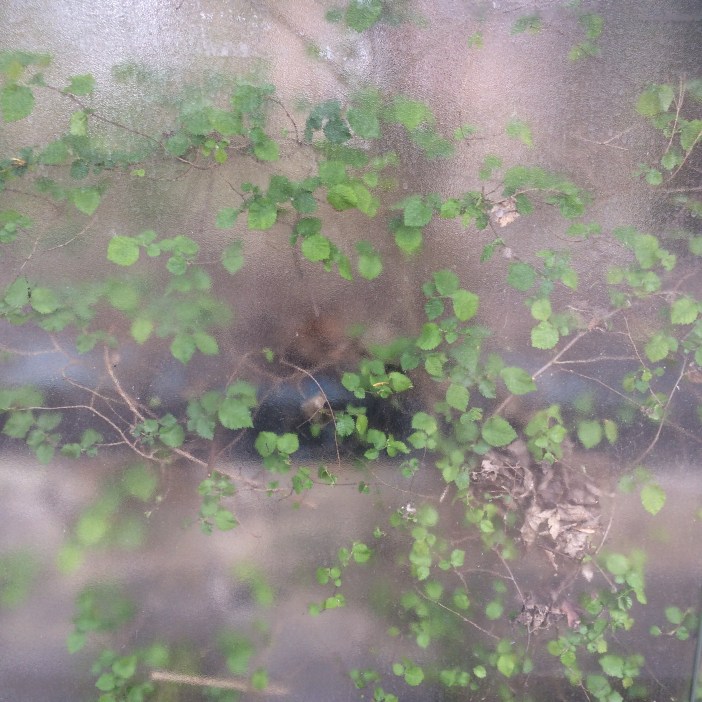
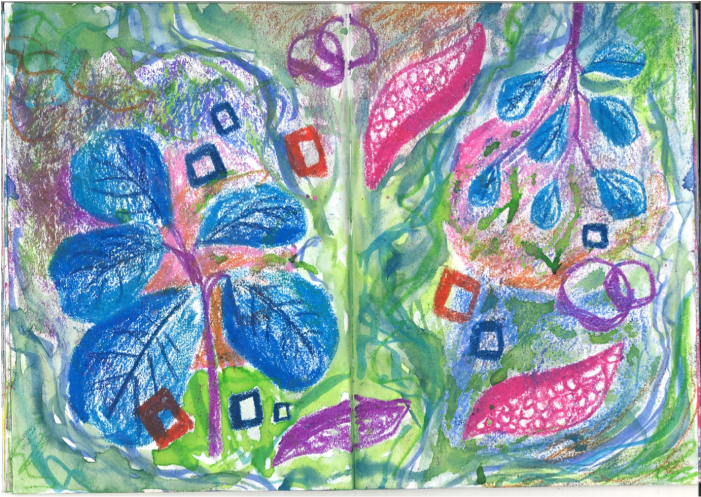

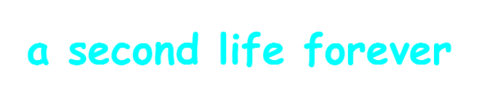
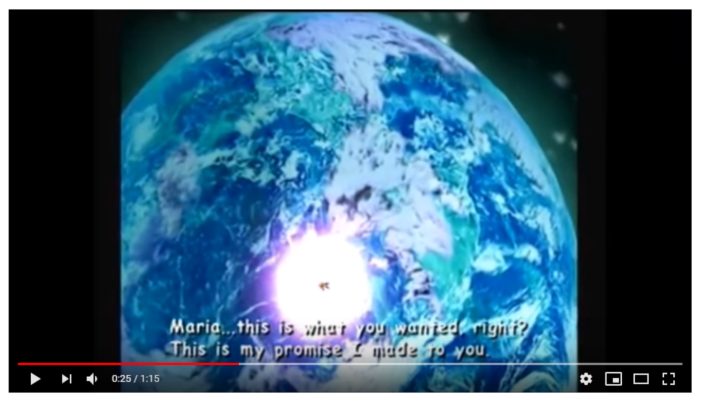

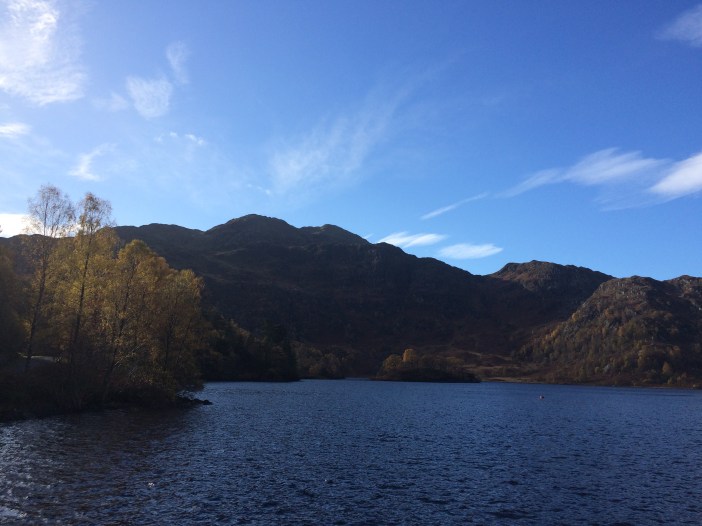
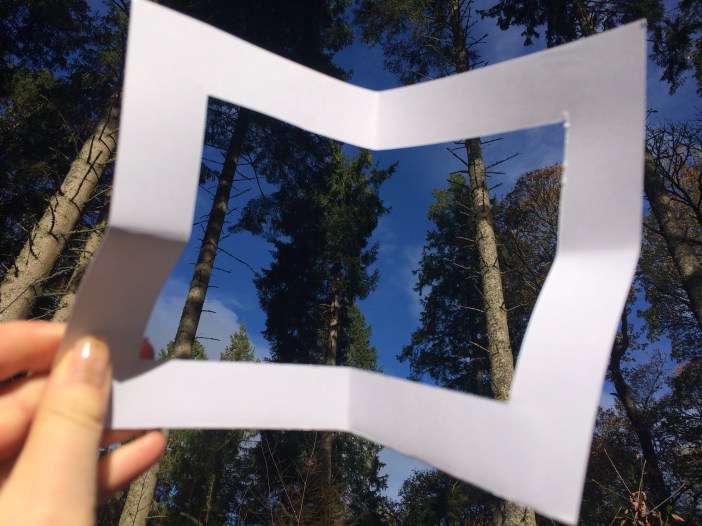
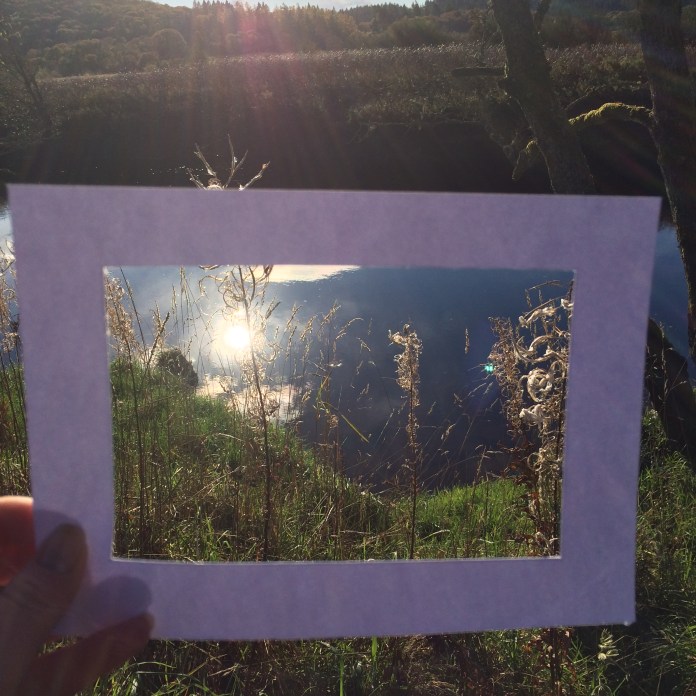

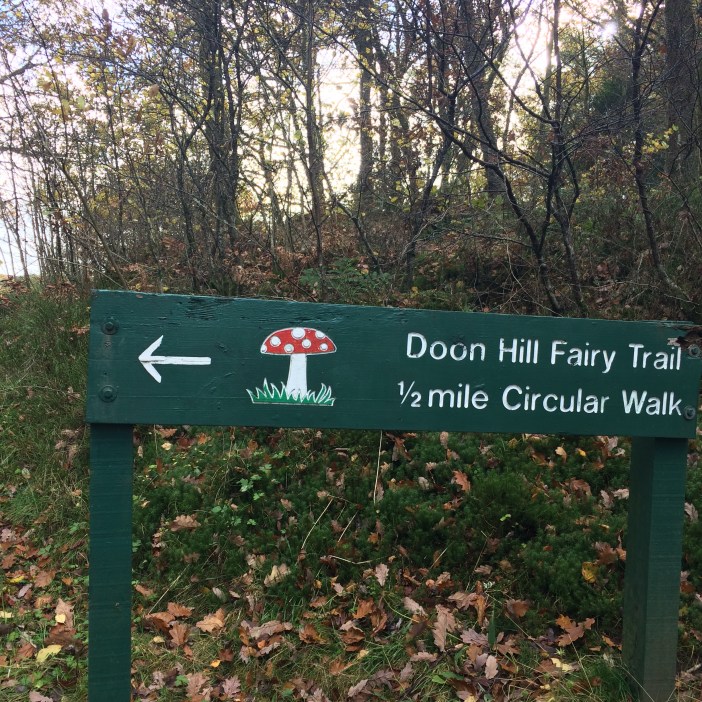
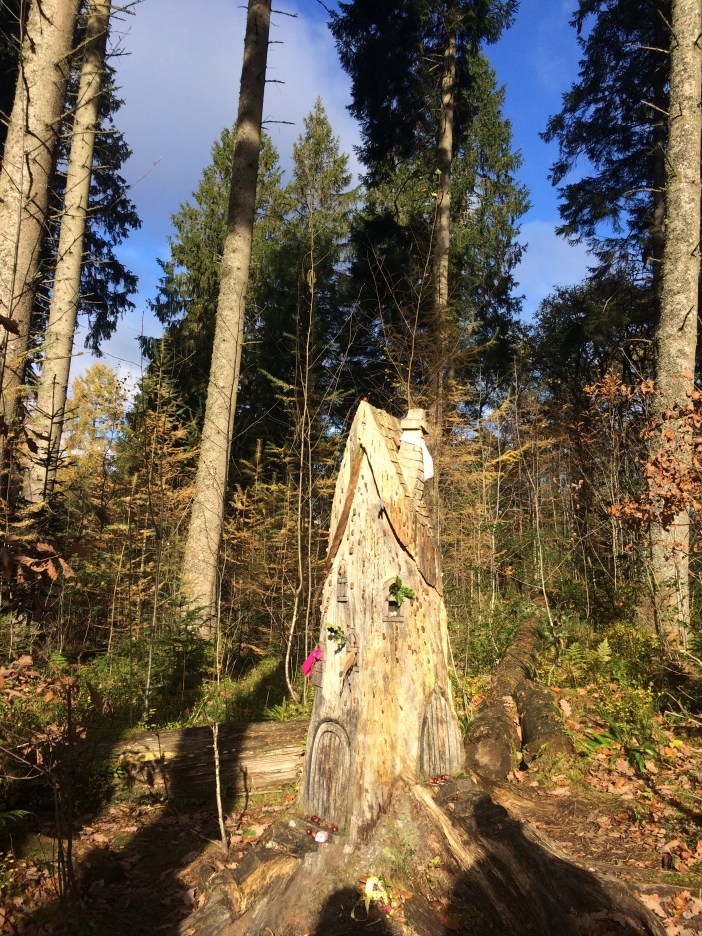
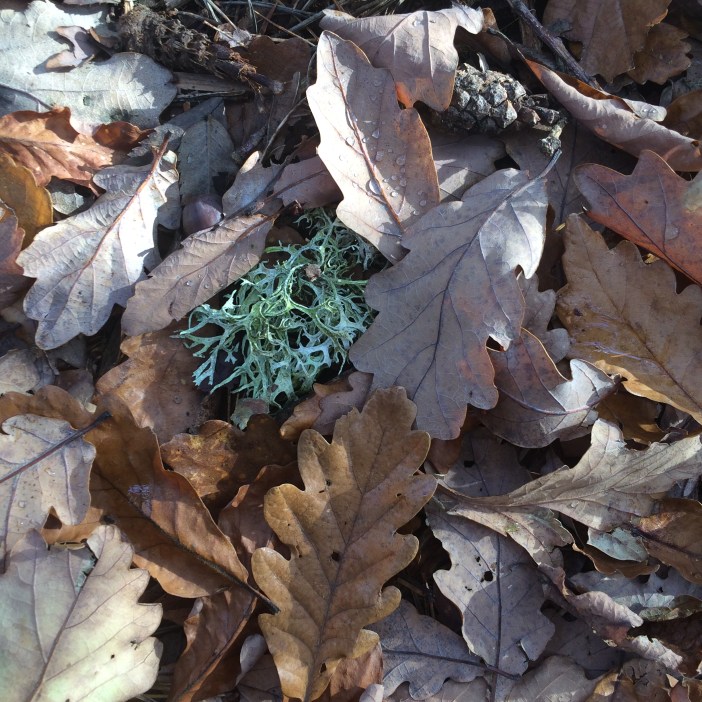
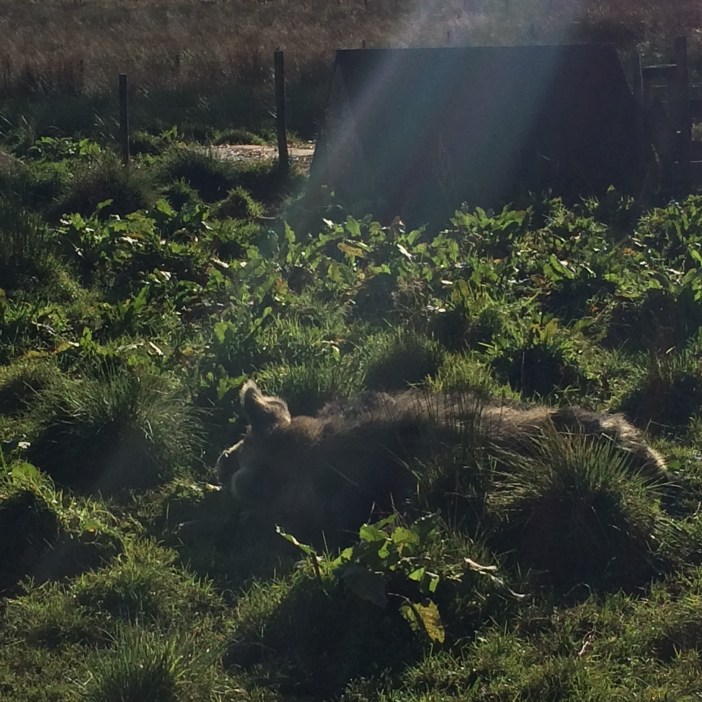
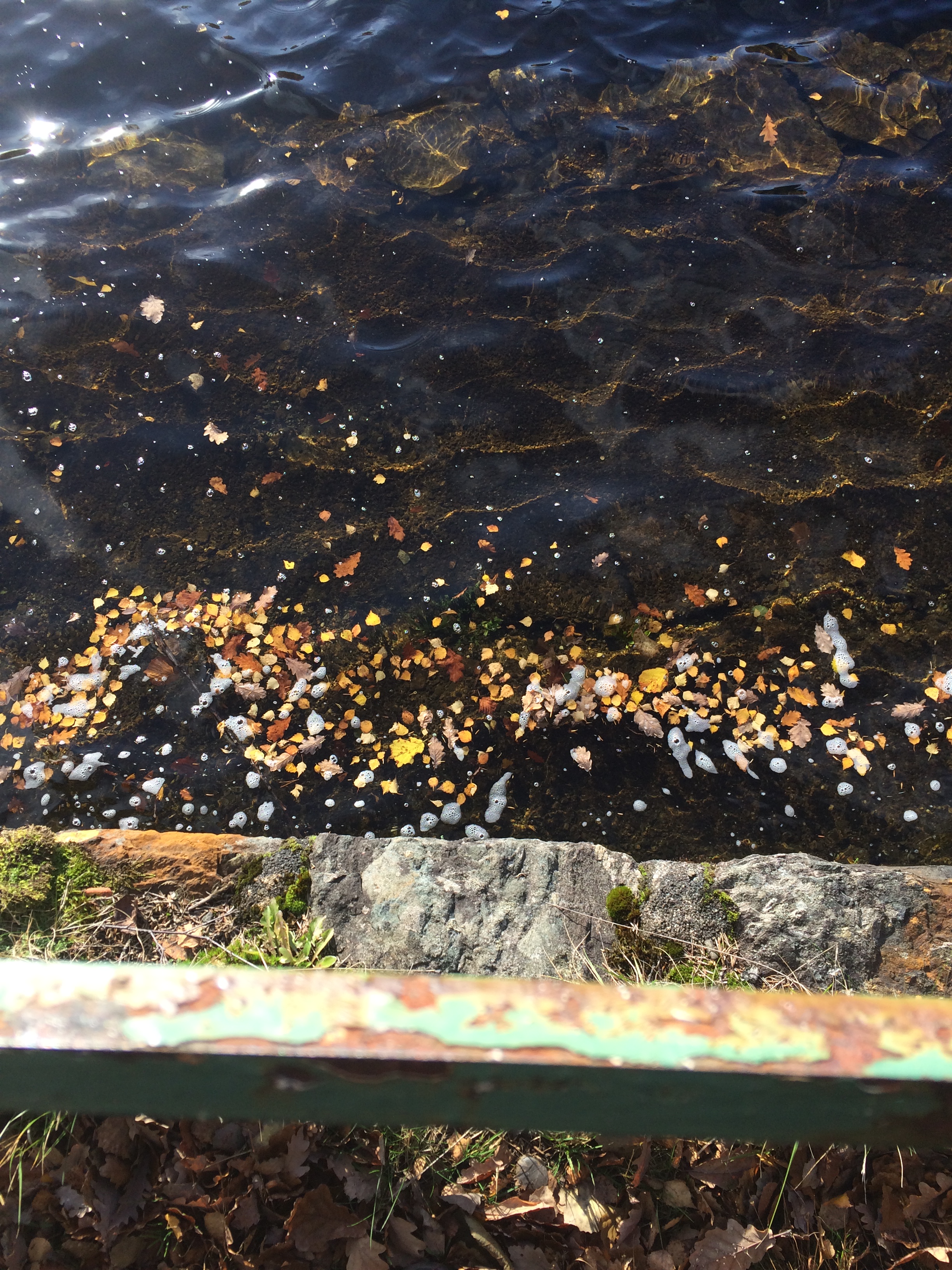



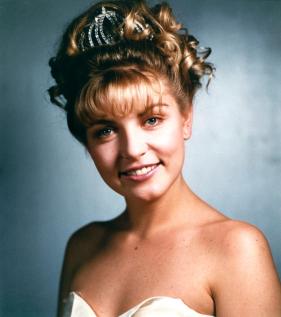

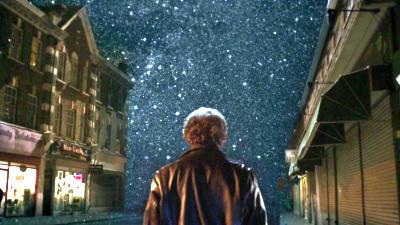

 mariaology