What a fucking privilege to sit down with a writer whose work not only touches a nerve but leaves a whole room of folk feeling inspired, invigorated and just the right amount of raging about the world to go and do something good about it. Graeme is an eloquent, generous speaker who came to StrathWrites last week to talk to us about his memoir, The Cloud Factory, along with his debut novel The Young Team (2020)which has made waves for its frank engagement with Scottish gang culture, masculinity and the vitality of Scots language. Graeme read from the end of The Cloud Factory, a work which feels like memoir dialled up to the communal document of what it feels like to be both inside and outside of something, to memorialise it and to work right through it, to know what was beautiful and also painful beyond words, camaraderie and shattering, refusing to paper over the cracks in reality, to note their presence and texture, to send up lost pals and those who never made it, to speak measuredly about how class and gender affect everything, to meditate on addiction, self-medication, faith, to find a turning point, to know what the past does, ‘stored as a memory in yir very cells’. He’s an author that gets it — the inside violence as much as the outside — and it’s clear from listening to him and watching a room full of folk listening to him that he can negotiate what goes unsaid with clarity and determination. After the reading we all just talked for ages, people sharing their stories and their experience of working in schools and what it means to teach and mentor and edit and pull each other through the muck of it all. What I loved most was everyone just speaking in their strongest tongue, telling stories.
~
StrathWrites is a series of writing events and workshops supported by the Strathclyde Jubilee Engagement Fund and the Strath Book Club. I’m lucky enough to work with the wonderful Jenny Carey from the Institute of Education — she’s swiftly become a radiant presence in my life and we’ve had loads of fun collaborating on these events.
READ: Extract from The Cloud Factory by Graeme Armstrong, in Granta
For anyone who missed Thursday’s event with Graeme, in lieu of a recording here’s a transcript of the workshop handout:
‘In place ae a realistic dialect portrait, authors create mutations where narrative is transacted in a ‘higher’ form. The clarity ae thought n expression afforded tae oor native guide default tae a more palatable Standard English. Meanwhile, the low, wild demotic dialect is reserved fur characters, who become linguistic puppets dangled on strings ae supposed authenticity. Characters ir reduced tae caricatures by this effect, their true dialect offered as dialogue canapés tae the unfamiliar reader, satiated by the apparent otherness ae the partial linguistic exhibit. They provide the local reader nae such nutrition. Oor language becomes a motif n isnae truly represented or respected by it. Nae working class Scot thinks in RP. Kin yi imagine? The willin suspension ae disbelief fur us is broken. An elevated n alien Standard English narrative voice betrays the remainin realism they have so carefully n respectfully crafted.’
— Graeme Armstrong, ‘Standard English is oor Second Language’, Literature Alliance Scotland
‘My culture and my language have the right to exist, and no one has the authority to dismiss that.’
— James Kelman’s Booker Prize Acceptance Speech 1994
Prescriptive grammar, in other words, becomes the sound made flesh of prescriptive pronunciation. The tawdry little syllogism goes something like this:
1. In speaking of reality, there is a standard correct mode of pronunciation.
2. In writing of reality, there is a standard correct mode of pronunciation.
3. In reality, correct spelling and correct syntax are synonymous with correct pronunciation.
Putting it another way, if a piece of writing can’t be read aloud in a “correct” Received Pronunciation voice, then there must be something wrong with it.
— Tom Leonard, ‘Glasgow Stir-Fry: Chopped language pieces on “the language question” in answer to a request’, Poetry Ireland Review
Drug-inspired delusion or Christmas epiphany, A cannae say fur sure but everyhin changed fae that night on. A never used drugs again n the violence wis finished tae. Suhin stirred in that wee flat that feels fundamental tae ma life noo. Maybe it wis always kinda there n just a ringin phone, never answered. The mare A sat n scrutinised it days later, A felt stupid n that kinda exposed way that speakin aboot faith sometimes makes yi feel, like if yi told any yir pals they would rip the pish oot yi n aw laugh. That feelin started tae pass. A dunno the ins n oots ae aw this either. The required leap that faith demands is complicated tae the best ae us, but ask yirself this, who really made the clouds? N when they clear, ask yirself, who put aw they fuckin stars up there? No everybody hus faith n that’s sound. A don’t minister tae anycunt, but A know the difference it made tae me wis life or death. That’s no nuhin.
Gangs huv dominated ma life. A’ve spent the last decade recoverin fae them n tryin tae find the words fur it aw in ma writing. That’s twenty year ae gangs in total. Their effects on yi ir far-reachin n complicated. Substances n drink ir used by many as self-medication. The aggression n hypervigilance that years ae gangs create don’t just disappear. They’re stull somewhere below, stored as a memory in yir very cells or expressed as violent tendencies.
— Graeme Armstrong, The Cloud Factory
WORKSHOP ACTIVITIES
Word bank warmup
Share what you consider to be an unusual or personal word – perhaps one you associate with place/location or a dialect word. Share a definition with the room.
Then pick someone else’s word and use that as a prompt for some free-writing.
Discussion: collocation e.g. ‘pishy pubs’. What effect do these have on our sense of familiarity with the world of the prose and the associations we have between words?
Voice
Writing dialogue: write a conversation between two people who come from a place you know really well. It might be your hometown or your current neighbourhood or a place that’s connected to your family somehow, or just a place you’ve spent a lot of time. Think about the textures of familiarity that are revealed in the language: experiment with dialect, code-switching and loanwords.
Now write about the relationship between these two people using the same dialect that they speak in. Whether your narrator is third person omniscient or first person, experiment with writing in dialect so that there isn’t a stark difference between how the characters speak to each other and how the narrative ‘speaks’.
Memory triggers
Think of a photograph or significant object that holds memory for you. Describe it in detail and use it as a springboard for writing a poem or story. Be as personal as you like.
Turning points
Write about a turning point in your life where you realised something, or had to make a decision to live differently.
This event took place on 21st March 2024 at the University of Strathclyde.
and love doesn’t need to destroy you any more (Weyes Blood, ‘A Given Thing‘)
Our love – ‘For there to be a gift, there must be no reciprocity’ (Derrida, Given Time). To keep loving is the gift, smoke emitted from wormholes, arterial flow of words in their fuck supplement. Had I experienced the kind of crush economy that results in debt and ruinous loves that smudged off years of existence, I would be that smoke. When I realise so much what that love was, given to me, not even to have been noticed, that is the gift. Derrida states of the gift: it is ‘Not impossible but the impossible […] It announces itself, gives itself to be thought as the impossible’. When you are still in love with the love (afterglow) you remain in that trembling verb, having the state, quality, identity, nature, role etc of one in love, given the fact of your waking each day in dream to get worser and worser. I declare this a gift: love bleeds out of me. We were conducting lightning not making love.
sometimes we confuse the dream for one another we’re just screaming to be closer to infinity to love everlasting (Weyes Blood, ‘A Given Thing’)
The gift starts and never ends in time: ‘Not only does it make simultaneous what is irreconcilable—gift and exchange—but it occurs only within and according to the form of a preexisting gift: the gift of time itself. […] We are situated within time, we receive time’ (Marcel Hénaff).
That we end is only that our gift is impossible.
Our love is chronic, cupidity, personified time. Our kisses encourage temporal knowledges.
Recall the wormhole scene in Donnie Darko, which is not a wormhole so much as a ‘Liquid Spear Waltz’, theatrical cut of television, the family and the liquid come out of our chests and bellies. I love myself loving this movie. Would it not take you through to the place of conception into the wardrobe of the thought you’d never been here at all, not once, they hadn’t borne you into things, and the smoke that passes over you is not god, but an airplane. Can determinism accept the gift? If I was destined to give it until I am given time in return. Time is all you take from me. You’re spending too much time. I’m all out of time. That is not death but jet lag. Nausea and healing.
‘She can no longer take her time. She has none left, and yet she gives it’ (Derrida, Given Time).
Kiss / episteme / chronos.
Our love is impossible.
We’re all out of time. An earth signature.
We are no longer making it. When the water comes of chorus, the same thing again.
It was that we could never be solid in the first place. Before. We were liquid people poured into the vessel our love would otherwise vapourise, like a couplet. The gift is when you forget. I don’t know why I gave you this in the first place. Love’s amnesia forgets what you were before each other. Loving many people is our ruin. We’re not being love we’re forgetting to live. Literally it lives, this giving to forget we gave each other, and you and yours and our love forgotten is a hole on the other side of the world. It never was a heart-shaped wound in the sky. It was love. It would have been the same if never we made it.
Love satiates itself in the giving over of the word, more language, semantic ever-after: it is perfect when I forget that I love you.
The time leftover of perfect echoes.
The tiny glass statuette of a boy you are polishing.
Chamber music.
❥
Reading
Derrida, Jacques, Given Time: 1. Counterfeit Money, trans. by Peggy Kamuf (Chicago: The University of Chicago Press).
Hénaff, Marcel, 2019. ‘Derrida: The Gift, The Impossible, and the Exclusion of Reciprocity’, The Philosophers’ Gift: Reexamining Reciprocity (New York: Fordham), pp. 11-29.
Weyes Blood, 2022. And in the Darkness, Hearts Aglow (Sub Pop)
My first day at language was painful – wasn’t yours?
Comprehension passages were my forest experience, sexual discovery etc. Why was that girl stealing seeds?
First day as a tree, first day as a ginger. Quality of energy and tying your laces at crotch-level or solar adornment. Ugh. I never did learn to tan. I was always raining.
First day as a patient.
Write a detailed analysis of the means by which the writer captures a moment in time.
Aye for an aye.
Frozen trachea. Osteoporosis of form.
Don’t you understand the poem has to mean something? I mean it always does?
You are lucky if you wrote your name on a tree in 1993 because now it is nearly thirty years old and the wound persists a loose idea.
If you wanted to know, I’m from Mars, like men are, or in the order of things what a man doesn’t know the controverse of other waters, almost all of us exist as ice. Never to be ready for end, its artificial blush, to edit and close to the distance of light.
That you await water or more, gone muscle of the month nothing happened, acres of pleasure gone and into the stadium, more or gone to wake pink and stinging the dream, everybody wants to. The many-stomached among us arrive and wearing lace. We eat bees, we half kiss
If it is a mall and if analogue. I begin to forget the difference between, how easy it is to order hard slushie, rewind and loop myself into the fretless moment, a whistle of football, a slow man. Test acids:
No cup of coffee is hot enough. You up, you accuse me of people, I seem to have revelled in the air for too long. Where did our liquid water go? The intriguing discovery of three buried lakes, surface bruises. Had I the famous grouse and soda of your eyes are bubbles, we sup on the luminous and blemish, generous language. “Lack of a substantial atmosphere” was our review. Not to advise a trip here. Wait.
But trip, you go. Sip peaches under the bleachers, three poems. Not up yet. Not bright, not early. Waiting on me for the thirst. Bloglore, blueness, periorbital circles. Why so much neon pigment, not sleep, you go bass it is sultry “just pretend they’re your friends”. Advantage of entering thirties is the austerity of early sanguine, no YOU go to bed at noon; I will iron your watercolour until it is warm.
Victory to the internet so said privacy, party, my vice a nightly garment, smelt pain. At the left desk dream-amaze you save me, take pictures in natural formation, go see frog. Conflagrate lateral flow, high up in the sentence is forfeit, your sweat.
There is a courtyard on Mars where daylight, nay the leafminer, leaves scarification. No more raids. I have been here in flesh and blood to salsify, lightly the oyster plant is edible and does not grow. You do shrub mail, you don’t hot. Everything to do could else refuse.
No more scare, cup ring, close your accent permanently.
Plans for the Fall. Accounting.
Enrol to all that and wear a cloud, I want to write this you, to you, lower ourselves to parallel tarmacs; am I to speak the particulate deltas of this planet, no this one, you are a rainbow. We could be anywhere. Alice says ‘sad foam’, ‘Disappear’.
The money forth comes, does not accommodate thought; it is the feeling that I saw a seal. Start your bitcoin emptiness and pyre of light; I wrote on afternoon this letter. Ocean goes away.
Fullness and not to floss sleep from prison but I think the Marxist rabbits are fucking released.
Maggie says of the urge to begin mistakes. A surprise that the flotsam arrived here, not of shape, are you the sleekit to enter say the sea isn’t real.
We build whole houses with roofs of sequin. Desperado attic of saltheart, salvage flower. Meadow / Black / Wild / Yellow varieties.
I deleted 54% of this article.
Substantial genitalia of the not getting wet.
1.6% argon, we are gone where softly the walls sag.
Knit you a fortress of seasonal transition. Khora my lame electron.
Martian quality relayed in me a voice, surface, can’t get a full-length mirror from you, get dressed, exit the internet. I exist in this flat and wait for the post. No more furnishing.
Lemonade also goes this way.
How did I thinner the telescopic? Lop a water? Log into the apple?
Well, it is Red.
Starfish suck excess from solar landmass.
Sometimes gravity, shoots you up, does not come back. Inelegant hipbone blue and yonder. Sometimes very close to the ground I like spiders. Eat you up. You up.
The hall is full of noises, sounds of torrid airs and sigh. It is a steel hall, non-place, serving lusciousness in plastic cups. The animals sing on a loop. The choir just lifts. ‘The science is clear’ (Greta Thunberg). I stayed up waiting until the cries came, curled on my little sofa. It isn’t years that slip when she starts, when the young ones start, when the colour is like a radical hydro seminar. What do you have to contribute, I give you my silks just once, clutching a ticket. Can’t stop worrying the skin of my cuticles into a bleed, scrape the hard bit sore against my thumb. She just swirls. Something has shifted between us since. She moves she. Moveable she. I can’t start up.
Two of us drift in dresses, crushed of scarlet velvet.
It has been a long time since this was honeyed. I felt sultry like an Everly Brother, his actions speak louder. On the line standing and learning, the lines, I think it hurts.
In the poem I am clipping my nails again. Words, words, words; a snip.
How is it that we sat up late, same sofa, in the skeins of this year? Have you even come down yet?
His actions speak louder than shimmer_
Bliss not this, Christmas cactus at the corner of_. Is it better to cry in the sun or the rain. The rain is so obvious. I confected a dialogue to spite the blues and the cherries, rinsing packaging in the sink. It was supposed to be red. You said it fell flat. There was a half-moon curve between us and I sat there hugging my knees. The others. I like when you say you like a riff. Let’s be as I was in the hall, champagne later, tiniest bubbling; don’t say rise, let’s hold it cute. A sippable glitch in the music. Walking home in the rain, I murmured it: wtf wtf wtf. I made this punctuation; be here now, missing the body. She does this thing with her lips; teensy bubbles taste dust of gold & angel.
Watching your arms like a symphony, fucking—
Perhaps it is not about being at all, yet I am at the table and the hydrangeas are just too much. I wish there were Silk Cuts. Deathly attendant, where writing to you at the specific moment was standing in the flashbulb of a passing car and trying to look up at the stars. Just as the stars in the valley, we visit the shire. The stars you say are most particular, yet they are anyone’s; the stars are in the garden now, a proximate shrubbery and I put on my makeup. Deep bled fuchsia into sage and clary; yet we are violets, smelling the sea. And a dram before class, something citrine to start us, blendable night. I try it again; the word ‘frenetic’ peals from me.
If history was different, wouldn’t I be singing this.
Merry season helichrysum. There is a headpiece of corals worn by the sea. A quartet of angels play the flute-hoop and daylight twists, and Greta says it more than clearly. So hot this hurts. At current emissions. Someone in the back shouts FUCK THE TORIES and I put on my shoes. I wake up to my nails not coral-red, my eyes not pressed with cornflower blue. ‘if the word / does not arise it will fall back, the thing itself, it will fall again / into that ocean where it is not biodegradable’ (Beverly Dahlen, A Reading: 11-17). The thing of the word fell back into water, lots of it deep and luxury water. I wanted to say, the word has been waiting in shallow poetics. Floats of white. Water is a memory of the water before it. That feels like love but is that a falling. Into it, into it. That ocean speaks its chords again, thingly and falling. Dear degradable, non-bio daylight; sentiments of infrared, blip of foam.
I wanted to ask, are you striking, striking. The blood clots around the skin of our thumbs. Got lost in the rhythm I leave at the door / you painted helium blue. I knew it would bring me home to you. I was immediate, here, I knew what to do. This electric hand, hello.
What did you have to almost wake up for?
There is so much to grasp, at any one point. ‘We’ll clear a trail through the forest’, Hélène Cixous says, but ‘We can’t go via the city, nor at will, nor by bus’ (Three Steps on the Ladder of Writing). All those doors in the underpass, surely one was a portal? I thought it was only that you wanted me back in the leaf-trails of language. What is it that carries you now? The cold air whipped your chest and I pissed in the bushes. How much neon is the news.
Time collapsed so soft, we were in thrall of the science tiara.
We sat in this anonymous hotel lobby while the rain piled on and the beats got wet. Tresses of soaking beats. You say the only music that gets you now is pop. Continuum of sweetness in the formula lifts: the trick is melodic. So hot, you’re a burning peach. Embarrassed, I look at such childhood photos, the soft plash of it: language out of language it folds me again. Brush your hair. Softer your face, I come back to that star that is it. Approach, he holds out a finger to say, hello hello, hello you green. Is there something like a sour glissando? The bass was flat, my wilted leaves; the Styrofoam kept your guitar too warm. There are so many strings, collecting the sea. Only one you know
I was at the edge of a rainbow, sipping echinacea tea. ‘Farewell, Angelina, the sky is on fire and I must go…’ (Joan Baez, ‘Farewell, Angelina’). Do you think maybe it’s like, those emails were part of the plenum of summer, when I passed so south on the train with sugar-licked cakes of rice and a readerly silence? The sky was burnt and strange. And you could have boarded at the requisite moment, or maybe you were in the glass also, the glassery crying for the sound of drowning Amy from the game. When she did this impression of the lamb, I could not help but cry out. The aw, the aww, the missing ‘e’ in awe, a ewe. It was you. http://www.findyourfood/. Zombie tunes, sonic aporia. Mum said she nearly called me Amy, and I would have pink hair and sheaves of lyrical gestures, like this. Someone I loved had a house.
The sky is untitled.
Branding me narcopastoral, shepherdess at stringent dawn. We drag a high—
Break into it, careful at first then with clear intention. The wrapper falls back and away by clouds.
Upside down, we approach the softest waves. I’ll not harp on about the light, how it caught the crease of our plastic. You take us to the boat, so lovely and blue like sky. In the dream she unfurls her fist, a lot of blue dust comes out and her voice is thick and quick as an auctioneer’s. She has swallowed the age of the water. But we are rowing on, cordoned from time by the ripples of unforgivable sea. I want you to never forget this. Dream again—
We wandered a garden of samphire and crystal, met some friends at the edge of the blue. The grasses were singing a grassy melisma. Suffering cramps by the burning sea, the glass of the elsewhere orange, trembling sky. Scrolling my phone, I was reading an essay on birth control where the author, a man, argued that taken daily two spoons of honey would regulate your cycle. She got him by accident, a cherub handed down by the gold-dripping moon. I polished his soapstone limbs and drank from the chalice a lateral condition. Let’s go at this sideways, say every droplet of rain was a baby. Honey.
The additive birth of water, over.
Most palatial things are isles or sets.
They bring treacle scones for the picketers.
Bottles of wine for your glistening birthday. The sky is a film; it goes click, click. The season you say is looming, a moment agogic and I let you tender the rain of me down. I was all strings when the image appeared and you pulled on a tensile thread, a tease and we fell into the same whole notes…
‘Ion square, perspex swings / I breathe out, you breathe in / Permanent midnight’ (Bloc Party, ‘Ion Square’). It’s this song that feels like fucking, live in happiness, breakable day you free in a hold, before this sleep and the night bus home. I walk along the motorway. A breath between us feels like math, the ruination of the norm. I had nothing to bring you; I was reaching the end of the film where they find her dead, but only in photos. End of the lilting road. Quadratic Lily, Lily, say this is Lily. It’s just somewhere in London, and I want to love my mind. And I want to love my mind again. Did I love yours and yours too much. The fog rolls out of the square the same. When you drew me, it was like I didn’t have a face. The birches gifted their silver and I felt like sleep, so heavily berried. The sky is a film, you take it.
Trapped in acid, the hotel air is seething. I wanted breakfast to feel the same, and I wanted to love my mind; to love my mind for the sake of you in it. When the lyrics appeared it felt like the end-of-the-world digested, yes, it was a crème de menthe apocalypse — by which we mean, you can just hop in the grass of the future. Björk’s utopia. Juuuuuussssst that kiiiiiisssssssss. Perpex swings in helix of flute, could you insinuate a sleep, these spirals of harp. I’m not where I want exactly; look out the window. Sugar-rim. They pay less, pay less, pay less. A shot.
By the time I got back, the leaves were all gone. The stars, as if they were plural.
In the belly of the gnarliest graphics / I felt impaled on a former capital. There is luxury in the curriculum, but we live off our clearest cakes of rice. Break this as crumbs, don’t say word / The consoles cast their dust again. Press replay. I wanted to lie in a field, but that was you. A salty fist. I wanted the lie. Little curled hairs in the sink. Your name is doing well / Look where it got you.
The university a corpus ate the rat.
I was tired, you were tired, my mum was tired. This makes a rainstorm a screensaver.
Has anyone notified the trapeze artists about our sea?
Most things don’t occur as they do in this space. It flexes and folds in lucite, yet against the glint, less of your mobius eye. Roll it up, like a wave. We wait for the bus and it rolls in smoke / I press my faceless against the glass.
~
Bloc Party — Ion Square
Björk, Arca — The Gate
FKA twigs — home with you
Double Discone — Sam’s Kinky Hat
Clearance — Chances Are
Bradford Cox — Natural Harp Monitor
Princess Nokia — Balenciaga
DJ Heroin — My Veil
Grace Cummings — Paisley
Alice Coltrane — Lovely Sky Boat
Malibu — Nana (Like A Star Made For Me)
Hiro Kone — A Desire, Nameless
Hannah Peel ft. Hayden Thorpe — Cars In The Garden
The Brian Jonestown Massacre — Food for Clouds
Maija Sofia — The Glitter
Tomberlin — Seventeen
Weyes Blood — Seven Words
Soko — Sweet Sound of Ignorance
RF Shannon — Snake Oil
Caroline Polachek — So Hot You’re Hurting My Feelings
I love alcohol, the gloaming of the blood that makes time an arcade.
Somehow, lately, I have been unable to drink myself into drunkenness. Everything is a spritzer whose taste effervesces like the further most points of the sea at sunset, those glisters of peachy waters which seem almost to fizz beneath the pleasure of light. To think of that expanse as the body’s active limit, like the horizons of video games, whose traversal would teleport you back to some familiar, originary location. Flip away. Endpoints as triggers for reversal. To travel outwards, to raise yourself clean into movement. To make of the body its own hypothetical. It’s like I want only the blueprint potential, the colours and geometries.
The waves move against me. I do not drink.
Queue, Free Love (FKA Happy Meals) ‘Pushing Too Hard’. This ultra-dappled, smiley-faced italo-disco is a sort of vertigo. I mean I am spinning silver in its listening. Emptiness requires its own containment. To dance in parallels then pirouettes, to queue time upon time’s arabesque. To oooooze. The little eddies of the ocean still swallowing, the sun ravelling down like residue soda. Whatever direction you make into ceremony, pleasure.
The bunching of muscle, where sun hits the boulevard. Where the boulevard bursts into its many discographies of water, inclined to times beyond and before, a gradient popularity of passengers and travellers, nomadic ravers. Where the boulevard is not a waypoint but the lengthy stretch of hypnosis itself, an astral plane into sunlit ethers.
The very word boulevard, a sort of ferric opulence unfolding a hazy, urban sprawl.
All of this wayward July, and the synths so warm on my skin, and every conversation a twirl of hyperbole. I wanted nothing of night again, as night was just the day’s refresh and erasure. All through the summer, the air so syrup and seething.
I book the overnight ferry, I dream of a world without timetables. The tide sloshes over me and it is sleepless, and it is heat.
This is rich-text. All of oddness. I’m just so much happier at four in the morning, in the priory of sunrise. Missing you.
Cherish the currency of friendship, however the slightest touch is a glorious misreading. Miss reading, I’m missing. Mist between the one and the two and same, faintness of incense that is. The body unshowered, the mist of heat. The endless messaging dew drops of moisture; your pearly brow is beautiful. It isn’t as though you could shift sentences for me. I’m just as weak.
Suzanne Roden of Free Love sings sometimes in French and slips between two languages, the language of the one and the other, the foreign tongue as love in transition. The lively nuance of melodic translation. To stretch meaning, to make of its pulse the possibly unmappable. We listen and maybe we don’t quite need to understand, we just need the potential of passage, its affective route per semantic reach. Glossing Derrida on love, Maria-Daniella Dick and Julian Wolfreys write thus:
Love calls on us to be responsible in coming to map the unmappable, to be open to the possibility of the impossible, and the possibility of this impossible experience is that, in short, which is between us, and which remains: to come. Love is always just this exemplary passage between tongues, in what is foreign, other in the language one calls one’s own.
There is a healthy cascade of reverie. There is browse and incline, click and encryption. The love that you seek. Every pop song is of course love’s expression, the fluid joy of a ~solid~ ego; and yet to map that point of dissolve in which this ego is the melt-point of ipseity’s porous limit, is that not the deferring impulse of disco? Strike through to jouissance. The repetitive beat, the multiple oscillating climaxing motion; the avoidance of pop’s inevitable, normative denouement; the queerish musing deliciously around fulfilment; the rhizomatic overflow of the senses!
Stay mercurial, baby. In cool arousal, in sluicing.
‘But I love you despite the boring terrorism / of particularity / fading like parity’ (Keston Sutherland).
Your forehead is hot. It is glass for the shattering. We are fashionable and hackneyed, practicing lunacy where the beats scream and are again crass in their lust and elation, their confinement to time and place and the pulse of this darkness.
When my irises bleed, is this a form of eschewing the present? As in, swallowing an elsewhere unseen to the other? We see our eyes outside, in the comedown glow of street lamp smoulders. We the parts of our bodies as an archipelago, every isle slowly swallowed by rising water.
This tectonic pulse, this encompassing warmth.
You’re pushing too hard. And so language is physical, and so is literally thrust in, into, the armoury of love. I will not say weapon, I will not reduce a necessary plural to the singular tool, the implied signified of the phallus. The piercing. My eyes become pliant.
Make of the air her dulcet voice, over and over like rain’s refusal. Make of this moment a lightness, a smoothing. Trace little bumps and ripples and glitches; the motion is softcore, resplendent’s true sense.
Love is also the coveting of blindspots, those absent locations of self’s abyss which lie adjacent to the lieux de memoire recognised as the sites of love’s memory, of memory’s happening in love. Love as process of betweening, as immersion. A feel-good, a good feeling. The prolonging of ephemeral sensation in an act of imaginary narrative, its plights and highs and necessary zigzags. Act within capitalism, act without; act as pop’s dazzling detournement. So here by the convenience store we kissed, so here by the river; so at the window we shared cigarettes in a friend’s apartment, by the ersatz palms, so these screens between us, so the niche forums that served as our weird, oblique interface; so here where the road slumps into a junction, so here at the station where you had to go. A whole topography of abstract thought, remix it. Drink it. So memories of mountains, so sharing the lakes we made up in memory; that you swam in, the lakes I walked round as a child, the heather on hills where ashes were scattered. This interface, these blue messages. Blue irises. The shape of a letter impressed on a map. The silent valley, its conclusive basin of time; where life is swallowed. I memorialise a thought, the quality of light in August, its paler gold among green; whose green is mortal again, whose green is set to fade. Your pupils resolve all green of the iris to blindspots, they mop up the blue with the black of sleep. And to sleep as equals is to forget the self, to wake in a room between rooms, to find yourself caught as other again, your room unfamiliar, the room never yours even less so now. The very first utterance of morning might break the spell. How the sky looks different through your open, solar window!
And I’m not the one to help you / Although I’d like to tryyyyy.
Clatter and wave, video game imperative to action and motion. Soundtrack the heat. Make reverie of weather. The production is so acid house. The production inclines toward dance. Externalise the internal. Naturalise the natural. A certain elasticity of underlying beat, as if bass were the hum of the blood that produces affect. As if it were all that reducible. As if in that energy. Make our mammalian restraint ethereal.
The Quietussays of Free Love’s music, ‘Their vision is a utopian one, influenced by rave culture, Eastern religions, politics and magic’. To unhinge love from its possessive sense, love becomes an ambient tone in the spread of the days between days which we count in love, if love is a sense as any other, an orientation between things, between selves, the one and the same. If love is something… that something within us must export to numbers. How many days has it been, I’ve been thinking all week… Here are our figures. Crunch on a sort of krautrock lingering, the impersonality at the heart of euphoria’s insistent heat. Free Love have used drones before, meditative, balearic beats. It’s a process of seeking the nuanced frequency, the cleaner hum of Being, what might spread into an open future, something bright to seize. Design your consciousness for different realms, just feel the synaesthesia of speculative situation. The future’s flirtatious, maybe it speaks French. It’s a bright pink, cherry-red electric French.
In his spectacular tome, More Brilliant than the Sun: Adventures in Sonic Fiction (1998), Kodwo Eshun talks of how the subaquatic techno-duo Drexciya ‘fictionalise frequencies into sound pictures of unreal environments […]. They fictionalise the psychoacoustic volume of a giant submersible’. ‘Pushing Too Hard’ implies a current out of sync with its destination, an unbalancing in the passage between entities. A kinetic effort. Disco’s warm flicker invites that spiralling back to aporia; not a giving up in the sense of seduction’s failure, so much as surrender to the unknown and its cheeky, distinctive flourishes of acid, italo, proto-house all drenched in funk. I don’t pretend to understand French; my language is literally standard grade, processed only to that limit.
But I pick up some terms Suzanne sings:
L’avenir: future, future, future, promise. To come up. Insistent, proximity, imminent. A cool bitten ecstasy, a love to-come. Love in the conditional, although I’d like to tryyyyy. Those airy harmonies cascade around chiasmic, sunshine flourishes. Love’s duration at 4:18.
Plastique: plastic. What seems elastic, mutable, but is in some sense unerasable—a material that ultimately remains. Residuals. Shards, bits. When ‘Pushing Too Hard’ collapses into its A-side twin, ‘July’, the beats are fatter, darker, hotter—brooding with a sense of summer’s latency as always already. The plastic feeling is inside me, it’s a melting, it’s a coming-into-skin. Sonic duplicity. It’s the Anthropocenic hauntology of organs, it’s a PVC drag of natural sensation. It necessitates dancing, but the percussive chimes in the track’s white-heat centre drag my mind from the present’s solidity. Those chimes are airy, they are elsewhere, enchanted; they are so far removed from the close close city. To be fast and slow, hard and soft, selfish and strong, reflected and present, past and future…Being as syncopation, being as plastic, rent to split. Our lapidary imaginaries, our synthesised clicks of pleasure; a pool of sound, an immersion…I’ve come to relax, to realise.
Visage: face. A word whose very sound is that of sunlight hitting clean the bounce of a mirror, a slide into silver. The waspish vibration of the lips, inclined to glass on the brink of shatter. I think of all those mirror tricks in every ABBA video. The face, the face, the face again. The face we effect. Maria Dick and Julian Wolfreys again: ‘Seeing the face in its absolute and irrecusable singularity, I am given to apprehend a doubleness from the first gaze’. Disco is doubleness inherently split to multiplicity, it is the vying for one attention amidst the millioning of other skins (skins becoming a metonymy of figures, faces), it is the shakeaway of self into other, the imitation, the performance of gesture’s contextual plurality. The face, in Emmanuel Lévinas’ sense, is the announcement of subjectivity: the instating of the subject as a sort of ‘hostage’, as Dick and Wolfreys gloss. It demands a response, stealing the attentions of the self, instating by necessity a certain ethics of wholly Otherness: the human face, as Lévinas puts it, ‘orders and ordains us’. I catch your face on the dancefloor, there is a temporary pact between us. What implicitly slides in the raising of one arm, the twist of hips, copying this dance, a Xeroxing event whose zero-sum origin remains irreducible, whose condition is always undecidable, plural. So far so obvious the ontology of rave culture. Every action now as response. A semi-autonomous severing. Technology can be, as Eshun puts it, a ‘bifurcation in time’. The techno throbbing through the pale membranes of my human sense is a channel for split subjectivity, an experience of falling between worlds.
On the dancefloor, when he asks me what to do, I whisper in his ear, in some half-remembered echo from The Bell Jar: ‘pretend that you are drowning’. And that paranoid panic, that scramble for air in the thrust of the limbs, it seems to work. I see the moisture mist up his glasses. Face after face, we glimpse the phenomenology of substitution, we trade our own affect for the possible electricity of the next. His smile, her hair, our collective sweat. The absurdity of all these moves; the warping of all muscle memory inclined to a known rhythm, then ever the melodic trajectory of an unknown palette. We expose our infinite vulnerability, we abstract ourselves to the dancefloor’s disorderly hospitality, where the reciprocal push-pull of crowd and DJ is a mutual reading and so mutual dissolve, a ‘free love’ whose freedom is conditional on the exchange of gesture, face and motion, of bass, beat and melody. Of sonic and visionary qualities. Of closeness, a close reading.
I imagine my skin looks metallic, right now, as you see it.
Eshun again:
Groove is when overlapping patterns of rhythm interlock, when beats syncromesh until they generate an automotion effect, an inexorable, effortless sensation which pushes you from behind until you’re funky like a train. To get into the Groove is to lock into the polyrhythmotor, to be adapted by a fictionalised rhythm engine which draws you on its own momentum.
Is fiction here the condition for identity’s erasure? We hustle ourselves out of ordinary language, slip into the chug and pulse of the train. Okay so all these bodies in motion. To export yourself to the techne of musical condition. Fold in the overlap, a baroque philosophy of subjectivity’s production. Enter heterotopia with both hope and scepticism. Put away your wallet. Fold yourself. There’s Deleuze’s notion of the fold as a doubling: one thought rolled and pressed into another, the scratch of tobacco in cigarette papers, the promise of chemical stimulation imbibed in the skin, the curlicues of words upon screen and page, the unlocking potential of semiotics in motion. A rolling into, an overlay’s careful pleat of impression and meaning. The duplicity of temporalities in photographic exposure. This tongue curled on a foreign one, the blendable play between French and English, a play between verse and chorus. A recursively mutual translation of inside/outside, the self and other, here and there, near and distant; a translation whose very process belies the instability and futility of such ontological divisions. We relate to ourselves as production, we produce ourselves. But don’t look at me / I’m just as weak. The face that desires, amid over-stimulation, the reserve of hiddenness, the retreat. Subjectivity as a question of mastery, self-relation, processing affect, thought and memory in the world’s abundance, intensified in the sonic duration of a pop song, or in the ever-churning lieux de memoire of a dancefloor, where memory is always in oscillation, caught between bodies and beats. And the magic in that, and the heat.
Every melody’s upswing, a new euphoria: ‘Synchronicity’. Left my ego on the ground. Make of identity its fractal components in disco extension, plugin auroras of thought, the perspectives shifting. Suzanne’s voice spliced between echo and harmony, echoed by Free Love’s other half, Lewis, echoed by her own, echoed by the satisfactions of division’s fall back into rhythm, the tightness of synchronicity. Turn me upside down / I don’t know what’s left in front of me. Resonate, resonate. Duplicity kaleidoscopes originary identity as an always receding, elusive location, infinite addiction. Broken glass, symmetry, the one and the same split shard-ways, a cool euphony of a synthetic present cast ever between past and future; the neuromuscular necessity of this beat, this bodily response; hyperstition; this brainwave as process corrosion, as shimmer and sweet, as almost coincidence.
This year, I tried to be organised. I floated over to Fopp on my work breaks, spent endless insomniac hours trawling music blogs, Bandcamp and rabbit hole Subreddits. Each time a new record came out, I scribbled its name in the back of a notebook. The notebook filled up with to-do lists, scratches of poetry, drawings of flowers and mountains. The flowers and mountains became nothing but lines. I forgot the context in which first I drew them, late at night on some estranged floor of the library. The same purple docs I wore every day acquired more bumps and cracks, splitting where leather meets friction and time. I kicked a lot of yellow leaves. There were rustlings. My list of albums grew bigger.
I kept monthly playlists on Spotify, hurling each track that entered my orbit into one long and incoherent list. Every premiere written, every review or simple tweet, acquired archival significance. These are songs that mean something; if not to me, then to another person, shuffling their collection for inspiration. A significant portion of my summer was taken up by any music pertaining to Twin Peaks: The Return: whether the lurid allure of Chromatics’ hyper-saturated playlists, Au Revoir Simone’s sultry, lo-fi dreaminess, or Sharon Van Etten’s breathless ballad of devastation, ‘Tarifa’. The weird logic of Lynch’s universe started to rip shreds from normality; I was doing archive work and writing for The Absent Material Gateway project and falling through new age webpages, crystal collections, alien sound effects, subaquatic moans and blips.
In all this abyss of otherworldly intrusion, I started to realise that writing can be a technology for tuning to experience beyond the daily; that like music it doesn’t just tell a story but alters your sense of reality. Music becomes and exists as an object—a nexus of affect—glistering temporarily in air and lingering as memory and shapes of tones and vowels. Music causes things to happen, sensations to cling at the skin or the vision. There are so many feedback loops between skin and sound and vision, between the body and its organs—the world within and beyond collapsing.
I’ve been having a lot of conversations, recently, about the trickiness of an end-of-year list. I mean for starters, I haven’t even listened properly to Bjork’s new album yet. I fell into a lot of old music too, drowned out a dissertation summer with comforting nostalgia: Lou Reed, The Delgados, Jeff Buckley, Neutral Milk Hotel and Boards of Canada. But let’s try to keep it fresh. I did a top 15 in 2015, a top 16 in 2016; I guess I’ll keep going this way so that every year I’ve an excuse to write about more records. Lots of tasty, memory-making songs. This was supposed to be 17, but I ended up writing 18, because you’ve got to preserve the remainder.
There’s possibly a correlation between increasing nocturnalism and one’s music taste. Certain music I only listen to when the sky darkens, or when I’m small inside my room. Other tunes require movement; walking or dancing or doing yoga. My relationship to a record is about as mercurial as most of my memories, and as such changes its colour and feeling with every wax and wane of the moon. I like something and then I like it less, or maybe forget it. I’m emotional, then as ever so comfortably numb. Still, some records stick; they wedge themselves hard as candy in the blood. Add several pounds to the heart. I’ll try to write down which ones hit me the most, which ones were just bloody good. But also ones I haven’t written about much yet, which means I picked The Horrors, for example, over Sufjan Stevens, or Courney Barnett and Kurt Vile’s lovely transatlantic jewel, Lotta Sea Lice. There are some records I’ve missed out simply because I haven’t had time to process my thoughts beyond immediate bewildering yassss or wow or what? (Ho99o9, Out Lines, Richard Dawson, Fred Thomas—to name but a couple).
This list therefore, is inevitably limited; its generic reach small, its order somewhat arbitrary (in fact, I decided on alphabet rather than taste this time). But life is fleeting so it’s worth noting down what matters to me in this moment, maybe. I guess it’s just one ripple in the pool of them all.
*
TOP ALBUMS:
Bonobo Migration
It’s sometime around March and the semester is finally breaking up and I can breathe again. My friends have all got tickets for the BBC 6 Music Festival which, quite fortuitously, is in Glasgow this year. Hiding behind covers from spring’s lingering morning chill, I watch Bonobo’s set at the Barrowlands. I know my friends are there, but I can’t be, like some kind of disco taking place on Pluto. There’s an energy in the crowd, but also a certain hypnotism, distance.
Migration is a solid, complex, uplifting album. All the collaboration, the classicist exactitude, the yearning gesture towards open territory, startles me like a dream brought suddenly into sharp focus. This is less downtempo than Bonobo’s previous work; it’s not quite the deliciously sluggish, swirling subaquatic glitchwork of Black Sands, nor the slow-building euphoria of ‘Flashlight’.
There’s an ecological vibe stirring under these tracks, not just because of the cover, which depicts a tall char of flame in the centre of a prehistoric landscape, the orange contrasting with smouldering azure. ‘Migration’ is a loaded term in these times, when many of the world’s people find themselves displaced across borders and oceans. These are uncertain times, more so than most maybe, and there’s a restless energy to Bonobo’s record that conveys this well. It’s catchy, percussive, melodic sure; but such qualities lend themselves smoothly to a pensive weight. While Grains’ and ‘Break Apart’ build to reflective intensity, the sense of things disintegrating in painful slow-motion, ‘Second Sun’ and ‘7th Sevens’ are spacious and melancholy, something to drift to. ‘Kerala’ has an earworm club vibe, while ‘Outlier’ feels kinda Four Tet. ‘Ontario’, with its trip-step beat and twinkly cross-plucked strings and keys, has all the background drama of a stressful video game, made sublime by its rhythmic intricacy.
Overall, Migration is escapist, room-filling softcore electronica, but unlike many of its cheaper counterparts, it’s satisfying as well as soothing. There are moments of unsettling, of flight and swell. It’s music to think to, if thought were a circling, undulating, glistering sort of journey. Music to reach higher plains, maybe, but not quite climaxing—comforting instead.
Takeaway track: ‘Grains’
Conor Oberst, Salutations
Does it seem cheeky to include this, given that its sister album, Ruminations, was on my 2016 list? Nah. For me, there’s always room for good old Conor, his infinite bittersweet intimate wisdom which feels forever like coming home. While Ruminations was an act of hermitage, recorded in solitary Omaha during a period of personal doubt, frustration and strain (I imagine the snow rising in tandem with Conor’s blood alcohol content), Salutations feels defiantly social. A salutation, after all, is a form of greeting. Where Ruminations is decidedly introspective, viscerally raw and profoundly sad, Salutations casts these emotions outwards. These are songs you’d sing along to in public too, if this were America maybe and people sang songs other than mangled renditions of ‘Wonderwall’ or ‘500 Miles’ in pubs. Some of the songs are full-band re-workings of tracks off Ruminations, while others are totally new. You can take them as a dialogue between records, between points in your life, or take them simply as they come.
Throughout the album, Oberst inhabits and depicts many characters, those waifs and strays, those broken bodies at the brink of existence. There’s the restless soul with his broken marriage, his expensive penthouse, his drink and his whores (‘Too Late to Fixate’). There’s the dancehall of “sick folks”, the drunk waking up to abstracted reality. There’s the couple who find temporary solace in each other’s adulterous arms (‘Gossamer Thin’) and then the guy with his Old Fashioned, looking out to a wilderness of loss (‘Empty Hotel by the Sea’). At 17 tracks, this album is quite a lot of emotional meat to chew, a lot of references to alcohol to slosh on down like waves of thought. With the help of the Felice Brothers, accordions, electric guitars, choir harmonies and all, the acerbically sad reality checks (“when it’s over I’ll be talking to your grave / you might as well hear what I say”) have a sort of sonorous truth. There’s a lilt, a form of musical acceptance you might not call polished, you might call rising and free. You follow these old country cross-rhythms, follow Oberst’s earnest warble, his poetic talk of snowflakes dissolving on a vacant beach. It’s not the same painful self-extinction achieved on the minimalist, crackling production of early Bright Eyes; this is a resigned but still plaintive facing of the day. I’m not calling it middle-age, because it’s not quite that.
I’ve always been attracted to Oberst’s visual lyricism, but it feels particularly mature here, a kind of precision. He’s referencing Paul Gauguin, Frank Lloyd Wright, John Muir. I pace around a restaurant named after the latter author, rehearsing bright lines in my head while light comes in blurred through the clumsily coloured glass. I look at his eccentric, sorta corny portrait and sigh: “Tried to lose myself in the primitive / in Yosemite like John Muir did / but his eyes were blue / and mine are red and raw”. There’s a sense that maybe in all our blue-eyed dreams for wonder and freedom, we’re facing the torrefied remainders of our pasts instead. We’re finding ourselves trapped in singular hue. Maggie Nelson, in Bluets:
Life is a train of moods like a string of beads and as we pass through them they prove to be many-colored lenses which paint the world their own hue, and each shows only what lies in its focus. To find oneself trapped in any one bead, no matter what its hue, can be deadly.
The seduction of colour is its own danger. You’ve got to split what keeps you pent up in your singular sorrow: “Burn down the place where I belong.” Let the ashes roll on. Here’s Conor Oberst, a rollicking sort of Southern rock’n’roll track—‘Napalm’—with its cutting sarcasm, straight out of a sharp Desaparecidos punk lyric: “sometimes you need a vigilante / if you wanna get a just thing done”.
In all that bad nostalgia, that obsessive heartache, those country drawls and Georgian howls, roads to Omaha and highways to the sky, to New York city and the brainwashing lure of celebrity, it’s easy to get lost in the beautiful mess: “I’ve lost my true love.” Oberst stomps around, makes a lot of noise, lets raucous instrumentation do a lot of talking when he’s not delivering the witty lyrics. He’s never afraid to warble or strain against himself. It’s cathartic, it’s a touch punk, it’s kicking the cutlery draw on a Sunday afternoon because everything’s going wrong; it’s looking out to a Don DeLillo sunset, blitzed-out orange of the world’s toxic warming. It’s politicians filling their pockets, or tender-eyed friendships in the unspoken world of suffering, tvs flickering. It’s old bars, fat Americana in its thin-boned figurines, an all-embracing tapestry of the personal and political. It’s one big spit in the nihilist void, in the face of Trump; a celebration of all music can do in its coarsest, warmest, most ramshackle form. There’s the jam, the collaboration, the energy. These are songs that tell stories, that reflect, take time on their subjects.
The front cover depicts Oberst lying face-down in a pool, apparently out of it for good. But then lift the sleeve and he’s got the life-ring, he’s being saved, he’s breathing. There’s that ironic play on a recovery narrative, sure, but it’s hardly draped with insincerity. There’s still a weight, a weariness, a distance—as on ‘Till St. Dymphna Kicks Us Out’, where Oberst sings in second-person.
What gets me the most, however, is the genuine sense of revelation that sometimes unfurls on this album. It’s not surprise at the world’s change, it’s not the extravagant burden of the blues. It’s the traversals of everyday survival and human connection: “sometimes it’s the simple things that make it all okay”. It’s the tentative gesture towards solution, but also the careful refusal of solution’s possibility; a refusal that allows us to look to the future, while remaining okay with only a sketch, a blueprint for good in a world so fast, so materially precarious, it threatens to smudge all of us out before the end anyway: “I’m not content / but I’m feeling hesitant to build / something that’s sacred till the end”.
Takeaway track: ‘Mamah Borthwick (A Sketch)’
Father John Misty, Pure Comedy
Father John Misty is one act I did get to catch at the 6 Music Festival. Alone on stage with just guitar and piano, he cut quite the showman, wowing even a Glasgow crowd into 15-minute silence for showstopper ‘Leaving LA’. I want to hate FJM for being so damn smooth, I really do, but the sarcasm is proper magnetism.
A year or so ago, I wrote about FJM’s metamodernism, that knack for writing about serious subjects with a healthy dollup of irony. Where Misty’s previous two albums were often honed on the personal tales of narcissism and love, Pure Comedy feels societal, expansive. Whether he’s singing about Taylor Swift as some celestial, oracular sex figure, widespread iron deficiency, fluctuating gender roles or a social media troll checking Twitter on his death bed, Misty is ever irresistible. This record is maximalist and grandiose, with tracks stretching as long as 13:12 minutes (not to mention the Leonard Cohen-style endless accumulation of verse). His melodies are pitch-perfect, blending old school folk with that vague Everly Brothers rockabilly and that flawless sheen of a Bublé croon. Lyrically, things get bizarre but remain pretty sharp, surrealist.
It’s hard to work out what music to make in the age of social media, the age of Trump, the age of memes and clinical, cultural depression. How do we negotiate our predilections for cynicism and sarcasm alongside a burning need for some personal, not to mention aesthetic, sincerity? With an eye for quotidian detail and technology gone mad, the sweeping vision of a sage for the age (“Narcissus would’ve had a field day if he’d got online”), Misty has established himself as one of the slickest voices of a generation. His commentary would feel biblical, if not for its self-conscious absurdity. For Misty knows full well his own economic position in this strange churn of capital and madness. Pure Comedy is at once commercial pop at its most frank and tender, its most politically vicious and ambitious. Its most ridiculous. When your lyrics are as witty as Misty’s, who needs the hyperbole of punk—I’ll take an extravagant piano ballad, for once, over a 2-minute testosterone guitar romp.
Takeaway track: ‘So I’m Growing Old on Magic Mountain’
Feist, Pleasure
I was working one of those gross and sweaty, plate and pain-balancing shifts at work when a friend on the bar popped his head around the door and asked if I’d heard the new Feist album. Of course I went home that night and listened all the way through, sunlight still flooding rich amber through my window because it was early in the year and everything was flourishing and beautiful. There’s nothing better than someone recommending you music.
Pleasure effortlessly combines early Feist’s light-touch folk with splashes of saturation that feel almost cinematic in impact, yet never take away from the sparse and spacious production. This is a record you’re permitted to work into slowly, like being at a party full of relative strangers and trying to get a handle on little bright bursts of conversation, as everything echoes internally. A record in watercolours. Pleasure is a room full of voices, of memories resounding. Everyone around you is dazzling and interesting, but you’re trying to hold onto some very pure feelings. The result of this oscillation, this tuning between solitude and company, is a sort of flagrant euphoria—the kind you might get from tossing roses upon an empty motorway, or kissing someone wildly in the rain.
It’s always a delight to hear Jarvis Cocker cropping up somewhere unexpected and he’s no unwelcome stranger here. Those northern, caramel tones edgily complement Feist’s quirky feminine shrill on ‘Century’. What first made me think, somewhat warily, of Alain Badiou and overly-complicated philosophical metaphors, became foot-stomping and raucous, with its weird and floaty spoken-word interlude. I’m melting under Cocker’s breathy voice, “almost as long as one of those endless, dark nights of the soul”, descending into a whispered refrain: “the century / the century”. I look back at the 20th century, the meagre seven and a half years I lived in it, and despite all the culture and history I’ve swallowed on those times, they seem dim and mysterious in comparison to the luminous stories that haunt Feist’s album.
Whatever the affair of this record, it’s by no means an easy one. Feist documents the complicated dynamics of a crush or a love with unabashed honesty and vulnerability: “In the same city I hope you’re not / ‘Cause the town has shrunk to the size of my thoughts”. In a way, Pleasure is the beautiful result of time-wasting in the wake of a failed love; it’s the languid, wilting flower that Feist pours her tender vocal honey into, softening the pain with reverb, slowing down time. Making time for yourself, painting your own sunrises. With traditional Feist style and minimalist detail, she captures that bittersweetness on ‘Get Not High, Get Not Low’, and even nails that old-school, Sunday slowdown soul on ‘Young Up’, luring us back into a sweet-moaning organ nostalgia. I live for the soft twang of those acoustic solos, wind-chimes shimmering in the background.
The sparseness of accompaniment across the album—mostly just a few raw strums—sets the stage for that distinctive, airy voice and all its more corrosive breakdowns. Whether she’s singing of ‘The Wind’, of ‘Lost Dreams’, or leaving any party for the sake of bae, Feist is subtly precious and quietly heart-breaking. I feel fragile in the space of that album; it doesn’t exactly heal so much as it makes feeling brittle, then sparkle quite oddly. And maybe that’s not a bad thing, it’s beautiful after all.
Takeaway track: ‘I Wish I Didn’t Miss You’
Fleet Foxes, Crack-Up
I started getting into Fleet Foxes about a year too late; they’d pretty much already split by the time I was obsessively sound-tracking my summer with their verdant brand of chamber-pop pastoral. I’d decided that this was a band outside of the cultural present—surely—a band that had existed in some dimension and maybe even played gigs once upon a time, but ultimately their songs were from a place where reality smoothed into plashing fountains and anonymous fields of green. I guess that’s the effect of pastoral: its ability to resolve conflict, to press out present agonies with a certain nostalgia. What Fleet Foxes offered was a promise of total authenticity; there was little irony, it seemed, to their melodic, soulful, harmony-laden pop. It’s hard to remember that (ironically) the king of sarcasm, Father John Misty, was once their drummer.
Where Fleet Foxes swayed in its pensive dwelling, Helplessness Blues was a rush in the wind, a bit breathless and in love with a sense of presence in the earth. Crack-Up, a precious gift that came packaged in the lonely foliage of June, sees Fleet Foxes yoke their trademark sound to greater depths, richer complexities that find brief heights and shower like just so much blossom and seedpods and rain across billowing landscapes. The sound itself has grown vastly, acquired a new intricacy; whether in Pecknold’s vocal range, the textured instrumentation or truly orchestral scale of these songs. The vocals make garlands of uplifting chords, the sometime swell of an interlude drawing us irrevocably to stranger places where percussion thrums in like a sleety landslide. I’ve realised recently that listening to the record, I barely follow any of Pecknold’s words, except perhaps when he slows to a refrain. For me, they exist as performative instruments; not quite to the extent of Elizabeth Fraser’s mysterious, dadaist trills, but largely estranged from sense nonetheless. The general gist seems a more heavy, philosophical perspective; paranoid perhaps, tense and self-aware, though unafraid to burst into frustration or quiet, fleeting reflection. I don’t feel the need to linger on his lyrics the way I frankly wanted to on previous records, falling for repeated, visually abstracting lines like “Apples in the summer are golden sweet / Every day a passing complete”, as if I were reading Dylan Thomas or Yeats, my mouth full of lemon drops, sweetly devouring Cider with Rosie in all tart naivety of youth.
Crack-Up takes you far away from youth. There’s a sonorous maturity both musically and thematically, a refusal to placate you with pretty images—where meteorological grandeur—a climatic pause or crash or swell—is favoured over imagist detail. The record is eclectic, disarming; at times simply beautiful, at times frustrating and provoking in the way good solid music should be. Occasionally I’m alienated by the inscrutable references to classical mythology, other times utterly convinced by a plain meta-commentary on lyricism itself, with its careful, tender dissolve: “But all will fade / All I say / All I…”. It certainly feels like a passage, a slow ripple across a complicated tapestry of sense and sound. There’s all the filigrees of mythology which flicker below the surface, trellised among harps, Middle Eastern melodies, creeping bass, wavelets of piano, krautrock synths and clap rhythms that somehow work in tandem although maybe they shouldn’t. It’s the kind of record you need to give a lot of time too, to walk yourself through—linger and contemplate. Not everyone will want this and sometimes I don’t or can’t. I can’t give the attention it requires. Other times, it’s this very esoteric intricacy that utterly seduces. The range of moods is pretty stunning, from sweeping, time-shifting takes on regret (‘Fool’s Errand’), to introspective, soft-strummed and tightly-held ballads (‘If You Need To, Keep Time On Me’). The shifts in time signature or key across the album’s various suites have the feeling of a cycle.
There’s a sense that the standard 3 or 4-minute pop song is no longer capable of holding together the dissonant fragments of reality that Pecknold grasps at. I don’t know whether he named the album after F. Scott Fitzgerald’s 1936 Esquire story of the same name (‘The Crack-Up’), but the link does seem striking. Fitzgerald describes ‘all life’ as ‘a process of breaking down’, but there are special blows that come ‘from within’, blows ‘you don’t feel until it’s too late to do anything about it’. True intelligence, Fitzgerald relates, is the ability to hold simultaneously contradictory ideas. Maybe that’s the secret to dealing with these grandiose, existential fissures that leave us gaping at the past, thirsting at the retroactive possibilities of youth.
The multi-faceted, generous and sensuous complexity of Crack-Up seems to offer itself to the slow, reflective blow; the crisis that comes over us at a time in our lives when we don’t realise until it’s too late. And then all we can do is pick over what happened, sort the fragments as they make their way through us, internally, like water slowly stained with wine. We can try to fashion something elegant from these gossamer entrails of memory: the way Pecknold relishes with long notes his clipped lines in penultimate track, ‘I Should See Memphis’, over lush and flourishing strings. There’s something about that mournful delivery, “I miss the highway”, that ekes out a need for resolution’s possibility, over resolution itself. For ultimately, in all its self-reference, introspection and visionary sweep, Crack-Up is really about a journey—inwards and outwards, this Mobius pull of a weary and yet curious eternity, as complicated and displaced as ever the present should be.
Takeaway track: ‘Third of May / Odaigahara’
Four Tet, New Energy
Earliest Four Tet memory: curled up in the backseat of my mother’s car, listening to Rounds scrolled up to full volume on my iPod classic, trying to slip into a deeper sense of what happens in the glide between street-lights, letting thoughts ebb ever closer then slosh back down where I can’t find them, buried like sweets between velcro seats. Sometimes the world feels piecemeal, and perceiving it that way is a kind of sublime, where fragmentary ambience keeps me in sync with ethereal rhythm. I’d never heard anything quite so hypnotic before; where many teenage years involved traipsing the vacant crossroad fields surrounding my town, listening to Aphex Twin to avoid the squawk of the gulls, this was something less visceral, but somehow maybe more immersive in its accessibility. There was less imperative to intensity, so you could slip in and out of tune with those lush melodies, the finely-woven instrumentation, the sense of a seamless collage that re-animated musical styles I hadn’t even dreamed of before: Jungle, breakbeat, gamelan, garage, deconstructed hip hop.
Being a teenager in the mid-noughties meant coming up when dubstep was emerging as a thing: this spooky midnight genre with its traces of rave culture, its 2-step glimpse into wobbling, alien drum and bass simultaneous with the reggae I knew much better, already loved. Hell, how many girls my age didn’t for a moment want to be Effy Stonem, sneaking out her bedroom window and stuffing her pyjamas in the neighbour’s bin while disappearing to some warehouse with crimped hair, LSD and fishnets? While dubstep’s debt to garage is more potent than Four Tet’s psychedelic underpinnings, the attraction to strangeness that prompted my first forays into underground soundis the same attraction that led me to Kieran Hebden’s eclectic, downtempo records. Listening to Rounds, I’m taken to otherworldly places set within this very world. All those harp arpeggios on ‘My Angel Rocks Back on Forth’, prettily assembled over that industrial drum click, conjure a motorway bridge with a white-clad girl leaning over, counting the lines in the traffic. Her hair is blown back by an unseen breeze and I wonder whose angel she is. There’s the squelchy, metallic Aphex synth refractors on ‘As Serious As Your Life’, which genuinely lift my heartrate; make me check around the room to ensure no massive upheaval of material existence has occurred (sometimes disappointed when it hasn’t). When things lift and there are smatterings of jazz (‘And They All Look Broken Hearted’) or post-rock breakdowns (‘Slow Jam’), melancholy landscapes become rooms without walls, opening onto new plains of imagination.
I’ve always found a gorgeous sort of sentiment in Four Tet’s music, a certain warmth that’s different from the darker, eerier style peddled by many of his contemporaries. New Energy promises more of this, and there’s an almost Balearic euphoria on tracks like ‘Two Thousand and Seventeen’, with its dulcimer glissando dragging us soothingly through the future by way of history. Could you link this album to a sort of new age/ashram trend in electronic music (cf. Happy Meals, Full Ashram Devotional Ceremony) or a more general celestial turn? Regardless, New Energy is a vibrant and truly kaleidoscopic effort: tenderly evoking new phases of life in the somnolent rounds of ‘Daughter’, plunging us into suspended, Oneohtrix Point Never-style lagoons of eerie synths, throwing a nifty garage breakbeat on top and moving towards sumptuous, smooth deconstruction (SW9 9SL) and rounding off on something pulsing, aquatic, sparkling with sitar sounds and the anonymous chorus of female sirens, a la Burial (‘Planet’). It’s quite the spiritual passage, best enjoyed at sunrise with lashings of tequila or tropical light to further enhance that ideal, future-looking rapture of plaintive mind.
Takeaway track: ‘Lush’
The Horrors, V
The Horrors are a long way away now from how I first encountered them, aged 14, while scouring the glossy pages of the NME. Back then, the shaggy hair and goth aesthetic was enough to make up for the eerie and sexily vintage but somewhat lacklustre garage they were peddling with organs and analogue beats and all (mind you, ‘Sheena is a Parasite’ is still a hit). The Horrors have since been gathering an impressively mature back catalogue of glossier, cohesive rock albums that find themselves tinged with psychedelia, surrealism and pulsing drones (Primary Colours, Skying). V floods your veins like a slow and powerful drug, reaching its surges and then purging fully from your body like a glorious, pain-sucking comedown.
These are tracks glitched with squeaking synths, swathes of retro atmospherics, industrial technics worthy of Nine Inch Nails, scintillating guitar solos and pulsing, all-encompassing beats. It’s a record poised on destruction and creation, a sense of sheer power that forces you towards emotional limits. It’s nastier than the formal coherence of previous records; V is unafraid of breaking up the languid melodies and lending the production some grit. The basslines reach a hefty groove; the rhythms are clean and the compositions highly immersive, like a cleaned-up sorta shoegaze. ‘Machine’ is just huge. Lyrically, things get a twinge dystopian, but Faris Badwan’s sultry, understated vocal delivery has you hooked on the vapourised darkness. Closing track ‘Something to Remember Me By’ has a vernal sense of renewal, a crisply uplifting beat that descends into total emotional catharsis, like hurling your feelings off a cliff.
Something about the whole album carries this feeling of plunging from a plane, everything swept by at high octane, burning in and out of its shifts of perspectives. Urgent, broken geometries, sustained by artful synths and keys, by tightly held beats. Music to walk fast to, letting the wind rip innocence from your cheeks as you try not to cry. Music that feels cool and distant despite its emotion—planetary, even. Maybe that’s why it’s so good to feel upset to, with its recalibration of all perspectives.
A surprising thing happened when I switched on the radio recently and not only was Cerys Matthews interviewing one of my favourite writers, Robert Macfarlane, but following the interview was a track from Johnny Flynn’s latest album. Turns out Robert and Johnny like to walk along rivers together. It makes me endlessly happy when intellectual interests crossover with music, especially as directly as this. You might also be interested to know that one of the hardest bouncers at my work—an ex-New York stockbroker, a man who can twist you into an arm-lock in three seconds flat, especially if you withhold his access to homebaked goods—is also a Flynn fan.
Johnny Flynn has always flirted with the pastoral tradition, mixing classical references with everyday musings on landscape and love in the heartsick, windswept mode of the lonely wanderer. Think Laurie Lee, if Laurie Lee had gone to a posh school and learned Shakespeare and made his picturesque idylls with a guitar and piano instead of a pen. Where the likes of Country Mile and A Larum do not stray far from folk, Sillion feels more expansive somehow. Dare I even say theatrical (not mentioning Flynn’s dual career as an actor)? There’s a movement and energy to these songs that feels more urgent; not just emotionally but somehow also physically. Listening to Sillion, I’m travelling through time as much as I am through space. There’s death, mourning, darkness here; much more so than on previous records. I might point you to Macfarlane’s excellent Guardian essay on eerie Englishness.
Sillion: a rare word that means ‘the thick, voluminous, and shiny soil turned over by a plow’; a description worthy of any coruscating noun plucked from a Robert Macfarlane tweet or tome. There’s a sense that Flynn’s album excavates the past, as much as it turns over the earth and offers new grains to the sun. Toiling, tilling. I think of dust particles rising, seedpods and pollen catching gold in the late summer light, then eventually cracking. I think of a rasping radio, the shipping forecast pulling me onwards to elsewhere, the lure of the broadcaster’s syrupy tones. Westward, deathly, warnings of gales in force, visibility occasionally poor.
When Flynn sings the beginning of ‘Heart Sunk Hank’, it has the scratchy allure of a shanty ballad sung over an old, forgotten radio. A startling sense of the past’s eruption in the present, something you try and tether to on the sonorous choral of Flynn’s voice, its shifts between soft and coarse. There are proper haunting country ballads (‘The Landlord’) which feel very English, very folk (your southern longing to The Unthanks’ airy, northerly sagas). There’s some bold brass (‘In the Deepest’), and I can confirm, from his show at Saint Lukes, Flynn’s effortless ability to lift a trumpet to his lips mid vocal melody. Then there’s the eerie dirge of ‘Hard Road’; its poetry moody and timeless—‘fair thee well my love’—glinting with sprinkles of harp like pieces of quartz in asphalt or riverbank. It’s hard not to find yourself following that road, meeting your voice on its haunted harmony; finding yourself more than a little infatuated. The curse of the road is its endless recursion; the beauty being points where we meet as we do in the chorus, over and under, a promise of momentary, gorgeous presence.
Takeaway track: ‘Hard Road’
Julie Byrne, Not Even Happiness
This is a very special record, for a lot of reasons. Sometimes a singer’s voice just touches you as a form of pure enchantment, soulfully rising on a languid, westerly breeze. Listening over and over, you look towards the end of the day with comfort, not sorrow. Sometimes music feels like the weather, except somehow you trust its lilting pressure, its moments of suspension, its showers. Julie Byrne makes music as pure as a valley rainfall in the middle of summer, as a quartz crystal held up to sunlight, as rain on the rusted roof of a farmhouse. The songs on Not Even Happiness are earnest explorations of the self within, as much as they attend to the natural world that permeates, surrounds. The moods of the album fluctuate softly over warming harmonies, minimalist acoustics, delicate strums. All the while, everything is led by the wistful cadence of Byrne’s gorgeous voice, rich as milk chocolate yet also somehow haunting, hollowed out where emotion cuts to the bone. This is a nomadic record, the story of a restless soul and the clefts of existence in which she’s found beautiful, ephemeral comforts. Colours and clouds and remnants of wind-blown melody. The natural world is something that often resonates from within; Byrne draws its energies and in her voice they melt so irresistibly to any listener.
I have written an essay about Not Even Happiness already, having had the privilege to basically explain why this album deserved the position it got as GoldFlakePaint’s Album of the Year, why it’s important and frankly why I love it so much. I don’t want to repeat myself, but equally I want to set down in words how precious this album is. It’s a cycle, a trail across the land. I walk the same city routes, reimagining the pastoral scenes I’m missing so bad, the half-remembered hills and fields of my youth. Here in Glasgow it rains and rains, but sometimes there’s a day of blue, even though tinged with dicey frost, leaf-bitter browns. Listening to Julie Byrne, I slow right down. It’s like she says, feel for the beauty between things. I look for the blue, the verdant green that blooms from the rain, and maybe for a while it’s all okay.
Takeaway track: ‘Sleepwalker’
Lana Del Rey Lust for Life
With Lust for Life, Lana Del Rey declares a turn away from the solipsistic melancholy of yesteryear, towards something more collective, a gesturing to the future: “This is my commitment / My modern manifesto / I’m doing it for all of us / Who never got the chance”. I’ve struggled a lot with this album, ever since its first single ‘Love’ was released and then getting my hands on the full thing, 16 tracks and all. It’s a lot to digest; there are many collabs to stomach. When ‘Love’ came out I thought, my god has Lana just gone and written the sappiest most vapid ballad I’ve heard since John Legend’s ‘All of Me’? (Okay, I wasn’t actually that harsh). Then, after more careful listening, the song’s full thrust was upon me and I saw the complex messages encrypted within its deceptively simple lyrics. I’ve already written a hefty essay on ‘Love’ so I won’t bore you with too much here. Suffice to say, I think the song’s actually a startling, poignant address to millennial angst in the time of narcissism, Tinder and the end of the world—a probing of reality itself as much as the mundane rhythms of zero-hours existence.
As a whole, Lust for Life feels timely and indeed political in a way that no other LDR album has, other than her show-stopping debut, Born to Die. Of course, that cycle from death to life has its own satisfying trajectory, coming full circle to a sense of regeneration rather than total existential despair in the wake of Trump et al. Yet despite Born to Die’s general melancholia, the upshot is: “Try to have fun in the meantime”: Lou Reed’s ancient rock’n’roll adage to come walk on the wild side.
Lust for Life takes up that mantle of pleasure in the face of suffering and adds an ethic of care to the mix. You don’t need to listen closely to realise that ultimately this is a gesture of millennial empathy, a model for generational community. Sure, it’s a largely elite, white world, but Lana enlists her famed support (A$AP Rocky, Playboi Carty, The Weeknd, Stevie Nicks (!) and Sean Ono Lennon) for the ride. What’s more, she’s interested less in identity this time than the crowd. Lust for Life is less dreamy than Honeymoon, less the hard-edged, oft-sardonic introspection of Ultraviolence. Emerging fully-flushed in the midst of July, this record is a meta-commentary on festivals, road-trips, those long afternoons spent with friends killing time. While previously she’s garnered controversy from the likes of Francis Bean and Kim Gordon for fetishizing suicide and domestic violence, making a big deal of bedding the bad boys, this record feels—dare I say it—decidedly wholesome.
Even title track ‘Lust for Life’, featuring Canadian ‘King of Sex Pop’ The Weeknd, which should come across as a steamy duet, feels sort of Hollywood twee. The pair share a chorus, “Take off take off, take off all your clothes”, which seems less sexual than a little odd, estranging. Like, why repeat such an imperative, especially in the languid way she does? Del Rey fashions herself and The Weeknd as a sort of millennial Adam and Eve; this time with Eve in charge, swaying indulgently over fat trap beats. Their wispy, cloying falsettos come together like a sticky fantasy you don’t really want in your head. When The Weeknd sings “we’re the masters of our own fate”, you can’t help but wonder if this is a gesture towards self-empowerment in the age of political oppression and mass surveillance, or simply a cheeky imperative to jump into bed with him. With sparkly arpeggios falling away towards the song’s end, mention of love letters, there’s an electro-Disney vibe that seems to preserve its imperative for romance in the modern world.
Following the odd banality of ‘Lust for Life’ is the soaring, cinematic strings of ‘13 Beaches’. After crackling with a sample taken from 1962 horror film, Carnival of Souls, Del Rey’s distinctive symbolic lyrics take frontstage again, the song building with heavier beats as she hints at a breakdown in the flimsy paradise erected by the previous track’s saccharine lyrics: “Can I let go? And let your memory dance / In the ballroom of my mind / Across the county line”. There’s a sense throughout the album of coming up against these thresholds of self and other, now and forever. The ballad, as usual, is Del Rey’s preferred mode, but these aren’t simple declarations of loneliness and love. Rather, the ballad form contributes to the album’s overall themes of unity vs. fragmentation, public vs. private, self vs. collective: “I fall to pieces when I’m with you”; “it took 13 beaches / to find one empty / to find one that was mine”. She works in these juicy, mysterious symbols: “cherries and wine, rosemary and thyme”, “dripping peaches”. You don’t need to watch Tropico (2013) to realise Lana has a thing for the Garden of Eden in the age of hell and corruption, of caffeinated horror—Trump and his 12 Diet Cokes a day. Still, her fruits are exotic, her dialogue concrete or surreal or silly (“Fuck!” “bitch”) and a far cry from the innocent, gleaming apples of an English yesteryear.
There’s a sense throughout that Del Rey is dealing with the end of the world. I’ve just finished Roy Scranton’s compelling and slightly frightening Learning to Die in the Anthropocene, and I think there’s something interesting to be said about how LDR teaches you to die while nurturing that lust for life. She paints her honeydew glaze over things, while brushing up against horror and endings. In Ecocriticism on the Edge, Timothy Clark writes of our attempts to conceive of the Earth as planet as an exercise in aporetic (im)possibility:
Language about the sight of the Earth as a planet forms a singular kind of catachresis, that is, a knowingly inadequate simile or metaphor used to convey something for which no literal or as yet accepted term exists, stretching to breaking point language derived from the seeming coherence of the world of immediate consciousness.
In ‘Beautiful People, Beautiful Problems’, Del Rey’s attempt at a sort of Anthropocene piano ballad, she evokes an aestheticized reality of bewildering scales, at once beautiful and disturbing:
Blue is the color of the planet from the view above
Long live our reign, long live our love
Green is the planet from the eyes of a turtle dove
‘Til it runs red, runs red with blood
Blue and green, blue and green. You can trace references to blue throughout LDR’s back catalogue and maybe there’s a case for linking her melancholic imagery to a wider sense of planetary decline. Why is the turtle dove running red with blood? Is this mere symbolism for heartache, or a synecdochical hint at the world’s ecological decay? There’s something deranging and defamiliarising, as Clark argues, about conceiving of our world as object: a ball, a planet or globe. Del Rey isn’t afraid to mangle our sense of presence and being, to stir up a sultry love song that paces her feelings against the world’s intense and interminable hurt, a kind of unknowingness from within and without. And hm, isn’t that what love is too?
The Guardian describes Del Rey’s ‘political approach [as] rooted in escapism’, and certainly there’s a narcotic, trap beat pull to her tracks that finds comfort and a kind of serenity in the age of ever-bleeping phones and 24/7 headlines. You want to sway, swing and drift. In ‘Coachella – Woodstock in My Mind’, she performs a typical Del Rey retro move of superimposing the flower power memories of the sixties with the garlanded crowds of contemporary festivals. While in previous records, this might be an act of hauntological mourning, in Lust for Life it’s a sincere take on feminine solidarity amidst acts of global violence. She prays for their safety and it’s almost maternal, or at least big-sisterly, the way she admires all the young girls wearing flowers. If Sandi Thom feels cynical about the state of contemporary politics, longing to wear flowers in her hair and join the vintage revolution, “I was born too late / to a world that doesn’t care”, then what Lana does is make that statement to her fans: trust me, I care. I’m here in the present.
And you know, for all the album’s flaws, this is what matters. LDR is an artist who’s taken a lot of flak for her risqué aesthetic, and rebuilt herself into a model for hope, without losing her skill for alluring lyrics and irresistible dream pop hooks. She’s unashamedly writing yearning love songs for the famous (‘Groupie Love’, ‘White Mustang’) while committing herself with stadium pop grandeur to female power (‘God Bless America – And All the Beautiful Women In It’). She’s quoting from rock’n’roll history, borrowing John Lennon and Yoko Ono’s son for a Beatles-referencing track (‘Tomorrow Never Came’), demurely reflecting on how the world is just “crazy”. She’s showering herself in celestial images, astrological west coast futurity, alluding to Dylan and F. Scott Fitzgerald in one fell swoop: “Lay Lady Lay / On that side of paradise / In the Tropic of Cancer”. She’s got lyrical cross-references with Marilyn Manson, Morrissey, Elton John, Frank Sinatra. In short, there’s a lot to unpack in this record. Its maximalism is contained, beautifully, in relatively simple and smooth arrangements. The soft-sweet balladry gets its edge from the sort of stadium, trap production found throughout Born to Die.
Overall, Lust for Life is hopeful; it gestures towards a new sincerity even in its subtle irony (isn’t it silly to sing about the end of the world and our constant problems, but only from the POV of beautiful people—for this was Fitzgerald’s version of upper-class universalism, surely?). In all that joy, there’s still the broody, trademark sorrow. Lana can sing “there’s something in the wind / I can feel it blowing in”, but only with the backdrop of a mournful piano, moving reservedly around her voice. It’s this uncertainty, this careful preserving of self-awareness while tuning to the winds of change, that I’m ultimately drawn to—letting go of pretension, feeling a little more earnest and youthful.
Takeaway track: ‘White Mustang’
Laura Marling, Semper Femina
Like many others my age, I more or less grew up with Laura Marling’s music. Her commentary on life, self and love has long provided a neglected feminine perspective enriched with worldly maturity, something much needed when you’re eighteen, twenty-one, twenty-four and still don’t know what to do with yourself. While the late noughties saw the rise of other female singer-songwriters, no-one does emotional nuance and lyric precision quite like Laura Marling.
With each of her albums, Marling has honed new musical directions, timely outlooks on daily and deep existence from a perspective that has always felt feminine despite its universal reach. A femininity grounded in self-knowledge, emotion and expressive power as much as reserve, coyness and beauty. 2015’s Short Movie felt very Joni Mitchell, expressively rich yet somehow desperately lonely, an album with cinematic reach but at heart conveying the struggles of a soul alone in New York. Semper Femina is a return to tenderness, but its folky strains are by no means sweet or twee. This is a record, refreshingly, about friendship as much as love (often the slippery space between the two). There’s a sense that Marling’s communicating with her past through the various connections she’s made along the way. While this is no groundbreaking theme, the way in which she expresses her interwoven journeys through pared lyrics with mythological twinge (“the martyr who feels the fire / the child who knows his name”) is beautifully unique. If her previous record had a flavour of New York grit, electric guitars and all, Semper Femina feels like a distinct return to Englishness. The way she turns up her vowels, a little Dylanesque, emits a sort of sagely purity and wisdom. Maybe that’s where the L.A connection comes in: this mythological promise, an airy sheen that speaks of shape-shifting skies, a Californian sunrise.
Still, even with the spaciousness, the declarative power, there’s an intimacy to this record. Alongside her usual confessional lyrics, Marling uses the second-person quite frequently across Semper Femina. The effect is a kind of celebration of the other, a reaching out; a gesture of understanding rather than forcing of distance. You could approach these tracks as a series of letters, there’s a definite addressing in her words which has a mystical, summoning quality. The stories she paints are not, however, explicit narratives, but rather impressionistic, softened at the edges to emphasise emotion. She sings of that which we struggle to articulate: “there is something underneath / something shy and hard to see”. Her evocations of nature, those peculiar green trees, of everyday scenes like passing someone by, are quietly abstracted, allowing the listener to inhabit the album with their own narrative, their own emotions.
She may have taken the record title from Virgil’s Aeneid, but her evocations of femininity’ protean qualities, of psychology and classical reference, are plainspoken and accessible. The complexities of love and loss are rendered with a frankness and passion that is quietly measured, with a clear sense of distance: “Must every heart break / Like a wave on the bay.” She’s enlisted a lovely arsenal of strings and woodwind, with lots of pretty guitars, sorrowful arps and soothing, bluesy pizzicato. None of this feels intrusive; it’s simply the ornamentation that warms Marling’s high reserve, her angelic delivery. There’s a sense on this record that Marling is trying to solve problems, tease out the emotional knots that have swelled somewhat in recent years. She consoles herself with mantras, “At least I can say / That my debts have been paid”, but there’s a sense of dissatisfaction, a longing that lingers.
This is most vividly present, perhaps, on ‘Soothing’, the record’s dark and sensual opener, with Marling’s tightly held sorcerer’s trill entwined around thick and sinuous basslines. With its “creepy conjurer” and “strange discord” this is a song about power, secrecy and love, a song that never blossoms to proper narrative conclusion—and is all the better for this broody unease. For ages, I thought the line from the bridge was “I burnish you with love”, which lent this aching decadence; but I realise it’s actually banish. Are the implications even more striking? Love’s forceful, perilous luxury…
It’s tricky to pick a favourite track from a record that’s as softly eclectic as it is coherent. The songs blend into each other like a perfect narrative, but this doesn’t detract from the unique tone and textures of each one, matching in form the exploration of femininity’s changeability. For a while, my favourite was ‘Nothing, Not Nearly’, which had a sort of world-weary insouciance I loved for its country-song lilt, its invocation of time’s bright hinge, the ephemerality of everything: “I won’t forget the late September / Where we danced among the midnight embers / But it’s going like a half-remembered dream.” There is a sense throughout the record of something fading; the vivid immediacy of Short Movie is supplanted by a softening of focus, an abstracted dissolve of scene. Picture yourself passing through trees, amber lights of the town ebbing away behind you. Despite the musical nonchalance, the relaxed off-beats, ‘Nothing, Not Nearly’ is a very sincere love song, a song about what redeems in the depths of depression. That line, “The only thing I learnt in a year / Where I didn’t smile once, not really”, really sticks in its frank directness. What can you scrape away from experience, the day-to-day performance of normal, the blueness we cover to protect what’s left? Marling asks you to take a chance on the brilliant abyss underneath: “We’ve not got long, you know / To bask in the afterglow.”
Upon reflection, however, the track that endures for me is ‘The Valley’. A crystalline waltz that feels timeless and sublime in its rendering of lost connection, of being ghosted by someone whose mourning and loss lies unspoken, lies beyond—is something of a deep, mythological hurt. What’s ostensibly a song about losing a friend on a night out is spun as a dreamy musing on empathy, love and the fresh possibilities in time’s recycling of memory. I can’t help but hear echoes of Leonard Cohen in the line, “I love you in the morning”. There’s a prayer-like warmth and rapture, softened by Marling’s plush and gorgeous lines: “We love beauty ’cause it needs us to / It needs our brittle glaze / And innocence reminds us to / Cover our drooling gaze”. This brittle glaze is what we use to palate the world; make it possible to absorb all that uncertainty and pain; the mingling of transcendent joys and everyday pleasures. This is a record about desire, friendship and solitude; but also a reflection on how we reach these, feel these, as mere mortal selves with humanly fissures and memory’s stain.
Takeaway track: ‘The Valley’
LCD Soundsystem, American Dream
As ever, I was working last New Year’s Eve. We finished at midnight and after the persuasion of several tequilas, I found myself in the midst of a drunken Glasgow crowd just an hour into 2017. The DJ’s playlist was a familiar round of Bowie, disco favourites and, inevitably, ‘Come on Eileen’; until suddenly the pulsing synth beginning of LCD Soundsystem’s ‘Someone Great’ comes on, unmistakeable through the PA system. The mood shifts in a second. There’s just something about LCD, the way they universalise experience, bring a diverse crowd together in pure exhilaration. This song is connected with a local tragedy that happened in 2016, the loss of a life too young. It takes forever to build, takes a lifetime to build if you’re fully in the moment. But then the xylophone chimes come in, the melody kicks. It’s a song about someone you’ve lost, the butterfly flutters extinguished in an instinct. A whole relationship, a whole love gone. Listening to it at the start of the year was like falling through glass into the emptiest part of myself, and that was an honest euphoria. I don’t know if it’s about death or simple heartbreak. Nothing can prepare you for it. My friend was crying, tears like sequins on freckles, and I probably went outside. Cold air and first felt stars of January, drunks lighting cigarettes.
I was a bit conflicted about a new LCD album. Part of me wanted the mythology of greatness settled to rest, this era-defining, stadium-fat electronic rock that reminded me of Skins and feeling human things as new and the limitlessness of darkness on every night out walking home with the cold in your toes. A sense of massive, American grandeur. The melancholy afterwards; they would pick you up as much as they threw you into abyss. New York I love you, but you’re bringing me down. I was sceptical, suspicious of commercialism. But hell, I guess we didn’t have much to worry about. This is a glossy monster of an album, smooth and beautiful, crunchy and a bit funky, all electronic shreds and squelchy synths and quiet, deathly ambience. All its moods governed by slick beats and layers of sensitive production that feel as ripe for a club as they do for your earplugs, the resonant window-leak of music in streets. Okay, so it doesn’t totally lift; it might be better live, but there’s something here. A smoothness of beckoning mood…
Whether lamenting the death of Bowie (‘black screen’), exploring age and a sense of slipping relevancy (‘i used to’) or fluttering through paranoia with old-school LCD bass-crunching flamboyance (‘other voices’), thematically this record hails a new sincerity. If James Murphy was once the figurehead for Gen-Y hipsterism, on American Dream, he’s paying attention to genuine millennial grief and frustration. Okay, so not everyone had the same personal relationship with Bowie that Murphy had, but he manages to capture something simple, human and shared in his expression of personal grief: “You fell between a friend / and a father / I owe you dinner man / I owe you something.” We’re not all jaded fools, or maybe our jadedness is a justified reaction. There’s a sense of protectiveness (“you’re still a baby now”), built alongside personal vulnerability, the voice drowned out by moaning synth melodies. It’s a record that feels big, spacious; an obvious soundtrack to the end of summer, catastrophic political milestones swiftly approaching. To some degree, it rewards hard work—the committed listener’s attentiveness to emotional nuance—but mostly it’s just immediately accessible. This isn’t something to be sniffed at.
Despite a jagged experimentalism in places (‘pulse (v.1)’), and the more universal smash-hit vibes of ‘tonite’ or butter-wouldn’t-melt, eighties synth-shivering confessional love (‘oh baby’), American Dream does feel of the moment—its implicit politics looms beyond the obvious college-dorm bangers of previous records. ‘American dream’ is a disturbing waltz about the emptiness of everything, “find a place where you can be boring”. It’s maybe something you’d listen to walking home from a failed Tinder date, realising the world is in an infinitely worse state than you are just now: “this is someone else’s pain / so you feel drained.” There’s an admission here, also, that it’s okay to admit your suffering isn’t your own, that it’s maybe as much the media’s, the world’s.
Takeaway track: ‘oh baby’
Lee Gamble, Mnestic Pressure
Atmospheric, glitchy, precise in each beat to the point of beautiful binary, a shuffle of presence and aporia. There’s no way I’m qualified to talk in much detail about the underground background in which Gamble forged his musing computer sound, but I want to have a stab at describing his latest ironclad work of solid and hypnagogic affect.
The funny thing about Gamble’s music is that when you label it innovative, you’re not just making a banal remark about his knack for the mixing desk or sharp ear for a sample. You’re talking about the temporal orientation of this stuff too. It feels like tuning into different scales, the sonic environments of different objects. On first perusal, listening to Mnestic Pleasure with my headphones turned up full, I made an immediate comparison to Burial’s self-titled 2006 debut. Not so much in style as substance: these are records that each feel rooted to an urban environment, the eerie alleys, abandoned bars and smashed-in cars; places where stars melt in puddles of drug-lacquered rain, and posters for nightclubs slowly dissolve in their own acid neon.
But where Burial’s album is precisely the twenty-first century lament for such places, conjuring an elegy for the late eighties’ urban raves, Gamble’s fashions another world altogether. A world that is present without presence; that is infected and inflected by so many other moments, echoes, gestures towards the unsayable, unplayable. Mark Fisher talks of the ‘slow cancellation of the future’, that increasing inability of culture to think in terms of the to-come. Where we might look to Kraftwerk as emblematic musical futurists, few equivalents exist in contemporary times. How do we think the future when the present itself is delayed, deferred and collapsed in the flattened rhizomatics of social media? Is there, as Fisher asks, a ‘present to grasp and articulate any more’?
Mnestic Pressure v i b r a t e s. By which I mean, it literally shivers like something affective, sentient, sparkling. Something potentially nonhuman, and not just machinic. This isn’t science-fiction, steampunk or cyborg techno. I once had the pleasure of a brief exchange with Gamble on Twitter about Graham Harman’s metaphysics, and the basic principles of object-oriented ontology seem worth rehearsing here. We are all objects; there is some unique essence of reality to each object that cannot be accessed by other objects. Mnestic: relating to memory. The residue secrets we bear alone, yet access sometimes through the glimpse of a thing external to ourselves. There’s a potentially deliberate invocation of hauntology here, but Gamble doesn’t go in for utter nostalgia, nor does he paint a hollow, if seductive, Burial-style vision of his favourite city now cast to ruins. He doesn’t withdraw from the world; rather than performing an emptying out, a wallowing in hypnotic and deconstructed versions of retro, he takes a confrontational approach to the times.
With collaged soundscapes, subtle fragments of grimy bass, disorientating impressions of jungle and charged drumwork, there’s a sense of reality throughout Mnestic Pressure as tuned to hyper-pitch. Memory is pressurised, the dial turned up on thought till what occurs is a beautiful entropy of sonic debris. The thump and pulse, campy twists of 808 bass throbbing through sinuous snares. On tracks like ‘UE8’, haunted percussive space is brought to intensity through urgent beats that melt out in occasional interludes for breath. The rhythms are erratic at times, focused at others. Every time you think you’ve settled into something, a mad breakbeat or burst of subbass will throw you again off the scent. Listening to Mnestic Pressure is like being caught in a labyrinth, but one in which gravity behaves oddly and sometimes portals open into the future. What’s there? A lot of glistering industry, punishing darkness, but also insanely mesmerising electricity.
This is a record with room for nostalgia, sure. You’ve got moments of pause among the surge, moments where you could imagine a dry ice misting in and recalling in swirling melody (‘Locked In’, ‘A Tergo Real’) the importance of music as pleasure. For in the eerie soundscapes set up, Oneohtrix-style, in whirring effects and ghostly synths, the underlying arpeggios that flicker towards the surface in genuinely pretty melody, are total redeemable bliss. Take the night-train out west, if you will. Both abstracted and grounded in the concrete jungle of the club, this is a record for in-the-moment or else vicarious experience. I can see something blooming, strange and utopian, in the rearranged pixels of my screen. Maybe I’ve been sleep-deprived a little too long, but I’m totally sucked in by Gamble’s intensity, his artful balance of insistent twists and moments of floaty dissolve, mimicking memory’s mercurial fades and narrative curves.
With a clear nod to Autechre, whatever the technical intricacies of this album, to get lost in its grainy, glitching, melodic fold is by no means a bad thing. If someone made a sonic choreography of strobe. I’m finding my body again like a galaxy, full of all these strange and divergent energies—so expressive and then again recalcitrant. There’s both sweetness and dissonance; a sense of being welcomed but then made alien by sounds that seem to emit nonhuman effects: a digital intentionality that lusts after its internal composition, the complexities of circuitry given voice as a series of blips and whirrs, perfected underneath by lucid, moody synths. Objects unhinged from original source, given reign to flicker towards the future, which opens its sky like the howl of a sun, the neon of a club burning out on its own fly-ridden buzz. Dirty and pure, controlled and Dada-random, stressed and serene; it’s a record that manages many affective dualities with coordinated ease. I picture a map, a map of everything lain down in tiny, synthetic wires and beads; a map bigger than anything a human could ever lay down. A million lit metropolises seen through the heavenly skin of the Earth laid flat. Infinite glassy, crystalline to the touch, rippling with impress of noise, a bit epiphanic. It’s the city again, it’s the figurines of us once-dancing, it’s a place beyond scale we might never have seen.
Takeaway track: ‘A tergo Real’
Lorde, Melodrama
I have such gushing, unadulterated love for this album. Back in July, I was asked if I wanted to write a wee thing about it for GoldFlakePaint, and it ended up becoming the piece of writing I’m maybe most proud of this year. Masters dissertations are one thing, but you don’t get that emotional reach that you do from a piece that’s published online for hundreds of music fans. You don’t get that glow when someone tweets you to say they liked what you’ve written, that maybe it changed their whole view of the album.
The essay was called ‘Sweetheart Psychopathic Crush: On Lorde’s Melodrama and Pop’s New Maximalist Palette’ and you can still read it online, so I won’t write too much about it here. After binging on Melodrama all through the summer, I gave the record a break for a while and returned to it when winter was dragging me down and I needed something that felt fresh and dynamic, a vivacious kick-start for the senses. Melodrama is both party album and a soundtrack for the afterlife, the comedown: “Bet you wish you could touch our rush / But what will we do after the rush?”. With tracks like ‘Liability’, Lorde will pick you up in her sultry arms and give you the strength to feel whole and good and single again. With tracks like ‘Green Light’ and ‘Supercut’, she’ll have you flailing down a maddening highway of glitz and lights, dancing your way out of negative memory. With slick, glossy production, sharp riffs of brass, luscious synths, trap-inspired boom boom beats, crystalline eighties guitars and bright, breathy vocals, Lorde’s melodic pop never felt so extravagant.
This might be a breakup album, deeply personal in a lot of ways, but you can tell its mastermind is having a whale of a time. It’s the reflection of a young artist getting the creative control she deserves, pushing the boundaries of her genre and being totally flamboyant while staying cool. Lyrically, there’s this super cute earnestness that’s hard not to fall for; she uses words like ‘awesome’ with little irony. This is alongside occasional expressionist flashes of orgiastic violence: “We’ll end up painted on the road / Red and chrome / All the broken glass sparkling / I guess we’re partying”. The love story that runs its neon thread through Melodrama is one that falls apart in brilliant splinters, renews the self that bursts forth from the shattered ashes, shattered ash trays. It’s a heady record, a bit of a whirlwind, unashamedly sweet like a cola-cube flavoured cocktail flaming in some downtown bar where folk dance on tables and the jukebox is strictly r’n’b, pop and disco. Maybe not to everyone’s taste, but frankly I fucking love it. There’s a buzz from living vicariously in records.
Takeaway track: ‘The Louvre’
Moses Sumney, Aromanticism
I’m not exactly sure what age I was when I first broke through the false consciousness of heteronormative society, the compulsive ideology of forced romance etc. By which I mean, sitting in the back of the car on the way to the supermarket having to listen again to Steve Wright’s Sunday Love Songs. In my child’s head, I made some blistering connection to the refrain of chocolates and champagne and the cheap sort of saccharine, baby-talk love that was constantly peddled on the radio. Okay, so Steve had a few cute listeners on board, stories about 50-year romances, grannies holding hands and grand reunions. But then it would be some cheesy Motown or soul number crackling through the speakers and I pondered again that question of love. Pondered awhile then realised that if you hadn’t felt it yet—at least not this shiny, diamond-ring kind of love—this was all a bit pointless. I got quite sick of having it shoved down my throat.
A decade or more later and along comes Moses Sumney, redefining what it might mean to write a pop song for solitude. Not just because we’re in some social media-inflicted Age of Loneliness, but simply because some of us are okay to not lust constantly after company. The concept of ‘aromanticism’, Sumney’s own coinage, describes an absence of romantic feeling towards others: an alienation born not from loneliness but from the lack of romantic feeling itself. Most of us at some point have felt a longing to be in love, if not for love itself. But what happens when you realise this doesn’t matter to you all that much, that you’ve broken free of those amorous shackles? Making fresh territory, Sumney’s genre-bending album explores these questions and more.
With succulent falsetto, sensual beats and chordal sweeps, Aromanticism feels like a whirling journey of sorts. Romantic tropes dissolve into fleeting affect; pleasure is pleasure and nothing more, nothing lasting or overly complex. There’s a loveliness to this eremitic existence, even as sometimes the emotion comes up brittle—both melancholy and euphoric. Sumney’s universe is both abstract and intimate, an orbital chorus of jazz, soul, electronica and slickly-produced pop—as good for the club as perhaps the bedroom, whatever the hell you wanna do in it.
Takeaway track: ‘Lonely World’
Phoebe Bridgers Stranger in the Alps
I wrote quite extensively about this record back in July when I got to interview Bridgers for GoldFlakePaint, but I guess it’s good to reflect on how the album’s rooted its way through my life since then. And rooted it truly has; no matter how much I go off in different musical directions, I always find myself falling back into its cool emo glow on long walks home. There’s something about Bridgers’ voice, an incandescent sort of sorrow, that is pretty much irresistible. She’s Elliott Smith rolling over silver boulevards, less star-struck than bummed out on ubiquitous cultural melancholy. It’s millennial frustration at its most tender, it’s pure unadulterated sadness. You might think, god, not self-involved emo again; but this is something totally different.
Like Julien Baker, Pinegrove and others, Bridgers is taking emo’s emotional earnestness and re-articulating it in much more visceral, interesting and lyrical ways. Where the black-clad boy bands of the noughties were all about hating on girls who dumped them, whinging about the world in a storm of self-loathing, the new wave of emo is much more nuanced, empathetic and free. It speaks to wider generational ennui as much to personal conflicts; it wears melancholy on its sleeve not for the sake of teenage symbolic capital but rather as a genuine sense of this is how I am right now, how are you?
Stranger in the Alps is part diary, part pop, part deliberate emotional extremity. Listening to her lyrics, you’re pushed to places you might not want to: the funerals of friends, your brother’s sorrow, being stoned as uncomfortable numbness, reflecting on how things have changed and not always for the better. It’s full of haunted streets, bike bells and trains, burnout towns where the kids just get high and life closes in on a litany of problems, dwindling to total void: “You are anonymous / I am a concrete wall”. Most of these songs are slow, retain elements of the country ballad style which modelled Bridgers’ early work. They might relate speeding in cars through the night, but the pace of Stranger in the Alps is that of the bored flaneuse, jadedly pacing the same old streets of her youth. With lap steel and minimal drums, low pulsing bass, she narrates this atmospheric space where memory bleeds through the present—sometimes with comfort, sometimes pain. Maybe no surprise that I like this record best when I’m tired or hungover, too deadened of sensation to feel much other than this gaping space of what I’m supposed to do but can’t. Tenderly yet sinuously, Stranger in the Alps releases the feeling back in the blood, finds some way to thaw your anaesthetised reality.
The smudgy ghost that adorns the album’s cover is kind of a figure for identity itself, as much as it is for the phantoms that haunt these songs. Do you ever look at yourself in a shop window, the aluminal gleam of a passing car, and think god, who is that? Amid all the crisis and chaos, there’s a meditative precision to your early twenties, something you can attain maybe only midway through a party when almost everyone has left and you’re in the bathroom starting to sober up and staring at a crack in the wall, letting all these memories gush out and rearrange themselves in the strange geometries of the present (okay, so I’m ripping off Tom McCarthy’s Remainder again).
Whether empathising with serial killers, calling up old friends, prison boys and lovers, or nailing a devastating cover of Mark Kozelek’s ‘You Missed My Heart’, Phoebe Bridgers has released maybe the most cathartic debut of the year. It feels very American—Chelsea Hotel and all—but there’s a universalism to its sadness, its references to Bowie’s death, to missing someone so much you imagine them as a can on a string, to blacking out and finding yourself tucked up so small again on your childhood bed. Listening to Stranger in the Alps, it’s okay to feel sorry for yourself sometimes, but equally this is such a richly empathetic album—as much about a broken community of friends and lost connections as it is about the violence that strikes solely inside the self. A record for that time in your life when everyone you love seems to be moving away, moving on, and you just have to find some peace with yourself and where you’re at now, to fathom a sense that the here and now are okay too.
Takeaway track: ‘Smoke Signals’
Portico Quartet Art in the Age of Automation
It would be a shame to talk about the new Portico Quartet without mentioning Walter Benjamin. Author of The Arcades Project, an unfinished, 1000+ page collection of notes and writings on subjects which spilled from the Paris Arcades: fashion, advertising, interior design, Baudelaire, progress, boredom, surrealism and more. These fragments and sketches on notecards became a sort of dossier, the debris of which stands as a memorandum to the project Benjamin was never able to finish, killing himself to avoid being killed in the war as a Jew.
Benjamin also wrote an essay titled ‘The Work of Art in the Age of Mechanical Reproduction’, in which he argues that modernity’s technologies (film and photography) incur a loss of the artwork’s aura, due to its ease of mechanical reproduction. Benjamin’s aura is the originality and authenticity that shrouds a work of art: a painting or a musical performance. A photograph is an image of an image; a phonograph is a recorded replica of a recording. What’s more, Benjamin writes of how the capturing structure of technology can unlock unconscious desires within the viewer: for instance, new camera angles intervene in the assumed immediacy between object and vision, instating a rhythm, pace and structure of voyeuristic tendency.
Art in the Age of Automation taps into Benjamin’s ideas of the aura, of art’s sensory interventions and the possibilities of music as an operational interface of time and space: ‘During long periods of history, the mode of human sense perception changes with humanity’s entire mode of existence’. Where Benjamin wrote in the early to mid-twentieth century, a time of mechanical reproduction, Portico Quartet make music in the age of automation, the glossy screens that structure our seamless symbiosis of virtual (and) reality. This is the age of machines which perform everyday functional capacities (your self-service checkouts etc), but also make art. Not just auto-tune; literally machines can generate art through algorithms. Of course, this is not a new revelation: it’s something the L=A=N=G=U=A=G=E and concrete poets of the 70s and 80s (Bob Cobbing, Charles Bernstein and the like) have already tapped into. Concrete poetry stages itself as both materiality and Event: there’s a sense maybe of recalling the scene of composition as aesthetic and metaphysical rupture.
Portico Quartet are, loosely, well-practiced purveyors of jazztronica, combining electronic effects with ambient, nuanced production, super-melodic composition and jazz improv. Jazz, in a sense, embodies this play between automation, art and time. Improvised in the moment, a collaboration between tool and body (instrument and musician), it’s nevertheless framed by certain systems and limitations of scale, tone, key. There’s maybe a loose, Oulipo quality to it; while slapped frequently with the jazz label, Portico Quartet sound much more focused and polished than old school free-ranging jazz. Their music is about opening hypnotic time-spaces, swirling auratic through sound, while feeling technically slick, a satisfying grandeur that perfectly produces its alignments of mood. If Kraftwerk make robot electronica, Portico Quartet are what happens when you let the mystical back in.
This isn’t something Benjamin was afraid of. Ambience and aura are, inevitably, a question of myth and mystery. Woozy woodwind and brass glaze the album with a sense of the elsewhere, as with sparkles of harp, rising Boards of Canada bass and twinkling electronic percussion. There’s a richness to these compositions, a density of layer and texture. The songs slip between each other with effortless glide, weaving a complex trajectory of hypnotic recline against rise, the slow pull towards a glowing euphoria. Title track ‘Art in the Age of Automation’ nicely encapsulates all these elements found across the album, with its Balearic sunrise synths, sweetly-seething strings and aleatoric peter towards abyss. At times, there’s a sense of spaciousness to the production (‘S/2000S5’ and ‘Mercury Eyes’) that recalls even Oneohtrix Point Never’s otherworldly virtual environments. While saxophones splinter little riffs, there’s a sense of drifting around a bright-lit mall, everything of gloss and perfect surface.
Ending on upbeat ‘Lines Glow’, completing their geometric/HEX arc from ‘A Luminous Beam’ to ‘RGB’, it’s difficult to resist conjuring roving landscapes in your head. Clouds parting to madder pink stained tangerine sky, wisps of breeze to lift your hair, your senses. This is at once a skyward journey and a passage of excavation. This is a return to form, a traversal back to the earlier sound that made Portico Quartet’s name. It’s a polishing of influence, a metamodern sway between irony and sincerity, the serious and camp. Mixing ambience, worldbeat, techno and, most belovedly, experimental jazz, this is something fresh, something strange but pleasing to reawaken the senses. Conjure the aura at your own pleasure.
Takeaway track: ‘A Luminous Beam’
Slowdive Slowdive
This record is more of a totalled experience than anything I’ve ever listened to. By totalled I mean, completely abstracted from anything paratextual, anything extraneous like movement or genre or trend. I didn’t really know who Slowdive were until this was released and there was a bout of hype and so I found myself sliding into this mystical, spacious universe, devouring each back record whole before fully listening to Slowdive, the band’s first album in over twenty years.
Slowdive melds everything to love about shoegaze and dream pop with a sort of epic weight, braced on beautiful, soaring melodies. The landscapes of these songs are sweeping, glittering with distance. The intermingling of Neil Halstead and Rachel Goswell’s vocals, all masculine sonority with angelic, haunted femininity, raises the music to pure sublime—and this is just track one, ‘Slomo’. With lyrics that gesture towards a beyond, whose words are lost sometimes in the hoary, breathless ascent, this is a record of longing. Themes of love, dreams and maritime imagery—all shipwrecks, coasts and oceans—recall Cocteau Twins at their most dazed and elemental. You can’t help feel as though you were plunging through space and time, listening to this record. ‘Star Roving’ has a crisp, upbeat and energised pop atmosphere that opens the skies to something glossier and greater—a new direction for shoegaze, an injection of zeal within that body of longing. There’s a perfection here, a sheer reach towards euphoria: “Said she’s feeling love for everyone else tonight”.
A record of many moods, Slowdive has an internal meteorology of turbulence and harmony, holding its trials and tribulations in a manner impossibly smooth. A primitive mysticism, secret knowledge contained in the unknowable, buoyed up by comforting, skyward synths on tracks like ‘Don’t Know Why’, with its clustering, urgent drum-beat interludes and layered flails of electric guitar.
What I love most about Slowdive is its ability to simultaneously hold melancholy and joy, moods contained in the molten core of irresistible melodies, whose force draws from lyric simplicity as much as the aporetic implications of vast walls of guitar and thundering drums. I remember something esteemed dark ecologist Timothy Morton wrote in his book Hyperobjects, relating a Keatsian aesthetic experience (that famous chiasmus of beauty and death) to the pioneers of shoegaze, My Bloody Valentine:
When I listen to My Bloody Valentine, I do not reach out toward the sound—instead, I am assaulted from the inside by a pulsation that is also sound, a physical force that almost lifts me off the floor. Kevin Shields’s guitar sears into me like an x-ray, scanning me, strafing me. The chords lurch around one another sickeningly, gliding in and out of tune, amassing towers of harmonics through dissonance. Distortion pulps and fragments the sound into a welter of gravel and thick oil. Yet try as I might, I can’t tear my ears away. The music is so beautiful. I wonder how Odysseus felt, strapped to the mast as he heard the Sirens. I think I can hear singing, a quiet, wistful song. Inside the bubble is the pattering ooze of guitar distortion washed with cymbals. I think that this music could liquefy my internal organs, make my ears bleed (this has actually occurred), send me into seizures. Perhaps it could kill me. To be killed by intense beauty, what a Keatsian way to die.
When I listen to Slowdive, I feel caverns within me opening up, the swell and surge of synths brightening my organs to a shiver I don’t know is yours or mine. It’s the very unlocking of desire from without, then as I slip further I’m clasping for surface in the mire of sonic assault. I would like to hear these songs live, played with blistering intensity but then at times so tender it is as though the room’s very atmosphere is the skin of that sound, the soft repetitions, the longing refrains. Where My Bloody Valentine trade in hazy, ear-splitting riffs, Slowdive feels crisper, clearer. The songs are like grandiose sculptures, poised on the brink of their own dissolution; the production recalls something I might’ve cranked out on a tape-deck from the late nineties being transmogrified through some beautiful, clarifying futurity machine.
For a massive chunk of my autumn and summer, I walked around, circling the same old routes, listening to ‘Sugar for the Pill’ over and over. There’s an obsessive, Odyssean quality to this; a desire to return to presence that sustains itself on wave after wave of that painful absence, “all those nights / when you wanted so much more” (‘No Longer Making Time’). It was a song that felt like coming home, but wasn’t home itself. It was comforting in its sense of descent, its resignation; its shrinking that somehow bloomed on another horizon, cracked open the sunset elsewhere that I craved and needed. ‘Sugar for the Pill’ is a sultry ride, swaddling inside soft-sweet guitars which draw you ineluctably over steady, crunching bass, opening this space of ponderous sorrow—a dark slow melancholy you could only call love at its most elated, belated and infinitely strange. It makes you realise distance, the space between each existence; the people you miss and the pain of that missing: “Just a rollercoast / Our love has never known the way”. Not all lovers come home, not all feelings can meet as they might beyond a tiny splinter of time. A blushing, eerie quality of sentiment that carries the song is returned, periodically, to the comforting warmth of the chorus, its blissful synths and twinkling, sugary guitar. It’s a gesture towards coming home, but also a glimpse into the abyss of what that might mean, our deep and personal uncertainties.
A record to get lost in, certainly, but one also to be soothed to—by you or him or anyone, as ever the music.
Takeaway track: ‘Sugar for the Pill’
*
Top Tracks:
Alt-J – 3WW
Angel Olsen – ‘Special’
Arcade Fire ‘Creature Comfort’
Beck– ‘Up All Night’
Bjork – ‘Blissing Me’
Breakfast Muff – ‘Babyboomers’
Coma Cinema – ‘Loss Memory’
Courtney Barnett & Kurt Vile – ‘Over Everything’
Ellis May – ‘Father’
Fazerdaze – ‘Shoulders’
Ffion Regan – ‘The Meetings of the Waters’
Fufanu – ‘Sports’
Golden Teacher – ‘The Kazimier’
Good Good Blood – ‘Fallen Leaves’
Grizzly Bear – ‘Aquarian’
Ho99o9 – ‘Neighbourhood Watch’
Japanese Breakfast – ‘Machinist’
Jay Som – ‘For Light’
Julien Baker – ‘Appointments’
Kevin Morby – ‘City Music’
Kiran Leonard – ‘Could She Still Draw Back?’
Lanark Artefax – ‘Voices Near the Hypocentre’
Lomelda – ‘Interstate Vision’
Los Campensinos! ‘Renato Dall’Ara (2008)’
Martha Ffion – ‘We Make Do’
Mogwai – ‘Coolverine’
The National – ‘Dark Side of the Gym’
Nugget – ‘Watermelon’ (Human Bones cover)
Out Lines – ‘Our Beloved Dead’
Penguin Café – ‘Cantorum’
Perfume Genius – ‘Slip Away’
Pronto Mama – ‘Arabesque’
Roddy Woomble – ‘Jupiter’
Sacred Paws – ‘Strike a Match’
Saint Sister – ‘Causing Trouble’
Spinning Coin – ‘Raining on Hope Street’
Sufjan Stevens – ‘Tonya Harding’
Total Leatherette – ‘Faux Fox’
Wuh Oh – ‘Hairstyle’
The XX – ‘On Hold’
*
Top EPs:
Alice Glass – ‘Alice Glass’
Amber Arcades – ‘Cannonball’
The Bellybuttons – ‘Wires’
Bicep – ‘Glue’
Burial – ‘Subtemple’
Cate Le Bon – ‘Rock Pool’
CCFX – ‘CCFX’
Djrum – ‘Broken Glass Arch’
Death Grips – ‘Steroids (Crouching Tiger Hidden Gabber Megamix)’
Frightened Rabbit/Julien Baker – ‘Recorded Songs’
Half Waif – ‘form/a’
Hannah Lou Clark – ‘The Heart and All Its Sin’
Joy Orbison – ‘Toss Portal’
Lanark Artefax – ‘Whities 011’
Minor Science, ‘Whities 012’
Sega Bodega – ‘Ess B’
Withered Hand & A Singer of Songs – ‘Among Horses I’
*
Top Gigs:
Com Truise, Wuh Oh @ Stereo
Conor Oberst @ edinburgh & ABC
Happy Meals/Pictish Trail @ Edinburgh Caves
Johnny Flynn @ Saint Lukes
Julien Baker @ CCA
Laura Marling @ O2 ABC
Lana Del Rey @ Hydro
Lanark Artefax @ The Glue Factory
Lomond Campbell & Modern Studies, SOUNDING @ Stockbridge Church, Edinburgh
Martha Ffion, ULTRAS @ The Glad Café
Mull Historical Society, Roddy Hart & the Lonesome Fire @ Oran Mor West End Festival All-Dayer
Nick Cave & The Bad Seeds @ Hydro
Phoebe Bridgers @ Broadcast
Rachel Sermanni, Jolie Holland @ Mackintosh Church
Radiohead, Belle & Sebastian, The Vegan Leather, Wuh Oh @ TRNSMT
Roddy Woomble, Kathryn Joseph @ Mackintosh Church
SWANS @ Oran Mor
Tenement Trail (especially Spinning Coin & Savage Mansion)
Withered Hand / A Singer of Songs @ The Hug and Pint
*
Top Gig Moments:
Conor Oberst part 1) Mesmerising duet on ‘Lua’ with Phoebe Bridgers @ the Edinburgh gig.
Conor Oberst part 2) Surprising everyone by playing ‘Something Vague’ at the ABC, a deep part of my broken teenage soul swooning heavily.
Everyone singing the ‘la la la la’ parts to ‘Religious Songs’ at the Withered Hand gig & a warm fuzzy winter-coming-to-an-end feeling.
Laura Marling commanding everyone’s sorrow with ‘Once’ & making loss something you could melt in a melody.
Suzanne from Happy Meals doing her mad sexy yoga moves on the floor of The Caves.
Radiohead playing ‘Lucky’ as the second track in their set and from those desultory opening strums feeling like I was gonna burst in the lights & the moody memories.
Catching a ten-minute glimpse of Out Line’s stunning, magnetic set from the Gallery at Oran Mor.
Getting an unexpected night off work and ending up seeing Roddy Woomble playing ‘American English’ at the Mackintosh Church, my Idlewild heart bleeding dry.
Erin Rae thanking me onstage at the Hug and Pint in her beautiful country drawl for my GoldFlakePaint feature on her music.
The lovely sonorous duets between Kathryn Joseph and Fair Mothers with the Hug and Pint disco ball spinning silver and slow.
Having my sense of reality shattered apart with the emotional chaos and sheer sonic sublimity of Lanark Artefax’s scintillating Glasgow debut, glistering monolith & all.
(A short story I wrote back in March, knee-deep in Tom McCarthy’s Satin Island, handfuls of Romanticismand longing for the sea. It’s about an oil spill, a young boy’s strange obsessions and his very indulgent Daedalian poetry)
Selkie
He’s become obsessed with making lists of optical properties. Qualities of light quantified on a complex scale he devised at midnight, drunk on a month of insomnia.
His father is very concerned. He comes home and pours amber from the bottle, watching his son pore over homework. Sometimes a storm shatters the sky through the window and they are both oblivious; the father is a terrible farmer. He keeps just a small herd of cows. A local girl comes to do the milking because he is incapable sometimes, and he won lots of money on the races which pays for her wages. He’s grown sick of the jelly-pink udders.
The boy draws lines, draws a series of overlapping ellipses. This is his expression of despair in the face of algebraic equations. He has grown quite fond of receiving those sweet red Fs.
The community is idyllic as any island could be. The school is offshore, on the main island. Every morning, he gets the ferry with the rest of them. They move as one great shoal of fish. Sometimes he watches it happen from afar, the torrent of school uniforms dissolving through the mouth of the big white ship. On such mornings he turns away and walks further inland, hoping to find comfort in the hills.
He never does. It is only the sea he loves.
[…]
Once, the milking girl tried to make a move on him. She used to wear her hair in braids stitched together across her skull, but that day she came in with it long and loose and wavy.
“Will ye not get it in the muck?” the father asked, secretly admiring her golden tresses. She smiled at him. She waited for the boy to come down from his room, eking out time with every pull of the milk. He saw her bent over like that, the hair dripping over her shoulders. He was holding a tattered textbook.
“I love that you read,” she murmured, to no one. The sound was drowned by the cow’s impatient grunt.
“Easy girl,” she said, thwacking its flanks. The boy stood there watching and she mistook that for desire. She turned to look him in the eye, letting the left strap of her top slip down her arm. That one white breast would haunt him forever, like an immature moon. He averted his gaze.
“What do you want?” she asked.
“I don’t know,” he admitted. He sat in the straw, slumped to the floor, and wept. She had never seen someone so pathetic.
He would stand in the shallows of the sea and feel this ache that was deeper than any pain he had ever experienced. It wasn’t pain exactly, but it was a thing that gnawed at his chest, so much sometimes he could hardly breathe. The grey green waters would shlock around his ankles. In the distance they darkened to purple, to wine. His soul was scorched by sunsets. He picked up shells and held them to his ear, listening for the ocean’s distant, groaning radio.
The old woman in the village store told him she sensed his misaligned chakras. She had a bracelet for that, studded with seven power gems.
“You should wear it day and night,” she warned him.
“I have no money.” He studied the trinket with interest. The citrine and carnelian were pretty, but it was the clear quartz and amethyst he liked best. The tiny crackles inside reminded him of waves, preserved in time.
He hung it back up on the stand, alongside the crystal pendants and the celtic knots they sold to tourists.
“I’ll have a postcard instead.”
“A postcard? Who on earth do you have to write to?”
He sat on one of the picnic benches by the shore. The wind kept threatening to blow everything away so he had to pin the card down as he wrote. It was a picture of some white boats against a flaming sundown. Utterly cliché.
Dear mother, he began. What else was there to say?
Sometimes he would walk for an hour right round to the other side of the island. There was a cleft in the rocks you could find for safety at high tide; it was sufficiently above ground to protect one from the flailing salty waters. He would nestle in that cleft and compose lines:
The vitreous lustre of the sea turning starboard in tidal cycles, an errant moon throwing zephyrs across the still bright sound.
Oh mariner, how you have travelled so deep in the blood of the world! I miss the sense of your stories, sharp as whisky
in bars where the girls did sing: how lovely is the newborn day! There are precious few elements as vast as you, I should
dream only of your strange motifs, a darkening glass against turquoise air. In the morning I plot
my passage to the mainland, sullied with the effluvia of island living, drunk on the salt and the still bright rain.
He would never show his words to a soul. He rolled the thick pages, torn from his father’s ledger, and stuffed them in the empty tubes that once held his teenage posters. The woman in the café served him strong black coffee, and never once asked him why he wasn’t at school. He left her a £1 tip, excess change gleaned from not eating lunch.
Sometimes he would stand on the edge of some cliff and let the wind buffet his body so hard it was perfectly possible that he’d be torn from his mount and hurled to the sea below, stirred up and strangled in its milky swirls.
A week after the milk girl quit, there was a terrible oil spill. Nobody was quite sure who was to blame. People skipped school and work to go down the shore and watch the slow undulations of the oil on the water. It reminded the boy of something oozing in his dreams, a black thick sweat that covered everything. He wrapped his father’s jacket tight around his shoulders. Flecks spattered the silt and shingle the way ink sprayed from a burst pen. They were waiting for experts to arrive.
Some of the islanders wore oilskins or workmen’s gear and went down the next morning to help clean up. The boy had spent half the night on the safety of his favourite rock, watching the oil thicken and coagulate in the shallows. A few birds washed up, unidentifiable. They looked like lumps of hematite, shining in the new full moon. Sometimes the sight of that black shining oil was so much that the boy could hardly breathe.
It was a job that went on for weeks. The oil just kept coming and coming. People from the news arrived with fancy cameras and started interviewing the locals. They said it was one of the worst offshore spillages in a generation. Old folks tutted and blamed the greed of the mainland.
“They might as well have fountains in shopping centres, spraying this stuff around, for all they abuse it.”
The boy kept a diary of the oil. He tried to write about it purely aesthetically. He wanted a thousand words for black, thick, inky, viscous.
The words brought temporary distraction but deep down they sickened him. He longed to put his bare feet in the sea again. His father scorned him for not helping with the clean-up. He had to do double-shifts with the cows, now that the milk girl had quit.
“You lost your chance there my son.”
The boy started stealing his father whisky. He knew where the weak point was in the distillery warehouse. His father left him alone after that, asked no questions.
The boy noticed that the light on the island had changed with the coming of the oil. Before, it was all stained glass, watercolour: bright and airy. Greens and blues refracted through each other, sparkling. Now the oil cast strange shadows; there were colours on the beach that the boy could not name. He tried to make sense of them with numerical scales to measure the gradients and shades. He kept his notes in a new journal, whose edges were already curled with dried rain, spattered with sea oil.
The sea reveals its fleshly skin of jade, the green that makes flickers of the water shiver among those darkling fish, to fade inexorably among its daughters,
the girls of the dawn with their wet sea fur. Five generations have known such deep love as to carve loud bones from the ocean’s whir, still spinning the buoys at their broken hulls.
We wait on the rocks for the siren’s call, laying our bodies to waste on the sound while the immature moon makes fools of all who believe in the beautiful, who drowned
Easy as sailors on a summer’s day, Bloated with salt, time’s lustful decay.
Sometimes his language was so cloying he literally fell violently ill. It was as if he were at sea on a ship, rocked back and forth by a bullying tide. His father found him curled over the toilet.
“Have you been at the whisky my boy?”
“No father. I’m sick at heart.”
“You’re in love?”
“No. It’s the oil.”
He could not eat. He could not sleep. Night melted into day, the hours sat atop one another with the stagnant sense of that oil on the water.
Once, walking along the shore at night, he fancied he saw the milk girl. She walked naked across the sand, her body waxen white, as if carved from the moon. He felt so dreadfully solid in her company. The gooseflesh prickled his neck. She was singing an old song they had learned at school.
From the old things to the new Keep me traveling along with you
He’d once hated the song, finding it a trite and gooey hymn, but the way she sang it made his heart sting. He realised then that he was no longer a child, that he’d no longer have the innocent luxury of hating something the way he used to hate that song. He thought of the days when he played in the sea until the sun sank behind it, spilling its fiery peach light across the water. How he used to come home with jellyfish stings, salt in his pores, sunburn from the hottest June afternoons.
There was the flaking, turquoise paint on the hulls of abandoned ships. The colour of rust, the old iron chains that oxidised fast in the saline air. The abandoned, unravelled feel of the old yard where the dead ships waited to be repaired. The salt sped everything up, made objects fade eons before they should.
The sea howled. Storms came in quicker than they usually did at this time of year. There was a brief shortage of food as the boats struggled to get offshore, beyond the oil. People were irritable and the cows yielded badly. The boy found a beautiful starfish washed up in a cove. It was jet black, encrusted with oil. It looked like some kind of exotic ornament, worn by a rich lady in a Bond film. He kept it on his windowsill, admired it as the minutes ticked long and slow on the clock.
When the seals started washing up, choked and black and dead as bin-bags, things got serious. Their mouths were bloodied and dry and choked, splayed open as if caught in a final howl. Did seals howl? Could they?
Specialists from the mainland arrived in helicopters to help with the cleanup. There was talk of the island receiving huge subsidies and pay-offs from the petrol company responsible for the spill. Teenagers snapped pictures on their phones and posted them online, tagging them with things like: #shocking #awful #evil #gross #capitalism #darkaesthetic.
The boy realised his peers were wiser than he thought. But they did not know the real damage, the agony he felt sloshing in his chest every time he lay down. There was the sea. It was always there, but once it had been a brilliant cerulean, mottled with orange and heather, grey and jade. Everything smelled of dull and stinking petrol. He wrote in his journal:
It is our world’s first beautiful disturbance. All disasters must entice the eye.
He thought of 9/11, watching the replays on the television screen while his father drank steadily on the sofa beside him.
“There’s evil out there, my boy.”
“But what about the evil in here?” The boy pointed to his own chest. His father laughed.
“I don’t think you’re going to take down buildings any time soon.” Clumsily, he helped his son with his tie. “Now get yourself to school.”
That isn’t what I meant; it isn’t what I meant at all.
Sometimes on the rocky plateaus the remnants of oil ghosted the overflow of water, left swirling patterns of rainbows. He checked the internet and saw that people at school were posting lots of photos again. A girl in his class said she was doing her art project on the oil spill. He wanted to tell her to stop, to tell her she knew nothing about the changing colours and the way time was caught in the turgid undulations.
“Father, when will you tell me about mother?”
“What is there to tell? She left when you were still a babe.”
“But—”
“There’s things you won’t understand til you’re older. Now go and play.”
He had not played for five years. He was old now, he was wiser than anyone thought.
He lugged empty bottles across the road to the dumpsters. He now knew the clinking was conspicuous; he could feel the eyes on his back as he smashed each one through the hole.
Once, he dreamt of the milk girl, lying on one of the hillside fields inland, her hair plaited with cowslips. She was humming a tune because it was his birthday. She drank from a bottle of cherryade, the miniature Barr ones you got from the island store. He saw how her tongue was staining red. He woke up feeling very ashamed.
The raven-dark sea made a fool of me,
those tides of black crashing waves in the night against the harbour wall. I miss the green abstracted aqua light, playing so bright
amid those blues, those waters clear as glass who sheltered the glossy ribbons of fish to swim in the shimmers, burnished with brass by an old sun that loves life like a wish.
And now, if I were but a lonesome child making his way to the soar of the sound would my young mind find soon such passions wild inside lagoons, whirlpools, tide patterns bound?
Son to the slippy, cerulean sea, I rise forward in time to what will be.
When he saw the oil-stained peat of the rocks, the blackened beach, he kept thinking of those towers collapsing. It was like someone had the bright idea of symbolising how everything was falling apart with one fell swoop of a global, terroristic stunt. He asked his teacher if the sea could go on fire, now that it was coated with oil.
“Some folks say that’s the best way to deal with it,” she told him.
“So why haven’t they?”
“I’m sure they have their reasons.” But the boy was sick of not having answers. There were so many creatures out there, wailing with pain beneath the surface, and no one was listening. The ships went out but all they seemed to do was swirl the oil round and round, gathering it thicker. Nothing disappeared. Nothing.
One day, he came home from school to find his father rifling through his papers. While his files were normally organised, shut tight in a drawer, now they were scattered all over his bedroom floor. His father had let a glass of wine spill on the carpet and now a horrid red stain accompanied the places where cigarettes had been stubbed, where coffee had seeped into a forest of fibres.
“What are you doing?” he demanded.
“This stuff, son, what does it all mean?” his father looked at him with tears in his eyes, a sight which struck fear in the boy’s heart. His father only wept on Sabbath days, and even then, only in the early morning when he thought the boy was still asleep. But of course the boy heard him through the walls.
“It means nothing,” the boy said, furious, “absolutely nothing.” He swept up all the papers and slammed the door in his father’s face. That night he would burn the lot, then take a bath in the masses of ashes.
Dear mother, he wrote. He was in the island café and his tea had gone cold. It was three o’clock—the dead time—and the waitress hummed a lonesome song as she swept clean all the tables. He was writing on the back of another postcard. It showed the standing stones, the ones in the centre of the island. He’d only been there a few times.
I don’t know where you are or what happened to you. How many times is it now that I’ve written to you? I wonder if somehow your spirit catches these words from the ether, even as your body is absent from their possibility. I hate myself, I hate my words.
He scribbled out the last line.
I want to get back to you. Father is worse. He drinks like a fish, a seasick sailor. I think he misses the sea more than I do. I think maybe he hates being a farmer, hates the land. Its demands. The sea demands nothing. It doesn’t need fed. But now we’ve fucked up so bad. We’ve poisoned the sea. And maybe you’re out there somewhere watching all of this on TV. The birds are so sticky with oil they lie down without flight and never get up. Some drown. Imagine that, drowning in the black black oil? The feel of it choking in your throat, sickly as molasses. I can’t help feeling it’s somehow my fault. My blood feels poisoned as the sea. Everything is slow and sluggish and heavy. I hardly want to get out of bed. I can hardly breathe.
His handwriting grew increasingly minuscule, so that a passing glance would reveal more a black block of tiny, pressing shapes than actual words. There was something satisfying about seeing all that ink crushed together; it was a bit like the oil itself, taking over the whiteness of the page.
The boy left the café just as it was closing, as the dusk was settling into the sky over the sea. He took the winding path down to the beach, stones crunching beneath his feet. He took a detour to pass by the recycling bins at the end of the street. The café stood alone, its lonesome sign buffeted in high winds and often hurled across the beach, but it wasn’t far from houses. Each one painted a different shade of pastel, to hide the despair of the residents within. The bottle bank, as always, was overflowing. The boy chose a slender, clear bottle, labelled for gin. He picked up a lid from among the street rubble and luckily it fit. Down by the shoreline, he rolled his postcard tight into a tube and posted it through the bottle’s neck. Screwed the cap. Hurled it far out into the waves, where it bobbed for a moment, before the gathering night tides stole it from sight, swirling into darkness, distance.
Her milk-sweet cheeks…
He scratched that one.
The open lungs of the still-breathing sea…
Trackings of light from west to east: Time co-ordinates; forgotten detritus Blended mermaid’s purses, lemoning pale and lovely skeins of flesh in the gloaming, a moon’s first milk making cream of an evening, the curdled settlements of a westerly tide.
My mother, my mother. Your presence vectoring the harsher veins of the waves in clearer photons which press their coastal scars on the canvased skin of a virtual reality, electromagnetic stirring of the heart.
There is a scattering, a donut-shaped diagram shedding the chintz of its skull off in dullish flakes, blueish as fish food.
(…What are you writing son?
Nothing.
It does pains to lie; come on, show me.
I can’t.
You’re always so far away when you write.
Like mother.
Yes, I suppose…)
I ask father, could the sea go on fire? Like, if you struck a match to the black black oil? He said the water was alcoholic, sloshing with secret poisons, a formula for ending its own incantatory eloquence that spreads in the waves such messages as to embrocate the flow of blood diseased in the world’s great spleen.
He said nothing of the sort; he was cold and mean. The tumorous lumps puffed at the pores of his torso, unfurling like chanterelles, yellowing the gorse and scrub of a forest. I knew then that his pain was utterly edible.
A molten pot of onyx, a knot shaped like a pretzel, the twisted wire that snarls in the dark of his heart. Father, he was a sailor once, a man of the deep black waves.
He remembered the milk girl used to sing to the cows. She cooed at them, sickly sweet, then struck up some old folk melody he recognised from the songs they sang in primary school. Songs about the changing seasons, the inevitable cycles of nature. She knew how to keep the animals still, to tame them to her softening will.
Once, he made eye contact with a seal. He was sitting on a rock on the island’s easterly side, hoping for shelter from the autumn wind. The black shape had rose, dark and smooth, from the choppy grey waves. Its eyes had flashed back at him, uncannily human, green as his own. Green as the sea in the sweetest shallows, made greener still by heaps of seaweed. His fingers brushed the briny rubber, popping the sacs of air. Is it time yet?
In the café again, he was listening to the old waitress as she stood by his table, hands beating powdery flour on her apron. Her accent had thickened over the years, congealing into the island’s broad dialect like salt crystals fattening in the cracks of a cliff.
“They say half the men on this island lost their hearts to the beasts of the sea. I could tell you many stories.”
“My father?”
“Torn asunder, you could say.”
“By whom? A childhood sweetheart?”
(and if the candied dawn brings tastes luxurious…)
“Yer mother, stupid.”
“He still loves her.”
“She found her skin elsewhere. A better fit.”
“Liquid.”
“Yes.” She rolled up her sleeve. He saw how her arms were covered with an elaborate craquelure of scars and burns and etched-in scratches, as if the flesh were readying itself for sloughing off, the mottled pattern of a snakeskin.
Of all the animals in the marble menagerie I choose you, silvery moon wisps of limestone streaking the fault-lines of my sparkling heart, its sacred burial beneath the midnight billows. Funereal, sweetening the crumbling aura, you see underwater, sharp as a seal’s dilated vision.
The love notes meant nothing, were for no one. Sometimes, he forgot the original purpose of everything. He kept quantitive records of the weather, the changing seasonal light, the pathways of the lighthouse beam as it cut across the bay, endlessly searching. He missed the special quality of innocence that the place had lost after the oil spill. Even with the cleanup, traces of the disaster remained. The sea birds had quit the agonised sea and even the crabs were shrivelled carcasses, washed up on litter-streaked beaches. The council had all but given up, now that corporate control was hardening its narratives of the wreckage.
What if the gin bottle remained, bobbing in one place, the current thickening around it, enriched by the stasis of oil?
the shadowy slosh of gelatinous babble / like molasses i stretch long and sweet in your mouth / i imagine the darkness inside you, a sable annihilating the spill of me / your gluey skin sticks to me with the tarry promise of future absence / a terrible, sickening lubricant
Sometimes, he wrote what he considered to be filthy, erotic poetry, forgetting to dot his i’s.
Everything he wrote brought him closer to the water. He felt his words surrounding him like cloying blots of oil, swimming in his sleep and spreading out through daily reality. His grades plummeted and his soul found solace only at twilight, bearing cold feet to the dusky waters.
He knew the milk girl came out sometimes to watch him. He saw her emanations from across the bay.
The cows were milking very badly. They grunted with inhuman fury whenever the boy’s father tried to draw from those shrunken teats. The boy ate very little and the father even less, chomping his way through stub after stub of cheap cigarettes.
“My gums are sore,” the boy complained.
“Lack of nutrition,” his father replied. He asked for a slice of lemon in his tea at the café. The waitress said fruit was scarce; she’d have to knock on 50p to his bill.
“That’s okay.”
A few nights later, he woke up to a pillow covered in crusted blood. His mouth was the same, darkened with black clots. A gap in his gums. The lost tooth reappeared beneath the sheets, a little white stump of ivory, knotted at its roots with a tangle of red, seaweed sinew.
“Goodness son,” the father said when he saw what had happened. “That’s one of your molars.”
Terrified he would lose the rest of his teeth, the boy ate only liquids, or else the slippery fish they served sometimes as specials at the café, depending on what the men could bring back from the boats, delicate in silver lamé. Sometimes the fish tasted of petrol, but nobody voiced this opinion.
The boy placed his tooth in an old spice jar and hurled it out to sea, an offering. Sometimes he felt the wind whistle through the gap it had left in his mouth.
The rock pools were finally back to a greener colour. Good healthy emerald sea lettuce, the tawny rust of cystaphora, tangles of Neptune’s necklace. Salt crusts formed round the edges. The boy dipped his fingers in to feel the warming water. Was spring coming?
There was the milk girl, ghostly in a tangle of cowslips.
“How are you, it’s been so long?”
I love the seals and the way their skin is a rippling film of oil, the wrinkles like sexy black outfits on tv stretching and spreading for the flesh of human hungriness.
“These diagrams,” he told her, “chart the changing luminescence of the dying ocean. Tide patterns spread the moon to buttery swirls in different directions. See where this ellipsis meets the horizon’s curve?” But she had no interest in his geometries, his Venn, his equations. She wanted to talk about the people at school, the films you could see on the mainland cinema, the new dress she had made from an old white silk.
“Do you believe in mermaids?” she asked.
“No.”
“Why not?”
“Women are not so callous.”
“If you come to the field I can show you my skin.”
“The strawberries will be out soon, a bed-sheet studded with dewdrops of blood.”
“My skin is white. I am white as the moon.”
“I believe sometimes people breathe underwater.”
“You’re so mysterious. You speak like somebody much older. I had an uncle once…”
“I’m not sure I love you.”
“That’s okay.”
He might have gone with her, might have watched as she shed the magnificent white dress, cast it into a crumple like the cape of an angel. He followed the trajectories of her limbs, watching the shadows move in rhythmic repetition against the pale grass, felt vaguely the rubbing of skin like the way it feels to walk barefoot through fresh, juicy mounds of seaweed.
“Do you miss her?”
“Well enough. I know she’s out there somewhere.”
“Is that really enough?”
“Sometimes it’s all there is.”
The island was gifted a grant as compensation for the oil spill. The village was cleaned up and the shopfronts repainted. The rusting boats in the old dock were going to be towed away to make room for new ones.
The boy and the milk girl started playing a game. They would jump off the harbour wall, hand in hand, utterly naked at the darkest point in the night. In the cold black water they would scrabble down as far as they could, holding their breath, waiting for the exhilaration to rush through their blood. They tried to prolong the time before resurfacing, scrabbling for weeds and stones to tug them downwards. Soon, however, the tide buoyed them upwards and they were gasping for air in the midst of pure darkness. A single light from someone’s cottage spilled gold on the water’s surface. The girl’s hair was blonde and the light was gold; everything else was blackness.
Our bodies slippery as bladderwrack beating the tide in the stillborn black, a bolt of cold struck deep in the veins where poisons gather their listless death.
Everything he wrote was awful now. Soured by the thing that had come between him and the milk girl. He slept all day, wrote by twilight, cast his notes to the wind on his least favourite side of the island. The place with the graves, the place where the air was warmly rich with spirits. It unsettled him.
“You’re missing a tooth,” she said once, poking her fingers round his mouth, where the gums were soft and rubbery.
“Yes.” He clamped down hard on her fingers and she yelped, playfully, like a pup. They went back up to the farm and helped out with the milking, so that it was done in triple time and the three of them could have a meal together, big cups of cider and a shared loaf of bread. She sung into the twilight and the men listened in silence.
The boy took down all his diagrams because the milk girl told him they were freaking her out. He wanted her to sleep in his bed but every night she insisted on going down to the harbour. What with the daytime milking and the nighttime swimming, the boy was growing very exhausted.
“What are we trying to prove?” he asked, folding her shining body to his in the moonlight.
“I want to know, I mean, I need to know.”
“Know what?”
“Can we be creatures of the sea?” He thought then of the seal who had stared at him long and hard, like it had known him forever. He shivered.
“Maybe it’s better not to. Then we can just pretend.”
“You miss her, don’t you?”
“Who?”
“Your mother.”
There are different types of orphans. Some are split irrevocably from their origins, by death or neglect. Others are tied to this primal region of their life by a gossamer thread of dreams. The milk girl seemed to have hatched from the sky, on a pure and cloudless night.
One time, they were night-diving down by the harbour and she disappeared. One minute, they were together, tangled in the gruesome depths of the harbour; the next, he could not feel her body at all. All was rock and weed and jellyfish. The tide was high, it had come sloshing up the walls and with it all manner of ocean debris. As the elders always said, the sea hurls back what gets hurled into it.
After swimming around in the churning currents, trying to make out a slender white shape, the boy gave up. He climbed the rusted ladder and promptly vomited onto the concrete, mouthfuls of seawater and silt and evening coffee. Shaking a little, he stood on the edge of the wall, looking for the gold-blonde head of his little seal. Maybe she just swam away from him, following some milky highway of moonlight back to her nebulous origins. But he could not help but think of how she had just vanished, torn away by some invisible current, her body ensnared by terrible kelp.
She never returned, and he realised that nobody noticed that she was gone. When he asked his father about the milk girl’s parents, he said something vaguely ominous and strange about how she was an outsider, “an immigrant to the island’s soil, born from luminous loins.”
Enough of the hoary midnight mist that tricks me into feeling. I am old as the sand, a grain of the past, and I am willing to die for that.
He found the dead starfish in his room, still crusted black with oil, as if it were a strange piece of jet or coral. He took it down to the beach one evening, when his bones were aching from all the walking he had done lately, scouring the cliffs for signs of the girl. The starfish looked so vulnerable, but in its black outfit seemed completely strange, a being from another world, resplendent in PVC. He returned it to the dark waters, slipping it under the shallow waves, waiting for it to be pulled asunder. He realised then what a fool he had been, to think he could take something from the deep of the sea, even to hold it and love it. The oil had gone and so had the sea’s suspension, now released into a churning, awful hunger, the cycling time and crazy waves that kept the boy awake—night after night, day after day.
In Michelangelo Antonioni’s 1964 film Red Desert, loosely inspired by Rachel Carson’s groundbreaking ecological text, Silent Spring (1962), one of the characters complains that he was at a restaurant and the ‘eel tasted of petroleum’. This is a film landscaped by oil rigs, the persistent murmur of a dull grey dying sea, industrial structures whirring with eerie electricity. While there is a distinct sense of disconnection between characters, between humans and their environment, one connection that persists is between excess, waste and the body. While nowadays fish change genders due to oestrogen from the Pill being excreted and pumped from sewage into rivers, in Antonioni’s film, haunted by the apocalyptic backdrop of the Cold War, the characters worry about their food getting cloaked in some essence of what gets dumped and yet is also extracted from the sea. A perverse cycle of waste, energy, wasted energy.
The mariner shoots the albatross, plate by Gustave Doré
This early expression of ecological disaster as embedded in a fear of contamination, of sliminess mixing with toxic sliminess, has its roots even further back, in Samuel Taylor Coleridge’s poem The Rime of the Ancient Mariner (1798). After shooting the albatross and overcoming a terrible, supernatural (super as in extra nature, nature made unnatural by being its full strong self) storm, the mariner finds himself suspended in the aftermath, ‘as idle as a painted ship / Upon a painted ocean’ (Coleridge 2015). This sense of time frozen, of the environment refusing to yield to human command, is uncanny, a reminder that the land isn’t just something we can divide and conquer. The image of idleness and a ‘painted ocean’ recalls the experience of a crashed computer screen, hung or ‘frozen’ as the mariner is in the sheets of ice ‘green as emerald’ (Coleridge 2015). Think of a typical glitch, that which overlaps colour, blends unrelated materials together in a random, patchwork image. The ice is the colour of grass, yet still we are in the ocean. This is an environment without location, an ‘anywhere’ of strange displacement. This is the place of the ecological glitch.
Rosa Menkman describes a glitch as ‘a (actual and/or simulated) break from an expected or conventional flow of information or meaning within (digital) communication systems that results in a perceived accident’(2011: 9). While we are dealing in poems like Coleridge’s with a ‘natural’ system as opposed to a digital one, the strange effect of ‘accident’ persists. ‘Nature’ is never as it seems, never ‘natural’ but always unexpected, strange. Systems follow patterns which glitch; the patterns themselves, like evolution, proceed often by a logic of chance, randomness. The weather in The Ancient Mariner is not just climate, a conventional flow of data to be charted and forecasted; but it is positively weird. Weird in the etymological sense identified by Timothy Morton as ‘a turn or twist or loop, a turn of events’, the ‘flickers [of] a dark pathway between causality and the aesthetic dimension, between doing and appearing’ (2016: 5). We question whether the crime of shooting the albatross instigates this ecological horror, which culminates in the monstrous appearance of ‘a million million slimy things’ which the mariner sees surrounding the ship. Like Antonioni’s petroleum eels, these slimy things are stuck with the human character, they have by proximity or digestion become enmeshed, to borrow another term from Morton, the idea that ‘nothing exists by itself, and so nothing is fully “itself”’ (2010: 15). The mariner realises his own surprising mortality, just as the slimy things ‘liv’d on – so did I’. His attempt to lump the slimy things as one gelatinous mass of gross matter leaves him realising that he can’t distance himself from the ugly parts of nature, because he himself is part of the mass, that mesh of beings.
We might now describe Coleridge’s flirtation with the supernatural as a kind of magical realism, and the trend of using such weird elements to render ecological themes continues in a short story written by Karen Russell and published in the New Yorker in 2016. ‘The Bog Girl’ tells the story of a fifteen-year-old boy, Cillian, who works as a turf-cutter in the peatlands of some ambiguous ‘green island off the coast of northern Europe’, inflected with hints of Heaney’s hardy Irish pastoralism. Cillian falls in love with a young girl pulled from the bog; she is ‘whole and intact, cocooned in peat, curled like a sleeping child’ with ‘lustrous hair’ dyed ‘wild red-orange’ by the ‘bog acids’ (Russell 2016a). Crucially, there is a noose round her neck. She is young in appearance but probably 2000 years old; her flame-haired and gaunt appearance recalls Celtic/Pictish origins as well as a ragged Pre-Raphaelitism, which hints at Cillian’s weird fetishisation of her beauty. The story that unfolds can be read as a love story, a tale of caution against projecting your ideal fantasies onto ‘the mask of another person’s face’ (Russell 2016b); but here I will read it as a tale of ecological horror that warns of the dangers of industry and celebrates the sensuous mysteries of the peatlands as something that deserves preserving.
Our current era, the Anthropocene, is one of distorted scale, where constantly we deposit chemicals into the atmosphere and earth whose afterlife beyond our own we can barely even gauge as mortal humans. Russell’s story explores this (im)possible meeting of temporalities through an encounter with strangeness which allows us to mull upon our relationship with the earth, to realise our absolute enmeshment with the environment. No matter the narratives we construct through history and science, all human theory is at best the ‘most speculative fiction’; while improvements in science (‘radiocarbon dating, DNA testing’) allow us to trace the ‘material fragments’ as ‘clues’ about our ancestors’ experience, ‘their inner lives remain true blanks’ (Russell 2016b). At one point, Cillian decides it’s time he met the Bog Girl’s family, so he takes a ferry from the island to a museum. He scans the museum’s labels, which attempt to give context to the ‘pickled bodies from the Iron Age’, but is unsatisfied by these attempts to ‘surmise’ details about the ancestors’ lives based on material detail alone (Russell 2016:a). Their bodies are ‘fetally scrolled’ (Russell 2016a), suggesting that screeds more of history are inscribed on their skin like ink upon scrolls, a literal blending of flesh and text. The inadequacy of the museum labels allows Cillian to continue his fantasy that the Bog Girl appeared for him alone, that she ‘was an alien from a planet that nobody alive could visit—the planet Earth, in the first century A.D.’ (Russell 2016a); none of the other ancestors stir the same emotion as the Bog Girl. Love becomes a token, a talisman of magical power: ‘He told no one his theory but polished it inside his mind like an amulet: it was his love that was protecting her’ (Russell 2016a).
Russell’s narrative sustains this fantasy, resisting the natural outcome which would be the Bog Girl’s rapid decomposition upon exposure to air. This commitment to a magical realist effect allows her to explore problems of intimacy and otherness, which relate deeply to ecological issues. Take the bog itself. Russell describes it as a primitive hole, the ‘watery mires where the earth yawns open’, a place where time is suspended by a ‘spell of chemical protection’ which prevents the decomposition of matter: ‘Growth is impossible, and death cannot complete her lean work’ (2016a). Her rendering of the bog is crucial to the story for its associations with the suspended temporality embodied in the Bog Girl. We are told that much of the peat is cut away to turf, a key energy source still used by the islanders, and ‘nobody gives much thought to the fuel’s mortuary origins’ (Russell 2016a). Death, a haunting presence seemingly without telos, lingers in the earth, in the home; the Bog Girl weirdly embodies our paradoxical relationship to natural fuel sources: we consume them to produce energy, but our consuming instigates the loop of destruction—de-energising the earth—pumping poisons and coagulating into new forms of deadly matter. The peat bogs are a kind of charnel ground, already containing the detritus of bodies and time in a ‘disturbing intimacy […] that exists beyond being and non-being’ (Morton 2009: 76). The bogs are both ‘shit’ and ‘fuel’ (Russell 2016a), embodying the waste we must expel to maintain presence and order; but also refusing this separation, stickily gluing us through interdependence (the islanders need it for fuel) just like those slimy things reminding the mariner of mortality.
Moreover, the introduction to the bog includes the narrator’s address to the reader, the only such address in the story. The narrator remarks of the island, ‘it’s unlikely that you’ve ever visited. It’s not really on the circuit’. This seemingly throwaway comment interpellates (in Althusser’s sense of the word as a ‘hailing’ of subjectivity within ideology) the reader as a global consumer, whose ‘circuit’ references a sort of capitalist freeway (the places we drift through for pleasure) as much as it slyly hints at the cycles of life/death which are interrupted in the text. From the start, we are made to feel as outsiders in this community, which is self-consciously established as a wasteland of sorts, off the circuit, the beaten track; a charnel ground for exploring the mystical possibilities of strangeness and ecological intimacy.
What’s more, her association with primitivism and death links the Bog Girl to the past in a way that is queer, that disrupts the reproductive logic of heteronormative capitalism, a disruption that Cillian welcomes. Cillian ‘imagined, with a strange joy, the narrow life’ he and the Bog Girl ‘would lead. No children, no sex, no messy nights vomiting outside bars, no unintended pregnancies […] no promises’ (Russell 2016a). Note again that word, ‘strange’. The Bog Girl’s body is bounded; she will never consume nor produce waste, will never reproduce to bring more consumers upon the earth; with her, Cillian shrugs off the lusty masculinity of the ‘mouth-breathers’ (Russell 2016a) who help dig up the Bog Girl, he deviates from the established gender norms. Indeed, Cillian’s docility, his placid detachment from the rugged rural manliness of those who surround him (personified most perfectly in his uncle, who refers to the Bog Girl as a ‘cougar’ and has ‘a thousand beers’ laid out for himself at dinner) renders Cillian a queer figure, ‘so kind, so intelligent, so unusual, so sensitive—such an outlier in the Eddowis family that his aunts had paid him the modern compliment of assuming that he was gay’ (Russell 2016a).
Yet while the Bog Girl embodies a queer backwardness, more specifically she offers an openness of temporality, a strange oscillation between past and future rather than an obsessional projection towards the future. Derrida (1994) explains the promise as bound up in the logic of messianism, the guarantee of the future to-come of some saving force that would sweep up history. Remember the religious breathlessness which narrates Cillian’s discovery of the Bog Girl: ‘The bog had confessed her’ (Russell 2016a), as if she were a message passed on from a Neolithic age. Yet Cillian is oblivious to the fact that his love is itself the promise of an (unspeakable) secret, a promise of a present without future, a seamless overlapping of present and a past that can never again be as time demands its rupture, the Event of her eventual, unexpected awakening. The silence between them, the Bog Girl’s inability to speak, indicates his sense that love can be their pre-linguistic communication, an avowal without trace; but this originary language is impossible:
Invented for the genealogy of what has not happened and the event of which will have been absent, leaving only negative traces of itself in what makes history, such a pre-originary language does not exist. It is not even a preface, a foreword, a lost language of origin. It can only be a language of arrival or rather of the future (une langue d’arrivée ou plutôt d’avenir), a promised sentence, a language of the other, again, but entirely other than the language of the other as language of master or coloniser [and now I emphasise], although the two of them can sometimes announce between them, keeping them in secret or holding them in reserve, so many troubling resemblances.
(Derrida 1998: 61)
This ‘language of the other’ breaks down the classically patriarchal imposition of telos and closure upon the Bog Girl: she will be his forever faithful silent Angel in the House; that is, until she starts speaking. Cillian’s aphasia, ‘a stutter that had been corrected at the state’s expense’ (Russell 2016a), hints at his own problematised presence in the text, since commonly we associate speech with presence. He lacks the authoritative Word, is himself described as a queerish glitch in (human) nature, a ‘thin, strange boy’, ‘once a bug-eyed toddler’, whose grownup, ‘celery-green eyes’ (Russell 2016a) bely an inherent connection to both land and water—there’s a suggestion of his slightness, his precarious and translucent appearance in the world. The mutuality of recognised love he comprehends with the Bog Girl is this ‘secret’ which excludes his mother and friends, which makes others jealous; and yet it is also a source of troubling disruption, the threat that emerges in the master/servant dynamic symbolised by the noose round the Bog Girl’s neck, which Cillian tightens as his ‘fantasy life’ grows deeper (Russell 2016a). And what is ‘the language of arrival’? It is the Bog Girl’s coming-to-life, her messianic resurrection into present existence.
The irony of the story is that Cillian and indeed all the human characters in the story failed to predict this resurrection. The Bog Girl is adored or feared precisely because she skims with death; the body-conscious girls at Cillian’s school are ‘jealous of how little she ate’, the vice-principal sees her as shedding ‘an exciting new perspective on our modern life’ through her contrasting connection to the past (at this moment, the Bog Girl ‘had slumped into his aloe planter’), the fear among Cillian’s mother and aunts is that she will drag him away from the safety net of respectable surveillance: ‘“I’m afraid,”’ Gillian, the mother, confesses, ‘“if I put her out of the house, he’ll leave with her”’ (Russell 2016a). There is no suggestion of the Bog Girl’s autonomy here; rather, she is seen as embodying a terrifying strangeness that might contaminate ‘innocent’ Cillian. But then she wakes up. Her ‘radish-red’ lashes are vegetable (in the sense of passivity and organic matter) companions to Cillian’s ‘celery-green eyes’ (Russell 2016a); she too is an earthling, bound to the bog in an inexplicably deep, mournful way. Her awakening is erotic, marked by ‘a blush of primal satisfaction’; it is only at this point that their relationship emerges fully into what Donna Haraway calls that of companion species, whose interdependence is based on mutuality, in ‘forbidden conversation’ (Haraway 2008: 16). Haraway says of her relationship to her canine friend:
I’m sure our genomes are more alike than they should be. Some molecular record of our touch in the codes of living will surely leave traces in the world, no matter that we are each reproductively silenced females, one by age and choice, one by surgery without consultation. […] We have had forbidden conversation; we have had oral intercourse; we are bound in telling story on story with nothing but the facts. We are training each other in acts of communication we barely understand. We are, constitutively, companion species. We make each other up, in the flesh. Significantly other to each other, in specific difference, we signify in the flesh a nasty developmental infection called love. This love is a historical aberration and a naturalcultural legacy
(Haraway 2008: 16).
It is only when the Bog Girl awakens that the relationship becomes properly ‘in the flesh’; she has learned the communion of erotic love, is ‘tugging at his boxers’, but at this point Cillian is tipped into the abyss of signifying rupture: ‘something truly terrifying had happened: she loved him back’ (Russell 2016a). The nasty developmental infection called love’ rips apart his perfect communion of static silence. The Bog Girl’s language ‘was no longer spoken anywhere on earth’, it is a primitive cry from the depths of the peatlands, which Cillian cannot answer because he is indifferent to the Other as anything more than his own anthropocentric projection: ‘The past, with its monstrous depth and span, reached toward him, demanding an understanding that he simply could not give’ (Russell 2016a). We might think of the title from Jonathan Bate’s crucial ecological polemic, The Song of the Earth (2000), or a strange, aberrant passage from Virginia Woolf’s Mrs Dalloway (1925), where a vagrant woman whose ‘rude’ mouth is a ‘rusty pump’ (signifying, perhaps, the decay of industry, its material crudeness) singing a song of ‘love which has lasted a million years’ (Woolf 2004: 70-71). The idea of song suggests an ambient music that stretches onwards without climax and fall, echoing past and future in its rasping cry. The eerie, anthropomorphic crackles, growls, roars and howls that come from the ice in The Ancient Mariner. What would the earth sound like, speaking back? Surely it would be our own cry, endlessly deferred; the echolalia of life forms caught in this experience together, entangled in the rendering of a dark and dying world.
In many ways, the Bog Girl is animal, Other; she is not quite human. Better then to think of her as someone who embodies the terrifying intimacy of all life-forms, which brush up against one another, bearing their various sensations and temporalities. While the mariner comes to admire those gross ‘slimy things’, noting their ‘rich attire’ and blessing them with a whiff of Romantic kitsch as ‘happy living things!’ (Coleridge 2015), Cillian finds himself caught between the Bog Girl’s world and his own, ‘struggling to pay attention to his droning contemporaries in the cramped classroom’ (Russell 2016a). Referring to his classmates as ‘contemporaries’ reinforces their association with the present; juxtaposing with Cillian’s mournful retracing of steps, back ‘to the lip of the bog’ (Russell 2016a), the word ‘lip’ suggesting both spatial liminality and the erotic possibility of the temporal and primordial lacuna that lies within. We can think of the Bog Girl as what Morton (2010: 41) calls the ‘strange stranger’, a word for all life-forms which encapsulates the way that even those closest to us are inherently weird, because they remind us that we are not wholly ourselves, that we too are composites of life-forms, viral code, enmeshments of DNA.
Although the Bog Girl always seems close—we get vivid details of her ‘rhinestone barettes’, her ‘face which was void of all judgement’ (Russell 2016a))—indeed she becomes a vital component of Cillian’s life, ultimately he is forced to realise her absolute strangeness. Unlike the mariner he is unable to overcome that gap of Otherness and make peace with the uncanny experience of the ecological mesh. He goes down, enticed by the ‘lip’ of the bog, listening for the ‘primitive eloquence’ of ‘the air-galloping insects continu[ing] to speak the million syllables of [the Bog Girl’s] name’ (Russell 2016a). At the end, the narrative becomes ambient, with a distortion of inside/outside, self/other:
“Ma! Ma! Ma!” That night, Cillian came roaring out of the dark, pistoning his knees as he ran for the light, for his home at the edge of the boglands. “Who was that?”
(Russell 2016a)
My immediate assumption here is that Cillian is calling “Ma!” for his mother, a riff on the Irish references of the piece which are probably a nod to Seamus Heaney’s Bog Poems (1975). However, it’s not clear; elsewhere she is usually referred to with the Americanism, “Mom”. Cillian himself has adopted a primitive roar, which rips through the resonant chorus of insects as if refusing their incantations of the Bog Girl’s presence. The call for the mother seems vaguely directed, a generalised cry for help rising from pure terror as he runs for the light. ‘“Who was that?”’, embedded in the same line, seems to come from Cillian, but equally it could come from his mother back home, or even the boglands themselves, watching this skinny boy run off from the darkness. A mutual sharing of strangeness. This is an affective, fleshly and sensuous experience of horror that the written texts, the museum labels, cannot document. There is always a possible slippage, which Russell literalises in the Bog Girls’ figure. Nature has betrayed its accident, the glitched intrusion of the prehistoric past upon a modern present. While Red Desert more overtly projects the ecological breakdown of the external world through the increasingly disordered mind of its female protagonist, ‘The Bog Girl’ leaves us with an unsettling vision of lingering presence: the insects singing the elegy of her name, a name which tremors, sends nightmares to Cillian, which resonates with the bog, itself a microcosm of a wasting, gurgling, plundered world. Is this a haunted logic for future coexistence? We’ll have to take the plunge to find out…it’s going to be dark, sticky and maybe dangerous…
I looked upon the rotting sea, and drew my eyes away ~ Gustave Doré.
Bibliography
Bennington, Geoffrey, 2004. Other Analyses: Reading Philosophy (Bennington Books).
Derrida, Jacques, 1994. Spectres of Marx: The State of the Debt, the Work of Mourning, & the New International, trans. by Peggy Kamuf,(London: Routledge).
Derrida, Jacques, 1996. Le monolinguisme de l’autre ou le prothèse d’origine (Paris: Galilée). [The translations I use from this text are Geoffrey Bennington, cited in Bennington, 2004.
Haraway, Donna J., 2008. When Species Meet (Minneapolis: University of Minnesota Press).
Menkman, Rosa, 2011. The Glitch Moment(um) (Amsterdam: Institute of Network Cultures).
Morton, Timothy, 2010. The Ecological Thought (London: Harvard University Press).
Morton, Timothy, 2013. ‘Thinking the Charnel Ground (The Charnel Ground Thinking): Auto-Commentary and Death in Esoteric Buddhism’, Glossator, Vol. 7, pp. 73-94.
Morton, Timothy, 2016. Dark Ecology: For a Logic of Future Coexistence (New York: Columbia University Press).
Red Desert, 1963. Directed by Michelangelo Antonioni [Film] (Milan: Rizzoli).
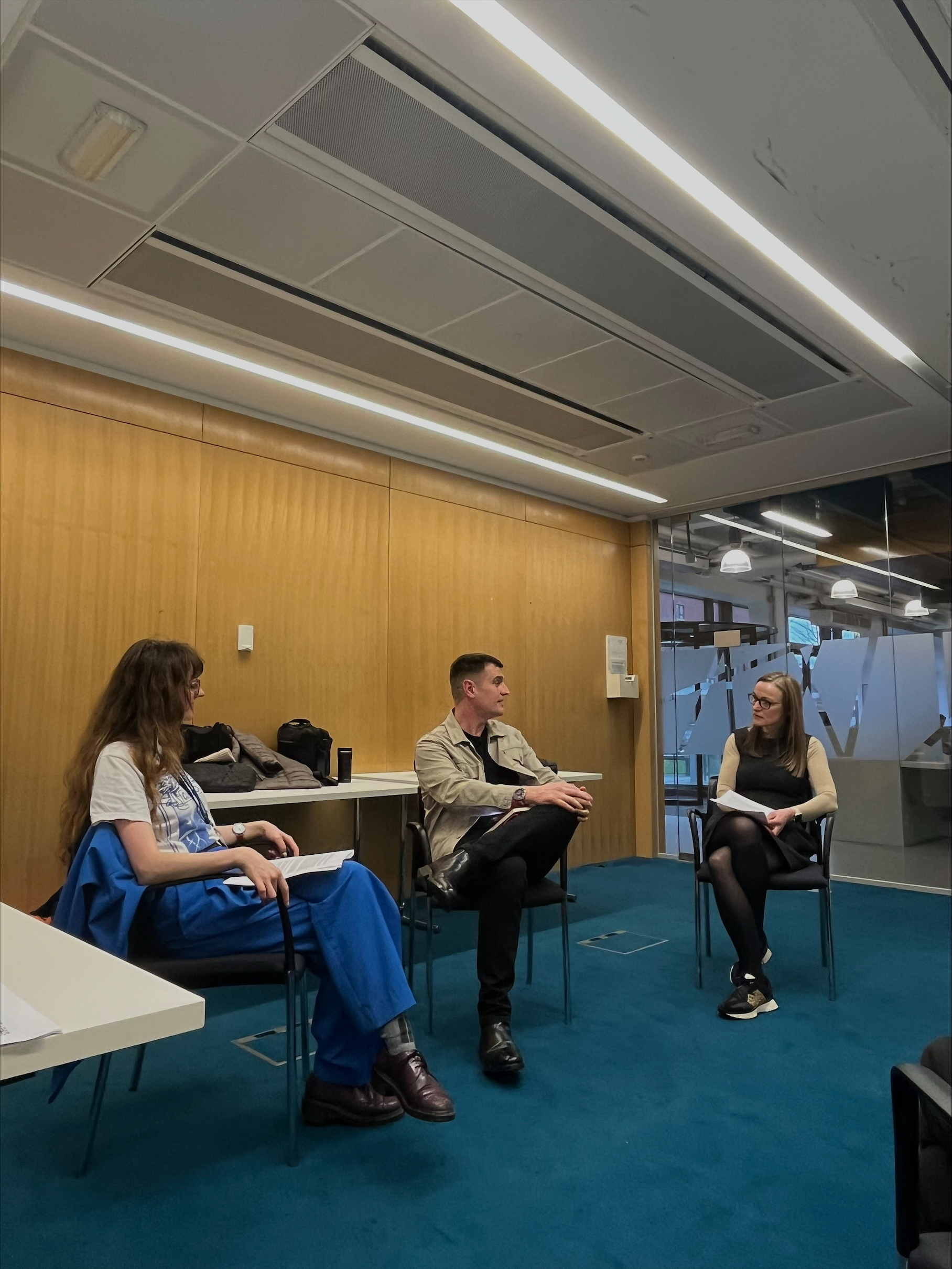
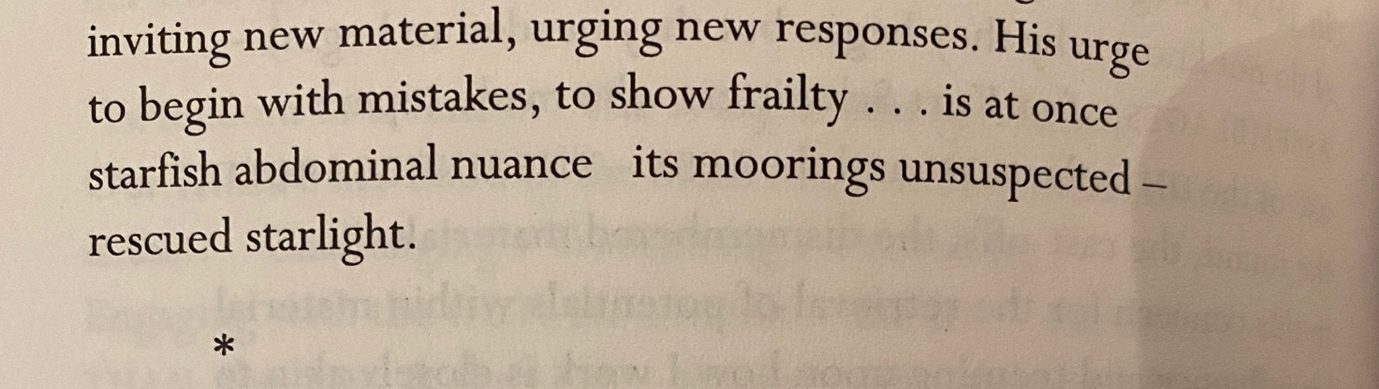
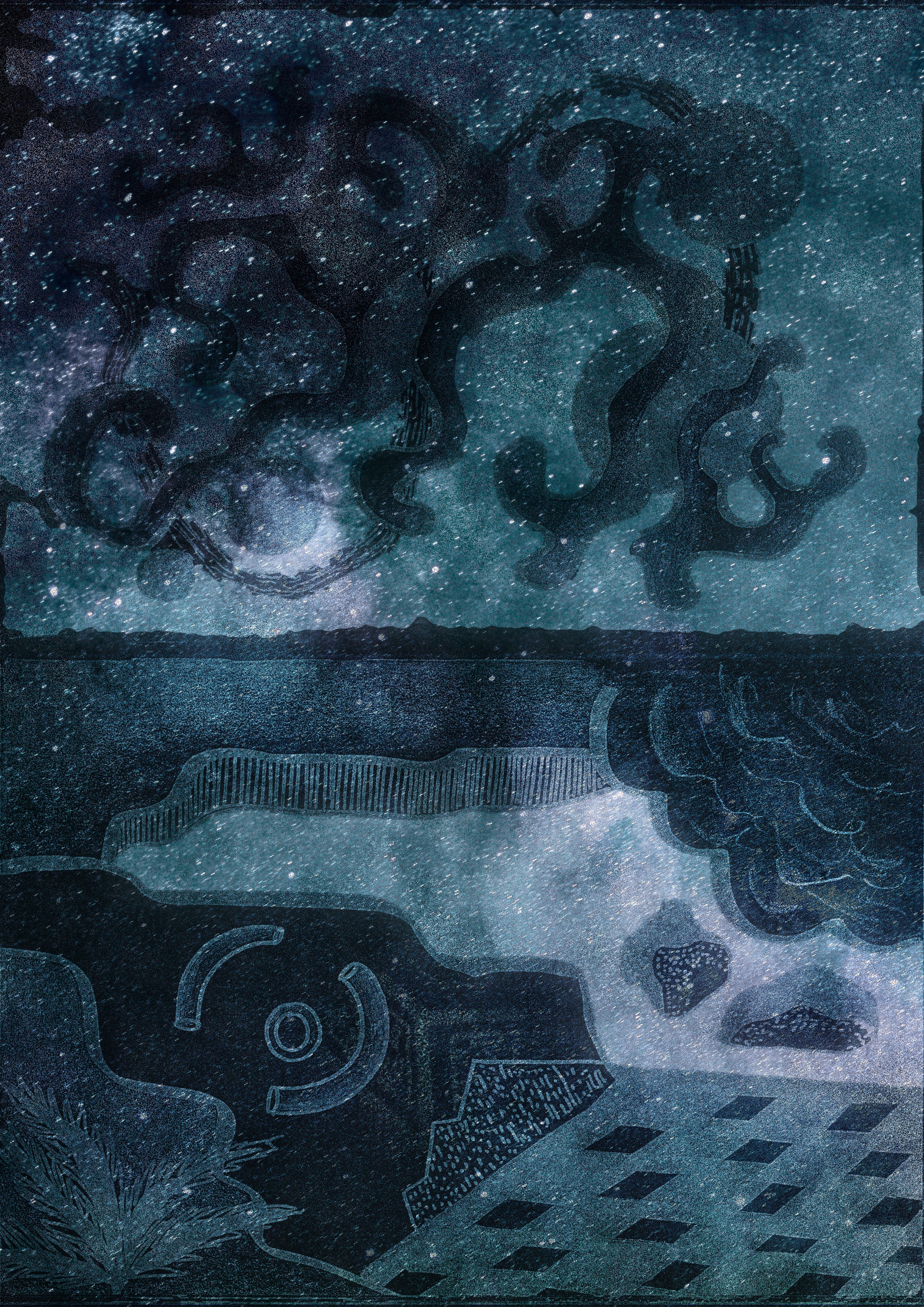




 mariaology