The Greatest Loss: Lana Del Rey’s Anthropocene Softcore 

Screenshot 2019-09-08 at 11.26.09.png

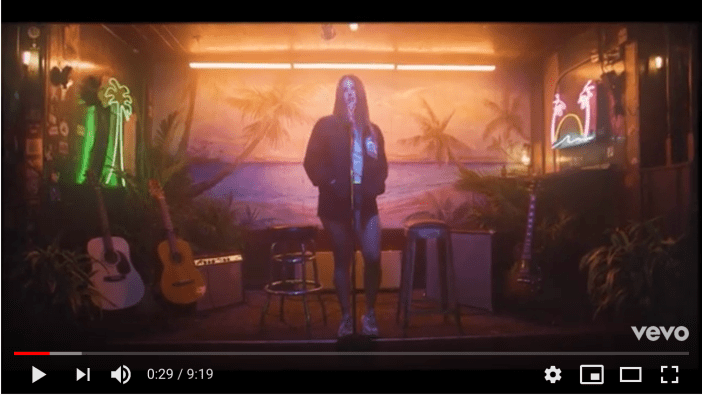
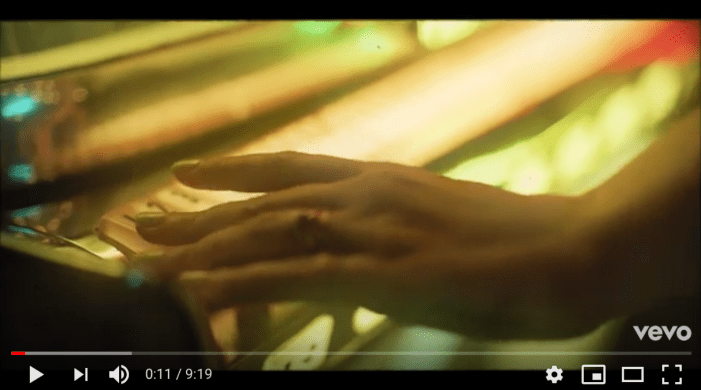
There is a scenario in which the jukebox is equivalent to the poet and some elaborate analogy is to be made between intertextuality and the limited catalogue whose selectional form produces play. The scenario only survives in video. It needs this urge of duration, not to mention the tenderness of a touch. Where fingers brush keys like notes, there is something to add to the story. A social space in demand of ambience; on flickering alongside off. When Lana is alone on stage, hands stuffed into a bomber jacket, singing ‘Fuck it, I love you’, swaying almost nervously, I want to think about what she is doing there and who she is speaking to and from where she is speaking. She is not really speaking but singing. The lone girl on the stage is the open mic dreamer, with nothing but lines. She is scattered across june-dreams of multiple personality: ‘The I which speaks out from only one place is simultaneously everyone’s everywhere; it’s the linguistic mother of rarity but is always also aggressively democratic’ (Riley 2000: 57-58). We mother our solipsism with words but in doing so there’s an opening. So to say fuck it and state the interruption with syncope, sincerity. Lana Del Rey was born on the cusp of Gemini and Cancer season, which more than explains that statement: ‘Fuck it, I love you’. With her sails to the wind. To say it over and smooth into plural refrain, you could even say chorus. For a chorus wants to be shared. It is a commodious mother, fed by the keys of the jukebox baby. There is a constant reversal of nourishing; the democracy of lyric utterance, the milky feed that streams.

Denise Riley argues that any ‘initial “I love you” is barely possible to enunciate without its implicit—however unwilled—claim for reciprocation’ (2000: 23). But what is reciprocation in a song? Is it just the urge to be sung with? And this ‘fuck it’, the pervasive millennial injunction to just be, to move on, as the tag which erases the expectant price of the utterance? Riley argues that I love you ‘must at once circulate as coinage within the relentless economy of utterance as exchange’ (2000: 24), but in a pop song it bears the leaden weight of so many prior expressions. The irony is that to cut through that with a simple fuck it, Lana can attain something like sincerity in the very pop mode whose lineage of commercialised love would surely undermine her feeling. Fuck it, in spite of saying I love you I really do. The pop song becomes this space for the staged epiphany of repeated assurance, I really do. It is a softcore admission of the self in its burning limit. 
Screenshot 2019-09-08 at 11.26.37.png

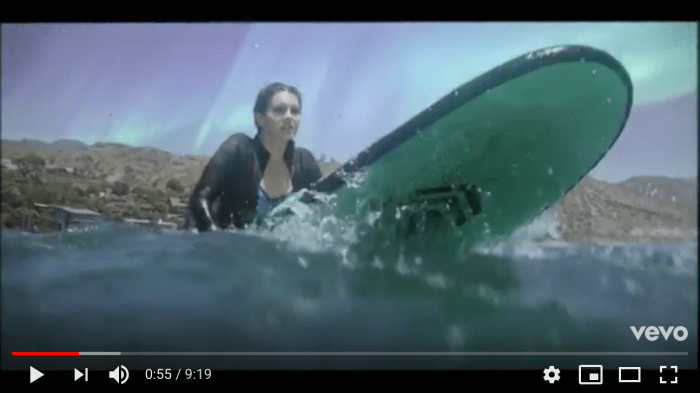
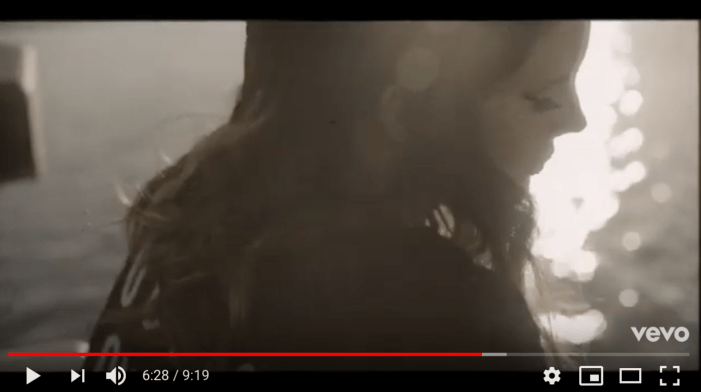
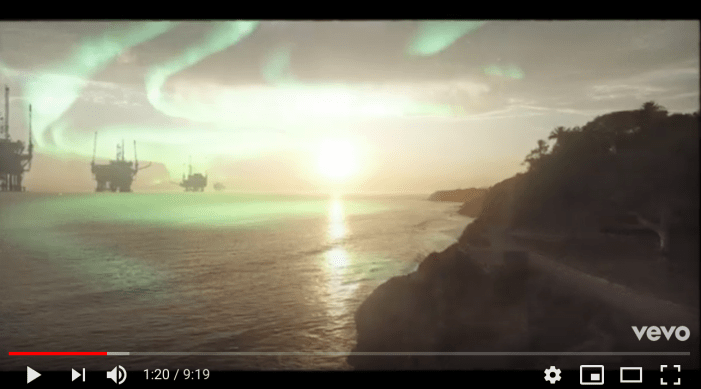
‘Fuck it I love you’ is soaked in lights, but they’re fading. ‘I like to see everything in neon’, is the line that opens the song. To see everything in neon is to fluoresce what is haunted and gone. I think of Sia dragging rainbow dust down her tearful cheeks in the video for ‘The Greatest’ — tragedy’s shimmer as fugitive mark on the body. Lana offers herself up as sugar dust, cliché in honour of Doris Day: ‘Dream a little dream of me / Make me into something sweet’; she acknowledges ‘dancing to a pop song’, but it’s not clear if this is her or the character or the one she loves. ‘Turn the radio on’ could be a reflection or an imperative. The reader is hailed between these positions of love and the loved and the effect is saturating, warm, delirious. Separation is that ‘it’, the spacing. In the video, we watch Lana painting and then suddenly she’s surfing with the aurora borealis in the background. She’s on a swing, her jean shorts caressed by the camera, she’s the sexualised pop icon again. She’s on a surfboard, green-screened, young. She’s choosing a shade of yellow from the palette, singing ‘Killing me slowly’. What is this ‘it’, killing her slowly: 

I’ll return to the unknown part of myself and when I am born shall speak of “he” or “she.” For now, what sustains me is the “that” that is an “it.” To create a being out of oneself is very serious. I am creating myself. And walking in complete darkness in search of ourselves is what we do. It hurts. […] a thing is born that is. Is itself. It is hard as a dry stone. But the core is soft and alive, perishable, perilous it. Life of elementary matter.

(Lispector 2014: 39)

I want slyly to argue that this is a kind of anthropocene existentialism. Recognition of the self as this ‘hard’, ‘dry stone’ thing of geologic mattering, reflexive species. This is what it is to be ‘Human’ right now. And yet the agential spark within, the ‘core’ that is being alive in a world where we have deposited those sedimentary layers. Creating ourselves in the stone, often with the tarnish of the very products we chose and developed to beautify, excoriate and cleanse ourselves, to remain forever young. So there is this oscillating temporality at work between desired infinity and the trace of our fugitive place on earth. The very earth minerals that would ruin humanity, mine our bodies of endless labour. But to go back to the song, with its idea of a gradual dying. I want to call this something like anthropocene softcore: the unnamed presence of species being within Lispector’s slender novel from the early seventies, or the Mamas and the Papas brand of late-sixties ‘sunshine pop’ whose solarity derives from the perishability of that energy, utopian commons, cascade of flowers — that serotonin glow of selves in streams and streams. 

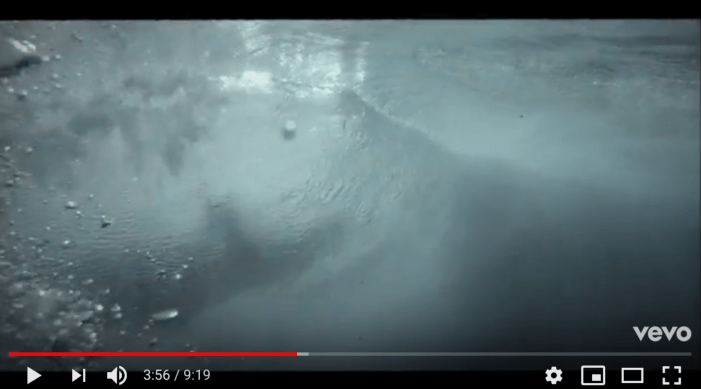
Lana’s anthropocene poetics are not of the hardline, direct call to action. You would not say of her cultural presence, eco-warrior or nature goddess. You would not brand her Miss Anthropocene in a kind of demonic marketing gimmick. You would say most often she is a siren, per se, leisurely supplicating us towards death on the rocks. Desirous flow. This is anthropocene softcore. This is what it is to challenge the act of self-description itself, and in doing so questioning those generalisations that arise from the ‘we’ of humankind, not to mention the ‘I’ of pop’s delectable, mainstream lyric. Alchemically, Clarice Lispector and Lana make of these malleable pronouns the ‘perilous it’. The it, the feeling, the speaking self which is nothing much more than a bundle of affects, sensations, atoms. To be cast over and crested by the wave. Significant that ‘Fuck it I love you’ ends with the rising bubbles of this wave, the one that spills us through the fourth wall and into the studio. This song slams together pop’s saccharine mythos of California as dreamland, a late-summer song as the former was written, surely, for autumn. California: ‘it’s just a state of mind’. She could be talking about the self or the state, or the state of the self. 
Screenshot 2019-09-09 at 20.44.25.png

What happens next? The shot drifts over the cliffs, the coast, to a strip of palms and a distant view of the LA skyline. That shining love in the previous track is replaced by a minor key, a glimpse of the jukebox whose songs include The Eagles, Bon Iver, The National. Artists whose Americana is the melancholy of generations moved from political despair to something like the glitch of the times as a basic fact of intimacy. One of the Bon Iver songs shown in the video is ‘22 (OVER S∞∞N)’, and if that title was not rife with implicit apocalypse, what is, what is. A stammering into language, pitch-shifting the fragile space of utterance. There’s a spiritual glimpse to the sky and the infinite quality of the stars: 

There I find you marked in constellation (two, two)
There isn’t ceiling in our garden
And then I draw an ear on you
So I can speak into the silence
It might be over soon (two, do, two, do, two)

(Bon Iver, ‘22 (OVER S∞∞N)’)

I don’t know what the maths is doing. I don’t want to know that the song ‘was inspired in part by Bon Iver mainman Justin Vernon’s unsuccessful attempt to find himself during a vacation’. I am however interested in the hubris within this term ‘vacation’ at all. Do we now live in a world where you can take ‘time out’? There is nothing of the world we know that could be switched off. There is no ‘away’ of complete erasure or original presence. Deconstruction caught up with our living. Vernon describing this song as a gesture towards what might end of his emptiness could just as easily be flipped: its relief is equal to a mortal sense of loss. The impending erasures. It ‘does’ or acts the accretional event of extinction that is speaking into the silence, to those who could not speak back. 

Fragments and snatches: the neon green lining Lana’s eyes, the aurora borealis, the neon green palm in the club where she sings alone. A season by yourself. The love of the couple together surfing is cardboard, Hollywood. It is a trembling symbol. It is almost ridicule.
Screenshot 2019-09-08 at 10.27.46.png

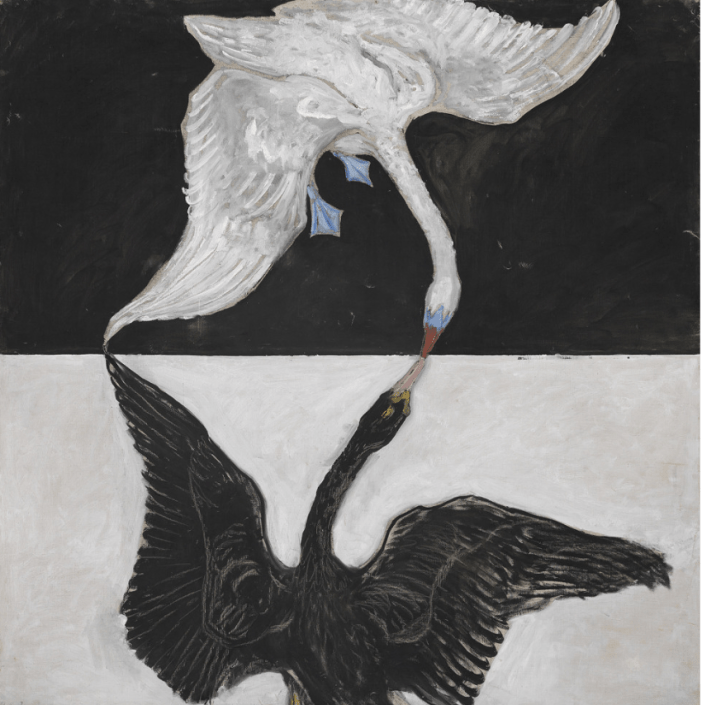
What is Justin Vernon looking for in the constellation? When he sings ‘two two’ I think of Hilma af Klint’s nose-touching swans, or the hours of the day chipped at the edge — two of them stolen by tragic event. I think of a mic check, two, two, ch, ch. Click. Near-enough-presence of speech. A white swan on black background; a black swan on white background. Flip. The swans are geometry, signets of signature, they move towards abstraction. Growth. I love them. Fuck it I love them. The way they are just it. Inversions of colour and a monochrome mood splashed with cornflower blue, the tiny excess we can treasure. It is the cornflower blue, the little webbed feet, which make the swan in question unique. So we can care for it, figuratively as it swells through grey-white waters of memory. The swans we have lost in our shit. Royal iterations freed from belonging. This painting is from af Klint’s series Paintings for the Temple, works derived from spiritual communication. The abstraction of the swan / renders us stark in frame / for we were Lana or Leda / before we were animal. Sufjan Stevens’ ‘Seven Swans’: ‘All of the trees were in light’, ‘a sign in the sky’; ‘My father burned into coal’. And all of our sadness was carbon neutral before this. We plunge into whatever remains of the water, its plasticky thickness.

I keep pausing the video as it transitions. ‘Fuck it I love you’ twinned with ‘The greatest’. When The National sing It’s a terrible love and I’m walking with spiders, what exactly is the ‘quiet company’ of the ‘it’? It could just as well be spiders. Maybe it’s the web itself, the web between the human and the more than human, the gossamer moment where metaphoric articulation becomes more than feeling and gleams material. ‘It’s a terrible love that I’m walking with spiders’ — what is the grammatical transition done by that ‘that’ and who is to blame. Walking with spiders might just be that love. Transitional, subject/object logic is reversed in this song: ‘Wait til the past?’ is sung, then ‘It takes an ocean not to break’ when surely the ocean itself would break you. Soon the ‘terrible love’ is a substance, something ‘I’m walking in’ — to feel it is an act of immersion. It is to let that wave crest over, the ‘lyric auto-explosion’ (Moten 2017: 3) of the wave that would break you. 

In ‘The Greatest’, Cat Power sings of former ambition now cast to nostalgic regret. There is a sense of time slowing to delay, laconic strings, relaxed drums, the balladic sleep of a once-held fault. It is a parade slowing down in the rain. To say ‘Once I wanted to be’ is to hold this question of ‘the greatest’ as a generalised desire itself. The hunger we lose in time, whose primary colours soften. I hold to that precious, cornflower blue of a swan’s foot. ‘Two fists of solid rock / With brains that could explain / Any feeling’. This solid rock that would box you into the future, that would harden the edges of self. A thing is born, as Clarice puts it, ‘hard as as dry stone’. This is the thing born ‘that is’. To exist is to be this hard thing, protein ligament, to kick out in lines; but then in time there is the plasmatic self inside that, like some fatty animal byproduct, sticks to the others it loves, it needs, it leaks. Gelatinous, softly sticky love. The ‘it’ that needs saving. Anthropocene softcore; soapy inside of all geologic agency. Who we are and what we regret. The turning of the outside-in, the inside-out. Kathleen Jamie, in Sightlines, asks: ‘What is it that we’re just not seeing?’ (2012: 37). 

A sightline is a hypothetical line, from someone’s eye to what is seen. Is it clear or blurred, bad or good? Anthropos recedes in its very own scene as the ocean continues and we howl in the dark like a lossy-compressed version of species. We are the sirens and wolves. We are at the great concert of the Earth. We have to resist what Bernard Stiegler calls the ‘proletarianization of the senses’ (2017); we have to find longform ballads of what’s happening, pass them down the line, resist the short-circuiting of thought that occurs between screens and machines. We have to send letters back to our consciousness, our elders and children. This is the work of lyric. It could be the work of dance. I think of Zelda Fitzgerald’s protagonist, Alabama, learning to be a ballerina too late in her life: ‘Her body was so full of static from the constant whip of her work that she could get no clear communication with herself. She said to herself that human beings have no right to fail’ (2001: 180). Alabama barely eats; her energy is all the zeal of will. The dance of lyric as reduction, lack, as static and chased success whose collapse lands as Alabama will eventually do on the event of inevitable break. Grapefruit squeezed on the gritty turmeric shot of the future. And a brake, a screech. And yet we write, we cast out limbs and materials, we work towards this loss; we imbibe it. 

This is an ugly type of writing in which the outside is always imagined from the inside. Horizons are fictional and buildings are barred. I have no sightlines. I’m fucking cutting the corners of someone else’s desire. All paths are the continuation of a pre-existing line. This is a city from which I send myself postcards wherein I wish I was here. Flying letters. Words stolen from myself. I refuse to recognise that I have not composed them unintentionally

(Bolland 2019: 78).

The videos for Lana’s ‘Fuck it I love you’ and ‘The greatest’ swerve between inside and outside. We find ourselves in rooms we don’t remember entering. Writing the anthropocene has an ugly, masturbatory quality of fucking yourself with the rush of elaborate doom. Okay, so. Constructing fortresses of lines which would make a valiant destination. When I listen to Lana, I’m accessing shortcuts to ‘someone else’s desire’ which is the opening up of presence. ‘This is a city’; ‘I wish I was here’. I have never been to LA. We plagiarise our very own diaries to get back that sense of the once-intentional, the greatest declaration on Earth. That we were here, and we loved. She wrote that lit, forgot. The papers curled up and rolled away in a sultry air that was summer, 2012. The year of failed apocalypse, the year Lana released her debut album, Born to Die. We saw her campaign of fashion smoking through plexiglass bus shelters. Remember all ‘horizons are fictional’: they tell a narrative, they bleed and tilt and set like ice. Towards them we stupidly drift: the lived throb of our softcore skins, our hungers and rhythms.
Screenshot 2019-09-09 at 20.44.50.png

Drifting in colour like H.D.’s Leda, the rape of the land and the body and bodies engendering bodies. Worlds ending around us. And so I could say, but this is just one song, a phrase, a white woman of fame lamenting her world. But this self-conscious cinematics is a gesture towards the western world itself as this haunted, tragic protagonist: ‘The culture is lit and if this is it, I had a ball / I guess that I’m burned out after all’ (‘The greatest’). So you could say, anthropocene softcore speaks to the lyric I in its state of orphaned exception, which in turn is the loss felt by us all unequally. If we make of Lana a sort of anthropocenic siren, we must recognise the distinctions within our longing. For we all lose worlds differently; harm is striated along lines of class, gender, race, ethnicity, geographical distribution — of course. That wave that closes the video could elsewhere be a tsunami. I like to think its place on the edge is a deliberated hint to what could or is even already happening here or elsewhere. And maybe the colour, the aurora, is this streak of need for an excess beyond static blank, ‘human’ planet, standardised canvas; the need to splash something more of blur and blue. Flood the structure. 

When we say something is ‘lit’, we mean it is hot, on fire. We mean it is turned on, ignited, intoxicated, drunk, excellent. Lit is the past simple and past participle of light. Isn’t that line alone just lit? Maybe we are in the twilight of a former Enlightenment, recognising our species hubris as this alien green that tinges every familiar horizon, upsets the normalised green of pastoral. Is it toxicity, the elsewhere within ourselves? It is a radar showing who we are and where we have been. Those material metaphors cook on a smoulder, and this is the softcore coming to knowledge about what is happening.
Screenshot 2019-09-08 at 11.27.08.png

What does it mean to sing: ‘I’m facing the greatest / The greatest loss of them all’. To sing this on the brink of a hyperreal sunset, to chase a solar excess among loss. This loss could be a love but it is more like a culture; it is more like a voice and the condition from which to speak or sing it. The loss of lyric, its possibilities of address, and the loss or deferral or ruination of place itself. Maybe this is Lana’s lyric maturity, a generational acceptance that ‘young and beautiful’ is no longer the apex state of what we should strive for. Absence tenders complexity. Is this, as Roy Scranton puts it, Learning to Die in the Anthropocene? This question of mutability, the green-winged eye that sees a darkening world, a lack of birds along the bay, an edge. In the video for ‘The greatest’, Lana’s jacket reads LOCALS ONLY on the back. I google the phrase and find a hipster restaurant in Toronto with the slogan, LET’s PRETEND THIS NEVER HAPPENED. There’s a kind of parochial nihilism that glisters like the light on the sea, but the sea can never be local only. There’s a boat in the video whose name is WIPEOUT. It’s all happening; the signals are obvious. How we are practicing the absent-presence of the name’s erasure. My tongue gets twisted when I say anthropos; I want to say mess, I fall into ‘guest’ and ‘gesture’. With its glaring cinematics, LA offers the hospitality of light. But it is an exclusionary light. For now, only some of us get lit, get to the mic.
Screenshot 2019-09-09 at 20.46.01.png
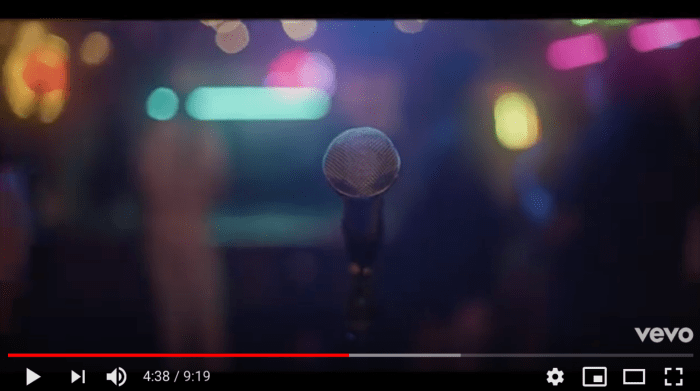
Lana sings from within the metallic architectures of LA’s coastal infrastructure, the port. In the bar, she throws a dart and misses her target by a nonchalant smidge, knocks the 8-ball towards its pocket. I keep thinking about exports and imports, what we put out, take in and trade. Economies of luck and depth and surface. Maybe Lana is a hydrofeminist, her soaring lyric gesture recalling a hauntology of America as that dreamscape of what lies beyond or in the deep. And now we know it is further extinction, precarity, hardened borders. What do we do with that looming closure? Lana has shrugged off her jacket now, she’s smoking in the kitchen where the lid slides off the pan to let the steam out. I’m not saying we’re sitting on a pressure cooker here. There’s simply work to do, mouths to feed, ears to fill. This is a ballad, a paean to the transient, fragile beauty of everything. The songs shown again on the jukebox are songs of a type of blues specific to oceanic or cosmic consciousness, to hunger, the time of lost summer or that of a broken love:

Janis Joplin — ‘Kozmic Blues’

Dennis Wilson — ‘Pacific Ocean Blue’

Sublime — ‘Doin’ Time’ 

David Bowie — ‘Ashes to Ashes’

Jeff Buckley — ‘Last Goodbye’

Leonard Cohen — ‘Chelsea Hotel #2’

I’ve spoken before of what ‘anthropocene sadcore’ might look like in poetry. I’m still working through that. It comes from the common phrase used to describe Lana’s music, ‘Hollywood sadcore’. I’m interested in how that emphasis on mediation, transmission and cinema plays out in our understanding of ecological emergency, but more generally the existential condition of the anthropocene, which places us as geologic agents under the generalised, gendered rubric of Man. Maybe Anna Tsing’s feminist work on the ‘patchy Anthropocene’ could be applied to the cut scenes of a glossy Los Angeles caught on video. A patch is also a software update, where comprised code is ‘patched’ into the code of an executable program. Maybe the patchy anthropocene involves this kind of cultural patchwork: the lament to a love or a culture is patched to include this bug of ecological consciousness — the patch is a kind of coded pharmakon, poison and cure for apocalypse blues. But Lana paints in shades of yellow too. Blue and yellow making aurora borealis green. A cosmic gesture to what lies beyond thought. And what of those oil rigs in the distance, glistening. They form an audience to the siren’s lament; they are part of this story, and we are mutually complicit. Where the magnetism of the male gaze is often part of Lana’s canon, here it is mostly replaced by oil rigs — supplementary Man as the infrastructure of anthropos, looking back at its melancholic, warning siren. Softcore is less affective than sadcore; it is the ambient hum of climax coming. Its cousin is the slowcore, luminous melancholia of a band like Red House Painters, perhaps: Purple nights and yellow days / Neon signs and silver lakes / LA took a part of me / LA gave this gift to me’. 
Screenshot 2019-09-09 at 20.43.42.png

In Bluets (2009), Maggie Nelson writes of a restaurant she used to work in, where the walls were ‘incredibly orange’. After each shift, collapsing exhausted in her own home, ‘the dining room’ of the restaurant ‘reappeared in my dreams as pale blue’:

For quite some time I thought this was luck, or wish fulfilment— naturally my dreams would convert everything to blue, because of my love for the colour. But now I realise that it was more likely the result of spending ten hours or more staring at saturated orange, blue’s spectral opposite. 

(Nelson 2009: 43)

Orange and blue, water and flame. The mind’s alchemical transformations reveal the way colour works chiastically upon us. I think of Freud’s mystic writing pad, the waxen surface of memories allowing for palimpsest versions of stories that trace and erase. ‘This is a simple story’, Nelson writes, ‘but it spooks me, insofar as it reminds me that the eye is simply a recorder, with or without our will. Perhaps the same could be said of the heart’ (2009: 43). ‘Fuck it I love you’, sung to the blue-orange wall until something comes off that surface like a static or fizz. Irn bru, ironed blue. There is quinine in my dreams of hungover labour. Surely there is a violence to this particular love, that is staring, necessary. The love of what must be limitless hurts.

Screenshot 2019-09-08 at 11.27.23.png

Janis Joplin’s ‘Kozmic Blues’ rises to a swell, a jostling of guitar licks and urgent, assured vocals. A sonic thickening. ‘So mastered by the brute blood of the air’, H.D. writes in ‘Leda and the Swan’. Held in that vascular shudder that acclimatises to a manmade world, what happens next is a loosening, a shimmer, a shrug of the garment. In the poem or song, in the painting or film, in the collapse of that wave into a bluer future. To incur a kind of erosion and yet live on in those terminals. ‘There’s a fire inside of everyone of us’, Joplin sings, and I think not of flames but of cinders. ‘At what temperature do words burst into flame?’, asks Ned Lukacher in the introduction to Derrida’s Cinders (1987), ‘Is language itself what remains of a burning? Is language the effect of an inner vibration, an effect of light and heat upon certain kinds of matter?’ (Lukacher 1987: 3). I know if I did not write I would smoke. These acts of temporality in its material extinguishing. What makes the remembered restaurant blue, not orange, is something of this transmogrified smoulder — an inversion akin to af Klint’s swans, demanding that splash of blue. When I write, am I pursuing the absent space of that skyward blue?Blue is the colour of the planet from the view above, Lana swoons in a song (‘Beautiful People Beautiful Problems’) from her previous album, Lust for Life (2017). But in Norman Fucking Rockwell, Lana’s California album for 2019, it’s less of this ‘above’ we see. We are held within the infrastructure, cinema, the end of summer. The dreamlike logic of How did she get on that boat? When did she enter that room? Who put that song on the jukebox, baby?

I want to say:

It takes an ocean not to break a planet.
It takes not a planet to break a species. 

Lana’s voice grows wispier as she sings of that burnout. There’s this imperative that okay we could enjoy this with American flags, we could pour communal Jack and go down in flames. We could riff the history of our culture in archives of song, gestures and nods of reference. Ladies of the Canyon, Cinnamon Girl, Norman Fucking Rockwell. We could keep laughing or dancing while the world is or was at war. Lana is both behind and at the bar, the sightline of where we go to be ‘served’. Intoxication is the order of the day and we call it ‘fun’ to put the fucking of other people’s desires under erasure, strikeout, as Bolland does.

If this is it, I’m signing off
Miss doing nothing, the most of all
Oh I just missed a fireball
L.A. is in flames, it’s getting hot
Kanye West is blond and gone
“Life on Mars” ain’t just a song
Oh, the lifestream’s almost on

(Lana Del Rey, ‘The greatest’)

Miss doing nothing’: post-recessional ennui becomes the paradoxical happiness of living in static, not working as a kind of work that resists the future as set out by capitalist horizons of accumulation. We used to just ‘hang out’ and several other dreams of youthful nostalgia. Kids of today can’t even touch that innocence. We know so much; maybe or probably they know more. We are all variously entranced by the softcore unfold of this happening; we are all variously called upon to be complicit, to recycle, act, resist. To speak or not-speak. To be in one of many different levels of rising heat. The conditional state of being’s value, ‘If this is it’, in the anthropocene raises its pitch to a charge. To sign off is a form of surrender that gives up the name for the blur of species. I think of Lars von Trier’s Melancholia, the planet that would smash us and yet somehow Lana dodges it, that

The audience in the bar where she sings are mostly men, but their gaze is not sexual, as in much of Lana’s prior visual oeuvre. Rather, their longing gaze, often filtered through further glass, is something like the profound melancholy of a multi-generational sense of this loss. These old men have lost the planet, the one they grew up with, just like Lana’s siren, come from some other time, a life ahead of her steered by the changing climate, the hurt and vengeful seas. The camera holds close ups on their staring faces. The song holds the long durée of a loss that spans generations, damages and is damaged by elders, sparks in the present-tense of cultural tendency. In Lana these men look to a future hurt whose cause was partly theirs, as inheritors of industry: she is both victim and heroine, singing and swinging. The shot opens out to reveal her smiling with younger friends, her own generation. These intimacies are what we have left. The next shot shows some kind of factory or refinery leaking smog into a cloudy, overcast skyline, sulphured yellow. Once again the boat appears with its title, WIPEOUT. Lana is supine on the bow at sunset. She is golden, angelic, silhouette. It’s like she missed the fireball but melted it, cooked it up for tea, apocalypse syrup. Things are going down around us. She hugs her arms, later standing, laughing with a dreamlike intimation of imagined elsewhere, closing her eyes. Be hospitable to yourself and others. The reel of the jukebox keeps ever turning: this is our ever faith in culture. We have to take care of what’s left in whatever space we can make of song, duration. 

But the mainstream disciples and idols of Hollywood are failing, Kanye West is ‘gone’. Surely a reference to Elon Musk’s plans to save us by colonising Mars, ‘“Life on Mars” ain’t just a song’ is sung with a melancholy matter-of-factness, a kind of sigh which implies the banality of techno-utopia in a time of extinction. The thrill of such dreams is lost now. We lost our faith in Hollywood, lost our faith in the movies and the scale of those solutions. In a world without books, we’d be ‘bound to that summer’, addicted to one of many narcissistic ‘counterfeit[s]’ to make love to nightly in futile repetition — that would be, as Weyes Blood sings, the ‘Movies’. 
Screenshot 2019-09-08 at 16.56.01.png

What we look back with: 

The trauma is not, in the Freudian lexicon, this or that violation from the world (such as war), but the ill and trauma of this originary installation of “the cave”—what could properly be called the cin-anthropocene epoch, particularly given that the era of modern cinema is to be regarded merely as an episode: that of the machinal exteriorization of the cinematic apparatus, given that it coincides with the era of oil (artefacted “light”), given that its arc coincides with that hyperconsumptive acceleration leading to mass extinction events, ecocide, and an emerging politics of (managed) extinction

(Cohen 2017: 246)

The trauma of greatness as such is this accelerated promise of the dream, the event, capitalist growth, the movie itself — whose imperative is towards scene, closure, episodic narrative in demand of the next. But the drinks in this video are barely drunk; they are more like props. Everyone is aware of their place in the tableau vivant of the anthropocene, even in its softcore, consumerist pop expression: the iconography of oil rigs, downbeat affect and intergenerational longing. Not a violation from the world so much as the stream, and where its accumulative logic would eventually come to crisis, even as corporations beyond our imagining were already plotting that logic of a break within archival excess: the feverish incineration of the present, the smoulder and melt that smogs and spreads and streams. 

Fire is there or it is not there. […] But surely there is a word for that moment when a fire log, beneath its bark, has become one immanent ember, winking like a City or a circuit board; for that moment when you know only the desire, no, the need to stir it up. What is on fire, you ask yourself, staring into that waiting. What is that moment. What is that word. 

(Lennon 2003: 434)

The nights ‘on fire’ that Lana sings of are those of the Beach Boys, reprieve of the sixties; the bar on Long Beach that served as a ‘last stop’ before the tiny island retreat of Kokomo. Frank O’Hara died on Fire Island. Fire is presence or absence, but there is a moment before it is both. A slippage between the extinct and extinguished. And the world was lit up as before. I wonder if the word Brian Lennon looks for is simply ‘sleep’, the title of his essay which I first read in John D’Agata’s anthology, The Next American Essay — with intimations of that Lana song, ‘The Next Best American Record’. What is with America and the positioning of the next. A constant state of pressurised imminence that streams and streams: ‘We lost track of space / We lost track of time’ (‘The Next Best American Record’). We sleep into death or spirit. My first legal drink was a fireball whisky, in a pub by the sea they built in a church. That moment when you know only the ‘need to stir it up’, fanning the flames. That impulse towards blitz feels extra political in these contexts. We need something of relief that would stream, and in that flow be more than a question. Something of cinders, drifting. 

In Lana’s song, I’m interested in this word ‘lifestream’, which seems like a slippage from the more familiar internet-lingo, the ‘livestream’: the coming live that seems provisional to digital retro-future, the promise of satellites beaming the present, simultaneously. Lifestream, instead, is a vascular imaginary of bodies flowing together. ‘LifeStream’ is actually the name of a blood bank serving the Inland Empire and its surrounding areas. Lifestreaming is, Wikipedia tells me, ‘the act of documenting and sharing aspects of one’s daily social experiences online’. It is the flow of the timeline, akin to the wall, the blogroll, the feed. But here, at the end of the song, the promise of information’s overflow is in a liminal state — ‘almost on’. Extinction’s monetised data cast as the simultaneity of thick presence spread by millioning participants. We are here and we said something, our words were atoms, splashes of blue. We stream towards a life, cut ourselves short on the fragments of others’ desires. Mortality’s softcore contingent. The fear of missing out is assuaged by the narcotising work of cinema. And if this is it, Lana has already signed off. It’s something more like her spirit that’s here for us, the stream of an echo, fold of a song that we could replay, continue voicing. Hope lies in the circadian rhythm, the lived time of a pause in the anthropocene’s ceaseless, cinematic duration — that which we see and drown our hearts in. As Jean Rhys’ drunken, depressed protagonist of Good Morning, Midnight (1939 – the year WWII began) muses, ‘Well, sometimes it’s a fine day, isn’t it? Sometimes the skies are blue. Sometimes the air is light, easy to breathe. And there is always tomorrow….’ (Rhys 2000: 121). And what if tomorrow was the greatest loss of them all? 

~

Screenshot 2019-09-08 at 11.56.26.png

All screen grabs taken from here (Director: Rich Lee) and here (Director: Natalie Mering). 

~

Works Cited: 

Bolland, Emma, 2019. Over, In, and Under (Manchester: Dostoyevsky Wannabe). 

Cohen, Tom, 2017. ‘Arche-Cinema and the Politics of Extinction’, boundary 2, Vol. 44, No. 1, pp. 239-265.

Fitzgerald, Zelda, 2001. Save Me the Waltz (London: Vintage). 

Jamie, Kathleen, 2012. Sightlines (London: Sort of Books). 

Lennon, Brian, 2003. ‘Sleep’, The Next American Essay, ed. by John D’Agata, (Minneapolis: Gray Wolf Press), pp. 427-234.

Lispector, Clarice, 2014. Agua Viva (London: Penguin). 

Lukacher, Ned, 1987. ‘Introduction: Mourning Becomes Telepathy’, Cinders, trans. by Ned Lukacher, (Lincoln: University of Nebraska Press), pp. 1-18. 

Moten, Fred, 2017. Black and Blur (consent not to be a single being) (Durham: Duke University Press). 

Nelson, Maggie, 2009. Bluets (Seattle: Wave Books). 

Rhys, Jean, 2000. Good Morning, Midnight (London: Penguin). 

Riley, Denise, 2000. The Words of Selves: Identification: Solidarity, Irony (Stanford: Stanford University Press). 

Scranton, Roy, 2015. Learning to Die in the Anthropocene: Reflections on the End of a Civilisation (San Francisco: City Lights Books).

Stiegler, Bernard, 2017. ‘The Proletarianization of Sensibility’, boundary 2, Vol. 44, No,. 1, pp. 5-18. 


Vegetarian Weather

IMG_3958

Short story written over the past three days in a bout of illness, in-between working Christmas shifts that veered between the hectic and dead, drinking quantities of whisky and waking up to sunlight and ice-beams.

The waves here are not like other waves, on other shores. They seem to billow backwards, suck lines of bright froth back into themselves. This town is bordered by a self-consuming ocean, so there’s no other way to go. A bulimic rhythm of prolonged fulfilment; nourishment interrupted. You try to look out but the horizon devours what darkness might lie beyond as within. Everything is overcast. Even in summer, people lick pastel ice-creams to a backdrop of failed, VHS-flicker grey. The sky shivers and glitches with rain. I was on a train once and a drunk man had slept through the changeover and there were no more trains to the city till morning. He asked how to get back from the port, what time the last bus was, was there still time to get a cab from my town, and I said there was no time here. No time at all.

People have been stringing up lights for weeks, but now we are used to the change it’s as if they’ve been here forever. Blue and red, mostly, like sirens; like morse code blinking in darkness. When I was a kid, I used to lean against the harbour wall and watch the lights, spotting a pattern that made sense. I’d write out words with sticks in the sand, trying to parse the lights. Now I see the decorations, the decorative function, and it’s more or less fully tasteless. I have seen how the city looks at this time of year, the city where silver and gold are everywhere. Then there is the town, the red and blue; the spent fire and the melancholy.

Mother washes dishes until her skin blisters. I have bought her gloves for Christmas, year after year, but she refuses to use them. She enjoys some sort of searing, primitive contact with soap and water. They say she is the best kitchen porter the hotel has ever known, and even when there was a corporate takeover, they let her keep her job. She sings festive carols to piss off the chefs, who love her so much they say nothing. Every year, a bottle of ginger wine for a bonus. She hates ginger wine, but accepts graciously. I’ll admit, I inherited little from my mother.

I am guilty of staring at the sign on the church: CHRIST DIED FOR YOUR SINS. One time the minister caught me and he tried to hold my wrist and look up with me, like we were having A Moment of Glory. I remember his stories from school, trite morality tales about betrayal and friendship. Blood trumps all. My mother once had him for tea, and I mean this pretty much literally. She ate him up with her eyes while my father supped lentil soup in silence. She wanted him to say, I suppose, you are all good people. But the minister merely thanked her, politely, letting breadcrumbs sift through his fingers into the soup, like this was a perfectly normal thing to do. I don’t suppose it’s right to crave forgiveness or bliss from a minister. At least my sins are pure, like the sharp silver of restaurant cutlery.

When people pass each other on the street, they nod. Sometimes, a thrusting remark about the weather, a painful stab at some petulant vegetable. The chat doesn’t stick. But still in its smallness I polish it.

The grocery store is selling handmade Christmas wreaths, which smell of true pine. I don’t know what truck brought them in from the forest, came west with the logs and the spindling needles, the twigs of fir and gauze of twine. It’s maybe a job I’d want when I’m older. The driven coastline, the smell of the pine. For now, I gather up trash from the beach, all the stuff people forget about. I glue it together, leave sculptures in the community arts centre for the children to prise apart with sticky fingers. Father once mumbled something about college but never mentioned it again. Sometimes I can sell them, in tourist season. You lay down a blanket and drunk people will come talk to you, like you’re some sort of guru. I imagine my tacky statuettes in homes across the district, mournful little symbols of emotional debris. Luke used to walk along with me, picking up odd bits. We shared a vision, which is more than you can say about most brothers and sisters. I hope people smash them, my sculptures, in the middle of arguments; I hope they instate a sort of catharsis.

Sin. Waves. Sky. Signs. I used to work in a café serving Battenberg cake to gossiping pensioners, whose tongues would loll out like soft bits of dough, even when they were catatonic and staring at the lashing waves, crumbling onto their laps the pink and yellow. The town devours itself, sloshed and watered by endless tea. Scandal is rare and thin, mostly a case of mystery fire, a missing dog or crooked insurers. Once, two men moved in together as lovers but that was diffused by the presence of their pekinese, who used to come snuffling into the café so even the old folks were won over, nursing their social phobias for other occasions. All these dogs kept coming from nowhere.

I feel the presence of others as generally tepid, unwanted. I went to school a couple towns away, got that bus every morning or walked out before it had even reached my door. I’ve never needed eduction to remind me of a world beyond. I only had to look in the weathered face of my father as he returned each time from fishing, the crinkles in his eyes like a tiny clam had nestled in each pupil and was sucking the skin in for energy. Anemone. The way he plodded in the door with such reluctance, trailing sand and silt in his wake, interrupting my mother’s ordered domesticity with the thick, ineluctable lore of the sea.

“Heavy waves out west,” he’d say mysteriously, chewing a lump of bread as if in each crusted pore was the bloom of an oracle. Mother would shuffle a deck of cards, clink the dishes. Oh baby don’t make me cry. She attended bridge nights on Wednesdays at the Schooner, she kept herself busy. Our tiny bungalow was always polished to a sparkle, as if she was afraid the deceased grandparents could tell whether there was tarnish to the silverware. Father doesn’t talk much, doesn’t touch our lives. He helped assemble the tree with usual obligatory gruffness, then retired to his almanack and chewing tobacco. When Luke died, he didn’t say a word for months. He disappeared on trips that got longer and longer, as if trying to make his reckoning with the sea. If I drain you, will revenge be complete? Do fishermen respect the sea? Great shivering nets of metallic shoals looped in and deported up north, a great operation exchanged between strangers with a fetish for the slivery, salty heaps of lamé. He used to keep a logbook of all the good stuff he’d caught, would bring home glistering samples of mussels and carp for tea, but now he throws it all back, unless it’s for work. Does the minimum necessary, but still brushes with death. Don’t we all…

I sometimes think, god if I went away would I miss this place? I picture myself stepping off the train with the arrogant smile of the rest that leave for places east, for the city. Coming home in summer wearing neat tight suits and smart-person glasses. How small the town would seem, a dolls house of trivial troubles compared to the vast expanse of the city, where I’d make my fortune studying law or medicine or working in some department store where all the women wear Chanel and talk as if talk were merely unfettering. The delicate unravelling of a silken scarf, the spritz of expensive everything. In contrast to such gauzy dreams, the town, I fear, is inscribed with too much of me; I need to keep an eye on it. The sedimentary deposits of my human existence, time made language. All the rocks with my name scratched deep by shards of flint and granite. If I came back, this would all seem impossibly empty. The cave where I gave my first handjob, to a boy who smelt of liquor and mint. I still remember how slowly his breath synchronised with the rhythmic lisp of the sea, quickening with the gulls that squawked and circled ever closer, concealing each blood-warming grunt.

I stopped eating meat after Luke died. The smell of fish near enough killed me, so I slept in deliberately each day to avoid the hour when the men came onto the docks with their morning haul. I burned so much incense in my room that Mother was concerned I was having a religious awakening. I grew what they call lithe and thin; I honed my time to a solitary point. Luke used to run along the beach at dusk, but he’d always bang the sand out of his trainers before stepping in the house. He shared Mother’s sense of boundaries, territory. He used to talk about the nesting patterns of gulls. Recursion, he said, was the order of birds. They knew to come home, and when. There was something magnetic, a tiny program inside their skulls.

We still don’t have his body. It never washed up; the sea hasn’t returned it, the police packed in the case a year ago now. The other boys talk solemnly and seriously about moving away: getting out of it all, the mess and the memories. I’ve drank with them down the Schooner many a time, matching them pint for pint as we flick peanuts across the table and wish we were children again, reminiscing our games on the lips of the bay. When Adam kissed me in the freezing sea mist of six in the morning, clutching me like a piece of driftwood that had wound up on his porch, I felt as though I were pressing into the deepest history, its secret flesh. I felt that final capsize, that upsurge of tide. I was glimpsing what I had missed, the darkest moment of shock and extinction. He pinned back my hair, deftly, when I vomited onto his mother’s petunias. He said ‘good girl’ after we slept together, and I was a waif in his tangle of sheets, hardly the siren I supposed myself to be. He said ‘good girl’ but he was only two years older. It was like none of us knew what to do anymore. When I asked him what the last thing Luke said was, Adam couldn’t tell me. He said they were quiet, they were fishing—that was all. They didn’t talk much at sea, like that was unlucky. The focus was always upon the catch. I stopped visiting that house on the border of town, stopped going anywhere beyond my room. I was folding myself inward, like the waves that brushed the skin of the shore. I pictured twenty black pills like black bits of bladderwrack and swallowing my mother’s precious tonic. Every day felt like a new kind of bruising. I’m not there yet. 

I still remember my first lobster. How I had slipped apart the lock of the cage, the lobster pot, to see this gangrenous thing with terrible black eyes that twitched erratically from side to side. Mother used to tell me the chef at her work would go around clacking lobster pincers near all the waitresses’ bums, until one day a woman called Meggie, the old restaurant manager, thumped him in the face and he had to finish service with his nose bleeding into the sauce. “Be more like Meggie,” she’d say sometimes, scrubbing a wine stain out of Father’s trousers, like that was lust itself. You have to twist off the legs, the claws, break at the joints, scoop out the meat from each fat claw. Iron-rich. I watched the blood-red thing die a death in boiling water, could hear a sharp hiss that sounded like more than steam. What else you had to scoop out: the long dark intestinal tract, its tangled, bedraggled remains of a life. An Escheresque recursion, a spiralling fold into self. I wonder what lobster hunger feels like, the in-suck of clams and asterisk starfish. How it feels to enter that deep, freezer sleep, among the ice cubes and packets of plastic-wrapped, soldered meat? Father clapped me on the back when I held out the shell; when later, tactfully, I stuck my fork in, needling around for the richest flesh. My body knew appetite, knew what to look for. It tasted good and strong. Now I see those orange buoys and I wonder what starving thing is perishing underneath, ready for consumption. I reset my computer because the internet never works. We are out at sea here, lost in our mutual devouring. Nobody comes to fix the signal. Nobody questions my diet at all.

My breath still sours on the windowpanes of strangers. There is no time in this town, not even at Christmas where the hours bleed together like the masses of plastic that gather along the shore. I pass the minister, who quips about the weather. Overcast as the darkness that meets us all. He doesn’t understand the patterns, the names of the clouds.

Sometimes I still see Adam. He stripped me till I was thin as cirrus, in smoky entrails of evening light. Boxing Day and I looked out with the blankets scratching my shoulders, the horizon grey and wasted. I could see Father’s boat trailing in at the dock, the shape of his cap against the grey. My skin looked grey. Something a teacher explained once, glassels: those stones that look shiny and lovely under the water, but dry a dull, disappointing matte on land. I was back in the house on the border of town. I left a little ornament, a piece with old speakers, all copper wires twanged into ersatz smiles. It’s the creepiest thing I ever made, maybe. Luke would’ve hated it; would’ve snapped it apart, made food for the waves. Sometimes we go backwards, return to the place. I think of him most when splitting vegetables, drinking Mother’s ginger wine, scrolling through Facebook on delayed connections. It’s different, now that you’re not around. I grow fragile with anaemia, spend time trying to name your fate. There’s a toast to be made to the absent, a manner of feedback; but all of that pain was already in the weather. You just had to notice.


Road Trip

highalnds

Picture the scene. You pass sea after sea of pines, their tall green points misted with a fine web of vapour, a greyness that stretches over, concealing the tips and the distance, and you are not sure whether it is fog or woodsmoke, the wisps of early morning or perhaps the smoulders of a landfill. Probably you’re somewhere deep in the moorlands, glens and peat bogs of the Highlands; or maybe not that far yet, maybe just the Trossachs. If you open the car window a tad, you can almost smell the midges, their damp, thirsty breath in the air. This is air so clean that its purity counts as a flavour, claimed by many who have flogged the native whisky or bottled water. You would leave the window open, indulge yourself, but there is a sharp cold breeze that tickles the fine hairs on your neck, waters your eyes. It is always windy here; or else deathly still, like a valley out of time. Mountains rise up around you, growing closer and grander as the car turns another corner. They seem monstrous, towering over your small car, and you feel like William Wordsworth (the boy version, out of The Prelude) plodding along in his stolen boat, gazing fearfully up at the mountain peak beyond the lake, the peak that gazes back like an animal: ‘a huge Cliff / As if with voluntary power instinct / Upreared its head’. You can’t help but stare at the streams which splash down from each hillside like silver belts, which glimmer in the pale light which makes it through the misted sky. They catch your eye, pull you in myriad directions. You know that rain is imminent; its scent is as clear as the water that runs on the burn alongside you.

There is always birdsong, even in the evening. You can hear the cacophony of many different species as the car rumbles on in the silent space between two tracks passing on the stereo. You and your friend spent a whole day curating the playlist for this trip. Curating. She said that word, jokingly; but even so, it makes you feel special. This isn’t just any trip. It isn’t like you get out like this all the time, free from the bustle and smoke of the city, the people lingering outside pubs, the strangers drifting through in street-lamp darkness.

You spent a childhood in the back of your mother’s car; the smell of her cigarettes always blowing straight back into your face, rolling down the window to snatch breathfuls of that sharp, fresh air – an escape. You scrambled alongside rivers which rolled on over gleaming boulders; you scrabbled together heaps of stones and logs and built dams, pools and waterways. You fell over, bruised your knees, skelfed your fingers on the pine branches. You watched the water for hours, while your mother smoked and your big brother showed off, scaling rock after rock, cliff after clifftop. You ate cheese and pickle sandwiches made soggy by the damp that seeps in everywhere, through the aluminium and glass, the plastic glovebox and the silver foil. Midges clung to your neck; constantly you felt their hot, sticky itch. Sometimes the car smelt of engine oil. The food made your cheeks flush afterwards, as you washed your lunch down with bottles of flat lemonade that had lingered on the backseat for days.

There was an innocence to those holidays which literally makes you ache to think of. You would do anything to be that small again, crouched by a river, dipping your toes into the freezing water while your brother splashed you from afar, shouting declarations of war. His always taunting words, his grand arrogance. The way your mother scrunched up the sandwich foil into tiny, crumpled balls, collected them in her purse. The day you found them all, still there, when you were digging for lunch money.

Fog coming in thick and deep from a distance. You saw it roll over the mountains like God’s own shroud. It was comforting, feeling the moisture prick in the air, seeing the landscape slowly disappear. When you retreated back into the car, packed up the camping gear, fought with your brother over the radio. He always wanted the sport – Five Live – and you wanted the songs, the music. The stereo pumped, crackling and loud, audible even through the walls of the car, drifting in and out of signal, static…

Her sadness, leaning against the bonnet, sipping from a flask of coffee, staring out into the distance. The tears that you couldn’t see – not from behind – but you always knew they were there.

And why are you going? Why set forth again into the world of fog, of deep enveloping glens and silver rivers? The soft moss and the heather, the greenness that haunts your sleep. Was there some mystery you thought you could solve? She said it would be cathartic, your friend, her name irrelevant. Anyway, it’s Eilidh. When you met her, you didn’t understand the silent letters.

The playlist comes from an iPod, the classic one with the spinning wheel and the white casing. You were going to sell it, after you lost your job and faced the end of things, but something pulled you back. Gone were the Nike trainers instead, and now you are here in the car with your best Sports Directs. What sounds pass through your head? There are many conversations you always wanted to have with Eilidh. You wanted to ask about her purple hair, the bright lilac colour of heather. What did it mean? You wanted to ask whether she was still seeing that guy she met at uni, the one who studied law and played cello for an orchestra; who spoke French in a way that defied the limits of his Edinburgh accent. But you had known her five years, and still you could not speak.

The songs were lovely, dark and deep. Miles were consumed by the roar and pulse of the engine, roadsides slipping away as easily as signs fading into hill fog. You were long gone from the city, its tall grey buildings a mere memory, the pillow of mist you sank into at night. Remember the times you shaved an inch from your life? The bus turning the corner, sharp; the tiny sliver of razor on the white bathroom china. The dark colours flowering out in water, as you watched your ex-girlfriend wash her paintbrushes in the sink. Shades of crimson, violet, blue and scarlet. You were slipping through all these images, the shock and the bruising; the little jolt to your heart as the car passed over a pothole. You were driving, then she was. It’s difficult to remember.

There’s a lot of Mogwai on this playlist. When you first hear ‘Heard About You Last Night’ it’s a bit like waking up for the first time, the blinking beat and slow entry of bass bringing into colour a brave new world of beauty and fear. So many people, you suppose, have died out on those mountains. Battles fought and lost and won. Rain that fell for so long, it seemed the whole landscape might be swallowed up in shadowy puddles. Then there’s the anxiety of ‘Hungry Face’, those infuriating repetitions which build up to the twinkling innocence of the xylophone against those quietly thundering drums. It gets in your head; you can’t help but think of ghost ships disappearing over the Clyde, a set of yellow eyes opening and closing, suspended in the dark, clouded air like the smile of a Cheshire cat. The sound of soft, steady bleeping. Eilidh says something funny about the sheep. They have an absurd look about them out here, she says, but then so do pretty much all sheep. They glance up at you, but instantly their expression fades into blasé. They have only two emotions: indifference and fear, the fear coming out when they jolt their necks back and scarper.

Soon you fall into the melancholy of ‘Cody’, so slow and serene you might as well be stoned, sinking away from your thoughts like being pulled out into a vast, shimmering ocean. The bass echoes slow through the car, its thick walls. You press your face against the glass, leaving steam marks which fog up the world outside, the tall green mountains now coated with your breath. Reality blurs with the material of sleep. And would you stop me? If I tried to stop you? You imagine this is what heroin feels like, plunging into a slow, majestic ecstasy, the kind that drags eons of time through your veins; and from all those hours draws out this kind of awesome mournfulness even as your whole body tingles with euphoria. You could sleep forever in blissful, evil dreams. When I drive alone at nights, I see the streetlights as fairgrounds / And I tried a hundred times to see the road signs as Day-Glo. So slow, the car turning corners. An elegy to a lost raver, stumbling through the darkness of some urban labyrinth, the upturned bins, old condoms and leaking glowsticks spilling out the wasted remainders of another good night, another goodbye to childhood. Would you care at all? Eilidh rests her hand on your leg.

“Stop crying,” she says. It’s a statement, not an instruction. You are still staring out the window.

Your mother used to listen to The Waterboys, maybe even Primal Scream in her more rebellious phase. She liked to dance around the living room doing the dusting to ‘Fisherman’s Blues’, all the dust motes swirling up in a maelstrom of childish untidiness and neglected housekeeping. Her voice would crack and she would laugh at herself, breathless, collapsing onto the sofa. Make me a cup of tea, eh boys?

You were at a house party once, at uni – not that long ago really – and this girl was playing a song that stirred something familiar in your memory. You knew that voice, its growl, the twists of electric guitars.

“What is this?” you asked, the joint smouldering between your fingers.

“Oh, it’s The Waterboys actually.” You resented her showiness, of course, but this was interesting. “I know, so lame right? I like it though. They put Yeats to music. You know the poet, W. B. Yeats? ‘The Lake Isle of Innisfree’. It’s a lovely poem.” She was drinking port, of all things – you remember that too.

You inherited, perhaps, a gloomier tradition of the nation’s music. There would be no Proclaimers on this playlist.

Arab Strap, the disco beats, spat poetry and everyday apathy.  The sort of post-hardcore or drum-soaked indie that felt like having the rotten parts of your brain stripped out as you lay on a boat, slowly being drenched in dreich Scottish rain. You were always a fan of Frightened Rabbit, ever since you saw them at a festival once, danced yourself into a frenzied ceilidh of mud and tangled feet, even as the songs sung of sadness and bleakness and heartbreak. The endless drone, the refrain: it takes more than fucking someone to keep yourself warm. Teenage campouts in Loch Lomond, worried you would all die of the cold, of the rain and the midges. Drunk out your minds, desperate and scared of the river which burst its banks sometimes even in summer. The expectations of nothing but the prospect of falling into the same abyss as everyone else. Fag butts drifting by the edge of the river, the scorched remainders of a bonfire. Listening to it again now, well, you can’t help but think of how this seems to be coming true somehow. The same abyss. Even as the drums collapse over the screaming words, there’s a waterfall out there somewhere, maybe the one you floated in once, upside down on weird pills with the cold so deep in your bones that you didn’t feel the punches of your best friend who hated you because you kissed — no. That was another time. You are driving forward now, you are at the wheel.

Maybe there is something that you know that I don’t. 

“We should stop soon, you look like you need a rest.” The world outside is almost darkness; it is twilight spinning webs of navy and sapphire gold around the edges of trees and mountains. Trees with their shimmering leaves. Clusters of stars emerge from the velvet blackness. You wouldn’t stop for anything.

Next: There Will Be Fireworks, ‘From ’84’. The simplicity, the sorrow which isn’t yours; for how could you feel so much nostalgia for a year, a thought, that came before your time? The not-belonging is what makes you feel lonelier, the minor chord, the rustle of Eilidh in her woollen tights turning the page of a cheap magazine. Just a kid, in his room / No-one hears him howling at the moon. But you have lost touch with friends too, you have felt the strange pain that comes from seeing people you love change, grow apart. You cannot hit the high notes; you cannot sing along. So we’ll put it down to fate or bad luck. The plain, bare strumming pattern haunts you, even after the song finishes and something new comes on. You’re thinking of another lyric – sad song in a minor key – and wondering how you ever heard of this band in the first place. Why is it you love them so? Whether they’re actually any good, or just another expression of bleak Scottish winters, the lack of sunlight, the endless, down-pouring rain…but isn’t that beautiful too?

Eilidh has, perhaps, more interesting taste. The next song is hers: Cocteau Twins of course. She mutters on about how their best album was Milk and Kisses, though everyone thinks it’s Heaven or Las Vegas. Elizabeth Fraser’s dreamy soprano takes you straight through the night and into the morning; you could both listen for hours and hours, not realising that the songs were changing or repeating, just drifting into the dissonant guitars and distorted lyrics, the hypnotic drum machine loops, better than sex. You would like to float, suspended in a disco somewhere, each song playing out the pattern of a strange, intense kiss. You suppose these are all the 1990s discos your mother would’ve went to (if she hadn’t had you). What does it matter now? The sky before you bursts through in pastel smudges, which break up the dark silhouettes of the Trossachs mountains. In the distance, through the windscreen, sparkles of sunlight play upon a pale blue pool, the first loch you have seen since yesterday. There is something about the shape of the peaks, the space of the valley. You have been here before. 

The Twilight Sad come on the car stereo. There’s no mistaking the intensity of that voice, the thick accent and its distinctive rolls and howls. Each song with its own atmosphere, a haunted quality reminiscent of The Cure.

“Let’s stop here.”

The loch is so close now. You can feel something inside you, a tension breaking, the rapid increase of the beat from the heart that burns in your chest. Eilidh is humming along, though her voice crackles and breaks as easily as the gravel on the road below your tyres. When you climb out the car, cold air sucks your breath away as you slam the door. Suddenly, the signal floods back to your phone. Three missed calls from your brother, and you know what that means. Another night, another row of bottles slowly emptying, slowly being broken in a dive bar of old men, the black hole at the bottom of every street in every Scottish city. Once he was an eagle, soaring down those hillsides, ready to leap out and scale the lake with legs made strong by football, with arms that could reach out for anything they wanted. He couldn’t save her, any more than you could, weak and pathetic, wrapped up in all that suppressed panic. Hidden in your room, even when it happened. It rolls through you, the realisation. This loch, like a terrible mirror. This beautiful loch, the very one you all picnicked by, the year your brother finished high school, the year of your first kiss, the year she —

‘There’s a Girl in the Corner’ on the stereo, and Eilidh is speaking, but her words are muffled through the window, the pounding drums and resounding lyrics. She’s not coming back / And she’s not coming back again. Standing here, the cold wind at your neck, another summer nearly ending and here you are – you finally feel it.

(all embedded lyrics attributed to respective artists).

To a Dog

image8

We brought you home for the first time one sunny day in the year 2000. Seems strange saying that now: the year 2000. I guess it was a long time ago; before Twitter and being a grownup and even 9/11. Nobody even really had mobile phones then, did they? I guess that makes you special, that you were born in the year 2000. You might’ve been a dog, but you were a proper Millennial.

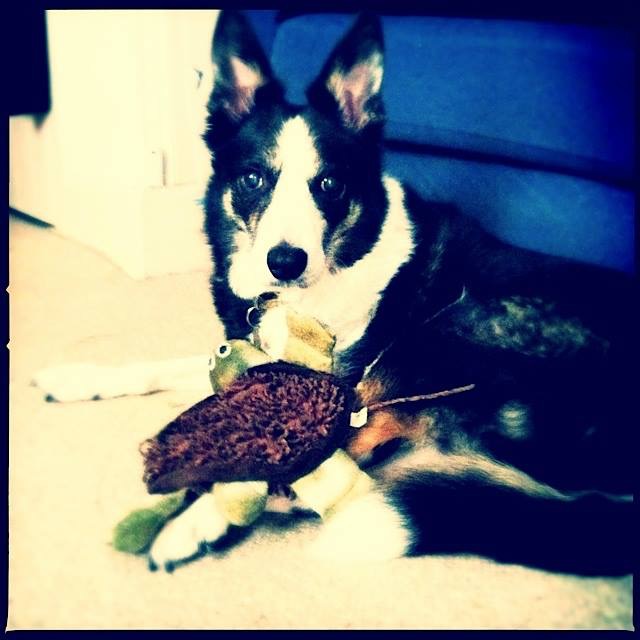
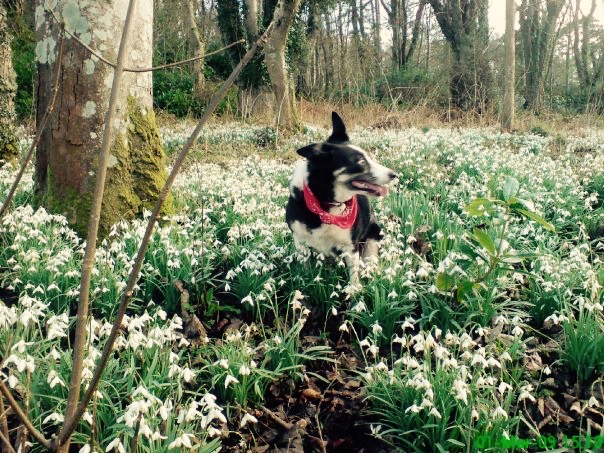
You were such a tiny thing, with little floppy ears and massive brown eyes like polished conkers that blinked back at me full of curiosity. You were a collie dog, except there were crosses in you, so that you had lovely patches of chestnut brown on your face. Mum wanted to call you Bella, but for some reason this annoyed me at the time – probably because there was some Disney princess with the same name, and/or I had some ridiculous mythical title lined up for you. I remember when Twilight first came out, years after you were born, I couldn’t stop giggling at how the protagonist shared her name with my little old dog. But Bella means beautiful, and beautiful you were. You spent all afternoon scuttling round the garden, nibbling playfully at our ankles, before falling asleep in the flowerbed. We really panicked until we found you, curled up among the bluebells and buddleja.

I think having a puppy is a brilliant idea to lessen sibling rivalry. My brother and I spent less time pulling out each other’s hair and shoving each other about over who stole whose Game Boy game and more time throwing ball for our new dog. We took you to Kelburn Country Park and you walked about a mile with your tiny legs before giving up. Mum and Dad took turns to carry you all the way to the car. After that you rarely let anyone try to lift you up – you always retorted with a snarl when they offered. Maybe you were embarrassed at having once had to be carried. You were as sporty and competitive as my father. Probably because when you were a bit bigger he used to take you out running for miles and miles. You were like the wind, chasing after a ball or dashing after Dad’s bike. He took you to some of the finest golf courses in Scotland. Mum, my brother and I took you to some of its remotest campsites, where you would curl up in a tent with us as the rain and wind howled outside.

image5

One of the best thing about collies is their ears. Floppy and fluffy; soft and furry on the outside and pink and waxy on the inside. When I was younger I could sit and stroke your ears for hours; it was such a comfort, like the way a baby sucks its thumb or a stressed-out adult chews their fingernails. One day, one of your ears suddenly pricked up, straight and triangular like an Alsation’s. The other remained flopping over for another week or so before joining its partner. They never fell back down again, but remained tall and alert. They were a bit like rabbit ears, the way they fell back when you were scared or angry, but mostly just stood up with a look of mild absurdity or surprise, like when people pluck too much arch into their eyebrows. You could probably hear everything in the world, with ears like that.

You had crazy amounts of energy. You went through a phase where all we had to do to exercise you was take you to an open space and shout, ‘Ready, Steady, Go!’ and you would run around us in endless, frantic circles, occasionally yelping with excitement. It was as if we had unlocked some unknown, race dog gene in you. Whenever we were in public, you would abandon your loyalty at the drop of a hat (or stick) if it meant you could get someone to play with you. When we were tired of playing endless games of fetch, you would wander off and drop your ball or stick at the feet of some other family, before sheepishly trundling back when we called your name repeatedly. There were a few times where you gatecrashed people’s games of frisbee and ended up winning (or breaking their frisbee with your teeth).

You would cut up people’s lawns with the amount of running you did. If we went for a walk with you, you’d trot on ahead then circle back to check we were all still together, as if we were sheep. You weren’t a trained collie or anything, but clearly you had the protective instinct in you. Like when you went through a phase of dragging my beanie babies into your box, as if you were pretending they were your puppies. I used to resent the way I’d have to put my beloved, saliva-slathered animals through the wash, but now I guess it’s kind of sweet.

1914447_1210289627796_846509_n

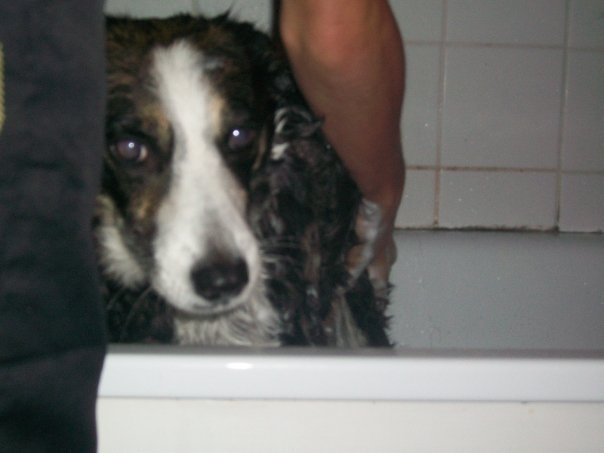
Then there was the bi-annual task of giving you a bath. It was a feat of will for both us humans and you. If we tried to call you into the bathroom, the merest hint of the word ‘bath’ would send you running. Once, you hid in the laundry basket. My job was often to keep you soothed while Mum rubbed your coat with flea shampoo and my brother sprayed you with lukewarm shower water. You were awfully fussy about temperature. There was one time when you managed to get one half of your back covered in white wet paint and we had to shower you outside with the hose. You would think that you’d be grateful for the warm indoor shower after that, but maybe you had a short memory.

image3

I’d like to apologise for the time we were staying in the Lake District and we had been out walking and you were covered in mud and stinking river water (funnily enough, you loved water when it involved jumping in oceans, lakes and rivers for sticks), and I decided the best thing to do would be to give you a shower. The problem was, we thought human shampoo would be too harsh for you, so we ended up washing you with vegetable oil and vinegar, because I’d read online somewhere that oil was meant to be nourishing for your hair, and vinegar good for your scalp. I think they meant olive oil, or coconut oil or something, because afterwards you smelled like a chip shop; although your coat was super shiny. Maybe that was just the grease. Still, you didn’t seem to mind because you got lots of smothering attention and god knows how many dog treats as a consolation afterwards.

image1

Perhaps you were at your best at Christmas. There was something about the festive season that you just loved. Maybe it was having the family together and having everyone in high spirits. You could sense human problems as quick as you could sense someone turning on the hoover. If we were having some kind of argument, you would always sit in your box quivering and looking sad. At Christmas, you morphed into a four-year-old child, ecstatic at the prospect of presents, food and Santa. When we were unwrapping our own gifts, you tried to butt in with your paws pattering everywhere and your nose sniffing every present we opened. I used to tie all the excess ribbon, string and tinsel around your collar, so that by the end of Christmas Day, you were as decorated as a festive reindeer, or a walking advertisement for Paperchase. Often, we would paint your nails sparkling red with Rimmel’s finest, and have to explain to fellow dog walkers that no, our dog’s feet weren’t bleeding, she just happened to have her seasonal manicure.

image6-2

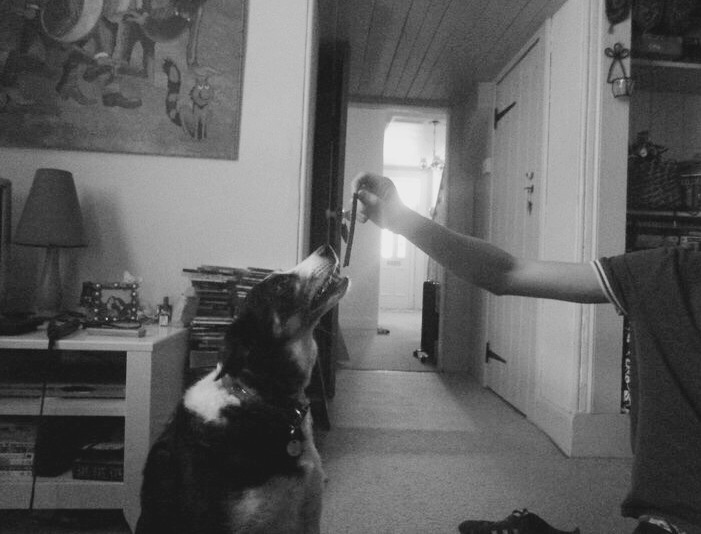
You were a much-loved dog, and everyone who visited us at Christmas seemed to bring you some kind of present, which you gratefully whined over excitedly until us children had helped you unwrap it. You were bought stockings of doggy chocolate and other treats, your favourite Schmackos sticks, fluffy toys and weird squeaky creatures. When I was too young to buy you my own present, I’d carefully pick a stuffed animal toy that I didn’t want anymore and pass it on to you, as a sibling passes down old, grown-out clothes. As I got older, I graduated onto collars. I bought you the prettiest, tackiest, gothiest collars I could find in the aisles of TK Maxx and Poundland. You had red, gold, studs and skulls, leopard print and silver glitter. When I was Christmas shopping this year, I walked accidentally down the pet aisle and it brought a tear to my eye. I was surprised at how much I missed this; it was like walking up the stairs and mistaking empty space for the final step. I was reminded that you were gone.

image4

I have to admit, there were times when you could be hard-going. You had a temper, which maybe you learned from the people around you (hell, nobody’s perfect) and you did bite people a few times when you were over-excited or pissed off. Nothing serious, but enough for us to fall out with you over. But only for a few days, until the sorrowful look on your face as you plodded into the kitchen melted our attempts at icy reserve.

Another problem was that often you also had terrible breath: a sort of stale, fishy smell that we could never work out the origin of. We had some of your bad teeth removed; we gave you dental chews. Sometimes the smell was okay, but you could really notice it up close when you were panting happily in people’s faces. I blamed your diet, which consisted of dog biscuits and ASDA SmartPrice tins of meatballs. The odd helping of tuna. I used to gag and hold my nose as I poured the grim pasty reddish mess into your food bowl. You seemed to love it though, especially Lidl’s Luxury Irish Stew that you had for Christmas Dinner. When you were old and frail and your joints were riddled with too much arthritis, we had to squirt a horrid-looking medicine in your dinner and find ingenious ways to get you to take your pills. The most effective way was to crush the pill and roll it up in a piece of brie – you always were a dog of class.

In car journeys, you’d either be an angel or a nightmare. My brother and I would argue endlessly about how we were going to shove your arse off the seatbelt so we could buckle ourselves in and set off onto the road. It was better when we were old enough to sit in the front. Sometimes, you got to sit in the front while we had to pile in the back. You would sit bolt upright, back straight and ears pricked high as you looked straight ahead. One time, a ticket lady made a joke about how handsome Mum’s husband was. When we drove off, it took her a while to realise that the lady was joking about Bella, sitting up all serious and erect in the seat beside her.

In traffic jams, you would get fidgety and whiney, which didn’t make life much better amidst the din of Motown music on Radio 2 and the smell of the steaming poo you had done, now tied up in a bag on the dashboard, slowly releasing its awful odour. There were some tough hours but we got through them together. Luckily, you fell asleep and the traffic eventually dissipated enough that we could stop at a service station and dump your mess and spray the car with aftershave. I used to hate the way that you’d never get out the car when we stopped on long journeys, like you thought we were going to leave you behind.

You used to hate when we went off to school in the mornings, as you jumped up at the window, scratching the glass with your paws, or sat whining at the gate. But there were other ways of keeping you involved. You had your own MSN, Bebo and Facebook accounts. You were a popular dog. When we took you for walks around Maybole we literally had to fight the strays off you because clearly you were the sassiest bitch in town. The box that you slept in even had the Kerrang! sticker to prove it.

image7

And well, there isn’t much else left to say. You were the best dog a kid could ask for, with your endurance, energy and sense of humour – your almost human personality. It feels weird talking about pets passing away; perhaps there’s less of a taboo around animals than there is humans dying, but still, not many people write about their dead pets. I still talk about you in the present tense, and get pissed off when people correct me. It’s a year since the vet came for you because you had fatal tumours, and a year since you last sat in your box, a year since last Christmas. I’ll never get used to the space you left, the way you’re not there to jump up excitedly when I come home to Maybole. Not there to take for walks, even though you were slow as a tortoise in the end. I didn’t want to be sentimental, writing this; but it’s true, I miss you.

image9