Poetry is a great consolation for all the ways you fail to be present.
— Eileen Myles
Did I not have a dream of horses and document. The document was very full indeed, if you can standardise what a document should look like in full. Its no print zone. The document started to lag, by dint of its size. I was flitting between offices with my hands like noons that smelled of yesterdays. The positive rage of all this. Collapse on the library floor while freshers fly staples through the air in click & spring and if I tried to type it was only to make the time faster. But faster only to go backwards, in a kind of MSP political-orgiastics ‘Yes’ sort of way by rewind. In the thrift shop, bearing my huge pink book to the counter, ignoring the diamond earrings. “Who?”
& a wound in the name for a tree. Trochee. Freely moving
glitch & clasp.
The document bloated with calyxes of unquotable glass. We are usually green, but lately the politics abused us to violet. Perianth refracting the thing that most excites, the lightning. If a bolt struck the whorl of a flower. They die in graves of obscurity, loamy soil for the paparazzi.
Remember we drank a non-trademarked cola. I hid beneath a canopy of photographs.
No, I will write this simply instead. September is a series of concentric air bubbles, each of them gleaming rainbow mutual. A series of unanswered emails, illnesses, unreadable entries in one of several notebooks. If a leave flows, the oak will shiver. There were a lot of books! The books were in towers, guarded by long blonde hair and wine. The air smelled of plimsolls. I slumbered dearly on the train, reading of clouds. Remember when clouds were a feature of sky. In the aftermath, there will always be tinsel. Books will cost what albums used to.
Bloated economy.
Block chain.
Bubbles he would drown without, sonic, and how I went anyway, breathably pink.
I was surprised at the glass that came out of me, sequined at the disco. I slammed the fridge door to spite the silent conservatory. Men came to be sweet with numbers and glasses of milk, the wrong glass type for the glass I needed. For I had been bleeding, heavily, from my perch. They smelled the blood across the bar, they always do. Swerve across lights to find me. Listen to hip hop, softcore; implore, implore.
Off to Jupiter, via the lily pads. I phoned citizens advice to protect my weekends.
What if instead they brought me coffee? Many times this month in the Pret on Lothian Road, nursing a 99p filter, shaking my skin of the rain. This liquid has excellent shadows. My palette changed like the colour of coral. I was being bleached, as though salt were coursing through my veins. So ho[a]rse, the coarseness.
At the end of the world, was there blog posts?
Once more, with chicory.
Who could remember the first deception? It was a hothouse flower, swaying in the programmed breeze with a smile. Stupid hothouse flower. You won’t grow taller than me.
I am the horse from a Dorothea Lasky poem, ‘black smoke’ and ‘the squeaky noise at night’. Mostly paper and things that “start”.
I am a failure for having never tried a Girl Scout cookie. Adult tastes are savoury. If you recall, my data pertained mostly to alarms for marmalade, pills and scree. We spread it all upon the rocks. I was thinking about Sophie Robinson and ‘fucking up on the rocks’ and a drunk sensation beyond me, like sewing your skin to the air and having it pulled so tight by the breeze. Whose breeze is it forever. Wordsworths I believed before. Grave trip. That photo of the pop punk hero in a hospital bed with a bloated liver, my phone cracked of shame and screen, eyelashes curled in the sheets with your curls of hair. A cereal.
You pop one bubble, you give into the next. All of my glitzy messages, failing. A water lettuce of vitreous finish, salvaged with salt. We dined upon tips from a haircut. I was so thirsty.
“What matters is the passion alone, and your polo neck.”
The man that was named after myrrh and water. I stood in front of the hundreds, played licking at carpets to catch the box. What if you won and you’d reconstruct it, rip by rip, to make a home. And we lived in that like sulphites, crying.
All of my friends, erasing tattoos.
A week of walking. Walk the week Walk the week
The pace of her voice fitted my walk and I saw that Lock 27 was open. The colour of lager in springborn hangover; the back of my throat. Kept walking for the sake of the cloudless sky. Craving rainbows, sugar, arcadia. A harvest moon glowed as I made my way home, listening to Titanic Rising as nameless birds made their roost inside me.
There was a launch, the end of a diary, a new kind of wildness.
I stop my breath at the stop. At Wembury Beach, I go barefoot in the sun-warmed pools. Silver gelatine in lieu of a sky. The world pictures us back, I feel pinholed & nearly a cinder. What do we mean when we talk of aries. The track marks of cormorants were a font. Sticky toffee aporias of sense, a sugary endlessness. Plymouth.
<Oculus diacritic>
Train take me east, where the time goes slower. We can hear the waves from the wall again.
We can hear the waves from the wall again. And the horses, horses. Horses come out of the sea. So many white horses, ‘and the ground shook I got this feeling so strong for the first time ever, then I just put my eyes down on my knees and covered my ears’ (Alan Warner, Morvern Callar).
I woke up to ‘Carry Me, Ohio’ and the soundless canal with the slender girl, swallowing whisky from a watering can. Things slid down my cheeks. In the border of drunken plants, we thinned in hormonal resilience. From the dream-gig returning with postcards. Imagine return to implore, say over. Press that lovely Enter.
“One of us is a mushroom.”
What Rachel has to say about roads.
I had the new books and the covers; the poem felt like a cover I was singing it so much I forgot the truth. Do you have the time, a laminate silk.
I was so tired I could hardly lift my eyes to roll.
She screamed the city through my ears for me.
Trolling in the pleistocene, trolling waters. They triggered my sorrows set to fleek.
My phone died in the south side I was wandering around at some pace. The exhibition opened out into shimmer and light, in dramas of beauty and violence. Not violent beauty. Not violent. Kept saying it as the ornaments turned. Art. Art. Art is a finishing. I felt cliché in the gardens afterwards, sipping chardonnay alone, reading Mary Ruefle:
There are poets who are resigned to not being able to save the world, who barely have enough time to catch up with themselves and the attendant mystery of their fear and being.
(Madness, Rack and Honey)
Once again, twice over the text. A hardening gold. School girls shrieked in their uniforms, throwing rocks at each other. Their mothers drank wine like me, but talked. The air started to simmer as the shadows came over and I realised too early that it was no longer summer, despite the heat; the mind crisped at its fringes with golden exhaustion. I got sick. I climbed into a lighthouse / It was a very bright house. The light over the sea was gold and also.
Type slowly, time is stained.
New clouds fill the lines, like something extraneous from the hand of Klee. Shaky coke. Vegan bakery caper / The Archers. Narrative is this luxurious telling from the ethnographers’ disco. I put down my reflexes one by one for an earnest thought. He broke a glass. A surprise encounter. I drank until the bubbles soothed my burning throat. A toast to books
Between thick slices of books. The brain. Splayed on Marmorie Paper. Someone I loved had a house and filled it with spiders, drawing silver all over the rooms in complex geometries; the house was teeming with lines and if you passed through they’d stick to you. The resultant tattoos gleamed with mercury; you could tap a needle on the line to coax a red. The little ones come out the dark, they were crawling with cries. Lasers of silk and intrigue!
I close my eyes to salt again. “Away / Shyest.”
There was no moment of ‘disembarking’ in the green-hued dream of Shetland. At the hostel I lay in the bottom bunk dreaming of ink in my veins. I peeled apples for the invalids of the moon. We colonised the office with shades of blue.
Remastered the inches of that single. His voice quicksilvered the rain. I warmed.
Walked around listening to Lana, blood-lilted by a Larabar. My session timed out where the space exceeded.
[An essay on anorexia, femininity, adolescent pain & writing the body]
I distinctly remember the first time I watched someone apply liquid liner to their eyes. We stood in the Debenhams toilets before a sheet of unavoidable mirror. She emptied her rucksack of trinkets and tools, drew out a plastic wand with a fine-tip brush and skimmed the gooey ink skilfully over her lids, making curlicues of shimmering turquoise. Her irises were a kind of violent hazel, whose flecks of green seemed to swim against the paler blue. She was very tall and for a while, very thin. She had a nickname, a boyfriend and sometimes she shoplifted; in my head, she was the essence of teenage success. Only later, in the maelstrom of a drunken night out down the beach, do I discover she’s heavily bulimic.
A year or so passes since this first incident, watching my friend slick her eyes with electric blue. I have since learned to ink my own eyes, draw long Egyptian lines that imitate that slender almond shape I long for. My makeup is cheap and smudges. I have grown thinner and people are finally starting to notice.
My mother goes quiet when we do the shopping. She tells me to move out the aisle and I ask what’s wrong. People are staring, she says. I turn around and there they are by the stacks of cereal, mother and daughter, gesturing at my legs and whispering: stick insect, skeleton. A feel a flush of hot pride, akin to the day in primary school when I got everyone to sign my arms with permanent marker—this sudden etching of possession. I am glad I lack this conspiratorial relationship with my own mother, reserving comments on others for the page instead, for my skin. My pain and frustration are communicated bodily: I slink into the shadows, sleeping early, avoiding meals. When people stare, they imbue me with a visibility I desire to erase. I should like better to float around them intangibly, diaphanous, a veil of a name they can’t catch. Instead it rests on everyone’s tongue, thick and severe: anorexic.
It took a week for all the names to fade from my arms; it takes much longer to erase a single label.
In the television series Girls, Lena Dunham’s character reveals that she got tattoos as a teenager because she was putting on weight very quickly and wanted to feel in control of her own body, making fairytale scripture of her skin. In Roald Dahl’s short story, ‘Skin’, an old man gets a famous artist to tattoo the image of a gorgeous woman on his back, the rich pigment of ink like a lustrous ‘impasto’. Years later, art dealers discover his fleshly opus and proceed to barter, literally, on the price of his skin. The story reveals the synecdochical relations between the body, the pen and the value of art. Everything is a piece of something else, skin after skin after skin. In Skins, Cassie Ainsworth gazes into the camera: I hate my thighs. With black marker, she scrawls her name onto her palm; she’s got a smile that lights up, she’s in love. Everyone around her rolls cigarettes, swaps paper skins like scraps of poetry. It feels dirty, the chiaroscuro mood of sunshine and sorrow. Her whole narrative purpose is the spilling of secrets, of human hurt turned to vapour, smoke. Wow, lovely.
For a while, my name mattered less than my skin. There were levels of weight to lose, dress sizes which signified different planes of existence. Over and over, I would listen to ‘4 st. 7lbs’ by the Manic Street Preachers, Richey Edwards’ lyrics spat over a stomach-churning angst of guitar: ‘Self-worth scatters self-esteem’s a bore / I’ve long since moved to a higher plateau’. That summer, ten years ago now, I would walk for hours, the sun on my skin. All the fields stretched out before me like fresh pages of impossibility; my life was a mirage on the flickering sea. I thought of liquid turquoise ink, the friend in the mirror. I started to forget the details of her face, so she blurred into the impressionist portraits I wrote about in school.
Midsummer’s eve; I laid down in one of those fields. With bone-raw fingers, I counted the notches of my spine. Even in free-fall you never feel quite free.
I was obsessed with Richey’s ghost. He disappeared decades ago and they never found evidence of his body. I wanted to evaporate like that, leave my abstracted car somewhere along the motorway; step into the silence of anonymity. Richey wrote screeds of furious notes: ‘I feel like cutting the feet off a ballerina’. There it was: the dark evaporation of resentment and envy. Around this time, Bloc Party released A Weekend in the City, a record that uses Edwards’ lyric to express the racial frustration of being made Other by a racist society. I was acutely aware that the figure of a ballerina, the doll-like white girl, was a divisive source of symbolic desire. We inscribe such societal alignments on the female body, and shamefully I was more than ready to fall into place, to shed the necessary weight. But what I wanted was less the bloody violence of a crippled ballerina, and more the success of erasure.
In Zelda Fitzgerald’s only novel, Save Me the Waltz,the protagonist Alabama trains to be a ballerina late in her twenties, too late to ascend to any real career success. Here was ballet, the pre-adolescent world of waif-thin bodies and she was a mother, a woman—someone who once gave birth, who was strong in flesh. She reaches this frenzied state of beautiful prudence, honing her body to the point where every movement and thought is guided by the waltzing beat, the perfect arabesque: ‘David will bring me some chocolate ice cream and I will throw it up; it smells like a soda fountain, thrown-up, she thought’. I could attest to that. Ben and Jerry’s, swirls of it marbling the toilet bowl, clots of sweetness still clear in your throat. Fitzgerald’s sentences stream towards endless flourish. Alabama makes herself sick with the work, her desire is lustily bulimic. She gets blood poisoning, finds herself hospitalised with tubes in her body, drip-fed and cleansed by the system. I thought of how I wanted to photosynthesise, survive on nothing but air and light. Like a dancer, I was honing my new ascetic life.
Sometimes at night, the old ticker would slow to such a crawl and I thought it would stop in my sleep, sink like a stone. A girl I met on the internet sent me a red-beaded bracelet in the post and in class I’d twirl each plastic, pro-ana ruby, imagining the twist of my own bright sinew as later I’d stretch and click my bones.
I was small, I was sick. I used to write before bed, write a whole sermon’s worth of weight-loss imperatives; often I’d fall asleep mid-sentence and awake to a pool of dark ink, flowering its stain across my sheets. Nausea, of one sort or another, was more or less constant. Waves would dash against my brain, black spots clotting my vision. I moved from one plane or scale to another, reaching for another diuretic. I tried to keep within the lines, keep everything in shape.
Often, however, I thought about water, about things spilling; I drank so much and yet found myself endlessly thirsty. Esther Greenwood in Sylvia Plath’s The Bell Jar, trying to drown, being spat back out by the sea: I am I am I am.
I’m fine I’m fine I’m fine. The familiar litany.
Something buoyed up, started showing on the surface. People could read the wrongness in the colour of my skin, all that mottled and purpling blood like a contrast dye my body had been dipped in. Against my pallid aquatic hue, I used to envy the warm and luxurious glow of other people’s skin. I sat on a friend’s lap and he freaked out at the jut of my bones. Someone lifted me and we ran down the road laughing and they were like, My god you’re so light. The sycamores were out in full bloom and I realised with a pang it would nearly be autumn. Vaguely I knew soon I would fall like all those leaves.
Anorexia is an austerity of the self. To fast is to practice a refusal, to resist the ideological urge to consume. To swap wasteful packs of pads and tampons for flakeaway skin and hypoglycaemic dreams. Unlike with capitalism, with anorexia you know where everything goes.
The anorexic is constantly calculating. Her day is a series of trades and exchanges: X amount of exercise for X amount of food; how much dinner should I spread around the plate in lieu of eating? It was never enough; nothing ever quite added up. My space-time melted into a continuous present in which I constantly longed for sleep. The past and future had no bearing on me; my increasingly androgynous body wasn’t defined by the usual feminine cycles—life was just existing. This is one of the trickiest things to fix in recovery.
Dark ecologist Timothy Morton says of longing: it’s ‘like depression that melted […] the boundary between sadness and longing is undecidable. Dark and sweet, like good chocolate’. Longing is spiritual and physical; it’s a certain surrender to the beyond, even as it opens strange cavities in the daily. The anorexic’s default existential condition is longing: a condition that is paradoxically indulgent. Longing to be thin, longing for self, dying for both. The world blurs before her eyes, objects take on that auratic sheen of desire. Later, putting myself through meal plans that involved slabs of Green & Black’s, full-fat milk and actual carbs, the dark sweet ooze of depression’s embrace gradually replaced my disordered eating. I wondered if melancholia was something you could prise off, like a skin; I saw its mise-en-abyme in every mirror, a curious, cruel infinitude.
In Aliens and Anorexia, Chris Kraus asks: ‘shouldn’t it be possible to leave the body? Is it wrong to even try?’. What do you do when food is abstracted entirely from appetite? What happens when life becomes a question of pouring yourself, gloop by gloop, into other forms? What is lost in the process?
I started a diary. I wrote with a rich black Indian ink I bought from an art supplies store. The woman at the counter ID’d me, saying she’d recently had teenagers come in to buy the stuff for home tattooing, then tried to blame her later when they all got blood poisoning. Different kinds of ink polluted our blood; I felt an odd solidarity with those kids, remembering the words others had scored on my skin for years. Tattooing yourself, perhaps, was a way of taking those names back. In any case, there was a sense that the ink was like oil, a reserve of energy I was drawing from the deep.
Recovery was trying to breathe underwater; resisting the urge of the quickening tide, striving for an island I couldn’t yet see.
(…What I miss most, maybe, is the driftwood intricacy, the beauty of the sternum in its gaunt, tripart sculpturing. Thinned to the bone, the body becomes elegiac somehow, an artefact of ebbing beauty…)
I think about beef and milk and I think about the bodies of cows and the way the light drips gold on their fields sometimes and how I’d like to curl up in some mossy grove and forget that all of this is happening. Sometimes I worry that my body is capable of making milk, making babies; its design is set up for this nourishing. Hélène Cixous insists women write ‘in white ink’ but I don’t want to be that plump and ripe, that giving. I want scarification, darkness, markings. I want Julia Kristeva’s black sun, an abyss that negates the smudge of identity.
I try to find loveliness in femininity, but my hands are full with hair barrettes, pencils, laxatives, lipstick—just so much material.
As Isabelle Meuret puts it, ‘starving in a world of plenty is a daring challenge’. Anorexia has the highest mortality rate of any mental illness. Recently, I logged onto my Facebook to find an old friend, a girl I’d known vaguely through an online recovery community, had died in hospital. Her heart just gave up in the night. People left consolatory messages on her wall; she was being written already into another existence. Another girl I used to know posts regular photos from her inpatient treatment. She’s very pretty but paper-thin, almost transparent in the flash of a camera. Tubes up her nose like she’s woven into the fabric of the institution, a flower with its sepals fading, drip-fed through stems that aren’t her own. She’s supposed to be at university. I think of Zelda Fitzgerald, of broken ballerinas. A third girl from the recovery forum covers herself in tattoos, challenging you to unlock the myriad stories of symbol. Someone I know in real life gets an orca tattoo in memory of her sea-loving grandfather; she says it helped to externalise the pain. My own body is a pool of inky potential; I cannot fathom its beginning and ending. I wish I could distil my experience into stamps of narrative, the way the tattoo-lovers did. I am always drawing on my face, only to wash the traces away. I must strive for something more permanent.
Recovery, Marya Hornbacher writes in her memoir Wasted,
comes in bits and pieces, and you stitch them together wherever they fit, and when you are done you hold yourself up and there are holes and you are a rag doll, invented, imperfect.
And yet you are all that you have, so you must be enough. There is no other way.
Every meal, every morsel that passes the lips, we tell ourselves: You are okay. You deserve this. Must everything be so earned? Still there is this girl underneath: the one that screams for her meagre dreams, her beautiful form; her starlight and skeletons, her sticks of celery. I try to bury her behind sheet after sheet of glass, lose her in shopfronts, the windows of cars and bathrooms; I daily crush out the bloat of her starched hyperbole, keeping the lines plain and simple. Watching others around me, I try to work out other ways of feeling full, of being free. There is an entry from 2009, scratched in a hand I barely recognise in the final page of a diary: ‘Maybe we are only the sum total of all our reflections’. I wonder what kind of sixteen-year-old wrote this, whether she is happy now and if that matters at all.
Disclaimer: my middle name is Rose. This means nothing, as far as I’m aware. I have never received roses for Valentines (as far as I’m aware). What follows comprises an essay on what a rose is a song is a word is a rose(?), feat. the likes of Gertrude Stein, Idlewild, Oscar Wilde, Joyce, Yeats, the French Symbolists and Lana Del Rey…
🌹🌹🌹
Despite having two degrees in literary studies, a lot of my more convincing intellectual references were first encountered through music, not books. The Manic Street Preachers’ Holy Bible album introduced me to Foucault, Plath, Ballard, Nietzsche, Mailer and Pinter in one fell, aggressive swoop of a Richey Edwards lyric barked over the guttural shudder of Nicky Wire’s bass-lines. Gertrude Stein, the awkward goddess of modernism, first came to me via an Idlewild song—deep in some distant vestige of the noughties, when I still bought CDs. She’s mentioned in ‘Roseability’, the last single to be taken from the band’s 2000 breakthrough, 100 Broken Windows. It’s a typically angsty track, reflecting on the futility of being dissatisfied with the present and finding pathetic solace in the past: “stop looking through scrapbooks and photograph albums / because I know they won’t teach you what you don’t already know”. Say it and already you know, right? ‘Roseability’, like ‘Idlewild’, is a compound word, a mashing of nouns that seems to promise deep meaning as its very premise. But where is it pointing us? What of Stein and what of her roses?
Stein’s famous quote on roses, ‘Rose is a rose is a rose is a rose’, seems to do two things. Firstly, it indicates an essentialist perspective on semantics—circularity conveying the uselessness of further description. Secondly, it enacts a qualitative echo chamber by which the reader must question what constitutes this essence, this roseness which is the rose’s identity. The repetition suggests the elusiveness of this essence, deferring with dreamy assertion—the kind of beautiful aphorism you might coin on an acid trip, completely sure of your own new logic. There’s a sense, with every ‘rose’, of meaning’s possibility blooming. You want to wrap the sentence in a circle (as Stein did, selling the phrase on plates) and close a precious loop, devoid of full stops and fixed meanings. Is a rose a rose or the space between a rose and what a rose is? Swap Saussurian triangles for sweet hips and sepals, a new rose budding in the roots. Lose all fixity for the chance trellising of structure, turn attention to sunlight, rainfall, temperature and other environmental conditions. Acquire tautologies and promise of spring. A rose is a whorl, a loop; a delicate head so heady with beauty. Humans like roses share beds sometimes. Look too long into the corolla and maybe you’ll lose your mind.
Idlewild: the secluded meeting place in L. M. Montgomery’s 1908 novel, Anne of Green Gables Idlewild: the original name of John F. Kennedy International Airport in NYC Idlewild: to idle wildly; to wildly idle; to idly go wilding.
“You’ll always be, dissatisfied.” Perhaps the mere act of flicking through memories is a form of idle wilding. Making a wilderness of memory’s stasis. Depart only at airports; dwell between continental impressions of kisses.
100 Broken Windows marks a turn in Idlewild’s direction: from their 1990s brit-pop/punk roots to a more spacious, ambitious sound, influenced by the likes of The Smiths, The Wedding Present and R.E.M. When I first started listening to Idlewild, 12 or more years ago in those tender, pre-adolescent times, I sort of filed them as the Scottish version of Ash: they had that punk sensibility coloured by stadium choruses and a cheeky pop strain that balanced the anxious lamenting aspects. All sincerity, sure, but the lyrics were sharp enough to lift them from the sentimental pitfalls of subsequent contemporaries—the end of alt. history that was ‘Hey There Delilah’. Here we move into screaming emo or post-hardcore as inherent hauntology of the fuzzy rock club: the bourbon and sweat, the greasy hair, the frank, shuffling indifference of stoner punters. There were words that smouldered, sparked, then extinguished in the wind; but Idlewild had something different, a primitive attunement to human sorrow that cut through the gum-snapping cool of postmodern irony games, even as its affect blew up in a drumbeat or solo, the loquacious, Michael Stipe angst of Roddy Woomble’s voice. Think sonorous violins and a solid rock chorus, all the energy and wit being typically Scottish. Like the Manics before them, Idlewild did punk and guitar pop, did the stylised mosh and generic fusion, did the political and personal. The millennial malaise in their songs was very much of the times even as it seemed already tired of them:
It’s a better way to feel When you’re not real, you’re postmodern (It’s not that one dimensional, it’s not the only thought)
Cut out all feeling, except wait. There’s more. We don’t have to languish in the paralysing grunge of the nineties. The drama of strings would grace each melody electric and maybe you’ll find historic truth in this plugged-in homage to folk turned on its head. If postmodernism is a Mobius strip of self-referentiality, that recursive collapse of linear progress (figured as a Scalextric set in the video for Idlewild’s ‘These Wooden Ideas’), then how to find meaning again, to find sense at all? Stand in a doorway and find yourself blasted with void fill, flick grapes in a wastebasket, count up your demons for the old stoned longing. Shrivel like raisins. The turn of the century has already happened, but maybe if you surrender to the chorus you’ll feel less jaded. There’s a reassurance. The thing about choruses, after all, is that they repeat.
As it does with choruses, algorithms and perennial blooms, repetition happens a lot in Tender Buttons,Stein’s infamously cluttered collection of prose poetics. With repetition and modulation, a queering of standard grammar, everyday objects become less the tools which underpin human existence, and instead things in themselves—the wasteful artefacts in excess of definition. Paratactical, concatenating assemblages which entangle like vines or else accumulate. Grapes on the carpet, styrofoam littering the floor, a word or two oozing through the backdoor…Am I far too close to the things I mistrust? Maybe there is always a stammering, a stilted stilling. I buy roses for the restaurant in which I work and the very act drags me into heteronormative time: the time of expensive dates, birthdays, weddings, funerals, candlelit dinners. What preference for the deep, luxurious, elusive bloom? Must lovers cut their tongues on thorns? I wonder, do those erect stems contribute their strange teleology…to what, to what…are roses always in excess of themselves—showering petals, shedding, being ever so much just roses?
“I stopped and waited for progress”. Back in the day (2005), the NME rated Idlewild ‘a stolid group of trad guitar manglers’, whose new single ‘Roseability’ served ‘both as a rabbit-punch to the head of agnostics and a celebratory three-and-a-half minutes of safe, predictable, wholly generic, utterly brilliant rock ‘n’ roll.’ It makes me dewy-eyed to remember the magazine’s honest, scathing days. That insouciant, throwaway cool. Music criticism was pretty brutal when I grew up, and you basically had to tick every indie rock’n’roll formula (hello Alex Turner: snake-hips, haircut etc) to get consistently decent reviews. Or you could nail the attention on some eccentricity (The Horrors), or perhaps mediocre throwback to rock’n’roll times gone by (need I name every white boy indie suspect circa 2007). ‘Roseability’ is how it feels to be in your twenties, surrounded by people looking backwards; not quite in anger, but in nostalgia. It’s been a long time since I’ve considered something new as ‘utterly brilliant rock ’n’ roll’ in the transcendent sort of way Idlewild pull off—hardcore guitars, thrashing drums, literary references and all. Sweetness and thorns. Uneasy noise secretion. Tip your hat at tradition and then blast through the chorus, scatter your petals to cover the seams. What words in ‘Sacred Emily’ follow the roses? ‘Loveliness extreme’. I miss the NME, I miss being young enough to get lost this easily.
To veer into Idlewild itself, let’s wallow in passages from Anne of Green Gables:
You know that little piece of land across the brook that runs up between our farm and Mr. Barry’s. It belongs to Mr. William Bell, and right in the corner there is a little ring of white birch trees–the most romantic spot, Marilla. Diana and I have our playhouse there. We call it Idlewild. Isn’t that a poetical name? I assure you it took me some time to think it out. I stayed awake nearly a whole night before I invented it. Then, just as I was dropping off to sleep, it came like an inspiration. Diana was enraptured when she heard it. We have got our house fixed up elegantly. You must come and see it, Marilla–won’t you? We have great big stones, all covered with moss, for seats, and boards from tree to tree for shelves. And we have all our dishes on them. Of course, they’re all broken but it’s the easiest thing in the world to imagine that they are whole.
That endearing, childish hyperbole, the absolute thrill of invention. The special grove in a ring of white birch trees, heart of the circle, the rose’s secret pistil. Place of germination. Fragments congeal as expansive imaginings, disappointment evaporates in hope.
“Gertrude Stein said that’s enough”. I’m not quite sure how Roddy Woomble, Idlewild’s lead singer, intended the Stein namedrop, but I take it as a reference to her poems’ weird loops of recursion. In the video for ‘Roseability’, Stein’s portraits are hung up all over the room; her face is even on the front of the kick drum, looking all knowing and stately. The video’s aesthetic has the feel of a 90s television set, all pop art circles whose colour has faded, sharp swivelling camera angles and hair swishes. The pop iconography of teenagers flooding the room with their plastic bracelets, braided hair and awkward moshing. It would be totally American if not painfully, most Britishly sincere—I mean just look at how the guitarist crushes into his own instrument, how Woomble wipes sweat off his face, paces around with the mic so close it could feel his breath. Loveliness extreme. When this was released, I wasn’t even a teenager. When I finally see him live, it’s in a church hall in Maryhill 2k17 and it’s utterly beautiful: how generous the set-list, how gracious a frontman with his small-talk and nods to the band, his thank yous. Watching the kids in the ‘Roseability’ video recreates that weird oscillation between feeling old and seeing in their faces the bizarreness of MTV ennui: the ghost of what I would temporarily become at thirteen, fourteen; cladding myself in discount Tammy girl, then Topshop, dying my hair pink and donning studded collars. With the hormones, you lose that ecstatic childhood imaginary hope; desire is amorphous and endlessly droning. You close your eyes and it seems the world has already ended. Sometimes it comes back, sometimes not. Maybe roseability simply means innocence.
‘Mrs. Dalloway said she would buy the flowers herself’ (Woolf). But customers rarely do. It’s up to me to ornament a room, to flourish a mood, to mark some milestone in another life that’s not mine, whose linearity’s not mine.
My mother bought rose-coloured roses for my eighteenth birthday, blush pink. Red when I turned twenty-one. I stopped acting sweet and rosy, dyed my hair red too. Fell through the whorls, the plush abyss.
‘Roseability’: the ability to be of roses, for roses to exist? Sensibility is, according to my laptop’s built-in dictionary, ‘the quality of being able to appreciate and respond to complex emotional or aesthetic influences; sensitivity’. Does roseability denote a similar sensitivity? When we think of roses we think often of Englishness: that angelic Laura Marling figure, a garlanded Bronte heroin, Paul Weller’s ‘English Rose’. We think tenderness, pastoral, a certain enclosure (marriage, gardens?) and guaranteed loveliness. She who coils golden hair round her porcelain finger, who knows how to talk to sheepdogs, who paints watercolours of the dawn. We think Shakespeare—‘a rose by any name would smell as sweet’. But we also think north of the border, a little bit of the visceral made kitsch: Robert Burns’ ‘my love is like a red, red rose’, whose unfortunate fate is to garnish every dishtowel bought on your granny’s last visit to Alloway (Roddy Woomble, perhaps not incidentally, is also an Ayrshire lad). The faint rose scent in a golden cologne, mingled with tobacco; the glistering sweetness of a youthful, drugstore perfume. Roses are roses, but roses are so many things, are poised on the lips of also…
The rose is a complex flower, a perennial whose species number over 100. Roses are typically ornamental, grown by those who know what cultivation means and spend their Septembers clipping away the thorny remains. An old man round the corner from my flat is out in all weathers among soil and stem: grafting, trimming, tilling for his roses. Perhaps he loves them more than his children. In summer, walking home on warm evenings you can smell them in the pale ambrosial air, a delicate bounty. If properly cared for, roses can live a long time, perhaps over and over, perhaps forever…what exactly does perennial mean?
The appropriately named Bloom, in James Joyce’s Ulysses, stands on Cumberland Street and opens a letter from Martha Clifford—a woman who responded to his newspaper ad requesting a typist. The Dublin postal system facilitates a sort of illicit exchange between them. Half-rhyme, consonance: petal/letter. The delicate thrill of letterly infidelity. She wants to know ‘what kind of perfume does your wife use’; the animal possession of scent. She attaches to her letter a flower, slightly crushed:
He tore the flower gravely from its pinhold smelt its almost no smell and placed it in his heart pocket. […] walking slowly forward he read the letter again, murmuring here and there a word. Angry tulips with you darling manflower punish your cactus if you don’t please poor forgetmenot how I long violets to dear roses when we soon anemone meet all naughty nightstalk wife Martha’s perfume. […] Fingering still the letter in his pocket he drew the pin out of it. […] Out of her clothes somewhere: pinned together. Queer the number of pins they always have. No roses without thorns.
So many compound words, clustering in the mouth like so many attaché petals peeled off from a dress. He plucks them away, fingers the soft excitement of words: ‘naughty nightstalk wife’ with the luridly alliterative twist of fantasy. Libido vs. loss of life. What slips away with the pin? What does the pin pin together? Folds and creases, sleepless. Spike of cactus, nasty, phallic. Prick. Tulip. Coiled anemone: wild flower or tentacular sea creature? Connotations of slip. In her slip. Slippery. Freud in The Interpretation of Dreams, waxing lyrical about female genitalia:
I thought of what seemed to me a venturesome explanation of the hidden meaning of the apparently quite asexual word violets by an unconscious relation to the French viol. But to my surprise the dreamer’s association was the English word violate. The accidental phonetic similarity of the two words violet and violate is utilised by the dream to express in ‘the language of flowers’ the idea of the violence of defloration (another word which makes use of flowersymbolism), and perhaps also to give expression to a masochistic tendency on the part of the girl. — An excellent example of the word bridges across which run the paths to the unconscious.
Dear roses dear romance; violets are pale taste of childhood’s sweet naivety. Violets are blue and so are you. Things you can take away. Lines of flight, tangled stems and botanical echoes. Semantics. Lingering taste. The burgeoning rhizomes of the greedy unconscious. Lana Del Rey: “there are roses in between my thighs / and a fire that surrounds you”. The Metro calls it a ‘shocking new track’, but I’ve never heard anything so languid and dreamy and in love. Hungry. Sugar is sweet and…
Source: Pinterest
Angela Carter’s roses bite, don’t you? In ‘The Lady of the House of Love’, the self-starving somnambulist—the ‘beautiful queen of the vampires’—is a figure for desire’s recursive, self-destructive appetite. Manifest as addiction, or withdrawal; the flesh-shedding lust of anorexia, its resistance to growth and fuel. ‘She herself is a cave full of echoes, she is a system of repetitions, she is a closed circuit’. Her dialogue billows round and round into absence. Like Stein’s rose, she is bound to the noun and the grammar of herself—the flickering inward structures of mind, matter.The Algorithmic Beauty of Plants. Clustering rootlets, trapped yearnings for impossible perfection. No rose can be the perfect rose; except perhaps Stein’s rose: the virtual rose at the end of the looping rainbow. Loopy, lupin, lupine, luminal. Devouring, emanating, alluring. The virtual rose, perfect by its very impossibility, like Mallarmé’s Book. So many leaves and words. The stain of ink and rain, imprinted teeth. Carter again: ‘I leave you as a souvenir the dark, fanged rose I plucked from between my thighs, like a flower laid on a grave’. Those intoxicating roses, like Carter’s baroque, coruscating prose, cascade across the page, the white snow, the grave. La petit mort. In every petal the promise of a word, a breath.
Roseability. Faith in the unknowingness that is adulthood’s full blooming. Desire’s maturity bound in nostalgia, that noxious plague of your twenties; the ‘sense sublime’ of Wordsworth, five years later, experiencing ‘something far more deeply interfused’. Like the rose’s corolla, time rolls both round and onwards. It’s nauseating, an almost vortex. You’re always chasing that inward spirit, the thing that burns regardless: “They won’t teach you / what you don’t already know”—don’t Idlewild know it?
“There is no roseability.” Enduring, complicated, hungry and sweet, it’s no surprise that roses are symbols for romantic love. Oh hallowed, protected cliché. Expensive hotels strew red roses on white bedsheets, a look that is oddly funereal. Share the ephemeral with melting chocolates. Reminiscent of menses, the blot of a clot in time. He got shot. She bled freely. Blood is like iron, a sharp metallic taste. What do roses taste of? What kinds of symbolic immersion might get at the essence? A bathtub of roses, a bedspread, a bouquet exploding for wedding celebration. Petals of confetti; a blossoming, artificial effect. White roses can be purity, lightness and marriage; or maybe undying love in death, restoration of innocence. I love you as the snowfall that closes Joyce’s ‘The Dead’. Sitting on the languid banks of a river in June, desecrating a rose with your sorrow: one petal, he likes me, two petals, he likes me not. Enough petals to fill a river, all the world’s worth of unrequited love. Red upon red upon blue. Flowing, felt in the blood. But no river is ever twice the same, no rose identical, no inflorescence—despite the algorithmic genius of plants—symmetrical. The beauty of roses comprises their subtly unique detail. ‘Lesser’ flowers, mere ornaments to weeds, clutter up close in mutual similarity. Maybe’s Gatsby’s Daisy could be anybody—she just had to be sweet and blonde, smelling of the damp rich old world, ersatz fresh, ready to decorate. The colourful shirts were mere petals for the true dark rose of his longing. Did Gatsby have blue eyes? I can’t remember.
I did a hard-drive search for the phrase ‘blue rose’ and found an old flash fiction piece I wrote years ago, called ‘Watercolours’. An extract:
The garden fills with new light; conscious light, collecting a clarity not quite recognised. The roses have left their earthly bodies, and the worms burrow up through the untilled soil. The roses’ spirits lift the leaves from the trees and scatter them like sloughing flakes of a giant’s skin. A sigh escapes the sultry violets, the ones he captured once by mixing blue and red. The red poppy is a pretty thing, but she is unborn yet. A mulch of memory overturns as day decides to end.
Isn’t it strange, the seduction of fairy tale ecomimesis? Nature’s ekphrasis surrendering effortlessly to the same saccharine motifs; the kitsch aesthetic containing within its insistence a certain artifice, then the theatrical mists of deliberate illusion. I think of watercolours and I think of everything blurring. Colours decay in the rain, or do they saturate? And again, the roses and violets, whores and madonnas? What of the feminising of botany’s blushing ornaments, ‘captured’ by a (male) artistic vision? But time is ever more flowing, desire afloat, liquid and trembling as rain. What would it mean to anthropomorphise roses, to imbue them with certain abilities? Roseability. These would be the most precious roses, the memorialising and future-making symbols. The blue ones.
I also found a piece from 2013 titled ‘Blue Roses’ It’s about a botanical garden famous for its sky-coloured flowers. The narrator’s lover, Richard, laments the death of his mother and talks about what it would be like to be a carnivore plant. The narrator says: ‘“Those long, slow deaths would suck out your soul.”’ Was I reading Carter at the time? Nature (always capitalise to denaturalise) in this story is narcissistic, strange, devouring: stars are ‘aware of themselves’, the twilight forms deliberate ‘geometric patterns’, the rain ‘spilled out in oozing puddles that clogged the scum of the pavement’. Security patrol the blue roses in the glasshouses. It isn’t entirely clear what they mean in the story. Symbols for what? Eliding natural selection, these monstrous flowers blur into nothing but blueness—the exotic quantity, intangible mystery, possible infinitude. Despite the wholesomeness of the tale, I couldn’t help but think of the weird erotic undertones of its spooky botany. Blue rose, blue movie.
So yes, the very phrase ‘blue rose’ denotes something exceptional in Nature (in Twin Peaks, a ‘blue rose’ case is one which involves supernatural elements). In Tennessee Williams’ play, The Glass Menagerie, Laura (a character based on Williams’ mentally ill sister, the aptly named Rose) is nicknamed ‘Blue Roses’ on account of her fragility, her spiritual affinity with that which transcends the ordinary (and a childhoood attack of pleurosis). Laura dwells in a surreal version of reality; her very nickname harks back to André Breton’s ‘First Surrealist Manifesto’: ‘Cet été les roses sont bleues’ (this summer the roses are blue). Things have reversed and in their delirium remain quite beautiful. Roses, blue or not, are associated with a certain precious wavering between worlds both spiritual and physical; worlds crossed only by rare occurrences of romance, imagination, memory. He loves me, he loves me not…Laura is obsessed with a little glass unicorn, symbol of mythology, virginity. Preservations of the body for another world, or from another world? I go into the woods and find fairy rings made from small white flowers (I think of the inverse fable of extreme depression, the harp-sparkling Manics’ track, ‘Small Black Flowers That Grow in the Sky’). While there is a lovely joy to the common daisy or meadow flower—an ethereal quality that recalls our initiating buttercup crushes—the deep lust of Romance must be associated with the scarlet plumage of the rose. Love is calculated on decadence, exception.
Is a rose as shatterable as glass, as a heart?
I used to live in a house called ‘Daisybank’, but my friends always teased because there were roses painted onto the window, not daisies. What weird reverse supplement? The fat white dog daisies would spring up on the front lawn in summer, but they were always overlooked by those glassy roses. There’s a certain authority, majesty even, to the rose. You associate it with tragedy and great beauty: Lana Del Rey with her lips stuffed full with a rose, playing the calamitous heroine. Snow-White and Rose-Red. Shakespeare’s ‘a rose by any name would smell as sweet’ is taken from Romeo and Juliet, in which Juliet convinces Romeo that it matters not that his name, Montague, is her family’s rival house. A rose is a rose; regardless of name it will always come up smelling of roses. Having graduated from Daisybank, I now find myself living on Montague Street…
‘Who dreamed that beauty passes like a dream?’ This is W. B. Yeats, probably writing to a woman he loved, Maud Gonne. He seems to set up beauty as life’s eternal opposite; where human existence is fleeting, beauty remains archetypal, enduring. Think of Keats’ ‘beauty is truth, truth beauty’. There’s a universality, a mythological underpinning to this beauty. In Yeats’ poem, the loved one embodies wistful figures of glory: Helen of Troy and Usna of ancient Irish history. Surely she slips between the shadows of comparison? Whether Yeats scorns the idea that beauty ‘passes like a dream’, or whether he ultimately reveals its truth, is unclear.
For Immanuel Kant (see, Critique of Judgement), the experience of beauty hinges on a paradox: since it seems that beauty is a property of the object—indeed, emanates from it—you’d think beauty itself was universal. Everyone should fall in love with that painting, that colour, that song. But not everyone does find the same things beautiful. It feels like a betrayal of reality when I play Radiohead’s ‘True Love Waits’ (where roses are swapped for “lollipops and crisps”) to a friend and their reaction is a casual ‘meh’ and a shrug, while all sorts of biochemical reactions of wonder and euphoria are swirling around inside me. Beauty, for Kant, is largely nonconceptual: that is, there’s an unspeakable quality to it, a thing you can’t put your finger on. In Realist Magic, Timothy Morton describes it as beauty’s ‘je ne sais quoi’. Being unable to pin down what it is that makes a thing beautiful is part of its beauty. You take a rose. You could describe its petals, its inward swirling whorls, its scarlet colour, the slenderness of its stem; but in doing so, you lose the rose itself. As ever in synecdochically applauding a woman you lose the woman. The love object. The love? Recall Shakespeare’s ‘Sonnet 116’? ‘Love is not love’; it’s what it is and it isn’t, and what’s left over as forever. 4Eva/4Real. Personally, I prefer Cate Le Bon’s take: “Love is not love / When it’s a coat hanger / A borrowed line or passenger”. But isn’t everything stolen and temporary, in transit? How do you claw back the rose when the rose, maybe, is just this epic symbol for love? What moves in the static eternity?
I used to draw roses all the time; I’d always start in the centre, finding my way outwards with liquid ink. You see I had no conception of the rose’s shape, I was just following the shaky trajectories of layering lines. Important not to excise too sharply the arrangement of beauty, to impart onto nonhuman forms a reified taste. Eroticism preserved by ellipsis, meditation contained in the mysterious code of the senses. What was it Wordsworth said so long ago, in his famous tract against book knowledge: ‘Sweet is the lore which Nature brings; / Our meddling intellect / Mis-shapes the beauteous forms of things:— / We murder to dissect’. Wordsworth would prefer you to go out and encounter the objects themselves rather than try to ‘dissect’ them through rapturous, scrutinising poesy. Being one of the great Romantic poets, distracted by words even when in Nature, Wordsworth is of course a filthy, (forgivable) hypocrite—up to his knees in Kant’s paradoxical beauty as much as the rest of us.
Making words of roses involves cutting their heads off, losing the essence, letting the adjectival rose oil leak into language’s dripping pores. Binding the immortal to time. That seepage is ink, is tense’s durational flow, is poetry’s cruelty. This is perhaps what Mallarmé means when he says: ‘Je dis un fleur, et le fleur est parti’—‘I say a flower, and the flower is cut/split/gone’ (translation: Tom McCarthy). To break the object of beauty down in writing is to incur a violence; as McCarthy glosses, ‘Things must disappear as things in order to appear symbolically’. What is perhaps most seductive is the remaining qualities, the deconstructionist’s milk and honey, the semiotic residue that clings between things. Spiderwebs, woven by first light, acquire a serene and gossamer gleam; but what is most seductive perhaps is the spaces between the lines, the way up close the lacing makes new frames for the real, the scenery behind and through.
Then we have Derrida’s ‘maddening’ supplement. For all roses refer to other roses, to every iteration of the word ‘rose’ throughout literary history. What a rose means can only lie in the space between these occurrences, and even then the meaning is temporary, contextual—there is no outside text, no place in which to hurl your roses to semantic abyss. We might hope for Love as some manifestation of the Lacanial Real, a pre-symbolic realm of pure emotion; but love too (as Roland Barthes reminds us) is discourse, perennial and yet bound to the fluctuations within language. ‘Rose’ is a noun, but it is also qualia: the subjective quality of something that cannot be objectively measured. Her cheeks were rosy, the rose-coloured sand (of the dream sequence in Michelangelo Antonioni’s film, Red Desert), a rosiness to the air that spoke of July. By scaling tone, we might get a general sense of what ‘rose’ is (a quality defined by difference rather than identity), but we’d never get to see rose through someone else’s experience. What is ‘rose’ to one poet might be ‘pale and bloody’ to another. Rimbaud writes, ‘The star has wept rose-colour in the heart of your ears’. Abstraction meets the concrete which itself is a spill through synecdoche. What music seeps, weeping, into the beloved’s ‘ears’? ‘Rose-colour’ becomes that synaesthetic property, the oozing, effulgent thing that cannot be pinned. For colour, like music, is perceptively subjective. What prompts a sudden spasm of imagining in you might send me to sleep; could we call both actions reactions to beauty?
‘It’s hard to stay mad when there’s so much beauty in the world’. So goes the line in American Beauty, Sam Mendes’ 1999 suburban modern classic—a film about midlife crisis, inappropriate lust, neurotic materialism and the nuclear family under late capitalism. Where Ricky, the visionary, weed-smoking teenager, sees a sort of sublimity in waste, videoing a plastic bag’s leaf-like billows in the wind, Lester falls for his daughter’s cheerleader friend, Angela. The particular Gen X fatigue over cultural trash and consumer excess is recycled as a pared-back appreciation for symbolic indications of the world’s decay—little quotidian details which offer momentary redemption as beauty in tragedy. The old Kantian adage of beauty’s je ne sais quoi. Lester’s misplaced infatuation for Angela is represented by motifs of lurid red roses, flowering outwards like bloody snowstorms of feminine intensity. The chase falls cold when they kiss IRL, and he realises she is just an insecure teenage girl. Tell me I’m beautiful. Interpreting the film is as tricky as trying to clasp onto any one of those whirling petals, to kiss a single tear on an eyelash, a dew-drop clung to the flesh of a rose. Joni Mitchell, in ‘Roses Blue’: “I think of tears, I think of rain on shingles / I think of rain, I think of roses blue”. A lyricist’s ability to make pearls of emotion. Superhydrophonic. Is this another symbol, listless, transient, glistening?
The Symbolists were mostly French poets of the fin-de-siècle, the likes of Rimbaud and Baudelaire (whose flowers were assuredly evil), who probably drank quantities of absinthe and wrote symbols that emblematised reality itself, rather than merely inward feeling. All that absinthe had to come out somewhere, idly wilding in the streets of Paris (pronounce it the French way). Where abstraction reigns often in the world of emotion, meaning accumulates through the repetition, modulation and pattering of these symbols. While Mallarmé’s poetry indulged in dreams and visions, it’s a certain patterning of associative power that provides the stitching behind his fashion for aleatory. The poetics of chance may still have a structure of sorts, something you can trace like the veiny trellises within a leaf. W. B. Yeats, the Irish Symbolist, loved a good rose: just see ‘The Rose of the World’ and ‘The Rose of Battle’. In his essay, ‘The Symbolism of Poetry’, Yeats makes frequent comparisons between symbols and music, describing the ‘musical relation’ of sound, colour and form as constitutive of symbol.
At a workshop I’ve been running with homeless people, a girl who shares her name with Stein’s favourite flower reads out a piece she’s written in ten minutes flat. It’s a typically tragic tale of abuse, of a family torn apart by pain, drugs, death and violence—written from the perspective of a ten-year-old girl, perhaps her daughter. She reads it with a stilted west coast accent that picks up its confidence and lilt as the sentences run on. Somehow in those sad and wilting lines, strewn with the accidental detritus of truth, there’s hope. It blooms so unexpectedly in all the despair. A ten-year-old girl sees the world very clearly and pure. I can only paraphrase, of course. I’m sad that I don’t get to see my mother, but she says that it’s okay because if I look at the moon I know that she’s looking at it too. This part struck me harder than any other—it seemed an echo from elsewhere. The whole piece became suddenly a buildup to that single, simple, irresistible image. When Yeats presents Burns’ ‘perfectly symbolical’ song of the moon and time, he misquotes him. Translation falters to glitch, like with lossy compression. The moon as a symbol, as something to be shared, a white chocolate button broken in two. Except you can’t split the moon. You can only imagine what the other person is seeing. I wonder what they were looking up to.
Where metaphors ‘are not profound enough to be moving’, symbols move in both senses of the word: they act through motion, the accumulative or associative arrangement of sound and meaning (as opposed to metaphor, which acquires meaning through more static, straightforward comparison), and they prompt affect in the reader. Such affect is not just the temporary indulgence of an artwork’s emotional value, but can indeed alter how the world is discursively understood. The rosy words thrown upon some poetic zephyr recalibrate reality as we know it. As Yeats puts it:
Because an emotion does not exist, or does not become perceptible and active among us, till it has found its expression, in colour or in sound or in form, or in all of these, and because no two modulations or arrangements of these evoke the same emotion, poets and painters and musicians, and in a less degree because their effects are momentary, day and night and cloud and shadow, are continually making and unmaking mankind.
The construction of feeling through symbols, then, institutes the substance and gaps that structure how we relate to ourselves, others and nonhuman objects. A very delicate, precise, imagist poem like William Carlos Williams’ ‘The Red Wheelbarrow’ has effectively changed how we relate to both the colour red and wheelbarrows more generally (never mind the ‘white / chickens’). Symbols can charge our perception with fresh emotional channels. Music relates a bit differently, of course, but only because it literalises Yeats’ musical relation metaphor—there’s a more physical intensity, maybe. Like a river (you can never dip your finger twice in the same river), a piece of music cannot be played the exact same way again—a truism owing to the arbitrary dynamics of individual players, environments, acoustics or subtle interruptions of duration. A breath or a sneeze, a chance sigh in the background, a trumpeter who can never quite pace her crescendo. You experience the opera differently from me, even though we watch the same one (I have never been to the opera). My hearing is slightly muted, along with my interest in self-congratulatory coloratura; while you have perfect pitch, ears that ring with pleasure as the high notes hit. Though the same in one sense, comprising a shared duration, our encounters are completely different. Music’s durational function is made explicit with the likes of John Cage’s music concrète, composed of sounds rather than notes and thus retaining elements of chance within a certain duration. The process becomes more about selection, sampling and curation, rather than composition according to tones, melody, chords.
If anyone idled wildly, it was the notoriously languorous aesthete, Oscar Wilde. The decadence of roses is also associated with a certain concretisation of language, a making material of words, a honing of time and world. Consider the opening line of The Picture of Dorian Gray: ‘The studio was filled with the rich odour of roses’. The way assonance works, subtly wafting its chiming vowels through ‘filled’/‘rich’ and ‘odour’/‘roses’, creates that musical relation that Yeats so fetishised. Poetic techniques such as alliteration and assonance abound in Wilde’s novel, where prose becomes musical, lilting, exactly honed upon sensory detail, the vivid relation of objects. Roses that fill a studio, that pungently glow with lavish scent. There is a heady, ambient quality to much of Wilde’s descriptions, giving off the impression that we are perhaps perceiving how objects seem to one another, filtered through the opium vapours that so penetrated Dorian’s accelerating decadence: ‘In the slanting beams that streamed through the open doorway the dust danced and was golden. The heavy scent of the roses seemed to brood over everything.’ Objects are at once anthropomorphised and ornamental; that play between movement and stasis, however, cuts across binaries between human and nonhuman. The world of Dorian Gray is sprawling, random, a chase through meshes of entangled desire. A straightforward death drive is diverted by all sorts of sensory encounters, plastic morality, visionary beauty. And words? Words in Wilde are the petals that swell and unfurl into Yeatsian symbols:
Music had stirred him like that. Music had troubled him many times. But music was not articulate. It was not a new world, but rather another chaos, that it created in us. Words! Mere words! How terrible they were! How clear, and vivid, and cruel! One could not escape from them. And yet what a subtle magic there was in them! They seemed to be able to give a plastic form to formless things, and to have a music of their own as sweet as that of viol or of lute. Mere words! Was there anything so real as words?
Words have (re)active potential. Each one shivers with the weight of its every use, alive with subtle magic. Be careful what you write.
“Gertrude Stein said that’s enough (I know that that’s not enough now)”. Gertrude Stein said a rose is a rose is a rose is a rose. She said it first in ‘Sacred Emily’ (1913), and later wrote, in ‘Poetry and Grammar’:
When I said.
A rose is a rose is a rose is a rose.
And then later made that into a ring I made poetry and what did I do I caressed completely caressed and addressed a noun.
What do we swap for tautologies? Love is tautological; love justifies itself. It means everything and nothing. There’s isn’t any escaping the reifying loop, the ring with its symbolism of marriage. That which encapsulates and closes. The hermeneutic circle. Stein makes us linger, ponder the grammar of each rose. Ring-a-ring-‘o-roses. What does it mean to ‘caress’ a noun? To render the erotic potential of language by gesture of touch, extend into physical… Idlewild: a word whose internal rhymes fold together, whose l sounds caress the roof of the mouth.
“Gertrude Stein said that’s enough.”
Lana Del Rey: “You always buy me roses like a creep.”
Also Lana Del Rey: “And then you buy me roses and it’s fine.”
There’s a surfeit of petals and sex, a gluttonous economy of symbols which Stein stamps out with the simple carousel of her musical roses. Sing it slowly. Tell me what you mean.
Luce Irigaray, from This Sex Which Is Not One:
Your body expresses yesterday in what it wants today. If you think: yesterday I was, tomorrow I shall be, you are thinking: I have died a little. Be what you are becoming, without clinging to what you might have been, what you might yet be. Never settle. Leave definitiveness to the undecided; we don’t need it.
Lana Del Rey, reading from T. S. Eliot’s Four Quartets:
Footfalls echo in the memory
Down the passage which we did not take
Towards the door we never opened
Into the rose-garden.
I pass between worlds and names and symbols. Every lipstick stain is another iteration, each kiss the palimpsest of the first, and even photographs fade in the sun, faces dissolving like planes behind clouds. Of ‘cappuccino pink ranunculus’—not roses—Colin Herd writes: ‘They’re at their most ravishing and / ethereal the day before they expire’. I imagine a white corridor imprinted with all your flickering dreams. Between realms, the soft wilt allures more even than it does in bloom. Images become sentences: long thorny stems of sentences, stretching and snarling a confusion of brambles and briars. The more you write, the more you grow your beautiful garden. I tear my wrists and fingers, trying to get to it: ‘There is a forcible affect of language which courses like blood through its speakers. Language is impersonal; its working through and across us is indifferent to us, yet in the same blow it constitutes the fibre of the personal’ (Denise Riley). This garden I make is not really mine and daily it grows stranger. The roses offer their pretty heads, then droop in winter. I hear their beautiful words in arterial melodies, sprawling among shadow, platitude, the skeins of a letter letting loose through my pores.
Roseability: the quality of forever chasing roseability. File under qualia, noun/rock, the poetics of etcetera.
One of my earliest memories is being at my dad’s old flat and messing with the hi-fi player to get attention. It would’ve been around about 1998, the year the Manic Street Preachers released their album, This is My Truth, Tell Me Yours. Maybe my dad and my brother were watching rugby on T.V or something, and I’d read all the books I’d brought with me. Well anyway, I thought of a keen plan to wind them up. I turned on the hi-fi and skipped to my dad’s favourite song (at least, his favourite song that wasn’t anything by U2!) and let it play. Loudly. And then I put it on repeat. And then I stopped letting it play out; I just played the first bar or so then pressed repeat and played it again, as if it were on a loop, inducing hypnosis. Incidentally, those first few notes are inscribed into my memory. The song was ‘You Stole the Sun from My Heart’.
Since then, I’ve drifted through life with the Manics not far from my consciousness. When I was about fourteen, I discovered some of the darker tracks from The Holy Bible online and basically that was me sorted for emotional outlet. What better lyrics do you need as an existentially-frustrated teenager than: ‘self-worth scatters, self-esteem’s a bore’? However, it’s only this summer that I’ve come to properly listen to the album in full. By pure coincidence, it just so happens that this year marks the 20th anniversary of The Holy Bible’s release. I was one year old when it came out. Funny, how it still rasps with fresh energy, all these years later when a whole new generation are beginning to appreciate it. It has songs about capital punishment, anorexia, the Holocaust, prostitution, aching nostalgia, suicide and (metaphorical) political sex scandals. At times it can be painful to listen to, with its throbbing, angry bass-lines, and packed-in lyrics which scream razor-sharp poetry: ‘Your idols speak so much of the abyss / Yet your morals only run as deep as the surface’ (‘IfwhiteAmericatoldthetruthforonedayitsworldwouldfallapart’). James Dean Bradfield is a master at the smashing (in the literal sense of smashing), punkish guitar rhythms and sailing solos that almost make your brain hurt. At the same time as being able to throw out all those lines, a million a minute. It’s brilliant. I can only imagine how amazing it must’ve felt, back then, to go out and buy this brand new album and listen to it on a Walkman and feel, more than ever, electric and alive. And angry at everything.
The Holy Bible is now considered an early 1990s classic, to be filed alongside the (considerably cheerier) offerings of 90s Britpop; for example, Oasis’s Definitely Maybe (1994) and (What’s the Story) Morning Glory? (1995), and the holy bible of grunge, Nirvana’s Nevermind (1991). While the rest of British music was penning the likes of ‘Live Forever’, ‘Rock and Roll Star’ and ‘Park Life’ – drunk anthems for the boozy masses (and still we love them, if only in secret) – the Manics were deconstructing contemporary society (class, political injustice, historical trauma) and existential crisis through the spike-edged modes of punk, pessimism and fury.
Moreover, as its title suggests, The Holy Bible is more than just an album: it’s also a text. A network of references and quotes, provocative enough to set you on a trail of philosophical and literary discovery. The voracious listener is able to devour even more information by following up the sources scattered over its songs, learning at the same time as participating in this performance of knowledge. Camus, Foucault, Plath and others haunt this album, through direct references but also aesthetics. There’s Plath’s visceral emphasis on the body and its various contortions and distortions, its ruptures and vulnerabilities: ‘a tiny animal curled into a quarter circle’ (‘Die in the Summertime’). The title of track ‘Archives of Pain’ pays homage a chapter in David Macey’s 1993 biography of French philosopher Michel Foucault (who wrote Discipline and Punish), and the song itself considers changing societal values with regards to punishment, although it is ambiguous as to whether the song advocates a return to capital punishment, or a refusal of the glorification of serial killers. Lyrics such as ‘prisons must bring their pain’ and ‘the centre of humanity is cruelty’ offer a bleak, Lord of the Flies rendering of humankind’s essential lust for destruction, its need for revenge. While Nicky Wire and Richey Edwards collaborated on its lyrics, Richey seems to claim it as a ‘pro-capital punishment song’ (see Harris 2004), while Nicky told music magazine Melody Maker: ‘everyone gets a self destructive urge to kill, but I don’t particularly like the glorification of it. The song isn’t a right-wing statement, it’s just against this fascination with people who kill’ (cited in Power 2010). The ethical ambiguity of this song adds to its disturbing quality, its fury that cannot quite be pinned down.
The album also crackles with various audio samples, a ghost chamber of voices which include a fragment from an interview with the mother of a victim of Peter Sutcliffe (the 1946 so-called ‘Yorkshire Ripper’):
I wonder who you think you are
You damn well think you’re God or something
God give life, God taketh it away, not you
I think you are the Devil itself
And when you hear it, you’re chilled to the bone, before being thrown into the savage world of ‘Archives of Pain’. There’s also a quote from the author J. G. Ballard talking about his controversial novel Crash (1973), which flashes in as a soundbite on ‘Mausoleum’: ‘I wanted to rub the human face in its own vomit, force it to look in the mirror’. Mausoleum is a song inspired by a visit to Auschwitz, to the barren landscapes where concentration camps once existed, but still linger. The chorus is simply:
No birds – no birds
The sky is swollen black
No birds – no birds
Holy mass of dead insect
It’s painful and bare, so that listening to it, you imagine a dark carcass of a sky, heavy with the traumatic void of its past. The ‘dead insect’ which serves not only as an image of the barren remainders of death, but also perhaps as a reference to those swarms of people who were so brutally dehumanised during World War Two. And Ballard’s quote captures everything about The Holy Bible: it’s visceral, it forces you to confront the shadows of your own self, and of humanity. It provokes an abject reaction, through its images of self-harm, dismemberment, corrupt sex and violence. At the same time, it ‘obliterates your meaning’ (‘Mausoleum’); it shatters all attempts to make sense of the traumatic events it references. The conventional linear progression of melody and song and perhaps even narrative in an album is broken up with intertexts and ghosts, and perhaps that’s why it still lives on today. Unlike, perhaps, an Oasis album, which is nostalgically evocative of more simpler, hopeful times, it doesn’t feel in the least bit dated. Its endless trail of references add shadow and depth to its meaning.
But perhaps, listening to it now, you feel that it’s haunted most by Richey Edwards himself, the band’s fourth member who penned (Nicky Wire has claim to the other quarter) 75% of the lyrics. Following bouts of depression, self-harm and an eating disorder, Richie disappeared one morning in January 1995, just before he and James were due to visit the U.S. on a promotional tour. In February, his car was found abandoned at a service station near the Severn Bridge. Since then, almost twenty years on, still no evidence or trace of Edwards has been found. Even though he was pronounced officially ‘presumed dead’ a few years ago, the aporia of his disappearance remains. Of course, this allows fans to string mythological tales about his reappearances around the world. The lack of closure is perhaps what is most distressing: the not-knowing, the sense that at any time he could come back into his friend’s and family’s lives. Listening to The Holy Bible, Richey’s personal suffering is of course inscribed in every line, even though most of the lyrics reach a universal, almost transcendental pain at times: ‘I’ve long since moved to a higher plateau’ (‘4st. 7lbs’). And then you hear him when listening to the Manics’ later albums, which are still full of Richey’s presence/non-presence in the band: ‘You keep giving me your free air miles / What would I give just for one of your smiles’ (‘Nobody Loved You’), and ‘As holy as the soil that buries your skin / As holy as the love we’ll never give / As holy as the time that drifted away / I love you so will you please come home’ (‘As Holy as the Soil (That Buries Your Skin)’). Richey’s bandmates even dug out his old notebooks, with permission from his family, to use as the lyrics for their 2009 album, Journal for Plague Lovers. Maybe the most painfully intimate Richey track is the final song onthis album, ‘William’s Last Words’. Arranged by Wire, it features soft guitar strokes and his crooning, deep voice singing about voyeurism over lines of loss and death that almost sound a melancholy joy:
Isn’t it lovely, when the dawn brings the dew?
I’ll be watching over you
Isn’t it lovely, when the dawn brings the dew
I’ll be watching over you
It ends with the bittersweet lines: ‘I’d love to go to sleep and wake up happy, / Wake up happy’. It’s a stripped-back Manics; it’s simple but stays with you, innocent and chilling, like the blood-spattered Jenny Saville artwork that adorns Journal’s cover:
In this album we also see again that familiar combination of theory and fiery politics, as the opening track references Noam Chomsky’s book, Rethinking Camelot: JFK, The Vietnam War, and US Political Culture (1993):
Riderless horses on Chomsky’s Camelot
Bruises on my hands from digging my nails out
A series of images, against you and me
Trespass your torment if you are what you want to be
The sense of our powerlessness to media and mediated disaster is captured here in just a few frenzied lines. ‘A series of images’: the sense of personal and political conflict flashes past us in handfuls of words, just like the way that war plays out through the flickering light of our television screens. Chomsky’s book documented a critique of Kennedy’s foreign policy in Vietnam, and these themes of military funerals, fallen soldiers, geo-political conflicts and human sacrifice in war are all invoked in a handful of words, powerfully delivered as ever by Bradfield. We might think also of ‘Kevin Carter’, the trumpet-tinged single from Everything Must Go (1996) which documents the story of ‘Bang Bang Club’ and Pulitzer Prize-winning photographer, Kevin Carter, who famously suffered from the haunting scenes of all the killings and suffering he had witnessed (and indeed photographed) and eventually committed suicide. The Manics, not just with their military-inspired outfits, are consistently attuned to themes of war and death.
The mysterious story of Richey and the Manics is of course seductive, and perhaps part of the enshrinement of pain that goes with their mythology, but they are also an incredibly uplifting band. They kick the listener into political engagement, which is refreshing in a time of political apathy (or the complete neglect of politics in most pop and rock music, with the exception, perhaps, of Muse’s Matt Bellamy and his crazy conspiracy theories). Songs like ‘The Masses Against the Classes’ and ‘Design for Life’ are songs about working-class experience and class politics in the post-Thatcher era. Of course, being from Blackwood, an ex-mining town in Wales, the Manics are all familiar with the catastrophic effects of deindustrialisation upon communities. Seeing the life and soul of a town being lain to waste after the rich won the class-wars of the miners’ strikes. Their eleventh studio album, Rewind the Film, closes with the song ’30-Year War’, which references the Battle of Orgreave, the Hillsborough disaster, coverups at the BBC (and oh how there are many – from Savile to Scottish Independence) and has the refrain, ‘the old-boy network won the war again’. It’s depressing, but realistic in our time of austerity. Has much has really changed from the Thatcherite legacies of the early 1990s, when the Manics came into being? Arguably, with the rise of UKIP and a weakening Labour party, the ‘working-class’ opposition to neoliberalism faces an even deeper well of apathy.
Source: walesoline.co.uk
On the subject of far right politics, funnily enough last year the far-right English Defence League (EDL) tried to appropriate the Manics’ 1998 hit ‘If You Tolerate This Your Children Will Be Next’ for promoting a demonstration in Birmingham. The song features the pretty much crystal clear lyrics: ‘So if I can shoot rabbits / Then I can shoot fascists’. As well as a lesson in irony, it is probably a reflection on the EDL’s stupidity as much as anything else to choose a song inspired by an anti-fascist slogan used during the Spanish Civil War. The Manics have always been associated with political controversy, from Nicky Wire’s sharpish (‘remember, all men should castrate themselves’) quotes to the band’s iconography (famously, a 1994 performance on Top of the Pops featured Bradfield wearing a ‘terrorist style’ balaclava, albeit with his name scrawled across it playfully like a name sewn onto a school jumper), but in this case, the EDL’s appropriate was too ridiculous and they had to sue.
***
This autumn, the Manics announced that they were finally ready to do a Holy Bible anniversarytour. Although my dad and I jumped on Ticketmaster at 9am, we were unable to grab any tickets for the elusive Barrowlands date, which apparently sold out in two minutes. I’m really gutted (especially as it would have been a welcome reward for finishing uni coursework), as I can’t really imagine a gig that would have quite the same emotional resonance. Nevertheless, the fact that they’re now touring the album means they’re playing it more in general across various forms of media, which is always a great thing. I must admit, it was very satisfying to see James, Nicky and Sean performing ‘Revol’ on Later…With Jools Holland. When Jools interviewed them about the song they were going to play from the Holy Bible, Nicky sort of giggles and says it’s about dictators engaged in metaphorical sex games, some clever idea of Richey’s. There’s an irony that he’s certainly aware of. How commercialised music’s become, how such a song just doesn’t have its place in today’s music world. It’s telling that the two songs chosen to broadcast on the evening show were the poppier (but no less the better!) offerings from their new album, Futurology (2014). The new album is bold, flamboyantly European and even features that rare delight of Nicky singing on the chorus of a leading single, ‘Futurology’. It’s bold – maybe even bombastic – but the boldness is put into relief by the acoustic introspection and self-deprecation that characterised their previous album, Rewind the Film. They just keep reinventing themselves, and that’s the best thing about the Manics: they don’t do paltry repetitions, or parodies of their former selves. Their lyrics stick with you and gather new meanings as each album throws your deepest assumptions into question.
Artwork from ‘La Tristesse Durera’ (Gold Against the Soul)
You could argue that the Manics have the paradoxical personality of a child: that strange urge to both disappear and gain all the attention in the world. To ‘walk in the snow and not leave a footprint’ (‘4st. 7lbs’) but also pen the extroverted Krautrock of ‘Europa Geht Durch Mich’, which throws itself into electronic music but also the increasingly frenzied political debates surrounding Europe in Britain right now. And like the child that I once was, trying to break my dad’s CD player by endlessly repeating one of their most successful songs, they go for attention. Their confidence isn’t the laddish arrogance of their Britpop bedfellows, but the endearing ambition and glam aesthetic of their early years and the strong direction that characterises most of their career (maybe Lifeblood was a slip-up, but I think it deserves more than straight dismissal…). It’s an oft-forgotten fact that the Manics’ single ‘The Masses Against the Classes’, was the first British chart No. 1 in the new millennium. It’s a single that begins with Chomsky: ‘The primary role of the government is to protect property from the majority and so it remains’ and ends with Camus: ‘A slave begins by demanding justice and ends by wanting to wear a crown’. Maybe this vicious cycle of capitalist desire and inequality will continue through the millennium, but by god let’s hope there’s still artists like the Manics around to do all they can to critique it. And if that’s not enough for you, then the fact that Nicky Wire went to the Brit Awards wearing an ‘I Love Hoovering’ t-shirt (and the man seriously does love housework) really should. What could be cooler than a Situationist statement which isn’t for once pure hipster irony?
basically Nicky Wire is amazing & makes me want to wear leopard print again


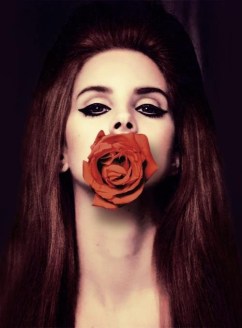


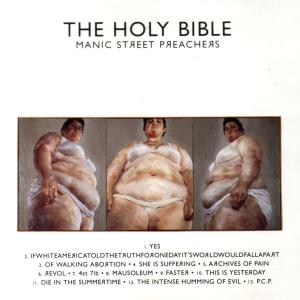



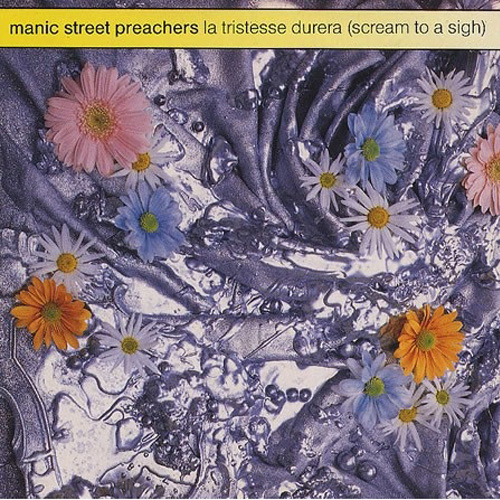
 mariaology