Album Review: Josh Thorpe, Scrappy Art Rock You Can Dance To

ian-wallace-image-for-album-cover2000_orig.jpg

It’s quite something when a record makes you want to reach across your lazy morning lie-in for a Frank O’Hara poem and a cup of coffee. Canadian artist, painter and songwriter Josh Thorpe has made good use of his relocation to Glasgow and put together an album of rock songs, that isn’t really just an album of rock songs: Scrappy Art Rock You Can Dance To reflects the city’s DIY, collaborative impulse with creative input from a long list of artists (Ian Wallace, Sandra Meigs, Geoffrey Farmer, Trevor Shimizu, Shaun Gladwell, Lily Ross-Millard, and Renée Lear), with fellow musicians Mike Overton on bass and Jay Anderson of Comet Control on drums. Thorpe uses the pared-down concept of a rock album to open a space for accessing myriad moods, imaginary landscapes, memories and musings. 

Lead single ‘The Light’, for instance, is a soft-sung ode to likeable things, the kind of shimmering residues of daily life, reflected in the ‘underwater disco world’ of Sandra Meig’s accompanying video. The O’Hara poem I reach for, naturally, is ‘Now It Is Light…’, with its lulling enjambment and lines like ‘the cadenza of dull things / which the moon had summoned with / its guitar-like gutters’. If the moon had a voice on such nonchalant nights, maybe it would sound like Thorpe’s, clear and silver with just enough gravel to betray a degree of terrestrial experience. If Lou Reed smoked less cigarettes. Throughout Scrappy Art Rock…, there’s a sense of things refracting: the feeling of being in love, being high, being fast, being fascinated, being in a rush, being laconically slow, being in time. Thorpe’s dynamic tones and kinetic guitar-playing take us veering between moments of brightness and sheer oddness, joy, reflection. In songs like ‘I Can’t Slow Down’, he makes us dwell in steady friction, then rewards us with a good crunchy solo. I think of airy rooms and an open evening, early summer. The prospect of prospects. Looking out to the park, noticing, taking time: ‘I see seasons in the sky / They’re spinning around’ (‘Time’).

While masquerading as a straight-up rock album, among the light-touch slacker sentiment there’s a diversity of influence: from the Feelies to Sonic Youth, PJ Harvey, Mary Margaret O’Hara and experimental composer Robert Ashley. That combination of sugary melodies, strong rhythms, romantic but often sharp, witty lyrics (a la Scritti Politti) and simple noise is backed by a very Canadian sense of play and space (the album was recorded in a single day in Toronto, at Palace Studios). A touch of post-punk toned down to make way for the suaveness and light, retaining a little grit, a little mess.

Mostly it’s the off-kilter spirit that makes this record seductive. Whether experimenting with flat major thirds or lines nicked from Deleuze and Guattari’s philosophical epic A Thousand Plateaus — ‘God is a lobster’ (‘Lobsters’) — Thorpe really pushes the scale and scope of what can be achieved with a rock project, splashing psychedelic hues without upsetting the laidback jangle of a decent beat. There’s a summertime nostalgia that runs throughout (‘Turn up the gas baby’), but rather than paralyse the music, it instead frees up lyrically the listener’s indulgence. It makes you want to notice the good things, smell the roses, strike a conversation, kiss someone you might like, enjoy the rhythm of just walking on concrete.

~


Dancefloor Utopia: Free Love’s ‘Pushing Too Hard’ & ‘July’

I love alcohol, the gloaming
of the blood that makes time an arcade.

Somehow, lately, I have been unable to drink myself into drunkenness. Everything is a spritzer whose taste effervesces like the further most points of the sea at sunset, those glisters of peachy waters which seem almost to fizz beneath the pleasure of light. To think of that expanse as the body’s active limit, like the horizons of video games, whose traversal would teleport you back to some familiar, originary location. Flip away. Endpoints as triggers for reversal. To travel outwards, to raise yourself clean into movement. To make of the body its own hypothetical. It’s like I want only the blueprint potential, the colours and geometries. 

The waves move against me. I do not drink. 

Queue, Free Love (FKA Happy Meals) ‘Pushing Too Hard’. This ultra-dappled, smiley-faced italo-disco is a sort of vertigo. I mean I am spinning silver in its listening. Emptiness requires its own containment. To dance in parallels then pirouettes, to queue time upon time’s arabesque. To oooooze. The little eddies of the ocean still swallowing, the sun ravelling down like residue soda. Whatever direction you make into ceremony, pleasure. 

The bunching of muscle, where sun hits the boulevard. Where the boulevard bursts into its many discographies of water, inclined to times beyond and before, a gradient popularity of passengers and travellers, nomadic ravers. Where the boulevard is not a waypoint but the lengthy stretch of hypnosis itself, an astral plane into sunlit ethers.

The very word boulevard, a sort of ferric opulence unfolding a hazy, urban sprawl.

All of this wayward July, and the synths so warm on my skin, and every conversation a twirl of hyperbole. I wanted nothing of night again, as night was just the day’s refresh and erasure. All through the summer, the air so syrup and seething.

I book the overnight ferry, I dream of a world without timetables. The tide sloshes over me and it is sleepless, and it is heat.

This is rich-text. All of oddness. I’m just so much happier at four in the morning, in the priory of sunrise. Missing you.

Cherish the currency of friendship, however the slightest touch is a glorious misreading. Miss reading, I’m missing. Mist between the one and the two and same, faintness of incense that is. The body unshowered, the mist of heat. The endless messaging dew drops of moisture; your pearly brow is beautiful. It isn’t as though you could shift sentences for me. I’m just as weak.

Suzanne Roden of Free Love sings sometimes in French and slips between two languages, the language of the one and the other, the foreign tongue as love in transition. The lively nuance of melodic translation. To stretch meaning, to make of its pulse the possibly unmappable. We listen and maybe we don’t quite need to understand, we just need the potential of passage, its affective route per semantic reach. Glossing Derrida on love, Maria-Daniella Dick and Julian Wolfreys write thus:

Love calls on us to be responsible in coming to map the unmappable, to be open to the possibility of the impossible, and the possibility of this impossible experience is that, in short, which is between us, and which remains: to come. Love is always just this exemplary passage between tongues, in what is foreign, other in the language one calls one’s own.

There is a healthy cascade of reverie. There is browse and incline, click and encryption. The love that you seek. Every pop song is of course love’s expression, the fluid joy of a ~solid~ ego; and yet to map that point of dissolve in which this ego is the melt-point of ipseity’s porous limit, is that not the deferring impulse of disco? Strike through to jouissance. The repetitive beat, the multiple oscillating climaxing motion; the avoidance of pop’s inevitable, normative denouement; the queerish musing deliciously around fulfilment; the rhizomatic overflow of the senses!

Stay mercurial, baby. In cool arousal, in sluicing.

‘But I love you despite the boring terrorism / of particularity / fading like parity’ (Keston Sutherland).

Your forehead is hot. It is glass for the shattering. We are fashionable and hackneyed, practicing lunacy where the beats scream and are again crass in their lust and elation, their confinement to time and place and the pulse of this darkness.

When my irises bleed, is this a form of eschewing the present? As in, swallowing an elsewhere unseen to the other? We see our eyes outside, in the comedown glow of street lamp smoulders. We the parts of our bodies as an archipelago, every isle slowly swallowed by rising water. 

This tectonic pulse, this encompassing warmth.

You’re pushing too hard. And so language is physical, and so is literally thrust in, into, the armoury of love. I will not say weapon, I will not reduce a necessary plural to the singular tool, the implied signified of the phallus. The piercing. My eyes become pliant.

Make of the air her dulcet voice, over and over like rain’s refusal. Make of this moment a lightness, a smoothing. Trace little bumps and ripples and glitches; the motion is softcore, resplendent’s true sense.

Love is also the coveting of blindspots, those absent locations of self’s abyss which lie adjacent to the lieux de memoire recognised as the sites of love’s memory, of memory’s happening in love. Love as process of betweening, as immersion. A feel-good, a good feeling. The prolonging of ephemeral sensation in an act of imaginary narrative, its plights and highs and necessary zigzags. Act within capitalism, act without; act as pop’s dazzling detournement. So here by the convenience store we kissed, so here by the river; so at the window we shared cigarettes in a friend’s apartment, by the ersatz palms, so these screens between us, so the niche forums that served as our weird, oblique interface; so here where the road slumps into a junction, so here at the station where you had to go. A whole topography of abstract thought, remix it. Drink it. So memories of mountains, so sharing the lakes we made up in memory; that you swam in, the lakes I walked round as a child, the heather on hills where ashes were scattered. This interface, these blue messages. Blue irises. The shape of a letter impressed on a map. The silent valley, its conclusive basin of time; where life is swallowed. I memorialise a thought, the quality of light in August, its paler gold among green; whose green is mortal again, whose green is set to fade. Your pupils resolve all green of the iris to blindspots, they mop up the blue with the black of sleep. And to sleep as equals is to forget the self, to wake in a room between rooms, to find yourself caught as other again, your room unfamiliar, the room never yours even less so now. The very first utterance of morning might break the spell. How the sky looks different through your open, solar window!

And I’m not the one to help you / Although I’d like to tryyyyy.

Clatter and wave, video game imperative to action and motion. Soundtrack the heat. Make reverie of weather. The production is so acid house. The production inclines toward dance. Externalise the internal. Naturalise the natural. A certain elasticity of underlying beat, as if bass were the hum of the blood that produces affect. As if it were all that reducible. As if in that energy. Make our mammalian restraint ethereal. 

The Quietus says of Free Love’s music, ‘Their vision is a utopian one, influenced by rave culture, Eastern religions, politics and magic’. To unhinge love from its possessive sense, love becomes an ambient tone in the spread of the days between days which we count in love, if love is a sense as any other, an orientation between things, between selves, the one and the same. If love is something… that something within us must export to numbers. How many days has it been, I’ve been thinking all week… Here are our figures. Crunch on a sort of krautrock lingering, the impersonality at the heart of euphoria’s insistent heat. Free Love have used drones before, meditative, balearic beats. It’s a process of seeking the nuanced frequency, the cleaner hum of Being, what might spread into an open future, something bright to seize. Design your consciousness for different realms, just feel the synaesthesia of speculative situation. The future’s flirtatious, maybe it speaks French. It’s a bright pink, cherry-red electric French.

In his spectacular tome, More Brilliant than the Sun: Adventures in Sonic Fiction (1998), Kodwo Eshun talks of how the subaquatic techno-duo Drexciya ‘fictionalise frequencies into sound pictures of unreal environments […]. They fictionalise the psychoacoustic volume of a giant submersible’. ‘Pushing Too Hard’ implies a current out of sync with its destination, an unbalancing in the passage between entities. A kinetic effort. Disco’s warm flicker invites that spiralling back to aporia; not a giving up in the sense of seduction’s failure, so much as surrender to the unknown and its cheeky, distinctive flourishes of acid, italo, proto-house all drenched in funk. I don’t pretend to understand French; my language is literally standard grade, processed only to that limit.

But I pick up some terms Suzanne sings:

L’avenir: future, future, future, promise. To come up. Insistent, proximity, imminent. A cool bitten ecstasy, a love to-come. Love in the conditional, although I’d like to tryyyyy. Those airy harmonies cascade around chiasmic, sunshine flourishes. Love’s duration at 4:18.

Plastique: plastic. What seems elastic, mutable, but is in some sense unerasable—a material that ultimately remains. Residuals. Shards, bits. When ‘Pushing Too Hard’ collapses into its A-side twin, ‘July’, the beats are fatter, darker, hotter—brooding with a sense of summer’s latency as always already. The plastic feeling is inside me, it’s a melting, it’s a coming-into-skin. Sonic duplicity. It’s the Anthropocenic hauntology of organs, it’s a PVC drag of natural sensation. It necessitates dancing, but the percussive chimes in the track’s white-heat centre drag my mind from the present’s solidity. Those chimes are airy, they are elsewhere, enchanted; they are so far removed from the close close city. To be fast and slow, hard and soft, selfish and strong, reflected and present, past and future…Being as syncopation, being as plastic, rent to split. Our lapidary imaginaries, our synthesised clicks of pleasure; a pool of sound, an immersion…I’ve come to relax, to realise.

Visage: face. A word whose very sound is that of sunlight hitting clean the bounce of a mirror, a slide into silver. The waspish vibration of the lips, inclined to glass on the brink of shatter. I think of all those mirror tricks in every ABBA video. The face, the face, the face again. The face we effect. Maria Dick and Julian Wolfreys again: ‘Seeing the face in its absolute and irrecusable singularity, I am given to apprehend a doubleness from the first gaze’. Disco is doubleness inherently split to multiplicity, it is the vying for one attention amidst the millioning of other skins (skins becoming a metonymy of figures, faces), it is the shakeaway of self into other, the imitation, the performance of gesture’s contextual plurality. The face, in Emmanuel Lévinas’ sense, is the announcement of subjectivity: the instating of the subject as a sort of ‘hostage’, as Dick and Wolfreys gloss. It demands a response, stealing the attentions of the self, instating by necessity a certain ethics of wholly Otherness: the human face, as Lévinas puts it, ‘orders and ordains us’. I catch your face on the dancefloor, there is a temporary pact between us. What implicitly slides in the raising of one arm, the twist of hips, copying this dance, a Xeroxing event whose zero-sum origin remains irreducible, whose condition is always undecidable, plural. So far so obvious the ontology of rave culture. Every action now as response. A semi-autonomous severing. Technology can be, as Eshun puts it, a ‘bifurcation in time’. The techno throbbing through the pale membranes of my human sense is a channel for split subjectivity, an experience of falling between worlds.

On the dancefloor, when he asks me what to do, I whisper in his ear, in some half-remembered echo from The Bell Jar: ‘pretend that you are drowning’. And that paranoid panic, that scramble for air in the thrust of the limbs, it seems to work. I see the moisture mist up his glasses. Face after face, we glimpse the phenomenology of substitution, we trade our own affect for the possible electricity of the next. His smile, her hair, our collective sweat. The absurdity of all these moves; the warping of all muscle memory inclined to a known rhythm, then ever the melodic trajectory of an unknown palette. We expose our infinite vulnerability, we abstract ourselves to the dancefloor’s disorderly hospitality, where the reciprocal push-pull of crowd and DJ is a mutual reading and so mutual dissolve, a ‘free love’ whose freedom is conditional on the exchange of gesture, face and motion, of bass, beat and melody. Of sonic and visionary qualities. Of closeness, a close reading. 

I imagine my skin looks metallic, right now, as you see it.

Eshun again:

Groove is when overlapping patterns of rhythm interlock, when beats syncromesh until they generate an automotion effect, an inexorable, effortless sensation which pushes you from behind until you’re funky like a train. To get into the Groove is to lock into the polyrhythmotor, to be adapted by a fictionalised rhythm engine which draws you on its own momentum.

Is fiction here the condition for identity’s erasure? We hustle ourselves out of ordinary language, slip into the chug and pulse of the train. Okay so all these bodies in motion. To export yourself to the techne of musical condition. Fold in the overlap, a baroque philosophy of subjectivity’s production. Enter heterotopia with both hope and scepticism. Put away your wallet. Fold yourself. There’s Deleuze’s notion of the fold as a doubling: one thought rolled and pressed into another, the scratch of tobacco in cigarette papers, the promise of chemical stimulation imbibed in the skin, the curlicues of words upon screen and page, the unlocking potential of semiotics in motion. A rolling into, an overlay’s careful pleat of impression and meaning. The duplicity of temporalities in photographic exposure. This tongue curled on a foreign one, the blendable play between French and English, a play between verse and chorus. A recursively mutual translation of inside/outside, the self and other, here and there, near and distant; a translation whose very process belies the instability and futility of such ontological divisions. We relate to ourselves as production, we produce ourselves. But don’t look at me / I’m just as weak. The face that desires, amid over-stimulation, the reserve of hiddenness, the retreat. Subjectivity as a question of mastery, self-relation, processing affect, thought and memory in the world’s abundance, intensified in the sonic duration of a pop song, or in the ever-churning lieux de memoire of a dancefloor, where memory is always in oscillation, caught between bodies and beats. And the magic in that, and the heat. 

‘It’s like creating temporal communities’ — Lewis Cook.

Every melody’s upswing, a new euphoria: ‘Synchronicity’. Left my ego on the ground. Make of identity its fractal components in disco extension, plugin auroras of thought, the perspectives shifting. Suzanne’s voice spliced between echo and harmony, echoed by Free Love’s other half, Lewis, echoed by her own, echoed by the satisfactions of division’s fall back into rhythm, the tightness of synchronicity. Turn me upside down / I don’t know what’s left in front of me. Resonate, resonate. Duplicity kaleidoscopes originary identity as an always receding, elusive location, infinite addiction. Broken glass, symmetry, the one and the same split shard-ways, a cool euphony of a synthetic present cast ever between past and future; the neuromuscular necessity of this beat, this bodily response; hyperstition; this brainwave as process corrosion, as shimmer and sweet, as almost coincidence.


*

(Video shared via YouTube/Gorilla vs Bear)


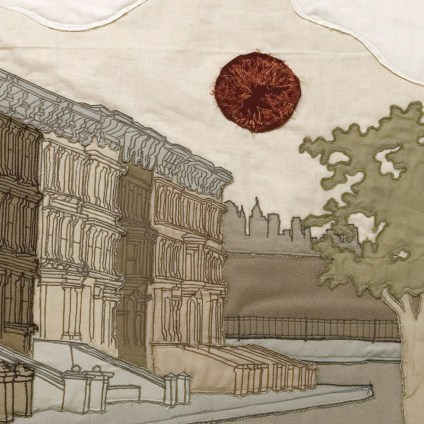
The Record that Changed My Life: Bright Eyes, I’m Wide Awake, It’s Morning (2005)

18dbcb96a24c27e991d9342428d01fce.1000x1000x1

[I wrote this a while ago, back in April and long before Oberst’s recent gig at the ABC which frankly deserves an essay in itself. I wasn’t going to post it–it’s possibly super cringe-worthy–but hobbling along on the last leg of my dissertation it felt imperative to get something positive out into the world.]

It’s possible that I first discovered Conor Oberst and his (un)merry band Bright Eyes in that most prosaic of millennial ways: via a LimeWire download, a MySpace page, some cloud-space long since lost to the ether. I found myself burning the songs on my iPod, where they sat uneasily alongside my favourite embarrassing emo bands, with an excitement almost spiritual. If The White Stripes’ Get Behind Me Satan was the first album I ever bought with my own money, then I’m Wide Awake, It’s Morning was the first album that took me truly someplace else. It seemed a statement, a declaration of pure being; its very title rattled my too-thin bones. I listened to it and suddenly I understood my mother’s love for country tunes.

I came to the record a tad late, two years after its release, but it felt like it had been around forever. I’d never heard anything like it. There’s the first song, ‘At The Bottom Of Everything’, with its initiating slurp of soda, its meandering narrative about a woman who finds herself talking to a stranger on a plane as they plunge to their deaths in ‘the largest ocean on planet Earth’; the way it kickstarts into a rollicking country tune, a song for the woman’s imaginary birthday. The way those chilling lyrics about capital punishment, guns, technology and death could be set to this upbeat, catchy melody; it gets me every time. I used to go on long walks and it was springtime, the lambs out in the fields around the Ayrshire town where I grew up. I remember feeling so damn sad my ribs ached with it, but there was still the daffodils and the chickens, the bright green grass too green for my eyes. Something about the song captured that tension of sorrow and sweetness so well. It’s almost a paean to the demise of everything; a reminder that we all must die, that we daily kill each other and ourselves just by being alive.

Believe it or not, this realisation can be liberating. Oberst ironically celebrates the ‘wonderful splash’; his father ‘loads his guns’ while his mother ‘waters plants’. The whole song has this duality of birth and death, regenerating. A search for the sublime, for the next realm: ‘we must run, we must run, we must run’. The song begins with this image of the plunge, but refuses an easy, explainable ending: ‘we must rip out all the epilogues in the books that we have read’. It’s how I felt about life. I wanted that transcendent pull into another realm, but I didn’t want it to be explained or over; I wanted to prolong the possibility of that ending as much as I wanted it altogether. The oceanic imagery extends to the very ‘city buses’ which are ‘swimming past’ as the singer wakes up: ‘I’m happy just because / I found out I am really no one’. Isn’t this the liberation? That we can be fragments of matter, anonymously lost in the waves, the churn, the world’s strange, all-consuming waters?

The thing about Bright Eyes is that often they’re slapped with the emo label, but emo doesn’t have to mean a fetishised stylisation of sadness and suicide, the old ‘cut my wrists and black my eyes’ favoured by bands with alliterative names (I’m looking at you, Hawthorne Heights). Here, mixed with the pastoral invigorations of country, emo is just a cleansing of pain. There’s something so spiritually pure about that image: ‘death will give us back to God / Just like this setting sun is returned to the lonesome ocean’, the way the bright tones of those chords lick joyfully around it. I would listen over and over again to this song, obsessed with the way Oberst tells the introductory narrative with his lightly pensive intonation, the way of a storyteller in a bar addressing ardent listeners. From then on, I was hooked. I needed Oberst’s lyrics to tell me the tale of my own soul; it was a kind of immersive, boozy, eye-opening religion.

It sounds cliché and dramatic but at fifteen, sometimes it takes music to encourage you to live. The songs on I’m Wide Awake are often wistful, world-weary, lilting in their tales of disconnection, war, lovelorn mourning. You can read them easily against the context of the Iraq War, of Oberst’s utter disillusionment with the Bush administration, the yearning for something more than the era’s obsessive consumerism, cheap culture, ersatz spectacle: ‘on the way home I held your camera like a bible / just wishing so bad that it held some kind of truth’. I was struck by so many images: ‘and just when I get so lonesome I can’t speak / I see some flowers on a hillside, like a wall of new TVs’. The way he captured a poet’s Romantic perception contaminated by the fresh plastic and metal of postmodern society. A disenchantment with the world of things. I started experiencing the world with this layered, visionary quality. Maybe everyone else got their earliest fix from Sylvia Plath or the great nostalgic sorrow of F. Scott Fitzgerald or gut-wrenching movies about the decay of dreams, but before all that I had Bright Eyes.

At the heart of the album is ‘Lua’, a plaintive story about the lonely connectivity of New York City, the revolving door of gluttonous nocturnal parties followed by listless and painful mornings. The minimalist strums of an acoustic guitar accompany Oberst’s warbling voice as he documents the little quotidian moments which keep him going: ‘when everything is lonely I can be my own best friend / I get a coffee and a paper have my own conversation’. It’s a ballad about everyday survival, though draped in the cold indifference of society, the freezing streets, the strange truth that ‘What was normal in the evening / By the morning seems insane’. On the worst days I used to walk around the back of my school listening to this, trying to work out the story it told. I wondered who the girl was, the one who looked ‘skinny like a model’, who kept ‘going to the bathroom’. Was she an addict? Did she make herself sick? Was she pregnant, deranged, confused? The song itself felt bulimic, rendering that rhythm between excess and bareness, the indulgence in oblivion that only really leads to the blank reality of the morning after, the moment after the binge and purge when yes you have to sit there and deal with yourself. I liked the easy way the singer relates to the girl, ‘Well it takes one to know one kid / I think you’ve got it bad’. I thought of old cowboy films, a sort of loose camaraderie amongst the lost and fallen. For a while, I lived in black and white. I wasn’t quite ready to see the sparkling hillside flowers, the ruby of wine, the yellow bird, the blue Atlantic Ocean. I wanted cigarettes, vodka, darkness and the strange clarity of water amidst starvation. This was a formula I knew and loved, though gradually it broke me.

I’m Wide Awake taught me ways to feel whole again. To actually see these beautiful, ruinous, distant landscapes and the lives within them: the ‘New York skyline’, the promise of ‘explosion’; of howling weather, ‘sorrowful rain’, the ‘high rise’ from which glory can still be sung (and this is all from just one song). It was all about letting yourself go to the moment, realising you’re alive, wide awake, somehow open to the world. Feeling yourself caught between the media that consume you, ‘Looking for something / To open my eyes’. I prised myself from the shell of self-hate and had a good hard look at the world. It was hazy, it was a little blurred at the edges. I wanted to fall in love in the way that makes you realise that everything before was blindness; I wanted to drive ‘all night’ to meet someone in the morning. Maybe I didn’t, not then, not really. I guess I fell in love with something else. I fell into the voice, the images, the stories. It was like all the heartbreaking narratives of death and loss and regret that ever existed came together at once in one song. I thought about my friend who lost her dad quite suddenly to cancer and the girl I knew online, aged nineteen, who nearly died curled up with a heart attack from not eating; I thought about all the people I loved but could never quite get to.

The end of paralysis / I was a statuette / Now I’m drunk as hell / On a piano bench’. There’s this awesome catharsis to Oberst’s music, the way his voice breaks into a wail or a shout, how the rhythms come crashing down around him. It’s that sense of crumbling I could suddenly relate to. Crumbling into drunkenness. Feeling so liberated you could wrap your arms round someone who felt warm and strong or run across the abandoned racecourse at night or sit on the last train home crying freely because why not, why not? The only people around me were old men, alcoholics—just as lonely as I was.

This is an album haunted by a foreign war, by the tale of the midwesterner’s broken New York fairy tale, by figures of love and pain and despair. The raspy edge of Oberst’s voice is beautifully complimented by the lovely croons of Emmylou Harris and Maria Taylor, by sweet acoustic arpeggios and the occasional burst of raucous, full-band blues.  There’s an impulse towards oblivion that leaves the singer feeling stranded on land, longing for the freedom represented by just leaving. The songs are self-aware, referencing the pains and tribulations of music itself, the travelling songs that document our basic human scream for change and connection, bound by a misplaced longing for love and home and belonging. Again and again I go back to it, sifting the songs for those threads of emotion that tease out the sorrows of past and present. I go back to it and each time am startled by some new image that catches my eye, some wisp of despair or moment of joy. Lines like ‘The sun came up with no conclusion’ are poetry, pure and simple. I find them invading my everyday life, drifting on by like advertising slogans, flakes of paint, little flares of pure colour that give sense and purpose to the world.

Oberst has gone solo now, riding on the back of some solid albums. I finally got to see him live back in February, at Queen’s Hall in Edinburgh. The last song he played was ‘At The Bottom of Everything’, the only song that people got off their seats to dance to. I’m not sure what that says about the current state of the universe, but I think it’s something to do with that melancholy joy, the power of music to remake our sadness into something collective, rousing, powerful. Our need for that intuitive connection, the thing that transcends the text message, the inane commentary of social media, the ubiquitous trills of our smartphones. The thing that makes us want to screech our heads off at the absurdity of everything, the way Oberst does on the album’s closer, ‘Road to Joy’. Listening from the balcony, I pictured my teenage self, wandering those fields; as lost to history’s indifference as the girl that’s writing this, looking out at a city street. It’s a strangely liberating feeling, feeling the nowhere of now.

Being a Student Again: The First Semester

img_0106

It’s not all about realising you can get 10% off at Topshop again (although my ID photo is so bad this year I’m no sure I can brandish it in public). I didn’t know what to expect, going back to uni after a year out. It all happened so fast. Working for over a year as a full time waitress, doing 35-55 hour weeks, I didn’t really give myself the headspace to prepare myself for what uni entails. Despite knowing for several months that I had secured my place, a Masters in MLitt Modernities at Glasgow Uni just seemed something far in the distance, the uncertain plane which I would embark upon after an endless summer.

No matter how it feels at the time, summer is never endless. August was a strange old month, and horrible, tragic things kept happening around me. Amidst all that, it didn’t seem real, making my way through the infernal labyrinth of MyCampus; applying for scholarships, spending inordinate time staring at screens again, making lists of things to be done. I found myself in a room up high in the Boyd Orr building, listening to the inimitable and infectiously enthusiastic Rob Maslen give a speech about the strange history of these hallowed walls; being introduced to the university as if it were the first time all over again.

It is weird going back to the same university after a year out, especially if you’ve not gone far. I walked up the hill listening to Tigermilk feeling blissfully like a total Glasgow cliché and it was like nothing had changed at all; it was my first seminar of the semester and I felt bright and hopeful. Glasgow gifted us with a particularly gorgeous autumn, trees bronzing languidly into darkening violet as twilight fell and I was still sitting by the fountain, making notes on poetry. I tried to take walks in Kelvingrove as often as possible. Quite quickly, however, the daylight ran out. Nights drew in. Still stuck in waitressing mode, such thing as a sleeping pattern proving an elusive remnant lost somewhere back in 2015, I found myself going to sleep at 5am every night, often staying in the library till everyone on the floor had left and the lights kept going out automatically. There I was, alone in the dark in front of a dull-glowing screen (though one must note the upgrade in PCs at Glasgow Uni Library, which are much preferable). It’s easy to spiral into that maddening routine, trying to do all the reading, make notes on everything. I’ve never been a meticulous note-taker, not by a long shot, but I like to handwrite things and have a tangible record of ideas and theorists and possible avenues for further study.

I would walk home at 2am, stumbling tired-eyed through Kelvinside, hoping for a glimpse of the river, some tangible reminder of nature. How long had it been since I’d seen the sea? During reading week, I allowed myself a cheeky day trip to Arran, which felt so unreal it was almost magic. The days passed and ideas started to percolate in my head. The power of procrastination unleashed itself again. I did more creative writing in the past three months than probably I’ve done all year. I guess the more you read, the more you want to write. I sat on level 11 and watched the sunset over Park Circus, making airy, vague notes about queer temporality and thing theory on a 60p sketchpad. I went to seminars and was reminded of how nice it is to listen to people share a subject, to listen to experts talk with passion about something they must have covered a thousand times before and yet still they can find fresh things to say about it. To actually talk to said experts about such interesting topics (instead of merely serving them glasses of wine and plates of fish, as the Oran Mor waitress will often do for GU academics). Although a bit scary at first (not least because I had a screenwriter and published author in one of my seminars!), it was nice to actually have proper formal discussions about books again. Often we veered slightly off-topic, with Trump becoming the proverbial wall against which we hit our heads in frustration, but everything felt prescient, useful. I went to visiting speaker seminars with the likes of Stephen Ross, Graeme Macdonald and Darren Anderson, who talked about all manner of interesting topics: Beckett’s invention of the teenager, petroculture and the politics of space and architecture. Having been at Glasgow Uni four and a half years now, I was still struggling to find half the rooms and buildings I needed to get to.

I went to a couple of nights at The Poetry Club in Finnieston and actually read poems aloud to real humans. Got a few wee things published here and there. Went to a ceilidh. Realised that I want to do lots and lots of creative writing and really try and learn from people. Started writing music reviews for RaveChild which has been really rewarding, not least because it’s encouraged me to broaden my musical horizons and go to more gigs. Started tweeting again. I managed to go to a few Creative Writing Society workshops, wrote a collaborative sonnet and played around with tarot cards. Went to Creative Conversations at the Chapel and saw very smart and fascinating people talk about writing: Amy Liptrot, Liz Lochhead, Mallachy Tallack, for example. Developed many creative crushes on various academics.

15027973_10210791097083922_3119560477331738915_n
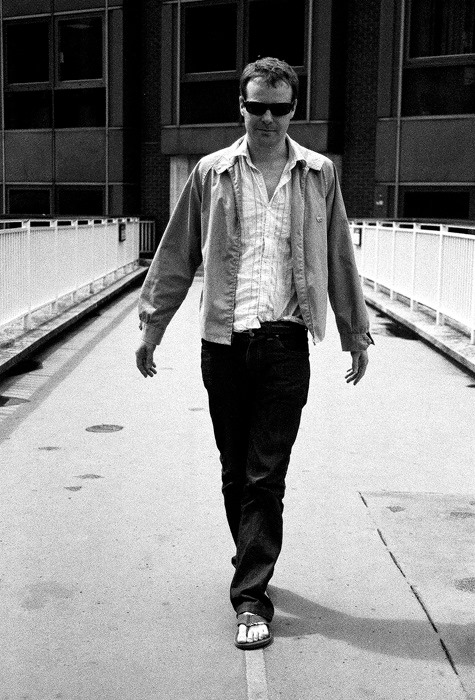
Necronaut: Tom McCarthy looking fit in flip flops. Image Source: Fitzcarraldo

My stress levels tend to rise in tandem with the library’s rising busyness and so I stopped going altogether about a month ago. I’ve more or less forgotten what sunlight is, except for the wee slant that comes through the window of the building in Professors’ Square where every Thursday we had our Modern Everyday seminar. I sit in bed everyday and try and write and write. I spent the first four weeks of this semester trying to read a section from The Derrida Wordbook everyday, until my brain started to melt a bit too much and I was thinking in riddles. One day I was so tired I woke up at 10.46 for an 11am seminar but somehow still made it on time, looking like something the cat had dragged in. I tried to get my head round Blanchot, and even went to a reading group where we poured over The Space of Literature and maybe I came out with some sense of the link between writing and death. I wrote reflective journals for my core course seminars and every time came back to Tom McCarty references. The man and his ideas are just so seductive.

Coming to the end of my first semester as a postgrad student, I’m not sure how I feel. I didn’t wash my hair for nearly four weeks. On the one hand, my brain feels heavier, I’m exhausted, probably much less fit; I’ve lost contact with a few friends. On the other, I’ve got ideas all the time, I’m meeting new people, I can understand a little bit of Heidegger. I’m extremely lucky to be able to study at all, especially on such a well-run, exciting course like Modernities.

img_0105
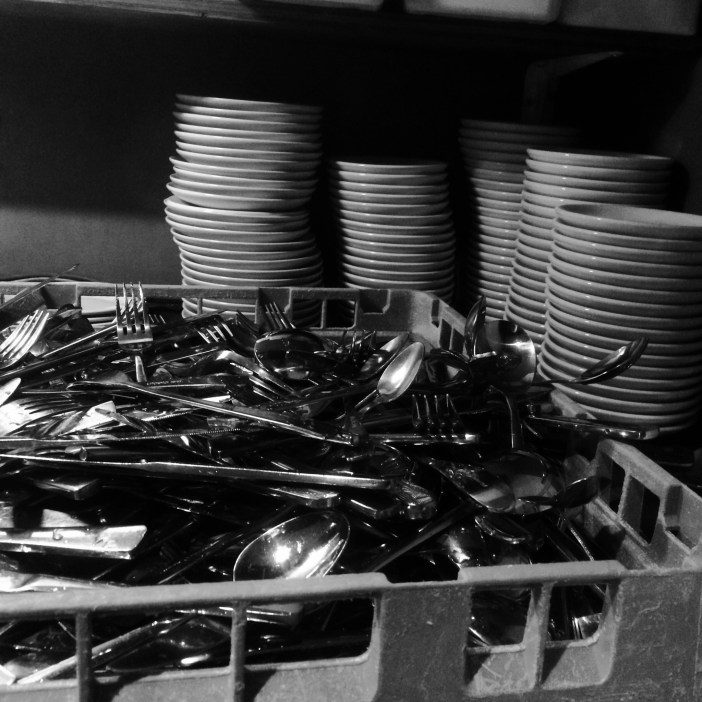
Cutlery: an everlasting source of inspiration

Things I miss about waitressing:

  1. Being on my feet all day. Coming home feeling like an honest hard day’s work has been done, that I really earned that massive block of chocolate.
  2. Gossip. Constant streams of salacious stories.
  3. The visceral fuck-strewn quality of hospitality patter.
  4. Unlimited access to coffee at the point of need.
  5. Making strangers happy through simple acts of kindness.
  6. Being with friends all day and plotting grand schemes.
  7. Minor dramas.
  8. Telling ghost stories to tourists.
  9. Having a reason to put makeup on in the morning/having a reason to get up in the morning before 10.
  10. Spontaneous drinking.
  11. That amazing post-coffee rush feeling when you know your break is due and you’ve got a good book on you.
  12. Finishing a shift and leaving it at the door for a Netflix binge.
  13. Meeting new people more or less constantly.
  14. Having actual muscles from plate carrying.
  15. Playing the game of concocting life stories for strangers.
  16. Teamwork! (which is sorely missed on an English Lit degree…)
  17. Solving completely unsolvable problems, like trying to find and polish 50 champagne flutes in five minutes, or sourcing pathologically evasive salt shakers, or convincing the kitchen not to slaughter you because your table’s arrived 45 minutes late, just in time to clash with every other function in the building.
  18. Unexpectedly deep conversations about love, life, literature, music, family, mental illness, travel, astrophysics, the ethics of illustration, Tumblr, queer theory, feminism, television, childhood memories and sleep deprivation all while polishing cutlery.
  19. The thrill of days off.

Going part-time, I still get some of these fun things, and less of the bad things. Maybe that’s a nice balance. The Christmas period is always a test for our sanity and endurance. Still, hopefully the feeling of handing in my essays will get me through the rest of the season, and if not god knows I have enough books to read to escape into! Maybe I should tidy my room first.

Top 15 Albums of 2015


(in alphabetical order…)
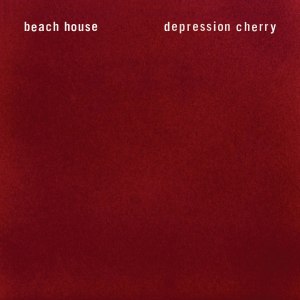
beach-house-depresssion-cherry-album1

Beach House, Depression Cherry 

It’s moody and melancholy and perfect for Sunday afternoons in winter, where hardly an hour of light graces us with its presence. The singing is woozy and lush, the track titles are typical Beach House (‘Wildflower’, ‘Levitation’, ‘Days of Candy’) and a mellow, dissonant drone seems to drift over most of the songs. There’s a whispery feeling to the vocals and a scratchy-sounding organ keyboard. Also, the album is coated in soft red velvet, so the physical copy is pretty beautiful, and there’s definitely a ‘tactile’ sense to the music itself, with all the sparkling effects and the echoing texture of Legrand’s voice. I like Beach House for the same reason I like Cocteau Twins: the music enfolds you like the atoms (or pixels?) of another world – it doesn’t sound 100% human, there’s something too mystical about it. The band released a website with typed lyric sheets, which adds to the sense that the whole album is a hazy collection of dream poems. It was released in late summer but I have listened to it a lot more in winter; it’s like the sound of  Victoria Legrand’s hazy, drifting vocals is better suited to the cold weather, the whiter light, the sheen of ice.

Favourite tracks: ‘Space Song’,  ‘Levitation’, ‘PPP’.
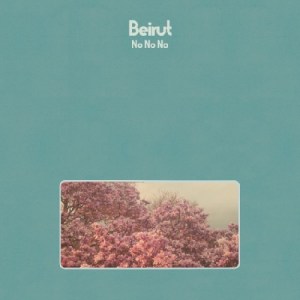
beirut-no-no-no

Beirut, No, No, No

There were a few weeks where I sort of just played this album on repeat in the restaurant where I work. Generally it was pretty harshly reviewed and there is a sense that single tracks stand out more than the whole. Still, I appreciated that cheerful continental folk vibe to get me through the autumn and winter with its remnants of pastel-hazed summer. Even though the songwriting might not be as *original* or *inventive* as 2011’s The Rip Tide, you can have a lot of fun with some staccato beats and percussion. Plus I love a bit of brass.

Favourite tracks: ‘No, No, No’, ‘Gibraltar’, ‘Perth’.
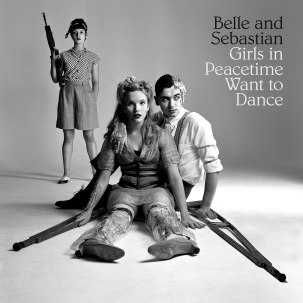
packshot

Belle and Sebastian, Girls in Peacetime Want to Dance

Just the sort of lively pop weirdness you need to brighten your January, when the album was released. I love Belle and Sebastian, the way they create simple catchy folk-pop but base it around stories and characters and inventive lyrics about lost girls and ~cutely~ wayward indie kids. There’s a bit more experimentation than usual on this one: from the funky disco atmosphere of ‘The Party Line’  and ‘Perfect Couples’ to the epic near-7-minute dance track ‘Enter Sylvia Plath’, there’s something for everyone. ‘Nobody’s Empire’, which approaches the subject of lead singer Stuart Murdoch’s MS, reveals Murdoch’s general genius for lilting melodies punched through with a weightier-than-usual buildup and bass line. ‘Ever Had a Little Faith’ is maybe the closest song to old-school Belle & Sebastian. Generally this album is full of interesting licks and typically witty lyrics, and its experimentation lends well to repeated listening.

Favourite tracks: ‘Nobody’s Empire’, ‘The Party Line’, ‘Enter Sylvia Plath’.

1035x1035-MI0003841720

Blur, The Magic Whip

Blur’s first album since 2003, The Magic Whip is kind of a mystical, surreal experience. Along with the artwork (a neon ice cream and some Chinese lettering), the album’s whole vibe sort of reminds me of this weird game I used to have for Sega Megadrive where you could do fight scenes on top of an apartment roof in the depths of Tokyo. Everything was blurry and glitchy and full of bright lights against the backdrop of glittering darkness. The Magic Whip is set in Hong Kong rather than Tokyo, but it has that strange sense of futuristic metropolitan darkness. It takes away the grunginess of Blur and sonic spaciness of 13 and enters a more self-aware, perhaps even ‘postmodern’ (ugh, the implications of that term) territory.

Well, for one there’s the obvious cultural borrowing from Hong Kong, where the album came together; there’s also the sense of meta-britpop on songs like ‘Lonesome Street’ and ‘I Broadcast’ which update the whistle-along laddish bounce of 1990s culture for a more accelerated version of the jaded digital and cosmopolitan era (‘Lonesome Street’ is overlaid with the sound of someone reporting – on the news? – sparkling synths and echoing city street noises). The sense of absurdity and collapse, like in ‘I Broadcast’ where the chorus falls into the repeated line: I’m running being played over Graham Coxon’s sharp guitar. It’s a complex and intriguing album with some sweet bass lines and dreamy Damon Albarn vocals. Listening to it really does sort of take you somewhere else. Also, ‘Mirrorball’, the record’s final song, sounds almost like it belongs on a David Lynch soundtrack.

Favourite tracks: ‘Ghost Ship’, ‘Pyongyang’, ‘My Terracotta Heart’.
clarence_clarity_-_no_now

Clarence Clarity, No Now 

From the glitchy, 90s Windows computer aesthetic of its videos to the vibrating bass, disco rhythms and shrieking guitars and falsetto vocals, this is one crazy good album. Not many folk are brave enough to put out 20 tracks on their debut album, but the effect of doing so sort of drags you underwater into a world of sound that’s electric as a field of lightning, as shrieking neon as that purple lava you get in Sonic the Hedgehog 2, Chemical Plant Zone. Sorry, is that mixed metaphors? Who cares, with music like this, everything is mixed to fuck. 

Some of the songs have a cinematic feel, which is hard to define except for a sort of atmosphere created by all the glitchy sound effects and samples (listen to the start of ‘The Gospel Truth’, for example). It’s a relief when Clarity strips back into ‘purer’ or softer vocals (see ‘With No Fear’), but also a great feeling when the effects pedals step on again, like having water thrown over you. Cold, shocking, refreshing. Kinda like the whole album. You’ve got references to ‘worm holes’ and ‘cancer™ in the water’ and all sorts of surreal cyber imagery and staccato vocals in reverse (‘Tathagatagarbha’ is straight out of Twin Peaks’ Red Room, right?). ‘Those Who Can’t, Cheat’ is the kind of psycho disco death funk they would play at the end of the world. I was lucky enough to see Clarence supporting Jungle in Edinburgh this year and I can say that it all sounds sweet as hell live – the band’s energy really plays out the craziness of the album – which isn’t always always the case when the production is one of the best parts.

Favourite tracks: ‘Those Who Can’t, Cheat’, ‘Bloodbarf’, ‘Will to Believe’.

(Also, I think ‘Hit Factory of Sadness’ is one of my favourite song titles ever).

FoalsCover

Foals, What Went Down 

I guess the critical/commercial success of Foals’ fourth album (in October they were voted ‘Best Act in the World Today’ at the Q Awards) means I don’t need to say much to justify my choice. I’ve been with Foals ever since they were bouncing out math rock on early Skins, and this album was no letdown. For one, it has several tracks which follow in the footsteps of ‘Spanish Sahara’: ‘London Thunder’ is a beautiful, atmospheric track with a lovely build, and even Lana Del Rey has sung her praises for ‘Give It All’, which addresses love as a kind of fragile presence/absence, of digital melancholia – ‘Give me the way it could have been / Give me the ghost that’s on the screen’. ‘Birch Tree’ has that sort of upbeat, syncopated feel reminiscent of ‘My Number’ (from Holy Fire). Other than the softer tracks, it’s a whole lot rockier than previous albums, especially on the frenzied ‘What Went Down’ and jangly guitar rhythms of ‘Mountain at My Gates’. I listened to this all throughout the month it took to move from my old flat, so it will always have that sense of dislocation and haunting futurity for me… (plus the stress of shifting boxes and scrubbing kitchens).

Favourite tracks: ‘Mountain At My Gates’, ‘Birch Tree’, ‘London Thunder’.

music-gaz-coombes-matador-cover-art_1422624416

Gaz Coombes, Matador

I have to confess that while Matador was released in April, I didn’t actually listen to this album until about a month ago, when I found out my cousin (the lovely Hannah Lou Clark) was supporting him on his UK tour dates. I saw Supergrass a long time ago when they supported Coldplay at Bellahouston Park, but I don’t remember much of it, especially as I was right at the back! This is such a gorgeous album though, I swear I’ve listened to ‘Matador’ on repeat to and from work for the last fortnight at least. It has great range and depth, another fine example of the maturity that can come out of the Britpop era. Coombes can sound both delicate and powerful, and there’s a certainty, a sureness, to this record. There are songs whose haunting atmosphere is complimented by stunning but simple lyrics (‘Worry fades the soul away / I’ll take the hurricane for you’ – ’20/20’) and climactic choruses. If I close my eyes I imagine this song being played over a dramatic film scene, like someone running through city streets, a breakdown, things exploding, changing. Something like that. I know it’s cheesy but there are definitely songs on this album which you could call sublime in the true sense of the word. Disorientating, awesome, majestic, powerful. Gospel influences, electronic beats, acoustic guitar. I’m still in love with it.

Favourite tracks (this was difficult, and may change): ‘The Girl Who Fell to Earth’, ‘Matador’, ’20/20’.

5f30eab1

Kurt Vile, B’lieve I’m Going Down

Aw man, there’s just this beautiful twang to Kurt Vile’s music that is so addictive. It’s not just his hair. The country twang of guitars, his sweetly droning, idiosyncratic voice. You can see the influence of Nick Drake, maybe a touch of Dylan, but also a very modern sense of disconnectedness, of goofiness even – the sense of being very self-aware but at the same time alienated from who that self is. Some of the songs sound a bit ballad-like, but there’s always a kind of dissonant, bluesy twist. He really nails his lyrics and imagery too: ‘I hang glide into the valley of ashes’, ‘A headache like a ShopVac coughing dust bunnies’. The twinge and stuffed wordiness of ‘Pretty Pimpin’ proves strangely addictive, as does that developing, repeating, turning, twanging guitar riff. ‘That’s Life, tho (almost hate to say)’ is a darker, sadder sort of folk ballad. Generally, it’s an album to listen to dreamily, maybe on a car journey, but also one that goes well in the background of bars, because it’s lively enough, and pretty damn cool.

Favourite tracks: ‘Pretty Pimpin’, ‘That’s life tho (almost hate to say)’, ‘I’m an Outlaw’.

Lanadelreycapa

Lana Del Rey, Honeymoon

I could rave about Lana all day. She has the genius of Lady Gaga, Bowie and Madonna in her creation of the ‘gangster Nancy Sinatra’ persona, but an old-school Hollywood voice that haunts and croons and glides over dark, sweet melodies. Honeymoon is very much a coherent piece of art. It’s a very visual album, much in the tradition of Del Rey’s previous work (the monochrome vibe of Ultraviolence played out in the gloomy, stripped back energy of the Dan Auerbach produced songs). Picture a summer-hazed beach with pastel huts and neon-signed strip clubs, peeling paint. Lana writhing about in her mint green muslin in the video for ‘High By the Beach’. It’s her dark paradise, a retro realm of sweet pop richly infused with jazz, blues, R&B, trap, disco and poetry. The loveliest recital of T. S. Eliot’s ‘Burnt Norton’ I’ve ever heard, soft and haunting. A Nina Simone cover. Tracks like ‘Salvatore’ and ‘Terrence Loves You’ really demonstrate the crystal clarity of her voice, as well as the strength of her range. The title track can be described in many ways, but I prefer the terms glimmering and cinematic. Really, it was the perfect soundtrack for a melancholy, post-graduation summer — except I swapped the retro cars and ice cream for long walks in Glasgow rain.

Favourite songs (again, so hard): ‘Terrence Loves You’, ‘Honeymoon’, ‘The Blackest Day’.

7af7acd9

Laura Marling, Short Movie 

It’s quite lovely to witness Laura Marling’s music maturity. From the honest folk pop of Alas I Cannot Swim to the stronger, mythological tones of Once I Was an Eagle, she has really developed and expanded her sound, not just in a literal sense but in a metaphysical one too. Does that make sense? I mean the way that her music opens worlds up. Eerie, dark soundscapes and cessations of space, interruptions and pauses and softly twangling guitars. Opening track ‘Warrior’ is spellbinding, allusive and elusive; full of echoes and misty vocals, guitar licks that curl round and round. It feels distinctively American, as opposed to, for example, the Englishness, countryside sweetness of I Speak Because I Can. There’s a sense of being lost, looking for something (‘the warrior I’ve been looking for’), of endlessly journeying.

For most of the record Marling steps away from the acoustic songwriting (delicate, but sometimes forceful) which won her fame in earlier records; her electric guitar simmers through the tracks, building around her increasingly impassioned vocals. On ‘False Hope’, a track about Hurricane Sandy, she steals us away from the vague landscapes of ‘Warrior’ to the metropolis, the Upper West Side, where darkness falls and electricity fails as she tells us of the storm. The weather plays pathetic fallacy to the storminess of the singer’s mind: ‘Is it still okay that I don’t know how to be at all? / There’s a party uptown but I just don’t feel like I belong at all / Do I?’. ‘False Hope’ slides into a more traditional Marling track, ‘I Feel Your Love’, which rolls along like a nice old folk song, a bit Staves-like maybe, but more haunting. Her more ‘spoken’ delivery of vocals, intertwined with some searingly brief high notes, in ‘Strange’ for example, bring to mind Joni Mitchell. At times she addresses different characters: spurned lovers, young girls who mirror herself, the ‘woman downstairs’ who’s lost her mind. The overall effect is less introspective, and more fleeting, transient: the self behind the voice slips in and out of view, through various narratives and images. There’s a restlessness which contributes to the Americana vibe, but one which is perhaps also simply the natural expression of a successful singer songwriter still only 25, trying to find her way in the world…

Favourite tracks: ‘Warrior’, ‘False Hope’, ‘Worship Me’.
large

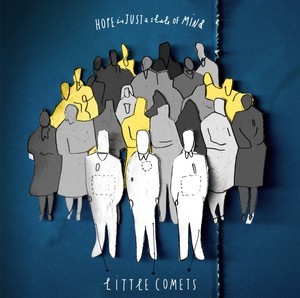
Little Comets, Hope is Just a State of Mind

My favourite band for kitchen sink indie…I like how Little Comets ease you into their changes in sound through various EPs released throughout the year. With the tingly guitars released on ‘Salt’ and the earnest lyrics, a ballad (‘The Assisted’) and emphatic drumming (‘Ex-Cathedra’) of ‘The Sanguine EP’, listeners were prepared for what was to come on Hope is Just a State of Mind, which seems to head towards what might be called a more eccentrically pop direction. One of my favourite things about this band is how they delve into the political and there’s certainly no avoiding it on this album, from the dig at Robin Thicke’s gender politics in ‘The Blur, the Line, and the Thickest of Onions’ to the lethargy of rock and roll in ‘Formula’ and the cultural demonisation of single motherhood in ‘The Daily Grind’: ‘You must feel so proud / Stigmatising every single mother / While your own world’s falling down’. Songs like ‘The Gift of Sound’ and ‘Formula’ have a more straightforward energetic pop vibe, whereas ‘B&B’ begins with an accapella moment and revolves around the repeated line: ‘my own mother cannot take me back’. There’s lots of thudding drumming and a swinging sort of emphatic, repetitive melody. The song, incidentally, is about bedroom tax and Robert Coles has eloquently said of the lyrics:

‘Lyrically the words came quite quickly as I always had the “even my own mother cannot take me back” line in my head from writing the melody. I knew it was going to be about politics: specifically the patronisation of people by the political class in both ideology and delivery, and the way that my own region has been altered by the blue hoards of conservatism.

The title stems from a tweet by Grant Shapps regarding the last budget – “budget 2014 cuts bingo & beer tax helping hardworking people do more of the things they enjoy. RT to spread the word”. Beer and Bingo – because there’s nothing else to do.

I think the first verse is just frustration with the attitude put across by politicians that suggests that they think people are total idiots – policies light on detail, simplistic ideology, framing debates in headlines, constant ill behaviour. Plus from the other end of the scale the total demonisation of the less well off in the swingeing benefit cuts typified by the bedroom tax. I just think it is bizarre and to treat us with this brazen amount of contempt.

It really got me thinking about the north east getting so bashed up in the time of Thatcher – destroying lives and communities because of a need to dominate on an ideological level. I think the second verse tries to convey the depressing notion that beyond this pain, she also eradicated trades and skillsets that had been built for hundreds of years without the prospect of anything new, or transferability. To extinguish a trade, a way of life…. Wow….. That’s a pretty crazy course of action.

It’s almost like she stole those years from us – and it feels a little like it is being echoed now. Taking away what someone relies on is oppression, and this is being felt in communities across our country today – horrified in the knowledge that it will continue until people are so battered that they accept it. The worst part is if you look closely enough, past Grant’s apparent carrot you can see the joy in the eyes behind the ghastly stick, and they look frighteningly familiar” (Source: Little Comets’ Lyric Blog).

I guess I’ve included the quote because I think the politics have become more direct in this album and it’s interesting to flesh out the backstory here. Sure, there have been plenty of ‘northern’ bands before, but rarely have I listened to a pop or indie band who engage with their politics so directly and so articulately (usually this space is reserved for punk or rock – Manic Street Preachers of course, representing a ‘marginalised’ Welsh perspective). Aside from lyrical content, you’ve got the usual pleasures of Little Comets harmonies, shredding guitar licks and bouncy rhythms. ‘My Boy William’ is wonderful live, the way it builds up and everyone following the drum rhythm. ‘Little Italy’ is great fun too, with its cascading melodies (liiiittalll iiiitaaalllyyyyy I reeAAd heeEre) and syncopated rhythm. It’s true, on this album (especially on ‘Salt’), the songs are very up and down, rarely straightforward and often lines are lyrically and melodically convoluted; this isn’t a criticism but more a reflection of what seems to be a desire to push the formulaic boundaries of pop, to infuse guitar chords with lush vocal harmonies and ringing percussion. To represent detailed, difficult subjects in pop is never going to be easy, but Little Comets nail it in their own unique, beautiful way. Look forward to seeing them again live next year!

Favourite tracks: ‘Don’t Fool Yourself’, ‘Little Italy’, ‘The Blur, the Line & the Thickest of Onions’.

The-Maccabees_Marks-To-Prove-It_cover

The Maccabees, Marks to Prove It

Well, to be honest I never would’ve thought I’d be including The Maccabees on my 2015 albums of the year. Over the last few years, I haven’t spared much thought for the band other than as another soundtrack to the general indie trend of the last ten years: a band mentioned frequently in NME perhaps, soundtracking lovelorn scenes in movies, but nothing particularly distinct other than in their creation of twee indie pop. However, one night after work I was lying on the floor recovering from a terrible shift with the radio on, listening to X-Posure With John Kennedy on what used to be XFM. The Maccabees were talking through their new album and playing the songs, and I was pleasantly surprised by how intriguing the sound was, as well as how articulate the band were in talking through the writing process and the stories behind the songs. I guess the next day I went out and bought the album. It definitely sounds a long way away from ‘Toothpaste Kisses’, though the added kazoos and varied percussion doesn’t spoil the simple joy of good plain songwriting. The songs have a weight to them, a grander atmosphere, especially the weird dissonance on the likes of ‘River Song’. ‘Silence’, however, is quietly beautiful, drifting along soft piano notes, subdued vocals and a somewhat eerie sample of an answering machine voice.

Where once you would recommend The Maccabees mostly to fans of The Mystery Jets, Pigeon Detectives or Futureheads, this album feels much more grownup, darker somehow, wilder and expansive. The lyrics vary in subject from the gentrification of London’s Elephant & Castle (the band’s hometown) to heartbreak (‘When you’re scared and lost / Don’t let it all build up’) and well, happiness (‘Something Like Happiness’). It’s refreshing to have a song that does just feel like at times like a gentle old ode to joy: ‘If you love them / Go and tell them’. ‘Marks to Prove It’, the opening track, feels confident and bouncy, with a sharp riff and assured vocals. It would fit in with a fast pop set from The Futureheads, but the rallying battle cry that precedes Orlando Weeks’ voice announces something slightly stranger, a record with new edge.

Favourite tracks: ‘Silence’, ‘River Song’, ‘Something Like Happiness’.
Currents_artwork_(Tame_Impala_album)

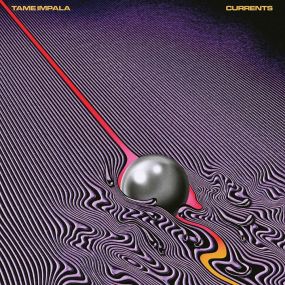
Tame Impala, Currents 

I was introduced to Tame Impala mostly from one of the chefs at work playing it in the kitchen on Sunday mornings, and weirdly enough his psychedelic brand of synth pop seems appropriate preparation for a day serving Sunday roasts to hungover customers. It’s the swelling bass and brilliant synths that really catch you, the smooth falsetto and tingling production. You can tell Kevin Parker is a dream at studio magic, with flawless instrumental arrangement that makes for a sound that could be big or chilled, depending on how you play it. There’s some dark keyboard drama, there’s a lovelorn anthem (‘Eventually’) and what might tenuously be described as weird disco funk. For some reason (maybe all the synths, gossamer vocals and vintage-sounding guitars?) has a ‘bedroom-made’ feeling, but with a much slicker production than the DIY element might suggest. Some songs sound like they belong on a long, atmospheric train journey across a space desert; others sound like they’d fit on the cuts of drama interspersing a video game. There’s a dreaminess to songs like ‘Yes I’m Changing’, but a more radio-friendly funkiness to the likes of ‘The Less I Know the Better’, or even ‘Love/Paranoia’, with its silky beats and finger clicks. As the album progresses, the theme of heartbreak starts to really solidify and I guess that’s the overriding drive of the songs – a heartbreak that slows and stifles, morphs between introspection and the temptation of mild bombast.

Favourite tracks: ‘Yes I’m Changing’, ‘The Less I Know the Better’, ‘Love/Paranoia’.

81-uo32700L._SL1500_

Stornoway, Bonxie

This was a lovely album to enjoy in spring, from the hopeful folksiness to the cute origami bird on the cover. I guess it got me through that period of hell in my life that was finals. I would go on walks around Kelvindale where all the cherry blossoms were, listening to the soft acoustic licks and all the soothing bird sound effects. It’s an album to enjoy by the sea perhaps, full of a sort of longing. There’s the noise of distant foghorns, the rolling harp-like guitar and sparkling xylophone over the drifting shimmer of a wave-like cymbal. This is probably my favourite Stornaway album, or at least equal to the debut, Beachcomber’s Windowsill because of its more folksy atmosphere, its immersion in nature — the sense of being lost, deliciously lost by the edge of the ocean. ‘The Road You Didn’t Take’ especially boasts a shanty-like chorus which adds to the nautical theme and sort of swells up like you’re caught at sea, singing along irrevocably. Melodies build up to climaxes and fall back down into subdued, slower choruses, as if the speaker tries to articulate something about his surroundings (the beautiful environment) but fails to express them entirely. Sweet, comforting guitar licks glide us through (e.g., the start of ‘Sing With Our Senses’). Vocals are never aggressive, only sometimes shrill and generally soothing – like a bird’s? Apparently over 20 types of bird donated their song to the album, and let’s not forget that singer Brian Briggs is a Dr. of Ornithology! It’s just a lovely escapist sort of album, reminding you of seaside holidays from years ago, that childlike ability to sink into your surroundings and find wonder in a leaf, a taste of salt air, a bird call.

Favourite tracks:  ‘The Road You Didn’t Take’, ‘We Were Giants’, ‘Between the Saltmarsh and the Sea’.
81HZecd+uwL._SL1500_

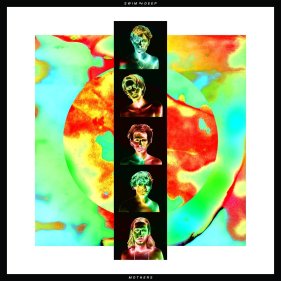
Swim Deep, Mothers

It seems everyone has been describing this album as Swim Deep’s foray into psych-pop. You only have to take a glance at the warping colour bleed of the cover art to pick up those vibes. The honey sweet guitar pop of Where the Heaven Are We has morphed into something heavier, more saturated. There are so many influences, but I suppose you could start with psychedelic music, house and kraut rock. Lots of bursting, colourful synths. It reminds me of The Horrors’ Primary Colours, not only because it’s a ‘change-around’ album, but also the subdued, atmospheric reworking of prior image and musical style. Songs like ‘Honey’ and ‘The Sea’ from their debut album were chilled and loose with catchy melodies, and while Mothers retains the catchy melodies, its style has tightened up a bit. The instrumental elements are more complex; songs open up a multilayered world rather than the silver stream of a simple pop tune. ‘To My Brother’ has an epic quality, building up to the chorus with some extravagance – weirdly, the sort of mistiness of the vocals and quirky synths remind me of Seal. I’m not sure why, or whether that’s even an accurate comparison, but the link just popped into my head. I love the way critics have compared ‘Namaste’ to discordant game show music, which obviously fits in with the 1990s vibes of the video. All that beige, those glasses, the sense of mania reflected in the music! It’s more mature maybe, but still fun.

Favourite tracks: ‘To My Brother’, ‘Namaste’, ‘Imagination’.

A few others…

  • Beach House, Thank Your Lucky Stars (two albums in one year, ‘nuff said)
  • Florence & the Machine, How Big, How Blue, How Beautiful 
  • The Libertines, Anthems for Doomed Youth (listening to it to drag up the old nostalgia of discovering the first albums, for the lovely production and Doherty vocals on ‘You’re My Waterloo’ and Carl Barat’s very English swagger).
  • Prides, The Way Back Up (Stewart Brock has come a fair way since Drive-By Argument (big up a band from Ayr!) but the wide, electronic sound of Prides has its heart in the original synthiness of Drive-By Argument which developed into more distinctly electronic side-project, Midnight Lion. Obvious comparisons are to Chvrches, but maybe also a bit of Daft Punk. Radio-friendly but I’d imagine really big and energetic live, plus whenever I hear them I get sweet teenage nostalgia for Drive-By Argument).
  • Sufjan Stevens, Carrie & Lowell 
  • Years & Years, Communion (sparkly EDM pop with plenty of pluck, from a band whose singer starred in Skins and Stuart Murdoch’s indie flick, God Help the Girl).