First published on 14th June 2021. Full text of the poem is available in MAI: Feminism & Visual Culture.
Tag: music writing
Playlist: April 2021
Last year’s April was a leap year. For every 29th day I summoned to think of the hours as gifted, secret, strength. I spent the actual leap of February in somebody else’s bed, a cherished cliché: cradling sadness, cat-sitting, reading Anne Carson and rolling the word ‘tableaux’ around my stressy mouth, whose hostile environment required twice-daily salt-rinses. On the 29th of last year’s April, I wrote about vermillion and silverware, ‘the lint of your heart’ and hayfever. A friend and I exchanged tips on how to best work from the floor, how to make it your best work. I miss ‘working the floor’ in other senses.
What do you want is not the same as What would you like?
There was a reading group on Lisa Robertson’s The Baudelaire Fractal (2020), and the Zoom chat was elliptical pursuit, a good fuck pendant, fractal kissing and restless deferral. The word besmirch which isn’t a word search.
Those days
I remember cycling long into the hard sun; I recall better eyesight.
⋰
Okay, recently. Do you want to hear this? I spent a week of anticipation, languishing with migraines and digestive upsets and the kind of blues where mostly you curl foetally into the fantasy that really you, or this, doesn’t exist. Sip worry coffee and brush the hair, tweeze or shave, sit patiently on top of the abstract, waiting for something lucid to hatch. ‘Opening up’. A weekend bleeding, the minor cramp of womb in Autechre rhythm; then a further week of physical ailment whose primary treatments, according to the lore of reddit, included punching one’s spine, counting to ten, pinching between nose and lip and lying in hot baths. I did not have the baths, which seemed terrible and luxurious given how faint they could make me. I read two books by Samuel Beckett.
In Garments Against Women (2015), Anne Boyer writes that ‘Everyone tries to figure out how to overcome the embarrassment of existing. We embarrass each other with comfort and justice, happiness or infirmity’. It is awkward to smile and to squirm. To be red-faced and faint after a luxury bath. To be found frowning in the Instagram reel of somebody else’s dreaming. To apologise, to dwell upon, to ask for help. To be the one clutching a hot water bottle in the Zoom call; to hide or show this. To sip beer, the migraine coming. To say “hello” from the room next door. To deem something luxury, to partake of it. ‘I have done so much to be ordinary’, writes Boyer, ‘and made a record of this’. Say I learned this month how to paint my nails grape soda, define hypercritique, appreciate the slept-in curls of my hair.
It is awkward to be unwell, to express this without clear definition. “Sorry it’s all late, I’ve been sick” and to not elaborate on that sickness, the specific ways it kept you up all night, kept you retching or clutching something tight inside yourself which seemed to want to give birth. A stray barb or small contaminant. A numb pill. Transpiration is the process of water movement through a plant and its evaporation from aerial parts. Plants are not awkward; they just grow. Sometimes upwards, sideways; sometimes back inside themselves. Wilt logic. ‘Let’s be happy insofar as we were for a few days not infirm’ (Boyer). The ecstasy of a new morning where the body stretches out, the mind clears and one is ready to work. Who gets these mornings? Can they be traded? Is their delicious ease somehow fungible? What would I give for more of them? Fungus, rot, the fangs of lilies.
Maybe it starts with crisp garments. But pretty soon the neat attainment of day will unbutton. Watch it happen in Lorenzo Thomas’ poem ‘Euphemysticism’:
Some happily sing
They have joy for white shirts
Singing “O white shirt!”
And that’s just the start
What ecstasy to declare the white shirt! What embarrassment! The chiaroscuro of lily-white shirt against the everyday’s dull shadows, but then showing up ‘baby pictures / Of pollution becoming disaster’ and Thomas’ poem is all about this. Disaster. Headlines, emissions, confusion. And that’s just the start. ‘A man crashes with his shadow’, perhaps because there is no one else. I did this for months on end because nothing else was safe. I could go the long walk for my safe grassy spot and crash there along with my shadow. I crashed in sunshine and rain. Crashland. Why did I bring the lily. It was like being fourteen again and walking for miles just to find a safe, anonymous place to smoke or weep. Sleep crash. ‘In the prickling grass in the afternoon in August, I kept trying to find a place where my blood could rush. That was the obsolete experience of hope’ (Lisa Robertson, XEclogue). It was like staring at the potential of Marlboro Golds tucked behind books and wondering what version of me they belong to. Synecdoche. Rising swirls. The poem burns out but also gets better. Blood rush and screen crash are lyric in pop songs. Sorry my windows. They are getting cleaned today.
Narrate my day again to you.
Thomas’ poem turns to the reader: ‘I’d like to check your influence / Over these ordinarily mysterious things’. The poem takes pictures or talks about it. What is a photographer responsible for? Do they re-enchant or estrange? If someone took a picture at this point or that point, if there was evidence, who would need to be told. How do you photograph pollution? Is this merely witnessing? In the past year and more, I have become witness to my own inability to really see. Disaster itself recedes into medial condition, blood swirls, scratching matter. I think of the way Sibylle Baier sings ‘I grow old’…
Some happily sing the white shirt and are they complacent with their conditions of work? Influence! ‘Desire is a snowscape on a placemat’ (Thomas). I trace its snowy lines in the stray thread of this weave. Ant-sized bloodstain. Am I to be made safe, or eat giant buttons? Put your plate on a place elsewhere and devour the rolling hills. Artificial snow is delicious. Crinkled thread. The white line curls around my tongue like spaghetti. Lila Matsumoto has a poem, ‘Trombone’, about hammering buttons. I unbutton the top three buttons of my blouse to walk around in fifteen degrees, absorbing/zorbing, and call the sunlight oil inside me.
‘There is a risk inherent in sliding all over the place’ (Boyer). This is what language does. There is a risk in crackle, in static, in the O shape of ‘sorry’ or ‘love’ or ‘alone’. Petition to upgrade for bubble emoji.
⋰
Last night, on the train back from another city I had not visited since August, I opened Sarah Bernstein’s new novel, The Coming Bad Days (2021). I did not close this novel again for several hours, except to pass through ticket gates or beyond groups of steaming men whose presence was vaguely threatening. They seemed cardboard cut-outs, stumbling towards me. When a migraine began burning my temples, I took paracetamol and kept walking, reading. When the light became gloam I walked faster. When I got home I sat at the table and opened the book again, like a schoolchild eager to begin their homework (as a ticket to freedom) or revisit a dream. It is risky to write about something you finished barely twelve hours ago. It’s embarrassing, the way talking about illness is, or happiness. To gush. You risk offering a raw piece of thought. Something has stuck to you and you are trying to convey the exact, impossible, vicious way in which you are changed by it. Still steaming.
This is what I understand by gorgeousness. As in, I gorged on it.
In the book’s last third occurs a fabular moment. The narrator is often telling their inner life through external surroundings — textures and fluctuations of weather. This is also to tell disaster. It is not the dramatic crash so much as a slow, implacable violence whose consequence ripples below and above the surface of our lives. Sometimes there is rupture: a cyclist is hit by a motorist, a storm occurs, an unspecified act of harm is committed, a life-changing conversation alluded to. But so much is in the insidious atmospheres which turn between dream and reality, which refuse to be nailed to the moment:
I dreamt of a landscape, overgrown grass, trees blanketing a hillside, leafy canopies moving against the sky, a deep river bisecting the scene. Fat berries pulling on their stems, apples weighing down their branches. Then a breeze came through with a slow hiss, and I knew it carried poison on its back. Here was a green abundance that I could not eat, a cold stream from which I could not drink. Take care, a voice said. Take care to call things by their names.
(Bernstein, The Coming Bad Days)
In this Edenic scene of harvest and green abundance, nothing is properly named. The landscape is unspecified, generic, anywhere. The voice belongs to anyone. It could be a serpent, a god, an angel, a person. Unlike Adam, the narrator cannot name things in nature. It is not their purpose. They came to Eden in dreams and after the fall. What fruits of knowledge exist are overripe and almost a burden to their branches and vines. In addition to the biblical resonance, this passage recalled for me the fig tree motif in Sylvia Plath’s The Bell Jar (1963),the poison tree of William Blake’s poem from Songs of Experience (1794). Wrath is in the air, and failure. I want to wrap around the passage like a kind of vine. Hold and be held in it. Is language a kind of taking care? A watering cruelty? What are the ecological arts of attention and tending to, towards, against?
I was struck by the possibility that Bernstein’s narrator embodied the abject and porous, slow and injured thought of an anthropocenic subject. This statement feels inevitable. The only abundance they could conjure was unconscious and laced with ‘poison’. It could not be imbibed; was not nourishing. But somehow such dreams nourish the text. For all its depiction of coldness, cruelty and the failure of communication, the cold stream of suffering, the weathering of Bernstein’s lyric prose effects a possible intimacy. Weathering, for Astrida Neimanis and Jennifer Mae Hamilton, ‘names a practice or a tactic: to weather means to pay attention to how bodies and places respond to weather-worlds which they are also making’. I think of the narrator skittishly eating cheese sandwiches at the window of their office, every single day of the week. I eat this sandwich with them. What is it they see? Each iterative mention of the weather reminds us that the social and interpersonal dramas of the novel are part of the medial, immersive or remote dramas of climate. The agential presence of rain, frost, clouds and fog, the turn of the waves, the ‘glistening violet evenings’: it’s more than metaphor. It sinks into the prickling skin of Bernstein’s language. Maybe you’d want to call this a weathering realism.
This novel seized me to read with compulsion, the way a dream does come and the writing of the dream is luxuriance that only later you bathe in. Not quite vulnerable or resilient. Responsive. Exposed to something.
⋰
On the 28th April 2019 (no entry for the 29th), I wrote in purple ink:
We would do better to sleep now, I have been sleeping much better and trying to resist the pull of insomnia, trying to perfect a monologue. What comes and goes in a dream without noticing, whose handwriting on the sun you recognised chancing your luck with yellow corn and fields of trials against sensitive, colours of smear and floral obstacle. Hyperboreal data flow into the crinkle cut futurity. Applying for latitude, acid.
Not sure about ‘we’: did I mean the ‘we’ of me reading back, and the ‘me’ who was writing, there in the moment? Are you also included, reading this passage over one of my shoulders? Can we take care to name things in dreams? But when I dream of people — friends, loved-ones, family, colleagues the famous — as I often do, what happens when I write their names? Am I opening them up to something that could harm or exhaust them? Is their presence a giving over of energy? Am I to be persecuted by the purple, anonymous flower of somebody’s need? What if I didn’t even know? What if the mark-making of initials was key? Will it bloom or wilt?
Go back to sleep in the forest, soft cosmos of dissolving forms.
⋰
There is a sense of missing someone that grows an acorn in your belly. It hardens and rattles with new life. It burns out of place. Leaves you with a feeling of placelessness. Impregnates every word with the possible, the fizzy wake, the fear and hurt. Makes you grow sideways. Hey. To exist in no-time of not knowing when the feeling comes. Pastel vests are back in fashion. Pull over. Kisses. Rarest flower emoji that doesn’t exist. To be sometimes well and other times racked in a well-documented madness that pays various attention to weather. Something painful. A few days of goodness seized. I would leap out the door, do 15,000 steps each day; so I would name the colour chartreuse when I saw it. Watching for changing bone structures in Zoom tiles. Your hair grown long and lemon blonde. My internet broke for a whole day and night. I felt old-timey in the pdf archive. Phoned you.
~
Bebby Doll – Weeks
Ana Roxanne – I’m Every Sparkling Woman
Zoee – Microwave
Cowgirl Clue – Cherry Jubilee
Laurel Halo – Sun to Solar
trayer tryon, Julie Byrne – new forever
Life Without Buildings – Sorrow
Cocteau Twins – My Truth
Kelsey Lu, Yves Tumor, Kelly Moran, Moses Boyd, ‘let all the poisons that lurk in the mud seep out’
Iceage – Gold City
Le Tigre – Deceptacon
FKA twigs, Headie One, Fred again.. – Don’t Judge Me
Porridge Radio – Wet Road
Angel Olsen – Alive and Dying (Waving, Smiling)
Big Thief – Off You
Perfume Genius – Valley
Grouper – Poison Tree
Sonic Youth – Providence
U.S. Maple – The State Is Bad
Sky Ferreira – Sad Dream
Waxahatchee – Fruits of My Labor (Lucinda Williams cover)
The Felice Brothers – Inferno
Bright Eyes – Train Under Water
Weyes Blood – Titanic Risen
Lucinda Williams – Save Yourself (Sharon Van Etten cover)
Lana Del Rey & Hope’s New Dangerous Lyric
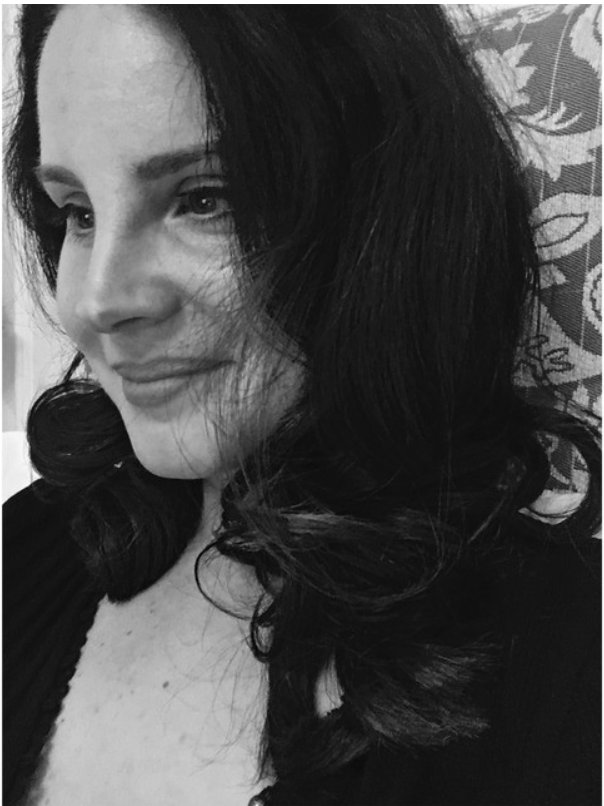
hope is a dangerous thing for a woman like me to have…
She walks through the monochrome film like its skin were a gauze, but as she walks, nay drifts, the film acquires technicolour, it flushes. You see there is a mirror, a chokepoint where the lipstick comes off or else thickens, the crater fills with lavic fluid, the watery eyes well up with green. And she speaks, the wax sticks words to red and pink. It is what it is to be utterly possessed by lust, lost in the Himalayas where chasms of location push the self from itself. This is the film Black Narcissus but it is also the new Lana song, which plays on the meaning of black as the word for depression, and the void we draw into with insucking chorus, YouTube wormhole. The title names hope as the treacherous entity {}. Hope is a dangerous thing in a world which makes of hope a scornful pharmakon at the centre of living, its molten centre that elides wherever you bite too hard and bleed a little. Is it dangerous to the self or the world, something wielded or something wounding? Can I anticipate the narrative arc of Lana’s new album? Closing my eyes for Gemini affect, pure intuition, telepathy maybe. Butterfly smudge of your lipstick is the end of the movie. This is the first small caps Lana; it bears the modesty of a b-side even, but it is so much more, lost ballad preempted. She delivers it for her fans, who eat into the brocade of its soft, fragile fabric like so many moths. I cannot help my own devouring.
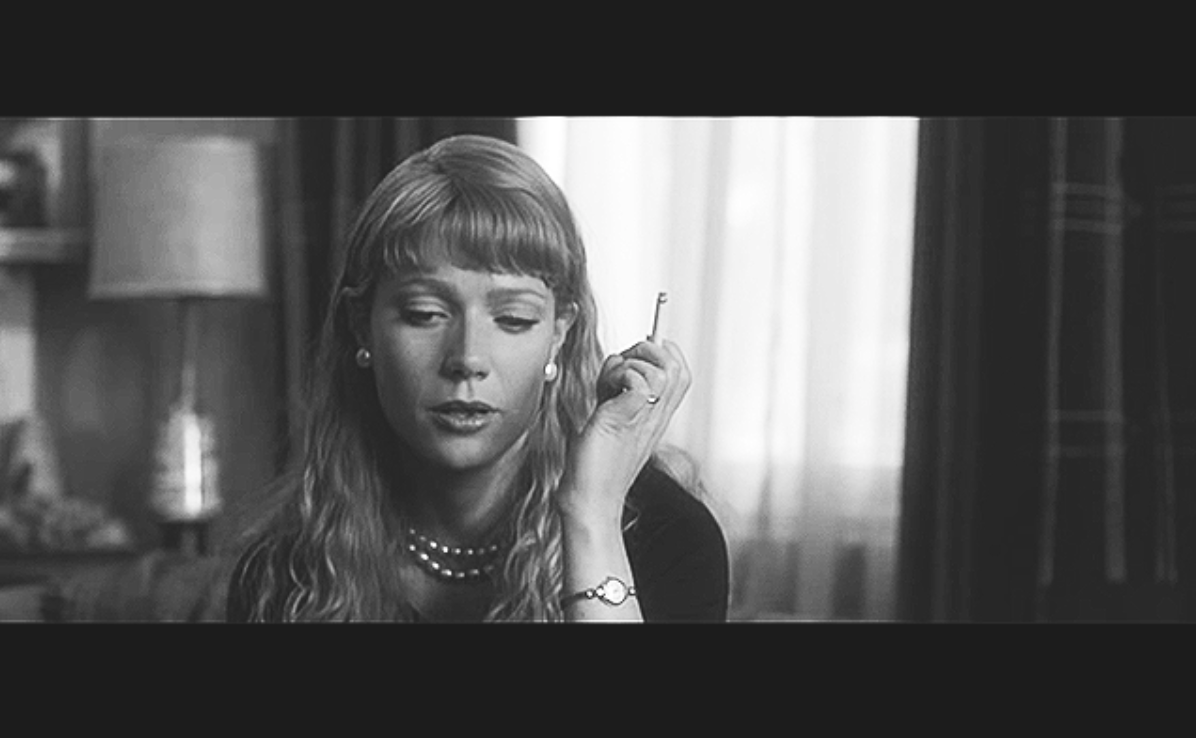
I’ll say that Lana’s piano is smooth and minimal, it belongs in the country, to a realm of only ardent followers. Perhaps I meant flowers. It is the piano you imagine at the concert arena where the scale of the concert itself is a country, because it is contained just there, because everyone breathes on the equal pause forever. There will be an inevitable release and collapse. And silent adoring. Her song is ‘for a woman like me to have’, and who is the woman like, a woman with ‘my past’, a woman who is only like a woman, not the ur-woman, sad girl of ‘quiet collusion’ who sits in her gender wanting to weep with the sleep monsters under her sleep. What does it mean to have a song? Somewhere in my heart the possession. ‘I’ve been tearing around in my fucking nightgown / 24/7 Sylvia Plath’. This Plath that Lana summons is, I can’t help thinking, the Plath portrayed by Gwyneth Paltrow in Christine Jeffs’ Sylvia (2003): sex scene Plath in all-American drag among pale English ghosts; Plath in Cambridge plus satchel; screaming Plath with the hairband and honeyed curls and all the fat cakes in the oven, the jealousy and gild. Pearl necklace and cigarettes, essentialism. Plath as product. This woman we have.
This hope Lana sings of, she sings between I have it, I had it, I have. What is the tense of this hope. It is less to-come than simultaneous. We have been waiting all winter for our powers to return. To have and to hold this hope, to taper off into quiet. People are calling it her NEW MINIMALIST TRACK, and the replicated figures in white dresses, yes the turquoise yacht continuum, the usual LDR aesthetic; poolside photography of Slim Aarons, who gets name dropped in line one with the insouciance of The Bell Jar’s opening line, of course, ‘It was a queer, sultry summer, the summer they electrocuted the Rosenbergs…’ which still gives me chills, like a midsummer comedown, like strangling yourself in the sheets again, each of memory’s creased reflections, a separate sleep. I didn’t know what I was doing in New York, in Maryhill, in Hyndland, Woodlands, insitu. She wants this to be country and century and certainly there is sufficient polish, and I think of all the new soft songs on vinyl, and sharing her old stuff, the MermaidMotel fan vids that we share in small hours via WhatsApp convos. Collage of all flickering source image, coverlet for my painted dreams.
Grief is the thing, hope is the thing. If Lust for Life was a compendium of hope, the happiness turn in Lana’s career, now we have a fresh reflexivity. At the bridge she sings of revolution, evolution; it’s a generational awakening and all that jazz, and all that messy spirit she tried to conjure before, and yet being a modern day woman, the one we all want. The producer says ‘listen at night alone’, I walk home from the south side listening, listening. Single beautiful vocal take: ‘Don’t ask if I’m happy, you know that I’m not / But at best, I can say I’m not sad’. This is the Disney lyric, the princess in the tower relaying her liminal condition, the Angela Carter heroine forever admitting her addiction to poisoned love and morphine dreams that keep her buoyant, baby blue. She writes in blood on the walls and scorns her notepad, like all the ink in the world had run out of work. It is not nearly enough to contain us.
A womanly scream from the body, akin to the way it feels up all night screaming with menstrual cramps, unable to scream to enact one word of how it feels, like to just write is to tweeze the remnant congealing of pain. This little ink blot, this little image. But also like simply the imperative to write everything repressed that goes on in the body, especially desire, yes, Molly Bloom of Ulysses in her writhing array of yesses, Hélène Cixous’ beautiful écriture féminine: ‘woman must write her self: must write about women and bring women to writing, from which they have been driven away as violently as from their bodies’ (‘The Laugh of the Medusa’, 1975). We require pop heroines that bring women, those who identify as such, to writing. Cixous says we should write in white ink, mother’s milk; Lana says she writes on the walls in blood. Well, if anything, it makes things pop.
Sorrow, for Lana, was always ever a semiotic affair. It was always of the body, always of culture, culturation; it was that which is written on the skin, something you cover with luxury but you can’t uncontinue. That grows among things. So she paints herself a gothic heroine, ‘fucking white gown’, Plath on heroin, Plath on the painkilling charge of writing, domestic dwelling. This painkiller is different to the heavy, sweet-dreaming Topanga one on Lust for Life, the one described in ‘Heroin’: ‘I’m flying to the moon again / Dreaming about marzipan / Taking all my medicine / To take my thoughts away’. If there’s anything that happens in ‘hope is a dangerous thing…’ it’s the grim certitude of domesticity, beautiful microcastle in which the heroine dwells, circling platitudes of hope you can mull in repetition of lyric. Quiet collusion in all that contains us, we secrete our mutual conspiracy. It’s not the silver needle that opens sidereal blooms of the future, it’s ‘Servin’ up God in a burnt coffee pot’, recalling both AA meetings and fraternising in practical terms with gangsters, ‘for the triad’.
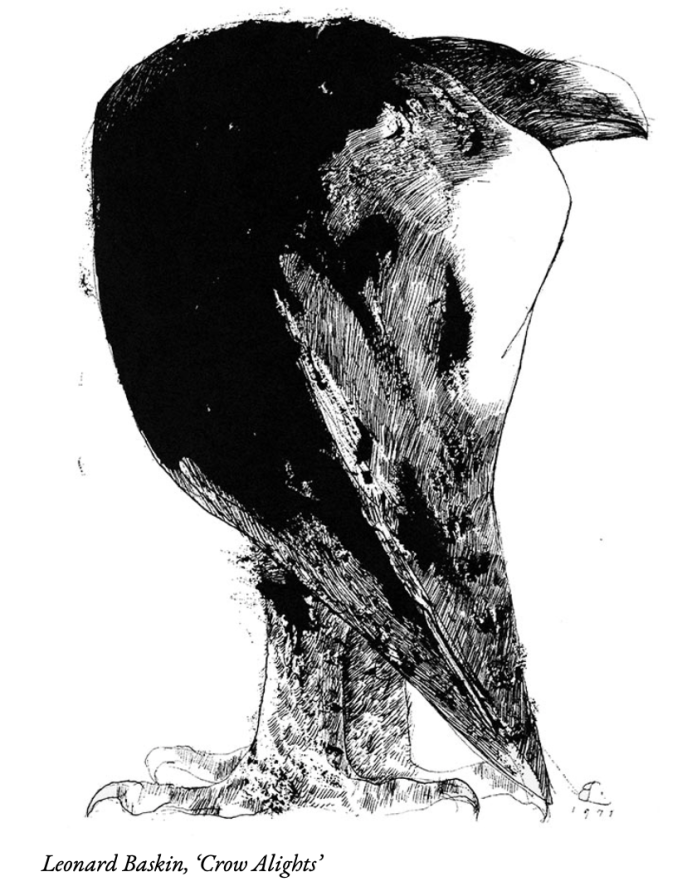
When I said Grief is the thing, I was of course kinda referring to Max Porter’s Grief is the Thing with Feathers (2015), which is a book about the unbearable melancholy of losing your mother at a young age, and follows the father’s attempt to console his motherless boys and himself. The father is a Ted Hughes scholar. This is one half of whatever pairing we make of the starcored twentieth-century literati, the Plath/Hughes mythos that enters into the strip of a Hollywood drama, fifty years later (I think of that Neutral Milk Hotel lyric, talking to Anne Frank, ‘Will she remember me, fifty years later / I wish I could save her in some sort of time machine’). In ‘Edge’, Plath begins: ‘The woman is perfected’. What woman is she, with her coiled dead children and ‘Pitcher of milk, now empty’? What bodily fluids do we still have to write with, do we wither in toxic futures? Reproduction’s entangled chemical reality. A woman like me, a woman like me. Is Lana asking for empathy? She is the model unto herself, while the woman as such continues.
She sings ‘Hello, it’s the most famous woman you know on the iPad / Calling from beyond the grave, I just wanna say “Hi Dad”’. This simple admission for a longing for connection indicates a state of grief, but it’s also the crisis of adulthood, and it’s this distilling of all the daddy issues Lana ever sung about into something beautiful, quotidian, sweet. Pick up the call say hi now. We are moving towards a wholesome turn in Lana’s career, where yes she pens songs about flower-crowned girls at commercial festivals trying to survive another shitty year, but she still sings about heroin, there is this chiaroscuro texture through all her paeans to hope, the darkness remains, it is modern America, it is the fault lines in lyric we might claw for resolution but will yet slip with our fingernails gleaming. ‘Hello’, well of course it is Adele in 2015 with her flip phone, her heartbreak. The soft piano is the size of a stadium or a bedroom at once, this tardis expressiveness of porous emotion. The dust comes off when you shout loud enough. But the irony is there are no phones, just the smooth texture of screens, she is dead and she talks through pixels, she is always already the perishing heroine, and would that be Sylvia haunting the walls, Emily Dickinson maybe; or some actress’s paltry impression, best attempt yes, linen and pearls. Words can dry up like milk, but as long as they are sung this way they are syrup, they are golden, soft-popping inside starry-eyed imbibed celestials, celebrity. I think of Marianne Morris’ gorgeous, golden poem ‘KO’:
Gold falls out of my bra when I stoop to pick up the gold
that fell out of my hair. My skin is gold, my fingernails, ideas
are gold my refusal is gold, my refusal is gold, it goes
from rock to gold to golden, the path I am walking
along is golden
This constant slippage and shift between noun and quality, adjective yearning in the gilding of language, wanting to become all form, preservation, sheen of riches and health. Golden girls, the ideal image of Plath in her beach bikini, Lana draped over a motorbike, gold California sunrise. Katy Perry on holiday. Do you say gold or golden, do you say hello this way, when you speak is your voice of cash or of credit, does it jangle? What is it Jay Gatsby said about Daisy, her voice is ‘full of money’? She was a golden girl as well. But all this gold we can’t contain, we women, we leak, we are weeping gold, it falls out of our bras, we bronze and burn, we are darker than you could ever imagine; it is the gold iPhone lost under our pillows, the gold in our voices we wanted to convey to you, molten in the night; our skins are multiple; gold multiplicity of time that watches in furnished piece; it is the beam of hope on the path that is golden; it is Dorothy’s Kansas; it tries to resist shadow, it refuses; it is so different from the gilded palaces of the Trumpocene, it is not the same capitalist gold as all that, it is solidarity, gold as solid, it is not white by any necessity; it is what, as Morris puts it, ‘leads to gold’, it is mineral transformation everywhere; it is the liquid qualities we need to be strong in this world that would crush us. I would say every chord is sprayed with gold, and then it is knock out.
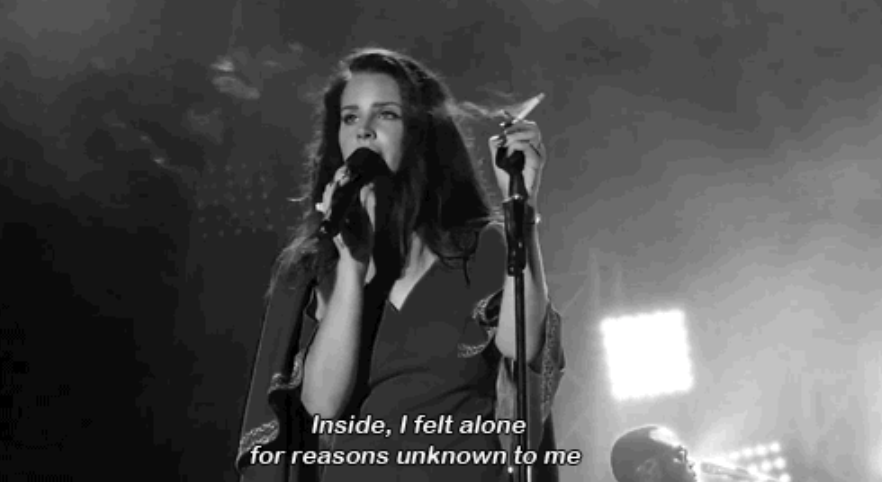
Lying down splicing the self on a morphine dream, which is the infinite conjurations of a possible future, which is the way you feel drunk and beside someone in a sleep that feels truly like falling, consciousness making a latticework of itself through indigo hours; this most beautiful sleep is golden also. Seek an equation to the crying that occurs in the sheen of gold, which is the climate at limit, the climactic lyric. Remember Ariel was light as heat, fever 103 degrees. Forever young and young forever. I pick over the lines that define the figure, like the body of a woman made perfume bottle, glissando of scent and curve. Spritzing us back to originary innocence. Tasting whole rainbow memory futures. Skittle the knockout, KO over.
Someone on YouTube writes: ‘Lana Del Rey makes me mourn for childhood memories I literally do not have’. Someone else is crying while high as they type. To admit this, to just write it. We exist simultaneous upon the bright webpage, acquiring a million plus. I literally lack, I lack the literal memory. So Lana is always conjuring; I’m dying everyday, I wanted to say thank you for everything. Fall through the comments section until you hit the beautiful loophole. Hope hope hope is a hope and I have it the hope. Hope is a thing that I have and it has me. It is a Steinian ring that you wear like a rose round the finger long scarred by the rose again. It it it, it shifts. To say hi to the father but turn towards self, to just make the gesture, and home is performance, is hope from the stage; hope seen from the stage, the lights shone back at you; the photographic as one capturing of rainbow to the next, liquid and light, resolved on the glass of the iPad, which is fairy-tale portal, twenty-first century, FaceTime continuum. Summon one memory as sleep paralysis, suspend, end song. This could sting. To light this, smoke, the wisps around your eyes are time. It is just a little descent of piano, it is sweet and sore at once.
The Weather Turns

[ a daily free write ]
The weather turns, ineluctable as that mist that mysteriously fogs up my glasses (Footnote: Why do I wear glasses? Something a man once said about parallax and the need for clarity of distance, the reassurance of one’s own substance). The city is a haze of something else today, foreign as a postcard marred with scratches of time and travel. Must I always be up to my neck in vapour, in unfinished melodies? They always catch: grooves on a record, gum on the pavement, hair snagged in a glue binding, specific as a bookmark; melody after melody. The notation would be very messy. I’m picturing spaghetti-tangles of quavers, misplaced on the staves with no home of their own. What of this note? oOoOooooooooOOOooOooaaAAAaaaaaAaoo……. Does it belong in the sonic realm of an F#? The problem is, I picture my life in A minor, every time. The soaring long echo of a siren call; so sad, so sad. Picture this, pretty fake glass vase, all containers of vapour, elaborated with black-printed Celtic patterns, impenetrable as ersatz ~internet~ Japanese.
One attempt at pottery is quite the attained luxury. I think I will try out something new. The raising of a blue hand in order to trace the pulse of purple veins. Not too bad for a hologram. This is sweet and clear and maybe okay. Like walking past the graveyard of pines. Must I call it that? Too long it has been since I’ve trailed through a cemetery. A habit picked up from my grandmother, I glance at the old headstones, my brain knotting in each line and crack and crumble. I forget dates; they fall away. When you realise that you are walking a few feet above the bodies of dead people, your heart does a turn and slips to your stomach. The ground is so soft and mossy. Flesh is a good fertiliser, it spreads lush bright vitamins to the soil. In fact, it might be quite nice to lie down in and dream.
If I slept in a graveyard, would I have reveries that channel the dead? It’s a distinct possibility, the amount of fragmentary matter that must float in the air like electricity. The hormone we release when we die: dimethyltryptamine, DMT. They say it makes us see fairies, elves and tunnels of light. Lost soulmates dwindling in the twining of shining limbs. Silver rings in a stranger’s nose. Near death, the liminal weirdness of the world crosses its own boundary. No wonder I have always loved the word psychotropic, its connotations of a spliced brain opening out like a Polly Pocket to uncover an island of swaying purple palms, a guava pink sea, an assortment of oozing neon beads. This great, gritty, sparkling geode. Would a brain like that bleed? Do brains in general even bleed? The lavish quality of this vision is undoubtedly a product of sugar cravings. The dangerous dip, the faint-headedness. Our bodies being an assortment of chemicals, it’s only natural that the synapses of our minds produce very queer imaginings indeed.
Pineal gland: essence of palm. The oil extract no longer lucrative in worldwide trade, though popular, cheap and downright nasty. Spread it on bread like honey and sweeten. It makes things swell, tighten.
Things to desire: serotonin, colour, daylight. There was a time where I substituted existence for an array of colours, the kind that come straight out the packet. The need for something pure and vivid, so vivid as to seem utterly distilled of all trace matter, was completely upon me. Splat after splat after splat. I could have squirted that colour on my tongue and hoped for the same result of a manic acid trip. I wanted to see the gravestones melt, the names shimmer and vaguely disappear, leaving scraps and lingerings of unfinished letters. Is it possible, really, that some expert kneeled in the moss and carved those names so beautifully?
Crack open the sky over the sea and tell me what you see. The bold aroma of a rainbow comes quickly and glows like some other sun is ripening behind it. A pale blue sun, perhaps, stolen from Mercury. Planets out there, swapping their radiations of time. Down below, the ocean groans under globules of oil, fat black spills which ooze and spread. Each secretion has its location hidden; sometimes gushing, sometimes slowly swirling. I think of butter melting into chocolate, ink being marbled in gelatinous jam. The favourite taste, all bonfires of strawberry. Some god is spinning the water with a cocktail stick, languid and bored like a hungry person in a bar, waiting for love. We hallucinate, don’t you see? There is a complete quality to what comes next, the fiery upturning of all this trace matter. Waste. Be flamboyant as an artwork. You pinch the thin skin of each of my fingers and the lightning shoots right through me.
Things to desire: rock pools of igneous glass, starfish, the dying white rose at the side of a grave.
I hear the knell from far away. Such tocsins call me back from the realm of the dead, though I am happy here, my body breaking down into succulent little pieces. The woman opposite me mutters litanies to herself; stickily, as if each word were cheaply enthroned in lipstick. Is there work still to be done? These days, I mix the colours. I like to see the vibrancy break down, meld into subtler hues, details you see only up close. The paint sticks in my brushes, the glitter of light in my lashes. It’s not mystifying anymore. The greyish haze is my outpourings of smoke, enough to cover the whole skyline, swallowing up what good is left of tomorrow. I inhale matter in wholes and halves. Like yesterday, it will be black (the city, that is): gilded, ink-ridden, brilliantly viscous. A whole ocean will roll from the distance and its golden ore will cover us, just so many bubbles of oil pasting our brains. For now, it rains.
***
 mariaology