Separation is something that passes through your body. It happens on scales that feel biological, because at once so intimate and distant, clear and mysterious. The vertigo sensation when you see a diagram of the heart, or someone’s face fading in the moving window of a train. When I learn the words for things I can’t articulate. When someone says Brexit or mentions faraway disasters, or power lines being laid deep under the sea. Scientific processes that I can’t reach. Separation, transmission, event repeating. A curiosity towards ominous energies. I’m not just talking about the endless, five o’clock stories, beamed through radio waves. Brexit is as Brexit does. Most analogue hour. How many of us woke up that Friday morning, after the fact, with stomach aches? The undigest of all our country, rent broad and familiar on all the news.
~
As history seems to be compressing, rapidly, in a chaotic present which seeks to smooth with legislative violence the rich diversity of our past, stories of migration and change become vital.
With vague direction, I walk over the motorway bridge twice to get back to Glasgow city centre. The trees in Kinning Park are singed with vermillion; it’s early October. I ascend the footbridge, just slightly hungover. The sight of the traffic fills me motion again, after a night of luxurious slosh and dark of stasis. Screen light and honeydew shoegaze. Cars are barely there, but they go places. They leave a carbon trail behind. Watching from the sun-drenched bridge, I carry my stories and see them swept up in lines I can’t manage. Later, I try to write. I am looking for a flow, a sense of circuitry. The sentences whir.
Then I step into the exhibition. There is the clarity of photography, more like a series of windows. Windows I see inside windows. The glass steams up in certain types of feeling, translated as light.
~
The themes of the recent Lightwaves exhibition at Street Level Photoworks, featuring the work of Mat Hay, Josée Pedneault, Bertrand Carrière, and Melanie Letoré, are moving histories: those of heritage, migration and the storytelling inherent within. I have a special familiarity with Letoré’s work and practice, having served as her hospitality comrade back in 2016 and since then having worked with her on a personal project: a weekly Google doc record of our lives and thoughts, sprawled in text, image (art & photographs), questions, lists, poetry, fiction and essays. The name of our project remains tendentiously secret, a bright hard candy. Keeping a ledger with someone who I tend only to encounter IRL on chance occasion (gliding bikewise down the motorway, drinking OJ in basement bars) feels a bit like an odyssey. An orbit of thought. Each week we find out more about each other’s pasts, our present fears and desires, our personalities. It’s a bit like trading journals at weekly sleepovers, except there’s the sense that each post on our shared document is less a private thought and more like something that needed airing, that needed figuring out in the shared forms of writing and visual expression. Writing as performative output, the act alone a delectation. I love the sense of sisterhood that comes with this kind of sharing, like when I was wee and my cousin and I would read each other’s palms and tarot, tell our futures.
I proposed the project to Melanie after many months of following her blog, Rectangledays, whose premise is the daily post of a fresh photograph. The blog goes back several years and serves as a sort of photo diary, a luminous archive of many little windows into moments in time. Some I recognise from the days we worked together at the restaurant: pictures of a decimated wedding cake, a lonesome chair in a stairwell, a bunch of crutches propped against the fence, another colleague’s bloodied toe, wadded with cotton. I love these photos as a testament to the physicality of hospitality, the importance of objects and tools (knives often feature) to our work, the endurance required: poor Shelby with the bloodied toe, acquired on a wild night out, would’ve hobbled along serving tables with her injury, no complaints, shift after shift.
It’s a total treat to see Melanie’s work in an exhibition context. Stories that maybe she’s written about in our ledger come to life in the distillation of pictures in a bright clean room. Privacy rents a very public space. The other photographers in the exhibition have their work blown up, pressed across the white, whereas Melanie’s are much smaller, identical in size, sitting parallel on a wall. The pictures are thick, giving the impression of little books, the three-dimensional aspect implying that the story is more complicated than the image allows. The image contains itself, and then the negative space of all these stories, quietly sporing. Much of her work is about shining a light on the intricacies of identity: Melanie’s grandparents migrated from North America to Europe in the 1950s, and she herself has moved from childhood Switzerland and found a home in Glasgow, as an adult. Her work feels like a dialogue with the everyday world around her, and maybe the people back home, the family who live their own lives many miles away. Photography as postcards without text on the back. Or maybe photography captioned with invisible ink, ink that only some people can see; others parsing their own specificity from the image. That’s the beauty of Melanie’s work: it’s tender and personal, but there’s a humanist impulse in there somewhere too, rent with a complexity that asks us to think about where people come from, how they live, where they touch the lives of others. Feelings, adventures, intimacies, routines, leisure and food.
A certain nourishment. I feel privileged to have access to some of the thoughts behind these images. Reading Melanie’s writing, I find myself adrift on all these planes of migration. The title of her exhibition, No You Without, comes from Rebecca Solnit’s A Field Guide to Getting Lost. When told of the Wintu in north-central California, who use the cardinal directions rather than the words left and right to capture their bodies, Solnit writes, ‘I was enraptured by this description of a language and behind it a cultural imagination in which the self only exists in reference to the rest of the world, no you without mountains, without sun, without sky’. With this perspective, we realise our own contingency in the context of a relatively stable world. Recently, I’ve been wondering about where the ‘you’ is situated in my own poetry, who exactly it is I’m addressing. Who is the ‘you’ in a photograph, what kinds of hailing occur when we look at a portrait, or perhaps a landscape. Where are we situated and within whose vision. There’s a piece in No You Without where a woman, I think in fact Melanie herself, has awkwardly levitated her body by propping it between two counters or surfaces. I’m struck with the fact of the body suspended so precisely this way, making a new morphology of her being. Like when you are a child and find ingenious ways to get across a room without touching the lava-strewn floor, or like lying upside down for too long and seeing how precarious your sense of space is. When you are forced to appreciate gravity, pressure, connections. The objects that make us by dint of negation.
In Melanie’s images, I seek fresh orientations. These are subjects which reflect process rather than point; they are a document in the quest for self in a sea of myriad reflections, a very real sea which threatens with its sweep. I see red ribs of meat, black curls through black curtains, a strand of hair overlooking an island, the pinching of elbow flesh, a rainbow, the gnarled remainders of landscape’s heap, two boys rolling around on the beach. Each image demands its own sense of scene, of identity in place. I have a sense of capturing, that one slight second that splits and releases: the clouds come in, the flesh smooths back, the rainbow ceases to be.
While the images do not document explicit ‘narrative’ as such, it’s clear there’s an intimacy threading between them. I wonder if we are encouraged to pick up the images and study them, the way you might lift family photos off the mantelpiece, stealing a look at the back for captions. In the exhibition notes, it’s suggested that the migration of Melanie’s grandparents to Europe, and all their associated trauma, comprises ‘another layer to her search for identity’. What we lose or leave behind. What we carry with us. A memory of blue, of sky, of something that represents the not-knowing, but nevertheless the feeling. That which comes, regardless of narrative or language. I planted a thought. Photography bears the visual seeds.
I’m reminded of a passage in Sophie Collins’ book small white monkeys, one that Melanie and I have discussed often:
Patterns of shame can of course be inherited, be broken, halted, but mostly they are carried on through, like mottos, or emotional heraldry.
Maybe we carry something of what our parents and grandparents taught us, or experienced. The learned behaviours, observational ticks of outburst or repression. Frequencies and cycles of confession or pain, the arguments which pixelate our childhood memories with varying degrees of trauma. A traumatic tartan, stitched to the furniture of our daily lives; a ravelled print of practices and patterns of thought and feeling.
We find ourselves reenacting the affects of others, those we are close to. Mostly, we don’t mean to. There are just these things we remember, ticking away in our brain and blood.
Such memory persists like a stick of brighton rock with the motto carried through, except you can break off the stick at any point, you can shatter the neat black letters. The rock of the shards tastes sweet and mint, is cleansing.
But it sticks to your teeth. Shame sticks also.
You can cut yourself on your own quick memory.
When I learn the words for things I can’t articulate. Surely ‘emotional heraldry’ captures this miasma of maybe incalculable feelings I might attribute to family experience? A coat of arms to bear, whose pattern is fading before me, or intensifying within me. Heraldry, inheritance. Jewishness on my mother’s side, ethnicity unrecognised, religious cycles and traumatic pasts; a kind of implicit migrancy that is only tangible in visiting. Stories my nan tells about ancestors whose names are like keys to dust-filled chests, mildewed letters, somewhere deep and distant. But then livable: a trip to Amsterdam, family graves and suddenly the pulses of history might glow in my veins. That heat is a shame. Peeling yourself from the easy determinism of ‘family’ and then finding family wherever you read. Recently I was struck hard by this essay by Daisy Lafarge on maternal approaches to poetics, or looking to whatever texts provide a sort of mothering supplement, rich with emotional truths. The wrestle with essentialism, with forms of belonging. I am someone’s daughter when I read a poem or look at a photograph. Sometimes I am otherwise lost. I am that altogether vulnerable.
I guess I’m an immigrant too of sorts. Moving from England to Scotland at a very young age, being acutely aware of my Englishness and thus playground shame because of the markers of accent, and yet proud at the difference, to be different. Melanie’s photos teach me to sympathise with other kinds of present, and presence. They are fleeting and insouciant, playful in one sense, but otherwise make me want to stockpile and archive with a kind of serious fever. I want to know everything about the people in these images, scour their diaries and ask them their names. But I also want to leave them alone, up on the shelf where their lives can be quiet and still, and yet somehow heard, in the seeing. Maybe an image is a kind of speech; it allows us to separate, and to parse our connections. To halt in the flow of feeling, to carry a place or a person; to illumine.
~
Lightwavesis on until 25th November at Street Level Photoworks, Glasgow.
Short story I wrote this morning in dedication to January, something about blues and time, memory, the struggle to piece yourself together…
*
It is a nightmare to wallow in all this time. She professes inwardly, however, a sense of relief at the expense it affords, all the things she might do or watch or read. I might pick up a book at random, take it to a café and just blitz it, you know? She uses the lighthearted, daytime tv voice in her head—semi-ironically. When she bumps into someone she knows, her eyes swim with gratitude. This is something she must stop.
It is January and no-one is doing anything really, just working. She is working too, except she gets minimal shifts. So really she is treading water.
It would be better, perhaps, to change the scenery. The man at work that paints the stage sets for the plays, he recently had a baby. That baby will grow up, she thinks, surrounded by boards of painted landscapes: haunted houses, verdant meadows, pastoral castles, seashores and fairytale forests. There will always be another reality, overlaid with this. She recalls being very small and trying to wrap herself into a book, almost physically. She would read in the shadowing confines of the wardrobe doors, read dramatic fantasy stories with grownup imagery and worlds the size of universes. In each book she nurtured a personal metamorphosis; maybe the worlds mattered less than the characters. There was this longing she didn’t understand, like nausea. The boys in these books always had eyes described as gemstones, like He looked at her with his hard and sapphire eyes. As a result, she finds herself mostly drawn to men for the colour of their irises. She especially likes the rarity of green, but two-tone eyes are nice as well. She knows a couple of people with heterochromia, and this is a word she relishes, its gorgeous vowels and subtle moans. The O sound.
It is stupid to describe people with eyes like gemstones. It is so obvious. More often, perhaps, they are like television sets, endlessly flickering, reflecting. Melanin, melanin. She turns it over, listening for it like the jingle of her many secrets.
There is just this expanse of time. She walks through the park again, where everything is bare and swept back and any remnant of leaf is like weetabix mushed in dark chocolate, fudge. There is nothing to kick away, nothing to admire. It is all such luxurious waste. This is the bench they sat in, kissing under her black umbrella, the day before things fell apart. That was two years ago now, so she hardly remembers the thaw in her chest when it happened, the way it spilled out like rain. This is the bench where she sat with her pal, six years ago now, and her pal was eating a panini from Gregg’s and it wasn’t vegetarian because she wasn’t, then, and they were watching the belligerent squirrels and it was all so wholesome. Then.
Climbing the hill raises heart rate. When she reaches the top there is such a release.
She wishes she was the type of girl to have a favourite café. Like, Oh this is where I go to relax or study. She sees these girls everywhere, shiny-haired and always smiling with MacBooks and frappuccinos in university brochures. They are so glossy, these girls, they are like anemones. They stick. Boys love them, clubs love them, gym memberships love them. They will glow and smother at will, with their gelatinous, rosy lips. As for her, she is more like a stickleback: swept in and out by mysterious tides, inhaling small quantities of plankton and other fragments of life. When this thought occurs to her, she googles the species: spinachia spinachia; sea stickleback. In Latin, it sounds like some Italian dish, but ah, the brutality of Wikipedia: ‘It is of no interest as a commercial fish.’
The shape of her career dissolves as in ink; she laughs at it, frequently, in bars with friends. Faces the details later, in sleep, where they rise to the surface, inexorably.
She picks up her pace, trying to escape the park where the children are being released from school and are swirling in gregarious shoals around her, screaming at the swings. I am not a commercial fish, she recites, over and over, twisting a smile. Sometimes it is good to get mixed up in these currents, wishing she was small enough to join in, or at least perfect the evolutionary acts of disguise and disappearance. Children communing their wisdom, every howl a perfect hour. For an hour is so much to children. An hour is so much to her; but not right now.
The alarm clock makes her scales ache daily. There is no reason to keep it on, but then again no reason to turn it off. The singular guarantee of diurnal rhythm. Her body is always late, so each time the blood is a dark surprise. She sees it spreading through the week, flowering outwards, like an idle fantasy of slitting one’s wrists in the bath. It is in my nature. Once, high at a party, she studied the arabesques of wallpaper, thought of the blood and tried to describe it when no-one was listening.
Daily she scratches at the elastic canvas of her skin, wishing sometimes she could shrug the whole thing off. She pictures the underneath as this diaphanous mass of sadness. You could only catch it in a blink, like a plastic bag snagged in a tree. A soul without skin gets caught on things.
The days are like videotapes. She takes the same one off the shelf and rewinds it daily. Out of the same, the red blue green, she will eventually find the perfect day, the perfect tape. The girl unwound inside of it. For now, all the good things are just pieces and snatches and moments, like broken-up Snapchat stories she can’t get back. Every replay betrays the truth of the memory. The boy that used to send pictures from abroad, shots of skies and doorways, what did they mean?
Late afternoon, and still nothing. She knew people that walked dogs in their spare time, cash in hand. People that did internet surveys for easy PayPal transfers. People that chanced a few on low-level gambling, even though they weren’t remotely into sports. She recalls a singular night at the casino, five in the morning, gingerly sipping pints of Tennents while he put coin after coin on the slots. It was Christmas and the tips were good; they came in fat bags of new pounds with the edges you could bump twelve times with your thumb in rotation. Metallic tastes, a key of Mandy. Pop songs and the sound of the rush itself, the beginning which kept on beginning. She supposes that’s what love is, for a while.
Nobody she knows is in the park, it is disappointing. Finnieston is where the sun goes down, so the streets are dusky and violet, save for the neon allure of sushi bars, chip shops. Everyone crowded inside so the glass grew steamy. She walks on the long road, chasing the vague direction of town, evading the afternoon. She is walking, pointedly, to acquire a sense of hunger. There are days when she is always hungry, days when the numbness swallows her appetite. Sometimes she can’t decide. She remembers a time when all people did was tell her to eat. That was a while ago—she deserved it then.
Now she sits at the window, night after night, cracking slabs of discount chocolate. This is something she must stop.
Feels good to say a cold one. He calls her at three in the morning but language is too raw at this point, so she keeps her phone on silent. The light in the window opposite is flashing on and off, like a signal. The world is always on the brink of breakdown, or disco.
It is a nightmare to just wallow, wallow, wallow. To turn the connections, to retrace each tread. Satellites above tracking her every location. Then a text message, the gaze of a stranger, vibrations. It is enough sometimes to just be acknowledged.
One day she will polish her gossamer scales, she will shimmer to the lights and dance in a prism of beautiful irises. Her great disappearance—captured on videotape, spinning away.
(A short story I wrote back in March, knee-deep in Tom McCarthy’s Satin Island, handfuls of Romanticismand longing for the sea. It’s about an oil spill, a young boy’s strange obsessions and his very indulgent Daedalian poetry)
Selkie
He’s become obsessed with making lists of optical properties. Qualities of light quantified on a complex scale he devised at midnight, drunk on a month of insomnia.
His father is very concerned. He comes home and pours amber from the bottle, watching his son pore over homework. Sometimes a storm shatters the sky through the window and they are both oblivious; the father is a terrible farmer. He keeps just a small herd of cows. A local girl comes to do the milking because he is incapable sometimes, and he won lots of money on the races which pays for her wages. He’s grown sick of the jelly-pink udders.
The boy draws lines, draws a series of overlapping ellipses. This is his expression of despair in the face of algebraic equations. He has grown quite fond of receiving those sweet red Fs.
The community is idyllic as any island could be. The school is offshore, on the main island. Every morning, he gets the ferry with the rest of them. They move as one great shoal of fish. Sometimes he watches it happen from afar, the torrent of school uniforms dissolving through the mouth of the big white ship. On such mornings he turns away and walks further inland, hoping to find comfort in the hills.
He never does. It is only the sea he loves.
[…]
Once, the milking girl tried to make a move on him. She used to wear her hair in braids stitched together across her skull, but that day she came in with it long and loose and wavy.
“Will ye not get it in the muck?” the father asked, secretly admiring her golden tresses. She smiled at him. She waited for the boy to come down from his room, eking out time with every pull of the milk. He saw her bent over like that, the hair dripping over her shoulders. He was holding a tattered textbook.
“I love that you read,” she murmured, to no one. The sound was drowned by the cow’s impatient grunt.
“Easy girl,” she said, thwacking its flanks. The boy stood there watching and she mistook that for desire. She turned to look him in the eye, letting the left strap of her top slip down her arm. That one white breast would haunt him forever, like an immature moon. He averted his gaze.
“What do you want?” she asked.
“I don’t know,” he admitted. He sat in the straw, slumped to the floor, and wept. She had never seen someone so pathetic.
He would stand in the shallows of the sea and feel this ache that was deeper than any pain he had ever experienced. It wasn’t pain exactly, but it was a thing that gnawed at his chest, so much sometimes he could hardly breathe. The grey green waters would shlock around his ankles. In the distance they darkened to purple, to wine. His soul was scorched by sunsets. He picked up shells and held them to his ear, listening for the ocean’s distant, groaning radio.
The old woman in the village store told him she sensed his misaligned chakras. She had a bracelet for that, studded with seven power gems.
“You should wear it day and night,” she warned him.
“I have no money.” He studied the trinket with interest. The citrine and carnelian were pretty, but it was the clear quartz and amethyst he liked best. The tiny crackles inside reminded him of waves, preserved in time.
He hung it back up on the stand, alongside the crystal pendants and the celtic knots they sold to tourists.
“I’ll have a postcard instead.”
“A postcard? Who on earth do you have to write to?”
He sat on one of the picnic benches by the shore. The wind kept threatening to blow everything away so he had to pin the card down as he wrote. It was a picture of some white boats against a flaming sundown. Utterly cliché.
Dear mother, he began. What else was there to say?
Sometimes he would walk for an hour right round to the other side of the island. There was a cleft in the rocks you could find for safety at high tide; it was sufficiently above ground to protect one from the flailing salty waters. He would nestle in that cleft and compose lines:
The vitreous lustre of the sea turning starboard in tidal cycles, an errant moon throwing zephyrs across the still bright sound.
Oh mariner, how you have travelled so deep in the blood of the world! I miss the sense of your stories, sharp as whisky
in bars where the girls did sing: how lovely is the newborn day! There are precious few elements as vast as you, I should
dream only of your strange motifs, a darkening glass against turquoise air. In the morning I plot
my passage to the mainland, sullied with the effluvia of island living, drunk on the salt and the still bright rain.
He would never show his words to a soul. He rolled the thick pages, torn from his father’s ledger, and stuffed them in the empty tubes that once held his teenage posters. The woman in the café served him strong black coffee, and never once asked him why he wasn’t at school. He left her a £1 tip, excess change gleaned from not eating lunch.
Sometimes he would stand on the edge of some cliff and let the wind buffet his body so hard it was perfectly possible that he’d be torn from his mount and hurled to the sea below, stirred up and strangled in its milky swirls.
A week after the milk girl quit, there was a terrible oil spill. Nobody was quite sure who was to blame. People skipped school and work to go down the shore and watch the slow undulations of the oil on the water. It reminded the boy of something oozing in his dreams, a black thick sweat that covered everything. He wrapped his father’s jacket tight around his shoulders. Flecks spattered the silt and shingle the way ink sprayed from a burst pen. They were waiting for experts to arrive.
Some of the islanders wore oilskins or workmen’s gear and went down the next morning to help clean up. The boy had spent half the night on the safety of his favourite rock, watching the oil thicken and coagulate in the shallows. A few birds washed up, unidentifiable. They looked like lumps of hematite, shining in the new full moon. Sometimes the sight of that black shining oil was so much that the boy could hardly breathe.
It was a job that went on for weeks. The oil just kept coming and coming. People from the news arrived with fancy cameras and started interviewing the locals. They said it was one of the worst offshore spillages in a generation. Old folks tutted and blamed the greed of the mainland.
“They might as well have fountains in shopping centres, spraying this stuff around, for all they abuse it.”
The boy kept a diary of the oil. He tried to write about it purely aesthetically. He wanted a thousand words for black, thick, inky, viscous.
The words brought temporary distraction but deep down they sickened him. He longed to put his bare feet in the sea again. His father scorned him for not helping with the clean-up. He had to do double-shifts with the cows, now that the milk girl had quit.
“You lost your chance there my son.”
The boy started stealing his father whisky. He knew where the weak point was in the distillery warehouse. His father left him alone after that, asked no questions.
The boy noticed that the light on the island had changed with the coming of the oil. Before, it was all stained glass, watercolour: bright and airy. Greens and blues refracted through each other, sparkling. Now the oil cast strange shadows; there were colours on the beach that the boy could not name. He tried to make sense of them with numerical scales to measure the gradients and shades. He kept his notes in a new journal, whose edges were already curled with dried rain, spattered with sea oil.
The sea reveals its fleshly skin of jade, the green that makes flickers of the water shiver among those darkling fish, to fade inexorably among its daughters,
the girls of the dawn with their wet sea fur. Five generations have known such deep love as to carve loud bones from the ocean’s whir, still spinning the buoys at their broken hulls.
We wait on the rocks for the siren’s call, laying our bodies to waste on the sound while the immature moon makes fools of all who believe in the beautiful, who drowned
Easy as sailors on a summer’s day, Bloated with salt, time’s lustful decay.
Sometimes his language was so cloying he literally fell violently ill. It was as if he were at sea on a ship, rocked back and forth by a bullying tide. His father found him curled over the toilet.
“Have you been at the whisky my boy?”
“No father. I’m sick at heart.”
“You’re in love?”
“No. It’s the oil.”
He could not eat. He could not sleep. Night melted into day, the hours sat atop one another with the stagnant sense of that oil on the water.
Once, walking along the shore at night, he fancied he saw the milk girl. She walked naked across the sand, her body waxen white, as if carved from the moon. He felt so dreadfully solid in her company. The gooseflesh prickled his neck. She was singing an old song they had learned at school.
From the old things to the new Keep me traveling along with you
He’d once hated the song, finding it a trite and gooey hymn, but the way she sang it made his heart sting. He realised then that he was no longer a child, that he’d no longer have the innocent luxury of hating something the way he used to hate that song. He thought of the days when he played in the sea until the sun sank behind it, spilling its fiery peach light across the water. How he used to come home with jellyfish stings, salt in his pores, sunburn from the hottest June afternoons.
There was the flaking, turquoise paint on the hulls of abandoned ships. The colour of rust, the old iron chains that oxidised fast in the saline air. The abandoned, unravelled feel of the old yard where the dead ships waited to be repaired. The salt sped everything up, made objects fade eons before they should.
The sea howled. Storms came in quicker than they usually did at this time of year. There was a brief shortage of food as the boats struggled to get offshore, beyond the oil. People were irritable and the cows yielded badly. The boy found a beautiful starfish washed up in a cove. It was jet black, encrusted with oil. It looked like some kind of exotic ornament, worn by a rich lady in a Bond film. He kept it on his windowsill, admired it as the minutes ticked long and slow on the clock.
When the seals started washing up, choked and black and dead as bin-bags, things got serious. Their mouths were bloodied and dry and choked, splayed open as if caught in a final howl. Did seals howl? Could they?
Specialists from the mainland arrived in helicopters to help with the cleanup. There was talk of the island receiving huge subsidies and pay-offs from the petrol company responsible for the spill. Teenagers snapped pictures on their phones and posted them online, tagging them with things like: #shocking #awful #evil #gross #capitalism #darkaesthetic.
The boy realised his peers were wiser than he thought. But they did not know the real damage, the agony he felt sloshing in his chest every time he lay down. There was the sea. It was always there, but once it had been a brilliant cerulean, mottled with orange and heather, grey and jade. Everything smelled of dull and stinking petrol. He wrote in his journal:
It is our world’s first beautiful disturbance. All disasters must entice the eye.
He thought of 9/11, watching the replays on the television screen while his father drank steadily on the sofa beside him.
“There’s evil out there, my boy.”
“But what about the evil in here?” The boy pointed to his own chest. His father laughed.
“I don’t think you’re going to take down buildings any time soon.” Clumsily, he helped his son with his tie. “Now get yourself to school.”
That isn’t what I meant; it isn’t what I meant at all.
Sometimes on the rocky plateaus the remnants of oil ghosted the overflow of water, left swirling patterns of rainbows. He checked the internet and saw that people at school were posting lots of photos again. A girl in his class said she was doing her art project on the oil spill. He wanted to tell her to stop, to tell her she knew nothing about the changing colours and the way time was caught in the turgid undulations.
“Father, when will you tell me about mother?”
“What is there to tell? She left when you were still a babe.”
“But—”
“There’s things you won’t understand til you’re older. Now go and play.”
He had not played for five years. He was old now, he was wiser than anyone thought.
He lugged empty bottles across the road to the dumpsters. He now knew the clinking was conspicuous; he could feel the eyes on his back as he smashed each one through the hole.
Once, he dreamt of the milk girl, lying on one of the hillside fields inland, her hair plaited with cowslips. She was humming a tune because it was his birthday. She drank from a bottle of cherryade, the miniature Barr ones you got from the island store. He saw how her tongue was staining red. He woke up feeling very ashamed.
The raven-dark sea made a fool of me,
those tides of black crashing waves in the night against the harbour wall. I miss the green abstracted aqua light, playing so bright
amid those blues, those waters clear as glass who sheltered the glossy ribbons of fish to swim in the shimmers, burnished with brass by an old sun that loves life like a wish.
And now, if I were but a lonesome child making his way to the soar of the sound would my young mind find soon such passions wild inside lagoons, whirlpools, tide patterns bound?
Son to the slippy, cerulean sea, I rise forward in time to what will be.
When he saw the oil-stained peat of the rocks, the blackened beach, he kept thinking of those towers collapsing. It was like someone had the bright idea of symbolising how everything was falling apart with one fell swoop of a global, terroristic stunt. He asked his teacher if the sea could go on fire, now that it was coated with oil.
“Some folks say that’s the best way to deal with it,” she told him.
“So why haven’t they?”
“I’m sure they have their reasons.” But the boy was sick of not having answers. There were so many creatures out there, wailing with pain beneath the surface, and no one was listening. The ships went out but all they seemed to do was swirl the oil round and round, gathering it thicker. Nothing disappeared. Nothing.
One day, he came home from school to find his father rifling through his papers. While his files were normally organised, shut tight in a drawer, now they were scattered all over his bedroom floor. His father had let a glass of wine spill on the carpet and now a horrid red stain accompanied the places where cigarettes had been stubbed, where coffee had seeped into a forest of fibres.
“What are you doing?” he demanded.
“This stuff, son, what does it all mean?” his father looked at him with tears in his eyes, a sight which struck fear in the boy’s heart. His father only wept on Sabbath days, and even then, only in the early morning when he thought the boy was still asleep. But of course the boy heard him through the walls.
“It means nothing,” the boy said, furious, “absolutely nothing.” He swept up all the papers and slammed the door in his father’s face. That night he would burn the lot, then take a bath in the masses of ashes.
Dear mother, he wrote. He was in the island café and his tea had gone cold. It was three o’clock—the dead time—and the waitress hummed a lonesome song as she swept clean all the tables. He was writing on the back of another postcard. It showed the standing stones, the ones in the centre of the island. He’d only been there a few times.
I don’t know where you are or what happened to you. How many times is it now that I’ve written to you? I wonder if somehow your spirit catches these words from the ether, even as your body is absent from their possibility. I hate myself, I hate my words.
He scribbled out the last line.
I want to get back to you. Father is worse. He drinks like a fish, a seasick sailor. I think he misses the sea more than I do. I think maybe he hates being a farmer, hates the land. Its demands. The sea demands nothing. It doesn’t need fed. But now we’ve fucked up so bad. We’ve poisoned the sea. And maybe you’re out there somewhere watching all of this on TV. The birds are so sticky with oil they lie down without flight and never get up. Some drown. Imagine that, drowning in the black black oil? The feel of it choking in your throat, sickly as molasses. I can’t help feeling it’s somehow my fault. My blood feels poisoned as the sea. Everything is slow and sluggish and heavy. I hardly want to get out of bed. I can hardly breathe.
His handwriting grew increasingly minuscule, so that a passing glance would reveal more a black block of tiny, pressing shapes than actual words. There was something satisfying about seeing all that ink crushed together; it was a bit like the oil itself, taking over the whiteness of the page.
The boy left the café just as it was closing, as the dusk was settling into the sky over the sea. He took the winding path down to the beach, stones crunching beneath his feet. He took a detour to pass by the recycling bins at the end of the street. The café stood alone, its lonesome sign buffeted in high winds and often hurled across the beach, but it wasn’t far from houses. Each one painted a different shade of pastel, to hide the despair of the residents within. The bottle bank, as always, was overflowing. The boy chose a slender, clear bottle, labelled for gin. He picked up a lid from among the street rubble and luckily it fit. Down by the shoreline, he rolled his postcard tight into a tube and posted it through the bottle’s neck. Screwed the cap. Hurled it far out into the waves, where it bobbed for a moment, before the gathering night tides stole it from sight, swirling into darkness, distance.
Her milk-sweet cheeks…
He scratched that one.
The open lungs of the still-breathing sea…
Trackings of light from west to east: Time co-ordinates; forgotten detritus Blended mermaid’s purses, lemoning pale and lovely skeins of flesh in the gloaming, a moon’s first milk making cream of an evening, the curdled settlements of a westerly tide.
My mother, my mother. Your presence vectoring the harsher veins of the waves in clearer photons which press their coastal scars on the canvased skin of a virtual reality, electromagnetic stirring of the heart.
There is a scattering, a donut-shaped diagram shedding the chintz of its skull off in dullish flakes, blueish as fish food.
(…What are you writing son?
Nothing.
It does pains to lie; come on, show me.
I can’t.
You’re always so far away when you write.
Like mother.
Yes, I suppose…)
I ask father, could the sea go on fire? Like, if you struck a match to the black black oil? He said the water was alcoholic, sloshing with secret poisons, a formula for ending its own incantatory eloquence that spreads in the waves such messages as to embrocate the flow of blood diseased in the world’s great spleen.
He said nothing of the sort; he was cold and mean. The tumorous lumps puffed at the pores of his torso, unfurling like chanterelles, yellowing the gorse and scrub of a forest. I knew then that his pain was utterly edible.
A molten pot of onyx, a knot shaped like a pretzel, the twisted wire that snarls in the dark of his heart. Father, he was a sailor once, a man of the deep black waves.
He remembered the milk girl used to sing to the cows. She cooed at them, sickly sweet, then struck up some old folk melody he recognised from the songs they sang in primary school. Songs about the changing seasons, the inevitable cycles of nature. She knew how to keep the animals still, to tame them to her softening will.
Once, he made eye contact with a seal. He was sitting on a rock on the island’s easterly side, hoping for shelter from the autumn wind. The black shape had rose, dark and smooth, from the choppy grey waves. Its eyes had flashed back at him, uncannily human, green as his own. Green as the sea in the sweetest shallows, made greener still by heaps of seaweed. His fingers brushed the briny rubber, popping the sacs of air. Is it time yet?
In the café again, he was listening to the old waitress as she stood by his table, hands beating powdery flour on her apron. Her accent had thickened over the years, congealing into the island’s broad dialect like salt crystals fattening in the cracks of a cliff.
“They say half the men on this island lost their hearts to the beasts of the sea. I could tell you many stories.”
“My father?”
“Torn asunder, you could say.”
“By whom? A childhood sweetheart?”
(and if the candied dawn brings tastes luxurious…)
“Yer mother, stupid.”
“He still loves her.”
“She found her skin elsewhere. A better fit.”
“Liquid.”
“Yes.” She rolled up her sleeve. He saw how her arms were covered with an elaborate craquelure of scars and burns and etched-in scratches, as if the flesh were readying itself for sloughing off, the mottled pattern of a snakeskin.
Of all the animals in the marble menagerie I choose you, silvery moon wisps of limestone streaking the fault-lines of my sparkling heart, its sacred burial beneath the midnight billows. Funereal, sweetening the crumbling aura, you see underwater, sharp as a seal’s dilated vision.
The love notes meant nothing, were for no one. Sometimes, he forgot the original purpose of everything. He kept quantitive records of the weather, the changing seasonal light, the pathways of the lighthouse beam as it cut across the bay, endlessly searching. He missed the special quality of innocence that the place had lost after the oil spill. Even with the cleanup, traces of the disaster remained. The sea birds had quit the agonised sea and even the crabs were shrivelled carcasses, washed up on litter-streaked beaches. The council had all but given up, now that corporate control was hardening its narratives of the wreckage.
What if the gin bottle remained, bobbing in one place, the current thickening around it, enriched by the stasis of oil?
the shadowy slosh of gelatinous babble / like molasses i stretch long and sweet in your mouth / i imagine the darkness inside you, a sable annihilating the spill of me / your gluey skin sticks to me with the tarry promise of future absence / a terrible, sickening lubricant
Sometimes, he wrote what he considered to be filthy, erotic poetry, forgetting to dot his i’s.
Everything he wrote brought him closer to the water. He felt his words surrounding him like cloying blots of oil, swimming in his sleep and spreading out through daily reality. His grades plummeted and his soul found solace only at twilight, bearing cold feet to the dusky waters.
He knew the milk girl came out sometimes to watch him. He saw her emanations from across the bay.
The cows were milking very badly. They grunted with inhuman fury whenever the boy’s father tried to draw from those shrunken teats. The boy ate very little and the father even less, chomping his way through stub after stub of cheap cigarettes.
“My gums are sore,” the boy complained.
“Lack of nutrition,” his father replied. He asked for a slice of lemon in his tea at the café. The waitress said fruit was scarce; she’d have to knock on 50p to his bill.
“That’s okay.”
A few nights later, he woke up to a pillow covered in crusted blood. His mouth was the same, darkened with black clots. A gap in his gums. The lost tooth reappeared beneath the sheets, a little white stump of ivory, knotted at its roots with a tangle of red, seaweed sinew.
“Goodness son,” the father said when he saw what had happened. “That’s one of your molars.”
Terrified he would lose the rest of his teeth, the boy ate only liquids, or else the slippery fish they served sometimes as specials at the café, depending on what the men could bring back from the boats, delicate in silver lamé. Sometimes the fish tasted of petrol, but nobody voiced this opinion.
The boy placed his tooth in an old spice jar and hurled it out to sea, an offering. Sometimes he felt the wind whistle through the gap it had left in his mouth.
The rock pools were finally back to a greener colour. Good healthy emerald sea lettuce, the tawny rust of cystaphora, tangles of Neptune’s necklace. Salt crusts formed round the edges. The boy dipped his fingers in to feel the warming water. Was spring coming?
There was the milk girl, ghostly in a tangle of cowslips.
“How are you, it’s been so long?”
I love the seals and the way their skin is a rippling film of oil, the wrinkles like sexy black outfits on tv stretching and spreading for the flesh of human hungriness.
“These diagrams,” he told her, “chart the changing luminescence of the dying ocean. Tide patterns spread the moon to buttery swirls in different directions. See where this ellipsis meets the horizon’s curve?” But she had no interest in his geometries, his Venn, his equations. She wanted to talk about the people at school, the films you could see on the mainland cinema, the new dress she had made from an old white silk.
“Do you believe in mermaids?” she asked.
“No.”
“Why not?”
“Women are not so callous.”
“If you come to the field I can show you my skin.”
“The strawberries will be out soon, a bed-sheet studded with dewdrops of blood.”
“My skin is white. I am white as the moon.”
“I believe sometimes people breathe underwater.”
“You’re so mysterious. You speak like somebody much older. I had an uncle once…”
“I’m not sure I love you.”
“That’s okay.”
He might have gone with her, might have watched as she shed the magnificent white dress, cast it into a crumple like the cape of an angel. He followed the trajectories of her limbs, watching the shadows move in rhythmic repetition against the pale grass, felt vaguely the rubbing of skin like the way it feels to walk barefoot through fresh, juicy mounds of seaweed.
“Do you miss her?”
“Well enough. I know she’s out there somewhere.”
“Is that really enough?”
“Sometimes it’s all there is.”
The island was gifted a grant as compensation for the oil spill. The village was cleaned up and the shopfronts repainted. The rusting boats in the old dock were going to be towed away to make room for new ones.
The boy and the milk girl started playing a game. They would jump off the harbour wall, hand in hand, utterly naked at the darkest point in the night. In the cold black water they would scrabble down as far as they could, holding their breath, waiting for the exhilaration to rush through their blood. They tried to prolong the time before resurfacing, scrabbling for weeds and stones to tug them downwards. Soon, however, the tide buoyed them upwards and they were gasping for air in the midst of pure darkness. A single light from someone’s cottage spilled gold on the water’s surface. The girl’s hair was blonde and the light was gold; everything else was blackness.
Our bodies slippery as bladderwrack beating the tide in the stillborn black, a bolt of cold struck deep in the veins where poisons gather their listless death.
Everything he wrote was awful now. Soured by the thing that had come between him and the milk girl. He slept all day, wrote by twilight, cast his notes to the wind on his least favourite side of the island. The place with the graves, the place where the air was warmly rich with spirits. It unsettled him.
“You’re missing a tooth,” she said once, poking her fingers round his mouth, where the gums were soft and rubbery.
“Yes.” He clamped down hard on her fingers and she yelped, playfully, like a pup. They went back up to the farm and helped out with the milking, so that it was done in triple time and the three of them could have a meal together, big cups of cider and a shared loaf of bread. She sung into the twilight and the men listened in silence.
The boy took down all his diagrams because the milk girl told him they were freaking her out. He wanted her to sleep in his bed but every night she insisted on going down to the harbour. What with the daytime milking and the nighttime swimming, the boy was growing very exhausted.
“What are we trying to prove?” he asked, folding her shining body to his in the moonlight.
“I want to know, I mean, I need to know.”
“Know what?”
“Can we be creatures of the sea?” He thought then of the seal who had stared at him long and hard, like it had known him forever. He shivered.
“Maybe it’s better not to. Then we can just pretend.”
“You miss her, don’t you?”
“Who?”
“Your mother.”
There are different types of orphans. Some are split irrevocably from their origins, by death or neglect. Others are tied to this primal region of their life by a gossamer thread of dreams. The milk girl seemed to have hatched from the sky, on a pure and cloudless night.
One time, they were night-diving down by the harbour and she disappeared. One minute, they were together, tangled in the gruesome depths of the harbour; the next, he could not feel her body at all. All was rock and weed and jellyfish. The tide was high, it had come sloshing up the walls and with it all manner of ocean debris. As the elders always said, the sea hurls back what gets hurled into it.
After swimming around in the churning currents, trying to make out a slender white shape, the boy gave up. He climbed the rusted ladder and promptly vomited onto the concrete, mouthfuls of seawater and silt and evening coffee. Shaking a little, he stood on the edge of the wall, looking for the gold-blonde head of his little seal. Maybe she just swam away from him, following some milky highway of moonlight back to her nebulous origins. But he could not help but think of how she had just vanished, torn away by some invisible current, her body ensnared by terrible kelp.
She never returned, and he realised that nobody noticed that she was gone. When he asked his father about the milk girl’s parents, he said something vaguely ominous and strange about how she was an outsider, “an immigrant to the island’s soil, born from luminous loins.”
Enough of the hoary midnight mist that tricks me into feeling. I am old as the sand, a grain of the past, and I am willing to die for that.
He found the dead starfish in his room, still crusted black with oil, as if it were a strange piece of jet or coral. He took it down to the beach one evening, when his bones were aching from all the walking he had done lately, scouring the cliffs for signs of the girl. The starfish looked so vulnerable, but in its black outfit seemed completely strange, a being from another world, resplendent in PVC. He returned it to the dark waters, slipping it under the shallow waves, waiting for it to be pulled asunder. He realised then what a fool he had been, to think he could take something from the deep of the sea, even to hold it and love it. The oil had gone and so had the sea’s suspension, now released into a churning, awful hunger, the cycling time and crazy waves that kept the boy awake—night after night, day after day.
Analysis/Review: Roddy Hart’s 17th Annual Gordon Lecture and the Contemporary American Lyric
What a treat to listen to a lecture sprinkled with songs and stories, especially among the beautiful acoustics of Glasgow University’s chapel. After a rather spectacular introduction from Professor Simon Newman, singer-songwriter Roddy Hart gave the 17th Annual Gordon Lecture, organised by university’s Andrew Hook Centre for American Studies. Having collaborated with Kris Kristofferson, released an EP of Dylan covers and found success in the States with a stint on Craig Ferguson’s Late Late Show—not to mention running his own radio show for BBC Scotland and hosting Celtic Connections, the BBC Quay Sessions and the Roaming Roots Revue—Hart was well qualified to talk on this subject from a musician’s point of view.
Hart’s talk was a tribute to the great American lyric; to what makes it, in Hart’s words, particularly alluring, otherworldly and cool, especially to those who grew up outside of the United States. Admitting that he lacks an academic education in the history of American culture and music (actually, Hart has a law degree gleaned from within these very walls), Hart made up for this by sheer enthusiasm, celebrating the musical merits of songs from Woody Guthrie to Father John Misty and covering such topics as the journey motif, humour, darkness, nostalgia, politics and death. The talk took the form of a powerpoint, with Roddy speaking, singing snippets of songs and then commenting on their significance in a lucid, passionate way that kept everyone hooked for an hour and a half.
Bob Dylan / / Source: Rolling Stone
Hart began with the assertion that lyrics are not poetry, or indeed literature of any kind. Lyrics, he claimed, involve respect for structure, rhyme, metre and field (all definitions you could apply to poetry…), a certain knack for a hook, a streak of ingenuity and originality. Like poetry, a great lyric can reshape how we view the world we live in, send ripples through the fabric of reality and inspire us to take action, critically reflect or wallow in grief. The distinction Hart draws between poetry and the lyric prompted a desire to find out what exactly his thoughts are on Bob Dylan winning the Nobel Prize for Literature. My own thoughts on this issue have never rested on a single position, and I don’t really know enough about the prize’s history to comment on Dylan’s suitability. However, there have always been strong connections between lyricists and poets, from the likes of Langston Hughes writing jazz poems during the Harlem Renaissance to Kate Tempest releasing rap albums as well as a novel and poetry collections published by the likes of Picador and Bloomsbury, no less. Hell, what about Leonard Cohen? At the end of the day, all writing is a performance of sorts, regardless of how it’s delivered. I could talk about Roland Barthes here, mention ‘The Death of the Author’, how the reader ‘performs’ the text like a score of music etc etc, but I won’t digress. Basically: sometimes a poem seems built for performance; other times it rests more easily on the page, where the eye follows an intriguing visual form or dance of letters arranged on white space. While poetry can be a two-way street, I’m not sure how well Dylan’s verse works on the page. Admittedly, most of his songs tell interesting stories, but that deceptive simplicity often needs the nuance and expression of Dylan’s voice to draw out the subtler levels of irony, humour, derision or sorrow from straightforward-seeming lyrics. Just my two cents on the matter, though I still like to wallow in ambiguity when it comes to these distinctions.
Hart gives the proviso that his talk is meant to be a working definition of the American lyric, not a comprehensive history. He does, however, mention a few characteristic features. The prominent one, of course, is name-checking: all the best American lyrics will draw on the wealth of states, street names, famous bars and hotels. In doing so, they draw on a tradition, they write themselves into a history of locations, urban legends and folk tales. Hart illustrated this by starting with Paul Simon’s ‘America’, pointing out how the song documents a search for America itself; this idea that America will always be this endless signifier, sliding along the great highway of desire that stretches across desert, country and city, drawing across generations. On the way, the lovers in Simon’s song make the best of their adventure, cooking up stories from the characters on the Greyhound, honing in on material details. It’s this sense of taking the listener on a journey that’s one of the American lyric’s greatest seductions. As Simon sings, “it took me four days to hitchhike from Saginaw” the chords soar and there’s that sense of being lifted to somewhere radically elsewhere, an open field, road, desert. The sweet spot between freedom and sorrow, of missing something deep and mysterious, the impossible pursuit.
Hart traces such material details in songs by Kris Kristofferson and Dylan, this sense of a ‘quintessential American aesthetic’ which he quite eloquently describes as a ‘Moby Dick-esque hunt across America’. The whale, ironically, is America itself. The road narrative is central to the American lyric. It’s a romanticised, extravagant sprawl into the dust of the past and glitter of the future, marked by place names which glow with familiar warmth and legendary spirit. Hart argues that this is something specific to the American lyric; that a Scottish equivalent wouldn’t quite have that same epic effect. He even sings a made-up local spin on ‘America’ to prove it; a journey between Edinburgh and Dunoon falls pretty flat in comparison. Of course there’s something special about the land of the free, in all its bright mythology and promise, but it’s not as if Scottish bands haven’t tried it. There’s that famous line from The Proclaimers’ ‘500 Miles’ which immortalises an array of parochial towns ravished by Thatcher, deindustrialisation and eighties recession: “Bathgate no more. Linwood no more. Methil no more. Irvine no more”. Of course there isn’t the same expansive magic, but there is something epic about lyrically connecting the local to broader political discontent. Still, you can’t really compare the Proclaimers to Simon & Garfunkel…or can you?
Back to America. Hart describes Dylan as the nation’s great scene-setter, effortlessly drawing a sense of the times from the wisping drift of personal narrative, of stories about people and their lives. Details shuffled together like cards and strung along a line of verse. While some singers make their politics clear in the didactic manner of protest, Dylan sets these more intimate tales against the backdrop of cities and an impressionistically vivid sense of history. Hart plays possibly my favourite Dylan song, ‘Tangled Up in Blue’ from the 1975 album, Blood on the Tracks, spending time going over the lyrics to point out the singer’s knack for detail, the narrative journey which documents a succession of relationships, places and jobs. That famous philosophy: you’ve got to keep on keeping on. There’s something more raw here than the cosy, apple-pie fuelled comforts of Kerouac’s road narratives, which always depend on money from back home. You can hear it in the howl of Dylan’s voice, which becomes more a sultry croon in Hart’s version. What does he mean by blue? There’s the blues, there’s the blue of the sky and the ocean—symbols of infinitude. It’s a signifier that shifts as easily as Dylan’s character, from fisherman to cook, as he crosses over the West, learning to see things “from a different point / of view”. Surely this is one the basis for democracy, the meritocratic ideal of fairness upon which the USA was founded: empathy? The ability to openly shift your perspective, to never stay too long in your own shoes. That existential restlessness, set against the backdrop of a shaky political atmosphere, the dustbowl sense of losing one’s bearings in a maelstrom of uncertainty, characterises many of Dylan’s songs and indeed many road narratives throughout literature and American lyric.
You can’t talk about the American lyric without mentioning politics and Hart documents the history of the protest song, from Woody Guthrie’s ‘This Land is Your Land’ to Tracy Chapman’s ‘Talking About a Revolution’: songs that pose an equality of belonging, that document the quiet desperation and struggle that takes place beneath the surface of everyday life. Rather than tangling himself in the barbed reality of contemporary politics, Hart opts to situate his chosen songs in the context of more general themes: the failings of the American dream, social inequality and the oppression of working people, all set against the turning tides of the economic landscape. It’s notable that most of these singers are men, singing about working men, often with reference to some vulnerable lost girl who needs saved. But then you have the likes of Anaïs Mitchell, writing visceral songs of longing and misplaced identity. ‘Young Man in America’ opens with this mythological, sort of monstrous story of birth: “My mother gave a mighty shout / Opened her legs and let me out / Hungry as a prairie dog”. Images of industrial decline, capitalist opulence and landscapes both mythical and pastoral are woven by a voice whose identity is a mercurial slide between human, animal and disembodied call. Skin is shed, belonging is only a shifting possibility. It’s a complex song, with native percussion, brass; moments of towering climax and soft withdrawal. The music mirrors the strange undulations of the American journey from cradle to grave, its dark pitfalls and glittering peaks, the cyclical narratives of the lost and forgotten; the “bright money” and the “shadow on the mountaintop”, the fame of the “young man in America”, a universal identity disseminated across a range of experiences. For this is the myth of the American Everyman, and Mitchell deconstructs it beautifully.
Gillian Welch / / Source: Born to Listen
On the subject of female songwriters, I was very pleased that Gillian Welch and Lucinda Williams got a mention in Hart’s talk. The self-destructive sentiment of Welch’s ‘Wrecking Ball’ reminds us that the experience of being ground down by the relentless demands of a marketised society isn’t confined to men alone. Welch’s ‘Everything is Free’, not mentioned in the talk though highly relevant, makes this clear. It’s a song about artists will go on making their art even if they won’t get paid, and the tale of how capitalism discovered this and cashed in on its fact: “Someone hit the big score, they figured it out / That we’re gonna do it anyway, even if it doesn’t pay”. Like Dylan, Welch finds herself winding up on the road, working in bars, working hard and regretting being enslaved to, well, The Man. ‘Everything is Free’ is a message of both despondency and hope, crafting this sense of the beauty of song itself as protest and freedom even as the structure closes in: “Every day I wake up, hummin’ a song / But I don’t need to run around, I just stay at home”.
Hart mentions how the American lyric provides an escape to those who find themselves trapped in the smallness of their lives. You might live in a nondescript town slap-bang in the middle of Scotland, where the musical climate favours chart music blasted from bus-stop ringtones, but then aged fourteen you discover Dylan or Springsteen and suddenly America opens up its vast, sparkly vista, from East Coast to West. This seems to be Hart’s trajectory, as his career—from the first tour with Kristofferson to his continued promotion of transatlantic connections—closely follows an American strain of songwriting. My mum used to listen to Welch’s Time (The Revelator) album over and over again on long car journeys, so the lyrics to all those road songs are burned in my brain like tracks in vinyl, superimposed with endless visions of the M8 stretching out before me… It was only a couple of years ago that I found out Time (The Revelator) was released in 2001; I’d always assumed this stuff was ancient, the seventies at least. Maybe because Welch just has this knack for writing timeless songs; songs about heartbreak, loneliness and restless desire that reach back into the comforts of the past even as the journey itself is long and hollow, the destination vague as the blurred sign on the front of a train.
I guess this raises a broader question which Hart’s talk touched upon: the politics and poetics of nostalgia. There weren’t opportunities for questions afterwards, but if there were I might have asked Hart whether nostalgia is a necessary condition for American self-reinvention. It’s a pretty relevant question right now, with much of Trump’s whole appeal based on the nostalgic vision of a vaguely industrial golden age of capitalism—a vision which is obviously the smokescreen for whatever chaotic ideologies are at work beneath the surface. The American lyric can set up this romanticised vision, only to break it apart; reveal its seedy underbelly, its failings, the disastrous gap between identified goals and actual means of attainment. Yet throughout the cynicism, there’s always that restless desire to continue, to keep on keeping on. Hart compares it to the green light in F. Scott Fitzgerald’s The Great Gatsby (1925), a novel significantly indebted to music (jazz, of course). The final line of that novel captures that past/present lyrical impulse so well: ‘so we beat on, boats against the current, borne back ceaselessly into the past’.
Which leads to the question: what about genre? Is the American lyric necessarily the domain of indie folk rockers? What about commercial music and pop? Can a pop artist deconstruct the American dream and earn a play in the lyrical family tree if they make money off their record and earn fame from MTV? Hart engages with Father John Misty as an example of how the American lyric can use humour to deconstruct the nation’s ideologies of progress and meritocracy, at the same time as retaining a post-postmodern self-awareness of identity politics, a meta-awareness of his own dabbling in ironic coolness. His very name evokes a sort of New Age gospel figure, a preacher for the times, whose stage is the television set or Twitter feed instead of the old-fashioned soapbox. Hart describes songs such as ‘I’m Writing a Novel’ and ‘Bored in the USA’ (obviously a riff on Springsteen’s classic) as depicting the ‘American dream for the millennials’. I’ve written about Misty extensively already on this blog (specifically, on his metamodernist tendencies), so I won’t go into detail here, but suffice to say I agree that FJM represents something special about contemporary cultural critique. It’s that blend of irony and sincerity, an exaggerated interrogation of the romanticism and the Gen X postmodernism of yore; the oscillation between raw subjective experience, political critique and the cool facade of self-deprecating wit. A constant juggling of ‘candour and self-mockery’, as Dorian Lynskey puts it. FJM notoriously got into a tiff during an interview with Radio 6 Music veterans, Radcliffe and Maconie. Aside from all the awkward sarcasm, what strikes me about this interview is the mentioning of kitsch merchandise objects: oven-gloves, jeggings. Hart explores a bit of kitsch lyric in the likes of Randy Newman, but I think FJM blends especially well that jaded sense of millennial despondence alongside tracks that can feel like rollicking simple narratives or epics of history on a 13-minute scale that gives Springsteen’s marathon tunes a run for their money. He pushes his stuff to the edge of the cheesy and cringe-worthy, exposing how all conviction has that shadow side of kitsch, even the most authentic lyrics—kitsch is somehow the cheap taste of someone else’s experience, the trick is to make it meaningful, and not just another imitation, a plastic model of the Empire State Building.
But Misty isn’t the only singer-songwriter deconstructing the American dream, exploring how both its poetic promise and jingoistic glory play out on a personal level. What about Ryan Adams, whose songs have that alt-country appeal of the restless bard? ‘New York, New York’, from his 2001 album Gold, opens with a Dylanesque lyric about shuffling “through the city on the 4th of July”, brandishing a “firecracker” that’ll break “like a rocket who was makin’ its way / To the cities of Mexico”. The clean rhymes and ballad-like lilt of guitar are also very Dylanesque. But at some point I’ve got to stop making comparisons to Dylan, because ultimately this is reductive; it’s cheap and lazy music journalism. I do think, however, the ease with which we make these comparisons reveals something interesting about our generic assumptions. Guy has a guitar, sings melancholy songs about America and his place within it, a smart knack for a lyrical twist, occasionally picks up a harmonica? Instant Dylan; their careers overshadowed by a giant. (Note: I guess a similar thing happens with very talented female folk singers—the likes of Laura Marling—being compared to Joni Mitchell). But even Dylan doesn’t monopolise the American lyric. He might have a Nobel Prize, but this doesn’t crown him King of the Lyric Alone (or maybe it does?); we’ve got to tease out what exactly we mean by this term and how relevant it is in the fragmentary scene of contemporary music. Think with Dylan, but beyond Dylan.
Conor Oberst, formerly of the band Bright Eyes, is an artist who’s been branded with Dylan comparisons throughout his career (an extensive career at that; the precocious Nebraskan recorded his first album, Water, aged just 13). Sasha Frere-Jones in the New Yorker condenses many of my own feelings on the Oberst/Dylan comparisons: ‘Dylan is armour-plated, even when singing about love; Oberst is permanently open to pain, wonder, and confusion.’ Oberst is in many ways a liminal figure: cutting it out on the folk and country circuit (Emmylou Harris and Gillian Welch appear on previous records) while hanging and collaborating with indie rock bands (The Felice Brothers, First Aid Kit, Dawes), flirting with punk (The Desaparecidos) and fitting with some comfort within the elastic nineties/noughties stratosphere of emo. Frere-Jones describes Oberst as a ‘poet-prince’, again opening debate on that binary between poetry and lyric that Hart sets up but that nonetheless remains slippery and problematic. Where Dylan espouse the solid wisdom of a sage or wandering bard, Oberst has a reticent, warbling quality that rises to epiphany but admits failure and the graceless fall into existential aporia. He wails like Dylan wails, but many of his songs have a fragility and surrealism that doesn’t quite match up with Dylan’s more assured narrative balladry. So in that sense, he’s a lyric poet in the more subdued, Keatsian manner, exploring the self in all its fragmentary, perplexing existence.
But he’s also very much an American lyricist. In his ‘mature’ career, Oberst hasn’t shied away from more directly tackling political themes alongside more personal songs. 2005’s ‘When the President Talks to God’ rips to shreds George W. Bush’s policies. Comprising a series of questions addressed to an audience, it more closely follows the form of a traditional protest song, laced with bitter satire: “When the president talks to God / Do they drink near beer and go play golf / While they pick which countries to invade / Which Muslim souls still can be saved?”. This is definitely a song to be performed, on a wide open stage or indeed to the even wider audience accessing broadcasts of The Tonight Show with Jay Leno, where he performed the song in 2005. Then there’s the angry, crunchy southern kick of ‘Roosevelt Room’, off Oberst’s solo record, Outer South (2009). Oberst’s later work isn’t as playfully weird and surreal as his early bedroom stuff, sure, but increasingly he masters the power of allusion that characterises American lyric, in Hart’s sense of the term: “Go ask Hunter Thompson / Go ask Hemingway’s ghost”. He’s addressing someone to be critiqued, wrenching them off their political pedestal: “Hope you haven’t got too lazy / I know you like your apple pie / Cause the working poor you’ve been pissing on / Are doing double shifts tonight”. There’s that apple pie again, symbol of steadfast Americana, fuel of the nation, the well-lighted place of a diner—a place of domesticity, stability and, let’s face it, commercial comfort. Oberst cynically dismisses the well-nourished white middle class politician, recalling a generalised story of poverty from material details: “And I’d like to write my congressman / But I can’t afford a stamp”.
Source: pinterest
Then there’s the frontier motif, the sense of America as a place of deep mystery as well as self-created landscape. Experiments with Eastern and Navajo cultures. Bright Eyes’ 2007 album, Cassadaga, with its album art requiring a spectral decoder to be fully appreciated, its envisioning of the singer as mystic or medium, channelling psychic forces through song. Cassadaga is very much a journey. The opening track, ‘Clairaudients (Kill or Be Killed)’ involves an extended spoken word sample of some kind of very American mystic who begins by setting us in the ‘centre of energy’, Cassadaga’s ‘wonderful grounds that have vortexes’, moving us through astral projections of a ‘new era and life’ that is changing, a message of hope, doubling back on the uncanny sense that ‘Cassadaga might be just a premonition of a place you’re going to visit’. Cassadaga is a real place, a spiritualist camp set somewhere between Daytona and Orlando, known as the ‘Psychic Capital of the World’. By naming his album Cassadaga, Oberst isn’t just name-dropping in typical hipster fashion, honouring local identity nor casting back nostalgically to a familiar place; he’s attempting to channel the energy of this location, interrogate its spirit, draw out its various psychic possibilities for the present. He sings of attempts to detoxify his life, of former affairs, of lost soul singers and the pursuit of a sense of belonging.
‘Lime Tree’ is one of the most beautiful songs Oberst has written. It’s a composite tracing of impressions drawn from various experiences, both personal or secondhand. While much of Cassadaga follows an upbeat, distinctly country sound in the manner of 2005’s I’m Wide Awake, It’s Morning, ‘Lime Tree’ closes the record with a dreamy, wistful serenity that recalls the likes of ‘Lua’, ‘Something Vague’ and ‘Easy/Lucky/Free’. Accompanied by angelic female vocals, ‘Lime Tree’ is ethereal, the guitar strumming minimal though following a certain continuous loop. Pale and lush strings contribute to the sense of being pulled downstream, giving yourself up to the languorous current. Ostensibly, it’s a song about abortion, about a struggling relationship: “Since the operation I heard you’re breathing just for one / Now everything’s imaginary, especially what you love”. But as in all good poetry, the beauty of the lyrics on ‘Lime Tree’ is their movement from specific experience to a vaguely spiritual voyage that gestures towards ending but instead finds the open plains of abyss, always suspended in paradox and ambiguity, the fault-lines between life/death, hope/despair, dream/reality: “So pleased with a daydream that now living is no good / I took off my shoes and walked into the woods / I felt lost and found with every step I took”. Home is a tidal wave, a churning wind, a shifting sand, a fragment.
Source: crystalinks
America’s great confessional poet, Sylvia Plath, also explored mysticism, and her writing is rich with strange imagery, not to mention all those Tarot allusions in Ariel. In The Bell Jar (1963), the fig tree is the novel’s dark and mysterious heart, this vivid image that sprawls its symbolism through the text, a figure for existential paralysis: ‘I saw my life branching out before me like the green fig tree in the story […] I saw myself sitting in the crotch of this fig tree, starving to death, just because I couldn’t make up my mind which of the figs I would choose’. We might think of the connection between the term ‘roots’ and ‘roots rock’, its rhizomatic sprawl of influence never quite settling on a home even as a sense of home and locality is supposedly the music’s grounding purpose. Roots, of course, are always growing. The lime tree is an image plucked from a dream, but its significance is less clear in Oberst’s song than the fig tree in Plath’s narrative. Perhaps more than most contemporary songwriters working within a lyric tradition, Oberst is content to write from a position of uncertainty, in gaps and pieces of affect and narrative. The sound of his voice suspended over those gentle strings and strums is enough to make tremors in your chest, as if the slow vortex of another world were opening its mouth like the parting of the sea in someone else’s biblical or drug-enhanced dream: “I can’t sleep next to a stranger when I’m coming down.” The way of the lyric; so often the way of the lonely. Even as ‘Lime Tree’ might be a love song, it opens itself towards ending, loss, death: “don’t be so amazing or I’ll miss you too much”; there can never be plenitude in the journey: “everything gets smaller now the further that I go”. Bittersweet doesn’t quite cut it. It’s too subtle for that, a softly shimmering lullaby goodbye to the world, a retreat and a return, just like Nick Carraway’s vision of beating on but back into the past. The passage of an everyday spiritual pilgrim, the way we all are in life, our faces fading in the ink-blot of photographs. We turn back to look at ourselves through others, through words, just as Dylan notes how the girl in the “topless bar” “studied the lines on my face”.
A voyage through nostalgia, a quest for identity, belonging, an escape from something and a return, a desiring pursuit without end, a lust for life and ease into death; a twist of humour, a narrative of hope, aspiration and the failures that draw us back into the dustbowl. The American lyric is all of these things and more; its boundaries perhaps are pliable as the nylon strings on somebody’s battered acoustic guitar. Maybe it all culminates in madness and absurdity. For every One Flew Over the Cuckoo’s Nest, you’ve got The Felice Brothers’ ‘Jack at the Asylum’, a rollicking satire on the madness of contemporary American life which trades in richly surreal and absurd imagery to render the accelerated pace of this madness, crossing history in the blink of a screen flicker: “And I’ve seen your pastures of green / The crack whores, the wars on the silver screen”. Pastoral America is always already contaminated by an originary violence. Maybe the best American lyric depicts such realisations through personal stories, the relationships and encounters set against and embedded within wider structural phenomena, the recessions and closures and urbanisations. The Felice Brothers remind us, however, that all of this is secondhand, aspirational narratives passed down to us through screen culture, advertising: “You give me dreams to dream / Popcorn memories and love”. Once again, there’s that fluctuation between an earnest love of country to an embittered sense of its very elusiveness, the distant static shimmer of success whose failed pursuit we watch ourselves experience through the mediating comforts of daily life—the popcorn pharmakon poisons and cures for (post)modern existence, as calorific as they are nutritionally empty.
But once again, genre. String off a handful of names from Hart’s Americana playlist and you’ll be pressed to find anything that falls outside the folk-rock camp, even as its boundaries remain pretty permeable. Yet what of hiphop? Isn’t hiphop, in a sense, the great alternative American folk lyric? Rap is it’s own kind of poetry, after all. You might think of someone like Kendrick Lamar as an American lyric writer, working from a different generic background from Hart’s examples, but nonetheless telling the story of contemporary USA from the streets to the level of the visionary, just like Dylan did. Lamar even has a track called ‘Good Morning America’: “we dusted off pulled the bullet out our heads / Left a permanent scar, for the whole world to recognise / California, economics, pay your taxes bitch”. Once again, that originary violence, the scar of identity. Lamar works back from the wounding.
Source: pinterest
My knowledge of hiphop is far too limited to discuss it in any detail, but thinking it through the idea of American lyric prompted me onto the figure of Lana Del Rey, who often uses hiphop production techniques, from trap beats to muted, stadium echoes. I hate to bang on about oor Lana again (see articles here & here), but irresistibly she’s a shining example of a mercurial musician, drawn to the sweet dark chocolate centre of American melancholy. LDR performs a kaleidoscopic array of identities, just as Dylan often wore a mask that veiled itself in the confessional sincerity of the beaten-down worker, drinker, lover, escaping to the Mid-West alone. Yet while America’s great bard more or less got away with it, Lana has been constantly lambasted for her artifice and supposed inauthenticity. Which begs the question: what do we even mean by authenticity? Is only the white male—your Princes, Bowies and Eminems—allowed to strut in the performative identity parade? Both LDR and Lady Gaga have been lambasted for their supposed fakeness. There are obviously complex questions of racial, class and gender identity which I don’t have time to cover here. Sometimes, a musician is lauded for their alter ego (and doesn’t alter ego itself imply a certain surrender to the patriarchal ideology of masculinity?)—take Beyoncé’s hugely successful Sasha Fierce—and other times, it takes the invisible tide of the internet to swell in support for those critiqued by other forms of media.
Source: YouTube
My friend Louise is always comparing LDR’s work to F. Scott Fitzgerald’s novelistic visions of 1920s America, and while this might seem a bit extravagant, there’s something to be said for the way Lana seamlessly evokes the spirit of the jazz age, the consumer paradise of the 1950s and the hipsterdom of millennial Brooklyn in the through the poetry of song. Is this just retroculture, in the sense of recycled kitsch and the twenty-first century urge towards nostalgia explored in Simon Reynolds’ excellent Retromania (2011)? Is there something pathological in Lana’s obsession with the past, a symptom of a broken psyche or worse, a broken generation? Perhaps. But there is something transformative and subversive about LDR’s retrovision, even as it may be critiqued for indulging in vintage gender roles as much as vintage styles (framing yourself as a sort of white-trash ‘gangster Nancy Sinatra’ is always gonna invite a certain feminist controversy, let’s face it).
One of Hart’s recent examples of the American lyric came from The National (even the band name evokes questions of what it means to be American), with their song ‘Sorrow’ from 2010’s dark and trembling High Violet. I’m interested in how this song apostrophises sorrow in the manner of a great Romantic lyric. We might think of Keats’ ‘Ode to Melancholy’ or Charlotte Smith’s Elegiac Sonnets, the eighteenth-century cult of sensibility remade for jaded and alienated millennials. Sorrow once again invokes that Platonic idea of the pharmakon as both poison and cure. We can wallow passively in sorrow, as The National sing: “I live in a city sorrow built / It’s in my honey, it’s in my milk”: it’s a trapped landscape, a petrified terrain in which the self can only slip deeper into isolation; but it’s also milk and honey, a kind of temporary nourishment to a darker psychic scar. As Smith so eloquently puts it in the final lines of 1785’s ‘Sonnet Xxxii: To Melancholy’: O Melancholy!–such thy magic power, / That to the soul these dreams are often sweet, / And soothe the pensive visionary mind!’. Sorrow provides a toxic tonic for the soul, a lubricant for paralysis that eventually leads us back towards the existential road. Life goes on.
Lana Del Rey is fixated on sorrow. Blue, she admits, is her favourite colour, her favourite “tone of song”. Her songs are always hyper aware of the transient beauty of life, even as they lust after death. On the soundtrack song she did for Baz Luhrmann’s adaptation of The Great Gatsby, she worries “Will you still love me when I’m no longer young and beautiful?” ‘Video Games’ is a melancholy ballad for the contemporary relationship, a lush, brooding expression of love in the time of Call of Duty. Roddy Hart even did a cover of it. Her songs have titles like ‘The Blackest Day’, ‘Cruel World’, Sad Girl’, ‘West Coast’, ‘Old Money’, ‘American’, ‘Gods & Monsters’ and ‘Summertime Sadness’. All these titles evoke the Daisy Buchanan sad girl trope at the same time as gesturing towards the broader existential melancholy of America itself in the manner of Springsteen; with sometimes the detached urban cool of Lou Reed, other times the genuine, trembling passion of Billie Holiday. The video for ‘National Anthem’ restyles Lana as a Jackie O type married to a young, good-looking black president, with 1950s iconography spliced among pastel-hazed footage of the pair lolling around in love, sniffing roses, smiling, looking good as a Vanity Fair shoot. The video begins with her character singing Marilyn Monroe’s famous ‘Happy Birthday Mr President’ routine. She re-envisions JFK’s assassination, with a spoken word piece on top. She’s imagining alternative political futures even as she casts back to the past. There’s that lyric sense of wonder and ambiguity, of being lost in time.
It’s this layering of styles, scenes and cultural iconography that makes Lana’s work way more complex than most of what else fills the charts. Sure, it’s great that a positive message of bodily empowerment (Beyoncé feminism) is doing the rounds just now, but that shouldn’t mean that those who fall outside this category are anti-feminist or ignorant to gender identity politics. When all the R&B pop stars are prancing around proclaiming their sexual freedom, dominating men in various flavours of BDSM allusion, getting all the looks in the club or whatever, LDR is crying diamond dust tears into her Pepsi cola, draped naked in an American flag. Her videos, songs and artwork engage with cinematic discourse, high fashion photography and cultural history in a manner that’s intellectual interesting as much as it is affective and aesthetically satisfying. In a sense, she’s meaningfully evoking the past in order to say something timeless about the American dream and the objectified position of the ‘white trash’ woman under its mast of starry glory. In another sense, she’s indulging in a postmodern recycling of historical styles: constantly name-dropping, from James Dean to Springsteen, Lolita—perhaps the great American road novel not written by an American—and David Lynch’s lush, dark suburban epic, Blue Velvet. Despite the performance and ventriloquy of figures and archetypes from twentieth-century cultural history, she retains a sincere expression of melancholy, heartbreak and longing that’s personal but also strives towards rendering the more universal experiences of womanhood in certain communities. All the controversy surrounding Lana in relation to racial politics, class politics and sexual politics exists because her work is provocative, problematic and complex, like any good American lyric.
One reason that Roddy Hart was such a good choice to deliver this lecture is that he’s had experience writing new melodies for Robert Burns poems for Homecoming Scotland. Why is this relevant to the American lyric? So much of the lyric tradition, in all its forms, is based on that sense of romanticism, visionary wonder, self-exploration; the rendering of universal experience through personal narratives, the subjective telling of a story, the trade in imagery and sound and careful arrangement. Burns was a sort of rock star poet of his times, and not just because he was a bit of a cheeky philanderer. He toured around, worked as a labourer and farmer; he talked to many people, opened himself to influence. It’s this diversity that continues to mark the American lyric in the twenty-first century; the way that Father John Misty can sing a very ironic and playful song on late-show tv, about a man checking social media on his death bed, with the conviction of a crooning Leonard Cohen; accompanied by a gospel choir whose voice raises Misty’s ballad to a level of epic, overly extravagant grandeur that still somehow works, remains genuinely compelling beyond the initial sarcasm. The way Detroit’s angelic avant-indie hero, Sufjan Stevens, can ambitiously and patriotically plan to write an album for every state in America, then turn on the project, calling it “such a joke“. The way that Suzanne Vega, in ‘Tom’s Diner’, sings about a familiar American institution, the fabled diner—or Well-Lighted Place, as Hemingway put it—with the simple verse structure of an Imagist poem made narrative, sketching brief impressions of the myriad people she encounters in a public space. It feels cinematic, with deep eighties bass, bursts of brass and string-like synths, but also has that emergent sense of a postmodern folk, looking at the world from the bottom-up, catching everyday lives and stories in song. Even when irony remains the chief aesthetic order of the day, the lyric doesn’t have to be sucked into self-referential abyss. The best singer-songwriters continue to channel the American lineage through a romantic strain as much as a humorous one, inflecting songs with sorrow, joy and vitally that lust for something more—sometimes beyond life itself, sometimes just the restless possibilities of the road. Singing alone in the Glasgow Uni chapel on a Thursday evening, Roddy Hart rekindled some love for all that.
Dark Ecology and Haunted Technology in Stranger Things
(warning: this essay lacks coherence; think of it more as a wandering, a haunting of deranged, half-baked ideas)
***
In our time, the soul has been progressively more materialised. That the soul should now be thought to be, no longer purely immaterial, but constituted from a range of different forms of exotic or tenuous matter is a proof of the necessity of physics for any metaphysics
(Steven Connor, ‘Her Light Materials’).
In her book Phantasmagoria, Marina Warner explores the way in which, from the seventeenth century onwards, we have increasingly relied upon various forms of matter in order to discursively figure the soul: visual apparatuses, natural elements, shadows, reflections, wax and technology are just some of the material modes by which the soul is embodied in the ‘modern’ era. This emphasis on things and substances as they bear forth not only selfhood but also the spiritual manifestation of self is crucial to an ecological understanding of humanity’s vision of itself in a post-industrial age where such substances, through our own actions, have contaminated the earth: the Anthropocene means that our physical activities as humans are literally embedded, embodied and sedimented into the Earth’s geology, ecosystems, climate. In a sense, the human soul, its debris of thingness – whether vaporous or material – is already encrusted within what we can now only tenuously call the environment. For doesn’t an environment presuppose a foreground and background, a subject who inhabits the object(ive) world? What happens when we are the object world? How do we confront the sudden otherness of ourselves, the realisation that we are the earth, and not in some hippie-dippie holism (let’s all hold hands with the animals) but in a frighteningly confrontational reality of material coexistence?
What is striking about Netflix’s Stranger Things is exactly its emphasis on strange things. The suffix draws attention to what we mean by things: who or what are we comparing the stranger things to? Ourselves? The creatures we coexist with, the ones we have already charted, taxonomised, ordered and made familiar through Enlightenment science, zoology and philosophy? How many horror films have we seen where that which is monstrous is not other to us but somehow represents the other within us? As Virginia Woolf said of Henry James’ ghosts: ‘They have their origin within us. They are present whenever the significant overflows our powers of expressing it; whenever the ordinary appears ringed with the strange’ (1921). When what we take as given, as natural or normal–is revealed as inherently disturbed–the boundaries of meaning violently ruptured or haunted, there incurs a fundamental split in what we take to be reality itself. We are forced to question our place in the ‘world’ not just as a human but as a physical subject tout court.
Screencap: Netflix
The horror genre is notorious for its representation of creatures who challenge our definition of the natural. Timothy Morton says of John Carpenter’s film The Thing: ‘the supposedly horrific alien is none other than the reproductive, simulative process of nature itself’; the Thing is always shifting its guises, ‘destined never to be itself’ (182). This is the dark allure of the popular horror trope of the viral: that which is always shifting, transforming, responding ‘automatically’ (as in Darwinian) to the conditions of its environment. Think of zombie movies, then also the likes of 28 Days Later, I Am Legend and so on—all are obsessed with the idea of infection, the notion that apocalypse will come because the purity of the human soul and body will be corrupted by some alien force.
However, what terrifies about the virus is the realisation that it is inherent in ‘nature’; as Morton argues, what is ‘monstrous’ about evolution, about the growth of plants and other lifeforms, is that DNA itself is viral: [a]ll organisms are monsters insofar as they are chimeras, made from pieces of other creatures’ (2010: 66). Like Victor Frankenstein’s Creature in Mary Shelley’s novel, all lifeforms are hybridised, made from scraps of other beings; though here the product not of Frankenstein’s experiments in vitalism but of evolution’s functional contamination. As with Derrida’s revelation that language, meaning and being have no presence, but only Différance, Darwin’s theory of evolution, as Morton shows, is similarly predicated on slipperiness, fuzziness, contamination. At the core of existence is not essence, but différance, with all its implications of instability, aporia and fragile, mutually infected binaries. Mutation, in a strong sense, is inherent to ‘nature’ – and by no means are humans excluded from this ‘nature’. Not only do we enmesh with the object world in a corporeal sense (our bodies are not bounded but always escape, fragment – the dust of our skin and hair inhabits the atmosphere) but also in the discursive sense, in the way that Warner has traced: in the literary and aesthetic figuring of the soul as a material thing.
Episode Four of Stranger Things is appropriately named ‘The Body’. Looking down at the corpse of her missing child (Will), Joyce (played by that chimera of the Gothic heroine, Winona Ryder) screams, ‘I don’t know what you think that thing in there is, but that is not my son’. What she feels is not grief, but something ‘different’: she is rubbing up against the fragile boundaries of the symbolic order, feeling the metaphysical structures of the world quiver uncannily around her. Later in the episode, we see her other son, Jonathan, weeping in his room to Joy Division’s ‘Atmosphere’. The lyrics enact an uncanny duality of dialogue: the imperative to ‘walk in silence’ is retracted immediately with ‘don’t walk away, in silence’: the whole song, with its slow, shimmering synths and shuddering drums enacts a play between presence and absence, the corporeal and incorporeal: ‘Naked to see / Walking on air / Hunting by the rivers’. Like The Cure’s ‘A Forest’, there is a maddening sense of pursuit, the lost object dissolving into silence while the mournful subject can only wander through the song in his melancholia, pursuing ‘through the streets’ but only to abandon ‘every corner […] too soon’. There is no closure, only this ‘atmosphere’ of absence sprinkled with the ghostly possibilities of presence elusive.
With Will’s ersatz body we confront the indeterminate state between life and death, the physical remains which should suggest closure and yet speak of something silent, unsayable. What is this strange body cast up before her? Surely not the son, who she is sure is not dead yet, who she has heard calling for her through the telephone…Later, when Hopper, the police chief, takes a knife to the chest of the corpse, he sees it to be synthetic, stuffed like a pillow. Matter contained in matter; this time, not human matter, but simple object matter. We are suddenly pointed to a deeper conspiracy (the Department of Energy and the MK Ultra experiments), but at the same time the suspense of Hopper’s puncturing is playing upon our abject reaction to the corpse as that which contains within it both life and death. What disgusts us in the carving of cadavers is the fact that it is even possible; the tear of the body representing the tear of all we have taken for granted in our usual embodied lives as similar beings, wrapped up in what we thought was the same fabric of reality.
What is uncanny about a human corpse? It reminds us of the presence of death within everyday existence, it shows us, in visceral, stinking, mattering manner, ‘what I permanently thrust aside in order to live’ – it is ‘death infecting life’ (Kristeva 1982: 3). Stranger Things is obsessed with appearance and reality, with the hidden networks of existence which haunt the outward façade of daily life in small-town Indiana. As the title suggests, part of this interplay of appearance and reality is the necessary strangeness of things: not just the gory, pulp-horror monsters that haunt our nightmares but the strangeness of all we take for granted as normal—the family home, the general ‘good’ of the government’s intentions and the rule of the law; the clear boundary between life and death, presence and absence, self and other. We might think of Jeffrey Beaumont in Blue Velvet (1986), bending down in the lush green grass of a suburban garden to lift that grotesque, insect-swarmed severed ear from the ground: the sudden onrush of magnified sound that signals our entrance into the underworld, the seedy, violent and parallel reality which exists aside our everyday lives. This essay will attempt an exploration of sorts into Stranger Thing’s heart of darkness: its uncanny depiction of the interrelations between bodies, technologies and nature, the living and the dead.
My central focus will concern how ethereal, inter-worldly transmission is figured through technology and also how its representation of abjection and the viscous, sticky enmeshment of the Upside-Down contributes to a renewed understanding of what constitutessuch taken-for-granted things as nature, environment, world. I will argue that the show’s obsession with death as an ontological condition and its depiction of both communication and rupture is not just a parable of Cold War paranoia over the presence of the (Communist) Other within, but also challenges the ethics and poetics of how we approach the non-human Other in the context of late capitalism, i.e. ecological crisis and technological modernity.
One of the most terrifying aspects of the Monster/Creature/Demogorgon is its lack of a face; the fact that it cannot return the gaze of its onlookers, who can only look into the void of its flesh and see substance, reminding them that they too are substance—that the boundary between the human and monstrous is decidedly fragile. The Dementors in Harry Potter are similarly frightening because they lack eyes: where the eyes should be, the sockets are covered over with scabby, corpse-like skin. In Neil Gaiman’s children’s novella, Coraline, in the parallel, looking-glass world that Coraline finds ‘through the door’, her Other Mother and Other Father seem physically identical to their originals, except that their eyes have been replaced with black buttons. Freud famously outlined his theory of the uncanny through a close reading of E. T. A. Hoffman’s ‘The Sandman’ (1816), a dark Germanic fable about a creature who visits children and tears out their eyes. Freud very cleverly links the fear of blindness back to castration anxiety, but for my purposes, the uncanniness of losing one’s sight is partly due to perception itself. If our eyes are associated with discerning the real world of impressions around us, how can we without them tell if we are living in reality?
Moreover, when we encounter creatures without eyes, what are we to make of their consciousness? If eyes are ‘windows to the soul’ as the saying goes, can there be a soul without eyes? Coexistence can happen on an intelligible level if the animal can return our gaze: Derrida, in ‘The Animal That Therefore I Am (More to Follow)’, has written about his experience of being looked at and looking back at the animal, namely, his cat staring in confusion at his naked body; and we have all had a moment of silent exchange with a stranger’s pet, eyes meeting by chance perhaps but lingering…and in that lingering is the suggestion of an understanding between species, the troubling of notions of inside/outside, human/nonhuman.
Yet how do we interact with a creature who cannot return the gaze? A thing without facial features is ontologically unstable somehow, unable to establish presence through meaningful expression: ‘the phantasm is the sign of that visible incorporeality. The image I see returns as both the spectral figure of myself as other, and yet also it figures in its return the immanence of my disappearance’ (Dick and Wolfreys 2015: 139). Could we relate this ‘visible incorporeality’ to the Creature of Stranger Things? It is certainly figured as corporeal, as Nancy and Jonathan embark on a hunting mission to slay it like any old dragon or wildebeest, but then again, it is not of our world – it comes from the other place, the Upside-Down. Seeing the Creature, the characters are faced with its impossibility, which in turn incurs an ontological rupture whereby they themselves witness the flashing vanishing of matter. Barb’s sudden disappearance, for instance: the play of sensory impressions that distorts all sense of space and time in the woods.
Significantly, the Creature is not the only ‘monster’ that haunts Stranger Things. Throughout the show, El is in a sense a ‘monstrous’ figure. Her origins are unknown. Stripped of hair, with a boyish figure, she maintains an androgynous appearance; the boys’ attempts to prettify her with a wig and makeup enact a bizarre transformation which only serves to heighten her strangeness, as she appears more doll-like, the sudden deliberation of her actions running uncannily counter to her appearance, which would be that of an automaton if she were a living doll (or indeed, the escaped hospital patient possibility suggested by her bald scalp and hospital gown). Her fate, like Safie in Frankenstein (who provides a parallel figure of exile for the Creature, welcomed with hospitality while he is crudely expelled from the De Lacey home) seems inextricably tied up with that of the Creature: in the final episode, its vanishing at the command of her telekinesis simultaneously enacts her own vanishing from the concrete world of the boys and the classroom. It might’ve been interesting to make the Creature a more sympathetic life form, rather than a screaming reaction of base violence which actively preys on humans, just to give some extra ambiguity to the order of things; but even so, it’s still possible to have some sympathy for the Demogorgon (and not just because it seems the live manifestation of a beloved strategy game)—after all, it represents ‘nature’ in all its savage instincts, linking back to what I was saying earlier about monstrosity and evolution.
Screen cap: Netflix
In order to defeat the Creature, to seek out Will in the Upside-Down, El has to recreate the sensory deprivation experiments which were conducted upon her in the Department of Energy lab. Floating in the water, she appears Christ-like, as if her soul must endure the rituals of crucifixion in order to bring back Will from the Upside-Down (symbolic immersion?). Like Nancy, she is deathly thin, her physical presence pale against the strong personalities of the male characters. Her corporeal existence is almost shimmering: she is slow at first, learning words and meanings, piecing things together. Not only does this emphasise the shock of her telekinetic powers, but also it sediments the show’s strange interplay between the ethereal and material.
Spilt blood…Screen cap: Netflix
Stranger Thing’s preoccupation with eating is one manifestation of this. It’s all very Freudian. Jonathan makes eggs for his mother and tries to get her to eat. Arguments occur round the family dinner table. In the Upside-Down, Nancy sees the Creature feeding on a deer and realises its attraction to spilt blood. The cadaverous El is always ravenous and is frequently seen eating. In fact, at one point she blithely steals frozen waffles from a supermarket and devours them in the woods. Food is a prominent symbol in fairytales. Food, of course, is closely related to abjection. Fundamentally, the digestion and excretion of food reminds us that we are part of an enmeshment of material things; unfortunately, we cannot transcend the flesh prison which sustains our beautiful souls…Kristeva’s description of the abject reaction of food disgust is worth quoting in full, as her sentences gather a certain pace that mimics the physical spasms of reaction, the desire to expel the self in the experience of disgust from the food object which reminds us that we too are bodies, layered and soft and mortal:
Food loathing is perhaps the most elementary and most archaic form of abjection. When the eyes see or the lips touch that skin on the surface of milk—harmless, thin as a sheet of cigarette paper, pitiful as a nail paring—I experience a gagging sensation and, still farther down, spasms in the stomach, the belly; and all the organs shrivel up the body, provoke tears and bile, increase heartbeat, cause forehead and hands to perspire. Along with sight-clouding dizziness, nausea makes me balk at that milk cream, separates me from the mother and father who proffer it. “I” want none of that element, sign of their desire; “I” do not want to listen, “I” do not assimilate it, “I” expel it. But since the food is not an “other” for “me,” who am only in their desire, I expel myself. I spit myself out, I abject myself within the same motion through which “I” claim to establish myself. That detail, perhaps an insignificant one, but one that they ferret out, emphasise, evaluate, that trifle turns me inside out, guts sprawling; it is thus that they see that “I” am in the process of becoming an other at the expense of my own death. During that course in which “I” become, I give birth to myself amid the violence of sobs, of vomit.
(Kristeva 1982: 2-3)
The inside-out unsheathing of the body and its skin (the skin of flesh, the flesh of food) mirrors the Upside-Down Alice in Wonderland reversal and parallel convergence of realities. There is always a reversal, another possible surface. The mutation. Nothing is stable but always in movement. The spasms here mirror the shrieking of the self in the grip of grief: in Twin Peaks, Laura Palmer’s mother shrieking in hysteria; in Stranger Things, Joyce Byers rattling with terror as she storms around her own home, trying to find her lost son. The psychosexual implications of Kristeva’s passage are also relevant to Stranger Things because, let’s face it, there is something womblike and vaginal about the viscous, flora-infested environment of the Upside-Down, its gross and mollusc-like mucus and glistening ectoplasm. It’s perhaps no coincidence that Nancy loses her virginity the same night that her best friend Barb is sucked into that orifice-like portal of the monstrous feminine, the gooey nether-zone where she will find herself woven into the lining, her body penetrated by the infestations of disgusting slug and snake-like creatures. Like Cinderella, Barb pricks her finger (though on a crunched beer can, not a spindle) and is doomed to some sort of eternal sleep.
Screen cap: Netflix
At one point in the show, one of the lab workers enters the portal in the Department of Energy and despite clinging to a rope, is irrevocably drawn into the depths, never to see the light of day again as the mouth of the portal closes. There’s the whole vagina dentata (religious myth of the toothed vagina) psychoanalytic strand here which would be interesting to pursue, especially as the implications of castration anxiety connect back to the Creature’s missing eyes/face. As in Twin Peaks, the portal to the other world (Black Lodge) will only open under certain conditions. With Kristeva’s passage on the skin of milk, we can think about how the entrance to the Upside-Down is itself an instance of abjection: the expelling of bodies and matter between worlds. The inside is clearly toxic as the lab workers don protective suits to enter; there is even a suggestion of the post-nuclear landscape in the way that an ash-like matter floats in the atmosphere, again fitting in with the monstrous nature/alien space theme.
Screen cap: Netflix
As Nancy tumbles out from the forest portal (housed inside a tree), sticky with all the weird stuff that comes off the world’s ‘lining’, she is quivering with terror in a manner reminiscent of Kristeva in the rejection of the milk. Freud theorised that young boys were scared of their mothers due to the fear she would castrate them, and maybe there’s a reading that the whole show is some phantasmagoric, dreamlike manifestation of the terror of the overbearing ‘hysteric’ mother (Joyce). The winding strands of plant-like matter, snake-like and strange, are reminiscent too of Medusa’s head. Freud has a whole essay, ‘Medusa’s Head’ (1922), on the possibility/implications of Medusa’s head taking ‘the place of a representation of female genitals, or rather if it isolates their horrifying effects from their pleasure-giving ones is familiar in other connections as an apotropaic act’—namely, the commitment of evil. Interesting how Stranger Things teases with the gendering here: the male-dominated U.S. Government vs. monstrous feminine nature – which is more evil? Science or the (super)natural? I think the Alien films are probably the most obvious Stranger Things intertext here, but the very fact that the show wears its myriad influences on its sleeve creates a web-like structure of inference that opens itself up to multiple readings that cut across the cultural timelines of the twentieth and twenty-first centuries, spreading out monstrously, contaminating discourses both pop cultural and scientific.
The show plays constantly with this weirdly distorted womb/plant/viscous/genitals imagery and I can’t help but think perhaps it represents some kind of monstrous mother nature, the vengeance of the earth against the interfering experiments with time-space enacted by the US Government and its Department of Energy…Hyperobjects like global warming, plutonium and oil slicks are defined partly by their viscosity: ‘the more you know about a hyperobject, the more entangled with it you realise you already are’ (Morton 2010a). The more we as viewers learn about the strange world of the Upside-Down, the more we see it in our own reality. Monstrous, oozing nature. Ourselves in the mirror: the strange stranger – the notion that the closer we get to other life forms, the weirder they become (Morton 2010b: 17).The constant recurrence of floods and hurricanes and melting ice caps, irrevocably now understood as the consequences of global warming: they acquire an almost anthropomorphised monstrosity.
At the end of the series, Will, restored to apparent ‘reality’ (signified by that most traditional of temporal markers, perhaps the most important date in the calendar, Christmas Day), coughs up a slug-like creature and once again glimpses the Upside-Down again, flashing through the palimpsest surface of the normal world, reminding us of the imprint of the ecological uncanny, the presence of the strange, nonhuman other, within ourselves. I am struck with a line from Coleridge’s poem, ‘The Rime of the Ancyent Marinere’ (1798), where, after facing the nightmare wrath of the storms following his shooting of the albatross (the fatal crime against ‘nature’), the mariner glimpses the gross multitudes of sea-snakes in the ocean below his boat, shimmering among the floating corpses of his fellow sailors, lost to the storm: ‘And they all dead did lie! / And a million million slimy things / Liv’d on – and so did I’. The mushy consonance of the l sounds here recreates the oozing viscosity of all those wriggling bodies, but there is a sense in which the mariner seems to revel in the sheer multitude of these ‘million million slimy things’, as the repetition suggests—their individuality as types of species is beyond his grasp and he can only face them as a kind of hyperobject, the sharp realisation following the caesura (-) indicating the revelation of coexistence, which is both wondrous and terrifying.
Indeed, there’s something about El’s telekinetic powers too, the way they can elasticate reality, bending objects and shattering matter, but at the expense of something inside her, the price of the blood that oozes from her nose each time, signifying her depleted energy. She is no robot, but material and mortal too: the recurrence of the blood and its spilling viscosity insists on this. El’s ‘magic’ enacts a disruption of foreground and background; we cannot just perceive it as magic, for we have witnessed its basis in a kind of scientific experiment within the labs. It comes out of the world, disrupts the subject. Stranger Things is rife with pathetic fallacy – storms and power blackouts – and this isn’t just a contribution to the horror mood but also an underlining of the show’s ecological context and monstrosity: the collapse of weather as mere background, stage-setting, into the narrative itself (the significance of electricity in the show is still to be traced) signals the impossibility of the world as such. ‘We have no world,’ as Morton so aptly puts it, ‘because the objects that functioned as invisible scenery have dissolved’ (2013: 104). What happens when you think through the world as the world, rather than from an anthropocentric viewpoint? Peter Watts has written a short story titled ‘The Things’ which reverses the perspective of Carpenter’s movie, this time telling the story from the virus’ point of view (note the plural things and think back to the mutational plurality/chains of the virus)—once again, disruption of subject/object ordering. What is an alien consciousness? What is nature’s consciousness? The only way we can find out is by recognising nature’s strangeness, and that strangeness is inherently within us too. In Stranger Things, the dissolution of objects is part of the show’s exploration of the uncanny (walls and doors shift, ooze, open and close) in relation to the monstrous (and this is rooted in other themes beyond the scope of my essay; for example, the nuclear family and adolescent sexuality), but also the monstrosity of nature enacting its gross and terrible vengeance against man’s interference: El, little pixie child of the forest as she becomes, is able to manipulate objects, thus denying their status as mere staging and indeed staging them as vitalist forces in themselves (so far, so Object Orientated Ontology?).
On the subject of ‘energy’ and electricity it isn’t just El’s psychic energy and the deceptive title of the ‘Department of Energy’ that resonates in Stranger Things. ‘Energy’ also points us to the vitalist elements of Stranger Things; namely, its interest in the networked relations between humans and technology, the way that communication and transmission rupture not only the fleshly interaction of humans but also the metaphysical boundaries between life and death. For starters, there’s the song played against the opening title: New Order’s ‘Elegia’. What first struck me about this track was the dissonant synths, the way they creep up on you in mesmerising waltz-time, the guitars, piano and synths enveloping one another in counterpoint melodies. NME tells me that the song was written as a tribute to Ian Curtis and it’s almost impossible to listen to the 18-minute track, whose elegiac status is inscribed in the very title, and not think of absence, death, the plunge into void, the journey through its swirling, miasma-like movements which render eerie and maybe even ‘inhuman’ our experience of temporality. Before this contextual note, however, I was weirdly reminded of ‘Lavender Town Syndrome’: the 1990s internet myth surrounding the music from Pokemon Red and Green. The MIDI track from this particular town is indeed extremely jarring, run on two channels so that the sound travels literally through one ear and out of the other and thus fusing in the brain to create a certain sonic effect. There were rumours that this effect caused suicides and seizures until the MIDI track was ‘tamed’ for the American version.
While the story was more or less sheer internet rumour, it’s still provocative and raises questions about the ghostliness (or, as Warner might put it, phantasmagoria) provoked by the phantasmic structures of media technology. Aphex Twin, for example, embedding a spectrograph image inside an audio file, the implications of such a shape upon sound: screeching, searing static. The sound of a ghost trapped in a glitch world? If the glitch is an accident, then what is a ghost? An accident of time and space, trapped in the in-between, reminding us of the fragility of time-space itself? Of being itself? Sound, after all, is temporal; a MIDI track is self-containing in its temporality. You can loop it, but it has a form and a shape, a beginning and ending. Does the ghost have a beginning and ending? When I listen to the original Lavender Town track, I can definitely feel a kind of fuzziness or vibration in my brain, as if the frequencies of my thought were suddenly being played upon, synapses twisted and twanged as if in electro-convulsive therapy; or like the sensory experiments upon the brain portrayed in Anthony Burgess’ A Clockwork Orange and indeed in Stranger Things, inspired by the psychedelic investigations of the 1960s and 70s, name-checked in the show as ‘MK Ultra’ – incidentally, also the title of one of Muse’s most politically paranoid songs. An early configuration of this could be the Romantic Aeolian harp, which represented the mutual ‘play’ of sound, expression, music, poetry and impressions between the world and the artistic mind (see Shelley’s ‘A Defence of Poetry’). What these aural effects again reinforce is the dissolving of subject/object, as sounds from the so-called ‘environment’ feed into our brains, penetrate the boundaries of the self and flesh and in doing so enact a kind of digital Heideggarian poeisis, wherein the arrangement of sound itself (like words on the page of a poem), causes something to actually happen, to come into being. What is this being? The experience of terror, a sudden rupture of consciousness as the soundwaves pulse through the brain? Sensation, in its flux, placing us under erasure, as we fall away from consciousness? Where are we now, reaching back for the material symbols of the soul that would save us from the sea of dissonant, consuming music? Stranger Things evokes a rich sonic atmosphere, full of grotesque, squelchy, pulsing, oozing, insect-esque sound effects which trickle the presence of monstrous nature, of the metaphysical strangeness of the Upside-Down and its plant-like materials, straight into our brain.
Jonathan’s photography. Screen cap: Netflix
Attached to the auditory is the technological unfolding of the visual. Throughout the series,photography plays a significant role in the identification of the beast/creature. Following the scopophilic power of the male gaze (and of course another Blue Velvet reference is inevitable here, Jeffrey peeking through the closet at the acts of domestic sexual violence), Jonathan sneaks into the woods to take photos of Steve’s party, snapping pictures of Nancy for whom he harbours a secret desire/teenage love. Yet what remains in the photos isn’t just the form of his beloved, but the strange shape of the beast, captured indelibly in the developed ink:
Photography is a mode of tekhnē– a making appear (technology “makes” something “appear” out of parts, raw materials; it is thus the truth of the physical world; we make, we cause to appear things, commodities, but what does photography make appear? Images made of shadows, light and dark – in this it causes to appear an event no longer there, no longer with us; it gives us to see what we cannot otherwise see.
(Dick and Wolfreys 260)
There is a sense in which photography is, like the New Order track, inherently elegiac—or at the very least, represents the flicker between presence and absence, since the material presence of the photograph is haunted by the absence of what it represents, the not-there, the once-happened. As in the play of light and dark, positive and negative space, the photograph captures the liminal position between presence and absence, matter and ethereality. It is thus, as Barthes shows in Camera Lucida ( 1980), a medium closely associated with death. The shape of the beast is barely distinguishable in the photograph, especially with the added layer of another camera, and the computer screen through which we stream the Netflix content of Stranger Things itself. The temporality of the photograph is thus strangely ephemeral, despite its suggestion of a ‘snapshot’, a reification or fixing of the moment. There is a ghostliness to the photo: ‘it bears witness where there is no witness’ (Dick and Wolfreys 2015: 261); it reduplicates the sense of presence as reading the image bears another kind of birth, the control of the eye/I at the focal point in another space of time which is always overtaken by the image and its embodiment of another time–the displacing and shifting incurring is a kind of haunting.
Laura Palmer’s homecoming photo from Twin Peaks
Think of Twin Peaks, another series whose entire plot hinges on absence, namely, the death of its main character, Laura Palmer, which occurs before the show’s diegetic action even begins. Laura’s absence is primarily signified by the presence of her prom queen portrait photograph, which occupies not only the mantelpiece of the Palmer home but also the end credits of every episode. Played over with the melancholy Angelo Badalamenti score, the picture serves to remind us of the presence of Laura as narrative phantasm, the way that the absent/dead Cathy and Heathcliff haunt Nelly’s recollected narrative in Wuthering Heights.
Ghosts, then, are not just the creaky ghouls of Gothic castles, but instead are inextricably linked to the replicating capacities of technology and indeed narrative itself as a medium of recalling some thing or person or event, thereby disruptively evoking the past in the present, disturbing presence itself. As Derrida puts it:
Contrary to what we might believe, the experience of ghosts is not tied to a bygone historical period, like the landscape of Scottish manors, etc., but … is accentuated, accelerated by modern technologies like film, television, the telephone. These technologies inhabit, as it were, a phantom structure…When the very first perception of an image is linked to a structure of reproduction, then we are dealing with the realm of phantoms.
(Derrida 1989: 61)
In addition to photography, electricity and telephone communication are prominent mediums through which the ghostly is figured in Stranger Things. Joyce starts to hear Will calling to her through electricity—through the lamps and electric lights strung up in her home. She answers the telephone and hears his voice through the ambient rasping, and we can hear glimpses of that gooey, squelching monster sound. She literally rips the telephone out the wall trying to get back to him, causing another spatial rupture in the material world which started with the ephemeral, the sound of the phone call. Her makeshift séance codex constructed out of letter posters and the flashing bulbs of fairy lights renders literally the evocation of the dead through writing, the Derridean play of presence and absence which dissolves subjectivity in the space between speech and writing. Here Will can only communicate by flashing the lights, so that his presence is available only through the transmission of a kind of Morse code. At the end of episode two, as Joyce tries to navigate the suddenly terrifying environment of her home, seeking the source of the noise and of Will’s possible voice, the soundtrack, heard by us and by Joyce through the walls, is the Clash’s ‘Should I Stay or Should I Go’ – a song which ironically renders the subject’s lingering on the threshold between going and staying, presence and absence. Joyce’s discovery of the song playing on the stereo as if by magic is uncanny because the familiar song becomes wrenched from its normal experience and is here recontextualised as extremely disturbing and perhaps even tragic, the flicker and stutter of its playback following the jilted rhythms of a voice, a soul, a subject, trying to pierce through some unseen border, to transmit signals to his mother.
Phantasmagoria…Screen cap: Netflix
At one point, Joyce gets so far as to catch a glimpse of her son through the wall which becomes a glass screen, but soon he vanishes, the wall returns to being a wall that is now smashed and the daylight is beaming through, reminder of the permeability of all borders, the fragile boundaries of the home. When the estranged husband, father of Will, comes to visit, he makes attempts to patch up the physical confines of the home, but this patriarchal intrusion of order and reparation of stability does little to stabilise the spirits of the house: the invasive Creature, which howls in the wall, and Will, who calls through the lights.
What we get is a sense of Joyce’s claustrophobic mania, her absolute loneliness as she desperately tries to seek out signs of her son’s presence. Jonathan makes attempts to help her, to make her breakfast and be strong for her, but he too prefers to retire to his room and listen to his new wave melancholia, eyes transfixed on the constant whorl of the tape spools. As Joyce fashions a codex for communication, I think back to the idea of writing itself as a kind of call. In writing, the self dissolves, is irrevocably split (so far, so Lacan), but the same is true of speech:
[…] we come to apprehend a ghostly structure at work, which informs the condition of being human, and with that all forms, instances, possibilities of communication between the self and the other, the host and the guest or ghost, the living and the dead. Even if no one has said anything to me, when I begin to write, or when I start talking – to give a lecture, or in a seminar – what I call “my” words, arrive as a response to some unheard, but nonetheless persistent call […]
(Dick and Wolfreys 2015: 28).
There is, then, an uncanny disruption of subjectivity within the voice itself, a spacing of difference and deferral. Whose words am I speaking? In the experience of hearing Will’s voice, we undergo the creepy realisation of his presence penetrating the possibilities of time/space (how can you speak from the realm of the dead?) at the same time of the technological reproduction of his voice adding another layer of ‘removal’, of phantasmagoric embodiment to Will’s ‘self’ or indeed ‘soul’.
I would argue that the show’s real obsession is not with Cold War governmental conspiracy, but with transmission and networks. I wrote my undergraduate dissertation on how Tom McCarthy’s novel C (2010) approaches the discourse networks of twenty-first century internet and wireless technology by representing the wireless networks of the early twentieth century’s radio communication, in doing so carving out a media archaeological approach to literature and theory that renders the always-already status of subjectivity and human communication as a form of transmission, indelibly connected to texts and technics. McCarthy’s protagonist, Serge, tunes into the radio frequently, but even as he listens to a gramophone, the unravelling distortions of his dead sister’s voice tune into his brain through a psychoanalytic panoply of incest, desire and technological anamnesis:
The cylinders and discs are still there. When he plays them now, her voice attaches itself, leech-like, to the ones recorded in them – tacitly, as though laid down in the wax and shellac underneath these voices, on a lower stratum: it flashes invisibly within these crackles, slithers through the hisses of their silence.
(McCarthy 2010: 78)
Here the material paraphernalia of the gramophone has the effect of a medium in the telekinetic sense of communing with the dead; only Serge never speaks back, he only listens. The leech-like imagery conjured here, with the slithery plurality of voices, the intrusion of external sounds (‘these crackles’) recalls the slimy imagery of Coleridge’s water-snakes and indeed the Upside-Down: these are parts of ‘the world’ of matter that cannot be elided, that flicker in the strange temporal space which technologically carves out (in its ‘archaeological’ and reproductive function) between life and death. Sophie, the dead sister, returns as material detritus, reminding us again of our enmeshment (here physical embedding) within the material world. As the ‘wax and shellac’ score ‘these voices’, Warner’s figuring of the phantasmagoria of the soul appears again: the soul is here literally materialised, but only as recollected fragments. This is an ecological point in the sense that it underscores our dependence on the matter of technics as an entry point into being, since memory is crucial for our sense of selfhood, its recollection the temporal play that brings a sense of presence—of duration and continuity, though predicated on movement and the spacing of image and sound, the material, sensory forms taken by memory. There is something in this inherently connecting the child and the technological machine. Perhaps it is because children are closely associated with futurity, and their death (living on only in memory fragments) uncannily disrupts our sense of the linear ‘order’ of things. Perhaps also because of the history of the technical media itself:
As the literary critic Laurence Rickels points out, the technical media first create these children – “create” in the sense of constituting them as modern subjects by inscribing them across their wax- and nitrate-plated surfaces, framing them within their boxed walls – then, once the children are dead, provide the mausoleums they inhabit. “Every point of contact between a body and its media extension,” he goes on to argue, “marks the site of some secret burial.
(McCarthy, Tom 2012)
Will’s friends try to reach out to him by playing with the Ham radio at school, eventually getting through to him from the Upside-Down and in the process exploding the equipment. Is this burst of flames the violent rupture of the Real, another signal that the boundaries of the symbolic and indeed metaphysical order are being ruptured? The revenge of physics against a narrative of possible mysticism? When El encounters the spooky Russian man upon one of her sensory deprivation trips, he is muttering random words which sound like a radio transmission. El herself is a transmitter. She is the explosive node in the network which opened up the gateway between the ‘real world’ and the Upside-Down. In a kind of re-imagining of Donnie Darko, the boys question their science teacher on the multiple worlds theorem, and I have tried to read up on the physics and relativity theory but my poor wee humanities brain can’t quite hold it all together. Still, the idea of multiple worlds implies being as becoming. There cannot be stable presence, singular origin of selfhood, when multiple possibilities can coexist…I think of the protagonist of Charlotte Perkins Gilman’s The Yellow Wallpaper (1892) tearing at the grotesque yellow wallpaper as if seeking for the opening, the wound in the fabric of reality, which would let out that terrible voice, the face that she sees in the multiplicities of arabesques, which perhaps are not that unlike the floral arabesques of the green, ivy-like winds of the Upside-Down’s ‘lining’, hungry as fly-eating succulents in the greenhouse of Hell…
There are times when the absent/spirit/representational world ruptures into reality. This is the terror of Lavender Town Syndrome. Pokémon Go literally makes a game out of it, by placing Pokémon to be caught within the cartographies of ‘real’ space. We are obsessed with this slippage of the real and the illusory as palimpsests, where sometimes elements of each world slip through to the next. Slender Man, which grew out of an internet myth, the placing of a ghostly trace figure within digitally-manipulated photographs, flowered as if by evolutionary monstrosity into an elaborate urban legend. Breaking the fourth wall, two 12-year-old girls from Wisconsin have been charged with first-degree attempted homicide for trying to stab their friend to death, citing the demands of Slender Man as the cause of their actions. The blur between fiction and fact stares us straight in the face of this real-world ‘tragedy’. Was Slender Man ‘real’ if the girls truly believed in him and acted on accord of his illusory voice? What are the ethical implications of this infiltration of myth narrative within our phenomenological experience of the world? Often, we see the characters seeing the Creature more than we see the Creature (for example, when Barb is attacked at the poolside), and could this relational depiction of terror be a way of drawing us in further to a shared ontological understanding of the pervasiveness of the monstrous, rather than merely a cheap horror movie trick aimed at suspense? Isn’t suspense itself a disruptive force, holding hostage the linear ideology of progress in favour of the rhythm of the ‘shock’ which loops back into the past and halts the present?
Facing the limits of space-time…Ashes to Ashes. Image source: jimcofer.com
In his book Haunted Media, Jeffrey Sconce eloquently explores how television came to be figured as uncanny, as the interconnecting medium between multiple worlds. The medium itself seemed to embody a hauntological structure, with the appearance of television ‘ghosts’, whereby wispy doubles of the actual figures onscreen cast a spectral aura around their ‘real’ counterparts: ‘not so much as shadows, but as disembodied echoes seemingly from another plane or dimension’ (Sconce 124). The combination of sound and image thus proliferates the ghostly possibilities of reproduction. The BBC series’ Life on Mars and its sequel, Ashes to Ashes take this to its logical extreme by exploring television as a medium for transmission across time and space. The central characters wake up in a parallel reality where they have a similar job only they have gone back in time by several decades, forced to work on police cases which will have ramifications for the future and indeed cases whose origins are the source-code for events already experienced in the characters’ present-moment temporalities. A whole other essay is required for analysing the complex play between technology, ontological instability, nostalgia and memory here (as well as comparative police culture!); but I can briefly say that, as in McCarthy’s novel, the exploration of past technologies is often used as a way of commenting on the present.
Moreover, the figuring of technology’s ‘ether’ connects to the metaphysics of the series itself, as we gradually discover more of the mechanics of time and space within Life on Mars and even more so on Ashes to Ashes. At the start of each episode of Life on Mars comes the refrain: ‘My name is Sam Tyler. I had an accident and woke up in 1973. Am I mad, in a coma, or back in time? Whatever’s happened, it’s like I’ve landed on a different planet.’ If the past seems like a ‘different planet’, then we are always-already inherently split: are our former selves and the lives we lead and have led fundamentally alien, as soon as they have happened? We gradually discover that the world inhabited by the ‘past’ characters (as opposed to the twenty-first century present) is a limbo of sorts, and this is revealed as characters start to glimpse aporetic fragments of starry ‘space’ towards the end of Ashes to Ashes. Like Joyce piercing through some dimension in her ripping holes in the wall, these characters uncover the stage-setting of the world around them. Space is figured as space in the physical sense (galaxies of matter) but also in the textual sense of rupture, pause, gaps in representation. No system is bounded or closed. There is a sense of the lost future, that which was snatched away from the dead, though lies still in its imminence. An elegiac sense of the stars, as often we perceive the dead as stars (which are themselves dead suns, and once again that idea of the flickering of light/shadow, presence/absence…). But also, the star spaces as portal/threshold, reminding us of the tangible and perhaps even elastic physical and ethereal spaces. What is it that calls us to open the door, to step forth? Upon what authority? Is it the voice within the self, irrevocably spilt as uncannily other? How does El vanish through the blackboard, along with the Creature? We are drawn to the liminal as we are drawn to the abject, precisely because there is a recognition of the enmeshment of things (Morton’s dark ecology) and the gaps in the web fascinate our sense of being as living species in relation to all other categories of being: the nonhuman, the (super)natural, the living and dead. In Life on Mars and indeed many other literary or dramatic representations of uncanny technology and its transmissions, these metaphysical hauntings are linked to the structural effects of television itself:
The introduction of electronic vision brought with it intriguing new ambiguities of space, time, and substance: the paradox of visible, seemingly material worlds trapped in a box in the living room and yet conjured out of nothing more than electricity and air. […] Unnervingly immediate and decidedly more tangible, the “electronic elsewhere” generated by television was thus more palpable and yet every bit as phantasmic the occult empires of previous media.’
(Jeffrey Sconce 2000: 126)
What is the effect of watching television in the perpetual present enabled by the internet? The browse-all, constantly-refreshed interface of Netflix? There is an added layer of immediacy which renders the nostalgic 1980s setting of shows like Ashes to Ashes (which isn’t on Netflix by the way, last time I checked) and Stranger Things even stranger, like we are reaching through a portal upon our return to their ontologically-distorted worlds. The representation of now-disused technologies as uncanny, their transmissions disturbing and problematic, prompts reflection on our contemporary digital condition. Elizabeth Bridges sums this up perfectly:
Stranger Things gets the fact that silence feels uncanny in 2016, that a lack of noise and flashing screens makes people anxious now, that it feels…. off, eerily desolate. The jolt of a ringing phone amidst a sea of silence seems jarring for us in a way that it would not have felt in 1983. Oddly normal moments in this series make us jump out of our skin.
(Bridges 2016)
Our present condition, the always-on, archiving-on-the-fly status of digital and portable media, renders the world of constantly disrupted communication even more strange. There is another level of disconnection, a rupture in the present, the shock of a telephone ringing. When was the last time your house phone went off when you were at home alone? The human voice recorded seems strangely anachronistic now, a product of lost time; I can’t recall the last time I made a voicemail message, or even listened to one. There’s something about the recorded voice, floating out there in the ether…the sound of the answer machine, the creepy litany, please hang up and try again, in crisply forgotten Queen’s English…
There looms, within abjection, one of those violent, dark revolts of being, directed against a threat that seems to emanate from an exorbitant outside or inside, ejected beyond the scope of the possible, the tolerable, the thinkable. It lies there, quite close, but it cannot be assimilated.
(Kristeva 1982: 1)
Perhaps it is not the conspiracy theories or the paranoid Cold War plots or the violence that frighten us. Perhaps it is the mediums of transmission themselves, carrying wave upon wave of voices, disembodied, from different times and dimensions, bearing the abject realities which render the folds in the fabric of our being, the slippages between past/future, self/other, subject/object and life and death itself…Perhaps all technological recordings mark a death of sorts, a vital split between the transmitting subject and the transmitted object. That is the technological uncanny, and its violation of foreground and background is what draws us back into the enmeshment of a dark ecological awareness, the sense of the importance of things—the understanding that we too, as humans, are things.
Bibliography
Barthes, Roland, 1980. Camera Lucida (Hill and Wang).
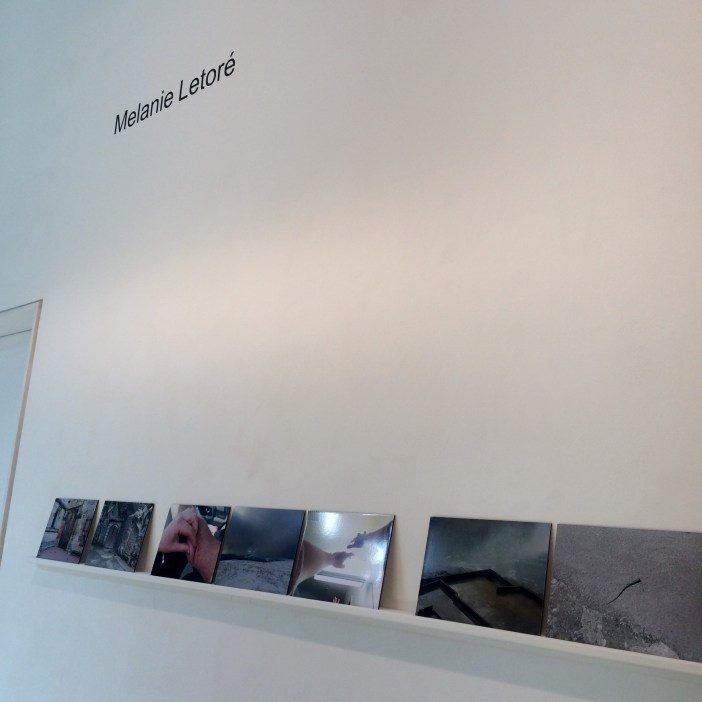

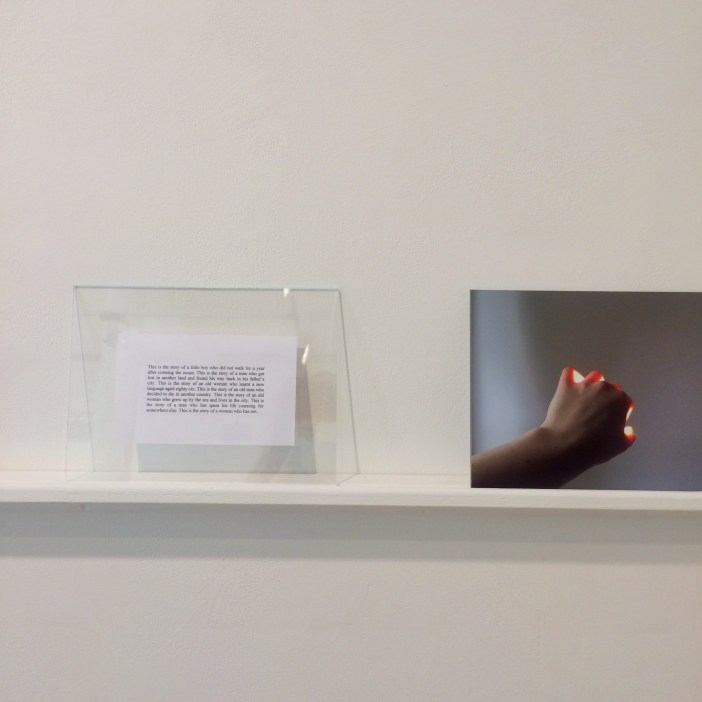


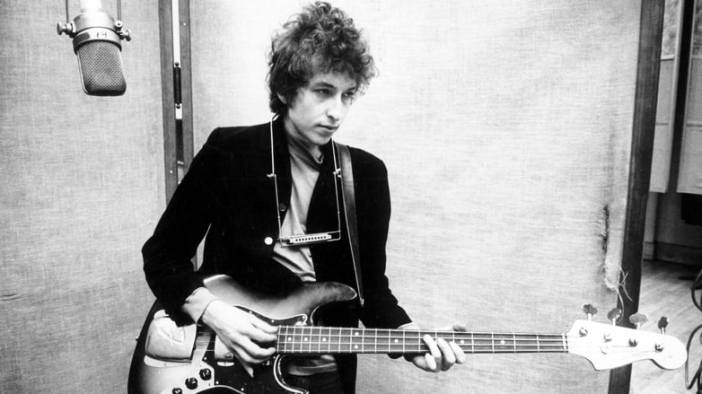

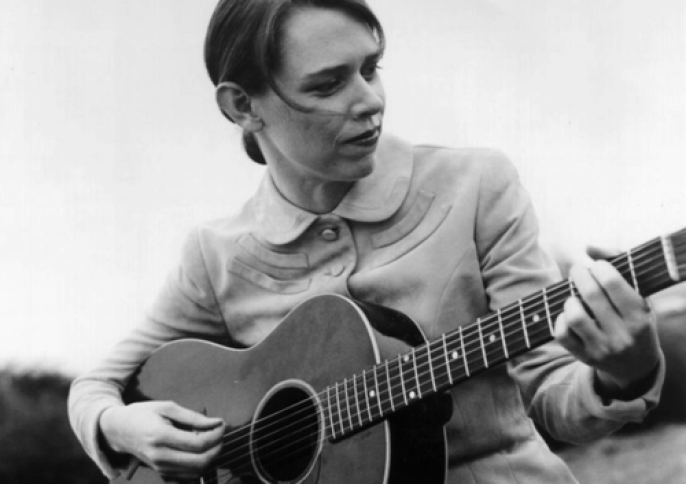



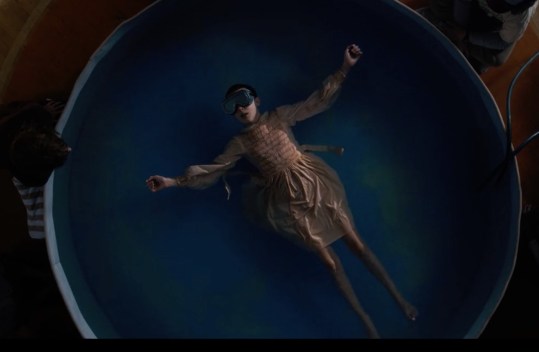




 mariaology