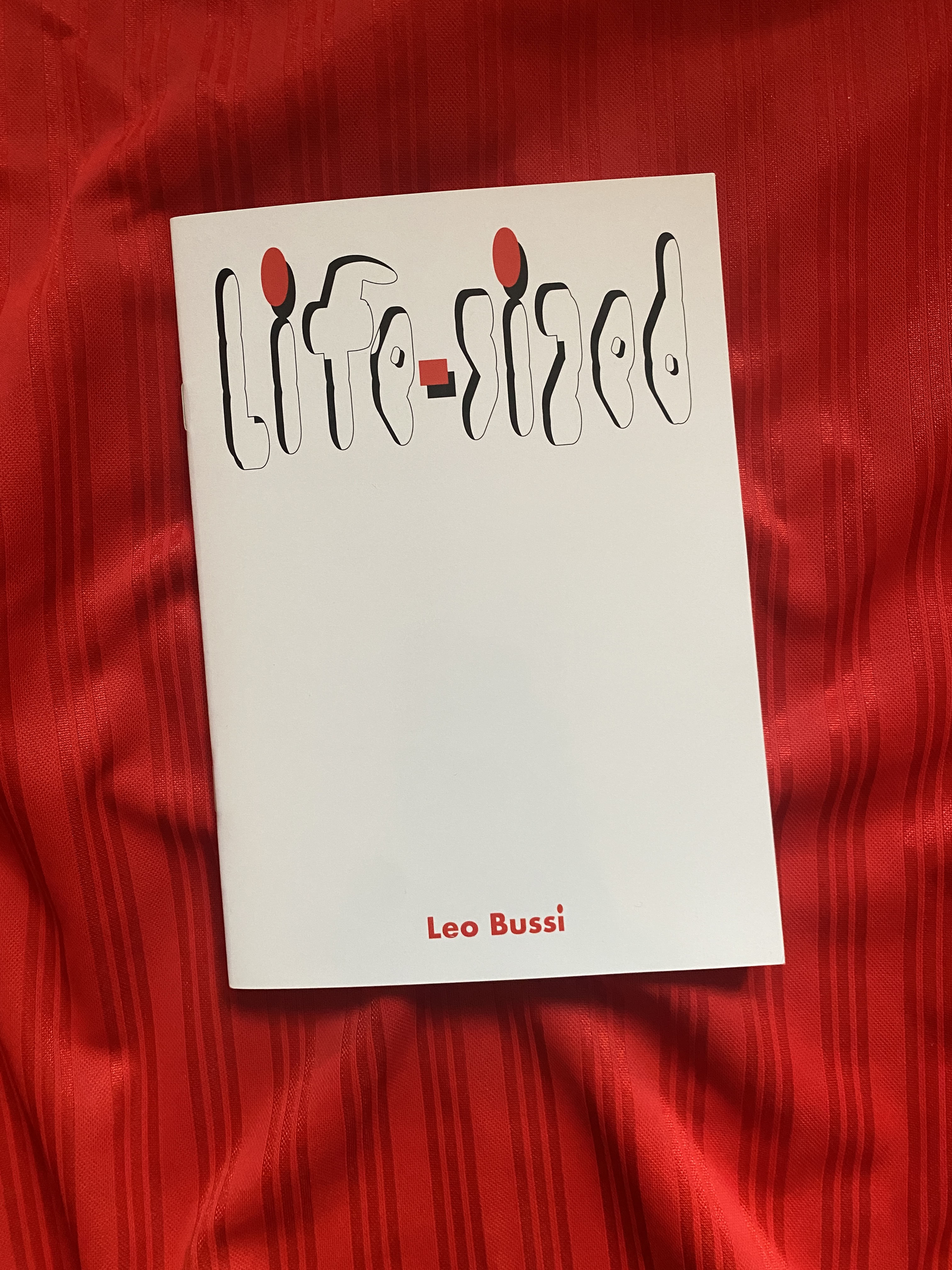
Leo Bussi, Life-Sized

For a few months now I’ve been working as lead editor on Leo Bussi’s debut pamphlet, Life-Sized. I just wanted to say a quick word here about how awesome that’s been. I felt pretty jaded about running a press for a while because I was holistically exhausted and sick of the admin oblivion that is a non-profit tax return. This project has got me back in the game.

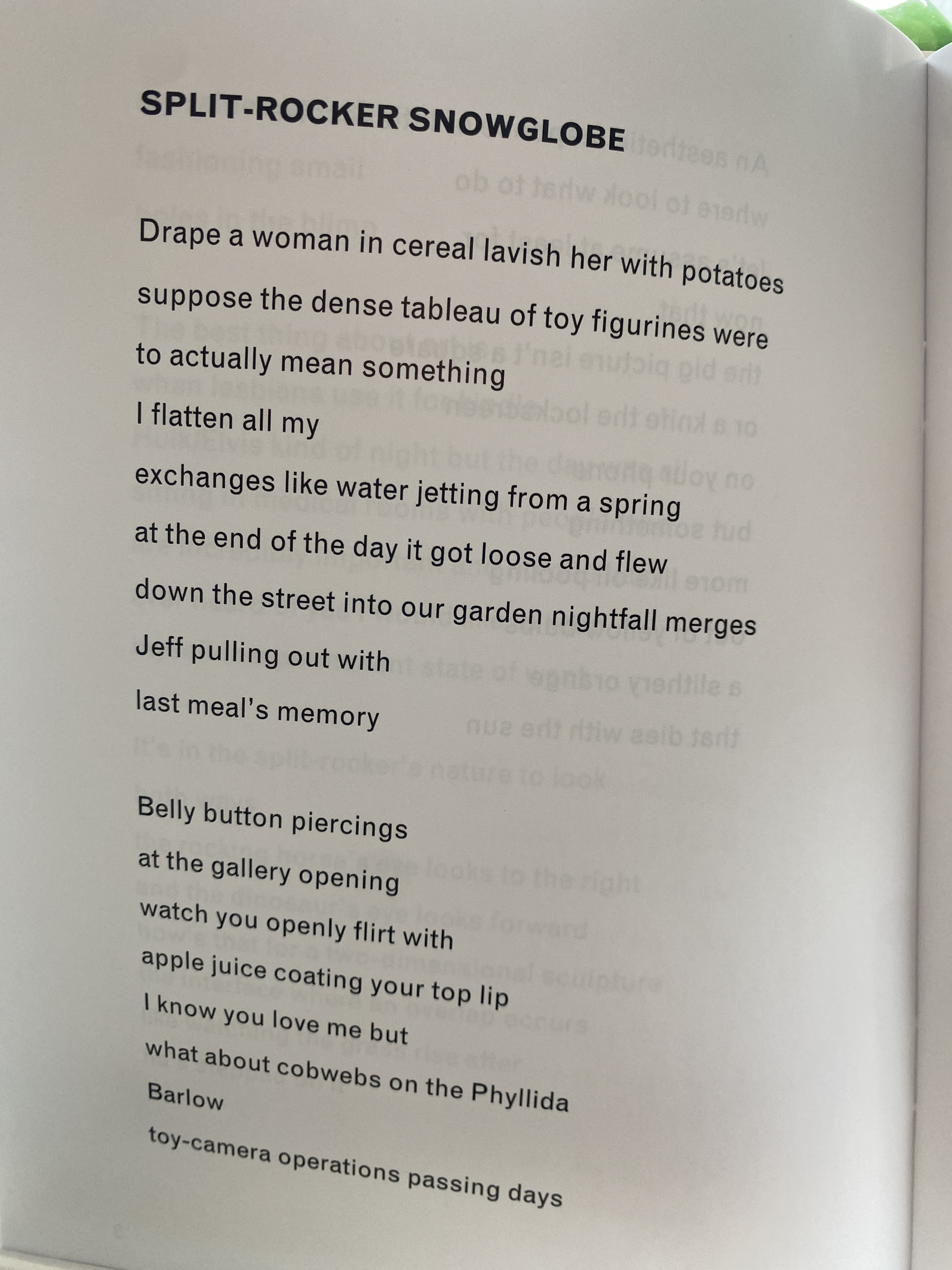
Leo’s work has charmed me ever since he read at the SPAM launch of Cocoa and Nothing (listen here) and we bonded over shared appreciation for a certain universally loathed, candy-named song. Editing Life-Sized has been energising because Leo is someone who kind of just comes with a fully formed poetic. And that’s informed by art and conversation and what Sue Tompkins calls ‘muscular sculpture’ and what Oli Hazzard calls ‘gorgeously goofy bathos’. He really has an ear for a line break which is sometimes comic timing and sometimes it’s object erotics and sometimes it’s the trompe l’oeil of the poem’s own jouissance. The poem feeling itself in cereal or nightfall or some kind of membrane.

AI-generated visual absurdism may have diluted the power of surrealism in culture but Leo’s poetry reaffirms the sharp gasp of the paranoiac-critical method. Here we have fused realities and toy scales – ‘Barbie version of Mount Rushmore’– played out in the synaesthetic poetics of a Jeff Koons expanded universe. If this is lyric then it’s also ‘Art-breath’ and everything might be desire but it’s also the agency of the brush and a line might be a gentle brush with erosion or it might be social realism i.e. ‘cucked and living in Britain’. My autocorrect tries to make cucked sucked and I want to tell my computer, you should be so lucky.

We are launching Leo’s book at Good Press on 20th March. It’s at 6:30pm, free and you can just show up.

You can preorder Life-Sized here

You can also get in touch with SPAM Press if you would like to review the pamphlet! 

Midsummer Song (Hypercritique)

In 2018, I started a Doctorate of Fine Arts in Creative Writing at the University of Glasgow. I also started a new diary. In October, the month it all started, I wrote about duplicate footsteps and permanent landfills. I wrote of lacking the energy to dance, being lost in the forest, looking for safety among swirling leaves. Can’t remember if the forest was real or metaphorical. I wrote seemingly in lieu of being able to actually venture beyond the confines of my working life. Over three years and three months, I went through multiple iterations of research focus. I looked at foam, clouds, technicity, glitter, quotidian measures, fire and cinders. I fell asleep on coaches circling lochan sunsets. I produced a list of figures for how we might conceptualise this project. It was a sort of Escherian dollshouse, a self-deconstruction of building this place to think. I thought about Bhanu Kapil dropping her book in the river. I thought about doing a writer’s residency within the confines of a square-shaped digital platform. I wrote of ‘An angel tossing her gunpowder sequins’ and ethical eating, ‘how so often you are so paralysed between two choices that you just don’t eat at all’. I wondered what kind of home this work would make for me. This was a material question: thanks to the Scottish Graduate School of Arts & Humanities, it was a funded period. It paid me through Covid-19.

These were my original research questions:

  • How can creative and critical writing interrogate and depict the apparent tensions between the Anthropocene’s deep-time and the quotidian context of our ecological orientations?
  • What hybrid critical-creative forms might open up possibilities for a future ecological art, one which builds productive ways of ‘tuning in’ to a non-anthropocentric experience, with reflexive attention to the artistic and technological media involved in this process?
  • How might ‘the everyday’ provide a temporal and formal mode through which to develop a critical, interdisciplinary Anthropocene aesthetics, negotiating ecological questions of affect, sensory relations, ethics and responsibility at scales both macro and micro, human and nonhuman?

It is up to the reader to decide how far the end result fulfilled or strayed from these lines of enquiry.

Six years on, having graduated from being a baby scholar-poet, I am really thrilled this project has found a dream home with No University Press, a new imprint from Tenement Press. The ‘no’ of refusal feels appropriate to this project, which very much concerns the affordances and limits of an academic and institutional mode when thinking through (im)possible questions of ecological thought and living on. Working with Benjamin Pickford and Dominic Jaeckle, editors at Tenement, I was able to bring the project’s creative detours and modalities to life in its final book form: Midsummer Song (Hypercritique). This is definitely the most ambitious work of my life. It’s 469 pages of critique, poetics, meadow work, illustration and elegy. I see the whole book as a big song, a study, an architectural attempt at making an ecological home in lyric.

Somewhere between an academic monograph and performative dreamwork, poetry and poetics, conceptualism and the commonplace.

You can order the book direct from Tenement here or from Asterism here.

You can read a full description of the book and access endorsements, sample poems and other materials here.

I will be touring the book at some upcoming dates in Glasgow, Edinburgh, Manchester and London:

09.11.24                      Peter Barlow’s Cigarette /
                                        with Maria Sledmere,
                                        Harriet Tarlo & Lucy Wilkinson
                                        The Carlton Club, Whalley Range
                                        Manchester
                                        See here.

05.11.24                      Midsummer Song / Readings & Discussion
                                        Maria Sledmere,
                                        David Farrier
                                        & Colin Herd
                                        Fruitmarket Gallery, Edinburgh
                                        See here.

26.10.24                      Midsummer Song / Readings & Discussion
                                        Maria Sledmere,
                                        Chris McCabe
                                        Small Publishers Fair
                                        Conway Hall, London
                                        See here.

22.10.24                     Midsummer Song / Readings & Discussion
                                        Maria Sledmere,
                                        Carl Lavery
                                        & Colin Herd
                                        Advanced Research Centre,
                                        University of Glasgow / (Online via Zoom)
                                        See here.

Thirteen Morisettes

One of the exciting things about running a small press publisher is discovering new forms of poetry at the same time as totally falling in love with them. Like finding a long, lustrous hair at the end of the pencil and falling in love with it so much to spiralise your day around its protein. Like hearing a song on the radio first thing in the morning brain. What I mean to say is, poets are shedding all the time and sometimes you really want to be there, hospitably, in the moment of language leaving itself beautifully there.

Growing, shedding.

On 31st January, SPAM are releasing Thirteen Morisettes, a transatlantic communion between Courtney Bush and Jack Underwood, a 60-page book of lyrics and epistles which centre around the poets’ love of Alanis Morisette. Our eponymous chanteuse haunts the lyrical plazas of Woolwich Market, university corridors and Starbucks. It’s great to have a collaboration which feels like a true collaboration: the interweaving of voices, in-jokes, playful telepathy.

The Morisette itself is a new form developed by Jack and Courtney. The authors define it as:

The primary constraint of the Morisette is that its lines are formed out of the deliberate mis-transcribing of Alanis Morisette lyrics. The Morisette is (usually) comprised of two mis-transcribed verses, followed by a mis-transcribed chorus to end the poem.

The epistolary, then, is not just a mode of transmission but of listening. At the light speed of however many G’s we wish to bestow upon the airwaves, Jack and Courtney have made an ambience of their poetic communiqué and like the desire for better worlds we sublimate in the village of our most familiar coffee chains, typing away into elsewhere, they form a sort of pop-chorus-corridor across the Atlantic. I fucking love it. I hope you will too.

The book is available to preorder for £8 now.

SPAM TOUR:

Courtney and Jack will be reading on the following dates:

6th February – Instagram Live (@spamzine)

13th February – Glasgow (venue tbc)

15th February – Peckham Pelican, London (along with Eve Esfandiari-Denney, Karólína Rós Ólafsdóttir, Jack Young

16th February – Bookhaus, Bristol (Courtney only – along with Jack Young, me and Karólína Rós Ólafsdóttir)

New book: Cinders

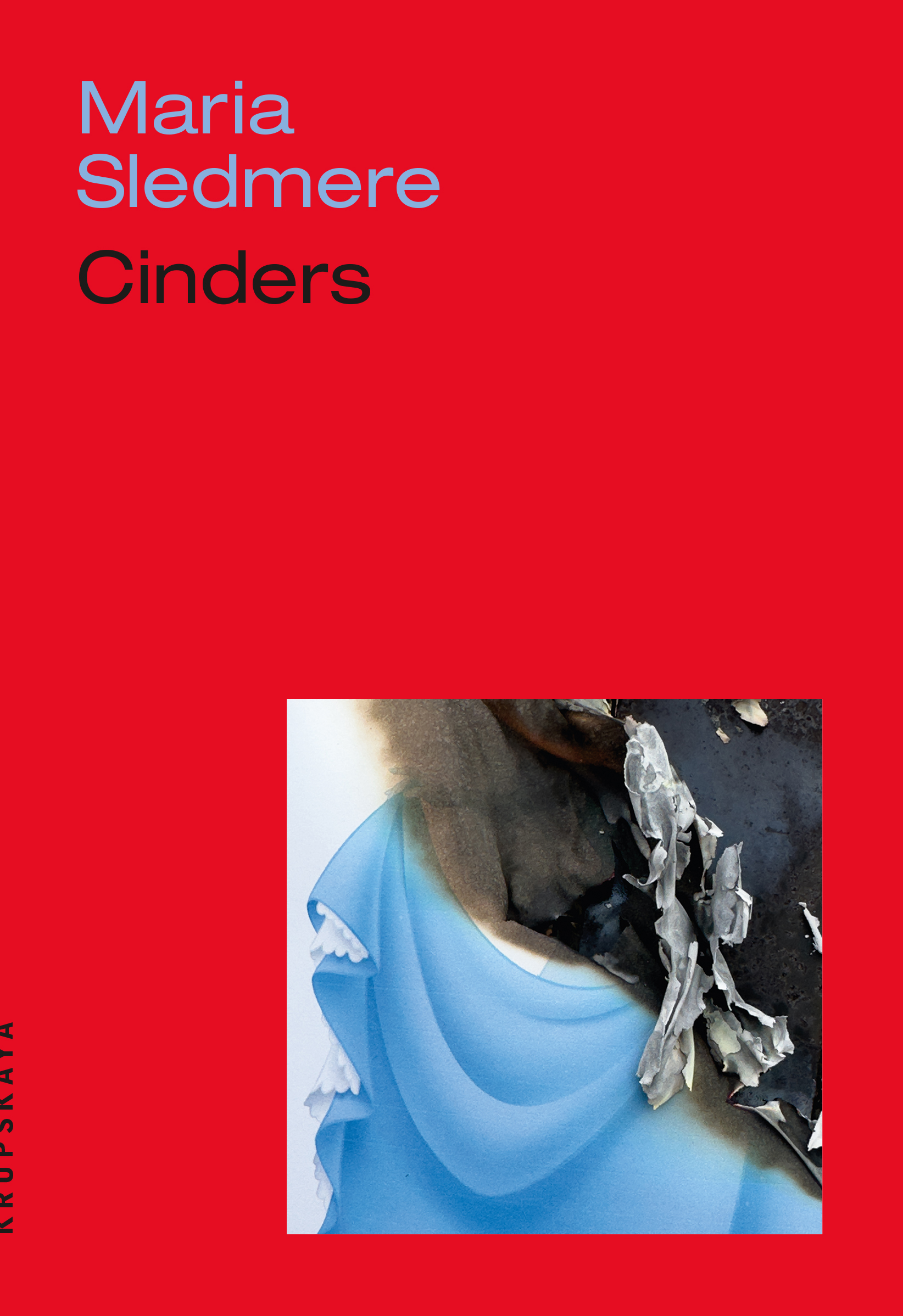
I’ve been excited about this for a long time: my U.S. debut and new poetry collection, Cinders, is forthcoming with KRUPSKAYA Books!

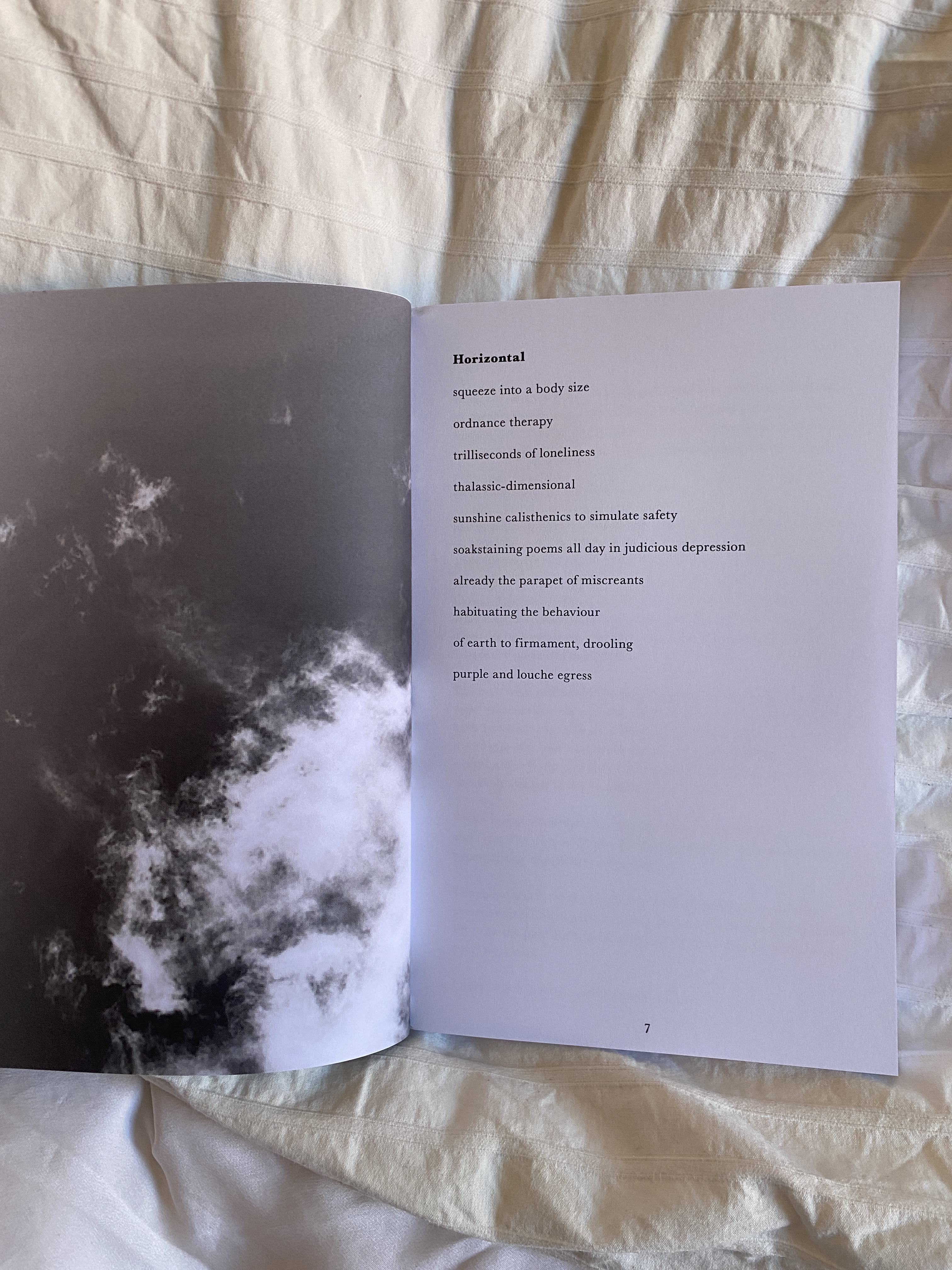
I started writing Cinders in 2019. In some ways, this feels like the most worked-through, shape-shifting and elemental thing I’ve written. It’s also a bit crazy, let loose, poet in residence at the wind farm energy.

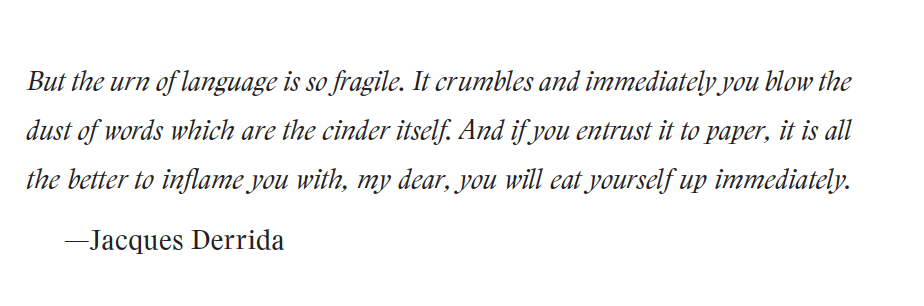
Its main epigraphs are these:

About the book

Cinders is a perverse and hybrid reimagining of Jacques Derrida’s 1987 book of the same name and the rags-to-riches fairy tale, Cinderella, set against anthropocene mythoscapes of deep time, haunted leisure plazas and terraformed Mars.

Cinders retells an old tale about lateness–how late is it, is it too late, what are the stakes of being too late if it is too late. This lateness, in Sledmere’s visionary lyric poems, pervades the structures and strictures of the pop dystopias and erotic utopias she studies: gender, class, geography, space–inner and outer. The very elements of Cinderella that were there all along as the wood burned to ash in the hearth.

Jeff Clark of the amazing Crisis Studio did a really great job on the cover, which has an accidental nod to the drapery of Cixous’ Hyperdream (one of my favourite books in the world) and whose ash curls are from a real incident of burning the avatar of the tale herself.

I am grateful to Sophie Collins, Colin Herd and Douglas Pattison for reading earlier drafts, and to Brandon Brown, Jocelyn Saidenberg and Stephanie Young for being such amazing, enthusiastic and thorough editors ❤

Here are some nice things people have said about the book:

Voilà! There she flies! Cinders! Sledmere’s ribboning red hot femme lyric avatar neither yet soot nor fire, always already hearthless, always already combustible, floating out on the thermals of volatile, flammable, scorching lyrics, trailing clouds of glorious derridean cinder-signals. Imagine lying with Plath’s red-haired Lady Lazarus and Celan’s ashen-haired Shulamith, moon-eyed sisters in anthropocene’s burned-out basement, knowing we are stardust, golden, indeed carbon, but with no way back to the garden and only high contempt for the billionaire boys’ silver spaceships in that yellow haze of the sun (‘this isn’t the journey’)—who do we call? Who ‘singing this tale of the comet’ is going to ‘come for you, little/ burning world’? Cinders! There she flies! Voilà! Poetry coming out of her like lava. Read it, sisters, and swoon. Now listen for that glass slipper to drop then splinter.
— Jane Goldman

Maria Sledmere sneaks up on you. In language that is deceptively intimate and often playful she limns a world of dark, sharp corners, where ecological catastrophe no longer looms but makes itself felt in every aspect of daily life. Intricate and expansive, never alighting on the expected, the poems in Cinders are both gems and bombs. A subtle stunner of a book.
— Anahid Nersessian

I’m planning to be in the Bay Area in May 2024 to launch Cinders with fellow KRUPSKAYA poets Jennifer Soong and Noah Ross at Small Press Traffic, but also look out for an online and Glasgow launch earlier on. The book’s publication date is 12th February 2024, just in time for Valentine’s. Please get in touch with the publisher if you would like to review, stock or whatever!

Some poems in the book have been published already in places including trilobite and the Pilot Press anthology, Responses to Derek Jarman’s Blue (1993) (2022).

Preorder here!

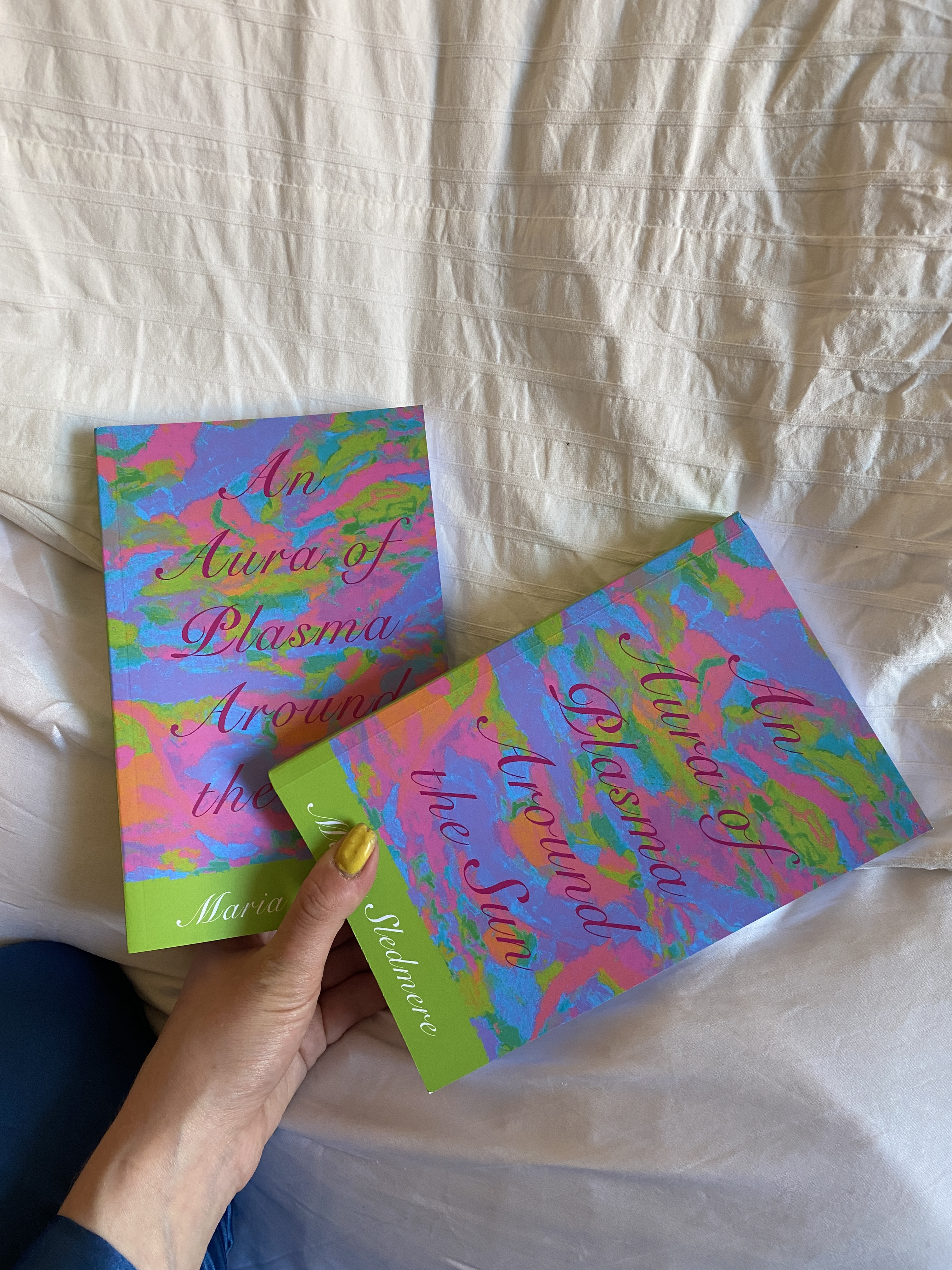
An Aura of Plasma Around the Sun

£12.00

RELEASED 19TH JUNE 2023

FROM THE PUBLISHER:

Blending oneiric memoir, experimental fiction and glitched verse, An Aura of Plasma Around the Sun swirls narratives of adolescence, occulted textual topographies and Scotland’s pandemic lockdown. Sweet, funny, heartbreaking, clever and ridiculous, often sentence-by-sentence, Maria Sledmere doesn’t guide readers through these whirlwinds so much as throw them in. Yet her spliced reveries and decadent languages are always underpinned by a celebration of community, as radiant and permeating as the sun. 

198 x 129 mm / 254 pages with illustrations and photographs

Preorder from Hem Press

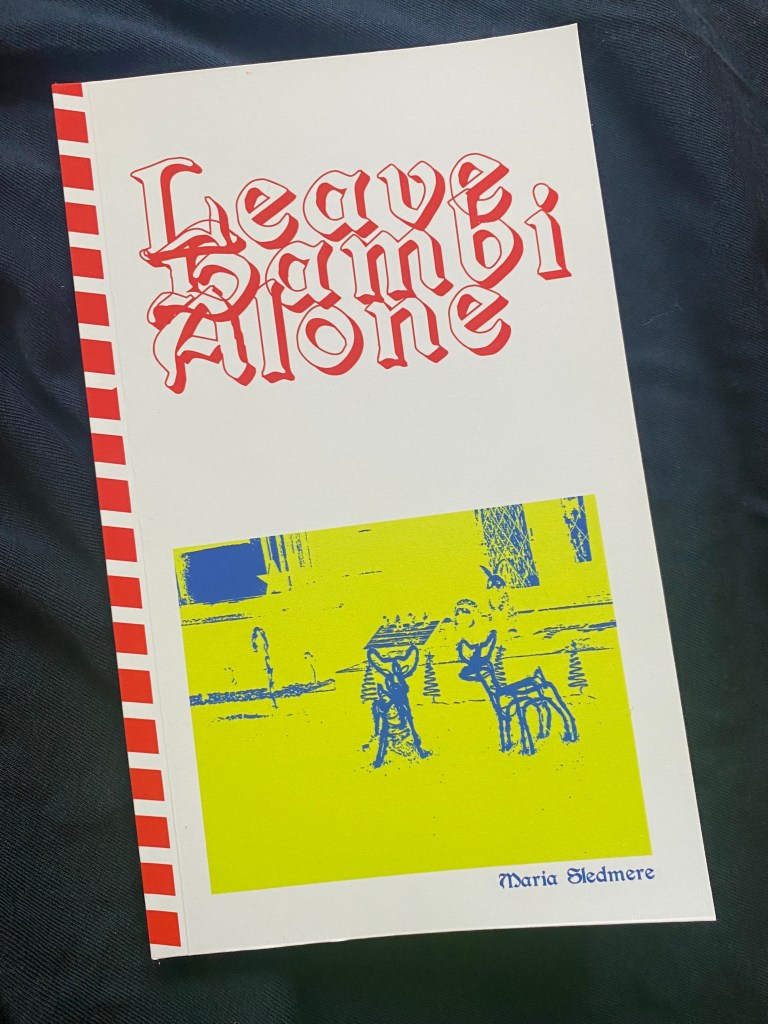
Leave Bambi Alone

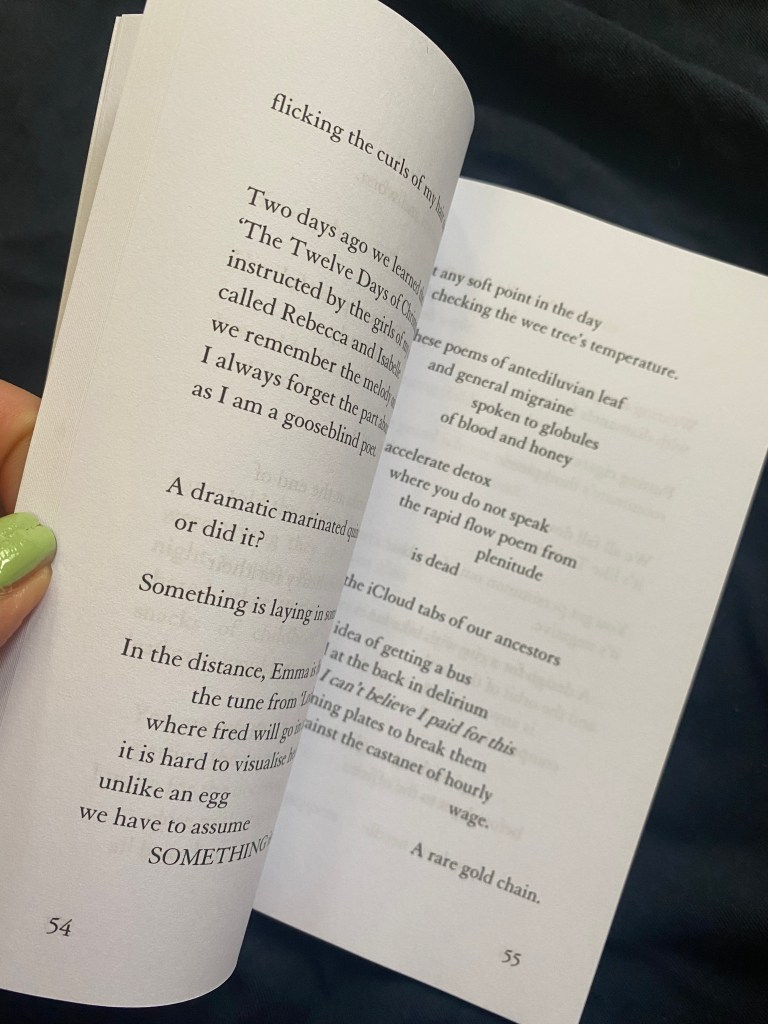
Over xmas & boxing day I kept a small notebook and wrote a meandering poem because I couldn’t get the phrase LEAVE BAMBI ALONE out my head. Anyway, it’s one of those ad hoc stream poems of no coherence or consequence. Available now via Lulu & Mermaid Motel. link in bio 🍕🧜‍♀️🏨

Documenting the festive habits of a special cat, the early career of Björk, champagne pageantry and calorie paradise, the wearing of acid berets, childhood whims and ‘the iCloud tabs of our ancestors’, this is a bad poem written in defence of shy animals who love in the livid dream their tiny world.

🦌🎄🦌🎄🦌🎄🦌🎄🦌🎄🍃

ISBN: 9781678194895
87pp.

Buy a copy here.

The Luna Erratum

My first full-length poetry book is now slinking out into the world!

The details:

138pp. with inside illustrations by Maria Sledmere and cover design by Douglas Pattison

Typeset by T. Person

ISBN: 978-1-8380156-5-7

RRP: £10.99

Order from Dostoyevsky Wannabe.

The Luna Erratum, Maria Sledmere’s debut poetry collection, roams between celestial and terrestrial realms where we find ourselves both the hunter and hunted, the wounded and wounding. Through elemental dream logics of colour, luminosity and lagging broadband, this is a post-internet poetics which swerves towards the ‘Other Side’: a vivid elsewhere of multispecies relation, of error and love, loss and nourishment. Its leitmotif of Luna, a shapeshifting feline of satellite proportion, waxes and wanes through poems which move beyond the twilight moods of left melancholia, sad hospitality and ecological crisis towards a fugitive imaginary that lingers in the ‘Flirtation Device’ of lyric and its many echolocations.

Taking cue from Jenny Boully’s ‘erratum’ — ‘the text of what is and the text of what should have been’ — Sledmere writes with failure, friction and fractal attention, with a yearning for intimacy, shelter and ongoing ways of bearing the im/possible. She offers poems of mystery, refusal and pain at personal, political and planetary scales, tracing the desire-lines of the everyday and its glitching encounters. The Luna Erratum is a book of memory and friendship in the so-called anthropocene, of bodily disorder, painterly gesture, quantum kissing, rodent sisterhood, open world intervention, technology, tenderness, shimmer and song.

Praise for The Luna Erratum: 

How do you explain yourself to yourself when you suspect that actuality – your experience of it – is provisional and full of error? You come up with your own poetics, your own tense and mode of address, which is a lunar one, and which involves speaking in crushed, frothy mouthfuls to a terrifyingly silent, unpredictable and generous friend (celestial objects, an indifferent lover, &c.). 

The Luna Erratum offers no truth except in things – colours, materials, beings, dreams, schemes of language, human artefacts and locations – and their known convergences, all of which hold as much affective weight and capacity for transformation as the events that precipitated this profoundly graceful, unsettling and mesmerising book.

— Sophie Collins, author of Who is Mary Sue? (Faber, 2018)

A glittering universe, Maria Sledmere’s first poetry collection is both lyrical and electric, both video game and watercolour. Reading these poems feels like ingesting semantic MDMA, the ectoplasm of a Victorian ghost trying to reach her lover through an unstable wifi connection. Sledmere’s words ooze a desire that is part animal, part human, part astral body. Let them transfix you.

— Nadia de Vries, author of I Failed to Swoon (Dostoyevsky Wannabe, 2021)

In Maria Sledmere’s The Luna Erratum, rivulets of neon daylight stream through the ever-quickening fibre-optic cables of the soul. Beneath ‘morphine clouds’ climates change as human groans crosspollinate in the moon’s tread. Sledmere concentrates the neural pathways on the world spirit, crossmatching the matters of attention. The lines grasp at what repositories of sentiment might be made secure for poetic memory, as the pleasure of every experience is threatened by its immediate disappearance, like Bernadette Mayer reciting Keats in the abandoned sea life centre. And yet, for the poet’s eye, the sumptuous bounties of the world are still all up for grabs; the human squats on top of the non-human and: ‘you can take bites from the sun’. This book is a hot tub full of Tamagotchi frogs’ spawn glistening in the light of the full moon atop the Yggdrasil skyscraper.

— Ed Luker, author of Other Life (Broken Sleep, 2020)

If you would like a copy for review, or to stock in your bookshop, please email mariasledmere [at] outlook [dot] com. 🙂
(NEW PAMPHLET) Polychromatics

SNACK DROP!

A new pamphlet-length poem, ‘Polychromatics’, responding to the textile and ceramic work of Anna Winberg, is out now with Legitimate Snack (Broken Sleep Books).

Cashless, the snow fell in your dream 
three million times osculation 
of this surface once was grass, soft silhouette
in pink snow. I scoop masses
of this snow 
to carry around for hours. 

🍬🍭🌨️🎨🍬🍭🌨️🎨

Paper: Gmund Cotton Linen Cream (110gsm)
Cover: Pastel Pink (210gsm)
Endpaper: Pink Gold Vellum
Titles: Gravesend sans (Medium, 8pt)
Text: Mokoko (Regular, 8pt)
Thanks to Aaron Kent for gorgeous assembly & publication! 

Order for £6 here.

(NEW BOOK) neutral milky halo

neutral milky halo loops around the pixelated tempos, imaginaries and myths of this fraught, contingent moment. Poems of weird ecology, cultivated address and tendering detail; poems of disorientation, hospitality, sounding and shimmer. Poems seen through screens, reflected on or refracted from glass; poems seen-through and poems making visible the otherwise shadowed. Poems that envelop the animal, the flower, the technologies of writing and other means of resistance, expression and growth. Weaving the everyday ‘scenes’ of the anthropocene — from starry cosmologies of new gods, months and seasons, to kissable forests and the ice cream trucks that haunt our quarantine — neutral milky halo draws fragile yet glistening socialities for dreaming between ‘thick’ futures.

Pamphlet / 184 x 140mm / 44pp / Mohawk Superfine papers & sparkly pink end papers / ISBN 978-1-913749-09-5.

Cover design by CF Sherratt.

Available now for £8.00 from Guillemot Press.

(NEW BOOK) the weird folds: everyday poems from the anthropocene

Announcing a new anthology I’ve been working on with the wonderful Rhian Williams and indie publishers Dostoyevsky Wannabe. Copies are now available to order…

Edited by Maria Sledmere and Rhian Williams and with a foreword by Tim Morton, the weird folds intervenes in more traditional canons of nature and ecopoetry to offer a poetics of the anthropocene which is thoroughly generous, queer, sensuous, formally innovative, relational, occult, fugitive and critically sensitive to the mediations of technology and culture which shape our encounters with the more-than-human.

BOOKSHOP.ORG
WATERSTONES
BLACKWELL’S
AMAZON

NOTE: If cover images are missing from any of the above links, please be aware that the books are still available for purchase.

Pages: 296
Dimensions: B Format
ISBN: 978-1838015619
Cat No: DW-001-97
Imprint: Dostoyevsky Wannabe Originals
Publishing Model: Tailored

The Author

Edited by Maria Sledmere and Rhian Williams and with a foreword from Timothy Morton), the weird folds: everyday poems from the anthropocene features contributors working at the intersections of lyric, cultural critique and hybrid forms. The contributors in order are:    Pratyusha, Kashif Sharma-Patel, Jay G Ying, Sarah Cave, Samantha Walton, Rebecca Tamás, Daisy Lafarge, Jane Hartshorn, Francesca Lisette, Max Parnell, Calum Rodger, Miranda Cichy, Alice Tarbuck, fred spoliar, Iain Morrison, Gloria Dawson, Vahni Capildeo, Sascha Akhtar, Fred Carter, Katy Lewis Hood and Therese Keogh, montenegro fisher, Nat Raha, Mike Saunders, Jane Goldman, Harriet Tarlo, Rosie Roberts, Lila Matsumoto, Colin Herd, Paul Hawkins, nicky melville, Kat Sinclair, Nasim Luczaj. 

Praise

This vital gathering tells slanted anthropocenic truths, re-cognising the manifold everyday as a crucial space-time of enquiry, excavation and entanglement. Performing kaleidoscopic arts of noticing, the works within these pages render traces of a changed and changing planet with tangible immediacy. Here is poetry as a barometer of the times.

-Mandy Bloomfield, author of Archaeopoetics: Word, Image, History (University of Alabama Press, 2016)

These are poems of the future glimpsed through its shards and fragments here and now – they are unhomely and familiar, revealing a skewed new normal: they are fieldnotes from a world to come.

-David Borthwick, Lecturer in Environmental Literature at University of Glasgow 

Anthropocene is the impact human beings have on the planet, while the trillions of cells making each human body are composed entirely of the fire, soil, air, and water of the earth. In this anthology, the poets are voices for a war the planet is having with itself through its human bodies, and I am very grateful for their reports. I wonder if it is unfair to think of poets as war correspondents, but this book proves we are possibilities for so much more.

CAConrad, author of While Standing in Line for Death (Wave Books, 2017)