Oranges for Bonfire Night

IMG_0027

(from a Creative Writing Society freewrite with the prompts ‘fireworks’ and ‘oranges’)

She remembers the days when she and her brother popped over to the neighbour’s house for Bonfire Night. She’d climb over the garden wall, wearing her wellies and her dad’s itchy jumper that came down to her knees and a hat her mother had pulled over her fringe. They’d play with the children next-door because they were good friends and the same age, more or less. Even though it was pitch dark in the November night, they’d dance around the garden, shrieking and playing tig or hide and seek while they waited for the fireworks to be set up. They were cheap fireworks, bought from the local store, which ordered them from some chemistry enthusiast in the city. This was, of course, before The Internet.

She can’t remember his name, the man next-door; the dad who told the kids off for laughing too loud and who’d sneak off for fags in the greenhouse while his wife did the washing up. She remembers the blur of his bearded face. His yell as he stepped back from the firework he’d just set up. She remembers the mum better; the mum used to bring out steaming mugs of soup and carrier bags loaded with oranges. She remembers standing in the cold bright air, peeling with the stubs of her fingernails the rind that came away like thick flakes of skin. Biting into the soft flesh as a flame-coloured Comet rippled above her. The sour sting of the juice squirting in her eye; the sweetness seeping over her tongue. Stickiness on her fingers. She’d toss most of it away, into the rhubarb patch. She wanted to save her appetite for the chocolate log and lollypops that awaited them inside.

There’d be the rockets, soaring and screeching in her ears like banshees, sizzling in her belly. The wheeeEEeeeee like electricity. She hated them, but they were a thrill. She’d look up to catch them but they’d be gone already. Then there were the pretty ones. She read their names off the cardboard box, discarded on the porch: Crosettes, Dragons’ Eggs, Ice Fountains and Blossoms. She watched them go off with the other children, trying to identify each one as if they were flowers in a biology textbook. Only, they were always too quick; their beauty dazzled her vision and then evaporated. There were the ones that overflowed like ocean spray, showering and spitting flickers of white and silver, like a jeweller soldering a giant diamond. Rainbows would spread out across the smooth sky, raining colours across the tall trees at the back of the garden. Her favourite was the Catherine Wheel. It took ages to set up, but it was magical. It spiralled like a wild thing from the pole of the washing-line, sparks flying around it with the craziness of broken machinery, or hypnosis. She adored the Catherine Wheels. They made her feel strange and unreal, as if she were looking into an abyss.

After all the fireworks were gone, the children were doled out sparklers, which they were only allowed to use with gloves. The sparklers let them write their names in the air, as if they were inscribing their thin identities into the vast constellations of the night sky, the atoms of the air around them. She misses how back then in the country you could always see the stars and the sky achieved a proper dark. In the city where she lives now the sky is always a murky brown, the colour of Coca Cola or dirty rivers.

She used to hate how eventually they’d have to go inside. She used to want to stay out in the garden forever, sucking in the lovely coldness of November night. She hated how the sparklers had to be chucked into water buckets, where they’d snuff out with a quick hiss. The adults would always check that they hadn’t burned their little fingers. She remembers the faint char marks that stained her gloves. Remainders. She found those gloves, only a few months ago, when she’d gone home to help clear the house. They were in that same yellow jacket she used to wear, and even just touching the plasticky fabric brought back glimmers of firework enchantments. But the gloves were full of holes, the stitches became undone in her hands. Everything was to be given away, sold or donated to charity, after her mother died and now that the house was to be sold as her father left for business in America.

He’d phone her from new places and his voice would crackle over the phone like a fading sparkler. She closes her eyes and still she smells the warm soup, the tickle of gunpowder.

And oranges. She remembers the oranges. She never liked oranges.

Memories from MSN

014400a589401

Few things define the noughties more than MSN Messenger. The spinning pair of green and blue icons, surrounded by butterflies. The friendly window which popped up every time you logged onto the family computer after school, to ‘do some homework’. Forget Facebook, MSN was basically the main communication channel for my generation growing up, and I feel like its recent closure deserves some elegising. Yes, incase you hadn’t heard, MSN (rebranded since 2005 as Windows Live Messenger), is no longer with us. Microsoft forced its clients to give up the nostalgic platform and merge with Skype.

I remember getting my first email address, when the world of social media as we know it was still in its infancy. My cousin helped me set up my first hotmail account, and I was delighted to find that I could call it anything I wanted. I could express my (proto-manic-pixie) weirdness with some cool and random name I made up. I opted for ‘strawberry_bonfire’, an email address which incidentally I still often use (although not for LinkedIn or job applications…). It felt like a rite of passage, typing in my home address for some anonymous computer to process and setting up a password and making an email signature. People could now contact me. I was contactable. I’d have my own inbox. More importantly, I could set up a Neopets account! And an MSN account!

There was something unique about MSN’s interface which sets it apart from the likes of Facebook messenger, or Snapchat. I suppose the emphasis on conversation is key here. Each conversation opened out into a window of its own, although you could group your chats in ‘tabs’ for ease of moving between conversations. There was of course, the odd awkward moment when you accidentally sent someone a message reply that was intended for another person. Gossiping via MSN was a tricky business, which required organisation and attention.

Everything was a beautiful network of colours and messed-up symbols. It took a good five minutes to work out who was who when you looked at your contacts list, especially if your friends had recently updated their names. There was a whole sequence of tildas, dashes and asterisks to sift through before you could pinpoint your pal’s pseudonym or elaborately embellished screen name. I suppose that’s another reason why (not so) secretly I still prefer MySpace and MSN to Facebook…there’s that element of individuality that you don’t really get in the highly structured systems of more contemporary social media platforms. Sure, they’re probably more resistant to coding bugs because of their relative standardisation, but I miss the quirkiness of an amateur’s attempts at html on a MySpace theme, or a smear or rainbow lettering constituting someone’s MSN name. You came to know people not by their boring old real name and photograph (as on Facebook), but by some random avatar and distinctive font. That one friend you recognised when they popped up saying ‘hi’ by their enduring use of cyan-coloured Comic Sans or violet Monotype Corsiva as much as their name. There’s a nice sense of cosiness that comes with this, of online personalities being fabricated, selves being formed in the endless conversations that would eat into hours of an evening. Back then, we were too young to go to the pub, too remote in the country to find something ‘real’ and useful to do like join a sports club or an art class. Even if we did do extra stuff, MSN filled in the rest of our time, extended our social lives.

Then there was the personal message. This could range from ‘ugh doing maths homework’, to ‘Amy You Are My One <3’ and the ambiguous ‘=/’ which would result in a barrage of people asking ‘what’s up?’, only for the person to reply, ‘nothing’. Your personal message also revealed what you were listening to, if you had your iTunes hooked up. This of course stopped you listening to hideously embarrassing music (in theory) and listening to what you thought would impress other people. It was also a good indicator of people’s moods. God knows I wouldn’t start a conversation with someone if they were listening to Secondhand Serenade or Hawthorne Heights…

Then there was the ‘nudge’ function which was brought in later on. The bane of your existence if you were trying to coordinate MSN with homework or downloading or streaming YouTube videos (basically, my ancient computer would crash every time I received a nudge), the nudge would make your screen shake and force you to pay attention to the nudger’s conversation. Luckily you could only send a restricted number within a certain period of time. There was a time when MSN conversations were very precious, back in the pre-Broadband days when you dreaded that fateful phrase from your mother, ‘I’m going to unplug the internet because I need to use the phone’. You had waited so long for that bloody diallup connection to ring through and now you had to hastily sign off with a quick ‘g2g xxx’. To be fair, a lot of conversations basically went like this:

Person A: Hey x
Person B: Helloooooo

Person A: Howz u?
Person B: nb, u?
Person A: gd thanks
Person B: wubu2?
Person A: just hw and stuff, u?
Person B: yeh same

Person B: g2g, byeeeee xxx

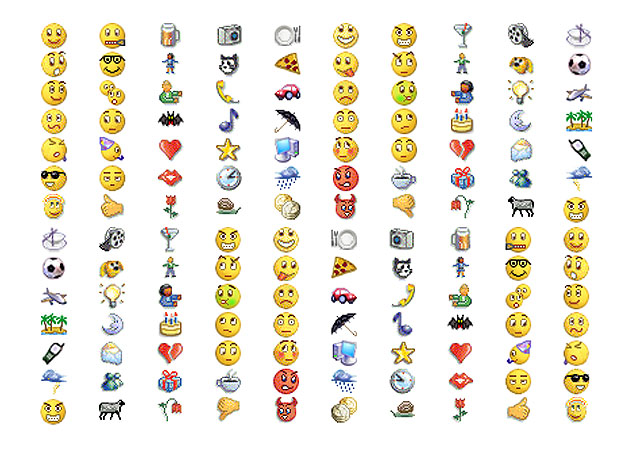
Nevertheless, a lot of us had our first breakups, friend fallouts and heart-to-heart confessions over MSN. That, I guess, is where a lot of the nostalgia comes from. Staying up into the small hours on a Friday night having a moan about life to someone, or helping them through something they were going through. You could send them helpful web articles or songs to cheer them up (it might take 2 hours for the song to arrive though), or a funny picture (memes were growing popular). Emoticons back then weren’t the loathsome ‘emoji’ phenomenon they are now (god I sound like an old woman) – they were generally small and unobtrusive (unlike Apple updating your iPad and putting in an emoji keyboard without telling you…) and often served as a welcome substitute from =] or ‘lol’ being added to the end of every message. And then if you were going on holiday you could put the little tropical island or plane symbol in your personal message, and people would know that you were now an exotic thing talking to them from the imaginary world of some hotel abroad (with dodgy WiFi connections).

img25
emoticons! all the emoticons!

MSN was in some ways an endlessly frustrating service, but in a way that’s what made it so good. The game of how to talk to someone you fancied without making yourself look like a stalker (wait at least ten minutes before talking to them after they’ve signed in), of working out whether your matter was urgent enough to disturb someone whose status was ‘Busy’. There was always that weirdo online at 4am who you sometimes wanted to speak to and ask what the hell was up with their sleeping pattern. Then there were the endless difficulties with connection that left you kicking the desk underneath your computer and wishing you had one of those newfangled Macbooks or something (I guess this is where the ease of the latest messaging services comes in). I kept a notepad next to my keyboard for a while and it was amazing the amount of doodling I could do in the time I spent waiting for MSN to load; sometimes it was as bad as waiting for a 3GB installation of the Sims!

Source: Urban Dictionary

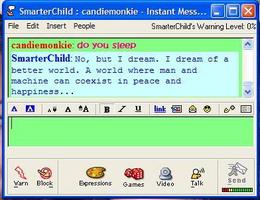
Yes, MSN was great for killing time. If you had friends round, chances were you’d end up on MSN, talking to (berating, more like) SmarterChild. SmarterChild was an instant messaging chatbot, a robot who replied to your message with a complex(ish) formula of responses. You’d send it (him?) lewd messages and he’d scold you for being inappropriate. You could ask him a question about your homework and he’d do his best to look up some (mostly irrelevant) answer. He’d do your times tables, and give you dictionary definitions. If you were in a bad moon, you could take it out on SmartChild. Talking to SmarterChild felt that you were outsmarting all those academic people who were worrying about the effects of inhuman interaction on us children. We were outsmarting the robots here.

There’s a lot of talk nowadays about the dangers of the Internet for young people. Schoolchildren are supposed to be educated about staying safe online, about not talking to strangers or giving out personal information. I don’t really remember getting much (if any) education on this at school, other than, ‘don’t give anyone your phone number’. Remember that familiar acronym which haunted every MSN conversation you had with a stranger: ASL? Standing for ‘Age, Sex, Location’, it was (is?), as Urban Dictionary puts it, ‘what stupid people say on chats to learn who you are and where you live so they can come to your house with a chainsaw and kill you.’ Most of the time I would reply ’99, Cat, the moon’, and then block them, but then that’s just me…I always felt MSN was totally safe. It was so easy to block people (the satisfaction of seeing their little icon turn red!) or appear offline so they couldn’t start a conversation with you. The fact that it was a separate console and not embedded within your browser felt more private somehow, and less like your every word was being tracked with cookies, or sucked into the black hole of some governmental data archive. Facebook exposes a lot more information about you than MSN ever did. All you’d get from the average person’s MSN profile was some kooky screen name, a jumble of symbols and song lyrics and maybe a blurry/’arty’ webcam shot of the side of their face.

One of the earliest academics to properly study the effects of online communication on people’s identities was Sherry Turkle. Her book Life on the Screen: Identity in the Age of the Internet (1995) looked at how people interact via MUDs (role playing games and forums on the the internet), through which they communicated in fictional worlds. I suppose the fantasy-scape of something like Dungeons and Dragons is an example here, but someone with more expertise in what is evolving into online cos-play would surely be able to list many more. Well in this book, Turkle basically argued that such online interactions, which involved the play of masks and multiple identities, were allowing people to develop a postmodern mode of knowledge – they came to see reality itself as a play of surface signifiers, a swirling universe of simulations. Think Baudrillard here, only, Baudrillard getting serious research application (not just armchair academia or The Matrix). Identity becomes a game, a game in which you have some control; as Turkle points out, “One player says, ‘You are what you pretend to be…you are what you play.’”. Simulations basically infect out reality, and allow us to enjoy it like a game, playing out the selves we have created online.

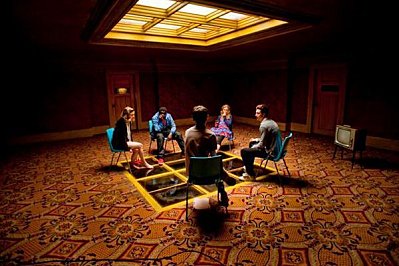
Scene from Chatroom

There are of course, many film and literary representations of the dangers of forging online identities: the thriller Chatroom (2010) stages chatrooms as anonymous hotel rooms, in which teenagers encourage each other to do increasingly disturbing actions in reality, culminating in the most psychopathic character trying to manipulate someone to commit suicide. Jeanette Winterson’s The Power.Book (2000), named after an old Mac computer, delves into the fantasy realm enabled by the Internet, with its chimerical portrayal of a dialogue between two selves (whose names and identities shift). For Winterson, the computer functions as a way of exploring the multiplicity of narratives, the instantaneity of their communication and transformation. Her chapters have names like ‘New Document’ and ‘Search’. Whether she creates a credible Internet Romance (could this be a genre? The Guardian (2000) reviewed it as ‘a virtuoso trip into virtual reality’ ) or a gimmicky spin on vaguely plausible computer jargon is up to the reader. Still, it does link in to Turkle’s ideas about how the Internet has fabricated a postmodern reality of play and possibility.

I’m not sure exactly how much scope MSN offered for that sort of thing. Often, we just used it to chat to our friends as we would in real life. We’d have ‘group convos’ which contained as much shouting (CAPITALS), annoying nudges and confusing dialogue as such a conversation would play out in real life. Sure, maybe we’d open up a bit more online, with the safety of the computer interface. We could tell our secrets to complete strangers, who wouldn’t know our real name and so couldn’t track us down later via Facebook to wreck our lives. We could just block them. So maybe there was a bit of identity ‘play’ there, but mostly it was just an extension of the interactions we had in the park, on the bus, in the playground. It wasn’t a simulated, enclosed environment in the same way a chatroom online is; it wasn’t a specific ‘zone’ – it was a console that you opened up, a kind of tool as opposed to a virtual reality. That’s how it felt to me anyway.

Throughout my teens, Piczo, MySpace and Bebo would come and go, fading into the recesses of an Internet shadow-world that secretly archives every scrap of your self that was once uploaded online. But MSN was faithful, erasing every conversation into the imaginary ether, so that only you could read over previous conversations (if you had ‘chat logs’ switched on; but they certainly weren’t searchable online in the same way your dreadful Piczo account was). MSN was the gateway for many friendships, a forum to vent frustration and a place to play chess with a stranger from America who added you because his cousin knew your friend or something. A place where you got a pleasant kick from signing on and seeing the ghost message of someone who’d tried to talk to you when you were offline. You felt that important. A place of horrific fonts: ‘яσ¢кιи ιи нєανєи, 2кαιι7’ and fondly irritating screennames (my own include ‘Whatsername’ (yes, a riff on Green Day’s American Idiot – I was a twelve-year-old-wannabe-goff) and Maria Magickk (I promise you, I knew people with worse ‘scene’ names than that; also, I thought the double k was a clever reference to the ‘kk’ which everyone substituted for ‘okay’ on MSN. Oh dear.). Now that MSN has been shut down for good in its final resting place and we all have to migrate to Skype (never!), I guess all that’s left for us Generation Y people is the WhatsApps and Snapchats and other gimmicky chat applications that smartphones have brought us. Conversation these days is less about talking and more about sending emoticons and stupid pictures (bah humbug!). For the rest of us, there’s always the excellent nostalgia trip that is the MSN Memories Twitter account: https://twitter.com/MSNmesenger (enjoy).

the dreaded Troubleshoot message

***

Kellaway, Kate, 2000. ‘She’s got the power’ in The Guardian. Available at: <http://www.theguardian.com/books/2000/aug/27/fiction.jeanettewinterson> [Accessed 3.11.14].

Nakata, Hideo, 2010. Chatroom [DVD].

Neopets(!) www.neopets.com [just cause you have to try it]

Turkle, Sherry, 1995. Life on the Screen: Identity in the Age of the Internet (New York: Simon & Schuster).

Winterson, Jeanette, 2000. The Power.Book (London: Vintage).

Autumn Reflections

IMG_1999

The dawn cracks open the sky like a chestnut, and gold light pours on the concrete and grass like showers of molten topaz. Somehow it’s October and I’m wondering how I got here. Where the summer has disappeared, along with the warm air and the billowing roses, with August and its hydrangeas; it seems time has elasticated itself, and snapped at the strangest of places. Everything may break free now. The world slows down, as trees shake themselves clean of another year. Leaves cascade on the ground, and as I walk I hear the susurrations of their skeletons, rustling like the sound of rain at night.

Autumn is a quiet season. We retreat inwards. Gone are the sparkles of summer voices, the throb of fashionable neon and jet planes soaring to boozy utopias. The Pimms is perhaps swapped for something richer, sweeter, warming. A good cider, red wine, some inventive cocktail combining Kahlua and caramel-flavoured tequila. You think of those people hanging out of balconies, their bare skin glowing in the cold air, the slivery iridescence of cigarette smoke curling from their nostrils. There are the box-sets, the television dinners. Going out is such an effort; it is the not knowing, the tentativeness of the weather. Things would be easier if the sky kept to its promises.

I wanted to go blackberry-picking this year. I found a place along the Kelvin where they sprawl out of the bramble-bushes, poking like fat sapphires through wire mesh fences. I need to find some leafy suburb for conkers. When I was little, we spent the October holidays at my Nan’s in Milton Keynes. There was a copse of horse-chestnut trees and every year we brought back a black bin-bag full of conkers, and I’d shine them up with vinegar and nail varnish before taking them into school. There’s something incredibly satisfying about the way they feel in your palm, solid and smooth, nourishing somehow. I didn’t quite make it in time for the blackberries, but I did the walk again all the same, sweeping my feet through the trails of leaves. Autumn had left its burnished light, a shimmer on the river. I love the feelings of these late afternoons, where darkness is like a comforting hug, handed through chasms of stars and amber.

IMG_1333

Once, we had a school project, to gather up all the fallen leaves we could find and press them into a picture behind glass. A lesson in natural materials, perhaps, in arranging colour. We were flattening the landscape, making art; in the veiny intricacies of each leaf lies a million hidden histories. We’ll never know, and they’ll fade and die eventually.

Autumn is always a time of nostalgia. It is that paradoxical time where death reveals itself through visceral beauty. The life forces of summer unfurl and wither and fall away, and yet there is a beautiful melancholy in the sad palette of reds and golds and browns, the snuffling of squirrels amongst tufts of bracken. Everything is scattered: the husks and roots and fragments. You find them in the strangest of places, tucked not only in forests but flowing out of drains, wedged in concrete and windowpanes. People spend their Sundays loafing with films and Scrabble and roast dinners. Or maybe they don’t anymore; but maybe they did once.

SAM_0240

By September, we’re back at school, back at uni. Fresh starts amidst the fall. Sharpened pencils, the smell of polished leather. The heating goes on for chilly mornings. Socks warmed up on radiators. That was before I had a flat of my own, and became too stingy. The wind, like some malicious spirit of winter, slips through my single-glazed windows, blasts the rose from my cheeks. I make do with the illusory effect of candles, the quick fix of hot water bottles. You can warm anything with the scent of nutmeg and cinnamon, a flash of cayenne pepper. Stodgy soups and slabs of bread. I watch the pumpkins fill up in the shops, imagining a sea of faces, waiting to be painted on. Or carved out. Stacks of apples to be bobbed, pubs to be terrorised by the horrid costumes adorned by students. Halloween is not quite what it was when I was younger. I miss the parties with the clouds of cobwebs and incense haunting the rooms of my house, fake spiders draped from the chandelier; the echoing sound of dub-step, and the taste of vodka and food colouring. Edible brains and blood-coloured fizzy laces. The sugar-rush; the hungover fall and slumber. Soon there’ll be fireworks, splintering pigments across the sky. As ever, I’ll watch them from the high-up floors of the library. Remember being in first year, where I sat on a Saturday night, my eyes blinking at a computer screen as I read Byron’s poem ‘Darkness’, for a seminar. The rockets flared and pinks, yellows and blues blossomed in flowers of light as I imagined his vision of desperate apocalypse.

That same semester of uni I sat in a cold lecture theatre, teeth chattering as I pressed my face into a perfumed scarf, the animated man standing on the podium in a tweed jacket reciting snatches of Shelley:

O wild West Wind, thou breath of Autumn’s being,
Thou, from whose unseen presence the leaves dead
Are driven, like ghosts from an enchanter fleeing,

Yellow, and black, and pale, and hectic red,
Pestilence-stricken multitudes […]

And I, feeling so small and new and ignorant in the world, was sucked in by the spirit of the wild West Wind, not knowing how it would take hold of me and make me fall in love with this city that I have now grown so used to. Fallen into, as one sinks into a favourite old sofa. The ‘hectic red’ is blood-like, beautiful, sinister. Isn’t it lovely, to imagine every leaf a little ghost, cast away from its tree into a journey of exploration and retreat? Wearing the plum-coloured lipstick, the thick mascara and black coat; could not I be one of the ‘pestilence-stricken multitudes’? For autumn is infectious; her colours allure like the striped warnings of insects, the ‘Smoking Kills’ labels on cigarettes…we cannot help but buy her palettes, absorb her force through woollen fabrics…

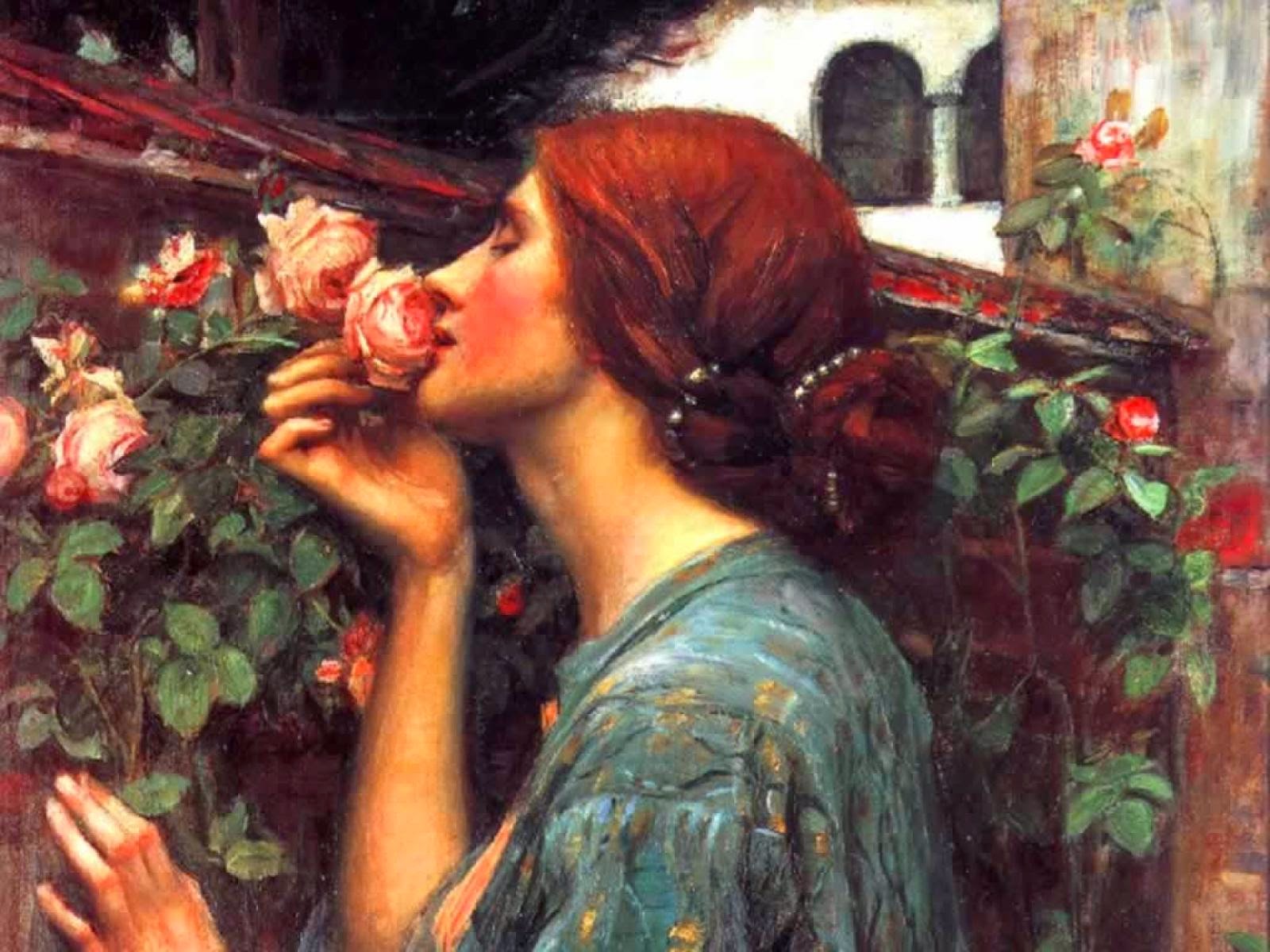
image source: ladyhollyshawblog.wordpress.com

Slowly, it would be nice to become more ginger, adding redness to my hair through soft washes of auburn. I would like to have hair the colour of leaves, as they enter that strangely vibrant stage of fading. From fire to fawn. Can you not imagine the smell of the roses as they wilt for winter, so luscious in the fat of their fragrance? There are roses, still, weathering the rainfall and cold. There are white ones on University Avenue, dripping with raindrops; their petals lie about them like the shredded remains of love notes.

By the time autumn has ended and entered the shrine-like stasis of winter, I will have forgotten my sorrows, finished my dissertation. This is all hope and relief; but isn’t that what autumn is: the sparkle of Christmas festivities on the horizon, the embracing of frugality and calm after a toxic summer? Apple pie, with ice cream and Amaretto, instead of beer and salad? An ethereal, rustic beauty that inspires fountains of poetry? For what better thing to do on a crisp autumn evening, than to sit at the window with a cup of tea, leafing the pages of a book and feeling purer – not just a hipster, defined by the vague fashions of everything around you – but a lost soul re-enacting the perfect scene of reading, as it plays out through the ages. For global warming might prolong the first fall of snow, but for now autumn will always be coming, and there is nothing quite like language to capture the tinctures of foliage, the crunch of acorns underfoot – the endless song of autumn’s calling. Right now it is raining – a luxurious, slow rain that pours through the one o’clock darkness – but next time the weather is good, I will go to Victoria Park and watch the swans, white against the scarlet leaves, the silver glass of the pond.

Unwearied still, lover by lover,
They paddle in the cold
Companionable streams or climb the air;
Their hearts have not grown old;
Passion or conquest, wander where they will,
Attend upon them still.

(W. B. Yeats, ‘The Wild Swans at Poole’).

Ten Things for Autumn: 

  1. Apple Pie Soup http://thesoupfairy.tumblr.com/post/19640840152/apple-pie-soup-literally-my-favourite-soup-ever
  2. Blackberry gin! http://www.deliciousmagazine.co.uk/recipes/blackberry-gin
  3. Burgundy lipstick http://www.cosmopolitan.com/style-beauty/beauty/how-to/a4900/rules-for-wearing-burgundy-lipstick/
  4. Dante Gabriel Rossetti, ‘Autumn Song’ http://poetry.about.com/od/poems/l/blrossettiautumn.htmhttp://poetry.about.com/od/poems/l/blrossettiautumn.htm
  5. Manic Street Preachers, ‘Autumn Song’ https://www.youtube.com/watch?v=Cw9tazfA3aY
  6. Go foraging for mushrooms and fruit, or just fairy-spotting
  7. Cinnamon-stick candle http://www.yankeecandle.co.uk/en/restofworld/shop-by-fragrance/cinnamon-stick/icat/cinnamonstick?setpagenum=
  8. Ginger tea http://www.ecogreenstore.co.uk/index.php?main_page=product_info&products_id=1372&gclid=CjwKEAjw2f2hBRCdg76qqNXfkCsSJABYAycPz_Ug8Seq2xidtaVJGBOBCdbZNqgIe2J0dfvrqB6pGBoCgTXw_wcB
  9. A tartan scarf
  10. The Alasdair Gray exhibition at Kelvingrove http://www.glasgowlife.org.uk/museums/kelvingrove/current-exhibition/Alasdair-Gray/Pages/default.aspx
IMG_0019
mushrooms in Greyfriar’s Kirkyard, Edinburgh

three haiku for tomorrow:

sky of fire opal
opens a new morning of
coldness and woodsmoke.

a new harvest moon:
I could take all these gold days
for some old solstice.

these trees shed apples
to sour in the turning ground
as those other hours.

Technology and Hardware: Some Sentimental Reflections

stock-photo-retro-ghetto-blaster-cassette-tape-recorder-on-table-in-front-mint-green-background-159525176

It’s funny how I still remember getting my first Game Boy. It was the original one, 8-bit in a lovely yellow colour, feeling heavy and smooth in your hand. My mum had bought it off my older cousin for about £10, and I remember feeling so surprised that she’d got me it for Christmas. I had a few games which were these wonderful plastic cartridges that you slotted into the back of your Game Boy, and you could hear the satisfying click when they were inserted properly. There was the sweet little noise it made as you switched it on, the Nintendo logo fizzling onto the screen, the red ‘on’ light glowing in the corner. The shimmering pixels and the chip tunes of game music.

I guess every generation grows up with some form of technological hardware that seems always exciting and new. Whether it’s a radio, gramophone or mobile phone, people born in the twentieth century have grown up with some newfangled machine that somehow adds to their daily life and experience of the world. I feel like my generation is an interesting one in this regard: we grew up with hardware but increasingly this hardware has shrunk like something from Alice in Wonderland, shrinking until it becomes something ethereal, intangible: a piece of code; a web of communication; a world available not only at your fingertips but at the swift movement of your iris. At primary school, we fiddled about trying to hand in homework on corrupted floppy disks. Now we have smartphones, iPods, Google Glass – and that funny thing, the Internet.

Recently I actually went into a shop and bought an album. That’s a statement that would seem pretty meaningless even five, six years ago. Who cares? Now, however, it’s an event. Why would I bother leaving the house when I could get the new music I wanted in an instant on iTunes? After all, that’s what I’ve often done before. I’m not sure why I decided to buy it in ‘hard copy’. It was the new Conor Oberst album, Upside Down Mountain. Being a longstanding fan of Oberst and his band Bright Eyes, I wanted to make buying his album seem more like an ‘event’, to get that kind of excitement I used to get as a teenager, spending endless Saturday afternoons browsing music shops and picking out intriguing album covers; or as a kid, when my dad would take my brother and I into HMV and let us each pick one album. I remember eleven-year-old me picking up The White Stripes’ Get Behind Me Satan and my dad looking at the cover and frowning, ‘that looks a bit too gothic Maria’; he bought it for me anyway.

So I happily purchased Upside Down Mountain from Fopp in Edinburgh and took it home on the train with a smile. It felt good to hold something physical in my hand; yet also strange that it was made not from the hard plastic casing I was used to but a kind of recyclable card. Times are changing. It didn’t have the same retro feel of a CD, something that would look nice all stacked up with the title showing, but it was still better than the paltry avatar of album art you get on a computer. Funny thing, I don’t own a CD player, so of course I had to put it into my computer anyway, to eventually burn onto my iPod. What I first noticed was the soft whirring sound as I inserted it into the disc drive. I’d forgotten all about that whirr; owning a MacBook, there’s very little computer noise at all and working with it normally feels like a more silent, smooth and hi-tech experience than it did with my old laptop that used to hiss and bleep and burn a hole in my lap. There was something lovingly nostalgic about that whirr. It got me thinking: how deep is our relationship to hardware?

As a kid, I had a sorbet yellow tape player with soft grey buttons and a handle that let you carry it about the house. One day I found my dad’s old collection of tapes: boxes of tapes that he’d copied, some original purchases with the artwork intact. The first ones I stole (with permission) were The Police and Manic Street Preachers. I used to listen to the radio with my beloved tape player; at night I’d sit in a den I’d made out of muslin and cushions in the corner of my bedroom, and I’d tape-record my favourite songs off of the radio, snippets from live lounges and interviews which later played back to me, mingled with a softly rasping static. I suppose these were my own (poor) attempts at making mixtapes, the songs cutting off midway through, fragments of old material appearing where I’d failed to tape over properly. I miss listening to music like this: a mix of rewinding and pausing, stopping and starting. I had audiobooks too: childhood stories filling my room, about pots and pans that came to life, and the bizarre sequel to Charlie and the Chocolate Factory. The excitement of silent sound space that came with the voice saying ‘End of Side One’ enacted a kind of participation in the story, as you had to manually extract the tape and flip it over before playing it again.

I feel lucky that someone has actually made me a mixtape before, and this was just before such an act became ‘hipster’ or mere ironic nostalgia.

My home town Maybole is pretty small and doesn’t boast much, but it did used to have a little video shop that my mum, my brother and I used to visit every Saturday night. We’d browse the aisles and argue about what film to pick, and it was always an excitement, knowing it was on loan only for one day and so we had to watch it. Afterwards we’d pop into Safeways across the road and buy snacks. Film watching was more of an event back then, a shared thing. Now, apart from a rare trip to the cinema, I only really watch films when I’m too exhausted to read after a shift at work, and even then it tends to be just me in front of a laptop sleepily watching whatever’s half-decent on BBC iPlayer. While now watching a film is easier to do in parts, before, you’d have to rewind and watch the funny people moving backwards, frustratedly searching out the point where you last left off. The ease in which we can slide between scenes on a DVD player or computer has probably added to our general sense of impatience; it’s too easy, perhaps, to skip over or lose concentration, knowing how easy it is to freeze and repeat.

Moving then from serial to random access memory, I entered my teens. When I was at secondary school, I was really into music and CDs – as much as I had once been into video games – and bought as many as I could with my birthday money. I had a cool silver-blue CD player from Argos that you could put three discs at once in, and it would shuffle songs from all of them at once (before it broke). I also miss the physical act of burning CDs onto a computer, one by one; back when they took ages to copy and almost without fail ended up crashing the family desktop. It was more of a reward when you finally built up a database of your physical music, and could sit and spend hours rearranging playlists whilst chatting to friends on MSN. Already, though, technology had given me the power of multi-tasking; it was just the slow internet connection and processing speed that tended to interrupt the flow (but I almost miss the bleeping symphony of a dialup connection).

I guess this article could be classed as another act of nostalgia, but I wrote it sort of to come to terms with where we are now. The Web has pretty much exploded, infested with advertising and weird material; an intricately layered network which is no longer just the facility through which I access Neopets but an intrinsic part of my daily life. Without it I couldn’t access course resources for uni, I’d struggle to contact my friends, I’d be limiting greatly the availability of information on hand to me. My laptop screen is now a perfect kind of mirror, an elaborate backlit LED technology which provides a window into the tunnel world of networks and code that make up our online lives. There is no longer that tangible, silvery translucence of the old LCD monitor displays which spread rainbow shimmers when you pressed your finger against them. The hardware of my childhood and adolescence – of tapes and CDs and Game Boys – has passed into the realm of the soft-world, the almost flawless efficiency of my MacBook Pro, through which everything is easily at hand. And you know what, I almost regret it.

Explorations in Nostalgia: Midnight in Paris

file000675462020

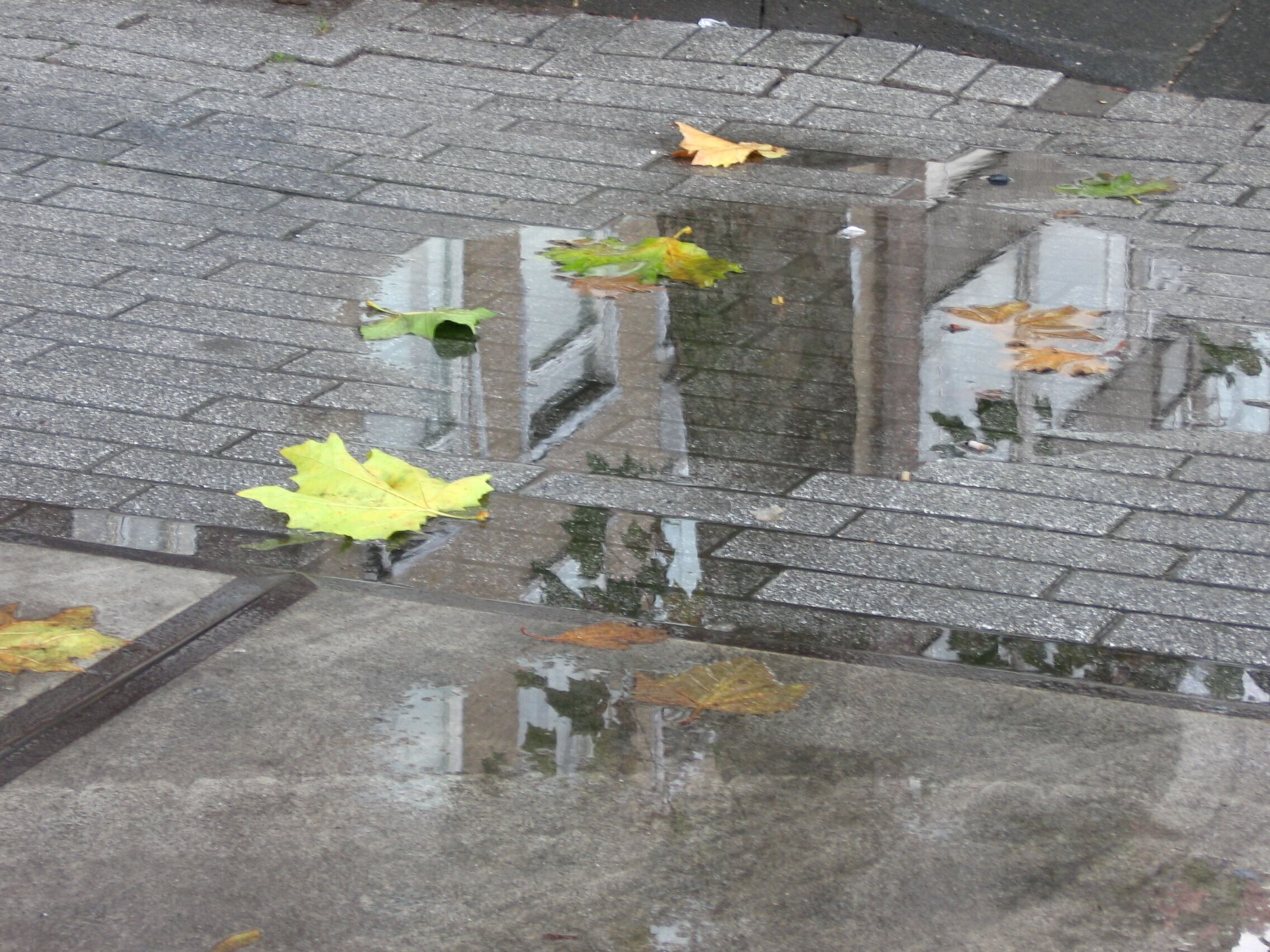
Why is there a certain nostalgic quality to rain? Rain can be beautiful to imagine: the quietly rushing sound it stirs as it starts to fall, the peaceful pattering it makes on roofs and windowpanes, the tingle of droplets on your skin, the way it clings in watery beads to your lashes, the sweet earthy scent it trails as it vanishes from the vapory air. Thinking of rain conjures images of afternoons hiding indoors with a good book, of splashing in puddles as a child, of running makeup, of the high romance of kissing outside in a storm, and the satisfaction of coming home, changing into dry clothes and getting warm.

Most people living in Glasgow would be less lyrical about the drizzle that bursts ever too frequently upon the city. Rain can be a pain. Rain can mean struggling with a broken umbrella, feeling cold droplets drip down your back; it can mean delayed tennis matches, ruined picnics and cancelled plans. Yet rain is also one vein through which we are transported smoothly to some heart of our past; often our recollection of events and people is framed by weather, and rain can add a cinematic backdrop to memory that reflects the misted quality of nostalgia. It has a certain sense of deja vu, of transient confusion. I remember being here before, and it was raining. Like this…or was it somewhere else?

Yet rain is perhaps, like memory, never as lovely as we imagine or remember it to be. It is part of our wistful fantasies.

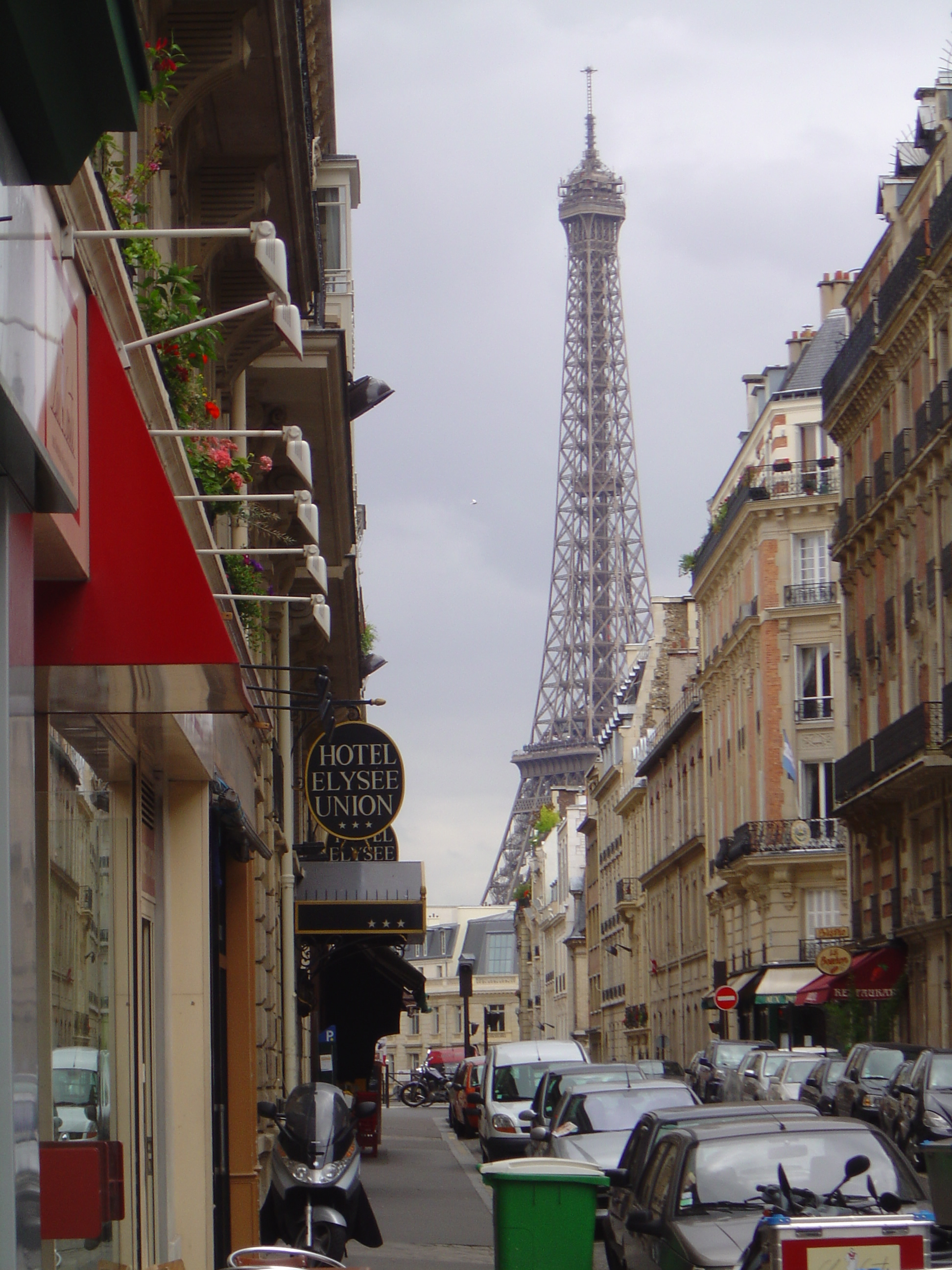
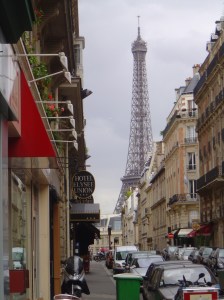
Woody Allen’s film Midnight in Paris opens with a beautiful montage of Paris in the rain, accompanied by accordion music. The shots slip effortlessly between postcard highlights of the city and panoramas of people in the street with umbrellas. It sets the scene for the film’s at times poignant but mostly witty and lighthearted exploration of nostalgia.

I first went to see Midnight in Paris at the kooky little Grosvenor Cinema on Ashton Lane in Glasgow’s West End. An appropriate venue, seeing as it is modeled on an old-fashioned picture-house, with red carpeting, plush seats, vintage interior design, glamour and the availability of wine.

Midnight in Paris is a pastiche of genres, styles, characters and references. Not only does it include an array of (slightly caricatured) figures from the 1920s creative scene in Paris, but it also welds together flashes of political satire with Hollywood rom-com and magical realism.

The film’s protagonist Gil is a Hollywood script-writer discontented with his sell-out job and longing to produce something creative in his writing. Perhaps there is a certain irony here: a search for authenticity staged within a film that is playfully anything but ‘original’. A trip to Paris with his fiancé and her parents, Gil hopes, will provide the spark of enchantment. The first conversation of the film sets up the juxtaposition between the romantic Gil and his pragmatic wife, who appropriately later has an affair with the ‘pedantic’ ‘pseudo-intellectual’ Paul:

 Gil: Can you picture how drop dead gorgeous this city is in the rain? Imagine this town in the ’20s. Paris in the ’20s, in the rain. The artists and writers!

Inez: Why does every city have to be in the rain? What’s wonderful about getting wet?

Already we get the sense that Gil wanders a little too much into his imagination, particularly his imagination of the past – of Paris in the 1920s. Gil’s first actual delve into the past occurs one evening when after the stroke of midnight a strange black cab stops to pick him up, full of revelers drinking wine and champagne. Through this mysterious portal, he is transported back in time to Paris in the 1920s. The film handles the visuals sparklingly well, with stunning 20s costumes, cocktails and the lovely decor of the bars and clubs. It’s all quite magical and dazzling, and we experience the wonder Gil must feel as he is teleported into his favourite fantasy. It certainly got me excited for Baz Luhrmann’s soon-to-be-released The Great Gatsby.

Except unlike us, the audience, Gil becomes a participant in his fantasy, not merely a spectator. Among his adventures, Gil encounters a plethora of characters from the 1920s literary and arts scene, including Hemingway, Dali, the Fitzgeralds, Picasso and Gertrude Stein. There is definitely an element of caricature here, which reflects the play of irony and pastiche characteristic of the post-modern: the film reminds us that these characters are just representations of real figures, who themselves were in a sense self-styled personas, who we knew predominantly through their art. From Dali’s raving about rhinoceroses, to Hemingway’s speeches about war and truth and sincerity, Allen plays with exaggeration to enrich the sense of fantasy and nostalgia. There is a scene where Zelda Fitzgerald is trying to commit suicide because she thinks her husband does not love her and Gil, trying to stop her jumping, tells her that he ‘knows’ that F. Scott Fitzgerald really does love her. Why? she asks. How can Gil possibly know? He’s read all the books and biographies about and by Scott, of course. I think the film here raises an interesting question about subjectivity and literature: what is the real version of events? What is the truth behind the writing? It seems that there isn’t one: instead there are all the fragmented perspectives of those involved, and those who write the books. Right now I’m reading Zelda’s novel Save Me the Waltz, which critics say is Zelda’s version of the semi-autobiographical events of Scott’s Tender is the Night, both depicting the breakdown of minds and marriages, but from the different perspectives of wife and husband. Gil’s attempts to claim that he can know better than the woman involved only underline the absurdity of any narrative which claims ultimate objectivity.

Gil’s encounters with the resurrected ghosts of the 1920s stage a playful juxtaposition of past and present. His quotative use of ‘like’ and his mundane discussions about his relationship to Inez contrast heavily with the stylish and hyper-surreal world he finds himself in. For example, his conversation with Adriana (Allen’s fictional amalgamated embodiment of Picasso’s lovers) about his engagement to Inez highlights the time and culture gap, but also the disparity between reality and fantasy. He realises that there is in fact very little he and Inez have in common, which perhaps suggests that his engagement itself was built on a fantasy. Gil admits that they have a ‘little bit of a disconnect with the big things’ but at least they agree on the little things:

Gil: I will say that we both like Indian food, not all Indian food, but the pita bread, we both like pita bread, I guess it’s called naan.

The likelihood of the super-stylish flapper Adriana knowing what pita bread is, let alone having eaten it, is pretty slim. In addition to this, Gil’s comic response to Hemingway’s question as to whether he’d ever been hunting – “only for bargains” – presents the playful irony of the film’s exploration of past and present, and the discrepancy between the dramatic, larger-than-life lives led by the characters of a by-gone age and the inane realities of the present.

Another funny encounter between past and present occurs when Gil gets into a cab driven by T.S. Eliot and exclaims:

Gil: Thomas Stearns Eliot? T.S. Eliot? T.S. Eliot? Prufrock is like my mantra.

The comedy here is that this reflects how many of us would behave – awkwardly unrestrained – if we were thrust into a world where we could meet our long-dead heroes. There is the hilarious sense that Gil is behaving as a teenage girl would if they encountered Justin Beiber. And yet he is not meeting the teeny-bopper Beiber, but one of the twentieth century’s finest poets (with all the linguistic prestige that entails). The film collapses the language of the present incongruously with the literary visage of the past.

Gil’s general obsession with the literature of the 20s is reflected in his view that Eliot’s poem ‘The Love Song of J. Alfred Prufrock’ is his ‘mantra’. This itself is an interesting mise-en-abyme of intertextuality, as Prufrock itself is a thoroughly intertextual poem, referring for example to Dante. It is also a difficult poem, an internal monologue that follows a complex and fragmented pattern of thoughts which seem to have no definite direction and nor indeed association. Yet its line, ‘Let us go then, you and I’ creates an evocation that resonates throughout Midnight in Paris. It is a speech act, an announcement: let us go. The film itself is built on such a contract of ‘let us go’, asking the audience to suspend their disbelief with regards to the unexplained time travel and enjoy the magic, follow the journey and watch as it restores reality only to thrust us back into fantasy.

Let us go’ seems to suggest an address to time itself – come with me, time, follow my fantasy – but also of linking arms or minds with someone and going someplace else. Time travel can be a solitary or a joint affair. Gil travels back in time to the fin de siecle with Picasso’s lover Adriana, because this Golden Age is Adriana’s fantasy. Here he realises that there is no Golden Age, the Golden Age myth is just a nostalgic longing to escape one’s present: ‘that’s what the present is. It’s a little unsatisfying because life is unsatisfying.’ We tend to travel when we are unsatisfied with where we are right now.

The spellbinding world that Gil occupies by night is by far the best part of the film, and Allen frustrates audiences by delaying these ventures with the mundanity of the film’s present narrative. Gil has to follow his spoilt-brat fiancé around shopping for furniture, have dinner with her ultra-conservative parents and trail around with Inez’s ‘pedantic’ lecturer friend Paul. There are slightly tedious scenes about lost earrings, relationship breakdowns and dinner-table conversations which leave us irritated with the twenty-first century rom-com drama, and desperate, like Gil, for the exciting narrative in the past. These temporal fluxes from past to present serve to delay and prolong the audience’s desire to go back into the past, and so highlight the unsatisfactory nature of the present in comparison with rose-tinted history.

Despite the occasional bore of the present, there are some gems slipped in by Allen amongst the rom-com rubble. These include the parodic representation of Inez’s conservative snobbery and naivety – ‘Inez: You always take the side of the help. That’s why Daddy says you’re a communist’. Also, Gil’s mocking of the Tea Party movement, calling them ‘crypto-fascist airhead zombies’. The film is not entirely an adventure into the past but also an aping of the absurdities of the present – from politics to romantic relationships.

And so back to memory. In the film there is the repeated question of ‘is nostalgia denial?’ Denial of the present, denial of reality, denial of the irretrievability of the past. Nostalgia can relate to more fantastic recollections of a past, a past that was only accessible in the first place through mediation such as literature, film and art – the very instruments of romanticism and fantasy. This is definitely the kind of nostalgia Gil suffers or experiences, but there is another kind of nostalgia that is more personal. This kind of nostalgia was famously articulated by Marcel Proust in his book In Search of Lost Time, in a scene where the narrator experiences an involuntary trigger of memory caused by a tea-soaked cake:

An exquisite pleasure had invaded my senses, something isolated, detached, with no suggestion of its origin. And at once the vicissitudes of life had become indifferent to me, its disasters innocuous, its brevity illusory—this new sensation having on me the effect which love has of filling me with a precious essence; or rather this essence was not in me it was me. I had ceased now to feel mediocre, contingent, mortal. Whence could it have come to me, this all-powerful joy? I sensed that it was connected with the taste of the tea and the cake, but that it infinitely transcended those savors, could not, indeed, be of the same nature.” (Marcel Proust, “The Cookie” from In Search of Lost Time).

This kind of nostalgia is one most of us can identify with: the slightly uncanny sparking of a past personal memory from some kind of sensory trigger. That is how perfume gains its emotional quality, through the way its scent weaves swirls of associations between our past loves, lives and histories, and stirs these up again for us from one whiff in the present. Each time I put on my Body Shop Japanese Cherry Blossom, I fondly and wistfully remember (and long for) my holiday in Rome. As Proust describes it, the unintended evocation of a past memory makes us feel as if we transcend time and morality, collapses our identity ‘this essence was not in me it was me’ and produces an ‘all-powerful joy’. Food is nostalgic because it combines different senses: taste, smell, touch, sight. From your granny’s best soup to those warm chewy cookies they used to make at school, our gustatory pleasures are a minefield of nostalgic resonances.

The point here is that nostalgia is not just an affliction, a slightly unhealthy yearning to escape the present and return to a past that has been forever forlorn in the timeline of history. Nostalgia can be pleasurable, even if the pleasure is a little bittersweet – that feeling of longing and sadness for the person you once were or once loved when you hear the opening bars of an old song. Gil’s nostalgia perhaps goes too far: his novel is set in a nostalgia shop, and he spends his real life dreaming of forgotten times. His fiance accuses him of having a ‘brain tumour’ when he begins talking about the past as if it were real. This is an interesting image, as it suggests something psychologically corrupting about the past: it seeps into the present inevitably and transforms the way we experience the here and now. It is a kind of everyday madness.

Yet Midnight in Paris leaves us with a vision of nostalgia that encapsulates its positive effects. Gil’s decision to break up with his ill-suited fiance, and the final scene where he walks into the rainy Parisian night culminates in a strange blurring of his reality and fantasy. He has finally made grown-up, significant choices, but he has also walked into the sweet allure of a romance that reverberates with his early fantasies of Paris in the rain. It is an elusive, probably unrealistic ending, but this is the magic of the movie. Woody Allen gives us the happy, fulfilled ending we’ve been hoping for – it’s not quite the kissing in the rain at the end of Breakfast at Tiffany’s but the rain still provides an amorous atmosphere – and this ending, quite nostalgically, recalls all the dreams Gil has at the beginning of the film, and all the familiar romance films of bygone times that end similarly. So this is nostalgia: the little dab of illusion to soften the edges of reality.

Further reading:

Nostalgia: Sweet Remembrance. Available at: http://www.psychologytoday.com/articles/200605/nostalgia-sweet-remembrance

Proust, M. 1913-1927. In Search of Lost Time. 
file0001794106155