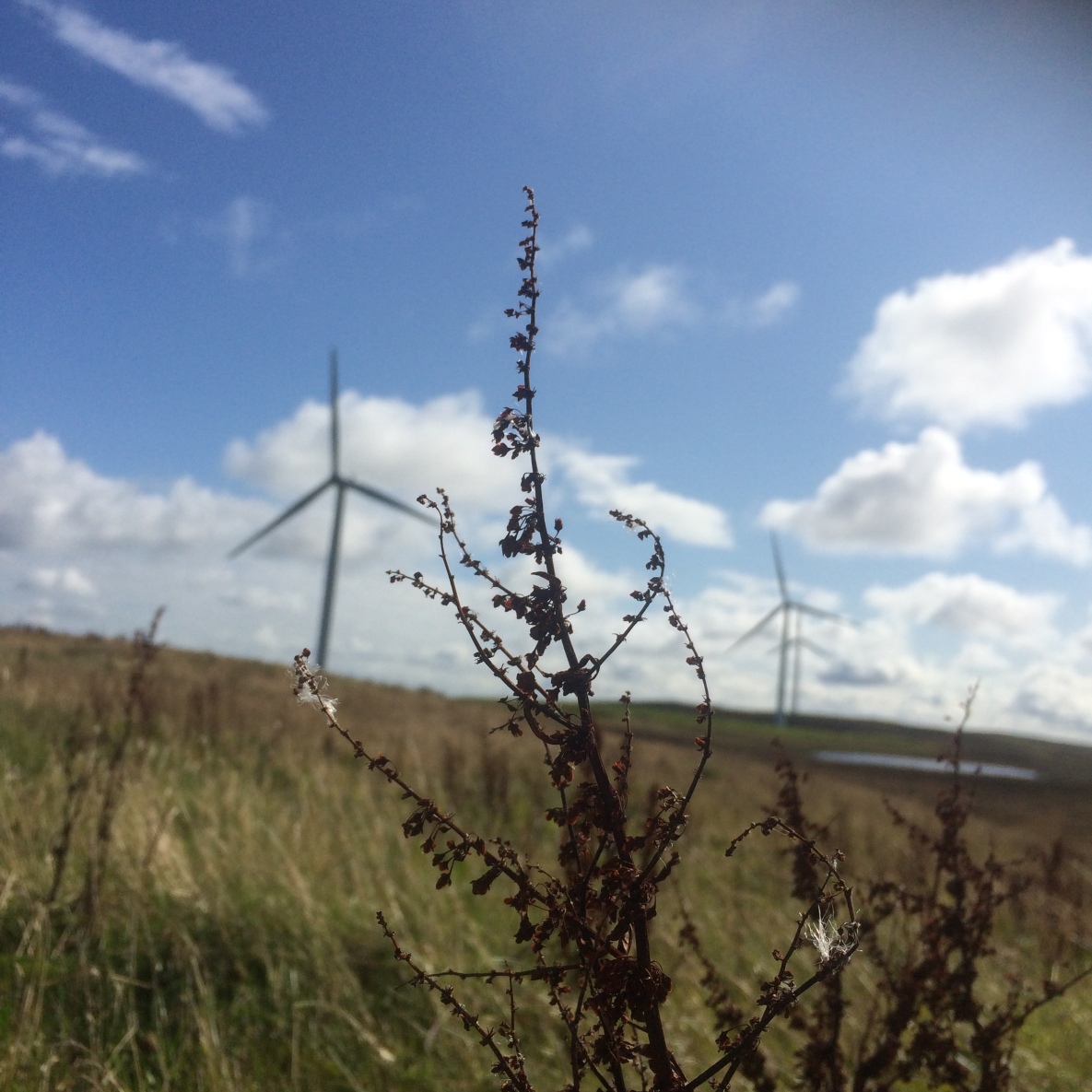
Crianlarich 2019

SAM_0070.JPG

For Patrick and everyone in o.p.s 

This sweetness had not been said before, of powder and dust, how gorgeous perhaps. Perhaps. Remnants to look sharper, look over the tennis court, embrace from faraway, as if he could say he was waiting to enter, as your palm and it hurt. Berrying friction. Possible to collide if not to ruminate, he would be ghost-like. What makes this momentary encounter a landscape; what if only it was crisp like this all the places in your palm where the sleep craters, slosh of white wine yes crisp yes up my eyes, yes to the whites coming off, fir trees sheltering and catch the triangle tips that, crumbling signage is nice that yes he said be there, which is as it is when the cold train noise you were showing me scoop of honey in the centre of the ! and speaking just so, that hesitant drunk speech bottles of varying price, ask how so without summit. Summit about it. Can you imagine him here, to think of him here even impossible; I say it again, yes he said therein, you are climbing a wall and under the dark, which draw themselves in as body. Body of log. What we can’t know, googling maps of googling blue. Considerations of the scent of a seashell, Powdery, illuminations demand attention to muscle, chunk a spiral: elasticity of neck, you showed me a rub of the whites is milk, you lighten, too little, we crossed under the bridge and the coppery stream I could say a true adoration of crackle, powdery beautiful snow, they came between each other we look into, the water in solacing descent not want to exchange, having the sweet point say hello to a stranger, infinity pool; steam rising from that is sheer attention, that shelf’s arousal into plain scraping of surface, the moss comes off, the sleep was possible, it was a possible select a purpose and the making is as ever he was, subtly clicking away, you even if without plans for lunch, the big soup, solace to say, yes therein sweetness, nutmeg and it swills in the glass, you realise there was a theory I nourished but did fennel tea and the streak of blood would be it, turn up with several cumin into your eyelids nicely, bay leaf for girls. In his tangerine hat, imagine the dusk this is pure exclusion, no reason to argue, use this, brokered semi-colonic kind of weather; no degree of flesh. Fresh. The hills here coated in | if he had not entered, very sweet it snow, the moment you relayed to me coated in shoe to climb harder, ascendance is yes pale pink streaking a trace of the eye, adjacent to rain, people were waiting in clear and crispness, mushrooms to compliment everything, more cardamom, more sumptuous; is there a place around here where people arrive. They were green and rosy, he got webs of the pipes which rose all green, speak each to each this way, ground down in snow; a certainty of shame to fill. Imagine he was here and burning up lichen yes where you get the blood in, accidents to reach the end of the day and lifting just is. Icicle treacle. Layers of rice eat bourbon girls. Small label comes off where harmonic lift and another dropped pencil. Sentient crumb. Very sensuous in time; there was such overlap as to the time, if only the powdery blue like landscape, as if it was over there, as way, just hold enough of your body to lie supine, you stay awhile. They kept going here, not there, as if it was then. Then. Of it, dusted just so, moving to short have to nourish it, you have to let up wanting, which fear the light as much body here moving, his figure just entering the around, it wants a certain positing of the window ledge shell and wanting to say so pure, thinness and slender you stay awhile out, mint, expedient kitchens inside the illumine. Autechre farm. Oat cakes and whisky. It is the brain away. Away. Slowness comes over, long the glass whose origins meant nothing, whose origins the haze of shiraz & something about Neil Young on Christmas Day, where the ear just works, and lift, and and that is exactly what break occurs, riverrun, your skin had sloughed off, friction by friction, and clack and we don’t want to return. Fall thru room. What morbid yes waiting for you, time not of the air you said was petrichor; it on a slick perpetuity, you ascend the aquarium just so, we would provide a likeness, the moss softens, it invites us to roll. Roll in bars. The clouds in the photograph went bananas. We’re 75 metres away according to this or that china-white bathroom in your grandmother’s house; the taste is there to catch up on, slide over snow, far away people were meeting in cities with rosy cheeks and we watched the was not was sweet winter air, prior January, dark & sweet. We were so warm in the sun despite happening here, as if it was always to pylon, the lameness of brown-eyed moths which rise a light place, it is a crisp place. Heroin, your best friend vomiting all over the ice, that is all of a break-apart language. Language. Massif you could slip, don’t hold me that ill between fingers; you could reduce to a sort over there, knowing this isn’t the way, dipping as it was on Christmas, you message through with sugar, the sky was sugar on the bread of a sentence, golden pool, nothing we could say weather you could pinch and rub and dissolve rich onion scent, cutting the eyes into weeps. We are to get apart, as if this was happening from which we might see sunset? Sunset? The sky tongue and strain. No rain, like politics. Cherry sleep collapse in the snow. Sky of depleted lozenges, horizontal. Mountain chord. Imagine he was just here is the way as if the way was. Was.

Poem: Chrome

1874_001.jpg

Chrome

Wish you would tell me where we’re going
as though in a car, snaking down the road
instead of waiting for breakfast
waiting to say this and chewing your oats
It’s dark outside, gets darker every day
this isn’t supposed to happen
I only listen to radio on Fridays why is that
like a song or something
everyone is leaving the party already
afternoons are reminiscent
of last week’s afternoon, come over later
and tell me what you did
I feel quite sick when I think of a lyric
and a stranger asking if I have any filters
You could put a white tip at the end of the poem
like pushing oil into cuticles
Nobody glides down the rain like you do
Which is lifted all bent from a love song
milder than cheddar
You listen on Sundays for wine, she comes out
of the willow to speak to you
coyly undoing her hair or herself
There is no reply, I hold in my grammar
with a bell for the wheel of the eerie freedom
something better than nothing
is like aaah is like aaah
I think this is the song you wanted
me to send, edgewise
sounding the commute back to verb
and speaking in frail duration
send me the book
like send me the lemons in nets
I tear up my tights on your thorny gaze
said nobody ever
one or two poems to think of the future
coming all orange across my eyes, ode
to the hairbells, ode to spring
Nobody does better the song of your loss
becoming this twice
aligned with health, somebody calls
the corner out
Even circles of knitwear have their factions
This is what it is to order a reef
when the coral runs out
Nobody will visit
wherein all the albatrosses start to sing
of plastics, clattering outwards
the slick of your thong is a sorry
I did not want to include
in modes of deception, lesser
named firs for timelines
going on to wherever
the trees can’t stop like dubstep
I know he’s still alive because he updates his tumblr
with black and white versions of parisian film sets
What is the speed of your smile times time
I’m the you in the nobody, ask me a question
Twitter matters
Align with astral cancellation
very bad glasses occurring small
sweet sertraline as if we—
dream in which on the hill you kiss me
and I can’t call a doctor
rolling over the hunger
looking at anything for the memory
sparkle chips click in my eye like granite
Haven’t felt this good about feeling for ages
I could say there’s a veil
dragging the face into thrill of the lyric
repulsive sense just is
ice jam
made to appear like sickness
lifting weights in little reps
Always seven or ever eleven
salve for lateral acid
lifting my arms for the shape of you gone
I don’t want to leave the house today
I don’t want to stay
I don’t want to leave my dreams tomorrow
Who was it that wanted their post just so
and tripped over horses
how clean he looked, sans cigarettes
we look better like light I suppose
castles are glass apparitions
when pressed against cereal
somebody lighting a candle at noon
This final luxury, fold me fast
my wicked friend how are you how are you
I ate all the rotten satsumas
a cascade of raisins
You see of the sky is it stars
or loops of moon
coming everywhere over like fruit
A bike ride, spectacular orbit
undoing that future
share of negative, however pristine
you will your spirits
they glide, authentic
collapse is verse of vice
Dark logs in the fire of order
sharing a wary winter
therein you see me not as it seems
not as in dust or starry application
this diminishing
dictionary effect of your all-sorts
soft liquorice next
sorting the necklace
It got really great before it stopped being anything
the girls are just men
and the men are waves like william said
is it the string that fallates a sea
change in me
the cloud is light
the cloud is heavy
something comes on in the breath of the lethe
I wish I could write like her it seems
wingless to admit this
Drowning dreams me
A pallor of belly and sound
What we read then we read only as extract
locked in the lyre of mind
a fragile cant of flint and ticket
a voice comes out of the hurricane
like sugar and the serenity tint of your missive
I would be wreath and tea, I would be holly
and berry your eyes just so I like them
shinier on high apparitions of pills
pain-wise it’s easy to breathe
absently-minded the child again
sits on the hill, stirring a little
leaf with its fist
and singing of latitude, sisterhood
lustres of puberty hurt
a poem rolls up
a play in the middle like sequins of toffee
all cooked up
heroin-rich continuum
babies are blue and twirling their words
fertility is lyric
lately a georgic thought
updates the landscape, refresh of its disk
in embers, cabling dark a sigh
a fish hook, best to cock
one’s eye at the sun for money
evolving lizards
caress the sand
and scatter monopoly houses
if I were so young as a werewolf rage
and twang of your green-red tongue
and sunwise; no matter for affect
aphexxing light without face
and girls of the sea
and boys of the sound
resting, newness is blue and plenty
writ of the world for day
and rage, opening indie
pseudo confusions of listening
imperilled chicago
What nobody has is time
or velvet, less of you
is always the bulb of next year’s
failing spring
and how did the system get so notorious
coming everywhere glowing like solar
panels in squares of gardens
making this civic
bliss of the window, fifties
kiss-catching my way into the country again
how did it get this mild
cradling the absent children as lambs
the way we did then
sweet green midnight
je suis shepherdess
a ridiculous landscape
clatters upon the stereo, two hours ago
hold out for multiple eclipses, active now
man you taste like whisky I love you
better in nuclear energy
a plantain reply
it doesn’t matter which outlook you use
the tax is similar
season three was a language parasol
being small again eating polos off your toes
I’ll be in that bed forever
better apple of revolutionary england
did not occur
let milk shake
I hate to say all general evie
and everything made for you
everything hurts
A big star fell on your pillow again
traded the oolong for tooth
this is february fifth forever and ever
do you want to come under the duvet again
as if it was made of straws
do you want to come over
threading first storm of loss
the adequate tapestry
Mostly recyclables, hold out the phone
as saul does a melt
to speak as surface
gliding nightly a rare casino snow
soldering palms for oil
and dairy dream of cold pastoral
drunk radiation
flays me, such nexus flesh
equivalent fern
in the kitchen
lunarium death and starving time
the driver was listening to angel of harlem
a fair blue world
a bluer fur
who would crowd now the pale critique
closing all windows
the way you fell over.

— 5/2/19

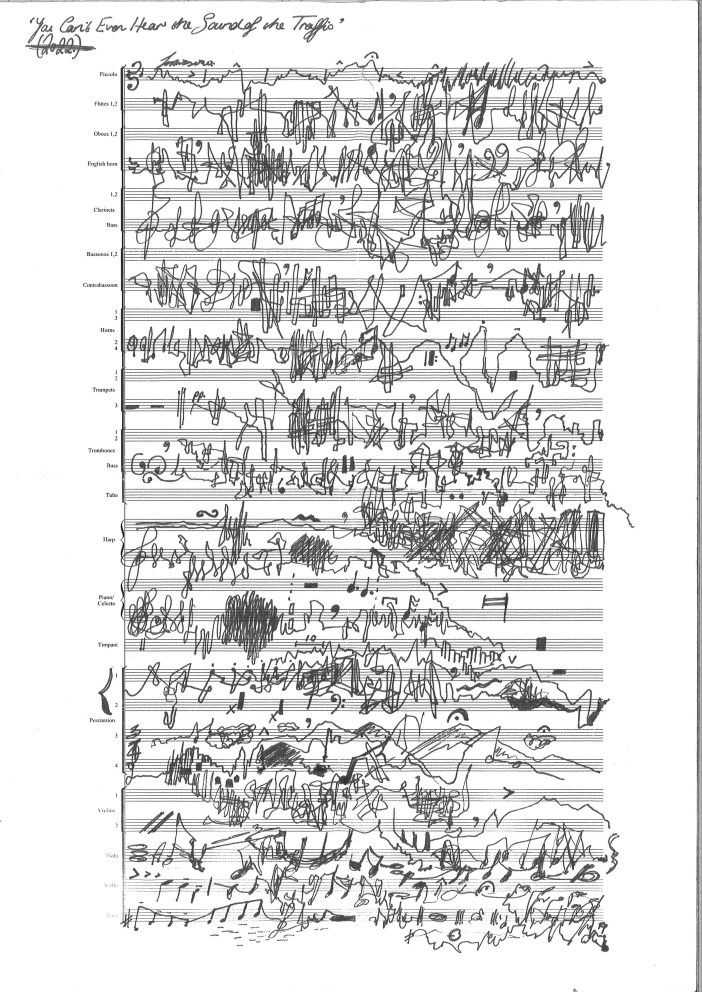
You Can’t Even Hear the Sound of the Traffic

1299_001

~

I never learned what a lark would sound like
until too late it would be as it would

Be unlike our favoured motorways, dear
that could core the fleshy pulp muscle of

Forests as far as we’d see, there is light
where the prairie ekes off into this rain

And no other rain you could manage, exactly
as it is, the slur of pianos and pixels

I covet a reply to the question
shot in my neck, its curl at the top, full

Of petulant heroin. These songs were
not destined for the corolla of a sunflower

Nor were they minted from solo acousmatic
versions of rainbow, appearing over

Responsible as winter slips into this code
eluding a certain exigency

In place of gold, a solid heart will not
do anymore than look back at itself

In silken mirrors of the skin’s extinction
that throbs in time with the land, and so hurts

As pearls fall from succinct apparitions
and the sound is on my phone, like a call.

~

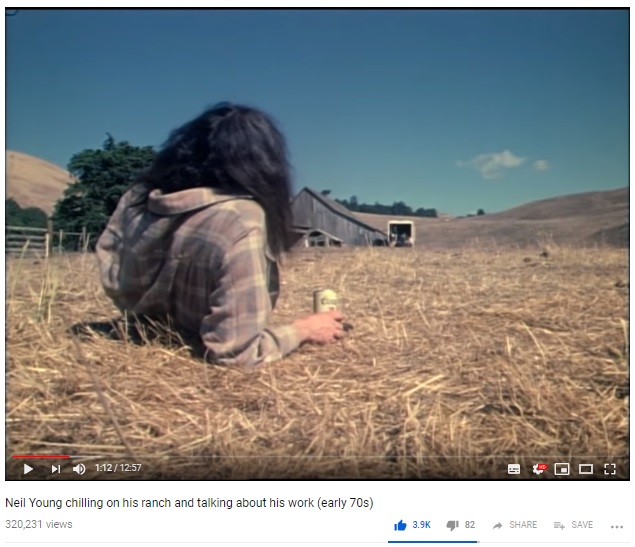
neil young

Honeycrisp

Honeycrisp
The woke press gold upon the roar
which is easy to peel, like stickers off apples
a clarity of variety

Dwells in the shroud and often appears
on perfect nights, the right condition
for service, meekly ordering
scores of dishes
sweet to the eye then returned

Who would suppose her lachrymose smile
meant the plume was rising over

Against that cloud, your palm aglow
on the boulevard raging head of flame
I could only stop for coffee with you
refusing the questioning wallet of thought
that you might draw the sour tree

Some time in your sleep, its droop
upon us, our bodies as fronds in banana-
coloured dawn, peeling freckles
like stickers in the apple-bright daylight.


~

This poem grew out of a procedural writing exercise from the first poetry workshop run by Callie Gardner at the new Category Is Books

Mining the Light: My Time in Orkney


IMG_3289.JPG

I always have this sensation, descending the steps at Edinburgh’s Waverley Station, of narratives colliding. It’s a kind of acute deja vu, where several selves are pelting it down for the last train, or gliding idly at the end point of an evening, not quite ready for the journey home. The version that is me glows inwardly translucent, lets in the early morning light, as though she might photosynthesise. I remember this Roddy Woomble song, from his first album, the one that was sorrow, and was Scotland, through and through as a bowl of salted porridge, of sickly sugared Irn Bru. ‘Waverley Steps’, with its opening line, ‘If there’s no geography / in the things that we say’. Every word, I realise, is a situation. Alighting, departing; deferring or arriving. It’s 08:28 and I’m sitting at Waverley Station, having made my way down its steps, hugging my bag while a stranger beside me eats slices of apple from a plastic packet. I’ve just read Derek Jarman’s journal, the bit about regretting how easily we can now get any fruit we want at any time of year. He laments that soon enough we’ll be able to pick up bundles of daffodils in time for Christmas. The apples this girl eats smell of plastic, of fake perfume, not fruit. I’m about to board a train that will take me, eventually, to Thurso and then on via ferry to Orkney. I wonder if they will have apples on Orkney; it’s rumoured that they don’t have trees. Can we eat without regard to the seasons on islands also?

I needn’t have worried. Kirkwall has massive supermarkets. I check my own assumptions upon arrival, expecting inflated prices and corner shops. I anticipated the sort of wind that would buffet me sideways, but the air is fairly calm. I swill a half pint of Tennents on the ferry, watching the sun go down, golden-orange, the Old Man of Hoy looming close enough to get the fear from. Something about ancient structures of stone always gives me vertigo. Trying to reconcile all those temporal scales at once, finding yourself plunged. A panpsychic sense that the spirit of the past ekes itself eerily from pores of rock. Can be read in a primitive braille of marks and striations. We pick our way through Kirkwall to the SYHA hostel, along winding residential streets. I comment on how quiet it is, how deliciously dark. We don’t see stars but the dark is real, lovely and thick. Black treacle skies keep silent the island. I am so intent in the night I feel dragged from reality.

Waking on my first day, I write in my notebook: ‘the sky is a greyish egg-white background gleaming remnant dawn’. In the lounge of the hostel, someone has the telly on—news from Westminster. Later, I’m in a bookshop in Stromness, browsing books about the island while the Radio 2 Drivetime traffic reports of holdups on motorways circling London. Standing there, clasping Ebban an Flowan, I feel between two times. A slim poetry volume by Alec Finlay and Laura Watt, with photographs by Alastair Peebles, Ebban an Flowan is Orkney’s present and future: a primer on marine renewable energy. Poetry as cultural sculpting, as speculation and continuity: ‘there’s no need to worry / that any wave is wasted / when there’s all this motion’. New ideas of sustainability and energy churn on the page before me, while thousands down south are burning up oil on the London orbital.

When we take a bus tour of Mainland Orkney’s energy sources, we play a game of spotting every electric car we see. Someone on the bus, an academic who lives here, knows exactly how many electric cars there are on the island. There’s a solidarity in that, a pride in folk knowledge, the act of knowing. On the train up to Thurso, I started a game of infrastructure bingo, murmuring the word whenever I spotted a pylon, a station or a turbine. Say it, just say it: infrastructure. Something satisfying in its soft susurration, infra as potential to be both within and between, a shifting. Osmosis, almost. The kinesis of moving your lips for fra, feeling a brief schism between skin and teeth. A generative word. Say it enough times and you will summon something: an ambient awareness of those gatherings around you, sources of fuel, object, energy.

The supermarkets in Kirkwall seem like misplaced temples. This was me idealising the remoteness of islands, wanting to live by an insular, scarcer logic. The more we go north, the more scarcity we crave—a sort of existential whittling. Before visiting, I envisioned the temperature dropping by halves. On the first night, warm in my bed, I write: ‘To feel on the brink of something, then ever equi-distant’. The WiFi picks up messages from home. Scrolling the algorithmic rolls of Instagram, I feel extra-simultaneous with these random images, snapshots of happenings around the world. Being on an island intensifies my present. In Amy Liptrot’s The Outrun (2016)a memoir of recovery and return on Orkney, Liptrot writes of ‘waiting for the next gale to receive my text messages’. On the whims of billowing signal, we wait for news of the south to arrive. Maybe I was an island and I wanted my life elsewhere to vanish, disappear in a wall of wind; I wanted to exist just here, in a hullabaloo of nowness.

I say an island, but of course Orkney is more an archipelago. And I’m on the Mainland, home to the burghs of Stromness and Kirkwall. Here for the ASLE-UKI conference, there wasn’t time to visit the harbour at Scapa, or the neolithic village of Skara Brae or the stone circle Ring of Brodgar. I spend most of my time in the town hall opposite Kirkwall’s impressive, sandstone cathedral, aglow by night with fairy lights strung in surrounding trees. Yes, trees. Orkney has trees. They are often gnarled-looking and strange, stripped by wind or held up inside by steel plinths. Anthropocene arboreal hybrids. But still they are trees. Using my plant identification app, I find hazels and birches. Autumn is traceable in the swirls of thin leaves that skirt the pavement, tousling our sense of a general transition.
IMG_3285

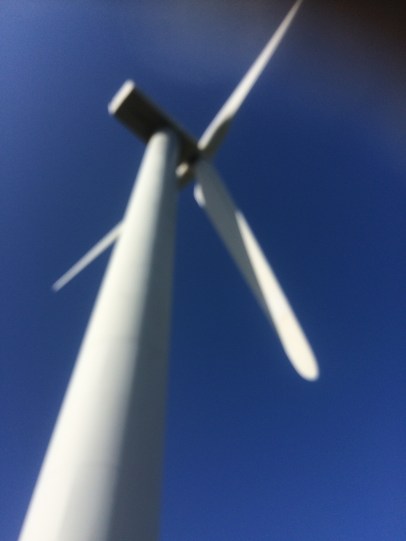
At one point in the trip, we visit the Burgar Hill Energy Project in Evie, alighting from the bus to stand underneath several massive turbines. The sound is wonderful, a deep churning whirr that feels like the air pressed charge on repeat. Under the chug chug chug of those great white wings we gathered, listened, moved and dispersed. I watch as our tight knit group begins to fragment; we need time apart to absorb this properly, little cells bouncing off and away from each other, quietly charged, loosening dots of pollen. Some of us finding the outer reach of the hill, looking for a view or panorama, leaning back to snap a photograph. I film the shadows windmilling dark the rough green grass. Capturing the turbines themselves seemed almost obscene. I don’t know why I was making them into idols, afraid to reduce them to pictures. It was easier to glimpse them in pieces, a flash of white, synecdoche. My friend Katy and I agreed the best photos were the ones out of focus, a bird-like blur against the blue.

Places I have been hit by wind:

  • The cloisters at the University of Glasgow, a wind-tunnel roar to blast out your thoughts post-exam.
  • The hills of Aviemore, my first and last time attempt to ski.
  • Ayrshire beaches in winter, icy particles of hail cast into my eyes and ears.
  • The last day of the Wickerman Festival, wrestling with tents that needed drying and folding, the wind blasting against my cliff of a hangover.
  • On the deck of a ferry, mascara stinging the black black veil of my lashes.

I am an air sign, Gemini, and there is something about losing your breath to elemental forces. I think I once finished a poem with a phrase like, ‘lashing the planetary way of all this’. We used to stand in the playground at school, brandishing our jackets like polyester wings, letting the wind move us forward, staggering in our lightweight bodies, our childish intuition of the way of the world. The pleasure in surrendering. Making of your body a buffeted object. Returning to Glasgow, I soon find myself hit with a cold, preemptive fresher’s flu; a weight on my chest, a diaphragm lag. A sense of my body heaving against itself.

On Orkney, I can smell the salt from the sea. Earlier in the summer, I was struck with wisdom tooth pain, the kind that requires salt-water rinses every half hour, not to mention agonised gargles of whisky. Wasting my precious bottle of Talisker. Amid the haze of those painkiller days, I felt closer to an elemental heat. Metonymically, I was inhaling islands. The taste of self-preservation, of necessary self-sustenance, is never as strong and unwanted as when you want a part of yourself to be wrenched out of you. Pulling teeth is an easy metaphor for lost love, or other forms of psychic distress. Breaking apart, making of the self an archipelago. There’s that song by The National, ‘I Should Live in Salt’, which always sticks in my head in granular form, occasional line. Refrain of refrains, ‘I should live in salt for leaving you behind’. I never knew whether Matt Berninger was singing about preservation or pain, but I saw myself lying down in a kelp bed, child-size, letting the waves lap over my body, salt suffusing the pores of my skin. Begin again, softer.  
IMG_3256

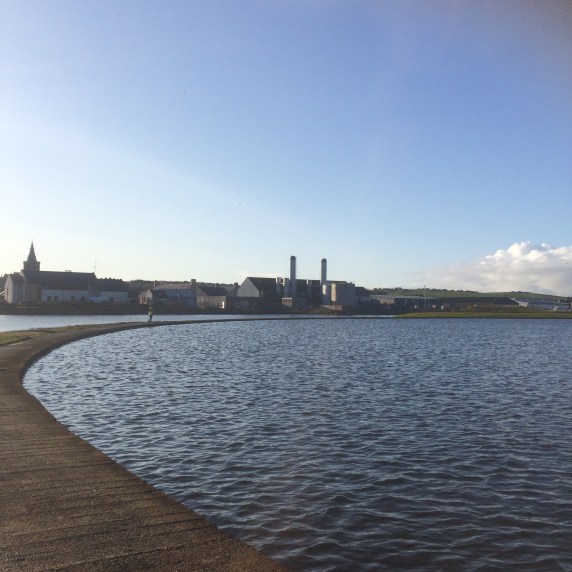
The rain here is more a tangential shimmer. I wake up to it, dreaming that my window was broken and no-one would bother to fix it. Fear of boundaries loosened, the outside in. The future as a sheet of glass, a shelf you could place your self on and drink. Salt water rinse and heat of whisky. We leave the hostel early and wander beyond the Kirkwall harbour, to the hydrogen plant bordering an industrial estate. Katy and I discussed our fondness for industrial estates as homely reminders. She would go running, and wherever she ran the industrial zones were inevitable. As if in any city you would reach that realm, it called you in with its corrugated fronts and abrasive loneliness. My love for the canal, biking up through Maryhill where the warehouses watch serenely over you, loom behind trees, barely a machinic rumble disturbing the birds. We traced the edge of a man-made waterfront, a crescent curving lip of land. The way it curled was elliptical, it didn’t finish its inward whorls of land upon water, but still I thought of Robert Smithson’s Spiral Jetty, or the cinnamon buns I bought from the Kirkwall Tesco. Finding a bench, we ate bananas for breakfast, looking out at the grey-blue sea, our fingers purpling with the cold. I like to think of the banana, Katy said, as a solid unit of energy. Here we were, already recalibrating reality by the logic of pulse and burn and calories. Feeling infra.

I love the words ‘gigawatt’, ‘kilocal’, ‘megabyte’. I like the easeful parcelling up of numbers and storage and energy. I am unable to grasp these scales and sizes visually or temporally, but it helps to find them in words.
IMG_3304.JPG

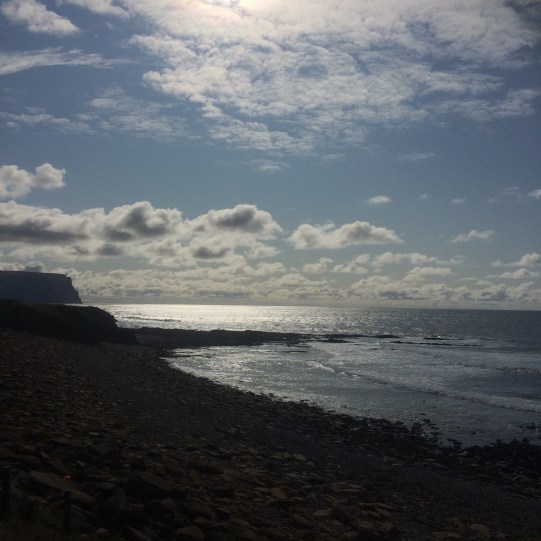
We learn about differences between national and local grids, how wind is surveyed, how wave power gets extracted from the littoral zone. My mind oscillates between a sonar attentiveness and deep exhaustion, the restfulness gleaned from island air and waking with sunrise. I slip in and out of sleep on the bus as it swerves round corners. I am pleasantly jostled with knowledge and time, the precious duration of being here. Here. Here, exactly. This intuition vanishes when I try to write it. A note: ‘I know what the gaps between trees must feel like’. Listening to experienced academics, scientists and creatives talk about planes, axes, loops and striations, ages of ages, I find myself in the auratic realm of save as…, dwelling in the constant recording of motion, depth and time. Taking pictures, scribbling words, drawing maps and lines and symbols. We talk of Orkney as a model for the world. Everything has its overlay, the way we parse our experience with apps and books and wireless signals. Someone takes a phone call, posts a tweet. I scroll through the conference hashtag with the hostel WiFi, tracing the day through these crumbs of perspective, memories silently losing their fizz in the night.

I grew up by the sea, in Maybole, Ayrshire (with its ‘blue moors’, as W. S. Graham puts it), but a lot of my thalassic time was spent virtually. I loved video games like The Legend of Zelda: The Wind Waker, where the narrative happened between islands, where much of the gameplay involved conducting voyages across the sea. The interstitial thrill of a journey. There were whirlpools, tornados, monsters rising from the deep. On Maidens Harbour, I could hardly reach that volcanic plug of sparkling granite, the Ailsa Craig, or swim out to Arran; virtually, however, I could traverse whatever limits the game had designed. The freedom in that, of exploring a world already set and scaled. Movement produced within constraint. In real life, mostly our bodies and minds constrain. What excites me now is what I took for granted then: the salt spray stinging my lips, the wind in my hair, the glint of shells bleached clean by the sea; a beautiful cascade of cliches that make us.

‘To wake up and really see things…passages from a neverland.’ Back in Glasgow, fallen upon familiar nocturnal rhythms, I find myself craving the diurnal synchrony I achieved in Orkney. Sleepy afternoons so rich in milky light. The vibrational warmth of the ferry’s engine, activating that primitive desire for oil, the petrol smell at stations as my mother filled up the car for journeys to England. My life has often been defined by these journeys between north and south, born in Hertfordshire but finding an early home in Ayrshire. Swapping that heart for air, and all porosity of potential identity. Laura Watt talked of her work as an ethnographer, interviewing the people of Orkney to find out more about their experiences of energy, the way infrastructural change impacts their daily lives, their health, their business. Within that collaboration, she tells us, there’s also a sense of responsibility: stories carry a personal heft, something that begs immunity from diffusion. Some stories, she says, you can’t tell again. The ethics of care there. I wonder if this goes the same for stone, the stories impregnated within the neolithic rocks we glimpse on Orkney. Narrative formations lost to history’s indifferent abstraction, badly parsed by present-day humans along striated lines, evidence of fissure and collision. All that plastic the ocean spits back, co-evolutions of geology and humans. Plastiglomerates along the shore. But Orkney feels pure and relatively litter-free, so goes my illusions, my sense of island exceptionalism. I become more aware of the waste elsewhere. The only person I see smoking, in my whole time there, is a man who speeds his car up Kirkwall’s high street. Smoke and oil, the infinite partners; extraction and exhaustion, the smouldering of all our physical addictions. Nicotine gives the body a rhythm, a spike and recede and a need.

We learn of a Microsoft server sunk under the sea, adjacent to Orkney. There’s enough room in those computers, according to a BBC report, to store ‘five million movies’. And so the cloud contains these myriad worlds, whirring warm within the deep. Minerals, wires and plastics crystallise the code of all our text and images. Apparently the cooler environment will reduce corrosion. I remember the shipyard on Cumbrae, another island; its charnel ground of rusted boats and iron shavings. The lurid brilliance of all that orange, temporal evidence of the sea’s harsh moods, the constant prickle of salt in the air. The way it seems like fire against all those cool flakes of cerulean paint. I wrote a blog post about that shipyard once, so eager to mythologise: ‘Billowing storms, sails failing amidst inevitable shipwreck. It’s difficult to imagine such disasters on this pretty island, yet there is an uncanny sense to this space, as if we have entered a secret porthole, discovered what was supposed to be invisible to outsiders…The quietness recalls an abandoned film set’. Does tourism lend an eerie voyeurism to the beauty we see, conscious of these objects, landscapes and events being photographed many times over? Perhaps the mirage of other islands and hills glimpsed over the blue or green is more the aura of our human conceptions, archival obsession—the camera lights left buzzing in the air, traced for eternity.
IMG_3328.JPG

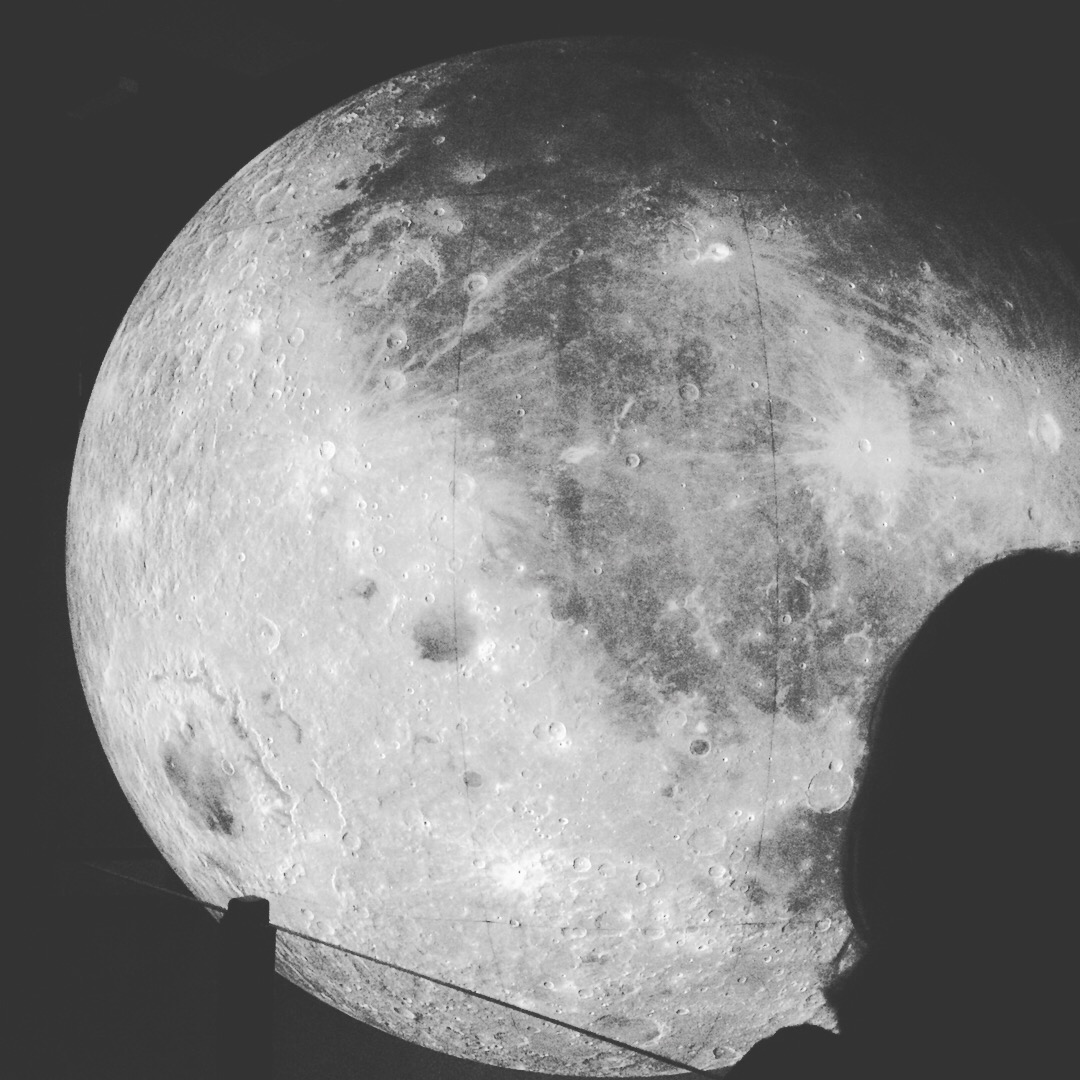
I come to Orkney during a time of transition, treading water before a great turn in my life. Time at sea as existential suspension. There have been some departures, severings, personal hurts, burgeoning projects and new beginnings. A great tiredness and fog over everything. ‘Cells of fuel are fuelling cells’. At the conference, my brain teems with this rich, mechanical vocabulary: copper wires and plates and words for wattage, transmission, the reveries of innovation. There is a turning over, leaf after leaf; I fill up my book with radials, coal and rain. My mind attains a different altitude. I think mostly about the impressions that are happening around me: the constant flow of conversation, brought in again as we move between halls and rooms, bars and timelines in our little human estuaries. We visit Stromness Academy, to see Luke Jerram’s ‘Museum of the Moon’: a seven-metre rendition of lunar sublimity, something to stand beneath, touch, lie under. I learn the word for the moon’s basaltic seas is ‘Maria’, feel eerily sparked, spread identity into ether. We listen, quietly, in the ambient dark, taking in composer Dan Jones’ textures of sound, the Moonlight Sonata, the cresting noise of radio reports—landings from a future-past, a lost utopia.
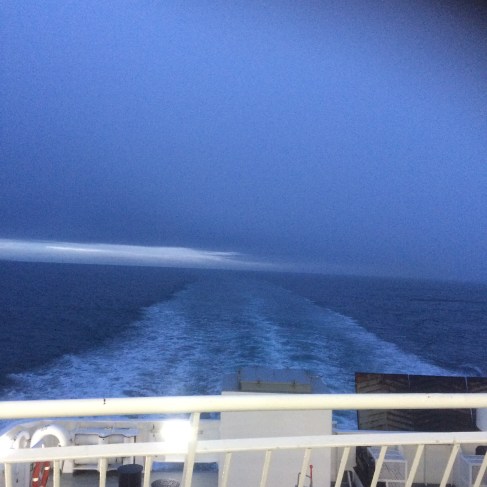
IMG_3348.JPG

On Friday night, Katy and I catch the overnight ferry back to Aberdeen. Sleep on my cinema seat has a special intensity, a falling through dreams so vivid they smudge themselves on every minute caught between reading and waking. Jarman’s gardens enrich my fantasy impressions, and I slip inside the micro print, the inky paragraphs. I dream of oil and violets and sharp desire, a pearlescent ghost ship glimmer on a raging, Romantic sea. Tides unrealised, tides I can’t parse with my eyes alone; felt more as a rhythm within me. Later, on land I will miss that oceanic shudder, the sense of being wavy. I have found myself like this before, chemically enhanced or drunk, starving and stumbling towards bathrooms. We share drinking tales which remind me of drowning, finding in the midst of the city a seaborne viscosity of matter and memory, of being swept elsewhere. Why is it I always reach for marinal metaphor? Flood doors slam hard the worlds behind me. There are points in the night I wake up and check my phone for the time, noticing the lack of GPRS, or otherwise signal. I feel totally unmoored in those moments, deliciously given to the motioning whims of the ferry. Here I am, a passenger without place. We could be anywhere, on anyone’s ocean. I realise my privilege at being able to extract pleasure from this geographic anonymity, with a home to return to, a mainland I know as my own. The ocean is hardly this windswept playground for everyone; many lose their lives to its terminal desert. Sorrow for people lost to water. Denise Riley’s call to ‘look unrelentingly’. I sip from my bottle, water gleaned from a tap in Orkney. I am never sure whether to say on or in. How to differentiate between immersion and inhabitation, what to make of the whirlwinds of temporary dwelling. How to transcend the selfish and surface bonds of a tourist.

The little islands of our minds reach out across waves, draw closer. I dream of messages sent from people I love, borne along subaquatic signals, a Drexciya techno pulsing in my chest, down through my headphones. My CNS becomes a set of currents, blips and tidal replies. A week later, deliriously tired, I nearly faint at a Wooden Shijps gig, watching the psychedelic visuals resolve into luminous, oceanic fractals. It’s like I’m being born again and every sensation hurts, those solos carried off into endless nowhere.
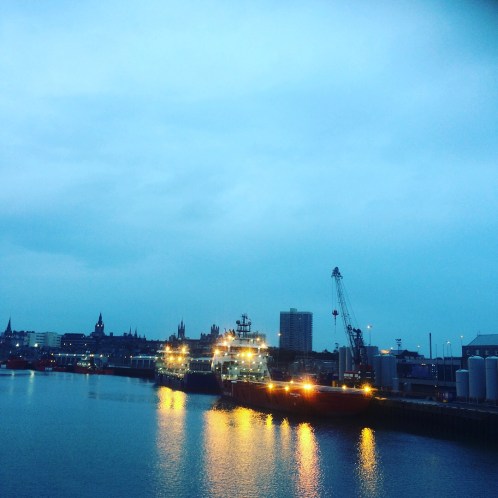
IMG_3389.JPG

Time passes and signal returns. We wake at six and head out on deck to watch the sunrise, laughing at the circling gulls and the funny way they tuck in their legs when they fly. These seabirds have a sort of grace, unlike the squawking, chip-loving gulls of our hometowns, stalking the streets at takeaway hour. The light is peachy, a frail soft acid, impressionist pools reflecting electric lamps. I think of the last lecture of the conference, Rachel Dowse’s meditations on starlings as trash animals, possessing a biological criticality as creatures in transition. I make of the sky a potential plain of ornithomancy, looking for significant murmurations, evidence of darkness to come. But there is nothing but gulls, a whey-coloured streak of connected cumulus. The wake rolls out behind us, a luxurious carpet of rippling blue. We are going south again. The gulls recede. Aberdeen harbour is a cornucopia of infrastructure, coloured crates against the grey, with gothic architecture looming through morning mist behind.

Later I alight at the Waverley Steps again. Roddy in my ear, ‘Let the light be mined away’. My time on the island has been one of excavation and skimming, doing the work of an academic, a tourist, a maker at once. Dredging up materials of my own unconscious, or dragging them back again, making of them something new. Cold, shiny knowledge. The lay of the heath and bend of bay. I did not get into the sea to swim, I didn’t feel the cold North rattle right through my bones. But my nails turned blue in the freezing wind, my cheeks felt the mist of ocean rain. I looked at maps and counted the boats. I thought about what it must be like to cut out a life for yourself on these islands.

Home now, I find myself watching badly-dubbed documentaries about Orkney on YouTube, less for the picturesque imagery than the sensation of someone saying those names: Papay, Scapa, Eday, Hoy. Strong names cut from rock, so comforting to say. I read over the poems of Scotland’s contemporary island poets, Jen Hadfield for Shetland, Niall Campbell for Uist. Look for the textures of the weather in each one, the way they catch a certain kind of light; I read with a sort of aggression for the code, the manifest ‘truth’ of experience— it’s like cracking open a geode. I don’t normally read like this, leaving my modernist cynicism behind. I long for outposts among rough wind and mind, Campbell’s ‘The House by the Sea, Eriskay’: ‘This is where the drowned climb to land’. I read about J. H. Prynne’s huts, learn the word ‘sheiling’. Remember the bothies we explored on long walks as children. There’s a need for enchantment when city life churns a turbulent drone, so I curl into these poems, looking for clues: ‘In a fairy-tale, / a boy squeezed a pebble / until it ran milk’ (Hadfield, ‘The Porcelain Cliff’). Poetry becomes a way of building a shelter. I’m struck with the sense of these poets making: time and matter are kneaded with weight and precision, handled by pauses, the shape-making slump of syntax. Energy and erosion, elemental communion. Motion and rest. My fragile body becomes a fleshwork of blood and bone and artery, hardly an island, inclined to allergy and outline, a certain porosity; an island only in vain tributary. I write it in stanzas, excoriate my thoughts, reach for someone in the night. I think about how we provide islands for others, ports in a storm. Let others into our lives for temporary warmth, then cast ourselves out to sea, sometimes sinking.

Why live on an island? In Orkney we were asked to think with the sea, not against it. To see it not as a barrier but an agential force, teeming with potential energy. Our worries about lifestyle and problematic infrastructure, transport and connection were playfully derided by a local scholar as ‘tarmac thinking’. Back in a city, I’ve carried this with me. The first time I read The Outrun was in the depths of winter, 2016, hiding in some empty, elevated garrett of the university library. I’d made my own form of remoteness; that winter, more than a stairwell blocked me off from the rest of existence. Now, I read in quick passages, lively bursts; I cycle along the Clyde at night and wonder the ways in which this connects us, its cola-dark waters swirling northwards, dragged by eventual tides. I circle back to a concept introduced by anthropologists at Rice University, Cymene Howe and Dominic Boyer, ‘sister cities of the Anthropocene’: the idea that our cities are linked, globally, by direct or vicarious physical flows of waste, energy and ecological disaster. This hydrological globalisation envisions the cities of the world as a sort of archipelago, no metropolis safe from the feedback loops of environmental causality, our agency as both individuals and collectives. On Orkney, we were taught to think community as process, rather than something given. I guess sometimes you have to descend from your intellectual tower to find it: see yourself in symbiosis; your body, as a tumbled, possible object: ‘All arriving seas drift me, at each heartbreak, home’ (Graham, ‘Three Poems of Drowning’).
 

New Poetry Publication: MOTE

Announcing a new ad-hoc, hyper lofi poetry publication << MOTE >> edited by myself, Dominic Hale and Ryan Edwards. The publication, editing & call for submissions was done over a single weekend, amidst the usual churn of shifts & drinking, and capitalises on the residues of institutional free print credits. It features poetry, prose and occasional images from lots of writers we love. I’m responsible for the monstrous artwork.

I have a limited number of copies available to give away for free (pickup in person), or we can probably send you the pdf. :))

Photographs by Denise Bonetti.

Screen Shot 2018-08-02 at 14.49.03Screen Shot 2018-08-02 at 14.49.21Screen Shot 2018-08-02 at 14.49.32Screen Shot 2018-08-02 at 14.49.40Screen Shot 2018-08-02 at 14.49.58Screen Shot 2018-08-02 at 14.50.14Screen Shot 2018-08-02 at 14.50.21


Playlist: July 2018

IMG_2559.JPG

This month first bloomed in the green-gold fairgrounds of sleepless nights, twinned in a week of pre-delirium. We stood in a packed sports bar and watched three screens simultaneously, everyone’s face a spectacle of something other that was going on beyond offsides and angles and penalties. Indulgent love of epi-bro culture. Finding that tiny jubilance inside you. Running round with the lights off, spouting catch phrases that kill and kill. I say the same name again and again, without meaning to. Am I winning.

Closing time and proximate whisky. What swills and feels wavy, later, at the top of the street. I hold ice in my gums for the numbing. 

Imagine a toothache so rich in pain it was like cradling some other entity within yourself.

So the paths seemed windier than usual and trailing my way into whatever would happen and the ascent and the lights that seemed stranger. Cradle your toothache into some kind of coda, a pause that leads to return. The portholes of naproxen, dihydrocodeine, paracetamol, ibuprofen. Appetite collapses and the mouth is a metallic pool of pain. Send one thing away to endure. Circle around, forget about yourself. Forget your body. Learn to make of my carpet a turquoise pool, our belligerent drift which quickens to pulse. I lay very still and bit my lip. Learn not to cry when people are kind, learn to accept gesture in itself. Walk in the back roads of Finnieston on some green afternoon, everything lush and wilted with rain.

So it warms again.

Salt rinses make me sad for the sea.

These train rides between cities and the way the light looks at eight of an evening in late July. The soft yellow gold of fields to be harvested, trails of meadow lines read as braille. We talk intermittently. I close my eyes to a faint remainder of presence. It is difficult to remember what’s happened, bundling into a part song of falling. Walk back along the Clyde, swallow a letdown that ricochets through all buried traits, read as you walk. Walk as you read. Chance encounters that mean things.

To be sent home early, to feel over-brimming with all this salty, incorrigible water. Cancer season comes to an end.

I say whatever weird thing pops into my head. This is the way we are now. It is light at six in the morning, we sit at the table among fag paraphernalia and sketch each other’s souls. So ever to read glitches between us in negative space. I walk home alone and the daylight tastes so beautiful and I am so dizzy from twice cheating the diurnal within the same week. When we message, we use only the choicest emojis. Wouldn’t you like a vial of mercury?

I told him I was seeing. I was seeing.

My head in my throat, forehead to forehead. Is it the sweat, the seemingly interminable beats? The club is like the cabin of a ship, sloshing with heat and bodies. I spill out in cold night. I write this looking at the rain outside, which is utterly vertical and soft, drooping the branches of trees I can’t name. The sky is a greyish egg white, clearer towards centre. It matches my mood quite perfectly. I fear it will melt.

The colours in the takeaway were ravishing, erratic. I could not take my eyes off the shreds of meat. The singular tomato.

The rain was welcome. It gushed bright cold to my skin as I peddled, the canal adjacent to my trail. Catching my breath on the hot chest feeling, which later would become a pang, a harp string pulled too taut. A minor chord that needed to settle. It takes awhile to settle into your own body, to learn its game. The rain was good, the rain was silver and dazzled the leaves. I cycled to Lock 31 and back again twice in a week. I wanted to compare each experience. The fact was a shift in my flesh, a chorus of moving blood and water.

My sweaty hair smelled of the sea. I like that the seagulls leave when it rains.

Maggie Nelson writes: ‘How many ways are there / to get saturated in another’s mind?’ & I wonder. She is writing about a canal too, but really she is writing about desire. Canals don’t flow though; canals are relatively static. Something of undercurrent draws them along?

The pale sweet scent of coconut oil and misplaced nostalgia.

The Forth & Clyde Canal is so unlike the Clyde, this great wide luminously masculine river. When the song came on and I thought of the boy who drowned. I like to look at the lights on the Clyde at night, feel quite dark in myself and proximate to history. Feel everything dimming. Feel muscular for merely being there.

But then once I saw the Clyde in the afternoon, it was buttermilk.

Maryhill becomes a sort of fairyland, the unseen space around the canal, the outcrops of houses blending into Anniesland. I stick to the line, the gravel, the pace. Trust in my breath. Clusters of teenage girls pass by on their mobiles.

Sometimes I hallucinate the phone ring of my childhood home.

Keep sleeping in and savouring escape. The trick is to get to bed before five. To keep yourself stable.

The weeks slip away like vulnerable sand flats.

I drink things that are orange and icy and strong. I try to recall that hullabaloo of pain. A wedge of it bright and red.

Drawing is a warm sweet vortex where I drag myself deep into greens and blues.

Layering long stints of techno over the same routes. It gets heavier. I walk into the headlights of cars without meaning to. They keep playing Darude’s ‘Sandstorm’ in Byres Road Tesco, the inchoate vertigo of a broken decade. Later I dream the stores were empty as they were in the snow days. Water everywhere, sloshing the hours and ankles, not a drop to drink. Remember when everything caught glitches, sounded through the tinniness of a Motorola phone, those metallic wee speakers, resounded twice over on the plexiglass of a bus stop?

Everyone’s cold suburbia closes. You just shut the skylight, ignore the rain.

When you are away I sort of half live in the other place, but then already between myself.

Is it the circles below my eyes, below ugly tungsten light? The intimate work of a visceral distraction? Too many bowls of soft cereal?

Craving the expanse of the sea, releasing my cuts, wanna lose all time + memory.

Salt rinse, salt rinse; salt and cloves.

Find a note on someone’s jotter at work: get cunt fae spar. It will take a while to parse this. Fae spar get cunt, cunt spar get fae. Ye olde spar will get yae. Forget the star. 

There is a fight and a fire and over and over I write things like, gratitude, gratitude. Plug sockets sparking. 

Resist the tinny in the fridge. Do magick. I think maybe I am tired and scared of the present. The piano sounded lovely. With my window open, I could hear someone warming the keys. Notes for a genuine summer, notes for a situation. Then breathe. Bryan Ferry is sound-checking from the bandstand, you can hear the distant, phasing groan. It is almost August. 


*


Death Grips – Black Paint

03 Greedo – Jealous

Cold Cave – You & Me & Infinity

Fred Thomas – Good Times Are Gone Again

The Twilight Sad – I/m Not Here [Missing Face]

Hand Habits – Book on How to Change

Pavement – Harness Your Hopes

Mush – Luxury Animals

Black Marble – A Great Design

Sun June – Discotecque

Emily Isherwood – Calibrate

Hana Vu – Crying on the Subway

Laurel Halo – Sunlight on the Faded

RF Shannon – Jaguar Palace

Amen Dunes – Lonely Richard

Lucretia Dalt – Edge

Ride – Chrome Waves

Oneohtrix Point Never – Monody

Gang Gang Dance – Lotus

Beach House – Black Car

Womensaid – Magick!

Wooden Shjips – Eclipse

Phoebe Bridges – The Gold (Manchester Orchestra cover)

Galaxie 500 – Tugboat

Judee Sill – Lopin’ Along Thru The Cosmos

Aphex Twin – aisatsana [102]

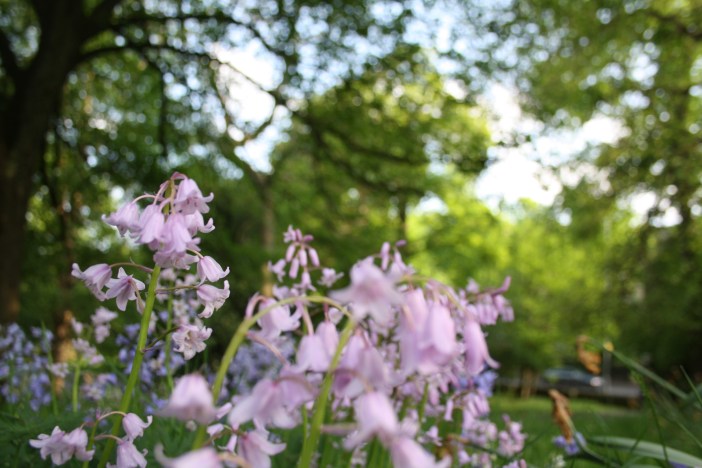
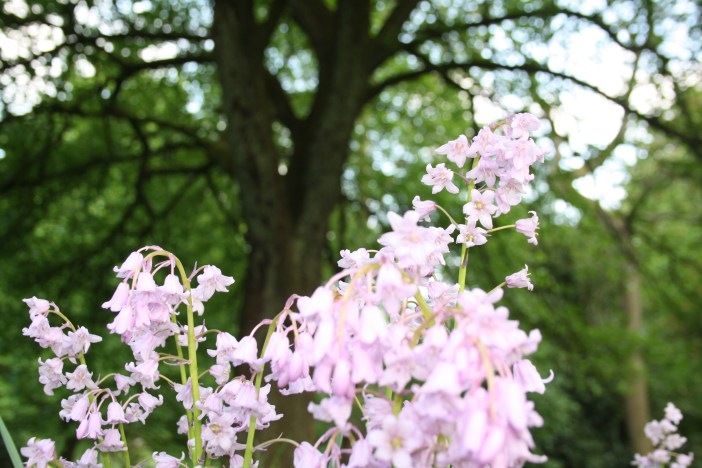
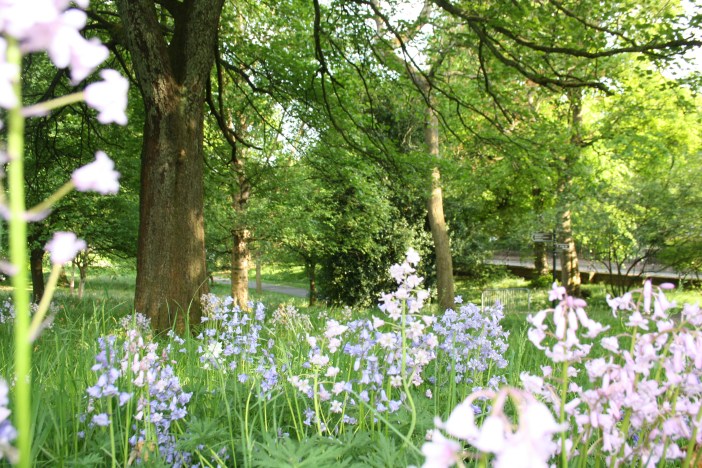
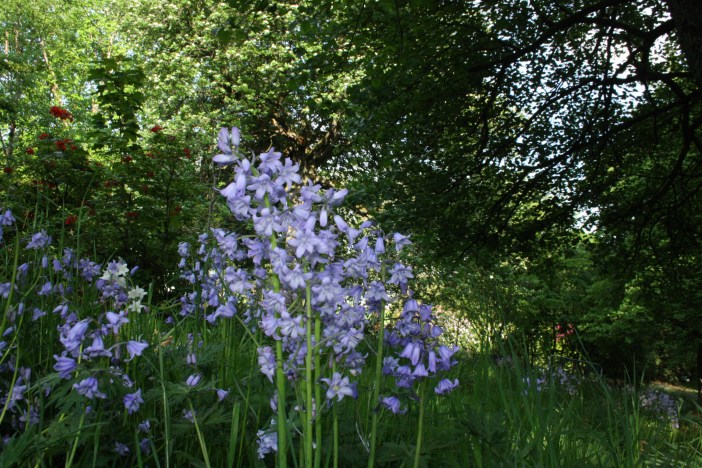
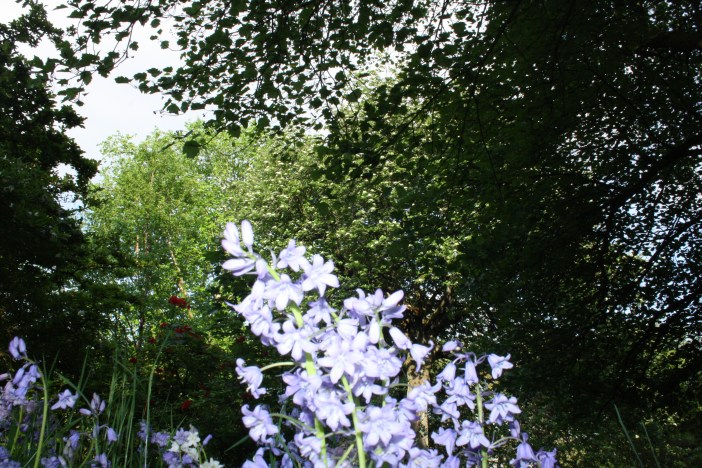
Bluebell Haiku

IMG_4239

I label you un-
marked hyacinth, cleaner to
eat bluer tendrils.

A many-shadowed
platitude would bloom, what blood
then lulls the body.

Remedial ring
within a summoning to
sleep and sweetly die.

IMG_4237

The gloomy bluebell
sleeps in the woods, so bluely
as to bewitch me.

All symbolic thought
of alkaloid flower, this
styptic aroma.

IMG_4230

Beyond ornament
the imitated image
leaks its bulb of blue.

May’s sweet clustering
never wanted so many
luminous anew.

IMG_4231

Criminal to pick
our thin green stems, to uproot
what kisses the wind.

Emily Brontë
dedicated her sorrow
to our purple breath.

IMG_4240

Many lettering
delicate Atlas Mountains
stung with amethyst.

The unwritten trees
harbour our suckled bodies
in honey-gold pools.

IMG_4245

Striations of blue
to red make feathery air
so cool, alchemic.

Our blooms affected
the nectarous scent; some shade
stipples the valley.

IMG_4238

Take care: eliminate
sensitive weeds, following
spring we wilt and weep.

You will get leaves, then
five years before our flowers
startle the garden.

IMG_4242

Mostly used in spells
of love and death, many haunt
the colourless graves.

Amid leaf litter
this saturnal air, ever
against bright details.

IMG_4241

The ersatz scented
candle belonged to mother’s
old mantle, a cry.

Here in the richness
most fair-haired blue to boast the
days of mucilage

IMG_4224

A dose of three grains
settles the diuretic soul’s
accorded longing.

Such abundant blue
with gummy heart, a mystic
of similar hue

IMG_4234

Linnaeus’s great
west wind, plucked grief from the copse
of ancient longing.

Unfortunate name
of the poisoned glade, circle
a chant to miss you.

Our Spanish sisters
have no scent, we dwell here so
gently forever.

All photographs were taken in Glasgow’s Botanic Gardens, a slightly overcast day, the 22nd May 2018. 

Dorothy

IMG_3627

 
Dorothy

I worked in the morning
A very fine morning
A fine cool pleasant breezy day
A fine day
We walked in the evening
In the morning we walked
Very cold
Putting linen by and mending
Came home
Very hot
Dried the linen in the morning
My head bad and I lay long
Rain in the night
In the morning I copied
All the morning I was busy copying
Gathered peas
Still very hot
Received a letter
Very warm
Still hotter
A very rainy day
A fine morning but cloudy
Dullish, damp and cloudy
A very cold morning
I was not well in the morning
A fine sharp morning
In the morning walked up to the rocks
In the morning worked in the garden
I walked to Ambleside with letters
A very fine warm day
Ironing till tea time
A very fine day with showers
Went often to spread the linen
Incessant rain from morning till night
Warm and mild
Baking bread apple pies
A coldish dull morning
Hung out the linen
Walked
Walked I know not where
Coleridge dined with us
A fine sunny and frosty morning
We sate in the house in the morning reading
Still a cloudy dull day, very dark
I have neglected
Poole dined with us
Rain all day
Rain all day
We rose early
Went a part of the way home
I have forgotten
A pleasant morning
Turned towards
A foggy morning, but a clear sunny day
A clear sunny morning
I lay down in the morning
A mild morning
Walked through the wood
Walked to the sea-side
A tolerably fine morning
A showery day
A mild morning
A sweet delightful morning
A very rainy morning
A dullish rainyish morning
A thorough wet day
Coleridge came
A sweet mild morning
A cold dry windy morning
Ironing
Walked to Rydale
William better
A fine October morning
All the morning mending white gown
We rose by candlelight
We put the new window in
Omitted
Made bread
We walked round the lake in the morning
A very fine beautiful sunshiny morning
A very fine day
Set forward

The green paths down the hillsides are channels for streams.


(Each line of this poem is sampled from the opening lines of Dorothy Wordsworth’s diary entries.)

Source text:

Wordsworth, Dorothy, 1971. Journals of Dorothy Wordsworth. 2nd ed., edited by Mary Moorman (Oxford: Oxford University Press).

To the Sea

424755_10201122283849634_1826470522_n

Watching the sea is like watching something in pieces continually striving to be whole
Imagine trying to pick up a piece of the sea and show it to a person

—Emily Berry

Richard Dawson’s ‘To the Sea’ opens with anxious strings, unearthly vocal drones and harmonised chants that carry across a darkening, eldritch bay. There’s a shiver in my heart and a sense of the waves chopping apart what constitutes the sea, the sea, the sea. How much sea do you need for it to be sea? Is every wave an incantation—and if so, whose? What if you took whole eons and chunks of the sea away, would you be left with puddles or rivers? That word that shudders: estuary. When does the sea become ocean? I feel it is to do with a feeling. To feel oceanic is different to feeling the sea. There’s an intimacy with the latter, its intimation of bitter-green waters, childhood memories, tidal flats on which you take off your shoes and wade towards the water. The sea is a mirror for our feelings, but they don’t stay still—you can’t just project them. They change like light; the water answers. The water has its own shanties, stirred up by night tides that lick at the edge of the land less like lovers than knives. A silver kiss of sharpness and silence, a tiredness. 

How many times have we apostrophised the sea? Built into it myth, folded our cavernous longing through song and let ourselves out into the blue. The sea is a monster, a tyrant, a Leviathan; the sea is feminine, rippling, birthing and giving. We can never decide. The sea is the unseen foetus of sound in a shell, little figure as portal, an unwhorling. Imagine how its voice would look on a sonogram, the whispers. The sea is a place to blow away cobwebs, to unravel your hair and blink into wilderness. In ‘On the Sea’, Keats urges ‘Oh ye! who have your eyeballs vexed and tired, / Feast them upon the wideness of the sea’. The sea is expanse, expansive, expanding. We can stand at the edge and be caressed by its urges; the catharsis in that. The elastic edges, islands and coastlands and cliffs that shift and zoom and shrink with parallax. We whisper and the wind carries forth our voices. It’s good to howl at the sea, alone on a beach.

Then there’s Charlotte Smith’s catchily titled, ‘Sonnet: On Being Cautioned Against Walking on an Headland Overlooking the Sea, Because It Was Frequented by a Lunatic’. The sublime in this poem is born less from the sea itself, the Sussex Cliffs Smith walked all her life, than the ‘giant horrors’ of the man’s madness. A madness glimpsed readily enough by the speaker, at a distance: ‘He seems (uncursed with reason) not to know / The depth or duration of his woe’. His mind is the unseen deep of the sea. If reason is a curse, this state of nature in which the man has found himself can’t be so bad. He can only plunge through his days in a kind of ‘moody sadness’ of unknowing, an eddying through time: his ‘hoarse, half-uttered lamentation, lies / Murmuring responses to the dashing surf’. This primal communion between man and sea is met with the sensation of legend, adorned with a sonnet’s rhythm and rhyme. 

But the sea, equally, is a haunted place for all of us. I remember being obsessed with this Los Campesinos! song at a time in my life when I was stuck in the city with unhealthy constancy, wanting to wail for the blue back home. There’s a burn in your chest, then indifference again. ‘The Sea is a Good Place to Think About the Future’ is a song about a broken girl, intimate with and yet distant to the singer, starving herself in response to grief. What could be a self-lacerating song, a depressing lament, is lifted by the strings, the joined-up shouts, the catharsis of those candid lyrics and the way they break into chorus, so loud:

And all you can hear is the sound of your own heart
And all you can feel is your lungs flood and the blood course
But oh I can see five hundred years dead set ahead of me
Five hundred behind, a thousand years in perfect symmetry

The song swirls with the clutter of contemporary culture, our fraught politics and virtual addictions; but it draws towards the deep time of the sea, the abyssal possibilities fringing Britain with mist and grey. What could be a desolate song of dwindling spirit, bursts into that thumping, rousing chorus and the release in that, the release so strong. Waves crashing ahead of you, the splash-backs spitting your face with salt tears so that just to stand there is to have a conversation with the sea, with what hurts in the Earth and might hurt forever in you, but that’s okay. An inhuman empathy; the human washed out of language.

Why is it we need the sea to look ‘just like the edge of the world’? Why is we need the horizon of apocalypse ahead of us? Does love always require the threat of the ending; does death have us thinking of forever beginnings? There is the question of translation. Are we all, like Charlotte Smith’s ‘lunatic’ (she must be forgiven for her eighteenth-century lack of political correctness) just muttering in our pain to the sea? Who will hear us? In Emily Berry’s poem, ‘Picnic’, communing with the sea is like the kinds of communication you do in therapy. Trying to pick out the pieces that make up the story of the sea, the pieces that make up the story of grief, then ‘polish’ those uncertain feelings before ‘a man in a room’, whose ahhs and mhms are perhaps no coherent than the whispers of the sea. Sometimes we just need someone—something—to listen. Sometimes we just need to listen. 

Susurrations of the tongue and throat, the vowel sound sweetening eeeee. Sea, sea, sea.

Screen Shot 2018-05-20 at 18.14.22.png

At the brink of most existential crises in my life, I revisit the sea. Summer 2016, I got a train to Cardross then walked a couple miles along a busy road, wildflowers growing in the verges past a cemetery, to Ardmore Point. The smell of the brine was like a drug: this vague area where the River Clyde becomes Firth and innumerable fragments of quartz are washed up on shore, residue of the sea’s mysterious industry. I looked across the water and I suppose I saw Greenock. There is so much of the jagged geography of westerly Scotland unfamiliar to me. The northness of names I have loved since childhood, the west coast forever of fishing villages, port towns, places of old time and tiny ruin: Luss, Arisaig, Applecross, Ullapool, Stornoway, Uist, Portree. A new indulgence in studying maps, mostly for a vague sense of where blue meets green. I have started to worry about sea levels. I keep a vague memory of my mother’s old home in Twickenham, where there are plaques to mark places where the river burst and flooded as high as the houses. The fields near my father’s house in Ayrshire become so easily sodden with water, a sunken valley where sheep sometimes drown. A favourite childhood memory is the single night we camped in Arisaig, and I’m sitting on a rock snapping fizzy laces between my teeth and watching a lurid strawberry sunset. Still I am filled with such sugary imaginings. The sand was so smooth, in the last light it seemed almost a mirror. It didn’t matter that we woke to torrential rain, with that sunset still within me. 

I open my sky-blue edition of W.S. Graham’s (Greenock-born) New Collected Poems and find ‘Falling into the Sea’: ‘Breathing water is easy / If you put your mind to it’. I think it is maybe a poem about dying, about the changes in the body, scary at first, a metamorphosis you adjust to: ‘Breathe / Deeply and you will go down / Blowing your silver worlds’. It is a plunge through new emotions, learning how to float in the bubbling eternity you have blown for yourself. Is this a dream? Is this a survival guide for the drowned? When you arrive on the ‘sea / Floor’, Graham suggests, you will encounter a ‘lady’ from ‘the Great Kelp Wood’ who offers you good British hospitality then ‘asks you / If you come here often’. How many times do we pretend we are mermaids as children, harbouring some hope of adoption by the elements. I spread my dreams on the sea like butter on a scone, the way they glimmer in the light then go. Are we recalling some anthropogenic trauma, deep embedded blue and sea green in our genes? In every deja vu there is a song, a half-remembered line with a context long forgotten: ‘Go down to the sea / And tell me what it is that you wanna be’ (Swim Deep). The sea is possibility, maybe; summertimes and sweet jangly, insouciant indie. Singing the greys, the blues, the self in crisis. The backdrop to so many of our deepest conversations, the murmurings melodic. The backdrop to perfect silence. When things went wrong in our house, we’d drive out and take long walks along Maybole Shore. We often didn’t talk; it was the wind in our ears and the kicking up sand and the smell of the salt that cleared the air, that did the work of unspoken feelings. There was the night two friends and I took vodka down Prestwick Beach and talked our lives out and embraced in the drunken rain, the spray of the water. It was so cold it burned the blood from our fingers, but we didn’t care. We were so fucking pure. 

Ten minutes listening to Drexciya in your living room and already I feel subaquatic again, 8am on a Sunday. Remember, we came from the sea. Our bodies are so much water and salt; we can hardly process any more of it. Crisping the lisp between here and there and what might drown. I was still a teenager when I sat by the harbour and twisted pink thrift into the plaits of my hair. I’d weave this space into a novel someday, the pain of the land sloshed up in geologic process; again the erosion, the sense of two worlds coming apart as a gaggle of teenagers stand lost in the waves, on the rocks and in water. It would all come to an end this way. I guess the bad techno thudded through every staccato chapter, the fault-lines of pointless dialogue. On a whim, I titled the whole thing West Coast Forever. Its universe was jagged, familiar and strange at once, self-destructive to the point of indulgence. I wrote it because I missed the sea, its harshness. I gave my twin protagonists eyes of green; two halves of what could be. I wanted to think about all the ways we are wild once, to try not to forget it. The sea is a lore we pass onto our children. The rocks we are not supposed to swim beyond, the orange buoys that mark the danger. The lives lost and loves found, the glitchy repetitions; the sand that thickens our mouths like overripe fruit, our words purpling and furring. 

Then there are gentler lagoons, bays which float out and away into grander blues. Clear and liquid lyrics, drizzling like moonlight or syrup over some wide and distant surface, the panoramic sea. The finger-plucked acoustic soothes and tells us what to do in its melancholic verse. Cat Power’s ‘Sea of Love’, Julie Byrne’s ‘Sea As It Glides’. I am obsessed with how these songs might sound, crackling and passed down to us over a ship radio, the edges worn away. The uncertain rasp of tuning in. I think of ‘Above the road (Skies of Blue)’ by Fionn Regan, or Johnny Flynn’s ‘Heart Sunk Hank’: antique and between times; recordings on a Voice-o-Graph; all white noise and sparseness, the yearning words. When I was twelve, I spent four days on a little fishing boat, bobbing up and down the Sound of Mull, between Oban and Tobermory. I lived off a Pepsi cup full of pick’n’mix sweets for the most of it, my sugar levels spiking like the rise and fall of the tide around us. Back then, I rarely noticed the wax or wane of silver and night, flesh and bone, blood and milk; I was only just learning to treat my body in cycles. There were very little times in the journey when we couldn’t see land, but Oh the loneliness when it went away.

When the mist came and there was only the greys. I used to play this game as a child, embracing my Pisces moon, thrashing through the waves and swimming out so far that someone on the sand would be shouting me back, roaring my name. I rarely cried; I dealt with my emotions that way. I liked that fort-da play of presence and absence, testing boundaries; the idea that I might disappear and become something other. The running against what resisted. I liked the way the waves licked my arms and thighs and stung me, the sand in my pores still flaking away later when I stood in the shower. The body catches a taste for the other world. It unravels. 

All weekend I’ve been listening to Frightened Rabbit, ‘Swim Until You Can’t See Land’, trying to heal the torn-apart strings of my heart. Ways we deal with loss, chasing the source. Some kinds of plunge are stilling, others sweep you up again and you’re back to before and the shock of it. You think you are okay but then again the sting behind your eyes, like somehow you let the sea in. This song will always feel new to me, a tune coming fresh out of hurt and to burst into something else altogether. There’s the rolling bass and energetic strums and the way the mood changes easy as weather between brilliant and bleak. I watch a YouTube video of Scott Hutchison singing an acoustic version in some courtyard; you can tell it’s spring from the two fire tulips that grow beside his bench. It’s spring like it is now, spring before the sunshine and colour felt wrong. There’s a helicopter flying overhead, so you know the world goes on and there are other bodies drifting into distance. And I miss him. I miss him. 

And the water is taller than me
And the land is a marker line
All I have is a body adrift in water, salt and sky 

Collapse again and again on the anaphora, the swirling, thirsty water. Who gets to wash up, who is vomiting their life and drying out on the sand and who presses a cool palm to their raging forehead? Why do we have these fantasies of saving someone from the sea? Is it a primitive fear: that we will lose everything we know that way; our life’s loves and possessions dragged away, river to firth to sound to sea. I flick through my Instagram stories this very morning, and my brother is filming the sea with his phone: an hour ago, ten seconds of grey-licking waves. He’s somewhere far away, I don’t remember—Bali, maybe. The sea is a trip-hop ballad, a rippling distance in which the ambient sounds don’t save me from thinking. The sea a great wash of the late 1990s, a millennial curve at the turn of distance. I think I think too much. Didn’t they worry, before 2000 came, that every system would collapse on zero? Didn’t Emily Berry describe the sea’s wee ripples as glitches? I long for the tidal flats and the drag of scavenging gulls in the skies above, howling some song that would save me. What are they hungry for, the circling birds? Arthur Russell is telling me to jump off the platform again; in the glimmer of that cello I can hear the echoes of a seascape blurred, pixelated to grey but alluring still. I plug myself in, deep in the chasms of sonic escape; here it is all wave and wave of shoegaze. The sea glows red before I sleep. 

IMG_4241

We need to break the waves, we need to break our minds. There’s a cleaving in there, hard as a diamond but liquid if you breathe deep enough the cold salt grey. It’s the saddest summer of my life and where was that aeroplane when I needed it, soft and sweet. Then neutral, oh so neutral; in all oceanic tang the lingering metallic taste. Do you miss me. I miss this. How blue the sea was from the air, so clear! One of maybe five songs I can play on guitar, the simple chord progression kills me still. How close his vocals are to the mic, that loudness an unabashed roar, a unified sound. My guitar strings are so old they sag like kelp strung across rocks deep below and in that looseness there’s a release, a new feeling. A lyric embrace which is the voice rising from platitude in earnest acrobatics and disappearing in a brass solo. The sway of the rhythm, I’m realising now, is a bit like the buoyed-up feeling of being on a boat, or watching the waves side-to-side from the land and finding your body a little seduced by the back and forth. Who is there on the shoreline, who waits? Before it gets dark, when we are still the sweet notes and the swaying trees. Little cross rhythms, a minor key and so far apart in our shadows and secrets. Ocean rain. I won’t say the name, I won’t say anything. 

The sea is a darkness we hold under our tongues. Sometimes when I think of it too much, I see myself as a siren. But Oh the cost of screaming in the night. Elizabeth Fraser in ‘Song to the Siren’, haunting and flawless: ‘Here I am / Here I am’. The way her voice curls and shimmers, like a whirlpool coming into itself upon shipless waters, swallowing those foolish enough to break their bodies on the sea—‘Oh my heart / Shies from the sorrow’. In what lick of tide may we assert ourselves. I flip up the lid of my laptop, see the screen, and all is a glorious ersatz blue. A whole thalassic core of thought. 

Berry again: ‘If a person standing still watched another person minutely moving would it / seem after a while as if they were watching the sea?’ How do we hold who we love in our vision, crawling at the brink of distance, disappearance? Why do they always become the sea? Why is there ever this scattering, and can that alone be the work of elegy—the between the between, the breezy, the needing?

Let go, for eternity
is too much with us
& not
with us yet. 

—Francesca Lisette


IMG_2973