‘Do something pretty while you can’: The Magic of Belle & Sebastian

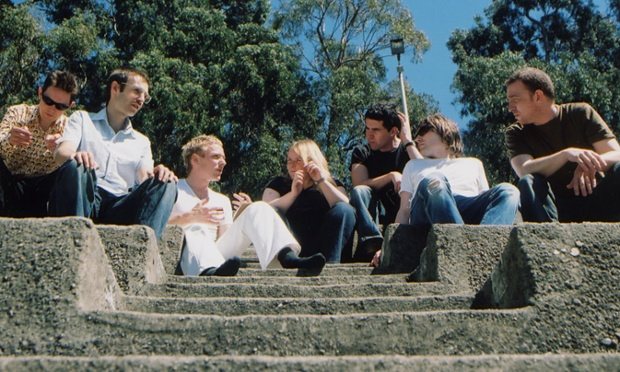
aa037da0-a17c-47f3-9e82-4639aeba279e-620x372
image source: The Guardian

Belle & Sebastian are one of those bands that give you a warm, fuzzy and nostalgic feeling. As much as they’re often lazily attributed to the cultural realm of the ‘indie kid’ or the ‘Glasgow hipster’, this neglects the fact of their wider popularity. They are, after all, a band who’ve been around for over 20 years now. I’ve played their tunes in the restaurant where I work and witnessed middle-aged folks who look like they’re off to a Springsteen concert humming along to ‘The Boy With the Arab Strap’. Their songs have popped up on plenty of popular tv shows and films (‘I Don’t Love Anyone’ on Girls, ‘I’m a Cuckoo’ on The Inbetweeners, ‘Piazza, New York Catcher’ in Juno – to name just a handful). Like a sweet, familiar honey, their music just sticks to you, whether you wanna spread it on your toast or not. Sure, they get a lot of hate: their songs are cloying, the singing a bit too saccharine at times, the lyrics silly, the sound the same on each album. I’ve heard them being called ‘beige’ music.

For me, Belle & Sebastian make pastel coloured music. I don’t know, maybe it’s a touch of the old synaesthesia but I’ve always imagined their songs awash in delicate shades of blue and pink, green and yellow and orange – a bit like the colours of sorbet. They’re just the perfect summer band. Some bands it’s easy to have a colour for, or even a texture: Mogwai are deep deep green and black, LCD Soundsystem are bright, shiny white, Mac DeMarco all denim blue and dirty mustard yellow, Kate Bush is a luscious kind of cherry red, Bjork is all the hues of a pearl, Tame Impala are psychedelic greens and blues and oranges, Aphex Twin is ink black, but sometimes yellow, blue or bubblegum pink. In the same vein, Belle & Sebastian to me are all about pastels, sometimes a wee bit brighter but never beige, except when it’s that classy kind of chino beige that you might see paired with a yellow blouse and pink ribbon. I want to be dressed up with a funny hat, a mini skirt and retro sunglasses when I listen to them. Something lilac, a stick of ice lolly. Hell, maybe even rollerblades. I find myself immersed in the stories of the songs; I sort of want to be a character in one of them – a lost twenty-something with her school days long behind her, figuring out how to deal with the world and enjoying living in the city.

DearCatastropheWaistress

Listening to them involves a kind of camaraderie: you’re sharing the world with them, with all the voices of each song’s narrator; sharing Stuart Murdoch’s hazy, romanticised version of Glasgow, the lives of the quirky characters he writes into his lyrics. The musical arrangements in their songs vary between stripped back and fragile, sometimes very much Smiths-influenced (inherently, B&S are an ‘urban’ band, right?), with pretty melodies adorned with piano, acoustic guitar, maybe a bit of bass (‘We Rule the School’, ‘It Could Have Been a Brilliant Career’, ‘Dress Up in You’ – these are some of my favourites), to zany and fun and maybe even lovably chaotic, with some of the earlier songs sporting surf rock guitars (‘La Pastie De La Bourgeoisie’) or (in the early days, Cubase-arranged) electronic numbers (‘Electronic Renaissance’, or, later on, the near seven minute ‘Enter Sylvia Plath’ which frames its tribute to the late great poet inside a Europop epic), as well as the Beatles-influenced ‘chamber pop’ (of which they share the influence mantle with Camera Obscura) – see, for example, The Life Pursuit. Their songs are often self-conscious, writing about the importance of losing yourself in books and songs (the final song of Tigermilk, ‘Mary Jo’, references the fictional book that titles the album’s first song: ‘You’re reading a book, “The State I Am In”’), referencing themselves, other ‘indie’ bands (Arab Strap being the most obvious), creating this whole dreamworld of literary and musical references which itself becomes the fantasy world of the songs. When you listen to them, it’s impossible not to lose yourself slightly to this pastel-saturated universe. It’s not just twee; it’s bittersweet happiness, nostalgia, personal and cultural reflection – they began making music in the 90s, after all. That’s why I smile when I see someone sporting a wee Belle & Sebastian tote bag or t-shirt: you know there’s someone else out there who shares that sweet and silly, slightly sad but hopeful little world.

In a way, they’re a band for the underdogs. They cut their teeth on the Glasgow open mic circuit, with its crowds veering between adoration or ruthless indifference. Every Saturday, under the guise of various band or solo arrangements, Stuart and his pals would appear in the Halt bar on Woodlands Road (sadly it no longer exists) – you can read all about it in bass/guitar player Stuart David’s memoir, In the All-Night Café, which geekily delves into early musical experiments, the songwriting process and all the crazy moments that brought the band together in their formative year. So yeah, it’s worth a read if you’re a B&S fan or even just a musician. It’s important to remember that the band produced and recorded all their early songs (came together, essentially) at Stow College’s now slightly legendary Beatbox course, which at the time was more or less a course that unemployed musicians in the area took to ensure they kept receiving the dole: ‘From what I could tell,’ Stuart writes of his first impression of the course, ‘[Beatbox] was a total shambles. Just scores of unemployed musicians sitting around in a dark, airless labyrinth, doing nothing. […] I wandered around on my own trying to work out what was what, while people scowled at me, or just stared blankly into space. A thick cloud of cigarette smoke pervaded the place, and something about the absence of daylight and the lack of fresh air made me wonder if the place was actually a detention centre set up by the government to incarcerate all the people they’d caught using Social Security benefit as an arts bursary’ (In the All-Night Cafe, pp. 10-11). This is probably an impression of college hallways and classrooms that most young adults of Generation X or millennials growing up in Britain can relate to: the flickering strip lighting, the apathy amongst both staff and pupils, the sense of suffocating bureaucracy, of life in suspension. And yet out of that dark and maybe even Kafkaesque environment, sometimes the magic happens. People come together and make the best of things – it’s inspiring.

For me, it’s also inspiring that Stuart Murdoch is actually from Ayr. The only other celebrated artist I can think of off the top of my head that hails from Ayr is none other than Robert Burns, so yeah, it’s been awhile since the place has been put on the map, artistically speaking. Belle & Sebastian are usually associated with Glasgow (especially the West End), but for me it’s important to remember their humble beginnings. Ayr still has a pretty cool music scene in terms of acoustic nights in local pubs, but there’s definitely a dearth of actual decent gig venues, especially when it’s producing so many talented musicians through, for example, the well-respected Commercial Music course at the UWS Ayr Campus (see for example Bella and the Bear and the wonderful Shanine Gallagher).

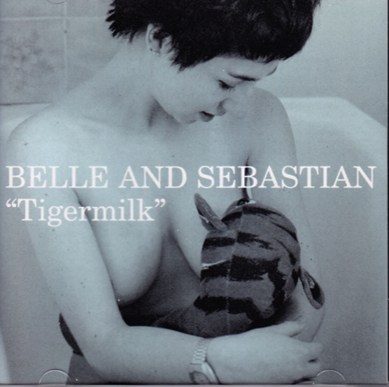
Belle-And-Sebastian-Tigermilk

ANYWAY,  back to Belle & Sebastian. I wanted to talk about Tigermilk as an example of their oeuvre in general – as the raw, often forgotten diamond. It’s their debut album, though I actually came to B&S first through If You’re Feeling Sinister, having picked it up from Fopp when I moved to the West End for university and decided a B&S CD was a good way of immersing myself in local culture. Tigermilk reminds me of that lost and lonely summer feeling, walking around the city killing time before going to work, worrying about all the books I had to read before September, the people and things and memories I was in love with, that paranoid and desperate desire to write myself and indeed keep writing. It’s a lo-fi sort of album; it feels sweet and magical in that simple way, and you can tell that it marks the moment when the band discovered they had something special going on.

Sometimes the lyrics are a wee bit strange and surreal; the cast of characters Murdoch evokes in his lyrics can be pretty bewildering. The band’s slightly surreal vibe is indicated by the cover art for Tigermilk: a black-and-white picture of Murdoch’s then girlfriend, Joanne Kenney, apparently breastfeeding a toy tiger. Then take a look at the lyrics to ‘My Wandering Days are Over’ for example: ‘Six months on, the winter’s gone / The disenchanted pony / Left the town with the circus boy / The circus boy got lonely / It’s summer, and it’s sister song’s / Been written for the lonely / The circus boy is feeling melancholy’. You’re never sure if the characters are metaphors for existentially pained middle-class indie kids (lost in the job market/lost in the adult world circus of mad capitalism??), or actual protagonists in B&S’s musical universe. That’s the poetry of it – you get to decide. It all sort of makes sense, this girl with spiky black hair nourishing a toy tiger; sure, you can take it as symbolic, but it’s also just intriguing and slightly controversial enough to draw attention to a debut album.

One of B&S’s unique selling points is the whimsical fictions they weave through their ‘brand’ as a band. Take, for example, the sleeve notes to Tigermilk: they detail a cute little tale about Sebastian and Isabelle, the namesakes for the band.

Sebastian met Isabelle outside the Hillhead Underground Station, in Glasgow. Belle harassed Sebastian, but it was lucky for him that she did. She was very nice and funny, and sang very sweetly. Sebastian was not to know this, however. Sebastian was melancholy.

He had placed an advert in the local supermarket. He was looking for musicians. Belle saw him do it. That’s why she wanted to meet him. She marched straight up to him unannounced and said, ‘Hey you!’ She asked him to teach her to play the guitar. Sebastian doubted he could teach her anything, but he admired her energy, so he said ‘Yes’.

It was strange. Sebastian had just decided to become a one-man band. It is always when you least expect it that something happens. Sebastian had befriended a fox because he didn’t expect to have any new friends for a while. He still loved the fox, although he had a new distraction. Suddenly he was writing many new songs. Sebastian wrote all of his best songs in 1995. In fact, most of his best songs have the words ‘Nineteen Ninety-five’ in them. It bothered him a little. What will happen in 1996?

They worked on the songs in Belle’s house. Belle lived with her parents, and they were rich enough to have a piano. It was in a room by itself at the back of the house, overlooking the garden. This was where Belle taught Sebastian to put on mascara. If Belle’s mum had known this, she would not have been happy. She was paying for the guitar lessons. The lessons gave Sebastian’s life some structure. He went to the barber’s to get a haircut.

Belle and Sebastian are not snogging. Sometimes they hold hands, but that is only a display of public solidarity. Sebastian thinks Belle ‘kicks with the other foot’. Sebastian is wrong, but then Sebastian can never see further than the next tragic ballad. It is lucky that Belle has a popular taste in music. She is the cheese to his dill pickle.

Belle and Sebastian do not care much for material goods. But then neither Belle nor Sebastian has ever had to worry about where the next meal is coming from. Belle’s most recent song is called Rag Day. Sebastian’s is called The Fox In The Snow. They once stayed in their favourite caf’ for three solid days to recruit a band. Have you ever seen The Magnificent Seven? It was like that, only more tedious. They gained a lot of weight, and made a few enemies of waitresses.

Belle is sitting highers in college. She didn’t listen the first time round. Sebastian is older than he looks. He is odder than he looks too. But he has a good heart. And he looks out for Belle, although she doesn’t need it. If he didn’t play music, he would be a bus driver or be unemployed. Probably unemployed. Belle could do anything. Good looks will always open doors for a girl.

You’ve got it all here: the playful and ultra twee imagery ‘(she is the cheese to his dill pickle’), the hint of queer culture and crossdressing that sometimes runs through B&S songs (‘This was where Belle taught Sebastian to put on mascara’), the DIY elements, the spatial immersion in Glasgow’s West End as a kind of leafy wonderland where people own pianos in airy rooms overlooking gardens. It’s honest and cute and totally unashamed, totally uninterested in being cool. Compared with the stylised, rock’n’roll swagger of Britpop, this album (originally released in 1996 then rereleased in 1999) is so refreshing. The tale of Belle and Sebastian is a short story, more than an explanation of the album’s lyrics or ‘concept’; it’s a bit ambiguous, a touchstone for all the other B&S characters who populate later LP – it’s perhaps, most importantly, an indication of the band’s consistent literary bent.

‘Sebastian was melancholy’. Well, melancholy is probably the overriding emotion on Tigermilk. Melancholy being that feeling of sadness, yearning and inexplicable loss. An indulgent feeling, a languid and probably narcissistic feeling that is almost pleasurable despite lolling around in the negative. Freud, in Mourning and Melancholia (1915[17]) famously distinguishes mourning and melancholia thus: ‘In mourning the world has become impoverished and empty, during melancholia, it is the ego itself’.  Mourning is about the loss of a specific object, whereas melancholia is a vaguer feeling, a depression with no apparent or obvious source, a swallowing up of selfhood into narcissistic darkness. One of the reason’s I really like ‘I Don’t Love Anyone’ is its in-your-face rejection of the Coca Cola style let’s-all-hold-hands-and-be-happy version of love, the assertion of personal endurance and the often denigrated value of independence in a world where we’re all supposed to follow the crowd: ‘But if there’s one thing that I learned when I was still a child / It’s to take a hiding / Yeah if there’s one thing that I learned when I was still at school / It’s to be alone’. I was that kid who sometimes liked to walk around the playground alone, making up stories in my head – adults just assume it’s because you’re being bullied but there’s a golden value to imagination and it’s easier to forget that as an adult, easy to forget that sometimes you need time out from your friends to be in your own mind.

A lot of Tigermilk is about trying to negotiate personal identity in an often problematic adult world with few opportunities for anyone vaguely creative. It’s worth quoting a hearty chunk of ‘Expectations’ to demonstrate this:

Monday morning wake up knowing that you’ve got to go to school
Tell your mum what to expect, she says it’s right out of the blue
Do you want to work in Debenham’s, because that’s what they expect
Start in Lingerie, and Doris is your supervisor

And the head said that you always were a queer one from the start
For careers you say you went to be remembered for your art
Your obsession gets you known throughout the school for being strange
Making life-size models of the Velvet Underground in clay

In the queue for lunch they take the piss, you’ve got no appetite
And the rumour is you never go with boys and you are tight
So they jab you with a fork, you drop the tray and go berserk
While your cleaning up the mess the teacher’s looking up your skirt

We’ve all known (or been ourselves!) the weird kid obsessed with music, inviting abuse with every strange word spoken. Wear something black, a bit of eyeliner and you’re inviting folk to ask you if you “shag dead folk”. There’s always the one of many that has a whole collection of cool things to say, to contribute to the world, but ends up in retail, in a call-centre, maybe waitressing. Again, Belle & Sebastian are the band of the underdog, the folk (and there are a lot of them) who slog away at day jobs but don’t give up on their dreams – whether those dreams involve becoming a star of track and field, a model, artist, musician, writer.

Tigermilk, then, isn’t just a melancholy album; there are some feel good moments, such as ‘You’re Just a Baby’, which features handclaps and a nice rock’n’roll beat with a simple, serenading refrain: ‘You’re just a baby, baby girl’. Fundamentally, Belle & Sebastian are a pop band, and a damn good one at that. Stuart Murdoch recently wrote and directed his own film, God Help the Girl, which more or less demonstrates his near-religious philosophy of pop music, as the character James (fittingly played by the singer from pop/electronic band Years & Years) proclaims:

A man needs only write one genius song, one song that lives forever in the hearts of the populous to make him forever divine. […] Many women and men have lived empty, wasted lives in attics trying to write classic pop songs. What they don’t realise is it’s not for them to decide. It’s God. Or, the god of music. Or, the part of God that concerns Himself with music.

This is some fairly interesting religious imagery coming from a singer (Murdoch) who has always been openly Christian. And of course, the hyperbolic emphasis on music’s divine significance here is perhaps a cheeky dig at the ego of the pop star, but it also touches on the importance of universalism for pop. It’s easy to consume, it should transcend generations, it should be technically perfect – the satisfying work of a ‘genius’. But good pop, as Belle & Sebastian demonstrate, isn’t all bubblegum songs about loving your sweetheart – it also has that spark of something else. For me, B&S capture a very specific experience of existential bewilderment in the modern world, combined with the right amount of romance, comedy, storytelling and a healthy streak of cynicism. God Help the Girl is twee as hell, but it’s also a loving portrait of Glasgow, of the early days of being in a band, the freedom of summer days drifting down the canal with the world shining bright around you. It’s maybe also a portrait of unrequited love. And, crucially, it transforms that cliche, the power of music, into something sparkly and fun as well as serious and uplifting – it is a musical after all. Its ambiguous ending, with the heroine (significantly called Eve – more religious imagery!) finally leaving the city and on a train ride to London where she intends to try and make it ‘alone’ after her existential rebirth and artistic awakening in Glasgow, is perhaps its strongest point – it’s a feminist assertion of personal creative desire as opposed to remaining tied down to the things your friends want.

god-help7
The protagonists of GHTG: James, Eve, Cassie

Once again, Murdoch puts complete faith in his slightly damaged protagonists; he encourages us to just trust our creativity. Maybe that’s why I love Belle & Sebastian so much, because sure, their songs are mostly golden, pastel-hazed pop, but it’s not that simple; they embrace that wavering, magical and sad place between warm dreams and cold reality, and represent all the poor souls who live there in that limbo, such as the eponymous heroine from ‘Mary Jo’: ‘Your life is never dull in your dreams / A pity that it never seems to work the way you see it’. And even though such songs are full of melancholy, you’re still treated, as in an Arctic Monkeys song, to some brilliant lyrical candy: ‘Cause what you want is a cigarette / And a thespian with a caravanette in Hull’. So maybe that’s the special element, the thing that makes the everyday divine, that elevates the ordinary into a valid subject for pop music. And maybe, pleb that I am at heart, that’s why I love it.

The Dunure Labyrinth

IMG_2643

Overgrown in summer, late summer with the lushness of August
fattening in the green bloom of another afternoon
exploring these spots on the west coast.

The labyrinth hasn’t been here for long;
laid down by volunteers
it etches out a vision of something otherworldly–
Pictish, perhaps, or else Pagan
and the strange age of overlap
where still we worship the unknown,
feel breezy and free in uncertainty.
Keats called it negative capability.

She will wander alone into the labyrinth,
scuffing her shoes in the gravel,
trying to deny the way the stones grow before her
rising like those of Stone Henge,
monuments to some elusive god.

Where all she sees are the sea flowers,
the saltiness sticking in her lashes,
soon she will be sucked in, the last gold drops
of sunlight just distant memories
tacked to the glass of her mind,
which ripples in the sea breeze
always wanting its tidal sweep,
its final sleep.

(You can get here on the bus and by walking through the village to the coast, somewhere down near the castle which perches on the cliffs. There are many paths through overgrown bracken and nettles, paths which wind down the cliffside along to the beach. There are benches and a couple of info signs and many views out to Arran, the particular grey green of the Firth of Clyde. The sea gulls here are less aggressive than the ones in Ayr, and sometimes you can see cormorants, which are of course more interesting. When you get to the maze, you have this lovely spot which is naturally sheltered from the wind and you can sit at peace with the world).

Reciting for Burns Night


In the room of primary colours and paper
I stood up, small, to read my piece;
shaking like a frond of heather
caught on a hillside breeze, unable
to stop the bite of a lip, the sweat
spreading my skin with its heat.

The vowels didn’t come out right;
I failed to master the harsher diction,
the bouncing consonants, flying fricatives
and tongue rolled r’s luxurious.
Words were tangled in my mouth
like a lump of food I couldn’t eat.

I felt a hundred eyes feast on me.
From the depths of the gym hall,
they watched hungrily
for my stops and splutters, my hesitancy.
For I was different, not like the others.

My English accent rubbished the nuance,
missed the beat of every lilting iamb.
Still, I stumbled on,
falling off the lines like Tam himself,
drunken on his horse, ready to cross
that brig over black water,
taking a final leap from stanza to stanza.

Finished at last, I fiddled with my tartan headband,
lifted my head to slow applause,
felt at once a strange inclusion.

Later, in the playground, I stared out
at the Carrick hills, their mist of violet rain,
and for the first time
I knew a perfect moment,
the one that burns then goes forever,
quotes a song then comes again.

Road Trip

highalnds

Picture the scene. You pass sea after sea of pines, their tall green points misted with a fine web of vapour, a greyness that stretches over, concealing the tips and the distance, and you are not sure whether it is fog or woodsmoke, the wisps of early morning or perhaps the smoulders of a landfill. Probably you’re somewhere deep in the moorlands, glens and peat bogs of the Highlands; or maybe not that far yet, maybe just the Trossachs. If you open the car window a tad, you can almost smell the midges, their damp, thirsty breath in the air. This is air so clean that its purity counts as a flavour, claimed by many who have flogged the native whisky or bottled water. You would leave the window open, indulge yourself, but there is a sharp cold breeze that tickles the fine hairs on your neck, waters your eyes. It is always windy here; or else deathly still, like a valley out of time. Mountains rise up around you, growing closer and grander as the car turns another corner. They seem monstrous, towering over your small car, and you feel like William Wordsworth (the boy version, out of The Prelude) plodding along in his stolen boat, gazing fearfully up at the mountain peak beyond the lake, the peak that gazes back like an animal: ‘a huge Cliff / As if with voluntary power instinct / Upreared its head’. You can’t help but stare at the streams which splash down from each hillside like silver belts, which glimmer in the pale light which makes it through the misted sky. They catch your eye, pull you in myriad directions. You know that rain is imminent; its scent is as clear as the water that runs on the burn alongside you.

There is always birdsong, even in the evening. You can hear the cacophony of many different species as the car rumbles on in the silent space between two tracks passing on the stereo. You and your friend spent a whole day curating the playlist for this trip. Curating. She said that word, jokingly; but even so, it makes you feel special. This isn’t just any trip. It isn’t like you get out like this all the time, free from the bustle and smoke of the city, the people lingering outside pubs, the strangers drifting through in street-lamp darkness.

You spent a childhood in the back of your mother’s car; the smell of her cigarettes always blowing straight back into your face, rolling down the window to snatch breathfuls of that sharp, fresh air – an escape. You scrambled alongside rivers which rolled on over gleaming boulders; you scrabbled together heaps of stones and logs and built dams, pools and waterways. You fell over, bruised your knees, skelfed your fingers on the pine branches. You watched the water for hours, while your mother smoked and your big brother showed off, scaling rock after rock, cliff after clifftop. You ate cheese and pickle sandwiches made soggy by the damp that seeps in everywhere, through the aluminium and glass, the plastic glovebox and the silver foil. Midges clung to your neck; constantly you felt their hot, sticky itch. Sometimes the car smelt of engine oil. The food made your cheeks flush afterwards, as you washed your lunch down with bottles of flat lemonade that had lingered on the backseat for days.

There was an innocence to those holidays which literally makes you ache to think of. You would do anything to be that small again, crouched by a river, dipping your toes into the freezing water while your brother splashed you from afar, shouting declarations of war. His always taunting words, his grand arrogance. The way your mother scrunched up the sandwich foil into tiny, crumpled balls, collected them in her purse. The day you found them all, still there, when you were digging for lunch money.

Fog coming in thick and deep from a distance. You saw it roll over the mountains like God’s own shroud. It was comforting, feeling the moisture prick in the air, seeing the landscape slowly disappear. When you retreated back into the car, packed up the camping gear, fought with your brother over the radio. He always wanted the sport – Five Live – and you wanted the songs, the music. The stereo pumped, crackling and loud, audible even through the walls of the car, drifting in and out of signal, static…

Her sadness, leaning against the bonnet, sipping from a flask of coffee, staring out into the distance. The tears that you couldn’t see – not from behind – but you always knew they were there.

And why are you going? Why set forth again into the world of fog, of deep enveloping glens and silver rivers? The soft moss and the heather, the greenness that haunts your sleep. Was there some mystery you thought you could solve? She said it would be cathartic, your friend, her name irrelevant. Anyway, it’s Eilidh. When you met her, you didn’t understand the silent letters.

The playlist comes from an iPod, the classic one with the spinning wheel and the white casing. You were going to sell it, after you lost your job and faced the end of things, but something pulled you back. Gone were the Nike trainers instead, and now you are here in the car with your best Sports Directs. What sounds pass through your head? There are many conversations you always wanted to have with Eilidh. You wanted to ask about her purple hair, the bright lilac colour of heather. What did it mean? You wanted to ask whether she was still seeing that guy she met at uni, the one who studied law and played cello for an orchestra; who spoke French in a way that defied the limits of his Edinburgh accent. But you had known her five years, and still you could not speak.

The songs were lovely, dark and deep. Miles were consumed by the roar and pulse of the engine, roadsides slipping away as easily as signs fading into hill fog. You were long gone from the city, its tall grey buildings a mere memory, the pillow of mist you sank into at night. Remember the times you shaved an inch from your life? The bus turning the corner, sharp; the tiny sliver of razor on the white bathroom china. The dark colours flowering out in water, as you watched your ex-girlfriend wash her paintbrushes in the sink. Shades of crimson, violet, blue and scarlet. You were slipping through all these images, the shock and the bruising; the little jolt to your heart as the car passed over a pothole. You were driving, then she was. It’s difficult to remember.

There’s a lot of Mogwai on this playlist. When you first hear ‘Heard About You Last Night’ it’s a bit like waking up for the first time, the blinking beat and slow entry of bass bringing into colour a brave new world of beauty and fear. So many people, you suppose, have died out on those mountains. Battles fought and lost and won. Rain that fell for so long, it seemed the whole landscape might be swallowed up in shadowy puddles. Then there’s the anxiety of ‘Hungry Face’, those infuriating repetitions which build up to the twinkling innocence of the xylophone against those quietly thundering drums. It gets in your head; you can’t help but think of ghost ships disappearing over the Clyde, a set of yellow eyes opening and closing, suspended in the dark, clouded air like the smile of a Cheshire cat. The sound of soft, steady bleeping. Eilidh says something funny about the sheep. They have an absurd look about them out here, she says, but then so do pretty much all sheep. They glance up at you, but instantly their expression fades into blasé. They have only two emotions: indifference and fear, the fear coming out when they jolt their necks back and scarper.

Soon you fall into the melancholy of ‘Cody’, so slow and serene you might as well be stoned, sinking away from your thoughts like being pulled out into a vast, shimmering ocean. The bass echoes slow through the car, its thick walls. You press your face against the glass, leaving steam marks which fog up the world outside, the tall green mountains now coated with your breath. Reality blurs with the material of sleep. And would you stop me? If I tried to stop you? You imagine this is what heroin feels like, plunging into a slow, majestic ecstasy, the kind that drags eons of time through your veins; and from all those hours draws out this kind of awesome mournfulness even as your whole body tingles with euphoria. You could sleep forever in blissful, evil dreams. When I drive alone at nights, I see the streetlights as fairgrounds / And I tried a hundred times to see the road signs as Day-Glo. So slow, the car turning corners. An elegy to a lost raver, stumbling through the darkness of some urban labyrinth, the upturned bins, old condoms and leaking glowsticks spilling out the wasted remainders of another good night, another goodbye to childhood. Would you care at all? Eilidh rests her hand on your leg.

“Stop crying,” she says. It’s a statement, not an instruction. You are still staring out the window.

Your mother used to listen to The Waterboys, maybe even Primal Scream in her more rebellious phase. She liked to dance around the living room doing the dusting to ‘Fisherman’s Blues’, all the dust motes swirling up in a maelstrom of childish untidiness and neglected housekeeping. Her voice would crack and she would laugh at herself, breathless, collapsing onto the sofa. Make me a cup of tea, eh boys?

You were at a house party once, at uni – not that long ago really – and this girl was playing a song that stirred something familiar in your memory. You knew that voice, its growl, the twists of electric guitars.

“What is this?” you asked, the joint smouldering between your fingers.

“Oh, it’s The Waterboys actually.” You resented her showiness, of course, but this was interesting. “I know, so lame right? I like it though. They put Yeats to music. You know the poet, W. B. Yeats? ‘The Lake Isle of Innisfree’. It’s a lovely poem.” She was drinking port, of all things – you remember that too.

You inherited, perhaps, a gloomier tradition of the nation’s music. There would be no Proclaimers on this playlist.

Arab Strap, the disco beats, spat poetry and everyday apathy.  The sort of post-hardcore or drum-soaked indie that felt like having the rotten parts of your brain stripped out as you lay on a boat, slowly being drenched in dreich Scottish rain. You were always a fan of Frightened Rabbit, ever since you saw them at a festival once, danced yourself into a frenzied ceilidh of mud and tangled feet, even as the songs sung of sadness and bleakness and heartbreak. The endless drone, the refrain: it takes more than fucking someone to keep yourself warm. Teenage campouts in Loch Lomond, worried you would all die of the cold, of the rain and the midges. Drunk out your minds, desperate and scared of the river which burst its banks sometimes even in summer. The expectations of nothing but the prospect of falling into the same abyss as everyone else. Fag butts drifting by the edge of the river, the scorched remainders of a bonfire. Listening to it again now, well, you can’t help but think of how this seems to be coming true somehow. The same abyss. Even as the drums collapse over the screaming words, there’s a waterfall out there somewhere, maybe the one you floated in once, upside down on weird pills with the cold so deep in your bones that you didn’t feel the punches of your best friend who hated you because you kissed — no. That was another time. You are driving forward now, you are at the wheel.

Maybe there is something that you know that I don’t. 

“We should stop soon, you look like you need a rest.” The world outside is almost darkness; it is twilight spinning webs of navy and sapphire gold around the edges of trees and mountains. Trees with their shimmering leaves. Clusters of stars emerge from the velvet blackness. You wouldn’t stop for anything.

Next: There Will Be Fireworks, ‘From ’84’. The simplicity, the sorrow which isn’t yours; for how could you feel so much nostalgia for a year, a thought, that came before your time? The not-belonging is what makes you feel lonelier, the minor chord, the rustle of Eilidh in her woollen tights turning the page of a cheap magazine. Just a kid, in his room / No-one hears him howling at the moon. But you have lost touch with friends too, you have felt the strange pain that comes from seeing people you love change, grow apart. You cannot hit the high notes; you cannot sing along. So we’ll put it down to fate or bad luck. The plain, bare strumming pattern haunts you, even after the song finishes and something new comes on. You’re thinking of another lyric – sad song in a minor key – and wondering how you ever heard of this band in the first place. Why is it you love them so? Whether they’re actually any good, or just another expression of bleak Scottish winters, the lack of sunlight, the endless, down-pouring rain…but isn’t that beautiful too?

Eilidh has, perhaps, more interesting taste. The next song is hers: Cocteau Twins of course. She mutters on about how their best album was Milk and Kisses, though everyone thinks it’s Heaven or Las Vegas. Elizabeth Fraser’s dreamy soprano takes you straight through the night and into the morning; you could both listen for hours and hours, not realising that the songs were changing or repeating, just drifting into the dissonant guitars and distorted lyrics, the hypnotic drum machine loops, better than sex. You would like to float, suspended in a disco somewhere, each song playing out the pattern of a strange, intense kiss. You suppose these are all the 1990s discos your mother would’ve went to (if she hadn’t had you). What does it matter now? The sky before you bursts through in pastel smudges, which break up the dark silhouettes of the Trossachs mountains. In the distance, through the windscreen, sparkles of sunlight play upon a pale blue pool, the first loch you have seen since yesterday. There is something about the shape of the peaks, the space of the valley. You have been here before. 

The Twilight Sad come on the car stereo. There’s no mistaking the intensity of that voice, the thick accent and its distinctive rolls and howls. Each song with its own atmosphere, a haunted quality reminiscent of The Cure.

“Let’s stop here.”

The loch is so close now. You can feel something inside you, a tension breaking, the rapid increase of the beat from the heart that burns in your chest. Eilidh is humming along, though her voice crackles and breaks as easily as the gravel on the road below your tyres. When you climb out the car, cold air sucks your breath away as you slam the door. Suddenly, the signal floods back to your phone. Three missed calls from your brother, and you know what that means. Another night, another row of bottles slowly emptying, slowly being broken in a dive bar of old men, the black hole at the bottom of every street in every Scottish city. Once he was an eagle, soaring down those hillsides, ready to leap out and scale the lake with legs made strong by football, with arms that could reach out for anything they wanted. He couldn’t save her, any more than you could, weak and pathetic, wrapped up in all that suppressed panic. Hidden in your room, even when it happened. It rolls through you, the realisation. This loch, like a terrible mirror. This beautiful loch, the very one you all picnicked by, the year your brother finished high school, the year of your first kiss, the year she —

‘There’s a Girl in the Corner’ on the stereo, and Eilidh is speaking, but her words are muffled through the window, the pounding drums and resounding lyrics. She’s not coming back / And she’s not coming back again. Standing here, the cold wind at your neck, another summer nearly ending and here you are – you finally feel it.

(all embedded lyrics attributed to respective artists).

Tempest

Out from a colourless tundra
comes the turning wind, the wind
that rattles the glass of a window
knife-thin,
willing outside the world within.

Down in the park the pathways flood,
so gurgling glugs
of chocolate water swirl and seep
and spill from the river,
like blood burst from an artery.

Across a sky of aching grey
the flock of blackbirds fly,
showering outwards in sparks of darkness—
a blink and they will fade.

Turn around in sparkling rain:
the glaze that clings to twigs and leaves,
saliva soft and silver glinting,
like water on a house’s eaves,
lushly splashing
the webs of spiders.

Behind the sway of hollow trees,
their million fingers twinkling,
there is a spread of endless green,
a distant summer—
the luxury, my own decision.

Here, out of the storm you now appear,
a tangle of whiteness: white scarf,
white floss of hair. Your sadness
lost to me now, a fragment
as the rain blinks on and off
and loses my vision.

Top 15 Albums of 2015


(in alphabetical order…)

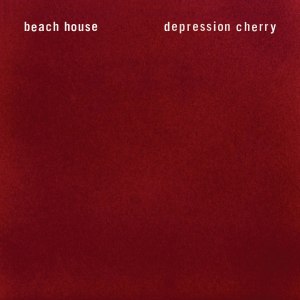
beach-house-depresssion-cherry-album1

Beach House, Depression Cherry 

It’s moody and melancholy and perfect for Sunday afternoons in winter, where hardly an hour of light graces us with its presence. The singing is woozy and lush, the track titles are typical Beach House (‘Wildflower’, ‘Levitation’, ‘Days of Candy’) and a mellow, dissonant drone seems to drift over most of the songs. There’s a whispery feeling to the vocals and a scratchy-sounding organ keyboard. Also, the album is coated in soft red velvet, so the physical copy is pretty beautiful, and there’s definitely a ‘tactile’ sense to the music itself, with all the sparkling effects and the echoing texture of Legrand’s voice. I like Beach House for the same reason I like Cocteau Twins: the music enfolds you like the atoms (or pixels?) of another world – it doesn’t sound 100% human, there’s something too mystical about it. The band released a website with typed lyric sheets, which adds to the sense that the whole album is a hazy collection of dream poems. It was released in late summer but I have listened to it a lot more in winter; it’s like the sound of  Victoria Legrand’s hazy, drifting vocals is better suited to the cold weather, the whiter light, the sheen of ice.

Favourite tracks: ‘Space Song’,  ‘Levitation’, ‘PPP’.

beirut-no-no-no

Beirut, No, No, No

There were a few weeks where I sort of just played this album on repeat in the restaurant where I work. Generally it was pretty harshly reviewed and there is a sense that single tracks stand out more than the whole. Still, I appreciated that cheerful continental folk vibe to get me through the autumn and winter with its remnants of pastel-hazed summer. Even though the songwriting might not be as *original* or *inventive* as 2011’s The Rip Tide, you can have a lot of fun with some staccato beats and percussion. Plus I love a bit of brass.

Favourite tracks: ‘No, No, No’, ‘Gibraltar’, ‘Perth’.

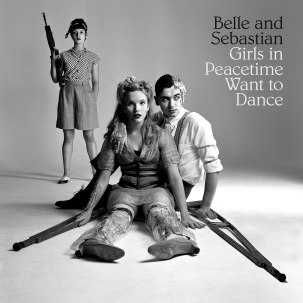
packshot

Belle and Sebastian, Girls in Peacetime Want to Dance

Just the sort of lively pop weirdness you need to brighten your January, when the album was released. I love Belle and Sebastian, the way they create simple catchy folk-pop but base it around stories and characters and inventive lyrics about lost girls and ~cutely~ wayward indie kids. There’s a bit more experimentation than usual on this one: from the funky disco atmosphere of ‘The Party Line’  and ‘Perfect Couples’ to the epic near-7-minute dance track ‘Enter Sylvia Plath’, there’s something for everyone. ‘Nobody’s Empire’, which approaches the subject of lead singer Stuart Murdoch’s MS, reveals Murdoch’s general genius for lilting melodies punched through with a weightier-than-usual buildup and bass line. ‘Ever Had a Little Faith’ is maybe the closest song to old-school Belle & Sebastian. Generally this album is full of interesting licks and typically witty lyrics, and its experimentation lends well to repeated listening.

Favourite tracks: ‘Nobody’s Empire’, ‘The Party Line’, ‘Enter Sylvia Plath’.

1035x1035-MI0003841720

Blur, The Magic Whip

Blur’s first album since 2003, The Magic Whip is kind of a mystical, surreal experience. Along with the artwork (a neon ice cream and some Chinese lettering), the album’s whole vibe sort of reminds me of this weird game I used to have for Sega Megadrive where you could do fight scenes on top of an apartment roof in the depths of Tokyo. Everything was blurry and glitchy and full of bright lights against the backdrop of glittering darkness. The Magic Whip is set in Hong Kong rather than Tokyo, but it has that strange sense of futuristic metropolitan darkness. It takes away the grunginess of Blur and sonic spaciness of 13 and enters a more self-aware, perhaps even ‘postmodern’ (ugh, the implications of that term) territory.

Well, for one there’s the obvious cultural borrowing from Hong Kong, where the album came together; there’s also the sense of meta-britpop on songs like ‘Lonesome Street’ and ‘I Broadcast’ which update the whistle-along laddish bounce of 1990s culture for a more accelerated version of the jaded digital and cosmopolitan era (‘Lonesome Street’ is overlaid with the sound of someone reporting – on the news? – sparkling synths and echoing city street noises). The sense of absurdity and collapse, like in ‘I Broadcast’ where the chorus falls into the repeated line: I’m running being played over Graham Coxon’s sharp guitar. It’s a complex and intriguing album with some sweet bass lines and dreamy Damon Albarn vocals. Listening to it really does sort of take you somewhere else. Also, ‘Mirrorball’, the record’s final song, sounds almost like it belongs on a David Lynch soundtrack.

Favourite tracks: ‘Ghost Ship’, ‘Pyongyang’, ‘My Terracotta Heart’.

clarence_clarity_-_no_now

Clarence Clarity, No Now 

From the glitchy, 90s Windows computer aesthetic of its videos to the vibrating bass, disco rhythms and shrieking guitars and falsetto vocals, this is one crazy good album. Not many folk are brave enough to put out 20 tracks on their debut album, but the effect of doing so sort of drags you underwater into a world of sound that’s electric as a field of lightning, as shrieking neon as that purple lava you get in Sonic the Hedgehog 2, Chemical Plant Zone. Sorry, is that mixed metaphors? Who cares, with music like this, everything is mixed to fuck. 

Some of the songs have a cinematic feel, which is hard to define except for a sort of atmosphere created by all the glitchy sound effects and samples (listen to the start of ‘The Gospel Truth’, for example). It’s a relief when Clarity strips back into ‘purer’ or softer vocals (see ‘With No Fear’), but also a great feeling when the effects pedals step on again, like having water thrown over you. Cold, shocking, refreshing. Kinda like the whole album. You’ve got references to ‘worm holes’ and ‘cancer™ in the water’ and all sorts of surreal cyber imagery and staccato vocals in reverse (‘Tathagatagarbha’ is straight out of Twin Peaks’ Red Room, right?). ‘Those Who Can’t, Cheat’ is the kind of psycho disco death funk they would play at the end of the world. I was lucky enough to see Clarence supporting Jungle in Edinburgh this year and I can say that it all sounds sweet as hell live – the band’s energy really plays out the craziness of the album – which isn’t always always the case when the production is one of the best parts.

Favourite tracks: ‘Those Who Can’t, Cheat’, ‘Bloodbarf’, ‘Will to Believe’.

(Also, I think ‘Hit Factory of Sadness’ is one of my favourite song titles ever).

FoalsCover

Foals, What Went Down 

I guess the critical/commercial success of Foals’ fourth album (in October they were voted ‘Best Act in the World Today’ at the Q Awards) means I don’t need to say much to justify my choice. I’ve been with Foals ever since they were bouncing out math rock on early Skins, and this album was no letdown. For one, it has several tracks which follow in the footsteps of ‘Spanish Sahara’: ‘London Thunder’ is a beautiful, atmospheric track with a lovely build, and even Lana Del Rey has sung her praises for ‘Give It All’, which addresses love as a kind of fragile presence/absence, of digital melancholia – ‘Give me the way it could have been / Give me the ghost that’s on the screen’. ‘Birch Tree’ has that sort of upbeat, syncopated feel reminiscent of ‘My Number’ (from Holy Fire). Other than the softer tracks, it’s a whole lot rockier than previous albums, especially on the frenzied ‘What Went Down’ and jangly guitar rhythms of ‘Mountain at My Gates’. I listened to this all throughout the month it took to move from my old flat, so it will always have that sense of dislocation and haunting futurity for me… (plus the stress of shifting boxes and scrubbing kitchens).

Favourite tracks: ‘Mountain At My Gates’, ‘Birch Tree’, ‘London Thunder’.

music-gaz-coombes-matador-cover-art_1422624416

Gaz Coombes, Matador

I have to confess that while Matador was released in April, I didn’t actually listen to this album until about a month ago, when I found out my cousin (the lovely Hannah Lou Clark) was supporting him on his UK tour dates. I saw Supergrass a long time ago when they supported Coldplay at Bellahouston Park, but I don’t remember much of it, especially as I was right at the back! This is such a gorgeous album though, I swear I’ve listened to ‘Matador’ on repeat to and from work for the last fortnight at least. It has great range and depth, another fine example of the maturity that can come out of the Britpop era. Coombes can sound both delicate and powerful, and there’s a certainty, a sureness, to this record. There are songs whose haunting atmosphere is complimented by stunning but simple lyrics (‘Worry fades the soul away / I’ll take the hurricane for you’ – ’20/20’) and climactic choruses. If I close my eyes I imagine this song being played over a dramatic film scene, like someone running through city streets, a breakdown, things exploding, changing. Something like that. I know it’s cheesy but there are definitely songs on this album which you could call sublime in the true sense of the word. Disorientating, awesome, majestic, powerful. Gospel influences, electronic beats, acoustic guitar. I’m still in love with it.

Favourite tracks (this was difficult, and may change): ‘The Girl Who Fell to Earth’, ‘Matador’, ’20/20’.

5f30eab1

Kurt Vile, B’lieve I’m Going Down

Aw man, there’s just this beautiful twang to Kurt Vile’s music that is so addictive. It’s not just his hair. The country twang of guitars, his sweetly droning, idiosyncratic voice. You can see the influence of Nick Drake, maybe a touch of Dylan, but also a very modern sense of disconnectedness, of goofiness even – the sense of being very self-aware but at the same time alienated from who that self is. Some of the songs sound a bit ballad-like, but there’s always a kind of dissonant, bluesy twist. He really nails his lyrics and imagery too: ‘I hang glide into the valley of ashes’, ‘A headache like a ShopVac coughing dust bunnies’. The twinge and stuffed wordiness of ‘Pretty Pimpin’ proves strangely addictive, as does that developing, repeating, turning, twanging guitar riff. ‘That’s Life, tho (almost hate to say)’ is a darker, sadder sort of folk ballad. Generally, it’s an album to listen to dreamily, maybe on a car journey, but also one that goes well in the background of bars, because it’s lively enough, and pretty damn cool.

Favourite tracks: ‘Pretty Pimpin’, ‘That’s life tho (almost hate to say)’, ‘I’m an Outlaw’.

Lanadelreycapa

Lana Del Rey, Honeymoon

I could rave about Lana all day. She has the genius of Lady Gaga, Bowie and Madonna in her creation of the ‘gangster Nancy Sinatra’ persona, but an old-school Hollywood voice that haunts and croons and glides over dark, sweet melodies. Honeymoon is very much a coherent piece of art. It’s a very visual album, much in the tradition of Del Rey’s previous work (the monochrome vibe of Ultraviolence played out in the gloomy, stripped back energy of the Dan Auerbach produced songs). Picture a summer-hazed beach with pastel huts and neon-signed strip clubs, peeling paint. Lana writhing about in her mint green muslin in the video for ‘High By the Beach’. It’s her dark paradise, a retro realm of sweet pop richly infused with jazz, blues, R&B, trap, disco and poetry. The loveliest recital of T. S. Eliot’s ‘Burnt Norton’ I’ve ever heard, soft and haunting. A Nina Simone cover. Tracks like ‘Salvatore’ and ‘Terrence Loves You’ really demonstrate the crystal clarity of her voice, as well as the strength of her range. The title track can be described in many ways, but I prefer the terms glimmering and cinematic. Really, it was the perfect soundtrack for a melancholy, post-graduation summer — except I swapped the retro cars and ice cream for long walks in Glasgow rain.

Favourite songs (again, so hard): ‘Terrence Loves You’, ‘Honeymoon’, ‘The Blackest Day’.

7af7acd9

Laura Marling, Short Movie 

It’s quite lovely to witness Laura Marling’s music maturity. From the honest folk pop of Alas I Cannot Swim to the stronger, mythological tones of Once I Was an Eagle, she has really developed and expanded her sound, not just in a literal sense but in a metaphysical one too. Does that make sense? I mean the way that her music opens worlds up. Eerie, dark soundscapes and cessations of space, interruptions and pauses and softly twangling guitars. Opening track ‘Warrior’ is spellbinding, allusive and elusive; full of echoes and misty vocals, guitar licks that curl round and round. It feels distinctively American, as opposed to, for example, the Englishness, countryside sweetness of I Speak Because I Can. There’s a sense of being lost, looking for something (‘the warrior I’ve been looking for’), of endlessly journeying.

For most of the record Marling steps away from the acoustic songwriting (delicate, but sometimes forceful) which won her fame in earlier records; her electric guitar simmers through the tracks, building around her increasingly impassioned vocals. On ‘False Hope’, a track about Hurricane Sandy, she steals us away from the vague landscapes of ‘Warrior’ to the metropolis, the Upper West Side, where darkness falls and electricity fails as she tells us of the storm. The weather plays pathetic fallacy to the storminess of the singer’s mind: ‘Is it still okay that I don’t know how to be at all? / There’s a party uptown but I just don’t feel like I belong at all / Do I?’. ‘False Hope’ slides into a more traditional Marling track, ‘I Feel Your Love’, which rolls along like a nice old folk song, a bit Staves-like maybe, but more haunting. Her more ‘spoken’ delivery of vocals, intertwined with some searingly brief high notes, in ‘Strange’ for example, bring to mind Joni Mitchell. At times she addresses different characters: spurned lovers, young girls who mirror herself, the ‘woman downstairs’ who’s lost her mind. The overall effect is less introspective, and more fleeting, transient: the self behind the voice slips in and out of view, through various narratives and images. There’s a restlessness which contributes to the Americana vibe, but one which is perhaps also simply the natural expression of a successful singer songwriter still only 25, trying to find her way in the world…

Favourite tracks: ‘Warrior’, ‘False Hope’, ‘Worship Me’.

large

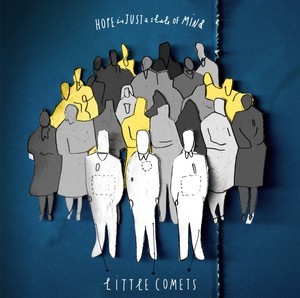
Little Comets, Hope is Just a State of Mind

My favourite band for kitchen sink indie…I like how Little Comets ease you into their changes in sound through various EPs released throughout the year. With the tingly guitars released on ‘Salt’ and the earnest lyrics, a ballad (‘The Assisted’) and emphatic drumming (‘Ex-Cathedra’) of ‘The Sanguine EP’, listeners were prepared for what was to come on Hope is Just a State of Mind, which seems to head towards what might be called a more eccentrically pop direction. One of my favourite things about this band is how they delve into the political and there’s certainly no avoiding it on this album, from the dig at Robin Thicke’s gender politics in ‘The Blur, the Line, and the Thickest of Onions’ to the lethargy of rock and roll in ‘Formula’ and the cultural demonisation of single motherhood in ‘The Daily Grind’: ‘You must feel so proud / Stigmatising every single mother / While your own world’s falling down’. Songs like ‘The Gift of Sound’ and ‘Formula’ have a more straightforward energetic pop vibe, whereas ‘B&B’ begins with an accapella moment and revolves around the repeated line: ‘my own mother cannot take me back’. There’s lots of thudding drumming and a swinging sort of emphatic, repetitive melody. The song, incidentally, is about bedroom tax and Robert Coles has eloquently said of the lyrics:

‘Lyrically the words came quite quickly as I always had the “even my own mother cannot take me back” line in my head from writing the melody. I knew it was going to be about politics: specifically the patronisation of people by the political class in both ideology and delivery, and the way that my own region has been altered by the blue hoards of conservatism.

The title stems from a tweet by Grant Shapps regarding the last budget – “budget 2014 cuts bingo & beer tax helping hardworking people do more of the things they enjoy. RT to spread the word”. Beer and Bingo – because there’s nothing else to do.

I think the first verse is just frustration with the attitude put across by politicians that suggests that they think people are total idiots – policies light on detail, simplistic ideology, framing debates in headlines, constant ill behaviour. Plus from the other end of the scale the total demonisation of the less well off in the swingeing benefit cuts typified by the bedroom tax. I just think it is bizarre and to treat us with this brazen amount of contempt.

It really got me thinking about the north east getting so bashed up in the time of Thatcher – destroying lives and communities because of a need to dominate on an ideological level. I think the second verse tries to convey the depressing notion that beyond this pain, she also eradicated trades and skillsets that had been built for hundreds of years without the prospect of anything new, or transferability. To extinguish a trade, a way of life…. Wow….. That’s a pretty crazy course of action.

It’s almost like she stole those years from us – and it feels a little like it is being echoed now. Taking away what someone relies on is oppression, and this is being felt in communities across our country today – horrified in the knowledge that it will continue until people are so battered that they accept it. The worst part is if you look closely enough, past Grant’s apparent carrot you can see the joy in the eyes behind the ghastly stick, and they look frighteningly familiar” (Source: Little Comets’ Lyric Blog).

I guess I’ve included the quote because I think the politics have become more direct in this album and it’s interesting to flesh out the backstory here. Sure, there have been plenty of ‘northern’ bands before, but rarely have I listened to a pop or indie band who engage with their politics so directly and so articulately (usually this space is reserved for punk or rock – Manic Street Preachers of course, representing a ‘marginalised’ Welsh perspective). Aside from lyrical content, you’ve got the usual pleasures of Little Comets harmonies, shredding guitar licks and bouncy rhythms. ‘My Boy William’ is wonderful live, the way it builds up and everyone following the drum rhythm. ‘Little Italy’ is great fun too, with its cascading melodies (liiiittalll iiiitaaalllyyyyy I reeAAd heeEre) and syncopated rhythm. It’s true, on this album (especially on ‘Salt’), the songs are very up and down, rarely straightforward and often lines are lyrically and melodically convoluted; this isn’t a criticism but more a reflection of what seems to be a desire to push the formulaic boundaries of pop, to infuse guitar chords with lush vocal harmonies and ringing percussion. To represent detailed, difficult subjects in pop is never going to be easy, but Little Comets nail it in their own unique, beautiful way. Look forward to seeing them again live next year!

Favourite tracks: ‘Don’t Fool Yourself’, ‘Little Italy’, ‘The Blur, the Line & the Thickest of Onions’.

The-Maccabees_Marks-To-Prove-It_cover

The Maccabees, Marks to Prove It

Well, to be honest I never would’ve thought I’d be including The Maccabees on my 2015 albums of the year. Over the last few years, I haven’t spared much thought for the band other than as another soundtrack to the general indie trend of the last ten years: a band mentioned frequently in NME perhaps, soundtracking lovelorn scenes in movies, but nothing particularly distinct other than in their creation of twee indie pop. However, one night after work I was lying on the floor recovering from a terrible shift with the radio on, listening to X-Posure With John Kennedy on what used to be XFM. The Maccabees were talking through their new album and playing the songs, and I was pleasantly surprised by how intriguing the sound was, as well as how articulate the band were in talking through the writing process and the stories behind the songs. I guess the next day I went out and bought the album. It definitely sounds a long way away from ‘Toothpaste Kisses’, though the added kazoos and varied percussion doesn’t spoil the simple joy of good plain songwriting. The songs have a weight to them, a grander atmosphere, especially the weird dissonance on the likes of ‘River Song’. ‘Silence’, however, is quietly beautiful, drifting along soft piano notes, subdued vocals and a somewhat eerie sample of an answering machine voice.

Where once you would recommend The Maccabees mostly to fans of The Mystery Jets, Pigeon Detectives or Futureheads, this album feels much more grownup, darker somehow, wilder and expansive. The lyrics vary in subject from the gentrification of London’s Elephant & Castle (the band’s hometown) to heartbreak (‘When you’re scared and lost / Don’t let it all build up’) and well, happiness (‘Something Like Happiness’). It’s refreshing to have a song that does just feel like at times like a gentle old ode to joy: ‘If you love them / Go and tell them’. ‘Marks to Prove It’, the opening track, feels confident and bouncy, with a sharp riff and assured vocals. It would fit in with a fast pop set from The Futureheads, but the rallying battle cry that precedes Orlando Weeks’ voice announces something slightly stranger, a record with new edge.

Favourite tracks: ‘Silence’, ‘River Song’, ‘Something Like Happiness’.

Currents_artwork_(Tame_Impala_album)

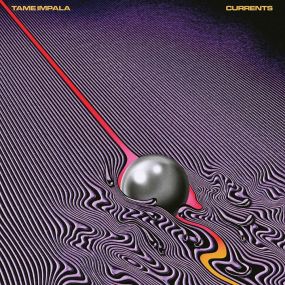
Tame Impala, Currents 

I was introduced to Tame Impala mostly from one of the chefs at work playing it in the kitchen on Sunday mornings, and weirdly enough his psychedelic brand of synth pop seems appropriate preparation for a day serving Sunday roasts to hungover customers. It’s the swelling bass and brilliant synths that really catch you, the smooth falsetto and tingling production. You can tell Kevin Parker is a dream at studio magic, with flawless instrumental arrangement that makes for a sound that could be big or chilled, depending on how you play it. There’s some dark keyboard drama, there’s a lovelorn anthem (‘Eventually’) and what might tenuously be described as weird disco funk. For some reason (maybe all the synths, gossamer vocals and vintage-sounding guitars?) has a ‘bedroom-made’ feeling, but with a much slicker production than the DIY element might suggest. Some songs sound like they belong on a long, atmospheric train journey across a space desert; others sound like they’d fit on the cuts of drama interspersing a video game. There’s a dreaminess to songs like ‘Yes I’m Changing’, but a more radio-friendly funkiness to the likes of ‘The Less I Know the Better’, or even ‘Love/Paranoia’, with its silky beats and finger clicks. As the album progresses, the theme of heartbreak starts to really solidify and I guess that’s the overriding drive of the songs – a heartbreak that slows and stifles, morphs between introspection and the temptation of mild bombast.

Favourite tracks: ‘Yes I’m Changing’, ‘The Less I Know the Better’, ‘Love/Paranoia’.

81-uo32700L._SL1500_

Stornoway, Bonxie

This was a lovely album to enjoy in spring, from the hopeful folksiness to the cute origami bird on the cover. I guess it got me through that period of hell in my life that was finals. I would go on walks around Kelvindale where all the cherry blossoms were, listening to the soft acoustic licks and all the soothing bird sound effects. It’s an album to enjoy by the sea perhaps, full of a sort of longing. There’s the noise of distant foghorns, the rolling harp-like guitar and sparkling xylophone over the drifting shimmer of a wave-like cymbal. This is probably my favourite Stornaway album, or at least equal to the debut, Beachcomber’s Windowsill because of its more folksy atmosphere, its immersion in nature — the sense of being lost, deliciously lost by the edge of the ocean. ‘The Road You Didn’t Take’ especially boasts a shanty-like chorus which adds to the nautical theme and sort of swells up like you’re caught at sea, singing along irrevocably. Melodies build up to climaxes and fall back down into subdued, slower choruses, as if the speaker tries to articulate something about his surroundings (the beautiful environment) but fails to express them entirely. Sweet, comforting guitar licks glide us through (e.g., the start of ‘Sing With Our Senses’). Vocals are never aggressive, only sometimes shrill and generally soothing – like a bird’s? Apparently over 20 types of bird donated their song to the album, and let’s not forget that singer Brian Briggs is a Dr. of Ornithology! It’s just a lovely escapist sort of album, reminding you of seaside holidays from years ago, that childlike ability to sink into your surroundings and find wonder in a leaf, a taste of salt air, a bird call.

Favourite tracks:  ‘The Road You Didn’t Take’, ‘We Were Giants’, ‘Between the Saltmarsh and the Sea’.

81HZecd+uwL._SL1500_

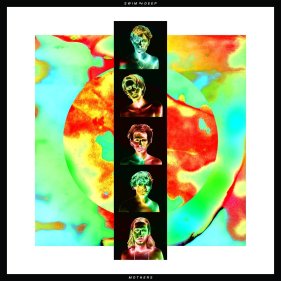
Swim Deep, Mothers

It seems everyone has been describing this album as Swim Deep’s foray into psych-pop. You only have to take a glance at the warping colour bleed of the cover art to pick up those vibes. The honey sweet guitar pop of Where the Heaven Are We has morphed into something heavier, more saturated. There are so many influences, but I suppose you could start with psychedelic music, house and kraut rock. Lots of bursting, colourful synths. It reminds me of The Horrors’ Primary Colours, not only because it’s a ‘change-around’ album, but also the subdued, atmospheric reworking of prior image and musical style. Songs like ‘Honey’ and ‘The Sea’ from their debut album were chilled and loose with catchy melodies, and while Mothers retains the catchy melodies, its style has tightened up a bit. The instrumental elements are more complex; songs open up a multilayered world rather than the silver stream of a simple pop tune. ‘To My Brother’ has an epic quality, building up to the chorus with some extravagance – weirdly, the sort of mistiness of the vocals and quirky synths remind me of Seal. I’m not sure why, or whether that’s even an accurate comparison, but the link just popped into my head. I love the way critics have compared ‘Namaste’ to discordant game show music, which obviously fits in with the 1990s vibes of the video. All that beige, those glasses, the sense of mania reflected in the music! It’s more mature maybe, but still fun.

Favourite tracks: ‘To My Brother’, ‘Namaste’, ‘Imagination’.

A few others…

  • Beach House, Thank Your Lucky Stars (two albums in one year, ‘nuff said)
  • Florence & the Machine, How Big, How Blue, How Beautiful 
  • The Libertines, Anthems for Doomed Youth (listening to it to drag up the old nostalgia of discovering the first albums, for the lovely production and Doherty vocals on ‘You’re My Waterloo’ and Carl Barat’s very English swagger).
  • Prides, The Way Back Up (Stewart Brock has come a fair way since Drive-By Argument (big up a band from Ayr!) but the wide, electronic sound of Prides has its heart in the original synthiness of Drive-By Argument which developed into more distinctly electronic side-project, Midnight Lion. Obvious comparisons are to Chvrches, but maybe also a bit of Daft Punk. Radio-friendly but I’d imagine really big and energetic live, plus whenever I hear them I get sweet teenage nostalgia for Drive-By Argument).
  • Sufjan Stevens, Carrie & Lowell 
  • Years & Years, Communion (sparkly EDM pop with plenty of pluck, from a band whose singer starred in Skins and Stuart Murdoch’s indie flick, God Help the Girl).

Tropical

IMG_012301

Tropical

You used to worry about the palms: there was something wrong,
you said,
if the palms weren’t sighing.

You relished the soft peel of the wind through those palms,
the ones by the hotel garden.
We’ve been here every year
since Dad died.

The white beach sand is a mouthful of moonlight.
We sit up late drinking crushed fruit
and you say strange things, as you always do—
have you ever eaten a mango in the bath?
You would live your life like that,
all the time you said, eating mangoes in the bath.

All that pulp and mess, all that flesh.
Dad died in the spring, when blossoms
of soft pink cherry gathered on my lawn.
The baby lolled around in it like April snow
and we watched her giggle, ribbon
flying out from her hair. He would’ve loved that,
seeing her there.

The cancer took the green out his eyes,
ate the skin of his face.
Even when they pumped him full of fat and creamy vitamins,
the bones kept poking, pointing.
His face was a mask of something;
I couldn’t let the baby near it.

I imagine you prefer it here
to back home. You like the ooze
of the days, the way the maids make the beds;
the emerald green of the parakeet,
early mornings where the tide sparkles. Still,
you saw signs in everything.

Dad used to come visit during monsoon season.
He wrote reams of prose,
lapping up slushfuls of rain. He wrote
in the small hours, when he wasn’t working.

We lost the notes.
We’ve only the stuff on his business trips,
lost code on his laptop.
We haven’t a sense
of what to him was sharp or clear, what it was
that brought him over.
Just the whispering palms, the sleepy tense—
one day I’ll take the baby here.

Mortal Thing

Gentle capillary
So small as the daisy, pulled
into petals from the precious lens
of a leaf.

Unfurl the tangles like twine;
only soft
as an organ,
and underneath
the quick pulse
of some other body, the beautiful body:
that lies over there and empty,
still empty in the yellow light
of this warm morning.

(Written from GU CW’s last week’s prompt ‘capillary’)

Poldark’s Romanticism: Solitude, Sex Appeal and Scenery

(Warning: contains possible spoilers up until the end of episode four).


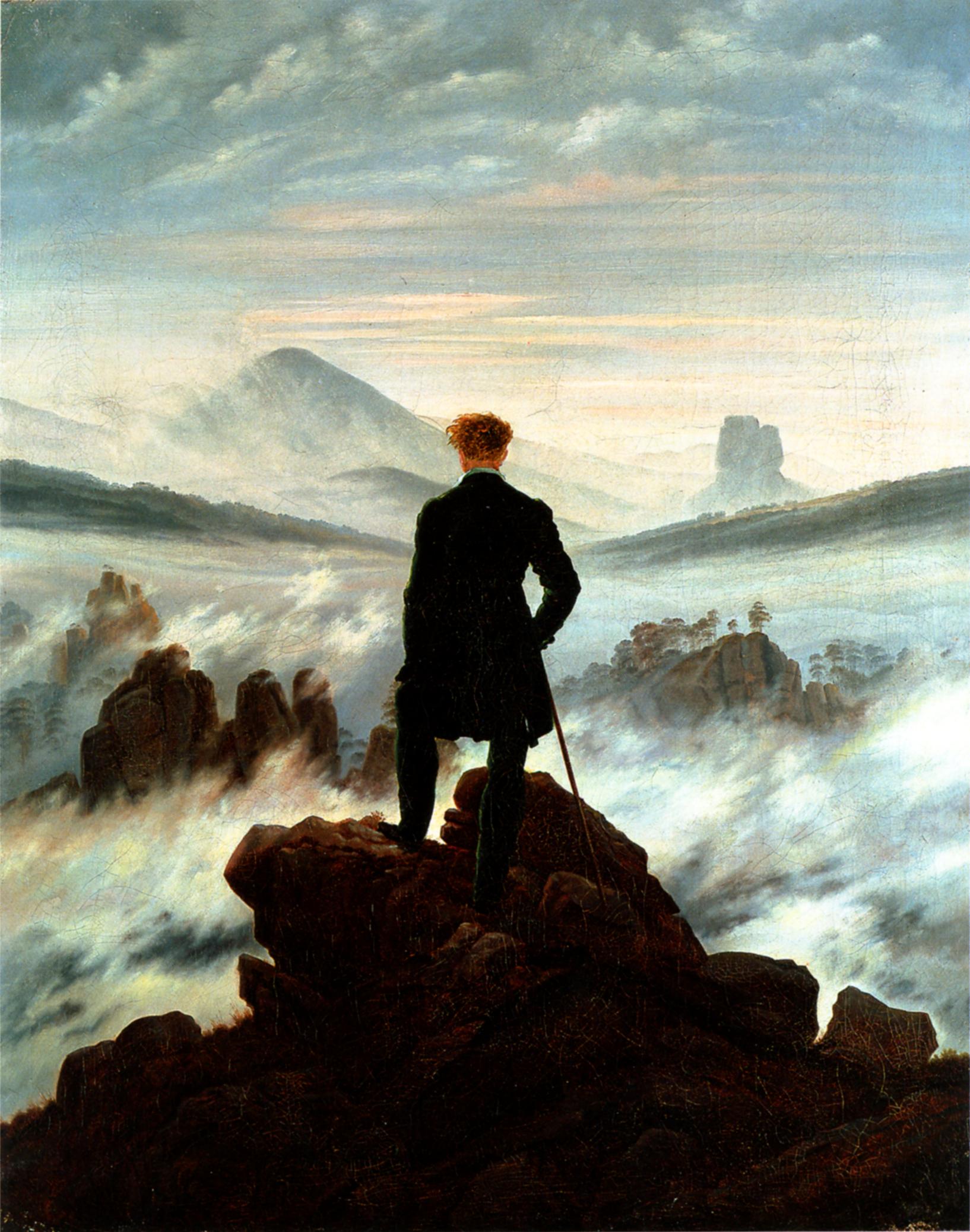
'Wander Above the Sea of Fog'
Source: BBC
the-wanderer_00372102
‘Wanderer Above the Sea of Fog’

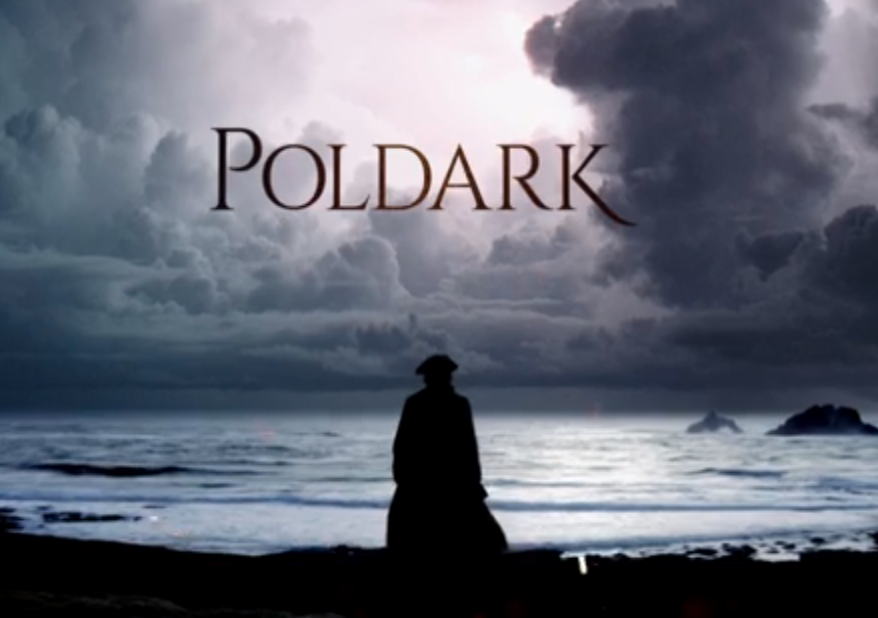
Moving from plumes of cloud and sullen mist to the flaming spit of fire below, the opening sequence of Poldark sets us up for a journey through the sublime chasms of history down to the core of its hero’s heart. The scene is Cornwall in the 1780s. The story is a beautifully rendered television voyage through various Romantic archetypes, culminating in the protagonist himself, who stands alone facing the open, churning sea, in the manner of Caspar David Friedrich’s famous Romantic painting, ‘Wanderer above the Sea of Fog’. In the first episode, Captain Ross Poldark returns, miraculously alive, from the American War of Independence, bearing the mark of his experience in the distinctive dark scar upon his cheek. After the battle scene in which Poldark alone escapes with his life, a dreamy flashback presents our hero in smart uniform, ready to go abroad, acquiescing to the breathless urge of his lover Elizabeth: ‘Pray do not be reckless, I wish you to return’. Well, like Robinson Crusoe from his shipwreck and 28 years of island isolation, Poldark does return. Only, while Crusoe returns to ‘civilisation’ to find a hefty profit from his Brazilian plantations to fill his greasy palms, Poldark returns to find his finances in ruins and his dear Elizabeth now married to his insipid cousin. What follows is a tale of Poldark’s redemption; once the idle gambler at war only to ‘escape the gallows’, he evolves into a near prototypical Romantic hero, embodying the necessary sentiment, broody solitude and bad-boy glamour that brought Byron his fame and trouble.

But while Poldark represents an idealised benevolence cut with rugged beauty, he is not a dandyish poet in the manner of Byron or Wilde, but a man of war and experience. While Byron would go off gallivanting with his many women, writing hopes of radicalism back home, Poldark says little of his time overseas – a quietness that only emphasises the intrigue of his character. As the frequent close-ups of his scar insist, this man has done battle, a distinction that reinforces his difference to the other men of Cornwall’s stuffy society.

2671E96800000578-2985366-image-a-24_1425840006831

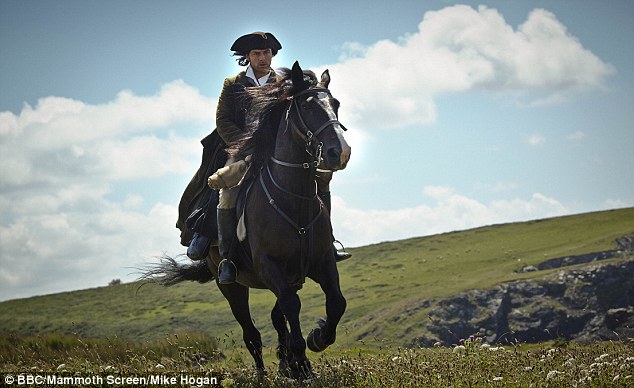
'Napoleon Crossing the Alps': note the comparison with Poldark - solitary man on horseback, though while Poldark traverses picturesque Britain, Napoleon ranges over the sublime mountains of the Alps
‘Napoleon Crossing the Alps’: note the comparison with Poldark – solitary man on horseback, though while Poldark traverses picturesque Britain, Napoleon ranges over the sublime mountains of the Alps

And indeed, Poldark puts his experience to virtuous use. He represents in some ways that much-loved ‘cult of sensibility’ that wormed its way into novels and poetry of the eighteenth-century: rescuing a wayward waif, providing work for starving labourers and delivering an impassioned courtroom speech in defence of an unfortunate young poacher (played – did anyone else notice – by metal-head Rich from Skins). Sensibility, as we might guess from the title of Henry Mackenzie’s popular novel The Man of Feeling (1771), was a kind of fashion for displaying emotion; a newly remodelled masculinity which was exhibited through tears and expression and other public manifestations of feeling. While Poldark is by no means the soppy hero of Mackenzie’s novel (the Editor’s Introduction to The Man of Feeling warns that the novel ‘proceeds in due course through so many tears that it is hardly to be called a dry book’), his compassion towards the struggling labourers contributes to our image of him as a benign venture capitalist, a hero of industry for our postmodern age of corrupt public figures and criminal bankers. The symbolism of a man attempting to re-open a mine threatened by closure and poor investment, to work alongside his miners in the sweaty heat of the pit and to share the profit, was perhaps not lost on Poldark’s viewers when it was first broadcast in the 1970s. While many period dramas fall into the trap of caricature when representing the ‘lower classes’, Poldark offsets this problem by honing in on individual experiences which highlight the precarious economic and social position of Cornwall’s labourers in the late eighteenth-century: the plight of the young poacher, and, importantly, the story of Demelza, who is adopted from the streets by Poldark as a house-maid and later becomes his wife.

This is a show that milks the viewer’s voyeurism. Any chance it gets to parade Aiden Turner’s sweaty golden torso, visible as he swims in the sea or hacking at the land, it takes it. However, such enticing demonstrations of abs and strength are not merely to keep Turner loyalists from the Being Human days happy. They also serve as an interesting parallel to scenes of Demelza alone in nature. Well, not quite alone. While Poldark ranges the cliffs on foot or on horseback – once again parading the dazzling iconography of Romantic solitude – Demelza wanders off at dawn with her little scruffy dog. While Poldark is a figure of Promethean strength and virility (here another connection between strength and suffering – Shelley’s Prometheus Unbound), Demelza’s ethereal looks, in tandem with her ‘exotic’ Cornish dialect, establish her as an almost mythological figure of Romantic fascination. There are many tender scenes where she lies languid in the long grass, playing with pretty cornflowers, or trailing over the rolling cliffs; but there are also scenes where she tills the land with all the power of Poldark himself. We are led into believing the credibility of their marriage because the show sets them up as equals. Demelza is, in a way, Wordsworth’s ‘Solitary Reaper’: the ‘lass’ with the regional accent, who ‘cuts and binds the grain, | And sings a melancholy strain’ which flows through the land with ‘more welcome notes’ than a ‘Nightingale’. When we first encounter her, begging in the street and being heckled, she is clearly a ‘peasant’, a mess of coarseness and dirt; but her time as Poldark’s domestic tames her appearance, though not her spirit. While Wordsworth’s female Reaper was just one of the rural characters to feature in the revolutionary Lyrical Ballads (1798), Demelza is not merely a figure of some traveller’s amusement or poetic interest. The camera does not gaze at her always from a distance, but switches to close-ups and pan shots of the scenes around her: the swaying grain, the face of her dog, some plain little flower or the ever-present sea. At times, then, we share her perception. Episode by episode, we are lured in with her sweet pure voice; significantly, the voice which settles Poldark’s love for her.

Richardson_pamela_1741

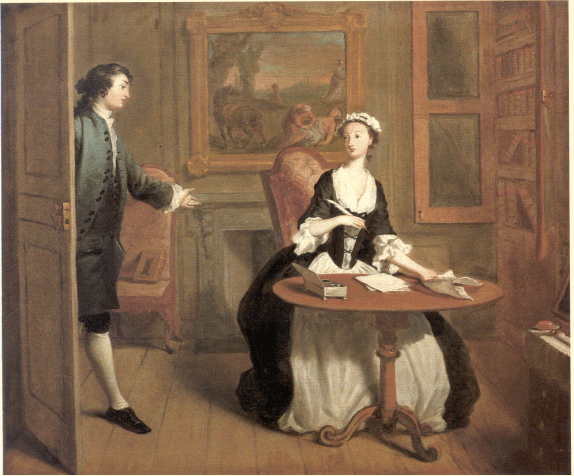
The master/servant romantic dyad is certainly not an original one, but a trope embedded in many prominent examples of canonical novels since the eighteenth-century. Hailed as one of the first ‘novels’ in the sense recognised today, Samuel Richardson’s Pamela (1970) tells through a series of its heroine’s diaries and letters the story of a virtuous servant girl resisting the sexual advances of her master, eventually redeeming his character through her writing and in turn being rewarded with an equal marriage based on love and respect. What made Richardson’s novel unique was that it placed value upon a ‘mere’ servant-girl’s right to self-respect, to protect her chastity and resist the common (and indeed legal) assumption that a servant-girl was her master’s property, to do with what he would. Also, the level of psychological detail afforded by Richardson’s epistolary form allowed the reader an incisive insight into the consciousness of Pamela’s character, a consciousness that gained integrity and resistance through letter-writing itself. While Richardson’s novel gives us an excess of detail, Poldark speaks often through silence. It is those moments in the gloomy interiors of Poldark’s home, with the fire flickering shadows over a rustic meal, or against the backdrop of the ocean, with only the gulls’ moaning, that things change between Poldark and Demelza. The show fleshes her out with a backstory and a problem father, a sense of longing for an unspeakable freedom – the kind of Romantic liberty we experience in her plain, almost Blakean singing.

When Poldark and Demelza do get married, almost on a whim, the show deals with the social consequences of this unlikely coupling. Like Pamela, who has to get used to calling her master by her name, Demelza struggles to address Poldark as ‘Ross’ instead of ‘master’ or ‘sir’. Moreover, the rebellious couple face an onslaught not only of gossip but the kind of exclusion that has very material consequences, not just in terms of how Poldark is treated by polite society but even in business, as investors withdraw from his start-up mining company. This is something Demelza worries about greatly, as does Pamela in her marriage to her master, Mr. B-, as she reflects:

The great Mr. B—— has done finely! he has married his poor servant wench! will some say. The ridicule and rude jests of his equals, and companions too, he must stand: And the disdain of his relations, and indignation of Lady Davers, his lofty sister! Dear good gentleman! he will have enough to do, to be sure! O how shall I merit all these things at his hand! I can only do the best I can; and pray to God to reward him; and resolve to love him with a pure heart, and serve him with a sincere obedience. I hope the dear gentleman will continue to love me for this; for, alas! I have nothing else to offer!

Richardson’s novel, I should add, was riffing off the tradition of conduct literature, expressing a kind of Puritan message of self-restraint and virtue. It loses pace in the second half, where Richardson has shunned the romantic convention of ending on a marriage and instead spends the rest of the book describing Pamela’s efforts to run a virtuous domestic set-up. It is with Charlotte Brontë’s Jane Eyre (1847) that the servant-girl heroine is imbued with a wilder, more defiant streak. While Pamela shows her strength not through any physical feat (indeed, her only two escape attempts constitute a foolish notion to drown herself in the garden pond, and a runaway plan which is aborted when she comically mistakes plain old cows for menacing bulls), Jane displays real physical endurance when she manages to flee Mr. Rochester after discovering about the sham marriage she was almost tricked into. I cannot help but quote that famous, impassioned speech that she makes to her would-be husband:

Do you think, because I am poor, obscure, plain, and little, I am soulless and heartless? You think wrong!–I have as much soul as you,–and full as much heart! . . . I am not talking to you now through the medium of custom, conventionalities, or even of mortal flesh:–it is my spirit that addresses your spirit: just as if both had passed through the grave, and we stood at God’s feet, equal,–as we are!

This transcendentalist ideal of love carried through spirit is profoundly Romantic, and one that comes to inhabit the space of Poldark through the mystic enchantments of Demelza’s singing. This taps into Romanticism’s trope of the folk ballad and the femme fatale, found particularly in Keats but also Coleridge’s ‘Christabel’, that warns of the strange seduction of the ‘wild’, exotic female:

I met a lady in the meads,
Full beautiful – a faery’s child,
Her hair was long, her foot was light,
And her eyes were wild.

Perhaps this description could be applied to Demelza too, as she dances at the village carnival and skips fairylike along the cliff top meadows. In Keats’ ‘La Bella Dame Sans Merci’ (1819), the speaker meets a curious, vampire-like woman, who seduces him then leaves him cold and alone in the ‘gloam’ of the lake’s bird-less landscape (and, of course, birds are a very importance presence in Romantic poetry). It is interesting that in the twentieth century, with the impact of Bram Stoker’s Dracula (1897), that the myth of the vampire, the lethal seducer, was transferred from the female to male (Turner himself played the tortured vampire Mitchell in Being Human). There are no vampires in Poldark. Demelza is more of the innocent fairy type, embodying the kind of alienated selfhood that Jane encounters as she perceives herself in the mirror: ‘the effect of a real spirit […] like one of the tiny phantoms, half fairy, half imp’. Estranged from what she thought she was – a mere governess – and hurled into the beautiful turmoil of a fairy story.

Art thou pale for weariness      Of climbing heaven and gazing on the earth, Wandering companionless       Among the stars that have a different birth, And ever changing, like a Joyless eye      That finds no object worth its constancy? (Percy Bysshe Shelley, 'To the Moon')
Art thou pale for weariness
Of climbing heaven and gazing on the earth,
Wandering companionless
Among the stars that have a different birth,
And ever changing, like a Joyless eye
That finds no object worth its constancy?
(Percy Bysshe Shelley, ‘To the Moon’)

It is in Demelza’s metamorphosis from fawn-like (as Elizabeth describes her) child to Poldark’s wife that the show reaps the reward for both parties. When Demelza finally works up the courage to try on a jewel-green dress she finds stuffed into a drawer, it is in this dress that she winds up in bed at last with her master. Yet even here she still looks shrunken, pixie-like in the dress too-big for her, representing the absurdity of the bourgeois identity that she is inadvertently stepping into, like Cinderella. Here, she remains, like ‘plain Jane’, elusive and fairy like, ephemeral in her selfhood. It is in her later endurances, her resistance to the jibes of polite society, that Demelza emerges as our true heroine.

In Brontë’s novel, stumbling alone and starving over the moors, Jane Eyre embodies both female vulnerability and endurance against hardship within the stifling social conditions of the era. Steadfastly she refuses to be Rochester’s mistress and live under a sham marriage. Eventually, like Pamela, she too is rewarded for her virtue, by in turn claiming her own (now, like Poldark, wounded) Byronic hero, whose redemption is signified in the purging of a dramatic fire. The hearth is enflamed from quiet warmth to primitive passion. At the end of episode 4 of Poldark, Ross confesses his love to Demelza in a scene of bedroom intimacy that well resembles that of Pamela and Jane Eyre:

‘You are not too ashamed o’ me?’ asks Demelza, sitting on the bed.

‘Why do you think I married you?’ her husband turns to her.

‘I don’t rightly know.’

‘To satisfy an appetite, to save myself from being alone […] I had few expectations. At best, you’d be a distraction – a bandage to ease a wound. But I was mistaken. You have redeemed me; I am your humble servant, and I love you’.

Like Rochester, and Mr. B-, Poldark is a man redeemed by humble love. Only time will tell (no spoilers) how this pans out. The novel is a form which tends to drive towards closure, the pursuit of some fulfillment of marriage, death or didactic morality; whereas television drama feeds us with cliffhangers, the always open promise of a sequel. This is of course a simplistic distinction, but even so, the point remains that with a book, you can physically see when you are getting to the end, where the pages are running out, and with television, there is a kind of abstracted spatiality and temporality that leaves you always hanging.

Scene from Pamela (source the-toast.net)

As if I were watching a serialised version of Byron’s biography, I intend for the rest of the series merely to sit back and enjoy the picturesque landscapes and the pretty hair, the romance and tragedy and beautiful costumes. All acts of consumption I suppose, which is fitting because Romanticism, as Timothy Morton argues in The Poetics of Spice, invented consumerism; consumerism in the sense of Marxian ‘commodity fetishism’ – consuming something for its representative, fantasy qualities more than for the use value of the thing itself. Wordsworth with his mountains, Coleridge with his opium; objects of desire which offer some form of imaginative potential to the self. But I won’t go into anymore detail; that’s another story, another romance.

On Finishing University

2

Well yesterday I handed in my final essays: the last pieces of coursework ever in my undergraduate degree. I expected to feel triumphant but instead I felt a little empty and sad and probably nostalgic. After all those years and sleepless nights and thousands of words painstakingly wrought out on laptop screens, it all boils down to two more essays and three exams. And then it’s over.

Photo from Fresher's Week!
Photo from Fresher’s Week!

It’s difficult to know where to begin with reflecting about my university experience. Everything is usually divided between academic and social life. Employers and scholars, politicians and journalists all frequently debate which of the two is most useful for getting a job. Any careers event you attend will churn out the hackneyed refrain that ‘university isn’t just about academia’. They encourage you to get involved in societies, sports clubs, volunteering, student media. And all this is great, but we mustn’t completely neglect the whole reason we’re at university – some of us paying thousands of pounds a year to do so – to learn. And this learning isn’t all about getting a job (not for me at least), but about learning for education’s sake – for widening your perspective on the world.

The first essay I had to write was on Descartes for Level 1 philosophy. I believe the question was something like ‘Should we be worried by Descartes’ scepticism?’. This kind of question was a whole new ball-game for me. I was used to plain old terminology like ‘Discuss’, ‘to what extent’ and ‘examine/evaluate’. Not should we be worried? Should we? Are philosophical thought experiments really that important? Of course, the essay question was roundly subjected to confusion and piss-take amongst my fellow first year students, but I suppose it was a good way into a career in philosophy. You know, it was the kind of question that makes you think, that challenges your assumptions about what an essay should do. It’s easy to say that now, but at the time I was pulling my hair out. I remember maybe the worst library session I’ve ever had was one rainy Saturday afternoon, where I stared at a blank screen for four hours straight, glancing from book to book and desperately Google searching everything I meticulously typed up, in case it was similar to something else that had been written.

First years are constantly subjected to sermons on the sins of plagiarism. Whilst this is of course a vital academic lesson, it also makes essay-writing for the paranoid nigh on impossible. I remember for my English Literature essay, I decided to scour the internet for every form of critical interpretation available on my primary texts, just to check that I wasn’t repeating the same arguments as everyone else. I had still to learn that plagiarism is more about intellectual integrity, about learning to reference properly and using existing sources in an original way, than coming up with something that is wholly unique. One thing you learn from English Literature – in fact, probably any arts subject – is that the notion of pure originality is somewhat a myth. And that’s actually liberating, because it takes away the equation of creative genius; you’re suddenly allowed to see how authors frequently influence/borrow/steal/subvert one another’s ideas, and you no longer have to imagine essay-writing as an outpouring of wonderful, effortless analysis. It’s allowed to be a difficult process, built up from hours of reading, planning and collated note-taking. Not just something you fire out in an hour at the back of a high school English class.

To the eighteen-year-old me, that Saturday in the library, I wasn’t quite acquainted with all this. I was sitting next to a boy who was typing away furiously, producing what looked like three essays in the space of a few hours (the time it took me to write one paragraph that I eventually cut from the essay).

Philosophy, to be fair, is a subject notoriously confusing when it comes to essays. It shouldn’t be; it’s just that a philosophy essay is distinct from other kinds of critical analysis that I was familiar with through my hitherto social-sciency background. That tutorial we had, waiting to get our essays back, was really hellish. Everyone was telling each other how badly their friends in other tutorials had done. How harsh the marking was. Nobody knew what a philosophy essay was meant to be. We all expected D’s.

When my tutor read out my student number and I went up to collect my essay, I have never been so pleasantly surprised at a grade. An A3! I can tell you, that was the first and hardest earned A3 I have ever received at university.

The end of first year

Looking back, I think I probably spent most of my first two years at university in a vague state of panic. The thing is, most of the time you have no idea what you’re doing and what’s expected at you (I still don’t, but that’s now a good thing – again, liberating). There are rarely any rigid guidelines, especially in a subject like English Literature, and initially that seems terrifying. You are suddenly surrounded with all these people who went to better schools, all these people who’ve read The Complete Works of Shakespeare and can quote Byron and Shelley off the top of their heads. I would spend whole days in my little dorm room trying to get my head around basic terminology like iambic pentameter, chiasmus, ode, Ottava Rima, trochees, lyrics. I’m still terrible at counting metre in poetry, even though I have a background in music and am perfectly capable of keeping time when there are notes and staves involved. But I like to think that I’ve finally found some kind of ‘footing’ in the mountainous landscape of centuries of literature that I was first confronted with that sunny September in 2011.

As with anything, a big part of university is trial and error. You are going to do better under the guidance of some tutors more than others. You are going to write essays that you aren’t very sure of, and sometimes this will pay off, and sometimes it won’t. There are essays that you feel genuinely proud of, not even for the grade but because you know that all the research that went into them widened your intellectual horizons, and all that editing really did pay off in terms of style. It’s nice when you can read back an essay and not cringe at your choice of phrasing, or all those hiccups in grammar and punctuation. There are going to be nights in the library where you get the fright of your life from the tannoid telling you the reception desk is closing. There are going to be times when the library makes you sick, stressed, exhausted. Like when I had to sit next to a man who was eating raw, mud-covered mushrooms straight from the punnet and dipping them in hummus; or the time when the only computer I could find was next to someone who was licking and slurping the oily remains of his spaghetti from the bottom of a massive plastic tub. Times when there are tears involved; either yours or someone else’s. Fights witnessed and blows exchanged; where else but in the sleep-deprived environment of a university library would two people start brawling over a grubby old Dell with a greasy keyboard?

But then there are the best times, the late nights and early mornings and holidays when the library is lovely and quiet. You are free to roam the endless shelves and pick the desk on level 11 that looks out over a beautiful city view. When you finish an essay and print it and the paper is still warm in your hands as you leave to hand it in. When you stumble across a book that you weren’t exactly looking for, but it’s on long-term loan and looks very interesting.

I guess the semesters go so quickly that you hardly notice the time slipping. Sometimes, they seem like little footnotes to a long and formidable summer, with nothing to do but work and plough through the reading list and wish you had more money. If I could go back and do one thing I guess it would be making more use of my time. But then, I don’t regret all the evenings I spent immersed in journal articles and books, because that’s what’s shaped my mind. Sure, I might not have a degree with immediate career prospects beyond journalism or teaching, but I wouldn’t swap my education for the world. And I’d recommend Glasgow Uni English Lit to anyone, especially because it’s so steeped in critical perspectives and literature beyond the obvious canon. Where else would you start off a second-year semester reading Martin McDonagh’s gruesome play The Pillowman, or have a fourth-year seminar on Gone Girl and a course on Urban Spaces which divides its programme under mysterious headings like ‘Airport’ and ‘Shopping Mall’ rather than the tired titles you see across typical course Moodles. My degree (well, let’s hope I actually get it!) hasn’t just been about Shakespeare and Dickens and Austen, though they have all quite rightly featured. It’s about expanding the canon, and helping you sharpen as well as complicate and reflexively challenge your critical approach to all literature.

Last year’s exam revision
If anything, I've learned to keep a slightly tidier desk.
If anything, I’ve learned to keep a slightly tidier desk.

On Tuesday morning, it was spring all of a sudden. I walked to campus feeling warm and happy, remembering the first spring I spent in the city. All those daffodils and the cherry blossoms around Hillhead, and the cheerful experience of the semester ending, everyone gathering for picnics at Botanic Gardens. Optimistically sleeveless, I sat on a stone by the Kelvin River reading Keats, feeling like this is what university is best at. The kind of magical experience unfortunately made cliché by campus films. When you’re in the sunshine reading poetry and you’re about to go in for one of your last tutorials. Sure, I still have three nasty exams to get through, but once they’re over, I’ll hopefully come out a little bit smarter, a little bit happier and a tad more employable. University, both at the academic, social and creative level, has definitely been the best experience of my life. I swear I won’t get sentimental; I’ll come back and do a Masters instead. (Let’s hope; if only).

Inspirational Finnieston Pipe (!)