On Words, Romanticism, Ramblings and Meanderings

I am coming to the end of the Glasgow Uni Creative Writing Society’s ‘Flash Fiction February’ Challenge. The aim is to write one piece of flash fiction a day, following prompts that are posted on the blog. The best thing I have probably achieved since I wrote my 10,000 word ‘The Quest’ story (complete with self-made Photoshop image and realistic fire effects) aged eleven is successfully averaging at least 700 words a day for a whole month (some days writing 700, other days moving upwards of 1300…). The reward is not just having a little portfolio of stories to go back and edit in the summer, but the habit of discipline that’s been earned. I have learned that I need the motivation of ‘completing something’, and that sharing one’s work and discussing it with others helps to feel better about writing. There is also the satisfaction of word count. If I averaged at least 700 a day, then that’s at least 19,600 for all of February. If I doubled my word count and did that for two months, I’d have a respectable 80,000 word novel. It’s an encouraging fact. Even if the content is sometimes pretty crap, I have something to work with! I just have to keep up the daily habit. It’s a bit like crack, only not so addictive, and cheaper. And, well, you have to work for its effects.

One of my fascinations is with the daily routines of successful writers. Not necessarily just literary authors, but philosophers, artists, journalists – even mathematicians. Anyone who gives up a significant chunk of their day to solitary writing, creating or just working. There is a fabulous blog called ‘Daily Routines’ which is the ultimate procrastination: putting off work by reading about how others work. It’s refreshing to see that not everyone needs a wee dram or French cocktail to get the imagination flowing, though it seems to be a recurring theme. As well as the time of day and the choice of stimulant, I’m a little bit obsessed with peoples’ medium: the effects of the pen, pencil or keyboard; how one’s writing implement impacts upon their style, speed and even argument.

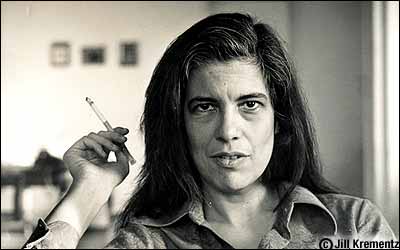
Susan Sontag. Source: nymag.com

For instance, Susan Sontag on her writing routine:

I write with a felt-tip pen, or sometimes a pencil, on yellow or white legal pads, that fetish of American writers. I like the slowness of writing by hand. Then I type it up and scrawl all over that. And keep on retyping it, each time making corrections both by hand and directly on the typewriter, until I don’t see how to make it any better. Up to five years ago, that was it. Since then there is a computer in my life. After the second or third draft it goes into the computer, so I don’t retype the whole manuscript anymore, but continue to revise by hand on a succession of hard-copy drafts from the computer.

[…]

I write in spurts. I write when I have to because the pressure builds up and I feel enough confidence that something has matured in my head and I can write it down. But once something is really under way, I don’t want to do anything else. I don’t go out, much of the time I forget to eat, I sleep very little. It’s a very undisciplined way of working and makes me not very prolific. But I’m too interested in many other things.

One day I want to write a big essay looking at how writing style changes according to how you get the words on the page (I even bought a beautiful typewriter to test that out). I love the idea that Sontag uses layers and layers in her writing and editing: the process of writing on top of writing, of scrawling and scoring out like the palimpsest diary Cathy in Wuthering Heights creates on the margins of a bible. Like Heidegger with his under-erasure being.

I also find it fascinating how people can study and write with music playing around them. I used to be a lover of total silence: a pure space in which I find the need to fill up the void with words. Now I can sometimes do with a bit of ambient sound: coffee shop clattering, birdsong, falling rain and so on. It makes a difference whether you are in the actual space (writing in a real garden or a coffee shop, for instance) or in the hyperreal zone of generated sounds (there are excellent Youtube sources of ambient sound, from whale-song to fire crackling in a grate). One will distract me to write about immediate details, the other soothes you into a weird creative ‘roll’ where you can pour out your words or nonsense like code streaming out in hyperspace. OK, I’m being self-indulgent.

And indeed, there is a self-indulgent aestheticisim to all of this: the endless procrastination involved in selecting the correct font for a piece, the need to rearrange one’s desk or shuffle books or change your pen or whatever it is. Yet there is something more important here that relates to publishing itself and the way literature often gets sucked into a commercial vacuum (think of the likes of the Brownings’ letters or Shakespeare’s sonnets which get beautifully repackaged in time for Valentine’s Day) . The original text is beautified by the paratext, and what is left is perhaps more of a consumer object than a discourse of words and sentences. There is an emphasis on white space, the chic luxury of thick paper and the gaps between printed letters. James Fenton said that, ‘what happened to poetry in the twentieth century was that it began to be written for the page’. But what is this page? Is it the sublime landscape of print paper stretching out its possibilities of unblemished whiteness? Or perhaps the virtual page: the ever-changing Internet archive that risks the dreaded 404, this page is missing; that risks alteration and collaboration and manipulation – and is this not a good thing? It is poetry changing, in transition; undergoing the morphological process of the human into cyborg. An automated computer voice reading aloud, staggering over the dashes and tildas and sharps, the onomatopoeia and enjambment like a child having a crack at reading Derrida. Il n’ya pas hors text: there is nothing outside the text/there is no outside-text (he writes in Of Grammatology).  When somebody reads aloud I imagine the words before me, drawing out of the page like butterflies coming to life; I can’t help it, it’s the way I learned to play with poetry. The world I like is the enclosed, shy space between the black ink and the reader’s eyes, the moving lips so silent.

The Mariner's ship and the Albatross. Source: thestage.co.uk
The Mariner’s ship and the Albatross. Source: thestage.co.uk

Like the ‘fluttering stranger’ that Coleridge observes as a child at school in ‘Frost at Midnight’, words in poetry become strange: there is an uneasiness to them that we cannot quite place. Verbs, adjectives and nouns are not what our teachers told us. You cannot fix them to a blackboard, and anyway chalk crumbles. While butterflies might be pinned down and classified by their colours, words are dependent on each other for meaning. So signification sifts in swirls of dreamy reading, and the mind makes connections. The imagination stirs and sometimes forgets them. Footnotes adorn the margins and confuse us, as they perhaps do in Coleridge’s ‘The Rime of the Ancient Mariner’, where we are driven into warmer but often more perplexing territory, as Coleridge’s gloss is less an academic explanation, and more a multiplicity of voices. At once, he joins in the action, ‘Like vessel, like crew!’ – yes, ‘her skin was white as leprosy’ – and we too catch this virus, moving between microbes of words that open and mutate through the strangest imagery. We shift between and through things with Coleridge’s metonymy, as in the gloss: ‘[a]nd its ribs are seen as bars on the face of the setting sun’. What are we to make of this being, ‘a Death’: an embodied spirit whose translucency both stirs and disturbs and amuses us, all at once? Aesthetics and meaning all blur into one.

Mount Snowdon. Photo by by Scott Wylie. https://www.flickr.com/photos/scotbot

With Romanticism what we often get is the journey, the progression through space, selves and substance, and through visual experiences: the sublime, picturesque and the beautiful. Not to mention the ugliness of Frankenstein’s monster, mirrored in Mary Shelley’s own monstrously patchworked collation of tropes and terrors and texts (imagine being raised on Milton but growing up like Rousseau  – being both Satan and a noble savage – now that is Otherness embodied, surely?). We follow Wordsworth up Snowdon and along the Alps in his glorious Prelude, with the seamless switch between interior musings and the expansive, golden panoramic shot that reveals the gaping ice and mountains, the tracks the subject’s wandering thinness:

The unfettered clouds and region of the heavens,
Tumult and peace, the darkness and the light,
Were all like workings of one mind, the features
Of the same face, blossoms upon one tree,
Characters of the great Apocalypse,
The types and symbols of eternity,
Of first, and last, and midst, and without end.

(Wordsworth, Book VI of The Thirteen-book Prelude, lines 566-572).

Where nature itself merges into one terrifying being, where opposites uncannily forgo their differences to become ‘features | of the same face’ and still the sweet ‘blossoms upon one tree’, we are in a sublime landscape, and then in the pastoral garden. The subject stamps himself upon the mountains, as the mountains are stamped upon him; we recall, with the help of the OED, the varied meanings of the term ‘character’: as both noun (a literary figure of self/person; a sign or symbol used in writing, print, computing; a code; the properties of a substance) and verb (‘to distinguish by particular marks, signs, or features’). Wordsworth’s figure is the self encoded in the text, the lonesome Romantic imprinted in his white sublime of Snowdon, going deep into the very properties of the rock itself. All is viscous, melting subject into object. All is, as Timothy Morton so aptly puts it, a mesh: where there can be nothing ‘out there’, as we are all a set of strangenesses, part of an existence that is always coexistence; and yet we are not simply part of a holistic collective, but connected in our differences, in our mutations that separate, stick and undo us. There are those clouds which seem ‘unfettered’ and yet even they cannot rise above the poet’s vision, the tacky link of aesthetic projection that takes nature from unified cliché  to a space of wilderness in which things move between abstraction and reification, and humans move with them in the ambiguous space between – like those viruses that multiply and mutate, ‘first, and last, and midst, and without end’.

This dangerous, homogenised idea of ‘landscape’ can be undone by thinking of it textually: as a palimpsest too of sorts, where human language adds layers to our understanding, alters our relationship with nonhuman things of the living and non-living. In writing and reading ‘nature poetry’, we are reconfiguring our place in the mesh; just as a drop of colour upon a single Paint pixel shifts the impression of the whole picture.

While Romanticism takes us on these messy forays into psyches and space, in the twentieth century we have, as Fenton has suggested, the poem as object: the poem as visual play on the page. The attempt to make the poem an object, to get to the very basics of objects. Think of Ezra Pound’s Imagism: ‘The apparition of these faces in a crowd; | Petals on a wet, black bough’ (‘In a Station of the Metro’). Think of William Carlos Williams’s notorious modernist poem, ‘The Red Wheelbarrow’, in which Williams’s poetics bring the object into stark and colourful being, like an object being rendered on some kind of graphic design program. Assonance coats our visual impressions so that we can almost taste what we see, the wheelbarrow ‘glazed with rain’. On the page, the poem too is a spilling of rain, of long lines dripping into single words, of basic objects hardening, forming. The ‘red wheel | barrow’; the ‘white | chickens’.

The Yellow Book. Source: http://www.johncoulthart.com/feuilleton/tag/fin-de-siecle/

There is also the lovely aestheticism of the fin de siècle: the beautiful margins and separation of art and text in the The Yellow Book, and of course Husymans’s jewel-encrusted tortoise, which eventually dies from the weight of its ridiculous embellishments. Does a text too collapse under the weight of its stylistic ornamentation? The fashion for minimalism perhaps gives way to this assumption, and yet what about the explosive textuality of Finnegans Wake, Gravity’s Rainbow; anything by Henry James, or for that matter, Angela Carter? Art for art’s sake is not a dip into vacuity, but is necessarily a political statement, a textual position, after all. An attempt to escape the shading blinds of ideology. You might write a dissertation on the politics of purple prose; you might float buoyantly along the clear river of Wikipedia readings.

And now I have lost my place in the forest and cannot find the light again. Birds tweet shrilly and their song is like stars tinkling and various shades of darkness hang in blue drapes from the bowers of pine trees. If I look around I see the jewel of every dew drop glisten and I know that it is twilight. I am looking for something particular: that silent speck of a presence; that which evades me every time I turn over each new leaf. Only I know that I cannot see, cannot see the gathering of these particles; the light is fading and soon the day will close its drapes.

These are just words after all, and who would cling to them?

Some further words:

Derrida, Jacques, 1967. Of Grammatology.

Edgar, Simon, ‘Landscape as Story’, Available at: http://www.lucentgroup.co.uk/the-landscape-as-story.html

Morton, Timothy, 2010. The Ecological Thought.

Huysmans, J. K. 1884. À rebours.

A Wee Note for Burns Night

source: prweb.com
source: prweb.com

Growing up in Ayrshire – in fact, pretty much anywhere in Scotland – you will find that the poetry of Robert Burns is ingrained in your mind from a young age. A chance to make children reflect on both their literary heritage and the Scots language (that nowadays they often find themselves alienated from amidst the overwhelming discursive presence of Standard English), learning Burns’s poems is, I suppose, a great activity for a primary school child. But what about the likes of myself, Hertfordshire-born but Ayrshire-bred? As I grew up in a school just a few miles from Burns’s birthplace, I found myself trying to wrench and drill my sullen Southern accent into a lively Scottish dialect that just wouldn’t fit.

At primary school, I used to dread the month of January because it meant Burns recitals for our annual assembly. Each class would be given a poem to learn off by heart. Sure, there would be explanatory footnotes, but I still struggled over every syllable, my normally sharp reading abilities dulled against the quick wit of Burns’s verse. Every year my mum used to make me practice reading the poem aloud at home and every year I found my tongue tangled over the abrasive turns of impossible pronunciations. I can’t roll my r’s and I can’t make that rasping in my throat that seems to adorn every gruff recital of a Burns poem. I would watch the more dazzling of my classmates stand up and confidently perform the chosen poem, their voices catching all the jokes and lively intonations, and I would feel very stupid. I guess I just didn’t get it.

Until one year, when for no particular reason, it clicked. Oh, I’m sure my accent really was terrible (in fact, I cringe inside thinking of it now), but I decided that year to give as good as I could get. I think the poem we had been set was ‘The Sair Finger’, a relatively easy one, with the kind of rhymes that make sense and dialect words like ‘skelf’ (splinter) with which I was actually familiar. I practiced it over and over, determined not to suffer the humiliation of previous years when I was forced to stand up and read it out in class. Every year, the teacher had to pick someone to read their class’s poem aloud in our Burns Assembly. In our class, it was always the same two boys who were chosen every year (and deservedly to them too), but this year something was awry as the teacher quietly offered it to me. Probably, I think she only offered it to boost my confidence, but even if she genuinely was impressed by the improvement on my Scotticisms, I had to turn it down. The thought of standing up in front of my whole school in my mum’s ill-fitting tartan skirt, shakily twisting my vowels, was just too much.

I guess, in that sense, Burns and I didn’t get off on the best foot. But although I struggled with the linguistic detail of his poems, there was something about the mythology of ‘Tam o’Shanter’ that I’ve always been drawn to. The strange tale about Tam and his horse Maggie and the orgiastic goings-on in the old Alloway Kirk is a gorgeous example of Burns’s mastery of the interplay between dialect and Standard English. In a way, the chief pleasure of ‘’Tam o’Shanter’’ is in the mode of storytelling itself. We get the intimacy of the narrator’s shared perspective with Tam – his empathetic appreciation of Tam’s drunken debauchery – alongside incisive lines in Standard English which both emulate and mock the antiquarian tradition of collecting folktales. Burns’s attention to local detail really put Ayrshire on the literary map – even Wordsworth and Keats made a pilgrimage to so-called Burns Country to pay their respects to the influential poet. I should add here that my flatmate and I have a longstanding rivalry about what exactly constitutes ‘Burns Country’. My flatmate’s from Dumfries, and both Dumfries and Ayr like to milk the Burns Factor when it comes to upping their tourist game. Nobody really knows who has true claim to the title. Also, I should add that the Tam o’Shanter Experience in Ayr (the one before it got renovated) used to be the site of a lovely afternoon hot chocolate on Sundays after a stroll around Rozelle.

Anyway, another interesting point about ‘Tam o’Shanter’ is its weird ending. It isn’t Tam whose punished for voyeuristically dropping in on the Satanic revelries in the old kirk, but his poor horse, Maggie. While watching the dancing witches, Tam (in the only speech he has in the poem) cries out excitedly, “Weel done, Cutty Sark!”, which translates roughly to “Well done, mini skirt!” in modern day parlance. Tam finds himself chased by the vengeful witches over the bridge, but, as servants of the devil, they cannot pass the running water. So Cutty-Sark reaches out for Tam and instead grabs his horse’s tail, pulling it clean off to reveal a bloody stump. The narrator ends the tale (tail) with the strange moral:

No, wha this tale o’ truth shall read,

Ilk man and mother’s son take heed;

Whene’er to drink you are inclin’d,

Or cutty-sarks run in your mind,

Think! ye may buy joys o’er dear –

Remember Tam o’ Shanter’s mare.

So next time you decide to be a lecherous male, spying your pervy eye on a coven of witches, remember that your horse might lose its tail. I guess there’s phallic implications there, what can I say?

Painting of Tam o'Shanter by Alexander Goudie, source: south-ayrshire.gov.uk
Painting of Tam o’Shanter by Alexander Goudie, source: south-ayrshire.gov.uk

But ‘Tam o’Shanter’ isn’t just a poem of comic revelry and uncomfortable sexual punishment; it also contains some beautiful picturesque passages that establish their author as a definite early Romanticist, who went on to inspire the likes of the great Romantic Celebrities (Wordsworth and Keats being key players here):

But pleasures are like poppies spread,

You sieze the flower, its bloom is shed;

Or like the snow falls in the river,

A moment white–then melts for ever;

Or like the borealis race,

That flit ere you can point their place;

Or like the rainbow’s lovely form

Evanishing amid the storm.–

Here Burns blends his beautiful floral metaphors with the quiet violence of time’s transience, captured in the image of the fleeting rainbow. There is a simple spirituality here that connects the human world of consciousness and experience to that of the cosmic and natural worlds, and all condensed into a handful of lines. Although Burns, like William Blake, has often been left out of narratives of the Romantic movement – his work and style, laced as it is with literary and political ambiguities and tensions – I think it’s important to reclaim Burns within our conceptions of this exciting cultural period. While the likes of Wordsworth were in awe over the rugged sublimity of Scotland’s impressive landscapes, Burns was busy recording the authentic idiosyncrasies of its culture, humour and people. These days, when questions of what it means to be Scottish loom large over the rarely dull political skies, Burns remains as important as ever. While Sir Walter Scott (I’m sorry for making the sort of sweeping statements that rile the marker’s red pen in essays) added to the mythology of Scotland as a place of both legal, political, social and supernatural intrigue, Burns chipped in a great deal by immortalising Scots in the kind of deceptively simple but actually complex poetry that warrants his frequent comparisons to Blake.

So in a way, I’ve come full circle towards Burns appreciation. These days, I’m almost always wearing some kind of tartan (largely unconsciously, unlike the obligatory tartan headband I used to wear to school on the day of Burns Night), I work in a restaurant adorned with beautiful paintings of Burns and his myriad lovers, and I’ll be studying his work along with other Scottish Romanticists (indeed, the likes of Walter Scott) for my Romantic Lit course later this semester. Although today, on Burns Night, I forgot to buy whisky, and had toast instead of haggis for tea, I like to think this little article is a tribute of sorts from me.

Find out more!

http://www.rampantscotland.com/visit/bldev_visit_burns.htm

http://www.independent.co.uk/news/uk/burns-night-2015-what-is-it-and-how-is-it-celebrated-in-scotland-and-around-the-world-10001133.html

http://www.visitscotland.com/about/robert-burns/

Autumn Reflections

IMG_1999

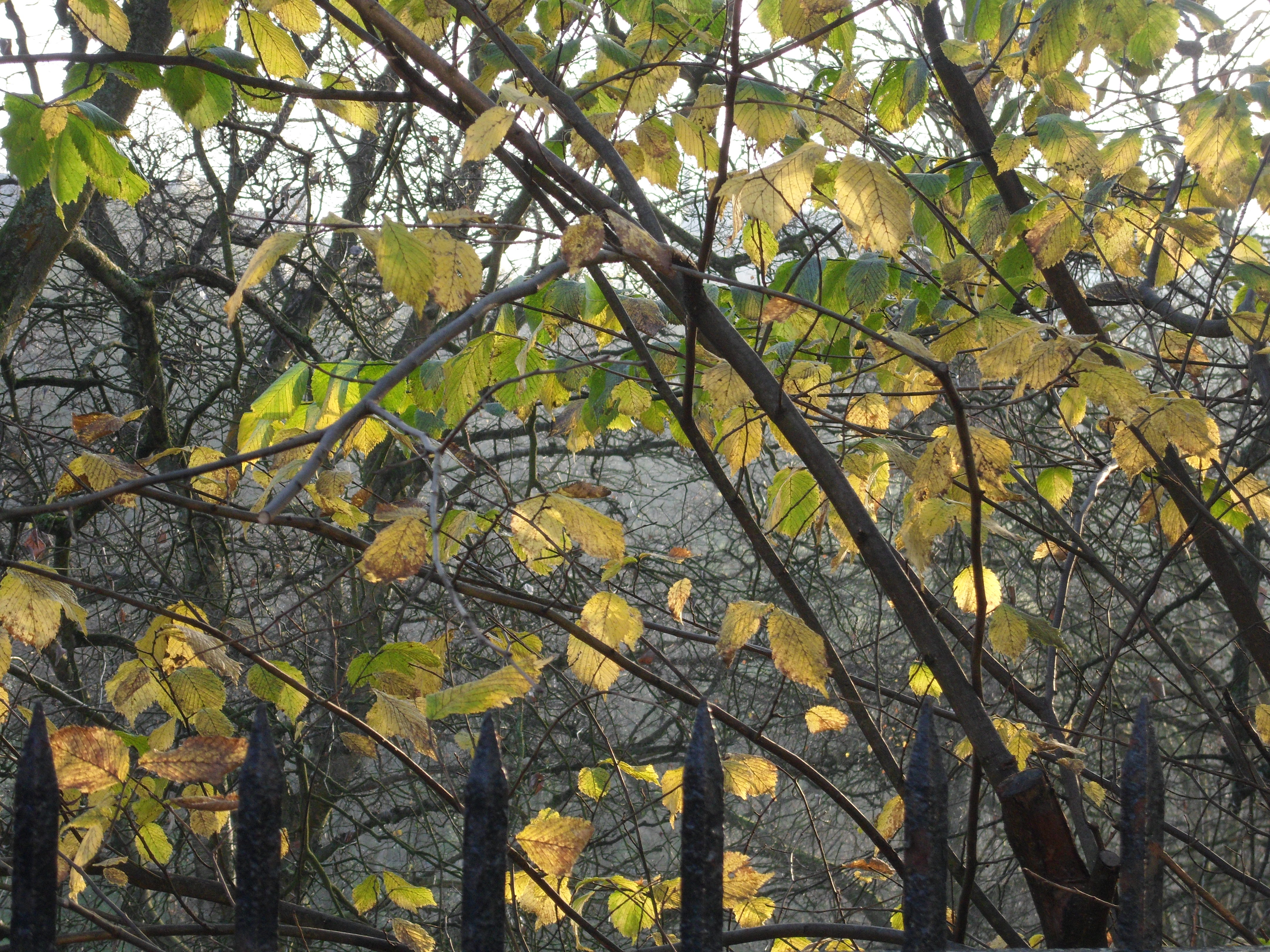
The dawn cracks open the sky like a chestnut, and gold light pours on the concrete and grass like showers of molten topaz. Somehow it’s October and I’m wondering how I got here. Where the summer has disappeared, along with the warm air and the billowing roses, with August and its hydrangeas; it seems time has elasticated itself, and snapped at the strangest of places. Everything may break free now. The world slows down, as trees shake themselves clean of another year. Leaves cascade on the ground, and as I walk I hear the susurrations of their skeletons, rustling like the sound of rain at night.

Autumn is a quiet season. We retreat inwards. Gone are the sparkles of summer voices, the throb of fashionable neon and jet planes soaring to boozy utopias. The Pimms is perhaps swapped for something richer, sweeter, warming. A good cider, red wine, some inventive cocktail combining Kahlua and caramel-flavoured tequila. You think of those people hanging out of balconies, their bare skin glowing in the cold air, the slivery iridescence of cigarette smoke curling from their nostrils. There are the box-sets, the television dinners. Going out is such an effort; it is the not knowing, the tentativeness of the weather. Things would be easier if the sky kept to its promises.

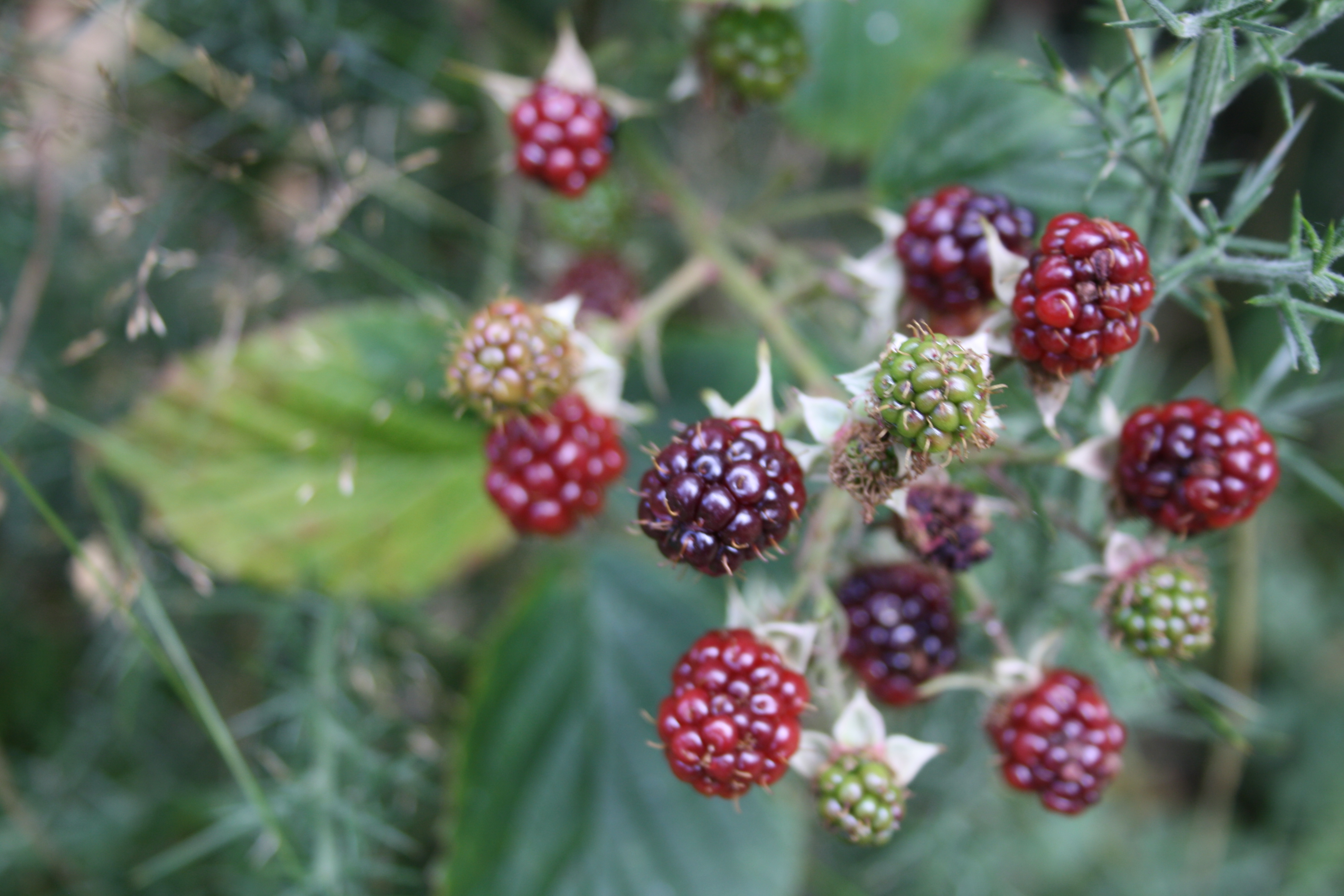
I wanted to go blackberry-picking this year. I found a place along the Kelvin where they sprawl out of the bramble-bushes, poking like fat sapphires through wire mesh fences. I need to find some leafy suburb for conkers. When I was little, we spent the October holidays at my Nan’s in Milton Keynes. There was a copse of horse-chestnut trees and every year we brought back a black bin-bag full of conkers, and I’d shine them up with vinegar and nail varnish before taking them into school. There’s something incredibly satisfying about the way they feel in your palm, solid and smooth, nourishing somehow. I didn’t quite make it in time for the blackberries, but I did the walk again all the same, sweeping my feet through the trails of leaves. Autumn had left its burnished light, a shimmer on the river. I love the feelings of these late afternoons, where darkness is like a comforting hug, handed through chasms of stars and amber.

IMG_1333

Once, we had a school project, to gather up all the fallen leaves we could find and press them into a picture behind glass. A lesson in natural materials, perhaps, in arranging colour. We were flattening the landscape, making art; in the veiny intricacies of each leaf lies a million hidden histories. We’ll never know, and they’ll fade and die eventually.

Autumn is always a time of nostalgia. It is that paradoxical time where death reveals itself through visceral beauty. The life forces of summer unfurl and wither and fall away, and yet there is a beautiful melancholy in the sad palette of reds and golds and browns, the snuffling of squirrels amongst tufts of bracken. Everything is scattered: the husks and roots and fragments. You find them in the strangest of places, tucked not only in forests but flowing out of drains, wedged in concrete and windowpanes. People spend their Sundays loafing with films and Scrabble and roast dinners. Or maybe they don’t anymore; but maybe they did once.

SAM_0240

By September, we’re back at school, back at uni. Fresh starts amidst the fall. Sharpened pencils, the smell of polished leather. The heating goes on for chilly mornings. Socks warmed up on radiators. That was before I had a flat of my own, and became too stingy. The wind, like some malicious spirit of winter, slips through my single-glazed windows, blasts the rose from my cheeks. I make do with the illusory effect of candles, the quick fix of hot water bottles. You can warm anything with the scent of nutmeg and cinnamon, a flash of cayenne pepper. Stodgy soups and slabs of bread. I watch the pumpkins fill up in the shops, imagining a sea of faces, waiting to be painted on. Or carved out. Stacks of apples to be bobbed, pubs to be terrorised by the horrid costumes adorned by students. Halloween is not quite what it was when I was younger. I miss the parties with the clouds of cobwebs and incense haunting the rooms of my house, fake spiders draped from the chandelier; the echoing sound of dub-step, and the taste of vodka and food colouring. Edible brains and blood-coloured fizzy laces. The sugar-rush; the hungover fall and slumber. Soon there’ll be fireworks, splintering pigments across the sky. As ever, I’ll watch them from the high-up floors of the library. Remember being in first year, where I sat on a Saturday night, my eyes blinking at a computer screen as I read Byron’s poem ‘Darkness’, for a seminar. The rockets flared and pinks, yellows and blues blossomed in flowers of light as I imagined his vision of desperate apocalypse.

That same semester of uni I sat in a cold lecture theatre, teeth chattering as I pressed my face into a perfumed scarf, the animated man standing on the podium in a tweed jacket reciting snatches of Shelley:

O wild West Wind, thou breath of Autumn’s being,
Thou, from whose unseen presence the leaves dead
Are driven, like ghosts from an enchanter fleeing,

Yellow, and black, and pale, and hectic red,
Pestilence-stricken multitudes […]

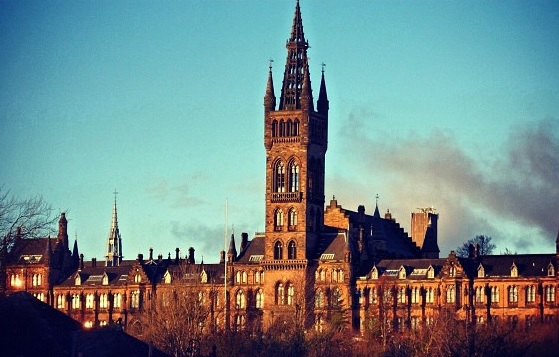
And I, feeling so small and new and ignorant in the world, was sucked in by the spirit of the wild West Wind, not knowing how it would take hold of me and make me fall in love with this city that I have now grown so used to. Fallen into, as one sinks into a favourite old sofa. The ‘hectic red’ is blood-like, beautiful, sinister. Isn’t it lovely, to imagine every leaf a little ghost, cast away from its tree into a journey of exploration and retreat? Wearing the plum-coloured lipstick, the thick mascara and black coat; could not I be one of the ‘pestilence-stricken multitudes’? For autumn is infectious; her colours allure like the striped warnings of insects, the ‘Smoking Kills’ labels on cigarettes…we cannot help but buy her palettes, absorb her force through woollen fabrics…

image source: ladyhollyshawblog.wordpress.com

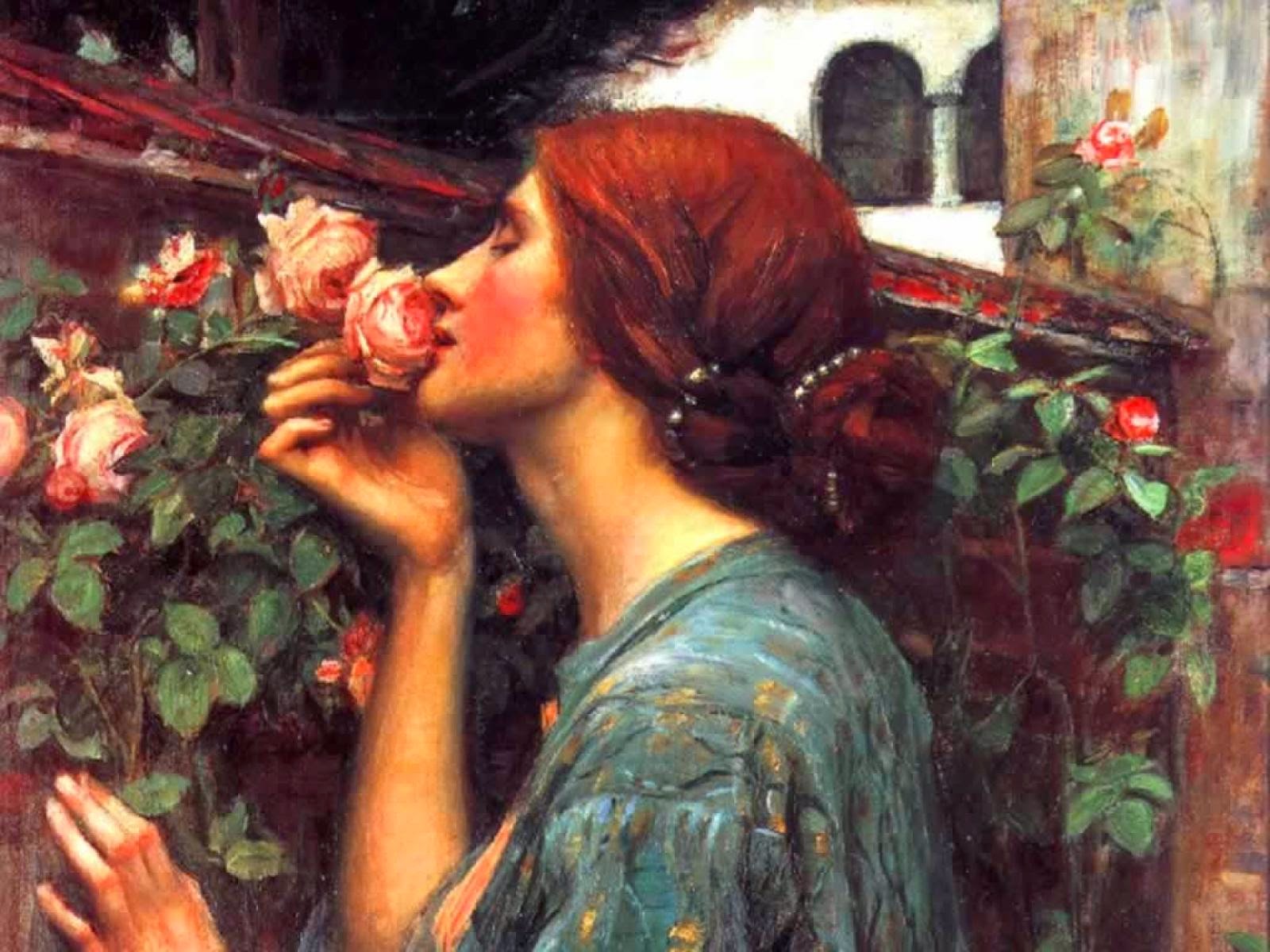
Slowly, it would be nice to become more ginger, adding redness to my hair through soft washes of auburn. I would like to have hair the colour of leaves, as they enter that strangely vibrant stage of fading. From fire to fawn. Can you not imagine the smell of the roses as they wilt for winter, so luscious in the fat of their fragrance? There are roses, still, weathering the rainfall and cold. There are white ones on University Avenue, dripping with raindrops; their petals lie about them like the shredded remains of love notes.

By the time autumn has ended and entered the shrine-like stasis of winter, I will have forgotten my sorrows, finished my dissertation. This is all hope and relief; but isn’t that what autumn is: the sparkle of Christmas festivities on the horizon, the embracing of frugality and calm after a toxic summer? Apple pie, with ice cream and Amaretto, instead of beer and salad? An ethereal, rustic beauty that inspires fountains of poetry? For what better thing to do on a crisp autumn evening, than to sit at the window with a cup of tea, leafing the pages of a book and feeling purer – not just a hipster, defined by the vague fashions of everything around you – but a lost soul re-enacting the perfect scene of reading, as it plays out through the ages. For global warming might prolong the first fall of snow, but for now autumn will always be coming, and there is nothing quite like language to capture the tinctures of foliage, the crunch of acorns underfoot – the endless song of autumn’s calling. Right now it is raining – a luxurious, slow rain that pours through the one o’clock darkness – but next time the weather is good, I will go to Victoria Park and watch the swans, white against the scarlet leaves, the silver glass of the pond.

Unwearied still, lover by lover,
They paddle in the cold
Companionable streams or climb the air;
Their hearts have not grown old;
Passion or conquest, wander where they will,
Attend upon them still.

(W. B. Yeats, ‘The Wild Swans at Poole’).

Ten Things for Autumn: 

  1. Apple Pie Soup http://thesoupfairy.tumblr.com/post/19640840152/apple-pie-soup-literally-my-favourite-soup-ever
  2. Blackberry gin! http://www.deliciousmagazine.co.uk/recipes/blackberry-gin
  3. Burgundy lipstick http://www.cosmopolitan.com/style-beauty/beauty/how-to/a4900/rules-for-wearing-burgundy-lipstick/
  4. Dante Gabriel Rossetti, ‘Autumn Song’ http://poetry.about.com/od/poems/l/blrossettiautumn.htmhttp://poetry.about.com/od/poems/l/blrossettiautumn.htm
  5. Manic Street Preachers, ‘Autumn Song’ https://www.youtube.com/watch?v=Cw9tazfA3aY
  6. Go foraging for mushrooms and fruit, or just fairy-spotting
  7. Cinnamon-stick candle http://www.yankeecandle.co.uk/en/restofworld/shop-by-fragrance/cinnamon-stick/icat/cinnamonstick?setpagenum=
  8. Ginger tea http://www.ecogreenstore.co.uk/index.php?main_page=product_info&products_id=1372&gclid=CjwKEAjw2f2hBRCdg76qqNXfkCsSJABYAycPz_Ug8Seq2xidtaVJGBOBCdbZNqgIe2J0dfvrqB6pGBoCgTXw_wcB
  9. A tartan scarf
  10. The Alasdair Gray exhibition at Kelvingrove http://www.glasgowlife.org.uk/museums/kelvingrove/current-exhibition/Alasdair-Gray/Pages/default.aspx
IMG_0019
mushrooms in Greyfriar’s Kirkyard, Edinburgh

three haiku for tomorrow:

sky of fire opal
opens a new morning of
coldness and woodsmoke.

a new harvest moon:
I could take all these gold days
for some old solstice.

these trees shed apples
to sour in the turning ground
as those other hours.

Wordsworth’s The Prelude and the Death(?) of the Author

Wordsworth’s The Prelude is a pretty formidable poem, not least due to its length. I initially encountered it in my first year of studies as an English Literature undergraduate, within a course entitled ‘Writing & Self’. There was no obligation to tackle the entire poem – we just had to look at a few extracts and try to get to grips with Wordsworth’s philosophy on the relationship between nature, memory and selfhood. Selfhood. That elusive concept; you think you know it, but no – the post-structuralists, modernists and Samuel Beckett have something radically different to say about it. Not going to lie though, I really enjoyed it in the end. The really long poetry? Not so much…

At the time, I was disinterested in the seemingly repetitive obsession with the natural world, what seemed like bland blank verse, and the endless length. However, after studying more recently Milton’s marathon-of-a-poem Paradise Lost, with all its mythical references beyond my grasp, Wordsworth’s doesn’t seem so scary. In fact, I felt the urge to go back to it and think about how my perception may have changed. What interests me about it now, with (hopefully) a little more intellectual maturity, is not only the poem’s emotive value but also the way it sheds an interesting light on some theories I’ve been looking at recently.

Roland Barthes, in a famous essay called ‘The Death of the Author’, argued against the Romantic conception of author as god-like genius held by writers such as Wordsworth:

[…] a text does not consist of a line of words, releasing a single “theological” meaning (the “message” of the Author-God), but is a space of many dimensions, in which are wedded and contested various kinds of writing, no one of which is original: the text is a tissue of citations, resulting from the thousand sources of culture.

The idea that no writing is original, but instead a ‘tissue of citations’ borrowing meaning from the myriad of texts and other references (written or oral) floating in the social world of language has profound consequences for the way we approach literature. The notion that literary texts do not contain a single, ‘intended’ meaning released by the authorial author was posited by the New Critics of the early twentieth-century, Wimsatt and Beardsley. In ‘The Intentional Fallacy’, Wimsatt and Beardsley argued that good criticism shouldn’t try to decipher an author’s intended meaning but instead look at how the poem succeeds in creating meaning through its form, claiming simply that ‘judging a poem is like judging a pudding or a machine. One demands that it work.’ Their definition of what ‘works’ in poetry was that style contributed to substance; in other words, the poem’s metre, rhyme and metaphor evoked the feelings and understandings appropriate to the poem’s meaning – a meaning that should be deciphered, then, not in reference to the author’s intentions but in reference solely to the text on the page. The New Critics, however, differ from Barthes in that they believe a text contains a complete, unified meaning that can be ‘unlocked’ by studying the text, whereas Barthes is saying the text is inherently plural, due to the unstable and intertextual nature of language and literature.

Going back to Wordsworth’s The Prelude, an epic poem defined by its status as the autobiographical unfolding of a poet’s personal and artistic growth (a quest for self-expression famously rewritten by Elizabeth Barrett Browning in Aurora Leigh from a female perspective), seems problematic within the context of twentieth-century New Criticism. How are we to approach a poem that is concerned primarily with the poet’s mind and experience?   A poem that Wordsworth has literally put himself into? The poet himself described The Prelude as ‘a poem on the growth of my own mind’. Is it possible, then, to ignore his presence, and relegate the autobiographical context of the poem to a shadowy distance?

I think the two positions can be reconciled. Wordsworth’s poem may delve into personal experience, but he is by no means the only poet in the world that does so – let alone the only poet interested in the relationship between art and nature. Criticism is used to finding inventive ways of looking at a poem that may or may not involve the poet’s self and life. We could, in the following of Harold Bloom’s ‘Anxiety of Influence’, consider how his use of blank verse constitutes an Oedipal struggle with his predecessor Milton. We could examine the more political elements of the poem, and how they relate to the cultural and social context of the time, or even the complex philosophical ideas Wordsworth espouses.

I myself am interested in the poet’s voice: the way he narrates fragments of experience to build up to the whole of his self, his artistic vision. I am also interested in the fluctuating effects of self-estrangement and unification, and the evocation of memory that permeates the text. Here is one of my favourite extracts of The Prelude:

One summer evening (led by her) I found

A little boat tied to a willow tree

Within a rocky cove, its usual home.

Straight I unloosed her chain, and stepping in

Pushed from the shore. It was an act of stealth

And troubled pleasure, nor without the voice

Of mountain-echoes did my boat move on;

Leaving behind her still, on either side,

Small circles glittering idly in the moon,

Until they melted all into one track

Of sparkling light. But now, like one who rows,

Proud of his skill, to reach a chosen point

With an unswerving line, I fixed my view

Upon the summit of a craggy ridge,

The horizon’s utmost boundary; far above

Was nothing but the stars and the grey sky.

She was an elfin pinnace; lustily

I dipped my oars into the silent lake,

And, as I rose upon the stroke, my boat

Went heaving through the water like a swan;

When, from behind that craggy steep till then

The horizon’s bound, a huge peak, black and huge,

As if with voluntary power instinct,

Upreared its head. I struck and struck again,

And growing still in stature the grim shape

Towered up between me and the stars, and still,

For so it seemed, with purpose of its own

And measured motion like a living thing,

Strode after me. With trembling oars I turned,

And through the silent water stole my way

Back to the covert of the willow tree;

There in her mooring-place I left my bark, –

And through the meadows homeward went, in grave

And serious mood; but after I had seen

That spectacle, for many days, my brain

Worked with a dim and undetermined sense

Of unknown modes of being; o’er my thoughts

There hung a darkness, call it solitude

Or blank desertion. No familiar shapes

Remained, no pleasant images of trees,

Of sea or sky, no colours of green fields;

But huge and mighty forms, that do not live

Like living men, moved slowly through the mind

By day, and were a trouble to my dreams.


A New Critical reading here could look at many poetic elements and examine how they contribute to an overall meaning. Indeed, I think the New Critical approach always has great value in unlocking the text – not in the sense of unlocking some kind of hidden meaning – but in unlocking the nuanced structures and framework of techniques that produce particular effects. Yet this kind of close reading can also go hand-in-hand with considerations of writerly subjectivity and creation, especially for an overtly autobiographical work like The Prelude. Although Wordsworth termed poetry ‘the spontaneous overflow of powerful feelings’, he also noted that it was ‘emotion recollected in tranquillity’; in other words, poetry comes from the self, from a kind of organic inspiration caused by worldly experience, but it is only upon reflection and considered reconstruction that good poetry is created.

Of course, whether poetry comes from the self or not is irrelevant to New Critics, and for Barthes, this notion is flawed since all language is social: ‘it is language that speaks, not the author’, he claims in Image, Music, Text. It is, however, worthwhile to perhaps consider the ‘ghostly’ presence of the author in the text. Barthes himself admits in The Pleasure of the Text that the reader’s idea of the author plays a fundamental role in his/her reading of the text: ‘in a way, I need the author, I desire his presence’. This intimacy between reader and author is enacted as a kind of strangely corporeal, erotic relationship – where the reader desires the author’s body, in a kind of strip-tease effect as the text is unravelled before the reader’s eyes; but also by the reader, as the text is ‘played’ – as it offers up its ambiguities and gaps for the reader to fill in with his/her own meaning. The presence of the author is the promise of meaning. When I read Wordsworth’s poem, and look for meaning, I am not just thinking of the words on the page – inevitably I have some hazy conception of the writer who writes them, the man wandering the Lake District with words whirling round his brain like blossom caught in the wind. Without my sense of the author, I feel as I open the cover of a book, the text seems hollow; I need to conjure his/her presence to enter the threshold of fiction, and of meaning.

This of course applies to certain texts more than others. If I have no real knowledge of the author, I am able to approach a text with a ‘pure’ mind, but even then, I unconsciously scan for clues as to the possible links the text has to other writers and traditions. The text, then, seems always to be situated in some intangible web of meaning, and only sometimes is the author present, a spider or spectre creeping elusively around my reading of the text.

So, back to the ghostly presence of Wordsworth in this extract. Who is he – who and when and where is the speaking ‘I’ – is it Wordsworth, the physical hand, gnarled with old age (and those trips to the Alps) writing the poem, Wordsworth the young boy (returned to in memory or literally re-living his younger self?), Wordsworth the imagined author, behind a desk in Dove Cottage, conjured by the reader’s imagination…Or perhaps all of these, an uncanny amalgamation of identities? Wordsworth himself never lived to see the poem published; indeed, he was revising it again and again until his final years. So we can’t even be sure which temporal Wordsworth was writing these lines. Which words came at which age? When reading, I feel the fragmented sense of time come together in the quiet and consistent flow of the iambic lines. It seems like the author’s true identity, his ‘true’ intentions or involvement in the poem, slip away under the seduction of the poetry and language.

Milan Kundera in Art of the Novel mentions a distinction between poets with and without history. Wordsworth might here be difficult to classify because he wrote both intimate, lyrical poems and also ones which dealt with the politics and history of the time, such as the Industrial Revolution. In the above extract – a mere snippet of the whole poem, which does at points get historical – I’d like to consider Wordsworth a poet without history; the ‘I’ of the speaker merged with both the poet and the young boy who steals the boat. Memory has transformed the experience into a sublime perspective on the transcendent greatness of the world, the ‘familiar shapes’ evolved into ‘huge and mighty forms, which ‘do not live / like living men’. In other words, forms that will not breathe and change and die like humans, but remain in a powerful position of natural supremacy – an existence that to Wordsworth as a developing poet and young man was almost formidable, ‘a trouble to [his] dreams’. Kundera points out that ‘pure lyric poetry lives in feelings’ which ‘are all given to us at once’, but intensify in the mind of a poet. I feel that Wordsworth’s moving account of the transition of the landscape reflects this, particularly as the weighty blank verse and enjambment create that sense of moving, progressive and natural feeling.

Yet it is also a strange feeling, the sensation and memory of terror that recalls in the eye/the ‘I’ of the poet’s mind. The emotions experienced as a boy are part of the bank of material that builds up to produce poetic inspiration. And yet memory is not a film-tape, recording past events with absolute accuracy. It is malleable, subject to revision, always related to the present moment in which it is recalled. Wordsworth called these ‘spots of time’: moments where some flash of previous existence will burst into consciousness – a thought, a memory, a feeling, a scene from a novel, a line of verse, a melody from a song. This strange release of the past into the fiery now of the present can not always be explained, but they are essential, in Wordsworth’s philosophy, for the development of self. As Locke argued, the self is a continual being only through the continuation of consciousness, and it is through these ‘spots of time’ – gaps in the fabric of our present that catch some thread of our past – that our identity continues to be woven together into a coherent selfhood.

And so, in slight relation to selfhood, the idea of genius, or a poet without history. Barthes has destroyed genius, in his destruction of authorship. We can accept the theoretical ‘truth’ or weight of this, but still acknowledge, at least psychologically, some kind of notion of genius. Genius doesn’t have to mean brilliance, but as Kundera’s book suggests, it conveys something special and unique about creative writing, in that it is inevitably in some way produced by feeling – and this feeling is inextricably related to one’s personal experiences, even if the writer is not aware or rejects this in their writing. Personal experiences are unique, and even though language is not, it is our individual way of assembling language in direct relation to feeling and consciousness that makes writing something special, perhaps magical; that makes writers not merely what Italo Calvino in ‘Cybernetics and Ghosts’ calls ‘literary machines’, churning out elaborate patterns of words from the dictionary.

Moreover, and this may link with Barthes’ writings on readerly pleasure, genius can lie in the reader too. A genius that transcends language, the feeling of what Barthes calls ‘jouissance’ or bliss, that occurs when a text ‘imposes a state of loss’ upon the reader. For if the reader is involved in producing meaning from this lost, he/she too has some kind of genius. When faced with the lines: ‘For so it seemed, with purpose of its own / And measured motion like a living thing, / Strode after me’ we are struck with the sudden, lightning bolt connection between past and present. ‘Seemed’ highlights the idea of visual recollection, of memory recalled in the present. The uncanny anthropomorphism of the ‘huge peak, black and huge’ recalls a childhood terror, but also the adult’s terror of the unknown. Wordsworth, the writing poet, cannot recall exactly what made the peak so terrible. It is merely ‘huge’, ‘huge’ – a monstrous presence burgeoning repeatedly in his memory and thought. This strange severance between feeling and meaning is a kind of bliss, and a kind of fear. The loss is what is left out in the mind; just as Wordsworth’s recollection is a distortion of childhood fright and adult ‘trouble’, the reader’s perception of that looming black peak is the facing of an abyss: ‘there hung a darkness’. An abyss of possibility. What is the nature of the child’s fear, why can Wordsworth recall it – what is it in his present moment that brings back that memory? The only way to find out is to trail the poem’s entirety, searching endlessly for clues that connect the ‘stars’ of the poet’s psychology, of the poem’s constellation of meaning. Yet there will always be these chasms, where it seems that meaning is lost – where, as the black peak separates the ‘I’ from the ‘stars’, the reader faces an aporia, a non-road separating the word on the page with its meaning, its interpretation. The author’s intentions are lost, and the dictionary fails us.

I have tried to compare Wordsworth’s experience of nature with the experience of reading, as an activity profoundly connected with both loss and creation, with darkness and strangeness but also the ‘sparkling light’ that seems to seduce us into the bewitching land of literature.

‘To give an Author to a text,’ Barthes argues, ‘is to impose upon that text a stop clause, to furnish it with a final signification, to close the writing’. I don’t think this is entirely true. I think that if you allow the author’s presence, at least at some ghostly level – and this has been discussed somewhere in Derrida’s writing in a much more sophisticated way than I have here – you can open the writing. For the author creates more problems, as a character not quite inside or outside the text. The uniting of the reading and writing self; navigating the text and giving it meaning; facing up to the strange array of images and sounds that lead a meandering path through the poem – that is poetic genius.


Works Cited:

Barthes, R. (1967) ‘The Death of the Author’, translated by Richard Howard, Available at: http://www.tbook.constantvzw.org/wp-content/death_authorbarthes.pdf [Accessed 11.3.13].

Barthes, R. (1980) The Pleasure of the Text.

Kundera, M. (2003) The Art of the Novel. New York: HarperCollins.

Wimsatt and Beardsley – ‘The Intentional Fallacy’. Available at: http://letras.cabaladada.org/letras/intentional_fallacy.pdf

Wordsworth, W. The Prelude. – began in 1798 and published in 1850, the year of Wordsworth’s death.