Time present and time past are both perhaps present in time future: A Year in Review

10350989_10152268098521309_5656240328826622387_n

How are you meant to review a year when the year itself isn’t quite over? You try and think of it as a block of time: a chunk of events lumped together to form some kind of history. You’re always reaching out for connections, trying to box things and label them as such. This was the year I got divorced and found my freedom; the year I graduated and stepped onto my career path to success; the year I lost someone dear to me and found solace in a new hobby. The movies have it all mapped out for us, the way we’re supposed to review the events in our lives. Facebook, Flickr and other social networks that we rely on help us with this theatre of memory, by archiving everything together in chains of photograph albums and status updates. Events are strung together in relation to chronology and names and computer-configured faces; what happened to who, who was tagged where, who liked this and who got married and who had a baby and who got promoted. Every element of time is rendered orderly, linear. Compartmentalised to make us all competitive, individual, empathetic, jealous. We’re moving on a straight line towards goals, achievements – more notches to add to our timeline.

But what end are we moving to? A timeline cannot flow on indefinitely; or can it? Surely it’s meant to document an A to B, a fixed period in time with all the events this period contains (contained). Life, as we commonly think of it, is a series of events strung together only by their relationship to the future, to development and change. We hate stasis; we love drama. Really, as Freud put it, what we desire is death.

Desire, however, isn’t quite as simple as this. Freud, as Deleuze and Guattari argued, ignores the basic tenants of capitalism. The need for more, more, more which arises not solely out of some psychoanalytic lack, but out of production itself. The act of purchase, the mesmerising experience of lifting up some pretty snow globe and spinning it in one’s hand and thinking I would like to buy that. The flicker of a giggle as we take it home, imagining how our new product is going to enhance the life that fills our fragile hours. Fill a room and create new topographies of mental space. For everything we see disrupts our schemas of reality, even if only slightly. The snow swirls up and covers the landscape and for that moment we are free from the chaos around us.

What we are looking for is T. S. Eliot’s ‘still point in the turning world’: that perfect moment where we are at peace with ourselves, where we see through to the present itself amidst all the churning miasma of the world we exist in. The wars and media images, the headlines and celebrity photographs and radio crackle and dance music beating and phones ringing and Blackberries bleeping and all the million signals that flicker in our brain as we gaze into a computer screen. For we are multiple, divided, networked creatures, always-already caught up in swarms of information. Time is not a static archive, but a rhizome of interconnected possibilities that flash and shift and click in our minds.

And what’s more, events in time always come back. The logic of the return. Write a sentence and press the Enter key. We aren’t just running forward into the bright light at the end of some metaphorical tunnel. We follow our lives in a loop. Spilling over and retracing our steps. Think, for example, of a book: meaning is made not from a linear plot, but from the intricate play of signifiers and motifs which weave a melody of meaning throughout the narrative, linking the past and present with a possible production of future. That old New Critical interplay between Fabula and syuzhet.

Real life too. Wars return and people die in the same way, as if re-enacting the past in some big-budget film, tracing archives of pain that carve out a bitterness in history. We stand in the mirror at roughly the same times each morning and perform the same routine. Routine, like it or not, structures our whole mentalities. That’s why culture is formed on the basis of habit and ritual. Religion falls in here too. Are we always waiting, as Yeats suggested, for the Second Coming? The ‘revelation’ that is always ‘at hand’, ‘surely’? Let’s circle back to the start – of the twentieth century, to be specific. Freud says our personalities are determined by the first few years of our lives. Our anxieties now repeat the biological functioning of our infant bodies. Are we so caught up in ourselves that we cannot think beyond our bodies?

***

What does it mean to be in simultaneous temporalities? I write this sitting by my newly-decorated Christmas tree, in the living room where I spent almost every Christmas of my life since the age of three. The smell of pine and the reflection of fairy lights through the window lighting up the pampas grass in the garden. Everything wondrous and dark. Remembering lying on the floor after a day in town drinking Jack Daniels and shivering cold on the bus and listening to Muse’s ‘Butterflies and Hurricanes’ and dreaming of another night so unlike this. The frozen park in November with the roundabout and fireworks and the tall black shadows of the distant trees. Now the steady showering of rain at the window, spraying like glitter under the orange lamp light. Once there were family members sitting where I sit now, all laughing and ripping open presents and drinking sherry. My dog Bella climbing over everything, whining and wreaking havoc with the whip of her tail. I slip through all these memories until they feed my present. I cannot focus on one thing alone. I feel like I am several people at once. I am no longer singular. No longer a statistical person.

What happens when you are no longer one person? There is a politics to this. There are the people that believe in return and repetition. People whose whole religion is based around recurrent events and cyclical time. The solstices of Paganism, then the spiritual systems of the Mayans and Aztecs. This contrasts with the Judaeo-Christian vision of linear time, which starts with Creation and ends with the Second Coming. But what if this Second Coming was always coming? To come? Since the present is contaminated with the future (unconsciously or not, the things we think and do are always shadowed somehow by some possibility to-come), doesn’t this render the idea of ‘the present’ almost impossible? Do we slip into the spirals of Yeats’ gyre and Derrida’s spectrality?

Are we on a road or an ocean? A stream or a snowball?

Capitalism and heteronormativity set out a life plan for us. Find a mate, get married, reproduce, recreate the system. Work, earn money, pay your way. Consume. These are all instrumental processes which work towards goals. Inside these events we make our own histories, certainly, and there is a degree of creativity and fulfillment. We aren’t just pawns. But this isn’t the whole story. Here comes in Judith Halberstam’s queer temporality. What happens to the temporal experience of those who do not follow this conventional route to eventual death? Who fill their lives with more entangled possibilities which are fraught with uncertainties and questions rather than fixed narratives and clear answers…

Remembering his lover’s death from AIDS, Mark Doty says: ‘all my life I’ve lived with a future which constantly diminishes but never vanishes’. The looming possibility of a non-future, a future without hope or action or life, shifts the focus back to the present. Gone are the regular goals of ‘making a living’, ‘providing for the future’, ‘putting something away’ for one’s children. The next generation are often invoked in political discourse. Global warming is dangerous because it will spoil the world for the children of the future. Non-heterosexual relationships are supposedly dangerous because they don’t follow the capitalist ethic of (re)production in the strict sense. Atheists threaten the idea of progression because they do not believe in a future beyond. The list goes on. Sometimes we are unaware of how important time is to politics. If we ‘queer’ time by questioning the validity of its conventional Western linear conception, what kinds of lives can we live in our present political realities? How can we change – perhaps even revolutionise – the system. There’s the old doctrine of Hedonism – live out your pleasures in the present with a general disregard for others and the future. But the present isn’t inherently selfish. It’s a place where people can come together and change things, without being bound to the very isolated narratives of old age and death.

Drugs, jobs, relationships and illness all alter our experience of time: slowing it down, speeding it up, blurring it, erasing memory, making us fearful for the future. As these things become less stable and more unpredictable, how will this affect the future?

Will we have a future, or will it be a series of presents? Can we really look to the future?

Maybe the answer is in science fiction.Think of Ursula K. Le Guin’s The Dispossessed (1974), which explores the concept of anarchist politics through ideas of simultaneous temporality and cyclical return. Revolution and repetition are in operation at the level of both form and content: story and narrative, narrative and story. Time revolves in curious ways around and between two planets, just as a moon revolves around the Earth…but what does the Earth do when you are on the moon? Einstein’s relativity comes to disrupt the easy narrative of linear time, even at the level of science…

Maybe the answer is also in our own experience. Think of a memory. Any memory you have: the first time you rode your bike, the time you fell over while dancing drunkenly on a beach in the freezing winter, the time you lost your first pet to the grovelling paws of death. All these memories do not stand alone in our minds like a physical photograph stuck and labelled in an album; but are rather bloated and blurred with the original anticipation of the event itself, and of the aftermath – the events which have happened since and in turn coloured the original. Repetition is not static but transformative. Moreover, human beings revel in repetition. The simple pleasures of revisiting an event, even if just to experience the same emotions again as they recur in a faded form like a polaroid misted by the breath of time. Maybe that’s why people have children, so they can do the things they miss doing as a kid. And as Fredric Jameson points out, in the postmodern condition of consumer capitalism, nostalgia becomes an industry itself, shaping culture from advertising to film and literature. As our lives get more complicated, faster, information-saturated – we return to an idealised, rosy history that is often removed from any genuine meaning.

***

I always find Henri Bergon’s work fascinating, when I can get my head around it. He was writing around the same time as William James, the psychologist that first coined the term ‘stream of consciousness’, which is still widely used today to describe the workings of our minds but also how these workings are depicted in certain kinds of literature. Yet a stream has linear connotations, assuming that our mind is always ‘in flow’ – moving forwards and never stopping or growing, just streaming onwards. Bergson, however, figured consciousness as an experience of ‘duration’. Think of any moment, any moment as it happens. As soon as you think of it, with a milli-gasp of a second, it’s gone again. Time is always shifting and never static or complete. While science might attempt to chart time in a linear, measured fashion with clocks and calendars and equations, in our psychological experience; time does not easily fix itself to such points. It can only be grasped by imaginative intuition; it is always fallible and contingent, never the same as each moment reconfigures the last, endlessly shifting our experience of the world and ourselves: ‘my mental state’, as Bergon puts it, ‘as it advances on the road of time, is continually swelling with the duration which it accumulates: it goes on increasing – rolling upon itself, as a snowball on the snow’. And so where does that lead us, if not to the icy abyss of our certain deaths?

Well, for one thing, it actually confirms that we are not mechanical beings, destined to follow the path that time lies out for us. Sure, we will probably all die. But importantly, if Bergson’s theory works, we have free will; imagination plays a significant role in determining our relationship to the past and future. The moment is always an evolution, and this gives us a kind of freedom.

There are, of course, a multiplicity of links between return, recurrence, rupture and revolution. The breaking free of history as history is understood in a linear manner, read from front to back like a traditional book.

Literature has a long history of delving into irregular conceptions of time. An example might include Tom McCarthy’s Remainder (2005), in which an unnamed protagonist decides to reconstruct a series of memories after coming into a large sum of money following a mysterious accident. These reconstructions are performed down to the smallest of details: the expression on an old lady’s face as she takes out the bin, the cats that prowl the rooftops, a crack in the wall, the pattern of floor tiles, the sound of liver frying in the flat below. What follows is a topography of static memory, caught in the narrator’s imaginative present. Time loses its linear quality as the past plays out in ‘real time’ with the narrator switching his memory scape into ‘on mode’, hiring ‘re-enactors’ to perform the roles of the people in his memory. And yet an amnesia and aporia haunts the narrative, as we are never quite sure where these memories originally came from; whether they even belong to the narrator. With a book like this, we lose the certainties of the traditional realist novel and the linear movement which often ended so finally with the closure of marriage or death – the first promising reproduction and progression, the latter an ultimate extinction that ends the line. There is something about the novel form in general that links it irrevocably to time; it is not contained in a performative moment like poetry, but must be read over a series of hours or days or even weeks. We physically must turn the page. Days pass in the novel, or maybe they don’t, as in the one-day novels of Woolf and Joyce (Mrs. Dalloway and Ulysses). Novels often concern themselves with memory and futurity; the sheer arrangement of sentences on a page, moreover, takes us through time. Time flows as we read. We make connections and go back again; we are at once linear and circular as we exist as minds in a novel.

But we are now in the era of the great hypertext, which denies all paths to origin in its networks of complex code and multiple nodes. The Internet exists largely in a state of simultaneity, connecting various presents from around the globe. And yet, like Bergsonian duration, it resists a static conception of time; everything about a webpage is always changing as new file paths are forged, different visitors leave their online traces, new links and reposts alter the original location. Life is a labyrinth, but we would do well to forget thinking about what lies at the end. Maybe we should focus on the here and now, and give ourselves the freedom to transform the present.

***

And this year? Well, this year started with a parting: losing my most beloved pet to death. All life is a natural cycle though, as the year ended with two new births in our family. On New Years Day 2014, I went for a walk to refresh my head from working the night before. A man stepped out of the 24 hour newsagent with a bottle of Mad Dog 20/20 and cracked open the screw top to a dream of futurity that ended in drunken oblivion. I feel this is somehow fitting.

Most of my months passed in the library with the seductive glow of the computer stopping me from doing much other than reading and essay writing. I fulfilled both of my somewhat humble resolutions to a) do more creative writing and b) grow my hair down to my hips. I passed my exams and spent my 21st birthday hanging upside down at the park. Went to Dublin and even got a bit tanned and kind of liked Guinness. Saw Little Comets twice, first at Cabaret Voltaire and then Liquid Rooms in Edinburgh. Spent quite a bit of free time in Edinburgh actually; explored the Botanic Gardens and the beach at Portobello and went for walks at Dean Village. Listened to lots of Belle & Sebastien, Manic Street Preachers, the new Bright Eyes album and a heap of other stuff. Bagged an iPod classic before Apple stopped doing them. Had one of my best Wickerman Festivals and ate coffee granules for the first time. In August I went down to England to see family and ended up at Stepney Green, going ‘back to the ancestors’. Drank a lot of ginger tea and did some yoga. Went to Loch Lomond. Averaged about a kilo of chocolate a week, mostly Dairy Milk. Got a blog article put up on WordPress’ Freshly Pressed which was lovely. Went through the referendum and came out a little deflated but unscathed. Also enjoyed the spirit of the Commonwealth Games, even if I couldn’t really give a toss about sport. Saw an amazing sunset on Ayr beach, all alcopop pinks and oranges burning and sinking into the silver sea. Wrote three times my dissertation then another proper word-count-conscious dissertation and didn’t go completely insane. Served Alasdair Gray some brandy and a few months later . Started playing trombone again. Enjoyed one sip of red wine and dyed my hair strawberry copper. Went to a conference call to Peter Singer. Changed my favourite study space in the library…

Yep, as you can probably tell, my 2014 hasn’t been exciting by most people’s standards. But you know, it was a very good year overall. God knows where I’ll be a year from now, having graduated and moved out and hopefully made some provisions for the future. But even if I haven’t, even if it seems that not much has changed, what does it matter when everything dissolves in a series of moments? 😉

10489865_10152315313756309_3620620074657700141_n

Some Reading:

Deleuze, Gilles, and Felix Guattari, Anti-Oedipus: Capitalism and Schizophrenia.

Bergson, Henri. Creative Evolution.

Eliot, T. S. Four Quartets.

McCarthy, Tom, Remainder.

Halberstam, Judith, In a Queer Time and Place: Transgender Bodies, Subcultural Lives.
Inception: Dreams and (Dis)illusion

source: http://oeaf.blogspot.co.uk/2012_05_01_archive.html

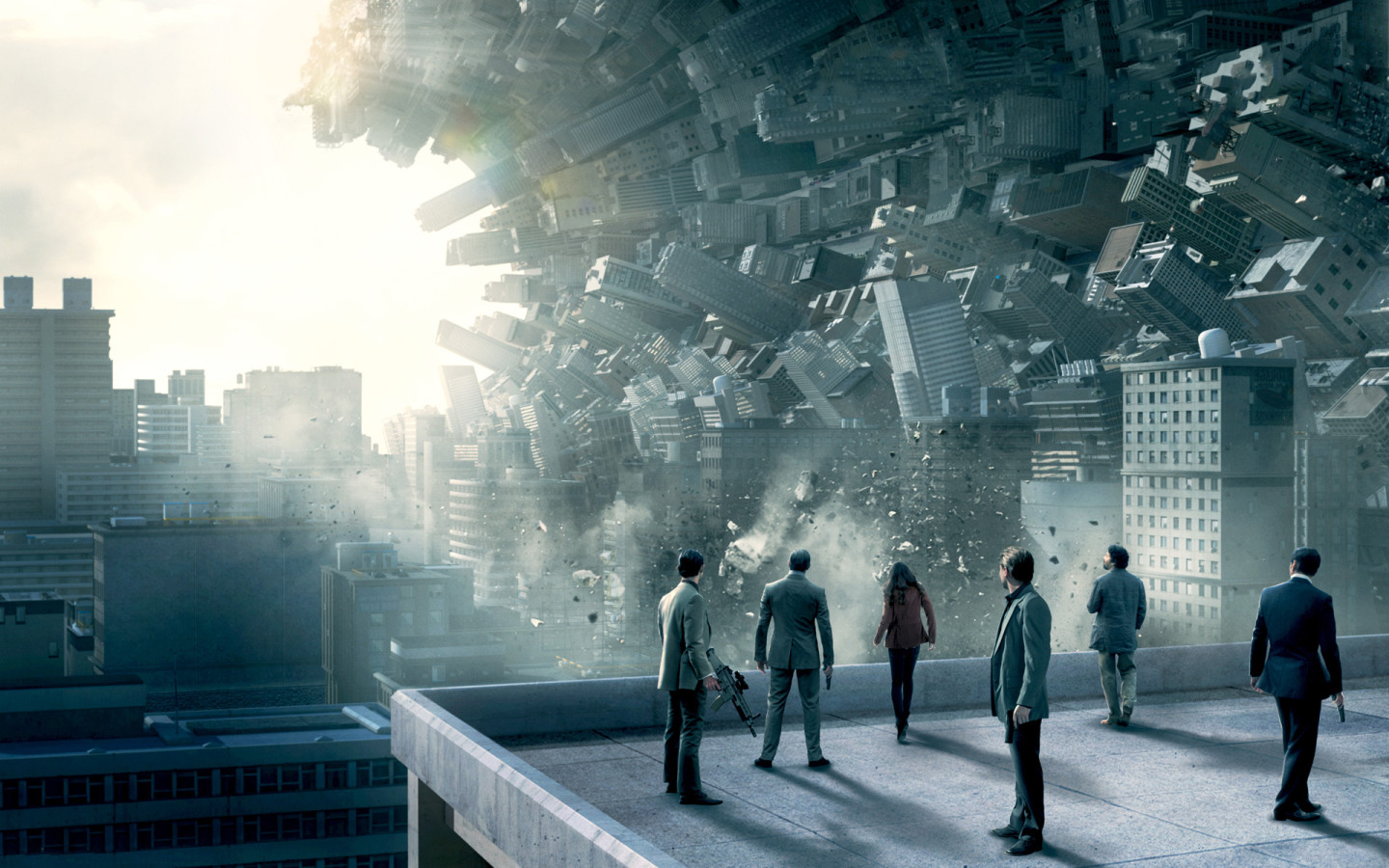
Inception is a film that begs itself to be watched twice. Following what appears to be a complex dual narrative of both emotional turmoil and psycho-political manipulation, Christopher Nolan’s blockbuster success turns on an exploration of the implications of the very personal act of dreaming being appropriated externally as a powerful means of mind-control. Yet whilst the film indulges in Hollywood-acknowledged action scenes – from a gravity-defying fight sequence in a surreal hotel corridor to a car tipping off a motorway bridge – it also diverges from the traditional narrative style of mainstream movies. With the seemingly complicated premise of dream-stealing intertwined with the intimate personal journey of the main character Cobb (played by DiCaprio), the film’s exposition is unravelled in an on-going fashion and so we are plunged straight into the action. The main storyline centres on a deal that Cobb strikes with Saito, a powerful global businessman who proposes that in order to use his influence to let Cobb return to the USA (Saito can eliminate false extradition charges held against Cobb), Cobb must perform the task of inception – a task that takes him and his colleagues deep within three dream-layers in order to manipulate another man’s mind. What is interesting about the film is not necessarily its deceptively confusing plot but the way it is told – the story itself – and the techniques the film employs by meshing the genres of sci-fi, psychological thriller, film noir and heist in order to raise questions about narrative seduction, dreams and the power of the unconscious.

While many heist films unveil their major technical premise at once, as a character explicates the details of the mission to his/her colleagues, Inception works in a fashion that Kristen Thompson calls ‘continous exposition’. In this sense, the aim of Cobb’s team of dream-thieves, as well as the physical laws that govern the practice of dream architecture and inception (the implanting of an idea into another’s mind so that they imagine it to be of their own creation), are revealed gradually throughout the film and during scenes of both explanation and action. The character Ariadne takes her name from the Greek heroine Ariadne, who falls in love with Athenian hero Theseus and helps guide him with a ball of string though the Cretan Labyrinth in order to assist him in locating and slaying the Minotaur. Similarly, Inception’s Ariadne plays a key role in not only helping Cobb to disentangle the repressed emotions regarding his dead wife which continue to haunt him and disrupt his dream work, but also as a pupil of the dream-workers she learns and responds to the workings of the dream-world, thus illuminating the film audience with the features, possibilities and ontology of dreaming through her character.

This gradual unravelling of exposition plays a fundamental role in the seductive quality of Inception’s narrative. Talking about the task of exposition, Nolan explains:

“Exposition is such a massive demand […] It’s something you have to just try and imbue in the relationships of the characters. You never want to find yourself in a scene where characters are passively receiving information in some way, because you don’t want the audience passively receiving information. You want them engaged with that dramatization.”

It is this engagement with understanding, this active involvement in working out the enigma, the puzzle, which makes the film so gripping. Rather than spoon-feeding the audience a fully-blown detailed account of the principles of mind-control, Nolan reveals slowly the inner workings of the machine of dreaming. Information seeps out of the action as characters exchange advice and teachings, and as things do or do not go to plan we are often left to extract our own conclusions about how the laws of dreaming work. This mode of exposition is thus fundamentally tied to the events of the film itself, rather than an intrinsic system of depth which can be quickly absorbed and applied to the film as a whole; the labyrinthine revealing of secrets and mysterious truths refracts from storylines and action across to the revelation of Cobb’s unconscious traumas, so that the audience find themselves caught in a play of possibility and information that moves as swiftly as the characters as they set out on their complicated mission.

I suggest this fast-moving, yet richly-layered form of narrative is highly seductive in its ability to lure viewers in to the depths of the film in a way that relies on the vivid exchange of surfaces, visuals and meaning. Seduction, as Baudrillard (2001) identifies, is fundamentally an ability ‘to deny things their truth and turn it into a game, the pure play of appearances’. One way in which a narrative can seduce, then, is by denying its audience fixed answers, a technique which enables the endless ‘play’ of possible meanings. This draws us in so that we play an active role in the ‘game’ of interpretation, a technique of seduction which seems very appropriate given the often vague and mysterious nature of dreams themselves.

In Inception, there are a lot of deliberate ambiguities, and things that are revealed to be not quite what they initially seemed to be. For example, the question of what is a dream and what is reality. This is a problem that we learn Cobb suffers with, and it is one that is well documented in literary and film history. Whether from overuse of psychadelic drugs, or some form of mental pathology, there have for decades been characters portrayed as losing their grip on the thin line that separates reality and fantasy, dream-world and actual experience. Examples that spring to mind are A Beautiful Mind and Black Swan, which both offer provoking depictions of schizophrenia. Psychosis is also a difficulty that Cobb’s deceased wife, Mal, has fought with. Mal and Cobb spent a great deal of time in ‘Limbo’, a world of endless pure subconscious creation that is formed in an on-going fashion by those that occupy it. It seems by definition to be an abyss of the mind, a place to be trapped in ceaseless possibility – lost in one’s own creative, expansive subconsciousness. You enter Limbo when your physical body is heavily sedated, and either you are killed in a dream or at a complex dream level (in the film, level 3) when you fall asleep. It’s a strange and vicious concept that has a dark allure to it – the suggestion that perhaps when people enter comas their minds are elsewhere, trapped, unable to get back to reality.

When Mal and Cobb finally make it out of Limbo, Mal soon loses the ability to distinguish this real world from the world they fashioned in their dreams. Eventually we learn that this is because Cobb only managed to get himself and Mal out of Limbo by planting through inception in Mal’s mind the idea that the world (at that point, Limbo) was not real – persuading them to commit suicide in order to be kicked out back to reality. Yet the idea that the world was not real grew like a parasite and tormented Mal until she could not accept even reality as reality. She thought she was still dreaming: that her children were just projections of her consciousness, that the physical environment was just a fabrication of memory and imagination. To remedy this perpetual state of insecurity, she decides to kill herself by jumping from their high-floor apartment into the abyss below.

I think this form of suicide poses interesting questions about the nature of consiousness and our self-awareness within the world. To what extent do we really know that this environment that seems so solid and familiar is in fact real and actual? We know what it feels like when we are dreaming: time is sped up, often fragmented (an issue dealt with in Inception, where there is a mathematical formula that encompasses the disjunction between time spent asleep and time in reality, where one can dream for 50 years but be asleep for merely three hours), we wake up when we die or when there is some sort of ‘kick’, which might be something like loud music or physical pain – a jolt that wakes us up. Yet although it seems easy to distinguish dreams and reality, how do we know that there is just one ‘reality’, or that our notion of reality is just an elaborately designed, prolonged dream? It’s a problem that was posed a long time ago by René Descartes, who suggested a form of radical scepticism about the nature of reality. Descartes proposed that all our conscious experience could merely be a dream-state, manipulated by an all-powerful and omniscient ‘Evil Demon’, who could control everything we do and everything around us. This is the famous ‘brain in a vat’ philosophical problem that has been explored in films like The Matrix, and becomes evermore salient as virtual reality and technology advances to provide evermore realistic and vividly detailed artificial environments. What it comes down to is the fact that we really cannot know (or can we?) the metaphysical nature of the world: our knowledge leads merely to a non-passé, or an abyss (like the one Mal plunges into), an endless recursion to the possibility of multiple imagined or experienced realities.

And who are we to judge that the world in the film is reality? What if Mal, in leaping from the metropolis to the dark void below, really did escape to a higher level of consciousness, a real world? The film cuts rapidly in and out of the different dream levels inhabited by the characters in their mission to conduct inception on Fischer, a businessman (to persuade him to break up his father’s monopolying empire – maybe someone should try and do this to a young Murdoch). This technique not only disorientates the audience and imbues the film with a surreal quality but it also highlights how our perception is fleeting, rapid, built up of impressions. Reality, then, is very subjective, and the distinction between psychological reality, the durational experience of time and physical reality with linear clock time. Nolan seems to want to emphasise this ambiguity of experience and reality with the ending, which closes on the image of the only anchor an individual possesses to reality – the totem: a small token whose unique, personalised weight, balance and appearance enables its owner to discover whether they are in their own waking/dreaming reality or another person’s dream – if they are in another’s dream the totem will feel strange. Cobb’s totem is a kind of spinning top, which is set to topple over if he is awake and to continue spinning if dreaming. At the ending, Nolan shows Cobb’s totem both spinning but also provocatively starting to topple. This means we do not know if the film closes with a conventional happy ending, with Cobb finally reunited with his children (mission accomplished) or whether he is simply dreaming about the event.

In the hope of drawing some line between dreams and reality, it is useful to consider the concept of the ‘kick’ featured in Inception. It’s interesting when real-life stimuli enter our dream-world: for example, in the film Cobb is thrown into a bath of water and in his dream water floods in through the windows. The ‘kick’ designed to withdraw the characters from the triple layers of dreams they are in is a piece of music, which resonates throughout each level like an uncanny scent or breath of memory – not just the physical stimuli of sound. I have had many dreams where I am drowning and can’t breathe – the pain physically sears up in my chest, but when I wake up I realise I’m somehow suffocating myself with my pillow! Not only is there some psychoanalytic value in studying what makes us wake up from dreams (hello, Freud), but the concept of the ‘kick’ raises intriguing questions about where mind and body collide, and how much of consciousness is interwoven with all those nerves and neurons to our physical form. Certainly this very phenomenon refutes the now very-dated but religiously popular form of Cartesian ‘dualism’ which proposed the mind and body were distinct forms of matter, so that when the body dies the soul remains and can go to heaven or hell. If mind and body are different materials, then how can they interact so intimately?

On the question of psychoanalysis, the film borrows heavily from Freudian ideas about the interplay between and the role and nature of dreams and the unconscious. The characters in Inception spend a great deal of their time lucidly fabricating dream-worlds and occupying the dream-worlds of others, as well as switching between dreams and reality, that it is no wonder that many of them suffer a mild psychosis whereby the distinction begins to break down. Freud himself deemed psychosis a ‘disturbance in the relation between the ego and the external world’.

In The Interpretation of Dreams, Freud posited that our dreams contained symbols transmitted from the underworld of our unconscious, symbols that represented repressed desires and wishes (usually sexual) that are too uncomfortable or psychologically painful (due to the effects of oppressive socialisation) for us to admit consciously. He says: ‘the interpretation of dreams is the royal road to a knowledge of the unconscious activities of the mind’. So a dream where you steal your dad’s hat could have awkward Oedipal consequnces, as Freud thought that hats were often representations of genetalia. The possibility that you have sexual feelings for a parent is painful to acknowledge consciously due to society’s incest taboo, so instead this desire reveals itself only in dreams.

The consequences of psychoanalysis seem quite profound in unsettling our conventional idea of reality. If so much of our perception of reality seems to be subconscious, this makes it difficult to assume that there is a clear, objective definition of a singular reality, since everyone is driven by multiple interlocking wishes. The central emotional plot of Inception is a psychoanalytic one, as well as a conventional Hollywood drama of a distraught father who misses his dead wife and would risk the life of himself and his team for a chance to see his children again. Dr. Stephen Diamond makes the interesting point that Cobb’s unresolved guilt and anxiety regarding his involvement in manipulating Mal’s psychological state and (somewhat inadvertedly) causing her suicide is projected symbolically in the form of Mal herself, as Cobb’s ‘negative anima’. Mal haunts many of the dreams Cobb creates and makes it difficult for him to do his job properly, as her shadow-like and disruptive figure keeps reappearing in times of crisis. Ariadne, ever the guiding light, at one point takes up the role of psychoanalyst and tells Cobb that the only way Mal is going to go away is if he lets her go – if he resolves his inner conflicts with his memory of Mal.

The ultimate goal of being reunited with his children flickers through the film in the recurring appearance of the boy and girl playing together on the grass with a beam of sunlight. Subtle differences in their appearance occur between the different shots, which suggests perhaps an alteration in Cobb’s memory of them, or the real process of aging they are experiencing – again, a blurring of reality, memory and dreams. In the end, when Cobb finally returns to his children but the camera finishes by focusing on the totem, we are left with the uncanny possiblity that the children may not be real, instead merely (as Mal feared) ghostly projections of Cobb’s unconscious. However, the warmth and joy we gain from seeing this satisfying ending feels real. Does it matter what really happens? I think Nolan employs the ambiguity here to self-reflexively acknowledge the strange status of film as often a vividly realisitc visual projection of reality, portraying visually and auditorily objective reality and also rendering the subjective inner life of individuals. Film can seem all too real, but it is often fictional, and like a dream it is a temporally-compressed representation of reality. When the credits roll and we are suddenly thrust back into our everyday environment, we realise that we have been intensely caught up in this other-world, its visual universe has been painted upon our eyes for the brief time that we have been watching. It has become part of our reality. We probably won’t forget it; we might even dream about it.

Baudrillard, J. (2010) Seduction, trans. by Brian Singer, (Montreal: CTheory Books), Available online: <http://free.art.pl/fotografie/baudrillard/seduction/BAUDRILLARD-SEDUCTION.html> [Accessed 25.01.13].

Descartes, R. (1641) Meditations on First Philosophy.

Diamond, S. (2010) http://www.psychologytoday.com/blog/evil-deeds/201008/inception-art-dream-and-reality

Freud, S. (1899) The Interpretation of Dreams.

Freud, S. (1924) Neurosis and Psychosis.

http://www.davidbordwell.net/blog/2010/08/12/revisiting-inception/

source: http://vegzetmernokei.blogspot.co.uk/2012_10_01_archive.html

Explorations in Nostalgia: Midnight in Paris

file000675462020

Why is there a certain nostalgic quality to rain? Rain can be beautiful to imagine: the quietly rushing sound it stirs as it starts to fall, the peaceful pattering it makes on roofs and windowpanes, the tingle of droplets on your skin, the way it clings in watery beads to your lashes, the sweet earthy scent it trails as it vanishes from the vapory air. Thinking of rain conjures images of afternoons hiding indoors with a good book, of splashing in puddles as a child, of running makeup, of the high romance of kissing outside in a storm, and the satisfaction of coming home, changing into dry clothes and getting warm.

Most people living in Glasgow would be less lyrical about the drizzle that bursts ever too frequently upon the city. Rain can be a pain. Rain can mean struggling with a broken umbrella, feeling cold droplets drip down your back; it can mean delayed tennis matches, ruined picnics and cancelled plans. Yet rain is also one vein through which we are transported smoothly to some heart of our past; often our recollection of events and people is framed by weather, and rain can add a cinematic backdrop to memory that reflects the misted quality of nostalgia. It has a certain sense of deja vu, of transient confusion. I remember being here before, and it was raining. Like this…or was it somewhere else?

Yet rain is perhaps, like memory, never as lovely as we imagine or remember it to be. It is part of our wistful fantasies.

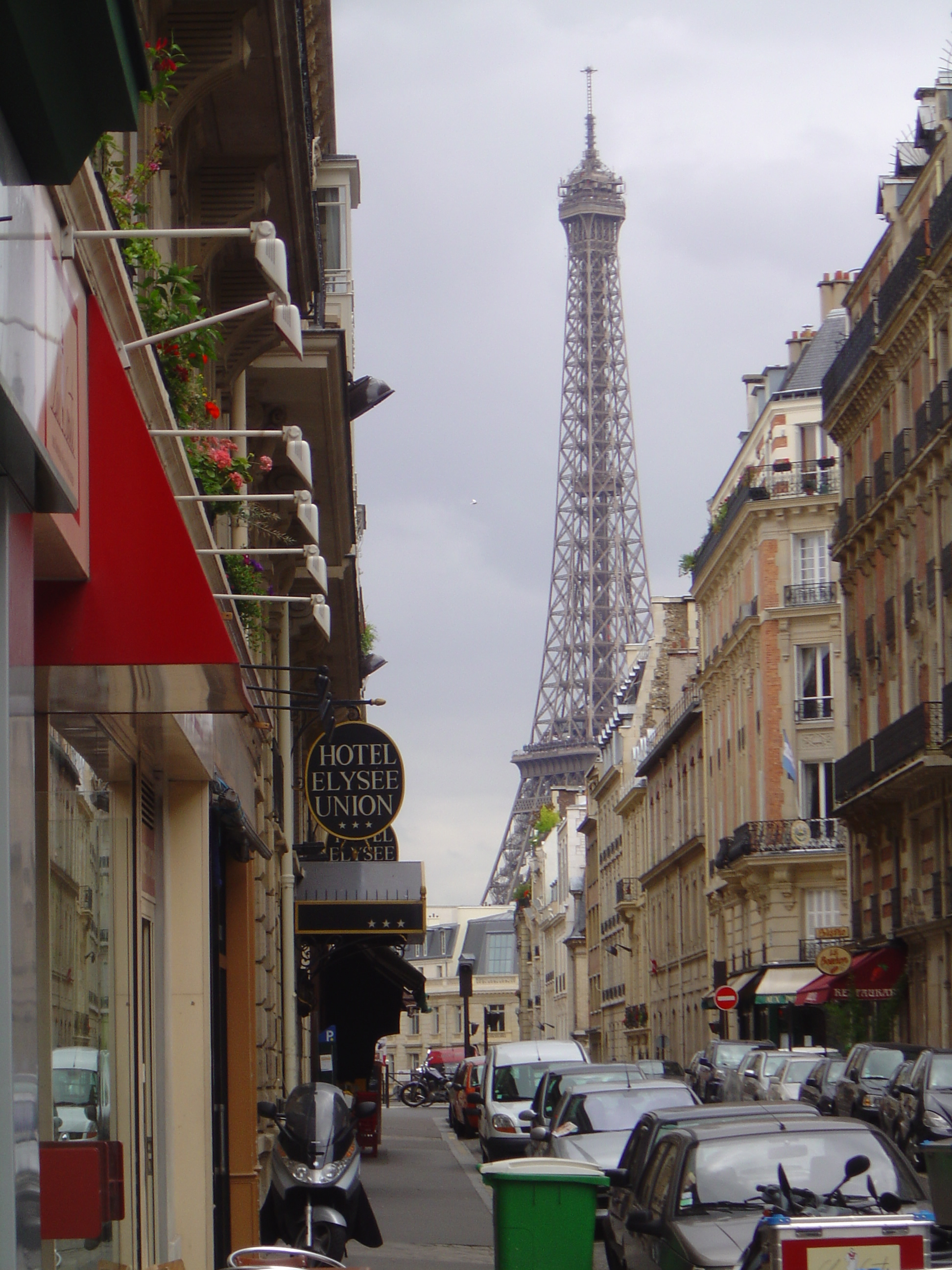
Woody Allen’s film Midnight in Paris opens with a beautiful montage of Paris in the rain, accompanied by accordion music. The shots slip effortlessly between postcard highlights of the city and panoramas of people in the street with umbrellas. It sets the scene for the film’s at times poignant but mostly witty and lighthearted exploration of nostalgia.

I first went to see Midnight in Paris at the kooky little Grosvenor Cinema on Ashton Lane in Glasgow’s West End. An appropriate venue, seeing as it is modeled on an old-fashioned picture-house, with red carpeting, plush seats, vintage interior design, glamour and the availability of wine.

Midnight in Paris is a pastiche of genres, styles, characters and references. Not only does it include an array of (slightly caricatured) figures from the 1920s creative scene in Paris, but it also welds together flashes of political satire with Hollywood rom-com and magical realism.

The film’s protagonist Gil is a Hollywood script-writer discontented with his sell-out job and longing to produce something creative in his writing. Perhaps there is a certain irony here: a search for authenticity staged within a film that is playfully anything but ‘original’. A trip to Paris with his fiancé and her parents, Gil hopes, will provide the spark of enchantment. The first conversation of the film sets up the juxtaposition between the romantic Gil and his pragmatic wife, who appropriately later has an affair with the ‘pedantic’ ‘pseudo-intellectual’ Paul:

 Gil: Can you picture how drop dead gorgeous this city is in the rain? Imagine this town in the ’20s. Paris in the ’20s, in the rain. The artists and writers!

Inez: Why does every city have to be in the rain? What’s wonderful about getting wet?

Already we get the sense that Gil wanders a little too much into his imagination, particularly his imagination of the past – of Paris in the 1920s. Gil’s first actual delve into the past occurs one evening when after the stroke of midnight a strange black cab stops to pick him up, full of revelers drinking wine and champagne. Through this mysterious portal, he is transported back in time to Paris in the 1920s. The film handles the visuals sparklingly well, with stunning 20s costumes, cocktails and the lovely decor of the bars and clubs. It’s all quite magical and dazzling, and we experience the wonder Gil must feel as he is teleported into his favourite fantasy. It certainly got me excited for Baz Luhrmann’s soon-to-be-released The Great Gatsby.

Except unlike us, the audience, Gil becomes a participant in his fantasy, not merely a spectator. Among his adventures, Gil encounters a plethora of characters from the 1920s literary and arts scene, including Hemingway, Dali, the Fitzgeralds, Picasso and Gertrude Stein. There is definitely an element of caricature here, which reflects the play of irony and pastiche characteristic of the post-modern: the film reminds us that these characters are just representations of real figures, who themselves were in a sense self-styled personas, who we knew predominantly through their art. From Dali’s raving about rhinoceroses, to Hemingway’s speeches about war and truth and sincerity, Allen plays with exaggeration to enrich the sense of fantasy and nostalgia. There is a scene where Zelda Fitzgerald is trying to commit suicide because she thinks her husband does not love her and Gil, trying to stop her jumping, tells her that he ‘knows’ that F. Scott Fitzgerald really does love her. Why? she asks. How can Gil possibly know? He’s read all the books and biographies about and by Scott, of course. I think the film here raises an interesting question about subjectivity and literature: what is the real version of events? What is the truth behind the writing? It seems that there isn’t one: instead there are all the fragmented perspectives of those involved, and those who write the books. Right now I’m reading Zelda’s novel Save Me the Waltz, which critics say is Zelda’s version of the semi-autobiographical events of Scott’s Tender is the Night, both depicting the breakdown of minds and marriages, but from the different perspectives of wife and husband. Gil’s attempts to claim that he can know better than the woman involved only underline the absurdity of any narrative which claims ultimate objectivity.

Gil’s encounters with the resurrected ghosts of the 1920s stage a playful juxtaposition of past and present. His quotative use of ‘like’ and his mundane discussions about his relationship to Inez contrast heavily with the stylish and hyper-surreal world he finds himself in. For example, his conversation with Adriana (Allen’s fictional amalgamated embodiment of Picasso’s lovers) about his engagement to Inez highlights the time and culture gap, but also the disparity between reality and fantasy. He realises that there is in fact very little he and Inez have in common, which perhaps suggests that his engagement itself was built on a fantasy. Gil admits that they have a ‘little bit of a disconnect with the big things’ but at least they agree on the little things:

Gil: I will say that we both like Indian food, not all Indian food, but the pita bread, we both like pita bread, I guess it’s called naan.

The likelihood of the super-stylish flapper Adriana knowing what pita bread is, let alone having eaten it, is pretty slim. In addition to this, Gil’s comic response to Hemingway’s question as to whether he’d ever been hunting – “only for bargains” – presents the playful irony of the film’s exploration of past and present, and the discrepancy between the dramatic, larger-than-life lives led by the characters of a by-gone age and the inane realities of the present.

Another funny encounter between past and present occurs when Gil gets into a cab driven by T.S. Eliot and exclaims:

Gil: Thomas Stearns Eliot? T.S. Eliot? T.S. Eliot? Prufrock is like my mantra.

The comedy here is that this reflects how many of us would behave – awkwardly unrestrained – if we were thrust into a world where we could meet our long-dead heroes. There is the hilarious sense that Gil is behaving as a teenage girl would if they encountered Justin Beiber. And yet he is not meeting the teeny-bopper Beiber, but one of the twentieth century’s finest poets (with all the linguistic prestige that entails). The film collapses the language of the present incongruously with the literary visage of the past.

Gil’s general obsession with the literature of the 20s is reflected in his view that Eliot’s poem ‘The Love Song of J. Alfred Prufrock’ is his ‘mantra’. This itself is an interesting mise-en-abyme of intertextuality, as Prufrock itself is a thoroughly intertextual poem, referring for example to Dante. It is also a difficult poem, an internal monologue that follows a complex and fragmented pattern of thoughts which seem to have no definite direction and nor indeed association. Yet its line, ‘Let us go then, you and I’ creates an evocation that resonates throughout Midnight in Paris. It is a speech act, an announcement: let us go. The film itself is built on such a contract of ‘let us go’, asking the audience to suspend their disbelief with regards to the unexplained time travel and enjoy the magic, follow the journey and watch as it restores reality only to thrust us back into fantasy.

Let us go’ seems to suggest an address to time itself – come with me, time, follow my fantasy – but also of linking arms or minds with someone and going someplace else. Time travel can be a solitary or a joint affair. Gil travels back in time to the fin de siecle with Picasso’s lover Adriana, because this Golden Age is Adriana’s fantasy. Here he realises that there is no Golden Age, the Golden Age myth is just a nostalgic longing to escape one’s present: ‘that’s what the present is. It’s a little unsatisfying because life is unsatisfying.’ We tend to travel when we are unsatisfied with where we are right now.

The spellbinding world that Gil occupies by night is by far the best part of the film, and Allen frustrates audiences by delaying these ventures with the mundanity of the film’s present narrative. Gil has to follow his spoilt-brat fiancé around shopping for furniture, have dinner with her ultra-conservative parents and trail around with Inez’s ‘pedantic’ lecturer friend Paul. There are slightly tedious scenes about lost earrings, relationship breakdowns and dinner-table conversations which leave us irritated with the twenty-first century rom-com drama, and desperate, like Gil, for the exciting narrative in the past. These temporal fluxes from past to present serve to delay and prolong the audience’s desire to go back into the past, and so highlight the unsatisfactory nature of the present in comparison with rose-tinted history.

Despite the occasional bore of the present, there are some gems slipped in by Allen amongst the rom-com rubble. These include the parodic representation of Inez’s conservative snobbery and naivety – ‘Inez: You always take the side of the help. That’s why Daddy says you’re a communist’. Also, Gil’s mocking of the Tea Party movement, calling them ‘crypto-fascist airhead zombies’. The film is not entirely an adventure into the past but also an aping of the absurdities of the present – from politics to romantic relationships.

And so back to memory. In the film there is the repeated question of ‘is nostalgia denial?’ Denial of the present, denial of reality, denial of the irretrievability of the past. Nostalgia can relate to more fantastic recollections of a past, a past that was only accessible in the first place through mediation such as literature, film and art – the very instruments of romanticism and fantasy. This is definitely the kind of nostalgia Gil suffers or experiences, but there is another kind of nostalgia that is more personal. This kind of nostalgia was famously articulated by Marcel Proust in his book In Search of Lost Time, in a scene where the narrator experiences an involuntary trigger of memory caused by a tea-soaked cake:

An exquisite pleasure had invaded my senses, something isolated, detached, with no suggestion of its origin. And at once the vicissitudes of life had become indifferent to me, its disasters innocuous, its brevity illusory—this new sensation having on me the effect which love has of filling me with a precious essence; or rather this essence was not in me it was me. I had ceased now to feel mediocre, contingent, mortal. Whence could it have come to me, this all-powerful joy? I sensed that it was connected with the taste of the tea and the cake, but that it infinitely transcended those savors, could not, indeed, be of the same nature.” (Marcel Proust, “The Cookie” from In Search of Lost Time).

This kind of nostalgia is one most of us can identify with: the slightly uncanny sparking of a past personal memory from some kind of sensory trigger. That is how perfume gains its emotional quality, through the way its scent weaves swirls of associations between our past loves, lives and histories, and stirs these up again for us from one whiff in the present. Each time I put on my Body Shop Japanese Cherry Blossom, I fondly and wistfully remember (and long for) my holiday in Rome. As Proust describes it, the unintended evocation of a past memory makes us feel as if we transcend time and morality, collapses our identity ‘this essence was not in me it was me’ and produces an ‘all-powerful joy’. Food is nostalgic because it combines different senses: taste, smell, touch, sight. From your granny’s best soup to those warm chewy cookies they used to make at school, our gustatory pleasures are a minefield of nostalgic resonances.

The point here is that nostalgia is not just an affliction, a slightly unhealthy yearning to escape the present and return to a past that has been forever forlorn in the timeline of history. Nostalgia can be pleasurable, even if the pleasure is a little bittersweet – that feeling of longing and sadness for the person you once were or once loved when you hear the opening bars of an old song. Gil’s nostalgia perhaps goes too far: his novel is set in a nostalgia shop, and he spends his real life dreaming of forgotten times. His fiance accuses him of having a ‘brain tumour’ when he begins talking about the past as if it were real. This is an interesting image, as it suggests something psychologically corrupting about the past: it seeps into the present inevitably and transforms the way we experience the here and now. It is a kind of everyday madness.

Yet Midnight in Paris leaves us with a vision of nostalgia that encapsulates its positive effects. Gil’s decision to break up with his ill-suited fiance, and the final scene where he walks into the rainy Parisian night culminates in a strange blurring of his reality and fantasy. He has finally made grown-up, significant choices, but he has also walked into the sweet allure of a romance that reverberates with his early fantasies of Paris in the rain. It is an elusive, probably unrealistic ending, but this is the magic of the movie. Woody Allen gives us the happy, fulfilled ending we’ve been hoping for – it’s not quite the kissing in the rain at the end of Breakfast at Tiffany’s but the rain still provides an amorous atmosphere – and this ending, quite nostalgically, recalls all the dreams Gil has at the beginning of the film, and all the familiar romance films of bygone times that end similarly. So this is nostalgia: the little dab of illusion to soften the edges of reality.

Further reading:

Nostalgia: Sweet Remembrance. Available at: http://www.psychologytoday.com/articles/200605/nostalgia-sweet-remembrance

Proust, M. 1913-1927. In Search of Lost Time. 

file0001794106155

Media, Memory and Identity

‘Technological advances’, Andrew Hoskins claims, ‘have provoked a re-evaluation of the relationship between media and consciousness’. This statement seems significant, and indeed it captures the whole uneasy feeling many of us have when we reflect on the impact technology has not only on our lives, but possibly also on our minds. My everyday routine, my memory and my relationships now seem to be inextricably related to and even structured by the digital technologies I use – and I’m not even a fully-fledged techno-addict.

In this article, I want to talk about the relationship between media, memory and identity. It’s something I’ve been looking at for my sociology revision and finding increasingly engaging as I make connections between the notes I’m reading and the reality of the shifts that seem to be occurring around me in our tech-suffused society.

Firstly, memory. How do we conceive of memory? Often the metaphor is a film-reel, storing a long roll of images that go all the way back to childhood, as if our whole past is wound up in a spool that can be unravelled at will in order to access a particular memory. However, this model has for a while now been discredited by psychologists. Memory is in no way a permanent storage: it is not fixed and unchanging. Instead, our memories are dynamic, imaginative, shifting: always constructed in the present, taking on a new shape according to the context of the here-and-now. My memory of what I did last weekend is contingent on the related thoughts I am having today. We find memories are triggered by association, but to what extent do they become distorted in the process – and what role do the media play in this?

An interesting and well-known phenomenon which accounts for the relationship between media and memory is ‘flashbulb memory’, a term coined by psychologists Brown and Kulik in 1977. Flashbulb memory refers to those highly vivid recollections which have a distinctly visual, often photographic quality. They can be personal or shared. For example, a personal flashbulb memory for me would be perhaps moments when I was told a loved one was dying – those strange unaccountable memories of sitting at the kitchen table, distinctly remembering the maths homework I was doing, are such flashbulb moments, retained for their strong emotive value. My memories of exams also take on a flashbulb quality, probably because exams are significant to my life as a (conscientious) student. Yet these memories aren’t always first-person: often I see myself objectively, writing away sweaty-palmed at a wobbly desk, which is an indication of the malleable nature of memory, as obviously I didn’t experience the event in camera-eye-view.

By comparison to individual memories, a shared flashbulb memory is one held and accorded significance to by a whole community. There are lots of examples of these: the assassinations of President Kennedy and Martin Luther King, the fall of the Berlin wall, and perhaps most obviously in recent times the terrorist attacks of 9/11.

Unlike personal memories, what all of these ‘shared memories’ have in common is their highly mediatised quality. The latest episode of Mad Men depicted public and private reactions to the assassination of Martin Luther King in 1968, and the show also examines the reactionary context to the J.F.K shooting in a previous series. What is notable about both representations is their emphasis in the role of TV in broadcasting the present as an event which accords meaningful significance to the whole community, bringing together a nation or collective. There are many shots of characters staring in fear and sadness at their tiny 1960s television screens, of characters weeping and switching the telly off, unable to bear the perpetual presence of the news. As watchers of the fictional series, we become spectators of spectators, a mise-en-abyme effect which conveys the emptiness of representation, the impossibility of the visual at reaching the event itself. Our present and the 1960s past coalesce in a fusing of fictional and historical time and representation. Again, this occurs all on television – it is all contained in the visual. The show thus highlights how vividly images construct our past in the present.

Indeed, many people if asked in an empirical study will say that they have a distinctly visual recollection of such events. One study found that those interviewed retained the original memory of the J.F.K. shooting by referring back to the video of him actually being shot, yet it turned out that this wasn’t broadcast until five years after the event. This indicates that our memories are reconstructed by the media. In my sociology tutorial, someone said that their flashbulb memory of 9/11 was being at after-school club and watching it on TV. Later, he reflected, he realised that there weren’t any televisions at the club, and so his visual recollection of the towers coming down must have come from subsequent viewings. The impact of television news, especially 24-hour news reels, Hoskins (2004) argues, is a ‘collapse of memory’, where the past becomes a perpetual present. Television is ‘always on’, and takes on an ‘ambient quality’. We have the news on in the background while we do the ironing, while we study. It’s on at the gym. Perhaps it’s on where you work, and even at the pub. This creates a sense of the all-pervasiveness of the present-as-past, especially as recent events are immediately constructed through the past by television news.

This works through what Jenny Kitzinger calls ‘media templates’. These are frameworks adopted by journalists to represent a current event, using tropes, headlines, images and other signs drawn from past events. The consequence of this is to make a semantic connection between the two events and draw them under the umbrella of an overall message. This can occur even when there are stark dissimilarities between the events in question. For example, Hoskins and O’Loughlin in their book War and Media draw attention to the media representation of the London 7/7 bombings in 2005, which used the ‘Blitz spirit’ template in an attempt to show collective unity against the ‘enemy’ terrorists. These included The Sun headlines: ‘Worst since Blitz’ and an interview with an actual Blitz survivor still living in London who said: ‘the Germans couldn’t destroy us. Neither will these terrorists’. The presentation of a familiar ‘us and them’ mentality, and the idea of banding together and getting on with daily life in spite of trauma was created by linking together a past and present event. Yet the everyday reality of London in the aftermath of the bombings was a far cry from the determined persistence of the city during the Blitz: at the same time as linking the two events, the media also detail how shops were closed and the streets were empty following the attack.

It seems, then, that the media play a key role in taking control of the public consciousness in times of crisis. Not only do they provide the instantaneous visual material which gives us a sense of the iconic elements of an event, relegating them to an on-going past, but the media also frames these events in familiar narratives by drawing upon previous events and stories. In doing so, the media provides a kind of (albeit artificial, as many of these events may be different in key ways) historical continuity. A continuity which seems to blur the past and present in a diffused mediation of the present through the past. This is a possibility accelerated by the advances in technology which allow the media to provide more immediate frameworks in their real-time broadcasting of events. What we think are our personal recollections may in fact just be a build-up of visual and aural data transmitted to the media.

So much for memory and television. What about the internet – that most elusive and colossal of interactive archives? It is the internet which is transforming our psychological relationship to technology. The internet provides a forum for contested representations of key events: people can challenge the dominant view of current news provided through TV by posting comments on online newspaper articles, and so-called ‘citizen journalism’ in independent blogs, news sites and a variety of other canny uses of social media.

Yet the internet’s involvement with current events is also coupled with its collapsing of present and past. Web-pages are not static: they can easily be edited, added to, or taken down when their owner runs out of bandwidth. Concerns grow everyday about the power of hackers to tap into the ‘official’ social media accounts of organisations like the BBC and broadcast strange messages. Messages which can then be deleted, but will live on in other people’s computer archives and internet history, the screen shots they snapped and saved for future amusement or reflection.

While this bears profound consequences for how we conceive of wider social knowledge, it also impacts on our self. The internet as readily-accessible archive has changed our memory. In a pre-internet age, our sense of self also depended somewhat on our ability to forget. How could we move on from those awkward teenage years or that failed relationship, if we couldn’t put the Goth makeup, yellow skinny jeans, photographs and letters away in a box to be forgotten? With the internet, our past and present are diffused, as our selves are scattered in so many fragments of fleeting words we leave online. Geoffrey Bowker calls this presence of self our ‘paraconscious’: ‘the massive sets of traces of my past that I have randomly accessible to me’. Random access, a term I recall from Higher Computing (oh the joys), is the ability to access something instantly, without having to rewind like a tape through everything to reach it. With a quick Google search, I may invoke and revisit the undead graveyards of my past, all those myriad blog comments, Piczo accounts, my Myspace account; hell, even my Neopets account. And what will I find? A lot of things I probably won’t even recall saying. Language and text – the embarrassingly overused ‘=]’ smiley, the all-pervasive ‘lol’ – that no longer characterise how I write. This ‘cognitive dissonance’ threatens to undermine the stability of our self-concept. It’s like reading an old diary entry and realising your thoughts have changed radically since then, or recognising the strange handwriting with an uncanny feeling that it is not your own. Yet while a diary is an object that can be stowed away, relegated to the past, with the internet, your old self remains, hauntingly, as a perpetual presence. Just as your ex-partner remains, dormant, as a Facebook presence, waiting for you to go back to and resurrect with immediacy the past.

Databases sort our identities out for us. They organise our lives according to tags and categories of names and places. They suggest networks or groups we should join which accord with our apparent interests. I upload a photo and tag its location with ‘Glasgow’ and I start getting invitations to ‘local’ networks or online websites for restaurants, clubs, shops. Databases direct us to new things we should buy with ‘targeted ads’. Our whole selves are assembled online in a way never before possible. And so we ourselves begin obsessively to record every element of our lives: photographing gigs, snapping our meals and uploading them with the delight of vintage filter to Instagram, confessing our rants and sins on Facebook statuses, documenting a running commentary of TV shows on Twitter.

What drives this compulsive archiving? For one, it is the sheer ease at which everything can be uploaded with today’s portable technology. Yet it also goes back to a psychological phenomenon, a paradoxical negotiation between the Freudian concepts of the death drive and the pleasure principle. In Archive Fever, Derrida claims that in archiving, one is driven to conserving the present from eradication (the pleasure principle), and the other is a drive to destruction and forgetfulness (the death drive). We simultaneously put things online because we want to preserve a thought, feeling or event, but also because we want to consign it to the past, as if it will eradicate our need to monumentalise something. Rather than constructing a narrative, the stuff uploaded on the net can also be scattered: images appreciated as beautiful or meaningful in themselves rather than linked to a particular event, images that seem to destroy their initial meaning even as they create a new possibility for interpretation. I see this in Tumblr, where images are endlessly reblogged and given new captions and interpretations by different users as they are presented within the paratextual surroundings of various user ‘themes’. An image of a young woman in a dress can take on different meanings when it is placed in a personal journal, fashion or pro-ana blog.

And so where does this strange archival technology leave us – in the hinterlands of the internet, what exactly is the past, and what the present? I would argue, as Hoskins does, that memory has in the wake of new media ‘collapsed’, in the sense that everything from the past can instantly be re-deployed in the present, transforming the past at the same time as shaping the present through the past. This applies not just to key historical events, but to the everyday cultural images and personal confessions, the vortex of text and pictures circulated around the web which can be copied and pasted, re-blogged, re-visited in the present. The internet has an immediate sense of presence, in its very nature as a fluid, hypertextual network, where old pages – the dregs of individual, organisational or cultural history – are available through random access hyperlinks and web searches.

Furthermore, since we are now ‘always on’, carrying the web in our pocket with smartphones, this state has accelerated to the point that we are continually constructing our past in a perpetual transmission of expression through social media. We have instant access to any information we need, so that our memory is always being transformed as we leap back and forth between the archive and the present, creating an on-going knowledge and construction of history as present. As Geoffrey Bowker so astutely puts it: ‘it is so easy to leave and to assemble traces that we are developing a kind of universal prosthetic memory’. And I wonder, is this a good thing, allowing us to foster a more fluid sense of time, space and self, or are we merely becoming data-fixated cyborgs?

Works Cited/Further Reading:

Bowker, G. (2007) ‘The Past and the Internet’ in Structures of Participation in Digital Culture, ed. by Joe Karaganis, New York: Social Science Research Council, pp. 20-38.

Derrida, J. (1998) Archive Fever: A Freudian Impression, Chicago: University of Chicago Press.

Andrew Hoskins has an extensive amount of writing on the subject of media and memory, but some of the articles/books I’ve referred to include: ‘‘The Digital Distribution of Memory: Memory on-the-fly’, ‘Television and the Collapse of Memory’ and his book with Ben O’Loughlin, War and Media (2010).

Kitzinger, J. (2000) ‘Media templates: patterns of association and the (re)construction of meaning over time’ in Media Culture Society, Vol. 22 (1), pp. 61-84

Law, B. M. (2011) ‘Seared in our memories’, Available at: http://www.apa.org/monitor/2011/09/memories.aspx