I love alcohol, the gloaming of the blood that makes time an arcade.
Somehow, lately, I have been unable to drink myself into drunkenness. Everything is a spritzer whose taste effervesces like the further most points of the sea at sunset, those glisters of peachy waters which seem almost to fizz beneath the pleasure of light. To think of that expanse as the body’s active limit, like the horizons of video games, whose traversal would teleport you back to some familiar, originary location. Flip away. Endpoints as triggers for reversal. To travel outwards, to raise yourself clean into movement. To make of the body its own hypothetical. It’s like I want only the blueprint potential, the colours and geometries.
The waves move against me. I do not drink.
Queue, Free Love (FKA Happy Meals) ‘Pushing Too Hard’. This ultra-dappled, smiley-faced italo-disco is a sort of vertigo. I mean I am spinning silver in its listening. Emptiness requires its own containment. To dance in parallels then pirouettes, to queue time upon time’s arabesque. To oooooze. The little eddies of the ocean still swallowing, the sun ravelling down like residue soda. Whatever direction you make into ceremony, pleasure.
The bunching of muscle, where sun hits the boulevard. Where the boulevard bursts into its many discographies of water, inclined to times beyond and before, a gradient popularity of passengers and travellers, nomadic ravers. Where the boulevard is not a waypoint but the lengthy stretch of hypnosis itself, an astral plane into sunlit ethers.
The very word boulevard, a sort of ferric opulence unfolding a hazy, urban sprawl.
All of this wayward July, and the synths so warm on my skin, and every conversation a twirl of hyperbole. I wanted nothing of night again, as night was just the day’s refresh and erasure. All through the summer, the air so syrup and seething.
I book the overnight ferry, I dream of a world without timetables. The tide sloshes over me and it is sleepless, and it is heat.
This is rich-text. All of oddness. I’m just so much happier at four in the morning, in the priory of sunrise. Missing you.
Cherish the currency of friendship, however the slightest touch is a glorious misreading. Miss reading, I’m missing. Mist between the one and the two and same, faintness of incense that is. The body unshowered, the mist of heat. The endless messaging dew drops of moisture; your pearly brow is beautiful. It isn’t as though you could shift sentences for me. I’m just as weak.
Suzanne Roden of Free Love sings sometimes in French and slips between two languages, the language of the one and the other, the foreign tongue as love in transition. The lively nuance of melodic translation. To stretch meaning, to make of its pulse the possibly unmappable. We listen and maybe we don’t quite need to understand, we just need the potential of passage, its affective route per semantic reach. Glossing Derrida on love, Maria-Daniella Dick and Julian Wolfreys write thus:
Love calls on us to be responsible in coming to map the unmappable, to be open to the possibility of the impossible, and the possibility of this impossible experience is that, in short, which is between us, and which remains: to come. Love is always just this exemplary passage between tongues, in what is foreign, other in the language one calls one’s own.
There is a healthy cascade of reverie. There is browse and incline, click and encryption. The love that you seek. Every pop song is of course love’s expression, the fluid joy of a ~solid~ ego; and yet to map that point of dissolve in which this ego is the melt-point of ipseity’s porous limit, is that not the deferring impulse of disco? Strike through to jouissance. The repetitive beat, the multiple oscillating climaxing motion; the avoidance of pop’s inevitable, normative denouement; the queerish musing deliciously around fulfilment; the rhizomatic overflow of the senses!
Stay mercurial, baby. In cool arousal, in sluicing.
‘But I love you despite the boring terrorism / of particularity / fading like parity’ (Keston Sutherland).
Your forehead is hot. It is glass for the shattering. We are fashionable and hackneyed, practicing lunacy where the beats scream and are again crass in their lust and elation, their confinement to time and place and the pulse of this darkness.
When my irises bleed, is this a form of eschewing the present? As in, swallowing an elsewhere unseen to the other? We see our eyes outside, in the comedown glow of street lamp smoulders. We the parts of our bodies as an archipelago, every isle slowly swallowed by rising water.
This tectonic pulse, this encompassing warmth.
You’re pushing too hard. And so language is physical, and so is literally thrust in, into, the armoury of love. I will not say weapon, I will not reduce a necessary plural to the singular tool, the implied signified of the phallus. The piercing. My eyes become pliant.
Make of the air her dulcet voice, over and over like rain’s refusal. Make of this moment a lightness, a smoothing. Trace little bumps and ripples and glitches; the motion is softcore, resplendent’s true sense.
Love is also the coveting of blindspots, those absent locations of self’s abyss which lie adjacent to the lieux de memoire recognised as the sites of love’s memory, of memory’s happening in love. Love as process of betweening, as immersion. A feel-good, a good feeling. The prolonging of ephemeral sensation in an act of imaginary narrative, its plights and highs and necessary zigzags. Act within capitalism, act without; act as pop’s dazzling detournement. So here by the convenience store we kissed, so here by the river; so at the window we shared cigarettes in a friend’s apartment, by the ersatz palms, so these screens between us, so the niche forums that served as our weird, oblique interface; so here where the road slumps into a junction, so here at the station where you had to go. A whole topography of abstract thought, remix it. Drink it. So memories of mountains, so sharing the lakes we made up in memory; that you swam in, the lakes I walked round as a child, the heather on hills where ashes were scattered. This interface, these blue messages. Blue irises. The shape of a letter impressed on a map. The silent valley, its conclusive basin of time; where life is swallowed. I memorialise a thought, the quality of light in August, its paler gold among green; whose green is mortal again, whose green is set to fade. Your pupils resolve all green of the iris to blindspots, they mop up the blue with the black of sleep. And to sleep as equals is to forget the self, to wake in a room between rooms, to find yourself caught as other again, your room unfamiliar, the room never yours even less so now. The very first utterance of morning might break the spell. How the sky looks different through your open, solar window!
And I’m not the one to help you / Although I’d like to tryyyyy.
Clatter and wave, video game imperative to action and motion. Soundtrack the heat. Make reverie of weather. The production is so acid house. The production inclines toward dance. Externalise the internal. Naturalise the natural. A certain elasticity of underlying beat, as if bass were the hum of the blood that produces affect. As if it were all that reducible. As if in that energy. Make our mammalian restraint ethereal.
The Quietussays of Free Love’s music, ‘Their vision is a utopian one, influenced by rave culture, Eastern religions, politics and magic’. To unhinge love from its possessive sense, love becomes an ambient tone in the spread of the days between days which we count in love, if love is a sense as any other, an orientation between things, between selves, the one and the same. If love is something… that something within us must export to numbers. How many days has it been, I’ve been thinking all week… Here are our figures. Crunch on a sort of krautrock lingering, the impersonality at the heart of euphoria’s insistent heat. Free Love have used drones before, meditative, balearic beats. It’s a process of seeking the nuanced frequency, the cleaner hum of Being, what might spread into an open future, something bright to seize. Design your consciousness for different realms, just feel the synaesthesia of speculative situation. The future’s flirtatious, maybe it speaks French. It’s a bright pink, cherry-red electric French.
In his spectacular tome, More Brilliant than the Sun: Adventures in Sonic Fiction (1998), Kodwo Eshun talks of how the subaquatic techno-duo Drexciya ‘fictionalise frequencies into sound pictures of unreal environments […]. They fictionalise the psychoacoustic volume of a giant submersible’. ‘Pushing Too Hard’ implies a current out of sync with its destination, an unbalancing in the passage between entities. A kinetic effort. Disco’s warm flicker invites that spiralling back to aporia; not a giving up in the sense of seduction’s failure, so much as surrender to the unknown and its cheeky, distinctive flourishes of acid, italo, proto-house all drenched in funk. I don’t pretend to understand French; my language is literally standard grade, processed only to that limit.
But I pick up some terms Suzanne sings:
L’avenir: future, future, future, promise. To come up. Insistent, proximity, imminent. A cool bitten ecstasy, a love to-come. Love in the conditional, although I’d like to tryyyyy. Those airy harmonies cascade around chiasmic, sunshine flourishes. Love’s duration at 4:18.
Plastique: plastic. What seems elastic, mutable, but is in some sense unerasable—a material that ultimately remains. Residuals. Shards, bits. When ‘Pushing Too Hard’ collapses into its A-side twin, ‘July’, the beats are fatter, darker, hotter—brooding with a sense of summer’s latency as always already. The plastic feeling is inside me, it’s a melting, it’s a coming-into-skin. Sonic duplicity. It’s the Anthropocenic hauntology of organs, it’s a PVC drag of natural sensation. It necessitates dancing, but the percussive chimes in the track’s white-heat centre drag my mind from the present’s solidity. Those chimes are airy, they are elsewhere, enchanted; they are so far removed from the close close city. To be fast and slow, hard and soft, selfish and strong, reflected and present, past and future…Being as syncopation, being as plastic, rent to split. Our lapidary imaginaries, our synthesised clicks of pleasure; a pool of sound, an immersion…I’ve come to relax, to realise.
Visage: face. A word whose very sound is that of sunlight hitting clean the bounce of a mirror, a slide into silver. The waspish vibration of the lips, inclined to glass on the brink of shatter. I think of all those mirror tricks in every ABBA video. The face, the face, the face again. The face we effect. Maria Dick and Julian Wolfreys again: ‘Seeing the face in its absolute and irrecusable singularity, I am given to apprehend a doubleness from the first gaze’. Disco is doubleness inherently split to multiplicity, it is the vying for one attention amidst the millioning of other skins (skins becoming a metonymy of figures, faces), it is the shakeaway of self into other, the imitation, the performance of gesture’s contextual plurality. The face, in Emmanuel Lévinas’ sense, is the announcement of subjectivity: the instating of the subject as a sort of ‘hostage’, as Dick and Wolfreys gloss. It demands a response, stealing the attentions of the self, instating by necessity a certain ethics of wholly Otherness: the human face, as Lévinas puts it, ‘orders and ordains us’. I catch your face on the dancefloor, there is a temporary pact between us. What implicitly slides in the raising of one arm, the twist of hips, copying this dance, a Xeroxing event whose zero-sum origin remains irreducible, whose condition is always undecidable, plural. So far so obvious the ontology of rave culture. Every action now as response. A semi-autonomous severing. Technology can be, as Eshun puts it, a ‘bifurcation in time’. The techno throbbing through the pale membranes of my human sense is a channel for split subjectivity, an experience of falling between worlds.
On the dancefloor, when he asks me what to do, I whisper in his ear, in some half-remembered echo from The Bell Jar: ‘pretend that you are drowning’. And that paranoid panic, that scramble for air in the thrust of the limbs, it seems to work. I see the moisture mist up his glasses. Face after face, we glimpse the phenomenology of substitution, we trade our own affect for the possible electricity of the next. His smile, her hair, our collective sweat. The absurdity of all these moves; the warping of all muscle memory inclined to a known rhythm, then ever the melodic trajectory of an unknown palette. We expose our infinite vulnerability, we abstract ourselves to the dancefloor’s disorderly hospitality, where the reciprocal push-pull of crowd and DJ is a mutual reading and so mutual dissolve, a ‘free love’ whose freedom is conditional on the exchange of gesture, face and motion, of bass, beat and melody. Of sonic and visionary qualities. Of closeness, a close reading.
I imagine my skin looks metallic, right now, as you see it.
Eshun again:
Groove is when overlapping patterns of rhythm interlock, when beats syncromesh until they generate an automotion effect, an inexorable, effortless sensation which pushes you from behind until you’re funky like a train. To get into the Groove is to lock into the polyrhythmotor, to be adapted by a fictionalised rhythm engine which draws you on its own momentum.
Is fiction here the condition for identity’s erasure? We hustle ourselves out of ordinary language, slip into the chug and pulse of the train. Okay so all these bodies in motion. To export yourself to the techne of musical condition. Fold in the overlap, a baroque philosophy of subjectivity’s production. Enter heterotopia with both hope and scepticism. Put away your wallet. Fold yourself. There’s Deleuze’s notion of the fold as a doubling: one thought rolled and pressed into another, the scratch of tobacco in cigarette papers, the promise of chemical stimulation imbibed in the skin, the curlicues of words upon screen and page, the unlocking potential of semiotics in motion. A rolling into, an overlay’s careful pleat of impression and meaning. The duplicity of temporalities in photographic exposure. This tongue curled on a foreign one, the blendable play between French and English, a play between verse and chorus. A recursively mutual translation of inside/outside, the self and other, here and there, near and distant; a translation whose very process belies the instability and futility of such ontological divisions. We relate to ourselves as production, we produce ourselves. But don’t look at me / I’m just as weak. The face that desires, amid over-stimulation, the reserve of hiddenness, the retreat. Subjectivity as a question of mastery, self-relation, processing affect, thought and memory in the world’s abundance, intensified in the sonic duration of a pop song, or in the ever-churning lieux de memoire of a dancefloor, where memory is always in oscillation, caught between bodies and beats. And the magic in that, and the heat.
Every melody’s upswing, a new euphoria: ‘Synchronicity’. Left my ego on the ground. Make of identity its fractal components in disco extension, plugin auroras of thought, the perspectives shifting. Suzanne’s voice spliced between echo and harmony, echoed by Free Love’s other half, Lewis, echoed by her own, echoed by the satisfactions of division’s fall back into rhythm, the tightness of synchronicity. Turn me upside down / I don’t know what’s left in front of me. Resonate, resonate. Duplicity kaleidoscopes originary identity as an always receding, elusive location, infinite addiction. Broken glass, symmetry, the one and the same split shard-ways, a cool euphony of a synthetic present cast ever between past and future; the neuromuscular necessity of this beat, this bodily response; hyperstition; this brainwave as process corrosion, as shimmer and sweet, as almost coincidence.
Nostalgia for the Future: Lana Del Rey’s ‘Love’ and the Cultural Politics of Celestial Hauntology and Queer Temporality
[this essay arose out of Tumblr & IRL discussions with Scott Coubrough & Douglas Pattison; all images taken as screen-caps from the ‘Love’ video unless stated otherwise]
look at you kids with their vintage music
coming through satellites while cruising you’re part of the past
but now you’re the future
Lana Del Rey finally dropped a new song. Critics are calling it ‘uplifting’, ‘radiofriendly’, ‘an ode to allowing yourself to feel’. They aren’t wrong: on the surface, ‘Love’ does what it says on the tin. It’s a pop song dripping with sentiment, evoking that sense of yearning, the fragile desire of a typical Lana ballad, the kind of retro-culture sadcore found most prominently on Born to Die (e.g. ’Videogames’ and ‘Summertime Sadness’). However, as with all of Lana’s material, there’s more going on beneath the surface. This isn’t just a saccharine ballad about love. In fact, this is probably the most poignant address to millennial angst I’ve experienced in pop music so far.
In the video for ‘Love’, clad in a white dress, dark hair studded with sixties-style daisies, Lana’s figure fades into view out of blackness. The mood is monochrome, but the song and its video deal in more than one mood, one temporality. As Scott Coubrough puts it, ‘it totally depicts the experience of the cultural anachrony of now’ (citation: Tumblr chat). The black-and-white vintage Hollywood vibe is lingered over with sensuous closeups of smouldering cigarettes, dust swirling on a rain-streaked window, a handsome man pulling shapes from his vintage guitar. In the first half of the video, Lana’s performance is spliced around footage of kids living in a pastel-hazed Instagram version of the sixties, skateboarding and drifting in couples around graffitied streets. While most of these teenagers carry sixties iconography—huge plastic shades, cropped haircuts, Ginsberg-glasses—there are the odd anachronisms, the kind of hoodie-clad ambience of a Blink 182 video romanticised in slow-motion. Smartphones make an appearance only as cameras. It’s not a selfie that’s taken, but an old-fashioned snapshot of a friend. Why invoke this vintage idea of relationships, of summer afternoons wasted innocently without the distracting paraphernalia of everyday technology? Who are these kids, who have time to lean seductively over trucks, to laugh arm in arm in glorious LA sunlight?
This is all a deliberate exercise in nostalgia. The warm haze of an Insta-filter showers these moments in the warm glow of preservation, the stylised memorabilia we accumulate daily with our social media feeds. There’s a sense of the future anterior to everything that happens: such visual flickers of perfection, snapped as photos, remind us that youth is always about imminence: knowing that this won’t last forever, that soon it will slip away. We are always finding ways to preserve, to prolong it. Youth. Even as we’re living, we’re thinking of ways to capture the moment.
So far so ordinary. Nostalgia for lost youth and lost love isn’t exactly a new theme in pop music, from Van Morrison’s ‘Brown Eyed Girl’ to Del Rey’s own back-catalogue, notably her offering on The Great Gatsby soundtrack, ‘Young and Beautiful’: “will you still love me when I’m no longer young and beautiful?” What’s different about ‘Love’ is its relentless insistence on the temporal deferrals within presence. “To be young and in love” she sings over and over, a collective rallying cry to her fans that urges its utopian possibility through the infinitive, rather than present tense. There’s no actual sense that these kids are all in love, but Lana explores what that love really means. She references the confusion of modern dating, mired as it is in the conventions of various apps and different types of hookup (“signals crossing can get confusing”). She repeats the word “crazy” like she’s trying to conjure it into being from the word’s invocation of chaos. But other than that, ‘Love’ doesn’t explicitly explore what it means to be in a conventional relationship; there’s none of the vivid imagery of masochism and defeat, none of the apostrophised Brutish and Beautiful Men you might find scattered around previous albums. Instead, love figures on this song as a kind of energy, the channels of desire that seem to pull us out of our current reality and into nostalgic futures.
The problem is, this desire isn’t a simple longing for a lost object, the loved one who slipped from our grasp; it’s a kind of depression, the Freudian melancholia that lacks an identifiable source, that eats away at our sleep. Beneath the sugary imagery of couples sharing walks and drives together, there’s that restless unease. The dark pulse of Born to Die-era strings. The heart of the song is a sense of self-reflective stasis. The camera pulls outwards to reveal the teenagers in the ballroom, watching Lana perform with reverent awe in their faces. Already, the singer is reflecting on the cultural presence of her music as it spreads into the future through the track’s own duration. This is a song which never seems to build to obvious climax, which rejects that teleological impulse towards the goal of release and decline, the cycles of reproduction which compel us to consume more and more as we start again each time. Instead, ‘Love’ wallows in the shallows of its strange, haunted swing, mesmerising us with cinematic production, with delicately repeated refrains that twirl like spun sugar. Onstage, Lana is bathed in white light, this ethereal beacon from the past or future, existing in the timeless space of an auditorium. It’s like the set for a Beckett play, that dark space of absence and aporetic timelessness where anything might happen. Beckett, only with sex, beauty and audience adoration. We’re encouraged by a playful, irresistible wink to fall for this surreal and breathless dream.
The kids slowly sink into Lana’s music, lolling their heads in time, blinking in meditative motion as they stare at her swaying onstage. When we see the starlight reflected back through Lana’s eyes, the kids begin seeing the same celestial beauty. A huge moon rises above them, the walls of reality shattering as the ceiling becomes a super-imposed night sky. The truck starts spinning in space, a truly lost object, like the kind of anachronistic cultural products scattered across Back to the Future, divorced from their temporal ‘home’ and washed up elsewhere, the debris of a lost present. In space, the truck’s radio says ‘No Service’. We’ve entered Beth Orton’s ‘Galaxy of Emptiness’, the starry space where we’re detached from the everyday. “Back to work or the coffee shop”; these banal facts of daily life are usually excluded from the typical Lana song, which is more likely to feature gangsters and bad boys and probably a branded soft drink or declaration of deeply personal romantic sadness. This song feels more universal, generational, though nonetheless affective. The ordinariness of work and coffee (made more poignant by the obvious fact that many millennials combine the two as baristas, again reinforcing this idea of a dull labour cycle) infiltrating a LDR song? Woah. Her previous work explores the saturated hyper-dreams of consumer capitalism, with presidents dripping in gold chains, Lana herself resplendent in expensive pastel Jackie O suits, or riding across sunset highways against the vintage billboards advertising various American Dreams. The haunting quality of ‘Love’ is that it sort of rises above the glitz and glamour. Smartphones aren’t product placements but rather become anachronistic, incongruous relics, twirling out of time. The youth depicted in ‘Love’ are caught in a static reality, never growing old. By floating into space, they are cast adrift from capitalism’s materialised temporality.
“You get ready you get all dressed up / To go nowhere in particular”. With this line, I’m reminded of an endearing extras video from the Skins series, called ‘Cassie’s dark dates’. Cassie, the ethereal and bittersweet anorexic character, announces to her flatmates that she’s going on a date, slicks on lipstick and smiles nervously in the mirror. She sits in the park smoking in her mustard socks, hair blown back wispy in the wind, watching a red balloon caught in her tree, fragile as her own wee heart. She wanders the city alone till it gets dark, then finds an old man lying on the ground. Thinking he’s dead, she tries to talk to him, then lies down beside him after he says he’s ‘listening to the pavement’. The pair wander home and she helps him make beans and toast; they share a cigarette and some laughter. It’s a lovely depiction of two lost souls from different generations finding temporary peace in their lives. He falls asleep on her knees while she reads an old book. It’s wistfully delightful; watching it now reminds me that those teenagers we watched grow up grotesque and vivid onscreen are somewhere, someone else now. The girl I was ten years ago (literally, wow) is equally lost. Part of her thought she would return to Mars. But she didn’t (or did she?) and instead she faded through the years, through the ether.
Reality is a Stage Set/Baby the World’s Ending
J. G. Ballard famously said that ‘one of the things I took from my wartime experiences was that reality was a stage set’, whereby ‘the comfortable day-to-day life […] could be dismantled overnight’. I’m reminded of the closing scenes of Ashes to Ashes, where Daniel Mays’ devil-like character starts smashing up the office ‘stage set’ and revealing that this reality is really just a kind of limbo, suspended in starry space—all the characters, we suddenly realise, are already dead. This is a series that, as with Life on Mars, is constructed on the premise of a sort of techno-hauntology, where the characters find themselves cast back in time but connected to the present through various forms of twentieth-century media. Signals start crackling with uncanny resonance, spirits and voices carried across the ether.
In ‘Love’, the film’s stage set is revealed as suspended somehow in the rather grandiose setting of space. Seeing the truck spinning, I couldn’t help but be reminded of Gene Hunt’s Quattro, this retro object that acquires nostalgic significance for the contemporary viewer. Why is it hurtling, in Lana’s video, towards the smouldering sun? The faces of the young folk in the car are seen glowing amber as the sun approaches, but they look happy rather than frightened. Somehow the video ends with the cool kids frolicking in this strange environment which could be anywhere, any planet. There are several moons in the sky. There’s a diner in the middle of nowhere. It feels a bit like Mars, all red canyons and desert sands. But there’s the blue water. These sublime landscapes evoke a sense of both fear and wonder as all the characters, including Lana, stare up at the sky. Are they scared of what lies beyond? For a generation whose futures are likely to be less well-off than their parents, whose hopes and dreams are clouded with rent-markets, dead-end jobs, cycles of unemployment and crippling student debt, the world of phantasmagoria evoked by the planets and stars seems a welcome retreat.
Like Clay in Bret Easton Ellis’ Less than Zero, they spend endless time just floating. While Clay drives about on the LA freeways, these characters drive about in their trucks, then frolic in the wastelands of space. What Gen X and millennials have in common is that sense of suspension and boredom. Where millennials differ, perhaps, is in their urge towards something greater, a less jaded sense of existence. When pushed to the edge, where else to go but down into that abyss? Simon Reynolds explains this sense of suspended progress in the twenty-first century, where the problems Ellis’ characters faced in the eighties are even more accelerated within culture and social life:
our belief in progress itself has been shaken badly recently – by the resurgence of faith-based fundamentalisms, by global warming and toxic catastrophe in the Gulf of Mexico, by evidence that social and racial divisions are deteriorating rather than improving, by the financial crisis. In a destabilised world, ideas of durable tradition and folk memory start to appeal as a counterweight and a drag in the face of capitalism’s reckless and wrecking radicalism
(Reynolds 2011: 404).
It’s this drag that Lana’s languid beat creates. She assures us: “It doesn’t matter if I’m not enough / For the future or the things to come”. This is a bold statement in the goal-orientated universe we live in; a time when everything has to be justified, ticked in boxes, underlined with attaching transferable skills. ‘Love’ allows us to dwell on just being, on the non-instrumental connections we make with other humans. Like many LDR videos, ‘Love’ offers a form of escapism from reality, but unlike those other videos this is an escape we all live everyday. The anonymous teenagers/young adults featured in the video could be any of us; they are scaled down, their insignificance is made vivid by the appearance of huge celestial bodies. We literally transcend the Earth. So why not make it spiritual? After all, our planet is itself on the edge. We are living in the time of the Anthropocene. Isn’t it about time our pop-cultural heroine consulted the oracle and told us how best to look westwards?
From the ‘Born to Die’ video. Source: MetroLyricsFrom the ‘Born to Die’ video. Source: Billboard.
“Baby don’t worry”: Lost in the Chora
Take previous LDR videos. ‘Born to Die’: the American flag, the imperial palace, the denim shorts and red baseball sneakers, tattoos and stretched ears, tigers and headlights, a lost highway, vampy red nails, the virginal white dress, sex, silence, a crown of summer flowers. A glut of signifiers. Money, power, glory. Oh wait, that’s another Lana song. The point is, we’re used to this sort of postmodern meta-play of signifiers when we’re watching a Lana video or listening to a Lana song. Like Ariel Pink, she works with readymade styles, retro-fitted fashions, vintage imagery and iconography. While Pink tends to work with a lo-fi, rough-edged, VHS aesthetic, the juicily plastic styles of the eighties, Lana favours the melancholy Hollywood dreams of the sixties. Those dark lashes, irresistible grin, hair so perfect you could frame it. ‘Love’ is a cinematic video; its very cover art suggests an old-school Hollywood film more than a new single. It’s got grandeur, it rises to what might be called ‘an intergalactic space opera’, although that sounds more like something Muse would get up to. We’re watching shooting stars stream silvery blue over a pyramid. What is a shooting star? A wish? And aren’t wishes necessarily orientated towards the future?
In opposition to an easy play of signifiers, ‘Love’ favours the expansive space of the sensuous and strange. Space itself, understood as whatever that mass of stars and matter that exists beyond our planet, is a bit like Plato’s chora. Or at least, the way it functions in Lana’s video (hell, I’m no astrophysicist). The chora is a kind of ‘mobile receptacle of mixing, of contradiction and movement’ (Kristeva 1977: 57); it is a womblike space which drive flows of renewal and infinite multiplicity within and beyond the subject. Think of a space in perpetual motion, no stasis allowed in its play of atoms. There is always a shimmering, a flickering between being, self, other. The language we use to describe this deconstructive flickering is, as Timothy Morton reminds us, ‘highly accurate’ at ‘a quantum scale’ (2015: 71). ‘When a verb is intransitive,’ he continues, ‘like flicker is, does the fact that it has no direct object mean that it represents a state of being or does it mean that it represents a state of doing—and if so, doing what to what?’ (Morton 2015: 72-73). What if ‘love’, as it appears in Lana’s new single, is an intransitive verb. To be in love is different from saying, ‘I love you’, ‘I love chocolate’ or ‘I love sunsets on the hottest days of June’. You’re not attaching the state to an object. There’s a sense of transition, passage, deferral between expression and feeling, the manifestation of a signifier. The space we inhabit in Lana’s song is a kind of chora, always undergoing some kind of self-rupture.
‘The chora, as rupture and articulations (rhythm), precedes evidence, verisimilitude, spatiality, and temporality’ (Kristeva 2001: 2170). Phantasmagoria are necessarily virtual images, superimposed on reality; the flicker of a hologram, a light display, a shower of fireworks, a neon sign flashing in the darkness. The blur of street-lamps in rain, the light of your phone glowing through a pink gauze of candy-floss, shimmers of fairy lights in a stranger’s window. There’s a sense of being seduced by the other side, by the beyond of the looking glass; nearly getting through but not quite. The allure of the surface, its invitation of depth that mistakes perception for layers of mirrors. The cameras filming ‘Love’ rupture time and space as they burst between different scenes, different worlds. Staring up at the stars is an old-fashioned Romantic image, but it seems less like the humans are projecting themselves onto the landscape, declaring their love as Keats did to the stars: ‘Bright star, would I were steadfast as thou art—’. Rather, this is more an experience of the sublime: the camera’s focus is more on the characters’ eyes, which become reflective screens to the visual dramas unfolding. The world impresses itself upon us, we become but reflective surfaces in the endless refraction of this mysterious universe, its scintillations of colour and light, of divided time.
We view the subject in language as decentering the transcendental ego, cutting through it, and opening it up to a dialectic in which its syntactic and categorical understanding is merely the liminary moment of the process, which is itself always acted upon by the relation to the other dominated by the death drive and its productive reiteration of the “signifier”
(Kristeva 2001: 2175).
With the word ‘liminary’, I can’t help but think of luminary. Is light necessarily a transitive state between presence and darkness? Can one have presence in darkness? A luminary is someone who shines light, who inspires or influences others; but of course it is also a light-giving body, the sun and moon and stars. Lana, clad in white and seeming to emanate light from the stage, is easily the video’s luminary. I also can’t help but think of Walter Benjamin’s Angel of History, ‘turning away from the future to face the ruined landscape of the past’ (Love 2007: 5); she’s caught between past and future, deliberately shadowing the future with her turn to a retro-fitted past.
Liminary, on the other hand, is that which is placed at the beginning of the book; it is the instating moment of ‘the process’. ‘Love’ is the start of something new, even as it is grounded in retro culture. The mise-en-abyme of its central ballroom performance instates a rupture in discourse, the sensuous invitation to revel in its temporal infinitude, the possibility of abyss offered by sudden expansions of space-time, the spreading out into the galaxy. How do we relate to one another in this reconfigured universe, this endless opening of the book that leaves us stranded in the interval between what exists and future artistic possibility? The faces we encounter in the video are always Other, always slipping from our grasp as the camera gives us insufficient time to retain them. What is the signifier so constantly reiterated in ‘Love’? Why, love of course! And here, love is inseparable from death.
No Future: Rejecting Reproductive Futurity
The video’s inertia and the song’s refusal of the little death of musical climax enacts a kind of non-consumerist pleasure. Take a standard pop, rock or indie song. There’s the buildup, the verse/chorus repetitions, the climax (with its attendantly indulgent, masturbatory solo) and the middle eight, a swift denouement. It’s all over before you know it and there you are, gorged and glutted but ultimately empty as you were to begin with. It’s the standard model for masculine sexual desire, which is pretty much always ego-centred. You keep going back for more but the high lasts only as long as the song. ‘Love’ strains towards something more intangible, elastic; both evanescent and eternal, a sensuousness moving between bodies, minds, times—never entirely confined.
I think a clue to the video’s strange temporal dynamics is, perhaps, its conspicuous lack of non-heterosexual couples. If it’s a paean to love, it’s a very straight one. Why have her characters plunge into the fiery planet? Is this a heteronormative apocalypse?
Paul Klee’s ‘Angeles Novus’–the painting Benjamin used to explain the Angel of History. Source.
There is a sense that this video is ghosted by a queer temporality. This opens up questions about identity, sexuality but also a more epochal sense of where we are now in terms of our experience of being and time.
According to Walter Benjamin (1940), one of the hallmarks of the modern era is a constant movement through “homogenous, empty time,” as opposed to the hauntings and co-occurrences of premodern civilisations and religious times. Attention to queer temporality explodes the idea of such homogenous and empty time, indicating the public face of white, heterosexual Western normativity as its vanguard.
(Cho 2015: 49)
Another striking thing about ‘Love’ is its white-washing. There are a few mixed-race characters but overwhelmingly these kids are the white youth. Maybe not quite Made in Chelsea-level, but nevertheless the video is pretty white. Now, while there’s been some controversy about Lana’s performative stylisation of racial tropes (and that’s a whole other essay on the topic of cultural appropriation), I don’t think white-washing is an inherent problem with Lana herself; she’s worked with people of colour in previous videos and in her touring band. So this instance of whiteness seems potentially deliberate. It’s part of a more general invoking of this hegemonic bloc, the young folk who we expect to have a wild youth and then grow up and settle into settled, middle-class heteronormative, reproductive lives. But what happens instead? They end up in this performative limbo, this space of the sublime, which is by definition ‘limitless’: ‘the mind in the presence of the sublime, attempting to imagine what it cannot, has pain in the failure but pleasure in contemplating the immensity of the attempt’ (Kant, A Critique of Pure Reason). Lana offers us this impulse to strain beyond what the world, in all its narrow clarity, offers. She urges us to relish in the shadows, even as she emanates light and knowledge.
What are these shadows? Where are the queer and non-white hiding? As Lee Edelman (1998) points out, culture and society translate desire into temporality, into narrative; specifically, into the heteronormative teleological narrative of reproductive futurity. Fall in love so you can settle for a single partner, bind your desire in a capitalist social contract based on ideas of possession and commitment (marriage) and then help perpetuate the social order by having children and raising them to share your heteronormative ideologies. ‘Love’ unravels this teleological narrative of love. Those who fall out of the heterosexual camp are considered negative, ghostly, associated with the death drive since they do not reproduce. Lana, with her asynchronous depiction of sixties youth in the age of the smartphone, invokes a kind of time out of joint. As I’ve already said, these kids are trapped in stasis. The chora allows a sensuous, non-object related pleasure that goes beyond the consumer ethic or the typical romantic ethic of attachment. As they enter the waters of Mars (let’s just assume it’s Mars), they spread out from their initial couplings and form a collective of shared wonder. We’ve seen them plunge towards the fiery planet, the possible apocalypse that explodes instead into celestial beauty.
For Edelman, the project of queer theory is to embrace this association with the death drive:
Queer theory, then, should be viewed as a site at which a culturally repudiated irony, phobically displaced by the dominant culture onto the figure of the queer, is uncannily returned by those who propose to embrace such a figural identity within the figuralisation of identity itself.
(Edelman 1998: 27)
As discursive space, queer theory allows for ironically retaliating with an embrace of this phobic backwards queer. So imagery associating homosexuality with ghosts, vampires, absent figures and so on is vividly figured as an assertion of refusal, refusal to capitulate to reproductive futurity. In ‘Love’, the time of adolescence is transformed as these early models for future capitalism become ghosts, faces lit up in celestial white as they form a sort of playful colony on another planet. Their anonymous identities are held in stasis, prompting the audience to conjure for ourselves a narrative for their existence, their future.
By its very exclusion, the queer figure haunts Lana’s video. She reminds us that in Hollywood culture, rarely does a queer character get to share screen pleasure; but ultimately, the couples that do get together in ‘Love’ aren’t doing the old R’nB style dry hump in the back of a fancy car, but rather more innocently share in each other’s being. The moment of collectivity towards the video’s end when everyone looks up at the sky, just as before they looked at Lana, Angel of History, initiates a different kind of shared love. Friendship, perhaps, is just as important as romance. It’s all about a shared openness to the wonders around us. Maybe this is a sort of jouissance, that joy and bliss that cannot be pinned down simply to signifying object relations, ‘the sense of a violent passage beyond the circumscriptions inherent in meaning’ (Edelman 1998: 27). An experience of rupturing pleasure that can poke a hole in our normative sense of reality. However, as with most of Lana’s output, jouissance is inherently tied to the death drive, since by unravelling our symbolic reality, it also peels apart ‘the solidity of every object’, including the subject—making us painfully aware of our finitude, the void that stares back at us through the torn gauze of everyday signification (Edelman 1998: 27).
Source: Rooster Magazine.
The Loop of Depression
Often referred to as ‘Hollywood sadcore’, Lana’s music is always inflected with a tragic undertone, a flirting with death (notoriously, she claimed in a Guardian interview that, ‘I wish I was dead already’), an atmosphere of darkness and depression. Depression works often by a loop logic. As Timothy Morton points out, the problem with depression is that it restricts temporality ‘to a diameter of ten minutes’: five in the past and five in the future. This narrowing translates into a kind of loop where one’s inability to think long-term forgoes the possibility of interrupting and re-directing the cycle of negative thought. The beats on ‘Love’ are tensely held; the song rarely develops beyond its repetitive ah-ah-ahs and it’s refrain of young and in love; while on the surface it seems affirmative, really it operates by a loop logic which betrays its cultural claustrophobia, its haunting. As my friend Scott points out, ‘Love’ also has a sound effect ‘that sounds like a metal bolt being locked’ which ‘reinforces how trapped we are in this loop’. And what exactly is this depressive ontology in which we are caught? How does Lana make it so seductive, even as she deconstructs its sources in heteronormative futurity and the existential despair of our millennial generation?
Depressive ontology is dangerously seductive because, as the zombie twin of a certain philosophical wisdom, it is half true. As the depressive withdraws from the vacant confections of the lifeworld, he unwittingly finds himself in concordance with the human condition so painstakingly diagrammed by a philosopher like Spinoza: he sees himself as a serial consumer of empty simulations, a junky hooked on every kind of deadening high, a meat puppet of the passions.
(Mark Fisher 2013: 61)
Being depressed highlights how much of a serial, looped existence we live on a daily basis, regardless of our mental health. It’s just capitalism. Only, unlike their ‘healthier’ or ‘more adjusted’ comrades, the depressed are unable to pursue this consumption of ‘empty simulations’ with any exuberance, feigned or otherwise. What’s the point in washing our hair when we’ll only have to do it again, when we’re not even sure what this body is or who it belongs to or what the fuck it’s doing in the world. When you don’t give a fuck about looking like that girl in the Loreal advert? Sylvia Plath’s protagonist Esther Greenwood, falling into clinical depression, says:
I hadn’t washed my hair for three weeks, either.
I hadn’t slept for seven nights.
The reason I hadn’t washed my clothes or my hair was because it seemed so silly.
I saw the days of the year stretching ahead like a series of bright, white boxes, and separating one box from another was sleep, like a black shade. Only for me, the long perspective of shades that set off one box from the next had suddenly snapped up, and I could see day after day after day glaring ahead of me like a white, broad, infinitely desolate avenue.
It seemed silly to wash one day when I would only have to wash again the next.
It made me tired just to think of it.
I wanted to do everything once and for all and be through with it.
(Plath, The Bell Jar)
The way Plath’s sentences spill out like lines of a poem, of code or fragmentary diary entries, indicate this sense of a loop: Esther can’t think beyond the next five minutes, and when she tries, she sees the infinitude of a ‘desolate avenue’. This is the future of the depressive, an endless repetition of mundanity that has no release from its shade. Esther has lost a sense of purpose or instrumentality: she cannot buy into the ideologies of femininity or self-care that justify the washing of one’s hair. She is, in body and mind, utterly exhausted.
What’s the point in having any faith in television, love, novels—the everyday detritus, landscapes and people of life itself—when everything reveals its inner hollowness, its lack of presence. The depressed see the emptiness in everything, the way everything concatenates, leads back round to the false positive of consumer logic. Maybe it’s a bit like seeing the world through Derrida’s eyes, but without Derrida’s flourishing ability to express it. Being depressed is actually—aside from the myriad debilitating physical and serious mental side effects—about having a very incisive and mostly, sadly, accurate view of the world. The problem is that there are ways of thinking through this loop and creating an alternative, positive subjectivity from the surrounding ruins; but when you’re stuck five minutes into the future and five into the past, this is pretty difficult to achieve.
So in a sense, ‘Love’ fetishises not death per se, but a depressive ontology which overshadows its surface celebration of exuberant love and celestial futurity, the astrological symbolism of possibilities to-come—future predictions. As with Esther Greenwood’s white boxes and black shade, Lana works with a monochrome logic of feedback loops (the audience viewing the artwork which we as audience are presently viewing), the symbiotic, repeated exchange between black and white, presence and absence, past and future. We are gifted with her “vintage music”, with the siren song of the past spreading into the celestial bounds of tomorrow. The sixties were a decade of utopian promise, representing the hope of future freedoms being realised in the present through protest, communes, youth culture—putting new ways of living into practice. In ‘Love’, the stylised invocation of the sixties represents the lost futures which our generation has been outcast from by the structural logic of late capitalism, its favouring of those who came before us, its refusal to invest in the infrastructure of youth and its possibility. The sixties can only appear here in the cinematic vintage of nostalgia.
The sound that comes “through satellites while cruising” could refer to the satellites of the present, the ones that structure the global interconnectedness of the internet, of broadcast television, the possibility of a rhizomatic exchange of divergent (and, hopefully, ideologically and temporally subversive) dreams that goes beyond the one-way projection of Hollywood’s cinematic vision of heteronormative LOVE. The word ‘cruising’ evokes the sense of pointless drifting, the sensuous and pleasurable experience of sailing around without definition of purpose that we find in the chora; in the way the characters float without gravity in space, surrounded by the suspended debris of identity, with smartphones and skateboards. It also, however, connotes the act of wandering around in search of a (casual) sexual partner, a practice often associated with gay culture. Once again, the spectre of the non-heterosexual returns to haunt this vision of sensuous, anti-teleological pleasure. Casual hook-ups rupture the reproductive marriage logic of possession; they instate a consumer attitude of recycled desires. Yet Lana’s video, unlike many contemporary music videos, doesn’t portray a vacuous array of club meet-ups leading to casual sex. It moves towards something sensuous, visionary and strangely warm and beautiful. There’s genuine affect, as Lana smiles and sings her way through this weird journey. She celebrates a kind of jouissance which seems to exist outside of reproductive futurity, outside of capitalism, outside of the Earth as we know it. Is this where we Millennials are headed? Will only the choice, privileged few get to share in this utopia, as is apparent in the video? Whose vintage dream is this, anyway?
Further Reading
Cho, Alexander, 2015. ‘Queer Reverb: Tumblr, Affect, Time’, Networked Affect, ed. by Ken Hillis, Susanna Paasonen and Michael Petit, (London: MIT Press), pp. 43-59.
Fisher, Mark, 2013. Ghosts of My Life: Writings on Depression, Hauntology and Lost Futures (Alresford: Zero Books).
Freud, Sigmund, 1914-1916. ‘Mourning and Melancholia’, On the History of the Psycho-Analytic Movement: Papers on Metapsychology and Other Works, Vol. 14, trans. by James Strachey, (London: Hogarth Press), pp. 243-258.
Heather Love, 2007. Feeling Backward: Loss and the Politics of Queer History (London: Harvard University Press).
Morton, Timothy, 2015. ‘Sparkle Time Time Sparkle’, in Sophie Sleigh-Johnson, Chtonic Index (Southend: Focal Point Gallery), pp. 66-79.
Reynolds, Simon, 2011. Retromania: Pop Culture’s Addiction to Its Own Past (London: Faber and Faber).
I scroll down my Facebook timeline, and there is a photograph of a pavement – on a real street which I recognise – and on that pavement is a Pidgey. You know, the wee brownish flying thing from first generation Pokémon? I scroll down a bit more and folk have been out and about all over the place: there’s a Weedle on the gingham tablecloth in a cafe, a wee purple-grey Nidoran on a hay bale, a Magikarp bouncing around by the Kelvin. This is, if you haven’t guessed already, people sharing their spoils from Pokémon Go, an augmented reality game which allows you to catch Pokémon in the wild, a.k.a real life. There was a glorious month in the summer when you could go for a walk and see clusters of people milling around with their phones in the air, as if trying to channel some ethereal spirit that was wafting in the atmosphere. They were out catching Pokémon. All of a sudden, people were going for walks again, leaving the house and the cosy glow of the television to catch invisible beasties who lived in trees and parks, museums and street corners.
Safari Zone Map from Pokémon Ruby/Sapphire. Image Source: PsyPoke
As a kid, I was an avid Pokémon fan. I missed the boat for Red and Blue but had Yellow, Ruby, Sapphire, Leaf Green for my Game Boy Colour and Advance and played them all to death. What I loved more than the battles was the wandering part. So much of your time is taken up pushing your way through long grass, cycling along seaside promenades, bobbing along the ocean, taking shortcuts through forests, crossing through dungeons, traversing the plains of mountains and deserts. You’re constantly interrupted by Pokémon encounters; so much so that often you double back in confusion, any instrumental pathway you’re trying to take disrupted by the screen switch to a battle. The towns often had such picturesque names as ‘Petalburg City’, ‘Sootopolis City’, ‘Lilycove City’ and ‘Mossdeep City’. Then there’s Meteor Falls, the Sunken Ship and Sky Pillar – these are just from Ruby/Sapphire alone. Yes, the game has a final purpose: you’re supposed to beat the gym leaders of every town and follow some convoluted let’s beat Team Rocket narrative, but often its trajectory is beautifully non-linear. You can explore, catch Pokémon in your own time, find side quests to achieve, people who need help. Acquire potions, level up your Pokémon, learn intriguing stories from local mythology.
Screen Cap from Ruby/Sapphire. Image Source: WikiHow
There is an obsessiveness to Pokémon, a desire to always repeat. As much as possible, you find yourself returning to previous towns and locations, either to seek out more Pokémon known to appear in the area or simply to explore, to see what you’ve missed. Invariably, you do nothing new, and manage to enjoy that process of wandering again. You fight the same Pokémon, hoping they will flee but secretly enjoying taking them down in one shot with your level 40 team, where once you’d have to fight tooth and nail with a goddamn Zubat. To some extent, Pokémon is a rhizomatic game: once you get to a certain stage, the world is yours to explore and you can map out your own routes and lines of flight as you see fit, flying and sailing and seeking locations of your choosing. However, you are still governed with the impulse of narrative, which spurs you onto particular places: sometimes you can’t move on till you’ve beaten the gym leader of that town, for example. You can regress, but not progress. There’s that sort of macho narrative of levelling up which you’re impelled to follow. It’s only when you’ve completed the game that you can reap the rewards of complete exploring.
Pokémon Go changes that. By transferring Pokémon to real life, you are as free to explore its terrain as you are to wander the streets of your local town or city, or indeed the plains of the countryside. Real life is transformed by augmented reality, the imposition of Pokémon on material space. Creatures that only the player, holding up her phone, can see. This is already getting very Black Mirror, but wait. It’s a competitive game, yes, but there aren’t the drastic consequences of social exclusion and alienation experienced by many of Black Mirror’s tech addicts. There is a lovely playfulness to Pokémon Go which somehow has generally avoided becoming cutthroat competition. For a while, everyone was playing it. It was a form of camaraderie (folk would go out in packs to hunt for Pokémon, or indeed organise mass hunting expeditions via Facebook). More time was being spent on the Pokémon Go app than on Snapchat, Twitter and Whatsapp. I’d go into the kitchen at work and the chefs would gleefully show off their Pokédex; which was glorious, seeing all those familiar creatures again in this new and surprising context. And since chefs have hardly a moment’s time when they’re not in the same place, working 14 hour shifts at a time, I can only imagine the extent to which people in other walks of life played it.
Pokémon Go is a strange way of making people notice their surroundings, particularly in the sense of urban space. Sure, most of the time their faces are glued to the maps on their phone screens, but in placing themselves in the world, they are forced to confront physical structures, obstacles, windows, private property and so on. It becomes even more of a game when you have to work out how to attain Pokémon in elusive locations. I’ve heard stories about folk knocking on your door asking if they could come in because they’ve noticed you’ve got a rare Pokémon in your house. It sounds pretty sinister, but it shows the level of commitment the game inspires.
Think of it this way: why is it so addictive? Like Tinder, it’s a form of locative media which uses your GPS to determine who or what will appear in your surroundings. Pokémon Go also uses your phone clock, as different types of Pokémon appear at different times of day. I’m reminded here of one of my favourite games, Animal Crossing,where you could go fishing and bug-catching but what was out there was determined by the ‘real time’ of your Game Boy’s internal clock. It followed the real time of a 24 hour day, of the seasons and so on, so that in December there’d be snow and falling leaves in autumn. It was very beautiful and the real time aspect has an addictive quality. I think it’s because the game becomes less a form of escapism and more a parallel to reality, to everyday life. You know it’s reached that status when The Mirror runs a how-to guide, eh?
What’s so cool about Pokémon Go is how it adds meaning to real space. A school, town hall, park or pub becomes a Pokémon Gym and everyone wants to visit. I swear business at my work improved for a month as we quickly realised we were a Pokémon Gym and groups of sullen young adults would gather silently at bar tables, trying to battle other trainers at the gym and hoping to win Pokécoins. A guy I work with would heavily protest when he saw someone playing the game because he was currently gym champion and got surly at the prospect of newcomers taking his title. If I was late bringing someone a coffee, nervous they’d be grumpy with me, often they were so distracted by the game that they’d not even noticed the time. In a sense then, Pokémon Go transforms both time and space. Everything is flattened into a map, where flashing nodes indicating Pokémon are the symbols of desire, the objects of pursuit.
In a compelling, complex and challenging article on Facebook as a ‘desire-network’, Maria-Daniella Dick and Robbie McLaughlin argue that ‘Facebook effects a mutation in desire and thus in capitalism’, and in tandem with this, a ‘historical shift inn the relationship between psychoanalysis and capitalism’ (Dick and McLaughlin 2013). With Facebook, ‘desire remains impossible to satiate, but it is now without object’ (Dick and McLaughlin 2013). They suggest that Facebook is situated within the Lacanian Imaginary order (which constitutes the intrinsic narcissism through which the human subject constructs fantasy images of both herself and her object of desire). According to Lacan, desire (unlike need) is always unfulfilled; we are always moving towards a lack, the anxiety prompted by something lost (as in the child’s original sense of wholeness before discovering the fragmentation of her parts, the split between her body and world and mother, in the mirror). The Imaginary is that which we create to attempt to fill that fundamental gap, the fantasies of the ‘ideal ego’ which compensate for an originary loss. Facebook is basically the ultimate web of the Imaginary: all our time is spent scrawling through pictures and statuses and shared media which all in various ways represent fragments of the ideal selves we project online. Yet our browsing is ultimately without end, it is ceaselessly rhizomatic, decentralised; we end up on one place, a restaurant page or old friend’s profile, without really knowing how we got there. Our passage through the network is governed by algorithms which attempt to map our desires; algorithms which are self-sustained by users’ input data, the patterns of usage recorded with every click. While this may seem revolutionary, a democratic decentering of the system, Dick and McLaughlin are highly sceptical of Facebook’s subversive potential at the scale of the political.
While the likes of Facebook were integral in the organising of such glocalised (global/local) revolutionary events as the Arab Spring or the Occupy Movement, ultimately ‘[s]ocial networking completely embodies and facilitates these phenomena in which the masses are now able to organise efficiently but without being unified by a radical ideological alternative’ (Dick and McLaughlin 2013). The fragmentary pathways of Facebook map out the lines of insidious liberal democracy, and as engrained as they are in corporate culture (the corporation itself becoming the medium for mass communication) offer little opportunity for imagining visionary alternatives to liberal capitalism. Crucially, Facebook (with all its user-directed interfaces based on algorithms of taste and so on) perpetuates the myth of the liberal individual, who curates her profile, her tastes, conducts a life of many choices. As Dick and McLaughlin (2013) put it: ‘[t]he so-called 99% are already conditioned by a liberal democracy in which they have the self-identical sovereignty of an individualistic ideology that places the subject at the centre of the world’. To really offer a vision for an alternative future, we have to actually come up with a plan. Recognise that we are always-already networked individuals, whose subjectivities are hardly unique and instead constituted through structures of discourse and power, and use this in a positive way, to undermine the liberal justifications for free-market capitalism.
What does all this have to do with Pokémon Go? The thing is, Pokémon Go seems like innocent child’s play, but it’s bound up in the politics of space. It’s fundamentally structured by GPS software and urban space, and let’s face it, urban space is always ideological. Whether it’s homeless spikes, shiny new glass-fronted apartments built where Brutalist high-rises used to be, gated communities, the psychotic disarray of London’s property market, the genuine promotion of American Psycho-style yuppie-targeting ads or simply the denigration of social housing as ‘slum housing’, space and architecture is always somehow political. In a recent talk given at the University of Glasgow titled ‘Remembering the Future: The Politics of Space and Architecture’, Darran Anderson argued that the current failure of the Left is a failure to put forward a vision of the future that is compelling and actually positive; if we don’t act soon then someone else will determine the future for us. One way Anderson proposes we can intervene in the social order is through architecture, by building sustainable forms of urban space, housing and energy production that take into account the fact that we are living in the Anthropocene. We need to accept the imminence of ecological disasters, which are indeed already happening. We need to rethink our fantasy imagery of the city; it needs to become a network of playful imagination, of empowerment, rather than just passive defeat, or the kind of share-lite politics, browsing, blasé escapism and distraction offered by Facebook.
What is interesting about Pokémon Go is that it restores to some extent the object of desire, which Facebook, in its endless networks of people, places, photos and check-ins, displaces. ‘With Facebook’, Dick and McLaughlin (2013) argue, ‘people no longer live the present as present; it exists only insofar as it is exists to be recorded and later uploaded to Facebook’. This temporal displacement shifts with Pokemon Go, which insists on the present as present. Pokémon only appear for a limited amount of time so the imperative is to catch them in the game space of the now. The impulse of shopping or clubbing to buy buy buy or drink drink drink is gleefully interrupted by the appearance of Pokémon, who are quickly snapped up and snapped, shared online. The allure of ‘cool’ or the aura of dreamlike consumption attached to consumption-based social places is disrupted by the childlike logic of the game. And there’s nothing the companies can really do about it, since technically Pokémon isn’t intruding on reality, it’s only intruding on maps of reality. Now I’m thinking of that Jorge Luis Borges story, ‘On Exactitude in Science’ (1946), and getting very confused about reality itself. In the story, Borges imagines an empire where cartography has become so exact that its map of the empire must match in size and detail the empire itself—after which, what’s the difference between the map and the original? Do you need the map anymore, or can you use real space to map out real (map?) space?
There is almost something a tad Situationist about Pokémon Go. It offers no restrictions on movement, the way the Game Boy games do, according to a linear narrative. If you want that elusive Vulpix or Meowth, perhaps you will have to explore territories previously uncharted in your running app or Instagram places map. You might end up in the strange end of town. And what will you find when you get there? Traversing space this way leads to opportunities of surprise and discovery. The fact that so many people are posting photos of their Pokémon Go encounters online adds a new palimpsest of meaning to our understanding of place. The appearance of Pokémon disrupts the order of cities; it adds new points of desire to the map. Sure, most gyms are in tourist hotspots, but that doesn’t mean you don’t have to explore the more unseemly areas of town to catch ‘em all. In wandering out your comfort zone, you’re enacting a sort of De Certeauian ‘tactic’, resisting the signage and flows of capital which generally direct your movement in urban space (i.e. according to the circuit-like lure of the shops, the home or workplace). Ironically, you’re doing this at the inspiration of a global corporation (the folks who own the Pokémon Go app), but in this case, it doesn’t necessarily mean your actions and movements aren’t subversive. Nevertheless, the transgression of space according to augmented reality is unfortunately still bound by societal racism, highlighting the fact that we experience space differently according to who we are—despite its best intentions and possibilities, a game like Pokémon Go can hardly overthrow the prejudices of the Repressive State Apparatus…
Since Pokémon Go is based mostly on algorithms of mapped information, there is an element of chance which escapes the systems of data (could we call this glitch a Lacanian intrusion of the Real?). Pokémon crop up in controversial places. Since ghost Pokémon are attracted to graveyards and places of mourning (think: the original Lavender Town), they have been appearing in places like the Holocaust Memorial or Ground Zero. The incongruity of the playful critters in these places of silence and solemnity is startling and forces us to rethink our expectations of memorialising space. In a sense then, for better and worse, Pokémon Go has a reterritorialising impulse. Sure, you can report inappropriate places and instigate a process for removing them from the Pokémon Go map, but that initial appearance, based on some kind of algorithmic randomness, has already violated the implicit expectations of such places in terms of silent respect and mourning. There is in a sense an overflow of the gaming impulse, where the augmented reality becomes more distracting than reality itself (even when you are in such a compelling and startling location as the Holocaust Memorial…).
Houses that crumble…Screen cap from Omer Fast’s 2015 adaptation of Remainder, starring Tom Sturridge. Source: Belfast Film Festival
Perhaps this is the danger then, of supplanting a fictional reality (the map) for the territory itself. I’m thinking of the protagonist in Tom McCarthy’s novel Remainder (2005), whose response to trauma is to assemble a detailed map of a very specific retrieved memory, based in a house where there was a very specific synaesthetic symphony of liver-frying, cats on roofs, piano playing and motorbike clanging. Eventually this map is transferred to the ‘real’ as the protagonist recreates mimetically the details of this spatial memory. Yet pursuit of the real is addictive; the protagonist soon begins recreating more extreme and harrowing memories he’s encountered: traffic accidents, bank robberies. What intrudes, eventually, is the remainder: the real itself which spills out of the recreated event. As McKenzie Wark writes in the preface to McCarthy’s novel, ‘[t]he simulation is never perfect, always in excess of the thing itself. It always leaves a remainder. The most troubling remainder is himself [the protagonist]. He is a leftover God, a God as debris of creation’ (Wark 2015: xi).
In a way, Pokémon Go represents a God-like desire to reconfigure reality, to impose the Imaginary space of the simulated game upon the ‘game’ of ordinary existence. Is this a postmodern statement of irony, a pastiche of 1990s nostalgia in the age of the smartphone? Yes, and no. There’s something kind of modernist and sincere about it too, a sense of genuine interest in creating the Big Project, a utopian potential for gaming to bring people together. While Pokémon Go is partly about earning currency (Pokécoins) to buy more materials which help level up Pokémon or revive them during battle, its general impulse is towards exploration. Conquering, yes, to an extent; but mostly exploration. What happens when you’ve captured every Pidgey in your neighbourhood? You travel farther, maybe even beyond your hometown or city. Of course there comes a point where most of us get bored and stop playing, but there was a moment when the game genuinely seemed to interrupt reality in a way that felt genuinely liberating. The fact that so many people deemed it silly, a waste of time and completely illogical only highlights the ways in which the game resists the general instrumentalism of capitalism (i.e. every minute should be spent doing something useful, like finding ways of accumulating money and furthering one’s career). The time wasting aspect, the fact that so many people love its paean to repetition (you can walk the same route every day and still get different Pokémon appearing), is a queer sort of logic; it goes against capitalism’s futurity, the linear progression of temporality, in favour of a kind of maddening impulse of looping, overlapping desire. We accumulate the same Pokémon several times and this is part of the internal logic of the game, compelling us to traverse the various spaces again and again. It represents at once the immateriality of twenty-first capitalism (as based on flows of ‘invisible’ capital and immaterial goods, symbols of status) and the potential for subverting the logic of accumulation to one that is both bizarre and based on the ethics of play rather than success.
Sure, a great deal of the game might be about levelling up and being the best, but you can also play it with general disregard to those impulses. Collecting, in a sense, transforms the use-value of goods by placing them in a new circuit of information, taking them from the marketplace to the geeky world of the collector, whose interest in based on details and aesthetics, often more than financial worth. Just look at what happens when someone tries to make money off becoming a hire-out Pokémon Go trainer: they are threatened with being banned from the game, since it violates their code of ethics/terms of service. Play, rather than capital, is at the heart of the game’s map of trajectories. It brings people together – even adults – in a space of play. I’m not saying it’s changed the world by any means, and indeed it has its slightly absurd but very real dangers, as people blithely ignore the potential perils of the real landscape in pursuit of the desired (simulated) object, like Icarus flying too close to the sun…However, there’s something genuinely refreshing about how Pokémon Go forces us to reconfigure our sense of reality, space and the routing of our desires and movement. While world-views are shrinking and narrowing in post-Brexit times, Pokémon Go reminds us of the value of expanding our horizons and getting up to just go and wander, maybe aimlessly.
There will always be moral panics over deaths from selfie-taking, planking and cavorting in dangerous places, but will there be anything quite like Pokémon Go?
Bibliography
(other references are hyperlinked in the text)
Anderson, Darran, 2016. ‘Remembering the Future: The Politics of Space and Architecture’, Lilybank House Seminar Room, University of Glasgow, 15th November 2016.
De Certeau, Michel, 2011. The Practice of Everyday Life (Berkeley: University of California Press).
Dick, Maria-Daniella, and Robbie McLaughlin, 2013. ‘The Desire Network’, Theory Beyond the Codes, [Available at: http://www.ctheory.net/articles.aspx?id=727] Accessed 21/11/16.
Wark, McKenzie, 2015. ‘Preface’, in Remainder by Tom McCarthy, (Richmond: Alma Books), pp. vii-xii.
There’s something about Bret Easton Ellis. Whether it’s the alluring cool of a literary ‘Brat Pack’, the frisson implied by a 1980s enfant terrible or the fact that he published his first novel while still in college, aged 21 (the canny bastard), I find myself drawn to his presence both as a cultural persona and simply as a man of interesting writerly craft. I have been listening obsessively to his podcast for a few weeks now, engrossed in his attacks on the millennial ‘cult of likability’, on the pop cultural salivation over a tv ‘golden age’ and on the lack of context which accompanies the bandying around of quotes online (and the accompanying Twitterstorm). Part of it, I guess, is the perspective of a millennial (me) feeling they have something to learn from a Gen-Xer. Part of it is simply that Ellis does have his own particular brand of pop cultural and authorial genius. This article hopes to delve into this genius by looking at Ellis’ debut novel, Less than Zero, which I recently reread.
Turn up the TV. No one listening will suspect,
even your mother won’t detect it,
no your father won’t know.
They think that I’ve got no respect
but everything means less than zero
(Elvis Costello, ‘Less than Zero’).
See above the chorus from Elvis Costello’s song, ‘Less than Zero’, released in 1977 on the My Aim is True album. Costello has written that the song is about totalitarianism and fascism. What does it mean for Ellis to take this song as the title for his novel? – a novel which doesn’t exactly exude the anarchic spirit of 1970s punk, nor does it make any overt political critique. Nevertheless, Less than Zero is a political text on some level, in so far as it deals with the subject/self under late capitalism. Costello sings about something secret, an inner feeling that you can drown out with the static sound of television. What kind of secret is concealed here? The absolute flatness of existence, the alienating depression that creeps and inhabits your bones? I’ve got no respect. For what – the world? What do your parents matter in this life without boundaries, where morality thins to a flimsy image, where selfhood is nothing but the label on your trainers? This is a world of regression, degeneration, of falling from grace, redefining what the hell grace is. It’s the secret inner disgust for all that surrounds you. The sadness bursting in your brain, the endless lines of cocaine…
So goes the life of Clay, the protagonist from Bret Easton Ellis’ debut novel, Less than Zero. Published in 1985, it’s often lumped together with the likes of Tama Janowitz’s Slaves of New York and Jay McInerney’s Bright Lights, Big City as an exemplary work of the 1980s literary Brat Pack: writers who encapsulated the alienated experience of Generation X, often influenced by journalism and the movies as much as that elusive category of literature known as the Great American Novel. Less than Zero follows Clay’s return to his family home in Los Angeles after his first semester at college. Yes, it could be considered a Gen X Catcher in the Rye, where the apathetic perception of cultural phoniness plays out against a backdrop of sex, drugs and snuff films. However, while Salinger’s novel exposes the adult world as darkly sham and shallow, Ellis’ turns its attention to the synthetic lives of Clay and his fellow adolescents. Unlike a traditional bildungsroman, it lacks plot and narrative and that most perjured and celebrated of terms: humanist subjectivity. The question of character development in the novel is mostly a non-issue, as Clay ‘grows’ only in the sense of growing more detached from the world around him, more aware of his own indifference.
In a way, Clay is the perfect model of a disillusioned teenager, and Ellis nails the setting. Where better to lose all sense of self and reality than in LA, the city where dreams and visions are spun on film reel and everyone’s an actor, or at least the spawn of one. Clay and his friends live hollow lives, gorging themselves at the playgrounds of consumerism offered by the city: fancy bars and clubs, endless bottles of Perrier and expensive therapy. The novel more or less follows a repetitive structure, the narrative moving in a series of vignettes as Clay moves around, calls a friend from a payphone, drops by people’s houses, goes to a club, takes drugs, gets laid, hangs out by the pool, smokes a joint. Little else happens. It’s all in the accumulation.
I’m not saying this is an avant-garde novel, working through ‘accumulation and repetition’ in the way that Zadie Smith said of Tom McCarthy’s debut, Remainder (2005) in her famous NY Times essay, ‘Two Paths for the Novel’. Ellis is less interested in ripping apart the contemporary consumerist (and humanist) literary establishment than in using this establishment, its obsession with pulp (check out the noirish drug/snuff/pimp plot) and branding to unravel the vacuous experience of being young and glitteringly rich in the 1980s. Part of the novel’s point is questioning whether Clay ever really had a sense of selfhood or reality in the first place – whether such things exist at all. The wastefulness of contemporary culture trickles out of Ellis’ minimalist prose, which is just as effective as Joan Didion’s was in capturing the strange alienation of the mid-twentieth century. We are left longing for something more in the gaps between his sparse paragraphs, his dull and vacuous dialogue. This is all culture. This is all politics. Only, you wouldn’t know it from the novel itself.
No, the world of Less than Zero couldn’t be more insular. Its only connection to the world outside Los Angeles is through the brand names, the song lyrics and movie references which trail through the narrative as often as Clay’s car trails along the LA freeways. Yet if literature is about subjectivity, than the subjectivity explored in Less than Zero is irrevocably damaged, fractured and, if you’re a fan of Deleuze & Guattari, schizophrenic. It’s dispersed along the various signifiers that constitute culture. All of Clay’s perception is whittled down to tiny details: the catalogue of brand names, the repeated references to physical appearance (always tan, always blonde) and the drinks that people are cradling, the glamorous food pushed uselessly round a plate. It’s a highly cinematic narrative, which sometimes resembles a screenplay. Sections of prose often begin with brief indications of time and space, the opening words in bold to quickly situate the reader in a social setting, neglecting any poetic descriptions to set the scene in favour of blunt ‘headlines’: ‘It’s a Saturday night’; ‘At Kim’s new house’ ; ‘It’s Christmas morning’; ‘My house lies on Mulholland’.
Perhaps, indeed, it’s not all that far (stylistically) from Made in Chelsea; except take away the tv show’s sparkling jouissance (its soaring indie pop and glorious Instagram-worthy visual filtering) and replace it with the endless merging of barren surfaces which make up Ellis’ novel. Replace the easily sweet pleasures of Made in Chelsea’s gin bars and contorted gossip and romance plots with sleazy LA mansions, snuff films, heroin and bodily dismemberment…While the lack of affect in Made in Chelsea contributes to a kind of narcotic addictiveness, in Ellis’ novel it creates a sheen of unsettling detachment.
‘People are afraid to merge on freeways in Los Angeles.’ So goes the opening line of Less than Zero. It was only when I first picked up this book, about three years ago, that I realised the connection to Bloc Party’s ‘Song for Clay (Disappear Here)’. The song, an homage of sorts to Ellis’ novel, repeats several phrases, including ‘complete disdain’, ‘live the dream’ and ‘won’t save you’. It’s a song which builds slow and sparse and then suddenly thunders with a sharp guitar riff and pounding drums. It’s sort of the experience of reading Ellis’ novel: the headache, the endless migraine of details, the food and coke and insomniac joints in the early morning. People are afraid to emerge on freeways. What does it mean? Why does it repeat in the text like some fragment from a litany? I guess you could say it’s about the fear of opening yourself to someone else, of sharing problems, being personal and ‘genuine’. You know, take this interchange between Clay and his on/off girlfriend, Blair:
“Clay?” she whispers loudly.
I stop but don’t turn around. “Yeah?”
“Nothing.”
What the hell is genuine though? Even in the privacy of his narration, Clay struggles to admit any emotional depth. His focus is always on cool detail:
I’m sitting in the main room at Chasen’s with my parents and sisters and it’s late, nine-thirty or ten, on Christmas Eve. Instead of eating anything, I look down at my plate and move the fork across it, back and forth, and become totally fixated on the fork cutting a path between the peas. My father startles me by pouring some more champagne into my glass. My sisters look bored and tan and talk about anorexic friends and some Calvin Klein model and they look older than I remember them looking, even more so when they hold their glasses up by the stem and drink the champagne slowly; they tell me a couple of jokes that I don’t get and tell my father what they want for Christmas.
It’s the immediate present tense. It’s (in)tensely detailed. The sentences drag with repetition, long and slow, heavy and stoned. Clay replaces what would typically occur in such a scene with the mundane reality, pulling out the grotesque from the shiny film of appearance. Sure, to an outsider, Clay and his family would seem like any good looking LA clan out for a fancy meal. Yet it’s immediately clear that Clay feels very distant: not just from the image but from the family themselves. His fixation on cutting a path between his peas is a bit like the cars which won’t merge on the freeway: another symbol of separation, of dividing lines. The self in its shell, stunted. He splits the peas up into meaningless scattered matter. The novel is full of meaningless scattered matter, the endless push and pull of desire, ‘back and forth’. Anorexia is mentioned several times in the novel (Blair’s friend Muriel is hospitalised for it) and the consumption of food and drink is of course central to much of the action (settings; family lunches, dinners, expensive bars). Anorexia, you could argue, is the simultaneous consumption of culture (absorbing absolutely and indeed making literal the beauty of the image, thinness and surface) but also its rejection (literally refusing to consume, to accept the consuming impulse). It provides another symbol of the contradictory imperatives of postmodern culture.
So we have branding, so we have mental illness, disturbed appetites, boredom and beauty and the annual climax of consumerism: Christmas. So far so adolescent bildungsroman. Yet unlike Esther Greenwood in Sylvia Plath’s The Bell Jar (1963), Clay is quite content to sit around in a hullabaloo, watching the world swirl meaninglessly on by around him: ‘No one talks about anything much and no one seems to mind, at least I don’t’. The fact that he has to qualify ‘no one’ to refer mainly to himself indicates how easily the micro reflects the macro, the self reflects the culture. Clay feels like his experience of boredom and alienation is pretty much endemic, therefore uninteresting. Ellis doesn’t exactly depict a special snowflake, a depressive uniquely at odds with his society. Sure, there are times where Clay feels particularly ill at ease with what goes on around him (he sometimes leaves the room when his friends’ sex games and suchlike get too unsavoury), but never makes an effort to stop what’s going on.
One way of looking at this aspect of Clay’s personality is by comparing him to Patrick Bateman, the serial-killer protagonist who narrates Ellis’ later novel, American Psycho. While Bateman is an active assailant, Clay is relatively passive. Stuff happens to him; he drifts through life. He never has much of an opinion, openly admits to not enjoying anything. Why does this make him interesting? Maybe he resonates the dullness of culture in such a way as to provide incisions that cut apart the surface sheen of everyday LA life…
Yet we cannot easily develop a ‘cool’ relation to Clay’s narration in the way that we can in American Psycho. The sheer volume of violence and repetition of brand names and daily routines that make up American Psycho’s narrative perhaps forces us to become desensitised to Bateman’s narrative, even to the point of distrusting its ‘veracity’. Is this an effect of Ellis’ intoxicating cataloguing or a defence mechanism to deal with the acts of extreme violence the narrator describes? Either way, there is a lacing of satire in American Psycho, a cynicism perhaps, which is far less, if at all present in Less than Zero. Indeed, amidst the bored, sparse descriptions of similar social encounters, there are moments of genuine poignancy which peek through the narrative. We get these mostly in the italicised ‘flashbacks’ where Clay relates stories about his childhood, about his holiday with Blair in Palm Springs; where he recalls these things with a flatness of affect, yet the sadness of these scenes sheds a kind of melancholy over the rest of the novel, which would otherwise mostly lack in emotion. About halfway through, Clay recalls a time when he thought he saw a child burning alive in a car crash, and how afterwards he started obsessively collecting newspaper clippings about violent accidents and crimes:
And I remember that at that time I started collecting all these newspaper clippings one about some twelve-year-old kid who accidentally shot his brother in Chino; another about a guy in Indio who nailed his kid to a wall, or a door, I can’t remember, and then shot him, point-blank in the face, and one about a fire at a home for the elderly that killed twenty and one about a housewife who while driving her children home from school flew off this eighty-foot embankment near San Diego, instantly killing herself and the three kids and one about a man who calmly and purposefully ran over his ex-wife somewhere near Reno, paralysing her below the neck. I collected a lot of clippings during that time because, I guess, there were a lot to be collected.
Clay’s involvement with the violent world of LA youth, then, has a root. It’s cultural, it’s endemic. Violence is rife in the media, spreading through the collective Gen X psyche. They grew up realising that they wouldn’t necessary be better off than their parents; that the economy did not owe them the same opportunities it did previous post-war generations. They grew up into a world of job insecurity, of decentred, fragmented wars. They grew up against the backdrop of the War on Drugs and the War on Terror, though perhaps millennials are more affected by the latter. In short, a globalised world of messy, liquid or late modernity (depending on whether you prefer your Bauman or your Giddens).
In the above passage, Ellis’ prose garners an almost incantatory sense of endless, meaningless violence being related through the media. All the place names he describes end in the same vowel sound (‘o’), creating an accumulating effect of repetition that desensitises us to the specificity of crime and instead forges a sense of its ubiquity. There is no emotional reaction which accompanies these stories; Clay merely describes them in a matter-of-fact tone. This emotional sparseness (characteristic of the entire novel) leaves an even more chilling sense of our culture’s paradoxical obsession with and indifference to violence. Ellis sums this up neatly with the tautological final sentence: ‘I collected a lot of clippings during that time because, I guess, there were a lot to be collected.’ No personal, subjective or cultural explanation is given for Clay’s interest in collecting the clippings; the habit becomes one of recursive, self-justifying meaninglessness. The explanation pans out onto Ellis’ novel as a whole, which also constitutes a kind of collection of clippings: vignettes from Clay’s brief stay back in LA, the cataloguing of brands, names, places; scenes of darkness and violence, the lack of a strong narrative thread to connect them.
Yet the kind of cultural and existential emptiness implied by such passages does not preclude the presence of some poignancy to Clay’s narrative. Sure, there’s a lot of violence, a lot of banality; but there are also moments which almost reach the level of personal reflection. We can compare this to American Psycho’s comparatively cold satire and lack of character ‘depth’ by looking at two very parallel scenes in each book. In these scenes, Clay and Bateman go to visit their mothers, who each ask them what they want for Christmas.
American Psycho:
My mother and I are sitting in her private room at Sandstone, where she is now a permanent resident. Heavily sedated, she has her sunglasses on and keeps touching her hair and I keep looking at my hands, pretty sure that they’re shaking. She tries to smile when she asks what I want for Christmas. I’m not surprised at how much effort it takes to raise my head and look at her.
Less than Zero:
My mother and I are sitting in a restaurant on Melrose, and she’s drinking white wine and still has her sunglasses on and she keeps touching her hair and I keep looking at my hands, pretty sure that they’re shaking. She tries to smile when she asks me what I want for Christmas. I’m surprised at how much effort it takes to raise my head up and look at her.
Aside from a few situational details (Bateman’s mother is in a residential home, Clay’s meets her son in a fancy LA restaurant), these passages are virtually identical. Except, perhaps, for one crucial line. In American Psycho, Bateman is not surprised by ‘how much effort it takes to raise my head and look at her [his mother]’, whereas in Less than Zero, Clay is ‘surprised’ by the effort. Thus while Bateman fits some kind of definition of psychopathy, utterly indifferent and lacking empathy for his mother, Clay is surprised at his own indifference, his struggle to display some kind of emotion or human connection. To merge on the familial freeway (to use a horrible phrase!). As readers, we can empathise with Clay far more than with Bateman, who locks us out with his construction of a cold and clinical world (see more about this here – an article I wrote a few years ago). Less than Zero is a novel more obviously filled with human pain, perhaps, than Ellis’ later novel, where the pain is certainly there, only more coded, buried inside violence, surface and image in an even more complex way.
Take, for example, the passages towards the end of the novel where Clay revisits his old school:
I used to pass the school often. Every time I drove my sisters to their school, I would always make sure to drive past and I would watch sight of small children getting onto yellow buses with black trim and teachers laughing to each other in the parking lot before classes. I don’t think that anyone else who went to the school drives by or gets out and looks around, since I’ve never seen anyone I remember. one day I saw a boy I had gone to the school with, maybe first grade, standing by the fence, alone, fingers gripping the steel wire and staring off into the distance and I told myself that the guy but live close by or something and that was why he was standing alone, like me.
We can imagine Clay glancing at this other boy, still trying to justify his presence there by means other than a shared moment of sentimentality. The only reason they have visited, Clay tries to say, is purely down to physical proximity. A meaningless walk. LA, then, is made up of intersections, connections and disconnections. Freeways that nobody merges on. You don’t just wander and end up somewhere significant, you drive places. The two could be friends, could’ve been friends, but Clay can only gaze at him from afar, as the boy too gazes on, seemingly at nothing. At distance. The core of the novel: absence. Always caught between meaning, between human connection, lost in the swamp of cultural signifiers that supersede any ‘deep’ emotion.
Clay’s attention to little fragments of visual memory here give us a sense of his warped nostalgia for childhood. His younger sisters are never described as having the innocence that Clay has lost: they steal his cocaine, idly watch porn and greedily snatch cheques from Daddy on Christmas Day. There’s the sweet yellow school bus, the laughing teachers, the familiarity of routine. Those rose-tinted things. You don’t get that kind of sentiment in American Psycho. It’s emotionally painful to read because this passage is sort of an interlude in the midst of the noir plot elements (Clay trying to get his money back from Julian, who is being brutally pimped; the rape of a pre-pubescent girl, foreshadowed by a horrible porno tape). It’s a burst of curious innocence amongst the ugly detritus of Gen X’s consumer lifestyle. Yet the classroom sweetness of yellow has become something altogether too bright, too painful for Clay to deal with. In an early scene in the novel, Clay describes the walls of a diner, Fatburger, as: ‘painted a very bright, almost painful yellow’. The colour of happy childhood has soured. It’s the colour of the Valium pills by his bedside. There’s the ‘grotesquely yellow’ moon that hangs ominously in the sky as Clay looks out over the business district, woozy from too many gin and tonics. As Clay returns to his former school, it soon becomes the yellowing of age, of moral decay:
I go to another bungalow and the door’s open and I walk in. The day’s homework is written on the blackboard and I read it carefully and then walk to the lockers but can’t find mine. I can’t remember which one it was. I go into the boy’s bathroom and squeeze a soap dispenser. I pick up a yellowed magazine in the auditorium and strike a few notes on a piano. I had played the piano, the same piano, at a Christmas recital in second grade and I strike a few more chords from the song I played and they ring out through the empty auditorium and echo. I panic for some reason and leave the room. Two boys are playing handball outside and leave the room. Two boys are playing handball outside. A game I forgot existed. I walk away from the school without looking back and get into my car and drive away.
Clay retraces his childhood steps, literally. He’s like a ghost, haunting the corridors of his youth, idly attempting to recreate the simple universe he once inhabited, squeezing the soap dispenser, reading the day’s homework from the blackboard. However he literally cannot locate/identify his former self, as he fails to find his old locker. Throughout the novel, we are given very little indication of Clay’s interests; he never even talks about what subject he studies out in New Hampshire. Yet here we have a snippet of something he once did: playing piano. There is something slightly uncanny about the older Clay standing at the same piano and striking a few notes, as if he were trying to summon up that younger self, the fragile doppelgänger. He even remembers the same chords. Funny how he remembers the music but not the game of handball. The fact that Clay panics is telling: he is literally allergic to his feelings, unable to deal with the sudden pain that comes from memory, from realising the loss brought on by time. His alienation is complete as he drives away, escaping his feelings as readily as all the times before, where he snorts coke to deal with a problematic or potentially emotional situation. The narrative also trails off, moving to another scene, another jump cut. There is nothing left to say, no coherence, no self-development.
This lack of narrative and self development or ‘growth’ is exemplified in Clay’s personal lack of futurity. Towards the novel’s end, Clay meets Blair for a drink and they skirt around the issue of their relationship. In a way, Blair sums up what we have come to learn of Clay: ‘You’re a beautiful boy, Clay, but that’s about it’. Yet we are left yearning for something more than beautiful surface. Sure, Clay as the narrator has given us many beautiful surfaces, but he has also exposed the rot beneath the surface, the absolute black nothing inside each person. Blair asks him up front: ‘“What do you care about? What makes you happy?”’ and his reply is explicitly telling: ‘“Nothing. Nothing makes me happy. I like nothing. […] I don’t want to care. If I care about things, it’ll just be worse, it’ll just be another thing to worry about. It’s less painful if I don’t care.”’ This is something we don’t really get in American Psycho. Clay actually admits his feelings, or lack of, and the way it’s expressed doesn’t come across as cold or psychopathic, but human and genuinely sad, a classic case of depression. We get this sort of emotional ‘revelation’ towards the end, after Ellis has carefully laid out the social context of Clay’s psychological and emotional numbness. Unable to think about the future, Clay seems to put off its existence, or anything that might change things as ‘another thing to worry about’. He cannot think positively, cannot be active in his likes or interests.
The question of futurity and passivity is also interesting in American Psycho, as an insight into what Bateman values in his killings. There’s a classically disturbing scene where seemingly at random Bateman fatally injures a young child at a zoo. His reflections follow thus:
Though I am satisfied at first by my actions, I’m suddenly jolted with a mournful despair at how useless, how extraordinarily painless, it is to take a child’s life. This thing before me, small and twisted and bloody, has no real history, no worthwhile past, nothing is really lost. It’s so much worse (and more pleasurable) taking the life of someone who has hit his or her prime, who has the beginnings of a full history, a spouse, a network of friends, a career, whose death will upset far more people whose capacity for grief is limitless than a child’s would, perhaps ruin many more lives than just the meaningless, puny death of this boy.
This view is obviously at odds with the overriding sentimentality and regret publicly voiced in the wake of a child’s death. We put great meaning on the futurity of the child, its association with a new life, with possibilities and an open future, a pure blank slate. Lee Edelman, in No Future: Queer Theory and the Death Drive, has written on how the child is held up as a glorified symbol of the future, of the onward march of heteronormative culture. We are ideologically forced to take the side of the child and the future because ‘the child remains the perpetual horizon of every acknowledged politics, the fantastic beneficiary of every political intervention.’ Edelman asks what it would mean not to be ‘fighting for the children’, and in a way, Ellis’ novel points towards this. Bateman doesn’t care about what the child stands for as a symbol of pure innocence and possibility to come, of what Edelman calls ‘reproductive futurism’. The queer, Edelman argues, is always pitted against this social conscience of reproductive futurism, as contrastingly selfish, narcissistic, antisocial and backward-looking – in short, the opposite of a collective drive towards development, progress and the future. Bateman, while hardly a queer hero by any means, interrupts the privileged ideology of futurity.
Indeed, he questions the value of the child because he lacks history. Without a record of decisions, mistakes, actions and memories, the child is reduced to pure matter, ‘small and twisted and bloody’ – he is animal, inhuman. This could obviously be taken as a moment of the novel’s token existentialism, the fact that, as Sartre put it, existence precedes essence: there is no inherent self, but only the values and meaning the human has created for herself through actions. It is also, however, a crucial component of the novel’s critique of various ideologies underpinning the yuppie world of consumerism which Bateman inhabits. Suddenly, a life can be described as worthless, ‘puny’. Bateman takes far greater pleasure in ravishing lives whose deaths entail a broader sweep of social impact. It’s as if he takes pleasure in destroying narratives, the networks of associations a person acquires through life. In doing so, he creates meaning: by destroying, Bateman has the pleasure of interrupting the consistency of social worlds, asserting his power. It’s the venture capitalist gone mad, staking his claim in all sorts of places, schemes and, well let’s face it, bodies.
So I guess I’d argue that part of Clay’s central pain is this disconnect with the future, his queer relationship to temporality. The sense that he’s drifting, which is pretty much now a ubiquitous social phenomenon among young adults, both from Gen X and millennials living in a post-recession world. When Clay’s friends ask each other what they’ve been up to, where they’ve been, the answers are always flat and vague: ‘“Not too much”’, ‘“I don’t know”’, ‘“Like hanging around”’, ‘“Shopping”’. Sometimes they simply repeat the question back to the questioner. One of the phrases that repeats a lot throughout the text is ‘Disappear Here’, which Clay reads off a roadside billboard. In a way, the phrase represents the limit point, the blind spot, the aporia into which meaning is deferred, the space of emotion where Clay cannot go. On a sunny Friday after Christmas, Clay hangs around the beach club, waiting for his friends: ‘I sit on a bench and wait for them, staring out at the expanse of sand that meets the water, where the land ends. Disappear here.’ It’s as if the phrase is dragged up in avoidance of interior reflection; its repetition supplements the kind of psychological detail that would appear in a classic realist or bildungsroman novel. The self has dissolved into the sign: the world of surfaces, of signs referring only to signs described by Baudrillard in Simulacra and Simulations, but also literally the billboard sign, the symbol of capitalism’s flattening of the self. Not unlike the billboard advertising Eckleberg’s eyes in The Great Gatsby. Disappear here: you pour your own meaning into the sign; sign after sign constitutes self. What is it that the eyes see?
And indeed there’s something uncanny about this. Clay’s repetition of disappear here throughout the novel only adds to its temporal sense of an unending present, with the run-on sentences and disjointed dialogue creating the impression of not only a stunted self, but also a stunted world. The more you repeat something, the more it becomes meaningless. The characters’ lives stop and start: plots about drugs and sex climax brutally then fizzle to nothing. As the narrative draws to an end, it doesn’t move towards closure, but leaves the reader with an empty feeling of being lost in the world of LA. Ellis really amps up the gothic elements which have been woven in and out of the text so far. Take, for example, Clay’s description of the Ellis Costello poster at the beginning:
It’s the promotional poster for an old Elvis Costello record. Elvis looks past me, with this wry, ironic smile on his lips, staring out the window. The word “Trust” hovering over his head, and his sunglasses, one lens red, the other blue, pushed down past the ridge of his nose so that you can see his eyes, which are slightly off centre. The eyes don’t look at me, though. They only look at whoever’s standing by the window[…].
The Costello poster substitutes for the spooky portrait which hangs traditionally in a gothic heroine’s bedroom. Presumably, Clay once had an interest in this poster, bought it for a reason – but now it seems eerie. The homely has become unhomely. Clay refers to the hypothetical subject ‘standing by the window’, the ghost who meets the gaze. Clay admits to being too exhausted to even be that subject, to even be the observed – ‘I’m too tired to get up and stand by the window’ – perhaps this is an early hint at his drive (conscious or otherwise) towards disappearing altogether. The elements of gothic which colour some of Clay’s narration give an expressionist tinge to his descriptions, externalising some of the inner fear and turmoil, the hollow sense of fear and emptiness at returning to a place that is no longer home, even when Clay gets his tan and starts to fit in. At a party in Malibu later on in the novel, Clay observes:
There are mostly young boys in the house and they seem to be in every room and they all look the same: thin, tan bodies, short blond hair, blank look in the blue eyes, same empty toneless voices, and then I start to wonder if I look exactly like them.
Is fitting in the same as disappearing? The boys appear strangely inhuman, little more than mannequins; uncannily voiced with the same dull monotone. It’s Clay’s sudden identification and self-realisation that startles here. Looking at the boys is like looking in the mirror and seeing many horrible doppelgängers surround you. There’s an opportunity for him to freak out about it, but instead he ‘tr[ies] to forget about it and get[s] a drink’. In short, he dissolves even deeper into the thick glaze of surfaces, spreads himself thinner as an image. When Clay first observes his bedroom poster, he’s feverish and ill, like the heroine in a gothic novel. We may not have the moors of Yorkshire, a la Wuthering Heights, but we do have the desert, the Hollywood hills and the accompanying coyotes.
As the novel starts to close, we get some spooky vignettes. Clay relates how his sister’s kitten disappears, leaving behind only ‘pieces of matted fur and dried blood’. He talks about the coyotes which sometimes come down from the hills:
On some nights when the moon’s full and the sky’s clear, I look outside and I can see shapes moving through the streets, through the canyons. I used to mistake them for large, misshaped dogs. It was only later I realised they were coyotes. On some nights, late, I’ve been driving across Mulholland and have had to swerve and stop suddenly and in the glare of the headlights I’ve seen coyotes running slowly through the fog with red rags in their mouths and it’s only when I come home that I realise that the red rag is a cat. It’s something one must live with if you live in the hills.
That final sentence almost seems un-Claylike in its resonating wisdom. It suggests the tone of a social commentator, reflecting on the environmental conditions of LA and lending a metaphorical weight to his words. The brutally devouring coyotes thrive on instinct; the youths of LA pursue physical gratification out of sheer boredom. How easily for the ‘red rag’ to become a slaughtered domestic pet. There is a surrealist vibe to this transformation of objects. In American Psycho, the transformation of the child into something ‘twisted and bloody’ is more classic horror, whereas there is a perhaps darker, eerier atmosphere to Less than Zero. The sense of emptiness, the canyons at night and the fog. Clay’s description has a slow-motion feel to it, drawing the reader into his stoned-out world. These frequent killings, we are reminded, keep happening against the backdrop of Clay’s friends, endlessly circling the freeways, making calls, popping corks, snorting coke.
Clay himself, as I have already suggested, is a kind of ghost. He recalls the previous Christmas in Palm Springs, sweating in bed and struggling to sleep. The vaporous heat seems to cloy his mind, cloy the narrative. Think of the many references to the palms in Less than Zero: their shadows, their fragmented remains after storms and car crashes, their wildly shaking branches. It’s creepy and atmospheric in the way the swaying pines and Douglas Firs are in Twin Peaks. There’s the omnipresence of MTV, its serial carnival of flashing images, the humming numbness of Valium. Clay describing the ‘strange sounds and lights next door’, ‘visions of driving through town and feeling the hot winds on [his] shoulder and watching the heat rise up out of the desert’. In all the emphasis on Ellis’ interest in sex, drugs and violence, it’s easy to forget the importance of atmosphere. You can tell that the novel is influenced by film, self-consciously soundtracking itself (Squeeze, INXS, U2, the Psychedelic Furs), laying out scenes, drawing us in with its snippets of visual detail. The heat is stifling and everyone is sleepless, wired or stoned. The novel slowly moves towards Clay’s return to New Hampshire, like a fade to black at the end of a film: the final sections each start with some temporal marker in relation to his actual leaving: ‘The last week’, ‘Before I leave’, ‘Blair calls me the night before I leave’, ‘When I left’. In leaving, Clay seems to dissolve. His narrative closes with reference to a song called ‘Los Angeles’. A kind of montage of memories, of visual images stolen from another cultural source. Clay feeds on these images after leaving. The temporality is important. Has he broken into some other dimension, or is this a reference to how memory burns right through you (even memories that aren’t your own, memories from visual media – images and film)? My impression (and I have not yet read the sequel, Imperial Bedrooms), is that Clay is not moving into a new, open future; necessarily he still defines everything in relation to the past, to the dream world of LA, its perpetual, glittering, trashy present:
There was a song I heard when I was in Los Angeles by a local group. The song was called ‘Los Angeles’ and the words and images were so harsh and bitter that the song would reverberate in my mind for days. The images, I later found out, were personal and no one I knew shared them. The images I had were of people being driven mad by living in the city. Images of parents who were so hungry and unfulfilled that they ate their own children. Images of people, teenagers my own age, looking up from the asphalt and being blinded by the sun. These images stayed with me even after I left the city. Images so violent and malicious that they seemed to be my only point of reference for a long time afterwards. After I left.
After I left. After I left. The insistence on the posterior. The sense of grotesque sublimity, the reference point of LA contained in these almost unspeakable images of ‘people being driven mad by living in the city’. They ate their own children. Isn’t this the ultimate violation of linear temporality: literally consuming symbols of the future, one’s own legacy? Hypercapitalism, perhaps, creates its own kind of queerness.

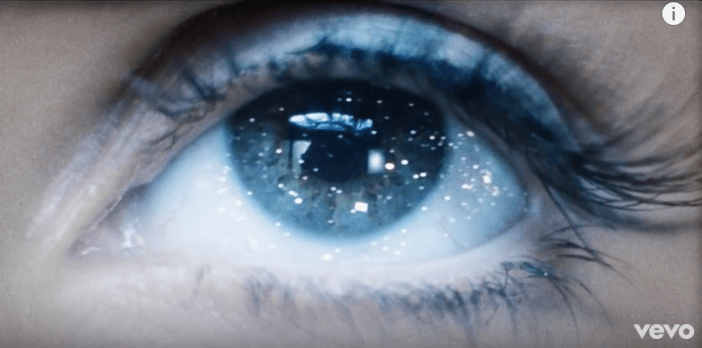



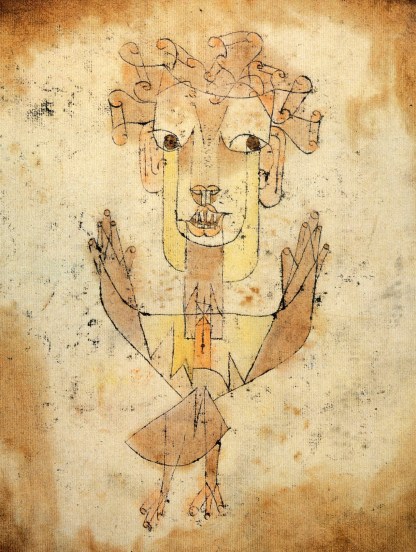
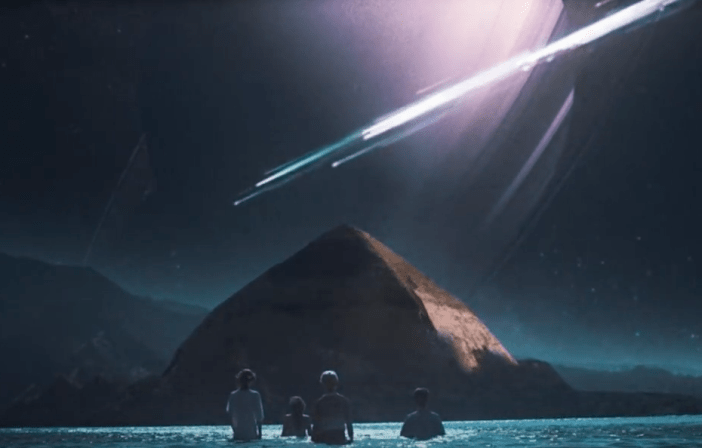

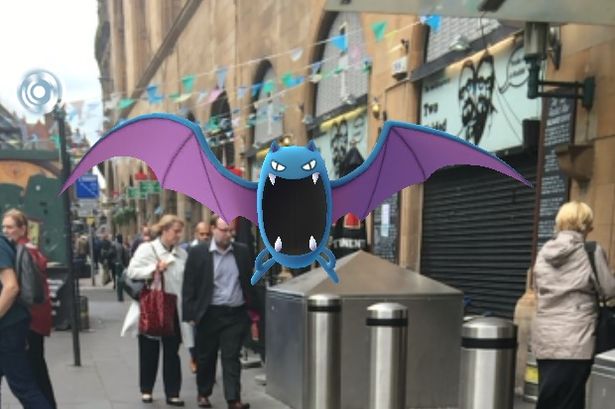
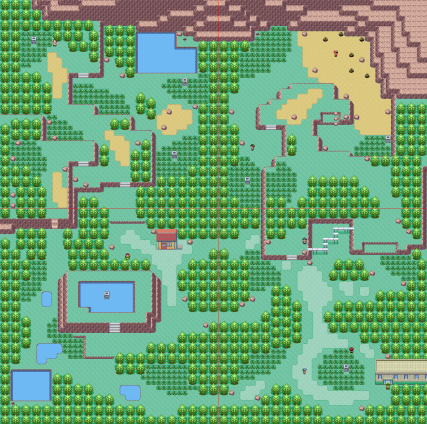
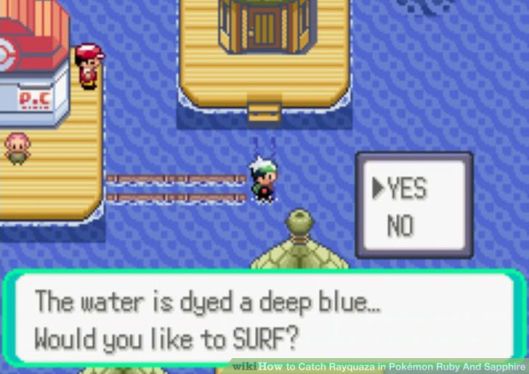

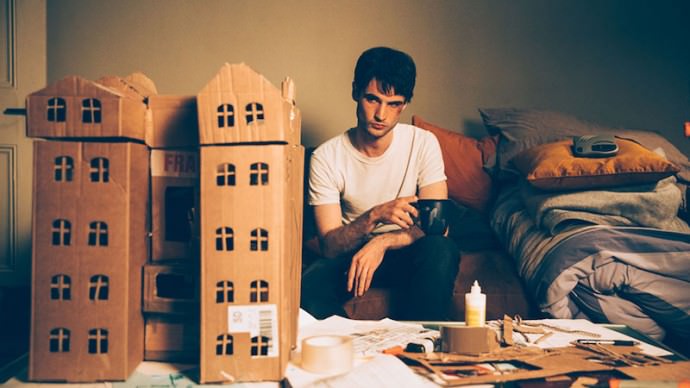


 mariaology