Easter Dreams

IMG_0488

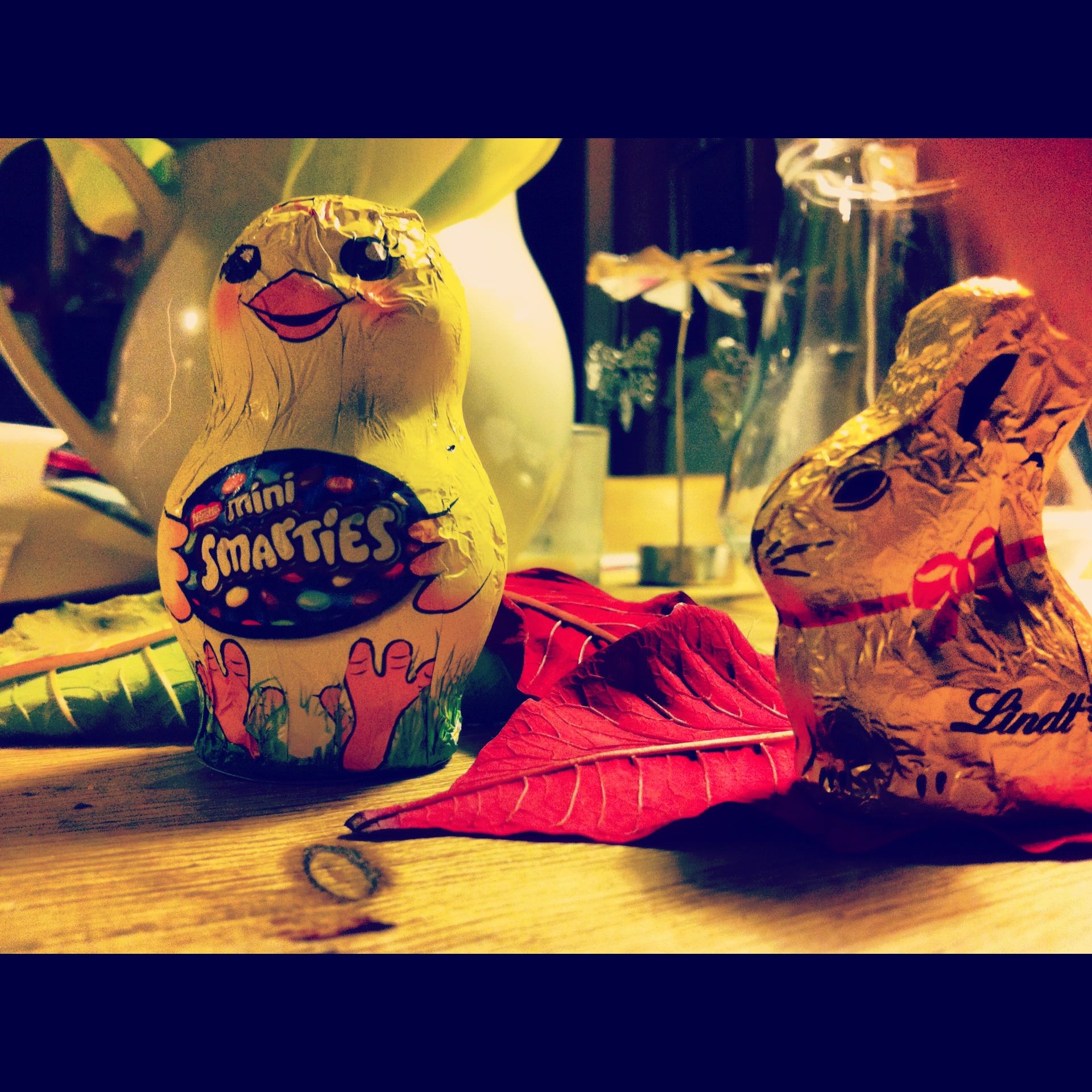
How old am I here? I’m somewhere in England, awake early as usual from sleeping on the floor, stripping away the remnants of another dream about chocolate. A dream about chocolate? Oh wait, it’s Easter. The very word Easter sounds confectionary; like ‘viscount’ – a name recalling the little minty biscuit I used to have in my packed lunches – Easter connotes the crack of a thick chocolate shell, a glut of pastel colours, the consuming of cuteness. Maybe I’m seven. My mum is away in Brighton for the day and comes back with two beanie babies: a fluffy yellow chick and a pale blue bunny. Maybe I’m seventeen, walking out to Kildoon monument just to see the lambs in the fields and hope for a happier existence. You know, that’s Easter too.
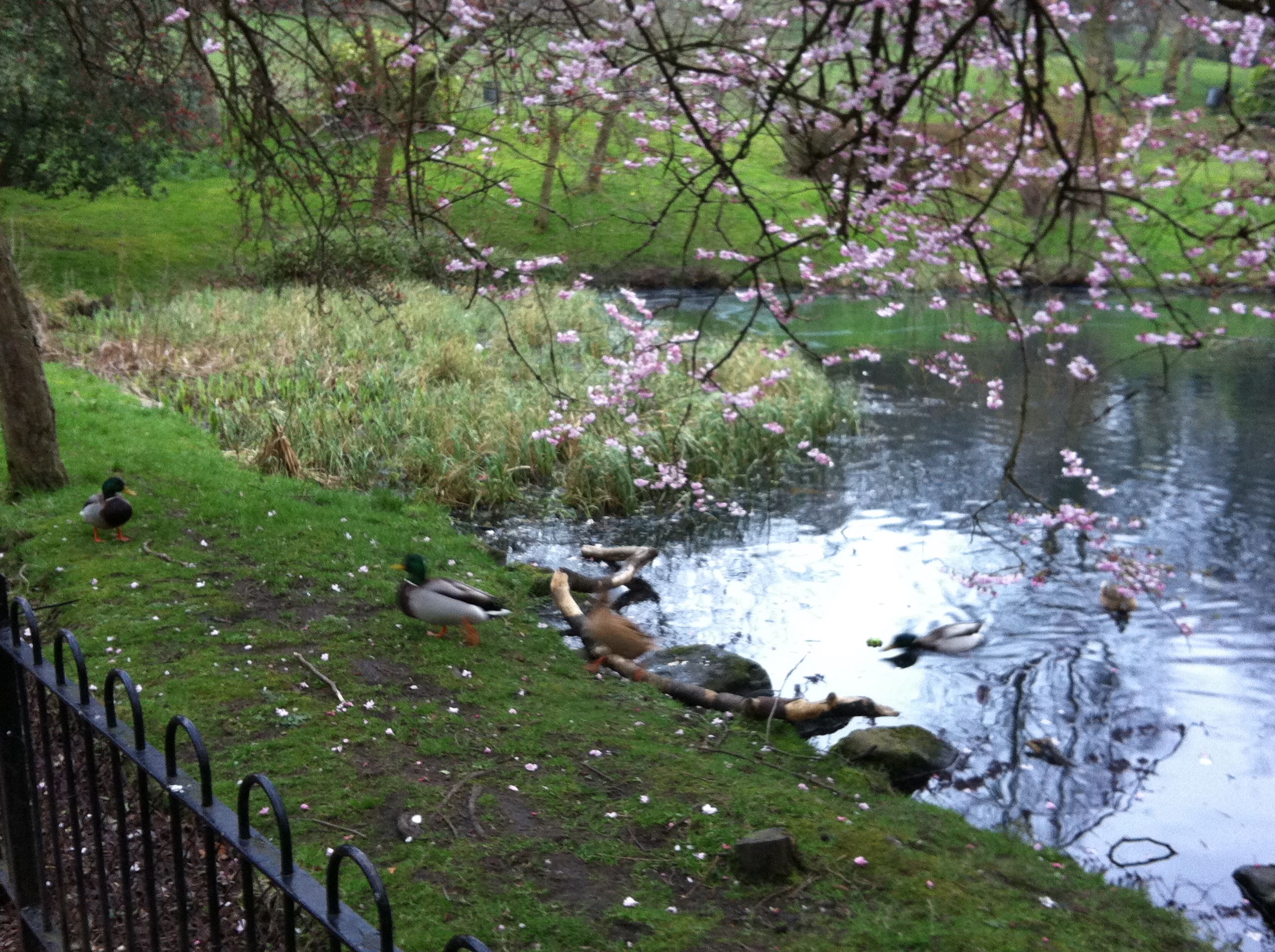
cherry blossoms at Kelvingrove

Those who condemn reckless consumerism bewail the fact that Easter has forgotten its true message: the sacrifice of Christ, the promise of rebirth. It is a solemn hope that perhaps may only be touched by those with faith; it bears the risk of becoming kitsch in the Easter Story worksheets we used to cut out at school with those zigzag scissors. You know, ‘assemble the story of Jesus and the tomb’, where pupils tended more to desecrate Christ with bunny ears more than celebrating his existence. I remember as a child going to church on Easter Sunday and falling into the soft ambience of everyone’s prayer and the familiar stories about The Stone that Rolled and Jesus’s last day and all the other things that have slipped from my brain. I remember being given a Creme Egg by the priest on the way out and thinking he had handed me something precious and holy – but later eating it anyway. Did I feel guilty, biting into this symbol of the blood and sweat and sacrifice of Christ? The problem is, consumerism is good at assuaging such guilt with feelings of pleasure. Everyone’s doing it; everybody’s merry. And after the church ceremony I remember late afternoons watching a certain family member fall asleep after a generous glass of sherry…

Is it wrong that we value booze and chocolate eggs more than the faith and the story? Perhaps…but there is a certain gratitude in the exchange of happiness, the sweet serotonin glow of too much chocolate and a long Sunday afternoon spent with one’s family.
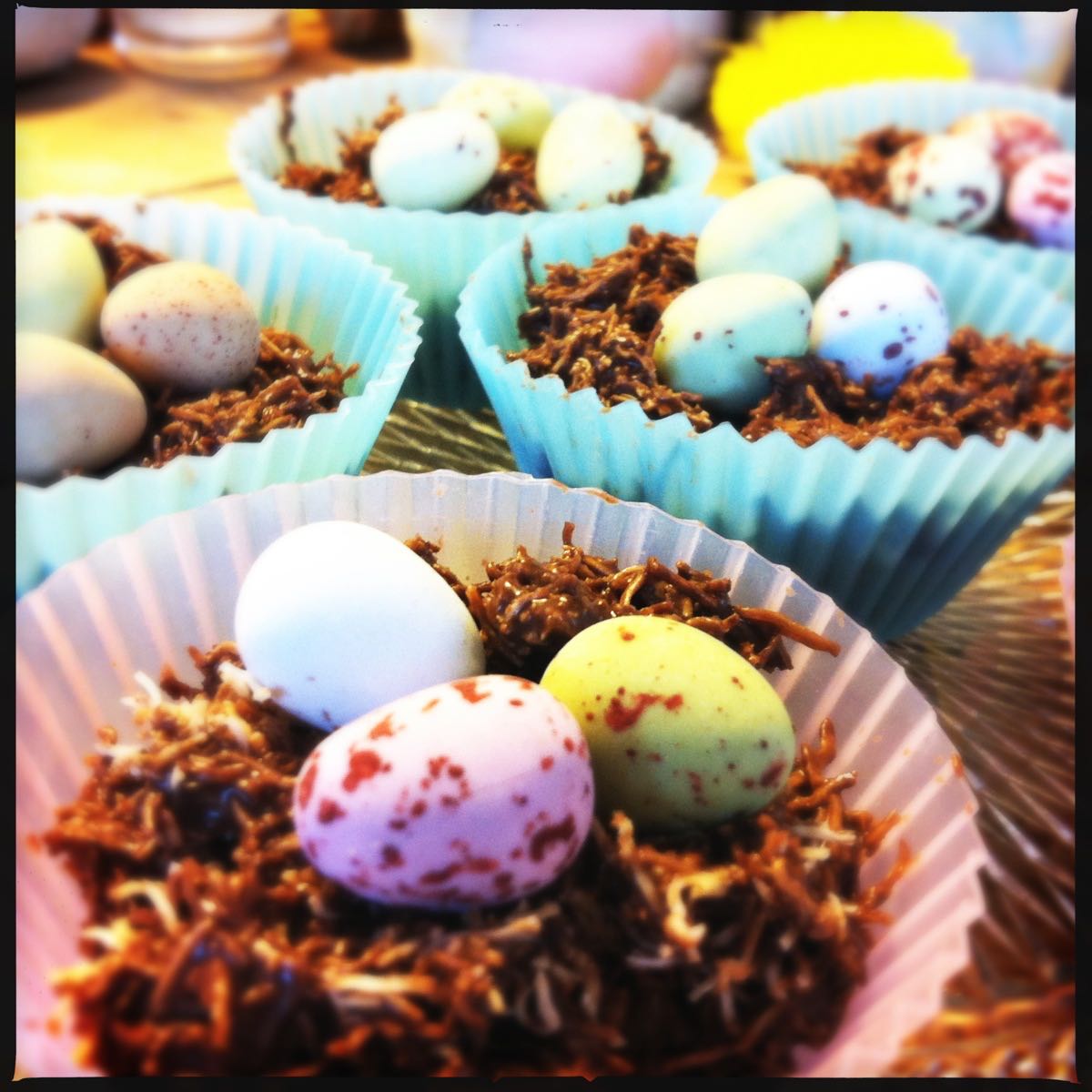
IMG_0429

How did we used to spend our Easter Sundays? Painting boiled eggs and rolling them down the hill at Miller Park. Fighting with my brother over who got to lick the bowl of melted chocolate, leftover from making crispy cakes. A walk to another park, somewhere in Burgess Hill or Milton Keynes, watching our dog do long jumps over a river filled with old trollies and sofas. Munching fizzy belts and trying to do loop-the-loops on the swing, never feeling sick but still exhilarated (I wouldn’t mind doing all that now, but I’d probably vomit rainbows). These were the good old, carefree Easters.
IMG_0134 IMG_0086 IMG_0085

When you hit fifteen, suddenly the Easter holidays are all about studying (or they are in theory). The endless, six am days spent copying diagrams for Biology or churning out practice essays for Modern Studies, or falling asleep in the sun with a Computing textbook over my head. Cooking some complex casserole in the evening and doing the washing up afterwards while my brother messes about with his playlist of ‘doing dishes’ music (or maybe it was the other way round; I always had the better iPod). The Easter of first year where I had a weekend down in Suffolk for my Grandpa’s 90th birthday, and got so excited about staying in the countryside that I went for a walk every morning at 7am, just to glimpse the pretty English fields and flowers. Oh, and the postman I accidentally saw peeing in the river – but that’s another story. The Easter afternoon where I laboured over a terrible wee screenplay for Advanced Higher English; or the one I spent laid up watching crappy old films because I had the house to myself for a week and it seemed a waste to bother with ceremony. That was, incidentally, a very good week: I watched three series of Mad Men back to back and walked up a hill and got my hair dyed and wrote about twenty practice essays for my uni exams. There is great productivity to be had in solitude.
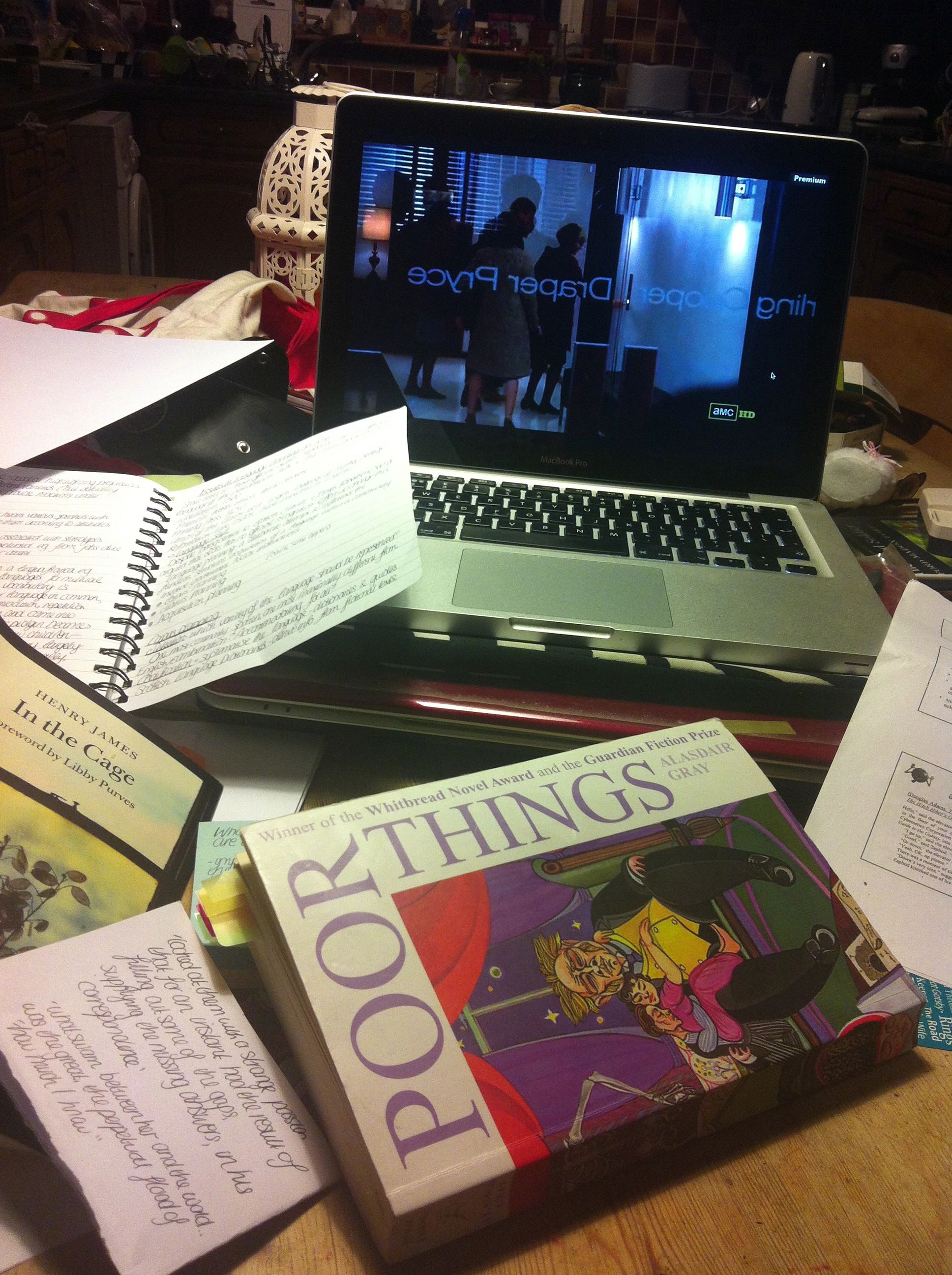
Productivity in action...
Productivity in action…

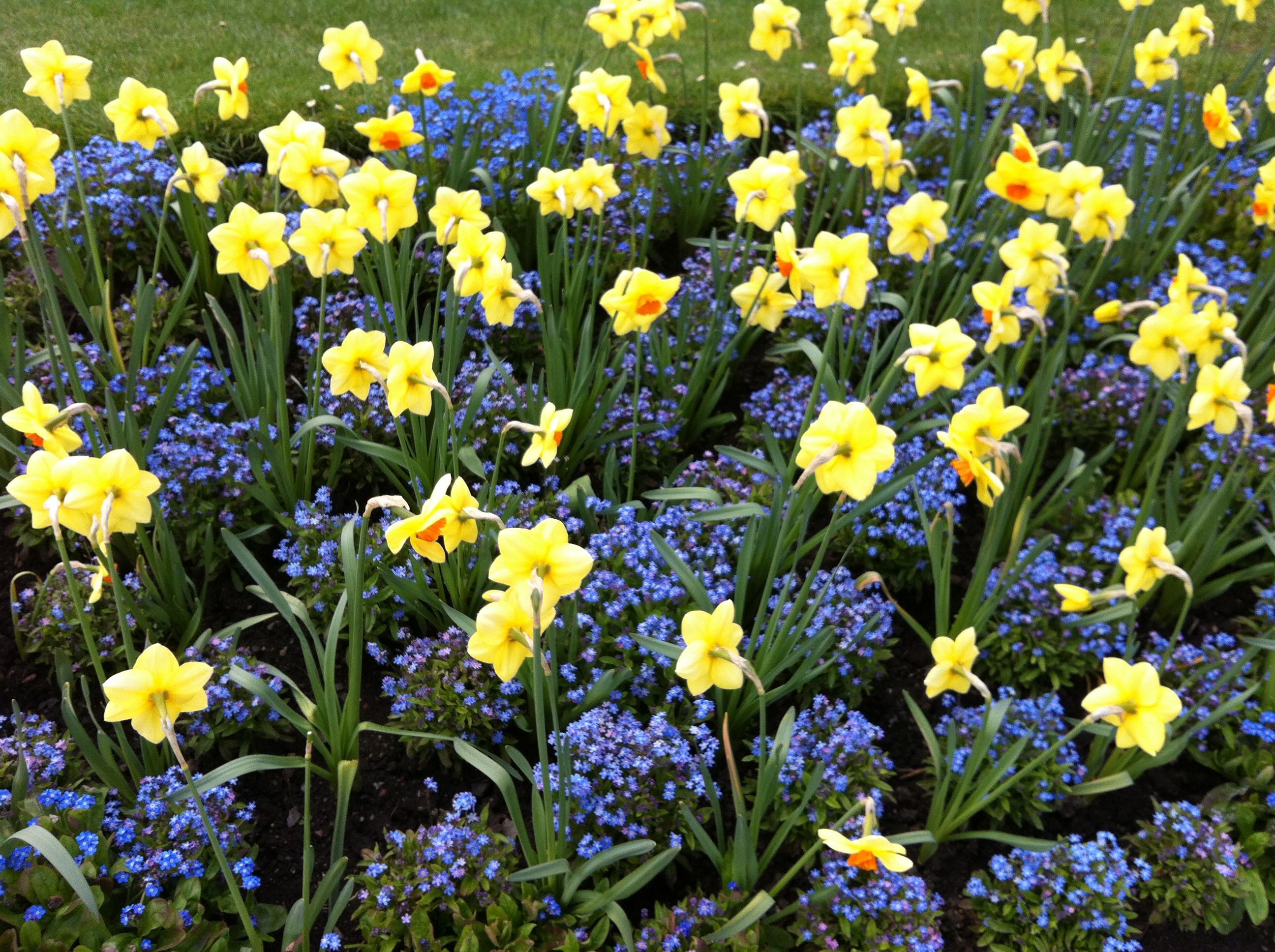
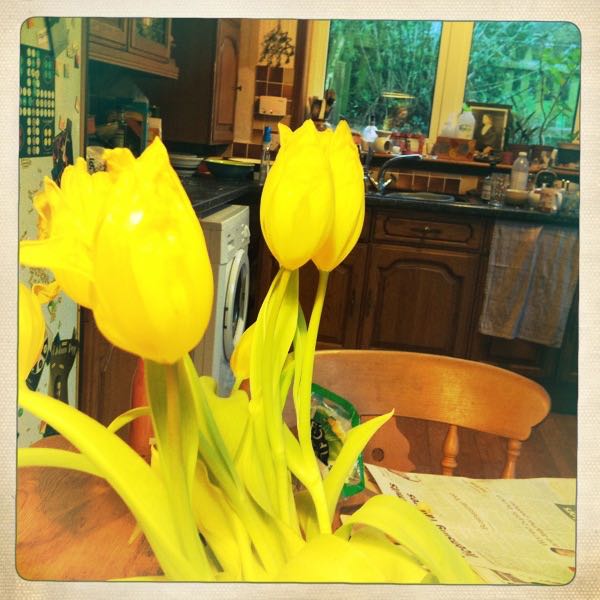
The things I love most about Easter are basically the things I love about spring. As all the songs and hymns might sing, there is a simple joy to seeing the first daffodils and blossoms and lambs in the fields. Seeing everything through the spectrum of pastel colours, wearing lavender jumpers and polishing my nails mint green. At uni, I was too stingy to buy Easter flowers, so I would walk all the way along the Kelvin (halfway to Milngavie) just to find loose daffodils to purloin from their ungraceful state, where they were scattered along the path by wayward children.
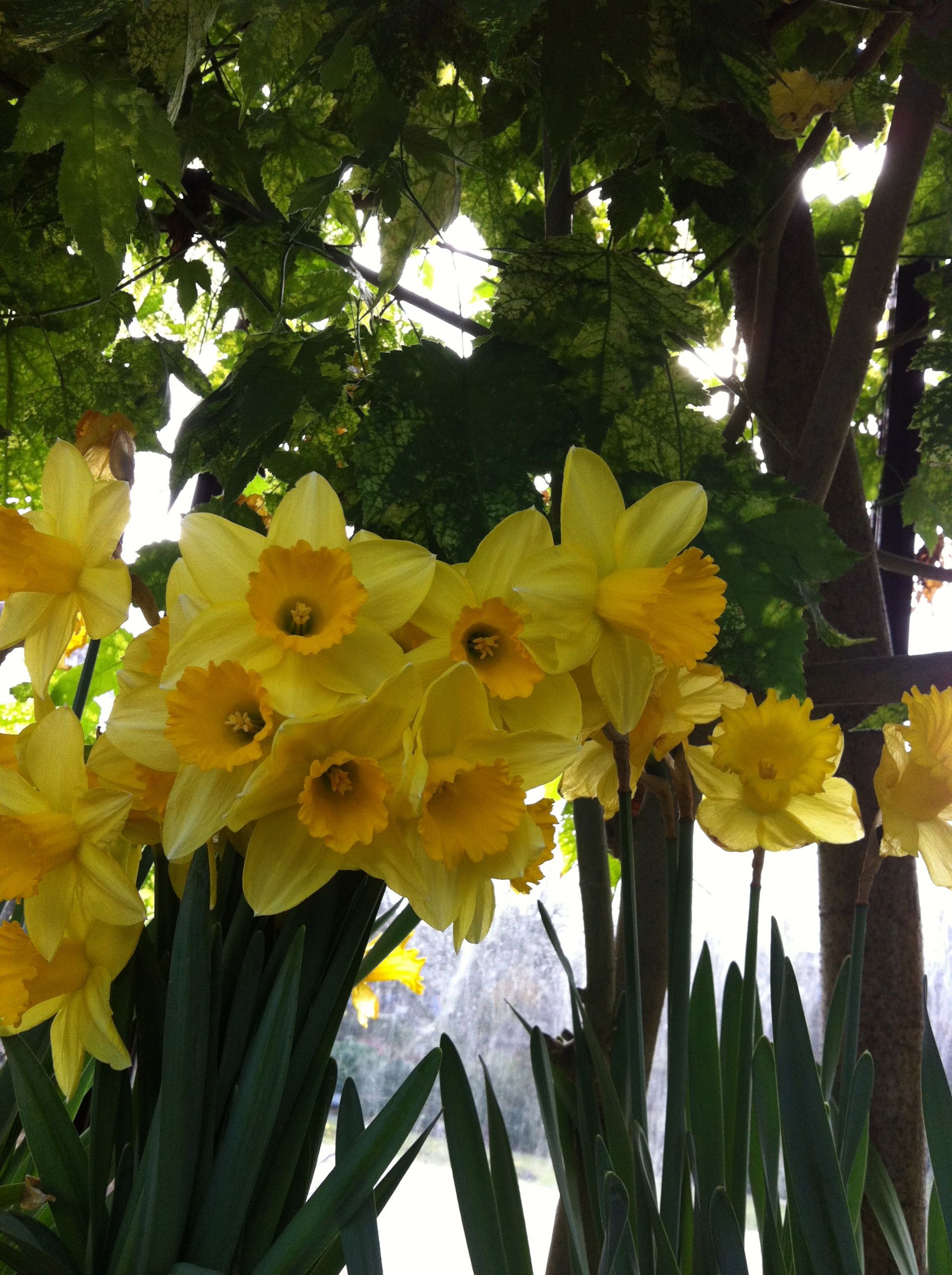
IMG_1886

Back at school, Easter signalled the season of study leave; of long lunchtimes sitting on the hill gossiping while people were screaming at their football behind us. Bunnies are also very cool. I think I believed in the Easter Bunny more than I believed in Santa Clause. Maybe it’s the animal factor; there’s something creepy and alluring about anything anthropomorphic, reminding us of the fragility of our status as humans. The Easter Bunny, moreover, gets less visual representation than Santa in popular culture, leaving the onus on the child’s imagination to conjure what he (or maybe she; or should Easter Bunnies even have a gender?) looks like. One upon a time, my Easter Bunny was soft and probably adorned with buttons and ribbon, juggling a multitude of eggs with his paws and vanishing without trace at dawn (unlike Santa who takes his fill from a mince pie and carrot). Now, I can’t help but think of the horrifying rabbit, Frank, from Donnie Darko. The one that appears either as a schizophrenic vision or some weird spirit guide from the near-possible-present-future. Maybe that’s growing up; realising the terror in your favourite childhood memories. Pulling the latent darkness out of cultural myths and fairy tales. Still, there’s a pleasure in that too.

So yeah, today I won’t be doing much for Easter. I can hear the church bells ring for the morning service, and there are a few birds tentatively weaving their melody into the stiff Sunday silence. As far as I know, there aren’t any lambs in Glasgow, and that lovely lecturer who used to praise heavily the wonders of ‘curved chocolate’ is sadly retired. Today I will have to drag myself out of bed at some point to fall back into the world of studying, swapping festive joy for Johnson’s Rasselas, and juvenile pleasures for The Bell Jar. The only chocolate I have in the flat might be Tesco’s 30p Value, but secretly I’ll be celebrating Easter, if only in nostalgia.
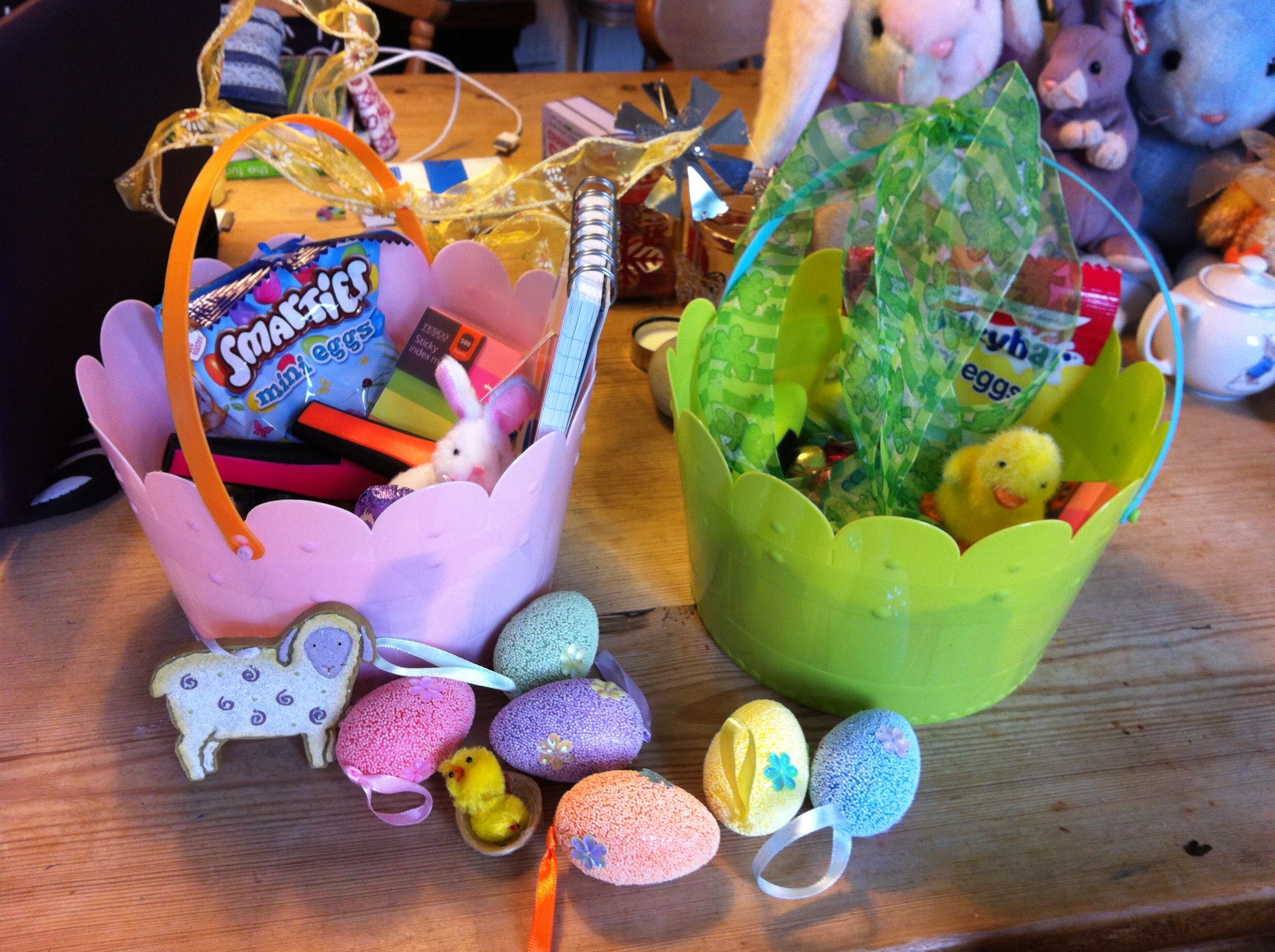
My Mum gets extra parent points for always making us Easter baskets

On Finishing University

2

Well yesterday I handed in my final essays: the last pieces of coursework ever in my undergraduate degree. I expected to feel triumphant but instead I felt a little empty and sad and probably nostalgic. After all those years and sleepless nights and thousands of words painstakingly wrought out on laptop screens, it all boils down to two more essays and three exams. And then it’s over.

Photo from Fresher's Week!
Photo from Fresher’s Week!

It’s difficult to know where to begin with reflecting about my university experience. Everything is usually divided between academic and social life. Employers and scholars, politicians and journalists all frequently debate which of the two is most useful for getting a job. Any careers event you attend will churn out the hackneyed refrain that ‘university isn’t just about academia’. They encourage you to get involved in societies, sports clubs, volunteering, student media. And all this is great, but we mustn’t completely neglect the whole reason we’re at university – some of us paying thousands of pounds a year to do so – to learn. And this learning isn’t all about getting a job (not for me at least), but about learning for education’s sake – for widening your perspective on the world.

The first essay I had to write was on Descartes for Level 1 philosophy. I believe the question was something like ‘Should we be worried by Descartes’ scepticism?’. This kind of question was a whole new ball-game for me. I was used to plain old terminology like ‘Discuss’, ‘to what extent’ and ‘examine/evaluate’. Not should we be worried? Should we? Are philosophical thought experiments really that important? Of course, the essay question was roundly subjected to confusion and piss-take amongst my fellow first year students, but I suppose it was a good way into a career in philosophy. You know, it was the kind of question that makes you think, that challenges your assumptions about what an essay should do. It’s easy to say that now, but at the time I was pulling my hair out. I remember maybe the worst library session I’ve ever had was one rainy Saturday afternoon, where I stared at a blank screen for four hours straight, glancing from book to book and desperately Google searching everything I meticulously typed up, in case it was similar to something else that had been written.

First years are constantly subjected to sermons on the sins of plagiarism. Whilst this is of course a vital academic lesson, it also makes essay-writing for the paranoid nigh on impossible. I remember for my English Literature essay, I decided to scour the internet for every form of critical interpretation available on my primary texts, just to check that I wasn’t repeating the same arguments as everyone else. I had still to learn that plagiarism is more about intellectual integrity, about learning to reference properly and using existing sources in an original way, than coming up with something that is wholly unique. One thing you learn from English Literature – in fact, probably any arts subject – is that the notion of pure originality is somewhat a myth. And that’s actually liberating, because it takes away the equation of creative genius; you’re suddenly allowed to see how authors frequently influence/borrow/steal/subvert one another’s ideas, and you no longer have to imagine essay-writing as an outpouring of wonderful, effortless analysis. It’s allowed to be a difficult process, built up from hours of reading, planning and collated note-taking. Not just something you fire out in an hour at the back of a high school English class.

To the eighteen-year-old me, that Saturday in the library, I wasn’t quite acquainted with all this. I was sitting next to a boy who was typing away furiously, producing what looked like three essays in the space of a few hours (the time it took me to write one paragraph that I eventually cut from the essay).

Philosophy, to be fair, is a subject notoriously confusing when it comes to essays. It shouldn’t be; it’s just that a philosophy essay is distinct from other kinds of critical analysis that I was familiar with through my hitherto social-sciency background. That tutorial we had, waiting to get our essays back, was really hellish. Everyone was telling each other how badly their friends in other tutorials had done. How harsh the marking was. Nobody knew what a philosophy essay was meant to be. We all expected D’s.

When my tutor read out my student number and I went up to collect my essay, I have never been so pleasantly surprised at a grade. An A3! I can tell you, that was the first and hardest earned A3 I have ever received at university.

The end of first year

Looking back, I think I probably spent most of my first two years at university in a vague state of panic. The thing is, most of the time you have no idea what you’re doing and what’s expected at you (I still don’t, but that’s now a good thing – again, liberating). There are rarely any rigid guidelines, especially in a subject like English Literature, and initially that seems terrifying. You are suddenly surrounded with all these people who went to better schools, all these people who’ve read The Complete Works of Shakespeare and can quote Byron and Shelley off the top of their heads. I would spend whole days in my little dorm room trying to get my head around basic terminology like iambic pentameter, chiasmus, ode, Ottava Rima, trochees, lyrics. I’m still terrible at counting metre in poetry, even though I have a background in music and am perfectly capable of keeping time when there are notes and staves involved. But I like to think that I’ve finally found some kind of ‘footing’ in the mountainous landscape of centuries of literature that I was first confronted with that sunny September in 2011.

As with anything, a big part of university is trial and error. You are going to do better under the guidance of some tutors more than others. You are going to write essays that you aren’t very sure of, and sometimes this will pay off, and sometimes it won’t. There are essays that you feel genuinely proud of, not even for the grade but because you know that all the research that went into them widened your intellectual horizons, and all that editing really did pay off in terms of style. It’s nice when you can read back an essay and not cringe at your choice of phrasing, or all those hiccups in grammar and punctuation. There are going to be nights in the library where you get the fright of your life from the tannoid telling you the reception desk is closing. There are going to be times when the library makes you sick, stressed, exhausted. Like when I had to sit next to a man who was eating raw, mud-covered mushrooms straight from the punnet and dipping them in hummus; or the time when the only computer I could find was next to someone who was licking and slurping the oily remains of his spaghetti from the bottom of a massive plastic tub. Times when there are tears involved; either yours or someone else’s. Fights witnessed and blows exchanged; where else but in the sleep-deprived environment of a university library would two people start brawling over a grubby old Dell with a greasy keyboard?

But then there are the best times, the late nights and early mornings and holidays when the library is lovely and quiet. You are free to roam the endless shelves and pick the desk on level 11 that looks out over a beautiful city view. When you finish an essay and print it and the paper is still warm in your hands as you leave to hand it in. When you stumble across a book that you weren’t exactly looking for, but it’s on long-term loan and looks very interesting.

I guess the semesters go so quickly that you hardly notice the time slipping. Sometimes, they seem like little footnotes to a long and formidable summer, with nothing to do but work and plough through the reading list and wish you had more money. If I could go back and do one thing I guess it would be making more use of my time. But then, I don’t regret all the evenings I spent immersed in journal articles and books, because that’s what’s shaped my mind. Sure, I might not have a degree with immediate career prospects beyond journalism or teaching, but I wouldn’t swap my education for the world. And I’d recommend Glasgow Uni English Lit to anyone, especially because it’s so steeped in critical perspectives and literature beyond the obvious canon. Where else would you start off a second-year semester reading Martin McDonagh’s gruesome play The Pillowman, or have a fourth-year seminar on Gone Girl and a course on Urban Spaces which divides its programme under mysterious headings like ‘Airport’ and ‘Shopping Mall’ rather than the tired titles you see across typical course Moodles. My degree (well, let’s hope I actually get it!) hasn’t just been about Shakespeare and Dickens and Austen, though they have all quite rightly featured. It’s about expanding the canon, and helping you sharpen as well as complicate and reflexively challenge your critical approach to all literature.

Last year’s exam revision
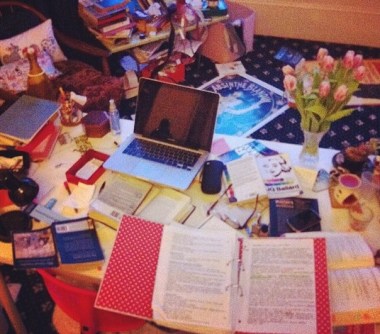
If anything, I've learned to keep a slightly tidier desk.
If anything, I’ve learned to keep a slightly tidier desk.

On Tuesday morning, it was spring all of a sudden. I walked to campus feeling warm and happy, remembering the first spring I spent in the city. All those daffodils and the cherry blossoms around Hillhead, and the cheerful experience of the semester ending, everyone gathering for picnics at Botanic Gardens. Optimistically sleeveless, I sat on a stone by the Kelvin River reading Keats, feeling like this is what university is best at. The kind of magical experience unfortunately made cliché by campus films. When you’re in the sunshine reading poetry and you’re about to go in for one of your last tutorials. Sure, I still have three nasty exams to get through, but once they’re over, I’ll hopefully come out a little bit smarter, a little bit happier and a tad more employable. University, both at the academic, social and creative level, has definitely been the best experience of my life. I swear I won’t get sentimental; I’ll come back and do a Masters instead. (Let’s hope; if only).

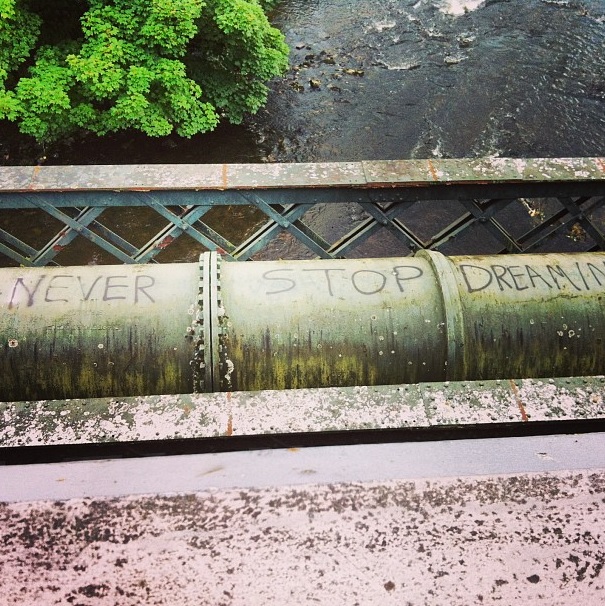
Inspirational Finnieston Pipe (!)

Cumbrae: A Fragment

Source: openroadscotland.com

I have this memory of being nestled in the cleft of a rock on the isle of Cumbrae, my bike propped up beside me as I sit watching the sea and eating fizzy laces (they were cola-flavoured, or maybe strawberry). I’m on the rugged side of the island, where yellow eyes and strange animal faces are painted onto cliff walls and sometimes if you stare hard enough at the ocean you can see seals. On the other side of the island, you have the little town of Millport, with all the white and pastel-coloured houses looking out onto the harbour. Everything is still, soft, crisp – the texture of sorbet – so that the only sounds you can hear are the steady lap of the waves sloshing against rocks, and the occasional cry of a wandering cormorant. The island to me is like the shyest of kisses: the kind that taste of rain and raise your spirits. Yes, I’m eleven years old and I feel invincible.

You see, I’m on a bike ride, travelling twelve miles right round the island. I’m wearing jeans with the bottoms rolled up and spattered with black oil from the chain; I’m gripping the handlebars so tight I can feel the blood burn and tingle in the tips of my fingers. I’m pedalling even faster than my sporty brother and my father and I know I’m going somewhere because the landscape changes the faster I go. Life rushes by like a montage peeling back luscious scenery. I pass other families on their bikes but they don’t see me; I’m caught on the drift of the wind that they’re battling and I’m going faster than they could imagine. The sun is on my back and I’m flushed and my hair tangles around me, caught in the straps of my rucksack. I want to get there first; I want to be the first one to reach the secret beach.

You can stand there in your bare feet and I remember the cockle-shell rocks, greenish with sea leeches and weeds. Nearer the sea the sand is velvety thick and oozes up between your toes. My child’s eye spots the starfish and sea anemones, and I wish I had a jar to take some home. I’m teasing my brother about something and he throws a stone into the ocean, watching it bounce five times over the waves. Sullenly I watch it. Then in my head I tell everyone I’m a mermaid and paddle in the shallows, looking out for the shoals of fish that swim by in miniature shimmers. We’d wander back up to the rocks and pick our seat; and that’s where I’m sitting, now, in this moment, looking out to the mainland without worrying about a thing. I’m just admiring the craggy shapes of the distant cliffs and the way the cloud looks like billows of cigarette smoke coating the landscape.

The worries would come later, in the dreamy space that opens before sleep. I’m trying to get at the dregs of this memory. The exact details of colour and light, the way that the April air felt and the shapes of circling time. You go right round the island and come back to the start. You paint the strokes of the green hilltops and the silver belt of the road. It’s nearing summer so the day drifts endlessly through night; it doesn’t get dark properly here, not really. Not until the depths of winter. A shower of rain that’s a spray of glitter. Maybe there’s a lighthouse shooting beams of white across the bay. Ships passing ghostlike in the night and you wouldn’t even know. I remember the cold blasts of wind you get on the ferry, with the horn of other boats and the marvelled awe of other children looking out towards the harbour. I call up all these things and wish for more.

Source: openroadscotland.com

Maybe all that remains of this memory are the sea-smoothed shards collected in a jar that sits on the sill of some window in my mind. You can remove the lid and pick the best colours, turn them over separately in your palm, but you can’t make them real again. Time has softened the sharpness of their edges, added layers of distortion to their rays of shifting colour. Hold one up to the light and you will see the bubbles that mark each year that’s passed, arranged in no order other than chaos.

Somewhere, there is the shimmering bleep of slot machines from the cheap casino room of a ferry. A man asking for tickets and a car stuck on the gangway. The taste of peanut butter sarnies gritted with sand, the crispness of silver foil in my hand. If I close my eyes, dizzy and thirsty, I am back there, my body nauseous with the pull of the sea, the boat rocking to and fro with the turn of the words that mutter on my tongue. My hair whips over my face and it smells of salt and seaweed and I can feel the island growing ever so closer to me as the ocean moves towards the setting sun. It’s not that I’m eleven again – nothing is the same twice over – but it’s the feeling of a memory that you can hold up to the light, watch it distorted, watch it glimmering bright.