Playlist: December 2019

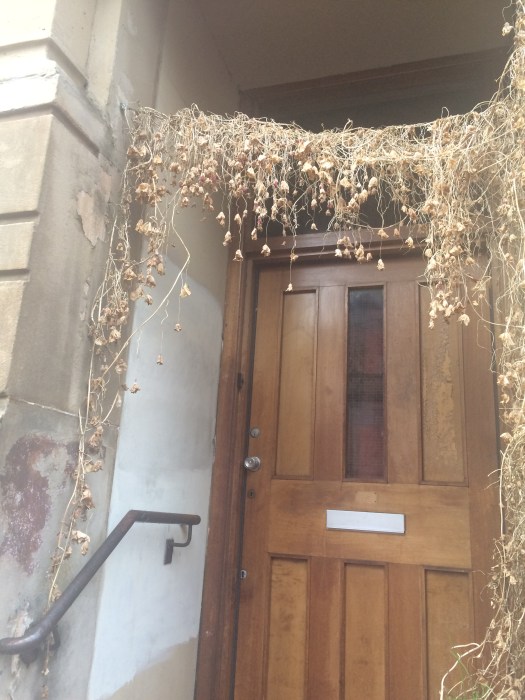
IMG_9718.JPG

There is this Anne Carson poem, ‘God’s Work’, which ends with the line ‘Put away your sadness, it is a mantle of work’. By chance, I was reminded of the poem via some post on Instagram that came up an hour ago. I want to think about this ‘it’, like how it is the sadness and also the work, and the pronoun of living, the abstract embodied. ‘Mantle’ is something that covers, envelops or conceals, it is a portion of the Earth, a sleeveless cloak or cape. Is it also the bevelled edge of a door? One can be mantled with a blush, the mark of a covering shame. Is it a mantle of work to hide your sadness, or does the ‘it is’ refer to some other thing whose outcome is that we must put away our sadness? We must close a passage of time behind us? Notice I am switching to a plural pronoun, because I have entered the poem, sharing the position of both addressee and speaker. I am the the person with this feeling; I am the person addressing this feeling. To speak at all, I am doing the mantle of work. There have been these tectonic shifts in my life of late, the underlying move or loss that is a portion of everything. ‘Put away your sadness’ asks you to imagine a physical form for the affect, a classic poetic move: my sadness is a bird, my sadness is a stone, my sadness is a rose, a scrunchie, a sea. These are things you can put away, tie back; or you can hide with a cloud, or you can dive in. Typing in ‘my sadness is a’, Google suggests: 

addiction
a smile
a father introduced
a souvenir
a smile
a text
a joyful dance
a science

It seems these things are all correct, at the present moment. For instance, I drink from this mug and I think about Prague, and how it looked in the rain of a flickering image. That is a souvenir, but it is somebody else’s rain. The internet offers ‘Healthy ways to deal with sadness’, ‘Why am I sad all the time?’ and the old adage, ‘It’s okay to feel sad’. I have been reading Heather Christle’s The Crying Book (2019) and Joan Didion’s The Year of Magical Thinking (2005). Didion insists, ‘The way I write is who I am, or have become, yet this is a case in which I wish I had instead of words and their rhythms a cutting room’ where one could ‘touch a key and collapse the sequence of time’. In one of my favourite Laura Marling songs, ‘The Captain and the Hourglass’, she sings ‘Behind every tree is a cutting machine and a kite fallen from grace / Inside every man is a heart of sand you can see it in his face’. I love the pessimistic, teenage fatalism of this album, Alas I Cannot Swim (2008), its jump cuts of warning and love and familiar pain. Is the man the whole of humankind, or men in general? What if instead of words we had the bark of a tree, its abrasive shavings; a shaven novel or heart of sand in which to bear our suffering? Dissolve is imminent. There would be the rings of your life, the brief achievements of flight, but then the fallen linen, the tired old string, the particles blown. Didion wants it all at once: a simultaneous display of the frames, the scenes of a life. You would then choose what to cut, reassemble or stow away. What doesn’t matter to be dispersed. In the cutting room, a mantle of work is required. And what of the work that is to write who you are, when what that seems is only pencil shavings, sawdust and woodsmoke? 

I have not walked in the woods for so long, and the last time it was with you. But let that not be the last. I was cloaked in so many layers; I could not get rid of the cold. It was a damp and green, needling feeling. It was not so much inside as around me

Heather Christle puts it really well, this question of the cutting room and the cry: 

Maybe we cannot know about the real reason we are crying. Maybe we do not cry about, but rather near or around. Maybe all our explanations are stories constructed after the fact. Not just stories. I won’t say just.

It is a relief to write while crying. There is something comforting about the simultaneous flow, as though letting two substances at once run through you: one being language, the other chemical; each in a woven relation. Crying, then, is the anarrangement (ana being Greek for ‘up, in place or time, back, again, anew — OED), of a state of things that are happening in life, in the body, in the social, in various temporalities. There is the before and after of a break; there is the running on, running behind, the sense of feeling this from ‘above’ or ‘below’. Like when for ages I didn’t properly eat the world was a glassy thing I was seeing from underwater, poking the ripples, falling backwards. To cry is to indulge in both prolepsis and analepsis, to slip and collapse, to blur and feel into. A friend says, you have to work through and not around it. I try not to cry about, but recognise the ambience of sadness. I won’t know until later what is really happening, what narrative this can all be placed in, or slip from. 

Somebody nearby is playing a flute really badly. 

The chime of a text message. It’s okay to feel sad. 

In the office, friends and I exchange tales of election night. One of us is trying to fix a puzzle, the other drinks for sorrow; there is a mutual sensation of violence which can only ‘end’ in blackout, keying a car, throwing a punch, posting a rant or falling through sleep’s amnesia. For a while, I could only listen to songs that came out before this happened, and before the Tories were a bad new government, which felt forever ago. 

What if daylight itself became elective, and that was the bold democracy of what it was to enter a day. Do you choose the light, or does it summon you? I just make playlists.

The moon has been flagrant of late, or was it right before. I remember seeing rainbows around the moon for days at a time. I remember that seeming too much, like I’d overdosed on the dust of this planet, like there were molecules of colour in my nose I could not sneeze or shake out. Like there was a terrible high about to happen. 

I have not seen the moon at all this week. 

I write this raining. 

A thought of the before and after which remains unfixed and semi-colonic. It is to say and not say of what was said. 

There is a special release in crying by bodies of water. I believe in a clairvoyant sadness, one that predicts some upset to come. It is the body’s sincerity of knowing. So you cry by the sea, or lately, a river. All that I have. Cry your eyes out by the Clyde. When you arrived, I was reading about the horror of purple, that ‘which hurts both sides’, ‘the horror’ (Hannah Weiner, The Fast). I wear it around my sleepless eyes. It is a bruise colour, the muscular failure to move through the day; it is a pile of clothes, a burgeoning energy of the horror. So I turn to blue, which is a star, or a gas flame because someone is cooking. 

That line in Joni Mitchell’s ‘A Case of You’, from Blue, a lifesaver every Christmas, which goes, ‘Just before our love got lost you said / I am as constant as a northern star’. And it’s that ‘I am’ that I like, the moving throughness of it, the insistence that this is and not was. Because there is something of forever which is getting lost, or a wound that is hidden and cannot be healed. That is forever opening up. For we were so close, a year ago. And of course Joni flips, deliciously, to the mundane. She asks ‘Constantly in the darkness / Where’s that at / If you want me I’ll be in the bar’. As though to look down in your soupy negroni, you would find that hot abyss from which love is turned, over and over. And maybe you’d shed a few tears in it. And you’d struggle to say the location. 

I remember dressing as a wise man for a play at school, wearing a homemade crown and parading slowly towards a manger. Somebody was acting the part of the star, and we followed them. 

Somehow in a notebook I wrote, ‘I am going to be fine. I am going to shine at it’. To be shiny in this being fine, I wrote that in a café and I remember my hands were trembling, my earrings were not real gold. 

There is this dream from last night where I wear a blindfold made of a banana leaf, and you are helping me cross this road, this road that is river. 

In Goodbye, First Love, there is a hat that floats away in the river where Camille is swimming. This happens at the end. It is either too late or too soon, and she is crushed. This is the wiki summary. From the film I remember the widening shot of the river that flows on but closes, and the sunlight, and crying as I watched this at six in the morning, after reading about it on somebody’s blog, the link now lost. It was almost spring and I had not cried since winter. Back when I would add things to my weekly list like, ‘more on lattices’, ‘a setlist’, ‘a more explicit weave’, ‘reply’ and ‘pack’.

Writing this now, am I attempting to ‘put’ this ‘away’? 

When he tried to be practical, mentioned ‘In the long run…’ I could only think of that song by The Staves. It was a churlish note, curled at the edge and not mine or yours. That night, there was a cat called Olive, a taxi to Greenbank, sleeping in a friend’s sister’s bed, waking up face to face with Sophie Collins’ small white monkeys again. In the notebook I had written in a slurred hand, ‘I wish I would cry now but I feel afloat’. It was the elated tiredness, the denial. I had a freezing shower to cool my shame. 

Climate breakdown is also a breakdown of the heart. We have to admit that. Something is always stinging, ‘I’ve been thinking’, a mug of hot water. I could not sleep, I was reading Clarice Lispector’s Agua Viva in fits and starts, which is perhaps how it demands to be read:

I swallow a mouthful of blood that fills me entirely. I hear cymbals and trumpets and tambourines that fill the air with noise and uproar drowning out the silence of the disc of the sun and its marvel. I want a cloak woven from threads of solar gold. The sun is the magical tension of the silence.

A spoon of blood, not sugar, not jam. It is the hot lump in your throat when you cry and the blood that is anyway. About to. Remember I bled for thirteen days, or was it more. It was because of hot liquid, a rush, a pill. How you nourish yourself or not. A friend says, when I cry on buses and trains I listen to specific kinds of music and pretend I’m in a movie. Is it detachment we want from that? Would there be cymbals and trumpets and tambourines in this movie? I want you to put me in it, the noise. I want to stand at the front of the gig, be buffeted. I want to be bashed around like a note that won’t break from the instrument. I want to find a post-it note stuck to my back, but what should it say? Over time, I garner respect for the sun. It is not that my nocturnal years are ‘over’, but I am wondering what it would mean to truly love and rejoice in the sun. The giver of life, not Byronic darkness. To lie in a colourless sea. What would this clarity that Clarice writes of look like, the woven cloak of ‘solar gold’, its ripples? Is it the mantle one could wear to cloak a sadness? But what if the sadness was the clarity itself? I say, I think you are brilliant. It is a mantra. It is a giving away. When the van swerved and nearly hit me, I felt the sunlight so incredibly brightly. The east coast, the sense that this was someone else’s morning. The silence remains still, and I look for it in that ‘magical tension’ of the said and unsaid, and I am doing what Didion does with her grief, the magical thinking that is arranging all these scenes at once for something to emerge as possible. That is trying to sort a timeline or feeling yourself ‘invisible’, between things, the living and dead, an incomprehensible love. 

In Ariana Reines’ recent collection, A Sand Book (2019), the pages of the final section, ‘MOSAIC’, are black. She introduces the scene that prompted this section with italics, 

The sun’s warmth kept filling me, and what had begun as a slightly above-average warmth kept growing. It was starting to fill my body, and just before I totally surrendered to it, I had the inkling this might be something like the “bliss” I had heard about in old books. I had to sit down.

What is relayed as a religious experience, a spiritual experience, is then a series of transmissions (‘MOSAIC’ is in reference to Moses). But it is also fundamentally a solar experience. I think of Laura Marling’s heart of sand, something grazed by a coming warmth, the lap of a sunlight like the sea. A hot liquid thing that is coming inside me, causing the bleed, the bliss, the generous massage of some hormone. It is embarrassing writing, it demands a hot bright mantle. To feel it, feel through it, you have to sit down. You might go to the bar, as Joni does. In fact, I write this lying in bed, as is often the way. There is nothing to set out for or plan, so much as the needling of this ‘inkling’. 

I go to see Little Women, and focus on Jo’s ink-stained fingers.

I have not been ‘on holiday’ for so long but if I did I would make a solar panel of my opening chest and lay where the river and the light would take me. I think the black space on Ariana Reine’s pages is just as important as the whitely capitalised text, ‘EARTH IS SPECIAL […] THERE IS NO “BACK” TO GET TO’. We can’t get back to any bliss other than what is felt in the present. And there has to be so much energy. Put down your phone.

Dorothea Lasky says she tells her students ‘not to have a plan, but to collect things and poems and then put them together’, there is this ‘holy idea’ of ‘emergence’. I write mostly by assembling quotes I like, streaming things down (for to ‘jot’ implies a decisiveness, an almost violence) whenever they do or don’t make sense. Text myself so the thought is received as though in reply. I have all these poems from the month I don’t yet know how to assemble. They are as much of the rain as the rain. Someone comments on a fresh sense of ‘scarcity’. 

I wish I had a river so long’. And there is no snow here. The lines feel hard and overly sweet. 

Candy canes hang upon the tree.

On Christmas Day, we walk by the canal and stop by the locks. The trees seem anorexic, as in a Plath poem; as though they had chosen to strip this pure and gleam on the water. They too will see from below, but they know a different renewal. 

I can’t say a certain five letter word. 

I want to know what the seven words are in the Weyes Blood song. 

I wish I could swim in an ocean / As cold as’ a line I can’t finish, listening to Grace Cummings as though it were autumn all over again. But people on the internet are still going wild swimming. The world is not everywhere cold. The caption reads, literally all I want for xmas. 

Two photos on different accounts of a landscape blurred by the motional train. 

It’s funny, I even wrote, ‘it’s like The Topeka School and the failure of language’. 

To sob into the warm, soft fur of a cat. 

The want of a cigarette.

Astonishing winter light.

I couldn’t finish the wine. 

In The Fast, Hannah Weiner writes, ‘I didn’t know any golden light people, but I knew a couple of blues. I knew I had to be rescued (I thought of it that way) by a blue, or someone near it’. One of my closest friends and I both Instagram a snapshot of ‘River’ on Spotify at separate points across the festive period. It is this secret, not-so-secret gesture of the living-on, the warmth and possible. I think she is one of the golden light people, in loops, and I wonder what I am, if one of the blues. Who else is a blue? But I have always loved green eyes. And the Earth, which is a globe of something like green and blue, (de)pendant on/of the universe. Whose. And I have seen the garden in four seasons now, but just barely. The scene is still swinging and won’t stop to focus. 

What Reines writes of how there is no ‘back’ of the Earth to get to. I think of the back of a tapestry: a ragged collation of stems, snipped-off threads, criss-crossing lines. A simultaneity, a mess, a work in progress. When I am trying to write about the anthropocene, about what is happening, about the earth, is it this ‘back’ I am trying to write. It is not to get back to, but a back that is happening, the other side. I have been trying and failing to learn crochet; I think those who succeed are beautiful and perfect, I won’t turn over their lovely creations. In her song ‘Other Side’, Grace Cummings sings ‘The fall of a raindrop / Returns blue to the daylight / Your mind must return / To behind your eyes’. One drop of blue can restore the day. I think of Bob Dylan’s ‘Tangled Up in Blue’, living on Montague Street, in one or more stories. The worried thread. It is like putting on makeup to stop yourself crying, but doing it anyway, later in rivers of mascara and other clichés. When you are watching a movie and the crying is about to happen and you feel it as a sparkle, because it is not about the movie for which you are crying, but something around or near the happening, the space of it, being there in the other imaginary. And then what is going on ‘behind your eyes’. Crying happens in a space. It is all the prettiness we do while we can, which is a mutual hurt, a hot slide of a tear that catches your neck and means something small and inexplicable. 

The Bright Eyes song ‘Train Under Water’ begins, ‘You were born inside of a raindrop / I watched you falling to your death / And the sun, well she could not save you / She’d fallen down too, now the streets are wet’. I used to think that song was about miscarriage, now I know it could be about any kind of love and loss. Remember when Jeremy Corbyn said something offhand about getting the train to Orkney? I dream about the sub-thalassic train sometimes, northerly moving, passing by jellyfish and flashes of shapeless light. Where are you going, where have you been. The milky unborn thing that we bear yet. Feeling sick from relative motion. It is the glassy way we watch from behind falling water, all of our lives. What touch do we really share of each other?

The air is a key change.

At the reading, Gloria says something like, we have all been thinking of writing as a practice of moving through the days, a practice of living, of marking time. Here are the days I give you in words. In Utopia, her little red book, Bernadette Mayer writes, ‘Everything you or I or anybody says always seems 100% wrong sometimes, unless you keep forcing it to be closer to the truth’. There is a truth quality, say, to the way plants photosynthesise or a starling assembles her nest. The percentage quality in which I can or cannot get out of bed, and whether you are ‘Active Now’ or in fact just barely online. Again, it is a question of green. 

Marianne Morris has this beautiful poem, the last in her collection Word / World (2018), that a friend and I once read aloud together on a patio in summer at the XR climate café, the first I’d attended. Everything seemed shimmer then. The poem, ‘Lion’s Gate’, is a prose poem of some intensity. It is about what it means to love and to hate, and what is worth keeping. I really want to quote the whole thing but I can’t, so I’ll make do: 

We do not want to go back with more questions pertaining to life on this Earth. We must learn them before we leave, loving every possible second upon this beautiful Earth, because we will not come back. We will move on elsewhere. It is like a heart breaking feeling suddenly, I see it all so clearly and I want this moment to stay. This feeling of certainty that the only thing that matters in this life is that you enjoy your time here and keep thirsting and seeking and do not resist the lessons, rush towards them and learn them all, so that you can die to yourself, die into light. 
0007_001.jpg

~


Green Day – 2000 Light Years Away

Caribou – You and I

Market – Told

Angel Olsen – Lark

Fleetwood Mac – Dreams

Pinegrove – Skylight

Rob St. John – Your Phantom Limb

Laura Marling – Tap At My Window

Karen Dalton – God Bless the Child

Joni Mitchell – River

Grace Cumming – Other Side 

wished bone – Pink Room 

Nirvana – Something In The Way

Wilco – An Empty Corner

Belle and Sebastian – We Rule the School

Vashti Bunyan – Winter is Blue

Connie Converse – I Have Considered the Lilies

Bright Eyes – Train Under Water 

Big Thief – Dandelion

The National – Guilty Party 

Organ Tapes – Simple Halo 

Björk – Sun In My Mouth

Eartheater, LEYA – Angel Path

Mitski – Last Words of a Shooting Star
Playlist: April 2018

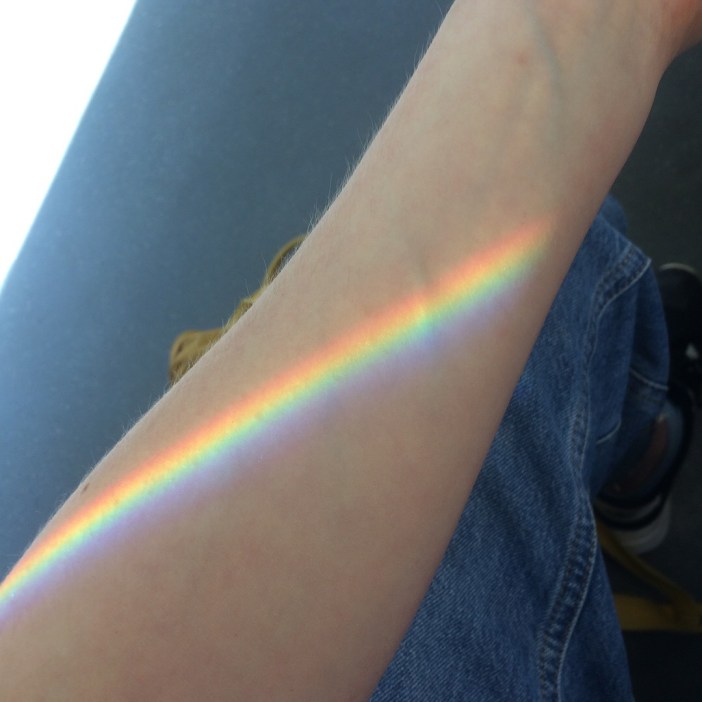
IMG_0585

In a sense, April will always be exam season. It is a month of friction, one season rubbing against the next; only eventually the better qualities of spring bleeding through the residues of winter. April snow and April showers. April light, April gloam. It is perhaps the most poetic month, beautiful to say aloud, a little like peeling the sticker off an apple. April. It trills round to a crisp. April of anticipation, April of burgeoning knowledge. April is the sweetest, the cruelest month. Somewhere west of summer. There was a song from my childhood about a boy called Jack and a girl called Marie, young and sweet, this jangly song from the country about the city, tambourines and easy chords; a song about lovers who know one another so well, who fall asleep in wishing wells. It’s kind of simple but a strange song still, the chorus marking the passage of time and the sense that such love alters the landscape within you: ‘And the days will pass like falling rain / And the tide will turn both feeling strange’. Every good lyric contains a potential eternity. The song was ‘Flames’ by Roddy Hart and I burned it off a CD my mother bought at a festival, an early version of whatever the song would become on his debut album, Bookmarks. I always thought that song began in April, the skyline burning bright. April is the first month of that proper, bittersweet feeling that emanates from every street corner. The sense of memory, pungent and leaking through the pores of the city. Here is this place, here is that. Where we walked or kissed or did not. Where you stopped to buy cartons of mango Rubicon, lit a cigarette, slipped your fingers through the new baby leaves of the lindens. Fresh strains of pollen to catch in my eyes, my nose, the membranes of sight and scent. Where we turned over conversational stones that would build up our friendship, the lain-out exchange of opinions on class and politics and art that would form a foundation for seven years hence. 

Yesterday, I hadn’t really slept for two days and was riding on a total sleep high until around 7pm. The dawn chorus accelerates a temporary insomnia. Neutral Milk Hotel: ‘How the notes all bend and reach above / The trees’. Sleep deprivation has a similar effect to many drugs: there is a delirium, a rush, a plunge, a sense of depersonalisation or detachment from the world around you. Dreams process all the nonsense of your unconscious and so when you don’t sleep, it just blurts out of you–the ramblings better saved for a diary or song. I have been bumping into things, bruising myself; I have been knocking over glasses of water. It is as though the arrangement of matter in the air around me is out of whack. It is somersaulting and shimmering clumsily into and against my body. It’s not an entirely unpleasant feeling, a sort of letting loose.

Last night, walking home from Yo La Tengo with the sky a violent Prussian blue, split yolklike to a pool of moon, I walked very fast and everything passed and blurred around me. That was the neon unremembered, the smearing of sense that refused all narrative. I passed a girl walking towards me, nearing home in a familiar neighbourhood. It was that thing were vaguely she looked like someone I’d know, I knew, but dressed kinda different. I glanced at her face as I passed and she glanced up at mine and our eyes met and that sort of threw me. Her eyes were intense and glittering, the same Prussian blue as the sky. They were fierce pools twinned by a feeling. When someone has their turbulence beaming through them, that was such a moment. As though someone wrenched a new crevasse inside me and all this new worry, pouring out like liquid gold. It will dry and crackle again in the sun, I’m sure. 

This morning, fluttering in and out of treacly sleep, I dreamt I was serving tables at work except work was more like a train carriage, and I was stumbling around carrying trays and plates of food, trying to be nice. The layout of the floor at OM was superimposed upon this narrow train space. I served a table of two young girls and their mother. The girls were imploring their mother to take them to the aquarium. One of them had on a turquoise jumper spotted with tiny white clouds, a bit like the cover of Lisa Robertson’s The Weather, pressed in miniature. They were talking about the aquarium so I split in with my two cents, telling them about the one at Loch Lomond. The last viewing’s at four though, I said. You’ll maybe have to wait till the summer holidays. They didn’t seem perturbed by that. They started asking questions about the aquarium I could not answer, like Is there a tank of mermaids? Do they have sharks? Are there Nemo fish and what do they eat? Are there fish that eat other fish? Mindlessly, I brought to them three sticky toffee puddings meant for another table. They were talking about their summer, chattering away, the clouds moving brightly on Girl One’s jumper. I turned away, facing the other tables as I moved back along the carriage. I suddenly found myself weeping, those hot wet tears you know will take ages to shake. I was weeping for girlhood, for summers off school. Summers I’ll never get back. I felt sticky and silly; I cried in the kitchen and a hundred white checks swirled off the pass and sank down around me. I was too tired to lift a thing. I cried for summers I gave up for regiment, work and illness. I woke up pathetic on a true April morning, pale gold sun and the sound of someone in the distance, mowing their lawn. Everything else very still, a faint murmur of hard-drive hum, my body aching with the unspent sorrow of stupid dreams. Did I even give them the bill, in the end? What do I owe the company?

John James: ‘Looking for a new geological disposition’. I feel the deep, cramping pains of something within me changing, almost tectonic. I remember once a lump of moonstone, unpolished, ripe with numerous accessory minerals, making of its rainbows a plural extravagance. I snap pictures of the oil’s vibrant spectrality on the surface of grey city puddles. Good news arrives in emails. Little electricities go off within me. I soar for new mornings, longing to be smoothened from sleep. I walk around Stockbridge in the quiet hour of twilight, a thin moon eking over the sandstone buildings, the cobbled mews. This is a month of desperate turnings. I am always late, on some sort of overflow or else delay. I run for trains, backpack bumping against denim, catch my breath on the platform. The shops and houses are already thumping away into distance, as the train pulls out of the station. Drifting across the Central Belt’s perpetual rainfall, I am between two cities. Each hold a wonder I’m still trying to claw at, time after the fact. Hugging my knees. The city like a scratch-and-reveal picture, coming up multi-coloured when the carbon-black stuff flakes away, becomes merely the clastic textures of years forgotten. Some people use a penknife for greater accuracy, cutting apart the shapes of their lives. Prising. The black stuff ends up somewhere, lodges all constipated within us. I try not to think too much about Georges Bataille. The man who owns my restaurant shows off to his associates a pop art rendition of severed eyes, hung resplendently obscene among his art nouveau portraits of Burns’ adolescent lovers. He refers to the eye painting, quite obsequiously, as breathtaking. A little piece of me shrivels like a rose; I prise off a piece of cuticle and I know there are similar petals hidden all over this place, slowly rotting. Every eyelid a petal, peeled back and hidden. Someone in a pub somewhere is talking about bull fights. My mouth tastes like grapefruit and alcohol, souring.

There is the blood rush of filming a video in the cold. We spin each other round on shorelines, under subway tunnels, our yellow bags bump and clack in the dark. We run up Garnethill for the camera, we peer among the foliage of evergreen trees, needles sparkling darkness around us. The air is grey; it is thin and cirrussy, deprived of light. We are the only luminous colour, earth and fire and little ideas of pods in Tiree, black coffee, stop signs, cheese sandwiches imprecision of (!!!) that is elsewhere.

At once the blossoms appear. The white one outside my flat is luminous against the azure blue sky. I remember the endless pink blossoms of Maybole Road in Ayr, those bus stop mornings walking to Belmont, or to my father’s office, aged fourteen on my way to work experience. The lilac blossoms of my childhood garden, toasted Escherian limbs of the tree, the bluebells beneath; something beautiful I’ll never see again. Do lilacs even grow in the city? The cherry blossoms seem kind of tired this year; after all, it has been such a winter. They have pushed through snow and cold to get here, little withered blooms whose buds would drink the misty heat. Normal isn’t optional. I grow nostalgic for lunches of the past, eating apples on my break among the daffodils at Botanics. Feeling true sun on my skin, before retreating inside to a world without windows. The world of dust and vinegar. 

I read W.S. Graham and make fortnightly pilgrimages to Greenock. I get off the train at Central and we wander Morrisons then back along the road for our workshops. This is a very peculiar Morrisons; it sells unnatural flowers, grafted in alien colours like the genetically-glitched foliage of Alex Garland’s Annihilation. In our workshop, we cover the theme ‘Journeys’. We learn new ways of listening; we map the skeins and twists of our lives, absorbing the lives of others. There are so many strains it’s like those skeins were severed along the way by numerous barbed wires. It hurts to get back on the train and be okay again, but then the late afternoon of sunshine in Glasgow takes our breath away. We are so alive and dazed. There are no scones in my pocket; not even almonds or acorns. I skim over maps of the land around Greenock, wondering about Loch Thom. As I wait for the train, the same time each week, I hear another train, parallel to ours being announced. It is the Ayr train, pulling away before us. I follow the straight road to the loch on the map, ‘stretching away across / Into the blue moors of Ayrshire’. We are surrounded by forest, then real forest. I am deepening by Galloway’s greens. I long like Graham, like ‘the man I made for land’, to somehow ‘Drown in the sudden sounding trees’. A greening comes over me, swallows me like sea. 

I arrive at work with plastic-packaged slices of Pink Lady apple, holding them like a prize. Nobody takes up my offer, the crunch out of character, the taste of pesticides. 

Buying a secondhand bike, I have started cycling again! It is a wonderful thing. I talk about it and listen to people’s cycling tales, their tidbits of advice; but mostly following the way their faces change when they talk about cycling, the smiles and the light in their eyes reminiscent of freedom. We share stories of bike-glimpsed sunsets, passing scenery, receding buildings, the wind off the Clyde alive in our hair. The wind off the Clyde a grey kind of blue, like the blue in my eyes, the blue that cried salt-licks of oceans. When I am cycling, my heart changing pace, I think less and I feel more free. 

It is May tomorrow, and we are nearly in Gemini season. Season of air and light, of psychic twinship.

Sometimes all I need / Is the air that I breathe / And to love you’ (Simply Red) 

And every breath that is in your lungs / Is a tiny little gift to me’ (The White Stripes)

For earnest asthmatic words I’m sorry.

Drawn from the eerie Louisiana marshland of True Detective to the hinterland gothic of Bates Motel to fading memories of the rain-sodden kirkyards bordering Amsterdam, I’m trying to look forward to burnished summer noons, the car that would drive us, the lavender pillow. Detail he remembered. I wear bright colours, then inexplicably black on Sundays. I stand up in gigs with an exhaustion that threatens to topple me, the music pulling my body onwards and backwards again like a tide, a forest susurration—‘Drown in the sudden sounding trees’. Mostly fantasies of falling asleep and waking up somewhere different. Taste the sesh. Everyone loosens in presence on Saturday, glazing the town on my way home with ice-sweet memory; hovering on the bridge to watch traffic lights pull fluoro taffy over the motorway. I listen to your voice recordings in the hour before dawn, darkness furling green and blue at the edges of dreams, a sonic mottling soothing to ambient forest. ASMR. An ecotone in which this quiet euphoric feeling meets flesh, sun-drenched song, rehearsal of sheltered Julys, been and gone. Elsewhere, he is coming off ket, listening to the new Grouper. Outside a same sky fills with similar shimmerings. Gifts of lemon-flavoured San Pellegrino, the aluminium pull that clicks out of sync. Meet or don’t meet your heroes. Nostalgia for dad-rock on a highway dragging you west where summer begins, a hot lump of sun in your throat.

Starts to melt, petals shed, a sugar glow…

~

Bjork – All is Full of Love

Junto Club – Shiviana

Oneohtrix Point Never – Black Snow

Grouper – Blouse

Porches – Country

Elvis Depressedly – Weird Honey

Vashti Bunyan – I’d Like to Walk Around in Your Mind 

Broadcast – Valerie

Spring Onion – I Did My Taxes For Free Online

wished bone – reasons 

The Pains of Being Pure At Heart – Simple and Sure 

The Sundays – Here’s Where The Story Ends

Hope Sandoval and the Warm Inventions – Let Me Get There 

Rachel Angel – In Low

Angel Olsen – The Blacksmith

DRINKS – Blue From the Dark

Half Waif – Back in Brooklyn

Yo La Tengo – Tears Are in Your Eyes

Coma Cinema – Sad World

Elliott Smith – Cupid’s Trick

Many Rooms – Which is to Say, Everything

James Blake – Overgrown

The National – Bloodbuzz Ohio

Manic Street Preachers – Concrete Fields

The Innocence Mission – Green Bus

Laura Veirs – Everybody Needs You

Lucy Dacus – …Familiar Place

Sun Kil Moon – Lost Verses

Cat Power – Half of You

Stephen Malkmus & The Jicks – Refute

Savage Mansion – Older and Wiser 

Emma Tricca – Mars is Asleep

R.E.M – E-Bow The Letter

Siamese

[…This is a story that has undergone many drafts in the past 6 years. It originated as the first piece I wrote (after not writing anything creative for over two years) for my Advanced Higher English Creative Writing Portfolio, which was (to the great frustration of my English teacher), altered about 500 times and in the end we decided it wasn’t quite suitable for submitting. So yeah, it was left alone on some dusty corner of an old harddrive until 2013 when I tried on a whim to redraft it again. What started as a gothic, emo-inflected horror story about the loathing of one’s body was fleshed out with some more character development, an unnecessary amount of diegesis and detail. When the opportunity came to submit a ghost story for GUCW’s Halloween Short Story Competition, I decided to revisit this strange tale again. This time, I didn’t just add or cut, I wrote the whole thing out from scratch. In a way it’s completely different, but the plot is mostly the same, and it takes place over the course of one day. I like when stories do that, because time is quite a stressful thing. Let me know what you think…]

tree2

Siamese

Every morning, the sunrise grew stranger; sometimes it was difficult to tell it apart from sunset, the distinction between day and night dissolving altogether. Recently, whole hours had been disappearing, afternoons and mornings lost like cells melting in the bloodstream heat of a vein under pressure. Before getting dressed for school, Maya got up very early and stood at her bedroom window to watch the sunrise. There was something about the queer, flesh-like light, pink clouds streaked with red, which made her skin tingle weirdly. While she watched the colours change, the clouds pull apart as if exposing a wound, she sometimes forgot that she inhabited a body at all.

Often she wondered if she was actually alive; if there wasn’t some other reason for her walking across the cold tile floor at six in the morning, looking over her shoulder, pulling the scratchy woollen socks above her knees, flipping open the lid of her laptop to check her emails. Such a pointless task, the checking of one’s emails, and yet…

There it was again. The email from herself. MAYA. No surname given. At first, she had found one in the depths of her Spam folder, but now it had bounced back to her inbox. She had received one of these emails every day for the past week. It was foolish to open such a message, which she knew could be nothing but some cheap, automatised attempt at tricking her into activating a virus…And yet. The house was still dark, her mother asleep. Only flickers of yellow gold from the sunrise oozed on the floor of the kitchen where Maya sat with her laptop, the shiny varnished floor which seemed to guzzle the light, crave it. It wouldn’t bounce back its heat. Shivering, she opened the email.

***

At school, the people who were and were not her friends called her Mad Maya. Mad Maya, Mad Maya. Leaving her house, she took the familiar route through the ancient copse of fir trees and across the village green, every morning rehearsing the childish chorus, rucksack thumping heavy against her back. Sometimes she heard her classmates’ whispers in the rustlings of the trees, as if the world itself regarded her with equal harshness. Today, the voices were louder than ever. It was impossible to draw sense from that chaos of lashing language. There was a familiar tone beneath the rasping exterior, a familiar tone that jarred unpleasantly with Maya’s attempts to forget the words that swirled up around her in flurry after violent flurry. By the time she had pushed open the school gates, bumped cigarettes off Dodgy John with her lunch money and followed the ring of the school bell, she was physically shaking.

In science class, the teacher was trying to explain how blood gets pumped around the body. The girl sat beside Maya was mindlessly scribbling love hearts all over her jotter. The teacher mouthed the words at them, but no sound seemed to come out; everything had slowed down, as if underwater. Words materialised on the board: atrium, Vena cava, tricuspid, ventricle, pulmonary artery, semilunar, aorta…Lush, intangible, otherworldly words. Every time Maya tried to write them down, her hands shook uncontrollably and the pencil fell from her fingers, clattering conspicuously on the floor. The more she learned about human biology, the more foreign she felt in her own body, as if she were discovering some hideous secret from all those diagrams and lists of words.

If she lifted her book off the desk at the end—which she must have done, because somehow she got out that class with her things—she would have seen the graffiti underneath, a kind of ancient inscription in jagged letters: M A D  M A Y A. She did not recognise the handwriting, but it sent a jolt through her. It was possible that she had seen this before.

***

She found herself home early. The house was silent and her mother was still out at work. There was no car in the drive, not a single dish piled in the sink. Sometimes Maya worried that her mother would disappear. How little she ate! Then there were the useless prayers she still eked out before bed, kneeling by the living room window, where on clear winter nights you could see the moon, flooding the carpet with silvery light.

O, wash me, cleanse me from this guilt. Let me be pure again…Restore to me the joy of your salvation.  

Sometimes, the susurrations and mutters of her mother’s prayers haunted Maya’s dreams. There was a time when she stayed out later and later, wandering the streets, just to avoid them. If only she knew what single guilty thing her pious mother had done in her life; that central act of transgression that seemed to define her, irrevocably, as this fragile, selfless being. Often the act pressed itself so heavily on Maya’s mind, massive and burning like some elaborate tapestry set fire to by Satan, that she could almost unpick its outline and form. But it was possible that she would never discover the truth as to why her father left soon after she was born, why on a daily basis her mother clutched God’s cross so tight around her neck.

She tried to sit down and do her maths homework, focusing slowly on the sums, as if each one were a special code she needed to disentangle, to find the kernel of meaning, the way they did with poems in English, scanning words on a page and picking at them, as if each one was a stitch. The problem was, each time she held a few figures in her head, they were snatched away—it literally seemed as if some force were wrenching the numbers and crushing them into some dark part of her unconscious. Some day in the future, perhaps, she would again encounter those fractions, sets of ones and twos, sixes and sevens, come to divide and splice her mind. The lines and figures appeared shakily on the page. Suddenly, the phone rang.

“H-hello?”

“Yes dear, it’s me!”

“Oh, Gran. Hi.”

“I’m just checking up on you dearie, it’s been so long.”

“Yes.”

“Are you busy just now, fancy a chat?”

“Doing my homework.” It was such an effort to talk at all; the words felt garbled in Maya’s mouth, like hieroglyphs.

“Oh, I’m dreadfully sorry—I didn’t mean to disturb you. I’ll let you get on then, I—”

“It’s fine.”

“You sound sad my child. You go and get yourself a wee biscuit or something. The sugar will help. I hope it’s not too difficult, what you’re doing, I—”

“Bye, Gran.” Maya clicked off the phone before her grandmother could finish speaking. She did not replace it properly on its hook and the cord dangled obscenely from the wall.

With mechanical obedience, she opened the cupboard and pulled out a packet of digestives, holding them in her hand as if they were some foreign food and she did not know what to do with them. Her hands were shaking again. Slowly she took out a biscuit, and tentatively bit it. She could not hold it in her mouth, and she ran to the sink, gagging. Some alien sensation seized her and she knew she could not eat, though something like hunger ached vaguely in her stomach, spreading up to her chest, settling in the centre as some unwelcome glow of pain.

Perhaps it was heartburn. She poured herself a glass of milk from the fridge, remembering an old trick of her mother’s to cure it. She lifted the glass to her lips but suddenly stopped. On the surface of the milk was a thin, quivering skin. Bile rose in Maya’s throat. She thought of jellylike scabs, wobbling with pus and blood underneath. The smell was gross yet oddly familiar, primordial somehow, like the smell of a womb. The glass dropped from her hand and shattered on the tiles, the milk bursting everywhere, sour and white, spraying itself on Maya’s clothes and skin, where it clung like some viral, viscous substance.

She slumped to the floor, momentarily paralysed. The sound of the phone off the hook resounded throughout the house, a pulsing, crackling sound that came from somewhere else: please check and try again.

***

As usual, she had met him at lunch, by the neck of the woods where the sycamores draped over the river, the river that wound round the whole village like an elaborate, snaking artery. Every Wednesday and Friday they would skive class together and nobody had ever noticed. He was two years older. They walked into the woods together, not clasping hands until they were shrouded in darkness, and even then, it was not clear how it happened, who made the first move. At this time of year, the mid-afternoon light was very white, shining down in strange beams through the thick canopy of trees. They would find their secret place. Each time it felt new to Maya, though she suspected that the boy hardly cared. If she came here alone, she would never be able to find the place.

Gently, he unravelled her from her school clothes, her hair coming loose in his fingers, her tights scrunched to a ball on the forest floor, crumpled like a shed skin. Her body was lily-white in the cool forest light, her shoulders exposed to the shivers of the trees and the tear-like glimmers that clung to the needles. Each time, he would run his hand automatically up her stomach; he would trace the long scar that ran up her left side. He would trace it slowly, lovingly, as if he were following the seam of a secret. The mark of ruined flesh. They never spoke of it, but each time he would reach down to trace it, to read it like braille, even as they kissed. Once, the sensation had given her delicious shivers, but now it meant nothing at all. Before, it had even been slightly painful, the scar so tender under his touch. Now, she could hardly feel it at all.

“I had a transplant,” she told him, the first time he asked. That was all she knew. She had never bothered to learn more of her own body; the boy had taught her all she wanted to know.

His flesh was pale and silver, a latticework of pulsing, blueish veins, but even as he pulled her over his body, she could not feel him. He was light as air and her body was not her body.

It was as if she were watching herself from afar, a child crouching behind a tree, stricken with terror and curiosity. She felt sick afterwards, and in fact even retched a little. He passed her a cigarette. She could hear the trees whispering again, and this time it sounded as if they were calling her name. Mad Maya, Mad Maya.

***

Possibly it was nightfall, sunset, the house so quiet, her mother asleep. The email lay open on the screen, its contents splayed out and glaring their strange incandescence across Maya’s bedroom. A chorus of acid colours spilled liltingly, tauntingly through the window. The ache had deepened in her chest, so deep it felt like her own veins were strangling her heart. It was difficult to breathe, with the dust of the room and the air that filled her lungs like spider webs mushed to molasses.

There was the collage of her entire life: comically vicious stick-figure drawings from her primary school jotters, school reports, doctor reports, notes to friends, reams and reams of texts, the carefully-typed emails she had sent to the nurse, impassioned diary entries scrawled in that distinct thirteen-year-old hand. Traces of the white powder devoured at weekends, the imprints of the boy’s kisses on her shoulders and neck, captured uncannily, impossibly, as polaroid photos, the bruises glowing through the skin like ghosts. Nothing felt real anymore. Maya hitched the laptop closer on her lap and peered at the pictures. Each one was a palimpsest, layered below streams of lurid red typewritten print: Mad Maya; parasite; murderer; the wrong child; sinner and sinner and sinful and sin. She shivered and gasped. She felt the screen start to shimmer, the pixels elasticating, blurring, the LCD surface beginning to compress and open, like a portal.

For a moment, the power cut off. A reflection appeared in the darkness of the screen: there were two Mayas, conjoined at the waist and the chest, struggling for breath. As the light flickered back on, the bodies flashed negative as if under x-ray, and in that second it was possible to glimpse the single aorta, throbbing like a terrible eel, tangled between the two bodies.

The laptop’s screen had cracked, but it didn’t matter. A silver moon beamed its single slice of light, guillotine thin, upon the glass.

***

How beautiful the world is! In the mirror the girl ran her hands through her hair, she felt the lovely inky glossiness of it, the way her skin was so soft and milky. A finger ran up the length of the scar on the right side of her body; in its crosslinks of knotted collagen she could read a virginal history. She picked up a notebook from the bed and felt its pages skim beneath her fingertips, delicate and full of possibility. A whole life to be written on those lines. The girl found herself at the window, yanking open the glass with fresh young limbs. The night air was cool and ambrosial; the air smelled of wild pines and the coming snow. The heat around her heart started to liquefy, spreading a pleasant warmth through her blood. Yes.

On the desk, a phone buzzed with a text: Where are you, why can’t I reach you?

Long Hair: A Love Story

A long time ago, far out in the constellations of mythology, Rapunzel let down her hair. And what lovely hair it was, a waterfall of gold, spilling from the window of her tower. Answering the call of her keeper or lover, she unravelled her braids to form a rope. Rapunzel’s hair, then, provided the connecting threshold, the thread that stitched together her turreted psyche and the world outside. It was also her downfall, allowing her to have illicitly a lover. Her keeper, Dame Gothel, became jealous and cut her hair, and left her to live a withered existence out in the desert. The tale takes us from the lush beauty of a ‘splendid garden’ to the arid desert, where eventually Rapunzel and her lover reunite and find happiness. It’s a peculiar tale of desire, entrapment, revenge, femininity; a tale which sets the scene for wider cultural mythologising of long hair. It’s a mythology that we’re still fascinated with, as the popularity of the Disney adaptation of Rapunzal’s tale, Tangled (2010), attests.

History and myth are glutted with references to the power of lengthy tresses. Take Samson, the Israelite leader who lost the source of his strength when his lover Delilah betrayed him and cut off his long hair. Or the Sif, the wife of Thor, whose wheat-coloured locks were cut off and stolen in her sleep by the malevolent god Loki. After Sif’s husband entered a threatening rage about the hair theft, Loki ordered dwarves to weave Sif a new mane of hair out of threads of gold, more long and beautiful than before. There’s also, of course, Medusa; the monstrous Greek guardian whose hair famously consisted of venomous snakes, and whose eyes turned their onlookers to stone. In his essay, ‘Medusa’s Head’ (1922), Freud suggests that her snaky mane is linked to the castration complex, the (male) fear of having one’s genitals effectively guillotined. Freud’s typically eyebrow-raising essay links Medusa’s head to the female genitals, and the supposed threat of castration a boy experiences if he catches sight of these genitals. Well, apparently, Medusa’s snakes also alleviate the terror of castration, since they provide supplementary figures for the penis, thus filling in the implied absence of castration. And of course, Freud throws in a cheeky sexual pun, as Medusa’s head makes her ‘spectator stiff with terror’, and thus not only turns him to stone but also arouses him: ‘[f]or becoming stiff means an erection. Thus in the original situation it offers consolation to the spectator: he is still in possession of a penis, and the stiffening reassures him of the fact’. Yes, quite.

http://www.google.co.uk/url?sa=i&rct=j&q=&esrc=s&source=images&cd=&ved=0CAcQjRw&url=http%3A%2F%2Frap.genius.com%2F821579%2FAesop-rock-the-mayor-and-the-crook%2FThen-rock-like-medusa-glances&ei=hgxSVMKiNZDwaN3qgMAI&bvm=bv.78597519,d.d2s&psig=AFQjCNEsGHzxRr7-50RvUoDaEL2wpaitkw&ust=1414749689575329
Medusa.

Well, it’s undeniable that literature has tended to represent a woman’s long hair with desire, sexuality and beauty. Take this passage from Book IV of Ovid’s Metamorphoses:

Medusa was astonishingly fair;
She was desired and contended for–
So many jealous suitors hoped to win her.
Her form was graced by many splendors, yet
There was no other beauty she possessed
That could surpass the splendor of her hair–

Yet while her hair made her an object of desire, a thing to be ‘contended for’, the ‘splendor’ of her snake hair also symbolises her multiplicity. As the snakes are full of a life of their own, Medusa cannot be pinned down, her personality is multiple, endless. Her hair is its own being, extending in legend and through history. It is slippery, but also a symbol of her power. Indeed, Hélène Cixous reclaimed Freud’s psychoanalytic pinning of Medusa to advance her feminist call-to-arms for women to rethink their sexuality in relation to language. In ‘The Laugh of the Medusa’ (1975) Cixous critiques the way Freud’s castration complex reinforces the mythologising of Woman as hysterical, as the Unknowable, ’dark continent’. As weak, passive, mysterious. Through writing (extending the lines of multiplicity that we find in Medusa’s hair), women may reclaim themselves, reach out and produce their desires and being through writing. Just as Cixous herself reclaims the mythical figure of Medusa from Freud’s cigar-stained fingers: ‘she’s not deadly’, Cixous argues, ‘she’s beautiful and she’s laughing’.

There is something joyful and exuberant about long hair. Think of the connotations: a young girl skipping through a field of wheat, streaming behind her a cherry red ribbon. An Austen heroine waiting to be the belle of the ball, or the flame of The Little Mermaid’s rippling tresses. It is a distinctly youthful trait, too; a symbol of childish innocence. In Victorian society, only children tended to let their hair down in public; if a girl wished to be seen as a woman or ‘lady’, she must pin up her locks, dress them in ornaments and braids. Letting one’s hair loose as a woman was seen as a sign of wantonness. Thus, the artistic portrayal of woman with their tresses flowing free represented a kind of back-to-nature aesthetic, a fetishising of the body, the long locks relishing a kind of originary femininity and sensuality. Perhaps also a wildness, a breaking forth from repressive societal values – the kind of constructed femininity that kept women as the domestic ‘angels of the house’. Think of the young Cathy in Emily Brontë’s Wuthering Heights (1847), her hair streaming behind her as she gallantly trails the ‘savage’ Heathcliff over the hillsides, or the iconography of the ‘fallen woman’ as depicted in Dante Gabriel Rossetti’s Pre-Raphaelite paintings. Women who did not look in the mirror and reflect back the pale perfection of the chaste Victorian angel, but positively glowed with their own matter – their glorious hair – their sensuality. There is something in that: the glorious feeling of standing on a cliff edge, letting the wind whip your hair across your face and fill it with billowing energy. Just don’t try it when you’re trying to eat ice cream.

Rosetti's 'Lady Lillith'. Source: http://arts.brighton.ac.uk/study/english-literature-studies-brighton/brightonline/issue-number-two/the-fetishization-and-objectification-of-the-female-body-in-victorian-culture
Rosetti’s ‘Lady Lillith’. Source: http://arts.brighton.ac.uk/study/english-literature-studies-brighton/brightonline/issue-number-two/the-fetishization-and-objectification-of-the-female-body-in-victorian-culture

Today, like everything else long hair has been sucked into the commercial imperative. Perhaps that is why long hair has been associated with anti-capitalist and consumerist movements: the lengthy tresses of 1960s hippies, Marx with his wild white beard and mane, the fluffy mop of Che Guevara. Long hair (especially the unkempt dreads of the hippies) was never really a friend of the drone-like demands of the job market. A short sharp haircut symbolises ‘cool’, edginess, the new freedoms enabled by consumption (think of the bobbed Flappers of the 1920s). Advertising impels us to buy products, perfect your femininity, express yourself through a new style; a new cut, spray, or shampoo. ‘The latest hair trends’, the V05 website proclaims, ‘help you express yourself’. Every day is a decision about how one will adorn oneself, about one’s performance; hair becomes a web of possible signifiers, waiting to be decoded by an image-consuming public, or at least by that stranger across the street. Femininity is a performance, but the secrets of self lie in the hair. There is Kim Kardashian, that postmodern queen of the feminine, a patchwork of skin and plastic flesh, of shiny dye and hair extensions. Websites will spend considerable time and space unpicking the details of Kim’s hairstyles, as she shifts chameleon-like from blonde to black to ombre. It seems that still we read a women through the strands of her hair, as if they were lines of text.

authentic flappers!
authentic flappers!

In Greek mythology, the long-haired Sirens were alluring femme fatales who seduced sailors with their bewitching singing, leading them to perish and shipwreck on their islands. The beauty of these long-haired beings is thus inherently linked to danger, a threat to the freedom and power of masculinity. We might make a connection to the emasculating anxiety of becoming trapped in feminised domestic space. We might also make a connection to the contemporary use of the word siren in relation to (often long-haired) actresses: she’s a real screen siren, we say. Again, these sirens are beguiling, but often perilous in luring their spectators into the isolated islands of their cinematic fantasies.

Yet in addition to these chains of mythology, hair at its most basic component is protein: an element of our body which symbolises nurturance and life. Like our hair, we are always changing, growing. If we look after our bodies with sleep, good food and exercise, it shows in the glow of our hair. A quick flick through a photo album will reveal a history of hairstyles, which reflect not only on the (dodgy or not) cultural trends of the period, but also on ourselves. Who we are and were.

the mermaid in Splash. Source: http://mermaidinengland.files.wordpress.com/2012/10/mermaid-splash-darryl-hannah1.jpg

My own hair history is a fairly interesting one. I’ve always loved long hair, ever since (perhaps even before) I watched a rented VHS copy of Splash (1984) and decided I wanted to be a mermaid. Refusing my mother’s futile attempts to brush my hair, I went to school with a witchy mane which was only sometimes contained in double, Heidi-like braids. There’s a picture of me at my seventh birthday party, with it all crimped as I grin at the camera, wearing 90s-style Baby-Spice white leggings. It would’ve looked almost cute, if I didn’t have a full-fringe which took over half of my skull. Safe to say I’m not such a fan of primary school photos…

fierce crimping. source: pinterest

At least I earned the comparisons I (still) get to Hermione from Harry Potter (and not just through the geekery department). Kids at school would ask me if I ever bothered to straighten my hair (or at least brush it, one girl sighed) – this was back when everyone had to wear their hair poker-straight and smooth as if it had been recently ironed, Bridget Jones style. All that static flattened out; everyone a clone. You could almost smell the whiff of burnt heat spray as the other girls glided past. I wanted GHD straighteners for so long, that by the time I got them (a joint present for me and my brother, who was then going through his wee 12-year-old emo phase), I quite liked my hair a bit wavy or curly. I still have and use that same pair of trusty straighteners, incidentally.

Hair was always a contentious issue in my schooldays. The P.E. teacher would warn us every week that if we didn’t have it tied up in class, we’d be forced to wear rubber bands to pull it back. I’d always imagine the excruciating sensation of pulling a rubber band out a ponytail (along with half of my hair), every nerve searing with dread. By the time I was thirteen my hair was pretty long and for Halloween I bought some of that wonderful Stargazer semi-permanent dye and made a half-successful job of my hair. I think I got that sort of ethereal/faerie/cyborg look, as I dyed the top half pink and the bottom half blue, and my bad dyeing skills meant I actually got quite a cool ombre effect as the shades blended into each other. I wasn’t so good at clearing up the spattered mess of the bathroom, which resembled a mediocre Jackson Pollock painting by the time I was finished.

Me with pink hair for the Halloween Disco...and a Carrick Academy tie.
Me with pink hair for the Halloween Disco…and a Carrick Academy tie.

Oh, and with said blue dye I also did my brother’s hair once. My friend and I bought him some cheap permanent blonde stuff from Semi-Chem, thinking that because his hair was so naturally dark it would need a bleached out base. I didn’t think the blonde would do much at all, maybe only lighten the brown a bit. Somehow, however, it worked a treat and he had the most, um, skunk-like streaks of yellow in his hair. Diligently, we applied the blue dye, forbidding him to look in the mirror until it was finished. With everything all rinsed out, I suppose he looked more like Sonic the Hedgehog than the Billie Joe Armstrong look he was probably going for. It also didn’t help much that I also let my friend cut his hair in the Debenham’s family toilets (while I sipped warm wine mixed with whisky from a plastic sports bottle – classay!), leaving chunks of it over the floor like it was the detritus of some old, innocent self. After a few week’s of swimming lessons, the chlorine made the blue bleed out into a measly green, and he’ll probably never forgive me for that.

The best hair I ever had was platinum blonde. I loved it so much. I guess it was my failed scene-kid phase, when I wanted hair that was long and spiky and backcombed like a rat’s nest, a white canvas to set off my black liner and neon eyeshadow. The bleach process took over three hours for the hairdresser to do, and probably cost all my birthday money and a month or so’s worth of EMA, but it was worth it. I was born a bonnie wee blonde, but cursed with the family trait of having this fade. Having bright blonde hair makes you literally dazzle. Anita Loos was the first to say that ‘gentleman prefer blondes’, and it’s become an adage that blondes have more fun. I don’t know about all that, but you do feel like you’ve become some diamond in a sea of dull, radiating a new light. It fades though. The roots cut in like black leeches and the strands dry out like straw. You get bored. I let the blonde grow out and kept the tips as a kind of proto-ombre (I swear I got there before Alexa Chung et al), which remained as a kind of limp homage to my teen years pretty much until about a year ago, when I went the whole way with the brunette thing.

blonde tips!
blonde tips!
blonde tips again!
blonde tips again!
the blonde days...
on holiday in Italy…
looking blonde and melancholy
me all blonde and melancholy

And now I just wished I was ginger, or at least half ginger. That’s my plan now: gradually get more ginger. There’s something special about ginger hair; the way people try to hide it with lovely euphemisms – strawberry blonde – the way it’s linked to a fresh freckled face, or strange stereotypes (ginger people don’t have souls, I’ve been told). Its Celtic connotations. I want the amber and russet tones of Pre-Raphaelite tresses, that look gorgeous in autumn. It’s a sort of long term life plan, but probably achievable, although it’s one of the hardest colours to get right. You could end up with some cat-vomit orange, or a lustreless red, if you’re not precise with your dye. Yeah, I’ll do it gradually. It took me a while to get my hair as long and strong as it is now, so in spite of that saying ‘it’s hair: it’ll grow back’, I’m not risking my mane anytime soon.

Lily Cole in all her gorgeousness for Vogue Italia (source: pinterest)
The best hair colour and freckles ever. source: pinterest

Sure, I love the idea of hair makeovers. Get several inches lopped off and highlights put in and maybe an undercut. It looks cool on loads of people. But I’m definitely one of those strange souls who finds their hair a total comfort blanket, a scarf in the winter, something to chew on idly when I’m staring at a computer screen. I like being able to hide my face in awkward situations, or conceal the fact that I’ve made no effort with my makeup. It becomes a kind of signature, and people remember you by your hair. It would be hard to lose that, like shedding a self.

However, I’m not denying that long hair, rich with sensuous mythology though it is, isn’t a proper pain in the arse. The brushing, painful detangling, the half-hour plus hair-washing, the problem of it getting stuck in the door when you’re trying to clean the microwave. How to wear it for work; nobody wants a spaghetti strand of hair in their £18 steak. You do come up with a good routine though and it becomes manageable. I promise, it’s worth it.

Desire, jealousy, strength – all things long hair represents in myth. Sure, everyone has bad hair days, but maybe a bad hair day with long hair is more a ‘I just came out of the ocean’ look rather than ‘I just woke up’. Long live the mermaids.

meee 2014
meee 2014

Long hair-care tips:

  • Wash as little as possible. I wash about once a week with a teaspoon of shampoo and a heap of conditioner.
  • Good diet! Eat all your greens: kale, spinach, celery, avocado and broccoli are best.
  • Coconut oil: heat some up and slather your hair in it and leave overnight for a nourishing hot oil treatment.
  • Buy a tangle-teezer and make your life 50 x easier.
  • Try to sleep with it in a braid.
  • Wash it in the coldest water you can stand, and only start to blow dry it when it’s about 80% dry, so it’s getting less heat damage.
  • Soft scrunchies are better than harsh bands!
  • Give yourself or get someone else to give you regular almond oil scalp massages. A splash of peppermint oil mixed in also stimulates growth.
  • Regular trims will not make it grow longer (myth myth myth!) but obviously keep your ends in good shape.
  • Try using colour-depositing shampoos and conditioners as a less damaging colour upkeep as opposed to layering up permanent dye. Henna can also be good, although it doesn’t ever wash out, so be careful and do a strand test.
a drawing I did of 'scene hair' me. (oh god)
a drawing I did of ‘scene hair’ me. (oh god)