Short story written over the past three days in a bout of illness, in-between working Christmas shifts that veered between the hectic and dead, drinking quantities of whisky and waking up to sunlight and ice-beams.
The waves here are not like other waves, on other shores. They seem to billow backwards, suck lines of bright froth back into themselves. This town is bordered by a self-consuming ocean, so there’s no other way to go. A bulimic rhythm of prolonged fulfilment; nourishment interrupted. You try to look out but the horizon devours what darkness might lie beyond as within. Everything is overcast. Even in summer, people lick pastel ice-creams to a backdrop of failed, VHS-flicker grey. The sky shivers and glitches with rain. I was on a train once and a drunk man had slept through the changeover and there were no more trains to the city till morning. He asked how to get back from the port, what time the last bus was, was there still time to get a cab from my town, and I said there was no time here. No time at all.
People have been stringing up lights for weeks, but now we are used to the change it’s as if they’ve been here forever. Blue and red, mostly, like sirens; like morse code blinking in darkness. When I was a kid, I used to lean against the harbour wall and watch the lights, spotting a pattern that made sense. I’d write out words with sticks in the sand, trying to parse the lights. Now I see the decorations, the decorative function, and it’s more or less fully tasteless. I have seen how the city looks at this time of year, the city where silver and gold are everywhere. Then there is the town, the red and blue; the spent fire and the melancholy.
Mother washes dishes until her skin blisters. I have bought her gloves for Christmas, year after year, but she refuses to use them. She enjoys some sort of searing, primitive contact with soap and water. They say she is the best kitchen porter the hotel has ever known, and even when there was a corporate takeover, they let her keep her job. She sings festive carols to piss off the chefs, who love her so much they say nothing. Every year, a bottle of ginger wine for a bonus. She hates ginger wine, but accepts graciously. I’ll admit, I inherited little from my mother.
I am guilty of staring at the sign on the church: CHRIST DIED FOR YOUR SINS. One time the minister caught me and he tried to hold my wrist and look up with me, like we were having A Moment of Glory. I remember his stories from school, trite morality tales about betrayal and friendship. Blood trumps all. My mother once had him for tea, and I mean this pretty much literally. She ate him up with her eyes while my father supped lentil soup in silence. She wanted him to say, I suppose, you are all good people. But the minister merely thanked her, politely, letting breadcrumbs sift through his fingers into the soup, like this was a perfectly normal thing to do. I don’t suppose it’s right to crave forgiveness or bliss from a minister. At least my sins are pure, like the sharp silver of restaurant cutlery.
When people pass each other on the street, they nod. Sometimes, a thrusting remark about the weather, a painful stab at some petulant vegetable. The chat doesn’t stick. But still in its smallness I polish it.
The grocery store is selling handmade Christmas wreaths, which smell of true pine. I don’t know what truck brought them in from the forest, came west with the logs and the spindling needles, the twigs of fir and gauze of twine. It’s maybe a job I’d want when I’m older. The driven coastline, the smell of the pine. For now, I gather up trash from the beach, all the stuff people forget about. I glue it together, leave sculptures in the community arts centre for the children to prise apart with sticky fingers. Father once mumbled something about college but never mentioned it again. Sometimes I can sell them, in tourist season. You lay down a blanket and drunk people will come talk to you, like you’re some sort of guru. I imagine my tacky statuettes in homes across the district, mournful little symbols of emotional debris. Luke used to walk along with me, picking up odd bits. We shared a vision, which is more than you can say about most brothers and sisters. I hope people smash them, my sculptures, in the middle of arguments; I hope they instate a sort of catharsis.
Sin. Waves. Sky. Signs. I used to work in a café serving Battenberg cake to gossiping pensioners, whose tongues would loll out like soft bits of dough, even when they were catatonic and staring at the lashing waves, crumbling onto their laps the pink and yellow. The town devours itself, sloshed and watered by endless tea. Scandal is rare and thin, mostly a case of mystery fire, a missing dog or crooked insurers. Once, two men moved in together as lovers but that was diffused by the presence of their pekinese, who used to come snuffling into the café so even the old folks were won over, nursing their social phobias for other occasions. All these dogs kept coming from nowhere.
I feel the presence of others as generally tepid, unwanted. I went to school a couple towns away, got that bus every morning or walked out before it had even reached my door. I’ve never needed eduction to remind me of a world beyond. I only had to look in the weathered face of my father as he returned each time from fishing, the crinkles in his eyes like a tiny clam had nestled in each pupil and was sucking the skin in for energy. Anemone. The way he plodded in the door with such reluctance, trailing sand and silt in his wake, interrupting my mother’s ordered domesticity with the thick, ineluctable lore of the sea.
“Heavy waves out west,” he’d say mysteriously, chewing a lump of bread as if in each crusted pore was the bloom of an oracle. Mother would shuffle a deck of cards, clink the dishes. Oh baby don’t make me cry. She attended bridge nights on Wednesdays at the Schooner, she kept herself busy. Our tiny bungalow was always polished to a sparkle, as if she was afraid the deceased grandparents could tell whether there was tarnish to the silverware. Father doesn’t talk much, doesn’t touch our lives. He helped assemble the tree with usual obligatory gruffness, then retired to his almanack and chewing tobacco. When Luke died, he didn’t say a word for months. He disappeared on trips that got longer and longer, as if trying to make his reckoning with the sea. If I drain you, will revenge be complete? Do fishermen respect the sea? Great shivering nets of metallic shoals looped in and deported up north, a great operation exchanged between strangers with a fetish for the slivery, salty heaps of lamé. He used to keep a logbook of all the good stuff he’d caught, would bring home glistering samples of mussels and carp for tea, but now he throws it all back, unless it’s for work. Does the minimum necessary, but still brushes with death. Don’t we all…
I sometimes think, god if I went away would I miss this place? I picture myself stepping off the train with the arrogant smile of the rest that leave for places east, for the city. Coming home in summer wearing neat tight suits and smart-person glasses. How small the town would seem, a dolls house of trivial troubles compared to the vast expanse of the city, where I’d make my fortune studying law or medicine or working in some department store where all the women wear Chanel and talk as if talk were merely unfettering. The delicate unravelling of a silken scarf, the spritz of expensive everything. In contrast to such gauzy dreams, the town, I fear, is inscribed with too much of me; I need to keep an eye on it. The sedimentary deposits of my human existence, time made language. All the rocks with my name scratched deep by shards of flint and granite. If I came back, this would all seem impossibly empty. The cave where I gave my first handjob, to a boy who smelt of liquor and mint. I still remember how slowly his breath synchronised with the rhythmic lisp of the sea, quickening with the gulls that squawked and circled ever closer, concealing each blood-warming grunt.
I stopped eating meat after Luke died. The smell of fish near enough killed me, so I slept in deliberately each day to avoid the hour when the men came onto the docks with their morning haul. I burned so much incense in my room that Mother was concerned I was having a religious awakening. I grew what they call lithe and thin; I honed my time to a solitary point. Luke used to run along the beach at dusk, but he’d always bang the sand out of his trainers before stepping in the house. He shared Mother’s sense of boundaries, territory. He used to talk about the nesting patterns of gulls. Recursion, he said, was the order of birds. They knew to come home, and when. There was something magnetic, a tiny program inside their skulls.
We still don’t have his body. It never washed up; the sea hasn’t returned it, the police packed in the case a year ago now. The other boys talk solemnly and seriously about moving away: getting out of it all, the mess and the memories. I’ve drank with them down the Schooner many a time, matching them pint for pint as we flick peanuts across the table and wish we were children again, reminiscing our games on the lips of the bay. When Adam kissed me in the freezing sea mist of six in the morning, clutching me like a piece of driftwood that had wound up on his porch, I felt as though I were pressing into the deepest history, its secret flesh. I felt that final capsize, that upsurge of tide. I was glimpsing what I had missed, the darkest moment of shock and extinction. He pinned back my hair, deftly, when I vomited onto his mother’s petunias. He said ‘good girl’ after we slept together, and I was a waif in his tangle of sheets, hardly the siren I supposed myself to be. He said ‘good girl’ but he was only two years older. It was like none of us knew what to do anymore. When I asked him what the last thing Luke said was, Adam couldn’t tell me. He said they were quiet, they were fishing—that was all. They didn’t talk much at sea, like that was unlucky. The focus was always upon the catch. I stopped visiting that house on the border of town, stopped going anywhere beyond my room. I was folding myself inward, like the waves that brushed the skin of the shore. I pictured twenty black pills like black bits of bladderwrack and swallowing my mother’s precious tonic. Every day felt like a new kind of bruising. I’m not there yet.
I still remember my first lobster. How I had slipped apart the lock of the cage, the lobster pot, to see this gangrenous thing with terrible black eyes that twitched erratically from side to side. Mother used to tell me the chef at her work would go around clacking lobster pincers near all the waitresses’ bums, until one day a woman called Meggie, the old restaurant manager, thumped him in the face and he had to finish service with his nose bleeding into the sauce. “Be more like Meggie,” she’d say sometimes, scrubbing a wine stain out of Father’s trousers, like that was lust itself. You have to twist off the legs, the claws, break at the joints, scoop out the meat from each fat claw. Iron-rich. I watched the blood-red thing die a death in boiling water, could hear a sharp hiss that sounded like more than steam. What else you had to scoop out: the long dark intestinal tract, its tangled, bedraggled remains of a life. An Escheresque recursion, a spiralling fold into self. I wonder what lobster hunger feels like, the in-suck of clams and asterisk starfish. How it feels to enter that deep, freezer sleep, among the ice cubes and packets of plastic-wrapped, soldered meat? Father clapped me on the back when I held out the shell; when later, tactfully, I stuck my fork in, needling around for the richest flesh. My body knew appetite, knew what to look for. It tasted good and strong. Now I see those orange buoys and I wonder what starving thing is perishing underneath, ready for consumption. I reset my computer because the internet never works. We are out at sea here, lost in our mutual devouring. Nobody comes to fix the signal. Nobody questions my diet at all.
My breath still sours on the windowpanes of strangers. There is no time in this town, not even at Christmas where the hours bleed together like the masses of plastic that gather along the shore. I pass the minister, who quips about the weather. Overcast as the darkness that meets us all. He doesn’t understand the patterns, the names of the clouds.
Sometimes I still see Adam. He stripped me till I was thin as cirrus, in smoky entrails of evening light. Boxing Day and I looked out with the blankets scratching my shoulders, the horizon grey and wasted. I could see Father’s boat trailing in at the dock, the shape of his cap against the grey. My skin looked grey. Something a teacher explained once, glassels: those stones that look shiny and lovely under the water, but dry a dull, disappointing matte on land. I was back in the house on the border of town. I left a little ornament, a piece with old speakers, all copper wires twanged into ersatz smiles. It’s the creepiest thing I ever made, maybe. Luke would’ve hated it; would’ve snapped it apart, made food for the waves. Sometimes we go backwards, return to the place. I think of him most when splitting vegetables, drinking Mother’s ginger wine, scrolling through Facebook on delayed connections. It’s different, now that you’re not around. I grow fragile with anaemia, spend time trying to name your fate. There’s a toast to be made to the absent, a manner of feedback; but all of that pain was already in the weather. You just had to notice.
To the best of my memory, I have only ever been on a sailing boat once. Or, I have only been happily in control of a sailing boat once (there was a time we had to try windsurfing in primary school, a time whose details have, thankfully, long been repressed). It was 2005, I was twelve years old, and had won a competition through the local youth club to go on a sailing trip to Oban. I don’t remember anything about what I must’ve learned regarding sailing, but I do recall a beautiful suite of seafaring terms: a special vocabulary which transformed previously mundane structural features into curious artefacts of mysterious potential: cleat, keel, stem, rudder, transform, tiller, clew, boom, shroud, telltale, jib, winch, deck and spreader. The man in charge was a hardened fisherman type; I don’t recall his name, but we called him the skipper. He was dismayed to learn I was a vegetarian, having packed little in the way of vegetables for our journey. I was happy to live off Ovaltine, jam rolls and digestives for the following days. It was such an odd combination of children—were we still children?—on that trip. No popular kids, but a few of the scarier misbehaviours (probably not okay to still call them neds), the freaks and geeks—then me, wherever I fit in. ‘Goth’, which in the case of my school was generally singular. Somehow, we all bonded rather than fought in the tiny space of that boat.
One boy, who would always be in fights, bullying and hunking his weight around, was so sweet to me. He saw I had eaten barely anything and gave me a whole bar of Cadbury Mint Chocolate, insisting I had all of it. It was such a kind gesture that I remember it still. Everyone was different at sea: softer, more honest. We were willing to admit our social vulnerabilities; there was no-one, no context, to perform for. A boy I’ll call L. opened up to me about his love for 2Pac, and when Coldplay came on the skipper’s stereo (it was their first truly mehhhh album, X&Y), we shared a little rant about how cheesy it was. We ate fruit out of tins, pulled scarves over our faces on deck and watched the coloured houses of Tobermory loom closer. The skipper let us all have a go at the tiller; he told us stories from previous trips, about how the weather had turned nasty and they’d had to pull themselves through miniature hurricanes. I found myself craving the wild mad weather, even as I was shivering in some inadequate waterproof jacket (I have a history of coming ill prepared to such outings). The skipper and I sort of oddly bonded, since I was usually the first one up in the group. He’d put the kettle on and we’d go out on deck to watch the sky. He’d point out things to look for in the cloud patterns, the colours that bloomed on the horizon. It’s this kind of practical knowledge that I thirst for. Chefs talking to me about how to sharpen knives, bake brownies; motorcyclists betraying the secrets to keeping your speed; engineers talking about formulas and team rivalries and how to build a bike wheel. I’m completely incapable of almost anything practical, so it’s always a magic alchemy to me. When people ask what I want to be when I grow up, I say shepherdess, even though I have little idea of what that entails, beyond reading the excellent The Shepherd’s Life by James Rebanks and occasionally listening to The Archers.I think I’d just be content to wander around hills.
Red sky at night, shepherd’s delight…
I awake to steady rainfall, first day of November. I have been thinking a lot about that sailing trip recently, mostly because I’ve been doing writing workshops in Greenock, and the nature of the place as a harbour town has everyone often turning back to boats and fishing topics. I talk to a chef at work about fishing, not because I’m all that interested in fish but because there’s something about its psychology that reminds me of times gone by. Once, I took myself out to Cardross on the train, following the road up to Ardmore to sit on the point which was a good spot for anglers. It was so quiet and still, the beaches strewn with lumps of quartz. I sat there for an hour or so, listening to the steady lap of the estuary, then slowly made my way home, tearing my skin on all the brambles. It had the feeling of a secret, overgrown place. A little out the way, a nest you could curl into: an almost island. I recall those tiny islands on the Swan Pond at Culzean Castle, where we used to leap across to. As a kid, I’d hide among the bamboos and rushes and feel entirely in my own little world. The pathways and grasses were lit with secret creatures, this 12th World I’d created—it was over a decade prior to Pokemon Go, but here I was in my augmented reality. I’d sit up on the top of the stairs reading for as late as possible, imagining that I was on top of a waterfall, and all before me was water cascading instead of carpet. I’d lie upside down and the ceiling became the first planes of a new universe. I’d wake up early and write it all down; but those pages are lost to whatever antique sale of the past stole my youth.
Now I am adult, less governed by diurnal rhythms. I find myself lost in the long bleed of night into day, up far too late in the bewildering recesses of the ocean online, the oceanic internet. Far corners where articles smudge their HEX numbers in true form down the page and I am rubbing my eyes to see beyond light. Time, perhaps, to rehash that old metaphor, surfing the web. Occasionally, some page would bring me crashing back down in the shallows; I’d wake up, ten minutes later, groggy on my keyboard. Press the refresh key. Instagram has me crossing continents at bewildering speed, lost in Moroccan markets, Mauritian beaches and Mexico City. In the depths of some nightclub then the heights of a Highland peak. So many fucking faces. Closeups of homemade cakes, delicious whisky. Memories. Oscillations I can hardly breathe in, watching my thumb make its onward scroll without my direction. The rhythms become flow, become repetition. I need an anchor. It’s been hours and hours and maybe I’m hungry.
On the boat, whose name I have sadly lost, we slept by gender in two separate cabin rooms. They were tiny, low-ceilinged, and we were just a handful of slugs pressed tight in our sleeping bags. It was better than a sleepover, because there was no pressure to stay up all night and we were all too exhausted from the sea air to talk much. I’d close my eyes and feel the steady rock of the boat’s hull as it bobbed on the water. There was a deep throb of something hitting against the walls outside, maybe a buoy or rope; it felt like a heartbeat. Sleeping in many strange places, the floors of friends’ flats and houses, in tents and on trains, I try to revisit that snug tight room where sleep was difficult to separate from consciousness itself. It was all of a darkness. Something Gaston Bachelard says in The Poetics of Space: ‘We comfort ourselves by reliving memories of protection. Something closed must retain our memories, while leaving them their original value as images.’ There was no mirror in that boat, so all I remember are smells and objects. No sign of my own pale and windswept face. Everything we ate was an old-fashioned brand; it made me think of rationing and traditional values. I wasn’t quite sure what that even meant.
I need an anchor. A place to dock in.
Governed by some primordial instinct, I go to make my dinner around the same time most nights—which happens to be one in the morning. The shipping forecast used to be the last thing on the radio, before a sea of white noise till dawn. When cutting veg, my fingers weak from another long day, I switch on the radio and there are the familiar intonations. I listen as I would a poem or a shopping list, a beautiful litany of place names, nouns, directives. I have no idea what any of it signifies. It’s been a double shift, perhaps, or an extreme stint in the library, a walk across the city. My mind is full of words and sounds, so many conversations. The debris of the day threatens to spill out as a siren’s cry, and how easily I could slump against the kitchen cupboards, wilt upon the floor. Make myself nothing but driftwood, no good turning till morning. But instead I chop veg, listen to the shipping forecast. It’s difficult to think you deserve food, even when your body’s burning for it and you haven’t eaten for hours. But there are so many other things to read or do! You need an anchor, a reason.
The general synopsis at midnight.
Many of my childhood lost afternoons, bleeding to evenings, were spent playing The Legend of Zelda: The Wind Waker on a GameCube I shared with my brother—avoiding the narrative quests and dungeons in favour of epic ventures across that cobalt ocean. What I wanted was that rousing sense of the wind’s spirit, the freedom to glide and find new islands. Whirlpools, tornados and Chtlulu-like creatures hurled me out to stranger lands. It was all so beautifully rendered, an expansive thalassic field of possibility; with each route I was fashioning some lovelorn story for my lonely hero. The ocean has always represented for me some point of erasure where reality dissolves into imagination. I think maybe it’s this perceptive meshing that we need to attune to in order to make sense of the vast scale effects of the Anthropocene. How else to grasp those resonant shockwaves of consequence, whose manifestations often transcend our human grasp of time and space?
Headache, Viking, southwesterly veering. The same refrain, moderate or good. When occasionally poor at times, do I picture the sailors with rain lashing their faces, rising through mist towards mainland? Is that even where they want to head? Rain at times, smooth or slight, variable 3 or 4. The dwelling conditionals; always between, never quite certain. The weather being this immense, elusive flux you can guess at, the way paint might guess at true colour. Cyclonic 4 or 5. In Fitzroy are there storms circling around the bay? Very few of these places could I point to on a map. I like the ambiguity, the fact of their being out there, starring the banks and shores and isles of Britain and beyond: Shannon, Fastnet, the Irish Sea. There’s a sense of being ancient, from Fair Isle to Faeroes.
I went to a talk last week for Sonica Fest where a girl from Fair Isle talked about climate change, how her home island would probably one day be swallowed by the sea. I can’t help picturing a Cocteau Twins song when she says it. She dropped handmade bronze chains in different oceans so you could see the divergent levels of oxidation, relative to saline content. It was beautiful, this abstract material rendering of elemental time. The world rusts differently; we are all objects, exposed to variant weathers. Her name was Vivian Ross-Smith and she talked about ‘islandness’, a project which connects contemporary art practise with locality and tradition. The term for me also conjured some sense of the world as all these archipelagos, whose land mass is slowly being ravaged by warming waters. The pollutants we put in. Islandness betrays our vulnerability, the way we were as 12-year-olds at the mercy of the tides, the weather and our gruff skipper. I had little conception of what climate change was, but even then I didn’t set a division between humankind and nature.
Back on the boat, I traced my own moods in the swirls of those mysterious currents, dipping my fingers in the freezing North Sea. Who are we before puberty, pure in our childish palette of pastel moods? When I think about how that sea spreads out to become the Atlantic, so vast and impossibly deep, I grow a bit nauseous. Maybe that’s the sublime; an endless concatenation of seasickness, feeling your own weakness and smallness in the face of great space, matter, disaster. How easy you too could become debris.
Increasingly, that waltzing Cocteau Twins song feels more like an elegy, haunted by the shrill of soprano, those shoegaze guitars resounding like notes through a cataract. A line from Wordsworth’s ‘Tintern Abbey’* I always remember, ‘The sounding cataract / Haunted me like a passion’. Interplay between feeling and form, sound and vision. The ocean warming, the beat steady and mesmerising. Are we sleepwalking into the Anthropocene, over and over again, a lurid repetition compulsion? Why we keep burning up fossil fuels, emitting our plumes of carbon, senseless in the face of a terrible sensorium? I crave solid objects that show up the archives of history, those plastiglomerates of Frankenstein geology, the warped materials of the Earth’s slow and drawn-out hurting. Liz Fraser’s operatic howls are maybe the mourning of the land itself, begging to be swallowed by the sea. A saving? If originally we came from water, hatched out of amniotic sacks or evolved from subaquatic origins, then maybe we return to its oceanic expanse, its blue screen of death. When I’m anxious and needing to write furiously, write against the tides of exhaustion or time, I listen to Drexciya—Detroit-based techno that harks back to Plato’s mythology of Atlantis, via Paul Gilroy’s Black Atlantic. There’s this crazed evocation of diaspora, drowning, a mysterious race of merpeople. What evolves below water, what is spawning in the recesses of subculture; what resists the mainstream, the violent currents of everyday life. This subterranean city is a ‘sonic third space’. I can’t help but think of my own other planet, that 12th World separate yet attached to daily reality; somewhere distant but still impossibly intimate. That resonant intensity that drives you from sleep and into midnight discos of the mind, all pulsation of lights, wonder, horror.
There’s a sense that sound itself can be physically embracing. This is maybe how it crosses over into sonic third space, where embedded mythologies flourish in resonant affect. Where sound becomes tangible, making vibrational inscriptions of code upon the body like transient hieroglyphs of an assemblage’s trellising energy. In Tom McCarthy’s novel C (2010), the protagonist Serge is obsessed with hacking the radio to tune into the ether. Alongside the obvious supernatural connotations, there’s a more pressing suggestion that Serge is able to make his entire being become channel for sound. He lays on a ship as I once lay on a boat, listening to the warm stirs, the conversational blips and signals of objects:
The engine noise sounds in his chest. It seems to carry conversations from other parts of the vessel: the deck, perhaps, or possibly the dining room, or maybe even those of its past passengers, still humming through its metal girders, resonating in the enclosed air of its corridors and cabins, shafts and vents. Their cadences rise and fall with the ship’s motion, with such synchronicity that it seems to Serge that he’s rising and falling not so much above the ocean per sea as on and into them: the cadences themselves, their peaks and troughs…
McCarthy’s lyrical clauses accumulate this notion of sound as spreading, seeping into words and orifices, surfaces. Presences, absence. A lilting simultaneity between the movements and pulses of objects. Sound becomes material; is spatialised as cadence, lapping the edge of Serge’s senses with lapidary, enticing effect—always tinged, perhaps, with a lisping hint of danger. The sounds, after all, also evoke the dead. There’s a radio drama by Jonathan Mitchell, where the protagonist has developed a device which allows you to extract sound from wood. There’s the idea that wooden surfaces absorb sounds from their surroundings, and the time and quality of storage depends on the type of wood. It’s a brilliant sci-fi exploration of what would happen ethically if we could extract auditory archives from material surroundings—the problems and possibilities of surveillance, anamnesis and so on. Consequences for human and nonhuman identity, the boundaries between life and death, silence and noise.
Do the walls hear everything? I think of rotting driftwood, how porous and light it is. How its every indent, line and scar marks some story of the tides, the stones and the sea. Robinson Crusoe, chipping the days away as notches on wood. I think of the hull of that boat, perhaps coated in plastic, sticky with flies and algae.
On the last day of our sailing trip, we were sitting round the table of the cabin, docked in Oban harbour, reading the papers and having a cup of tea. Our youth club leader got a text from a friend back home. She was informing us of the London 7/7 bombings. This was a time prior to having internet on our phones. We weren’t so wirelessly in tune with everything everywhere always. But that little signal, a couple words blipped through the ether, brought the sudden weight of the world crashing back down upon our maritime eden. I had family in London who escaped the attack by the skin of their teeth, a fortuitous decision to take that day a different route. How everything was at once the dread of hypotheticals. I did not understand the vast arterial networks of terror that governed the planet; these things happened in flashbulb moments, their ripple effects making what teachers called history. Somehow it didn’t seem real. Bombs went off all the time on tv; I grew up with the War in Iraq and Afghanistan. Those televised wars were the ambient backdrop to everything on the news. Later, my friends would wile away their teens shooting each other on Call of Duty. It was all logistics, statistics, the spectacle of bodies and explosions. Nobody explained it. We were distracted by MSN Messenger, then those boys with their controllers tuning in and out of conversation, signing online then drifting away into present-absence. X-Box (Live). Signifier: busy. It was good to be away from the telly in the relative quiet of the boat, startled instead by foghorns and seagulls. But even then, we remained connected.
⚓️
The Shipping Forecast has been issued, uninterrupted, since 1867. Its collation of meteorological data provides a map of sorts, a talismanic chart of patterns and movements, currents, pressures, temperatures—something that helps millions of sailors out at sea. I look at such visual charts and truly it boggles me. I prefer grasping such data as sound, delivered in the hypnotic lilt of that voice: its clear diction and poetic pace, calling me home. I think of the west coast, the bluish slate-grey of the sea. Becoming variable, then becoming southerly, rain or showers, moderate or good. Always between things’ becoming, becoming. There’s the pitch-black womb of a cabin again, the childlike promise of dreams and sleep, a genuine rest I’ve forgotten entirely. Listening makes it okay to be again, buoyed up halfway between where I am and where I’ve been. A constellation of elsewheres to placate insomnia’s paranoia; to be in winter’s dark heart or the long nights of summer, endlessly tuning to atmosphere, cyclonic later, slowly veering from the way. My present tense is always eluding, like ‘In Limbo’ with Thom Yorke’s seaward crooning, the morse code of emotion in whirlpool arpeggios, closing and bleeping and droning on a wave far away, the spiralling weather, the fantasy…Another message I can’t read.
*Full title, of course, being ‘Lines Composed a Few Miles above Tintern Abbey, on Revisiting the Banks of the Wye during a Tour, July 13, 1798’.
There is a struggle, the suspension of hoar frost crusts time itself as it trickles over the sea. At first light we watch for an opening. Even in attics and city bedsits, the sea remains in our blood. We feel it cold as ice at the illness times: how darkly we sink into the sheets, hoping the pain in our skins will dissolve back to lucent matter, the night wisps of somebody else’s aura.
A voice enters soft and lo-fi, filling the interludes that swirl around haunted piano arpeggios, the silver streaks that spill on the ocean’s tides. I am afloat in muted clicks that keep me close to the surface, where the sound echoes in drips, as in a swimming pool. I listen for his voice as it mists the glass of the window. I inhabit that glass in the silence, waiting for some melody to sparkle with any dissonance sufficient to crack my crystal prison. Percussion is slightly hard, a clack, clacking. Crackle. Predictive appearance, seductive. “I’m under your spell / and I’m under under”. Subaquatic passion, staring at the world from beneath, behind, the film of its surface. See how everything shimmers. It’s quantum physics. You can’t peel off the surface of reality, its candy sprinkles, its gilt, to see what darkness and delight lies beneath; you’re already deep under, withdrawing, closing.
There’s the haunted aesthetic we find in Burial. Something more organic, elusive; the rural alternative to Burial’s empty midnight metropolis. On ‘Raindrops’ the muted sound of gulls weaves in and out of a DJ Shadow, Entroducing…..-era riff and the shimmering playful jazz of a brighter piano, a celeste of some sort…the sound of wind chimes through the minuscule ears of insects, so very high-pitched, so very sweet. You can imagine the tinkle of glass as you toast your favourite jellyfish, spirit animal that sucks its seven temporalities tentacular around it, moving them in sweeping undulations that rupture the cyclical moon-time of the waves. You open your flesh to the ocean, every salt crystal forming a bead in your pores. Desire is the fulfilling of absent substance, the spacing of the gap between lack and attainment. The passage of sailing, not knowing what darkness, what deep blue, you are setting off into, heart curved sharp by the cut of a crescent moon.
If Burial is, as Mark Fisher puts it, ‘London after the rave’, The Long Ocean is the abandoned nightclub pavilion, the sea’s dull roar mingling with those shadowy echoes of ecstasy. The slowed-down groans of a former generation’s momentary joy. Angels caught in the sand of an hour glass, being tipped, a largo mode of clock-ticking, grains of time slipping endlessly over the rasp of voices. I set this album to cassette tape, allowing the crackles to augment and mingle. I could be in the murmuring belly of a ship, hearing the rasps of a radio mix with this transcendent, nowhere music. It’s the sound of twilight set to reflections of quartz made bright momentarily by deepwater bioluminescence. What is that whine, that eerie peal? The sound of lost dolphins, the painful song of a lonesome whale? The whale is a heart’s darkness, a shadow-side of waking reality. You can lose yourself inside it, feel dreams close over you, prised from the wax, the oil-black skin.
Four Tet at his most otherworldly. Hypnotic loops, the soft distortion, the natural ambience. I am walking down an abandoned street, where weird green plants sprawl through the smashed-in windows of Brutalist buildings. Night birds chirp the tart remnants of forgotten songs. I am hooked on the wave-like rhythmic pulse of his words. My footsteps echo, down the street, down the passage, down the shallows to the deep where tarmac melts into oil-black sea.
There’s a sense of dark, spreading space, interpenetrated by twinkling scintillations; not unlike the plaza-like ambience of mallsoft and certain variations of vapourwave. Think: diamonds in the tarry pavement, stars reflected on the ebony surface of the midnight sea. A more crystalline James Ferraro, Marble Surf; The Long Ocean swaps those choir-like, ice-cream van speaker crackles for a more precise intricacy of lattice parameters, cross-rhythms of tinkling percussion and soaring, yet always subtle, beats. Think also of something like GOLDEN LIVING ROOM’s New Nostalgia, its eerie shimmers of late night lo-fi mixed with the bright sound files of near-future cyberspace, everything sounding slightly subterranean, that tinniness of dissonance. On The Long Ocean, however, instead of the glitch effects of hardware, the sounds chosen here are derived from natural materials and technics. The hollow click of driftwood, billows of cooling wind, cave-like echoes, the clinking of a necklace of shells with every percussive sprinkle (‘The Crest’). There’s a collector’s sense of amassed trinkets, effortlessly slinking along intricately simple bass-lines, hardened by industrial beats which burn in the weird space between background and foreground. What this music shares with vapourwave is a sense of slow, careful build towards the internal coherence of a detailed and evocative theme. The sadness and the beauty leaves its ghost stains on your brain, tugs at the blood which is full of the sea, makes you want to walk forever, or forever dream—rhythmic, contorted, returning serene.
Some of these tracks are totally devourable jams, the minimal intrusion of sampling giving way to those lusciously percussive beats, twists of lo-fi brass, crooning sexily over the building peal of mysterious beats (‘Gold Dust’). I’m reminded of a video game casino, an interlude space suspended in a three-dimensional, virtual world, where the colours and lights are all for our ersatz pleasure. On an island over an ocean we are sharing expensive littoral whiskies, toasting the way our skin glitters in its vitrics. Soon every vein will resurface, a curious craquelure marking time on the skin. Here we are, vacant, absent, deliciously distant.
Sometimes a roar of white noise, of wind rushing through a tunnel, subtly infiltrates a track (see the end of ‘The Crest’), reminding us that the space we’re inhabiting here is adorned by darkness and distance, is always deferring from itself. There’s definitely that Boards of Canada minimalism, the seamless weaving of samples in a way that seems hazy, reflective, a little haunted. A childlike naivety, a curious innocence; shadowed by the weight of a trembling void.
But there’s also a certain romance, even magic, to this record that I can’t quite pin to anything else. Not in the same way. Maybe it’s something to do with the celestial resonance of much of the track names, from ‘Star Light’ to ‘Gold Dust’ to closing beauty, ‘Stella Maris’. Latin for Star of the Sea, ‘Stella Maris’ is the feminine spirit, a protector who guides the soul at sea. This song is the album’s North Star, guiding us back through the waft and heft of its silvery, elusive currents. It sounds somehow out of time, built around the melancholy minimalism of a piano, sustaining its slow and careful path over the abyss of crackle, the tremors of the underworld, the ocean’s darkest depths. In the ‘Desecration Phrasebook’, a glossary collecting Anthropocene-related words, there’s a word, ‘shadow-time’, for ‘the sense of living in two or more orders of temporal scale simultaneously, an acknowledgement of the multiple out-of-jointnesses provoked by Anthropocene awareness’ (The Bureau of Linguistical Reality). We have to accept we are already living in the end of the world; it’s just that our sense of its time-scale is far beyond human comprehension. The fluid, amniotic ambience of ‘Stella Maris’, coupled with its fin-de-siecle, 1990s-style exploratory piano (think: Aphex Twin, DJ Shadow), creates this haunted sense of dual temporality, of always being on the cusp of something to-come at the same time as being homesick, nostalgic for a dreamland that came before but perhaps never was at all.
There’s something in the way this album romanticises the sea that suggests Glenn Albrecht’s word solastalgia: a form of existential distress caused by environmental change, global warming being the obvious example, as well as coastal erosion and the weather manifestations of climate change. Solastalgia derives from both ‘nostalgia’ and ‘solace’. Whereas nostalgia denotes a feeling of homesickness for a place and time we are no longer present in, solastalgia evokes that sense of distress caused by our home changing as we inhabit it, the affective impact of huge global shifts upon our individual, local experiences of landscape. The Long Ocean doesn’t leave us washed up at the end of the world, but suspended in the glittery salvation of its dark and strange and shimmering beauties. We come close to the weird and the terrifying, the dissonant samples of unrecognisable times, of creatures whose tremors rise up from the deep. Think of the pleasure and slight terror of binaural beats, the sublime understanding of our human insignificance as we gaze at the stars.
The beauty of an ecological thought is that it doesn’t have to be clogged with guilt, it can create something even lovelier before in its collective, technological and temporal possibilities. What would happen if you filled every room with solar panels, invited the creatures in, suspended your desire forever in those flickering, dancing refractions of light and sound and colour and life?
Lindsheaven Virtual Plaza – Daily Night Euphoria. Source.
The resonance is a tinny vintage, anachronistic; tinselled with eighties synths and a vocal sample that never quite begins. That baggy voice, normally soft as milk, becomes jagged, inhuman. Creepily crystallised. Your aunty’s favourite easy-listening is stripped of all coherence and synthesis; the tacky detritus of Steve Wright’s Sunday Lovesongs repackaged for an ersatz world of sulphurous sunsets and crumbling metropolises imploding like the plastic dust of an Arizonan dead mall. Back to the dark desert highway, purple-skied and dripped in molten neon. This isn’t what you’d enjoy on a leisurely car trip to the drive through…Or is it?
Listen to : : :
death’s dynamic shroud.wmv // I’m at the point in the level where the road narrows, curves, swirls upside down. Death is imminent. You can see the gloved fingers slipping a compact disc into the slot of a monster, borrowed straight from the architectures of Digimon. I’m thinking: Elizabeth Fraser’s sweetly haunting soprano (imagine being ghosted by the purest aural distillation of beauty); the chilled techno-ambience resurrected from the nineties. There’s heartbreak ahead. If you jump too far—and you will, won’t you—the space around you will glitch. There you’ll be, suspended in the space twinkles. An empty swimming pool. Climb into the cracks. Why is everything so gleaming, so white? I’m obsessed with getting back to matter. The music restores the filth, the glitch. There’s a vast acceleration of beautiful colour. The soprano grows warped, the orb-like contortions are glowing off kilter, off rhythm. The seven lumps of Galaxy chocolate I’ve just eaten melt sticky bits of sugar in my mouth, refuse to dissolve. They’ll coat my teeth like that.
Vapourwave coats your teeth. God knows how or why you should define it. It’s like cheap candy, utterly sugary but filled with mysterious ingredients, mystic chemicals from another dimension. One minute I’m being instructed about the start of a sequence (it’s the eerie echoes of a sci-fi style video game)- – – loading loading loading – – – and then trap style beats come bouncing slowly in, delayed as if strained through some outpouring of weird gravity. There’s a purity to some of it, which feels more like an original composition; the ambient atmosphere of something along the lines of Aphex Twin’s Selected Ambient Works…There’s a sense of distortion, disorientation. Hyperreal landscapes lit in luminous pinks and purples. What’s that gleam, is it rain? Tokyo on a postcard, dipped in cross-processing chemicals, in violet acid. Then you’ve got a vague array of p a r a d i s e lighting up the screen. Palms and sand and cerulean sea.
As soon as you get attached to a sample, you’re away. Rarely does the beat resolve. You’re like, totally always stuck on the pre-beat. To the point that human expression becomes a technological fault, a beep, a burp. Sometimes it sounds like waves are being pulsed through your brain, blurred in a malfunction of some tacky machinery cooked up for a pulp movie of the nineties. Do scanners really look like that? Coated in rhinestones, bathed in pink. Some of it’s dreamier. Arpeggios of bell-scented keyboards (what do bells smell like? Not musty old church bells, but the sonorous chimes of noughties computers). Arpeggios climbing and climbing, dissolving, rising. A pop melody shining through. I’m in a rainforest of futurist skyscrapers, cloud-surrounded, everything drenched in pastel-hued pixels. It’s so serene.
Vapourwave. What a joke, an internet meme. Didn’t it die a couple of years ago?
I’m so confused. What is this monstrosity that’s eked itself into my life like a viral code luxuriating in my brain? At once disdainfully ironic, crass, tacky as hell; but also painfully sincere, nostalgic, full of a misplaced longing. The metamodern paradox of postmodern irony and modernist authenticity cooking up an endless loop of misplaced longing. I find myself thirsty for shopping malls from the seventies, for grotesque cups of Diet Pepsi, for the glossy pop of the eighties and the apocalyptic reveries of the nineties. I’m drifting through a city stripped of its glitz and left with patches of bright matte colour, refusing to reflect the glass through which dreams have appeared and got lost. I remember polishing a CD with the back of my sleeve, watching the lines of rainbows beam. Slotting it into a computer that hummed and whirred at my touch. I remember when technology felt somehow homely.
That comforting little Windows XP flourish, how friendly it was compared to the blasé boom of Apple’s triumphant C chord. Glitch, glitch, glitch. I pick the pixels out with my fingertips. The eerie keyed chords of MACINTOSH PLUS’ 地理 fill me with a sinister sense of urgency. It’s an entropic catastrophe of dissonance.
At the heart of vapourwave is a tension between the sweet and disturbing, between satisfyingly vacuous muzak and dissonant, deliberate glitching. This is related to its deterritorialising impulse, by which I mean (borrowing from Deleuze and Guattari lingo), the way it extracts and recontextualises some element of a thing, then placing it elsewhere in a different environment. Vapourwave is a sort of bulimic, abject, rhizomatic discourse. It gorges on the symbols of late capitalism (the glossy muzak and soft rock of the eighties, international brands like Nike or Microsoft, the aesthetics of corporate advertising and so on) and then expels them in a gross reinterpretation that seems to purge them of their original, seamless facade. It might be useful here to mention that sociologist/criminologist Jock Young (2007) once described late modernity as a ‘bulimic society’, where we are all (internationally) included in the dreamlike semiotics of the rich through the opulence and availability of global branding, advertising and popular culture, but increasingly we are structurally excluded from the means which would allow us to achieve such dizzying heights ourselves. This social anomie is jarringly rendered in vapourwave’s shameless embrace of corporate culture; at once poking fun at it but also monumentalising it in an ambiguous way. It’s by no means a didactic movement, but as Grafton Tanner tends to argue in his excellent book Babbling Corpse: Vapourwave and the Commodification of Ghosts (2016), it’s symptomatic of its times. The very poetics of vapourwave reflect the uneasy experience of being unable to escape the system, the uncanny effects of our perpetual cultural nostalgia—the celebration and denigration of late capitalist modernity and all its forms of post (post (post) post).
Outside of their usual contexts, corporate and commercial visuals (the vapourwave a e s t h e t i c) seem absurd, funny, strange, alienating. It hollows out the imagined ‘core’ of the brand and replaces it with a sort of free-floating lack of functionality, a disembodied eeriness. Chuck a logo in with a pastel-hued painting of palms and corny dolphins lifted from a SNES game and there you have it. Old Apple logos might be hovering over a pixellated ocean, waiting to plunge inexorably. Not only the aesthetics, but also the music itself, creates this sense of fragmented capitalism. Tanner talks briefly about the relevance of Derrida’s idea of hauntology to understanding the politics of vapourwave and this seems to me very astute. It’s the idea that the future is irrevocably haunted by the past; that culture and politics are also spooked with spectres from the past—from communism (Derrida’s book is called Spectres of Marx) to old technologies. It’s the idea that things are always-already obsolete, that there’s a sense of being itself as displaced and never quite fully present. It’s an ontology of difference, deferral, doubling, of objects which become ‘a little mad, weird, unsettled, “out of joint”’ (Derrida 1994). Derrida’s gloss on Marx’s analysis of the commodity-table gives us a sense on the ghostliness of consumer objects:
For example — and here is where the table comes on stage — the wood remains wooden when it is made into a table: it is then “an ordinary, sensuous thing [ein ordindäres, sinnliches Ding]”. It is quite different when it becomes a commodity, when the curtain goes up on the market and the table plays actor and character at the same time, when the commodity-table, says Marx, comes on stage (auftritt), begins to walk around and to put itself forward as a market value. Coup de theatre: the ordinary, sensuous thing is transfigured (verwandelt sich), it becomes someone, it assumes a figure. This woody and headstrong denseness is metamorphosed into a supernatural thing, a sensuous non-sensuous thing, sensuous but non-sensuous, sensuously supersensible (verwandelt er sich in ein sinnlich übersinnliches Ding). The ghostly schema now appears indispensable. The commodity is a “thing” without phenomenon, a thing in flight that surpasses the senses (it is invisible, intangible, inaudible, and odourless); but this transcendence is not altogether spiritual, it retains that bodiless body which we have recognised as making the difference between spectre and spirit. What surpasses the senses still passes before us in the silhouette of the sensuous body that it nevertheless lacks or that remains inaccessible to us.
(Derrida 1994)
Vapourwave, of course, exploits this ‘ghostly schema’ of consumer objects. ‘Woody and headstrong denseness’, the sheer materiality of the thing is ordinarily supplanted by its mystical, transcendent value as a commodified good or brand. When we think of Nike trainers, rarely do we care for their actual material structure; usually it is the symbolic resonance of the brand that captures us. In Vapourwave, materiality comes back, vicious and strange. Fredric Jameson laments the way that postmodernism presents us with a meaningless concatenation of cultural nostalgia, often without context—BuzzFeed’s noughties nostalgia lists perhaps being a case in point. Vapourwave takes this ‘out of context’ randomness and runs with it. Art objects, textures, corporate iconography and screen-saturated colours combine in a collage of irony and contrasts. The mishmash quality of the vapourwave aesthetic lends it to easy manipulation and re-creation. This is the DIY ethic of the movement, its impulse towards constant theft, the cut and paste fun of sampling, the wilful shredding of distortion which creates a contemporary rendering of William Burroughs’ literary cut-up method or the random-making ‘recipes’ of Dada poetry, as described by Tristan Tzara.
Vapourwave Collage (note the hashtags on the link). Source.
Now, the effects of this mixed-bag of internet treats aren’t just weird and humorous, but weird also in an unsettling way. The samples become points of focus in a manner that strips away the normal cultural values of the original song; the easy soft-rock of the eighties becomes haunted with lo-fi feedback and interruption, compression and echoes. It sounds like it’s being heard through a cave or the underwater atrium of an abandoned mall, after the apocalypse. One of vapourwave’s most prominent releases to this day remains Macintosh Plus’ Floral Shoppe (2011) and on this record the production warps its soul music with a surrealist synth-driven dreamscape, in which R&B beats become slow and trippy and human voices are dehumanised into drawls and robotic calls. Often a sample starts but never resolves its line, constantly stumbling over itself. Tempos are spliced and no song follows conventional structure, but instead runs on repetitions, overlaps, interruptions; completely jarring changes in rhythm and key with no transition. Funk and soul from the eighties are no longer smooth and satisfying radio filler, but are turned inside out, their inherent weirdness exposed. Some of the highlights include ‘It’s Your Move’ by Diana Ross and ‘You Need a Hero’ by Pages. The effect of listening to this album is sort of like pushing a shopping cart round a supermarket and gazing around in wonder at the saturated pastels, the pointless products, the detritus of cluttered consumer madness. Glitches, twinkles, the beats of unsteady feet. Random tannoy announcements like a call from some parallel universe, the underground, the flickers of the internet ether.
Tanner’s Babbling Corpse usefully makes a connection between the dehumanisation of human voices in vapourwave music and contemporary philosophical movements such as speculative realism and object-orientated ontology. Both movements share the fundamental rejection of correlationism (the dominant, anthropocentric idea in Western philosophy that views reality only in relation to and projection from the human perspective). Instead, they turn to the world experience of the nonhuman, the sentient and foreign perspective of matter and objects. They expose the contrived nature of our distinction between self and world, showing how we are world, entangled in a way that is inextricable and disturbing (Timothy Morton, for instance, points to the crustaceans that live in our eyelashes or the bacteria in our gut as examples of how we are the environment, rather than self-complete and separate beings). Vapourwave in some way manages to evoke this weird world of objects, at a level only barely accessible to humans. Its use of glitches and looped samples disrupts the ordering of people and things. As Tanner puts it,
Glitches interrupt our expectations while deceiving and annoying us. They undermine our notion of what the machine is supposed to do for us, not without us. In this way, our electronic machines take on lives of their own and appear capable of functioning perfectly well without humans – a complete transcendence into other-worldly sentience.
(2016: 11)
We might consider this in relation to Martin Heidegger’s (2008) idea that we only notice a tool as a thing when it stops working. A broken hammer suddenly becomes a strange entity in its own right, rather than just one chain link in the process of a means to an end. Chuck Persons Eccojams Vol. 1, for starters. The very name: Eccojams. It implies the jams are a product of this Other: the ecco, ecology, echo…The title derives from an old Sega Megadrive game called Ecco the Dolphin, an action adventure game which featured dreamy music and a very minimalist gameplay narrative. You made Ecco sing to attract and interact with other objects and cetaceans; you could evoke echolocation in order to unfold a map of your oceanic surroundings; you could call to special crystals (glyphs) which in various ways controlled Ecco’s access to different levels. There is a beautiful otherworldliness to this game, and not just because Ecco ends up at the City of Atlantis. It’s created its own mythology, and the emphasis on song (like The Legend of Zelda’s ocarina melodies, which initiate effects in the game) opens up the possibilities for a nonhuman conscious or logic. Music, perhaps more than language, has effects on nonhuman consciousness. At a certain pitch, it can shatter a glass, or cause buildings to rumble with bass. It opens up its own logic of cause and effect.
Hauntology, in a sense, is about being stuck on the loop of the end of history. Technology constantly dislocates our awareness of time and space, so that linearity is replaced with instancy, repetition and reiteration, the constant recycling of former styles and events. Repetition is uncanny partly because, as Freud argues in ‘The Uncanny’, it’s the structure of the unconscious. When we notice repetition, we notice how our whole psyches are built on the compulsion to repeat even that which is most traumatic to us. It also violates our sense of identity and experience as singular and unique (an idea that liberal democracy and consumer capitalism likes to perpetuate). Identical twins are uncanny for this reason, as is deja vu. We feel that the normal order of time and space has been distorted (this is of course made explicit in films like Donnie Darko, which deal with parallel universe theorems). Repetition is also uncanny because it suggests that things we thought were unique to a moment, imbued with their apparent transience, are actually lingering and potentially eternal. It’s unsettling to have the buried constantly disinterred and broken out into the open present. Tom McCarthy’s Remainder (2005) is a novel which explores the logic of repetition in relation to a trauma narrative in which the protagonist becomes obsessed with re-enacting events to the point of absurdity and violent conclusion. It’s that overlap of the real, where dreamlike remembrance meets actual performed repetition, that is the orgasmic satisfaction of the psyche.
Listening to vapourwave enacts this perfectly. We might start to recognise the songs from which these samples were drawn, but our recognition is distorted along with the samples themselves. The past floats uncannily into the future. Eccojams Vol. 1 drops its tinkling beats on a loop and the vocals from eighties ballads are stripped of their velvet and become mournful, minor, distorted. Inhuman, odd. There’s a sense in which our contemporary experience of reality in the face of apocalypse and pathological nostalgia is both dark and sweet. Morton’s branch of object-orientated ontology, dark ecology, perfectly captures this experience (in fact, in Dark Ecology (2016) he describes the process of dealing with this ‘grief’ as sharing the structure of a ‘dark ecological chocolate’). Vapourwave is at times incredibly saccharine, mapping itself through the cheerfully smooth loops of Muzak; but it is also jarring, dissonant, deeply unsettling. It takes dirty club techno, the complex tempos of intelligent dance music, and puts them through the cheap production of the GarageBand blender. Vocals echo like a broken tannoy machine. Vapourwave, as both visual and musical aesthetic, fundamentally opens an aural space in which past, present and future become a haunting echo chamber of one another. No longer is this the mere surface play of postmodern collage, but instead it’s the material manifestation of a specific cultural hauntology. As Tanner puts it, hauntology ‘is unlike Jameson’s pastiche in that it complicates the past (specifically, the past’s image of the future) in order to call attention to capitalism’s destructive nature as a subjugating force that only fools others into thinking it came to eradicate “history”’ (2016: 35-36). Capitalism is hollowed out, its signature brands become lost echoes in a vaguely recognisable, a hypnotically attractive yet alarming vision of our near-present future; blended with the figures of mall culture, the colours of early aughts internet webspaces and the abyssal possibilities of a Tumblr scroll.
I’m interested in how vapourwave re-enacts a different form of consciousness and how this might be ecological, even though the movement’s only obvious engagement with Nature as Such is through the proliferation of palms and potted plants that drift incongruously as consumer goods through some of its artwork. To get at its ecological sweetness, it’s like cracking open a crystal to see its lattice parameters (what a beautiful phrase), the places where the material cleaves (its lines of weakness), its cubic structure. The interplay between structure and embedded weakness is what motivates vapourwave; it contains its own failure, the undeveloped samples, the way a tiny snatch of a song is unfolded into a tranquil sequence of soporific, nonsensical sound. This is not music with a coherent logic. You look for lines and trends and vague traces of structure, but a song will become something more fluid and fragmented. Vapourwave’s material metaphors cannot be coherent; it’s at once free-floating, vaporous, seeping, gelatinous, oozing, splitting, cracking, choking, pulsing, dissolving. Hard matter, soft matter, chemical, vapour, waves and glitches and tiny explosions.
Sometimes, the structure is completely frustrating. On Person’s Eccojams Vol. 1, for example, the slowed-down, reverb-heavy sample from Gerry Rafferty’s ‘Baker Street’ repeats endlessly and never resolves itself into the next line: ‘another year and then we’ll be happy / just one more year and then we’ll be happy’. The twinkle signifies the glimpse of a transition and there’s a blip of the ‘b’ which should resolve into ‘but you’re crying, you’re crying now’ and yet here never does. Instead the song becomes an endless loop of implied futurity, the future conditional, ‘we’ll be happy’ that doesn’t get to complete itself but instead hangs. We’re taken out of time and left in this limbo. Here, the repetition isn’t soothing, it’s unsettling—mesmerising in a disturbing way. We question our longing for the song to resolve and before we have a chance it’s skipped to the next track. So we go back, search out the original version. Is it satisfying? Listening to Raferty’s original now feels weird in a way it didn’t before. It’s like this lost artefact from the past, spliced across the future ether rendered by Person’s eerie and hypnagogic album. While ‘Baker Street’ implies a specific place, now it’s thoroughly displaced, an effect of the internet’s rhizomatic possibilities.
As Morton puts it, ‘in order to have environmental awareness, one must be aware of space as more than just a vacuum. One must start taking note of, taking care of, one’s world’ (2002: 54). Ambient poetics disturb our assumed distinction between inside/outside, self/other; they show how we are entangled in a shared space of coexistence (Morton 2002: 54). Ambient music, in its sensuousness, its borrowing from the world—for example, by using samples of music concrète and field recordings from both nature and urban spaces—embeds us inside an environment in a way that is at once comforting and disturbing. It literally surrounds our senses. Brian Eno famously sets out a manifesto for ambient music by describing ambience as ‘an atmosphere, or a surrounding influence, a tint’, and ‘whereas conventional background music [i.e. Muzak] is produced by stripping away all sense of doubt and uncertainty […] from the music, Ambient Music retains these qualities. […] Ambient Music is intended to induce calm and a space to think’. As Morton puts it, ambient music as figured by Eno deconstructs the ‘opposition between foreground and background, or more precisely, between figure and ground’. In this sense, ‘ambience could be shown to resist the reification of space in capitalism’, ‘at once fill[ing] and overspill[ing] the ideological frame intended for it by the social structure in which it emerged’ (Morton 2001).
Think of it this way: could you get away with playing vapourwave in a mall or a supermarket or diner? Sure, it would ‘fill’ the space in one sense, but also exceed it, rendering all our cultural and material associations with this space uncanny and distorted. It would become a sci-fi space, a space displaced into the future. We would be inhabiting a doubled world, a doubled temporality. I tried playing Floral Shoppe in the restaurant where I work once (obviously when there were no customers) and the effect was actually very comforting. I felt like I wasn’t trapped in the familiar twenty-something existential limbo and instead inhabiting a plane of dreamlike contemplation, like the Rainbow Road level on MarioKart: Double Dash. I close my eyes and the scratched wooden floor spills out into a highway of colour; the tables I’m bumping against are bright yellow stars and fragments of unknown matter. I’m back in the supermarket, trolleys wheeling away from me and products falling off the shelf. I open my eyes and there’s the mirror and a reflection of someone that might be me, wearing a uniform, the chairs and tables flashing around me like holograms. I’m not exactly sure where that association sprung from (it’s been a long time since I’ve turned on the old GameCube), but I guess that’s the free associative impact of the music itself.
Like Jean-Jacques Rousseau’s Reveries of the Solitary Walker (1782), vapourwave is about an experience of travel and movement without necessarily describing that movement itself. Crucially, the emphasis is on slowing down, on dwelling in a moment; a moment which is looped, repeated, pondered over, exhausted, reflected on. ‘I undertook to subject my life to a severe examination that would order it for the rest of my days in such a way as I wished to find it at the time of my death’ (Rousseau 2011: 24). Vapourwave subjects the e v e r y t h i n g of capitalist late modernity to such self-reflexive inner scrutiny. This scrutiny enacts a slowing down of perception, a sense of looking around and absorbing one’s place in the environment. Through an uncanny distortion, doubling back and becoming the environment. Vapourwave allows us to adopt both a blasé and a highly perceptive attitude to the ad-saturated world in which we exist; the metropolis of the internet becoming some great labyrinth in which we linger at every turn, mesmerised by the neon palms swaying in time to the untimely music, to cans of diet coke and the universal resonance of that bold tick logo. Everything surrounds and coagulates, connects.
This aesthetic dwelling is crucial for ecology because it forces a recognition of the world which we are and in which we live, a recognition that notices patterns of interconnectedness and coexistence. For Gregory Bateson (2016), aesthetics means ‘responsiveness to the pattern which connects. The pattern which connects is a meta-pattern’; both cities and their parts form part of this pattern, of the patterned aesthetic of vapourwave. The metropolis, the mall, the fountain plaza, the computer screen, the window of a building, the burnished, pixellated sunset. All are the environs of sound and vision, the movement between figure and ground, the deconstruction of synecdoche. The part and the whole are constantly supplementing each other (the song, the sample; the symbolism, the surface aesthetic). It’s a bewildering, shape-shifting experience. It forces us to take notice of our world. There’s something about vapourwave which always suggests to me a sort of endless highway, where the vehicles move as if through some viscous substance that drags the experience of time and space. Our perception becomes blurred and starry, with blips of unconsciousness and moments of epiphanic reverie. Things around us fade or glow. The radio rumbles in the darkest cavity of our chest. Am I even breathing? I don’t feel human. Is this freedom?
Alongside this dwelling is a certain playfulness of a way unique to vapourwave. James Ferraro’s Far Side Virtual (2011) might be the classic here. It blends together the inane and cornily flourishing samples from Muzak with automated audio speech stolen from corporate contexts and sound effects from everyday tech life—the message-send swoop, a mouse click, laptop crashing sounds and start-up tunes. The result is something that might reflect Jean-Francois Lyotard’s famous definition of postmodernism as ‘eclecticism’, the ‘degree zero of contemporary general culture [where] one listens to reggae, watches Westerns, eats MacDonald’s for lunch and local cuisine for dinner, wears Paris perfume in Tokyo and retro clothing in Hong Kong; knowledge is a matter for TV games’ (2004: 76). This eclecticism is made playfully manifest in Ferraro’s lively, atmospheric and at times downright trippy record, where twinkles of commercially-drenched, techy synths give way to stuttering keyboards, ringtone effects and twirls of familiar message noises which become maddeningly synced with finger clicks and conversations between robotic voices. A CONUNDRUM article argues that ‘since vapourwave functions namely as commentary, it loops, pitch-shifts and “screws” the utopia of the virtual plaza, creating a harsh, grating sound in away that brings each muzak sample’s faults to the forefront of the track’. This is certainly true of Ferraro, but I’d also suggest that vapourwave is more than mere commentary; Ferraro especially revels in the silliness of corporate culture (check out ‘Pixarnia and the Future of Norman Rockwell’, with its drink slurping sound effects and jingly, kids tv-worthy melody), at the same time as revealing its peculiar utopian unreality, a world of shimmering sound and holograms. There’s a self-consciously affective and pleasurable aspect to the music. Sometimes it sounds like the demonstration music on an art channel, to the point where I’m expecting some beautiful, sellotaped creation to materialise with every musical flourish.
On the other hand, there’s the total weirdness of ‘Palm Trees, Wi-Fi and Dream Sushi’, which takes us through a scintillatingly bizarre encounter with a ‘touchscreen waiter’ who explains the ordering process at a sushi restaurant—apparently in Times Square, with Gordon Ramsay as chef—to the backdrop of exuberant synths and glitchy effects which sound like a Windows 95 laptop gone haywire, or merely said customer making her selections from the menu software. The result is to render a future where restaurants and coffeehouses are devoid of human interaction, becoming impersonal encounters with creepily enthusiastic machine waiters (creepy not just because they’d put me out of a job). The contrast between this manic happiness, this constant focus on choice, with the maddening music is to create a deep sense of unease, to reveal the artifice of such utopian tech constructions. Do we really have a choice? Is life being boiled down to a series of computer menus? Is the future bound to the unsettling intonations of such robotic encounters? I can’t help but escape into the absurdity of the music and try to forget this hauntological disaster is always-already constantly happening…
The comparatively meditative ‘Bags’ weaves its entrancing ambience from an early Windows startup theme, dipping into sonorous caverns of sparkling synths and lifting for air bubbles and irregular, incongruous finger clicks. I am reminded here of a beautiful essay by Steven Connor on the magic of objects, specifically here bags: ‘because they are in essence such fleshly or bodily things, bags enact as nothing else does our sense of the relation between inside and outside. We are creatures who find it easy and pleasurable to imagine living on the inside of another body’. There’s an amniotic vibe to Ferarro’s ‘Bags’; the swaying, dreamy pace that makes us feel as though we are inside those palms, or encased within a glossy plastic number, bouncing away against some glamorous knee. Just as humans have a sort of supplementary, life-giving association with bags, we also have this relationship with the plazas of capitalism and the affective world they render. Ferarro has said that he conceived of Far Side Virtual as a series of ringtones, a musical form which inherently suggests consumer transience, tackiness, kitsch, the whims of passing fashions (not least because the polyphonic presets change with each phone upgrade). He’s also said that he loves the idea of the album being ‘performed b a Philharmonic Orchestra […] Imagining an orchestra given X-Box controllers instead of mallets, iPhones instead of violins, ring tones instead of Tubular bells, Starbucks cups instead of cymbals. All streamed online, viewable on a megascreen in Times Square’. That’s what’s special about vapourwave: its commitment to the endurance of art and the a e s t h e t i c alongside an ambiguous relationship with the ephemerality of corporate kitsch. The artistic rearrangement of these samples, alongside their visual presentation and marketing as alt music through sites like Bandcamp, completely reterritorialises their original framework of meaning.
There’s a sense in which this music—with its self-conscious materiality, the recognisably tacky mattering of its samples, its embrace of the ambient disruption of foreground and background—is inherently committed to some kind of hauntological ecological project, the kind advocated by Tim Morton’s dark ecological poetics. As Ferarro himself says of his album, it’s a ‘rubbery plastic symphony for global warming, dedicated to the Great Pacific Garbage Patch’. Vapourwave recycles culture, proliferates both beauty and trash, endlessly parodies itself and its references. It renders explicitly what Marc Augé calls the ‘non-places’ of supermodernity: the anonymous malls, airports, offices and stations where cultures blend and collide and become foreign places of blank existence, of non-place, of disembodied temporality and physical and social experience. Places emptied out of cultural specificity. Places where one might eat Japanese sushi in a New York airport restaurant, concocted by a holographic rendition of a grumpy English chef and served by a robot developed and programmed by a Chinese tech company. Vapourwave is melancholy and strangely displaced. The frequent use of anonymity by many of its prominent artists (Xavier, for example, is responsible for more than just Macintosh Plus), alongside the Eastern characters for song titles, creates again a dehumanised, uncanny and culturally displaced understanding of identity. It weaves an almost Orientalist mystery through its art, so that we can’t quite geographically place the origins and players of this musical movement. It’s all about dissemination, reappropriation, the instancy of recycled production; but it’s also about slowing down to notice the flaws inherent in our everyday, consumer lives. The heavily sampled, rhizomatic nature of vapourwave forces you to become a more active consumer of both music and other forms of material pleasure, from picking your morning coffee to choosing your desktop screensaver. Perhaps it’s this recognition that gives vapourwave the vague trace of disruptive impulse; the way it strips away the uneasy pleasures and pink mist of the late capitalist plaza and replaces it with a mystique that haunts us back from the future. Objects and humans withdraw from our grasp and we are left with the surface detritus of crushed coke cans, defunct MacBooks, coffee cups and robot voices stuck on repeat, cleaning the floor of the mall to a vicious gleam that threatens to bounce back like a screen and remind us that we haven’t left the room at all – we’re still on the internet, chasing our dreams.
Freud, Sigmund, 2003. The Uncanny, trans. by David McLintock, (London: Penguin).
Heidegger, Martin, 2008. Being and Time, trans. by John Macquarrie and Edward Robinson, (New York: Harper Perennial).
Jameson, Fredric, 1991. Postmodernism: Or, the Cultural Logic of Late Capitalism (Durham: Duke University Press).
Lyotard, Jean-Francois, 2004. Postmodern Condition: A Report on Knowledge, trans. by Geoff Bennington and Brian Massumi,(Manchester: Manchester University Press).
I scroll down my Facebook timeline, and there is a photograph of a pavement – on a real street which I recognise – and on that pavement is a Pidgey. You know, the wee brownish flying thing from first generation Pokémon? I scroll down a bit more and folk have been out and about all over the place: there’s a Weedle on the gingham tablecloth in a cafe, a wee purple-grey Nidoran on a hay bale, a Magikarp bouncing around by the Kelvin. This is, if you haven’t guessed already, people sharing their spoils from Pokémon Go, an augmented reality game which allows you to catch Pokémon in the wild, a.k.a real life. There was a glorious month in the summer when you could go for a walk and see clusters of people milling around with their phones in the air, as if trying to channel some ethereal spirit that was wafting in the atmosphere. They were out catching Pokémon. All of a sudden, people were going for walks again, leaving the house and the cosy glow of the television to catch invisible beasties who lived in trees and parks, museums and street corners.
Safari Zone Map from Pokémon Ruby/Sapphire. Image Source: PsyPoke
As a kid, I was an avid Pokémon fan. I missed the boat for Red and Blue but had Yellow, Ruby, Sapphire, Leaf Green for my Game Boy Colour and Advance and played them all to death. What I loved more than the battles was the wandering part. So much of your time is taken up pushing your way through long grass, cycling along seaside promenades, bobbing along the ocean, taking shortcuts through forests, crossing through dungeons, traversing the plains of mountains and deserts. You’re constantly interrupted by Pokémon encounters; so much so that often you double back in confusion, any instrumental pathway you’re trying to take disrupted by the screen switch to a battle. The towns often had such picturesque names as ‘Petalburg City’, ‘Sootopolis City’, ‘Lilycove City’ and ‘Mossdeep City’. Then there’s Meteor Falls, the Sunken Ship and Sky Pillar – these are just from Ruby/Sapphire alone. Yes, the game has a final purpose: you’re supposed to beat the gym leaders of every town and follow some convoluted let’s beat Team Rocket narrative, but often its trajectory is beautifully non-linear. You can explore, catch Pokémon in your own time, find side quests to achieve, people who need help. Acquire potions, level up your Pokémon, learn intriguing stories from local mythology.
Screen Cap from Ruby/Sapphire. Image Source: WikiHow
There is an obsessiveness to Pokémon, a desire to always repeat. As much as possible, you find yourself returning to previous towns and locations, either to seek out more Pokémon known to appear in the area or simply to explore, to see what you’ve missed. Invariably, you do nothing new, and manage to enjoy that process of wandering again. You fight the same Pokémon, hoping they will flee but secretly enjoying taking them down in one shot with your level 40 team, where once you’d have to fight tooth and nail with a goddamn Zubat. To some extent, Pokémon is a rhizomatic game: once you get to a certain stage, the world is yours to explore and you can map out your own routes and lines of flight as you see fit, flying and sailing and seeking locations of your choosing. However, you are still governed with the impulse of narrative, which spurs you onto particular places: sometimes you can’t move on till you’ve beaten the gym leader of that town, for example. You can regress, but not progress. There’s that sort of macho narrative of levelling up which you’re impelled to follow. It’s only when you’ve completed the game that you can reap the rewards of complete exploring.
Pokémon Go changes that. By transferring Pokémon to real life, you are as free to explore its terrain as you are to wander the streets of your local town or city, or indeed the plains of the countryside. Real life is transformed by augmented reality, the imposition of Pokémon on material space. Creatures that only the player, holding up her phone, can see. This is already getting very Black Mirror, but wait. It’s a competitive game, yes, but there aren’t the drastic consequences of social exclusion and alienation experienced by many of Black Mirror’s tech addicts. There is a lovely playfulness to Pokémon Go which somehow has generally avoided becoming cutthroat competition. For a while, everyone was playing it. It was a form of camaraderie (folk would go out in packs to hunt for Pokémon, or indeed organise mass hunting expeditions via Facebook). More time was being spent on the Pokémon Go app than on Snapchat, Twitter and Whatsapp. I’d go into the kitchen at work and the chefs would gleefully show off their Pokédex; which was glorious, seeing all those familiar creatures again in this new and surprising context. And since chefs have hardly a moment’s time when they’re not in the same place, working 14 hour shifts at a time, I can only imagine the extent to which people in other walks of life played it.
Pokémon Go is a strange way of making people notice their surroundings, particularly in the sense of urban space. Sure, most of the time their faces are glued to the maps on their phone screens, but in placing themselves in the world, they are forced to confront physical structures, obstacles, windows, private property and so on. It becomes even more of a game when you have to work out how to attain Pokémon in elusive locations. I’ve heard stories about folk knocking on your door asking if they could come in because they’ve noticed you’ve got a rare Pokémon in your house. It sounds pretty sinister, but it shows the level of commitment the game inspires.
Think of it this way: why is it so addictive? Like Tinder, it’s a form of locative media which uses your GPS to determine who or what will appear in your surroundings. Pokémon Go also uses your phone clock, as different types of Pokémon appear at different times of day. I’m reminded here of one of my favourite games, Animal Crossing,where you could go fishing and bug-catching but what was out there was determined by the ‘real time’ of your Game Boy’s internal clock. It followed the real time of a 24 hour day, of the seasons and so on, so that in December there’d be snow and falling leaves in autumn. It was very beautiful and the real time aspect has an addictive quality. I think it’s because the game becomes less a form of escapism and more a parallel to reality, to everyday life. You know it’s reached that status when The Mirror runs a how-to guide, eh?
What’s so cool about Pokémon Go is how it adds meaning to real space. A school, town hall, park or pub becomes a Pokémon Gym and everyone wants to visit. I swear business at my work improved for a month as we quickly realised we were a Pokémon Gym and groups of sullen young adults would gather silently at bar tables, trying to battle other trainers at the gym and hoping to win Pokécoins. A guy I work with would heavily protest when he saw someone playing the game because he was currently gym champion and got surly at the prospect of newcomers taking his title. If I was late bringing someone a coffee, nervous they’d be grumpy with me, often they were so distracted by the game that they’d not even noticed the time. In a sense then, Pokémon Go transforms both time and space. Everything is flattened into a map, where flashing nodes indicating Pokémon are the symbols of desire, the objects of pursuit.
In a compelling, complex and challenging article on Facebook as a ‘desire-network’, Maria-Daniella Dick and Robbie McLaughlin argue that ‘Facebook effects a mutation in desire and thus in capitalism’, and in tandem with this, a ‘historical shift inn the relationship between psychoanalysis and capitalism’ (Dick and McLaughlin 2013). With Facebook, ‘desire remains impossible to satiate, but it is now without object’ (Dick and McLaughlin 2013). They suggest that Facebook is situated within the Lacanian Imaginary order (which constitutes the intrinsic narcissism through which the human subject constructs fantasy images of both herself and her object of desire). According to Lacan, desire (unlike need) is always unfulfilled; we are always moving towards a lack, the anxiety prompted by something lost (as in the child’s original sense of wholeness before discovering the fragmentation of her parts, the split between her body and world and mother, in the mirror). The Imaginary is that which we create to attempt to fill that fundamental gap, the fantasies of the ‘ideal ego’ which compensate for an originary loss. Facebook is basically the ultimate web of the Imaginary: all our time is spent scrawling through pictures and statuses and shared media which all in various ways represent fragments of the ideal selves we project online. Yet our browsing is ultimately without end, it is ceaselessly rhizomatic, decentralised; we end up on one place, a restaurant page or old friend’s profile, without really knowing how we got there. Our passage through the network is governed by algorithms which attempt to map our desires; algorithms which are self-sustained by users’ input data, the patterns of usage recorded with every click. While this may seem revolutionary, a democratic decentering of the system, Dick and McLaughlin are highly sceptical of Facebook’s subversive potential at the scale of the political.
While the likes of Facebook were integral in the organising of such glocalised (global/local) revolutionary events as the Arab Spring or the Occupy Movement, ultimately ‘[s]ocial networking completely embodies and facilitates these phenomena in which the masses are now able to organise efficiently but without being unified by a radical ideological alternative’ (Dick and McLaughlin 2013). The fragmentary pathways of Facebook map out the lines of insidious liberal democracy, and as engrained as they are in corporate culture (the corporation itself becoming the medium for mass communication) offer little opportunity for imagining visionary alternatives to liberal capitalism. Crucially, Facebook (with all its user-directed interfaces based on algorithms of taste and so on) perpetuates the myth of the liberal individual, who curates her profile, her tastes, conducts a life of many choices. As Dick and McLaughlin (2013) put it: ‘[t]he so-called 99% are already conditioned by a liberal democracy in which they have the self-identical sovereignty of an individualistic ideology that places the subject at the centre of the world’. To really offer a vision for an alternative future, we have to actually come up with a plan. Recognise that we are always-already networked individuals, whose subjectivities are hardly unique and instead constituted through structures of discourse and power, and use this in a positive way, to undermine the liberal justifications for free-market capitalism.
What does all this have to do with Pokémon Go? The thing is, Pokémon Go seems like innocent child’s play, but it’s bound up in the politics of space. It’s fundamentally structured by GPS software and urban space, and let’s face it, urban space is always ideological. Whether it’s homeless spikes, shiny new glass-fronted apartments built where Brutalist high-rises used to be, gated communities, the psychotic disarray of London’s property market, the genuine promotion of American Psycho-style yuppie-targeting ads or simply the denigration of social housing as ‘slum housing’, space and architecture is always somehow political. In a recent talk given at the University of Glasgow titled ‘Remembering the Future: The Politics of Space and Architecture’, Darran Anderson argued that the current failure of the Left is a failure to put forward a vision of the future that is compelling and actually positive; if we don’t act soon then someone else will determine the future for us. One way Anderson proposes we can intervene in the social order is through architecture, by building sustainable forms of urban space, housing and energy production that take into account the fact that we are living in the Anthropocene. We need to accept the imminence of ecological disasters, which are indeed already happening. We need to rethink our fantasy imagery of the city; it needs to become a network of playful imagination, of empowerment, rather than just passive defeat, or the kind of share-lite politics, browsing, blasé escapism and distraction offered by Facebook.
What is interesting about Pokémon Go is that it restores to some extent the object of desire, which Facebook, in its endless networks of people, places, photos and check-ins, displaces. ‘With Facebook’, Dick and McLaughlin (2013) argue, ‘people no longer live the present as present; it exists only insofar as it is exists to be recorded and later uploaded to Facebook’. This temporal displacement shifts with Pokemon Go, which insists on the present as present. Pokémon only appear for a limited amount of time so the imperative is to catch them in the game space of the now. The impulse of shopping or clubbing to buy buy buy or drink drink drink is gleefully interrupted by the appearance of Pokémon, who are quickly snapped up and snapped, shared online. The allure of ‘cool’ or the aura of dreamlike consumption attached to consumption-based social places is disrupted by the childlike logic of the game. And there’s nothing the companies can really do about it, since technically Pokémon isn’t intruding on reality, it’s only intruding on maps of reality. Now I’m thinking of that Jorge Luis Borges story, ‘On Exactitude in Science’ (1946), and getting very confused about reality itself. In the story, Borges imagines an empire where cartography has become so exact that its map of the empire must match in size and detail the empire itself—after which, what’s the difference between the map and the original? Do you need the map anymore, or can you use real space to map out real (map?) space?
There is almost something a tad Situationist about Pokémon Go. It offers no restrictions on movement, the way the Game Boy games do, according to a linear narrative. If you want that elusive Vulpix or Meowth, perhaps you will have to explore territories previously uncharted in your running app or Instagram places map. You might end up in the strange end of town. And what will you find when you get there? Traversing space this way leads to opportunities of surprise and discovery. The fact that so many people are posting photos of their Pokémon Go encounters online adds a new palimpsest of meaning to our understanding of place. The appearance of Pokémon disrupts the order of cities; it adds new points of desire to the map. Sure, most gyms are in tourist hotspots, but that doesn’t mean you don’t have to explore the more unseemly areas of town to catch ‘em all. In wandering out your comfort zone, you’re enacting a sort of De Certeauian ‘tactic’, resisting the signage and flows of capital which generally direct your movement in urban space (i.e. according to the circuit-like lure of the shops, the home or workplace). Ironically, you’re doing this at the inspiration of a global corporation (the folks who own the Pokémon Go app), but in this case, it doesn’t necessarily mean your actions and movements aren’t subversive. Nevertheless, the transgression of space according to augmented reality is unfortunately still bound by societal racism, highlighting the fact that we experience space differently according to who we are—despite its best intentions and possibilities, a game like Pokémon Go can hardly overthrow the prejudices of the Repressive State Apparatus…
Since Pokémon Go is based mostly on algorithms of mapped information, there is an element of chance which escapes the systems of data (could we call this glitch a Lacanian intrusion of the Real?). Pokémon crop up in controversial places. Since ghost Pokémon are attracted to graveyards and places of mourning (think: the original Lavender Town), they have been appearing in places like the Holocaust Memorial or Ground Zero. The incongruity of the playful critters in these places of silence and solemnity is startling and forces us to rethink our expectations of memorialising space. In a sense then, for better and worse, Pokémon Go has a reterritorialising impulse. Sure, you can report inappropriate places and instigate a process for removing them from the Pokémon Go map, but that initial appearance, based on some kind of algorithmic randomness, has already violated the implicit expectations of such places in terms of silent respect and mourning. There is in a sense an overflow of the gaming impulse, where the augmented reality becomes more distracting than reality itself (even when you are in such a compelling and startling location as the Holocaust Memorial…).
Houses that crumble…Screen cap from Omer Fast’s 2015 adaptation of Remainder, starring Tom Sturridge. Source: Belfast Film Festival
Perhaps this is the danger then, of supplanting a fictional reality (the map) for the territory itself. I’m thinking of the protagonist in Tom McCarthy’s novel Remainder (2005), whose response to trauma is to assemble a detailed map of a very specific retrieved memory, based in a house where there was a very specific synaesthetic symphony of liver-frying, cats on roofs, piano playing and motorbike clanging. Eventually this map is transferred to the ‘real’ as the protagonist recreates mimetically the details of this spatial memory. Yet pursuit of the real is addictive; the protagonist soon begins recreating more extreme and harrowing memories he’s encountered: traffic accidents, bank robberies. What intrudes, eventually, is the remainder: the real itself which spills out of the recreated event. As McKenzie Wark writes in the preface to McCarthy’s novel, ‘[t]he simulation is never perfect, always in excess of the thing itself. It always leaves a remainder. The most troubling remainder is himself [the protagonist]. He is a leftover God, a God as debris of creation’ (Wark 2015: xi).
In a way, Pokémon Go represents a God-like desire to reconfigure reality, to impose the Imaginary space of the simulated game upon the ‘game’ of ordinary existence. Is this a postmodern statement of irony, a pastiche of 1990s nostalgia in the age of the smartphone? Yes, and no. There’s something kind of modernist and sincere about it too, a sense of genuine interest in creating the Big Project, a utopian potential for gaming to bring people together. While Pokémon Go is partly about earning currency (Pokécoins) to buy more materials which help level up Pokémon or revive them during battle, its general impulse is towards exploration. Conquering, yes, to an extent; but mostly exploration. What happens when you’ve captured every Pidgey in your neighbourhood? You travel farther, maybe even beyond your hometown or city. Of course there comes a point where most of us get bored and stop playing, but there was a moment when the game genuinely seemed to interrupt reality in a way that felt genuinely liberating. The fact that so many people deemed it silly, a waste of time and completely illogical only highlights the ways in which the game resists the general instrumentalism of capitalism (i.e. every minute should be spent doing something useful, like finding ways of accumulating money and furthering one’s career). The time wasting aspect, the fact that so many people love its paean to repetition (you can walk the same route every day and still get different Pokémon appearing), is a queer sort of logic; it goes against capitalism’s futurity, the linear progression of temporality, in favour of a kind of maddening impulse of looping, overlapping desire. We accumulate the same Pokémon several times and this is part of the internal logic of the game, compelling us to traverse the various spaces again and again. It represents at once the immateriality of twenty-first capitalism (as based on flows of ‘invisible’ capital and immaterial goods, symbols of status) and the potential for subverting the logic of accumulation to one that is both bizarre and based on the ethics of play rather than success.
Sure, a great deal of the game might be about levelling up and being the best, but you can also play it with general disregard to those impulses. Collecting, in a sense, transforms the use-value of goods by placing them in a new circuit of information, taking them from the marketplace to the geeky world of the collector, whose interest in based on details and aesthetics, often more than financial worth. Just look at what happens when someone tries to make money off becoming a hire-out Pokémon Go trainer: they are threatened with being banned from the game, since it violates their code of ethics/terms of service. Play, rather than capital, is at the heart of the game’s map of trajectories. It brings people together – even adults – in a space of play. I’m not saying it’s changed the world by any means, and indeed it has its slightly absurd but very real dangers, as people blithely ignore the potential perils of the real landscape in pursuit of the desired (simulated) object, like Icarus flying too close to the sun…However, there’s something genuinely refreshing about how Pokémon Go forces us to reconfigure our sense of reality, space and the routing of our desires and movement. While world-views are shrinking and narrowing in post-Brexit times, Pokémon Go reminds us of the value of expanding our horizons and getting up to just go and wander, maybe aimlessly.
There will always be moral panics over deaths from selfie-taking, planking and cavorting in dangerous places, but will there be anything quite like Pokémon Go?
Bibliography
(other references are hyperlinked in the text)
Anderson, Darran, 2016. ‘Remembering the Future: The Politics of Space and Architecture’, Lilybank House Seminar Room, University of Glasgow, 15th November 2016.
De Certeau, Michel, 2011. The Practice of Everyday Life (Berkeley: University of California Press).
Dick, Maria-Daniella, and Robbie McLaughlin, 2013. ‘The Desire Network’, Theory Beyond the Codes, [Available at: http://www.ctheory.net/articles.aspx?id=727] Accessed 21/11/16.
Wark, McKenzie, 2015. ‘Preface’, in Remainder by Tom McCarthy, (Richmond: Alma Books), pp. vii-xii.
[…This is a story that has undergone many drafts in the past 6 years. It originated as the first piece I wrote (after not writing anything creative for over two years) for my Advanced Higher English Creative Writing Portfolio, which was (to the great frustration of my English teacher), altered about 500 times and in the end we decided it wasn’t quite suitable for submitting. So yeah, it was left alone on some dusty corner of an old harddrive until 2013 when I tried on a whim to redraft it again. What started as a gothic, emo-inflected horror story about the loathing of one’s body was fleshed out with some more character development, an unnecessary amount of diegesis and detail. When the opportunity came to submit a ghost story for GUCW’s Halloween Short Story Competition, I decided to revisit this strange tale again. This time, I didn’t just add or cut, I wrote the whole thing out from scratch. In a way it’s completely different, but the plot is mostly the same, and it takes place over the course of one day. I like when stories do that, because time is quite a stressful thing. Let me know what you think…]
Siamese
Every morning, the sunrise grew stranger; sometimes it was difficult to tell it apart from sunset, the distinction between day and night dissolving altogether. Recently, whole hours had been disappearing, afternoons and mornings lost like cells melting in the bloodstream heat of a vein under pressure. Before getting dressed for school, Maya got up very early and stood at her bedroom window to watch the sunrise. There was something about the queer, flesh-like light, pink clouds streaked with red, which made her skin tingle weirdly. While she watched the colours change, the clouds pull apart as if exposing a wound, she sometimes forgot that she inhabited a body at all.
Often she wondered if she was actually alive; if there wasn’t some other reason for her walking across the cold tile floor at six in the morning, looking over her shoulder, pulling the scratchy woollen socks above her knees, flipping open the lid of her laptop to check her emails. Such a pointless task, the checking of one’s emails, and yet…
There it was again. The email from herself. MAYA. No surname given. At first, she had found one in the depths of her Spam folder, but now it had bounced back to her inbox. She had received one of these emails every day for the past week. It was foolish to open such a message, which she knew could be nothing but some cheap, automatised attempt at tricking her into activating a virus…And yet. The house was still dark, her mother asleep. Only flickers of yellow gold from the sunrise oozed on the floor of the kitchen where Maya sat with her laptop, the shiny varnished floor which seemed to guzzle the light, crave it. It wouldn’t bounce back its heat. Shivering, she opened the email.
***
At school, the people who were and were not her friends called her Mad Maya.Mad Maya, Mad Maya. Leaving her house, she took the familiar route through the ancient copse of fir trees and across the village green, every morning rehearsing the childish chorus, rucksack thumping heavy against her back. Sometimes she heard her classmates’ whispers in the rustlings of the trees, as if the world itself regarded her with equal harshness. Today, the voices were louder than ever. It was impossible to draw sense from that chaos of lashing language. There was a familiar tone beneath the rasping exterior, a familiar tone that jarred unpleasantly with Maya’s attempts to forget the words that swirled up around her in flurry after violent flurry. By the time she had pushed open the school gates, bumped cigarettes off Dodgy John with her lunch money and followed the ring of the school bell, she was physically shaking.
In science class, the teacher was trying to explain how blood gets pumped around the body. The girl sat beside Maya was mindlessly scribbling love hearts all over her jotter. The teacher mouthed the words at them, but no sound seemed to come out; everything had slowed down, as if underwater. Words materialised on the board: atrium, Vena cava, tricuspid, ventricle, pulmonary artery, semilunar, aorta…Lush, intangible, otherworldly words. Every time Maya tried to write them down, her hands shook uncontrollably and the pencil fell from her fingers, clattering conspicuously on the floor. The more she learned about human biology, the more foreign she felt in her own body, as if she were discovering some hideous secret from all those diagrams and lists of words.
If she lifted her book off the desk at the end—which she must have done, because somehow she got out that class with her things—she would have seen the graffiti underneath, a kind of ancient inscription in jagged letters: M A D M A Y A. She did not recognise the handwriting, but it sent a jolt through her. It was possible that she had seen this before.
***
She found herself home early. The house was silent and her mother was still out at work. There was no car in the drive, not a single dish piled in the sink. Sometimes Maya worried that her mother would disappear. How little she ate! Then there were the useless prayers she still eked out before bed, kneeling by the living room window, where on clear winter nights you could see the moon, flooding the carpet with silvery light.
O, wash me, cleanse me from this guilt. Let me be pure again…Restore to me the joy of your salvation.
Sometimes, the susurrations and mutters of her mother’s prayers haunted Maya’s dreams. There was a time when she stayed out later and later, wandering the streets, just to avoid them. If only she knew what single guilty thing her pious mother had done in her life; that central act of transgression that seemed to define her, irrevocably, as this fragile, selfless being. Often the act pressed itself so heavily on Maya’s mind, massive and burning like some elaborate tapestry set fire to by Satan, that she could almost unpick its outline and form. But it was possible that she would never discover the truth as to why her father left soon after she was born, why on a daily basis her mother clutched God’s cross so tight around her neck.
She tried to sit down and do her maths homework, focusing slowly on the sums, as if each one were a special code she needed to disentangle, to find the kernel of meaning, the way they did with poems in English, scanning words on a page and picking at them, as if each one was a stitch. The problem was, each time she held a few figures in her head, they were snatched away—it literally seemed as if some force were wrenching the numbers and crushing them into some dark part of her unconscious. Some day in the future, perhaps, she would again encounter those fractions, sets of ones and twos, sixes and sevens, come to divide and splice her mind. The lines and figures appeared shakily on the page. Suddenly, the phone rang.
“H-hello?”
“Yes dear, it’s me!”
“Oh, Gran. Hi.”
“I’m just checking up on you dearie, it’s been so long.”
“Yes.”
“Are you busy just now, fancy a chat?”
“Doing my homework.” It was such an effort to talk at all; the words felt garbled in Maya’s mouth, like hieroglyphs.
“Oh, I’m dreadfully sorry—I didn’t mean to disturb you. I’ll let you get on then, I—”
“It’s fine.”
“You sound sad my child. You go and get yourself a wee biscuit or something. The sugar will help. I hope it’s not too difficult, what you’re doing, I—”
“Bye, Gran.” Maya clicked off the phone before her grandmother could finish speaking. She did not replace it properly on its hook and the cord dangled obscenely from the wall.
With mechanical obedience, she opened the cupboard and pulled out a packet of digestives, holding them in her hand as if they were some foreign food and she did not know what to do with them. Her hands were shaking again. Slowly she took out a biscuit, and tentatively bit it. She could not hold it in her mouth, and she ran to the sink, gagging. Some alien sensation seized her and she knew she could not eat, though something like hunger ached vaguely in her stomach, spreading up to her chest, settling in the centre as some unwelcome glow of pain.
Perhaps it was heartburn. She poured herself a glass of milk from the fridge, remembering an old trick of her mother’s to cure it. She lifted the glass to her lips but suddenly stopped. On the surface of the milk was a thin, quivering skin. Bile rose in Maya’s throat. She thought of jellylike scabs, wobbling with pus and blood underneath. The smell was gross yet oddly familiar, primordial somehow, like the smell of a womb. The glass dropped from her hand and shattered on the tiles, the milk bursting everywhere, sour and white, spraying itself on Maya’s clothes and skin, where it clung like some viral, viscous substance.
She slumped to the floor, momentarily paralysed. The sound of the phone off the hook resounded throughout the house, a pulsing, crackling sound that came from somewhere else: please check and try again.
***
As usual, she had met him at lunch, by the neck of the woods where the sycamores draped over the river, the river that wound round the whole village like an elaborate, snaking artery. Every Wednesday and Friday they would skive class together and nobody had ever noticed. He was two years older. They walked into the woods together, not clasping hands until they were shrouded in darkness, and even then, it was not clear how it happened, who made the first move. At this time of year, the mid-afternoon light was very white, shining down in strange beams through the thick canopy of trees. They would find their secret place. Each time it felt new to Maya, though she suspected that the boy hardly cared. If she came here alone, she would never be able to find the place.
Gently, he unravelled her from her school clothes, her hair coming loose in his fingers, her tights scrunched to a ball on the forest floor, crumpled like a shed skin. Her body was lily-white in the cool forest light, her shoulders exposed to the shivers of the trees and the tear-like glimmers that clung to the needles. Each time, he would run his hand automatically up her stomach; he would trace the long scar that ran up her left side. He would trace it slowly, lovingly, as if he were following the seam of a secret. The mark of ruined flesh. They never spoke of it, but each time he would reach down to trace it, to read it like braille, even as they kissed. Once, the sensation had given her delicious shivers, but now it meant nothing at all. Before, it had even been slightly painful, the scar so tender under his touch. Now, she could hardly feel it at all.
“I had a transplant,” she told him, the first time he asked. That was all she knew. She had never bothered to learn more of her own body; the boy had taught her all she wanted to know.
His flesh was pale and silver, a latticework of pulsing, blueish veins, but even as he pulled her over his body, she could not feel him. He was light as air and her body was not her body.
It was as if she were watching herself from afar, a child crouching behind a tree, stricken with terror and curiosity. She felt sick afterwards, and in fact even retched a little. He passed her a cigarette. She could hear the trees whispering again, and this time it sounded as if they were calling her name. Mad Maya, Mad Maya.
***
Possibly it was nightfall, sunset, the house so quiet, her mother asleep. The email lay open on the screen, its contents splayed out and glaring their strange incandescence across Maya’s bedroom. A chorus of acid colours spilled liltingly, tauntingly through the window. The ache had deepened in her chest, so deep it felt like her own veins were strangling her heart. It was difficult to breathe, with the dust of the room and the air that filled her lungs like spider webs mushed to molasses.
There was the collage of her entire life: comically vicious stick-figure drawings from her primary school jotters, school reports, doctor reports, notes to friends, reams and reams of texts, the carefully-typed emails she had sent to the nurse, impassioned diary entries scrawled in that distinct thirteen-year-old hand. Traces of the white powder devoured at weekends, the imprints of the boy’s kisses on her shoulders and neck, captured uncannily, impossibly, as polaroid photos, the bruises glowing through the skin like ghosts. Nothing felt real anymore. Maya hitched the laptop closer on her lap and peered at the pictures. Each one was a palimpsest, layered below streams of lurid red typewritten print: Mad Maya;parasite; murderer; the wrong child; sinner and sinner and sinful and sin. She shivered and gasped. She felt the screen start to shimmer, the pixels elasticating, blurring, the LCD surface beginning to compress and open, like a portal.
For a moment, the power cut off. A reflection appeared in the darkness of the screen: there were two Mayas, conjoined at the waist and the chest, struggling for breath. As the light flickered back on, the bodies flashed negative as if under x-ray, and in that second it was possible to glimpse the single aorta, throbbing like a terrible eel, tangled between the two bodies.
The laptop’s screen had cracked, but it didn’t matter. A silver moon beamed its single slice of light, guillotine thin, upon the glass.
***
How beautiful the world is! In the mirror the girl ran her hands through her hair, she felt the lovely inky glossiness of it, the way her skin was so soft and milky. A finger ran up the length of the scar on the right side of her body; in its crosslinks of knotted collagen she could read a virginal history. She picked up a notebook from the bed and felt its pages skim beneath her fingertips, delicate and full of possibility. A whole life to be written on those lines. The girl found herself at the window, yanking open the glass with fresh young limbs. The night air was cool and ambrosial; the air smelled of wild pines and the coming snow. The heat around her heart started to liquefy, spreading a pleasant warmth through her blood. Yes.
On the desk, a phone buzzed with a text: Where are you, why can’t I reach you?
“I guess it’s like, for the past seven months, I’ve felt like I don’t exist.”
A friend and I are standing down by the River Kelvin, watching the dark sloshy water unravel itself below us, the purplish October twilight settling around in the shadows and leaves. Part of our friendship has always been this: trying to fill in meaning and substance amongst the ghost-worlds of our lives. The drifting, disappearing act of routine. We agree that we are lone wolves; we pick apart the significance of things, every social occasion an attempt at just living. It isn’t easy. We write letters to each other with little drawings and pictures, sometimes forgetting to dot our i’s and cross the t’s. It doesn’t matter. The point is to communicate things, to write about the weather and the changing colour of the leaves and the way we are feeling. Relationships crumbling, people leaving. What stays the same is the insistence on memory. Remember this time. The walk we took out to Glasgow Green, sitting for hours in the glasshouse with the ripe spring sun so clear and gold on our skin, our talk of the future striving towards something tangibly positive. That night when the boy was sick and when the music was so loud it crashed in our ears for days afterwards; that night you dropped a pill and waited for the high to come, waited so long that you were outside of time, you were in a bubble with the world around you nebulous, distant, the high never coming and only that sense of being washed ashore, exhausted, after a long journey. I always sensed an ending and left the party early.
We write letters and they pile up in a shoebox in my bedroom, tacked together with coloured rubber-bands, as if candy-wrapped, waiting to be opened again after their first moment of preservation. Each one contains the microcosm of a whole moment, month, a jewellery case of feelings that glimmer in the arrangement of words, jotted down so simply but now rich with possibility. I can read this in your handwriting. I wonder if you do it too, if you like to trace the curls of my y’s and m’s. I am obsessed with materiality, as if it was the writing itself that keeps us being—making a record is insurance of existence, the future reassurance that I am alive, I did these things, I existed like this—once. I doubt anyone in the world cares so much about the little things as I do. It’s strange; I suppose it works against my exaggerations.
When you are sad, I say: keep a diary. It’s something I’ve done for years. Part of me truly believes there is no use in telling people certain things. I wonder, is this because I treasure secrets? Yes, I love to hoard. I keep jotters stuffed full of primary school scribblings, drawings of stick-figures falling from buildings. I keep clothes that no longer fit me, broken pencils, lipsticks long since soured but still heady with the smell of wintry, glittery evenings in bars I cannot visit again. There’s a box full of Game Boys, ancient crystals on the windowsill, fantasy novels whose worlds I feel cast out of forever, too old, too cynical.
Keep a diary. Is this my catchall advice for the lost and lonely? What is a diary? Why keep a diary…? Such questions are cast in the meaningless swirl of words; they float to one’s consciousness every time one sits down to write another entry. What is the point in this useless recording of words? Words, words, words. How hypnotic they are, how pointless! In keeping a diary, we make secrets. The secret lies behind every word. It is all decipherable possibilities that lead us back to the realm of the undecipherable. Hélène Cixous and Jacques Derrida, in their playful, lyrical essay, ‘A Silkworm of One’s Own’, draw attention to the slippage between secret and secretion. There is something decidably intimate, eremitic, perhaps insect-like, about the human will to autobiography. As a silkworm or a spider spins its gossamer web, as the Lady of Shalott sits in her tower weaving her tapestry of the world, the diarist retreats to her solitary lair and writes of the day—that which has happened, that which is yet to come.
Unlike the fictional novel, the diary is more or less necessarily bound by the clock and calendar, as opposed to narrative time which might follow the personal experience of time, a more Bergsonian sense of duration. For Henri Bergson, our sense of time is not a mishmash of broken moments, memories to be recalled at will as if accessed from some inner harddrive, but rather that of duration: the accumulation of the past in the present, a ceaseless flow of unbroken moments. ‘The truth is we change without ceasing,’ and duration itself is ‘the continuous progress of the past which gnaws into the future and which swells as it advances’ (Bergson 2013: 69-70). There is a sense of our personal time as being in flux, more fluid than the linear progression of calendar time would suggest. The diary form negotiates between this structuring of days and months and the impressionistic rendering of moments, which flow between past, present and future. We experience the present through the memories which populate our past and colour our senses. I walk through these streets, which are palimpsests of years gone by, a split screen of seasons, the autumn leaves and Christmas frost, the corner where we stopped…the desk by the window on level four of the library where I first cracked the notion of différance, the place by the pond where the bluebells grow, the shop which used to sell ribbons and now lies empty, gathering lumps of broken plaster and dust. This place has a bittersweetness, a depth of shadows, which it did not have the first time. A diary grows fatter by the year; as time goes by and I read back old entries, the words have acquired a weight they lacked when first written in all instancy and innocence.
The Britannica Encyclopaedia Online defines the diary as a
form of autobiographical writing, a regularly kept record of the diarist’s activities and reflections. Written primarily for the writer’s use alone, the diary has a frankness that is unlike writing done for publication. Its ancient lineage is indicated by the existence of the term in Latin, diarium, itself derived from dies (“day”).
This foregrounds the essential relation between the diary and dailyness. We write to contain the day, to compare our days, to express the day, to make sense of the day, to merely record the day. Not everyone writes on a daily basis; nor are all diaries structured in a daily sense. Sometimes, vague and impressionistic renderings of a summer, a month or week, might be jotted down as an amalgamation of sensations and feelings. The summer a loved one died, when it rained for weeks on end, when the news was full of insufferable political travesties. A patch of time defined less by rigid temporal boundaries and more by a general mood, which like watercolour paint bleeds into its edges.
Writers use various metaphoric images to make sense of time. In a diary entry from 22nd July 1926, Virginia Woolf writes, ‘[t]he summer hourglass is running out rapidly and rather sandily’, an image which coalesces the objective measure of time with the abstraction of a summer and its accompanying texture—sandily—giving some experiential hint as to the abrasive ‘feel’ of that particular passage of time, ‘[h]ere nothing but odds and ends’ (Woolf 2008: 216). In a single entry we might note a month of great personal achievement, rapturous words on the fulfilment of a new job or relationship or project. For me, this style of diary-writing falls more into the remit of a journal. A diary, for me, probably has to be associated somehow with the daily. This is what makes it interesting, since in recording the day, the writer has little chance to reflect with all the hindsight of distance upon the events of the day. They are more raw, honest; they contain the energies of the present moment as it is borne upon by the immediate, pressing past.
Maurice Blanchot usefully if not obtusely describes the everyday as that which escapes: it is ‘the residual life with which our trash cans and cemeteries are filled: scrap and refuse’; however, ‘this banality is also what is most important, if it brings us back to existence in its very spontaneity and as it is lived – in the moment when, lived, it escapes every speculative formulation, perhaps all coherence, all regularity’ (Blanchot 1987: 13). There is then a sense that it might be impossible to represent the everyday as the everyday. In our experience of dailyness, we are so blinded by habit, routine, ritual, that we cannot step back to discern what actually happens. There is a strangeness to the everyday, its mediation of spontaneity and routine, which seems to elude attempts at representing the exact experience of encountering it. All reports of the everyday, whether fictional or in the form of a diary or ethnographic report, seem to fall prey to retrospective narrative organisation of some form or another. The truth is that in our daily lives we experience a particular texture to the passing of time, the passing through space and place. It depends on our job, our friends and family, our use of leisure time, our responsibilities. Time is experiential as well as ‘objective’. The diary, to some extent, captures this, with its vague sense of immediacy (something Samuel Richardson cashes in especially in his novel Pamela (1740), where Pamela is literally writing ‘to the moment’, as he puts it). The gush of sitting down to write before bed: here, I must capture it all before it fades into memory. The diary is a willingness to preserve the past, a form of archive fever, a possibility of dumping or offloading memories to be dealt with later. It is often prescribed to those undergoing psychological difficulty for that very cathartic reason: the possibility of sorting out the chaos of one’s thoughts and experiences by simply writing them down, thinking them through.
Diaries abound in literature. I will never have time to talk of them all.
There is a queer slippage between presence and absence in the diary. Think of Tom Riddle’s diary in Harry Potter and the Chamber of Secrets, which Harry finds himself writing onto, into, watching ink dissolve and then materialise on the page after his own scrawled print, as if he were having some primitive MSN conversation with the realm of the dead. Riddle speaks through the diary, but it is a specific fragment of his character, the Riddle of the days when the diary was written. The diary is a puzzle to be solved; it is full of secrets (as the name Riddle suggests). We read a diary and we are confronted with a problem: it is chockfull of names, places, references that are never explained, since the person writing is writing not for an understanding readership but for herself alone. As readers we have to decipher the shorthand, the elliptical allusions to things that have happened, people who appear briefly but are then never mentioned again, though their unexplained presence haunts the diary like a ghost. You don’t have to justify your inclusion of certain characters when you’re accounting for a day. It’s just what happened. She did this, he had a go at me, the man that sits beside me at work, my favourite cafe, Mr. S and Mrs. C etc etc. We redact, unconsciously, as we write our lives (for reasons of repression perhaps but also brevity). The reader has to scour through page after page, trying to decode all the references. For what purpose, however? It’s not like in a novel, where you might be searching towards some argument, some overall notion of what the text is about. Doesn’t the diary elude this, in its very fragmentary nature, its resistance to the definition of closed art, its status as a kind of found object documenting a life (maybe even still living and thus not even closed off by death!), never intended to be published, let alone poured over by a curious reader or critic?
Perhaps, then, the diary is the perfect method through which to represent the unknowability of the everyday.
Img source: twi-ny.com // John Hurt in Krapp’s Last Tape (photo by Richard Termine)
Think of the tape ‘diaries’ of Samuel Beckett’s Krapp’s Last Tape (1958). Every year, on his birthday, Krapp indulges in the ritual of making a tape recording in which he accounts for the events of the year, his general impressions of life, hopes for the future and so on. Every year, on his birthday, Krapp also listens back to previous tapes. Some of the tapes thus constitute a dialogue between tapes, as the Krapp of the present or past tries to make sense of the Krapp of a more distant past. Much of this dialogue, this ‘reading’ of the tapes and their various temporal selves, is an encounter with moments of aporia, with references that don’t make sense anymore. Krapp scours his personal memory, but often the cognitive dissonance persists. The uncanniness of the diary is that it reminds us that we are always strangers to ourselves; there are things in our memory, buried subconsciously, that we cannot access or understand, and yet they are part of us. They are the other within us. As such, writing, as one form of what Derrida calls ‘originary technicity’, is a key technological mode which humans have used for thousands of years to generate and make sense of their being (there can be no outside text). Early humans recorded their memories and made sense of the world through cave paintings; later came language as such, the gramophone, the typewriter, the tape recorder (so far, so Friedrich Kittler). Memory and being, therefore, have always already been technical. The prevalence of the diary as discursive form throughout history attests to this.
The diary can be intimate and confessional, but also performative. Not performative in the sense of a memoir, which has the luxury of retrospective maturity to aid its arrangement and sculpturing of events (a diary has the rawness and disarray of immediate record), but performative in the sense that in language all attempts to express the self are inevitably cast into the play of difference and deferral. Let us make no mistake about the representative problems of writing. In writing, the self dissolves. This is the basic Lacanian assumption that when I identify myself in language, I also split myself as Other (‘I’ am no longer the ‘I’ of writing), just as when in the Mirror Stage, the child recognises their mirror image for the first time and sees herself as a coherent object—the initiation of the decentering of the human. It is perfectly possible to refer to ourselves in the third or second person, creating an even greater distancing effect (think back to our most emo of teenage diary entries: you’re so selfish, fat, useless, you might as well give up now and so on). So in writing, the self splits. It is referring back to itself from the position of another self. Blanchot attests writing as a kind of space of death:
The truth of the journal lies not in the interesting, literary remarks to be found there, but in the insignificant details which attach it to daily reality. The journal represents the series of reference points which a writer establishes in order to keep track of himself when he begins to suspect the dangerous metamorphosis to which he is exposed
(Blanchot 1982).
All year I’ve felt like I don’t exist. There is a sense in which writing a diary is a desperate attempt to pin down the self, to attest to your existence—here, look, see all the things I’ve done so far!—but in doing so, the self stays fluid, under the signifying movement of language. You can’t pin it down and then mount it like a butterfly. The writer’s self undergoes this ‘dangerous metamorphosis’ in the play of words, a transformation and dissolution that she indeed ‘suspect[s]’ even as she writes. A diary indeed, is partly a performance, even if you never intend another soul to read it. You can’t quite get the right words to come out. You’re striving towards an ideal expression of an experience or feeling or even just the sense of your own personality. Perhaps that’s why diaries are full of repetition. Dates, names, phrases. I’m always talking about how sound a person is, how lovely the leaves are at this time of year, how nice to sit in bed like this at three in the afternoon, listening to Arthur Russell albums. Sometimes the music changes, but the habit doesn’t, the phrases might modulate but they’re mostly the same.
Flicking back, painfully, through some diary entries from 2012-2014, I’m struck by how much I just write about the weather. Lyrical descriptions of rain, the promise of summer, the ephemeral beauty of daffodils. Maybe there’s a way in which diary writing is also a kind of phatic speech act, in Roman Jakobsen’s sense of a deliberate establishment of communication for communication’s sake. Communication to whom? The self of the future? Some entries seem to me reluctant; angry somehow, pissed that I’m even having to write this stupid thing at all. The phrase ‘But I will keep writing for the sake of writing’ comes up a lot…Why then do I keep writing? It’s like I’m trying to work through things. I spend sentence after sentence rambling on about the books I’m reading, formulating half-baked ideas which in retrospect often seem deliciously twee and naive. I exert grand claims for my continued writing: ‘I need to find purpose and order in things again, instead of being content with chaos’; claims that are ironically followed with the rambling chaos of self-deprecation and a rather banal outlining of my day, as if I had never made such grandiose assertions of existential realisation a few lines before. I think the diary attests to existence itself and memory more than it does to subjectivity and self-awareness. This is partly why reading one’s diary is always going to incur cognitive dissonance. Yes it’s good to write things down, to work them out, but often the world gets even more confusing in the process of writing.
It’s not a problem of empathy, it’s a problem related to the nature of subjectivity itself. Read back through old entries and yes the memory is stirred, you get a vague impressionistic matrix of sensations that to some extent recall the moment. But can you really remember what it was like to live it at that moment, with that particular naive frame of mind, untainted by everything that has happened since? I don’t think you can really. You get this sharp sense of empathy with the version of you in the diary, but in a way it isn’t really you. It’s quite sad actually. It forces us to deal with our own mortality, the irrevocable passage of time, that melancholy sense of the person we once were, the innocence we have lost. The diary is a record of traces of existence. They’re not necessarily mine. Maybe they’re filtered through dreams or literary narratives or imagined versions of what really happened. They’re attempts to make sense of the everyday, doomed always to fall back on the concrete detail which is its own story of surfaces over depth. As Jacques Lacan put it, the signified always slides under the signifier. The event always shifts under its representation in language. To make sense of one thing, you refer to another and so on, ad infinitum. There is an impossibility to the diary: is it bound to the self’s mortality? And yet it lives on, haunted with its revenants. The diary is always also a writing towards the future, a writing against death, a resistance to the ephemeral that extinguishes at the very level of the ephemeral. For in capturing a moment, perhaps you erase its elusive presentness…
In literature, the diary form is frequently used to make sense of the duality of personal time and clock time (which is itself historically, culturally and technologically relative). The metafictional chaos of Laurence Sterne’s The Life and Opinions of Tristram Shandy (1759) is a constant spillage of clock time, leaps between temporalities, anachronisms, the time of writing, the spanning of a lifetime, of a narrative. Its self-referentiality gives its time-space a maddening, recursive quality. One of the most famous encounters with the literary journal, Daniel Defoe’s Robinson Crusoe (1719), is partly a rendering of the need to record time and daily rituals in order to maintain order and stability in a world outside of society. On his desert island, Crusoe marks the days in notches on a makeshift cross of wood but also notes with Puritan precision the days and dates and changing seasons. A significant chunk of the narrative is constituted by Crusoe’s journal, as he relates:
And now it was that I began to keep a journal of every day’s employment; for, indeed, at first I was in too much hurry, and not only hurry as to labour, but in too much discomposure of mind; and my journal would have been full of many dull things; for example, I must have said thus: “30th.—After I had got to shore, and escaped drowning, instead of being thankful to God for my deliverance, having first vomited, with the great quantity of salt water which had got into my stomach, and recovering myself a little, I ran about the shore wringing my hands and beating my head and face, exclaiming at my misery, and crying out, ‘I was undone, undone!’ till, tired and faint, I was forced to lie down on the ground to repose, but durst not sleep for fear of being devoured.”
Some days after this, and after I had been on board the ship, and got all that I could out of her, yet I could not forbear getting up to the top of a little mountain and looking out to sea, in hopes of seeing a ship; then fancy at a vast distance I spied a sail, please myself with the hopes of it, and then after looking steadily, till I was almost blind, lose it quite, and sit down and weep like a child, and thus increase my misery by my folly.
But having gotten over these things in some measure, and having settled my household staff and habitation, made me a table and a chair, and all as handsome about me as I could, I began to keep my journal; of which I shall here give you the copy (though in it will be told all these particulars over again) as long as it lasted; for having no more ink, I was forced to leave it off.
(Defoe 2015)
I love this passage. You get the actual tangibility and physical limitations of the journal (he runs out of ink – another indication of writing’s material and temporal basis). Defoe provocatively renders Crusoe’s sense of real terror—‘fear of being devoured’—alongside his grand exaltations and little self-congratulations. There is a touch of pathos in his solitary situation, but also a self-aware sense of humour. Crusoe sometimes interrupts his journal to give over the ‘present’ narrative to philosophical and religious musings which connect the reflective mode of his present self with the self of the journal, encountering trials and tribulations of solitary island life firsthand. This interplay is what gives us a sense of Robinson Crusoe’s Protestant work ethic, a work ethic which Max Weber, in The Protestant Ethic and the Spirit of Capitalism (1905) defines as that of being thrifty, ordered, productive, rational, self-controlled.Crusoe is not only deeply religious and ascetic but also a rather zealous capitalist, a merchant tradesman who dabbles with various colonial trades, and the novel negotiates the ideological balancing of these two positions through its shift between journal and narrative reflection. As Thomas Kemple argues, ‘in spite of the boundlessness of nature, Crusoe budgets his time, rations his resources, and keeps a strict account of the tools he has been able to save from the shipwreck in a way that does not exemplify but only prefigures the logic of investment and savings which will later drive the expansion of capitalism’ (1995: 249). Part of this budgeting and rationing is conducted through the journal.
There is a sense in which keeping a diary or journal is a means of keeping the self in check. Disciplining the self in the Foucauldian manner of applying internalised beliefs and discourses of control to the self, which becomes an external product to be in a sense ‘worked upon’. Listing one’s eating habits, exercise, love interests and so on is a way of tying them to the day, making them concrete. There can be some things that are embarrassing to write about, and the diary forces us to moralise ourselves, to justify our actions in writing. This isn’t always pleasant and there is a sense in which keeping a diary reinforces our panopticon-like internalisation of morality, our self-surveillance on a daily basis. It is true that the wilder our lives get, the less we write in our diaries, and perhaps this isn’t just a practical issue of lacking the time, but a more evasive, psychoanalytic phenomenon. Crusoe is deeply reflective about his ‘journal self’ and by putting our own lives in writing, we are subjecting ourselves to a similar internal discipline. Think of how much Jane Eyre loves Pilgrim’s Progress, for example. Think of Pamela, in Richardson’s eponymous eighteenth-century novel, where the young servant protagonist writes both letters and a diary as an assertion of her virtue, a way of sorting out her emotions and assuring herself that she is not in the least tempted by the licentious advances of her master. Yet she must hide her papers delicately in her underwear, always on her person, raising the question as to whether we carry our secrets, our personal burdens, with us always. Even if our diaries are hidden under a mattress, at the back of a drawer or in some old box, they still speak of their very existence. Perhaps that’s why so many people burn them.
The diary then, has a deep connection to inner morality, to self-justification, to the secret. One diary that is seductively rich with secrets is The Diary of Laura Palmer (1990), written by Jennifer Lynch, daughter of David Lynch, co-creator of the early 1990s tv series Twin Peaks, from which Laura Palmer is drawn. Without delving into too many Twin Peaks spoilers, we can say that The Diary of Laura Palmer is compelling partly because it gives voice to a character whose absence defines much of the television show, far more than her presence. Laura’s death in the first episode overshadows the action of the Twin Peaks’ narrative; she is an object of memory and memorial far more than a subject in her own right: she’s the Homecoming Queen portrait; the beautifully still and glittering corpse, iconically wrapped in plastic; the name on everyone’s lips (I always think of that Bat for Lashes song, ‘Laura’, and the implications of the trace in the metonymic lyrics which attempt to grasp her presence as absence: ‘You’re the train that crashed my heart / You’re the glitter in the dark, oh, Laura / You’re more than a superstar / You’ll be famous for longer than them / Your name is tattooed on every boy’s skin’). In Lynch’s diary, we get access to Laura’s voice, which is a strange experience after knowing her only through the stories told by other characters. She gives detail and flesh to the entity known as ‘BOB’ and the psychological breakdown associated with her encounters with this torturing spirit. If you weren’t familiar with the tv series, you could probably read the diary as a standalone account of someone who suffered possibly schizophrenic tendencies, but with the weight of the show behind your reading, BOB is loaded with more sinister metaphysical and narrative implications and is certainly not just a psychological projection of Laura’s mind. Laura gets involved in all sort of sordid activities: lurid jaunts in the wood with a number of men, involvement with the local porno business (the creatively named Fleshworld magazine) and taking cocaine like it was cotton candy. What is haunting about Laura’s diary is that it troubles our easy narrative of corruption from small town innocence to debasement; the diary reveals that desire and its darkness were in Laura even as a child, as we see in her first entry:
Dear Diary, July 22, 1984
My name is Laura Palmer, and as of just three short minutes ago, I officially turned twelve years old! It is July 22, 1984, and I have had such a good day! You were the last gift I opened and I could hardly wait to come upstairs and start to tell you all about myself and my family. You shall be the one I confide in the most. I promise to tell you everything that happens, everything I feel, everything I desire. And, every single thing I think. There are some things I can’t tell anyone. I promise to tell these things to you.
(Lynch 2012: 1)
Lynch lets us into the taboo world of preteen sexuality which grows even more visceral as the diary progresses. Stylistically, we have the enthusiasm of someone very young, the peppered exclamation marks, the excitement, the promise. Towards the end of the diary, an entry from four years later, Laura remarks: ‘The girl who received this diary on her twelfth birthday has been dead for years, and I who took her place have done nothing but make a mockery of the dreams she once had’ (Lynch 2012: 167). This self-conscious sense of a fundamental splitting of self is not merely a moralising narrative about the loss of innocence, but is characteristic of our human condition as decentred subjects. With the archive fever of the diary (distinct from other forms of archivisation such as the blog or the social media profile by its privacy, its overt association with the intimate, ‘authentic’ self), we are forced to realise more vividly what we have gained and lost in the years, the sense of alienation that occurs when confronting the thoughts of our younger selves.
The secret is always a communication, even as it is concealed as such. You cannot have a secret without a hint of communication, otherwise it hardly exists. The promise of Laura’s diary entry is its seduction: ‘I promise to tell these things to you’. We are led to believe we are reading something intimate, never designed for public consumption. Yet as the diary progresses, we find that Laura is increasingly insistent on her narrative as narrative; she wants to write the diary to tell her story. When she realises she is in grave danger, she gives the diary to her friend Harold ‘for safekeeping’ (Lynch 2012: 184). She wants people to know how she ended up in such a twisted, seedy situation. Although Laura sometimes goes into detail about her trips into the woods with various shady characters, her dalliances in the Double R diner and hangouts with best pal Donna, the diary is often elliptical—especially elliptical in relation to Laura’s erotic fantasies: ‘ I went into a deep, drugged, happy, thoughtful, nasty, and still-innocent fantasy. I’ll have to tell more later…I feel so dreamy right now…’ (Lynch 2012: 120). The chain of adjectives is as bewildering as it is suggestive, the oxymoronic play between nasty/still-innocent disturbing our easy sense of the binary between good-girl and bad-girl. There is a sense of playful performance not unlike the deliberately seductive tone of someone selling phone sex, the elliptical gaps indicating that breathy space of erotic silence. Laura’s refusal, or inability, to disclose the details of her strange and alluring fantasy, seduce us with the promise of a secret. At some points in the diary, she lapses into poetry and what resembles a kind of displaced dramatic script, furthering the sense of the deferral of meaning, the weight of the secret and the struggle to articulate it which is the masochistic scene of both pain and play.
Indeed, some of the pages of the diary are noted by the editor as torn out, and often Laura alludes to something but never explains it fully. In a sense, this enables to maintain power over her secrets. As Jean Baudrillard says of the secret:
Everything that can be revealed lies outside the secret. For the latter is not a hidden signified, nor the key to something, but circulates through and transverses everything that can be said, just as seduction flows beneath the obscenity of speech. It is the opposite of communication, and yet it can be shared. The secret maintains its power only at the price of remaining unspoken, just as seduction operates only because never spoken nor intended.
(Baudrillard 1990: 79)
How unseductive it is to be explicitly seduced! Some cretinous man in a nightclub approaching you with his sloppily explicit sonnet of adoration. It is in the price of a glimpse, a smile or a chance, enigmatic word, that we are seduced. Seduction unravels in the realm of the clipped, the elusive and cryptic. Vladimir Nabokov’s famous novel, Lolita (1955), is written as a diary and its beautiful language is not the only thing that seduces the reader: its disturbing seduction is the uncertainty as to how much of the narrative is truth, how much the projection of Humbert Humbert’s zealous, harlequin imagination. Think also of Amy Dunne’s diary in Gillian Flynn’s thriller Gone Girl (2012), which provides a reflective counter narrative to her husband Nick’s present control of the story. Later, we learn that her diary entries were fabricated in order to incriminate Nick in her disappearance. The diary here becomes a tool of seduction, the private sphere designed to cause events in the public. Anita Loos’ Gentlemen Prefer Blondes is a comic novel disguised as a diary, satirising the cultural representation of the ‘dumb blonde’ stereotype by having her blonde protagonist, Lorelei Lee, cannily trick men into various racketing schemes (including buying her diamonds), at the same time as negotiating a trickstery language which shamelessly embraces its spelling errors and grammatical faults, and as such pokes fun at both the Patriarchal Laws of Discourse and the whimsical gendering and power performance of Lorelei Lee herself.
The diary, as I have already said, is actually a form of communication, whether we like it or not. As a text, there is the implicit potentiality of its exposure to the world; a frisson between public and private that worms its way into the diary and infects the way we read and write, encouraging us to hold back or expose more, constantly engaged in the game of the secret, its slippage between presence and absence, silence and revelation. Perhaps no clearer is this visible in Laura Palmer’s diary than in her final entry, which is noted (presumably by the ‘editor’) as one of the torn pages:
Dear Diary, Undated
I know who he is. I know exactly who and what BOB is, and I have to tell everyone. I have to tell someone and make them believe.
Someone has torn the pages out of my diary, pages that help me realise maybe…pages with my poems, pages of writing, private pages.
I’m so afraid of death.
I’m so afraid that no one will believe me until after I have taken the seat that I fear has been saved for me in the darkness. Please don’t hate me. I never meant to see the small hills and the fire. I never meant to see him or let him in.
Please, Diary, help me explain to everyone that I did not want what I have become. I did not want to have certain memories and realisations of him. I only did what any of us can do, in any situation…
My very best.
Love, Laura
(Lynch 2012: 184).
The fact that Laura does not reveal the true identity of BOB is compelling, because why should she? If this is a diary merely for herself, then there would be no need to recount the agony of his name in writing. She does not disclose the truth, but rather marks the pain of a burial. ‘I have to tell everyone. I have to tell someone and make them believe’: and yet we know she will never get to tell the secret, since, as the editor tells us, after this final entry Laura is found dead days later. This drive for knowledge which seduces us as readers, sends us scattering back over the text, searching for clues and codes as to the true nature of the entity that has tormented Laura for most of the entries. It is probably for this reason that the creators of Twin Peaks, Mark Frost and David Lynch, were so reluctant to reveal the identity of Laura’s killer halfway through season two, as their network pressured them to. What keeps us watching and reading is partly the seductive possibility of the secret; we don’t really even want to know, we just want the pleasure of trying to find out…
Still, while Laura’s diary was evidently written as an exploration into trauma and the problematic pleasure of voyeurism and secrecy, a similar teenage drug diary from the early 1970s raises questions about the ethics and polemic uses of the diary as a writerly form. Published by ‘Anonymous’ as Go Ask Alice (1971), but later discovered to be written by Beatrice Sparks; while initially marketed as nonfiction, it is now widely sold as fiction. There is some controversy over whether Sparks based the diary on the real diary of one of her patients, and the persistence of this controversy attests to our obsession with the slippery division between fiction and reality, a line that the diary form negotiates with only the most tender of distinctions. Like Laura Palmer, Alice is a young teenager who soon finds herself embroiled in a darkly muddled world of drugs (coke for Laura, LSD and heroin for Alice) and prostitution, made darker still by the hints of physical and sexual abuse incurred by both characters/diarists. There are striking similarities between the two diaries, but the crucial difference, to me, is that while Lynch wrote Laura’s diary to extend the thematic explorations of Twin Peaks, to give Laura a voice and deepen our knowledge of her character, Sparks wrote her diary novel with the didactic purpose of teaching an anti-drugs message to its avid teenage readers.
Img source: obviously Tumblr [screencap from Erik Skjoldbjaerg’s 2001 film adapation of Prozac Nation]
When I first devoured Go Ask Alice, a whole six years ago now, I found myself sucked into the sinister allure of Alice’s adventures, which were at once so far away and yet perilously close to my life in a rural Ayrshire community where many of us were bumming out on toxic legal highs purloined from the local sex shop. I found myself rather terrified of my edition of the book; after reading it I shoved it to the back of the shelf, behind my equally harrowing copy of Joyce’s Ulysses, and tried to forget about it. The cover has a picture of a skinny girl, face turned away from the camera, buried in her hand. It is all shadows; the title has ALICE and ANONYMOUS printed in harrowing block capitals. It reminds me of similar covers from the anorexic and depressive memoirs of Wasted (Marya Hornbacher) and Prozac Nation (Elizabeth Wurtzel). It cut a bit too close to the bone; I was worried that I’d get lost in the text somehow, the way I used to find myself lost in things that horrified yet seduced me.
Maybe part of this devouring was like Crusoe’s fear of being devoured: what scares him is the thought of being eaten alive by some unknown beast (think also of the Beast that haunts the boys in Lord of the Flies…). The fact that the corrupted fable of a contemporary Alice was meant to be anonymous probably made it scarier for me, because she was the everygirl, the possibility that anyone might be seduced by a life of self-destruction. Alice is the horror of the other within; the self-hating, monstrous self.
Img source: AbeBooks
Reading it back now, however, with my vaguely improved and university approved capacities at close reading, I can see the slippages where the text reveals its true author, the moralising American therapist who wanted to push her opinions on sexuality and drug abuse. Maybe as a teenager I was too close to the subject matter to think about the tone and style, the actual form of the diary. Some of it is pretty accurate: the in-depth reflections on diet and weight and self-image which prompt Alice’s first trip down the rabbit hole of self-harm and addiction. However, it’s obvious to me that it couldn’t be the authentic discourse of someone Alice’s age. There are so many points where you have to stop and think, would a teenage girl really say that? Like when she reflects on her mother’s youth and whether her mother got so hung up on boys as she did: ‘I wonder if boys were as oversexed in those days as they are now?’ (Sparks 1994: 9). ‘Oversexed’ reads like the kind of word that would crop up on Mumsnet if it was around in the 1970s. There’s a general tone to the novel, a kind of failed attempt to script the logic of a teenage mind through an emphasis on ‘cool’, that reminds me of those 1970s and 1980s sex ed documentaries they used to wheel out the telly for in Personal Social Education at school. You’d be so distracted by the bad haircuts and the terribly stunted dialogue that you forgot about what the documentary was supposed to be teaching you, even as the narrative hammered it home so overtly that you’d have to be asleep to miss it. The ‘editors’ of Go Ask Alice claim the book to be ‘based on the actual diary of a fifteen-year-old drug user’; ‘It is not a definitive statement on the middle-class, teenage drug world. It does not offer any solutions’. Nevertheless, the definitive statement that you can extract from Go Ask Alice is clearly: don’t do drugs. Don’t have casual sex. Don’t runaway from home. Alice does all these things and it only ends badly from her and occasionally, Robinson Crusoe-style, she chides herself with an almost religious morality for falling into such vices and immoral behaviours. Sometimes, Alice’s anxiety is rendered with such clunkiness it’s surprising the reading public didn’t pick up on the diary’s inauthenticity sooner:
I hadn’t thought about being pregnant before. Can it happen the first time? Will Bill marry me if I am or will he just think I’m an easy little dum-dum who makes it with everyone? Of course he won’t marry me, he’s only fifteen years old. I guess I’ll just have to have an abortion or something. I certainly couldn’t stand it if I had to leave school like_______did last year. The kids talked about absolutely nothing else for weeks. Oh God, please, please make me not pregnant!
(Sparks 1994: 30-31)
You could take those first few sentences as the cover quotes on leaflets from a vintage NHS ad on pregnancy and birth control advice. It’s so obviously contrived. There are other parts of the text where the slippage between teenage imagination and cringe-worthy adult representation is a bit more ambiguous; for example her description of sex with her drug dealer boyfriend, Richie, as ‘like lighting and rainbows and springtime’ (Sparks 1994: 43), which is naively refreshing at the same time as being a little too absurd for someone who is supposed to premise her existence on being a hyper-cool teenage dropout.
While Laura’s last diary entry is genuinely pretty harrowing, Alice’s is laced with a queasy sense of self-awareness that seems filtered through textbook rhetoric on adolescent mental health, as if the wiser voice of Sparks (therapist and Mormon youth counsellor) were speaking through her:
I used to think I would get another diary after you are filled, or even that I would keep a diary or journal through my whole life. But now I don’t really think I will. Diaries are great when you’re young. In fact, you saved my sanity a hundred, thousand, million times. But I think when a person gets older she should be able to discuss her problems and thoughts with other people, instead of just another part of herself as you have been to me. Don’t you agree? I hope so, for you are my dearest friend and I shall thank you always for sharing my tears and heartaches and my struggles and strifes, and my joys and happinesses. It’s all been good in its own special way, I guess.
See ya.
(Sparks 1994: 151-152)
Would a teenage girl really use the word ‘strifes’? Would she really, in the midst of a drug-addled breakdown, sound as lucid and lofty as to say ‘I think when a person gets older’? There is though some genuine pathos in the simple, casual ‘See ya’ followed by the overtly political and moralising register of the epilogue:
The subject of this book died three weeks after her decision not to keep another diary.
Her parents came home from a movie and found her dead. They called the police and the hospital but there was nothing anyone could do.
Was it an accidental overdose? A premeditated overdose? No one knows, and in some ways that question isn’t important. What must be of concern is that she died, and that she was only one of approximately 50,000 drug deaths in the United States that year.
(Sparks 1994: 153)
This overtly cold and clinical passage is obviously rendered as a contrast to the preceding philosophising from Alice herself, who is here transformed into the impersonal ‘subject’, whose identity is subsumed into a broader narrative about drug problems in the U.S. However, the canny reader should be suspicious of the way that Sparks clearly set up Alice’s ‘epiphany’ as the ironic precursor to her death, which was obviously meant to emphasise the tragedy of her wasted life, the cause of which is explicitly rooted in drug abuse. There’s that famous phrase of second wave feminists, the personal is political: it resonates throughout Go Ask Alice in the sense that Sparks is making a political statement on sexual morality through the denigrating circumstances that Alice finds herself in as a result of reckless, premarital sex—which in the diary’s narrative is almost always tied to drug abuse, to being irresponsibly stoned out your head. The familiar narrative of suburban girl gone bad appears as a microcosm for a wider point about the ‘50,000 drug deaths’ across the rest of the U.S that year. Thus the diary in literary fiction serves to blur the line between fiction and reality, the personal and political.
This blurring of the personal and political is also evident in the actual diaries of various authors. I take as my example Virginia Woolf, who wrote on the brink of World War II a vision of a perfect pastoral afternoon in the English countryside as a counterpoint to the ominous coming of war:
I stay out here, after bowls, to say – what? On this possibly last night of peace. Will the 9 o’clock bulletin end it all? – our lives, oh yes, and everything for the next fifty years? Everyone’s writing I suppose about this last day. I walked on the downs; lay under a cornstack and looked at the empty land and the pinkish clouds in a perfect blue summer afternoon sky. Not a sound. Workmen discussing war on the road – one for it, one against. For us its [sic] like being on a small island. Neither of us has any physical fear. Why should we? But there’s a vast calm cold gloom. And the strain. Like waiting a doctor’s verdict. And the young – young men smashed up. But the point is one is too numbed to think. Old Clive sitting on the terrace, says “I don’t want to live through it.” Explains that his life recedes. Has had the best. We privately are so content. Bliss day after day. So happy cooking dinner, reading, playing bowls. No feeling of patriotism. How to go on, through war? – that’s the question. Yes, its [sic] a lovely still summer evening; not a sound. A swallow came into the sitting room
(Woolf 2008: 459).
There is something rather uncanny about reading this passage, blessed and cursed as we are with retrospective knowledge of what was to come in the war, its atrocities, its rupturing of this simple, innocent life forever. Woolf is clearly already aware of what is to come; she has learned from the first war: ‘young men smashed up’, a ‘vast calm cold gloom’ – images which seem incongruous against the ‘perfect blue afternoon sky’. Woolf effectively evokes that awful limbo feeling of waiting for something terrible to happen. The diary form is especially suited to capturing such moments, the in-betweenness of present and future, the ‘strain’ of this waiting, writing as if to pass time. Woolf notes the futility of writing at such a time: ‘I stay out here, after bowls, to say – what?’, the dash emphasising that aporetic sense of meaninglessness in the face of the unknowable war to come. It is the granular details of everyday life that remain concrete, that seem to ground her, as they ground the reader against the shadowy abyss of war that hangs over our reading of this piece: ‘cooking dinner, reading, playing bowls’. The strange interruptions that mark a routine day: ‘A swallow came into the sitting room’. That Woolf flits indecisively between describing the beautiful pastoral scene and thinking ahead to the war suggests the struggle to capture the everyday, the struggle to pin down in language that elusive sense of momentary calm which is swept up in the grander historical events. I wonder, if I had kept a diary as far back as 9/11, would I have written much about the event itself? One of the few ‘flashbulb memory’ events from my lifetime that I remember vividly is the London 7/7 bombings. I was on a boat on the way to Tobermory and the youth worker who was looking after us got a text about it. I think she had the same Nokia 3220 phone as me. She mentioned the terrorist attack briefly but I have no recollection of how I felt about the event itself, whether I was stricken with grief or worry for London family members. I seem to remember more the fact that someone was playing 2Pac on a crackling ship radio; we were drinking watery Ovaltine and sharing a bar of Cadbury’s Mint Chocolate. I remember feeling very calm and safe, being rocked to sleep in the dark little cabin with the boat moored at some bay, the feel of the water sloshing up against the walls so comforting. Perhaps it’s only the tangible details we can cling to.
Woolf’s diary entry brings us to the question of the cultural function of the diary. The diary gives us a bottom-up, microcosmic insight into a specific experience in a specific time and place. Woolf: the middle-class writer’s view of the interwar years, told from the position of poetic eloquence and reflective precision. Then there’s perhaps the most famous of all ‘historical’ diaries: Anne Frank’s. Arguably, what draws people back to Frank’s account of living as a Jew in that perilous moment in German history is not the overall backdrop of historical and personal trauma but the focus on everyday detail. We want the tangible reality of how someone like Anne lived, survived and loved at a specific, dramatic moment in time. It’s the classic liberal humanist narrative of empathy. The Diary of Alice James (1934), sister of Henry and William James, is an interesting case as a ‘real life’ diary, not only because it was published after her death (and thus raises interesting ethical questions about whether one’s diary is up for grabs after one’s passing), but also because of its representation of illness. Alice’s struggle with physical illness plays out in the diary as a conflict of mind and body, will and impulse, power and impotence. She describes abandoning her body in order to preserve her mental sanity. It is a candid account of illness that shirks away the need for sympathy and never skirts around the difficult issues of assuming the ‘sickness’ identity. It is also rather funny in parts (as in Frank’s), delivering an array of scathing opinions on figures known to the James circle.
The diary form, then, has a clear lineage within ideas of trauma and authenticity, gender and genre. If the diary is associated with dailyness and immediacy, it seems the ideal form to express the experiential ‘reality’ of everyday life, which is at once the most obvious and most elusive aspect of our existence. Most of the texts I have discussed so far have been written by women, about women (including themselves). Dorothy Wordsworth wrote several beautiful journals rich with everyday description and nature writing, imagery which her brother William plucked scrupulously for his poetry.She talks about illness, frustration, the loveliness of her garden. While William’s poetry is hugely famous and taught in school curriculums, Dorothy’s journals remain a niche interest for Romanticists and academics. While William enters literary stardom, even into the twenty-first century (though Carol Ann Duffy seems to have overtaken him in the Higher English poetry stakes…), Dorothy remains cast aside as a kind of fragile, queer and weak Victorian woman.
I could reel off a list of other texts by women writers which use the diary to thematise and dramatise psychological and/or historical trauma: Charlotte Perkins Gilman’s ‘The Yellow Wallpaper’ (1892) and Alice Walker’s The Colour Purple (1982) being two strong examples. When we think of writing a diary, do we think of teenage Sylvia Plath wannabes (Kat Stratford from 10 Things I Hate About You), wearing all black and scribbling furiously, alone in a bedroom adorned with Cure posters and feminist slogans? Do we think of the innocent young woman, maintaining a diary to make sense of transitions in their life—Dodie Smith’s I Capture the Castle (1949), Marielle Heller’s 2015 film The Diary of a Teenage Girl? Why is the diary form traditionally associated with women? Perhaps it’s for the same reason that women are traditionally associated with the everyday as such. This is because, as Rita Felski (2000) has suggested, women (because of their biological ‘rhythms’ and link to domesticity) are connected with repetition, with tasks that repeat day after day; whereas men are associated with the dramas of the public sphere, the dynamism of war, work, politics and so on.
There is obviously a rich array of texts which fit into this gendering of the diary. When one tries to think of a masculine tradition of diary writing, one realises that diaries by male authors tend to be subsumed into the category of historical artefact, rather than the comparatively ‘feminine’, domesticated diary. Think of Samuel Pepys’ diary for instance, which was certainly focused on details of everyday domestic life as much as it was on the politics and social events of the time, but is largely considered as a loftily important historical document. Think of Jean-Paul Sartre’s Nausea (1938), which is modelled on the 18th-century fictional convention of presenting itself as a diary, but in fact is generally conceived of as a philosophical novel rather than a diary as such. There are far more texts to be discussed here and critical issues at stake, but clearly there is a lot to be said about the gendering of the diary as ‘genre’ (genre in the sense of form but also content, i.e. philosophy, everyday life, adventure, young adult etc).
…Admittedly some people live more than others. The excitement curve of a telephone operator, white-haired, lumpy as a pallid pudding with knots of blue arthritic veins for raisins, would no doubt be shallow = a slow undulation with a monotonous mechanical basis, heightened by a slight bump for a movie or dinner with the “girls.” But the life of a Willa Cather, a Lillian Helman, a Virginia Woolf – – – would it not be a series of rapid ascents and probing descents into shades and meanings – into more people, ideas and conceptions? Would it not be in colour, rather than black-and-white, or more grey? I think it would. And thus, I not being them, could try to be more like them: to listen, observe, and feel, and try to live most fully
(Plath 2011: 44).
As Sylvia Plath muses in her diary entry above, everyone has different ways of living, and in a sense, some people ‘live more than others’. Why do we (as the consumers, the reading public — to use a rather gross term) lust after the details of famous people’s lives, while leaving the case of ‘people like us’ to the ethnographers, to the experimental sociology of the Mass Observation project? Perhaps it is because of the magical realisation that such extraordinary people actually led ordinary lives: Virginia Woolf cooking her dinner, Sylvia Plath enjoying a couple of sherries before bed, Beyoncé perhaps clipping her toenails and settling down to an evening with Big Brother (okay, that last one is clearly fantasy – Beyoncé surely wouldn’t clip her own toenails?!). While Plath makes the point that some people have more colourful lives than others, she also usefully foregrounds the role of the diary as a way of rendering one’s life as more exotic, regardless of how famous or exciting one is. Plath refreshingly admits to ‘try[ing] to be more like them […] and try to live most fully’. Maybe there is a sense in which the impulse to record the daily occurrences of your life encourages you to live more fully, to embrace the moment, to linger over the good things and make their significance more concrete in writing, to start weaving a web of associations that will linger on in memory and perhaps provide the treasure of discovery for a future reader…
And even if nobody ever reads your diary, I still think it’s a useful form of self-expression. I’m pretty sure it’s done wonders for my own mental health, and also it means that nobody has to listen to me bang on about my problems for too long, because I’ve already sorted them out in writing, stashed them away at the back of a drawer. Decanted them, like Krapp, if only temporarily (the written has a habit of breaking out into the real, as anyone who has read Cornelia Funke’s Inkheart will attest). Anyway, sometimes it’s fun to have a casual flick through old diary entries. While it generally feels self-indulgent, there’s a certain pleasure in being reminded of wee embarrassing and maybe endearing details of your old life that you’d have totally forgotten otherwise. Like celebrating sixth year exam results with ‘Pimms in the West Kirk’ (Ayr’s finest…), like writing a poem called ‘The Sirens of Ibiza’, like having a weird addiction to sweet’n’salt popcorn, star jumps and Downtown Abbey, like ‘feeling nostalgic for Comic Sans’. Like the morsels of venom or wit I must’ve mustered in the flush of the moment, describing the ‘wankery South London yuppies who didn’t tip’ ; the silly wee quirky conversations you had with people: ‘I stopped at the bridge to gaze at the near-full moon and told Douglas it made me feel primal somehow so he told me when he was twelve he used to have a Ghostbusters calendar which told him to go outside and howl at the moon. I just adore Douglas’. It’s an opportunity to revisit your first impressions of people (who later become friends or enemies), albums, poems, novels, political events (the 2015 election and 2014 election gaining a particular amount of page coverage–Brexit being too depressing to even write about), travesties and celebrations. Sometimes, my diary makes absolutely no sense to me, often because I neglect the provision of context— ‘At the Burns party upstairs, I talked to people about brewing magic crystal meth, learning Japanese, and postcolonialism, among other things’—but I think I’m comfortable with the mystery. I like that there’s a part of myself that I might never know again; it’s like the relieving of some burden. Maybe that’s the beauty of the diary in general: its sense of controlling one’s life but also its possibility of escapism, paradoxically, through reality.
A Select Bibliography
Baudrillard, Jean, 1990. On Seduction, trans. by Brian Singer,(Montréal: New World Perspectives).
Bergson, Henri, 2013. ‘From Creative Evolution’, Modernism: An Anthology of Sources and Documents, ed. by Vassiliki Kolocotroni, Jane Goldman and Olga Taxidou, (Edinburgh: Edinburgh University Press), pp. 68-72.
Blanchot, Maurice, 1982. The Space of Literature (University of Nebraska Press).
Blanchot, Maurice, 1987. ‘Everyday Speech, Yale French Studies, Vol. 73, pp. 12-20.
Cixous, Hélène and Jacques Derrida, Veils, trans. by Geoffrey Bennington, (Stanford: Stanford University Press).
Dark Ecology and Haunted Technology in Stranger Things
(warning: this essay lacks coherence; think of it more as a wandering, a haunting of deranged, half-baked ideas)
***
In our time, the soul has been progressively more materialised. That the soul should now be thought to be, no longer purely immaterial, but constituted from a range of different forms of exotic or tenuous matter is a proof of the necessity of physics for any metaphysics
(Steven Connor, ‘Her Light Materials’).
In her book Phantasmagoria, Marina Warner explores the way in which, from the seventeenth century onwards, we have increasingly relied upon various forms of matter in order to discursively figure the soul: visual apparatuses, natural elements, shadows, reflections, wax and technology are just some of the material modes by which the soul is embodied in the ‘modern’ era. This emphasis on things and substances as they bear forth not only selfhood but also the spiritual manifestation of self is crucial to an ecological understanding of humanity’s vision of itself in a post-industrial age where such substances, through our own actions, have contaminated the earth: the Anthropocene means that our physical activities as humans are literally embedded, embodied and sedimented into the Earth’s geology, ecosystems, climate. In a sense, the human soul, its debris of thingness – whether vaporous or material – is already encrusted within what we can now only tenuously call the environment. For doesn’t an environment presuppose a foreground and background, a subject who inhabits the object(ive) world? What happens when we are the object world? How do we confront the sudden otherness of ourselves, the realisation that we are the earth, and not in some hippie-dippie holism (let’s all hold hands with the animals) but in a frighteningly confrontational reality of material coexistence?
What is striking about Netflix’s Stranger Things is exactly its emphasis on strange things. The suffix draws attention to what we mean by things: who or what are we comparing the stranger things to? Ourselves? The creatures we coexist with, the ones we have already charted, taxonomised, ordered and made familiar through Enlightenment science, zoology and philosophy? How many horror films have we seen where that which is monstrous is not other to us but somehow represents the other within us? As Virginia Woolf said of Henry James’ ghosts: ‘They have their origin within us. They are present whenever the significant overflows our powers of expressing it; whenever the ordinary appears ringed with the strange’ (1921). When what we take as given, as natural or normal–is revealed as inherently disturbed–the boundaries of meaning violently ruptured or haunted, there incurs a fundamental split in what we take to be reality itself. We are forced to question our place in the ‘world’ not just as a human but as a physical subject tout court.
Screencap: Netflix
The horror genre is notorious for its representation of creatures who challenge our definition of the natural. Timothy Morton says of John Carpenter’s film The Thing: ‘the supposedly horrific alien is none other than the reproductive, simulative process of nature itself’; the Thing is always shifting its guises, ‘destined never to be itself’ (182). This is the dark allure of the popular horror trope of the viral: that which is always shifting, transforming, responding ‘automatically’ (as in Darwinian) to the conditions of its environment. Think of zombie movies, then also the likes of 28 Days Later, I Am Legend and so on—all are obsessed with the idea of infection, the notion that apocalypse will come because the purity of the human soul and body will be corrupted by some alien force.
However, what terrifies about the virus is the realisation that it is inherent in ‘nature’; as Morton argues, what is ‘monstrous’ about evolution, about the growth of plants and other lifeforms, is that DNA itself is viral: [a]ll organisms are monsters insofar as they are chimeras, made from pieces of other creatures’ (2010: 66). Like Victor Frankenstein’s Creature in Mary Shelley’s novel, all lifeforms are hybridised, made from scraps of other beings; though here the product not of Frankenstein’s experiments in vitalism but of evolution’s functional contamination. As with Derrida’s revelation that language, meaning and being have no presence, but only Différance, Darwin’s theory of evolution, as Morton shows, is similarly predicated on slipperiness, fuzziness, contamination. At the core of existence is not essence, but différance, with all its implications of instability, aporia and fragile, mutually infected binaries. Mutation, in a strong sense, is inherent to ‘nature’ – and by no means are humans excluded from this ‘nature’. Not only do we enmesh with the object world in a corporeal sense (our bodies are not bounded but always escape, fragment – the dust of our skin and hair inhabits the atmosphere) but also in the discursive sense, in the way that Warner has traced: in the literary and aesthetic figuring of the soul as a material thing.
Episode Four of Stranger Things is appropriately named ‘The Body’. Looking down at the corpse of her missing child (Will), Joyce (played by that chimera of the Gothic heroine, Winona Ryder) screams, ‘I don’t know what you think that thing in there is, but that is not my son’. What she feels is not grief, but something ‘different’: she is rubbing up against the fragile boundaries of the symbolic order, feeling the metaphysical structures of the world quiver uncannily around her. Later in the episode, we see her other son, Jonathan, weeping in his room to Joy Division’s ‘Atmosphere’. The lyrics enact an uncanny duality of dialogue: the imperative to ‘walk in silence’ is retracted immediately with ‘don’t walk away, in silence’: the whole song, with its slow, shimmering synths and shuddering drums enacts a play between presence and absence, the corporeal and incorporeal: ‘Naked to see / Walking on air / Hunting by the rivers’. Like The Cure’s ‘A Forest’, there is a maddening sense of pursuit, the lost object dissolving into silence while the mournful subject can only wander through the song in his melancholia, pursuing ‘through the streets’ but only to abandon ‘every corner […] too soon’. There is no closure, only this ‘atmosphere’ of absence sprinkled with the ghostly possibilities of presence elusive.
With Will’s ersatz body we confront the indeterminate state between life and death, the physical remains which should suggest closure and yet speak of something silent, unsayable. What is this strange body cast up before her? Surely not the son, who she is sure is not dead yet, who she has heard calling for her through the telephone…Later, when Hopper, the police chief, takes a knife to the chest of the corpse, he sees it to be synthetic, stuffed like a pillow. Matter contained in matter; this time, not human matter, but simple object matter. We are suddenly pointed to a deeper conspiracy (the Department of Energy and the MK Ultra experiments), but at the same time the suspense of Hopper’s puncturing is playing upon our abject reaction to the corpse as that which contains within it both life and death. What disgusts us in the carving of cadavers is the fact that it is even possible; the tear of the body representing the tear of all we have taken for granted in our usual embodied lives as similar beings, wrapped up in what we thought was the same fabric of reality.
What is uncanny about a human corpse? It reminds us of the presence of death within everyday existence, it shows us, in visceral, stinking, mattering manner, ‘what I permanently thrust aside in order to live’ – it is ‘death infecting life’ (Kristeva 1982: 3). Stranger Things is obsessed with appearance and reality, with the hidden networks of existence which haunt the outward façade of daily life in small-town Indiana. As the title suggests, part of this interplay of appearance and reality is the necessary strangeness of things: not just the gory, pulp-horror monsters that haunt our nightmares but the strangeness of all we take for granted as normal—the family home, the general ‘good’ of the government’s intentions and the rule of the law; the clear boundary between life and death, presence and absence, self and other. We might think of Jeffrey Beaumont in Blue Velvet (1986), bending down in the lush green grass of a suburban garden to lift that grotesque, insect-swarmed severed ear from the ground: the sudden onrush of magnified sound that signals our entrance into the underworld, the seedy, violent and parallel reality which exists aside our everyday lives. This essay will attempt an exploration of sorts into Stranger Thing’s heart of darkness: its uncanny depiction of the interrelations between bodies, technologies and nature, the living and the dead.
My central focus will concern how ethereal, inter-worldly transmission is figured through technology and also how its representation of abjection and the viscous, sticky enmeshment of the Upside-Down contributes to a renewed understanding of what constitutessuch taken-for-granted things as nature, environment, world. I will argue that the show’s obsession with death as an ontological condition and its depiction of both communication and rupture is not just a parable of Cold War paranoia over the presence of the (Communist) Other within, but also challenges the ethics and poetics of how we approach the non-human Other in the context of late capitalism, i.e. ecological crisis and technological modernity.
One of the most terrifying aspects of the Monster/Creature/Demogorgon is its lack of a face; the fact that it cannot return the gaze of its onlookers, who can only look into the void of its flesh and see substance, reminding them that they too are substance—that the boundary between the human and monstrous is decidedly fragile. The Dementors in Harry Potter are similarly frightening because they lack eyes: where the eyes should be, the sockets are covered over with scabby, corpse-like skin. In Neil Gaiman’s children’s novella, Coraline, in the parallel, looking-glass world that Coraline finds ‘through the door’, her Other Mother and Other Father seem physically identical to their originals, except that their eyes have been replaced with black buttons. Freud famously outlined his theory of the uncanny through a close reading of E. T. A. Hoffman’s ‘The Sandman’ (1816), a dark Germanic fable about a creature who visits children and tears out their eyes. Freud very cleverly links the fear of blindness back to castration anxiety, but for my purposes, the uncanniness of losing one’s sight is partly due to perception itself. If our eyes are associated with discerning the real world of impressions around us, how can we without them tell if we are living in reality?
Moreover, when we encounter creatures without eyes, what are we to make of their consciousness? If eyes are ‘windows to the soul’ as the saying goes, can there be a soul without eyes? Coexistence can happen on an intelligible level if the animal can return our gaze: Derrida, in ‘The Animal That Therefore I Am (More to Follow)’, has written about his experience of being looked at and looking back at the animal, namely, his cat staring in confusion at his naked body; and we have all had a moment of silent exchange with a stranger’s pet, eyes meeting by chance perhaps but lingering…and in that lingering is the suggestion of an understanding between species, the troubling of notions of inside/outside, human/nonhuman.
Yet how do we interact with a creature who cannot return the gaze? A thing without facial features is ontologically unstable somehow, unable to establish presence through meaningful expression: ‘the phantasm is the sign of that visible incorporeality. The image I see returns as both the spectral figure of myself as other, and yet also it figures in its return the immanence of my disappearance’ (Dick and Wolfreys 2015: 139). Could we relate this ‘visible incorporeality’ to the Creature of Stranger Things? It is certainly figured as corporeal, as Nancy and Jonathan embark on a hunting mission to slay it like any old dragon or wildebeest, but then again, it is not of our world – it comes from the other place, the Upside-Down. Seeing the Creature, the characters are faced with its impossibility, which in turn incurs an ontological rupture whereby they themselves witness the flashing vanishing of matter. Barb’s sudden disappearance, for instance: the play of sensory impressions that distorts all sense of space and time in the woods.
Significantly, the Creature is not the only ‘monster’ that haunts Stranger Things. Throughout the show, El is in a sense a ‘monstrous’ figure. Her origins are unknown. Stripped of hair, with a boyish figure, she maintains an androgynous appearance; the boys’ attempts to prettify her with a wig and makeup enact a bizarre transformation which only serves to heighten her strangeness, as she appears more doll-like, the sudden deliberation of her actions running uncannily counter to her appearance, which would be that of an automaton if she were a living doll (or indeed, the escaped hospital patient possibility suggested by her bald scalp and hospital gown). Her fate, like Safie in Frankenstein (who provides a parallel figure of exile for the Creature, welcomed with hospitality while he is crudely expelled from the De Lacey home) seems inextricably tied up with that of the Creature: in the final episode, its vanishing at the command of her telekinesis simultaneously enacts her own vanishing from the concrete world of the boys and the classroom. It might’ve been interesting to make the Creature a more sympathetic life form, rather than a screaming reaction of base violence which actively preys on humans, just to give some extra ambiguity to the order of things; but even so, it’s still possible to have some sympathy for the Demogorgon (and not just because it seems the live manifestation of a beloved strategy game)—after all, it represents ‘nature’ in all its savage instincts, linking back to what I was saying earlier about monstrosity and evolution.
Screen cap: Netflix
In order to defeat the Creature, to seek out Will in the Upside-Down, El has to recreate the sensory deprivation experiments which were conducted upon her in the Department of Energy lab. Floating in the water, she appears Christ-like, as if her soul must endure the rituals of crucifixion in order to bring back Will from the Upside-Down (symbolic immersion?). Like Nancy, she is deathly thin, her physical presence pale against the strong personalities of the male characters. Her corporeal existence is almost shimmering: she is slow at first, learning words and meanings, piecing things together. Not only does this emphasise the shock of her telekinetic powers, but also it sediments the show’s strange interplay between the ethereal and material.
Spilt blood…Screen cap: Netflix
Stranger Thing’s preoccupation with eating is one manifestation of this. It’s all very Freudian. Jonathan makes eggs for his mother and tries to get her to eat. Arguments occur round the family dinner table. In the Upside-Down, Nancy sees the Creature feeding on a deer and realises its attraction to spilt blood. The cadaverous El is always ravenous and is frequently seen eating. In fact, at one point she blithely steals frozen waffles from a supermarket and devours them in the woods. Food is a prominent symbol in fairytales. Food, of course, is closely related to abjection. Fundamentally, the digestion and excretion of food reminds us that we are part of an enmeshment of material things; unfortunately, we cannot transcend the flesh prison which sustains our beautiful souls…Kristeva’s description of the abject reaction of food disgust is worth quoting in full, as her sentences gather a certain pace that mimics the physical spasms of reaction, the desire to expel the self in the experience of disgust from the food object which reminds us that we too are bodies, layered and soft and mortal:
Food loathing is perhaps the most elementary and most archaic form of abjection. When the eyes see or the lips touch that skin on the surface of milk—harmless, thin as a sheet of cigarette paper, pitiful as a nail paring—I experience a gagging sensation and, still farther down, spasms in the stomach, the belly; and all the organs shrivel up the body, provoke tears and bile, increase heartbeat, cause forehead and hands to perspire. Along with sight-clouding dizziness, nausea makes me balk at that milk cream, separates me from the mother and father who proffer it. “I” want none of that element, sign of their desire; “I” do not want to listen, “I” do not assimilate it, “I” expel it. But since the food is not an “other” for “me,” who am only in their desire, I expel myself. I spit myself out, I abject myself within the same motion through which “I” claim to establish myself. That detail, perhaps an insignificant one, but one that they ferret out, emphasise, evaluate, that trifle turns me inside out, guts sprawling; it is thus that they see that “I” am in the process of becoming an other at the expense of my own death. During that course in which “I” become, I give birth to myself amid the violence of sobs, of vomit.
(Kristeva 1982: 2-3)
The inside-out unsheathing of the body and its skin (the skin of flesh, the flesh of food) mirrors the Upside-Down Alice in Wonderland reversal and parallel convergence of realities. There is always a reversal, another possible surface. The mutation. Nothing is stable but always in movement. The spasms here mirror the shrieking of the self in the grip of grief: in Twin Peaks, Laura Palmer’s mother shrieking in hysteria; in Stranger Things, Joyce Byers rattling with terror as she storms around her own home, trying to find her lost son. The psychosexual implications of Kristeva’s passage are also relevant to Stranger Things because, let’s face it, there is something womblike and vaginal about the viscous, flora-infested environment of the Upside-Down, its gross and mollusc-like mucus and glistening ectoplasm. It’s perhaps no coincidence that Nancy loses her virginity the same night that her best friend Barb is sucked into that orifice-like portal of the monstrous feminine, the gooey nether-zone where she will find herself woven into the lining, her body penetrated by the infestations of disgusting slug and snake-like creatures. Like Cinderella, Barb pricks her finger (though on a crunched beer can, not a spindle) and is doomed to some sort of eternal sleep.
Screen cap: Netflix
At one point in the show, one of the lab workers enters the portal in the Department of Energy and despite clinging to a rope, is irrevocably drawn into the depths, never to see the light of day again as the mouth of the portal closes. There’s the whole vagina dentata (religious myth of the toothed vagina) psychoanalytic strand here which would be interesting to pursue, especially as the implications of castration anxiety connect back to the Creature’s missing eyes/face. As in Twin Peaks, the portal to the other world (Black Lodge) will only open under certain conditions. With Kristeva’s passage on the skin of milk, we can think about how the entrance to the Upside-Down is itself an instance of abjection: the expelling of bodies and matter between worlds. The inside is clearly toxic as the lab workers don protective suits to enter; there is even a suggestion of the post-nuclear landscape in the way that an ash-like matter floats in the atmosphere, again fitting in with the monstrous nature/alien space theme.
Screen cap: Netflix
As Nancy tumbles out from the forest portal (housed inside a tree), sticky with all the weird stuff that comes off the world’s ‘lining’, she is quivering with terror in a manner reminiscent of Kristeva in the rejection of the milk. Freud theorised that young boys were scared of their mothers due to the fear she would castrate them, and maybe there’s a reading that the whole show is some phantasmagoric, dreamlike manifestation of the terror of the overbearing ‘hysteric’ mother (Joyce). The winding strands of plant-like matter, snake-like and strange, are reminiscent too of Medusa’s head. Freud has a whole essay, ‘Medusa’s Head’ (1922), on the possibility/implications of Medusa’s head taking ‘the place of a representation of female genitals, or rather if it isolates their horrifying effects from their pleasure-giving ones is familiar in other connections as an apotropaic act’—namely, the commitment of evil. Interesting how Stranger Things teases with the gendering here: the male-dominated U.S. Government vs. monstrous feminine nature – which is more evil? Science or the (super)natural? I think the Alien films are probably the most obvious Stranger Things intertext here, but the very fact that the show wears its myriad influences on its sleeve creates a web-like structure of inference that opens itself up to multiple readings that cut across the cultural timelines of the twentieth and twenty-first centuries, spreading out monstrously, contaminating discourses both pop cultural and scientific.
The show plays constantly with this weirdly distorted womb/plant/viscous/genitals imagery and I can’t help but think perhaps it represents some kind of monstrous mother nature, the vengeance of the earth against the interfering experiments with time-space enacted by the US Government and its Department of Energy…Hyperobjects like global warming, plutonium and oil slicks are defined partly by their viscosity: ‘the more you know about a hyperobject, the more entangled with it you realise you already are’ (Morton 2010a). The more we as viewers learn about the strange world of the Upside-Down, the more we see it in our own reality. Monstrous, oozing nature. Ourselves in the mirror: the strange stranger – the notion that the closer we get to other life forms, the weirder they become (Morton 2010b: 17).The constant recurrence of floods and hurricanes and melting ice caps, irrevocably now understood as the consequences of global warming: they acquire an almost anthropomorphised monstrosity.
At the end of the series, Will, restored to apparent ‘reality’ (signified by that most traditional of temporal markers, perhaps the most important date in the calendar, Christmas Day), coughs up a slug-like creature and once again glimpses the Upside-Down again, flashing through the palimpsest surface of the normal world, reminding us of the imprint of the ecological uncanny, the presence of the strange, nonhuman other, within ourselves. I am struck with a line from Coleridge’s poem, ‘The Rime of the Ancyent Marinere’ (1798), where, after facing the nightmare wrath of the storms following his shooting of the albatross (the fatal crime against ‘nature’), the mariner glimpses the gross multitudes of sea-snakes in the ocean below his boat, shimmering among the floating corpses of his fellow sailors, lost to the storm: ‘And they all dead did lie! / And a million million slimy things / Liv’d on – and so did I’. The mushy consonance of the l sounds here recreates the oozing viscosity of all those wriggling bodies, but there is a sense in which the mariner seems to revel in the sheer multitude of these ‘million million slimy things’, as the repetition suggests—their individuality as types of species is beyond his grasp and he can only face them as a kind of hyperobject, the sharp realisation following the caesura (-) indicating the revelation of coexistence, which is both wondrous and terrifying.
Indeed, there’s something about El’s telekinetic powers too, the way they can elasticate reality, bending objects and shattering matter, but at the expense of something inside her, the price of the blood that oozes from her nose each time, signifying her depleted energy. She is no robot, but material and mortal too: the recurrence of the blood and its spilling viscosity insists on this. El’s ‘magic’ enacts a disruption of foreground and background; we cannot just perceive it as magic, for we have witnessed its basis in a kind of scientific experiment within the labs. It comes out of the world, disrupts the subject. Stranger Things is rife with pathetic fallacy – storms and power blackouts – and this isn’t just a contribution to the horror mood but also an underlining of the show’s ecological context and monstrosity: the collapse of weather as mere background, stage-setting, into the narrative itself (the significance of electricity in the show is still to be traced) signals the impossibility of the world as such. ‘We have no world,’ as Morton so aptly puts it, ‘because the objects that functioned as invisible scenery have dissolved’ (2013: 104). What happens when you think through the world as the world, rather than from an anthropocentric viewpoint? Peter Watts has written a short story titled ‘The Things’ which reverses the perspective of Carpenter’s movie, this time telling the story from the virus’ point of view (note the plural things and think back to the mutational plurality/chains of the virus)—once again, disruption of subject/object ordering. What is an alien consciousness? What is nature’s consciousness? The only way we can find out is by recognising nature’s strangeness, and that strangeness is inherently within us too. In Stranger Things, the dissolution of objects is part of the show’s exploration of the uncanny (walls and doors shift, ooze, open and close) in relation to the monstrous (and this is rooted in other themes beyond the scope of my essay; for example, the nuclear family and adolescent sexuality), but also the monstrosity of nature enacting its gross and terrible vengeance against man’s interference: El, little pixie child of the forest as she becomes, is able to manipulate objects, thus denying their status as mere staging and indeed staging them as vitalist forces in themselves (so far, so Object Orientated Ontology?).
On the subject of ‘energy’ and electricity it isn’t just El’s psychic energy and the deceptive title of the ‘Department of Energy’ that resonates in Stranger Things. ‘Energy’ also points us to the vitalist elements of Stranger Things; namely, its interest in the networked relations between humans and technology, the way that communication and transmission rupture not only the fleshly interaction of humans but also the metaphysical boundaries between life and death. For starters, there’s the song played against the opening title: New Order’s ‘Elegia’. What first struck me about this track was the dissonant synths, the way they creep up on you in mesmerising waltz-time, the guitars, piano and synths enveloping one another in counterpoint melodies. NME tells me that the song was written as a tribute to Ian Curtis and it’s almost impossible to listen to the 18-minute track, whose elegiac status is inscribed in the very title, and not think of absence, death, the plunge into void, the journey through its swirling, miasma-like movements which render eerie and maybe even ‘inhuman’ our experience of temporality. Before this contextual note, however, I was weirdly reminded of ‘Lavender Town Syndrome’: the 1990s internet myth surrounding the music from Pokemon Red and Green. The MIDI track from this particular town is indeed extremely jarring, run on two channels so that the sound travels literally through one ear and out of the other and thus fusing in the brain to create a certain sonic effect. There were rumours that this effect caused suicides and seizures until the MIDI track was ‘tamed’ for the American version.
While the story was more or less sheer internet rumour, it’s still provocative and raises questions about the ghostliness (or, as Warner might put it, phantasmagoria) provoked by the phantasmic structures of media technology. Aphex Twin, for example, embedding a spectrograph image inside an audio file, the implications of such a shape upon sound: screeching, searing static. The sound of a ghost trapped in a glitch world? If the glitch is an accident, then what is a ghost? An accident of time and space, trapped in the in-between, reminding us of the fragility of time-space itself? Of being itself? Sound, after all, is temporal; a MIDI track is self-containing in its temporality. You can loop it, but it has a form and a shape, a beginning and ending. Does the ghost have a beginning and ending? When I listen to the original Lavender Town track, I can definitely feel a kind of fuzziness or vibration in my brain, as if the frequencies of my thought were suddenly being played upon, synapses twisted and twanged as if in electro-convulsive therapy; or like the sensory experiments upon the brain portrayed in Anthony Burgess’ A Clockwork Orange and indeed in Stranger Things, inspired by the psychedelic investigations of the 1960s and 70s, name-checked in the show as ‘MK Ultra’ – incidentally, also the title of one of Muse’s most politically paranoid songs. An early configuration of this could be the Romantic Aeolian harp, which represented the mutual ‘play’ of sound, expression, music, poetry and impressions between the world and the artistic mind (see Shelley’s ‘A Defence of Poetry’). What these aural effects again reinforce is the dissolving of subject/object, as sounds from the so-called ‘environment’ feed into our brains, penetrate the boundaries of the self and flesh and in doing so enact a kind of digital Heideggarian poeisis, wherein the arrangement of sound itself (like words on the page of a poem), causes something to actually happen, to come into being. What is this being? The experience of terror, a sudden rupture of consciousness as the soundwaves pulse through the brain? Sensation, in its flux, placing us under erasure, as we fall away from consciousness? Where are we now, reaching back for the material symbols of the soul that would save us from the sea of dissonant, consuming music? Stranger Things evokes a rich sonic atmosphere, full of grotesque, squelchy, pulsing, oozing, insect-esque sound effects which trickle the presence of monstrous nature, of the metaphysical strangeness of the Upside-Down and its plant-like materials, straight into our brain.
Jonathan’s photography. Screen cap: Netflix
Attached to the auditory is the technological unfolding of the visual. Throughout the series,photography plays a significant role in the identification of the beast/creature. Following the scopophilic power of the male gaze (and of course another Blue Velvet reference is inevitable here, Jeffrey peeking through the closet at the acts of domestic sexual violence), Jonathan sneaks into the woods to take photos of Steve’s party, snapping pictures of Nancy for whom he harbours a secret desire/teenage love. Yet what remains in the photos isn’t just the form of his beloved, but the strange shape of the beast, captured indelibly in the developed ink:
Photography is a mode of tekhnē– a making appear (technology “makes” something “appear” out of parts, raw materials; it is thus the truth of the physical world; we make, we cause to appear things, commodities, but what does photography make appear? Images made of shadows, light and dark – in this it causes to appear an event no longer there, no longer with us; it gives us to see what we cannot otherwise see.
(Dick and Wolfreys 260)
There is a sense in which photography is, like the New Order track, inherently elegiac—or at the very least, represents the flicker between presence and absence, since the material presence of the photograph is haunted by the absence of what it represents, the not-there, the once-happened. As in the play of light and dark, positive and negative space, the photograph captures the liminal position between presence and absence, matter and ethereality. It is thus, as Barthes shows in Camera Lucida ( 1980), a medium closely associated with death. The shape of the beast is barely distinguishable in the photograph, especially with the added layer of another camera, and the computer screen through which we stream the Netflix content of Stranger Things itself. The temporality of the photograph is thus strangely ephemeral, despite its suggestion of a ‘snapshot’, a reification or fixing of the moment. There is a ghostliness to the photo: ‘it bears witness where there is no witness’ (Dick and Wolfreys 2015: 261); it reduplicates the sense of presence as reading the image bears another kind of birth, the control of the eye/I at the focal point in another space of time which is always overtaken by the image and its embodiment of another time–the displacing and shifting incurring is a kind of haunting.
Laura Palmer’s homecoming photo from Twin Peaks
Think of Twin Peaks, another series whose entire plot hinges on absence, namely, the death of its main character, Laura Palmer, which occurs before the show’s diegetic action even begins. Laura’s absence is primarily signified by the presence of her prom queen portrait photograph, which occupies not only the mantelpiece of the Palmer home but also the end credits of every episode. Played over with the melancholy Angelo Badalamenti score, the picture serves to remind us of the presence of Laura as narrative phantasm, the way that the absent/dead Cathy and Heathcliff haunt Nelly’s recollected narrative in Wuthering Heights.
Ghosts, then, are not just the creaky ghouls of Gothic castles, but instead are inextricably linked to the replicating capacities of technology and indeed narrative itself as a medium of recalling some thing or person or event, thereby disruptively evoking the past in the present, disturbing presence itself. As Derrida puts it:
Contrary to what we might believe, the experience of ghosts is not tied to a bygone historical period, like the landscape of Scottish manors, etc., but … is accentuated, accelerated by modern technologies like film, television, the telephone. These technologies inhabit, as it were, a phantom structure…When the very first perception of an image is linked to a structure of reproduction, then we are dealing with the realm of phantoms.
(Derrida 1989: 61)
In addition to photography, electricity and telephone communication are prominent mediums through which the ghostly is figured in Stranger Things. Joyce starts to hear Will calling to her through electricity—through the lamps and electric lights strung up in her home. She answers the telephone and hears his voice through the ambient rasping, and we can hear glimpses of that gooey, squelching monster sound. She literally rips the telephone out the wall trying to get back to him, causing another spatial rupture in the material world which started with the ephemeral, the sound of the phone call. Her makeshift séance codex constructed out of letter posters and the flashing bulbs of fairy lights renders literally the evocation of the dead through writing, the Derridean play of presence and absence which dissolves subjectivity in the space between speech and writing. Here Will can only communicate by flashing the lights, so that his presence is available only through the transmission of a kind of Morse code. At the end of episode two, as Joyce tries to navigate the suddenly terrifying environment of her home, seeking the source of the noise and of Will’s possible voice, the soundtrack, heard by us and by Joyce through the walls, is the Clash’s ‘Should I Stay or Should I Go’ – a song which ironically renders the subject’s lingering on the threshold between going and staying, presence and absence. Joyce’s discovery of the song playing on the stereo as if by magic is uncanny because the familiar song becomes wrenched from its normal experience and is here recontextualised as extremely disturbing and perhaps even tragic, the flicker and stutter of its playback following the jilted rhythms of a voice, a soul, a subject, trying to pierce through some unseen border, to transmit signals to his mother.
Phantasmagoria…Screen cap: Netflix
At one point, Joyce gets so far as to catch a glimpse of her son through the wall which becomes a glass screen, but soon he vanishes, the wall returns to being a wall that is now smashed and the daylight is beaming through, reminder of the permeability of all borders, the fragile boundaries of the home. When the estranged husband, father of Will, comes to visit, he makes attempts to patch up the physical confines of the home, but this patriarchal intrusion of order and reparation of stability does little to stabilise the spirits of the house: the invasive Creature, which howls in the wall, and Will, who calls through the lights.
What we get is a sense of Joyce’s claustrophobic mania, her absolute loneliness as she desperately tries to seek out signs of her son’s presence. Jonathan makes attempts to help her, to make her breakfast and be strong for her, but he too prefers to retire to his room and listen to his new wave melancholia, eyes transfixed on the constant whorl of the tape spools. As Joyce fashions a codex for communication, I think back to the idea of writing itself as a kind of call. In writing, the self dissolves, is irrevocably split (so far, so Lacan), but the same is true of speech:
[…] we come to apprehend a ghostly structure at work, which informs the condition of being human, and with that all forms, instances, possibilities of communication between the self and the other, the host and the guest or ghost, the living and the dead. Even if no one has said anything to me, when I begin to write, or when I start talking – to give a lecture, or in a seminar – what I call “my” words, arrive as a response to some unheard, but nonetheless persistent call […]
(Dick and Wolfreys 2015: 28).
There is, then, an uncanny disruption of subjectivity within the voice itself, a spacing of difference and deferral. Whose words am I speaking? In the experience of hearing Will’s voice, we undergo the creepy realisation of his presence penetrating the possibilities of time/space (how can you speak from the realm of the dead?) at the same time of the technological reproduction of his voice adding another layer of ‘removal’, of phantasmagoric embodiment to Will’s ‘self’ or indeed ‘soul’.
I would argue that the show’s real obsession is not with Cold War governmental conspiracy, but with transmission and networks. I wrote my undergraduate dissertation on how Tom McCarthy’s novel C (2010) approaches the discourse networks of twenty-first century internet and wireless technology by representing the wireless networks of the early twentieth century’s radio communication, in doing so carving out a media archaeological approach to literature and theory that renders the always-already status of subjectivity and human communication as a form of transmission, indelibly connected to texts and technics. McCarthy’s protagonist, Serge, tunes into the radio frequently, but even as he listens to a gramophone, the unravelling distortions of his dead sister’s voice tune into his brain through a psychoanalytic panoply of incest, desire and technological anamnesis:
The cylinders and discs are still there. When he plays them now, her voice attaches itself, leech-like, to the ones recorded in them – tacitly, as though laid down in the wax and shellac underneath these voices, on a lower stratum: it flashes invisibly within these crackles, slithers through the hisses of their silence.
(McCarthy 2010: 78)
Here the material paraphernalia of the gramophone has the effect of a medium in the telekinetic sense of communing with the dead; only Serge never speaks back, he only listens. The leech-like imagery conjured here, with the slithery plurality of voices, the intrusion of external sounds (‘these crackles’) recalls the slimy imagery of Coleridge’s water-snakes and indeed the Upside-Down: these are parts of ‘the world’ of matter that cannot be elided, that flicker in the strange temporal space which technologically carves out (in its ‘archaeological’ and reproductive function) between life and death. Sophie, the dead sister, returns as material detritus, reminding us again of our enmeshment (here physical embedding) within the material world. As the ‘wax and shellac’ score ‘these voices’, Warner’s figuring of the phantasmagoria of the soul appears again: the soul is here literally materialised, but only as recollected fragments. This is an ecological point in the sense that it underscores our dependence on the matter of technics as an entry point into being, since memory is crucial for our sense of selfhood, its recollection the temporal play that brings a sense of presence—of duration and continuity, though predicated on movement and the spacing of image and sound, the material, sensory forms taken by memory. There is something in this inherently connecting the child and the technological machine. Perhaps it is because children are closely associated with futurity, and their death (living on only in memory fragments) uncannily disrupts our sense of the linear ‘order’ of things. Perhaps also because of the history of the technical media itself:
As the literary critic Laurence Rickels points out, the technical media first create these children – “create” in the sense of constituting them as modern subjects by inscribing them across their wax- and nitrate-plated surfaces, framing them within their boxed walls – then, once the children are dead, provide the mausoleums they inhabit. “Every point of contact between a body and its media extension,” he goes on to argue, “marks the site of some secret burial.
(McCarthy, Tom 2012)
Will’s friends try to reach out to him by playing with the Ham radio at school, eventually getting through to him from the Upside-Down and in the process exploding the equipment. Is this burst of flames the violent rupture of the Real, another signal that the boundaries of the symbolic and indeed metaphysical order are being ruptured? The revenge of physics against a narrative of possible mysticism? When El encounters the spooky Russian man upon one of her sensory deprivation trips, he is muttering random words which sound like a radio transmission. El herself is a transmitter. She is the explosive node in the network which opened up the gateway between the ‘real world’ and the Upside-Down. In a kind of re-imagining of Donnie Darko, the boys question their science teacher on the multiple worlds theorem, and I have tried to read up on the physics and relativity theory but my poor wee humanities brain can’t quite hold it all together. Still, the idea of multiple worlds implies being as becoming. There cannot be stable presence, singular origin of selfhood, when multiple possibilities can coexist…I think of the protagonist of Charlotte Perkins Gilman’s The Yellow Wallpaper (1892) tearing at the grotesque yellow wallpaper as if seeking for the opening, the wound in the fabric of reality, which would let out that terrible voice, the face that she sees in the multiplicities of arabesques, which perhaps are not that unlike the floral arabesques of the green, ivy-like winds of the Upside-Down’s ‘lining’, hungry as fly-eating succulents in the greenhouse of Hell…
There are times when the absent/spirit/representational world ruptures into reality. This is the terror of Lavender Town Syndrome. Pokémon Go literally makes a game out of it, by placing Pokémon to be caught within the cartographies of ‘real’ space. We are obsessed with this slippage of the real and the illusory as palimpsests, where sometimes elements of each world slip through to the next. Slender Man, which grew out of an internet myth, the placing of a ghostly trace figure within digitally-manipulated photographs, flowered as if by evolutionary monstrosity into an elaborate urban legend. Breaking the fourth wall, two 12-year-old girls from Wisconsin have been charged with first-degree attempted homicide for trying to stab their friend to death, citing the demands of Slender Man as the cause of their actions. The blur between fiction and fact stares us straight in the face of this real-world ‘tragedy’. Was Slender Man ‘real’ if the girls truly believed in him and acted on accord of his illusory voice? What are the ethical implications of this infiltration of myth narrative within our phenomenological experience of the world? Often, we see the characters seeing the Creature more than we see the Creature (for example, when Barb is attacked at the poolside), and could this relational depiction of terror be a way of drawing us in further to a shared ontological understanding of the pervasiveness of the monstrous, rather than merely a cheap horror movie trick aimed at suspense? Isn’t suspense itself a disruptive force, holding hostage the linear ideology of progress in favour of the rhythm of the ‘shock’ which loops back into the past and halts the present?
Facing the limits of space-time…Ashes to Ashes. Image source: jimcofer.com
In his book Haunted Media, Jeffrey Sconce eloquently explores how television came to be figured as uncanny, as the interconnecting medium between multiple worlds. The medium itself seemed to embody a hauntological structure, with the appearance of television ‘ghosts’, whereby wispy doubles of the actual figures onscreen cast a spectral aura around their ‘real’ counterparts: ‘not so much as shadows, but as disembodied echoes seemingly from another plane or dimension’ (Sconce 124). The combination of sound and image thus proliferates the ghostly possibilities of reproduction. The BBC series’ Life on Mars and its sequel, Ashes to Ashes take this to its logical extreme by exploring television as a medium for transmission across time and space. The central characters wake up in a parallel reality where they have a similar job only they have gone back in time by several decades, forced to work on police cases which will have ramifications for the future and indeed cases whose origins are the source-code for events already experienced in the characters’ present-moment temporalities. A whole other essay is required for analysing the complex play between technology, ontological instability, nostalgia and memory here (as well as comparative police culture!); but I can briefly say that, as in McCarthy’s novel, the exploration of past technologies is often used as a way of commenting on the present.
Moreover, the figuring of technology’s ‘ether’ connects to the metaphysics of the series itself, as we gradually discover more of the mechanics of time and space within Life on Mars and even more so on Ashes to Ashes. At the start of each episode of Life on Mars comes the refrain: ‘My name is Sam Tyler. I had an accident and woke up in 1973. Am I mad, in a coma, or back in time? Whatever’s happened, it’s like I’ve landed on a different planet.’ If the past seems like a ‘different planet’, then we are always-already inherently split: are our former selves and the lives we lead and have led fundamentally alien, as soon as they have happened? We gradually discover that the world inhabited by the ‘past’ characters (as opposed to the twenty-first century present) is a limbo of sorts, and this is revealed as characters start to glimpse aporetic fragments of starry ‘space’ towards the end of Ashes to Ashes. Like Joyce piercing through some dimension in her ripping holes in the wall, these characters uncover the stage-setting of the world around them. Space is figured as space in the physical sense (galaxies of matter) but also in the textual sense of rupture, pause, gaps in representation. No system is bounded or closed. There is a sense of the lost future, that which was snatched away from the dead, though lies still in its imminence. An elegiac sense of the stars, as often we perceive the dead as stars (which are themselves dead suns, and once again that idea of the flickering of light/shadow, presence/absence…). But also, the star spaces as portal/threshold, reminding us of the tangible and perhaps even elastic physical and ethereal spaces. What is it that calls us to open the door, to step forth? Upon what authority? Is it the voice within the self, irrevocably spilt as uncannily other? How does El vanish through the blackboard, along with the Creature? We are drawn to the liminal as we are drawn to the abject, precisely because there is a recognition of the enmeshment of things (Morton’s dark ecology) and the gaps in the web fascinate our sense of being as living species in relation to all other categories of being: the nonhuman, the (super)natural, the living and dead. In Life on Mars and indeed many other literary or dramatic representations of uncanny technology and its transmissions, these metaphysical hauntings are linked to the structural effects of television itself:
The introduction of electronic vision brought with it intriguing new ambiguities of space, time, and substance: the paradox of visible, seemingly material worlds trapped in a box in the living room and yet conjured out of nothing more than electricity and air. […] Unnervingly immediate and decidedly more tangible, the “electronic elsewhere” generated by television was thus more palpable and yet every bit as phantasmic the occult empires of previous media.’
(Jeffrey Sconce 2000: 126)
What is the effect of watching television in the perpetual present enabled by the internet? The browse-all, constantly-refreshed interface of Netflix? There is an added layer of immediacy which renders the nostalgic 1980s setting of shows like Ashes to Ashes (which isn’t on Netflix by the way, last time I checked) and Stranger Things even stranger, like we are reaching through a portal upon our return to their ontologically-distorted worlds. The representation of now-disused technologies as uncanny, their transmissions disturbing and problematic, prompts reflection on our contemporary digital condition. Elizabeth Bridges sums this up perfectly:
Stranger Things gets the fact that silence feels uncanny in 2016, that a lack of noise and flashing screens makes people anxious now, that it feels…. off, eerily desolate. The jolt of a ringing phone amidst a sea of silence seems jarring for us in a way that it would not have felt in 1983. Oddly normal moments in this series make us jump out of our skin.
(Bridges 2016)
Our present condition, the always-on, archiving-on-the-fly status of digital and portable media, renders the world of constantly disrupted communication even more strange. There is another level of disconnection, a rupture in the present, the shock of a telephone ringing. When was the last time your house phone went off when you were at home alone? The human voice recorded seems strangely anachronistic now, a product of lost time; I can’t recall the last time I made a voicemail message, or even listened to one. There’s something about the recorded voice, floating out there in the ether…the sound of the answer machine, the creepy litany, please hang up and try again, in crisply forgotten Queen’s English…
There looms, within abjection, one of those violent, dark revolts of being, directed against a threat that seems to emanate from an exorbitant outside or inside, ejected beyond the scope of the possible, the tolerable, the thinkable. It lies there, quite close, but it cannot be assimilated.
(Kristeva 1982: 1)
Perhaps it is not the conspiracy theories or the paranoid Cold War plots or the violence that frighten us. Perhaps it is the mediums of transmission themselves, carrying wave upon wave of voices, disembodied, from different times and dimensions, bearing the abject realities which render the folds in the fabric of our being, the slippages between past/future, self/other, subject/object and life and death itself…Perhaps all technological recordings mark a death of sorts, a vital split between the transmitting subject and the transmitted object. That is the technological uncanny, and its violation of foreground and background is what draws us back into the enmeshment of a dark ecological awareness, the sense of the importance of things—the understanding that we too, as humans, are things.
Bibliography
Barthes, Roland, 1980. Camera Lucida (Hill and Wang).
My experience of watching Black Mirror: White Christmas was a sharp departure from the usual mindless festive telly fare. Like a lingering nightmare, it will hover over the dreamy limbos of television’s ‘Christmas Special’ tradition for years to come. Black Mirror (while we can certainly argue that some episodes are better than others) has successfully created a lethal concoction of technological speculation, sharp drama and black humour that stands out amidst the genres of science fiction, reality tv or documentary which tend to be employed to convey the themes explored in Black Mirror’s fictional anthology series. Themes like the impact of technology on our everyday lives, relationships, desires, minds.
On Twitter, the show’s writer, king of cynicism Charlie Brooker, promised that his Christmas offering wouldn’t be anything darker than what writers at the BBC had in store for the residents of Albert Square, but having only read a handful of bemused Facebook statuses to account for said Eastenders episode, I don’t feel fit to judge between the two programmes. Black Mirror delves into the future that hangs over us like an Apple update that keeps stalling our computers. The future that is five minutes (or, if your MacBook is as slow as mine, five hours) away. Drew Grant of The New York Observer has aptly described Black Mirror’s episodes as ‘self-contained parables about the modern condition’. The parable is a good description of Brooker’s show because it highlights the importance of the moral conclusions and dilemmas which entangle every episode. In this one-off Christmas Special, Brooker weaves three tales together through a darkly layered story of love, loss, crime, voyeurism, punishment, seduction and of course technology. What comes out at the end is a Beckettian acceptance of the futility of time; a sense of the fragility of everything in the face of time’s endurance. Watching Brooker’s characters recount the bittersweet and painful tales of their lives, against the sinister backdrop of technology and the ironic happiness of Christmas, I was reminded of Beckett’s play Krapp’s Last Tape. The protagonist Krapp stares into and sometimes physically leans over a tape recorder, which plays back the tapes he has made himself, voices recalling distant and familiar memories. There is the same sense of alienation and poignancy, the same mechanical desire that intermingles in the softness of human despondency.
What drew attention to this particular episode was its casting of Jon Hamm as a lead character. Hamm has become something of an icon for his role as the womanising advertising director Don Draper in Matthew Weiner’s period series Mad Men, but in this feature-length Black Mirror episode he proves his talents lie beyond smoking, nipping bourbon, cheating and delivering great advertising speeches. Hamm isn’t known for playing sinister figures, but then Brooker is never so simple as to create any such ‘simple’ characters. In Black Mirror, the basic components of the technology presented (often already recognisable in our daily lives) are underpinned by an endless constellation of questions and implications. Everything is always layered, complex, ethically challenging – from the ontological questions about what is really real in our hyper-mediated modern lives, to how new technology plays out in more concrete areas like the justice system. This is not a one-dimensional view of the future, but a conversation woven with logical gaps, technical and ethical problems, which invites the audience’s participation. We create our own fates; Brooker doesn’t dictate the determinism of technological evolution, but reveals our own often regrettable involvement in our dystopian downfall.
The show begins in a remote cottage where a man named Joe (Rafe Spall) awakens to the sound of familiar Christmas music. He looks gloomily in the mirror and touches a photograph of a girl that’s stuck there. He walks into the kitchen to discover what appears to be his roommate, Matt (played by Hamm), whipping up Christmas dinner. The tale then unfolds as the two sit down, and the charismatic Matt persuades Joe to be a bit sociable for once and enjoy some conversation over lunch with him. It’s uncertain what the relationship between these two men really is. The story proceeds through a series of flashbacks, as Matt tells Joe all about his past. The story is meant to explain why he is here, since Matt is looking for Joe to tell him why he is here. This central setting for the story that frames the narrative from start to finish harks back to that old tradition of framing devices that is often used in what we might call ‘ghost’ stories of sorts. Journeys to the dark heart of human nature: think of Marlow, travelling up the Thames in Joseph Conrad’s Heart of Darkness as he recounts his tale of colonial horror along the Congo in Africa; think of the epistolary narrative of Mary Shelley’s Frankenstein; think of Wuthering Heights, where much of the story comes to the reader through the yarn woven by Nelly Dean the housekeeper as she sits knitting and talking to our primary narrator, Lockwood. In all these texts, characters are not so much human beings as they are shadows of discourse, and maybe you could say the same about the state of people in the digital age…
Such framing and meta-awareness of storytelling is of course prominent in cinema too, although often for different purposes beyond the sense of alienation and epistemological confusion evoked by such literary techniques. The likes of Martin McDonagh, in his stage dramas and screenplays, employs this technique or trope to reflect on – among other things – the problem of mediated reality in a so-called ‘postmodern’ era. In Black Mirror, Brooker goes beyond the televisual technologies which defined the era of high postmodernism to incorporate a future of duplicating, haptic and intensely interactive technologies. It is hard to shoehorn this programme into ‘science fiction’ or ‘crime fiction’ or merely ‘dark drama’. Everything is ambiguous, just like White Christmas’ central location. The audience doesn’t know what or where here is, other than a snow-coated cottage in the middle of nowhere. There’s a flickering fire and sense of impending disaster. Matt jokes that the cottage was only meant to include essentials, but weirdly that included a string of red tinsel. You can’t get away from Christmas, as Joe’s unfortunate avatar finds out in the episode’s end. In the three parts, we shift between the stories of Matt and Joe, as well as a broader story about the systemic use (and abuse) of technology, and the interwoven stories of the characters whose lives connect with our protagonists’.
You see, this is Black Mirror; things are never straightforward or linear. Matt used to be some kind of romance coach who provides dating advice to men by talking to them internally like an inner voice. Taken out of context, the person in question would look like they were talking to imaginary voices, like a caricatured schizophrenic. Implanted technology allows Matt to witness every action taken by the other man, Harry, through Harry’s own eyes. What kind of panopticon effect would this have on our consciousness, if we knew that everything we saw was being seen in directly the same manner by someone else? I’m immediately thinking of Google Glass here: technology that interacts with the optical function, that projects information between the eye, the world and the brain. Our own perception is shared through wireless communication, in ways that maybe we can no longer control. There are sinister consequences here, as Matt’s advice inadvertently leads the other man, Harry, to successfully seduce a rather unstable woman who is convinced that since they both hear voices they should pass to the ‘next stage’. The next stage being death; not just quitting her job, it turns out. She feeds him poison and he dies right there on screen, for Matt and his audience to see. It turns out that Matt helps shy and lonely men seduce women as a hobby, and in turn shares the footage of these encounters with other men, in what seems to be a sinister extension of contemporary internet ‘live-cam’ pornography. Only, the woman and man in question don’t know the extent to which their actions are being viewed and exploited. It doesn’t seem too far off from the hacking scandals that plagued the likes of Jennifer Lawrence’s iCloud only this summer. The story deals with these issues of consent and broadcast communication on the one hand, but also the ease with which Harry succeeds in seducing women with Matt’s tricks is a little chilling (not merely just unconvincing). In the context of a wider narrative on mediation, it makes us reflect on how much human attraction is based on pre-scripted ideas that are encoded in our brains from so much exposure to romantic discourse – from the old technics of writing and literature to computer games and cinema.
The poison scene weirdly reminded me of a corrupted version of Shakespeare’s Hamlet, where Hamlet’s father is killed by having poison fed into his ear. An untimely revenge; perhaps the consequences of inauthenticity. The ghost of Hamlet’s father reappears in the play, and even when he is not present, the spectre of his wish haunts Hamlet’s frustrated consciousness. White Christmas is also concerned with ghosts. We might even consider the title an ironic reference to Bing Crosby’s ‘White Christmas’: ‘I’m dreaming of a white Christmas / Just like the ones I used to know’. Well, these lyrics seem pretty sinister in the context of this episode, where what’s white is the symbolically smothering snow and the egg-shaped ‘cookie’ device that connects to an implant in people’s brains. An implant that duplicates the self into a ‘cookie’, a cookie which is externalised and given a simulated body. A body that might not be real, but is certainly sentient.
If we used to know Christmas as pure and white, all love and peace and Sainsbury’s-spouted Christmas truces and freedom from suffering, Black Mirror throws this day of spirited possibility into suspicion. The twist of the tale reveals a moral dilemma that haunts the use of such duplicating technology that takes us towards the realm of cloning; but, as in episode Be Right Back, keeps it close enough to the present state of technological reality to really disturb. Is it wrong to harm things that aren’t real, but still feel pain? Can we keep our simulated extra-selves as slaves to enhance our lives, even if it forces them into a lifetime of torture? What does it do to our personal identity to be physically conscious of doing harm to some simulated duplication of ourselves?
As with Hamlet, the theme of retribution runs rife through the episode. Partners punish one another through ‘blocking’: a way of cancelling out an entire person – as you may do on Twitter and Facebook – only in real life. The person in question becomes a pixellated greyish blur, like a glitch from a computer game that you can never quite get close to properly, even though they could still do you physical violence. Weirdly enough, the blocked figures in White Christmas reminded me of Pokemon Red and Blue’s ‘Missingno’, which appeared as an odd remainder of scrambled code that never quite got fixed in the games’ final cut. A Pokemon that appeared mysteriously without indexical recognition; an unknown creature. The name ‘Missingno’ also seems somehow relevant here, as it stands for ‘missing number’, as if the human in question was stripped of his/her name and personality, and left only as the grey matter of their brains, the bureaucratic residue of a ‘missing number’, 1984 style.
Only, unlike the geometric shape of Missingno (oddly resembling a missing puzzle piece), in Black Mirror you still see the human outline of the person you block. The fluid movement of their head and limbs. Their speech roars at you like a radio out of tune and communication will never ultimately travel as you want it to. Even in photographs, the blocked person dissolves from view. An absence cut permanently from your life; or at least until they unblock you. With great precision and a balance between steely analytic satire on contemporary social media and emotional humanity, Black Mirror explores the human consequences of such technologies: heartbreak, misunderstanding, new forms of enduring punishment. Matt is ultimately punished for his role in inadvertently causing Harry’s murder by being universally blocked, so that all humans are to him blobbed and distorted like a sea of Missingnos, and to everyone else, Matt becomes a red blur. We might think back to the days of MSN Messenger, where if we blocked someone from talking to us, on their Contact List we would forever appear as the red ‘Appear Offline’ icons. Always within reach but never fully present or within contact, we would linger elusively on their list of contacts but every message they tried to send would be lost in the ether. Technology, from the beginning, is a story of both absence and presence, communication and severance. It is all too easy to talk to someone across the globe, to love them truly even though they may be a stranger; it is equally all too easy to cut someone out of your life seemingly forever at the click of a button, given how much time we devote to living online.
Being blocked. Source: theindependent.co.uk
I think it’s appropriate that such an episode is aired at Christmas time; the time when everyone finds themselves worshipping at the circuitboard altar of a new tablet or phone or smart-watch. It issues a kind of warning, at the same time as being dramatically gripping and comedically entertaining. We live in an age of Sony hacks, Gamergate, iCloud leaks, attempted murders committed by children under the influence of online Creepypasta mythologies, Twitter abuse storms and the rife availability of online child pornography, smartphone apps which track your every dietary intake and calorie burned, as if you were some cookie of yourself trained and disciplined by the ethereal whims of your own idealised higher being. Technology is clearly something we frequently use to abuse ourselves and one another as human beings; it brings out whatever darkness is already in our nature and provides the platform for exhibiting this darkness more effectively. If we lose ourselves to this ease of abuse, where will we be in five, ten, twenty years time? Maybe only Charlie Brooker knows.
If Back to the Future got some things right about 2015 (pollution, nostalgic 1980s cultural revival), and others pretty wrong (hover-boards and flying cars) it’s difficult to say how much Black Mirror gets right about our future. The most chilling aspect of all Brooker’s episodes is perhaps how much they touch on a prosthetic logic whereby we lose ourselves to the tools we employ to help us that is already in operation today. A prosthetic logic that only needs a few more steps in Santa’s workshop to become Brooker’s nightmare vision of reality. There is nothing wrong with the technology itself per se, the show suggests, but the way we lose our humanity by giving ourselves up fully to the wonders of its operation. Surely the best metaphor for this is Oona Chaplin’s character, who literally forges a double of herself (called a cookie) and enslaves this poor spirit animal to a life of making toast and adjusting the volume of ambient music, simply for the benefit of a more efficient and technically-enhanced lifestyle. If we surrender all morality and consciousness to the endless improvement of this so-called ‘lifestyle’, aren’t we forgetting the things that make life worth living? White Christmas ends with Matt drifting out into the ultimate alienation of universal blocking, and Joe in a hysterical condition in his prison cell whilst his cookie lives in an infinite torture of Wizzard’s ‘I Wish it Could be Christmas Every Day’ being played on repeat while he exists forever trapped in the isolated kitchen. This manic but also slightly funny conclusion reveals the show’s unique blend of human sympathy and nightmare desolation. No matter how many times he tries to smash the radio, the song keeps playing. It’s like that time Celebrity Big Brother decided to lock Basshunter in a room for six hours with his song ‘All I Ever Wanted’ playing on repeat really loudly. Sure, Brooker’s ending is a bleak reminder that Christmas isn’t always great for everyone; but it’s also a reminder that you should be careful what you wish for. After all, it’s easy enough to become slaves to the technology that enchants us, but not so easy to sever ourselves from this technology, once we’ve realised that it’s usurped our humanity, and maybe even our sanity.
Few things define the noughties more than MSN Messenger. The spinning pair of green and blue icons, surrounded by butterflies. The friendly window which popped up every time you logged onto the family computer after school, to ‘do some homework’. Forget Facebook, MSN was basically the main communication channel for my generation growing up, and I feel like its recent closure deserves some elegising. Yes, incase you hadn’t heard, MSN (rebranded since 2005 as Windows Live Messenger), is no longer with us. Microsoft forced its clients to give up the nostalgic platform and merge with Skype.
I remember getting my first email address, when the world of social media as we know it was still in its infancy. My cousin helped me set up my first hotmail account, and I was delighted to find that I could call it anything I wanted. I could express my (proto-manic-pixie) weirdness with some cool and random name I made up. I opted for ‘strawberry_bonfire’, an email address which incidentally I still often use (although not for LinkedIn or job applications…). It felt like a rite of passage, typing in my home address for some anonymous computer to process and setting up a password and making an email signature. People could now contact me. I was contactable. I’d have my own inbox. More importantly, I could set up a Neopets account! And an MSN account!
There was something unique about MSN’s interface which sets it apart from the likes of Facebook messenger, or Snapchat. I suppose the emphasis on conversation is key here. Each conversation opened out into a window of its own, although you could group your chats in ‘tabs’ for ease of moving between conversations. There was of course, the odd awkward moment when you accidentally sent someone a message reply that was intended for another person. Gossiping via MSN was a tricky business, which required organisation and attention.
Everything was a beautiful network of colours and messed-up symbols. It took a good five minutes to work out who was who when you looked at your contacts list, especially if your friends had recently updated their names. There was a whole sequence of tildas, dashes and asterisks to sift through before you could pinpoint your pal’s pseudonym or elaborately embellished screen name. I suppose that’s another reason why (not so) secretly I still prefer MySpace and MSN to Facebook…there’s that element of individuality that you don’t really get in the highly structured systems of more contemporary social media platforms. Sure, they’re probably more resistant to coding bugs because of their relative standardisation, but I miss the quirkiness of an amateur’s attempts at html on a MySpace theme, or a smear or rainbow lettering constituting someone’s MSN name. You came to know people not by their boring old real name and photograph (as on Facebook), but by some random avatar and distinctive font. That one friend you recognised when they popped up saying ‘hi’ by their enduring use of cyan-coloured Comic Sans or violet Monotype Corsiva as much as their name. There’s a nice sense of cosiness that comes with this, of online personalities being fabricated, selves being formed in the endless conversations that would eat into hours of an evening. Back then, we were too young to go to the pub, too remote in the country to find something ‘real’ and useful to do like join a sports club or an art class. Even if we did do extra stuff, MSN filled in the rest of our time, extended our social lives.
Then there was the personal message. This could range from ‘ugh doing maths homework’, to ‘Amy You Are My One <3’ and the ambiguous ‘=/’ which would result in a barrage of people asking ‘what’s up?’, only for the person to reply, ‘nothing’. Your personal message also revealed what you were listening to, if you had your iTunes hooked up. This of course stopped you listening to hideously embarrassing music (in theory) and listening to what you thought would impress other people. It was also a good indicator of people’s moods. God knows I wouldn’t start a conversation with someone if they were listening to Secondhand Serenade or Hawthorne Heights…
Then there was the ‘nudge’ function which was brought in later on. The bane of your existence if you were trying to coordinate MSN with homework or downloading or streaming YouTube videos (basically, my ancient computer would crash every time I received a nudge), the nudge would make your screen shake and force you to pay attention to the nudger’s conversation. Luckily you could only send a restricted number within a certain period of time. There was a time when MSN conversations were very precious, back in the pre-Broadband days when you dreaded that fateful phrase from your mother, ‘I’m going to unplug the internet because I need to use the phone’. You had waited so long for that bloody diallup connection to ring through and now you had to hastily sign off with a quick ‘g2g xxx’. To be fair, a lot of conversations basically went like this:
Person A: Hey x Person B: Helloooooo
… Person A: Howz u? Person B: nb, u? Person A: gd thanks Person B: wubu2? Person A: just hw and stuff, u? Person B: yeh same
… Person B: g2g, byeeeee xxx
Nevertheless, a lot of us had our first breakups, friend fallouts and heart-to-heart confessions over MSN. That, I guess, is where a lot of the nostalgia comes from. Staying up into the small hours on a Friday night having a moan about life to someone, or helping them through something they were going through. You could send them helpful web articles or songs to cheer them up (it might take 2 hours for the song to arrive though), or a funny picture (memes were growing popular). Emoticons back then weren’t the loathsome ‘emoji’ phenomenon they are now (god I sound like an old woman) – they were generally small and unobtrusive (unlike Apple updating your iPad and putting in an emoji keyboard without telling you…) and often served as a welcome substitute from =] or ‘lol’ being added to the end of every message. And then if you were going on holiday you could put the little tropical island or plane symbol in your personal message, and people would know that you were now an exotic thing talking to them from the imaginary world of some hotel abroad (with dodgy WiFi connections).
emoticons! all the emoticons!
MSN was in some ways an endlessly frustrating service, but in a way that’s what made it so good. The game of how to talk to someone you fancied without making yourself look like a stalker (wait at least ten minutes before talking to them after they’ve signed in), of working out whether your matter was urgent enough to disturb someone whose status was ‘Busy’. There was always that weirdo online at 4am who you sometimes wanted to speak to and ask what the hell was up with their sleeping pattern. Then there were the endless difficulties with connection that left you kicking the desk underneath your computer and wishing you had one of those newfangled Macbooks or something (I guess this is where the ease of the latest messaging services comes in). I kept a notepad next to my keyboard for a while and it was amazing the amount of doodling I could do in the time I spent waiting for MSN to load; sometimes it was as bad as waiting for a 3GB installation of the Sims!
Yes, MSN was great for killing time. If you had friends round, chances were you’d end up on MSN, talking to (berating, more like) SmarterChild. SmarterChild was an instant messaging chatbot, a robot who replied to your message with a complex(ish) formula of responses. You’d send it (him?) lewd messages and he’d scold you for being inappropriate. You could ask him a question about your homework and he’d do his best to look up some (mostly irrelevant) answer. He’d do your times tables, and give you dictionary definitions. If you were in a bad moon, you could take it out on SmartChild. Talking to SmarterChild felt that you were outsmarting all those academic people who were worrying about the effects of inhuman interaction on us children. We were outsmarting the robots here.
There’s a lot of talk nowadays about the dangers of the Internet for young people. Schoolchildren are supposed to be educated about staying safe online, about not talking to strangers or giving out personal information. I don’t really remember getting much (if any) education on this at school, other than, ‘don’t give anyone your phone number’. Remember that familiar acronym which haunted every MSN conversation you had with a stranger: ASL? Standing for ‘Age, Sex, Location’, it was (is?), as Urban Dictionary puts it, ‘what stupid people say on chats to learn who you are and where you live so they can come to your house with a chainsaw and kill you.’ Most of the time I would reply ’99, Cat, the moon’, and then block them, but then that’s just me…I always felt MSN was totally safe. It was so easy to block people (the satisfaction of seeing their little icon turn red!) or appear offline so they couldn’t start a conversation with you. The fact that it was a separate console and not embedded within your browser felt more private somehow, and less like your every word was being tracked with cookies, or sucked into the black hole of some governmental data archive. Facebook exposes a lot more information about you than MSN ever did. All you’d get from the average person’s MSN profile was some kooky screen name, a jumble of symbols and song lyrics and maybe a blurry/’arty’ webcam shot of the side of their face.
One of the earliest academics to properly study the effects of online communication on people’s identities was Sherry Turkle. Her book Life on the Screen: Identity in the Age of the Internet (1995) looked at how people interact via MUDs (role playing games and forums on the the internet), through which they communicated in fictional worlds. I suppose the fantasy-scape of something like Dungeons and Dragons is an example here, but someone with more expertise in what is evolving into online cos-play would surely be able to list many more. Well in this book, Turkle basically argued that such online interactions, which involved the play of masks and multiple identities, were allowing people to develop a postmodern mode of knowledge – they came to see reality itself as a play of surface signifiers, a swirling universe of simulations. Think Baudrillard here, only, Baudrillard getting serious research application (not just armchair academia or The Matrix). Identity becomes a game, a game in which you have some control; as Turkle points out, “One player says, ‘You are what you pretend to be…you are what you play.’”. Simulations basically infect out reality, and allow us to enjoy it like a game, playing out the selves we have created online.
Scene from Chatroom
There are of course, many film and literary representations of the dangers of forging online identities: the thriller Chatroom (2010) stages chatrooms as anonymous hotel rooms, in which teenagers encourage each other to do increasingly disturbing actions in reality, culminating in the most psychopathic character trying to manipulate someone to commit suicide. Jeanette Winterson’s The Power.Book (2000), named after an old Mac computer, delves into the fantasy realm enabled by the Internet, with its chimerical portrayal of a dialogue between two selves (whose names and identities shift). For Winterson, the computer functions as a way of exploring the multiplicity of narratives, the instantaneity of their communication and transformation. Her chapters have names like ‘New Document’ and ‘Search’. Whether she creates a credible Internet Romance (could this be a genre? The Guardian (2000) reviewed it as ‘a virtuoso trip into virtual reality’ ) or a gimmicky spin on vaguely plausible computer jargon is up to the reader. Still, it does link in to Turkle’s ideas about how the Internet has fabricated a postmodern reality of play and possibility.
I’m not sure exactly how much scope MSN offered for that sort of thing. Often, we just used it to chat to our friends as we would in real life. We’d have ‘group convos’ which contained as much shouting (CAPITALS), annoying nudges and confusing dialogue as such a conversation would play out in real life. Sure, maybe we’d open up a bit more online, with the safety of the computer interface. We could tell our secrets to complete strangers, who wouldn’t know our real name and so couldn’t track us down later via Facebook to wreck our lives. We could just block them. So maybe there was a bit of identity ‘play’ there, but mostly it was just an extension of the interactions we had in the park, on the bus, in the playground. It wasn’t a simulated, enclosed environment in the same way a chatroom online is; it wasn’t a specific ‘zone’ – it was a console that you opened up, a kind of tool as opposed to a virtual reality. That’s how it felt to me anyway.
Throughout my teens, Piczo, MySpace and Bebo would come and go, fading into the recesses of an Internet shadow-world that secretly archives every scrap of your self that was once uploaded online. But MSN was faithful, erasing every conversation into the imaginary ether, so that only you could read over previous conversations (if you had ‘chat logs’ switched on; but they certainly weren’t searchable online in the same way your dreadful Piczo account was). MSN was the gateway for many friendships, a forum to vent frustration and a place to play chess with a stranger from America who added you because his cousin knew your friend or something. A place where you got a pleasant kick from signing on and seeing the ghost message of someone who’d tried to talk to you when you were offline. You felt that important. A place of horrific fonts: ‘яσ¢кιи ιи нєανєи, 2кαιι7’ and fondly irritating screennames (my own include ‘Whatsername’ (yes, a riff on Green Day’s American Idiot – I was a twelve-year-old-wannabe-goff) and Maria Magickk (I promise you, I knew people with worse ‘scene’ names than that; also, I thought the double k was a clever reference to the ‘kk’ which everyone substituted for ‘okay’ on MSN. Oh dear.). Now that MSN has been shut down for good in its final resting place and we all have to migrate to Skype (never!), I guess all that’s left for us Generation Y people is the WhatsApps and Snapchats and other gimmicky chat applications that smartphones have brought us. Conversation these days is less about talking and more about sending emoticons and stupid pictures (bah humbug!). For the rest of us, there’s always the excellent nostalgia trip that is the MSN Memories Twitter account: https://twitter.com/MSNmesenger (enjoy).

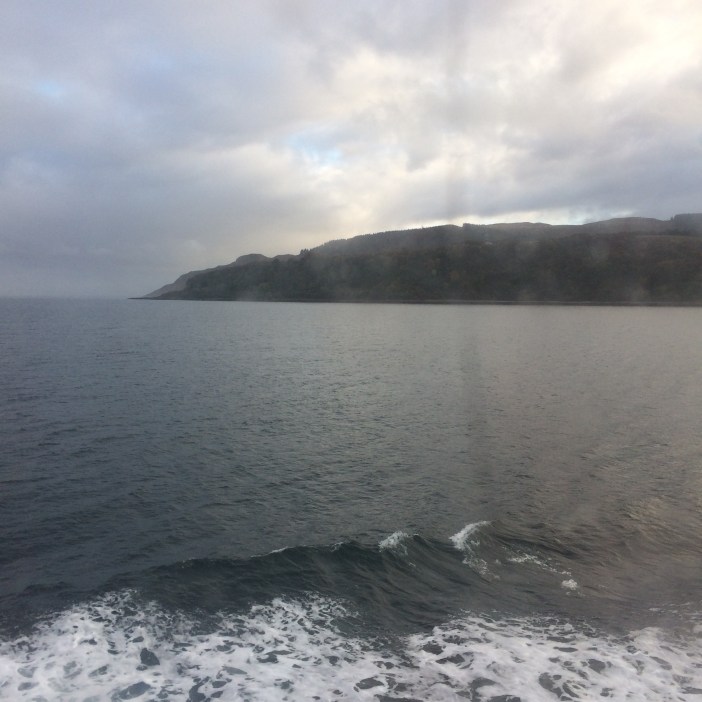
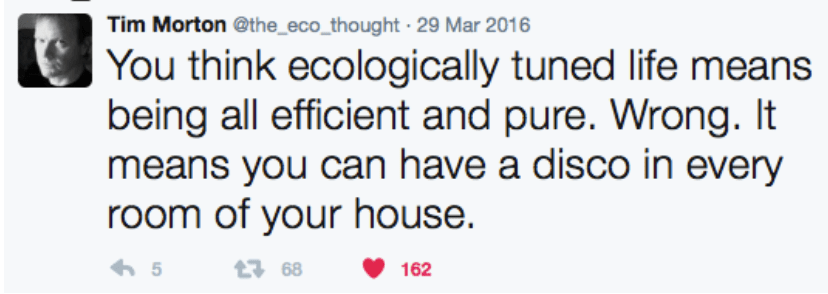
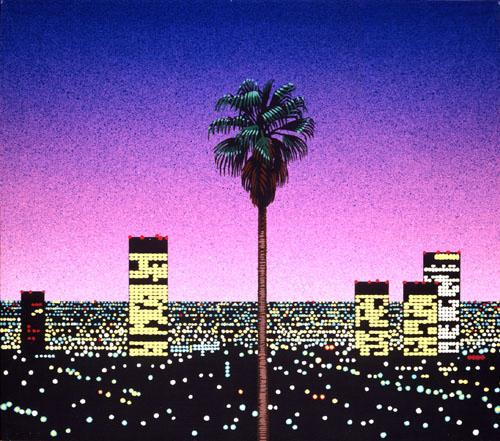
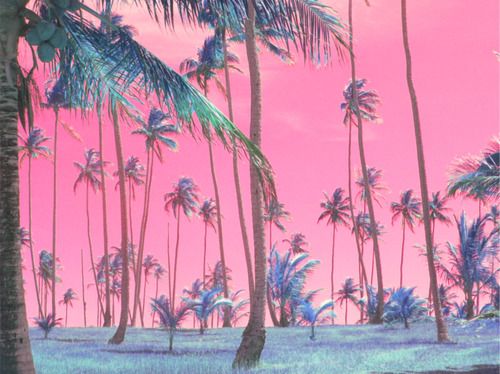
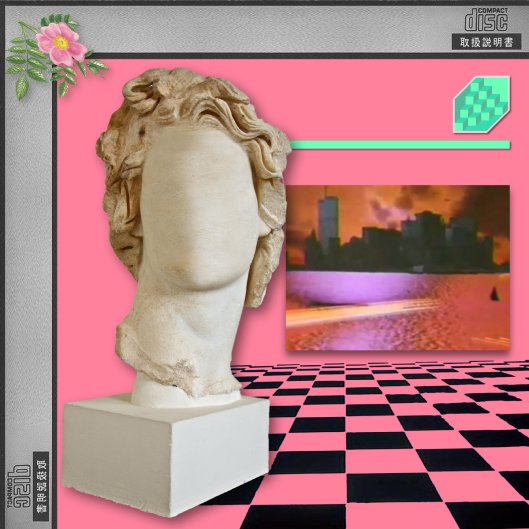
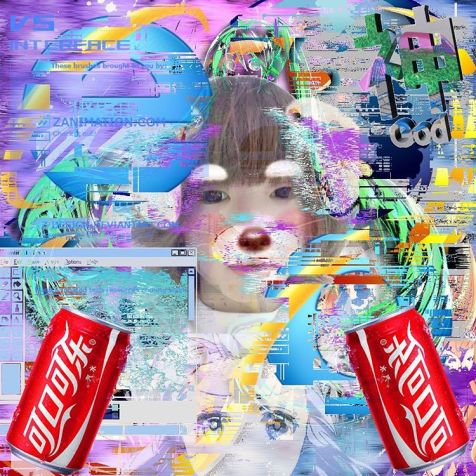
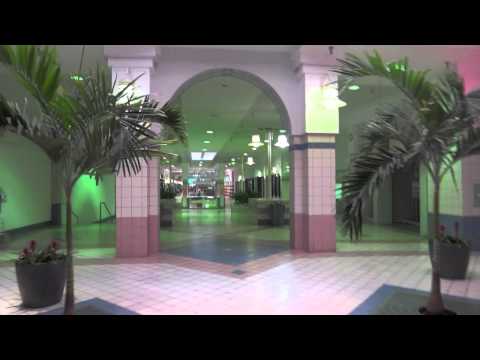
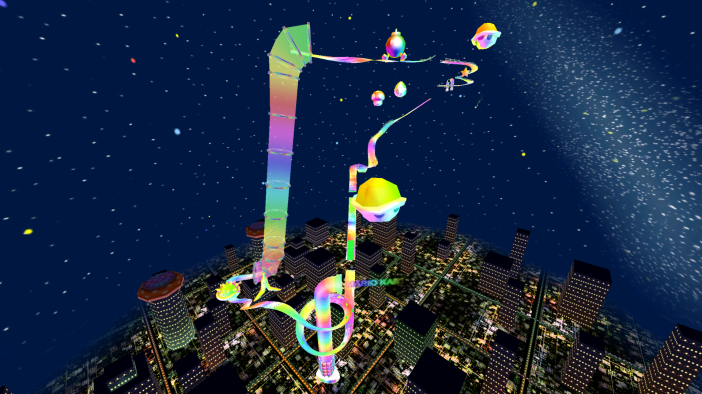
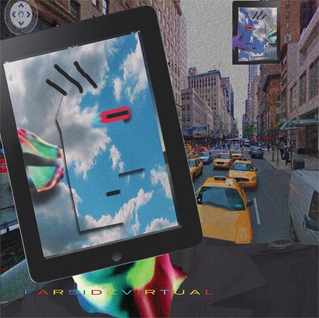
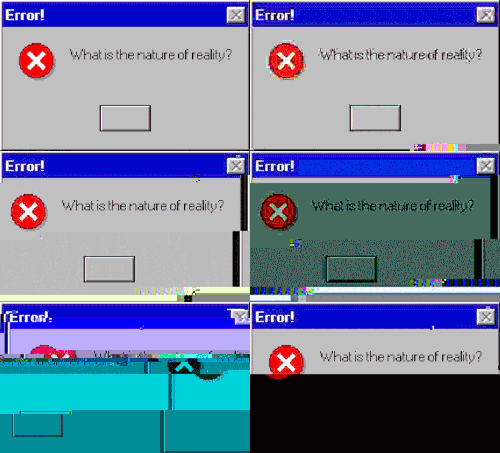
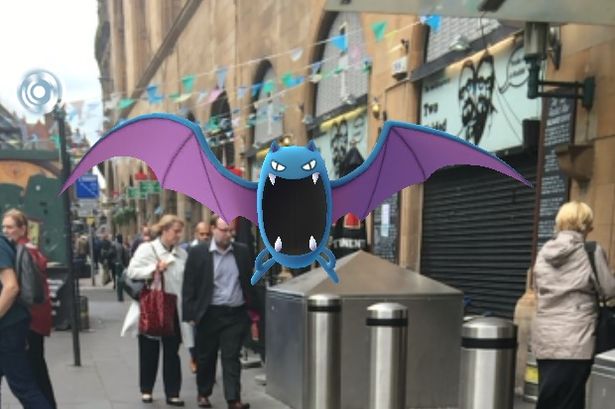
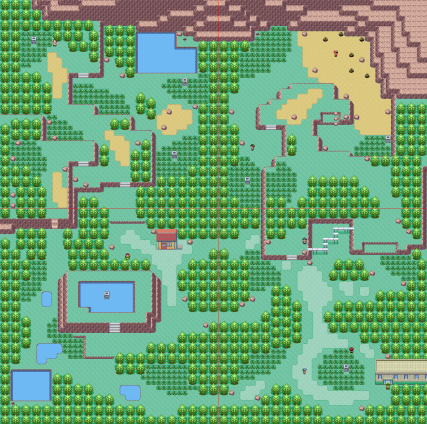
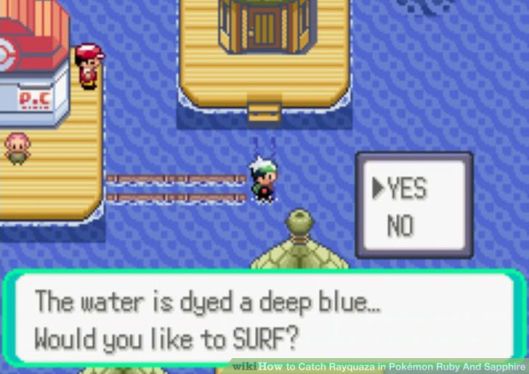

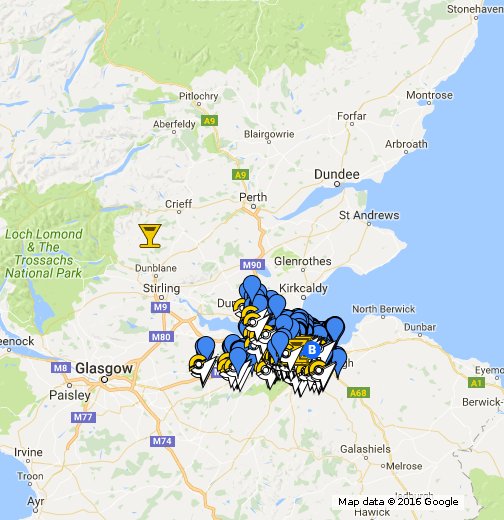











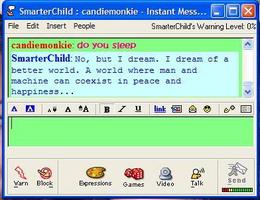

 mariaology